AUTHENTIC TO THE INDUSTRY
EXHIBITS: JANUARY 20-22, 2026
EDUCATION: JANUARY 19-22, 2026
LAS VEGAS CONVENTION CENTER



EXHIBITS: JANUARY 20-22, 2026
EDUCATION: JANUARY 19-22, 2026
LAS VEGAS CONVENTION CENTER

Intelligent demolition begins with smart planning. Join us to learn how
In 2025, NFDC Talks returned, partnering with the HSE and IDE, to equip construction professionals with the must-have knowledge to plan safe, successful, and compliant demolition works.
Learn from the best – Hear directly from the NFDC, HSE and IDE experts.
Know your responsibilities – Understand your legal obligations as a client.
Choose wisely – Discover what to look for in a reliable demolition contractor.
Get informed – Know the skills, training, and certifications that matter.
Whether you’re a project manager, developer, designer or planner, if you’re involved in pre-construction or demolition procurement, you can’t afford to miss this.



Welcome back to Demolition Spotlight!
We’re now entering the latter quarter of the year, and the world around us is slowly shifting from summer to autumn. And here at Demolition Spotlight, we’re shifting into our busiest month yet!
This brand new issue is bursting with content that not only spreads across the UK, but America too! Demolition Spotlight is reaching new heights, bringing a global field to our magazine. With World of Concrete, World Demolition Summit and Demolition Group of America (DGA) on board, this issue truly is an exciting one!
We’re also gearing up to PlantWorx and the National Civils show, so not only have you got this new issue, you’ll also be seeing Demolition Spotlight out and about more! I mean, what’s not to like?
Also in this issue is a case study with Howard Stott Salford, Brown and Mason getting a Guiness World Record, Demo Spec with Bobcat, Kleenoil and Liebherr, not one, not two, but THREE feature articles, one of which discusses all things crushers and screeners, and more demolition and waste news!
This issue really isn’t one to miss.
Safe to say, we really are crushing it!
…It’s okay, I’ll see myself out.
Happy reading!
The Demolition Spotlight Team



is published by
Machine Power Media Ltd.
Unit 5, Basepoint, Enterprise Centre, Terminus Road, Chichester, PO19 8FY 07779 405885

Machine Power Media Ltd. © 2025 all rights reserved.
Reproduction in whole or part is prohibited except with permission in writing from the company.
Note to contributors: articles submitted to the Editor for consideration must be the original work of the author.
Where photographs are included that are not the property of the company or contributor, permission to reproduce them must have been received from the owner of the copyright. Any views or opinions expressed within this magazine are not necessarily those of the company.
Registered in England No: 16081082
All advertisements are accepted subject to Machine Power Media’s standard of insertion.
For a copy of Advertising Terms & Conditions, please write to: Darren Shelton, Machine Power Media Ltd.
Unit 5, Basepoint, Enterprise Centre, Terminus Road, Chichester, PO19 8FY

Demolition Group of America Expands to Europe as well as Announcing Strategic Partnership with Phoenix Brands’
38

43

40
48


DARREN SHELTON MANAGING DIRECTOR

MARTINA TONELLI MARKETING MANAGER
PAUL ARGENT RPA MEDIA SERVICES
DAVID SHUTE INMALO
LISA LIU WORLD OF CONCRETE
ALEX COX
LEWIS TYLER WORLD DEMOLITION SUMMIT

PHIL EVERY GROUP SALES DIRECTOR

LORNA COWLIN CONTENT CREATOR

REBECCA PHILLIPS MANAGING EDITOR

STEVE WILSON DESIGN MANAGER

LANE BRAND MANAGER
KEVIN WILEY PRESIDENT OF DEMOLITION GROUP OF AMERICA LLC US (DGA)
For all content related queries, contact editor@demolitionspotlight.co.uk
For all sales related queries, contact charlotte@demolitionspotlight.co.uk












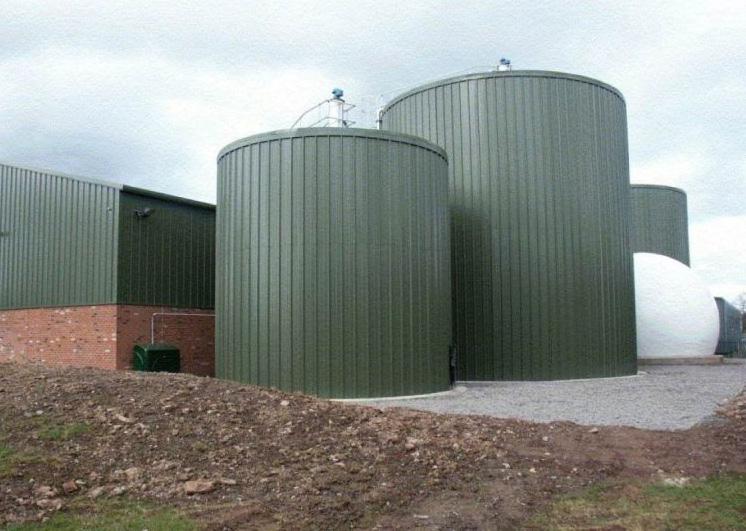
Demolition and removal of the process tanks of the former anaerobic digestion (AD) plant on Coder Road Business Park on the outskirts of Ludlow is set to commence early in September, as Shropshire Council prepares to get the site ready to build an Energy, Biochar and Carbon (EBAC) plant (pyrolysis plant).
Specialist demolition contractor Cawarden has been appointed and it is expected this phase of works will take around four to six weeks to complete.
Once the tanks are removed, work will begin mainly within the existing building to develop a council-owned energy, biochar and carbon plant, following on from the success of a joint-venture with Woodtek Engineering operating on a site near Welshpool in Powys. The new plant will provide a range of environmental benefits while also generating a revenue return that will help support council services.
Rob Wilson, Shropshire Council’s Cabinet member for transport and
economic growth, said: “This is a significant step forward for this project. While work has already begun to decommission the site, this next stage of demolition will involve works such as breaking up the concrete bases beneath the old tanks and may therefore cause some additional noise. I want to thank local residents for their forbearance, however Cawarden will ensure this is kept to a minimum.”
Pyrolysis is the thermal breakdown of ‘green’ materials, in this case plant matter (often referred to as biomass), in the absence of oxygen, to produce biochar – an environmentally-friendly product, similar to charcoal, that can be sold into a range of industries for various uses.
The process helps store carbon, which generates carbon credits, while also generating heat and renewable electricity, all of which can then be used or sold.
Councillor Wilson added: “The creation of biochar is an innovative and sustainable way to produce
positive environmental outcomes while generating an income to support delivery of essential public services, as well as reducing our net carbon emissions as a council.
“Our site near Welshpool has generated a huge amount of interest from many other local authorities, some of which we are now partnering with via framework agreements that benefit Shropshire through the sharing of our knowledge and experience.
“Following our Welshpool joint venture, we’re now looking forward to starting work on our first plant in Shropshire on our site in Ludlow.”
The Ludlow site has obtained planning permission, has equipment on order, and the council has agreed a contract to operate the plant once it is complete.
Investment for the new plant has been from the Public Works Loan Board (PWLB). Surplus revenue generated from operation of the plant will be used to support essential council services.

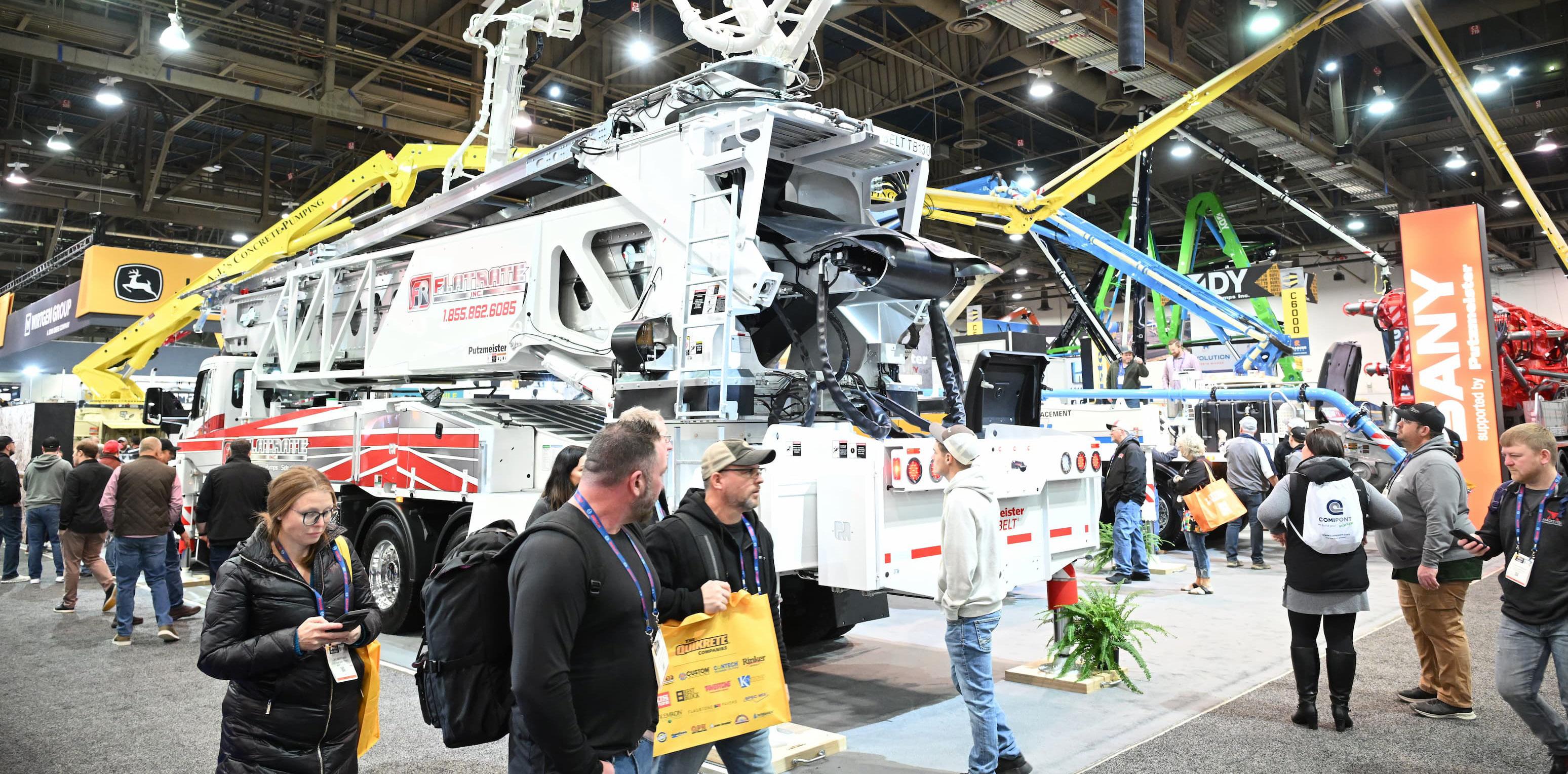
World of Concrete, the premier international event for the concrete and masonry industries, is returning to the Las Vegas Convention Center (LVCC) from January 20-22, 2026, with educational sessions taking place from January 19-22.
The 2026 show is set to deliver even more excitement, featuring over 1,400 exhibitors spread across more than 750,000 square feet of indoor and outdoor exhibit space. With new product reveals and world-class educational opportunities, World of Concrete 2026 will be the go-to event for construction professionals looking to stay ahead of the curve and maximize opportunities available at this annual industry gathering.
We connect and educate buyers and sellers throughout the year. Our goal is to provide this important community with the connections, intelligence, and opportunities that help customers grow, do business, and make informed business decisions.
• Meet leading manufacturers and suppliers showcasing solutions that will help your operation adapt and grow in a changing industry.
• Take your operation to the next level, learn from industry experts as they cover the latest technology, applications and business strategies for success.
Push limits. Smash barriers. Break boundaries. And when you’ve conquered all those obstacles? You discover your full capacity for greatness.
World of Concrete delivers all the realworld solutions that will crush your challenges and take your expertise to new heights.
Growth opportunities are everywhere, whether you’re looking for new products, getting hands-on with game-changing tools and tech, or shaking hands with your future partners.
Ready for maximum success? Nothing’s standing in your way!
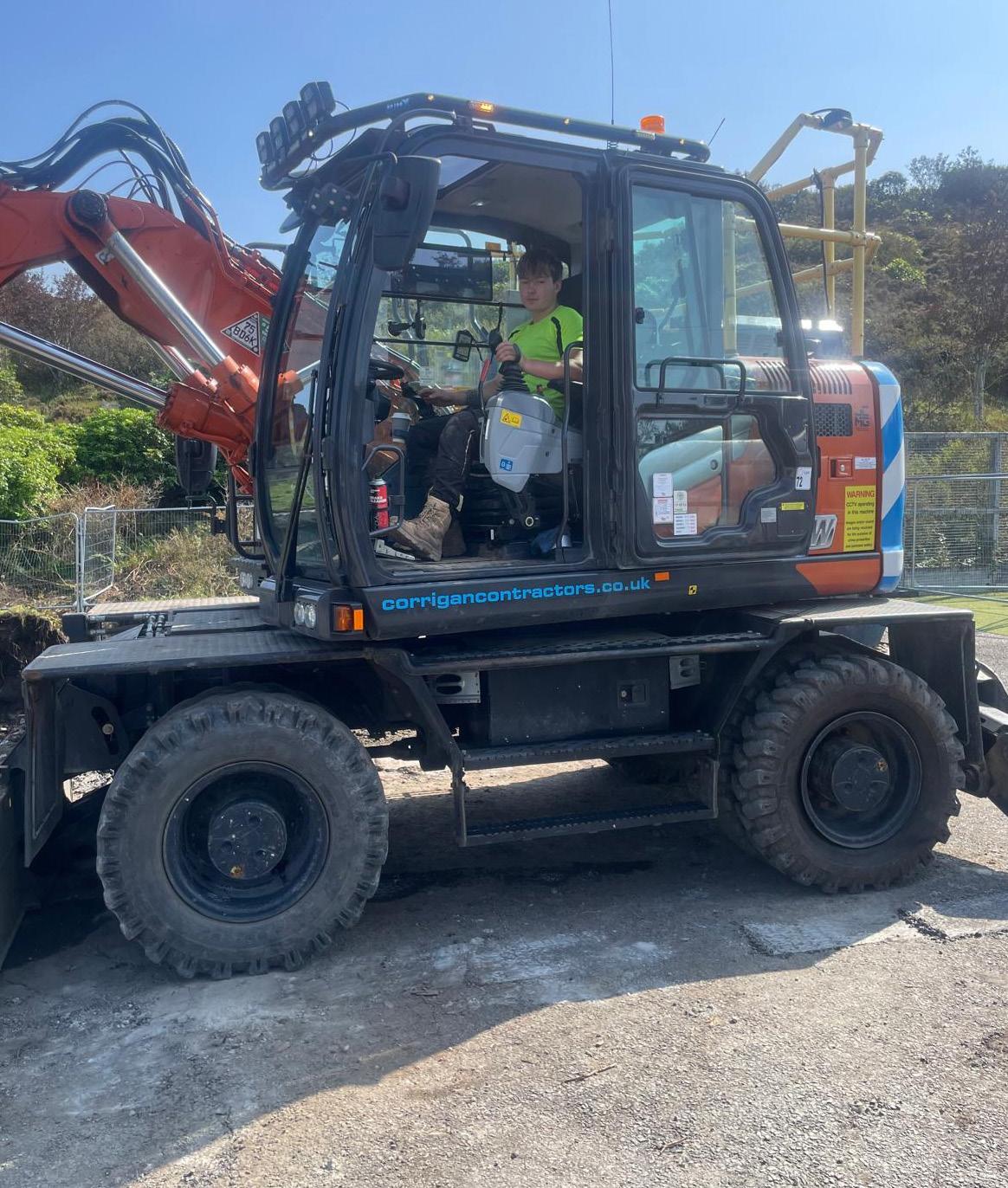
Plant Operator Josh, who is 17 years old, works for Corrigan Contractors LTD based in the West Coast of Scotland, undertaking building and Civil Engineering projects.
After recently completing his SQA level 2 diploma in plant operations apprenticeship at CITB National Construction College (NCC) we asked Josh about training and much more.
What made you think about starting a career in Plant?
When I was younger, I had the opportunity to have a go on a digger and loved it. After that I would try to get on them every chance I got so it made sense to do an Apprenticeship. Since I have joined Corrigan I have also got involved with Engcon tiltrotaters which is great!
Why did you choose NCC to do your training?
It is most definitely the college you want to be in; you get everything you need to know with so many opportunities to learn on different kinds of plant machinery available. The instructors are great too!
What would you tell others on why they should do an apprenticeship?
I would say when you think about an apprenticeship you think it’s going to be easy. I have had bad days and good days and it’s a long process. So, my advice would be you just have to push for the apprenticeship you want and stick at it no matter what. It will pay off in the end and is the benchmark for a great career.
What does your typical day involve and what are the best bits?
A normal day is varied, operating different bits of plant from diggers to dumper tractors. One day I can see myself doing grading the next day I could be driving a dumper; it’s always a surprise.
What can you say about the college (accommodation/ welfare team) support you received from NCC?
Since I was from Scotland I had to stay the weekend, and the welfare team always offered activities off site. They helped me with any problems I had, and the accommodation was great, so I soon settled in, and it was quite nice being away from home. This experience gets you to see stuff that might be a once in a lifetime opportunity. It’s most definitely worth it.
What was the toughest part of your apprenticeship and why?
I would say when my tests came up. I was always stressed about them, but the instructors explained it so well I passed first time at everything.
How did you find the learning environment and lectures at NCC?
It was a very good place to be. You’re learning what you want to do for your career. Everyone is so helpful at NCC; you meet so many people along the way and every day is a learning day.
Rachel Corrigan said, “We first sensed Josh’s passion for machinery when he applied for work experience at just 15 years old - proudly stating he had eight years of experience already! His enthusiasm was unmistakable, and when he told us that plant and machinery were his biggest passion in life, we knew we had to create an opportunity for him.
“Since then, Josh has worked alongside experienced operators and gained hands-on experience with a wide range of plant and equipment. He has consistently shown himself to be highly capable, motivated, and eager to learn.”
If you are interested in CITB National Construction Training call 0344 994 4433 email: NCC.AccountManager@citb.co.uk or www.citb.co.uk/national-construction-college/apprenticeship-courses/
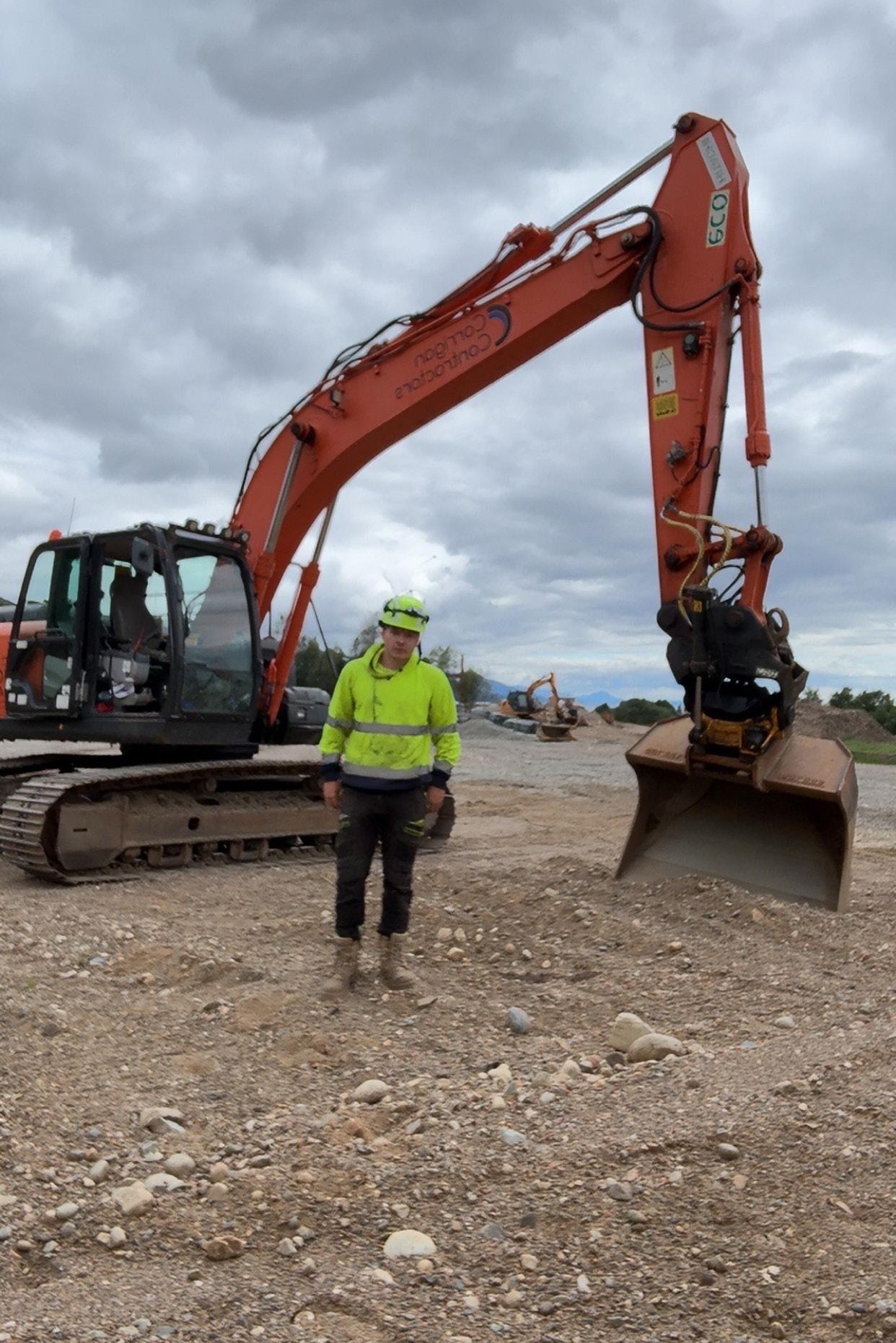

Asset finance is, for many firms, a form of funding they have used for many years. Yet still, for others, it’s not something they know much about. In this article Close Brothers Asset Finance takes a closer look at the different products and understand why it could be the perfect option when considering your next purchase.
In short, asset finance is an alternative form of funding used by businesses to obtain the equipment they need to grow or access much-needed cash. Asset finance makes the otherwise unaffordable affordable because it gives businesses access to the equipment they need without incurring the cash flow disadvantage of an outright purchase.
Agreements can also be customised to the business’s needs, with flexibility on both the term and repayment schedule.
There are various products that come under the broad umbrella of asset finance with one of the key ones being Refinancing, which is a proven way to make your assets work for you and release cash back into the business.
How Refinance works
Refinancing uses the value of assets you already own to help your business. With Sale and HP Back – a type of refinancing – you sell your equipment to us, and we lend you the money you need to invest in your business.
You pay us back in line with what the equipment earns for you. Once you’re done paying us back, you own the equipment again.
This works whether you own the equipment outright or are already financing it with someone else.
Refinancing is for anyone looking to unlock the value of their existing assets to support their business. Whether you own equipment outright or are financing it elsewhere, refinancing can provide a quick way to access funds for things like new equipment, improving cash flow, or other business needs. It’s a flexible option suitable for businesses of all sizes, including sole traders.
Benefits of Refinance
• Get more cash easily - Asset refinancing is a quick and simple way to get extra money for your business needs. You get to keep using the asset you put up as security.
• Pay over a longer time - We can take over your current financing deal with another company and extend the time you have to pay. The costs are fixed, so there won’t be any surprises while you’re repaying the loan.
• Choose what’s best for you - Use the cash injection for your business or buy other things you need. It’s more flexible than some other financing options.
• Decide quickly - Getting cash from your assets helps you make faster decisions when dealing with business contracts. Use the money for hiring people, buying new things, or expanding your workspace. For more information, please visit:
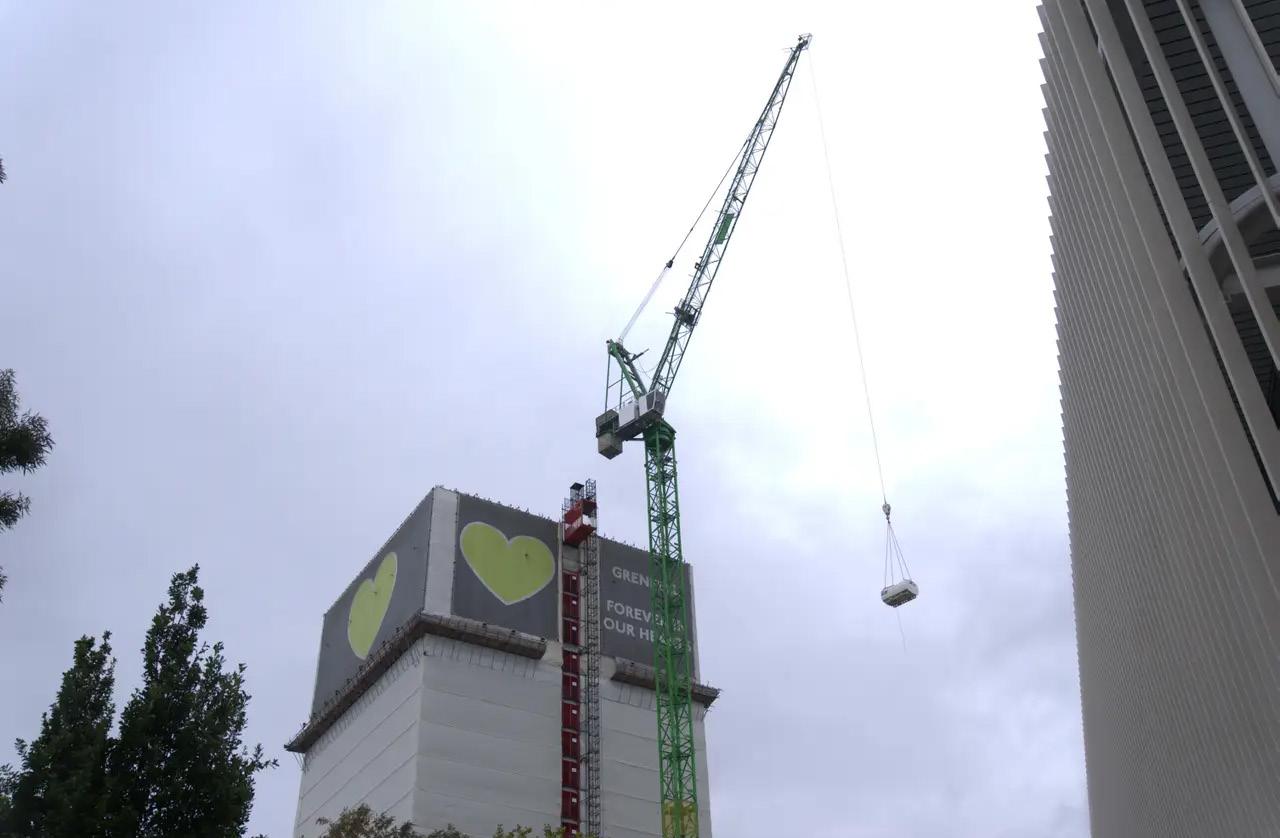
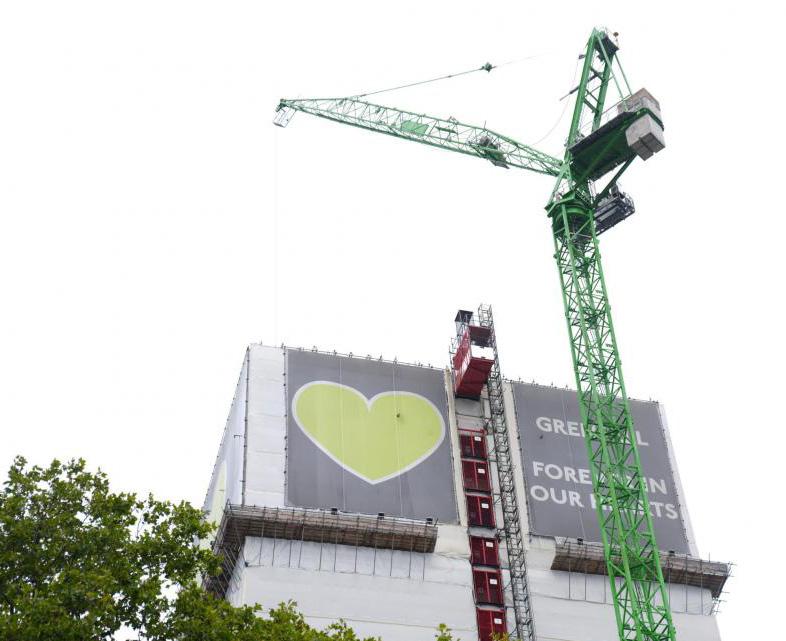
The Government announced earlier this year that the remains of the building – where a deadly fire broke out in 2017 and claimed the lives of 72 people – will be brought down.
Preparations had been taking place over the summer and work to remove a former plant room, which previously housed heating and a water tank, on top of the tower is to start this week.
After this part, which could take weeks, is completed, work to remove the tower’s 24th floor – the top storey – will begin.
The floor-by-floor work is being carried out by Deconstruct UK (DUK), which has been involved in the maintenance of the site since 2017.
The Government has pledged that the dismantling will be carried out “with great care and sensitivity” and said the plan for careful deconstruction “is designed to minimise noise and disruption” in the area.
What is left of the tower has stood in place in the eight years since the disaster, with a covering on the building featuring a large green heart accompanied by the words “forever in our hearts”.
The Government has said a banner will remain on the building, being moved down as work progresses.
Confirmation earlier this year that the tower was to be demolished was met with criticism from some of the bereaved and survivors of the deadly blaze who expressed their upset and shock, saying they felt they had not had their views considered before the decision was taken.
Deputy Prime Minister and Housing Secretary Angela Rayner later said in an interview that she knew her meeting with those most closely affected was going to be “really difficult” and that there was “not a consensus” among everyone over what should happen to the tower.
Views have varied, with her department acknowledging there had been hopes for some of it to remain in place as a memorial to what happened while others had reported this would be “too painful”.
Some of the bereaved and survivors had hoped it would stay in place until a point where charges were brought against those they deem responsible for the fire.
Police and prosecutors have previously said investigators would need until the end of 2025 to complete their inquiry, with final decisions on potential criminal charges by the end of 2026.
The near 10-year wait for justice has been described by families as “unbearable”.
The Government confirmed in February that engineering advice is that the tower “is significantly damaged” and will get worse with time.
Separately, the Grenfell Tower Memorial Commission has been consulting on plans for a permanent memorial in the area of the tower, with recommendations including a “sacred space”, designed to be a “peaceful place for remembering and reflecting”.
It is expected a planning application for a memorial could be submitted in late 2026.
The Government said it will also share further information about plans for a second site where materials from the tower “which are not used in the memorial, or conserved, will be safely and respectfully laid to rest”.
The final report of the Grenfell Tower Inquiry, published in September 2024, concluded the disaster was the result of “decades of failure” by governments and the construction industry to act on the dangers of flammable materials on highrise buildings.

A Ministry of Housing, Communities and Local Government spokesperson said:
“We recognise Grenfell Tower has a deep personal significance to the Grenfell community, and our thoughts remain with the bereaved families, survivors and all those affected.
“As work begins to carefully take the tower down, we want to assure the community that it will be undertaken with great care and sensitivity.
“We remain committed to ensuring what happened at Grenfell Tower is remembered and we will keep the community’s voice at the heart of our work to deliver the vital change needed so what happened can never happen again.”
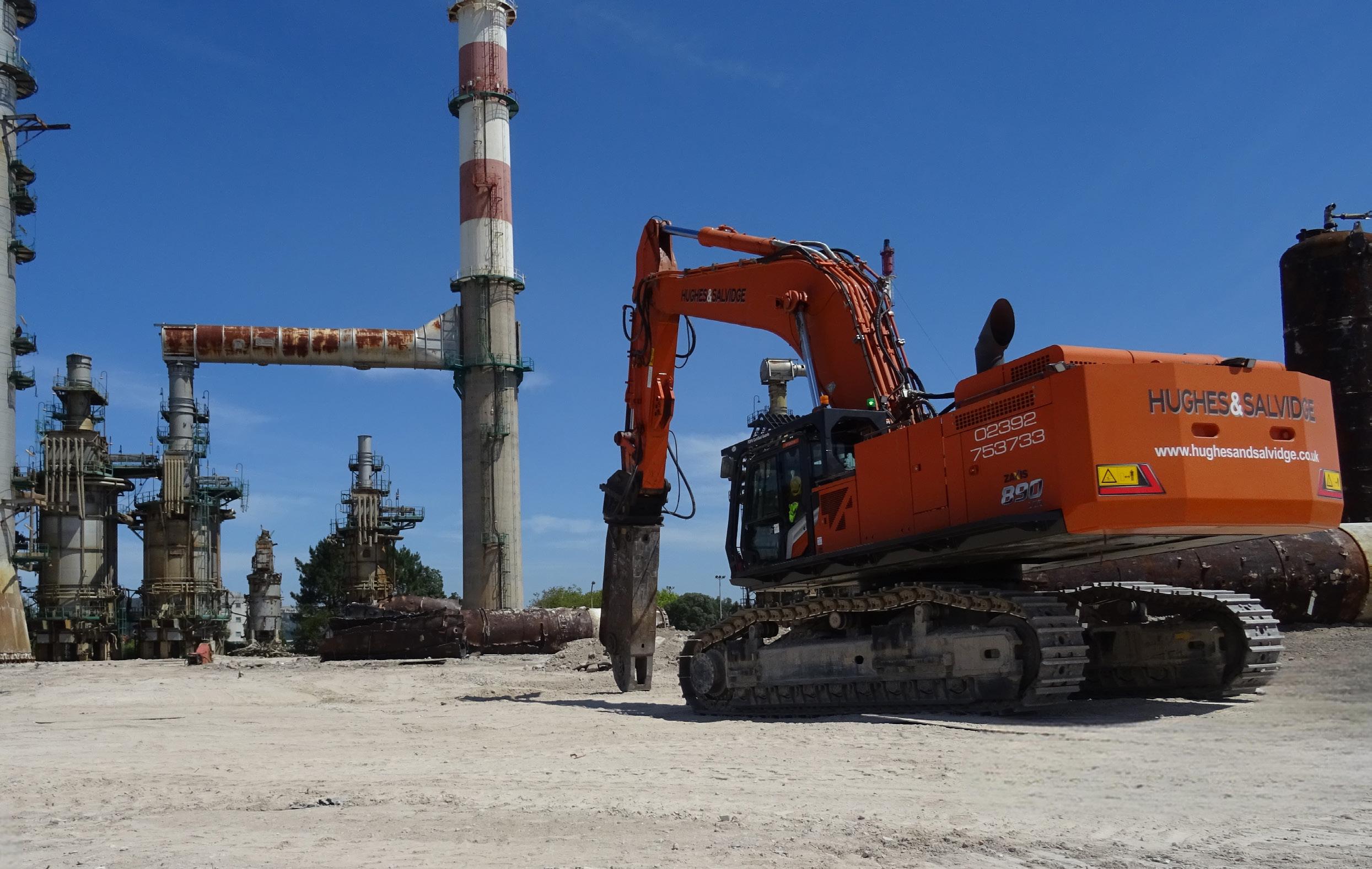
Established in March 1964, we are proud to stand here today as a Global organisation, able to provide international clients with our Complete Solution.
Our philosophy, and mission, is to provide our clients with high quality demolition, decommissioning, dismantling and asset recovery solutions through our extensive skills and expertise, while maintaining the highest professional standards and respecting the areas we work in.
Enhanced by the complementary offerings of our divisions, H&S Asbestos, our Asbestos Removal division, K&B Crushers, our concrete crushing service, and H&S Metals, our metal recycling arm, we provide clients the complete solution - ‘Demolish. Crush. Recycle.’entirely in-house.
H&S Asbestos undertakes asbestos removal on a wide range of different sites, working in conjunction with our specialist teams to remove licenced and non-licenced asbestos. Being able to provide this skill in-house provides the client with cost savings and the peace of mind that collaborative working is already in place between the demolition and the asbestos teams.
Crushing demolition arisings on-site offers a range of environmental, logistical and financial benefits. It reduces pollution by drastically minimising demolition traffic movements to and from the site, keeps concrete debris out of landfill and the aggregate produced provides the construction site with a ready-made piling mat material, along with other applications including a substitute for virgin aggregates.
H&S Metals support our decommissioning, demolition and dismantling activities by ensuring maximum return and recycling. Recycling non-ferrous metals is good for industry and good for the environment. Protection of the environment and the prevention of pollution are essential considerations across our divisions.
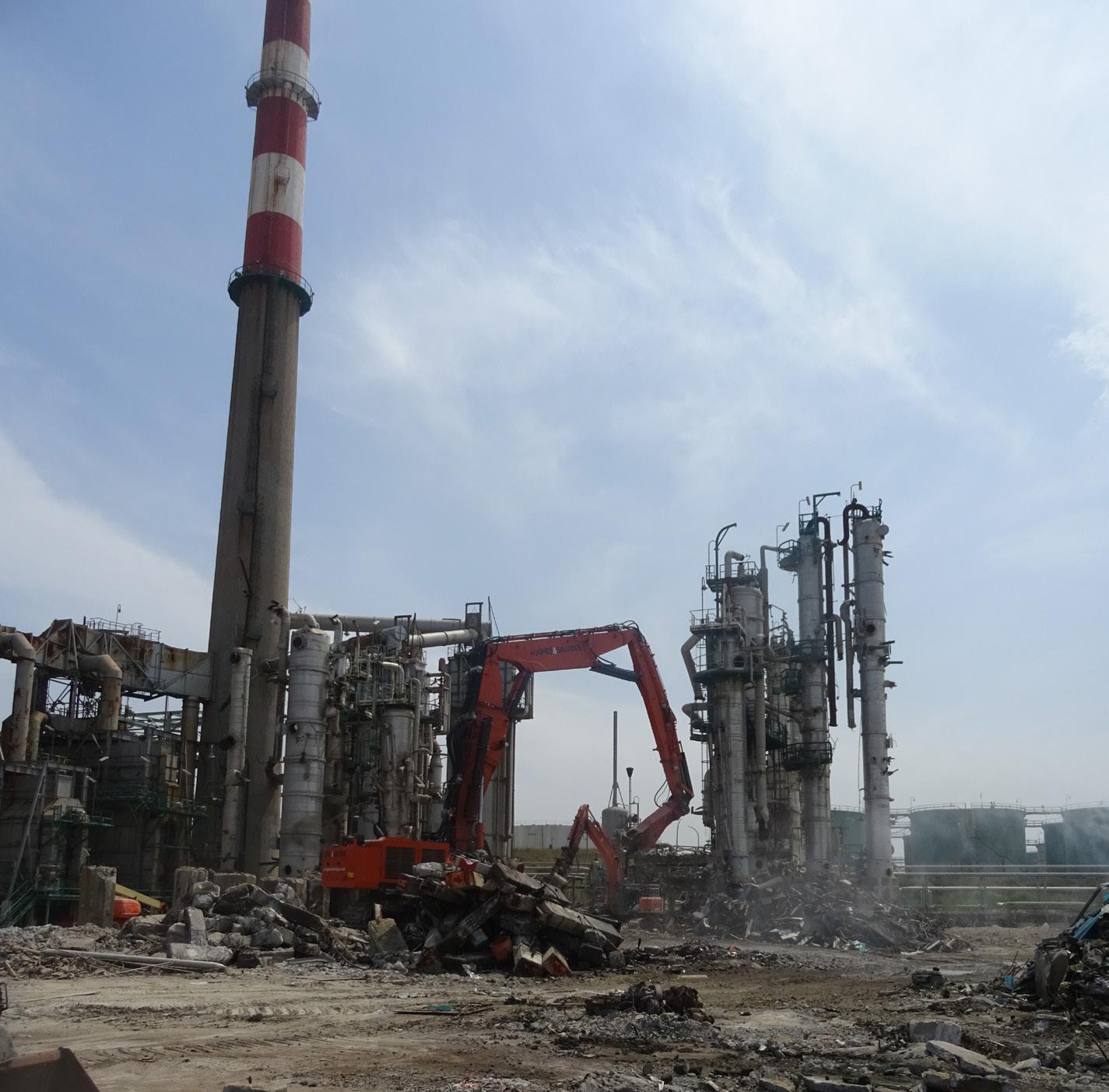
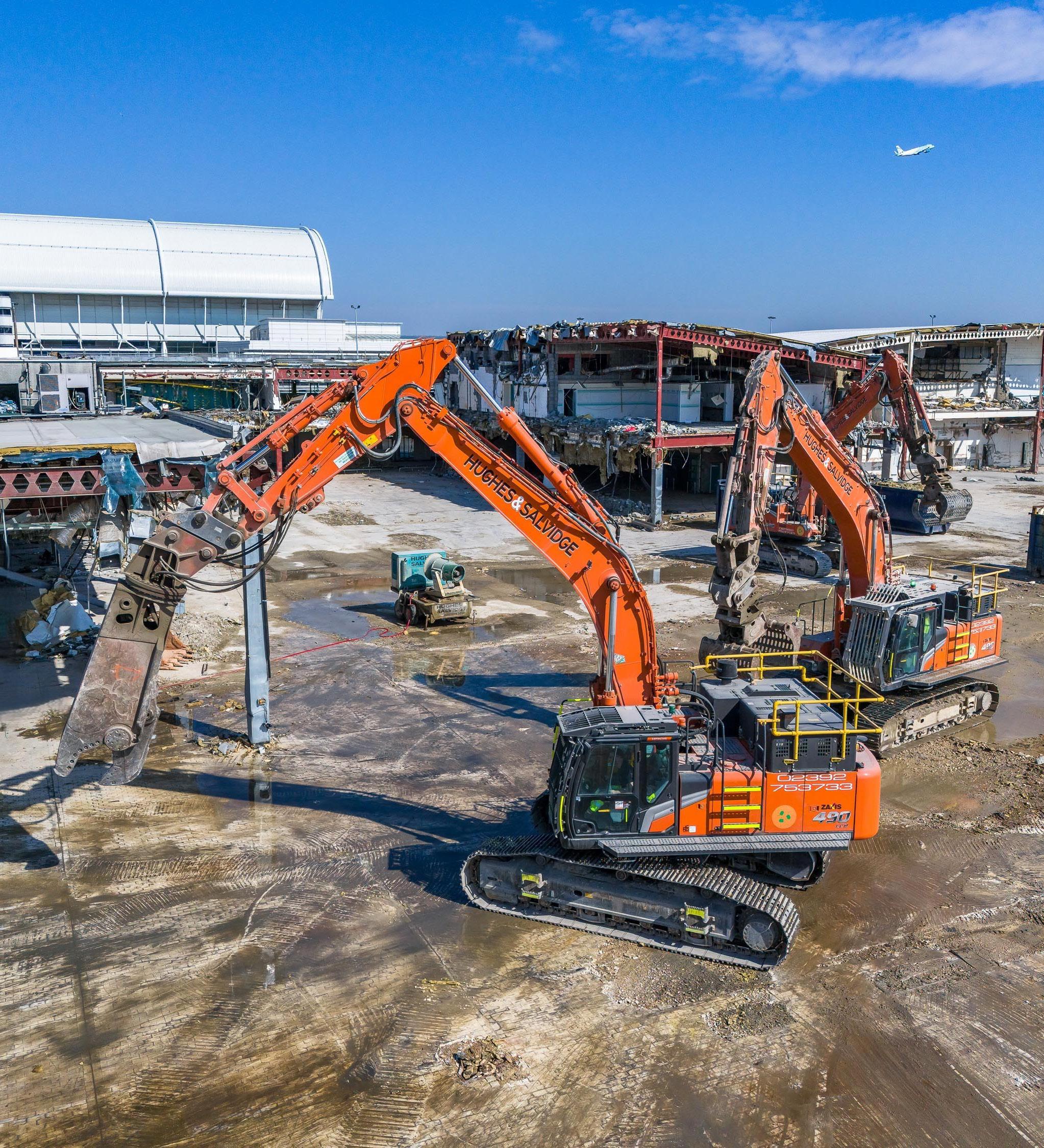
By offering this solution to our clients, we can also represent significant cost savings and limit the impact on the environment from our works. We are able to accurately forecast waste arisings and aim to recycle over 97% of all demolition arisings on every project. Our Green Hands Initiative is an internal environmental strategy and action plan, including seven key performance categories, providing steps for positive reinforcement, improvement and development.
Our client facing approach from initial budget costing through to final project completion ensures first class communication, client satisfaction, and successful and safe project completion. All our projects are undertaken in accordance with the approved programme of work, phased operations and safe demolition techniques. All activities are planned, undertaken and monitored in line with the Risk Assessments, Method Statements, Project Health and Safety Plans, and Environmental Plans.
Our Senior Management team are responsible for objective setting and monitoring health and safety management. This takes the form of a full annual audit as well as ongoing audits and monitoring. We are also regularly audited by external parties
such as ISO, Achilles, NFDC, SMAS and CHAS. The outcomes of these audits confirm our systems and any recommendations/actions required to help us to evolve and improve. Not only is the welfare of our employees a top priority within our organisation, but our ability to deliver projects safely is fundamental in our ability to secure future work for our business.
With this in mind we are constantly monitoring what we do as well as looking to identify improvements and developments to enable us to not only meet but exceed industry standards and expectations. Safe Hands is a coal face initiative designed to capture Health, Safety and Environmental related experiences from our project sites. Whilst we are proud to be at the forefront of Health and Safety in our industry, we are always striving to go that one step further and continue our exemplary safety record.
Helping Hands is our Social Value Initiative aimed at enhancing and supporting the communities that we work in. Helping Hands covers five main pillars of Social Value: Charity, Community, Wellness, Development and Sustainability, and provides project specific and annual objectives for the company to achieve.
As we continue to grow, so does our responsibility to the communities in which we operate. We achieve this by monitoring, and evolving, our three initiatives supporting the Environment, Health and Safety, and Social Value. Safety and environmental awareness takes precedence on all our projects, and we are committed to delivering responsible and sustainable practices.
We have successfully completed a vast portfolio of technically challenging projects, carried out for a valued client base including blue chip companies, developers and main contractors, local authorities, government bodies, health trusts and utility companies. We possess a wealth of experience delivering diverse projects. No project is alike, we regularly adapt our ways of working to accommodate this and surpass client needs and expectations.
We just want to take this opportunity to thank everyone who has supported Hughes and Salvidge. From our site staff to our Head Office staff, our UK and now our Global partners, we couldn’t have managed this without the hard work and dedication from you all.
For more information visit: www.hughesandsalvidge.co.uk
The National Federation of Demolition Contractors (NFDC) is delighted to announce the successful conclusion of its Annual Convention 2025, held in the historic city of Dubrovnik, Croatia.
This year’s convention brought together NFDC members, the European Demolition Association (EDA), the US-based National Demolition Association (NDA), and a wide network of international stakeholders, highlighting NFDC’s active involvement with the international demolition community and our shared commitment to global industry progress.
Over the course of the event, delegates engaged in strategic discussions, knowledge sharing, and networking opportunities, all centred around the future of demolition and its place in the wider built environment. The programme included the Federation’s Half-Yearly Business Meeting, a celebration of member achievements, and a series of formal and social occasions that reinforced the sense of collaboration and community at the heart of the NFDC.
The Convention also provided an opportunity to give back. Through the generosity of the convention attendees, an incredible £24,000 was raised for the NFDC President Adrian Corrigan’s chosen charity, Sue Ryder. The NFDC extends heartfelt thanks to all who contributed. This remarkable achievement once again demonstrates the demolition industry’s willingness to come together in support of important causes, reflecting the compassion and generosity of our members and friends across the sector.
The NFDC would like to extend its sincere thanks to the sponsors whose support was integral to making the convention possible:
• Fenchurch Insurance Brokers
• RecMat
• Kocurek Excavators Ltd
• Green Power Plant Hire Ltd
• National Demolition Training Group (NDTG)
• EMR
The NFDC also expresses gratitude to its members, partners, and industry colleagues from across Europe and beyond who joined us in Dubrovnik, helping to make this convention a great event.
“Once again, the NFDC Convention has shown the strength of our industry when we come together. The level of engagement, the openness in sharing expertise, and the commitment to driving progress make this an event that inspires and unites,” said Adrian Corrigan, NFDC President.
The NFDC looks forward to building on the success of Dubrovnik as preparations begin for NFDC Convention 2026, details of which will be announced soon.

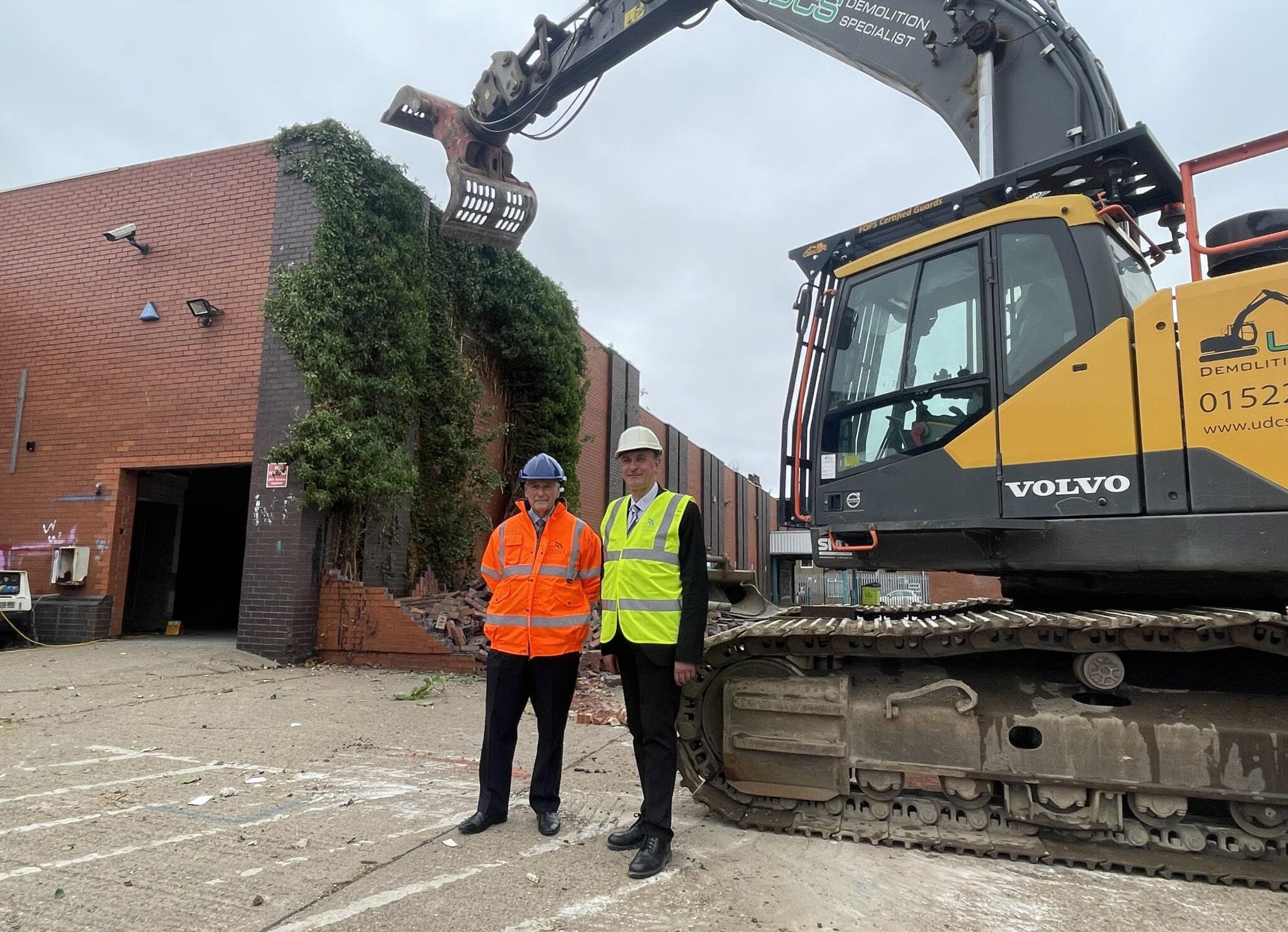
Demolition has started on the site of a planned new transport hub with phase one works underway. Pictured is North East Lincolnshire Council leader, Cllr Philip Jackson and the Portfolio Holder for Housing, Infrastructure and Transport, Cllr Stewart Swinburn.
The first “nibble” has been taken at the Osborne Street units this week marking the start of the demolition works.
The old units in Grimsby Town Centre are being taken down piece by piece, in a similar way to the work at Freshney Place. The plan is ultimately to use this 1.6 acre site to deliver a transport hub which connects with the railway station, encouraging public transport use and supporting the wider Grimsby Town Centre regeneration ambitions.
North East Lincolnshire Council wants to be clear that this demolition is stage one of the whole project with funding currently available to support flattening the units between Rejuvadent and Racks, alongside ground clearance and the development of spaces for town centre buses to stop and pick up.
The businesses on Osborne Street (Sage, Rejuvadent and Racks) will all be open as usual during the works, which involves full recycling of all demolished materials including green waste, wood and metal.
After demolition and phase one, the project will then move into the design stage, which will include consultation with stakeholders and the wider public with an ambition to seek funding for further development. As part of this process, an initial public survey has been launched to gather views on the importance of various facilities that could be included in the proposed transport hub.
Cllr Stewart Swinburn, Portfolio Holder for Housing, Infrastructure and Transport, said: “It’s great to see this project start on the ground, and the view around here will really be opened up once these buildings go.
“We really want people to give their views on the importance of the various things that could be included in a potential transport hub, and that survey is open at the moment. That will help us
to design something that fits both within the budget, and reflecting what local people want.”
Council Leader, Cllr Philip Jackson, added: “As we see the progress now being made on the transformation of our town centre, for example our Freshney Place Leisure Scheme, the new Alexandra Dock housing and the OnSide Horizon Youth Zone, it is important that we make peoples’ travel to and from here easy and safe.
“Having bus stops dispersed around the town centre, as they have been for many years now, does not work well and makes life more difficult for public transport users – proving a barrier for people visiting our town centre. From the comments I hear, there is no doubt that local people want a proper bus station in Grimsby Town Centre. About three years ago, we were far-sighted and purchased this site which is ideally located for a new transport hub. Now we have some funding to make a start on the project, we are able to demolish the ugly, empty retail premised on Osbourne Street and kick off this exciting development.”
The structural demolition of 1–87 Regina Road has now started, marking a major milestone in transforming the estate. Over the coming months, the block will be taken down level by level, making way for the next stage of the regeneration.
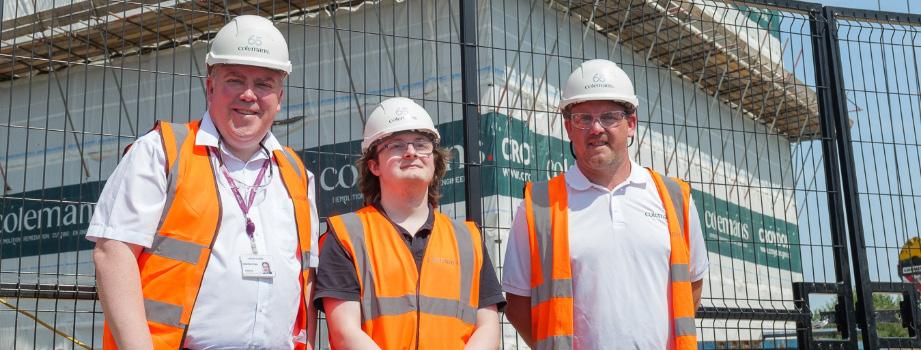
As part of this, 23-year-old Lewis, who has grown up on the estate, is starting his career in construction. He has completed an online training course provided by Colemans, the demolition contractors for Regina Road, and gained his Construction Skills Certification Scheme (CSCS) card with support from Croydon Council’s jobs brokerage team.
With this qualification, Lewis will begin paid work experience in September with Colemans at Regina Road, the same place where he grew up. This could lead to an apprenticeship with Colemans and the opportunity to progress further with the National Federation of Demolition Contractors. He received his certificate from Colemans during a visit to the site attended by the Executive Mayor of Croydon, Jason Perry, and members of the Regina Road project team.
Croydon Council’s social value programme makes sure contractors bring benefits for local people as well as delivering the main work. This includes new jobs, training and support for community projects. Colemans’ support for Lewis is part of this commitment, providing opportunities during the demolition at Regina Road and after the work is finished.
Lewis said: “I have tried the conventional job search approach, but recently I have overhauled my method to focus on meeting people directly. Demo work appeals to me because it allows me to work outside and get fresh air.”
Andy Crawford, project manager at Colemans, said: “Working with Croydon residents like Lewis is a big part of how we deliver social value. The Regina Road regeneration is an important project for this community and giving local people the chance to work on it helps build skills and creates opportunities that last beyond the demolition. We are pleased to be supporting Lewis as he starts his career in construction.”
“The regeneration will be delivered in two phases and will include around 340 new homes, landscaped areas, a preschool and a new community facility. Phase one will provide at least 225 new affordable Council homes and has been supported by a £54 million Greater London Authority grant.
“Croydon Council has also submitted the full planning application. The proposals will be reviewed by Croydon’s planning committee later this year. Residents have helped shape the plans and will be involved in the process to choose the contractor for the next stage of the regeneration.
“Seeing residents like Lewis benefit directly from this project shows how it is creating opportunities as well as new homes and why getting this right matters so much to the community.”

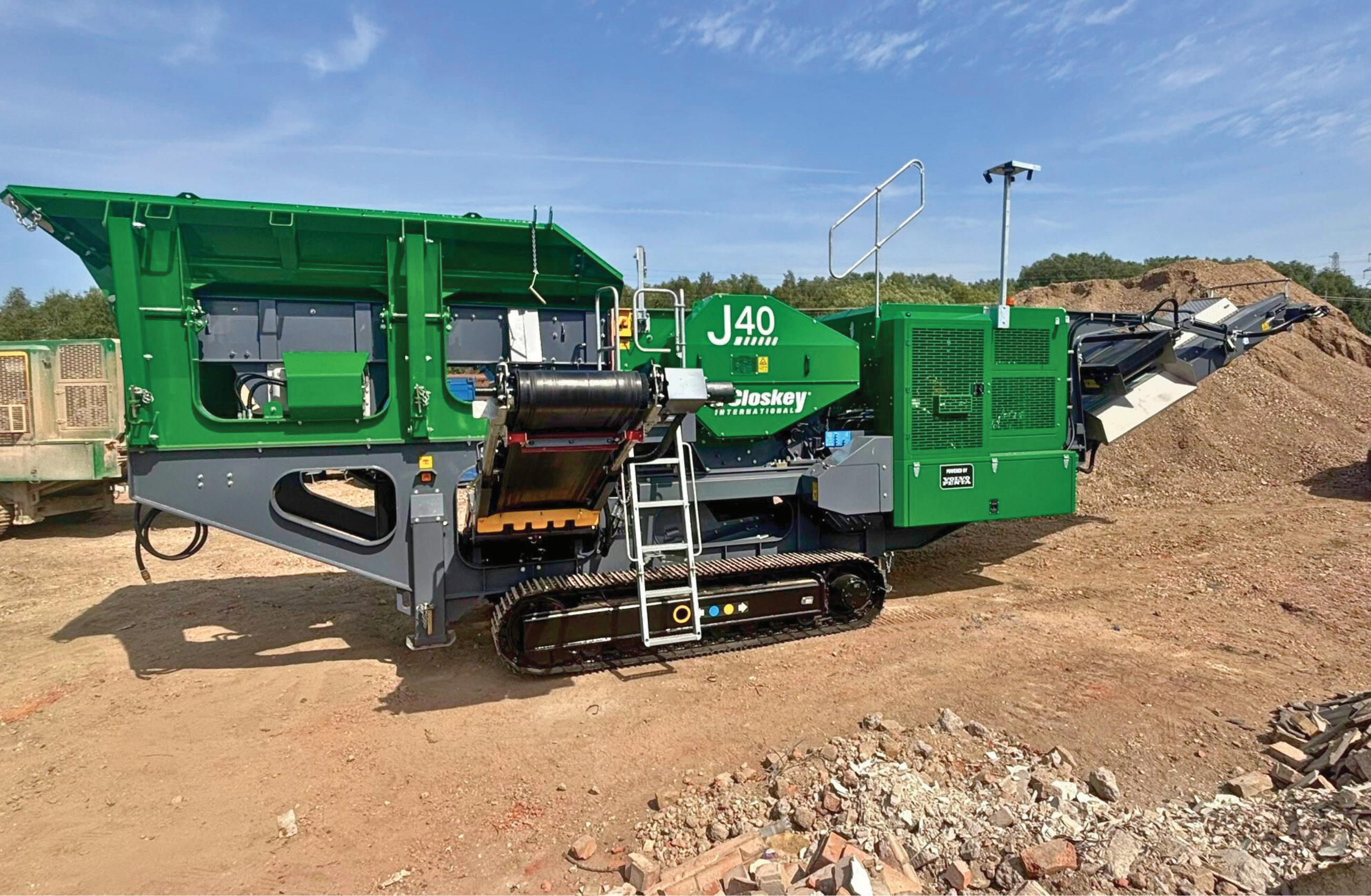

AGGPRO strengthens its partnership with Ultimate Demolition & Construction Service (UDCS), delivering a McCloskey J40 Jaw Crusher designed for demanding demolition environments.
AGGPRO has strengthened its long-standing partnership with Ultimate Demolition & Construction Service (UDCS) by supplying a new McCloskey International J40 Jaw Crusher — a machine purpose-built to thrive in the demanding world of demolition.
The McCloskey J40 Jaw Crusher is designed to withstand the toughest demolition challenges. Featuring a heavy-duty cheekplate design, a 1016mm wide jaw, and advanced machine diagnostics, it delivers uncompromising productivity in a transport-friendly footprint.
Its deep jaw box, rapid jaw speed, and large discharge-to-conveyor clearance ensure even the harshest materials are processed e ciently. At just 2.5 meters wide, it can be easily moved between sites without sacrificing the capacity and durability demolition contractors demand.
For UDCS, the J40 is more than just a machine — it’s a strategic asset that ensures they can continue delivering demolition excellence. Backed by AGGPRO’s expertise and support, this latest addition strengthens their ability to push the boundaries of productivity and precision in every project.
To speak to an expert in demolition and aggregate recycling machinery, contact the AGGPRO team:


+44 (0)1827 280 139
sales@agg-pro.com
www.agg-pro.com

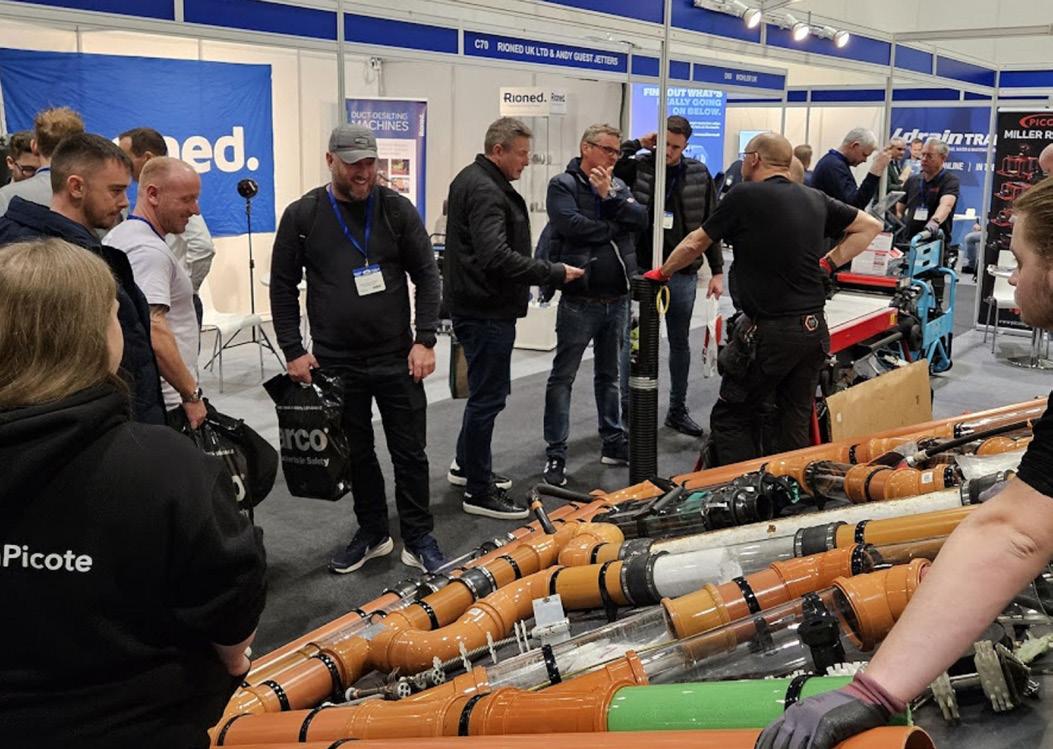
The UK’s civil engineering and infrastructure community is set to converge at ExCeL London on 26th & 27th November, for the National Civils Show – a landmark event uniting professionals, innovators, and industry leaders, driving the future of Britain’s civil engineering and infrastructure environment.
Positioned as the definitive event for the civil engineering sector, the National Civils Show will showcase the latest in construction technology, groundworks, transport infrastructure, geotechnical solutions, environmental engineering, and more. Attendees will gain unparalleled access to cutting-edge exhibitors, live demonstrations, and a dynamic conference agenda featuring some of the most influential voices in UK infrastructure.
Adjacent to the National Drainage & Floodex Show, which also includes waterways management, there is a huge crossover in interest, with very body agreeing that this is the perfect colocation, especially as visitors will be free to pass between the shows without restriction, with no walls between the halls.
With the government’s recent announcement on infrastructure spending, which includes £2,8 billion on flood defences, the National Civils Show arrives at a critical moment for the sector. The show is designed to foster collaboration, tackle industry challenges and spotlight sustainable and digital innovation, shaping the future of construction.
The event is already receiving support from some of the sector’s important players, including: Civil Engineering Contractors Assoc (Southern), Chartered Institution of Highways & Transport (CIHT), National Highways, National Assoc of Drainage Contractors (NADC), Environmental Industries Assoc (EIA), Pipeline Industries Guild, Worshipful Company of Engineers, Plant Planet, Demolition Spotlight and many more.
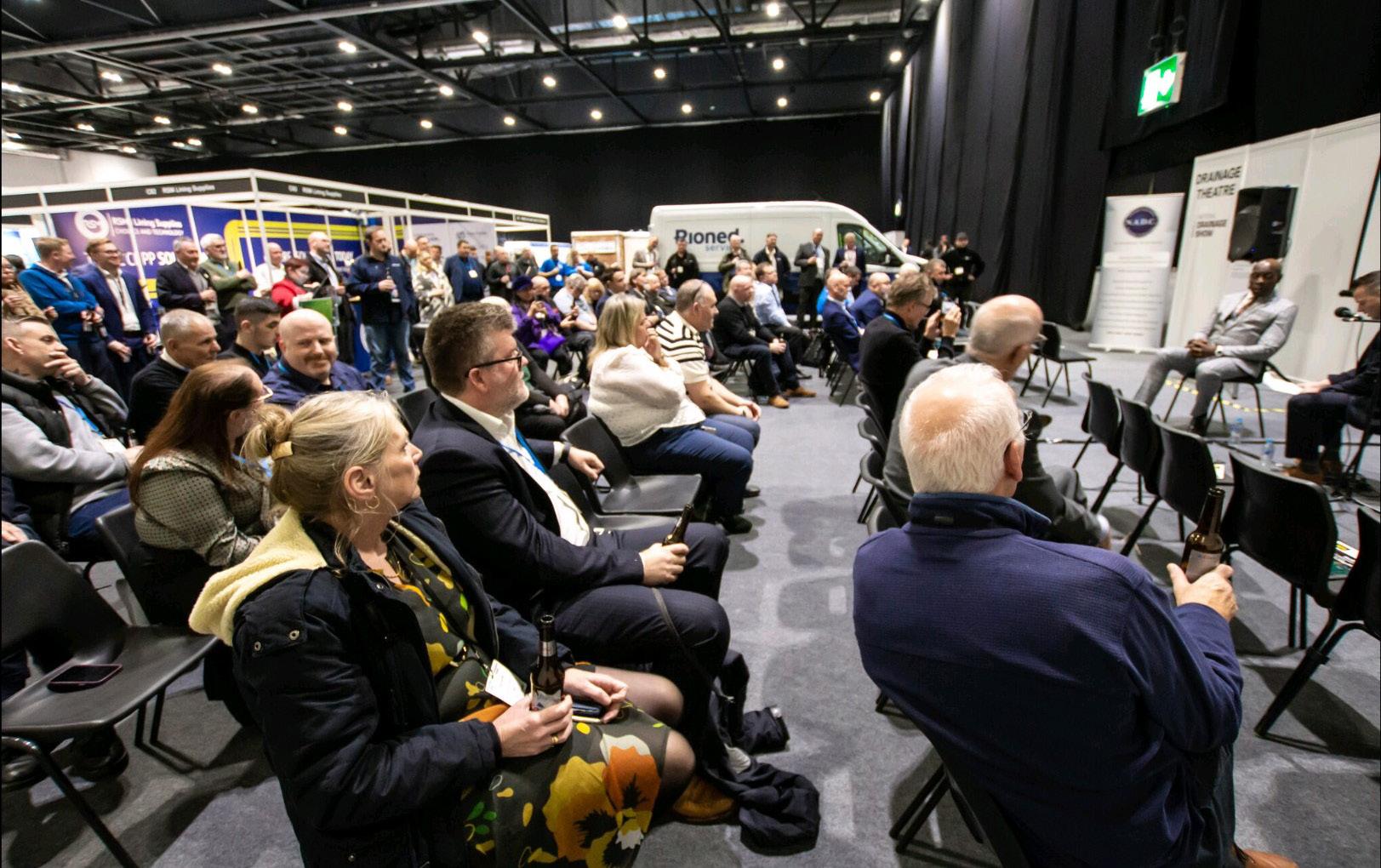
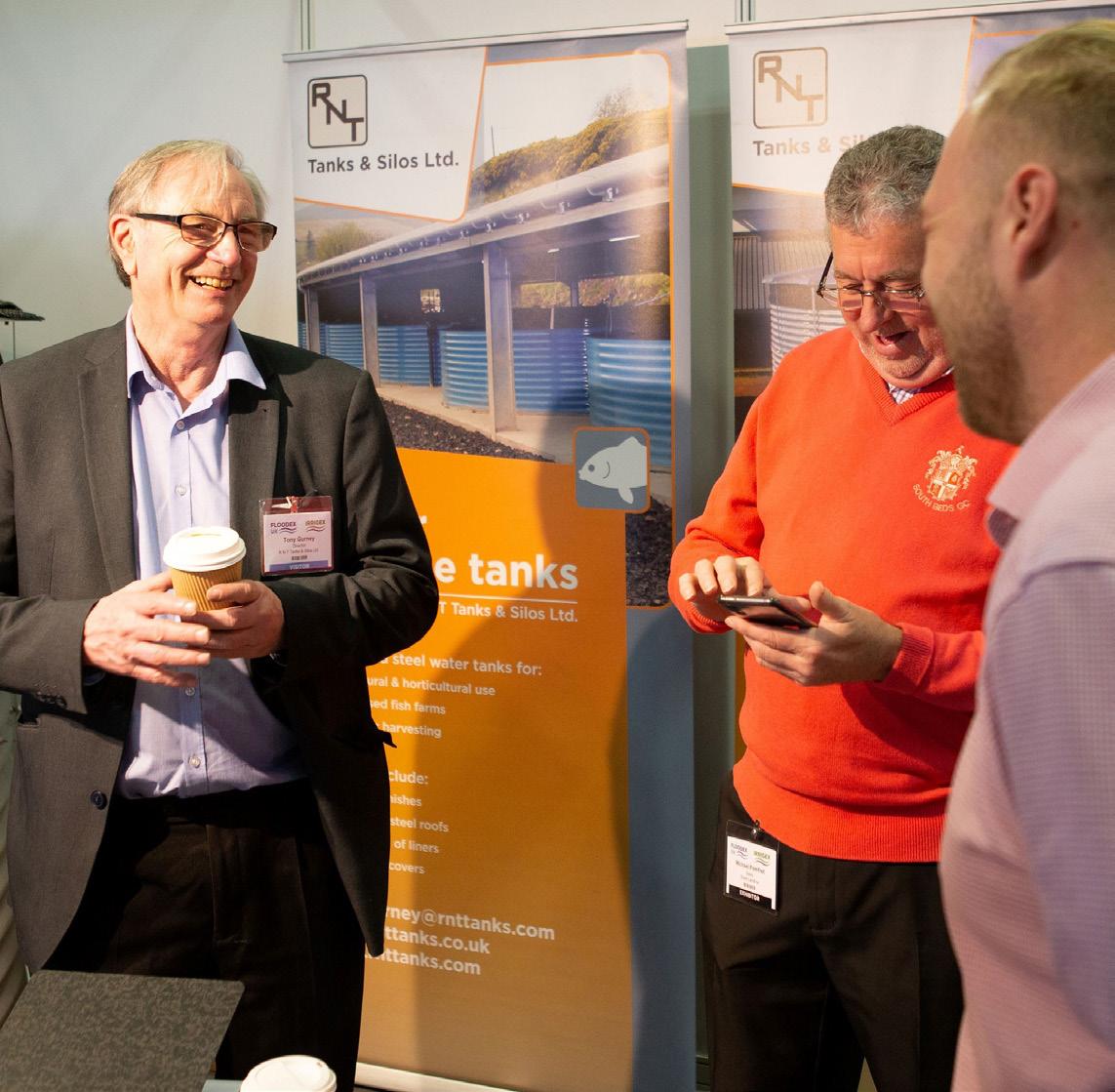
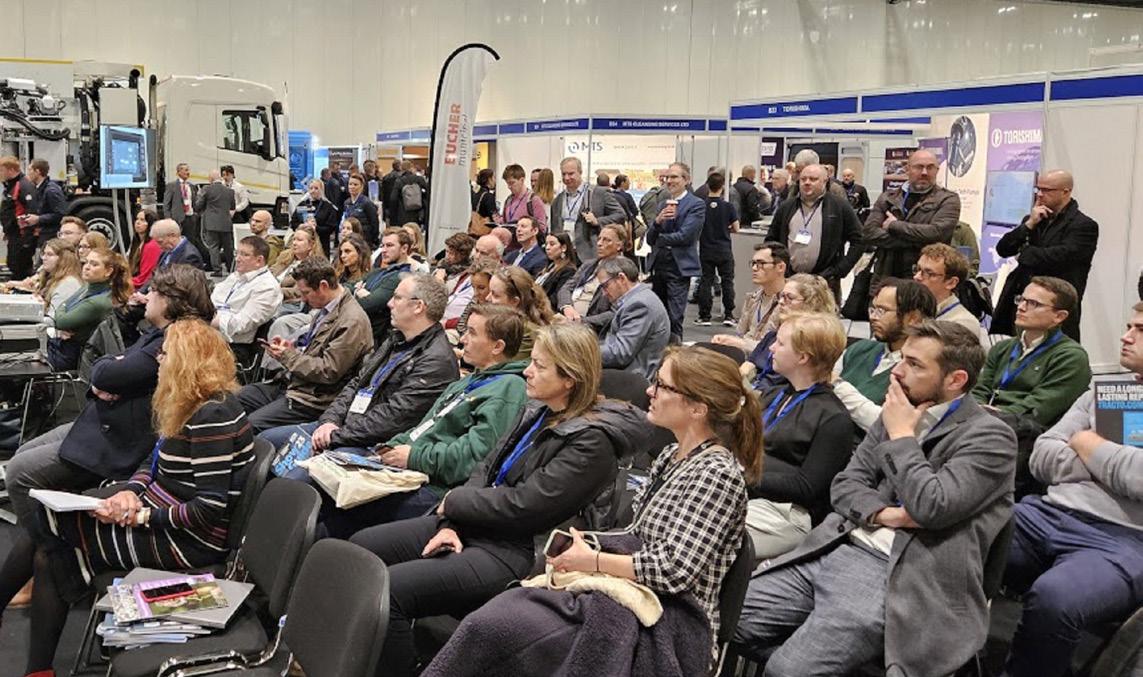
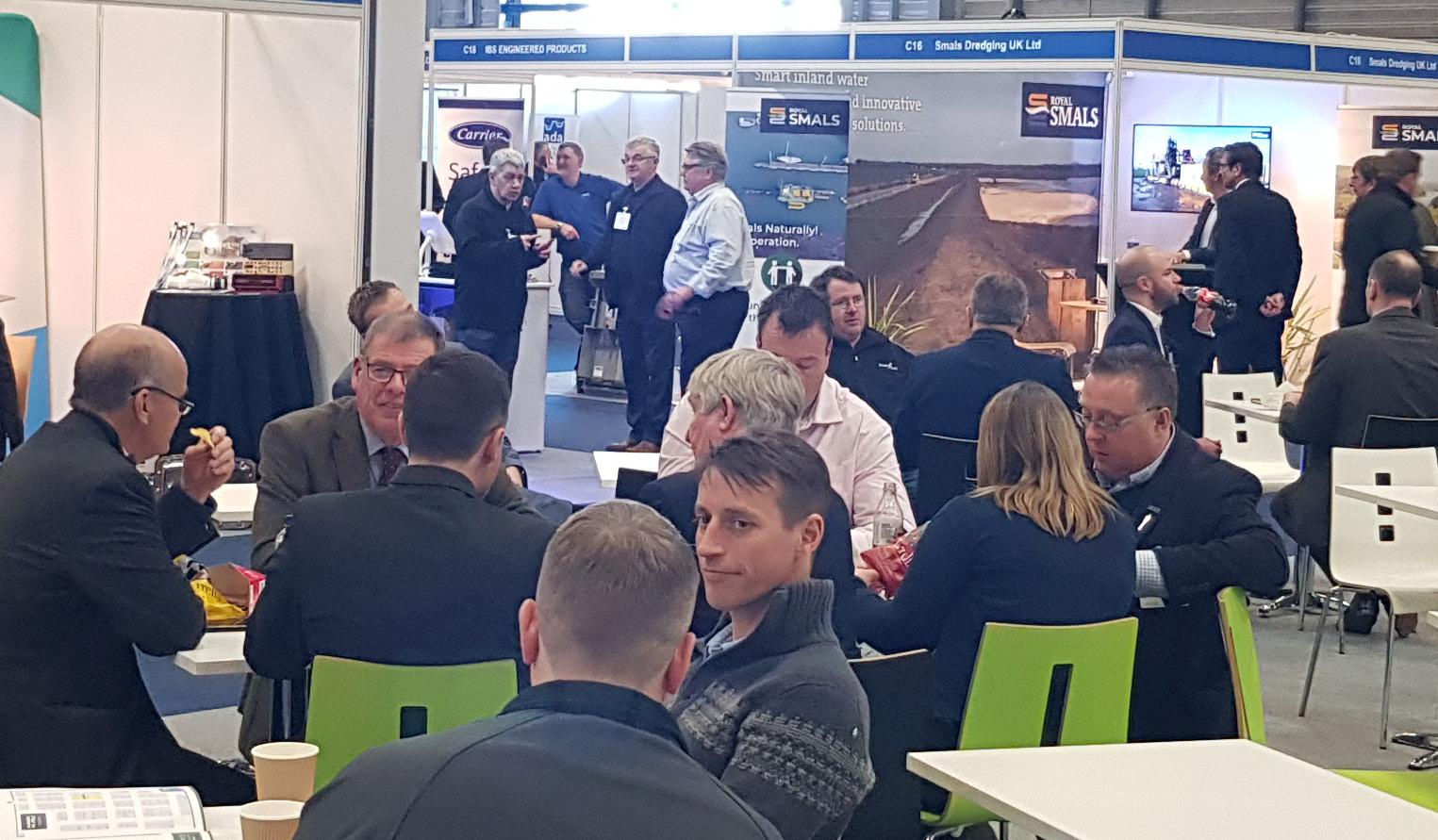
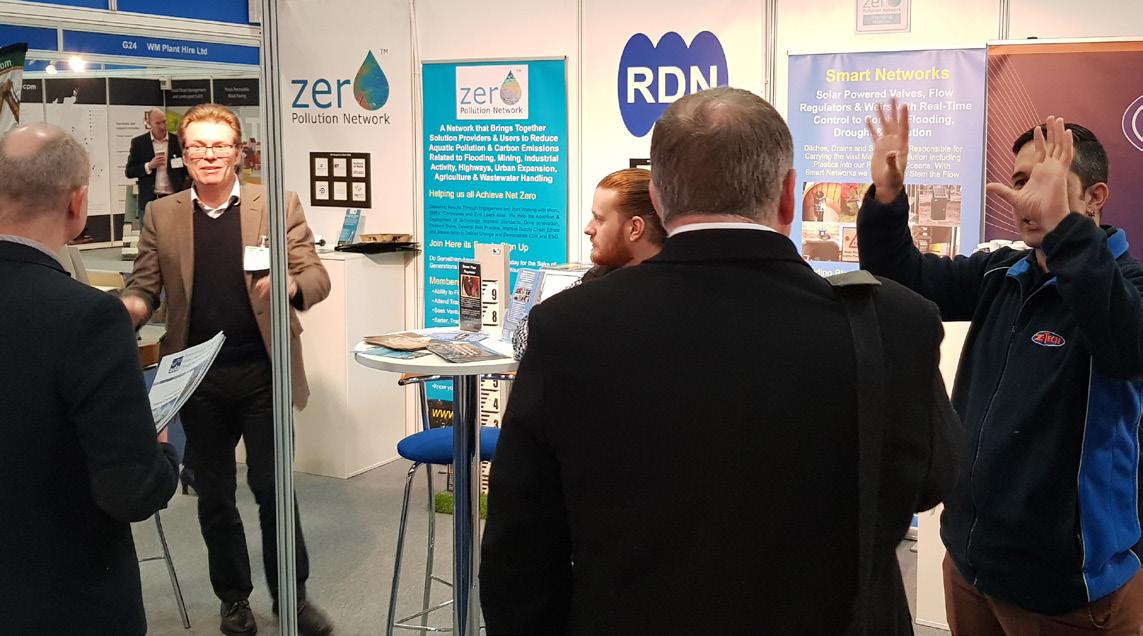
• Nearly 200 exhibitors across the events, spanning all aspects of civil engineering technology, equipment, materials innovation and services, plus drainage & wastewater management, flood prevention and mitigation, along with inland waterways management.
• The way the show is set up is that, not only do we have a major event for civil engineering, but it is running alongside an already successful show, where you have more access to environmental and sustainable solutions than at any other event, including a two-day SuDS theatre. This creates a more holistic environment that delivers so much more under one roof.
• Seminars with talks from senior figures in government, engineering consultancies, manufacturers, innovators and infrastructure contractors.
• Networking opportunities for connecting with buyers, decision-makers, and suppliers from across the UK and Europe.
• Environmental Industries Association (EIA) Pavilion spotlighting innovative companies who are members of the newly formed EIA, offering future-facing technologies and services.
Paul Shelley, Event Director for the National Civils Show, commented: “The National Civils Show is a much-needed platform for the sector—bringing everyone together under one roof to share knowledge, forge partnerships, and celebrate engineering civil engineering excellence. Whether you’re a contractor, consultant, supplier, or policymaker, this is the must-attend event of the year for civil infrastructure.”
Free to attend for all industry professionals, the show is expected to attract thousands of visitors from across the construction, transport, energy, and utilities sectors.
Registration for free entry is now open via the website, where the current, confirmed exhibitor list is also live and will be updated on aa regular basis. The seminar programme will go live on 1st October.
For more info or to register your interest, please see www.civilsshow.com
By Lorna Cowlin
PlantWorx is back for another year!
Hosted
at its new home, the Newark Showground
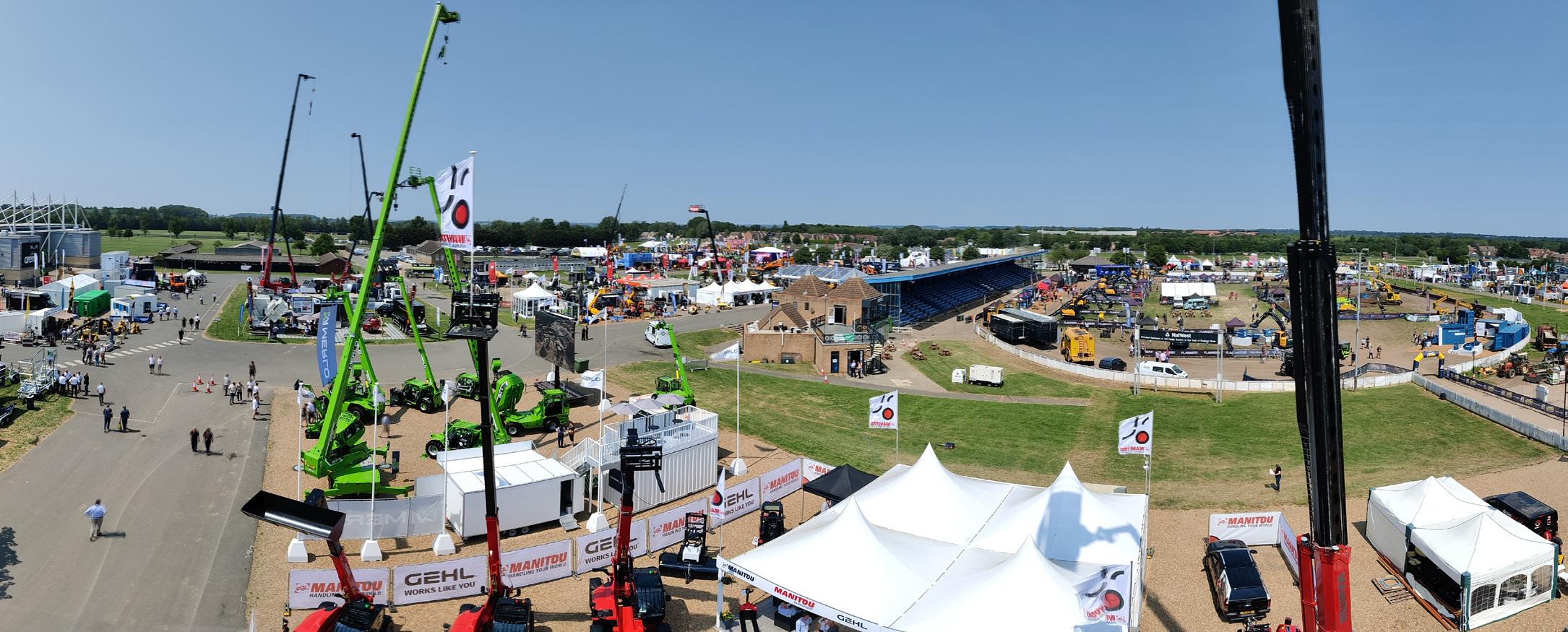
in Nottinghamshire, this is the UK’s largest working construction event in 2025, with 12,000+ buyers, 300+ leading innovations, and three days of live demonstrations!
PlantWorx – the only construction event supported by, and developed in consultation with CEA (Construction Equipment Association) – is packed full of award-winning technology, the latest innovations with 300+ leading suppliers spreading across 126 acres. With the biggest selection of construction machinery and thrilling live demonstrations, PlantWorx is the place to be if you want innovation in action.
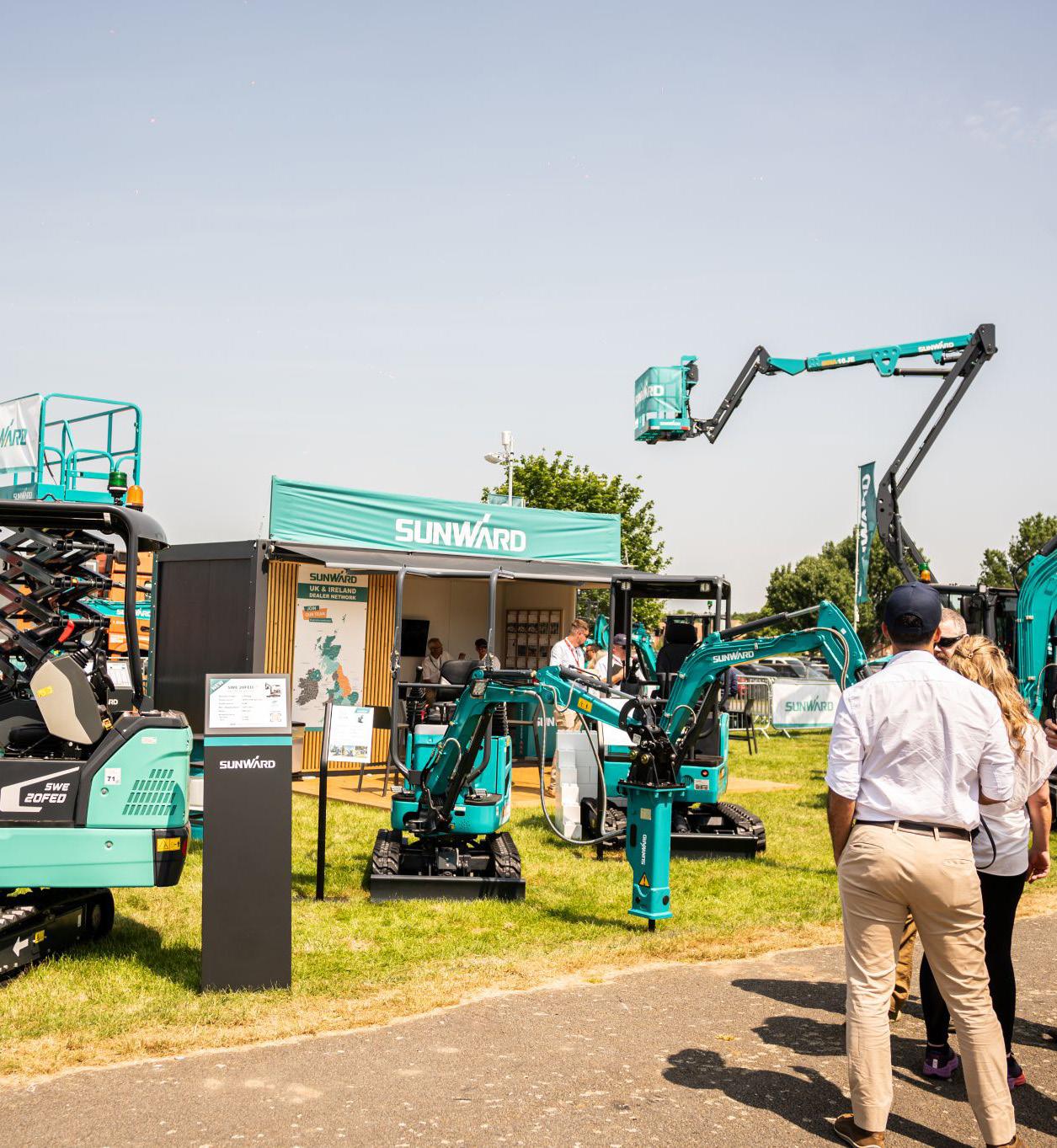
PlantWorx is not only special because of the major addition of showcasing greener construction sites, this is also Demolition Spotlight’s first appearance at PlantWorx! We are thrilled to be bringing Demolition Spotlight alongside Plant Planet, expanding the scope to not just construction, but demolition too.




So, without further ado, what will Demolition Spotlight be seeing at its first PlantWorx…?
AP-Air // Stand Number: PC-07
AP Air is a leading air-conditioning specialist. PlantWorx will be their opportunity to showcase the quality names they stock – such as Denso, Sanden, SPAL and Burgaflex – as well as a wide range of tools and consumables for R134a and YF systems. We can’t wait to see!
Arden Equipment // Stand Number: EB-02
Arden Equipment are all rounders, and there is no limit to what they can do! At PlantWorx, they will have a whole range of their earthmoving machines and equipment on display. They will also promote their machinery and equipment hire, and recycling and demolition. In summary, there will be so much to see!
BPH Attachments // Stand Number: EA-10
BPH Attachments are providers of a wide range of excavator attachments, including hydraulic breakers and grapples, with rental services available, which will be on display at PlantWorx for all to see!
Cabcare // Stand Number: A-28
Cabcare is the UK’s leading manufacturer of vandal guards, handrails, and FOPS-certified demolition and forestry guards for all types of construction, demolition, and forestry machinery. With their products being recommended and fitted by leading OEMs, it’s clear that their stand at PlantWorx won’t be one to miss!
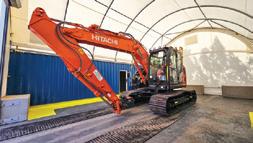


Heating and cooling systems from Eberspächer guarantee comfort and safety in construction machinery, at all temperatures. The thermal management expert will be presenting its comprehensive portfolio for electric, hybrid and conventional drives at Plantworx.
As leaders in the UK equipment rental industry, and offering an extensive range of construction equipment for all sectors, GAP Hire Solutions are your go-to for plant, tools, welfare services, and environmental services, plus so much more. Visit their stands at PlantWorx to see their extensive range and learn more!
Groundhog UK returns to PlantWorx, showcasing a full line-up of mobile and static welfare units. This show gives them the opportunity to further emphasise their commitment to reducing carbon on-site and sustainable approaches. At PlantWorx, they will have their carbon-efficient iRange mobile welfare unit, and a new solar hybrid unit on display, plus more! Head over to their stand to check it out, as well as catch up with the iconic Daisy Hog.
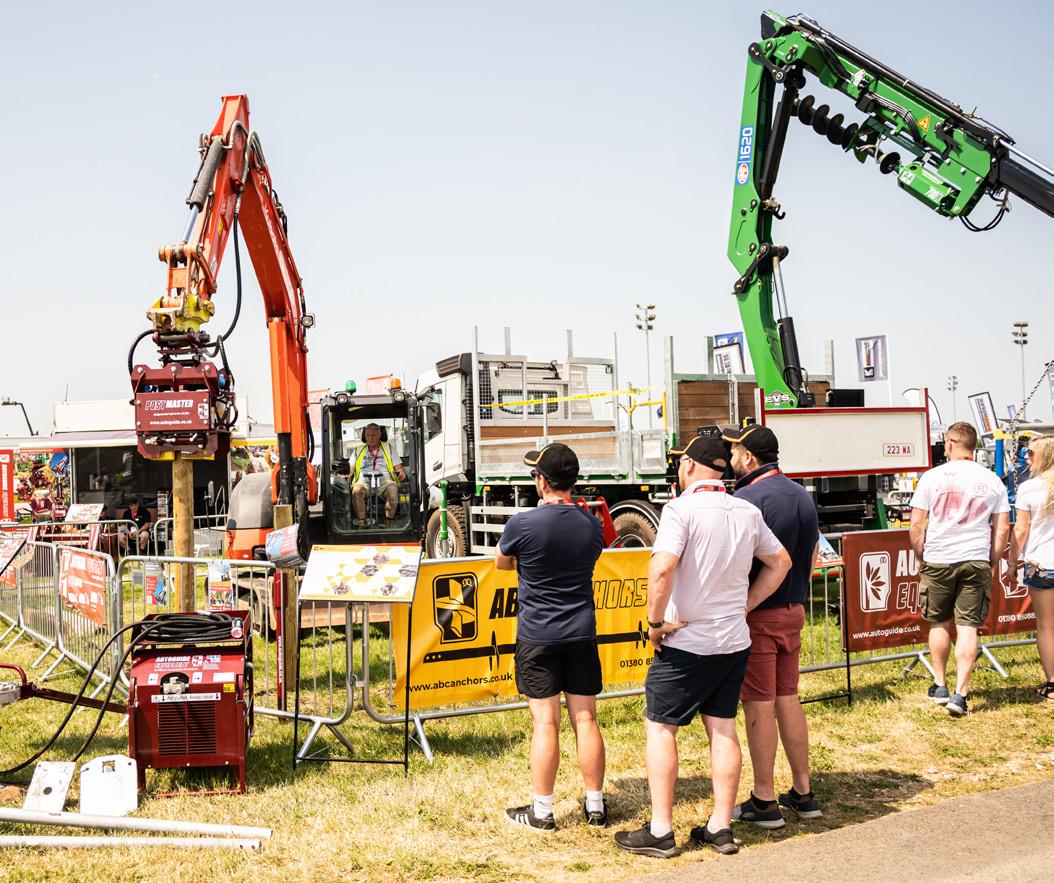
Also returning to PlantWorx is Miller UK, and they will be there to create excitement with their live demonstrations and new product launches! On their stand, you will get to see the GTT hydraulic tilt coupler in action, their new manual coupler, high-impact rippers (1–50t), and mini tilt buckets for compact machines. So much to see!
Not only are New Era Energy exhibiting, they are also the official fuel partner for PlantWorx 2025! Here, they will be supplying exhibitors with clean, reliable Hydrotreated Vegetable Oil (HVO), showing off their commitment to sustainability and their 100+ years of industry experience. What’s not to like?
NOCN Group is an international charity which provides people with future-fit skills, preparing them for Colleges, training providers, employers and individuals, offering support such as:
• Preparation for life and work
• Construction and the built environment
• Engineering, manufacturing, and the green economy
• Health & Social Care
• Education and Management
At PlantWorx, NOCN Group will be there to offer advice and support to all those that need it.
Plant Parts Ltd are the leading supplier of machinery parts for the construction and plant hire industries. PlantWorx is the time for them to re-convey their expert knowledge and excellent customer service. This will only further emphasise their motto: Parts - Repair - Support.
PlantWorx is the opportunity for Probst to showcase their brand-new SM 1200 vacuum lifter, an efficient, cordless solution for all kinds of handling. It’s designed for flexibility, and runs on a rechargeable 12V battery with built-in powersaving, which is enough charge for a full working day.
Perfection!
Red Rhino Crushers // Stand Number: EC-01
As designers, manufacturers, and suppliers of a range of compact crushers and screening equipment, this stand is ideal for construction, demolition, and recycling projects, contractors and enthusiasts. At the show, they will be displaying the powerful 8000 crusher and their first-ever Electric Trommel. Don’t miss it!
Robustrack // Stand Number: A-22
This family-run business is a distributor of quality Italian hydraulic excavator attachments. They pride themselves on delivering top-quality products with service to match, and PlantWorx is their opportunity to push it even further!
Rototilt // Stand Number: A-11a, A-12a
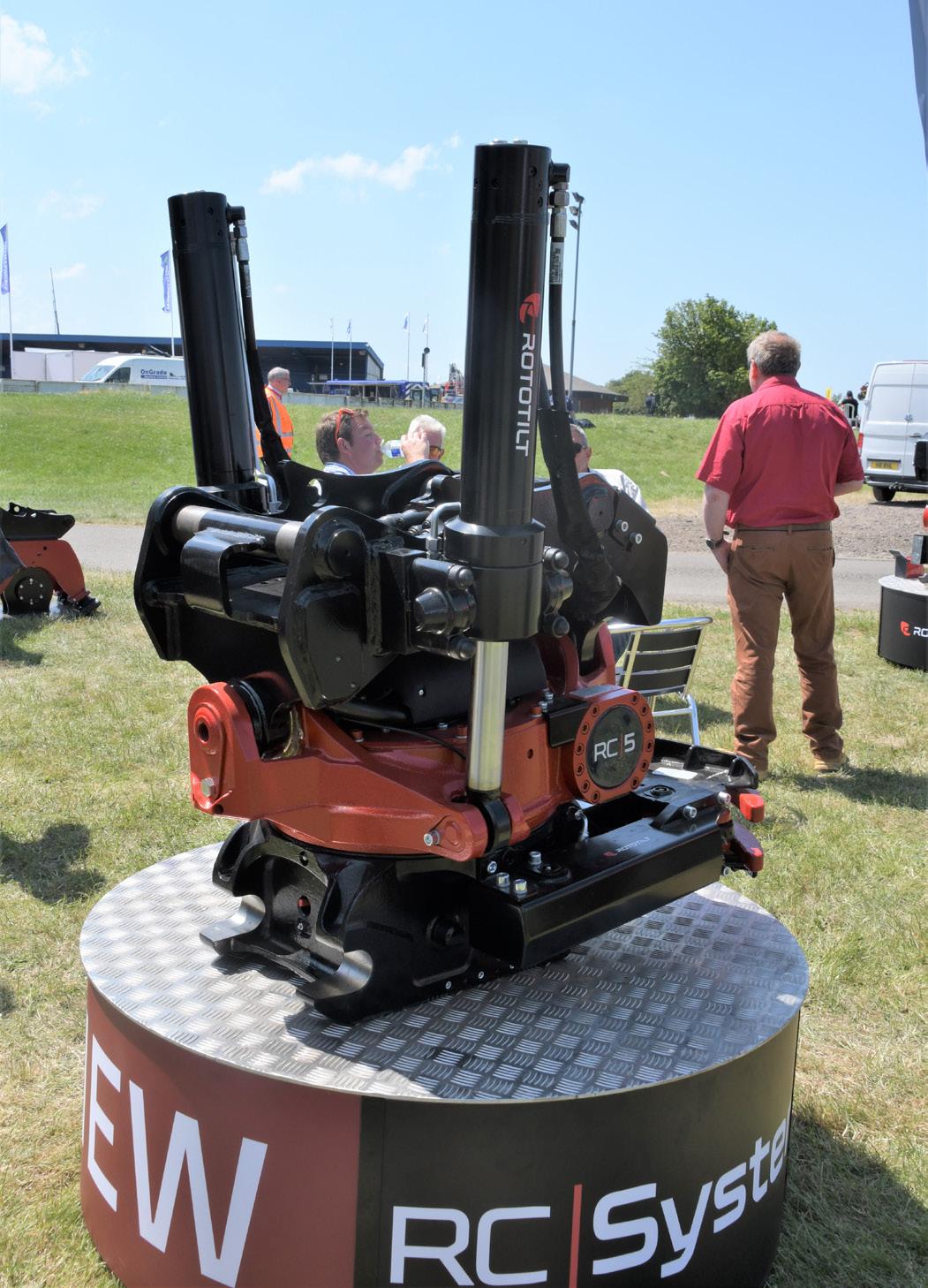
After 35 plus years experience, Rototilt are known for their innovation, trusted engineering and user experience. Here at the show, they will be showcasing a wide selection of its tiltrotator systems and attachments at PlantWorx, covering machines from 1.5 to 43 tonnes.
Steelwrist // Stand Number: A-49, A-50
Known for their innovative tiltrotators and quick couplers, enhancing excavator flexibility and efficiency.
As distributors of electricity for London, the East and South East of England, they deliver power to 8.5 million customers’ homes and businesses through 170,000 km of underground cables and overhead lines. At PlantWorx, the UK Power Networks team will be on hand to share their expertise and guidance.
It’s safe to say that PlantWorx this year is a show that isn’t to be missed! With over 300 exhibitors booked, it’s expected to have a strong turnout. As the PlantWorx team said it themselves, this show is one “of substance”, and is here to deliver across all sectors of construction and demolition. And we can’t wait to exhibit, connect with everyone and explore the show!
As Simon Frere-Cook, PlantWorx Exhibition Director, summed it up: “This event gives contractors and hirers the chance to see equipment working as it would on their site – and speak directly to the people behind it.” We can’t wait to attend!
PlantWorx runs from 23–25 September 2025 at Newark Showground. Visitor registration is now open at: www.plantworx.co.uk
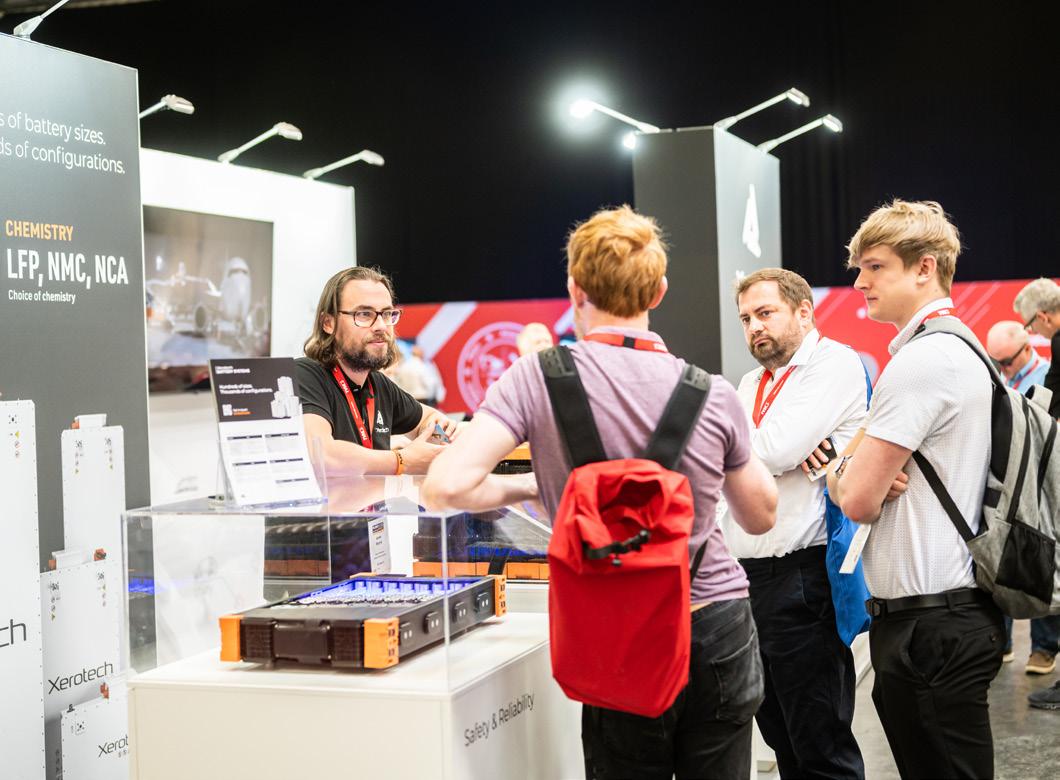
NEC, Birmingham 30 September – 2 October
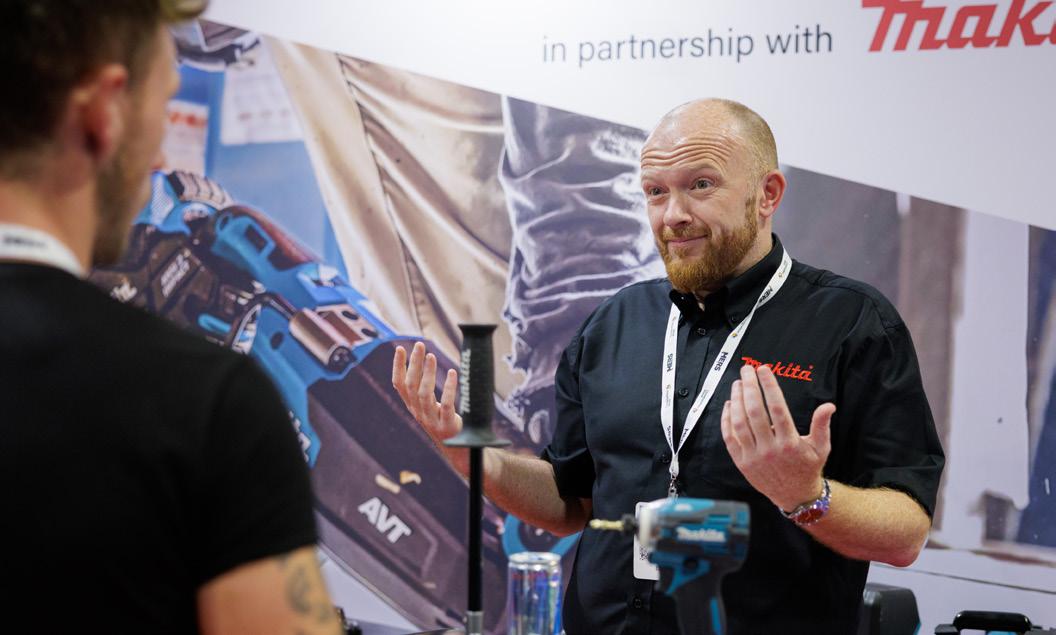
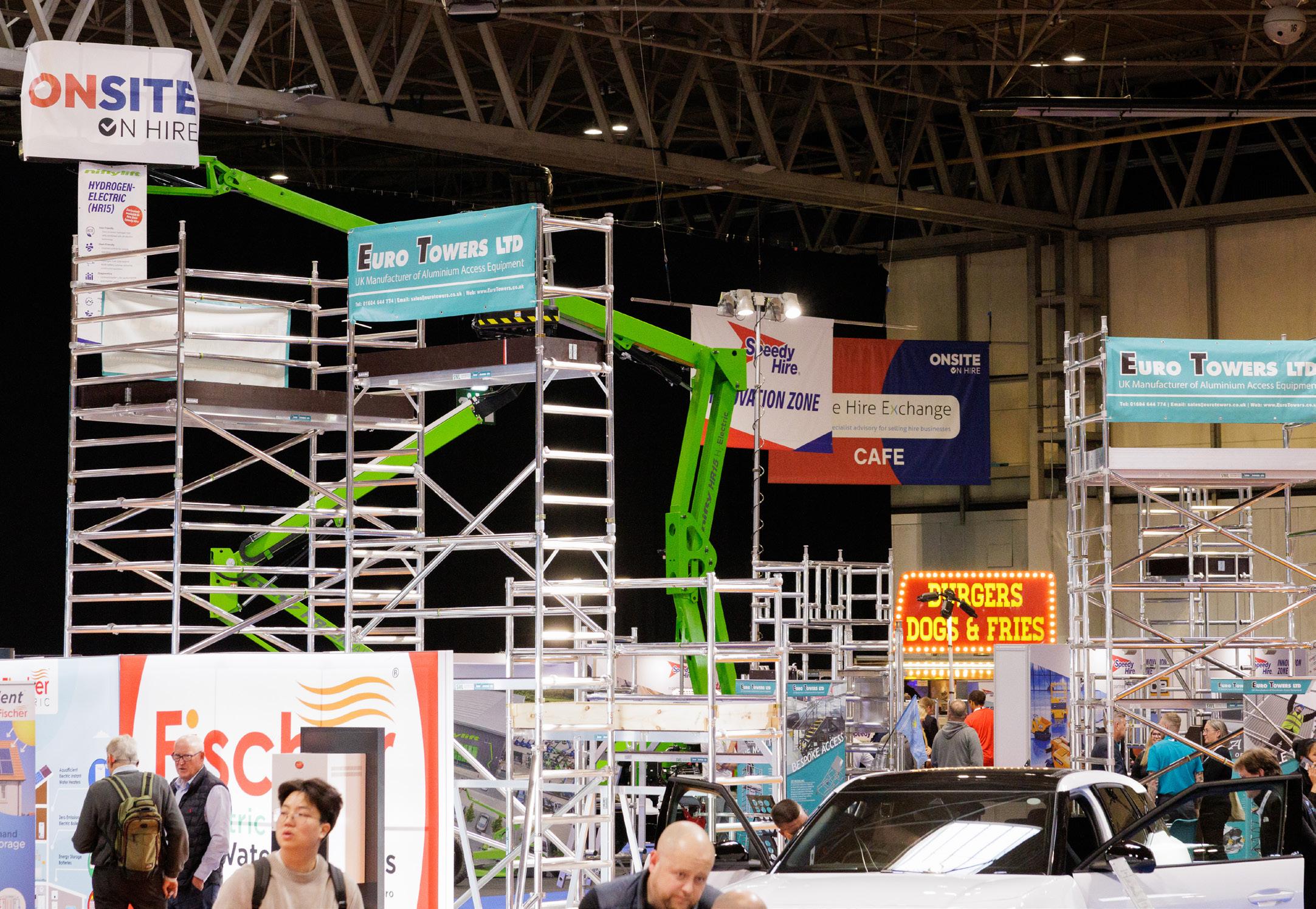
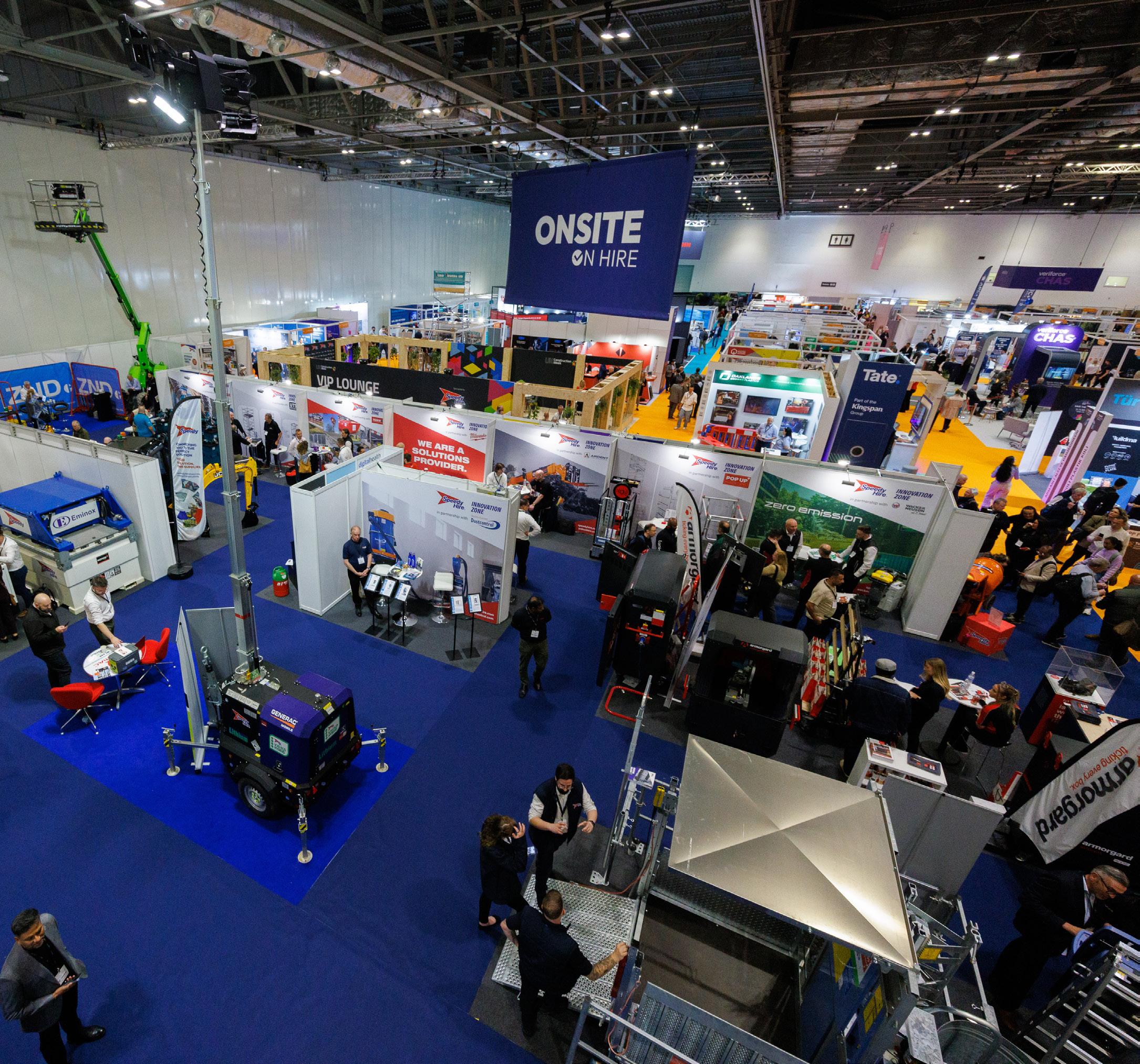
After its successful debut in Birmingham last autumn and following on from a bigger London edition this May, Onsite
On Hire, will continue its theme spotlighting the latest in compact plant, tools and equipment to the construction industry when the doors open on 30th September.
Hire innovation remains the main theme, an opportunity to show the very latest equipment used on construction sites: Onsite On Hire is supported by the Construction Plant-hire Association (CPA) and this latest edition of the showcase will again continue to put the spotlight on low-carbon, battery-powered and hybrid solutions with the introduction of a central ‘Green Zone’ which will feature everything from solar welfare cabins and generators to electric/ hybrid compact plant and energy management software that slashes CO₂ output and fuel costs.
“We expect to supplement the visitor profile of tier one and two construction visitors with hire companies (both independents and multiples) looking for latest industry developments to add to their hire fleets this autumn” says Neil Gaisford, Construction Director, Media 10 organisers of UK Construction Week.
No hire showcase would be complete without a networking area right in the centre of the event so industry contacts old and new can have an opportunity to catch up or make introductions. The popular Onsite On Hire Café makes its return this autumn.
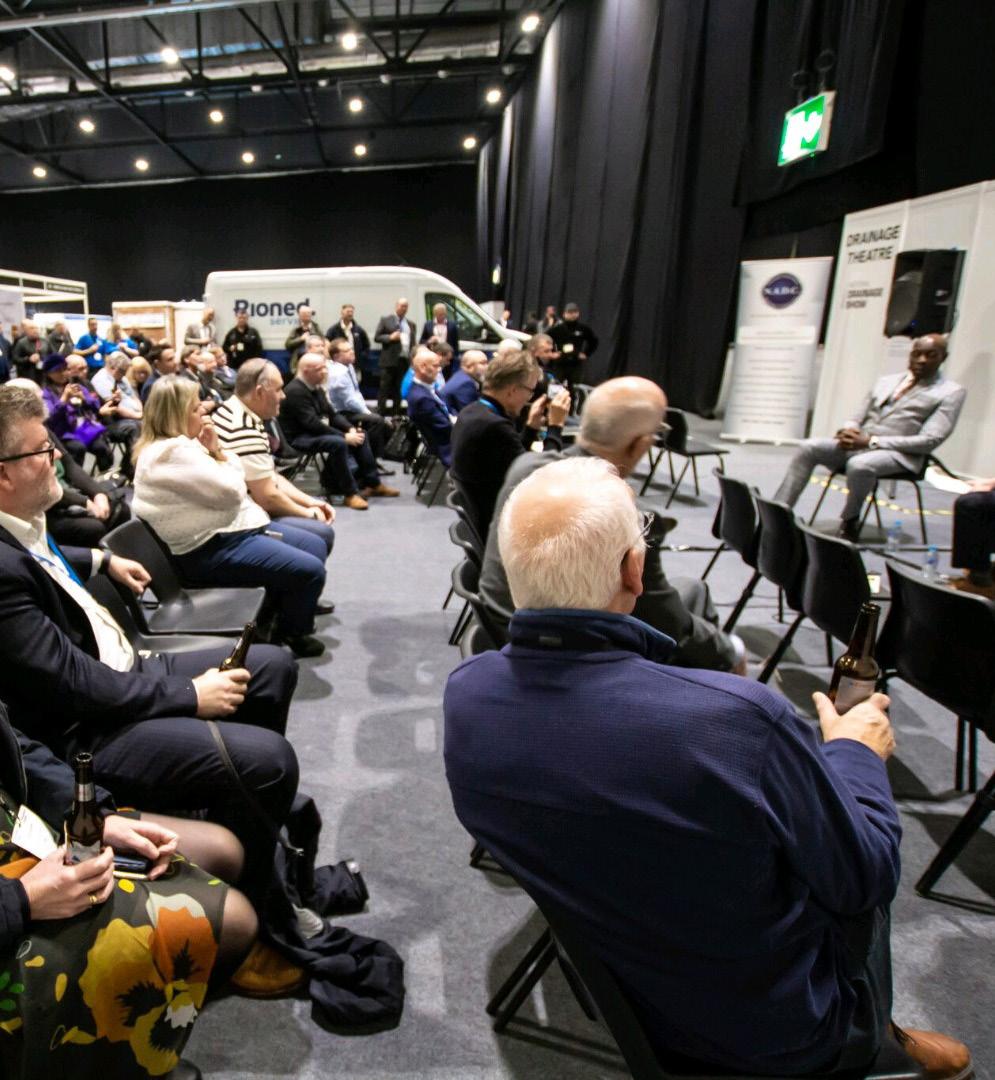
Onsite On Hire will be a co-located event at UK Construction Week, celebrating its 10th anniversary in 2025. As the UK’s premier built environment event, UK Construction Week will gather over 300 exhibitors and 200 speakers, offering free CPD sessions and extensive networking opportunities. Top names confirmed to exhibit include Rock Roofing Products, Don & Low, Licata Building Systems, Cure-it Composites, Creagh Concrete, O’Reilly Precast and PlanRadar.
The CPA’s Chief Executive Officer Steve Mulholland will join the programme on the Net Zero Theatre which has a focus on the construction industry’s vital role in addressing climate
change. With the built environment accounting for a significant share of carbon emissions, this stage dives into practical solutions, technologies, and case studies that support the race to net zero. Visitors will gain insights into decarbonising construction processes, retrofitting buildings, and embedding sustainability across the supply chain.
1. Low-Carbon Construction: Materials and Methods
2. Retrofitting the UK’s Building Stock for Energy Efficiency
3. Heat Pumps, Solar, and Future-Ready Building Services
4. Whole-Life Carbon Assessments and Reporting Standards
With top interactive product showcases at Onsite On Hire and insights and talks available to all delegates, you can attend free of charge.
To register free for Onsite On Hire and UK Construction Week visit: ukconstructionweek.com
Push limits. Smash barriers. Break boundaries. And when you’ve conquered all those obstacles? You discover your full capacity for greatness. World of Concrete delivers all the real-world solutions that will crush your challenges and take your expertise to new heights. Growth opportunities are everywhere, whether you’re getting hands-on with game-changing tools and tech or shaking hands with your future partners. Ready for maximum success? Nothing’s standing in your way.

ACHIEVE PEAK PERFORMANCE

VIEW GLOBAL EVENTS
EXHIBITS: JANUARY 20-22, 2026
EDUCATION: JANUARY 19-22, 2026
LAS VEGAS CONVENTION CENTER


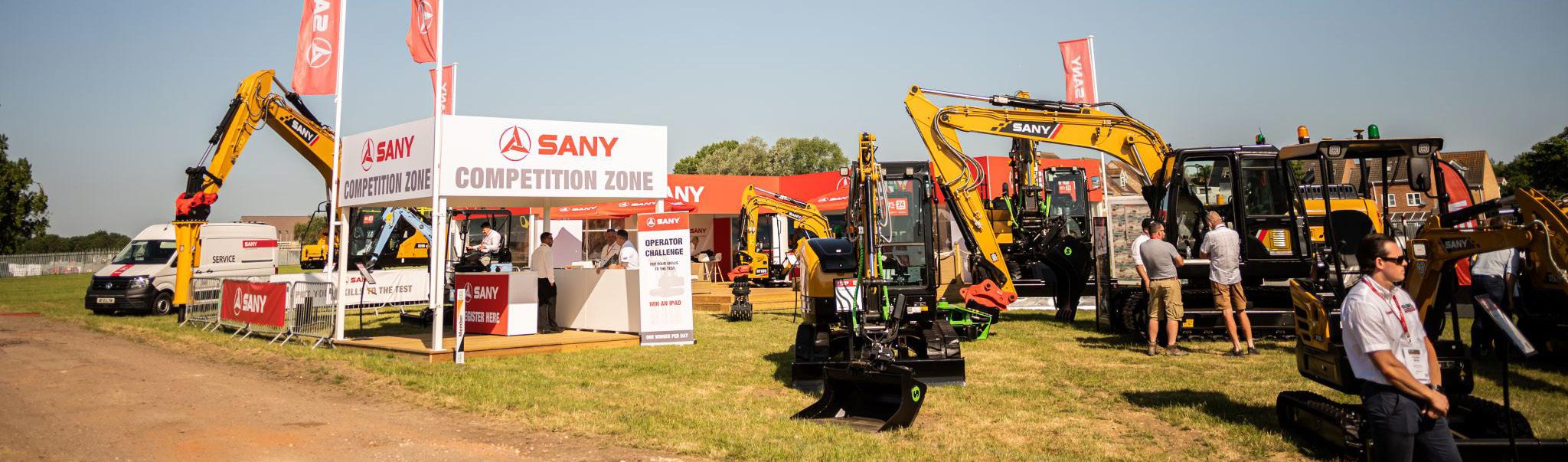
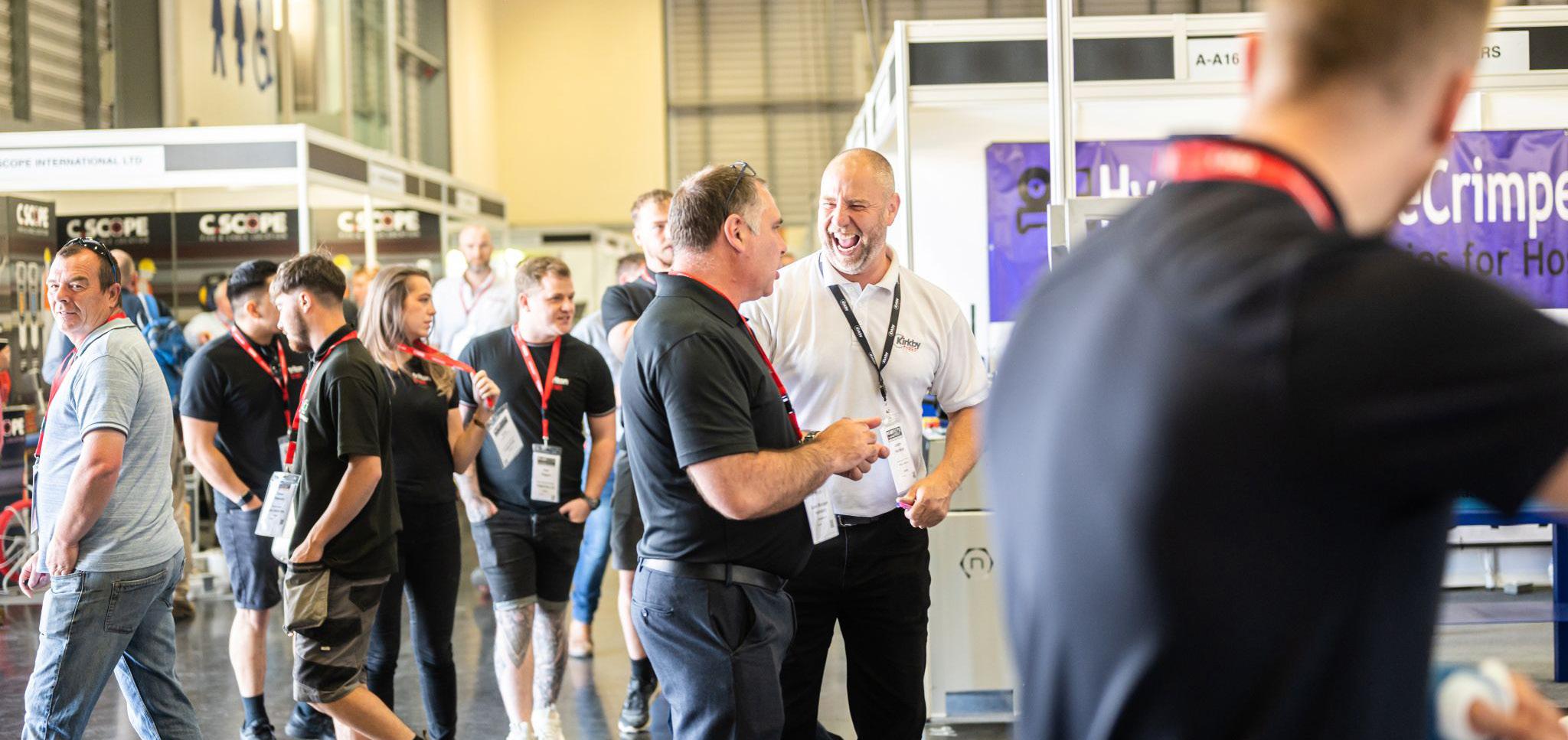
With PlantWorx 2025 just around the corner, the Show is set to be one of the most significant shows yet. Taking place from 23–25 September at Newark Showground, the sixth edition of the UK’s largest working construction exhibition will bring together more than 300 exhibitors – an increase on 2023 – including an impressive 105 first-time participants, with more exhibitors signing up daily.
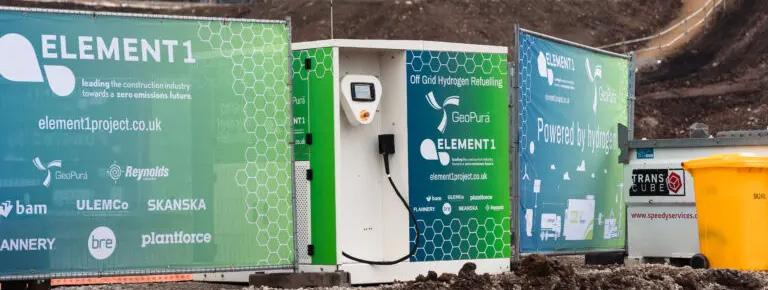
These newcomers add real depth and variety to the show. GeoPura will demonstrate its hydrogen power solutions; Zoomlion and Shantui bring heavyweight global machinery; Dieci Telehandlers and Compact Loaders UK expand the equipment choice on display; and Watson & Hillhouse with MOVAX will showcase advanced piling and foundation solutions.
Technology is also surging forward with Motormax launching its OnSight safety system specifically for heavy-duty plant vehicles used in construction, Cat Simulators offering immersive operator training simulators, including their new excavator simulator, alongside VR paving and CTL training.
VisionTrack with AI-powered camera technology, and Ram Mounts showing specialist mounting systems. Clean streets meet construction with Scarab Sweepers, while Kramp will showcase practical solutions including technical sprays, LED lights and light bars, and its Workshop Solutions display — a connected storage system that restocks items via the Kramp app, Site-Arc, will showcase its patentpending tracked welder, Eco Hire and Sleep Space will show temporary accommodation and welfare facilities designed for modern construction sites, and Volumech, a UK specialist
in volumetric concrete mixer refurbishment and servicing together highlight the strength of the UK’s supply chain and specialist services.
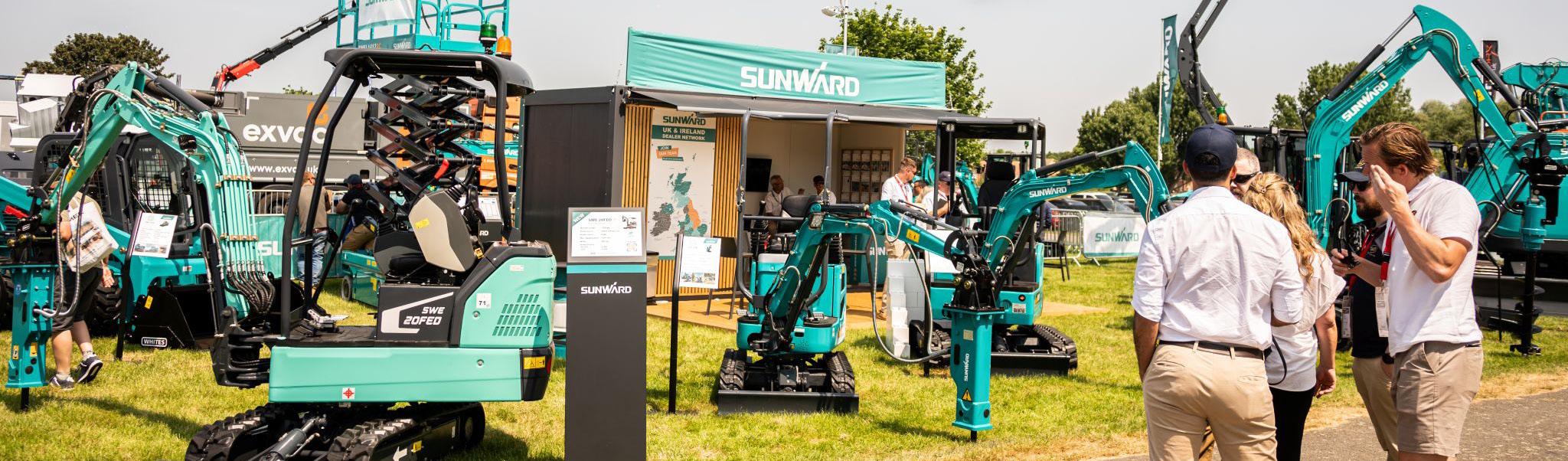
They’ll join an already formidable exhibitor base. Sixteen of the world’s top 50 construction equipment manufacturers are confirmed, including Caterpillar (through its dealer Finning), JCB, XCMG, Kubota, HD Hyundai, and SANY, alongside Manitou, Fayat, Takeuchi, Lonking, Sunward, Hidromek, Merlo, Yanmar, and the fast-rising Zoomlion. Collectively, these brands represent more than 30 per cent of the Yellow Table, underlining PlantWorx’s significance as a platform for international business.
And it doesn’t stop there. PlantWorx partners, the Site Sustainability Showcase — with its exhibitors delivering real-world low-carbon solutions — the Rethinking Futures education programme, and the Awesome Earthmovers Operators Challenge in association with JCB all add to the variety and pulling power of the 2025 show. The Innovation Awards, revealed on the evening of day one, will celebrate breakthrough products that are redefining construction.
Visitors will also be able to see the finalists of the 2025 PlantWorx Innovation Awards first-hand, with all shortlisted products on display – many of them in action across the showground. A record number of new machine launches from the industry’s heavyweights will headline the event, while the sheer variety on offer is unmatched. There will be more suction excavators on show than ever before, game-changing safety products from the likes of Xwatch safety Solutions and Spillard, compact machinery for every application, and the very latest in detection and telematics. Add to that a few
curveballs from lesser-known innovators, and PlantWorx 2025 promises to be the technology event of the year – delivering choice, competition, and a phenomenal showcase of where construction is heading.
Spanning a showground the size of ten Premier League football pitches, PlantWorx remains the only UK exhibition where visitors can see machines working side by side in real conditions. Demonstrations, test drives, and a dedicated indoor tech zone focused on support products, connectivity, and digital control systems ensure there is something for every corner of the industry.
Simon Frere-Cook, PlantWorx Operations Director, said: “With more than 300 exhibitors already confirmed – including 105 new names – PlantWorx 2025 is set to be one of our most significant shows yet. The strength lies in the mix: global OEMs launching record numbers of new machines, safety innovators changing the game on site safety, and specialists bringing technologies that range from hydrogen power to advanced telematics. Whether you’re here to see the heavyweights, discover fresh ideas from first-time exhibitors, or experience breakthrough products in action, PlantWorx 2025 will be the place to do it.”
PlantWorx 2025 is owned and delivered by the Construction Equipment Association (CEA) and is expected to welcome more than 12,000 visitors across its three-day run.
Free registration is now open at: plantworx.yourticketpurchase.com/p/visitor
For more information and a full list of exhibitors visit:

From solar towers and hydrogen hybrids to electric excavators, smart fuel hubs and fast charging solutions, PlantWorx 2025 will put sustainability at the centre of the industry conversation. The Site Sustainability Showcase (SSS), running across all three days of the show from 23rd to 25th September at Newark Showground, will bring together technologies and systems that are already helping contractors, hirers and OEMs move towards cleaner, more efficient sites.
Delivered in association with the Construction Plant-hire Association (CPA), with headline sponsor Prolectric and support from Certas Energy, Volvo Penta, DF Capital and the Supply Chain Sustainability School, the Showcase will demonstrate how different solutions can be used together as part of a working set-up. Positioned alongside the Recharge Café, supported by DF Capital, it will showcase practical ideas and demonstrations throughout the event.
Visitors can expect to see a wealth of innovation on display. Flannery will present a 20-tonne LiuGong electric excavator, while Lynch is bringing a Komatsu 13-tonne PC138E-11. Plantforce, working with Ulemco, will showcase a hydrogenhybrid excavator and a mobile hydrogen refuelling unit. Ramcrete will put the Schwing 1800E electric concrete pump to work, and Camfaud will demonstrate its Putzmeister M36-i model. City Lifting will roll in a plug-in hybrid truck-mounted crane, while Select Plant Hire is providing a Faresin electric telehandler, plus electric and battery-driven portable air compressors and battery tools.
Beyond the heavy kit, alternative power and fuel will be strongly represented. Prolectric’s solar and battery systems will supply much of the energy needed for the Showcase itself, powering welfare and compact machinery through its ProPower and ProCharge units. Certas Energy will highlight its renewable HVO diesel, cutting greenhouse gases by up to 90%, while New Era’s Fuel Box offers a more sustainable refuelling option. Templant will have ultra-silent Stage V generators ready to connect to charging systems, and Volvo Penta will demonstrate its energy-dense BESS subsystems.
Portable and small-scale power is also in focus. Instagrid will demonstrate battery systems for tools and site equipment, while AMPD Energy will present a quieter, cleaner energy storage system. Speedy Hire is bringing hydrogen energy storage units to the Showcase. Nixon Hire will highlight ecofriendly modular welfare units, while Conquip’s Fuel Eco-Hub shows how smarter site fuel management is reducing waste.

Charging infrastructure will also be part of the Showcase, with Zenobē presenting its Zerova DS150 solution, ensuring that the growing fleet of electric machinery and vehicles can stay powered on site.
Digital systems will play an equally important role, with Hiboo’s telematics platform, via Halomec, offering mixed-fleet monitoring of usage, efficiency and emissions. The Supply Chain Sustainability School, a participant in the Showcase, will provide training and resources to help businesses build the skills needed for a low-carbon future.
The CPA will be conducting practical technology walkthroughs throughout the event, engaging with visitors and policymakers. Luis Bassett, CPA’s Decarbonisation & Sustainability Manager, said:
“This is about showing what works today, while also being open about the challenges. Infrastructure, site constraints and the pace of availability all have an influence, but there are practical steps that can already be taken to reduce diesel use and emissions. Policy makers need to be aware of these constraints and support emerging technology, including those that aren’t fully zero-emission. The Showcase will give a joinedup view of how different solutions can be applied together.”
As well as demonstrations and live data, the Showcase will host dedicated briefings for government bodies, regulators, local authorities and environmental organisations. These sessions will ensure decision-makers understand the realities faced on site, and the opportunities that current technologies can already unlock.
For PlantWorx visitors, the Showcase will be an unmissable stop. It’s a rare chance to see a broad mix of hydrogen, electric, solar, battery, hybrid and charging solutions presented side by side — with the emphasis firmly on practicality, integration and readiness for work.
PlantWorx 2025 takes place from 23rd to 25th September at Newark Showground. Visitor registration is now open at www.plantworx.co.uk
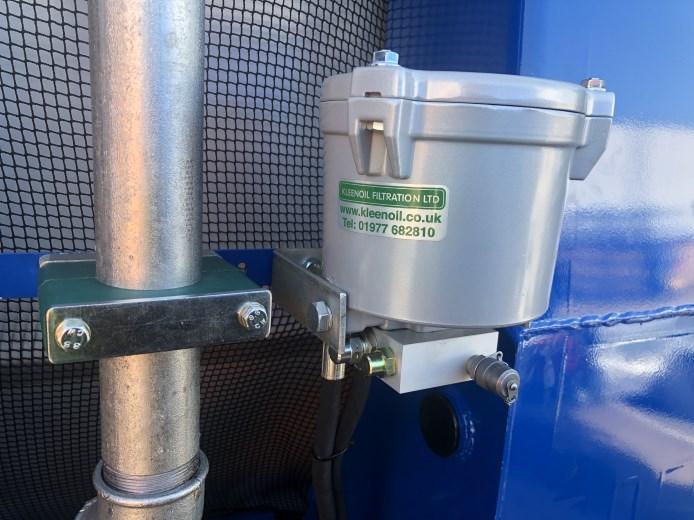
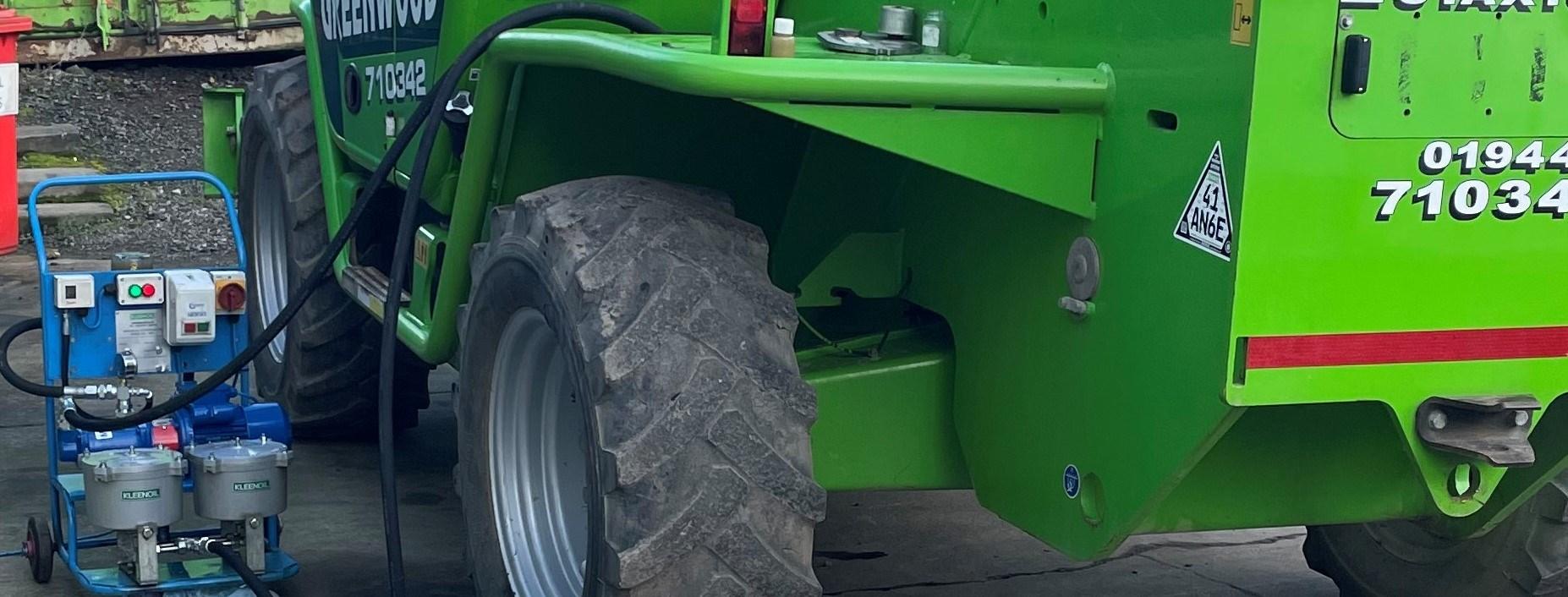
Remove DIRT & WATER in the same mobile application
Affordable and easy to change out replacement cartridges
Kind to the planet – as a natural, sustainable product
Save waste costs, replacement value and labour
Simple ‘plug and play’ application
Site permanently on a problematic machine or on a rotational cleanse across your fleet

Whether it be to tackle one off contamination issues, or as a permanent fix to heavy use equipment to protect pumps, valves & cylinders etc.. or as a rotational cleanse on off-hire equipment.
KLEENOIL offer a completely free trial at your site ; with before and after independent oil analysis.

By Lorna Cowlin
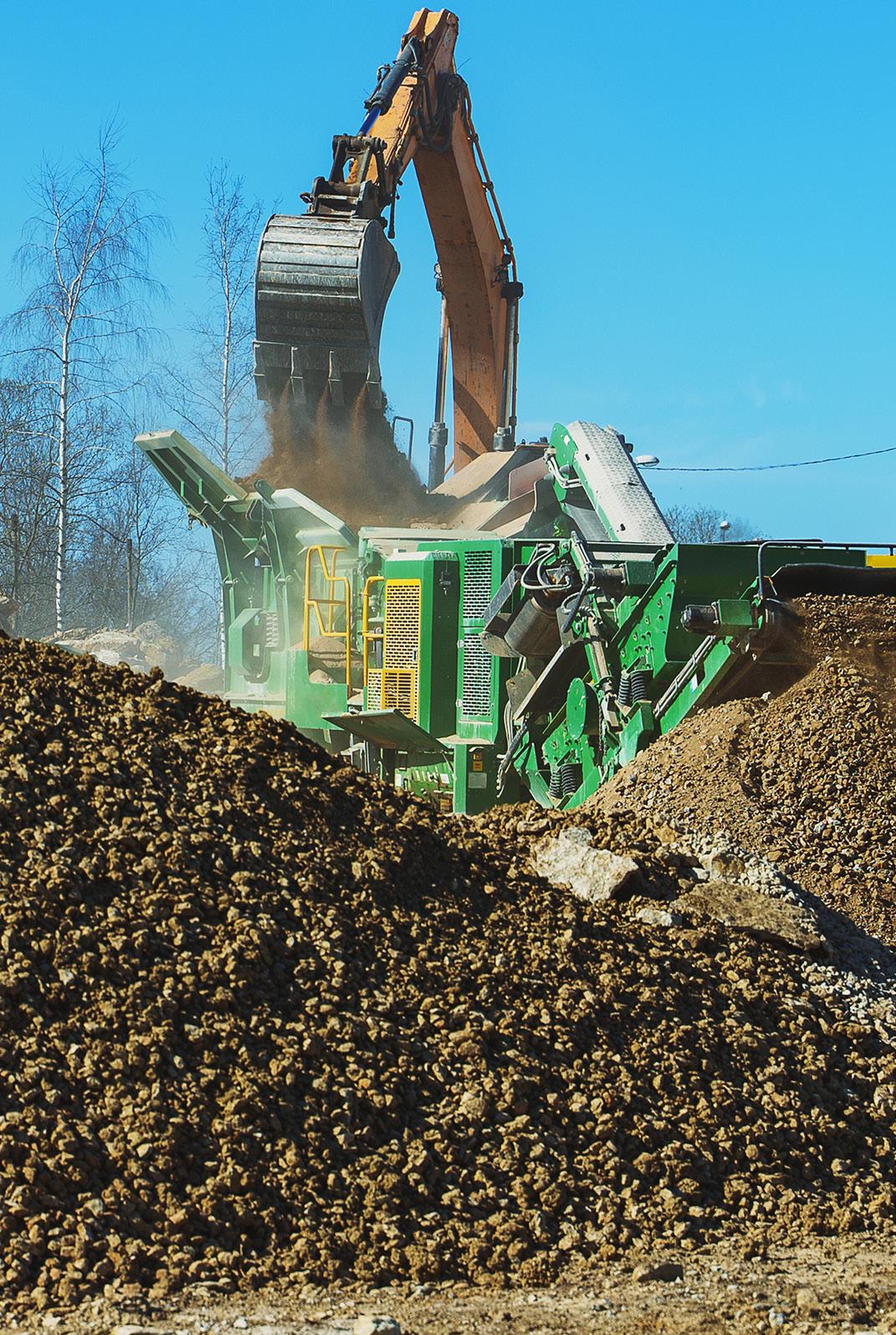
It’s no secret that the demolition industry is crushing it… literally. But what goes on behind the scenes when it comes to the right machinery, especially with crushers and screeners?
Demolition sites are exciting. Watching a building get knocked down? What’s not to like! But there is a lot that goes on behind-the-scenes that makes demolition projects uber safe and productive. After all, it isn’t about demolishing quickly, it’s about demolishing safely. But what products do that? Which is the best machinery to use to get the job done efficiently?
Well, to put it simply: lots! But, to make this article interesting, we’re not going to look at things simply. As if this is a demolition site itself, I’m going to break down the process for a smarter clean-up! And when it comes to machinery, the best on the site appears to be crushers and screeners.

Crusher by name, crusher by nature, these bad boys do exactly what they say on the tin! When you think of demolition projects, your first thought is buildings being torn down, wrecking balls, mass destruction and maybe even explosions. Whilst this isn’t always the case, and is often more of a Hollywood-approach rather than reality, there are lots of heavy machinery that do this sort of thing. And crushers are one. Crushing is the first part of this process on-site, and this entails using heavyduty equipment to break down large debris into smaller, manageable pieces. Common crushing equipment used:
• Jaw Crushers
• Impact Crushers
• Cone Crushers
• Mobile Crushing Units
Once the crushing process is done, we can move onto the next step, which is screening! Which leads me onto the next question…
As an essential part of any demolition project, screening is the process of separating fine to oversized debris, debris in which the crushers have just broken down. This allows contractors to recover valuable materials from excavation sites, as well as helping identify what can be reused, recycled, or discarded. Screening adheres to sustainable construction practices, which in turn, minimises landfill usage because of its effective waste reduction. Common screening equipment used:
• Trommel Screens
• Vibratory Screens
• Scalping Screens
As explained prior, we can see that screening and crushing both refer to the process of breaking down large materials from demolished structures. Demolition is not just about tearing buildings down and knocking structures over. Demolition projects must be done with the utmost safety and precise planning to be fully completed, and screeners and crushers help do just that. By strategically processing materials on-site, this can help to minimise waste, thus recycling as much as possible, and also saving on costs, such as transportation and workload.
So which demolition brands specialise in these areas?
When “crusher” is literally their name, that shows great expertise, and MB Crusher are nothing short of experts. Having been in this industry for over twenty years, they certainly know a thing or two when it comes to demolition.
Back in April, I was lucky enough to attend the grand unveiling of their new demolition pulverisers at bauma. This was my first introduction to how amazing their products can be. And not only that, but they also certainly know how to put on a show! Since then, I knew these guys took demolition seriously and know how to pair efficiency with style.
Their crushers, pulverisers and screeners range consist of:
- Crusher buckets: BF/MB-L
- Screening buckets: MB-S/MB-LS
- Drum cutters: MB-R
- Demolition pulverisers: MB-P/MB-PT
- Shafts screeners: MB-HDS
- Sorting grapples: MB-G
All their products are of optimal design; they are powerful and resistant. The equipment, such as their pulverisers, have reversible and interchangeable blades, which provide greater durability and versatility. They all offer precision for fast and effective demolition work, making sure the jobs on-site get done efficiently, smoothly and quickly. Designed to solve all kinds of obstacles, even the most extreme, MB Crusher’s equipment will make a construction site of any size an independent and competitive one.
It’s no wonder MB Crusher has become the benchmark for the construction and demolition equipment industries around the world! They have a network of over 940 dealers that help sell MB Crusher’s products to over 150 countries. No matter your problem, MB Crusher has a full range of products, attachments and equipment to give companies the solutions they need.
As an industry leading, independent company, Shorts Group offer a huge range of products, specialising in Waste Management, Plant and Tool Hire, Demolition Contracting and Agricultural Services. Their success grows year on year and they have come so far from when they first began back in the 1950s. Shorts Group definitely have experience on their side, and from their background in timber services moving onto plant, they are no strangers to big machinery for heavy duty jobs.
Shorts Group take pride in their high-quality products, so their screeners and crushers range are sure to be of impeccable spec. Their products are as follows:
Doppstadt Trommel CM 620-K: By default, this machine is configured for two-fraction screening, but can produce two extra fractions. The third fraction is made by coarse grafting and a vibrating screen, and the fourth is made by applying a wind sifter to the rear conveyor.
Komplet Kompatto 221: This machine is the smallest selfpropelled screening plant on the market, and its size makes for a more lightweight, compact experience. Designed for rubble and debris screening, the Kompatto screens materials from construction and demolition excavations, waste, compost, asphalt, rock, and so much more!
Pronar MPB 20.72: This screener effectively separates a range of materials into different sizes. As a jack of all trades, this machine is perfectly suited for all kinds of work with various materials, including compost, municipal waste, coal, aggregate and biomass.
Rubble Master Hs3500: Not only a screener, but a scalper, and this heavy-duty machine keeps handling costs to a minimum by scalping materials such as rock, soils, sand, gravel, coal, concrete and debris, producing your desired final product, all on-site.

Rubble Master 70GO: This hardy machine is an extremely high-output mobile crusher, that manages to be compact within that. It can face the most demanding of tasks, crushing a wide range of materials thanks to advanced Risk Management (RM) technology.
Sandvik QJ341: Featuring a powerful 1200 x 750⁄47 x 29” jaw, this crusher is the largest in the Sandvik Premium range. It’s also one of the best-selling track mounted mobile jaw crushers in the world!
It’s clear that Shorts Group are nothing less than experts, and their products echo that expertise and success. They offer a modern fleet of screeners and crushers for hire, available with or without a professional, fully trained operator. They combine top manufacturer engineering, modern capabilities, flexibility in hire options, and operational support so seamlessly. Whether you’re tackling demolition waste, aggregate production, or soil separation, their fleet offers reliability, performance, and quality care that’s nothing short of tremendous.
There are many benefits to crushing and screening, as it helps the demolition industry keep moving forward without relying on manual labour to complete tough jobs. The best benefits are:
1) Cost efficiency. Crushing and screening on-site saves mega bucks, as it saves on disposal fees and new materials costs, as using the repurposed crushed material
2) Eco-friendly. As a result of breaking the materials down to be able to reuse them, crushing and screening is very hot on recycling. And not only that, recycling on-site this way reduces the need for raw extraction of such materials, thus helping limit the environmental footprint of construction projects.
3) Improved health and safety, and site cleanliness. Breaking down the materials makes the materials smaller and easier to manoeuvre. By reducing the piles of rubble and debris, it helps organise the site, and becomes safer and easier to navigate.
4) Faster project turnaround. Demolition machinery is certainly much bigger than us, and many hands make light work! With crushers and screeners on-site, the materials can be constantly processed, clean-up is streamlined, and the next phases of the project can begin sooner.
Recycling the broken-up materials and demolition debris means it can be used in the present or future projects in both the construction and demolition industries. The raw material salvaged, extracted and/or recycled can also be used in other jobs such as roadbeds, car parks and building foundations. This then avoids products going to landfill, resulting in land restoration, better landscaping, a healthier environment and a greener carbon footprint. Well, I’m sold. Are you?
Partnering with a demolition contractor who offers crushing and screening can often cut your material costs in half!

Why does waste management matter in modern demolition?
With the growing concerns for the environment, and the need to be more sustainable on-site, greener clean-up solutions are more prevalent than ever before. Crushing and screening has become a key component of sustainable demolition, therefore creating better waste management solutions. Because of this, it means there will be lower disposal costs by reducing landfill waste.
The circular economy model shows why waste management isn’t just a good approach, it should be a necessity. The circular economy is a way in which we can make production and consumption a less hazardous cycle, and more of a beneficial one. It involves sharing, leasing, reusing, repairing, refurbishing and recycling materials that have all been previously used for something else, so long as it is feasible. This approach supports product longevity, once again showing that the life cycle of products is extended.
The circular economy model is as follows: Raw Materials → Sustainable Design → Production → Distribution → Consumption Reuse & Repair → Collection → Waste Management/Recycling
In short, modern demolition waste management isn’t just ‘being tidy’; it’s an integrated strategy for safety, compliance, sustainability, and economics. All of this works towards a healthier environment, and who doesn’t want that!
Whilst yes, on-site demolition projects are predominantly about the removal of a building, or the knocking down of a structure, it doesn’t mean getting rid of everything. Through controlled dismantling, materials are carefully separated, crushed, and screened to maximize recovery and reuse. The crushing and screening processes can save materials, and the debris can then be recycled and reused, which gives more for life. So even if the structure/building isn’t there anymore, the materials that were salvaged are.
In the right hands, demolition is not the end of a structure’s life; it’s the engineered beginning of its next chapter.

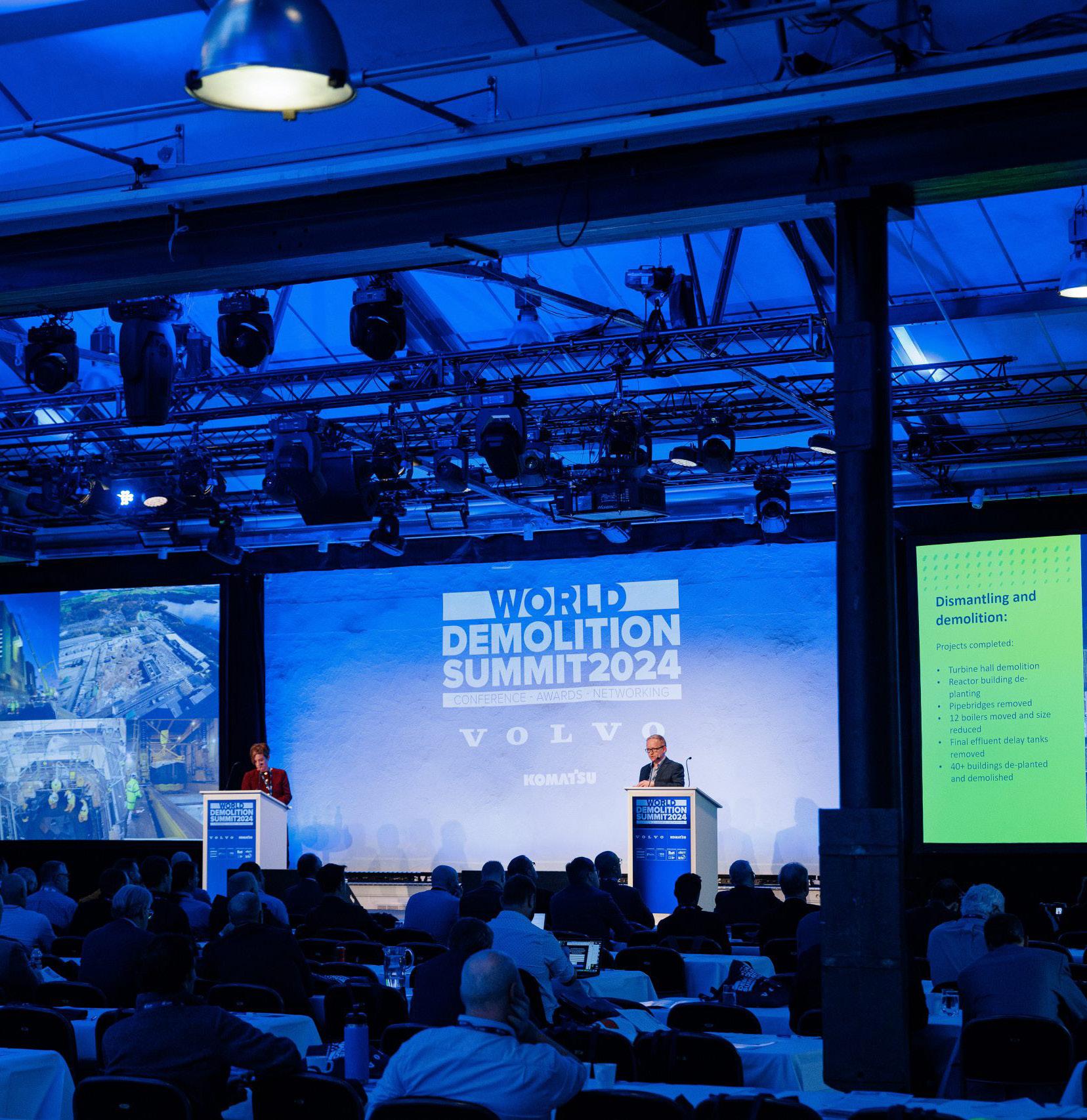
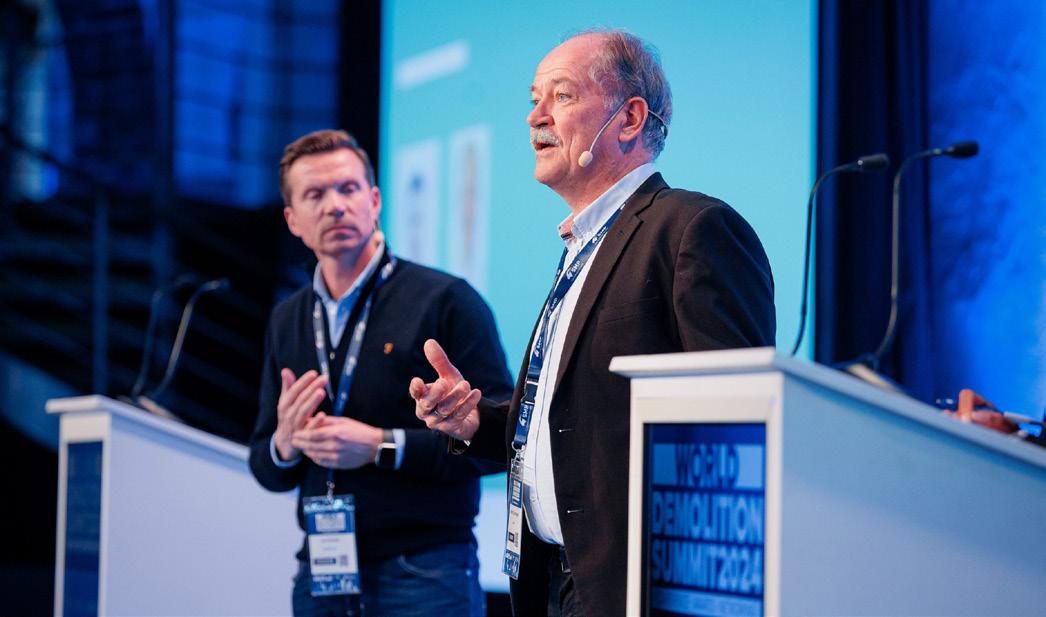
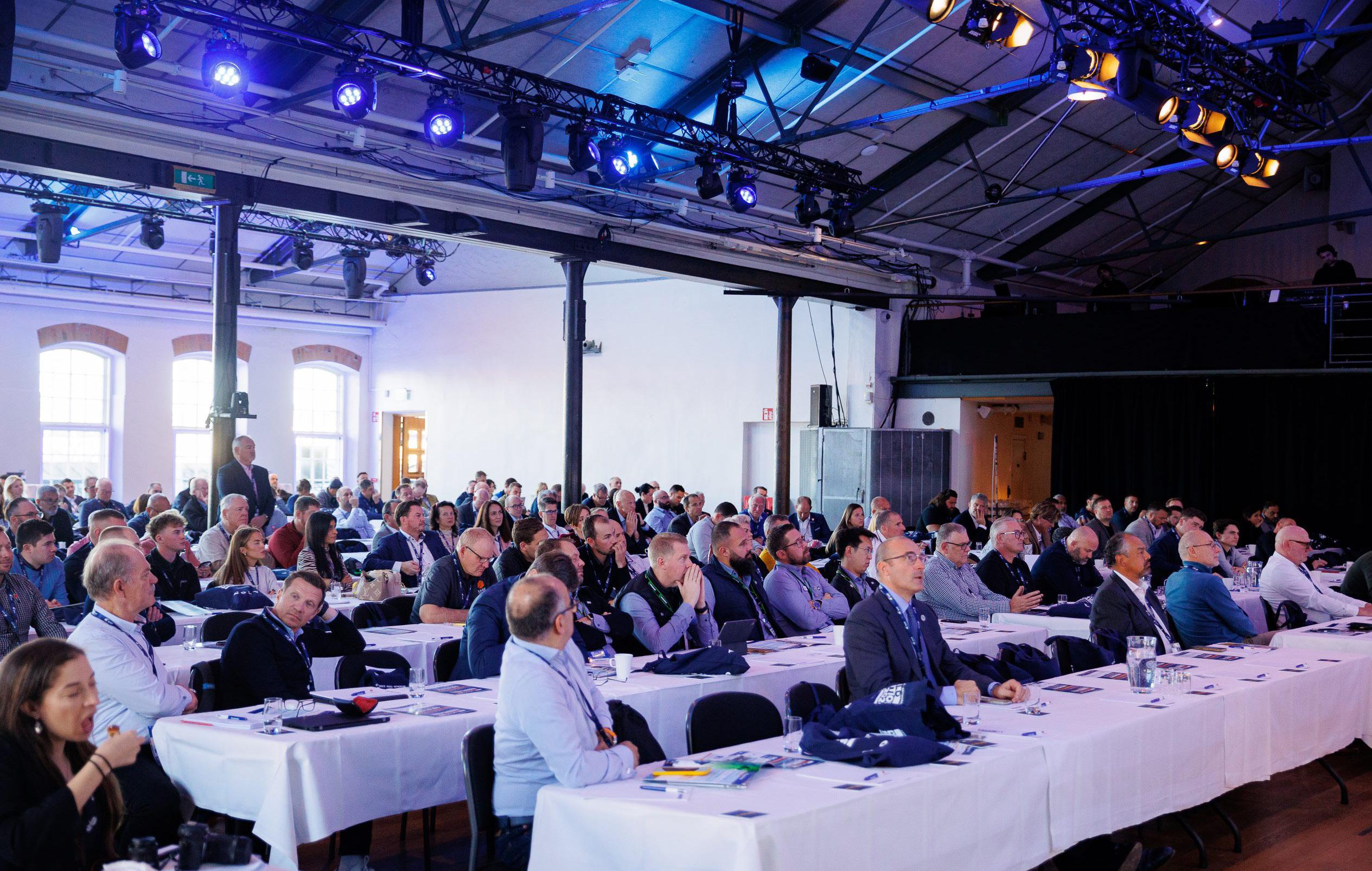
The global demolition industry is set to converge in Nashville, US, for the 2025 World Demolition Summit (WDS), taking place from 3 to 5 November at the Music City Centre.
The event is expected to attract around 500 contractors and will combine a high-level technical conference with the prestigious World Demolition Awards gala and a wealth of networking opportunities.
Lewis Tyler, Programme Organiser for WDS and Editor of Demolition & Recycling International, said: “The World Demolition Summit is more than just a conference, it’s where our industry comes together to share ideas, celebrate innovation and push the boundaries of what demolition can achieve.
“Nashville promises to deliver our most dynamic programme yet, with world-class speakers, strong industry backing, and the addition of an exclusive VIP Day. I’m looking forward to welcoming delegates from across the globe for three days of learning, collaboration and celebration.”
A new feature for 2025 will be the exclusive VIP Day on 3 November. The programme will include sponsor presentations and keynote sessions, among them Michele O’Rourke, CEO of O’Rourke Wrecking Company, who will explore how demolition contractors can lead beyond the jobsite, and Steve Farner, International Vice President of LIUNA, who will deliver a keynote industry address.
VIP delegates will also enjoy tailored networking breaks, an invitation-only Welcome Reception in the evening, and a guided tour of Nashville demolition sites and landmarks the following morning.
The main conference opens on 4 November, hosted by Connie Clearwater. NDA President Ben Hayden will deliver the welcome address, before José Blanco of the European Demolition Association sets the tone with a keynote examining regulatory changes across Europe and their implications for contractors.
Delegates will also hear from Rick Boyd of Dominion Energy, who will provide a client’s perspective on risk management. Two panel discussions will follow, focusing on the rapid progress in electrification, robotics and AI, and the vital role of demolition in advancing the circular economy.

Later in the day, Jason Curtsinger of the Tennessee Valley Authority will deliver a keynote on innovative stack-felling techniques, while Michael Metzner of Metzner Recycling will present a major project case study.
The day closes with an evening welcome reception, providing an opportunity for informal networking.
On 5 November, the focus shifts to innovation and best practice in project execution. Mahesh Bailakanavar of Thornton Tomasetti will highlight how AI and machine learning are being deployed to improve sustainability, safety and risk management.
Richard Vann of RVA Group will stress the importance of project scope clarity, followed by a keynote from Simon Hébert of Delsan-AIM, offering insights from one of North America’s leading contractors.
The programme continues with Cormac McLean of PDC Explosives Engineering, who will discuss sustainable demolition and Net Zero, and Alex Hadden and Alex Ellison of Brown and Mason, who will reflect on how experience and legacy continue to shape the future of the industry.
Chris Dowdell of Koch Industries will outline what industrial clients value most from demolition partners, before Ryan Priestly of Priestly Demolition Inc and Andrew Turk of Cameco share their experience of deconstructing Cameco’s UF6 Building 27.
The two-day event will culminate with the World Demolition Awards and Gala Dinner, celebrating the very best projects and professionals from across the global demolition community.
The summit is made possible thanks to the continued backing of the industry’s leading manufacturers, with Volvo Construction Equipment returning as headline sponsor for the 16th consecutive year, joined by Komatsu, Steelwrist, Caterpillar, Kobelco, LiUNA and OilQuick.
Registration and additional information
Ticket rates vary by delegate type (contractor, OEM, dealer/ supplier), with dedicated VIP packages offering enhanced access. Registration fees include all conference sessions, meals, awards events, and networking functions.
For more information, including registration and the full programme, visit: https://demolitionsummit.com
Organised by Demolition & Recycling International in partnership with the European Demolition Association (EDA), and in cooperation with the US National Demolition Association (NDA) and the National Federation of Demolition Contractors (NDFC), WDS remains the industry’s premier global gathering.
The move marks a milestone in DGA’s mission to deliver safe, sustainable, and innovative demolition solutions worldwide as well as welcoming more on board.
The Demolition Group of America (DGA) announced its official expansion into Europe, marking a significant milestone in the company’s mission to deliver safe, sustainable, and innovative demolition solutions on a global scale.
As well as this expansion, Phoenix Brands LLC and its flagship CapSure product line have entered into partnership with DGA to support operations. This collaboration will combine DGA’s expertise in demolition, environmental remediation, and structural deconstruction with CapSure’s advanced product technologies for safe and environmentally responsible practices.
“[Expanding] marks a bold step in our commitment to deliver safe, sustainable, and innovative demolition solutions on a global scale,” said Kevin Wiley, President of DGA. The goal is to bring world-class safety standards, professionalism, and brand new technologies to key demolition markets, now also involving Europe, and with the support of CapSure and Phoenix Brands, Wiley is confident this move will deliver value to clients and communities alike.

Echoing this sentiment and reinforcing the collaboration, Lloyd Ludlow, President of Phoenix Brands LLC, commented: “CapSure and Phoenix Brands are proud to be part of this team! It’s clear they look forward to supporting Wiley and his team as they bring precision demolition to a global stage.”
He also encouraged Wiley by saying “Great work Kevin, let’s keep going!”
This partnership signals that CapSure’s advanced solutions in environmental and demolition-related products will be integrated into DGA’s operations, supporting its mission of safe and sustainable deconstruction practices.
DGA provides a unique suite of services for specialty contractors, leveraging more than three decades of industry experience. These services include:
- Marketing and business development support for specialty contractors
- Project-specific document preparation, estimating, issue resolution, and staffing
- Coordination of vendors, subcontractors, and engineering resources
- Cost engineering and salvage value maximization for all project components
- A proven qualification process ensuring only viable, highvalue projects move forward
By combining these services with its demolition expertise, DGA helps clients reduce wasted time, increase successful bids, and maximize returns on every project.

Not only is there a European expansion, but a team expansion too as the DGA US strengthens its leadership team by welcoming Stephen Phillip Nicholson and Guy Vogt.
Founder of Protocol Remediation LC, Stephen Phillip Nicholson brings 27 years of experience in construction, demolition, remediation services, land development, project planning, project management, design and development, and the entitlement and permitting processes. He has managed hundreds of unique projects and is recognized for his problemsolving ability and operational leadership. In addition to founding Protocol Remediation LC, which specializes in abatement services, Nicholson also founded The Maple Ridge Group LC, focused on construction.
DGA also welcomes Guy Vogt to the team. Based outside of Dallas, Vogt brings over 40 years of experience, beginning in general construction and contracting before moving into environmental management. He has extensive expertise in remediating large-scale soil projects, asbestos abatement, and decontamination/demolition of large refineries. He looks forward to collaborating with the dedicated DGA team in pursuing new opportunities.
Kevin Wiley welcomed them aboard, stating he is “extremely proud to have them on his team.”
Also on board alongside Wiley, Nicholson and Vogt are:
- Luci Konken, Vice President of the DGA
- Andrew Jameson, Head of Decommissioning,Demolition & Mine Closure (Americas)
- Jeff Jackson, Independent Consultant, People Connector, Servant Leader
- Randy Lewis, Certified NA/AN, SDVOSB, SB/DVBE, MBE Contractor
- James T Dowd
- Michael Ruff, Senior Estimator at SV Group Inc.
Together, these leaders bring decades of combined experience across demolition, decommissioning, remediation, and specialty contracting. Their expertise will be instrumental in guiding the DGA with its partnerships and expansions and setting new benchmarks for safety, sustainability, and innovation.
At DGA, leadership is viewed as a shared responsibility. The organisation is intentionally team-oriented, with no single individual elevated above the rest. Every member contributes unique expertise, and it is this collective strength that drives DGA’s mission and growth.
This collaboration between DGA and Phoenix Brands’ CapSure can reshape aspects of the US demolition sector by combining:
- DGA’s operational expertise and project portfolio
- CapSure’s environmentally conscious technologies
- Local partnerships that can accelerate adoption of new demolition practices
Both leaders, Kevin Wiley and Lloyd Ludlow, have positioned the move as the beginning of a sustained global expansion, and the DGA are starting this with Europe as the first step. As Wiley put it himself: “I’m proud of the incredible team that made this possible and grateful for our clients who continue to trust us with complex, high-impact projects. Europe, we’re ready to build by safely tearing down first.”
Highlights
- Launch of operations across key European markets
- Development of local partnerships with industry leaders
- Integration of CapSure’s environmentally advanced solutions
- Commitment to green practices and cutting-edge demolition technologies

About Demolition Group of America (DGA)
The Demolition Group of America is a trusted leader in demolition, environmental remediation, and structural deconstruction. With a focus on safety, sustainability, and innovation, DGA supports clients across the United States and now Europe, delivering complex projects with precision and professionalism.
About Phoenix Brands LLC / CapSure
Phoenix Brands LLC is the company behind CapSure, a leading line of products designed for environmentally safe and efficient demolition and remediation. With established partnerships in the UK, Ireland, and Australasia, Phoenix Brands is committed to supporting global leaders in construction and demolition with advanced, sustainable solutions.









































Cottam Power Station, Nottinghamshire, UK |Thursday 14th August 2025
The landscape of North Nottinghamshire is forever changed following the successful demolition of eight giant cooling towers at Cottam power station on 14 August.
Brown & Mason, one of the UK’s leading decommissioning and demolition specialists, has officially secured the GUINNESS WORLD RECORDS™ title for the most cooling towers demolished with controlled explosives simultaneously. The explosive event was witnessed by former employees of the coal fired power station.
The record-breaking feat was achieved at Cottam Power Station in Nottinghamshire, where the Brown & Mason team expertly brought down the eight massive cooling towers of the former coal-fired station in a single, precisely coordinated explosive event. The towers, each measuring 114m (375ft) were brought down in a matter of seconds using half a tonne of explosives.
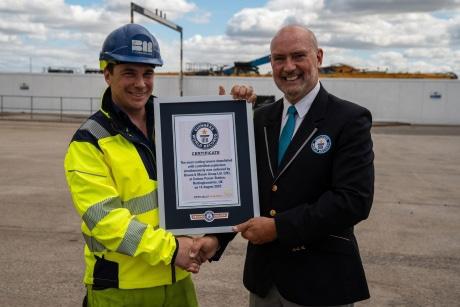

This is the last major milestone in the decommissioning of the plant which operated for 51 years. EDF is currently exploring options for the future use of the site to see how it can be best used to support the UK’s energy needs.
This landmark demolition was another step in the nation’s commitment to net zero energy, executed with meticulous planning, detailed modelling, and an unwavering commitment to safety. Months of preparation came together in a single, unforgettable moment, setting a new benchmark for the global demolition industry.
Kieran Green, Decommissioning & Demolition Programme Manager for EDF, explained: “The fact that this is a world record demonstrates the scale of the project, and I would like to thank the team for safely delivering this major milestone.
“The cooling towers have been a landmark in the region for over half a century, and it will feel strange driving into work tomorrow without them on the horizon. The site and the people that worked here served the country well and I am hopeful we can continue that legacy.”
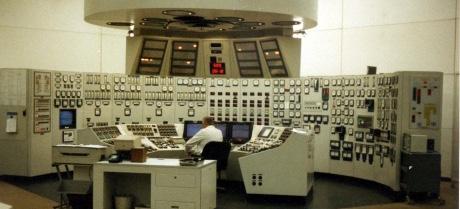
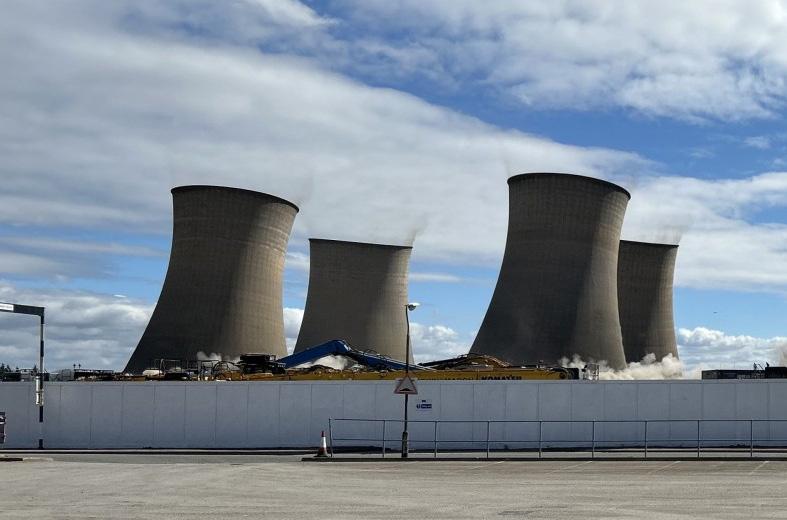
The cooling towers have been a landmark in the region for over half a century, and it will feel strange driving into work tomorrow without them on the horizon.”


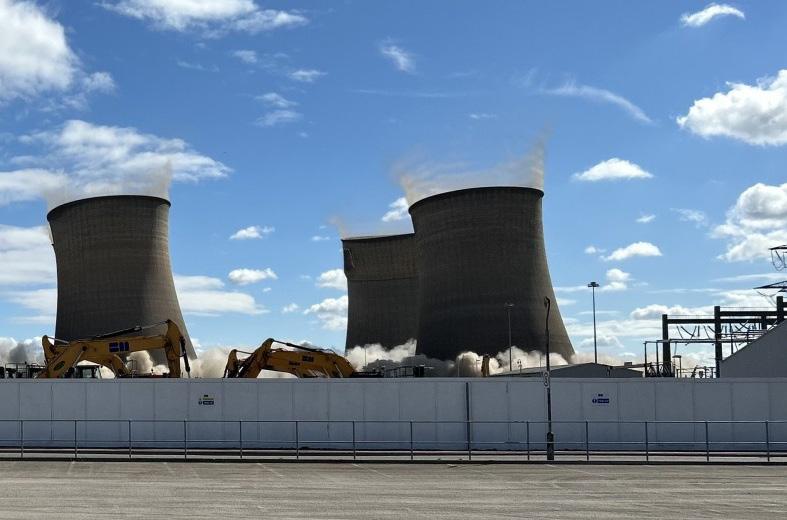



Rachael Glaving, UK Business Development Director for EDF, added: “Cottam has made a massive contribution to the UK, and we believe the site has huge potential for further development. We are exploring plenty of options which would bring significant opportunities to the area.”
“Controlled explosive demolition is all about precision, not power,” said Rikki Isgar, Explosive Demolition Manager at Brown & Mason. “Bringing down eight towers together meant modelling every movement, understanding every force, and executing flawlessly. There’s no second chance in this kind of work, and this achievement is a testament to the skill and dedication of the whole team.”
Brown & Mason’s role at Cottam builds on decades of delivering landmark industrial dismantling projects both in the UK and abroad. Whether dismantling assets piece-by-piece or bringing down colossal structures in seconds, the company combines engineering mastery with operational excellence to consistently deliver results that are safe, efficient, and spectacular.
The achievement at Cottam is more than a record – it’s a powerful demonstration of innovation, precision, and leadership in the global demolition industry.
www.brownandmason.com

Reducing carbon emissions is possible with our low-carbon and zero-emissions solutions
Sitting next to Manchester, the City of Salford has seen significantly less investment in regeneration over recent years. Salford University has bucked this trend with the addition of state-of-theart teaching facilities at Media City and Peel Park which has then left some of their older buildings locked up and awaiting new owners.
Two of these buildings are sited on a large plot on the corner of Adelphi Street and Peru Street in the centre of the city. Both buildings were used extensively by the University until their closure just a handful of years ago.
There is nothing similar about the two buildings, Adelphi House and Centenary Buildings as they are from totally differing eras. Constructed just under thirty years ago, Centenary Buildings was, in its day, an award-winning building designed by Manchester-based architect Stephen Hodder, the building was praised at the time for a “dynamic, modern and sophisticated exercise in steel, glass and concrete” by the Royal Institute of British Architects (Riba). Constructed from a mixture of modern building materials, Centenary Buildings used a mix of steel and concrete frame infilled with blockwork and covered in aluminium and glass cladding. Sitting at just four storeys, the building once housed the Faculty of Art and Design when it opened in 1996 but has been standing empty now for eight years.
In contrast, Adelphi House was built in 1808 as a two-storey home for a man named Samuel Bury, who lived in there for 28 years. In 1836 it was sold to John Leeming which saw the first redesigns and additions to the building before the nuns of the Order of the Faithful Companions of Jesus moved in during 1853 eventually converting the building into a school. The nature of the school changed over the years and became a training college for Catholic teachers and required an additional third storey to accommodate these changes. The eventual purchase by the University of Salford saw it integrated into their property portfolio catering for a wide variety of uses over the next four decades before its eventual closure.
Whilst listed, the building was earmarked for demolition as it’s poor state of decay and increasing costs for refurbishment meant prospective purchasers were swayed by more cost effective and lucrative development options within the region.
With both buildings being surplus to the university’s requirements, planning permission was granted to demolish them both and redevelop the large plot for much needed new housing stock.
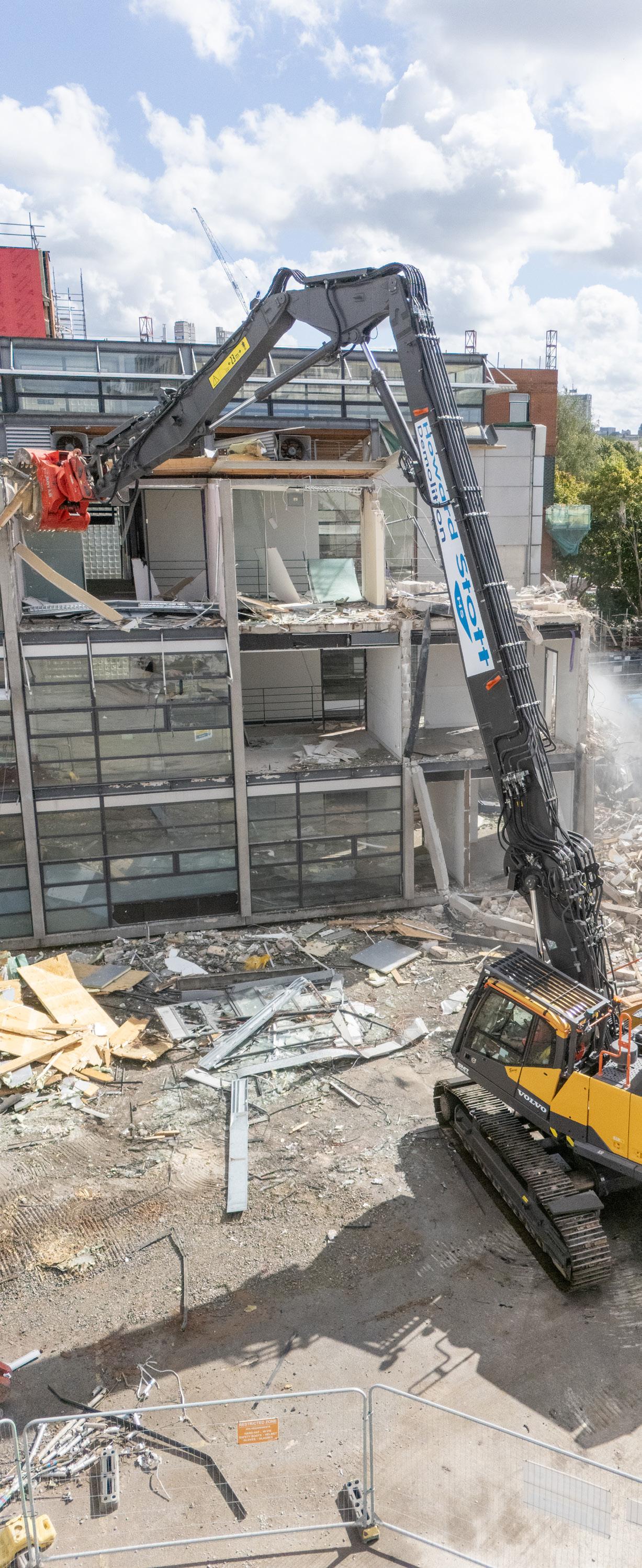

Preston based multi-disciplinarians Eric Wright Group was appointed to redevelop the site in readiness for the future redevelopment works. Initial works included the commissioning of a detailed asbestos survey of both buildings which, as expected, showed nothing for Centenary Buildings whilst delivering over 70 pages of areas requiring investigation for the older building.
Assistant Site Manager Georgia Simm takes up the story, “When the report was commissioned, we had massive issues with a pigeon infestation throughout the building with guano covering almost every surface including the contents left by the university when they shut the doors almost ten years ago. This impacted on the initial survey but through the dedication of the team the report has highlighted a huge volume of asbestos contamination throughout the building.”
Over the years Eric Wright has worked closely with Burnley based demolition specialists Howard Stott to deliver the demolition phases of many of their projects and it was Operations Manager Ryan Noon who was leading the charge to successfully complete this project.
“We have worked closely with the Eric Wright construction teams on various projects throughout the Northwest for many years.” Ryan comments. “Our close working relationship has worked well in the delivery of some very complex and difficult projects allowing their construction teams to successfully complete their construction operations and we are pleased to assist them on this impressive redevelopment project in Salford.”
Experienced Site Manager Dave Coppock has been tasked with the safe delivery of the project for Howard Stott. “We have split the project into two distinctive parts, Adelphi House and Centenary
Buildings even though they were connected.” He explains. “The newer building has to be one of the most modern buildings I have ever taken down and following a simple but thorough soft strip, there is very little to stop us knocking it down very quickly. Whilst it is a modern building by most standards, it’s not well built with our high reach making easy progress through the structure.”
Centenary Buildings is the first structure to make way on the site with operator Barry Noon using Stott’s latest acquisition, a 50t Volvo EC380E high reach to selectively demolish the structure. “The building has been built around a central spine wall with a wing on each side.” Dave explains. “Barry will take down one section of one side of the wing before doing the same on the other side leaving the structural integrity in place with the spine wall.” The lack of solidity to the relatively new building is shown with the speed at which Barry can remove each piece of material. Steel beams and columns simply snap bolts at the node points whilst large sections of curtain walling and cladding are simply lifted away using the Rotar selector grab. Whilst these materials can be easily recycled, the roof covering is different. “It’s a typically modern building with a rubber roof covering glued onto plywood sheets.” Dave points out. “We now have to scrap all of this as we can’t cost effectively remove the rubber from the timber.”
Working in conjunction with one of Stott’s 14t Kobelco SK130 excavators, Barry passes the material to the floor allowing Scott Bennett in the Kobelco to sort it into the necessary skip. Like all the excavators in the fleet both the Kobelco and Volvo have been fitted with Lehnhoff couplers which allow the changeover of hydraulic attachments in seconds without the need for the operator to leave the safety of the cab.
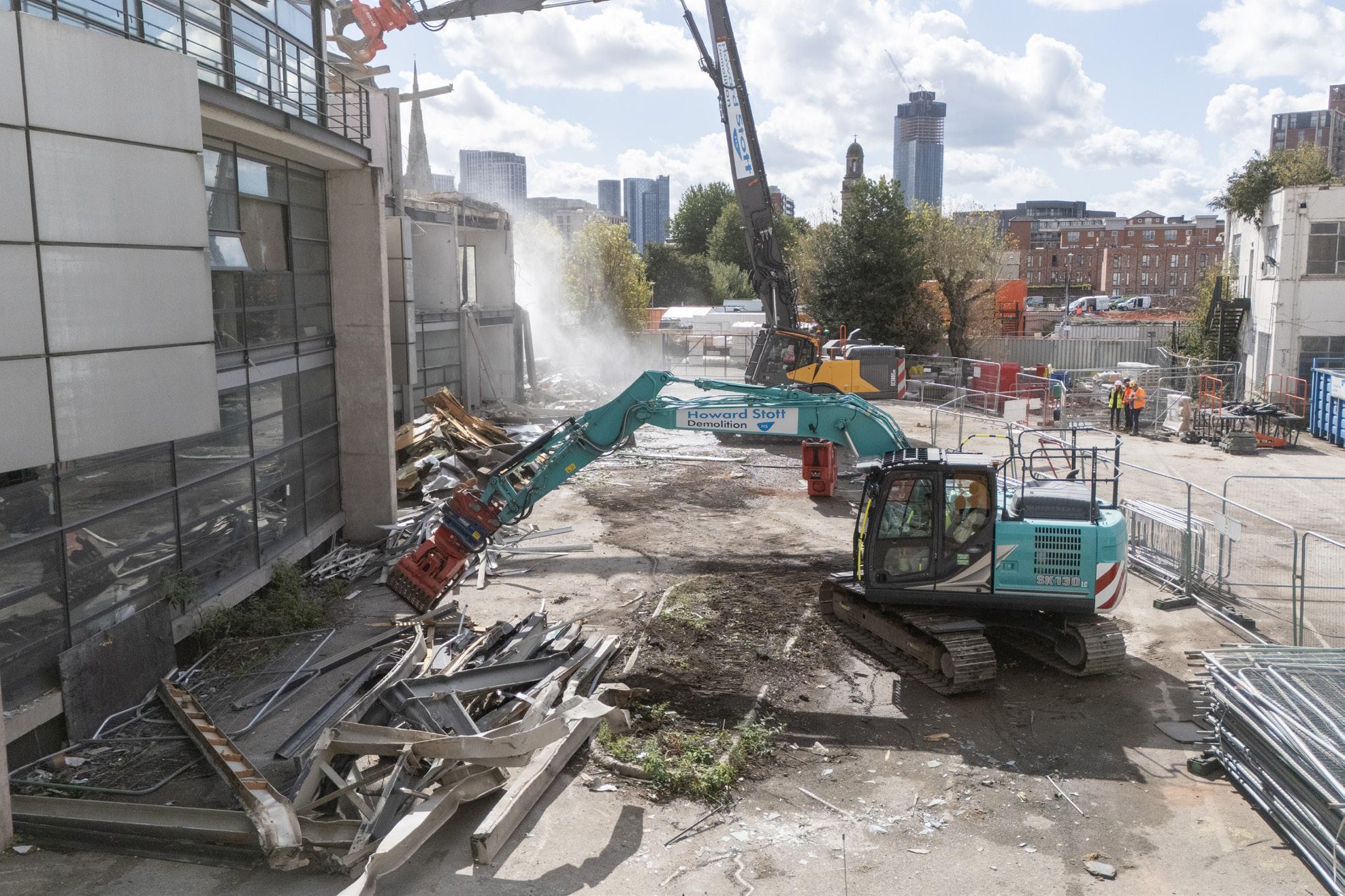
“They are a great bit of kit and have made a huge difference to both safety on site and our productivity.” Ryan explains. “Most of our attachments are sourced through Worsley Plant in Middlewich as they are on the ball with their servicing and repairs which allows us to have that peace of mind when it comes to delivering our projects.”
With Barry and Scott making their way through Centenary Building under Dave’s watchful eye, there is a team of soft strippers hard at work on the 6 storey Adelphi house. “The place was full furniture and fittings from its old college days.” Dave comments. “It has taken a while to get to the point of soft stripping following the removal of guano throughout the building. It’s been a smelly and dirty job for the teams and one we wouldn’t like to face again.” The hazardous material is double bagged and treated in the same way as the asbestos is when disposed.
“Sitting on a sloping site, Adelphi has four storeys above ground with two basement structures underneath the entire structure. This has meant a lot of the material left inside the building requires carrying upstairs to be removed, yet another time-consuming part of the job.”
“We are hoping to have the first building down and clear in four to five weeks.” Dave comments. “I can then focus my attention on progressing the strip out and asbestos removal works. Most of the asbestos identified is non-notifiable and is in gaskets, electrical boxes and panelling but we have some which needs quilling which will add to the complexity and time for its removal.” The volume of asbestos and its locations will test Dave’s programming of the second phase of the works. Once completed, the structural demolition will take place taxing the demolition machines slightly more than the first building. “This is proper construction!” Dave comments as we walk through the building. “Just look at the thickness of the walls and the steel columns!”
Should time allow, Demolition Spotlight hopes to bring you the story of the second part of this intriguing project.
Huge thanks to Ryan Noon and the Howard Stott team for their invitation to site and to Georgia and the Eric Wright team for access to the project.
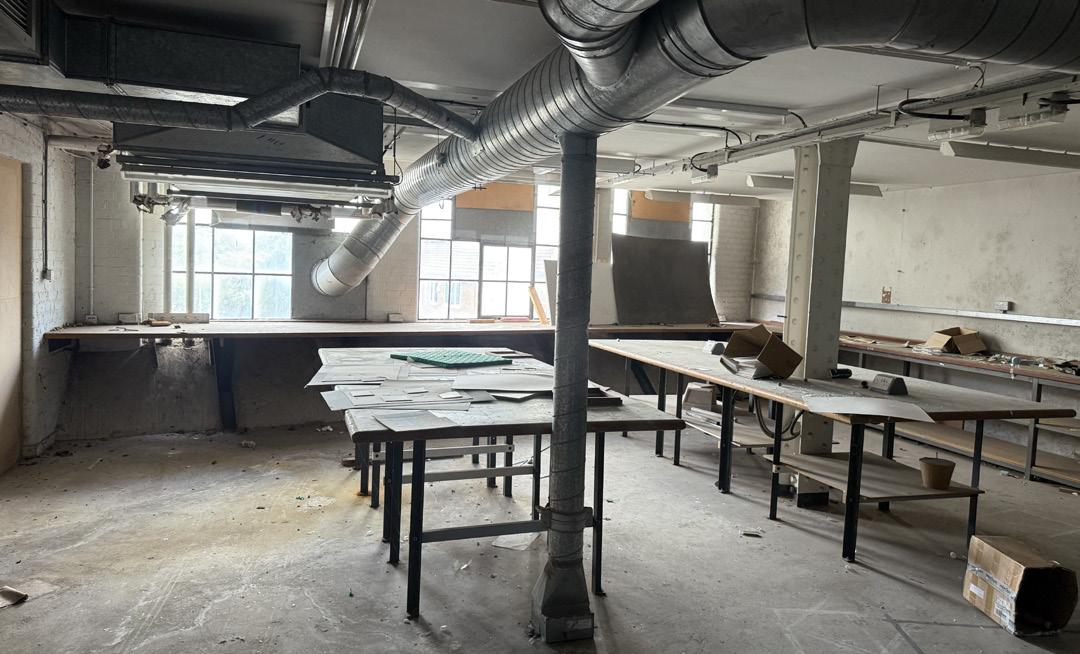
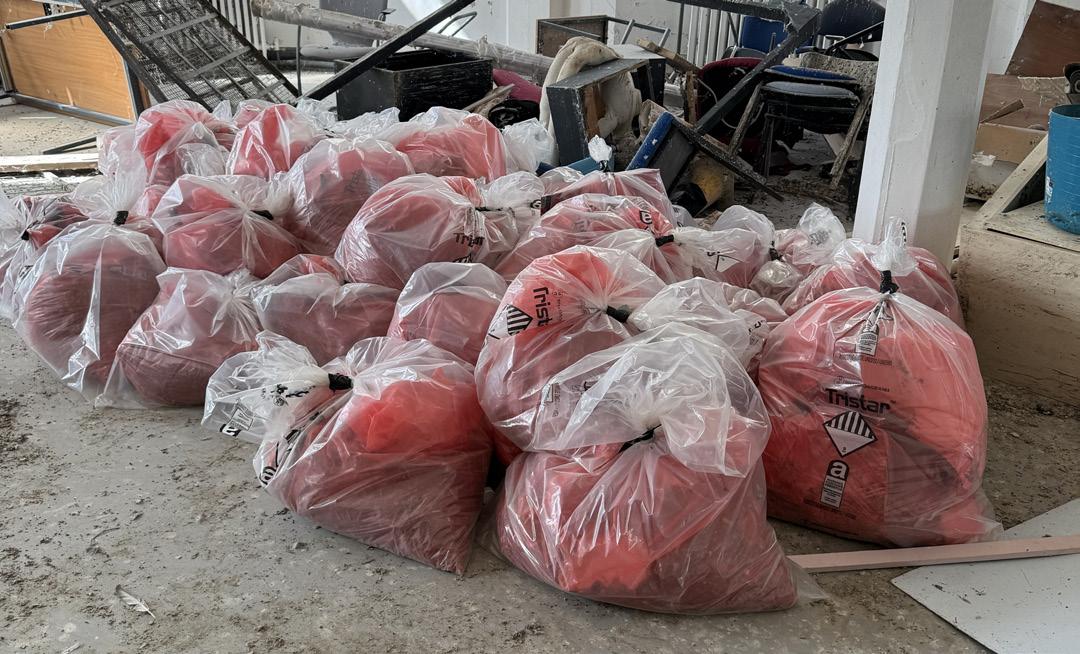

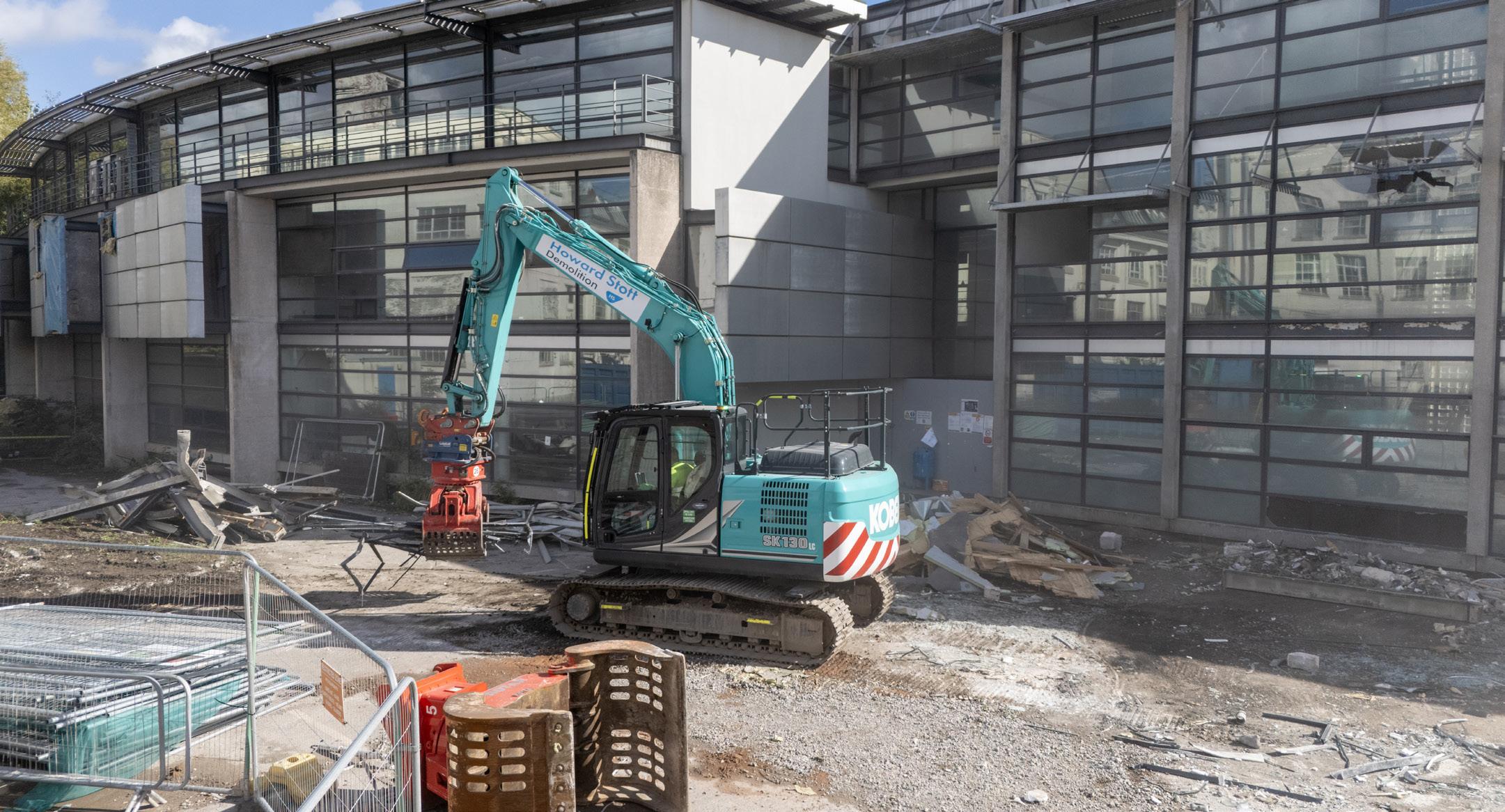





When first unveiled in the autumn of 1966, the Red Road Flats represented a bold and ambitious step into the future for the city of Glasgow, Scotland.
Consisting of two 28-storey “slab” and six 31-storey “point” residential tower blocks, this ambitious high-rise housing complex was hailed upon its completion as the tallest residential housing development in Europe, and provided accommodation for 4,700 residents.
However, by the late 70s the initial optimism of the estate had long since waned, and the Red Road Flats had not only fallen into neglect, but had also developed a reputation as a focal point for anti-social behaviour and violent crime.
By 2008, all eight of the buildings were formally condemned, with phased demolitions taking place between 2010-2015. Their size, steel-frame construction and the liberal amounts of asbestos contained within proved to be considerable obstacles for the contractors responsible for safely bringing down what was once Europe’s tallest tower blocks.
By the late 40s, Glasgow faced a public health and housing crisis. Slum housing, overcrowding and widespread disease, particularly Tuberculosis, were rife and exacerbated by bomb damage from World War II.
The Glasgow Corporation commissioned Robert Bruce, City Engineer and Master of Works, to devise a post-war redevelopment plan. He identified some 300,000 dwellings
as either unfit, overcrowded or requiring redevelopment, and 100,000 as dangerous slum housing, with families of 6–8 frequently found living in a single room.
Bruce intended Glasgow to be redeveloped into a decentralised low-density city, with slum residents rehoused in “Comprehensive Development Areas” of two to four storey mixed tenure suburbs and satellite towns.
But the Corporation owned little land to expand into, and overwhelming UK-wide demand for housing led governments of the 50s and 60s to incentivise councils to build as quickly and cheaply as possible, which often meant building up, not out.
By 1955, Bruce retired and was replaced by Robert Bunton as City Engineer and Director of Housing. Bunton, a strong proponent of high-rise housing, upscaled Bruce’s plans with prefabricated tower blocks, including a development in the Balornock neighbourhood named the Red Road Housing Scheme.
In 1962 Bunton commissioned Sam Bunton & Associates (no relation) to propose a plan for the site. They devised six 31-storey point-style and two 28-storey slab-style blocks, all steel-framed and designed to house 4,700 residents.
The plan made Red Road the largest residential development in Europe, and was met with a mixed reception. Bunton, close to retirement and said to have dreamt of building a Manhattan-style skyscraper in Glasgow, was accused of championing the scheme as a personal vanity project.
However, only 25,000 of Bruce’s identified slum dwellings had been cleared by 1962, and construction of eleven 20–24 storey tower blocks were already underway in Glasgow. Steelframe construction, though more costly and slower, was also justified as supporting the local steel industry with muchneeded work.



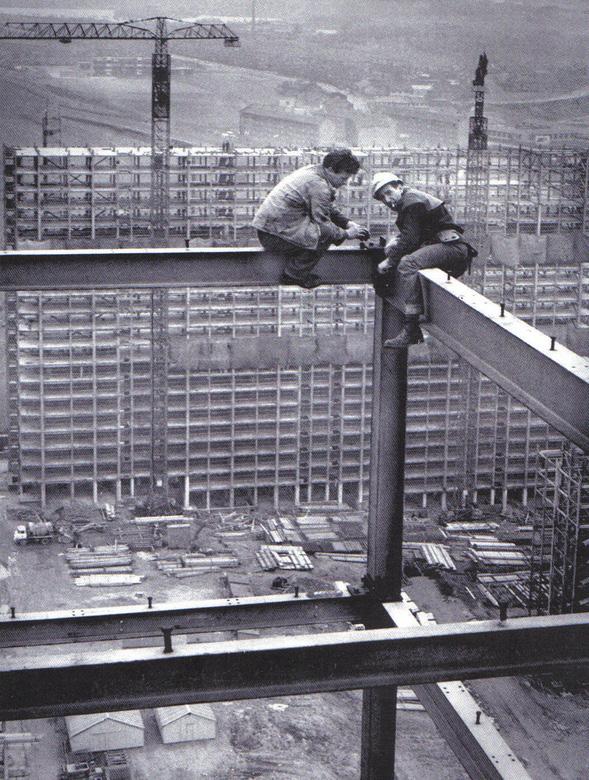
Construction began in 1964, with the first three towers formally opened on 28 October 1966. The remaining towers were completed by 1969 at an estimated cost of £6m.
New residents were initially delighted with the spacious flat layouts, central heating, modern kitchens and indoor bathrooms, which were a far cry from the damp and overcrowded tenements.
The decades that followed the 60s were hard for Glasgow. The collapse of shipbuilding, steel and heavy industries during the 70s caused mass unemployment, which reached as high as 30% by the 80s. Poverty and petty crime crept into the development, and soon gave way to violence and open drug use, as Glasgow gained a reputation as one of the heroin capitals of Europe.
The 80s also saw the city council’s allocation policy change to house some of the city’s most vulnerable residents in Red Road, solidifying its reputation as a sink estate.
The perception of the flats had also rapidly changed as, while structurally sound, rushed construction and cheap fixtures meant they were draughty, damp and noisy. The extensive presence of asbestos, now known to be a health hazard, meant many standard maintenance and renovation jobs couldn’t be carried out, leaving lifts to frequently fail and communal areas to deteriorate.
The towers’ scale and design also made policing extremely difficult, which compounded residents’ feelings of isolation and anonymity. By the end of the 90s, organised crime had become entrenched. The flats had a high vacancy rate, and many had become dilapidated and dangerous, or had been looted for copper wiring, pipes and radiators. However, the Scottish government also started using the flats to house asylum seekers fleeing conflicts in Kosovo, Africa and the Middle East during this time, which brought some revitalisation.
The Glasgow Housing Association took over ownership of social housing in 2003. Red Road was surveyed shortly afterwards and found to be too costly to renovate, and its reputation would keep demand low.

In 2004 it was formally announced that all eight towers would be demolished, along with around 80 other tower blocks as part of a wider regeneration programme.
Demolition began with asbestos removal by specialists using containment and negative air pressure systems. Asbestos-containing materials were stripped and disposed of in licensed landfill sites.
The towers were then soft-stripped of all non-structural materials, including windows, partitions, wiring, plumbing, lifts and refuse chutes. Structural connections were cut and diamond drilling rigs bored blast holes for explosives.
The first demolition of a 28-storey slab block took place in June 2012, followed by a point block in May 2013. Approximately 275 and 88 kilos respectively of explosives were used, and these demolitions gave engineers data to model a mass demolition of the other towers.
On 11 October 2015, the remaining six towers were demolished in what was the largest demolition of high-rise residential blocks in Europe. A 300-metre exclusion zone was established and 2,500 nearby residents evacuated.
Four towers successfully collapsed into their footprints, but two point towers only partially collapsed. High-reach excavators with hydraulic shears, pulverisers and crushers were then used to manually demolish the surviving structures.



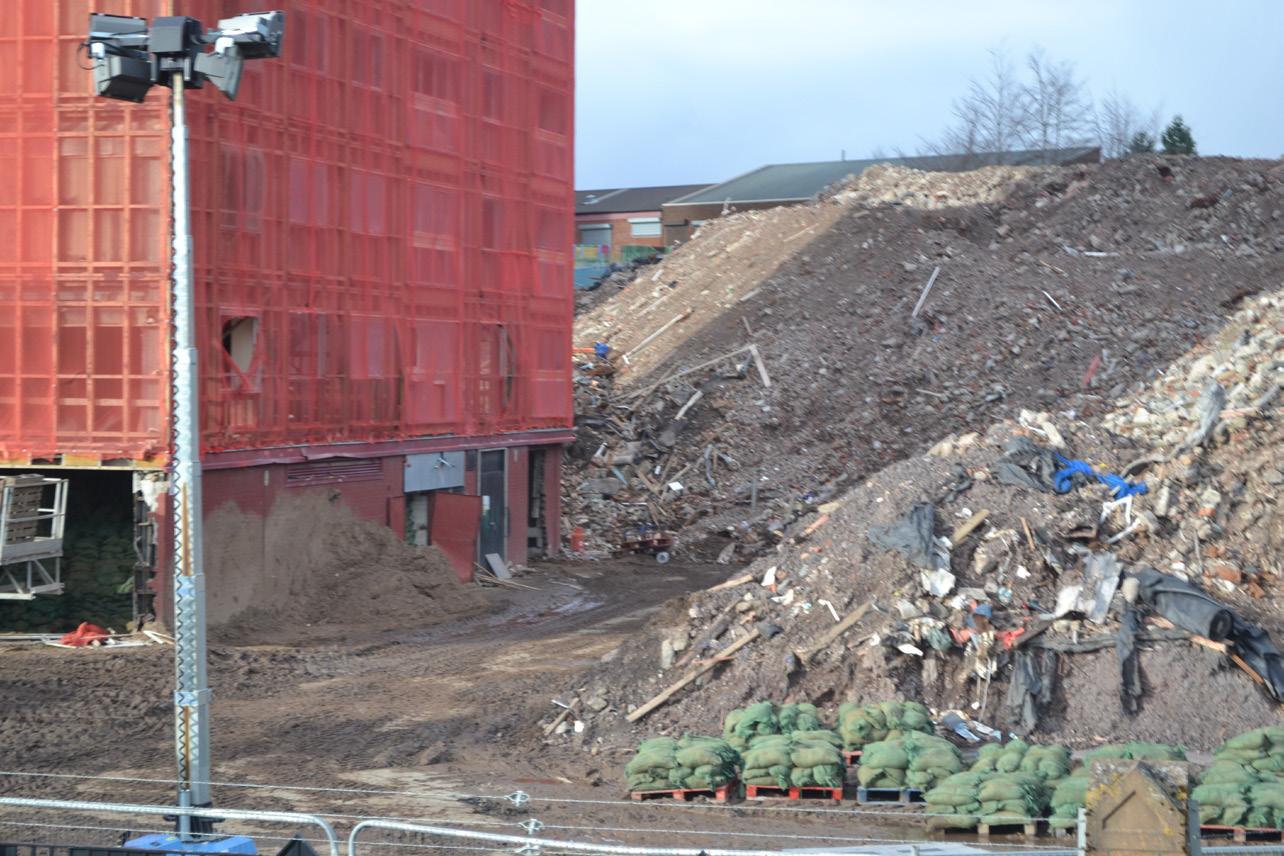
With roughly 97% of materials recycled or reused, Red Road achieved one of the highest recycling rates by a European demolition site.
Materials were segregated onsite, with mobile crushers processing concrete and masonry into aggregates for backfill and road construction, and steel magnetically separated and sold as scrap.
Copper, aluminium, timber and high-value plastics were recovered during soft-strip, with the biggest sources of unrecovered waste being lowvalue plastic.
Site clearance was completed in October 2018.
Nearly a decade after clearance, all that remains of Red Road is brownfield land. Yet its history still looms large over Glasgow.
The site today remains derelict and underdeveloped. Despite technical challenges, Glasgow City Council has formulated a masterplan to redevelop it into mixed-tenure low-rise housing, greenspaces and community amenities, which is eerily reminiscent of Robert Bruce’s original vision.
Born out of desperation to secure a brighter future for Glaswegians, Red Road stands as a symbol of both the collective optimism of the post-war era and the economic despair and neglect that followed – with the botched demolition of two towers serving as a final metaphor for a housing development that never followed its intended plan.

Bobcat Company, in partnership with North Dakota’s Gateway to Science(NDGTS), will unveil a new, hands-on outdoor exhibit designed to spark curiosity and creativity in the next generation of innovators and problem solvers.
This exhibit is part of NDGTS’s new Outdoor Explorium and was made possible through Bobcat’s sponsorship and engineering expertise.
BISMARCK, N.D. (Aug. 25, 2025) – Bobcat Company, a global equipment, innovation and worksite solutions brand, in partnership with North Dakota’s Gateway to Science (NDGTS), will unveil a new, handson outdoor exhibit designed to spark curiosity and creativity in the next generation of innovators and problem solvers.
This exhibit is part of NDGTS’s new Outdoor Explorium and was made possible through Bobcat’s sponsorship
and engineering expertise. The oneof-a-kind exhibit features a functional Bobcat excavator arm – designed and built by Bobcat employees and interns – where young visitors can explore engineering, hydraulics and machine design. Visitors can turn wheels on the exhibit to move the excavator arm and dig with the bucket. It can be operated in two modes: manual and power assisted. The exhibit is designed to engage young visitors in real-world applications of STEM principles.
“The Bobcat exhibit brings STEM concepts to life in a way that’s fun, approachable and memorable for our visitors,” said Beth Demke, Chief Executive Officer, North Dakota’s Gateway to Science. “With its custom design and interactive features, visitors can explore how machines work, turning curiosity into discovery. We’re grateful to Bobcat for lending their creativity and expertise to create an experience that will inspire problem-solvers for years to come.”
“The Bobcat excavator exhibit embodies our commitment to STEM education and our belief in empowering the next generation of innovators,” said Mark Binstock, lead engineer, Bobcat Company. “We are proud to help create an experience where children can ignite their curiosity and engage with real engineering principles through hands-on exploration and play.”
Bobcat has a longstanding commitment to STEM education and community investment. Its initiatives include scholarships, internships, co-op programs, Student Development Programs, and STEM grants—all aimed at supporting and inspiring future innovators.

To learn more about Bobcat’s STEM and education initiatives, visit: bobcat.com/stem
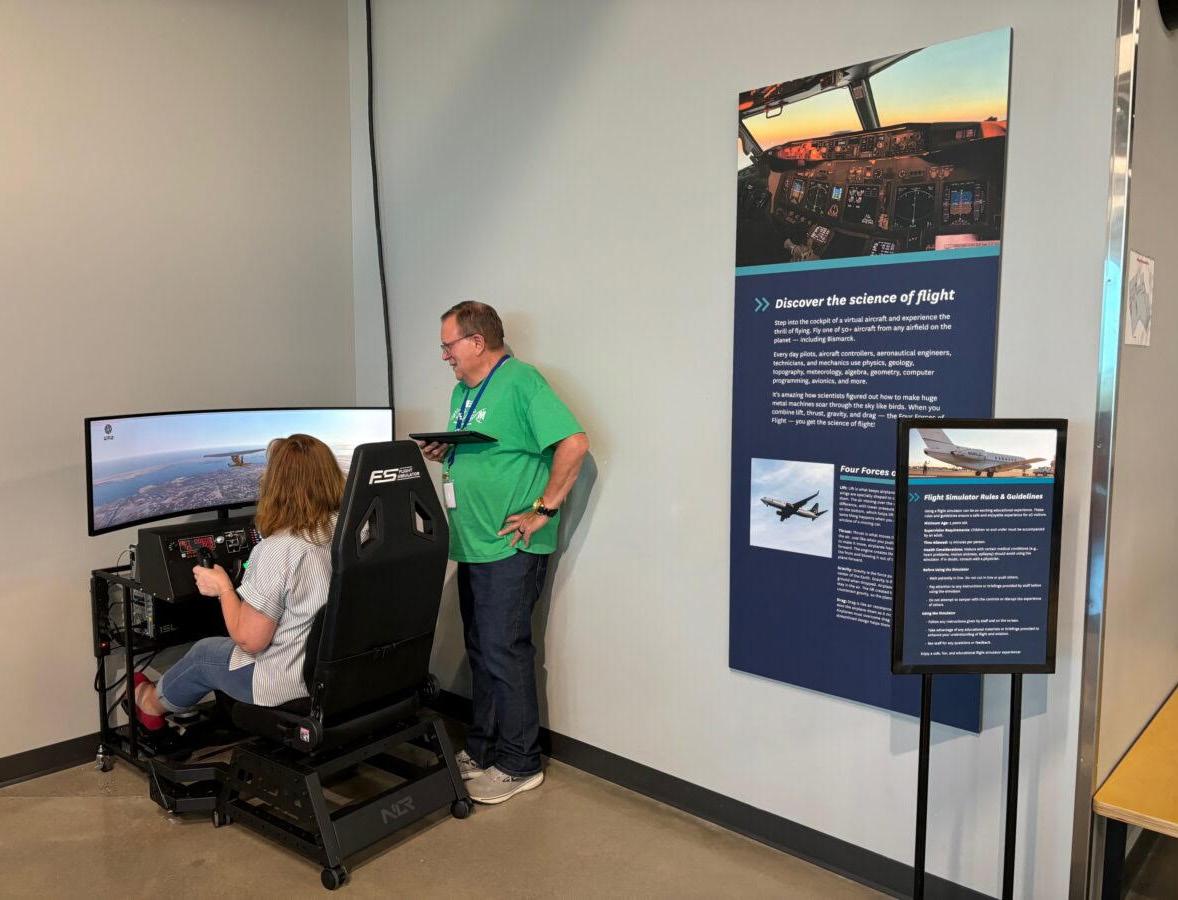
Two LTM 1300-6.3 cranes are now strengthening the fleet of Multiservice Grúas. These 300-tonne machines stand out for their powerful performance and state-ofthe-art technology. With the two LTM 1300-6.3, Multiservice Grúas is investing in a new model on the Chilean market, underlining its commitment to innovation and continuous development. Key factors in the decision included reliability, quality, and the highest safety standards.
The Chilean company Multiservice Grúas has expanded its fleet with two LTM 1300-6.3 cranes from Liebherr. These new 6-axle cranes are particularly well-suited for demanding operations in urban environments and large-scale mining projects. “We deliberately chose the two 300-tonne mobile cranes because they offer an outstanding combination of mobility, reach, and cutting-edge technology. This enables us to provide a unique service to our customers throughout Chile,” explains commercial director Felipe Fossatti. The LTM 1300-6.3 is a new model on the Chilean market. With its 90-metre telescopic boom and innovative technologies, the mobile crane sets new standards in performance, safety, and efficiency.
Multiservice Grúas was especially impressed by the variable ballast radius adjustment VarioBallast® and the asymmetrical outrigger system VarioBase® Plus. These systems allow for maximum lifting capacities even in confined spaces. Additionally, the crane features EcoMode and EcoDrive technologies, which reduce fuel consumption, lower emissions, and ensure quieter operation – a benefit for both people and the environment.
“Multiservice Grúas has relied on Liebherr products since 2008: currently, around 70 percent of its 55-unit fleet comes from the German crane manufacturer, and a new LTM 1450-8.1 – already in production – is set to be added soon. Today, thanks to its diversified fleet, the company is capable of performing over 16,000 operations annually in civil, industrial, or infrastructure projects as well as in the energy and mining sectors. “We are convinced that reliability, quality, and above all safety are key factors for successful operations,” says Fossatti.
For Multiservice Grúas, Liebherr stands not only for high-quality components and safety – the German crane manufacturer is also a strategic business partner. “With Liebherr at our side, we can grow together with our customers – while consistently ensuring quality, reliability, and above all, safety. The close collaboration between Multiservice Grúas and Liebherr, the world’s leading crane brand, reflects exactly what defines us as a company,” explains Fossatti.
“Liebherr is a strategic partner for us – together with the crane manufacturer, we will continue to grow.” For Fossatti, Liebherr stands not only for high-quality components but also for an excellent team and outstanding customer service: “This is a crucial factor in keeping our equipment in optimal condition over the long term and looking to the future together with our customers.”
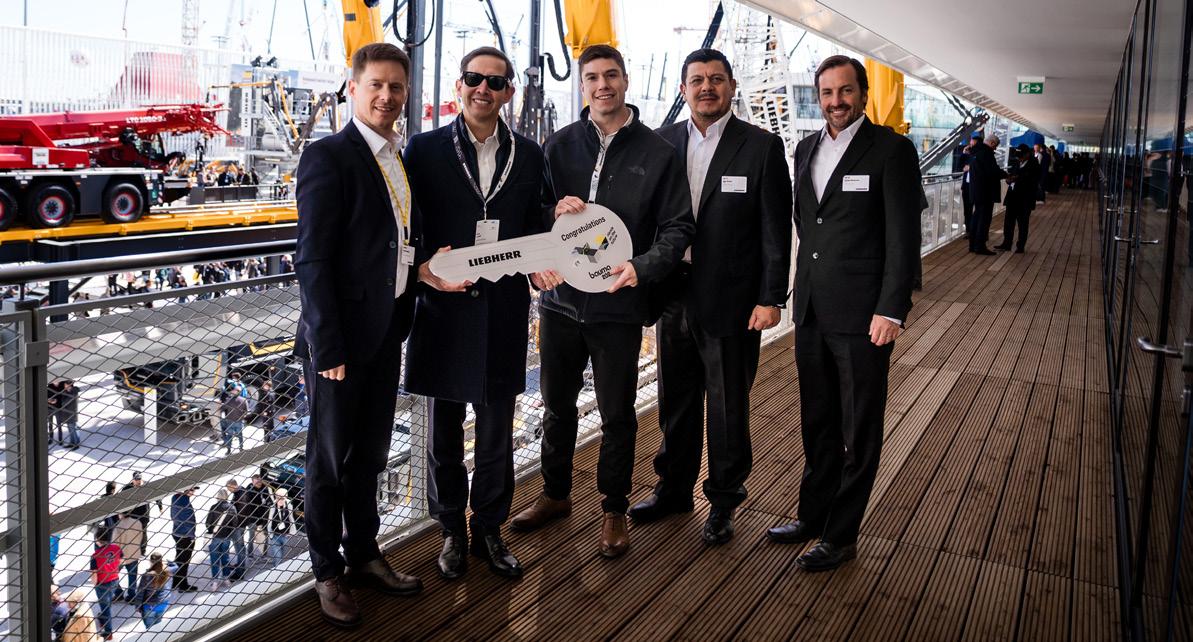

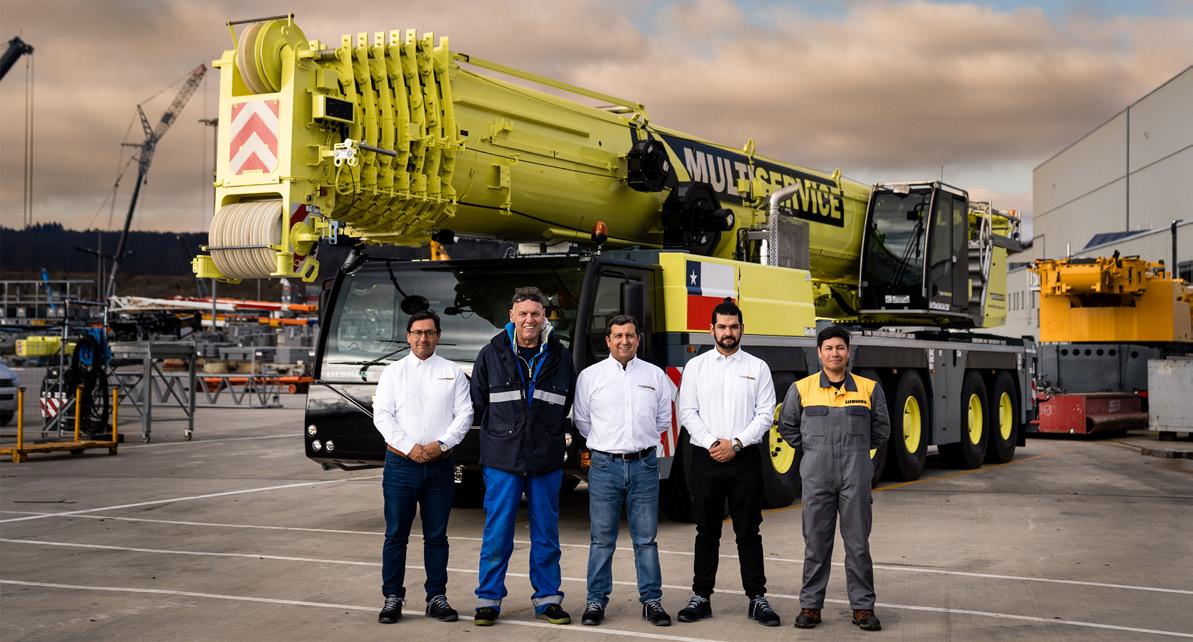
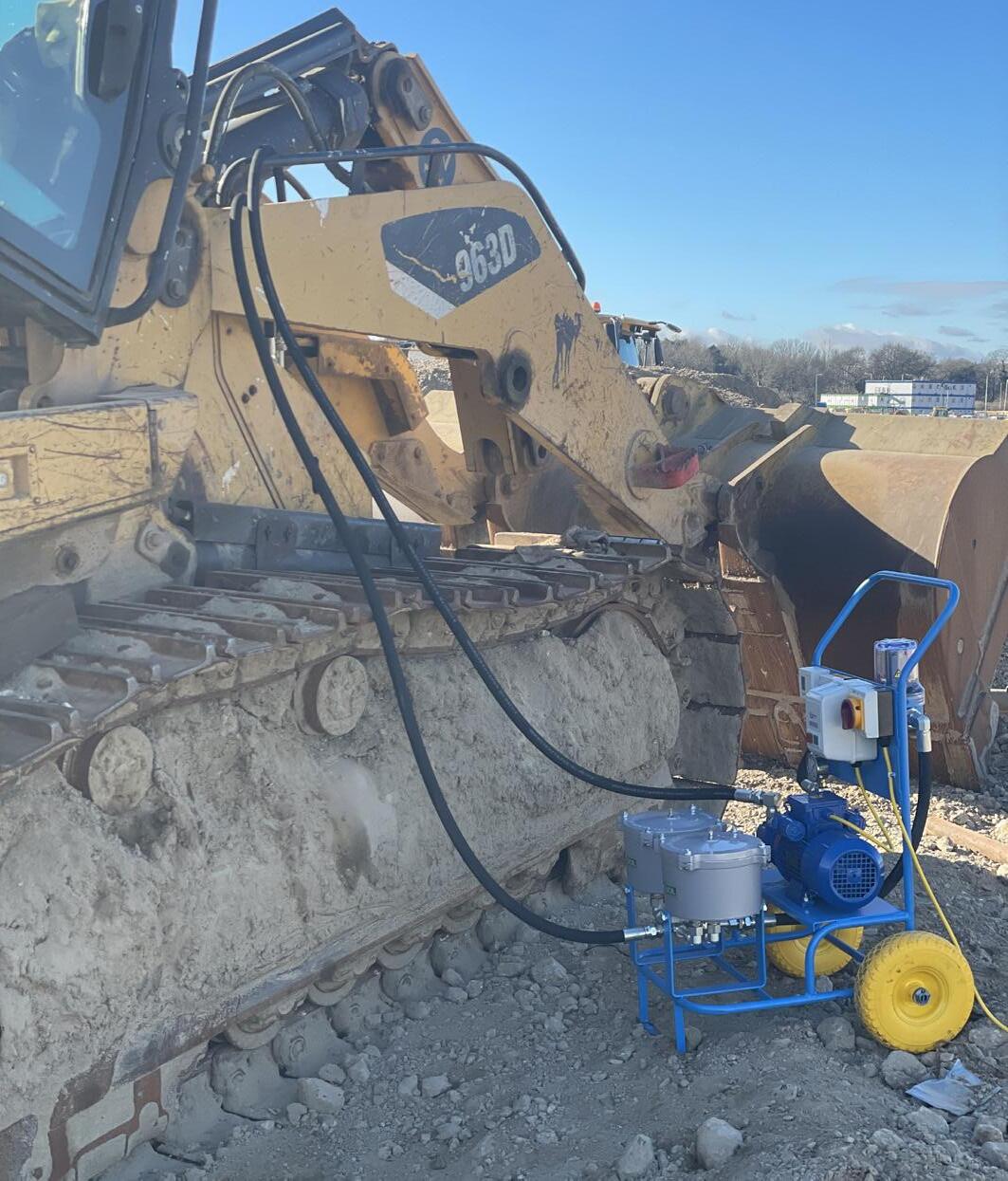
For decades, most industries have followed a simple rule of thumb: change hydraulic oil every two or three years. It has become so ingrained in maintenance culture that few stop to ask why. But when we look closely, the truth is surprising — hydraulic oil itself doesn’t wear out nearly as quickly as we’ve been led to believe.
Why we change oil
Hydraulic oil is typically changed on a time-based schedule, not because the oil itself has reached the end of its service life, but because of what happens to it in operation. Over time, oil becomes contaminated with fine particles, water, and oxidation byproducts. Additive packages deplete more quickly because they are continually fighting these contaminants. Eventually, the oil is judged to be “spent,” even though the base stock is often still healthy.
The key issues are:
• Particles – abrasive dust, dirt, and wear debris cause component wear and system inefficiency.
• Water – introduced via leaks, condensation, or humidity, leading to corrosion, micro-dieseling, and sludge formation.
• Oxidation – heat and contaminants increase acidity (TAN), creating varnish and deposits.
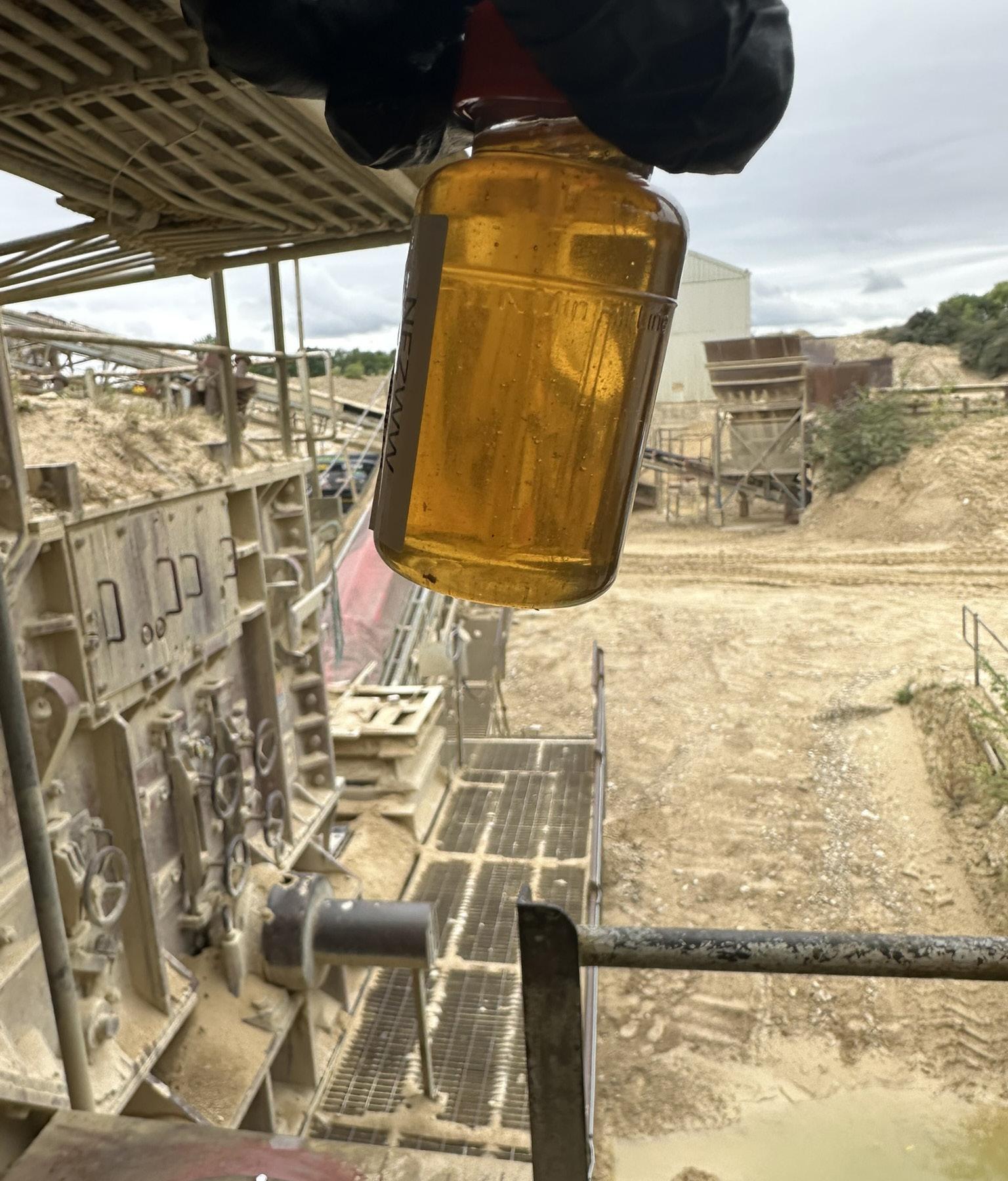
The result? Oil gets drained and replaced on schedule, often at huge cost in terms of oil purchases, downtime, and waste oil disposal.
The reality of oil life
What’s rarely appreciated is that base oil does not wear out quickly. If contamination and moisture are kept under control, hydraulic oil can remain in service far beyond traditional change intervals. In fact, with proper maintenance, oil life can often be extended two to three times — or even indefinitely.
This has been proven time and again by oil analysis programs. In many cases, used hydraulic oil still meets original viscosity and TAN specifications. What triggers a change is contamination, not true degradation of the oil.
The Kleenoil approach
This is where Kleenoil bypass filtration makes a significant difference. By continually cleaning and drying oil, Kleenoil keeps it at a level of hygiene where it behaves like new.
• Cellulose depth filters remove particles down to 3 micron, far finer than standard system filters.
• Moisture is absorbed and held within the filter media, reducing water levels that cause corrosion and microbial growth.
• Additives remain intact because they no longer have to work overtime combating contamination.
The process is continuous — a small side-stream of oil is constantly cleaned and returned, much like a kidney continually filtering blood. The result is hydraulic oil that retains its lubricity, performance, and protective qualities for far longer.
The benefits
Extending oil life brings multiple advantages:
• Cost savings – reduced oil purchases, fewer change-outs, and less downtime.
• Component protection – reduced wear on pumps, valves, and actuators.
• Environmental gains – less waste oil generated, supporting sustainability goals.
• Predictive maintenance – supported by regular oil analysis, which shows exactly when intervention is needed.
Rethinking the old habit
So, do we really need to change hydraulic oil as often as we do?
The evidence suggests not. Instead of working to the calendar, we should work to the condition of the oil. With Kleenoil bypass filtration and a simple oil analysis program, hydraulic oil can be kept in service for many years — clean, dry, and fit for purpose.
It’s time to rethink old habits, reduce waste, and make hydraulic systems both more reliable and more sustainable.
specifications” and essential attachments
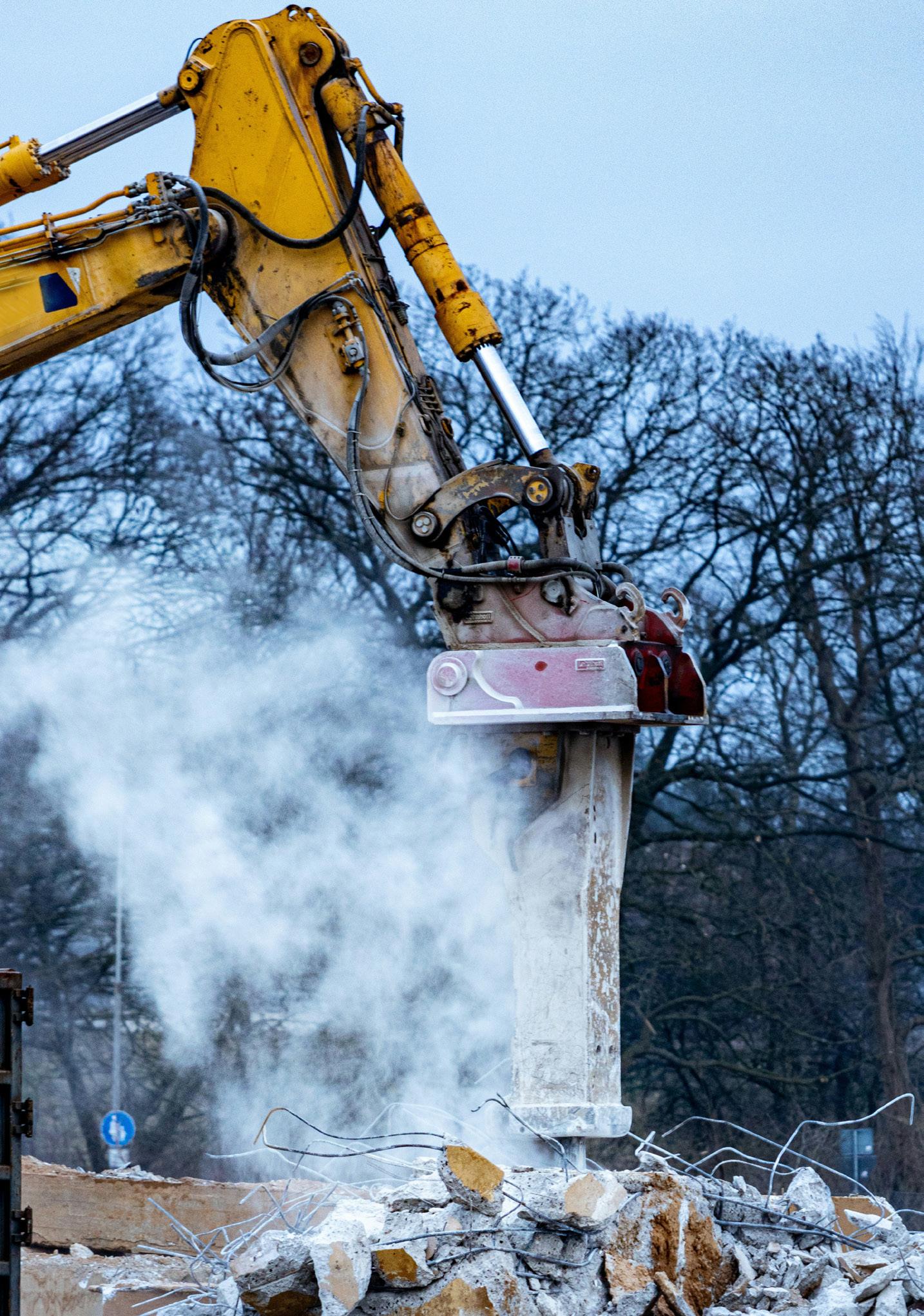
It’s no secret that demolition is one of the most dangerous aspects of work within the construction industry.
From the immediate threats posed by falling debris and unplanned structural collapse, to the longerterm health concerns posed by dust exposure, a demolition site is an inherently high-risk environment. However, with modern technology and by adopting best practices, much can be done to mitigate these risks on a modern demolition site.
Let’s explore the term “demolition specification”, as well as the attachments and options available to keep staff and the public as safe as possible throughout even the most complex of demolition projects.
Understanding “demolition-specifications” can be somewhat nebulous to industry newcomers, as the majority of OEMs and conversion specialists offer their own interpretation of this. However, there are some essential options required to ensure that the excavator you intend to use is fit for purpose, and able to carry out demolition tasks reliably and safely.
Essential options include falling objects and rollover protection systems (FOPS and ROPS), a heavy-duty and variable undercarriage, a high-flow hydraulics system, a tilting cab, and an advanced HEPA air filtration system. A dust suppression system is also becoming increasingly more common.
Additionally, armoured belly plates, ram guards and side impact protection all serve to provide extra durability and reliability for your equipment, and safety for operators.
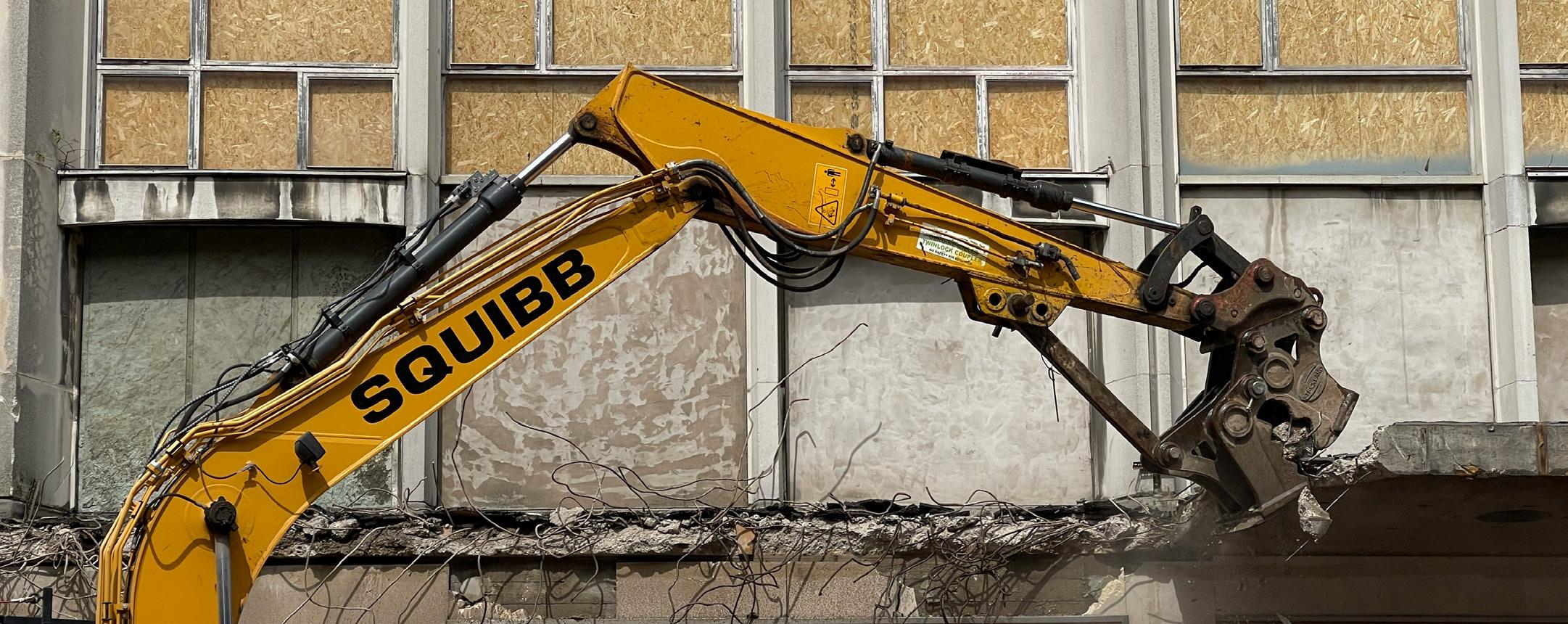

In addition to the mono- and three-piece booms equipped to most excavators, demolition-specification excavators will often be equipped with either a straight or high-reach boom.
A straight boom offers operators more upward extension than a conventional mono boom, and increased lifting capacity. It enables safe work on mid-rise buildings (3–5 storeys), as well as ground level excavations and sorting tasks.
Ranging anywhere from 15 to 60+ metres of extension, high-reach booms provide operators with a considerable amount of control, as well as the ability to safely, efficiently and precisely work at height to demolish tall structures, especially for sites where demolition via explosives is impractical.
With the harmful impact of silica dust exposure more widely understood, dust suppression has rapidly become a critical consideration for modern demolition practices, particularly for demolition sites located in high-density urban environments.
Dust suppression systems can be fitted either directly to attachments or mounted to either the boom or dipper arm, and both systems work by spraying a fine mist of water towards the point of contact. This captures dust particles at the source, and greatly reduces the risks associated with dust exposure.
Equally as essential as the excavator itself are the attachments that will be used to carry out the jobs on a demolition site. The primary attachments are:
Working on a similar principle to a pneumatic jackhammer, this powerful tool is used to deliver high-impact kinetic energy to materials such as concrete, masonry, rock and tarmac.
Within the attachment, a piston is driven by the excavator’s hydraulic system to rapidly strike a chisel or blunt tool. This converts the excavator’s hydraulic energy into rapid, highimpact kinetic force, providing the operator with the means to break through the toughest of building materials with ease. In addition to being able to penetrate tough materials such as reinforced concrete, the hydraulic breaker is also ideal for breaking up foundations and road surfaces.
Composed of either two giant jaws or a fixed lower and moving upper jaw, concrete pulverisers are designed to crush concrete and separate rebar.
Primarily used to process rubble following initial structural demolition, this attachment works by using an excavator to power two hydraulic cylinders. As the jaws close on large sections of reinforced concrete, it is broken down into more manageable rubble and exposes the rebar for easier separation.
Similar in appearance and principle to concrete pulverisers, demolition shears utilise an demolition-specification excavator’s highflow hydraulic system to power two hardened steel blades that are used to cut through metal.
Designed to make short work of pipes, rebar and I-beams, demolition shears are an essential tool for the primary demolition of steel structures, but are also essential for railway and marine decommissioning.
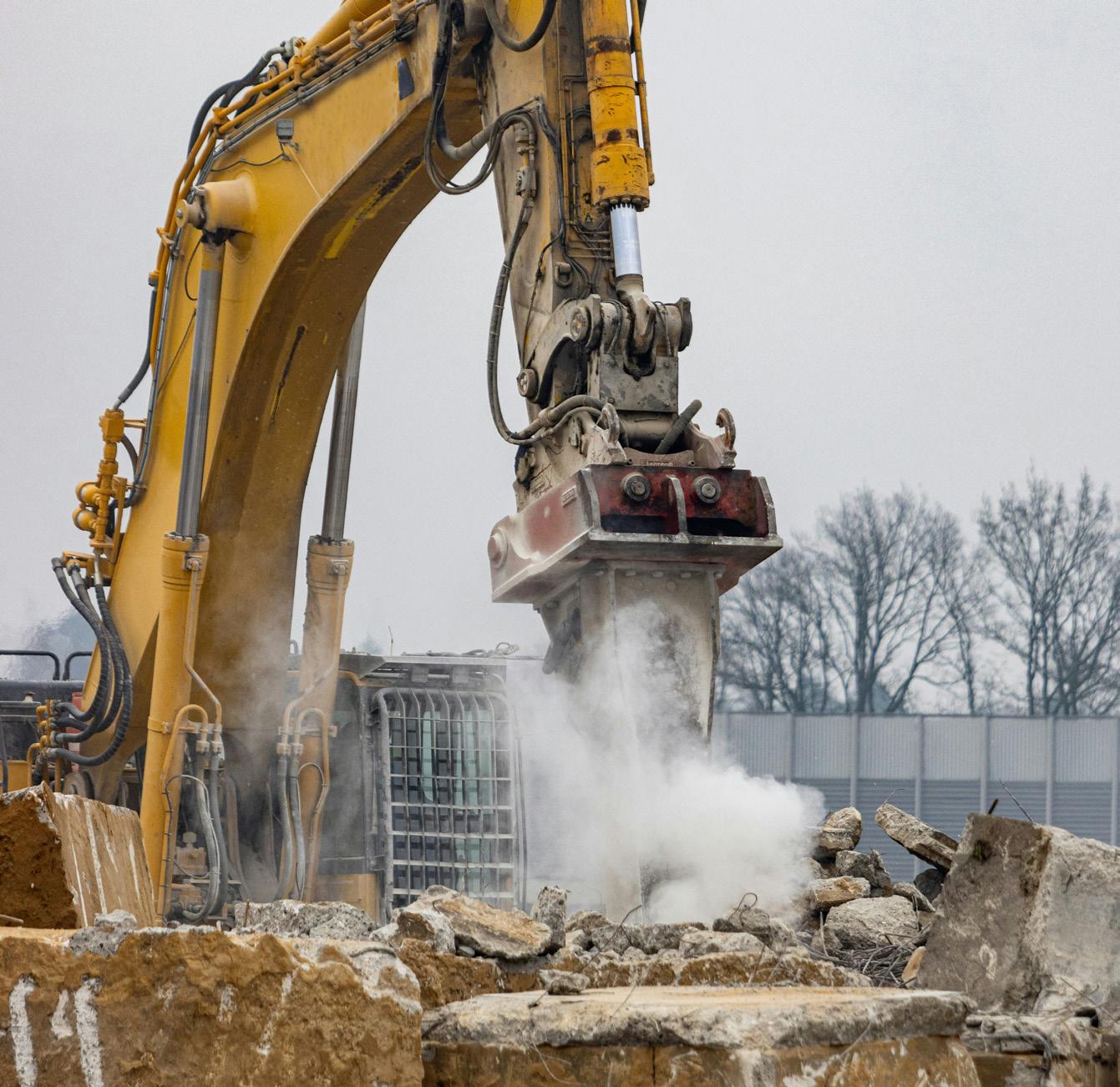
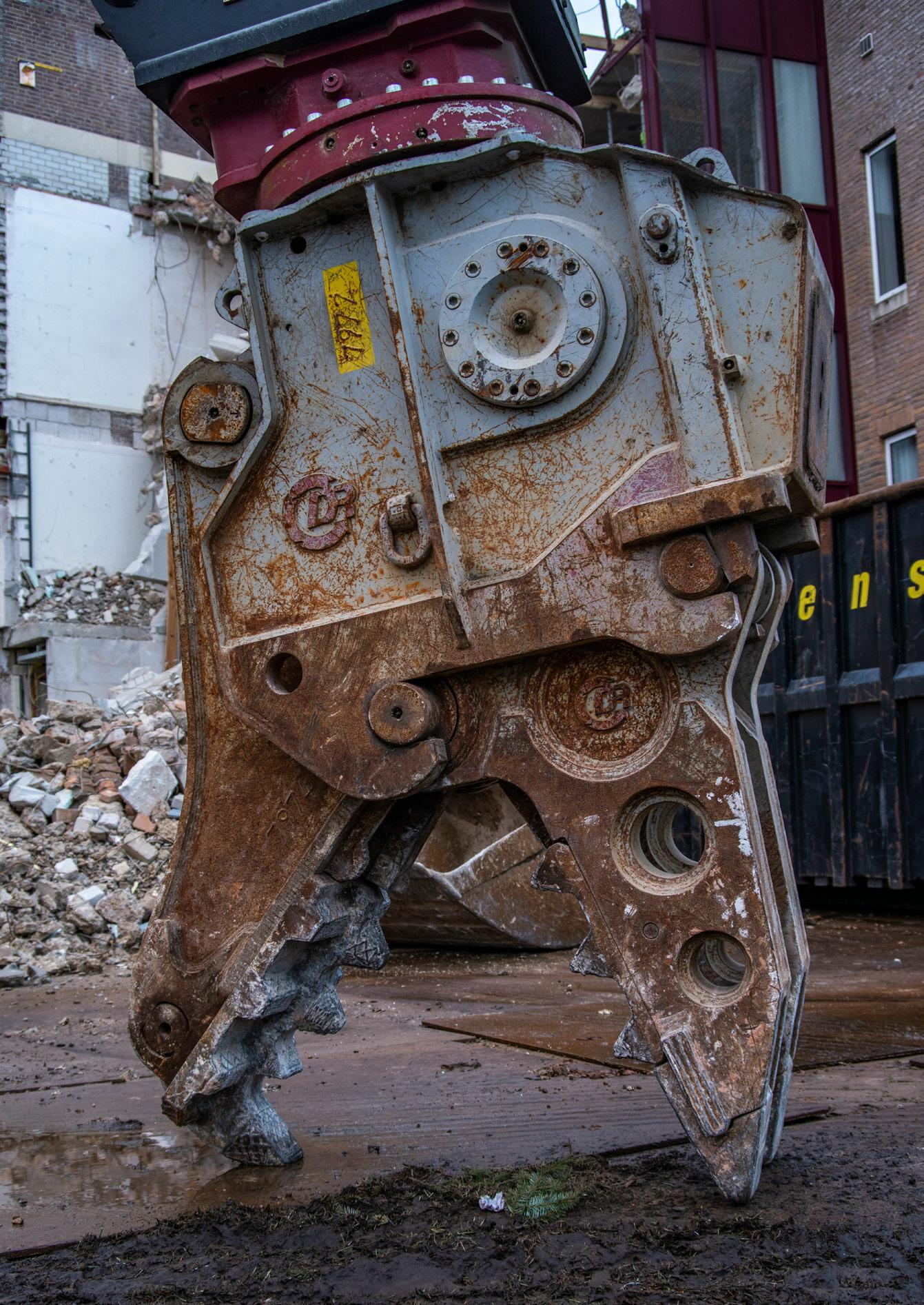
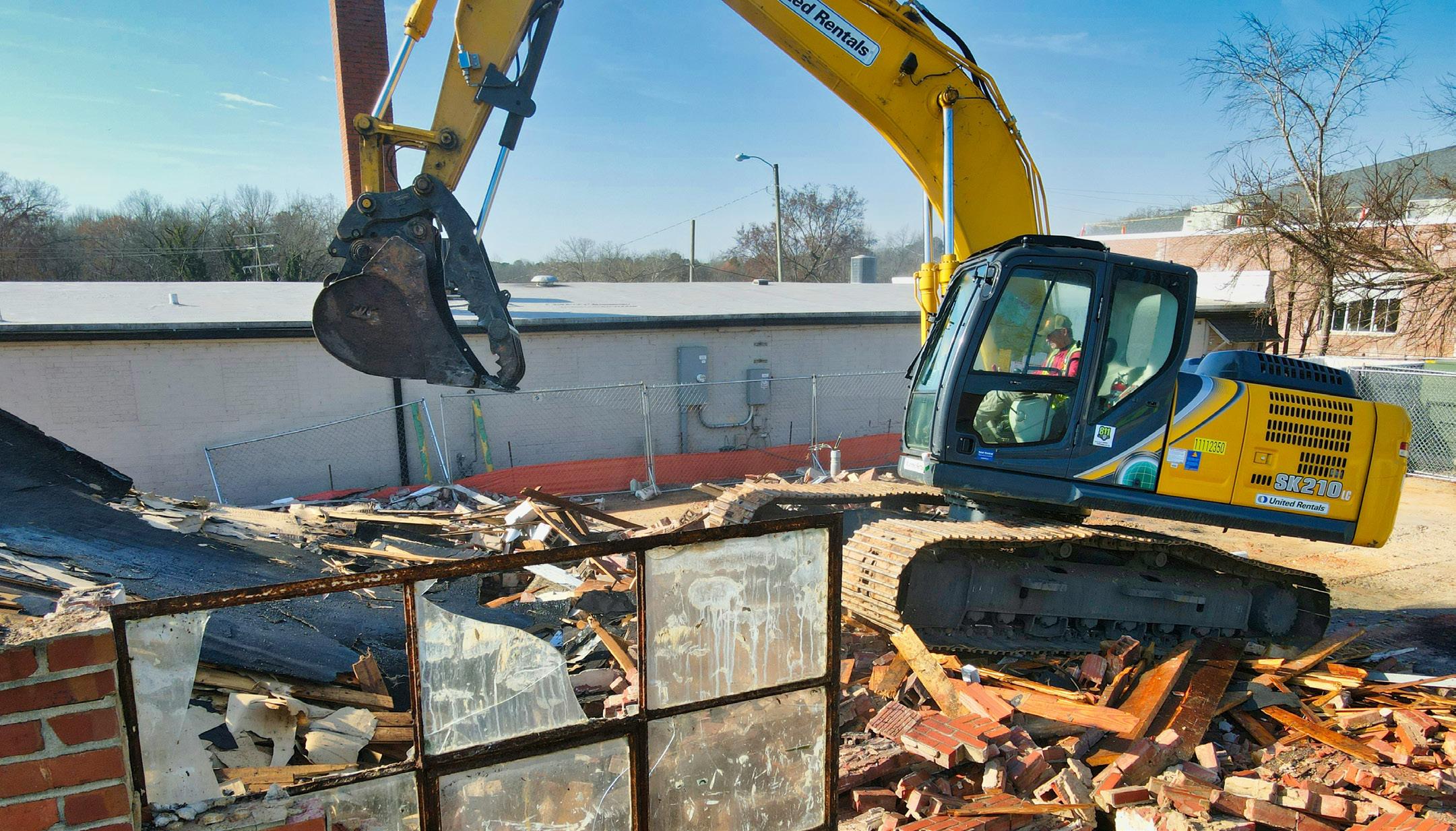
Designed for primary and secondary demolition when used as an excavator attachment. Using two or more hydraulic lines to provide power to the grapple’s claws, this attachment is used in precision primary demolition to soft-strip non-structural elements of building, and to selectively demolish sections of a structure where full demolition is not required.
When used in secondary demolition, this attachment is used by either an excavator or material handler to pull, sort, strip, separate and lift materials.
Representing a relatively new development for the demolition sector, multiprocessors combine the functionality of both concrete pulverisers, crushers and demolition shear into one versatile attachment.
Utilising a modular jaw system, the multiprocessor can be quickly configured for the specific task at hand, greatly reducing on-site storage requirements for multiple bulky attachments.
In addition to these essential attachments, quick couplers represent a significant safety and productivity improvement for the modern demolition site. Quick couples provide the operator with the ability to boost operator productivity, and encourages operators to use the right tool for the right job.
While the modern demolition site remains an inherently high-risk environment, ensuring that you have the right tools for the job and adopting best practices will go a long way to keeping your equipment, staff and the public safe even when carrying out the trickiest of demolition jobs.