AUTHENTIC TO THE INDUSTRY



Precision. Protection. Professionalism. The NFDC sets the benchmark for safety excellence.
For every project, every site, and every worker, safety comes first. NFDC members don’t just comply with safety standards; they define them. With the latest training, technology, and best practices, NFDC companies operate with the precision and care that safeguard lives.
Stay safe. Stay ahead. Join the NFDC. Scan the QR code to explore membership benefits.
Need demolition? Think of the NFDC
Welcome back to Demolition Spotlight!
The colder weather is finally upon us, and as this is the last issue of Demolition Spotlight for this year, let me just say MERRY CHRISTMAS!! (Yes, I said it, I mentioned the ‘C’ word). It’s coming up to my favourite time of year, and the end of Demolition Spotlight’s first year as a solo magazine! So, just like with all our Christmas shopping, we’re wrapping up Demolition Spotlight after what has been a brilliant, and incredibly busy, year!
We have worked with some amazing people, attended many shows, visited some awesome places… it’s safe to say, Demolition Spotlight has truly lived its best life. And this issue is no different! We are bringing you another jam-packed issue, centering around health and safety in the world of demolition.
In this issue, we bring you three Demo Specs with Dynaset, Kleenoil and SMT, a case study, written by Alex Cox, discussing the Redcar steelworks and our On Site feature, written by Paul Argent, features Worsley Plant. We have reviews of PlantWorx and World Demolition Summit, as well as a preview of the National Civils Show. And, as if that wasn’t enough, we have a feature of the history of Health and Safety in the demolition industry, lots of waste news, and our front cover with MB Crusher.
Wow. This issue truly is more stuffed than how I’ll feel after my Christmas dinner! Everyone here at Demolition Spotlight wishes you a very merry Christmas, and a happy new year!
Happy reading!
The Demolition Spotlight Team


demolition
is published by
Machine Power Media Ltd.
Unit 5, Basepoint, Enterprise Centre, Terminus Road, Chichester, PO19 8FY 07779 405885
Machine Power Media Ltd. © 2025 all rights reserved.
Reproduction in whole or part is prohibited except with permission in writing from the company.
Note to contributors: articles submitted to the Editor for consideration must be the original work of the author.
Where photographs are included that are not the property of the company or contributor, permission to reproduce them must have been received from the owner of the copyright. Any views or opinions expressed within this magazine are not necessarily those of the company. Registered in England No: 16081082
All advertisements are accepted subject to Machine Power Media’s standard of insertion.
For a copy of Advertising Terms & Conditions, please write to: Darren Shelton, Machine Power Media Ltd.
Unit 5, Basepoint, Enterprise Centre, Terminus Road, Chichester, PO19 8FY

12 // cover story
Mission Impossible? Not for These Demolition Daredevils!
8 // news
A round up of the news from the demolition industry over the past two months.
20 // review
Given the outlook around the world for the demolition industry, one might assume that sentiment would be one of negativity. However, WDS proved that there is plenty of positivity to be found.
26 // review plantworx
A show that wasn’t to be missed!
32 // Feature Article Demolition Done Right
Reinforcing Health and Safety Standards. Lorna Cowlin looks into how demolition sites put health and safety at the forefront of every job.
37 // preview
National Civils Show at ExCeL London – The UK’s Premier Civils & Infrastructure Event.
41 // ON SITE
Paul Argent looks into the history of Worsley Plant Montabert and why they are so renowned in the industry.
46 // case study
From industrial powerhouse to symbol of change, Alex Cox tells all.
50 // waste news
A deep dive into the latest news in the waste sector of demolition.
57 // demo specs
41 32

DARREN SHELTON MANAGING DIRECTOR

CHRIS HART SENIOR SALES CONSULTANT

PHIL EVERY GROUP SALES DIRECTOR

MARTINA TONELLI MARKETING MANAGER

REBECCA PHILLIPS MANAGING EDITOR

LORNA COWLIN CONTENT CREATOR

STEVE WILSON DESIGN MANAGER
PAUL ARGENT RPA MEDIA SERVICES
ALESSIA VALERIO MB CRUSHER
ALEX ELLISON NFDC
CARYS LOVELAND SMT GB
ALEX COX & LEWIS TYLER WORLD DEMOLITION SUMMIT
DAVID SHUTE INMALO
For all content related queries, contact editor@demolitionspotlight.co.uk
For all sales related queries, contact chris@machinepowermedia.co.uk


Founded by David Short after his Army National Service, Shorts Group has grown from timber and land clearing into a leader in demolition, waste management, and complementary services. With over 68 years of expertise, we provide a comprehensive range of services, including Demolition Contracting, Waste Management, Skip and Plant Hire, Bagged Materials, and Agricultural Contracting. Guided by our family values and dedication to customer satisfaction, we deliver professional, sustainable solutions tailored to meet the unique needs of every client.
Our Demolition Contracting service stands out for its precision, safety, and innovation. From small-scale projects to large-site clearances, we provide reliable solutions customised to meet your requirements. Fully insured and accredited with industry-related schemes, we uphold the highest safety standards on every project.
A prime example is our Norwich demolition project, where our team combined advanced machinery with innovative solutions like demolition curtains and environmental monitoring stations. Maintaining effective communication with neighbours and recycling up to 98% of materials ensured minimal disruption and maximum sustainability.
Our innovative closed-loop business model integrates all services under one
roof, fostering seamless collaboration and efficiency. By relying on in-house capabilities, we maintain strict quality control, reduce costs, and deliver ecoconscious solutions.
Supporting these core services, our Skip Hire and Plant Hire divisions ensure every project is equipped for success. Whether it’s compact skips and machinery for residential needs or heavy-duty equipment for industrialscale operations, we provide the right resources for every job.
Sustainability is embedded in every aspect of our operations. Recycling is at the core of our approach, with a zero-landfill commitment ensuring waste is repurposed wherever possible.
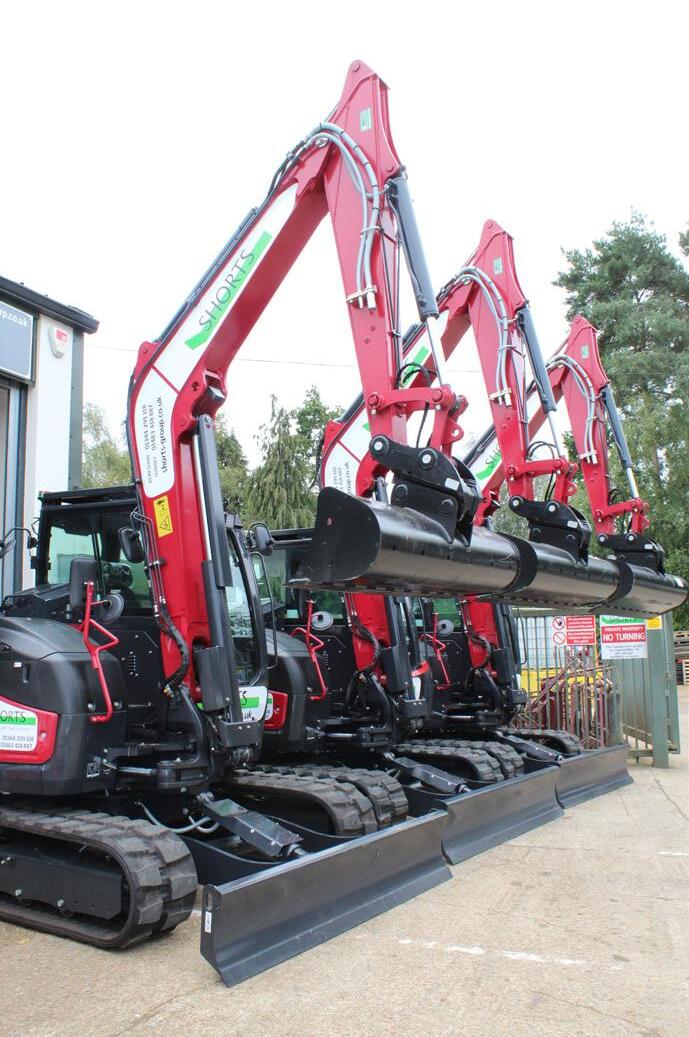
Our in-house Waste Management expertise enables the efficient handling of materials, focusing on repurposing, recycling, and recovering resources to minimise environmental impact.
Family values define our company culture and the way we work. We take the time to understand your needs, offering tailored advice and transparent communication at every step. For us, you’re not just another project—you’re a partner. Operating across Berkshire, Hampshire, Surrey, and surrounding counties, we combine this personalised approach with a strong commitment to sustainability, delivering exceptional results while contributing to a cleaner, greener future.

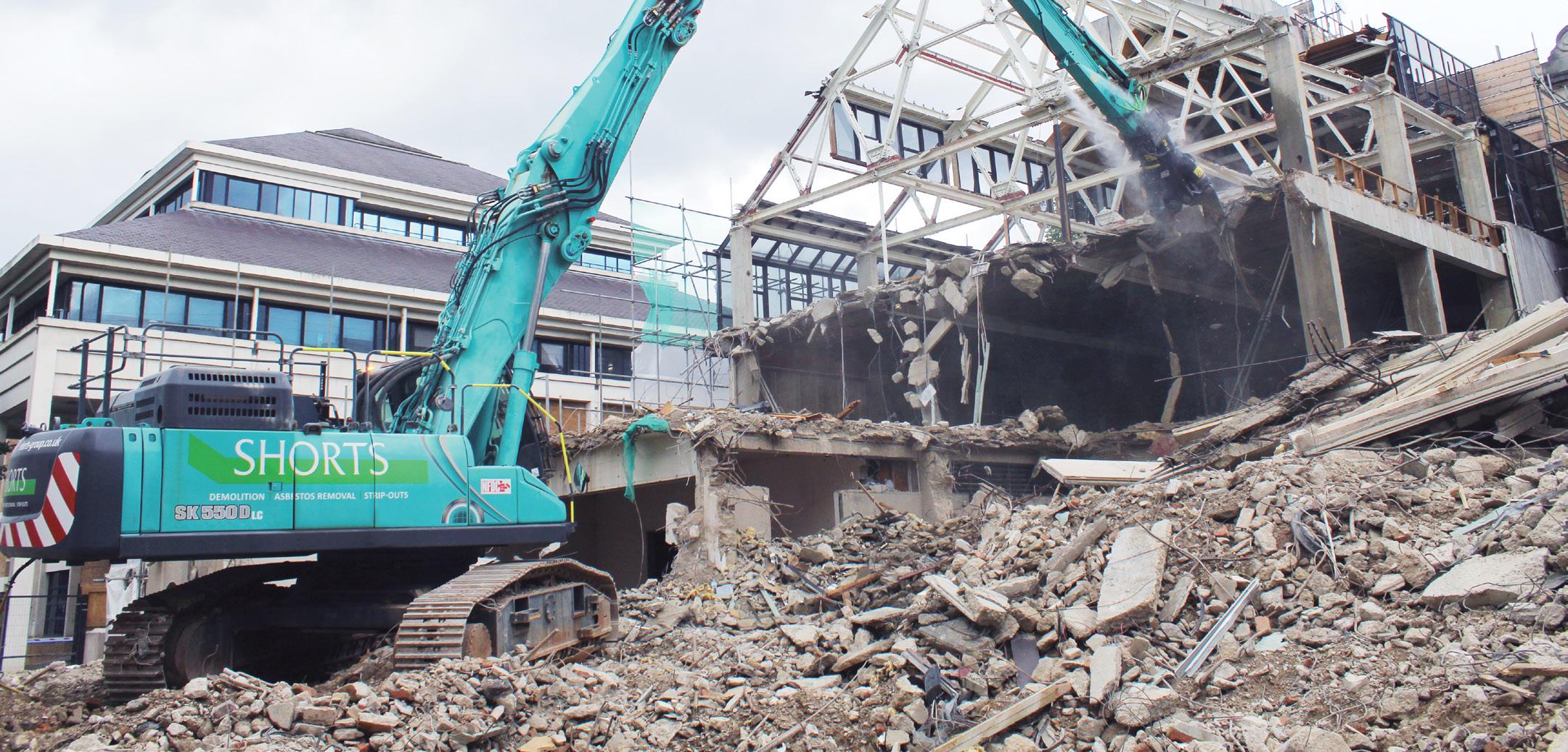
Today, demolition is a highly specialised discipline within the construction industry, driven by state-of-the-art technology, meticulous planning, and rigorous safety standards. The outdated perception of demolition as a crude and chaotic process is long gone. Modern demolition requires planning, precision, environmental responsibility, and technical expertise. Employing qualified and certified demolition operatives is not only a regulatory requirement but a fundamental necessity to ensure the safety of workers, surrounding structures, and the broader environment.
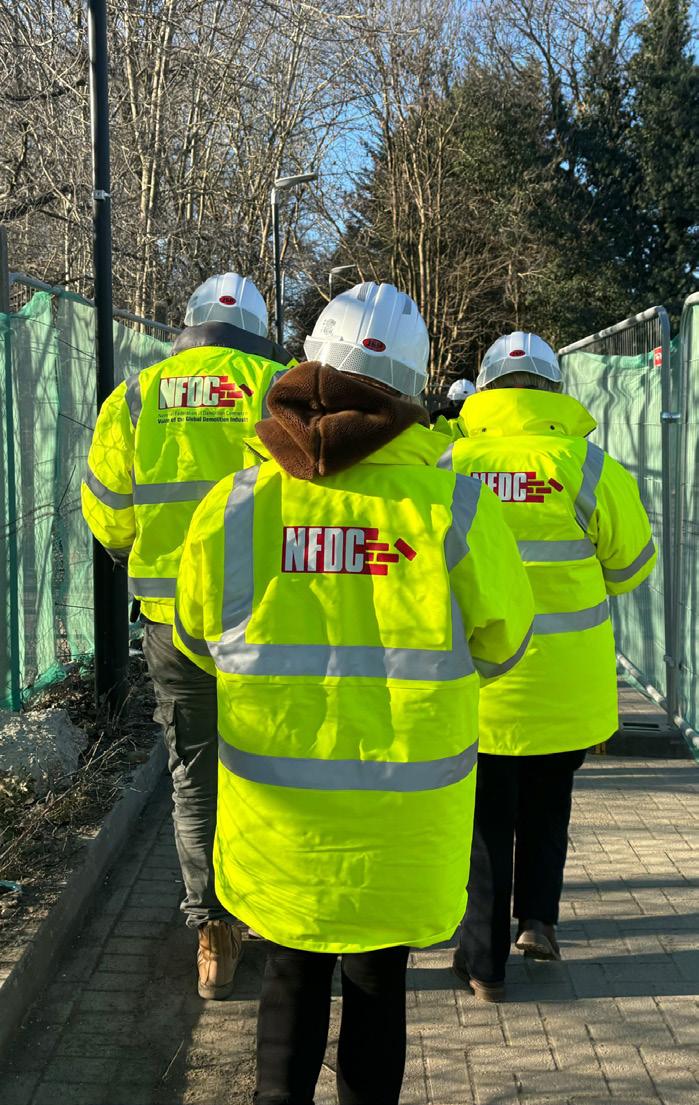
the High-Risk Nature of Demolition Work
Demolition work characteristically carries significant risks. According to the Health and Safety Executive (HSE), the construction sector reported 45 fatal injuries to workers in 2022/23, marking an increase from the five-year average of 37 fatalities. This highlights the dangers present in the construction world, particularly when it comes to demolition, where structural issues and hazardous materials are common.
Demolition sites often involve working at heights, operating heavy machinery, and exposure to harmful substances such as asbestos and lead. These factors contribute to the complexity and danger of demolition tasks, emphasising the need to employ accredited companies to carry out these works.
The Role of Certification and Training
In the UK, it is mandatory for all demolition operatives to hold the appropriate Certification of Competence for Demolition Operatives (CCDO) card. This certification ensures that workers have undergone rigorous training and assessment, equipping them with the necessary skills to perform demolition tasks safely, efficiently and effectively.
Accredited companies must have a workforce that can provide a full training history for all employees. All workers would be trained to identify and control potential hazards, adhere to safety regulations, and execute demolition plans with precision. Their expertise is crucial in preventing accidents and ensuring that demolition projects proceed without incident.

and
Beyond safety, employing qualified and accredited demolition companies has economic and environmental benefits. Properly trained workers are more efficient, reducing project timelines and associated costs. They are also taught to manage waste and recycle materials, contributing to environmental sustainability.
The latest UK Government statistics on waste, published in 2022, illustrate that England generated 63.0 million tonnes of non-hazardous construction and demolition waste. 59.4 million tonnes of this waste were recovered, representing a recovery rate of 94.3%. Accredited companies play a significant role in achieving such high recovery rates by effectively processing waste materials.
So why hire accredited demolition companies?
The importance of hiring qualified and accredited demolition companies cannot be overlooked, and those working in the construction industry need to be educated on the importance of hiring accredited demolition businesses to carry out their work. Their expertise ensures not only the safety of the workforce and the public but also contributes to the efficiency and environmental responsibility of construction projects. It is imperative that those in the construction industry are aware of the risks associated with hiring non-accredited companies and continue their education surrounding best practices in the industry. As the construction industry continues to evolve, prioritising the employment of certified demolition professionals needs to remain a cornerstone of best practices.
The National Federation of Demolition Contractors recently concluded running a series of seminars across the country. These sessions were tailored to provide the construction industry with the critical knowledge required to plan safe, compliant, and successful demolition projects. Developed in collaboration with key industry bodies, the seminars supported clients tendering demolition works and highlighted essential safety and contractual considerations. The NFDC are now planning a new series of seminars, to begin in 2026. To find out more, visit: https://demolitionnfdc.com/news/industry/nfdc-talksintelligent-demolition-seminars
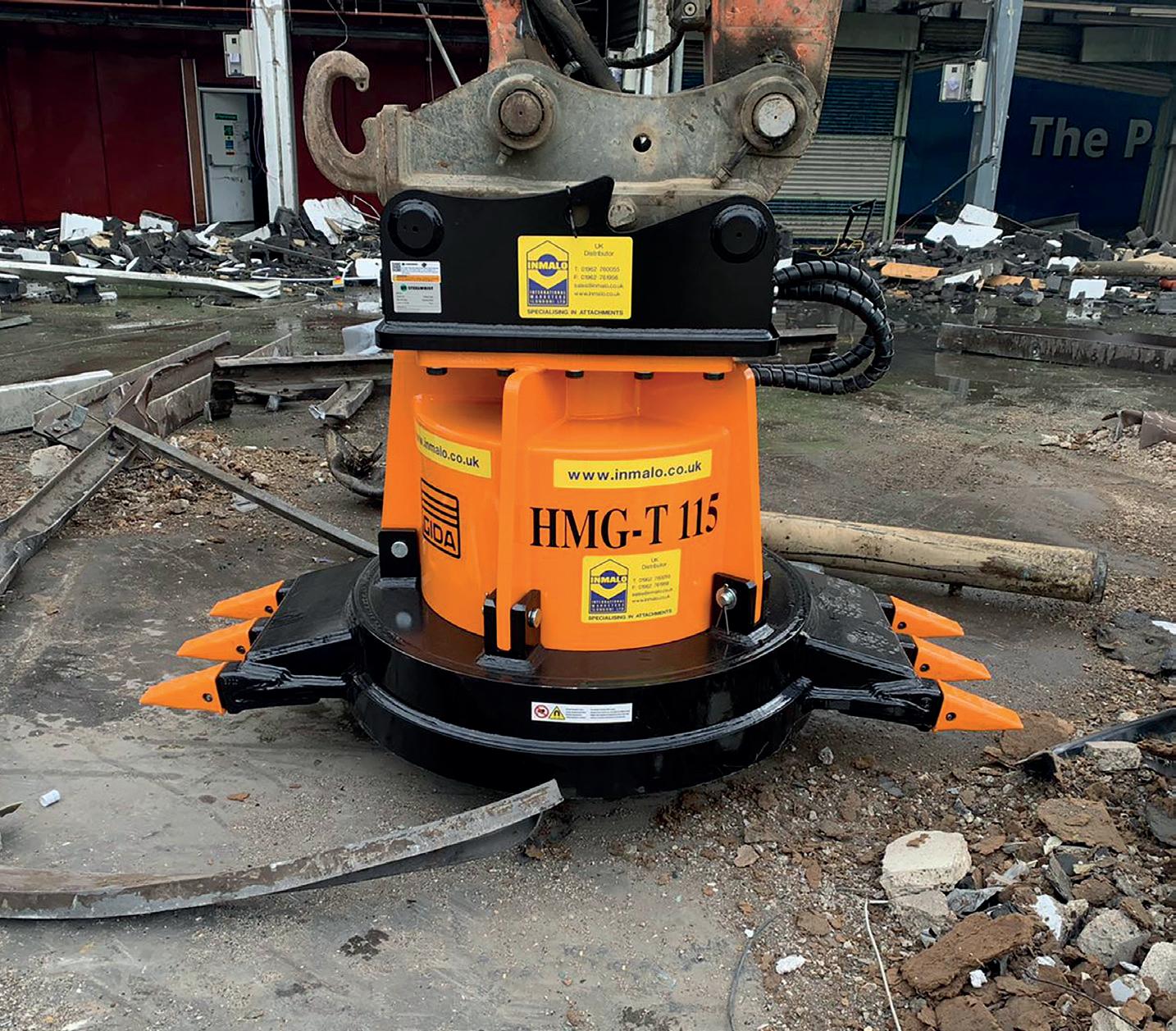
Demolition isn’t pretty, it’s precise, fast, and costly when things go wrong. That’s why forward-thinking operators are pairing Inmalo’s robust demolition attachments with Steelwrist’s SQ fully automatic quick couplers. Together, they transform slow, manual tool swaps into quick in-cab transitions, boosting safety, uptime and overall profitability. Here’s why this combination should be on every demolition company’s spec sheet.
1. Change tools in seconds – without leaving the cab
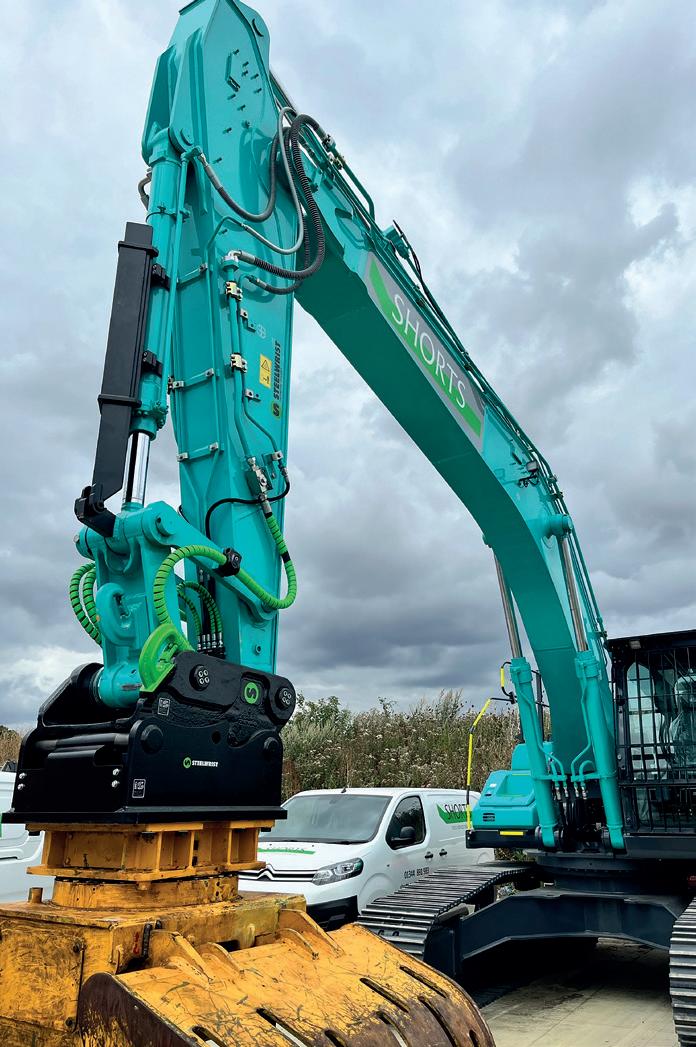
Modern demolition jobs demand constant switching between shears, pulverisers, crackers, grapples and buckets. Steelwrist’s SQ system changes tools in seconds, directly from the cab, keeping machines working and operators safe.
2. Safer operators and safer sites
Steelwrist’s Front Pin Lock (FPL) mechanically secures the front shaft, reducing the danger of dropped tools and pin misalignment.
The the newest models the LockSense sensor system adds another layer of protection, giving electronic confirmation that attachments are properly locked. Together, they enhance site safety, reduce human error and support mixedfleet operations.
3. The right tool, every time
Making it easy to select the correct attachment prevents both premature wear and costly damage. Operators can switch between tools using only the joystick, eliminating the temptation to “make do” with the wrong one.
4. Lower repair costs, fewer spills
External hydraulic hoses are prone to damage, leaks and contamination. Steelwrist’s internal system protects hoses and fittings, dramatically cutting unplanned downtime, oil loss and expensive hose van call-outs.
5. Built for brutal environments
Demolition is tough work so both systems are built to endure. Steelwrist’s SQ couplers and FPL hardware are manufactured from cast, heavy-duty steel for long service life under extreme conditions.
Inmalo attachments with Hardox frames, replaceable blades and reinforced jaws, are designed for exactly the same level of punishment. The result: a perfectly matched, highly durable setup.

6. ROI: speed + safety + uptime
The business case speaks for itself:
• Faster tool swaps = more productive hours per shift
• Safer, sensor-assisted locking = fewer accidents
• Automated hydraulics = less downtime
• Correct tools = longer service life
Across a fleet and over a season, these gains quickly offset the initial investment. The payoff comes through reduced downtime, lower running costs and higher utilisation, typically within just a few years.
For companies committed to productivity and compliance, this isn’t an optional upgrade; it’s a strategic advantage.
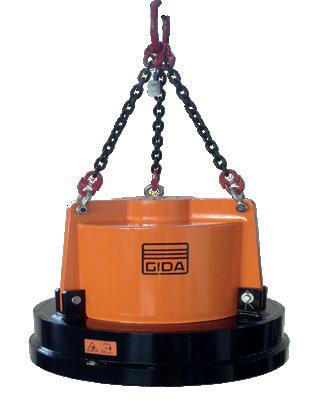
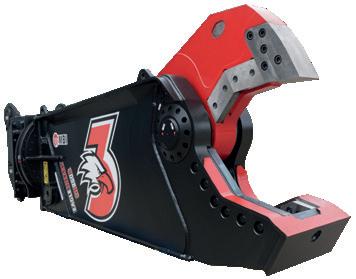
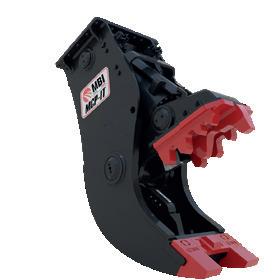
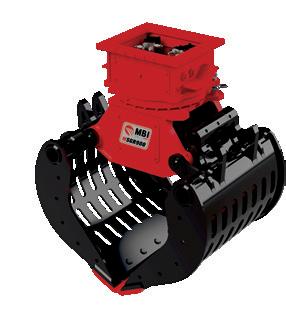
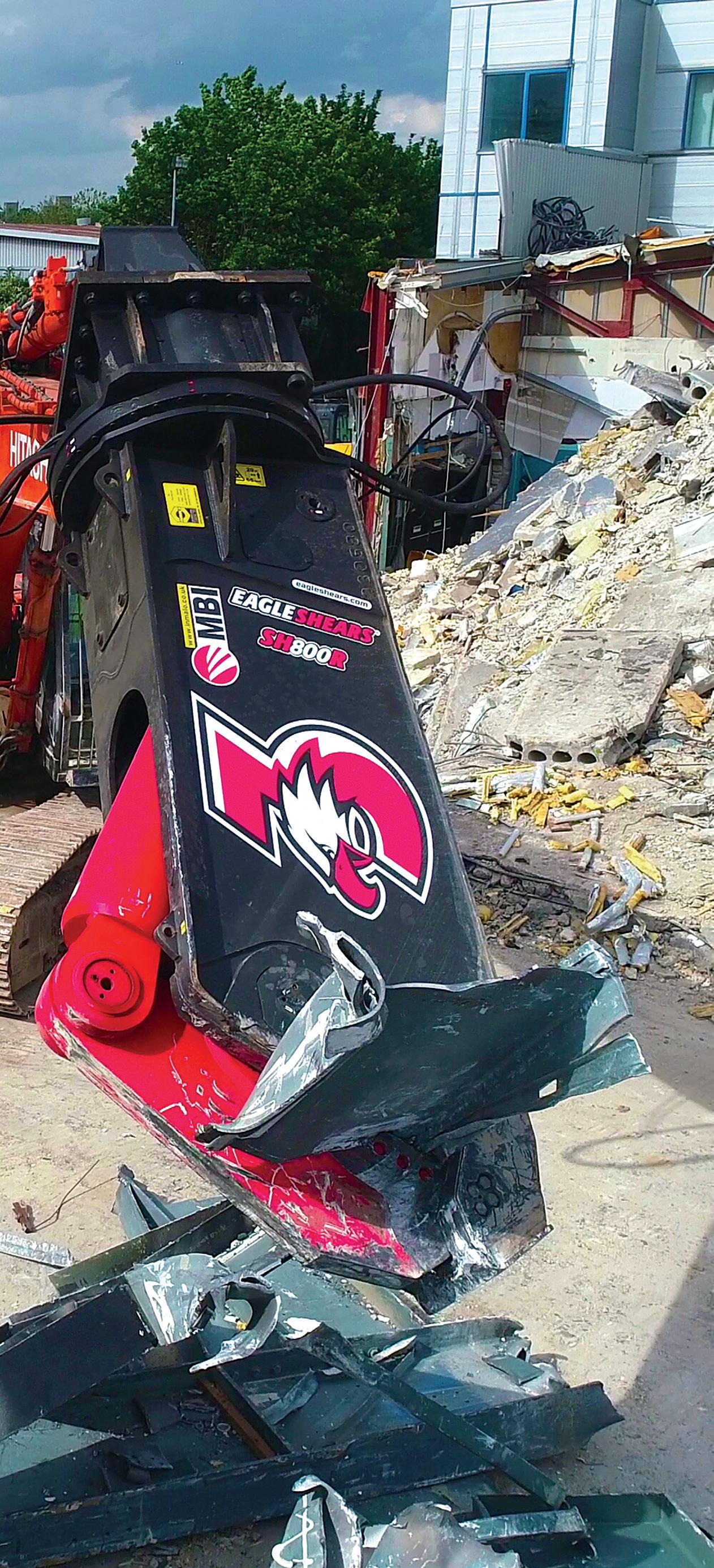
Charles Polak, Managing Director at Inmalo, said: “At Inmalo, we offer a complete demolition attachment range led by Mantovanibenne, including Eagle Shears, Pulverisers, Crackers and Grapples alongside Montabert breakers, GI-DA magnets.
“We recommend Steelwrist Couplers as the ideal partner for our equipment. Quality, reliability, service and safety remain our top priorities for improving our clients’ bottom line.”
Inmalo’s commitment extends beyond supply, with responsive aftersales support, high stock levels, and mobile engineering services.
The last few years have been significant ones for Hughes and Salvidge and our wider divisions. In the last 12 months we have achieved a record turnover of over £63million, completed and continued complex projects globally, and celebrated our 60th anniversary. During that time, we have branched out to new locations and challenges, undertaking our first project in the Kingdom of Saudi Arabia (KSA), whilst our vast works in Portugal continued, alongside further growth in the UK market through projects such as Ford in Bridgend. This is an exciting time for the business, as our reputation is now globally recognised, leading to further, technically challenging project opportunities in Europe and beyond.
This has seen us building strong partnerships with a range of clients and business partners, leading to our expertise being requested at various global events. None were more prestigious than our recent visit to Bahrain, where we were asked to talk
about the delivery of our works in KSA, alongside our partners at S-Chem.
Hughes & Salvidge CEO Shares Expertise at 6th GPCA Responsible Care Conference in Bahrain
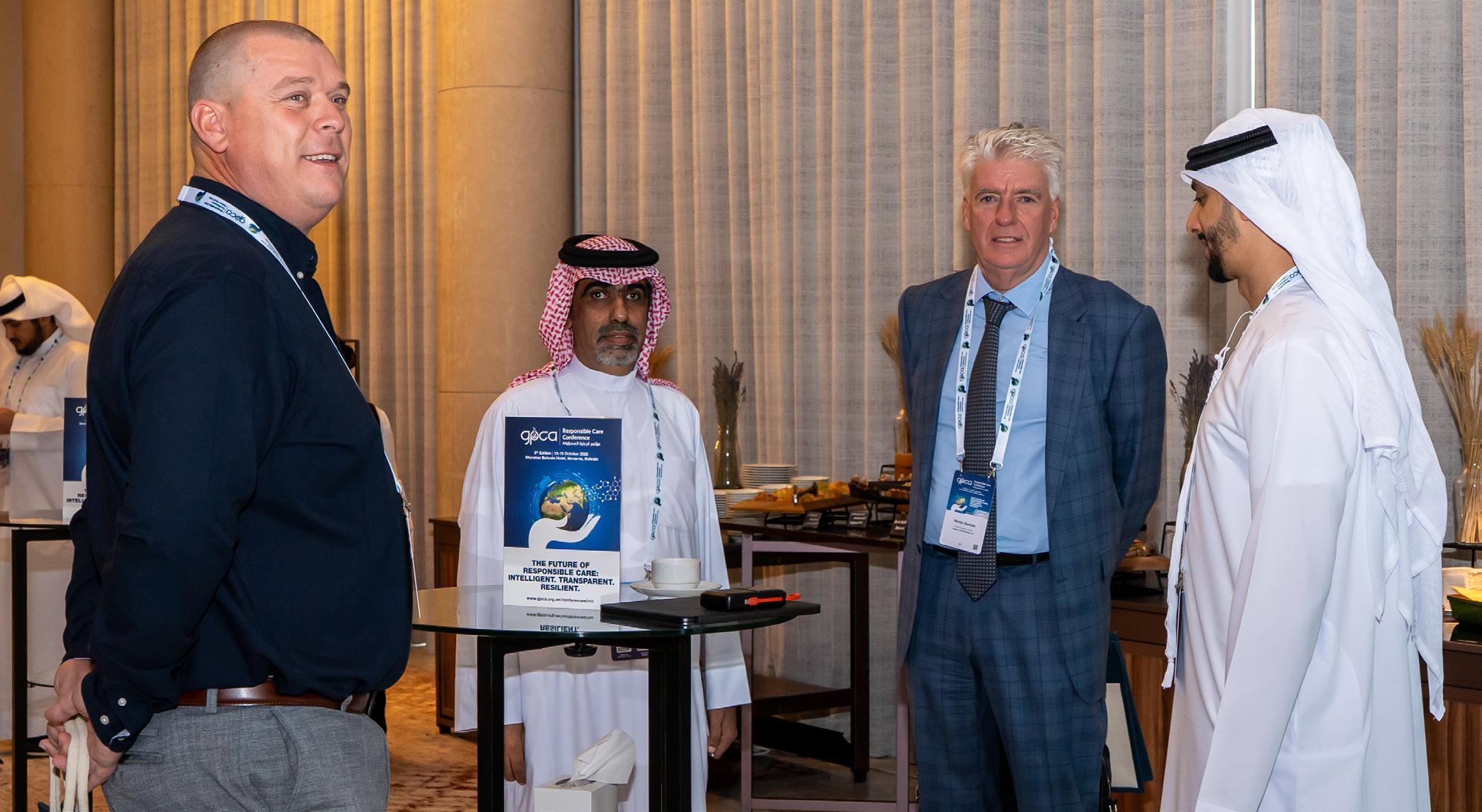
Hughes & Salvidge, a top demolition company based in the UK, proudly marked its presence at the 6th Gulf Petrochemicals & Chemicals Association (GPCA) Responsible Care Conference in Bahrain, underscoring its commitment to safety, sustainability, and excellence in contractor management.
The highlight of the conference was the participation of Hughes & Salvidge CEO, Martyn Burnett, who contributed to a high-profile panel discussion focused on contractor management during turnaround projects. Drawing on years of industry experience, and first hand expertise following the successful completion of our work in the Kingdom of Saudi Arabisa (KSA), Martyn shared valuable insights into overcoming common challenges, optimising contractor performance,

and implementing innovative solutions to ensure safety, compliance, and efficiency.
“Effective contractor management is critical, especially during complex turnarounds where safety and timelines are paramount,” said Martyn Burnett. “By fostering clear communication, robust risk management, and collaborative planning, we can achieve operational excellence without compromising safety standards.”
Hughes & Salvidge’s participation in the event reflects its dedication to promoting responsible practices across the demolition and decommissioning sectors. The company continues to reinforce its reputation as a leader among top demolition companies, delivering high-quality solutions for complex petrochemical, power station, utilities, chemical and industrial projects, whilst prioritising safety, sustainability, and innovation.
The Responsible Care Conference, hosted by the GPCA, brought together global leaders to discuss advancements in safety, environmental stewardship, and operational excellence within the chemical and industrial sectors. Hughes & Salvidge’s engagement demonstrates its proactive approach to adopting global best practices and sharing expertise with industry peers.
For more information about Hughes & Salvidge and their industry-leading services, visit: www.hughesandsalvidge.co.uk
There are some exceptional contractors that reveal how “extreme” a job site can get — no stunt doubles, no special effects, just pure engineering brilliance.
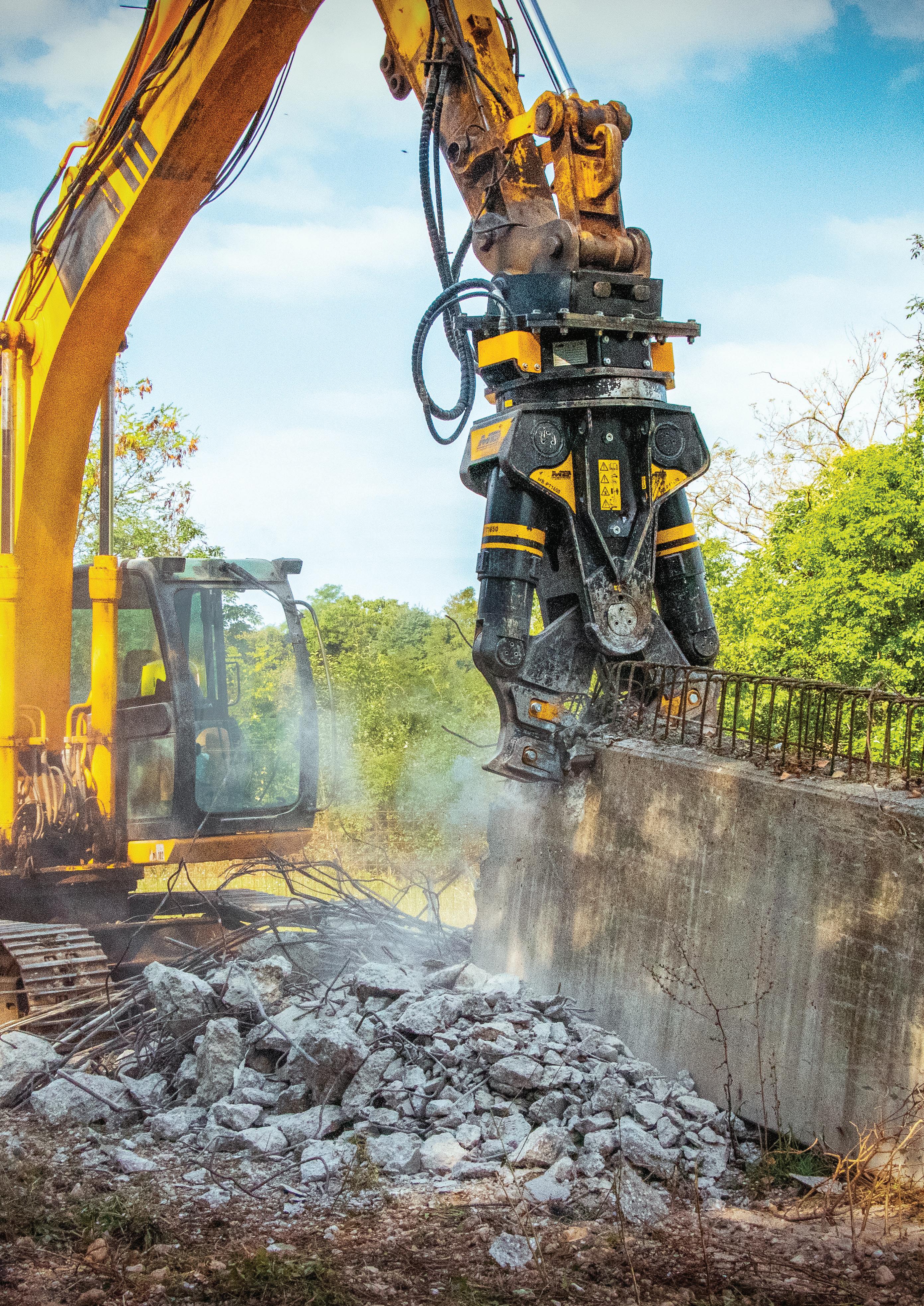
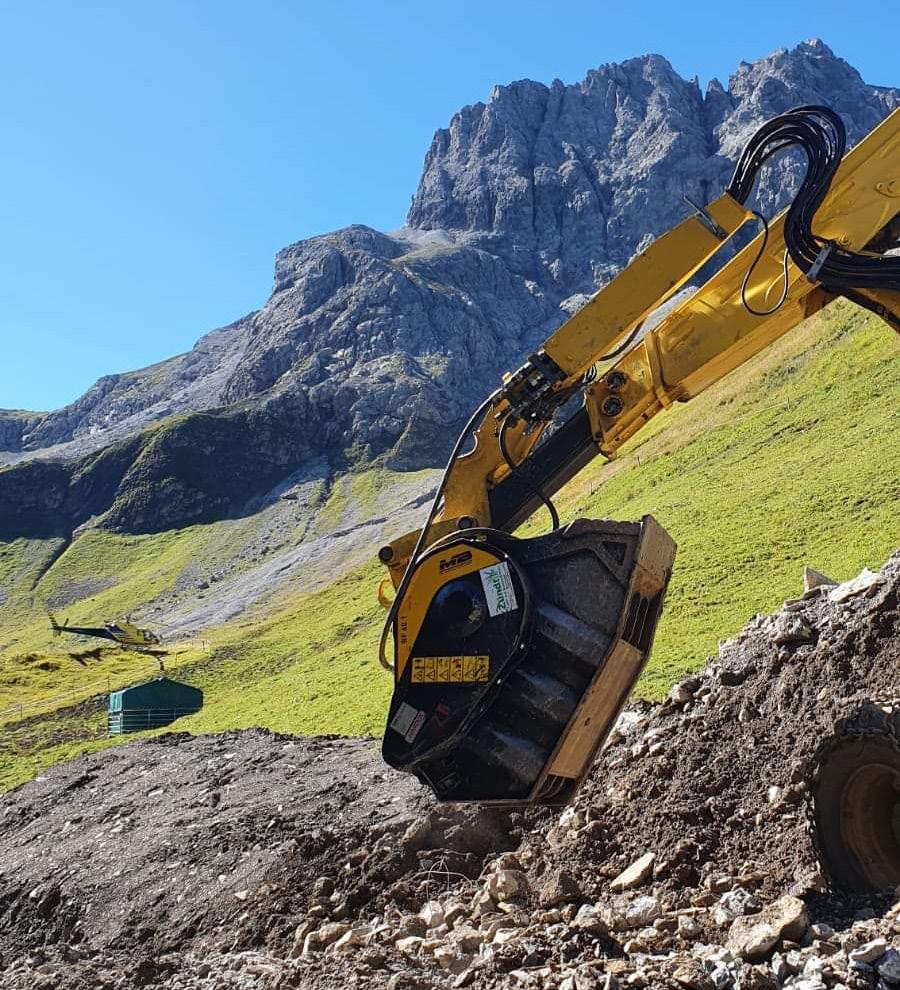
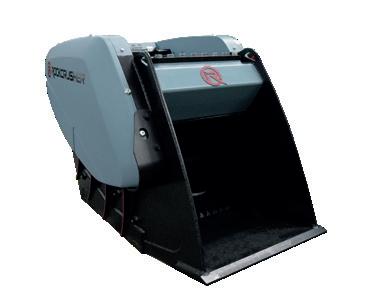
From demolishing skyscrapers and carving tunnels in tight spaces to flying crushers over Alpine peaks, these fearless professionals took on most jawdropping challenges. We got to know them as each mission was accomplished with a little help from MB Crusher — proving once again that innovation isn’t just about equipment, but about the people who master it.
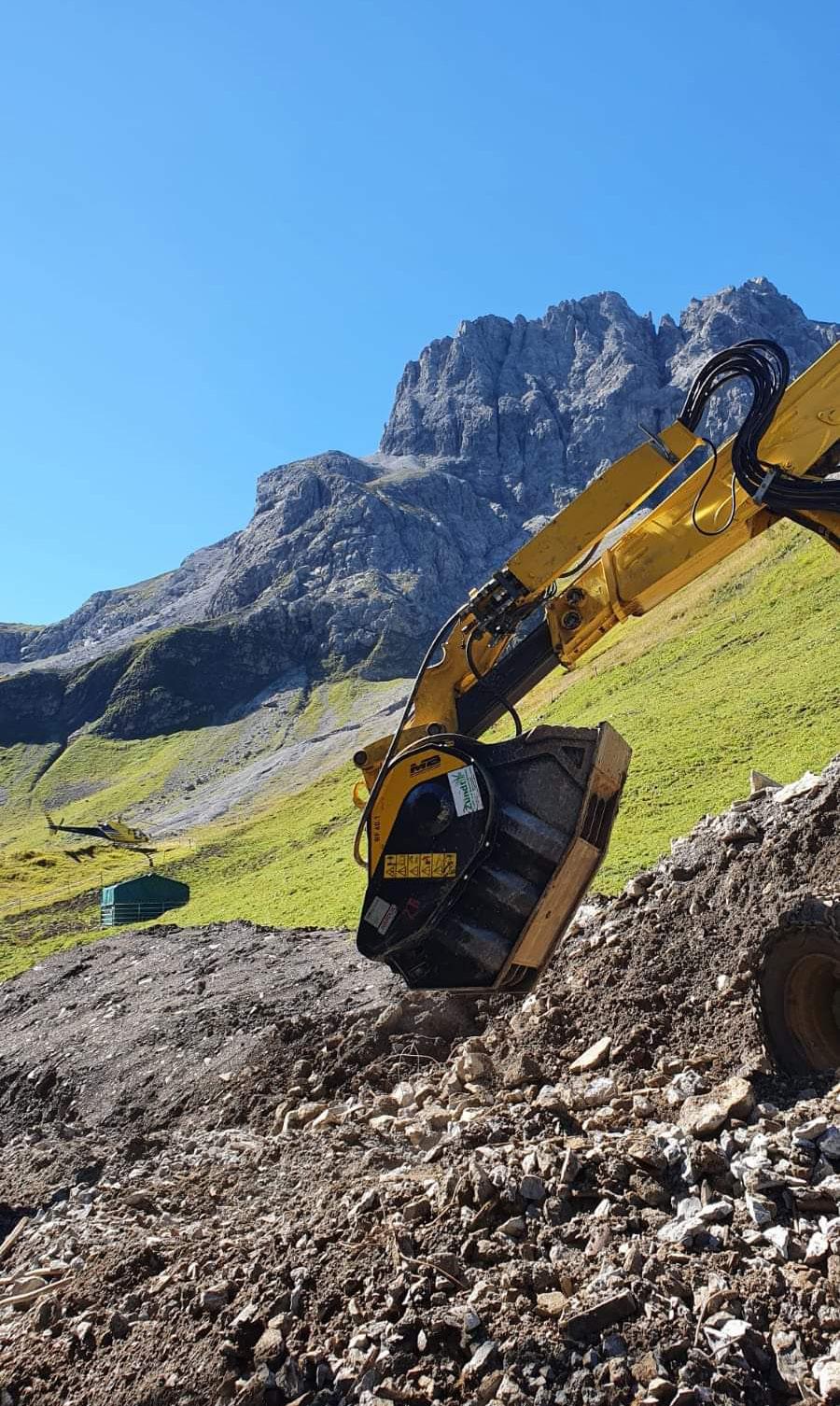
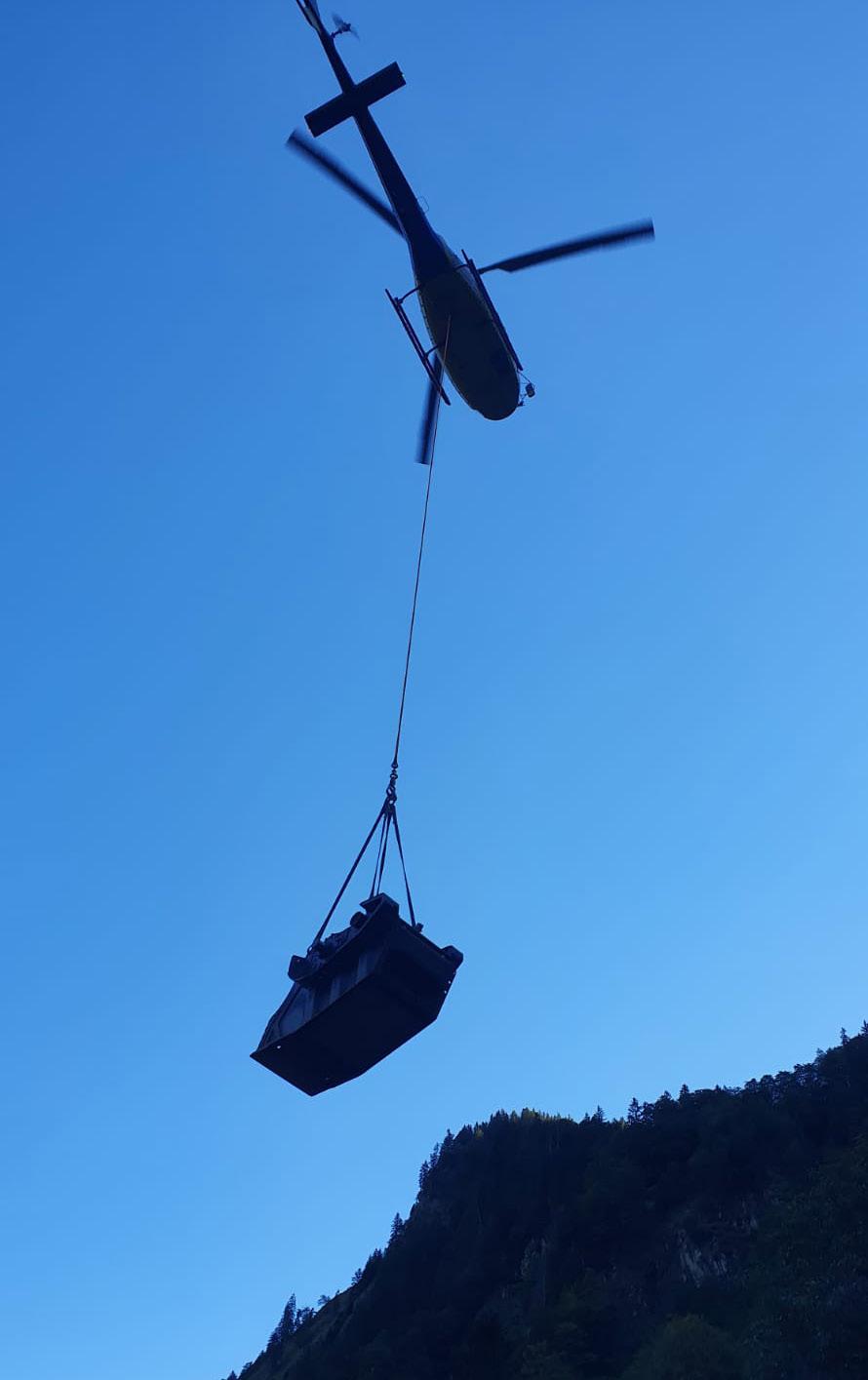
Perched 1,844 metres (6,050 ft) high in the Bavarian Alps, a mountain lodge — and the starting point of a popular hiking trail — needed partial demolition and rebuilding.
Normally, debris would be hauled down for disposal, but the team had other ideas.
The solution: a BF60.1 MB mobile crusher was airlifted (yes, literally!) to the summit, piece by piece, reassembled on-site, and put straight to work processing material into road base for nearby paths.
The result: huge savings on transport and waste disposal, plus sustainable reuse of the crushed material.
Watch the airborne crusher in action: https://vimeo.com/473365204
2. Dismantling a 16-Storey Tower – One Floor at a Time
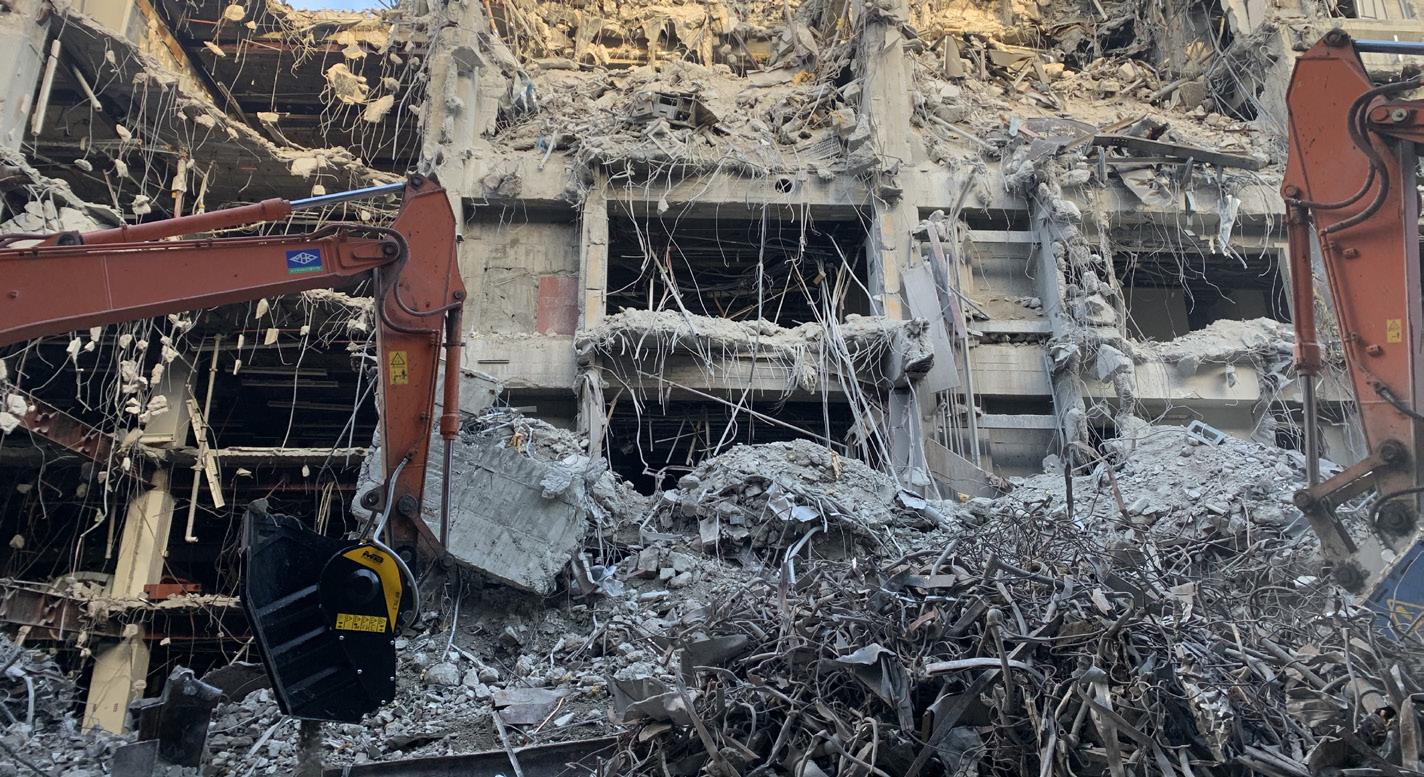
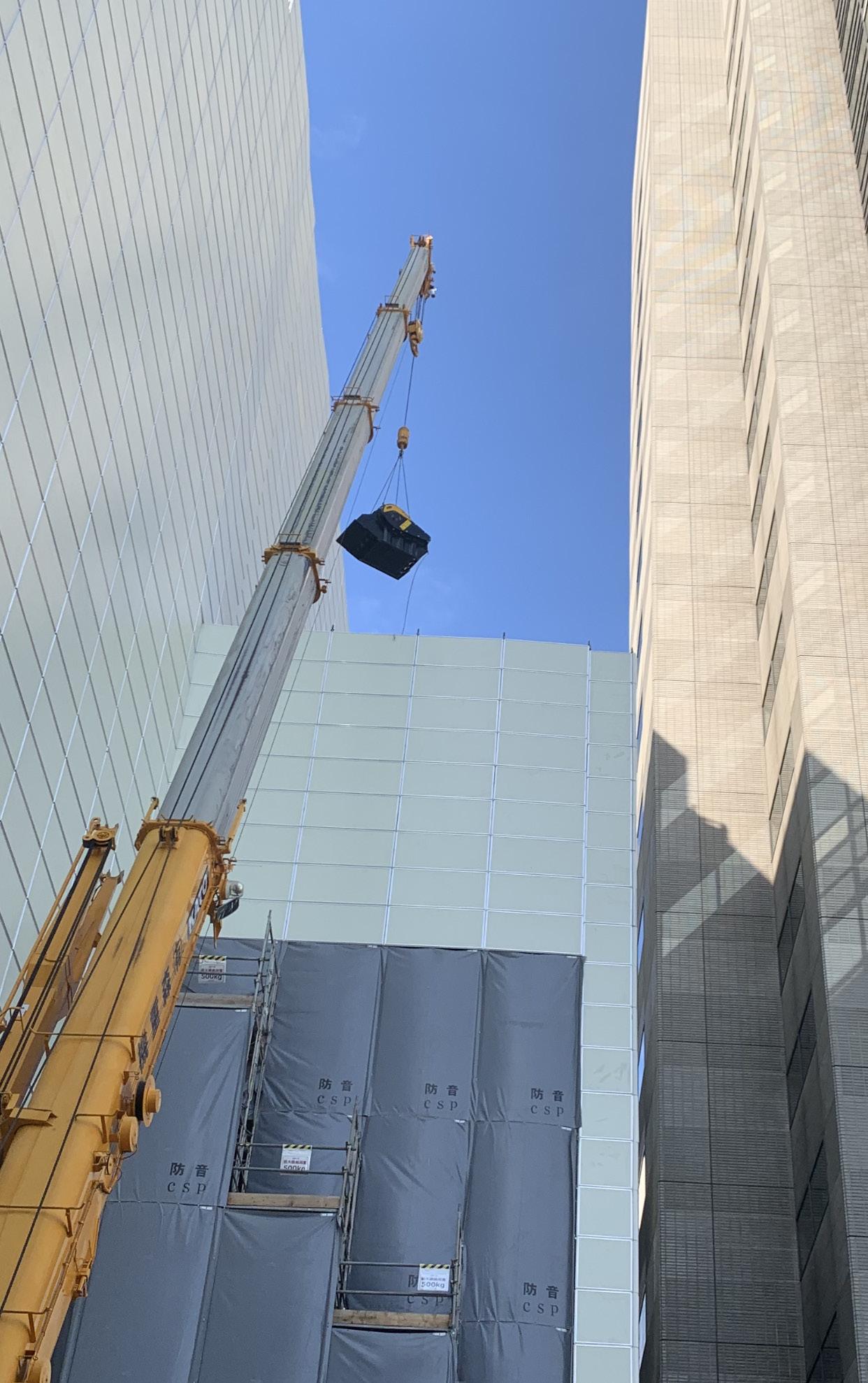
In the heart of a bustling Japanese city, a contractor faced a delicate task: to demolish a reinforced concrete high-rise without disturbing its neighbours.
The solution: a BF70.2 MB mobile crusher, nimble enough to operate on the rooftop. Each floor was demolished sequentially, with debris dropped safely through a central shaft. The crusher itself was craned up to the top floor with ease — proof that size and power can coexist beautifully.
The result: reduced dust, noise, and hauling time — a masterclass in precise, safe demoliton.
See the tower tumble: https://vimeo.com/473385433
3. Digging Deep Beneath Mexico’s Highways
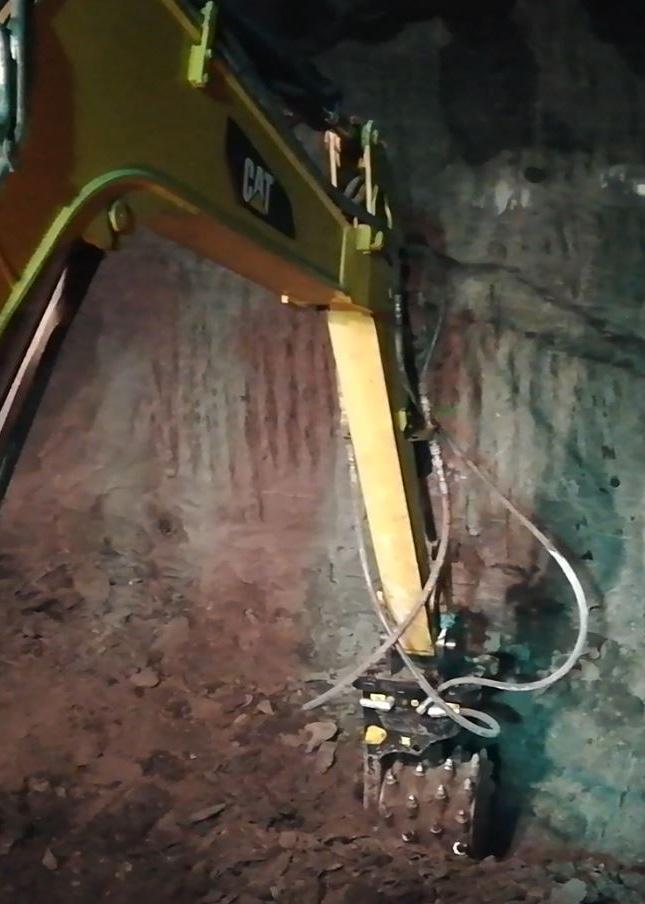
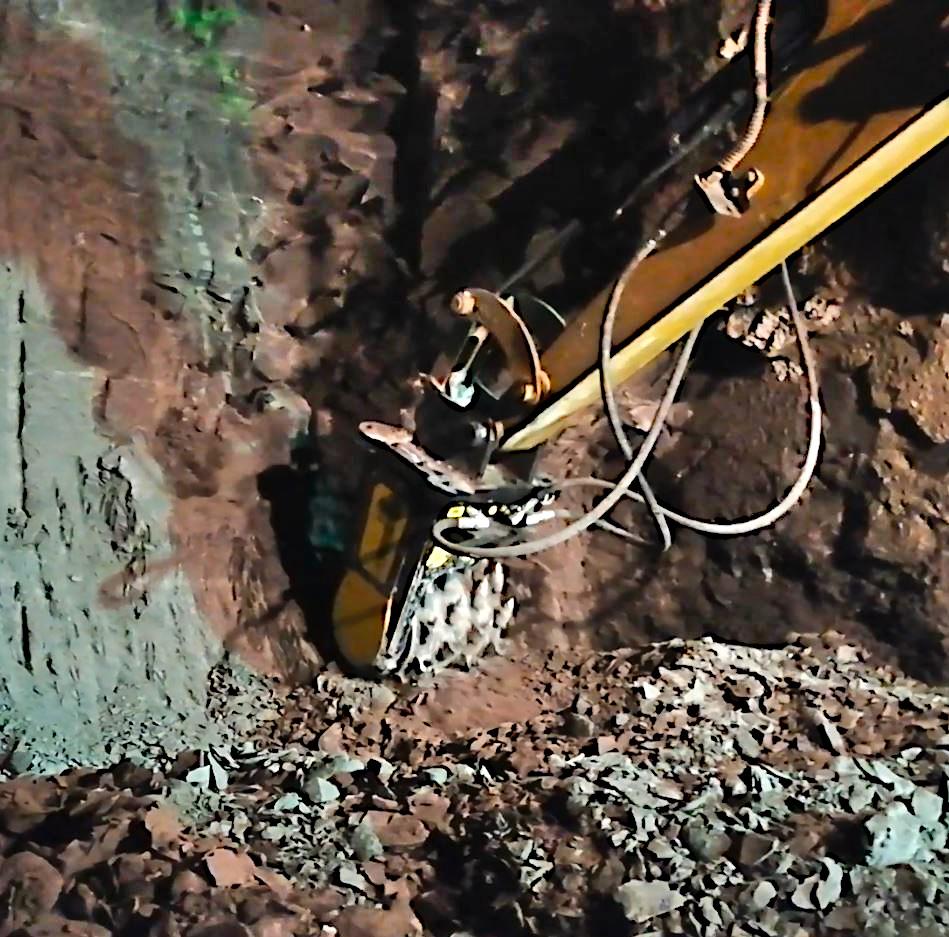
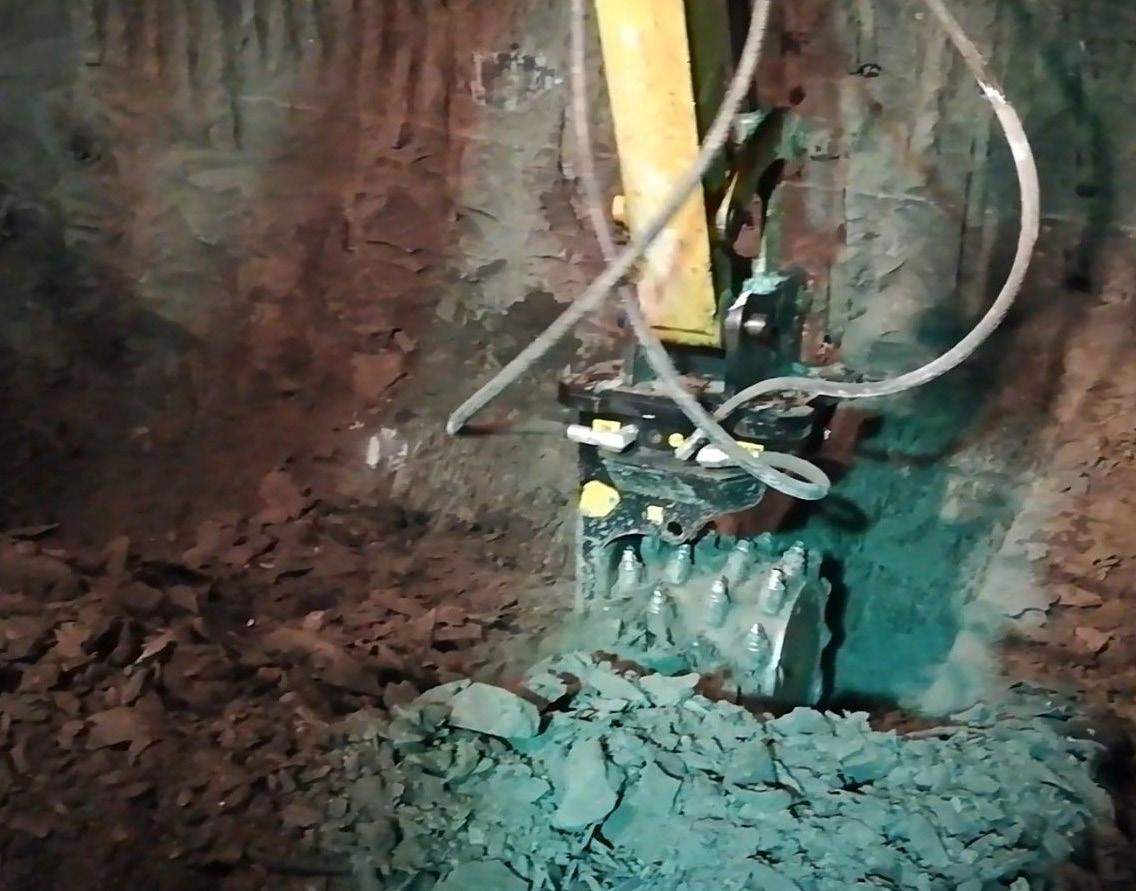
On Mexico coastline, with a stunning ocean view, a contractor was tasked with building an underground drainage canal to prevent flooding on a major road. Traditional tools were too bulky — and too vibration-prone — for the narrow, dark tunnel.
The solution: an MB-R500 drum cutter. Compact yet mighty, it carved the tunnel cleanly without shaking the structure.
The result: zero wall cracks, no unnecessary vibration, and pinpoint precision.
MB Crusher’s tools are helping contractors conquer the impossible — one daring demolition at a time.
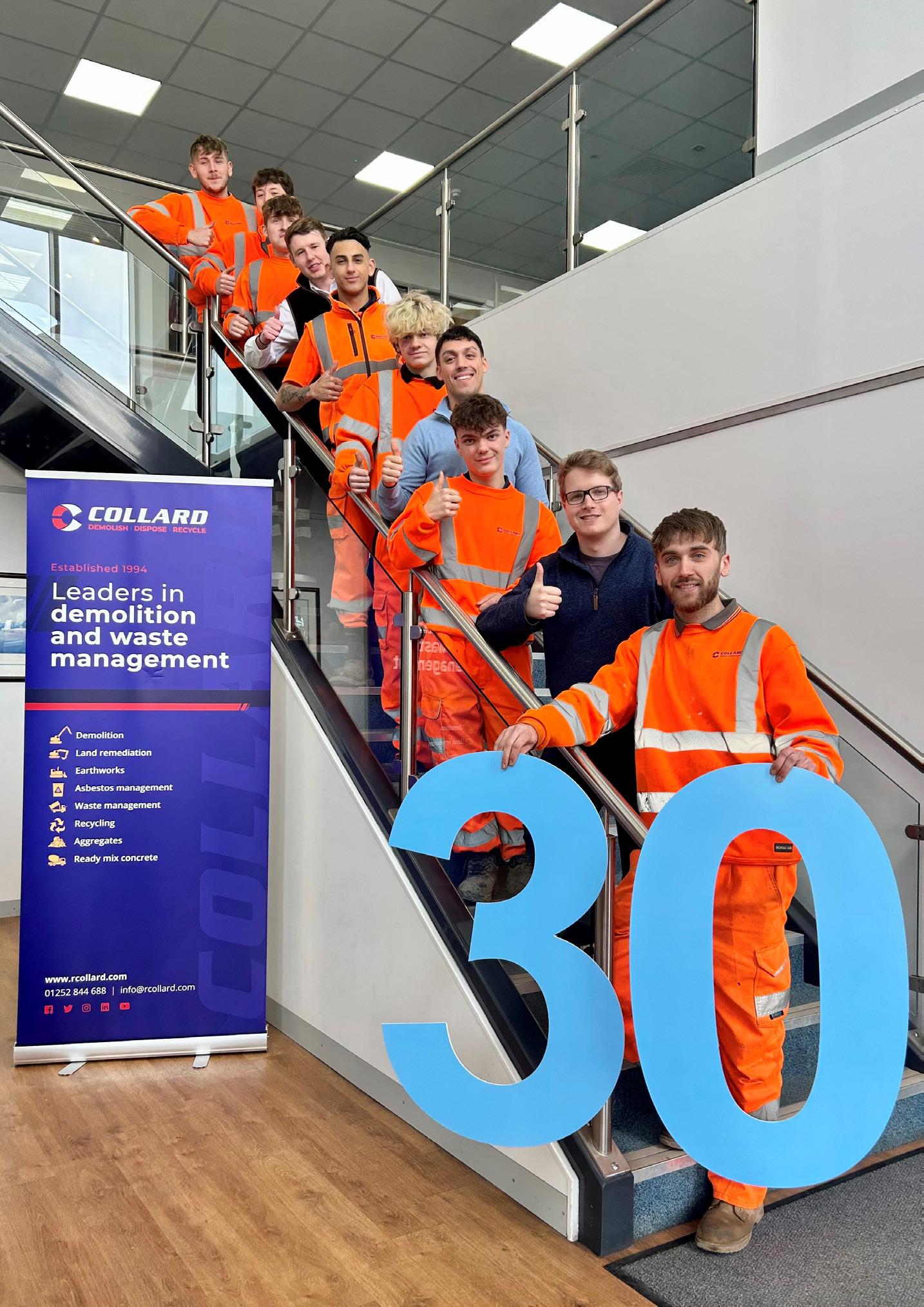
Robert Collard, founder and managing director of Collard Group, has set a clear and ambitious target for his business: to have 30 apprentices in training by 2030. More than just a recruitment goal, this initiative lies at the heart of the company’s longterm succession planning and directly addresses the growing skills shortage facing the demolition industry.
Responding to a Sector-Wide Challenge
“The demolition industry is facing a serious skills shortfall,” says Collard. “Experienced operatives are retiring, and demand for safe, compliant demolition is increasing. We can’t rely on the existing labour pool to meet future needs.”
Demolition is a highly specialist field, involving tasks like structural dismantling, hazardous material handling, plant operation, and asbestos management. These are not skills that can be picked up casually - they require structured training, on-the-job learning, and a deep-rooted safety culture.
For Collard Group, succession planning is not just an HR initiative – it’s a business-critical strategy. Apprenticeships form the backbone of this approach, enabling the company to instil technical competence, professional values, and safety-first behaviours from day one.
Key elements of the company’s approach include:
• Talent pipeline: Recruiting school leavers, career-changers, and individuals from related trades into multi-year training programmes.
• Blended learning: Combining hands-on site mentoring with formal qualifications like NVQs, CITB training, plant licenses, asbestos awareness, and CDM compliance.
• Career progression: Clear, structured paths from apprentice to operative, supervisor, plant manager, and project director, with training and milestones defined at each stage.
• Knowledge transfer: Pairing apprentices with experienced team members to capture practical expertise before long-serving staff retire.
• Leadership development: Early investment in commercial and management skills to prepare technical specialists for future leadership roles.
How Collard Group is Delivering
To hit its apprenticeship target and strengthen the workforce pipeline, Collard Group has launched a comprehensive training and development programme:
• Active outreach: Collaborating with schools, colleges, Jobcentre Plus, and community groups to promote demolition as a career path and widen the talent pool.
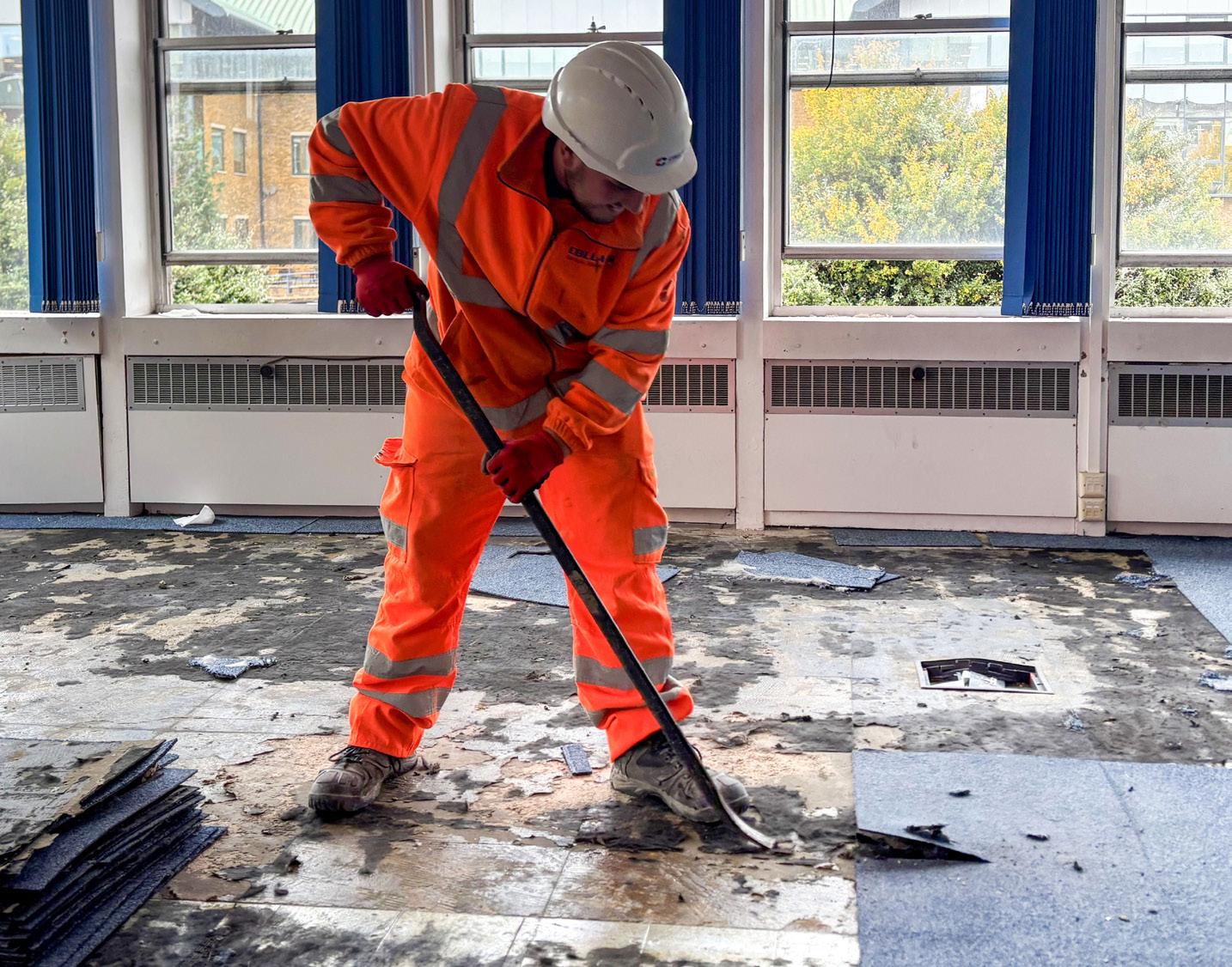
• Wider apprenticeship options: Offering roles across core trades — including demolition operative, plant operator, scaffold erector, and waste manager — as well as support functions like estimating, health & safety, and environmental compliance.
• Training partnerships: Working with accredited colleges and CITBapproved providers to deliver classroom learning alongside sitebased experience.
• Mentoring systems: Assigning experienced supervisors to guide apprentices through real-life projects, embedding a culture of safety, quality, and professionalism.
• Retention incentives: Offering competitive apprentice pay, clear development pathways, completion bonuses, and continued professional development funding postqualification.

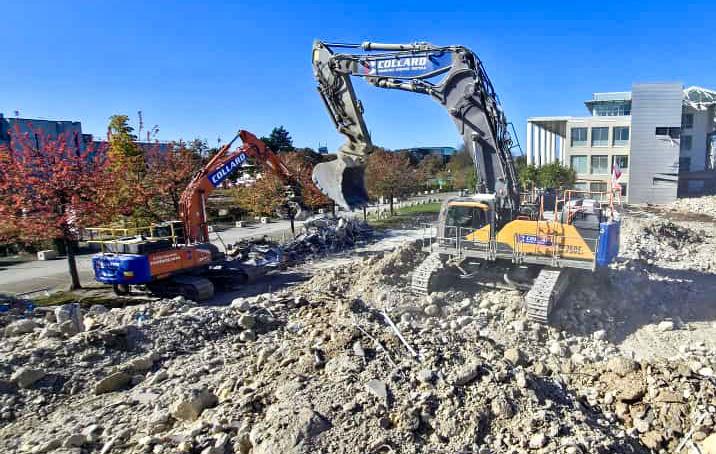
• Flexible entry routes: Using Recognition of Prior Learning (RPL) to assess and credit previous experience, making the pathway more accessible for mature entrants and those from other industries.
While hitting the target of 30 apprentices is a key milestone, Collard is clear that true success will be measured by retention, competency, and progression into key roles. “If we can develop people who stay, grow, and lead, we’ve built real resilience into the business,” he says.
This resilience has wider business and industry benefits:
• Improved safety: Trained staff reduce the risk of incidents and improve onsite performance.
• Lower recruitment costs: Reduces reliance on agency labour and the high costs of constant recruitment.
• Enhanced client trust: A well-trained workforce boosts confidence among clients and regulatory bodies.
• Regulatory compliance: Skilled workers ensure higher standards in environmental and asbestos safety.
While Collard Group is making bold moves, Robert Collard stresses that this is not a challenge one company can solve alone. “The skills gap is an industry-wide issue. Real progress requires joined-up thinking between contractors, training bodies, government and clients,” he says.
He’s calling for consistent investment in training, clearer career pathways across the sector, and stronger collaboration to make demolition an attractive, sustainable career option for future generations.
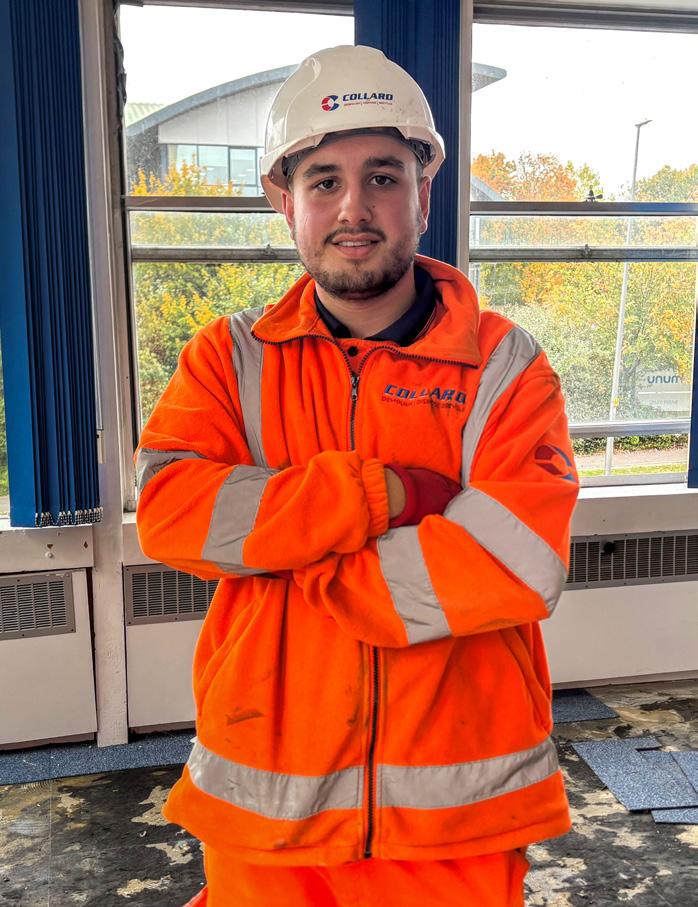
“I’m incredibly grateful to Collards for giving me the opportunity to begin my apprenticeship and take the first step towards building my career. This experience has already taught me so much, and I’m excited for what’s ahead.”
Collard Group’s 30-apprentice target by 2030 is a bold and strategic response to a serious industry challenge. Through targeted recruitment, accredited training, on-site mentoring, and transparent career pathways, the company is helping to secure the future of demolition — one apprentice at a time.
By turning the skills gap into an opportunity for growth and development, Collard Group isn’t just building workers; it’s building the next generation of demolition leaders.
By Matt Ross, Director of Asset Connectivity, Sunbelt Rentals
Telematics has long been quietly installed on plant and equipment, simply recording data in the background. However, the industry is now at a turning point. Rising fuel costs, stricter sustainability targets and a heightened focus on safety are shifting the focus. It’s no longer about what data we can collect, but how we use it to improve performance, enhance safety and improve sustainability, ultimately delivering better outcomes for contractors and the end client.
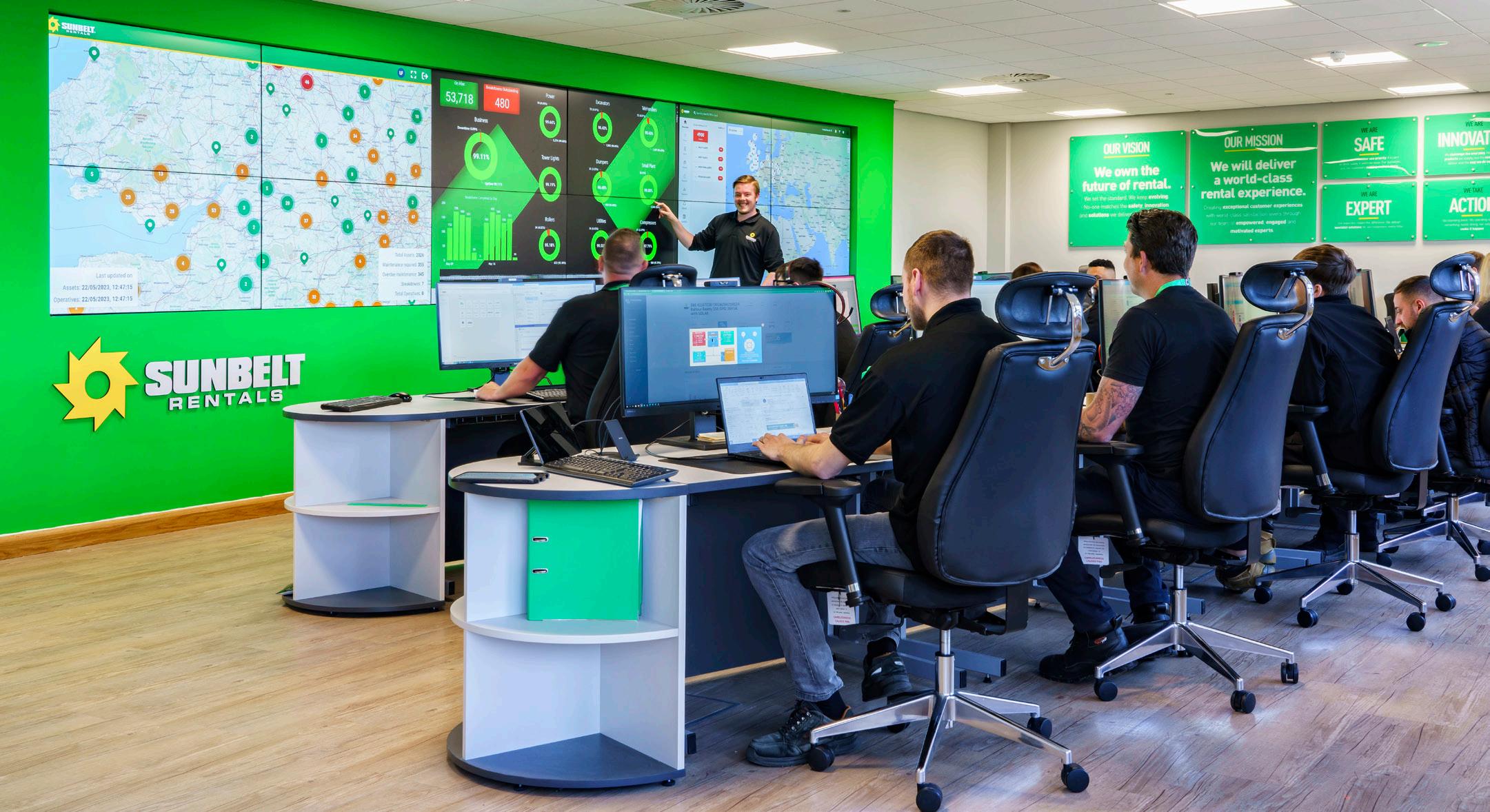
One of the most promising advances is the use of telematics for safety. Human form recognition technology, already deployed on sites across the UK, can alert operators when people are too close to machinery, while data analysis highlights points areas of risk. This allows teams to reconfigure layouts or adjust processes to prevent incidents before they occur. Looking ahead, we may see telematics expanding to capture non-traditional data points such as speed, braking or cornering, metrics that are already standard in vehicles but rarely used in plant operations. Adding these into our mix of data points could alter how we monitor and manage safety.
Maintenance is also evolving. Where issues were once addressed only after a failure, telematics now enables predictive
planning or in service diagnosis while on site. Real-time data on usage and performance or irregular data points, it allows teams to schedule maintenance before breakdowns happen, reducing downtime and keeping projects on track. This is particularly valuable on long-term rentals or high-risk sites where delays can be costly.
Telematics offers the chance to map repeatable projects, such as the surge in construction of warehouses and data centres. Analysing sequences of equipment used across several similar builds can create patterns, highlight inefficiencies, weather impacts or downtime patterns.
Over time, this helps create what a “perfect job” looks like, setting benchmarks that improve sector-wide efficiency. Add AI into the mix, and we move from hindsight to foresight, giving practical steps to improve performance before problems arise.
Of course, raw data only tells part of the story. A machine idling for an hour might look like wasted fuel, but if that site was in sub-zero conditions, it may simply have been keeping the operator warm. Without weather data as context, the numbers mislead the decisions we make. That’s why the future lies in linking multiple datasets, from weather
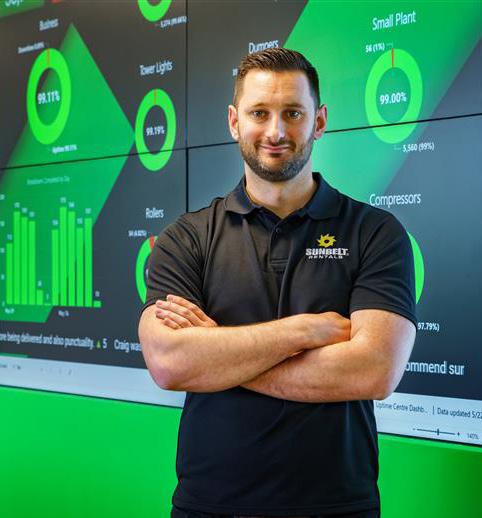
and financials to safety and operator behaviour, to create a full picture of performance. Only then can telematics deliver insights that are genuinely useful. To get a full set of data to make accurate decisions from, sites should ensure as many machines as possible are connected, and the data aggregated in the same way. The easiest way to do this is ensure all suppliers on site are providing data in the same standard, or one of the parties is the aggregator of such data. Collaboration between site leadership and key suppliers is key to learning together.
The road ahead
Telematics has evolved significantly from its early days of representing “dots on a map.” It now serves as a foundation for businesses looking to make their operations smarter, safer and more sustainable. The future lies in making insights more accessible by delivering context-rich, actionable information that provides operators with three key actions they can take today.
ADAO Calls on the White House to Publish All Safety, Inspection Reports and Demonstrate Its Commitment to Prevention, Accountability, and Public Health
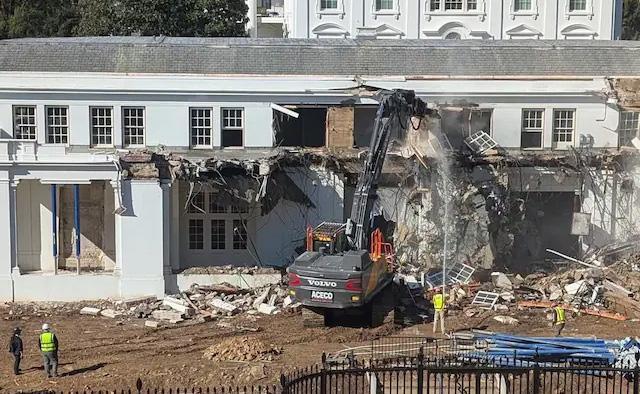
The Asbestos Disease Awareness Organization (ADAO), the largest U.S. nonprofit dedicated to preventing asbestos exposure through education, advocacy, and community initiatives, is calling for immediate transparency and strict compliance with federal safety laws following news that the entire historic East Wing of the White House will be demolished.
The demolition is part of a privately funded initiative commissioned by Donald Trump to build a ballroom and has sparked growing concern over potential asbestos exposure risks to workers, staff, and visitors. ADAO is calling for the administration to immediately release full information on its compliance with all required environmental safety measures during the ongoing demolition and reaffirm its commitment to prevention, accountability, and the protection of public health in all federal construction projects.
“Every building of this age must undergo full asbestos inspection and abatement before any demolition begins. The White House should be the national model for
transparency, compliance, and worker safety, not an exception to the rules,” said Linda Reinstein, President and Co-Founder of ADAO. “We lose 40,000 Americans every year to asbestos-related diseases. If the People’s House cannot follow OSHA and EPA regulations, how can we expect private industry to do so? Prevention and transparency save lives.”
Originally constructed in 1902 with major additions in 1942, the East Wing was built during a period of extensive asbestos use in government buildings. Photos circulating online have raised alarm about whether federal Environmental Protection Agency (EPA) and Occupational Safety and Health Administration (OSHA) standards for preventing unsafe exposure to this extremely hazardous substance are being followed.
Federal standards require:
● A complete asbestos inspection by certified professionals before demolition or renovation.
● Written notification to the authorities prior to work.
● Proper containment and safe removal of asbestos-containing materials.
● Worker protection measures, including respirators, training, and medical surveillance.
● Proper labeling, transport, and disposal of hazardous waste.
“Given the East Wing’s age and construction history, there is a real possibility that asbestos-containing materials are present,” said Bob Sussman, former EPA Deputy Administrator and Policy Advisor to the Administrator. “Transparency is critical to protect building occupants and visitors as well as office workers, tourists, and passersby in the vicinity of the White House who may be exposed; our health and safety laws demand nothing less. The public deserves assurance that all EPA and OSHA protections are being enforced and that no worker or visitor faces hidden health risks.
“Leadership isn’t only about how we build, it’s about how we protect. The White House should immediately disclose inspection summaries, air monitoring results, and abatement certifications to demonstrate compliance with federal law. Anything less undermines public trust and worker safety,” Reinstein concluded.
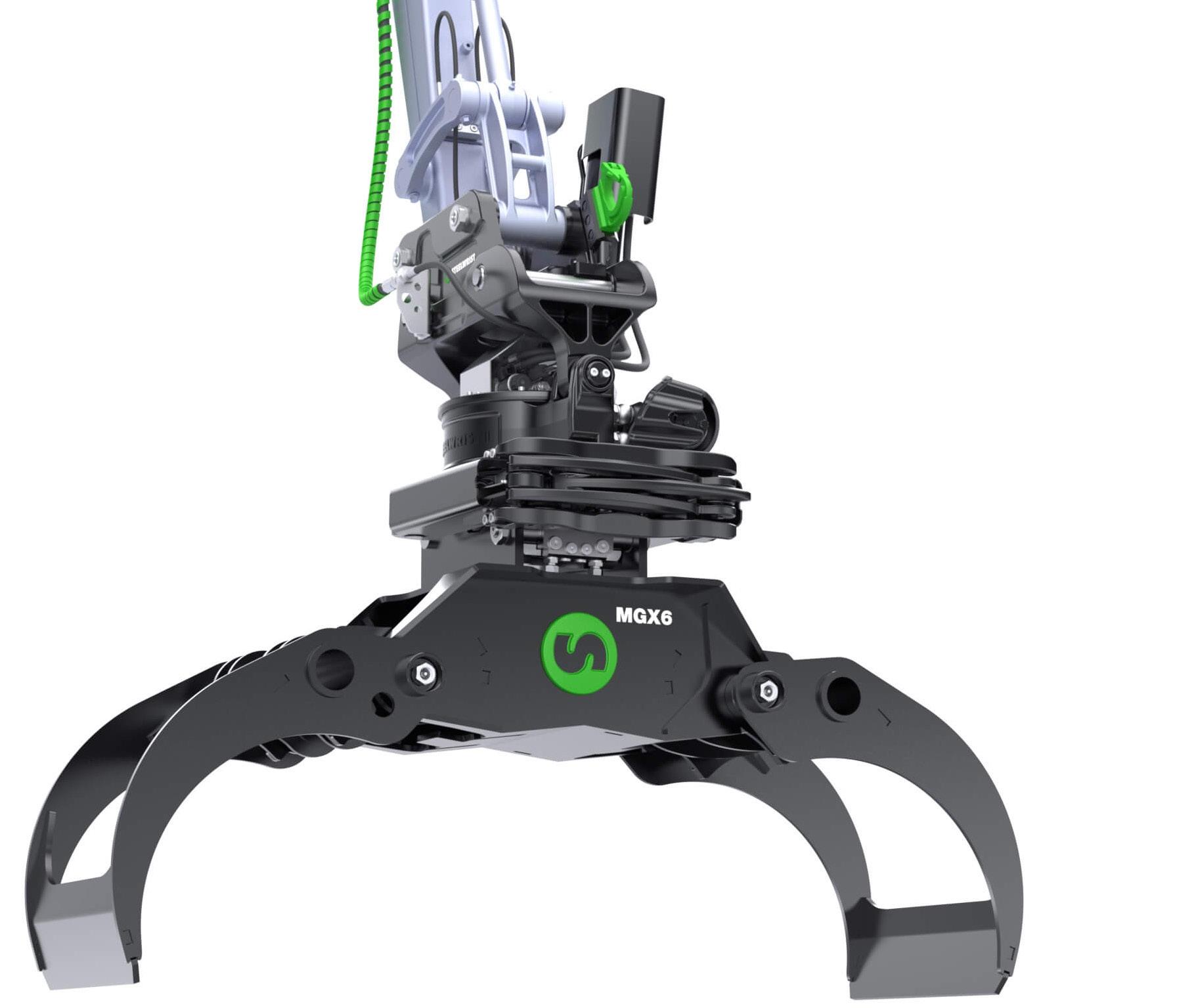
Steelwrist extends its SQ technology to include the SQ40 automatic coupler for compact excavators. SQ40 allows for quick changes of high flow-powered work tools also on smaller excavators, providing the same efficiency as larger SQ couplers. This makes changing powered work tools easier and safer, as it can be done without leaving the cab.
The SQ40 size was first introduced during Bauma 2025, bringing the SQ auto connection technology to excavators between 2 and 7 tonnes. At Bauma SQ40 was first shown integrated in the quick coupler of the X07 tiltrotator and the XR7 rotor coupler, and now the SQ40 fully automatic machine coupler is launched.
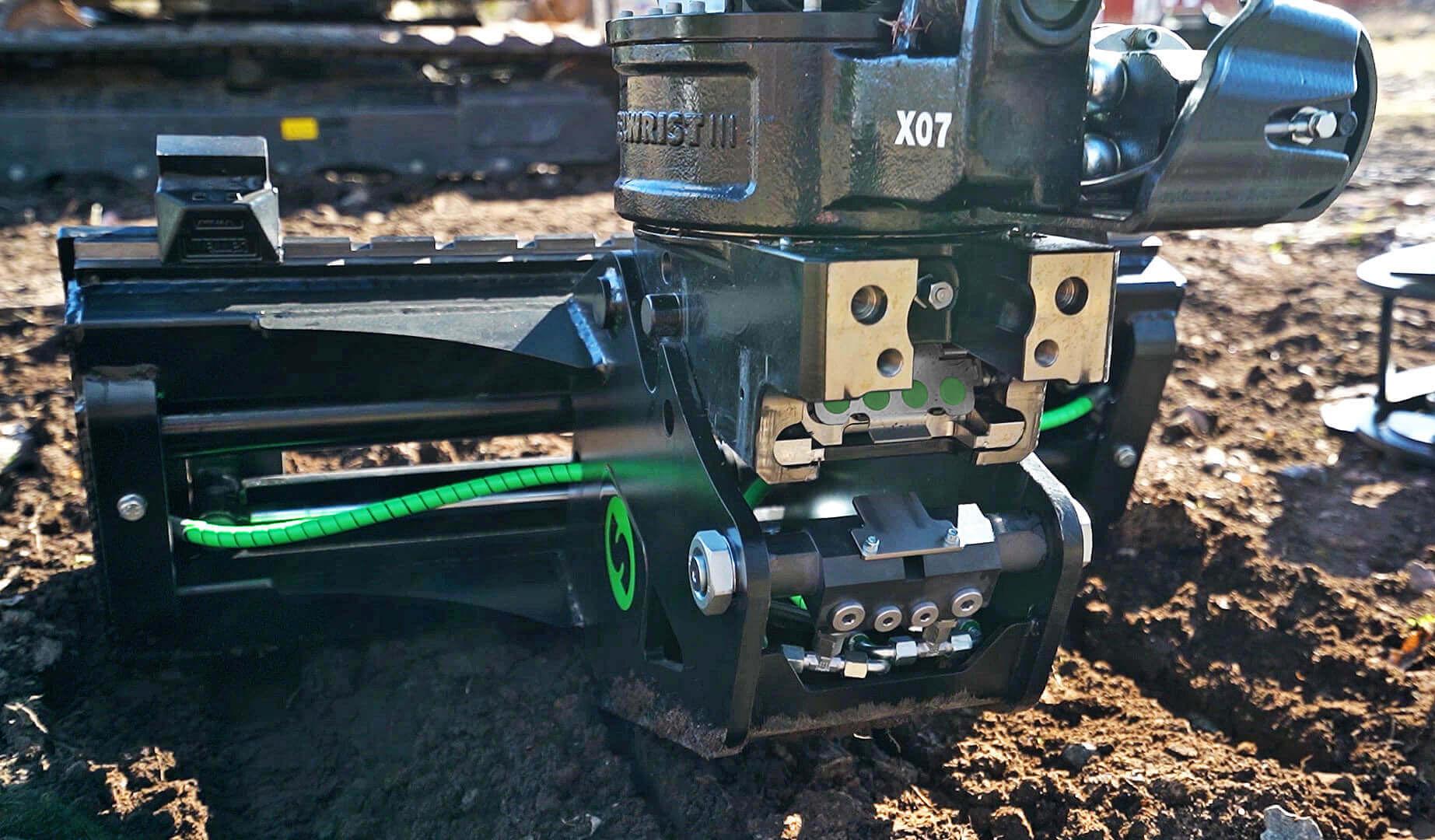
Launch of SQ40 expands the SQ technology to compact excavators In 2017 Steelwrist introduced the SQ auto connection system for quick couplers and tiltrotators. With the SQ technology it is possible to connect both hydraulics and electrical signals in one movement. With the introduction of the new SQ40 size Steelwrist’s product range includes eight different SQ quick coupler models (SQ40-SQ90), for excavators from 2 to 70 tonnes. SQ40 is specifically designed for the growing segment of compact excavators between 2 and 7 tonnes.
Significant development efforts have gone into the design of the new SQ40 automatic coupler and one very critical criteria was to ensure the flow required to power demanding hydraulic work tools. The SQ40 coupler is optimized to achieve a flow of 70 l/min thanks to a new and innovative coupling that provides 40 percent more flow area compared to a standard 3/8” coupling.
With the SQ40 automatic machine coupler Steelwrist also introduces the new H6 electrical connector that builds on the years of experience with the Open-S V14 electrical connector. The H6 is a 6-pin electrical connector which is fully integrated to the SQ40 locking wedge and has a molded design to ensure that it is environmentally sealed. Large contact surfaces and strong spring loaded pins ensure reliable electrical transmission and high current capabilities. The contacts core
is hardened Phosphor Bronze, which results in effective corrosion-resistant properties when exposed to harsh conditions, as well as a hardness similar to steel to ensure a long service life.
The SQ40 follows the symmetrical S40 standard, meaning it is fully compatible with existing work tools without requiring costly modifications. Its modular construction enables fast upgrades from S to SQ, with simplified hose routing and easy installation of male couplings integrated into the rear tool shaft. This also means that hose routing is very flexible, and can be adapted to a wide range of hydraulic work tools.
Steelwrist proud platinum sponsor of World Demolition Summit, in Nashville Steelwrist has participated in the KHL organised World Demolition Summit (WDS) eight consecutive years, and in 2025 the company is a proud platinum
sponsor of the event. WDS covers a broad range of topics critical to the global demolition, deconstruction, and recycling industries. Presentations and panel discussions focus on subjects including technology, sustainability, project management, and safety.
Close to 500 delegates from all over the world were expected to attend the event which took place in Nashville, USA, on November 3-5. Steelwrist was present with a large stand and team to promote the SQ technology for attending demolition contractors and demolition attachment manufacturers.
During the event the WDS awards were presented in 11 categories on November 5 at the Music City Centre, Nashville. The recently launched Steelwrist SQ40 automatic coupler solution was nominated for an award in the Innovation Tools & Attachments category.

Given the outlook around the world for the demolition industry, one might assume that sentiment among those in the sector would be one of negativity.
However, the World Demolition Summit (WDS), held in Nashville in November, proved that there is plenty of positivity to be found among the key players.
The Summit itself was a melting pot of contractors; it provided a platform for OEMs, consultants and engineers from across the world to take stock of the here and now, while also providing an in-depth outlook into what the future holds.
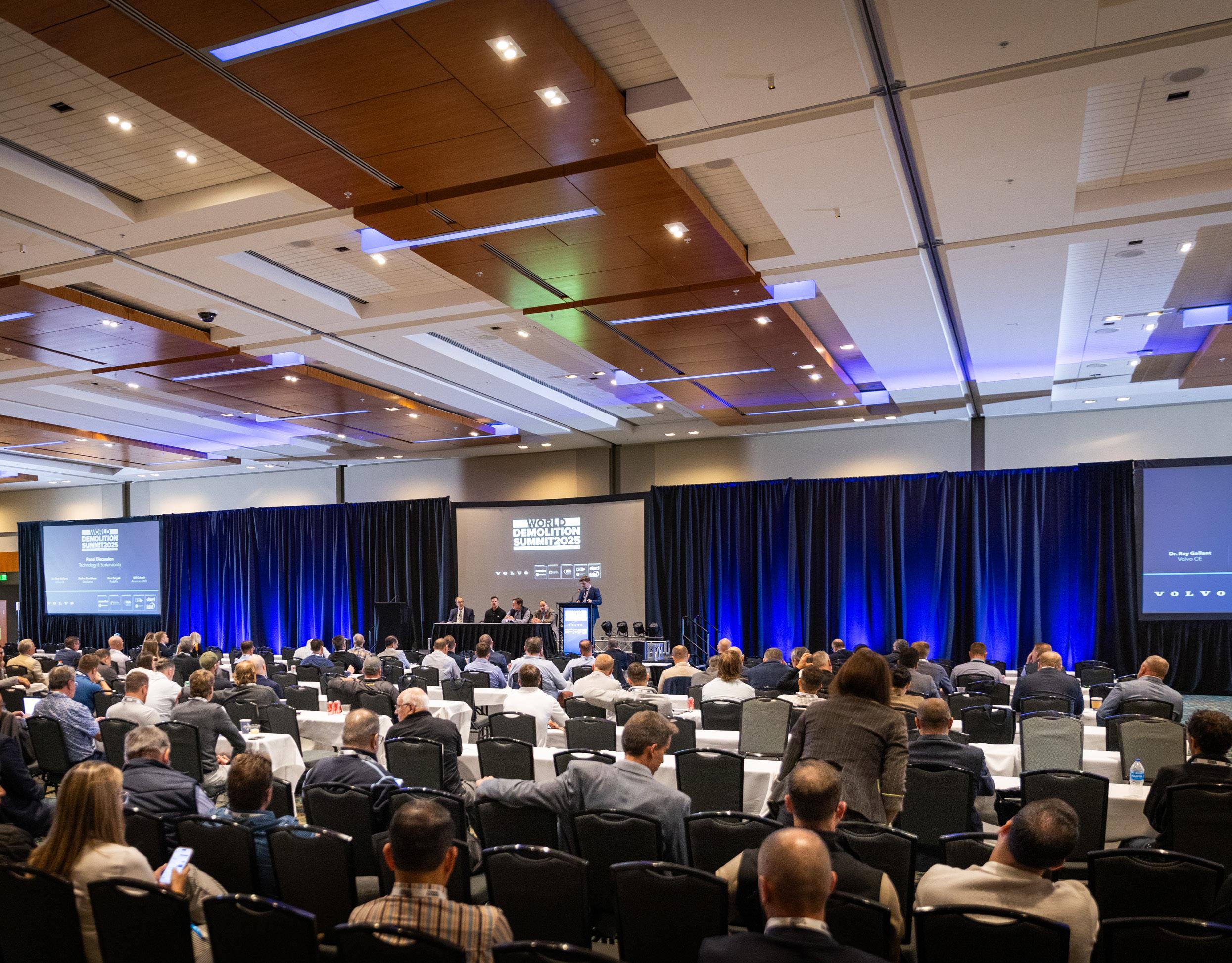
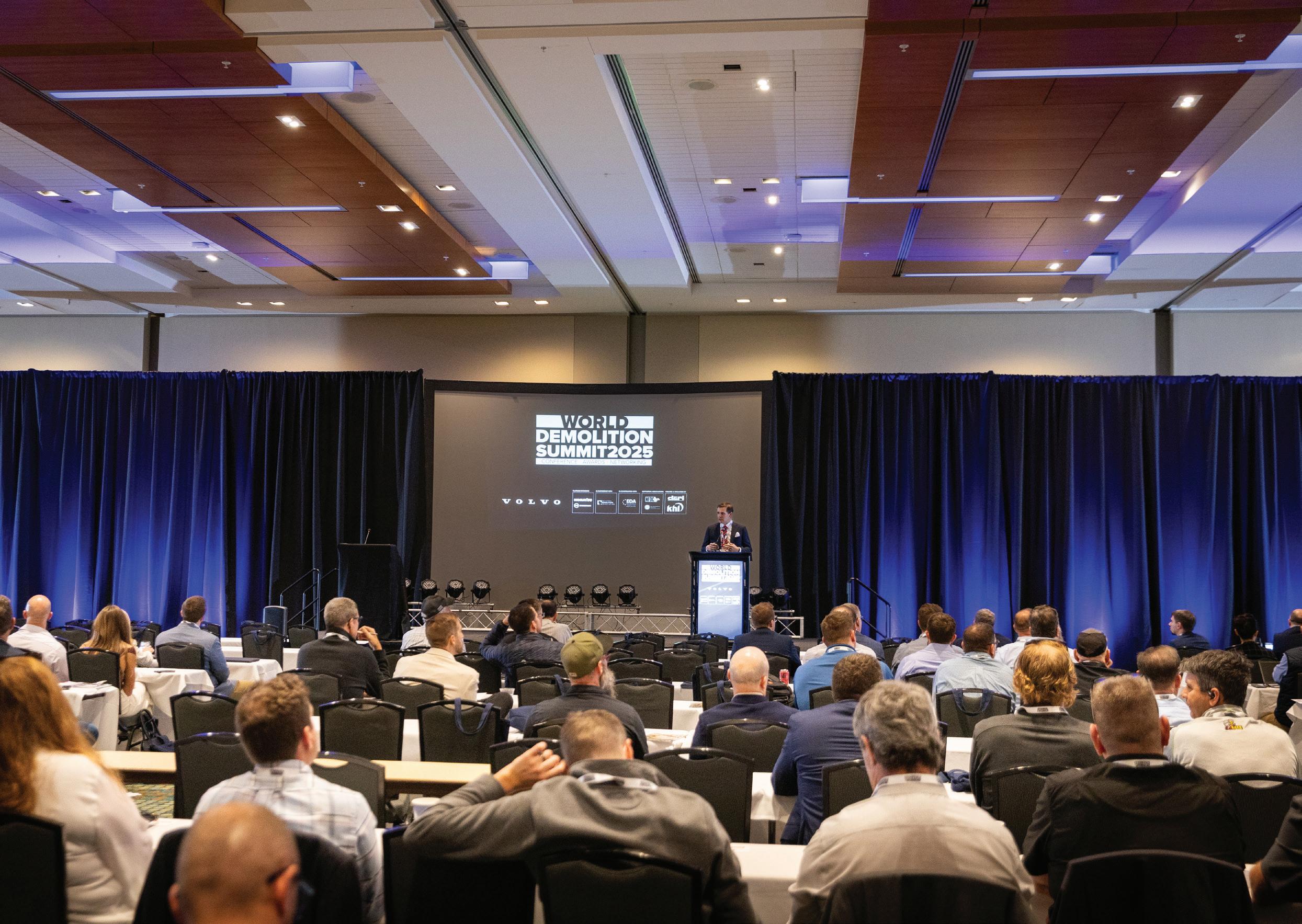
Over 500 delegates, a record for the event, descended on Music City Centre. Here are the highlights in pictures.
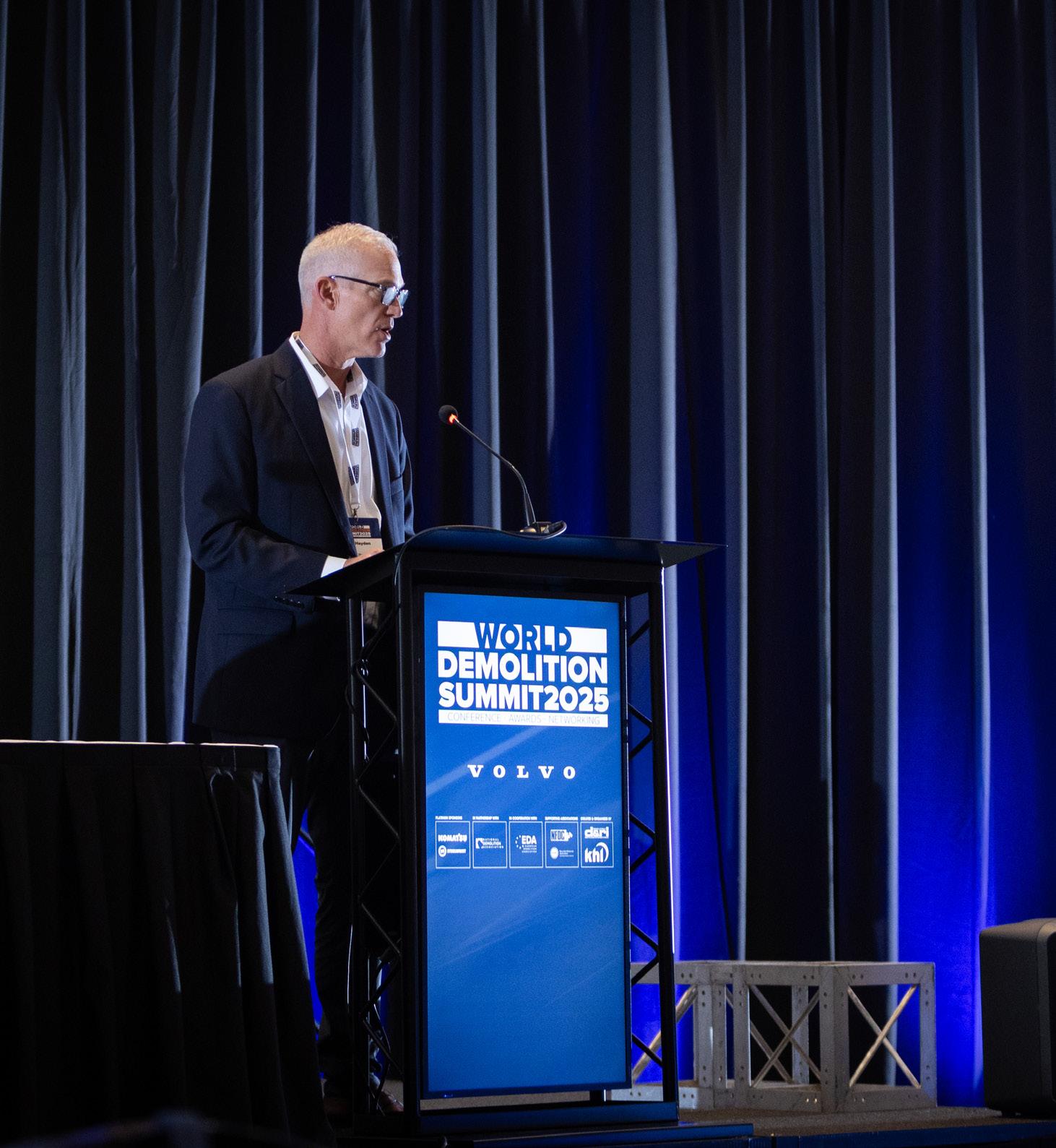
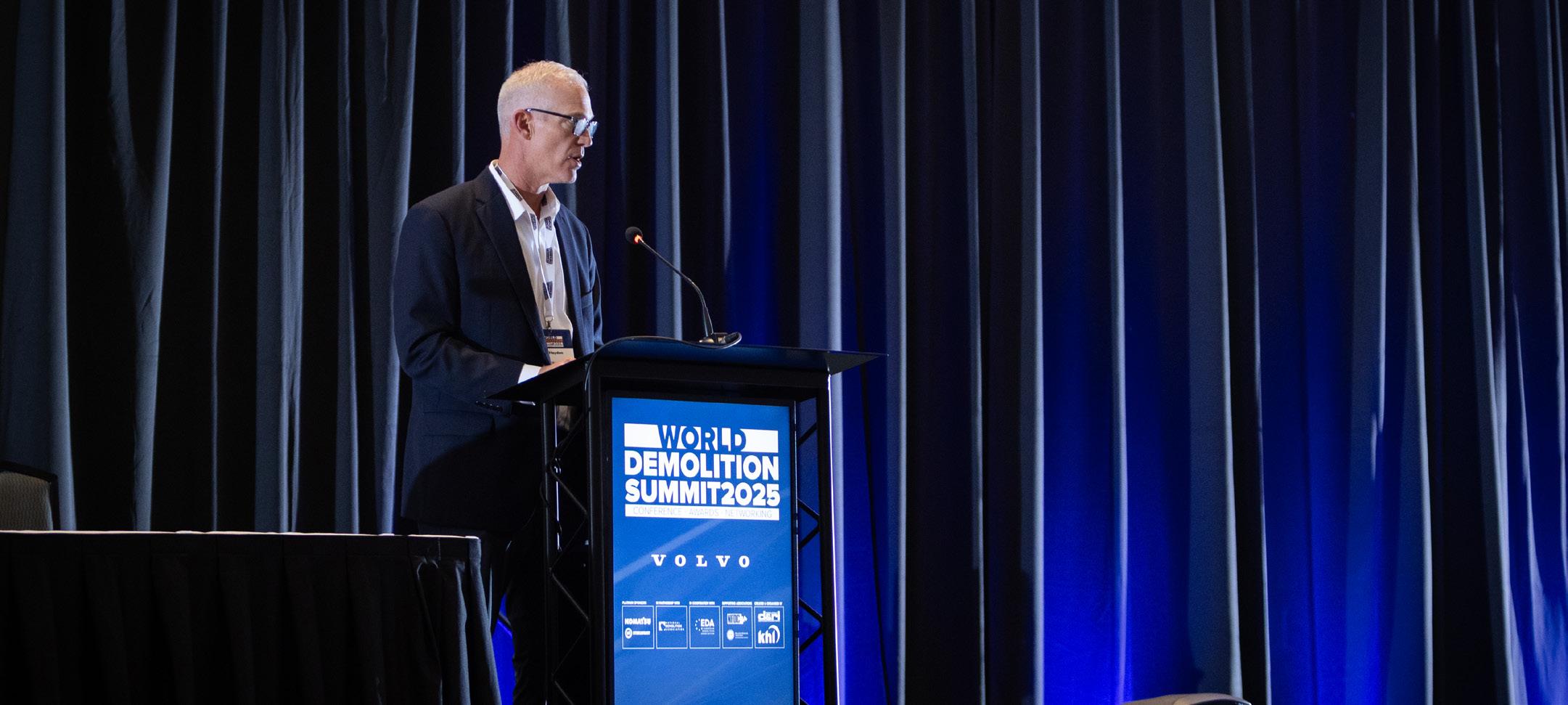
Following the conclusion of VIP Day activities, which included visits to the site of the Titan’s football stadium and a local Demo Plus site, the National Demolition Association’s (NDA) President Ben Hayden officially opened the Summit.
In his opening address, Ben highlighted the importance of global collaboration in addressing shared industry challenges. “I’ve learned that a lot of the challenges we face are not confined to just our area. Events like these allow us to learn from everyone.” He said the event brings “the best and brightest minds in the industry to collaborate on our most pressing challenges.” He concluded: “The ability to network and build relationships here can strengthen our industry for years to come.”
Underscoring the importance of collaboration, the European Demolition Association’s (EDA) Jose Blanco opened day one of the main conference with insight into European regulatory changes and the impact they will have on demolition companies.
Blanco, who is the Secretary General of the EDA, delved into all aspects of changes in relation to regulations, a topic high on the agenda for many at WDS 2025.
He said that the industry is tasked with changing regulations across environmental, social and economic policies.
In particular, he highlighted an increasing number of hazardous materials, a reduction in the workforce and increasing cost of projects.
Staying on the topic of sustainability, Michael Metzner, Owner of Metzner Recycling and Volvo’s Segment Leader Peter Bauer gave an in-depth overview of the world’s first fully electric deconstruction site in Erlangen, Germany.
The site, operated by Siemens Technology, utilised a fleet of Volvo CE electric machines, supported by Volvo electric trucks to dismantle three buildings covering nearly 25,000 m³ as part of the €500 million, 200,000 m² development.
The project used compact, mid-size and grid-connected machines for tasks including selective gutting, concrete cutting, material handling and transport.
Power was supplied via a custom on-site transformer with direct grid connection to certified renewable electricity, enabling simultaneous charging and continuous supply for grid-connected equipment.
Around 12,800 tonnes of construction waste were processed on site, with 96% recycled into raw materials for future use.
Metzner and Volvo said the project provides a blueprint for future urban construction and demolition projects where emissions and noise are key considerations.
Simon Hébert, Senior Project Director, Delsan-AIM Environmental Services, discussed the challenges of sustainability initiatives in a competitive demolition industry.
Hébert argued that although such initiatives aren’t a bad idea, pushing for reuse of material is not efficient and comes at a price, potentially extending project schedules.
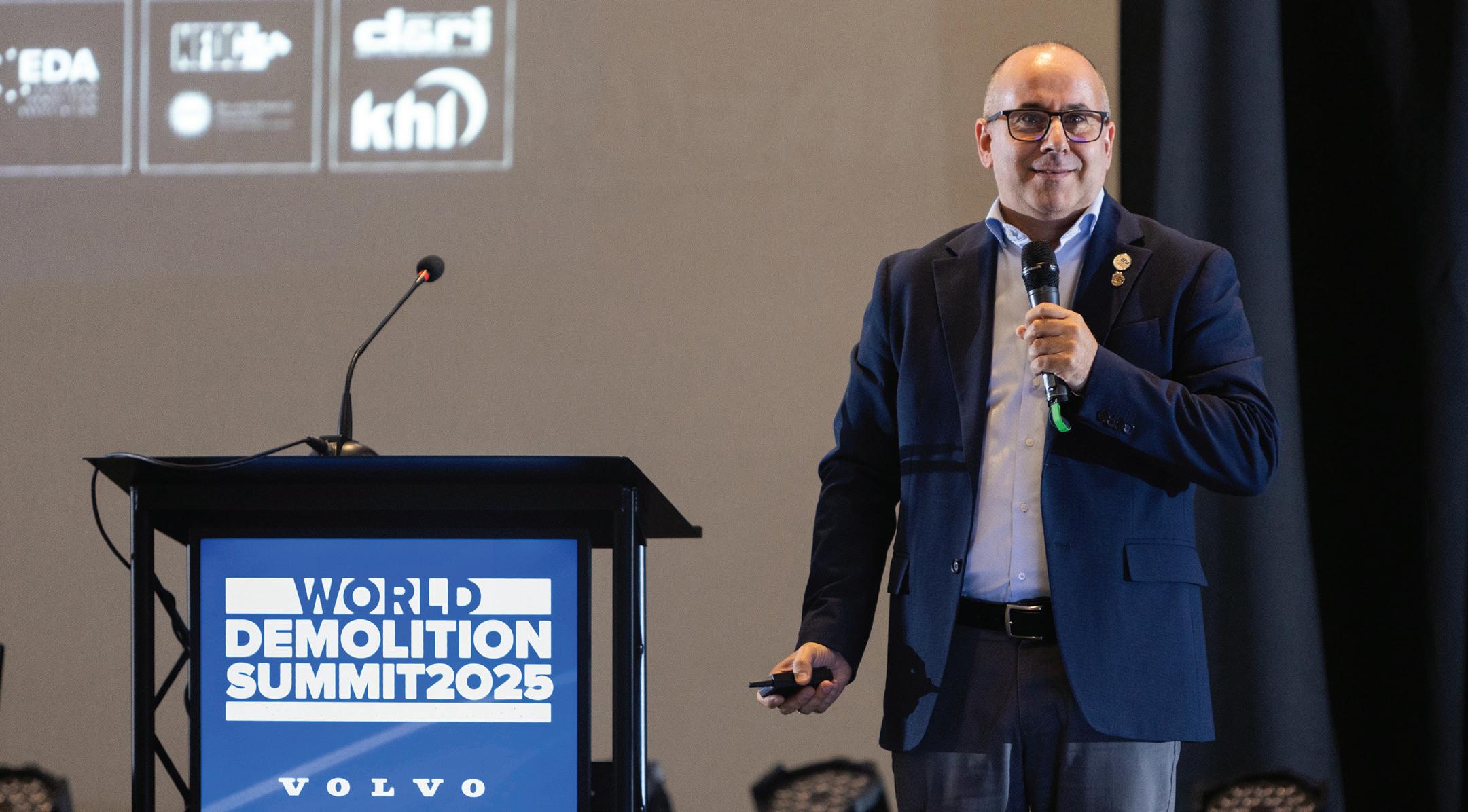


He said: “In today’s market, pushing for reuse of material is not efficient, comes with a big price and will drag and extend project schedules for low to no return on the investment. Most importantly, without any real environmental benefit.”
He suggested the industry should focus on maximizing recycling to keep reducing the impact of work on nature and in the meantime keep working with regulators to develop new ways to address sustainability initiatives.
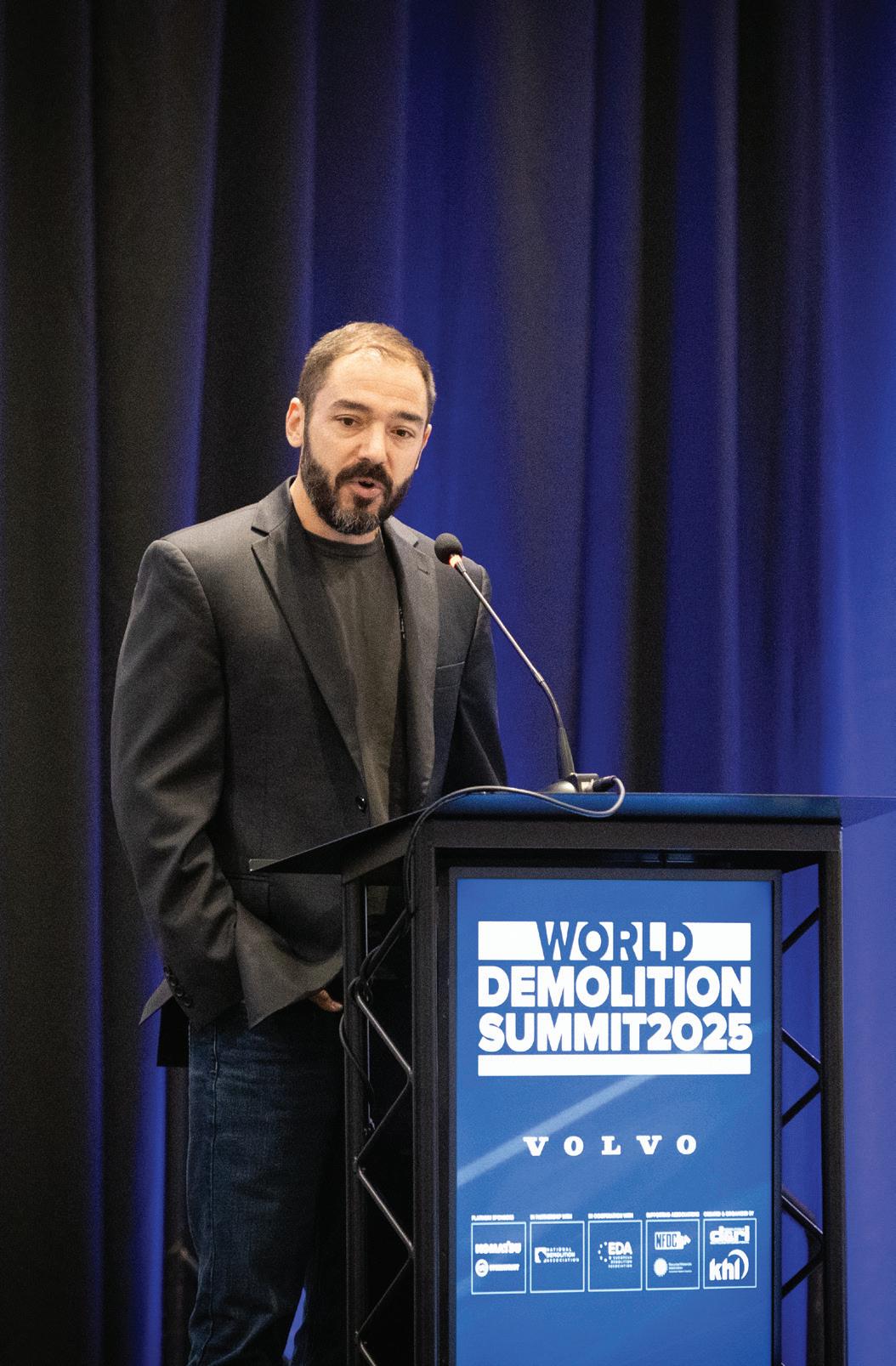
Covering the technological aspects of sustainability, Mahesh Bailakanavar, Associate Principal, Thornton Tomasetti, outlined how AI can be used to streamline operations in demolition businesses.
For sustainability, he said AI can optimise design for easier dismantling and recycling, predict fuel needs, and monitor usage.
Another example of an AI use case he gave was AI for demolition planning. He suggested that AI-powered structural engineering machine learning has the capacity to generate new designs by considering the experience embedded in previous examples.
He also argued that AI could be used for the benefit of safety measures. For example, real-time safety management, compliance management, predictive analytics and data driven decision making.
RVA Group Managing Director Richard Vann delivered a comprehensive guide to delivering a successful tender package during the bidding process.
In his presentation, Vann delved into the finer details of contracts that, if addressed right from the start, can ensure a smooth project from beginning to end without impact on-site or on budgets.
Among the key considerations taken away was that detailed forward planning, the extent and quality of information, expertise, experience and strength of the team are all essential ingredients to avoiding disputes and conflicts when it comes to putting the project together.
When it comes to the bid package, he said that the devil is in the detail, with health and safety, technical specifications, pricing schedules and contractual terms and conditions all forming part of a key process for both the bidder and awarding body.
Vetting of bids was also the focus for Dominion Energy’s Director of Generation Projects Rick Boyd, with a particular focus on technical experience, safety, bid evaluation and selection process of power plant projects.
In his keynote, Boyd discussed the nuances of power plant tendering, including owner expectations, prequalifying process and information needs.
In a standout presentation, Chris Dowdell, Senior Remediation Project Manager, Koch, highlighted how vision alignment between owners and contractors creates safer job sites, less interruption to facility operations, smoother execution, and stronger long-term partnerships.
Cormac McLean, Managing Director of PDC Explosives Engineering, gave a thought provoking presentation on the sustainable benefits of explosives on projects, such as faster timelines, lower Capex, enhanced safety, and minimal disruption.
While many focused on the successful projects, Jason Curtsinger, PE Decommissioning Senior Manager for the Tennessee Valley Authority received praise from delegates for his dissection of the successes and failures of one of its projects.
Priestly Demolition President Ryan Priestly and Cameco Senior Project Manager Andrew Turk outlined their work on Canada’s largest active uranium site, including the cleanup operations and the dismantling of the decommissioned UF6 plant.
Alex Hadden and Alex Ellison of UK contractor Brown & Mason talked the nuances of the skills shortage, and argued that culture, mentorship from within and fueling the next generation are important factors for the future of the industry.
Using examples from within the business, they highlighted how fostering expertise from within is just as, if not more important than focusing on recruiting more young people in the industry.
They also argued that the quality over quantity and creating a company culture are two key factors in addressing such shortages.
Alex Hadden said: “The future of our business isn’t in the machines we buy or the new technologies we introduce, although both important, it’s about the people we work with. Shaping the business by who we bring in.”
Discussing her personal experience with illness, Kate Bester, Contracts Manager, Jet Demolition, delivered a powerful presentation on organisational resilience and how we must adopt a mindset of continuous readiness.
Bester stated the case that when a human disruption becomes a business disruption, ignoring the elephant in the room won’t make issues go away.
Using her cancer diagnosis during her time with the company as an example, Bester said that although there was initially an awkwardness and apprehension to discuss her diagnosis, an element of control was gained once there was a mutual agreement to approach the subject.
She said: “We realised that cancer was not an emergency, and decided that our response to it didn’t need to be one either. Colleagues and management rallied together, ensuring that I never had to do chemo alone. Everyone had permission to talk freely, and ask questions, and make the awkward joke. We learnt to take the first steps toward adaptability. This is how we turned disruption into direction.”
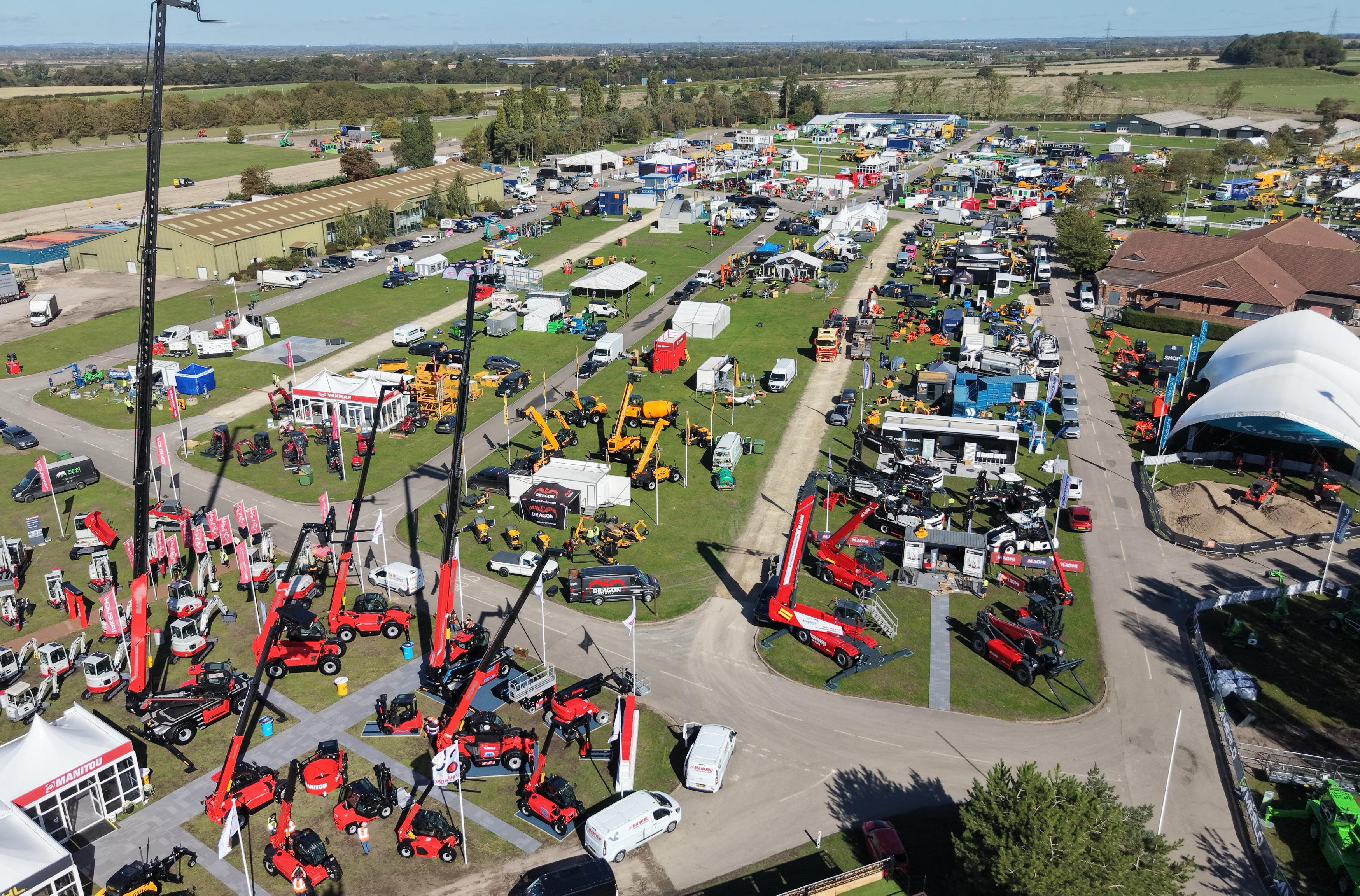
The largest working construction equipment show in the UK, PlantWorx, returned to welcome over 300 exhibitors, and over 10,000 visitors. From 23rd-25th September, the three day show was filled with live demonstrations, challenges and lots of machinery.
By Lorna Cowlin
The sun (mostly) shone over the Newark Showground as Demolition Spotlight attended for the first time! It was also my first time at PlantWorx, and given the hype that had been drummed up for the last five months (mostly by myself posting weekly countdowns to our socials!), I couldn’t wait to get stuck in.
Our stand was in the pavilion, the only indoors area that was described as an “Aladdin’s Cave of Products and Solutions,” and outside was even more magical. Cranes were scraping the skyline, machine noises filled my ears and excited busybodies rushed around me. This was my first show since bauma back in April, and I was so ready to go out into the field again.
The morning sun beckoned us through the gates, and once our passes had been scanned, we saw how the Newark Showground was already bursting with life. Despite the cold morning air giving us a chill, Demolition Spotlight was ready and raring to go for its first PlantWorx.
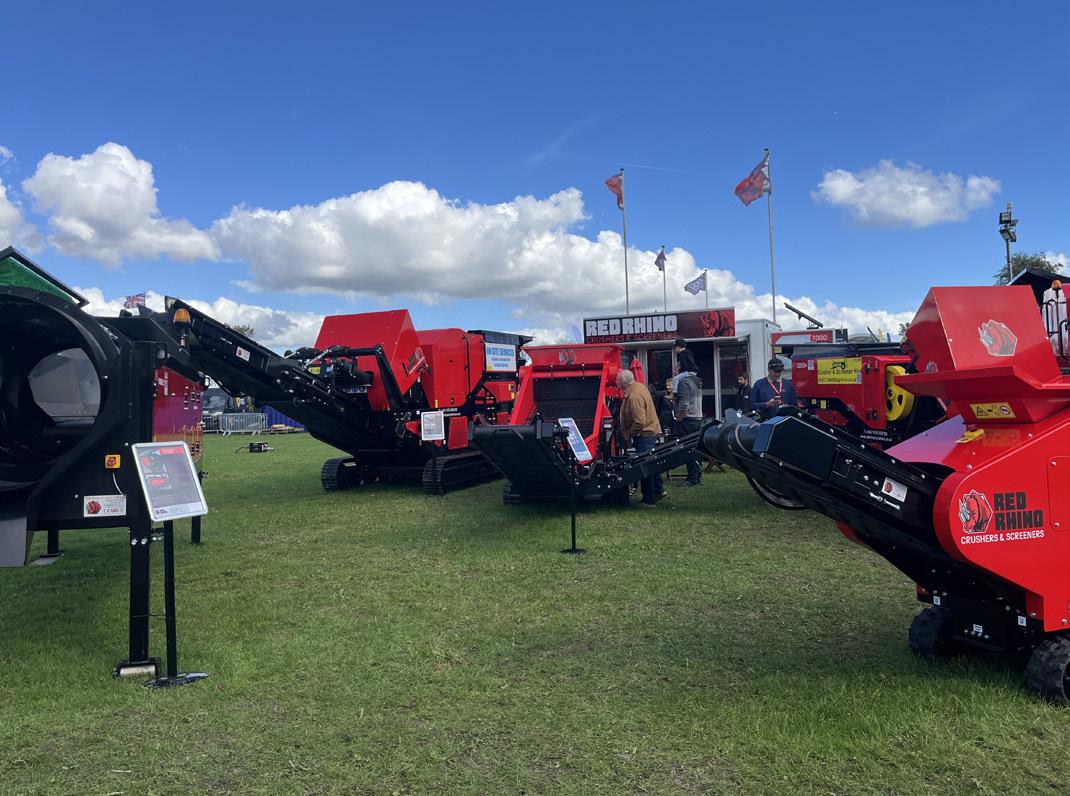
What better way to start off a demolition themed trip by heading over to Red Rhino Crushers Ltd to look at their crushing and screening machines! Their signature bright red was radiant on their stand, the machines glistening in the sunshine. It certainly was a beautiful sight; who knew demolition could look so stylish! On display, they had:
- The “8000” crusher: Their largest crusher to-date, weighing 18 tonnes, with a jaw aperture of 800 mm x 500 mm, capable of up to 100 tonnes per hour output, aimed at filling a mid-sized gap in the crusher market.
- The Electric Trommel: A fully-electric, compact screening unit with synchronised feed and drum speeds, hook-lift compatible, two output sizes, and zero emissions, aimed at mobile, clean-operation screening.
Red Rhino Crushers Ltd once again demonstrated why they remain a leader in compact crushing and screening solutions. Together, these machines reflect the brand’s ongoing dedication to innovation, user-focused design, and helping operators achieve more sustainable productivity in the recycling and construction industries.

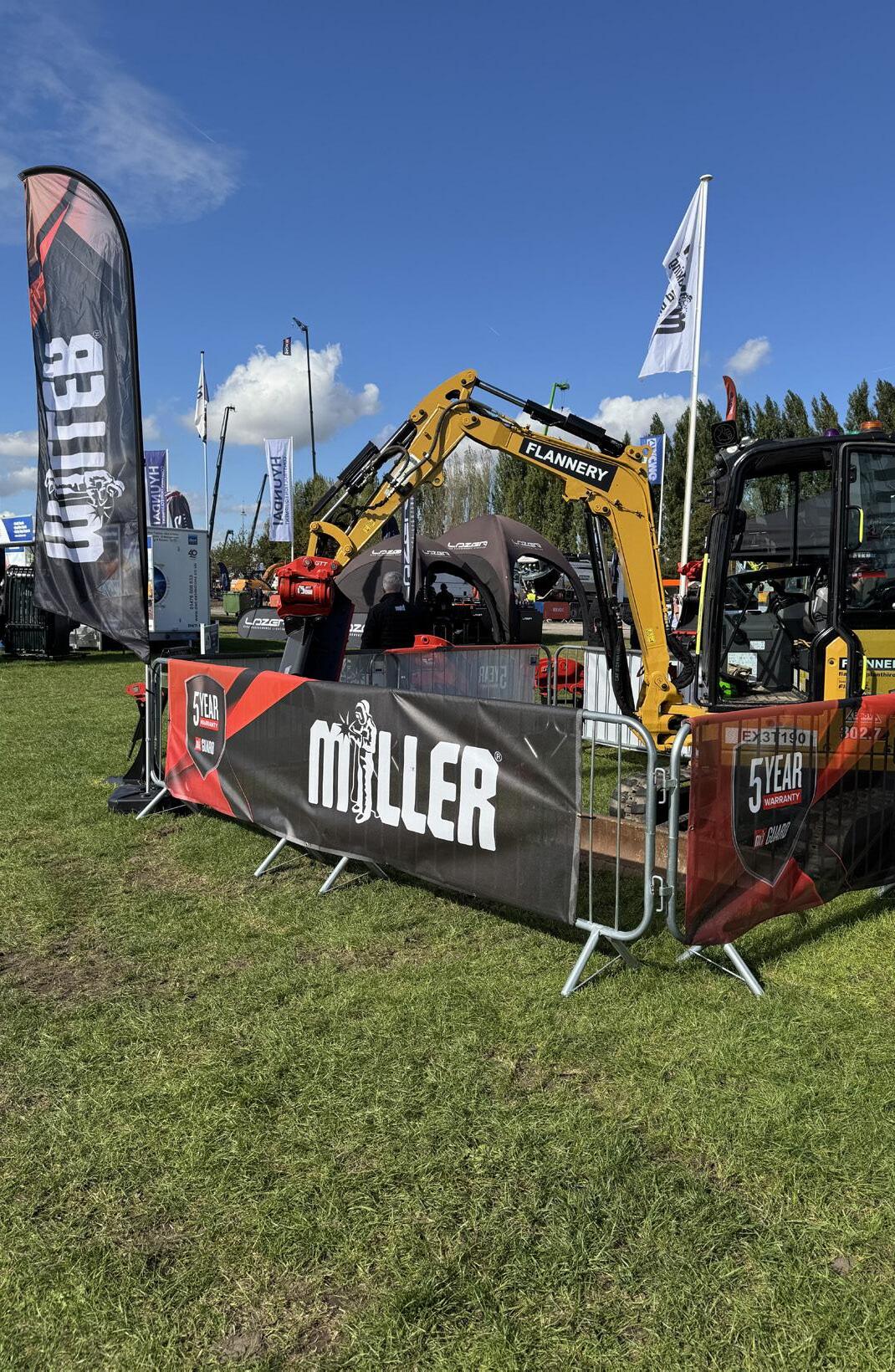
Still on the theme of crushers, we headed to Miller Groundbreaking.
PlantWorx gave them the opportunity to showcase a strong range of earth-moving attachment innovations. They focused on tools designed to improve efficiency, safety and versatility on site.
- The GTT Hydraulic Tilting Coupler: this is an advanced coupler in the bundle that allows tilt functions, improving versatility of buckets and attachments.
- “Ready to Dig” bundles: these are packaged attachment sets aimed at excavators from 1–20t, and include a quickhydraulic coupler plus three buckets (digging, ditch-cleaning, trench) to give users an “everything you need” kit for digging projects.
- Their full range of couplers (manual, hydraulic, quickhydraulic tilting) for excavators.
- A wide selection of buckets, ranging from mini tilt and compact buckets to a “Scoop” and large extreme rock bucket.
- A charitable piece: a specially branded 20t digging bucket (in support of the Great North Air Ambulance Service) was on display and up for auction, underlining Miller’s community engagement.
Miller UK used the event to demonstrate that they’re more than just an attachments supplier, they’re positioning themselves as a partner in productivity, safety, and equipment versatility on site. Their bundle offering, coupled with advanced coupler tech and a wide bucket range, presents a compelling value proposition for excavator owners and hire companies alike.
PlantWorx really is the home of outstanding displays and engaging stands, even to the point that PlantWorx was the perfect school trip for local schools and a good family day out. Up there for the most engaging stand, however, was Caterpillar.
Caterpillar, represented in the UK by dealer Finning UK & Ireland, used PlantWorx to mark 100 years of the brand, and its long partnership with Finning, with a strong display of both legacy and future technology.
- Cat 444 Centennial Backhoe Loader
- Cat 285 Compact Track Loader (CTL)
- Cat D6 Dozer
- Cat M315 Wheeled Excavator with Tilt-Rotator
Finning also brought the new Cat® 285 XE Compact Track Loader to PlantWorx Construction Exhibition 2025, marking its first UK showcase. The largest and most powerful model in the range, it features a 3.6 litre Cat engine built in Peterborough. Cat Product expert Jas Kundra said: “They don’t get any bigger than this, and the 285 XE is perfect for operators wanting to lift larger payloads and traverse longer distances.”
Not only did they have machinery on display, but they also had simulators for people to try out! Caterpillar’s training and simulation side was featured via its subsidiary Cat® Simulators, which presented a new excavator simulator, a VR Paving Simulator and a Compact Track Loader simulator to address operator training. By using the VR headsets,
visitors could inspect equipment, learn the controls, practice paving complex road sections, and master effective asphalt compaction methods. The simulator is portable, making it ideal for training centres and moving across sites, and includes a headset, controllers, charger, paving software, and device management tools.
The first day of PlantWorx was a success and was finished with stone baked pizza in the cosy pub next door. Simply the best!
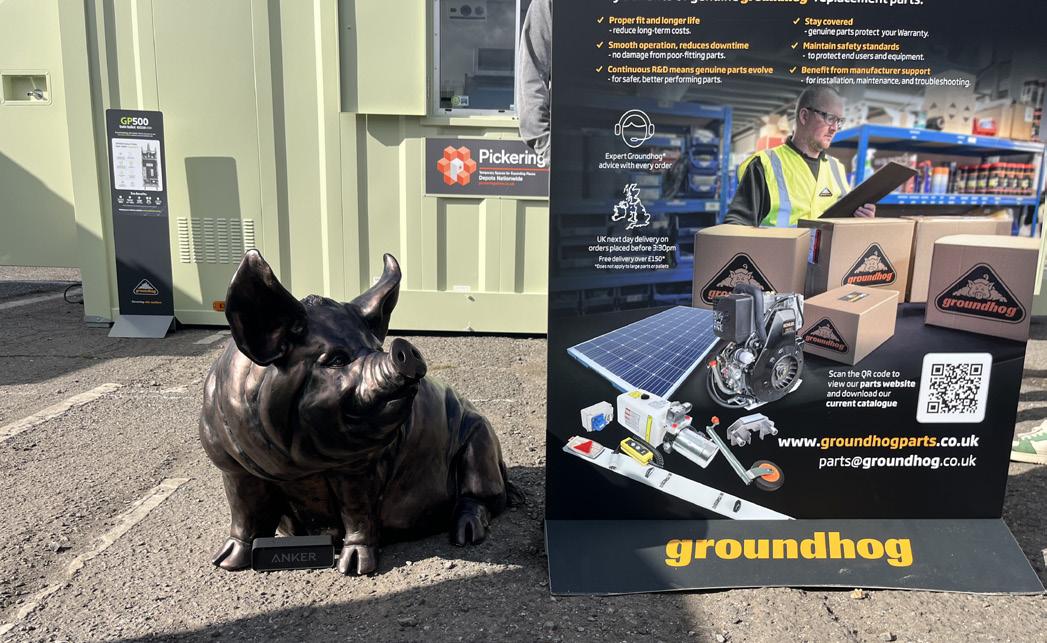
Despite the grey skies, it was impossible to dampen the good mood of everyone ready and raring to go for day two of PlantWorx. However, what better way to brighten up a cloudy day than to go catch up with the one and only Daisy Hog!
Daisy stood proudly on the Groundhog stand, with the Groundhog team matching the pride. Not only is Daisy an icon in general, but she had also won the Best Marketing Campaign Supporting PlantWorx award the night before at the CPA Innovation Awards! She was praised as “refreshing, fun, and a perfect example of how to stand out in a competitive market.” Well done Daisy!
And that wasn’t all for Groundhog. They also announced their major long-term partnership with GAP Group, describing the collaboration as a plan for the next 10 to 20 years, not just a one-off deal. It was great to see the partnership in action, and to see the new collaborative products on display. Lana Edwards was thoroughly impressed too, especially when she saw the two toilets! To wrap up their time at PlantWorx, Groundhog Sales & Marketing Director Peter Beach said: “PlantWorx 2025 was a really well-planned and executed event. From the exhibitor manual and set-up to access during the show, everything was well-organised and ran smoothly. We’ll definitely be back for PlantWorx 2027, and next time we’ll
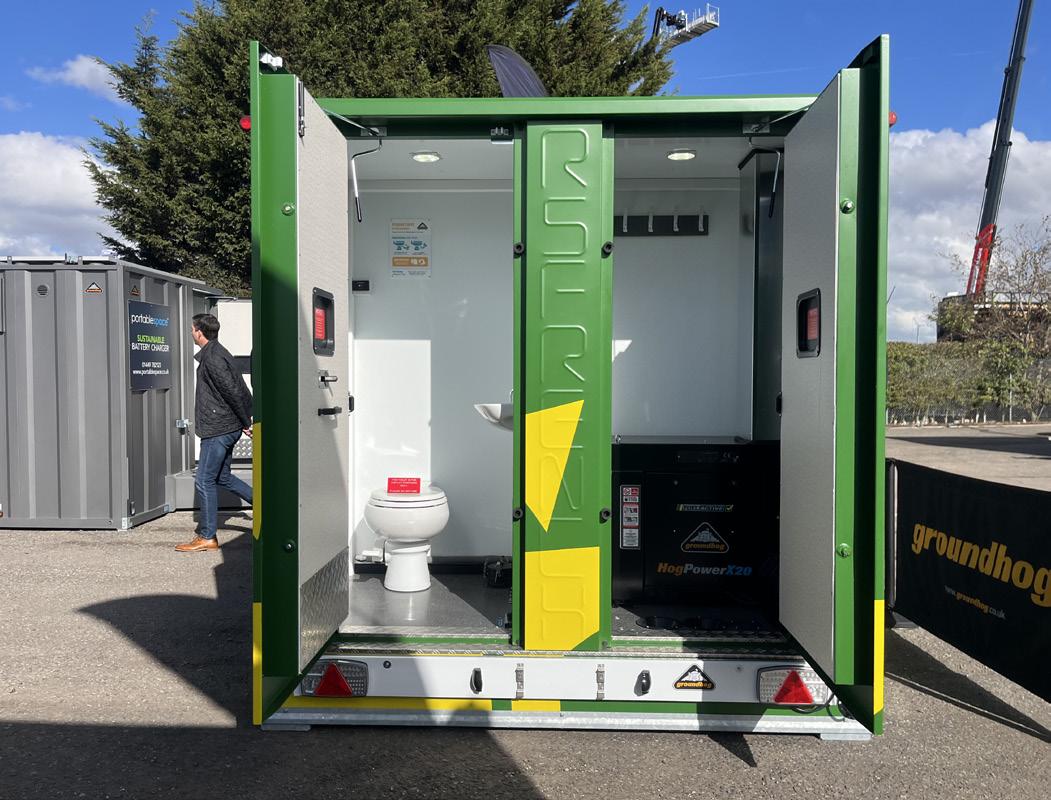
be booking on hard standing and aiming to be even closer to the buzz.”
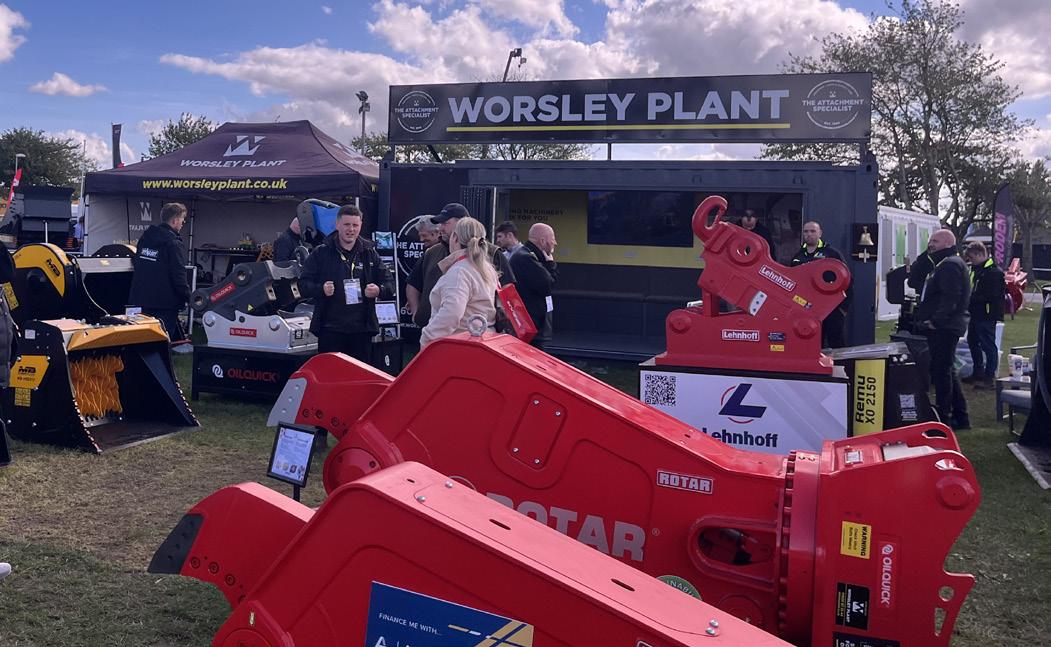
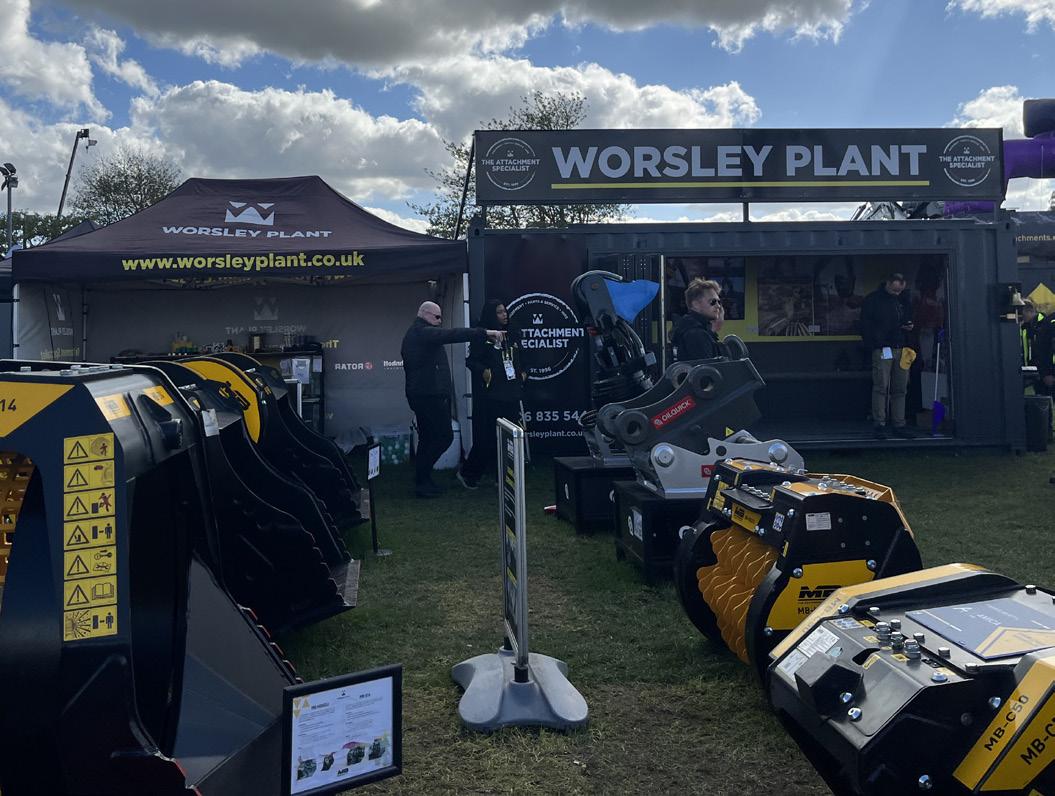
Worsley Plant also won at the Innovation Awards, winning the Best Use of Engineering & Technology Innovation award. It was their Dynaset HRVB Hydraulic Recycling Vacuum Bucket that won, a machine that offers a faster, cleaner, and more sustainable way to collect and sort materials. On their stand, they had a strong focus on attachments and innovative machinery, especially within the recycling, demolition and handling sectors, further showing their commitment and deserving of the award.
The award-winning Dynaset HRVB Bucket was on display on their stand as well. This attachment turns an excavator (or similar carrier) into a suction/air-blow machine for collecting light debris, sorting material etc, and it was great to see it in action at PlantWorx!
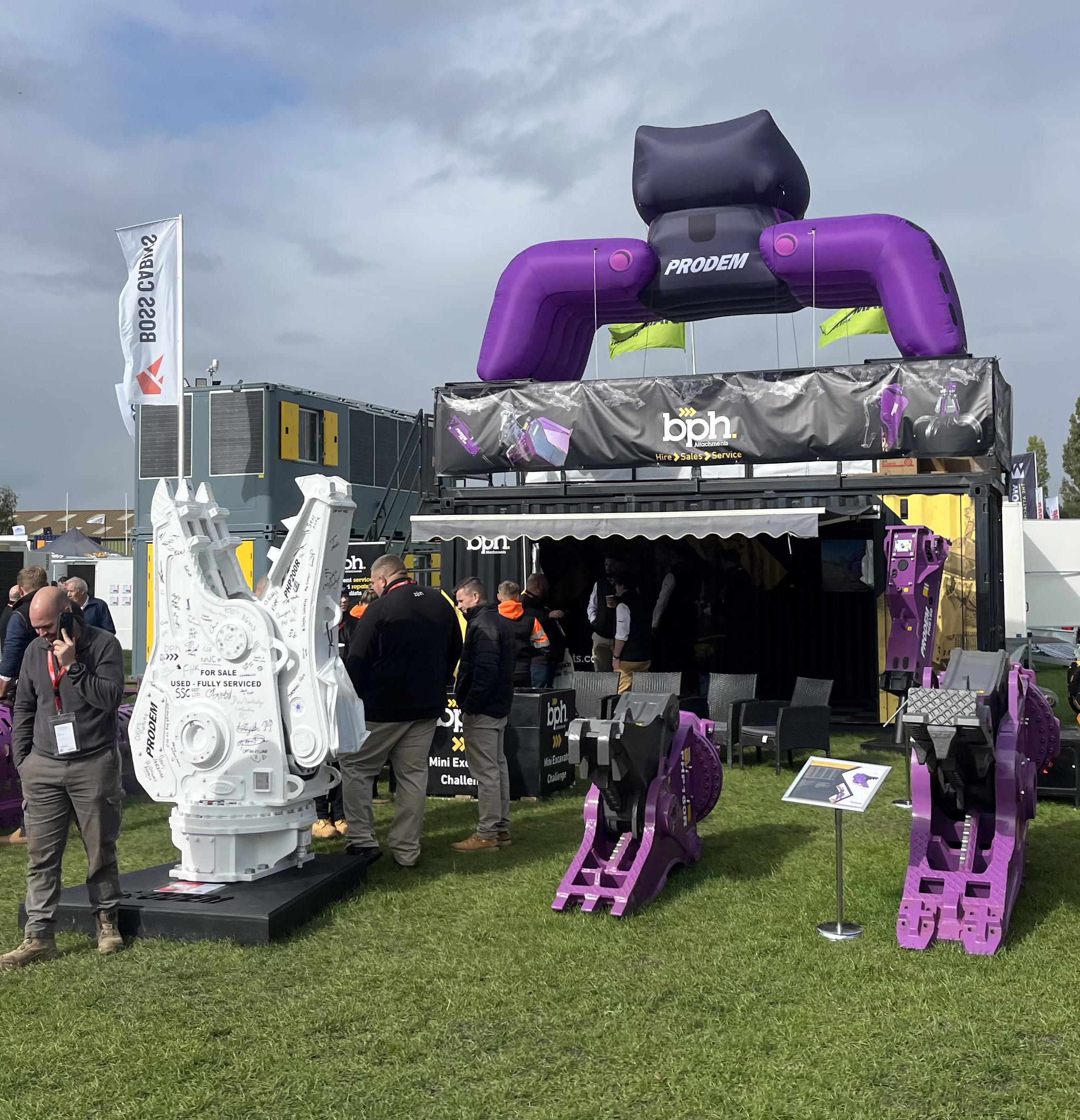
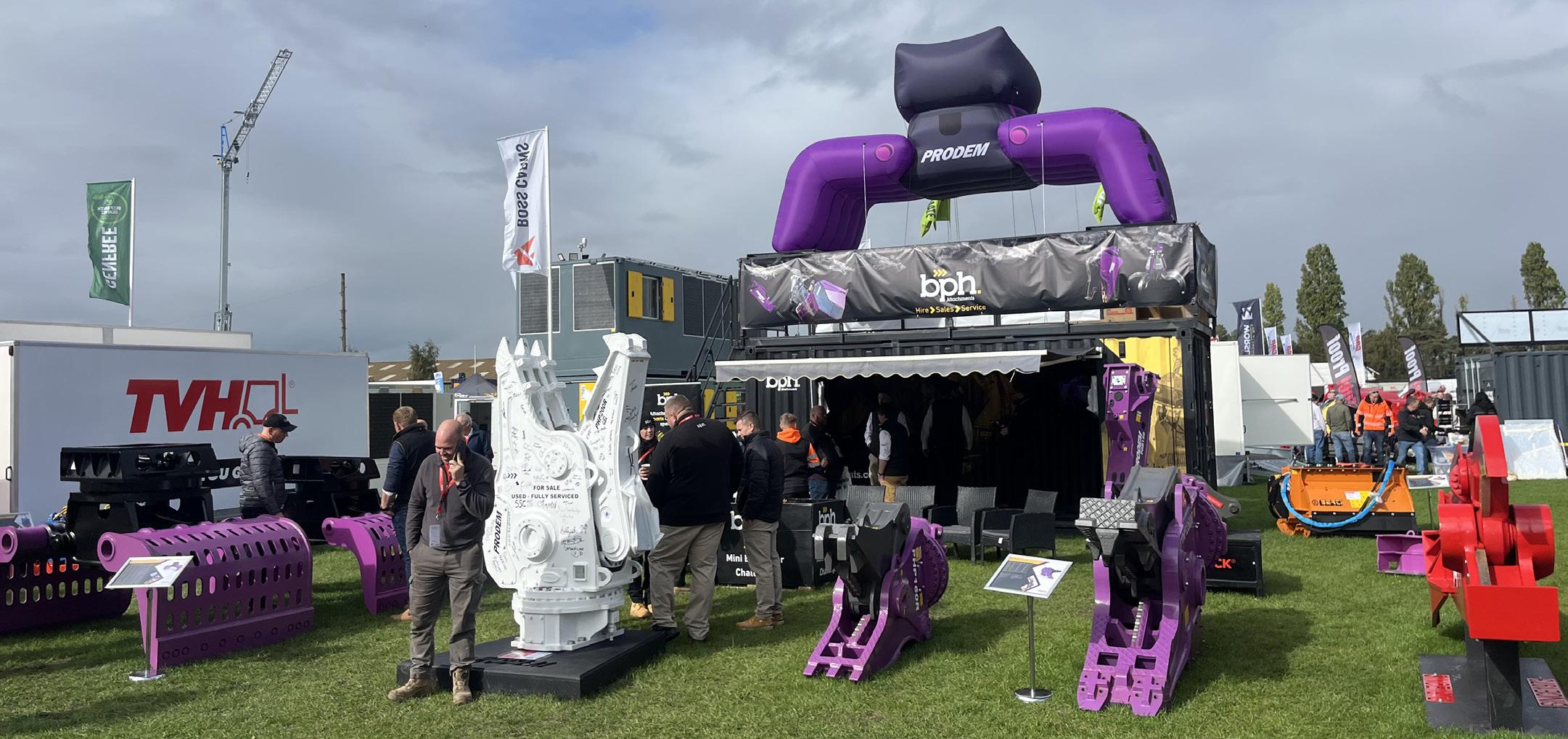
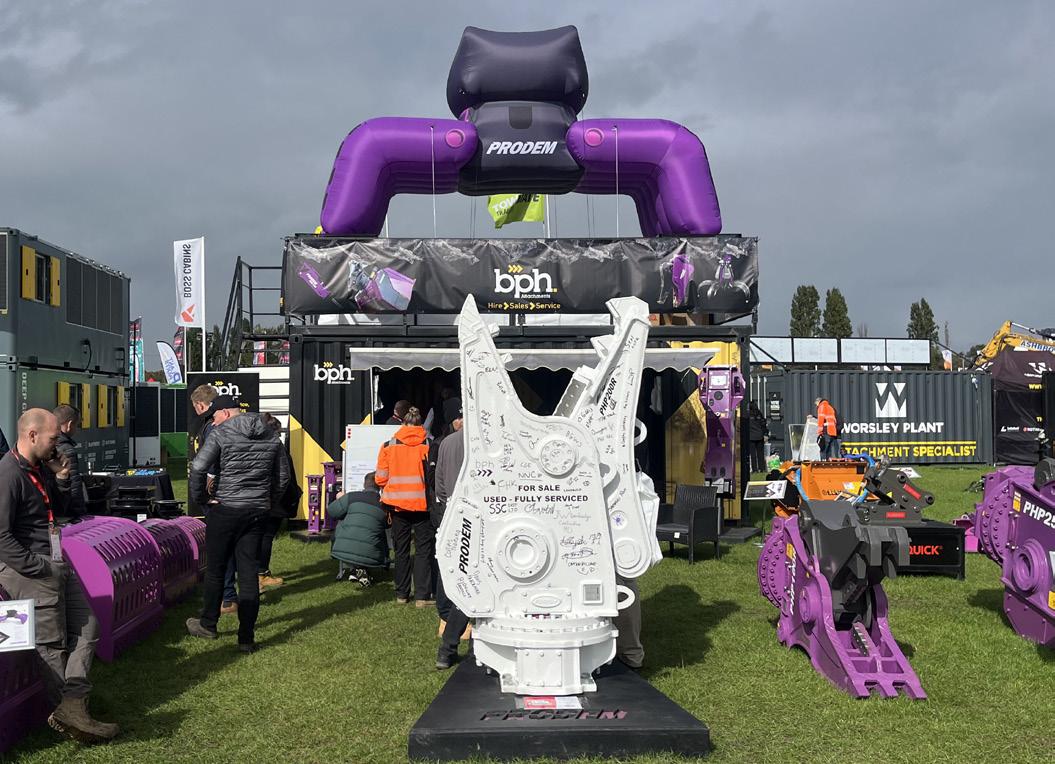
Also specialising in attachments was BPH Attachments… clear experts in the field, as after all, it’s in their name! It was great to see them attend PlantWorx, and it was great to see what they were showcasing. Here, they had a white pulveriser attachment on display in which people could sign as a way to raise money for the The Brain Tumour Charity.
Their stand was a sight to behold, as there were attachments galore surrounding their main stand with the inflatable Prodem attachment towering over it all. They certainly weren’t one to be missed! They also had their mini digger challenge, like they did at their open day back in the summer, and it was great to see so many people wanting to have a go and taking part. The enthusiasm was unmatched, and it’s clear that BPH’s stand was certainly one of the most fun in attendance at PlantWorx!
With the sun now shining after a day of rain, it felt like the perfect way to end day two!
Despite my aching feet, I woke up ready to go for the final day of the show. The weather was looking good, another hearty breakfast had been enjoyed, and the Demolition Spotlight team was ready to end PlantWorx on a high!
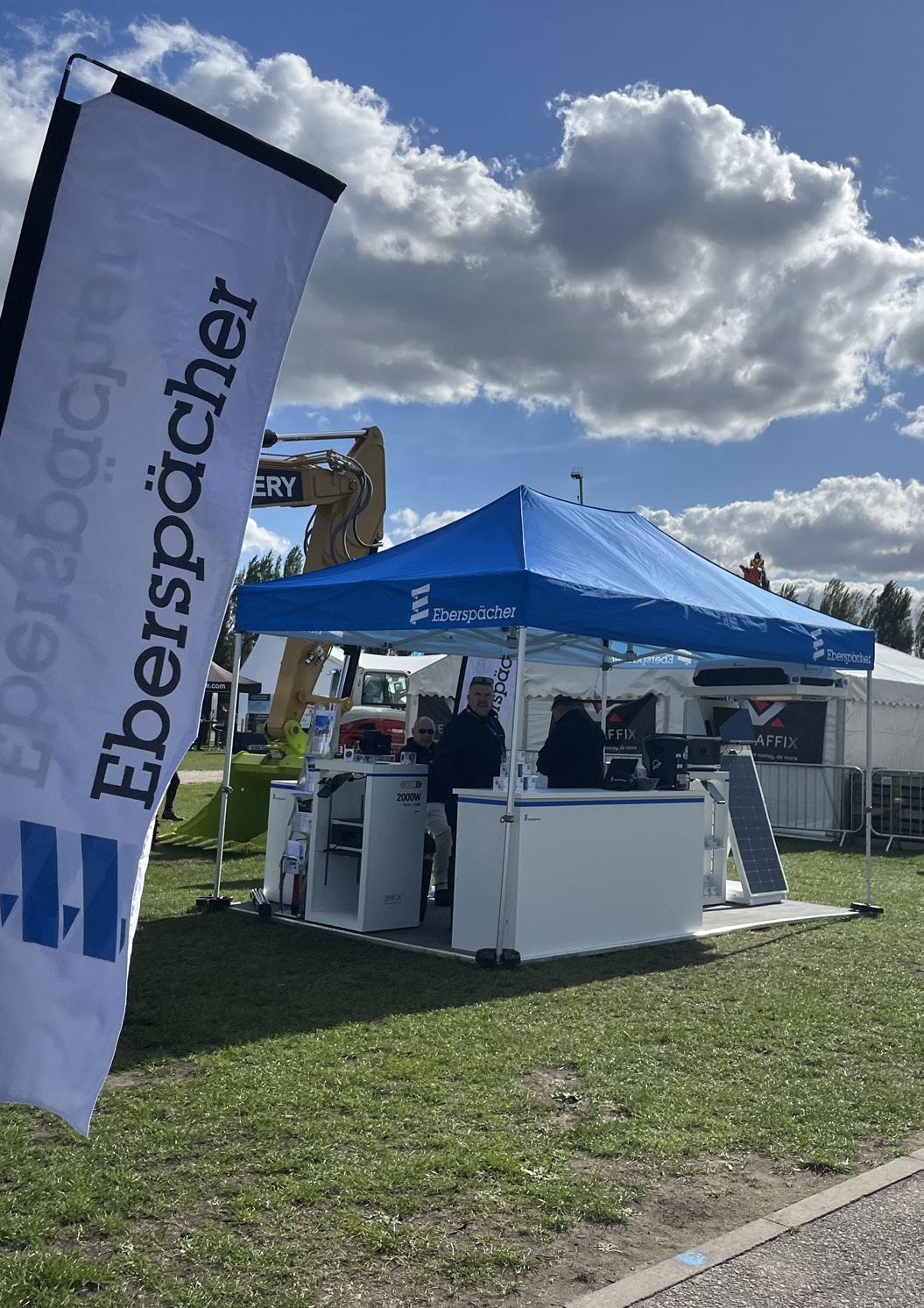
First stop was Eberspächer. With 160 years’ experience in this industry, their heating and cooling systems guarantee comfort and safety in construction machinery, at all temperatures, and PlantWorx was the perfect opportunity for them to showcase this. They presented “efficient thermal management solutions for construction machinery”, including heating and cooling systems for electric, hybrid and conventional drives.
- Compact diesel-powered heaters for plant machinery which allow the operator to warm the cabin without running the main engine, offering fuel savings, reduced idle hours and lower emissions.
- HVAC/heat-pump units such as the “Falkon” platform, which in various drive-types (EHVAC, EHHVAC, HVAC) share common dimensions, simplifying integration into various machine types (electric, hybrid or conventional).
As said by Eberspächer themselves: “By fitting an Eberspächer heater into plant machinery, operators can stay warm while switching off large-displacement engines that would otherwise burn through fuel at idle.” The heater uses only a minimal amount of diesel, dramatically reducing idle time, fuel waste, and overall machine wear.
The benefits of their products are as shown:
- Fuel savings: Reduce diesel use during idle periods by up to 80%.
- Reduced engine hours: Prolong the life of machinery and lower servicing costs.
- Sustainability impact: Contribute directly to Scope 1 emissions reductions for owners, and Scope 3 reductions for plant hire companies.
- ESG alignment: Support sustainability reporting and help meet emissions targets under tightening environmental regulations.
Their emphasis on fuel savings, reduced idling, and crossplatform compatibility positions them as a forward-looking supplier in the off-highway market.
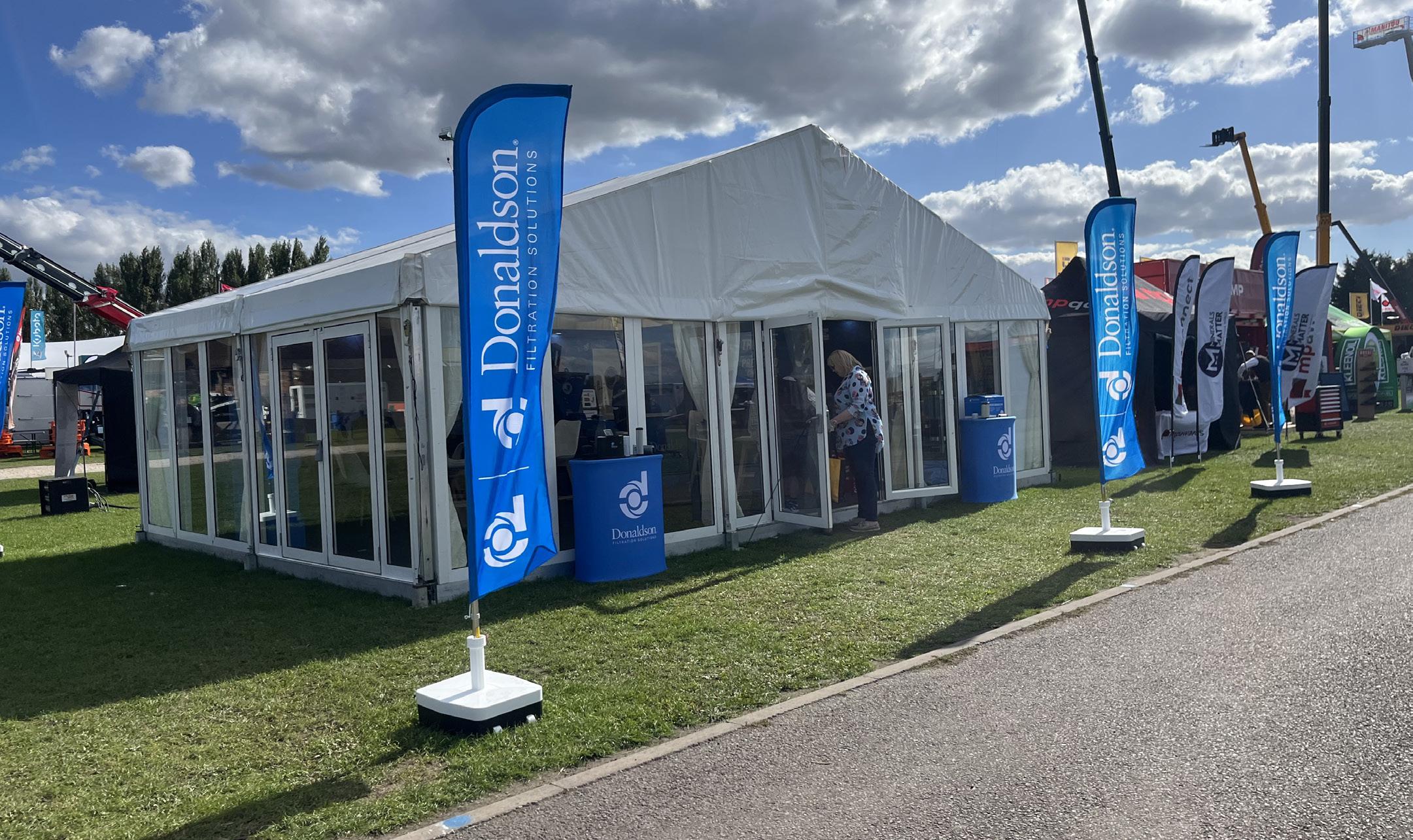
Just further down was Donaldson. With over 100 years of innovation and OEM expertise, Donaldson delivers filtration solutions that are engineered for the toughest construction and mining conditions, “ensuring durability, performance, and peace of mind.” On display was their PowerCore® Edge, an advanced engine air-cleaner designed for off-road/machine applications. It was short-listed in the Sustainability Initiative category of the PlantWorx Innovation Awards. The PowerCore Edge offers full filtration capability in roughly 65% less space than a conventional pleated air filter, specifically aimed at tight engine compartments in off-road/construction equipment.
Donaldson leveraged its presence to promote its filtration solutions for off-road/construction machinery, showcasing how improved filtration can contribute to more efficient, reliable and sustainable machine operation. While the spotlight was on the PowerCore Edge and its engineering benefits, the recognition via the Innovation Awards shortlisting confirms its relevance to the construction-equipment market.
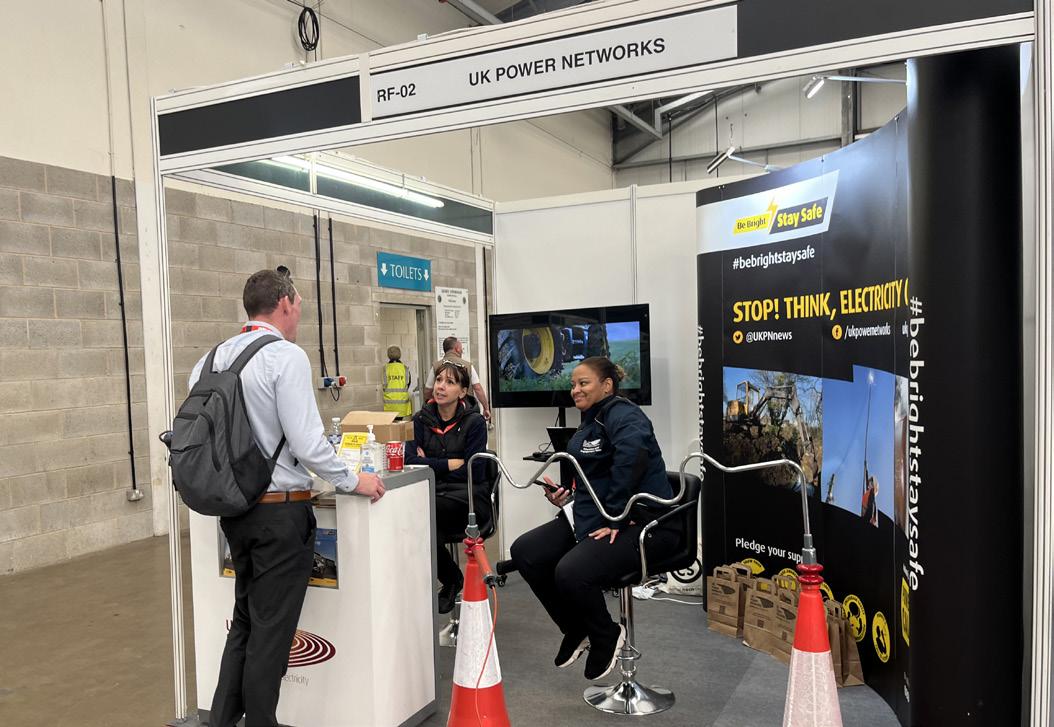
Back in the pavilion was UK Power Network, who is the distributor of electricity for London, the East and South East of England, delivering power to 8.5 million customers’ homes and businesses through 170,000 km of underground cables and overhead lines. PlantWorx gave them the perfect opportunity to further reaffirm their presence for help and support in this industry, and to share guidance on how to work safely around electricity. Their presence at the show also allowed them to help contractors plan works near power networks, and discuss ways to avoid costly delays and outages.
Then, the sad time had come. I headed back to our stand in the pavilion to help the rest of the team take down our stand and pack up the van. It had been such an amazing three days, so it was certainly sad to have to wrap up, but it had been an absolute delight to attend. Despite my woes, however, my feet were very excited at the prospect of sitting down. But if there is anything I have ever learned from the shows we attend, it’s that aching feet is the sign of a job done well, and I had certainly and thoroughly enjoyed my first PlantWorx.
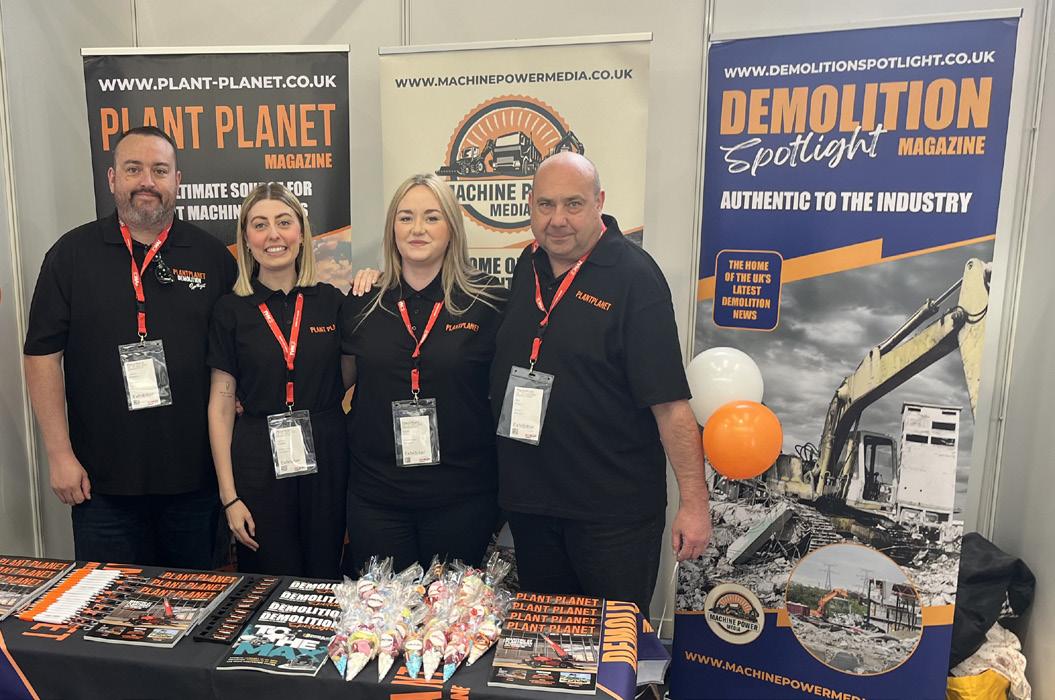
PlantWorx is such a prestigious event, and was an amazing first experience of the show for Demolition Spotlight. Having been myself now as well, I can certainly see why it’s so highly acclaimed. The buzz from the visitors, the electric atmosphere, the incredible stands, nothing was short on delivery, and it was an amazing show to be a part of.
Thank you PlantWorx, we’ll see you in 2027!
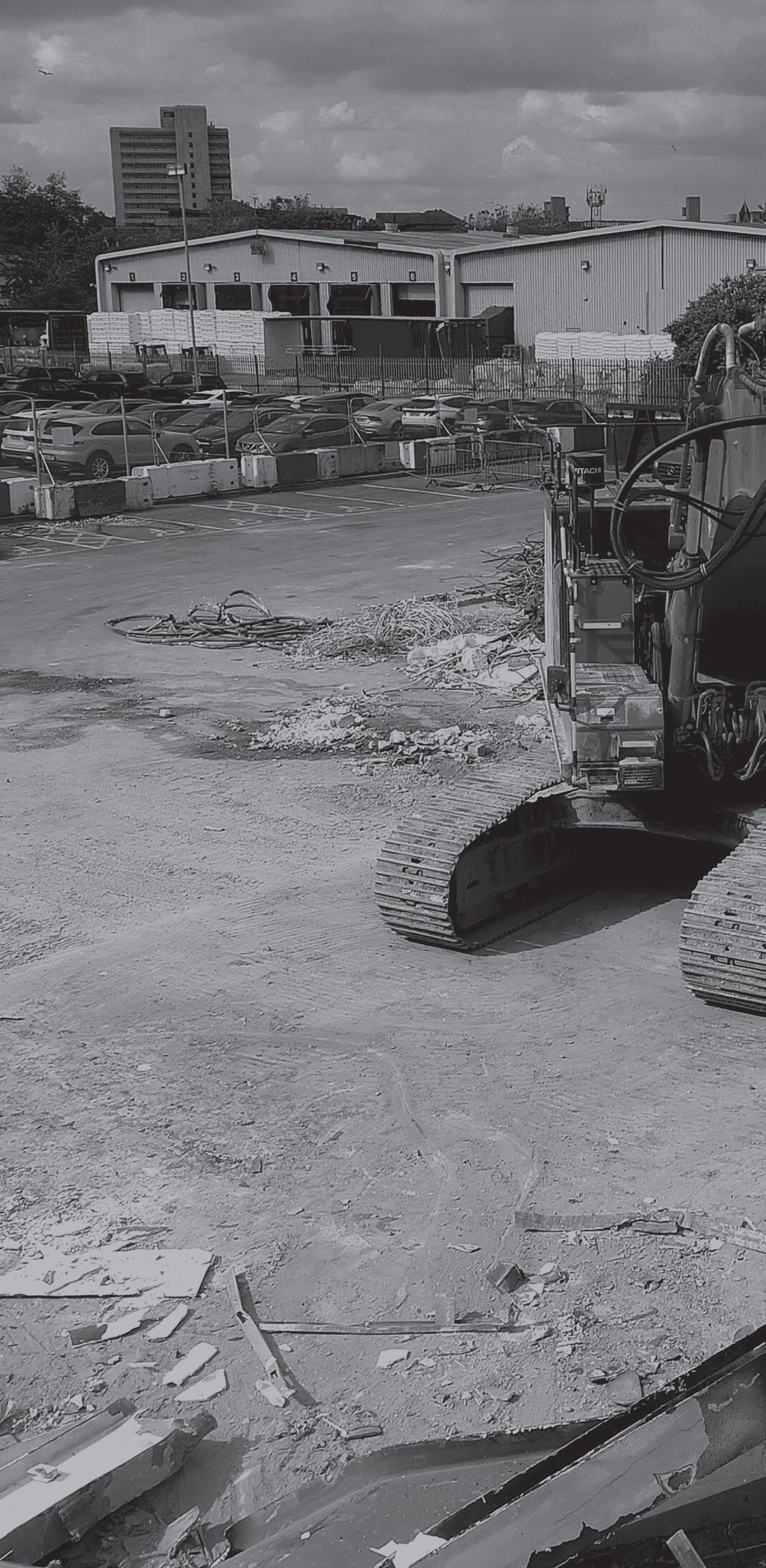







The demolition industry is one of the most hazardous industries, so Health and Safety is the biggest priority on and off-site, whether in the cab of a machine or on the ground. So how are demolition sites making sure Health and Safety is the first concern?
By Lorna Cowlin

At first glance, demolition sites seem really exciting. You get to see buildings knocked down or torn apart, and in some cases, even explosions. However, given the extreme danger of the task at hand, Health and Safety on demolition sites is even more important to take seriously, otherwise the consequences can be fatal. After all, a building collapsing is only ‘cool’ from a distance…
It’s no secret that demolition sites are incredibly hazardous, with workers being exposed to various risks. The HSE (Health and Safety Executive) provides guidance on the role and responsibilities of designers, contractors, and building control, emphasising the need for pre-construction information and competent demolition engineers. Compliance with Health and Safety regulations is essential, and continuous training and risk assessments are critical components of a robust health and safety framework. As mentioned on their website, “in law demolition work is treated the same as any other construction work. This means that the Construction (Design and Management) Regulations 2015 (CDM 2015) apply.”
However, laws, acts and movements to support risk and accident prevention haven’t always been around…
Health and Safety laws have steadily grown in priority over the years, but before these acts were put in place, working environments were exposed to a lot of danger. Factory work was lethal, especially in the early 1800s when children were involved in the long shifts as well. It wasn’t until the Factory Act (1802) that “health and morals” of the workers were noticed and focused on; 1842 when children and women were removed from the working environments. In 1850, inspectors came in to observe the working conditions to make sure they were safe and protected. The industrial revolution pinpointed a lot of errors when it came to heavy machinery working environments, and whilst things were still far from great, they were heading in the right direction.
However, it wasn’t until 1974 that the Health and Safety at Work Act was put into place, a law that is still adhered to and followed to this day, supplying the fundamental structure and enforcement of workplace health, safety and welfare. For the first time, employers and employees were to be involved in the process of designing a modern health and safety system.
Nowadays, Health and Safety is a priority, putting emphasis on both physical and mental wellbeing. HSE isn’t there to hinder; it’s there to support and make sure procedures are carried out and that everything is done safely, to the extent that the workers and operators go home every night. Health and Safety isn’t a term that is needlessly thrown around, nor is it something that is talked about too much. In fact, it’s something that is still recklessly toyed with, with many people still not taking it seriously, both in and out of the construction industry. Therefore these laws are to be treated seriously to make sure sites remain a place of safety.
As mentioned earlier, demolition sites are incredibly hazardous, even more so than most working sites, and are responsible for more deaths and major injuries than any other activity. Therefore there must be strict rules put in place for all workers to be informed of.
In 1875, the Explosives Act was passed, which introduced a system for the licensing and regulation of factories for the production of gunpowder and other explosives, suggesting that before this, explosives were being used without any real licensing. This alone is a terrifying thought, especially when we know how explosives are so carefully handled on demolition sites nowadays. However, this was eventually superseded by the Explosives Act (1923), which made sure the explosives were being manufactured, stored and used properly, ensuring safety and compliance. This was further extended and updated in the Explosives Act (2014).
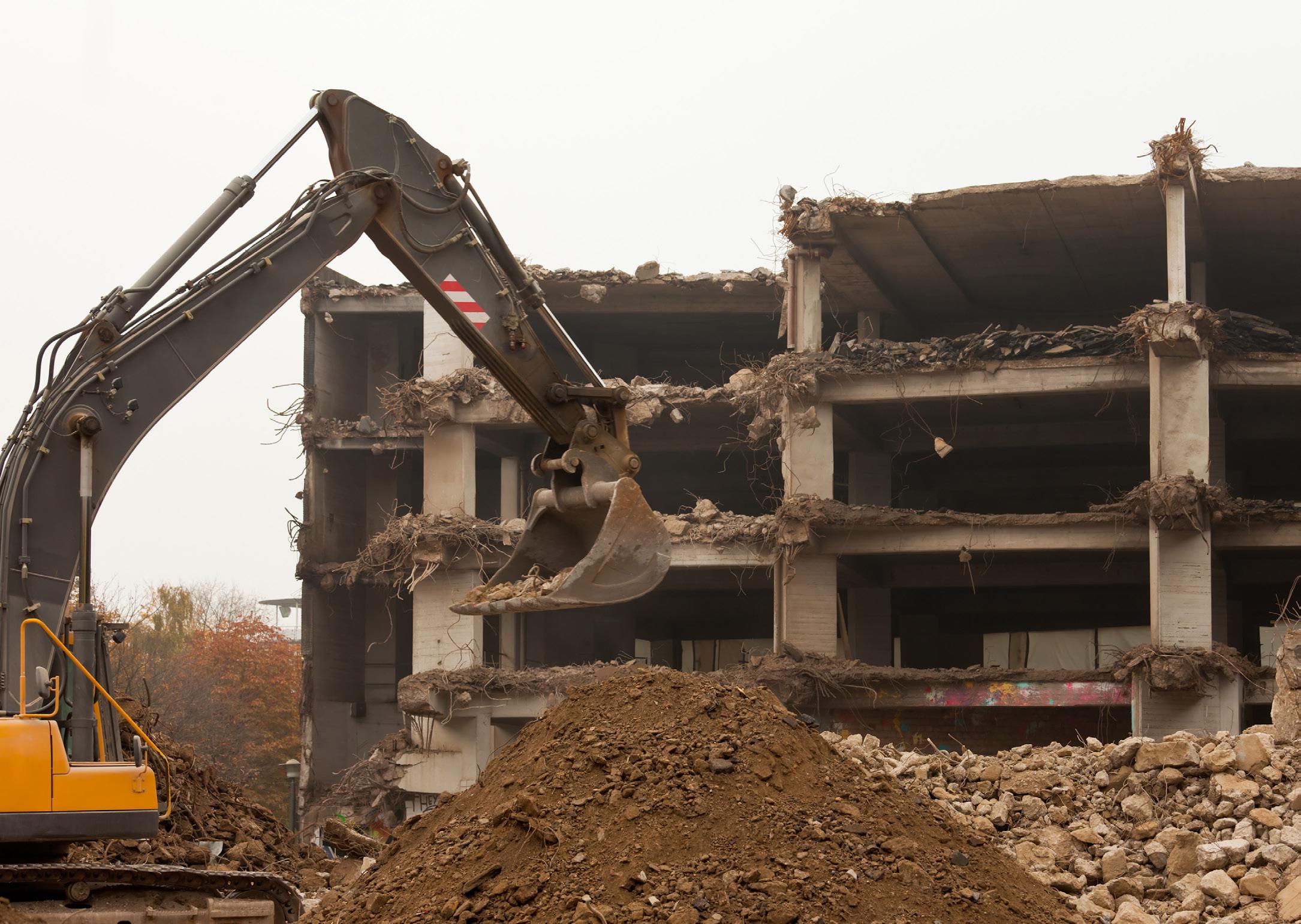
Nowadays, we have what is known as ‘controlled explosives’, which refers to the deliberate detonation of explosives in a strategic manner. The primary objectives of explosive demolition are:
- Efficiency: To quickly and safely demolish large structures.
- Safety: To minimise risks to workers, the public, and adjacent properties.
- Precision: To control the direction and manner of collapse, ensuring minimal impact on surrounding areas.
- Cost-Effectiveness: To reduce labour and machinery costs compared to traditional demolition methods.
Of course, explosions are fun to watch, and they sound very thrilling, but when the Health and Safety procedures are not adhered to, this can make it incredibly dangerous. However, with the adoption of correct training, demolition sites are always made to be safe.
Workers and operators must receive the correct training to be prepared on site. This can be done through simulation training, which is the safest way to train someone as it reduces risks and costs on-site, as it’s performed in the safety of a virtual world.
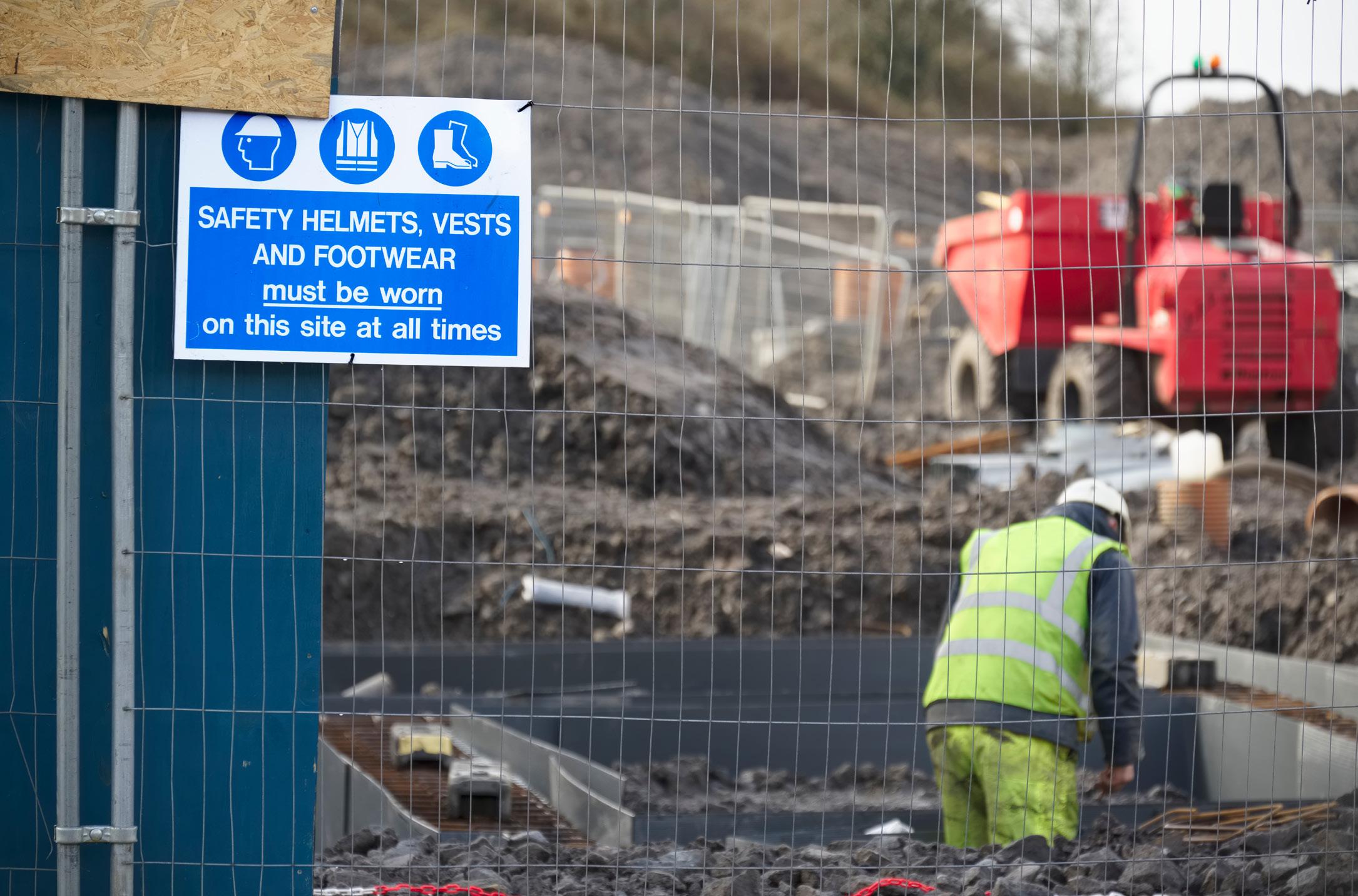
PPE is worn to protect the workers and operators once they’re on-site, and PPE is vital to keep them safe and protected. From 2020 onwards, as a result of COVID-19, this became even more of a necessity, and not just in the construction and demolition sectors. PPE became a hot topic, further emphasising the importance of the protection it brings. The Personal Protective Equipment (PPE) Act (1992) ensured that all workers were to wear appropriate PPE, including hard hats, safety glasses, high-visibility vests, safety gloves and steel-toe capped boots.
Workers and operators also need to be aware of the hazards around them, so they can identify risks and control their environments before accidents occur. Hazards to be aware of can include:
- Falls from height
- Falling debris
- Premature collapse of structure
- Dust and fumes
- The silting up of drainage systems by dust
- The problems arising from split fuel oils
- Manual handling
- Noise and vibration
- Electric shock
- Fire and explosions
- Smoke from burning waste
- Pneumatic drills and power tools
- Collision with heavy plant or machinery
- Asbestos and other hazardous substances
By implementing these control measures, the risk of accidents and injuries can be significantly reduced, creating a safer working environment for all involved in demolition projects.
Pre-demolition planning and risk assessments are put in place, and these can come in the form of:
- Conducting a thorough site survey to identify structural weaknesses and hazardous materials
- Developing a Demolition Plan outlining methods, sequence, and safety measures
- Obtaining necessary permits and notify relevant authorities
Demolition work carries significant hazards, but these risks can be effectively reduced through careful planning, comprehensive training, and robust safety measures. By applying engineering controls, using appropriate PPE, and establishing clear emergency procedures, organizations can conduct demolition activities safely and efficiently while safeguarding both workers and the environment. Adhering to OSHA, EPA, and local regulatory requirements is crucial to prevent accidents and avoid legal consequences. Remaining proactive will reduce injuries, fatalities, and environmental damage, making demolition work safer across all sectors.
One of the biggest threats to be cautious of, however, is the potential presence of asbestos. When it comes to dealing with asbestos, is it essential to make sure the correct safety procedures are put in place, as asbestos is notoriously dangerous, and has extreme lasting effects to one’s health that can never be cured.
Breathing in asbestos fibres can cause scarring of the lungs, which is then the start of long-term lung disease. Around 5000 people die every year from asbestos-related diseases. This is why it must be ensured that the removal of asbestos is done in the safest way for the protection of the workers.
Asbestos surveys must be carried out when there is the concern of asbestos being present. Then, PPE including gloves, masks, and respirators, to minimise exposure to asbestos fibres, and safety protocols must be followed at all times, including during disposal and/or storage. Regular checks will help either eliminate the possibility of asbestos presence, or find the problem sooner rather than later. When it comes to the demolition of a building with asbestos, all work must stop, and the asbestos must be removed or fixed before any other work can continue.
A company that deals with this is Anglian Demolition & Asbestos Ltd. With more than seventeen years’ experience, and as a trusted HSE licensed removal contractor and member of ARCA (Asbestos Removal Contractors Association), Anglian certainly knows what they’re doing when dealing with asbestos. They offer “the complete range of asbestos services,” including surveys and removal, as well as encapsulation when it is not possible to safely take out the material, as removal may not always be the smarter option. As said themselves, “Anglian’s expert services for both licensed and non-licensed asbestos removal provide safety and peace of mind, while ensuring full compliance with the law.”
It’s no secret that demolition sites are extremely hazardous, but with all the correct procedures laid out and followed, Health and Safety compliance can be ensured at all times. Health and Safety laws have also dramatically changed over the years, going from no such laws at all, to making sure that it is top priority. It’s terrifying to think what could happen if we didn’t practise and preach Health and Safety protocols as much as we do, therefore it is absolutely paramount to uphold these standards. It’s important to be proactive in your approach to this to ensure ultimate protection, preparing for a better and safer tomorrow.
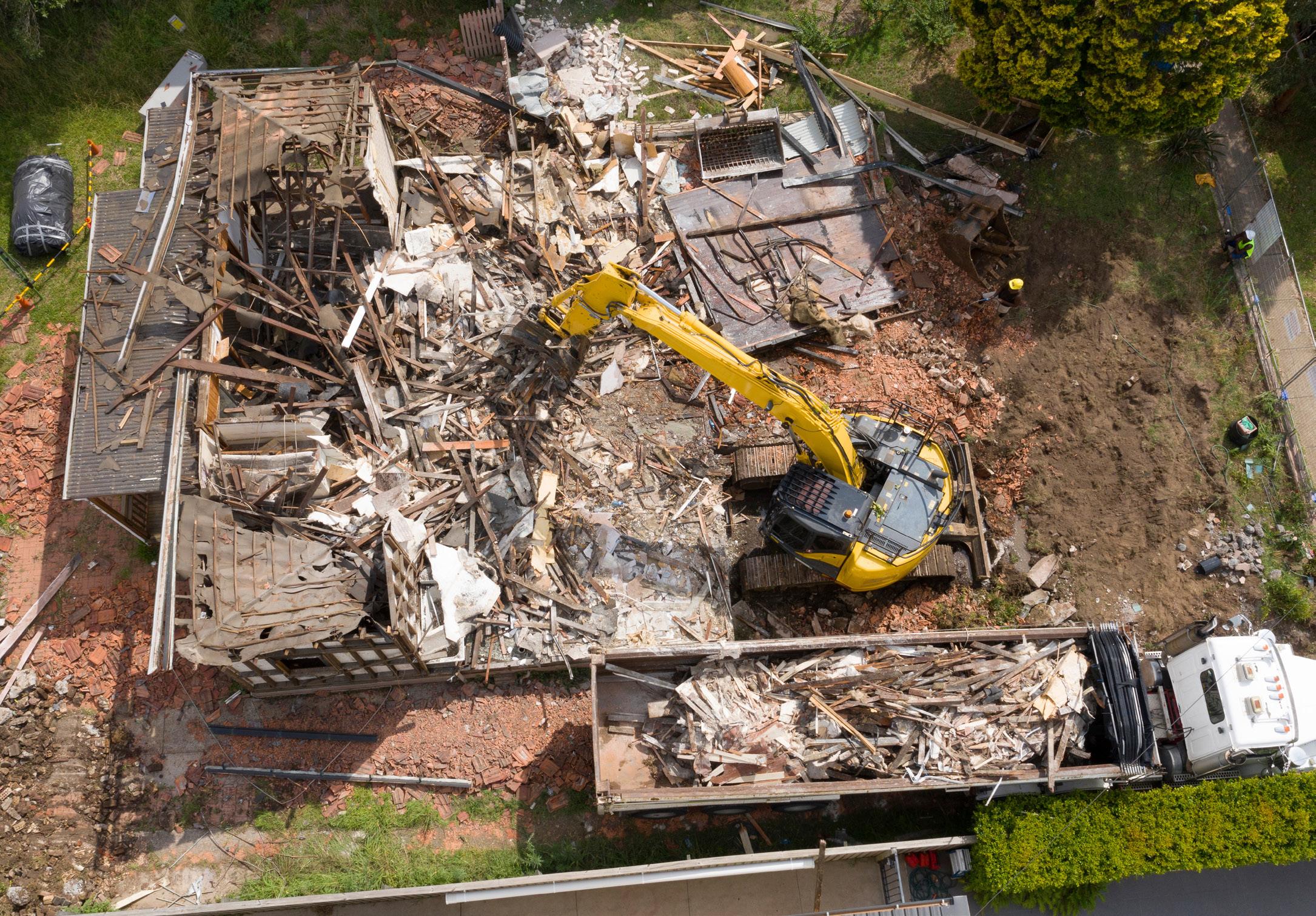
Our unique capability to repurpose virtually all construction and demolition waste from site helps our public sector, local authority, commercial and residential clients achieve zero-to-landfill targets.
Demolition
Structural alterations
Site clearance
Soft strip
Asbestos management
Remediation
Earthworks & civils
Temporary works
Demolition & Enabling Works Waste Management Aggregates & Concrete

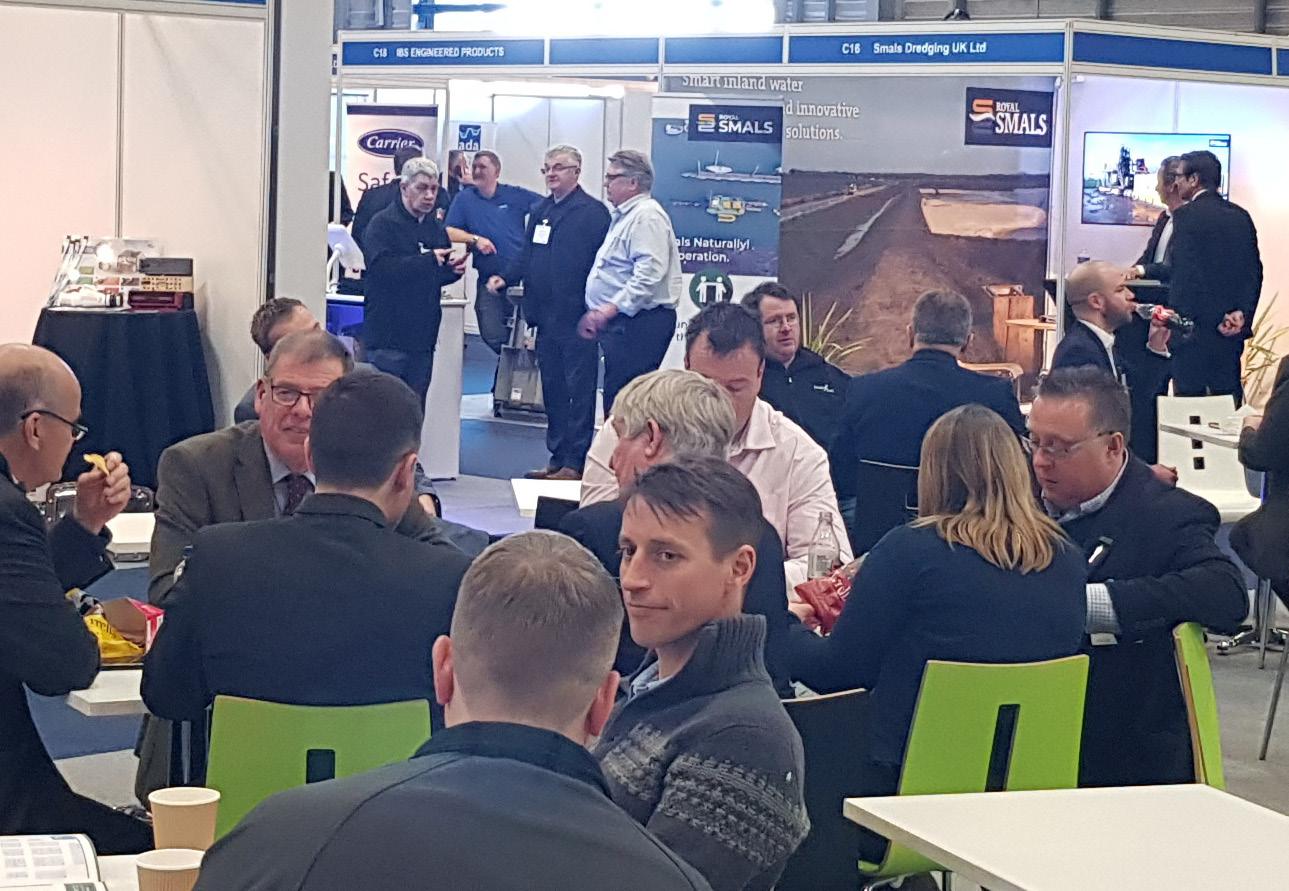
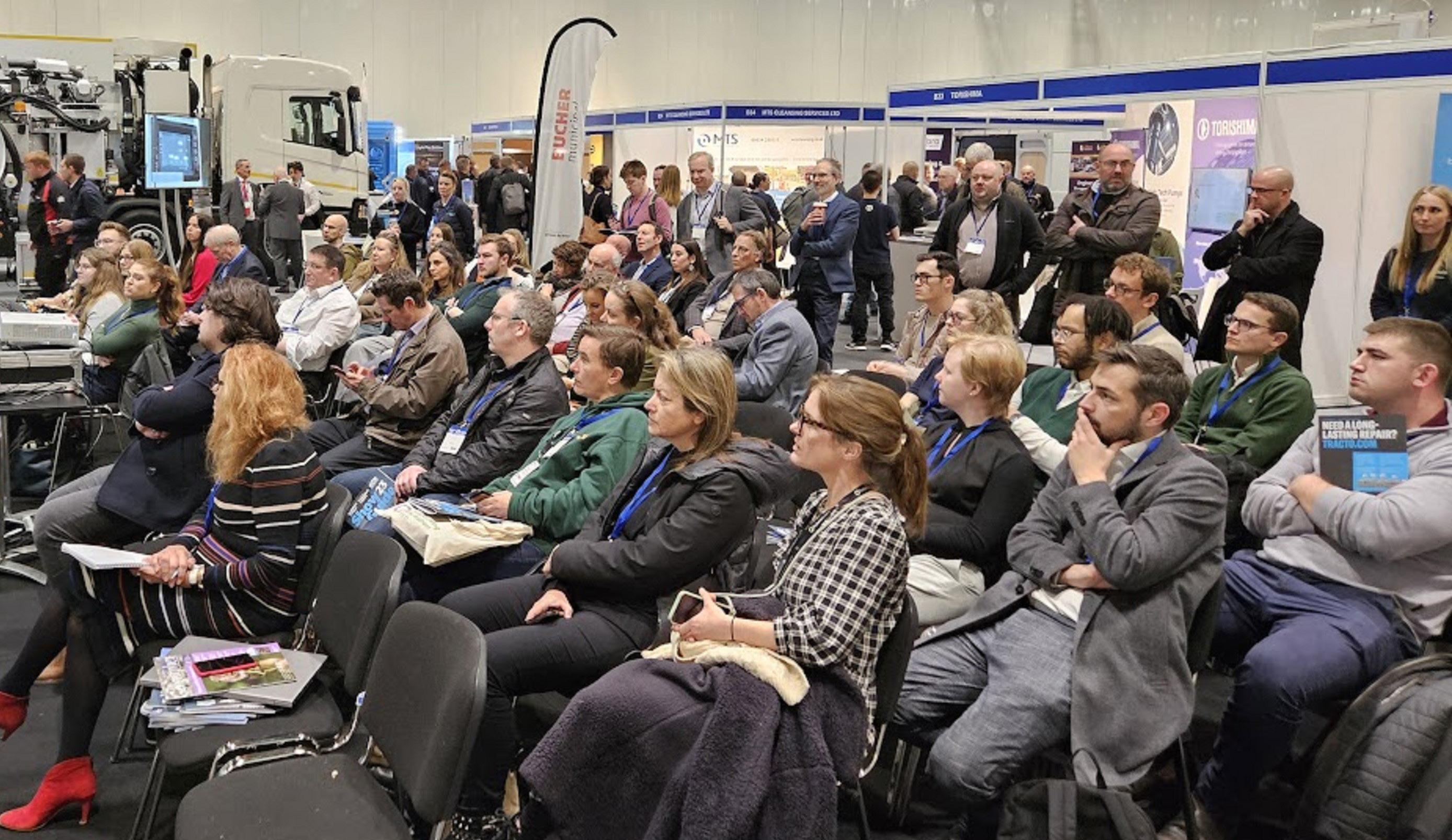
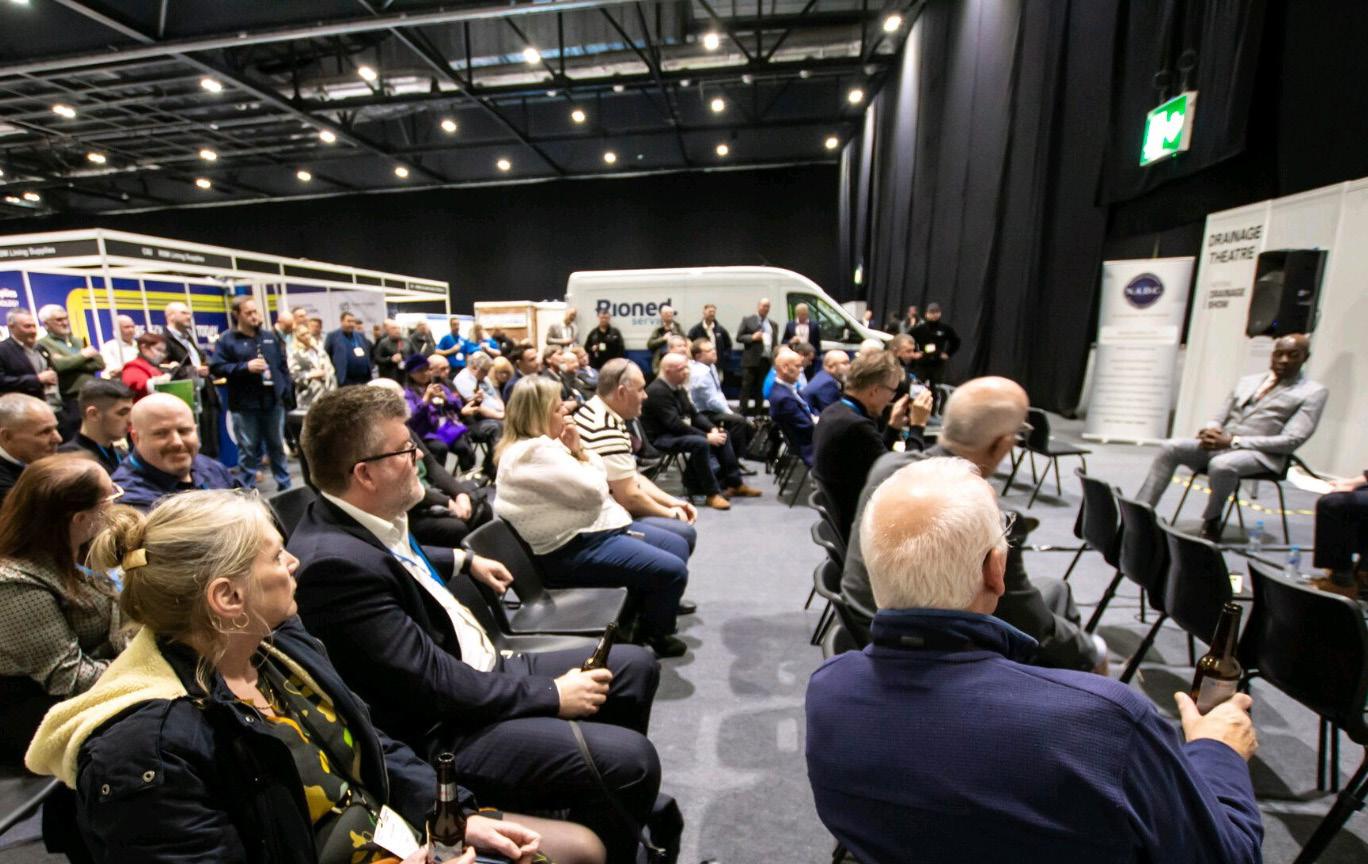
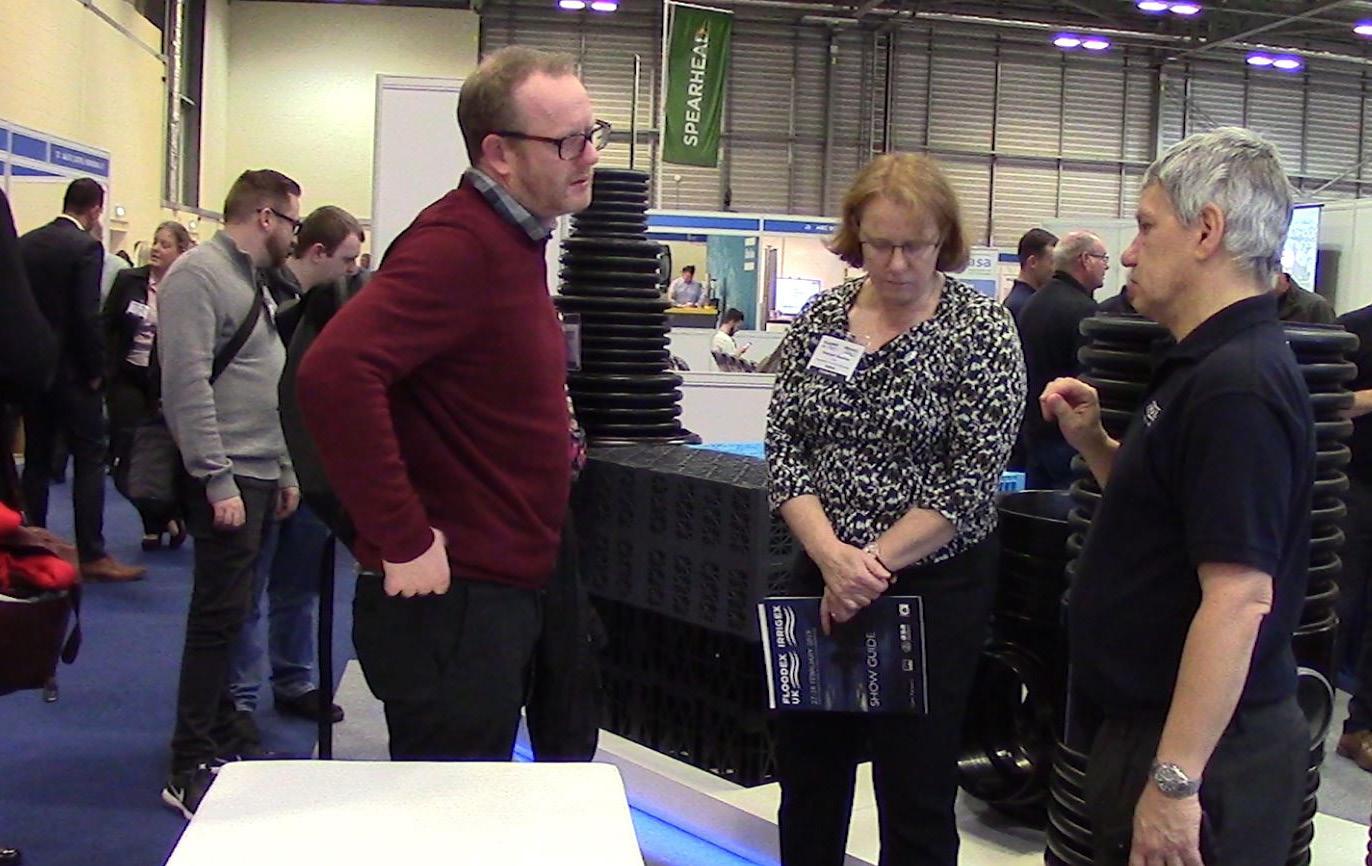
The UK’s civil engineering and infrastructure community is set to converge at ExCeL London on 26th & 27th November, for the National Civils Show – a landmark event uniting professionals, innovators, and industry leaders, driving the future of Britain’s civil engineering and infrastructure environment.
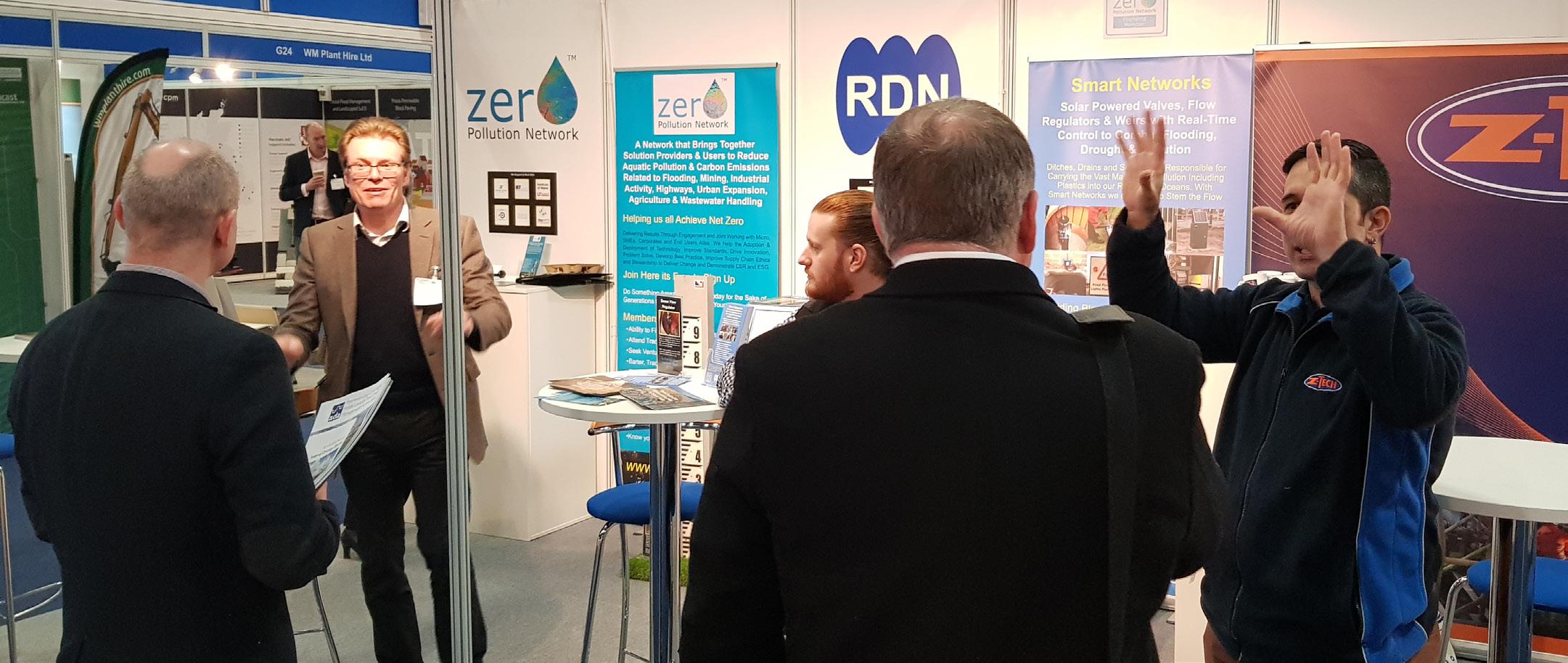
Positioned as the definitive event for the civil engineering sector, the National Civils Show will showcase the latest in construction technology, groundworks, transport infrastructure, geotechnical solutions, environmental engineering, and more. Attendees will gain unparalleled access to cutting-edge exhibitors, live demonstrations, and a dynamic conference agenda featuring some of the most influential voices in UK infrastructure.
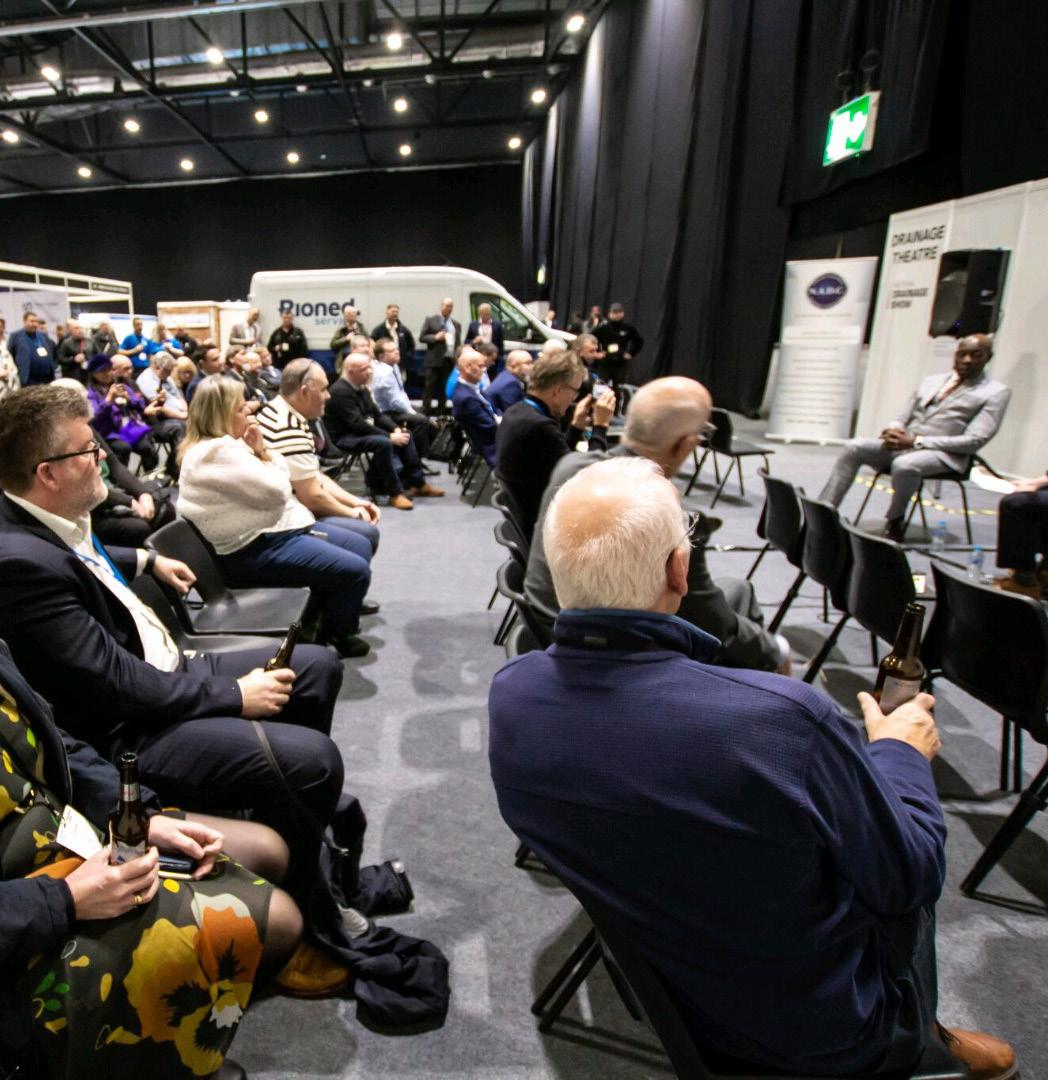
Adjacent to the National Drainage & Floodex Show, which also includes waterways management, there is a huge crossover in interest, with very body agreeing that this is the perfect colocation, especially as visitors will be free to pass between the shows without restriction, with no walls between the halls.
With the government’s recent announcement on infrastructure spending, which includes £2.8 billion on flood defences, the National Civils Show arrives at a critical moment for the sector. The show is designed to foster collaboration, tackle industry challenges and spotlight sustainable and digital innovation, shaping the future of construction.
The event is already receiving support from some of the sector’s important players, including: Civil Engineering Contractors Assoc (Southern), Chartered Institution of Highways & Transport (CIHT), National Highways, National Assoc if Drainage Contractors (NADC), Environmental Industries Assoc (EIA), Pipeline Industries Guild, Worshipful Company of Engineers, Plant Planet, Demolition Spotlight and many more.
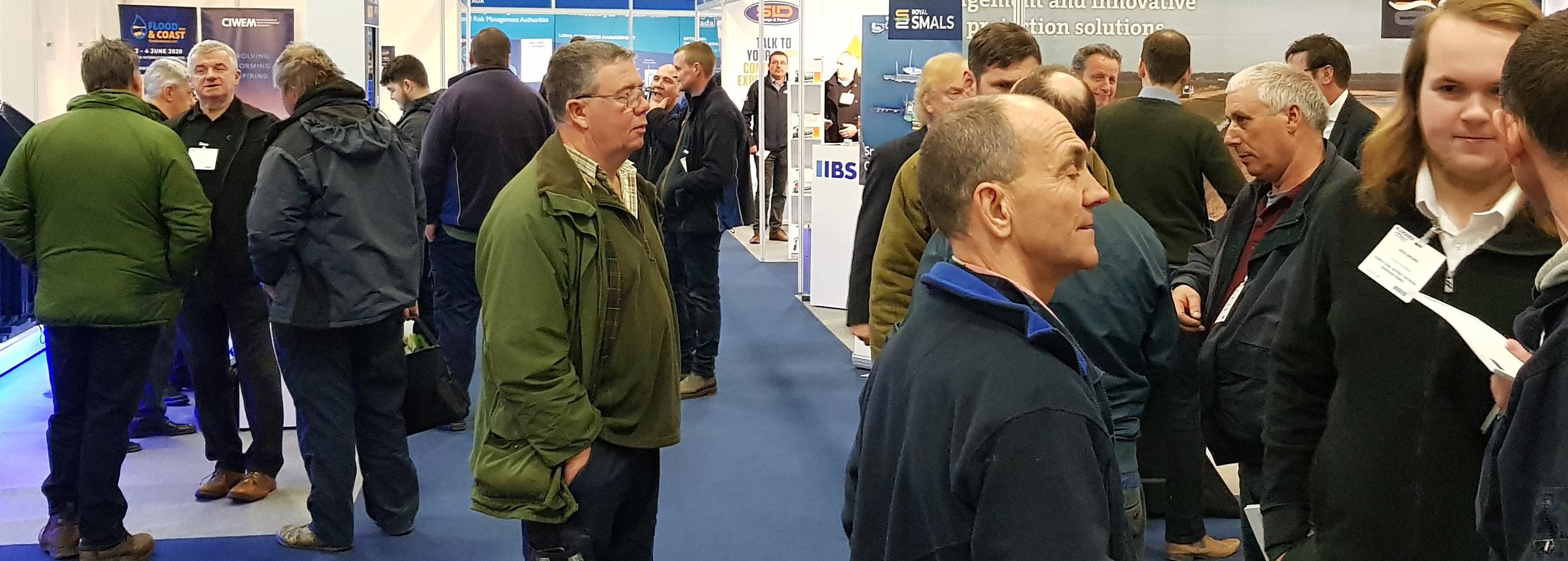
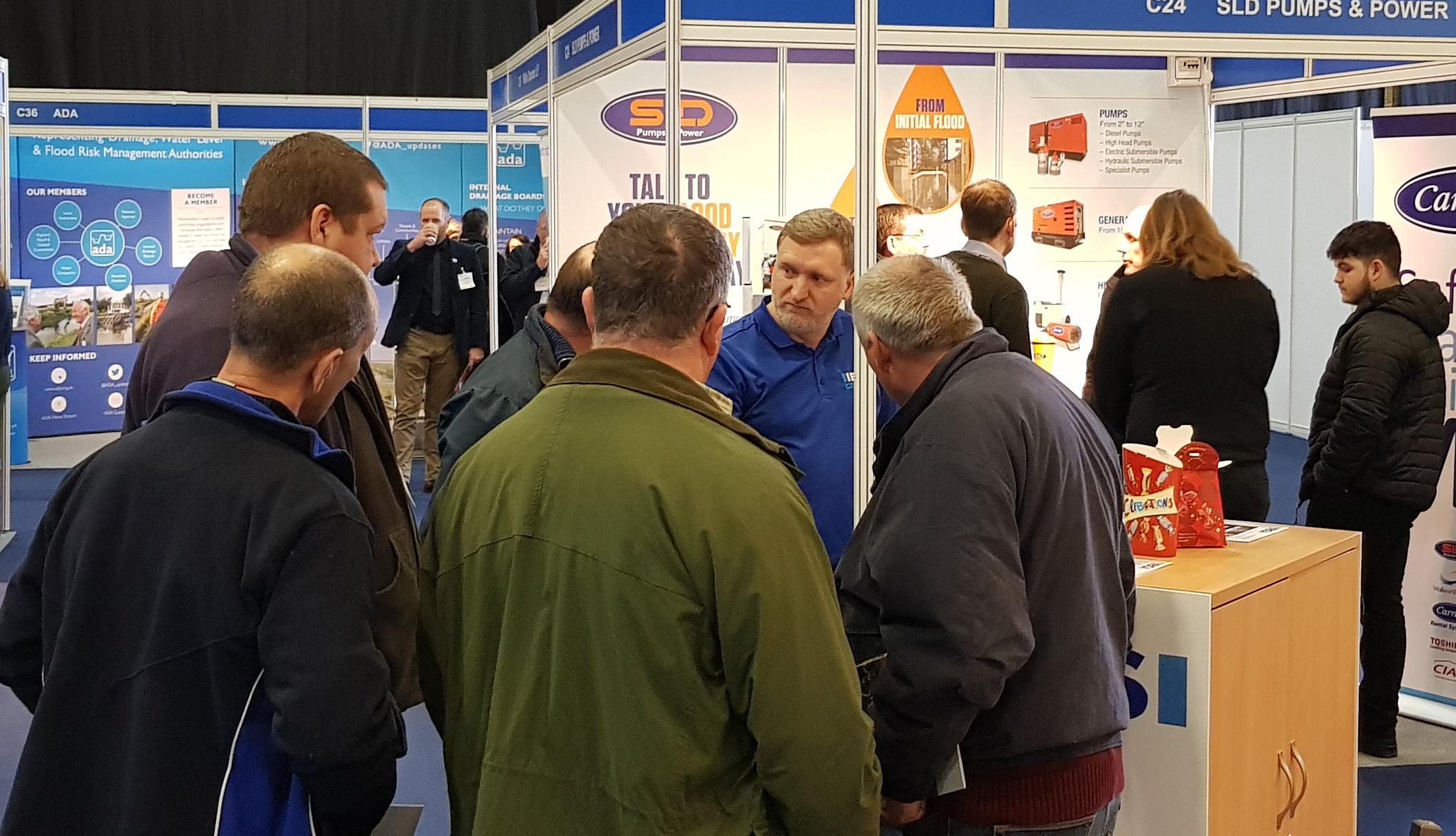
Key Highlights Include:
Nearly 200 exhibitors across the events, spanning all aspects of civil engineering technology, equipment, materials innovation and services, plus drainage & wastewater management, flood prevention and mitigation, along with inland waterways management.
The way the show is set up is that, not only do we have a major event for civil engineering, but it is running alongside an already successful show, where you have more access to environmental and sustainable solutions than at any other event, including a two-day SuDS theatre. This creates a more holistic environment that delivers so much more under one roof.
Seminars with talks from senior figures in government, engineering consultancies, manufacturers, innovators and infrastructure contractors.
Networking opportunities for connecting with buyers, decision-makers, and suppliers from across the UK and Europe.
Environmental Industries Association (EIA) Pavilion spotlighting innovative companies who are members of the newly formed EIA, offering future-facing technologies and services.
Paul Shelley, Event Director for the National Civils Show, commented:
“The National Civils Show is a muchneeded platform for the sector—bringing everyone together under one roof to share knowledge, forge partnerships,
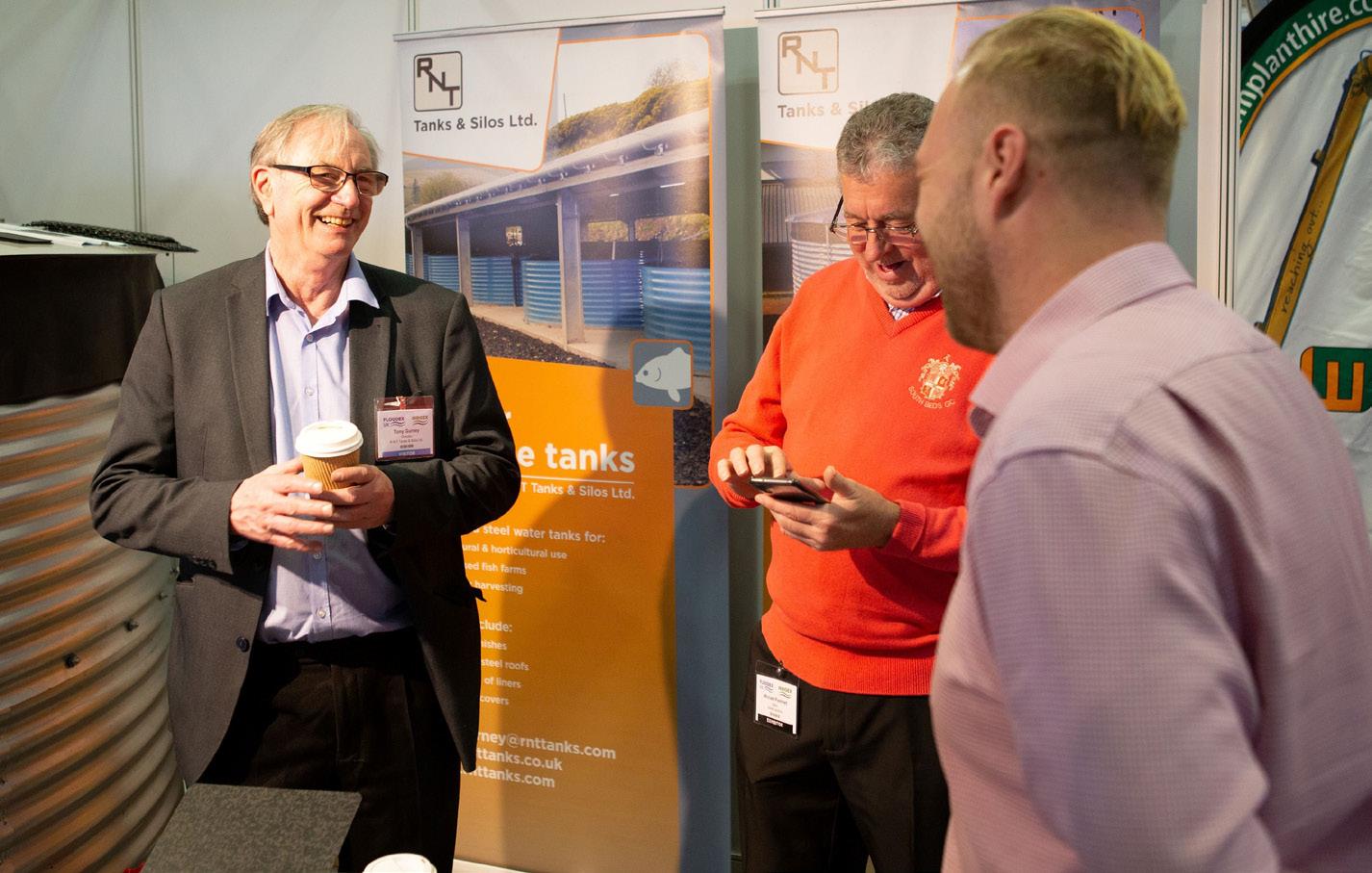
and celebrate engineering civil engineering excellence. Whether you’re a contractor, consultant, supplier, or policymaker, this is the must-attend event of the year for civil infrastructure.”
Free to attend for all industry professionals, the show is expected to attract thousands of visitors from across the construction, transport, energy, and utilities sectors.
You can register for the show and see the list of exhibitorson the website.


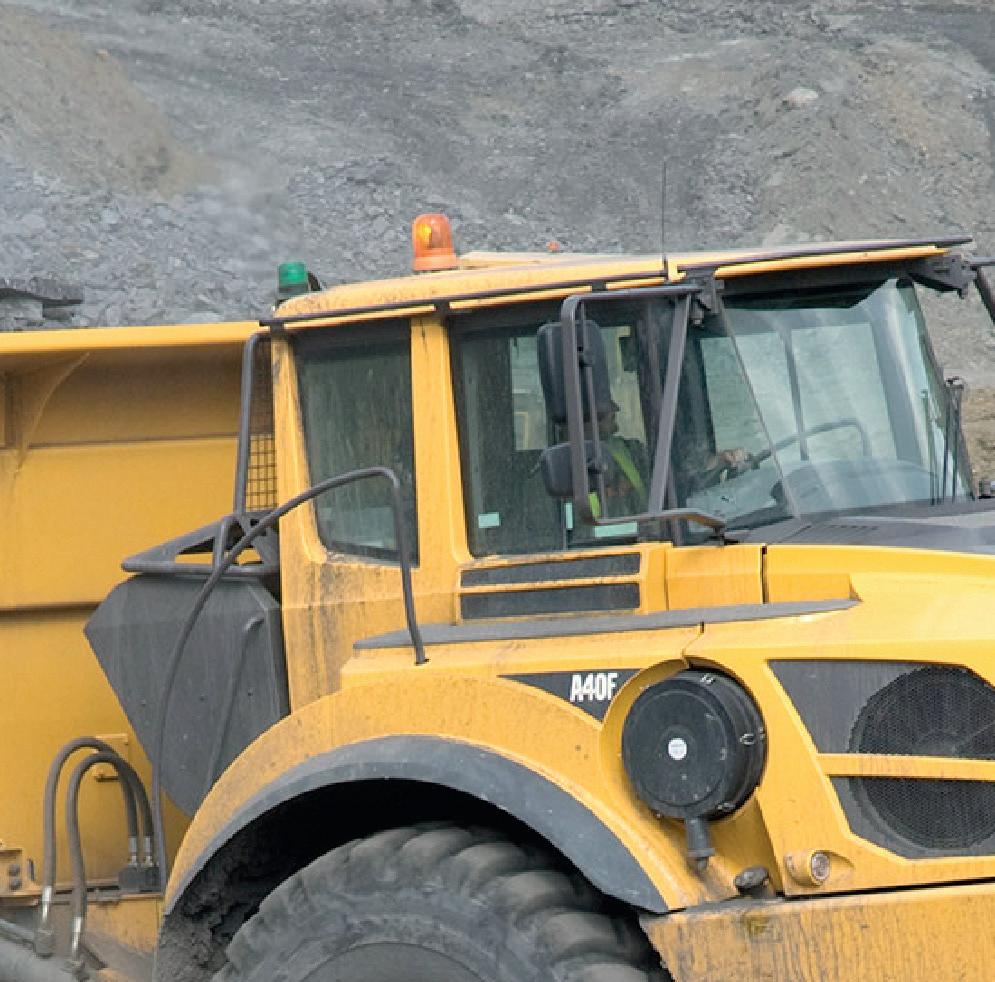
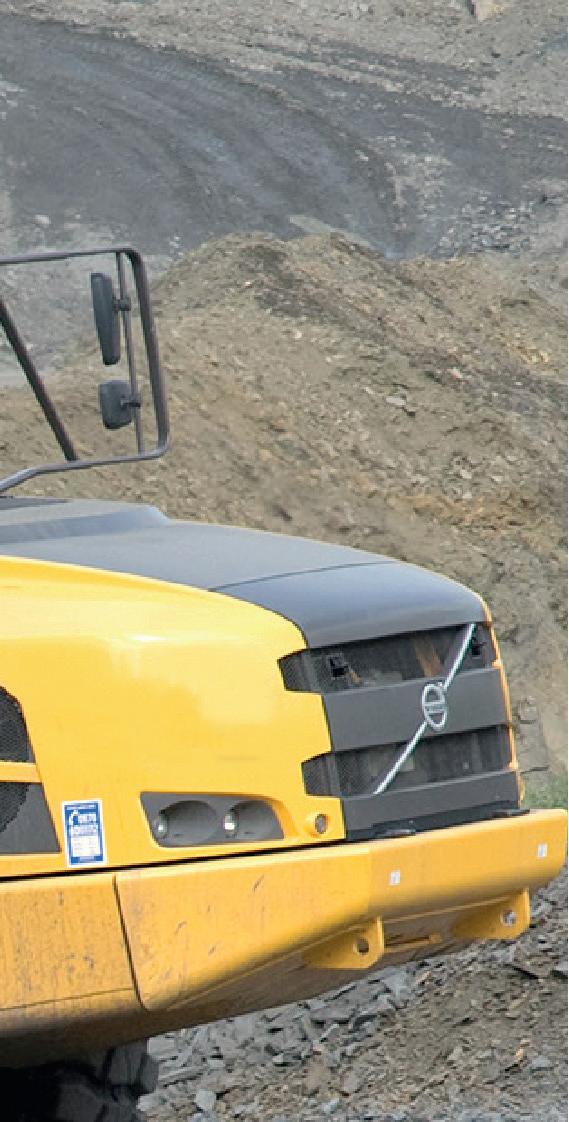
• 25 years’ experience with Volvo Dump-Trucks
• Selected-used or refurbished parts
• All models catered for
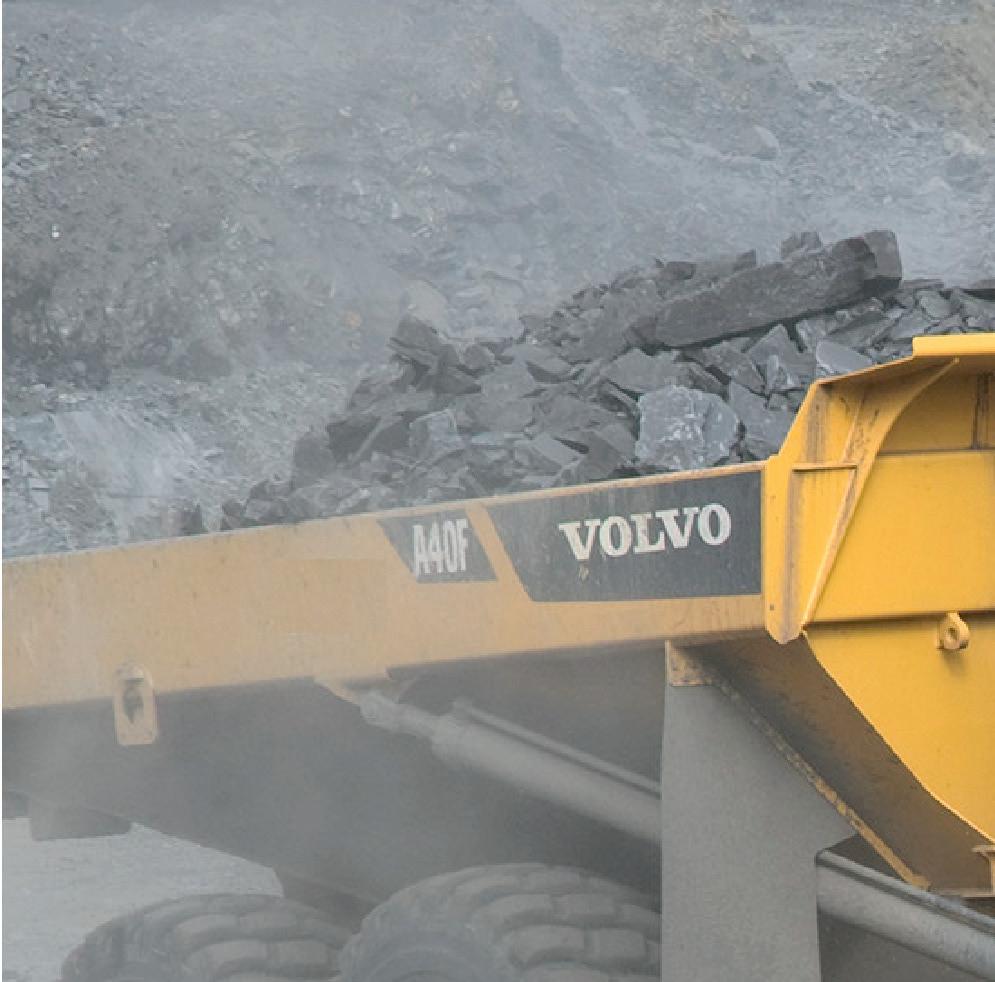
• Big savings • Engine and transmission rebuilds
• Maintenance and repairs
• Export enquiries welcome
• Your choice of Swedish quality SLP or genuine OEM


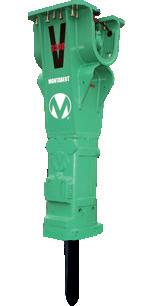
The company was formed in Lyon, France in 1921 by Joannes Montabert to manufacture pneumatic drilling equipment. Steady growth and a keen eye for progress saw the owners of the company become one of the early pioneers of the hydraulic breaker market introducing the BRH500 in 1969.
Their manufacturing of rock drills brought them attention from other leading players in the industry, and they were purchased by the Doosan Corporation in 2007. With changes within Doosan taking place, Joy Mining purchased Montabert in 2015 to align with their mining ranges. Subsequently, Joy Mining was then purchased by the huge Komatsu Corporation taking the Montabert name global.
The UK’s leading dealer for the Montabert brand is Middlewich based Worsley Plant Ltd. The company has been championing the range for almost a decade and whilst the premium product commands a small price premium over the prolific bargain basement machines, the Montabert far outweighs the competition on delivering productivity and reliability.
The range of breakers covers a huge range of carrier weights from sub 1 tonne right up to 70 tonnes all of which deliver class leading performance figures.
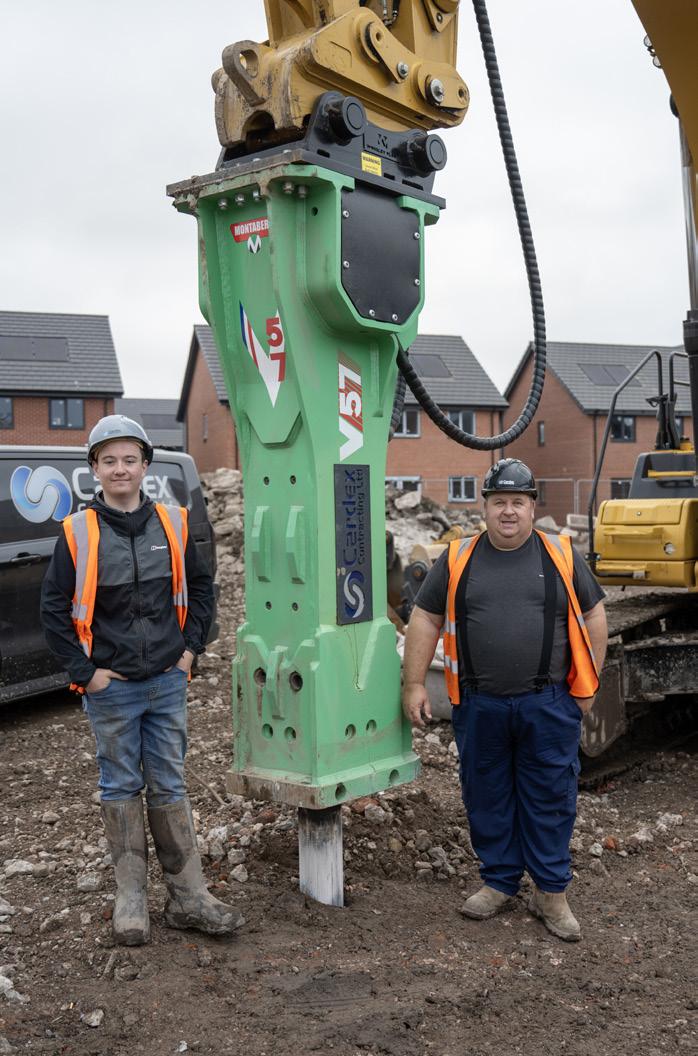
The Variable Energy range of breakers is amongst the latest generation of breakers designed by the French manufacturer to deliver superior breaking performance and reduced maintenance. Ross Quinn, Worsley’s Northern area salesman has recently delivered a V57 model to Leigh based civil engineering, demolition and remediation specialists Cardex Contracting Ltd.
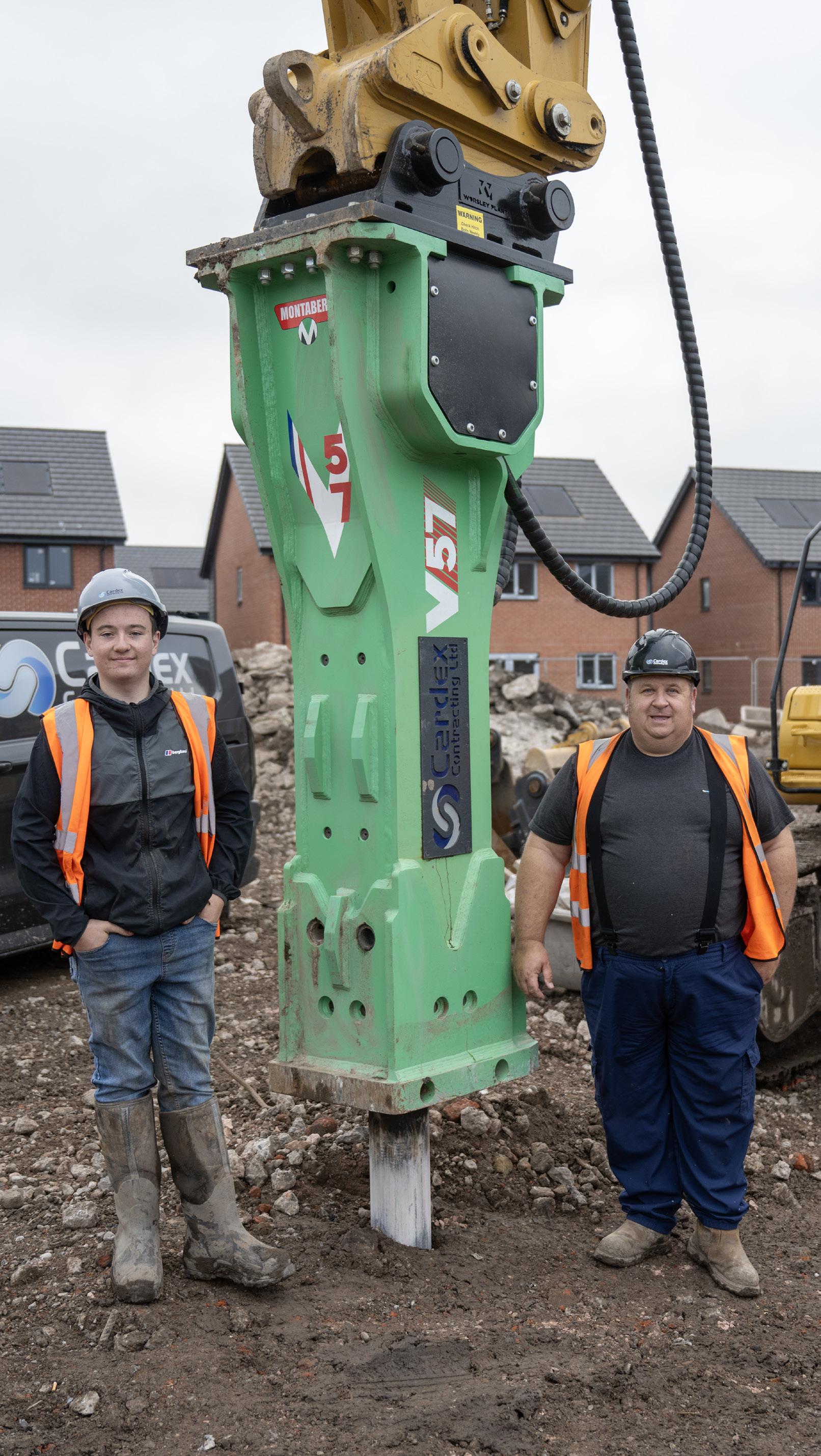
Cardex have been operating since the mid 1960’s and is now headed by third generation family member Will Mole. “We have been in the industry for as long as I can remember!” Will comments. “We have been family run throughout that time and have recently rebranded as Cardex as more of a representation to our family business as the name is made up from my son’s names Carter and Dexter.”
Working across the North West, the company quietly goes about their business working alongside long-term clients delivering regeneration packages on former industrial sites along with a range of other associated specialities. “The project we are currently on has been very good for us delivering three separate packages with the relevant main contractors for remediation and the ongoing construction works,” Will explains.
The former industrial site was littered with a range of below ground structures harking back to its former past. Ranging from brickwork to concrete, the below ground structures and cover slabs had been managed by a smaller breaker mounted on their CAT 320 excavator but it was the need to handle some heavier work to complete the job and with an eye on future projects, which saw Will take the plunge and purchase the Montabert.
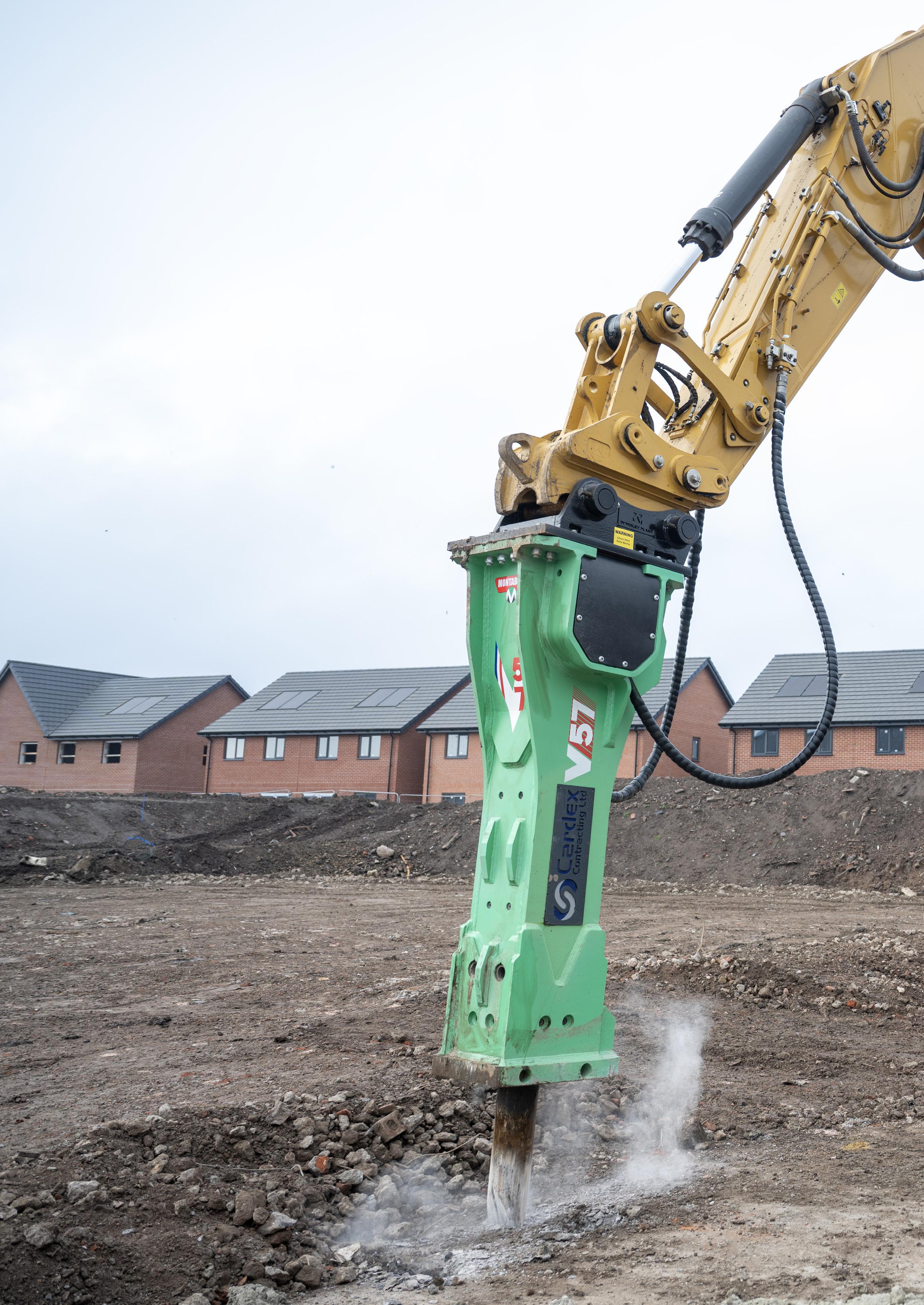
the company quietly goes about its business working alongside longterm clients delivering regeneration packages on former industrial sites
“We looked at the market for breakers and realised it was a very precarious one. You can go and buy cheap and risk breakages or not being able to source parts, or you can spend considerably more and get a breaker which will last, can be repaired and rebuilt and will do exactly what is required from it,” Will comments. “We don’t cut corners on any of our kit and make sure we are on top of the job whatever we are doing. We took a long look at what was out there and decided that the Montabert was the complete package for us. Added to the right product, was the fact that Worsley has a good reputation in the industry for not only delivering quality kit, but for their customer service too. We’re not a big company by any means, but they have looked after us extremely well.”
The V50 is the latest generation of breakers in Montabert’s long history. Built around a heavy-duty body, the V57 can automatically adjust its working frequency, through up to 15 different speeds, to improve productivity. Alternating in under a second, the breaker automatically adjusts the speed and power of each blow to match the material it is working on. This adjustment happens even if the breaker is set to minimal flow rates and is designed not only to protect the breaker from misfires, but to hugely increase the performance of the tool and reduce the fuel burned by the host machine.
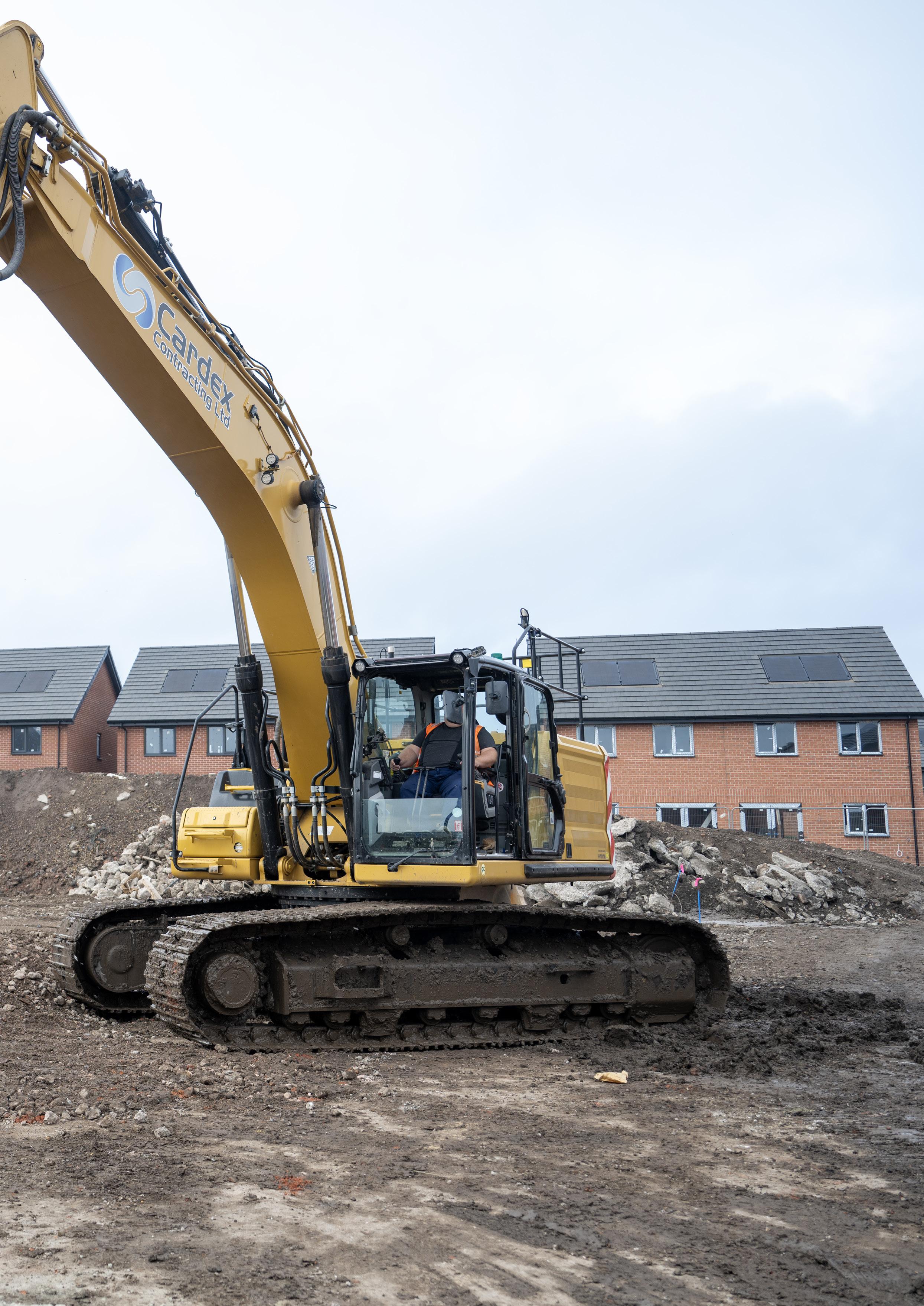
We took a long look at what was out there and decided that the Montabert was the complete package for us.
Additionally, the V57 offers protection against blank firing, automatic lubrication, an energy recovery system and easy maintenance, making it both simple and efficient to use. For anyone who has used a breaker for a long time, the V57 is equipped with anti-vibration suspensions and a pressure spike elimination system to reduce the impact on the machine.
Ross commented: “We have been getting good feedback from end users on the V range of breakers. Whilst they are in the top levels of purchase costs, users are reporting increased productivity which ultimately offsets any additional costs on purchase. We are also getting reports of lower downtime on the breakers which again leads to higher productivity, something which shouldn’t be overlooked for the sake of saving a few pounds initially.”
Will and his team are currently tackling the final stages of remediation works on this project and have matched the 3.5 tonne V57 to a CAT 336 excavator. The breaker will also be used on a new Hitachi ZX490-7 which has recently joined the fleet. The 38 tonne CAT excavator is ideally suited to carry the breaker and deliver the 165 bar of pressure and maximum of 320l per minute of oil flow required to operate it. With just a small section of concrete pad left to remove, Will jumps into the CAT to show us just what the breaker can do.
Whilst not the most difficult of material, the breaker quickly pops a series of holes into the material with the automatic frequency adjustment being very noticeable when standing within earshot of the breaker. As the point finds a harder spot the tool hits harder whilst on softer spots there is less of a thump but with the same result.
With their long pedigree in designing and manufacturing high quality breakers, Montabert have come up with a design offering users a more efficient and cost-effective solution to breaking up a variety of materials. While the overall design of the breakers have hardly changed over the decades, it’s what’s on the inside that counts.
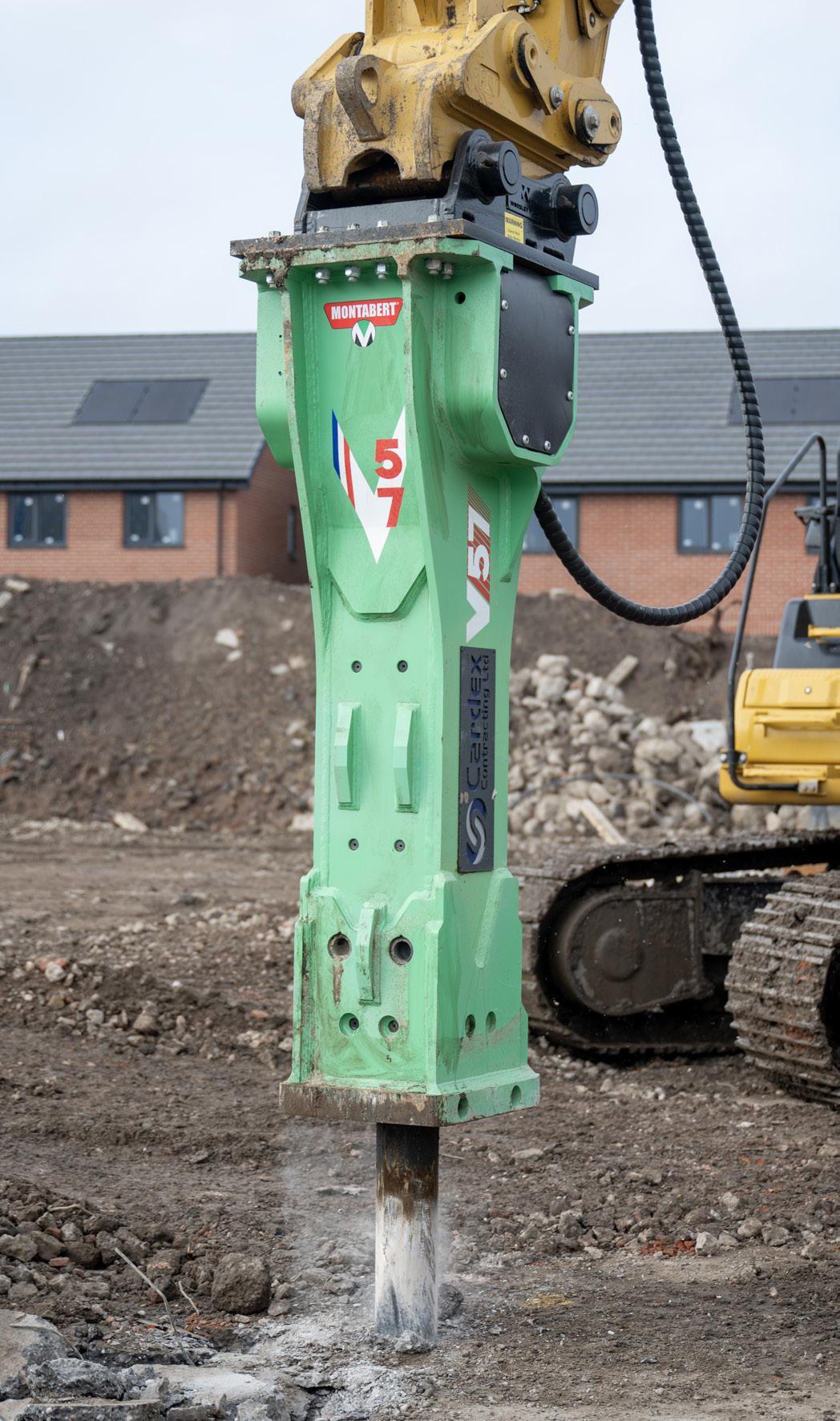
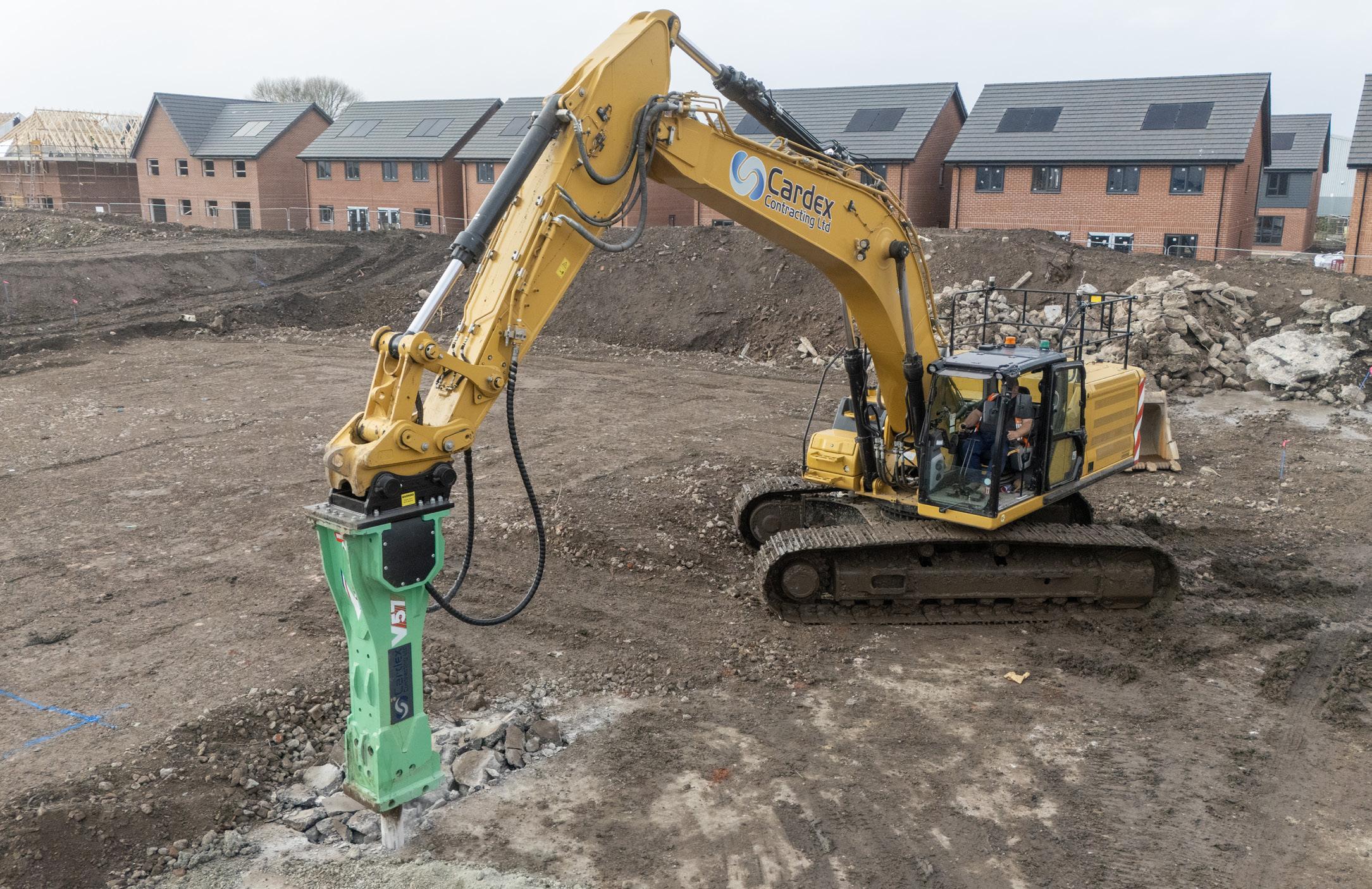
Remove DIRT & WATER in the same mobile application
Affordable and easy to change out replacement cartridges
Kind to the planet – as a natural, sustainable product
Save waste costs, replacement value and labour
Simple ‘plug and play’ application
Site permanently on a problematic machine or on a rotational cleanse across your fleet

Whether it be to tackle one off contamination issues, or as a permanent fix to heavy use equipment to protect pumps, valves & cylinders etc.. or as a rotational cleanse on off-hire equipment.
KLEENOIL offer a completely free trial at your site ; with before and after independent oil analysis.
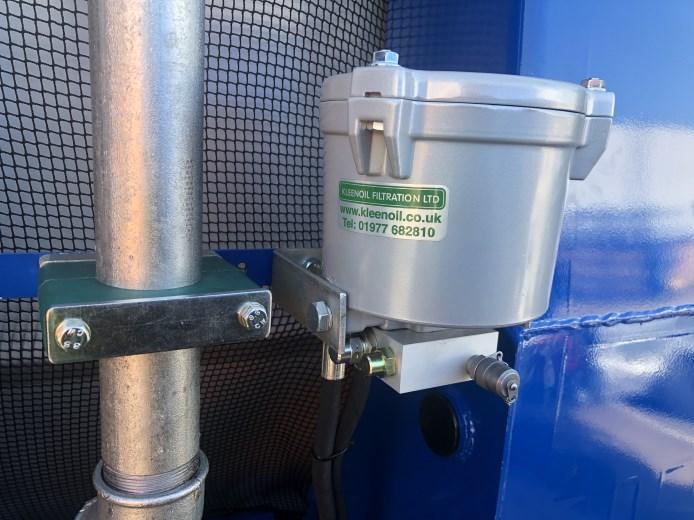
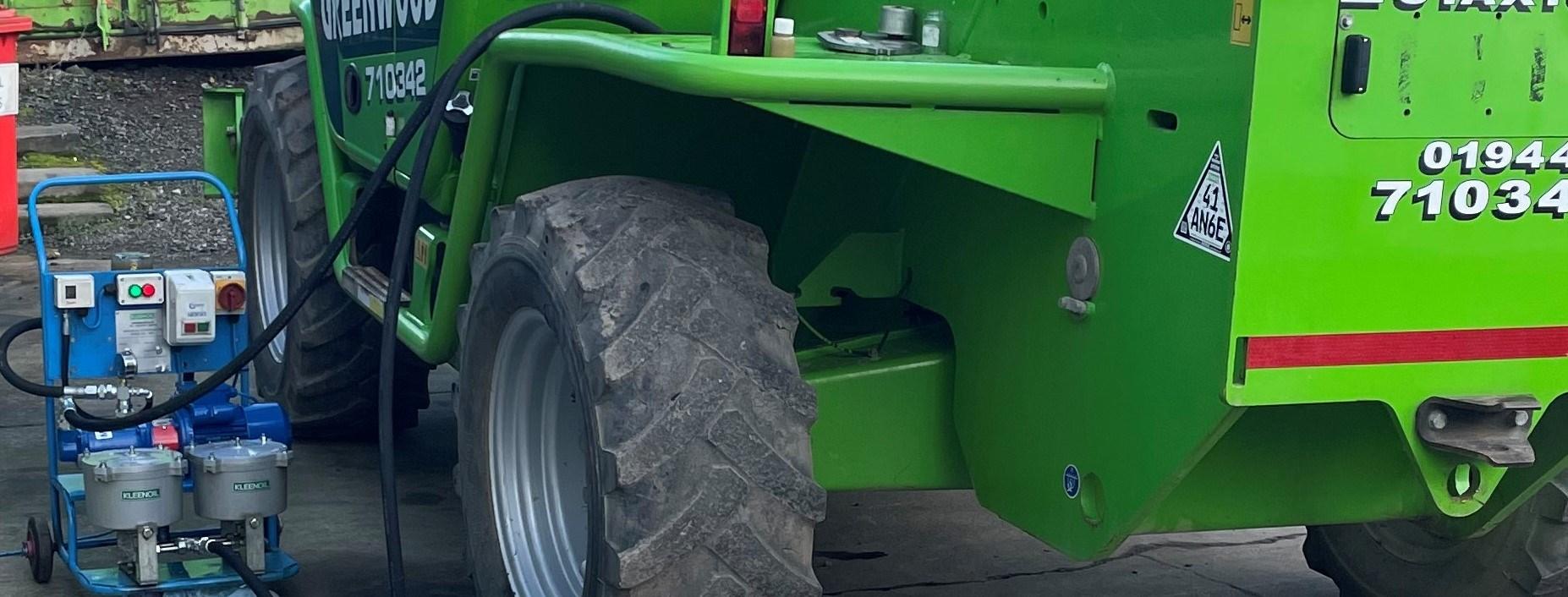
For more than a century, steelmaking has dominated the local culture, economy and skyline of all who live in and around Teesside. From what was once the steelmaking centre of the world, domestic heavy industries were supplied, and steel exports enabled the construction of vast engineering projects.
Yet in 2022, this remarkable story of prosperity and productivity came to end with the controlled demolition of the Redcar blast furnace, and a new story began as one of the largest regeneration projects in Europe commenced.

A brief history of steelmaking in Teesside
The foundations of Teesside’s steel industry can be traced back to the mid-19th century with the discovery of a 3 mile seam of ironstone under the Cleveland Hills. Mining began at the small coastal Yorkshire village of Skinningrove in 1848, and by the 1860s the area had rapidly been transformed into a vast network of mines, ironworks and steelworks, which sprawled down the banks of the River Tees.
In 1875, Dorman Long was formed in Middlesbrough and gradually consolidated iron and steel operations throughout Teesside. The firm brought together collieries, iron mines and furnaces to form an integrated model that grew beyond domestic heavy industry supplier, to major steel exporter and enabler of vast engineering projects, such as the Sydney Harbour Bridge and Auckland Harbour Bridge.
Following the Second World War, Dorman Long was drawn into the wider restructuring of Britain’s steel industry, becoming part of the newly formed British Steel Corporation in 1967.
State investment in the 1970s modernised Teesside’s steel industry, culminating in the construction of the state-of-theart Redcar blast furnace. Completed in 1979 as Europe’s second largest, it produced 3.6 million tonnes of iron annually and, together with its associated works, created one of the continent’s most advanced steelmaking complexes serving both domestic and global markets.
In 1988, British Steel was privatised, and later merged with Dutch firm Hoogovens in 1999 to form Corus Group. In 2007, Corus was itself taken over by Tata Steel, who operated through extreme financial difficulty until falling demand saw the company mothball the Redcar blast furnace by 2010.
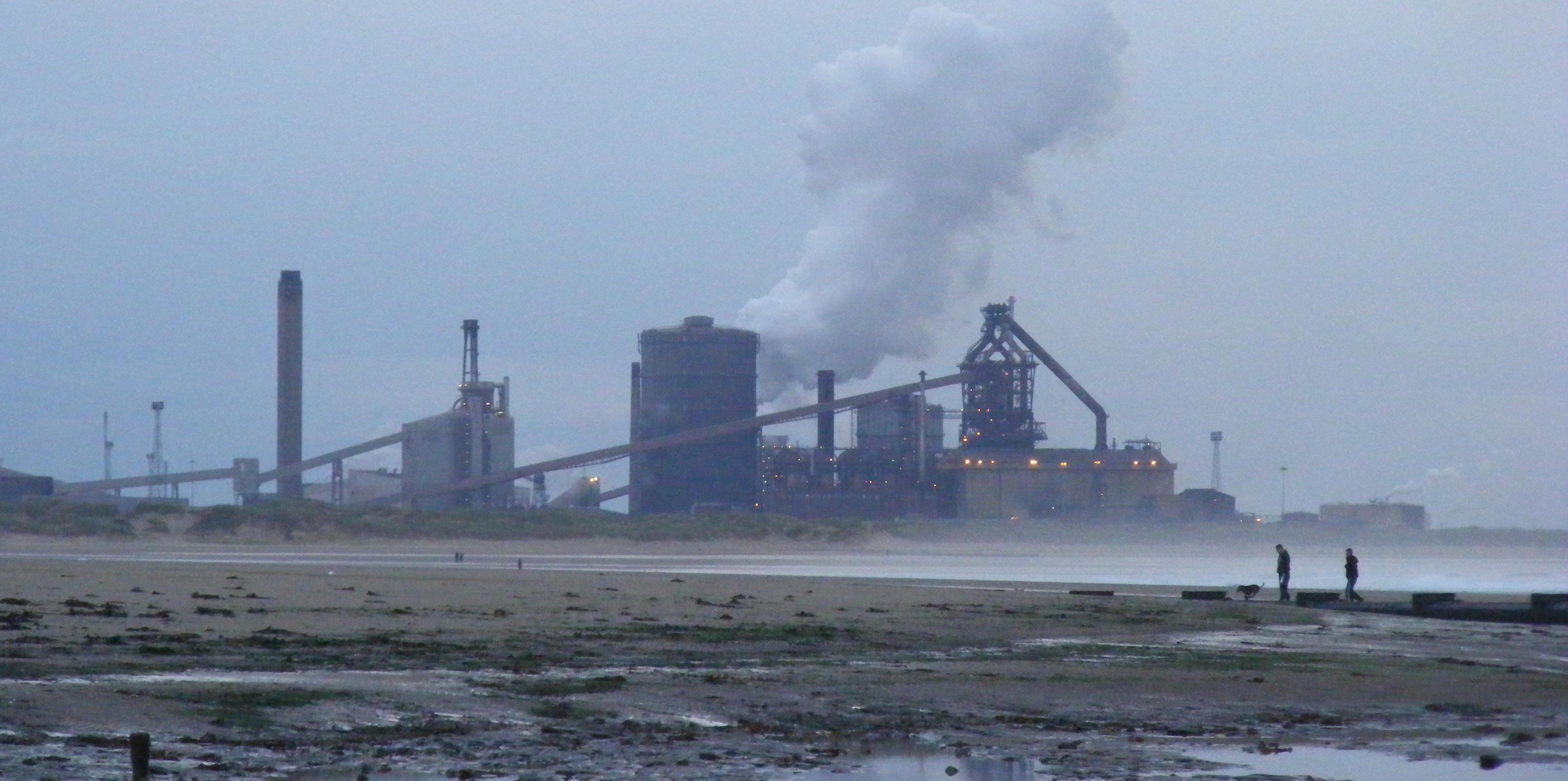
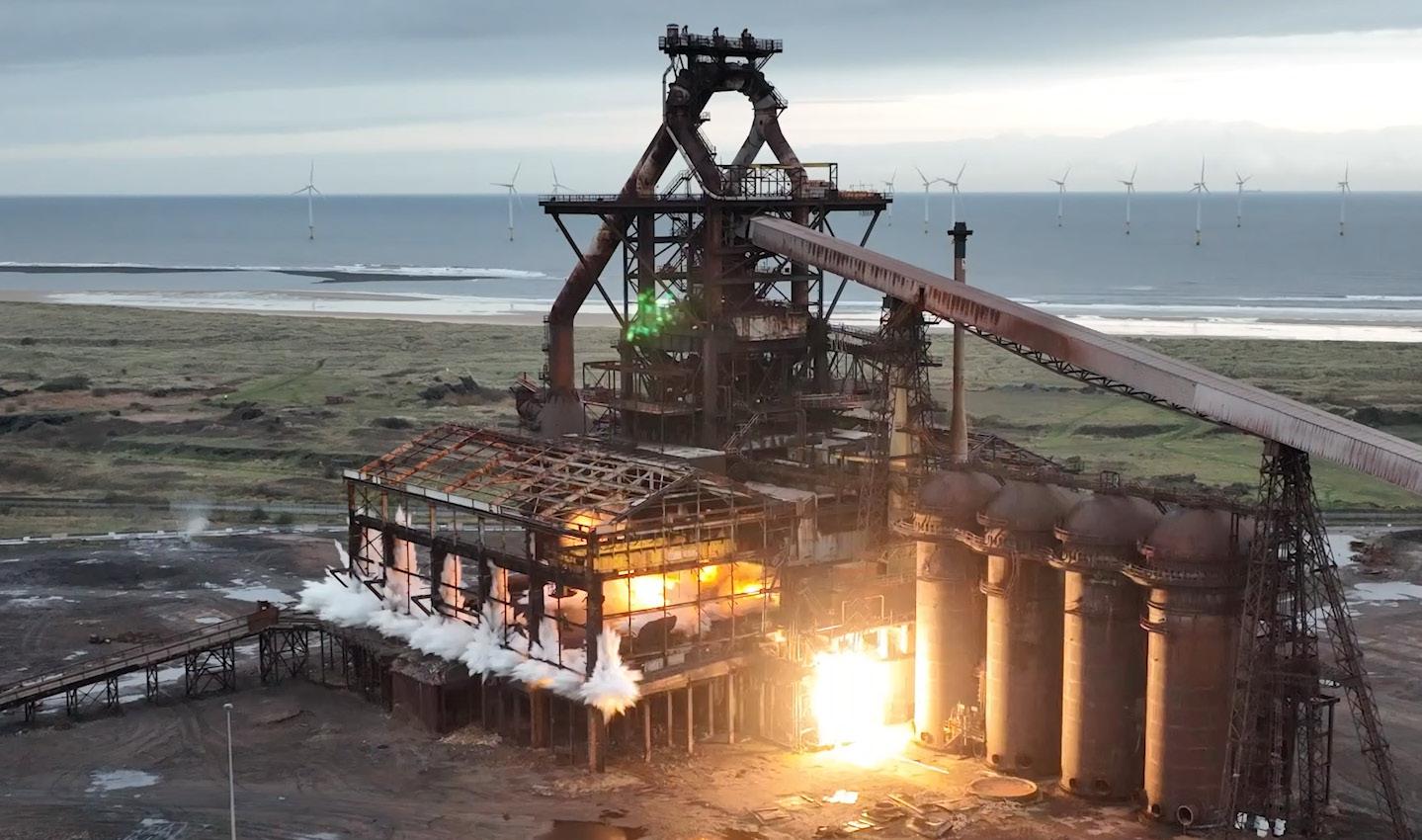
Thai-based SSI UK (Sahaviriya Steel Industries) briefly restarted the furnace in 2012, but mounting losses and global oversupply forced final closure in 2015.
On the 13th of August 2020, it was announced that the Redcar steelworks would be demolished and the 4,500 acre site would be redeveloped into the UK’s largest freeport.
Demolishing the Redcar steelworks proved to be a considerable engineering challenge.
The blast furnace itself was 365 feet tall, and weighed in excess of 100,000 tonnes. The connected coke ovens, power station, conveyors and stockhouses also consisted of millions of tonnes of steel and concrete, and all were heavily contaminated with asbestos and harmful byproducts from decades of steelmaking.
Internal stripping began in 2020 to remove asbestos containing materials, refractory linings and smaller components.
Structural assessments identified load-bearing frames, which were cut or pre-weakened to ensure a safe collapse. Explosive charges were drilled and placed over several weeks, with exclusion zones drawn across a 250 meter perimeter.
In June 2022, the coke ovens were the first major Redcar Steelworks structures to be demolished. Capable of producing 1.5 million tonnes of coke annually, their removal involved not just the towers themselves, but also the gas recovery systems and quench towers, all of which were heavily contaminated by decades of use.
The next structure to be removed was the Basic Oxygen Steelmaking plant, which refined molten iron from the blast furnace. Using 1.6 tonnes of explosives, it was demolished on the 1st October 2022 in the single largest explosive demolition operation to be carried out in the UK in 75 years.
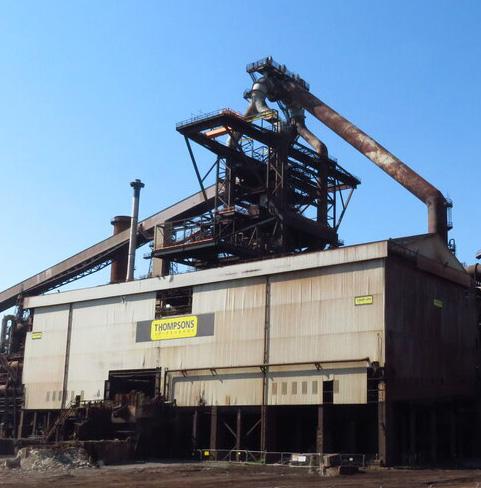
On the 1st November 2022, the iconic Redcar blast furnace was demolished with 175kg of explosives. In just six seconds, the structure folded in on itself, with the blast being heard over 20 miles away in Hartlepool.
The final demolition took place on the 29th of June 2023, and consisted of four controlled explosions to bring down the power station, its gas holder and chimney.
Prior to the detonation, the turbine hall and cooling systems had to be stripped of asbestos and PCB-laden equipment before the boiler houses were demolished.
The tall chimneys, which were some of the most visible landmarks on the Teesside skyline, were felled sequentially by precise charge placement to ensure they fell safely.
Decades of steelmaking had left structures, soil and groundwater heavily contaminated. Hydrocarbons, phenols, and heavy metals all required remediation throughout the project, becoming one of the UK’s largest land decontamination efforts.
In addition to specialist asbestos removal, various techniques including dry recovery, steaming, chemical treatment and foam blanketing were used to decontaminate structures, with the Redcar Coke Ovens By-Products Plant being a notable example of this. These methods reduced hazardous waste, and facilitated the safe and efficient recovery of over 98% of scrap steel, of which it is claimed over 400,000 tonnes were recovered.
Thousands of boreholes were drilled to assess pollution spread, and specialist contractors set up treatment plants to process contaminated soils. Up to five metres below ground was also excavated to address contamination and prepare a structurally suitable platform for future developments.
Demolition was only the first step of the vast Teesworks project. Launched in 2020, the project will see the largest brownfield site in Europe redeveloped into the Teessside Freeport, which will be the largest of its kind in the UK, and a fully serviced multi-sector industrial zone.
Plans for redevelopment are wide-ranging, and include:
● Clean energy and renewables: A focus on offshore wind manufacturing, carbon capture utilisation and storage (CCUS), and hydrogen production. The site has been earmarked for Net Zero Teesside, a major CCUS initiative backed by multinational energy companies.
● Port expansion: Teesworks incorporates South Bank Quay, a new £107 million heavy-lift quay to support wind turbine manufacturing and export.
● Industrial and logistics zones: Warehousing, distribution hubs and advanced manufacturing units are expected to cluster around the redeveloped deep-water port facilities.
● Job creation: Promoters claim the scheme could generate up to 20,000 jobs and billions in private investment over the next two decades.
While remediation efforts continue on some parcels of land, several projects have already broken ground, and SeAH Wind have commenced commercial production of windfarm monopiles at their new Teesside facility.
For many, the fall of the Redcar blast furnace was a deeply bittersweet moment. It represented more than the removal of structures, but also the erasure of generations of shared family experiences working at the vast steelworks complex.
However, from decades of uncertainty, repeated changes of ownership and the eventual abrupt collapse of the local steel industry, the Teesworks redevelopment project has broken Teesside free from its dependence on the turbulent global steel industry, and allowed it to build a brighter future for itself in modern heavy industry, logistics and manufacturing.
The redevelopment of the former Redcar site alone has generated thousands of jobs over the relatively short period of time, and looks set to usher in a new era of modern prosperity for one of the UK’s most important industrial centres.


Reduce your emissions by up to 90% with the UK’s largest solar lighting range

The Environmental Services & Solutions Expo (ESS Expo) returned to the NEC Birmingham on 17–18 September 2025 with its most ambitious edition yet.
Featuring an expanded floorplan, a richer content programme, and a powerful mix of established names, big brands, and specialist communities. The headline number tells its own story: 15,410 professionals attended across two days, making the 2025 edition a record-breaking turnout for the environmental services and sustainability industry. ESS Expo comprised seven sector-specific exhibitions, making it the largest and most comprehensive showcase of environmental services in the UK.
New to the ESS Family - and Already Making Waves Four strategic additions reshaped the show floor and content agenda:
• Water, Wastewater & Environmental Management Expo (WWEM) and Air Quality & Emissions Expo (AQE) joined the ESS fold for the first time, an integration into the existing water and air sections of the show, strengthening ESS’s credentials in air quality, wastewater, water management and environmental monitoring. Their arrival also ushered in a major new highlight: the Environmental Monitoring Awards, which took place on the evening of Day One at The Vox. The gala celebrated excellence across air and water quality monitoring and signalled ESS’s long-term commitment to the measurement and data disciplines that underpin policy, compliance, and investment.
• Complete Auto Recycling Show & Metal Recycling Event (CARS & MRE) made its ESS debut, bringing the end-of-life vehicle and auto-recycling community into the heart of the wider recycling and waste management ecosystem, running alongside the long-standing Resource & Waste Management Expo. The result was tangible crosspollination: auto recyclers toured energy tech, monitoring specialists sat in on metals sessions, and waste operators compared notes with dismantlers and ATFs on shared circularity challenges.

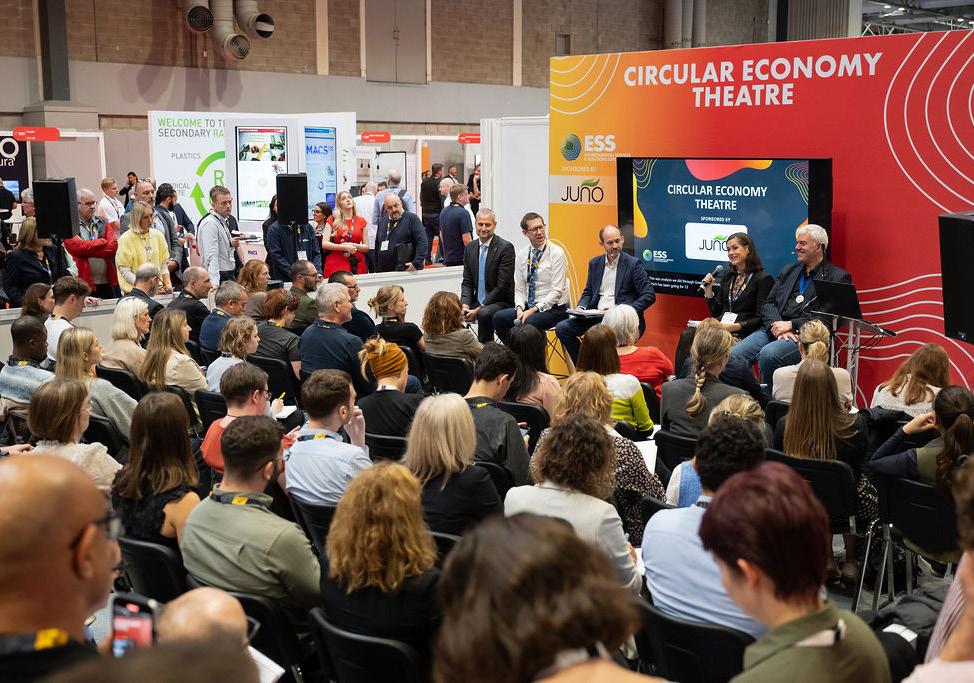
• Geotechnical Engineering & Operations Expo (GEO)born from response to surging demand for geotechnical engineering - debuted alongside its sister show, Contamination & Land Remediation Expo (CLR) , together forming the UK’s largest geotechnical and geoenvironmental gathering. Attendance reflected in the strong interest, attracting over 3,000 of the sector’s finest, with a buzzing keynote theatre that continuously spilled into the aisles.
Content That Met the Moment
Across packed theatres, the programme doubled down on pragmatic leadership, policy clarity, and applied technology. A few sessions captured the breadth and depth of the discussion:
• Great Presence Brings Great Responsibility: Delivering a Sporting Standard Towards Sustainability “The Red Way” (RWM Circular Economy Theatre) set an early tone. In a fireside format, Rishi Jain (Liverpool FC) - in conversation with Phil White (WSP) - reflected on embedding sustainability without compromising performance. The case study demonstrated how a global sports brand aligned initiatives with 16 of the 17 UN SDGs, translating scale into measurable community and climate outcomes.
• ELV: Toyota’s Learnings on our Journey Toward Circularity (ELV & Metals Recycling Theatre) saw Leon van der Merwe (Toyota Motor Europe) share practical lessons from Toyota’s circularity pathway, resonating strongly with dismantlers and recyclers navigating evolving compliance and market dynamics.
• Implementing Robust Renewable Systems: Ukraine Energy Case Study for Net Zero (EFD Keynote Stage) delivered by Alex Sobel MP, brought real-world grit to the Net Zero conversation. Examining microgrids in Merefa and
solar integration at Chervonohrad’s water utilities, Sobel illuminated how distributed resources, tools like REopt, and international collaboration create resilient pathways - even amid conflict.
• Representing the 50%: Women Leading Across Sustainability (Future Talent Hub – sponsored by Grundon) was a standout, chaired by Vicki Hughes (CIWM) with voices from SUEZ, Bristol Waste Company, CIWM, and Grundon. The panel moved beyond platitudes, focusing on the practical design of support, development, and visibility for women’s leadership at every career stage.
• The Big 5 and the Future of Collections (RWM Collections & Transport Stage) united leaders from LARAC, FCC, Grundon, SUEZ, BIFFA, and Veolia to unpack how plastics, paper, metals, glass, and organics will shape collection models in a tightening policy and performance landscape. The message: collaboration and data-rich operations will define the next decade.
• The Future of Monitoring in the Water Industry (WWEM Keynote Theatre) featured Judy Procter (Environment Agency) setting out a future-ready monitoring vision -integrating new sensing technologies, smarter regulatory frameworks, and cross-utility collaboration to protect the natural environment while boosting system resilience.
• Circular Economy Taskforce: Driving Real-World Change (RWM Circular Economy Theatre) convened ESA, Green Alliance, CIWM/CEI, SUEZ, and ReLondon to translate strategic aims into procurement, design, and secondary market interventions. Attendees left with the kinds of actionable levers - EPR nuance, secondary materials, construction pilots - that move the sustainability needle inside organisations.
• Best Practices in Reducing Costs, Simplifying Deployment, and Boosting Efficiency (EFD Keynote Stage) assembled practitioners from NZTC, Veolia, and Hitachi Energy. With modularity, digital twins, and procurement optimisation in focus, the panel distilled a playbook for delivering capital projects faster, smarter, and at lower risk.
• The Future of Green Skills and Creating Young Talent Schemes with the Environment Agency (Future Talent Hub – sponsored by Grundon) addressed head-on the sector’s skills pipeline. From school leavers to careerswitchers, the sessions outlined concrete steps to match training capacity with the UK’s accelerating circular and net-zero agendas.
• In the Summit Theatre, Michaela Strachan’s Extreme Conservation Conversations brought human urgency to biodiversity loss and climate impacts, while Emission Trading Scheme: The Complete Stakeholder Perspective mapped the opportunities and implications of ETS as it touches local government, industry, and waste operations.
• Decarbonising at Scale: Systems-Level Solutions for Net Zero rounded out the Summit conversations with The Carbon Trust, ESA, Environment Agency, SBTi, and Mike Reader MP, offering a rare, truly cross-sector vantage point - from targets to tooling.
• On the GEO Keynote Stage, Managing Geotechnical Risk in UK Infrastructure Delivery drew a capacity crowd. Simon Casey (HS2 Ltd) translated standards like CD 622 and lessons learned into practical risk governance - ground investigation discipline, collaborative design, and costcontrol strategies that resonate far beyond rail.
A Show Floor with Real Commercial Gravity ESS 2025 wasn’t just about the theatres. The exhibition halls were stacked with market leaders and innovators across the seven co-located events. Among the names anchoring the show were Finning CAT, Grundon, RECOUP, Renault Trucks, Pellenc ST, Valpak, Enfinium, Future Biogas, Geminor, Valmet, Acoem, Gasmet Technologies, ENVEA, Aquamatic, Haldo, CIRIA/Susdrain, and many more - alongside Environment Agency, whose presence as Lead Partner gave attendees direct access to policy guidance and compliance clarity.
Energy, Fuels & Decarbonisation Expo (EFD) sharpened the spotlight on clean energy, alternative fuels, and large-scale decarbonisation strategies. Exhibitors such as Enfinium, Future Biogas, Geminor, Valmet, and Wastewater Fuels brought solutions for hydrogen, bioenergy, and carbon capture - while sessions highlighted policy frameworks and scaling strategies critical to meeting net-zero targets.
On the auto and metals side, CARS & MRE’s dedicated zone, skills lab sessions, and live demos brought a hands-on edge to conversations about ELV processing, battery recovery, dismantling safety, and the evolving insurance interfacemirroring the sector’s rapid shift from theory to industrialised practice. The interplay between CARS & MRE and the wider ESS ecosystem - energy, monitoring, waste, and logisticsfelt particularly productive this year.
Meanwhile, the arrival of WWEM & AQE not only broadened the technology landscape (from stack emissions to real-time network monitoring and SuDS) but also tightened the loop between measurement and action. Exhibitors and buyers repeatedly noted how decisions made in the theatres could be validated on the stands in minutes - accelerating procurement conversations that might otherwise take months.
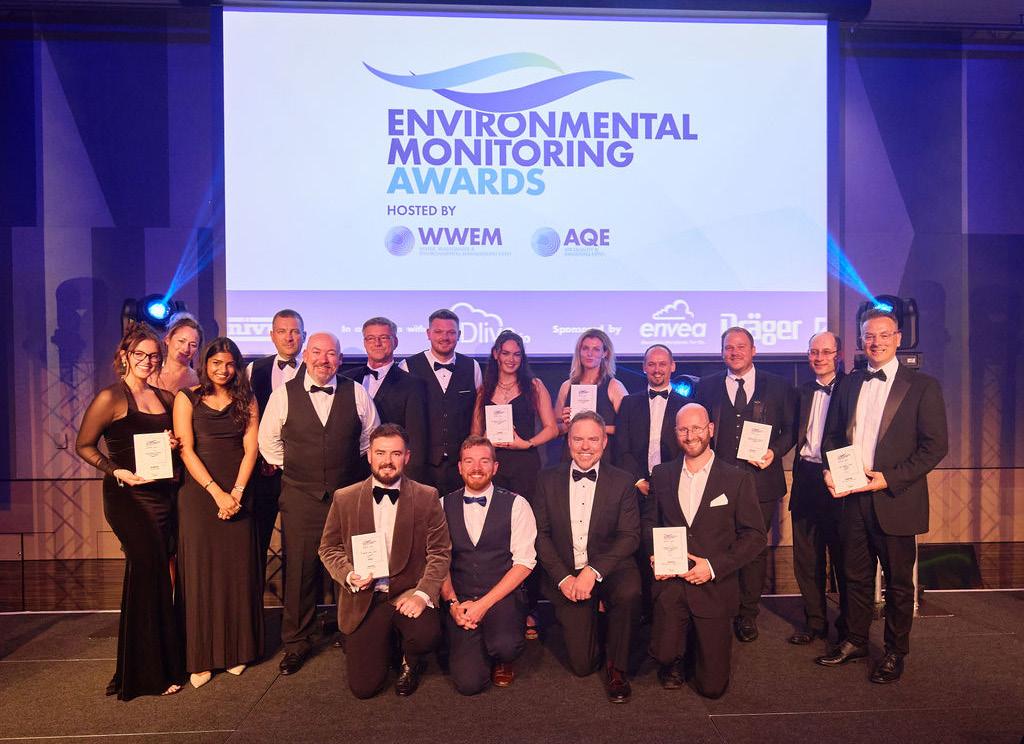
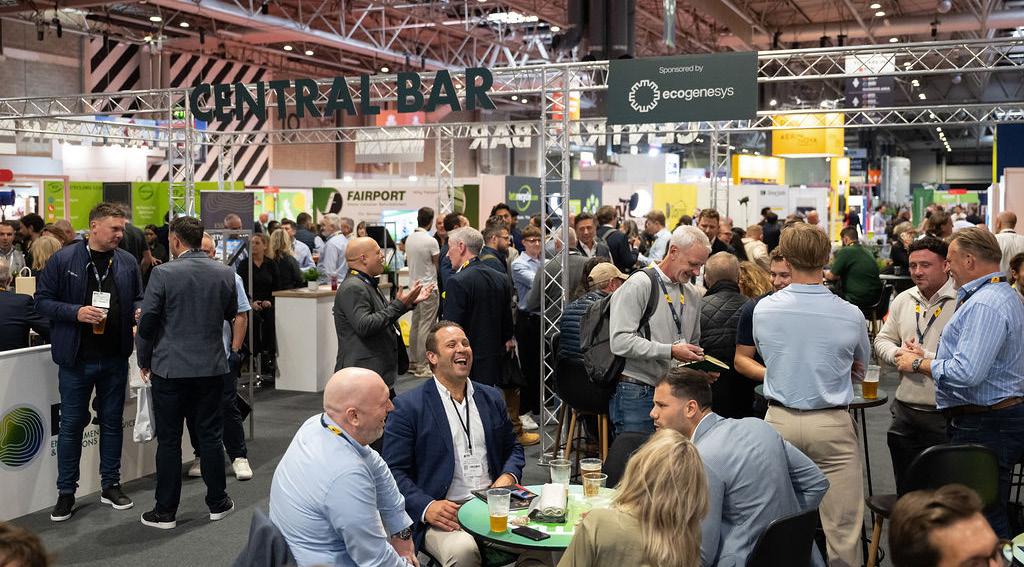
Beyond content and commerce, ESS 2025 leaned into the role it plays as a platform for recognition and community-building. The Environmental Monitoring Awards provided a flagship moment for the combined WWEM & AQE communities. Across the show, initiatives like 35 Under 35 and The Environment 100 highlighted both emerging talent and established leadership - timely, given the sector’s acute need to grow capability at pace.
Networking spaces - from the buzzing ESS Central Bar conversations to the renowned Inn on the Green - kept the energy high between sessions and created ample room for deal-making and knowledge exchange. The consensus on the show floor: ESS has established itself as the ultimate platform to do business, access cutting-edge insights, and explore worldclass products and services - delivered on a scale and breadth unmatched by any other environmental trade show in the UK.
Regulation is tightening. Capital is increasingly climateconditioned. Technology cycles are compressing. Against that backdrop, ESS 2025 offered what the market most needs: scale (15,410 attendees), specialism (seven co-located shows), and substance (policy-literate, practitioner-led content). By all accounts, ESS 2025 was a two-day snapshot of an industry moving from ambition to execution.
Be Part of the Next Chapter ESS returns to the NEC Birmingham on 16–17 September 2026. Register your interest now for ESS Expo 2026 to secure updates, early access to the programme, and priority networking opportunities. Two days, seven co-located shows, one cross-sector platform to accelerate your environmental strategy - see you next September.
www.ess-expo.co.uk

Holcim UK has made a major investment in a construction demolition materials (CDM) Recycling Centre in Birmingham, reinforcing its commitment to leading the development of circularity in the construction industry.
The company has transformed the four-and-a-half-acre site at 253 Bordesley Green Road, formerly occupied by a scrap metal company, into a key component of its construction demolition materials (CDM) recycling and processing network in the region. The site will operate under Stoke-on-Trentbased Holcim UK member company Land Recovery.
Leased in July last year, the Birmingham site has undergone extensive preparation. Now fully operational, it is strategically located in the heart of the UK’s second city, close to major redevelopment zones such as Smithfield, Digbeth and the Birmingham Sports Quarter.
The site is equipped to receive and process up to 250,000 tonnes of material annually, including asphalt planings (RAP), concrete waste, mixed hardcore, brick, and rubble. All materials are crushed, sized, screened and processed on-site. Recycled asphalt is returned to Holcim’s Express Asphalt plant, while recycled concrete feeds into the company’s readymix concrete (RMX) operations.
Additional aggregate products are also made available for bulk or bagged collections for the local market –ensuring 100% recycled CDM materials are reintegrated into the construction supply chain.
Operations manager for construction demolition waste at the Birmingham site, Karolina Knosalla, said: “Birmingham is the next big urban mine. This facility is a long-term strategic investment for Holcim UK, with a 25-year lease that underscores our commitment to supporting the city’s transformation.
Our goal is to make this Birmingham’s leading materials recycling centre. We’re proud to be driving the circular economy forward – right here in the heart of the Midlands.”
Holcim UK is actively engaging with contractors and demolition companies across the region to support regeneration in the West Midlands with sustainable, locally sourced materials. The company is also pursuing ECOCycle verification to further validate its environmental performance.
The investment forms part of Holcim UK’s strategy to make sustainable construction a reality in the UK, prioritising decarbonisation, circularity, nature and innovation to make a positive impact to the places and people.
As the construction industry continues to grow with ambitious government targets, the role of recycled materials in building products will become even more vital to delivering sustainable buildings.
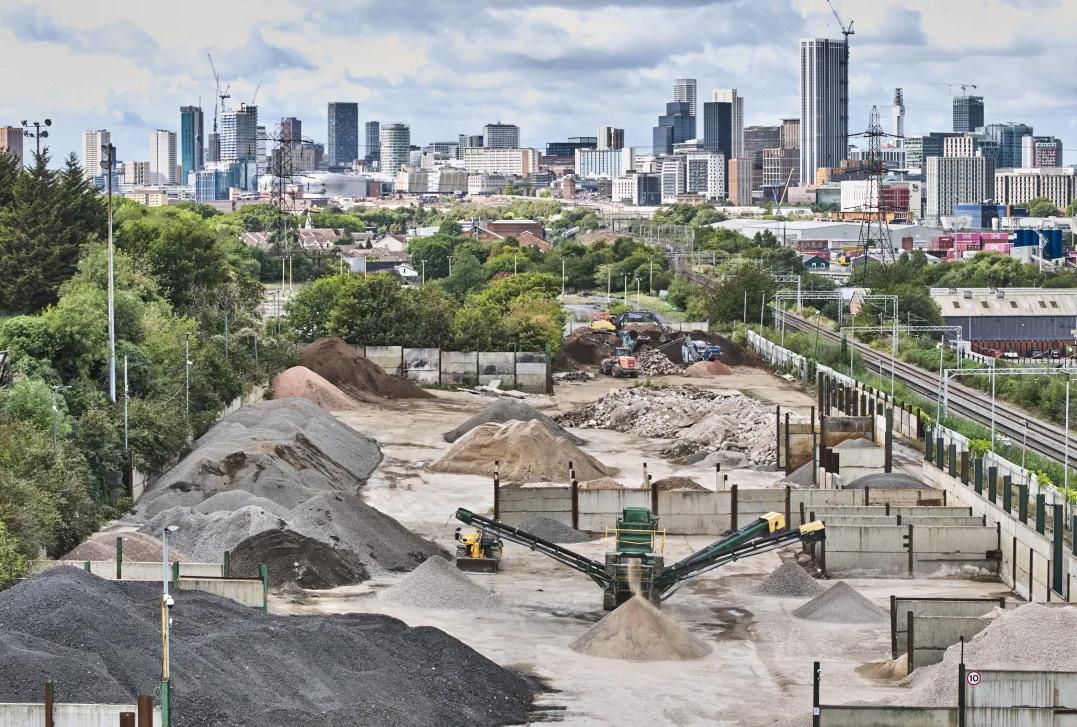
The new site will form a central part of Holcim UK meeting its ambitious targets for growing the use of recycled materials in its supply chain.
Kaziwe Kaulule, Managing Director of Holcim UK’s Aggregates Division, explains: “Sustainability is a key market driver and growth lever for us. Central to this will be a focus on circularity, and to drive forward growth we are targeting 20% of our products made from recycled materials by 2030. This new Land Recovery recycling hub is a huge step forward in helping us reach our ambitious targets and driving forward a sustainable, circular economy in the West Midlands.
“Reducing waste to landfill, promoting water reuse, preserving natural aggregate sources, and integrating more renewable energy generation throughout our operations are some of the key drivers of the circular economy. This investment underscores our commitment to all of these factors.”
Find out more:
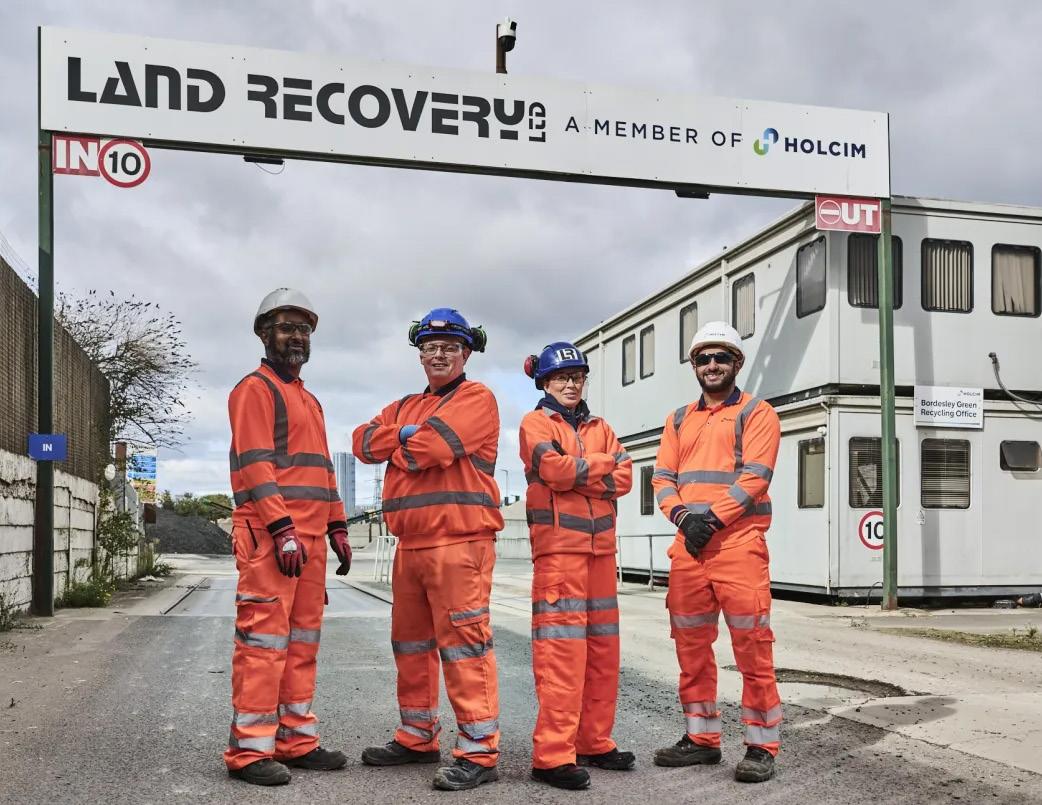

24/7 FREE AND CONFIDENTIAL SUPPORT

EMOTIONAL WELLBEING FINANCIAL WELLBEING
MENTAL HEALTH
RELATIONSHIPS
LONELINESS
TRAUMA SUPPORT BULLYING
LOSS & BEREAVEMENT
SUICIDAL THOUGHTS
PHYSICAL WELLBEING
ILLNESS
INJURIES
ADDICTIONS
SLEEP
DIET & NUTRITION
EXERCISE
HORMONE SUPPORT
FINANCIAL SUPPORT BENEFIT ENTITLEMENT BUDGETING DEBT MANAGEMENT
TAX & CIS
LEGAL ADVICE
TRAINING & CSCS FEES

In the demolition and construction sectors, sustainability is no longer just a buzzword — it’s a responsibility. The industry is under growing pressure to reduce emissions, cut waste, and adopt greener practices across every stage of operation. One often-overlooked opportunity lies not in machinery replacement or electrification, but in something far more fundamental: how we manage and maintain the oil and fuel that power our equipment.
KLEENOIL Filtration has long championed the belief that true sustainability starts with efficiency. Every litre of oil saved, every engine preserved, and every hydraulic system kept clean represents not only financial savings but a measurable reduction in carbon output. By extending the service life of oils and fuels, KLEENOIL systems enable demolition and plant operators to cut both costs and emissions — without compromising performance.
In high-duty demolition environments, machinery works hard — and the oils within those engines, gearboxes, and hydraulic systems work even harder. Traditionally, frequent oil changes have been accepted as routine maintenance. Yet every oil change brings with it new production, transportation, packaging, and disposal — all of which carry a carbon burden.
KLEENOIL’s bypass filtration systems are engineered to remove contaminants, moisture, and sludge, ensuring oils stay cleaner for longer. This not only extends oil change intervals but helps preserve component integrity, reducing wear and avoiding unnecessary rebuilds. Fewer oil changes mean less waste oil to handle, less downtime, and a tangible drop in environmental impact.
Demolition fleets depend on diesel. But water and microbial contamination in bulk fuel tanks can severely degrade efficiency, leading to incomplete combustion and higher emissions.
KLEENOIL’s fuel-cleaning and ELAIS systems maintain diesel in pristine condition — clean, dry, and stable. The result is improved engine efficiency, fewer emissions, and more reliable machinery performance on every job.
For contractors striving to demonstrate environmental responsibility under new sustainability frameworks, adopting KLEENOIL systems delivers immediate, measurable results.
Each extended oil drain interval equates to less crude oil refined, less energy consumed, and fewer CO₂ emissions released. It’s a simple, proven step toward greener operations — not through marketing, but through measurable performance gains.
By reducing oil and fuel waste, demolition firms can achieve a meaningful reduction in their carbon footprint, while also improving operational reliability and cutting maintenance costs. Sustainability isn’t about compromise — it’s about doing more with less.
KLEENOIL technology proves that small changes in maintenance can drive big environmental results. For an industry built on breaking things down, this is one innovation that helps build a cleaner, greener future.

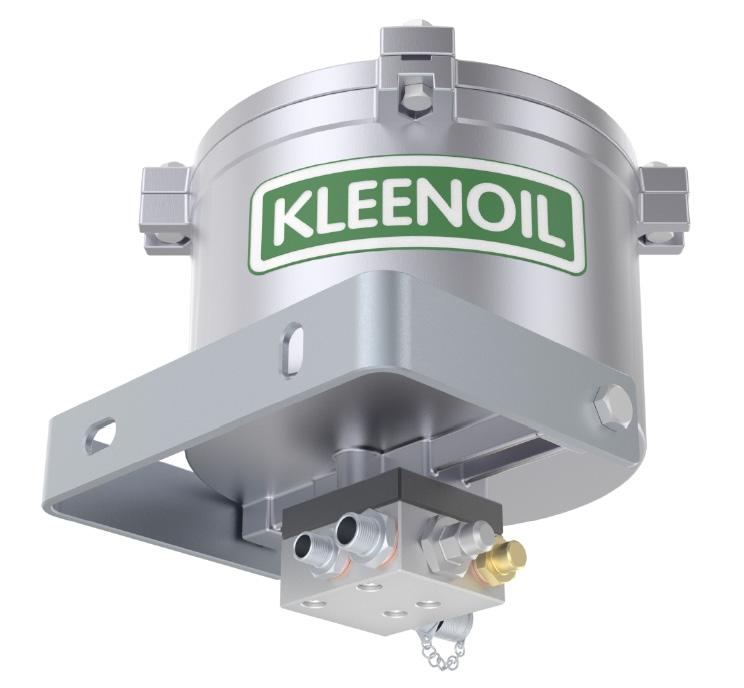
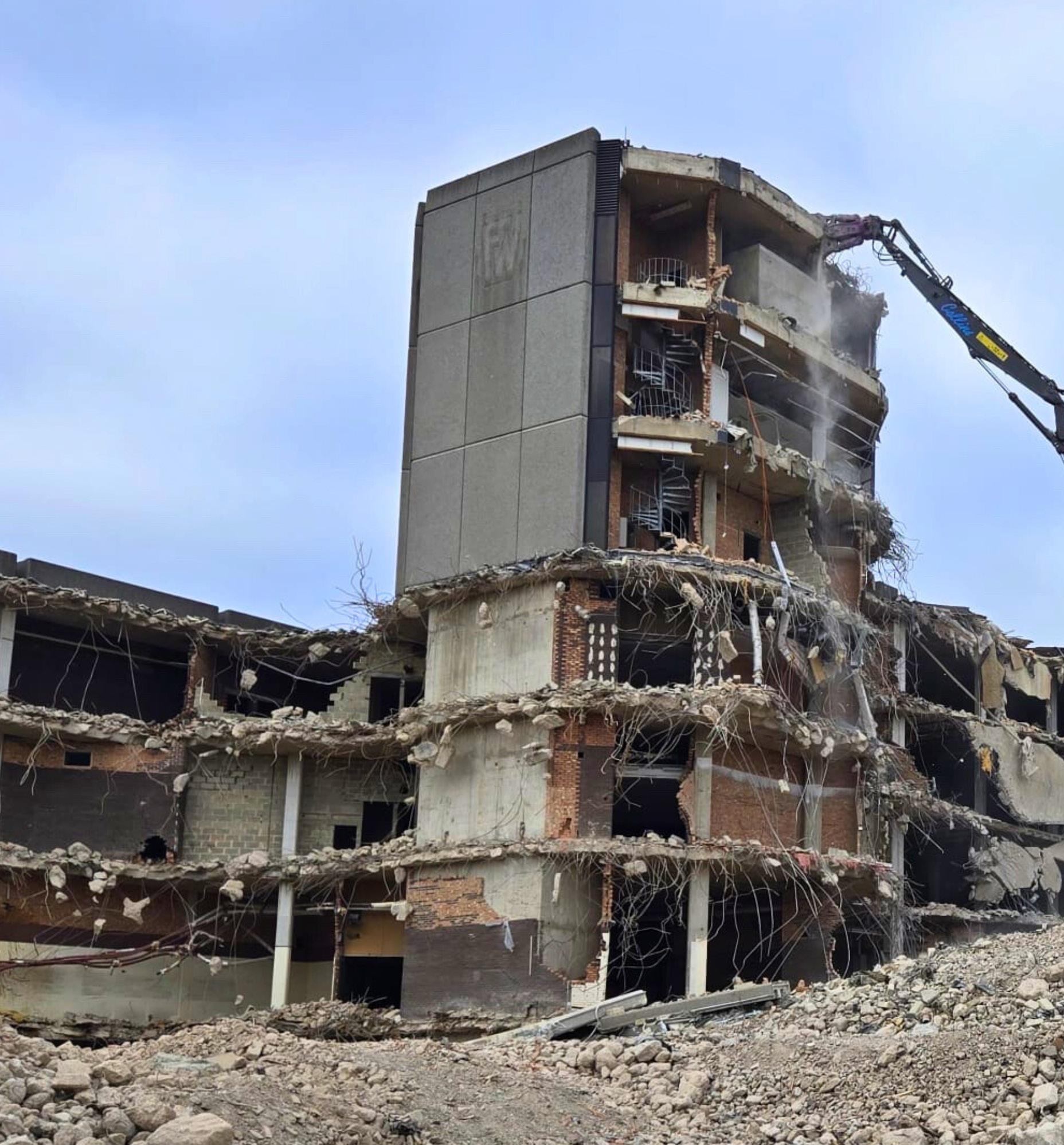
Britain’s demolition sector is valued at £1.3 billion and has a CAGR of almost 5%. Despite this growth, downtime remains a major concern, costing contractors time and money. That’s why reliable, efficient and safe construction machinery makes all the difference.
Services, Machinery and Trucks Great Britain established itself as a trusted partner for contractors, supplying advanced equipment to companies like Collins Demolition, among others,
enabling increases in performance, safety and innovation. From high-reach excavators to crushers and screeners, SMT GB supports operators across the country with machines that help projects run smoothly and efficiently. The recent acquisition of AGGPRO further expands their offering, providing a complete suite of solutions for demolition and material processing under one roof.
Collins Demolition Receives the UK’s First Volvo EC500HR Excavator When it comes to efficiency, few
companies embody progress in demolition as clearly as Collins Demolition. Their latest machinery addition, the Volvo EC500HR, represents another major step forward. Supplied by SMT GB, this high-reach demolition excavator replaces the company’s trusted EC380HR, which had served them well for around three years. The new EC500HR delivers enhanced efficiency, increased reach and an improved operator environment, marking a natural evolution for Collins’ expanding fleet.
With a reach of up to 28 metres without additional extensions, the EC500HR stands among the most sophisticated high-reach excavators in the UK today, second only to the EC750HR.
Collins Demolition was the first company in the UK to take delivery of this model following its launch earlier this year, and they wasted no time putting it to work. The machine made its debut on a major project in Reading, where it was tasked with dismantling a former council building.
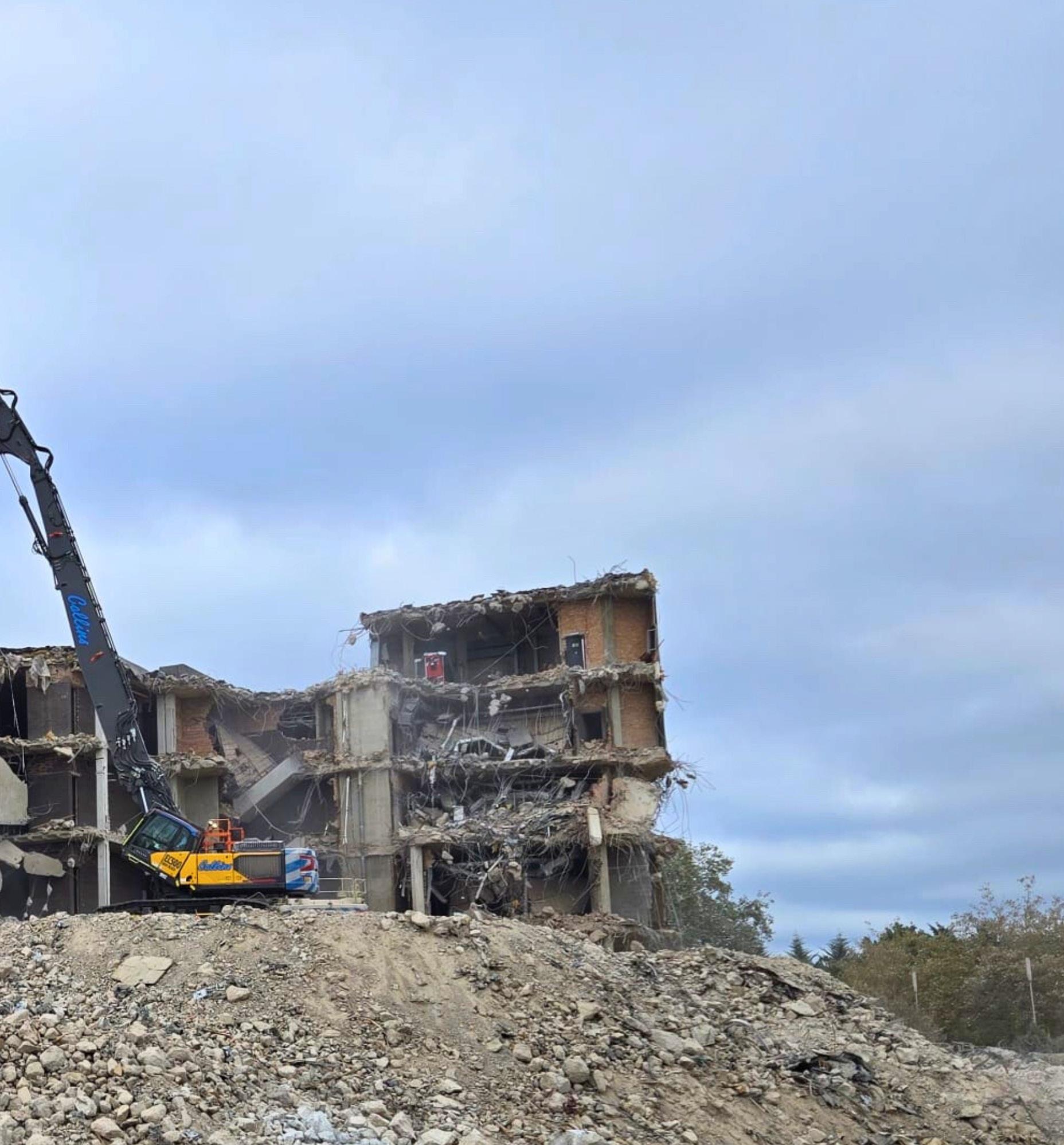
AGGPRO joins SMT GB to deliver end-to-end demolition solutions
In 2024, SMT GB took a decisive step in expanding its demolition and recycling offering through the acquisition of AGGPRO, a UK-based leader in crushing, screening, washing, recycling and blending solutions. This strategic move brings together the engineering excellence of Volvo Construction Equipment with the proven performance of AGGPRO’s product portfolio, including world-renowned brands such as McCloskey International and GIPO.
True to Collins’ style, the EC500HR is finished in the company’s signature blue livery with distinctive chevron branding, making it instantly recognisable on-site. The machine’s arrival also represents the continuation of a strong partnership between Collins Demolition and SMT.
“Our relationship with Collins goes back a long way and it’s one I’m incredibly proud of. They’ve always been forward thinking and the EC500HR is the perfect example of that. Watching it go straight
to work on the Reading project is really exciting. It’s great to see the machine doing exactly what it was built for in the hands of people who know how to get the very best out of it,” comments Jay Fisher, Area Sales Manager at SMT GB.
The EC500HR not only strengthens Collins’ operational capability but also demonstrates the shared values that underpin the company’s partnership with SMT: innovation, reliability and a constant drive for improvement.
AGGPRO’s extensive experience and commitment to service have long made it a trusted partner for demolition and materials processing professionals. AGGPRO recently supplied a highperformance GIPO P131 Kombi Impact Crusher to Brocklebank & Co Demolition Ltd. This demolition-specification crusher replaced several units that no longer met the site’s efficiency and production goals. Finished in Brocklebank’s distinctive red and blue, it features a 3.5-metre two deck vibrating pre-screen and a unique in-line magnet
designed to remove rebar with precision and speed.
Monk Plant Hire, one of East Anglia’s largest users of McCloskey equipment, recently attended SMT GB’s ‘We Are SMT’ training and open day event. Following the visit, they acquired a McCloskey I3CR Impact Crusher from AGGPRO to enhance their WRAP protocol and asphalt recycling operations. AGGPRO salesman John McArdle, who has supported the company for 18 months, expertly guided
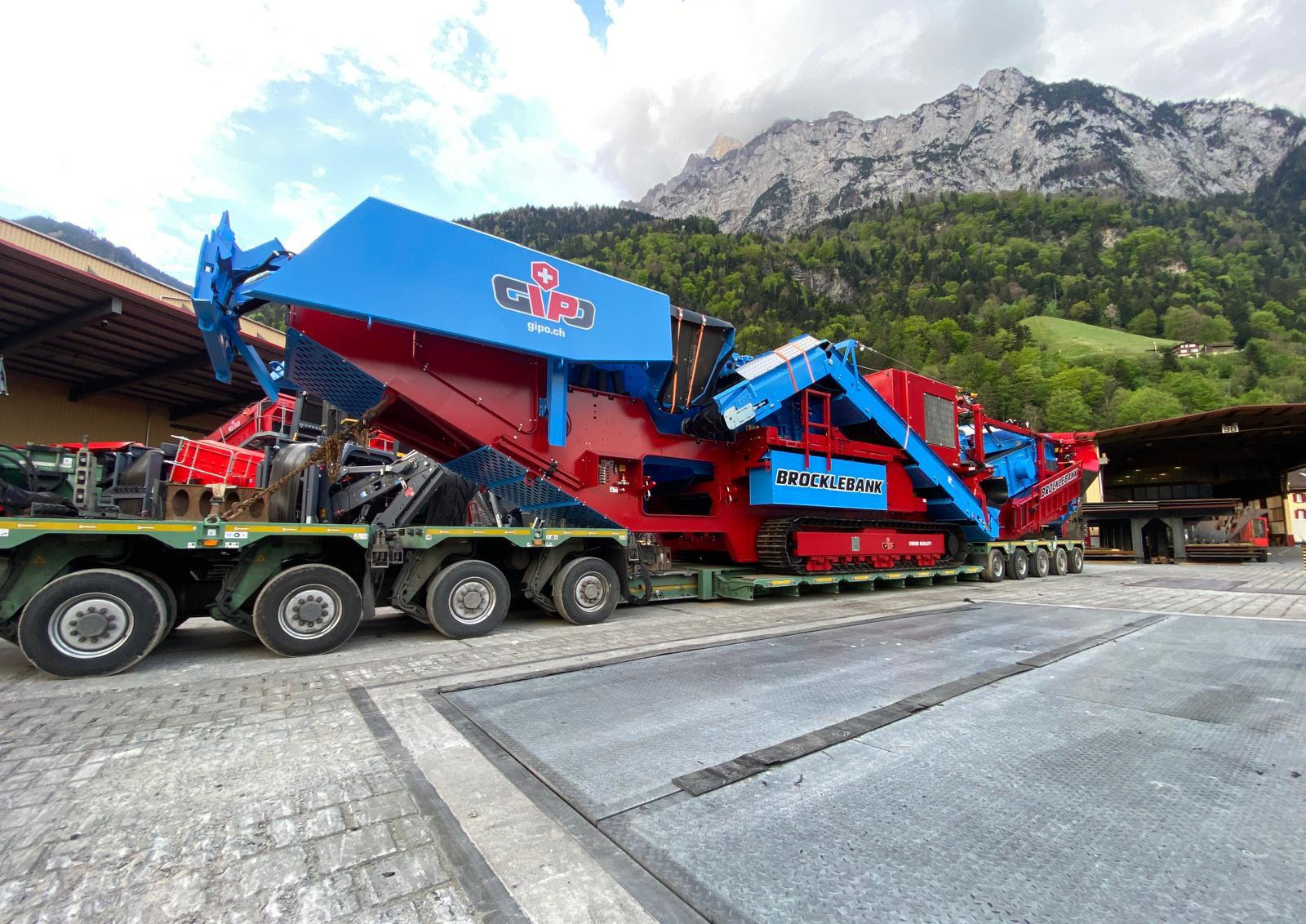
the purchase, reflecting the trust and dependable service Monk Plant Hire has enjoyed throughout their three-year partnership with AGGPRO.
“Our customers love working with us because we do what we say we’re going to do and because of our leading range of equipment, highlighting the strong customer focus behind these successful collaborations,” said John McArdle, AGGPRO salesman.
Through these partnerships, the integration of AGGPRO strengthens SMT GB’s position as a one-stop provider for demolition and materials processing, offering end-to-end solutions that combine equipment, expertise and aftersales support.
AGGPRO’s partnership with McCloskey International also plays a key role in SMT GB’s ability to offer complete solutions for demolition and material processing. With over 40 years of experience, McCloskey has built a reputation for reliable, high-performance crushers, screeners, stackers and trommels.
Charlie Eastwood of AGGPRO, who has been with the company for more than 18 years, reflects on the impact of the partnership: “Working with
McCloskey has allowed us to provide our customers with innovative equipment and consistent support, helping them get the best out of every project. This combination of proven machinery and dependable service ensures that SMT GB can deliver solutions that do more than just move materials, they help operators work smarter, safer and more productively across all types of demolition and recycling projects.”
As the UK demolition industry evolves faster than ever, projects are becoming larger, more complex and increasingly focused on efficiency, safety and sustainability. As a result, contractors now need machinery and solutions that can keep pace with these demands, from dismantling high-rise buildings to processing vast volumes of material on site.
SMT GB, strengthened by the addition of AGGPRO and supported by McCloskey’s proven machinery, is helping to shape this new era. By offering a complete portfolio of equipment, expert guidance and reliable service, SMT GB enables contractors to tackle every challenge with confidence, working smarter and more productively while staying at the forefront of innovation in demolition and recycling.
About SMT Great Britain and AGGPRO
SMT Great Britain, exclusive distributor of Volvo Construction Equipment, Dynapac and K-Tec Earthmover products, provides a nationwide network of service centres, dedicated support teams and a suite of digital solutions to help customers maximise performance, efficiency and long-term value. In 2024, SMT GB expanded its capabilities through the acquisition of AGGPRO, a UK-based company that has been supplying premium material processing equipment since 1996. Partnering with leading global brands, AGGPRO delivers innovative and efficient crushing, screening, washing, recycling and blending solutions, supported by an expert sales and service team.
For further information, please contact: SMT GB Marketing Department
marketing.gb@smt.network















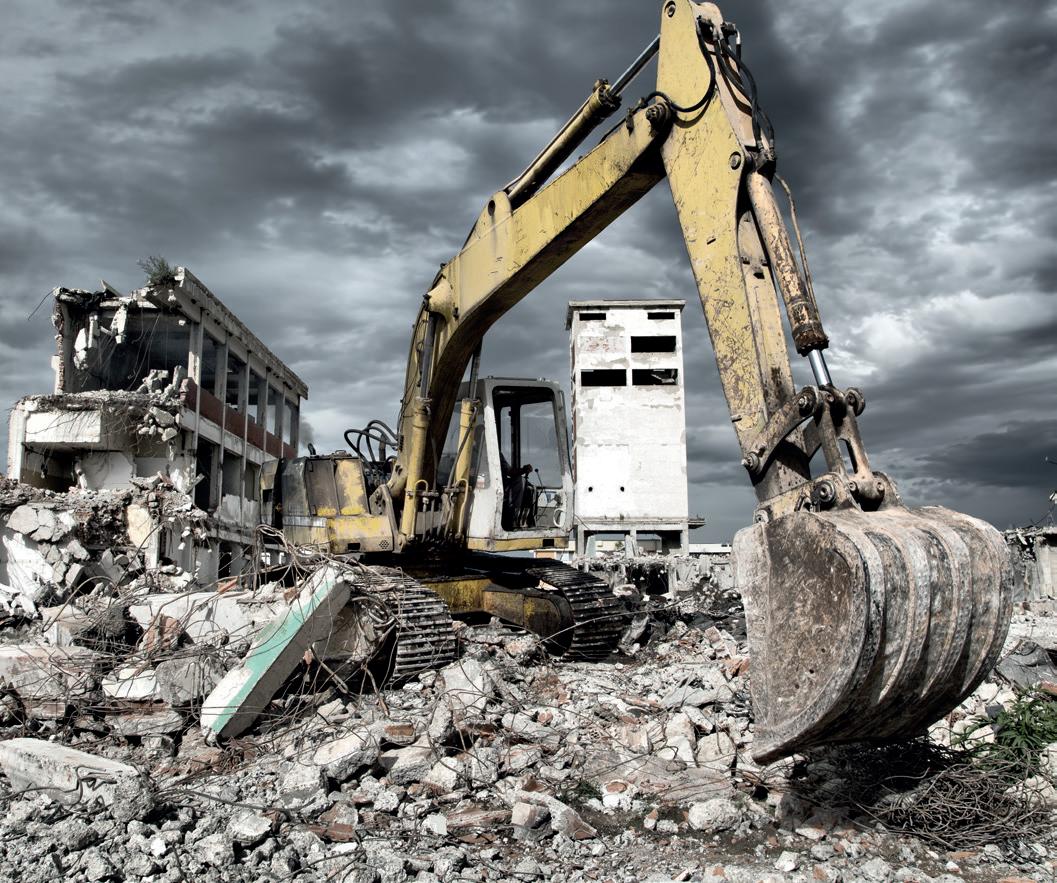
DYNASET Oy has appointed Marko Niemi as the company’s new Sales Director and member of the Management Team. He assumed his position on 8 September 2025.
Niemi has nearly 20 years of experience in the mobile machinery industry, with a focus on product development, as well as sales and after-sales management. He has previously worked as After Sales Director at Wihuri Oy Technical Trade and has completed a Master of Science degree in Automotive and Machinery Engineering.
Niemi’s technical background, combined with strong customer focus, is an excellent fit for DYNASET’s growth strategy and global customer service:
“Dynaset has already impressed me in my previous roles in the mobile machinery industry. It is a great honour to represent the market leader in its field to a global customer base,” he says.
The entire DYNASET Team warmly welcomes Marko to join us in continuing our success story!
As of 8 September 2025, the Management Team of DYNASET Oy is:
Anni Karppinen, CEO
Tero Ylä-Soininmäki, Production Director
Pasi Yli-Kätkä, R&D Director
Atte Karppinen, After Sales Manager
Marko Niemi, Sales Director

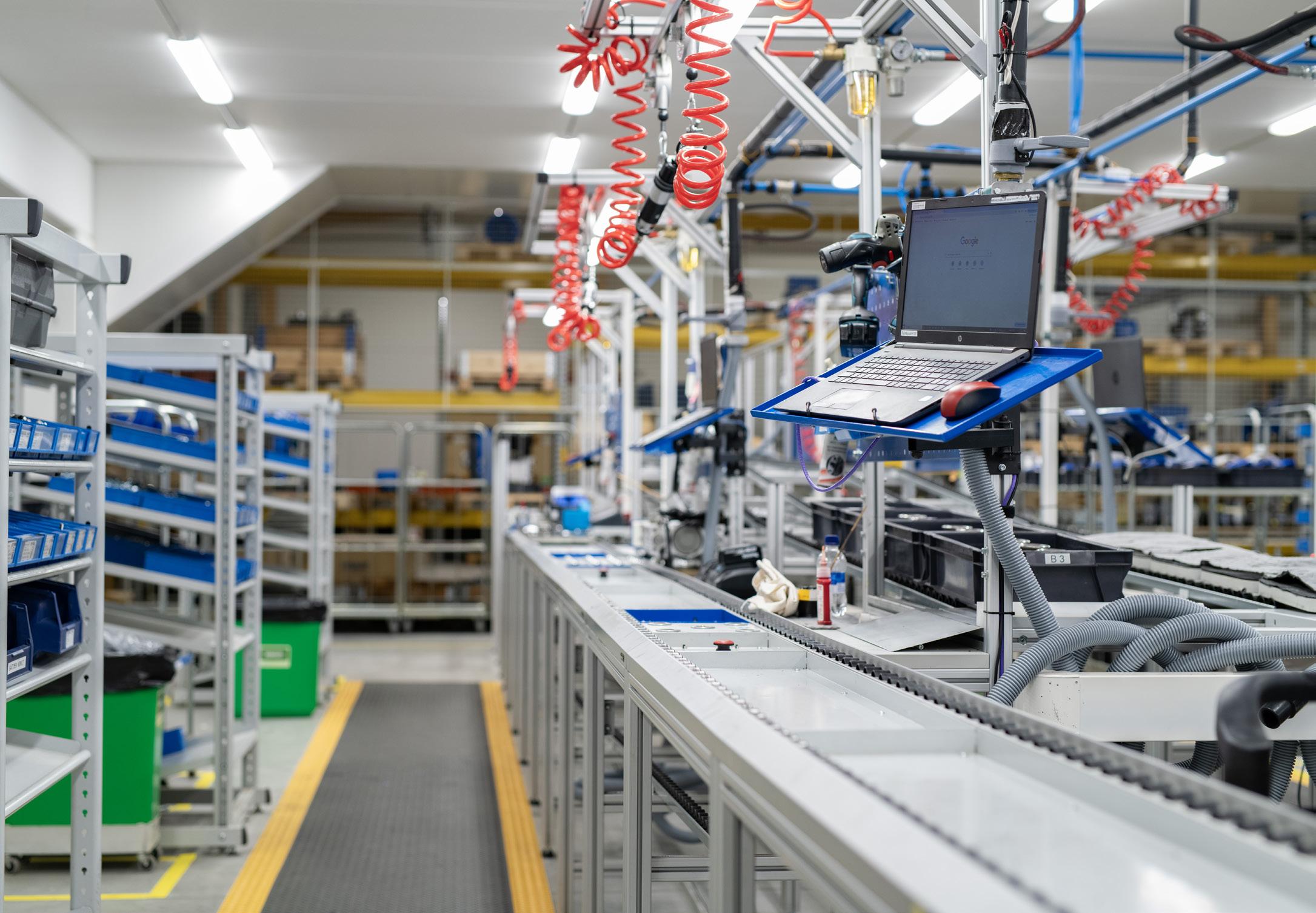
Experience the most innovative dust control system – a powerful, targeted mist to suppress the dust with a single touch from the cabin. Minimize airborne particles, improve air quality, and maximize safety on the demolition site.
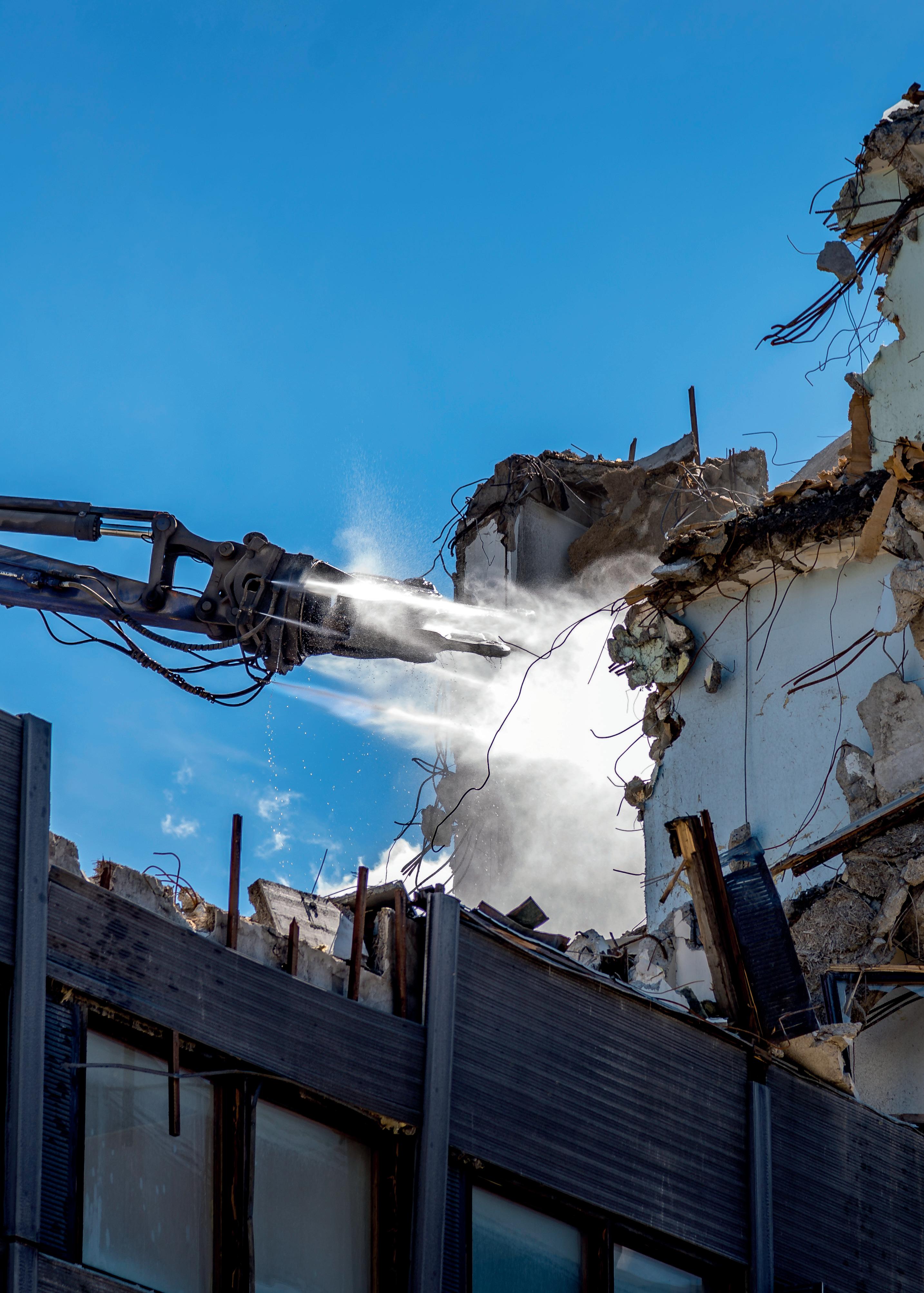
5 reasons to choose
HPW-DUST High Pressure Dust Suppression System
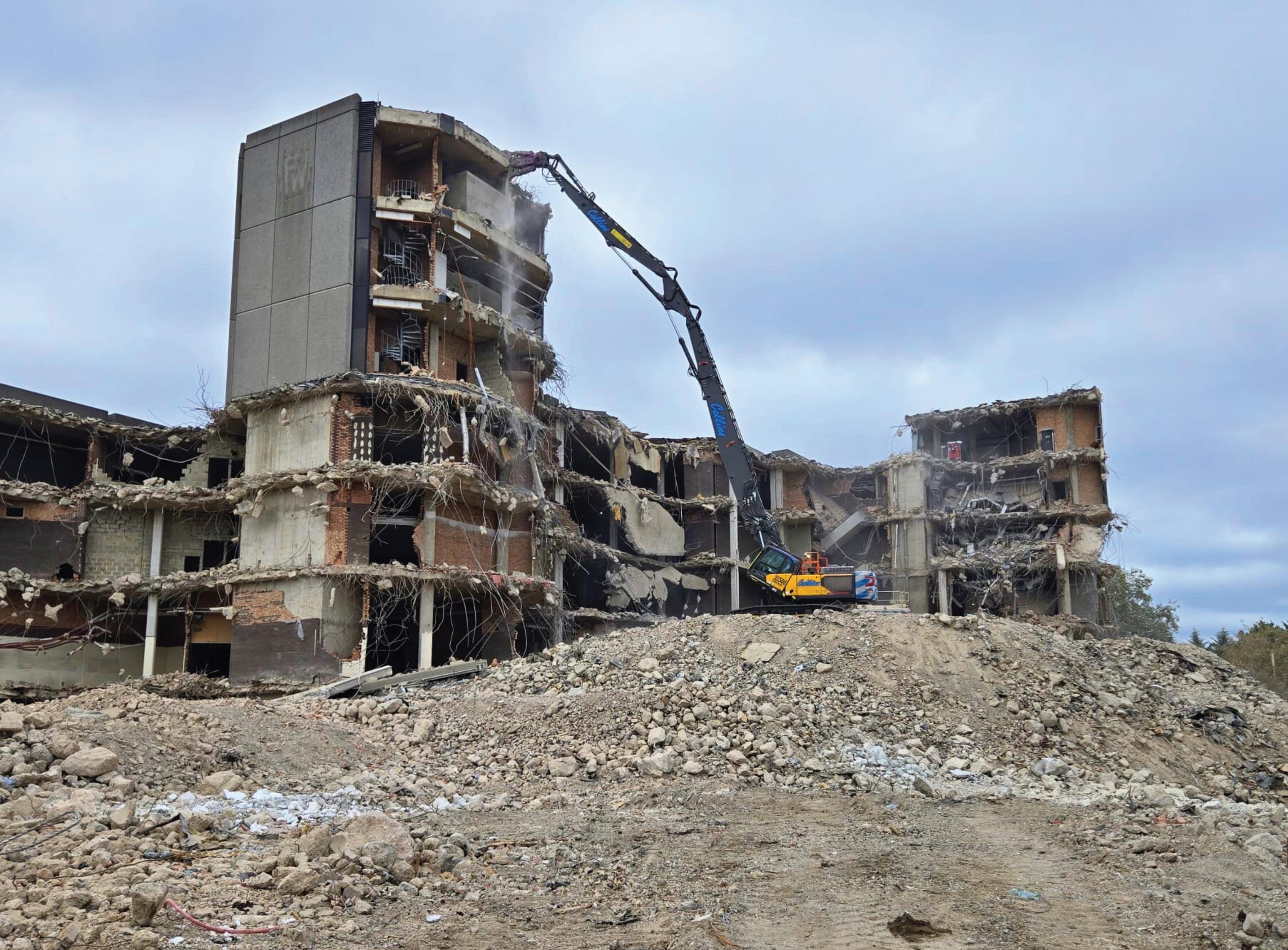


SMT GB EQUIPS COLLINS DEMOLITION WITH THE MACHINERY TO LEAD THE DEMOLITION INDUSTRY
For two decades, Collins Demolition and SMT GB have worked together to set the standard in the UK demolition industry. The addition of the new Volvo EC500HR combines reach, precision and advanced technology to make complex projects safer and more e cient. Supported by SMT GB’s full demolition portfolio, including McCloskey International and GIPO crushers and screeners through AGGPRO, this partnership delivers the tools and expertise operators need to tackle the toughest projects.