









Hammond’s innovative signature products, GravityGuard® and Treated SureCure®, are two of more than 150 customized additives that are improving battery performance and lowering manufacturing costs for battery manufacturers around the world.





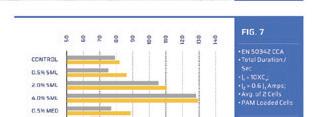

Hammond has released a comprehensive whitepaper detailing exciting findings of new benefits of the antistratification additive GravityGuard ® New research shows that the BCI Innovation Award winning product also offers significant serendipitous improvements that may provide additional value to battery manufacturers and their products. Specifically, the results show GravityGuard® used

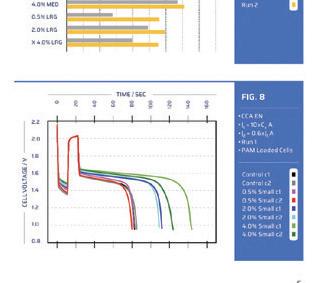
in the PAM and NAM can improve CCA performance, 2C Capacity, and extend PSoC Cycle life. The paper presents notes on evaluation methods, specific comparative data, and more than a Independent GravityGuard ® Testing Reveals Improved CCA & PSoC Cycling

dozen charts and graphs with detailed analysis of a wide variety of test results. A PDF is available online. Just snap the QR code above to go to the publication download page.


As the world’s largest family-owned lead battery manufacturer celebrates almost 80 years in the industry, we speak to new CEO, Pete Stanislawczyk, and incoming president, Christy Weeber, on their joint strategy for the future.
The energy storage industry isn’t the best at communicating its good news — but now is the time for us to shout. We are the future!

Tributes paid to Urs Bühler • Lyten names executive team to revive Northvolt
• Microvast reveals departure of CFO Carl Shultz • MAC Engineering promotes Bret Stern and Nick Dailey • Sandia’s Rosewater admitted to Battcon Hall of Fame
• East Penn among ‘best US employers’ for women • Ateios awarded Battery Show honour for electrodes tech • Pure Lithium award for ‘Brine to Battery’ tech
EnerSys in $1bn share buyback increase • Leoch mulls new US plant and Mexico expansion despite profit fall • Exide closing France site amid ‘economic challenges’ • Batteries supercharge $140m tax refund for EnerSys amid restructuring and jobs lost • Yuasa hails ‘strong lead business’, hints at investment boost • ExxonMobil acquires Superior Graphite to enter battery anodes market • BESS investment major Gresham to acquire Switzerland’s SUSI • FlexGen secures court approval for Powin assets acquisition • Swiss ‘membrane-free’ RFB tech secures pre-seed finance
THE SITE VISIT: ABERTAX: IN DIVERSITY LIES STRENGTH
Batteries International flew to Malta to meet a company that continues to prove that focusing on research and development is the clear path to product innovation.



I Squared takes majority stake in ENTEK • Battery leaders put pressure on EU heads over foreign competition • Porsche drops EV battery plans amid sales slump • EPA chief attacks ‘delusional’ BESS expansion amid Li battery fire fears • Exide Technologies ‘enhances’ commercial vehicle battery range • East Penn unveils Armor Alloy battery tech • Korea’s SM Group develops lead acid BESS alongside lithium storage systems • DRC cobalt quotas ban to be lifted • Nyrstar in Australia aid boost for antimony, critical metals • US to designate lead as critical mineral • EU in €1.8bn ‘battery booster’ as new report warns of China dependency • Neptune Energy hails major lithium find in Germany • Batteries supercharge $140m tax refund for EnerSys amid restructuring and jobs lost
NEWS CONTINUED
• Amara Raja: LABs dominate sales but lithium investment rising • CATL drives further into Europe’s EV battery market with LFP launch • Tesla issues Powerwall 2 ESS recall in Australia citing fire risk • Waste reforms call as UK faces ‘epidemic’ of battery fires • Datacenters, AI ‘drive LAB growth optimism’ — BCI • VRLA nuclear plants safety study to report in December • EU-Indonesia battery materials trade deal • Virtual power plant market uptick in North America but ‘market barriers remain’• Investment firm Aurelius to acquire Italy’s Fiamm • New EV tests reveal ‘unreliable’ battery range claims, says AAA • Microporous opens Li separator line in Tennessee • InoBat secures €55m loan and grant deal for Spanish gigafactory • Campine probes Russia sales claim, hails H1 sales boost • Swiss ‘membrane-free’ RFB tech secures pre-seed finance
Ecobat disposes of last European lead recycling deal with UK sale — US facilities coming next • Ace Green to offer grid metallics processing system • East Penn sustainability report highlights recycling, emissions milestones • $1.5m boost for lead and Li battery recycling
Balancing the cost of transparency against the needs of business
The flames of a thermal runaway are dangerous but, the vapors, though they look less harmless, are actually far worse.
ICBR 2025, Valencia, Spain — September 10-12 • 100Recycle, the 9th International Secondary Lead & Battery Recycling Conference and 21ABC, September 3-5, Kota Kinabalu, Borneo
Publisher Michael Halls
editor@batteriesinternational.com +44 7342 890 592
Editor Shona Sibary shona@batteriesinternational.com +44 7585 280152
Finance administrator
Juanita Anderson
Juanita@batteriesinternational.com
Subscriptions, enquiries
subscriptions@batteriesinternational.com admin@batteriesinternational.com
Production/design
Antony Parselle aparselledesign@me.com
Content researcher Matt Halls Matthew@batteriesinternational.com




International advertising representation editor@batteriesinternational.com
The contents of this publication are protected by copyright. No unauthorized translation or reproduction is permitted.
ISSN 1462-6322 © 2025 Mustard Seed Publishing UK company no: 5976361. Printed in the UK via Method
Disclaimer: Although we believe in the accuracy and completeness of the information contained in this magazine, Mustard Seed Publishing makes no warranties or representation about this. Nor should anything contained within it be construed as constituting an offer to buy or sell securities, or constitute advice in relation to the buying or selling of investments.














Shona Sibary • editor@batteriesinternational.com
“If I went back to college again, I'd concentrate on two areas. Learning to write and to speak before an audience. Nothing in life is more important than the ability to communicate effectively.”
So said Gerald Ford, 38th president of the United States, who, it is widely acknowledged, presided over the worst economy in the four decades since the Great Depression, with growing inflation and a recession. In one of his most controversial acts, he granted a presidential pardon to Nixon for his role in the Watergate scandal.
You can probably understand why he might have wished he’d brushed up on his messaging. But his appreciation of the power of communication is something none of us can afford to ignore. And, much as I hate to point a finger, our entire industry could really do with sitting up and taking notice.
Obviously, as publishers of your news, we’re in the business of words and telling stories. We like to think we’re pretty good at it. But it can sometimes feel like pushing a very large rock up a hill trying to get any salient information from the battery world at all. And this inability to shout from the rooftops affects the whole energy storage industry – all chemistries, all technologies.
It's hard to understand how our industry, valued at something in the region of $60 billion a year, can be so coy about stepping out of the shadows and blowing its own trumpet. As a journalist for over 30 years, I’ve never encountered companies less willing to pick up the phone or answer a call. Whenever we commission freelancers to write pieces, they always say “but nobody returns calls”.
Perhaps this inability to communicate is actually a reluctance to communicate? Either way,
The power of communication is something none of us can afford to ignore. And, much as I hate to point a finger, our entire industry could really do with sitting up and taking notice
things need to change. And fast. Nobody can deny that we are centre stage of a brave new world. Our industry, now a cornerstone of the global economy, has an influence that extends beyond commerce taking a starring role in climate policies and energy security strategies, with a demand that is expected to explode, quadrupling to 4,100GWh by 2030.
Exciting times! And with this fast-moving maelstrom of opportunity there is a tsunami of news and unfolding events. Our industry has become the story that never stops giving and it can be hard to make sense of it all.
But make sense of it we must. This requires everybody to do two things. Firstly, really understand the value of communication. And secondly, to actually communicate in an impactful way.
A quick glance through conference speeches over the last 20 years shows a woeful decline in the quality of the presentations. Delegates just aren’t challenged by the content anymore. We’re getting half-baked thoughts and ideas — I could even go as far as deceptions — and there is so much repetition.
As George Bernard Shaw once famously said: "The single biggest problem in communication is the illusion that it has taken place." I have lost count of the number of times I have walked out of a talk into the coffee break with a blank notepad and a sinking heart.
How many times do we see presentations where the purpose of the discussion is to focus on the importance of the institution giving it. The message is the speaker not the content.
A good example is a talk I heard a few years ago, where the presenter discussed various company structures and purposes his organization had. He used a welter of words to give the illusion that the firm had been operating for years.
To my shame I didn’t challenge the speaker even though I knew that two of the companies being discussed had only been set up a a mere two months beforehand. (I had even checked them out at Companies House in the UK.) It was a study in smoke and mirrors.
And we see this in other ways too. How many
times do we listen to a 20-minute presentation where the first 10 minutes are spent talking about the firm and not the topic we really want to hear about?
Why do we allow this to happen? It’s hard to puzzle. Has social media dimmed our attention span to such a point that we all, now, just accept that with any spoonful of sugar the marketing must also go down?
Perhaps the perfect example of this is the battery industry’s obsession with talking about the recyclability of lead. Ever since 2010 and the emergence of lithium batteries in EVs, it’s been impossible to attend any gathering without at least a dozen speakers claiming 99% of a lead battery can be used again and again.
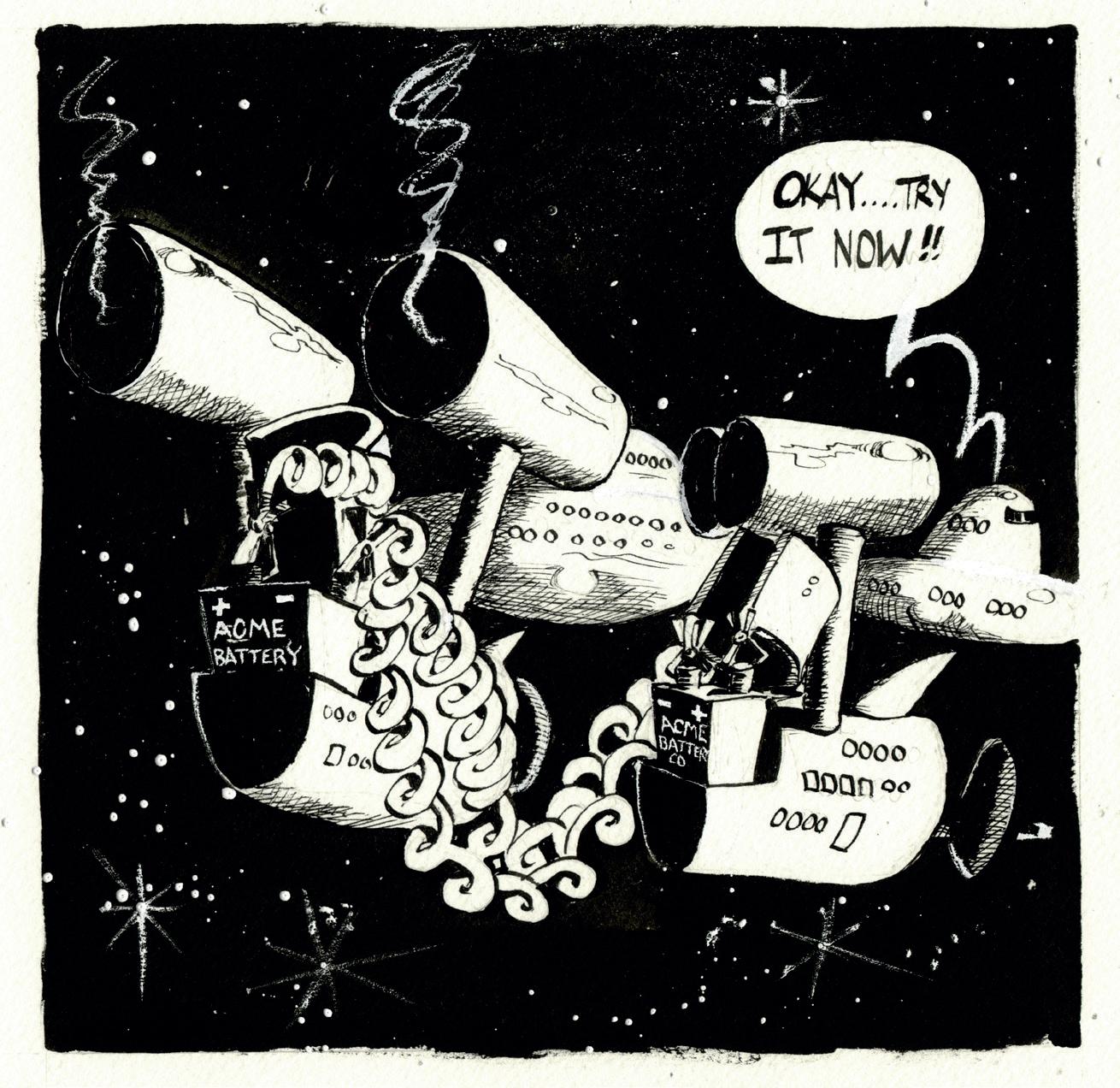
In actuality, it’s far less than 99% but does the validity of this matter anyway? This is a new variant of Orwellian double-speak, where sense is subordinated to repetition.
Either that, or the real nub of a point is so buried in obfuscation — using perissological periphrasis and obumbrate language to hide denotation in a caliginous somewhat inspissated sea of pleonastic verbage.
You get my point. Using big words to hide real meaning has serious consequences. You only have to look at famous miscommunications in history to see where things can go horribly wrong. Take the Charge of the Light Brigade during the Crimean War in 1854. Due to a miscommunication in the chain of command and a series of gaffes thereafter, the Light Brigade rode directly into a heavy artillery battle scene – which they weren’t suited for. The result? Brutally high casualties. (But as a plus a memorable poem by Alfred Lord Tennyson.)
Historical accounts say that when the original order was relayed to the troops, it lacked insight into the bigger picture or purpose of their strategy. It was also one of those miscommunications that became so convoluted, no one knew exactly who gave what orders and why. For years after the war, some of the higher-ups continued to point fingers and mitigate themselves of responsibility.
Okay, so none of us are going into battle on
horseback, but I see this kind of miscommunication happening all the time in the battery world and there is now an urgent need for clarity.
As an industry we don’t need to be lobbying our elected officials, nor the average people on the street. Instead, our collective messaging has got to be targeted to the decision makers, that’s not the government itself but its advisers.
But what should this message be? Perhaps if we want to communicate the advantages of lead over lithium or vice versa we need to think hard and fast about what we say and how we say it.
The whole world is going through times of turmoil on a huge variety of fronts. And all this is against a background of possibly the most important change to affect humanity — the great energy transition.
From a publishing perspective, a subject such as better start-stop batteries for European automobiles isn’t going to make anyone’s heart zing. But it is important and if we can frame issues like this into a larger context everybody might start sitting up to listen.
All of us, not just Batteries International, have the power to communicate the bigger picture — that is, how batteries are the secret force behind the energy transition. And we need to embrace that old adage that wise men speak because they have something to say. Fools because they have to say something.
Shona Sibary, editor
It is with sadness that Batteries International reports that Gerry Woolf, a batteries and energy storage journalist for more than 30 years, passed away on October 13. He was just 71 years old.
Gerry spent almost all of his life as a technical writer, editor and finally business person involved in the energy storage industry. After graduation he joined the BBC where he was trained as a journalist and he worked on the World Service radio broadcasts for several years.
In the 1990s he was recruited to work as the editor of Batteries International which he left in 2004 to set up his own magazine, Best. (Batteries & Energy Storage Technology).
Hugh Cullimore, one of the original founders behind Batteries International, recalls: “He was a fast learner and within months of joining us was fully up to speed. In total I worked with Gerry for the best part of 20 years and together we helped make Batteries International and later Best a success.”
For the next 14 years Gerry built up a small magazine business launching a Chinese title in Mandarin and a magazine on back-up power. He made unsuccessful attempts to enter the conference business but found better traction with a weekly newsletter that continues to this day.
After stepping back from day-today editorial duties in 2018, when he announced “a new chapter” for Best, Gerry remained non-executive chairman and continued to lend his voice and experience to the business.
In later years he faced personal medical challenges, by accounts from friends and colleagues which he approached with characteristic determination and dignity.
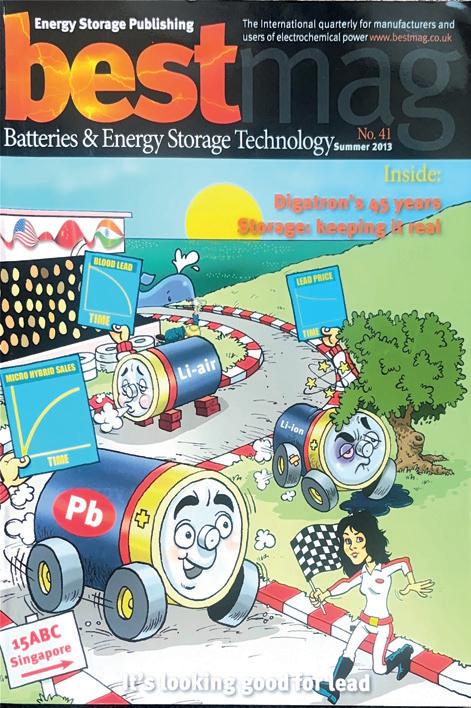

He was respected — and frequently feared — for his trenchant directness in getting answers to his questions.
Andy Bush, executive director of ILA, said: “Gerry was a larger-thanlife figure in the industry, and while he could come across as critical, he was usually just probing a subject for greater insight, which was his passion as well as his job. He had affection for the lead battery industry and always wanted to see it succeed — a critical friend.”
Mark Rigby, managing director of UK Powertech, a firm specializing in battery formation equipment, said: “I was Gerry’s friend for over 30 years and knew him well. He was a courageous man in the way he approached life and someone to be respected for the depths of his knowledge about the battery business.”
Gerry’s legacy lives on countless issues of Best distributed around the world, in the debates he sparked, and
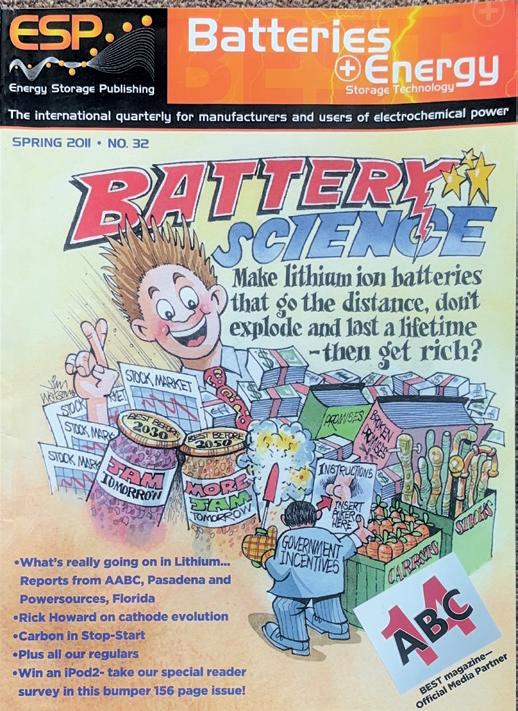
in the network of industry relationships he helped build.
Among those who feel his influence are his former competitors and collaborators, including Mike Halls and the team at Batteries International, who respected the editorial benchmark Gerry set—even in the spirit of friendly rivalry.
Mike McDonagh, an industry veteran, battery consultant and also technical editor of Best recalls how Gerry helped him at the beginning of his writing. “I owe a lot to him personally for the way he developed my writing skills. The first time I wrote something for him he said ‘this is not good. It’s bloody good!’ but he also could be blunt comparing my writing style to Enid Blyton [a popular UK children’s author of the 1960s]. He was tough but fair.”
He leaves behind his son Oliver and his wife Catia and grandson Thomas, and many others who were touched by his mentorship, editorial leadership and willingness to engage with the international battery community.

He remains a notable figure in the battery-storage sector, whose contributions helped shape the conversation around energy storage during a period of rapid change.
An announcement of his funeral service will be made shortly.
NEGATIVE EXPANDER The expander may be negative, but your experience will be entirely positive.
The job of negative expander is to reduce strain, maintain capacity and improve performance. In a way, that’s our job, too.
At APG, we deliver the best products and customer satisfaction in the industry through unwavering focus and personal relationships.
We offer the best pre-blend negative expander on the market, brought to you by a certified Women’s Business Enterprise and family-owned company you know and trust.

Find out more at atomizedproductsgroup.com info@atomizedproductsgroup.com

Swiss extruders and tech group Bühler has paid tribute to the company’s former owner, Urs Bühler, who died on August 1 aged 82.
The group said his death meant the loss of a figure who significantly shaped the company as an owner, former chairman of the executive board, and who oversaw more than five decades of the firm’s successful development.
Born in 1943 in Uzwil, Urs spent his youth there. He attended the Kantonsschule am Burggraben in St Gallen and later studied mechanical engineering at ETH Zurich.
Joining Bühler in 1970, he held various positions both domestically and internationally, until being appointed CEO in 1986. He became the sole owner of the company in 1990
and also served as chairman from 1994.
Throughout his career, he held a number of executive posts including serving on the board of the Swiss Bank Corporation, Sulzer Group, and Winterthur Insurance. He was also on the board of Swissmem for 30 years, significantly contributing to Swiss industrial history.
In 2001, as part of succession planning, he transferred operational responsibility of the group to Calvin Grieder, who also took over as chairman in 2014.
Also in 2014, Urs ensured the succession of family ownership of the firm by transferring shares to his daughters Karin, Maya, and Jeannine – the fifth generation of owners.
That followed his decision in 2011 to transfer ownership of The Uze company (founded in 1892 to manage the family’s real estate) to his daughters.
MAC Engineering & Equipment has announced two key promotions — with Bret Stern becoming VP of sales operations and program management and Nick Dailey senior marketing and visual communications manager.
The appointments were announced on September 10.
Stern, who started his career as an automotive technician, joined MAC in 2022 as sales director covering the US and Canada. The company said he will continue to act as a bridge between sales, customer support, the marketing team, other departments, and customers.
Additionally, he will manage the portfolio of MAC’s customer projects and be responsible for
developing and implementing program strategies.
Internally, Stern’s focus will be on improving processes that support all MAC team members to improve efficiency and effectiveness.
MAC told Batteries International that Nick Dailey, previously engineering and marketing project coordinator, will drive an expansion of MAC’s brand

During his more than 50 years at Bühler, Urs ensured the continued successful development of the company through a number of initiatives, including global expansion and exploiting new technologies such as extrusion and automation.
In terms of innovation, his legacy includes the Urs Bühler Innovation Fund, which is an innovation advisory board comprising recognized experts.
Urs also championed construction of the Cubic Innovation Campus, and the recently opened Bühler Energy Center.
Under his leadership, the mechanical engineering company evolved into a broadly positioned and global technology group, offering a comprehensive range of solutions for the food and mobility industries.
However, Urs remained a modest, reserved, and empathetic person.
awareness and revenue in his new post.
The company said Dailey, who joined MAC in 2023, had shown his talent in overseeing campaign creation and execution across digital and traditional channels and collaborating with other departments like sales, and monitoring key performance indicators to ensure return on investment.

In addition to technology and business, his great passions included equestrian sports, skiing, and a holistic approach to the health of humans and animals, the latter being reflected in the company Health Balance, which he founded in 2004.
Urs’s daughters said in a personal statement: “We are committed to the legacy of our father and predecessors and will continue to run Bühler as a family business. The strategic focus on innovation, training and development, and sustainability also has our full support.”
The company said Urs had always been forward-thinking and innovative. “With gratitude and the utmost respect, we bid him farewell. He remains an inspiring role model to us as a visionary entrepreneur, innovator, and above all, a remarkable human being.”
US immigration officers have detained more than 470 in a raid on the construction site of a battery cell manufacturing joint venture of Hyundai Motor and LG Energy Solution.
Officers from the federal US Immigration and Customs Enforcement (ICE) department swooped on the HL-GA Battery Company site on September 4.
ICE claimed a number of individuals arrested at the site were working illegally and one green card holder from Mexico was arrested — with a view to the individual being deported, based on alleged multiple criminal convictions.
None of those detained

were thought to be directly employed by Hyundai Motor, the firm said on September 5.
However, the company said its North America chief manufacturing officer, Chris Susock, had “assumed governance of the entire megasite” in Georgia and would conduct an investigation to ensure all suppliers and their subcontractors comply with all laws and regulations.
Steven Schrank, special agent in charge of Homeland Security investigations
in Georgia and Alabama, said: “We welcome all companies who want to invest in the US and if they need to bring workers in for building or other projects, that’s fine — but they need to do it the legal way.”
Hyundai and LGES are investing more than $4 billion in the battery plant, which is scheduled to start production early next year.
HL-GA will supply next-generation battery technology to manufacturing facilities for production of Hyundai, Kia and Genesis EV models.
Hyundai said the facility will help create a stable supply of batteries in the region and allow for a quick response to the global EV demand.
East Penn Manufacturing has been ranked as one of America’s best employers for women in 2025.
The lead battery manufacturer announced the ranking, by Forbes and Statista, on August 5 — the second time the firm has been named to the list, which also acknowledged some 700 other large American companies.
The accolade came just five months after Forbes and Statista ranked East Penn as one of America’s best large employers for the fourth time.
David Rosewater, a research engineer at Sandia National Laboratories, has been inducted into Battcon’s Hall of Fame.
A surprised Rosewater was called to the stage at the annual conference this August, to receive the accolade by Ashton Curtis, part of the technical committee of the Battcon conference in Florida.
Curtis said: “This year’s recipient is relatively young and relatively unknown.”
However, over the last five, six years, Rosewater had single-handedly, along with other inputs: “advanced the state of the battery safety industry by leaps and bounds with benefits to us all”.
Rosewater said: “Many of the folks who are past recipients of this award have been my mentors and to be counted among their number is a deep honour. These are folks who have lifted all of us up. And I feel
unworthy to be counted among these people.”
Rosewater’s story began after taking his bachelor’s and master’s in electrical engineering at the University of Montana.
One of his professors had a friend at Sandia National Laboratories who suggested Rosewater apply for a research position and he joined in 2011. Rosewater was mentored by former Battcon recipient Garth Corey, who suggested he submit a paper at Battcon, which he first did in 2013.
The subject was zinc bromine flow batteries.
Rosewater left Sandia to do his PhD at the University of Texas at Austin in 2016 before returning to the national lab in 2020.
During that period, he became aware that there was little agreement on what constituted an industry-wide safety policy. He ended up creating a battery safety

training class.
Rosewater told Battery International at Battcon “I realized that there was a disconnect between what the people who do their work every day are doing and what the standard for electrical safety says they should be doing.”
That started a long process that culminated in the National Fire Protection Agency adopting his results — a huge safety benefit for the entire industry — and Rosewater hopes they will become a permanent part of the standards.
For the latest ranking, Forbes and Statista conducted an independent survey from a representative sample of more than 140,000 women working for companies employing at least 1,000 people in the US.
The final score was based on personal evaluations, given by employees themselves, in addition to evaluations from friends and family members of employees, or members of the public who work in the same industry.
A much higher weighting is given to personal evaluations and the percentage of women serving in East Penn’s leadership team was also incorporated into the final score.
Christy Weeber, EVP and CFO of East Penn, said: “Women have played an essential role in shaping East Penn’s success, helping to build a strong, values-driven culture and contributing in countless ways that have advanced our company.”
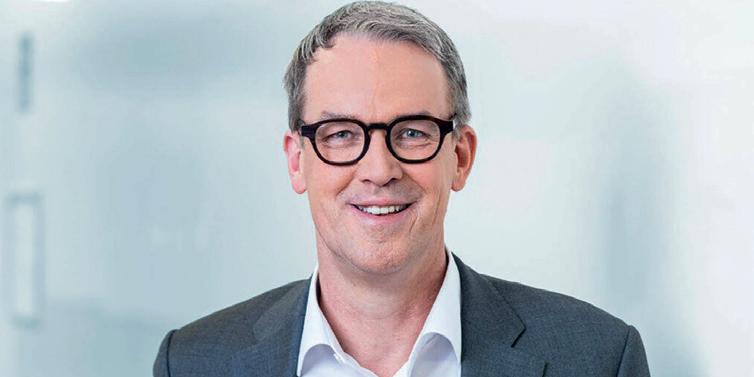
California-based lithium sulfur developer Lyten has put a new management team in place in Sweden and Poland for Northvolt, in the wake of its takeover of the troubled European battery maker.
Batteries International reported last August that Lyten had moved

to acquire Northvolt’s remaining assets in Sweden and Germany, after Northvolt filed for bankruptcy in Sweden.
Lyten has since revealed that it appointed a new executive team on September 4 to support the takeover.
Matthias Arleth has been
Li metal battery company
Pure Lithium said on August 25 it had been honoured by the American Chemical Society for its ‘Brine to Battery’ technology.
Pure received the 2025 Green Chemistry Challenge Award in the society’s chemical and process design for circularity category.
Pure said its technology seamlessly integrates lithium metal extraction
and battery anode production, significantly reducing energy consumption and environmental impact associated with shipping materials.
The company said its Li metal batteries eliminate graphite. Instead, it extracts Li metal from lithium brine, which Pure said is abundant in North America, to create a lithium metal anode that completely replaces today’s graphite anode.

named CEO of Lyten Sweden, based in Stockholm and reporting to Lyten CEO Dan Cook.
Arleth is a senior industrial executive and engineer with more than 25 years of international leadership experience across the automotive, energy, and electronics industries, Lyten said.
He joined Northvolt one year ago as president BU Cells and COO, where he was instrumental in the restructuring process in
Sweden and successfully improving production performance at the firm’s Skellefteå facilities.
Meanwhile, Robert Chryc Gawrychowski will serve as CEO of Lyten Poland, based in Gdansk, also reporting to Cook.
He will lead the Northvolt Dwa BESS operations, including the systems organization responsible for BESS product design, after being with Northvolt Poland since its launch.
Markus Danglemaier will be CEO of Northvolt Ett, in Skellefteå, reporting to Arleth.
According to Pure, its batteries represent a step change in energy storage, with double the energy density of today’s lithium ion batteries. The company said it has achieved unprecedented cycle life in small pouch cells, upwards of 5,000 cycles.
Now the company is shifting from pure research and development to the prototyping phase at its new facilities in Chicago. Pure founder and CEO Emilie Bodoin said: “We have demonstrated that our technology is capable of eliminating some of the most energy intensive steps in anode manufacturing.”
Established by the US Environmental Protection Agency in 1996, the Green Chemistry Challenge Awards recognize chemical technologies that incorporate the principles of green chemistry into chemical design, manufacture, and use.
Sami Haikala was confirmed as CEO of Northvolt Labs, in Västerås, Sweden, also reporting to Arleth. He has headed the plant since 2022 and will be responsible for both lithium ion NMC product enhancements and work with Lyten’s San Jose team to accelerate lithium sulfur development.
Dennis van Schie has been named chief supply chain officer for Lyten Sweden, based in Stockholm and reporting to Arleth. Lyten said he has nearly three decades of experience in the automotive, electronics, and chemical industries.
Lyten said all members of the team had been pivotal in stabilizing operations and delivering to customers over the last year.
Lyten CEO Cook said: “We have the ingredients to be successful in Sweden, Poland, and Germany. This is a team that knows how to execute. They each have a proven track record in industry and collectively drove a step change in manufacturing performance in Skellefteå over the last year.”
Stryten Energy has been named among the best US companies for women to work.



Stryten said on September 25 it had received the honour in the ‘inclusion’ category of the 2025 Women’s Choice Award for Best Companies to Work — a recognition that highlights organizations committed to fostering inclusive and supportive workplaces for women.
Wendy Henderson, senior VP and chief human resource officer, said: “Receiving this recognition is a reflection of the
programs and benefits we offer all employees, with the objective of providing development opportunities, wellness, and a means to financially prepare for the future.”
Stryten said women who work at the company have job satisfaction along with stability, high-earning potential, flexibility and advancement.
The company is also active in the Women in Auto Care Associa-
tion and Women in the Global Battery Industry, which was formed by Battery Council International (BCI) to promote and develop the growth of women in the battery industry.
Last May, Stryten won BCI’s Amplify Award for Product Marketing for the firm’s innovative video campaign promoting Enhanced Flooded Batteries, featuring the Not-SoGrim Reaper.
Ateios Systems has been named as battery manufacturer of the year at The Battery Show North America.
Ateios received the honour on October 7 at the conference in Detroit for its RaiCure electron-curing technology, which the firm said combines solventfree battery manufacturing, near-zero emissions and domestic scalability.
RaiCure delivers the world’s fastest solventfree electrode production, achieving industrial speeds while eliminating harmful PFAS chemicals and dramatically reducing energy use by up to 96%, Ateios claims.
According to Ateios, the manufacturing speed is some 80 meters per minute, which the firm said is nearly 3× faster than the conventional 30m/min process, producing high-energy electrodes — thick cathodes up to >5mAh/cm² with yields exceeding 95%.
All raw materials are sourced from domestic
suppliers that can compete on performance, price, and volume in a global market
The company said the process replaces traditional, solvent-heavy coating methods and is inspired by semiconductor manufacturing.
CEO and founder Rajan Kumar said: “I am proud of how we have validated
performance at scale while uniting production, supply chain, and sustainability in one cohesive solution.”
Founded in 2018, Ateios said it is committed to enabling a Moore’s Law for batteries, developing techniques to be adopted for years to come while doubling production speeds.
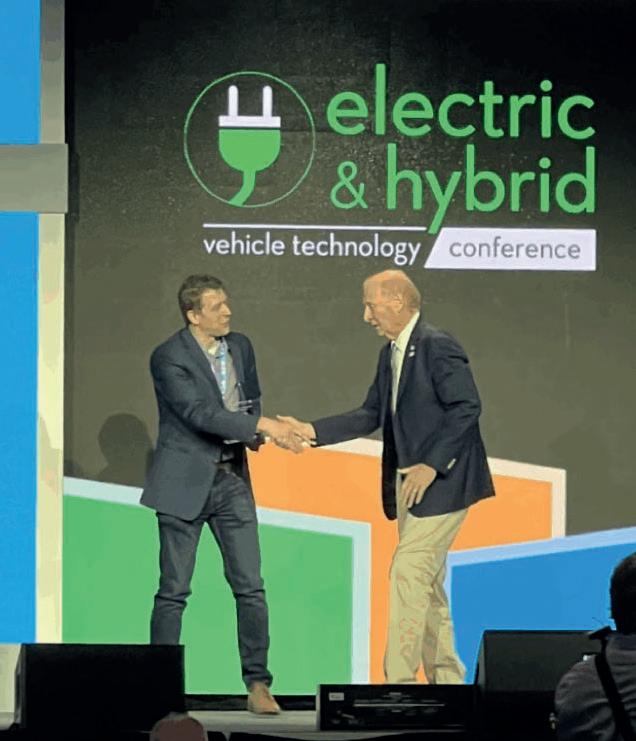
A new expert study on growth rates and future trends of lead battery markets has been published by Battery Council International and research consultancy CRU.
BCI said the “first-of-itskind report” is powered by decades of metals market intelligence at CRU and the proprietary data BCI has collected on battery sales and manufacturing.
Key takeaways in the report include automotive lead battery demand grew 3.9% in 2024, with more
modest growth of 2.5% expected in 2025 and 2.8% in 2026.
Forecasts on lead battery sales for stationary storage include a compound annual growth rate of 2.8% through 2027, according to the report.
Meanwhile, global light vehicle production is now expected to increase only 0.4% in 2025 and 0.7% in 2026, dampened by readjustment of supply chains and stock drawdowns.
With more than 80 years of sales statistics and annual market forecasts
provided directly by its member companies, BCI says it is the exclusive provider of real-world data for the North American battery industry.
BCI said its trusted data, partnered with CRU’s best-in-class analysis and insights, offers the most comprehensive and reliable report available on lead battery market trends.. The report is currently available only to BCI member companies. Email info@batterycouncil.org for details
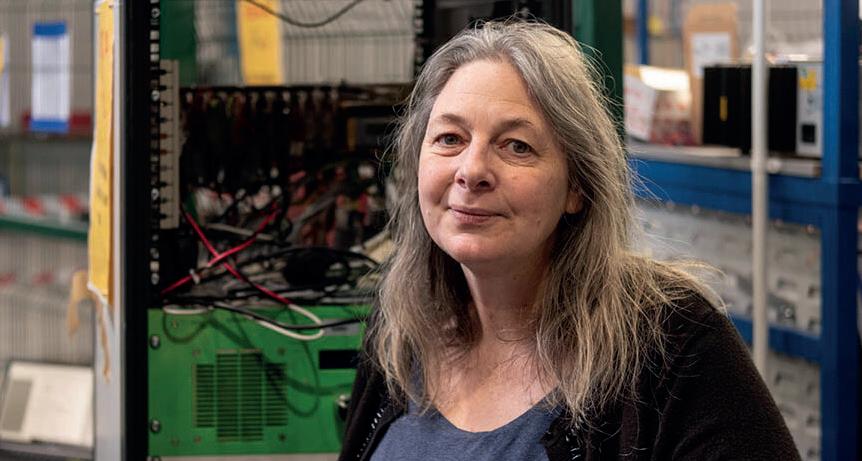
Lead-based battery-electrolyser technology developed by a UK university has received an ‘outstanding international impact’ accolade at the 2025 Hydrogen Awards.
Loughborough University announced on September 19 it had secured the award at a ceremony in Birmingham, marking its second consecutive Hydrogen Awards win.
The honour comes three years after the Consortium for Battery Innovation said it was supporting the university’s proposals to deploy lead battery technology as part of two projects to provide innovative energy storage systems for Africa.
Earlier in September, the
first full-scale containerised battery-electrolyser was shipped to a rural hospital in Malawi. The university said it will provide solar-powered energy storage for lighting and medical equipment, while producing green hydrogen for clean cooking.
This year’s Hydrogen Awards judging panel praised Loughborough’s technology for its potential in both energy storage and green hydrogen production, particularly providing energy access in underserved regions and to off grid communities.
Developed by the Battery-Electrolyser Team at Loughborough University’s Centre for Renewable Energy Systems
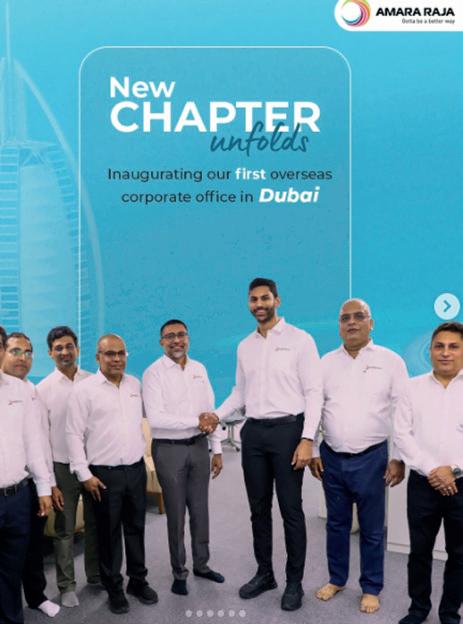
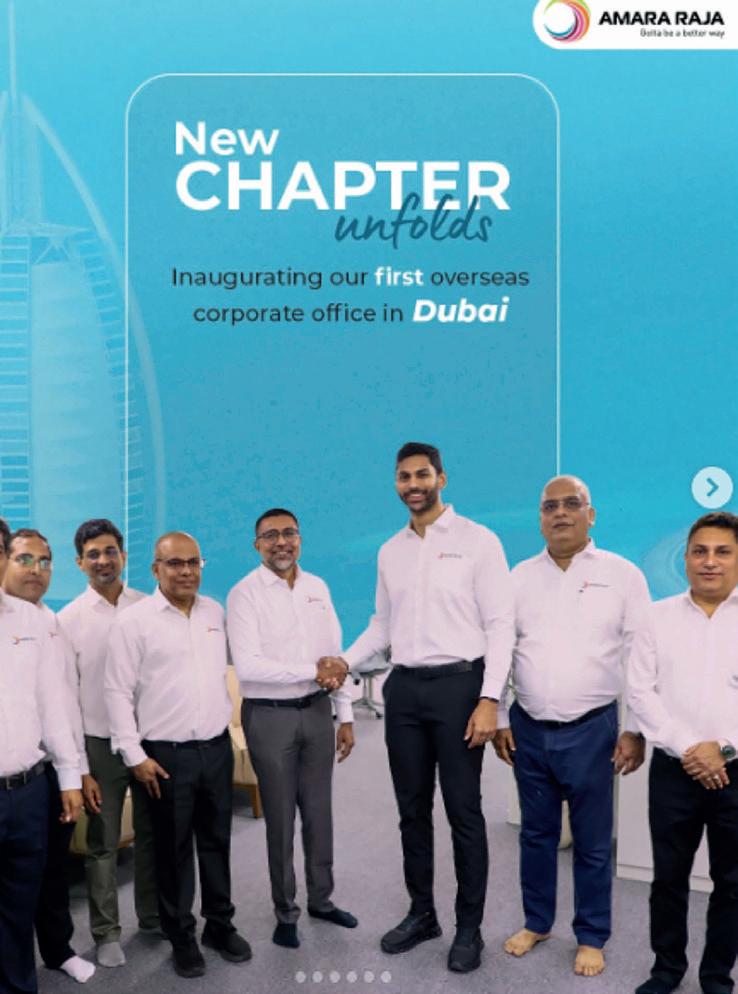
India-based Amara Raja group has opened a base in Dubai in a move the battery giant said will boost business in the region.
Harshavardhana Gourineni, executive director of the group’s Amara Raja Energy & Mobility unit, formally opened the new office and announced the event in a LinkedIn post on August 28.
Gourineni said the office will serve as a hub for customers in Europe, the Middle East and Africa while boosting battery sales across the regions.
Meanwhile, the group said it is ramping up work to develop four manufacturing units in India’s Telangana state that will form part of Amara Raja Energy & Mobility’s battery ‘giga corridor’.
Technology, the technology has redesigned the traditional lead acid battery.
The battery-electrolyser cells can store renewable electricity and also produce high-purity hydrogen when overcharged.
Built entirely from widely available, recyclable materials, it provides a low-cost and scalable alternative to standard electrolysers, the university said.
Parallel international projects, including a demonstrator at Loughborough University as part of the East Midlands Zero Carbon Innovation Centre, will also demonstrate the system’s adaptability in various community settings.
Professor Dani Strickland, project lead and director of EnerHy, the EPSRC Engineering Hydrogen Net Zero Centre for Doctoral Training, said: “Our battery-electrolyser shows how rethinking established technologies can unlock new pathways for clean energy access and hydrogen production – especially in communities that are often left behind.”
The chief financial officer of battery developer Microvast, Carl Shultz, has left the company less than four months after his appointment.
Microvast revealed his departure in a US Securities and Exchange Commission (USEC) announcement, saying Schultz had ceased to be employed as of July 29.
The reasons for his departure were not disclosed.
In a separate USEC announcement, on August 7, Microvast said its VP of corporate strategy, Rodney Worthen, had been appointed to serve as interim CFO.
Worthen joined the EV and ESS battery tech company in June 2023.
In May 2023, the US Department of Energy reversed a decision to award Microvast a $200 million grant to build a lithium ion battery separator plant, amid claims the company had links to China.
However, Microvast founder, chairman and CEO Yang Wu, an American citizen, said neither China’s government or the Chinese communist party had any ownership of the firm or influenced operations in any way.
Last January, Microvast said it had reached a significant milestone in development of its ‘liquid electrolyte-free true all-solid-state’ battery (ASSB) tech.
Unlike conventional lithium ion or semi solid-state (SSS) batteries, ASSB utilizes a bipolar stacking architecture that enables internal series connections within a single battery cell, the company said.
Lead has steadied near $2,000/t in the second half of 2025 after the April tariff fallout. A weaker dollar limited price declines, while industry fundamentals offered little support through the summer. The US continues to adjust to new government announcements — the most recent being lead making its way on to the country’s critical raw minerals draft list.
to dispel any market tightness.
stem downside movement.
We anticipate that next year will mark the fifth and final year of decline from the price highs recorded on the LME of 2021.
The European market is undergoing commercial shifts while record-low treatment charges threaten refined supply as margin pressure on primary smelters mounts.
LME lead prices steady, low volatility
The Singapore LME dominates warehouse holdings, with consistent flows in and out. This location accounts for 99% of the global LME stock total. CRU still attributes the inflows to financial players capitalizing on rent-sharing deals rather than positioning the metal for market needs, reinforcing the overhang that has weighed on prices and limited upside momentum.
Lead has steadied near $2,000/t in the second half of 2025 after the April tariff fallout. A weaker dollar limited price declines, while industry fundamentals offered little support through the summer. The US continues to adjust to new government announcements — the most recent being lead making its way on to the country’s critical raw minerals draft list.
Alongside other base metals, lead has been affected by the tariff announcement on April 2 by the US government, known as ‘Liberation Day’. After the announcement, the lead price fell significantly, moving to a low of $1,847/t. Over the past few months, the price has mostly been trading at around $2,000/t, and we forecast that lead will average $2,007/t in 2025.
Lead’s micro-industry picture has been less supportive of pricing as the mature recycling regions navigated the typically slower summer months. High exchange stocks also continue
Investor interest in the LME lead contract has briefly stirred to life. A flurry of activity in early July pushed the net position into positive territory and to a similar position last witnessed in the summer of last year.
Since then, the number of lots has increased to reach record highs but the net position identified by CRU remains in negative territory. We anticipate the price will find further support in the weeks ahead as the EU and US markets enter the autumn battery rebuild season.
While the industry picture has been less supportive, the macro-economic environment has been more so. A persistently weaker dollar has kept commodity prices buoyant, but in the case of lead this has only helped to
The European market is undergoing commercial shifts while record-low treatment charges threaten refined supply as margin pressure on primary smelters mounts.
Over the past few months, the price of lead has mostly been trading at around $2,000/t ... we forecast that lead will average $2,007/t in 2025
Chart 1: Three-month lead price sticks close to $2,000 /t

Chart 1: Three-month lead price sticks close to $2,000 /t
Through the turmoil surrounding the tariffs announced by the US in April, the replacement auto battery sector has taken up its traditionally macro-resilient role to support demand. The OE auto side is struggling on slower vehicle output. Lead’s majority share uses across its industrial, e-bike and, to a lesser extent, autos will continue to face challenges from a rising lithium battery market share.
Asia ex. China will account for over half of the global rise in demand out to 2030 and India will account for a majority of this. Demand growth is expected to be much slower in the more mature markets with the European and US markets accounting for 15% and 16% of the global total respectively.
Chinese demand is forecast to slow and subsequently contract towards the end of the decade as lithium battery technologies take further market shares in OE automotive and BESS.
In China e-bike trade-in policies have helped to offset weaker lead demand through the summer. This support will however diminish as lead’s low-voltage (12V) auto uses is lost to lithium batteries, notably LFP. Indian demand strength will be supported by healthy economic growth estimates, but also by embracing lead batteries to play a role alongside lithium batteries. In e-rickshaws powering India’s FAME revolution and even in BESS, as the renewable energy contribution to the grid starts to grow.
Growth of energy storage is primarily being driven by the economics of power storage, arbitrage, and grid balancing services. In major markets, a third of installations last year were standalone, i.e., not directly connected to renewable power installations. This will continue to be a key market segment this decade as grids deal with a growing share of intermittent supply.
Co-located solar and storage ratios vary by region. The US leads in co-location due to fewer crosscountry grid connections and statespecific storage policies. However, medium-term uptake estimates for the US have been reduced amid market uncertainty from reciprocal tariffs.
In highly interconnected grids like China, standalone storage plays a larger role in grid balancing. Uptake ratios are now expected to be higher in many other regions due to new PV and BESS mandates, funding, and giga-scale project announcements in India, Australia, and the Middle East.
Despite the removal of energy storage mandates and new grid pricing regulations in China earlier
We anticipate that next year will mark the fifth and final year of decline from the price highs recorded on the LME of 2021
this year, our forecast assumes that the significant growth in the solar PV sector will continue to drive utilityscale BESS installations.
Our bottom-up modelling shows that solar module and BESS costs and prices will stay low, driving expansion in regions with strong solar economics. Up to now, lead batteries have gained little from the battery storage boom, which is dominated by utility scale lithium, especially low cost LFP. Lead’s best opportunities
Investments are increasingly driven by geopolitics, electrification and technological developments. China is looking outward, which is changing metal supply chains and the industries they support.
Many other governments are looking to localize production and reduce reliance on China, compounding this change.
The pace of technological development is rapid, creating winners and losers. One only needs to look at the state of flux in automotive markets and energy systems to see how rapidly change is happening.
Yet, the material-intensive technologies of tomorrow will not look exactly like those of today. Material efficiency (thrifting), technological shifts and substitution are all key risks.
Getting the balance right between risks and returns is difficult.
Some investors will conclude other sectors offer higher returns on a risk-adjusted basis. However, commodity value chains are strategically vital — they are the building blocks of much of the economy and enable technological change.
Owning or controlling them brings geopolitical power and supply chain security. Metal market investments will be increasingly viewed through this lens.
China’s dominance in the global metals supply chain is a result of a multi-decade strategic plan and pressing macroeconomic necessities, which drove massive investments both domestically and internationally. If western governments want to catch up, then longterm policy stability is needed, but often this does not survive successive governments.
Metal market investments require long-horizon planning — for producers, consumers and investors, navigating this landscape increasingly requires balancing long-term vision with new policy and technology risks.
led
are in behind the meter applications, but CRU sees limited opportunity for this battery metal within this fastgrowing sector.
Global lead production is expected to exhibit growth of 1.5% y/y this year. This mostly reflects changes in China as smelters adjust to weaker demand as well as high feed costs. From next year, we expect that secondary production growth will modestly slow while primary will weaken.
The new forces rewriting demand
Governments are reprioritising economic security over efficiency, fundamentally altering investment flows and supply chains, and creating new ones.
This shift extends far beyond the energy transition. While electric vehicles and renewables remain important, technological change now includes robotics, automation, data centres and AI infrastructure, each with distinct material requirements that need to be captured in forecasts.
EMBEDDED IMAGE 3
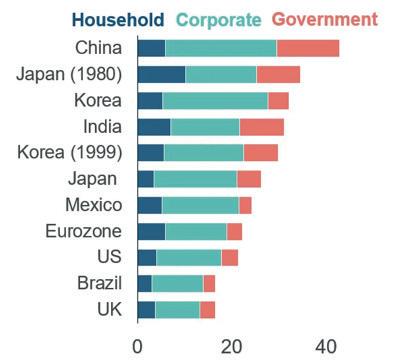
Geopolitical tensions are redrawing the map of who invests what and where. For example, defence spending is increasing across major economies, and supply chain security is in focus. Climate change will also increasingly alter the nature of economies and investments; spending on both mitigation and adaptation will need to scale massively.
Consequently, industrial production as a share of global GDP is set to rise for the first time in decades.
Source: CRU
Investments are increasingly driven by geopolitics, electri fi cation and technological developments. China is looking outward, which is changing metal supply chains and the industries they support.
Many other governments are looking to localize production and reduce reliance on China,



Tel: 317.290.8485 | Email: sales@eagleoxide.com | www.eagleoxide.com
Primary growth will be constrained by tight concentrate availability until 2027–2030. Smelters, especially in China, are prioritizing silver over lead recoveries and are processing more lower lead content non concentrate feed to improve margins.
Secondary lead growth is likely to decelerate, reflecting smaller gains in lead scrap supply. This is tied to softer post pandemic lead demand and the rising penetration of lithium batteries in applications once dominated by lead batteries. In China lower scrap availability, due to import scrap bans, will limit feed and constrain production at a faster rate in comparison to the rest of the world.
Secondary lead output will be higher next year than this, but the outlook remains challenged by tighter scrap supply and rapid technology shifts.
Lithium battery chemistries, especially low-cost lithium iron phosphate, are displacing lead batteries across multiple segments as major cell producers and global automakers expand lithium-based starter, auxiliary, and industrial battery offerings. Chinese battery exports also mean more scrap arisings outside than inside China, constraining recycling feedstock.
This is already evident, with many major secondary smelters reporting scrap shortages, and in turn cutting production.
Asia will remain the region of higher growth for recycling, but this will be tempered by slower increases in domestic scrap generation, which
Growth of energy storage is primarily being driven by the economics of power storage, arbitrage, and grid balancing services … his will continue to be a key market segment this decade as grids deal with a growing share of intermittent supply
is lagging the pace of underlying lead battery demand.
Primary production in China is expected to decline more noticeably by the end of the decade. Policy will continue to encourage higher recycling, but tightening scrap feed makes this increasingly difficult.
Primary smelter capacity will be needed to bridge the gap and support demand, though not at the previously anticipated volumes. Smelters are likely to maintain a more diversified feed mix, processing complex concentrates alongside scrap and residues.
Resilient outlook for lead
Lead is entering a small global deficit phase on account of struggling Chinese producers facing a slack demand picture and tightness of feed. This is mostly evident on the secondary element of the market, but feed issues remain wholly relevant on the primary side of production too.
The closed-loop recycling has helped and will continue to stabilise nominal lead prices, though inflationadjusted prices have trended lower since 2007. Investor sentiment
Asia ex. China will account for over half of the global rise in lead demand out to 2030 and India will account for a majority of this
IMAGE no 2 here
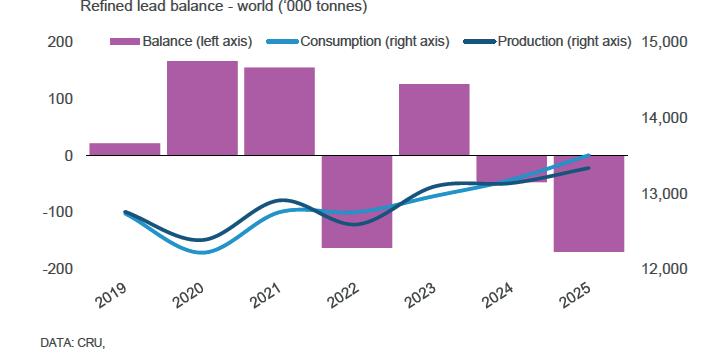
Chart 2: Deficit deepens on Chinese production cuts Data: CRU
The global energy transition remains underway, although its pace may be slowing due to economic and logistic headwinds. Multiple battery
toward lead batteries within the energy transition remains cautious, which caps near-term price upside, though there are signs it may be improving. Steady demand and wellestablished infrastructure continue to reduce downside price risks for lead.
The global energy transition remains underway, although its pace may be slowing due to economic and logistic headwinds. Multiple battery technologies will likely be required to meet diverse use cases. Lead batteries may continue to play a role given their existing infrastructure, reliability, and established applications. However, growing competition could challenge lead’s market position. Ultimately, the future role of lead will hinge on market dynamics, technological advances, and policy decisions.

James Griffiths is a key member of CRU’s markets and forecast team and a major contributor to the company’s lead market analysis. He is the lead and editor of CRU’s Lead Monitor and Lead Market Outlook, providing in-depth insights into the lead market.























EnerSys has announced a $1 billion increase to its shares buyback program to be completed over the next five years.
The lead and lithium battery giant announced the board’s authorization for the program, along with a quarterly dividend increase of 9%, on August 6.
The move came just days after Batteries International reported EnerSys was cutting 575 non-production jobs as part of a restructuring plan aimed at securing $80 million in annualized savings.
On the new stock buy-back program, EnerSys said repurchases would be made from time to time on either the open market
or through privately negotiated deals.
EnerSys said the timing, volume and nature of share repurchases would be at the sole discretion of its management, dependent on market conditions, applicable securities laws, and other factors, and may be suspended or discontinued at any time.
The company said it could give no assurance that any particular amount of common stock would be repurchased.
In a related August 6 announcement, EnerSys reported increased first-quarter revenue for fiscal 2026, buoyed by the firm’s acquisition of portable power firm Bren-Tron-
ics, strong datacenter demand, and a rebound in the US telecoms market.
Revenue rose 4.7% yearon-year to $893 million. Adjusted diluted earnings per share was $2.08, up 5% from the previous year. However, basic earnings per share, excluding tax credit benefits, fell 6% to $1.11.
Chief financial officer, Andrea Funk, said the first quarter had been hit by tariff-related delays in customer purchasing, such as in the forklift and transportation markets, plus foreign exchange pressures.
EnerSys president and CEO Shawn O’Connell said earnings growth, strong cash flow and a solid
balance sheet enabled the firm to continue investing in long-term growth while returning more capital to shareholders.
He said the stock repurchase authorization reflected the firm’s belief in the value of the company and its growth trajectory.
“At the same time, we are committed to maintaining a competitive dividend that grows with our earnings, excluding the effects of 45X (federal clean energy tax) benefits. During this period of macro uncertainty, we intend to keep our leverage below the low end of our target range, retaining a prudent level of dry powder for future capital allocation optionality.”
Asia-based battery giant Leoch is mulling a possible expansion of production at its Mexico plant even before it opens — plus a potential new factory in the US.
Company chairman Dong Li revealed on August 29 the company had launched feasibility studies on the capacity expansion in Mexico, which is set to start-up in the fourth quarter of this year.
The possible opening of a US plant could underpin the long-term development of business in the American market, but Leoch did not disclose potential battery-making capacities for Mexico or the US.
The studies were announced as Leoch posted interim results for the six months ended June 30 showing a fall in profit of more than 71% compared to the same period last year — which was in line with a profit warning issued earlier this year.
However, Leoch’s network power battery business accounted for nearly 41% of the group’s
total sales during the period, with sales revenue of Rmb3.4 billion, representing a 9.4% year-onyear growth over the same period last year.
The increase was mainly driven by the rising demand for UPS batteries in datacenters as a result of the growth in cloud computing, 5G networks and digital transformation initiatives.
Leoch said it continued to have a solid presence in the datacenter and other
Microporous has marked the formal opening of its new lithium ion battery separator manufacturing line in Tennessee with a ribbon-cutting ceremony.
The company announced the opening in a Facebook post on August 7.
CEO John Reeves said the line was designed to manufacture battery separators for EVs and backup power, in support of green energy and reducing emissions.
Batteries International reported last January that
areas of the network power battery market, offering high-quality lead acid and lithium ion batteries tailored for critical power backup applications.
Looking ahead, the company expects demand for lead-acid batteries in UPS applications to grow as the global dependence on digital infrastructure expands.
Sales revenue of the SLI battery business, the second largest revenue contributor to the group, accounted for
Microporous had been awarded a $100 million US federal grant for its ultra-thin, coated wet-process polyethylene (PE) lithium battery separator facility.
Reeves said the company had started looking into the expansion nearly three years ago, Reeves said. The Microporous board gave the green light to fund the project around a year ago.
“Our long-term investment for green energy is about $1.3 billion, and
37% of overall sales with Rmb3.1 billion, representing a year-on-year growth of 9.6%.
Leoch said the increase was mainly driven by increased vehicle production, especially in emerging markets like India, Southeast Asia, and South America.
The group’s recycled lead business posted sales revenue for the period of Rmb1 billion, which was a yearon-year increase of nearly 47%.
this is the first step in this investment.
“This is a full manufacturing line, representing over $20 million in investment, and when it’s fully up and functional, it will represent about 50 new really good jobs for this area.”
Board member Ray Desrocher said further investment is being made in Danville, Virginia, where the company is building its high-volume coated PE lithium battery separator production in Virginia.
Exide Technologies confirmed in October it is pushing ahead with its closure of a lead battery production plant in France.
A company spokesperson said it was actively seeking unspecified ‘industrial players’ interested in establishing operations at the site in Lille.
The move comes just weeks after Ecobat announced it was halting its battery recycling and speciality lead manufacturing operations in France, followed by the sale of its
lead battery and polypropylene recycling operations in Italy.
Exide had already said in June that it planned to cease operations in Lille following a “thorough review of the economic realities, market attrition, and overcapacity in the industrial traction battery industry”.
But the battery manufacturer said it was committed to the process of finding a buyer under France’s ‘Florange’ law — which requires any firm bidding to take over a site to discuss
their plans with workers’ representatives.
Bidders who refuse to divulge their plans or are later to be found to have withheld their intentions may face prosecution.
Meanwhile, Exide said it is developing a jobs protection plan that includes internal and external redeployment opportunities. This aims to help the 200 or so employees likely to be affected by Exide’s pull-out to receive support in finding new careers.
Laurent Wieczorek,
senior VP for motion and recycling said: “The battery industry is changing significantly and rapidly. The economic challenges have become increasingly difficult to overcome.
“Although this is a difficult announcement, we remain committed to transparency, social responsibility and ongoing dialogue with all relevant stakeholders throughout the information and consultation process. Our intention is to ensure a structured process.”
EnerSys has received a tax refund of around $140 million plus interest thanks to the sale of batteries.
Batteries International reported last year that the US-based firm was in line for an unexpected boost, after the federal government unveiled proposed new guidance on battery components and materials qualifying for tax credits.
Now, in a statement released on August 27, EnerSys confirmed it had received its fiscal 2024 US tax return refund of $137
million, plus accrued interest.
The refund is associated with sales of batteries EnerSys produced in the US which qualified for credits under section 45X of the Advanced Manufacturing Production Credit (AMPC) program — part of the Inflation Reduction Act.
Section 45X provides AMPCs for battery cells and battery modules produced in the US with an energy density of not less than 100 watt-hours per litre. Cred-
European metals recycling and speciality chemicals group Campine has launched a probe into the alleged resale of its products into Russia.
Belgium-based Campine, which is about to acquire Ecobat’s French battery recycling and speciality lead manufacturing operations, revealed the allegations in a statement released on August 15.
Campine, which acquired two lead battery recycling plants from French recycler Recyclex in 2022, said it was committed to ensuring compliance with applicable
laws, including sanctions and export controls laws.
“We are working with external legal counsel to address the issue, including assessing whether it is appropriate to further enhance compliance measures and what the next steps should be,” the firm said.
The company halted all sales to Russia following the outbreak of the RussiaUkraine conflict in March 2022 and said it took allegations that its products have been resold to Russia by third parties “very seriously”.
its are determined based on sales of qualifying products produced in the US from January 1, 2023 until December 31, 2032.
EnerSys had said previously that its analysis of guidance released in December 2023 by the US Treasury and Internal Revenue Service indicated the battery maker could expect annual tax credits recorded as a reduction to the cost of goods sold, and not subject to taxation, to be in the range of around $120 million to $160 million up to 2032.
Earlier in August EnerSys announced it was to cut 575 non-production jobs as part of a restructuring unveiled on July 22 aimed at securing $80 million in annualized savings.
Shawn O’Connell, who succeeded David Shaffer as president and CEO this May, said the “difficult” decision to axe jobs — primarily in corporate and management positions — was a necessary move to stay competitive.
The cuts represent 11% of the US-based battery manufacturing giant’s non-production global workforce.
EnerSys said it expected the shake-up to be
“substantially complete” by the end of the second quarter of fiscal 2026, subject to local law requirements. Combined with other “non-headcount-related actions”, these changes are expected to result in about $80 million in annualized savings starting in fiscal 2026.
EnerSys said the estimate comprises around $70 million in savings, representing a reduction of over 10% of the company’s fiscal 2025 operating expenses, as well as an estimated $10 million reduction in the cost of goods sold.
The firm expects to realize about $30 million-$35 million of savings in fiscal 2026, with material benefits beginning in the third fiscal quarter.
The company revealed this May that its stock lost and regained $900 million in the marketplace over a three-month period amid the recent flurry of US trade tariff announcements.
That came after EnerSys announced the closure of its flooded lead acid battery manufacturing facility in Monterrey, Mexico and a production switch to its existing Kentucky plant, while expanding capacity in the US and Europe.
International press conference on a unique form of alternative energy
Andy Shih, head of the LumiFusion Green Energy research team, will present a talk and proof of concept experiment to demonstrate the potential of Mt Fuji’s volcanic rock to become one of the cleanest, renewable energy sources in the new era.

This revolutionary technology, developed by the LumiFusion Green Energy research team, is ready to bring innovative solutions to the global energy crisis and climate change.
Since 2017, the LumiFusion research team has discovered that the environment in which the Earth’s matter exists is full of diversified energies, and it has actively sought ways in which to effectively use these energies.

Location: Marriott Hotel, Osaka, Japan
Date: December 12, 2025. Time: 14:00
For further information please contact: Amanda Chiu: actwgb@gmail.com


Lead acid batteries will continue to be the mainstay of GS Yuasa’s global business beyond the next decade, the corporation’s president has said.
Takashi Abe, who was appointed president last year, said in a report released on September 30 the Japan-based battery giant expected demand for lead acid to remain strong, “at least through 2040” — continuing to provide a solid foundation for business performance.
The report, which covered the fiscal year ended last March, said demand for automotive lead batteries should remain steady and centered on the replacement market.
Considering current demand trends and advantages in cost and recycling, Abe said Yuasa forecasts that demand for automotive lead batteries will
remain at around 90% of current levels even in 2035.
Similarly, demand for motorcycle lead-acid is expected to continue expanding, particularly in the ASEAN region.
“In Japan, we are actively advancing our business continuity plan to build a system capable of manufacturing products of the same quality at any of our manufacturing sites in eastern, central, or western Japan, so that customer production lines will not be stopped under any circumstances, including disasters.”
Abe revealed that the company is also considering a fresh investment boost in production overseas, “as an option to further strengthen our market position”.
Abe said in fiscal 2024, the second year of its sixth mid-term management plan, operating profit
exceeded both the initial target and the upwardly revised target, marking the firm’s third consecutive year of record-high profits.
Profit before amortization of goodwill, which had remained at the JPY 20 billion ($131 million) level through fiscal 2021, rose to JPY 30 billion the following year, JPY 40 billion in 2023 and JPY 50 billion in fiscal 2024.
“This is evidence of our performance improving steadily, step by step,” Abe said.
However, Abe warned that current US trade tariffs were “shaking the global economy”. But as Yuasa’s business centers on local production for local consumption, he said the impact of tariffs would be limited.
Nevertheless, there is some risk of a fall in exports from Japan and Southeast
InoBat secures €55m loan and grant deal for Spanish gigafactory
The Spanish government said on September 8 it had awarded Slovakian EV batteries developer InoBat a grant of €54 million ($64 million) and a loan of €456,000 to set up a gigafactory in the country’s northwest.
InoBat has indicated previously that the plant, in Valladolid, will need an investment of more than €700 million to produce its lithium-based EV batteries. The gigafactory is
Energy Vault said on August 7 it had entered into an exclusivity agreement for a $300 million preferred equity investment to launch a subsidiary focused on developing, building and operating energy storage systems.
The proprietary battery,
expected to be operating by 2027 with a production capacity of 32GWh and to ramp up further by 2029.
The industry and tourism ministry said it has awarded a total of nearly €2.5 billion to date to 300 companies involved in the rollout of electric and connected vehicles.
Other companies to benefit from support for projects in the country have included PowerCo, Stellantis and Renault.
gravity and green hydrogen ESS company said the new Asset Vault subsidiary would accelerate 1.5GW of energy storage projects globally.
Asset Vault will consolidate Energy Vault’s growing portfolio of contracted and operational storage projects, the firm said.
Asia to the US.
Abe said the worldwide downturn in sales of EVs and a slump in the lithium market had been felt by the corporation.
He said Yuasa was seeing a decline in sales and profits for automotive lithium ion batteries, which meant improving profitability in that sector would be a “challenge” for the foreseeable future — revising forecasts made earlier this year.
ExxonMobil acquires Superior Graphite to enter battery anodes market
Oil and gas major ExxonMobil has acquired privately-owned US-based Superior Graphite for an undisclosed sum.
In September 2023, InoBat formalized a collaboration agreement with Echion Technologies to study how Echion’s niobium-based XNO anode material could boost battery performance.
InoBat said then it was about to start R&D into using XNO, which it claimed could lead to lithium ion batteries that deliver high power across a cycle life of more than 10,000 cycles.
Within the initial $300 million investment, Asset Vault is expected to generate more than $100 million in recurring annual EBITDA in the coming three to four years as a consolidated subsidiary — in addition to Energy Vault’s existing ESS business.
Exxon confirmed on September 9 that it was acquiring key assets and technology of Superior Graphite, ahead of the fossil-fuel giant’s planned entry into the battery anode graphite market.
Synthetic graphite powers EVs and BESS systems and Exxon said the move marked a major milestone in its strategy to build a robust, synthetic graphite supply chain in the US.
Exxon said it believed synthetic graphite can play a critical role in the energy transition and the firm expects the demand for higher performance batteries will continue to grow, increasing demand for higher performance graphite materials.
The company said synthetic graphite was a game-changer because, compared to traditional mining operations, it is less labour-intensive, more consistent in quality, and can be made with carbonrich feedstocks from Exxon’s existing refining streams.
Switzerland’s SUSI Partners is to be acquired by UK-based Gresham House Holdings for an undisclosed sum, in a move aimed at expanding investment in the global BESS and energy infrastructure markets.
The energy sector-focused investment firms said on September 19 SUSI’s investment strategies, products, and portfolio management teams will be combined with Gresham’s UK-focused BESS-led energy transition infrastructure division.
This will more than double the division’s size to around €3.1 billion ($3.8 billion) in assets under management. On completion of the deal, the newly combined division will be led by SUSI’s CEO, Marco van Daele.
SUSI’s portfolio management leads and teams will manage the firm’s existing equity, credit, and Asia
strategies, while Gresham’s UK-focused strategies will continue to be managed by the firm’s team.
Gresham CEO Tony Dalwood said global investment in the energy transition reached a record $2.1 trillion last year and would need to rise to $5 trillion annually by 2035 to achieve net zero emissions by 2050.
“The acquisition of SUSI Partners will strengthen our ability to meet this demand across equity and credit, combining market-leading expertise with deep local knowledge in Europe and Asia.”
Dalwood said the deal will also expand Gresham’s geographic reach and spur a wider range of strategies, such as co-investment opportunities.
“Together, we will be better placed to deliver financial returns by investing in the global themes shaping the future.”
Swiss ‘membrane-free’ RFB tech secures pre-seed finance
Unbound Potential, a Swiss newcomer to the flow battery market, has raised nearly €15 million ($18 million) in a pre-seed financing round.
Unbound said on September 19 the financing, comprising around €8 million in non-dilutive grants and €6.4 million in additional funding, will spur development of its membrane-free, redox flow battery tech as the firm seeks to be a player in the energy storage market. It describes itself as a “platform solution, compatible with different chemical systems”.
The company will demonstrate its system in pilot projects, including a collaboration with Amazon on logistics electrification and discussions with FlexBase for Europe’s largest
Flexgen Power Systems said on August 6 it had been given court approval to acquire a substantial portion of the business of US-based BESS developer Powin.
Batteries International reported in June that Powin had voluntarily filed for Chapter 11 protection under the US Bankruptcy Code in the District of New Jersey.
Powin said the decision was part of moves to tackle financial liabilities and secure its core businesses — which would include spinning off a new business entity to encompass its existing monitoring and energy services operations.
Now BESS tech company Flexgen said it will own all of Powin’s IP, including hardware and software IP and information technology systems, plus a significant spare parts inventory.
Once the acquisition is finalized, FlexGen will support over 25GWh of
redox flow storage project.
A pilot plant is scheduled to start operations in mid-2026.
Unbound said flow battery stacks with increased liquid storage are the ideal foundation for supplying the rapidly growing demand for long-duration energy storage.
Traditional stacks rely on “fragile” 2D membranes, made of hundreds of layers that are costly to produce and difficult to scale, according to Unbound.
The start-up said it has solved this problem by eliminating the membrane entirely, “reducing the stack to just two robust parts. This radically simple design enables fast, cost-effective production using existing industrial processes — no specialized, fragile components required.”
battery energy storage systems and 200 projects across 10 countries in its portfolio.
FlexGen said it would draw on its 15 years of integration experience with over 65 configurations from 22 global vendors to support Powin customers.
FlexGen CEO Kelcy Pegler said: “This is a significant milestone, not just for FlexGen, but for the entire industry, as storage is no longer a nice-tohave, but rather, essential to meeting global energy demand and opportunities.”
In May, Powin unveiled its ‘Pod Max’, which the company said was its most powerful and energy-dense product to date.
Delivering 6.26MWh of capacity in the same 20-foot liquid-cooled container as previous models, the Pod Max offers a 25% increase in energy density over Powin’s standard 5MWh system.
Metair’s Rombat, First National, post mixed H1 results
South Africa’s Metair Investments has announced mixed results for its battery production companies Rombat and First National Battery for the first half of this year ending in June.
First Battery in South Africa posted a slight fall in sales to around 770,000 batteries over the period, compared to 786,000 in the same period last year, Metair said on August 7.
However, sales at Rombat in Romania improved by around 6% to nearly 1.5 million compared to the year-ago period.
Metair said Rombat’s performance was under-
pinned by an improvement in local automotive aftermarket and original equipment manufacturer (OEM) sales.
Meanwhile, the group said the sale last December of its Mutlu Akü Turkish lead acid operation had significantly derisked the balance sheet.
Following that sale, and the acquisition of South African car parts firm AutoZone, Metair restructured its operations into two core units — the OEM direct component manufacturing segment and the aftermarket parts and retail segment, which includes battery manufacturing.
Batteries International flew to Malta to meet a company that continues to prove that focusing on research and development is the clear path to product innovation and profits.
In diversity lies strength. It sounds like a Soviet-era catch phrase from a couple of generations ago. But in an odd way this is the only way to define Abertax, a veritable Maltese powerhouse of energy related ideas and energy storage businesses.
At the heart of Batteries International visit to the firm, there are three figures: Joseph Cilia, chairman since 2019, George Schembri, the president and Malcolm Tabone, the CEO.
The ideas man is Cilia, a university professor-turned-entrepreneur who has been connected to the firm and its founder Werner Schmidt and co-founder Martin Florin since almost the beginning, next is Schembri, now semi-retired who knows the business inside-out and has helped shape the company from 2003 when there were only five employees; and finally is Tabone who brings an extraordinary gift of converting ideas into designs and designs into manufactured products.
The first iteration of Abertax derives from when Werner Schmidt, a German businessman on holiday in the Mediterranean, had an accident and was forced to berth his yacht in the port at Valletta, the capital of Malta. He liked the island. Very much. It was 1985 and in a nod to
sentiment named his new company on his berth number in the port: 14 — sounds like Abertash in the Maltese language (but spelt with an ‘x’ at the end, hence incorrectly Anglicised to Abertax).
He set up various modest businesses there, including a small injection moulding company which started to prosper.
Two things emerged from his quality-oriented attitude and professional advice. The first was Abertax has a quality culture of testing its products that is probably second to none. The second, equally genetic in the firm’s psyche, is an obsession with being self-reliant.
With a quite extraordinary anticipation of the need for manufacturing independence, the founder of the firm Schmidt, who passed away in 2015, saw that the way forward for a small Maltese firm sitting in the middle of the Mediterranean was to be able to design and make its own products and machinery.
“We’ve been designing all our machinery in-house for at least 20 years,” says Cilia. “And then we make that machinery in-house, in our own state-of-the-art tool-shop. We are unique in our independence from the regular supply chain problems

facing the rest of the world.
“Most of the time we’ll automate as much as we possibly can. Our only exception to this is our testing regime. Quality control by both manual inspection as well as automated testing, has always been part of our regime,”
The next iteration of business came from two directions.
The first was the research expertise that Schmidt had built up with Martin Florin and Cilia. In 2005, the firm patented and started production of a capacitive sensor that is still sold across the world. Over the years, the sensor has been refined further as have the manufacturing methods. (Without going into the Japanese principle of Kaizen, continued process efficiency, is at the heart of the manufacturing mindset of the firm.)
The second direction came in the early 2000s when Tabone, a former MSc research student of Cilia — he studied under him at the University of Malta — designed electronic products suitable for lead acid batteries.
A quick tour of the operations of the firm facilities — it has one in Paola near Valletta and another in Mosta about 12km away — shows that it is still a staple of the firm.
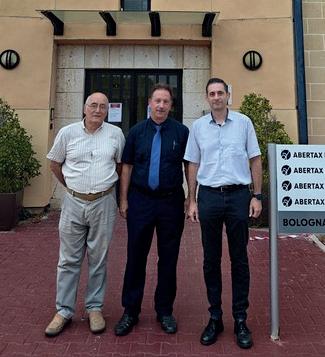
Taking Tabone’s designs in the early 2000s to their first manufacture in Paola, has now meant that millions of the product have been bought across the world.
The firm boasts that it has never had to take back a batch of any of its products.
The patented gas-release valve for VRLA batteries was one of another stable of products Abertax developed and mass produce under the guidance of Tabone. This led him to become research director for the firm and, as of six years ago, its CEO.
Cilia, Schembri and Tabone are clearly close. They sit comfortably with each other and each seem to know what the other is thinking. They boast that the tasks can be covered by more than one person to ensure reliable business continuation.
This is not to forget the importance of Klaus-Dieter Merz — best known as KD — the vice-president of technology of the firm who flits between his office and home in Buedingen in Germany and Abertax in Malta.
KD, who has been working with all three at Abertax since 2008, is also at the very heart of the company. Now in his 70s, he has spent most of his research life in the battery business including more than two decades with Exide as a specialist in VRLA batteries.
KD has been the driving force behind the firm’s latest product, an improved manufacturing process for gel batteries. This shortens the filling time and also produces better cells. Working with Cilia, the patent was first applied for in 2014 and then accepted in 2021.
“Essentially our board and our management team spend time looking at what ideas are needed in our world of batteries and rechargeables and then we see what we can do to make things happen,” Cilia says.
The R&D of Abertax is known for its innovative edge on competitor’s products worldwide. “We spend at least 30% of our profits reinvested especially to ensure the latest technology facility and R&D,” says Cilia. “But you can’t just do R&D — you have to have the production know-how in hand as well.
“The real nitty-gritty of the improvements required is when you are producing and testing it yourself. So, if you lose that direct link with what you have designed, you lose the
opportunity to excel.”
So where next for Abertax?
The firm has a multi-focus approach with an impressive portfolio of offerings from developing, battery components and management systems, machine design services, including working on hybrid drive systems for boats, and smart energy storage systems.
‘We have to constantly change with the technology,’ says Cilia. ‘Our core strength is R&D and the ability to take a lateral look at how battery technologies work.
“Currently, for example, we are working a lot on innovative products for lithium and sodium technology. Unlike with the lead acid technology, everybody is putting the sensors and management inside as an integral part of the battery. It makes far better sense that these are easily detachable from the battery so that when it goes for re-use or scrap it can be easily separated.
“There’s a whole world of opportunity when you revisit a product and look at it from a different perspective.”
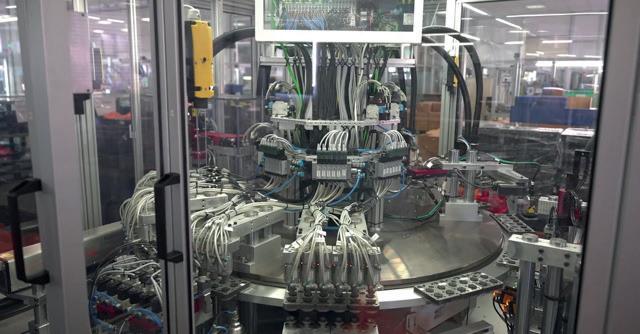
Where is Abertax positioning itself in terms of sodium-ion batteries? What kind of future do you anticipate for the chemistry?
Sodium looks set to kick off now. Its most basic advantage is that it doesn’t depend on minerals that are being fought over politically. However, our main focus is its potential to replace lithium ion for material handling applications and as a possible energy storage for the future. This means, we’re using the innovative designs that can be suitable for both sodium and lithium, trying to work out where improvements can be made.
We’ve just applied for funding in collaboration with the University of Malta to investigate a whole range of interesting possibilities that could come, including the possibility of producing raw materials for sodium ion batteries on Malta.
For the moment, sodium ion batteries are not competitive in comparison with lithium ones, both in terms of price and power. But I don’t believe that will last.
Already CATL are talking about an
energy density of 170Wh/Kg which is equivalent to that of LFP batteries. Once that is proven to happen, we’ll see a shift away from our present usage of lithium-ion ones.
And let’s not forget many of the chemistry’s other advantages over lithium. It’s not just that they’re not volatile or dangerous like lithium, though that’s important. They also have a huge transportation advantage and should eventually not be considered as dangerous goods.
Sodium batteries can be safely transported especially when discharged. They can be transported and stored at zero volts without damage or degradation; there’s virtually no handling risk and that’s another cost-saving. With lithium the chemistry is most stable at around 30% state of charge so they are all shipped at this level but the safety risk is still there especially with the NMC technology. A small island such as Malta could even become a huge manufacturing hub. And of course, we have sodium in abundance — here we’re surrounded by salt from the Mediterranean!
The Democratic Republic of the Congo’s decision to lift a blanket ban on cobalt exports in October is unlikely to reverse the sluggishness in the global EV market — where the focus will continue to shift to LFP batteries — and could fuel further price uncertainties, say analysts.
The major policy switch by the world’s top cobalt producer, which accounts for more than 70% of global supply, will see the introduction of a quota-based system from October 16.
According to DRC’s Strategic Minerals Market Regulatory and Control Authority (ARECOMS), between October 16 and December 31 a maximum volume of 18,125 tonnes of cobalt will be authorized for export, with 3,625 tonnes permitted in October, 7,250 tonnes in November and a further 7,250 tonnes in December.
From January 1 through to the end of 2026, a maximum volume of 96,600 tonnes of cobalt will be authorized for export.
Cobalt lead at research consultancy CRU, Thomas Matthews, told Batteries International on September 25: “At the start of this year, cobalt metal prices were at the lowest levels on record in real terms.
“Ultimately, what they wanted to do was improve the price, given that they receive royalties on the cobalt hydroxide that they export. Also, they want to do more processing within the DRC, publicly stating that they are taking back control of their resources.”
Another analyst said the move could also be a targeted attempt by the DRC to push back at the world’s largest cobalt mining firm, China Molybdenum (CMOC), which is part-owned by Chinese EV battery major CATL. In the past couple of years, CMOC has increased the amount of cobalt that it has been producing — one of the reasons why the price has tanked (along with falling demand).
Quotas will be allocated to companies based on historical exports, but it remains unclear who will get what. Using 2024 as the base year would favour CMOC, the world’s largest miner. But 2023 or earlier would mean larger shares for other producers such as Glencore and ERG.
“I can say definitively that we’re going to see midstream inventories being drawn down over the next year or two, at the expense of real cobalt consumption.”

Meanwhile, Indonesia is becoming an increasingly key cobalt supplier, and the DRC’s move could give Jakarta an important foothold.
However, Matthews agreed with suggestions that none of this was likely to reverse the slump in the EV market any time soon.
Separately, Sweden-based African Security Analysis warned on September 25 that the DRC’s decision would usher in new uncertainties and could pressure non-compliant or foreign actors into aligning with Congolese
Meanwhile, Indonesia is becoming an increasingly key cobalt supplier, and the DRC’s move could give Jakarta an important foothold.
industrial policy.
Risks could include corruption in quota distribution and fuel smuggling of raw material across porous borders, especially through Rwanda and Zambia, ASN said.
The quota regime will also complicate supply security strategies, reinforcing the urgency of direct partnerships with the DRC.
Meanwhile, ASN said automakers dependent on cobalt-heavy chemistries may accelerate diversification into alternative chemistries, such as LFP, or manganese-rich varieties, but most remain tied to Congolese supply for the foreseeable future.
Batteries International reported last
July that the Ultium Cells battery joint venture in the US was upgrading its facility in Tennessee for the production of LFP cells.
The General Motors and LG Energy Solution joint venture said conversion of existing battery cell lines at the Spring Hill site would start this year, with commercial production expected by late 2027.
GM’s VP of batteries, propulsion and sustainability, Kurt Kelty, said the move was to take advantage of lowercost LFP cell technologies.
The DRC indicated in 2024 that it was tightening its grip on cobalt, when state-owned miner Gecamines refused to approve the sale of cobalt miner Chemaf and its Congolese assets to Chinese miner Norin Mining.
Chemaf leases the permit for its flagship Mutoshi project from Gecamines, which said in a statement it had the right of approval of the ownership transfer and that its board had voted to reject the deal. Chemaf is apparently close to going bankrupt unless sold soon according to a recent Bloomberg news piece.
Batteries International reported in March 2024 that US lead miner and recycler, the Doe Run Company, had been awarded a $7 million federal contract to build and commission a demonstration plant for the production of cobalt and nickel critical to the nation’s battery manufacturing sector.
Under the Doe Run Technology Investment Agreement with the Department of Defense, the plant will be built at the company’s technology center in Missouri to show it can extract cobalt and nickel from its existing mining operations
Nyrstar has secured a cash injection of A$135 million ($88 million) to continue critical metals processing in Australia. This includes accelerating development of an antimony and bismuth facility as well as scheduled maintenance at its lead and zinc refining operation in Port Pirie.
The “transitionary support” deal, backed by Australia’s federal government and the South Australian and Tasmanian state governments, comes after Batteries International reported in June that Nyrstar was seeking help to support operations in the
country amid worsening conditions in global raw material markets.
Nyrstar said the studies will consider what is needed to modify its operations to produce antimony and bismuth in Port Pirie and germanium and indium in Hobart. The focus will initially be directed towards accelerating an antimony pilot plant in Port Pirie.
Antimony is an alloy hardener for other metals in ammunition and batteries and is critical to the manufacture of semi-conductors and important for the lead battery industry as a key performance ingredient in
deep cycle lead batteries.
Nyrstar formally announced the package on August 5. Together with investments from owner Trafigura, the company said the support will help maintain operations “while progressing engineering planning to allow assessment of a significant rebuild of its Australian smelters”.
The company will also fast track feasibility studies into critical metals production.
Nyrstar Australia chief executive Matt Howell said: “Port Pirie and Hobart represent a key part of Australia’s metals process-
ing infrastructure. Through this partnership, Australia is demonstrating that it is at the forefront of taking meaningful steps to retain nationally strategic smelters and partner with industry to provide urgent shortterm support, as well as work on solutions for their long-term viability.”
As Australia’s only lead refiner and the largest zinc refiner in the country, Nyrstar contributes around A$1.7 billion to Australia’s economy each year and employs 1,400 Australians directly, while supporting more than 6,600 indirect jobs.
The EU has announced a fresh €1.8 billion ($2.2 billion) bid to protect the bloc’s nascent EV battery industry from being overrun by global competitors — as latest analysis suggests the move could be too little and too late.
European Commission president Ursula von der
The discovery of major lithium reserves in Germany could be a turning point in reducing Europe’s reliance on external material supplies for EV battery manufacturing, Neptune Energy said on September 24.
Hanover-based Neptune, an energy and raw materials supplier, said latest studies conducted showed the size of the proven Altmark deposit, in the state of Saxony-Anhalt, amounted to 43 million tonnes of lithium carbonate equivalent.
A second pilot test for direct lithium extraction, with technology partner Lilac, was also completed
Leyen said in her state of the union address on September 10 the ‘battery booster’ package would be muchneeded “equity” to boost production in Europe.
The announcement came less than a year after the Commission unveiled a €4.6 billion investment boost for a range of technologies
in August. Neptune said battery-grade lithium was produced from the deep water of the Altmark with the help of an ion exchange process.
A third pilot test has been underway since mid-September in order to technically evaluate an adsorption process.
The pilot phases will be followed by a demonstration phase, in which the use of a fully integrated extraction plant will be tested as the next step towards commercial production.
These subsequent steps will require various additional permits. Never-
including EV battery cell manufacturing, in addition to a €200 million loan guarantee.
However, a report released earlier in September by Deloitte — ‘European Battery Sovereignty, Towards Greater Competitiveness’ — warned the continent’s heavy reliance on
theless, Neptune said the discovery “means that northern Saxony-Anhalt is home to one of the largest project-related lithium resources in the world”.
Neptune CEO Andreas Scheck said the discovery had the potential to make a significant contribution to the German and European supply of a raw material critical to the manufacture of EV batteries.
Altmark is a traditional energy and raw materials region and has been a center of natural gas production since 1969 by Neptune and various predecessor firms.
Asian battery manufacturers poses growing risks to its automotive industry.
Battery production, despite its importance, does not yet play a major role in Europe and, in the global race, it remains a relatively small player compared to other regions, the report said.
In 2024, around 70% of the global supply of battery electric vehicle cells for light vehicles were produced in China. By comparison, Europe accounted for only 13% that same year.
“Although this figure is already relatively low, it still misrepresents the continent’s industrial strength: 97% of this production capacity in Europe, valued at approximately 94GWh, is controlled by non-European companies, mainly Chinese and South Korean manufacturers.,” said the report.
“Only one EU-based player managed to produce a limited volume of battery cells in 2024, and these were largely used for their own vehicle brands.”
The US government is calling for lead be added to the nation’s list of critical minerals.
The Department of the Interior proposal, made through the US Geological Survey (USGS), was announced on August 25.
The new draft 2025 list of critical minerals aims to guide federal strategy, investment, and permitting decisions to boost the economy and protect national security.
A total of more than 50 mineral commodities are included in the draft list — also including silicon and copper — which was posted in the government’s official journal, the Federal Register, on August 26 for a 30-day public comment period.
USGS acting director Sarah Ryker said minerals-based industries contributed over $4 trillion to the US economy in 2024.
Battery Council International said it strongly supported the proposal to
designate lead as a critical mineral.
The North American lead battery industry is thriving, but a deficit in locally available materials means there is still a reliance on imports, according to Battery Council International.
The warning comes as the US government is calling for lead be added to the nation’s list of critical minerals, as Batteries International earlier had reported.
BCI president and executive director Roger Miksad said the trade body is proud of the lead battery industry’s recycling record and closed-loop process.
However, Miksad said there is still room for improvement. “Increased recycling capacity would keep used battery materials onshore, and reduce the need for imports of both primary or secondary lead to meet North America’s growing energy storage needs.”
According to BCI, the
North American battery market sources about 90% of lead from domestic sources. The remainder, roughly 177,000 tonnes of lead, must be imported from elsewhere in the world.
Recent trade disruptions are expected to cause nearterm uncertainty around imports.
However, as of the end of 2024 there remained a close partnership between lead suppliers and battery companies in the US, Mexico and Canada to service continent’s battery needs.
Outside of North America, the largest exporters to the US at present include Australia and South Korea, but when considered in the broader context of the roughly two million tonnes of lead that is required, these jurisdictions are not significant sources of overall US lead supply, BCI said.
“Lead batteries play a critical role in the US economy by starting cars and
Indonesia plans to import EV battery materials from Australia because of soaring transport costs in sourcing materials from Africa.
Indonesia’s energy and mineral resources minister, Bahlil Lahadalia, said on August 5 the move was needed to ensure raw material supplies for Indonesia’s nascent EV battery manufacturing sector, the country’s Antara news agency reported.
Lahadalia said developing an EV battery ecosystem was one of the government’s priorities and would require increased imports of materials such as nickel, manganese, cobalt, and lithium.
“One of the countries we will collaborate with is Australia. All this time, we brought things from Africa.”
Lahadalia said it would be more cost effective to switch to taking imports from Australia.
According to Antara, Indonesia’s deputy coordinator of the task force for downstreaming and national energy security acceleration, Dimas Muhamad, said the country was still reliant on collaboration with foreign investors and foreign technological capabilities.
Indonesia’s ambition to
trucks, power forklifts, providing critical telecom backups, and supporting our power grid,” said Miksad.
“Meeting consumers’ needs requires manufacturers to have reliable access to raw materials, and in particular lead metal, which has been under growing pressure for more than 20 years, with domestic metal demand outstripping supply.
“Designating lead as a critical mineral will help ensure the battery industry has the raw materials it needs to keep America running.”
According to the BCI, the US lead battery industry employs more than 106,000 workers across manufacturing, recycling, transportation and distribution, and other fields.
The broader downstream impacts of the domestic battery industry support $10 trillion in US economic output, with over 54 million jobs related to or reliant on batteries.
become an EV battery manufacturing hub in Asia was dealt a major blow in April, with LG Energy Solution’s withdrawal from a partnership project.
Fathul Nugroho, deputy chairman of the Indonesian Energy, Mineral and Coal Suppliers Association, confirmed then that the South Korean battery giant had withdrawn as leader of a consortium for the so-called Titan project. However, Indonesia kick-started construction of an EV battery ‘mega project’ in West Java in July, backed by a combined investment worth around $6 billion.
Jordan Geist, VP of the metals division at East Penn Manufacturing, said: “There are many reasons why battery recycling capacity and lead production has not kept up with the growth in domestic battery manufacturing, including unique regulatory challenges as well as commercial concerns.”
Battery recyclers and lead producers understand the urgent need to protect US supply chains and support the nation’s future demand, Geist said.
Jeremy Furr, senior VP of strategic sourcing for Stryten Energy, said: “The US is heavily dependent on imports for a vast range of critical minerals that are essential to our economy and national security, including the lead used in batteries.”


Our genuine system - your first choice


• Highest quality
• Constant improvement
• Excellent performance
• Reliable service
bfs batterie füllungs systeme GmbH info@bfsgmbh.de
Over 40 years of developing and perfecting battery filling products allow us to provide you with the most reliable system focusing on innovation and usability – a valuable contribution to an extended battery lifetime.
Mitterweg 9/11 | 85232 Bergkirchen | Germany bfsgmbh.de | +49 8131 36400
I Squared Capital is acquiring a majority equity stake in ENTEK Technology Holdings the lead and lithium battery separator firm, for $800 million.
“The investment will fund construction of a gigafactory in Terre Haute, Indiana — the only facility in the US producing wet-process lithium-ion battery separators,” said the two firms in a joint statement released on September 17.
I Squared’s investment complements a loan from the US Department of Energy’s Advanced Technology Vehicles Manufacturing (ATVM) program of up to $1.3 billion.
With initial funding already provided, these combined investments underscore the importance of strong public-private collaboration in securing US, domestic manufacturing of strategic technologies, said the statement.
I Squared is a global infrastructure investment firm with some $50 billion of funds under management.
Vast swathes of the battery industry are now owned by institutional investment firms. In no
particular order, Clarios is owned by Brookfield Business Partners, Stryten by Atlas Holdings, Ecobat has been owned by private equity firm Endless since this June, Trojan/C&D Technologies is owned by KPS Capital. Microporous has been part of Trent Capital since February last year. Fiamm Energy Technology, as agreed this August, is being acquired by the global private equity investor Aurelius from the Japanese company Resonac Holdings Corporation.
It is known that at least three other battery manufacturers have been put up for sale in the past three years.
“The issue for the battery industry as a whole,” says one commentator, “is to work out what the tactics of these types of investors will be. Are they trying to flip the acquisition in a couple of years or are they positioning themselves as long-term players?
“If they are looking to hold a short-term stake — venture capital firms typically look for profits of a multiple of at least three times when selling in a three to five year window — then one can
Fiamm Energy Technology, the Italian automotive and industrial lead battery business subsidiary of Japan’s Resonac, is to be sold to global private equity investor Aurelius.
Resonac CEO Hidehito Takahashi confirmed on August 1 that the company had entered into a definitive sale and purchase agreement with the special purpose vehicle Aurelius Investment Lux Sixteen.
Financial details of the deal were not disclosed.
Aurelius said it sees untapped growth potential in Fiamm as an important player in the global energy transition, building on the business’ strong brand and strategic positioning in its core markets.
expect cost slashing and redundancies.
“If it is as a longer player then the change of management style may be more strategic — such as looking for accelerated growth and market positioning rather than focused on cutting costs.”
Gautam Bhandari, managing partner for I Squared Capital, said: “ENTEK exemplifies the type of critical, high-growth infrastructure platform that we seek to scale. ENTEK’s revenues are underpinned by long-term agreements with blue-chip clients, and its products are essential to US re-industrialization and energy security.
“With DOE support and rising demand in EVs, energy storage, and defence, ENTEK is uniquely positioned to deliver sustainable growth for our investors and the US economy.”
Supported by Endeavour Capital and Joshua Green Corporation’s investment in 2019, ENTEK has grown its operations across eight countries and is the only company to have expanded the application of advanced materials to include all battery separator types, including lead acid,
Aurelius’ in-house operations advisory team, ‘WaterRise’, will support the company with bespoke advice throughout its transformation to boost production quality and product performance, the group said.
The sale is expected to close in the fourth quarter of this year, subject to various regulatory and other approvals.
Growth sectors for Fiamm include infrastructure investments such as datacentres, Aurelius said. The investment giant pledged to support the battery manufacturer in “identifying new market potential, expanding its core business and strengthening its global footprint”.
Fiamm had revenues of €377 million in 2024. The business operates two sites with just over 1,000 employees.
lithium, and other emerging energy storage technologies.
Larry Keith, CEO for ENTEK, said: With I Squared’s capital, strategic expertise, and global network, we will expand the US’s manufacturing footprint, create high-quality jobs, and meet surging demand for batteries across critical applications, from EVs and energy storage to military defence equipment and data centers.
The Terre Haute, Indiana project, which will be executed in partnership with Clayco as the EPC contractor and Brueckner Group, will produce 1.4 billion square meters of wet-process lithium-ion battery separators annually in its first two phases and is designed to expand to 2.1 billion square meters.
“The investment,” said the joint statement: “will position ENTEK as the only scaled, US-based supplier able to meet the sourcing requirements for battery manufacturers to receive 45X production tax credits and comply with the content requirements under the Inflation Reduction Act (IRA), as amended by the One Big Beautiful Bill Act (OBBBA), which reduced the allowance for Chinese materials — including separators.
“ENTEK’s product will provide a significant advantage to battery manufacturing customers seeking credits under the OBBBA.”
In addition to the DOE’s up to $1.3 billion ATVM loan, the project has secured more than $200 million in 48C advanced manufacturing tax credits for Phase One of the project and will be eligible for ongoing 45X production tax credits in Phase Two.
A definitive agreement has been signed and the transaction should close following regulatory approvals.
EV motorists cannot always depend on vehicle manufacturers’ lab tests in terms of battery performance, according to new independent analysis by the Australian Automobile Association.
The AAA said in an August report released on tests of five EVs under its ‘real-world testing program’ found their driving range was between 5% and 23% less in real driving conditions than recorded in mandatory lab tests by automakers.
The program was the first to assess whether Australian EVs travel as far on a single battery charge as advertised by vehicle manufacturers.
Potential EV buyers now have an independent indication of real-world battery range to help them understand which cars perform as advertised and which fall short, the association said.
According to the AAA, 60% of respondents
surveyed late last month who identified as likely EV buyers said vehicle range and recharging were the main concerns or hesitations that might prevent them from choosing an EV (not a hybrid) for their next car purchase.
The first EV tests found the 2024 Smart #3 EV performed closest to its lab test result with a realworld driving range of 432km, equating to 5% or 23km less than recorded in its mandatory laboratory test, the AAA claimed.
Meanwhile, the 2022 Kia EV 6 and the 2024 Telsa Model Y both had driving ranges of 8% less in the real-world tests than recorded in lab tests, while the 2024 Tesla Model 3 had a real-world range of 441km on a full charge, 14% less than the 513km achieved in the lab.
According to the AAA, the 2023 BYD Atto 3 recorded the largest variation from its lab test —
with a real-world range of 369km on a single charge, some 23% less than the 480km recorded in its laboratory test.
To date, the program has released results for 114 internal combustion engine and hybrid vehicles, with 77% of these cars exceeding the fuel consumption recorded in lab tests, and one in five also exceeding noxious emissions limits applicable to lab tests.
The program was launched in 2023, backed by AU$14 million ($9 million) of national government funding. The move came in the wake of the Volkswagen scandal of 2015, which demonstrated that regulation of vehicle emissions incentivized carmakers to optimize their vehicles for performance in the lab, rather than in the real world.
Under the program, cars were tested on a 93km circuit in the state of Victoria using what the
AAA said were strict testing protocols based on European regulations “to ensure results are repeatable and to minimize the influence of human factors such as driving style and changing traffic flows”.
Testing measured EV range by quantifying both the energy needed to drive a vehicle around the test route and the energy needed to recharge each vehicle’s fully depleted battery.
The program also measured each vehicle’s energy consumption to determine the cost of operating the vehicle, and which carmakers are legally obliged to report at point of sale.
AAA managing director Michael Bradley said the initiative showed consumers could not always rely on a carmaker’s lab tests as an indicator of real-world performance.
The findings will bring confidence to Australian fleets and families looking to buy an EV, Bradley said.
North America’s virtual power plant market grew by nearly 14% over the past year to 37.5GW of behindthe-meter flexible capacity, according to latest industry analysis.
Many in the energy storage industry see VPPs, especially smaller decentralised ones, as the next step forward in the energy transition,
Wood Mackenzie said in a report, released on September 17, the VPP market broadened more than it deepened, with the number of company deployments, unique offtakers, and market and
utility programs monetized each growing more than 33%.
However, the share of VPP wholesale market capacity from residential customers increased by just over one percentage point to 10%, reflecting continued market barriers to small customers.
According to the report, third-party data access for enrolment and market settlement are the primary blockers.
Meanwhile, the penetration of battery storage and EVs in VPP deployments continued, with 61% as many deployments includ-
ing these technologies as those including smart thermostats, the incumbent technology.
California, Texas, New York, and Massachusetts were the leading states, representing 37% of VPP deployments. Meanwhile, regional eastern and southern power transmission companies PJM and ERCOT, the regions with the greatest utility commitments to datacenter capacity, also had the greatest disclosed VPP offtake capacity.
The top 25 VPP offtakers procured over 100MW each over the year, while

over half of all offtakers increased the number of deployments under them by at least 30% compared to the previous year, according to the report.
Ben Hertz-Shargel, global head of grid edge for Wood Mackenzie, said: “Utility program caps, capacity accreditation reforms, and market barriers have prevented capacity from growing as fast as market activity.
“While datacenters are the source of new load, there’s an enormous opportunity to tap VPPs as the new source of grid flexibility.”



























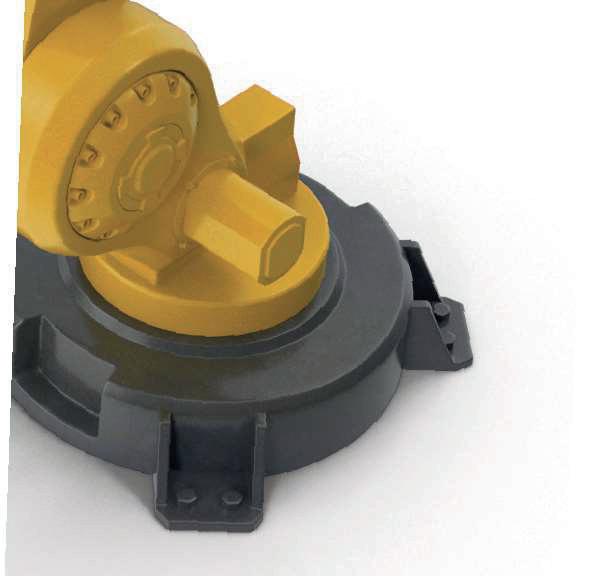

China is on course to open up a new route in the global race for EV market dominance — steering away from price wars to innovation, according to a new report.
China needs to avoid involution, where excessive competition leads to diminishing returns, says the report — ‘Value over volume: anti-involution to revitalise China’s EV and battery supply chain’ — released by Wood Mackenzie on August 22.
Yingchi Yang, research analyst at Wood Mackenzie, said: “The government is taking a more nuanced approach for EVs, combining market-driven
adjustments with regulatory guidance to eliminate low-quality capacity while preserving the sector’s growth trajectory.”
Fellow research analyst Alasia Zhang said with automotive margins having fallen to just under 4% in the first quarter of this year and EV prices dropping nearly 6% year-onyear, these measures aim to stabilize profitability and redirect capital toward high-tech areas such as solid-state batteries, vehicle intelligence, and autonomous driving technologies.
The report also forecasts looming severe overcapacity in the battery sector with industry-wide capacity
utilization at just 41%.
Unlike the heavy-handed steel sector reforms of 2015-2016, China’s EV anti-involution strategy emphasizes market forces over mandated cuts, the report said.
“This will see consolidation through new safety standards taking effect in 2026 rather than forced production reductions.”
On cathode materials, the report says responses vary by chemistry maturity. LFP cathode markets will see policy-accelerated consolidation among a highly fragmented landscape of players, with the top five producers strengthening their market control while
focusing on high-compaction-density materials.
The ternary cathode sector has already self-corrected through market forces, with the top five producers now controlling half of output.
Consolidation will come as the market shifts to highnickel chemistries for solidstate batteries.
Meanwhile, anode industry overcapacity and price declines have challenged the market since 2022, although new legislation will aim to regulate expansion and support technologically innovative companies.
And as the sector faces substantial lithium chemical oversupply, initiatives will focus on recycling investment, stricter environmental impact approvals and supply chain diversification.
China’s CATL has unveiled an LFP-based EV battery specifically targeting the European market. CATL said its ‘Shenxing Pro’, launched at the IAA Mobility expo on September 7, will be offered in two versions.
One model has a design lifetime of up to 12 years, or 1 million kilometres of use and with a claimed maximum driving range of 758km. The other is a fast-charging model, which the battery giant said can add 478 km of range in 10 minutes of charging.
Shenxing Pro, equipped with CATL’s proprietary ‘no propagation’ (NP) 3.0 technology sets new benchmarks in safety, lifespan, range, and superfast charging, the group said.
NP 3.0 is said to enable sustained high-voltage supply for over an hour post-thermal runaway, maintaining the vehicle’s speed, allowing drivers to navigate their vehicle away from danger zones without
flames or smoke.
The long-life battery, which is claimed to have only 9% degradation after the first 200,000 km, is said to be perfectly tailored to support Europe’s leasing markets.
The other model can deliver 830 kW with 0-100km/h acceleration in just 2.5 seconds even at 20% state of charge (SOC), according to CATL. The battery can maintain exceptional performance in extreme cold, achieving 410km of range in 20 minutes at -20°C.
Additionally, Shenxing
Pro incorporates CATL’s ‘wave’ cells, which feature a raised shoulder design and space-sharing technology. The group claims this is the world’s first battery that allows cooling systems and fixation to be applied from any direction. This achieves omnidirectional vibration suppression, boosting battery pack stiffness by 25% and doubling durability, while also boasting 76% pack volume efficiency.
Meanwhile, CATL said it has already invested more than €11 billion ($13 billion) in its European operations.
Analysis released by Brussels-based thinktank Bruegel last July said Europe’s superficial love-hate relationship with Chinese battery tech and EV investors risked derailing the bloc’s sustainability, economic and security objectives, and potentially harming trade with the US.
Bruegel said Chinese greenfield investment in Europe’s EV sector in 2024 was around €5 billion — more than 50% up from 2022, accounting for half of all completed Chinese greenfield foreign direct investment into Europe that year.
The EU has finalized a trade deal with Indonesia that includes access to raw materials such as nickel and cobalt vital to Europe’s battery manufacturing sector.
Under the terms of the Comprehensive Economic Partnership Agreement, announced on September
23 after a decade of negotiations, the EU said manufacturers across a variety of sectors, including battery-related industries, will enjoy stability and predictability on access to raw materials. Both sides agreed to conduct environmental impact assessments that will
ensure mining operations do not have adverse effects on the environment.
European Commission president Ursula von der Leyen said a stable and predictable supply of critical raw materials was essential for Europe’s clean tech and steel industry.
EU leaders have been urged to push ahead with urgent action to support European battery manufacturers — after being warned the industry faced costs that are some 20% higher than Asian competitors.
The call, came on September 30 at what was termed a high-level ministerial meeting of the European Battery Alliance (EBA) and the European Solar Industry Alliance in Brussels, including representatives of EU member states, the European Commission and the European Investment Bank.
Just days earlier (see story below), the EU announced a fresh €1.8 billion ($2.2 billion) bid to protect the bloc’s nascent EV battery industry from being overrun by global competitors.
However, battery industry leaders say the bloc needs to speed up and strengthen development of batteries and solar PV in the face of Asian subsidies and domestic energy costs.
The EBA said batteries represent 30%-40% of the value of an electric vehicle, making them a core driver
for Europe’s automotive sector and the millions of jobs it sustains.
Without robust domestic battery production, Europe risks depending on foreign suppliers, which could undermine its industrial resilience and economic sovereignty.
Diego Pavia, CEO of European Commission-backed clean tech developer InnoEnergy told the September 30 meeting ‘homegrown’ projects could meet a significant share of EU demand for EV batteries by 2030, but decisive, coordinated action was needed.
Urgent policies include introducing “binding resilience and local content requirements to give investors confidence that European-made products will be prioritised”.
EU leaders must ensure a level playing field with Asian competitors, addressing unfair practices and overcapacity while enabling partnerships that support Europe’s strategic interests, Pavia said.
Brussels-based thinktank Bruegel warned in July
that Europe’s superficial love-hate relationship with Chinese battery tech and EV investors risked derailing the bloc’s sustainability, economic and security objectives, and potentially harm trade with the US.
Meanwhile, Europe’s battery industry is facing a ‘moment of truth’, battery industry bosses have warned EU leaders.
In an open letter to the European Commission, the CEOs of the Automotive Cells Company (ACC), battery maker Verkor, and Volkswagen’s PowerCo battery tech firm called for immediate, targeted measures to support a rapid ramping up of battery production across the continent.
The letter, titled Who Will Make Our Batteries? Europe’s Moment of Truth, was released by the European Battery Alliance (EBA) on September 5.
In the letter, the CEOs said Europe’s battery sector did not need a new strategy — but rather a “level playing field to scale”.
The EBA said it supported the indus-
try leaders’ call for pragmatic measures to ensure Europe’s cell manufacturers can compete globally, warning: “Without decisive action, Europe risks losing its strategic autonomy in one of the defining technologies of this century.”
The EBA and industry calls follow a string of reports warning EU leaders needed to take urgent steps to defend and nurture the bloc’s battery industry in the face of intense global competition, largely Asian battery players.
A study released last July said Europe’s superficial love-hate relationship with Chinese battery tech and EV investors risked derailing the bloc’s sustainability, economic and security objectives, and potentially harming trade with the US.
Batteries International reported that month that the EU was poised to introduce new workplace exposure limits for sectors including EV battery production — despite warnings the move cost the industry €20 billion over 40 years and force plant closures.
The EU has announced a fresh €1.8 billion ($2.2 billion) bid to protect the bloc’s nascent EV battery industry from being overrun by global competitors — as latest analysis suggests the move could be too little and too late.
European Commission president Ursula von der Leyen said in her state of the union address on September 10 the ‘battery booster’ package would be muchneeded “equity” to boost production in Europe.
The announcement came less than a year after the Commission unveiled a €4.6 billion investment boost for a range of technologies including EV battery cell manufacturing, in addition to a €200 million loan guarantee.
However, a report released earlier in September by Deloitte — ‘European Battery Sovereignty, Towards Greater Competitiveness’ — warned the continent’s heavy reliance on Asian battery manufac-
turers poses growing risks to its automotive industry.
Battery production, despite its importance, does not yet play a major role in Europe and, in the global race, it remains a relatively small player compared to other regions, the report said.
In 2024, around 70% of the global supply of battery electric vehicle cells for light vehicles were produced in China. By comparison, Europe accounted for only 13% that same year.
“Although this figure is already relatively low, it still misrepresents the continent’s industrial strength: 97% of this production capacity in Europe, valued at approximately 94GWh, is controlled by non-European companies, mainly Chinese and South Korean manufacturers.,” said the report.
“Only one EU-based player managed to produce a limited volume of battery cells in 2024, and these were largely used for their own vehicle brands.”
The head of the US Environmental Protection Agency has slammed New York’s expansion of battery storage systems in the face of widespread public unease as another “delusional green goal”.
EPA administrator Lee Zeldin said on August 18 he understood concerns in the wake of widespread damage caused by lithium battery fires at BESS facilities in the US.
Zeldin said New York State officials had been
working to expedite approvals of BESS installations in densely populated areas, especially in New York City and its suburbs.
“Residents are looking across the country at dangerous lithium battery fires at BESS facilities… and they are concerned with New York’s partisan push to fill yet another delusional ‘green’ goal, which the state itself admits it cannot meet.”
A major two-day fire earlier this year at Vistra’s
Moss Landing BESS in California was among those singled out by the EPA.
Zeldin said the state’s banning of the safe extraction of natural gas, gas hook-ups on new construction, and gas stoves, while aiming to end the sale of gas-powered vehicles, continued to put the safety and well-being of New Yorkers second to its climate change agenda.
“At the very least, we want to provide all of the information we know
on BESS to utilities, first responders, permitting bodies and any member of the public who wants to get better educated on this critical issue.”
According to the EPA, 6,000 storage projects have been interconnected to New York State’s electric grid since 2019, creating about 440MW of storage capacity, with an additional 1.3GW under contract. New York’s current goal is to reach 6GW of installed storage capacity by 2030.
The UK is facing an epidemic of fires associated with battery dumping, according to the country’s Environmental Services Association.
The ESA said on September 15 that six billion batteries were thrown away across the UK last year — equivalent to 3,000 every minute.
Of these, 1.1 billion were “hidden” in discarded electrical devices like electric toothbrushes, razors,
mobile phones and electronic vapes.
The announcement came just four months after Batteries International reported UK firefighters were tackling at least three lithium ion battery fires a day, following a 93% surge between 2022 and 2024.
Now the ESA is calling for urgent reform of waste collection regulations.
When batteries, or devices containing them, are incorrectly discarded with general
Tesla has issued a recall of its Powerwall 2 lithium ion battery units in Australia amid fears over the potential risks of fires.
The Australian Competition and Consumer Commission (ACCC) said on September 16 Tesla Motors Australia had identified certain battery cells from a third-party supplier in a subset of Powerwall 2 systems that may fail and overheat.
The company said it had received reports of Powerwall 2 units with the affected battery cells smoking or emitting flames, resulting in
minor property damage.
Most affected units have already been remotely discharged by Tesla, the company said. While the risk of overheating was now very low, if it were to occur it could lead to a fire that could cause serious injury, death or damage to property.
Powerwall 2 is a fully integrated AC battery system for residential or light commercial use. The lithium battery pack provides energy storage for solar self-consumption, time-based control, and backup.
rubbish or other conventional recycling, they present a serious fire risk during the handling and onward processing of this waste material, ESA said.
Executive director Jacob Hayler said: “Waste fires caused by batteries not only endanger the lives of people working in essential frontline services but also destroy vital infrastructure, threaten the natural environment and undermine the vitality and viability of businesses involved in the UK’s circular economy — placing jobs and future investment at risk.
Hayler said ESA members have invested millions in safety measures to mitigate battery fires and limit the potential for damage, but the risks posed by carelessly discarded batteries are best addressed at the point of disposal.
This requires an urgent systemic shift in the post-consumer management of batteries and devices containing them, driven by new policy and regulation, the association said.
“The current collection system for waste electricals and electronic equipment
and waste batteries is clearly inadequate for safely dealing with the proliferation of these items today, let alone into the future.”
ESA is calling on policymakers to implement universal, producer-funded, kerbside collections for batteries and small waste electrical across England.
According to the UK’s National Fire Chiefs Council, more than 1,200 battery-related fires occurring in refuse vehicles or waste facilities over a 12-month period between 2023/24. ESA said this represented an increase of more than 70% in similar incidents from the preceding 12 months.
In June, European firms warned that insurance companies are increasingly refusing to cover waste management facilities, or hiking the cost of premiums, amid a surge in fires caused by discarded lithium batteries.
In Germany alone, waste collection trucks were being hit by up to 30 fires a day, while it was estimated that lithium batteries were the root cause of 180-240 fires annually in Austrian waste plants.

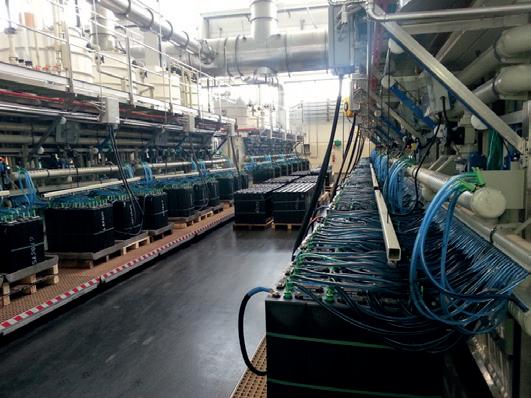
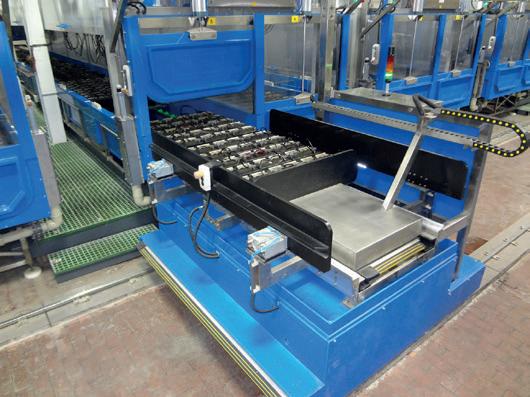
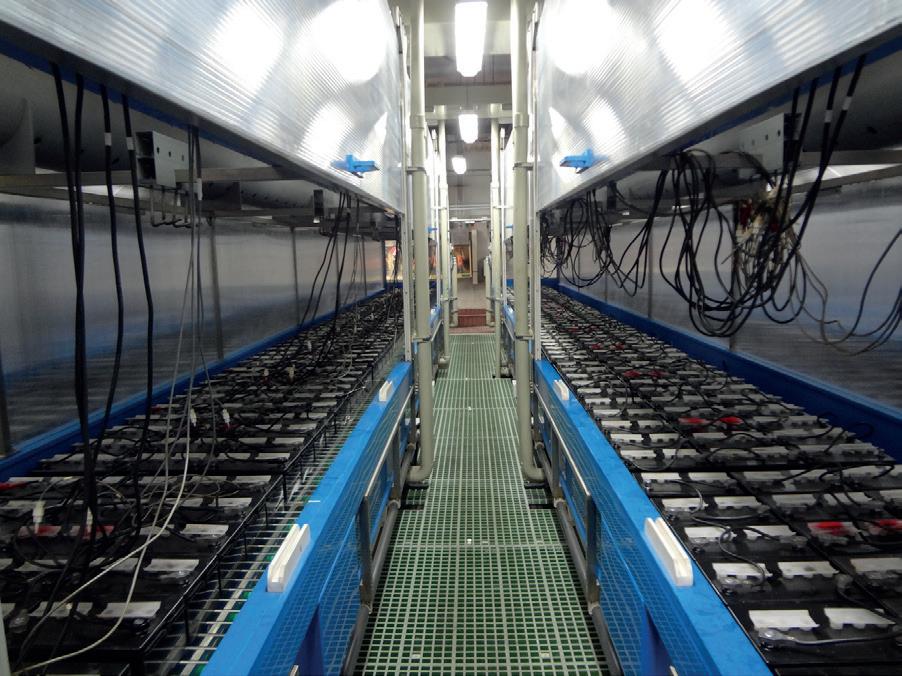
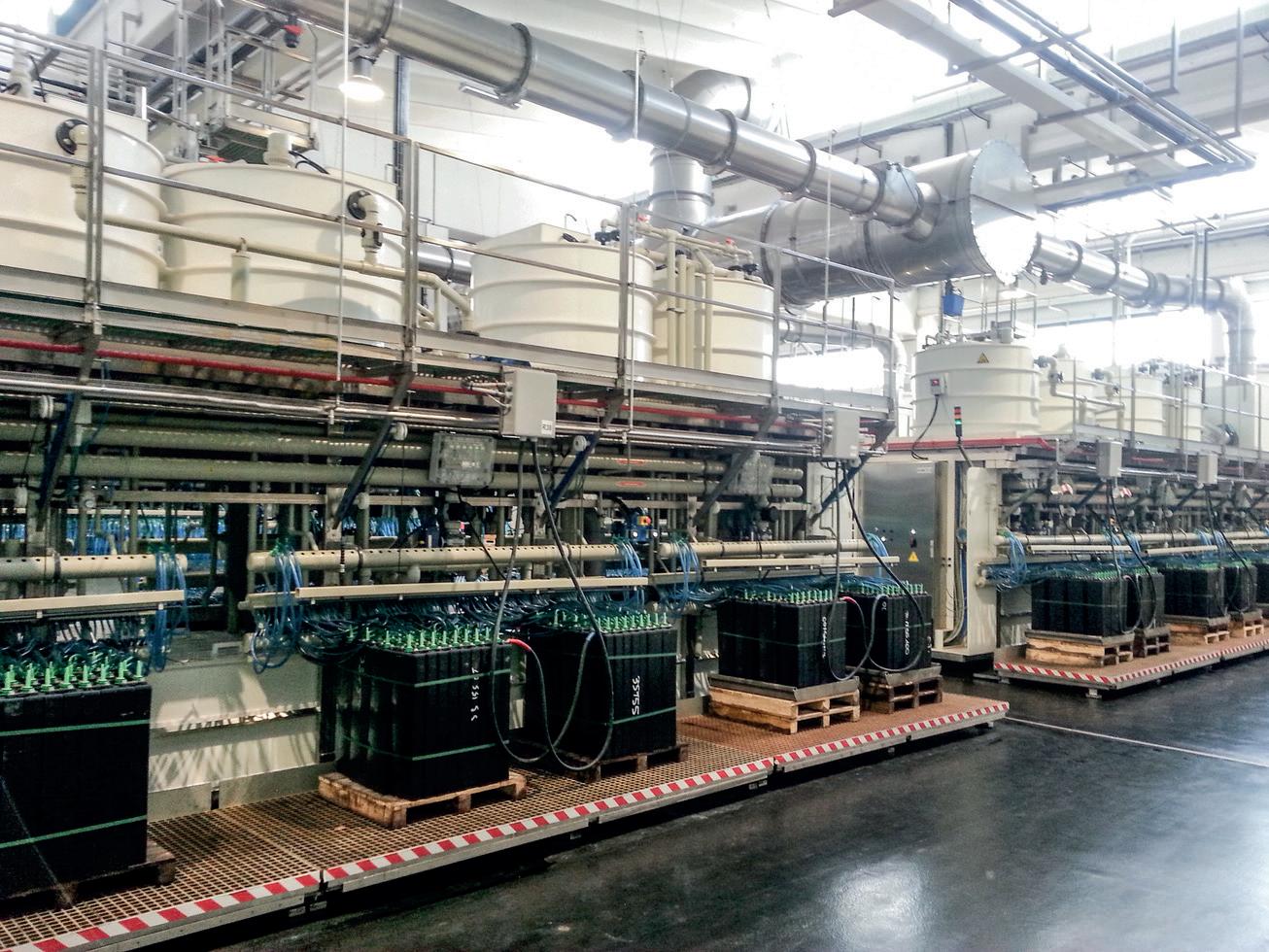
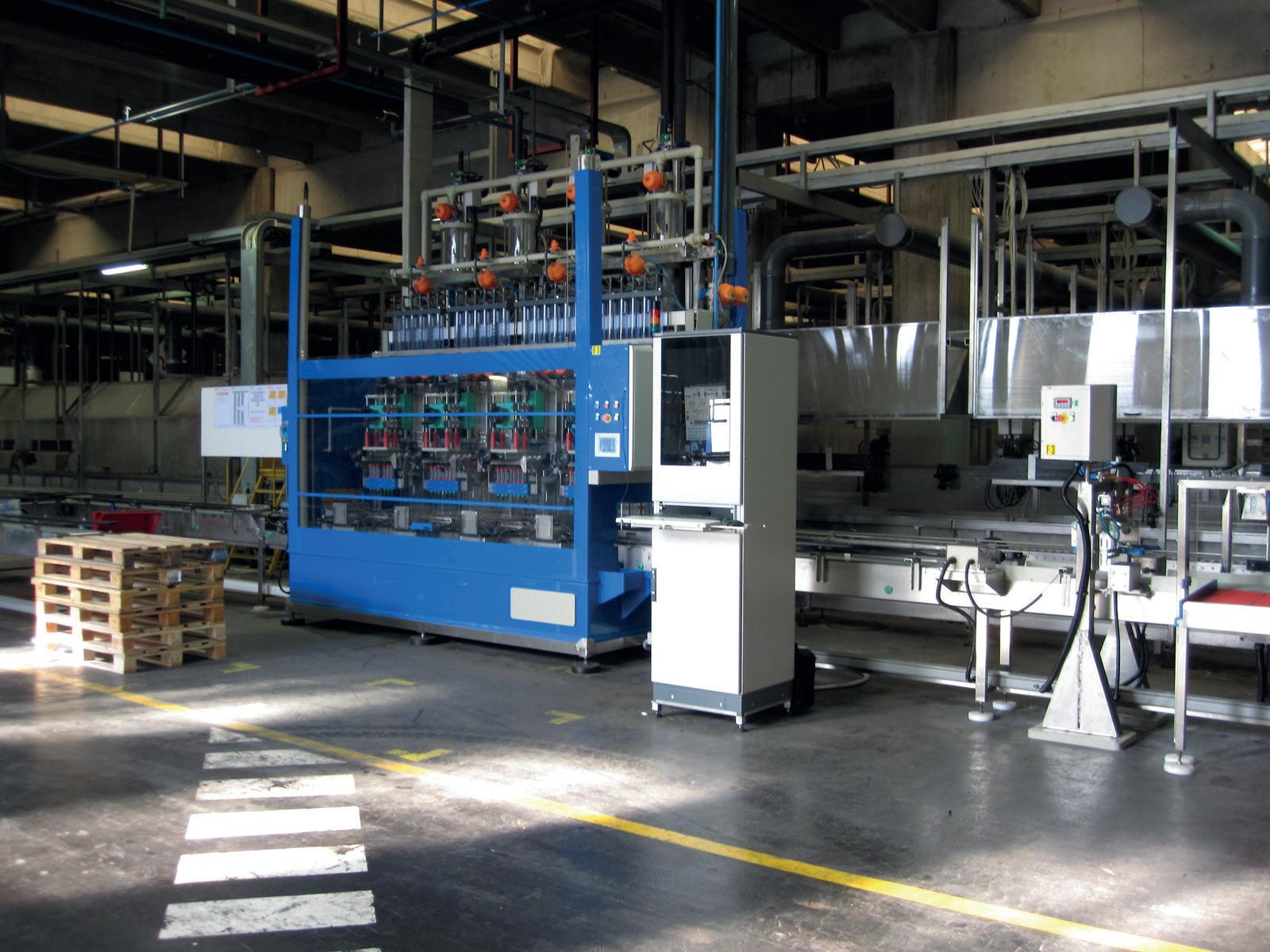
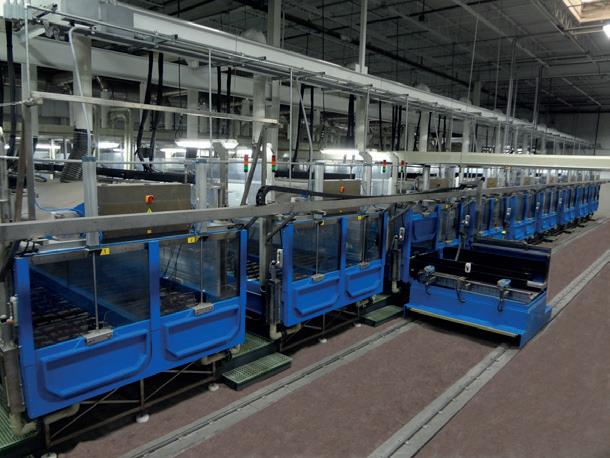
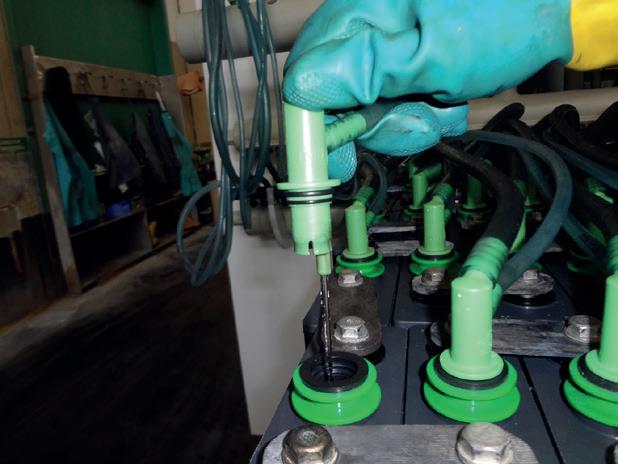
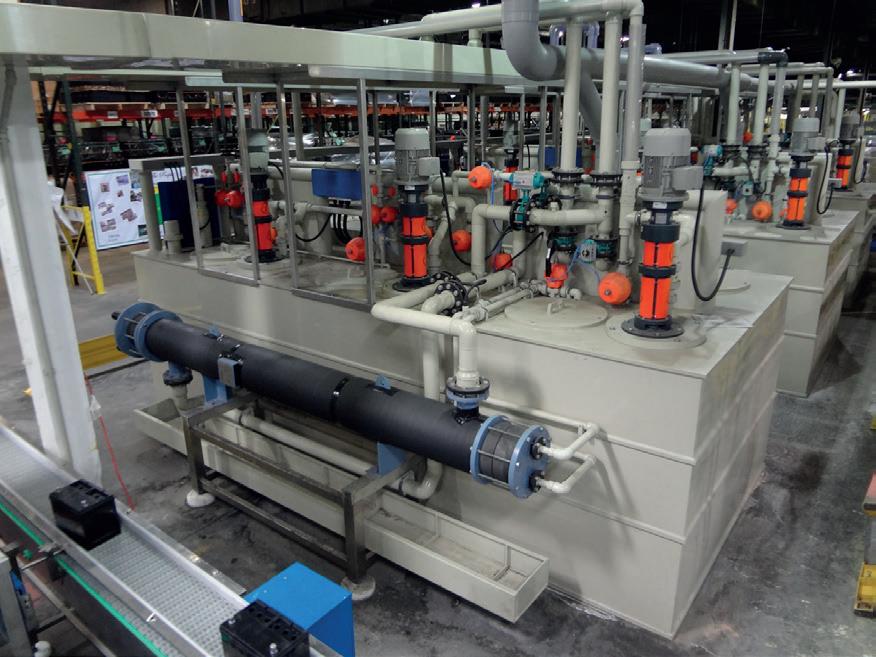
Exide Industries said on September 11 it intends to boost the percentage of secondary lead purchased internally and externally to 85% over the next five years.
The company’s 2025 environmental, social and governance report also hailed its success in being awarded gold medal status from global business sustainably rating provider, EcoVadis, placing Exide in the top 5% of over 150,000 companies assessed world-
wide and in the top 2% within the battery and accumulator manufacturing industry.
Exide said its ESG report builds on the momentum of its inaugural report last year, together with the launch of its 2024-2030 Sustainability Strategy.
The company operates three advanced lead acid battery recycling centers in Europe, all of which help conserve natural resources and reduce environmental impact.
All centers are fed by a battery collection system set up by Exide and all of the recovered lead is reused in the production of new batteries, significantly reducing the need for virgin raw materials.
Meanwhile, Exide said it continues to make progress toward plans to establish a binding target of achieving a 30% reduction in emissions (Scope 1 and 2) linked to energy purchased for operations by 2030.
The company said it
would also ensure a minimum of 20% of its energy consumption is derived from renewables generated by the company or alternatively on its behalf by 2030.
Stefan Stübing, president and CEO, said the ESG report showed the company’s strategy is focused on batteries for a greener future, being an employer of choice, and sustainable and ethical growth.
The 102-page report is available online.
European lead acid major Monbat has developed a 1:10 scale automated production line designed to boost training for the next generation of battery manufacturers.
Monbat said the system, developed with support from academia, also incorporates latest digital technologies. The system replicates a real manufacturing process at a 1:10 scale, combining actual industrial components such as barcode scanners, visual sensors and HMI/ SCADA interfaces.
Using the system allows students to get to grips with principles of integration between enterprise resource planning and manufacturing execution systems, the battery maker said.
Monbat said it developed the system in cooperation with academics at Bulgaria’s University of Ruse.
Through this educational platform, they can explore how automation and digitalization function in practice, including automated tracking of production orders, product serialization and traceability, visual inspection and quality control.
In a safe and controlled environment, students are able to observe, config-
ure, and experiment while acquiring practical skills in programming, process optimization and systems integration.
The open architecture of the model allows for testing new commands, editing existing program blocks, and simulating various produc-
tion modes – providing flexibility for continuous learning.
“Launched as a business-driven initiative, the project highlights how closer cooperation between industry and education can stimulate innovation, build practical skills, and
strengthen the competitiveness of modern manufacturing,” Monbat said.
In May 2024, Monbat CEO Viktor Spiriev unveiled plans to expand facilities including a new assembly line at its plant in Montana, the town where the group was founded 65 years ago.
The Consortium for Battery Innovation has said a VRLA-focused battery reliability project, commissioned by the US Nuclear Regulatory Commission, will be completed by the end of this year.
The CBI said the 15-month project, looking at VRLA batteries used in Class 1E safety systems at nuclear power plants, was underway. CBI convened an expert advisory group made up of the leading manufacturers of nuclear-grade back-up batteries in the US and Europe.
Companies include EnerSys, C&D Trojan, East Penn Manufacturing, Stryten Energy, and Hoppecke — all of which have deep expertise and long-standing experience in supporting critical infrastructure, CBI said.
The advisory group has been offering technical feedback and industry insight, ensuring work is grounded in real-world needs and challenges, particularly as nuclear facilities continue to demand highly reliable, long-duration back-up power.
Seismic and durability requirements of VRLA batteries and their existing use in safety critical backup applications have been showcased in the project.
By analyzing failure modes, monitoring techniques, and mitigation strategies, the project aims to provide the regulator with a clearer understanding of current capabilities and future needs for VRLA battery systems in nuclear safety roles, CBI said.
The findings will help support regulatory deci-
sions and guide future standards development, while also informing utilities and manufacturers about best practices for long-term battery performance and reliability.
CBI this reflects its commitment to supporting advanced lead battery research in critical sectors. With nuclear energy playing an essential role in the clean energy transition, ensuring the integrity of safety-related back-up power systems has never been more important.
Currently in the US, flooded or vented lead batteries are the technology of choice.
CBI said the project’s final report with release to the public after its December issuance, will give guidelines toward the formation of a new standard for VRLA in Class 1 E.

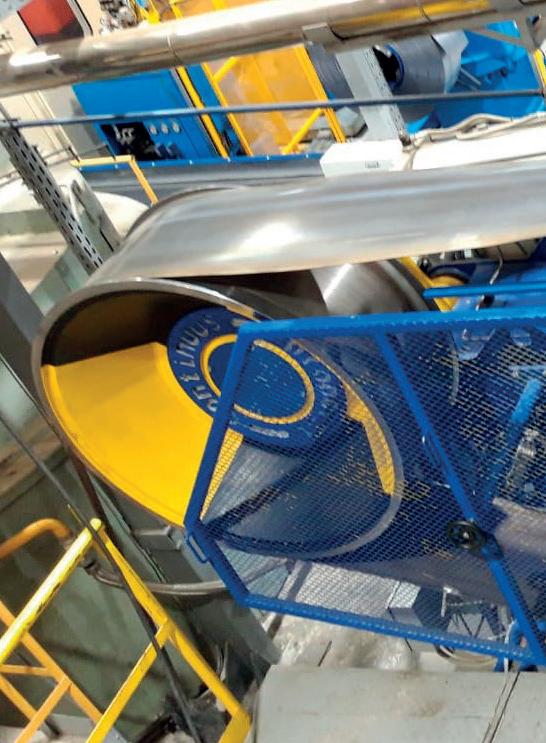

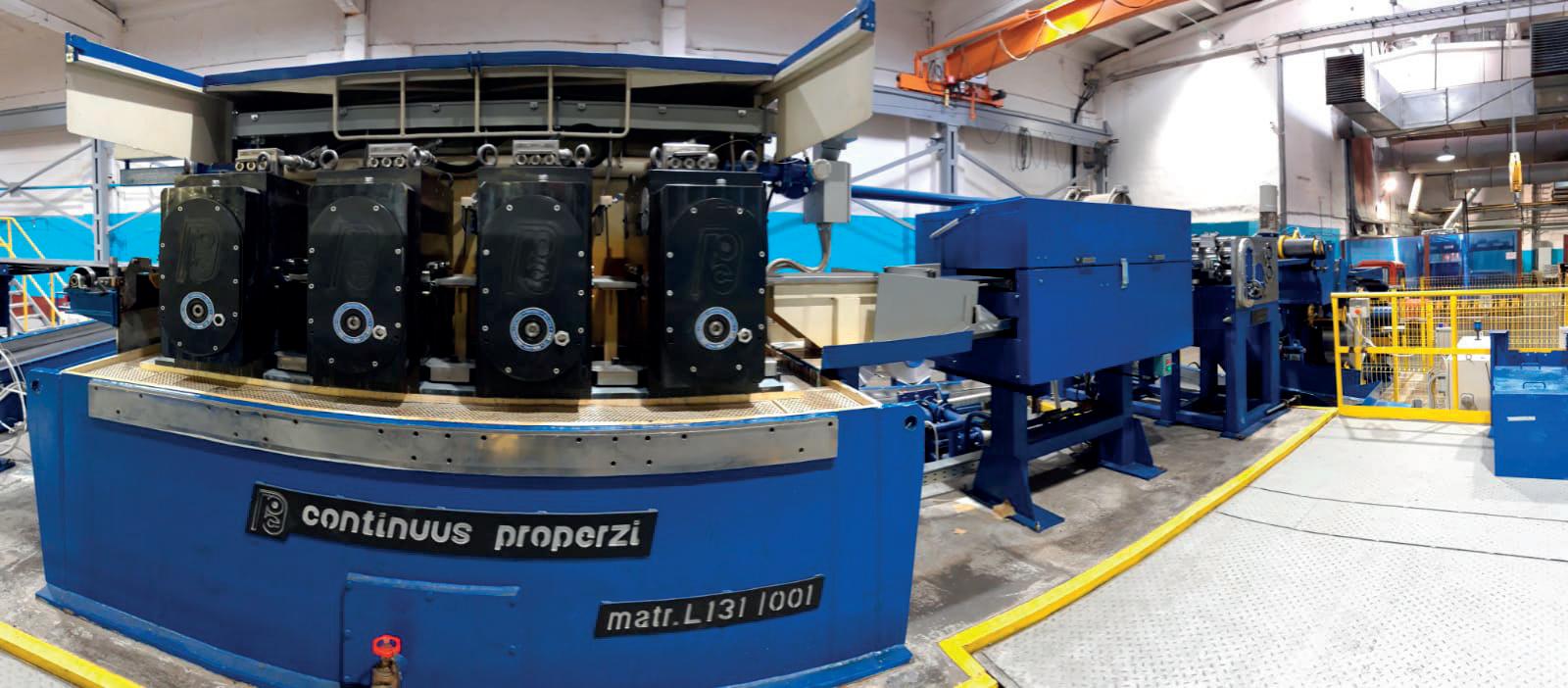





Porsche has shelved plans to produce its own EV batteries amid the global slump in take-up of electric vehicles.
The sports automaker subsidiary of Volkswagen said on August 25 it would not go ahead with its planned expansion of the production of high-performance batteries.
Battery development will now continue as an independent cells R&D unit only, in a move the firm said could lead to job cuts.
Porsche said it wanted to continue to use the knowledge acquired within its Cellforce lithium battery
tech subsidiary and would continue to invest in all-electric models that use high-performance batteries.
VW’s PowerCo unit will use the independent R&D unit and place any development orders for high-performance cells there, Porsche said.
Oliver Blume, CEO of the VW Group and Porsche, said electromobility would remain an “essential drive technology” for the firm’s sports cars in the future. He said in the first half of 2025, 57% of vehicles delivered in Europe were electrified, compared to a global electric quota of 36%.
“However, due to challenging conditions, particularly in our main markets of the US and the not-yet-developed Chinese electric luxury segment, we are reorganizing our battery activities and focusing on cell and system development.
“For volume reasons and a lack of economies of scale, Porsche is no longer pursuing its own production of battery cells.”
Batteries International reported earlier this year that Asian EV battery tiger economy, South Korea, was scrambling to shore up the country’s faltering battery sector with an initial cash
infusion worth close to $15 billion, as a global slump in EV sales took its toll on the industry.
In March, a Capgemini Research Institute report warned the global battery industry was reaching an inflection point and faced a myriad of urgent challenges to power a new generation of EVs and energy storage systems.
The report was based on a survey of 750 senior executives from large battery, automotive and energy and utilities across North America, Europe and the Asia-Pacific region, in which more than 50% cited difficulties in securing a stable supply chain for battery components and materials as an impediment to scaling production.
The outlook for the North American industrial lead battery market remains strong, with an annual growth rate of about 3% projected across motive and stationary applications through 2027, according
to a recent study for Battery Council International. Increased development of UPS in datacenters, including those supporting AI, is driving optimism in the sector, BCI said on October 17.
The forecast comes from a report on battery market trends that combines exclusive data from BCI with analysis by commodity research firm CRU.
The battery market trends report was unveiled earlier
Financial advisory firm the deVere Group has said the intensifying global battle for control of the rare earths and critical minerals market will be one of the defining investment themes of 2026.
The US and China are driving the rare earths ‘arms race’ as they battle for control of the materials powering battery technologies and a range of systems and innovations essential to the modern economy, deVere said in analysis released on October 20.
According to deVere, China controls around 70% of mining and close to 90% of processing capacity of minerals key to EVs, smartphones and advanced weapons systems.
However, the Trump
administration’s fightback, taking stakes in North American miners and with plans to build a strategic mineral reserve, “marks the start of a new industrial cycle”, said Nigel Green, chief executive of deVere.
“Rare earths have moved from the periphery of the commodities market to the centre of global strategy.
“The battle to secure them will shape trade, technology, and investment decisions for years to come.”
Green said the US bid to reclaim control of its supply chains and reduce its vulnerability to Beijing is not just “policy theatre… it’s the largest coordinated push for resource security in a generation”.
Meanwhile, deVere
analysts expect continued volatility in the sector as governments intervene and policy announcements move prices.
Batteries International reported earlier this month that China was slapping a fresh raft of export restrictions on technologies critical for manufacturing EV batteries in a move potentially set to further destabilize global markets.
Exports of items related to superhard materials, equipment and raw materials related to rare earths, five medium and heavy rare earth elements including holmium, lithium batteries, as well as synthetic graphite anode materials, will not be permitted from November 8 without approval.
this year, but newly-released extracts from the publication reveal members predict a 3% compound annual growth rate in lead battery sales out to 2027. Within the motive market, lithium battery share growth appears to be slowing. Industrial truck OEMs’ focus is on maintenance-free, heavy-duty use, fast charging and long cycle life.
Advanced lead batteries including AGM technology are increasingly competitive with lithium, however, according to the report.
In utilities, opportunities will be driven by larger front of the meter installations rather than smaller behind the meter (BTM) stationary energy storage applications.
However, the effectiveness of lead batteries in BTM will continue to drive demand because of comparative safety benefits and lower cost for emerging markets than some alternatives.
BCI’s excerpts from the report are online.
Harmony Energy hails France BESS ‘first’
Harmony Energy has launched what it says is France’s first large-scale two-hour duration BESS.
Harmony said on August 14 the 100MW/200MWh Cheviré facility, at the port of Nantes Saint-Nazaire Harbour, can power about 170,000 homes for two hours, equivalent to more than the entire population of Nantes.
The site will play a pivotal role in boosting grid resilience, cutting carbon emissions, reducing energy costs and volatility, Harmony said.
The BESS, built on the site of the former Cheviré fossil fuel power plant, which consumed coal, gas and oil from 1954 to 1986, uses battery tech supplied by Tesla’s Megapack and Autobidder.
Andy Symonds, CEO of Harmony Energy France, said “We began construction on site in summer 2024 and have just achieved energisation, one year later.”
Zelestra, BKW plan 2 GWh BESS in Italy
Renewables group
Zelestra and Swiss energy firm BKW have agreed a deal to build a 2GWh BESS in northern Italy.
The companies said on September 10 construction is due to start in 2027 with full operation anticipated in 2028, although the battery chemistry and financial details were not disclosed.
The agreement involves a long-term financial tolling arrangement, said to be the first of its kind in Italy, under which Zelestra will make part of the plant’s generation capacity available to BKW to manage and optimize flexibility in the market.
Zelestra is backed by
EQT, a leading global fund with more than €273 billion ($320 billion) in total assets under management, and said Italy’s north has high demand for electricity from industrial customers — with increasing renewables capacity coming on to the grid alongside an expected phase out of fossil-fuel powered plants.
The BESS project expands on an existing clean energy partnership between BKW and Zelestra. Last December, the partners closed a 10-year power purchase agreement supporting the construction of two solar projects in the country totalling 16 MWdc (MW on a direct-current, nameplate-capacity).
RWE set to launch Australia’s ‘first eight-hour BESS’ RWE Renewables
Australia said on September 23 it is preparing to commission the country’s first eight-hour BESS.
The Limondale BESS, comprising 144 Tesla Megapack batteries, has a capacity of 50MW/400 MWh, which the company said will make it the longest-duration gridscale battery operating in Australia.
Full commissioning of the BESS, at the Limondale solar farm in New South Wales, is planned for the end of this year.
RWE said the project was the first recipient of a long-term energy service agreement under New South Wales’ long duration storage tender, highlighting its critical role in supporting the state’s energy transition.
Daniel Belton, CEO of RWE Renewables
Australia, said registration of the BESS with the Australian Energy Market Operator, ahead of commissioning, marked a defining moment for
long-duration battery storage in the country.
Australia is one of RWE’s focus markets, where it has been present since 2013. The company started building the Limondale solar farm in 2018.
The facility is made up of 872,000 panels and generates enough electricity to power about 105,000 homes per year. Full commercial operation started in 2021.
Indian prime minister Narendra Modi has laid the foundation stone for a 2,500 MWh BESS and solar facility in Rajasthan on September 25.
The Avaada Group said its project, set on 4,000 acres in the Bikaner district, will be the largest BESS built in the country to date.
The energy group did not disclose the battery chemistry to be deployed at the site, which will include a co-located 1,560 MWp (megawatt peak) solar plant using bifacial solar panels made in India.
Eni Storage Systems said on September 24 it had started developing a stationary lithium batteries operation in Italy.
The company, which is a joint venture majority owned by Italian energy group Eni (51%) and Seri Industrial, said it aims to establish a hub in Brindisi capable of producing over 8GWh per year of lithium iron phosphate batteries, primarily intended for stationary energy storage, using a water-based process.
The project is in the engineering phase and
expects to complete what it described as economic, financial and authorization assessments by the first quarter of 2026.
Activities in Brindisi will include production of cathode active material, as well as battery assembly in BESS systems.
The companies said future plans for the site include a battery recycling facility that would also be made available to other operators in the sector.
Chinese ESS firm HiTHIUM has agreed a 1GWh energy distribution partnership with the Imperial Electricity Company Pakistan.
The firms said on August 13 that the deal will benefit residential and commercial energy storage systems across Pakistan.
IEC Pakistan said central to the agreement was the rollout of HiTHIUM’s HeroEE residential LFP storage systems in the country, in addition to the joint development of customized ESS products for Pakistan.
IEC Pakistan will be the distributor for residential storage products from HiTHIUM’s, which will set up a domestic service center providing technical expertise.
The partners said Pakistan’s population of some 200 million faces persistent challenges in energy reliability and affordability.
HiTHIUM, which has sites in Germany, the United Arab Emirates and California, claims its 300Ah battery cells have an energy efficiency of 95%, an energy density of 170Wh/kg and can operate for more than 12,000 cycles.
200 MW Fluence BESS energized in Ukraine
Ukrainian private energy sector investor DTEK and Fluence have energized a 200 MW BESS in Ukraine.
DTEK said on September 11 the €125 million ($147million) investment showed capital can still flow into Ukraine’s energy sector when there is a clear need, with the right partnership and the right technology.
The BESS uses Fluence’s proprietary Gridstack lithium iron phosphate utility-scale tech. A total of nearly 670 Gridstack cubes with batteries have been installed at six sites, each one with a capacity of between 20-50MW.
DTEK said the project is the largest of its kind in Ukraine and eastern Europe, with the ability to power 600,000 Ukrainian homes for two hours.
Despite Russia’s invasion and war with Ukraine, the BESS was built in six months, which DTEK said is significantly faster than the industry average and comes online just before the winter season.
The facility is the first major energy project to be delivered since the signing of the US-Ukraine Economic Partnership Agreement earlier this year.
Statcon, Su-vastika launch make-in-India BESS partnership Indian energy companies Statcon Energiaa and Su-vastika said on August 22 they will work together to promote domestic production of BESS systems.
The firms will focus on the development of lithium-based products as part of their support for the government’s ‘make in India’ program. They will also selected target export
markets for their products.
Statcon founder and MD Manoj Pande said the partnership would spearhead development of a new generation of lithium-based solar hybrid systems to meet a diverse customer base.
According to the partners, the value of India’s battery storage market is to increase from nearly $8 billion in 2024 to over $32 billion by 2030, representing a compound annual growth rate of nearly 27%.
The partnership, backed by engineering and components company Rotomag Enertec, will combine Statcon’s knowledge of battery storage and grid-connected solar inverter technologies with Su-vastika’s battery knowhow, including technical patents held for lithium batteries, storage systems, and lift inverters. (These provide backup power to ensure lifts operate safely in the event of a power outage.)
Chile BESS investments heat up with 1.1 GWh CVC deal
A unit of global private markets manager CVC is acquiring a large scale hybrid solar and battery storage project under construction in northern Chile.
CVC DIF, said on September 1 it had agreed to acquire the Gabriela project, which will comprise 272MW of installed solar capacity and 1.1GWh of battery storage, from Spanish multinational clean energy producer Grenergy.
Financial terms of the deal were not disclosed, but the move marks another significant step in global investment interest in the Chilean energy storage and renewables sector.*
Grenergy will continue
as a partner in the project, which is backed by a 15-year US$-denominated, inflation-indexed hybrid power purchase agreement.
The partners said the project will also benefit from Chile’s supportive regulatory framework for storage investments.
CVC DIF already manages renewable energy assets totalling more than 7GW of installed capacity and several investments in BESS and multi-technology projects.
The Chile deal is set for completion in the first half of 2026.
*Batteries International has been tracking increasing investment interest in the Chilean BESS market in recent months.
Last November, Grenergy said it had signed an agreement with China’s CATL for the supply of batteries for phase four of its 2GW/1GWh Oasis de Atacama project in Chile.
Earlier this year, Chinabased Trina Storage shipped the first 1.2GWh batch of its self-developed, containerized ‘Elementa 2’ LFP battery storage system to Chile, marking its largest overseas standalone BESS project.
In August global renewables group Zelestra confirmed it had secured a $282 million financial close to develop a 1GWh battery and solar ESS plant in Chile’s Atacama Desert region.
Exide Technologies is ramping up its energy storage business in Europe with the signing of a new project deal in Italy.
The lead and lithium manufacturer, whose Italian operations are based in the province of Bergamo, said on August 26 it had delivered its Solition Mega Three lithium BESS
to a foundry.
Exide said the foundry specializes in structural castings for the machine and energy sectors — and the project marked a significant step in its expanding energy storage activities across southern Europe.
Solition Mega Three, with liquid cooling for components, is based on a scalable containerized system with 1.7MW of power capacity and 3.44MWh of energy capacity.
Exide said this makes the BESS ideal for energy-intensive industrial applications such as foundries, manufacturing plants, and heavy-duty processing facilities.
HiTHIUM hails 4GWH
Saudi deal and shipments milestone Chinese firm HiTHIUM said on August 27 it had been awarded a contract by the Saudi Electricity Company to supply its long-duration battery cells for a total 4GWh of BESS systems.
The announcement came after the company held a ceremony at its Chongqing manufacturing base on August 22 to mark 100 GWh of cumulative shipments since the end of 2021.
In the Saudi deal, HiTHIUM will supply its 6.25MWh battery cells, in its ‘Desert Eagle’ containerized systems series, in partnership with Alfanar Projects, for the two BESS facilities to be developed in northern Saudi Arabia’s Tabuk and Hail provinces.
Commissioning of the facilities is targeted for 2026.
Each BESS will provide critical grid services, including load shifting, black-start capabilities, frequency regulation, and voltage support, enabling higher renewable energy penetration and reducing
reliance on fossil fuels.
HiTHIUM will oversee system design, supply, installation supervision, and long-term maintenance, while Alfanar Projects will lead on construction.
HiTHIUM said key features of its systems include multi-layer insulation that reduces internal temperatures by 8°C to 10°C, ensuring reliable operation in -30°C to 60°C.
Components are sealed to guard against sandstorms, with automated dust alerts to minimize maintenance.
The company claims its critical components are rated for 40,000+ hours of continuous operation.
Trina ships first 1.2GWh tranche for Chile BESS project Trina Storage said on August 11 it had shipped the first 1.2GWh batch of its self-developed, containerized ‘Elementa 2’ LFP battery storage system to Chile, marking its largest overseas standalone BESS project.
The China-based international renewables developer said the move ushered in a new era of gigawatt-scale international deployments and validated its technical adaptability for operations in extreme environments.
The firm did not disclose the eventual storage capacity of the gridscale BESS site, in the northern Atacama Desert, which it said was one of the world’s driest and most challenging regions.
According to Trina, Elementa 2 systems are housed in 20ft containers that are equipped with cooling systems that ensure a minimal temperature variation of just 2.5°C.
The company said it has invested close to $700 million in R&D since
2021, including over $26 million into dedicated battery cell R&D.
The company said it had shipped more than 10GWh of its proprietary BESS systems to over 100 countries as of the end of last year.
An international flight from China was forced to make an unscheduled landing after a lithium battery inside a passenger’s carry-on luggage caught fire.
The latest such incident to involve an airline battery fire happened on an Air China flight from Hangzhou, in east China’s Zhejiang province to Seoul in South Korea on October 18, the state Xinhua news agency reported.
After the flight took off from Hangzhou Xiaoshan International Airport, a lithium battery stored in the carry-on luggage in an overhead bin spontaneously combusted.
The plane was diverted to Shanghai Pudong International Airport.
According to Xinhua, the crew handled the situation and no injuries were reported.
Batteries International reported earlier this year that thermal runaway incidents on aircraft had soared to a five-year high, according to a report by the safety and compliance organization Underwriters Laboratories (UL).
Incidents increased by nearly 30% between 2019 and 2023 with an average of two reported a week to UL Standards & Engagement’s (ULSE) thermal runaway incident program.
In February, South Korea announced a tightening of rules for power banks and e-cigarettes carried on airplanes in the
wake of a fire on an Air Busan flight. The lithium battery devices were also banned from storage in overhead bins.
Dutch investment firm APG is investing €300 million ($348 million) for a minority stake in European battery storage developer Return.
APG said on October 17 its investment, on behalf of pension fund ABP, provides new growth equity for Return’s expansion of BESS systems, which already connect sites across countries and strengthens electricity grids.
Return serves customers de across Europe and is active in the Netherlands, Germany, Belgium and Spain, with 70 MW of operational storage capac-
ity in the Netherlands and another 450 MW under construction.
With over €2 billion in long-term customer contracts, Return said it is on track to meet future demand with a pan-European storage network of around 5 GW by 2030.
For the record, an operation to remove lithium ion batteries damaged in a two-day fire at Vistra’s Moss Landing BESS in California has been given the green light.
The US Environmental Protection Agency (EPA) said on July 23 it had reached agreement to start the clean-up operation, although the cause of last January’s blaze at the 300MW facility was still unknown.


The EPA said the batteries posed an ongoing fire risk along with the release of hydrogen fluoride, and other flammable or toxic gases.
Vistra will bear the cost of the operation and must conduct monitoring and air sampling around the site during removal activities, as well as follow an EPA-approved emergency response plan, until all batteries and related materials have been removed.
The fire broke out on January 16, when Moss Landing contained around 100,000 lithium ion battery modules, of which about 55% were damaged, the EPA said. There was a flare-up of the fire on February 18.
Vistra said earlier this year that representatives of the battery manufacturer, LG Chem, had been assisting post-fire activities on site.
Batteries International reported last March that additional flare ups were still possible.
Meanwhile, regulators in California have called for a major overhaul of safety standards for BESS plants in the wake of Moss Landing and a string of incidents over the last three years.
opens Li separator line in Tennessee
Microporous has marked the formal opening of its new lithium ion battery separator manufacturing line in Tennessee with a ribbon-cutting ceremony.
The company announced the opening in a Facebook post on August 7.
CEO John Reeves said the line was designed to manufacture battery separators for EVs and backup power, in support of green energy and reducing emissions.
Batteries International reported last January that
Microporous had been awarded a $100 million US federal grant for its ultra-thin, coated wet-process polyethylene (PE) lithium battery separator facility.
Reeves said the company had started looking into the expansion nearly three years ago, Reeves said.
The Microporous board gave the green light to fund the project around a year ago.
“Our long-term investment for green energy is about $1.3 billion, and this is the first step in this investment.
“This is a full manufacturing line, representing over $20 million in investment, and when it’s fully up and functional, it will represent about 50 new really good jobs for this area.”
Board member Ray Desrocher said further investment is being made in Danville, Virginia, where the company is building its high-volume coated PE lithium battery separator production in Virginia.
US lead miner and recycler the Doe Run Company said on August 20 it plans to step up its deployment of a high-tech seismic program to study a broader range of mineral trends with greater accuracy.
The firm expanded the program last year to identify the most promising areas for drilling, reducing the number of exploratory drill holes and environmental impact.
Director of exploration and geology Carrie Dayton said the company plans to follow up on these newly identified targets during 2025, to see if structures identified are “what and where we thought they were
and if they contain sulfide mineralization”.
Dayton said the firm’s next seismic survey would trial additional methods that could reduce or even eliminate surface disturbance.
Doe Run said it started using seismic geophysics — a tool that was previously primarily used in oil and gas exploration — to understand better what lies below the surface through non-invasive sound waves.
The firm said seismic technologies allow it to locate geologic structures that are likely to host ore minerals without prior drilling data and help to create detailed images of underground rock formations, helping geologists map subsurface geology with reduced surface disturbance.
US starts airborne search for minerals critical to battery tech
The US Geological Survey (USGS) has started airborne surveys over portions of the Blue Mountains in California and adjacent areas to identify potential sites for the recovery of critical minerals essential to battery manufacturing and other industries.
USGS said on September 30 that low-level helicopter flights would begin early this month, including in northeastern Oregon and western Idaho, using airborne geophysical technology in partnership with other agencies.
The launch comes just weeks after the USGS called for lead to be added to the nation’s list of critical minerals, along with silicon and copper.
The helicopter surveys are expected to continue until snowfall hinders data quality and will then resume next spring and
summer, USGS said. Potential mineral commodities in the region include antimony, chromium, cobalt, gallium, nickel, tungsten, and zinc, all of which are on the list of critical minerals maintained by the USGS as essential for the US economy and national security.
Last May, the US and Saudi Arabia agreed plans to cooperate on an expansion of energy storage projects and critical minerals supplies.
‘enhances’ commercial vehicle battery range
Exide Technologies said on September 24 it is enhancing performance of its lead battery range for commercial vehicles.
The company did not disclose proprietary technical details but said it had enhanced performance and lifespan through advanced chemical composition, particularly for long-haul applications. Exide said the move included “smarter labelling” and colour coding for easier identification and easier fitting. By restructuring the commercial vehicle portfolio, Exide said it was offering customers consistency, clarification and compliance, plus a modern design that is easy to read. This ensures fleet managers and installers alike can easily identify the battery they need.
The CV battery line includes the firm’s GEL Pro, EFB Pro, SHD (super heavy duty) Pro and HD (heavy duty) Pro products. However, changes to the CV portfolio will be applied to all of Exide’s leading battery brands in Europe — Exide, Tudor, Fulmen, Centra and Sonnak.
GEL Pro is a VRLA design made for extreme cycling, which Exide said
provides unmatched safe depth of discharge of 90%, which in turn improves total cost of ownership (TCO) and minimizes the risk of breakdowns.
The battery is for vehicles such as delivery trucks and city buses with power-hungry equipment and deep cycling needs.
EFB Pro, engineered for durability, comes with enhanced rechargeability and charge acceptance while offering the highest resistance to vibration due to its high voltage technology.
Exide said a tougher and longer-lasting battery means reduced TCO for fleet owners and truck drivers, with fewer replacements over the vehicle’s service life and minimized risk of unexpected or premature battery failure.
SHD Pro comprises more plates and active material to maximize grid surface, providing enhanced cycling and exceptional cranking power with every start, according to Exide.
SHD is ideal for cold temperatures and for trucks, buses, or agricultural and construction vehicles with big engines. Exide said the battery’s design is strong and reliable thanks to hotmelt fixation plate groups, making it a suitable choice for uneven roads.
Meanwhile HD Pro is the ‘go-to’ battery for trucks without special requirements for vibration resistance, cycling capacity or extra cranking power. Exide said the range covers nearly 100% of the vehicle park.
Banner expands lead range in market push European lead battery major Banner has announced an expansion of its range with four new battery types to tighten the firm’s grip on
the multi-drive systems market.
Banner said on October 14 it was introducing three EFB models for start-stop passenger cars, hybrid, and EVs, as well as a new AGM battery for commercial vehicles.
The announcement comes four months after Banner revealed increases in sales and revenue, noting that lead acid technology continued to be a mainstay for the industry.
Revenue rose to €312 million ($358 million), an increase of over €10 million compared to the previous year. Sales of lead batteries in the 2024-25 financial year were in excess of four million — an increase of more than 200,000 over the previous year.
Lee Quinney, Banner’s UK country manager, said: “The product range expansion is an important step in offering our customers the most comprehensive coverage possible of the European vehicle fleet for aftermarket fitment with our OE-quality brand batteries.”
Banner invested €10 million in its Leonding site in Austria in the past financial year, including a major maintenance construction project that was completed in April 2024 at a cost of around €3.5 million.
Stryten agrees advanced lead supply deal for KION forklifts, trucks
Stryten Energy’s premium lead battery and charger solutions are being made available through KION North America’s network of 200 sales and service locations under a new collaboration agreement.
Stryten said on July 30 it will provide its full line of advanced lead material handling batteries and charger solutions.
KION North America is
a leading provider of forklift trucks and warehouse equipment.
Matt Gould, VP of industrial sales and service at Stryten Energy, said the agreement brings together the firm’s robust offering of batteries and KION’s electric forklift and warehouse trucks.
East Penn unveils Armor Alloy battery tech
East Penn Manufacturing is targeting the growing datacenter market with the launch of its ‘Armor Alloy Technology’ range.
The battery manufacturer said on October 20 the range protects its line-up of Deka HRC lead batteries and are ideal for hyperscale applications.
Armor Alloy combines a pure lead grid with a proprietary blend of engineered alloys to maximize strength and durability while protecting conductivity and performance, East Penn said.
These material attributes are further amplified through the company’s proprietary compupress, encapsulation and hydro-formation processes. Together, these innovative materials and processes function as layers of armour protecting against performance degradation.
Deka HRC and the entire Deka Reserve Power product line are certified to UL1973. East Penn said it is the first and only US-based manufacturer to achieve this certification.
East Penn’s senior VP of industrial sales, Bruce Cole said: “With the daily challenges of rising costs and unforeseen disruptions affecting datacenters, we need protection from this continual rise of uncertainty.”
Earlier this year, East Penn showcased a new
range of gel and lithium batteries as part of its Deka line-up.
Italy sees 55% BESS surge as renewables rise
Battery storage capacity in Italy surged more than 55% year-on-year toward the end of summer, totalling over 17GWh, according to latest data.
Italian transmission system operator Terna said on September 19 the storage capacity, recorded as of August 31, was equivalent to 7MW of nominal power across roughly 837,000 storage systems.
Within this, utility-scale installations added nearly 3MWh of capacity and 709MW of nominal power between January and August of this year, driven by forward contracting mechanisms under the national capacity market framework.
Increasing reliance on battery storage comes as Italy expands integration of renewable power generating capacity — of which more than 4,000MW of capacity was installed between January and August, Terna said. Batteries International reported in September that Eni Storage Systems had started developing a stationary lithium batteries operation in Italy.
The company, which is a joint venture majority owned by Italian energy group Eni (51%) and Seri Industrial, said it aimed to establish a hub in Brindisi capable of producing over 8GWh per year of lithium iron phosphate batteries, primarily intended for stationary energy storage, using a water-based process.
Meanwhile, renewables group Zelestra and Swiss energy firm BKW are to develop a 2GWh BESS in northern Italy, with construction starting in 2027.


East Penn operates the world’s largest, single-site, family-owned lead battery manufacturer with a proud history and a solid reputation for retaining its employees — often for decades. As the company approaches a milestone 80 years in the industry and makes a return to a traditional, dual-person leadership approach, Shona Sibary speaks to the incoming CEO, Pete Stanislawczyk, and president, Christy Weeber, on how two heads can often be better than one.
It’s been days since East Penn’s new leaders stepped up to the helm, and you might wonder what they’ve got on their minds. A radical restructure? Meetings with the board? In fact, both Christy and Pete have been down on the factory floor serving meatballs and pasta to the workers as part of the firm’s ‘Appreciation Week.’
You get the impression that’s just the way things rock here on the company’s 520-acre Pennsylvania site, a place where employees are treated as family and nobody is considered more important than anyone else.
For a company that describes itself as, ‘Living the American dream while making lives better, one battery at a time,’ you would expect nothing less than an annual picnic and free pass for 8,000 local employees and their families to the nearby amusement park as a thank you treat.
It’s this kind of inclusive, peoplefocused ethos that has been the firm’s lifeblood since it was founded back in 1946 by DeLight Jr, a young Air Force veteran, and his father,
Both Pete and Christy are united on what East Penn’s primary focus should be.
“We’re very, very bullish about continuing to invest in lead battery growth,” says Pete. “You just have to think that there’s 300 million automobiles on the road in the US and Canada, all with a lead battery.
“And that’s cars and light trucks. I’m not talking about tractor trailers. I’m not talking about boats. And the average battery age is getting close to 13 years.
So just think to cycle that out, the timeline to get there, if there were a revolutionary chemistry that fell in all our laps tomorrow, and we
Under the new leadership restructure, Pete will oversee the operations and commercial areas, including manufacturing, distribution, engineering, marketing and sales while Christy will be in charge of finance, legal, IT and personnel.
DeLight Sr.
Yet it’s a culture that Christy, a selfconfessed newbie, who has ‘only’ been at the firm for 13 years, found initially hard to adjust to.
“Previously, I’d worked in the public company environment,” she says. “I was used to a very investor, analyst-driven mentality. When I started at East Penn, I remember coming home at the end of my first week and my husband saying: ‘So what do you think?’ And I said: ‘It’s really weird.’ He was like, ‘What do you mean?’ I replied: ‘People keep saying “hi” to me in the hallway and asking me about my day.’
“It was a culture shock, and it took me a little while to adapt until I got
to a point where I thought: ‘Wow, this is amazing.’ You know, it’s a medium sized business with a small business heart.”
As a female executive entering an unfamiliar industry, not to mention a company with a tradition of longtenure employees, she was mindful of how to make changes.
“Obviously, every business is unique as far as how they operate, and how people learn and work together. I think it’s a strength that I’ve worked elsewhere and seen how other companies do things, and I knew that, maybe, I could put some improvements in place.
“But I had to be careful of how I went about doing that. Some people
started making it with XYZ design, it’s still a long runway to cycle out what’s there.
“Not to mention that we have these wonderful relationships with the car manufacturers where we have very good visibility into what they’re designing out the next five to seven years. And based on those perspectives and our understanding of the size of the market, we’re continuing to reinvest in lead growth.
“We also recognise that lead is not necessarily going to be the only solution moving forward.”
We’re smart enough to know there will come a time when there’s
an inflection point, but that’s going to be a slow, a slow decline, and not a rapid one.”
A clear demonstration of this was when, in 2019, East Penn moved into the lithium-ion market with the purchase of a majority interest in Navitas Systems.
“It’s essentially a lithium-based, manufacturing start-up organization — lithium solutions for the motive power industry as well as government and defence — and they were commercializing it. And what we anticipate, and what I aspire, is to bring the learnings from there into the transportation area of our own business.”
have been here, doing the same thing and doing it brilliantly well, for 20, 30 years.”
One of those people is the man she is steering the tiller with. Step
in Pete Stanislawczyk — previously East Penn’s executive vice president and chief commercial officer — who has been at the company ever since leaving college three decades ago.
“We’re continuing to reinvest in lead growth. We’re smart enough to know there will come a time when there’s an inflection point, but that’s going to be a slow, a slow decline, and not a rapid one”
For both Christy and Pete, that strong East Penn family ethic at work is further reflected in their personal lives with both citing marriage and children outside the office as one of their main drivers.
“I could never have done this without my husband’s backing,” Christy reflects. “We’ve been married 24 years — our wedding was just a couple of weeks after 9/11 — and he has been incredibly supportive along the way.
“We’ve got a son in sixth grade and a daughter who has just graduated and is about to head off to college. Getting this far in my career has been very much down to the collective support of my whole family.”
Pete admits he is in a slightly different place with regards to parenting as he and his wife are about to be empty nesters with all three children finally leaving home.
“We’re going through this evolution period, where it’s not just the five of us anymore,’ he says ruefully. And when I think about what recharges me, it’s being with the whole family and those times are getting fewer and fewer now.
“But, I guess it leaves more time for golf! My wife and I play together regularly. She’s getting pretty close to beating me and that’s been a good life lesson for both of us. We’ve learnt not to give each other too much advice on the course.”
He is now sharing leadership with Christy following previous president and CEO, Chris Pruitt’s retirement after 11 years from those positions.
So is it unusual that they have split the running of the company between two people?
“Traditionally, it’s always been that way,” says Pete. “If we think about the early years, there was DeLight Breidegam and his partner, Dick Bowers — they were the original Ying and yang. They may not have had the CEO and president titles, but it was a partnership.”
Until Chris Pruitt took over as CEO/President in 2018, East Penn had always had an organizational team of two, if not three, business leaders managing the firm.
“It’s just very natural here. There’s not a lot of elbowing to the top. We’re doing what’s necessary to drive the business forward. And what you’re going to find with Christy is a different skill set and background to mine. But we complement each other very well and the approach that we’re collectively taking is fantastic.”
Under the new leadership restructure, Pete will oversee the operations and commercial areas, including manufacturing, distribution, engineering, marketing and sales while Christy will be in charge of finance, legal, IT and personnel.
They are both acutely aware

For the fourth generation: it’s a matter of keeping their late grandfather’s and their mother’s legacies alive
“We’ve seen some changes in technology, in particular, an explosive growth in AGM in the automotive space, so that’s something we’re really focussed on as far as future projections go and how we retool our manufacturing process to make sure that we can stay in step with market needs.
that they have big shoes to fill. As a privately-held, family owned company, East Penn has grown to become the second-largest producer of lead batteries in North America. There are fourth generation members of the family working at the firm, determined to uphold the tradition and values they believe have made their company the success it is today.
“As my grandfather would always tell us: ‘The No. 1 rule to remember is that it’s all about the people,” says Tim Miksiewicz, 31, who has been working full time at the firm since 2015 in several jobs and is now a board member.
“We see ourselves as stewards of East Penn — we’re here to keep the company healthy so it can continue to provide thousands of well-paying jobs, support our community, and do right by our employees and customers.”
It’s a strong ethos that clearly works.
Forbes called East Penn one of America’s best employers and of the company’s more than 10,000 employees, nearly 40% have worked there for more than 10 years.
“It’s a very unique place,” Christy says. “There’s a tangible, close-knit loyalty that runs across the levels of the organization, which is wonderful. But then sometimes people are hesitant when someone new — like me — enters that. It took a while for everyone to feel comfortable around me.”
One wonders whether this pulling together of staff is an understandably collective reaction to the tragic death of the company’s CEO in 2014. Sally Miksiewicz, DeLight Jr’s daughter, whom he had groomed as his successor, was killed by a car while out jogging. She had been at the head of East Penn since 2009 and was adored by employees, many of whom she knew by name. They described her as bold, compassionate, outspoken, and feisty, navigating the factory in her high heels and then
kicking them off in most meetings.
“Her death had a profound effect on everyone at the company and she left an incredible legacy,” says Pete. “She was an inspirational leader and taught me so much about how I approach things today. People talk about servant leadership and I think it’s a term that’s overplayed, but it’s all about putting others in front of yourself, empowering and uplifting them.
“Sally did that all the time. She put the customer and the employee in the middle of every business decision. I don’t know if I’m worthy to compare myself to her yet, but I’m intent on striving to live up to her standards.”
He has certainly had a track record of success. Of his 33 years at East Penn, 30 have been spent in ‘hardcore’ sales, with the business growing 10-fold since he joined.
“I’m not saying I’m wholly responsible for that, but I’ve been blessed to be a part of it,” he says. “I view the sales organization as a group rather than competitive individuals and I liken it to a sports analogy of being a coach and trying to put the best players on the field, in the best positions to win the game.
“We want to continue to exceed our goals for growth and take market share. Don’t get me wrong, it hasn’t always been a success. There’s been business deals that haven’t worked out. But those have been learning opportunities for myself and for the entire organization. We can’t allow the success of the past to make us complacent.”
Pete describes East Penn’s core business in lead battery manufacturing, with the transportation sector being the largest piece of their pie, and is adamant that the world of lead still has further opportunities to enhance and improve.
“We’ve seen some changes in technology, in particular, an explosive growth in AGM in the automotive space, so that’s something we’re really focussed on as far as future



“If there were a revolutionary chemistry that fell in all our laps tomorrow, and we started making it with XYZ design, it’s still a long, runway to cycle out what’s there”

“It was a culture shock, and it took me a little while to adapt until I got to a point where I thought: ‘Wow, this is amazing.’ You know, it’s a medium sized business with a small business heart”
“It’s not extremely advantageous to ship in lead batteries and not just because they’re heavy but also because they’re a perishable product”
projections go and how we retool our manufacturing process to make sure that we can stay in step with market needs.
“On the motive power side, we’re also seeing a shift to more maintenance free opportunities. So, when our competitors are moving to AGM technology in that area of the business, we’re looking at gel technology there. But it’s all staying core into lead.”
In line with several other lead battery manufacturers, East Penn have partnered with Gridtential’s Silicon Joule technology, a bipolar lead-acid battery that uses silicon wafers as current collectors to create lighter, safer, and longer-lasting batteries.
“It’s designed for high cycle use different applications,” says Pete. “We have an investment in that business, as do others, so it’s not exclusive. It’s just an area we’re exploring. But also, we’re not putting our heads in the sand.
Christy acknowledges that she leaves much of the R&D side of things to Pete, but she has clearly managed, nevertheless, to get to grips with an industry she had never worked in before, by walking the factory floor and talking to staff on the ground.
“It was crucial to understanding our core business,” she says. “We have an onsite innovation centre and an R&D facility centre and I go through presentations with our engineers which has really helped me with some of the new chemistries and technologies.”
One of these, she says, is a technology to help identify different chemistries coming in to be recycled.
“We’re focused on recycling enhancements,” she says. “We can fully recycle lead batteries and it is very safe but if we bring in a lithium battery, that’s not identified as a lithium battery and we run it through
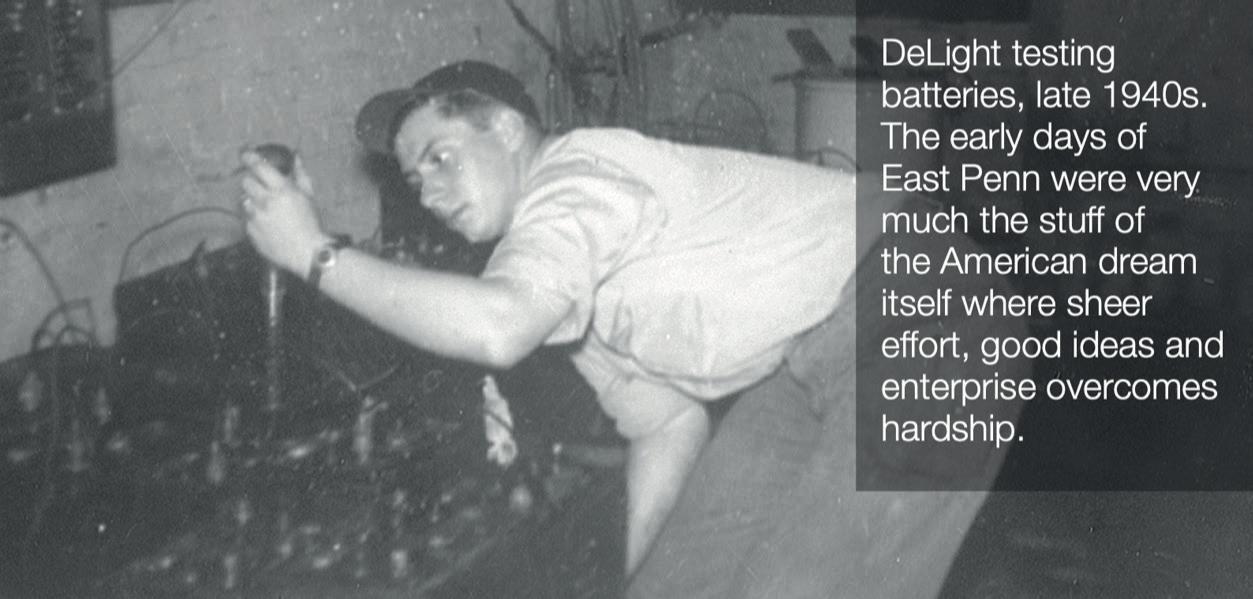



Over 75 years ago, we started as a two-person, family-owned company that has grown to over 10,000 members. And since day one, this family of employees has been at the heart of what makes our company special.

Over 75 years ago, we started as a two-person, family-owned company that has grown over 10,000 members. And since day one, family of employees has been at the heart
It’s humbling for us to think of all the critical roles our products play in our customers’ essential operations. It’s not hard to see why we are considered an essential business, and the products that we make serve a very important purpose in helping to empower people’s lives.
We would like to take this opportunity to not only recognize the success of our employees but the family-like atmosphere and camaraderie that they have created. They have truly joined together to make us one of the Best Companies in Manufacturing, and for that we are sincerely grateful.
It’s humbling for us to think of all the critical roles our products play in our customers’ essential operations. It’s not hard to see why are considered an essential business, and products that we make serve a very important purpose in helping to empower people’s lives.
We would like to take this opportunity to only recognize the success of our employees the family-like atmosphere and camaraderie that they have created. They have truly joined Best Companies , and for that we are sincerely


“We also recognise that lead batteries are not necessarily going to be the only solution moving forward”
the same process, that can actually be quite dangerous.”
“They’re almost identical,” she says. “There has been R&D into an X-ray type of system to be able to identify the difference in battery types. Then there’s also research being done on how to recycle lithium batteries. That’s still, unfortunately, not fully developed yet, but it’s something we’re looking into — along with everyone else!”
East Penn is well known in the industry for a robust R&D function, and Pete is keen to point out that they continue to stay committed to innovation.
“We look at R&D a couple of different ways,” he says. “A big piece is trying to find efficiencies in lead manufacturing, design and recycling. But then we have our lithium R&D which is hyper focused right now — especially in government and defense areas. As part of regulatory changes and supply chain protection, or just military risk, there’s a lot of
focus from the US government on becoming energy independent.”
Do either of them perceive any risk to the business from outside of the US?
“We always have the concern of foreign entrants into the country,” Christy says. “And, realistically, there’s been imports of products, for sure. But lead is not a product that can easily be imported because of its weight. So when people are doing that, they’re doing it to either get extremely reduced cost, which has now come into question through the tariff impact, then the other reason is that they don’t have enough supply here in the US which is a realistic concern. There’s only so many of us who are manufacturing in the US today. There is a capacity shortage.”
Pete concurs. “It’s not extremely advantageous to ship in lead batteries and not just because they’re heavy, but also because they’re a perishable product. Depending on the length of the journey the product would require a recharge. So these factors have created a rather deep moat around the US, a natural barrier to coming in.”
It’s early days for the incoming CEO and president of this very unique organization, but what’s clear is that they both have huge mutual respect for the pillars on which East Penn

In 1947, a new partner joined forces with the Breidegam family and a brand was born. Karl Gasche, a former associate of DeLight, Sr. teamed up with the Breidegam’s. Karl became vice president of East Penn and remained so until his retirement in 1966. When it came time to name the company’s brand, they took the “DE” from DeLight and the “KA” from Karl, and the DEKA brand was born.
stand and are determinedly proud to keep building on the family’s legacy.
Pete says: “As I’ve been working through this transition with Chris retiring from the role, he said to me: ‘What’s keeping you awake at night, Pete?’ And I said: ‘You know something? I think what I’m most worried about is the fact that I’m not worried.’
There you go — you’ve heard it from the top. The East Penn forecast is that the horizon is unlikely to be cloudy. But there will most definitely be a chance of meatballs.
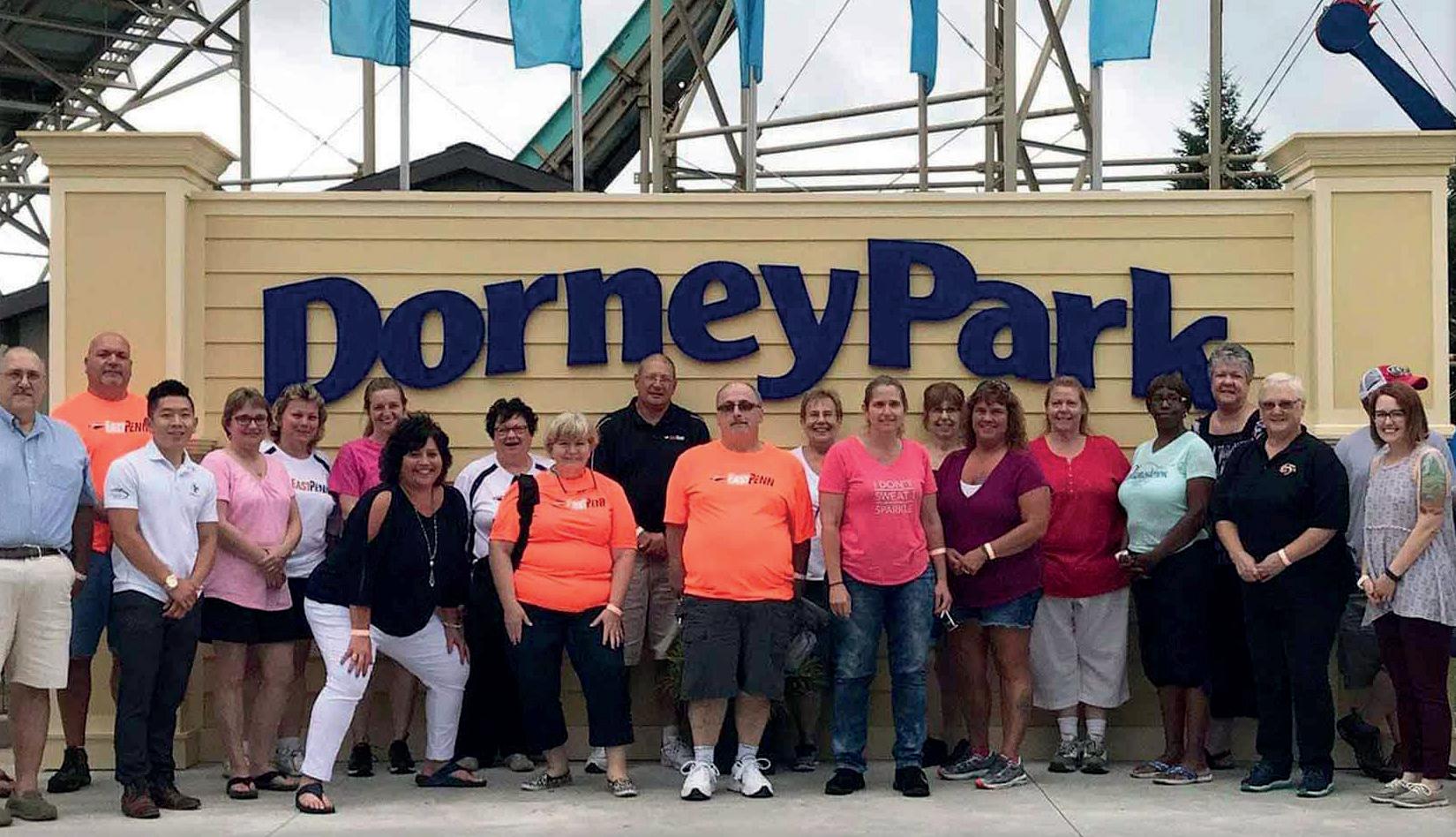
China-based Rept Battero
Energy has signed a 3GWh BESS supply agreement with Energy Vault Holdings in the US.
Under the terms of the deal, announced on September 16, lithium ion battery developer Rept will deliver the BESS systems in 2026.
The companies also plan to expand their collaboration in the US, Australian and European markets.
Rept said the US deal
builds on a cooperative relationship for three years, with a cumulative system supply volume to date exceeding 1.5GWh.
The collaboration will provide strong support for the large-scale application of renewable energy and the stable operation of energy systems, Rept said.
In a separate deal, confirmed on August 21, Rept partnered Turkey’s Teksan to develop commercial, industrial, and
grid-scale energy storage projects.
Also in August, Energy Vault entered into an exclusivity agreement for a $300 million preferred equity investment to launch a subsidiary focused on developing, building and operating energy storage systems.
The proprietary battery, gravity and green hydrogen ESS company said the new Asset Vault subsidiary would accelerate 1.5GW
NEO, NainTech in joint sodium ion development agreement for ESS
Canada’s NEO Battery
Materials has agreed a sodium ion battery tech development deal with South Korea’s NainTech.
NEO said on August 21 the cooperation would focus on supplying energy storage systems and high-performance batteries using NainTech’s proprietary nanomaterial MXene additives.
The companies have signed a joint development agreement that will also include collaborating on drone applications.
The partners said sodium ion batteries (SIBs) would be “the first development focus” for integration
A lead battery energy storage system installed at a US university has been shown to be the missing link in carbon-neutral electricity generation, according to a case study by Stryten Energy.
The multi-battery-tech company said in a case study released on September 9 the lead BESS, deployed in a ‘living lab’ setting on the campus of the Georgia Institute of Technology, is being put through its paces for behind-the-meter cycling applications.
With its additional components and software, the BESS is capable of bi-di-
into BESS systems used to support artificial intelligence data centres and power grid storage.
For drone applications, NainTech’s titanium-based MXene, will be incorporated into NEO’s silicon anode products and high-performance battery designs to improve electrical conductivity.
The firms said MXenes are two-dimensional materials that can outperform the conductivity of commercial graphene by one order of magnitude.
“SIBs have gained recognition as the de facto alternative to lithium ion batteries for energy stor-
rectional charging, allowing current to flow into the battery for charging and out of the battery to power the grid or microgrid.
Georgia Tech wanted to take the next step in achieving its carbon-neutral initiatives and with existing solar panels available, they needed a cycling BESS that could store and discharge renewable energy, Stryten said.
The university is now measuring performance to identify energy peak-shaving opportunities and provide power across the campus.
Stryten said the BESS, installed at the Carbon
of energy storage projects globally.
In 2023, Energy Vault said it would deploy five additional gravity energy storage systems in China, after breaking ground for its first such ‘EVx’ project in the country a year earlier in partnership with Atlas Renewable and China Tianying.
age, benefiting from greater resource availability and lower costs,” the companies said.
“NEO will support NainTech in developing and manufacturing SIB electrodes and full battery cells, guiding prototype design through to commercial-level deployment.”
Spencer Huh, president and CEO of NEO, said: “By expanding into electrode and cell design for SIB technology, while leveraging NainTech’s nanomaterial innovation MXene, we are advancing comprehensively for battery innovation.”
Neutral Energy Solutions Laboratory, which houses the university’s Strategic Energy Institute (SEI), was chosen because it was cost-effective and a proven and safe technology with high discharge rates with high efficiency.
The system is a sustainable grid support tool, providing rapid response capabilities to mitigate fluctuations, stabilize voltage and enhance overall grid resilience while seamlessly integrating renewable energy sources into the power mix and reducing environmental impact, Stryten said.
Peak Energy has announced the startup of a sodium ion-based demonstration BESS in the US.
Peak said on September 25 that the passively cooled 3.1MWh NFPP — or sodium ferric pyrophosphate system — is now operating at the Solar Technology Acceleration Center (SolarTAC), operated in partnership with nine utilities and independent power producers.
Located near Denver International Airport, SolarTAC is a 74-acre facility that includes facilities for testing both photovoltaic and concentrated solar power technologies, including access to the grid.
First unveiled in July, the BESS will collect and distribute operational and modelling data from the real-world operation of the unit, ahead of the anticipated launch of commercial-scale projects starting in 2027.
Peak claims its proprietary design system eliminates active cooling, reduces moving parts, and extends battery life, cutting lifetime costs by more than $100 million for a typical project deployment.
The BESS also allows IPPs to deliver the fastest-to-market energy capacity solution with the lowest cost of ownership, Peak said.




























A subsidiary of South Korea’s SM Group is developing a lead acid BESS range to complement its existing lithium energy storage systems.
SM Bexel Battery Division said on October 20 it had secured technology to produce long-cycle, large capacity BESS systems using lead batteries for sale in domestic and global markets.
SM said lead batteries offered excellent safety and cost efficiency, are easy
to recycle and have a long lifespan. Another key benefit is that lead batteries are less prone to thermal runaway, in contrast to their lithium counterparts.
Technology to be used by SM involves applying activated carbon to the electrodes of lead acid batteries to minimize the formation of lead sulfate, significantly extending battery life, the company said.
With this technology, the lifespan of ESS batteries, which was previously
around seven years, is expected to improve to about 10 years.
SM is also applying biomass activated carbon using a surface modification technology developed by a team led by Kim Woong-am, who is a professor at South Korea’s Chonnam National University’s Department of Polymer Convergence Materials Engineering. The firm said the solution also achieves cost efficiency by replacing expensive imported acti-
vated carbon.
Choi Se-hwan, CEO of the battery division, said a mix of battery technologies was essential for a company looking to survive and thrive in the energy storage sector.
“We aim to gain a competitive edge with technology that ensures both safety and eco-friendliness,” he said.
“We will further expand our presence in domestic and international markets with ESS technology based on lead acid and lithium ion batteries.”
Energy tech firm Baker Hughes and Controlled Thermal Resources (CTR) said on September 9 they will develop 500 MW of geothermal power in California’s ‘Lithium Valley’ region.
The partners have entered into definitive agreements for the project to deliver 24/7 baseload energy for AI and hyperscale datacenters at CTR’s Hell’s Kitchen site in the state — where the firm is developing geothermal, batterygrade lithium chemicals and critical minerals.
Hell’s Kitchen, at Salton Sea, is where CTR is working to recover lithium from geothermal brines using renewable energy and steam to produce battery grade lithium products.
Under the terms of the agreements, Baker Hughes said it will deploy high-temperature drilling technologies, power systems, and digital field services to bring scalable, cost-effective, and high-reliability geothermal energy to market.
According to the partners geothermal energy,
For the record, BASF Battery Materials is to work with Contemporary Amperex Technology to develop advanced and innovative cathode active materials.
BASF says the companies had signed a framework agreement to cooperate internationally on cathode active materials for lithium ion batteries.
Daniel Schönfelder, president of BASF’s Battery Materials division.
“Our diversified and local production footprint for innovative cathode materials will support CATL’s global business development.
The BASF group already operates a cathode material production plant in Germany. Last year, the company started
unlike intermittent renewables, runs at capacity factors above 98%, making it uniquely suited to power AI clusters and datacenters that require uninterrupted operations.
CTR chief executive officer Rod Colwell said the project was needed because intermittent renewable power sources alone could not feed hyperscale datacenters and energy-hungry AI systems.
“Baker Hughes has built its reputation on delivering world-class services and is blazing a trail to advance
operating its prototype metal refinery for battery recycling at the same site.
CATL has previously said it would work with mining giant BHP Group on battery tech development and recycling.
The Chinese battery manufacturer said it had signed a memorandum of understanding with BHP, to explore opportunities in battery development for mining equipment and locomotives — including rapid charging infrastructure.
CATL said it would also look at opportunities under the partnership to boost battery material supply chains, including utilizing BHPs copper mining operations.
geothermal development in the US.”
Colwell said CTR’s technologies and experience represented game changers for the energy sector.
CTR’s has already secured a 40 MW power purchase agreement with the Imperial Irrigation District and lithium supply agreements from Hell’s Kitchen with US auto manufacturers.
The company has a conditional use permit to start the first stage of construction activities at the site and long-lead equipment has been built and staged for construction.
The project is designated as a ‘FAST-41’ project, which aims to streamline environmental reviews to speed-up federal permitting approvals.
If fully permitted, the project would be one of the world’s largest geothermal power and critical minerals hubs.
California governor Gavin Newsom said the state, together with companies such as CTR, envisage Lithium Valley becoming a “global source of critical minerals while also powering a new economic boom for the region”.






Shaping an industry to better face the future? Or just another example of European Union bureaucracy run wild? Industry reaction to the EU Battery Passport has been mixed — and rightly so. Some of the recycling targets proposed are fanciful at best. So are the timelines. But the general direction of travel is good, writes Yves Le Marquand.
Nympholeptic. That’s one interpretation of the legislation around the EU Battery Passport two years ago. Nympholepsy — a frantic obsession with an unattainable ideal — is certainly a characteristic of much European Commission thinking around the Green Deal and Circularity where high environmental ideals are prioritized above commercial common sense.
The run-up to the legislation created a very polarised reaction. Market gossip — it was never founded on facts — suggested that compliance with the new rules would add an extra €5-€15 ($6-$18) to every new battery, be they lead or lithium.
A quick chew through the numbers makes this look fanciful. “The oftenquoted $10 figure per battery is a joke,” says Thomas Knothe, head of business
process and factory management at Fraunhofer IPK.
“Around 70% of the data is engineering information that companies already have. If your digital systems are strong, it’s not a big problem. From our experience, most of it is easy. The remaining 5% causes 80% of the cost, because of unclear guidance.”
Knothe should know. He has spent the past 18 months helping design the very standards that will make the EU’s Digital Product Passport system work.
“The EU has created a very complex system,” he says. “In the final stages of drafting, it became inconsistent and not fully thought through. The idea is good, but it is not suitable to start in such a complex way.”
When the battery passport arrives in early 2027, every industrial and electric
If it works, the passport could make Europe’s battery industry more circular, competitive and geopolitically resilient. If it falters, it risks becoming another example of regulatory ambition outpacing technical readiness
vehicle battery sold in Europe will carry a digital record of its materials, origin and environmental footprint, all accessible through a QR code scan.
For Brussels, the passport is a cornerstone of the ‘green deal’ and the first test case for a wider system of digital transparency.
For manufacturers, it is a test of readiness. The introduction of the passport has been a major preoccupation of automotive OEMs who realise that unless new batteries conform to the regulation, their cars cannot be sold, according to a spokesperson at AVI which has spent the last year and more developing the product.
To preserve intellectual property, manufacturers will be able to access the full scope of information in a battery passport but other parties will be limited in what they can see.
The buyer of the EV will be able to see some of the data as will the recycler.
But for smaller firms, it could be little more than another bureaucratic hurdle to jump through that adds cost and limits growth.
The passport is clearly a European
invention — be it a bureaucratic one or otherwise — in that no other economic bloc has thought through what it should contain.
Outside the EU, battery passports may be used for different purposes and although they won’t be required in the US, until recently they had the potential to serve as evidence that an electric car qualifies for Clean Vehicle Tax Credits, worth several thousand dollars depending on the vehicle and its emissions.
Potentially the passport will redefine how information moves through value chains. It will give each battery a unique digital identity containing standardized data on its composition, performance and impact.
A European Commission spokesperson says it is designed “to enhance transparency across product value chains by providing comprehensive information about a product’s origin, materials, environmental impact and end-of-life recommendations.”
The passport will cover industrial batteries above 2kWh, EV batteries and those used in light transport.
The system is ambitious. It will include information for regulators, recyclers and second-life operators, as well as for the battery’s owner. But it depends on a vast digital architecture that is still being built.
Projects such as Cirpass, which prepared the ground for the gradual piloting and deployment of digital product passports, and Battery Pass, which involve both industry and

“The EU isn’t known for efficiency. My hope is they take a staged approach. Start simple, learn and improve. Less is better than more. If we can get 70% of the benefit with 30% of the effort, that’s better than building a complex system that doesn’t work.”
— Thomas Knothe, Fraunhofer IPK
academia, are defining the technical standards.
Those must be completed by the end of 2025, leaving just over a year for manufacturers to prepare to go live on the system.
The technologies required already exist, Knothe says, but the regulations around them remain vague. “If we want an automated system, we need clear, formal specifications for data measurement, policies and access management. Right now, overlapping regulations cause friction and inconsistency.”
The EU Battery Regulation (2023/1542), adopted in August 2023, replaces the 2006 Battery Directive. It introduces strict requirements to ensure batteries are produced, used, and recycled sustainably. Battery passports and best practices are still being defined but the general direction of approach is clear.
The requirements will increase in the coming years. Areas of development for battery passports will likely include greater international cooperation and probably the creation of a vehicle passport.
Effective EU Battery Regulation requirements improve end-of-life battery recovery. This will be linked to EU targets for battery material recovery and improve material recov-
ery systems moving to the planned goal of a circular battery economy and possibly value chain cooperation. Supply chain due diligence requirements — effectively internationally — will help to ensure ethical work practices across the battery supply chain, regardless of location.
From February 2027, all EV and industrial batteries >2 kWh sold in the EU must have a digital battery passport, accessible via a QR code. This covers basic details at first (ID, type, model, key characteristics), with more lifecycle and durability data to be added later.
Data must be interoperable, secure, and selectively shared with regulators, consumers, and recyclers. It will also included carbon foot-
He points out that the regulation still lacks a formal EU-mandated data catalogue for batteries. “The legal text exists, but nothing is formalized. That leaves space for multiple initiatives to create their own versions, without an official mandate. It only adds confusion.”
The Commission acknowledges those gaps.
It has received the position paper from Eurobat, the trade body for Europe’s battery sector, warning that the passport could expose sensitive commercial data. (see side box for

print reporting and independent verification. It will affect the whole value chain: from mining firms, refiners, cell makers, OEMs, to recyclers. There will be extended producer responsibility: producers must ensure collection and recycling networks. Battery health and repair data must be made available for reuse, refurbishment, or recycling.
This also means that due diligence on supply chains will include human rights, and the environmental impact. Safety and hazardous materials limits will be enforced. Non-compliance will result in recalls, fines, and, depending on its severity, reputational harm. Shareholder value will also be affected.
details.) That issue will be reviewed in 2026, when rules on who can access which parts of the system are set out.
Johannes Simböck, division manager at the German Academy of Science and Engineering, who works on the German government-funded BatteryPass-Ready project, says “the timetable is short”. Technical standards will be finalized at the end of 2025, leaving 14 months to build the systems and data infrastructure needed.
He says suppliers and manufacturers will have to turn inward and assess how well their existing data systems can handle the new requirements, “Common standards and methodologies must be available across the value chain. Preparations are urgently needed now.”
Irrespective of this, suppliers see less upside. “Many have no direct benefit, so they are concerned about the extra cost,” Simböck says.
Knothe believes the biggest threat to the project is over-ambition. “The EU isn’t known for efficiency,” he says. “My hope is they take a staged approach. Start simple, learn and improve. That way, it won’t become outdated before it comes into effect.”
He also warns of the clash between parallel rules. The Renewable Energy Directive (RED III) requires realtime, over-the-air data, while the Battery Regulation expects updates only a few times a year. “The gap between milliseconds and five times a year is enormous for infrastructure and for the automotive industry,” he says.
Circularity is where many see the passport’s long-term value. Simböck believes the information it generates will “enable batteries to be reused and repurposed more efficiently.” Reliable performance data can help businesses assess residual value and decide whether a battery should be recycled or given a second life.
Knothe sees circularity as Europe’s best chance to stay competitive in a global market dominated by raw-material producers. “Most critical materials come from outside Europe. Circularity is our only real opportunity to be a player,” he says.
The logic of this, however, makes little sense — at least in the near term.
For the next 10-20 years the rapid growth in the demand for EV batteries cannot be matched with the flow of critical materials from the trickle of used batteries that have reached the end of their life.
The passport can enable easier
repair, reuse and recycling, although not every battery can have a second life. Tesla batteries can be reused for solar energy storage, but others can’t. “Today, most recycling simply melts everything down because it’s cheaper than dismantling,” said one commentator at the recent IBRC meetings in Valencia this September.
“We’re now seeing a new generation of hydrometallurgical processes coming to the fore that may prove more cost-effective in the end. We need more research into viable reuse and repair processes.”
Additionally, most of the recycling targets are not immediately achievable.
The new regulation sets a target for lithium recovery from waste lithium-ion batteries of 50% by the end of 2027 and 80% by the end of 2031.
It also provides for mandatory minimum levels of recycled content for industrial, SLI batteries and EV batteries. These are
That risk of overreach is one reason some in the industry want the EU to slow down. A spokesperson for the International Lead Association says the passport “offers a mechanism to communicate sustainability information throughout a battery’s lifespan but that a gradual approach makes more sense.”
The association says it backs Eurobat’s call to delay implementation and to exclude industrial batteries from the first wave.
For environmental groups, the passport is essential — but they would say that. A spokesperson for Transport & Environment (T&E) calls it “a key tool to enhance transparency and promote responsible supply chains in Europe and beyond.”

initially set at 16% for cobalt, 85% for lead, 6% for lithium and 6% for nickel. These are later to be raised to cobalt 26%, lead 85%, lithium 12% and nickel 15%.
The Regulation included provisions for the European Commission to revise in 2028 when more information about the market availability of battery grade recycled material would be known. This may prove to be a key proviso in balancing regulation against realism.
However, the recycled content target levels proposed in the Battery Regulation had been set by political will rather than expert analysis.
“The consultants who advised the Commission wanted to set more realistic, achievable targets than these, but their views were overruled during the political process,” said Steve Binks, technical director at the ILA, speaking at the Asia Battery Conference two years ago.
There are already real-world examples. “Volvo’s battery passport maps supply chains down to the point of mineral extraction and represents a best-in-class traceability system,” the spokesperson says. Volvo uses blockchain technology to trace raw materials from mine to assembly.
T&E says the EU regulation will level the playing field by making that level of traceability mandatory for all. Most European OEMs, from Volkswagen to BMW and Stellantis, have already started preparing, giving them what T&E calls a “clear competitive advantage” over global peers.
T&E also sees a wider benefit. Greater transparency, it argues, will help diversify and strengthen European supply chains by making risks and dependencies visible.
François Le Scornet, president of Carbonexit Consulting believes the passport will create both challenges and opportunities. “It will give
manufacturers a way to show compliance on carbon footprint, recycled content and durability,” he says. “Over time, it could drive new designs and better recycling, but the costs of compliance will be high.”
He argues that transparency itself will become an advantage. “Companies that can prove responsible sourcing will be in a stronger position with investors and customers,” he says, pointing to pilots such as Circulor’s system for the Volvo EX90. This provides the world’s first digital battery passport using blockchain technology to track the battery’s supply chain from raw materials to the finished product.
This system offers end-to-end transparency for individual vehicles, including the origin of critical raw materials, the battery’s carbon footprint, and its percentage of recycled content, accessible via the Volvo Cars app and a QR code.
From an environmental standpoint,

“Over
time, the passport could drive new designs and better recycling, but the costs of compliance will be high.”
— François Le Scornet, Carbonexit Consulting
Red Lead Plus
• Developed for Industrial (dry and wet filling) & Automotive batteries
• Combines benefits of Red Lead with 4BS seeds TBLS + ®
• Customized Red Lead grade & 4BS concentration
• Reduces formation energy
• Enhances cycle life
• Available in big bags

“The timetable is short. Common standards and methodologies must be available across the value chain. Preparations are urgently needed now.”
— Johannes Simböck, German Academy of Science and Engineering
T&E says that disclosing reliable data on materials and emissions will help compliance but could also pave the way for future circularity and recycling initiatives.
Beyond the environmental and industrial arguments lies a clear political one. Le Scornet says the EU wants to “reduce its reliance on the DRC for cobalt and on China for processed lithium, while pulling more of the value chain back to Europe. If successful, the passport could set the tone globally,” although he expects competing frameworks from the US and China to appear in the short term.
Knothe has already seen that response elsewhere. “Some countries see the EU’s system as an attack,” he says. “Malaysia has just introduced its own battery rules. What we need is a global, mandated standardization at ISO level, and that work is already underway.”
While the long-term ambition is global alignment, Knothe says the
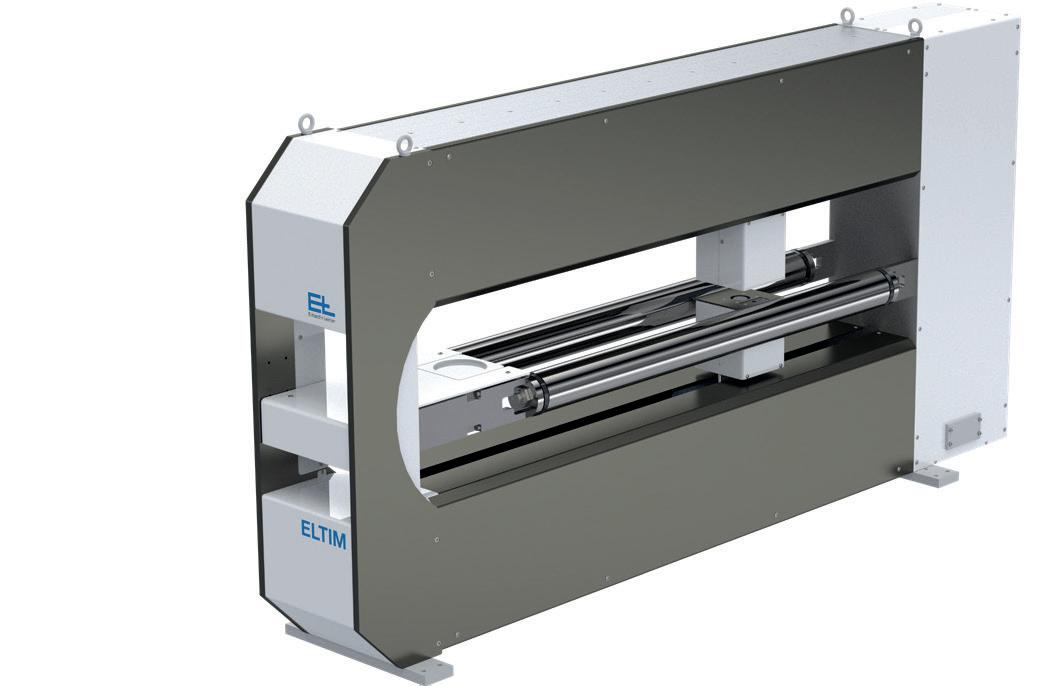
best way to reach it is by keeping things simple. “Less is better than more,” he says. “Start with a few clear, meaningful attributes. If we can get 70% of the benefit with 30% of the effort, that’s better than building a complex system that doesn’t work.”
He gives an example. “Colleagues in Norway tested five different carbon-footprint tools using the same data and found results varied by 500%. Until there’s consistency, we shouldn’t make such metrics mandatory. We should be realistic, start small and build from there.”
The battery passport will make Europe the first region in the world to demand digital traceability of every major EV and industrial battery. It will also test how fast regulators and manufacturers can turn regulation into reality.
If it works, the passport could make Europe’s battery industry more circular, competitive and geopolitically resilient. If it falters, it risks becoming another example of regulatory ambition outpacing technical readiness.

EUROBAT, the Association of European Automotive and Industrial Battery Manufacturers, released a position paper in September, urging policymakers to consider: a “stop-the-clock” initiative and postpone enforcement to 2030; to exclude industrial batteries from the initial phase of implementation of the Battery Passport; and, to consider limiting the disclosure of highly sensitive data and technical parameters, among others.

Why did EUROBAT propose the stop the clock initiative and why does it want enforcement postponed until 2030?
EUROBAT’s view is that the Battery Passport should only be enforced once the necessary infrastructure and technical standards are in place. Right now, there are still delays in key elements of the Batteries Regulation like carbon footprint reporting and due diligence obligations, which creates uncertainty and adds to the compliance burden for companies.
We believe the best way forward is to introduce requirements required by the Batteries Regulation first such as the carbon footprint, due diligence, recycled content. That way, companies can build strong reporting systems and make sure the data feeding into the Battery Passport is accurate, complete, and consistent across the regulation.
As mentioned also in our latest position paper, postponing enforcement until 2030 would give time also to:
• Facilitate consistency and harmonisation with other digital product passport requirements in legislation by finalising the technical standards on Digital Product Passport through JTC 24 and clarify the re-
Batteries International spoke to Gert Maylemans, general manager for the trade association, for his organization’s views.
spective roles of industry initiatives like Catena-X and GAIA-X;
• Alleviate the regulatory burden on industry, particularly SMEs by enabling industry to first define and implement carbon and due diligence requirements;
• Provide sufficient time to address critical challenges and harmonize requirements by redefining a technically feasible and actionable data reporting scope through a cost-benefit lens and resolve conflicts with GDPR and Trade Secrets Directive. In short, we would like to make sure the Battery Passport is launched on solid foundations, with reliable data and a clear, harmonised framework.
What technical or logistical hurdles stand in the way of implementing this passport system across the supply chain?
As mentioned already above, one of the biggest hurdles is that many of the technical data sets needed under the Battery Passport still are not finalised.
Do you have concerns over data privacy?
Yes, data privacy is a real concern. The Battery Passport should not require companies to disclose highly sensitive technical information such as pack design specifications or cell material “recipes.”
These are core business assets and know how. We also think it is important to keep in mind that some of the very detailed technical parameters,
for instance, minimal and maximum voltage, original power capability, internal battery cell resistance does not bring value to recyclers or end users but could create safety risks if misused.
What really matters is that recyclers and circular economy operators get the information they need, without exposing companies’ trade secrets.
Do you also have concerns about ensuring data accuracy and preventing fraud within the self-reported information?
EUROBAT has not formed an opinion on this yet.
What benefits could a battery passport create for manufacturers or consumers? Are there short- and long-term benefits?
The Battery Passport is essentially a digital identity for batteries, giving access to key information and, most importantly, helping manage their end of life. Companies will be able to integrate carbon footprint, materials, traceability, and other data information into one common Battery Passport system.
Could transparency become a competitive advantage, rewarding companies with more sustainable or ethical supply chains?
Yes, transparency on sustainability performance can become a competitive advantage, but only if the assessment is standardized to ensure credible comparability.
It is crucial to emphasize that such disclosure should not compromise commercially sensitive information. Effective transparency means publishing the final outcomes — such as a product’s carbon footprint and overall ESG management performance — rather than revealing proprietary process data or detailed supply chain information that could undermine a company’s competitive edge.
This approach allows companies to demonstrate their commitment credibly while safeguarding their core business interests.
Is there a geopolitical angle to the passport, in an age where re-industrialization is front and centre?
There can be relevant geopolitical considerations. For instance, if a battery passport discloses the country of origin and the name of cell manufacturer, it enables downstream companies and consumers to make more informed decisions.
This transparency can subtly influence purchasing patterns, potentially favouring supply chains aligned with regional strategic goals, such as “Made in Europe.”
How might the passport facilitate a circular economy?
The battery passport acts as a digital enabler for a circular economy by providing a trusted source of key information throughout the battery’s lifecycle. Specifically, it facilitates circularity by providing history on battery health, capacity, and usage patterns to determine a battery’s remaining value, allowing for efficient second-life application.
It identifies the presence of critical raw material and hazardous substances, allowing recyclers to efficiently
sort and safely handle the waste batteries. It also provides information on where end-consumers can find proper channels for maintenance and recycling, preventing improper disposal and promoting resource recovery.
However, the passport’s success hinges on balancing several factors: the standardization of data to ensure comparability, the minimization of industry compliance burdens, and the robust protection of commercial secrets. Without this balance, the tool risks being either ineffective or overly detrimental to competitiveness.
The EU is not known for its efficiency, could the passport become outdated as an idea before it comes into effect?
While the EU’s regulatory process can be slow, the fundamental need for battery transparency is not diminishing, so the passport concept is unlikely to become outdated. The real challenge lies in its execution.
The system must be carefully designed to avoid placing undue burdens on industry. Success will depend on a practical implementation that balances the goal of transparency with the need to maintain a competitive and innovative battery sector.
Is there a risk that the compliance cost could stifle innovation and/or create a barrier of entry for start-ups?
There is a clear risk that the significant compliance cost of the battery passport could stifle innovation and create high barriers for startups. Establishing the required digital system for data management is inherently expensive, disproportionately burdening small companies with limited
capital. More critically, this burden extends beyond cost.
For a startup, its core value often lies in a proprietary battery chemistry or design. Mandatory disclosure of detailed information could force the exposure of these intellectual properties, allowing larger competitors to replicate their innovations.
This dual threat is precisely why we are seeking to mandate transparency only on non-sensitive, critical data points, aiming to minimize the reporting burden and protect confidentiality.
Do you think the passport could set a precedent for other regions? Could this create fragmentation, or might we be heading that way anyway given the shift to re-industrialise?
Yes, the EU battery passport could set a precedent for other regions. The ideal scenario would be international interoperability and mutual recognition of such standards. However, without a coordinated global approach, it is more likely to lead to regulatory fragmentation, with different regions developing their own similar but distinct systems.
Do you think the proposals are achievable in the time frame proposed? Would overambitious be a fair statement?
We do not believe the current proposals can realistically be achieved by the 2027 deadlines set in the Batteries Regulation without overburdening the battery manufacturers. The requirements are highly complex, and many technical standards, reporting systems, and data infrastructures are not yet finalised.
Therefore, calling the timeline “overambitious” would be fair.

“However, the passport’s success hinges on balancing several factors: the standardization of data to ensure comparability, the minimization of industry compliance burdens, and the robust protection of commercial secrets”



August 18 2026

Rechargeable


portable batteries, LMT batteries, and SLI batteries must bear a label with information on their capacity. Nonrechargeable portable batteries must bear labels indicating capacity and “non-rechargeable”. This is also the deadline for the Commission to adopt a delegated act establishing the methodology for calculating the percentage share of recycled content in batteries. Additionally, the Commission must adopt implementing acts specifying which individuals qualify as having “legitimate interest” for accessing non-public Battery Passport information.
















August 18, 2027: Deadline for producers of portable batteries to achieve a 63% collection target for waste portable batteries. The Commission is also empowered to amend the collection rate calculation methodology and adapt the collection target based on market developments and battery lifetimes.









February 18, 2027:




December 31, 2030: The Commission will assess the feasibility of extending carbon footprint requirements to portable batteries and the maximum threshold requirement to rechargeable industrial batteries with a capacity of 2 kWh or less. They will also assess phasing out non-rechargeable portable batteries.



Deadline for LMT batteries, industrial batteries over 2kWh, and EV batteries to have a Battery Passport.







a Battery Passport. methodology assess


December 31, 2027: Deadline for the Commission to assess the feasibility and benefits of establishing deposit return systems for batteries, particularly portable batteries.



















June 30, 2031:
The Commission will review the application of the Battery Regulation and submit a report, including an evaluation of various aspects, to the European Parliament and Council. This may include a legislative proposal for amendment.





August 18, 2028: Deadline for industrial batteries over 2kWh (except those with exclusively external storage), EV batteries, and SLI batteries containing cobalt, lead, lithium, or nickel to include documentation detailing the percentage of recycled content. Minimum recycled content required: 16% cobalt, 6% lithium, 6% nickel, 85% lead.


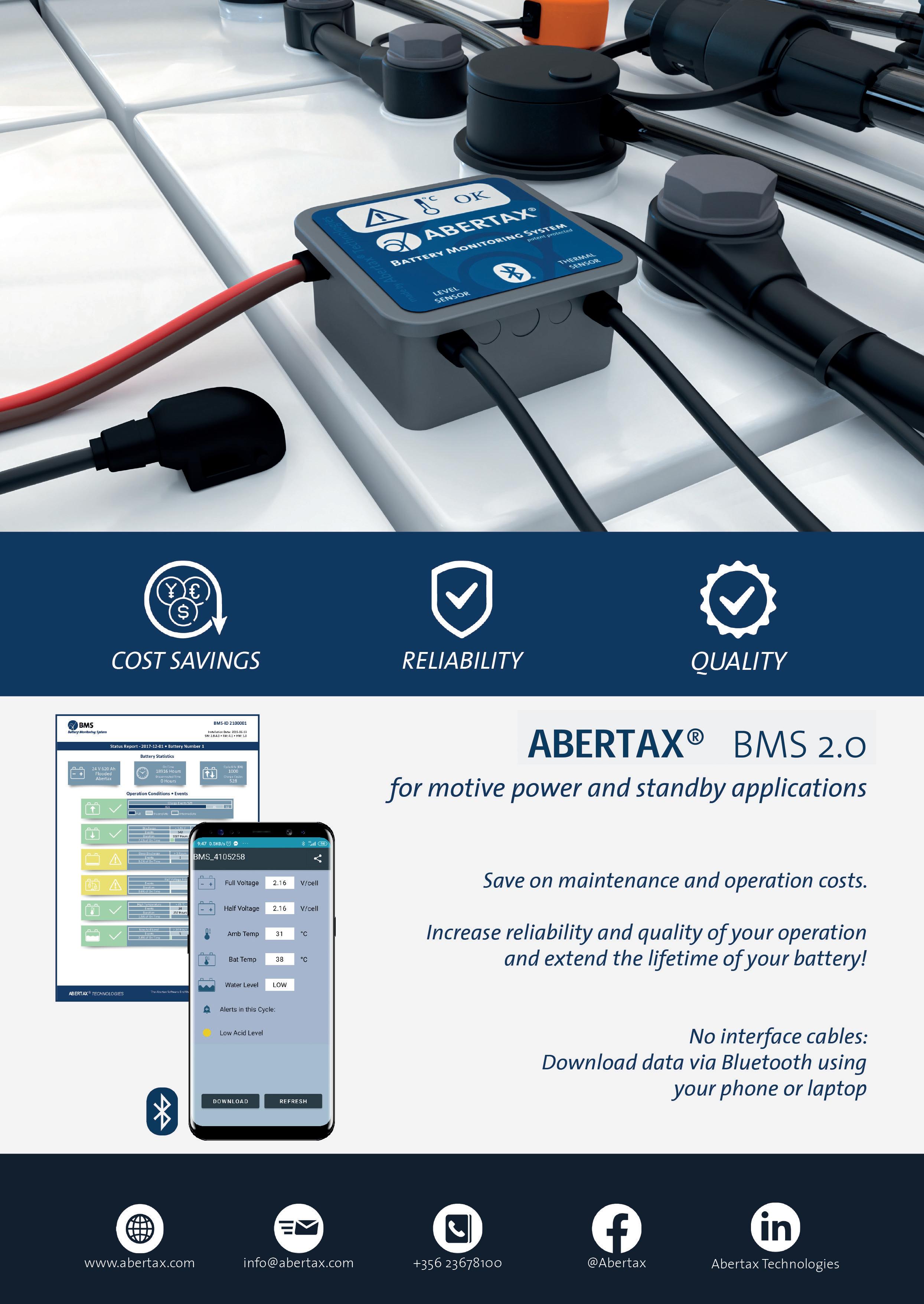
The
flames of a thermal runaway are self-evidently dangerous but the vapors, though they look less harmless, are worse writes George Brilmyer. This has profound implications for the aviation industry where passengers are trapped in an enclosed space.
Thermal runaway occurs within a Li-ion cell when the high-power anode and cathode may spontaneously react with each other, or the electrolyte, to deliver massive quantities of heat and toxins. The process is unstoppable.
Unlike most other batteries, the solvent/electrolyte in the Li-ion battery is flammable, and that is the crux of the Li-ion thermal runaway problem.
Though attempts have been made to reduce this using improved cathodes, anodes, separators, lower voltage cell chemistry (such as LFP), polymer or solid electrolytes, the danger persists.
Even flame-retardant additives have been added (unsuccessfully), although the development of solid-state batteries looks promising. Now, that the
Hydrogen fluoride (HF)
Carbon monoxide (CO)
Hydrocarbons
(eg methane, ethane, propane)
Benzene and toluene
Phosphoryl fluoride (POF₃)
Particulate matter (PM2-5 and ultrafine metal oxides
general public carries multiple Li-ion powered devices on their person, the world needs to better understand the dangers of thermal runaway in the home and when travelling.
Table 1 displays a general list of the chemical compounds that have been identified in the vapors emitted from a Li-ion cell during thermal runaway. Some of these like hydrogen fluoride (HF), phosphoryl fluoride (POF3) and ultra-fine metal oxides are very toxic,
while the hydrocarbon solvents are flammable and make the vapor cloud explosive.
Table 2 below shows the concentration of these compounds (measured in vol%) both pre- (no flames) and post- ignition (with flames). Before ignition, one of the most dangerous components, hydrogen fluoride, is at its highest levels along with the concentrations of flammable components such as
Now, that the general public carries multiple Li-ion powered devices on their person, the world needs to better understand the dangers of thermal runaway in the home and when travelling
Breakdown of fluorinated electrolytes (eg LiPF₆)
Combustion of electrolytes and plastics
Decomposition of solvent (EC, DMC, DEC)
Burning of separator/plastic casing
From decomposition of LiPF₆ in moisture
Electrode and casing materials
Table 1: Thermal runaway toxins, cause and health impact
TR Pre-ignition - no flames
HF (Hydrofluoric Acid)
20 - 200 ppm (60-200 mg/Wh)
Extremely corrosive to lungs, eyes and skin, can be fatal in high doses
Toxic reduces blood oxygen-carrying capacity
Flammable can contribute to secondary explosions
Carcinogenic (benzene) neurotoxic
Similar toxicity to HF; highly irritant
Penetrates deep into lungs; long-term health effects
TR Post-Ignition - with flames References
Lower ppm but still toxic Larsson 2017, SAND201910407
CO (carbon monoxide) 1-5 vol % 5-15 vol%-major decomp product
CO2 (carbon dioxide 2-8 vol % 15-25 vol%
H2 5-20 vol%
Hydrocarbons (methane, ethane) 1-5 vol%
Solvents (EC, DMC, etc.)
FAA SOT/FAA/AR11/18,INREL TR-5400-65347
FAA SOT/FAA/AR-11/18 SAND2019-10407
<1% consumumed in the flames SAND2019-10407
<1 vol% remain. Replaced by soot and smoke Larsson et al 2017
Major fracion of the vent gases Destroyed
Table 2: Volumes of toxins produced during thermal runaway event
INREAL TR-5400-65347
hydrogen gas (H2), hydrocarbons and solvents. Then when thermal runaway ignites into flames, these concentrations change significantly, but HF remains at dangerous levels.
The potential for ignition (flames) is highly dependent on cell chemistry (such as LFP, LCO, LMC, NCA etc), cell design (cylindrical, prismatic, pouch etc.) and the state of charge of the cell. A general estimate is that thermal runaway results in flames approximately 50% of the time but this does not make the situation any safer. Post ignition, hydrogen fluoride levels remain high and CO and CO2 levels increase dramatically.
Pre-ignition vapors, depending on their composition, tend to collect at the floor (hydrogen fluoride is heavier than air) or ceiling (lighter than air H2, methane, ethane) and may create an explosive vapor cloud.
Top of this list of toxins is hydrogen fluoride/hydrofluoric acid), which is the biggest immediate risk to human health flames or no flames.
The National Institute for Occupational Safety & Health Immediately Dangerous to Health & Life level — NIOSH IDLH — of HF is only 5mg/m3 (~6 ppm).
In another measure of toxicity, the US Environmental Protection Agency defines the Acute Exposure Guideline Level -1 — AEGL— for hydrogen fluoride as 2.47mg/m3.
Hydrogen fluoride is colorless and produces a strong, acrid smelling vapor that irritates the eyes, nose, throat and lungs. Symptoms of exposure may be delayed, but progress rapidly. Moderate levels of exposure result in coughing and bronchospasm that may lead to pulmonary edema and fluid build-up in the lungs.
In a confined area, toxic levels of hydrogen fluoride vapor can spike long before flames occur. Documented injuries and deaths resulting from thermal runaway vapor exposure, tend to be related to and blamed on HF.
Research teams around the world have documented hydrogen fluoride concentrations during thermal runaway and report levels ranging from 20mg to 200mg HF/Wh of battery capacity.
Hydrogen fluoride production is highly dependent on the specific battery type or chemistry (such as LCO, LFP, NMC etc) and battery state of charge. The level of hydrogen fluoride is maximized pre-ignition and then decreases slightly postignition as flames and fire occur.
Thermal runaway is a multistep chemical reaction that operates in five stages: onset, escalation, runaway, propagation and aftermath.
An event initiates cell over-heating. These include the cell being damaged by crushing, puncturing or internal damage related to several types of manufacturing defects. Even continuous charging (aka over-charging) can initiate it. When the cell overheats, a protective layer on the carbon or graphite anode (SEI layer = solid electrolyte interface layer) begins to decompose, and the internal cell temperature starts to rise.
The runaway process escalates, the cell self-heating takes control of the reaction. The unprotected anode releases heat and flammable vapors as it attacks the electrolyte. As the cell temperature increases the separator softens and shrinks increasing the possibility of internal shorting. The pressure in the cell begins to climb, cells begin to bulge.
Stage 3 — Full runaway
The cell demonstrates the features of a runaway reaction, whereby the cathode releases its oxygen. The cell now releases large quantities
Professor Matthew Claassen and his research team at the University of Nevada evaluated two different cell designs and two cell chemistries in 2024.
• a pouch cell design that employed the higher power lithium cobalt oxide chemistry (LCO).
• a cylindrical cell design using a lower power lithium iron phosphate cell (LFP). Their study evaluated the size
of other vapors through the safety vent or by rupturing the case. These contain toxic by-products of the thermal runaway reaction, and are typically flammable though flames and fire are only seen half of the time.
Stage 4 — Propagation
In devices that utilize multi-cell batteries, such as tablets, laptops and power banks, this stage involves the propagation of from cell to cell in a domino effect that starts a cascade from cell to cell as the heat and subsequent thermal runaway is transferred.
Stage 5 — Aftermath
The final step may be thought of as re-ignition. In this step, larger batteries that contain dozens or hundreds of cells may take hours, sometimes days, to conclude the propagation. This will generally continue until all the cells have released their energy. In large electric vehicle batteries containing 4,000-6,000 cells, this process may take days or weeks to conclude, re-igniting again and again from what was considered or hoped to be an extinguished event.
distribution of particles with diameters less than 10 microns and they did so throughout the entire thermal runaway process (flames or not). The number of particles and associated masses were calculated with the quantity being dominated by particles less than 500nm and the mean particle size found to be ~130nm. LFP cell tests showed higher emissions for particle number count and mass than LCO cell tests.
The emissions of ultrafine particles was found to be three to five times greater/Wh for LFP. This is surprising
Research teams around the world have documented hydrogen fluoride concentrations during thermal runaway and report levels ranging from 20mg to 200mg HF/Wh of battery capacity
The US Federal Aviation Administration (FAA) has recently taken a firmer position on this topic by issuing SAFO 25002 (Safety Alert For Operators) on August 25, 2025. This addresses specific rules for handling Li-ion batteries on passenger aircraft. It emphasizes the need for improved crew training in how to recognize thermal runaway and the use of firefighting procedures and safety equipment such as thermal runaway containment products. UL (Underwriters Laboratories), using a committee of experts (GB
since LFP is deemed the safest of the Li-ion chemistries.
Both cell types released acidic gases such as HF, HCl and H2SO4. In terms of HF emissions, the LCO cell data was more consistent and released between 10mg-14mg HF/Wh of cell capacity.
The LFP cell emission data was more variable, but found to release higher amounts of HF in the range of 39mg-81mg/Wh of cell capacity. (For comparison purposes in the following analysis, their data was averaged and 12mg HF/Wh of cell capacity for LCO and 60g HF/Wh of cell capacity for LFP was used.)
In both cell types, the state of charge of the cell was not a major factor in the amount of HF released (though the state of charge of the cell did affect some of the other emissions data). The Claassen team found that
included) from the Airlines, FAA, engineers has developed a specification (UL 5800) for containment products requiring six hours of vapor containment.
The SAFO also specifies the need for improving passenger awareness and training to recognize a pending thermal runaway. The airlines are to explain thermal runaway to passengers, how it occurs and how to recognize it. They must explain safe stowage and handling of personal electronic devices, to avoid accidental crushing or damage.
LPF cells, despite their lower energy, tend to release more toxic compounds across the board, from HF to POF3
The Claassen team focused on cells and not electronic devices, therefore reported their data in mg HF/Wh of cell capacity. In this article the Claassen data was used to extrapolate the amount of HF released by various size Li-ion batteries based on their typical capacity in Wh. Battery sizes (Wh) shown are estimated based on the typical type and brand of electronic devices being operated.
In Table 3, we can see that a 12.2Wh LCO cell in a Smartphone will produce and release an average of 146mg of HF, when this single-cell battery goes into thermal runaway. This amount of
The Claassen team found that LPF cells, despite their lower energy, tend to release more toxic compounds across the board, from HF to POF3
vapor is typically released as a single pressure pulse, since only a single cell is involved. The nature of the pouch cell design and its low mechanical strength pouch, tends to result in a rather low pressure “swoosh” as the vapor is slowly released.By contrast, a 200Wh Power Bank battery (LFP typically being used here) may contain 21 cells arranged in parallel, such as a 3.0Ah LFP 21700 cylindrical cell in a 1S/21P layout.
Based on the Claassen data for LFP, Table 3 indicates that this will produce and release approximately 12,000mg of HF when it goes into thermal runaway. Due to the cylindrical cell design, these vapors will typically be released in 21 separate high-pressure vapor pulses as the safety vent (release pressure ~350psi/2.4MPa) or each metal can bursts.
The overall thermal runaway event may last from minutes or hours, as the thermal runaway cascades from cell to cell.
Vapor release — space and volume considerations
When the battery of a laptop or even a smartphone goes into thermal
In both cell types, the state of charge of the cell was not a major factor in the amount of HF released (though the state of charge of the cell did affect some of the other emissions data)
Table 3: Hydrogen fluoride released by type of power product Ref: Claassen et al, University of Nevada, Reno in Batteries 2024, 10, 366 MDPI, Basel Switzerland
runaway, the size of the room or the confined space is highly important. A cellphone battery going into thermal runaway while driving in a car is infinitely more dangerous compared to that in a large conference room.
In Table 4, the HF concentration data is reported in mg HF/m3 for various devices and various room sizes from 5m3 (a typical SUV) to 300m3 (a large commercial aircraft). From this analysis it quickly becomes obvious how the size of the room or space impacts the severity of the thermal runaway. The smaller the space, the danger increases.
Table 4 shows that in large business jet (~75m3), even a smartphone with its single cell battery, quickly produces a dangerous situation in terms of either the NIOSH or AEGL-1 exposure limits.
Then, an even worse situation, a laptop or tablet in thermal runaway, puts passenger exposure at levels
three to four times the defined NIOSH HF exposure limits. Many laptops have even larger batteries such as the 99Wh battery in the MacBook Pro.
A 200Wh Power Bank battery in thermal runaway (see Table 4) in a large commercial airliner (300m3), means the HF exposure levels become extremely high (eight times the NIOSH
limit). The release of 12,000mg of HF is made more dangerous since there is no way to exit the aircraft or toss the device out a window.
Note: The NIOSH and AEGL exposure limits must be considered when examining Table 4. (As mentioned earlier, NIOSH IDLH = 5mg HF/m3 and AEGL-1 = 2.47mg HF/m3 ).
George Brilmyer holds a PhD in electrochemistry and has some 40 years of experience in the battery and electrochemical industries, particularly working with lead-acid and alkaline battery systems. He holds multiple patents in these fields and has played a bridging role between academic electrochemistry and industrial battery-technology development. Device Typical battery capacity (Wh)
released (mg) for LCO based on Claassen data 10-14-avg 12mg/ Wh
mg HF/m3

Device Typical battery capacity (Wh)
Table 4: Application of Classen data to space data Ref: Claassen et al, University of Nevada, Reno in Batteries 2024, 10, 366 MDPI, Basel Switzerland # Calculations based on applying Claassen data to typical battery capacities and space dimensions
Private equity investor Splitstone Capital said on October 13 that it is to acquire Ecobat Resources UK’s (ERUK) lead battery recycling business from the firm’s US parent company. It is the last non-lithium related sell off of its assets in Europe. Further sales of Ecobat’s assets in the US are in the pipeline. Ecobat’s lithium processing capabilities have not been put up for tender.
Splitstone said the deal, the latest in Ecobat’s piecemeal sell-off of business units worldwide, had been structured as a ‘corporate carve-out’. Tom Slabe, CEO of Ecobat said: “Upon completion, this transaction — along with the previously announced divestitures in France, Italy, Germany, and Austria — will mark Ecobat’s exit from the European lead market.”
Meanwhile, negotiation of the three facilities Ecobat owns in the US — in California, Indiana and New York— are reportedly getting closer to a conclusion, insiders tell Batteries International
An issue, apparently, is whether the three are to be sold as a job lot or individually.
Potential buyers are rumoured to be Clarios, which no longer has any smelting capacity in the US and Gopher Resource. If Gopher were to buy the three — which have a processing capability of some 350,000 tonnes of lead a year — this would give it over 50% of the US market and could lead to potential monopoly issues, say insiders.
ERUK will transition to standalone ownership under Splitstone’s management, although financial details have not been disclosed.
However, Splitstone said the purchase of the recycling business, which generates around £190 million ($253 million) in annual revenues, will be funded by Splitstone’s £100 million of committed capital and supported by over £40 million of acquisition and working capital facilities.
The move, subject to various regulatory and other conditions, will provide a strong platform for ERUK’s future growth, Splitstone said.
Derbyshire-headquartered ERUK operates Europe’s largest and most advanced lead battery recycling facility, alongside the company’s Hertfordshire sheet lead production site.
Together, the facilities form the UK’s largest integrated lead recycling and refining business. Products are distributed to customers across the automotive, industrial and construction sectors in the UK, Europe and globally.
Splitstone managing partner Peter Foxwood said the investor’s support of ERUK MD John Manning and his team “exemplifies the kind of complex carve-outs we actively seek out”.
Negotiation of the three facilities Ecobat owns in the US — in California, Indiana and New York— are reportedly getting closer to a conclusion
Manning said Splitstone’s backing will ensure ERUK is well placed to invest in its operations, enhance service and continue leadership in safe, sustainable lead recycling.
Earlier in October Belgium-based Campine pledged to expand use of battery recycling and speciality lead manufacturing operations newly acquired from Ecobat in France.
Batteries International reported in June that Ecobat had received a binding, undisclosed offer for the facilities.
Campine said on October 1 that the deal, including two battery recycling plants and one semi-finished lead-products facility, was finalized on September 30.
Together, the sites add 70,000 tonnes of annual battery recycling capacity and expand Campine’s downstream offering with lead anodes for the zinc and copper industries.
Campine circular metals director David Wijmans said: “The Ecobat facilities have free smelting capacity that we plan to use immediately.
“From next year, we also aim to
adapt the furnaces to Campine’s proprietary technology to recover antimony, tin and other metals, fitting perfectly with our multi-material recycling strategy.”
CEO Wim De Vos said the acquisition was a major step in the group’s European expansion, with five plants now operating in France.
The final purchase price is expected to be around €14 million ($16 million), subject to closing adjustments including cash, debt and liabilities.
The deal also supports Campine’s recycled plastics business unit, as the former Ecobat plants generate around 3,000 tonnes of polypropylene waste annually from battery casings.
Last year, the acquired assets generated around €100 million in revenue with positive EBITDA, Campine said.
Ecobat announced on September 2 it had completed the sale of its Arizona anode manufacturing unit to Chile’s Inppamet. The firm said the deal included its fabrication facility in Casa Grande.
The Casa Grande site has produced rolled lead anodes for the copper and zinc mining industries since the 1980s.
Inppamet is a key player in supporting the mining and metallurgical industries, specializing in the design and manufacture of high-performance anodes, cathodes, and related products.
Anodes are key components in hydrometallurgical processing, where they are used in the recovery of precious metals from anode slimes. The slimes are by-products of the electrorefining process.
Also in June, UK private equity firm Endless acquired Ecobat Battery, which has a network of 23 distribution hubs in the UK, Ireland, France, Netherlands, Belgium and Spain.
In July Ecobat confirmed to Batteries International, which had already run the story, that it was selling its lead battery and polypropylene recycling operations in Italy to Haiki+.
Clarios has confirmed it would acquire three lead battery recycling plants in Europe from Ecobat — as revealed by BI earlier in the year.
Ace Green Recycling said on August 20 it would deploy a new grid metallics processing system to support antimony recovery and boost sustainability in lead battery recycling.
The firm claimed its proprietary GMPS system would allow recyclers to recover clean alloy metal directly from their battery-breaking systems, “bypassing the need for a smelting furnace”.
GMPS, which Ace said operates at room temperature, produces high-quality
lead alloys more efficiently and helps recyclers debottleneck their operations, enabling them to process more lead battery paste without increasing existing smelting capacity.
The system is being deployed in key markets where the firm’s lead recycling technology is in operation, including Armenia (Mel Metals), Taiwan (ACME Metal Enterprises), India (Raj Metal Industries) and Thailand (IPP Lead and Metals).
Ace did not give a detailed
technical breakdown of GMPS’s capabilities, but said it expects that its solution can enable lead battery recyclers to increase their throughput by up to 25%, by freeing up smelting capacity.
CTO and co-founder Vipin Tyagi said the system makes smelting capacity more efficient by processing grid metallics separately. “It also prevents the loss of valuable alloying elements that are typically burned off during high-temperature smelting.”
Tyagi SAYS Ace is seeing significant commercial interest in GMPS from emerging markets and the firm planned to explore new markets for the system soon.
ACE claims its existing GreenLead technology replaces the smelting furnace, operates at room temperature, runs on electricity and has zero Scope 1 greenhouse gas emissions (direct GHG emissions such as those made while running boilers and vehicles) and reduces solid waste by more than 85%.
90% of lead used by East Penn Manufacturing last year came from recycled sources, according to the battery giant’s 2024 Sustainability Report.
The report, released on August 18, revealed that the lead smelter at the company’s Lyon Station in Pennsylvania recycled 188 million pounds
of lead from batteries that were collected from customers, as well as non-conforming material from its battery manufacturing plants.
In addition, transportation batteries produced by East Penn comprised nearly 100% of recycled material — a figure validated by UL Solutions — the report said.
In terms of greenhouse gas emissions, East Penn said it had achieved a 7% reduction in Scope 1 and 2 emissions from 2021 thanks to projects including continued optimization of plate curing and automated plate formation processes.
Since improvement processes began four years
$1.5m boost for lead and Li battery recycling projects in Nigeria
Impact investor All On has announced a $1.5 million equity funding boost in the company spearheading plans for lead and lithium recycling facilities in Nigeria.
All On said on September 17 its strategic investment in Hinckley E-Waste Recycling will help tackle growing global demand for solar batteries and the sustainable management of electronic waste.
The plants’ proposed construction and operating schedule were not disclosed, but All On said its involvement would help enable Hinckley to establish stateof-the-art facilities, the first of their kind in the country, including a lithium battery re-use hub.
The investment follows a report commissioned by the investor — ‘Market research
on the circular economy of the renewable energy sector in Nigeria’.
All On said the report highlighted the environmental and health risks posed by improper disposal of solar components such as lithium ion and lead acid batteries and emphasized the need for commercially driven recycling initiatives to support a circular economy.
“As Nigeria’s clean energy sector expands, so does the volume of electronic waste,” said Caroline Eboumbou, CEO of All On.
Oluseye Bassir, All On’s investment manager, said Hinckley’s model addresses both the environmental hazards of e-waste and the economic opportunity in recycling.
Beyond environmental impact, the project is also
expected to reduce the cost of solar products, generate employment, and foster ecosystem development in Nigeria’s clean energy and recycling sectors.
Hinckley CEO Adrian Clews said the company intended to shift informal e-waste collection into organized systems and building recycling facilities that comply with global standards.
Clews did not give details of recycling technologies to be deployed, but said the facilities would manage Nigeria’s growing and increasingly complex e-waste stream safely, responsibly, and sustainably.
All On (formally All On Partnerships for Energy Access) was established with funding from oil giant Shell in 2016 as an independent non-profit.
ago, they have combined to save a total of 64,650 MWh and cut over 17,500 tonnes of carbon dioxide equivalent (MTCO₂e), the report said.
At Lyon alone, East Penn uses about 600 million kWh of electricity annually, accounting for more than 80% of energy use across the business.
However, under the US Department of Energy’s Better Plants Program, the firm has committed to a 20% reduction in energy use per unit of production by 2028 against a 2018 baseline.
As of 2024, East Penn has seen a reduction of about 7,500 MWh, equating to a near 8% decrease from 2018.
High-efficiency particulate air (HEPA) filters were installed at Lyon more than 25 years ago. Today, the state-of-the-art secondary HEPA filtration units in use are 99.997% efficient at 0.3 microns.
East Penn said it has also maintained HEPA filters at its Iowa facility since shortly after its opening in 2006, “recording lead emissions below the highly stringent 2008 National Ambient Air Quality Standard for lead of 0.15 micrograms per cubic metre”.
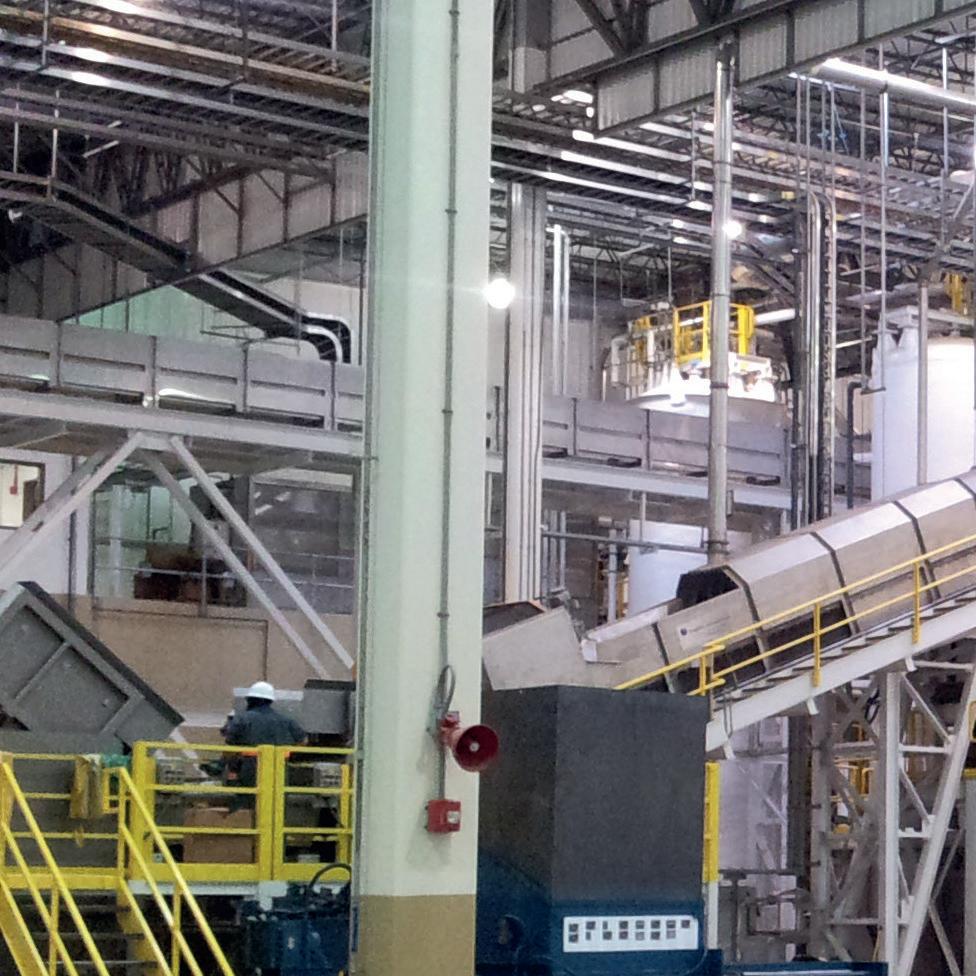
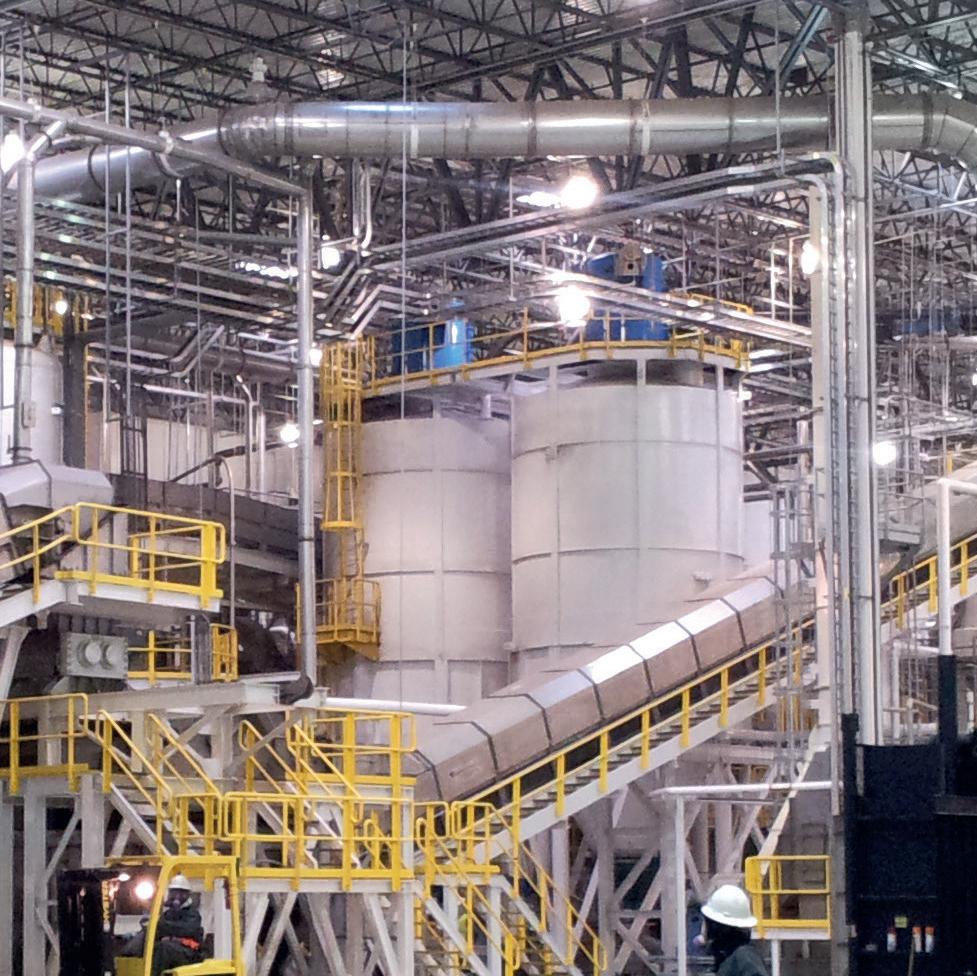
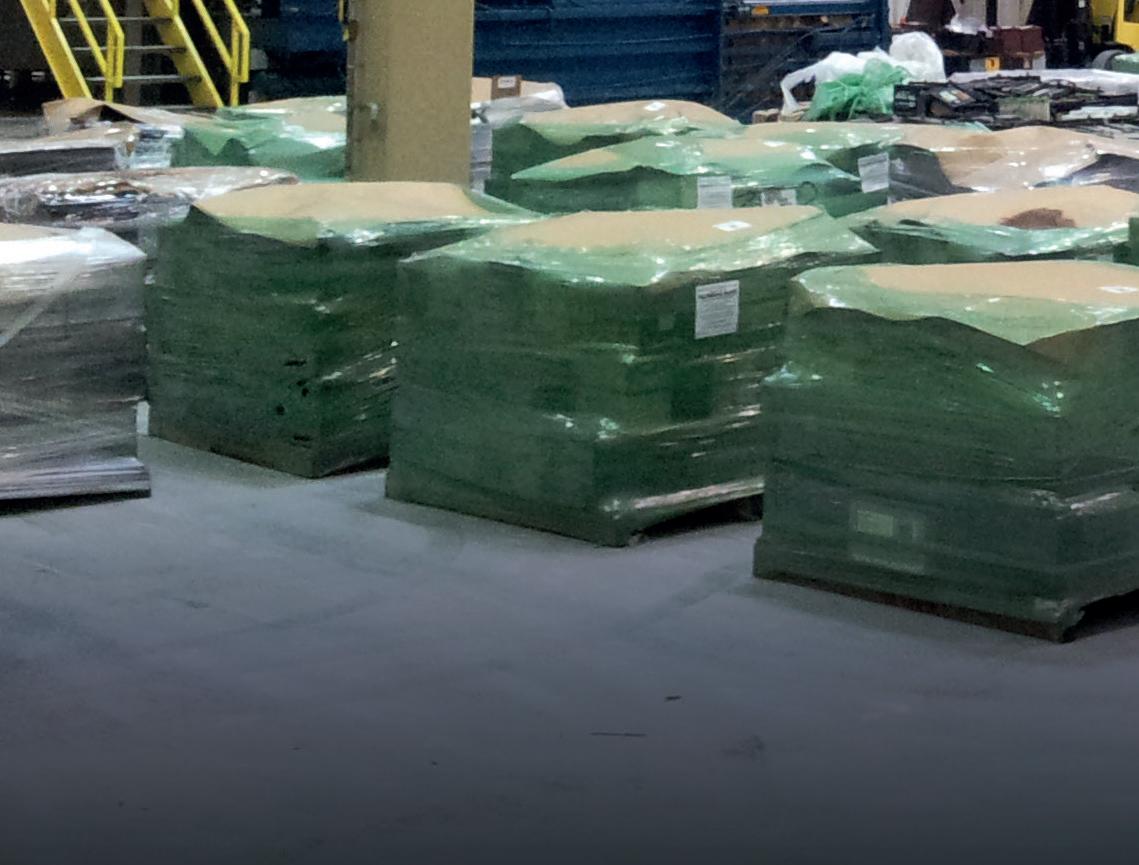
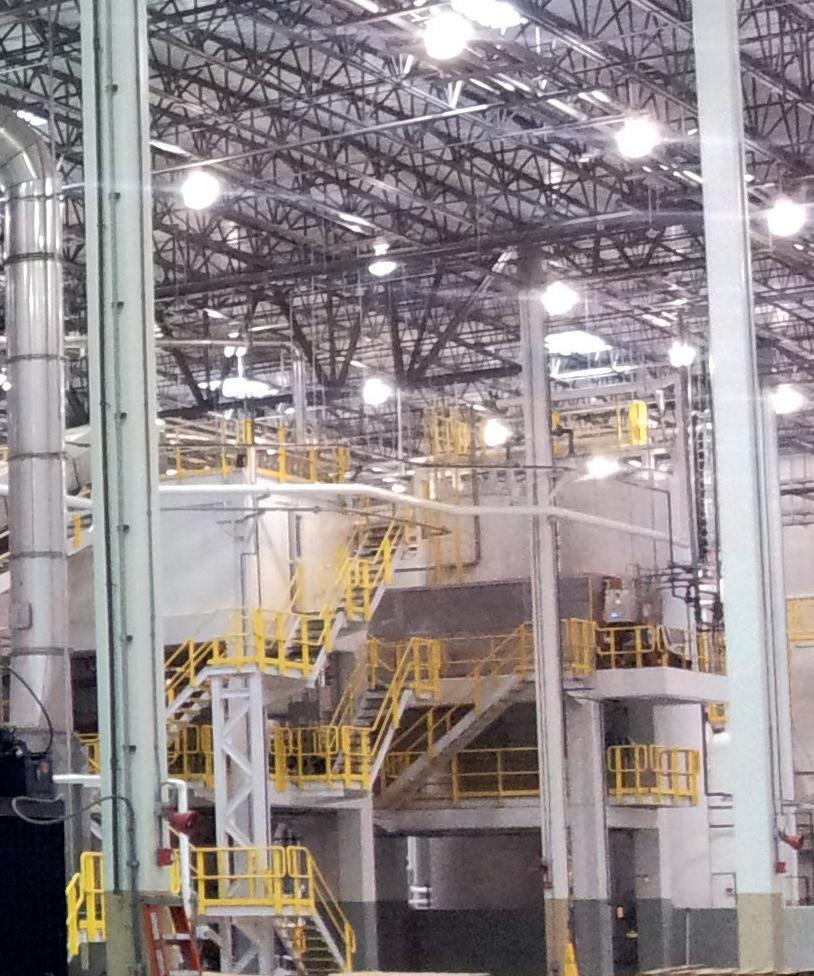
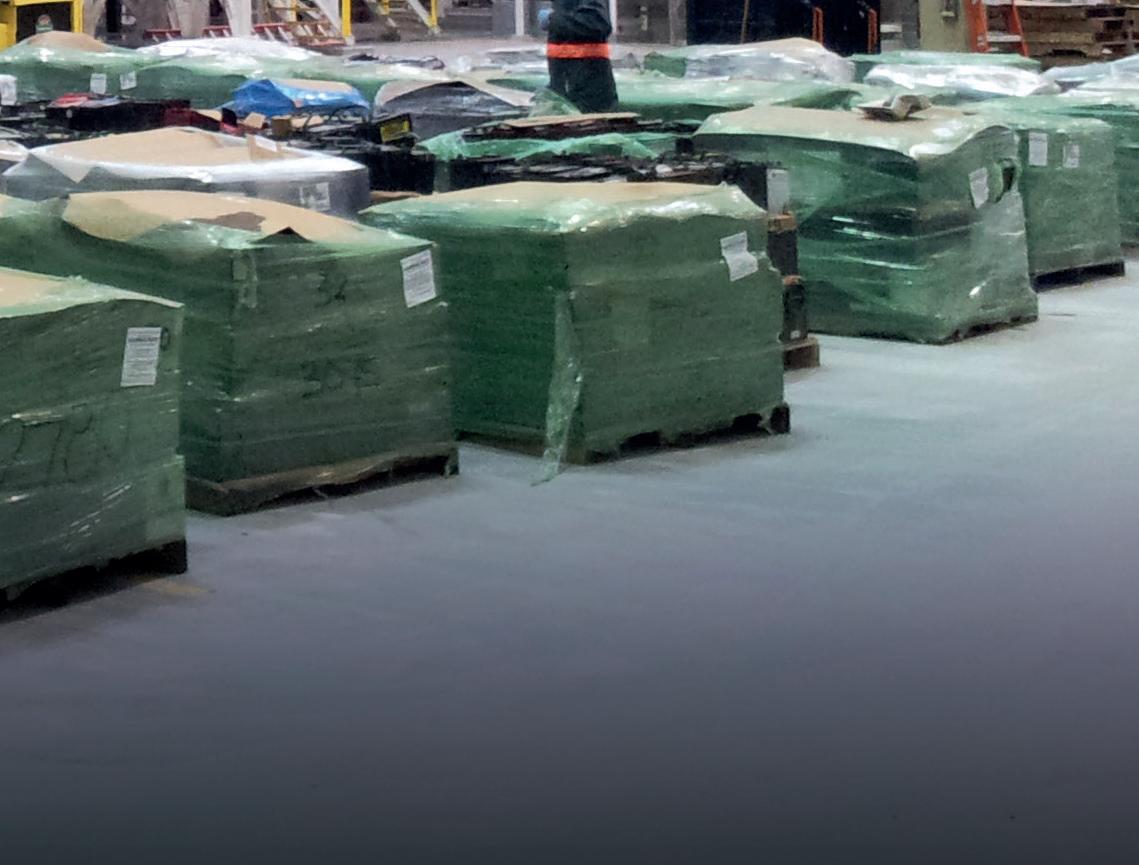



Yves
The Federal Aviation Administration acting administrator Chris Rocheleau is confident operations involving eVTOL aircraft will be certified in the US before the end of 2028.
He says the US agency that regulates air traffic in the country and is part of the Department of Transportation, is ready to safely regulate aircraft certification, pilot operations and training and integration into the national airspace.
Rocheleau believes some smallscale revenue-generating eVTOL operations will be up and running in about 18 months, before a wider roll-out and full certification towards the end of the decade.
“Today, if we had a certified aircraft and certified pilots, we could be flying these, pick your city and pick your function,” he says. “Those three things, aircraft certification, pilot operations and training and then the integration in the airspace, honestly, we’re pretty much ready for that.
“It is really less about us being ready to handle it and more about the manufacturers being able to meet the standards that we all agree on. I don’t hesitate to say that we will see certified aircraft flying in our airspace before the end of 2028.”
According to Rocheleau, it is unlikely initial revenue-generating operations will be authorized via waiver or exemption. The FAA’s powered-lift Special Federal Aviation Regulation (SFAR) enables the agency to effectively oversee these operations, he notes.
Plus, the eVTOL pilot programme, recently announced in US president Trump’s executive orders aimed at boosting the country’s domestic drone industry, will offer the opportunity to gather operational data from leading OEMs to further inform the agency’s rule making. It also gives operators less ready to begin operations the opportunity to test their processes in a sandbox
environment, he says.
The FAA had a crucial role in drafting the recent executive orders Unleashing American Drone Dominance, and the targets set out in them were largely welcomed by the US and global drone industries.
“We worked closely with the White House and Department of Transportation secretary Sean Duffy to make sure that we as a government and the industry are able to advance this in a safe, but also efficient manner. We appreciated the executive orders, because they drive us to an outcome. There’s nothing like having a deadline to meet.”
Rocheleau says eVTOL aircraft formed a “big piece” of the executive orders, as well as enabling further drone activity. The FAA chief was recently in north Texas observing UAS traffic management [which coordinates the physical location of drones in space] where a number of operators including commercial and law enforcement integrated safely into the airspace.
Since arriving back at the FAA, Rocheleau has concentrated on what he calls “four pillars”: safety, modernization, innovation and hiring.
The first pillar was flung into focus nine days after his return following the Potomac River mid-air collision which killed all 67 onboard both aircraft. “That tragedy was a further reminder, every time we come to work, we have got to focus on safety, whether that’s in drones, commercial aviation or general aviation,” he says.
The second pillar centres around the FAA Reauthorization Act, signed into effect in May 2024. Rocheleau says: “There were a number of provisions in there that would help the agency become more modernized. Including, first and foremost, a new air traffic control system.
“When we think about what we have in place today to manage the
system, it is incredibly safe. But at the same time, it’s incredibly old,” he adds.
“We need new fibre optic cables, new radars, new radios for the controllers to talk to pilots. And then to be able to consolidate some of these facilities and make sure that we have a modern air traffic system for the US.”
The FAA has recently seen an increasing number of outages of its air traffic control system. This May there were at least communication system breakdowns at airports including Newark Liberty and Houston’s William P Hobby.
“We have procedures to ensure that we have resiliency and redundancy so the system continues to operate safely. But it was clear early on with some of the challenges we were having with the technology that we needed a new system,” says Rocheleau.
“Myself, secretary Duffy and a handful of others sat down and said, ‘We’ve got to do better’. So, the president has made it a priority for this administration to build that new system.”
Rocheleau this year announced a five-country — US, UK, Canada, Australia and New Zealand — AAM roadmap focused on harmonizing eVTOL certification and operational regulations.
“We know manufacturers want to operate globally, so we have to be able to enable that safely around the world. We know other countries are flying in an experimental phase, and we wanted to make sure as US manufacturers come to market they can do so in other countries.
“We have longstanding relationships on certification and safety with our partners, so we believed that was a great place to start.”
The absence of some countries also working through an experimental phase, such as Brazil or the United Arab Emirates, has yet to be an issue. However, the FAA chief says eVTOL operations are not unique to the five launch member states. “Using Brazil as an example, we want to make sure those other partners join us. So this public announcement has now had us talking to our other counterparts.”
Researchers at the Tokyo University of Science now understand some of the key mechanisms through which scandium doping can improve the stability and cycle life of sodium-ion battery cathodes.
Sodium-ion batteries are being investigated as a cost-effective alternative to lithium-ion ones.
In these batteries, the choice of cathode material primarily influences battery capacity and stability.
Layered sodium manganese oxides (Na2/3MnO2) have attracted significant attention in recent years as cathode materials for high-capacity sodium-ion batteries without using any rare-earth metals.
However, while these materials exhibit high initial capacity, their rapid capacity fading during charge-discharge cycling remains a significant challenge.
During charge-discharge cycling of NaMnO2 electrodes, Na+ ions are constantly inserted and extracted from the cathode material. This is accompanied by changes in the oxidation states of manganese (Mn) between Mn3+ to Mn4+. When Mn3+ions form, they distort their surrounding lattice to lower electronic energy, a phenomenon known as Jahn-Teller distortion. Over time, these repeated distortions lead to a build-up of strain at both atomic and particle level in NaMnO2, eventually resulting in the loss of crystallinity and severe capacity degradation. This is the main cause of capacity loss during cycling of Na2/3MnO2 electrodes. Recent studies have attempted to address this issue by substituting metals at Mn sites.
In a recent study, a research team led by professor Shinichi Komaba, along with Kodai Moriya and project scientist Shinichi Kumakura, from the Department of Applied Chemistry at the Tokyo University of Science, Japan, revealed how scandium doping can dramatically improve the cycling stability of P’2 polytype of Na2/3MnO2 electrodes.
“Previously, we discovered that Sc doping in P’2 Na2/3[Mn1-xScx] O2 electrodes can improve the battery performance and long-term stability,” says Komaba. “However, the exact mechanism for this
improvement remains unresolved, and it was unclear whether this effect is generally applicable.
“In this study, we systematically studied P2 and P’2 polytypes of Na2/3[Mn1-xScx]O2 to understand the role of Sc doping.” Their study was published online in the journal Advanced Materials in September.
The crystal structure of Na2/3MnO2 has several polytypes, which differ in several aspects. A key difference between the P2 and P’2 polytypes is that former exhibits localized Jahn-Teller distortions, while the latter features cooperative Jahn-Teller distortion where the distortions are aligned in a long-range order. The researchers conducted a series of experiments on both doped and undoped samples of each polytype containing varying amounts of Sc.
Structural tests revealed that Sc doping in P’2 Na2/3[Mn1xScx]O2 effectively modulates its structure, resulting in smaller particles and altered crystal growth, while preserving cooperative JahnTeller distortion and superstructure. This significantly improves structural stability.
In addition, the team found that Sc doping prevents side reactions with liquid electrolytes and enhances moisture stability by forming a cathode-electrolyte interface layer.
As a result, in Na-half-cell tests, the Sc-doped P’2 type Na2/3[Mn1xScx]O2 electrodes demonstrated a substantial improvement in cycling stability. The sample with 8% Sc doping was found to have optimal performance.
The researchers also found that unlike non-doped samples, the crystallinity of the doped samples was remarkably maintained during cycling. Interestingly, Sc doping did not improve the cycling stability of P2 NaMnO2 electrodes, indicating a specific synergy between Sc doping and cooperative Jahn-Teller distortion. Furthermore, doping
with other similar metal cations, like ytterbium and aluminium, did not reduce capacity fading, highlighting the unique role of Sc.
They also tested the effect of pre-cycling, a common technique to improve cycle life, which further improved capacity retention in the doped P’2 Na2/3[Mn1-xScx] O2 electrodes. Building upon these results, the researchers fabricated coin-type full cells using the 8% Sc-doped P’2 Na2/3[Mn1-xScx] O2 electrodes, which demonstrated an impressive 60% capacity retention after 300 cycles.
“Since Sc is an expensive metal, our study demonstrates its feasibility in the development of batteries. Our findings can potentially lead to development of high-performance and long-life sodium-ion batteries,” says Komaba, highlighting the importance of their research. “Moreover, beyond sodium-ion batteries, our study illustrates a new strategy to extend the structural stability of layered metal oxides involving the lattice distortion and improve the performance of batteries made using these materials.”
Overall, this study demonstrates the unique role of Sc doping for improving cycling stability of sodium-ion batteries, paving the way for their broader adoption.
Shinichi Komaba is a professor at the Department of Applied Chemistry at Tokyo University of Science where he also leads the Komaba lab, which focuses on the development of next-generation energy-storage materials. He has published over 490 articles that have received over 40,000 citations. His research primarily focuses on sodium-ion batteries, with a broader focus on functional solid-state chemistry, inorganic industrial materials, and electrochemistry.

Accurate, intelligent and incisive reporting on the global battery and energy storage technology world
Each issue includes:
n Global news round-up
n Exclusive in depth features on new and promising battery and energy storage applications
n Case studies of advances in battery productions to bring high performance, cost effective products to market
n Analysis and forecasts on different markets and technologies from leading consultants and experts in the field
n Examination of policy around the world that is enabling investment and growth in battery and energy storage technologies
n Updated events calendar
To receive your free digital subscription, contact Mike Halls at editor@batteriesinternational.com www.batteriesinternational.com
When the battery world convened in Borneo for the 40th year of Asia’s premier industry gathering, there was just two questions on everybody’s lips: “How do we make the business of lead-acid continue to grow?” and “Where to next?”
From the moment the lights dimmed, and drums rolled to an explosion of sound and dance on day one of 21ABC, it was clear to everyone in the hall that this conference was pulling no punches.
Chair and co-organiser of 21ABC, Mark Stevenson, himself a veteran of the industry for 46 years, stepped up to the stage to give his opening address and wasted no time in getting straight to the point.

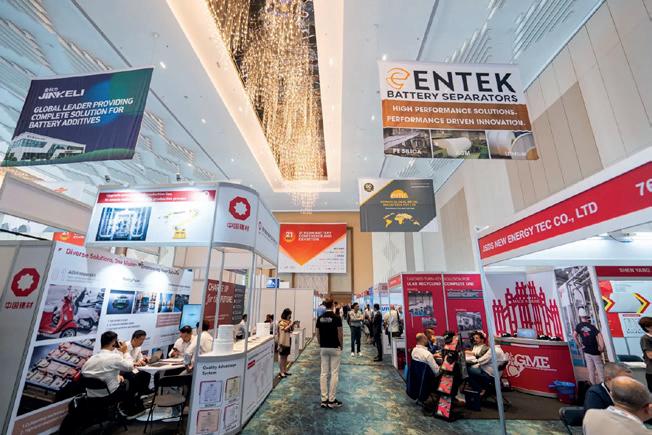

“How long will the lead industry last?” he postured to a packed auditorium. “This is probably the most asked question of all. But to me, that shouldn’t be the question. It should be rather, what legacy do we want to leave? What footprint for the next generation?”
Mark, who has spent decades working in the lead metal industry, said he had seen many competing chemistries surface, seemingly to challenge the very existence of the lead battery business.
“But in the end we have kept going,” he told the hall. “When people say that lead is dead, they only mean that it is not growing as fast as competing technologies — ultimately, the direction of our industry is on the up and will continue to be so. I don’t see any end to that trend.”
It was exactly what the 700 plus delegates wanted — and perhaps, needed, to hear. The lead battery

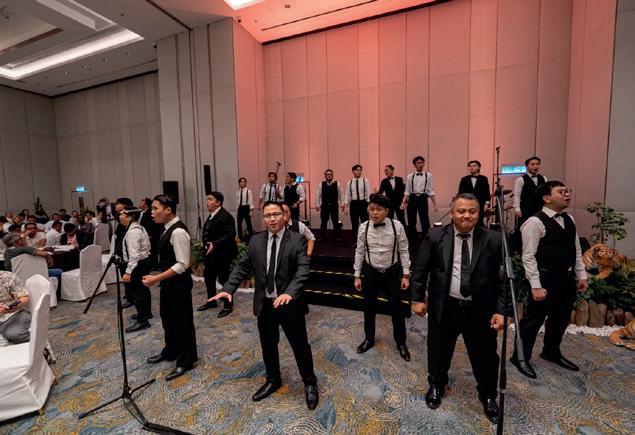
“All of us are gathered here because we have a role to play in this industry,” Mark noted. “We have a collaboration that is the envy of the metals world. And I’ve been told by many in the industry that lead people bond more than any other group of metals people.”
Mark Stevenson, Chair and co-organiser of 21ABC
industry is a close-knit cohort, brought together by the collective mission to remind the world of their ongoing relevance in an everchanging landscape. This can sometimes feel like an uphill struggle which might explain the fact that — at conferences like these — there’s a strong pervading sense that everyone is wholly united in a common goal.
“All of us are gathered here because we have a role to play in this industry,” Mark noted. “We have a collaboration that is the envy of the metals world. And I’ve been told by many in the industry that lead people bond more than any other group of metals people.”
A fact that was undeniably evident at the social gatherings planned meticulously by Australia’s finest: Mark and his colleague, Mark Richardson, over the four-day conference timetable.
Here are two sons of Ozzlieland who know how to throw a bash. Their reputation for elevating the conference drinks party beyond warm wine and dodgy canapés is renowned in the industry. Who can ever forget the
madness of the VW Beetle police-escorted convoy at 18ABC in Bali?
So, expectations were understandably high in Borneo with delegates wondering just what the two Marks had in store once the sun set over Kota Kinabalu. And, as usual, they didn’t disappoint.
The waterfront promenade of this Asian port town is renowned for numerous, lively bars and restaurants all spilling out onto deckingover the sea.
Nobody was quite sure how they pulled it off, but the conference team managed to get every single bar to agree to close to the public for two hours so that hundreds of delegates could enjoy a private function involving free-flowing beer and wine, along with an impressive array of multi-cultural dishes from several different venues.
It must have been a logistic nightmare to organise. Every outlet had to be approached individually and, of course, each involved a different negotiation on price. The team declined to reveal what it cost them to host this
Since its inception 16 years ago, the secondary lead conference, held just before the ABC, has proved itself to be so much more than a mere supporting act.
This two-day conference, one of the first of its kind in the lead battery industry, has evolved into being the launchpad for further discussions about the recyclability of all battery chemistries, something organiser, Mark Stevenson, always intended.
“We’ve long been aware of this major market trend, but this is a time when it’s clear that the thinking between all battery chemistries is starting to blur,” he says. “
The world need for energy storage is growing more apparent every day. We can’t seek to box one technology into one corner, say lead, and then another into lithium and ignore it. There’s a realm of other chemistries, admittedly some not mainstream for the moment, that will also be a contender for our discussions in the future.”
This year, for the first time in the history of the ISLC, presentations from lithium recycling firms were given, reflecting a broader shift in the battery industry.
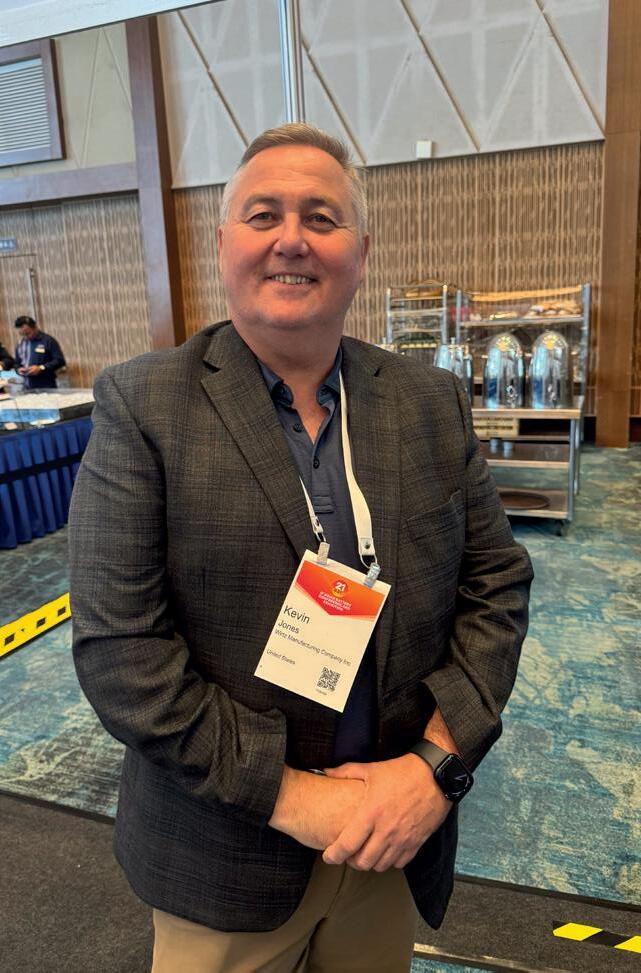
incredible feat, but we were told the final amount for each restaurant and bar varied.
And this was just for openers. The final, gala night of the conference is traditionally when the stops are pulled out. The plan was for a glittering banquet with local entertainment in the auspicious grounds of the waterfront paradise gardens with the backdrop of a glorious sunset.
The reality was biblical torrential rain that began about an hour before the party and brought traffic in Kota Kinabalu to a complete standstill. Even the two Marks could do nothing about a tropical deluge and a frenetic change of plan brought tables and food inside to a vast ballroom.
Nobody cared. As singing waiters leapt to the stage — a kind of Malaysian Take That tribute nod — the booze flowed and, yet again, the lead battery industry proved to the world that the show must always go on.
Breaking news from the conference, was the announcement that next year’s secondary lead is relocating in a special extended edition in Dubai.
“The secondary lead recycling industry has always been a huge one,” says Mark Stevenson, one of the organizers of both conferences, “but its relevance to the overall health of the lead and battery industry has never been more important.

“On top of our regular conference we’re adding a two-day workshop offering a course looking at basic principles focusing on lead and battery recycling. This will take in the whole of the business around the lead industry: how it’s bought and sold, the importance of safety and blood lead levels, what the Basel Convention means and much more.”
Stevenson says the workshop and conference will be held late 2026 and will be open to delegates at all levels of industry knowledge.
The shift to Dubai reflects a greater focus that’s needed on the subject and moves us to a more central location, handy still to the smelters in India, Pakistan, the Middle East and Africa as well as convenient for those in Europe.”
The next ISLC/Recycle conference will be held as normal with the ABC in 2027.
The lead battery industry has been praised for its incredible generosity in support of the ONE Minute Giveback charitable initiative at this year’s 21st Asian Battery Conference (ABC) in Malaysia.
A total of 36,000 Malaysian ringgits (approximately $8,500) was raised for the Seri Mengasih Centre, a school dedicated to supporting children and adults with intellectual and developmental disabilities.
21ABC organisers said that the funds provided scholarships for students from families unable to afford the centre’s programmes, as well as crucial support for operational costs.
Meanwhile, donations also helped fulfil the wish lists of children at the JKM Kota Kinabalu Children’s Home, a safe refuge that provides shelter, care, love and education to orphaned and homeless children. Every child received items from their wish lists, including laptops, smartwatches, clothing and toys.
To add even more joy, 21ABC organisers delivered “mountains of snacks and treats” and contributed MYR15,240 for a new TV and sofa for the baby rooms, along with additional toys and essential supplies for the children.
The ONE Minute Giveback initiative was led by 21ABC organiser Mark Richardson and Scott Fink, president of Sorfin Yoshimura. This year’s campaign continued the
long-standing tradition of the Asian Battery Conference and Exhibition supporting local communities — with a particular focus on helping those in urgent need of financial and educational support.
“As delegates returned home, they left behind not only a successful 21ABC, but also brighter smiles and brighter futures for the children of Sabah, Malaysia,” said the organisers.



ICBR 2025. Valencia, Spain — September 10-12
The celebrations around the 30th International Congress for Battery Recycling kicked off with a bang. Quite literally.
As Jill Ledger, organizer of the conference, opened the event, the indoor firework celebrations went off early. Not dangerously so. But nevertheless muffled explosions and showers of confetti. Sparks. Probably a whiff of gunpowder and cordite.
Delegates ran screaming from the auditorium, some cowered behind desks, even the bravest of folks — you know the people who sit in the front rows of conference and try to outstare
the speakers — covered their heads. Well perhaps there’s a slight element of exaggeration to that last paragraph. (Or rather a lot actually but it does make a different start to a conference review.)
And, as Jill said later, no delegates were harmed in the making of the opening fanfare.
But it was an accidentally invigorating start to this, the 30th ICBR’s annual exhibition and convention. It’s an event that has been setting the scene — and the agenda — for battery recycling for a generation.
Equally as impressive were that

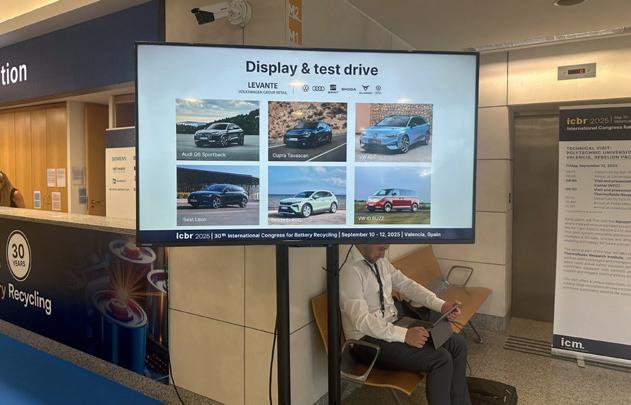
evening’s celebrations on a magnificent roof-top patio overlooking the port of Valencia, as the sun started to set. The clink of glasses of Cava was only matched by the haunting overtones of Flamenco singing and dancing in the background.
“This has been a great day for me,” one of the delegates told us. “The presentations have been excellent, some challenging many of my core attitudes; the networking has been good and there’s an interesting set of exhibitors that I’m looking forward to investigating tomorrow.”
Perhaps one of the most fascinat-


“This has been a great day for me. The presentations have been excellent, some challenging many of my core attitudes; the networking has been good and there’s an interesting set of exhibitors that I’m looking forward to investigating tomorrow.”
ing aspects to the conference was that a topic very much at the heart of its agenda just happened to be playing out in the wider context of the recycling industry at exactly the same time.
Ecobat, the largest battery recycler in the world owned by a host of private equity funds, has, this year, been selling parts of the company off, divesting itself of its lead plants in France, Germany, Austria, Italy and, latterly, the UK. As this issue of the magazine went to press, only three facilities in the US were left to be disposed.
The interesting thing for both the investor community and the recycling industry is who’s buying and what’s being sold?
Ecobat appears to be close to disposing of all its lead battery plants globally but hanging on to its admittedly small lithium stakes in that part of recycling.
Three years ago when we interviewed Thea Soule, then Ecobat chief commercial officer, she spoke eloquently about how the firm was committed to investing in lithium recycling. Oddly enough, at the time, we both knew this statement was verging on the fanciful as none of their three plants — in Germany, Arizona and England — had then been commissioned.
It’s clear lead battery manufacturers see the value of acquiring recycle assets as a stake in an industry that has a long-term future while Ecobat itself is tying its fortunes to a lithium future and a world without lead batteries.
And it was exactly this juxtaposition — whether to commit an entire organization to taking a punt on different recycling technologies — which was the burning discussion point of this year’s ICBR.
It was all part of an agenda where a lot that needed to be debated was aired. Both good and bad.
The good news was simply that the march of recycling technology had continued to advance and advance
briskly at that. Over the three days the exhibitors — there were about 40 of them — and the speakers showed how everything from the collection of spent batteries to their disposal or re-use had evolved to become smarter.
The bad news was two-fold and a simple matter of economics.
Recycling lithium iron phosphate batteries — now becoming the mainstay of EVs — continues to be unprofitable. Revenues come from people paying to dispose of the batteries, given there is only a little in LFP that is worth recovering. (Unlike lead and NMC batteries which have metals of value.)
Over the last few years, everything about the safe disposal of LFP batteries has become ever more efficient and also cheaper. Separation of lithium batteries from the stream of other chemistries and technologies is now almost totally automated. The diagnostics of battery health — everything from lithium button cells to EV batteries — has become more accurate and faster, and discharge of spent batteries and their transportation has advanced in leaps and bounds.
But the fundamental question still remains — and it is an interesting situation to see an entire conference of some 550 delegates chewing over the problem — how can they make this process more cost-effective? How can we differentiate ourselves from our competition?
“Profitability for European recycling operations is precarious,” said one commentator. “Feedstock costs, that’s the black mass and its reagents, as well as the price of lithium are the major factors. Technical innovation can mitigate and will become the key differentiator in this cost-sensitive market.”
Some speakers reckoned that the path forward lies in a market that is moving towards closed-loop arrangements to eliminate the recyclers’ feedstock expenditure but not all
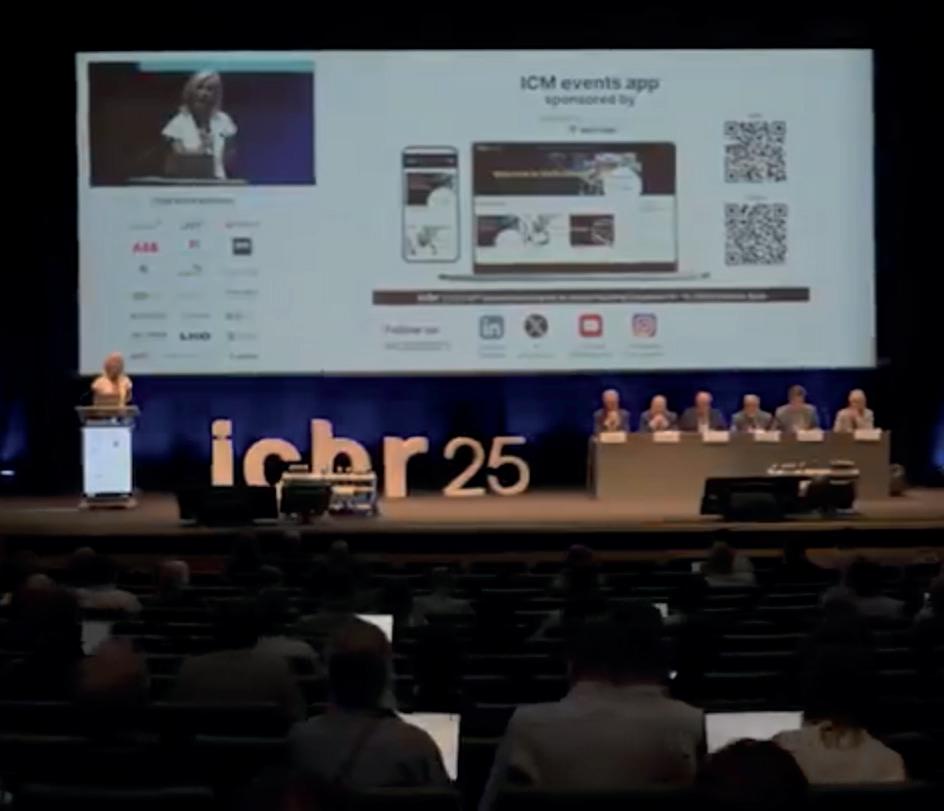
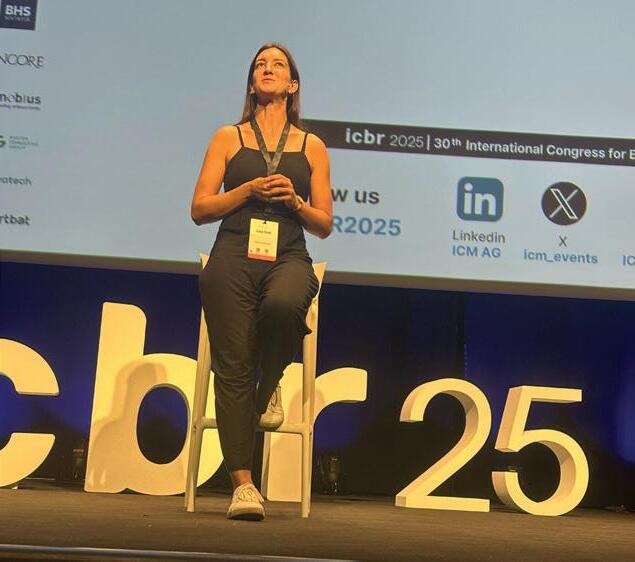
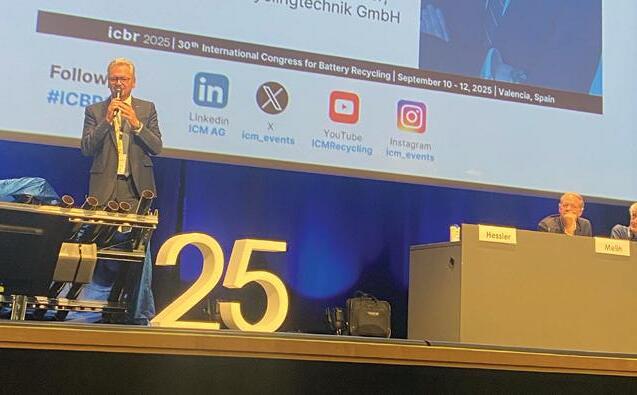
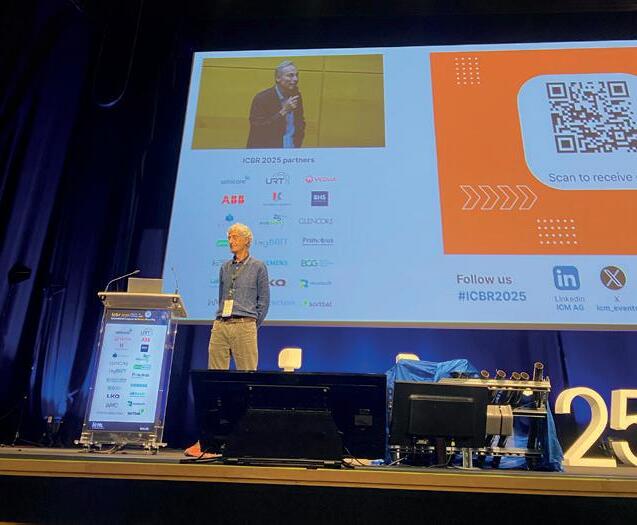
delegates were in agreement with this. “It sounds promising in principle but our existing technology just isn’t up to it. And that’s despite what some of the people at this conference will say is true,” a delegate told us.
One thing that is sure though and, again, flies in the face of a couple of the speakers’ public statements, is recycling will not provide the feedstock needed if any kind of electric vehicle future is to take hold in Europe in the next decade.
“It’s simple economics,” said the same delegate. “There’s only a trivial amount. You have to look at the amount of recycled material that will be needed and look at the volumes required to know that this is nonsense. In, perhaps a more mature market, say in 2040, there might be a good case to argue but not now.”
He also pointed out that, given the price of recycled feedstock is also more or less unknown anyway, it would be foolish to rely on recycled contributions.
A related theme of the conference — with spirited debates on occasion — was whether European recyclers should export to countries with greater refining capacity (aka China) given that much of the much-needed metals will be out of European control.
The dilemma, if indeed it is a dilemma, is largely due to unpreparedness by European recyclers in developing facilities that can provide post-treatment refine black mass. European lithium recycling is largely confined to pre-treatment, that is taking lithium batteries and shredding them to make black mass.
One delegate claimed that as far as he was concerned there was only one European firm that had invested enough in post-treatment LFP processing to produce lithium carbonate or graphite of any quality.
That said, potential restrictions on black mass exports to non-OECD countries may create a captive EU market, increasing local demand and pricing stability. Given European projects have higher Capex compared to China, government incentives may be necessary to bridge the cost gap and stimulate investment.
On a related topic, there was a general consensus that the recycling targets set by the European Commission around the Battery Directive were ridiculous.

Irrespective of the merits of the approach, the direction of European travel at a legislative level is clear. EU policy will force LFP into yet more competitive recycling, while extended producer responsibility regulations will mean that the burden and cost of recycling is likely to fall on the automaker or battery maker.
“We all know these were set by politicians and that the consultants who advised on what realistic levels of recycling were achievable, were quite simply over-ruled,” said one battery consultant.
Another delegate said he thought that the European Commission was trying to emulate what the Californian state authorities had been doing for the past 50 years. “They issue a totally unrealistic target, say impossibly low CO2 emissions from a carmaker’s fleet, but in the struggle to obey the legislation, they achieve their goals — the unrealistic becomes the next reality.”
Irrespective of the merits of the approach, the direction of European travel at a legislative level is clear. EU policy will force LFP into yet more competitive recycling, while extended producer responsibility regulations will mean that the burden and cost of recycling is likely to fall on the automaker or battery maker.
That said the direction of travel for the private sector is muddy at best.
The upturn in volumes of raw material for recyclers to handle has not happened. Umicore, for example, continues to insist that its pilot project set up in the pre-Covid era — exact dates are hard to come by
— is still a pilot despite the fanfares it made at the time.
Nor will the volumes of used LFP batteries be available anytime soon. In, perhaps, the most interesting presentation given in Valencia, Hans Eric Melin, managing director of Circular Energy Storage Research and Consulting, showed that the anticipated huge volumes of lithium batteries waiting to be recycled would still be some way off.
His argument was refreshing in its simplicity though the bank of research behind it was formidable: the early guarantees on EV batteries were cautious ones — they were typically given a warranty of eight years or 100,000 miles. But it turned out that they were over-cautious. Drivers, rather than replacing out-of-warranty batteries, continued to use them, and a lively second-hand market for EVs has developed. Cars that had left the factory gate in 2014 were still being driven.
The next European ICBR meeting will be in Berlin, Germany from September 9-11 2026. ICBR 2026

Join us for the 30 edition of ICBR, the leading global platform for the Battery Recycling Industry. For three decades, ICBR has united key players from the entire life cycle of the circular economy community, from raw materials through reuse and remanufacture to recycling. th
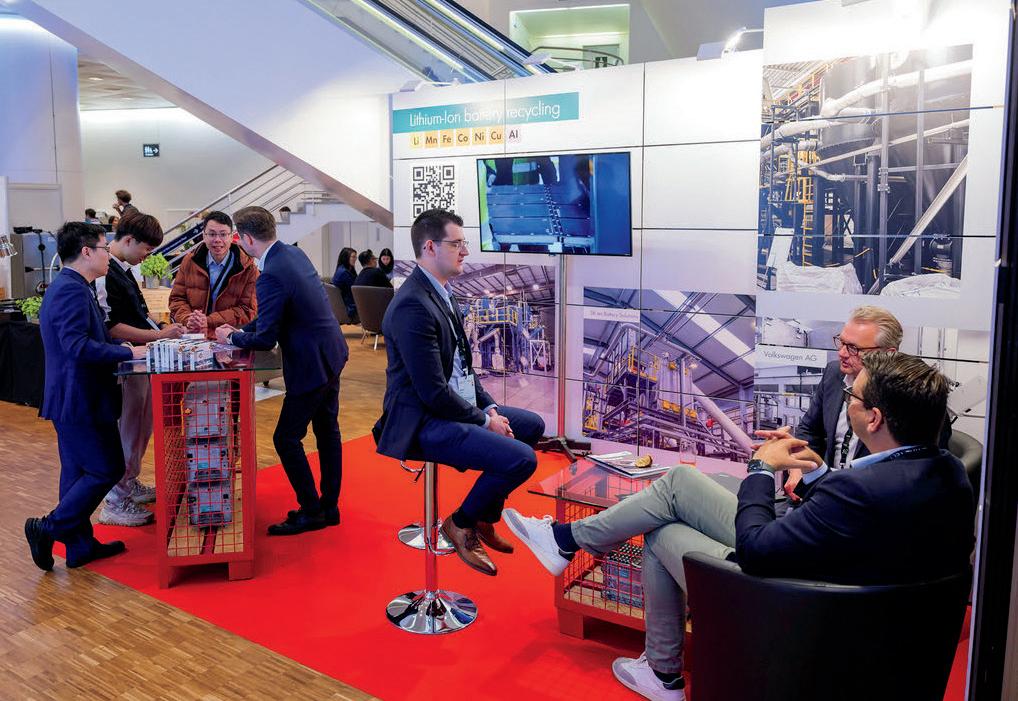
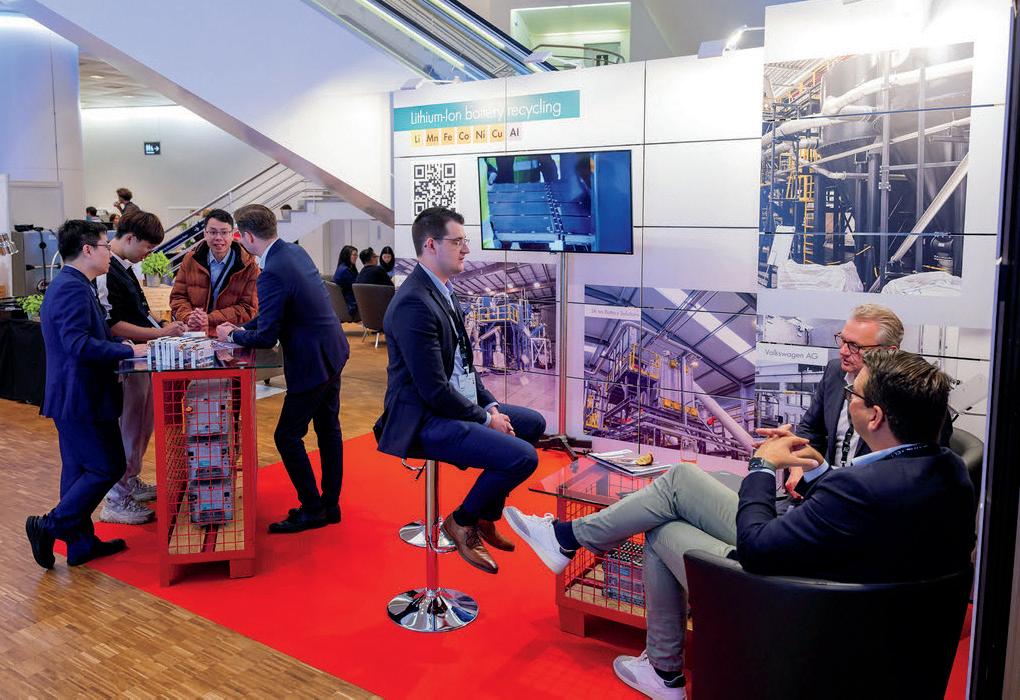
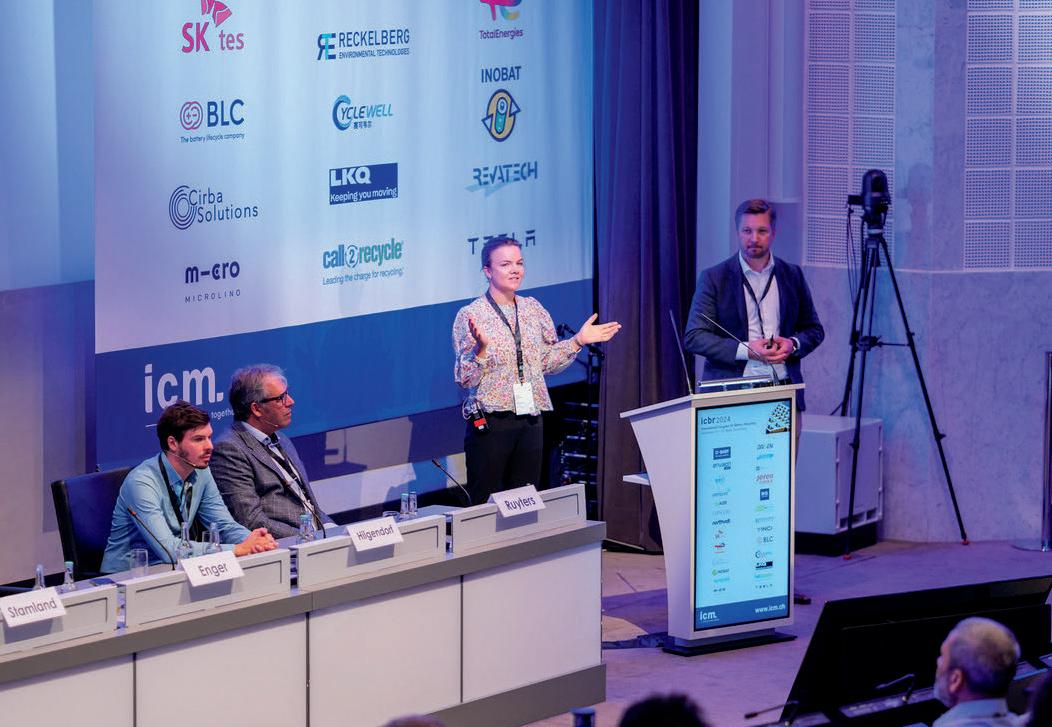
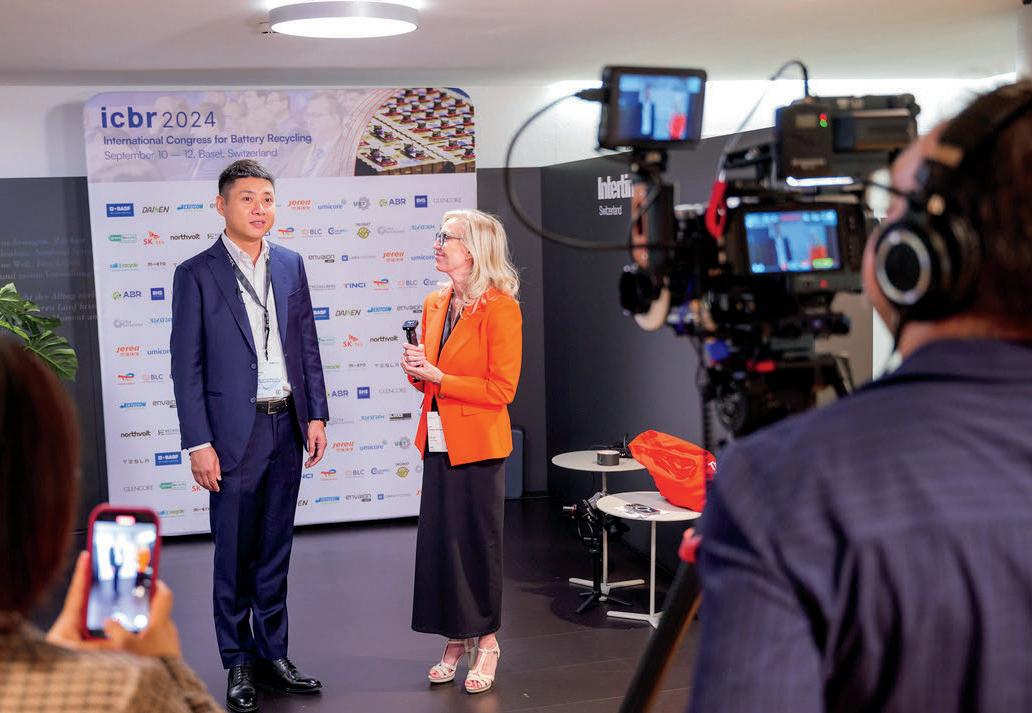
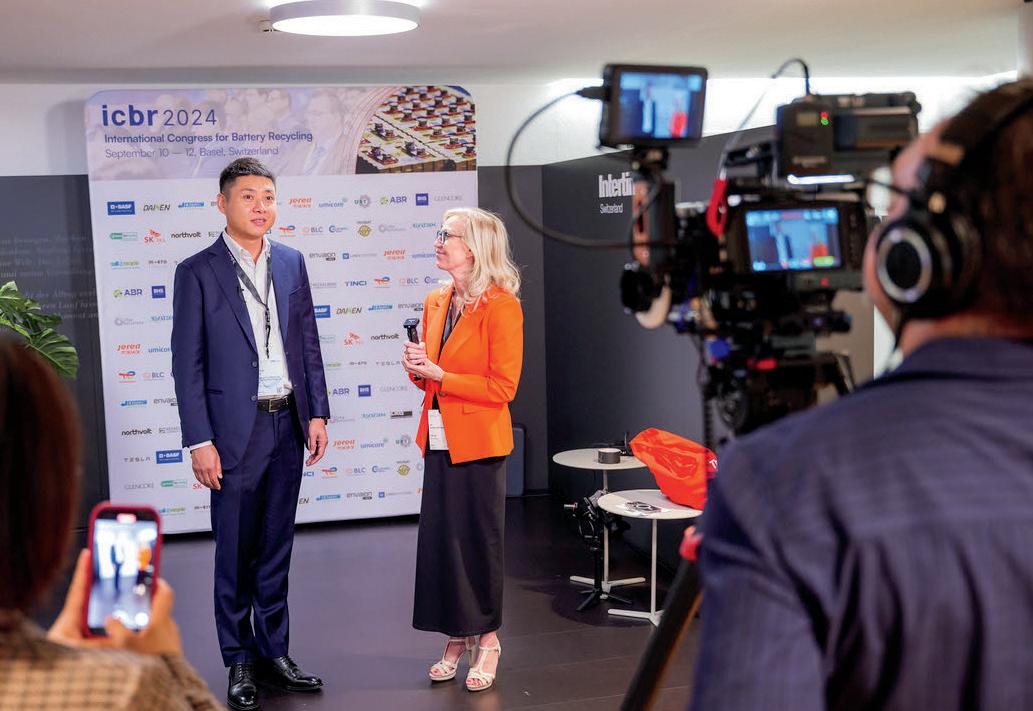
As ICM returns to Asia, join experts from around the world to discuss the latest advancements in circular economy, e-waste management, and sustainable resource recovery. Plus, get exclusive access to plant tours, offering invaluable insights into leading remanufacturing and recycling facilities.
For the first time, the three leading recycling congresses ICBR Asia, IARC Asia, and IERC Asia - come together in Asia, creating a unique platform for industry leade rs to connect and learn.




Li-ion Battery Europe 2025
November 3 - 4
Barcelona, Spain
The upcoming Li-ion Battery Europe Event 2025 will convene key decision-makers from across the entire European lithium battery value chain, alongside leading EU government representatives. This important summit will address the most pressing challenges facing the European battery industry today.
Attendees can expect in-depth discussions on the anticipated impacts and progress of the European New Battery Regulation, the Battery Passport initiative, and the Critical Raw Materials Act. The event will also explore future policy support and collaboration opportunities for China-Europe battery projects, and examine how global partnerships can accelerate the growth of Europe’s domestic lithium battery supply chain.
Contact www.li-ion-battery-europe.metal.com E-mail: horindong@metal.com
The International Battery Production Conference
November 5 - 6 Braunschweig
Contact
E-mail: info@battery-productionconference.de
Phone: +49 531 391-94651

November 3 - 5
Shanghai, China
Join the three leading co-located congresses in battery, automotive, and electronics recycling! Three congresses in one, creating a unique platform for industry leaders to network and exchange. As ICM returns to Asia, join experts from around the world to discuss the latest advancements in the circular economy and sustainable resource recovery. Plus, get exclusive access to plant tours, offering invaluable insights into leading remanufacturing and recycling facilities.
Contact www.icm.ch
E-mail: info@icm.ch Phone: +41 62 785 10 00

November 4 - 6
Lyon, France
We’re excited to announce that preparations are already underway for the next edition of our event! After the success of last year, we’re charging ahead with even more energy to make 2024 an unforgettable experience. Our goal is to welcome over 1,200 participants, 100+ exhibitors, and 175+ speakers from across the battery industry — all while keeping the warm, family atmosphere that makes this event so special. Get ready to join us for an even bigger and better adventure!
Contact https://batteriesevent.com/ Email: laurent.pillot@batteriesevent.com Phone: +33 9 70 26 80 67
The Hungarian Battery Days
November 6 - 7
Budapest, Hungary
The Hungarian Battery Association and White Paper Consulting have organised this prominent annual event focusing on the development of the battery value chain in Hungary and Central and Eastern Europe for 5 years in a row. The conference has quickly become the most important yearly meeting point in the region for high-level representatives of the battery industry.
Contact www.hungarianbatteryday.hu
Thermo Management Expo Europe
November 11 - 13
Stuttgart, Germany
Join us at Europe’s only free marketplace for thermal management systems, components, and materials. This is the only place where you can connect with the thermal industry’s leading suppliers, network with peers from across the supply chain, and gain insights from thought-leaders that are driving the industry forward. If you need any type of thermal solution that will optimize the performance and efficiency of your applications... then this is the show for you!
Contact www.www.thermalmanagementexpoeurope.com
E-mail: Andrew.Tucker@informa.com Phone: +44 207 6607 197
Battery Japan 2025 Osaka
November 19 - 21
Osaka, Japan
This is an annual trade fair and conference for the rechargeable battery industry. The show will showcase a wide range of technologies, components, materials, and devices for rechargeable battery development and manufacturing. It is a great opportunity to learn about the latest trends and developments in the battery industry, and to network with other professionals in the field.
Contact www.www.wsew.jp/hub/en-gb/about/ bj.html
E-mail: wsew.jp@rxglobal.com Phone: +813673 94119

Future Battery Forum 2025
November 24 - 25
Berlin, Germany
The Future Battery Forum will once again bring together the most important decision-makers from the entire battery value system, 100 exhibitors and over 80 top international speakers from politics and business.
Contact www.futurebattery.eu
E-mail: l.p@ipm.ag Phone: +49 511 473147-96

Smart Energy Summit 2025
December 1-2
London, UK
What is the future of utilities? Smart Energy is the must-attend event for everyone passionate about transforming the way we distribute, manage and consume energy.
Hear from the most forward-thinking innovators building a more efficient and effective energy sector.
Contact www.futureofutilities.com
E-mail: enquiries@marketforcelive.com

December 2 - 3
New Delhi, India
India’s lead and lead battery industry has been steadily growing for over six decades, playing a pivotal role in various sectors such as energy storage, e-mobility, and other emerging markets.
The sector is currently experiencing robust double-digit growth, mirrored at times by the lead recycling industry as well. However, the rise of informal or backyard lead recycling remains a significant environmental and public health concern, highlighting the urgent need for sustainable and regulated practices.
Contact https://www.ilzda.com/index.php
E-mail: ilzda.info@gmail.com Phone: +91 11 2995 6822

Battery Asset Management
December 2 - 3
Rome, Italy
Our 2025 edition will focus on three core themes: Revenue & Trading, the Lifecycle of the Battery, and Optimisation Tools for Success. 2025 will see markets such as the Nordics, Iberia, Italy, Germany, UK & Ireland, and the Benelux region, all with market deep dives,
Contact www.batteryeurope.solarenergyevents. com
E-mail: SM.Battman@informa.com Phone: +44 207 871 0122
7th India International EV Show 2025
December 5 - 7
Pune, India
India International EV Show (IIEV Show) is India’s largest gathering of the Electric Vehicles Industry, it is coupled with the vast opportunities and potential challenges of EV development in India. It is a common platform which unites engineers, mechanics, scientists and decision-makers to solve problems across the electric vehicle and advanced battery industries. This show capitalizes on the latest EV trends and exchanges groundbreaking ideas with experts and industry visionaries on trending topics including battery technologies, energy storage solutions and developing charging infrastructure. INDIA INTERNATIONAL EV SHOW 2025 is an International Exhibition for the Growth of Indian E-Vehicle Industry, it will focus on ensuring an enabling environment for the commercialization of electric vehicles in India and realizing the EV Industry’s potential.
Contact www.iievshow.com/7th-edition-iiev-showpune
E-mail: info@iievshow.com
Phone: +91 9560450076
Battery Intelligence
December 8 - 11
Las Vegas, USA
As the battery market continues its rapid growth, extending battery longevity has become a top priority. For OEMs, battery pack manufacturers, and electric fleet operators, the path to longer-lasting batteries lies in data-driven insights. By harnessing machine learning and advanced analytics, organizations can unlock the full potential of battery data, enabling precise performance predictions, real-time health monitoring, and continuous optimization.
Contact
www.www.advancedautobat.com/ aabc-us/battery-intelligence E-mail: ce@cambridgeenertech.com Phone: +781 972 5400
Battery Asia Expo
December 26 - 27
KTPO, Bengaluru, India
A leading exhibition and conference on battery tech including lithium-ion, BMS, storage, mobility and recycling. BATTERY ASIA EXPO: An International Exhibition on Battery Technologies and Allied Industries will bring together the latest technologies and services involved in battery technology, covering battery storage, battery management systems, fuel cell technology, lithium-ion batteries, automotive manufacturers, and more.
Contact www.batteryasia.in/index.php E-mail: event@ies-india.com Phone: +91-9811913376

The Battery Materials Conference 2026
Stockholm January 20 - 21, 2026
The key meeting point for experts, researchers and industry leaders in battery materials and energy storage. The conference offers insights into the latest developments in materials innovation, sustainability and next-generation battery technology.
Contact www.ri.se/en/news/calendar/ the-battery-materials-conference-2026
Battery Tech Expo
February 5, 2026
Lille Grand Palais, France
Bringing together professionals across the battery value chain, held in the heart of the electric valley region of France. From corporate buyers, suppliers and industry specialists, this event is where the industry meets year after year, to connect, learn and discover the latest developments and products.
Contact
www.batterytechexpo.fr
E-mail: david.reeks@104-media.com
Phone: +44 (0) 1283 381719


n AUGUST 26–28, 2025, SÃO PAULO, BRAZIL www.ees-southamerica.com
n SEPTEMBER 2–4, 2025, MEXICO CITY, MEXICO www.intersolar.mx


n FEBRUARY 25–27, 2026, GANDHINAGAR, INDIA www.TheSmarterE.in
n APRIL 7–9, 2026, DUBAI, UAE www.intersolar.ae
n JUNE 23–25, 2026, MUNICH, GERMANY www.ees-europe.com



NAATBatt 2026
February 9-12, 2026
Tucson, Arizona, USA
NAATBatt’s 2026 Annual Meeting & Conference will be held February 9-12, 2026 at the stunning JW Marriott Starr Pass Resort & Spa in Tucson, Arizona. Stay where all the action is! Booking your room at the meeting hotel ensures you’ll be right at the center of networking events, sessions, and social activities. Don’t miss out! Once the room block is full, availability cannot be guaranteed.
Contact https://nac.naatbatt.org/ E-mail: info@naatbatt.org
Phone: +1 312 588 0477

March 23-26
Orlando, Florida, USA
Since its founding in 1983, the International Battery Seminar & Exhibit has become the leading global forum for showcasing cutting-edge advances in energy storage technologies across consumer, automotive, military, grid, and industrial sectors. As the world’s longest-running annual battery event, it has consistently served as the premier stage for announcing breakthroughs, unveiling new products, and highlighting the most innovative battery solutions. Notably, in 1991, Sony introduced its groundbreaking lithium-ion technology at this very seminar—an achievement that went on to transform industries worldwide.
Contact https://www.internationalbatteryseminar.com/ E-mail: ce@cambridgeenertech.com
Phone: +781 972 5400
Email: laurent.pillot@batteriesevent.com
Phone: +33 9 70 26 80 67
Energy Storage Summit
February 24-25
London, UK
The year 2026 represents a pivotal milestone not only for Europe’s energy storage industry, but also for the global clean energy transition. The Energy Storage Summit will highlight the essential role storage plays in reaching net zero, while exploring both the challenges and opportunities shaping markets worldwide. In the UK, grid-scale storage has already surpassed 120 MWh of approved projects, with a further 14 GW in development.
Contact www.storagesummit.solarenergyevents. com
E-mail: sm.energystorage@informa.com
Giga Europe 2026
March 11-12
Brussels, Belgium
Autoworld, Belgium’s national automobile museum, is located in the heart of Brussels within the distinguished Cinquantenaire Park. Home to one of Europe’s most exceptional automotive collections, it stands within walking distance of the European Parliament and is surrounded by a wide range of accommodation options. The combination of its prestigious architecture, extensive collection, central location, and high-quality service ensures that every event hosted at Autoworld offers a truly distinctive and memorable experience.
Contact www.www.benchmarkminerals.com/ events/benchmarkgigaeurope26/venue
ASEAN Battery Energy Storage Expo 2026
March 25-27
Bangkok, Thailand
Scheduled for 3 days, it is expected to welcome 200+ exhibitors from countries and regions around the world.$100 billion market welcomes global participants to join the competition.
Contact http://www.aseanbatteryexpo.com
E-mail: compass@compassexhibition. co.th
Phone: +86 13539992305










CLNB 2026 – The 11th New Energy Industry Chain Expo
April 8-10
Suzhou, China
CLNB 2026, organized by SMM (Shanghai Metals Market), will be held from 8–10 April 2026 in Suzhou, China. The event is expected to bring together over 1,500 exhibitors, conference delegates, and more than 30,000 industry professionals. It will feature five key exhibition zones: Innovative Battery, Mining & Raw Materials, Advanced Materials, Battery Recycling, and Integrated Energy Solutions—covering the entire value chain from minerals to end-use applications
Contact www.clnb.smm.cn/en/ home?fromId=11215cb114
E-mail: chudan@smm.cn
Phone: +86 177 2134 3809
The Battery Show South
April 22-23
Charlotte, USA
The Battery Show South will convene the regional value chain of the Battery Belt to examine the latest advancements in commercial and industrial transportation, advanced batteries, hybrid and electric vehicles (H/EV), materials, stationary energy storage, recycling, components, mining, medical technology, aerospace, and related sectors. The event will provide a forum for engineers, executives, leading enterprises, and innovators who are developing impactful solutions and influencing the future trajectory of battery and electric vehicle technologies. Attendees will benefit from two days of structured educational sessions, strategic networking opportunities, and exposure to cuttingedge market innovations presented by leading exhibitors throughout the Battery Belt.
Contact www.www.thebatteryshowsouth.com
E-mail: registration.ime@informa.com
Phone: +310 445 4273
Battery Tech Expo
April 23
Silverstone, UK
Battery Tech Expo is recognized as the United Kingdom’s largest dedicated event for the battery industry, conven-

May 3 - May 6
Nashville, Tennessee
The BCI Convention + Power Mart Expo is the premier gathering for the global battery industry. For more than 100 years, BCI has united leaders, innovators, policymakers, and decision-makers to exchange insights, build partnerships, and shape the future of energy storage
ing a wide range of buyers, suppliers, and technical specialists under one roof. Serving as an annual meeting point for the sector, the event provides a platform for professional networking, knowledge exchange, and the presentation of emerging technologies and products. The programme features distinguished speakers representing manufacturers, investors, and research and development experts, who will present on pioneering projects and advancements shaping the future of battery technology.
Contact
www.batterytechexpo.co.uk
E-mail: david.reeks@104-media.com Phone: +44 1283 381719
The Battery Show Europe
June 9-11
Stuttgart, Germany
Connect with industry leaders at the premier event for advanced battery and H/EV technology/ Network with battery manufacturers, suppliers, engineers, innovators, and key decision-makers at a conference and expo dedicated to the latest breakthroughs in advanced battery and automotive technology.
Contact www.www.thebatteryshow.eu/en/home. html
E-mail: thebatteryshowcs@informa.com Phone: +44 20 8052 0660


June 22-23
Munich, Germany
The organizers of ees Europe, working together with the experts from the ees Europe Conference committee and the prestigious conference partners, put together a highly topical two-day program focusing on the most important market and technology trends for energy storage.
Contact www.ees-europe.com/conference-quick-facts
Phone: +33 9 70 26 80 67
18th Lithium Supply and Battery Raw Materials Conference 2026
June 22-25
Las Vegas, Nevada, USA
The 18th Lithium Supply & Battery Raw Materials Conference is the industry’s largest and longest-running event, bringing together 1000+ delegates from 550 companies across 40 countries. It’s where the leaders forge
partnerships, close deals, and tackle the critical issues and innovations shaping the sector’s future.
With insights on supply-demand dynamics, pricing trends, refining tech, battery innovation, recycling and sustainability, this is the must-attend event for growth and data-driven decisions.
Contact www.www.fastmarkets.com/events


7th Oslo Battery Days Conference
August 24-25
Oslo, Norway
The 7th OBD Battery Conference we’ll meet to discuss and provide a platform for technological innovations and business opportunities with the latest updates in that field in Norway and abroad.
Contact www.www.oslobatterydays.com
E-mail: post@oslobatterydays.com
Phone: +47 90 73 91 59
South America 2026
August 25-27
São Paulo, Brazil
ees South America, recognized as Latin America’s leading event dedicated to batteries and energy storage systems, is hosted at the Expo Center Norte in São Paulo, Brazil. The conference emphasizes advanced storage solutions that reinforce energy systems with a rising share of renewable resources, while facilitating the integration of prosumers and electric vehicles.
Contact www.www.ees-southamerica.com/home
Intersolar Mexico 2026
September 1-3
Mexico City, Mexico
Intersolar Mexico 2026 is an international trade fair and conference dedicated to the solar energy sector. Scheduled for September 1–3, at Centro Citibanamex in Mexico City, the event highlights the latest innovations and trends in photovoltaics, solar thermal technologies, and energy storage. It also provides a vital networking and business hub for manufacturers, distributors, investors, and industry professionals engaged in Mexico’s growing renewable energy market and the wider region.
Contact www.www.intersolar.mx/home