




























Hammond’s innovative signature products, GravityGuard® and Treated SureCure®, are two of more than 150 customized additives that are improving battery performance and lowering manufacturing costs for battery manufacturers around the world.





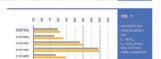

Hammond has released a comprehensive whitepaper detailing exciting findings of new benefits of the antistratification additive GravityGuard ® New research shows that the BCI Innovation Award winning product also offers significant serendipitous improvements that may provide additional value to battery manufacturers and their products. Specifically, the results show GravityGuard® used


in the PAM and NAM can improve CCA performance, 2C Capacity, and extend PSoC Cycle life. The paper presents notes on evaluation methods, specific comparative data, and more than a Independent GravityGuard ® Testing Reveals Improved CCA & PSoC Cycling

dozen charts and graphs with detailed analysis of a wide variety of test results. A PDF is available online. Just snap the QR code above to go to the publication download page.


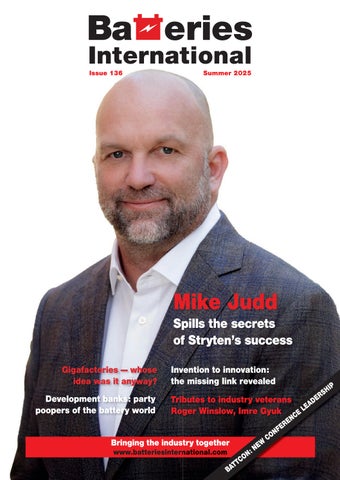
Mike Judd says he lives, eats and breathes batteries. But when Shona Sibary delved a bit further she discovered that the CEO of one of America’s largest lead battery manufacturers also has eight women in his life … and a penchant for Route 66.

EDITORIAL 4
Shifting invention to innovation — how to beat first-mover advantage
8
Clarios celebrates 15 years of Meadowbrook LTO production • Fischer succeeds Riske as Sunlight Group chairman • Hoppecke celebrates 40 years of US operations • Nourhan Moustafa joins Hammond in senior EMEA sales position • Shona Sibary takes over as next editor of Batteries International • Pruitt to head East Pennboard in leadership shake-up • Clarios’ Rosenkranz joins BCI board • New energy storage trade body launched in UK • O’Connell takes helm of EnerSys • Walker appointed as Metair’s new CFO


Study highlights concern over EU-China battery investments ‘paradox’ • Landmark US BBA is ‘harbinger' of challenges for ESS investors • EnerSys to cut management jobs in annual savings bid • Leoch profit warning over US tariffs, Mexico start-up delayed • US line Matson suspends EV shipments over battery fire risks • Insurer rolls out BESS cyber-attack protection • EU waste firms ‘refused insurance’ over Li battery fires surge • Insurer’s UK alert over ‘worrying surge’ in Li battery fires • Industry looks to extend US battery expander R&D support • Exide Industries CEO says lead and lithium in line for boost • Clarios plans supercap pairing with AGM batteries • Clarios to open advanced R&D and training center for batteries • Lead batteries can ‘outpace market’ in key areas, says KPMG • China backs $6bn Indonesia EV battery, minerals project • Sumitomo receives more LDES/flow battery orders • UK’s Faraday backs Na-ion battery tech project for Africa • Google invests in LDES with Energy Dome’s ‘CO2 Battery’ tech • Banner hails lead battery tech as sales and revenue grows • CATL in battery tech agreement with BHP • EU accepts battery material supply deals beyond its borders • China tightens rare earths grip • Powin files for Chapter 11 bankruptcy, plans spin off • ‘Grid-forming’ BESS tech ‘needs $1.2tn boost’ to support renewables • Cabot extends Li sector reach with new conductive carbon for ESS •
BATTCON: CBI PICKS UP THE TECHNICAL BATON 14
"We took over the conference because it will advance the future of battery technologies," says CBI's Matt Raiford and Alistair Davidson



Investors beware. There are too many gigafactories chasing not enough money, something has got to crack
From caffeine to cars — blazing a paper trail
By the time the inventor of the nickel cadmium battery, Jungner, died aged 55 he had provoked a complete rethink of many of the ways we look at battery chemistries
DEVELOPMENT
• Squuezing money from the biggest of the big boys 63
• International and national development banks can nevefrtheless sometimes be a useful tool in financing some of the world’s more challenging energy storage projects
Ecobat follows up French sale with Italian market exit with lead operations sell-off
• New Gopher video showcases lead’s circular economy • Gravita planning new lead recycling plant in India • First eight lead battery certification program peers named • Further rise in refined lead metal supply surplus • Ace Green, Enecell in Australia lead master offtake deal
An industry on the cusp — this year’s meeting of flow battery professionals turned out, yet again, to have a whiff of optimistic expectation in the air. It was well worth attending.
Batteries International’s invaluable round up of the exhibitions, conventions and events that are key to connecting and driving the industry forward.
• Roger Winslow, at the heart of the lead battery industry for five decades
• Imre Gyuk, the visionary champion of battery storage who set the agenda for the US DOE.
Publisher Michael Halls
editor@batteriesinternational.com +44 7342 890 592
Editor Shona Sibary shona@batteriesinternational.com +44 7585 280152
Finance administrator
Juanita Anderson
Juanita@batteriesinternational.com
Subscriptions, enquiries
subscriptions@batteriesinternational.com admin@batteriesinternational.com
Production/design
Antony Parselle aparselledesign@me.com
Content researcher Matt Halls Matthew@batteriesinternational.com






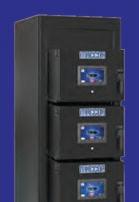
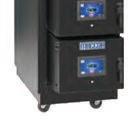

Our battery test systems are renowned for their high-speed data acquisition and control, ensuring precise measurements critical for medical device applications.
The Series 6000, our next-generation battery tester, exempli es this with its advanced capabilities designed to meet current and future testing demands

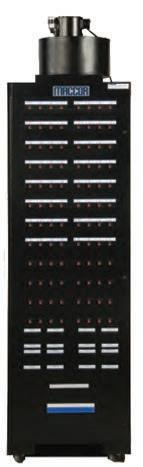

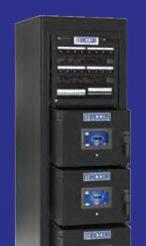
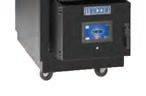
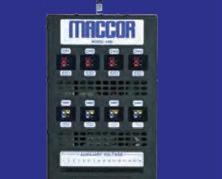
Designed to support a wide range of applications, our battery test systems are chemistry agnostic, making them suitable for testing everything from small coin cells to large EV batteries.
This versatility ensures consistent performance across various testing scenarios, a crucial factor for medical device manufacturers who require dependable equipment.

Our comprehensive software suite, including tools like MacTest and MIMS Server, provides robust data management and traceability features.
These tools enable detailed tracking and analysis of testing processes, ensuring compliance with stringent medical industry standards and facilitating quality assurance.



Our worldwide customer service team is ready to handle upgrades, service, and repairs directly at your location, eliminating the need to ship your equipment. This minimizes downtime and enhances e ciency.
4322 South 49th West Avenue | Tulsa, OK 74107
Phone: (918)446-1874 | sales@maccor.com www.maccor.com








Mike Halls • editor@batteriesinternational.com
Good idea. Perhaps even a great one. But lousy leadership. The man who revolutionised mass transportation with the movable car assembly line — and even gave rise to the troubled dreams of an entire nation — was basically an ignoramus.
Henry Ford, in the words of one historian, was “barely educated and close to functionally illiterate… he did not like bankers, doctors, tobacco, pasteurised milk, liquor, overweight people, JP Morgan & Co, tall buildings, college graduates, Roman Catholics or Jews … he seldom let facts or logic challenge the certainty of his instincts.”
His leadership skills essentially were an opinionated misguided form of bullying. His choice of senior management was flawed at best and mostly catastrophic. Ford wanted to micro-manage everything.
Yet within a decade he had created an empire of more than 50 factories on six continents, employed 200,000 people and produced half of the world’s cars.
The oddest thing about Ford’s success was that his staple product, the Model T, was not even particularly good.
Ill thought-out
Everything about it was rudimentary and, by today’s standards, appallingly ill-thought out. There were no fuel or oil gauges. Why should anyone need a speedometer too? (Though that was added after a while.) The gravity-fed fuel system meant that the car sometimes had to be driven in reverse to climb hills, the headlights were either too dim or blew at speed. There were even two sizes of tyres for back and front.
With the same convoluted logic the preceding series of Model Ts went A, B, C, E, N, R, S and K.
That said, it was the first of its kind giving Ford market leadership … But it was inevitable that it could only be temporary.
If invention is the creation of something new, innovation typically is finding new ways of commercialising that invention — it could be improving the products, the manufacturing processes, even changing markets.
Henry Ford’s huge revolution in car making
— by the late 1920s there would on average be almost one car per family across the US — was quickly copied by other firms.
And then improved upon it. Innovation.
Two firms in particular — General Motors and Chrysler — looked at all the things the Model T lacked and rethought both the final product and the way it was produced.
In the case of GM the process of innovation came with the clear focus on leadership at the very top.
So enter Alfred Sloan, who became CEO in 1923 — and coincidentally had worked as a supplier to Ford — whose management style looked at both markets and technology. In terms of production he surrounded himself with more-or-less autonomous competent managers and gave them leeway to run operations as they saw fit.
Sloan also instituted a sophisticated advertising campaign to make the public aware of what GM had to o er, and instead of stressing cheap prices, Sloan built demand for GM products by stressing style, comfort, and status, capturing his sales philosophy in the slogan “A car for every purse and purpose.”
He also introduced the idea of planned obsolescence — the release of the annual model change. Fashionable cars!
Another genius idea was a pricing structure which he referred to as “the ladder of success”, whereby models would reflect owners’ buying power and preferences changed as they aged. The Chevrolet was the cheapest, the Cadillac the most expensive.
In 1919, he and his corporate deputies created the General Motors Acceptance Corporation, a financing arm that practically invented the auto loan credit system. This allowed car buyers to short-cut the time required to buy a Ford car.
Sloan created a fortune for his shareholders and himself — he went on to become a philanthropic giant — and built an empire that until recently could claim to be the largest industrial enterprise the world had ever known.
Chrysler, founded in 1925 but operating in
various guises before this, took a slightly di erent approach. It looked at Ford’s vehicles and sought ways of improving them. New functionality included a carburettor air filter, high compression engine, full pressure lubrication, and an oil filter, features absent from most autos at the time. It also included the first practical mass-produced four-wheel hydraulic brakes.
The firm’s profits were such that it went on to build the Chrysler building in New York, which for 11 months in 1930 made it the tallest skyscraper in the world.
So how do the history of these firms relate to the present battery and EV industry?
If you look aside from the world of the lead acid battery, the present challenge for the North American and European battery industry is a geographic one and largely a problem of its own making.
Put at its most simple. Chinese firms have taken the high ground and are producing, arguably the best EVs in the world in terms of quality and value for money. They are powered by the most competitively priced and competently produced lithium battery packs. Firms such as BYD and CATL in as little as 15 years have become world class heavyweights.
A lack of foresight

plot when it assumed it would be a natural fit to move into the personal computing space.
Those accolades could have gone to Western firms — as this column has mentioned on various occasions — if they had had the foresight and support that the Chinese government gave the industry.
In 1992, China’s eighth five-year plan talked about the proposed creation of a so-called New Energy Vehicle. While most of the rest of the world was pussy-footing about, China was able to showcase a fleet of 50 lithium battery powered electric buses, with a range of 130km, at the 2008 Olympics.
So where’s the relevance of Henry Ford and Alfred Sloan to the present Western battery impasse?
It’s simply this. All empires come to an end. All technologies succumb to newer and better innovations. Moreover, the pace of progress is faster than ever.
The history of technology, as well as the history of business, shows that business empires rise and fall. IBM, which had become the huge giant for main frame computing in the 1960s lost the
It partnered with Bill Gates — who realised that software would become more important than hardware — and the rest of course is history and the massive success story that is Microsoft. Today’s battery industry needs to foster innovation not hide behind protectionist walls. In the end these barriers will eventually stifle competition and shield businesses from the economic realities that drive change. Where this will come from is uncertain — the most likely route is from a new battery chemistry or technology.
Some of the leadership is here already. Our recent interviews with Stryten CEO Mike Judd (featured in this issue) and that of Varta’s Michael Ostermann (issue 135) show that some of the top battery-people have vision in buckets and see a sense of direction — something Henry Ford stumbled with for many a year.
Last, innovation can be a two-edged sword. Perhaps the most deadly innovation for motorists came in 1928. The first proper cigarette lighter for cars was patented that year by the Connecticut Automotive Specialty Company. Casco went on to invent the modern lighter that bounces out when ready.
Odd that such a small invention would promote the death of millions.
Mike Halls, editor-at-large

East Penn Manufacturing is to separate the roles of president and CEO later this year as the well known and popular Chris Pruitt retires from the posts.
Pruitt, 63, will continue as president and CEO until September 29, when he will become executive chairman of the board, East Penn said on June 13.
E ective from September 29, Pete Stanislawczyk will be promoted to CEO and Christy Weeber will be promoted to president.
Pruitt has worked as president and president/CEO for 11 years and has been
with the company for over 31 years, holding several financial posts including CFO.
Stanislawczyk, currently executive VP and CCO, has been with East Penn for 33 years and is a former senior VP of transportation and diversified sales.
In his new position, he will oversee the operations and commercial areas of the business, which includes manufacturing and distribution, engineering, sales and marketing as well as serve on the East Penn board.
Weeber, who has been with the company for 13
years, is EVP and CFO. She was formerly the senior VP of finance.
In her new position, she will oversee finance, legal, personnel and IT as well as serve on the board.
Pruitt said: “I have high expectations for the future of the company. Pete and Christy will carry on the legacy and mission of East Penn alongside a very accomplished management team and the full support of the founding family.”
Battery Council International president and executive director Roger Miksad said: “Chris has given so
A new trade body has been launched in the UK to champion the energy storage industry.
Energy Storage Association UK said on June 25 it aimed to drive innovation, investment and policy to unlock the full potential of storage solutions including batteries, pumped hydro and hydrogen-based technologies.
Founding members of the body include GivEnergy, Sunsynk, Powervault, Octopus Energy, Keele University and Durham University. The body cited a study
by Imperial College, which found that that e ective energy storage could save the UK between £500 million ($620 million) and £3.5 billion annually.
At present, the cost of energy curtailment added between £400 million and £920 million to energy bills last year, according to the study.
Association interim CEO Jason Howlett said: “Our vision is simple: we see a world where energy storage is allowed to lower consumer costs, stabilize the grid and accelerate the transition to net zero.”
Howlett said energy storage is not just a technical solution but a necessity for delivering dependable, a ordable, clean energy from renewables where and when it’s needed most.
much to the battery industry over 30 years of service, and was duly honoured for this work as a recipient of our Distinguished Service Award in May.
“We look forward to a bright future at East Penn with their newly appointed CEO and president and continued partnership and growth for the energy storage industry.”

Battery Council International has welcomed Clarios senior executive Christian Rosenkranz to the trade organization’s board of directors.
Rosenkranz, VP of industry and corporate a airs EMEA and MD of Clarios Germany, is an industry veteran of 27 years.
BCI announced Rosenkranz’s board role in a LinkedIn post on June 16.
His experience includes posts with VARTA and Johnson Controls and he is also chairman of the Consortium for Battery Innovation, having been appointed in 2021.
Rosenkranz’s background also includes leadership roles in lithium ion system integration, global engineering component development, and sustainability initiatives.
Emma Nehrenheim has been named as managing director of the European Battery Alliance.

The Alliance said on June 6 that Nehrenheim has more than two decades of experience in environmental engineering and battery manufacturing.
Most recently, she was chief environmental o cer and president of Northvolt Materials. She also contributed to the development of the EU’s Battery Regulation.
She succeeds Thore Sekkenes, who has led the industrial stream of the Alliance for more than six years and will continue to remain actively involved
with the organization. Nehrenheim said: “Our mission isn’t just to build a battery industry, but to make it European, shaped by our standards, driven by our innovation, and powered by our industrial strength.” The Alliance was launched in 2017 by InnoEnergy with the backing of the European Commission. The body is now known as EBA250, in recognition of the estimated €250 billion ($290 billion) annual value of Europe’s battery market by 2025.
Shawn O’Connell, formally took over as president and CEO of EnerSys on May 23. He takes over from Dave Sha er who announced his retirement and O’Connell’s appointment in December.
He was previously chief operating o cer from November 2024. Before that he was president, Energy Systems Global from November 2023 and president, Motive Power Global from July 2020.
Earlier work positions include president, Motive Power Americas from April 2019 and vice president — Reserve Power Sales and Service for the Americas from February 2017 and vice president of EnerSys Advanced Systems from December 2015.
He joined EnerSys in March 2011 and has held a variety of leadership roles in sales and marketing across the business. He began his career in the energy storage industry in 1997 and first became involved with EnerSys in
2003 as an outside channel partner.
He is also a director of several EnerSys subsidiaries, is vice chairman of the board of directors of Battery Council International, and is a director of EUROBAT. (the Association of European Automotive and Industrial Battery Manufacturers).
In a recent earnings sstatement for the company he said that
should tari s continue to remain high for Asiabased lithium or incoming lithium cells, this could be a benefit to the firm’s thin plate pure lead (TPPL).
“That gets you most of the way of lithium without some of the downside risk and safety considerations,” he said. “We could actually see an uptick in our TPPL o ering should that tari environment stay robust on lithium.”
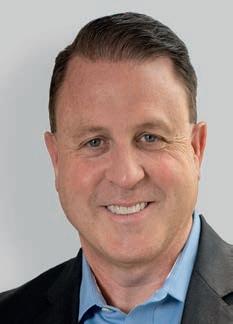
Alastair Walker has been appointed as chief financial o cer and an executive director of South Africa’s Metair Investments with e ect from next month.
Metair, which owns battery production firms Rombat in Romania and South Africa’s First National Battery, said on June 10 that Walker’s appointment takes e ect as of July 1.
He succeeds Anesh Jogia, who resigned in April and whose notice period ended on June 30.

Metair said Walker has extensive private equity and corporate finance experience, gained both in South Africa and internation-
ally, and has been investing and partnering with several South African-based entrepreneurs across a range of industries since 2018.
He has worked with companies including Deloitte and Anglo American Corporate Finance.
Batteries International reported in April that Metair had posted an overall 28% EBIT boost from its remaining battery businesses after selling o its troubled Mutlu Akü Turkish lead acid firm last year.


















































Clarios celebrated the 15th anniversary of its Meadowbrook facility in Michigan on June 10.
The plant has produced more than six million lithium titanate oxide cells to date and has contributed to the recent milestone production of more than
one million lithium ion batteries, the company said.
The anniversary celebrations featured several events at the plant, including a visit by some of Clarios’ worldwide engineers, who joined 11 Meadowbrook employees who have been with the battery manufacturer since
the facility opened.
Federico Morales-Zimmermann, VP and GM for global OEM customers, products, and engineering, said the milestone was a testament to the hard work and dedication of employees, the support of partners and the trust of customers.
In May 2022, Clarios unveiled plans to mass produce sodium ion batteries at Meadowbrook, in partnership with Natron Energy. Natron installed new cell assembly equipment at the plant, with support from the US Department of Energy’s Advanced Research Projects Agency-Energy (ARPA-E).
Last March, Clarios announced a 10-year, $6 billion plan to expand battery manufacturing and help boost US energy and critical minerals independence by increasing production of “low-critical mineral battery chemistries”, such as its most advanced AGM batteries and additional cutting-edge energy storage technologies.
Sunlight Group, the Greece-based lead and lithium battery manufacturer, has appointed Matthias Fischer as its new chairman. Sunlight, part of the Olympia Group, said on July 15 that Fischer succeeds Gordon Riske,
who is stepping down.
Fischer is a former president and CEO of Toyota Material Handling and MD of Jungheinrich, where he was responsible for global sales, service and marketing.
He will also chair
Sunlight’s strategic planning committee and serve as a member of other key committees.
Meanwhile, Eric Alstrom, a former president of Danfoss Power Solutions and General Motors executive, joins the board as an
adviser, while Francis Wang is stepping down as an independent non-executive director.
Lampros Bisalas, who continues as Sunlight’s CEO, executive board member and a member of the strategic planning committee, thanked Riske for his guidance and dedication.
European lead battery giant Hoppecke is marking 40 years of successful operations at its US subsidiary with a pledge to power ahead with innovative technologies and products.
The company praised its workforce and customers on July 2, saying “we’re just getting started”.
Hoppecke founder Carl Zoellner signed the articles of incorporation for a new joint-stock family company in Brilon, Germany in 1927.
The north American operation, Hoppecke
Battery Systems, was founded in 1985. The subsidiary became Hoppecke Batteries in the early 2000’s.
In a US update last year, Hoppecke said lead batteries continued to be the mainstay of operations in the country, revealing its Federal Railroad Administration-compliant lead systems can be used as starter batteries for diesel engines or in auxiliary applications.
The company is also producing NiCd batteries, used in applications
including backup power systems.
Meanwhile, Hoppecke said it was constantly working to increase the local content of its lithium ion battery systems.
HOPPECKE is committed to investing in America, to increase local production capacity and technical expertise.
Hoppecke said: “In an era where sustainability, reliability, and innovation are paramount, the importance of locally manufactured products cannot be overstated.”
“These board updates reflect our bold commitment to top-tier leadership and global insight.”
He said Fischer and Alstrom bring invaluable international expertise and deep sector knowledge that will help propel Sunlight into its next era of innovation and market leadership.
Last January, Sunlight said it expected to boost production e ciency by 40% after a major upgrade of the group’s software systems. The group also announced an expansion of its global business, digital and IT team, including setting up a new IT hub in Germany.
Hammond, the international oxide and specialist additive group, has appointed Nourhan Moustafa as its senior regional sales manager for the EMEA region.
Nourhan will be based in Dubai. “She will play a pivotal role in supporting our expanding global strategy and customer engagement e orts throughout Europe, the Middle East, and Africa,” says Brad Bisaillon, vice president of sales at Hammond.

“As a chemical engineer with hands-on experience in the battery industry, Moustafa brings a strong background in business
development within the Middle Eastern energy sector.”
She was most recently business development manager at Chloride Egypt. She has a degree in Chemical Engineering from Cairo University and is fluent in Arabic and English.
“In my new role, I aim to be much more than just a sales professional; I want to be a trusted consultant and partner to our customers,” she says. “My core objective is to deepen our existing relationships and forge new ones, helping our
clients in the rapidly growing EMEA battery market to truly unlock their full potential.
“I plan to achieve this by collaborating closely with them, understanding their specific challenges, and demonstrating how Hammond Group’s innovative additives and technical solutions can enhance their products and operational e ciency. Ultimately, I’m driven by the desire to see our customers succeed and to further solidify Hammond’s position as the go-to strategic partner in the region.”
Fleet Street journalist, Shona Sibary, took over as editor of Batteries International in the middle of May. Shona has had a career spanning three decades in print and broadcast journalism working for UK national newspapers and mainstream newsstand magazines.
Shona joined Batteries International in April 2024 as deputy editor for the authoritative long-standing journal of record of the energy storage and battery industry.
Mike Halls, who has been editor of the title and owner of the firm, for the past 17 years, takes over as publisher.
“Having never previously worked on a trade publication before, Shona has brought an exceptional, commercial perspective to our editorial, drawing on years of breaking exclu-
sives and interviewing people as diverse as Colin Firth through to John Major whilst he was PM,” Mike said.
“She has fully immersed herself in the battery world and identified some strong strategic directions in which to take our platforms, maximising all the exciting market opportunities out there. In addition to her superb journalistic skills, Shona is, at heart, a people person and loves nothing more than profiling the movers and shakers of the battery industry and really getting to the heart of what makes them tick.”
Shona says: “In my career to date, I have written about everything from botched boob jobs to celebrities behaving badly. Fun years! But never have I, until now, felt so instinctively in the right place at the right time. There is so much scope in the industry
today for brilliant editorial and breaking stories that the world needs to hear.
“I can’t wait to get those stories out there and
continue Batteries International’s unrivalled reputation for being the trailblazing publication it is.







CBI has taken over Battcon — the industry’s most focused event for realworld battery expertise. Being held during the first week of August in Orlando, the conference promises unbiased insight, hands-on learning and direct access to the leaders solving today’s biggest challenges. Here, CBI’s director, Alistair Davidson and senior technical director, Matt Raiford reveal how they came to be running the show.
Batteries International: How did CBI take over the Battcon conference? I’ve heard it’s Matt’s baby — is that true?
Matt: I don’t know if you would call it our baby, but we adopted it. Battcon has a long history in the United States. It was first started by Alber, a telecommunications company. Vertiv acquired Alber — Vertiv is a huge provider of UPS systems and data centers, and Battcon became their forum.
Alistair: It’s a very end user focused conference. Battery companies talking to the end users, and the end users being educated how to use their batteries. We haven’t had that before. ELBC, for example, is a platform focus.
Matt: So Vertiv acquired it, and then they held it for about 20 years. In that time, Vertiv changed and morphed and expanded. And a couple of years ago, their board changed, and they basically said: ‘We don’t want to dedicate time to things that don’t make more than 150% profit.’ So it was decided that they were not going to do conferences anymore and they got rid of all of their events. And it stranded Battcon. That’s when they put it upon the planning committee to find a new home. Vertiv were very kind, and they just said: ‘Whoever you guys pick, whoever you want to adopt it, we’ll give it to them, okay?’
Alistair: Our membership was really supportive of us running it. They felt it was a technical conference, and obviously we had the equity
of running a technical workshop already. So it was a sensible home for us, given our expertise in the field.
BI: Had you made a decision that you wanted to have a bigger platform in terms of conferences and that this was the direction you were looking to go?
Alistair: No, it wasn’t that, but it did meet the overall objective of CBI. One of our big focuses is to showcase lead battery innovation, and this felt very alongside that. It’s multi-technology and a great showpiece for the lead battery industry.
Matt: Also, a lot of our member companies exhibit and give papers at this conference. And I knew most of the technical committee anyway through my work with standards and fire codes on the stationary side. So they were finding a new kind of home to fall back on and they eventually voted for us.
BI: Was there anyone else in the running to take it over?
Matt: I do know that other companies were interested, but I don’t know who.
Alistair: One of the things that we wanted, was to interact more with end users in the industrial energy storage space and we thought Battcon would give us that opportunity and it has.
Matt: That’s what allowed us
to suddenly be able to speak to stationary end users specifically in the US — utility companies, telecommunications firms, data center providers. Companies like Southern Company, Comcast, AT&T — these pretty premier organizations that use a lot of batteries but they’re typically one step back from that part of the supply chain. So, it has allowed us to actually speak to these really large consumers
The technical program is not meant to be commercial, it’s meant to truly be educational. If you submit something that’s too commercial it gets rejected. It needs to be something like, ‘lessons I’ve learnt from my journey’.
— Matt Raiford
in a more demonstrative, intentional way. And, like Alistair said, it’s multitechnology, so lead has a significant presence there, but lithium, sodium and zinc all have their slice of the pie too. Lead will always be our sweetheart. But now we actually get to see how all the batteries play.
Alistair: We’ve had some big names, significant data companies have just signed up to attend which is great news.
Matt: About 40-ish percent of all the world’s data centers are present in the United States, so that’s huge.
BI: Do you have plans to change anything about Battcon?
Matt: We want to keep the fact that it’s a really practical, end-user focused conference. There’s a big training element around how to maintain batteries and also a lot of stu about getting operators and engineers up to date on best practices and standards. We don’t want to change any of that.
But one thing we are doing is bringing in students. Years ago there were mentorship programs associated with the event and we’ll be resurrecting those.
BI: It’s a bit of a departure from what CBI has done previously. What have been the challenges for you in terms of preparing for Battcon?
Matt: We’ve taken a step back to understand what the crowd who comes to Battcon want. We adopted the conference five months before it was due to take place in Miami last year. Vertiv had planned it all and then dropped it, saying “Go find a home for this.” And it was a mad scramble for us before the event date to understand what we had.
Alistair: We inherited a lot of the program as well. And the feedback we had from some of the delegates was that the education is important but the program was getting repetitive. There wasn’t anything new.
So one of the things we’ve done this year is implement some new speakers, slightly di erent directions on the topics, and also made it more
We don’t run events for the financial gain. That isn’t the priority for these events. It’s to help our industry. Running Battcon will help the lead battery industry to showcase their products and interact with end users.
global. We’ve invited our members from CBI who are not just in the US, but from other regions of the world as well.
Matt: The US is avant garde when it comes to very hot topics — no pun intended — such as fire safety for energy storage systems. Partly it’s because of the sheer presence of BESS systems in the US, and then just a lot of di erent stakeholders, standards such as NFPA and international fire codes are housed in the US.
So these best practices — like how do you actually build a safe BESS — we want to translate that to the rest of our membership. And Battcon serves our membership in that way as we now have a forum for best practices. Battcon has always been a leader in that regard, and we want to maintain that.
BI: Is it a commercial project for you? Or an educational one?
Alistair: We don’t run events for financial gain. That isn’t the priority for these events. It’s to help our industry. We’re not here to make huge profits. We believe that running Battcon will help the lead battery industry to showcase their products and interact with end users.
Matt: The other thing about Battcon is that the paper selection process is extremely thorough. So the abstracts, the technical committee approves them. It’s a smaller set of papers. And then you actually write a periodical, like a peer review.
They review every slide. It’s very robust. Therefore the quality of the technical program — it’s not meant to be commercial, it’s meant to truly be educational. If you submit something that’s too commercial it gets rejected. It needs to be something like, ‘lessons I’ve learnt from my journey’.
Also, it’s a forum to understand how new technologies can serve this end user base. What technologies
are actually gaining momentum? It allows us to understand the battery landscape a little bit more widely. There’s an element of, ‘What’s on the horizon?’
Alistair: There’s a lot of potential at Battcon. It should be our showcase. It’s the only conference out there that has this sort of end user industrial focus on all batteries. And there’s so much potential for us to improve it and grow.
Matt: It’s important for us to get the right people in the room. We want the people who fix the problems — the engineers and operators, the technologists. So we’re trying to keep that part very vibrant and alive. But it’s brilliant because Battcon allows us to actually see the entire landscape.

It’s a very end-user focused conference. Battery companies talking to the end users, and the end users being educated how to use their batteries. It’s also multi-technology and a great showpiece for the lead battery industry.
— Alistair Davidson
The EU is poised to introduce new workplace exposure limits for sectors including EV battery production — despite warnings the move cost the industry €20 billion ($24 billion) over 40 years and force plant closures.
The exposure limits recommended by the Commission — in the sixth revision of the EU’s carcinogens, mutagens and reprotoxic substances directive (CMRD) — include cobalt and inorganic cobalt compounds, polycyclic aromatic hydrocarbons and 1,4-dioxane, which can be found in a range of household products. Welding fumes are also added under the scope of the CMRD.
The Commission said on July 18 the move could prevent about 1,700 lung cancer cases and 19,000 other illnesses, including restrictive lung disease and damage to the liver and kidneys, over the next four decades.
However, preliminary figures from the Cobalt Institute indicate the new limits could lead to more than 110,000 job losses out of a total of over 640,000 jobs and lead to the closure of around 20% of some 9,000 sites.
The Commission’s proposal will now be discussed by the European Parliament and European Council. If adopted, EU states will have two years to incorporate the directive into respective national laws.
An impact assessment of the proposal acknowledges industry fears that the new limits could lead to the relocation of production sites to countries and regions outside the EU and “have more far-reaching consequences for the European industry than only the increased protection of workers”.
The Commission said cobalt and inorganic compounds are commonly used in battery production and manufacturing
The European Commission’s proposal to overhaul the Registration, Evaluation, Authorisation, and Restriction of Chemicals (REACH) Regulation is almost certainly the most significant update to REACH since its creation, shaping the future of chemicals regulation in Europe. The changes aim to simplify EU chemical regulation making it more transparent, and fit for purpose.
The revised proposals form part of the broader Chemicals Industry Package. The final package which should be adopted by the end of this year will simplify registration, enhance enforcement, drive digitalisation and modernise risk management.
One important aspect of the revised REACH Regulation is the overhaul of the registration system. Registration validity will now be
processes for magnets and hard metals.
The proposed limit for cobalt and inorganic compounds is 0.01 mg/ m3 for particles that can be breathed in through the nose and mouth, and 0.0025 mg/m3 for finer particles that can reach deeper into the lungs. Transitional limits (0.02 mg/m3 and 0,0042 mg/m3 respectively) will give industries six years to adapt, the Commission said.
Existing limits vary across the EU range from 0.01 mg/m3 (the ‘strictest’ national binding occupational exposure limit) to 0.5 mg/m3 (the ‘least strictest’).
According to the Commission, the proposed measures reflect the latest scientific data and benefits from analysis provided by the Advisory Committee on Safety and Health at Work.
The measures could save in excess of €1 billion ($1.2 billion) in healthcare costs and significantly improve
limited to 10 years, and ECHA will be able to revoke registration for failure to submit updates or incomplete data.
This will be the most significant update to REACH since its creation, shaping the future of chemicals regulation in Europe.
Digitalisation will become important with harmonised electronic formats for SDS (Safety Data Sheets) and the gradual introduction of DPP (Digital Product Passports) for products such as batteries, textiles, and furniture.
the quality of life for workers and their families, the Commission has claimed.
In 2023, in preparation for the Commission’s proposed changes, the Cobalt Institute said it had always supported the introduction of cobalt occupational exposure limit values in the EU.
However, “the values need to protect workers and let industry operate in Europe”.
The institute said then, based on its recently conducted scientific and socio-economic studies, it recommended 0.02 mg/m3 (inhalable) and 0.0025 mg/ m3 (respirable) occupational exposure limits for cobalt and cobalt compounds. These two recommended values would protect workers and allow for industry to continue operating in Europe. In addition, these values are progressive and are considered as still dicult to achieve for certain industries, the institute said.
These will improve traceability, reduce administrative burdens and provide greater transparency on substances of concern.
The Commission proposes the creation of a European Audit Capacity to assess how e ectively member states enforce REACH, ensuring uniformity across the EU. Customs controls will change with mandatory SDS provisions at import and automated verification of registration and authorisation numbers. The European AntiFraud O ce will be empowered to investigate cross-border REACH violations.
A key addition is the “essential use” concept. THis identifies substances critical to society yet pose a significant risk. This ensures that safety measures focus on the most important substances.
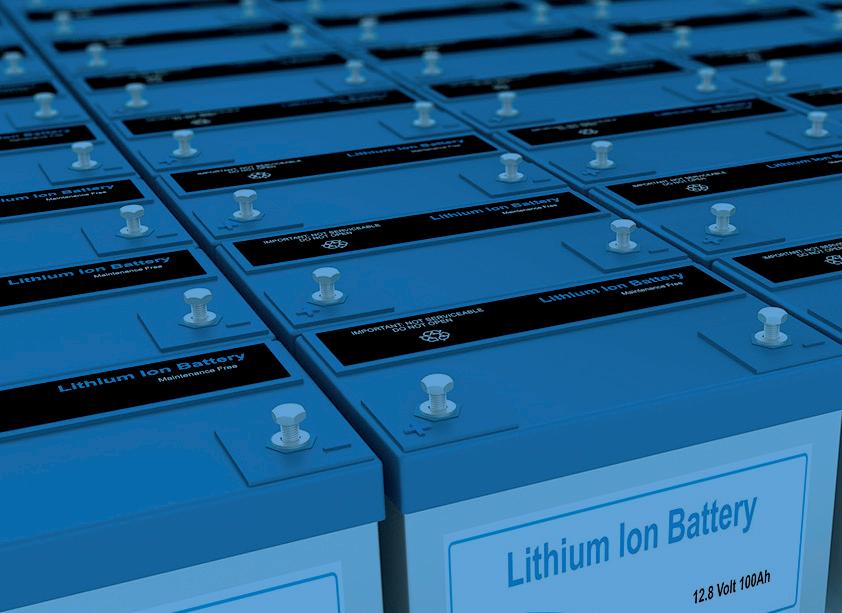
Basis weight measuring system for single and double sided coating lines

NO DANGER from radiation due to ultrasonic measuring principle Discover our solutions – WE



























































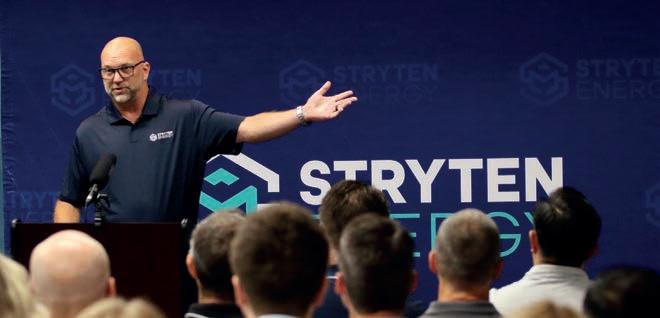
Mike Judd says he lives, eats and breathes batteries. But when Shona Sibary delved a bit further she discovered that the CEO of one of America’s largest lead battery manufacturers also has eight women in his life … and a penchant for Route 66.
Steel and winches. Two whopping great industries in Oregon that have no idea what they’ve missed and are, quite probably, more than a little worse o because of it.
The reason? Back in 1991, a young man, with no high school diploma to his name, needed a job. These were the businesses that paid well, had been around for a long time and, in his own words, ‘had a way of promoting people.’
Luckily for the battery industry, Mike Judd, instead, landed his first job with Johnson Controls. Day one on the factory floor saw him putting the top label on the battery. Day two, he was promoted to taking the vent caps o and the finishment caps on. And the rest, as they say, is history.
Today, Judd is the CEO and president of Stryten Energy, one of America’s largest domestic battery manufacturers with over 2,500 employees. The firm builds ‘darn good’ batteries that power everything from submarines to microgrids, distribution centers, cars, trains and trucks.
Headquartered in Alpharetta, Georgia, they are an undisputed industry leader with a huge expertise, delivering energy solutions through technologies including advanced lead, lithium and vanadium redox flow batteries, intelligent chargers and energy performance management software.
Stryten’s history dates back to 1888 and its predecessor, the Electric Storage Battery, which grew over the next century. In 2020, Stryten Energy emerged as a new company and quickly began expanding, acquiring Tulip Richardson Molding in 2021, which added three battery component plants to its footprint. Stryten extended its battery tech into lithium and vanadium flow batteries with acquisitions of Galvion’s power division in 2021 and Storion Energy 2022.
It’s an impressive portfolio that has seen the company constantly diversifying to keep ahead of the game.
But while Judd is immeasurably proud of the fact that Stryten is ‘probably the most diversified battery manufacturer in the US,’ he is also keen to keep their feet firmly on the ground.
“We’re very mindful of how many di erent technologies we get into,” he says. “Today, it would be very easy just to go and invest, to gobble up all
kinds of new technologies. But the core part of our business is domestic battery production and that’s leadbased chemistry. The second would be lithium and then flow batteries after that.
“And the way we run the business is to focus on the core part, making sure we pay the rent, pay our
employees and produce batteries for our customers. That needs to be completely protected.
“The only time we add on new technologies is if we can buy a small business that we think has the opportunity to go big in the market. Vanadium flow is a good example. But we don’t distract our
Judd’s early passion for the technology of batteries and how to make them more e cient in the manufacturing process was learnt on the job — and not at university. It’s something that has inspired him to put programs in place at Stryten to create new electricians through apprenticeships and not look at a new hire for the company solely on the basis of whether they are a graduate.
“My take on this is that if somebody can prove they have the technical ability for the position, then that is first and foremost and the college degree is second. What I tell people is that there’s probably a point in your career, as you progress, that it’s going to become more important to have that degree box checked.
So while I’ll give you this job today, which is a supervisor or manager or engineer — because
you’re so good at what you do, I would be crazy not to give you that — there may be a ceiling you hit at some point where somebody says: ‘You know, you can’t run a plant or be a director of a whole bunch of people without a degree.’ I mean, that’s not how we treat it at Stryten. But if they don’t always work for us, somebody else may still have that requirement.”
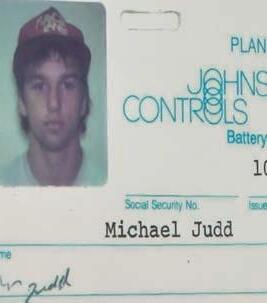

“I often think about that manager at the very first plant I worked at who was able to take a risk on somebody who didn’t have a mechanical engineering degree and put them in a position of engineering and designing stuff. You know, it takes a special manager, to do that”


Mike has a surprising coping strategy to decompress from the demands of being a CEO.
“I have a road motorbike, an adventure bike, if you will, that I take on solo trips across the country for four or five days at a time,” he says. ‘And I have just three rules. No hotels, no restaurants, and no freeways. I sleep in a tent, pack all my own food and cook it on my own. The last trip I took was up through Canada from Georgia, all the way up to Labrador and then all the way around and back down.
“Another favourite is riding
sections of the old route 66 in the south, New Mexico, that area. It’s very beautiful because you go through towns that used to be amazing until the freeways went in, and then they kind of died down. But all the history is still there, and there are still folks who live there and are never going to leave.”
Long road trips aren’t Mike’s only obsession. He also talks about a love of ‘anything to do with wheels and hours spent in his workshop building something with engines.
“I have several o -road dirt bikes,” he says. “I was actively competing
two years ago on the Georgia race circuit but then decided last year to take some time o from that. It’s pretty hard on the body. And I have electric motorcycles that I tinker with to try to see how much more energy I can get out of them, what battery packs I can put on.”
He stops and grins. “It’s a running joke around here that I have zero interest in sports. I’m the worst person to have a conversation with about what’s happening in basketball or baseball or football or soccer or anything, because I know absolutely nothing.”








“A subsidy says that the business probably can’t perform on its own”
baseline workforce for that. We would never put that at risk because we realise that in those markets there are no guarantees. You can’t make a workforce feel that those are guarantees because you lose that focus on the baseline business.
Let the market decide
“So, yes. There might be potentially humungous opportunities out there, right now, but we are not going to take a bunch of resources and try to drive that. Instead, we’re going to let the market determine what they want for technology. And when we see the market wanting a technology, we’ll look into it, but we’re not going to invent a technology and try to shove it through.”
It’s a sensibly cautious approach from a man who admits that he lives, eats and sleeps batteries. “Most of the time when I’m thinking about something, it’s batteries,” he grins.
He describes the industry landscape right now as ‘unrelenting.’ But loves how excited that makes him feel.
“There just isn’t a single part of our lives right now that isn’t attached directly to a battery,” he says.”
Will Trump help or hinder Stryten’s strategy?
“I don’t think a government’s decisions on how to drive revenue and things like that really a ect, or change, in any way, the consumer and their requirements,” Judd says. “We need more energy every single day. That’s not going to change based on pricing or tari s. It may change short term, but in the long term it’s all going to settle out. The demand doesn’t change. So filling that demand also won’t.”
Like every other business, Stryten has had to have conversations and come to conclusions in response to the current political situation, but Judd feels they’re not too a ected.
“Obviously we’ve had meetings on how our potential suppliers are going to react,” he concedes.
“A good example would be firms integrating solar fields. They have a di erent business model that they’re going to have to use now. And if you think about the real di erence that’s
Judd is keen to talk about a bigger picture here — one of environmental responsibility. And it’s this that gets him truly fired up.
“Batteries are the future of conservation,” he enthuses. “Regardless of the technology that we use to power the world, there has got to be a point when we all start conserving rather than consuming. The planet is still growing, still consuming, but at some point, that’s got to shift. And what’s going to enable that shift is batteries.
“Take a small island that is powered 100% by a diesel or natural gas generator today and they want to add some renewables and solar panels and wind turbines. None of these resources run eciently unless you can utilize that resource over time.
“So imagine an island with a generator running a percentage of the time. If you put a big battery there, you can now run that generator at 100% e ciency for four hours a day, rather than 24 hours a day at 60% e ciency.
“It’s really about sending all the energy to the battery. The battery is the main place where you can truly conserve energy, because




it can deliver energy exactly when it needs to be delivered. Nothing more, nothing less. So no more heat generated, no more wasted energy.”


Judd is convinced that Stryten is at the forefront of creating this energy ecosystem of the future and he has come up with a concept called ‘The Battery First model,’ which, simply put, is all about putting the battery at the centre, whether it’s a firm energy resource like hydrocarbons, or something more intermittent like solar or wind.
“It’s a conservation model that provides grid stability and drives e cient use of the power generated from renewable and carbon-based sources,” he says. “This approach will enable long-duration energy storage that can be scaled in size and duration to meet the needs of utilities, commercial and industrial, as well as military bases and emergency response applications.”
Judd’s vision — and it’s not an unrealistic one — is that this will take batteries from being a sidekick to playing a central role in energy security in America.
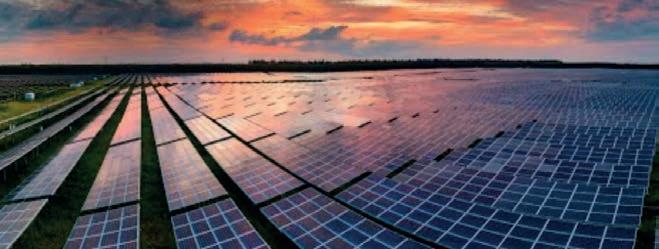
“We have solar fields today that are sitting in the middle of the desert in California doing absolutely nothing”
changed from one administration to the next, it’s this shift between subsidies and incentives.
“A subsidy says that the business probably can’t perform on its own. There should be a view somewhere down the road that either it gets its manufacturing costs down and can
be profitable without a subsidy, or the market price goes up so it can be profitable that way.
“Well, on the solar and wind side, that’s a hard argument to have. Because if the price goes up to the consumer, which makes them profitable, it goes against the whole
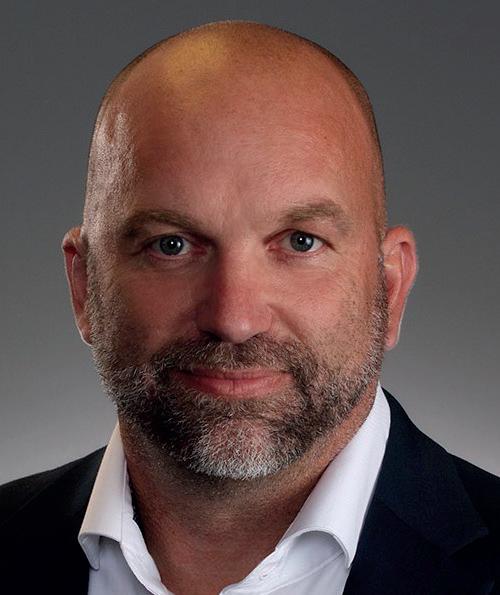
“I’m probably one of the few people who has been in every single battery manufacturing plant in the United States”
“At home I don’t win many battles”
Mike describes his family set-up as a little ‘complicated’ although as he goes on to explain, it becomes obviously that, really, it is something quite wonderful.
“My wife and I have three daughters and along the way we adopted four more,” he says. “They happened to be friends of our daughters at the time, and they had a family situation that necessitated them needing a place to stay. They ended up staying with us, and then staying for many, many years. But it’s perfect. They’re all great, and they match up with our daughters.
“And, you know, the beautiful part about these seven girls is that we moved around a lot and because
of my job when they went to new schools they immediately had friends from day one, because they all went together. And even though most of them have left home now — the youngest is graduating this Fall — it’s all still working out. We have two grandchildren now with one of the adopted girls, and so it’s a big, big family.”
And as the sole male in the midst of all these women, one imagines Judd has boundless patience and a whole heap of soft skills that must really benefit him in running a company. “Put it this way,” he says. “I don’t win many battles. In fact, I can’t remember a single one where I’ve come out on top.”
idea of renewables which is to keep the cost of electricity down.
“So that means that the only way for you to really become profitable is to reduce your manufacturing costs. And those are known things that you can model out for years.
“On the incentive side, which is the new administration, they’re saying: ‘We’re going to incentivize folks who can already pay all their bills, who can pay their rent and their employees, but they can only go so fast in development of new technology. So let’s incentivize those companies to go as fast as they can.
“That’s really what has changed. When we partner up with people to do BESS solutions now, those people are probably going to have to be on the incentive side and already profitable, leveraging their position in the market, rather than folks who are saying: ‘Someday I’m going to be profitable, but without these subsidies today, I’m not.”
Does he worry that this push and pull dynamic will slow down solar installations?
“Maybe. Maybe not. I don’t know. I’m not a solar installer. But what I do know is that if there were money to be made in a solar field yesterday and the subsidies don’t exist, then you’re going to have to invest in BESS to make that investment pay.
“It’s going to have to be able to deliver energy 24 hours a day, not just when the sun is shining. We have solar fields today that are sitting in the middle of the desert in California. They’re doing absolutely nothing. But with BESS they absolutely could. So I think it’s going to have people go back and say: ‘You know what? The ones we installed for the last 15 years, there’s now a market that’s saying we need to go as fast as we can to install BESS so that we can serve that market 24 hours a day and actually make money from it.’
“The rest of the market, it will figure itself out. I mean, it’s just a shift between one administration and the next. Is one right or wrong? I couldn’t possibly tell you because the dynamics are so complicated. We need time.”
And best supporting role goes to…
Within Stryten’s optimistic forecast, how large a role does Judd see lead — its core business — playing?
“I don’t think it will play the biggest part — that is going to be
for emerging technologies that have really good energy densities,” he says. “But it is certainly going to play a meaningful role, for sure, especially in places where space is not a constraint, and when you’re looking at something like five to seven hours of duration.
“Lead works very well in that environment. It takes more space, but it’s nearly 100% recyclable, and there can be business cases put in place where you buy it once, and it just gets replenished as you go along. And there is no big ‘pull it all out and start all over again’.
“So there’s certainly a market for lead, especially when you start to think about, not humongous solar fields, but smaller micro grids and backup systems. It fits perfectly in that hundreds of gigawatts space. It’s not a small market at all, just for lead, considering the thousands that will be for the entire market, which would include flow, compressed air, hydroelectric or pumped hydro, lithium, or all of them. They’re all going to fit someplace.”
Stryten’s place in the race It’s going to be a highly driven landscape. How does he feel they set themselves apart from their competition?
“First of all, we strive every day to make sure that we take care of our customers. We’ve created a position for ourselves where we are very nimble. We can react quickly. I think we o er that security to our customers. The other thing is that we are absolutely focused on manufacturing, environmental health and safety.
“All the decisions that we make, we firstly ask the question: ‘Is it going to help our 2500 employees?’ Secondly, is it going to help the environment in or around our plants, the safety of our folks? If we can answer those questions, yes, then most likely it’s going to be a good business decision.
“If you look at the scale of battery manufacturers, we’re certainly not the biggest and we’re certainly not the smallest, but every manufacturer of whatever size has to react di erently to the needs out there. And so I think we have found a way to fit nicely where we are and to make sure that we’ve got a diversified portfolio that when one market is down, the other one most likely is not going to be down. We can shift our focus, our resources and our supply chains over to serve whichever side of the business that we
“BESS is a monster,” Judd says. “It’s very, very large. But it’s not totally developed yet. If you look at something that says, ‘How big could the demand be?’ Then, it’s energy storage. Even if you consider that there could be a slowdown in solar and wind, because, you know, subsidies went away, there’s been a lot of installations over the years that still don’t benefit from energy storage.
“And then there’s also this whole shift in the market that is dictating that if you’re going to put a battery
in any application you want that battery to do something besides just sit there in a standby mode waiting for the power to go out.
“What that means, in real terms, is considering that battery an integral part of an energy plan and then working out how to utilize that plan. A lot of the conversation we have with customers is how to do just that and it starts with an automobile to a fork truck right the way through to government and the military.”

Energy Founders Day: 2023
need to. We’re in a very good spot.”
What does he, personally, feel he contributes to that success?
“I’ve worked in so many di erent technologies and been across the industry,” he replies. “In fact, I’m probably one of the few people who has been in every single battery manufacturing plant in the United States, every one of them.
“I’ve encountered so many great leaders who have all given me little snippets along the way that have helped me to where I am today.
“But the one thing that I live by is that unless I’m forced to make a decision, I wait.
\”I think it benefits my team and it benefits the whole business. People sometimes wrongly feel that if there’s a decision to be made you’ve got to make it immediately because otherwise it might show that you’re not up to speed with the business. But I truly believe that we can discuss and talk about things, that we don’t always need to end the meeting with the decision. We can think about it, come back and find the right path.”
A drive to succeed
It’s a self-deprecating remark from a man who, whilst maybe not winning battles at home, is certainly doing something right in the boardroom.
He attributes this to a long, hard climb from the bottom of the battery business, through the ranks, where he worked as one of the utility people filling in whatever job needed to be done at the plant when someone didn’t show up for their shift. He picked up his GED, then a business degree and then a master’s along the way but has never forgotten those humble beginnings.
It’s a foundation that still keeps him grounded today.
“I often think about that manager at the very first plant I worked at who was able to take a risk on somebody who didn’t have a mechanical engineering degree and put them in a position of engineering and designing stu . You know, it takes a special manager, to do that.
“Back then, I went work to make a living but then something changed along the way. I started wanting to make batteries better and processes better.”
Thirty-four years later, we could all be forgiven for saying, ‘Job well done.’ Except we’d be missing the point. Mike Judd is only just getting started…
“We
can shift our focus, our resources and our supply chains over to serve whichever side of the business that we need to. We’re in a very good spot”
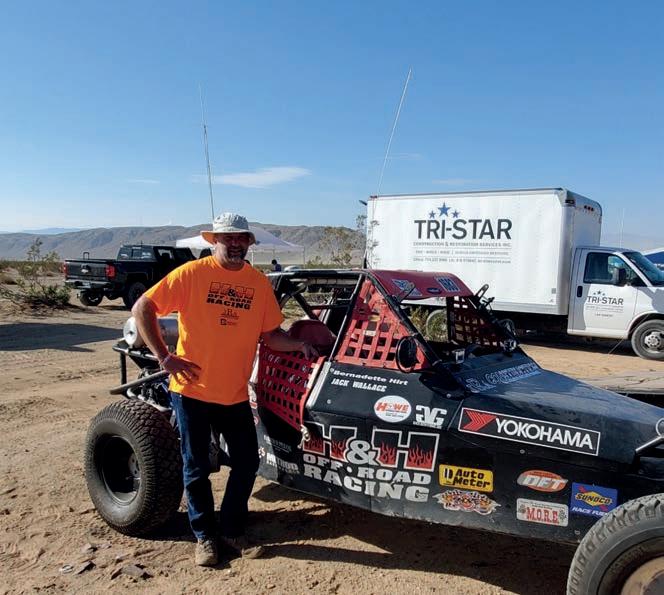
“I have a love of wheels and anything to do with tinkering with engines”

SORCS, Blueberry Hill, Collinsville, Alabama, 2021
Europe’s superficial love-hate relationship with Chinese battery tech and EV investors risks derailing the bloc’s sustainability, economic and security objectives, and potentially harm trade with the US, according to a new study.
Brussels-based thinktank Bruegel said in its analysis, released on July 16, the EU’s current crossroads in EV industrial policy is defined by a paradox.
The bloc must accelerate its green transition while managing rising strategic dependence on foreign — especially Chinese — technologies.
However, the EU lacks a united strategy across all member states to align it with climate, industrial and security aims, the study said.
Despite the EU’s imposition of provisional import tari s on Chinese battery EVs amid concerns over unfair state subsidization, Chinese investment in Europe’s EV sector has moved from the periphery to the core of the continent’s green industrial transition, according to Bruegel.
In 2024, Chinese greenfield investment in the EV sector was around €5 billion ($6 billion) — more than 50% up from 2022, accounting for
half of all completed Chinese greenfield foreign direct investment into Europe that year.
Plant-level investment data shows that China has become the second-largest investor in Europe’s EV supply chain.These investments span nearly the entire value chain, from upstream cathode and anode materials to midstream battery cell and module production, and downstream into EV assembly and battery recycling.
However, while it makes sense to tap Chinese FDI to fill immediate gaps, the ultimate benchmark should be whether this investment complements domestic capacity building and diversification towards partners more aligned with EU norms, Bruegel said.
“But Europe’s reliance on Chinese firms for critical raw materials and battery components is a vulnerability. China control to a significant degree the refining and processing of lithium, nickel, cobalt and rare earths, which are essential inputs for EVs.”
Chinese moves to tighten export controls on rare earths and high-performance magnets in retaliation
against US tari s illustrate Beijing’s readiness to weaponize supply chains as a tool of geopolitical leverage, according to Bruegel.
“For Europe’s automotive sector, this means that abrupt restrictions or price shocks could disrupt production, hinder the scaling-up of production of a ordable EVs and erode industrial resilience.”
China’s involvement in the European EV and battery supply chains could also complicate EU access to major export markets, especially the US.
In terms of security, as EVs are now software-defined products, electronics and technology FDI poses particular risks related to data security and unauthorized access to sensitive information.
“Although locally assembled vehicles must comply with EU technical standards, embedded hardware and proprietary software can remain opaque, creating enduring vulnerabilities that are di cult to monitor and mitigate,” the report warned.
The EU Battery Regulation, adopted in 2023, could be used to restrict market access, ensuring that batteries, and the EVs powered by them, can only be sold in the EU if they meet tough environmental standards.
“However, until core provisions are finalized and enforced, much of the regulation remains toothless and does not tackle economic security concerns,” Bruegel said.
The US energy storage market faces major challenges in the years ahead as investors manage the “political whiplash” impact of the newly enacted ‘One Big Beautiful Bill Act’, say analysts.
The flagship policy of US president Donald Trump, which he signed into law on July 4, was welcomed as decisive action to help preserve advanced manufacturing production credits for battery manufacturing by lead industry trade body Battery Council International.
However, energy analysts at Wood Mackenzie warned on July 10 that the new laws will pile pressure on energy storage supply chains.
And while investment tax credit eligibility is maintained through to 2030, energy storage faces “onerous ‘foreign entity of concern’ restrictions” that likely preclude purchasing
battery cells from competitor nations such as China, Wood Mackenzie said.
According to the firm’s analysis, the risks and costs of supply chain shifts will put downward pressure on storage growth, despite being one of the few resources that can be added quickly to support growing demand.
And with EV incentives eliminated, reducing Wood Mackenzie’s US battery electric vehicle market share forecast for 2030 from 23% to 18%, the firm said most EV growth will now come from companies with established supply chains — or non-domestic players using BEVs to enter premium markets.
David Brown, director, energy transition research for Wood Mackenzie, said: “The policy prescriptions increase the likelihood of Wood Mackenzie’s delayed energy transition
scenario for the US.
“The legislation serves as a harbinger of central challenges facing energy investors — managing political whiplash when investing in assets with 30-year-plus lifespans amid dramatic policy swings every election cycle.”
However, the BCI said the retention of critical manufacturing incentives in the new Act demonstrated a clear understanding that American battery manufacturers are essential to the nation’s economic security, energy independence, and competitive advantage.
BCI president and executive director Roger Miksad said: “This vote sends a powerful message that America is committed to building and maintaining the world’s most advanced battery manufacturing ecosystem.
EnerSys is to cut 575 non-production jobs as part of a restructuring plan unveiled on July 22 aimed at securing $80 million in annualized savings.
Shawn O’Connell, who succeeded David Shaffer as president and CEO this May, said the “dicult” decision to axe jobs — primarily in corporate and management positions — was a necessary move to stay competitive.
The cuts represent 11% of the US-based battery manufacturing giant’s non-production global workforce.
O’Connell said EnerSys had spent the past six months listening, evaluating, and testing how the firm could best serve its customers, deliver stronger returns, and build a more agile organization.
“EnerSys is powered by an incredible team, and this decision in no way reflects the dedication or contributions of the individuals impacted,” he said.
“We are committed to supporting our employees through this transition with care and respect.”
EnerSys expects the shake-up to be “substantially complete” by the end of the second quarter of fiscal 2026, subject to local law requirements.
Combined with other “non-headcount-related actions”, these changes are expected to result in about $80 million in annualized savings starting in fiscal 2026.
EnerSys said the estimate comprises around $70 million in savings, representing a reduction of over 10% of the company’s fiscal
Asia-based lead and lithium major Leoch International has issued a profit warning in the wake of US tari turmoil — and delayed the start-up of its new lead acid plant in Mexico.
Leoch said preliminary analysis indicated profit for the first half of 2025, ended last June, is expected to fall by about 60%-80%, compared to the corresponding period last year, despite an expectation the group will see a 10%-20% year-on-year revenue increase.
The setback is mainly due to additional import tari s imposed by the US on goods in the second quarter of this year, which led to an increase in the costs of unspecified products on which Leoch had already paid taxes and delivered.
However, in a statement to the Stock Exchange of Hong Kong, based on the group’s preliminary review of unaudited consolidated accounts, Leoch chairman Dong Li
2025 operating expenses, as well as an estimated $10 million reduction in the cost of goods sold.
The firm expects to realize about $30 million-$35 million of savings in fiscal 2026, with material benefits beginning in the third fiscal quarter.
Estimated savings exclude one-time charges related to the restructuring, which are anticipated in the range of $15 million-$20 million, with the majority occurring in the second and third quarter of fiscal 2026, primarily for severance and other related costs.
EnerSys said the moves are part of a broader strategic plan that will be discussed during its fiscal first quarter 2026 earnings report, which is scheduled to be published after
said the sales price of a ected products would not be increased until the end of 2025.
Meanwhile, operations in Mexico will now start in the fourth quarter of this year, instead of the planned second quarter. This was blamed on “the impact of the supply chain and construction progress”.
Leoch said it was still in the process of finalizing the results of the group for the first six months of the year. Interim results are set to be released on or before August 31.
Batteries International reported last April that Leoch had posted a near 20% boost in topline growth in annual results for 2024, driven by robust sales of the group’s mainstay lead battery technology across global markets.
Revenue for the year was Rmb16.1 billion ($2.2 billion) compared to Rmb13.5 billion the previous year, according to results posted on March 27, while net
market close on August 6. This will be followed by the firm’s earnings conference call scheduled for August 7.
The company revealed last May that its stock lost and regained $900 million in the marketplace over a three-month period amid the recent flurry of US trade tari announcements.
That came after EnerSys announced the closure of its flooded lead acid battery manufacturing facility in Monterrey, Mexico and a production switch to its existing Kentucky plant, while expanding capacity in the US and Europe.
However, in June, the company formally opened its expanded US Sumter plant, as it expands investment in Thin Plate Pure Lead, flooded lead and lithium ion batteries.
profit stood at Rmb564 million from Rmb568 million in 2023.
In May, Leoch announced it was strengthening ties with Japan-headquartered GS Yuasa and discussing plans to develop and market their respective brands worldwide.
The talks took place less than two years after Leoch signed an agreement to acquire controlling stakes in two China-based lead battery firms owned by Yuasa — Tianjin GS Battery and Yuasa Battery Shunde. Editor’s note: EnerSys confirmed last April that it was closing its flooded lead acid battery manufacturing facility in Monterrey, Mexico and switching production to its existing Kentucky plant while expanding capacity in the US and Europe.
The company’s announcement came just hours before US president Donald Trump was set to unveil a raft of reciprocal tari s on countries that impose duties on US goods.
US shipping line Matson has confirmed its suspension of shipments of EVs amid rising concerns about fires sparked by lithium ion batteries.
Matson told Batteries International on July 23 it had written to customers on July 14 saying, e ective immediately, it had ceased accepting new bookings for shipments of EVs and plug-in hybrid vehicles.
The company, a US owned and operated transportation services firm headquartered in Hawaii, said it would continue to support industry e orts to develop compre-
hensive standards and procedures to address fire risks posed by lithium batteries at sea.
Matson said it does not plan to resume shipping services for EVs until “appropriate safety solutions” that meet its requirements can be implemented.
The company said it provides a vital lifeline to the economies of Hawaii, Alaska, Guam, Micronesia, and the South Pacific and o ers a “premium, expedited service” from China to Southern California. The company’s fleet of vessels
includes container ships, combination containers, and roll-on/roll-o ships and barges.
Matson’s suspension announcement follows a string of global incidents in which fires broke out on vessels carrying EVs.
In 2022, a vessel carrying 4,000 vehicles sank in the Atlantic after a suspected EV battery fire and the ship’s owner said a year later it was likely never be recovered and the cause of the disaster would remain a mystery.
In March 2022, China called on the International
Maritime Organization to consider a shake-up of maritime safety rules for EVs being shipped by sea, amid a rising tide of fires involving lithium ion batteries.
The following year, Norwegian shipping company, Havila Kystruten, announced it was banning electric cars, hybrids and hydrogen vehicles on its ferries because of potential fire hazards. This followed a risk analysis conducted by Proactima, a Norwegian risk management advisory consultancy, according to chief executive Bent Martini..
McGill and Partners has launched a cybersecurity insurance policy tailor-made for challenges faced by the BESS market.
The UK-based international company said battery storage installations are becoming an increasing target for cyber threats as reliance on interconnected power systems grows.
The new insurance policy, with cover provided by certain Lloyd’s underwriters, o ers physical damage
protection as well as cover for business interruptions resulting from cyber incidents or technical failures.
McGill said the cover is flexible, sector-specific, and o ers robust protection to safeguard operations.
The policy also extends to cover increased regulatory costs as a result of the compliance required to meet evolving cybersecurity and resiliency standards.
McGill partner for cyber, Tom Dryden, said the company was seeing greater
demand from clients for industry-specific coverage.
“Cyber incidents and technical issues at battery energy storage systems are
becoming increasingly relevant as these systems become more integrated into global critical infrastructure and smart grids.”
UK firefighters are tackling at least three lithium ion battery fires a day, following a 93% surge between 2022 and 2024, according to research published by business insurer QBE in May.
E-bikes are a major
contributor, being linked to nearly 30% of all recorded lithium ion battery fires in 2024, according to analysis of data acquired by QBE under Freedom of Information requests to UK fire services in March 2025.
Insurance companies are increasingly refusing to cover waste management facilities, or hiking the cost of premiums, amid a surge in fires caused by discarded lithium batteries, an alliance of European firms has warned.
In Germany alone, waste collection trucks are being hit by up to 30 fires a day, while it is estimated that lithium batteries are the root cause of 180-240 fires annually in Austrian waste plants, according to eight groups including the
European Waste Management Association.
The group has issued a statement urging EU leaders to take “decisive regulatory action” to protect waste management infrastructure and employees.
The group has called on the European Commission to establish a Battery Fire Prevention and Recovery Fund and a Deposit Return System to meet collection targets set out in the EU’s Battery Regulation.
Battery fires in the waste management sector result
in significant economic losses and an increasing health and safety risk to workers and citizens, as well as a reputational issue for the a ected companies and the entire sector due to negative media coverage, the group said.
For many medium-sized waste management companies, it is no longer a ordable to insure their facilities, while some facilities in Belgium are expected to lose insurance coverage altogether by 2025 due to the risk of fire, the group said.
The recycling industry, for example, now has a loss ratio almost twice as high as other industries that are also at risk of fire, such as the wood processing industry.
To reduce the risk of fire, waste management facilities have to invest heavily in sta training on fire prevention, safety, and first emergency measures and in fire prevention equipmen, which can cost up to several hundred thousand euros a year, the group said.
Global lead battery giant Clarios said on June 17 it is evaluating sites in the US for a next generation technology campus anchored by new supercapacitor system production.
The announcement marks the firm’s first step to onshore a domestic supercapacitor supply chain, following plans unveiled in March for a 10-year, $6 billion e ort to expand battery manufacturing and help boost US energy and critical minerals independence.
Clarios wants to establish a plant to support manufacturing of low-voltage supercapacitor systems optimized for pairing its advanced domestically made AGM batteries.
The company said it is actively assessing site options across the states where it operates and expects to announce a location later this year.The move aims to expand its limited manufacturing in the US in the face of Chinese dominance, the firm said.
Next generation vehicle platforms demand advanced low-voltage energy storage solutions designed to deliver high-power bursts. Low-voltage supercapacitor systems are ideal for safety critical vehicle functions such as steer-by-wire and chassis stability systems, Clarios said.
When paired with advanced domestically made Clarios AGM batter-
ies, the combination o ers enhanced safety, improved performance and reliability while supplying critical power redundancy.
Clarios also sees long-term potential for its supercapacitor solutions in artificial intelligence data centers, grid, industrial, defence applications, and other high-demand sectors.
“The innovative pairing of our supercapacitor technology and market leading AGM batteries is the ideal solution for the auto sector and beyond,” said CEO Mark Wallace.
Last year, Clarios expanded production of advanced low-antimony batteries in the US by 1.5 million units. This year,
the company has already invested in upgrades to its facility in Oconee, South Carolina, to increase battery component manufacturing capacity by 30 million parts.
Starting in 2026, Clarios will produce its latest battery in Toledo, Ohio, which the group said is projected to supply 745,000 of the most advanced low-antimony starter batteries integral to the production of new American-made vehicles.
Meanwhile, the company is also investing around €200 million ($223 million) in its European plants up to 2026 to expand production capacity for AGM vehicle batteries.
Exide Industries has outlined plans to invest more than Rs1,000 crore ($116 million) across its lead acid and lithium battery manufacturing businesses in the current 2026 financial year.
The Indian manufacturer also expects to start commercial operation of its lithium ion battery cell manufacturing plant in Karnataka state within the same period.
Exide CEO and MD Avik Roy told the company’s online annual general meeting on July 26 on that it had already invested nearly Rs4,000 crore in the first phase of the Karnataka project, through its Exide Energy Solutions (EESL) subsidiary. He said a further Rs600-Rs700 crore was likely to be invested in the lithium project in the current financial year.
But Roy said its development of the lithium business was being made “alongside the continued strength of our lead acid battery business”.
Exide reported “doubledigit growth” in its indus-
trial UPS and VRLA battery business thanks to new product launches.
Meanwhile, the company continued to modernize production processes in areas such as punched grid, continuous casting, and for
AGM batteries for start-stop and four-wheelers.
Batteries International reported last October that EES’ activities included a collaboration deal with China’s SVOLT Energy.
The partners are building
the lithium cells plant on an 80-acre site in Karnataka.
Arun Mittal stepped down as the CEO and joint MD of EESL last October for personal reasons and was succeeded by fellow joint MD Mandar V Deo.
Industry partners are considering a fresh round of support for continued research into next-generation technology by the American Battery Research Group (ABRG).
ABRG, an independent, trade-association managed platform under the leadership of Battery Council International, is recognized for innovative projects — notably via industry-funded work on previously undiscovered ‘expander’ molecules, which hold the promise of enhanced charging and discharge performance for lead batteries.
BCI said on July 22 that the expanders — known technically as crystallization aids in materials science
— program, is focused on experimentation with new additives that can enhance the charging and discharge performance of lead-based batteries.
Given past successes and breakthroughs by ABRG, industry partners are considering a third round of support for this e ort and continued partnership with Argonne National Laboratory in areas of electrochemistry and with the University of Toledo in the synthesis of model molecules.
ABRG’s first group of US battery manufacturers convened in 2022. The group, initially announced a year earlier, was founded to identify areas of scien-
tific research to further the performance of lead batteries to meet energy storage goals.
Through partnerships with leading academic institutions and national laboratories, ABRG continues to explore new materials, optimizing battery lifecycles, and ensuring that energy storage solutions remain reliable, e cient, and environmentally responsible.
Meanwhile, BCI and ABRG will join researchers from US national labs at next month’s Department of Energy’s O ce of Electricity peer review.
BCI said the annual event brings together researchers to discuss key areas of battery innovation.



Our genuine system - your first choice
• Highest quality
• Constant improvement

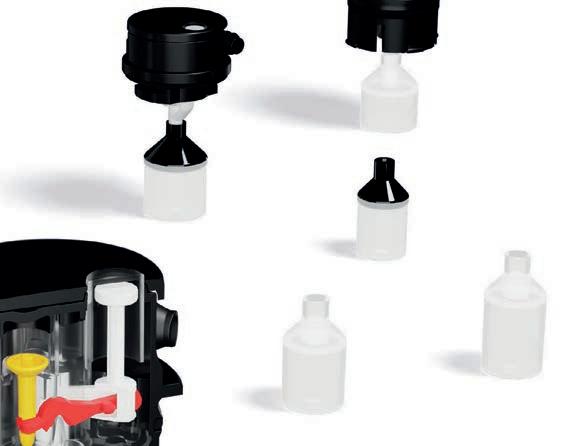

• Excellent performance
• Reliable service
bfs batterie füllungs systeme GmbH info@bfsgmbh.de
Over 40 years of developing and perfecting battery filling products allow us to provide you with the most reliable system focusing on innovation and usability – a valuable contribution to an extended battery lifetime.
Mitterweg 9/11 | 85232 Bergkirchen | Germany
bfsgmbh.de | +49 8131 36400
Lead batteries can outpace the market by securing the right positioning on key markets including behindthe-meter (BTM) applications, according to new analysis from KPMG.
The global professional services firm said lead batteries are also suited to microgrids and grid stabilization — and said Europe will need to manufacture and deploy a range of battery technologies to support increasing reliance on renewable energy by 2035.
KPMG’s findings, included in its ‘Battery Energy Storage Systems (BESS) 2035 Market Outlook and Opportunities’, published at June’s global lead conference Pb2025 in Amsterdam,

Report author Chihab Boucheffa, KPMG’s strategy consultant.
identified all of the current battery technologies available and how they can best be deployed.
With BTM, particularly in EV infrastructure, lead batteries can take their place as genuine market competitors, KPMG said.
The report’s findings
echo sentiments made in 2023 by then Hammond Group chief Terry Murphy, who told a US Capitol Hill briefing lead batteries were “giants hiding in plain sight” and more than capable of boosting energy security needs.
KPMG’s report said: “By 2035, lead batteries could secure up to 30% of the EV infrastructure market and has the potential to secure more than 30% of yearly new additions in other BTM applications in emerging economies.”
Of those emerging economies, particularly India, lead batteries can be adopted to support the deployment of utility-scale renewable energy against a backdrop of rising temperatures.
KPMG’s ‘upside scenario’ pre-supposed prerequisites across the entire lead industry, including securing R&D investment to achieve long-duration energy storage systems and to achieve extended cycle life, with deep discharge cycles.
The industry should also deploy demonstrator projects to prove lead’s viability to project developers.
Report author Chihab Bouche a, KPMG’s strategy consultant, said: “Battery energy storage systems are becoming increasingly necessary to address challenges associated with renewables, such as grid destabilization, while also unlocking new value capture opportunities.
Clarios has unveiled plans to establish a manufacturing technology and training center to support American manufacturing and workforce development.
The lead and lithium battery giant said on June 26 the US center will be a dedicated hub for workforce development, manufacturing R&D and technology validation.
This will give Clarios a world-class, secure, and high-tech environment to develop and prove next-generation manufacturing technologies before deployment across its operations, the company said.
Advanced robotics, AI systems and autonomous material handling will be among cutting-edge features associated with the
new center.
Clarios said these innovations are key to improving productivity, quality, and safety across Clarios’ battery production network, which supports critical mobility and energy storage applications vital to the US economy and national security.
Clarios said it expects to reveal a location for the
center later this year and may turn to public-private partnerships, incentives and other initiatives to launch the project.
The center is part of a 10-year, $6 billion plan, to expand battery manufacturing and help boost US energy and critical minerals independence that was announced by Clarios earlier this year.
The Ultium Cells battery joint venture in the US is to upgrade its facility in Tennessee for the production of LFP cells.
The General Motors and LG Energy Solution (LGES) joint venture said on July 14 that conversion of existing battery cell lines at the Spring Hill site will start later this year, with commercial production expected by late 2027.
The partners did not disclose additional invest-
ment costs. However, GM’s VP of batteries, propulsion and sustainability, Kurt Kelty, said the move was to take advantage of lowercost LFP cell technologies.
He said this would complement the firm’s “high-nickel and future lithium manganese rich solutions” to support development of GM’s portfolio of EVs.
The upgrade builds on a $2.3 billion investment announced at Spring Hill
in 2021. Meanwhile, the Ultium Cells plant in Ohio will continue producing cells with nickel cobalt manganese aluminium chemistry.
Ultium cells use a proprietary chemistry featuring LGES’ NCMA cathode, which requires 70% less cobalt than existing NCM cells. The joint venture has said previously that its batteries are “unique in the industry” because the large-format, pouch-style
cells can be stacked vertically or horizontally inside the battery pack.
LGES executive VP and head of the group’s advanced automotive battery division, said: “We will bring our extensive experience and expertise in US manufacturing to the joint venture facility, further accelerating our e orts to deliver new chemistries and form factors that e ectively capture the unmet needs in the EV market.” .
outlines ‘decoupling’ of raw material
CATL is to work with mining giant BHP Group on battery tech development and recycling.
The Chinese battery manufacturer said on July 14 it had signed a memorandum of understanding with BHP, to explore opportunities in battery development for mining equipment and locomotives — including rapid charging infrastructure.
Both sides will also look at future potential for BESS systems and battery recycling in BHP’s mining business.
CATL said it would also look at opportunities under the partnership to boost
battery material supply chains, including utilizing BHPs copper mining operations.Tan Libin, head of CATL’s overseas business, said: “We aim to demonstrate how advanced battery technologies can decarbonize mining operations, logistics, and product delivery.”
CATL is also keen to heado potential criticism over sustainability and human rights issues — saying in September 2022 that cobalt and lithium used in a battery cells supply deal with Germany’s BMW would be sourced from certified mines.
CATL has also outlined plans to “decouple” 50%
of new battery production from the use of primary raw materials within 20 years.
The sustainability pledge was announced on June 24, during London Climate Action Week, as part of a collaboration with the non-profit Ellen MacArthur Foundation.
Jiang Li, CATL vice president and board secretary, said the company had been working with the foundation for months on how to apply circular economy principles to the battery value chain.
Jiang said the global battery recycling market is expected to exceed RMB1.2 trillion ($165 billion) by
2040. The battery value chain could generate more than 10 million jobs — over half of which would be in developing countries, he said.
CATL’s goal is derived from principles adapted from the foundation’s ideals and designed to guide transformation across mining and battery manufacturing to mobility and energy systems. Jiang said CATL operates the world’s largest battery take-back network which, in 2024 alone, recycled around 130,000 tonnes of end-of-life batteries, recovering 17,000 tonnes of lithium salts..
European lead battery giant Banner has announced increases sales and revenue, noting that lead acid technology continues to be a mainstay for the industry.
Banner said on June 11 sales of lead batteries in the 2024-25 financial year were in excess of four million — an increase of more than 200,000 over the previous year.
Revenue increased by €312 million ($358 million), an increase of over €10 million compared to the previous year.
Banner said the results reflected the success of investments totalling €25 million over the past three years, a consistently high export share of 95% and a dedicated team of 760 employees throughout Europe.
With increasing electrification of vehicles and structural change, it is becoming clear that lead acid batteries are retaining their relevance — whether as starter and on-board power supply batteries or in applications with customer-specific
energy solutions, Banner said.
Meanwhile, the firm forecast the “stable development” of lead batteries in the European market up to 2030, although declining production of new vehicles in the OEM sector is set to realise a slight fall in demand as the market shifts significantly towards supplying the aftermarket.
One of the reasons for this is the increasing average vehicle age, which has now increased by almost two years in Europe, Banner said.This trend is having a positive impact on demand
in the replacement business, as older vehicles require new batteries more frequently. In addition, the lead acid battery remains indispensable even in modern electric vehicles.
More than 90% of all electric cars are equipped with a 12V on-board power supply battery based on lead acid technology, Banner said.
The outlook for the firm’s energy solutions business unit is also positive, supplying batteries for applications including traction batteries for electric forklifts to energy systems for golf carts and UPS facilities.
Banner invested €10 million in its Leonding site in Austria in the past financial year, including a major maintenance construction project that was completed in April 2024 at a cost of around €3.5 million.
The project included establishing a tool shop to help reduce external costs by producing more spare parts in-house.
The company is also investing in apprenticeships and a training center. Banner said it is supporting 10 apprentices — five each in the electrical engineering and commercial sectors.
Eternity Technologies is preparing to launch operations at its North American HQ and cutting-edge battery manufacturing facility in Arizona.
Eternity said the $20 million development in Phoenix will be one of the first outside its flagship factory in the United Arab Emirates to deploy its state-
of-the-art fill and formation system for the new QUASAR VRLA product series.
Eternity confirmed in March that it had chosen Phoenix for the project, after an extensive selection process during which it worked with the Arizona Commerce Authority and other local partners.
Phoenix was selected for its dynamic economic growth, business-friendly environment, strategic access to western US markets, and its diverse, highly-skilled workforce, Eternity said. The planned BNSF freight rail facility, just outside Phoenix, further enhanced the location’s appeal.eet expansion reduced to 18%.
























Google has made an undisclosed investment in Italian energy tech firm Energy Dome and has signed a commercial arrangement to use the technology to help power its operations.
Energy Dome said on July 25 the commercial agreement aims to develop its ‘CO2 Battery’ projects in all key geographical strategic areas, including Europe, America, and the Asia-Pacific region, with the goal of scaling up deployment at a rapid pace to meet Google’s 2030 carbon-free energy goals.
A pipeline of sites and projects has been identified
in the partnership, which are currently in development and contracting stages.
Google said its investment in the Milan-based firm coincides with the company entering a “growth phase of commercial deployment”, and multiple projects already contracted, including with Alliant Energy in the US, Engie in Italy and NTPC in India.
Energy Dome claims its CO2 Battery is capable of continuously dispatching energy for periods of eight to 24 hours to meet both the baseload and flexibility requirements of large energy users.
The company has said previously its technology uses CO2 in a closed-loop charge/discharge cycle as a storage agent. Before charging, gaseous CO2 is kept in a large dome structure.
During charging, electricity from the grid is used to compress the CO2 into liquid form, creating stored heat in the process. During discharge, the liquid CO2 is evaporated using the stored heat, expanded back into its gaseous form, and used to drive a turbine to generate electricity.
Maud Texier, director of EMEA Energy at Google,
said the internet giant was committed to power its operations with clean energy and Energy Dome could help unlock rapid progress.
“By helping to scale this first-of-a-kind long duration energy storage technology, we hope to help communities everywhere gain greater access to reliable, a ordable electricity and support grid resilience as we integrate more renewable energy sources.”
In 2022, Energy Dome said it signed a deal to expand use of its technology in partnership with Italy’s Ansaldo Energia.
Sodium ion battery technology developed by a UK university for sustainable e-mobility applications in East Africa has secured undisclosed investment from the Faraday Institution.
The StamiNa (Sustainable Transport and A orda-
ble Mobility through Innovation in Na-ion) project is led by Swansea University in partnership with Coventry University, Na-ion tech firm Batri, Strathmore University in Kenya, the AceOn Group and the Federal University of Technology Owerri in
Sumitomo Electric said on July 15 it had received its third consecutive order for long-duration redox flow batteries from a utility in Japan.
The RFBs will be supplied to Kashiwazaki IR Energy, as part of e orts to ramp up renewables and promote energy decarbonization projects in the city, which is home to petroleum and civil nuclear facilities. Terms of the deal were not disclosed, but Sumitomo said construction o cially began on July 10 with a groundbreaking ceremony.
This third order will bring the total supplied battery capacity to 24,000 kWh, including two systems already constructed, Sumitomo said.
The flow batteries will store power from solar plants and be discharged to support the grid during peak demand periods.
Additionally, by utilizing a large-capacity battery of 1,000 kW for eight hours in combination with power trading on the wholesale electricity market, the flow batteries will also contribute to cost reduction.
Nigeria.
Swansea and Batri said on July 18 their technology uses Prussian White cathodes and coal-derived hard carbon anodes with a predicted energy density that exceeds commercially available Na-ion batteries, making it competitive with LFP batteries.
Unlike alternatives, Prussian White is synthesised in water under mild conditions and is free of nickel and cobalt, the researchers said. This they say enables an energy-ecient production process that significantly reduces environmental impact and opens the potential to establish local supply chains.
StamiNa lead professor Serena Margadonna, chair in materials engineering at Swansea, said the project aims to demonstrate and validate a new sodium ion battery tech through a prototype swappable battery pack designed for e-mobility applications.
Margadonna said the tech could o er an alternative to LFP batteries for the transition to electric mobility in sub-Saharan Africa because they are easier to transport and do not have the same supply chain vulnerabilities.
The project has a number of aims, including refining electrode fabrication and cell assembly processes and the manufacture of multilayer pouch cells and 18650 cylindrical cells at Coventry University.
The cells will be integrated into AceOn’s swappable battery pack and battery management system, with field testing conducted on e-bikes at Strathmore University, Kenya.
Margadonna said the project also seeks to accelerate the commercialization of UK Na-ion technology.
Faraday’s backing is the second phase of its Ayrton Challenge on Energy Storage R&D program.
The European Commission revealed on June 4 it had adopted an additional 13 key projects to bolster the EU’s domestic battery material supplies — all of which will be in countries outside the bloc.
The Commission said the 13 ‘strategic projects’ complement an initial list of 47 related projects, which involved more than a dozen EU member states,
unveiled earlier this year.
The new projects are design to secure lithium, nickel, cobalt, manganese and graphite needed for EU battery production for EVs and BESS — but seven of the 13 projects will be spread across Canada, Greenland, Kazakhstan, Norway, Serbia, Ukraine and Zambia.
Of the remainder, projects will be in Brazil,
Madagascar, Malawi, New Caledonia, South Africa and the UK — which left the EU five years ago.
The latest list comes after revelations, reported by Batteries International last year, that the EU can supply just 1% of its own needs for key battery raw materials — and needs a staggering €4.2 trillion of new investment by 2030 to achieve green energy
Global auto production risks grinding to a halt as China increases its stranglehold on raw materials for components that are the lifeblood of the EV supply chain, say analysts.
There was a 51% drop in Chinese rare earth magnet exports in April 2025 compared to March, far exceeding seasonal norms, according to the latest insight published by Wood Mackenzie on June 23.
The sharp decline follows the introduction of new export restrictions in April, with China’s government approving only around
25% of export licence applications submitted by automotive suppliers, Wood Mackenzie said.
The restrictions have significantly disrupted the supply of these critical components for EVs and hybrid drivetrains, sending shockwaves through the global automotive supply chain. Thomas Jones, senior analyst, rare earths at Wood Mackenzie, said the sudden drop in exports has exposed the automotive industry’s vulnerability to supply chain disruptions.
“With China controlling
Integrals Power, Euro Manganese in critical EV battery material supply plan
Battery materials producer Integrals Power said on June 20 it is partnering with Euro Manganese to secure a supply of high purity manganese sulfate monohydrate (HPMSM). Euro Manganese will produce HPMSM in its facility in the Czech Republic — which will be the only source within Europe — in a move aimed at denting China’s 90% supply dominance of the market.
Under the terms of a letter of intent signed by both
companies, Euro Manganese will ship the HPMSM to Integral’s pilot line in the UK. Integrals it is scaling up capacity from the current 20 tonnes a year to mass-production as it commercializes its LMFP technology.
HPMSM will be produced in the Czech Republic using old tailings from a decommissioned mine. The partners said recycling a by-product in this way will help to lower batteries’ carbon footprint and environmental impact.
over 90% of global processing capacity for rare earth magnets, the impact on vehicle production has been severe and far-reaching.”
According to the analysis,
ambitions.
However, greater reliance on international partners appears to be at odds with plans announced last March by Commission president, Ursula von der Leyen, who presented an action plan designed to promote greater domestic production of battery raw materials and steer away from supply chain dependencies beyond Europe.
the e ects of this export reduction have been felt across China’s major trading partners. The US experienced a 58% decline in imports, while India saw a staggering 78% drop.
South Korea and Germany were also significantly a ected, with decreases of 73% and 47% respectively..
Sino-Moroccan company COBCO said on June 25 it had launched the first phase of production of NCM precursor cathode active materials at its new $2 billion plant in Morocco.COBCO is a joint venture between
the Moroccan and pan-African investment fund Al Mada and Chinese battery materials producer CNGR Advanced Materials.
The company said the facility aims to be a key supplier to the EV sector.
Indonesia has kick-started construction of an EV battery ‘mega project’ in West Java backed by a combined investment worth around $6 billion.
President Prabowo Subianto attended the ceremonial launch of the project in Karawang, which he said would incorporate battery materials production, battery manufacturing and recycling, nickel mining and processing.
The project is a joint initiative of Indonesia’s state-owned miner PT
Aneka Tambang, the stateowned investment holding company PT and Indonesia Battery Corporation, in collaboration with Chinese firm Ningbo Contemporary Brunp Lygend. Prabowo said the scale of the project would be “colossal”.
Indonesia’s energy and mineral resources minister Bahlil Lahadalia said the project should create 35,000 jobs and contribute the equivalent of up to $42 billion annually to Indonesia’s GDP.
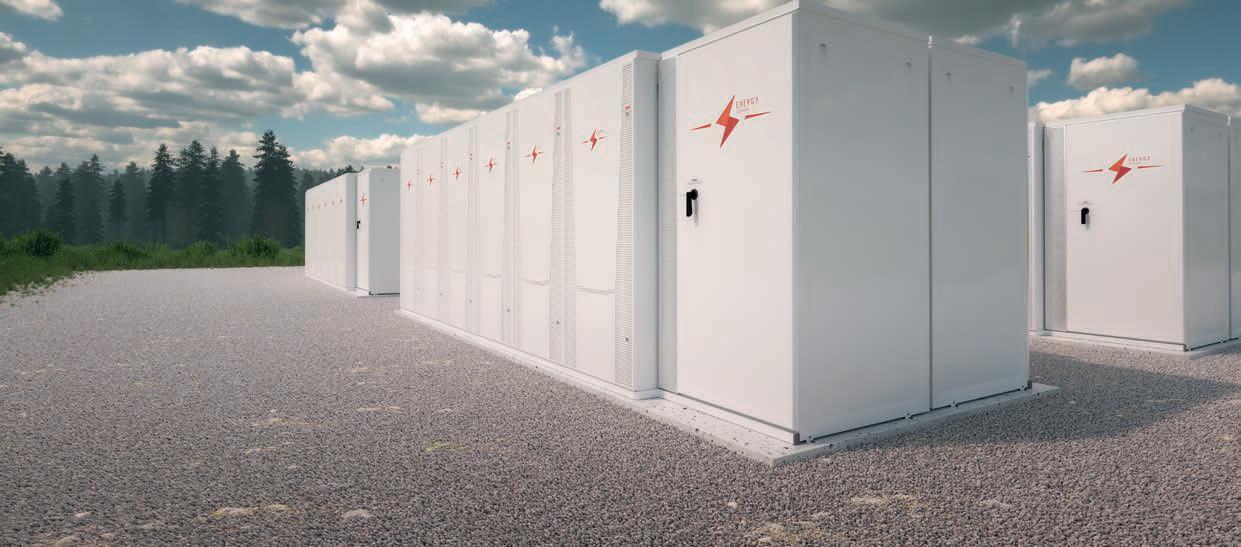

n AUGUST 26–28, 2025, SÃO PAULO, BRAZIL www.ees-southamerica.com
n SEPTEMBER 2–4, 2025, MEXICO CITY, MEXICO www.intersolar.mx


n FEBRUARY 25–27, 2026, GANDHINAGAR, INDIA www.TheSmarterE.in
n APRIL 7–9, 2026, DUBAI, UAE www.intersolar.ae
n JUNE 23–25, 2026, MUNICH, GERMANY www.ees-europe.com


US-based BESS developer Powin said on June 10 it had voluntarily filed for Chapter 11 protection under the US Bankruptcy Code in the District of New Jersey.
Powin said the decision was part of moves to tackle financial liabilities and secure its core businesses — which will include spinning o a new business entity to encompass its existing monitoring and energy
Investment of $1.2 trillion will be needed in advanced grid-forming (GFM) BESS technology worldwide to support the installation of around 6,000GW of new wind and solar capacity up to 2034, according to the latest analysis.
Wood Mackenzie said in a report published on July 2 that GFM needs to accelerate over the next decade to pave the way for a $5tn global expansion of renewable energy.
Unlike traditional ‘grid-following systems’ that simply respond to grid conditions, GFM can actively create and maintain grid stability, which is essential as renewable energy becomes the dominant source of power generation, the report said.
Wood Mackenzie research director Robert Liew said GFM systems represent a critical breakthrough for
services operations.
Powin has appointed current chief projects o cer Brian Kane as CEO of the new business, saying he had successfully led the Powin Projects organization for the last four years and will be responsible for guiding the business through its launch and scaling its operations.
The announcement came just days after the Oregon firm submitted a notice of
renewable energy integration.
“As global power demand is projected to surge 55% by 2034, with variable renewable energy comprising over 80% of new capacity additions, GFM BESS provides the technological bridge between renewable abundance and grid stability requirements.”
According to the report, the global power sector faces a capacity gap of 1,400GW for additional BESS installations utilising GFM for grid stability between 2024 to 2034. Several Asia-Pacific markets are already operating with variable renewable energy from wind and solar power contributing 46% to 90% of peak load conditions.
The report said this represents an enormous market opportunity as GFM capabilities become the preferred solution for markets with
potential cessation of business operations to local and state o cials.
Under the Worker Adjustment and Retraining Notification Act, companies with 100 or more employees must notify workers at least 60 days ahead of closures or layo s.
Powin said in the letter that a layo of nearly 250 employees would happen on or before July 28 if “present business circum-
increasing renewable energy penetration.
A major power blackout across Spain earlier this year highlights the urgency of pushing ahead with advanced energy storage and grid technologies in parallel.
According to the report,
stances do not improve”.
Last month, Powin unveiled its ‘Pod Max’, which the company said was its most powerful and energy-dense product to date.
Delivering 6.26MWh of capacity in the same 20-foot liquid-cooled container as previous models, the Pod Max o ers a 25% increase in energy density over Powin’s standard 5MWh system.
regulatory support for GFM battery technology is accelerating, with major markets such as China, the US and Australia introducing comprehensive technical guidelines that support the deployment of grid-forming batteries. .
Equity investor T2Y Capital said on July 29 it will become the second-largest shareholder of Romanian lithium ESS company Prime Batteries Energy Holding.
Newly founded T2Y said it would support Bucharest-headquartered Prime’s international scale-up of its business with expansion capital and strategic expertise
Details of the investment were not disclosed, but T2Y said it is focused on investments in the double-
to triple-digit million-euro range — both via the fund and through co-investments.
T2Y, which will also take a seat on Prime’s board, said the goal of the partnership is to increase Prime’s installed production capacity from an existing 300 MWh to more than 8 GWh by 2030.
Founded in 2016, Prime develops advanced battery systems for mobility, industrial, renewable energy storage and grid applications.
BESS and solar real estate investor SolaREIT has provided $125 million for the development of more than 1.4GW of storage projects across the US.
SolaREIT revealed on July 16 the investment to date had been made under its capital solutions initiative,
launched last year. Capital solutions, including land purchases, lease purchases, and battery storage land loans, has been made available in all 50 states.
Developers, particularly in urban areas, face high real estate costs, especially as demand rises for strate-
gically located acreage near existing grid infrastructure, the company said. These locations command a premium and can present a significant hurdle for developers.
However, SolaREIT, founded in 2020, helps by partnering with developers
and landowners to o er a range of options for unlocking capital.
Last year, the company announced a $250 million boost from alternative investment manager, AB CarVal, to ramp up solar and battery storage projects.
Technologies has said its proprietary new ‘curved graphene’ tech has the ability to reduce datacenters’ artificial intelligence energy consumption by up to 45% — tackling a key challenge for expansion of AI systems.
Skeleton claimed on May 28 that its high performance GrapheneGPU system can also lower power connection requirements by 44%, while boosting computing performance in FLOPS (floating point operations per second) by 40%.
FLOPS is a measure of computer performance in computing, used for scientific computations that require ‘floating-point
US lithium battery tech developer 24M has unveiled what it described as a breakthrough electrolyte that enables ultra-fast charging and “unparalleled” performance in extreme cold temperatures.
The company said on June 18 its ‘Eternalyte’ electrolyte marked a step change with up to three times the ionic conductivity of standard electrolytes, said to significantly increase performance without compromising energy density, regardless of the chemistry.
Resulting in a charge rate four times higher than a conventional electrolyte, Eternalyte can deliver 300+km of additional range in under four minutes (charging from SOC 15% to 80%), the company claimed.
Crucially, 24M said the ultra-fast charging capability does not require a mega-watt charging infrastructure either.
And where conventional batteries lose about 25% of their capacity at 0°C and almost all capacity at much lower temperatures, 24M claims Eternalyte electro-
calculations’ for supercomputer performance and storage system capacity.
By cutting energy use and peak power demand nearly in half, these improvements proportionally reduce both capital investments and operational costs in AI infrastructure, Skeleton said.Initial shipments of the new product are scheduled from Skeleton’s facility in Germany for June 2025, with US manufacturing expansion scheduled for the first quarter of 2026.
Skeleton said AI datacenters are already consuming up to twice the energy they require, as ine ciencies stemming from limited
lyte retains essentially all capacity at 0°C and more than 80% capacity at -40°C.
Although initially designed for lithium metal batteries, 24M said Eternalyte can also be used for
grid capacity, infrastructure constraints, and intermittent outages rise.
Citing data from the International Energy Agency, Skeleton said global electricity consumption by AI datacenters is projected to reach 945 terawatt hours by 2030. A key contributor to these issues is the fluctuating power demand of graphics processing units (GPU), which can cycle from zero to 100% within seconds — experiencing sharp spikes during intensive processing, followed by idle periods.
GrapheneGPU stores energy during idle periods and releases it during peak demand, e ectively smooth-
silicon and graphite-based batteries. The firm said it can be integrated into existing manufacturing processes and, when used with 24M’s Impervio separator tech, can deliver a
ing out the fluctuations, Skeleton said.
CEO Taavi Madiberk said as AI computing and energy demands double annually, AI datacenters are facing a critical bottleneck.
“GrapheneGPU delivers up to 40% more computing with the same energy footprint, while cutting both capital and operating costs by reducing grid upgrade needs, energy waste, and cooling.” Last year, Skeleton announced it was going to invest €600 million ($650 million) in south-west France, starting R&D in the first phase of its expansion to develop next-generation battery technology.
fundamentally safer, longlived battery.
Naoki Ota, president and CEO, said the innovation tackled some of the key challenges facing the use of lithium ion batteries.
Norway’s Morrow Technologies said on July 2 it would work with the Swedish Electric Transport Laboratory on speeding up development of LNMO battery
cells. Morrow, a subsidiary of its namesake battery manufacturer, said the partnership agreement was part of the EU’s ‘important projects of common Euro-
pean interest initiatives.The partnership will focus on designing and validating advanced accelerated ageing protocols for LNMO battery cells.
Cabot extends Li sector reach with new conductive carbon
Cabot Corporation has launched a next-gen conductive additive aimed at extending cycle life of energy storage systems as it continues its reach into the lithium sector.
The speciality chemicals firm said on July 29 its LITX 95F additive enhances conductivity and is designed to support the burgeoning ESS market.
Engineered for ESS cells used in residential, commercial and industrial applica-
tions, the high-performance additive o ers improved processability, which is essential for systems that demand durability and stability under frequent cycling, Cabot said.
Cabot said LITX 95F has already demonstrated excellent capacity retention in pouch cell performance testing with thick electrode design, o ering ideal flexibility for battery manufacturers to optimize formulations across a wide
range of ESS designs.
It said its high structure morphology helps to enhance conductivity and stability during repeated charge-discharge cycles. It also enables thick cathode design, helping to reduce material costs without compromising battery performance.
Cabot said in 2023 it was opening a new lab in Germany to help boost lithium ion battery tech for EVs.
Construction of an 800MW/1.6GWh flow battery has been launched on the borders of three European countries, Flow Batteries Europe (FBE) announced on June 17.
The system, sited at the electric grid interconnection point on the borders of Germany, France and Switzerland, is believed to be the world’s biggest flow battery and will help stabilize electricity flows across the countries, FBE said, Leaders from FBE and
Leoch, Yuasa pledge closer ties for lead battery markets
Asia-based lead battery giants Leoch International and GS Yuasa are strengthening ties and discussing plans to develop and market their respective brands worldwide. Leoch chairman Dong Li led a team of senior company executives for partnership talks at Yuasa’s Kyoto HQ on April 28, Leoch has now revealed.
The talks took place less than two years after Leoch signed an agreement to acquire controlling stakes in two China-based lead battery firms owned by Yuasa — Tianjin GS Battery and Yuasa Battery Shunde.
Dong Li said the visit underscored a deepening partnership between two global battery pioneers, which he said was uniting decades of innovation, strengthening collaborative R&D, and aligning strategic visions to accelerate breakthroughs in energy technology.
Both sides said they would jointly expand their battery brands in the transportation power market and target high-growth sectors including electric vehicles plus energy storage systems..
the private equity-backed FlexBase Group met in Laufenburg, Switzerland to mark the launch.
The flow battery system, on a 20,000 m2 site, will be able to store energy for hours or even days, to maintain grid stability during periods of low wind and solar output, FBE said.
The Laufenburg facility will showcase one of the safest energy storage technologies available — non-flammable, non-ex-
plosive, and free from critical raw materials such as lithium or cobalt, the association said.
FBE secretary general Anthony Price, said it was now important for regulatory frameworks to support long-duration storage technologies such as flow batteries.
Studies by the German Institute for Economic Research highlight that 351 TWh of long-duration storage may be required to navigate prolonged
renewable energy shortfalls — even with cross border grid interconnection, he said.
“The collaboration with FBE is an important step for our project and FlexBase as a company, said Marcel Aumer, group CEO and co-founder of FlexBase Group.
FBE is convening a joint working group to develop policy recommendations, which will include experience and information from the Laufenburg project.
China’s lithium ion battery industry recorded a near 70% increase in production during the first quarter of this year, according to the Ministry of Industry and Information Technology.
The ministry reported on June 16 that the boost in
output amounted to a total of more than 470GWh — some 110GWh of which will go to energy storage systems, with 184GWh of batteries destined for EVs.
Exports of lithium ion batteries between January and April reached more
than Rmb155 billion ($22 billion), a year-on-year increase of 25%, the ministry said.
Meanwhile, China is to introduce stricter national standards regulating the safety of EV batteries next year.
Nyrstar has called on Australia’s leaders to boost support for lead and zinc refining operations in the country amid worsening conditions in global raw material markets.
Lead and zinc refining at the firm’s Port Pirie and Hobart sites is the gateway to producing critical minerals needed to power Australia’s clean energy ambitions, according to a new Nyrstar-commissioned report released on May 28.
The report, ‘The Economic and Strategic Importance of Multi-Metals Processing’ came after Trafigura-owned Nyrstar revealed on March 12 that it was reducing production at its Hobart zinc operations in Australia by around 25% until further notice.
Australia can use existing
lead and zinc processing capabilities to produce five of the country’s registered critical minerals — antimony, bismuth, tellurium, germanium, and indium, the report said.
“These critical minerals are considered vital for sectors including defence, clean energy, high tech applications, transport and advanced manufacturing.
“As one of the world’s leading exporters of refined lead and zinc and the holder of the largest reserves of both metals globally, Australia is in a unique position to benefit.”The report said without “decisive and targeted policy support” to address the imbalance in global metals refining and modernise infrastructure, Australia risks falling further behind in indus-
trial and critical minerals processing and losing its existing sovereign refining capability in lead and zinc.
Hobart and Port Pirie generated A$1.7 billion ($1.2 billion) in economic value last year and the combined facilities support over 6,600 Australian jobs.
According to the report, China dominates between 52% and 82% of global production for the very critical minerals that lead and zinc processing can give rise to, leaving Australia and other countries vulnerable to supply chain disruptions and geopolitical risks.
Matt Howell, CEO of Nyrstar Australia, said: “Our lead and zinc refining capabilities in Port Pirie and Hobart are more than just smelters, they are national assets.
Battery energy storage system capacity in the EU could fall by 10% and 4% in the US over the next decade, according to latest analysis of trade tari tensions by McKinsey & Company.
McKinsey’s scenario-based outlook, released on July 22, explores implications of rising trade tensions on five key clean energy technologies — solar, wind, BESS, transformers and EVs — through to 2035.
The study echoes warnings reported by Batteries International last month, when analysis published by Wood Mackenzie suggested trade tari s turmoil in the US could lead to at least a 50% hike for energy storage costs.
McKinsey’s study examines three tari scenarios, ranging from a continuation of current trade policies to a ‘global tensions
escalate’ highest-tari scenario, in which tari s on clean energy technologies are substantially raised.
Analysis shows installed solar capacity could be 9% lower in the US and 7% lower in the EU by 2035 under the highest-tari scenario, compared to the status quo in late 2024.
BESS deployment could also slow, with 4% less capacity in the US and 10% less in the EU under the same conditions.
In the EV sector, projected EU market penetration by 2030 drops to 41% under the highest-tari scenario, compared to 50% in the baseline — which the study suggests could spark a rethink of the EU’s planned 2035 ban on internal combustion engine vehicles.
McKinsey said wind deployment appears more insulated to tari s. In the
US, tari scenarios are unlikely to a ect o shore wind deployment by 2035, while in the EU, the highest tari scenario could lead to a 6% reduction in installed o shore wind capacity compared to the status quo.
Meanwhile, at the system level, tari s could increase overall energy costs. McKinsey projects that by 2050, the total cost of resulting energy systems could be 2% higher in the US and 3% higher in Europe, compared to scenarios with lower or status quo tari s. In the US, independent of tari s, the analysis suggests a slightly greater share of gas in the 2035 energy mix under these conditions.
Nevertheless, McKinsey projects solar, wind, battery storage and EVs remain poised to grow through to 2050. However, the study warns capital deployment,
supply chain strategy, and policy will all play critical roles in determining how that growth is realized.
Partner at McKinsey, Christian Therkelsen, said the clean energy landscape today is “bumpy, marked by broad uncertainties across a fast-changing space.
“While clean technologies are still projected to grow through 2050 and beyond, our scenario analysis shows that higher tari s could impact the pace and cost of that transition, especially if they persist.”
Fellow partner Diego Hernandez Diaz said the study was designed to help executives think through the potential e ects of higher tari s, enabling them to stress-test their strategies and uncover opportunities to build greater resilience into the supply chains that underpin global decarbonization.
Tariffs ‘could trigger 50% hike in US energy storage costs’, report says
Trade tari s turmoil in the US
could lead to at least a 50% hike for energy storage costs, according to analysis published by Wood Mackenzie on June 2.
Recent tari policies are set to increase the cost of power generation technologies, with energy storage seeing the biggest hike due to its dependence on Chinese imports, according to the report — ‘All aboard the tari coaster: implications for the US power industry’. Wood Mackenzie used its power and renewables supply chain cost hub tari calculator to estimate the impact tari s would have on the cost of power sector capital projects.Tari impacts were assessed using various inputs, including project and equipment cost breakdowns, as well as US import data.
The analysis looked at two scenarios:
Trade tensions — which states by
the end of 2026 the US e ective tari rate settles at 10% with a 34% tari on China;Trade war — the US maintains an aggressive tari policy and implements reciprocal tari s that result in an overall e ective tari rate of 30% through 2030.
Based on these scenarios, Wood Mackenzie estimates most types of technologies will experience cost increases of 6% to 11%, with utility scale storage the exception.
And with nearly all battery cells used in US utility-scale storage projects in 2024 coming from China, Wood Mackenzie said the combination of high tari s on China and US dependence on imports from that country could see cost increases “anywhere from 12% to more than 50% for utility scale storage projects, depending on the tari scenario”.
“In a business with five-to-10-year planning cycles, not knowing what a project will cost next year or the year
after is disruptive and causes massive uncertainty for US power industry participants,” said Chris Seiple, vice chairman of power and renewables at Wood Mackenzie.
“As a result, we could see potential delays in project development and rising power purchase agreement prices. We will definitely see impacts on power sector capital projects. The severity depends on what scenarios play out.”
Seiple said the US manufacturing market will not be able to meet this demand soon. “While US battery cell manufacturing capacity is expanding, it is not expanding at a pace nearly fast enough to meet even a small fraction of battery projects in the US.
“In 2025 we estimate there is su cient domestic manufacturing capacity to only meet about 6% of demand and by 2030 domestic manufacturing could potentially meet 40% of demand.”
India’s Solance Industries has launched a range of high-performance lead acid batteries targeting a range of industrial and automotive applications,
The new Solance Plus range o ers enhanced life cycles, faster recharge, and consistent performance even in demanding environments, the company said.
Gujurat-based Solance, which specializes in a wide range of VRLA batteries, has been in business for more than 40 years, manufacturing two-wheeler, automotive, UPS, and tubular batteries. The company said it produces more than three
million batteries annually and has a network of 5,000 dealers/distributors and 14 branches across the country.
The company also exports to more than 25 countries and has a 25,000 m2 plant in Senegal, with an initial installed manufacturing capacity of 50,000 batteries monthly and plans to expand capacity to 100,000 per month.
Tenders for a cumulative 171GWh of energy storage capacity have been launched in India over the past seven years — including more than 55GWh issued in the first half of this year alone, according to a new report.
The India Energy Storage Alliance (IESA) said in figures published on July 12 that 118 energy storagelinked tenders, including renewable energy-plusstorage hybrids and standalone energy storage, have been held since the first in 2018.
The trade body said figures as of June 2025 show that of the 171GWh of total ESS capacity put to tender, this included 106GWh of pumped hydro energy storage and 66GWh of BESS systems.
IESA president Debmalya Sen said of around 56GWh put out to tender so far in 2025, around 22GWh was for battery storage.
While nearly 40GWh of tender-awarded capacity over the past seven
years was subsequently cancelled, mainly in earlier procurements, a total of nearly 50GWh is known to be under construction across both technologies, including just under 40GWh of pumped hydro and just under 10GWh of BESS, IESA said.
New Exide EFB dives into marine, leisure sectors
Exide Technologies has announced the launch of a high-performance, EFB battery designed to boost its presence in the marine and leisure sectors.
Exide said on July 16 the new, European-made EZ800 Dual EFB battery, o ers superior cranking and cycling performance.
The announcement came
Improved Battery Performance
↗ High current charge acceptance
↗ Dynamic charge acceptance
↗ Life time
↗ Cold cranking
↘ Water consumption
All Battery Applications
EFB: In combination with TBLS+® for negative AM
EFB expander formulations NEW

after Exide confirmed on July 2 its receipt of DNV type approval renewal for its gel and AGM batteries, rea rming the safety, reliability and suitability of its marine and leisure battery range for vessel installation.
DNV (Det Norske Veritas) is the leading classification organization in the maritime industry, providing globally recognized testing, certification, and assurance services.
The EZ800 is a robust, D31 box-size battery, developed to meet the increasing demand for high-performance, dualpurpose energy solutions in marine and recreational applications, Exide said.
Built on proven EFB technology, the EZ800 has a high charge acceptance and long-lasting cycling, even in what Exide described as demanding environments.
The launch comes just six months after the battery maker unveiled its lithium ion-powered Solition Telecom to support telecom base transceiver stations in stable, poor, and o -grid applications.
Designed for either new installations or a replacement for existing lithium or lead batteries, Solition blends battery modules, a built-in BMS and LiFePO4 cell chemistry.
The company also launched an AGM battery and a lithium-based BESS for the telecoms sector.
Chevron charts course for Li production for batteries
Oil giant Chevron has announced a foray into the lithium business with the acquisition of land in Texas and Arkansas.
Chevron confirmed on June 17 it had acquired 125,000 acres in the Smackover Formation — an area extending from
central Texas to the Florida panhandle, which has a high lithium content. The leasehold acreage has been acquired from TerraVolta Resources, whose investor is an a liate of The Energy & Minerals Group, and East Texas Natural Resources.
The move marks the corporation’s first step toward establishing a commercial-scale, domestic lithium business, Chevron said.
Future development will aim to utilize the direct lithium extraction process from brines produced from the subsurface.
Chevron said the process would mean faster and more e cient production and is expected to have a smaller environmental footprint compared to traditional extraction methods.
Je Gustavson, president of Chevron New Energies, said establishing domestic and resilient lithium supply chains was essential for US energy leadership and to meet the growing demand for battery makers in the mobility and energy storage sectors.
The corporation is following in the tracks of Exxon Mobil, which announced plans in November 2023 to become a leading producer of lithium, after acquiring the rights to around 120,000 acres in the Smackover Formation.
Pakistan’s Alaska launches graphite battery line, plans expansion
Pakistan-based Alaska Batteries has launched the brand’s first graphite lead acid line.
Alaska, a subsidiary of Islamabad’s SMJ Industries, said on May 7 that the new advanced graphite additives range o ers increased performance and lifecycle.
The company claims its proprietary graphiteenhanced battery
plates o er up to 30% longer service life, faster recharging, superior heat resistance catering for Pakistan’s climate and consistent power delivery for vehicles, UPS, and solar systems.
Macron joins launch of AESC’s 10GWh French battery plant AESC, majority-owned by China-based Envision Energy, has announced the formal launch of its EV and BESS battery gigafactory in France.
The company said French president Emmanuel Macron took part in the inauguration ceremony at Douai on June 3. With an annual production capacity of 10GWh, the facility supplies advanced batteries for Renault, with the potential to power up to 200,000 EVs every year.
AESC said the Douai
plant is powered by clean electricity and features advanced manufacturing processes, including electrode production, cell assembly, and module integration.
Company chairman Lei Zhang said: “By investing in cuttingedge battery technology and skilled talent, we are proud to help accelerate the decarbonization of transportation worldwide.”
Last January, the European Commission approved state-aid support from France worth €48 million ($50 million) for the gigafactory. The Commission had said previously that Envision AESC would not continue with the project in Douai without the financial support and had given the go-ahead for the French government’s proposal for grant aid.


A$1bn investment pledge for BESS, renewables in Australia
Renewable energy fund manager Octopus Australia has announced a billiondollar plus partnership with Dutch pension investor APG to expand utility-scale BESS, solar and wind projects.
Octopus said on July 29 APG intends to commit over A$1 billion ($650 million) to Octopus’ renewable energy platform, OASIS. APG has assets under management exceeding A$1 trillion.
APG joins existing investors in OASIS including large Australian superannuation funds, Rest and Hostplus, international pension funds, the Australian Federal Government via the Clean Energy Finance Corporation, as well as private banks and wealth managers.
RGE, TotalEnergies co-invest for Indonesia solar-BESS plant
RGE and TotalEnergies are to develop, build and operate a utility-scale solarBESS facility in Indonesia’s Riau Province.
The firms have entered into a co-investment agreement through their equally-owned joint venture Singa Renewables. The deal was signed in Indonesia on May 28 in the presence of the country’s president, Prabowo Subianto, and French president Emmanuel Macron. Financial and technical details of the plant, which will be built in two phases, were not disclosed.
ltium to introduce Fluence, DTEK commission Gridstack BESS in Ukraine Ukrainian private energy sector investor DTEK and Fluence have started
commissioning a 200MW BESS in the country. DTEK said on July 10 the BESS is the largest such project of its kind in Ukraine to date.
Gridstack is Fluence’s proprietary lithium iron phosphate utility-scale system. A total of nearly 670 Gridstack cubes with batteries have been installed at six sites, each one with a capacity of between 20-50MW.
Collectively, they are able to store 400MWh of electricity — enough to power 600,000 Ukrainian homes for two hours, DTEK said.
Under a contract with grid operator Ukrenergo, commercial operations are set to begin this October — in time for the start of Ukraine’s crucial winter heating season.
Western Australia ‘needs long duration BESS investment’ Investment in batteries with a six-hour energy storage capacity and a major expansion of wind and solar is needed as Western Australia charts a course to cease coal-fired generation, according to a new report.
The Australian Energy Market Operator (AEMO) said peak electricity demand growth, alongside potential new and retiring generation, underscores the need for greater investment in areas including long duration battery storage to support electricity security and reliability in the South West Interconnected System (SWIS).
Tesla signs gridscale BESS deal for Shanghai Tesla has agreed a deal with partners to build its first grid-scale BESS in mainland China.
State news agency Xinhua reported on June 21 that the deal, with a total
investment of Rmb4 billion ($556 million), will see Tesla deploy its lithium ion Megapack battery tech.
The gigawatt-hourscale BESS will be sited in Shanghai’s Lin-gang designated pilot free trade zone, under the terms of the deal signed by Tesla, local authorities and China Kangfu International Leasing.
Saft secures deal to supply 1GWh Japan BESS
Saft is to supply a 1GWh battery storage system for a project under development in Japan’s Fukushima prefecture.
Saft, a subsidiary of oil giant TotalEnergies, said on June 11 it had been selected by Singaporeheadquartered renewables developer, Gurīn Energy, to supply the lithium ion BESS.
The BESS will provide more than 1GWh of energy storage and Saft will also supply related power conversion and management systems.
The BESS will be capable of providing over 240 MW of electricity for four hours and construction is expected to begin in 2026.
California fast tracks 4,600MWh BESS
The California Energy Commission has approved fast-track plans for a 1,150MW (4,600MWh) BESS project with solar facilities in Fresno County.
The Commission said on June 12 the Darden Clean Energy Project was given the green light under the state’s accelerated permitting program and is set to become the world’s largest such development to date.
Darden will be built on 9,500 acres of land that is no longer able to support agricultural production.
Energy storage will be provided by Tesla Mega Pack 2 XL (MPXL2)
batteries, together with a 1,150MW solar facility with approximately 3.1 million panels. Coupled with the BESS, the plant will be able to power 850,000 homes for four hours, according to the Commission.
The project, owned by IP Darden I, a subsidiary of Intersect Power, is expected to generate an estimated $169 million in economic benefits to the local area over the project’s lifetime, estimated at 35 years.
Scatec secures South African BESS contract
Renewables developer Scatec has been named preferred bidder to build a 123MW/492MWh gridbalancing BESS facility in South Africa.
Estimated total capex for the Haru BESS, in Free State Province, is ZAR 2.2 billion ($120 million), the lion’s share of which will cover Scatec’s engineering, procurement and construction contracts. The award, announced by Scatec on May 30, was made by South Africa’s Department of Mineral Resources and Energy under the country’s power producer procurement program.
California unveils solar-BESS low income support
A new $280 million plan has been launched to boost residential battery storage and solar among low-income utility customers in California.
The California Public Utilities Commission (CPUC) said on May 29 the initiative, when combined with a federal tax credit, is designed to cover full installation costs.
The CPUC’s ‘SelfGeneration Incentive Program’ provides financial help to support existing, new, and emerging distributed energy resources.
NEGATIVE EXPANDER The expander may be negative, but your experience will be entirely positive.
The job of negative expander is to reduce strain, maintain capacity and improve performance. In a way, that’s our job, too.
At APG, we deliver the best products and customer satisfaction in the industry through unwavering focus and personal relationships.
We offer the best pre-blend negative expander on the market, brought to you by a certified Women’s Business Enterprise and family-owned company you know and trust.

Find out more at atomizedproductsgroup.com info@atomizedproductsgroup.com
Investors beware. There are too many gigafactories chasing not enough money, reports Maria McCarthy
Outhyped. That’s probably the only way to describe how Elon Musk ran rings around the world’s media when he asked for competitive bids from five US states to host Tesla’s new lithium battery plant.
It’s 2013 and Musk had just invented the gigafactory. It was a great word. Giga might technically mean billions but it smelt of scale, ast scale, too. And in a US where manufacturing was drifting overseas, it had an optimistic ring about it.
Endless column inches were devoted to debating whether Musk’s ambiguous statements meant that Arizona, California, Nevada, New Mexico and Texas would be the lucky state to become home to the EV and EV battery revolution.
In the process, Musk’s neologism — the gigafactory — entered the modern-day lingo.
Meanwhile, known only to a few, Musk had already broken ground in Nevada. The debate over the location was attention-seeking. In the run-up to the o cial announcement in September, the share price had rocketed from around $2.50 at the start of the year to close on $13.
Within 10 years, Tesla’s market capitalization would exceed all other US and European car makers combined. As of the end of this July, its market cap exceeded $1 trillion.
Since then there has been a flood
of look-alike gigafactories. The consultancy, Benchmark Minerals ,predicts that there would be 400 around the world by 2030.
A great number of these will almost certainly be unprofitable given the vast sums of money needed to make them work. Gigafactories need enormous amounts of land, water, energy, labour, supplies, as well as excellent transport links.
At present, around four-fifths of

world EV battery capacity comes from China. BYD’s new 50 square mile plant — comparable in magnitude to central San Francisco — may be huge, but size and scale matter.
China’s gigafactories also benefit in that the country’s can-do attitude extends up into top government. Permitting and construction can take months not years and the set-up costs are substantially below that in the West.
In 2023 Porsche Consulting, for example, estimated that a financing a 30GWh-40GWh factory in Europe, would cost between €1.5 billion to €3 billion.
In the 2024 UK Gigafactory Outlook report published by The Faraday Institute, it reckoned it would take five years from the start of planning a gigafactory for it to become operational.
The necessary financing has come from a combination of government and private investment — e ectively of subsidies and tax breaks. Legislation around issues such as EV adoption,
“European battery manufacturers are facing immense global competition and are struggling to compete and get the funding necessary to scale and take off. At least 100GWh of battery capacity was cancelled last year”
— Emily Ritchey Transport and Environment
environmental and labour laws also come into play.
China is heavily invested in gigafactories and this can make it challenging for other countries to compete on price. In this high-stakes, volatile landscape it’s unsurprising that there have been failures.
UK-based Britishvolt went into administration in January 2023, while Northvolt in Sweden filed for bankruptcy owing €15 billion this March. Countless gigafactory projects that had progressed in terms of planning and construction have been cancelled.
Michael Barnard, a consultant and analyst, says, “A lot of people who got into the gigafactory space during the hype period didn’t understand the domain of batteries well enough nor that of manufacturing su ciently either.
“This was definitely the case with Northvolt. Building an integrated gigafactory is hard to achieve. You have to build the entire gigafactory before you can start producing batteries and then you have to finetune that and go through a period of poor quality. It takes an enormous amount of investment and years before you get high quality, goodvalue batteries that are marketable.”
Ben Kilbey previously a director of communications for Britishvolt,
“There was a hype around gigafactories. Elon was the main hype guy, with his first gigafactory. But he delivered. Just like the Chinese have’
—
Ben Kilbey ex-Britishvolt
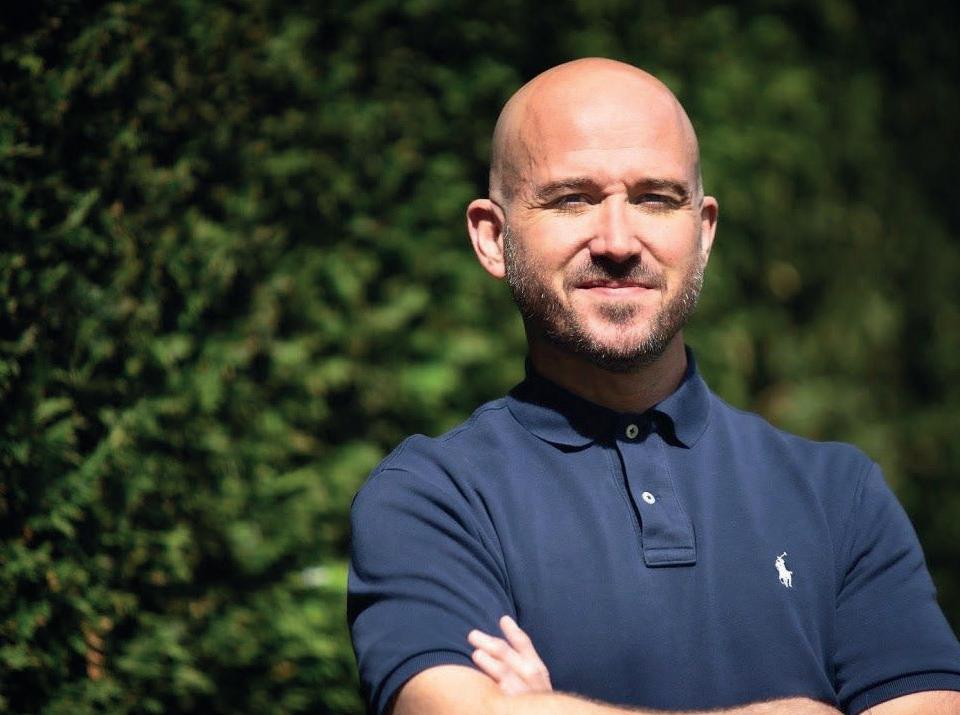
says, “There was a hype around gigafactories. Elon was the main hype guy, with his first gigafactory. But he delivered. Just like the Chinese have. Bankers got excited about Western projects such as Britishvolt and Northvolt, hoping for the next CATL or Tesla to emerge because they wanted to invest big and make a profit.
“Britishvolt quickly went from poster child to ugly duckling, much like Northvolt, because they tried
to do too many things at once. The true art is to focus on making reliable, safe, e cient battery cells, not boil the ocean.”
The hype cycle now appears to have come to a juddering end.
Evan Hartley, research manager at Benchmark Mineral Intelligence says, “In the last 18 months we’ve seen investors become far more cautious when it comes to gigafactories, whether that’s banks or the automotive companies themselves.”
Many countries are concerned about a potential ‘gigagap’, that is a gap between number of batteries they need and those the factories are able to supply.
Stephen Gi ord, chief economist at The Faraday Institute, says, “If you assume a stable transitionfrom the size of the UK automotive industry to one of similar size in 2040 and assuming that the EV mandates are met in that transition, then we potentially need about six gigafactories by 2030 and 10 by 2040.
“The EV market has come o the boil a bit since we did those forecasts, and now it’s maybe only four or five gigafactories by 2040. We’re making progress. We have a gigafactory in Sunderland and also one in the south-west of England. But overall we need to move faster and the government needs to up the
pace to attract more gigafactories into the UK.”
“However, if certain economic conditions aren’t met, for example policy changes means that EV uptake isn’t as high as anticipated, there can be an oversupply of batteries. Balancing supply and demand of the correct type of batteries is a challenge for gigafactories. But there are a number of factors that can help.
“It’s vital for governments to have a stable policy landscape, which allows manufacturers to anticipate appropriate production levels. The ability of manufacturers to adapt is also important.”
Many manufacturers are pivoting from manufacturing cells for the EV sector toward ultility-scale battery storage. This is a rapidly growing sector end that wasn’t there five years ago.’
Partnerships are also significant when it comes to balancing demand and supply. Robert Heiler, associate partner at Porsche Consulting says, “It’s important that there’s an assured market for the final product. So the partnership of car manufacturers who need the batteries and the technological know-how of the battery manufacturers works well together.
“There’s a market trend towards this — for example there’s Tesla and Panasonic working together, in Spain there is Stellantis and CATL, then there’s Volkswagen and Gotion in China.”
Gi ord says “in the UK that is JLR and Agritas and Nissan and AESC. That type of business model reduces risk, because any sort of risk in the business model will make financing more di cult and the cost of capital higher.”
They fought hard but were the also rans …
Britishvolt: ending in tears, arguments
Britishvolt started in 2019 and collapsed into bankruptcy three years later. The aim was to create the first domestically owned battery factory in the UK in Blyth, Northumberland. The planned factory would have been able to deliver 30GWh of batteries a year, and provided significant support for the UK’s shift to EV production. It would also have created 3,000 direct jobs and more in the supply chain.
According to analysts, there were a number of reasons for its collapse — funding issues, inflation, rising energy costs and the war in Ukraine. Since then interest was shown by Australian Recharge Industries but the deal fell through and in 2024 the site was acquired by private equity firm Blackstone Group with the aim of using it to build a data centre.
“Britishvolt ticked all the boxes,” says Ben Kilbey ex-Britishvolt. “We had great battery scientists, battery chemists; we had great engineers. Prime land and access to renewables. We had pretty much everything to play for.
“There were several reasons why it failed, including the invasion of Ukraine causing a huge spike in energy prices and a fear in the investment community. Add infighting within the government of the day, so money that was initially o ered to us was held back — further spooking investors who were waiting for that as a trigger.
“But we were making very good cells and if we’d got the money from the government, £100 million, it would have triggered a wave of private investments and we’d have been the UK battery champion we should have been.
“Most of the people I worked with are now working on various battery projects around the world, including the CTO of UK Battery Industrialisation Centre (UKBIC) Richard LeCain. He was the main man developing our cells at BV.”
Another analyst points the finger at government incompetence. “Britishvolt didn’t fail because of a lack of technical skills,” says Isobel Shel-
don, former chief strategy o ce at the firm. “It failed because the pace of expansion was too quick and the UK government at the time was in turmoil. We had a lot of investment lined up and on the table that was pulled away when the mini budget of then prime minister Liz Truss was launched. The government in 2022/23 has to take some responsibility for that.
Founded in 2015 by two former Tesla executives, Peter Carlsson and Paulo Cerruti, Northvolt was planned to be Europe’s biggest and greenest battery plant and its best hope of challenging the Asian battery industry.
It secured over $15 billion in equity, debt and public financing. Contracts were signed with car makers such as Volkswagen and BMV and production began in 2022. But by March 2025 it had filed for bankruptcy.
Reasons for its failure have cited a dip in the demand for electric vehicles and spreading itself too thin with di erent projects rather than focusing on cell manufacture.
“There are multiple lessons out of the Northvolt collapse,” says Barnard. “My analysis is that they had a lot of money but forgot to focus. They were trying to do seven things instead of one or two things really well. As well as making cells they were also making prismatics, working with di erent battery chemistries and doing recycling.”
There was also the problem of attracting sta to a remote location. From one perspective, Northvolt had a great location. There were mining and smelting operations nearby as well as hydroelectric power. Northvolt planners were attracted by the abundance of low-carbon electricity generated locally and cheaply.
However, the plant was 300km from the Arctic Circle and the plant had trouble attracting the right people to work there because it was remote. “You need to move the electricity to the talent, not the talent to the electricity,” said a consultant at the time.

“A lot of people who got into the gigafactory space during the hype period didn’t understand the domain of batteries well enough nor that of manufacturing sufficiently either” — Michael Barnard
Emily Ritchey, policy manager for supply chains at not-for-profit Transport and Environment, says:
“We’re aware that European battery manufacturers are facing immense global competition and are struggling to compete and get the funding necessary to scale and take o . At least 100GWh of battery capacity was cancelled last year, as European producers faced global competition, subsidies elsewhere and a lack of a level playing field.”
James Morton Turner a professor at Wellesley College in Massachsetts, says there have also been profound changes in the US. “This time last year the Biden administration was implementing the Inflation Reduction Act and chanelling federal support into companies that were building a domestic supply chain for batteries. It also put in place incentives to reward companies for manufacturing batteries and other clean energy technologies in the US.
“There were a lot of carrots to encourage the development of the US battery chain. But since president Trump’s election the Republicans have systematically dismantled those incentives.
“New tari s, weakened auto e ciency standards and the roll back of tax incentives all add up to a perfect storm for the battery industry. A lot
of projects that looked promising last fall are up in the air right now.
“Companies are navigating a challenging landscape. There are companies that have dialled back from their plans to build gigafactories. Some of these are newer companies
such as KORE, which was planning a $1.2 billion plant in Arizona, but have decided not to proceed. There are also established companies like AESC which has put its new gigafactory in South Carolina on pause.”
Nevertheless some projects are
Anything you do that has a manufacturing footprint will have some sort of ecological impact and gigafactories have a huge footprint in terms of land requirements and their need for large amounts of water. Elon Musk’s Nevada gigafactory, for example, has a floor area of approximately 500,000 square metres, covering the equivalent of 107 football pitches.
A smaller gigafactory such as the AESC gigafactory in Sunderland, UK is 360 metres long and equivalent to 22 football pitches.
In 2024 there were protests at Tesla’s Berlin site led by organisers Disrupt Tesla that included local residents and members of Extinction Rebellion who argued that to enlarge the site would cause damage to the local environment and threaten drinking water supplies.
A report by Hungary Greenpeace entitled: What are the environmental concerns associated with battery factories in Hungary? flagged up issues such as the extremely high energy and water demands of the factories. The water consumption of the plant being built near Debrecen could reach up to 60,000m3 per day. That’s larger than the water consumption of the city itself.
The report says the regulatory framework for pollution levels is ineffective and not properly enforced. Moreover, investors are benefiting from streamlined licensing processes and shortened environmental assessments which e ectively prevent a thorough risk analysis and limit the involvement of local residents.
One lesson potential gigafactories have had to learn the hard way is the need to engage with the local community and address concerns. When companies don’t lay that groundwork they often find themselves in trouble. Environmental regulations and processes that ensure public engagement are essential to good planning and making sure these projects are sustainable.
One of the surprise facts, to the uninitiated anyway, is that China is leading the way in terms of environmental processing and care.
“People have criticised China in the past but the safety and manufacturing standards there have been raised to a world class standard,” says consultant Michael Barnard.
“The Chinese can also teach us about the environmental aspects of modern minerals and battery supply chains. Historically there were times and places where they used the worst chemicals and had the least environmental controls. But then they said, ‘OK, we’ve got to fix this and started fixing it’.
“For example, they process rare earths in clean room factories which are meticulous and low impact. It is entirely possible to go to them and learn from their approach.”
Robert Heiler, associate partner at Porsche Consulting believes that manufacturers are working to address environmental concerns.
“Every cell manufacturer we work with is focused on bringing down energy consumption. They are looking at every stage individually and aiming to optimise it. For example, they are looking into process innovations like dry coating or reducing the time required for formation and ageing,” he says.
“European factories are already trying to harvest as much renewable energy as possible — they are aiming for as close to 100% as they can get. So factories are being built strategically in locations that have access to a lot of renewable energy to avoid using fossil fuels to power the gigafactory.
“There are also two main issues when it comes to water. The first is finding the right location, where you can have access to the necessary water whilst minimising the impact on the environment. The second is to focus on making technological and process improvements, to reduce water
moving forward. Since the start of the summer, Panasonic in Kansas, Toyota in North Carolina and LG in Michigan have started or expanded their operations. In the case of LG, it pivoted its expansion from EV batteries to utility storage batteries.

“So factories are being built strategically in locations that have access to a lot of renewable energy to avoid using fossil fuels to power the gigafactory”
— Robert Heiler, Porsche Consulting
consumption such as dry-coating or using NMP-free solvents.”
Pretty much everyone agrees that prioritising recycling can help mitigate environmental issues. E orts are being made to build the recycling facilities as close to the actual cell manufacturing factories as possible. This means that one can use the material harvested from the batteries and reintroduce it into the process without it having to be transported any significant distance.
Scrap recycling is crucial. Especially among less experienced manufacturers, relatively high scrap rates can occur during the various production steps. That means that some intermediates fail to meet quality requirements and cannot be used in the subsequent processing stages.



Europe’s battery industry stands at a crossroads. In most directions failure is looming. Part of the trouble is the mismatch between mineral resources, supply chains, irrational enthusiasm, tariff protectionism and the weight of European Commission regulation, writes Yves Le Marquand.
Mario Draghi’s report last year was chilling. In it he warned that if the EU failed to catch up with its rivals, it would face “slow agony” — the EU “needs far more coordinated industrial policy, more rapid decisions and massive investment if it wants to keep pace economically with rivals in the US and China”.
Former UK deputy prime minister Nick Clegg gave the perfect soundbite: “Europe needs to reinvent itself… or die.”
The question, of course, is whether it can.
Superficially, the market appears to be growing rapidly. According to Business Market Insights, the Europe lithium-ion battery energy storage market was valued at $2.74bn in 2023 and is projected to reach $5.53bn by 2028, growing at a CAGR of 15.1%.
This is driven largely by EV sales,
which are projected to rise in Western Europe by 40% to 2.7 million vehicles in 2025.
However, this all relies upon Europe being able to meet demand without buying in too much from elsewhere. The continent, again superficially, is moving in the right direction — total battery production by 2030 is forecast to increase by 80% to 1,395GWh — a massive 1,922% increase from battery production in 2022.
Currently, around 40%–50% of the EU’s battery demand has been met by domestic production, with the majority of battery manufacturing in Europe dominated by Asian companies — notably South Korea’s Samsung, LG Energy and EcoPro BM.
While the gigafactory projects and European Battery Alliance (EBA) support have been valuable, European
companies seem to be having a “learning” problem, as exemplified by Northvolt’s bankruptcy in its European operations, according to Sandeep Rao, head of research at Dublin-based exchange traded products specialist Leverage Shares.
“Northvolt attempted to ‘innovate’ new manufacturing standards outside of the scope of Chinese-supplied equipment, had a massive shortage of experienced personnel and remains reliant on non-European suppliers for key components.”
He says European companies have been known to possess a “hubristic” mindset, assuming that they can better their Asian counterparts without iterating through failure.
“First replicate, then innovate,” he quips.
Europe is not without its success stories. EBA, launched in 2017,

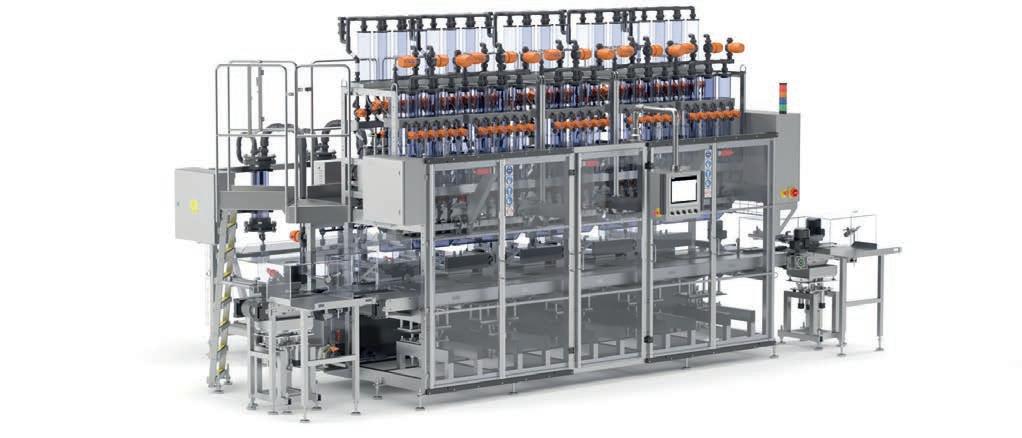
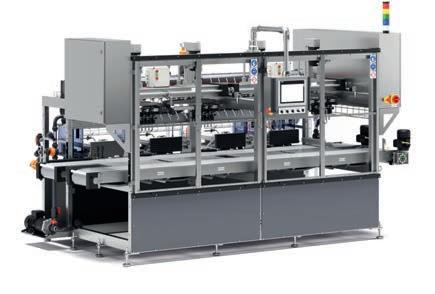
Custom-designed equipment for the battery and chemical industry
We design, engineer and manufacture reliable systems regarding filling, mixing, diluting and handling of highly corrosive chemicals such as acid and alkaline. Our systems are compact and fully automatic with an exceptional level of precision, accuracy, safety and reliability, utilizing the latest technology.
North America
Chris Glascock Office +1 (706) 841 1184 Mobile +1 (423) 595 2326 glascockinternational@gmail.com
Head Office
Åkerivägen 19
241 38 Eslöv, Sweden Office +46 40 671 1200 office@kallstrom.com
Digatron Power Electronics representative in Scandinavia
South Korea
Gabriel Kim Office +82 32 438 3347 Mobile +82 10 5307 0459 gabyeolk@naver.com
India
Suresh Pemmaiah Office +91 80 40 976620 Mobile +91 98 45 021623 hpi@hpinstruments.com
For more information visit kallstrom.com

connects over 120 public and private partners. Dozens of gigafactories are operational or in development across Germany, Sweden, Poland, France and Spain. Meanwhile, in Nysa, Poland, Umicore’s carbon-neutral cathode production facility is a working piece of a sustainable battery materials value chain.
Rahul Sen Sharma, president and co-CEO of global index provider Indxx, says: “Europe still struggles to reach its goal of producing 90% of batteries domestically by 2030. Issues like the Northvolt bankruptcy, scale disadvantages versus Asia, fragmented regulation and financing gaps highlight the need for deeper coordination and industrial resilience — despite a solid policy and innovation foundation.”
While capacity gains and innovation are substantive, Sharma believes global competitiveness still hinges on securing stable funding, aligning fragmented permitting regimes and closing the scale gap with Asia.
Sam Ja e, principal at 1019 Technologies, a specialist in strategy and business development across the battery and energy storage industries, believes the view that Europe cannot compete with China or anywhere else is a false narrative.
“After the Northvolt news I saw a lot of articles saying: ‘will Europe ever be able to be a battery producer that competes with China?’ There is over 100 gigawatt-hours of battery production in Europe today. So there is already a strong trend of battery manufacturing in Europe, and there’s no reason to expect that that trend will decline.”
Ja e says it is largely Korean manufacturers who have built infrastructure in Europe; there are also a handful of Japanese companies. Chinese battery giant CATL is building a plant in Erfurt, Germany, with a planned capacity of 14GWh.
“There were subsidies, but the decision for those Korean companies to come to Europe was market driven. They wanted to be a part of the market.”
Is Europe helping or hindering itself?
European regulation helps and hinders. It enables through sustainability standards and funding initiatives, but obstructs due to its fragmented bureaucracy and, in the case of the lithium battery industry, permitting delays.

“There were subsidies, but the decision for those Korean companies to come to Europe was market driven. They wanted to be a part of the market”
— Sam Jaffe, 1019 Technologies
The EU has regulations for traceability and recycling, initiatives like the European Battery Alliance provide funding, and in 2027 it plans to introduce battery passports to enable the technology to move like its citizens can.
However, gigafactories and mining projects can wait for up to 10 years for permits to be awarded. Meanwhile, about 8% of battery factory projects in Europe face delays or cancellations due to regulatory hurdles.
Ja e says there is a definite need for trans-government policy, as well as a wide-ranging approach to subsidising EV sales. “There is still an element of patchwork to the EU even though they have the unified regulatory mechanism. For example, there are dramatic di erences between France and Germany.”
Problems due to bureaucracy are one thing, says Rao at Leverage Shares, but the political and social will to make the most of what Europe has to o er — particularly its raw mineral deposits — is not there. “The decision to do something momentous, such as the building of battery manufacturing infrastructure, carries with it a host of environmental management issues, which citizens and the politicians who
serve them are inherently sensitive to.
“This, more so than regulations, is the bottleneck for industries to build on top of Europe’s bountiful mineral resources.”
Raw material potential Europe is dependent on countries from every populated continent for much of its critical mineral consumption. It gets 97% of its magnesium from China, 98% of its borate from Turkey, 68% of its cobalt from the Democratic Republic of the Congo, 79% of its refined lithium from Chile and 24% of its nickel from Canada.
That dependency, combined with the growing global demand due to the shift towards a digital and green economy, makes supply chains vulnerable. To reduce this vulnerability, the EU has set 2030 targets to extract 10%, process 40% and recycle 25% of its critical raw material needs — whilst also ensuring no single country provides more than 65% of any strategic material.
Part of the European Commission’s Critical Raw Materials Act, the initiative has also launched 47 projects heavily weighted towards extraction of battery inputs such as lithium, cobalt, nickel and graphite.
“To become climate neutral, energy e cient and more competitive in the digital age, the EU will need more critical raw materials such as lithium and cobalt to manufacture batteries and electric engines,” says Sharma.
“The green and digital transitions will also drive increased demand for critical raw materials. By 2050, EU demand for lithium could be up to 21 times the level it was in 2020.”
Ja e from 1019 says Europe has not been successful in extracting its own raw materials. He notes Umicore’s cathode plant in Poland as a highlight, as well as a handful of small cathode projects. “There is nothing of note on the anode side, or the graphite side. That’s all coming from China. I’m not aware of anybody making significant progress in building a new graphite mine or factory in Europe.
“The battery supply chain is huge and there has been progress in some areas, but it hasn’t been across the board. There isn’t an entire European supply chain,” he says.
Europe is home to plentiful occurrences of lithium. Portugal is home to the world’s eighth-largest supply, while cobalt deposits have been discovered in the Nordics.
However, due to its environmental impact, large-scale lithium mining is almost non-existent in Europe, according to Rao. He says concerns over the environment create strong societal opposition, leaving political representatives “dragging their feet” over new projects.
He believes other countries — in Latin America, Africa and Asia — with di ering regulatory standards will continue to hold dominance over this part of the supply chain unless Europe kickstarts domestic production. “It is inherently easier for European industries to simply import material and products with potentially vexatious issues regarding extraction/production methods.”
Next-gen impact
Building out the whole supply chain from mineral deposit to product on the shelf is critical for today, but tomorrow hinges upon it. Rao is concerned that EU member states will continue to remain sensitive to initiating anything less than the safest and most electorally popular means of building out its battery sector.
“This has real-world implications that impact the viability of innovation,” he says. “If domestic production continues to be hampered, companies have no choice but to invest in projects elsewhere, which means that talent and innovation developed by talent will be nurtured elsewhere.”
In China alone, Volkswagen holds a 26% stake in Gotion High-Tech; BMW was CATL’s first customer in 2012, which has now graduated to becoming the supplier for its new range of EVs; and Mercedes-Benz is a major shareholder in — and helped the development of the product quality system established within — Farasis Energy.
European battery startups tend to be smaller and less ambitious than their US counterparts, says Ja e. Then in China’s case, it is predominantly the established manufacturers that are researching next-generation chemistries.
Europe has hundreds of battery startups, but it has some cautionary tales too.
French battery maker Automotive Cells Company (ACC) — jointly owned by Stellantis, Mercedes and TotalEnergies — launched its first gigafactory in northern France in May 2023. Then it announced plans for nine production blocks by 2030

Over 50 gigafactories are planned, but many face funding and execution delays, making 2025–2027 a make-or-break window for catching up with US IRA-driven momentum and China’s dominance”
— Rahul Sen Sharma, Indxx
backed by an investment of €7.3bn. In March, however, ACC put a hold on seven blocks and now has one already operating for Stellantis and another one opening later this year.
While the uncertainty in EV demand is a definite factor behind this, the other is the product mix, says Rao. ACC primarily produces nickel manganese cobalt (NMC) lithiumion batteries, which both cost and are priced high relative to lithium iron phosphate (LFP) batteries.
“NMC batteries’ high cost meant that they were featured heavily in performance-oriented, mid- to highpriced models. However, using them in budget models would jack up said models’ prices. A net shift down the price charts by the bulk of European buyers leaves NMC manufacturers at a particular disadvantage. LFP-equipped imports would sell better.”
This caused European carmakers to shift contracts to LFP manufacturers (mostly not based in Europe) in order to compete. OEMs like Ford, Mercedes-Benz, Rivian and Tesla are already o ering LFPs as alternatives.
For European battery manufacturers to remain viable, a replication of
China’s subsidy policy would likely need to be enacted in one of two ways, says Rao.
“First, the EU could scale up EV subsidies based on vehicle range like China did in 2015, which inherently favours NMCs. NMC chemistries’ market share in China went from 10% of all EVs sold in the noughties to 90% by the end of 2019.”
Second, the EU could pump more subsidies into vehicles with domestically produced LFPs to encourage buy-ins at the commuter car level. “Of which there are considerably more on European roads than mid- to high-price models,” he adds.
The next five years are decisive for Europe’s energy sovereignty and industrial competitiveness, says Indxx’s Sharma. “Despite 2030 targets, quadrupling global battery demand threatens to outpace infrastructure. Over 50 gigafactories are planned, but many face funding and execution delays, making 2025–2027 a make-or-break window for catching up with US IRA-driven momentum and China’s dominance.”
With €80bn investment behind it, battery storage capacity is set to grow
five-fold to 50GW by 2030; however, about 200GW is required for grid flexibility. Europe added 3.7GW in 2024, and now has 10.8GW capacity in total.
Ja e says what happens to the market depends on EV sales. If they flatten out, Europe will have to bide
its time before demand picks back up again in the 2030s. “However, I would say that you cannot build a battery supply chain, manufacturing infrastructure and a market in one year. It is going to take all that behind-the-scenes work over the next five whether there is high growth or
a plateau.”
Rao at Leverage Shares agrees. “If Europe wishes to hone a technological edge in battery technologies, there’s a lot that needs to be done in the near term,” he says. “If not, the path to self-su ciency will slip even farther away.”
Isobel Sheldon is former chief strategy officer of Britishvolt, responsible for overall business, manufacturing, technology and customer strategy. She previously worked as business development director at the UK Battery Industrialisation Centre. She has 20 years of experience in battery design and development, technology and industry, and is a well known automotive battery specialist.
“One thing we’re seeing at the moment is that fragile global supply chains are collapsing around our ears. We’ve got geopolitical tensions left, right and centre. There’s the potential for shipping disruptions. It’s important to understand that the current fragility in the supply chain is introducing significant risk. Consistent policy is important on
an individual country level as well as a global one. In the UK we’ve had a lot of flipping and flopping over the last couple of years. Are we going to ban internal combustion engines? Are we not? Can we move the dates around? And the automotive industry has been saying, ‘Just give us consistency and then we can plan our investments around that.

Unless companies have a good business reason for putting a facility in place, it’s going to be difficult to get them to place a facility in the UK. You can’t just be patriotic about it. There has to be a good business case too.’
My personal view is that ideally there would be no subsidies or tari s globally and the market should decide for itself. China has a long history of subsidising its battery industry and that has necessitated other countries to look at tari s, to compensate for that and to level the trade playing field.
So although no subsidies, no tari s would be my ideal goal, that’s not the world we live in. When certain areas of the world are subsidising their industries quite heavily, you need to have tari s to protect domestic production.
Then you need to put in your own subsidy to get those businesses o the ground. that could be capital support for building facilities, or tax credits for battery manufacturing, like in the US.
Even though One Big, Beautiful Bill has been passed, the tax credits for localized manufacturing, materials and battery cells remain in place till 2033.
We really do need to have some sort of support mechanism in the West, particularly in Europe and the UK, to make sure that the attractiveness to invest money in the first place is there. Unless companies have a good business reason where there can be profit and return on investment, for actually putting a facility in place, it’s going to be dicult to get them to place a facility here. You can’t just be patriotic about it. There has to be a good business case too.”






















At the European Lead Battery Conference seven years ago, Turkish pasting paper firm, Pelipaper, announced its plan was to dominate the international market and invest in new technologies. Here, Board Member of Turanlar Group, Meltem Turan, reveals how they might be the global leader but getting a work-life balance is equally achievable.
“As a family business we’ve always had this strategy not to put all our eggs in one basket. When my father and uncles first started an industrial company over 60 years ago, they knew, instinctively, there should be a balance between industries. What that means is that we have forest product factories, for example, but also a tourism business. We’ll invest in one side of the business, then switch and invest in another. That way we can maintain an equilibrium. That’s really how the battery pasting paper started. I joined the family firm in 2008, and Pelipaper was founded the following year, producing filter papers for tea and co ee.
But, because I have grown up watching my father do business, I knew we needed to also be in another industry, and I wanted to start with battery pasting because the family group were already manufacturing products in the automotive industry so that seemed a natural step. Other companies, with facilities like ours, were producing di erent kinds of papers for other industries too and I was looking at them and thinking: ‘Oh, they’re doing this as well.’ It’s really a matter of thinking: ‘What else can this factory do?’ We don’t just want it doing this one thing. It needs to pay for itself by doing lots of di erent things.
tariff
Since we began with the battery pasting paper in 2018, we’ve become the global leader. We’re now filling a market gap globally, selling worldwide and also continuing to supply to America because, actually, the tari war situation has slightly increased our market because Turkey has such low tax so the

I see myself as a team leader, not the boss. The team members are the bosses of their positions, and they should own it with all their blood and believe in what they’re doing. I’m just a key person in there making strategic decisions.
I’ve
been to China many times and I can tell you that, if they are producing something within the same quality norms, it’s not cheaper. It’s only cheaper if you are decreasing the norms.
interest for our products is building day by day.
This is really what drives me. I practically grew up on the factory floor. My earliest memories are of every weekend outing ending up at one of our factories. My father was a workaholic, and work wasn’t just his business activity, it was also his passion, his hobby. He couldn’t help himself. He’d say, “Let’s go to this suburb where there’s these really delicious meatballs” and we’d get there, and it would be right next to the building site where he was building another factory. What I loved about it then, and still do, is the industry of producing something. When you’re combining raw materials, machinery and manpower to end up with something physical, that’s what really motivates me.
It’s why I didn’t become a lawyer even though I studied law. Everyone else in my family had gone to business school, and family business was perfect choice for them.
After my university exams, one of our family friends — a talented, well-known professor — said to me that I should do something di erent. And, actually, I wasn’t really asked. I knew it was never going to be about practicing law as a career but about how whatever I learnt could be integrated into family business life. But I believe, as a woman, I’ve brought something di erent to the table. My father and uncles were entrepreneurs. Passionate people who built up the businesses and then lead from the front. I don’t think it’s like that anymore. I see myself as a team leader, not the boss. The team members are the bosses of their positions, and they should own it with all their blood and believe in what they’re doing. I’m just a key person in there making strategic decisions.
Also, as a leading business women, it’s in my nature to be interested in the whole aspects of what it takes to be human. Women are born like this. It’s not just about work skills.
Most of my time is spent with business people but this shouldn’t just be about work. It’s important that we also enjoy being together as humans and not machine partners.
There’s a generational thing, too. Our generation is more about achieving a worklife balance. I try to strive for that. Yes, of course I like to work. But I also like to be a normal human being who sleeps and has free time at the weekend without combining meatballs and a factory trip!
‘What else can this factory do?’

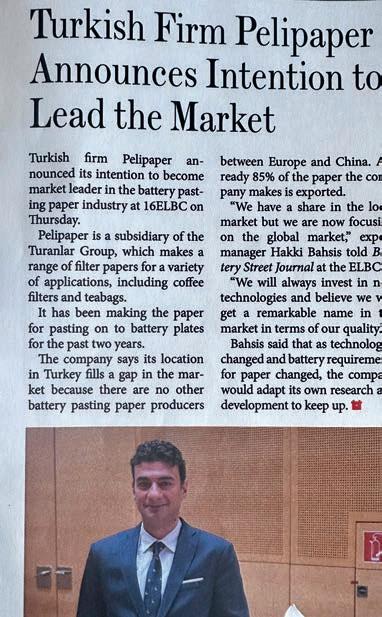
But even though we are new in this business, the current principles behind the chemistry of the lead battery have been the same for the last 166 years — ever since Gaston Planté invented it. New technologies might be superior, of course, but lead battery making process is safe and reliable.
Pelipaper’s aspirations were reported in The Battery Street Journal at ELBC Vienna in 2018.
times and I can tell you that, if they are producing something within the same quality norms, it’s not cheaper. It’s only cheaper if you are decreasing the norms.
And it has remained a pioneer in cost and benefit analysis since the beginning of the 20th century when it emerged. These new chemistries are attractive, but they haven’t proved themselves over a long-term period yet. That’s why I don’t feel they are a particular threat to us. I also think that all this debate around carbon footprint and lithium solutions has been manipulated.
It’s the same for any threat from Chinese manufacturers in our industry. Because we’re serving automotives if something goes wrong, they recall the whole automobile. You really don’t want to compromise on quality and risk that happening. I’ve been to China many
So, from a business perspective, I’m confident. There are lots of possibilities ahead — new factories, capacity increase and new grades of paper for new technologies.
But we are not just born to produce pasting paper and, right now, I can’t help lying awake at night and worrying about the sadness of the world. It feels like all around us is war. And even if I wasn’t so close to it geographically it would still, I think, a ect my dreams. There is just so much global uncertainty. It’s not easy to keep calm and keep working!
We’ll keep doing our best though. There’s a saying in Turkish that goes: ‘All our hands are under the stone.’ We’re holding it up and we’re doing it all together.”
But we are not just born to produce pasting paper and, right now, I can’t help lying awake at night and worrying about the sadness of the world. It feels like all around us is war. And even if I wasn’t so close to it geographically it would still, I think, affect my dreams
It was not a long life but it burned brightly. By the time the inventor of the nickel cadmium battery, Waldemar Jungner, died aged 55 he had provoked a complete rethink of many of the ways we look at battery chemistry.
Uppsala, Sweden: 1880, and a young college student, Waldmar Jungner, thinks he may have created one of the first fire alarms.
When a series of thermocouples was connected with every second soldered joint thermally insulated, a relay device and an alarm became activated when heated. A worthy invention for a country where the main source of heating was para n and fires were common and frequently fatal.
But there was one snag. And that was the batteries to keep the signal working. The dry batteries were unsatisfactory as was the standard lead accumulator of the time.
Surely, thought the young Jungner, it must be possible to devise a better, more reliable battery? So, after graduating from Uppsala University and completing further studies at the Stockholm College of Technology, Jungner started systematically to investigate the possibilities of constructing a storage battery with better properties than the lead acid system.
Some time during the 1880s inspiration struck — though it was not till almost the new century that his researches bore practical fruit — in what he called “the unchangeable electrolyte”.
He became convinced that an electrolyte which did not change its composition during charge and discharge would o er greater advantage than an electrolyte that took part in the electrochemical reactions (with a change of its concentration) as does the sulphuric acid in lead acid cells.
Among other things, the amount of electrolyte could in this way be kept to a minimum — this was an advantage from the point of view of

As a man, Waldmar Jungner was said to bemodest and unobtrusive. He avoided public appearances, parties and banquets and preferred to be surrounded only by his closest friends. His working habits were strange: he preferred to work at night, especially when his inventions were in critical phases. Despite this, with a fine baritone voice, he was also a member of the famous O.D. choir and travelled with them for concerts in various European towns.
weight.
As early as 1893 he was aware that an alkaline electrolyte would make it possible to introduce inactive supporting materials with considerably better mechanical properties than the lead used up to that time.
In his preliminary experiments Jungner mixed di erent metal oxides
with graphite, added dilute potassium hydroxide, and pressed the mass in cloth bags. The cloth bags shrank in the alkali and exerted a certain pressure on the active material. As conductors, Jungner used rods of copper or graphite Subsequently the bags were replaced by narrow folded pockets of thin perforated copper sheet, and in a modification of this design the mass was pressed between two perforated metal sheets of wire mesh, which were sewn together. He patented this, aged just 28, in 1897. While investigating the metals or metal compounds that might be used in the alkaline accumulator-to-be, Jungner made extensive experiments. He tested every conceivable combination and established, as the experiments wore on, an increasing rise in electromotive power.
As a sideline to this, Jungner devised a modification of the LalandeChaperon cell in which the positive plate was made of copper oxide in the usual manner and the negative plate of zinc. Jungner used a gelatinized electrolyte, and he intended that the zinc electrode, after discharge, should be replaced by a new one in a simple way. To turn this idea to profitable account the Aktiebolaget Torrackumulator (Dry Accumulator Company) was formed. A battery of this construction, propelling a boat, was shown at the Stockholm Exhibition in 1897. However, owing to di culties with the zinc electrode, the activity of the company was soon discontinued.
An important element still needed by Jungner was the inactive metal support for the positive electrode. Jungner had already noticed that
none of the metals tested was resistant to anodic oxidation in an alkaline electrolyte.
This detail nearly put a definite stop to the progress of his work on the alkaline storage battery.
Jungner decided, however, to make a comprehensive investigation including every available material, and during the winter of 1897-1898 he started tests involving the influence of anodic oxidation of metals in alkaline solution.
He found that three months of anodic polarization caused a more or less severe attack on platinum as well as silver, bismuth, cadmium, and iron. Nickel alone retrained its smooth surface and its weight. Jungner extended his experiments also to nickel-plated metals and found that even a very thin layer of nickel was su cient to protect every metal with a smooth surface from electrolytic attack.
In nickel, Jungner thus found his supporting metal. It was the springboard to what we now know as the nickel cadmium battery.
During his search for the ideal alkaline storage battery, Jungner also made experiments with couples of silver oxide-iron and silver oxidecopper.
A silver oxide-copper prototype was tested in the summer of 1899 with Svante Arrhenius, an academic, which produced energy of not less than 40 Wh/kg from this system; the potential, however, was low, only 0.6V-0.8V. Even before these experiments, Jungner had worked with cadmium as an active material in negative electrodes, but that work had not been encouraging.
In these preliminary experiments he had used a mixture of cadmium and graphite but such electrodes were ine cient. After unremitting experimental work, he succeeded, however, in producing a porous cadmium metal with acceptable mechanical and electrical properties by a chemical electrolytic method.
Success! This material, in combination with silver oxide, gave a cell with an energy content of about 40Wh/kg and a voltage of about 1.1V. The silver systems were thus capable of storing large amounts of energy per unit of weight.
Electric vehicles, 1900 style Jungner built batteries of the silvercadmium type to supply the motive power for motor cars, and these
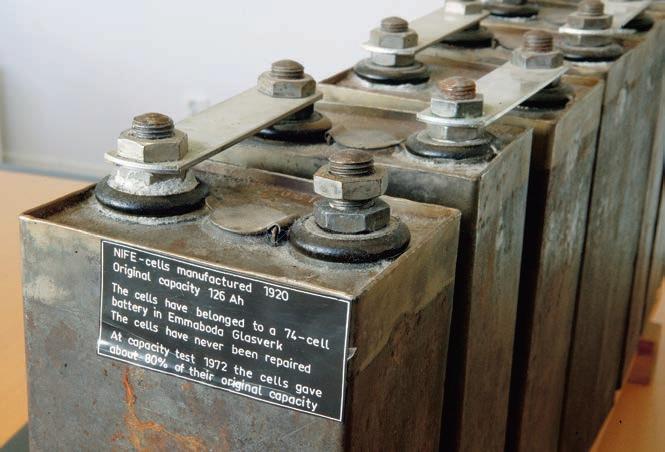






batteries were tested in Stockholm in 1900 with satisfactory results. After each charge it was possible to drive 140km-150km. But there was one drawback — a familiar one to those pioneering lithium ion batteries for EVs nowadays.
Yes, the price. Silver was too expensive and cadmium too rare.
In 1899 Jungner, presented his fundamental ideas concerning alkaline accumulators in a patent of March 11. Later that year he also patented a method for producing silver electrodes and a way to make the previously mentioned porous cadmium electrodes for use in alkaline cells. (In January 1907 Jungner took out a Swedish patent in which the reactions of the systems nickel-iron and nickel-cadmium were given.)
The next step was commercialization.
In the spring of 1900 the Ackumulator Aktiebolaget Jungner was formed to exploit Jungner’s storage battery ideas. This company manufactured and tested silvercopper and silver-cadmium batteries and the first nickel-iron batteries.
At his side Jungner had the innovative engineer KL Berg, formerly of the Swedish General Electric Co, who worked on the mechanical design of the cells and converted them into hardware.
This was a daunting prospect — they had very little money, oxyacetylene welding had not been invented, there was no reliable separator, nor was there reliable steel plating. Because of the inability to nickel-plate on to steel ribbon, a pure nickel ribbon had to be used to enclose the positive material. Their first attempts to perforate this ribbon were made on Mrs Berg’s sewing machine in the family kitchen!
But as if the technical challenges were not enough, the newly founded company was soon involved in a lengthy patent suit against Thomas A Edison, who was also actively working in this field. It is di cult to reconstruct the actual timetables of work leading to the alkaline battery inventions of Jungner and Edison, but briefly, Jungner had a Swedish patent valid from January 22, 1901 while Edison had a German patent valid from February 6, 1901.
Undoubtedly there was a period of independent overlapping research. Jungner Accumulator and Edison competed on the world market and also engaged in patent suits for the
next few years. The patent suits took a great deal of Jungner’s time and money.
When his laboratory and factory at Kneippbaden outside Norrköping were destroyed by fire in the fall of 1905 — an ironic twist given where his researches had started from — the financial di culties were too great for him; the company had to transfer its resources and debts to a new company, Nya Ackumulator AB Jungner, with new shareholders.
At this point Jungner left the direct management of the company, but continued his association as a consultant on a retainer. Axel Estelle became managing director and chief chemist, with Berg continuing to look after production.
The company was at first entirely directed towards the manufacture of nickel-iron batteries sold primarily for traction use.
Flat, vertically mounted pockets of nickel-plated iron sheet were used for both the positive and the negative plates and, as separation between the electrodes, perforated hard rubber sheets were used.
Estelle, who had been working with Jungner earlier, patented in 1909 a method for electrolytic co-precipitation of iron and cadmium sponge from a sulphate solution. Jungner’s name has been associated with the nickel-cadmium cells although the Jungner cells from the very beginning bore the trademark NIFE — based on the chemical symbols for nickel (Ni) and iron (Fe).
In spite of the technical progress Nya Ackumulator AB Jungner soon found itself in financial di culties. In 1910 the company was put into compulsory liquidation.
Profits at last
That year the Svenska Ackumulator AB Jungner was formed and under the management of Robert Ameln and Jungner’s ideas were made profitable by the introduction of several modifications of methods and constructions. Cells manufactured after 1910 had flat, horizontally placed perforated pockets for both the positive and negative electrodes.
In 1918, Svenska Ackumulator AB Jungner started a subsidiary in the UK under the name Batteries Ltd using the brand name NIFE, and operating at Hunt End, Redditch on a site that had been previously occupied by the Royal Enfield Cycle Company.
After he had left the management of the storage battery company, Jungner devoted himself to other inventions. The great problem of converting fuel energy directly into electric energy was of special interest to him. As early as 1907 he took out patents on fuel cells of di erent types in which, among other substances, carbon, hydrogen and sulphur dioxide were mentioned as fuels.
In 1917 he patented a cell, for which he had great hopes, especially for solving the problem of lighting in the countryside.The positive electrode consisted of a porous body of carbon containing a small amount of copper oxide; the electrolyte was alkaline, and the negative consisted of zinc. The cell attracted considerable attention at that time; however, the production and distribution of electrical energy went on along quite di erent lines.
Among Jungner’s other work was his method for simultaneous production of alkali and cement, presented in 1912, is notable. An amusing coincidence is that during a period of their lives both Jungner and Edison, the great names in the alkaline accumulator field, were occupied with the production of cement.
Jungner’s last research work, involving the extraction of radium from Swedish rocks, was interrupted by illness and was never concluded.
Not until near the end of his life did Jungner’s merits obtain public recognition. He was elected a member of the Swedish Academy of Science of Engineering in 1922 and in 1924 he was presented with the Oscar Carlson Award by the Swedish Chemical Society. He died on August 30, 1924 at the age of 55.
It was said of Jungner that, like so many geniuses, he often lost interest when the practical development stage was reached.
In the years that followed, the materials for such a chemical-couple battery were expensive compared to other battery types available and its use was limited to special applications. In 1932, the active materials were deposited inside a porous nickel-plated electrode and in 1947 research began on a sealed nickel-cadmium battery.
These days, Ni-Cd battery production at Oskarshamn is in the control of the French company SAFT which has retained the name NIFE as an important brand name.
About a quarter of the EBRD’s lending goes towards energy and infrastructure and approximately 70% of this consists of investments in renewables/clean energy.
The bank supported the first wave on investments in intermittent renewables, with the first comprising a loan for a wind farm in Bulgaria in 2008. Since then, this area has grown rapidly. Today, the fossil fuel projects EBRD funds are one in 100.
In 2024 EBRD invested, mainly in the form of loans for project financing, to mobilize 7GW of renewables — mainly wind and solar — investment, which is significant for a bank of its size.
Cristian Carraretto, EBRD’s head of energy transition — sustainable business and infrastructure, says: “2024 was the first year where we saw a lot of BESS within/co-located with wind/solar plants. Also, we have been assessing a few grid-connected merchant BESS projects that we are expecting to finance in the coming year.”
The bank is first and foremost an investor/financier but its other important role is working with governments to support the creation of enabling frameworks.
It has worked with countries adopting renewables, through setting up support schemes. EBRD also finances projects, some of which have come out of these support schemes or where there are pre-existing support schemes.
“Our track record in policy plus financing and it continues to be important and we are implementing virtually the same renewables model, for BESS,” says Adil Hanif, associate director (energy and infrastructure policy) at the EBRD.
Electricity markets in eastern Europe, such as Poland, Bulgaria, Romania and even the western Balkan countries such as Serbia and former-Yugoslavia countries are more mature. The business model for BESS in these relies on revenues from di erent sources, including provision of ancillary grid services.
Hanif adds: “Even in these markets,
however, there is an often a need for an ‘anchor’ source of revenues, which is why we see some sort of support schemes for BESS in such markets too, such as storage schemes in Greece and Italy, as well as the scheme in Bulgaria that we have helped the government on.”
In Comparison, in Central Asia and North Africa (Egypt, Tunisia and Morocco), electricity markets do not function to the extent that BESS is required to provide grid ancillary services, capacity market services and so on. In lieu of those multiple revenue streams, BESS procurement or investment driven by central policy stimulus.
These countries are often establishing BESS within their energy systems by combining them with renewable energy assets, procured through competitive tenders, which the EBRD will advise governments on how to structure and run.
Hanif says: “For example in Uzbekistan, in the first wave of renewables auctions EBRD supported wind, ADB and IFC supported solar. In subsequent auction rounds renewables are being coupled with BESS. We are now seeing this
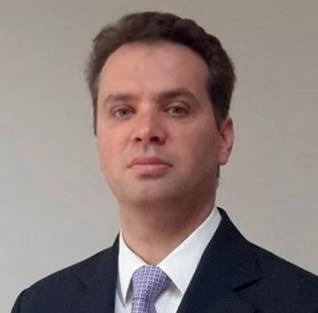
“2024 was the first year where we saw a lot of BESS within/co-located with wind/solar plants
— Cristian Carraretto
replicated in Kazakhstan. In Egypt, again, new renewables are being combined with BESS. In some cases these markets are becoming interested in standalone BESS, procured through competitive tenders.”
The EBRD’s focus in terms of policy is trying to come up with an anchor for these assets — a specific revenue source that anchors these investments so that they operate largely on a merchant basis.
“If you look at Bulgaria, Romania, for example, they have developed BESS support schemes, which can be revenue- or grant-based that provide some anchor, so that the asset relies on market/merchant revenues for the rest of its business case. In Central Asia and North Africa we are putting all of this through a regulatory framework. The underlying contractual framework for the BESS will cover the full range of revenues. EBRD is supporting policymakers in identifying how these assets are going to be used and how they are going to be remunerated through the contractual structure,” says Hanif.
Carraretto says in Central Asia the fragility of grids in these countries and the lack of (merchant) ancillary services, grid operators have more challenges managing grids with more intermittent generation. Coupling BESS with new wind/solar projects ensures that intermittency can be controlled/managed more e ectively.
Carraretto says: “In Uzbekistan, they used the existing regulatory framework in terms of procedures, grid codes, and so on. EBRD recently financed a solar-battery transaction whereby the battery capacity was much higher than the solar capacity and it needed to be located in a specific region to address grid bottlenecks, where it would be most e ective.
“But it was still procured as part of the solar plant, because standalone storage, as many countries have previously discovered, is not recognised as a grid asset class because it does not fit generic definitions of energy production.”
It is not a perfect approach, but these markets need to start somewhere. “It
is laying the groundwork so that in a few years’ time these grids may reach the point where they can operate a fully merchant market. In this regard BESS is a critical component that needs to be able to manage 40%, 50%, 70% share of intermittent renewable power capacity so that you can switch o coal and gas,” Carraretto says.
BESS projects in markets with underdeveloped grids have a tolling tari , agreed between the developer and the state. It is similar to a power purchase agreement for wind/solar farms, but is structured slightly di erently as it agrees a fixed price for the energy stored and released by the asset. Another revenue steam is in the form of a capacity payment agreed on the MWh for any moment in time, available for the BESS.
Hanif says: “The tari structure reflects the use case of the battery. There are examples where use case is primarily around load shifting. The majority of governments we are working with are looking at BESS as a grid asset and a tolling tari or availability payment is the most e ective anchor use for the investment, which makes up the largest portion of the asset’s revenues and is fixed up front.”
The EBRD has also helped countries to structure competitive bidding processes for renewablesplus-BESS, including Uzbekistan and, more recently, Kazakhstan. The bank has also advised Lebanon on a similar framework, however due to wider issues and circumstances in the country this has not been used.
Carraretto says this is in contrast with Bulgaria where it has advised the government across both renewablesBESS and standalone BESS schemes but within the context of EU grid policy.
“Often BESS is co-located with larger solar and wind projects — cashflows tend to be an integrated part of the solar or wind farm. Solar is e ectively a more expensive but less intermittent renewable asset when coupled with BESS,” he says.
Once the EBRD has lent to the first of its kind project in a market, be it the first wind or solar farms, or the first solar-battery project, it shows commercial lenders that it can be done so they should come on board to lend future projects.
Hanif says: “In Serbia EBRD supported wind auctions in 2023. The first was co-financed by EBRD
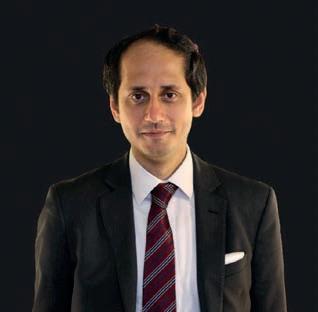
“Our aim is to always be additional. If private lenders can lend, then they should.”
— Adil Hanif
and a private lender, Erste Bank. The second project was the Čibuk 2 wind farm financed by Erste Bank and Unicredit. Our aim is to always be additional. If private lenders can lend, then they should.”
The role of development banks, like EBRD, is changing to one of mobilization, to bring in lenders and also private equity investors and mainstream investors, reflecting developments at recent annual COPs.
“The amount of climate finance required cannot be fulfilled solely by international development banks. If we want to address climate change our role is to support the right conditions for energy transitions within developing markets through policy and through additional financing but then to step aside to
let the private investment players step in,” says Hanif.
Treading a careful line
EBRD has a banking team that works on the core transactions, such as project finance, and a climate team, which supports auctions in places such as Serbia and North Macedonia.
“The policy side is key for us. We have to navigate auctions carefully. We are not there to create deals for EBRD. We advise governments. But these are their schemes,” says Hanif.
The lender has supported just under 6GW in auctions in 2024 in addition to the 7GW that EBRD actually financed through competitive tenders. “That’s a big part of what we do alongside the conventional financing as well,” he says.
Wind and solar continues to be a majority part of EBRD’s activity in energy, particularly in lending, while it expects to see a lot of solar, wind and storage in 2025, indicated by the on projects that started to be processed in 2024.
On the policy side the lender has projects underway, such as in Kazakhstan where it is providing support on the procurement of windBESS. The focus is to be involved in setting up the underlying regulatory framework as opposed to one or two transactions.
“In Bulgaria we were busy in storage in 2024 and we tend to want to follow up. Renewables is now wellestablished but the really big area for us in 2025 and in 2026 is to really replicate and scale-up the work we have done in supporting the enabling environment for renewables, for storage — it is a strategic priority for the EBRD,” says Hanif.”


International and national development banks can be a useful tool in financing some of the world’s more challenging energy storage projects writes Sara Verbruggen.
In the jumble of letters that characterises most of the energy storage business — just think LAB, BESS, ELBC, LFP, NMC for starters — there’s another set of initials that battery financiers need to know. It’s the acronyms of the world’s development banks.
But in the barrage of letters just about to assault your eyes, these institutions are giants and collectively hold over $1.8 trillion in assets. (And that’s 2022 figures.)
So, the EIB (European Investment Bank) has around $640 billion in assets, the IBRD (better known as the World Bank) has some $320 billion.
The ADB (the Asian Development Bank) has $280 billion. And not to be confused with the AfDB (African Development Bank) $50 billion or the AIIB (Asian Infrastructure Investment Bank) and its $47 billion.
These are big banks with deep
pockets and the institutions are rated AAA — making them the most solid financial institutions in the world.
But their importance comes less from their size — though that helps — but their purpose and mission.
The World Bank, for example, was set up to rebuild European economies after World War II, the EIB to provide long-term money to further the policy objectives of the European Community (now the EU), the Islamic Development Bank was to provide support for Muslim countries.
Development banks have played a key role in providing financial support and, frequently policy influence to enable developing countries to exploit renewable energy resources to decarbonise their energy supplies and reduce reliance on fossil fuels. Now they are turning their attention to energy storage.
Their high credit ratings allow development banks to o er cheaper lending than private lenders. They are unlikely to default, through being state-owned, or co-owned by multiple states in the case of multilateral development banks.
When it comes to energy, development banks and multilateral development banks tend not to take on technology risk but often finance the first wind farms, solar parks, or energy storage plants in countries where they operate, taking on policy and market risks.
In emerging economies, developing countries and regions, within Central Asia, sub-Saharan Africa, south-east Asia and Latin America/Caribbean, infrastructure for delivering electricity to consumers is comparatively under-developed than grids in more developed or industrialized
By providing guarantees and through direct lending, export credit agencies (ECAs) de-risk and enable energy projects worldwide. A Nature-published paper, “Quantifying the shift of public export finance from fossil fuels to renewable energy”, highlights how ECAs have not been subjected to the same level of scrutiny or factors that have influenced other groups of public finance institutions, like MDBs for instance, to “green” their portfolios of energy sector investments.
The World Bank has not financed new oil and gas exploration, drilling, or extraction projects since 2019, while 70% of the EBRD’s investments in energy and infrastructure goes to renewables/clean energy, including energy storage.
Over the years, ECA support for renewable energy technology (RET) commitments have grown steadily, only exceeding fossil fuel commitments as recently as 2022-2023, with
more recent data publicly unavailable to indicate this trend has continued. A definitive end to fossil fuel support by ECAs is not observable, states the Nature paper.
There are regional trends in energy projects ECAs support. Major oil and gas producing countries, such as the USA, continue to attract ECA support. Indonesia hosts many larger-scale oil refinery and coal- or gas-fired power projects, supported by Japanese and South Korean ECAs. Meanwhile, European ECAs’ commitments for RETs are comparatively high compared with other regions and tend to be concentrated in Europe. The increase of RET projects in ECA energy commitments that occurred post-pandemic, along with the rising share of the Export Finance for Future (E3F) coalition (launched by Denmark, France, Germany, the Netherlands, Spain, Sweden and the UK in 2021 to harness public export finance
as a driver to address climate change), has resulted in high-income countries among the recipients of ECA energy finance at the expense of upper-middle and lower-income countries. In short, “greening” ECA portfolios correlates with a “marked shift” towards high-income countries. A “typical” RET supported by European ECAs would be a large o shore wind project within Europe, as these tend to be riskier than other RETs.
According to the Nature paper, unlike development finance institutions whose mission is to support socio-economic development, ECAs traditionally help national exporters to realise deals primarily based on commercial profitability. This rules out lower-income countries that typically require highly concessional conditions, from MDBs. There is potentially scope to expand ECA mandates by taking more explicit steps supporting the energy transition in lower-income countries.
economies. Lack of grid infrastructure is an impediment to these countries increasing their renewable energy capacity and decarbonizing their energy systems to mitigate the impacts of climate change.
Increasingly multilateral development banks are providing financing support to build battery energy storage systems, a technology that has proven itself in markets that include the UK, Australia, the USA as well as EU countries like Germany, Italy, France and the Netherlands, to enable the integration of wind and solar though stabilizing the operation of grids.
Here are some examples of the range of financings available to their customers:
Mixing concessional and multilateral financings
Country: Uzbekistan
Lender: EBRD
Amount: $229.4 million loan
Project sponsor/developer: ACWA Power Riverside Solar, a special purpose company owned by ACWA Power.
Project details: 500MWh BESS and a 200MW solar power plant in Uzbekistan’s Tashkent region to ensure the safe and reliable connection of intermittent renewables to the power grid.
Finance package details: ‘A’ loan of up to $183.5 million from the EBRD’s account and a ‘B’ loan of up to $40.5 million syndicated to commercial co-financiers. The bank also mobilized concessional finance of up to €5 million from Finland under its High Impact Partnership on Climate Action (HIPCA).
Using interest rate swaps
Country: Uzbekistan
Lender: World Bank/IFC
Amount: $53 million loan
Project sponsor/developer: Masdar
Project details: 250MW solar plant with a 63MW BESS in Bukhara, in Uzbekistan to provide greater security of supply and helping to mitigate the intermittency of renewable generation.
Finance package details: Alongside the IFC, the Asian Development Bank (ADB), Dutch Entrepreneurial Development Bank (FMO) and Japan International Cooperation Agency (JICA) provided $106 million in finance. World Bank also provided interest rate swaps for the entire debt amount to allow the project to manage interest rate risks.
Creating a special purpose vehicle
Country: Egypt
Lender: EBRD
Amount: $120 million equity bridge loan
Project sponsor/developer: Obelisk Solar Power, a special purposed vehicle owned by Scatec (project sponsor).
Project details: 1GW solar plant with a 200MWh BESS, in Nagaa Hammadi to enhance the reliability of solar power generation in Egypt. As one of the first utility scale BESS in the country, the project will help pave the way for a broader rollout of storage-integrated renewables projects and support increase of renewables in the energy mix.
Finance package details: Loan is composed of two tranches to support the project’s funding requirements.
Financing some of the world’s poorest Country: Eritrea
Lender: African Development Bank Amount: $49.92 million grant
Project sponsor/developer: Government of Eritrea is the beneficiary of the grant — the Ministry of Energy and Mines is responsible for its implementation.
Project details: 30MW solar plant with a 15MW/30MWh battery backup system, plus a substation and transmission line, in Dekemhare.
Taken in this context, the number of energy storage projects supported by ECAs are few and far between to date. A notable recent deal is Export Finance Australia (EFA) lending $79 million to a 649MW solar-battery project in Thailand, being developed by national company Gulf Energy. EFA’s loan supports an $820 million equivalent construction facility arranged by the Asian Development Bank. The loan mark’s the EFA’s first big infrastructure project in Thailand, whilst fitting into its broader commitment to support the energy transition across south-east Asia and the aligns with the Australian Government’s regional priorities.
UK Export Finance (UKEF) told Batteries International that it is actively seeking out new renewable energy projects to support overseas. “We have overseas representatives in Africa, the Americas, the Middle East and Asia who are promoting UK exports in the renewables and clean growth sectors.”
While it has not directly supported BESS or hybrid BESS projects through export credit guarantees, direct loans or other project financing it is “happy to consider renewables transaction in the BESS sector in line with our policies”.
UKEF’s Business Plan and Sustainability Strategy commits to £10 billion in clean growth finance in the next five years, accelerating the growth of the UK’s green export sector and supporting the government’s e orts to make the UK a clean-energy superpower.
In 2023, at COP28, UKEF and seven other ECAs launched the Net Zero Export Credit Agencies Alliance (NZECA). UKEF also has a £2 billion direct lending facility dedicated to financing clean-growth projects overseas and it can also provide favourable financing terms for energy transition projects and can give these overseas projects repayment periods of up to 22 years.
Peak load in the country is double that of current capacity, resulting in frequent load shedding. Project will increase the country’s generation capacity using clean power.
Making the energy transition
Country: Chad
Lender: African Development
BankAmount: €28 million ($29 million)
Project sponsor/developer: Quadran International Tchad, a special purpose vehicle, owned by Qair.
Project details: Two 15MW solar plants, in Gassi and one in Lamadji, with a 15MW/30MWh battery backup system, plus a substation and transmission line. The project will increase power supply by 20% and pave the way for the country’s energy transition from expensive, polluting fuel-based power to clean energy.
Finance package details: The funding includes €20 million in direct support, combining a loan and a grant from the Sustainable Energy Fund for Africa, plus €8 million in financial guarantees, split between the African Development Bank’s African Development Fund and the Green Climate Fund, which both contribute €4 million each to support this clean energy project.
Combining solar with BESS
Country: Thailand
Lender: Asian Development BankAmount: $820 million loan
Project sponsor/developer: Gulf Renewable Energy Company (subsidiary of Gulf Energy Development Public Company).
Project details: Loan will finance construction of a portfolio of projects across Thailand, comprising eight ground-mounted solar plants with a total capacity of 393MW and four solar plants (245MW) with BESS (396MWh).
Finance package details: The financing package, led by ADB as the mandated lead arranger and bookrunner, comprises $260 million from ADB’s ordinary capital resources, and $529 million in parallel loans, including $79 million from Export Finance Australia (EFA), as well the Asian Infrastructure Investment Bank, DEG (German Development Finance Institution), the Export-Import Bank of China and KEXIM Global (Singapore), among others.
Country: Croatia
Lender: EBRD
Amount: €16.8 million ($17.5 million) direct equity investment
Project sponsor/developer: IE-Energy Projekt, a joint stock company.
Project details: IE-Energy Projekt is developing a 60MW battery energy storage system (BESS) and virtual power plant in Šibenik, Croatia.
Country: Italy
Lender: EIB
Amount: €25 million ($26 million)
Project sponsor/developer: Energy Dome.
Project details: Fund financed a Italian company Energy Dome’ demonstration long-duration energy storage plant, dubbed a CO2 battery, on Sardinia. The plant is 20MW/200MWh. At the time of commissioning in the first quarter of 2025, the CO2 Battery will be one of the few operational energy storage assets in the global market with a 10-hour discharge duration supported by a commercial o take agreement, with Engie. Energy Dome’s system is based on a CO2 thermodynamic cycle. In charge mode, the CO2 is taken from an atmospheric gasholder and is liquified using a compressor/condenser, then stored under pressure inside liquid CO2 tanks. In discharge mode (peak electricity demand/high prices), the liquid CO2 is turned into high-pressure gas that powers a turbine, generating electricity that is dispatched to the grid.
Between 2017 and 2024, the World Bank Group directly invested nearly $16.4 billion in renewables, increasing annual amounts from $1.4 billion in 2017 to over $3 billion in 2024.
“The total World Bank portfolio dedicated to energy storage amounts to more than $3 billion of cumulative investments since 2019, including $2.1 billion IBRD/IDA and nearly $1 billion in climate finance,” says Xiaoping Wang, lead energy specialist, from the World Bank’s Energy Sector Management Assistance Program (ESMAP).
The IDA, the International Development Association is the private sector wing of the World Bank Group.
“We’ve also been supporting new technologies such as the world’s first large-scale compressed air energy storage project (300MW/1500MWh) in China,”
The bank has been supporting energy storage in mini-grids and o -grid energy systems for electrification purposes, to enable universal energy access, over the past two decades.
Grid-scale energy storage systems have developed rapidly in recent years, says Wang, with the significant cost reduction of lithium-ion batteries and emerging new technologies such as compressed air and flow batteries.
In more recent years the lender has been seeing increasing interest and demand from developing countries and regions, including in sub-Saharan Africa, concerning energy storage technology, particularly BESS.
“Utility-scale BESS is increasingly viewed as an enabler for adding more renewable energy on the grid, in addition to provide important gridservices to maximise reliability and stability of the power system and accelerate electrification with mini-grid and o -grid solutions,” says Wang.
Support for BESS projects is an important component of the bank’s M300 agenda, where it has partnered with the African Development Bank (ADB) to try and connect 300 million people in Africa with electricity access
by 2030, to help secure universal energy access, while transitioning to renewables.
Projects approved in 2024 are in countries that include Nigeria, São Tome, Turkey, Kenya and Namibia.
Countries where the bank has activities relating to energy storage include South Africa, Namibia, Morocco, India, Jordan, Belize, South Korea and China.
Increased adoption of renewables is driving the increased interest in BESS, while falling costs of BESS are driving interest. “This in turn makes the combination of renewable energy and storage a cost-e ective combo,” says Wang, “highly competitive with other sources, like coal for example, in many regions.
“We are seeing pioneers playing an important role like in India, China, and South Africa for example, but also many other countries such as Burkina Faso, Bangladesh, The Gambia, Botswana, or Dominican Republic.”
Challenges around financing BESS over wind, solar and other kinds of renewable energy projects mainly concern unlocking the potential for private capital investments into energy storage.
“The lack of established electricity markets in many developing countries combined with the lack of enabling regulatory framework that allows the monetization of energy services provided by BESS, prevents the full realization of the private sector potential investments and financing into BESS,” says Wang.
The World Bank supports policy development for energy storage services in countries such as China, India, South Africa and capacity building for procurement, grid integration and operation.
Additionally, it helps governments explore the development of markets for monetization of storage, including hybrid power purchase agreements (PPAs). In India and China, the bank is working with these governments on international experience and lessons
learned for energy storage services to participate in markets and improve the policy and regulatory environment for adequate compensation of energy storage services.

“We’ve
also been supporting new technologies such as the world’s first largescale compressed air energy storage project (300MW/1500MWh) in China”
— Xiaoping Wang, ESMAP
World Bank energy storage projects already awarded or completed:
India (120 MWh)
South Africa (833 MWh)
Central African Republic (25 MWh)
China (2,234 MWh)
Marshall Islands and Tuvalu. Other countries are in tender or tender planning stage. All projects are competitively tendered.
EIB Group, consisting of the European Investment Bank and the European Investment Fund, is the lending arm of the European Union. The group is one of the biggest multilateral financial institutions in the world and one of the largest providers of climate finance. Its investments are mainly focused on the EU, with 10% of its lending outside the EU, including in energy.
Energy is the single largest sector for the EIB group in terms of investments, roughly a third. In 2024 the group provided the following for energyrelated projects:
• €7.5 billion for energy e ciency
• €12 billion for renewable energy
• €8.5 billion for grids and storage
The EIB has a long history of investing in renewables, including o shore wind.
According to Alexander Antonyuk, senior economist at the EIB, where energy storage is concerned the bank invests in innovative technologies. Examples include €25 million venture debt financing for a project on Sardinia to demonstrate Energy Dome’s long duration thermo-mechanical energy storage system and contributing a €75 million, with Breakthrough Energy Catalyst, to support three heat battery projects in Europe developed by Rondo.
The EIB’s portfolio of energy storage projects that it is investing in is growing, reflecting the growing demand for energy storage and BESS in particular across the EU, driven by the increasing penetration of wind and solar.
In 2024 the EIB financed energy storage projects to the value of €700 million.
Due to the growth in BESS interest, the EIB has set up a new database for tracking energy storage projects, whereas previously the technology was a subsector of electricity networks, BESS is often included as a component in EIB investment programmes together with renewables.
In projects that the EIB has reviewed, grid services make up approximately half of revenues while wholesale electricity market arbitrage makes up the other half.
A recent investment is in a standalone BESS developed by Amarenco, a French-based company.
The EIB is also seeing a lot of proposals for funding for collocated/ hybrid projects.
Antonyuk says: “EIB supports energy storage as a policy direction as it enables more renewables and decarbonized grids. In the case of BESS, compared with pumped hydro, BESS is less complex and faster to build. Pumped hydro sometimes has social and environmental impacts and has limited available sites.”
Across the EU electricity markets there are almost 10 di erent types of markets for BESS to participate, like day-ahead, intra-day, ancillary services, primary reserve, secondary reserve, tertiary. “If BESS can operate in all markets then it could be financially profitable but this is not always the case,” Antonyuk says.
Some countries are introducing support mechanisms for ancillary services markets and that enables BESS to achieve minimal level revenues, which helps make projects bankable. In other markets BESS is more exposed to volatile prices, making bankability more challenging, particularly in markets where too many BESS projects is leading to price cannibalization, both in ancillary services and arbitrage.
The EIB is seeing a rising number of BESS-related proposals reflecting the growth of the market and developers seeking financing, particular project financing (debt), which the institution provides.
Reasons for developers seeking support from development banks can be where the cost of financing is higher, such as in developing countries.
Development banks have to ensure that the projects seeking financing are bankable and that they are comfortable with the risk level.
Criteria includes parent ParisAgreement-alignment, in other words who the parent company is which has set up the project financing vehicle. Projects also need to meet
environmental standards, as well as social standards, procurement standards and compliance standards.
The EIB has separate departments that will look at projects.
The energy department that will carry out most of the checks for BESS/energy storage projects and will also review its proposed financial model — how it will earn revenues. These financial models tend to have revenue stacking, from di erent markets/revenue streams.
Antonyuk says: “The issue is that these revenues can be correlated. Depending on the pricing the team will look at which markets to bid in which also creates correlation between prices. The challenge is how to model these several correlated markets with di erent kinds of participants. Who is the competition? What other sources will be despatched? What prices are other competitors likely to bid to cover their own costs?
“Individual mechanisms also have di erent support mechanisms which need consideration. BNEF recently estimated profitability of BESS across EU countries and it varies widely. In some countries there is so much support that winners of auctions have enough revenues to cover all costs while in others there is no support and assets are 100% exposed to prices so it is a fully merchant model. Some can be a mix of regulated revenue and merchant.”
There is a separate department within the EIB that looks solely at risk aspects and provides independent opinion on the amount of risk posed by a project.
Duration of project appraisal depends on the level of project’s preparedness. Then, after approval the EIB carries out monitoring visits both by its energy department teams and other departments, one of which is portfolio management and monitoring. There are many experts, across financial, social, environmental and climate matters,” says Antonyuk.
“If BESS can operate in all markets then it could be financially profitable but this is not always the case,”
— Alexander Antonyuk, senior economist at the EIB












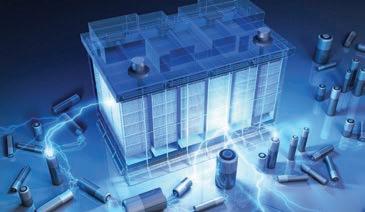
















Ecobat has confirmed the sale of its lead battery and polypropylene recycling operations in Italy.
Further announcements by Clarios, the lead battery manufacturing giant, are expected by this magazine which we believe will be announced ahead of this September’s Asian Battery Conference. Clarios has not replied for comment.
Our understanding is that Clarios is to buy Ecobat’s two plants in Germany (Freiburg and Braubach) and its Austrian plant at Arnoldstein which is where a large part of its recycling takes place.
Ecobat revealed on July 1 that it had concluded the sale of its facilities in Marcianise, Paderno Dugnano and Bologna to Haiki+ — which is listed on Euronext Growth Milan and whose business group includes Haiki Cobat, which invests in innovation and research in support of the circular economy.
Tom Slabe, Ecobat president and CEO said the latest sell-o was “another step forward to optimize Ecobat’s geographic footprint”.
He said the commitment of Haiki+ to innovation and sustainability would provide a solid platform for the continued success of the Italian business.
As of 2022, Ecobat said its secondary lead smelting facilities at Paderno and Marcianise had an aggregate capacity of 80,000 tonnes of lead per year.
However, lead production in Italy has been through turbulent times. Batteries International reported in 2023 on a lengthy suspension of activities at secondary lead smelting plants in the country the wake of “extreme energy prices and other excessively burdensome costs” in the country.
The deal came just one month after Ecobat said it had received a binding, undisclosed o er for its French battery recycling and speciality lead manufacturing operations from Belgium-based Campine — e ectively quitting the French market, apart from its lithium ion battery collection business and its new lead acid battery distribution and sales.
That was followed on June 2 with confirmation that UK private equity firm Endless had acquired Ecobat Battery, which has a network of 23 distribution hubs in the UK, Ireland, France, Netherlands, Belgium and Spain.

The companies said on May 28 the move, which is subject to various regulatory and works councils’ approvals, would mark Ecobat’s exit from the French market — with the exception of its lithium ion battery collection business and its new lead acid battery distribution and sales.
In a separate announcement, UK private equity firm Endless said on June 2 it had acquired Ecobat Battery, which has a network of 23 distribution hubs in the UK, Ireland, France, Netherlands, Belgium and Spain.
Campine said its acquisition would comprise recycling facilities in Bazoches-les-Gallerandes, 100km south of Paris, and Pont Sainte Maxence, 50km north of the French capital.
These facilities would add about 70,000 tonnes of battery recycling capacity to Campine’s portfolio, resulting in 40,000 tonnes of leadmetal alloys.
A third factory, producing semi-finished lead products in Estrees St Denism is an integrated downstream operation making products including anodes for the zinc and copper industries.
The consolidated revenue of the facilities amounted to about €100 million ($114 million) in 2024 and generated a positive EBITDA.
Campine said it plans to invest in improvements at all sites.
CEO Wim De Vos said Ecobat France has free available smelting capacity, while Campine’s operations in the country have abundant material in over supply.
“With this transaction, we would also avoid the complex permitting process of expanding our smelting capacity in Belgium.”
Completion of the deal is expected this summer at the earliest.
Separately, Campine has posted a record turnover of €365 million ($413 million) for last year — boosted by low lead battery scrap prices.
Belgium-based Campine, which acquired two lead battery recycling plants from French recycler Recyclex in 2022, said demand for lead metal used in new batteries in its circular metals business unit was moderate during 2024, mainly due to a weak automotive market in Europe.
However, the group, which also reported record overall EBITDA of €42 million, said on March 12 the low automotive demand allowed it to buy its battery scrap at lower prices.
EBITDA in the circular metals unit (comprising Pb, metals recovery and recycled battery operations) was more than €27 million, an increase of 22% over the previous year.
Around 114,000 tonnes of sales were recorded as of the end of last year, representing a decrease of about 10% compared to 2023. The fall was entirely attributable to lower output at Campine’s Escaudoeuvres facility in France, as a result of a four-month production outage following a fire.
Meanwhile, the group said its Beerse factory realised similar high sales volumes as last year of about 61,000 tonnes of lead alloys.
For 2025, Campine said the availability of battery scrap as of March was abundant and, unless market circumstances change drastically in the coming months, the group expects “another solid year”.
Gravita India has revealed plans for a new lead recycling plant in the country — and said it is pressing ahead with another planned facility in the Caribbean.
Chief financial o cer Sunil Kansal updated analysts on the lead recycling major’s plans on May 5, according to newly released documents posted
on the company’s website.
CEO Yogesh Malhotra declined to comment on speculation that the plant could be in Eastern India but said in the May 5 earnings call it would be a region where the company currently has no presence.
Malhotra said the location was “still being finalized”, but gave no details
on the cost or size of the project.
Meanwhile, on previously announced plans to establish a lead recycling plant in the Dominican Republic, Kansal said obtaining relevant licences had taken longer than expected.
However, he said Gravita would move ahead as soon as the licences were
issued — although no details were given concerning the proposed construction schedule or recycling capacity.
Batteries International reported last February that lead battery recycling capacity at its existing Mundra facility in India was on course to increase to 100,000 tonnes a year.
The first cohort of eight sites taking part in the international Lead Battery 360° Certification program (LB360) have been unveiled.
The International Lead Association told Batteries International on June 2 the move marked a key milestone for the program, which is designed to promote sustainable and responsible production and material sourcing practices in the lead battery supply chain.
The announcement came after the launch of the LB360 certification program by battery industry leaders earlier this year, following the inauguration of the overall initiative in October 2022.
Eight facilities including lead battery production and recycling facilities in Europe, North America,
Asia and Mexico are taking part in the program — from Clarios, East Penn Manufacturing, Ecobat and Boliden.
All have signed letters of commitment and have been accepted as participants for LB360.
In the next year, each site will undergo independent third-party assurance checks to confirm they have successfully implemented policies and practices that meet the performance expectations described in the Lead Battery 360° Code.
Under the LB360 standards, sites that are certified participants must be judged to have ‘fully met’ all performance expectations or have committed to a performance improvement plan for non-critical requirements that are considered to have been ‘partially met.’
These certified partici-
pants are encouraged to promote their partnership with Lead Battery 360°, highlighting their certification status and identifying them as a site that operates responsible production and material sourcing practices within the lead battery supply chain.
ILA executive director Andy Bush said: “For lead batteries to continue to be a product of choice it is important that companies can demonstrate they are committed to responsible manufacturing and sourcing practices.”
Bush said it was hoped many more sites would apply to become participants in the next 12 months.
Roger Miksad, executive director of Battery Council International, said: “BCI data shows that the vast majority of lead used in US battery manufacturing
lead recycler
Resource has launched a video highlighting the pivotal role the business plays in the circular economy of lead batteries.
The video, developed in conjunction with the Association of Battery Recyclers and the International Lead Association, follows the lifecycle of a lead battery — from design and use to collection, recycling, and reuse.
Announcing the video on May 29, Gopher said that each year, through its advanced recycling processes, the firm recycles more than 23 million lead batteries, over 40 million pounds of plastic and saves nearly 70 million gallons of water.
By recovering and reprocessing lead and plastic, Gopher said it helps maintain a stable, domestic supply chain and supports
the infrastructure that keeps American industry moving forward.
In 2023, Gopher joined a US government-backed consortium to find new metals processing methods that reduce waste and increase recovery of usable materials.
Also in 2023, Gopher was awarded Battery Council International’s Innovation Award for its advances in dealing with slag.
comes from North American recyclers operating at the highest levels of safety and environmental standards.
EUROBAT general manager Gert Meylemans said he looked forward to seeing some of his association’s members also embrace the campaign.
Mark DeLaquil, general counsel of the US-based Association of Battery Recyclers, said the program was an important step toward advancing responsible production and recycling practices across the global supply chain.
Further rise in refined lead metal supply surplus
The global supply of refined lead metal exceeded demand by 22kt during the first four months of this year — with reported stock levels over the period increasing by 13kt, according to latest data published on June 18.
The Lisbon-based International Lead and Zinc Study Group’s data is in line with forecasts from James Gri ths, lead analyst at CRU, who says the price of lead will be trading in a steady band around today’s levels.
The ILZSG provisional report comes on the back of figures for 2024, released by the body in January

Joinusforthe 30editionofICBR,theleadingglobalplatformfortheBattery RecyclingIndustry.Forthreedecades,ICBRhasunitedkeyplayersfromthe entirelifecycleofthecirculareconomycommunity,fromrawmaterials throughreuseandremanufacturetorecycling. th
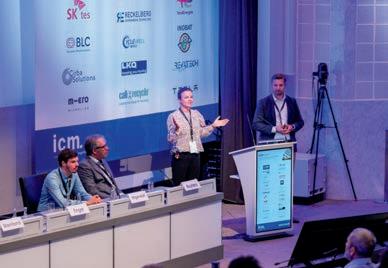
November11-14,2025,Shanghai,China
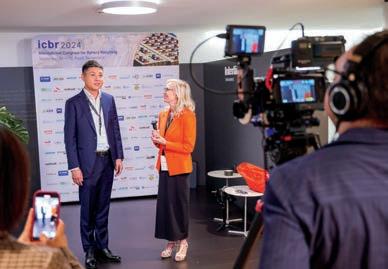

AsICMreturnstoAsia,joinexpertsfromaroundtheworldtodiscussthelatest advancementsincirculareconomy,e-wastemanagement,andsustainable resourcerecovery.Plus,getexclusiveaccesstoplanttours,offeringinvaluable insightsintoleadingremanufacturingandrecyclingfacilities.
Forthefirsttime,thethreeleadingrecyclingcongresses ICBRAsia,IARCAsia, andIERCAsia -cometogetherinAsia,creatingauniqueplatformforindustry leade rstoconnectandlearn.



Ace Green Recycling has agreed a master o take deal for lead battery material in Australia with Perthbased Enecell.
Ace said on June 16 its first commercial agreement in Australia is with the newly established lead acid breaker, a subsidiary of The Ownes Group, which services the Western Australian market.
The o take deal is part of the commercial agreement under which Enecell will sell 100% of its recycled lead material from its battery breaking recycling facility in Perth to Ace for resale.
Ace said it plans to market the lead battery material purchased from Enecell to the company’s global network.
The agreement has an initial term of 10 years, with the opportunity to renew.
Enecell’s Perth facility has a current processing capacity of more than 15 million kilos of intermediary recycled lead products and the master o take agreement covers any future expansions or modifications at the facility, including lead refining, casting, and alloying capabilities and lithium battery processing.
In addition, the companies are considering potentially installing Ace’s proprietary ‘GreenLead’ recycling technology at Enecell’s facility.
The firms said they are also exploring the possibility of deploying Ace’s ‘LithiumFirst’ technology.
The master o take agreement gives Ace the right to match commercial terms o ered by a potential end customer to purchase battery material from Enecell’s facility for its own use instead of for resale.
ACE claims its GreenLead technology replaces the smelting furnace, operates at room temperature, runs on electricity and has zero Scope 1 greenhouse gas emissions (direct GHG emissions such as those made while running boilers and vehicles) and reduces solid waste by more than 85%.
According to Australia’s Association for the Battery Recycling Industry, The Owens Group is a family-owned business with almost two decades of experience in the West Australian market to service
the ferrous and non-ferrous recycling sector.
Enecell founder and CEO Paul Owens said: “I recently had the privilege of witnessing Ace’s technology in action, and I was thoroughly impressed. I look forward to partnering with Ace to bring more climate focused recycling opportunities for both lead and lithium batteries in Australia.”
Ace CEO and co-founder Nishchay Chadha said Australia, in common with the US, has been implement-
ing strict regulations for smelting lead and has shut down some smelters that do not meet such regulations.
“This strategically positions Ace and Enecell to help meet the demand for lead by delivering a more sustainable recycling solution.
“While lead recycling remains a key near-term growth driver for Ace, we believe that Australia’s position as the world’s top lithium producer presents significant long-term opportunities for lithium battery recycling in this market.”
Ace Green Recycling announced on June 2 it had expanded its recycling partnership with Taiwanese lead refiner ACME Metal Enterprise.
Ace said metallics treatment for lead battery recycling is being added to an existing licensing agreement to increase production capacity in Taiwan to more than 17 million pounds of refined lead and lead alloys annually.
This is enough to support the production of more than one million car batteries, Ace said.
ACME has been using Ace’s proprietary ‘GreenLead’ technology since 2024, when Ace installed its first modular lead battery recycling equipment.
Ace said it now plans to install its proprietary Grid Metallics Processing System (GMPS) to enable ACME to process grid metallics from more than 65 million pounds of lead batteries per year.
The GMPS, expected to be commissioned in the fourth quarter of this year, receives dirty metallics from the lead battery breaker and separation system to produce clean metallics, which can be melted to produce valuable lead alloys.
Nishchay Chadha, CEO and co-founder of Ace, said: “This agreement enables Ace to generate additional revenues and further expand our margins. Advancing
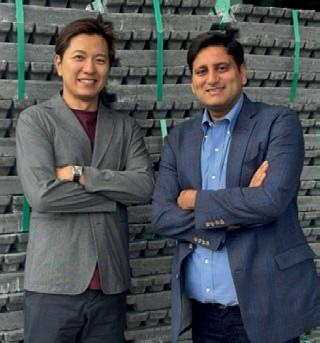
our asset-light expansion plans in this important market strategically positions us for success as we progress in our global expansion plans.”
Batteries International reported last year that lead recycled by ACME will be sold into markets in Taiwan and Japan including battery OEMs across Asia.
ACE claims its technology replaces the smelting furnace, operates at room temperature, runs on electricity and has zero Scope 1 greenhouse gas emissions (direct GHG emissions such as those made while running boilers and vehicles) and reduces solid waste by more than 85%.
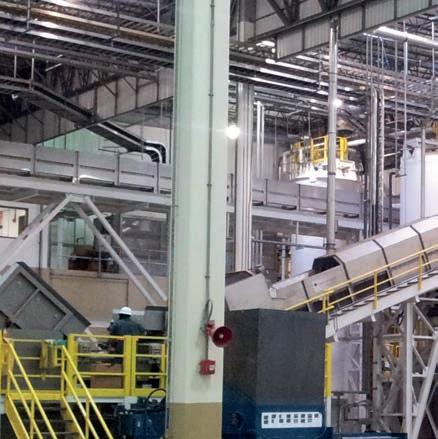
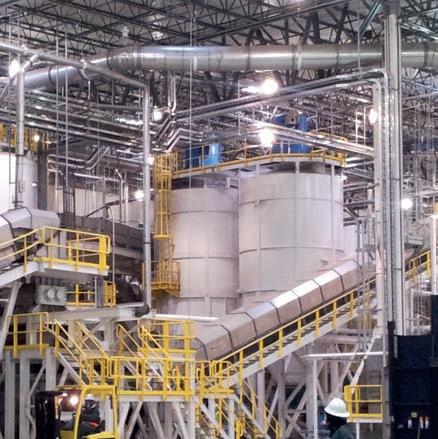




We are a French company with more than 50 years of experience in design and manufacturing equipment for recycling non ferrous metal: lead, aluminium, zinc and copper.

+ Improve productivity
+ Improve working conditions
+ Respect the environment
+ Increase recovery
+ Decrease waste

This year’s meeting of flow battery professionals from June 24-26 turned out, yet again, to have a whiff of optimistic expectation in the air. Michael Halls reports from Vienna.
The most accurate barometer on the purpose of a conference can be judged by the first day’s attendance. But not of the opening session — even the most lethargic of delegates will pop in for the first morning.
Then, after lunch and over the afternoon some will start to drift o to network, some to work deals, some just to nip upstairs and snooze ahead of a busy evening schedule of meeting clients or contractors.
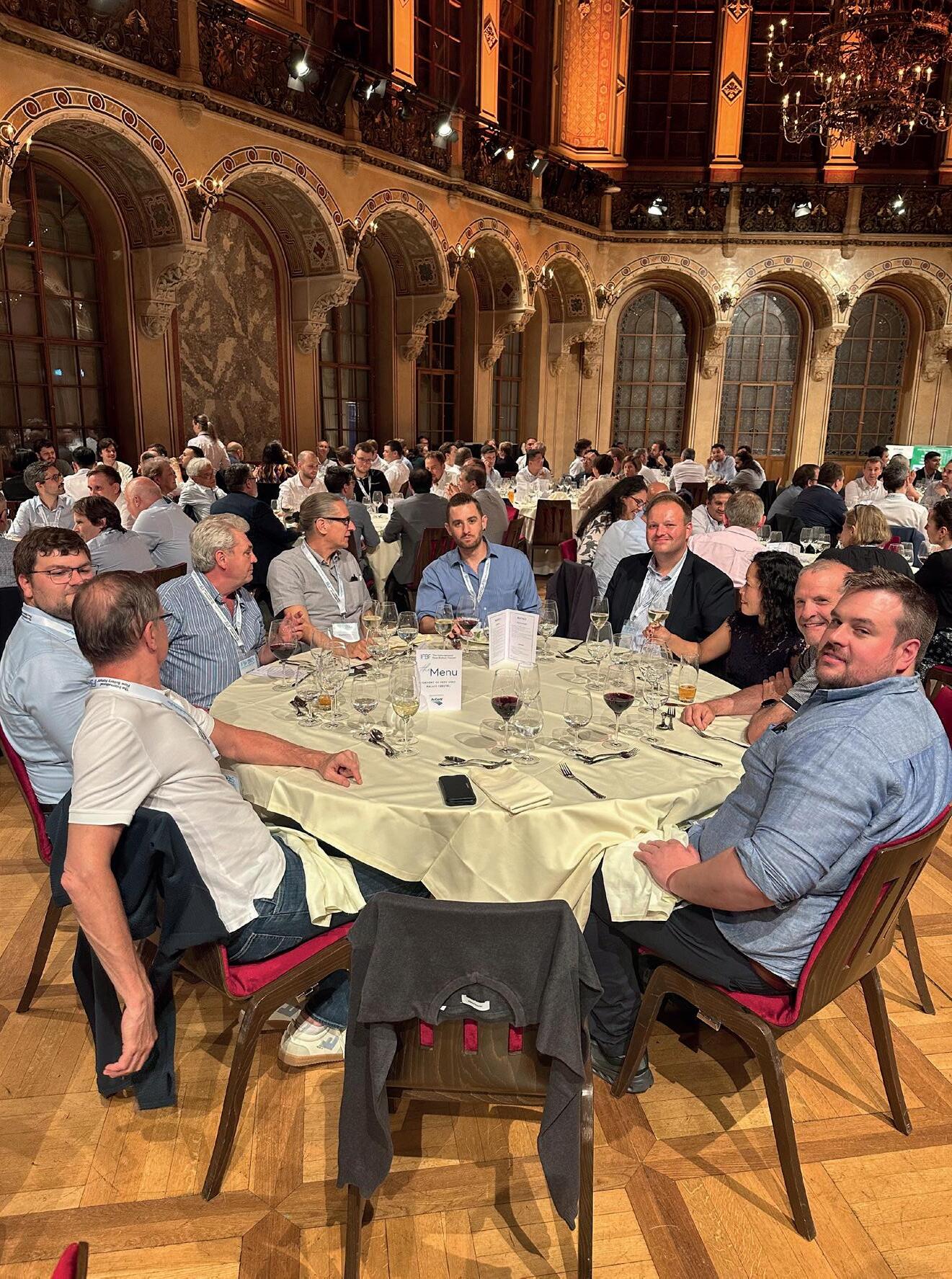
Contrast that with the attendance at this year’s IFBF meeting in Vienna. The morning presentations were packed. After lunch only a handful of delegates remained chatting, the auditorium was again full to almost over-flowing and there was no diminution of numbers by the end of the day.
The simple reason is this is an industry thirsty for content. Even desperate for it. And there was certainly a lot of content to be had.
The format of the IFBF is a straightforward one consisting of presentations looking at the industry through a variety of prisms.
So, for example, there is always consideration of how the industry is faring geographically around the world. This year part of the focus was why Europe is turning out to be a relative backwater in the flow battery universe. Part of the picture that emerged was a lack of regulatory focus.
Christoph Stelzer, COO of CellCube, the major sponsor of the event, talked about the urgency for regulatory reform: “Our industry is ready to scale,” he said. “What’s missing is a policy framework that recognises the strategic role of long-duration storage. This includes clear definitions, eligibility for grid services and market-based incentives.”
Although his analysis could equally apply to other regions of the world
“Our industry is ready to scale, what’s missing is a policy framework that recognises the strategic role of long-duration storage. This includes clear definitions, eligibility for grid services and market-based incentives.”
there is a certain irony about any European perspective. According to the Economist newspaper, “Over 2,500 new legal acts come out of the European Union machinery in any given year, or roughly one every hour of every working day.”
Presumably these have more to do with the EU target for organic farming to cover at least 25% of its agricultural land by 2030, as part of the European Green Deal and the Farm to Fork strategy, than clearer thinking about the role of flow batteries in LDES.
LDES was, yet again, the clear focus underpinning the entire conference agenda. The featured slides from a presentation by IdTechEx’s Conrad Nichols made the point.
Clearly it is not just the IFBF that is ringing the changes about LDES as the whole energy storage industry is concerned about the issue. As long ago as 2021 the Long-Duration Energy Storage Council estimated that the world needs up to 140TWh of long-duration storage by 2040 if the world’s grids are to become net-zero.
Last year the US Department of Energy announced it was awarding $5 million each to three organizations — Battery Council International, New Lab and Clean Tech Strategies — to create projects to investigate long duration energy storage.
Although the need for LDES has been understood since almost the beginning of seeking alternatives to fossil fuels — co-linking renewable energy systems with larger scale battery storage isn’t a hard idea to grasp, though it took years for it to be viewed as an automatic adjunct — the commercialisation of flow batteries has been a contentious issue.
VRFB systems, for example, require a high capex — around three times that of a similar sized lithium BESS — with a round trip e ciency of around 75% compared to lithium ion’s 95%.
However, in the longer term the cycle life and lifetime of the plant are very much in VRFBs’ favour — with a life of over 20,000 cycles and a plant lifetime of say 20 years.
Talking with delegates in the breaks it was clear that though they felt there was a need to meet other members of an industry which has a constant influx of start-ups, each presentation — even the more abstruse scientific ones such as “Micellar solubilization

for high-energy-density aqueous organic redox flow batteries” were welcomed as useful and informative in getting a sense of the big picture.
“It’s been pretty much this way
since we held the first flow battery forum in 2010,” says Antony Price who set it up at the time. “There is a real thirst to find out the latest developments in the science, technol-
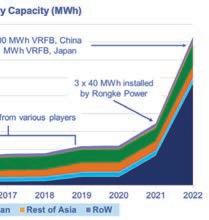
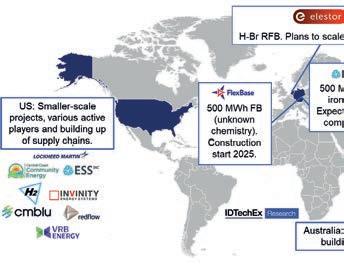
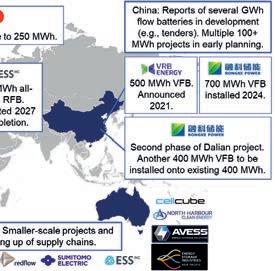
ogy and commercialization of flow batteries. The industry itself may be small in comparison with its lead or lithium counterparts but the implications of the science behind it are huge.”
The overall tone of the meeting was upbeat. Very upbeat and possibly a little more than merited given some of the ups-and-downs of the past year with, for example, the demise of Redflow, Australia’s great flow battery hope in August 2024.
CellCube’s Stelzer, COO said “The time for demonstrations is over, the time for deployment and customer value is now.” This might be fair comment for some sections of the flow battery industry — and certainly the expectation of CellCube itself which says it is operating on some 130 locations worldwide on— but given the number of startups and pilot projects still being developed was slightly premature.
Kees van de Kerk, president of Flow Batteries Europe admitted that the flow battery sector had been on a roller coaster ride over the last few years but “we have reached the inflection point. The market is there and we must now work together to be cost-e ective and scalable.”
The key theme echoed throughout the three days was, according to Patrick Clerens, who took over the running of the event from Antony Price three years ago was that |collaboration and unity among all stakeholders is essential to accelerate the deployment of flow batteries across the continent. As calls for energy security, system resilience and decarbonisation intensify, flow batteries o er a flexible, sustainable and scalable solution for LDES. But their full potential depends on building a stable policy and investment landscape.”
Clerens himself was a superb moderator managing to inject humour, perceptive questioning and an upbeat flavour to the proceedings. Other points worth making about the event must go to the extensive poster session that was studied during the co ee and food breaks. A couple of the posters mooted the idea of hybrid systems where flow battery technology would be combined with other energy storage solutions such as supercapacitors and
batteries.
system combining flow batteries (specifically VRFBs) and lithium-ion batteries o ers a promising approach for the future. This strategy leverages the strengths of both technologies: flow batteries excel at long-duration energy storage and can act as a first responder, reducing wear on the lithium-ion batteries, which are better suited for rapid response and high power output.
A couple of projects have taken this further. In 2021 the Energy Superhub Oxford combined variious entities in a public-private partnership. The participants were Oxford City Council, the University of Oxford, Pivot Power Habitat Energy, Kensa Contracting and flow battery firm Invinity Energy Systems.
Invinity said at the time: “we successfully delivered, installed and energised (in late 2021) a 2MW/5MWh battery — the UK’s largest flow battery to date — comprising 27 VS3 flow batteries, to the site in Cowley, Oxford.
Our vanadium flow battery technology sits at the heart of a total 50MW ‘hybrid’ lithium-ion/vanadium flow battery system and enables load shifting for overnight charging of fleet vehicles, the opportunity to
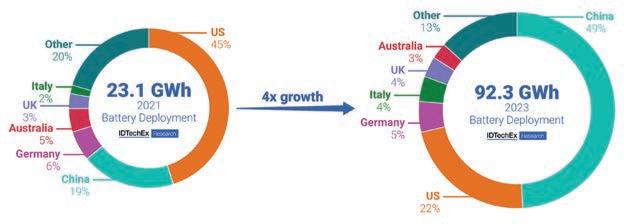
provide services to National Grid and to trade on energy markets via an innovative energy management system designed by Habitat Energy. The battery system has the ability to power over 6,000 homes for an entire day.”
This March Xing-Mobility’s immersion-cooled lithium-ion technology and cable-power firm Pacific Electric Wire & Cable’s (PEWC)
vanadium redox flow battery agreed to form a partnership to test the hybrid ESS in real-world energy scenarios in a demonstration project. Hybrid systems o er many advantages in leveraging the di erent strengths of di erent battery chemistries but the integration of the two has proven challenging and looks set to continue to be a tricky one to solve.
Masters of alchemy all: Virí Vráne, Pinflow (right) with his rouge/blance dispensing flow batteries (the wine flowed but the electrolyte was more familiar) and EKTechnologies/Scribner showing detail can — and was — with their firm at the stand.



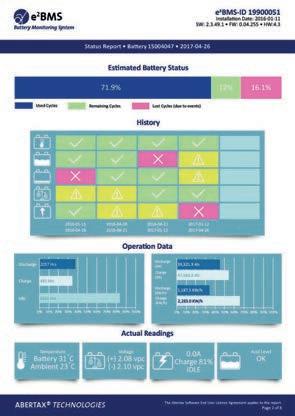







August 3-6
Orlando, Florida, USA
Battcon is the go-to conference for battery engineers, manufacturers, and end users to learn, discuss, and connect with experts and peers across data centers, utilities, and critical power industries.
Battcon is where battery engineers, manufacturers and end users come together to tackle critical power challenges — a mustattend event for professionals in data centers, utilities and other sectors relying on stationary batteries.
Stay Ahead of the Curve: Gain access to cutting-edge industry knowledge from thought leaders and experts. Stay informed on the latest trends, innovations, and future directions in the world of batteries, all from professionals shaping the industry’s landscape.
Contact www.battcon.com
E-mail: Events@Battcon.com
The 9th World Battery & Energy Industry Expo
August 8 - 10
Guangzhou, China
Committed to promoting global market trade and battery industrial chain, WBE has developed into a professional exhibition with the largest number of exhibitors in battery enterprises and the highest participation of professional visitors and foreign buyers. Relying on its worldwide influence and thousands of overseas buyers, WBE provides exhibitors with high-quality buyers resources to help enterprises get more business opportunities.
Contact
https://en.battery-expo.com/
E-mail: Jenny@battery-expo.com
Phone: +86 13416251017
Lithium-Sulfur Battery Seminar
August 15
Chicago, USA
Lithium-sulfur batteries have high theoretical energy density are showing significant promise as a next generation energy storage system.
This conference track will showcase the latest R&D advances and discuss the key challenges facing the commercialization of lithium-sulfur batteries.
Contact https://www.cambridgeenertech. com/lithium-sulfur-batteries
E-mail: ce@cambridgeenertech.com
Phone: +781 972 5400
Oslo Battery Conference
August 18 - 19
Oslo, Norway
The 7th OBD Battery Conference we’ll meet to discuss and provide a platform for technological innovations and business opportunities with the latest updates in that field in Norway and abroad. The first OBD conference took place at Grand Hotel in Oslo in 2016. The conference is the leading Battery conference in Norway, bringing together participants from leading private and public companies, start-ups, investors, academics and businesses that are interested in the battery revolution.
Contact E-mail: post@oslobatterydays.com
Phone: +47 90 73 91 59
September 2 - 5
Kota Kinabalu, Borneo
With great pleasure, I warmly welcome the delegates of the 21st Asian Battery Conference convening in Kota Kinabalu, Malaysia. This esteemed gathering takes place in the capital of the State of Sabah under the backdrop of Mt Kinabalu.
Even in “far o ” places like Borneo, the lead-acid battery plays a vital role in people’s lives, from its traditional automotive role to remote energy storage and backup systems. We must continually assess where the energy market is moving and ensure we are at the forefront of these changes. The many challenges we face do not get any easier, but I’m sure there will be rigorous discussion and debate on this and many other topics during the week.

Contact https://asianbatteryconference.com
E-mail: events@cw3.co
Phone: +61 3 9870 2611


September 10 - 12
Valencia, Spain
ICBR 2025 is the international platform for reviewing the challenges faced by the Battery Recycling Industry on a global basis. For 30 consecutive years, ICBR has brought together the international community of experts and decision makers of the entire Battery Recycling value chain, including battery recyclers and manufacturers, collection organizations, OEM’s, policymakers, materials and services providers and many more.
Contact https://events.icm.ch/event/ICBR2025/icbr-2025
E-mail: info@icm.ch
Phone: +41 62 785 10 00
Energy, Fuels & Decarbonisation Expo
September 17 - 18 Birmingham, UK
The UK’s Leading Expo for Energy from Waste, Bioenergy, Alternative Fuels, and Carbon Capture, Utilisation & Storage Solutions. Join hundreds of engaging conversations, strategic meetings, and thought-provoking presentations at this two-day event dedicated to energy management, alternative fuels, and clean energy innovations. Network with potential customers, suppliers, and partners who can revolutionise your perspective and open doors to new opportunities.
Contact www.ess-expo.co.uk/efd
E-mail: info@ess-expo.co.uk
Phone: +44 20 8126 4523
International Summit on Lithium-Ion Batteries
September 18 - 19
NewDelhi, India
Organized by IESA, with participation from government bodies and manufacturers.
Focus on cell production, supply chain, recycling, advanced chemistries.
Global warming and climate change have compelled governments and businesses to set net zero emission targets.
The transition to Clean transportation and green energy made battery storage an integral part of the government strategy.
Contact www.indiaesa.info/events.com E-mail: contact@indiaesa.info
Battery Japan 2025
September 19 - 21
Tokyo, Japan
This is an annual trade fair and conference for the rechargeable battery industry. The show will showcase a wide range of technologies, components, materials, and devices for rechargeable battery development and manufacturing. It is a great opportunity to learn about the latest trends and developments in the battery industry.
Contact
www.wsew.jp/hub/en-gb/about/bj.html
E-mail: wsew.jp@rxglobal.com
Phone: +81 3 6739 4119
Battery Korea 2025
September 22
Seoul, Korea
BATTERY KOREA will provide a variety of up-to-date information, including R&D strategies and recycling related to next-generation batteries, development status and commercialization strategies of high-performance batteries, innovative battery production and manufacturing techniques and safety enhancement, and battery management systems. It is also a venue for business networking to share information and trends on the latest EV-related technology trends, market forecasts, and investment strategies.
Contact
www.batterykorea.org/eng/main.asp
E-mail: battery@infothe.com
Phone: +82 2 719 6933
The Battery Show
October 6 - 9
Detroit, MI, USA
This premier event brings together engineers, business leaders, top-industry companies, and innovative thinkers to discover ground-breaking products and create powerful solutions for the future. With over 21,000 industry professionals, attendees will enjoy four full days of educational sessions, networking opportunities, and a chance to discover the latest market innovations from more than 1,300 exhibitors at one of the world’s largest battery technology trade shows.
Contact www.thebatteryshow.com
E-mail: clientservices.ime@informa.com
Phone: +1 310 857 7365
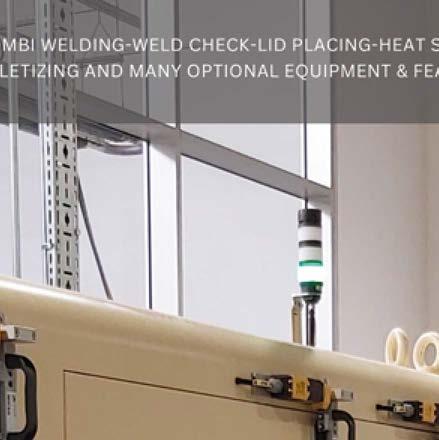
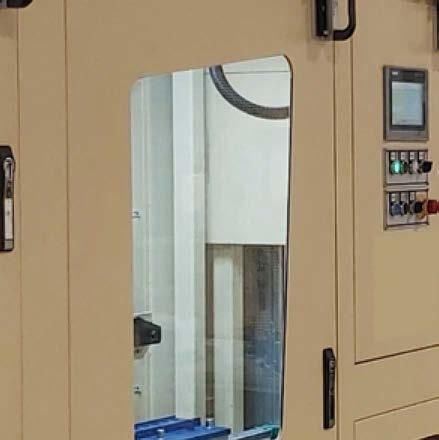
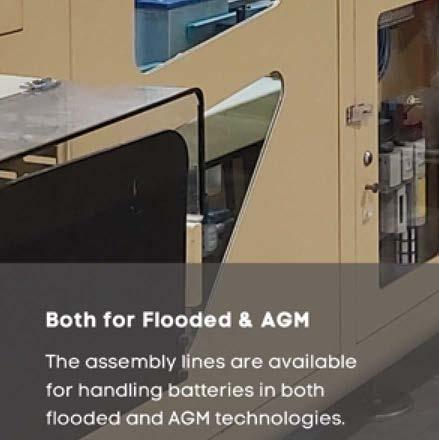

Energy Storage Global Conference 2025
October 14 - 16
Brussels, Belgium
The Energy Storage Global Conference (ESGC) o ers a unique opportunity to industry, researchers and policymakers to exchange views on key issues faced by the energy storage sector. During three days, representatives will meet in Brussels and online for the 8th edition, at Hotel Le Plaza. the future storage market, and the latest developments in energy storage technologies.
Contact https://ease-storage.eu/easeevents/ energy-storage-global-conference/ E-mail: info@ease-storage.eu Phone: +32 2 743 29 82
America
October 27 - 29
Chicago, IL, USA
Flow Batteries North America, the first dedicated conference bringing together industry leaders, researchers, and innovators in flow battery technology.
As the energy storage landscape evolves rapidly, flow batteries are emerging as a crucial solution for grid-scale storage, renewable integration, and sustainable energy futures. This pioneering event o ers sponsors unprecedented access to key decision-makers, technical experts, and market innovators who are shaping the future of energy storage. By participating in FBNA, you’ll position your brand at the intersection of innovation and commercial opportunity in one of the fastest-growing segments of the energy storage market.
Contact https://batterycouncil.org/event/flowbatteries-north-america/ E-mail: media@batterycouncil.org Phone: +1 312 245 1074
Automotive USA 2025
October 29 - 30 Detroit, MI, USA
In a era of unprecedented change, the automotive industry is undergoing a revolution. As software-defined vehicles, electrification, and autonomous technologies converge, the next decade will be shaped by those who
dare to innovate, adapt, and lead. This is the moment to redefine the future of mobility, and we invite you to be part of it. At Automotive USA, you’ll be in the company of the industry’s most influential minds. This is a rare opportunity to connect with the people who are shaping the future of the automotive sector. Our speaker faculty boasts 70+ expert thought leaders, each handpicked for their unique insights and expertise in navigating the complex landscape of technology, manufacturing, and strategy.
Contact https://events.reutersevents.com/ automotive/automotive-usa/ Phone: +44 207 375 7500


October 30 - November 1
India Expo Mart & Centre, Greater Noida
Welcome to the 3rd edition of The Battery Show India, where brilliance meets innovation! Join us as we unite engineers, business leaders, top-industry companies, and visionary thinkers from across the globe. Together, we’ll unlock the door to ground-breaking products, explore the latest advancements, and forge powerful solutions that will shape the future.
Contact
https://www.thebatteryshowindia.com/ E-mail: Pankaj.sharma@informa.com Phone: +91 99713 65776

November 3 - 5
Shanghai, China
Join the three leading co-located congresses in battery, automotive, and electronics recycling! Three congresses in one, creating a unique platform for industry leaders to network and exchange. As ICM returns to Asia, join experts from around the world to discuss the latest advancements in the circular economy and sustainable resource recovery. Plus, get exclusive access to plant tours, o ering invaluable insights into leading remanufacturing and recycling facilities.
Contact www.icm.ch
E-mail: info@icm.ch
Phone: +41 62 785 10 00
Batteries Event

November 4 - 6
Lyon, France
We’re excited to announce that preparations are already underway for the next edition of our event! After the success of last year, we’re charging ahead with even more energy to make 2024 an unforgettable experience. Our goal is to welcome over 1,200 participants, 100+ exhibitors, and 175+ speakers from across the battery industry — all while keeping the warm, family atmosphere that makes this event so special. Get ready to join us for an even bigger and better adventure!
Contact https://batteriesevent.com/
Email: laurent.pillot@batteriesevent.com
Phone: +33 9 70 26 80 67
Li-ion Battery Europe 2025
November 3 - 4
Barcelona, Spain
Li-ion Battery Europe Event 2025 will bring together decision-makers from across the entire European lithium battery industry value chain, as well as authoritative representatives from the European Union governments, to discuss and interpret the key issues currently facing the European battery industry. This summit will provide an in-depth analysis of the implementation and latest developments of the European New Battery Regulation, the Battery Passport initiative, and the Critical Raw Materials Act. It will further explore the policy support and cooperation prospects for China-Europe battery projects, and discuss how global collaboration can drive the development of the European domestic lithium battery supply chain.
Contact
https://li-ion-battery-europe.metal.com/ E-mail: horindong@metal.com
The International Battery Production Conference
November 5 - 6
Braunschweig
The IBPC2025 will take place in Braunschweig in the Steigenberger hotel. Save the date for our extraordinary conference here.
Contact E-mail: info@battery-productionconference.de
Phone: +49 531 391-94651
Hungarian Battery Days
November 6 - 7 Budapest, Hungary
The Hungarian Battery Association and White Paper Consulting have organised this prominent annual event focusing on the development of the battery value chain in Hungary and Central and Eastern Europe for 5 years in a row. The conference has quickly become the most important yearly meeting point in the region for high-level representatives of the battery industry.
Contact https://hungarianbatteryday.hu/
Thermo Management Expo
Europe
November 11 - 13
Stuttgart, Germany
Join us at Europe’s only free marketplace for thermal management systems, components, and materials. This is the only place where you can connect with the thermal industry’s leading suppliers, network with peers from across the supply chain, and gain insights from thought-leaders that are driving the industry forward. If you need any type of thermal solution that will optimise the performance and e ciency of your applications...then this is the show for you!
Contact https://www.thermalmanagementexpoeurope.com/
E-mail: Andrew.Tucker@informa.com Phone: +44 207 6607 197
Battery Japan 2025 Osaka
November 19 - 21
Osaka, Japan
This is an annual trade fair and conference for the rechargeable battery industry.
The show will showcase a wide range of technologies, components, materials, and devices for rechargeable battery development and manufacturing.
It is a great opportunity to learn about the latest trends and developments in the battery industry, and to network with other professionals in the field.
Contact https://www.wsew.jp/hub/en-gb/about/ bj.html
E-mail: wsew.jp@rxglobal.com Phone: +813673 94119
Future Battery Forum 2025
November 24 - 25
Berlin, Germany
The Future Battery Forum will once again bring together the most important decision-makers from the entire battery value system, 100 exhibitors and over 80 top international speakers from politics and business.
Contact www.futurebattery.eu
E-mail: l.p@ipm.ag
Phone: +49 511 473147-96

December 2 - 3
New Delhi, India
India’s lead and lead battery industry has been steadily growing for over six decades, playing a pivotal role in various sectors such as energy storage, e-mobility, and other emerging markets.
The sector is currently experiencing robust double-digit growth, mirrored at times by the lead recycling industry as well. However, the rise of informal or backyard lead recycling remains a significant environmental and public health concern, highlighting the urgent need for sustainable and regulated practices.
Contact https://www.ilzda.com/index.php
E-mail: ilzda.info@gmail.com
Phone: +91 11 2995 6822
Battery Asset Management
December 2 - 3
Rome, Italy
Our 2025 edition will focus on three core themes: Revenue & Trading, the Lifecycle of the Battery, and Optimisation Tools for Success. 2025 will see markets such as the Nordics, Iberia, Italy, Germany, UK & Ireland, and the Benelux region, all with market deep dives,
Contact
https://batteryeurope.solarenergyevents. com/
E-mail: SM.Battman@informa.com Phone: +44 207 871 0122
December 5 - 7
Pune, India
India International EV Show (IIEV Show) is India’s largest gathering of the Electric Vehicles Industry, it is coupled with the vast opportunities and potential challenges
of EV development in India. It is a common platform which unites engineers, mechanics, scientists and decision-makers to solve problems across the electric vehicle and advanced battery industries. This show capitalizes on the latest EV trends and exchanges groundbreaking ideas with experts and industry visionaries on trending topics including battery technologies, energy storage solutions and developing charging infrastructure.
INDIA INTERNATIONAL EV SHOW 2025 is an International Exhibition for the Growth of Indian E-Vehicle Industry, it will focus on ensuring an enabling environment for the commercialization of electric vehicles in India and realizing the EV Industry’s potential.
Contact https://iievshow.com/7th-edition-iievshow-pune/
E-mail: info@iievshow.com
Phone: +91 9560450076

Battery Intelligence
December 8 - 11
Las Vegas, USA
As the battery market continues its rapid growth, extending battery longevity has become a top priority. For OEMs, battery pack manufacturers, and electric fleet operators, the path to longer-lasting batteries lies in data-driven insights. By harnessing machine learning and advanced analytics, organizations can unlock the full potential of battery data, enabling precise performance predictions, real-time health monitoring, and continuous optimization.
Contact https://www.advancedautobat.com/ aabc-us/battery-intelligence E-mail: ce@cambridgeenertech.com Phone: +781 972 5400
Battery Asia Expo
December 26 - 27 KTPO, Bengaluru, India
A leading exhibition and conference on battery tech including lithium-ion, BMS, storage, mobility and recycling.
BATTERY ASIA EXPO: An International Exhibition on Battery Technologies and Allied Industries will bring together the latest technologies and services involved in battery technology, covering battery storage, battery management systems, fuel cell technology, lithium-ion batteries, automotive manufacturers, and more.
Contact https://batteryasia.in/index.php
E-mail: event@ies-india.com Phone: +91-9811913376
The Battery Materials Conference 2026, Stockholm
January 20 - 21, 2026
The key meeting point for experts, researchers and industry leaders in battery materials and energy storage. The conference o ers insights
into the latest developments in materials innovation, sustainability and next-generation battery technology.
Contact www.ri.se/en/news/calendar/ the-battery-materials-conference-2026
Battery Tech Expo
February 5, 2026
Lille Grand Palais, France
Bringing together professionals across the battery value chain, held in the heart of the electric valley region of France. From corporate buyers, suppliers and industry specialists, this event is where the industry meets year after year, to connect, learn and discover the latest developments and products.
Contact
https://batterytechexpo.fr/
E-mail: david.reeks@104-media.com
Phone: +44 (0) 1283 381719

February 9-12, 2026 Tucson, Arizona, USA
NAATBatt’s 2026 Annual Meeting & Conference will be held February 9-12, 2026 at the stunning JW Marriott Starr Pass Resort & Spa in Tucson, Arizona. Stay where all the action is! Booking your room at the meeting hotel ensures you’ll be right at the center of networking events, sessions, and social activities. Don’t miss out! Once the room block is full, availability cannot be guaranteed.
Contact
https://nac.naatbatt.org/ E-mail: info@naatbatt.org Phone: +1 312 588 0477
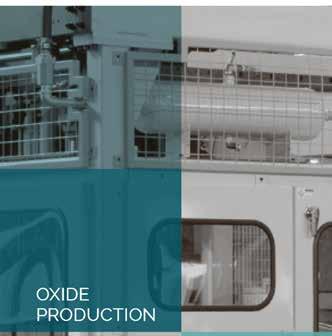


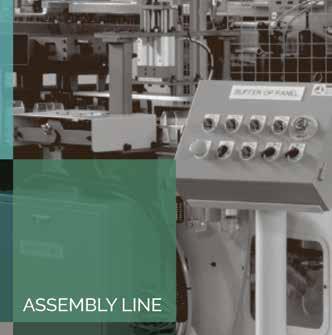


TECHNICAL

CONSULTING

























It is with sadness that Batteries International reports Roger Winslow, one of the giants of the US lead battery scene since the 1960s, passed away on June 25. He was 89 years old.
He was born on September 1, 1935, in Evanston, Illinois. His first years were spent on Long Island, New York but in 1951 his parents Harry and Irma Winslow decided to move to Corydon in southern Iowa to be farmers. Roger was to live in Corydon for the rest of his life.
His first day at the local high school, Roger met Janet Fry who was to become the love of his life. They fell in love and were married the day after his 21st birthday. The two were inseparable. In later years, as Roger’s business expanded the two would spend days together in the car — Jan would even sit in on some of business meetings — as the two criss-crossed the US.
Roger graduated from Iowa State College in 1957 having studied engineering and business. After a brief spell on active duty with the US army in New Jersey, he and Janet returned to Corydon with their first child Meg. Jan’s dad — always known as ‘LL’ Fry — o ered Roger a job at a battery firm called Voltmaster. ‘LL’ and two of his colleagues had bought Gibbs Battery (no relation to WW Gibbs who was the inspiration behind what was eventually to become Exide) in 1951.
Roger was plant employee number 11.
Although he was hired to work a variety of jobs in the battery manufacturing plant, Roger had already figured a way to increase the company’s sales. He asked to be given a sales job one week a month.
Before the first year was over, he was outselling all the other salespeople by focusing on selling to local auto parts stores rather than filling stations (the stores purchased more batteries), and by taking advance orders.
This was unusual for the time, but it was a much more e cient sales model. Roger loved selling and became familiar with many small towns (and smalltown cafes and ice cream parlours too) as he travelled around.
Meanwhile, Roger and Jan’s family was growing also. Twins Mark and Mairi were born in 1959, Laura in
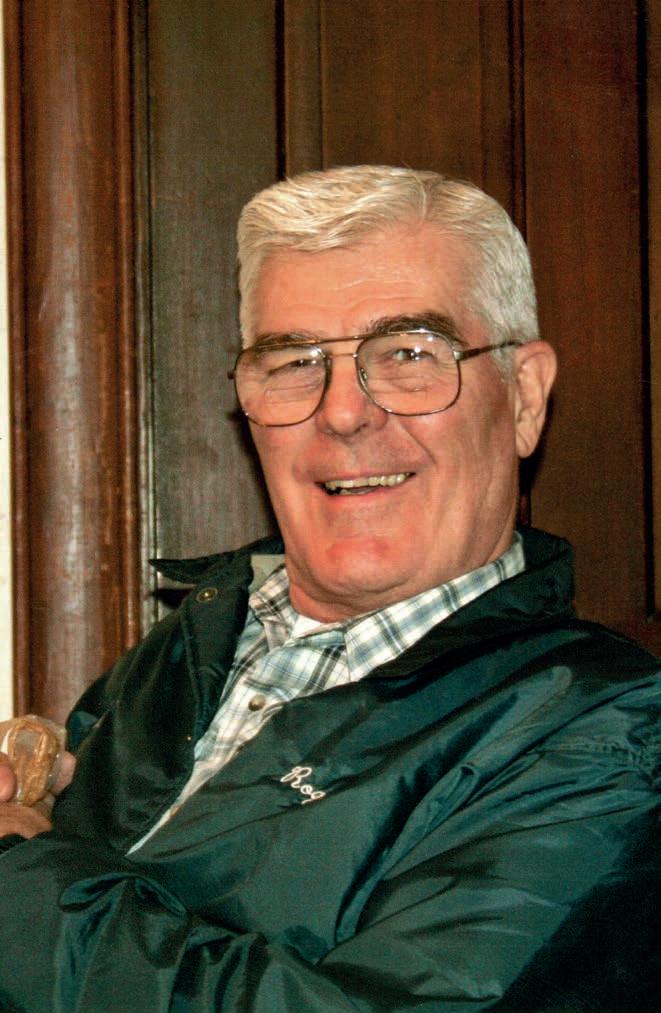
1961, and Anne in 1965. “Dad would always take us on long and interesting vacations every summer,” recalls his son Mark who worked for Voltmaster for 30 years. “But this always included at least one stop at a battery factory or lead smelter somewhere along the way!”
In 1964 Roger and a colleague formed Voltmaster Corporation, a separate battery sales company. Later, in 1972, he bought the manufacturing side from his father-in-law.
The rest is history. What had started as a small workshop in Corydon grew and grew. The first battery factory in
1953 had a manufacturing area of 4,000 square feet. When it was sold in November 2006 to East Penn this was 100,000 square feet.
As Voltmaster expanded and needed to run three shifts, Roger learned that if he slept a little longer in the morning he could stretch his workday to be in the o ce at least part of each shift.
“Of course, it helped that he was a natural night owl: many people passing by Voltmaster in the wee hours of the morning would notice Roger’s o ce light still shining,” recalls his family.
As Voltmaster grew, so did Roger’s
involvement in the battery industry as a whole.
Roger was the president of the Independent Battery Manufacturers from 1973-1975 and the leading figure into its absorption by Battery Council International. Roger was president of BCI from 1986-1988, and served on the BCI board for roughly three decades until 2006, and as a board member Emeritus until 2012.
Roger worked on establishing standards and guidelines for US battery manufacturing and shaped many of the standard approaches used today. These associations brought him many close friends as well.
“Roger had an extraordinary grasp of detail,” recalls Chris Pruitt, now executive chairman at East Penn who met Roger through BCI first and later worked with him when his firm was looking at acquiring Voltmaster. “I knew him very well. He was a great guy to talk, very friendly and very knowledgeable.
“Take-over talks take a long time and I remember getting back home after a long day and Roger rang me about 9pm saying ‘Come on Chris let’s go out and have an ice cream’ — cherry flavoured I seem to remember — and we talked for another couple of hours and broke the back of the negotiations.”
His family recall that ice creams were a passion of Roger’s and that in the endless criss-crossing of America that his work entailed — he drove since he didn’t like flying — he knew the best ice cream parlours across the country.
After the sale of Voltmaster he bought Richardson Molding, a plastic injection molding firm, with plants in Mississippi and Indiana, which he later sold to Stryten.
For 13 years Roger was captain in the US Army Reserve, first for Company A, 328th Engineer Battalion, 103** Infantry Division in Centerville, IA, then as Communications O cer of the 372rd Engineer Group, XIV Corp in Des Moines. He had tremendous respect amongst the men with whom he served.
He was also a well-known figure in the community. When he stepped in to adjust the spacing of the costumed children in the Corydon Old Settlers kiddie parade he found himself recruited for the Old Settlers Committee. He served for 25 years, 20 as president.
Zipping around on a bicycle, Roger became a familiar sight during every
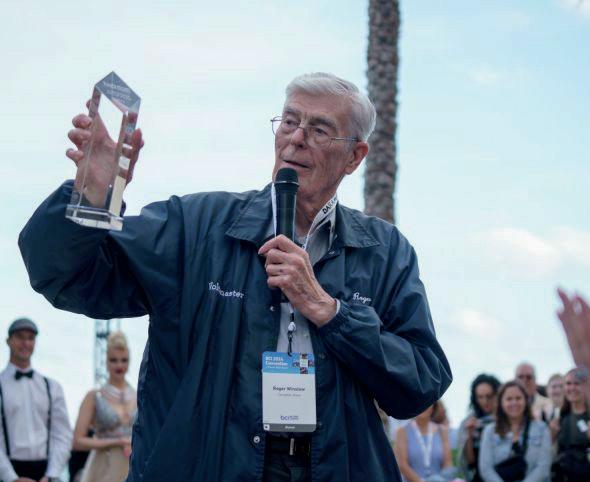
parade. He was also a longtime Boy Scout leader, served as a Drake Relays o cial for 50 years, and was active in Rotary and the Corydon United Methodist Church.
He also played a significant part in the philanthropic life of Corydon. In 2018 he set up the Winslow Family Foundation which primarily funds scholarships and academic buildings. He was passionate about both giving and learning all his life.
Numerous tributes have been paid to him for his warmth and contributions to the battery industry.
Chris Pruitt, speaking for East Penn, said: “We were saddened to hear of Roger’s recent passing. He had been a dear friend to East Penn for many years, even well before we acquired Voltmaster. His care and compassion for the employees of his company was clearly evident and deeply admired.”
Jimmy Stewart, VP for sales at MAC Engineering said: “I’ve known Roger for 40 plus years. He was a humble man who was open to showing his accomplishments at Voltmaster to me even though I was working at his competitor, Exide, at the time. He shared with me his dreams of the plant. I admired how much he did within the plant with so little capital spending.”
Roger was honoured by Battery Council International last year for his exceptional contribution to the lead battery industry.
“Roger was a driving force behind the evolution of BCI as the worldwide trade association moved more
aggressively into public policy, standard-setting and other pressing issues,” says Roger Miksad, BCI’s president. “In the mid-1960s, Roger led the formation of the modern BCI Group Size system, and was instrumental in the formation of a very active BCI Data Book Committee.
“BCI’s success depends on leaders who are willing to look beyond their individual businesses to the needs of the industry as a whole. Roger’s many years of dedicated service stands as an example to us all. He has helped shape the path that we are on today.”
Roger was never stuck in the past. Speaking to Batteries International at the time of the BCI award he said the progress the lead battery industry had made over his lifetime has been enormous. “Quite simply our batteries are better than ever,” he said. “We’re using half the lead and doubling the power compared to just 30 years ago.”
Roger is survived by his wife of nearly 70 years; his children Meg Ma tt, Mark Winslow, Mairi Winslow of Indianola, Laura Bertelson of Winterset, and Anne Winslow of Des Moines; his 13 grandchildren, 14 great-grandchildren, nieces, nephews, and many friends and relatives.
A tribute read at Roger’s funeral said much about the man. “Roger Winslow was an intelligent, analytical, caring man, someone people could — and did — turn to when things got rough. He enjoyed people and was interested in them. He wanted the best for everyone.”

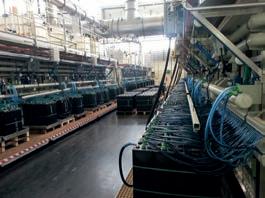

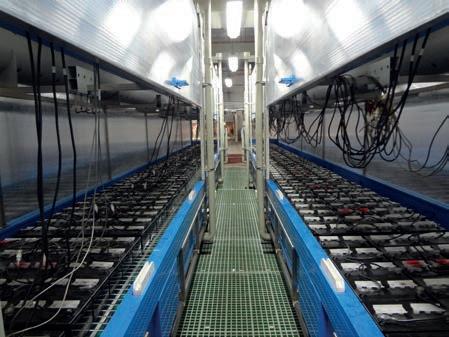
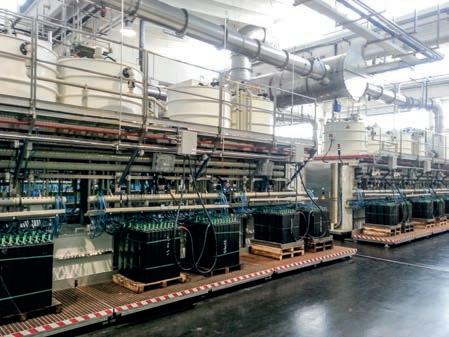
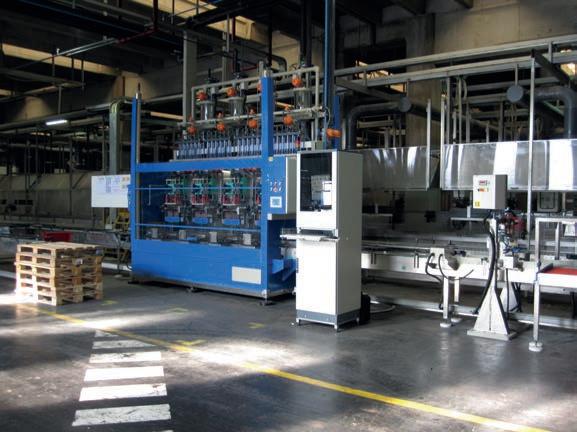


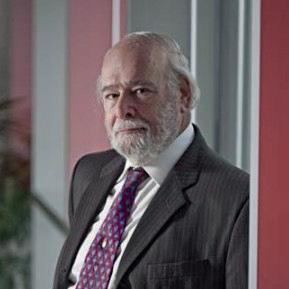
It is with great sadness that Batteries International reports the death of Imre Gyuk, who served most recently as the director of Energy Storage Research — chief scientist — at the US Department of Energy.
Gyuk died on July 24, 2025, aged 85. A number of tributes have been made to the man remembered as one of the great figures in the field of energy storage.
After taking a BSc from Fordham University, Gyuk did graduate work at Brown University where he was research assistant to Nobel Laureate Leon Cooper working on superconductivity.
Having received a Ph.D in Theoretical Physics from Purdue University, he became a research associate at Syracuse. As an assistant professor he taught physics, civil engineering and environmental architecture at the University of Wisconsin.
Research interests included the theory of elementary particles, metallurgy of non-stoichiometric alloys, non-linear groundwater flow, and architectural design using renewable energy and passive solar techniques. He became an associate professor in the Department of Physics at Kuwait University where he organized an international workshop on the environment of the Arab Gulf, and was a member of the emir’s taskforce on technology and the future of Kuwait.
After six years in the Gulf, Gyuk joined the Department of Energy to manage the thermal and physical storage program. Later he managed DOE´s research on biological e ects of electric and magnetic fields, before moving on to direct the DOE’s energy storage research program,
which funds work on a wide variety of technologies such as advanced batteries, flywheels, super-capacitors, and compressed air energy storage.
In its online tribute, NAATBatt said Gyuk made his mark on the world and on those who knew him in industry.
“Today storing electricity on the grid to use when needed is a mainstream technology with a market size in excess of $265 billion. It is therefore di cult to appreciate how novel, and indeed how absurd, the concept of large-scale electrochemical storage of electricity was 40 years ago.”
NAATBatt said that was the world a small band of dreamers stepped into with Gyuk at their head.
“Any visitor to his tiny o ce, buried deep within the bowels of the Forrestal Building, could quickly sense the bet against being placed by policymakers at the time.”
What Gyuk did with energy storage at the DOE may well be a template for how to do it right.
He investigated a wide range of energy storage technologies, some of which worked and some of which were less successful, NAATBatt said. But he focused heavily on demonstrating the feasibility of these new technologies in the real, commercial world.
Energy storage became a mature technology not so much because electrochemistry improved, but because Gyuk identified and funded real-world demonstration projects that de-risked the technology in the eyes of those in industry who would eventually deploy it.
The de-risking of energy storage on the grid is what transformed a small band of dreamers into an important industry that today provides the backbone for delivery of clean and reliable electricity to the American people and increasingly to people all around the world.
“This transformation was Imre’s great accomplishment and will be his great legacy.
“NAATBatt extends its condolences to Nora, to the rest of Imre’s family and to all of those in government and industry who had the privilege of knowing this interesting and extraordinary man. Rest in peace.”
In his tribute, retired Sandia National Laboratory engineering program manager Daniel Borneo described Gyuk as a true maverick and a great friend, saying he had had the privilege and pleasure of working with and for him for the last 16+ years of his own career.
In around 2008, Gyuk had the idea to up the energy storage game by “putting steel in the ground” and starting the Electrical Energy Storage Demonstration program.
“It was his vision that, to make energy storage ubiquitous, the DOE needed to help get projects implemented and not just write papers about the subject.
“Through Imre’s vision and fortitude, he was able to leverage his program dollars to help numerous energy storage projects become reality.
“When I first joined the energy storage group in 2007, I gave the program two years before it would be mothballed. Boy was I wrong! Through the e orts of Imre, not only did the program continue, but grew steadily over the years to become what it is today.”
On Borneo’s retirement in 2023, the program budget had increased tenfold since 2007. He said: “While not all our projects succeeded operationally, they provided valuable lessons on necessary actions and implementation.
“Imre became a father figure to me. At times he could be a real ballbuster. But, like a fine wine, he mellowed with age and gave me inspiration (yes wine does that to me also).
“Over the years, the education and wisdom he provided an old steel mill electrician/construction dude, turned me into something better (at least I would like to think).”
In a further tribute, clean energy organization EarthEn said Gyuk’s decades of leadership at the DOE had shaped the modern era of gridscale energy storage.
“Gyuk’s work has directly influenced the path we are on at EarthEn. His insights and advocacy have fuelled our conviction that energy storage isn’t just a technology, it’s a foundation for energy justice, resilience, and climate progress.