Featuring
Bajema Family S Lecocq Family S Heeringa Family A supplement of the Ferndale Record and Lynden Tribune | July 2026
x Pioneering Families Whatcom County








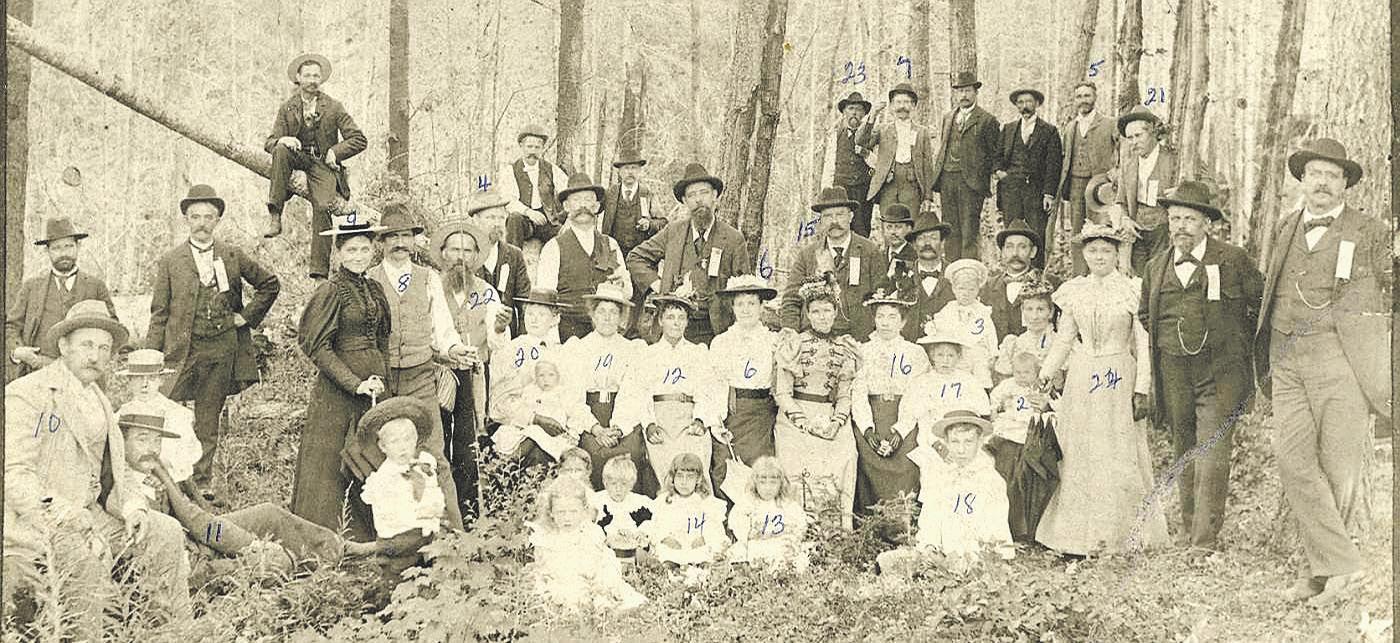
Bajema family descended from brothers who came to Lynden
Charles
and Sam Bajema helped clear Bender
Road to the border, were in butchering and leather trades
By Cal Bratt For the Tribune
The migration story often involves a head of household seeking new opportunities for himself and a family. In the case of the Bajema clan of Lynden, it is a story of four brothers who made their way to the Pacific Northwest in the decade around 1900.
Their birth home was a farm near Warns in Friesland, the Netherlands. John (Jan in Dutch) was born in 1872, Charles (Tjeerd) in 1874 and Sam (Sybren) in 1876, to a set of parents who never ventured west from the waters of the Zuiderzee they looked out upon.
Barney (Bauke) was a halfbrother born a decade later. His mother did eventually emigrate with him and came to Lynden.
The Bajema family can cite exactly when that name was taken. It was registered on Dec. 29, 1811, to fulfill the orders of Napoleon, then occupying the Netherlands, that everyone must take a surname. What Baijema (Dutch spelling) means is less clear, maybe related to the word for bay.
The brothers John and
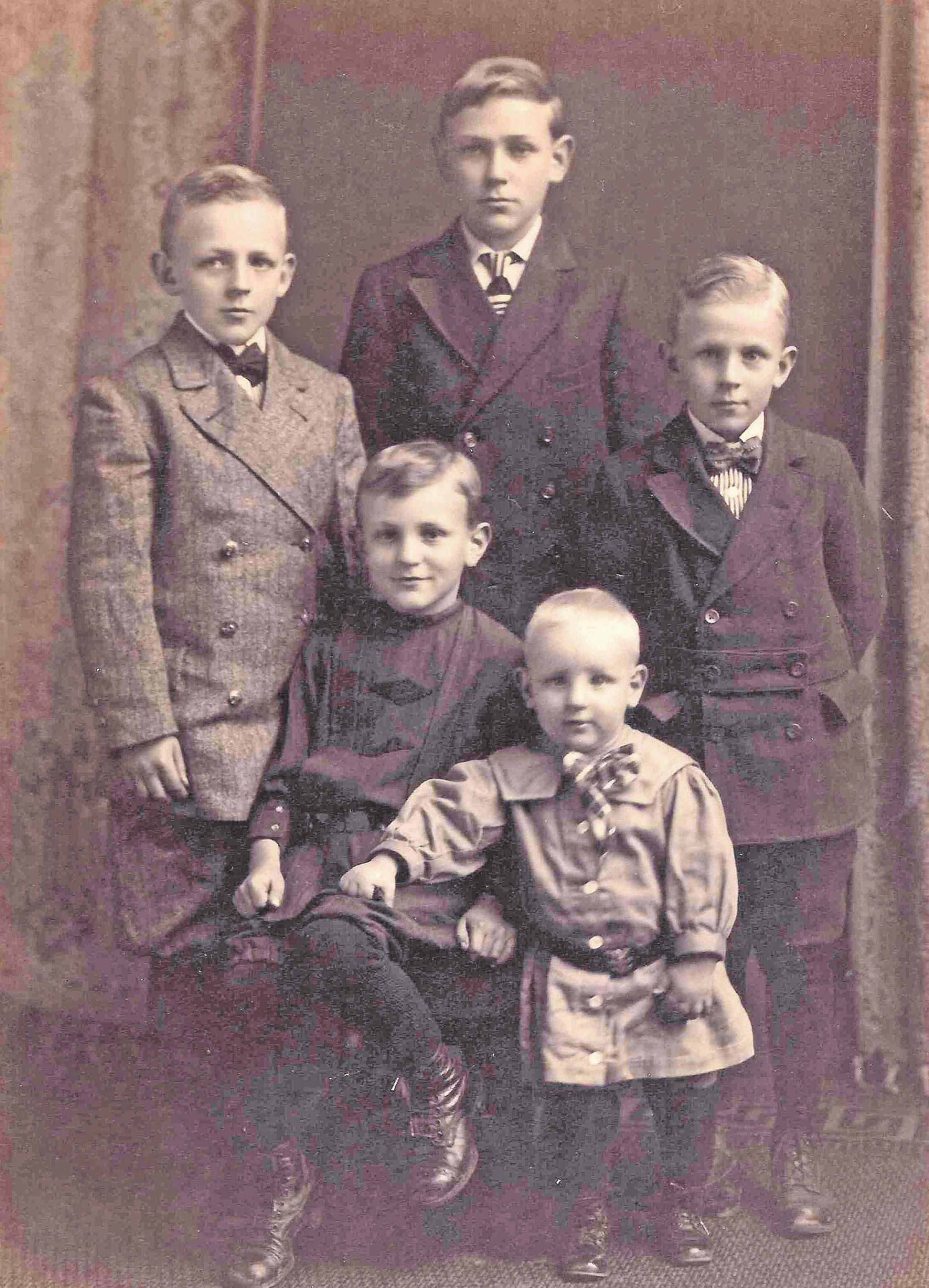
These were the five sons of Charles Bajema, as young boys, in age order Ray C., Sheldon, John, Harry and Simon. (Courtesy photo)
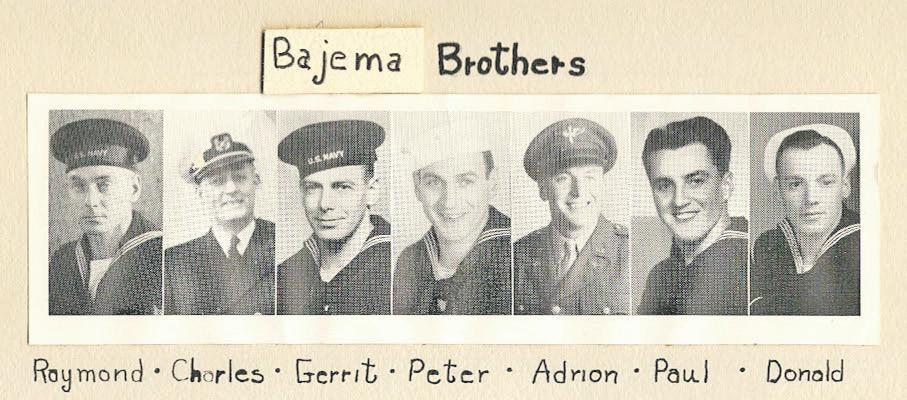
Seven sons of the John Bajema family, left to right here in age order, were all serving in World War II in 1943 at the same time. (Courtesy photo)
Charles, orphaned while they were in their teens, sailed for America and arrived at New York’s Ellis Island in March 1894. Brother Sam, age 18, followed two months later in the company of other relatives.
According to Dorothy Koert’s “Portrait of Lynden” book, the three unmarried brothers spent brief time in Iowa, South Dakota and Minnesota, probably in Dutch-immigrant settlements in those states. John, the oldest, married Jacoba DeSmit in Michigan, and they lived there and started a family from 1897 to 1906.
Brother Charles managed to learn English and he found himself a wife, Dina Stuurmans, while working for a farmer in LeMars, Iowa, according to a family history book created by Jeannine Bajema Spoto, of Everson. Charles then moved to Chicago and worked for the Pullman company building railroad passenger cars. While there, a first son, Raymond C., was born to Charles and Dina in 1899.
It was the youngest brother, Sam, who first came to Lynden, Washington, in the far west, in December 1899. His marriage in 1901 to Jennie Post was the first to be conducted in the young First Christian Reformed Church by Rev. A. J. Brink, Koert reports. Their first child, Ray S., was born in 1902.
In using the name Ray (also in the John Bajema family), the brothers were following a Dutch tradition that called for
naming a first son after the father’s father (in Dutch, it was Ruurd). To remedy this seeming confusion, the three Ray cousins took the middle initials of their fathers, so J, C and S, which was important in distinguishing them.
The plans of brother Charles Bajema were linked to what Dina’s brother Sam Stuurmans did. At first, in 1900 the two families moved from Illinois to Sunnyside, Washington. But when mom found baby Ray covered with dust in his bed after a dust storm, it was time to move yet again to a more pleasant climate, and that place was Lynden, joining brother Sam Bajema there in 1902.
Only the John Bajema family was left, now numbering four children, to move from Michigan to Lynden in 1906. In Washington nine more children were born, until there were 10 sons and three daughters, who all lived to adulthood. Of note, seven of those sons were serving in the U.S. military in World War II at the same time.
By 1907 Barney, now 22 in the Netherlands, was persuaded that he should join his older half-brothers in Lynden as well, and he took his mother along.
The Nooksack Valley land was still being cleared of its timber to make way for farming. Soon after their arrival, brothers Sam and Charles Bajema, with Tom Heeringa and two other men, got a contract to clear what is today’s Bender Road from
the Badger Road to the Canadian border. Some Bajemas and Heeringas would later farm in the vicinity.
Another of the early stories is that Charles, who did butchering, peddled meat to area logging mills and camps with his horse and wagon every day of the week except Sundays. “One day during a delivery, Charles got very sick with excruciating pain,” according to the Spoto book. “He had a ruptured appendix and needed a 4-horse ambulance to take him to the hospital for surgery and a three-week stay.”
The John Bajema line
Although large, the John Bajema family is the one that mostly left the Lynden area. By the death of their mother Jacoba in 1957, only two sons remained in Lynden. Six children were elsewhere in Whatcom County and five more were scattered beyond.
John himself worked as a farmer and in other jobs. The family home was a small farm at Greenwood (Wiser Lake Road) south of Lynden.
John died in 1960. The children of John and Jacoba were: Ray J., Jenny (married name Post), Dingemon, Charles, Sam, Neil, Garret, Peter, Adrian, Paul, Donald, Nellie (Komen) and Ruth (Myers).
The uniqueness of 10 sons, with an
See Bajema on next page
Bajema: Brothers came to Lynden
Continued from 5
age span of 24 years, and seven of them serving together in the same war, is the characteristic that many people remembered of the John Bajema family.
The Charles Bajema line
After Raymond C. had been born in Chicago, Charles and Dina had five more children born in Lynden: Sheldon, John, Harry, Simon and Grace (Sittser).
Dina Bajema was a very petite woman, writes greatgranddaughter Jeannine Spoto, and after the birth of five sons she developed a bad asthma condition that diminished her health. Dina died in 1920 when daughter Grace was only 4. Within a few years, Charles remarried to Dena Bierlink, who brought her four children into a blended family.
At various times in his life Charles cleared land, built roads, worked in a butcher shop, became a partner and delivered meat using a team of horses and a wagon. “The wagon had meat hanging in it and people would come up to the wagon and Charles would cut the meat for them,” according to Spoto.
He built a four-room house at Eighth and Liberty streets in Lynden, then around 1911 the family moved to a farm on today’s Hampton Road. Flooding of the nearby Nooksack River apparently was as much a problem then as now.
Granddaughter Diane Sittser Veltkamp heard stories from her mother Grace of having to tie a rope from house to barn during floods, of moving furniture upstairs and of scraping out the mud
after floodwater receded.
In 1920 the family moved to a house and acreage in town, 1703 Main Street, and Charles chicken farmed. From there, student Grace walked to school having to pick up her skirts to cross Fishtrap Creek on the way.
Charles lived to age 65. By contrast, oldest son Ray C. lived the longest in the entire family, almost to age 98. He married Johanna Van Mersbergen in 1924 and they had three children: Dewey, Charlotte and Alvin. Ray farmed and drove school bus. Dewey and Alvin also dairy farmed.
Ray C. was very kind and solicitous of his only sister, Grace. “My mom never knew her mother. He could tell (Grace) stories,” Diane Veltkamp said. Ray visited Grace when she moved to Michigan for her education and became a nurse.
His grandpa Ray C. was very concerned for the wellbeing of Grace’s two children, Diane and Jerry Sittser, as well, Harvey Bajema said.
Second son Sheldon Bajema, born 1903, became a doctor and lived at Lake Whatcom.
Third son John Bajema, born 1905, became a pastor, was the founder of Grace Baptist Church of Lynden and also served at a mission in Portland, OR and a pastorate in Nampa ID. “He had a real heart for the disadvantaged,” Veltkamp said.
Fourth son Harry, born 1907, worked in the grocery and dairy businesses and cut meat, as did fifth son Simon, born 1911. One of the places of employment for some Bajemas was the Elenbaas Creamery Cooperative.
It was in these families
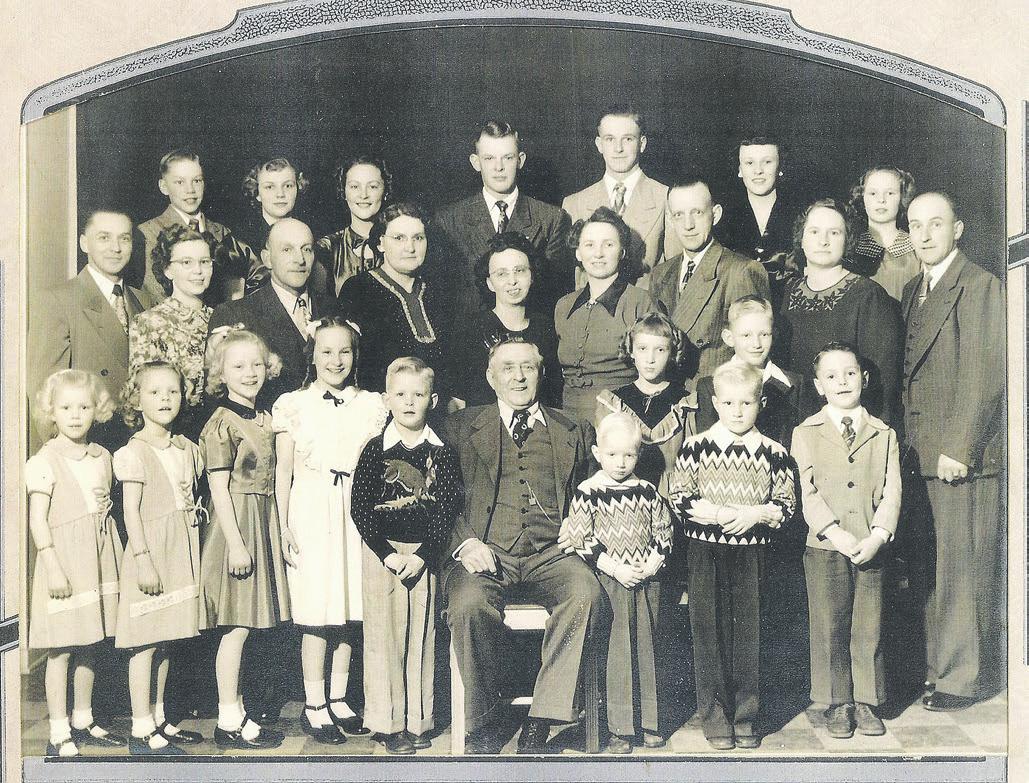
Circa 1950 Sam Bajema sits surrounded by his children and their spouses and a bunch of grandchildren. Only four in this photo are still alive. (Courtesy photo)
especially – but among many Charles Bajema descendants – that the male vocal talent came out. John, Simon, Sheldon, Harry, Ray and Dewey Bajema all sang in groups, and some sang as soloists. Scott Bajema was a later Lynden soloist.
Grace Sittser, born 1916, became director of nursing at the Lynden Christian Rest Home, now Lynden Health Care Center.
Cliff Bajema, son of Simon, became a pastor in the Christian Reformed Church. (This branch restored the “j” sound of the family name.) Cliff’s son Shane is a Lynden-area developer, and Shane’s son Cole set basketball records at Lynden Christian High School and went on to play at the university level.
The Sam Bajema line
The first of the brothers to come to Lynden at age 23, Sam Bajema had begun to learn the shoe and harness
trade in the Netherlands. While he also learned here how to clear land and work in a mill, and he farmed north of Lynden, by 1930 Sam was in the Bajema & Roos partnership in town that dealt in leather goods.
Grandson Ken Faber remembers the shop in the north 400 block of Front Street, with shoes at the front. “I can still see the saddles and harnesses and yokes in the back,” he said. Ken felt that he was often a “go-fer” running errands for his grandpa.
Sam was a gregarious man. He also was an oil painting artist on the side, of which Ken got about a dozen paintings.
“There’s a gene out there of artistic,” says Faber, who was himself in the building painting business, but has a granddaughter, Josie Hendricks, who has won shows and accolades in art.
True to tradition, Sam’s oldest son was named Ray
S. Bajema, born in 1902. The other children in the family were: Rena, born 1903; Gertrude (Faber), 1905; James, 1907; and Thys, 1909. The youngest, also known as Ted, was the one, with his wife Alice, who ran Bajema’s Market at the corner of Main and Third streets.
Through this family comes a tangle of connections to many people who still live in the Lynden area, some bearing the names Vander Veen, De Vries, Kleindel and De Groot as well as Bajema.
Ray S.’s late son Roger operated the family dairy farm on East Badger Road just north of Lynden.
Diane Veltkamp remembers that, although she was of the Charlie family, when she made her summer visits to Lynden from Grand Rapids in the 1950s, it was the same-aged second cousins of the Sam family that helped make her feel included in the clan.
Looking back on generations of the past in general, it is striking “how the families had to manage so much death,” the loss of spouses and children, and remarriages and blended families, Veltkamp said. Children stepped up to do what needed to be done, sometimes forfeiting their own preferences and schooling, because that was the honorable thing to do, Spoto said.
Through their life experiences, they came to their own conclusions about what their Christian faith meant, Veltkamp said.
The Barney Bajema line
Barney Bajema settled on the Pangborn Road where he cleared land and dug ditches. He worked at Klocke’s mill along Grover Street and then for 34 years at the Lynden Darigold plant.
His children were Richard, born in 1917; Bert, 1918; Ted, 1920; Stanley, 1925; and Janette (Powers), 1927. Stanley died at age 2 in a scalding accident.
Richard Bajema was a carpenter and cabinet maker in the Lynden area.
Bert Bajema had 39 years of service with the IBM Corporation in Seattle.
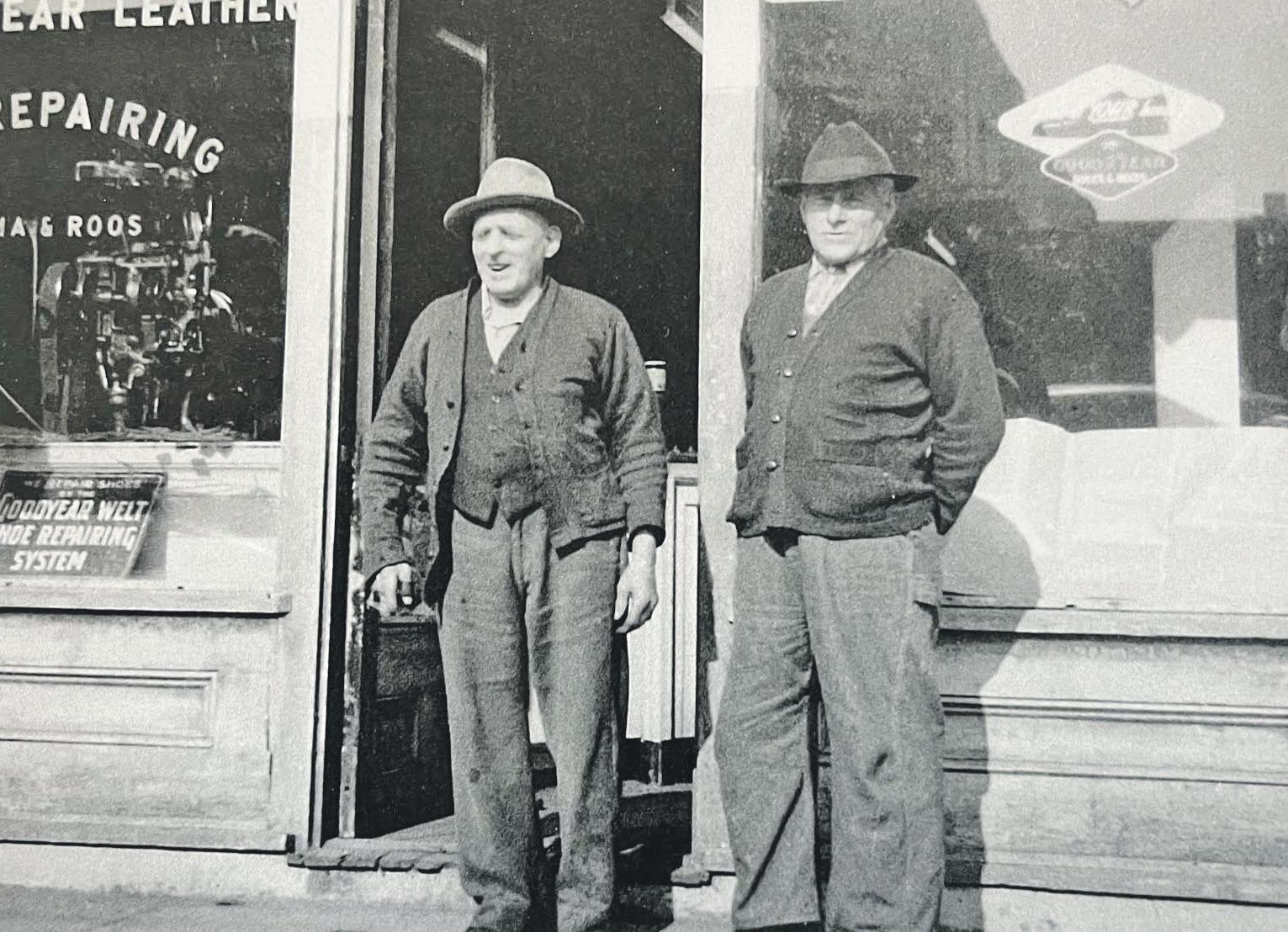
From left, Sam Bajema stands in the doorway of his Front Street shoe and leather shop, circa 1930s, with his brother John Bajema looking on. (Courtesy photo)
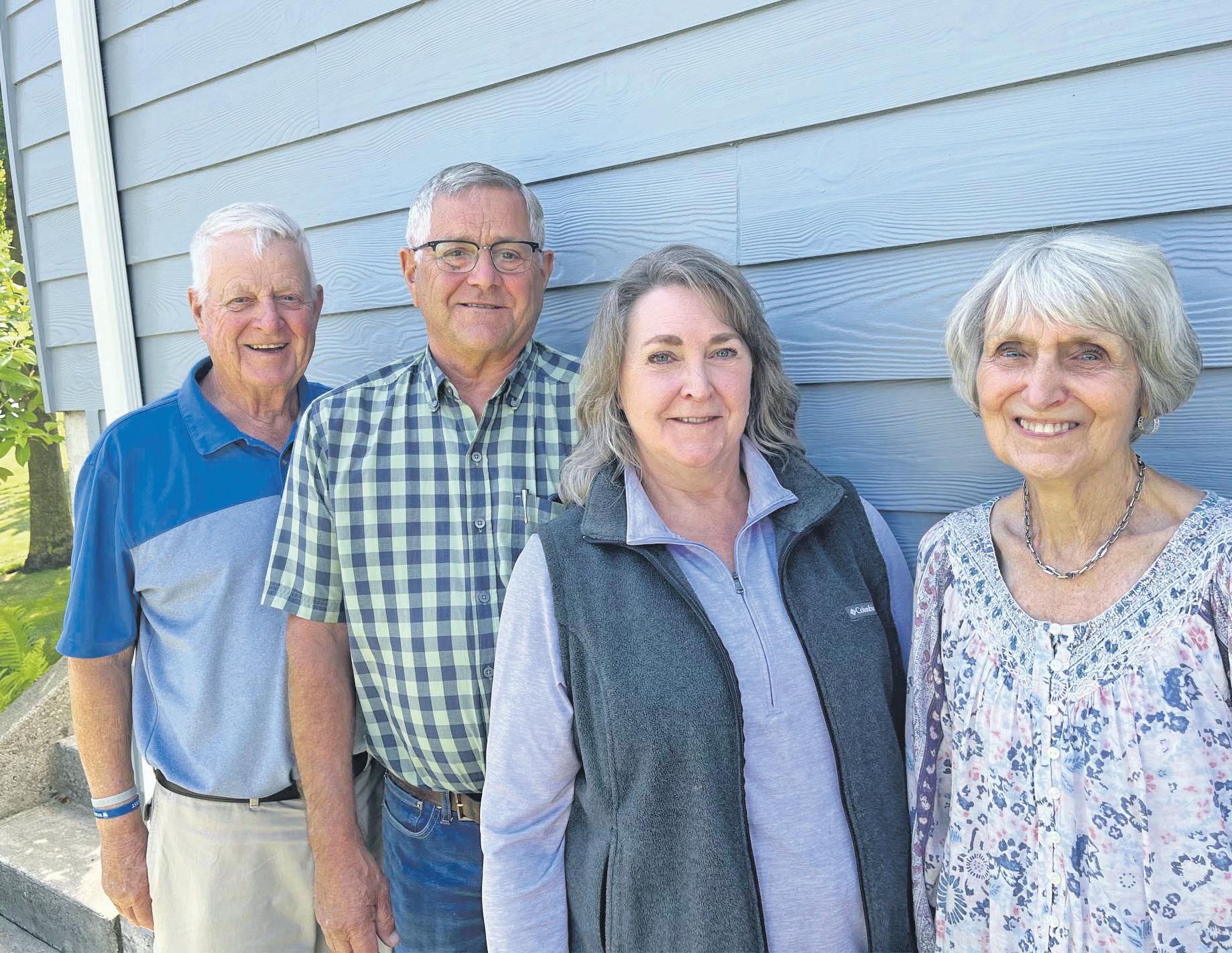
Bajema clan descendants living locally include, from left, Ken Faber, Harvey Bajema, Jeannine Spoto and Diane Veltkamp. (Cal Bratt for the Tribune)
Multiple LeCocqs in office
Husband and wife both served at same time; LeCocq noted for getting rid of legislative liquor closet
By Elisa Claassen For the Tribune
During the 1950s, two members of a Lynden family held elected office. Irwin LeCocq, Sr. was mayor of Lynden for more than a decade. His wife Mary was a state legislator for a short time and also oversaw the local Republican party.
The LeCocqs, according to research by Liesbeth ten Hoeve Almendarez, showed the LeCocq family migrating from France to Belgium and then to the Netherlands. She said the LeCocq last name has also been spelled LeCox, Lecoc or Le Coq at times.
When financial and religious struggles heightened in the Netherlands in the 1830s and 1840s, it produced high taxes, high rent and was accompanied by flooding, severe winters and poverty. It was a strong incentive for families to seek a new life in the United States.
Within the U.S., the family continued to move between states: Iowa, South Dakota, Frank Jr. was a farmer, a banker, a county commissioner and the first representative
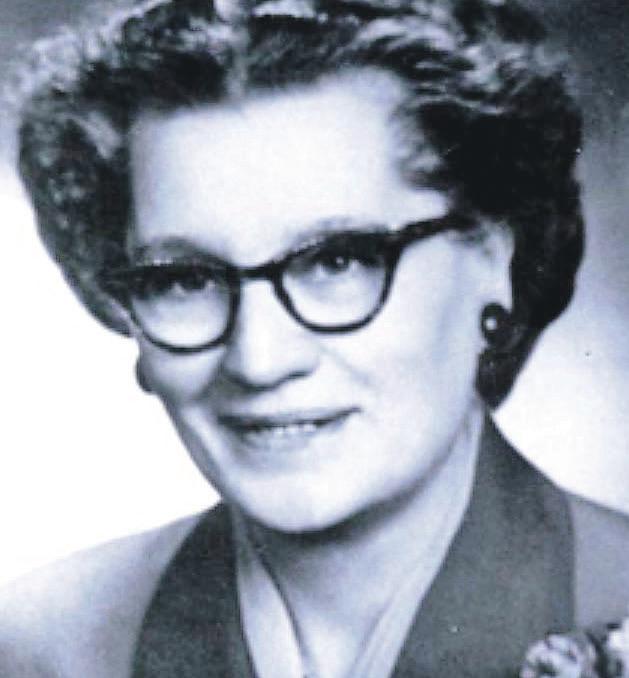
A photo of Mary LeCocq from a portrait studio. Mary was referred to as Mrs. Irwin LeCocq in legislative records in the 1950s. Although she served but one term, Mary made her presence known.
(Photo courtesy LeCocq family)




of Douglas County in the state’s legislature (1889). Yet, his family decided to move on from that.
The family valued education and their church, the Christian Reformed denomination. By the fourth generation of the LeCocqs, they had made their way to Lynden.
Several siblings found their niche. Brother Ralph became a farmer and a lawyer in Lynden. Father Frank Jr. served as justice of the peace and police judge until he died in 1930.
Peoples Bank
Mary was born to Reverend John and Irena DeBeer and married Irwin, Sr. in 1918. While Mary initially taught school with a teaching certificate, she went back to complete her bachelor’s degree.
From running a Ford car dealership for a time, Irwin, Sr. switched careers in 1921 to partner in then-Peoples State Bank (the name was shortened in recent years). The location was in the building where Lynden Paint and Floor is now. He also joined the others and served his community as mayor for over a decade, starting in 1948.
When Irwin, Sr. stepped aside from bank leadership, it passed to his son, Irwin, Jr. In 1987, Charles LeCocq, Irwin’s only son, became president and CEO. Charles’ son Ryan LeCocq also worked at Peoples in different capacities within commercial lending.
Mary LeCocq leadership
Charles LeCocq was a toddler during his grandmother’s legislative stint. However, he said he thought Mary’s legislative career may have been longer had she found ways to compromise and work with the other legislators on issues.
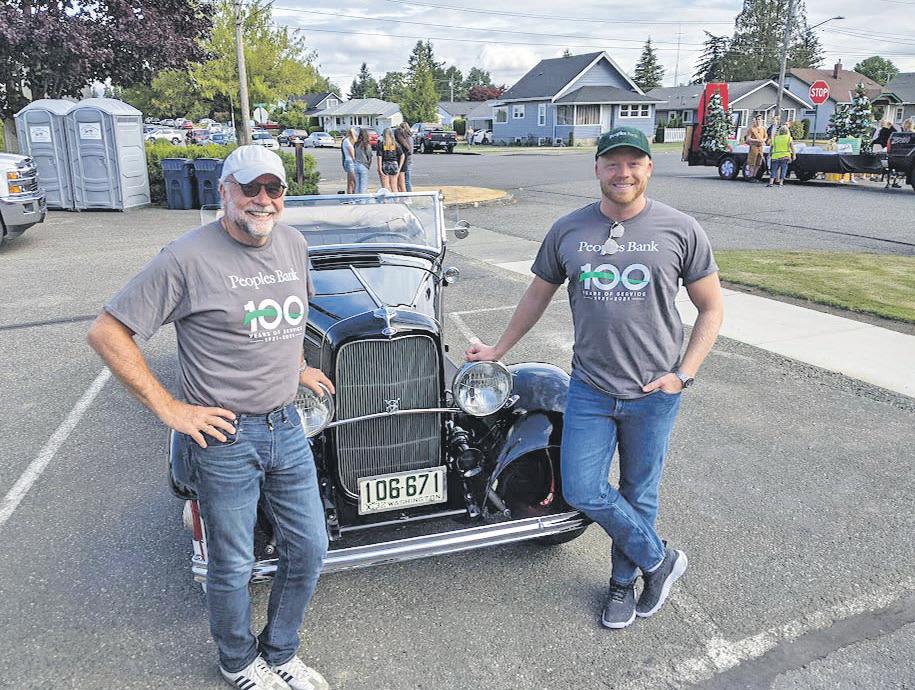
Charles LeCocq and son Ryan LeCocq rode in the grand marshal position in the Lynden Farmers Day Parade in 2021 followed by Peoples Bank employees. Charles and Ryan are the current generation of the LeCocqs. (Elisa Claassen for the Tribune)
As such she focused on what mattered to her.
According to the Celebrating 100 Years of Women in the Legislature” (1918 to 2018) website, women couldn’t serve in the Washington State Legislature until they had the right to vote or suffrage which happened in 1910.
The site said the first women legislators were focused on reform. Nena Jolidon Croak of Pierce County was a member of the Progressive Party and her first House bill in 1913 was for minimum wage for women workers. Frances


Axtell, who simultaneously served with Croak, came from Whatcom County and focused on public safety — such as rules of evidence in cases of violent assault, according to “Political Pioneers: The Women Lawmakers.”
Mary was referred to as Mrs. Irwin LeCocq in legislative records in the 1950s. Although she served but one term, Mary made her presence known.
Elected to what was then the 41st district, and is now the 42nd, she used
LeCocq: Husband and wife both served at same time
Continued from 9
her time from 1952-1954 to also focus on change, much like the other early women legislators.
She had volunteered as a precinct committee volunteer at age 23 and rose the ranks in the Republican party until she was the first chairwoman locally.
She was assigned the chair position of the Insurance and Agriculture Committee and seats on the Claims, Auditing and Printing; Education and Libraries, and Social Security committees.
According to Women in Politics, she “became embroiled in intraparty squabbles.”
At that time, the legislators were notorious for their drinking in the Capitol. “Represen-
tative LeCocq railed against the drinking. She recalls that it was her public denunciations that closed the legislative liquor closet.” The room was known as Committee Room 13. From a Bellingham Herald article on Feb. 8, 1991 following Mary’s death and an oral history by Ray Moore in 1991, Mary’s affiliations were the American Legion Auxiliary, Faith Reformed Church, the National Board of the Reformed Church of America, and the Women’s Christian Temperance Movement.
Mary stayed in their home at 719 Edson St. in Lynden until 1985. Built in 1898, the home is surrounded by trees and still lived in by a family. Within Lynden, Mary was honored as the 1981 recipient, with Nooksack Valley coach Sid Lambert, as the first
winners of the Sol H. Lewis Award, given annually to honor a man and woman or a group serving the community. Lewis was the publisher of the Lynden Tribune from 1914 until his death in 1953.
The current generation
Peoples Bank now has 23 branches across Washington. When the bank celebrated its 100th anniversary in 2021, it had a LeCocq at the helm, Charles, and he served as grand marshal in the Lynden Farmers Day parade.
The Lynden Heritage Museum concurrently renamed its exhibition gallery, Peoples Bank Gallery. At the time, Peoples Bank made a $100,000 donation to the museum’s endowment foundation. Irwin, Jr., also involved in Peoples Bank, served his community
on multiple boards such as Western Washington University’s Board of Trustees.
According to the Peoples Bank’s website, the bank entered the mortgage business under Charles leadership, formed Peoples Investments and grew bank assets to more than $2.4 billion.
For more information about the history of the LeCocq family and its migration from the Netherlands to the United States in 1847, see “Western Migrations and the LeCocq Family” by Liesbeth ten Hoeve Almendarez. She referenced materials donated by Ralph LeCocq to Northwestern College archives in Orange City, Iowa. For more information about women in Washington State’s Legislature, visit web.leg.wa.gov/ WomenInTheLegislature.

STEAK AND SCHNITZEL HOUSE
Whatcom celebrates its pioneers
Old Settlers Picnic July 24-25 in Ferndale at Pioneer Park
By Bill Helm Editor
This year’s Whatcom County’s Old Settlers Picnic is a celebration of 130 years of memories.
Washington State’s longest running picnic, the event has truly been a tradition for many years.
This year’s event is Friday and Saturday, July 24-25 at Pioneer Park, 2000 Cherry St., Ferndale.
Rest assured the signature event at the picnic is the grand parade.
This year’s parade will begin at 11 a.m. Now 11 a.m. is also an important time through the weekend celebration, as main gates open at 11 both days and vendors selling crafts and food also open at 11 both days.
But wait, there’s more. At the Pioneer Pavilion Community Center, the Mount Baker Rock and Gem Club is open from 11 a.m. until 7 p.m. — also both days.
Friday from 11 a.m. until 5 p.m. at the community center the Whatcom Genealogical Society will hold a used book sale.
On Saturday, the book sale will be held from noon-5:30 p.m.
you. At 2 p.m. Friday, Elvis fans of all ages will enjoy The Illusion of Elvis: Danny Vernon and the Devilles on the Pioneer Park Main Stage.
On the Main Stage at 6 p.m. Friday will be Wally & The Beaves, a PNW oldies variety band that will perform classic Americana songs from the 1950s through the 1980s. Band members dress like well-known iconic characters from the era.
Both nights at 8:30 p.m. is adult dance time in the Red Barn. Friday’s music by Whiplash Rodeo, Saturday’s music by SunsetSuperman.
Come for the entertainment, stay for the beer? Or is it the other way around? From 1 p.m. until 1 a.m. Friday and Saturday the beer garden will be open.
Also on Saturday’s schedule are the Mount Baker Toppers at 12:30 p.m., local singers performing Elvis from 2-3:30 p.m. and again from 6-8 p.m. and the Barn Devild Band from 4-6 p.m.
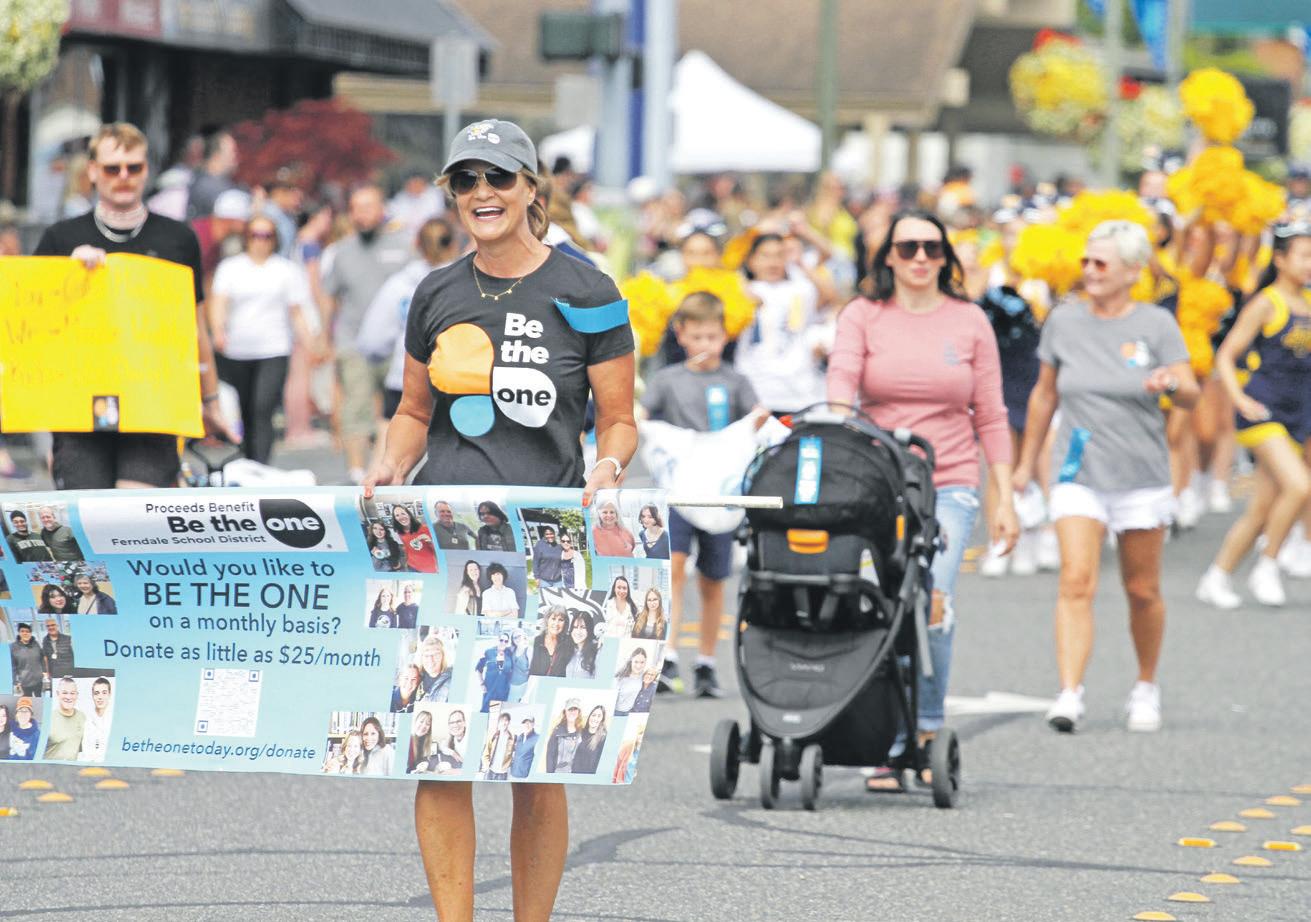
This year’s Whatcom Old Settlers Association’s annual picnic is July 24-25 at Ferndale’s Pioneer Park. For more than a century, Washington’s longest running picnic has been the Pioneer Picnic. Nowadays, the annual celebration is much more than picnic, with plenty of food and craft vendors, live music, a car show and a parade. (Bill Helm/Ferndale Record)
But that’s not all. Pioneer Park’s original log cabin museums will be open to the public both days from noon-6 p.m.
From 1-5:30 p.m. both days, take your children to the Kids Pioneer Corral. Don’t forget to also take the kiddos to get their Kids Pioneer Passports, stationed by the Larson Log Cabin.
Certainly not least, do not forget the Pioneer Classic Car Show in the Central School Grounds at First Street from 8 a.m. until 2 p.m. Friday.
If you like music, then this year’s Old Settlers Picnic is for
The Whatcom County Old Settlers Association is an allvolunteer nonprofit organization.
The primary purpose of the association is to organize, manage and run the annual Old Settlers Picnic, which includes the grand parade and car show the last Friday and Saturday of July.
Proceeds from these events help preserve the memory and heritage of Whatcom County’s early pioneers of Whatcom County.
Meetings are at 6:30 p.m. the second Monday of each month (except August, November, December and January) Anyone who is interested in joining the Whatcom County Old Settlers Association is invited to attend the meetings. Volunteers are much needed before and during the annual Old Settlers Picnic.
Whatcom County Old Settlers Office is in the Ferndale Pioneer Pavilion Community Center, 2007 Cherry St.
To be a vendor or to participate in the parade or car show, or for more information, visit whatcomoldsettlers.com.
Or email whatcomoldsettlers@gmail.com.
Years In Business
Since 1887
Greenwood Cemetery
East Wiser Lake Rd., Lynden 360-647-4001 www.thegreenwoodcemetery.com
Since 1929
Van’s Plumbing & Electric
307 19th St., Lynden 360-354-2171
Since 1948
Meridian Equipment
5946 Guide Meridian, At Laurel 360-398-2141
Since 1959
Westside Building Supply
8353 Guide Meridian Rd. Lynden, WA 360-354-5617
Since 1968 Schouten
Construction LLC
237 Rosemary Way • Lynden 360-815-0332
Since 1889
Lynden Cemetery
South Side of Front St., Lynden 360-647-4001 www.lyndencemetery.com
Since 1938
Price & Visser Millwork, Inc.
2536 Valencia St., Bellingham 360-734-7700
Since 1950
Kulshan Vet Hospital
8880 Benson Rd. • Lynden 6220 Portal Way • Ferndale 360-354-5095 • www.KulshanVet.com
Since 1961
Vavra Auto Body 411 Nooksack Ave. Nooksack, WA 360-966-4444
Since 1969
Pete’s Auto Repair
6209 Portal Way Bld.2 • Ferndale www.petesautorepair.net 360-380-2277
Since 1910
Ebenezer
Christian School
9390 Guide Meridian, Lynden 360-354-2632 www.ebenezerchristianschool.org
Since 1946 Point S Zylstra Tire
501 Grover St., Lynden 360-354-4493
Since 1952
Hytech Roofing
7381 Guide Meridian Rd., Lynden 360-354-4335
www.hytechroofing.com
Since 1966 Van Loo’s Auto Service 205 Liberty St. Lynden, WA 360-354-4277
Since 1969
Windsor Plywood
1208 Iowa St., Bellingham, WA www.windsorplywood.com 360-676-1025
Swedish immigrant’s home becomes beloved park
By Elisa Claassen For the Tribune
In 2025, approximately 470,000 visitors set foot in Hovander Homestead Park. People brought picnic lunches or family members and enjoyed the Master Gardener-supported gardens or walked the trail between Hovander and adjoining Tennant Lake Farm Park.
The site, since becoming both a park and on the registry, has hosted plant sales, family
reunions, Civil War reenactments and Scottish Highland Games.
Hovander Park, 350-acres at 5299 Nielsen Ave., Ferndale, joined Fort Nisqually Site in Pierce County on the National Register of Historic Places on Oct. 16, 1974 as one of 1,672 places in Washington.
But Hovander previously was the home and farm for the Hovander family.
The national registry, established in 1966 under the National Historic Preservation
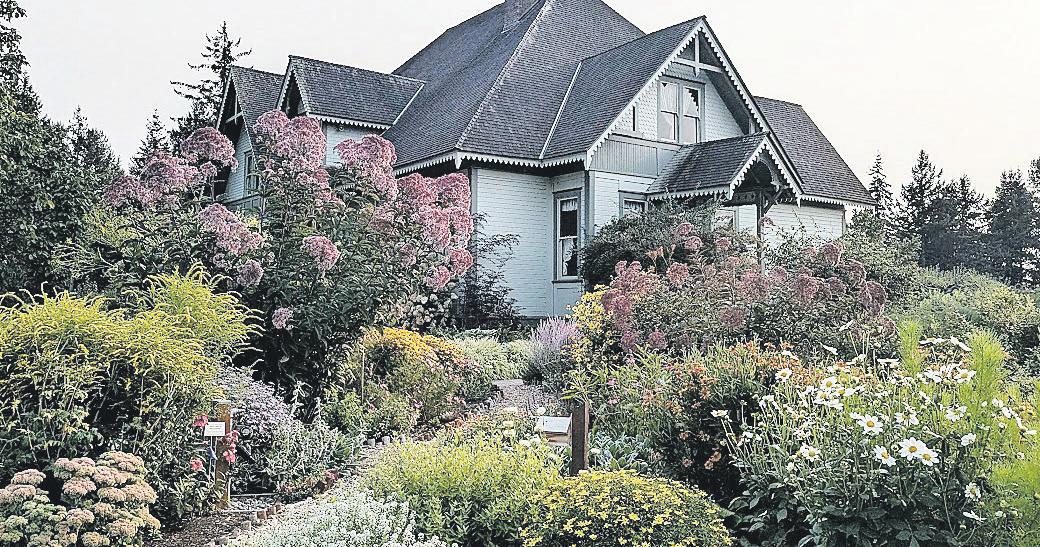
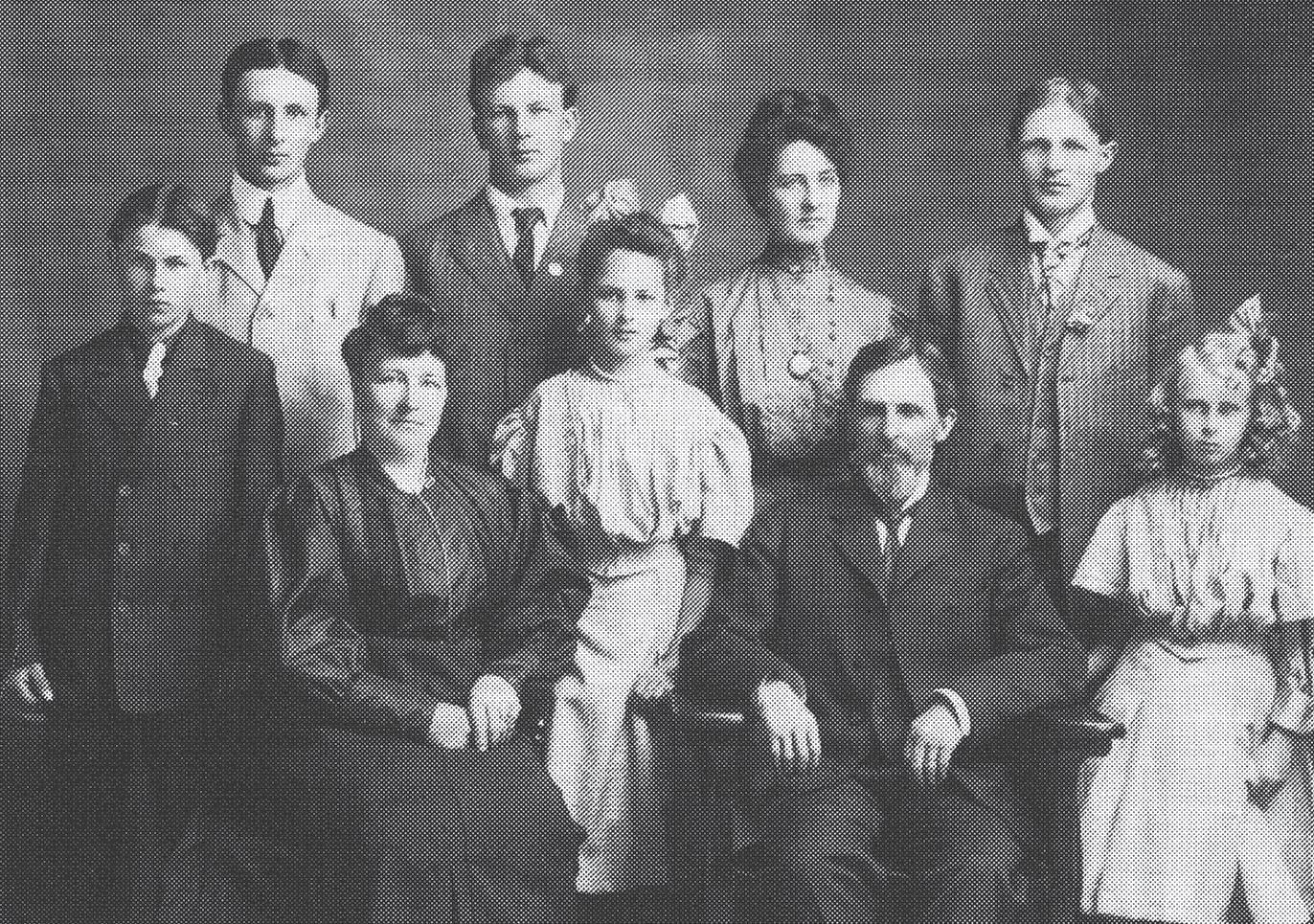
Above: The story of the Hovander Homestead is largely the saga of a family who immigrated to the Northwest from Sweden in the days of the Alaska Gold Rush. They were among the second generation of pioneers to settle the river valleys and cedar forests surrounding Puget Sound, in the wave of people who brought more than log cabins, one room school houses and trade goods for currency. The Hovanders, Hokan, Leontine and their first six children, came to the Nooksack Valley in the era of the railroad, the giant lumber companies and Victorian architecture. (Photo courtesy Whatcom County Parks)
Act, has more than 100,000 listings today.
Places are selected as enduring examples of the nation’s heritage or reflecting events, people or achievements that shaped our country, per nps.gov.
The farm-turned-park
On Feb. 27, 1970, Otis Hovander signed the deed to the Whatcom County Park Board with an exhibit A listing other items. Previous to this, Otis, a single man, had signed an option agreement with the county that gave it two years to purchase.
The amount listed was $61,500 as the total purchase price. The 10-page inventory included 320 listings such as hatracks, umbrella stands, chairs, bullwhip, toys, beaded purses, lamps and tables.
On the application for the National Register, the farm is also listed as River Lea Farm.
An archaeologist commented “self-sufficient early 20th century farm complex.
The complex is nearly intact and worthy of being on the register.”
When the Whatcom County Parks and Recreation Department took ownership, the buildings were repainted and refurbished and for a time some smaller farm animals were kept at the farm.
The large gingerbreadfringed Swedish-styled farmhouse contains a kitchen, formal dining room, library, master bedroom, boys bedroom and girls bedroom on the first floor.
In June 1971, the park was dedicated.
In 1978, the house was awarded the National Trust for Historic Preservation President’s Award, signifying it was among the country’s finest restored landmarks, according to the parks department.
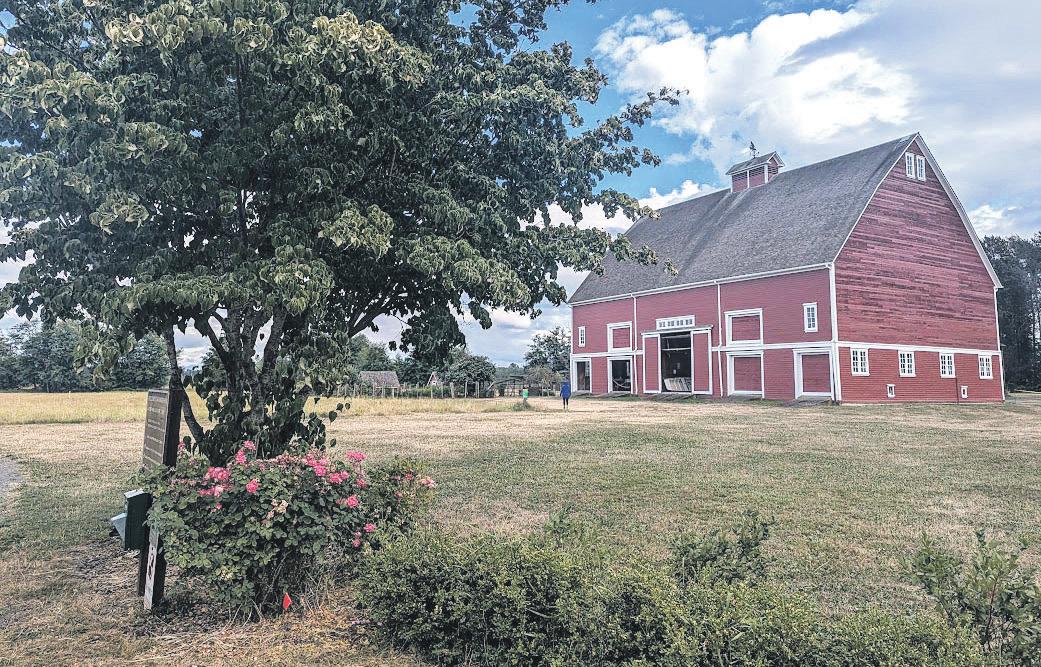
The Whatcom County Parks Department and Master Gardeners maintain the structures, grounds, and gardens at Hovander Homestead Park today. (Elisa Claassen for the Tribune)
Hovanders
Who were or are the Hovanders and how did their home leave the family and become a park?
From the archived materials and other online historic accounts, Hakan Olsson Hovander was born on Dec. 6, 1841 in Faraback, Skane, Sweden. He was one of twins — twin brother Christian — and spent his early adult life trying to make his way between Sweden and the United States.
While Christian chose to stay in Kansas, Hakan went to large U.S. cities and returned to Sweden before later moving with his family. Along the way, Hakan, apart from his siblings, also changed his Olsson surname to several spelled variations: Hafvander, then Havander then finally, Hovander.
According to the parks department, the name change “probably reflected Hakan’s desire to facilitate his architectural career by choosing a more distinctive name than
the common Olsson.”
In typed sheets, found in archived boxes, a family member, George Hovander, explained Sweden in the 1800s had many trying to farm but only 10% of arable land that could be farmed.
The Crown, Swedish government, also had legal restrictions from subdividing property. This resulted in many children trying to find other places to go to make a living, get married and have families.
Hakan became an apprentice bricklayer in Stockholm during the day and at night studied architecture. His buildings, thoroughly described in the archived collection, note multi-floored homes or mansions resembling hotels and purchased by wealthy officials.
He met Louisa Leontine Johansdattor in Stockholm, Sweden where she was working in a restaurant through a cooking and homemaking school she attended. They
married on Nov. 4, 1878. He died on Feb. 3, 1936 and is now buried, with his family, in the Abbey Mausoleum at Bayview Cemetery in Bellingham. According to George’s account, different family members described traveling by boat with visits throughout Europe and other continents with stops in Copenhagen, Denmark; London, England; Gibraltar, Spain; Naples, Italy; Port Said, Egypt; Ceylon, Adelaide, Australia; Auckland, New Zealand.
At one point, Hakan and Leontine considered settling in New Zealand after the two months of travel and an attempt to enroll the children in school there. Instead, they continued through the Fiji Island, Samoan Islands and Hawaii to the West Coast of the U.S.
A big factor for their decision was Hakan’s health. He needed to be in warmer climates. The Hovander family
Hovander: Swedish immigrant’s home becomes park
Continued from 15
spent time in California for vacation then stayed in Seattle for a year before heading north initially to Lopez Island before settling in Ferndale.
A widow, Betsey Nielson, had lost her husband not long before and they spent $4,000 in gold coins for her 60 acres that then contained two small cabins, farm implements and some livestock.
Hakan also purchased another farm, 160 acres referred to as Lake Tennant Farm for $1,500, that others were using as “free range land” and immediately fenced it in.
Tennant Lake Farm is also part of the Whatcom County Parks system.
The home was built between 1901 and 1903 purchas-
ing several types of brick at $7 per thousand for the common brick in Bellingham. The nicer finish brick came from Seattle.
Detailed accounts show expenditures and laborers involved.
A carpenter came from Minnesota, Mr. Lindgren, who brought his family and did the fancy gingerbread detailing.
A Mr. Hanson built the cupboards in the house as well as parts of the outbuildings.
The barn — 95 feet long, 65 feet wide and 64 feet high — wasn’t built until 1911.
Materials were moved by horse and buggy along plank roads. In total the property had a water tower that once held a 500-gallon storage tank, a two-story board-andbatten fruit drying shed, a
machine shed, tool shed, and small concrete dairy. Additional restrooms, chicken coops and picnic shelters were added by the parks department.
Otis was the only one of Hakan and Leontine’s children who did not marry. Per the parks department, “Otis, a friendly and colorful local personality with wide and varied interests.” The interests included stamp collecting, antique cars, politics, the Knights of Pythias, playing musical instruments.
Before selling the home, Otis lived there with his sister Elsa from 1946 until she died in 1961. He moved to the old Lynden Rest Home until his death in 1979.
Hovander House
The Hovander House is open Memorial Day to Labor Day, Friday through Sunday from 1 to 4 p.m.
The park is open yearround from dawn to dusk. When the Whatcom County Parks and Recreation Department acquired the farm, it also received a number of historic items and paperwork including family studio photographs, architectural renderings, maps, photographs from their trips and diaries in English and Swedish.
Due to storage issues, the paperwork is now accessible to researchers by appointment at Archives West at Western Washington University.
The National Register has a list of additional sites at nps.gov.



www.custerumc.org
Worship, 10 AM Sunday
Bible Study, 10 AM Wednesday or 5:30 PM Thursday
Choir Practice, 6 PM Wednesday
UM Women, Every 2nd Mon. 10 AM



Lagreid family’s multi-generational dynasty
Lynden Christian’s Levi Lagreid carrying on a staggering baseball legacy
By Zen Hill Sports Reporter
Being a baseball catcher is a brutal trade. As the ultimate backstop, you’re expected to command the infield, manage a pitching staff and possess a pain tolerance high enough to shrug off foul tips, collisions at the plate and dirtcaked wild pitches.
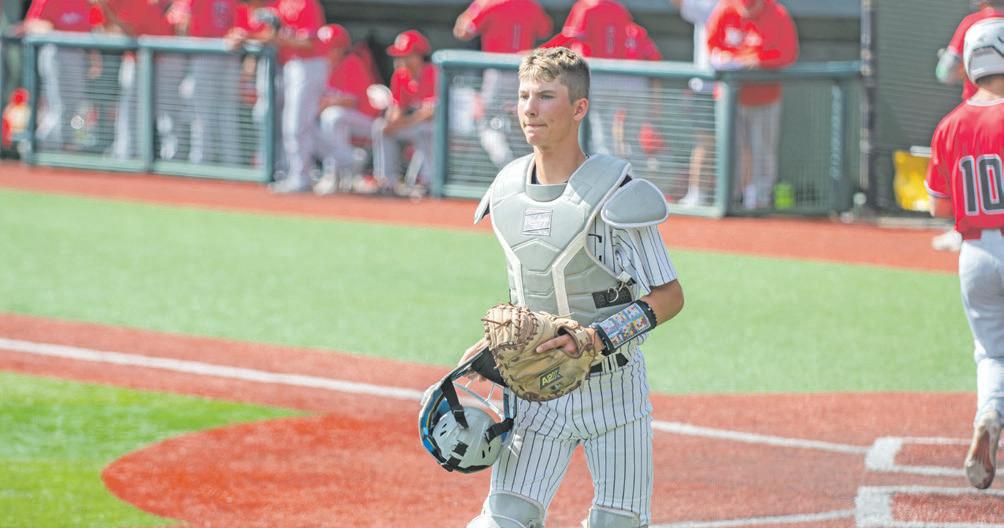
For the Lagreid family, that grueling workload isn’t a chore, it’s a family tradition. Lynden Christian freshman Levi Lagreid is the latest Lagreid to be behind the dish, carrying on a multi-generational legacy.
“I always call it a genetic defect,” said Tom Lagreid, Levi’s dad. “You’re choosing to get beat up, but everybody knows it’s an important position.”
The obsession started early. After discovering his dad had been a pro catcher, Levi would strap on Tom’s oversized old gear, squat down in front of the television during Seattle Mariners broadcasts, and mimic then-Mariners catcher Mike Zunino.
The lineage preceding him is illustrious. Bill Lagreid, the older cousin of Levi’s grandfather Art Lagreid, caught for Seattle University in the 1950s, earning a spot in the Redhawks’ Hall of Fame.
Art followed in those footsteps, catching for Seattle U from 1968 to 1971 and entering the school’s Hall of Fame alongside his 1968 squad.
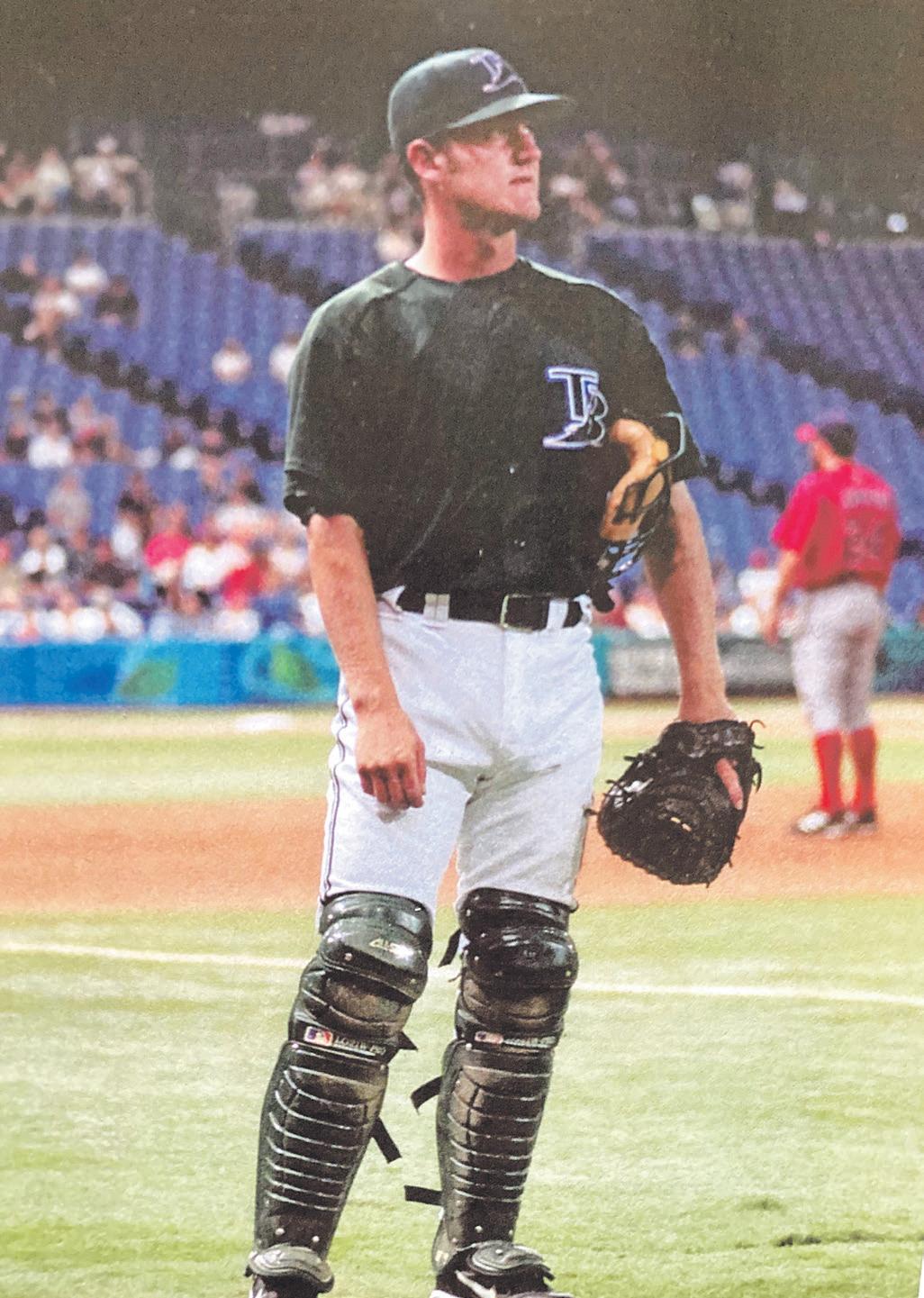
The family tree didn’t stop there. Tom Lagreid played three seasons in the Tampa Bay Devil Rays’ minor league system after being drafted out of Everett Community College in 2003.
Tom’s brother, Greg Lagreid, caught for Washington State University from 2006 to 2009, where he was named the Pac-10 Scholar Athlete of the Year and finished as a semifinalist for the Johnny
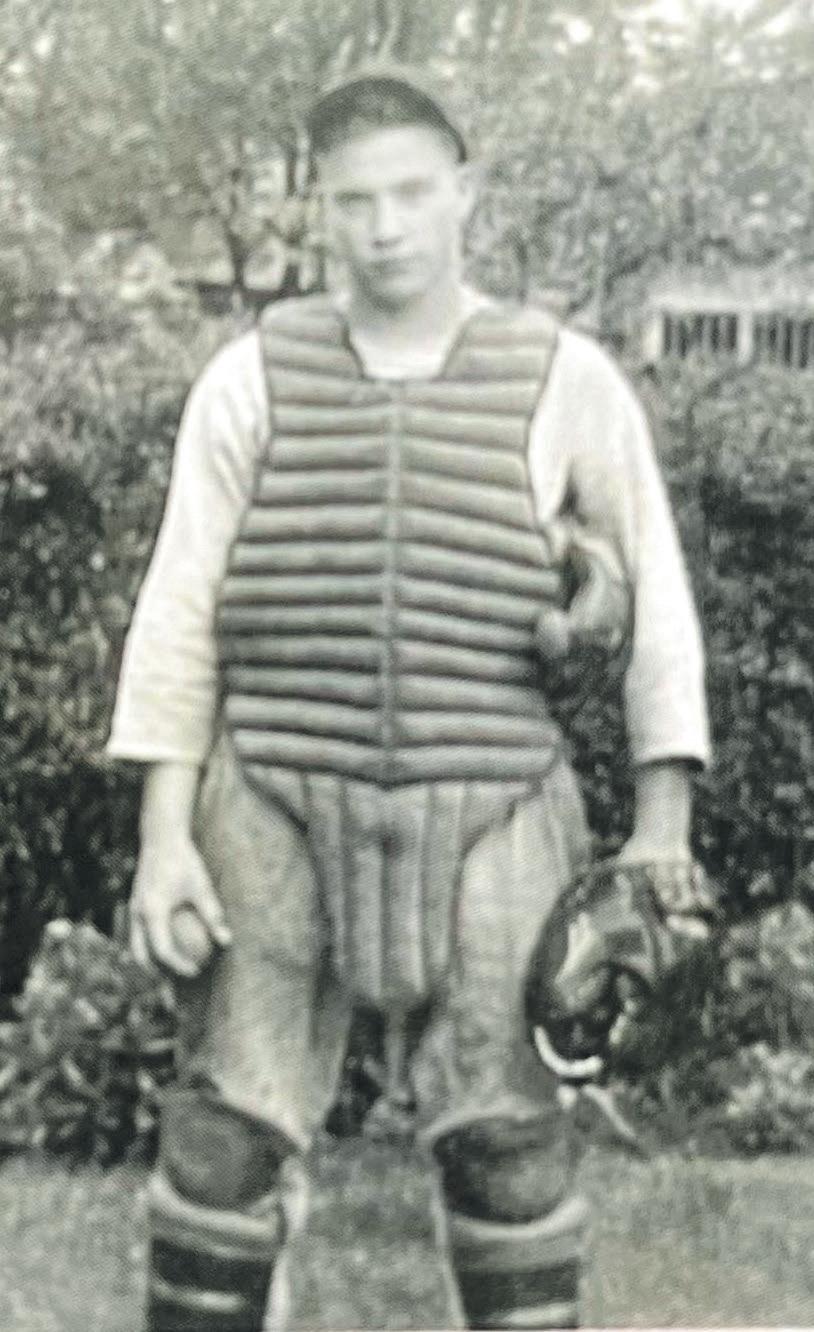
Bill Lagreid was a catcher for Seattle University and is in the Hall of Fame with his 1952 Redhawk squad. (Courtesy of Tom Lagreid)
Bench Award, given to the best collegiate catcher in the country.
“Levi’s been throwing baseballs since before he could walk,” Tom said. “I never forced it. He found out that I was a catcher and he started doing it.”
That lack of pressure from his dad allowed Levi to fall in love with the position entirely on his own terms.
“I don’t feel a lot of pressure to catch,” Levi said. “I just get to have fun and carry on the legacy. I really enjoy the position.”
While outfielders track fly balls in the grass and infielders glove clean hops, a catcher spends his life in the dirt, absorbing the game’s violent collateral damage. There’s an initiation process to becoming a backstop.
For Tom, that moment came around age 10 when a stray bat caught him on the back of the hand, followed by a hit to the ear. He sat in the dugout, fighting back tears, when his father, Art, gave it to him straight.
“He goes, ‘I don’t care if you ever catch
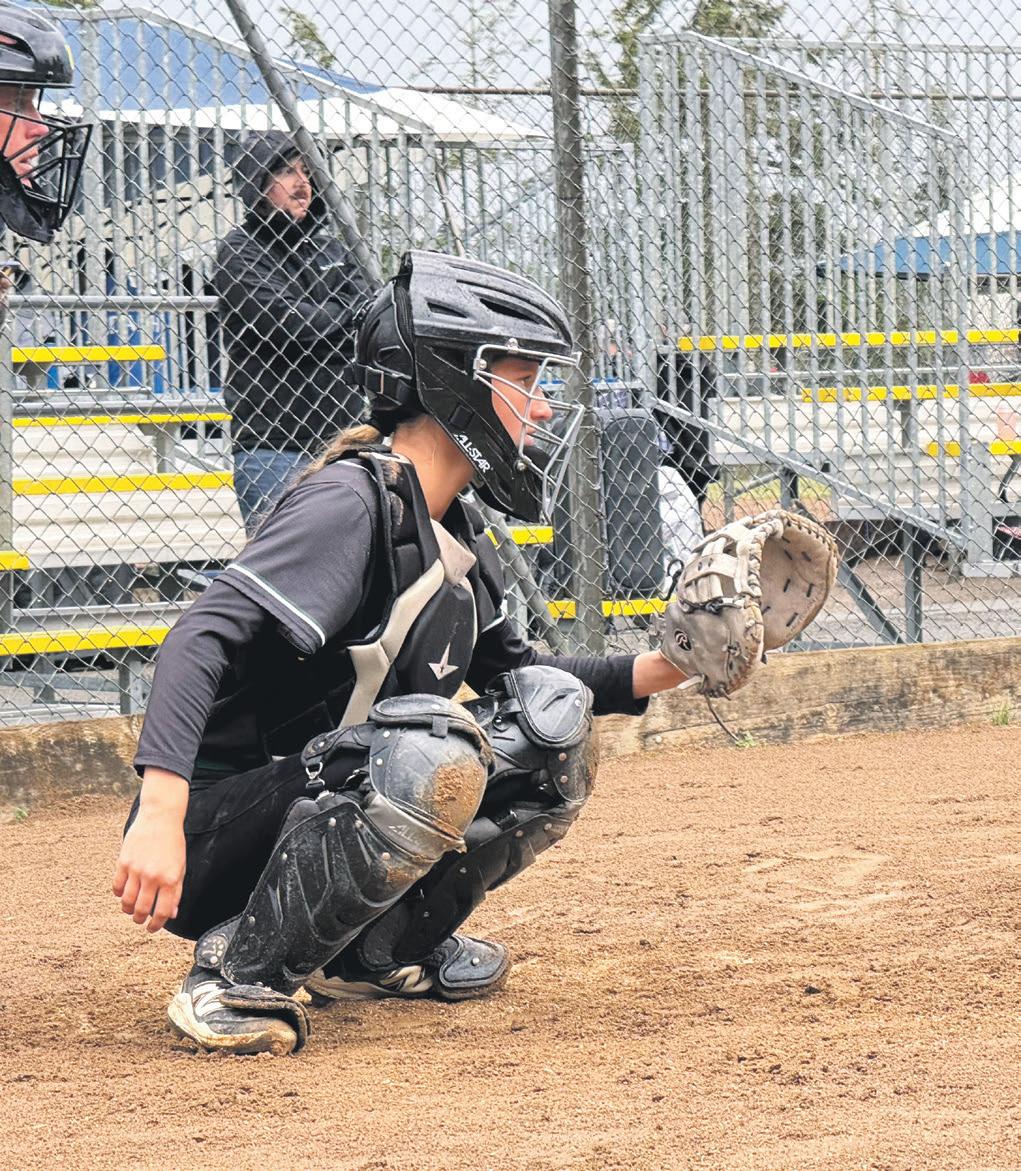
Tom Lagreid, left, spent three years in the Tampa Bay Devil Rays’ minor league system. Emily Lagreid, above, is the youngest catcher in the Lagreid family as a softball backstop. (Courtesy of Tom Lagreid)
again. But if you do, this is the job,’” Tom said. “I went right back out there.”
Levi faced his own rite of passage at the same age, taking a screaming foul tip directly off his forearm. Tom held his breath from the dugout, waiting to see his son’s reaction.
“He looked over at me laughing,” Tom said. “If you can laugh through the pain and misery, you can handle the rest of the job.”
That shared grit perfectly honors a definitive piece of family lore coined by grandpa Art: “The wound will heal, but you’ll never get the out back.”
That unwavering mindset translated to immediate high school success this spring for Levi. Despite being a freshman navigating a varsity landscape full of older, physically mature players, Levi earned the starting job behind the dish for Lynden Christian.
“It was really nice to be around guys that were a lot older than me,” Levi said. “It wasn’t easy, but when I started to
throw guys out I kind of got a little bit of street credit and they were OK with me being a little more involved.”
The Lyncs put together a stellar 17-8 season, punching their ticket to the 1A state tournament. While the freshman has three more years to help guide LC toward its first-ever state baseball title, his sights are set well beyond high school.
“I have all the resources I need to go as far as I want to,” Levi said. “Knowing what my family has done, I feel like I can do the same thing. I know what it takes.”
The Lagreid catching line isn’t stopping anytime soon. Levi’s younger sister, Emily, is currently rising through the youth ranks as a softball catcher. The family is leaving its mark on the local sports landscape.
“When we moved up here, I told my wife that by the time we’re done here, it’s gonna be a baseball town,” Tom said.
-- Contact Zen Hill at sports@lyndentribune.com
Six generations of Roberts in Laurel history
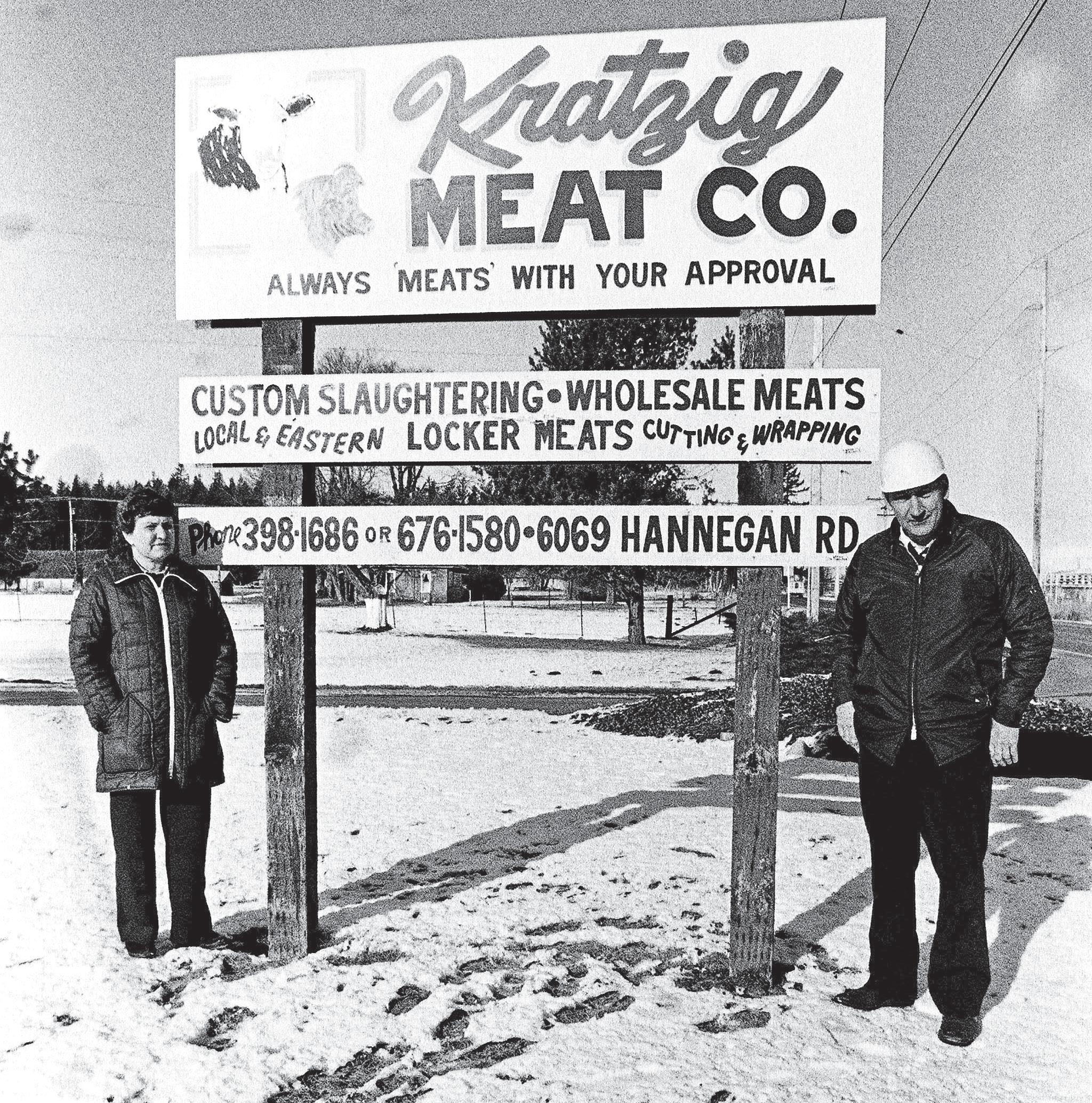
Robert V. Kratzig and his wife Margaret took over the family business from Robert Anton Kratzig in 1946. The area is now home to Red Barn Coffee and Fat Cat Fish. (Photo courtesy Robert Kratzig)
More than a century of Meridian connections
By Racquel Muncy Staff Reporter
Meridian Middle School Principal
Robert J. Kratzig believes his position is a privilege, not only due to the level of responsibility and duty to provide quality education, but also because of the respect that he has for the history of the area.
His history.
The Kratzig family story comes to Whatcom County with Robert Frederick Gustav Kratzig, who was born in Trachenberg in what was the Kingdom of Prussia in 1858.
In the late 1880s, he immigrated to the United States alone, first to Utah and Montana before he settled in Whatcom County.
Having found his new home, he set up trade as a butcher and operated meat markets in Bellingham at various locations. The longest running business was the Sehome Market on Elk Street, which is now State Street.
According to Kratzig, early advertisements boasted beef, pork, mutton, veal, poultry, salt meats, wholesale trade, retail trade and the supplying of steamships and vessels operating out of Bellingham Bay. His obituary described him as one of the first meat retailers on Bellingham Bay.
By 1891, Robert Frederick Gustav Kratzig had become a naturalized citizen and married fellow German immigrant Wilhelmina “Minnie” Ebeling in 1892. Together they lived on 22nd Street in Bellingham and welcomed five children: Louise (18921965), Robert Anton (1894-
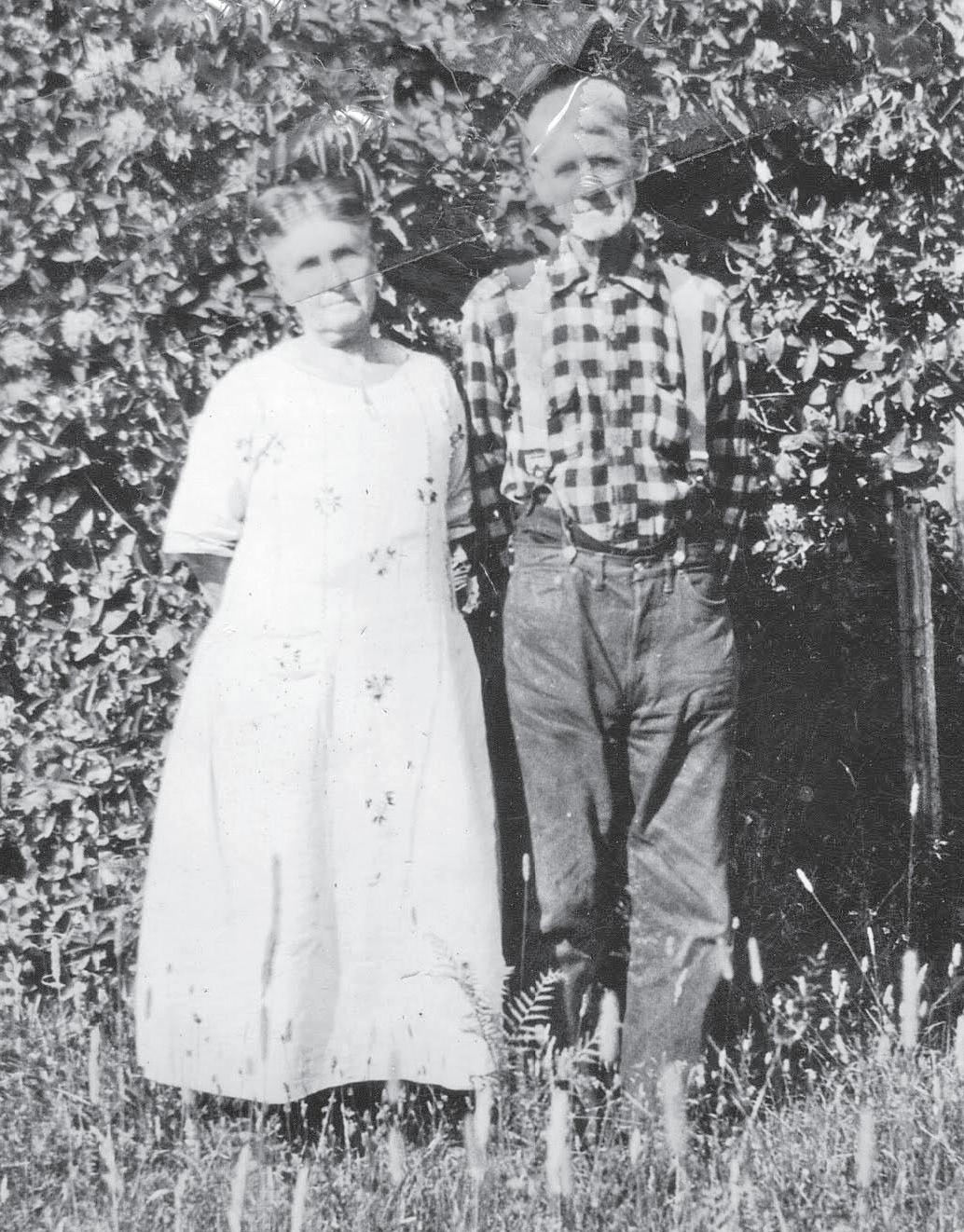
Above: Evelyn (Beard) Kratzig and Robert Anton Kratzig. Below: Robert V. and Robert Anton hard at work haying for Kratzig Meat company. (Photos courtesy Robert Kratzig)
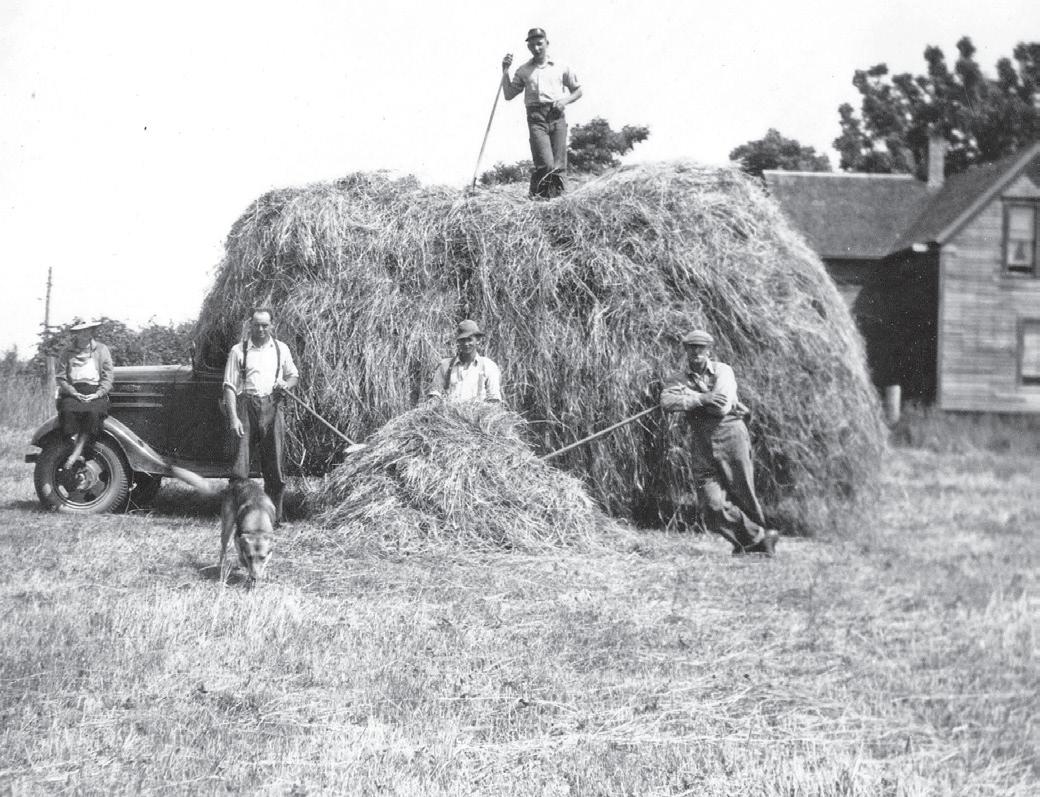
1959), William (1895-1899), Mary (1900-1982) and Paul (1902-1970).
Robert Anton grew up in his father’s meat business. Kratzig said family stories recall that when Robert Anton was a young man, he could be found walking cattle from county farms into downtown Bellingham to supply his father’s market before he established his own operation.
He went on to serve in World War I as a corporal in the 78th Field Artillery. During this service, he participated in the Meuse-Argonne campaign in France.
During his time in service, he sustained two significant injuries — one during an ammunition dump explosion in the Argonne and another earlier playing football at training camp.
In 1920, Robert Anton married Evelyn Beard, which intertwined another pioneering family that also started in the late 1880s.
In 1889 George and Sarah “Sadie” Vale Beard purchased 20 acres from original homesteader Alex McLeod in the Ten Mile area.
Twelve of those acres remain in the family today.
George Beard hailed from Manistee, Michigan where he was born in 1855 and Sadie Vale was born in Syracuse, New York. Their first child, Evelyn, was born in Manistee in 1888 before the family packed up and moved west. Like the Kratzig’s, the Beard family also had five children in all, many of whom have generations still living locally.
Their farm was located halfway between the Guide Meridian and Hannegan
See Kratzig on 22
Kratzig: Six generations of Roberts in Laurel history
Continued from 21
Road. Today, Beard Road is named after the family.
According to Kratzig, a handwritten memoir written by one of Evelyn’s brothers described a cedar-shake farmhouse, a hand-dug well, water drawn by rope and bucket and severe winters with snow blowing through the roof boards and accumulating on the bed quilts overnight. The original farmhouse stood for a century before being used in a training burn in the 1980s after it had deteriorated beyond repair.
George Beard farmed in the Ten Mile area for about 45 years and Sadie Vale Beard sold dairy butter. The potatoes grown on the farm garnered media attention during a trip to New York to visit family as they were unusually large compared to those grown in New York.
With the marriage of the Kratzig and Beard families, a new chapter in history was made.
In 1923, Robert Anton Kratzig founded Kratzig Meat Company on Hannegan Road after renting, then purchasing, a 40acre farm from Emma Allen, whose husband had died in an explosion in 1916.
What started as a slaughterhouse in an old barn grew into one of Whatcom County’s best-known meat-packing operations. By 1946, a modern concrete slaughter facility was built, and a cutting room was added in 1955.
Over the years, the business continued to expand, and by the late 1970s it had become a modern meat processing operation that served farmers, families, businesses and restaurants of the area.
The next generation, Robert Vale Kratzig and his wife Margaret, took over the operation in 1946. In 1979, a Lynden Tribune article profiled the company.
Robert Vale Kratzig was also a founding member of the Laurel Volunteer Fire Department, where he served as fire chief for about 30 years.
“All in all the Kratzigs are as much a part of Whatcom County history as are their custom-sliced meats,” the Lynden Tribune article states.
Unfortunately, due to ever-increasing regulatory costs, the business closed in 1981. Today, the site is occupied by Red Barn Coffee and Fat Cat Fish. The agri-
cultural changes have been some of the largest cultural changes for many generational families in the area, Kratzig said.
However, agriculture remained an important part of the family’s identity as the next generation, Robert B. and David Kratzig, operated Wilder Farm on Smith Road. This land is now occupied by portions of the North Bellingham Golf Course and the Cordata area. A dairy farm on the corner of Chasteen Road and Ten Mile Road remains in the family and has evolved over the past 30 years through a variety of cattle operations.
Kratzig said his family found their place, their niche within Whatcom County, and there was never really a reason to move. They were established within the small community.
Knowing farm life was not what he wanted to do for a career, Robert J. Kratzig pursued a career in education, which is another important historical community connection for the family.
“I found a different way to serve my community,” Kratzig said.
The original Ten Mile School was built in 1890 on the land now occupied by Meridian Middle School. Evelyn Beard attended this one-room schoolhouse in
1894. In 1908, a larger two-room school replaced the original building, and here Robert Vale Kratzig eventually attended.
Kratzig said he heard a story of Robert Vale, his grandpa, climbing onto the roof and shooting objects with a slingshot.
In 1938, Ten Mile School was consolidated into the Meridian Central Grade School and served the next generation, including Robert B. and David Kratzig. Robert J. Kratzig is David’s son and he attended the Meridian School District where he graduated in 2006 and now serves as principal.
“As Meridian has evolved and changed, we’ve changed with it,” Kratzig said.
His son, Robert Hunter, begins the sixth grade in the fall.
Kratzig said being a fifth generation “Robert” is a difficult feeling to put into words, but like the school district and agriculture, it is another way to connect with the family that came before him.
“It feels like you’re part of something,” he said. “It adds to the depth of connection.”
-- Contact Racquel Muncy at racquel@ lyndentribune.com
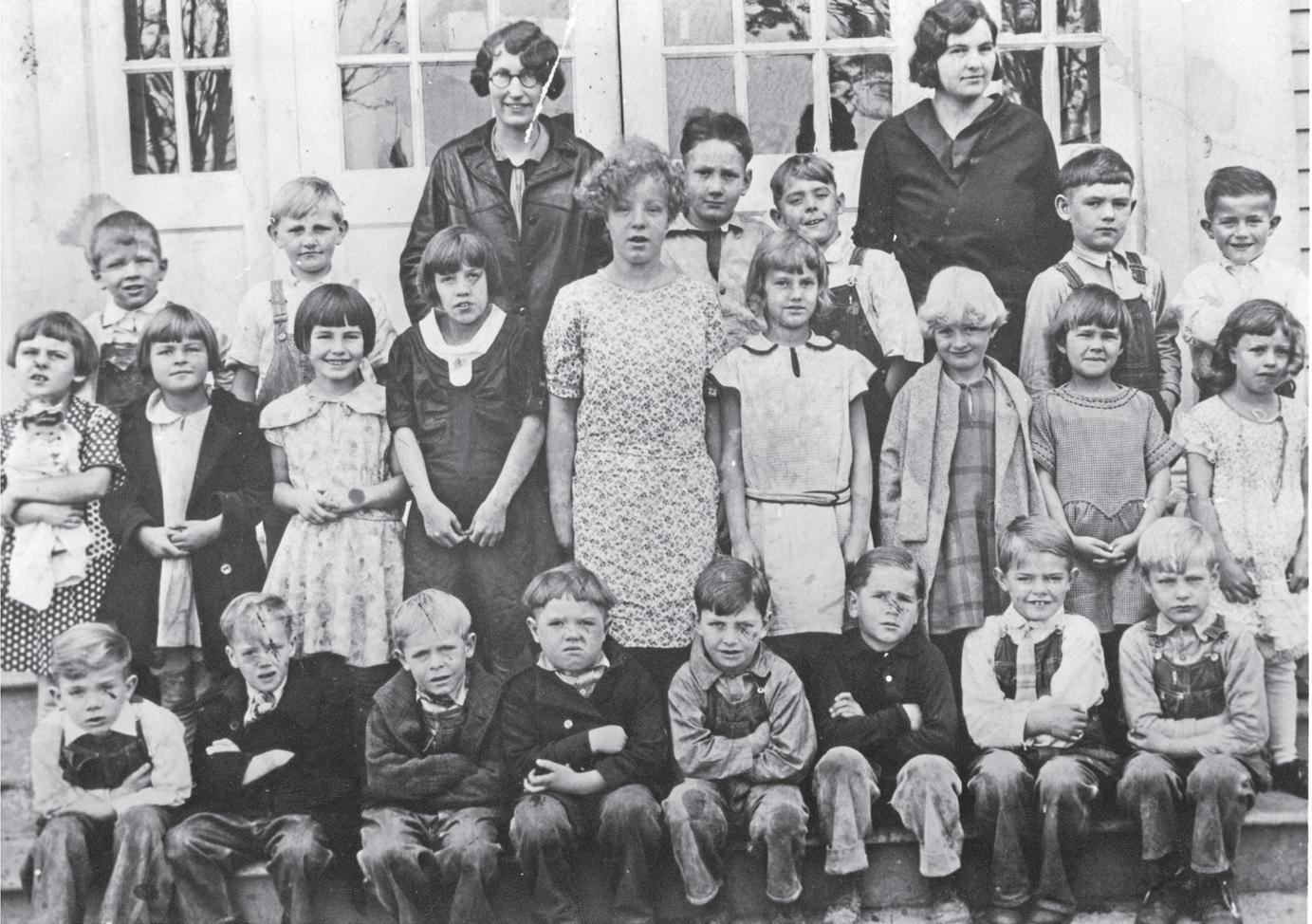
Ten Mile School class portrait circa early 1930s. Robert V. is the center back, standing between the teachers. (Photo courtesy Robert Kratzig)