








In painting, Whatcom County woman looks for 'the story a subject suggests, the moment or feeling that lives just beneath the surface’
By Bill Helm Editor
WHATCOM — At 50 years of age, Elizabeth Wonnacott decided she had had enough of work. Her career was mostly marketing and advertising, in fact she owned her own business. Because much of Wonnacott’s work involved writing, she expected she’d become a fiction writer once she retired.
Now, 25 years later, the Whatcom County resident is a successful painter. She can thank her artistic career to not being able to get into a fiction writing class. Because it was full, she instead signed up for a life drawing class.
“At 50 I had never taken a drawing class before and it was a complete disaster,” Wonnacott said. “But something felt good about mark making — and I started practicing on my own.”
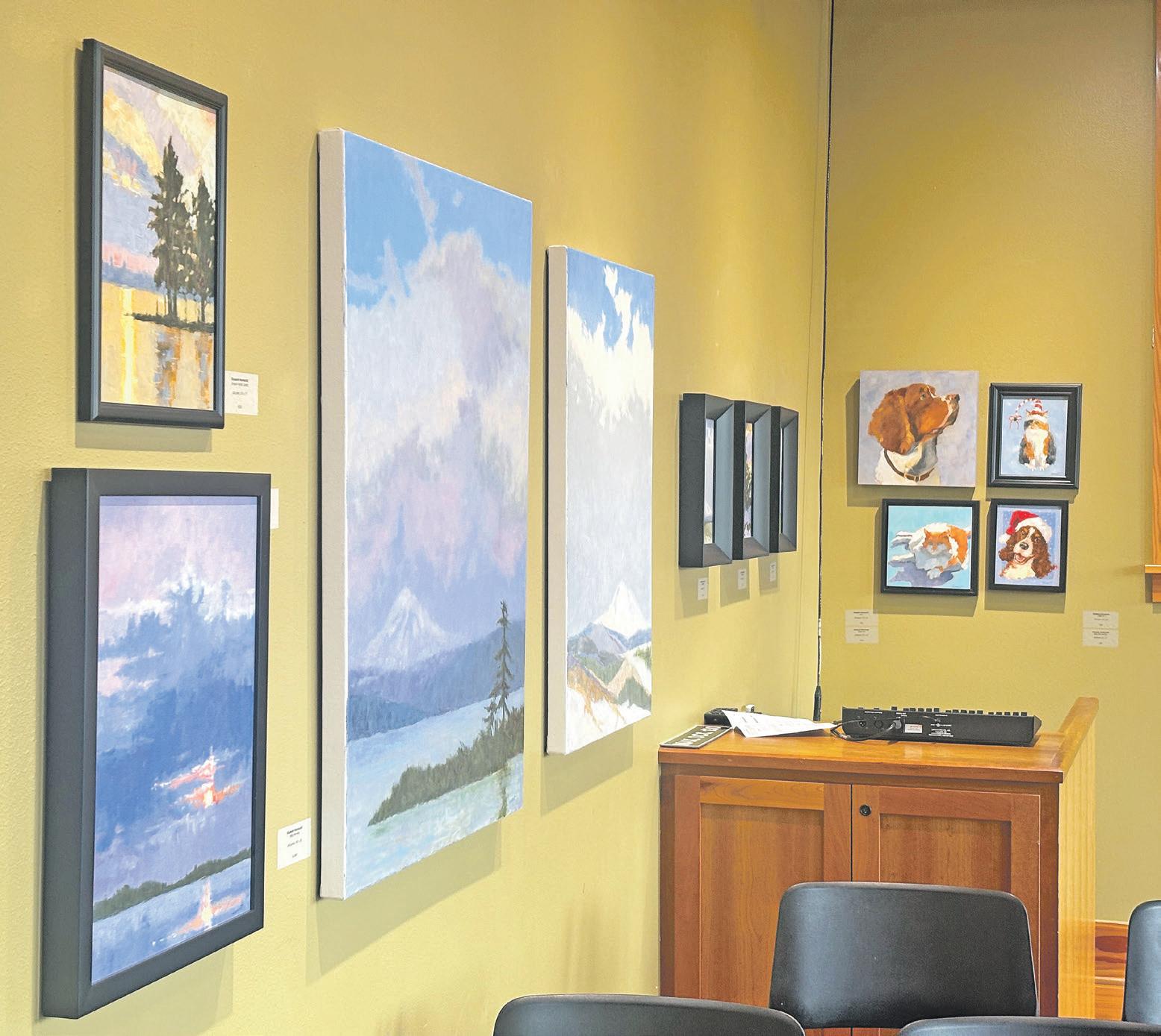
Today, Wonnacott paints animals, florals, landscapes, people and skycaps. It may seem a wide range of subjects. With any good artist, however, it’s not just the what but the how and the why.
“What draws me to any of them is the same thing: a subtle narrative waiting to be uncovered,” she said. “I look for the story a subject suggests, the moment or feeling that lives just beneath the surface.”
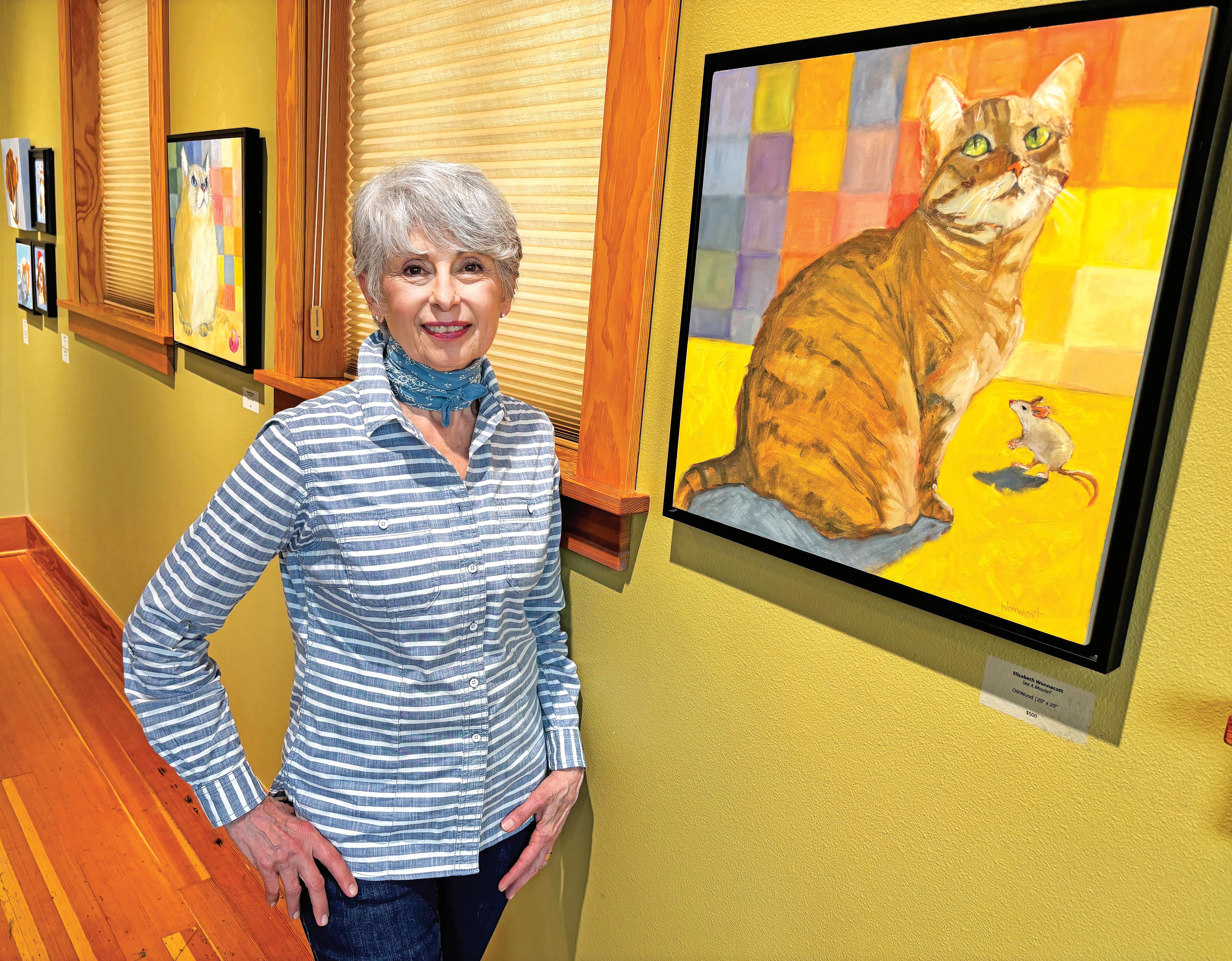
Wonnacott works with oils, on canvas, linen or wood, in what she calls a representational style “that moves toward the abstract.”
“Composition and story are my primary concerns,” she said. “The way an image is structured can carry as much meaning as the image itself.”
Wonnacott explained that her studio is a place of experimentation, and that after two-plus decades in art how she is still “deeply curious about what oil paint can do.”
“How it moves, how it builds, how it can be coaxed into something unexpected,” she said.
When she began her journey into art, Wonnacott and her husband lived in Colorado, a place she said “absolutely inspired my art.”
First, she participated in a few painting workshops “with two talented artists who were also excellent instructors.”
“They taught me the basics that I use every day,” she said. “There was nothing complicated about their approach to
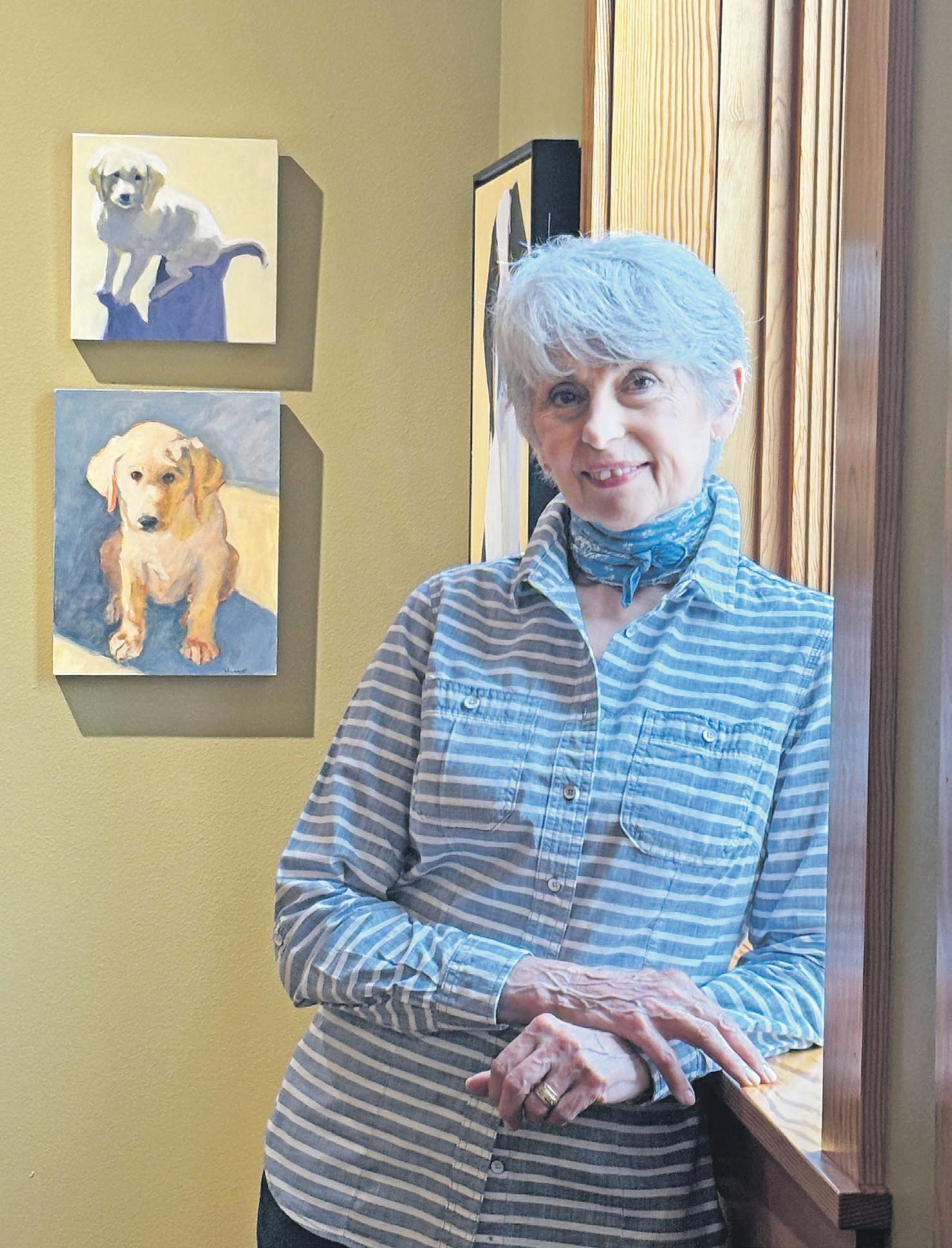
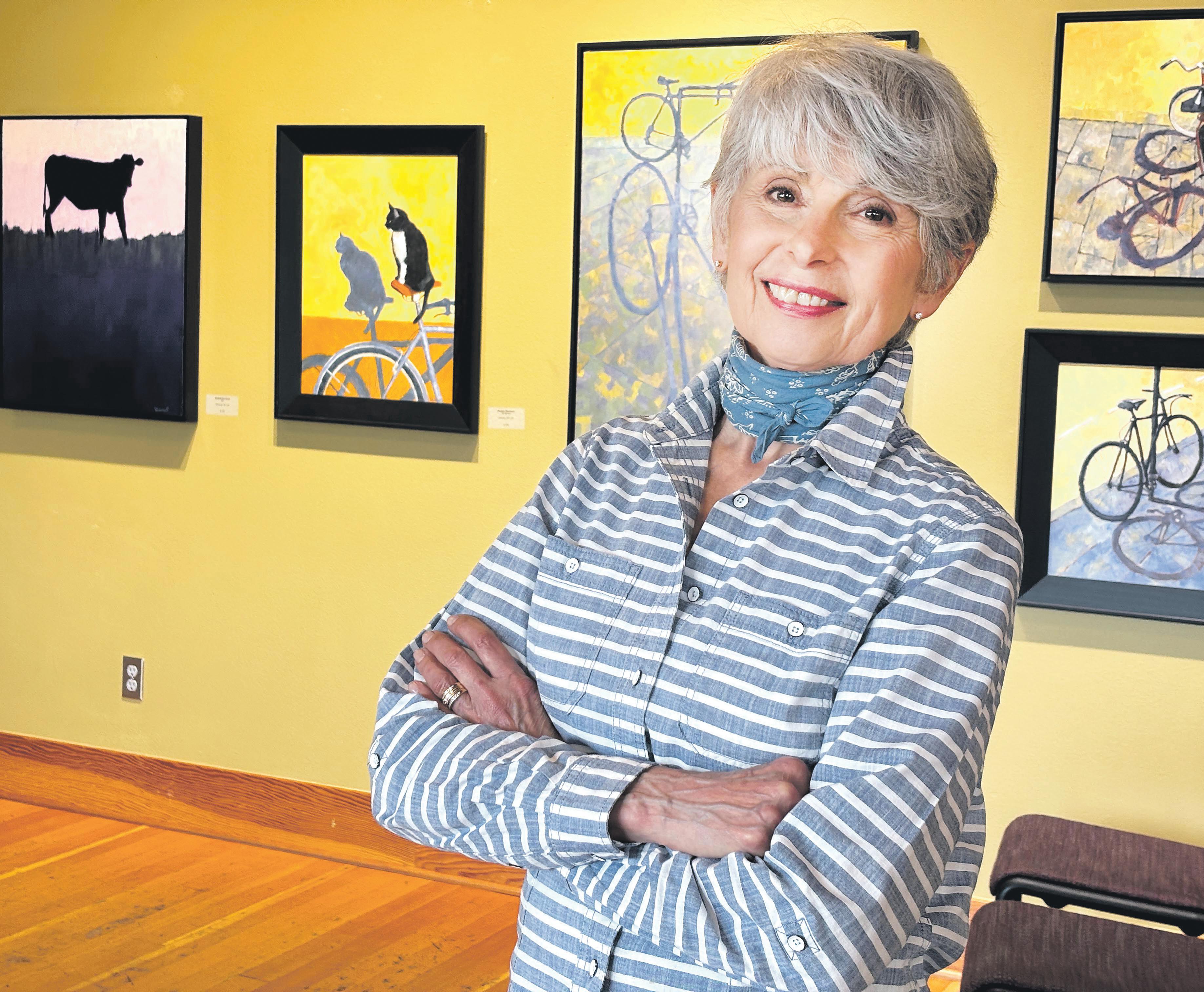
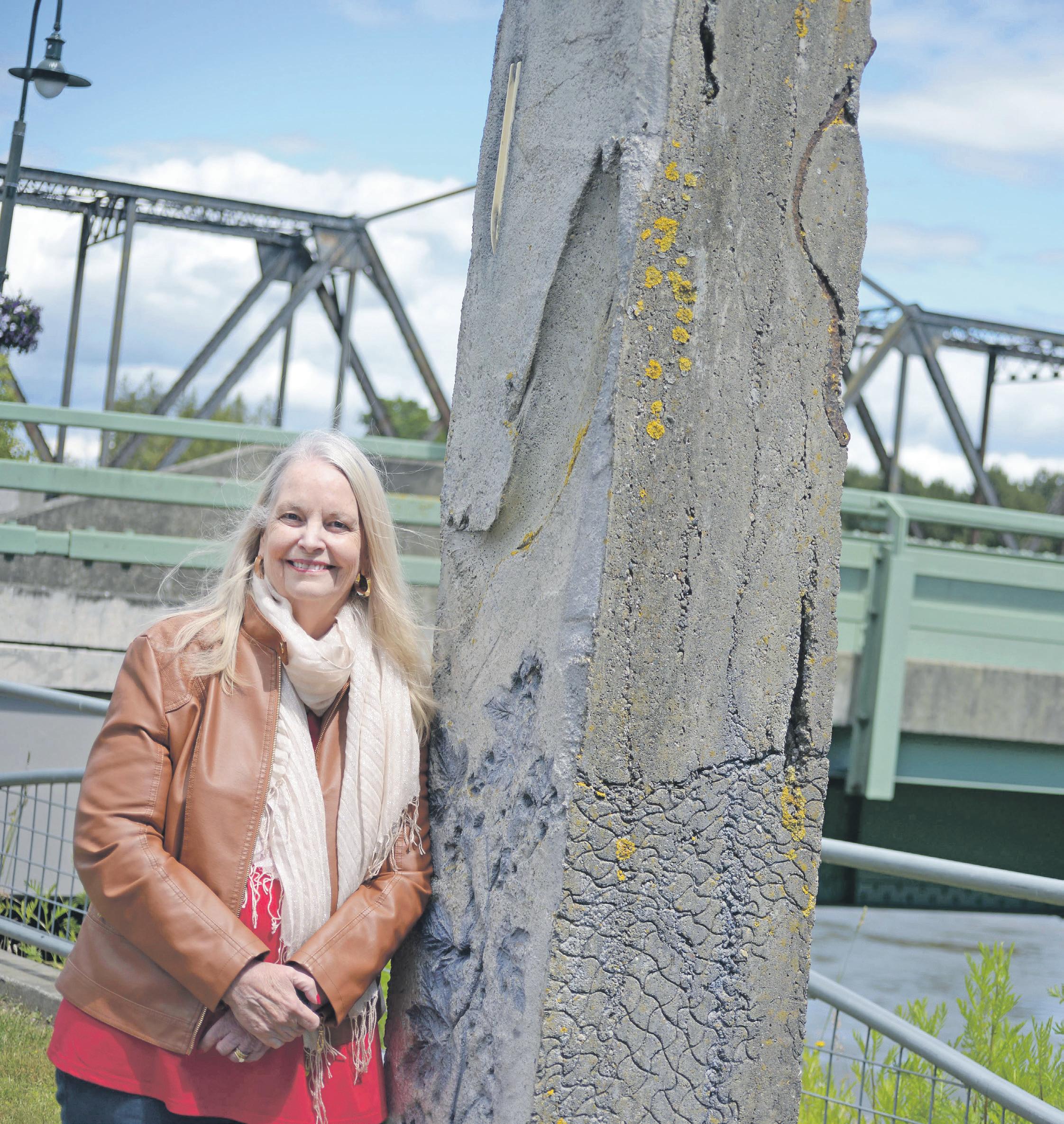
Above and on opposite page: Whatcom County resident Elizabeth Wonnacott works with oils, on canvas, linen or wood, in what she calls a representational style “that moves toward the abstract.” (Bill Helm/Lynden Tribune)
painting, just a very pragmatic way of approaching subject matter and my empty canvas.”
Colorado’s landscape and skies also played a role in her artistic formation.
“Often my favorite sky to paint is just an empty dumb shape of brilliant blue,
the low humidity sky of Colorado,” Wonnacott said. “Living in the Bellingham has given me the opportunity to be inspired by a dramatically different landscape and atmosphere.”
In June, Wonnacott concluded an exhibit of her photographs at the Jansen Art
Center in Lynden. One of her many exhibits at The J the past eight years.
“The exhibit staff, led by Terry Redden, is very discerning in the art they select for exhibiting,” she said. “My work isn’t always accepted, but when it is, I am very pleased because they maintain a high bar for quality. The Jansen Art Center is a remarkable foundation in that it offers instruction in so many mediums and supports many regional artists.”
Although the Jansen Art Center isn’t the only place she has shown her work, Wonnacott calls herself a “professional procrastinator when it comes to marketing.”
“I realized early on that if I am painting with any type of audience in mind, I lose my creative impulse,” she said. “I am inspired to paint by an image or an idea. Once I know what I want to paint, I deliberately distract my brain from painting by listening to books or science podcasts so I can get my editorial brain out of the way. Once a painting is done, yes I am open to helping it find a new home and marketing it.”
Of course the fun in art is in the making of art.
Although photography isn’t something Wonnacott identifies with, she does photograph random scenes, people, places and animals.
“I go back later and look at them to see if there’s anything there that I can work with,” she said. “I’m a big fan of cropping photos to simplify the subject.”
Once she selects a photograph to work from she will create charcoal drawings from that subject. If she decides to then paint she’ll first make a small painting to see if it’s worth it to make a larger painting.
“If it is, I will paint larger versions of the image to see if I can,” she said. “Sometimes an idea and image really start to come together and I can take it up to a much larger format.”
Wonnacott works with a “limited palette” of warm and cool pigments with a healthy mix of brushes.
“I mix my process between quick exercises to warm up and experiment and paintings that take on a very deliberate plan,” she said. “I fail a lot and that used to discourage me but now I accept that’s just part of the privilege of making art. I have learned to fail in a spectacular way.”
Although Wonnacott didn’t know at the time she’d become an artist, her previous
career took her to various major cities and in her downtime she’d visit the “incredible art museums in NYC, Chicago, Boston, San Francisco and Los Angeles.”
“Over the years, I gave myself an amazing course in art history and appreciation,” she said. “I did not know that viewing this remarkable art would inspire me to paint, but it did. Viewing good art is the best way to develop your own artistic eye.”
Her favorite artists include Édouard Manet, Vincent van Gogh, Edgar Degas, Robert Henri and Anders Zorn. She also likes contemporary painters Molly Davis, Mark Nelson and Ray Roberts.
When she’s not painting, Wonnacott is a member of the Bellingham Community Chorus. A little more than a year ago, she decided she wanted to learn to sing.
“I have deep appreciation for music and always wanted to sing, but was often discouraged by anyone who heard me,” she said. “One of the advantages of getting to this age is the realization that I have nothing to lose by trying something new.”
dedication it requires from everyone.”
“Singing, learning songs, coordinating my voice with other singers is an amazing brain workout and worth every moment,” Wonnacott said. “Eileen Brody is an amazing music director and the volunteer board of directors keep this group of 90 singers very organized.”
Being active with both painting and with her singing are ways Wonnacott is what she calls an outspoken advocate for healthy aging.
“I feel that it is so important to keep your mind challenged and your body active in as many ways as possible,” she said. “I have had the good fortune to use my art to recover from some major cognitive setbacks and realize that brain health needs to be the highest priority for everyone. There are many days when I don’t feel like being creative and that I have nothing to express. Those are the toughest days to paint but it is always beneficial. My persistence has paid off with an enthusiasm for living and a determination to make the most of every day. And many, many paintings.”
More about Elizabeth Wonnacott at elizabethwonnacott.com.

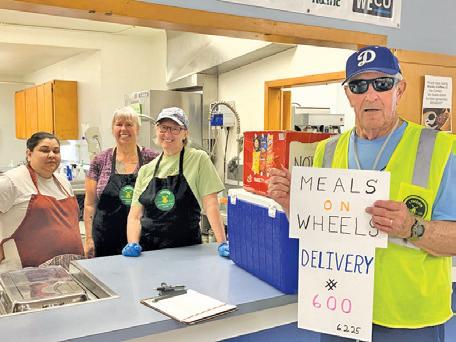



Our Meal Program provides a hot, fresh lunch Mon-Fri, with pick up and delivery options available. Call us or come by the center to

Daily Delivery or pickup - call by 10am








Gail
By Bill Helm Editor
FERNDALE — Gail Hulnick is the winner of a Canadian Book Club Award. However, it’s the Ferndale resident’s first story she’ll likely never forget. She was 6 when she put that narrative together on paper towels from the bathroom in her classroom.
She called that story “The Legend of Two Horse Valley.”
“Why can I remember that, but I can’t remember who was in the movie I watched on TV last night?” she asked rhetorically.
Hulnick always wanted to be an author. However, her father asked her when she was in high school how she planned to make a living as a novelist. After college, she got into journalism, which offers an irony all its own.
“I loved newspapers and read two or three a day since I was about 11,” Hulnick said. “When I found out that you could work by going out and finding out the news before everybody else and write about it, I was hooked.”
Hulnick worked many years in radio and TV broadcast news. In the 1970s, she hosted the CBC Radio program The Early Edition. Hulnick also freelanced magazine and newspaper stories over the years. However, she never stopped wanting to be a novelist, as she collected a “drawerful of short stories, novels and even a few screenplays.”
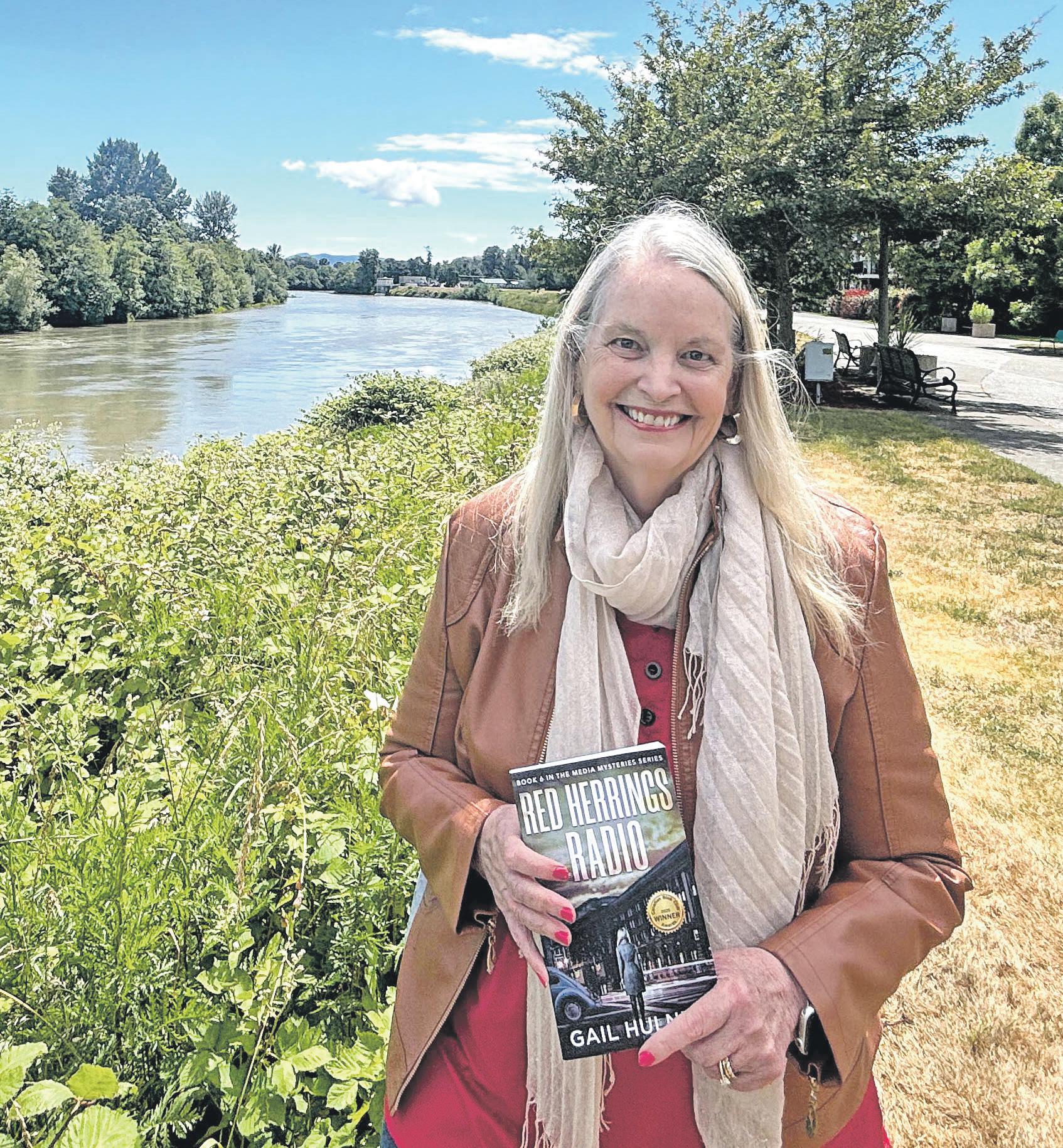
Last year, Hulnick won the 2025 Canadian Book Club Award in the mystery/ thriller category for her book, “Red Herrings Radio,” as voted by readers and Canadian book clubs nationwide. Amazon. com describes the book as a “dual-time narrative set in the world of radio in the early 1960s and podcasting in the new 2020s.”
According to an April 20, 2026 WindWord Group Publishing & Media news release, “Red Herrings Radio” takes readers to Toronto in September 1964, where a young radio researcher discovers a woman’s body on the studio floor. This event sets off a mystery that moves through the
worlds of broadcasting, elite sports, Cold War politics and the cultural energy of the 1960s.
Although it may seem almost a lifetime ago that she worked in the media, it’s actually only been since 2013 when she applied and was accepted to the University of British Columbia’s creative writing MFA program. Two years later, she finished her studies "with support and encouragement from my father and mother." Shortly after, Hulnick published her first novel on her own.
“Over the years, I had approached several traditional publishers with novels and book proposals — and had been offered four contracts, all of which fell through,” she said. “I decided to learn about indie publishing and do it myself, on a timeline of my choosing.”
The Canadian Book Club Awards are open to authors and books from any country. Originally from Edmonton, Hulnick lived for three decades in Van-
couver. She moved to the U.S. 11 years ago after she had fallen in love with an American. The man, who eventually became her husband, had relocated to the U.S. from Toronto in the 1990s.
“We chose Savannah, Georgia for our first home, then after five years there, moved to Florida for three years, then Bellingham, for the past three years, to be close to family,” Hulnick said. The couple moved to Ferndale in April 2026 “for many reasons.”
“I’d have to say the primary attraction was the view of Mount Baker,” she said.
Hulnick explained that her writing has been inspired by the writers she first encountered as a child: Louisa May Alcott, Charles Dickens and Mark Twain.
“My grandmother and mother gave me books and introduced me to movies that I love to this day,” she said. Her first novel, a mystery called “The Lion’s Share of the Air Time,” was in consideration
for the Amazon Breakthrough Novel Award. Hulnick said it was her hardest book to write. Her easiest to write? “Resorting to Fraud,” about a stunt that is pulled on the public, because “it gave me a good excuse (research) to listen to rock music all day long.”
Hulnick also runs her own publishing company called WindWord Group Publishing & Media. She also hosts and produces a podcast called “The Brainwave” in which she interviews a myriad of creative professionals about the “charmed moment that led to one of their best pieces.”
She’s also started a new series of novels, titled “The Year of Living.” The first of these books, set in Western Washington, will be called “The Year of Living With Nancy Drew.”
More about Gail Hulnick at gailhulnick.com.
-- Contact Bill Helm at bill@lyndentribune.com

Volunteers are a vital part of Lynden Heritage Museum operations
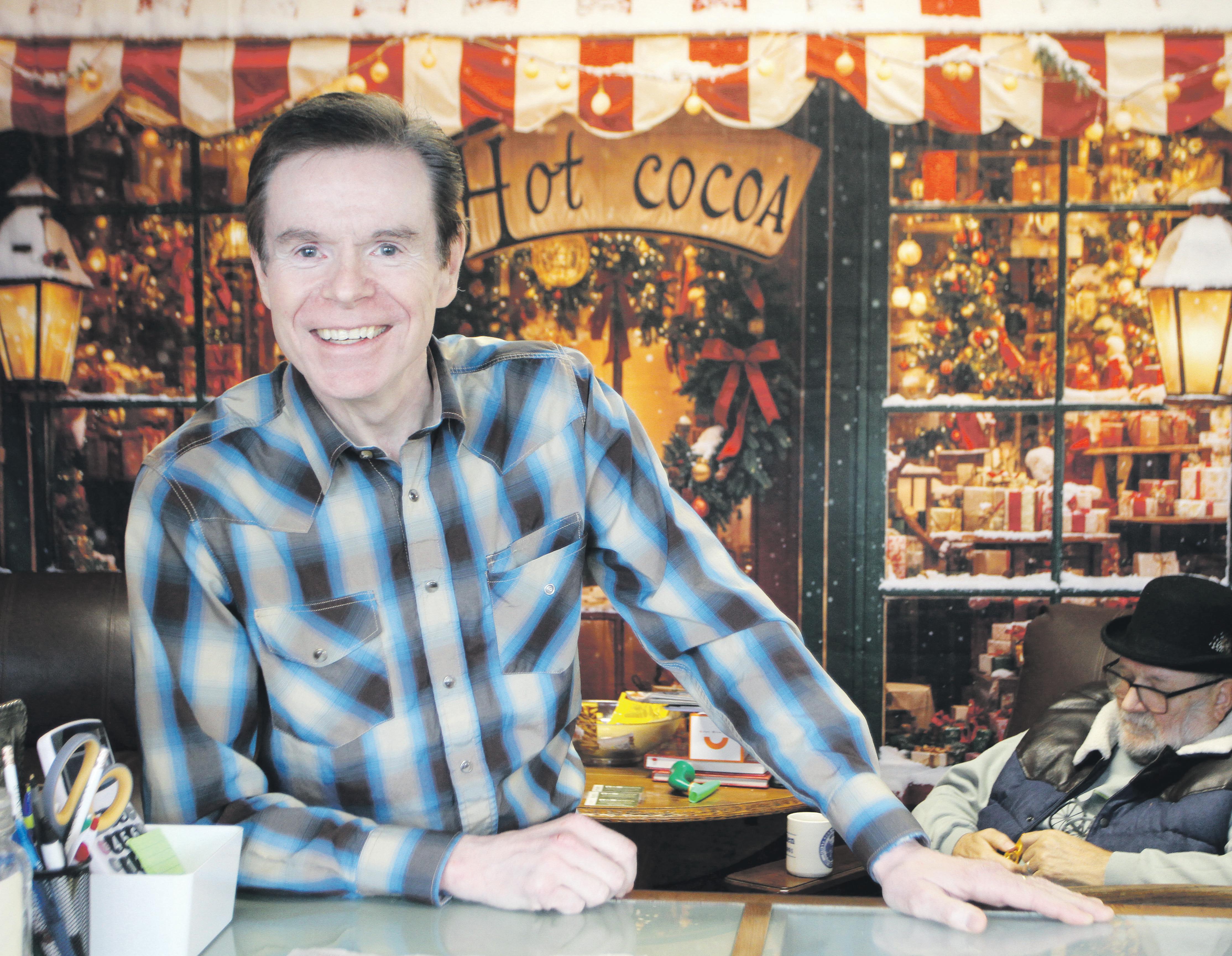
‘You have to know your history to know where you’re going,’ Greg Rice says
By Bill Helm Editor
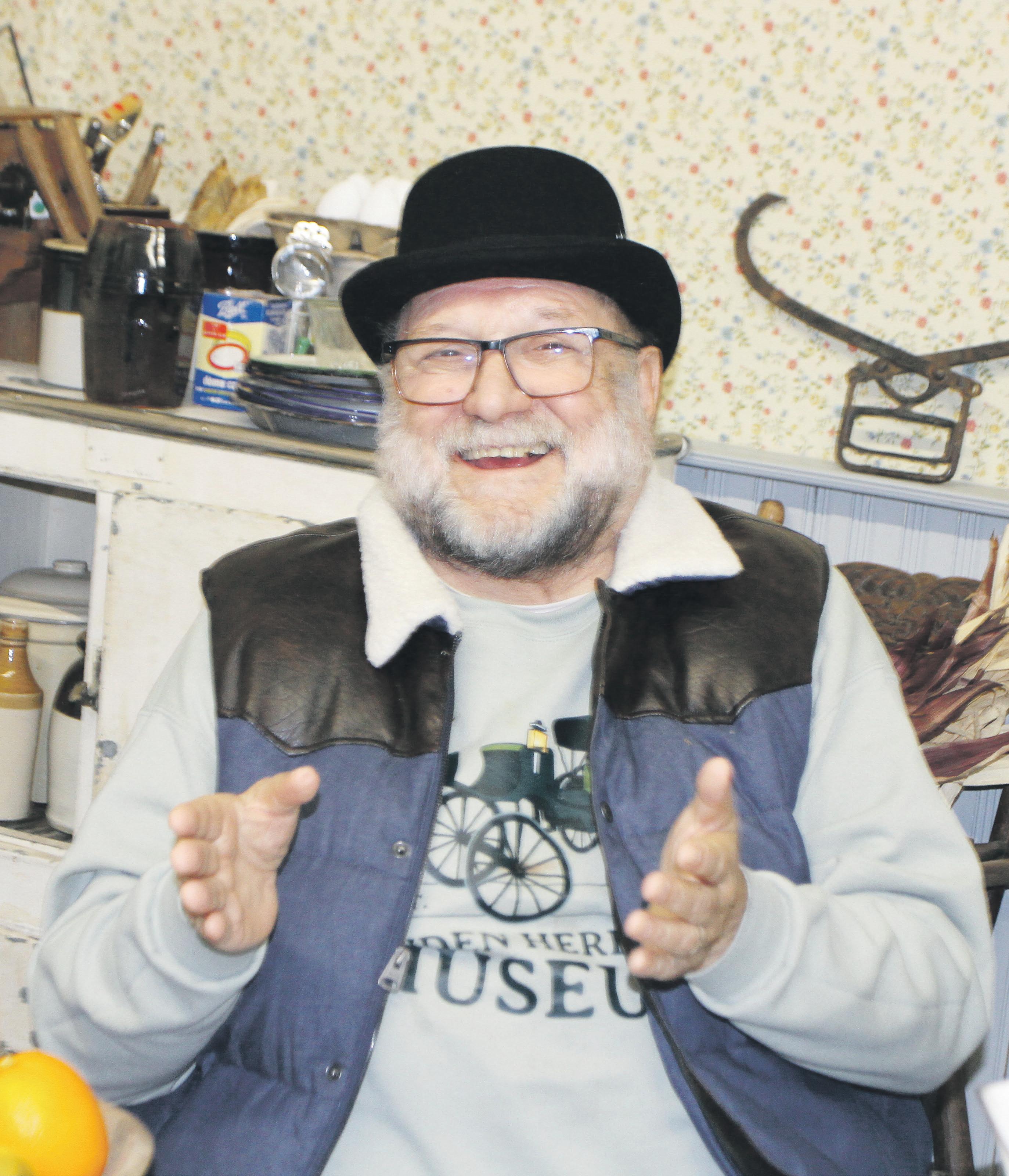
LYNDEN — David Bolden is well known in local theater. That’s how he got to know the Lynden Heritage Museum’s executive director, Jennifer Maas.
Both on stage in a recent Claire Theater production, Bolden said Maas “reached out to me, asked if I had any time available” to volunteer.
“Mondays are my slowest day, so I do 1-4 p.m.,” he said. “Been doing it since September.”
Bolden enjoys working with the museum’s staff and volunteers — and also with the other docents.
“Everyone here is so fun, such great people,” Bolden said. “The volunteers, we’ve had them here from all over the world. They get a taste of our community. That’s fun stuff.”
Of the museum’s many exhibits, Bolden includes the antique vehicles downstairs among his favorites.
“Some of my favorite stuff,” he said.
Bolden is one of more than two dozen people who volunteer their time at the Lynden Heritage Museum. According to Maas, the museum’s volunteers are indispensable.
“They’re the backbone that keeps our doors open, infuses our space with warmth and knowledge, and enables us to fulfill our mission of preserving history for future generations without straining our budget,” she said. “Their passion turns routine operations into meaningful connections with visitors.”
Maas explained that museum volunteers primarily serve as docents and greeters at the welcome desk “where they
See Volunteers on 10
New to volunteering at the Lynden Heritage Museum, David Bolden, pictured on opposite page, is well known in local theater. That’s how he got to know the museum’s executive director, Jennifer Maas. For the past two years, Greg Rice, at right, has been one of the museum’s volunteer docents. Monday mornings you can see him in the museum, also on Saturdays and when the museum needs someone to fill in. (Bill Helm/Lynden Tribune)
Continued from 9
warmly welcome all guests, check in visitors, accept admissions and guide them through our exhibits.”
The museum works its volunteer docents in pairs, in four-hour shifts. In addition to working the front desk, volunteers assist with seasonal events, fundraisers and free community programs. Maas said the museum’s volunteers “ensure we can host a full calendar of events that engage the community, from educational tours to holiday open houses.”
Based on the museum’s scheduling, volunteers contribute about 2,080 hours annually to help fill operational needs and keep the museum accessible. And that doesn’t count hours spent volunteering for events and programming above their committed schedules.
Maas estimated that paying someone to work the scheduled volunteer hours would cost the museum an estimated $35,630 per year, based on Washington’s 2026 minimum wage.
“Without our volunteers, the museum would face significant challenges in maintaining our seven-day-a-week schedule,” Maas said. “Relying solely on paid staff would make it difficult to cover all shifts af-
fordably, likely resulting in reduced hours, occasional closures, or limited access for visitors.”
Further, the ability to host seasonal events, school groups and hands-on heritage activities would diminish, and tasks such as collection preservation and exhibit setup would slow down.
“Ultimately, the museum would feel less vibrant and community-driven, as volunteers bring personal stories and local insights that enrich every visit,” Maas said.
Beyond the museum, Maas said volunteers play a key role in fostering a sense of pride and continuity.
“By sharing stories of our pioneer roots, agricultural heritage and local milestones, they help educate residents and strengthen community bonds,” she said. “In a town like Lynden, where history is woven into everyday life, our volunteers ensure that heritage remains alive and accessible, inspiring all ages to appreciate and contribute to our shared story.”
This year the Lynden Heritage Museum celebrates 50 years. For the past two years, Greg Rice has been one of the museum’s volunteer docents. Monday mornings you can see him in the museum, also on Saturdays and when the museum needs someone to fill in.
Rice figures he’s been to a good 100 museums the past 50 years. He ranks the Lynden Heritage Museum in his top-5.
“It’s good to have someone to show the exhibits,” Rice said. “It’s very satisfying, encouraging, able to tell people about the museum and answer questions. I think you have to know your history to know where you’re going.”
Open daily, hours at the Lynden Heritage Museum are from 10 a.m. until 4 p.m. Monday through Saturday, noon to 4 p.m. on Sunday.
Address is 217 Front St. For more information, visit lyndenheritagemuseum.org or email info@lyndenheritagemuseum. org.