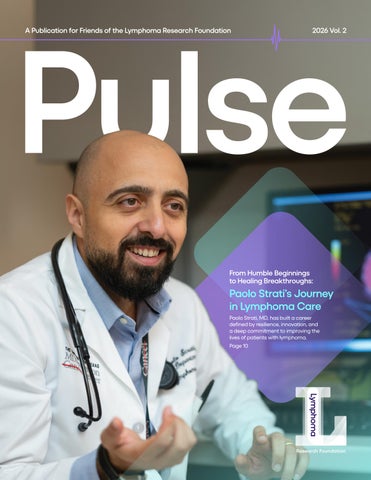
Pulse A Publication for Friends of the Lymphoma Research Foundation
2026 Vol. 2
From Humble Beginnings to Healing Breakthroughs:
Paolo Strati’s Journey in Lymphoma Care Paolo Strati, MD, has built a career defined by resilience, innovation, and a deep commitment to improving the lives of patients with lymphoma. Page 10
Pulse A Publication for Friends of the Lymphoma Research Foundation Pulse is a publication of the Lymphoma Research Foundation, providing the latest updates on the Foundation and its focus on lymphoma research, awareness, and education. The Lymphoma Research Foundation is devoted to funding innovative lymphoma research and serving the lymphoma community through a comprehensive series of education programs, outreach initiatives, and patient services.
Contact Us National Headquarters Wall Street Plaza 88 Pine Street, Suite 2400 New York, NY 10005 212 349 2910 lymphoma.org
Foundation Leadership
Editor
Kyle Haines
Jeff Block Chair, Board of Directors
Nichole Musumeci
David Meehan-Romero
Andrew M. Evens, DO, MSc, FACP Chair, Scientific Advisory Board Meghan Gutierrez Chief Executive Officer
Helpline 800 500 9976 helpline@lymphoma.org
Eva Migliore
Editorial Board
Sarah Quinlan
Micah Banner
Jessica Sharrow
Victor Gonzalez
Laura Wallenstein
Our disease and treatment-specific guides are now available in a dynamic and engaging digital format—making it easier than ever for patients and loved ones to explore personalized lymphoma information and support. Explore trusted information, navigate resources more easily, and learn at the pace that feels right for you.
Visit lymphoma.org/publications to learn more
PULSE | 2026 VOL. 2
Personal Care.
Read and Learn at Your Own Pace
Community Support.
Pulse © 2026 Lymphoma Research Foundation
Table of Contents Features
From Humble Beginnings to Healing Breakthroughs: Paolo Strati’s Journey in Lymphoma Care Paolo Strati, MD, has built a career defined by resilience, innovation, and a deep commitment to improving the lives of patients with lymphoma.
10
Generations of Impact: How Tom Condon and His Daughter, Emily, Are Shaping the Future of Lymphoma Research Tom Condon turned a follicular lymphoma diagnosis at age 31 into a lifelong commitment to advancing lymphoma research and philanthropy. More than two decades later, his journey has become a family legacy shared with his daughter, Emily Dyer, whose path in medicine reflects the compassion, purpose, and belief that investing in the next generation can transform the future of patient care.
6
Meet the 2026 Career Development Award and Postdoctoral Fellowship Research Grantees The Lymphoma Research Foundation’s 2026 research grants highlight its commitment to advancing innovative, patient-focused lymphoma research by investing in the next generation of scientific leaders.
16
In Every Issue
Community Impact
4
From the Field
10
Living With Lymphoma
24
1
The Lymphoma Research Foundation created the Lymphoma Resource Center to help patients, survivors, and care partners find trusted information, compassionate support, and personalized guidance — all free of charge. Whether newly diagnosed, in treatment, or navigating survivorship, the Resource Center connects individuals with: • • • • • •
One-on-one support from our trained support team Lymphoma Resource Kits tailored to your specific needs Treatment Navigation Services offering guidance on treatment options and clinical trials Patient Aid Grants to ease the financial burden of lymphoma care Up-to-date, medically reviewed educational materials Peer connection through our Lymphoma Support Network
A lymphoma diagnosis can feel overwhelming. The Lymphoma Resource Center is here to make sure no one has to navigate it alone.
Connect with the Lymphoma Resource Center today by visiting lymphoma.org/resourcecenter
Personal Care. Community Support.
Introducing the new Lymphoma Resource Center
From the CEO Every day, I am reminded that progress in lymphoma is never the result of one breakthrough, one program, or one individual alone. It is built through the collective strength of a community united by hope, compassion, and an unwavering commitment to a future without lymphoma. In this issue of Pulse, you will read stories that reflect the extraordinary resilience of our community and the remarkable momentum shaping the future of lymphoma research and care. First, you will read about Tom Condon and his daughter, Emily Dyer, whose shared dedication to advancing lymphoma research reflects the enduring strength of families affected by this disease. Their story is a powerful example of how one person’s passion for making a difference can inspire the next generation to continue that work with equal determination and compassion. That same spirit of dedication is reflected in this issue’s Researcher Spotlight, featuring Dr. Paolo Strati, whose work continues to advance our understanding of lymphoma and improve patient outcomes. Scientific progress depends on visionary researchers who are willing to push boundaries, ask difficult questions, and pursue innovative approaches to care — and we are proud to support and celebrate leaders like Dr. Strati. This issue also introduces the Foundation’s 2026 Career Development Award and Postdoctoral Fellowship grantees. Investing in early-career investigators is one of the most important ways we accelerate the next generation of discoveries. These talented researchers represent the future of lymphoma science, and their work has the potential to shape treatment advances for years to come. From groundbreaking scientific advances to deeply personal patient experiences, these pages capture both how far we have come and how much possibility lies ahead. Thank you for being part of the Lymphoma Research Foundation community and for helping make this work possible. Because of your support, we continue to advance research, empower patients, and move closer to a world without lymphoma. Sincerely yours,
Meghan Gutierrez Chief Executive Officer
3
COMMUNITY IMPACT
Philanthropy in Action 2026 New York Lymphoma Walk Raises Over $100K The New York Lymphoma Walk brought together more than 300 passionate supporters in a powerful show of strength, hope, and community — raising more than $100,000 to advance lymphoma research and support those impacted by the disease. From survivors and care partners to families, friends, and advocates, every step taken helped move us closer to better treatments and cures. The energy throughout the day was inspiring, reminding us all of the incredible impact we can make when we come together with a shared purpose. Photo: Team Sunshine Seekers led by NY Walk Event Committee member Ilyse Leibowitz
2026 South Florida Golf Invitational Raises Over $575,000 The South Florida Golf Invitational delivered an unforgettable day on the greens, bringing together a dedicated community of supporters and raising more than $575,000 to fuel groundbreaking lymphoma research and critical patient support programs. Thanks to the generosity of our participants, sponsors, donors, volunteers, and wonderful co-chairs, Leigh and Cory Olson, the event was a tremendous success — uniting the lymphoma community around a shared commitment to advancing better treatments and finding cures. Photo: From left – Foundation Board members Whitney Neighbors, Leigh Olson, Jeff Block, and Patricia Kaine
2026 Chicago Partners in Purpose Raises Over $185,000 The Chicago Partners in Purpose event brought together a remarkable community of supporters for an evening dedicated to advancing impact for the lymphoma community. The event highlighted the power of collective action in advancing lymphoma research and expanding support services for patients and families. Through generosity and shared purpose, the event raised more than $185,000, helping to accelerate progress toward better treatments and cures. Photo: From left – Honorees Michael and Lynn Froy; Foundation CEO, Meghan Gutierrez; and honoree Jane N. Winter, MD.
4
PULSE | 2026 VOL. 2
You are invited to attend
GALA the Lymphoma Research Foundation’s Annual
November 13, 2026 Ziegfeld Ballroom – New York, NY Honoring Special Guests: Peter Martin, MD Distinguished Leadership Award AbbVie Corporate Leadership Award Chaired By: Debbie and Richard Jelinek
5
COMMUNITY IMPACT
Generations of Impact:
Tom Condon and Emily Dyer
How Tom Condon and His Daughter, Emily, Are Shaping the Future of Lymphoma Research For Tom Condon, a lymphoma diagnosis at age 31 was not just a life-altering moment — it was the beginning of a lifelong commitment to changing the future of the disease. More than two decades later, that commitment has grown into a family legacy, one now shared with his daughter, Emily Dyer, whose own path in medicine and philanthropy reflects both gratitude and purpose. Together, Emily and Tom represent something powerful: the intersection of lived experience, scientific progress, and a belief that investing in people — especially the next generation — can transform outcomes for patients everywhere.
6
PULSE | 2026 VOL. 2
A Diagnosis That Sparked a Mission
From Patient to Philanthropist
When Tom was diagnosed with follicular lymphoma in 2001, his future was uncertain. With a toddler and a newborn at home, he faced a reality many patients know all too well: limited information, daunting statistics, and an urgent need to find answers.
Tom’s involvement with the Foundation quickly deepened. Tom soon joined the Foundation’s Board of Directors, a role he served in for over a decade. Alongside his family and their Foundation, the Condon Family Foundation, he began supporting the Foundation in increasingly meaningful ways — from major research initiatives to long-term strategic investments.
Rather than retreat, Tom leaned in. At the time, much of the available data was already years out of date, and promising new therapies — like monoclonal antibodies — were only just beginning to change the treatment landscape. He immersed himself in research, traveled the country to meet leading physicians, and, ultimately, found his way to the Lymphoma Research Foundation. What began as a search for clarity quickly became something more. At his first Foundation Educational Forum on Lymphoma, Tom had a realization that would shape the next 20+ years of his life: The very scientists leading lymphoma research across the country were all connected through one organization. “That was the lightbulb moment,” he recalls. “If you want to invest in the future of this disease, this is where you do it.”
While his approach to giving has evolved over time, what has remained constant is a clear guiding principle: Progress in lymphoma depends on people. Tom and his family have long been driven to support earlycareer investigators and the transformative impact they can have on the future of lymphoma research and care. By investing in fellows, scholars, and emerging scientists, they hope to empower the next generation of innovators who will shape what comes next. “It’s simple,” Tom says. “If you believe lymphoma will one day be cured, then you have to ask: Who is going to do it? The answer is the people we’re training right now.” Tom compared this approach to a “farm system” in sports — cultivating talent early, nurturing it over time, and ensuring that the next generation is ready to lead when the time comes. Without that intentional investment, he notes, even the most promising fields can stagnate. For Tom, the impact of research is not theoretical — it is deeply personal. When he was first diagnosed, he was told that the average life expectancy for someone with his disease was between 7 and 12 years. Today, nearly 25 years later, he reflects on a life that has far exceeded those expectations. That extended time has been filled with milestones that once felt uncertain: raising his children, growing his career, and even expanding his family years after his diagnosis. “We weren’t sure there would be a long-term future,” he says. “But as new treatments became available, that hope started to come back.”
If you want to invest in the future of this disease, this is where you do it.
Those treatments — many of which emerged from the very research efforts he now supports — have not only prolonged his life but also improved its quality. It’s a powerful reminder of what sustained investment in science can achieve.
7
COMMUNITY IMPACT
A Family Shaped by Giving For Emily, philanthropy has never been an abstract concept — it’s been a constant presence and defining influence in her life. That ethos traces back to her grandparents, Tom and Julie Condon, who established the Condon Family Foundation in the 1990s with a vision of creating an enduring legacy of community service and giving — one that would span generations. Today, Tom remains actively involved in the Foundation’s work, continuing to guide its mission and values. She was just 3 years old when her father was diagnosed, but the experience shaped her upbringing in profound ways. The Foundation was not just an organization her family supported — it was woven into the fabric of her childhood.
“I didn’t fully understand it at the time,” she says. “But I always knew my help mattered.” As the years went by, Emily attended more fundraisers, such as the Foundation’s Annual Gala, and even got to watch her father receive an award for his several contributions to the community. Those early experiences instilled a sense of purpose that has stayed with her ever since. Today, Emily is a medical student and former emergency room nurse, driven by a deep appreciation for the human side of healthcare — an outlook shaped in large part by her father’s experience. “His journey gave me an understanding of the humanism behind disease,” she explains. “It’s not just about treatment — it’s about connection, compassion, and walking with patients through what they’re facing.”
Some of her earliest memories involve the Foundation. She remembers volunteering at a golf fundraiser as a young child, retrieving golf balls and helping monitor a hole-inone contest.
I didn’t fully understand it at the time, but I always knew my help mattered. Members of the Condon Family Foundation
8
PULSE | 2026 VOL. 2
Protect the Next Generation of Lymphoma/CLL Investigators Proposed Federal Policy Shifts Threaten the Future of Cancer Research — Especially for Rare Diseases Like Lymphoma and CLL Lymphoma research has long been a catalyst for innovation across the field of oncology. Yet, because lymphoma and chronic lymphocytic leukemia (CLL) are considered rare diseases, they have historically received less federal research funding when compared to other disease states. Now, that gap may widen. Proposed changes to agencies like the National Institutes of Health (NIH), the Centers for Disease Control and Prevention (CDC), and the U.S. Food and Drug Administration (FDA) could stall vital progress — jeopardizing care, discovery, and hope for the lymphoma community. These cuts don’t just slow progress, they also threaten researchers’ careers. Early career scientists, the very pipeline to tomorrow’s cures, are at risk. Job offers are being rescinded. Projects are stalled. Mentorship and training opportunities are reduced. Once lost, these researchers may not return to careers in lymphoma research.
That’s Why Your Support Is More Critical Than Ever Despite federal uncertainty, the Lymphoma Research Foundation remains committed to advancing lifesaving research, supporting the next generation of lymphoma experts, and serving every person touched by this disease. To that end, the Foundation is announcing the creation of the Early Career Investigator Fund.
Your Gift Today May Be the Key to Unlocking Tomorrow’s Cures By making a gift to support our Early Career Investigator Fund today, you will help ensure that the Foundation can fully support its world-class mentoring programs and early-career grants for the next generation of lymphoma and CLL experts. Thanks to your continued generosity, we can keep moving forward. Together, we can protect progress, empower researchers, and push toward a world without lymphoma.
Visit giving.lymphoma.org/research to support the future of lymphoma research today! 9
FROM THE FIELD
From Humble Beginnings to Healing Breakthroughs
Paolo Strati’s Journey in Lymphoma Care For Paolo Strati, MD, the path to becoming a leading lymphoma clinician and researcher was anything but linear. It was shaped by sacrifice, resilience, and an unwavering commitment to improving patients’ lives — not just in the moment, but for the long term. Today, as an associate professor at The University of Texas MD Anderson Cancer Center, Strati balances an ambitious clinical and research portfolio with a passion for mentorship and patient care. But his story begins far from Houston, in southern Italy, where his journey into medicine first took root.
10
PULSE | 2026 VOL. 2
A Beginning Built on Resilience
Crossing Continents for Opportunity
“I come from a family of non-doctors — actually, a family where no one went beyond high school,” Strati says. “That’s the diversity I bring, and I’m very proud of it.”
Strati’s ambition eventually brought him to the United States, where he initially pursued advanced training at MD Anderson. The journey, however, came with significant hurdles — including repeating years of medical training due to international credentialing requirements.
Strati’s father worked in a coffee factory, and his mother was a housewife. Financial challenges and personal hardships shaped his worldview early, instilling both a great work ethic and sense of empathy. “While my childhood wasn’t always easy, I realize those challenges provided me with some of my greatest strengths,” he says. “From a young age, I knew I wanted to do something meaningful and give back to my community — whether that was being a physician, a teacher, or even a police officer.” Academics became his pathway forward. Strati excelled in school, eventually earning admission to one of Italy’s top medical institutions in Milan. There, a pivotal mentor, Dr. Federico Caligaris-Cappio, exposed him to oncology and hematology and sparked a passion that would define his career. “I fell in love with the science,” he recalls. “But also with the clinical side — having meaningful conversations with patients, understanding and being able to cure their disease, and realizing how quickly things were evolving.”
“It was a long road,” he says. “But I believed in the power of research here — the ability to change patients’ lives not just today, but in the future.” That belief was cemented during his early clinical experiences. He recalls treating patients in Italy with limited options, then witnessing those same diseases transformed by clinical trials in the U.S. It was these experiences that left a lasting impression. “I saw patients who had exhausted every treatment suddenly respond to a single pill in a trial. That changes how you think about medicine forever.”
Redefining What’s Possible in Lymphoma Care Now a leading clinical investigator, Strati focuses on immunotherapy and cellular therapies for lymphoma, including CAR T-cell therapy and emerging approaches targeting the innate immune system. While T-cell–based therapies have revolutionized lymphoma treatment, Strati is working to expand the field further. “My goal is to understand how we can better use the innate immune system to improve efficacy and reduce toxicity,” he explains.
While my childhood wasn’t always easy, I realize those challenges provided me with some of my greatest strengths.
His research explores novel strategies that could make treatments more accessible, less toxic, and potentially more effective — even for patients whose cancers no longer respond to existing therapies. Perhaps most importantly, he emphasizes what these advances mean for patients. “For the first time, we can say that some treatments at relapse offer a real chance for cure,” he says. “That’s a major shift.” In diseases like follicular lymphoma — long considered incurable — he believes the narrative is changing. “We’re starting to challenge that assumption,” he says. “And patients should know that. It can give them hope.”
11
FROM THE FIELD
A Deep Commitment to Patients Strati’s approach to patient care is rooted in both science and humanity. “The first thing I try to do is educate my patients,” he says. “Many times, anxiety comes from not understanding what’s happening.” He believes that informed patients are empowered patients. “If they understand their disease and their options, they can make better decisions,” he says. But beyond education, he emphasizes the importance of maintaining a sense of normalcy. “I always tell them — you are still living your life,” he says. “You are not just a lymphoma patient.” He often uses humor and conversation to connect with patients. “Sometimes I make too many jokes,” he admits. “But it’s my way of reminding them that they are still themselves.”
A Life Balancing Science and Humanity A typical day for Strati is anything but typical. He sees up to 25 patients in clinic, leads multiple clinical trials, and mentors a growing team of researchers — all while balancing administrative and educational responsibilities. “I try to keep myself busy,” he says. His research program includes a team of nearly 20 staff members and a large portfolio of clinical trials, many of which he has designed himself. “These are investigator-initiated trials, which means they come from our ideas, our questions,” he explains. “That’s very rewarding.” Despite his demanding schedule, he is also the proud father of his 12-year-old daughter and 9-year-old son, whom he shares with his wife of 15 years. “In my spare time I joke that I am a glorified Uber driver, bringing my kids to their many activities” he says with a laugh. “Between all those responsibilities, my days are usually pretty packed.“ But despite the demands, patient care remains central to his work. “At the end of the day, everything we do is for the patient,” he says.
12
PULSE | 2026 VOL. 2
The Power of Research For Strati, the integration of research and clinical care is what makes his work truly meaningful. “As a clinician, you can help a patient today,” he says. “But as a researcher, you can change what happens to patients in the future.” He reflects on his early experiences in emergency medicine, where he saw the limitations of short-term interventions. “I realized that I could save someone’s life overnight,” he says, “but they might still die days later because we didn’t have the right treatments.” That realization shifted his focus. “What I do now is try to make an impact in the long term,” he says.
The Impact of the Lymphoma Research Foundation A defining force in Strati’s career has been the Lymphoma Research Foundation, which he credits with accelerating his transition into lymphoma research and shaping his professional trajectory.
“Without the Foundation, I would not have been able to succeed in the lymphoma space,” he says.
At the same time, new therapies are expanding the possibilities even further.
Through the Foundation’s mentorship and research grant programs, he found not only funding — but also a community.
“We’re developing off-the-shelf cellular therapies, therapies based on NK cells and macrophages,” he says. “We’re even thinking about how to engineer these treatments directly in the body.”
“They gave me guidance, visibility, and connections,” he says. “But more than that, they gave me a family.” Strati has received two grants from the Foundation throughout his career. The first was in 2018 when he received a Lymphoma Scientific Research Mentoring Program (LSRMP) Award. One year later, he went on to receive a Foundation Career Development Award (CDA). As part of of his first grant, he worked on a project aimed at targeting macrophages to improve the efficacy of frontline immunotherapy for the treatment of patients with indolent B-cell lymphoma. With the guidance of his mentors, he generated novel translational data to support this project, which was published in Nature Communications. As part of his CDA, his project aimed at manipulating macrophage biology to mitigate toxicities associated with the use of CAR T-cell therapy in patients with aggressive B-cell lymphoma.
For patients, these advances could mean more options — and more hope. “We are curing more and more patients,” he says. “And that’s what matters.”
A Career Defined by Impact For Strati, the most meaningful moments in his career aren’t defined by titles or publications, but by impact. That dual mission — immediate care and long-term progress — continues to guide his work. And while his journey has taken him far from where he began, the values that shaped him remain constant. “I’m still that person,” he says. “I just found a way to make a difference.”
“Eight years later, I still have a standing monthly meeting with one of my mentors from the LSRMP, Ann LaCasce, MD,” he says. “That tells you everything about the kind of community this is.” Today, Strati has come full circle, serving as a mentor and faculty member within the same program that once supported him, the Lymphoma Scientific Research Mentoring Program. “You become part of a community where you stop focusing on yourself,” he says. “You start focusing on others — your patients, your mentees, your peers.”
Looking Toward the Future Strati is optimistic about the future of lymphoma research — and ambitious in his vision. “I think we are getting very close to eliminating chemotherapy,” he says. Ongoing trials, including some he is involved in, may soon establish immunotherapy as a frontline treatment for certain lymphomas. “That would be a huge milestone,” he says. “Because chemotherapy, while effective, comes with significant short- and long-term side effects.”
At the end of the day, everything we do is for the patient. 13
FROM THE FIELD
Where Are They Now?
Caitlin Gribbin, MD z
When did you become interested in the study of medicine? In lymphoma specifically? I became interested in medicine when I was in college at Cornell University and in oncology and lymphoma specifically in medical school at Weill Cornell Medical College.
At what point in your career did you receive funding from the Lymphoma Research Foundation? What kind of grant(s) did you receive? I received a grant from the Lymphoma Research Foundation through their Lymphoma Scientific Research Mentoring Program (LSRMP) as a hematology/ oncology fellow.
Caitlin Gribbin, MD, is an assistant professor of medicine within the division of Hematology and Oncology at Weill Cornell Medical Center.
14
PULSE | 2026 VOL. 2
I think that it is so valuable to have a lymphoma-specific foundation focused on educating patients and sharing helpful resources.
What scientific project did you pursue as part of your Foundation research grant and how did the Foundation support your interest in follicular lymphoma (FL)? I worked on a project with my mentors, Drs. Wendy Beguelin and Ari Melnick, focused on better understanding the follicular lymphoma immune microenvironment, specifically in terms of whether other immune cells can be leveraged therapeutically against follicular lymphoma cells. The support of the Foundation significantly contributed to my ability to carry this work out and to learn more about the intricacies of follicular lymphoma from leaders in the field.
How has the treatment landscape for lymphoma/CLL changed since you first started conducting your research? We continue to learn more about what differentiates lymphoma subtypes from one another and how we can treat patients effectively while minimizing toxicity. Novel cell therapies and T cell engagers have are one particularly interesting and promising area of research for engaging the immune system against lymphoma; these therapies continue to improve both alone and in combination with other treatment strategies and are moving up into earlier lines of therapy.
Was the support and grant funding you received from the Foundation vital to advancing/ dedicating your career to studying lymphoma? Yes, the support from the Foundation has been such an important part of my career development, specifically in terms of my ability to meet leaders and colleagues in the field and to learn about the advances in lymphoma through excellent disease-specific workshops.
How has your involvement with the Foundation continued since being a Foundation LSRMP Scholar? I have enjoyed attending workshops and keeping in touch with colleagues and mentors who I have met through the Foundation’s LSRMP.
Why is the Foundation’s mission and focus on lymphoma-specific research and programming important? Put another way: How would the lymphoma community be impacted if there was no Lymphoma Research Foundation? I think that it is so valuable to have a lymphoma-specific foundation focused on educating patients and sharing helpful resources. Given the diversity of lymphoma itself, specialized knowledge in the field is so key to helping patients and families make the right decisions about workup and treatment; the ability to connect with experts and fellow patients and advocates makes a huge difference.
What research or projects are you currently pursuing that you would like to share with our readers? I am working on a bench-to-bedside investigator-initiated clinical trial that I am hoping to share results from in the next few years!
What are you most excited about in the field of lymphoma research today? Why? As we learn more about the biology of lymphoma, especially with respect to its immune microenvironment, we are better able to tailor treatment strategies to individual patients and advance the field as a whole through our understanding of biology.
How have treatments and care for lymphoma patients evolved since you started your career in this field? We continue to integrate scientific advancements into clinical management for our patients. This has translated into the increased use of circulating tumor DNA (ctDNA) as an additional diagnostic tool, earlier adaptation of cell therapy into treatment schemas, and improved prognostication based on disease-specific lymphoma features, among other advancements.
We continue to integrate scientific advancements into clinical management for our patients.
15
FROM THE FIELD
Meet the 2026 Career Development Award Winners and Postdoctoral Fellowship Research Grantees The Lymphoma Research Foundation announced its 2025 grant class — 24 research grants awarded, including 3 Career Development Award (CDA) and 10 Postdoctoral Fellowship grants, to scientists based at many of the world’s leading cancer research institutions — totaling $2.7 million in innovative lymphoma and chronic lymphocytic leukemia (CLL) research. The 2026 grantee class encompasses 16 medical and academic institutions, with research initiatives investigating a range of lymphoma subtypes and scientific disciplines including rare T-cell lymphomas, treatments for adolescents and young adults, novel cancer therapies, and disease biology. The grant selection process is led by the Foundation’s Scientific Advisory Board (SAB), which is made up of 45 international lymphoma experts dedicated to seeking out the most innovative and promising lymphoma research projects for investment. Detailed profiles of the Foundation’s 2026 CDA and Postdoctoral Fellowship grantees follow:
16
PULSE | 2026 VOL. 2
Clinical Career Development Award (CDA) Neha Akkad, MD
Alexander Boardman, MD
The University of Texas MD Anderson Cancer Center
Memorial Sloan Kettering Cancer Center
Patient-reported outcomes (PROs) are tools used to directly measure the experiences of patients rather than as interpreted by clinicians or researchers. Incorporation of PROs into clinical trials for T-cell lymphomas (TCLs) is especially important given the high disease burden, prolonged treatment durations, and poor, often short-lived responses to treatments. “Given the limited efficacy of current therapies in these diseases, incorporating PROs as clinical trial endpoints is essential to accelerate drug approval and ensure the therapies that we are studying meaningfully improve patients’ lives and, importantly, quality of life,” explains Dr. Akkad. Her research, therefore, aims to characterize quality-of-life PROs in TCL and their relationships with clinical outcomes as well as validate PRO tools for use in a clinical setting. “This project is a crucial step in creating a metric that is robust enough to be used in the clinical setting and as a measure of quality of life in clinical trials for these patients.” Dr. Akkad’s interest in understanding quality of life and PROs in T-cell lymphomas began during her residency at the Barnes-Jewish Hospital at Washington University in St. Louis, where she saw firsthand how the impact of treatment on patients’ lives impacted their decision making. “Patients noted how much impact on quality of life shaped the decisions they made, and we noted that it was a significant contributor to clinical decisions as well,” she explains. “However, there was no good objective way to measure it. Thus, we began our foundational projects aimed at developing meaningful quality-of-life measures for this patient population.” Through this research, Dr. Akkad hopes to identify better tools for quantifying the impact of lymphoma treatment on patients’ quality of life, with the goal of incorporating them into future clinical trials of T-cell lymphoma therapies. “I additionally hope that my research can contribute to widespread use of uniform PRO tools specific for T-cell lymphoma and that the same tool can be used in the clinic to help make decisions for patients,” she says.
Dr. Boardman is an attending medical oncologist specializing in the study and treatment of lymphoma. His work focuses on the development of novel therapies for patients with diffuse large B-cell lymphoma, follicular lymphoma, and other indolent non-Hodgkin lymphomas. “Since my residency at Brigham and Women’s Hospital and Dana Farber Cancer Center in Boston, I have been deeply passionate about caring for people with lymphoma,” he says. “While there, I had the great fortune of providing care to patients receiving chimeric antigen receptor (CAR) T-cell therapy around the time of its first FDA approval,” he explains. These experiences laid the groundwork for his current research supported by the Foundation, which focuses on understanding how anti-CD19 CAR T-cell therapies interact with their environment. Through this research, he hopes to identify cell types or interactions that predict response to treatment and the development of resistance. His work will also study whether novel therapies can be used to enhance the effectiveness of CAR T-cell therapy to help improve responses and patient outcomes. “As a faculty member on both lymphoma and cellular therapy service, I am determined to effect change in the field of cellular therapy, working seamlessly with basic scientists and academic clinicians to develop novel therapeutic strategies and to understand the underlying mechanisms of their efficacy,” says Dr. Boardman. As he moves forward in his career, he aims to continue researching drivers of treatment failure and devising novel therapeutic strategies to improve outcomes in lymphoma patients.
17
FROM THE FIELD
Mengyang Di, MD, PhD
Andrew Jallouk, MD, PhD
University of Washington
Vanderbilt University Medical Center
Bispecific T-cell engagers have emerged as an important treatment option for the management of relapsed or refractory follicular lymphoma. These therapies harness the anti-cancer activity of the patient’s own T cell by bringing them into close contact with lymphoma cells, allowing for more efficient targeting. Pirtobrutinib is a targeted Bruton’s tyrosine kinase (BTK) inhibitor, which Dr. Di hopes to use in combination with the bispecific T-cell engager mosunetuzumab to improve its efficacy and safety. “It has the potential to make T cells healthier, which may help improve efficacy,” Dr. Di explains. “It may also help decrease the immune-related side effects — such as cytokine release syndrome — through anti-inflammatory activity.” Dr. Di hopes that this combined treatment approach may help to improve outcomes and experiences with bispecific T-cell engager therapy. Dr. Di earned her medical degree from Peking Union Medical College in China and her doctoral degree from The Chinese University of Hong Kong. She completed a hematology/oncology fellowship at Yale University School of Medicine and is now an assistant professor and lymphoma clinician at Fred Hutchinson Cancer Center in Seattle. As a clinical investigator, Dr. Di hopes to drive clinical innovations that improve outcomes in patients with B-cell lymphoma, with a focus on indolent diseases.
Chimeric antigen receptor (CAR) T-cell therapy is a lifesaving treatment option for many patients with relapsed or refractory lymphoma. Current CAR T-cell therapies are engineered from a patient’s own cells, which can be expensive and time consuming. Recent research has focused on the development of “off the shelf” CAR T-cell therapies made from healthy donor cells, though their use has been limited due to immune rejection. “My project tests a new strategy to prevent this rejection by specifically targeting the immune cells most responsible for it,” Dr. Jallouk explains. “The goal of my project is to improve the efficacy of healthy donor-derived CAR T-cell treatments in order to expand access for patients with lymphoma.” Dr. Jallouk first became interested in a career in lymphoma research during his graduate and medical training at Washington University in St. Louis, Missouri, where he became fascinated by the potential of emerging engineered cellular therapies. As he began working with these novel therapies, he realized he was drawn not only to the innovative nature of treatment but also to the diverse nature of lymphoma. “I greatly enjoy working with patients to develop a treatment plan specific to their particular type of lymphoma,” he says. “My research project allows me to combine my interest in cell therapy with my desire to help patients with lymphoma and to translate my discoveries in the laboratory to improve care for patients with lymphoma.” Dr. Jallouk’s research project supported by the Career Development Award is a direct extension of his work previously supported by the Foundation through the Lymphoma Scientific Research Mentoring Program, which he joined in 2023. “This program was an amazing experience that solidified my commitment to a career in lymphoma research,” he says. “I look forward to continuing my work with the Foundation during the period of this Award and beyond.”
18
PULSE | 2026 VOL. 2
Christina Poh, MD City of Hope
Nodal T follicular helper (TFH) cell lymphoma is an aggressive type of blood cancer that often responds poorly to frontline therapies such as chemotherapy and bone marrow transplant. Dr. Poh’s research aims to test new combination approaches that can improve the effectiveness of upfront treatments for nodal TFH cell lymphoma by blocking key cancer growth pathways that contribute to treatment resistance. Her goal is that such approaches will result in durable responses without the need for intensive bone marrow transplant, thereby improving outcomes and treatment experiences for patients with this aggressive type of lymphoma. Additionally, her research seeks to determine whether circulating tumor DNA — tiny fragments of DNA from cancer cells that can be found circulating in the blood — can be used to monitor treatment responses and identify patients who are most likely to benefit from these approaches. “My commitment to lymphoma research is personal,” says Dr. Poh. “Several family members and friends have faced cancer, and seeing disparities in care inspired me to make a difference.” After completing her medical training at Loma Linda University School of Medicine in California, Dr. Poh went on to do a fellowship in hematology/oncology at University of California Davis. As an assistant professor at the University of Washington and Fred Hutchinson Cancer Center, she received the Lymphoma Scientific Research Mentoring Program clinical fellowship grant, which helped her establish her work in T-cell lymphomas. “I am drawn to T-cell lymphomas because they are rare, aggressive, and historically underserved,” she explains. “This project improving frontline treatment in nodal TFH cell lymphoma offers the opportunity to directly refine therapy and improve outcomes for patients at diagnosis.” With the continued support of the Foundation, Dr. Poh hopes that her work will make a meaningful difference in the lives of patients with T-cell lymphomas. “As an independent clinical researcher, I aim to bridge clinical care and translational research, mentor future investigators, and contribute to a collaborative global effort to advance treatment and understanding of T-cell lymphomas,” she says.
Sandeep Raj, MD Memorial Sloan Kettering Cancer Center
Chimeric antigen receptor (CAR) T-cell therapy has transformed the treatment of large B-cell lymphoma (LBCL), but many patients still experience cancer recurrence after their use. “Roughly half of patients will see their cancer return, and we do not fully understand why,” explains Dr. Raj. “My research aims to uncover the reasons CAR T-cell therapy stops working in patients with LBCL and find ways to overcome them.” To this end, Dr. Raj’s research is aimed at understanding the role the immune system plays in response to CAR T-cell therapy, including how it may reduce the effectiveness of these treatments or shield cancer cells from detection. “My work may identify patients with LBCL at highest risk of CAR T-cell treatment failure who may benefit from targeted interventions to reshape the immune environment in a patient’s favor and improve CAR T-cell function using prophylactic anti-inflammatory drugs or antiviral medications.” Dr. Raj’s interest in lymphoma research developed early on in his life when a close family member was diagnosed with lymphoma. “There was an overwhelming sadness and anxiety during the initial period after hearing the diagnosis,” he says. “At the first consultation, though, their oncologist assuaged our fears with calm confidence filled with compassion and warmth and guided my family member toward a full remission.” The experience stuck with Dr. Raj, and throughout his medical training, it has reaffirmed his commitment to lymphoma research. “I’ve always been led back to studying lymphoma, contributing toward finding a cure, and hoping that I can provide the same compassionate and thoughtful care my family once received,” he says. As a physician scientist, Dr. Raj is committed to both quality patient care and clinical innovation. “It is an absolute privilege to be able to work at the intersection of quantitative biology, cancer immunology, and cellular therapy, focusing on turning lab discoveries into advances in patient care for those with lymphoma,” he says. With the support of the Foundation, he is working to establish a multidisciplinary research program that takes research from “the computer to the lab bench to the beside and back” to help optimize cellular therapies for patients with blood cancer.
FROM THE FIELD
Postdoctoral Fellowship Grant Seda Tolu, MD The Trustees of Columbia University in the City of New York
Federico Mario Aletti, MD Dr. Tolu earned her medical degree from the University of Maryland School of Medicine and completed a residency in hematology and oncology at Herbert Irving Comprehensive Cancer Center at Columbia University & NY Presbyterian Hospital. It was during this time when she developed an interest in lymphoma research, drawn in by the diversity of the disease and the many ways it can present. As she worked with lymphoma patients, she was particularly drawn to those with cutaneous T-cell lymphoma (CTCL). “It is often difficult to treat because it tends to come back after therapy, requiring patients to undergo many different treatments over time,” she explains. “I witnessed firsthand how profoundly debilitating this disease can become in the relapsed/refractory setting, with significant impacts on quality of life and few effective treatments available. These patient experiences shaped my commitment to this field.” With the support of the Foundation, Dr. Tolu’s research is aimed at developing a novel treatment approach for patients with CTCL using a combination approach of a JAK inhibitor plus immunotherapy. She hopes that the dual targeting of the drivers of CTCL will help patients achieve longer-lasting control and improve outcomes with treatment. “This project is driven by a desire to move beyond traditional chemotherapy and instead target the underlying biology of disease,” she explains. “I am particularly motivated by the potential to translate biologic insights into treatment strategies that not only improve disease control but meaningfully enhance patients’ daily lives.”
These patient experiences shaped my commitment to this field.
20
PULSE | 2026 VOL. 2
The University of Texas MD Anderson Cancer Center
Lymphoma treatment options have improved dramatically in recent years, leading to deep and durable remissions for many patients. However, during his time as a resident at San Raffaele Hospital at the Università Vita-Salute San Raffaele in Milan, Italy, Dr. Aletti realized that this progress did not extend to all of his patients. “As I cared for individuals with T-cell lymphomas, I was struck by how limited the available treatment options remained and how often conventional chemotherapy failed to provide meaningful benefit,” he explains. “Sitting with patients and families facing aggressive disease with few alternatives was one of the most challenging experiences of my training and left a lasting impression on me.” Through his Foundation-supported research, Dr. Aletti aims to develop a novel immunotherapy to help improve outcomes for patients with aggressive T-cell lymphomas. His work is focused on the construction of a chimeric antigen receptor (CAR) T-cell therapy directed against a novel target (KIR3DL2) on the surface of lymphoma cells, with an emphasis on improving the selectivity of treatment and reducing off-target effects. “My goal is to bring an innovative, safe, and highly effective therapy closer to patients who urgently need new treatment options,” he says. Dr. Aletti hopes to build on this research to develop a robust research program that is fully integrated into his clinical practice. “For me, clinical care and research are not separate paths but complementary and equally essential components of meaningful progress,” he explains. “Highquality translational research must originate from real clinical needs, just as advances in patient care depend on rigorous and innovative science.” “I aim to continuously deepen both my clinical and scientific expertise, to remain closely connected to patients and their experiences, and to foster a research environment where creativity drives the development of new therapeutic strategies,” he continues. “My ultimate goal is for these elements to converge in the delivery of high-quality, patientcentered care, ensuring that scientific innovation translates into tangible benefits for individuals affected by lymphoma.”
Thomas Corner, DPhil.
Xin Meng, PhD
Yale University
Yale University
The protein EZH2 has been found to be involved in lymphoma development and progression, and medications that inhibit its activity are important options in the treatment of lymphoma. Dr. Corner’s research is focused on developing novel molecules that not only inhibit EZH2 but also enhance other beneficial effects that occur as a result of EZH2 inhibition. “I anticipate this ‘push-and-pull’ mechanism will enhance the anti-lymphoma activity of EZH2-targeted therapeutics, offering potential to improve clinical outcomes for lymphoma patients,” he explains. “I believe similar approaches may be applied to sensitize lymphomas toward inactivation of [other] epigenetic targets, providing multiple opportunities for the development of innovative lymphoma treatments.”
Dr. Meng’s interest in lymphoma research began early in her academic career, when a little girl in her hometown developed lymphoma. “Her mother, desperate for help, came to me — since I was one of the few locals with a background in medicine,” she says. Dr. Meng advised the family on where to get treatment and helped raise funds to ensure the little girl could get the care she needed. “Seeing her recover and return to a normal life gave me a deep sense of purpose and achievement,” she says. “That experience made me realize the huge impact that effective treatments can have on patients and their families.” This experience motivated Dr. Meng to pursue her graduate training in immunology at Shanghai Medical College at Fudan University and laid the foundation for her current work in B-cell lymphomas.
Dr. Corner is a postdoctoral associate at Yale University in Connecticut. He earned a master’s degree in the natural sciences from the University of Cambridge and a doctorate in chemistry from the University of Oxford in the United Kingdom. Through his research, he aims to contribute to the development of targeted lymphoma therapies that spare patients of the many side effects seen with chemotherapies, thereby improving treatment experiences and outcomes. “I hope that through my research, lymphoma treatments with improved safety profiles and efficacy can be developed,” he says.
With the support of the Foundation, Dr. Meng’s current research is aimed at identifying novel treatment options for patients with chronic lymphocytic leukemia (CLL) and mantle cell lymphoma (MCL), which have very poor outcomes if relapse occurs or resistance develops. Through her research, Dr. Meng has identified a unique mechanism by which these cancer cells remove key proteins to support their survival. “When this removal process is blocked, the protein builds up in the cancer cells and triggers a chain reaction that shuts down the genes the cancer needs to survive — essentially turning its own biology against it,” she explains.
Building on his experiences as a Foundation fellow, Dr. Corner hopes to continue contributing to the advancement of the field through the mentorship of the next generation of lymphoma researchers. “I hope that my research group will equip its scientists with multi-disciplinary expertise ideally suited for leading future high-impact drug discovery projects in lymphoma research,” he says.
“The exciting part is that there are already existing drugs — used safely in other diseases — that can interfere with this removal process,” Dr. Meng continues. “We’re now working to identify which of these drugs work best against these cancers and how they can be combined with current treatments.” Because these medicines have already been tested for safety in humans, Dr. Meng’s hope is that they can be brought more quickly into the clinic than would be possible if developing a new drug from scratch, offering easier access to patients with CLL and MCL. As she reflects on what the support of the Foundation has meant for her research, Dr. Meng shares a message of hope that is sure to resonate with others from similar backgrounds. “Perhaps most importantly, this grant affirmed that my background — coming from a small town, being part of a community where medical resources are limited — doesn’t limit my potential,” she says. “It told me that my perspective matters. And it strengthened my commitment to keep working at the highest level — not just to advance science, but to give back to the people like those I grew up with, who need hope, answers, and better treatments. This Foundation didn’t just fund a project — they invested in a mission.”
FROM THE FIELD
Herman Van Besien, MD Shelby Sloan, PhD The Ohio State University
Classical Hodgkin’s lymphoma (cHL) is one of the most common lymphomas in adolescents and young adults. Many patients are cured with current frontline chemotherapy, but there remains a small subset who relapse or are refractory to initial treatment. Dr. Sloan’s research focuses on the development of a novel chimeric antigen receptor (CAR) T-cell therapy that targets a protein found on the surface of both cHL tumor cells as well as immune cells found around the tumor. “These defective immune cells surrounding the tumor block the body’s natural immune response and hinder their ability to eliminate the cancer cells,” she explains. “We think that by targeting both cell types with our engineered T-cell therapy, we can remove the immunosuppressive shield and allow the CAR T cells greater access to eliminate the cHL cells.” Dr. Sloan completed her graduate work at Ohio State University and is currently a postdoctoral fellow in immunology and hematology. With the support of the Foundation, she hopes to develop a robust clinical research program focused on improving outcomes for young people with lymphoma. As she looks toward the future of lymphoma treatment, she is most excited about the potential of cellular and targeted immunotherapies. “I think there is great potential for the treatment of cancer by harnessing the power of the body’s naturally evolved cancer detection and elimination tactics,” she explains. “If we can understand why the immune system has failed to detect and eliminate lymphomas, we can engineer personalized targeted therapies to enhance or retrain the immune system to recognize cancer cells.”
22
PULSE | 2026 VOL. 2
Weill Medical College of Cornell University Oliver W. Press, MD, PhD Memorial Fellow
Lymphomas associated with Epstein-Barr virus (EBV) are an aggressive subset of cancer that often lack effective treatment options. “Many EBV-related lymphomas do not express enough viral markers for immune-based therapies, which are currently one of the most effective treatment options,” explains Dr. Van Besien. To help overcome this challenge, his research project aims to “reactivate” these viral markers to help understand the interactions between lymphoma cells and immunotherapies, with the goal of enhancing their ability to target lymphoma cells. “If successful, this could expand the pool of patients eligible for immune-targeted therapies, potentially improving survival rates and reducing the need for highly toxic treatments like chemotherapy,” he says. Dr. Van Besien is a second-generation hematologistoncologist and was inspired to pursue a medical career after witnessing his parents’ never-ending compassion for their patients. He was drawn to a career in lymphoma research early on in his academic career, pulled in by the appeal of working at the interface of immunology and innovation. “I came through medical school and residency at a time when immunotherapy had solidified itself as a true fourth pillar in cancer therapy, and I developed a clinical interest in adoptive T-cell therapy,” he explains. “My project on EBV-directed T-cell therapy marries my twin passions for cellular therapy and lymphoma.” Dr. Van Besien’s research builds on his work as a Lymphoma Scientific Research Mentoring Program fellow, which has helped shape his commitment to lymphoma research. “I feel very fortunate to have the continued support of the Foundation, and this support inspires me to continue along the challenging path of a physician-scientist,” he says. As he looks ahead to the future, he hopes to translate his laboratory work to clinical practice by developing clinical trials studying his viral-directed cellular therapies in combination with other treatments. “I continue to be inspired by the clever and creative ways that we are using the immune system to fight lymphoma,” he says. “I am confident that we will continue to refine these therapies in ways that will eventually lead to a cure.”
Yulai Zhou, MD, PhD Yale University
Diffuse large B-cell lymphoma (DLBCL) is an aggressive form of cancer, associated with poor treatment responses and spread throughout the body. However, the mechanisms that drive these processes are poorly understood, which makes targeting them difficult. Dr. Zhou’s research aims to understand how some of these lymphoma cells take advantage of normal immune processes to survive treatment and establish new tumors in hard-to-treat locations. “By identifying the signals that allow lymphoma to spread and persist, my research seeks to uncover new weaknesses that can be targeted with future therapies, with the goal of improving outcomes for patients with aggressive or treatment-resistant lymphoma,” he explains. Dr. Zhou’s interest in lymphoma research began as a visiting student at University of Texas Health San Antonio, where he studied how B cells develop through a tightly controlled, competitive process to produce effective immune responses. “What fascinated me was that this same process, designed to protect us, can sometimes go wrong and give rise to DLBCL,” he explains. “This curiosity led me to focus on understanding what controls this process and what signals allow malignant cells to escape regulation. My current project grew directly from this interest, as I now study how lymphoma cells exploit these signals to survive and spread, particularly to challenging sites like the brain.” Dr. Zhou’s work is inspired by the “complexity and elegance” of the human immune system and the ways in which these processes can be turned against the body. “Understanding how to prevent this from happening and how to target these errors in patients is what drives my research every day,” he says.
LIVING WITH LYMPHOMA
New Research Brings a Powerful Shift in How We Understand Follicular Lymphoma For many people diagnosed with follicular lymphoma (FL), one message has long defined the experience: This is a cancer you can live with but not cure. A new study published in JAMA Oncology, Treatment of Follicular Lymphoma With CHOP and Anti-CD20 Therapy: 15-Year Follow-Up of the SWOG S0016 Trial, is beginning to challenge that message — and for patients and families, that shift is both meaningful and deeply personal.
24
PULSE | 2026 VOL. 2
What is Follicular Lymphoma?
Why This Study Matters
FL is the most common indolent, or slow-growing, form of non-Hodgkin Lymphoma (NHL), accounting for 1 out of 5 lymphomas in the U.S. Due to its slow-growing nature, many people may not notice symptoms right away. In some cases, it is discovered during routine bloodwork or imaging for another issue.
What makes this study so powerful is not just science but the time behind it. By following patients for more than 15 years, researchers found that the risk of relapse fades over time and, for some patients, may disappear altogether.
Follicular lymphoma most commonly affects lymph nodes but can also involve the bone marrow and other parts of the body. For years, it has been described as a chronic condition — one that can be managed over time, often with multiple rounds of treatment. Patients may go through periods of remission followed by relapse. However, more often than not, it is a disease that patients live with for many years.
Implications of This Study This study followed patients enrolled in the landmark SWOG S0016 clinical trial, who received standard first-line treatment for FL and tracked their outcomes more than 15 years after receiving initial treatment with chemoimmunotherapy. What makes this study so important is not just how long patients lived — but what their long-term outcomes suggest. Approximately 70% of patients were still alive at 15 years, and around 42% of patients never saw their lymphoma return. That introduces something many patients have rarely heard in this context: the possibility of cure. Since, historically, FL has been characterized by cycles of remission and relapse, often spanning many years, this study introduces an interesting new narrative. Even as therapies have improved, the expectation remained that the disease would eventually return. But this study showed that a meaningful proportion of patients treated with standard first-line therapy may never relapse at all. This doesn’t mean FL is universally curable today. But it does mean that for some patients, the disease may truly go away for good — and that reality is reshaping how doctors think, talk, and plan treatment.
That idea — once out of reach in follicular lymphoma — introduces a new and deeply hopeful question: Could some patients already be cured? The answer is still evolving. But this research suggests that for a meaningful number of people, long-term remission may not just be a pause between treatments but a lasting endpoint. Just as important, these findings are rooted in treatments that many patients already receive today. This is not a distant promise tied to future therapies, it is insight drawn from real experiences, from people who have already received these treatments. And perhaps the most immediate impact is the clinical implications, starting at diagnosis. Early conversations with patients who are newly diagnosed with follicular lymphoma may now include the idea that some individuals can be cured, which could help ease some of the emotional burden that often comes with the diagnosis. In addition, while follicular lymphoma has traditionally meant ongoing, long-term follow-up with a lymphoma specialist — including clinic visits and sometimes imaging — these findings suggest that may not always be necessary. For patients who remain in remission for many years, it may be reasonable to scale back specialized care and transition follow-up to a primary care team after about a decade.
New Questions, New Possibilities This study exemplifies the power of collaboration across institutions and disciplines. Investigators including John Leonard, MD; Sonali Smith, MD; Lisa Rimsza, MD; and Jonathon Friedberg, MD, MMSc — all members of the Foundation’s Scientific Advisory Board — played key roles in advancing this work. To better understand what these findings mean for patients — and what comes next — we asked each of them to share their perspective.
25
LIVING WITH LYMPHOMA
John Leonard, MD
Dr. Leonard is the director of the Center for Blood Cancers and chief of the Division of Hematology and Medical Oncology in NYU Grossman School of Medicine’s Department of Medicine.
What should people understand about this study when thinking about their own prognosis? Many people have considered follicular lymphoma to be “incurable,” though a chronic condition that most patients die with rather than from. The idea that a patient with FL could be “cured,” and what that really means, is complicated — particularly when it is hard to define for an individual when a cure actually has been achieved until decades later. That said, this study gives reasons for optimism that a meaningful number of patients treated with a standard initial treatment approach might expect to be “cured” and not have a disease relapse.
How do you talk with patients about the possibility of cure while still setting realistic expectations? Perhaps the most exciting part about this publication is that it starts to change the dialog. I used to caution everyone with FL that, although this is generally a cancer that people can live with for decades, it is not technically curable and is managed as a chronic disease for many people. Now, however, I can introduce the concept that there are a portion of people who can be cured. We don’t always know who will be cured right at the time of diagnosis, but cure is a possibility. I find this very hopeful to share
What questions should patients be asking their care team right now? An important question is whether or not treatment is needed at the time of diagnosis and what that treatment should be for an individual. A caveat to the published trial is that we do not use this treatment very often (i.e., R-CHOP-like treatments), and we do not yet know how other more modern treatments will affect the chances for cure. I always suggest a clinical trial such as S2308, which is comparing rituximab to a bispecific antibody and is very exciting.
What should patients consider when choosing initial treatment for FL? One has to consider goals of therapy — to feel better, to avoid toxicities or problems due to the disease, and issues around pros and cons of various options that have tradeoffs. This requires careful discussions around these issues and understanding of the choices available — what is known and what is uncertain.
Lisa Rimsza, MD
Dr. Rimsza is chair of the Department of Pathology and Laboratory Medicine, College of Medicine, at the University of Arizona, Tucson.
Sonali Smith, MD
Dr. Smith is the Elwood V. Jensen Professor of Medicine, section chief of Hematology/Oncology, co-leader of the Cancer Service Line, and co-director of the Lymphoma Program at the University of Chicago in the Department of Medicine.
Are there biological differences in tumors that might explain why some patients do better long term? The genetic predictors in follicular lymphoma are still poorly characterized. The M7-FLIPI has been introduced for risk prognostication in a setting of first-line chemoimmunotherapy in FL and relies on identifying mutations in seven genes that have been identified as recurrent abnormalities in FL (PMID: 26256760). In our recent work, we introduced a FL24Cx algorithm based on a 45-target gene expression profiling assay that was developed and trained using FFPE tissue samples to predict whether a patient
would have FL recurrence within the first 24 months (PMID: 40966421). Thus, it is clear that certain genetic mutations and activation of oncogenic pathways determine inferior outcomes in FL. However, thus far there are no genetic tests that reliably predict outcomes for an individual patient with FL. Furthermore, genetic testing still does not occur on a regular basis in the community. We need larger studies to understand the predictive power of genomic and transcriptomic aberrations in FL.
How might future testing help personalize treatment? Ongoing studies will help us understand the exact role of mutations, epigenetic events, and transcriptional programs in FL outcomes and identify new tractable targets in this disease. Furthermore, studies of tumor microenvironment may identify patients best suited for cellular and T-cell engager therapies. We have also shown that achievement of minimal residual disease is predictive of outcomes in FL (PMID: 40605713), and, thus, use of early MRD endpoints will help guide therapy duration and intensity in the future.
Jonathon Friedberg, MD, MMSc
Dr. Friedberg is the director of the Wilmot Cancer Institute and Samuel Durand Professor of Medicine at the University of Rochester Medical Center.
What excites you most about these findings from a patient perspective? For my entire career, the teaching has been that advanced-stage follicular lymphoma is incurable with standard approaches. We saw some cures with highly aggressive options such as stem cell transplantation, but most patients were told to expect disease progression at some point. These long-term follow-up data indicate that approximately one-third of patients treated with standard chemotherapy and antibody treatment are cured. After 10 years, there are very few relapses observed, and patients no longer require follow-up in cancer clinics and can go back to their primary care team. I also expect this information is helpful psychologically for patients, knowing that there is real potential for cure.
How will this study influence the next generation of follicular lymphoma care? From a clinical trial standpoint, in my opinion, these data define what is expected from current standards of care with long-term follow-up. We are in a very exciting time of discovery for patients with follicular lymphoma. Novel therapies, including bispecific T-cell-engaging antibodies, are demonstrating very high durable response rates in patients with relapsed disease. We are optimistic that these agents will have a role as part of upfront therapy, and there are exciting ongoing studies. It will be important for these new studies to include long-term follow-up to ensure we are not compromising the group of patients who are cured from current standard approaches. One last note: We need to better understand the group of patients who are cured and see if that can be defined at diagnosis. Extensive ongoing studies are examining this question.
The Only Thing Constant Is Change The concept of “cure” in lymphoma has long been far more nuanced and complicated than it seems. Each type of lymphoma has a different biology, prognosis, and clinical course and, therefore, different treatment, monitoring strategies, and outcomes. Therefore, it makes it difficult to utilize and define the word “cure” for lymphoma broadly. However, thanks to advancements in research and treatment options, many lymphomas that were once considered difficult to treat now have much better outcomes, and studies like these present a paradigm shift in our understanding and approach to lymphoma. While uncertainty is still part of the journey, so is progress. And increasingly, that progress is opening the door to something more than long-term control. It is opening the door to lasting remission — and, for some, the possibility of cure.
To learn more about the Foundation’s commitment to advancing research for follicular lymphoma and its International Follicular Lymphoma Initiative, visit lymphoma.org/flinitiative.
27
Scientific Advisory Board
28
PULSE | 2026 VOL. 2
Upcoming Events 7.16
Lymphoma Talk: Seattle
7.26
Chicago Lymphoma Walk
7.30
Update on Chronic Lymphocytic Leukemia/ Small Lymphocytic Lymphoma (CLL/SLL) Webinar
8.20
Lymphoma Talk: Los Angeles
9.1-9.30
Blood Cancer Awareness Month (BCAM)
9.3
Lymphoma Talk: Boston
9.26
Hamptons Marathon, Half, and 5K
10.10-10.11
Educational Forum on Lymphoma
10.11
Amica Newport Marathon
10.22-10.25
Disney Wine & Dine Half Marathon Weekend
11.13 Annual Gala
29
NONPROFIT ORGANIZATION U.S. POSTAGE
PAID NEW YORK, NY PERMIT NO. XXX
Wall Street Plaza 88 Pine Street, Suite 2400 New York, NY 10005
Commit to Your Future Impact Today When you include the Lymphoma Research Foundation in your estate plan, you are investing in the most promising research that has the greatest potential to dramatically improve the lives of those impacted by lymphoma. To learn more about Planned Giving, contact Jessica Sharrow at jsharrow@lymphoma.org or visit lymphoma.org/legacy.