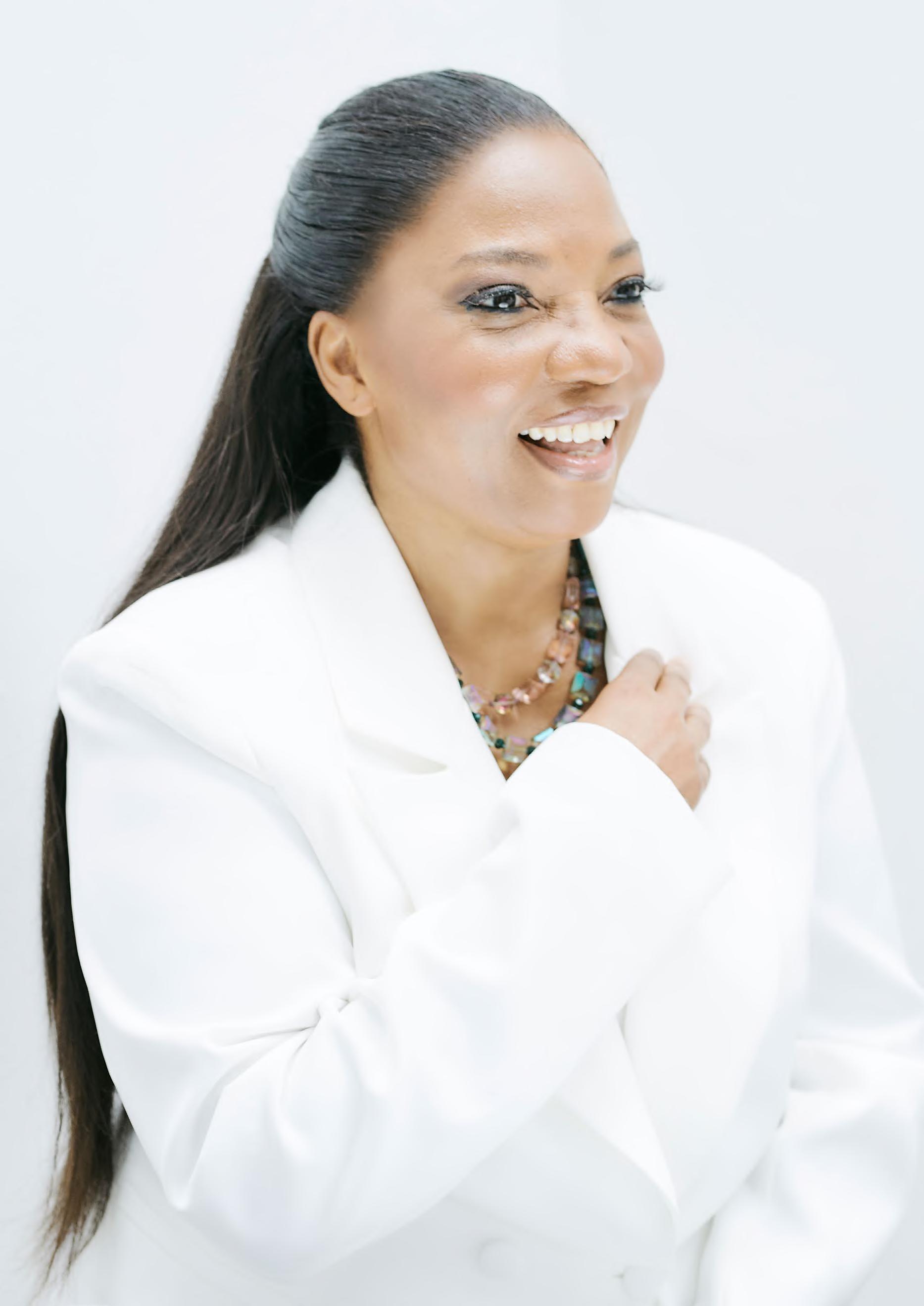
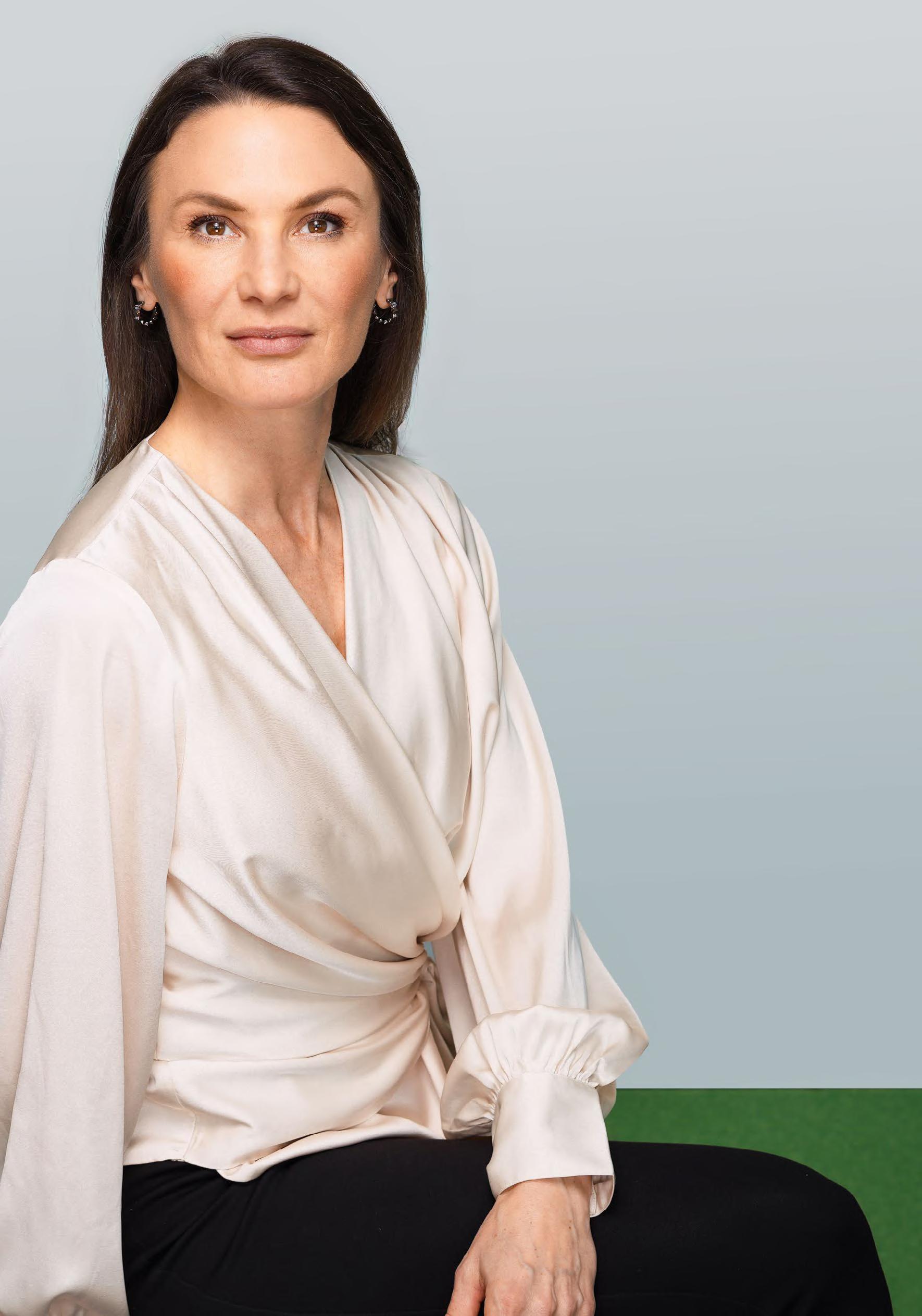
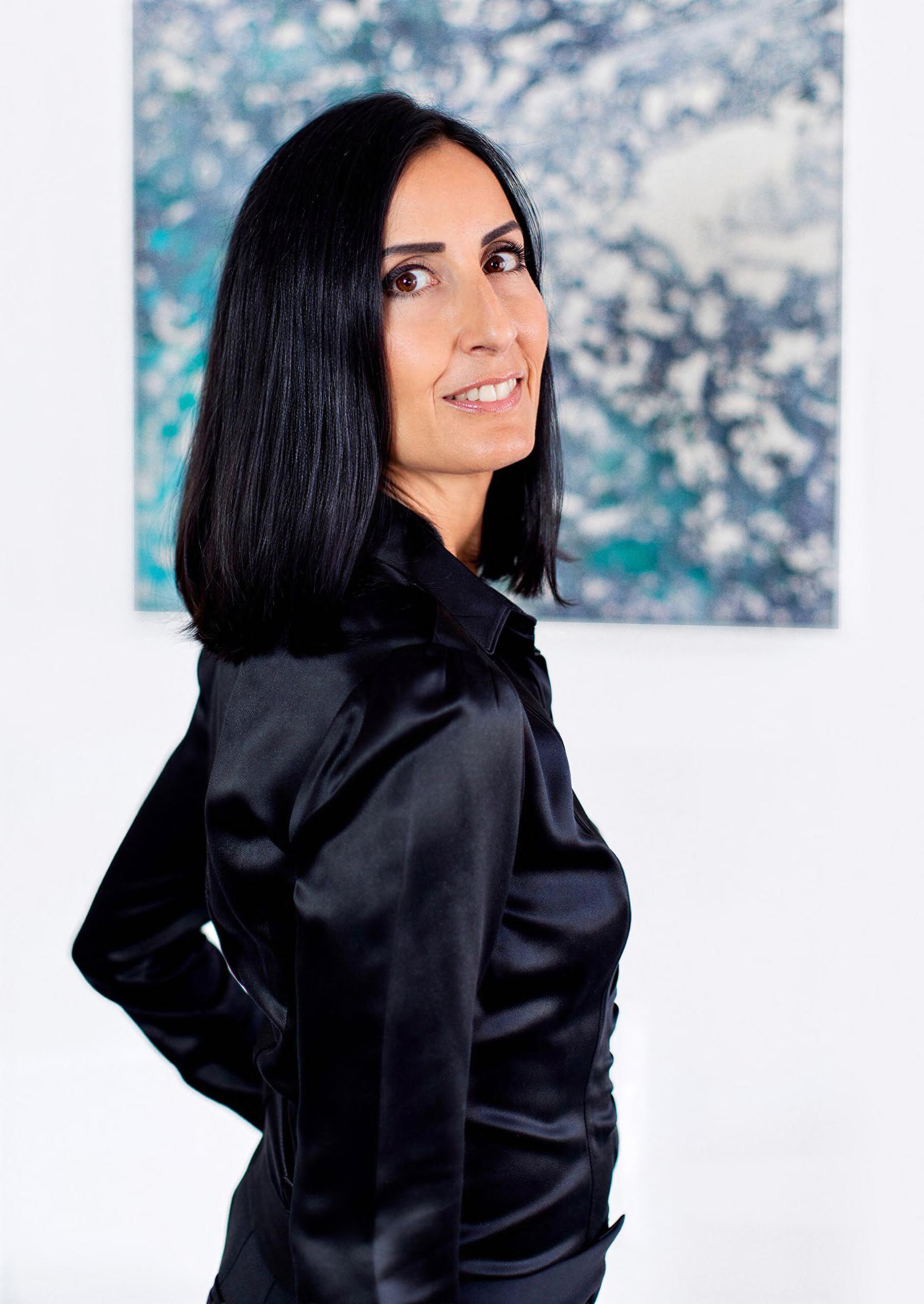
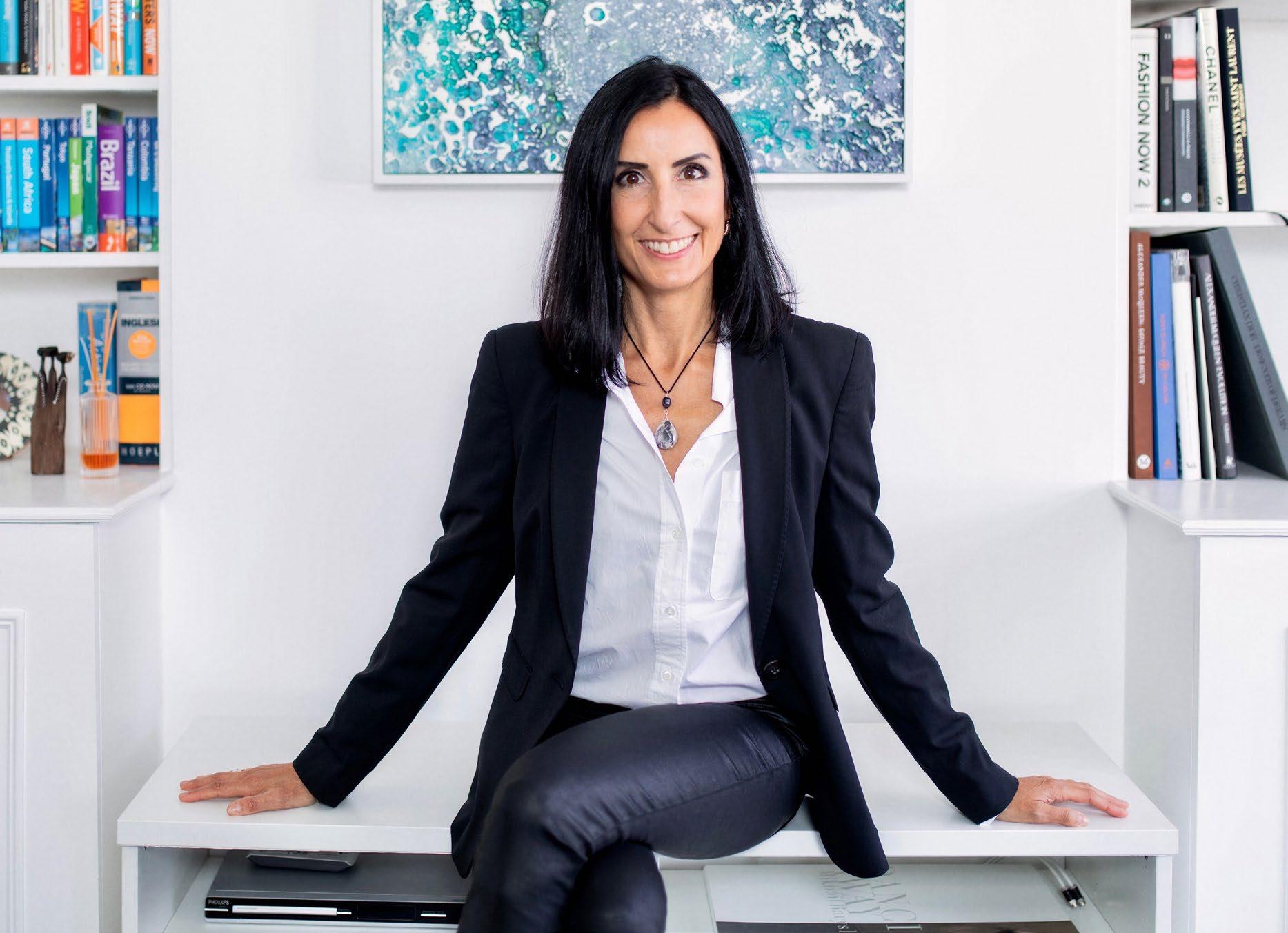
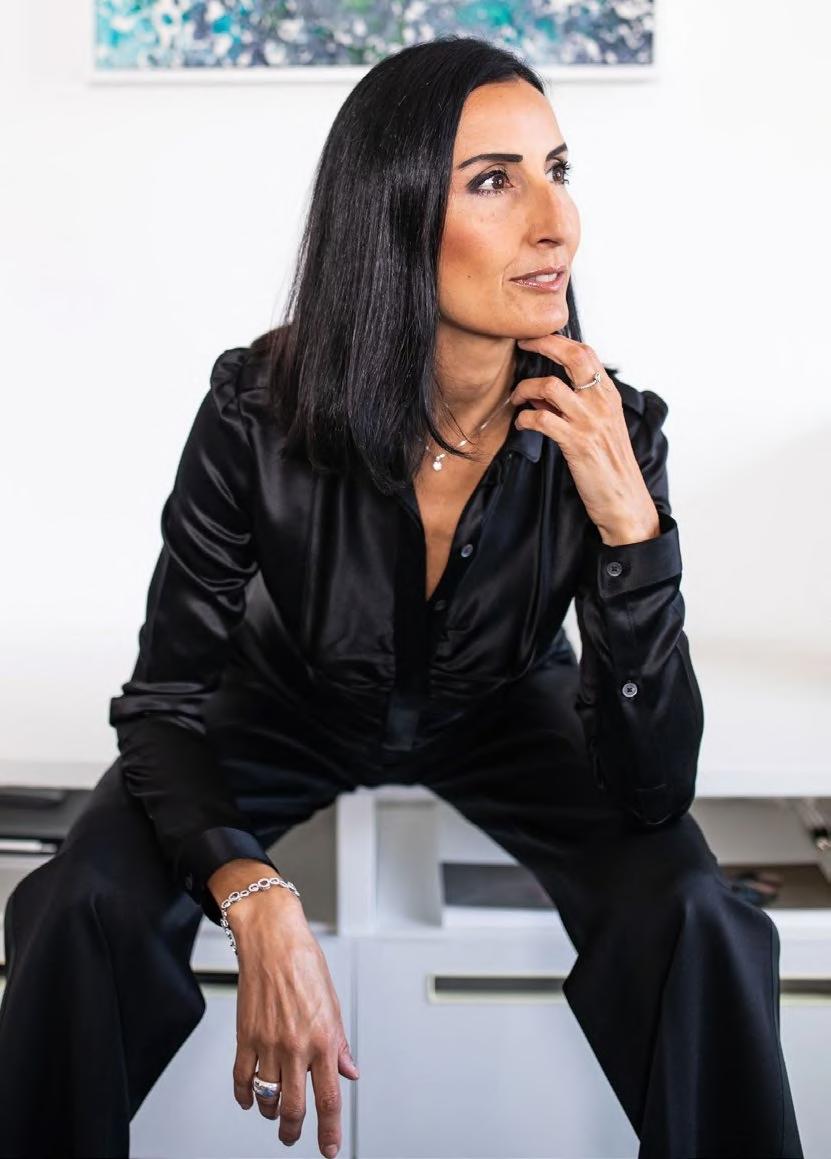
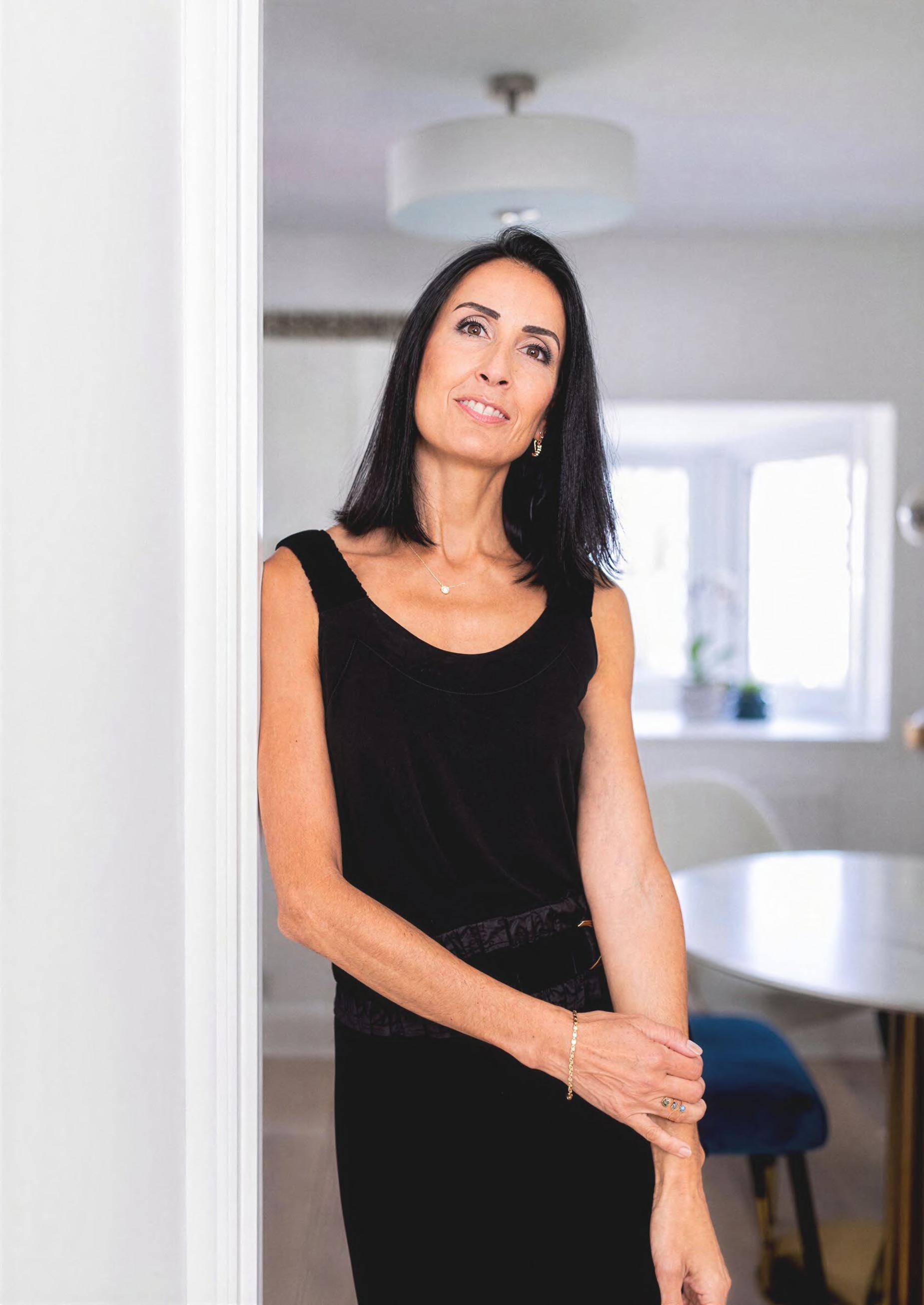
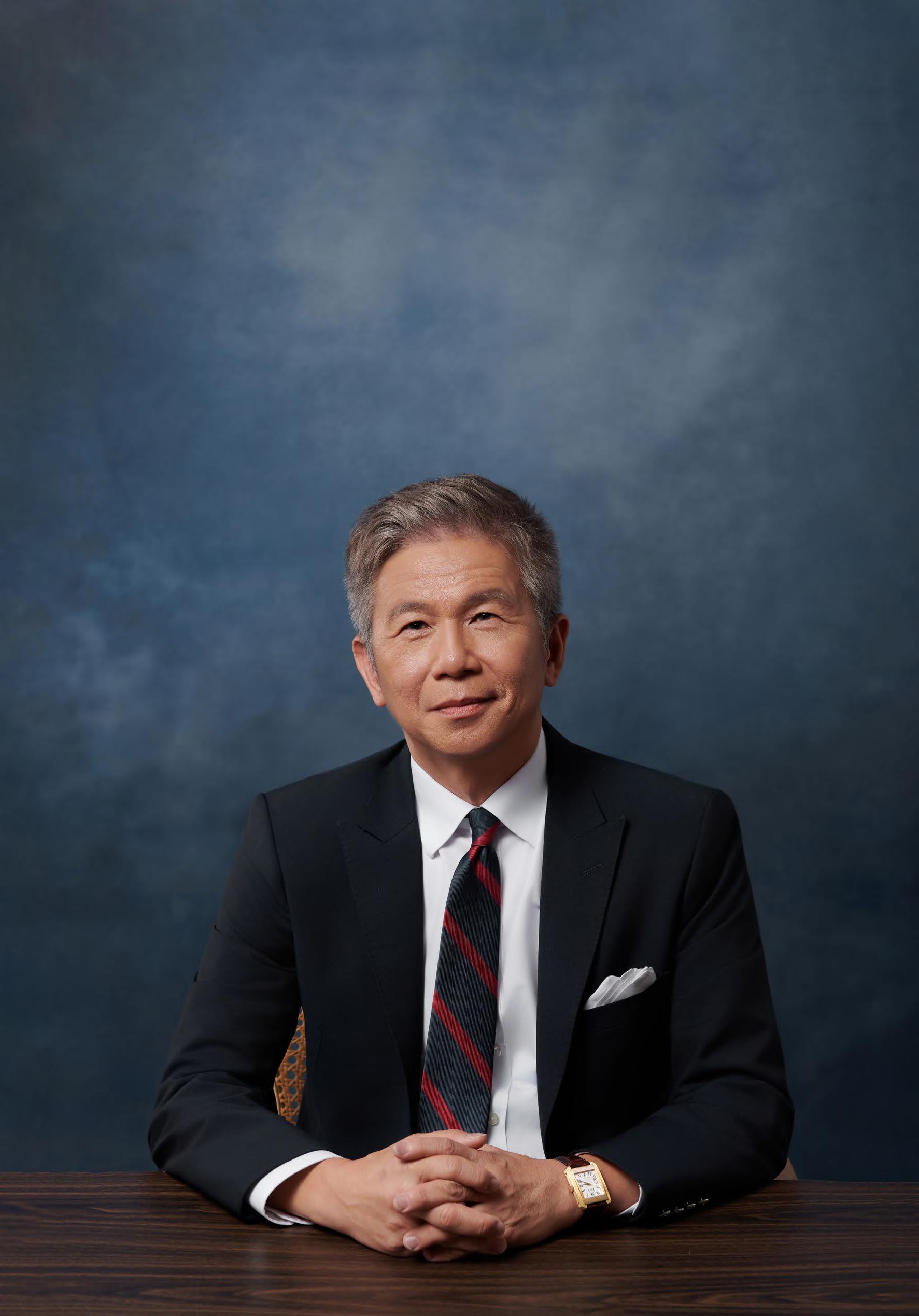
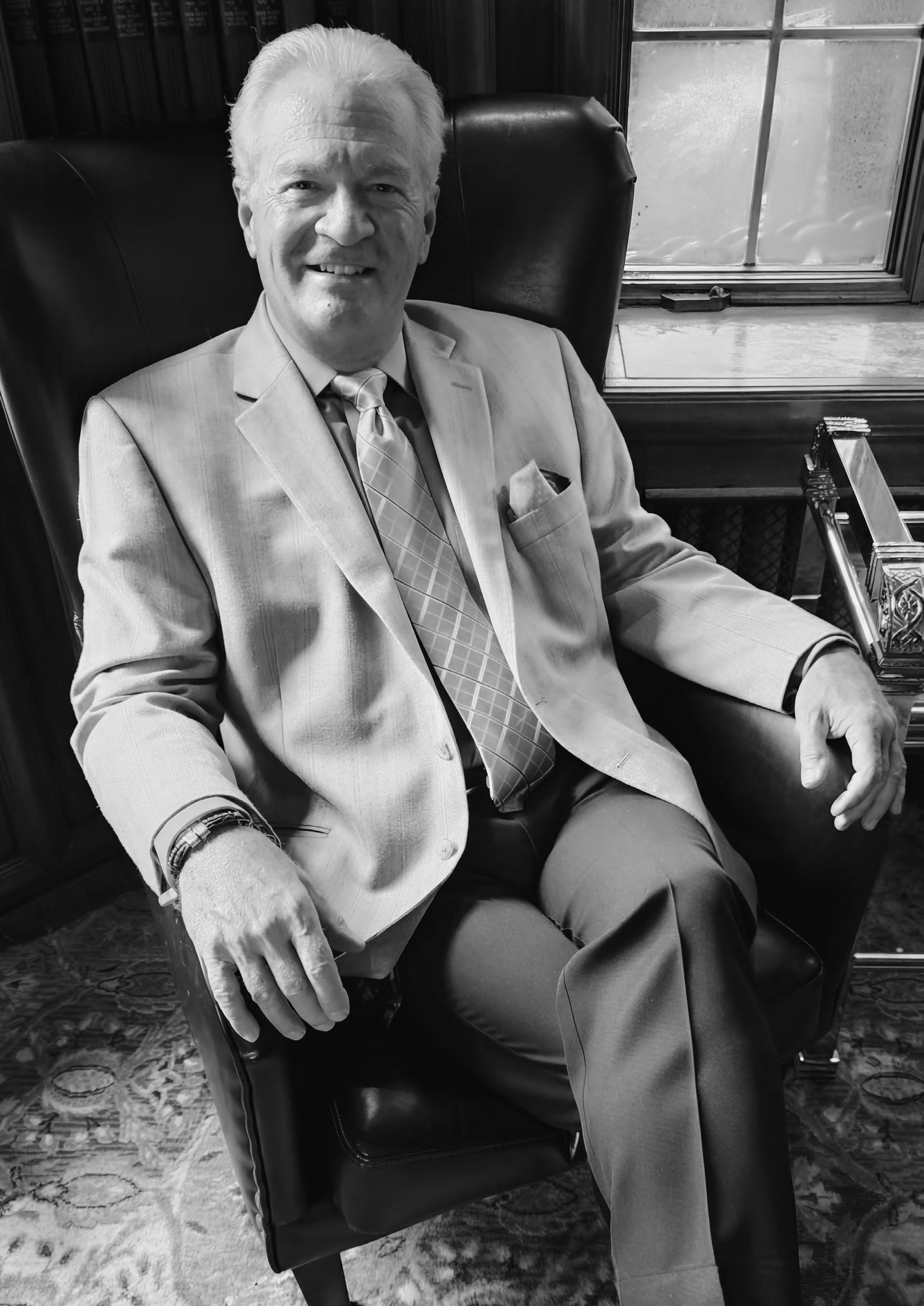
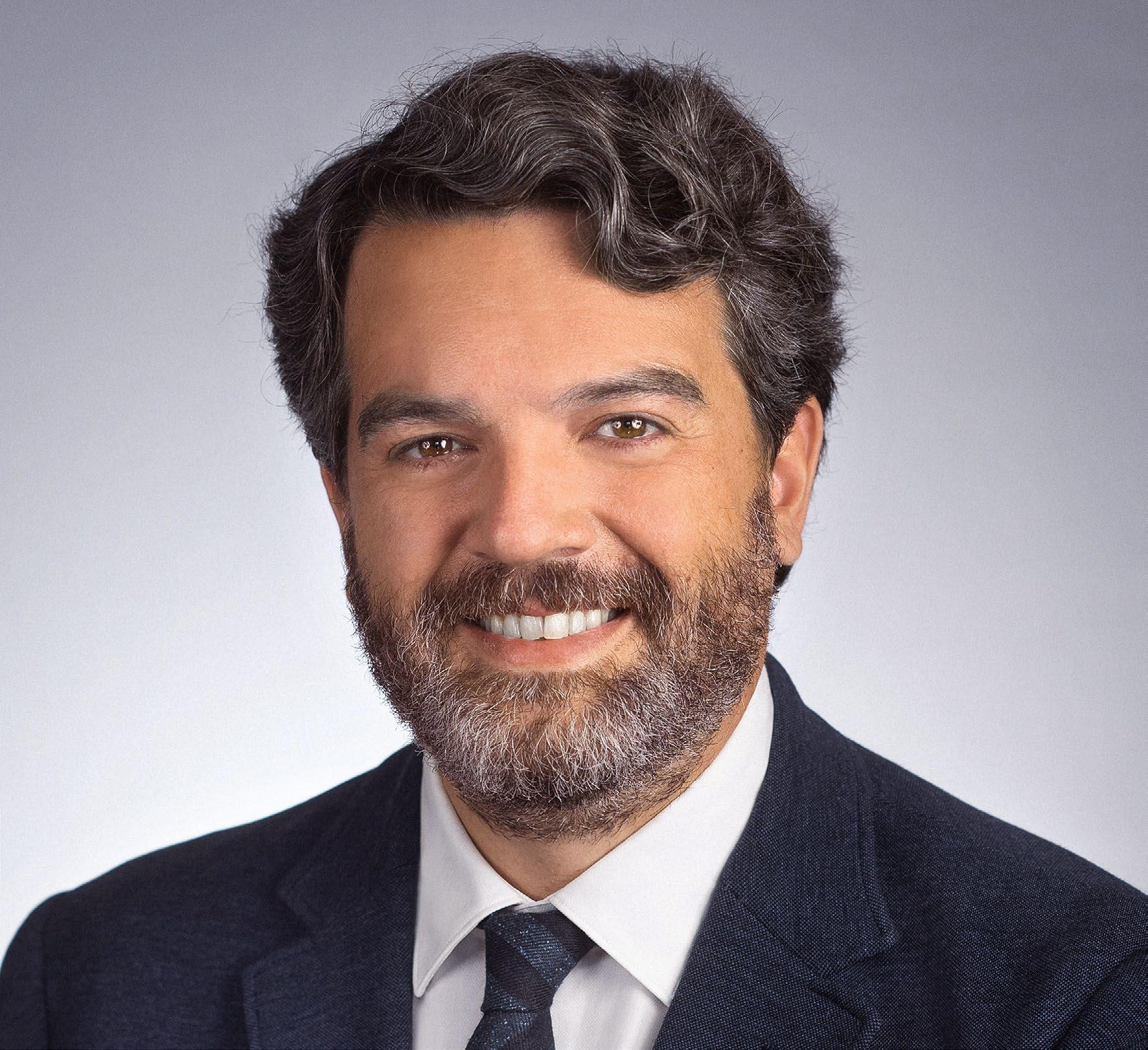
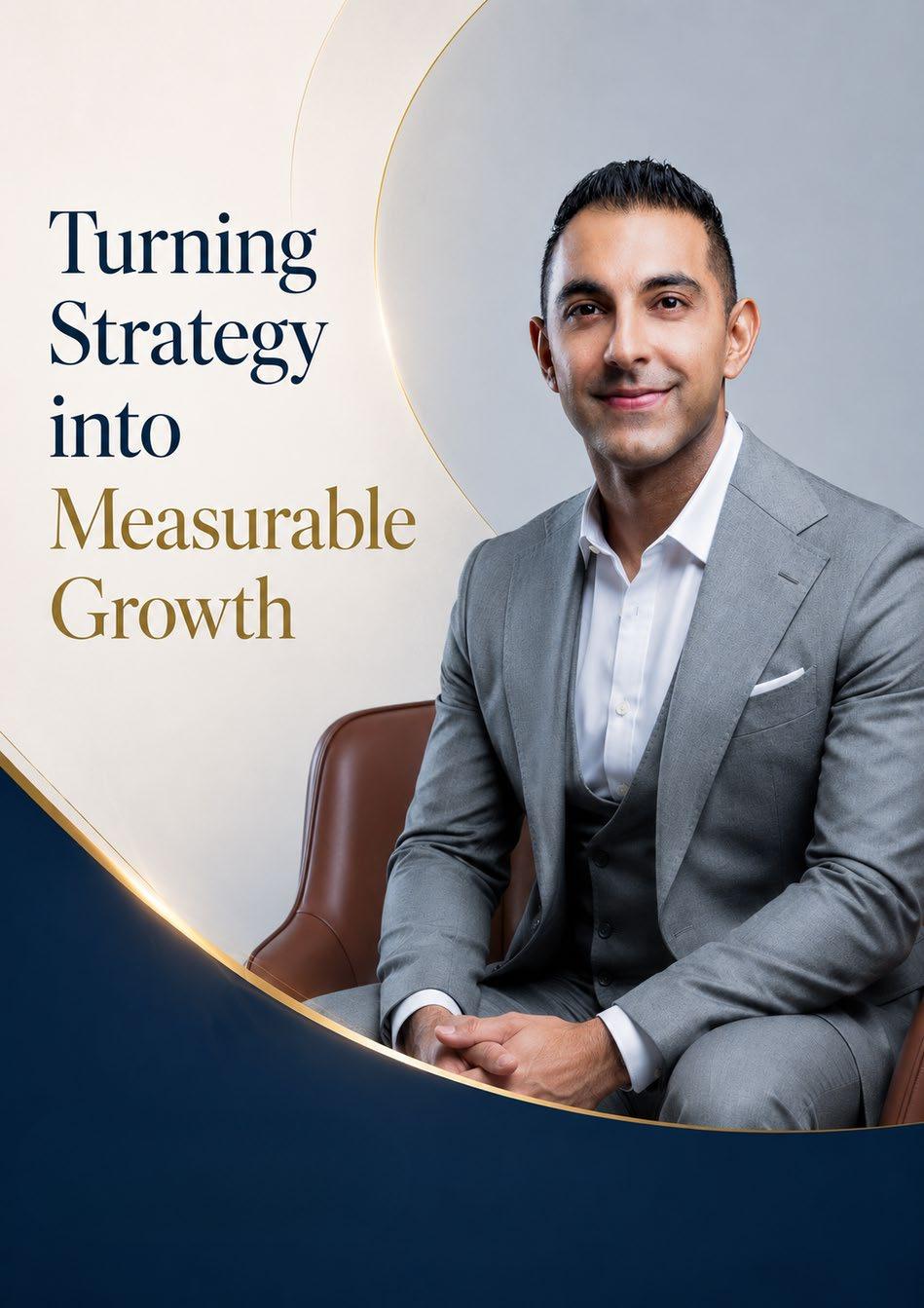
It is my pleasure to welcome you to Issue 5 of Luxury People Magazine, a publication that continues to elevate the global conversation around luxury, leadership, innovation, and human connection.
This issue arrives at a defining moment for the luxury industry. Across every sector, from hospitality and real estate to fashion, wellness, travel, and design, we are witnessing a transformation driven not only by excellence and craftsmanship but by authenticity, emotional intelligence, and visionary leadership. Luxury today is no longer simply about products. It is about meaning, experience, trust, and long-term value.
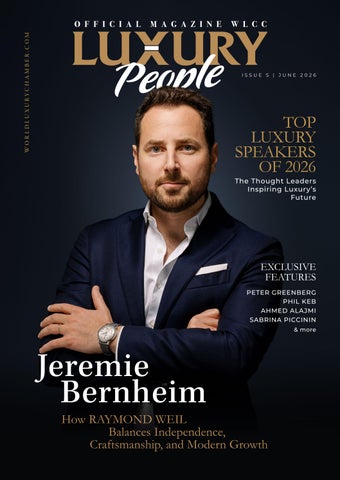
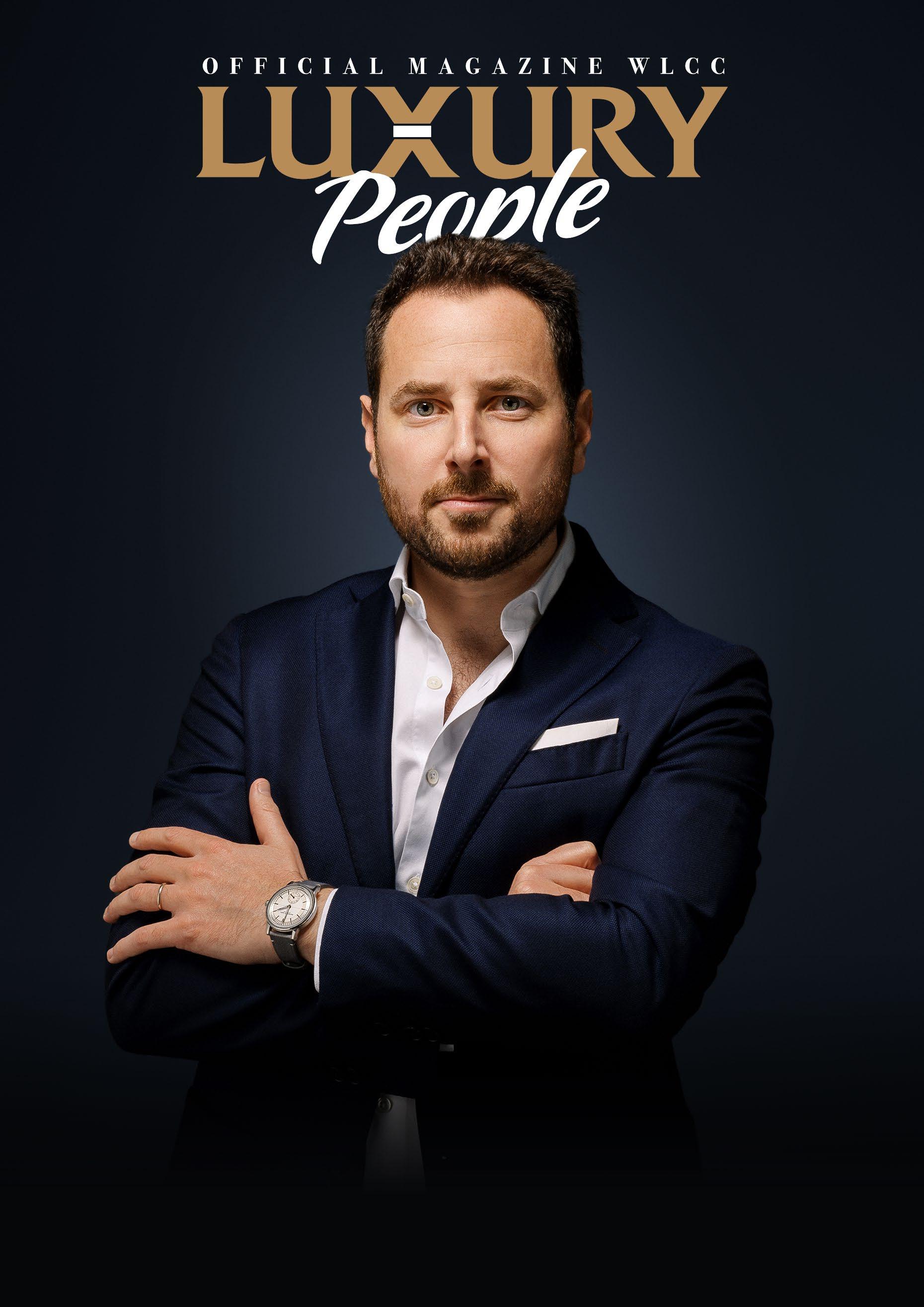
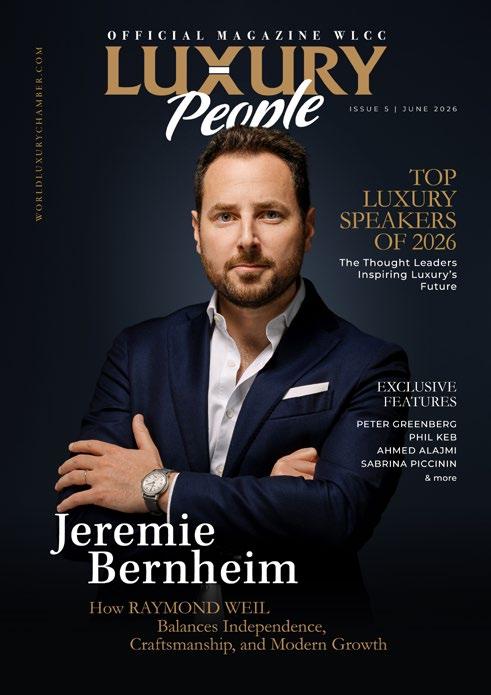
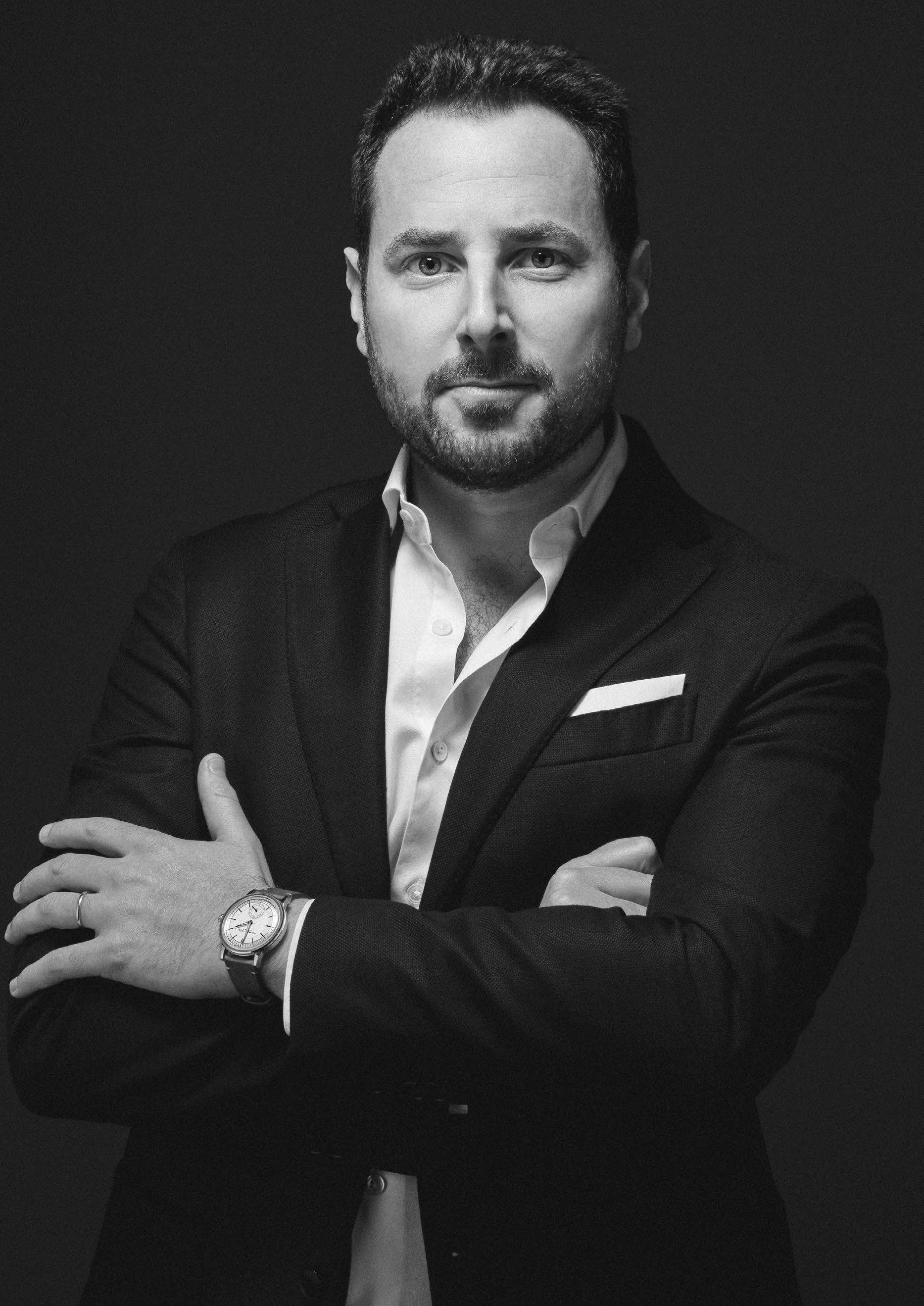
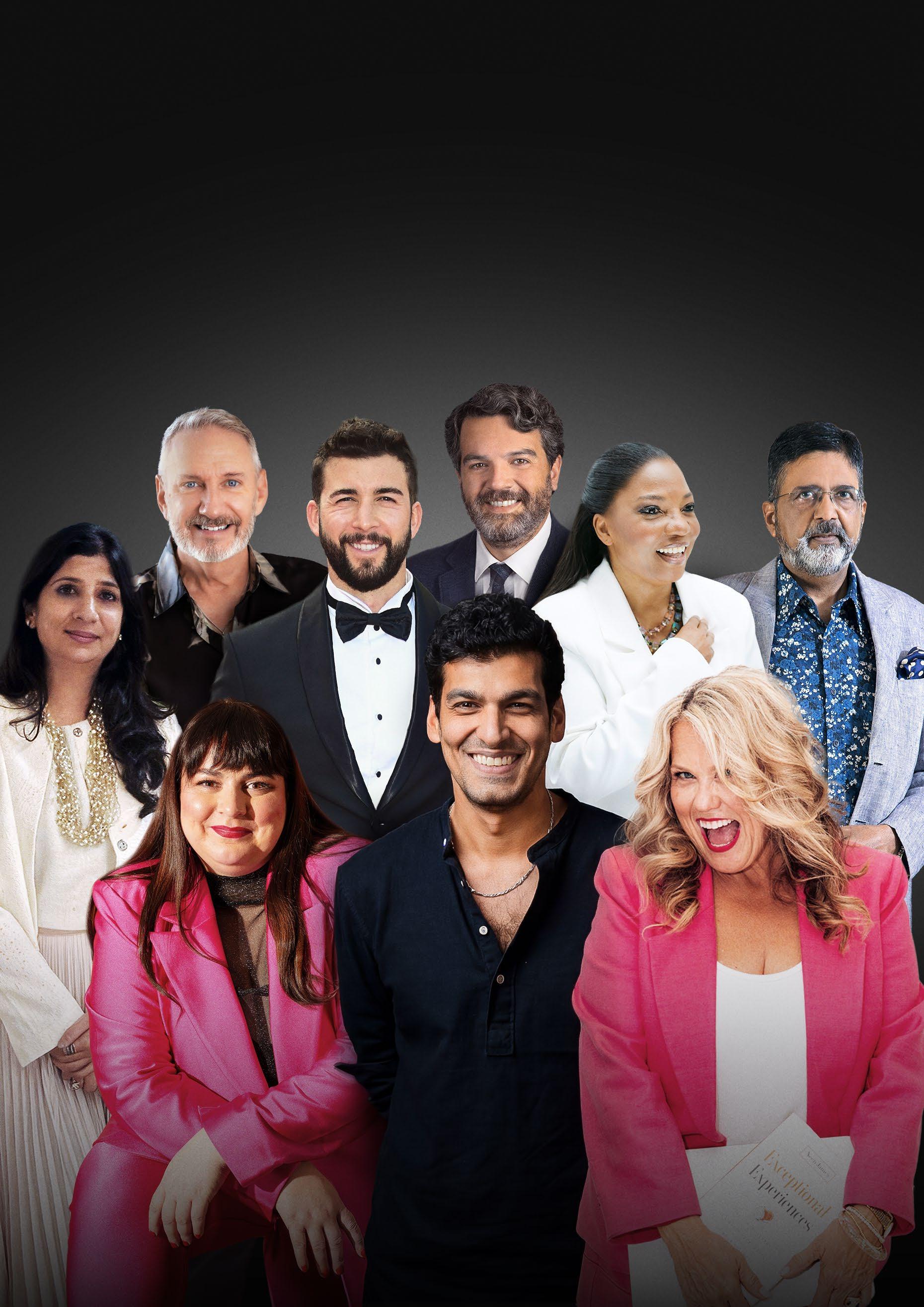
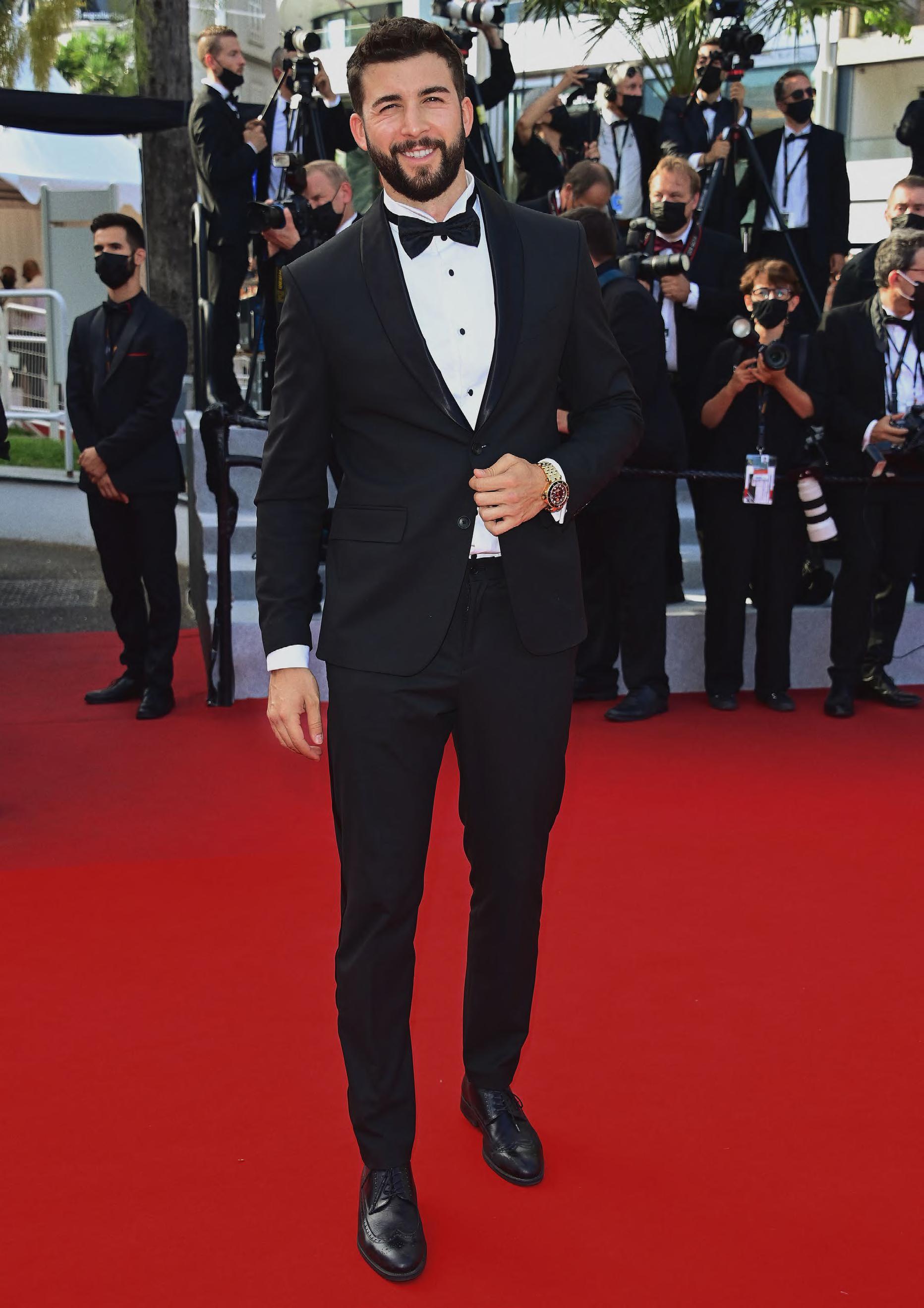
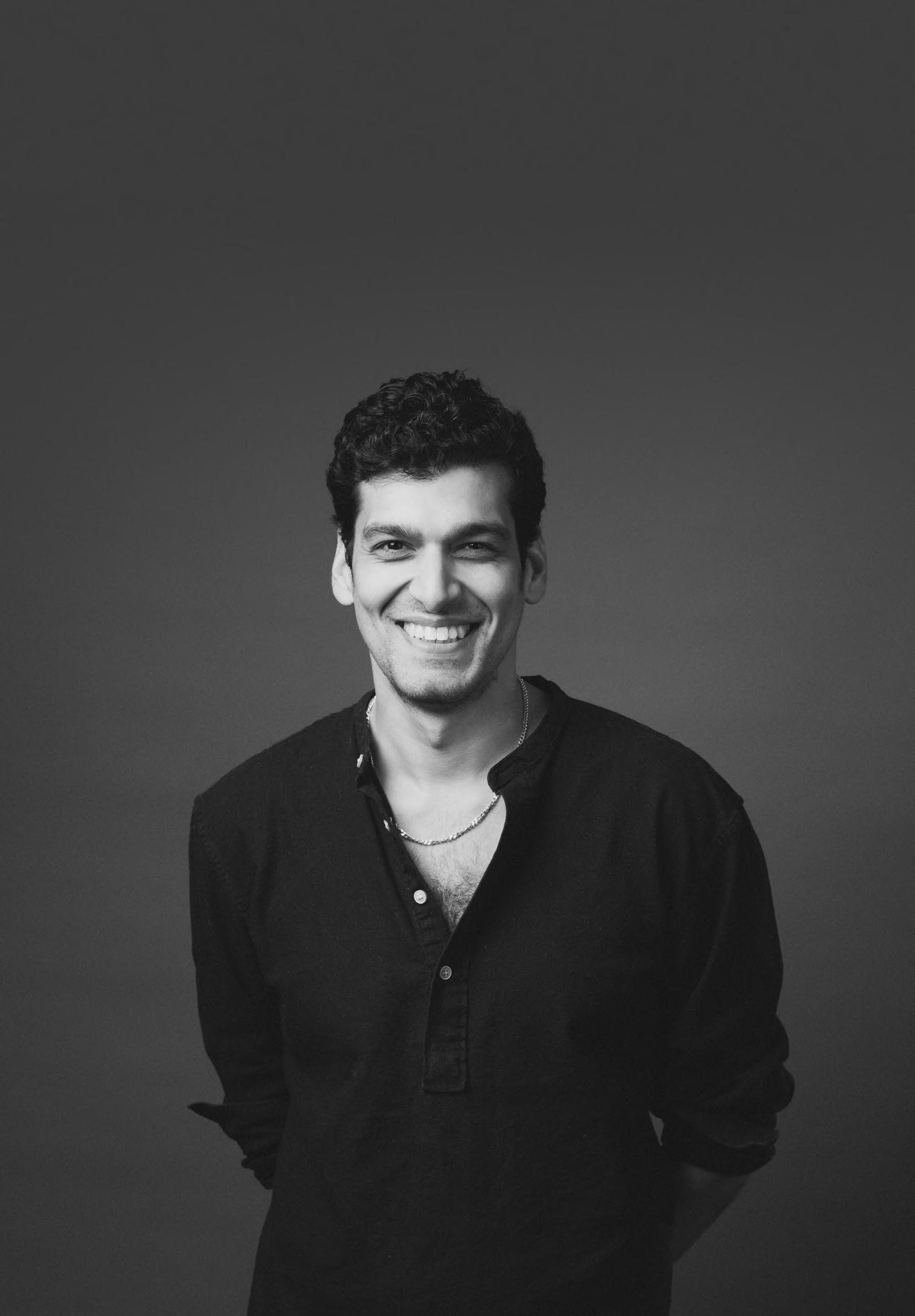
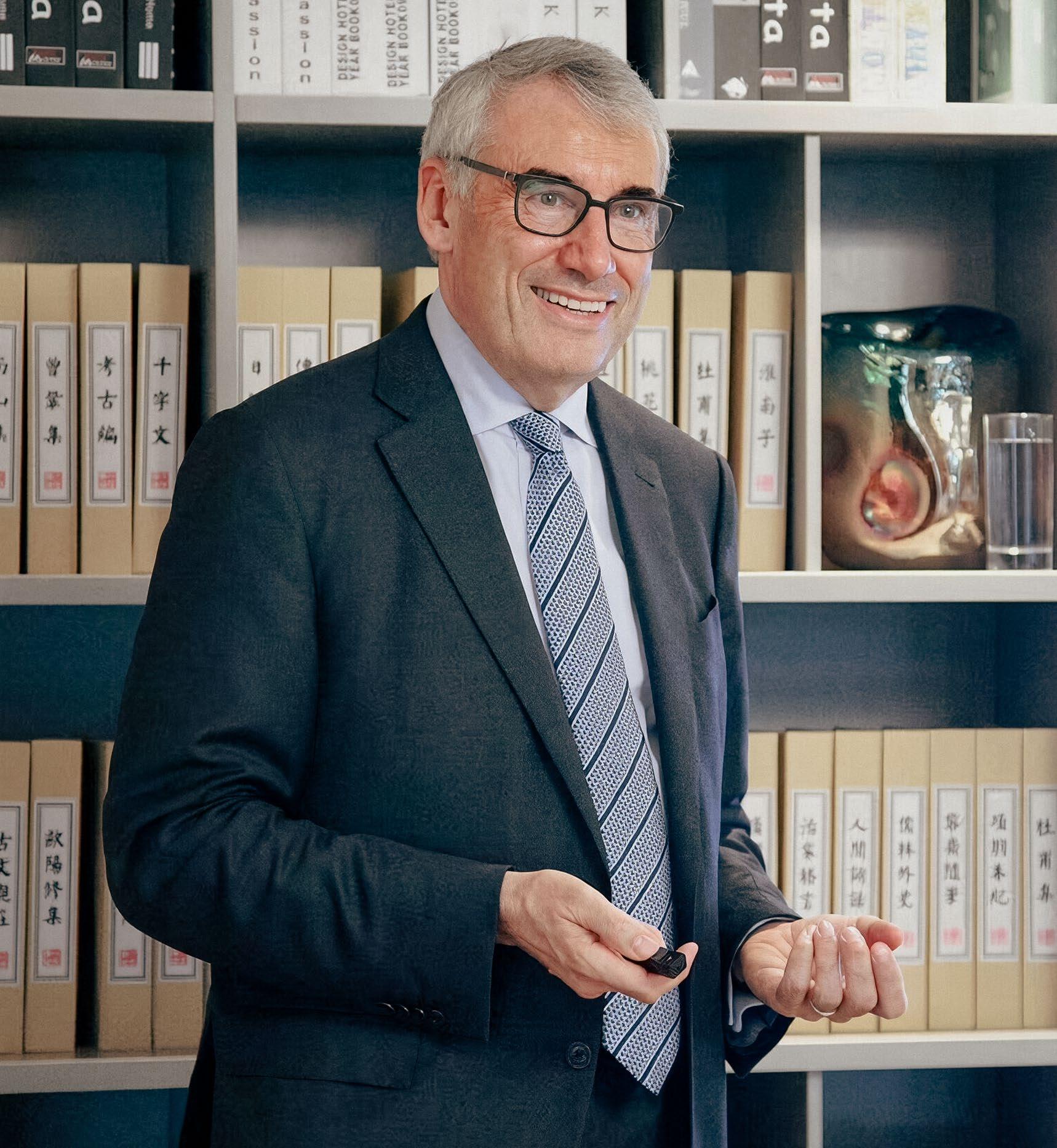
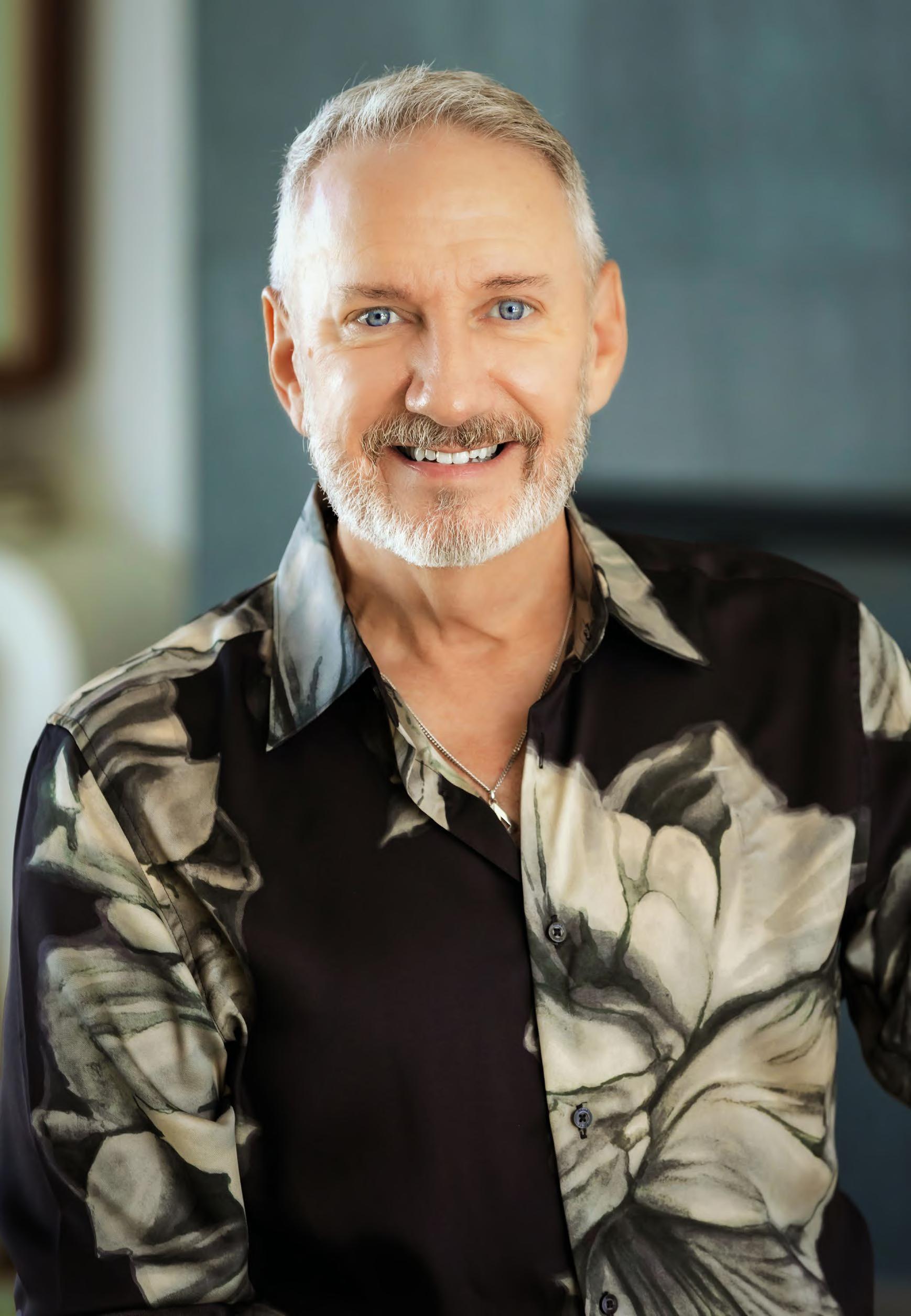
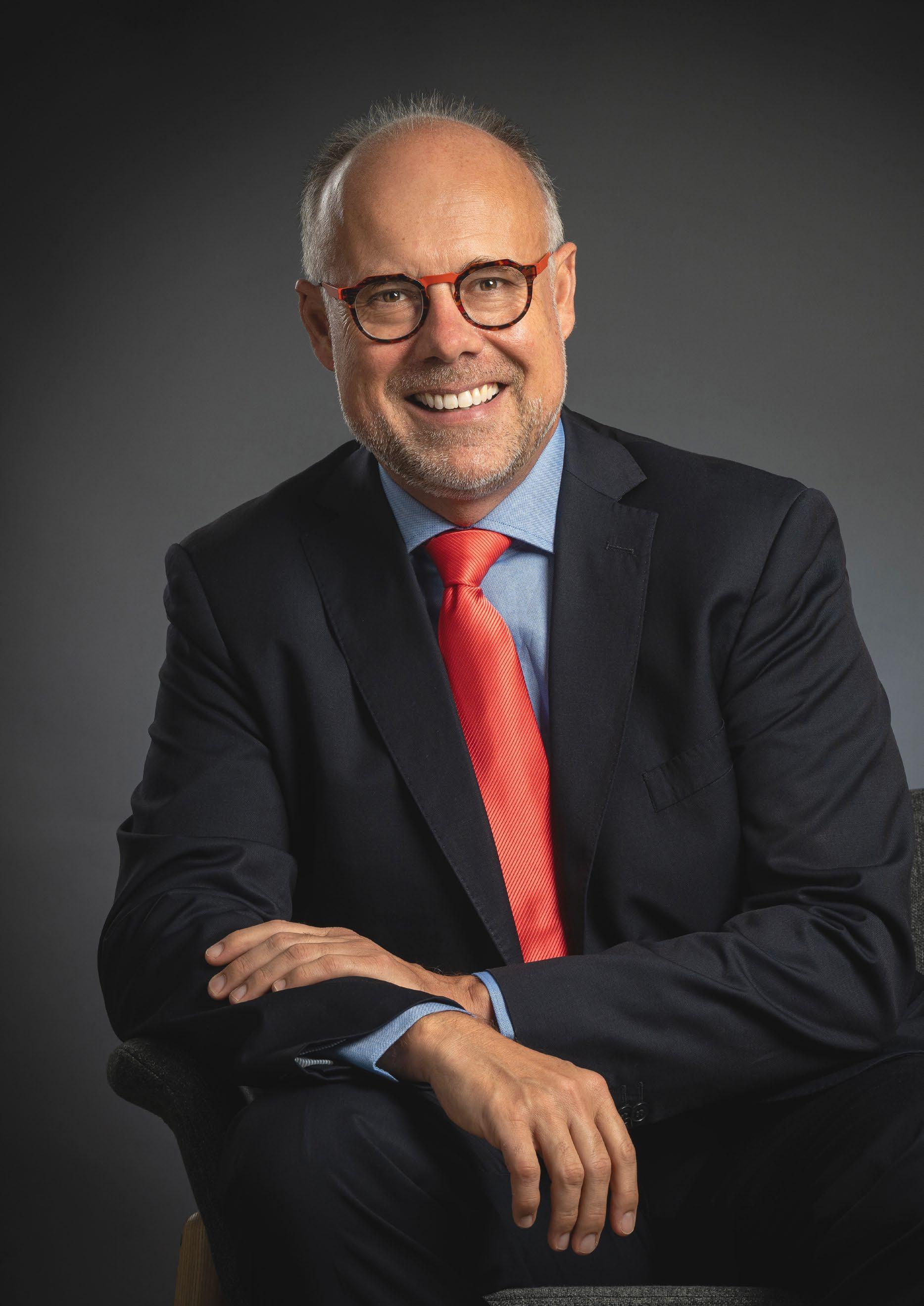
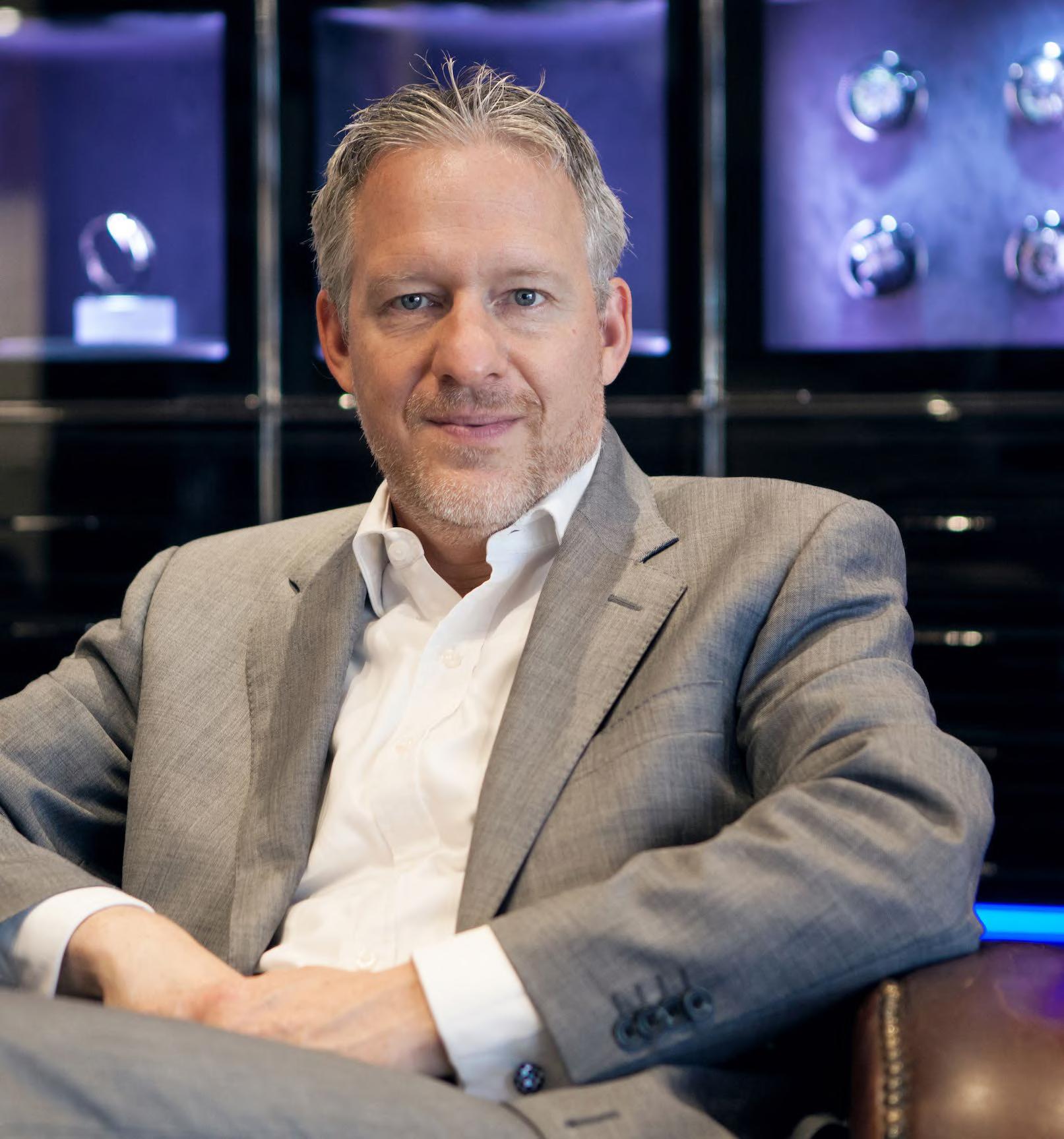
In this edition, we are proud to feature an extraordinary lineup of global thought leaders, innovators, and influential voices influencing the future of luxury worldwide. I am especially pleased to highlight exclusive contributions and interviews from distinguished WLCC Board Members, including Phil Keb , Peter Greenberg , Ahmed Alajmi , Neen James , and Jeremie Bernheim , who also graces our cover as one of the industry’s most dynamic and forward-thinking leaders.
Their insights, alongside the remarkable perspectives shared throughout these pages,
reinforce WLCC’s mission to connect, inspire, and support the international luxury community through meaningful dialogue and strategic collaboration.
We are also honored to present the WLCC Selection: The TOP Luxury Speakers of the World 2026 , recognizing influential voices whose ideas, expertise, and global impact continue to define the future of the luxury business landscape. These individuals represent the power of communication, innovation, and leadership in an increasingly experience-driven world.
At WLCC, we believe that knowledge, relationships, and vision are the foundations of sustainable luxury growth. Luxury People Magazine was created to serve as a platform where those ideas can thrive and where the world’s leading luxury professionals can share perspectives that move the industry forward.
Thank you for being part of our global community.
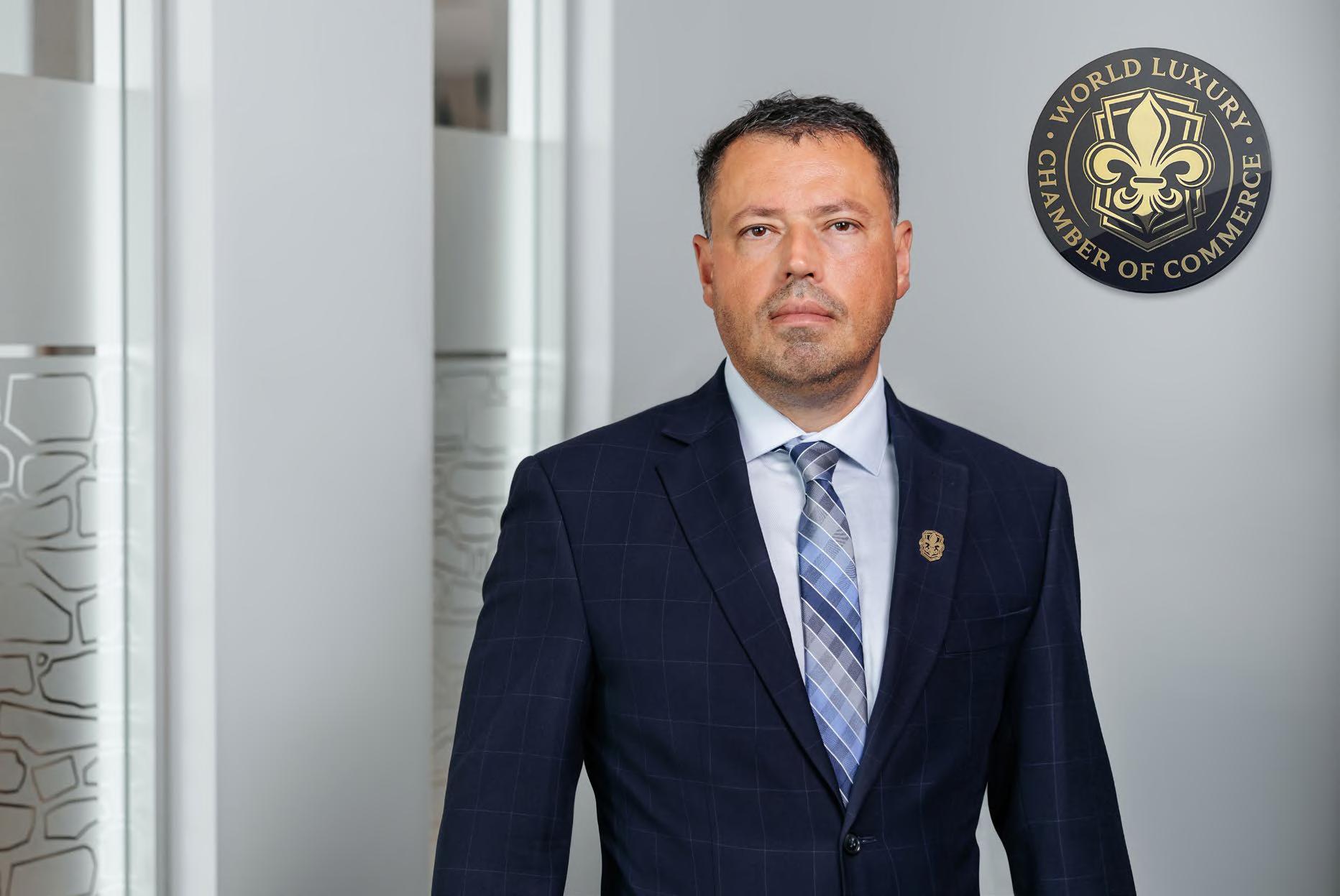
President World Luxury Chamber of Commerce
ISSUE 5 | JUNE 2026
Cover Star
Jeremie Bernheim
President Alexander Chetchikov
EDITORIAL TEAM
Editor & Project Manager Bianca Huber
Layout & Design Nick Poznyak
Media Manager Jana Vos
MEDIA PARTNERS
A WORLD LUXURY CHAMBER OF COMMERCE PUBLICATION
One World Trade Center, Suite 8500, New York City, NY 10007, USA
www.worldluxurychamber.com
The use of the website and digital magazine is subject to the following terms. All rights reserved. No part of Luxury People Magazine may be reproduced, stored in a retrieval system, or transmitted in any form or by any means, electronic, mechanical, photocopying, recording, or otherwise, without prior written permission from the World Luxury Chamber of Commerce. While every effort has been made to ensure the accuracy of the information contained in this issue, the publishers cannot accept responsibility for any errors or omissions. The views expressed by contributors are not necessarily those of the World Luxury Chamber of Commerce Unless otherwise stated, copyright of individual contributions remains with the respective contributors. Every effort has been made to trace copyright holders of images. We apologize for any unintentional omissions and will be pleased to make appropriate acknowledgments in subsequent publications.
Jeremie Bernheim discusses what it takes to lead an independent luxury brand in a market defined by scrutiny, speed, and constant comparison. Drawing on experience across FMCG and Swiss watchmaking, he reflects on accountability, clarity, and why strong foundations still matter.
LUXURY PEOPLE MAGAZINE: Jeremie, congratulations on joining the WLCC Board! What perspectives or priorities are you hoping to contribute, and how do you see collaboration with the WLCC strengthening both the luxury sector and leaders within it?
JEREMIE BERNHEIM: Thank you, Alexander. I’m truly honored to join the WLCC Board. I hope to bring a perspective focused on long-term brand building, protecting what makes luxury distinctive while adapting our business models, distribution, and client engagement to today’s realities. Luxury is evolving quickly, and I believe our role as leaders is to safeguard its core values while ensuring it remains relevant and responsible. Collaboration within WLCC is key because our industry, while competitive, shares common challenges and opportunities. By creating space for open dialogue and shared insight, we can strengthen not only our businesses but the quality of leadership across the luxury sector as a whole.
LPM: You’ve led marketing across major consumer brands and now helm the global
marketing vision at RAYMOND WEIL. What mindset shifts were most important when moving from large-scale FMCG to the precision and heritage of Swiss watchmaking?
JB: One of the biggest shifts was moving from scale and inertia to depth and precision. In large FMCG organizations, there’s a powerful machine behind you with structures, processes, budgets, and teams that naturally create momentum. In a more entrepreneurial, heritage-driven company like RAYMOND WEIL , things move only if you make them move.
That means being far more hands-on and selfstarting. You need to bring energy, initiative, and clarity to every project, and most importantly, bring people along with you. With leaner teams and tighter resources, organization and prioritization become critical, and leadership is about alignment and conviction. It’s less about managing a system and more about creating momentum together, while always respecting the depth, craftsmanship, and long-term vision that define Swiss watchmaking.
Relevance doesn’t come from chasing trends, but from understanding today’s customer expectations.
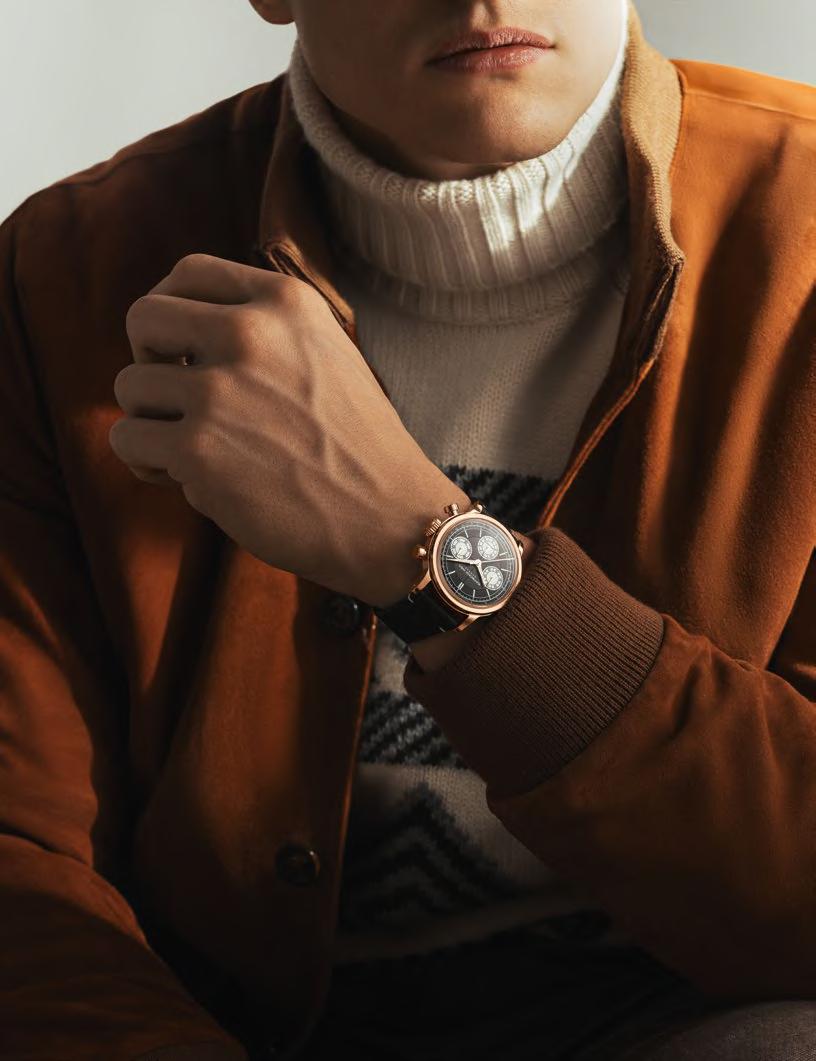
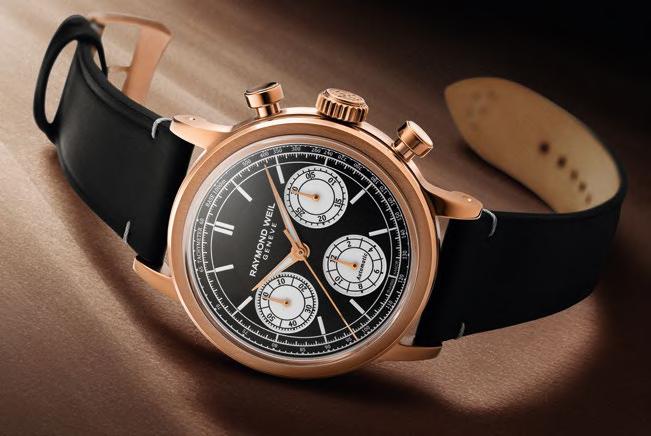
Raymond Weil Millesime Tri-Compax Chronograph
LPM: RAYMOND WEIL has a strong identity rooted in family tradition. How do you balance honoring that legacy while ensuring the brand stays relevant to today’s luxury buyer without relying on trends alone?
JB: For me, honoring a family legacy doesn’t mean looking backward; it means understanding what truly defines the brand and making it relevant today. At RAYMOND WEIL , independence, creativity, and musical inspiration are part of our DNA. Those values are timeless. The balance comes from staying faithful to that identity while expressing it in a contemporary way, through design, communication, and client experience. Relevance doesn’t come from chasing trends, but from understanding today’s customer expectations and translating our heritage into something that resonates now. If the foundation is strong and authentic, evolution becomes natural rather than forced.
LPM: You’ve managed teams across continents and industries. What principles guide you when building marketing organizations that stay agile and creative while still delivering consistent results?
JB: For me, it starts with clarity. Teams can only be agile and creative if they clearly understand the vision, priorities, and what success looks like. Alignment creates confidence, and confidence unlocks productive creativity.
The second principle is empowerment with accountability. I believe in giving people ownership and space to take initiative, but always within a clear framework of objectives and measurable impact. That balance keeps energy high while ensuring consistency and delivery.
Finally, I focus a lot on simplicity in organization and processes. The more complex the environment, the more important it is to keep structures lean, communication transparent, and decisionmaking fast. Agility doesn’t happen by chance; it’s built through trust, clarity, and disciplined business execution.
LPM: The luxury watch market is facing new pressures, from digital-first competitors to changing expectations around craftsmanship and authenticity. What forces do you think will matter most in shaping the industry’s next chapter, and how is RAYMOND WEIL preparing for them?
JB: I believe the most important force shaping the next chapter is the search for meaning. Clients today are extremely informed; they compare, they research, they question. Beyond the product itself,
they want authenticity, transparency, and brands that stand for something clear.
Digital will continue to accelerate expectations around accessibility and engagement, but craftsmanship and credibility remain the foundation. In watchmaking, legitimacy cannot be improvised. Our price positioning is also a key part of the equation. We operate in a segment where value matters, not in terms of discounting, but in delivering genuine Swiss watchmaking, strong design, and independence at a fair and coherent price point. In times of uncertainty and economic instability across the globe, that balance becomes even more relevant.
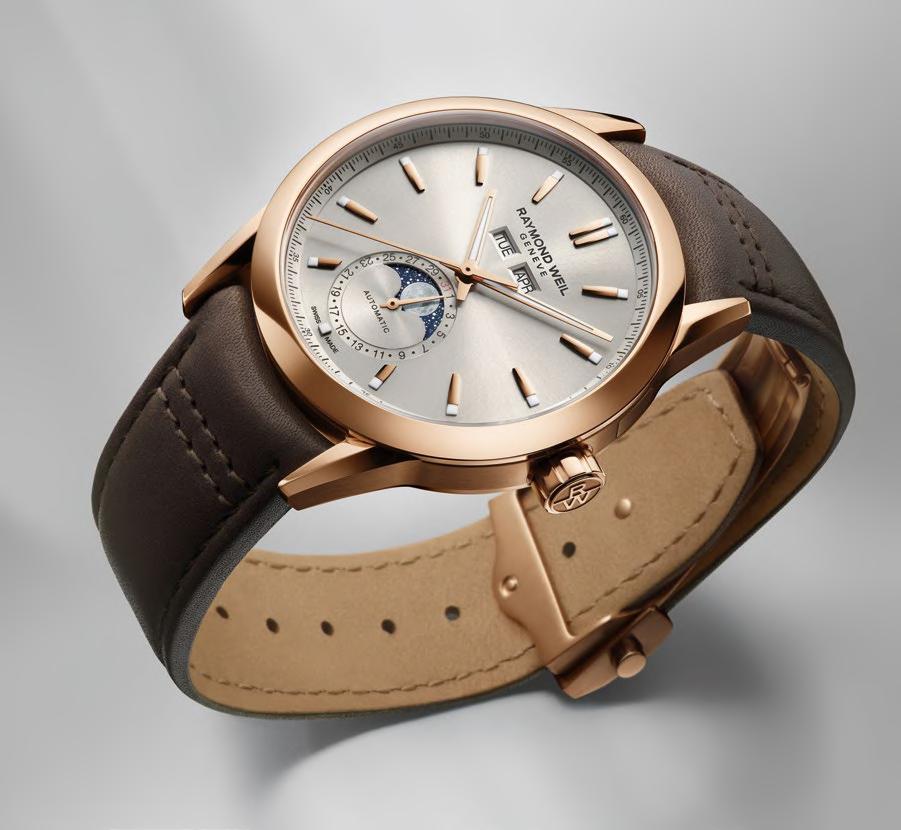
Raymond Weil Freelancer Complete Calendar
It’s less about managing a system and more about creating momentum together.
At RAYMOND WEIL, our approach is to remain deeply committed to quality and heritage, while sharpening how we express that value: through stronger storytelling, enhanced digital presence, and close relationships with our partners and clients. It’s not about reinventing who we are, but about expressing it with clarity and confidence in a changing environment.
Discover more about RAYMOND WEIL and its latest collections at raymond-weil.com , or connect with Jeremie Bernheim on LinkedIn for insights on leadership, marketing, and the future of luxury watchmaking.
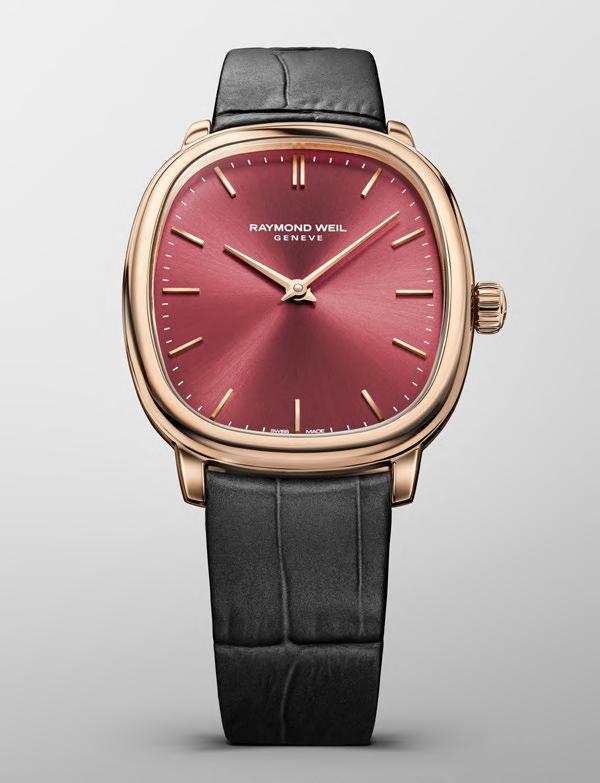
Raymond Weil Toccata Heritage
WHERE LUXURY TRAVEL GETS PERSONAL
with SABRINA PICCININ
Sabrina Piccinin has built Haute Retreats around a simple idea: luxury is not about excess, it is about precision, trust, and human understanding.
Drawing from years in hospitality, villa operations, and private aviation, she explains why genuine service still matters more than scale in high-end travel.
Sabrina Piccinin
Luxury, at its highest level, is invisible.
LUXURY PEOPLE MAGAZINE: You have worked across multiple roles in hospitality, from hotel management to villa operations and even aviation. How have these experiences influenced the way you design and deliver a luxury villa experience today?
SABRINA PICCININ: Every role I’ve held has been a masterclass in a different dimension of service. Hotel management taught me the operational backbone — the unseen choreography that makes a guest feel effortlessly cared for. Villa operations then showed me the intimacy of private travel: the way a family settles into a space, the rhythms of a household, the subtle art of being present without being intrusive. And aviation — particularly private aviation — gave me an understanding of the ultra-high-net-worth traveler’s mindset at its most distilled. These clients aren’t just buying a seat or a bed; they are buying time, privacy, and the certainty that every detail has been thought of before they even think to ask.
What ties all of these together is that luxury, at its highest level, is invisible. When something is done truly well, the client never notices the effort — they simply feel at ease. That is the philosophy I have brought to Haute Retreats. We are not in the business of impressive brochures. We are in the business of flawless experiences, and that requires a team with genuine hospitality DNA, not just a beautiful website.
LPM: Haute Retreats emphasizes personalization over instant booking. In a market that often prioritizes speed and scale, how do you maintain that level of human connection while growing the business?
When something is done truly well, the client never notices the effort.
SP: This is perhaps the central tension of what we do, and I think about it constantly. The temptation in this industry is to automate, to streamline, to build systems that scale efficiently. And to a point, technology is a wonderful enabler — it frees our specialists to focus on the conversations that truly matter. But the moment you replace a human being with an algorithm at the point of discovery, when a client is telling you about their anniversary, or their child’s milestone birthday, or the fact that their elderly mother has mobility considerations, you have lost something irreplaceable.
My answer has always been: grow the team before you grow the portfolio. We will never onboard more villas than our people can genuinely know. When one of my villa specialists recommends a property in Mykonos or the Amalfi Coast, it is because they have been there, they have met
the household staff, they know which bedroom catches the best morning light. That knowledge cannot be manufactured, and it is precisely what our clients are paying for. Scale, for us, means deepening our expertise — not diluting it.
LPM: You have lived and worked in several countries and cultures. How does this global perspective shape the way you select villas and craft experiences for an international clientele?
SP: It has given me a kind of cultural empathy that I believe is fundamental to doing this work well. When you have actually lived somewhere — not visited, but lived — you understand the difference between what a destination presents to tourists and what it genuinely offers to someone who knows it from the inside. That is a distinction our clients feel immediately, even if they cannot articulate why.
For villa selection, it means I am looking beyond aesthetics. A property can be architecturally breathtaking and still be the wrong fit for a particular client because the local infrastructure cannot support their expectations, or because the household staff does not have the language or cultural fluency to serve an international family gracefully. My global background means I ask those questions instinctively, because I have experienced those friction points firsthand.
And for crafting experiences, I think it makes me a better listener. When a Brazilian family arrives in Tuscany, or a Japanese couple retreats to the Maldives, or an American family explores the South of France for the first time, they each bring their own cultural relationship with leisure, with privacy, with food, with time. Understanding those nuances allows us to create something that feels genuinely tailored rather than generically luxurious.
LPM: Many luxury travelers today expect more than just a beautiful property. What specific elements or services do you believe truly define a five-star villa stay in today’s market?
SP: The beautiful property is table stakes. If the pool is stunning and the view is spectacular, that is simply the entry ticket. What elevates a stay from remarkable to truly unforgettable — and what brings clients back year after year — lives in the layers beneath the aesthetics.
The first is the quality of the local team. A villa is only as good as the people who run it. A chef who cooks with market-fresh ingredients and adjusts their menu the moment a child declares they do not like coriander — that is luxury. A house manager who anticipates that after a long transatlantic flight, the family will want a light meal ready and the beds turned down without being asked —
The most sophisticated luxury travelers today are not chasing stimulation. They are protecting their inner lives.
that is luxury. Training and cultivating local staff is something we invest in enormously.
The second is seamless access to experiences. Our clients are not looking for what they can find on TripAdvisor. They want the private winemaker’s dinner at a Barolo estate that is not open to the public. They want the boat captain who knows every hidden cove. They want the museum director who will open the doors an hour early. That level of access requires relationships built over years, and it is one of the most meaningful differentiators we offer.
And finally — and this has become increasingly important — it is the sense of genuine wellbeing. Rest, reconnection, digital detox, privacy. The most sophisticated luxury travelers today are not chasing stimulation. They are protecting their inner lives. A villa that provides a genuine sanctuary, where they feel safe and unhurried and completely themselves, is worth more to them than any amenity list.
LPM: Looking ahead, where do you see the luxury villa and private travel sector heading over the next five to ten years, and what will clients value most in that future?
SP: I see several converging forces that will reshape the sector in profound ways. The first is the continued migration from hotel stays to private residences for longer, more immersive travel. Post-pandemic, something shifted permanently in how people think about travel. They want depth over breadth. They want to inhabit a place, not just visit it. That shift plays directly to everything Haute Retreats has always stood for, and I believe it will only accelerate.
The second is a heightened sensitivity to authenticity and sustainability. Our clients are increasingly asking not just whether a property is beautiful, but whether it is responsibly managed. Are the staff paid fairly and treated with dignity? Is the architecture sympathetic to its landscape? Is the food sourced locally? These are no longer
fringe concerns — they are becoming central to the purchasing decision of the discerning traveler. We are building frameworks to assess and communicate this across our entire portfolio.
The third, and perhaps the most fascinating to me, is the rise of truly multigenerational travel. As wealth transfers across generations and as families increasingly prize time together over material acquisitions, we are seeing bookings that bring together grandparents, parents, and grandchildren under one roof for two or three weeks at a time. Designing experiences that speak meaningfully to a six-year-old, a forty-yearold, and an eighty-year-old simultaneously — that is a wonderful creative challenge, and it is one I believe will define the next era of luxury villa travel.
What clients will value most, ultimately, is the same thing they have always valued at the deepest level: feeling truly known and genuinely cared for. That will never go out of fashion.
Discover more about Haute Retreats and its collection of luxury villa experiences at hauteretreats.com or connect with Sabrina Piccinin on LinkedIn for insights into the future of private travel.
LUXURY HOSPITALITY INVESTMENT FROM THE GROUND UP
with PHIL KEB
Phil Keb, a Board Member of the World Luxury Chamber of Commerce, brings an engineer’s precision to global luxury hospitality, having overseen projects worth more than $8 billion. He discusses how disciplined planning, deal structure, and customer insight drive returns in today’s complex development landscape.
LUXURY PEOPLE MAGAZINE: How has your early training in engineering influenced the way you structure deals, assess risk, and execute complex global hospitality and investment transactions today?
PHIL KEB: Understanding how buildings are constructed and operate on every level allows me to allocate operating costs in mixed-use projects and keep necessary reserves in place to meet both the project and the brand standards. So many times, “value engineering” plays an essential role in establishing the initial development budget and ensuring that it’s also realistic.
LPM: How does that stage shape or impact longterm profitability?
PK: It’s especially important to make good decisions during that initial stage so as not to compromise critical areas of operation that will impact the guest experience, but then prove too costly or disruptive to fix later. I also learned that an efficient facilities program for both hotel and residential areas – and, in turn, design – is critical for controlling project costs and delivering those sought-after returns.
LPM: Having worked across diverse financing models, including Sharia-compliant structures, public-private partnerships, and citizenshipby-investment initiatives, what investment approaches do you believe future luxury hotel and resort developments should always consider?
PK: Regardless of the source of capital, there is –and always will be – a need for adequate riskadjusted returns to the investors. The important thing is to structure the deal correctly to deliver those returns right from the get-go. With luxury developments today, it requires some amount of branded residential product to achieve both the immediate and long-range financing goals.
LPM: You have led projects ranging from boutique, technology-driven lifestyle hotels to large-scale luxury resorts. How should someone leading a project adjust their development strategy and capital planning across multiple brands, markets, and guest profiles?
PK: Each project has its unique characteristics but, in all cases, it comes down to providing what a specific market and project customer wants. That’s best done by listening to the consumer or customer and satisfying both their spoken and unspoken needs. As Horst Schulze advised me years ago, “really listen to your customer, and you will always learn something interesting.” One of the keys today is to generate meaningful, current customer-survey data, and AI is greatly improving our ability to gain those insights for enhanced real-world decision-making.
Luxury developments today often need branded residential components to meet both short and long term financing goals.
LPM: In your current role advising on strategic growth of the upper luxury brands at IHG, how do you balance brand standards, owner priorities, and guest expectations when evaluating new projects and partnerships?
PK: Brand standards are well-defined at this point with targeted markets for strategic growth, so the owner’s project needs to fit within those parameters. The brand standards are based on and focused on satisfying guest expectations. There is always a balancing act needed to meet them in the real world, while simultaneously helping the owner develop or deliver the project within budget and schedule.
LPM: As a Board Member of the World Luxury Chamber of Commerce, how do you see your experience in global hotel development and deal structuring contributing to the Chamber’s mission and its members?
PK: Because a core part of WLCC’s mission is to unite leaders and entrepreneurs of elite luxury brands, I look forward to meeting with and collaborating with companies outside of the hospitality industry and sharing those insights and opportunities with our members. It is my hope to add value to our growing community in a genuinely comprehensive way, with an even wider range of strategic, operational, and financing solutions that can support their ongoing success.
Follow Phil Keb’s insights on global hospitality investment and development on LinkedIn
WLCC BOARD MEMBER PERSPECTIVE
TRAVEL, TRUST, AND CULTURAL UNDERSTANDING
with PETER GREENBERG
For decades, Peter Greenberg has reported from the front lines of global travel, documenting not only destinations, but the systems, politics, and people behind them. In this conversation, the Emmy Award-winning journalist discusses editorial independence, cultural understanding, and why the travel industry risks losing its human value.
LUXURY PEOPLE MAGAZINE: You’ve reported from some of the world’s most influential destinations. What does travel reveal about power and leadership that other perspectives often miss?
PETER GREENBERG: Travel is actually the great equalizer, no matter what your position of power and leadership. The travel experience represents common ground and ultimately transcends
power, ego, or political persuasion. And the result of that travel experience often reveals true leadership and the understanding and ability to recognize the true power and effect of travel.
LPM: As an investigative journalist reporting on the travel industry as news, how do you determine what warrants scrutiny, and where do you draw the line between promotion and accountability?
PG: Promotion, by definition, requires accountability. In the process of promoting travel, the industry is making a promise that is often not delivered, either in the process of travel itself or in the overall delivery of the experience. It is part of my mandate as a journalist to make sure the promise is kept.
LPM: Through The Royal Tour, you’ve explored nations alongside their Heads of State. What have these experiences taught you about the difference between access and true cultural understanding?
PG: A Royal Tour allows me, and the audience, to see a country through the eyes of its leader. There are no political speeches or campaign rallies. Just two people on a road trip, one of whom just happens to run a country. And in that travel process of cultural immersion, what inevitably happens is that the country is not only humanized, but so is the leader.
LPM: You’ve witnessed decades of change in global travel. What shift in how we move, or why we move, do you believe will define the next era?
PG: My concern is that economic interests are driving a diminishing of service, of cultural experience, and understanding. The leadership of innovative, smart, culturally sensitive CEOs running the travel industry has given way to a CFO mentality more concerned and obsessed with cost instead of value, more motivated by delivering shareholder value than genuine, memorable service and experience. And as a result, we are on the dangerous threshold of crossing over from travelers and authentic human and value-driven experience to just passengers and commodities.
LPM: Luxury today is often linked to authenticity and cultural depth. From your perspective, what separates meaningful destinations from merely fashionable ones?
PG: What distinguishes destinations (and a definition of luxury) is not material goods but time, space, and conversation. True luxury is when you have meaningful options, and the time to choose and use them as a shared experience with others.
LPM: After years of reporting across continents, what continues to surprise you about people, regardless of geography or status?
PG: It is their curiosity and insatiable appetite for learning and understanding that transcends traditional borders. It’s not about any language barriers, but the quest for embracing the human condition as a starting point for bridging what were once impossible gaps.
TRAVEL IS ACTUALLY THE GREAT EQUALIZER, no matter what your position of power and leadership.
LPM: In an industry increasingly driven by sponsored content and social media influence, how do you protect editorial independence and maintain investigative standards?
PG: This is the biggest challenge for me, and for my audience. I have a rule in all of my productions and news reports; no entity can sponsor a show in which they appear. We also don’t allow for any product placement. And in the writing, we work hard to make sure we avoid absolute terms, and no words can end in the letters “st.” (best, most, finest, et al). And, in a growing world embracing the promise (but not properly addressing the danger) of AI, how can you seek, and then verify facts? How can you make informed, intelligent decisions when you can’t trust the information you’ve been given? Or the visuals you see? How can you trust the current media platforms? In the end, it gets down to our taking individual responsibility for developing our own trusted sources, and not letting technology or expediency take precedence over basic common sense and getting the truth. And that gets down to my own sense of responsibility in making sure I do the strong work that allows me to be one of those trusted sources.
Follow Peter Greenberg on LinkedIn for travel insight, investigative reporting, and global perspectives from one of the industry’s most respected journalists.
WLCC BOARD MEMBER PERSPECTIVE
BUILDING LOYALTY BEYOND THE PLATE
with AHMED ALAJMI
Ahmed Alajmi has built Takara Hospitality Group (THG) into one of Saudi Arabia’s most ambitious hospitality groups by combining operational discipline with culturally grounded dining concepts. In this conversation, he discusses why consistency matters more than aesthetics, how Ziba became an immersive hospitality experience, and what the future of luxury dining will demand from operators.
LUXURY PEOPLE MAGAZINE: Ahmed, many luxury restaurants focus heavily on design and cuisine. In your experience, what is the one element that truly makes guests return again and again?
AHMED ALAJMI: In luxury dining, guests may come for the cuisine and design, but they return for how you make them feel. At THG , we believe the true differentiator is emotional consistency. It’s the ability to deliver the same elevated feeling, every single time, without compromise.
Luxury today is no longer just about beautiful spaces or exceptional food; it’s about creating a sense of belonging, recognition, and trust. When a guest walks in and feels known, understood, and valued, that’s when you move from a transaction to a relationship.Of course, cuisine, design, and atmosphere are critical, but they are expected in this segment. What truly sets a brand apart is the precision of execution behind the scenes, the attention to detail in every touchpoint, and the discipline to deliver excellence consistently.
Ultimately, it’s not just about creating memorable moments; it’s about creating reliable excellence. And that is what brings guests back, again and again.
LPM: Can you share a specific example from one of your venues where a unique concept or experience significantly elevated the guest experience?
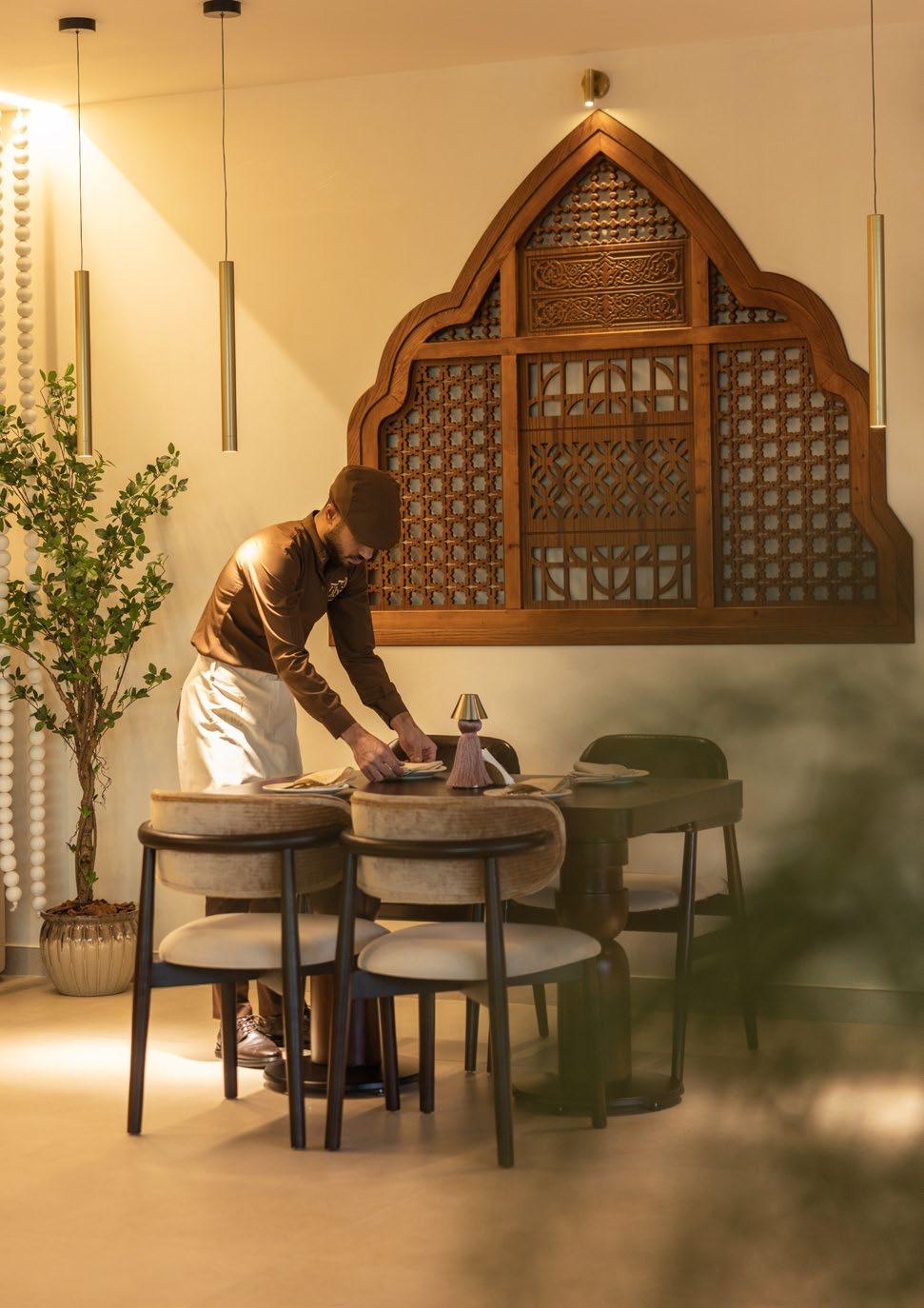
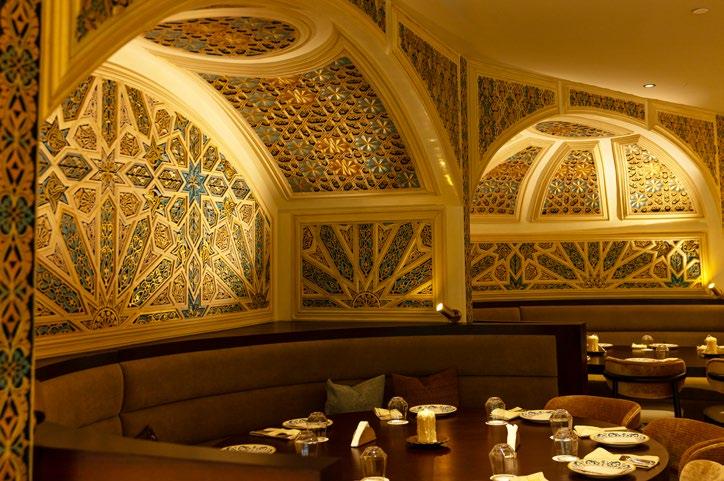
AA : At THG, we don’t approach concepts as themes; we build them as fully immersive ecosystems. A strong example is Ziba in Riyadh and Al Khobar The vision was not just to serve Persian cuisine, but to translate Persian culture into a living, breathing guest experience. We approached it with precision. Every element, from architecture, materials, music, service rituals, and menu design, was intentionally curated to reflect authentic Persian heritage. The space was designed to feel like a modern interpretation of a Persian home, not a restaurant, creating immediate emotional comfort and familiarity.
But where the experience truly elevated was in execution. Our teams were trained not just on service standards, but on cultural storytelling, understanding the origins of dishes, the etiquette of Persian hospitality, and how to engage guests in a way that feels personal and genuine.
The result was not just a visually distinctive venue, but a place where guests felt transported,
recognized, and connected. We saw stronger repeat visitation, longer dwell time, and deeper guest loyalty because the experience went beyond dining into something more meaningful.
For us, that’s the difference: it’s not about creating something unique once, it’s about engineering an experience that can be delivered consistently, at a luxury level, every single day.
LPM: For entrepreneurs who want to enter the luxury F&B industry, what is the biggest mistake you see new operators making?
IN LUXURY, CLARITY IS POWER.
The more focused and intentional the concept, the stronger the guest connection.
AA: The biggest mistake I see new operators make is confusing luxury with aesthetics. Many believe that if they invest in a beautiful space and a strong menu, they’ve created a luxury concept. In reality, those are just the entry requirements. Luxury is defined by precision, consistency, and discipline in execution.
At THG, we see luxury as an operational commitment, not a design decision. It’s about how consistently you deliver the same standard, across every touchpoint, every day. From the way a guest is welcomed, to the timing of service, to how issues are handled, these details define the brand far more than the interiors.
Another common mistake is a lack of clarity. Trying to do too much, serve too many audiences, or dilute the concept. In luxury, clarity is power. The more focused and intentional the concept, the stronger the guest connection. Intuition is important, but without structure, systems, and accountability, it doesn’t scale. The operators who succeed in this
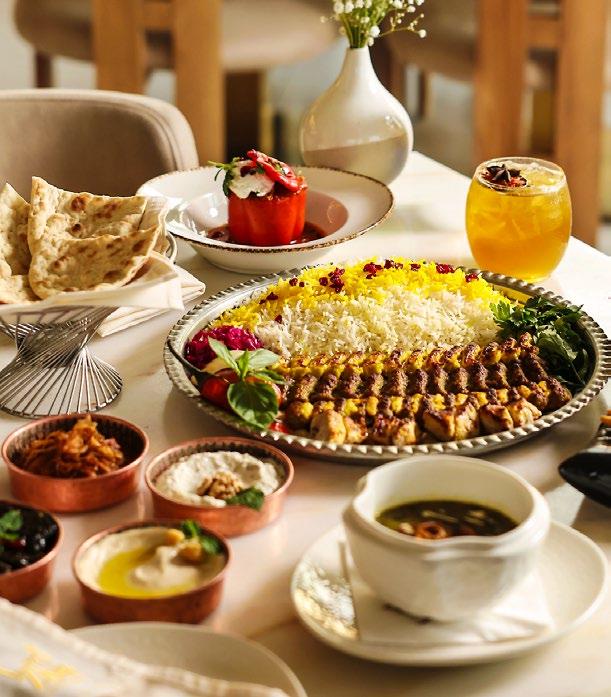
Ziba Restaurant: where the elegance of contemporary Persian cuisine takes form
segment are the ones who combine vision with rigorous execution. In the end, luxury is not what you promise, it’s what you consistently deliver.
LPM: Looking back at your journey building Takara Hospitality Group, was there a difficult moment or failed concept that ultimately taught you the most valuable lesson about the luxury F&B business?
AA: One of the most defining moments in building Takara Hospitality Group was launching our first concept at the end of 2019, just as the global pandemic began.
It wasn’t just a challenging period; it was a complete stress test of the business. Overnight, the industry shifted, operations, supply chains, and guest behavior; everything became unpredictable. What we thought was a strong model was suddenly under pressure from every direction.
The biggest lesson we took from that experience was this: in luxury F&B, resilience comes from systems, not circumstances. We realized very quickly that vision and concept alone are not enough. What sustains a brand, especially in difficult times, is operational discipline, financial control, and the ability to adapt without compromising the guest experience. That period forced us to become much more precise in how we build and operate. We strengthened our internal structures, refined our decision-making, and built a culture that prioritizes consistency and accountability at every level.
So while it was one of the most difficult phases, it became the foundation of how we operate today. It shaped our mindset to not just create beautiful concepts, but to build resilient, scalable luxury brands. And ultimately, that’s the difference: anyone can build a concept in good times, but true operators are defined by how they perform when conditions are at their worst.
LPM: When launching a new luxury restaurant concept, what are the first three elements you focus on to ensure the brand stands out?
AA: When launching a luxury restaurant concept, we focus on three very clear pillars.
The first is clarity of concept. In luxury, you cannot be everything to everyone. The concept must be sharply defined, culturally, visually, and operationally, so that every decision aligns with a single, powerful identity.
The second is precision in the guest journey. Luxury is experienced in moments, not statements. From arrival to departure, every touchpoint must be intentionally designed and consistently executed. It’s the discipline behind the details that defines the brand.
The third is operational scalability. A concept is only as strong as its ability to be delivered consistently. At THG , we build with structure from day one, systems, training, and controls, so that the experience is not dependent on individuals, but embedded in the operation itself.
When these three come together, clarity, precision, and scalability, you don’t just create a concept that stands out. You create a brand that can sustain excellence and grow without losing its identity. And in luxury, that consistency at scale is what truly differentiates market leaders.
LPM: In luxury hospitality, success often comes from small details. What is one operational or leadership principle you personally follow that consistently elevates the guest experience?
AA: In luxury hospitality, the smallest details matter, but what truly elevates the experience is consistency in those details. The leadership principle I follow is very simple: what you tolerate becomes the standard.
At THG , we don’t leave excellence to chance. Every detail, from the first greeting to the final interaction, is defined, trained, and measured. Because in luxury, it’s not about delivering a great moment once, it’s about delivering the same standard, flawlessly, every time.
Leading by example is part of it, but more importantly, it’s about building a culture of accountability. Teams need to understand that every touchpoint matters and that precision in execution is non-negotiable. When that culture
is in place, the guest doesn’t just experience good service; they experience reliability, trust, and a sense of being genuinely cared for. And ultimately, in luxury, consistency is what transforms attention to detail into a true brand signature.
LPM: Looking ahead five to ten years, what major shift do you believe will redefine the luxury dining experience?
AA: Looking ahead, the biggest shift in luxury dining will be the move from impressive experiences to intelligent, personalized experiences. The guest is evolving rapidly, more informed, more exposed, and more selective than ever before. But beyond that, expectations are shifting from being impressed by the environment to being understood as an individual.
In the next five to ten years, luxury will be defined by how well a brand can anticipate and personalize the experience. Not just in terms of preferences, but in how the entire journey adapts to the guest, service style, pacing, recommendations, and even atmosphere. At the same time, authenticity will become non-negotiable. Guests will seek concepts that are culturally grounded, meaningful, and not easily replicated. The combination of deep authenticity and advanced personalization will separate true luxury brands from the rest.
From an operator’s perspective, this means building much stronger systems behind the scenes, data, training, and operational precision, to deliver that level of consistency at scale. So the future of luxury dining will not just be about creating beautiful spaces or exceptional menus. It will be about creating experiences that are personally relevant, emotionally engaging, and consistently delivered. And the brands that succeed will be the ones that can combine human connection with operational intelligence.
LUXURY IS NOT WHAT YOU PROMISE, it’s what you consistently deliver.
LPM: As a Board Member of the World Luxury Chamber of Commerce, how has being part of WLCC supported your growth or opened new opportunities?
AA: Being part of the World Luxury Chamber of Commerce has been a strategic extension of our journey at THG. What WLCC provides is not just access, it’s alignment. It brings together leaders across various sectors of the luxury industry, creating a platform where perspectives, standards, and future directions are actively shaped.
For me personally, it has been valuable in two ways. First, it offers direct exposure to how luxury is evolving globally, across markets, industries, and consumer expectations. That level of insight is critical when you’re building brands that aim to operate at an international standard. Second, it creates meaningful opportunities for collaboration. Whether it’s partnerships, knowledge exchange, or simply being part of high-level conversations, it allows us to position our work within a broader global context.
As a Board Member, I also see it as a responsibility to contribute to the dialogue, share our experiences from the F&B sector, and help elevate the standards of luxury hospitality within the region. Ultimately, WLCC is not just a network; it’s a platform that enables growth, influence, and the continuous evolution of what luxury means in today’s world.
Connect with Ahmed Alajmi on LinkedIn to follow THG’s expansion across Saudi Arabia’s luxury dining sector and learn more about the group’s hospitality portfolio at THG’s official website: www.thgsaudi.com
AUTHORITY RECOGNITION Lasts
AI, Web3, AND THE METAVERSE IN LUXURY
Luxury has always been about more than what is owned. It is about how something is experienced, how it is accessed, and how it is recognised.
Today, a new layer is being added. AI, Web3, and the Metaverse are not changing the essence of luxury, but they are expanding where and how it is expressed. For leading brands, these technologies are becoming part of a broader approach to client experience, exclusivity, and distinction.
At the same time, recognition is finding new forms. Awards, status, and credibility are no longer confined to physical spaces. They are beginning to travel with the brand and the client across digital environments.
AI: A MORE PERSONAL KIND OF LUXURY
Personalisation has always been central to luxury. What is evolving is the level of precision and anticipation behind it.
AI is allowing brands to understand their clients in more depth, creating experiences that feel considered and intuitive. From curated recommendations to highly tailored service moments, the focus remains on making each interaction feel individual.
In this context, recognition plays a subtle but important role. Award-winning brands are able to use their status to reinforce trust at every touchpoint. Whether through digital concierge services or personalised communication, recognition becomes part of the experience, adding reassurance and credibility to each interaction.
Rather than being visible as a separate element, it is woven into how the brand presents itself.
WEB3: OWNERSHIP, AUTHENTICITY, AND VERIFIED PRESTIGE
Ownership has always carried meaning in luxury. With digital innovation, that meaning is becoming more layered.
Blockchain-based systems are allowing brands to attach verified records to products, ensuring authenticity and provenance. This is particularly valuable in a market where trust is essential and where clients expect transparency.
At the same time, digital assets are introducing new forms of exclusivity. Memberships, limited releases, and private access can now exist in both physical and digital formats, offering clients a more connected experience.
Recognition fits naturally into this space. Awards and distinctions can be securely recorded and linked to digital assets, allowing brands to carry their status into new environments with clarity and permanence. Instead of being a static accolade, recognition becomes something that can be verified, displayed, and experienced.
For clients, this adds another layer of confidence. For brands, it strengthens their position across both primary and secondary markets.
THE METAVERSE: A NEW SETTING FOR LUXURY
Luxury has always been closely tied to place. Flagship stores, private events, and curated environments have shaped how brands are experienced.
Now, these environments are expanding. Virtual spaces are offering new ways for clients to explore collections, attend events, and engage with brands in settings that are not bound by location.
These spaces are not intended to replace physical experiences. Instead, they extend them, offering additional moments of interaction and discovery. Recognition becomes highly visible in this context. Award-winning brands can present their status within these environments, integrating it into virtual showrooms, exhibitions, and experiences. Rather
than being a logo or a statement, it becomes part of the space itself, reinforcing credibility in a way that clients can see and engage with. This creates a continuity between the physical and digital presence of a brand.
RECOGNITION IN A CONNECTED LUXURY LANDSCAPE
Recognition remains one of the most powerful signals in luxury. It represents trust, quality, and achievement. What is changing is how it is expressed.
Today, recognition can move across environments. It can be embedded into digital assets, reflected in personalised experiences, and presented within virtual spaces. It is no longer confined to a moment or a place.
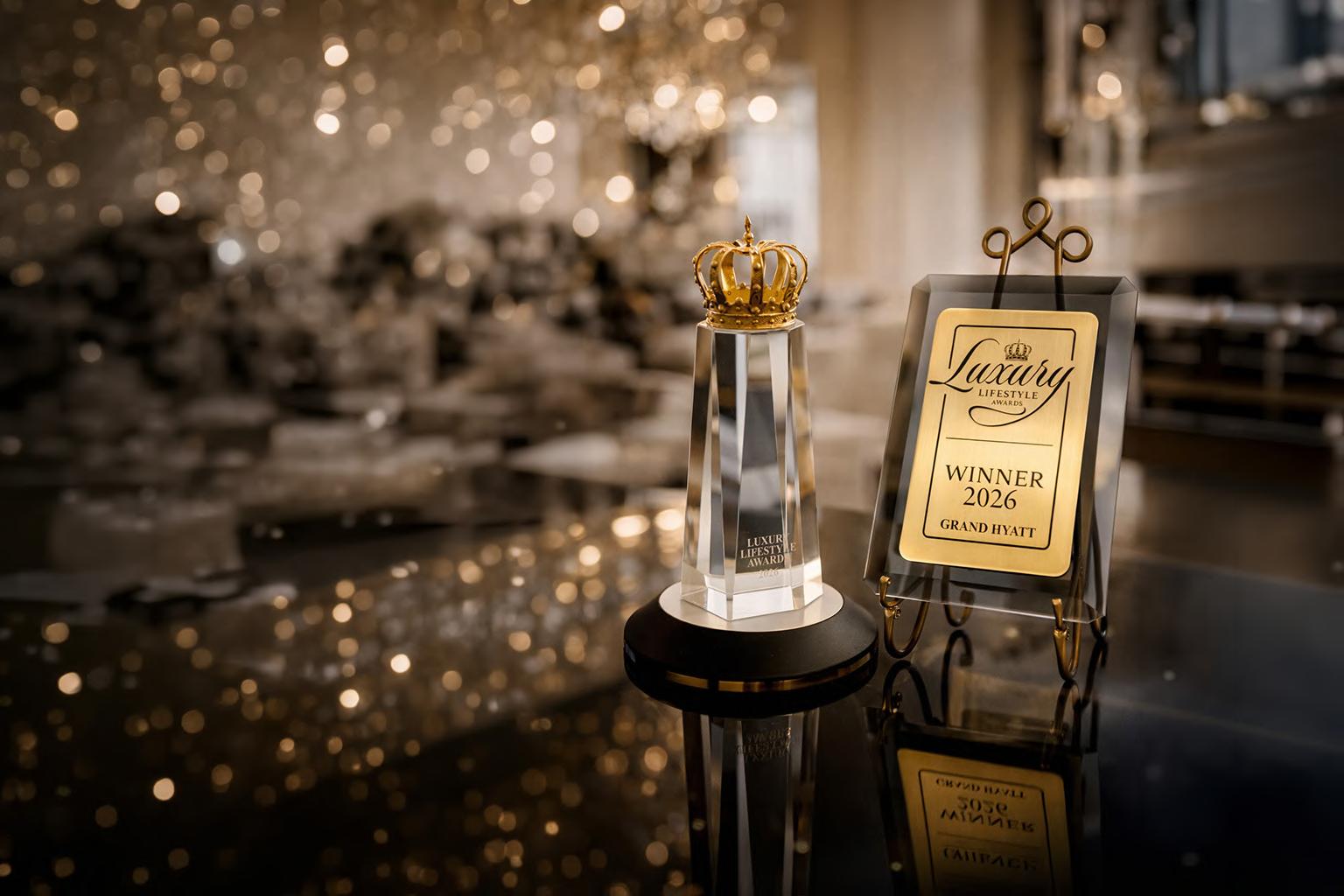
For Luxury Lifestyle Awards winners, this creates new opportunities to carry their recognition beyond traditional formats and into the spaces where modern luxury is experienced.
A CONTINUING EVOLUTION
The most compelling luxury brands today are those that remain consistent in their identity while exploring new ways to connect with their clients.
AI, Web3, and the Metaverse offer additional layers through which this can happen. They provide new settings, new formats, and new ways to express exclusivity and trust.
Recognition continues to sit at the centre of this. It gives meaning to innovation and ensures that, regardless of the environment, excellence remains clear.
Luxury has always adapted while staying true to its core. What is unfolding now is simply the next expression of that tradition.
Apply for Luxury Lifestyle Awards and position your brand among the world’s most trusted luxury leaders: www.luxurylifestyleawards.com
LUXURY IS NO LONGER CONFINED TO A PLACE OR A MOMENT.
Through AI, Web3, and the Metaverse, recognition, exclusivity, and trust are becoming experiences that move seamlessly across both physical and digital worlds.
HERITAGE, STORYTELLING, AND NORDIC DESIGN
with GUNVOR C. RØKHOLT
For
Gunvor
C. Røkholt, Founder and
Interior Designer of
GCR Design
AS, design is a dialogue between contemporary expression and Norwegian cultural heritage, resulting in spaces rich in context and atmosphere.
LUXURY PEOPLE MAGAZINE: Your company was recognized by Luxury Lifestyle Awards as the Best Contemporary Residential Interior Design in Norway for the KYN project. What first drew you to this historic coastal estate, and how did its heritage influence your design vision?
GUNVOR C. RØKHOLT: I am honored and thrilled about this award, and so happy for KYN Norway. We have spent a great deal of time developing the concept and interior design for this beautiful and authentic place on Norway’s western coast. I was invited to work on the project after many years of praising and supporting initiatives that preserve Norwegian cultural heritage through thoughtful use.
LPM: KYN is located in the dramatic fjord landscape of Sunnfjord and carries a history dating back to the Viking era. How did you translate this deep historical context into a contemporary interior experience?
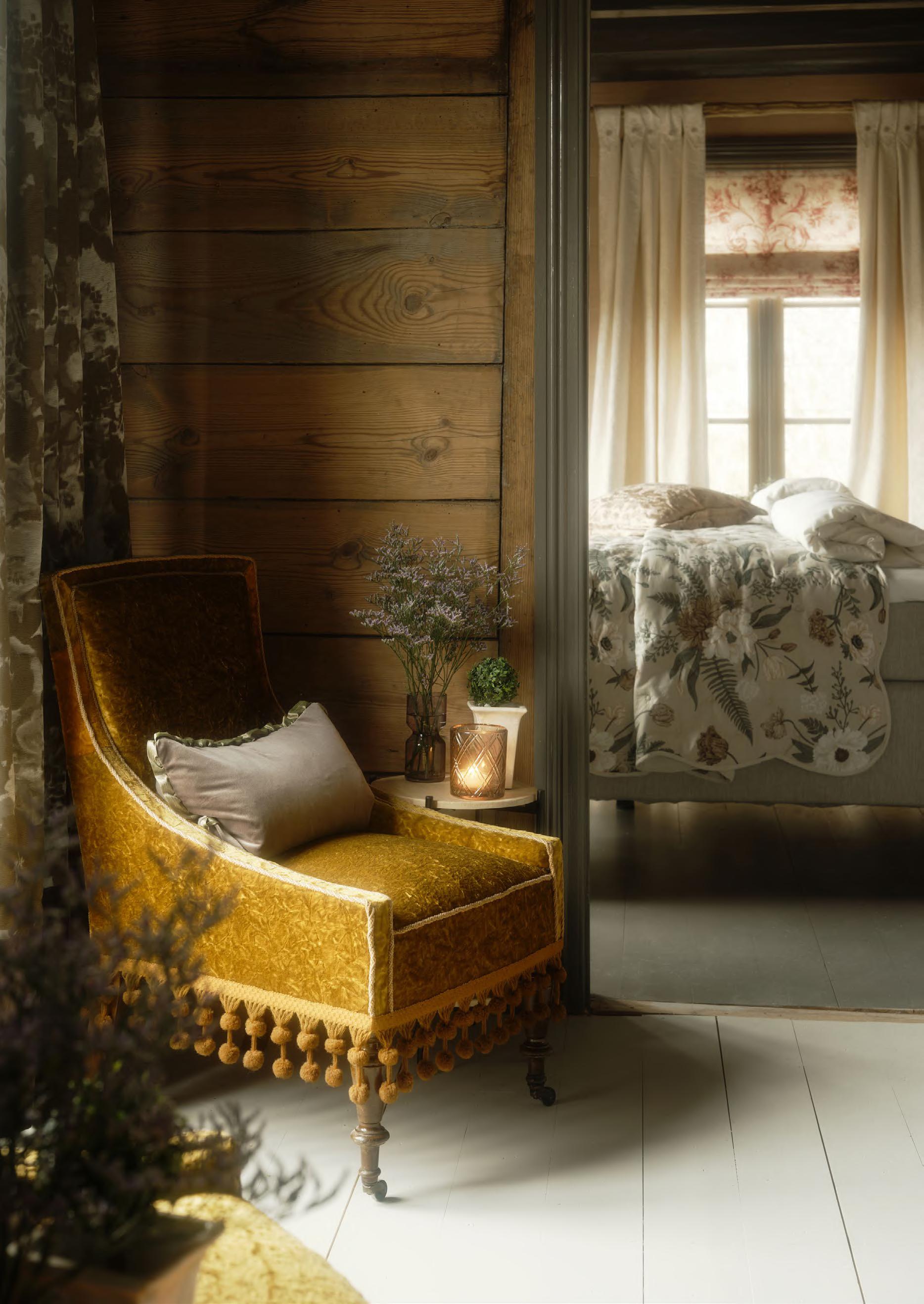
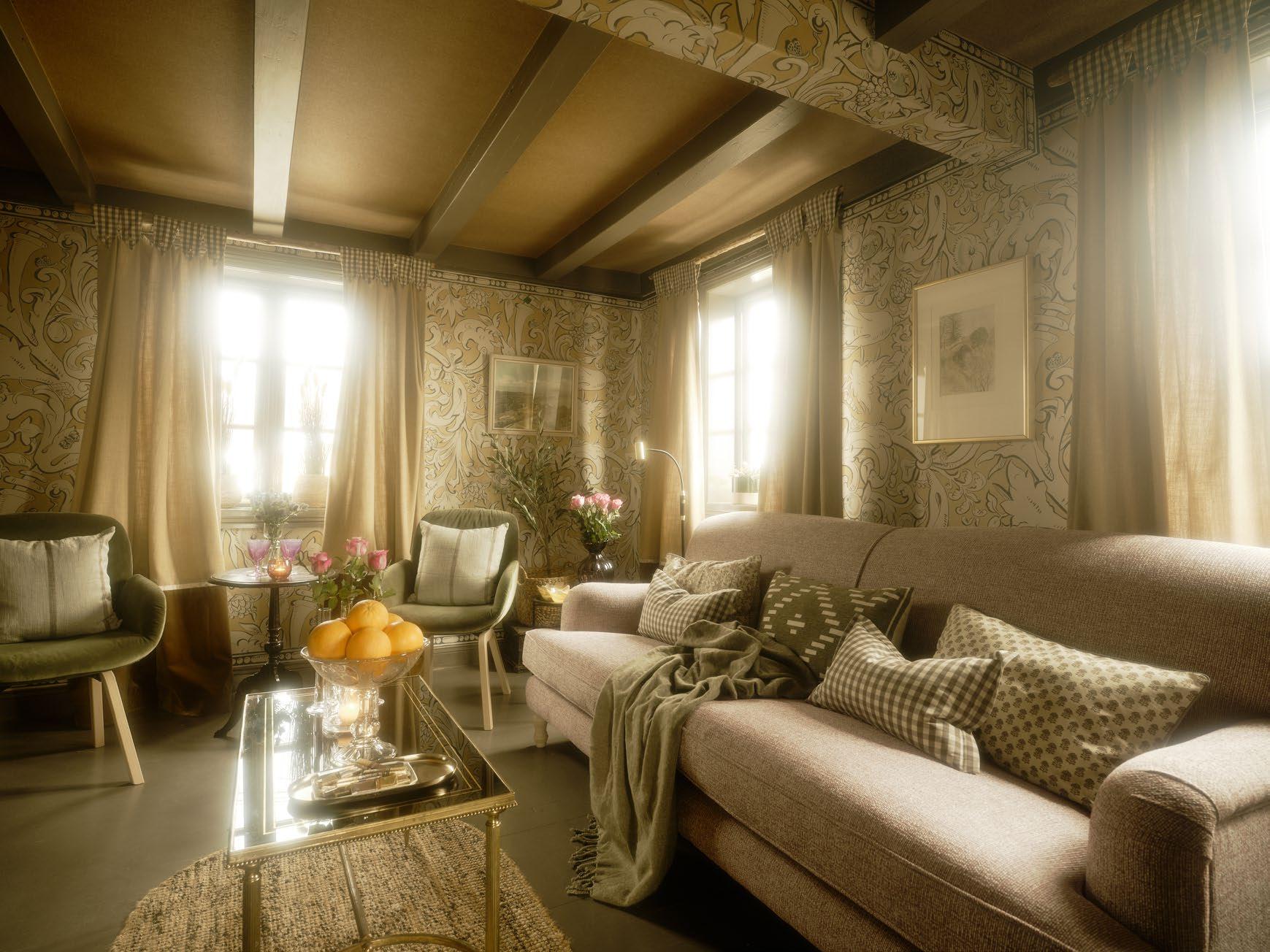
GCR: First of all, I needed to understand the place’s story. I immersed myself in its history and details, and in doing so, it became clear how important it was to highlight the different timeframes, heritage, and character of the location. We worked with colors, design elements, wallpapers, and fabrics that would bring these stories to life. It was important not only to elevate the vision but also to introduce elements of curiosity and comfort.
LPM: The project is described as a heritageled restoration. When approaching interiors in such historically rich environments, how do you balance respect for the past with the expectations of modern high-end hospitality?
GCR: For me, it is always about balance. You must add what is needed and practical, though it should never feel overly practical, while also creating comfort. We always begin with the concept and the storytelling. From there, we develop the place’s vision. That is where the signature lies, and of course, in the details.
LPM: Each building within the estate carries its own story and character. How did you approach creating distinct identities for the interiors while maintaining a cohesive atmosphere throughout the property?
GCR: Exactly. That is why working with a clear vision is so important. Having a strong vision is like having a map of the landscape. It guides you and shows you where to go.
LPM: The surrounding Norwegian coastal landscape is powerful and atmospheric. In what ways did the natural environment influence the materials, colors, and textures used throughout the interiors?
Nature is not a backdrop. IT IS A LEADING CHARACTER.
GCR: In all our projects, the natural elements are very important. They are like a leading character. If the character is strong, like a Viking woman, then everything revolves around the elements: wood and fire, feelings and water, thoughts and air, colors and personality, boundaries and form. We translate these ideas into materials such as wood, wool, velvet, and metal, as well as carefully chosen colors. Discover more at www.gcrdesign.no
ARCHITECTURE
BOUNDARIES
Sanja Vrancic approaches architecture as an emotional and intellectual discipline, where space becomes a reflection of identity, culture, and human experience. In this conversation, she shares her philosophy on timeless luxury, global ambition, and designing beyond convention.
LUXURY PEOPLE MAGAZINE: Sanja, your studio is known for its author-driven, multidisciplinary approach. How do you position your architectural identity within today’s competitive European residential market?
SANJA VRANCIC: For me, architecture has never been just a profession. It is an instinct, a necessity, and the way I breathe space. I remember this feeling from a very young age, but it became most apparent during my time as a student at the University of Zagreb. Even then, I felt a distinct sense of individuality. I was, perhaps, different by nature, original and outstanding in a way that didn’t always align with the traditional directions and rigid expectations of the time.
My views on life and art always stood apart from the conventional, and that same perspective still guides me today. From the very beginning, I felt that I did not belong in frameworks that were already defined. I have learned that today, more than ever, it is good to be different. Not out of a desire to stand out for the sake of it, but out of the necessity to be true to yourself, to stand with an authentic architectural identity that refuses to be diluted by market trends.
I have built my career as a natural extension of that feeling. To me, every project must possess its own character and evoke a genuine emotion. I am drawn to spaces created with courage, designs that are original, perhaps a bit restless, but always deeply authentic.
I want my architecture to speak a universal language and cross borders. My work is not about chasing what is popular now, but about defining what comes next.
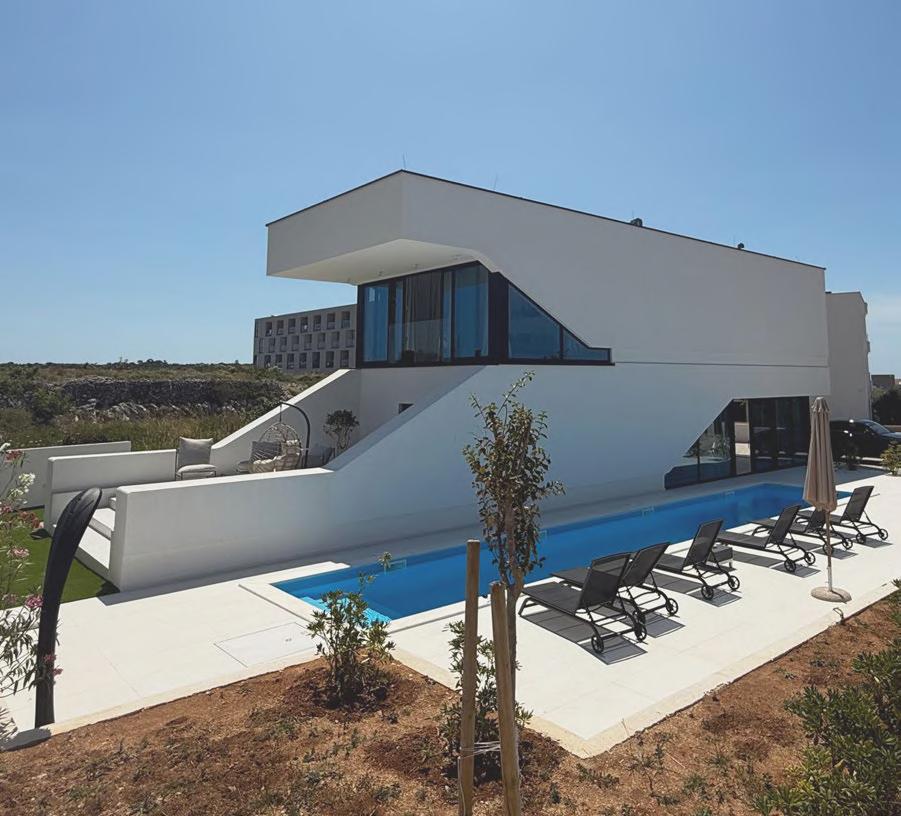
LPM: Mtvarysa recently received significant recognition from the Luxury Lifestyle Awards as the Best Contemporary Residential Architecture in Croatia, 2026. What core concept defined the project, and how did you protect that vision from initial sketches through completion?
SV: This award isn’t merely a trophy for a building. It is a validation of courage and emotional consistency. It proves that when you refuse to compromise on an artistic truth, the world eventually listens.
Mtvarysa did not begin as a project on a drawing board; it began as a visceral response to the landscape. I didn’t want to design a house. I wanted to choreograph a state of mind. I envisioned a space that acts as a partner to its inhabitant. The place with the strength of a monument and the silence of a retreat. Protecting this vision meant never letting the aura of the house be compromised by the ‘business’ of building. In architecture, there are a thousand technical excuses to dilute an idea. But from the first sketch to the final stone, I treated the concept as a living organism. I maintained the balance between the monumental and the subtle, ensuring that the luxury felt here wasn’t about expensive materials, but about the profound quality of the light, the silence, and the space itself.
LPM: The villa’s sculptural geometry creates a powerful dialogue between solid and void. How do you approach form in relation to light, privacy, and the surrounding landscape?
SV: Architecture is never just about drawing shapes. It is a response to light, silence, and the energy of the landscape. When I create, I don’t
LUXURY IS NOT JUST ABOUT SIZE OR MATERIAL, BUT THE QUALITY OF SPACE, LIGHT, AND CONNECTION TO NATURE.
think about walls first, but about the feeling the space should evoke. I try to sense in advance how the light will glide along a surface, where it will linger, and where it will disappear... leaving a specific atmosphere behind.
In this villa, the interplay between solid and void wasn’t an aesthetic choice; it was an instinctive necessity. The solid walls provide security and a sense of shelter, while the voids allow the house to breathe and connect with nature. Life happens in the balance between these two states.
Light is my primary tool. It cuts through the volume, defines the edges, and creates a rhythm that shifts from hour to hour. Because of this, the house is never the same. It changes and evolves along with the day.
In the end, it all comes down to balance. I use light and shadow to create an atmosphere where you feel safe and sheltered, rather than closed off.
I want the people in my houses to feel in control of their connection to the world outside. I never treat the landscape as just a view, but as a partner in the design. The building’s form emerges from the site itself, sometimes subtle and other times powerful, but always belonging exactly where it stands.
LPM: In high-end residential projects, clients often expect both individuality and timeless value. How do you translate personal aspirations into architecture that remains relevant for decades?
SV: Prior to every project, there is an encounter with a human being. I always try to hear what the client wants and may not yet know how to express.
I don’t translate their wishes literally. Instead, I search for the essence: their quiet habits, their contradictions, and their way of life. Trends fade, but these human truths do not. When you transform an emotion into a physical space, that is what gives the architecture a permanent value.
For me, architecture shouldn’t strive to be modern, but to be honest, and I believe that honesty is only found through timelessness. It is about a space being precise rather than just following the current moment.
My goal is for a client to feel just as understood by the space in twenty years as they did on the first day. Architecture should not be something you outgrow; it should be something that continues to grow with you.
I DARE TO BE TIMELESS.
LPM: As sustainability becomes non-negotiable in luxury development, how do you integrate environmental responsibility without compromising spatial quality and refinement?
SV: Sustainability begins with a very simple, almost intuitive decision that architecture should never overpower nature. It should create the space for nature to breathe. This is why I ensure that concrete never dominates the site. I want the land to stay alive, filled with trees, plants, and a garden that feels like it belongs there.
To me, greenery is not decoration. It is a quiet counterpart to the building. A garden filters the light, carries scents, and marks the changing of the seasons. When an interior opens up to a living landscape, the house begins to breathe.
True refinement emerges from this relationship between the built and the living. Luxury doesn’t come from the quantity of materials, but from the quality of the balance. The way light passes through a treetop or the awareness that the house is a guest of the landscape, not its opponent.
LPM: Looking ahead, how do you see contemporary residential architecture in Croatia evolving over the next decade, and what role do you envision your studio playing in defining that future?
SV: Here in Croatia, we are entering a period of profound change. I believe there will be an increasing demand for architecture that respects the soul of the landscape rather than just the logic of investment.
Also, the definition of luxury will hopefully change. Luxury is no longer about square footage or expensive finishes. It is about the relationship with the garden, materials that gain character as they age, and architecture that is rooted in the place it was created.
And I see myself somewhere on that path. My ambition is to move beyond the local status quo and introduce a different perspective. I want my projects to prove that architecture can be sophisticated and powerful while remaining deeply connected to the earth.
I don’t want my work to simply follow the changes of the next decade. I am sure I am one of those who will initiate those changes.
Discover more about Sanja Vrančić’s work and philosophy: sanjavrancicarchitects.com
DESIGNING IDENTITY THROUGH SAUDI CRAFT
with HIND AL-MUJAHID
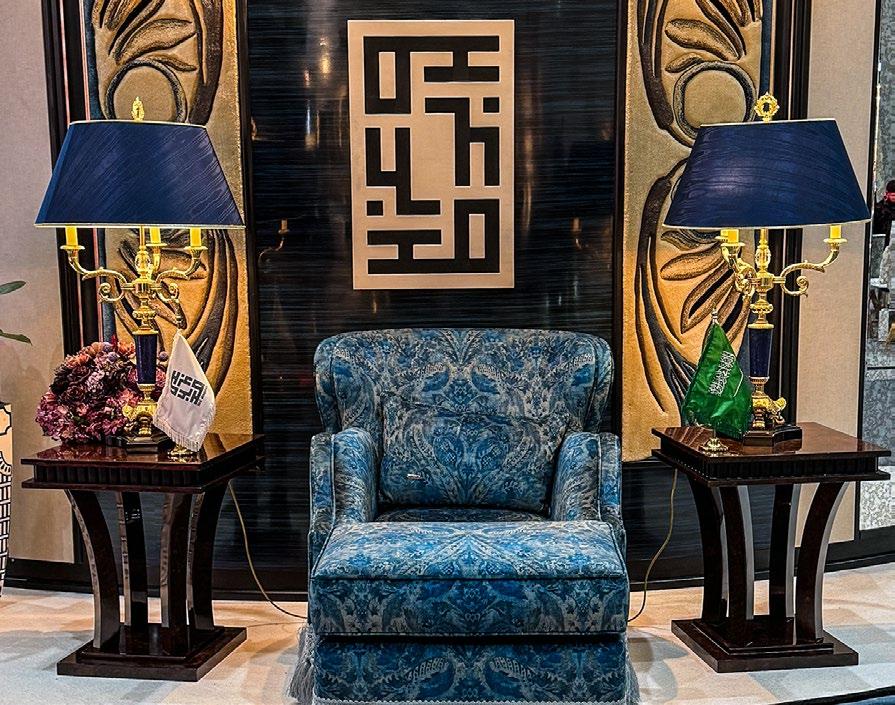
Hind Abdullah Al-Mujahid has built a fully integrated design and manufacturing group rooted in Saudi identity and precision execution. From handcrafted carpets to high-end interiors, her approach centers on control, cultural depth, and client-focused delivery.
LUXURY PEOPLE MAGAZINE: Your work strongly reflects Saudi culture and traditions within a luxury context. How do you translate these cultural elements into designs that resonate with both local and international clients?
HIND AL-MUJAHID: We do not view Saudi culture merely as a visual source of inspiration, but as a complete system of values that reflects identity, hospitality, and privacy. We translate these values into contemporary design elements by reinterpreting traditional details in a modern way that aligns with global luxury standards. We strive to achieve a delicate balance between authenticity and innovation — ensuring that local clients feel a strong sense of belonging, while international clients experience something unique with a distinct cultural character. For us, design is not just about form; it is an experience that tells the story of a place and reflects its spirit.
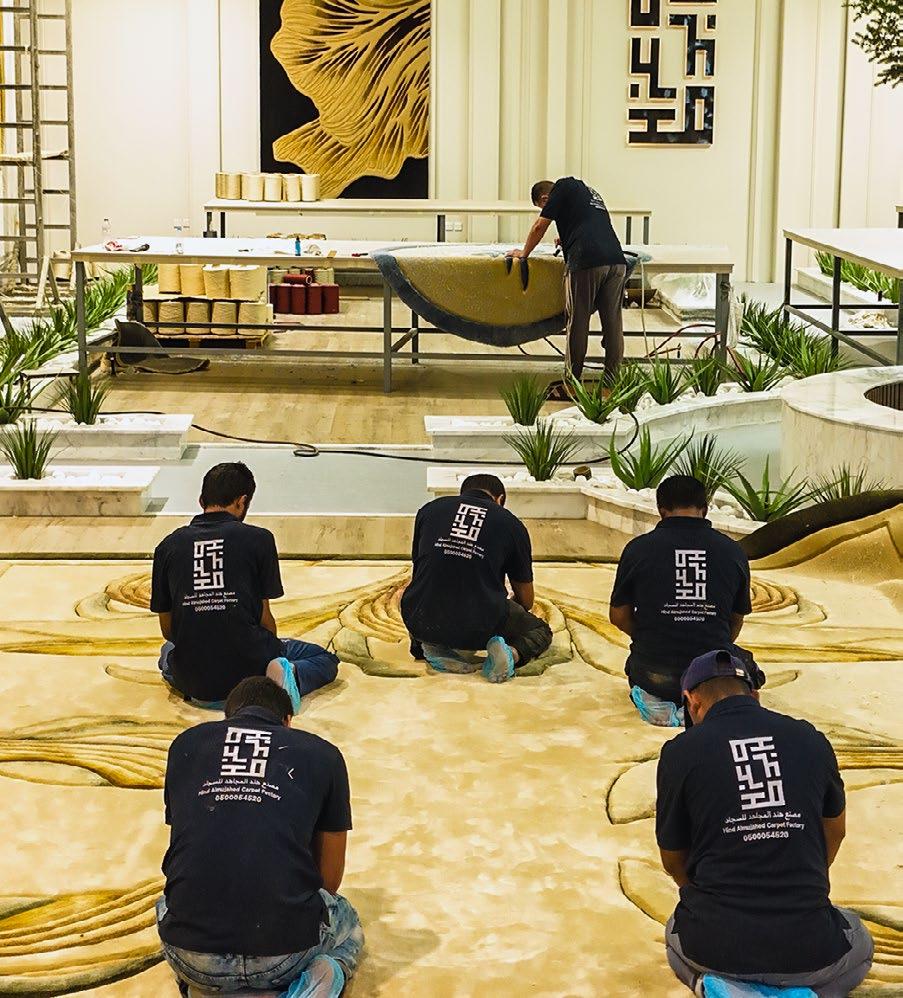
LPM: You have invested in establishing your own carpet and wood factories. What motivated this decision, and how has it impacted quality control and the client experience?
HA: Transitioning into manufacturing was a carefully planned strategic step aimed at achieving true integration within our business
We do not view Saudi culture as inspiration, but as a system of values that defines IDENTITY, HOSPITALITY, AND PRIVACY.
model. We aspired to have full control over product quality — from the initial concept to the final execution.
Owning our factories has enabled us to:
• Ensure the highest quality standards
• Deliver fully customized solutions
• Accelerate execution timelines
• Innovate in materials and detailing
Most importantly, it allows us to offer a seamless client experience, where design and execution are part of one unified vision rather than separate stages.
LPM: In the luxury design world, service is as important as design itself. How do you tailor your approach to meet the expectations of high-profile and diverse clients?
HA: In the luxury sector, personalization is at the core of success. We always begin with a deep understanding of the client’s lifestyle, preferences, and even their daily habits.
Our approach is based on:
• Careful listening
• Building trust-based relationships
• Delivering bespoke solutions for each client
Every project is a unique journey for us. We do not offer standard solutions; instead, we design every detail to reflect the client’s personality and expectations. We don’t just deliver design — we create a complete lifestyle experience.
LPM: As your brand expands internationally, what challenges have you faced in maintaining your identity while adapting to diverse tastes?
HA: The main challenge has been balancing the preservation of Saudi identity with adapting to diverse global cultures. However, we see this challenge as an opportunity rather than a limitation. We ensure that identity remains a core element in every project, while allowing flexibility in interpretation based on the target market. Success in global markets does not mean abandoning identity — it means presenting it in a way that others can understand and appreciate. This is what defines us:
A strong identity with a global vision.
LPM: What do you believe will define the next phase of luxury interior design, particularly in hospitality and high-end residential projects?
HA: I believe the future of luxury design will be shaped by three main pillars:
Owning our factories allows us to control quality from concept to completion AND DELIVER
A SEAMLESS CLIENT EXPERIENCE.
• Experience: Design is no longer just visual — it is a complete sensory journey
• Identity: Projects that reflect a clear cultural identity will stand out the most
• Sustainability: Future luxury will be environmentally responsible
In the hospitality sector, we will see a shift toward spaces that tell local stories with a global touch. In residential projects, there will be a stronger focus on privacy and high levels of personalization. In short, future luxury will not be measured only by appearance, but by the depth and quality of the experience.
To learn more about Hind Al-Mujahid Group visit their website: hindalmujahed.vip
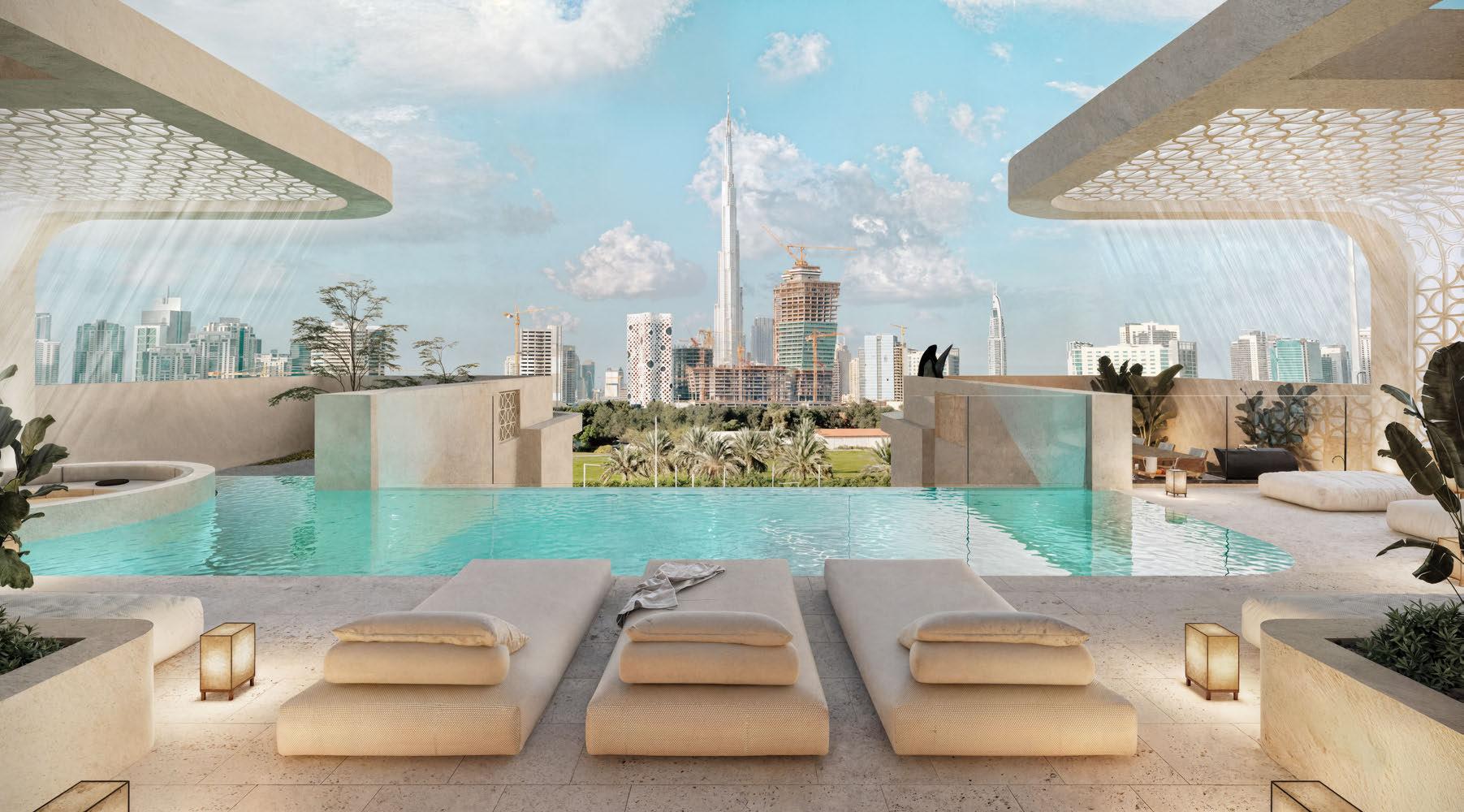
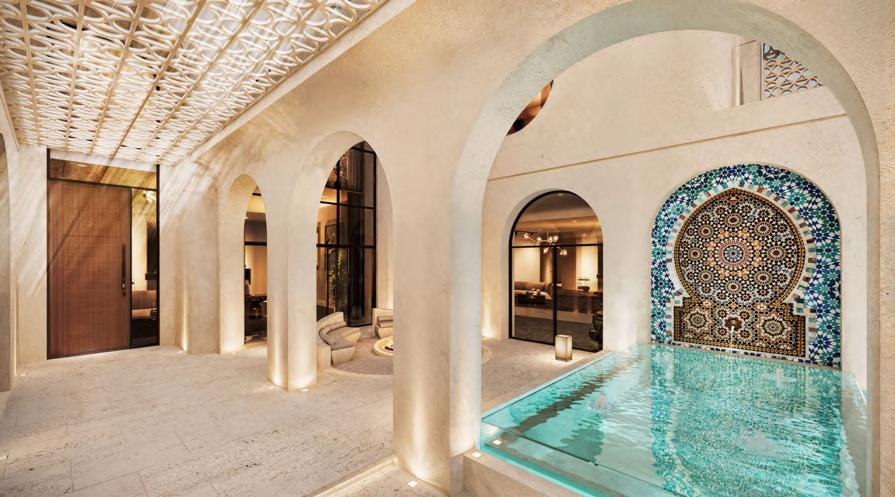
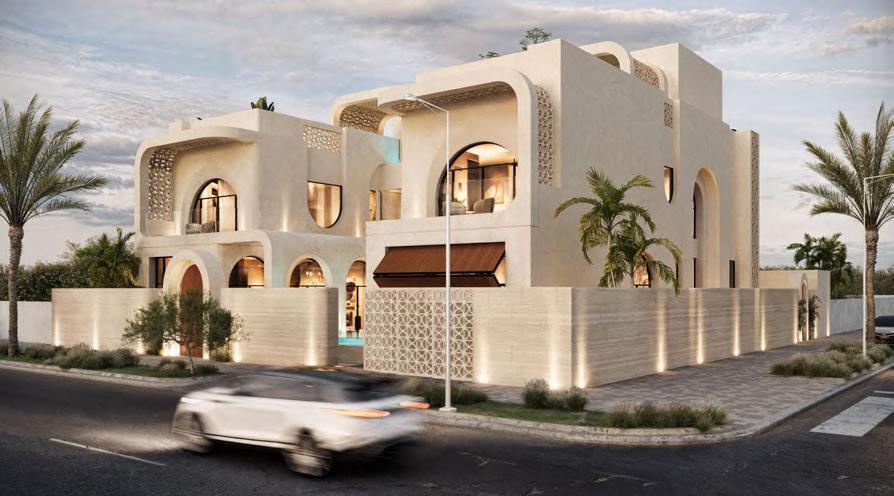
Emils Daujats, Director of Mr. Eight Development, approaches real estate with the discipline of a designer and the mindset of a product builder. In this conversation, he explains why control, location, and execution define long-term value in Dubai’s competitive market.
LUXURY PEOPLE MAGAZINE: Mr. Eight Development operates with a fully integrated model across development, construction, and hospitality. How does this structure influence the level of control you maintain over quality and the overall client experience?
EMILS DAUJATS: We don’t separate development, construction, and service. For us, it is one system. That is where real control comes from. At Mr. Eight Development , we are not in the business of selling square meters. We build products that people choose for how they live, not just where they live. We act as the general contractor on our own projects. This means we control the process from the first line on paper to the final detail on site. We choose our contractors carefully, we stay deeply involved, and we do not allow the original concept to be diluted. That level of control is what allows us to deliver consistency. Not just in finishes, but in experience. In luxury, people do not buy promises. They buy confidence. Our role is to make sure that what is imagined is exactly what is delivered.
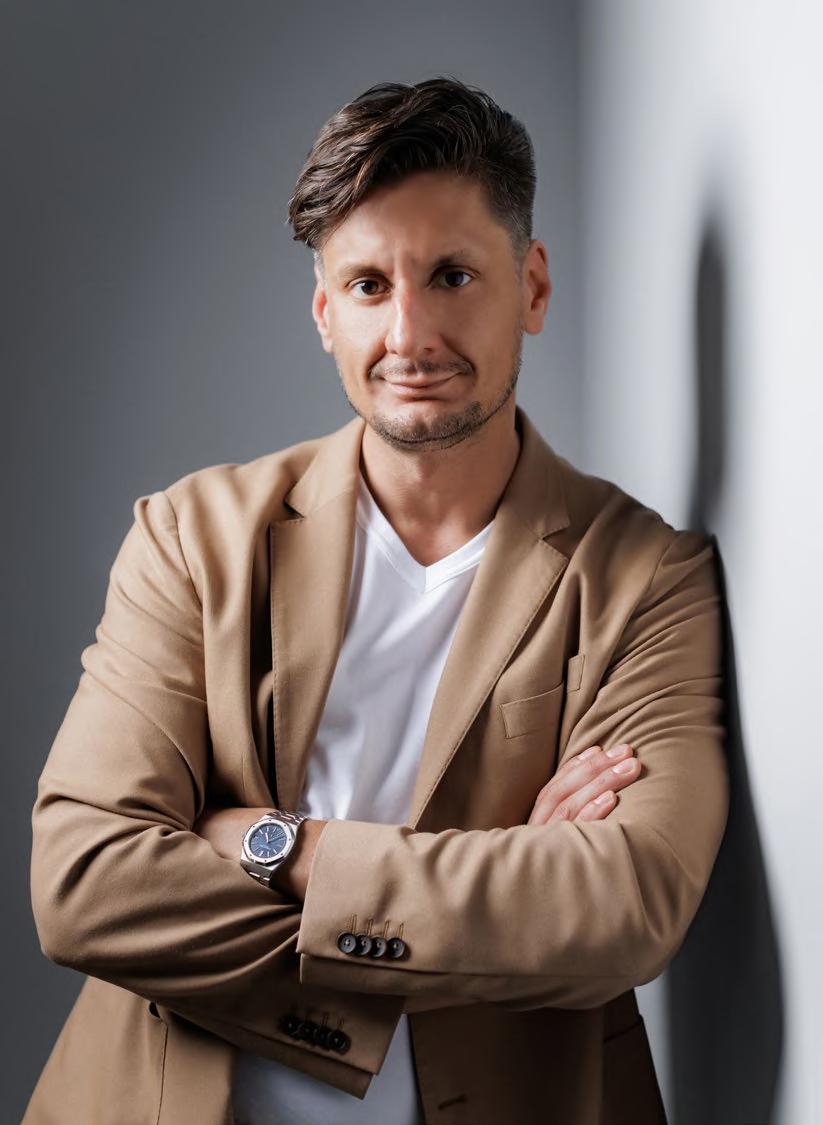
Emils Daujats, Director of Mr. Eight Development
In luxury, people do not buy promises. THEY
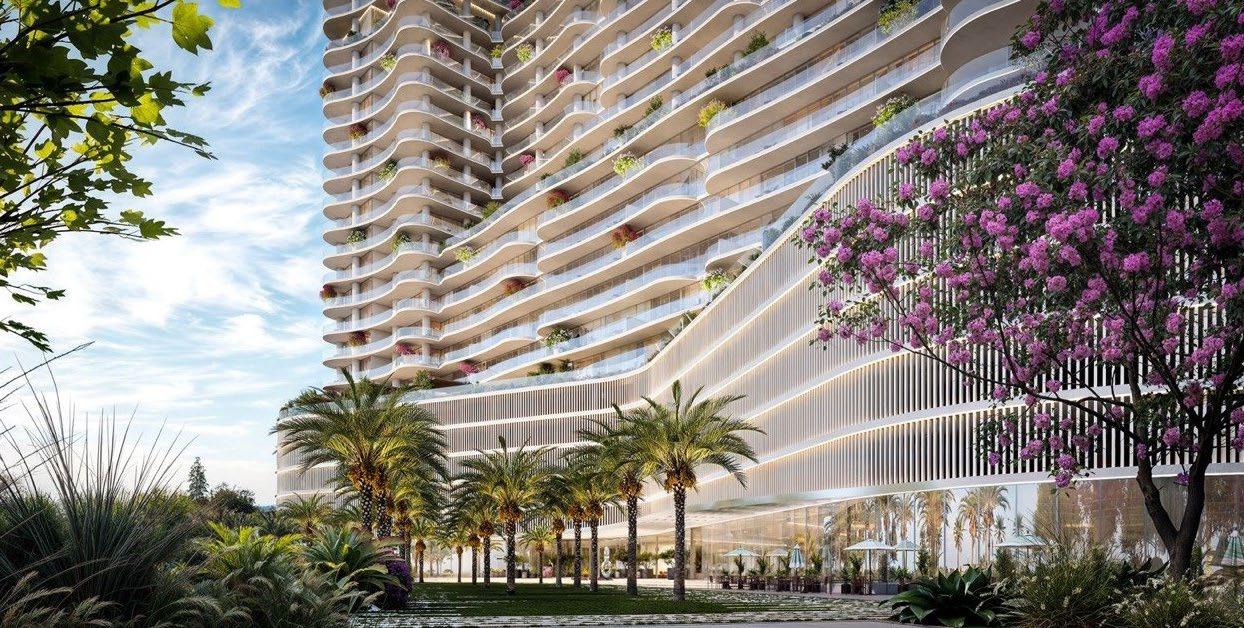
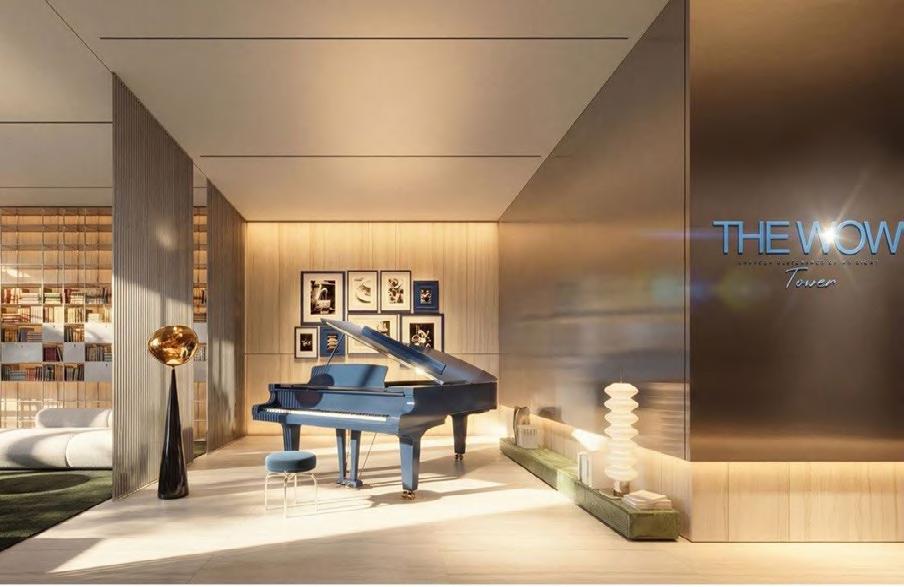
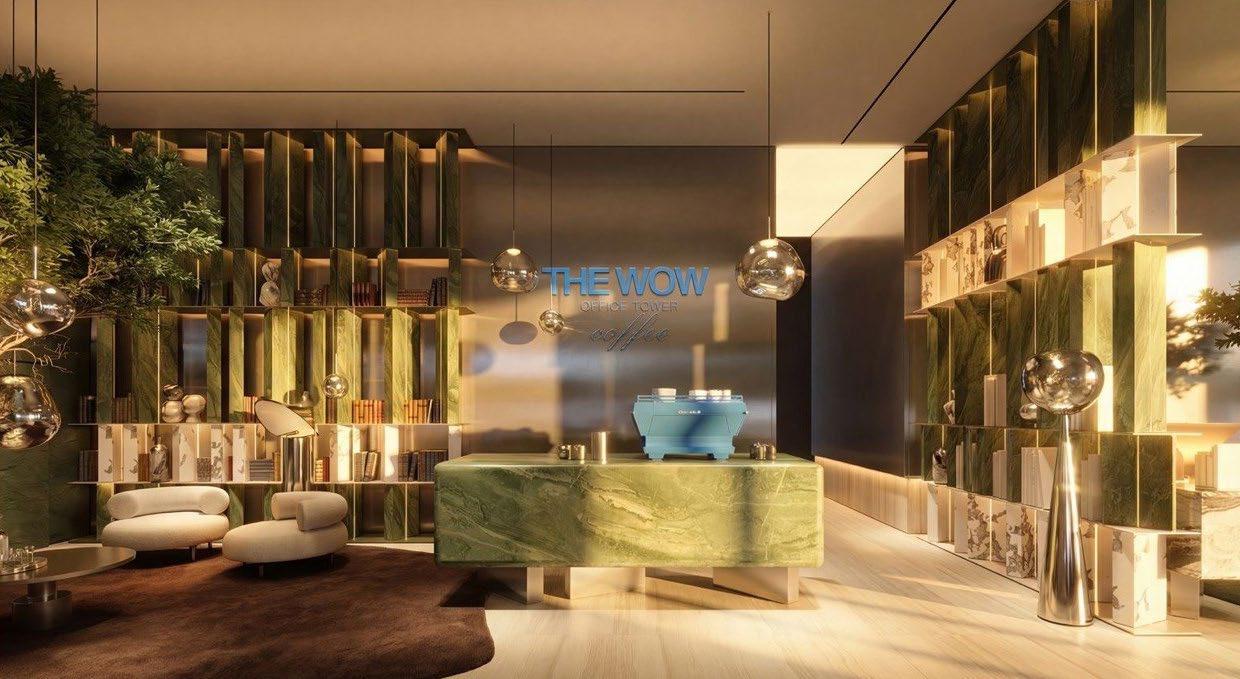
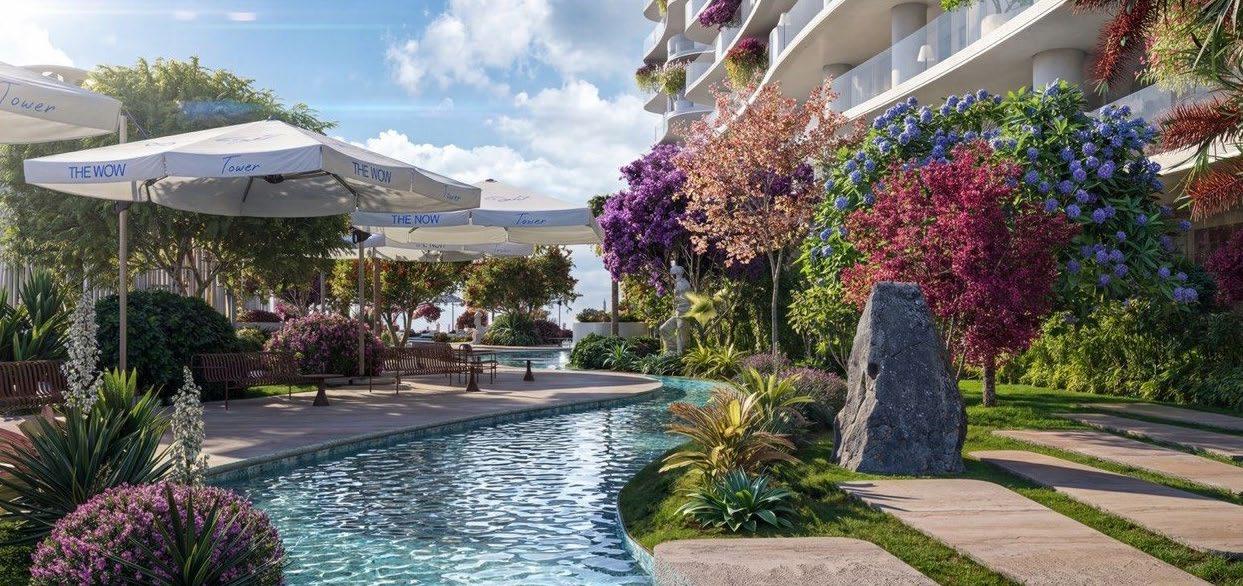
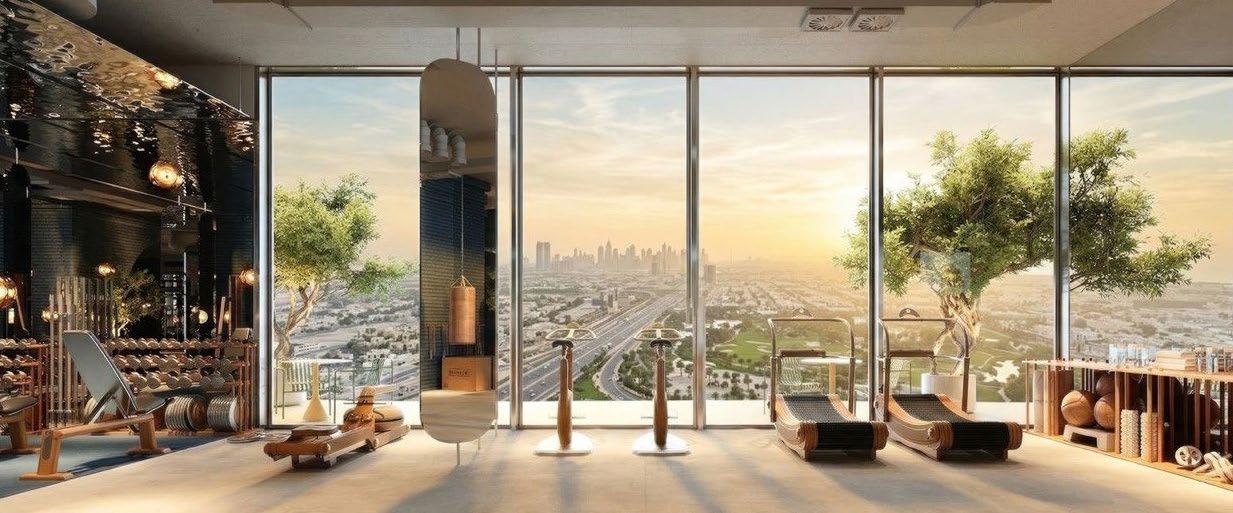
LPM: The WOW Tower has been recognized with a Luxury Lifestyle Awards win for Best Luxury High Rise Living . What do you believe sets this project apart in such a competitive market like Dubai?
ED: First is location. Not just in terms of geography, but in terms of future relevance. WOW Tower sits in what is effectively the continuation of Dubai Silicon Oasis and Academic City . These are two of the most active and intelligent districts in the city. This is not a speculative location. It is a growing ecosystem of education, technology, and business. Second is the plot itself. It is the strongest piece of land in the area. Central, well-positioned, and designed to be the tallest building in its surroundings. That gives us something you cannot recreate later. Open and protected views. In Dubai, view is value. Once it is gone, it is gone. And third, we do not treat the project as inventory. We treat it as a product with identity. People do not choose WOW Tower because it is another tower. They choose it because it offers a complete lifestyle. From how the building is designed to how it is built and how it will be experienced.
Because we control construction ourselves, we can actually deliver on that promise. That is the difference.
BUY CONFIDENCE.
LPM: Your projects reflect a balance between European development discipline and the pace of the UAE market. How do you translate those two approaches into a product that resonates with today’s buyers and investors?
ED: Europe teaches you discipline. Dubai teaches you speed. You need both. The European mindset is about structure, proportion, detail, and long term thinking. It is about building something that still makes sense in ten years, not just today. Dubai is different. It moves fast, expectations change fast, and the market rewards clarity and execution.
So our approach is simple. We design with depth, but we execute with speed. And most importantly, we do not think like a traditional developer. We think like a product company. Our client is not choosing a layout. They are choosing a way of living. That includes design, service, atmosphere, and usability.
Because we control both development and construction, we can make sure everything works together. That is why the product feels complete. Not assembled.
LPM: Sustainability is becoming a key consideration in luxury real estate. How are you ensuring that environmental responsibility is not just a feature, but a core part of your longterm development strategy?
ED: Sustainability is not something you add at the end. It is something you build into the foundation of the project. For us, it starts with intelligent design. Efficient layouts, durable materials, and engineering decisions that improve performance over time. A building that ages well is already sustainable.
Because we control construction directly, we do not rely on assumptions. We can enforce quality on site, choose the right partners, and make sure execution matches the intention. Luxury today is not about excess. It is about precision. If a building is well thought out, well built, and remains relevant for years, that is real sustainability.
LPM: Looking ahead, what shifts do you expect in the luxury real estate sector over the next five to ten years, particularly in how people define value and lifestyle in developments like WOW Tower?
ED: Luxury is becoming more intelligent. People are no longer impressed by size alone. They look at how a space works, how it feels, how it is serviced, and where it is located within the future of the city.
The biggest shift is this. People are no longer buying apartments. They are choosing environments. Developers who only build square meters will struggle. Developers who create complete and well-executed products will lead. At Mr. Eight Development, we have always approached it this way. We do not sell units. We create a lifestyle that people step into.
Going forward, value will come from a combination of factors. Strong location, protected views, real execution quality, and a clear identity. Projects like WOW Tower are aligned with that future because they are not generic. They are intentional. And in the next phase of the market, intention will matter more than anything else.
Visit Mr. Eight Development’s official website to explore WOW Tower and discover upcoming projects: www.mr8.ae
“In Dubai, the view is value,” says Emils Daujats.
BEYOND RESIDENCE: A NEW VISION OF LUXURY
with HUSSEIN FAKHRY
Hussein Fakhry, Managing Director of
KEY Architectural Group, shares how contemporary residential architecture across West Africa is defined by a balance of innovation, functionality, and a deep sensitivity to local context.
LUXURY PEOPLE MAGAZINE: Your company received the Luxury Lifestyle Awards title of Best Luxury Apartment Architecture in Ghana for the BEYOND Residence project. What was the original vision behind this development?
HUSSEIN FAKHRY: The original vision behind BEYOND Residence was to create a project that expresses luxury and lifestyle in a way that goes beyond the typical use of high-end finishes and palettes. We wanted to build a concept rooted in a strong narrative inspired by simplicity, culture, light, shadows, greenery, transparency, and wellbeing.
LPM: Beyond Residence represents a contemporary approach to luxury apartment living. What key architectural principles guided the design of the project?
HF: BEYOND Residence reflects a contemporary approach to luxury apartment living, with a strong focus on functionality and ease of use, both within the building and in each apartment. We also explored transparency and the integration of architectural shading elements to enhance the overall quality of experience. The design is based on clean, defined, and geometric spaces that offer both modernity and flexibility. At the same time,
we paid close attention to the common areas, ensuring they feel like natural extensions of the apartments rather than separate spaces. Finally, we placed a strong emphasis on creating calm, peaceful moments by integrating green visual environments.
LPM: In designing BEYOND Residence, how did your team approach creating spaces that combine architectural elegance with everyday livability?
HF: At Key Architectural Group , we believe that everyday living is one of the most important design elements and a foundation for sustainable architectural elegance. Architecture is not a temporary fashion. It is a timeless expression of beauty, style, and comfort. If everyday living is compromised, then architectural elegance will not stand the test of time.
LPM: Ghana’s urban landscape is evolving rapidly. How did the local context and environment influence the architectural concept for BEYOND Residence?
HF: BEYOND Residence was strongly influenced by its local context and environment, which
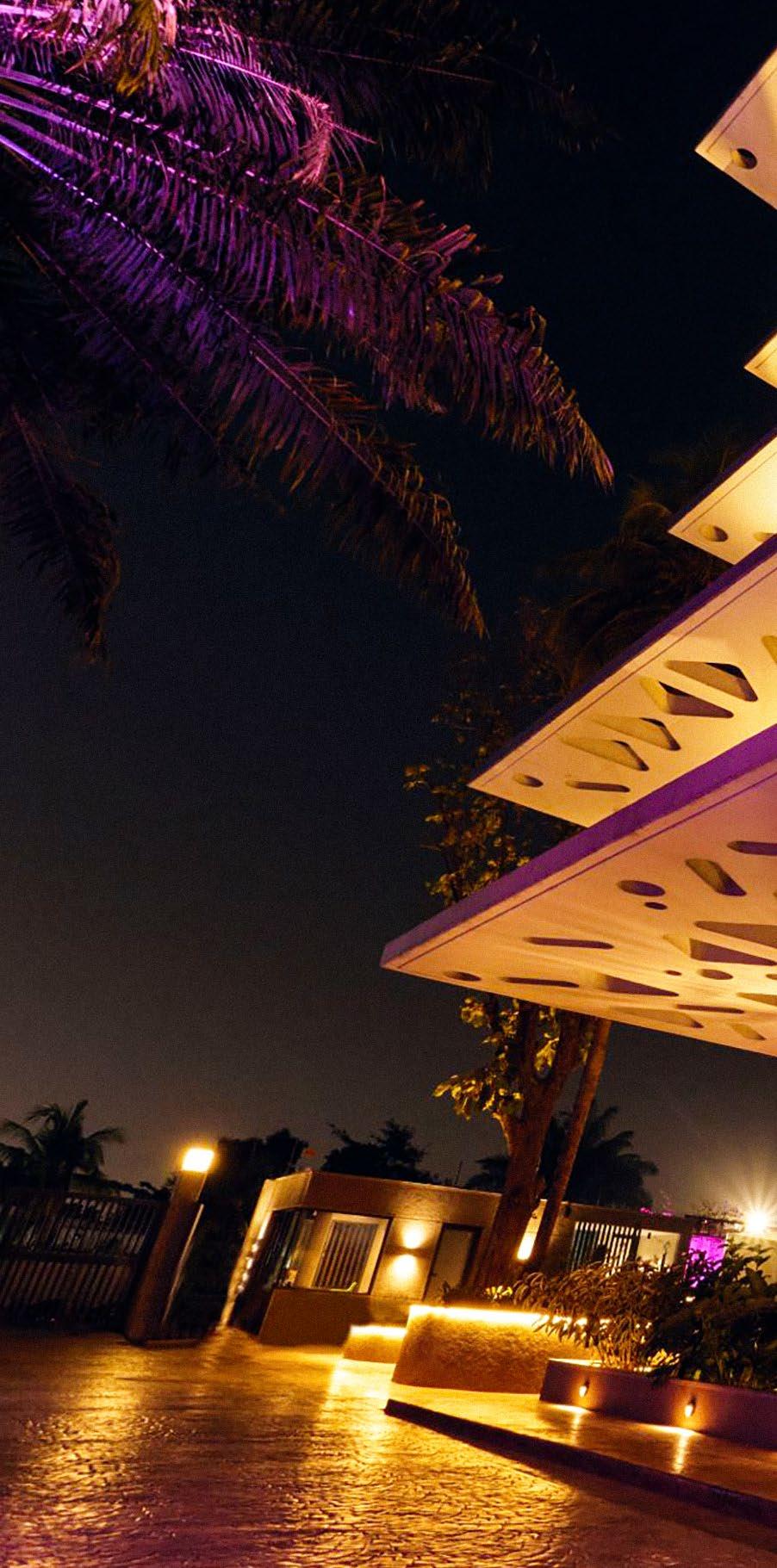
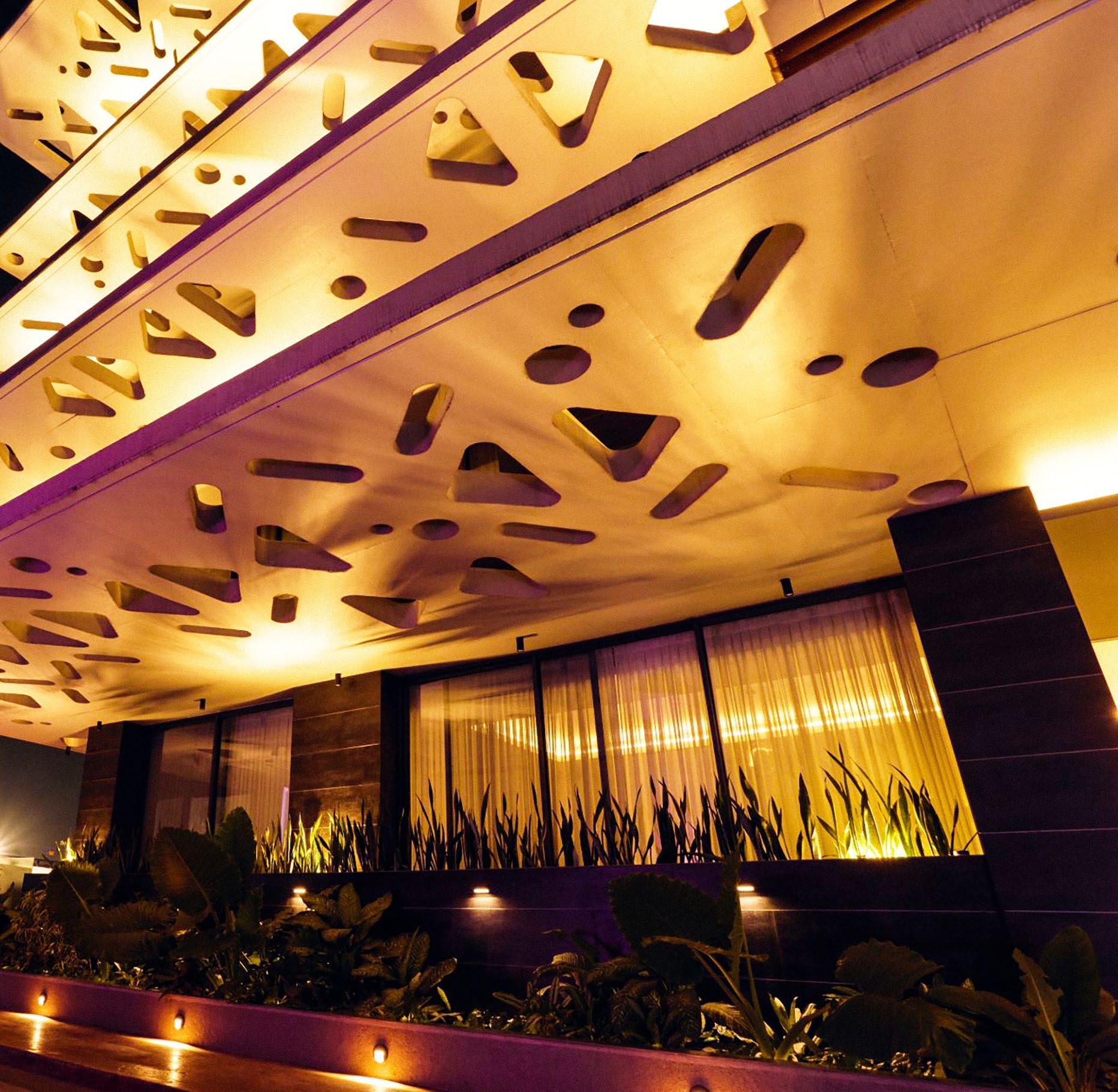
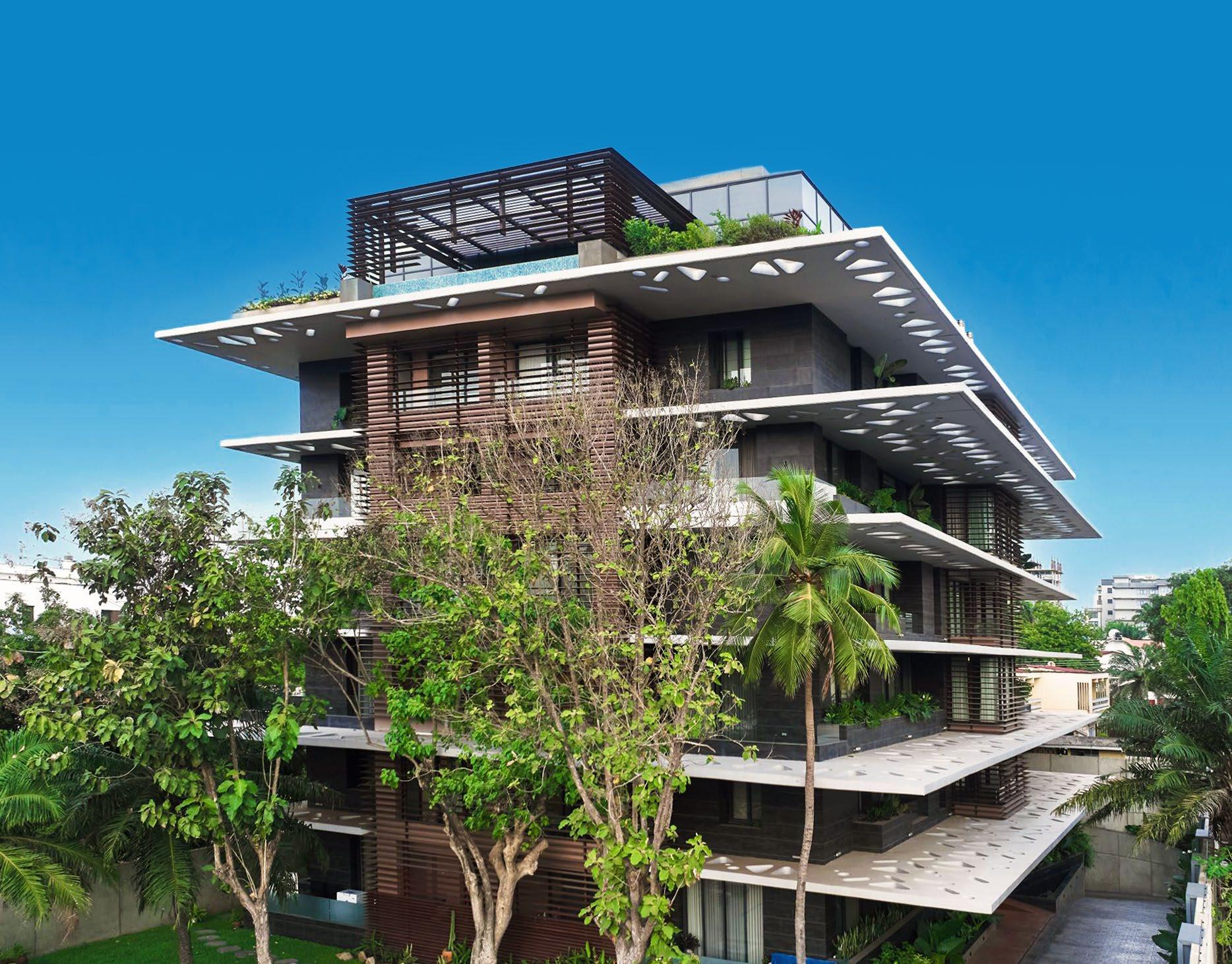
shaped the design in several ways. We preserved a fifty-year-old cluster of trees at the building’s frontage and introduced extensive planting of local trees and vegetation around and along the elevations. We also used cantilevered shading slabs designed according to sun orientation, along with a culturally inspired perforated pattern integrated into these elements. The building setbacks create breathing space and enhance privacy. Altogether, these elements, combined with the material palette, give the impression that BEYOND Residence has always belonged to its surroundings and fits naturally within its context.
LPM: With the rise of luxury nomad lifestyles and more flexible ways of living, how are residential developments like BEYOND Residence adapting to the expectations of globally mobile residents?
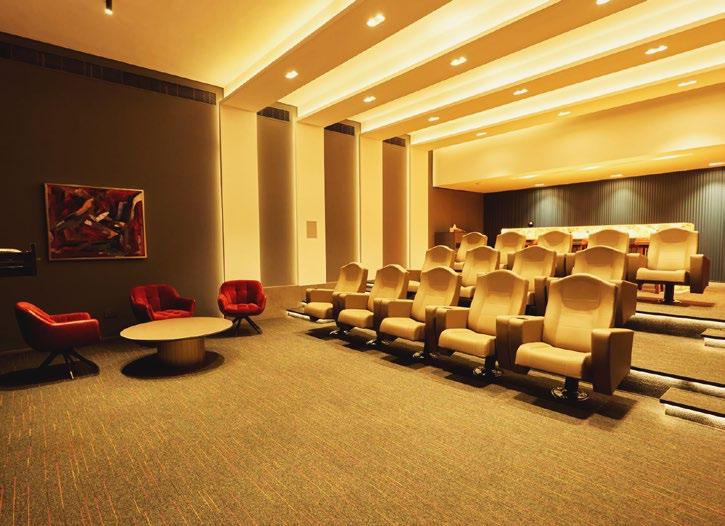
HF: BEYOND Residence offers a unique luxury nomad lifestyle for entrepreneurs and professionals who are on the move and seek to have an exclusive address while in Accra. This includes high-end mobility through secure, private residences that support international movement, as well as professional flexibility through strong connectivity and dedicated multimedia spaces, such as a private cinema, for work and meetings.
Architecture is not a temporary fashion. IT IS A TIMELESS EXPRESSION of beauty, style, and comfort.
The project also focuses on curated experiences through its cultural design approach, creating a welcoming and engaging environment. At the same time, it embraces a sense of slow-travel luxury, allowing residents to enjoy a balanced lifestyle whether staying for a short time or longer.
LPM: Looking ahead, what do you believe will distinguish truly exceptional residential architecture in the global luxury market?
HF: We believe that exceptional residential architecture will be defined by a deeper understanding of luxury that goes beyond tangible elements such as materials, finishes, and equipment. It must also reflect humancentred values such as time and wellbeing, which are increasingly important in modern life. The future lies in creating a strong synergy between the tangible and intangible aspects of design, ultimately enhancing the quality of life for those who live in these spaces.
with MICHAEL RODZIEWICZ
ENGINEERING THE FUTURE OF LUXURY LIVING
At Vista Lago Residences, the award-winning development by BRIGHT. In Real de La Quinta, Michael Rodziewicz presents a clear model for highend living built on performance, sustainability, and technical precision.
Michael Rodziewicz
The project, named Best Luxury Sustainable Villa Development by Luxury Lifestyle Awards , consists of 18 villas set 320-360 metres above sea level, with uninterrupted views across the Mediterranean, Gibraltar, and the African coastline.
Rodziewicz, founder and CEO of BRIGHT. , approaches real estate through the perspective of smart home technology. “My experience in the smart home sector did not just influence how we designed Vista Lago Residences, it completely reframed how we think about homes,” he says. “In smart home technology, you are designing the systems to improve quality of life.”
At Vista Lago, each villa is planned as a fully integrated system from the outset. “We thought about a system that needed to be built from the ground up, infrastructure, connectivity, energy management,” he explains. “Climate, light
People want
what you might call
effortless luxury, HOMES THAT ARE EASY TO MANAGE.
control, or security should work invisibly, not like something that needs to be managed.”
This focus aligns with what buyers now expect from luxury property. Performance is central to the experience of living in the home. “In practical terms, it means how a home performs day to day, and how it promotes wellbeing,” Rodziewicz says. “Air quality, temperature stability, natural light, and overall comfort… the elements that directly affect how you feel living in the space.”
Sustainability remains a major talking point across the sector, but Rodziewicz points to a gap between intention and execution. “Many developers are still treating sustainability as a collection of features rather than a fully integrated system,” he says. “The result is a focus on ‘less bad’ buildings rather than a genuine shift in how luxury homes are conceived.”
At Vista Lago, priorities were defined early and carried through the entire process. “Build quality, sustainability, and uninterrupted views were all fundamental from the start,” he notes. “We were clear that the homes had to function at a very high level, not just look impressive when they are finished.”
The Costa del Sol continues to attract global buyers, but expectations are becoming more precise. “There is a much stronger focus now on performance, security, and long-term value,” Rodziewicz explains. “People want what you might call effortless luxury, homes that are easy to manage.”
Looking ahead, he is direct about the direction of the market. “It is not going to be luxury anymore, it will become the standard,” he says. “We are already building homes that are designed as complete systems, focusing just as much on how a home performs as how it looks.”
At Vista Lago Residences, that approach is already in place, combining architecture, engineering, and environment into a single, consistent standard of contemporary luxury living.
Discover a new standard of intelligent, sustainable living. Explore BRIGHT.’s vision and experience Vista Lago Residences at by-bright.com
LUXURY LIFESTYLE AWARDS SPOTLIGHT
Luxury wellness has shifted toward intention, personalization, and design integrity rather than mere spectacle.
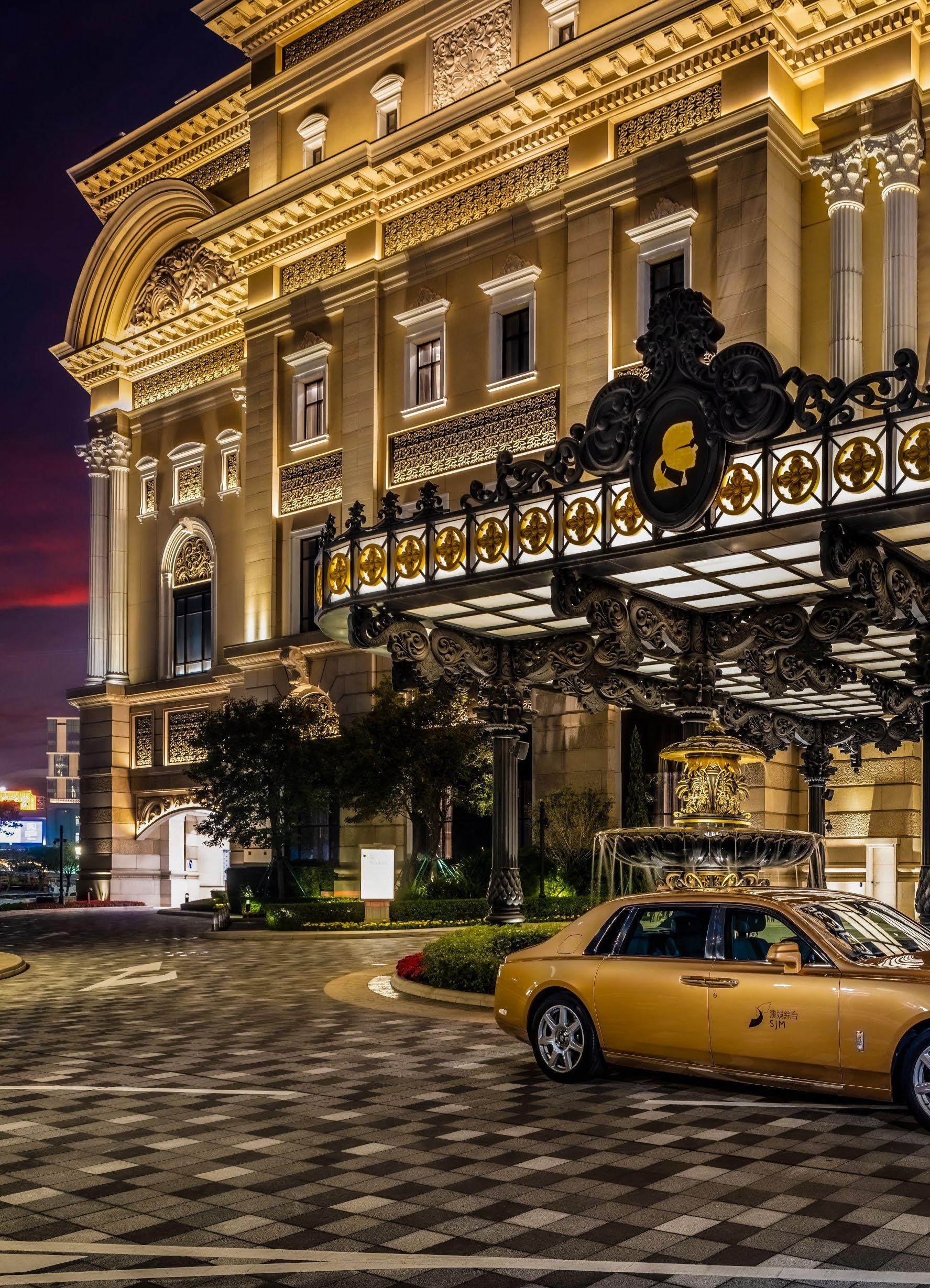
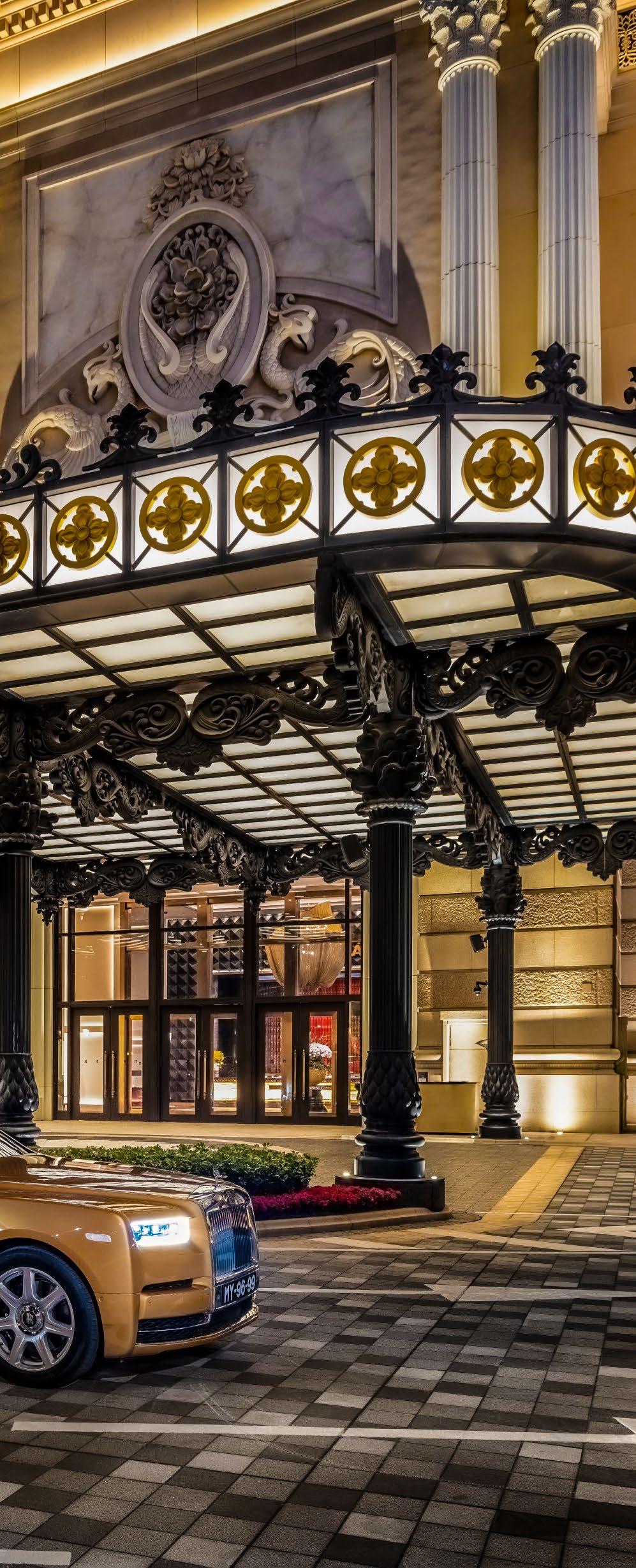
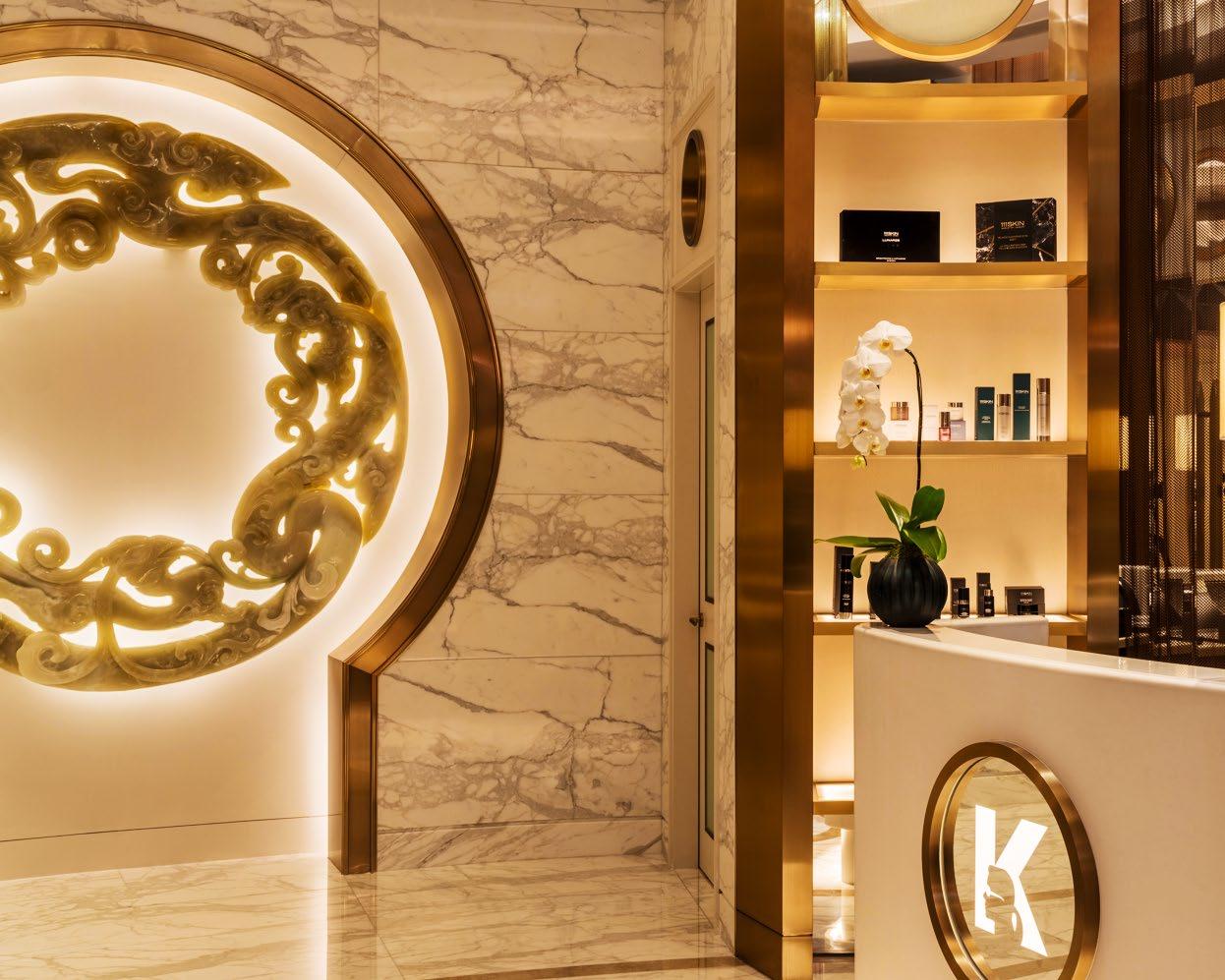
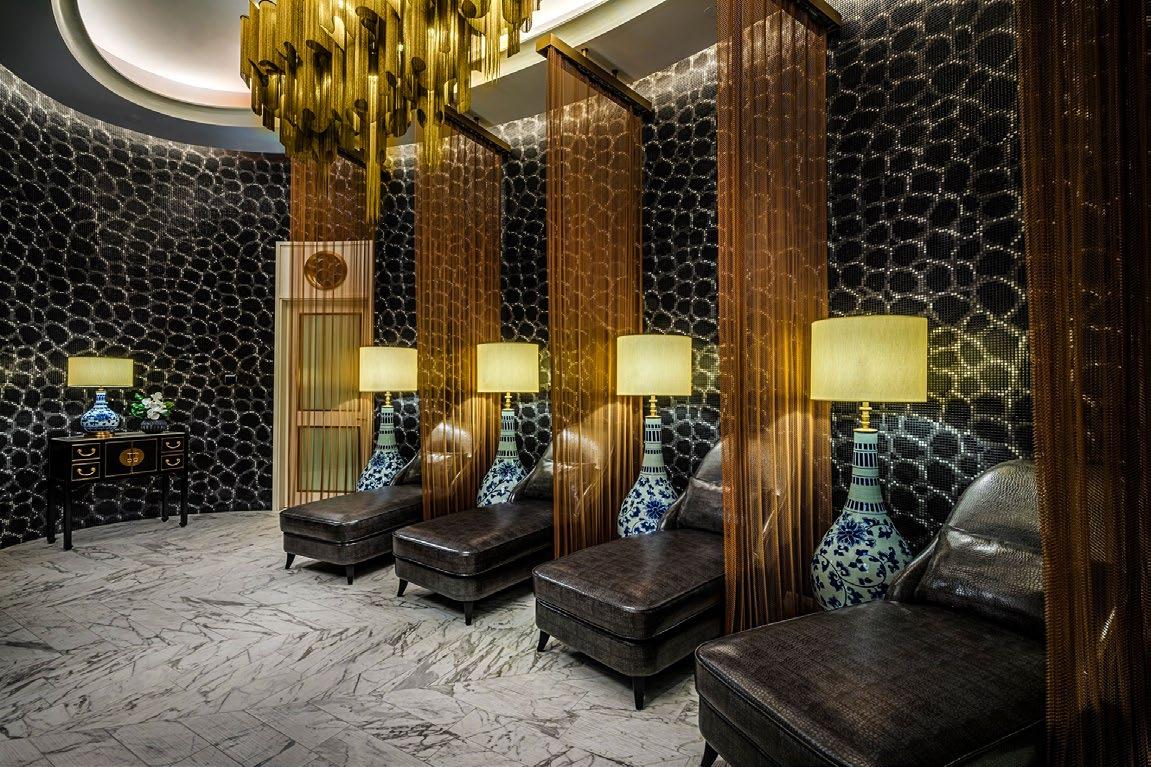
The Spa at THE KARL LAGERFELD sits at this refined intersection — a serene sanctuary where meticulous design and cutting-edge skin science converge in harmony. It fuses fashion, luxury, and Forbes Five-Star indulgence into an exceptional experience that reflects the world of Karl Lagerfeld. Its inclusion in the TOP 100 Spas of the World by the Luxury Lifestyle Awards underscores how contemporary spa experiences are evolving toward precision, discretion, and measurable care.
DESIGN AS PHILOSOPHY
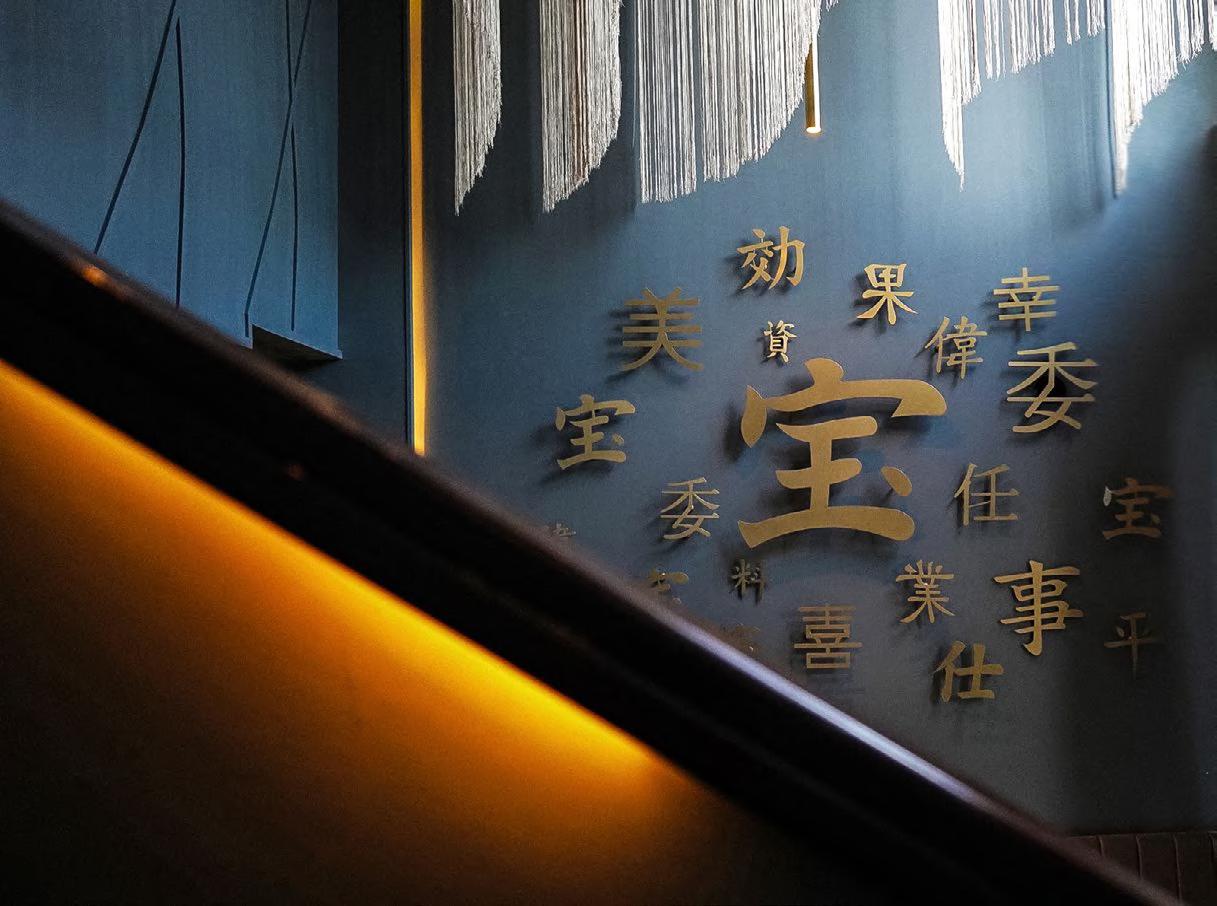
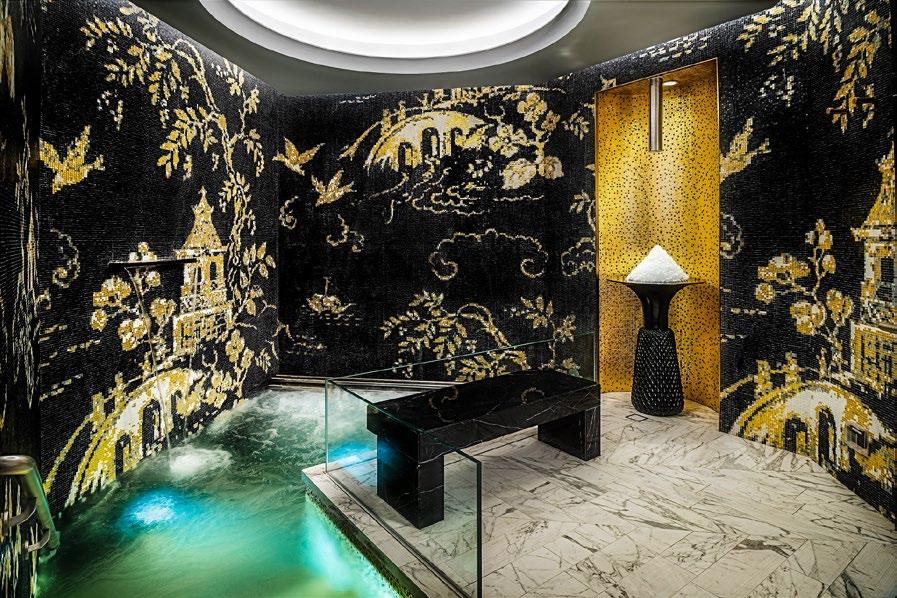
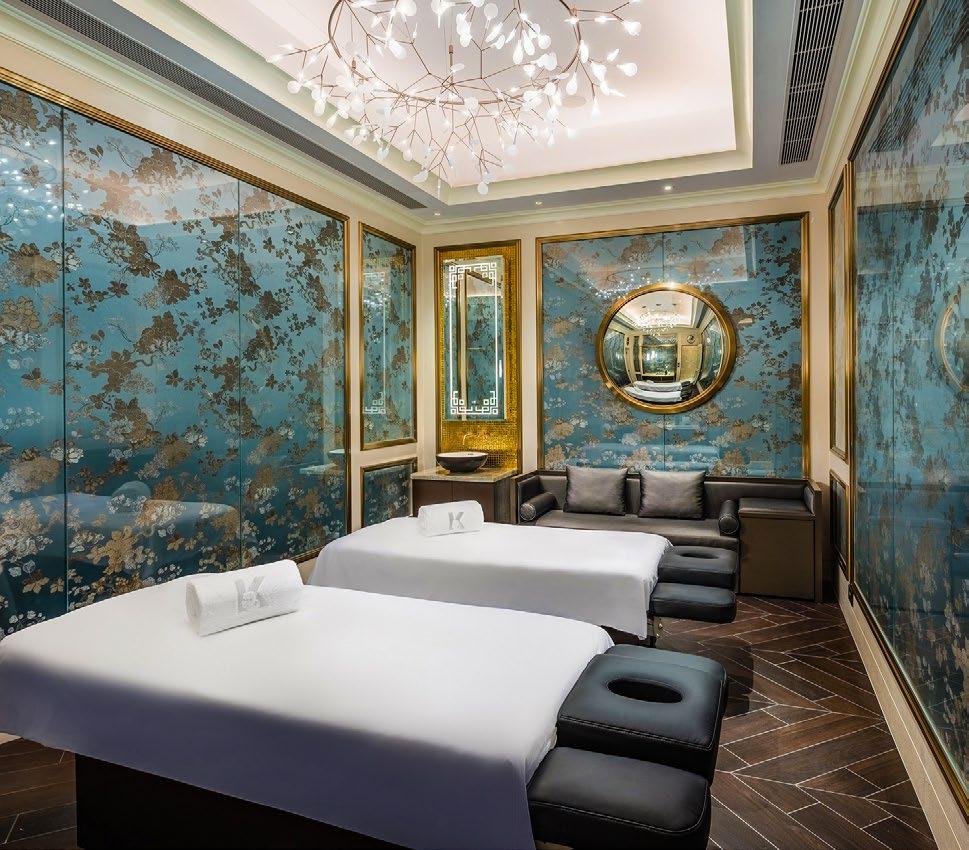
Designed by Karl Lagerfeld himself, the Spa channels the designer’s distinctive visual language: deep tones of black and gold, accented with Chinoiserie influences. The interiors favour clarity and comfort over extravagance, every element deliberate, never excessive. Soft music, subtle aromas, and fresh orchids contribute to an atmosphere that encourages stillness and focus, inviting guests to step away from the world’s rhythm and reconnect with personal wellbeing. In this way, design becomes more than a backdrop, it defines a refined luxury rooted in order and calm.
PIONEERING SCIENCE-LED SKINCARE
Central to the Spa’s identity is its collaboration with London-based luxury skincare brand 111SKIN. Treatments are built around prevention-focused methodologies, integrating patented technology and clinically supported formulations. Rather than offering standardized protocols, each facial and skincare experience is developed through professional assessment, ensuring that hydration, firming, brightening, or rejuvenation needs are addressed with precision.
Guests can indulge in transformative face and body experiences that draw upon the holistic nature of rose quartz and celestial black diamonds, which incorporate the pioneering use of cryotherapy, merging ancient wisdom and modern science into therapies that stimulate circulation, boost energy, and visibly lift and firm the skin. The Spa also features high-performance facial treatments formulated with 111SKIN’s signature NACY2 complex to calm and soothe damaged, inflamed, and irritated skin while accelerating healing.
A STYLISH APPROACH TO SENSORY WELL-BEING
The journey extends beyond the result-driven treatments into spaces and refreshments designed to support physical vitality and mental balance. Guests are invited to continue their routines in a designer gym that reflects Karl Lagerfeld’s creative direction, combining functional performance with visual coherence. Temperature-controlled indoor and outdoor pools provide additional opportunities for restoration, offering continuity between relaxation and movement.
Thoughtful details define every moment: reading and colouring materials, crystal-infused water, longan and mulberry tea, black goji berry water and light, nutritious refreshments—all accompany treatments to support hydration and recovery while maintaining a sense of ease.
For hotel guests, complimentary wellness activities further enhance the experience, allowing wellbeing to remain an integrated part of the stay rather than a scheduled appointment. This broader perspective reinforces the Spa’s role as part of a complete lifestyle offering.
RECOGNITION ON A GLOBAL STAGE
The Spa at THE KARL LAGERFELD has been named among the TOP 100 SPAs of the world for 2025 , reflecting its alignment with global luxury wellness standards. This recognition serves as an editorial validation of the Spa’s philosophy, service model, and unwavering commitment to individualized care. It underscores the growing importance of precision, personalization, and design coherence in contemporary spa culture.
Design becomes more than a backdrop — it defines
A REFINED LUXURY rooted in order and calm.
EVOLVING EXPECTATIONS OF LUXURY WELLNESS
As guest expectations continue to mature, spas are increasingly evaluated on their ability to deliver tailored, outcomeoriented experiences within environments that feel authentic and composed. The Spa at THE KARL LAGERFELD represents this evolution, offering a model where advanced skincare, thoughtful design, and holistic wellbeing are integrated into a single, coherent vision.
Its continued relevance lies not in following trends, but in responding thoughtfully to how luxury wellness is defined today: through expertise, calm confidence, and deep respect for individuality.
Discover more about The Spa at THE KARL LAGERFELD
LUXURY LIFESTYLE AWARDS SPOTLIGHT
The interiors are resplendent in mosaic and marble, featuring Versace’s Trésor de la Mer prints in exquisite color variations.
Exclusivity, high-touch service, and holistic approach to wellbeing define true contemporary luxury wellness. The SPA at Palazzo Versace Macau stands apart with its exclusive philosophy of Mediterranean rituals designed around holistic principles.
Here, opulent Italian design and therapeutic expertise work in perfect harmony, prioritizing profound privacy, individualized care, and luxurious tranquility. Nestled within the Palazzo Versace Macau in Cotai , the Forbes Five-Star spa has been named among the TOP 100 SPAs of the World by Luxury Lifestyle Awards , a testament to the precision and meticulous care poured into every detail.
The ultimate enjoyment begins the moment you step inside. The interiors are resplendent in mosaic and marble, featuring Versace’s Trésor de la Mer prints in exquisite color variations. Designed as an expression of the brand’s contemporary interpretation of classical beauty and luxury, the SPA evokes an Italian sophistication that is lavish yet deeply soothing, gently easing the mind into stillness even before any treatment begins. The thoughtful spatial design ensures complete discretion and privacy, allowing guests to fully immerse themselves without distraction.
A MULTICULTURAL APPROACH TO WELLNESS
Journeys at the SPA at Palazzo Versace Macau draw from ancient Mediterranean wellness traditions, specially formulated therapies, and contemporary treatment methodologies. This integrated approach allows our therapists to nurture both immediate physical restoration and long-term balance of mind, body, and spirit within a single, coherent program. The SPA also curates personalized wellness journeys rooted in Traditional Chinese Medicine, drawing on centuries of ancient Chinese healing wisdom. Techniques such as acupressure massage, moxibustion, and Gua Sha are thoughtfully incorporated to rejuvenate, restore balance, and enhance circulation.
Every experience begins with an attentive consultation, a gentle tuning-in to your current state through real-time skin analysis, body assessment. This ensures treatments are never routine, but deeply responsive and continually evolving to meet your unique needs.
MATERIALS, PRODUCTS, AND TREATMENT PRECISION
The foundation of every treatment lies in premium MÌSULA® products — 100% organic, Mediterranean-inspired formulations that encourage guests to embrace the beauty of life at every stage while supporting a holistic balance of mind, body, and spirit. With subtle mastery, the experienced therapists adjust pressure, rhythm, and layering to match your skin’s condition, turning every touch into a responsive dialogue.
Signature experiences reflect this adaptive philosophy. The Italian rendition of a Turkish Hammam Ritual exemplifies the SPA’s approach through a sequence of exfoliation, customized massage techniques, and hydrotherapy. Each
element is tailored to the guest’s condition and preferences, ensuring relevance rather than routine.
This attentive and pampering touch runs through every gentle ritual that frames the experience: a soothing cup of chrysanthemum tea arrives in soft lamplight to ease you in; and the warm sage-infused towels press gently against the skin, inviting the first wave of release. Throughout the journey, refreshment appears in crystal and fruit-infused water, herbal and flower infusions, superfood snacks, and fresh fruits — each detail thoughtfully placed to restore and replenish.
ADVANCED WELLNESS AT THE HEALTH CLUB
Guests are invited to continue their journey through the hotel’s indoor and outdoor pools, where Italian glass and marble mosaic tiles set a stage for refined, active recovery. Enjoy a refreshing swim in the 27-meter indoor pool, or a sublime modern retreat sheltered by the majestic Romanesque colonnade and surrounded by the verdant, European-style Jardim Secreto.
Every experience begins with an attentive consultation, ensuring treatments ARE NEVER ROUTINE, but deeply responsive to each guest’s unique needs.
For those who prioritize physique training, the dedicated Personal Training Studio offers stateof-the-art Technogym® cardiovascular and strength equipment, tailored to your individual fitness goals.
RECOGNITION AS A BENCHMARK OF QUALITY
Being named among the TOP 100 SPAs of the World reflects the spa’s consistent commitment to privacy-led service, design integrity, and therapeutic relevance. In the global landscape of luxury wellness, this recognition serves as validation of an approach that values precision, personalization, and long-term wellbeing above scale.
Discover more about The SPA at Palazzo Versace Macau
OCTOBER 8
THE TOP LUXURY SPEAKERS OF THE WORLD 2026
The World Luxury Chamber of Commerce (WLCC) announces the 2026 selection of TOP Luxury Speakers of the World, an annual recognition highlighting individuals whose expertise contributes to the global conversation on luxury, leadership, and the evolution of high-value industries.
This distinction recognizes speakers whose work informs executive decision-making, academic dialogue, and strategic thinking across the international luxury sector. The selected individuals include respected business leaders, academics, strategists, and industry experts whose perspectives contribute to a deeper understanding of luxury markets and their future direction.
PURPOSE OF THE TOP LUXURY SPEAKERS LIST
WLCC established the TOP Luxury Speakers of the World list to identify and highlight credible voices who contribute meaningful insight to the luxury sector.
Luxury today operates in a rapidly evolving environment influenced by global economic shifts, new consumer expectations, sustainability priorities, cultural influence, and technological development. Organizations, institutions, and industry leaders increasingly seek speakers who bring both practical experience and intellectual depth to these discussions.
The initiative supports WLCC’s mission to promote high-level dialogue, encourage knowledge exchange, and provide visibility to experts who contribute to serious discussion within the luxury sector.
SELECTION PROCESS
The 2026 selection follows a structured evaluation conducted by the WLCC Research Team in
collaboration with the WLCC President and members of the Board.
The process includes independent research, industry analysis, and strategic recommendations from trusted advisors within the global luxury ecosystem. This approach ensures that each selected speaker reflects recognized expertise, professional credibility, and alignment with WLCC’s international positioning.
CURATION CRITERIA
Individuals included in the 2026 list were evaluated based on the following criteria:
• Industry recognition within the luxury sector or related fields
• Proven executive or academic expertise
• Subject-matter authority demonstrated through speaking engagements, publications, advisory roles, or leadership positions
• Alignment with WLCC values and positioning
• Relevance to current and emerging discussions in the luxury sector
• Strategic recommendations from trusted advisors and industry leaders
The evaluation emphasizes depth of expertise, credibility, and contribution to professional discourse rather than popularity alone.
View the full list of TOP Luxury Speakers of the World 2026: worldluxurychamber.com
WHY INDIA DEMANDS LONG-TERM LUXURY THINKING
with ABHAY GUPTA
Abhay Gupta has spent more than three decades working at the center of India’s luxury industry, guiding global brands through one of the world’s most complex markets. He shares what truly drives success in India today, and why many international strategies fail to translate.
LUXURY PEOPLE MAGAZINE: Abhay, you have been closely involved in the development of India’s luxury industry for more than three decades. How would you describe the evolution of the Indian luxury market during this time, and what makes it unique compared to other global luxury markets?
ABHAY GUPTA: When I first began observing the luxury landscape in India in the 1990s, the market was extremely nascent. Luxury consumption was largely confined to a small circle of ultrahigh-net-worth families who travelled abroad and purchased most luxury products overseas because the domestic ecosystem was still developing.
Over the past three decades, India has undergone a remarkable transformation. We have moved from an era of limited access to one where luxury is far more visible and aspirational. International brands have entered the market, luxury retail infrastructure has expanded, and digital platforms have significantly increased access and awareness. What makes India truly unique, however, is that luxury here is deeply intertwined with culture, identity, and social rituals. Heritage craftsmanship, family legacy, and ceremonial consumption play a far greater role than in many Western markets.
This creates what I often describe as the Indian Luxury Paradox: a market that is simultaneously deeply traditional and rapidly modernising. Brands that understand this duality tend to thrive, while those that approach India using purely Western frameworks often struggle.
LPM: You have helped several global luxury brands engage with the Indian market. From your experience, what are the most critical factors that determine whether a luxury brand will succeed in this complex and rapidly evolving market?
AG: The first and perhaps most important factor is strategic patience.
India is not a market that rewards short-term thinking. It requires brands to build trust, cultural relevance, and long-term relationships with clients. Companies that approach India purely as a quick revenue opportunity often underestimate the time required to develop brand equity.
The second factor is local intelligence. India is not a single homogeneous market. Consumer behaviour varies significantly across cities such as Mumbai, Delhi, Hyderabad, or Bangalore. Understanding these nuances — whether in retail location strategy, clienteling, or product assortment — is essential.
The third factor is human capital. The luxury industry in India still faces a significant gap in specialised retail talent. Exceptional client advisors who truly understand luxury culture remain relatively rare. Brands that invest early in training and talent development often outperform competitors over the long term.
Finally, successful brands recognise that luxury in India is deeply experiential. Clients value hospitality, personalised relationships, and storytelling around craftsmanship and heritage. When brands deliver these experiences authentically, they build much deeper engagement with consumers.
INDIA IS NOT SIMPLY AN EMERGING LUXURY MARKET.
It is where heritage, aspiration, and rapid wealth creation intersect at scale.
LPM: Having observed the luxury market closely for many years, have there been any recent trends in consumer behavior or brand strategy that surprised you or challenged conventional assumptions about luxury?
AG: One of the most interesting developments has been the rising influence of young affluent consumers, particularly millennials and Gen Z.
Historically, luxury consumption in India was driven primarily by older family decision-makers. Today, younger consumers are far more influential. They are globally aware, digitally connected, and comfortable expressing individuality through luxury.
Another notable shift is the expansion of luxury beyond traditional product categories. Luxury is increasingly expressed through experiences— hospitality, travel, wellness, and even branded real estate.
Perhaps the most significant transformation has been driven by digital culture. Social media has dramatically increased the visibility of luxury brands in India. While this has accelerated aspiration, it also requires brands to work much harder to maintain authenticity and exclusivity.
LPM: You are also closely involved in shaping the next generation of luxury professionals through Luxury Connect Business School. In your view, what capabilities and mindsets will be most critical for future leaders of the luxury industry, particularly in emerging markets?
AG: The luxury industry is entering a period where multidisciplinary thinking will be essential. Future leaders will need to combine brand storytelling, cultural intelligence, digital fluency, and strategic business thinking. Luxury today is no longer simply about product — it is about narrative, community, and emotional connection.
Equally important is cultural intelligence. Emerging markets such as India, Southeast Asia, and the Middle East each have distinct luxury codes. Leaders who understand these nuances while preserving brand heritage will be far more effective.
Finally, the next generation must remember that luxury is fundamentally a human industry. Technology will enhance efficiency, but it cannot replace the emotional resonance that defines truly great luxury brands.
Developing professionals who understand both the artistry and the business of luxury is precisely the mission behind Luxury Connect Business School.
LPM: Many analysts note that luxury consumption in India is increasingly expanding beyond the traditional hubs. How do you see the role of Tier-II and Tier-III cities shaping the next phase of growth for luxury brands?
AG: This is one of the most important structural shifts in the Indian luxury market. While cities such as Mumbai and Delhi will remain the primary luxury hubs, wealth creation in India is increasingly distributed across Tier-II and TierIII cities. Entrepreneurs and new-generation wealth creators in cities such as Surat, Ludhiana, Coimbatore, and Jaipur are becoming significant luxury consumers.
However, growth in these markets will not necessarily follow the traditional retail model. Instead, we will likely see hybrid engagement strategies—private clienteling, curated events, digital commerce, and luxury hospitality experiences.
Brands that develop innovative ways to engage these emerging luxury communities will unlock enormous growth potential over the next decade.
LPM: Looking ahead, what major shifts do you believe will define the next decade of the luxury industry in India, and how should global brands prepare to engage with this new generation of consumers?
AG: The next decade of luxury in India will be defined by three major shifts.
First is the rise of confident Indian consumers. Wealth creation in India is accelerating, and with it comes a generation that is proud of its identity and increasingly selective about the brands it engages with.
The next decade will not only belong to global brands entering India, BUT
TO INDIAN BRANDS ENTERING THE GLOBAL LUXURY CONVERSATION.
Second is the rediscovery of Indian craftsmanship and heritage. Global luxury brands are beginning to recognise the extraordinary depth of artisanal knowledge and creativity within the country. This opens up exciting opportunities for collaboration and storytelling.
Third is the emergence of India not only as a luxury market but also as a creator of luxury brands. We are already seeing the rise of Indian luxury houses that combine global aesthetics with local craftsmanship.
For global brands, success in India will require more than simply entering the market. It will require genuine engagement with India’s culture, creativity, and entrepreneurial energy.
Those who do this thoughtfully will find that India is not just another luxury market—it is one of the most dynamic luxury opportunities of the twentyfirst century.
Follow Abhay Gupta on LinkedIn for insights on luxury strategy and emerging markets. Discover more at www.abhaygupta.in
LEVELING UP LUXURY
with ALVARO NÚÑEZ
Alvaro Núñez Alfaro is the Founder and CEO of Super Luxury Group, a company redefining the intersection of luxury real estate, media, and performance. Based in Miami and originally from Madrid, he brings a distinctive blend of high-performance mindset and innovative marketing to the global luxury property market.
LUXURY PEOPLE MAGAZINE: Alvaro, your work brings together luxury real estate, media innovation, and personal performance. What inspired you to build Super Luxury Group around this unique combination?
ALVARO NÚÑEZ ALFARO: Super Luxury Group was born from the belief that luxury is not just about property, it is about emotion, identity, and experience. Real estate, media, and performance all come together to create something bigger than a sale, a brand, a lifestyle, and a story people want to be part of.
LPM: The luxury real estate market has become increasingly competitive. What do you believe truly distinguishes an exceptional luxury property brand today?
Luxury is not just about property, IT IS ABOUT EMOTION, identity, and experience.
ANA: Today, luxury is not enough on its own. What separates a true luxury brand is vision, trust, and the ability to make people feel something. The best brands do not just showcase homes; they create desire, aspiration, and a world people want to step into.
LPM: Your helicopter house tours and creative marketing strategies have attracted global attention. How important is storytelling in positioning and selling luxury properties?
ANA: Storytelling is everything. In luxury real estate, people are not only buying square footage but also a feeling, a lifestyle, and a statement. Great storytelling turns a property into something unforgettable.
LPM: Beyond business, you have completed some of the world’s most demanding endurance challenges. How has this mindset of pushing physical limits influenced your approach to entrepreneurship?
ANA: Endurance taught me that real success is built under pressure. It showed me how to stay focused when things get hard, how to keep moving when others stop, and how to lead with resilience. Business, like endurance, rewards those who can suffer with purpose.
LPM: You often talk about “Level Up.” What does that mindset really mean for people who want to grow and push their limits in the future?
ANA: Level Up means refusing to stay where you are. It is the decision to grow, evolve, and demand more from yourself, not out of ego, but out of purpose. For me, it is about becoming the strongest, most complete version of who you are meant to be.
Connect with Alvaro Núñez Alfaro on LinkedIn
The best brands do not just showcase homes, THEY CREATE DESIRE AND ASPIRATION.
MASTERING THE CHOREOGRAPHY OF EXPERIENCE with ANANT SHARMA
Anant Sharma, Founder & CEO of Matter Of Form, is a globally recognised authority in luxury brand transformation, customer experience, and human-centred design, advising leading brands on how to build enduring relevance through innovation, craft, and strategic clarity.
LUXURY PEOPLE MAGAZINE: Anant, you have described customer experiences as choreography, an emotional journey designed through a sense of value. In your view, what are the invisible elements that ultimately shape how a luxury brand is perceived today?
ANANT SHARMA: I think people get caught in the headline: there’s a kind of innovation anxiety where everyone is trying to outdo each other with something bigger or more visible. That tends to dominate the conversation, but it’s rarely where value perception is actually formed. The more powerful layer sits in getting people to engage. If you can invite someone into a process, however small, and get them to invest effort, they begin to build their own reasoning around that action. They justify it to themselves. So you can influence thought, but behaviour is what really carries through. Perception shifts through participation rather than observation. Active over passive.
LPM: Matter Of Form focuses on what you call “timeless brands.” What distinguishes a brand that can endure and evolve over decades from one that simply follows short-term market trends?
AS: It comes back to the founding spirit. That should act as the lens through which decisions are made, rather than something you fall back on out of habit. Design then becomes a point of difference, and more importantly, something that evolves over time: how you sequence ideas, how you build on what came before without repeating it. You can’t detach from what’s happening around you; otherwise, you lose relevance, but equally, if you move in the same direction as everyone else, you lose distinction. And if you keep returning to what you’ve already done, you lose momentum. Timeless brands are those that continue to reinterpret themselves through that original character, rather than relying on past expressions to carry them forward.
LPM: Many luxury brands today are undergoing digital and experiential transformation. Where do you see the biggest opportunities, and the biggest mistakes, when brands attempt to modernize while protecting their heritage?
AS: I think the biggest issue with digitisation is that you can very quickly overexpose. You lose all mystique. And that has a knock-on effect that’s quite hard to track. You can measure engagement, you can see people clicking and interacting, but
Perception shifts through participation rather than observation.
it’s much harder to measure eyerolls. And I think there’s a lot of that: cheap gimmicks that drive activity but chip away at how a brand is actually perceived. The opportunity is in how you bring creativity into those digital environments, into e-commerce, into platforms, without losing that sense of integrity. Maintaining mystique, maintaining a level of restraint, but still evolving how the brand shows up. Being unexpected.
LPM: Customer experience has become one of the defining battlegrounds for luxury brands. How should companies rethink CX today in order to create deeper emotional engagement rather than simply adding more touchpoints?
AS: When you look at the whole CX, it reminds you how important those subtle points of connection are. Sequencing. Not being afraid to add more touchpoints, but accepting that sometimes they can be very subtle and nuanced. The biggest issue today is that people don’t roll with the details. They think they’re having to trump what the last person did, to be more outlandish. But the thing to do well is to ensure the journey feels coherent. That coherence is what allows everything to land properly. It gives those smaller moments the space to register, rather than getting lost in something that’s trying too hard to stand out. When the journey holds together, people feel it, even if they can’t immediately articulate why.
LPM: Looking ahead to the next decade, what capabilities will define the most successful luxury brands, and what should leaders begin building today to remain relevant in a rapidly evolving market?
AS: It will vary across industries, but in product, I think there’s a real emphasis on bringing craft and soul to the forefront. Ultimately, people value the effort of other human beings. That’s something that carries weight. Think about how this ‘inside story’ carries its own weight. In hospitality, it’s more about detail, materiality, the sensual aspects of experience. Those are the things that have gone missing in what has become quite a twodimensional world. There’s a real opportunity in bringing that back, in a way that people can feel more instinctively.
Connect with Anant Sharma on LinkedIn
Discover more at www.matterofform.com
Explore What The Luxe: www.whattheluxe.com
Read JOURNEYS: journeys.matterofform.com
Discover LUXURY 2030: luxury2030.com
Field notes on the future of luxury, featuring insights from 74 industry & brand leaders
THE DISCIPLINE
BEHIND MODERN LUXURY GROWTH
with ANTONIO PARAÍSO
Antonio Paraíso has spent decades advising the world’s leading luxury brands on how to grow without losing their essence. In this conversation, he unpacks the tension between global identity, cultural nuance, and the future of luxury in a techdriven world.
LUXURY PEOPLE MAGAZINE: You have worked across more than 50 countries and several sectors within luxury. What differences do you see in how luxury brands approach marketing and customer relationships in different regions?
ANTONIO PARAISO: Thank you for having me. Luxury is a global phenomenon where brands do not have a marketing positioning, but instead cultivate a unique worldwide identity. Brand identity is what resonates with client profiles and makes them loyal. One cannot change that across countries. On the other hand, it is undeniable that the World is a very diverse place, with different cultures, religions, beliefs, perceptions, and levels of education. Within each country, one can find diverse client profiles for luxury brands.
How can a brand keep its identity worldwide, resist extensive adaptation, and simultaneously build meaningful relationships that will foster loyalty across different countries and cultures? That is the real challenge! For a number of reasons, some cultures and regions of the World value more heritage, discretion, and cultural capital, others find meaning in opulence and status signalling, while some others are seduced by service excellence and detail obsession.
So, luxury brands keep their identity worldwide; however, in some regions, they focus more on highlighting craftsmanship, legacy, symbology, and timelessness. In certain countries, they focus more on social recognition and use digital media for client relationships, while in some others, they offer bespoke experiences, customized pieces, and private viewings. And in some parts of the World, they offer very high service standards and ritualized interactions.
LPM: After nearly two decades as an International Sales Director and another two as a consultant and speaker, what are the most common strategic mistakes you still see luxury brands make when trying to grow internationally?
AP: Luxury is a very peculiar concept, where business is driven by immense desire, not by need, and money is not a problem. Hence, the mindset and rules governing this industry are radically different than those ruling the mass market. But nowadays, most luxury brands belong to conglomerates and are increasingly run by professional managers who need to ensure faster results and respond to investors. So, in order to get faster results, they are
increasing speed, lowering barriers to entry to reach a wider audience, and sometimes applying consumer marketing techniques to speed up the business.
Luxury is a marathon, not a 100-meter sprint. Speed is good for mass-market but not for luxury, and reaching a wider audience tends to banalize access and dilute exclusivity. In my opinion, these are strategic mistakes that might bring some instant increase in sales, but definitely damage future brand growth.
LPM: You often speak about service excellence and customer experience. In today’s luxury market, what truly separates a memorable luxury experience from a good but forgettable one?
AP: A good luxury experience delivers flawless execution on what is expected and adds a small surprise along the way. However, a memorable one produces several emotions, reshapes how we feel, how we remember the brand, and deliver moments of pure happiness. It requires blending technical know-how with outstanding creativity in order to touch clients with emotion and exceed expectations.
Anticipating needs, embedding meaning in the details, and designing personal relevance are mandatory ingredients in a luxury experience that will never be forgotten.
A
And innovation requires outstanding creativity, mental elasticity, active curiosity, openmindedness, willingness to learn from other industries, and most of all being open and able to break mind barriers.
French wine house Château Pétrus collaborated with NASA and sent twelve bottles of red wine into orbit for ageing in space for 14 months, and then sold these rare bottles in a Christie’s auction. This is a good example of all the above-mentioned attributes to produce innovation.
LPM: In the coming years, how do you see technology, AI, and e-commerce changing the way luxury brands communicate with clients, sell products, and maintain exclusivity in the next decade?
memorable
experience reshapes how we feel and how we remember a brand.
LPM: You work with global brands such as Jaguar Land Rover, L’Oréal, Porsche, and Armani. When you advise large luxury companies, what internal mindset or cultural change is usually required before real innovation can happen?
AP: I work closely with such global brands, mainly in delivering talks at their annual meetings and in training their teams in different countries. Many other companies come to me for consulting guidance on how to elevate their brands in order to seduce luxury clients.
As I mentioned above, working in the luxury industry requires a different mindset and a cultural change in order to understand, connect, and seduce client profiles who have higher purchasing power, belong to a higher social class, and quite often have an extensive cultural background. Innovation, differentiation, along with quality, aesthetics, and symbolic value, are mandatory in order to seduce those client profiles.
AP: The luxury industry is entering a paradoxical decade. I believe that we will all see more and more of two different kinds of luxury evolving in separate directions: technology will make premium and affordable luxury brands more accessible in the future, while true luxury will keep on being highly selective, human, and intentional.
Luxury is not all alike. One of the first things I have learned in the early days of my studies on Luxury Brand Management was the Luxury Pyramid tool created by the late French Professor Madame Danielle Allerès . This tool uses a pyramid to classify different levels of luxury for different client profiles. Both Premium brands and Affordable Luxury brands will increasingly use AI agents as co-workers and all kinds of technology to communicate and sell to their target clients, while very high-end luxury will certainly use technology to perform backstage routine operations and simplify procedures, so that well-trained humans are more available to be at the front end interacting and delighting their audience.
Recent research confirms that even Gen Z affluent clients, who are normally digital enthusiasts, also value human interaction and high levels of personalization as much as they enjoy technology.
Follow Antonio Paraíso on LinkedIn for insights on luxury strategy and innovation.
EXCLUSIVE INTERVIEW
RETHINKING
VALUE IN LUXURY REAL ESTATE with
CAROLINE HUO
Caroline Huo brings a measured, strategic lens to luxury real estate, grounded in over $1 billion in transactions and a global advisory role. She explains why today’s high-net-worth clients demand far more than salesmanship and how agents must recalibrate to stay relevant.
LUXURY PEOPLE MAGAZINE: You often talk about understanding how buyers actually behave rather than how the market is presented, so what are you seeing right now in luxury buyer psychology that most agents are still missing?
CAROLINE HUO: Being in my position, I am fortunate to travel around the country and world, having conversations with agents. I have noticed three things Agents are missing.
First, most agents sell; the top agents consult. Today’s luxury buyer is simultaneously more informed, more analytical, more emotional, and demands more speed than we have seen in previous cycles. Buyers are coming to the table having already researched the property, the micromarket, and the tax implications. They consult their CPAs and family offices before they even walk through the door. What they are looking for is not someone to sell them a home, but an advisor who can validate their findings and provide the nuanced context that data alone cannot offer.
Second, agents need to learn how to work alongside AI, not fight it. Buyers newer to the market, often younger new millionaires or billionaires, are researching on their own with AI, and they often trust AI over humans. This gives them a false sense that they know everything. A newly minted high-net-worth client told me that ChatGPT had informed him the property he was considering was overvalued and not a sound investment. I spent an hour in conversation walking him back from an incorrect conclusion an AI reached in sixty seconds. The nuance that drives value in this space requires context no algorithm can replicate. Agents need to have a conversation with buyers in advance, explaining that while they may turn to AI to assist in their decision, they should use it as a data point, not the deciding factor.
Third, we must do a better job of understanding who is sitting across from us. We cannot determine the language we use to advise and consult if we are not clear on who we are advising. Luxury clients are not a single group. They fall into three distinct profiles: Wealth Preservers who value stability, legacy, and capital protection; Opportunists who move fast when they spot inefficiencies and leverage; and Lifestyle Buyers who prioritize quality of life, family needs, and long-term meaning. When agents understand the psychology behind each profile, they can adapt their communication and advice with far greater precision and confidence.
LPM: With over $1 billion in sales across highly competitive markets like Silicon Valley, how do you guide high-net-worth clients through decisions when data is unclear or conditions feel unpredictable?
CH: In environments where conditions feel unpredictable, my role is to first be calm, then create clarity. When there is calm and clarity, then there is confidence. High-net-worth clients do not need me to sugarcoat the market; they need me to interpret it. I guide them by focusing on the fundamentals that endure beyond market cycles: quality of construction, zoning flexibility, longterm resale value, and the true cost of ownership.
We look at the micro-market data, breaking it down neighborhood by neighborhood, because broad market trends often do not apply to the ultra-luxury segment. When data is murky, I lean heavily on experience and our extensive network to uncover the reality on the ground and add context to the content. I must be overprepared. It is about stripping away the noise and presenting a clear, objective analysis so my clients can make their decisions with absolute confidence. We do not guess. We overprepare, we analyze, and we demonstrate our authority. It is during these times that we prove our value and protect our compensation.
LPM: In your role leading professional development for over 13,000 luxury agents, what separates a competent agent from a truly trusted advisor at the top end of the market?
CH: A competent agent understands the transaction; a trusted advisor at the top end of the market understands the client’s entire wealth strategy. At the highest level, real estate is not just about buying a beautiful property. It is a critical component of a family’s portfolio, their legacy, and their lifestyle.
The agents who excel anticipate needs before they arise, whether that means having an insurance quote ready before the first showing or identifying potential objections and solving them before negotiations begin. It is having a contractor at the showings to offer real-time quotes. It has the property already analyzed by a security company to determine the best way to protect the property. A trusted advisor is the calm in the storm, the conductor of the symphony, the professional who adds measurable value at every step of the process and journey.
LPM: Your career spans finance, entrepreneurship, and now real estate, so how have those experiences shaped the way you approach risk, strategy, and client relationships in luxury transactions?
CH: My background in retail taught me the art of client care. Insurance and financial services taught me to view every decision through the lens of longterm value and risk mitigation. Entrepreneurship taught me agility, bootstrapping, storytelling, the importance of building systems, and the necessity of anticipating market shifts. When you combine those disciplines, you approach real estate very differently. I do not look at a property merely as a structure. I look at it from the eyes of the buyer I am serving. It could be part of a family’s story of a first home, or it could be part of an asset class within a client’s vast portfolio.
For the latter, this perspective allows me to sit across the table from CEOs, founders, and investors and speak their language. We discuss cap rates, tax implications, and opportunity costs just as naturally as we discuss architecture and design. It allows me to build relationships rooted in mutual respect and shared strategic vision. My goal is always to bring the same level of care, diligence, and foresight to their real estate portfolio that they bring to their life’s work.
LPM: Looking ahead, what changes do you expect in the luxury real estate landscape over the next five years, and how should both clients and agents prepare to make smarter decisions in that environment?
CH: There are two shifts I am watching very closely, and I believe they will define the next five years for both clients and agents.
The first is the largest generational wealth transfer in history. They are calling it the “Silver Tsunami.” Trillions of dollars in property will change hands between generations, and the families involved need advisors who can hold those conversations now, not after the transfer is already underway. This is not someday. It is happening today.
The second is a fundamental change in what buyers want from a property. We are seeing a clear move toward what I would call “nest investing,” where affluent buyers are prioritizing expansive, multi-use properties that function as primary residences, wellness sanctuaries, multigenerational living, and long-term wealth vehicles all at once. Turnkey properties will continue to command a premium because today’s affluent buyer values their time over the prospect of managing renovations.
So, how do both sides need to prepare? For clients, the smartest thing you can do right now is stop
At the highest level, real estate is not a transaction. IT IS PART OF A FAMILY’S WEALTH STRATEGY, LEGACY, AND LIFESTYLE.
treating real estate decisions in isolation. Get clear on what you want your life to look like in the next decade, then build a team of advisors, real estate, legal, and financial, who actually talk to each other. The people who make the best decisions are the ones whose advisors are coordinating before a property ever enters the conversation. Often, they position real estate agents outside of their core team of advisors, yet they should understand that it is more beneficial to bring agents in to be part of the core team.
For agents, the bar has simply gone up. Study the tax implications of wealth transfer. Understand trust structures. Know how insurance and estate planning intersect with a purchase. The future of this business is not about holding doors open; it is about providing real, measurable value. The agents who will thrive are the ones who treat their field of work not as a practice, but like a true advisory business, bringing deep market knowledge and curated with genuine care to every single conversation.
Explore more insights from Caroline Huo and connect with her network on LinkedIn
THE TRUTH ABOUT BUILDING
A CAREER IN LUXURY
with DENIS MORISSET
Denis Morisset has spent decades inside some of the world’s most influential luxury houses and now works closely with the next generation of industry leaders. In this conversation, he unpacks the realities of working in luxury, from global expansion to the evolving definition of client experience.
I also explain to them that if they have sales and business development skills, if they like people, if they have some leadership potential, they should not only consider marketing functions but also start their career in retail, clienteling, travel retail, and international business development, as these functions remain crucial for luxury brands.
I like to say, “If you’re good at selling luxury products and at engaging with HNWIs, you will never have a problem finding a job in this industry!”
LPM: Luxury brands rely heavily on controlled distribution and retail experience. In your view, how should brands balance exclusivity with the need to expand into emerging luxury markets such as China, India, and the Middle East?
DM: This is very true, and while it was mostly the case for luxury fashion, watches, and jewelry brands, it is now also changing the way selective beauty brands and prestige wines & spirits brands look at their distribution.
LUXURY PEOPLE MAGAZINE: You have led luxury companies and now teach future leaders in the industry. What are the biggest misunderstandings young professionals have about how luxury brands actually operate in global markets?
DENIS MORISSET: Well, my job consists in correcting these misunderstandings but you’re right, too often, young professionals have an idealized vision of the luxury industry, and my first task is to tell them that there is a gap between appreciating the beauty, the craftsmanship, the emotions linked with luxury products, being a luxury customer and working backstage for a luxury brand.
Too often, they talk to me about their ambition to participate in the brand strategy. I need to remind them that many luxury brands, while benefiting from a strong popularity, are often relatively small businesses, even if they belong to luxury groups like LVMH, Kering, or Richemont. As a consequence, the brand strategy is initiated and controlled by the brand CEO together with the brand creative director in the luxury fashion industry in particular. So, I tell them that they need to be humble and patient at the beginning of their career.
Last but not least, when they express their desire to work in the marketing or brand management field, I also need to explain that these words often have a different meaning in the luxury industry compared to the FMCG industry.
But the need to remain exclusive is not in contradiction with international expansion. We are living in a globalized economy, and luxury brands must be recognized internationally. Of course, they should, as much as possible, control their distribution in these markets as they do at home.
China and the Middle East are relatively mature now, and most luxury brands have established a direct presence with directly-operated stores. Smaller brands sometimes still need to work with distributors before going into the JV phase and finally being in full control. India is a little different, as the market is less mature and many brands prefer to work with local distributors to share investments and risks.
LPM: You focus on luxury retail service and guest experience. What separates a truly memorable luxury retail or hospitality experience from one that simply looks premium on the surface?
DM: This is a very important but complex question. In the hotel industry, there is a relatively clear frontier between a full-service five-star hotel, which you could consider premium, and a luxury hotel; the difference lies in the luxury hotel’s ability to deliver consistently emotional, personalized service, not just full service.
In luxury retail, it should be the same in theory, but you still find a lot of gaps between brands, countries, and even stores for the same brand. What I am trying to say is that for a luxury brand operating at retail, offering a consistent, personalized, and emotional luxury service to all its clients often remains a dream.
Here I should introduce the difference between what I call the “happy few” (clients VICs) and the “(unhappy) Many”, i.e., occasional clients. Most luxury retail brands consistently deliver a memorable experience to their VICs because they know them well and allocate specific resources, including VIC ambassadors and curated events that convey emotions and make them feel privileged.
It is a very different situation for the majority of the clients and prospects who visit the stores occasionally. I believe Generative AI may help reduce this gap in the future.
LPM: With the growth of luxury destinations and experiential travel, how important is destination marketing for luxury brands today, and how can destinations create experiences that genuinely attract high-end travelers?
DM: Well, that’s one of my favorite topics as I currently stand at the crossroads of luxury retail, luxury hotels, and luxury destinations.
The critical point here is to understand that most luxury product brands have the same objective, reach and engage with HNWI’s and even recruit UHNWI, and this cannot be achieved in their traditional stores only.
So, it makes a lot of sense for them to partner and collaborate with luxury hotels, restaurants, private beach clubs, etc, particularly when these are located in ultra luxury destinations, like Aspen, Colorado in the US, Niseko in Japan, Gstaad in Switzerland, Courchevel in France, just to talk about mountain destinations. They develop then pop-up stores, capsule collections, and curate events linked with these HNWI luxury lifestyles.
LPM: Looking ahead, what do you think will be the most important shifts in the luxury industry over the next decade, particularly in how brands connect with new generations of luxury consumers?
DM: I often explain in my workshops that one of the most common mistakes is believing there is a single, one-size-fits-all strategy for luxury brands moving forward. By definition, true luxury brands are unique, and what works for some will not work for others.
This being said, it is important for all luxury brands to remain desirable in the eyes of Gen Z. Keeping in mind that not all Gen Z have the same interests, so it is often necessary to break it down by country. Luxury brands’ strategies to court Chinese Gen Z are quite specific.
If you are good at selling luxury and engaging with HNWIs, YOU WILL ALWAYS FIND YOUR PLACE IN THIS INDUSTRY.
Personally, I prefer to talk more about how luxury brands should remain true to their essence and DNA while ensuring they stay relevant to the evolving consumer culture, as this does not relate only to Gen Z.
Here again, the answer will be different from one brand to another. But to try and answer your question, there is a global shift among luxury consumers from product ownership to experience, whether it is an enhanced in-store shopping experience or a lifestyle experience that can only happen outside the store.
A brand like Louis Vuitton is clearly moving in both directions, turning its flagship stores into global lifestyle and cultural places that combine retail, exhibitions, F&B, etc. At the same time, they also open pop-up stores around specific capsule collections in ultra-luxury hotels or exclusive restaurants, located in luxury destinations, to engage with HNWI’s who enjoy luxury lifestyle experiences there.
Follow Denis Morisset on LinkedIn for insights on luxury brand strategy and education.
BUILDING LUXURY BRANDS THAT TRULY ENDURE
with ELIZABETH SOLARU
Elizabeth
Solaru is changing how the luxury industry approaches excellence, relevance, and leadership. Through her work, she challenges legacy thinking and introduces a more culturally intelligent, commercially grounded vision for the future of luxury.
LUXURY PEOPLE MAGAZINE: You founded the Diversity in Luxury Awards to spotlight talent across the sector. What gaps did you see in the industry that convinced you this kind of platform was necessary?
ELIZABETH SOLARU: The gap was hiding in plain sight. I would walk into luxury spaces, attend luxury events, read luxury publications, and see the same faces, the same backgrounds, the same narrow definition of who gets to be considered an authority in this industry. And yet the clients’ spending in luxury globally were becoming more diverse, more international, more culturally complex. There was a fundamental mismatch between who the industry was celebrating and who it was actually serving. What troubled me most was not just the absence of diverse faces at the top but the absence of any mechanism for changing that. There was no platform that said these people exist, their work is exceptional, and the industry is diminished by not knowing their names. The Diversity in Luxury Awards was my answer to that silence. I wanted to create a stage that the industry could not ignore, at a venue like Hotel Café Royal in London, with judges whose credibility was beyond question, so that the conversation about diversity in luxury could not be dismissed as peripheral. It is not peripheral. It is the central commercial and cultural question the industry needs to answer if it wants to remain relevant.
or consultants who have worked alongside the big heritage houses. That knowledge is valuable, but it is not the same as the knowledge that comes from actually building something from the ground up yourself, from making the decisions with your own money, your own reputation, and your own clients on the line. There are not many books in this space written by actual founders who have lived the journey. That was a gap I felt personally, and it was one of the reasons The Luxpreneur needed to exist. The framework in the book comes from the inside of the experience, not the outside of it.
Luxury is not a price point. It is a promise, consistently kept.
LPM: In your book The Luxpreneur, you outline a practical framework for building a luxury brand. What are the most common mistakes entrepreneurs make when trying to position a brand at the premium or luxury level?
ES: Before I answer that, I want to say something about why I wrote the book in the first place. Most of the literature on luxury business strategy is written by academics, professors of luxury management,
And what that experience taught me is this. The most common mistake entrepreneurs make is confusing expensive with luxurious. Raising your prices and assuming that the positioning will follow automatically. It does not. Luxury is not a price point. It is a promise, consistently kept, across every single touchpoint of the customer experience. The second mistake, which is connected to the first, is neglecting what I call the House Codes. Every credible luxury brand has a coherent internal language, a set of aesthetic, experiential, and philosophical principles that govern every decision from the packaging to the way the phone is answered to the way a complaint is handled. Without that internal architecture, you do not have a luxury brand. You have an expensive product with inconsistent delivery, and sophisticated clients will feel the difference immediately, even if they cannot articulate exactly why. The third mistake is discounting, in every sense of the word. Financially, yes, but also discounting the importance of story, of provenance, of the emotional and cultural weight that a luxury brand must carry to justify its positioning. Luxury clients are not paying for the object. They are paying for what the object means. If you cannot answer the question of what your brand means at the deepest level, you are not yet ready to operate in this space.
LPM: Many luxury houses still rely heavily on heritage and tradition. How can established brands remain commercially strong while also connecting with a broader and more culturally diverse global audience?
ES: The first thing I would say to any heritage house is that your tradition is an asset only if it is living. A heritage that sits in a glass case and points to the past is a museum exhibit, not a brand strategy. The houses that are doing this well understand that tradition is not about repetition. It is about a set of values and a standard of excellence that can be expressed in multiple cultural languages without losing its integrity. That requires genuine curiosity about the cultures you are trying to serve, and genuine curiosity requires diverse leadership. You cannot connect authentically with a Nigerian client, a Saudi client, or a Korean client by hiring one person from each of those communities and calling it a diversity initiative. You need those perspectives woven into the creative, strategic, and commercial decision-making of the business at every level. The brands that are going to win the next decade are the ones that understand that cultural diversity is not a marketing category. It is a commercial intelligence advantage. The global luxury client is sophisticated, welltravelled, and acutely sensitive to tokenism. They will not be flattered by a campaign that features them. They will be won by a brand that genuinely understands them.
LPM: As someone who works closely with founders and leadership teams, what distinguishes a luxury brand that achieves long-term credibility from one that simply looks luxurious on the surface?
cracked, and underneath it was not the substance that luxury requires. What distinguishes the brands that endure is that they have done the internal work first. They know who they are before they tell anyone else. They have the House Codes, the training, the standards, and the leadership commitment to uphold those standards even when it is inconvenient and expensive to do so. Luxury is a long game. It cannot be built in a campaign cycle.
LPM: Looking ahead, what major shifts do you expect in the global luxury industry over the next decade, particularly in how brands attract and retain the next generation of high-value clients?
The most precious luxury today is time, access, knowledge, and experience.
ES: Consistency and courage. Long-term credibility is built by brands that make the same quality decision when no one is watching as they do when the world is looking. That sounds simple, and it is extraordinarily difficult to sustain, particularly when commercial pressure builds and shortcuts become tempting. The brands I have seen fail at the luxury level almost always have the same origin story. They built the aesthetics perfectly. The visual identity was immaculate. The pricing was positioned correctly. But somewhere in the operational reality of the business, the promise broke down. A client was kept waiting without acknowledgement. A product was delivered without the care that the marketing implied. A complaint was handled transactionally rather than with the kind of white-glove attention that luxury clients expect as a baseline. The surface
ES: The next generation of high-value clients will be the most values-driven, the most globally connected and the most resistant to inauthenticity of any luxury consumer cohort in history. They have grown up with access to information that previous generations did not have. They know when a brand’s sustainability claims are real and when they are marketing. They know when diversity initiatives are structural and when they are cosmetic. And they have options that did not exist before. The dominance of the established European luxury houses is not guaranteed. New luxury voices are emerging from Africa, from Asia, from Latin America, and they carry cultural authority that a heritage house in Paris cannot manufacture. Brands that want to win the next decade need to do three things. They need to build genuine cultural fluency rather than cultural appropriation. They need to create communities rather than just customers, because the next generation of high-value clients wants to belong to something, not just own something. And they need to accept that the definition of luxury itself is shifting. Increasingly, the most precious luxury of all is not a product. It is time, access, knowledge, and experience. The brands that understand that shift and build their offering around it will define what luxury means for the next generation. The brands that are still pointing to a founder who lived in the nineteenth century and hoping that is enough will find that heritage without relevance is just history.
Follow Elizabeth Solaru on LinkedIn for insights on building culturally intelligent luxury brands.
THE SHIFT TOWARD FLUID LUXURY with FELICITAS MORHART
Luxury is no longer defined by ownership alone. Felicitas Morhart explores how shifting cultural values, technology, and consumer maturity are changing what it means to desire, experience, and understand luxury today.
LUXURY PEOPLE MAGAZINE: Felicitas, you often describe luxury as evolving from material objects to more immaterial experiences such as freedom, wellbeing, and personal growth. What do you think is driving this shift?
FELICITAS MORHART: My take on this is that in developed nations, object-heavy luxury consumption has trickled down into the «lower» tiers of society, that is, into the mainstream. If everyone is able to possess luxury items (oftentimes without paying the original price due to secondhand, sharing, renting, or counterfeit options), the elite needs to find new ways to distinguish itself from the mainstream. In short, the more immaterial and even subject-related luxury (such as the longevity trend) denotes a stage of maturity after having «checked off» the entry level of possessing luxury goods. Furthermore, we are living in «liquid» times (to cite sociologist Zygmunt Baumann ), in which solid possessions are rather limiting our freedom to move, change, and vary over the course of life. Immaterial luxury is more adapted to such a fluid way of life.
LPM: Today, many people associate luxury with experiences rather than possessions. Do you see this as a lasting change in the meaning of luxury?
FM: Yes and no. I would rather see objects being augmented with more and more experiences. We must not forget that an object itself can be the carrier and facilitator of a lot of experiences, such as connoisseurship, grooming, debating, and sensing, for example. Objects can also serve as an anchor of authenticity and guardian of legacy and patrimony, especially when they are the fruit of sophisticated craftsmanship.
LPM: You’ve said that the future of luxury is uncertain, and that’s part of what makes the subject so fascinating. What questions about luxury today excite you the most?
FM: Currently, I am fascinated by the impact of technological advances on the luxury industry in terms of materials, craftsmanship, creative authority, aesthetics, human interface, transparency and traceability, and client sovereignty. These questions are immensely difficult to manage and demand courage and discernment from decision makers.
LPM: You recently founded the Swiss Center for Luxury Research to encourage collaborative thinking about the future of luxury. What inspired you to create this initiative?
FM: For a long time, the domain of luxury has not been considered a field of research that demands
Luxury brands are facing questions larger than themselves, and COLLABORATION IS NO LONGER OPTIONAL.
particular scholarly attention. It was considered a niche topic, a specific context. Sexy, but maybe a bit too insignificant for the general public and scientists. However, with the steep increase of consumer interest in luxury, there is a managerial need to understand the mechanisms of luxury better. The luxury business follows its own rules, which sometimes even contradict traditional management wisdom. Hence, the vision is to help establish the luxury domain as a serious field of academic inquiry in its own terms.
LPM: You often emphasize collaboration as a driver of innovation. Why do you believe collaboration is becoming so important for luxury brands today?
FM: The topics that luxury brands are facing today are larger than one company. Just take topics like AI, traceability, and resource scarcity, among others. I believe that the culture of secrecy and the alpha mentality are a thing of the past, also with regard to the upcoming workforce.
LPM: Rather than predicting the future of luxury, what conversations or questions do you think the industry should be asking right now?
FM: I think the luxury industries are facing a juncture where they need to take an honest look in the mirror: Are we still desirable for customers? Are we still tenable from an environmental and humanitarian perspective? Are we relevant from a cultural point of view? Do we have the humbleness to face new luxury brands from the East? Do we have the talent to face the next generation of luxury brands?
Continue the conversation with Felicitas Morhart on LinkedIn and explore her research on the future of luxury.
LUXURY WITHOUT ILLUSION
with FRANCESCA DANZI
Francesca Danzi has spent over two decades inside some of the most influential luxury brands, advising on what truly drives client loyalty. Today, she challenges the industry’s assumptions about data, leadership, and what clients actually value.
LUXURY PEOPLE MAGAZINE: You have worked across iconic brands like Burberry and Tory Burch. What is the biggest misconception brands still have about what luxury clients actually expect today?
FRANCESCA DANZI: That more contact equals more relationship. BCG research shows that toptier clients are currently receiving between 40 and 60 instances of brand outreach every month. Most of it lands as noise. What those clients are actually asking for is genuine recognition, and those are not the same thing. When I was at Burberry , we were building what we called a concierge culture in the stores. Deeply knowledgeable teams who could respond to any client request with precision, knowledge, and access. That was the right ambition at the time. Then, through clienteling — through tools like Burberry One to One — we moved further. We started equipping associates with data to act ahead of the expressed need, suggesting things clients might love based on what we knew about them, anticipating their world rather than waiting to be asked. That was a real shift. And it’s no longer enough.
What the best organizations are focused on today goes further. Two qualities in particular: discernment and attunement. Discernment because the world is overwhelmingly noisy — clients are drowning in products and services, in choices, in options — and knowing what to hold back has become as valuable as knowing what to offer. And attunement, because people live in the present. Everything is in flux. What a client needed
a month ago may not be what they need today. The teams that create genuine loyalty are the ones responding to who is in front of them right now — not to a profile built from past data. And that last point matters more than people realise. People are increasingly resistant to being profiled. They can feel it. When a brand responds to their CRM record rather than to the human being in front of them, it breaks something. The relationship becomes transactional again — regardless of how sophisticated the data behind it is.
LPM: From your experience leading retail and customer strategy, what separates brands that truly deliver a strong client experience from those that only think they do?
FD: The brands that consistently deliver are working across a few things at once. A clear, informed client strategy, shared across the organisation; an intentionally designed, differentiated experience, touchpoint by touchpoint; and the human and cultural capability to bring that experience to life. Most organisations are strong in parts of it.
The difficulty is keeping all of it working together. Brands that deliver have a precise understanding of their client universe — what different client groups value, how to serve them today, and how to develop those relationships over time. They design engagement accordingly and build the data infrastructure to act with relevance.
I saw this clearly at Tory Burch . When I joined, we had strong commercial conversations, but
very little understanding of who was buying what and why. I started opening every leadership discussion with the client, combining database analysis with input from store teams. Real clients, real behaviours, real stories alongside the data. That was a reality check that shifted how some decisions were made. It led to a new clienteling strategy, different technology choices, and a reset of how performance was measured. The system began to support the relationships we were trying to build. At the same time, there is another layer that takes longer to build. It is the level of presence, judgement, and engagement people can bring in the moment — how they read a client, how they respond, how real the interactions feel.
I was facilitating a breakfast recently with senior luxury store directors in London, looking specifically at what makes the difference on the shop floor — what allows teams, and especially Gen Z professionals within them, to move beyond execution into something more personal, more attuned. The examples they shared were simple but revealing. One brand took its entire team to an indoor ski slope. Many had never skied, despite selling ski wear every day. Another invested in sending their people to cultural events across the city — exhibitions, restaurant openings, and new experiences. A third unlocked something through a champagne session led by an employee’s partner. The learning became shared, alive, and directly usable with clients. What these organizations understand is that the quality of the client experience is a direct reflection of the quality of the internal culture. You cannot ask your teams to create intimacy for clients while running them through systems that treat them as headcount. And you cannot ask them to be attuned to the human in front of them if their own leaders are not attuned to them.
The brands that truly deliver have made a leadership decision to build this capability deliberately and over time. I am currently working with a forward-thinking super-prime residential management company in London on exactly this — a programme that began earlier this year and is designed to keep evolving the thinking and capabilities of their teams. What distinguishes their approach is the commitment to continuity. That is where many organisations underestimate the work.
LPM: As someone advising leadership teams and coaching executives, what are the most common gaps you see at the senior level in luxury organizations right now?
FD: The first gap I see is the pressure-driven focus on lagging indicators. In a slower-growth luxury market, senior leaders are operating under significant pressure to deliver. That pressure narrows attention to numbers that describe what
has already happened. What receives less focus are the leading indicators: the organisation’s ability to execute consistently, the depth of capability in the teams, and the quality of the client base being built over time. These are harder to measure and slower to appear in reporting. But they are where performance is built or eroded.
The second gap I consistently observe is the one between intention and impact, and it sits outside the leader’s field of awareness. What I see when I work with leadership teams is how limited the understanding often is of how their own beliefs, assumptions, and reactive tendencies shape what happens in the organisation. The intention is often sound. The impact can be very different. It reflects a lack of relational and systemic intelligence. It shows up in how decisions are communicated, in what is said and what is left unsaid, in how present a leader is in moments of uncertainty and change. Small shifts at the top travel quickly through the organisation, often without being named. I saw this very clearly last year, working with a leadership team in New York.
Over two days, we surfaced what I call the emotional field — the unspoken dynamics shaping how the organisation was operating. The teams were feeling in the dark. Unheard, unacknowledged, unable to contribute creatively to the future of the organization. A private equity fund had recently invested, and there was genuine uncertainty about what was coming. The CEO, facing that uncertainty and not yet knowing how things would unfold, had pulled back. Minimizing communication. Carrying the weight alone, believing he was protecting his team.
What he could not see was the gap between his intention and his impact.
His silence was experienced as distance. The system was fracturing quietly until it became visible in that room.
When it did, something shifted. He named what he saw and opened up to the team. That moment of naming was where the transformation began.
LPM: You often step in during moments of transformation. What are the first signs that a luxury brand or leadership team needs to rethink how it operates?
FD: A signal is in the numbers, of course — slowing growth, increasing reliance on new clients rather than returning ones. But that is usually the last place it shows up. Earlier signals sit elsewhere. Decision-making becomes slower or more cautious. There is less clarity on direction. Conversations become more operational and less strategic. You start to see inconsistency in
The quality of the client experience is A DIRECT REFLECTION OF THE INTERNAL CULTURE.
execution — across stores, across markets. What should feel distinctive begins to feel stale and generic. Then there is the cultural layer. People start to leave — often before the strategy has had the chance to be fully executed.
Energy drops. Teams become more reactive than proactive. You hear less challenge, less contribution. And then you see it in the interaction. You walk into a store, a hotel, or into a client moment, and something feels off. The interaction is correct, but it lacks presence. It feels transactional rather than engaged. That is usually the moment where everything comes together. Because what shows up in that interaction is the result of everything upstream — strategy, leadership, clarity, capability. That absence of aliveness reflects the distance between what the brand stands for and what people inside it actually experience every day.
LPM: When you work with leadership teams in moments of transformation, where do you typically focus your involvement?
FD: I tend to focus my involvement where alignment, decision-making, and execution meet — often at moments where strategic and cultural change need to happen together. Most organisations I work with are not lacking ideas or strategy. The challenge is how clearly that direction is held, how decisions are made, and how consistently they move through the organisation. My work usually starts close to the leadership team. We look at how the organisation is operating — where priorities compete, where decisions are delayed, where different parts of the organisation are moving in slightly different directions, and where the culture is not fully supporting the direction the business is trying to take.
More contact does not mean more relationship. FOR MOST CLIENTS, IT JUST BECOMES NOISE.
For example, with Malo Cashmere, I was brought in after the private equity fund had acquired the company and as the business was preparing for new leadership to arrive. My role was to assess the retail and wholesale experience, understand how the brand was actually being executed across channels and teams, and define the strategic priorities and immediate actions required to move. From there, I stay involved as that direction is translated into a small number of priorities and concrete actions. That can take different forms — advisory, working alongside the leadership team, or stepping in more directly when needed to help shape decisions, align stakeholders, and drive execution on key priorities. What creates movement is not necessarily a new idea. It is clarity, decision, and follow-through.
LPM: Looking ahead, what do you believe will define success in the luxury industry over the next five years, particularly when it comes to client relationships and brand loyalty?
FD: Two things, and they are connected. The first is the ability to hold strategic tensions without collapsing them. In my work at Sotheby’s Institute of Art, I use a framework that identifies five structural tensions every luxury brand is navigating right now: exclusivity versus expansion, heritage versus relevance, craft versus technology, indulgence versus transformation, and visibility versus discretion. I would now add a sixth — strategy versus serendipity. The brands that lead are the ones that hold them deliberately, rather than trying to resolve them.
In 2025, the global luxury customer base shrank by 60 million people. Miu Miu grew by 35%. The difference was not the market. It was the discipline to hold a clear position over time, and the ability to keep it culturally alive. The second is the quality of relationships a brand is able to build and sustain. We are moving toward a model where depth matters more than reach. Clients are becoming more intentional in where they invest their attention, their time, and their loyalty.
The question for brands is what role they choose to play in that. The ones that will lead are those that position themselves as genuine agents of expansion and meaning — brands that contribute to people’s lives in a way that goes beyond the moment of interaction. That shows up very concretely. In what clients are exposed to. In the conversations they have. In the experiences they are invited into. In how a brand opens access to ideas, communities, perspectives, and increasingly to learning, development, health, and wellbeing.
Technology plays a role in this, but as an enabler. It can extend reach and precision, but it cannot replace the depth of human connection. This is where the difference is created. Luxury at its best expands people’s lives — the brands that lead will be the ones that take that role seriously.
Follow Francesca Danzi on LinkedIn for deeper insights on leadership, client strategy, and luxury performance.
HUMAN-CENTERED LUXURY SELLING
with FRANCIS SRUN
Francis Srun, CEO of Luxury Selling and author of Luxury Selling, has spent over two decades shaping how the world’s top brands connect with clients. In this conversation, he challenges industry norms, arguing that true luxury performance lies not in systems, but in human connection.
LUXURY PEOPLE MAGAZINE: You’ve spent over two decades focused on luxury selling and customer psychology. What are the most common mistakes you still see brands and sales teams making on the floor today?
FRANCIS SRUN: The primary risk in luxury retail, I am afraid, lies in management’s understanding of the retail business. Too often, management finds reassurance in systems — selling rituals and KPIs — mistaking their execution for success. In doing so, brands lose sight of the client. Luxury requires consistency, but above all, intensity. There is also s confusion with the role of a selling ceremony, which is more than a service process than a selling know-how. Sales associates must move beyond scripted behaviours and engage authentically, with generosity and humanity — what we call in French une belle personne. That is what truly makes the difference.
LPM: When you look at top-performing sales associates in luxury, what specific behaviours or mindsets consistently set them apart from the rest?
FS: I personally coach many top-performing sales associates, “Grand Vendeurs”. I would surprise you. What makes them perform is their kindness, honesty, and work. Some may talk about the Champion Spirit, others would even focus on the “fighting” mindset. ‘Au secours!” (help, in French). Refuse to be a wolf, try to be a “friend”: someone who can understand you, support you, and without judging you. This is the right posture, combined with hard work, of course.
LPM: In your work across business development and retail environments, what separates brands that consistently convert high-value clients from those that struggle to close?
FS: Brand Power evidently is essential. Some advisers forget too easily that they close because the brand is so powerful that it’s easy. Let’s take 2 brands at the same level of brand power. The difference, very surely, is what I call the factor P: PEOPLE. Have the best team that believes sincerely and passionately, and is well-trained with the appropriate expertise. They make the difference with appropriate relational skills. The less brand power you have, the better people you need, and the right relational and influencing techniques. Many brands forget to develop a brand know-how in selling, which has to be specific to the brand. This is how I humbly contribute with my work.
LPM: You speak Mandarin and are very often in China. China is evolving very fast, especially in technology. What do you learn from there about the use of AI and technology in luxury retail?
FS: I stay in China for over 2 months a year. The adoption of AI by clients and by local brands is indeed very fast. Clients ask for advice to Douban,
Luxury requires CONSISTENCY,
but above all,
INTENSITY.
the local leading conversational “friend”, pretty much daily and about everything, including Luxury. What is your brand and products’ AI reputation in China? We integrate this into our model of client-influencing techniques: AI is somehow also an advisor to the client. Another usage of AI I recently saw is in the monitoring of retail service. At a luxury car Showroom, cameras + AI monitor the client experience. How many seconds from welcoming, offering a bottle of water, and the duration of the presentation? How to not go to excess with AI, use it more as a help rather than a tool of control?
LPM: Looking ahead, what do you think will define success in luxury retail over the next five to ten years, especially when it comes to client relationships and in-store experience?
FS: I was more than sceptical about the metaverse and Virtual reality. With AI and “data-crossing”, AI will, in my view, drastically change the distribution. Luxury E-commerce will speed up, with the capacity of more precise digital marketing, but also online service with AI chatbots. At the in-store, AI provides more information instantly: how to use this information? AI can assist advisers: how to still be in control, and do a better job than AI? How to deserve the time of an in-store visit, what REAL human experience can a retail store provide? That’s the reason I am a perpetual advocate of people retail: commerce is about meeting people, taking the time to enjoy happy emotions. This implies being able to better understand the client’s psychology and emotions, and create the sentiment of trust, of happiness. In my work with brands and the retail team, my constant question to each brand and their retail team is what you are able to do, and what AI cannot do? This is what gives meaning to the retail experience.
Discover more insights from Francis Srun on LinkedIn and explore the future of luxury retail.
EXCLUSIVE
SEDUCTION, STORYTELLING, AND THE LUXURY CLIENT
with GEOFFREY RIDDLE
Geoffrey Riddle challenges the fundamentals of traditional sales, arguing that luxury is not sold but experienced. With over three decades in high-end markets, he reframes success as the art of creating desire, not closing deals.
LUXURY PEOPLE MAGAZINE: Geoffrey, your book Moving from Selling to Seduction reframes the traditional sales process in luxury. What does “seduction” mean in a luxury sales context, and why do you believe many sales professionals misunderstand it?
GEOFFREY RIDDLE: Seduction is misunderstood because of the way it has been portrayed. Not just in luxury sales or sales in general, but also in life. It is not doing something to somebody but creating an environment where the prospect seduces themselves. Anything the salesperson says or does can be doubted and debated. Whereas, whatever the prospect tells themselves is an absolute fact and 100% believable. They convince themselves that it’s OK to buy a $5 million car or a $25 million yacht. Walk into any true luxury business, and you’ll see a lot of thought that went into what you see upon entering. They knew that first impressions are forever and have an impact on how you feel. That’s seduction.
I live in Las Vegas, and there are three hotels in particular that have a dramatic, seductive effect as soon as you cross the threshold. The Bellagio, Wynn & Encore. They may have all been built by Steve Wynn, but they were created by his wife, Elaine. She understood the power of seduction and created environments that gave you permission to indulge yourself because you were worth it. In a time when travel to Las Vegas is down, is it any wonder these hotels are the most profitable? Salespeople don’t understand that their company, in creating these environments, has done most of
the heavy lifting for them. But for some reason, they have this insatiable urge to talk and break the seductive spell instead of maintaining it.
Silence gives the prospect time to breathe and dream about ownership. Their imagination is a far more powerful convincer than anything a salesperson will say. Unfortunately, companies are still training their salespeople as if their product were used cars or timeshares. Not all, but a lot.
LPM: You have spent more than three decades training and advising sales teams. In your view, what skills separate a good luxury salesperson from someone who consistently succeeds with high-net-worth clients?
GR: The best salespeople have a process that is more about relationship building and trust than it is about closing the sale. From my experience, HNWI make decisions fairly quickly. The top salespeople understand they will get to a point in the process where the prospect will decide without much coaching from the salesperson. In addition, top salespeople are very active in seeking referrals. For them, it’s a career, not a job. They don’t want to rely on whoever walks through the door for the next 20 years. Asking for referrals is as much as a process as the sales presentation and should be practiced and continually honed to perfection.
I have a friend in Palm Springs, California, who has been the top luxury realtor in the Coachella Valley for years. Not by a little, but by a lot. Her phone rings constantly from people referred to her by clients. Her closings are in days, not weeks or months.
Storytelling is no longer a soft skill; IT IS AN ADVANCED SELLING SKILL.
LPM: Luxury brands invest heavily in storytelling and brand image, yet the final moment often comes down to a personal interaction. How can frontline sales teams translate a brand’s narrative into a compelling in-person experience?
GR: Because the final moments ‘always’ come down to a personal interaction with a salesperson, the sales teams must incorporate the narrative into their conversations for consistency and eliminate any confusion. To make a truly compelling inperson experience, however, takes something a little more personal. As much as we think we are different, we are all fairly similar. We have the same wants & desires, and the experiences of others have a powerful impact on the decisionmaking process. I bet if you shop on Amazon , it’s the comments and experiences section that helps make your decision.
A friend of mine was the top Ferrari salesperson in Las Vegas. Everybody interested in buying a Ferrari knows the brand and is intimately familiar with its story. What really made the difference for him was his seemingly unlimited stories of clients and the little details of each that related to the prospect. His stories were mesmerizing and almost always ended with them asking, “When can I get it?” Which, of course, if you know Ferrari, is another story.
LPM: You often use storytelling and performance concepts from film and theater in your work. How can luxury brands apply these ideas to create stronger emotional connections during the sales process?
GR: Humans are hard-wired to learn, understand, and pay attention to stories. It’s in our DNA and cannot be rewired. Even the most logical person you know is not immune. For whatever reason, it pierces our armor, bypasses the brain, and goes right to our hearts. Somehow, we seem to put more faith in facts and figures.
What’s more important is for someone to help make sense of those details for us. Stories help make sense of things. Storytelling puts everything into perspective and creates a rapport that opens the mind to our message. And nobody tells stories better than the movies! The older black & white movies are the best to watch because they don’t rely on computer graphics or AI. They’re characterdriven, and the focus is on dialogue that moves the story forward.
If I were in charge of sales, I would introduce voice, acting, and storytelling skills training to make the salespeople more believable and compelling. They are no longer ‘soft skills’ , but what I would call ‘advanced selling skills’
LPM: Looking ahead, what changes do you expect to see in the way luxury brands approach sales, client relationships, and the in-store experience over the next decade?
GR: Respectfully, I don’t see companies looking that far ahead and eager to change. They’re more reactive and tend not to change unless there is a major fiasco in their company or in the market.
Years ago, when everyone was running to invest in China, I suggested otherwise. If all you read about was the Chinese gobbling up luxury goods and ignoring the real estate market, your business would have taken a tumble. A company called Evergreen almost bankrupted the entire country. Millions of people are on the hook for a mortgage where no home exists, which doesn’t really leave any money for the purchase of luxury. It was foreseeable, but companies kept pouring money into China up until the week of the crash.
As a long-time salesman, I am biased in favor of sales, so I would spend more time and money focusing on sales than on other departments. Because everything the company does eventually comes down to a personal interaction between a prospect and a salesperson.
Explore Geoffrey Riddle’s philosophy on luxury sales and connect for insights on high-net-worth client engagement via LinkedIn
Seduction is not something you do to someone; IT IS SOMETHING THEY DO TO THEMSELVES.
HAYLEY HINES
ON TRANSFORMATIVE WELLNESS DESIGN
Luxury People Magazine speaks with Hayley Hines, Founder of Soul Sparkle Living, a specialist in immersive wellness strategy for hospitality and lifestyle brands, who brings a multidimensional approach to understanding how environments shape human experience.
LUXURY PEOPLE MAGAZINE: Hayley, with more than three decades of experience in global wellness strategy and a decade leading Soul Sparkle Living, what inspired you to focus on designing immersive wellness experiences for hospitality and lifestyle brands?
HAYLEY HINES: In many ways, this work chose me. I started my career in more traditional corporate wellness roles, designing programs, policies, and systems. They were effective on paper, but what I kept seeing was this: people did not change because of information alone. They changed because of experiences and moments where they felt seen, safe, inspired, and connected.
Over time, I realized the most powerful shifts were not happening in conference rooms or through structured programs. They were happening in conversations over dinner, on retreat in nature, and in quietly refined hotel spaces where people finally felt safe enough to exhale.
Soul Sparkle Living grew out of a desire to bring that kind of transformation into the worlds of luxury hospitality and lifestyle, helping brands move beyond amenities into truly transformative experiences. Hospitality naturally holds people at their most open and receptive, making it a powerful setting for deeper reconnection.
Luxury guests are also increasingly seeking deeper meaning, not just surface-level indulgence, so designing immersive wellness experiences allows me to combine strategy, science, ritual, and a esthetics while helping brands create environments that genuinely shift how people feel.
LPM: Your work blends neuroscience, somatics, ritual, and spatial design. How do these disciplines come together to shape meaningful wellness experiences?
HH: These disciplines are different lenses on the same fundamental question of what allows a human being to feel safe, open, and inspired enough to shift.
Neuroscience helps us understand how stress, novelty, reward, and safety operate within the nervous system. This allows us to design experiences that reduce threat and increase curiosity, pleasure, and connection.
Somatics reminds us that change is embodied. It is not only cognitive. We consider how a guest feels physically within a space and design touchpoints that invite the body to relax, breathe, and engage more fully.
People did not change because of information alone. THEY CHANGED BECAUSE OF EXPERIENCES.
Ritual provides structure and meaning. Intentional moments such as a welcome, a transition into a different environment, or a closing integration experience signal to the nervous system that it is safe to let go.
Spatial design acts as a silent partner. Light, acoustics, materials, scent, and spatial flow are not only aesthetic choices. They influence emotional tone, attention, and behavior. When these elements are aligned, the environment continuously communicates safety and ease, allowing wellness to become a lived experience rather than a service.
LPM: Many luxury hospitality brands are now integrating wellness into their core offerings. What distinguishes a truly transformative wellness experience from a traditional spa or wellness program?
HH: A traditional wellness program often focuses on services and options without a cohesive narrative. It can be effective, but it is typically transactional. Guests experience temporary relief and then return to their routines unchanged.
A transformative wellness experience begins with a human question rather than a menu. It asks what the guest truly needs, whether that is rest, clarity, connection, or renewal. Every element is designed around that intention. It is structured as a journey with a clear progression from arrival to integration. Guests feel immersed in a coherent experience that engages the whole person.
It also considers continuity beyond the stay. Guests leave with practices or perspectives they can sustain. Ultimately, transformation is not about quantity of offerings, but about coherence, intention, and emotional depth.
LPM: Your approach emphasizes emotionally intelligent environments and sensory-led design. How can spaces influence well-being and performance in both hospitality and corporate settings?
HH: Spaces are constantly communicating with the nervous system, shaping whether people feel safe, valued, and able to connect. Lighting and
color influence mood and physiological responses. Thoughtfully designed lighting can support relaxation, focus, and circadian rhythms.
Sound and acoustics affect mental fatigue and restoration. Environments that reduce noise and create intentional soundscapes allow the brain to recover. Spatial flow influences behavior. Layouts that incorporate pauses and transitions encourage slower, more mindful movement, while functional zoning can enhance both focus and collaboration. When sensory elements are aligned, the body settles into coherence. When they are not, discomfort emerges even if it is not consciously understood. Emotionally intelligent environments recognize that how a space feels is a core driver of wellbeing, engagement, and performance.
LPM: Looking ahead, how do you see wellness evolving within the luxury hospitality sector as travelers increasingly seek deeper transformation and meaningful experiences?
HH: Wellness is evolving from an amenity into a more integrated way of being. Luxury hospitality is uniquely positioned to lead this shift. The focus will move from services to emotional and psychological states, prioritizing how guests feel during and after their stay.
Personalization will deepen beyond data into empathetic understanding, treating each guest as a whole person rather than a profile. There will be stronger connections to place, culture, and community, with experiences rooted in local traditions and authenticity. Spaces will increasingly support both solitude and meaningful connection, reflecting a growing demand for both privacy and belonging. There will also be a greater emphasis on impact, with experiences that contribute to communities and create a sense of reciprocity.
Luxury wellness will ultimately become more purposeful, supporting not just rest, but personal transformation that extends beyond the stay.
Connect with Hayley Hines on LinkedIn
Discover more at Soul Sparkle Living www.soulsparkleliving.com
EXCLUSIVE INTERVIEW
UNDERSTANDING CLIENTS IS THE ULTIMATE LUXURY
with JEFFREY SHAW
Jeffrey
Shaw built his career
serving some
of
the world’s most discerning clients, where intuition mattered more than execution. Today, he helps brands redefine customer experience by shifting the focus from performance to meaningful human connection.
LUXURY PEOPLE MAGAZINE: Earlier in your career, you worked as a portrait photographer for affluent families and high-net-worth individuals who expected highly personalized service. What did that experience teach you about delivering exceptional customer experiences?
JEFFREY SHAW: What it taught me more than anything is that exceptional customer experience is not about perfection and performance, it’s about presence. What people want, even the most capable and heavily staffed, is someone they can rely on. That guides, leads, and stays a couple of steps ahead. Exceptional service was in the thoughtfulness, details, and caring about what they care about most.
When you’re working with affluent clients, they’re not looking to be impressed. They’ve already experienced the best. What they’re looking for is to feel understood without having to explain themselves. That requires a level of awareness and intuition that goes far beyond a checklist of service standards.
I learned that the real work is not in what you do for clients, but in how well you read them. Their pace, their preferences, their unspoken expectations. The most meaningful experiences I created weren’t because I did more, but because I was attuned to what mattered most to them. That’s the difference. It was less about personalization as a tactic and more about perception as a skill.
LPM: Many brands today speak about customer experience, yet few manage to create truly memorable interactions. What do you believe separates exceptional customer experience from ordinary service?
JS: Ordinary service is about getting it right. Exceptional experience is about making it meaningful. A lot of luxury brands focus on being flawless. Perfect quality, smooth process, and polished delivery. Those things are important, but not necessarily memorable. In fact, when everything is too perfect, it can feel inauthentic.
What separates exceptional experiences is emotional relevance. The ability to make the client feel seen, valued, and considered in a way that feels specific to them. Not scripted. Not generalized. Even if they know that’s the standard by which you operate, they respect that, and it feels specific to them.
It also requires restraint. Many businesses overperform, thinking more effort equals more value. But sophisticated clients don’t want more. They want what feels right. Exceptional experience is not about adding more. It’s about knowing what matters and delivering it consistently and with precision.
LPM: Your work often focuses on helping businesses better understand their customers. Why is developing deep insight into customer behavior so critical for brands today?
JS: Because surface-level understanding no longer impresses anyone. It’s the minimum bar. Customers today, especially at the high end, are more intuitive, more informed, and more selective than ever before. They’re not just comparing options, they’re evaluating alignment. Alignment of values, lifestyle, and emotional resonance. The question is no longer, “Is this worth the money?” It’s, “Is this worthy of my time, my energy, my life?”
If a brand doesn’t understand how their customer thinks, what they value, and how they make decisions, they’re left guessing. Not only does guesswork show, but it also shows a lack of effort. Data and research are important. But deep insight into customer behavior and mindset allows a business to anticipate rather than react. To understand rather than confront. To simplify choices instead of overwhelming. To communicate in a way that resonates instead of persuades.
Without that depth, even the most beautiful product or well-designed service can feel disconnected, and connection is greater than perfection. Luxury experiences will be elevated through deeper insights into today’s and future luxury buyers.
LPM: In an era where digital interactions dominate, how can brands maintain authenticity and meaningful connections with their clients?
JS: Digital doesn’t have to diminish connection. It can expand the opportunity for it. At every stage of innovation, brands are faced with a choice. They can use technology to make the experience more personal, or less. That decision has very little to do with the technology itself and everything to do with how it’s used.
The real opportunity is in meeting people where they are. Our clients are not moving through the world the way they did even a few years ago. Their expectations, their pace, and how they engage with brands have all evolved. When brands rely too heavily on legacy processes, what they believe to be maintaining standards can actually come across as resistance. Or worse, a lack of willingness to understand and accommodate the client.
When used well, digital allows for greater awareness, better timing, and more relevant interaction. It can remove friction, simplify decisions, and reduce the amount of time clients have to spend managing the experience themselves. And that’s where it becomes powerful. Because when time is given back, it creates space for something more meaningful. More thoughtful conversations. More personal attention. More human connection where it actually matters.
Exceptional customer experience is not about perfection. IT IS ABOUT
PRESENCE.
So the goal isn’t to preserve connection in a digital world. It’s to use digital in a way that makes connections more possible than ever before.
LPM: Looking ahead, how do you see customer experience evolving as expectations continue to rise in both digital and physical environments?
JS: I see customer experience becoming more human, not less. Heritage luxury will always remain. It sets the standards. And I believe we’re seeing a desire for far more human luxury.
There’s a misconception that as technology advances, the human element becomes less important. I’ve been in business long enough to know that the opposite is often also true. The more efficient and automated things become, the more valuable human nuance becomes.
We’re already seeing a shift from transactional experiences to transformational ones. People want to feel changed, elevated, or expanded by the experiences they invest in. Not just satisfied. At the same time, there will be less tolerance for anything that feels forced, performative, or excessive. Clients are becoming more discerning about where they place their attention. The brands that will stand out are those that can balance precision with humanity. Structure with responsiveness. Consistency with intuition.
In the end, the future of customer experience isn’t about doing more. It’s about understanding more and responding in a way that feels effortless and sincere.
Discover more insights from Jeffrey Shaw on building meaningful customer experiences: LinkedIn
After more than two decades shaping the global luxury hotel landscape, Laurent Delporte shares a refined perspective on what truly defines exceptional hospitality. From human connection to operational precision, he reframes luxury as an experience rooted in intention, generosity, and meaning.
LUXURY PEOPLE MAGAZINE: Laurent, after more than two decades working inside the luxury hospitality industry, what do you believe truly distinguishes exceptional hotels from the many that simply position themselves as luxury?
LAURENT DELPORTE : Exceptional hotels do not start with aesthetics or status. They start with intention, generosity, and coherence. Many properties position themselves as luxury because they invest in design, materials, and brand codes. Yet exceptional hotels distinguish themselves through their ability to create a deeply human and meaningful experience, where every detail is designed to serve the guest, not the image of the hotel. At the heart of this lies what I call generous hospitality. It is a mindset based on giving. It means going beyond transactions, beyond what is expected or charged. It is the ability to offer without immediately seeking a return — whether through thoughtful gestures, unexpected attentions, or simple moments of care.
In luxury, this dimension is essential. Guests remember what was offered with sincerity, not what was priced. A handwritten note, a meaningful souvenir, or a gesture that shows genuine attention often creates more value than the most sophisticated service. This generosity reflects a deeper principle: placing the interest of the guest before the interest of the hotel. It is this shift that creates trust, emotional connection, and long-term loyalty. Exceptional hotels are also places where relationships are actively created and facilitated. Not only between the hotel and the guest, but also between guests themselves, and between guests and the destination. Teams play a key role in this dynamic. They are not simply delivering a service — they are enabling encounters, guiding experiences, and creating moments of connection.
Another essential dimension is the sense of place. An exceptional hotel is never disconnected from its environment. Its architecture, its atmosphere, its storytelling, and even its operations reflect a deep respect for the cultural, historical, and geographical context in which it exists. The place is not a backdrop — it is part of the experience itself. Ultimately, an exceptional hotel is not defined by how beautiful it is, but by how it makes people feel. It is a place where people feel understood, considered, and emotionally connected. It is a place where relationships emerge, where memories are created, and where the experience continues long after the stay. That is where true luxury begins.
LPM: You have been involved in the development and opening of numerous hotels around the world. From your experience, what are the most common mistakes made when creating a new luxury hotel concept?
LD: The most common mistake is the desire to conform. In trying to meet the codes of luxury, many hotels end up resembling one another. There is a form of caution, almost a fear of standing apart. Yet by trying to do everything “right,” projects often lose what makes them truly distinctive. They become technically correct, but emotionally forgettable. To create a memorable hotel, it is essential to move beyond this standardization and consciously embrace difference. True luxury today requires courage, the courage to propose something new, to express a clear identity, and to create an experience that cannot be replicated elsewhere.
Another major mistake is forgetting the very essence of a hotel: it is a place to sleep and to restore oneself. This may sound obvious, yet it is increasingly overlooked. Even in some of the most beautiful and expensive hotels in the world, the quality of sleep is compromised. The multiplication of technologies screens, connected devices, standby lights, control panels introduces constant light pollution. Curtains are sometimes insufficient, allowing daylight to enter too early. These details, although seemingly minor, directly impact the guest’s ability to fall asleep and to recover.
one that focuses on guest experience and operational reality. Without this, key elements are overlooked, including the daily experience of teams. I frequently observe fundamental operational oversights: insufficient back-of-house spaces, poorly designed staff circulation, or even the absence of adequate facilities for employees. These decisions may seem secondary during the design phase, yet they directly affect service quality and team engagement. Designing a hotel means designing how it will be lived in by both guests and employees.
Finally, many projects underestimate the importance of defining a clear experiential vision from the outset. It is not enough to say, “build a five-star hotel in this city.” The essential questions are often left unanswered: What makes this place unique? How does it connect to its local environment, its history, its culture? How does it create emotion, authenticity, and differentiation? This is where the concept of sense of place becomes fundamental. It requires time, depth, and intention. It cannot be improvised.
Luxury begins the moment you place the guest’s interest BEFORE YOUR OWN.
A luxury hotel should first guarantee one fundamental promise: the ability to disconnect, both physically and mentally. Darkness, silence, and simplicity are not constraints; they are essential elements of the experience. More broadly, hospitality is a discipline of details. The placement of a shower, the position of electrical outlets, the ergonomics of lighting, the circulation within the room, every element matters. A single room must accommodate multiple uses: a couple, a family, a business traveler, a guest working throughout the day. Designing such a space requires a deep understanding of real-life usage, not just aesthetic intention.
This leads to another critical issue: the lack of integration between vision, design, and operations. Too often, projects are built on a binary relationship between investor and architect. This is not sufficient. A third perspective is needed,
Creating a luxury hotel is not about assembling features. It is about orchestrating an experience. Over the years, I have approached hospitality as both an art and a discipline. I have worked to make the art of hosting more tangible, more structured, almost technical, because this level of precision is necessary to achieve consistency and excellence. When every detail is aligned with guest experience, team experience, design, and operations, the hotel moves beyond a project. It becomes a place that performs, that endures, and that creates lasting value.
LPM: Luxury hospitality today is about much more than beautiful properties. In your view, what elements of guest experience now define success for luxury hotels?
LD: The defining element today is the quality of the human relationship. Beyond design, beyond services, what truly shapes a guest’s experience is the interaction with the people of the hotel. From a few minutes at check-in to several days of stay, employees have the ability to leave a lasting emotional imprint. They carry an energy, and that energy is felt immediately. This is why I believe the future of luxury hospitality depends on how we support and develop teams.
The preparation of a welcome cocktail at Rosewood
Mayakoba in Mexico
Personalization is not data, IT IS ATTENTION IN ACTION.
In my approach to training, I emphasize a fundamental principle: welcoming others starts with welcoming oneself. It requires self-awareness, understanding one’s strengths, one’s limitations, one’s emotions, and even one’s internal barriers. When individuals learn to accept and understand themselves, they become more available to others. Their presence becomes more authentic, more attentive, more sincere. This is where the difference is created.
Guests not only remember what they see, but also how they felt with people. The smile, the tone of voice, the quality of attention, the ability to truly listen and engage. These elements cannot be standardized, yet they define the experience. The ultimate sign of success is very simple: when guests leave a hotel and think, “The place was beautiful, but above all, the people will be missed.” At the same time, expectations are evolving. Guests are increasingly looking for meaningful interactions. They appreciate conversations that go beyond service discussions about culture, about the destination, sometimes even about broader topics such as society, business, or the world itself. Hospitality becomes a space for exchange, not just for service delivery.
Alongside human interaction, well-being has become a central dimension of the experience. This goes beyond traditional wellness facilities. It is about understanding how guests feel physically and emotionally. The question is no longer only “How are you?” but “How do you feel?” This subtle shift changes everything. It invites a deeper level of attention and care. When teams are able to perceive, understand, and respond to these emotional states, they create a truly holistic experience, one that supports rest, balance, and personal reconnection.
Ultimately, success in luxury hospitality today is not defined by what is offered, but by the quality of connection that is created. It is this combination of authentic human interaction and genuine wellbeing that transforms a stay into a lasting memory.
LPM: Many hotel brands speak about personalization, yet delivering it consistently remains difficult. How should luxury hotels rethink personalization in practice?
LD: Personalization has been reduced for too long to systems and data. In reality, it is first and foremost an attitude. It starts with one essential capability: listening. But not passive listening, active, attentive, and intentional listening. The ability to observe, to notice details, to perceive what is said and what is not said.
To go further, I often use a concept in French that is difficult to translate directly: “bienveiller.” It means more than caring. It means watching over with intention. To personalize is to remain present and attentive to the guest at all times to anticipate, to sense, to gently intervene when needed. It is a form of discreet vigilance, driven by genuine care.
The lobby at the Four Seasons George V in Paris
For example, noticing that a guest is about to leave without a coat when the weather is about to change, and taking the initiative to inform them. Sensing a form of fatigue or concern and adapting the interaction accordingly. These gestures are simple, yet they create a powerful feeling: “someone is truly paying attention to me.” This is the essence of personalization. It is not about knowing everything about the guest in advance. It is about being fully present in the moment and acting with accuracy and sincerity. This approach requires a deep transformation in how teams are trained and managed. Employees need to understand why personalization matters not as a procedure, but as a meaningful contribution to the guest experience. They need to feel empowered to act, to take initiative, and to go beyond scripted interactions.
This also requires daily discipline. Personalization is built through repetition and attention. It can be reinforced through simple but powerful practices: daily team debriefings, sharing concrete examples, asking a simple question, “What did you do today that made a difference for a guest?”
By valuing these actions, organizations create a culture where attention becomes natural and where generosity becomes a habit. Ultimately, personalization is not something that can be standardized. It is a combination of listening, presence, and what I would call attentive care, the ability to watch over others with intention and sincerity. This is how luxury hospitality moves from knowing the guest to truly understanding the guest.
LPM: Looking ahead, which developments do you believe will most reshape the global luxury hotel industry over the next decade?
LD: One of the most significant transformations will be the rise of health-driven hospitality. Luxury hotels will increasingly be expected to contribute actively to the physical and mental well-being of their guests. This goes beyond traditional wellness. It means ensuring that guests can breathe well, sleep well, eat well, and truly recover.
The quality of air, for instance, will become a critical factor. The use of chemical-free materials in construction, furniture, and cleaning processes will no longer be optional. It will be essential both for guests and for employees. The same applies to food and water. Access to clean, filtered drinking water will become standard, with in-room or floorbased filtration systems progressively replacing plastic bottles.
This evolution reflects a broader shift: sustainability will no longer be perceived as a constraint, but as a way to enhance the guest experience. Reintegrating nature into the hotel environment through materials, light, textures, and atmosphere will play a key role in creating spaces where
people feel better. I explored this vision as early as 2016 with the “Room Origine” concept, where environmental choices were designed not only to reduce impact, but to enrich the guest experience in a tangible way. At the same time, technology and artificial intelligence will continue to expand. They will simplify operations, reduce friction, and improve efficiency. However, they must remain tools. They cannot replace the fundamental role of human interaction. Hospitality is, and will remain, a human-centered industry. There may be highly automated hotels in the future, but the essence of hospitality will not change. Guests will always seek rest, connection, meaningful exchanges, and a sense of being understood.
Another major shift will come from material innovation. New generations of intelligent materials will transform how hotels are designed and operated. Windows capable of adapting to light and temperature, fabrics and bedding that respond to usage, and embedded technologies that monitor wear and optimize maintenance — these innovations will improve both comfort and operational performance.
We will also see structural changes in ownership and operations. Smaller independent hotels may increasingly be grouped under shared management structures, optimizing resources across multiple properties within the same destination. At the same time, new investment models will emerge, allowing private individuals to participate more directly in hotel projects.
Finally, the way teams are recruited, trained, and engaged will profoundly evolve. The future of hospitality will rely on emotional intelligence, curiosity, and the ability to connect with others. Developing these qualities will become a strategic priority. Training will go beyond technical skills to focus on self-awareness, interpersonal understanding, and the capacity to create meaningful relationships.
One important point must be remembered: Many “new trends” are, in reality, reinterpretations of existing ideas. What we call today “lifestyle hotels” often builds on concepts that already existed decades ago under different names. The vocabulary evolves, but the fundamentals remain the same. And those fundamentals are simple: to rest, to sleep well, to feel good, and to connect with others.
The future of luxury hospitality will not be defined by complexity, but by the ability to return to what truly matters — and to elevate it with precision, intention, and humanity.
Follow Laurent Delporte on LinkedIn for deeper insights into the future of luxury hospitality.
TURNING CLIENT MOMENTS INTO LASTING VALUE
with LIZ BATSCHE
In luxury, the final impression is rarely the product, but the person delivering it. Liz Batsche, founder of Well Hosted and former LVMH executive, shares why presence, not product, is the true driver of trust, loyalty, and revenue.
LUXURY PEOPLE MAGAZINE: You began your career in investment banking before joining LVMH and later founding Well Hosted. What did those early experiences teach you about how trust and credibility are built in highpressure client environments?
LIZ BATSCHE: Investment banking taught me that credibility is both immediate and precarious. You can be analytically flawless, but if your communication feels uncertain or ungrounded, trust begins to slip, often in ways that are subtle but consequential.
At LVMH , I saw a more refined expression of that same truth. The most effective professionals weren’t simply knowledgeable on the product and category; they were deliberate in how they showed up. They could guide a conversation with quiet authority, create ease in the room, and make clients feel both confident and understood.
What stayed with me is this: in high-pressure environments, expertise is assumed. It’s table stakes. What distinguishes someone is presence. It’s the ability to instill confidence not just through what is said, but through how it is experienced. Because ultimately, clients don’t just remember the information. They remember how they felt in your presence, and that is what shapes trust.
LPM: Many luxury brands invest heavily in product, design, and marketing, yet the client-facing interaction often determines the final impression. In your view, what are the most common mistakes luxury teams make when engaging with high-value clients?
LB: The most common mistake is over-indexing on the product and underinvesting in the interaction. Teams are trained extensively on what they’re selling, but not always on how they’re showing up. That’s where things begin to break down, and conversations become transactional, rushed, or overly scripted, which is immediately felt by the client. It’s not a feeling they want to repeat!
IN HIGH-PRESSURE ENVIRONMENTS, EXPERTISE IS ASSUMED. WHAT DISTINGUISHES SOMEONE IS PRESENCE.
Another key gap is inconsistency. One exceptional interaction followed by a mediocre one erodes trust quickly, especially with high-value clients who are incredibly attuned to nuance and detail. And finally, many teams default to serving rather than hosting.
Serving is responsive; it fulfills what is asked. Hosting is anticipatory; it understands what is needed before it’s spoken. It’s not just about meeting expectations, but about interpreting them and elevating them in a way that feels seamless and considered.
In luxury, that distinction is everything. It’s the difference between delivering a product and creating an experience that a client wants to return to.
LPM: Your work focuses on helping professionals turn transactions into long-term relationships. What specific skills or behaviors separate a good luxury service professional from one who consistently drives loyalty and revenue?
LB: The difference comes down to intentionality. Top performers don’t leave interactions to chance. They know how to open a conversation with confidence, read the room in real time, and guide the experience without making it feel controlled.
They’re also highly skilled at listening; not just to respond, but to understand what matters beneath what’s being said. That’s where personalization lives.
And importantly, they know how to continue the relationship. The best professionals don’t think in single moments; they think in sequences. Every interaction builds on the last.
When these behaviors are done well, you see a direct impact, not just in client satisfaction, but in repeat business, referrals, and overall revenue performance.
LPM: Having worked inside a major luxury group and now advising teams across industries, how do you see the role of human connection changing as luxury brands expand digitally and globally?
LB: As brands become more digital and more global, human connection becomes more, not less, important. Technology has made discovery seamless and personalization scalable. But it has also raised expectations. Clients now arrive informed, discerning, and with a very refined sense of what feels authentic versus automated.
The role of the client-facing professional is evolving from information provider to experience creator. The value is no longer in what you know, but in how you translate that into a moment that feels considered and personal.
The brands that will stand out are the ones that use technology to enhance efficiency, while doubling down on the human elements that cannot be replicated: presence, judgment, and emotional intelligence.
LPM: Looking ahead, what shifts do you expect in how luxury brands train and support their client-facing teams, especially as expectations around personalization, service, and trust continue to rise?
LB: We’re moving from product training to performance training. Historically, much of the investment has gone into teaching teams what to say. Going forward, the focus will need to shift to how to say it, and how to adapt in real time.
I also expect a greater emphasis on practice. These are not theoretical skills. Presence, communication, and client engagement are behaviors that need to be trained and refined in live scenarios. This is why I focus on hosting as practice (The Practice of Hosting),
SERVING FULFILLS
WHAT IS ASKED . HOSTING ANTICIPATES WHAT IS NEEDED BEFORE IT’S SPOKEN.
HOW YOUR TEAMS SHOW UP IS NOT A SOFT SKILL. IT IS A COMMERCIAL LEVER .
Finally, there will be a stronger link between client experience and business performance. The most forward-thinking organizations are already recognizing that how their teams show up is not a “soft skill” — it’s a commercial lever.
LPM: When clients bring you into their organizations, what are they typically solving for — and what changes after working with you?
LB: Most clients come to me because there’s a gap between the brand experience they’ve designed and the one that’s actually being delivered. They’ll say things like, “Our teams are talented, but the experience isn’t consistent,” or “We’re missing opportunities in key client moments.”
What we uncover is that their teams haven’t been given a clear, shared standard for how to show up in those moments.
After working together, the shift is immediate and visible. Conversations become more confident, more intentional, and more aligned with the brand. Teams know how to lead interactions rather than react to them.
And importantly, leaders begin to see measurable impact: stronger client relationships, increased conversion, and more consistent performance across teams.
LPM: You often talk about “The Practice of Hosting.” What does that mean in a business context, and why does it matter now?
LB: The Practice of Hosting is the idea that every client interaction is an experience you are responsible for shaping.
In a business context, it means moving beyond service into something more intentional. You are not simply responding to needs; you are guiding the moment, setting the tone, and creating an environment where trust can build.
It matters now because expectations have changed. Clients don’t just want efficiency; they want to feel understood, valued, and at ease.
Hosting provides a framework for that. It gives professionals a way to approach every interaction with clarity and purpose; that’s what ultimately differentiates brands in a crowded, highly competitive landscape.
LPM: For leaders reading this, what is one immediate shift they can make to elevate how their teams show up with clients?
LB: Shift the focus from what your team knows to how your team shows up.
Most organizations assume that experience will naturally translate into strong client interactions. Without clear guidance and practice, teams default to habit.
If you define what “great” looks like in a client moment, and give your teams the opportunity to practice it, you’ll see a rapid shift in confidence, consistency, and results.
Because at the end of the day, clients may remember what you said, but they always remember how you made them feel. It’s a principle that deeply informs my work and is reflected in Maya Angelou’s enduring insight: people will forget what you said, but never how you made them feel.
Discover how Well Hosted is redefining client experience training for luxury teams. Connect with Liz Batsche on LinkedIn or visit Well Hosted to explore her approach to building trust-driven performance.
PURPOSE, POSITIONING, AND THE POWER OF RESTRAINT
with MARKUS KRAMER
Markus Kramer believes the strongest brands are not those that chase relevance, but those that define it. Drawing on over 25 years of global experience, he explains why clarity, consistency, and courage are now essential to luxury.
LUXURY PEOPLE MAGAZINE: Markus, after more than two decades advising companies on brand positioning and strategy, what do you believe distinguishes truly strong brands from those that struggle to remain relevant?
MARKUS KRAMER: Truly strong brands are built on clarity and conviction. They know who they are, what they stand for, and equally important, what
they are not. This clarity allows them to act with consistency over time, which ultimately builds trust and desirability. Brands that struggle tend to chase relevance rather than define it. They react to trends instead of shaping them, diluting their identity in the process. In contrast, strong brands take a long-term view. They understand that relevance is not achieved through constant change, but through consistent meaning.
At the heart of it lies positioning. If you do not define your position, the market will do it for you. And usually not in your favor. The strongest brands occupy a distinct space in people’s minds and reinforce it relentlessly, across every touchpoint. Luxury is excellent at this.
LPM: You often speak about the importance of purpose in brand strategy. How should luxury
brands approach purpose without losing their sense of exclusivity and desirability?
MK: Luxury brands have historically been purpose-driven. Actually, long before the term became fashionable. Whether it is craftsmanship, heritage, or a commitment to excellence, their purpose is deeply embedded in how they operate.
The mistake many brands make is confusing purpose with accessibility. Purpose does not mean being for everyone. In fact, in luxury, it should do the opposite; it should sharpen identity and reinforce selectivity.
When purpose is lived internally, through culture, decision-making, and behaviour, then it enhances desirability. Luxury does this very well, even at the cost of being polarizing. When Purpose is reduced to marketing language, it erodes credibility. The difference is simple: purpose must be demonstrated, not declared.
LPM: Luxury brands operate at the intersection of heritage, aspiration, and innovation. What strategic mistakes do you most often see brands make when trying to evolve?
MK: The most common mistake is abandoning heritage in the pursuit of modernity. Just look at what Jaguar is doing. Heritage is not a constraint; it is an asset. It provides depth, legitimacy, and a sense of continuity. When brands disregard it, they lose the very foundation that makes them distinctive.
At the same time, failing to innovate is equally dangerous. The key is not to choose between past and future, but to connect them. The most successful brands treat heritage as a source of inspiration for innovation, not a museum piece to be preserved. Another frequent mistake is overextension: trying to be too many things to too many people. Growth should never come at the expense of coherence. In luxury, focus is power.
LPM: Your work spans industries from automotive to financial services and lifestyle brands. Are there lessons luxury companies can learn from other sectors when it comes to brand strategy?
MK: Absolutely. While luxury has mastered desirability, other sectors often excel in areas such as technology, agility, and customer-centric innovation. For example, technology companies have redefined user experience and ecosystem thinking. Financial services, particularly in Europe, are increasingly embedding purpose and responsibility into their core strategies. These are areas where luxury brands can still evolve.
At the same time, the flow of learning goes both ways. Non-luxury sectors can learn from luxury how to create emotional value, command pricing power, and build enduring brand equity. The context always matters. In my view, the real opportunity lies in cross-pollination. Adapting principles, not copying tactics.
If you do not define your position, THE MARKET WILL DO IT FOR YOU, and usually not in your favor.
LPM: Looking ahead, what strategic capabilities will brands need in order to remain relevant and desirable in the coming decade?
MK: Three capabilities will define the next decade: clarity, consistency, and courage. Clarity in positioning: knowing exactly what you stand for and being real about it. Consistency in execution: delivering that promise across every interaction. And courage: to make deliberate choices, including the willingness to exclude.
In addition, brands will need to master the balance between human and technological elements. Technology will continue to transform how brands operate, but human qualities, especially in luxury, such as craftsmanship, storytelling, and emotional connection, will become even more valuable as a result. It goes to my first point: Clarity in positioning.
Ultimately, the brands that succeed will be those that move beyond transactions and create meaning. Because in a world of abundance, meaning, not availability, is what drives true desirability.
Follow Markus Kramer on LinkedIn for more insights on brand strategy and purpose-driven leadership
WHY RELATIONAL INTELLIGENCE DRIVES LUXURY SUCCESS
with MICHAELA MERK
Michaela Merk, named one of the TOP Luxury Speakers in the World for 2026, argues that luxury’s true advantage lies not in service, but in human connection. Drawing on her experience with global maisons, she explains why emotional and relational intelligence are now measurable business drivers.
LUXURY PEOPLE MAGAZINE: You have worked closely with and trained some of the most respected luxury houses. What do leaders in this sector still underestimate when it comes to building strong client relationships on the sales floor?
MICHAELA MERK: What is still underestimated is the emotional depth of the client relationship. Many leaders believe excellence lies in product knowledge or service rituals — but in reality, luxury clients are not looking to be served, they are looking to be understood . On the sales floor, the real differentiator is the ability of advisors to read subtle emotional cues, adapt their communication style, and create a moment of genuine human connection. This is what transforms a transaction into a relationship.
Brands like Chanel or Louis Vuitton have mastered storytelling — but the next frontier is emotional attunement at scale. That requires investing not just in training what to say, but in developing how to connect
LPM: Relational Intelligence sits at the core of your work, including your conferences and trainings. How does it translate into measurable impact for luxury brands, particularly in highstakes environments like clienteling and VIP experiences?
MM: Relational Intelligence becomes measurable the moment you link it to behavioral outcomes In luxury, that means three key indicators: client retention, share of wallet, and emotional loyalty. When advisors are trained in relational
intelligence, we see a clear increase in repeat visits, higher conversion rates in VIP appointments, and significantly stronger client advocacy. Why? Because clients feel seen, valued, and remembered — not managed.
In high-stakes environments like private clienteling, the difference is even more pronounced. A VIP client does not evaluate the experience based on efficiency, but on how it made them feel about themselves . Relational Intelligence equips teams to elevate those moments into unforgettable experiences, which directly drives long-term revenue.
LPM: Looking ahead, what skills will define the next generation of luxury leaders, and how should brands start preparing their teams now?
MM: The next generation of luxury leaders will not be defined by authority, but by relational influence
Five skills will be critical:
◆ Emotional agility – the ability to navigate complex human dynamics in real time
◆ Authentic communication – creating trust through congruence, not scripts
◆ Relational awareness – understanding the impact you have on others, moment by moment
◆ Anticipation – the talent to detect wishes and thoughts before they have even been expressed, and act accordingly
◆ Empowerment – ability to share passion and inspire teams
Luxury brands must shift from traditional training models to human-centered development . This means coaching leaders not only on strategy and product sales, but on emotional presence, empathy, and connection.
The leaders who will thrive are those who can inspire — not just instruct. And managers must understand that it’s not only about making immediate transactions but establishing longterm customer relationships.
LPM: In your latest book, The Power of Relational Intelligence: 30 Golden Rules for Successful Leadership and High-Performing Teams , you explore empathy, trust, passion, gratitude, and authentic pride. Which of these do you believe is most lacking in leadership today, and why?
MM: In my conferences and training sessions, I emphasize that while each of these relational strengths matters, building lasting relationships requires bringing them all together. Trust alone is not enough. Passion alone is not enough. There is, however, one essential skill for creating sustainable client relationships: authenticity. This applies to each of them.
Many leaders believe they are being authentic, but in reality, they are performing a role shaped by expectations. Teams and clients feel this immediately. Authenticity is not about sharing everything — it is about being aligned : what you think, say, and do are consistent.
In today’s fast-changing world, people don’t follow titles anymore — they follow energy and credibility Authentic leadership creates psychological safety, and that is the foundation of both performance and loyalty.
LPM: As artificial intelligence becomes more present in luxury, from client data to personalization, where do you see the balance between technology and human connection heading in the next few years?
MM: AI will elevate luxury — but it will never replace the essence of it. Technology will become exceptional at anticipating needs, analyzing preferences, and optimizing personalization. But what it cannot replicate is emotional resonance , the feeling of being truly seen and understood. And that is where human connection becomes even more valuable.
The future of luxury lies in a powerful combination: AI for precision, humans for emotion. The risk is not that AI replaces people — the risk is that brands become overly efficient and lose their soul. The brands that will win are those that use AI to free up time for deeper human connection , not to eliminate it.
In the end, luxury is not about products or data — it is about how a brand makes you feel. And that will always remain profoundly human.
Discover more insights from Michaela Merk on LinkedIn, her website (www.michaela-merk.com), and explore her books at michaela-merk.com/books/
Luxury clients are not looking to be served, THEY ARE LOOKING TO BE UNDERSTOOD.
ELEVATING LUXURY THROUGH EXPERIENCE
with NEEN JAMES
Neen James, client experience expert, keynote speaker, and author of Exceptional Experiences, is redefining how brands create meaning, loyalty, and emotional connection. In a world where attention has become the ultimate currency, she reveals why the future of luxury belongs to those who master how people feel.
LUXURY PEOPLE MAGAZINE: Neen, you once shared that your understanding of luxury began in a humble home in Australia, where your mother taught you that luxury is about experiences, not things. How has that early lesson influenced the way you think about leadership and business today?
NEEN JAMES: We grew up in a caravan in Australia, my mum, my sister, and me. We had very little, and yet my mum was extraordinary. She created beautiful moments out of nothing. The way she gave you her full, undivided attention the moment you walked through the door. The handwritten notes. The way she made every person feel like the most important person in the room. That was luxury to her. A presence. A feeling. And that role modeling shaped everything I do today.
She created meaningful moments with intention every single day, long before I had a framework to describe it. That is the foundation of every keynote I deliver, every strategy I bring to my clients, and every page of my book Exceptional Experiences. Luxury is about how you make people feel, and it is available to everyone.
The most impactful leaders understand this instinctively. People remember how you made them feel far longer than what you said or sold. Attention is the rarest and most valuable luxury you can give. Sharing your undivided attention costs nothing, but it feels priceless.
LPM: You speak about the idea of a Luxury Mindset. How would you describe this mindset, and why is it becoming increasingly important for leaders and brands today?
NJ: A Luxury Mindset is the daily decision to elevate every interaction. It means treating every client, team member, and moment as if it truly matters.
ATTENTION
is the rarest and most valuable LUXURY you can give.
Through proprietary research conducted with Susan Baier and the Audience Audit team, we explored how people think about luxury. We identified four distinct mindsets, each shaping how individuals value and engage with luxury. Across all of them, two truths remained constant. Luxury is a reward for hard work, and luxury is about experiences, not things.
That insight changes everything for leaders and brands. You do not need a luxury product to create a luxury experience. Any business can create moments that make people feel seen, heard, and valued. Understanding your client’s mindset allows you to speak directly to what matters most to them.
LPM: Many companies invest heavily in products and services, yet memorable experiences remain rare. What do the most successful brands understand that others often overlook?
NJ: The most successful brands operationalize exceptional experiences. They make them part of everyday culture, not a one-time effort.
They empower every team member to create what I call Champagne Moments, experiences that elevate the ordinary into something memorable. These moments are intentional, consistent, and embedded across the entire organization.
Leaders need to think like a concierge, not a bellhop. A bellhop is efficient and transactional. A concierge anticipates needs before they are even expressed. That shift creates experiences that people remember, return for, and share with others.
In Exceptional Experiences, I outline the Five Luxury Levers: ENTICE, INVITE, EXCITE, DELIGHT, and IGNITE. These are opportunities to create meaningful moments throughout the client journey. The most powerful ones do not require a larger budget. They require more attention and thoughtfulness.
LPM: You are also passionate about supporting executive women and helping them elevate their influence. What guidance would you offer women who want to strengthen their leadership presence while staying authentic?
NJ: I learned early in life that you have a choice about how you enter a room. I decided to walk into every room as though everyone wanted to play with me. That confidence, what I call Contagious Confidence, is a skill that can be developed.
You do not need a luxury product to create A LUXURY EXPERIENCE.
My advice is simple. Add your brilliance to every conversation. Sit at the table as if you belong, because you do. Your perspective matters, and your presence adds value.
Great leaders also lift others. Advocate for those around you. Recognize their contributions. The most powerful thing a leader can do is make another person feel extraordinary. That is the Luxury Mindset in action.
LPM: Looking ahead, as expectations for service and connection continue to rise, how can leaders cultivate a Luxury Mindset to create truly unforgettable experiences?
NJ: In a digital and AI-driven world, human connection is the differentiated luxury. Technology can support efficiency, but it cannot replicate the feeling of being genuinely seen and understood.
Leaders must make a daily decision to think like a concierge. Before every interaction, ask yourself whether you are anticipating needs and creating value.
Embed systems that support this thinking. Ask what matters to your clients. Capture those details. Execute consistently. Then go further by adding a personalized, unexpected touch. That is where loyalty is created.
The Five Luxury Levers provide a clear roadmap for building these experiences. The brands that implement these principles today will become the iconic brands of tomorrow.
Connect with Neen James on LinkedIn Discover more at neenjames.com
Re ned Interiors.
Built With Precision.
TRANSFORMING TRADITIONAL PROPERTIES INTO HIGH-VALUE CONTEMPORARY RESIDENCES.
Repositioning traditional homes through architecture, interior redesign, premium material sourcing, and full project execution.
A complete design-build transformation that reflects Thom & Gery ’s ability to create lasting value through strategic design and construction expertise.
RETHINKING LUXURY’S VALUE EQUATION
with PAMELA N. DANZIGER
Pamela N. Danziger has spent decades studying affluent consumers and what drives their decisions. In this conversation, she challenges how luxury defines its audience, prices its products, and delivers value today.
LUXURY PEOPLE MAGAZINE: Your research has long focused on affluent consumers and the HENRY (high-earners-not-rich-yet) segment. What are luxury brands still misunderstanding about this group, and where are the biggest missed opportunities today?
PAMELA N. DANZIGER: For years, I’ve wrangled with the luxury industry’s widespread use of the “aspirational consumer” label to describe people on the lower end of the luxury purchase pyramid. My issue is simple: aspirational describes a motivation, not a measurable market segment. It can’t be quantified.
Back in 2003, when I was starting my luxury research journey, I came across a Fortune
magazine article by Shawn Tully where he coined the term HENRY. That gave me a way to describe this consumer segment using demographically quantifiable attributes of income and wealth, not guesswork. HENRYs can occasionally trade up to luxury, but their ability to indulge is limited compared to the truly affluent.
Today, HENRYs are at the top 20% based on income, starting at about $160,000 — doing better than the other 80% of households in the country, but far from being financially well off. Above them are the ultra-affluent 5%, with incomes from $335,000 and above, the traditional target for luxury brands.
Income alone doesn’t dictate desire. Plenty of HENRYs have little interest in luxury, while many ultra-affluents are highly aspirational — people generally don’t get wealthy by accident; they aspire to it.
Aspirational describes a motivation, NOT A MEASURABLE MARKET SEGMENT.
LPM: As someone who studies consumer behavior closely, what signals are you seeing right now that suggest a shift in how affluent customers define value in luxury purchases?
PND: Since the pandemic, luxury brands have played fast and loose with the price/value equation. Luxury brands raised prices by roughly 20% to 30% with little discernible improvement in quality. Case in point: the price of the Chanel Classic Flap bag nearly doubled from 2019 to 2025, up from about $6,000 to more than $11,000 today. It’s no wonder the secondhand luxury market is growing three times faster than the primary market.
While prices were going through the roof, Bain reported that the total addressable market for luxury shrank from 380 million in 2019 to between 335 million and 345 million in 2025, with the share of active buyers dropping from ~60% to ~40%45% — a dramatic cut.
The decline in consumer interest isn’t a coincidence: when luxury brands stop delivering value, consumers stop paying luxury prices.
LPM: Through your work at Unity Marketing and Affluent Consumer Research Company, you advise brands directly. What are the most common strategic mistakes you see luxury retailers make when trying to attract high-value customers?
PND: One of the biggest mistakes luxury retailers make is misunderstanding who their high-value customers actually are. Too many still chase a vague “aspirational consumer” instead of segmenting the affluent market with precision. They rely on price increases rather than delivering value, and they underinvest in the high-touch service that luxury buyers expect. Over-distribution — the “massification” of luxury — along with inconsistent experiences and a lack of transparency, further erodes trust.
Perhaps the most fundamental gap is consumer insights. Luxury brands often over-rely on big data
and secondary sources, which lack the objective rigor and interpretive expertise of trained market researchers and can’t reveal the underlying motivations, emotions, and expectations that drive high-value customers.
In Unity Marketing’s latest survey of over 250 luxury company executives, the same percentage — just under 40% — use formal market research methodologies as monitor social media for voice-of-the-consumer insights. I’d argue the percentage turning to formal market research should be much higher. One of the constraints in studying truly affluent consumers is access, but the Affluent Consumer Research Company has overcome that limitation and successfully conducts research with the high-value customers that luxury brands most need to hear from.
Luxury brands need more rigorous, robust primary research with both current and prospective customers, including qualitative and quantitative insights, to understand what their best customers truly value. Without that insight, strategy becomes guesswork.
LPM: You have written extensively about the retail experience. In a time when digital channels dominate attention, what still makes a physical luxury retail environment compelling enough to bring affluent shoppers through the door?
PND: Retail is, first and foremost, a people, not a product business. And the people brands’ need to staff their stores are people-people. They must love serving customers more than they love the brand they represent.
We’ve all encountered the opposite: staff who think they are “all-that,” expecting the customer to feel privileged just to be in their presence. That attitude destroys the very thing affluent customers come to the store for — a genuine sense of welcome, recognition, and service.
What makes a physical luxury environment compelling is the human experience that can’t be digitized: being recognized, remembered, and cared for. Affluent shoppers don’t come to the store to see products — they can see those online.
When
Retail
is, first and foremost,
A PEOPLE, NOT A PRODUCT BUSINESS.
They come in for the emotional reassurance that they matter to the brand.
A compelling luxury retail experience delivers three things digital never can:
◆ Human connection that requires empathy, emotional intelligence, and a service-oriented mindset, not just product knowledge.
◆ Sensory impact. Luxury is inherently tactile; it engages sight, sound, scent, and — most importantly — touch. Digital can inspire a customer, but only a physical store can confirm the value.
◆ Confidence and trust. High-value customers want to feel confident they’re making the right choice. A skilled associate guides, reassures, and elevates the decision — not through pressure, but through partnership.
LPM: Looking ahead, what changes do you expect to see in the luxury market over the next decade, particularly in relation to the next generation of affluent consumers?
PND: I’m keeping a close watch on Gen Z, born between 1997 and 2012 and aged 14 to 29 years. Currently, they make up 19% of the $415 billion global luxury market, way behind Millennials at 46% and Gen Z at 25%.
By 2030, they are expected to account for between 25% to 30% of the market, but they aren’t engaging with luxury brands at the same pace as Millennials. Their slower adoption isn’t about lack of awareness: it reflects the very different economic, cultural, and emotional landscape that shaped the Zoomer generation.
To understand why, I look to the generational framework proposed by social theorists and historians William Strauss and Neil Howe. After studying generational “turnings” back to the 16th century, they identified four recurring generational archetypes:
• Prophets (Baby Boomers)
• Nomads (Gen X)
• Heroes (Millennials)
• Artists (Silent Generation formed from the WWII years and now Gen Z).
Gen Z, like the Silent Generation before them, is an Artist cohort, shaped by crisis and oriented toward stability and tradition. Their values reflect the turbulent environment they grew up in:
the financial crisis, political polarization, social upheaval, and the life-and-death reality of the pandemic.
Given that context, several traits emerge:
◆ Return to order and structure: After years of instability, Zoomers seek stability, rules, and institutions — and brands — they can trust.
◆ Focus on family and community: Artists tend to be consensus-builders, valuing interpersonal harmony and social cohesion over radical individualism that defined previous generations.
◆ Respect for norms and tradition: While not blindly obedient, Zoomers desire continuity and traditional values.
◆ Cultural conservatism in adulthood: They gravitate toward preserving heritage, cultural rituals, and meaning — in this, they contrast sharply to the expressive, boundary-pushing Millennials and Boomers.
While Strauss and Howe have their critics, one prediction they made in 1991 lends credibility to their generational theory: they foresaw a “national crisis of immense proportions” around 2020. That crisis arrived in the form of the pandemic, and it has become the defining event of Gen Z’s formative years, shaping their worldview and life trajectory.
Zoomers are the first digitally-native generation — but paradoxically, they crave what is real. They want authenticity, meaningful connections, and tactile touch-and-feel that grounds them in the physical world. It’s showing up as they return to physical stores for the in-person experience, play vinyl records for the authentic sound, read physical books they can hold in their hands, and choose pre-loved clothing over fast-fashion dupes.
For luxury brands, the next decade will be shaped by this tension: Gen Zs live digital lives, but they crave real-world experiences where true meaning lies. They will reward brands that offer heritage, craftsmanship, transparency, and emotional truth — not hype or manufactured aspiration. They want it real.
Follow Pamela N. Danziger on LinkedIn for ongoing insights into affluent consumers and luxury strategy.
LUXURY’S DIGITAL REALITY CHECK with
PEDRO LÓPEZ-BELMONTE
After more than a decade at Richemont, Pedro López-Belmonte has a direct view of where luxury brands continue to struggle with technology, ecommerce, and digital identity. Now as Chief Product Officer at VersAI, he argues that the future of luxury commerce depends less on new tools and more on whether brands can remove friction, unify experiences, and earn client trust.
LUXURY PEOPLE MAGAZINE: After 12 years at Richemont leading innovation initiatives, what lessons did you take from working inside one of the world’s largest luxury groups, and how did that experience shape the way you approach technology and product strategy today?
PEDRO LÓPEZ-BELMONTE: Twelve years inside Richemont Group taught me three things that still guide everything I do today.
The first, and most important, is that luxury is about people on both sides of the counter. Brands talk constantly about clients, but their retail teams are the ones carrying the brand into every interaction. And these retail teams often know more about what clients actually want than most decks I have ever seen. When I travelled, I always blocked time to visit one or two boutiques from the Group. I wanted to learn about their daily activities, their needs, and problems. That habit gave me invaluable insight. It also gave me the key to adoption: brands do not decide adoption. Clients do. A product, whether it is a watch or a piece of software, only works when it fulfils a need the client already has, or delivers something they want. If you build something the brand needs, you get a launch. If you build something the client needs, you get adoption.
The second lesson is that alignment inside a large group is the hardest part of innovation. Anyone who has worked in a holding the size of Richemont knows that technology is rarely the obstacle. The obstacle is getting the different functions and the brands themselves around the same table with a shared definition of the problem. The job of an innovation leader is not to bring the smartest idea. It is to find the common ground between client needs and company goals, and to translate it into terms that each team can act on. Alignment is slow and almost never glamorous, and it is also the only thing that turns a pilot into a programme.
The third lesson is about clarity, simplicity, and purpose. With technology, especially, complexity multiplies fast, and every layer that does not directly serve the client or the staff is a cost the brand absorbs. Luxury cannot afford that cost.
From those three lessons, three rules guide every technology decision I make today. First, technology must disappear into the experience. The moment a client feels friction, the technology has already failed. Nobody opens another app, scans another code, or logs into another portal unless the value is immediate and clear. Second, the technology supporting any client experience must be aligned across the organisation, and above all with the sales team. If the sales team does not own it, does not believe in it, and does not embed it in their daily ceremonies, they will not put it in front of clients. And if they do not, no one will.
Third, people’s fundamental needs do not change. What changes is the way we approach them, and technology plays a central role in that shift. Think about why Uber became so successful. They did not invent the taxi service. They built on it, solving a handful of friction points: cost predictability, route visibility, quality, and feedback. That is why adoption was so fast. Digital Product Passports are another example. In essence, they are the evolution of the paper certificate of authenticity for high-end products. But we have rushed to wrap them in digital cards & NFC taps, then wondered why clients are not using them. They never came back to a paper certificate either. They came back to the product.
Consumers are not waiting for our technology. We have to earn their attention and blend the technology into the experience.
LPM: You have been working closely on Digital Product Passports and digital product identity. From a luxury perspective, how do you see these tools influencing authenticity, resale, and longterm brand trust?
PLB: The Digital Product Passport is moving from a compliance checkbox to a piece of business infrastructure, but most brands are not treating it that way yet. The European regulation is pushing brands to comply, and right now, most teams read the DPP as a cost line. That is the first mistake.
A DPP is the digital twin of a product. It carries its genealogy, its materials, its repair history, and its journey through owners. It is also alive. Unlike a paper certificate, it evolves with the product. That changes everything for authenticity, for resale, and for the relationship a brand can sustain with a client years after the purchase.
I worked on this while at Richemont five years ago, looking at loyalty and engagement, access, and rewards built on top of product identity. The opportunity is visible, but the blocker is interoperability. None of this scales until the industry agrees on a few common elements, and brands are not yet ready for that conversation, and the reason is simple: they are approaching the DPP from a brand-first perspective rather than a client-first one.
Brands want the DPP inside their own walled garden, accessible only through their own app, formatted in their own way, exposing only the data they choose. The intent is to keep control. But an excess of control will choke the impact of the DPP beyond compliance. The drive for control creates silos, and silos prevent both adoption and ecosystem development. Without an ecosystem, services like resale, authentication, repair, or insurance will never reach the minimum scale.
If you build something the brand needs, you get a launch. IF YOU BUILD SOMETHING THE CLIENT NEEDS, YOU GET ADOPTION.
The path forward is through open standards. When the industry aligns on common standards for product identity, three things happen at once. Authentication becomes verifiable across the value chain, which means a watch sold on a resale platform can be trusted instantly, by any buyer, anywhere. Trust at that level lifts resale value, and a brand whose products hold value over time gains a different kind of desirability, the one that justifies the original purchase. Then, the resale market stops being a threat, becoming an extension of the brand experience.
Brands gain on the other side, too. When the DPP is open, third party services plug in: repair networks, insurance providers, authentication marketplaces, lifecycle services. Each of those interactions generates a signal back to the brand about how clients actually use their products. Today, most brands lose visibility the moment a product leaves the boutique. With an open DPP, they keep that thread alive for years, and they will learn more about their clients than any survey could ever tell them. That’s adoption, intelligence and brand-client relationship.
Here is my read. A few brands will move first. They will design the DPP as the spine of a lasting client relationship rather than as a regulatory line item, and they will do it by starting from the client. That choice will pull them towards open standards, because that is the only architecture that puts the client at the centre and makes the DPP useful enough for clients to return to over time. Clients will adopt it quickly because it gives them ownership over their products in a way they have never had before. They will be able to verify, transfer, repair, insure, and resell with confidence, all from a single source of truth that follows the product, not the brand. Everyone else will be forced to follow.
The brands that win will understand early that the DPP is not a label. It is the operating layer that carries the relationship long after the product leaves the boutique, telling its story as it unfolds.
LPM: As Chief Product Officer for VersAI, you are focusing on Agentic Commerce. For luxury
brands that traditionally value control and exclusivity, what opportunities and risks do you see when AI agents begin to act on behalf of consumers in online commerce?
PLB: Luxury has not solved digital commerce. Look at the numbers. Online generates around 20% of revenue across luxury as an average (30% in beauty and only 5% in high-end watches). Cart abandonment sits at 75%. The volume of clients who never make it to a cart is even higher. That is not a problem of demand. It is a problem of experience.
Online stores are mostly shoppable catalogues. Beautiful in most cases, but catalogues nonetheless. The experience they offer is very similar to the old paper catalogue shopping, when a client called a number, placed an order, and waited a few days for delivery. They are very transactional, the opposite of the experience you can find in many luxury boutiques. Brands have optimised relentlessly for online conversion and ended up in a pool of sameness, where a luxury maison and a mass market retailer share the same menu structure, the same product page, and the same checkout pattern in their online store. There is no brand left in the experience.
Agentic commerce is the chance for brands to take back the narrative. For years, the digital path has been shaped by the platform, the search engine, the comparison site, and the algorithm. The brand was a passenger on its own channel. An agent built by the brand changes that, as they enable brands to speak, listen, and guide the client with full command over the story it tells online and the moment it chooses to bring the client back into its world. This is also where real differentiation comes back online through a capable AI concierge that reflects the brand’s voice, its priorities and its sense of what matters to each specific client. Two brands selling similar products can offer radically different online experiences, the same way two boutiques on the same street feel completely different the moment you step inside. The interface stops being a generic shopping environment and becomes the brand itself.
The experience also moves to a new level. A capable agent goes beyond hyper-personalisation into hyper-contextualisation. Personalisation knows who the client is. Contextualisation knows where the client is in time, mood, and intention, at the moment of the interaction. The agent reads the signals: how the conversation started, what the client asked for, why they did it, what they ignored or what they asked twice. The same client does not behave the same way at different moments, and the agent meets each moment on its own terms.
Brands worry about the risks of letting an agent represent them. The list is long and not theoretical. Hallucination, where the agent says something confident and wrong about a product or a policy. Prompt injection and adjacent security threats, where third parties try to manipulate the agent into acting against the brand or the client. Cost control, because every conversation consumes tokens, and a poorly designed experience can burn through a budget faster than expected. Data, both the protection of client information and the legal frame around how it can be used. Training, because an agent that does not carry the brand’s voice, history, and product depth will sound generic at best and wrong at worst. And the experience itself, where a single interaction below the brand’s standard can damage what years of effort have built.
These concerns are real and deserve serious attention, but none of them is unsolvable. The industry is converging on patterns to manage each one: guardrails for hallucination, evaluation frameworks for training, observability for cost, access controls for data, and adversarial testing for security. The brands that approach this with discipline will manage these risks the way they have managed every other operational risk in their history, through governance, testing, and accountability.
The deeper risk gets less attention: an AI agent acting on behalf of a client will compare, evaluate, and decide based on whatever product information is exposed. Brands that are not ready to be understood by machines as clearly as by humans will lose their place in the conversation. Control will not come from holding back. It will come from being legible, consistent, and
trustworthy across every interface where a client or an agent meets the brand.
LPM: Luxury brands have historically been cautious with e-commerce compared to other sectors. In your view, what still needs to change for luxury ecommerce to fully deliver the level of service, authority, and brand experience that clients expect?
PLB: Luxury ecommerce will not deliver until brands stop thinking in channels. Today, the client experience breaks every time someone moves from a boutique to a website to a WhatsApp conversation with their advisor. Different product data, different inventory, sometimes different prices, and almost always a different sense of who the client is.
Unified commerce is the answer, and I do not use the term lightly. The client is one person across every touchpoint, with one history and one continuous conversation. The product seen online is the same product, with the same story and the same availability, that the client will see in a boutique. A client advisor can pick up a conversation that started on a mobile screen at midnight without losing any context. Any other way to look at this means transferring a burden to the client that is not theirs, but the brand’s.
The biggest shift lies in how online and boutique relate to each other. For years, online has been treated as a parallel channel, sometimes even a competitor to the boutique, and that framing has hurt both. In a unified model, the two stop competing. A client researching a piece online can have a real conversation about provenance, materials, references, and history before stepping into a store. An advisor then picks up that thread inside the boutique, already knowing what the client has explored and what they are still wondering about. After the visit, the relationship does not go silent, as the digital side keeps the thread alive with the right context, present only when there is something worth saying.
Cart abandonment is a symptom of the broken model. The 75% who abandon a cart are not lost, clients. They are clients in a conversation that the brand could not yet hold. In a unified model, that
Luxury ecommerce will not deliver UNTIL BRANDS STOP THINKING IN CHANNELS.
conversation continues across the right interface. Sometimes it leads to a follow-up message from an advisor. Sometimes to an invitation to come in. Sometimes, to nothing at all, because the client is not ready and the brand chooses to wait. That kind of patience is only possible when the brand knows who the client is and trusts its own systems.
This is a hard operational problem, not a creative one. It requires alignment between IT, CRM, retail, ecommerce, supply chain, and marketing. Most luxury organisations are still structured to defend channels rather than to serve clients. Each function has its own KPIs, its own targets, and its own version of the client. Until those silos are dissolved, no amount of investment in digital experience will deliver what clients expect across all channels as a unified experience.
The luxury brands that solve this will not need to choose between exclusivity and accessibility. They will operate at a level of service on par with client expectations.
LPM: Looking ahead ten years, how do you think AI, intelligent agents, and digital identity systems will influence the relationship between luxury brands, products, and clients, and what should industry leaders start preparing for now?
PLB: We are entering what I call the human shift in technology. For the first time, the interface is adapting to us instead of the other way around. We speak, we look, we gesture, or we point as we naturally do, and the system understands. Compare that to a smartphone, which is a remarkable object but one that forces us to tap, scroll, and type with our thumbs. We adapted to it because the value was worth the effort, but that was never natural.
Over the next ten years, voice, vision, holograms & haptics will combine into something far more powerful than any of them alone: human-grade interfaces. Digital identity will sit underneath, allowing a brand to recognise a client across every interface without forcing them to introduce
themselves every time, and the experience will be natural and seamless. That is when the real shift happens.
Some leaders still think of technology as an afterthought. That clients will keep going to boutiques, hotels, restaurants, spas, and technology will sit politely on the side. I read the next decade differently. Humans crave the human touch and the technology that makes life easier in equal measure, and the brands that have built memorable experiences in luxury have always integrated both. Lighting, climate, music, packaging, transport, and payments. All technology and all of it transparent, embedded on the experience.
That kind of invisibility does not happen by accident. It happens when a brand starts from the client and works backwards into technology, not from the brand into features. Brand centricity asks what the brand should deploy. Client centricity asks what the client needs or wants. The upcoming years will show which brands asked which question first.
That is the bar. Technology in a luxury brand should never call attention to itself. It should remove the bad friction, deepen the moments that matter, and contribute to sustaining the brand momentum between visits, purchases, and conversations.
The brands that win will be the ones with the clearest point of view on what technology should do for their clients, and the discipline to build the systems that deliver it consistently. The interface is changing. The operating model has to follow. That is the work I find most interesting right now. It is what we are building at VersAI, and where I have placed my bet for the next decade.
Connect with Pedro López-Belmonte on LinkedIn to follow his perspectives on AI, digital identity, and the future of intelligent commerce.
Control will not come from holding back. IT WILL COME FROM BEING LEGIBLE, CONSISTENT, AND TRUSTWORTHY ACROSS EVERY INTERFACE.
DR. SHEETAL JAIN ON LUXURY CONSUMER EVOLUTION
Dr. Sheetal Jain, Founder & CEO of Luxe Analytics, whose research has helped shape how luxury brands understand and approach emerging markets, reveals a fundamental shift in how consumers define value, identity, and experience.
LUXURY PEOPLE MAGAZINE: Dr. Jain, much of your work focuses on luxury consumer behavior. From your research and advisory experience, what distinguishes the mindset of a luxury consumer today compared with a decade ago?
Consumers ARE PRIORITIZING LUXURY EXPERIENCES
as much as, or even more than, products.
DR. SHEETAL JAIN: A decade ago, luxury consumption was largely about status signaling. Today, it is far more intentional and meaningdriven. Consumers seek cultural relevance, authenticity, and personalized experiences. Luxury is no longer just about owning; it is about belonging, identity, and emotional connection with the brand.
LPM: You conducted one of the first quantitative studies on luxury consumer behavior in India. What insights from that research remain particularly relevant for global luxury brands looking to understand emerging luxury markets today?
SJ: One insight that remains highly relevant is that luxury in emerging markets is deeply contextual. In India, consumers don’t just buy global prestige; they reinterpret luxury through local culture, values, and aspirations. Brands that succeed are those that balance global desirability with local resonance, rather than applying a one-size-fits-all strategy.
THE ASPIRATIONAL LUXURY SEGMENT has fundamentally
expanded the luxury ecosystem.
LPM: Today, we see the rise of a new type of luxury consumer, people who are not traditional high-net-worth clients but still engage with luxury brands through accessible products. From your perspective, how is this aspirational luxury segment reshaping the industry?
SJ: The aspirational luxury segment has fundamentally expanded the luxury ecosystem. It has shifted luxury from being exclusive to inclusive entry points. Brands are now building layered portfolios in which entry-level products serve as gateways to brand aspiration. However, the challenge is to scale accessibility without diluting brand equity and exclusivity.
LPM: India is often described as one of the most promising luxury growth markets. What opportunities and challenges should international luxury brands consider when entering or expanding within the Indian market?
SJ: India offers a powerful growth story driven by a young demographic, rising affluence, and increasing global exposure. The opportunity lies in untapped demand beyond metro cities and across categories like travel, beauty, and experiences. However, challenges include inconsistent retail infrastructure, high import duties, and the need for deep cultural understanding. Success in India requires patience, localization, and long-term brand building.
LPM: Based on your research and advisory work, are there any patterns or behavioral shifts among luxury consumers that you believe are still underestimated or misunderstood by many global brands?
SJ: One underestimated shift is the growing importance of experience over ownership. Consumers are prioritizing luxury travel, wellness, and curated experiences as much as, or even more than, products. Another is the rise of the digitally influenced luxury journey, where discovery, validation, and aspiration are increasingly shaped online, even if the final purchase occurs offline. Brands that fail to integrate this phygital journey risk losing relevance.
Connect with Dr. Sheetal Jain on LinkedIn and discover more at www.luxeanalytics.in
KEY INSIGHTS FROM KNIGHT FRANK’S THE WEALTH REPORT 2026
The Wealth Report 2026 by Knight Frank examines how global wealth is shifting in response to geopolitical instability, technological change, and evolving investment priorities.
Marking its 20th edition, the report argues that private investors are navigating a far more fragmented environment than the one that shaped markets over the past two decades. Inflation pressures, supply chain disruptions, regional conflicts, and changing tax policies are all influencing how wealth is preserved and deployed.
One of the clearest findings is the continued expansion of ultra-high-net-worth wealth worldwide. The global population of individuals with more than US$30 million in assets reached more than 713,000 in 2026, with the United States accounting for the largest share of new wealth
UNCERTAINTY IS NO LONGER TEMPORARY.
In today’s fragmented global economy, wealth is becoming more mobile, more strategic, and increasingly anchored in resilience, intelligent capital allocation, and long-term value.
creation. Growth across Asia and the Middle East is also accelerating, reinforcing a more globally distributed concentration of wealth.
The report highlights a major shift in investment behaviour among wealthy individuals and family offices. Real estate is no longer viewed simply as a lifestyle asset or status purchase. Increasingly, investors are treating commercial and residential property as strategic, income-producing holdings that can provide stability during periods of volatility. Private capital has become one of the dominant forces in commercial real estate transactions, supported by faster decision-making, flexible structures, and growing professionalisation among family offices.
Prime residential markets continue to outperform many mainstream housing sectors, supported by sustained wealth creation and limited supply in global luxury destinations. Dubai, Tokyo, Miami, Mumbai, and several other international markets experienced strong growth in prime property values, while tax policy changes and political uncertainty continue to influence buying patterns in cities such as London and Los Angeles.
Another major theme is the increasing mobility of both wealth and people. Wealthy investors are expanding across multiple global hubs to gain access to opportunity, security, and favourable business environments. London and New York remain influential financial centres, but Dubai, Singapore, and Hong Kong are strengthening their appeal as global wealth corridors.
The report also explores how luxury consumption is evolving. Younger, wealthy consumers are placing greater emphasis on wellness, personal growth, experience, and exclusivity rather than traditional status-driven consumption. This shift is helping drive what the report describes as the “transformation economy,” where luxury brands, private clubs, hospitality operators, and developers focus on curated experiences and long-term engagement.
Technology and infrastructure are emerging as critical investment themes. Artificial intelligence is increasing demand for energy-intensive infrastructure such as data centres, while investors are paying closer attention to power generation, sustainability, and energy security. The report also examines how blockchain and AI could eventually streamline real estate transactions, although adoption remains limited by regulation and operational complexity.
Luxury investment markets delivered mixed results during the year. Watches and certain art categories showed resilience, while newer collectible sectors such as rare fossils, vintage couture, and fractional ownership platforms are attracting younger investors. Overall, the report suggests that wealthy investors are continuing to diversify into alternative assets while maintaining a strong focus on long-term value and flexibility.
Across every section, the central message remains consistent: uncertainty is no longer temporary. Investors are adapting to a world where resilience, agility, and intelligent capital allocation matter more than ever. The Wealth Report 2026 presents a picture of global wealth that is increasingly mobile, professionally managed, and strategically positioned across property, infrastructure, technology, and luxury sectors.
Read the full report.
Explore deeper industry insights and connect with global luxury leaders –join the WLCC community
Based on insights from The Wealth Report 2026 by Knight Frank Research.
Experience a world of luxury at the Paris end of Collins Street, with elegant five-star accommodation, elevated dining, and exceptional meetings and events - enhanced by breathtaking city views and signature French art de vivre.