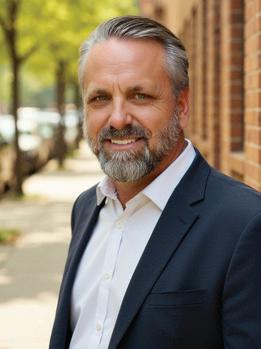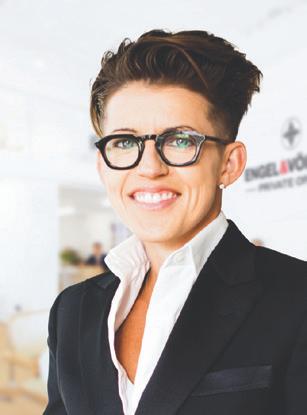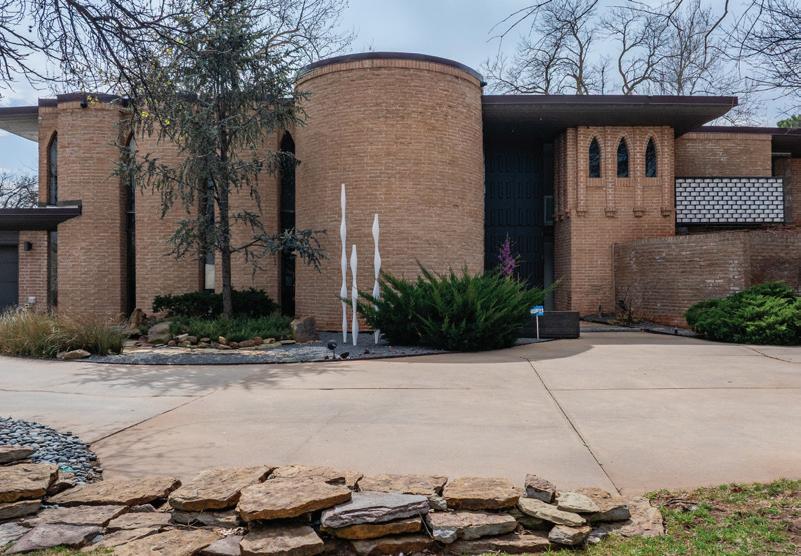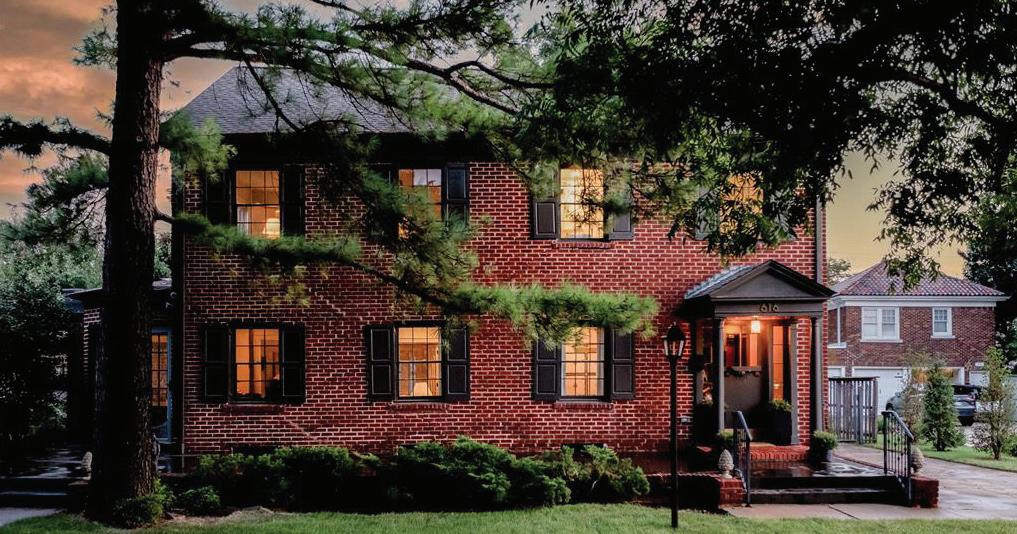

An Exclusive with the Hartenstein Foundation’s Isaiah & Kourtney Hartenstein





jewelry designed to be the art you wear

aifeh f i N e J ewelry . com

He’s a powerful presence on the court for the OKC Thunder, but for Isaiah Hartenstein, the most meaningful contribution to Oklahoma City might be the chance to work with his wife Kourtney at making a philanthropic difference in the lives of underprivileged kids.
STORY
BY
MICHAEL KINNEY
Deeply connected to Oklahoma and always eager to converse with viewers, Jamie Pettis has spent her life exploring the infinity of art—she can’t not create.
STORY BY KATE FRANK
What creative spirit lingers in NYC’s landmark Hotel Chelsea? Oklahoma-born William “Cat Casual” Benton is your guide … and part of the answer.
STORY BY MEGAN SHEPHERD

An industry legend in the making at 25, photographer Jason Martinez (@nike.kd) channels skill, hustle and heart into making the most of his opportunities.
STORY BY ANDREA SCHULTZ
The All-American Rejects have touched off a career resurgence by bucking the Ticketmaster model and creating a way to bring live shows directly to the fans.
STORY BY ALEXANDRA BOHANNON
Actor Lou Diamond Phillips discusses his new filmed-in-Oklahoma project and the distinction of becoming deadCenter Film Festival’s first Legacy Icon.
STORY BY ALEXANDRA BOHANNON





Brilliant, creative people are a gift. Telling their stories is a privilege. Almost every person we write about lives or has lived in Oklahoma or has deep ties to the state. To a person, each one we meet says something along the lines of “There’s just something about Oklahoma,” alluding to our natural friendliness, our genuine desire to help each other succeed and our willingness to step in and help. Renowned photographer Jason Martinez, aka @nike.kd, who moved to Warr Acres from Chicago as a teen, says it this way: “There’s good people here in Oklahoma. You don’t move here for the beach or anything; you move here for the people.” And he’s right. He proves it by remaining right here, exuberantly blooming where he’s planted. You’ll love learning about this incendiary talent.
Honorary Okies are those who’ve made their way here for a career opportunity, or other circumstance, who immediately get it. They’re already wired like us, and when they finally get here, whether they stay or not, big things happen. When we think of these people, we smile. Two of them are Isaiah Hartenstein and Lou Diamond Phillips. Hartenstein, at 7 feet tall, is a powerful center-forward for the OKC Thunder, and also a committed philanthropist with a focus on food insecurity. He and his wife, Kourtney, Oklahomans for just two years, find the Oklahoma Standard has become their North Star.
Phillips was recently in town for the deadCenter Film Festival, at which he premiered his latest film Gangland, filmed in Oklahoma in 2025. He also received the Festival’s inaugural Legacy Icon Award, given to honor out-of-state filmmakers whose work in Oklahoma and personal ethos demonstrate the Oklahoma Standard—having a spirit of professionalism, generosity, respect and genuine collaboration. Who among us can name Frasier Crane as our adulting guru? Our career inspo? The man whose tony life introduced us to our life’s
passion? We know of one person. He is André Hueston Mack and his life’s passion is wine. He’s a world-renowned sommelier, winemaker, entrepreneur, author and graphic designer; a Renaissance man in the truest sense.
When it comes to Renaissance women, our Woman of Influence AJ Griffin springs immediately to mind. She has worked in big corporate America, served in the Oklahoma Legislature, shaped minds as a teacher and in college was a drum major at Oklahoma State. Since 2023, she’s served as CEO of Potts Family Foundation, which focuses on improving early childhood conditions in the state. The first five years of a child’s life are crucial, as 90% of a person’s brain develops in those formative years. Griffin believes that Oklahomans need better family support systems, especially in rural communities, where basics like pediatric care may not be available. She likens that lack of resources to asking a band to perform with broken instruments.
Before the Luxiere team sits down to talk about story ideas, there’s a moment of anticipation. Who will we write about? Whose stories will we share with our dear readers? Luckily there is a wellspring of wonderful people in and connected with Oklahoma whose depths we have only just begun to explore.
Thank you for joining us on this exhilarating adventure.
Until next time,

STACY D. JOHNSON Publisher, Owner


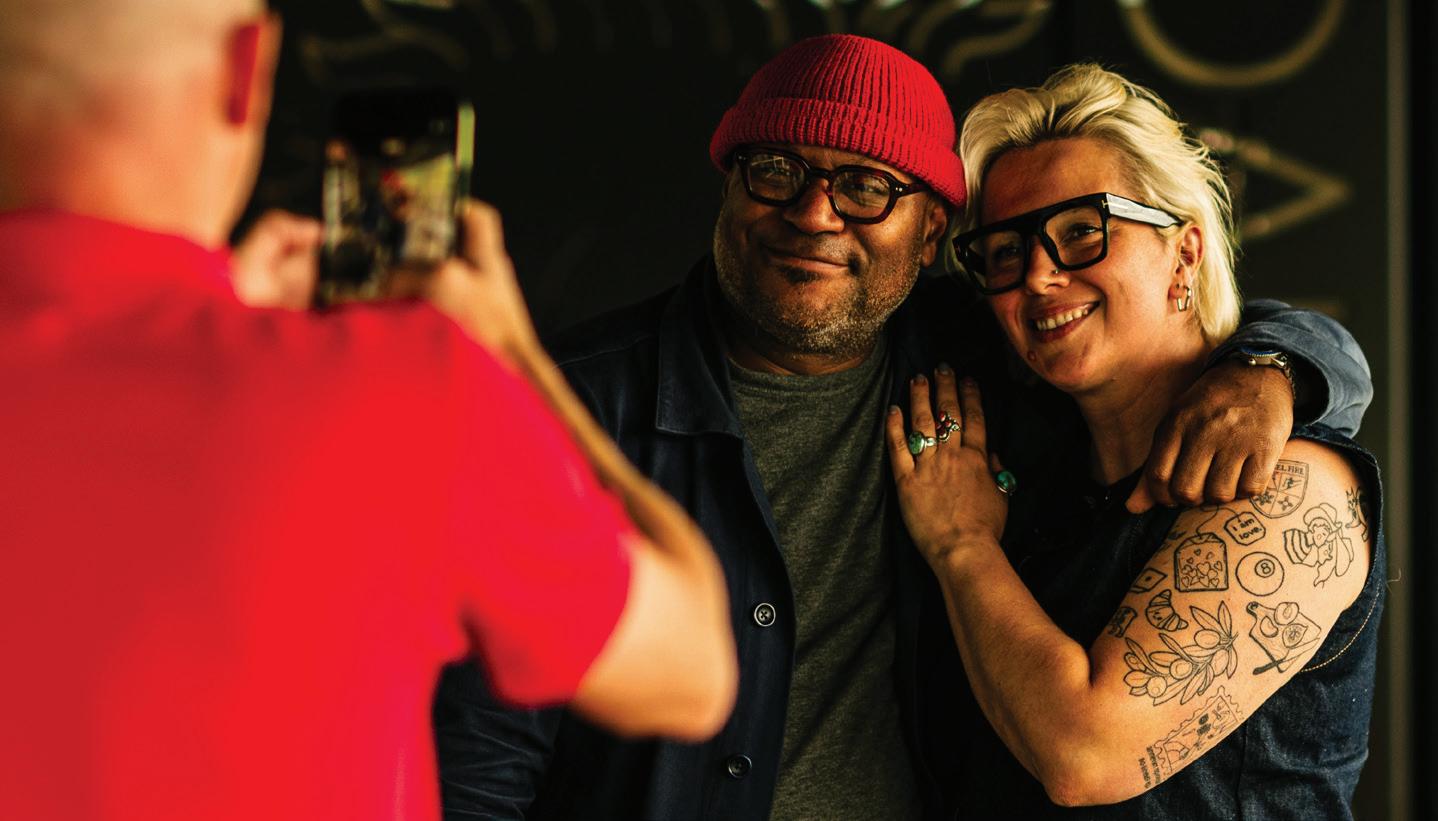
World-renowned sommelier André Hueston Mack poses for a photo with a fan during a tasting event where Luxiere's Michael Kinney caught up with the renaissance man.
OUR CONTRIBUTORS
Each issue of Luxiere represents the combined efforts of an accomplished team of creative Oklahomans. We are pleased to share their work with you, and grateful for the time and talent each has contributed to bringing this publication into being.
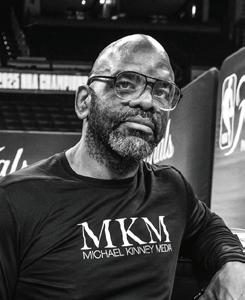
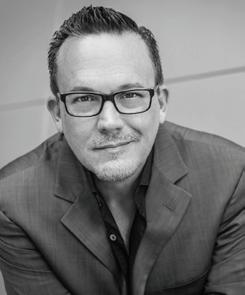


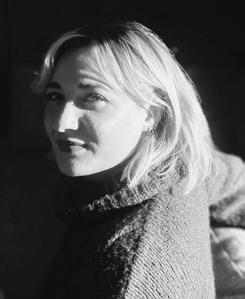


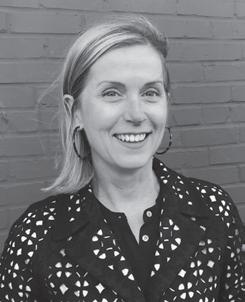

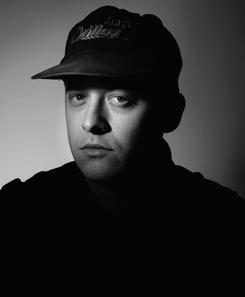
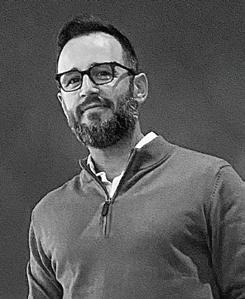
STACY D. JOHNSON Owner/Publisher/Editor in Chief
DESIGN
nvsble.studio
ON THE COVER
Isaiah and Kourtney Hartenstein for Luxiere at their home in Oklahoma.
Photograph by Todd Scott
LUXIERE MAGAZINE CORPORATE OFFICE
2123 N Classen Blvd Oklahoma City, OK 73106 www.luxiere.co
Luxiere Oklahoma is published bimonthly, direct-mailed to a curated readership and distributed at select retail locations free of charge for individual use. To request copies, please contact the publisher. For more information, visit www.luxiere.co.
ADVERTISING INQUIRIES
Email: stacy@ luxiere.co Phone: 405.808.1332 Advertising

THE CHRONOSWISS DELPHIS HORIZON IN TITANIUM & PLATINUM AVAILABLE AT NAIFEH





Jamie Pettis’ brazen journey reveals that home is where the art is
STORY BY KATE FRANK PHOTOGRAPHY BY MAT MILLER
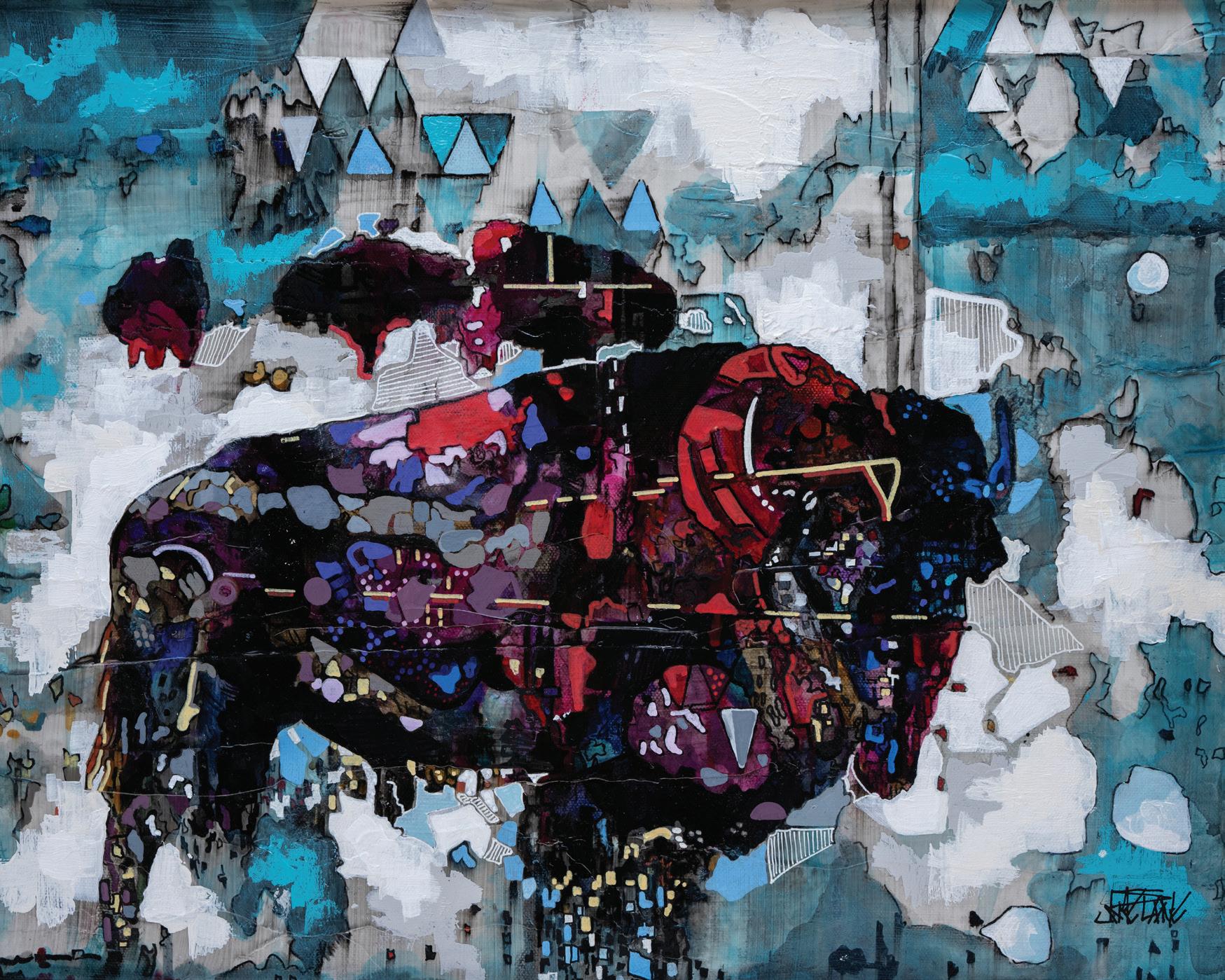
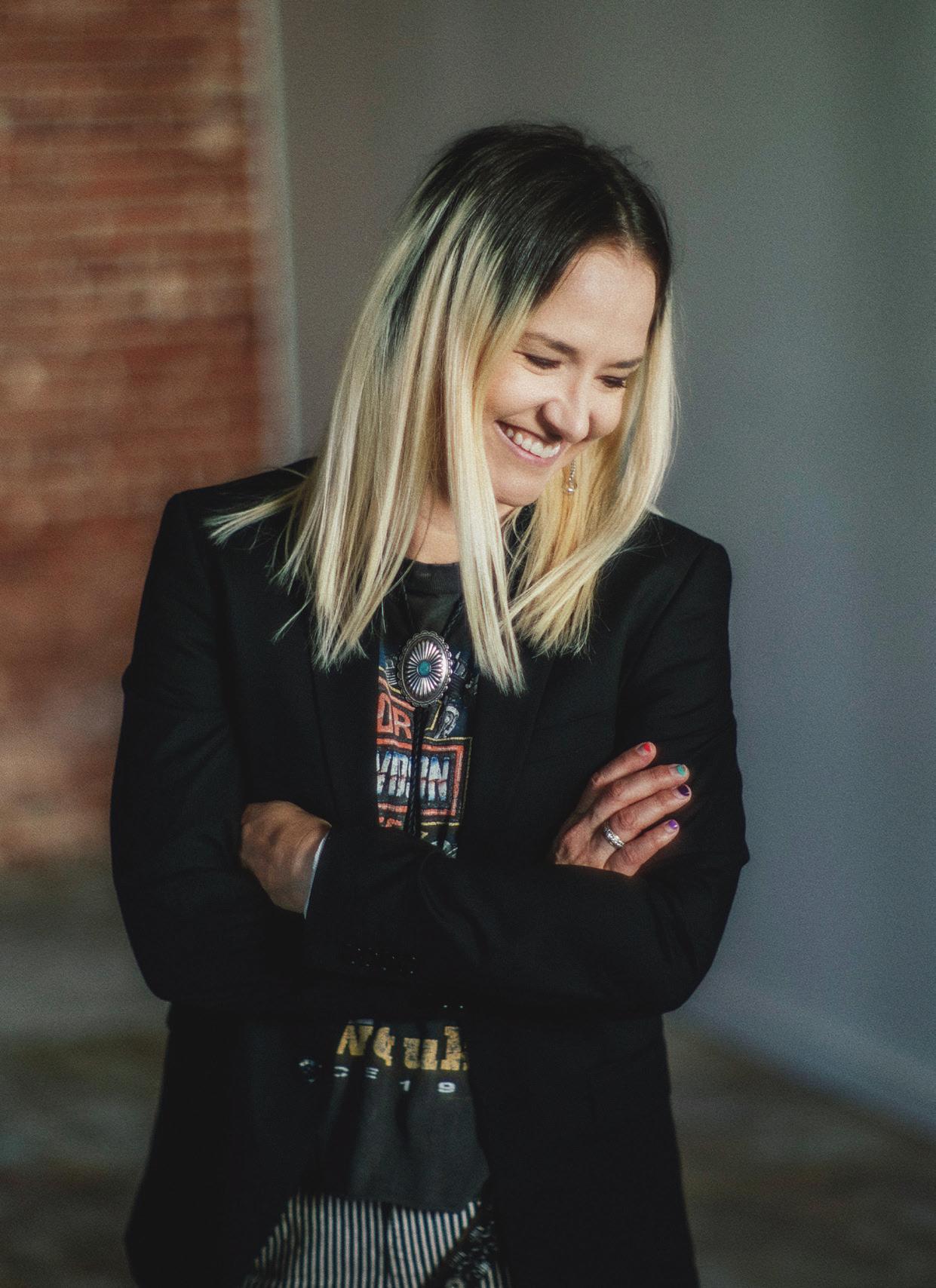
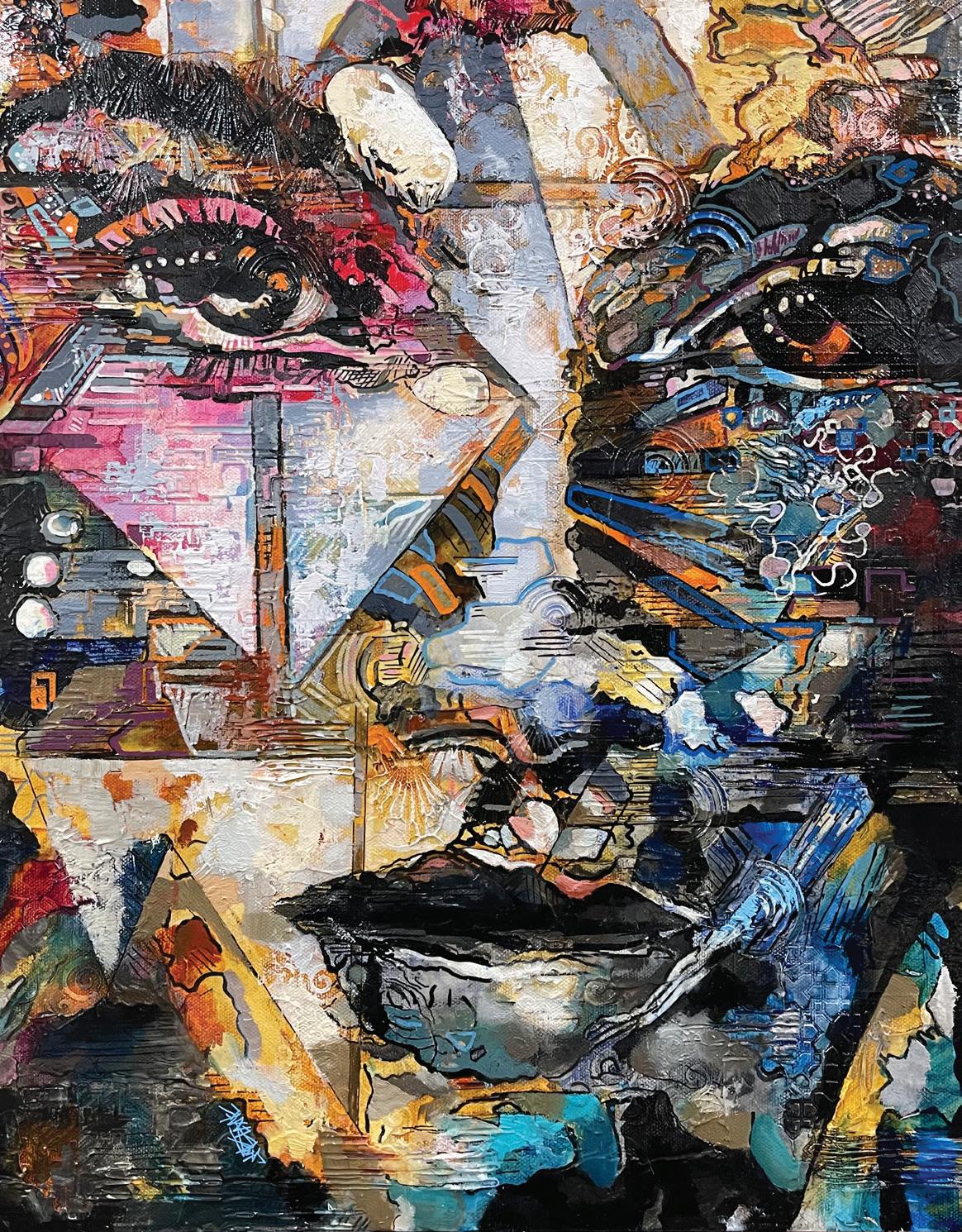
From a table outside JRB Art Gallery in Oklahoma City’s Paseo Arts District, Jamie Pettis prepares for the art festival season to begin as spectators admire her work that sparks conversations. For Pettis, art has never simply been about the finished work hanging on a wall, but rather the connection it creates.
“The cool thing about art is just having a conversation in the gallery,” she says.
For an artist whose work is rooted in emotion, humanity and experience, conversation becomes another layer of the creative process. It’s fitting that Pettis has built a career around creating pieces that invite viewers to create their own interpretations.
Born and raised in Holdenville, Pettis grew up between two very different versions of home. While much of her childhood was shaped by small-town Oklahoma, she also spent time living in Norman and later attended Norman North High School, where she played basketball under legendary coach Sherri Coale. Experiencing both environments expanded her understanding of the state she would later come to draw so much inspiration from.
But long before basketball or galleries entered the picture, art was already playing a predominant role in her life. Every weekend as a child, Pettis would spend time with her father at his art studio in Holdenville. A lawyer by profession and artist by passion, he worked extensively with Prismacolor, and unknowingly left an imprint on the way his daughter would eventually create.
“That’s where my original artistic journey started,” Pettis says. Even now, years later, she notices pieces of him appearing in her work. “My color scheme and materials are subconsciously similar to my father’s.”
Though she did not fully realize it growing up, those weekends watching him work planted seeds that would continue resurfacing throughout her life. Pettis had her first art show at just 6 years old, an early sign that creativity would always be part of her identity.
Still, art wasn’t the only thing calling her attention. Like many children with big dreams, she couldn’t decide on just one path. She played classical piano from a young age and imagined multiple versions of her future.
“I always wanted to be an actor, musician or artist,” she says with laughter. “I couldn’t decide.”
That same curiosity followed her into college when she enrolled at Oklahoma State University and pursued a degree in apparel design and production. Fashion initially seemed like the perfect combination of creativity and structure, but it didn’t take long for Pettis to realize her interest in fashion stemmed from her desire to create.
“In pursuing this fashion degree, I found I was way more into the drawings,” she says.
While sewing and pattern making were never Pettis’ passion, fashion itself became an important influence that would later appear in her work. In high school, her first acrylic painting featured a Versace model wearing a black leather jacket, hinting at the portraiture and figure pieces that would eventually become staples in her work.
Her fashion studies would also lead her far beyond Oklahoma. As part of her degree requirements, Pettis needed a summer internship. Knowing she wanted exposure beyond her home state, she set her sights on New York City and one company in particular, Marc Jacobs.
At the time, she had never even been to New York. Rather than waiting for an opportunity to appear, Pettis created one. She traveled to the city and showed up at the Marc Jacobs corporate office looking for any opening she could find. During that visit, she met Joseph Carter, who remains the brand’s head designer today. Before leaving, she handed over some of her work and soon afterward was offered the internship.
After college, Pettis once again chose uncertainty over comfort, moving to Los Angeles without a job waiting for her. For a while, she pursued acting while moving among locales including Philadelphia, Phoenix, Connecticut, New York, Los Angeles and Oklahoma City.
Even in the midst of frequent relocations, one thing remained constant: “I always made art,” she says.
The experiences of constantly moving, meeting new people and recreating herself through different environments slowly reshaped her perspective. About 18 years ago, she made the decision to pursue painting seriously while supporting herself through multiple jobs. Seven years ago, she finally stepped into life as a full-time artist.
While exhibiting work at the LA Art Show, a man approached her table and offered her representation at Winn Slavin Fine Art on Rodeo Drive. Five years later, she remains represented by the gallery and continues expanding her reach through annual exhibitions.
Still, Pettis speaks about success with less interest in destinations and more interest in growth itself. “The cool thing about art is that it’s infinite,” she says. “If growth is infinite, if the universe is infinite, then what I get to create in my work is also infinite.”
To her, the act of painting itself matters far more than the result. “It’s an ever-evolving process. The process is everything. There’s no arrival spot.”
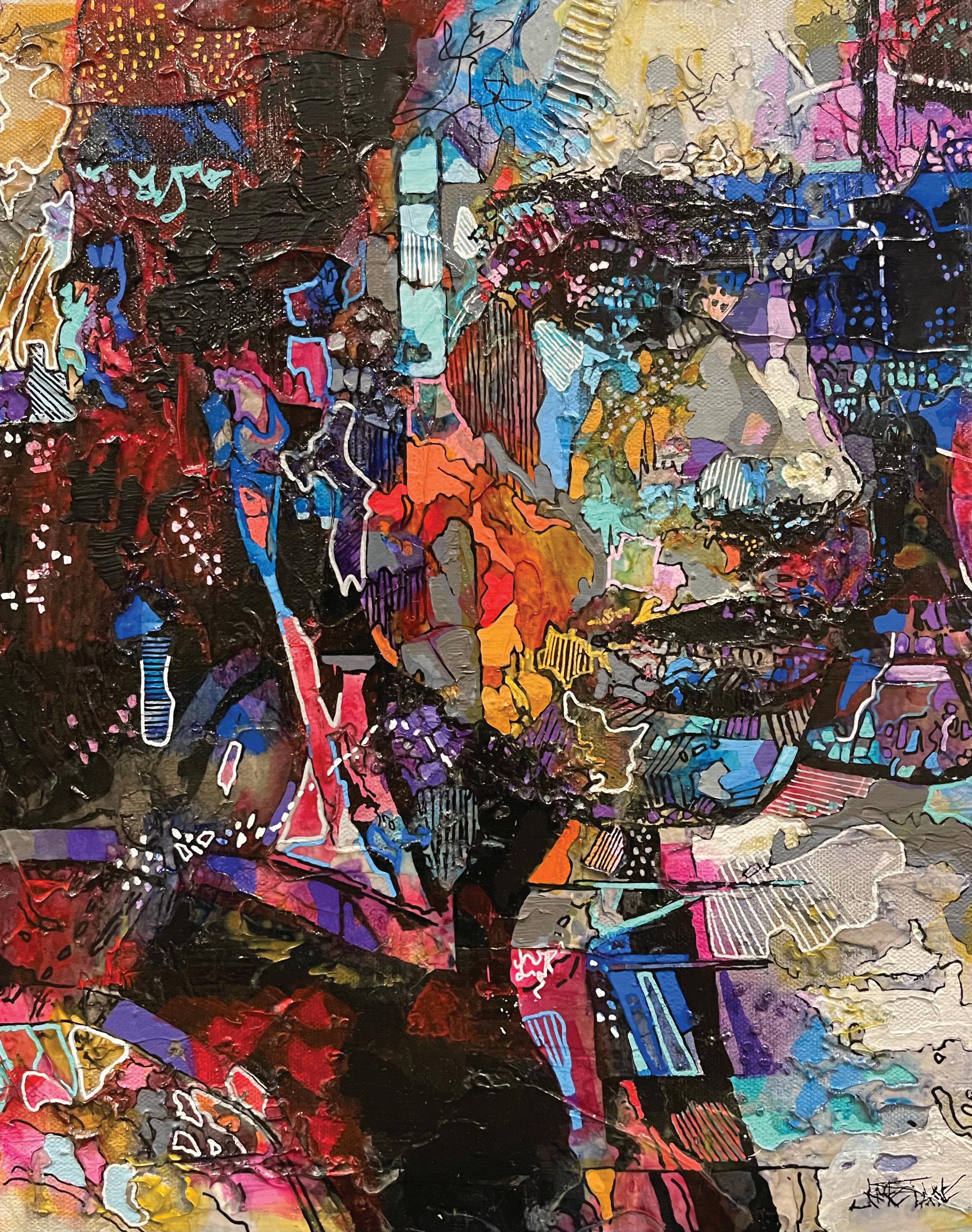
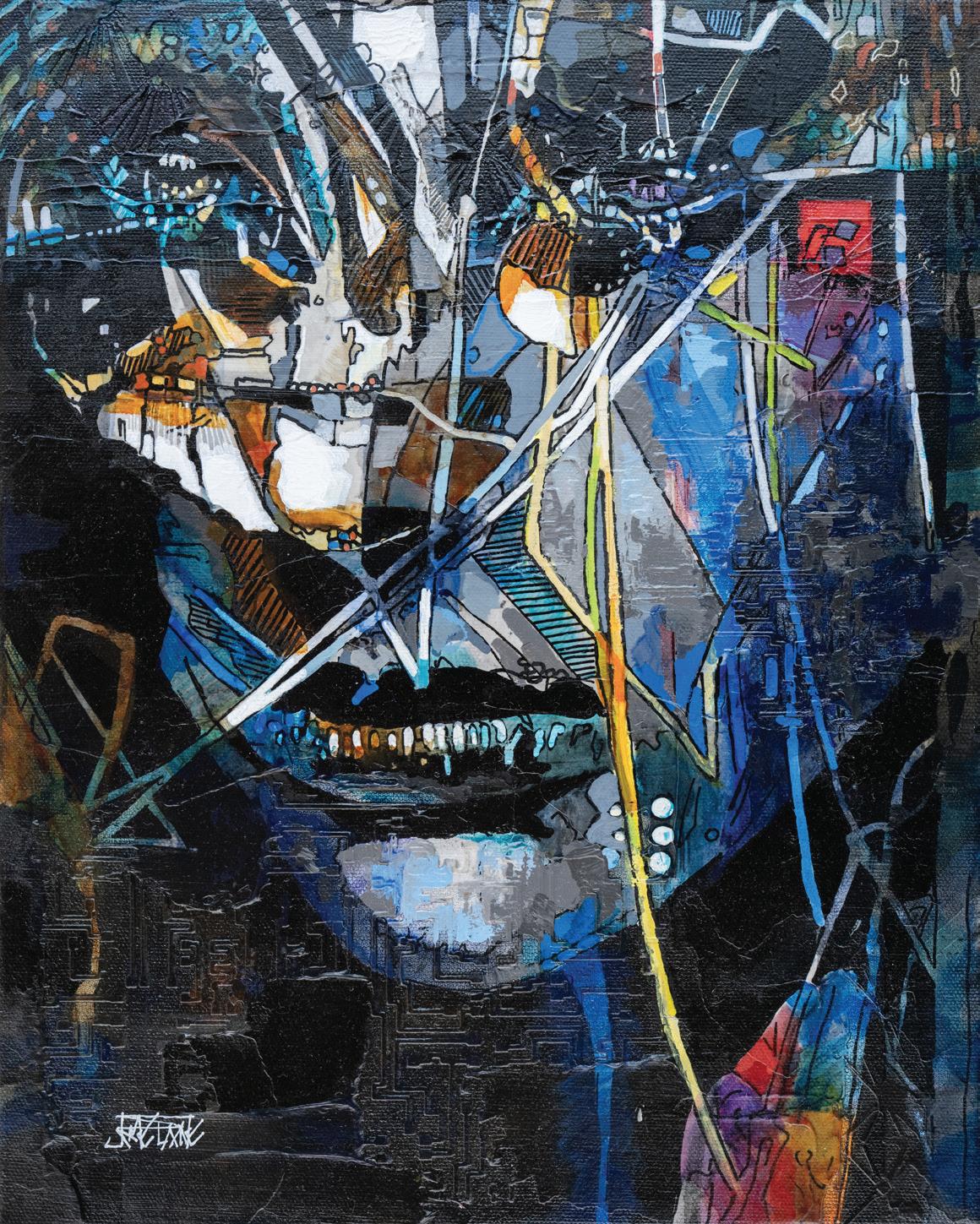
Pettis describes her work as “extremely colorful,” and says, “I like to push the boundaries with color.” In fact, the color choices are rarely deliberate in the traditional sense. “So much of the time the color is based on feeling.” Rather than planning every detail, Pettis allows instinct to guide her.
Her strong sense of emotion expands far beyond the creative process, and while many of her pieces explore themes surrounding humanity, she intentionally avoids assigning meanings to them. “I create the work for me, then I give it to my audience,” she says. Instead of explaining a piece, she often asks her viewers what they see in it.
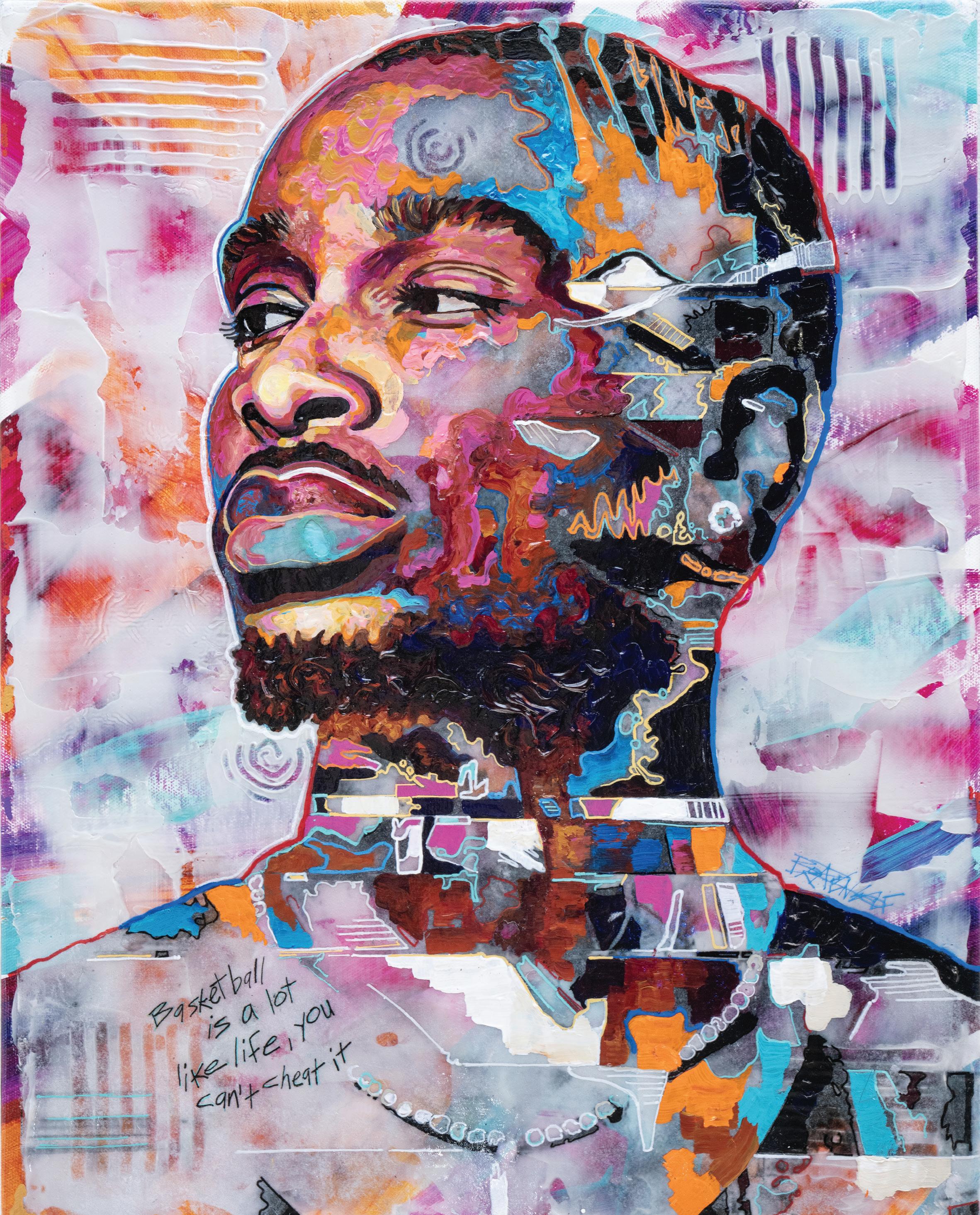
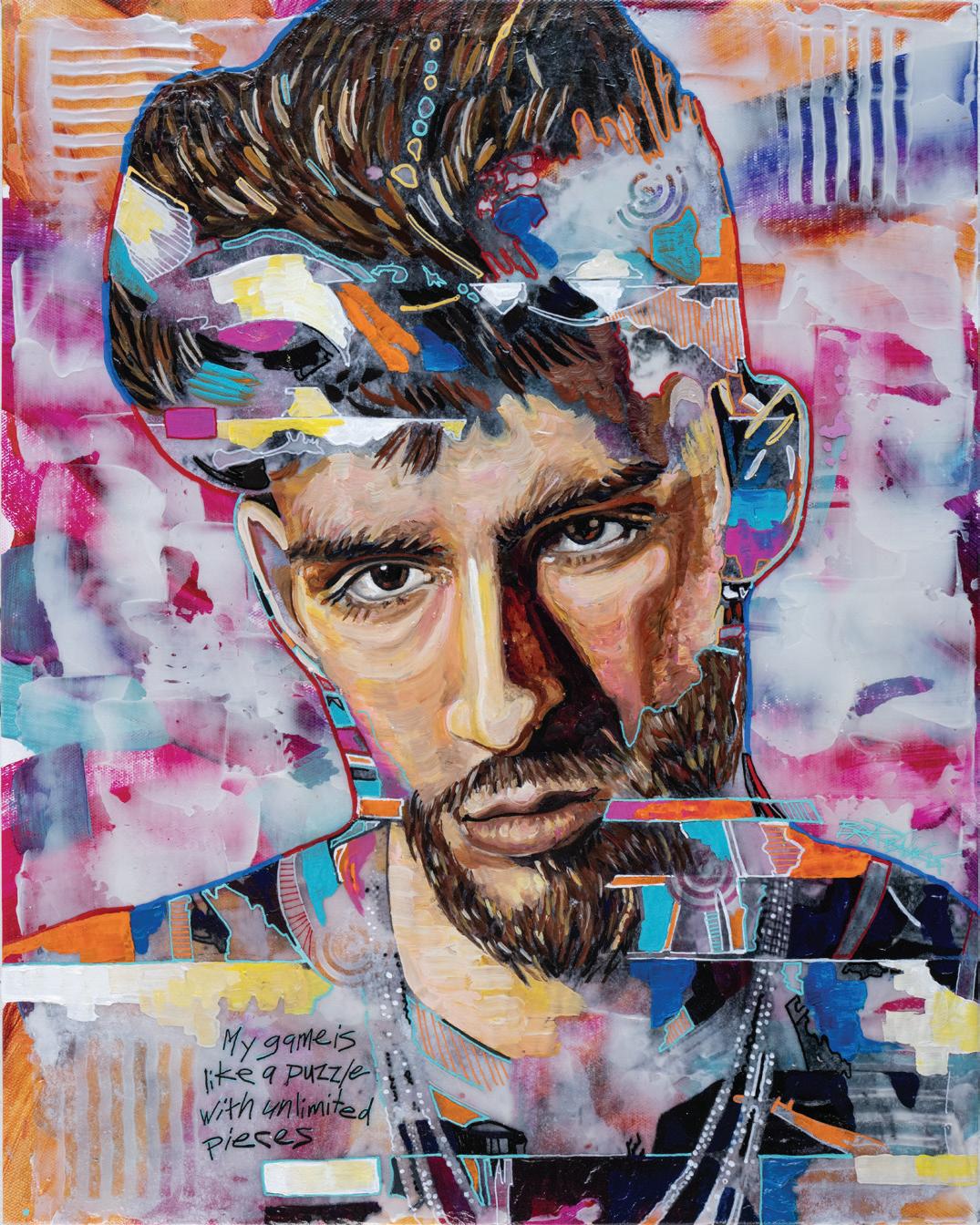
Sports, however, remain one recurring influence she returns to often. Growing up as an athlete and lifelong Thunder fan naturally made athletics part of her work. As Pettis relaunches her brand, Brazen Wolf, she described it as her alter ego, where she often features sports figures and recently completed a portrait of Shai GilgeousAlexander that sold immediately.
OPPOSITE:
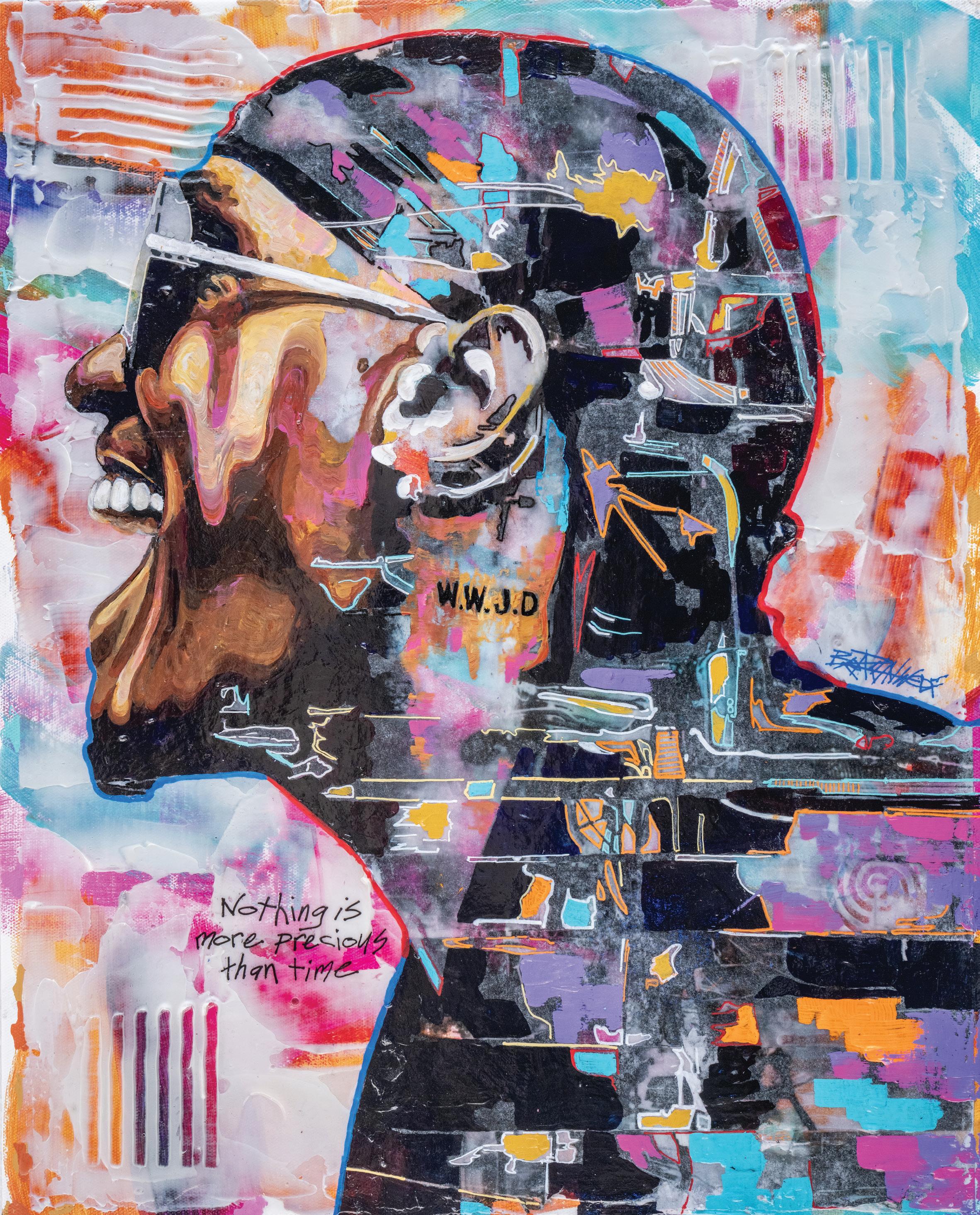
BELOW: “Awaken” by Brazen Wolf
The piece included one of his quotes: “Basketball is a lot like life. You can’t cheat it. Whatever you put into it, you’ll get out of it.”
Finding inspiration in Gilgeous-Alexander’s words of wisdom, Pettis carries that same mentality with her every day. “I always push myself to keep proving my potential to myself,” Pettis says. “It doesn’t stop once you’ve achieved your biggest goals.”
After spending years wanting to leave Oklahoma and experience more of the world, it was distance that revealed how much home mattered. “I was the small-town girl that always wanted to leave,” she says. “I think it’s important to see the world, but Oklahoma has always been in my heart.”
After years of moving back and forth, she began recognizing an indescribable feeling. “There’s something I can’t put words to that is magical about Oklahoma,” she says. “The reason I can’t put words to it is because I simply feel it in my heart.”
Returning home consistently brought her back to herself. “When I’m in Oklahoma, I’m the most emotionally in tune with my work.”
As Oklahoma City continues growing through art, sports, music and film, Pettis feels grateful to be growing alongside it. “I’m proud to be from Oklahoma,” she says. “I am who I am today because I’m from Oklahoma.”
And perhaps that connection explains why, sitting in the middle of the Paseo District surrounded by art and community, Pettis seems exactly where she belongs. Because for Jamie Pettis, creativity has never been a career choice. “For me, it’s like air,” she says. “It’s like water. It’s like food. I have to paint. I have to be creative, otherwise what am I doing here?” •































































































BY CHRISTINE EDDINGTON
To understand AJ Griffin—Ed.D., CEO of Potts Family Foundation and former Oklahoma State Senator—there’s one thing you need to know that explains it all. Of course that’s not true, but it almost is. Griffin is a woman of many parts. She’s a powerhouse for good, a charismatic speaker, a high-caliber leader at the helm of one of the most respected charitable foundations in the state.
Like most people, though, she does have a through line: She sees the world in systems, which need the right combination of parts to function correctly. She’s been a teacher, a corporate executive, a nonprofit CEO, a state senator and (drum roll, please) a drum major for Oklahoma State University. It’s this last crucial bit that illustrates how her brain works—has always worked—and this fact informs everything she does.
“I was one of three drum majors. Our role was to be the on- and off-field leaders of the marching band. I was probably a mediocre musician but a pretty talented marcher, but they really leaned on me for some of the leadership pieces,” she says.
Of course they did. Anyone would. She’s a natural leader. “If you think about a marching band, everybody’s got to be in step, literally. If one person is out of step, it ruins the performance. And you’ve also got to have the right sections. A marching band that doesn’t have any piccolos is incomplete, but it also needs tubas and snare drums. Everybody’s role is very different, but if one of those roles is missing, then the performance isn’t complete.”
A well-functioning system keeps a marching band humming, she said. The same is true for societal support structures. “I like to work in systems,” she says. “I’ve been drawn to looking at big problems that have lots of moving parts, and how to get those parts to work
together, and there’s probably nothing that symbolizes how systems work better than a marching band performance.”
Another concept that informs Griffin’s personal and professional ethos is hospitality, which shows up in the way she approaches the Potts Family Foundation board and partners, her colleagues, grantees, her staff, her kids … everyone. “Hospitality is more powerful than charity,” she says.
It makes sense that her undergraduate degree is in hotel and restaurant administration. At 21, she was managing a 75-employee restaurant, working about 60 hours a week. Not sustainable, even for someone with Griffin’s boundless energy. “If you know the restaurant industry, you know it will wear you out pretty quickly, so I transitioned from that into education, teaching hospitality and food service production in a career technology center,” she says. After the career tech, Griffin taught junior high family and consumer science in Guthrie Public Schools, her favorite job ever.
Another pivot landed her in the nonprofit world, as one of the first state coordinators for Smart Start Oklahoma (now the Oklahoma Partnership for School Readiness), an early-childhood initiative designed to ensure children are safe, healthy and ready to succeed by the time they enter school. “Smart Start was adopted, ironically, through a lot of hard work by Pat Potts. She encouraged Oklahomans to focus on early childhood, and so Smart Start became a statewide initiative focused on fostering healthy early childhood by working at the local level.” Later, when another nonprofit in Logan County needed an executive director, Griffin took the position.
Griffin served two terms in the Oklahoma State Senate, where she authored and passed landmark legislation to enhance the lives
of children and families. These legislative efforts included autism treatment insurance coverage; foster care and juvenile justice system transformations; criminal justice reform; and expanded healthcare access. Her legislative work earned her numerous accolades, including the Kate Barnard Child Advocate of the Year award.
In the legislature, she quickly understood that it’s all one big system, and every lever that gets pulled affects the whole thing either positively or negatively. “Every tax change, every piece of legislation impacts the whole system, up and down, all levels of government. You can’t make a single change and not think it’s going to impact families,” she says.
After leaving the senate, Griffin entered the corporate world, serving as the director of government and community affairs for Paycom.
Each piece of Griffin’s career path has built neatly on the one that came before, and each has been focused on improving the lives of Oklahomans, albeit from different angles. Talk to her for more than a few minutes and you’ll hear her say that she works on behalf of the most important people in the world: babies. And if you want to support babies, you’ve got to support families.
What’s missing for Oklahoma families now, Griffin said, is access to basic economic support structures: family-sustaining jobs, affordable health and access to health care, housing and good community schools. “These are basic things, but if you’ve got a neighborhood or a town where there’s one piece of it missing, that family living in that town isn’t able to function properly; it’s going to be off-kilter. If you don’t have access to health care in your proximity, then accessing healthcare becomes a significant burden. You’re taking days off of work to go see doctors, and it makes life significantly harder, and for many communities in Oklahoma, that is the reality.”
Griffin believes that with the right support framework and systems functioning properly, our communities, and therefore our families, can become whole once again. “I believe there is a misperception about families—that individuals and families are completely responsible for themselves,” she says. “And that’s true to a point. It’s not the responsibility of any leader to fix someone else’s problems. However, it is the responsibility of leaders in communities, and states, and countries to ensure that the tools and resources necessary for success are available.”
Back to her apt marching band analogy, “In large systems, even if we have one piece that’s performing really well, if it’s not surrounded by other all the other necessary components, it doesn’t matter—we just don’t get the result that we want.”
The goal at Potts is to work with families, social services, education and business, endeavoring to break down the longstanding siloes that can inhibit healthy cross-pollination between them. “Families are systems as well,” she says. “Everybody in a family plays a different role, but if one person in the family is unhealthy, it can’t function effectively.”
Whether it’s a health problem or another issue, if families are clipping along and there’s a sudden serious challenge, the family can’t work as well as it should. “Right now, we’re in an era when we’re providing communities with broken equipment or no equipment at all and expecting them to perform. We’re expecting families to thrive in those conditions, and it’s an impossible expectation,” she says. “We’ve got to start treating families as the systems that they are, and the communities that surround them need to be complete. That’s how to create an environment where families can thrive.” •
THE LUXIERE LIST
Potts Family Foundation (PFF) is an operating foundation focusing on providing support for sustainable early childhood initiatives with an emphasis on root causes, leveraging resources for the greatest impact through collaborative partnerships and securing sustainability and the potential replication of evidence-based programs and services that lead to building resilient children, families and communities.


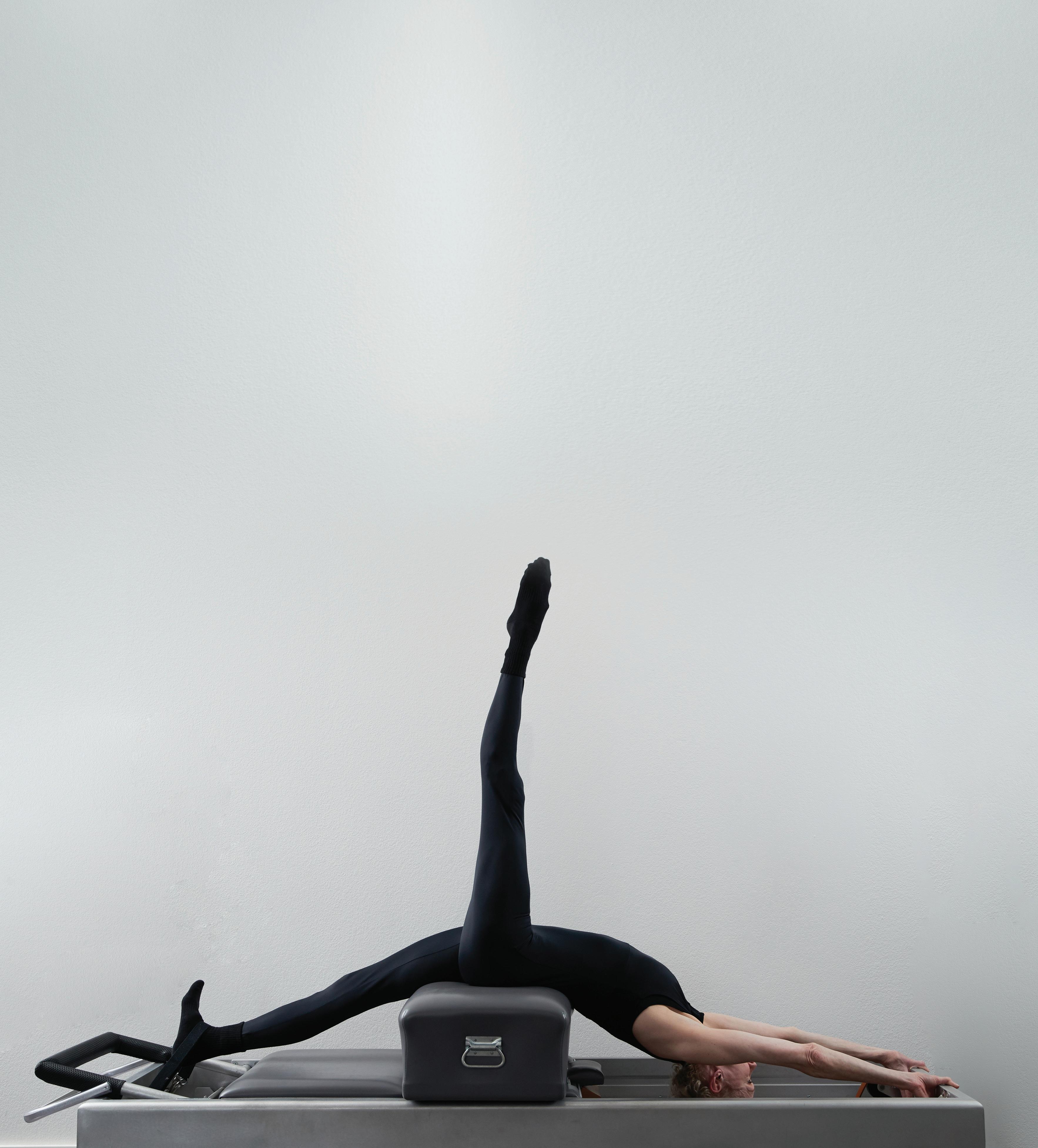
Trained and taught under Joseph Pilates protégé, Romana Kryzanowska, Carrie Kenneally is Romana Pilates International® Certified for 20+ years.
CARRIE KENNEALLY Owner/Instructor

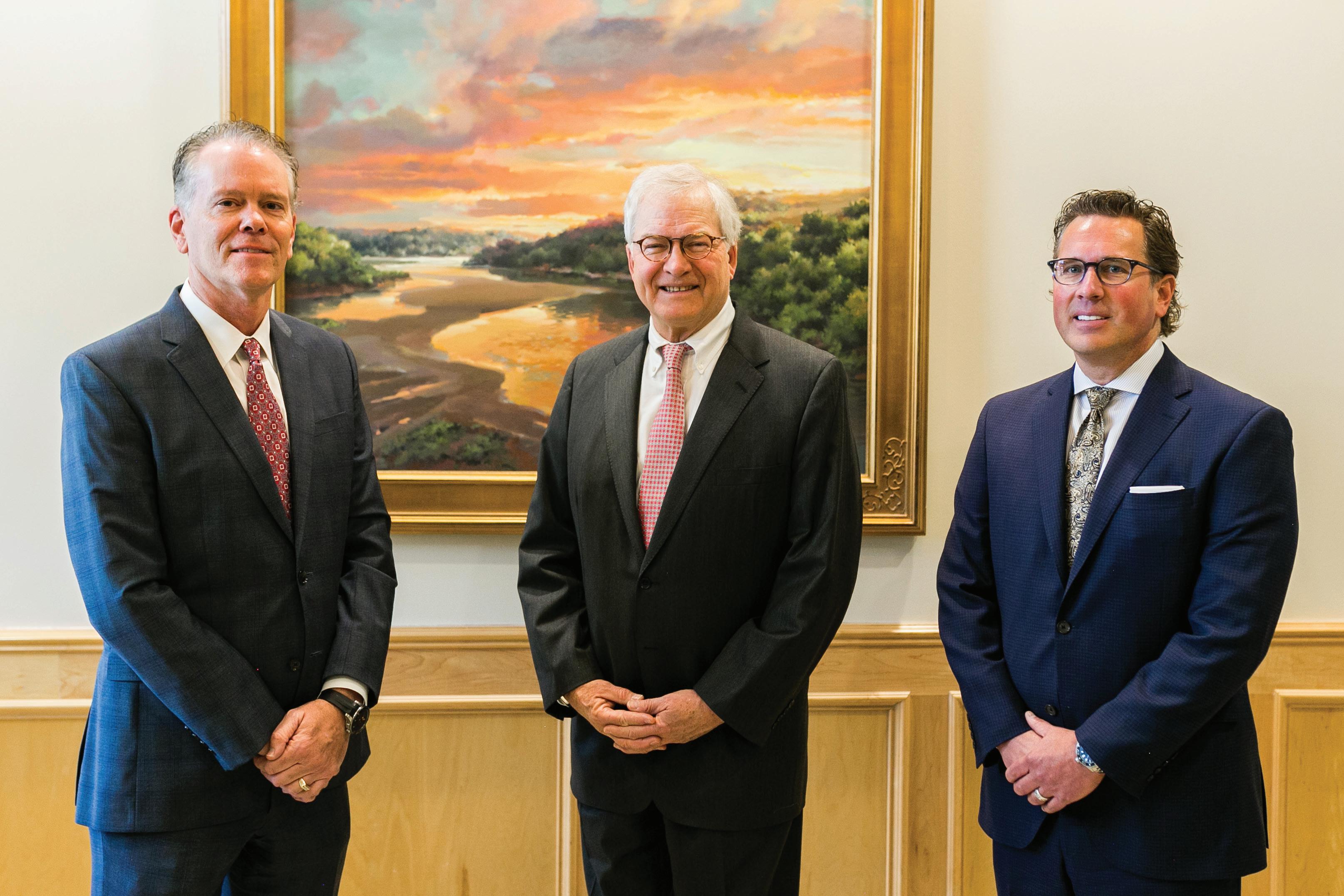
Our Executive Leadership Team has over 100 years of combined banking experience. We will continue to follow the tried and true banking principles that have served us well.


WORDS &
PHOTOGRAPHY
BY MICHAEL KINNEY
Biohacking may have started as fringe experimentation—cold plunges, nootropics, glucose monitors strapped to otherwise healthy bodies—but the concept has evolved into a billiondollar movement obsessed with optimization.
Doctors who once rolled their eyes at self-trackers are now studying wearable data, personalized nutrition and longevity science with genuine curiosity. That coincides with a new era of patients who arrive at appointments armed with sleep analytics, hormone panels and enough biometric data to fill a filing cabinet.
The medical establishment, predictably, has responded with a mixture of fascination and caution. Biohacking’s influence is pushing healthcare toward something more tailored, preventative and performance-driven.
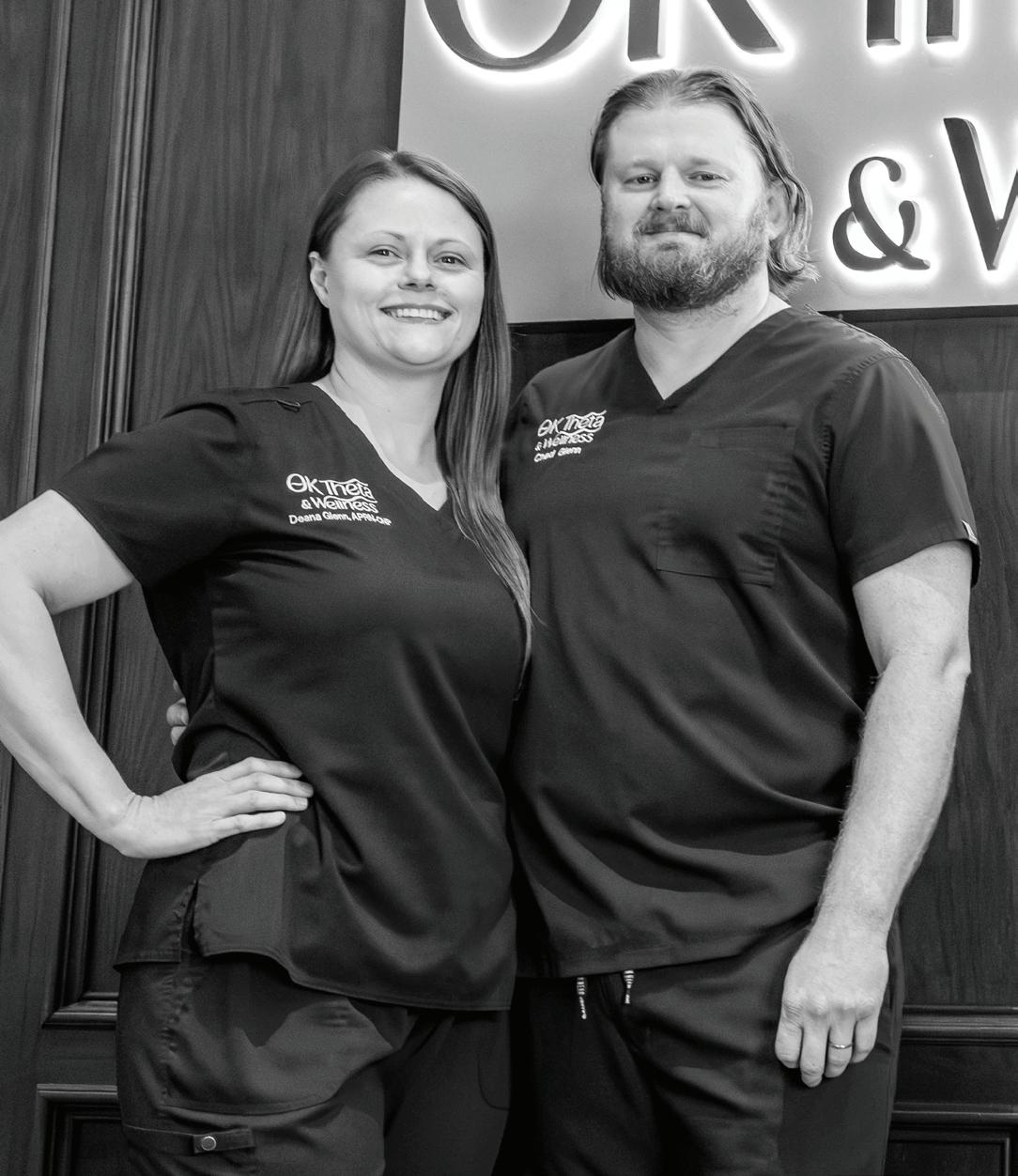
That is where Deana and Chad Glenn step into the picture. The co-owners of OK Theta & Wellness are at the tip of the spear when it comes to biohacking in Oklahoma, as their nearly three-year-old facility in Oklahoma City has been at the forefront of introducing the concept into the Sooner State.
Despite both having long histories in the traditional medical field, the Glenns are more apt to search outside the box when it comes to helping people find solutions to some of life’s most persistent ailments. And that is how they discovered the Theta Chamber, the foundation that OK Theta & Wellness was built upon. Deana and Chad see it as a biohacking game-changer in the holistic field that has yet to be fully embraced by the wider medical community.
The Theta Chamber, which was originally developed by Loran Swensen in 1989 for his son with cerebral palsy, is designed to gently guide the brain into a theta state, in which it becomes more receptive to forming new neural pathways. Each 30-minute session uses a combination of vestibular motion, microcurrent signaling, binaural audio beats and visual pattern light stimulation, all while the client lies on a pulsed electromagnetic field mat.


“The more exposure you have to theta, the greater its effect on you,” Chad says. “What that means is, as you do a session, the first time is the least amount of time you would be in theta; it’s the least depth you would have, and that experience grows with subsequent exposures. And where that’s useful is that theta is giving people a space between the stimulus and the response. It lets you notice where you otherwise may not notice.”
The wellness cocoon essentially bathes its occupant in low-frequency theta waves—those elusive brain rhythms linked to deep meditation, creativity and memory consolidation.
Patients quickly get past its futuristic appearance and focus on the benefits.
“Our clients come to us looking for help feeling calmer, sleeping better, thinking more clearly or resetting after a stressful day,” says Deana. “We see every age here. The spinning gives the brain vestibular input, the same thing kids get from swings and merry-go-rounds. For the kids who can’t get that on a playground, it works alongside the care they’re already getting.”
Chad is a former neurosurgeon who specialized in complex brain tumor surgery, while Deana was a nurse practitioner for neurosurgery at OU Health. However, the Glenns didn’t come upon the Theta Chamber while working at a local hospital or learn about it in any medical class. As is often the case in this era, their fascination started with social media.
Deana was scrolling through TikTok one day in the summer of 2023 when she came across a video for the Theta Chamber that piqued her interest.
“It looked like a spinning tanning bed to me,” Deana says. “The video was of a little boy who had been diagnosed with fetal alcohol syndrome, ADHD and intermittent explosive disorder. His mom described how he was regulating his emotions, finally sleeping, his night terrors had stopped, and he was starting to follow directions.”
Then she discovered that there was not a single Theta Chamber in the state of Oklahoma, and the entrepreneur in her clicked on.
“I called my husband and said, ‘You have to look at this. We have to buy one,’” Deana recounts. “That’s how OK Theta was born.”
The Theta Chamber is not FDA-approved, but the Glenns did their homework before buying their first one.
“There’s no published research on the Theta Chamber itself, but each of the modalities it uses has its own science behind it,” Deana says. “We dug into everything we could find, and every one of those pieces has been studied individually. Our thinking is that combining them does even more than any one on its own.”
While Deana said she was a believer within a week of discovery, it took Chad a little longer. As a neurosurgeon who had spent years learning how the brain functioned, to call him skeptical would have been an understatement.
“I tried to tear it apart. I said it was phooey,” he says. “I tried to tear it down for six months. In fact, I was so resistant to it that we had one for six months before I would even get into it. It took me getting into it and having this wild experience that is theta, where I really started to go, ‘Hey, there’s really something here.’”
Since then, Chad said, he has had hundreds of sessions in the chamber, and it has done wonders for him, both professionally and personally.
“Running the Theta Chamber has literally been therapeutic for me,” Chad says. “Now it’s a thing I love to do, which is to help people achieve whatever they’re trying to achieve with their mental state, with their well-being, with their health. It’s a labor of love, so to speak.”
After the Glenns purchased a second Theta Chamber, they moved to their current address in North Oklahoma City, at 13838 Quail Pointe Drive, Suite A. The extra space allowed them to partner with PowerHouse Infusionz IV Vitamin Bar and add two massage therapists, StemWave shockwave therapy and another unconventional treatment to their wellness practice.
In May, an Enhanced External Counterpulsation (EECP) system was delivered to their office. It’s a noninvasive therapy guided by continuous EKG that improves blood flow to the heart and throughout the body. During a session, cuffs wrapped around the calves, thighs and buttocks inflate in time with the heart’s resting phase, driving more blood to the heart, then deflate the instant before it pumps so the heart meets less resistance. That heartbeat-synced timing is what sets it apart from the compression boots common at other wellness studios, which simply squeeze the legs on a timer. Often called a “natural bypass,” EECP is thought to coax the body, over a series of sessions, into forming collateral vessels, small natural detours that carry blood around a narrowed or blocked artery rather than attempting to force blood through it. Where a stent physically opens a single blocked artery, EECP works the other way, encouraging the body to grow its own network of these vessels, which is part of why it suits people who aren’t candidates for a stent or bypass.
While the technology surrounding EECP has been around for decades, like the Theta Chamber, it has not been fully adopted in the standard medical community. Oklahoma has yet to fully embrace the idea, though there are already six locations around Dallas that make use of it. Even professional athletes like Shaquille O’Neal, Peyton Manning and Tom Brady have reportedly used EECP to boost their endurance.

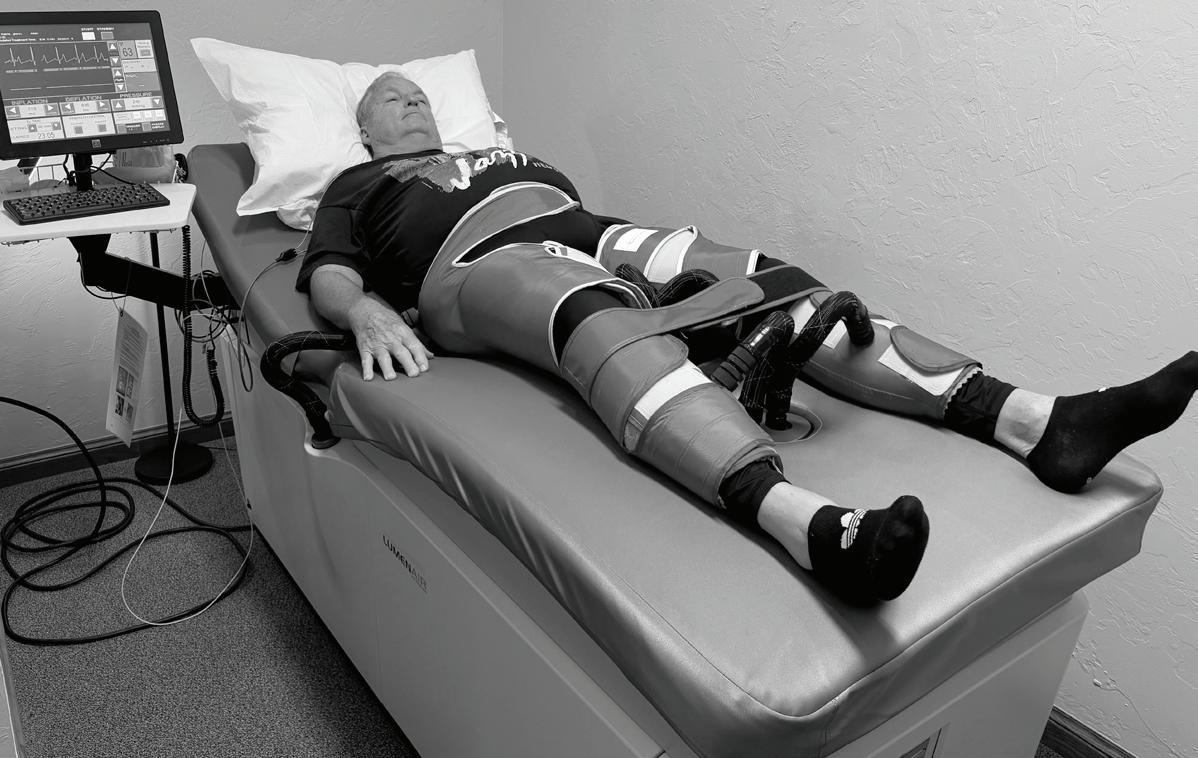
“It’s not new technology. Insurance will cover EECP for people with refractory angina,” Deana says. “That’s someone with ongoing chest pain from heart disease whose medications aren’t controlling it, and who isn’t a candidate for a stent or bypass surgery.”
According to Deana, EECP is being studied for ischemic stroke recovery, long COVID, POTS, neuropathy, erectile dysfunction, dementia, cognitive decline, tinnitus, diabetic complications, kidney disease and other conditions.
“It is just as valuable as a preventive therapy for cardiovascular health, brain health, athletic recovery and healthy aging,” Deana says. “We are one of the only clinics in the region offering it on a cash-pay basis without the typical insurance gatekeeping.
“OK Theta & Wellness is for everyone,” she adds. “We care for patients managing real challenges, and we care for the people who
simply want to feel sharper, calmer and stronger for the long haul. Prevention, performance and longevity are every bit as central to what we do as recovery.”
The Glenns have built OK Theta & Wellness on their willingness to think outside the box when it comes to taking care of their patients. They are the only facility in the state with Theta Chambers and the only one offering EECP for wellness in addition to its standard cardiac use.
“We are Oklahoma City’s destination for advanced, drug-free therapies that support the whole person, whether you are working through something difficult or simply investing in your long-term health,” Deana says. “Our two flagship offerings, the Theta Chamber and EECP, sit at the intersection of neuroscience and cardiovascular medicine, and together they let us care for an incredibly wide range of patients.” •

The Oklahoma City Museum of Art Store offers a completely unique and art-centered shopping experience.

“My feet feel like they’re on fire.”
“Each step feels like I’m walking through wet paint.”
What do all of these people have in common?
“I live in constant fear that I’ll fall.”
“I can’t sleep. My hands and feet tingle all night.”

They suffer from peripheral neuropathy. It’s estimated that more than 20 million people in the United States have peripheral neuropathy. Unfortunately this figure may be significantly higher as the disease is often misdiagnosed because of its wide array of symptoms.
Dr. Toni Twitty of Be Well Acupuncture in Edmond, OK shares this belief. “I’ve been treating neuropathy, in all its various forms, for over a decade and so often my patients come to me because of the symptoms not because of a diagnosis. They saw one of my television specials, or read a testimonial of another patient and say to themselves, ‘hey, I feel the same thing.’”
Betty M. of Oklahoma City testified to this, “I remember my husband driving me to my consultation and I saw a woman that was running just outside our neighborhood. I was so envious — I kept thinking, ‘I would give anything just to walk again.’ My primary care doctor told me my troubles with pain and balance were just symptoms of old age and gave me a prescription. I was so depressed.”
Fortunately, Betty would eventually see a review of Dr. Toni talking about similar symptoms and how she offers a real solution at Be Well Acupuncture. “I just knew I had to see her. She was my last hope.”
“Almost all of our patients come to us with a story similar to Betty’s. They’ve been everywhere else. They’ve been told there is no hope. They’ve been told, ‘its just part of getting older,’” shares Brooke, a Patient Care Technician at Be Well Acupuncture. “It just breaks my heart but I know that we can help people like Betty so I’m always so happy when they walk through our door.”

Those diagnosed with peripheral neuropathy often face a grim reality; Western Medicine declares there is no solution while cost alternative therapies carry huge price tags and offer little to no resolve. Which is why Dr. Toni and the staff at Be Well pride themselves on being, ‘the last resort with the best results.’
Peripheral neuropathy is a result of damage to the nerves. This damage is commonly caused by low blood flow in the hands and feet. Low blood flow results in lack of nutrients; the nerves then begin to degenerate and die which causes pain ranging from discomfort to debilitating. Because neuropathy is a degenerative condition, once those nerves begin to deteriorate they will continue to do so until they completely expire, leaving those suffering with crippling balance issues. “In this case the absence of pain is not a good thing,” shares Dr. Toni. “This usually indicates that your nerves are hanging on by a fragile thread.”
So how exactly is Dr. Toni able to reverse the effects of this degenerative disease? “Acupuncture has been used to increase blood flow for thousands of years. It helps get the nutrients to the nerves. But the real magic happens when I integrate ATP Resonance Biotherapy™. This is tech that was originally developed by NASA to expedite recovering and healing.”
“I just can’t say enough about Be Well,” Betty shared joyfully. “My husband and I moved here 3 years ago to be near our grandchildren. I always stayed home because of the pain and discomfort. I couldn’t keep up. Yesterday I walked around the park with him! Next week we’re taking the grandkids with us! I am truly living life these days.”
DR. TONI TWITTY
“According to Betty’s test results, she has seen a 74% improvement in pain and functionality, which is on par with a majority of our patients,” shares a staff member of Be Well Acupuncture. “But more important than those test results is the joy she’s expressed being here and hearing about all the amazing things she’s able to do because she feels great!”
By seamlessly blending the ancient science of acupuncture with modern medical solutions, Be Well Acupuncture has achieved a 90% success rate in reversing the effects of neuropathy. She starts each patient with an initial consultation during which a sensory exam is performed. “This not only aids in making a proper diagnosis but it helps to define just how much nerve damage has occurred,” tells the doctor. “This is important because if a patient has suffered more than 95% damage, there is little that I can do to help them. I’m familiar with the medical miracle but I know my limits as a practitioner and the limits of my medicine.”
When it comes to treating peripheral neuropathy, regardless of its origin, early detection greatly improves your chances of full recovery.
If you or someone you love are suffering with chronic pain that presents as burning, tingling, or ‘pins and needles’ or you’ve recently been diagnosed with peripheral neuropathy, it’s important to know that there are options. There is hope.
Call 405-697-5121 to schedule an initial consultation or visit bewellokc.com to read more incredible success stories.
At the Hotel Chelsea, doorman, tour guide and Oklahoma ex-pat William Benton is right at home among the ghosts of icons past
BY MEGAN SHEPHERD
PHOTOGRAPHY BY RYAN “FIVISH” CASS
Howdy. This is William Benton aka Cat Casual, of the Chelsea Hotel, and various other endeavors. I received a screenshot of your info.”
My phone buzzes as the text message comes in, and I take an excited breath; I’ve been trying to track this guy down for weeks.
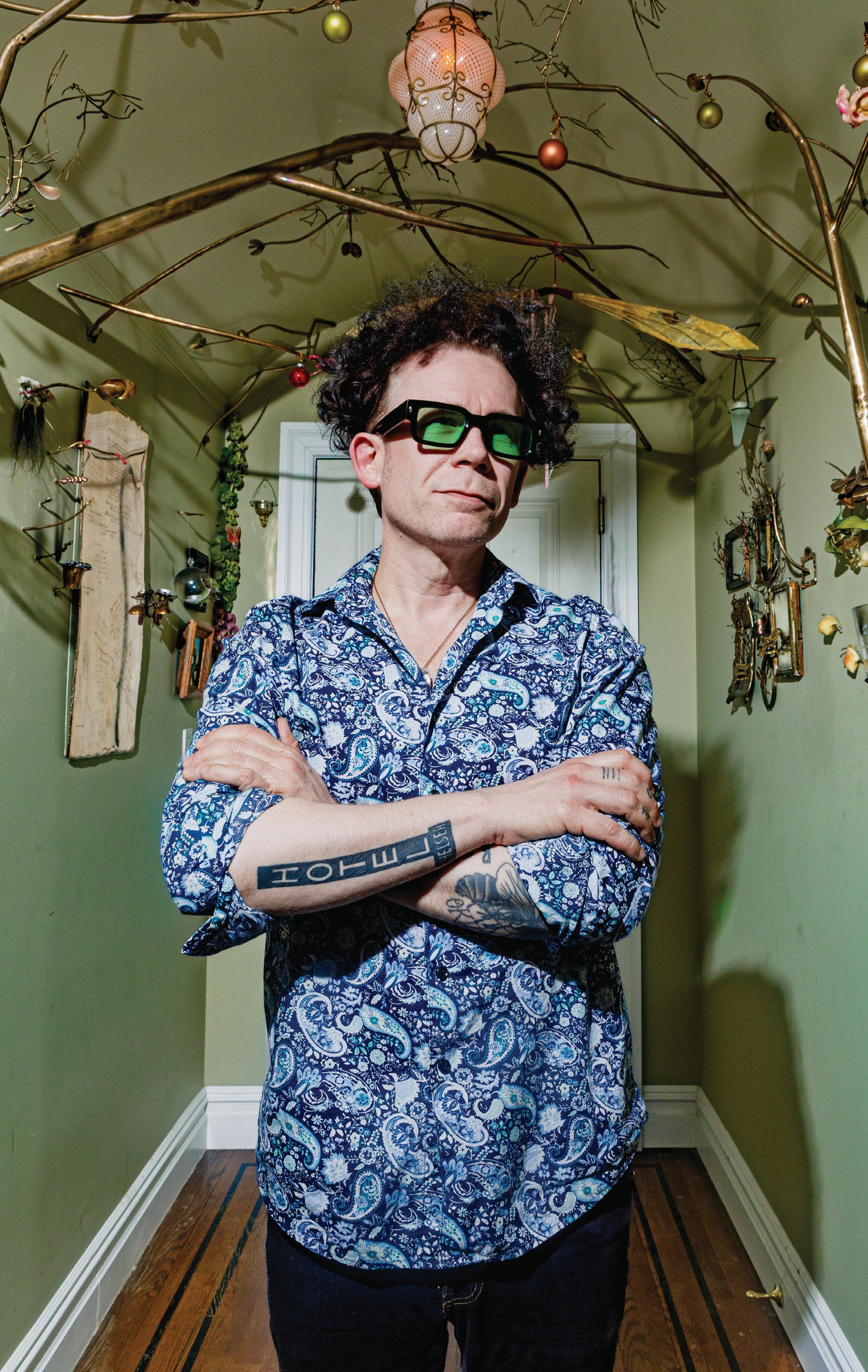
“Various other endeavors” is a summarial way to describe a person who defies being summarized. But swap “endeavors” for “creative projects and eclectic cultural pursuits,” and a fuller picture of William Benton emerges: musician, DJ, doorman and resident tour guide and historian at the iconic Hotel Chelsea in New York City.
I tell Benton that I’m interested in profiling him for Luxiere —how I’m intrigued by his myriad pursuits, and as an aside, how I think his Oklahoma connection would be of interest to our readers, and ask if he’d be available for an interview and photos. “I’ve been thinking about getting ‘O K I E’ tattooed on my fingers,” he says. “Maybe you could shoot that?”
This is not something I expected to hear offered up by a historian A suggestion for us to shadow and photograph him while he’s giving a tour, maybe. Perhaps a chat over drinks. But no; Benton’s first idea is, to my delight, for me to bear witness to him getting permanently, nostalgically inked.
The tattoo plans fall through, but the sentiment behind them sticks with me and stokes my curiosity about him. How, I wonder, did he come to be here? And what about his own origin story feels so
important for him to preserve—even here, 1,500 miles away from it?
I arrive for our interview at the hotel the following week. Per Benton’s instruction, our photographer and I slip quietly past the patrons, residents and designer dogs trailing through the lobby, nod a polite hello to the desk concierges, and glide to the elevator. We’re careful to blend into the setting, like we’ve been here countless times. The truth is, I’m cos-playing belonging in a place I’ve only ever experienced in movies, books and songs, save for a couple of famously cold martinis at the Lobby Bar.
The Hotel Chelsea is iconic, but also a little untouchable; the kind of storied, glamorous place reserved for very posh, or very alternative, characters. Moving seamlessly through it now, making our way to a private residence, feels both chic and a little subversive—though I’m aware that this too, is part of my projection: that I still want it to be those things, despite what it’s become.
Today, The Chelsea is as ritzy as it once was unruly. Originally conceived as one of the city’s earliest cooperative housing experiments, the building was designed with New York’s creative class in mind. In its heyday, starving artists reportedly paid their rent with paintings, some of which are still rumored to line the hotel’s art-draped halls.
Decades ago, those halls housed an astonishing cast of characters: Bob Dylan, Dylan Thomas, Allen Ginsberg, Edie Sedgwick, Patti Smith, Leonard Cohen, Joan Baez, Andy Warhol and, most infamously, Sid Vicious and Nancy Spungen. By the late 20th century, The Chelsea’s mythology had become inseparable from the history of rock and roll,
Beat poetry, punk, visual art and New York itself—understood as a place where masterpieces and tragic disasters collided on the same floors.
But time has a way of wearing down the edges of things, and even the legendary Hotel Chelsea wasn’t immune to its softening. After changing ownership, the building closed for renovations in 2011 and sat behind scaffolding for more than a decade, before reopening as a luxury hotel in 2022. Today, only a small number of its long-term artist-era residences remain. The rest of the building welcomes travelers, happy houring professionals, well-heeled socialites and music pilgrims hoping for a brush with the magic said to still linger in its hallowed halls.
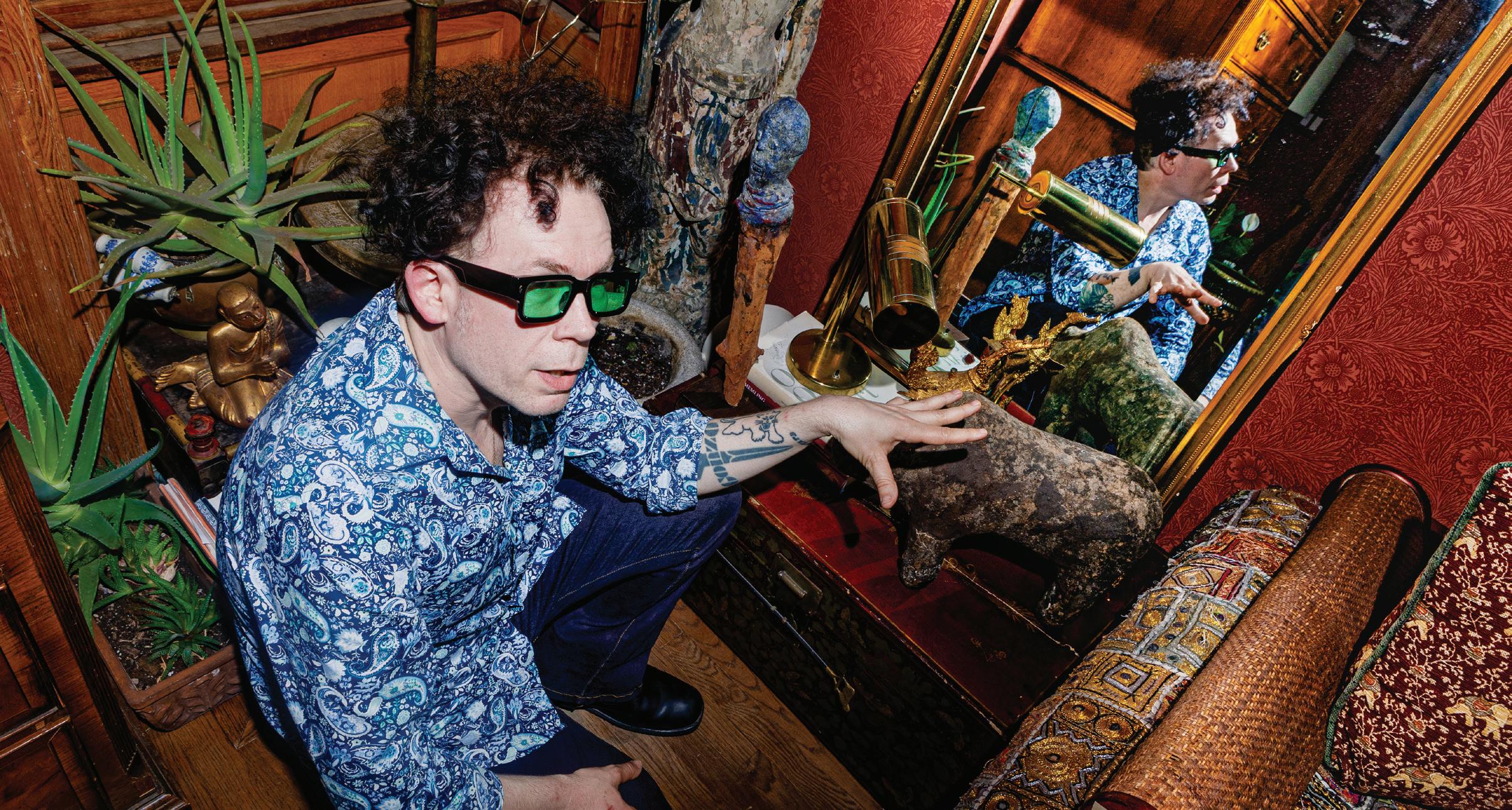
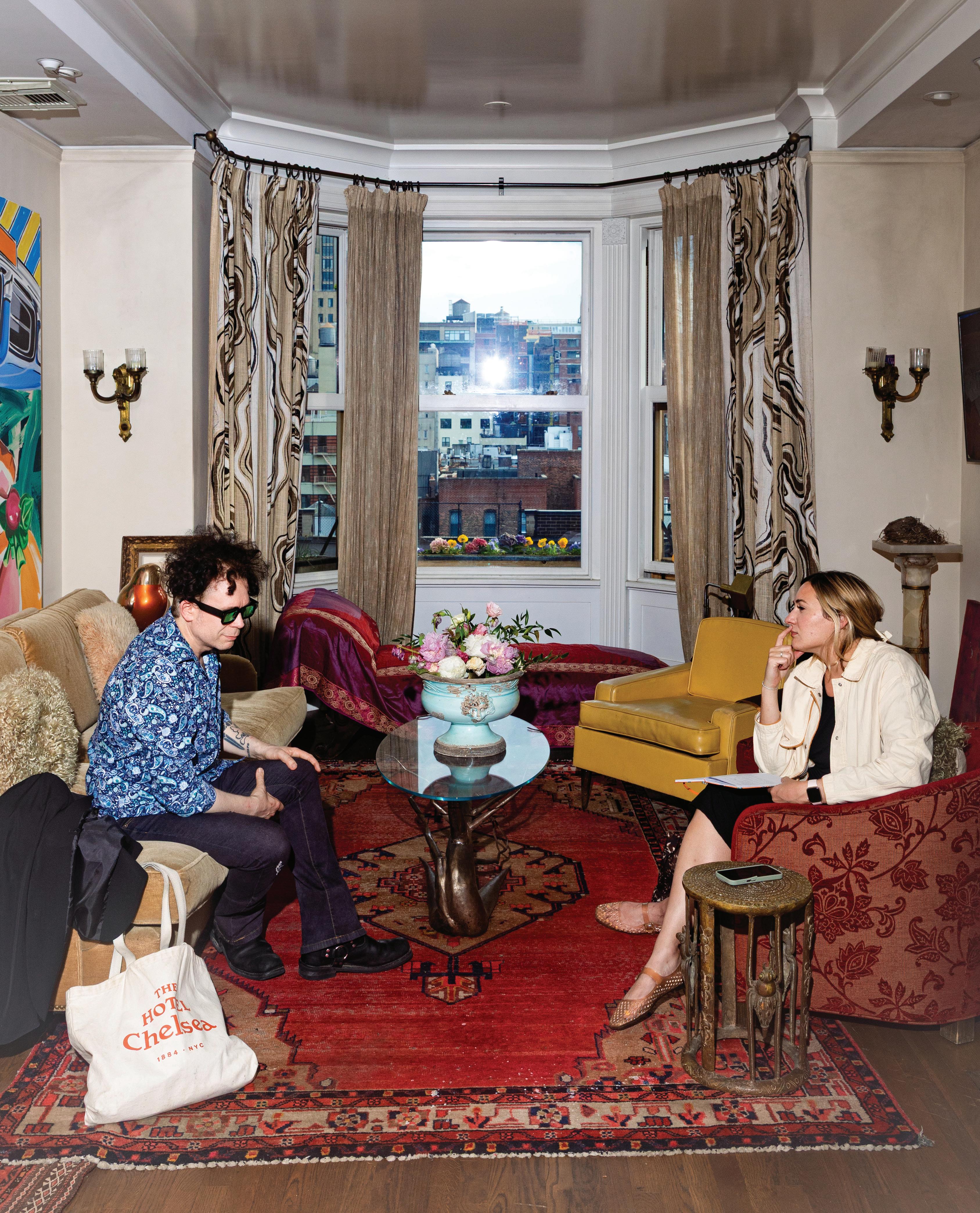
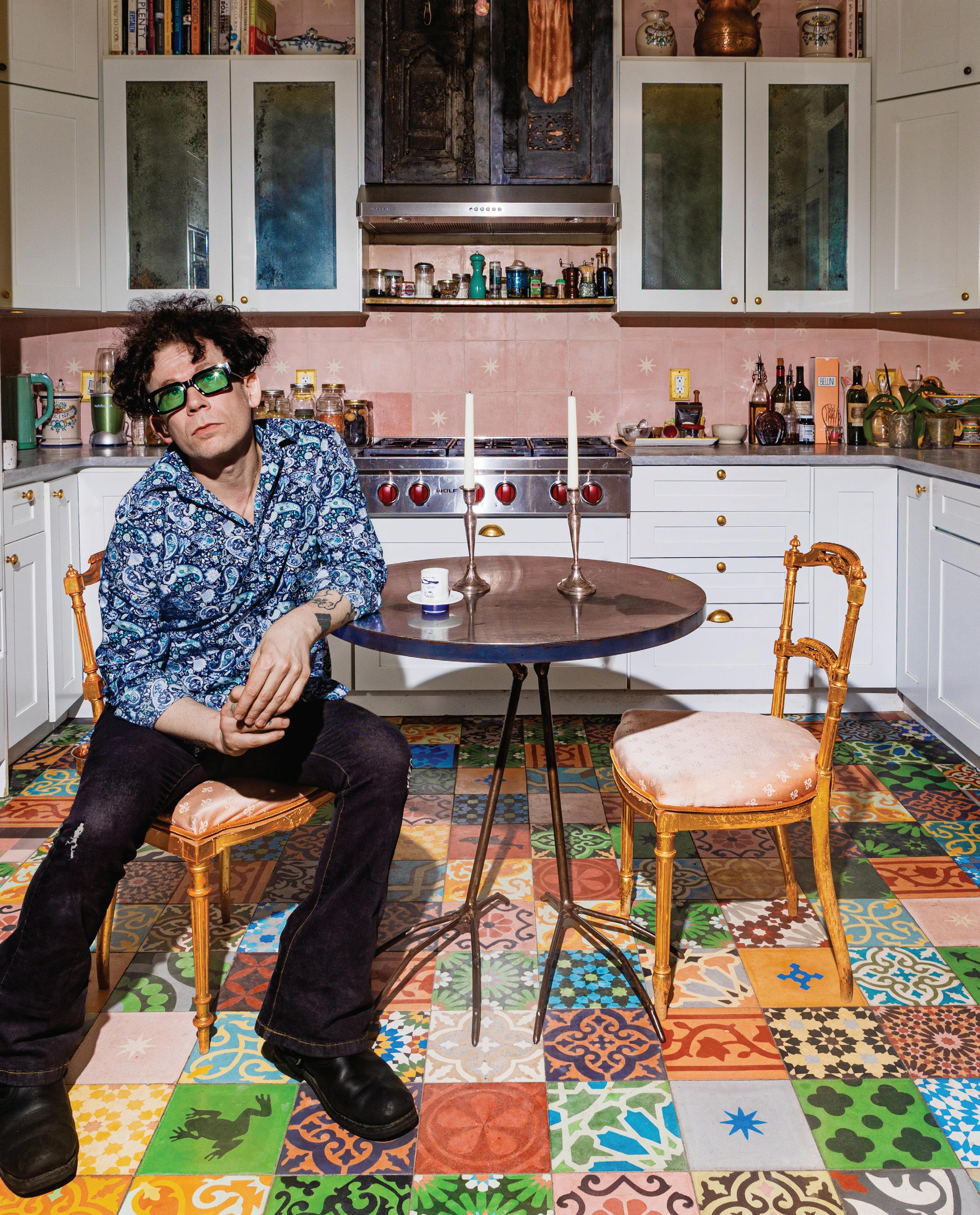
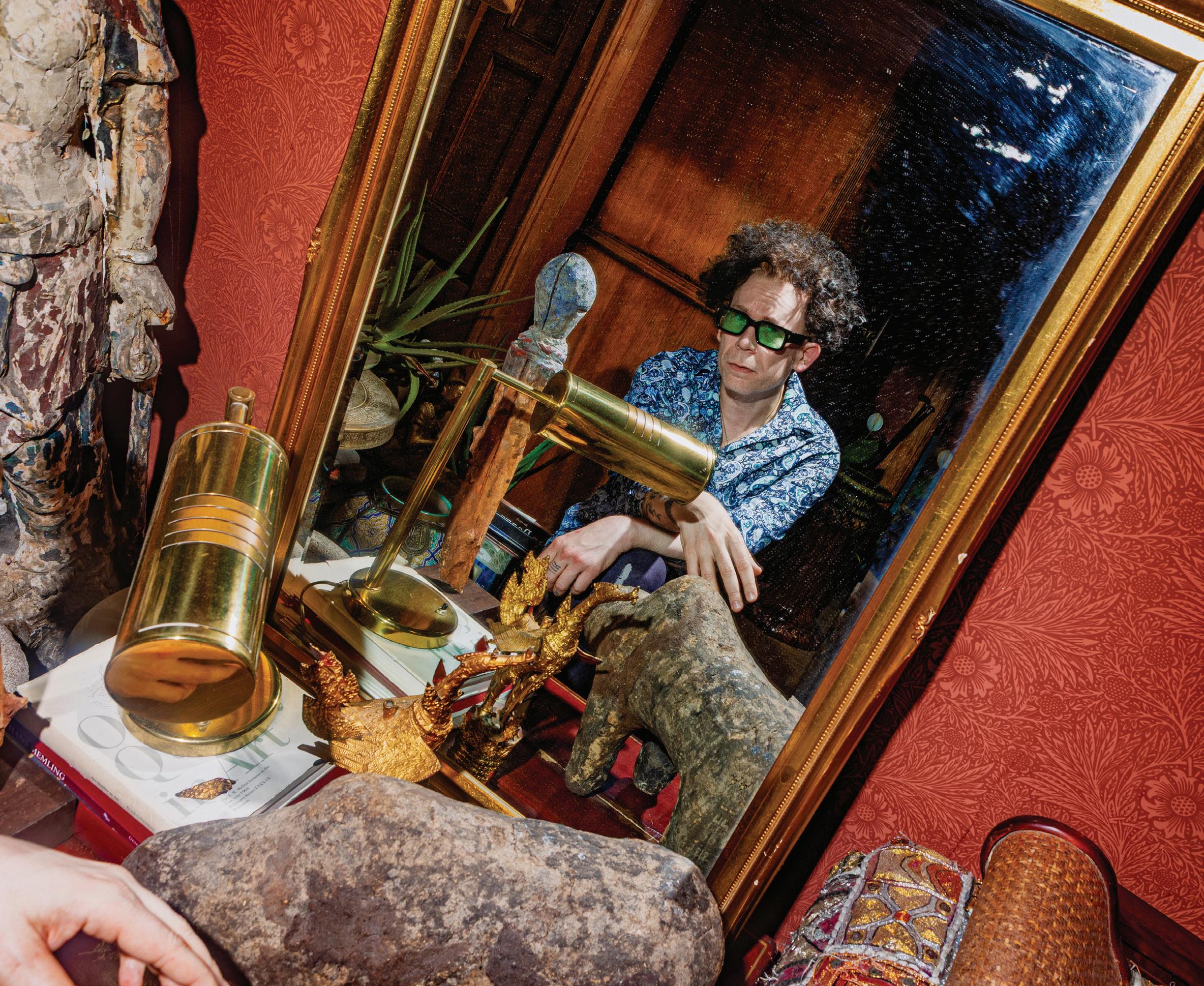
I knock on a sixth floor apartment door and am greeted by a tattooed man in chic sunglasses, with a shock of dark hair mussed out in all directions, as if lightly electrocuted. Benton has secured the apartment of Michael and Shelia Rips, an author and artist, respectively, for our interview. The apartment, objectively and subjectively gorgeous, is recently restored, drenched in golden hour sunlight, dripping with art. It’s the kind of place I want to commit to memory, and before leaving, I steal a few iPhone snaps of its odd corners and mise en scène. Being here, Benton tells me, is “a pretty rare opportunity.”
Since 2022, Benton has greeted and guided Hotel Chelsea guests and residents as they cross the threshold from 23rd Street, as its mostly official Tour Guide. After arriving to work the front desk, Benton requested to move around a bit—carry bags, deliver packages. He started to absorb the stories of The Chelsea he’d studied growing up, the same ones that would eventually elevate him to tour guide and historian.
So what exactly does playing the role of historian at a place as culturally singular and iconic as The Chelsea entail? I ask if the hotel tours he gives follow a formula, and he says definitively not.
In the elevator to the top floor, where he starts most tours, Benton uses the time to understand the guest beside him: what brought them here, what they already know. He sifts for inklings and intuits curiosities like a fortune teller or psychic medium might, weaving it together into a version of the Hotel that feels uniquely suited to them.
“I like to know why you’re here, and what brought you to the Chelsea.”
After all, everyone who makes the pilgrimage there is searching for something.
Benton himself is a bit of a troubadour. Historian by day, frontman of Cat Casual & The Final Word by night (supported on drums by Steve Shirley of Sonic Youth and Cat Power, along with Greg Eckelman on bass, and Rob Morrison on pedal steel). In the character sketch of my mind I paint him as a traveling artist, always moving from one stage to the next. Not a chameleon, but a renaissance man.
I ask if that description feels right, and he skirts the question.
“It’s a pretty good policy not to describe yourself,” he says. “That probably comes from growing up poor.”
Long before he became tour guide at the Chelsea, Benton was a kid in western Oklahoma (born in Buffalo, raised near Woodward), seduced by the far-off siren song of ’70s and ’80s punk, dreaming of getting closer to the music and art that kept him company through adolescence.
“Punk is important to me because it caused me to leave home.
Then I was off to trouble the rest of the world in various capacities.”
WILLIAM BENTON
“Punk is important to me because it caused me to leave home,” he says, describing the sub-culture that first called him away to grittier pastures. After high school, he worked the oil fields until he saved up enough money—seven hundred dollars, to be exact—to leave.
“Then I was off to trouble the rest of the world in various capacities,” he recalls.
Hearing him tell his origin story, I’m struck by how a person from rural Oklahoma winds up installed as cultural keeper at one of the most iconic hotels in the world.
“It’s a strange trajectory from here to there,” he tells me.
Though he’s lightened his embargo on Oklahoma considerably in recent years—especially after the passing of his father a few years back—he has a complicated relationship with his home state.
“I feel some resentment and shame for where I came from,” he says.
“Don’t we all?” our photographer, another Okie ex-pat, interjects while snapping candids.
All three of us left Oklahoma to make something bigger of ourselves. We all admit that there’s a restlessness wrought by our home state, but also that it could be a competitive edge. There’s something in Oklahoma’s underdog spirit that fosters an outsider attitude and an innate drive to prove something that someone born and bred in a creative mecca like New York or L.A. might never understand.
In the same breath, Benton credits his upbringing in Oklahoma (by way of his parents’ influence) with exposing him to the interests and cultural influences that brought him to where he is today: musicians like the Prince of Cool, Chet Baker; the legendary Karen Dalton, dubbed by many “the female Woody Guthrie;” Devo, whose influence was so significant on Benton that he memorialized it with a Devo tattoo; comedy greats like Kids in the Hall; and Jimmy Webb, who penned iconic hits like “Wichita Lineman,” for the likes of Glen Campbell, Frank Sinatra, The Supremes, Linda Ronstadt and others, and who as it were, attended the same Baptist church Benton’s family did in Ninnekah.
In fact, the farther he traveled from Oklahoma, the more he found himself running into it: in the musicians he admired, and even in the chance encounters with strangers turned kindred spirits who recognized something familiar in his accent.
Benton tells a story of an afternoon at Coney Island, where a boardwalk shop-worker recognized his accent as distinctly Oklahoman. She led him to the back of the shop and introduced him to a fellow Okie, who encouraged him to apply for a part-time job.
“You don’t have to be from Oklahoma to work here,” she said, “but it doesn’t hurt.”
Some people come to The Chelsea hoping to stand where Bob Dylan wrote Blonde on Blonde . Others come looking for Leonard Cohen, Patti Smith, Dylan Thomas, Warhol, Kerouac or other ghosts of a now-vanished New York. Beneath those desires is a quieter longing: evidence that their own story belongs inside a larger one. Benton came, I think, to find himself.
“Everything I know about this place is an osmosis of all my interests,” he insists, “from literature to film, music, the Beats, Warhol, punk.”
Those interests keep Benton busy. These days, he’s mixing a new Cat Casual record (which he said someone once described as “countrycontaminated punk rock”), soundtracking and sitting for documentary interviews, spinning ’90s country records at his listening room residency, and of course, giving tours of the hotel (harder to come by these days, and available only to guests by appointment).
Hold it all up together, and it’s easy to understand how Benton got where he is today: He’s curious. Unassuming. A sponge for interesting information. Privately contrarian but publicly hospitable. Transient, like the original icons of the hotel, and proof that home—as it turns out—isn’t a place, but the ability to find and recognize yourself in unexpected places.
“If I could tell 17-year-old-me that I’d be doing this … I mean today, I see the sign, and try to remember what I would’ve given back then to be where I am now. Just standing at the door would’ve been blowing my mind.”
It’s a door that he never thought he’d be standing at, but proudly holds open today. Benton was an outsider in Oklahoma, and in many ways, he’s still an outsider now. Despite what many think, he doesn’t live at The Chelsea; he commutes. His domain is not the residences, but the halls themselves—hallowed, eccentric, full of stories. There’s no hotel in the world more storied or famous than The Chelsea, and no one better to represent its guiding motif—that art and wandering go hand in hand—or to acquaint a visitor with its ghosts than William Benton: doorman, tour guide, troubadour, renaissance man. •


Skill, dedication and the sneaker side hustle that helped elevate photographer Jason Martinez
BY ANDREA SCHULTZ
Jason Martinez has photographed some of the most iconic moments in music industry history. Otherwise known by his Instagram handle, “@nike.kd,” Martinez has captured artists ranging from Drake and Travis Scott to Naomi Campbell, Swedish House Mafia and even the President of the United States at Sneaker Con Philadelphia in 2024.
“Where we come from doesn’t dictate where we can go,” says the 25-year-old Warr Acres resident. Born in the Chicago suburb of Schaumburg, Martinez was raised in a big city in the height of the digital age before moving to Oklahoma City. “I remember when the first iPod came out, and I couldn’t get a phone at my age so my mom got me an iPod Touch which had a camera, and I thought, ‘Yo, this is about to change everything.’
“My friends and I started filming all kinds of skate videos and dancing videos, I downloaded every app I could take a photo or video with, and just recorded everything that was happening. Then our family moved to Oklahoma when I was around 10 years old to be closer to my grandparents and family, and at first it felt like a nightmare,” recalls Martinez.
The slower pace of life was a necessary change for their family at the time, and what seemed like a desert of activities soon became a breeding ground for creativity. “Before moving here, we used to come to Oklahoma all the time to visit my family and my cousins would put me on to artists like Lil Wayne, and they would be listening to Drake and Ye [Kanye West].
“We started buying all the new Jordans that came out—it was a huge trend going on. We would buy KDs, LeBrons and the ‘Kobe Era’ sneakers, so reselling my shoes became something I did because I could easily just upload my shoes to Facebook Marketplace or Craigslist from my phone.”
Having what felt like “all the time in the world” living in a slowpaced OKC suburb allowed Martinez the time to edit the photos, so he could make the shoes look as cool as possible to catch the attention of the right buyer.
“On Instagram, I started seeing other people’s photos, and thought, ‘This is pretty sick, some of these images don’t look real. How does someone even take this?’ I would see all these crazy photographers posting pictures of Travis Scott, or bands I really liked, or even
photoshoots for clothes and I was like, ‘Dang, I need to get a camera and I need to go to Chicago and take photos of all the crazy stuff out there to show my friends back here in Oklahoma.’”
Martinez began working summers with his grandfather to save enough money to buy a camera and book a flight back to Chicago. “At the time, I looked up what the best camera was and it said that it was the Canon EOS 80D. So I watched every single tutorial video on YouTube to learn how to use it while waiting for it to come in.”
By the time the camera arrived, he already knew exactly how to use all of its settings, despite having only shot on his iPod up to that point. “I put it together, put the lens on it, adjusted the ISO and took a photo of my dogs. I thought it was so great that I submitted it to Canon, and they reposted it on Instagram.” That was the moment he thought, “This is crazy, maybe I’m pretty good at this.”
Martinez soon realized that photography was an expensive hobby; in order to upgrade his gear he had to keep working and selling shoes. “I would go to middle school and sell kids shoes. My P.E. teacher 100% thought I was a drug dealer. One teacher asked me, ‘Why do you have so much money on you? Don’t bring that much money to school.’” He laughs now looking back, because he wasn’t bringing it in, he was making it there.
While Martinez continued to take photos and post on Instagram, the owner of a local streetwear store, Traphouse, invited him to shoot a Migos concert happening in Oklahoma City. “My mom dropped me off at the venue after school, but I had never been to a rap concert and the Migos didn’t come on stage until 1am. But backstage I met DJ Durel, I met all the Migos, I said ‘What’s up’ to them, and just started taking photos of the whole night.”
For a freshman in high school, shooting the Migos was already an opportunity of a lifetime, even more considering it was the first concert he had ever photographed. “I went back to Chicago after my freshman year, and my family there saw I posted those photos. They were like, ‘Yo, you shoot concerts, right? You should go shoot Lollapalooza.’”
Tickets were already sold out, and staying an extra week meant that he would miss his first week of sophomore year back in Oklahoma. However, he could not resist the opportunity to keep taking photos of his favorite artists. “I bought a wristband from resale and my uncle dropped me off at Grant Park. I brought my camera and I scanned my wristband, but they stopped me and asked, ‘Where are you going with that camera?’ I’m like, ‘What do you mean? I’m about to go take some photos.’” They replied that the only options were to put his camera in the car or to throw it away. “I tried calling my uncle, but I didn’t know your phone reception doesn’t work at a music festival. I had never been to something like this and was there alone.”
His determination and confidence kicked in and he found the artists’ entrance for the festival. Two large black SUVs had just parked and they began unloading and entering the festival, so he snuck in with the large group and quickly found himself in the artists’ greenroom. “I just got to work and started shooting. No one said anything, probably because I was so young,” he laughs.
“I kept on going to shows and kept getting better at taking photos, and then that’s when the artists were starting to notice and be like, ‘Who shot these?’”
After high school, he was interested in going to college, but he was experiencing more success reselling sneakers and designer clothing, so he decided to continue doing what was already working best for him. “I saved a good amount of money from reselling, and viewed it as my version of a ‘college fund.’ Instead of going to college, I decided to go out in the world and work as hard as I can, with the people I want to work with; and if it doesn’t work out, I tried my best, I got to travel the world and have fun.”



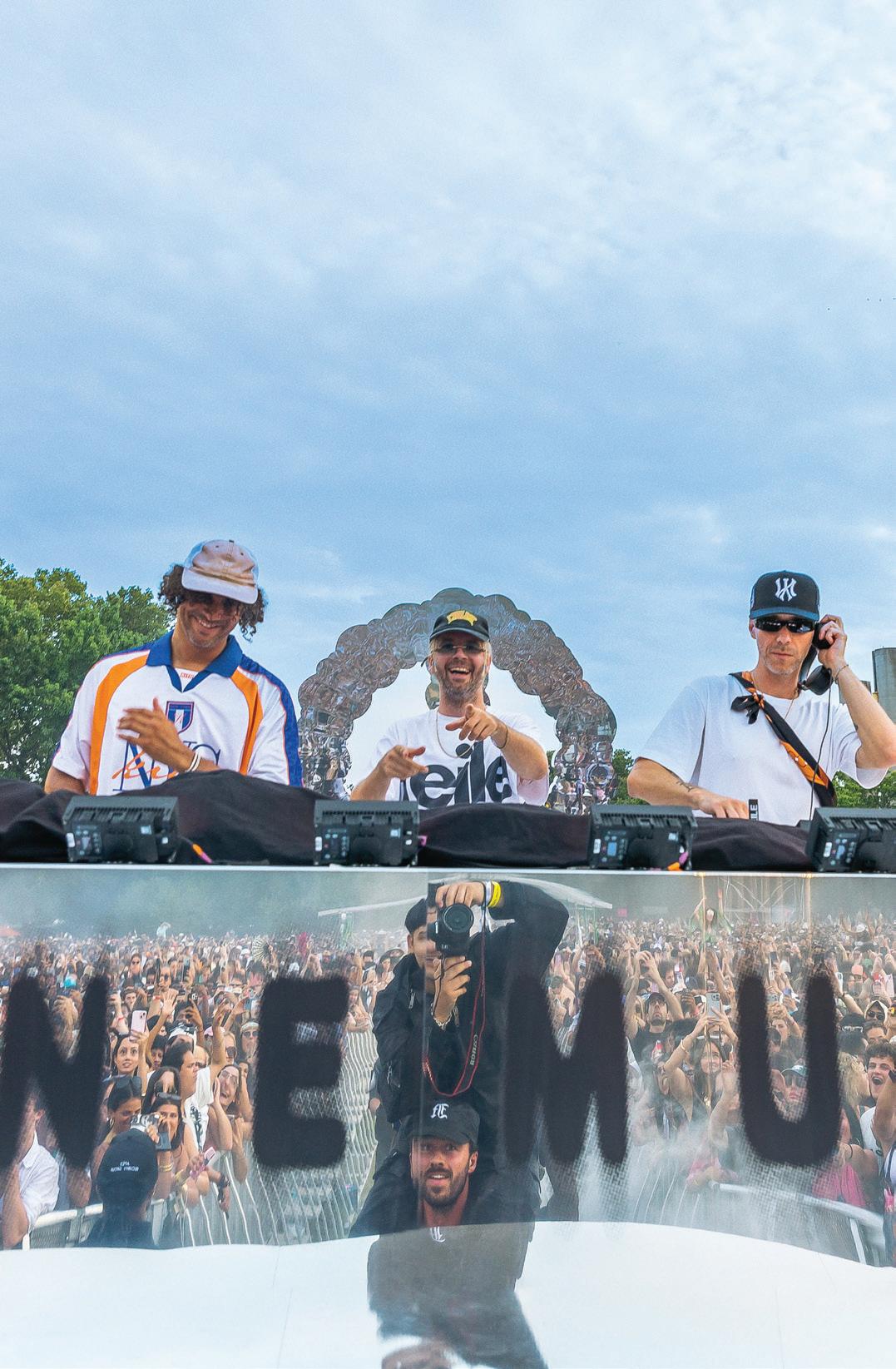


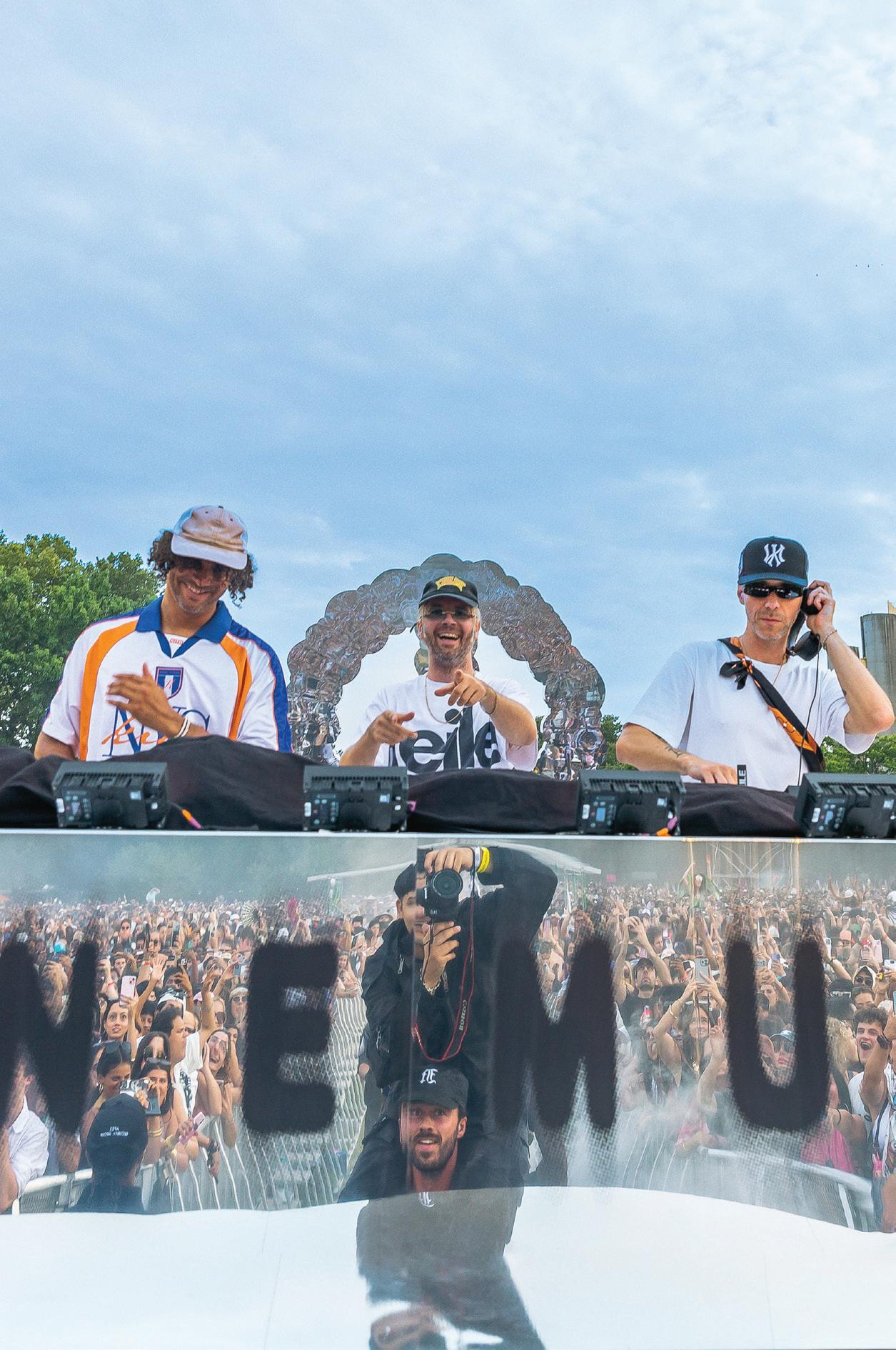
It’s more than pure talent that has taken him this far—his kindness and genuine love for his craft are evident on and off the stage. “I’m really good at taking photos, but if I never opened my mouth and only took photos, I don’t know where I would be right now. They like me because of who I am and how I treat people,” Martinez says.
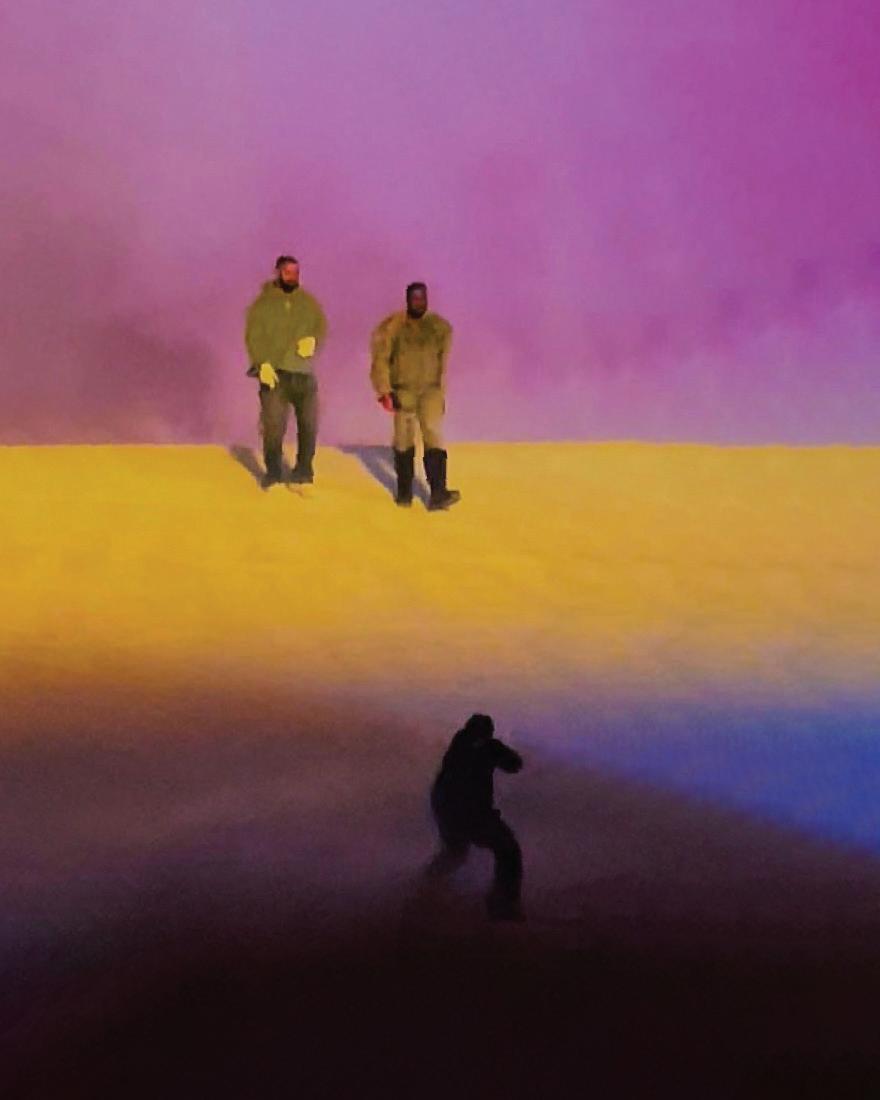
Oklahomans have a reputation for being friendly, and that trait is usually identifiable in large industries like these, where so many people are working to make a name for themselves. For example, Martinez was backstage at the Free Larry Hoover Benefit Concert in Los Angeles in 2021, and Drake was about to go on stage. “I noticed Drake’s cross necklace was caught on his hoodie, so I gestured to him to fix his chain before going out there,” which Drake thanked him for. That initial trust allowed Martinez to begin posing him and taking photos backstage, before ending the night capturing a photo of Drake and Ye walking off stage together—it became one of the most viral images of his career.
“There’s good people here [in Oklahoma]. You don’t move here for the beach or anything; you move here for the people.” Being from Oklahoma, there is that pressure to move to a larger city in search of more opportunities, but Martinez feels that because we are so connected digitally, there are still plenty of avenues to expand your career.
“Living in Oklahoma gives me the opportunity to build and think clearly. I have my projects in front of me, and I think living somewhere else would just be a distraction. [Some] people say that things are so slow here, but you should slow down!”
Today, his career spans photography, art and design. His advice for those looking to become the next “Nike KD” is to simply, “Put yourself out there, and if you’re really worthy of it, you’ve gotta run with it.” •




The All-American Rejects chart their industry-defying House Party Tour at SXSW
BY ALEXANDRA BOHANNON


It was a lightning-in-a-bottle, dynamite-in-the-hole moment on May 16, 2025, when Tyson Ritter, lead singer and bassist of the All-American Rejects, shouted some words of truth to a crowd of screaming rock fans while standing on a bowling lane.
“We’re not trying to sell you financed tickets to Coachella. We’re not trying to sell you Ticket Master f***ing penalty fees. We’re not trying to sell you 25-dollar parking,” said Ritter from the Memory Lanes Bowling Alley in Minneapolis, Minnesota.
“We’re just trying to sell you some songs you might have grown up with so you can f***ing let go with us, in this non-denominational church of rock-and-roll.”
Okie rockstars Ritter, guitarist Nick Wheeler, guitarist Mike Kennerty and drummer Chris Gaylor dared rattle the cage of the behemoth of the music industry; the clip went viral, being picked up by major news outlets.
“I guess I tapped into something there I didn’t mean to, but this clip got passed around a while,” says Ritter from the stage of The All-
American Rejects’ panel at SXSW on March 13, 2026.
“It struck a nerve, CNN and all that sh**, and it launched this tour into the national conversation.”
The aforementioned tour was the Rejects’ House Party Tour; average people with access to a backyard or other third-space venue could play host to the Rejects with no formal ticket price, maybe a donation bucket at the door for the venue. During 2025’s leg of the tour, the Rejects played stops across the Midwest, places that typically would never be able to pull such a big act.
Just 48 hours after the clip broke containment, 800,000 people added their contact information to be texted about a House Party show near them. An additional 25,000 people submitted venues: places as small as a studio apartment to as big as a high school basketball arena which could hold 18,000.
“I remember how we played VFWs and pizza parlors and God-knowswhere on some of the first tours in a van we had,” says Ritter. “There was something here. Something we tapped back into.”
From Stillwater and Edmond, the Oklahoma Music Hall of Famers have been playing together for around 27 years—Ritter and Wheeler have played together since they were high schoolers in 1999. After a slingshot rise to the top during the early aughts, the Rejects’ hits came quickly and became anthems of a snapshot in time. These songs will be no surprise to folks of a particular KJ103 listening era: “Dirty Little Secret,” “Swing Swing” and “It Ends Tonight.”
But things stalled. The band’s last new record was 2012’s Kids in the Street . Their former management wanted them to focus on anniversary tours of their past albums like their 2005 smash-hit Move Along. While they did negotiate release from their label to go independent, they were still limping from gig to gig—casinos to state fairs to corporate retreats.
All of this prompted a massive question: How does an independent artist, with no mainstream music industry push behind them, penetrate the public consciousness these days?
It was landing manager Megan Kraemer of High Maintenance Management, whom Ritter describes as someone who “actually loved the band,” (an apparent first) who shifted things for the group. She inspired new music and got them a distributor … but more importantly, got them thinking about a whole new way of promoting their music.
“Megan had an idea. A simple, foolish, pain-in-the ass idea: ‘Why don’t you play house parties?’” says Ritter.
Donning a high falsetto, Ritter continues as Kraemer: “‘We go and play in backyards, like at the end of those movies about college and sh**.’”
The band didn’t balk at the idea, even as risky and crazy as it sounded; for them, the contrast would be welcome. They had just played the most corporate of corporate gigs: a ballroom full of grocery executives that Ritter describes as a “poorly attended PTA mixer.”
But the Rejects walked away with a $50,000 check and a vision, thanks to Kraemer: They were going to play accessible venues in cities that weren’t music rich; charge nothing; and see what happened next.


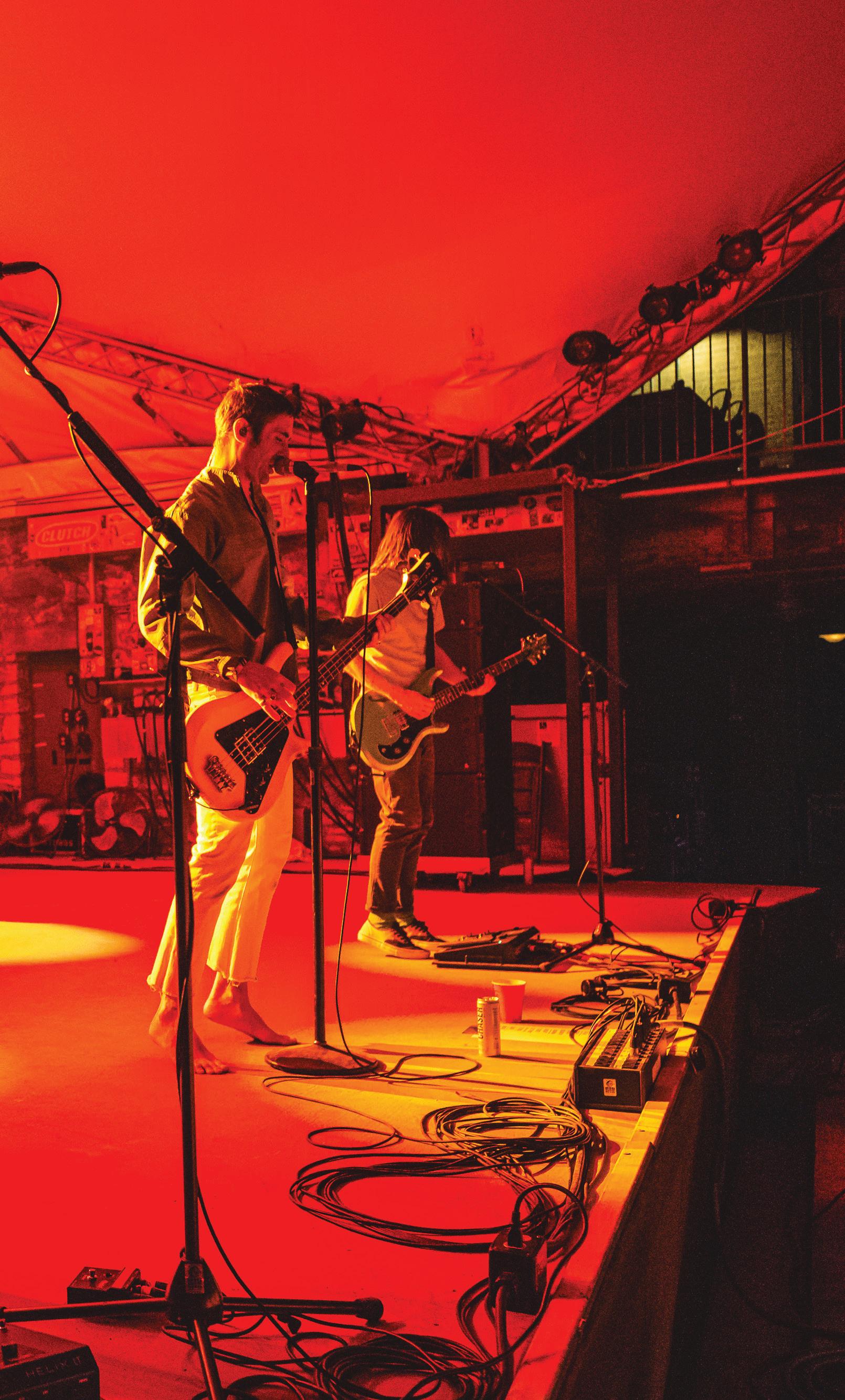

First stop, the University of Wisconsin at Green Bay. The college’s radio station got the Rejects a spot on the quad at the end of finals week. The road crew depended on sidewalk chalk and word of mouth. Ritter didn’t think it was going to work, but people turned out. On to the next.
By the second stop, playing a backyard in Chicago, there was a noticeable shift in energy for the tour. People were already lining the streets of the venue house’s neighborhood despite the address not being public. By 3 PM, a queue of 5,000 people traced the Chicago streets. Ritter noted how this was different from waiting in line for a big stadium show.
“This was more than a line. I’ve been to shows, I’ve seen those lines,” he says. “This was a community. This was a community of people from all walks of life, and I guess that was fascinating to me, because it felt so different than the usual pre-show crowd.”
And playing these shows felt different, too.
“For many years now, I think we’ve played very high stages with barricades, and there’s a distance there,” says the Rejects’ rhythm guitarist Kennerty at the SXSW panel. “Getting back to playing with nothing separating us, it reminded us of the excitement we had when we started doing this that slowly gets whittled away as you get the success. These shows have given us the soul back to playing shows.”
The proximity and eye contact with fans and the palpable energy of the crowd were selling points not only for the fans, but for the Rejects too. After a successful show in Chicago, they were starting to feel momentum behind the House Party Tour project.
Following Chicago was the viral Minneapolis show where they played two sets for over 1,500 people at Memory Lanes; an overflowing bucket of $5 donations guaranteed the bowling alley would exist another summer. Ames, Iowa was next, where they played an old popcorn factory in the middle of a cornfield for 4,000 people. Driving south on US-63, the Rejects arrived in Columbia, Missouri.
Rewind to a few weeks earlier: John Sansone, general manager of KCOU—the University of Missouri’s college radio station—received an email supposedly from The All-American Rejects’ management. Naturally, there were fears it was a scam. Feeling cautious, Sansone pulled in the station’s music directors Lily Franck and Michaela Bailey to set up a Zoom meeting.
It was real. And now the clock was ticking on the logistics of hosting the Rejects in Columbia.
“We were like, ‘Are you freaking serious?’ Because we’d been hustling for the last two years as music directors to get bands a fraction of that size to come to Columbia and then try and make people care about them,” says Franck.
On the eve of Franck’s graduation—with a post-graduation buffet and balloons still in her house for her graduation party—the AllAmerican Rejects set up and played in Franck’s front yard. Over a thousand showed. People sat on roofs to just get a glimpse of the band while Ritter performed in Franck’s Mizzou cap and gown, fresh from her graduation a few hours earlier.
“The exact way that I picture the All-American Rejects is sort of the way that they ended up functioning in my life,” says Franck, comparing the lead up and the show to the ending of a college movie. “Because it’s like, ‘big end of the year party, and this band comes’ … it’s very positive-resolution music.”
Most of the band also agreed: The Columbia show felt like it was out of a movie. Especially after the cops shut the show down right after a chorus of “Move Along.” After Ritter negotiated with Columbia PD (“They said we can play one more f***ing song!”), the band closed with 2008’s smash anthem “Gives You Hell.”
“The Columbia show is hard to beat, because it literally looked like a movie. It was just the way those houses were, and kids like sitting on the roof, and then the cops come in and shut us down for a minute, you couldn’t have scripted that,” says Kennerty. “People keep asking me if we scripted that … it’s like, ‘No, those are real cops!’”’
The Rejects moved through the rest of their 2025 House Party Tour dates with continued success: a roller rink in Fayetteville, Arkansas; a porch in Nashville; and a coworking space in Tulsa. People and pundits can see what the Rejects are doing for what some uncharitably call “flyover country.”
“I think greater investment in the Midwest is always going to be a blessing for everyone. People from the Midwest understand that,” says Franck. “Because if you’re from California, you’re used to kind of being the center of attention, but I get excited when I’m watching a movie and they just randomly mention Missouri. I’m like, ‘Oh my God, they recognize us,’ and I think that Oklahoma has a kind of similar feeling to it.
“These are places that are worthy of investment. And they will be successful whenever people decide to pay attention to them.”
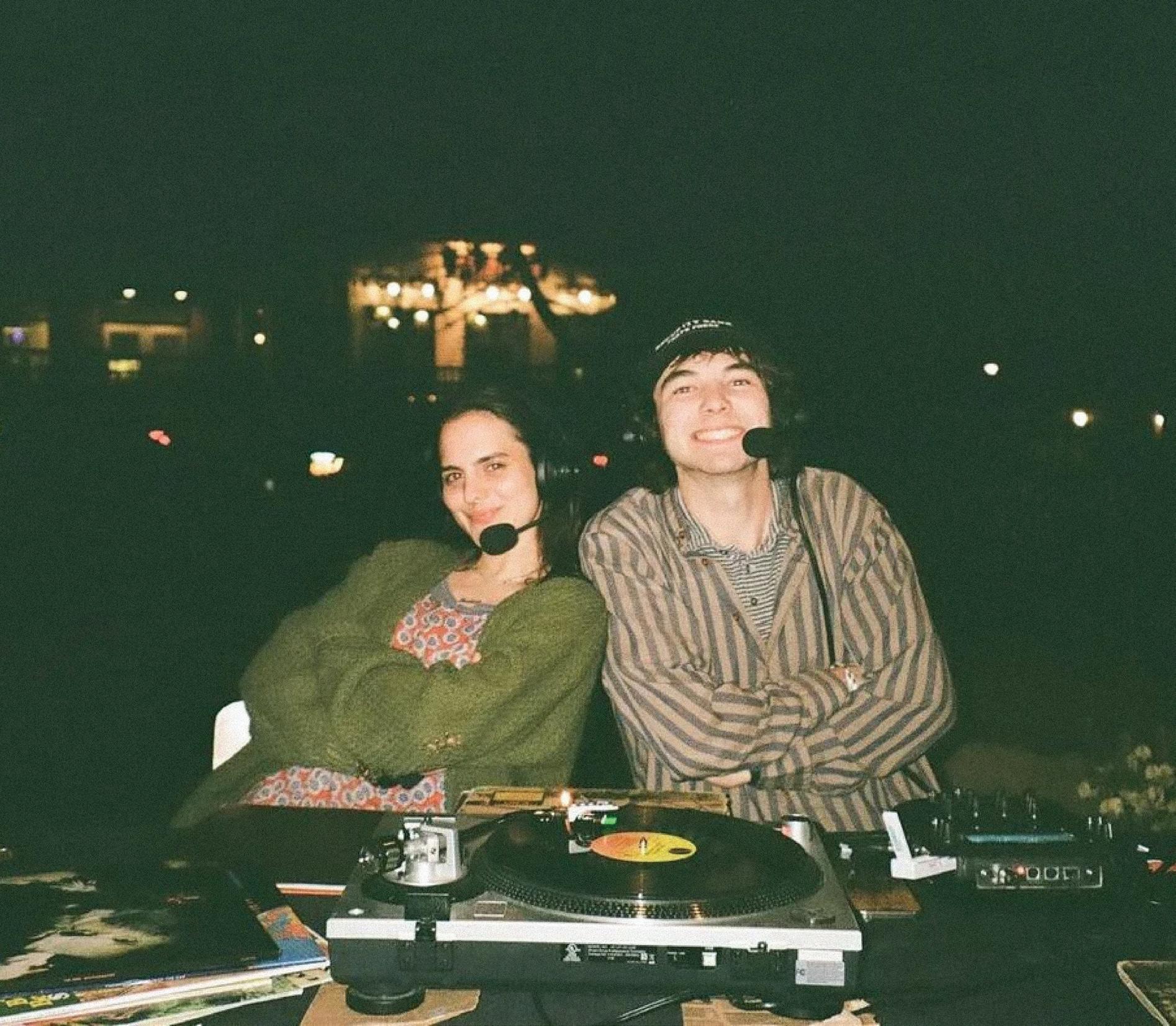
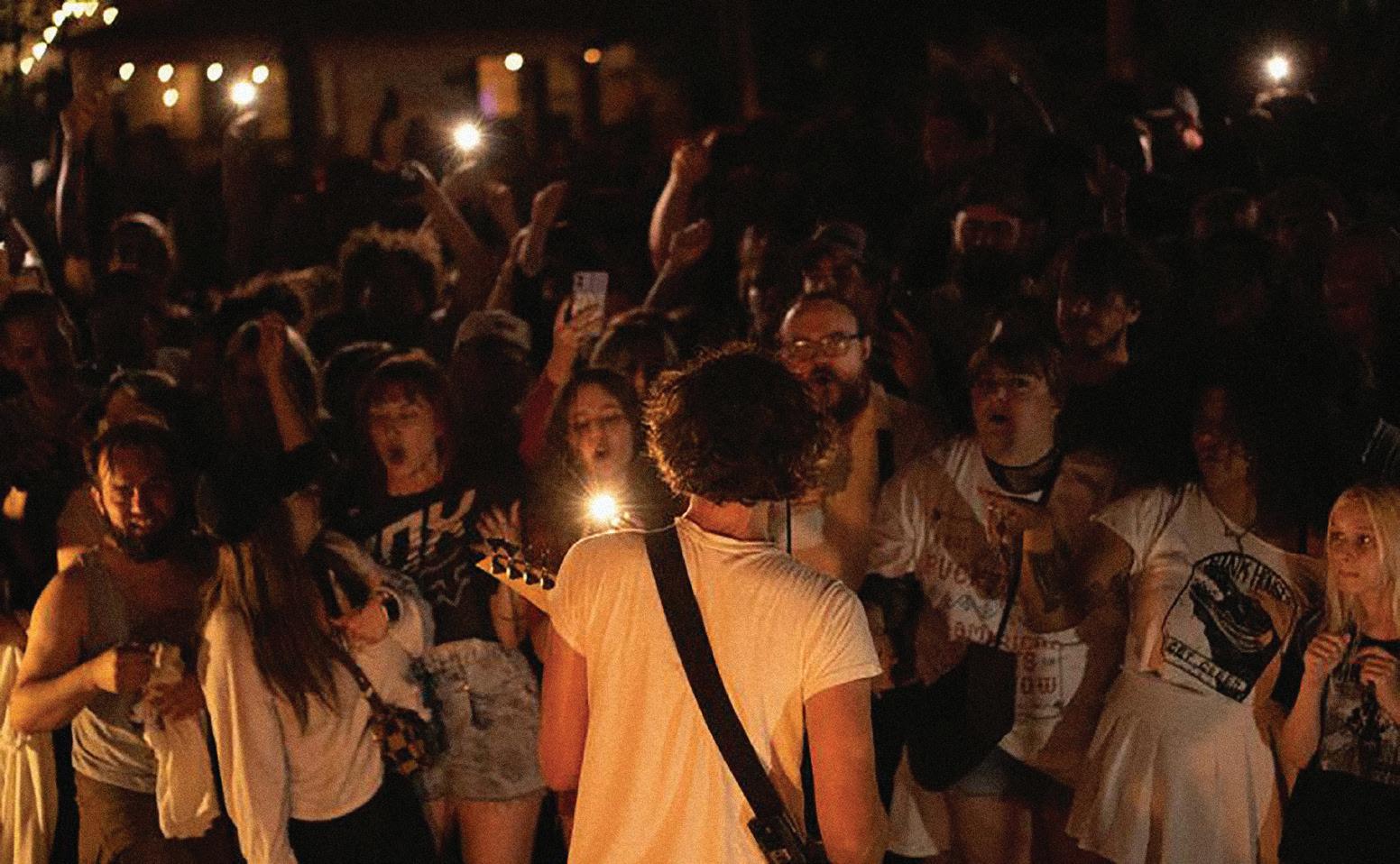
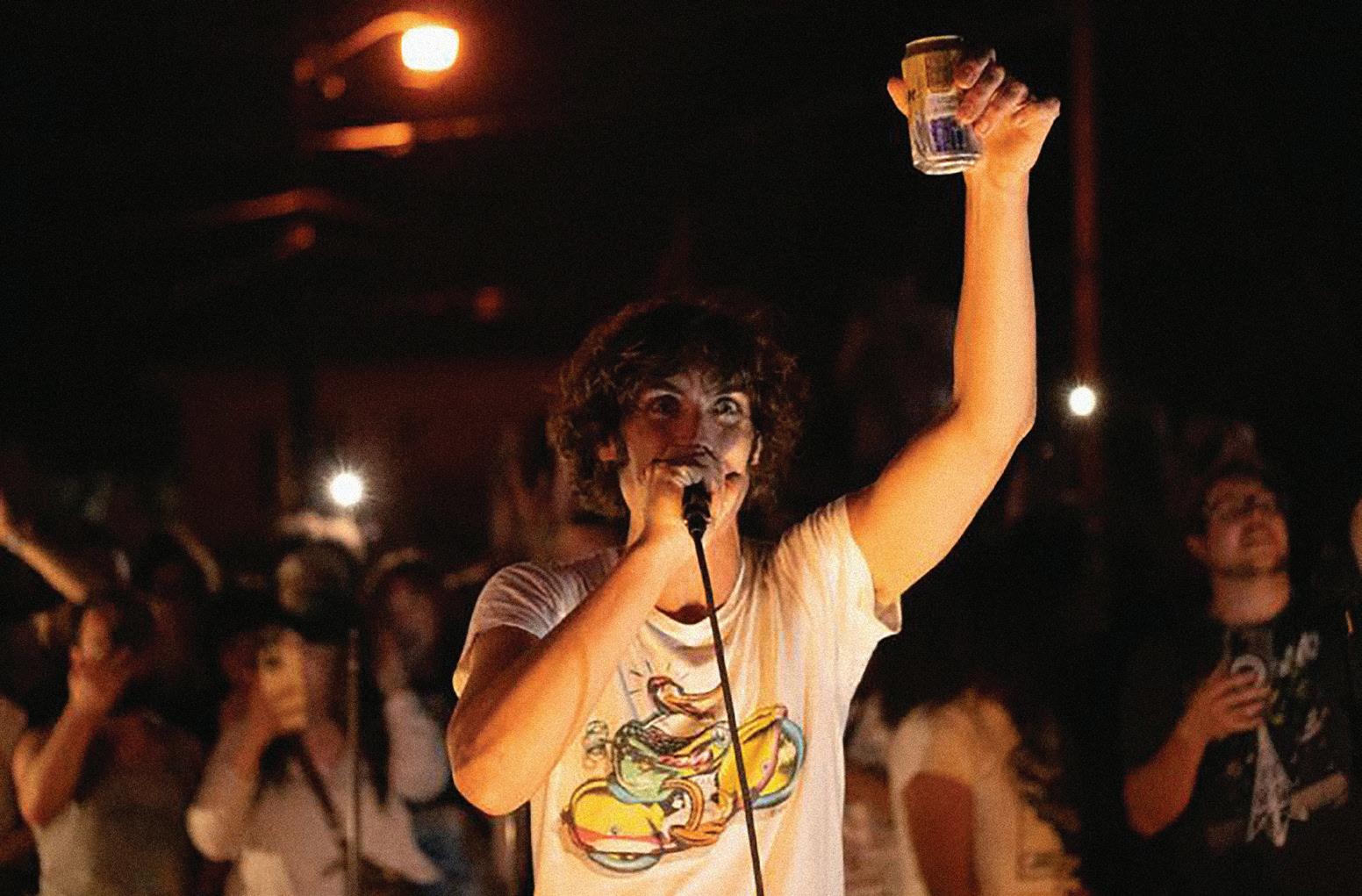
“I think being from Stillwater stays with us in a way, in every walk into this world, especially in facing this big beast of a music business.”
TYSON RITTER
But the House Party Tour—is it an overstatement to call it a movement?—has gained traction beyond just the Rejects.
While in the midst of the tour, the band had to develop some kind of technology to keep up with the onslaught of venue submissions. Now, they’re offering that technology, called Playhouse, to other musicians. Co-founded by Ritter and Brian Battjer, Playhouse connects thirdspace venues with excited artists wanting to not have to pay to play. Artists don’t pay a cent for using Playhouse, fans pay a platform fee at checkout, meaning all the set ticket price goes back to the artist.
And while playing Austin’s famous Stubb’s Bar-B-Q on March 12 as part of SXSW wasn’t booked on Playhouse, Ritter remembered when gigging in Austin wasn’t easy. Having something like Playhouse would’ve come in clutch.
“To be finally invited to SXSW, better late than never,” jokes Ritter, contrasting it with him and Wheeler driving to Austin to play at The Red Fly at 15 years old. “Just you, me and a drum machine.”
Now that the Rejects have struck gold with the House Party Tour and Playhouse, big brands want a slice of the pie. However, the band gets to do it on its own terms and through no music executive’s dictate.
“I think being from Stillwater stays with us in a way, in every walk into this world, especially in facing this big beast of a music business, you know, 25 years later,” says Ritter. “I feel like I’m in my Oklahoma pocket right now more than I’ve ever been, just because there’s so much I just don’t want to participate in.”
As misfits, outcasts and the new champion of working class music fans, they’re the ones doing the rejecting. According to an interview with Vulture, Ritter grew up in a trailer and was unable to afford CDs. He, and the rest of the band, know what they’re doing is life-changing for people who are growing up like he did.
“I feel like we were always the songs that had that band. I feel like last year, we finally created something that made us a band with those songs, and that we did it on the back of this sort of blue-collar crusade,” says Ritter. “I’ve never been more proud to be a Reject.” •
The All-American Rejects’ latest album, Sandbox, released May 15 and is available for purchase or streaming wherever you find your music. Keep up with the Rejects and the Playhouse Platform by following them on Instagram @therejects and @playhouse.band.

SUMMER IS NOT THE TIME TO PAUSE YOUR SKINCARE AND WELLNESS GOALS— IT’S THE TIME TO PERSONALIZE THEM.
OUR SUMMER FAVORITES
• Biologique Recherche skincare, available exclusively through our practice
• Bask Mineral Serum SPF for daily protection and hydration
• Medical-grade sunscreen for effortless reapplication
OUR FAVORITE SUMMER FACIAL
Biologique Recherche Facial
Designed to restore hydration, enhance radiance, and support healthy-looking skin throughout the summer months.
TREATMENTS WE LOVE THIS SEASON
• Skinwave™ for deep cleansing, exfoliation, hydration, and glow
• Light Eyes Mesotherapy for refreshed, hydrated under-eyes
• Tixel® 2 + Sculptra® to support skin texture, collagen production, and long-term rejuvenation
WELLNESS FAVORITES
Summer is also the perfect time to invest in how you feel. Our personalized wellness consultations may include:
• Hormone Replacement Therapy (HRT) evaluations
• Women’s and men’s hormone health
• Peptide therapy consultations
• Energy, vitality, and performance optimization
• Customized wellness plans designed around your goals
WHAT WE’RE HELPING PATENTS ADDRESS MOST
• Under-eye tiredness and dullness
• Dehydrated or stressed skin
• Uneven texture and tone
• Preventative aging and collagen support
• Low energy, hormonal changes, and overall wellness optimization
COMPLIMENTARY SKIN ANALYSIS
Receive a personalized assessment with customized skincare recommendations and treatment guidance tailored to your unique needs.

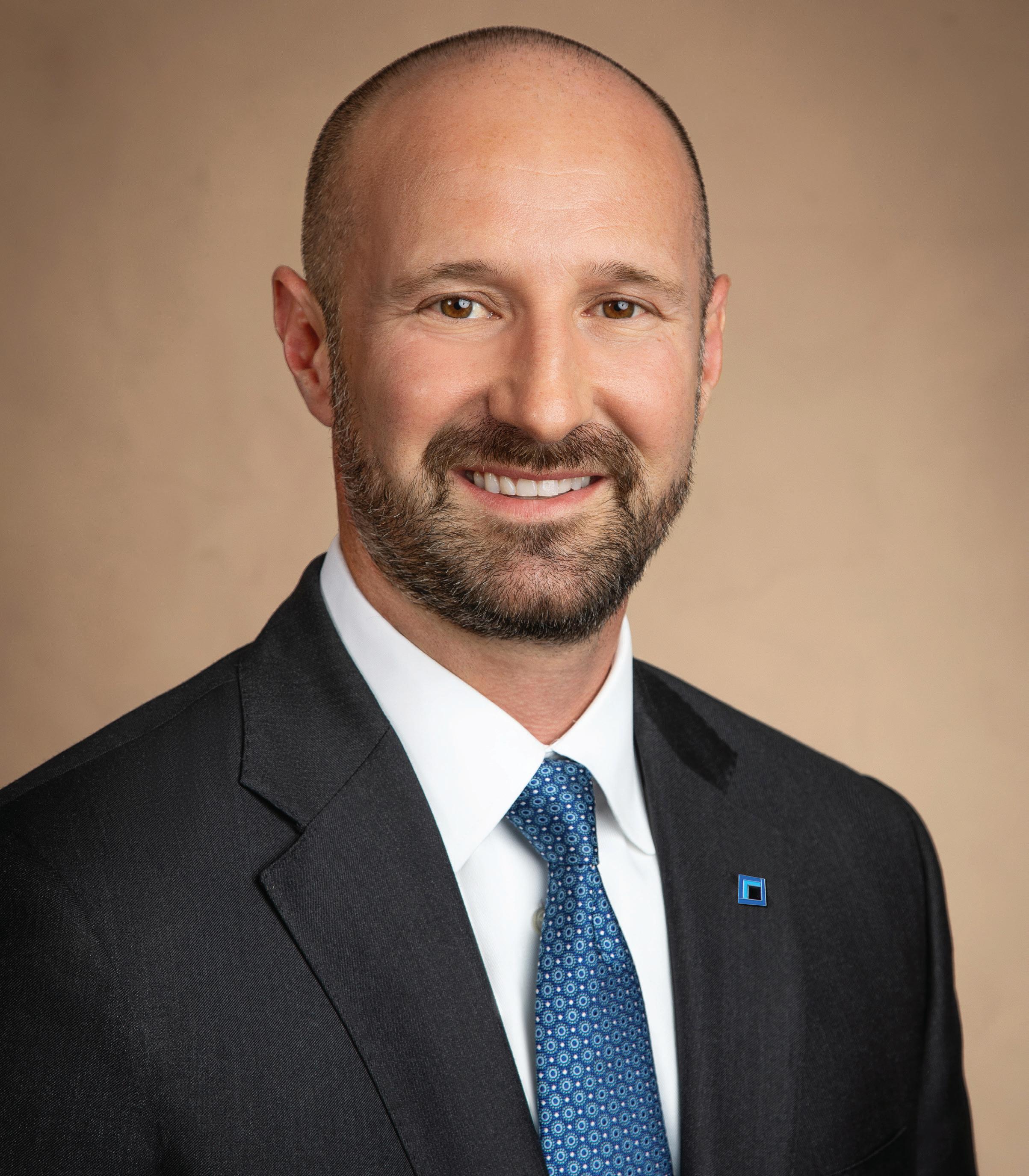
Please join us in congratulating Kyle Powell on his appointment as President & CEO of Kirkpatrick Bank.
For over 55 years, we’ve been delivering tailored solutions designed to meet your personal and business goals.
BY GREG HORTON
Aone-hour conversation with Caylee Dodson is like a spa treatment for the brain of a nerd with ADHD: religion, local politics, non-profits, Oklahoma City, Ferguson in Missouri, the East Side, Chicago, Denver, farming, mission, embodied theology—such that it’s nearly impossible to find a topic about which she doesn’t have something interesting to say. For example:
“I’m a person of faith, but I don’t lead with that. Scripture talks about the message being ‘good news for the poor,’ but nothing about American Evangelicalism’s embodied principles and practices looks like good news to me.” That was her response when I asked how her faith informed her work at RestoreOKC, the NEOKC organization that seeks to improve the lives of residents by focusing on housing, education, employment and health outcomes.
She’s rightly reluctant to have the organization perceived as a ministry in the strictest sense, because all labels come with baggage in the form of assumptions. Dodson’s approach has been conversational and pragmatic rather than condescending and messianic, the latter pair being too often the well-meaning but wrongheaded approach to what has lately come to be known as missional religion.
Dodson was born in Enid, but grew up in the Putnam City area of Oklahoma City, graduating from PC North before heading to Stillwater to major in what she calls “knowing everyone on campus.” Her first pick for a major was journalism and PR, but she didn’t really have a plan—which is pretty normal for someone whose natural gifts allow a wide range of possibilities.
“I loved writing and people and I loved stories, so that sounded like journalism to me,” she says. “I managed coffee shops all through college in various areas, and it was those experiences that helped me
understand the disparities that occur when people are afraid of ‘the other,’ and it seems that happens all over the world. The truth is that there is more than enough to go around so those disparities shouldn’t happen.”
She married right out of college, and then received a scholarship to attend Covenant Theological Seminary in Creve Coeur, Missouri, just west of St. Louis. The school specializes in theological training for the Presbyterian Church in America, a conservative denomination within the larger Presbyterian tradition—which is to say, not the kind of place a woman typically goes to grad school if she intends something other than marriage, family and teaching children.
During her years in St. Louis, she and her husband Josh, who also attended Covenant, worked with the organization Restore St. Louis. That role would lead to her leadership of RestoreOKC, but not before the killing of Michael Brown in Ferguson, Missouri—one of the police-involved shootings that contributed to the Black Lives Matter movement—divided the city along racial lines, revealing an ideological rift that ran through every other U.S. state.
As the protests and movement spread, OKC’s NEOKC leadership (religious, political, business, civilian and organizational) looked to address issues like those revealed by Ferguson’s protests and aftermath. They raised six months’ salary and invited Dodson to bring her experience and expertise to NEOKC.
At this point, it’s important to note that the only way to talk about race is to actually talk about it, not around it. A white woman assuming leadership of an organization that primarily serves a historically Black area of the metro could have led to predictably bad outcomes, but Dodson is not typical of organizational leaders.

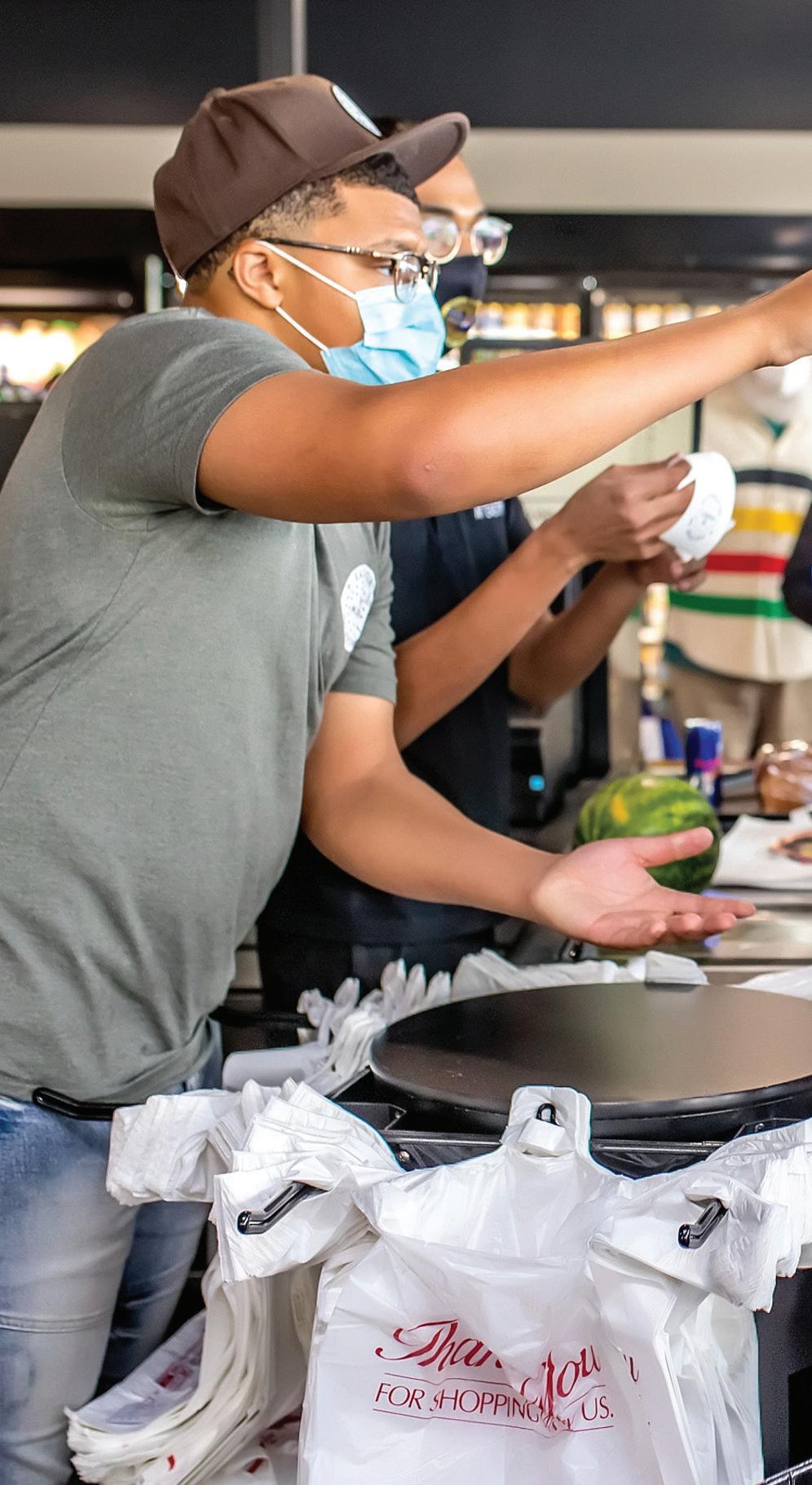
“‘We had no real plan, because we shouldn’t for a community we aren’t a part of and don’t fully understand. Our first priorities were to build relationships and to listen.”
CAYLEE DODSON
“We had no real plan, because we shouldn’t for a community we aren’t part of and don’t fully understand,” she says. “Our first priorities were to build relationships and to listen.”
Chaya Pennington, who has been profiled previously in Luxiere, is the director of culinary for RestoreOKC. Before assuming that position, she was consulting with the organization from very early on, beginning with the EastPoint development. She’s a fifth-generation Northeast Oklahoma City resident, and she has a vested generational interest in the community’s well-being.
“Caylee is different because her goal, as it should be, is to not treat the community as asset-less, because the people are the assets,” Pennington says. “She knew through conversations that it’s important to create partnerships with those assets for the benefit of the community without telling us what we need or what we should do.”
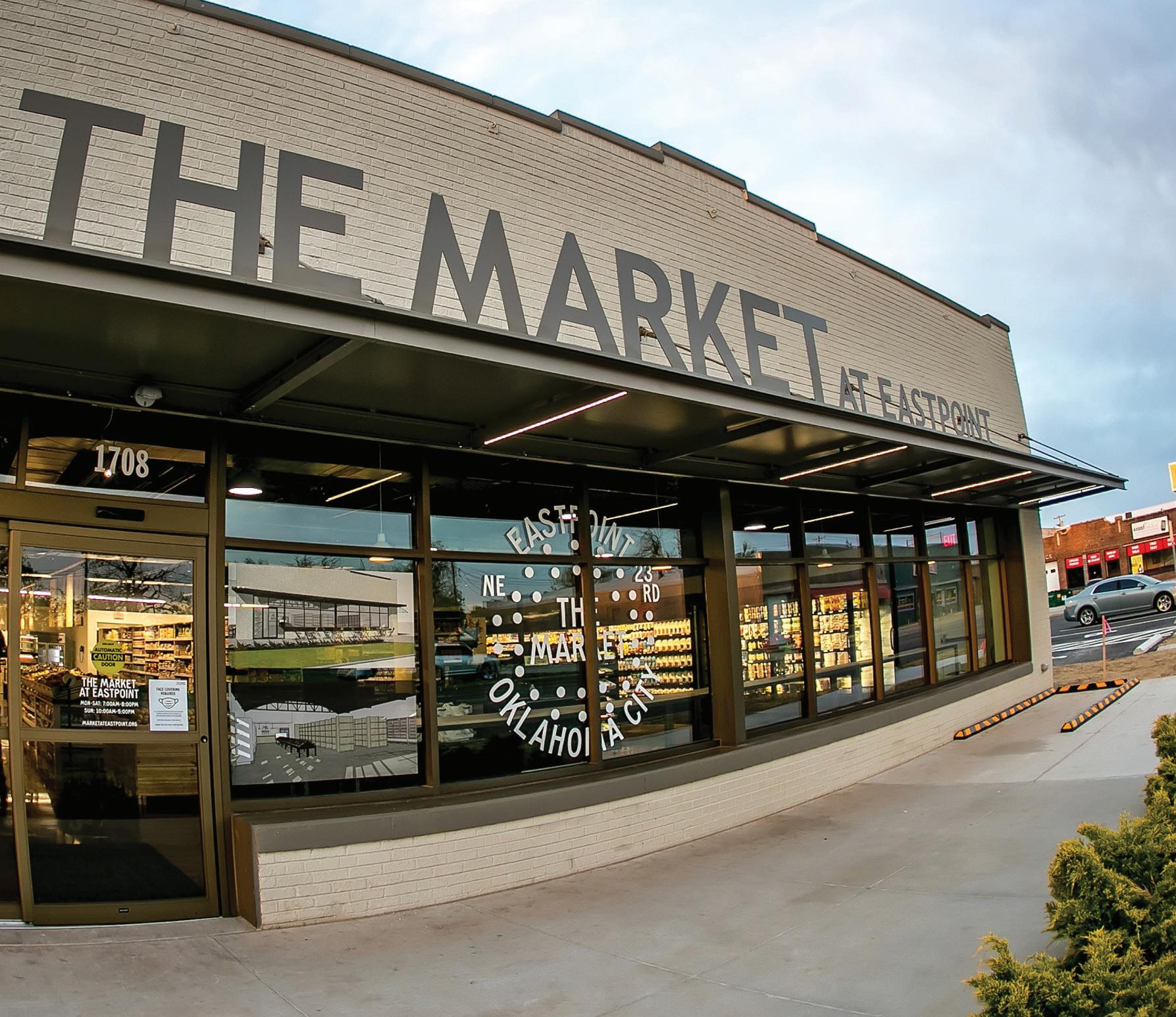
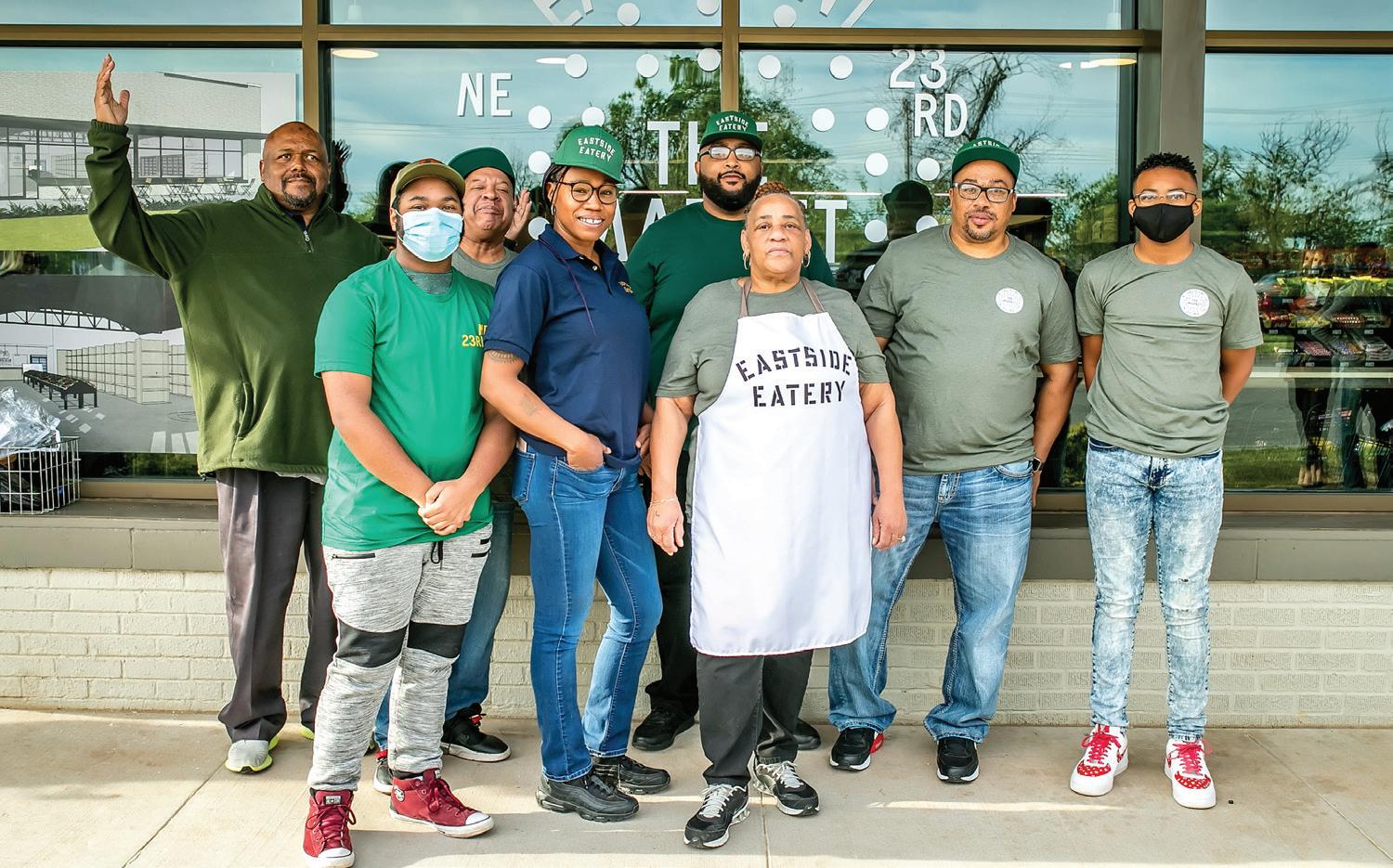
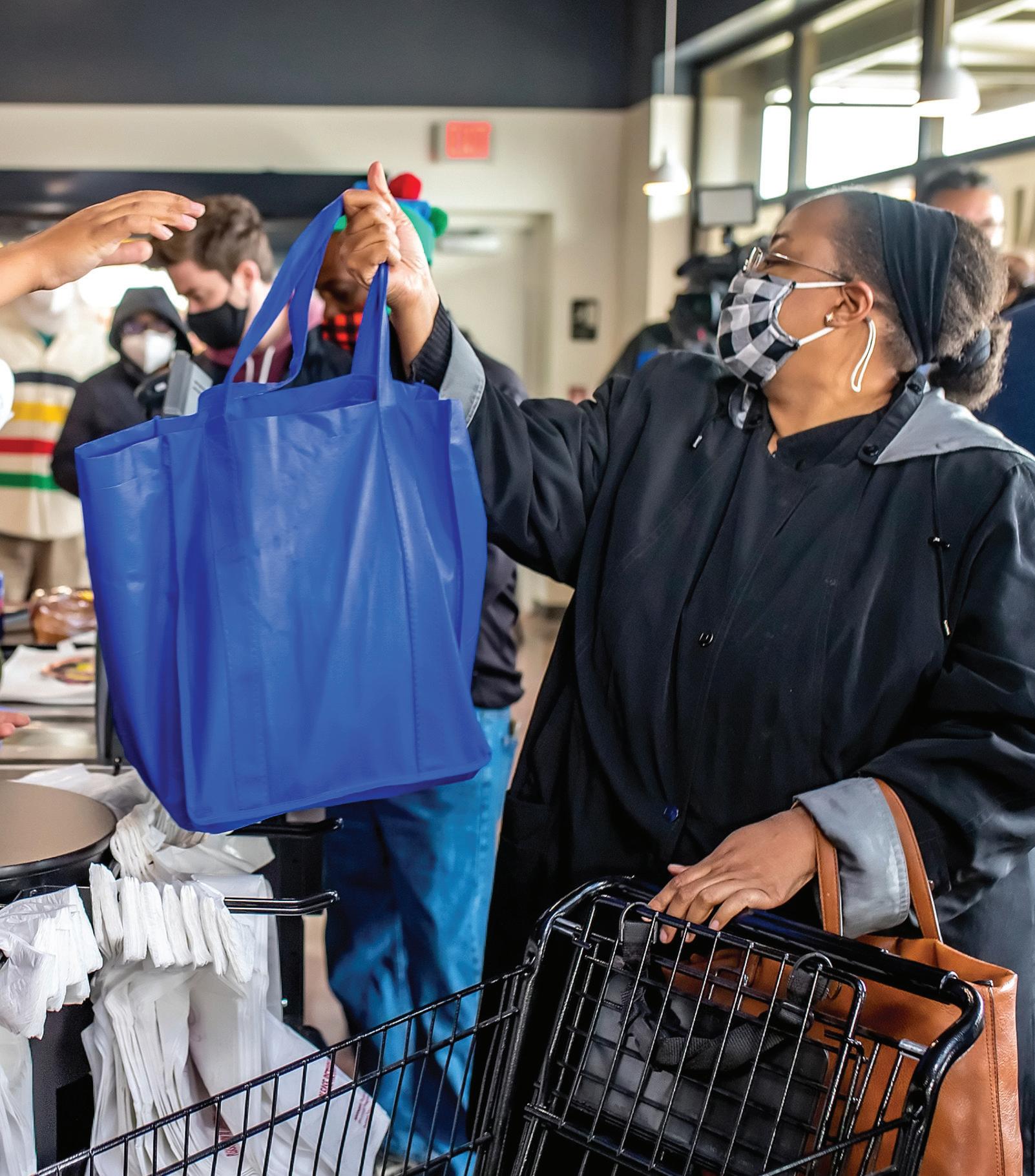
An early example of this was the Market at EastPoint, now a busy grocery store with Eastside Eatery tucked into the back. (The soul food is exceptional, by the way.) But before anyone knew what it was going to be, Dodson and Pennington had many conversations with community leadership. “They told us repeatedly that they didn’t want a food pantry, which was one of the ideas that always come up when organizations are trying to work in underserved communities. They wanted a market.”
Pennington explains the decision: “The food pantry idea comes from the belief that the East Side isn’t worthy to have a place to buy fresh produce and good food, but we didn’t need another place where people gave us free food; free food they chose, not the residents. People forget that there is a ton of value on the East Side. Clara Luper and Ralph Ellison were students here. We want to celebrate the excellence that’s already here.”
Early in her work, Dodson had one of those moments that open a new window of understanding to “the other” and how their lives are markedly different from what she has experienced. “We were doing summer reading programs at Ralph Ellison Library after then Governor Mary Fallin cut daycare and mental health subsidies, and a boy about 5 or 6 walked into the library sobbing,” Dodson says. “His mother had gotten into an altercation over food at a convenience store, and the child was afraid it would lead to his mother getting shot, so his trauma was plain in his reaction. It shattered me. I realized again that no community is broken because of itself, and I knew that without intervention, people would look at that child in 20 years and find ways to blame him without understanding what had shaped him.”
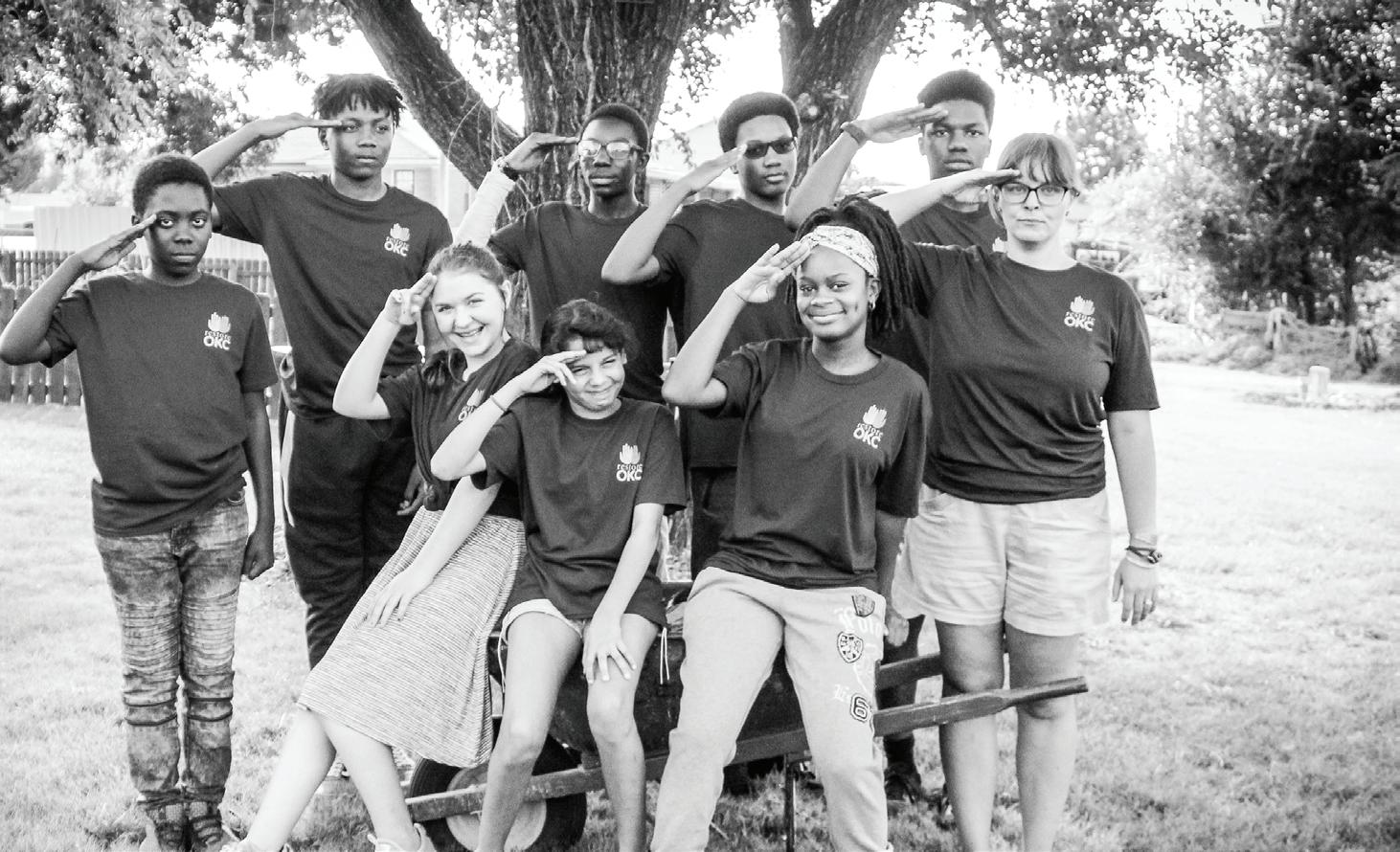
RestoreOKC now comprises the Market at EastPoint, Eastside Eatery, Restore Farms and the Market at Restore Farms, as well as programs for youth culinary education; farm internships; a cleaning company that hires women who need full-time employment and a structured life to regain custody of their children; and skilled trades training for youth and adults. It’s not comprehensive, but it is a complex, multi-pronged approach to help as opposed to handouts, and it’s working.
“This was never about building a campus,” Dodson says. “Rather, it’s about responding to invitations as faithfully as we can.” That requires difficult conversations, truth-telling and something else Dodson is fond of and good at: plain speaking. •

If it is determined you have an imbalance we use only bioidentical hormones for replacement. Bioidentical refers to hormones that have the same exact molecular structure and function as hormones made in the human body.
We educate our patients so they understand their options. The differences between bioidentical and non-bioidentical hormones and how they relate to the studies is important to us. We want every patient comfortable with the path they choose.


BY MICHAEL KINNEY
When Isaiah Hartenstein steps onto a basketball court, he carries the proverbial lunch pail mentality with him.
While the term has nearly vanished in today’s star-driven NBA, it still applies to those who are called upon to do the difficult and often glamor-less jobs that help teams win.
This mentality has proved to fit perfectly with a young Oklahoma City Thunder team that had championship aspirations. Hartenstein’s first season in Oklahoma City helped propel the 2024-25 Thunder to the team’s first NBA championship since relocating from Seattle in 2008.
At 7 feet and 250 pounds, Hartenstein is suited to the demands of his basketball role, including setting screens and battling for rebounds. However, that rugged and physical exterior tends to overshadow the heart (no pun intended) he displays away from the court.
He along with his wife, Kourtney (Kellar) Hartenstein, founded the Hartenstein Foundation and have taken on the roles of philanthropists and community benefactors. It’s a job they have been drawn to ever since arriving in Oklahoma City.
“I think it’s two-sided. I think the community does so much for us. I think without the community, we wouldn’t be able to play the sport we love,” Isaiah said. “And then just being able to see the smiles on the people’s faces—I’m in a really privileged situation, so any time I can give back, any time I can help someone, it’s always really important to me.”
As hard as Isaiah works at his day job, he and Kourtney have seemingly put in as much effort to transform the Hartenstein Foundation into an influential, effective non-profit that supports youth and families facing food insecurity and other diverse needs.
“The Hartenstein Foundation was created out of a shared desire to give back in a meaningful, hands-on way,” says Kourtney. “The focus was always on supporting children and families and creating opportunities for people who may need a little extra help or encouragement. Family
is everything to us. We know how support and kindness can make an impact, and we want to use our platform to help make things a little easier for families in our community whenever we can.”
Since 2024, the Hartenstein Foundation has donated more than 150,000 meals to those facing food insecurity, and helped contribute more than $550,000 in community investment, donations and resources to the greater Oklahoma City community.
In the first four months of this year, the Foundation hosted an I-Hart Pizza Fundraiser with Birra Birra Craft Pizzeria to benefit local youth and families; donated $10,000 to OKC nonprofit ReMerge; presented new sneakers and $15,000 to the Star Spencer High basketball team; and threw another pizza party at the Boys and Girls Clubs of Oklahoma County.
While Isaiah, who was drafted in 2017, has always considered himself a charitable giver, he admitted it wasn’t always as selfless as it might have appeared.
“If I’m being honest, I always wanted to give back. But I think there was a certain ego involved with that,” he says. “I think a lot of times, the main thing is always giving back. But I always noticed you want a certain acknowledgement for it.”
However, after arriving in Oklahoma City, something changed. He was no longer seeking outside acknowledgment, the pats on the back or people telling him how special he was. At some point, the act of giving became its own reward.
Creating the foundation has allowed both Isaiah and Kourtney to do more than either ever thought possible.
“Giving back was always something my family valued, but I’d never believe you if you told me one day I’d be a part of my own family foundation,” Kourtney says. “This was something Isaiah and I put on our vision boards after we met, and it’s been a dream come true for us to be able to give back.”
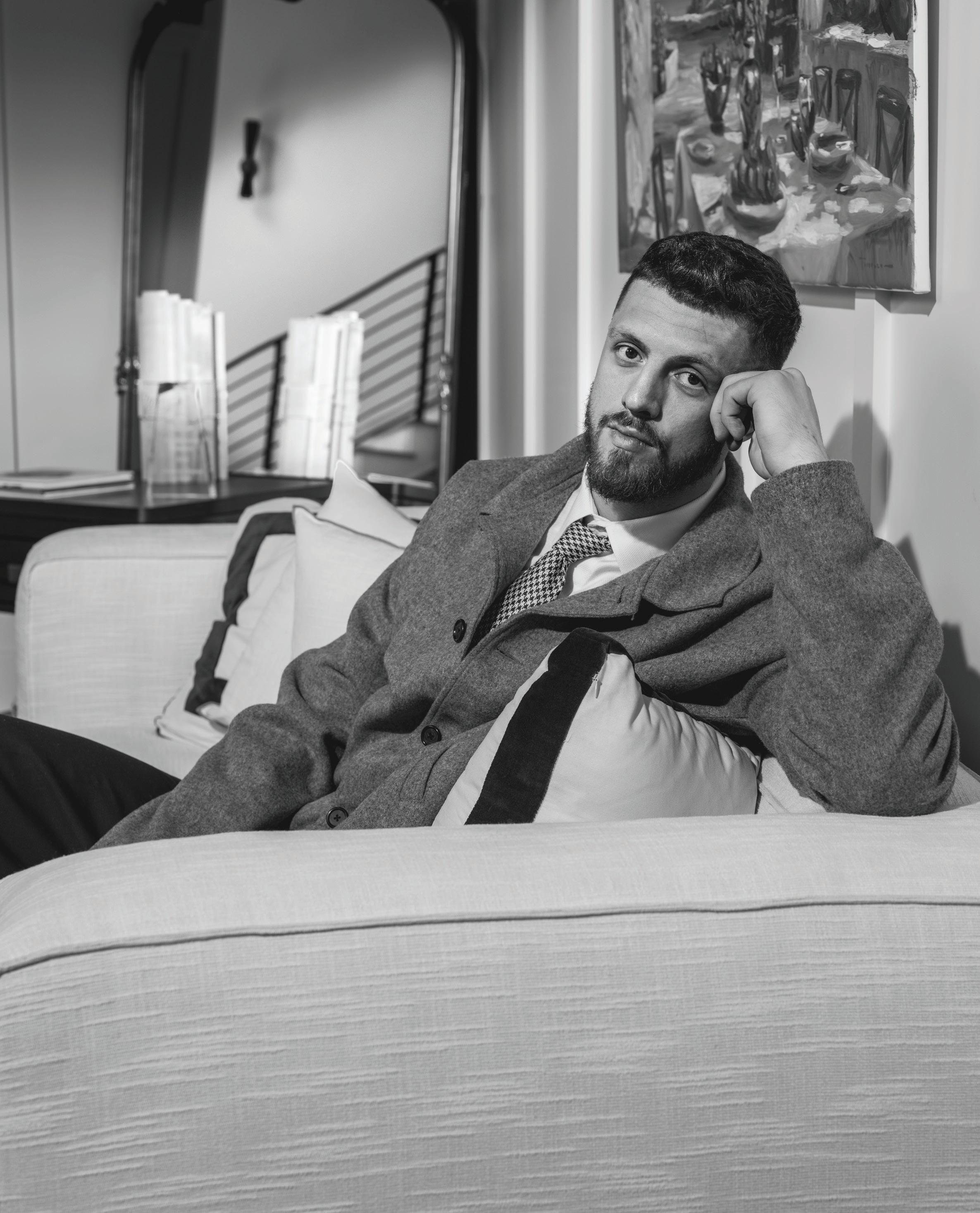
In April, the Hartenstein Foundation produced a documentary titled The Oklahoma Standard. It highlights the people and spirit of the state and focuses on the values of service, resilience and community that emerged in the wake of the Oklahoma City bombing on April 19, 1995.
Isaiah, who is a native of Eugene, Oregon, was just 3 years old when the Oklahoma City bombing took place. He admitted he knew nothing about the devastation it caused or the city’s rebuild until the Thunder’s General Manager, Sam Presti, took him on a tour of the Oklahoma City National Memorial and Museum.
As the Hartensteins learned how the city and state responded to the tragedy, it changed their perspective.
“I think just having a city respond like that, a city be egoless in their approach to giving back—I don’t think anyone was thinking much about themselves,” Isaiah says. “They were just thinking, ‘How can I help?’ And even the people giving stuff, they didn’t have anything. They were giving their own shoes; whatever someone needed. I had never seen anything like that. And it really helped change my approach to giving back.”
Now that Isaiah has been part of the team and community for the past two years, the Oklahoma Standard has become a North Star for him.
“I think the Oklahoma Standard is really just all about the community. And so, I think Sam Presti does a good job of helping us learn and grow with it,” Isaiah says. “But then you see it throughout the organization, where it doesn’t matter what you do; we all know our worth. We all know that without that other person, we’re not able to do what we do.”
Before Isaiah had even played in a single game, he and Kourtney made their first trip to Positive Tomorrows, Oklahoma’s only elementary school for children and families experiencing homelessness. A week later, the Hartenstein Foundation hosted a back-to-school event there. Soon after, the foundation presented a check for $50,000 to the Boys and Girls Clubs of Oklahoma County during a visit.
“Isaiah Hartenstein has just become a club member since he’s been part of the Oklahoma City community with the Thunder,” says Teena Belcik, the President and CEO of the Boys and & Girls Clubs of Oklahoma County. “He is here on a fairly regular basis and knows many of the kids. They know him, and they call him I-Hart. They want to know when ‘Mr. Isaiah’ or ‘Mr. I-Hart’ is coming and want to know if he’s going to stay today to play basketball with them. He has just blessed us in so many ways with everything from spending time, kind of under the radar, with the kids to providing a brand-new court at one of our clubs to providing shoes for kids, boxes of food for the holidays, and many more things.”
For nearly two years, these moments have been a part of their family’s rhythm. No matter how demanding the NBA schedule becomes, the Hartensteins do not let their charitable duties take a backseat. Earlier this season, Isaiah walked into the Memorial Park Club of the Boys & Girls Clubs of Oklahoma County only a few hours after returning from a road game in New Orleans, having come straight from the airport to spend time with the kids.
In partnership with the Hartenstein Foundation, Isaiah and Kourtney distributed 400 meal boxes to families in need. They could have easily had others distribute the meals, but doing it themselves gave them a chance to connect one-on-one with community members.
“Being present is very important to both of us. We never want the foundation to feel distant or transactional,” says Kourtney, who is a native of Texas. “We genuinely care about the people we’re serving, and showing up in person allows us to build real relationships with the community.”

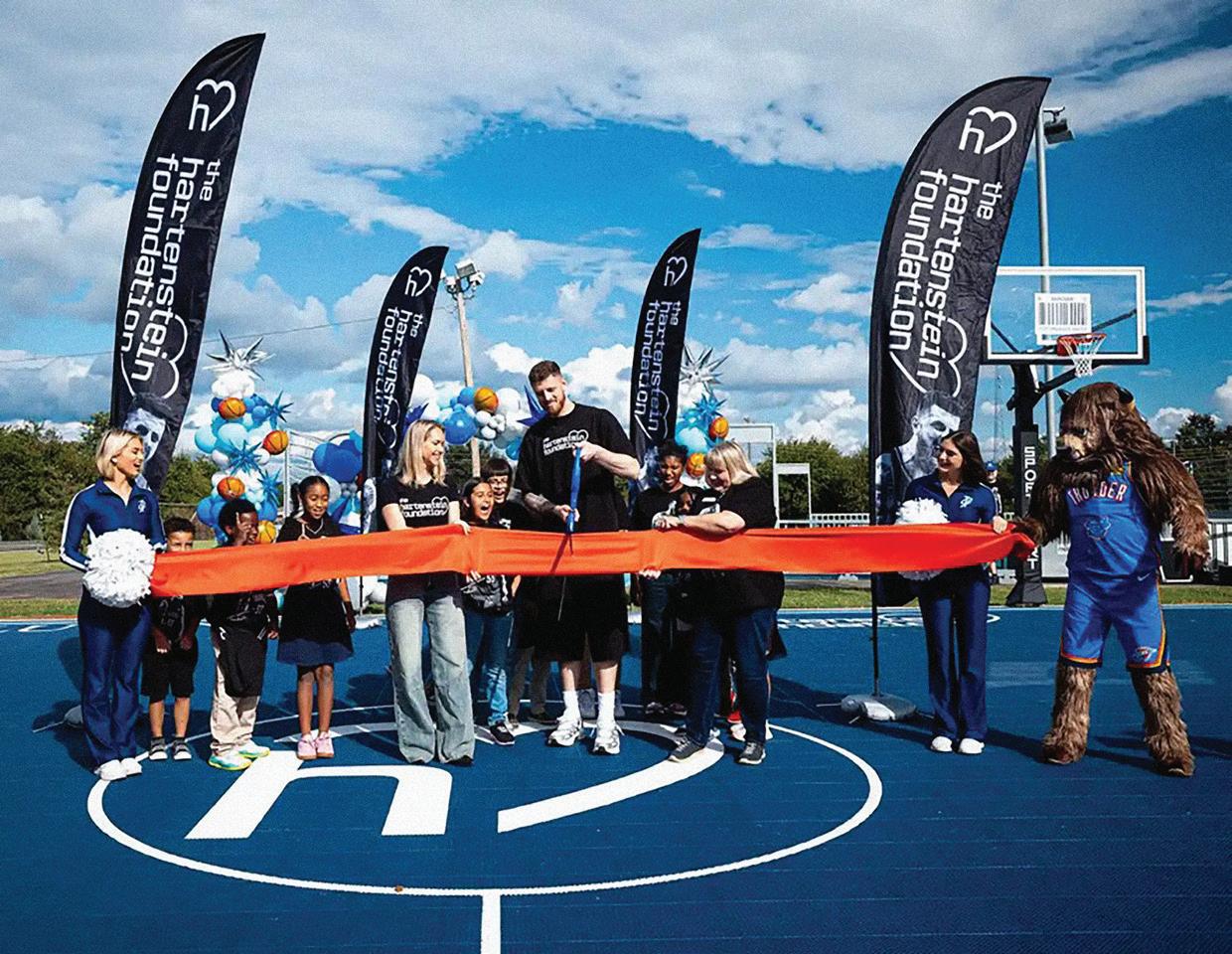
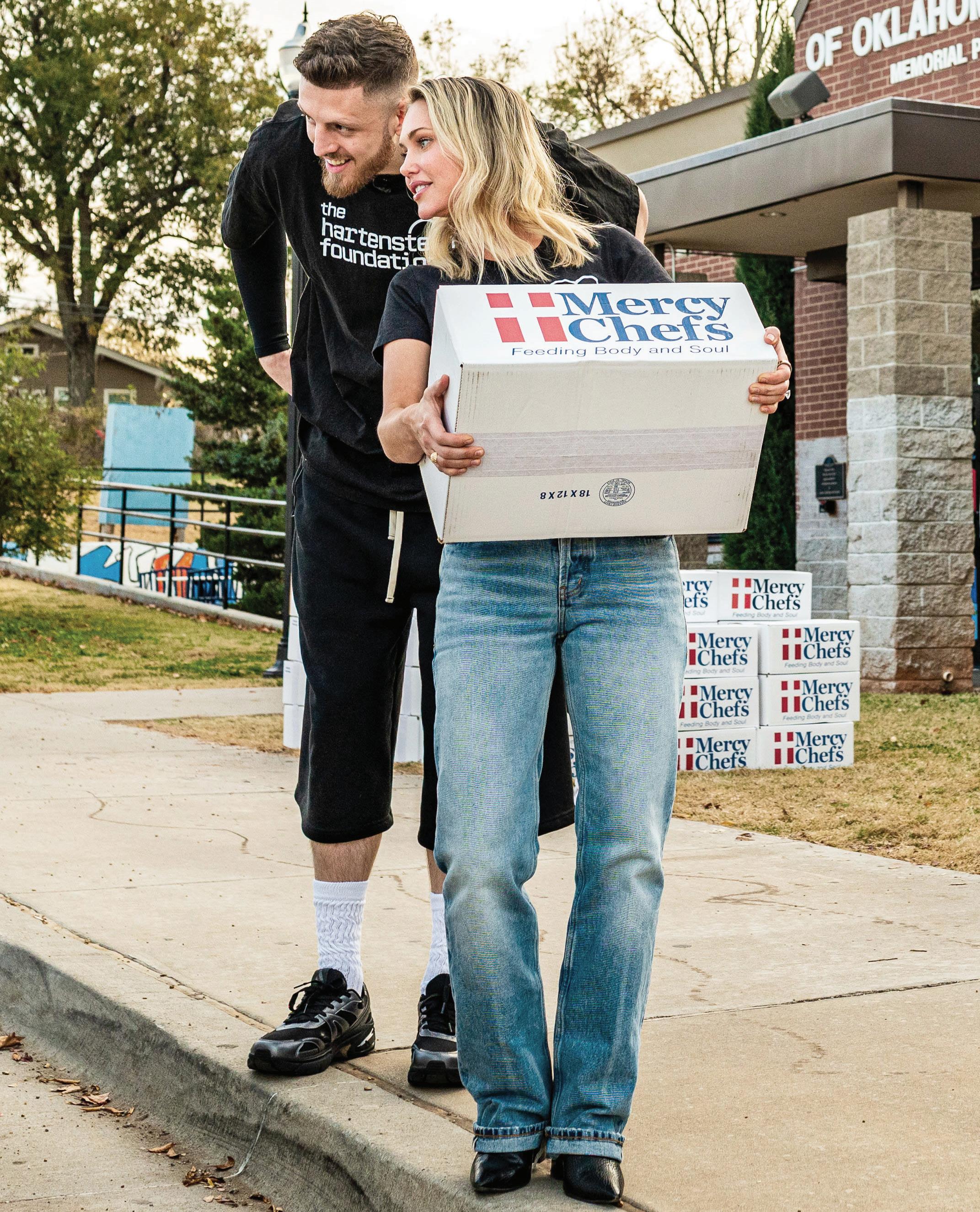
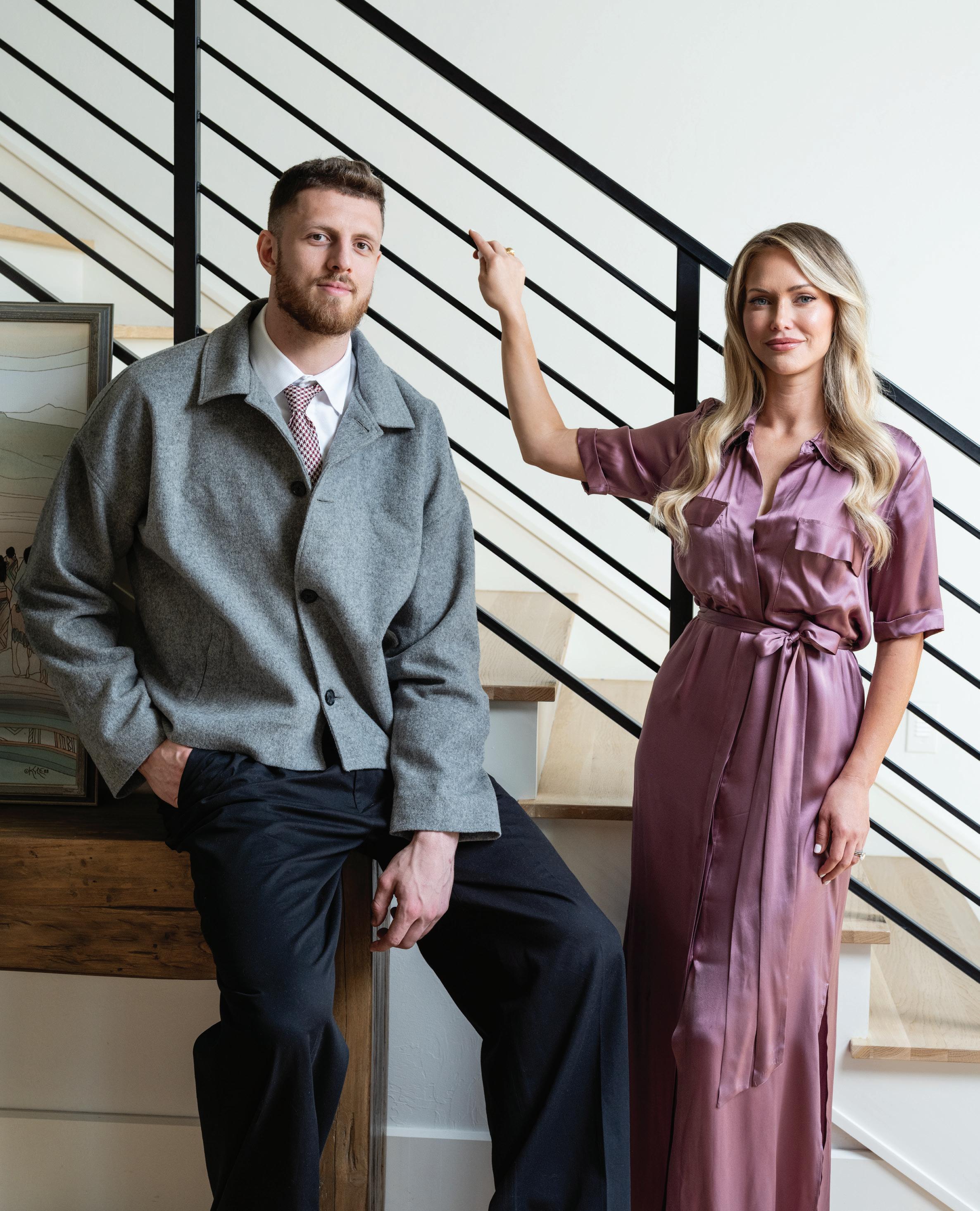
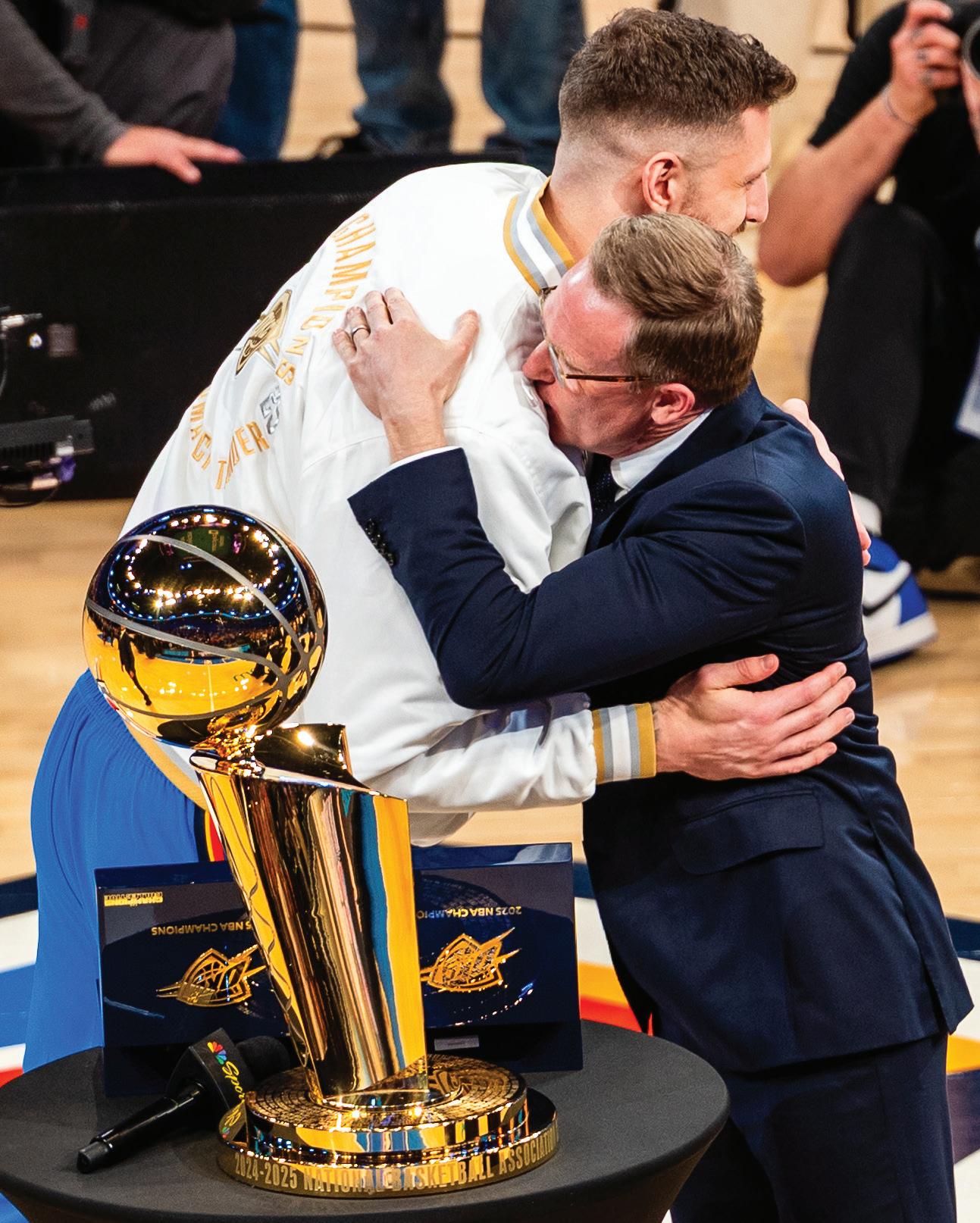
“Being present is very important to both of us. We never want the foundation to feel distant or transactional. We genuinely care about the people we’re serving, and showing up in person allows us to build real relationships with the community.”
KOURTNEY HARTENSTEIN
Originally, Hartenstein had planned to host a holiday event with the Boys & Girls Clubs. But after seeing families struggle during the government shutdown during that time, he adapted—he knew those families needed more than bringing them together for a big holiday meal.
“I think for us it was really important, especially knowing the insecurity with food right now,” Hartenstein said at the time. “I think a lot of the SNAP benefits had gone down a lot. So being able to bring 400 meal boxes, which can be 20,000 meals, was something really important to us. Being able to make sure the kids and everyone get enough food is always really important to us.”
Isaiah and Kourtney, who had their first child in 2024, have put a special emphasis on helping kids in need.
“Becoming parents made everything more personal,” says Kourtney. “It deepened our connection to the work we were already doing, and gave us an even stronger passion for supporting children and creating positive experiences for families.”
Long after Isaiah’s basketball career is over, what the Hartenstein Foundation has done to provide a helping hand to those who just needed a lift could be the most important legacy they leave in Oklahoma, no matter how many championship banners he helps the team raise.
“I think that’s one of the biggest things for me, just for the kids, is setting an example; how to approach life, how to navigate through life,” Isaiah said. “Most of the people here are not in great situations. So being able to give hope, being able to give knowledge”—and also sharing the mindset of generosity, so “whenever they make it to wherever they want to get to in life, that they also give back.” •
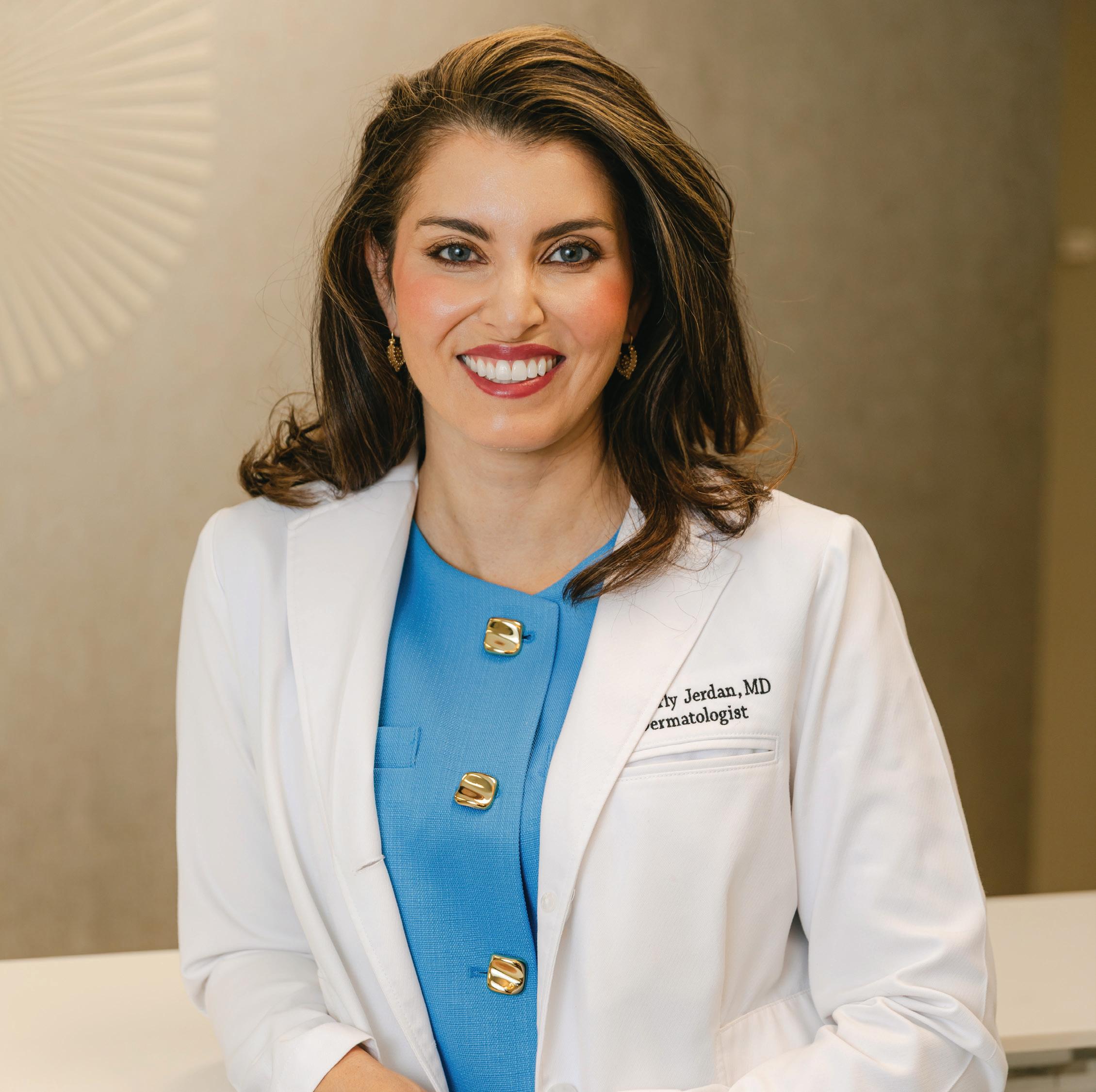

As Oklahoma’s first board-certified dermatologist and fellowship-trained laser and cosmetic surgeon, Dr. Kimberly Jerdan wants you to reach your skin, hair, and nail health goals from a comprehensive medical and aesthetic approach. Specializing in general, surgical, and aesthetic dermatology needs, Dr. Jerdan is trained in skin of color and sees patients of all ages.
Call today for your consultation.





CELEBRATE WITH US AT


FRIDAY, AUGUST 7 AT 6:30 PM AT THE CRITERION
This is not your typical fashion show.
Like Work the Runway shows you’ve enjoyed in years past, Goodwill’s own employees will strut their stuff while sharing stories, their journeys, and their triumphs!
In addition to our inspirational employees, we’ll be showcasing runway-ready looks created by fashion students from the University of Central Oklahoma, made from completely upcycled materials sourced from Goodwill stores, making an amazing event even more unforgettable, all in support of Goodwill’s mission to do good.
Get excited for a night where you’ll experience real people, real stories, and real impact firsthand.
This is an evening you don’t want to miss!
Tickets Start at $75
Early Shopping Pass $100, limited to just 100 tickets.
Get early access to the boutique before anyone else.

WORDS & PHOTOGRAPHY BY MICHAEL KINNEY
André Hueston Mack moves with purpose. Whether he is “nosing” a glass of wine to determine its bouquet or closing a deal on a new venture, there are no wasted actions.
Even as we sat down for a nearly two-hour, wide-ranging interview at The Avery in Tulsa, the world-famous sommelier was also able to take a business call, check on why one of his sons wasn’t in class and create content for his popular social media accounts.
This is the pace Mack has lived his life since he found his calling more than 20 years ago. The belief that the iron was hot has led Mack to build a multimillion-dollar company, while also being a winemaker, a restaurateur, a graphic designer, an author, a social media influencer and a globe-trotting sommelier.
“I realized that I was in a once-in-a-lifetime opportunity,” he says. “I was in a moment that had a trajectory that could change not just my life, but my grandchildren’s children’s lives. Real generational wealth. But understanding that this moment—not chasing it, but understanding that this moment is very fleeting.”
The life the 53-year-old Mack has chosen was not something that was offered at any high school career day. The New Jersey native created a presence in a wine industry that had been built on exclusivity. But Mack’s fierce belief that he belonged in that world, despite not having grown up in it, allowed him to create his own unique space.
This was never Mack’s intention in his formative years. But like many great origin stories, it had its beginnings in Oklahoma.
In the early 1990s, Mack followed his then-girlfriend to the Sooner State. He enrolled in classes at Oklahoma City University and took a job waiting tables at the local Red Lobster. It wasn’t glamorous, but he now recognizes it was a life he took for granted.
“In hindsight, when I look at it, I didn’t realize how free I was,” Mack says. “When I say free, like no constraints. The responsibility level was pretty low. I think I walked away with a lot of memories and knowledge.”
Mack moved back to Texas and eventually worked at Citicorp Investment Services for two years. When Citicorp merged with Citibank
and Travelers Group in 1998, he was offered severance, which meant he didn’t have to rush out and find another job. He ended up spending his days hanging out, trying to save money and watching TV.
It was then that Mack discovered Frasier Crane. More specifically, the hit TV show “Frasier,” which aired from 1993 to 2004. The “Cheers” spinoff starred Kelsey Grammer as Dr. Frasier Crane, who had moved back home to Seattle to kickstart a new career in radio.
Frasier lived a luxurious, upper-crust life. One in which he stayed in a high-rise condo in downtown Seattle frequenting the theater, art openings and the finest restaurants where he enjoyed the finest wines.
“I fell in love with wine by watching old episodes of ‘Frasier,’” Mack says. “On the surface, it was funny. But as you start to watch it a little deeper, they had this camaraderie around alcohol, mainly wine. And I just remember, I was just fascinated by it. When you watch something, you want to be a part of that show or live a little piece of their lives. Wine was the most accessible thing to me.”
For Mack, who grew up listening to hip-hop and drinking beer in 40-ounce bottles, wine became aspirational, and it gave him a beacon toward which to aim his social life.
“They seemed like they were having so much fun with wine that I wanted to also,” Mack says. “I learned how to say Gewürztraminer, because they said it on the show. I realized that Sancerre was having a blanc, a ’61 Bordeaux was a great vintage, Haut-Brion was one of those famous wineries from Bordeaux.”
According to Mack, the show did more than teach him terminology. It gave him the courage to walk into a wine shop for the first time in his life.
“I went into the wine shop and that was it,” Mack says. “I realized that it wasn’t as scary or intimidating as I thought it would be. Wine people love to share their knowledge. And from that day, you know, they put me on to things that they like.”
That could have been the end of Mack’s story. He could have just become a regular patron who consumed different varieties of wine and gone back to work for another bank.
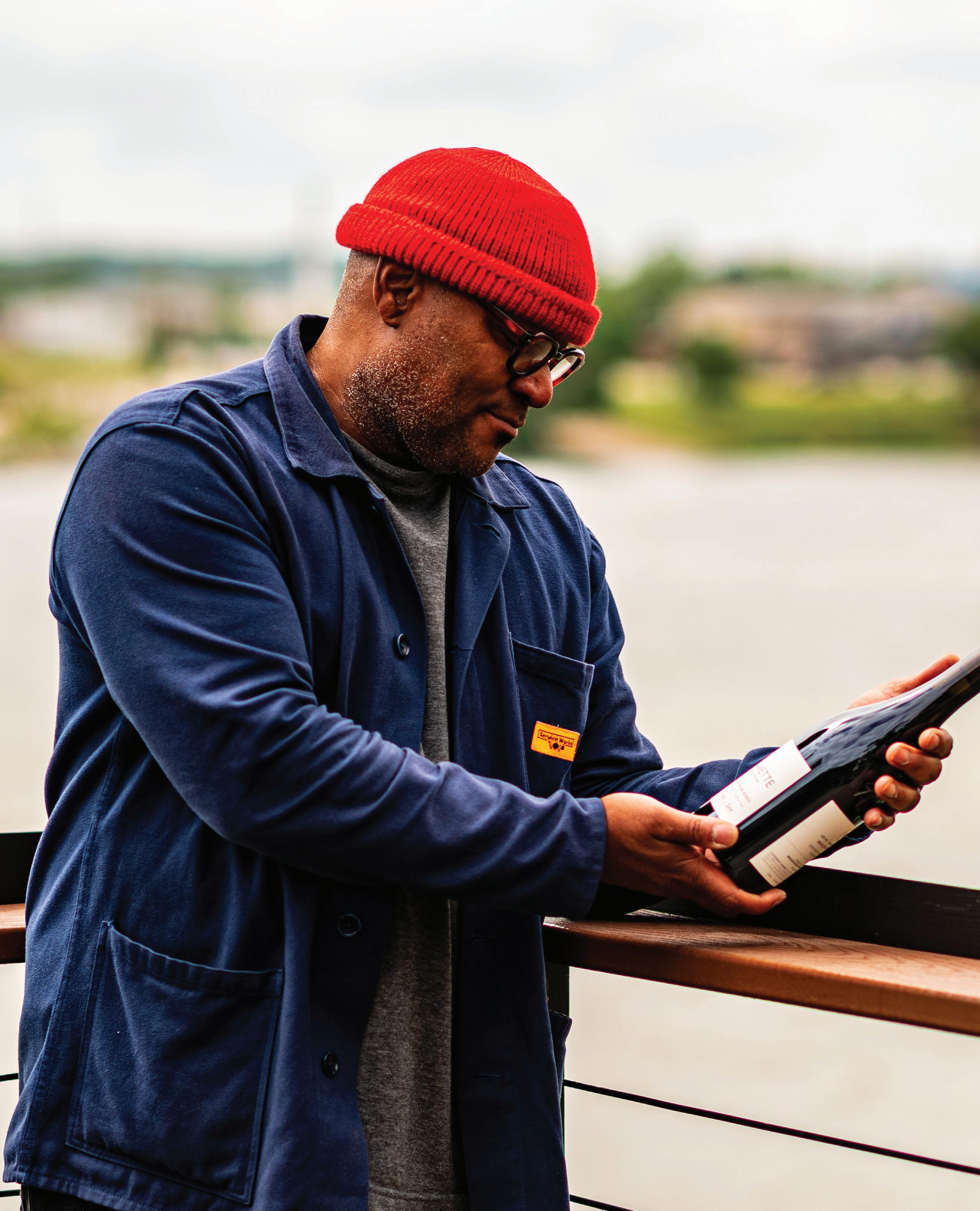
Instead, something in him clicked. He began to learn everything he could about wine while getting back into the restaurant business. He took a job waiting tables at The Palm in San Antonio, while going on a tasting spree as he tried hundreds of different wines.
That was the first place he heard the term sommelier and knew that it was for him.
The job description for a sommelier includes curating the wine list to complement the restaurant’s menu, educating staff and customers about wine selections and conducting wine tastings.
However, Mack saw they were putting on a show for customers, as well. Along with making sure they paired the correct wine with the house special, he was there to entertain and give the people something to think about and discuss.
That discovery allowed Mack to separate himself from the more reserved, old sommeliers that would appear in films like Sideways, A Good Year and, of course, Somm.
Mack’s decision seemed to have paid off. Nearly 18 months after watching his first episode of “Frasier,” he was the sommelier at the prestigious French Laundry in Napa Valley.
After being awarded the title of Best Young Sommelier in America by Chaine des Rotisseurs, he accepted the position of head sommelier at Per Se in New York City, which he held for three years.
Since then, Mack’s life has been a whirlwind of business opportunities. From starting his own restaurants to traveling nearly every week to be a guest sommelier, the grind never stops. He is extremely proud of the fact that June 28, 2010, was the last day he ever worked for another person.
Mack was able to accomplish all of this while he and his wife, Phoebe Damrosch, were raising four kids.
“I told myself if I ever find something in life that I’m good at or show potential for, I’m never letting go,” says Mack. “I’m going to squeeze the life out of it. That’s the whole wine thing. When I find there’s a path, I said, ‘This is what I’m going to do.’”
This passion has turned Mack into likely the most well-known wine enthusiast in the real world and on social media. He has more than 950,000 followers on Instagram (@andrehmack) while his YouTube videos (World Wine with Andre Mack) have been viewed millions of times.
People flock to Mack’s content not only to see him talk about old and new bottles of wine, but also to take in the lifestyle he has built.
“I think what led to a lot of those opportunities is, it was kind of like Where’s Waldo? Every week, I was on a plane in a different market, and people could follow along on my journeys through me posting on social,” Mack states.
It hasn’t escaped him that he is doing all of this in an environment where Black men are as rare as a 1945 Romanée-Conti. So, while he may not speak on his struggles in this area publicly, he knows his presence speaks louder than words.
“Obviously, there aren’t a lot of people [in that world] who look like me,” Mack says. “Because every time I show up, I challenge the status quo. I’m proud and actually honored to carry the torch, to illuminate the path for others to follow. For anybody to follow. Because what they won’t tell you is that those white boys are inspired by me, too.”
In 2007, Mack founded Mouton Noir Wines, which produces a line of Oregon wines and merchandise. After a seven-year legal battle with Mouton Rothschild, it changed to Maison Noir Wines.
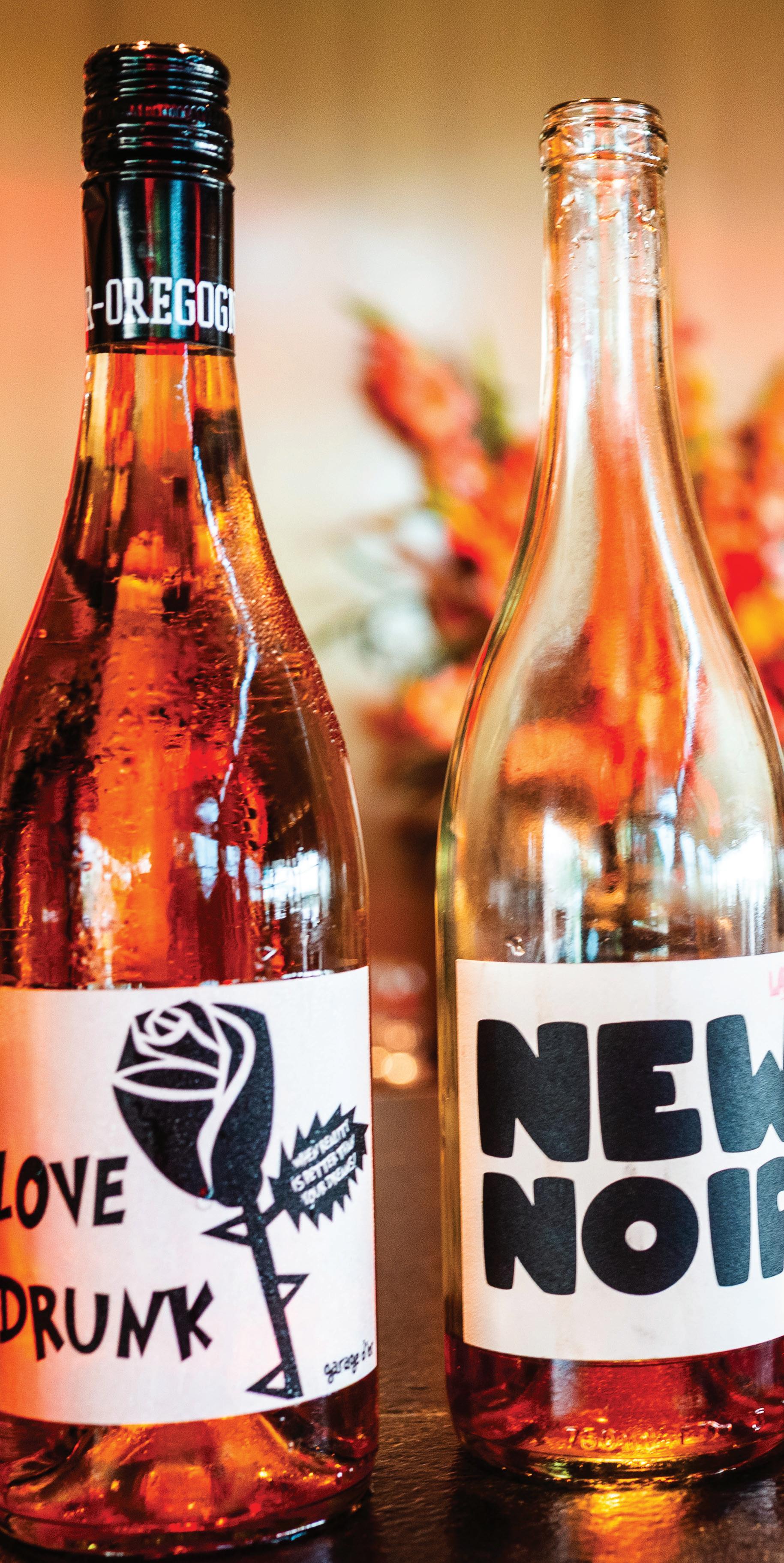

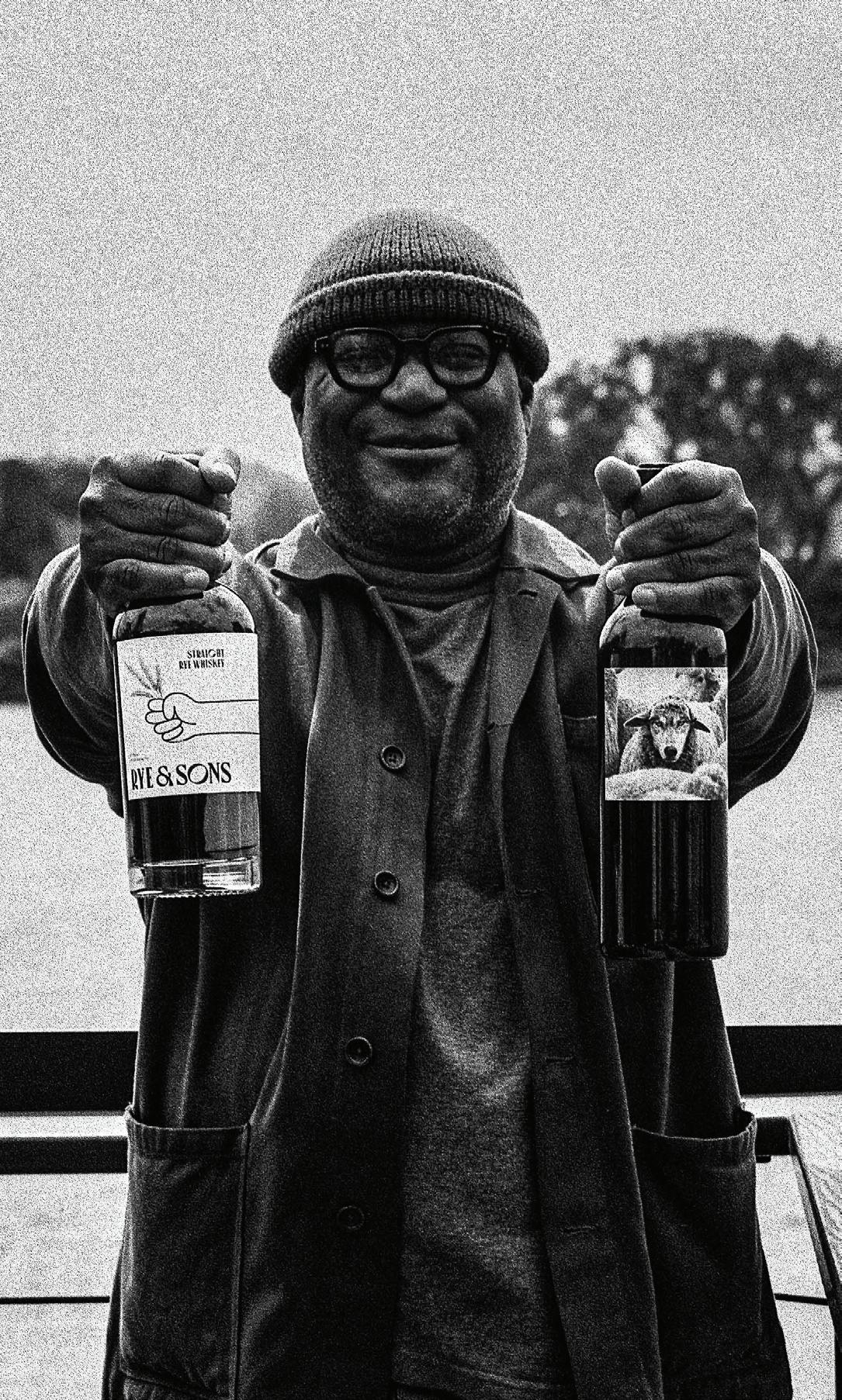
Mack’s product line is made of self-described garage wines that range from $181 to $273 a bottle. The names (O.P.P. Pinot, In Sheep’s Clothing, Free Gamay, Bastardo Jackson) and black-and-white graphic labels showcase Mack’s distinct style and irreverence toward the standard wine culture.
He knows there’s potential for even more growth.
“The wine and the public figure thing haven’t even combined yet,” Mack says. “Most people don’t even know that I have wine over here. So, the growth of the company hasn’t benefited from the success of my personal brand yet.”
Mack hopes to change that in the next five to 10 years. He has no plans to slow down the hectic travel schedule that saw him visit seven countries in just the first three months of 2026. Less than a week after leaving Tulsa, Mack touched down in Lagos, Nigeria.
Mack believes he has gotten to this point not just due to his impressive palate or his extensive knowledge of wines. The work, sacrifices and drive to be the best leave no time to sit around and marvel at just how far he has come. When the goal is “total world domination,” introspection has to take a backseat … for now.
“I don’t reflect, because I felt like I should have already been there,” Mack says. “I don’t look back because that, you know, all that just (messes) your neck up. I think for me, I don’t even leave time to enjoy it. Because I think that in hindsight, I could have seen where it all could have gone wrong. And that is something I can’t entertain.” •

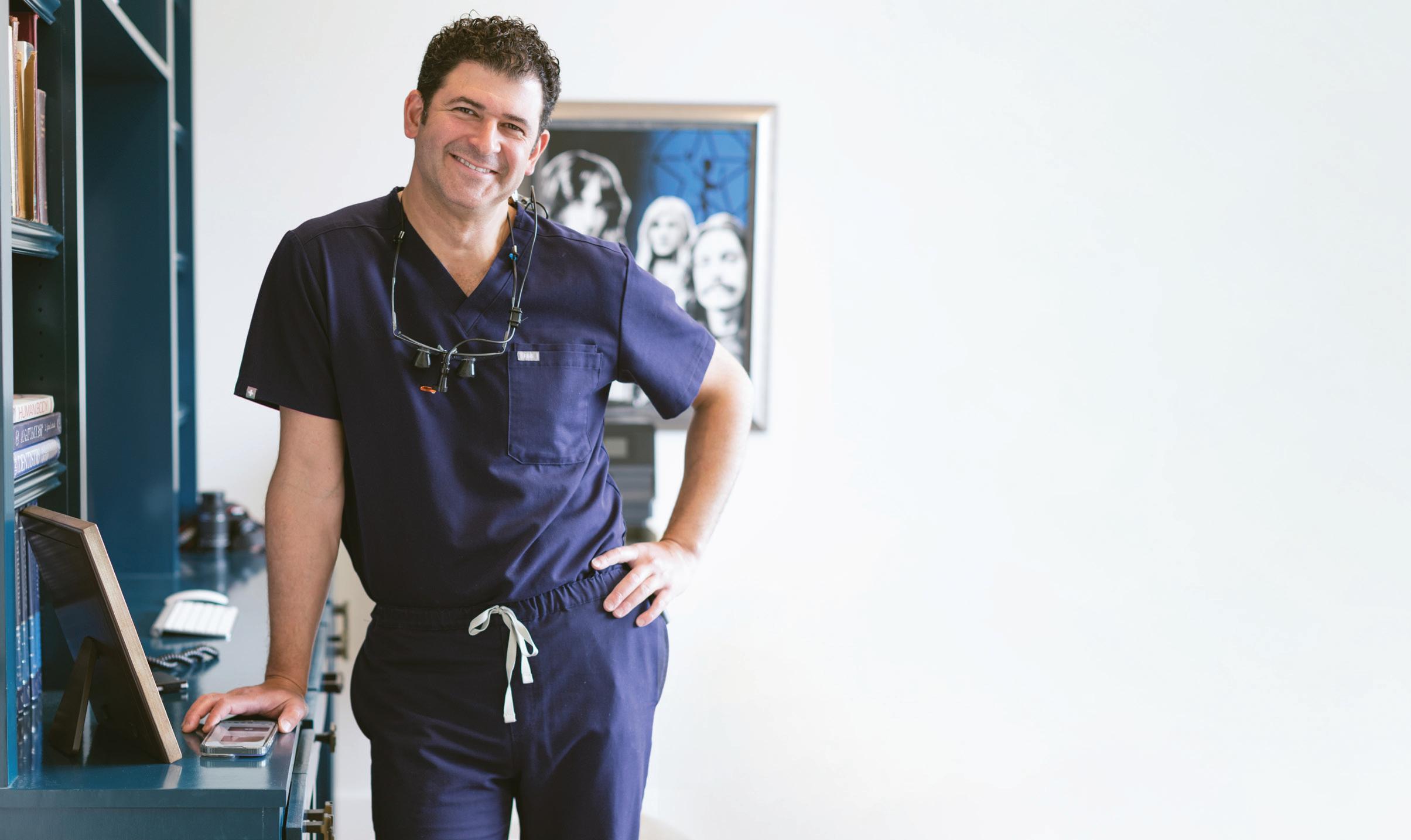
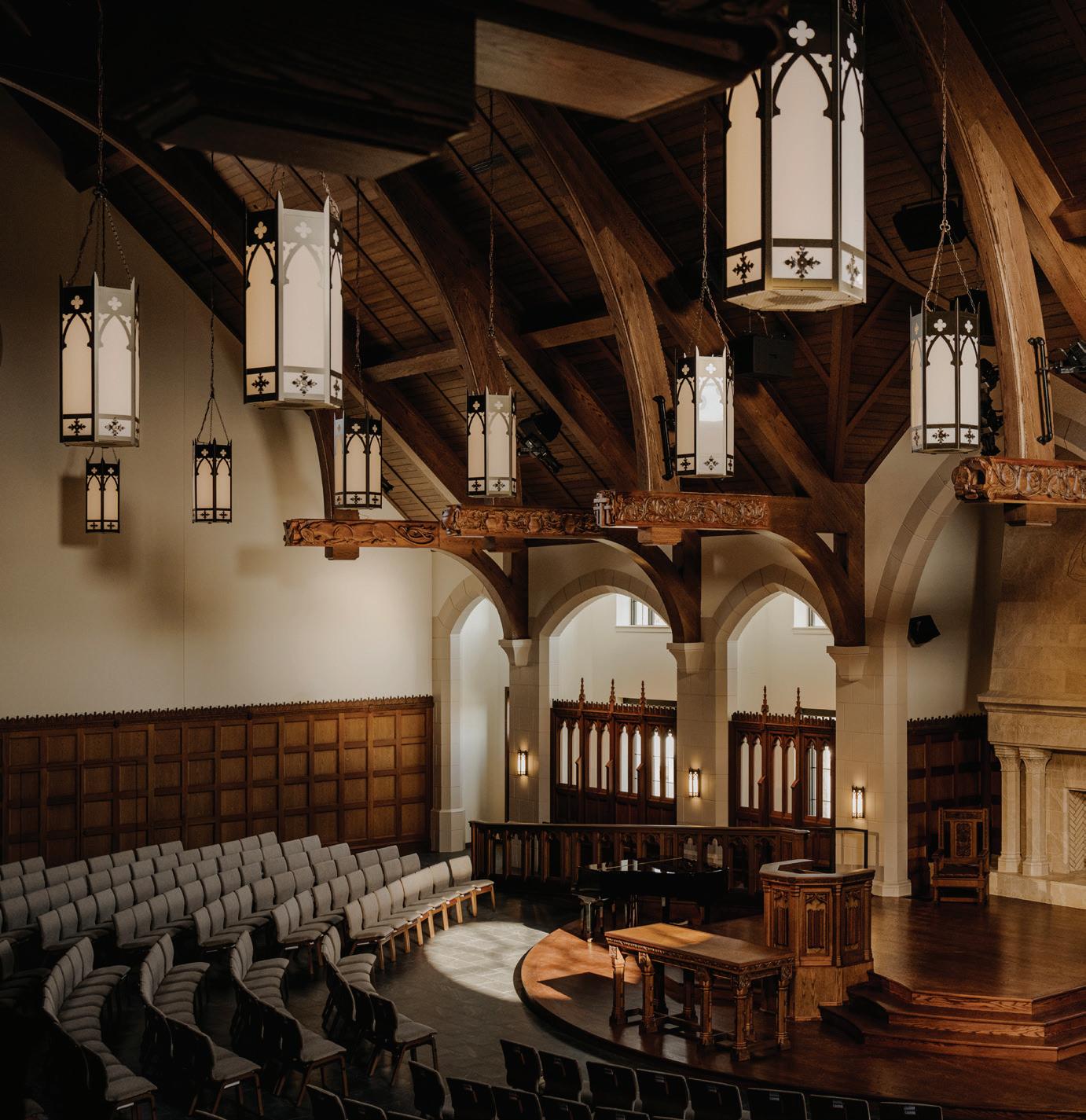









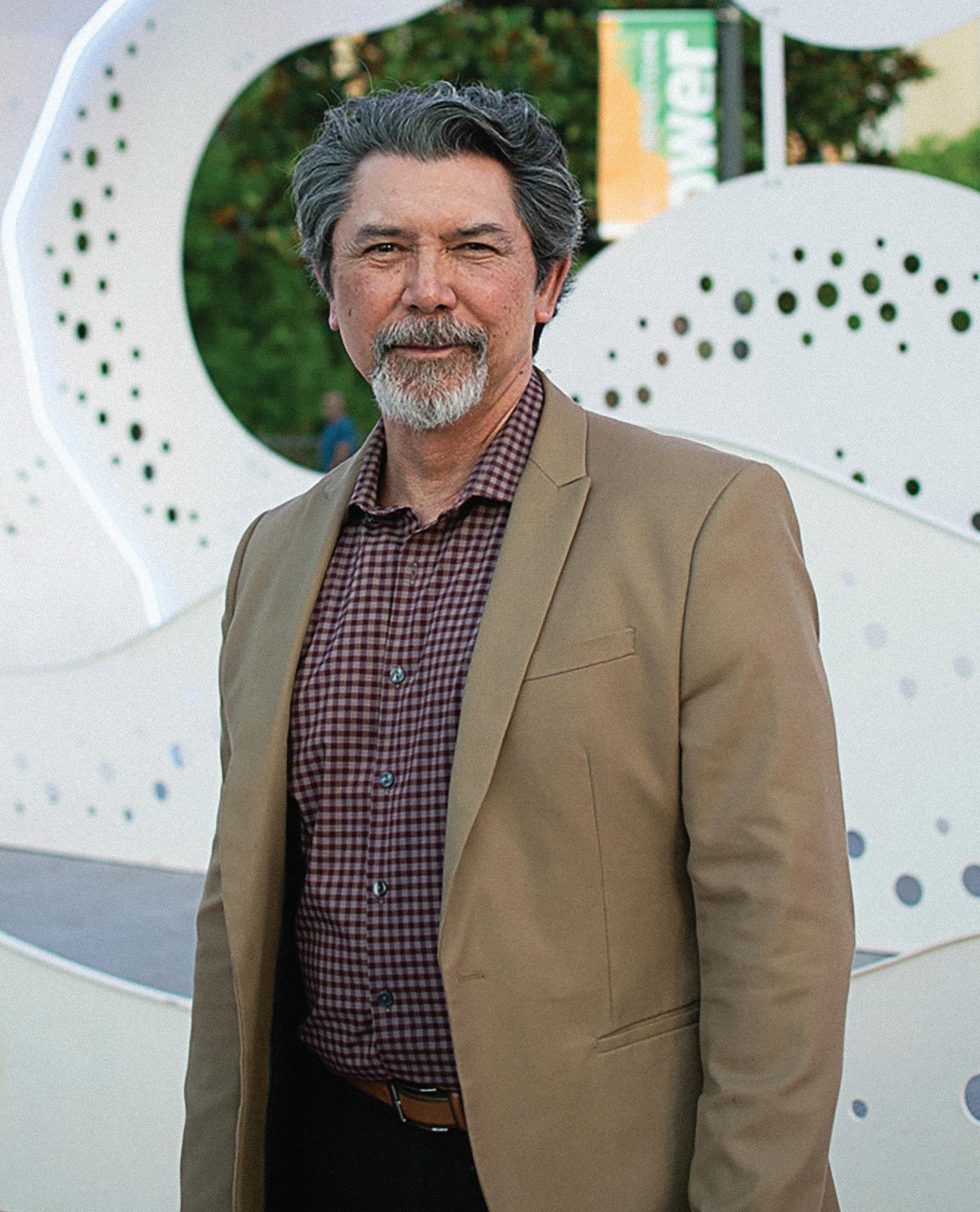
BY ALEXANDRA BOHANNON
If there’s one thing film festivals are good at besides showing movies, it’s handing out awards for them. And while giving an award to a lucky recipient is easy, having that award actually mean something is very difficult.
That’s not the case for deadCenter Film Festival, Oklahoma’s biggest Oscar-qualifying film fest.
When rolling out its newest honor, the Legacy Icon Award, Executive Director Amy Janes wanted to clearly define who gets this award and, more importantly, why.
“The deadCenter Film Festival Legacy Icon Award was created to honor individuals whose impact extends beyond their work on screen,” says Janes. “We have so many out-of-state people coming into the state that it was vital that we honored them because they unknowingly fit our Oklahoma Standard to a T.”
Essentially, the award celebrates filmmakers from around the world who demonstrate the Oklahoma Standard while completing projects in the state. Janes defines the recipient epitomizing the Oklahoma Standard as having “a spirit of professionalism, generosity, respect and genuine collaboration.”
For the first recipient of the award, Janes and her team couldn’t think of a better honoree than actor Lou Diamond Phillips, who starred
in and executive produced a project in Oklahoma in 2024.
“I am very touched and moved,” says Lou Diamond Phillips in an exclusive interview with Luxiere Magazine. “It’s a highly meaningful award, and I’m awfully proud that the festival organizers came up with this. And even more proud to go into the history books as the first guy to get it.”
Phillips’ film Gangland , shot on the land of the Cheyenne and Arapaho people near Concho in western Oklahoma, had its Oklahoma premiere at deadCenter on June 10. That evening, before the film screening, the deadCenter team presented Phillips with the honor.
“From literally the cradle of my artistic ambition, you know, Texas and Oklahoma, to be recognized in this way, it means a lot. Especially for this film, which I’m incredibly proud of,” says Phillips, who was also recently honored at the Dallas International Film Festival this spring.
“It’s one of those milestones that, for me, cause a great deal of introspection; the fact that I’ve been doing this so long, and that I have the privilege of continuing to do it and people recognizing that. This film and the award, to me, are indications that I followed the right path.”
Considering his roots, Phillips is used to the excellence of the heartland. After all, the former Army-brat-turned-Texan grew up in the DFW commercial and dayplaying scene before catapulting into superstardom in his 1987 breakout role as Ritchie Valens in La Bamba
Iconic roles in successful films followed: Stand and Deliver, Young Guns, Courage Under Fire
After having leading and supporting roles in TV, film, video games and animation for decades now, Phillips also shone as Henry Standing Bear in A&E-turned-Netflix’s neo-western crime drama “Longmire.”
As no stranger to westerns, crime dramas or police procedurals, stepping into the lead in Victor Grashaw’s Gangland was a natural fit.
An entry into the Native noir genre, Gangland follows a weathered tribal cop (Phillips) and his new trainee (Dana Namerode) as they look for a ruthless fugitive (Elisha Pratt) who could ignite a violent gang war. Phillips’ role as leading man and hardened law enforcement officer Teddy Sharpe, a no-nonsense non-Native cop policing the reservation, challenged him even after 40 years in the business.
“A role like that requires not acting. It really requires a level of being for it to rise to the level of authenticity,” says Phillips. “I felt that this character was incredibly iconic and, in a weird dichotomy, bigger than life in a mundane way.”
The role on screen wasn’t the only thing demanding for Phillips. As an executive producer on the film, he and the Gangland team had only 18 days to shoot the film in the middle of an extremely bitter Oklahoma ice storm. So the film’s production, in a nutshell, can be described using just one word: scrappy.
“It reminded me of doing small productions in Texas when I was just starting out,” says Phillips on the cast and crew. “People who were there—I mean, obviously, everybody wants to get paid—but they’re there for the arts. They’re there for the camaraderie, for the experience.”
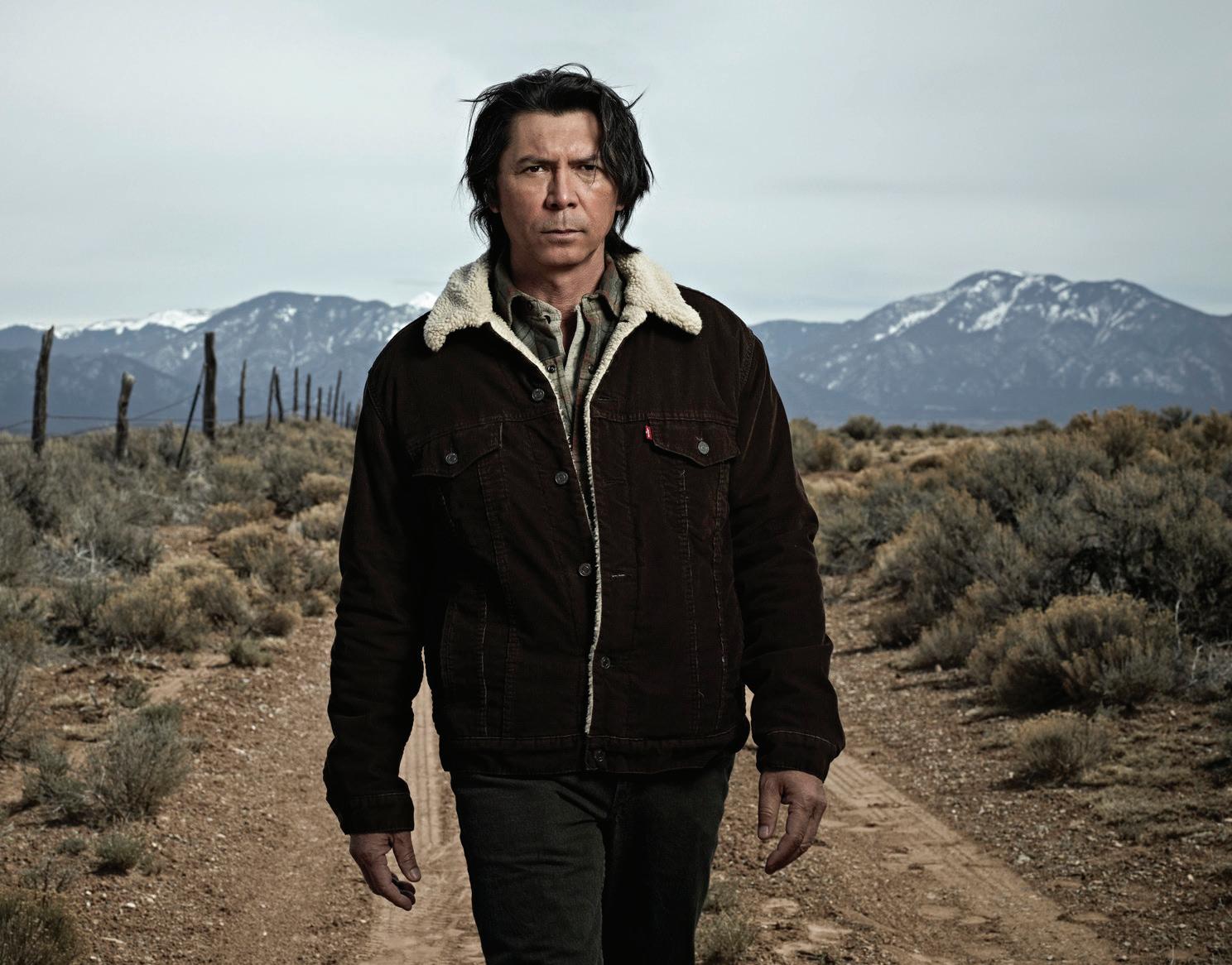
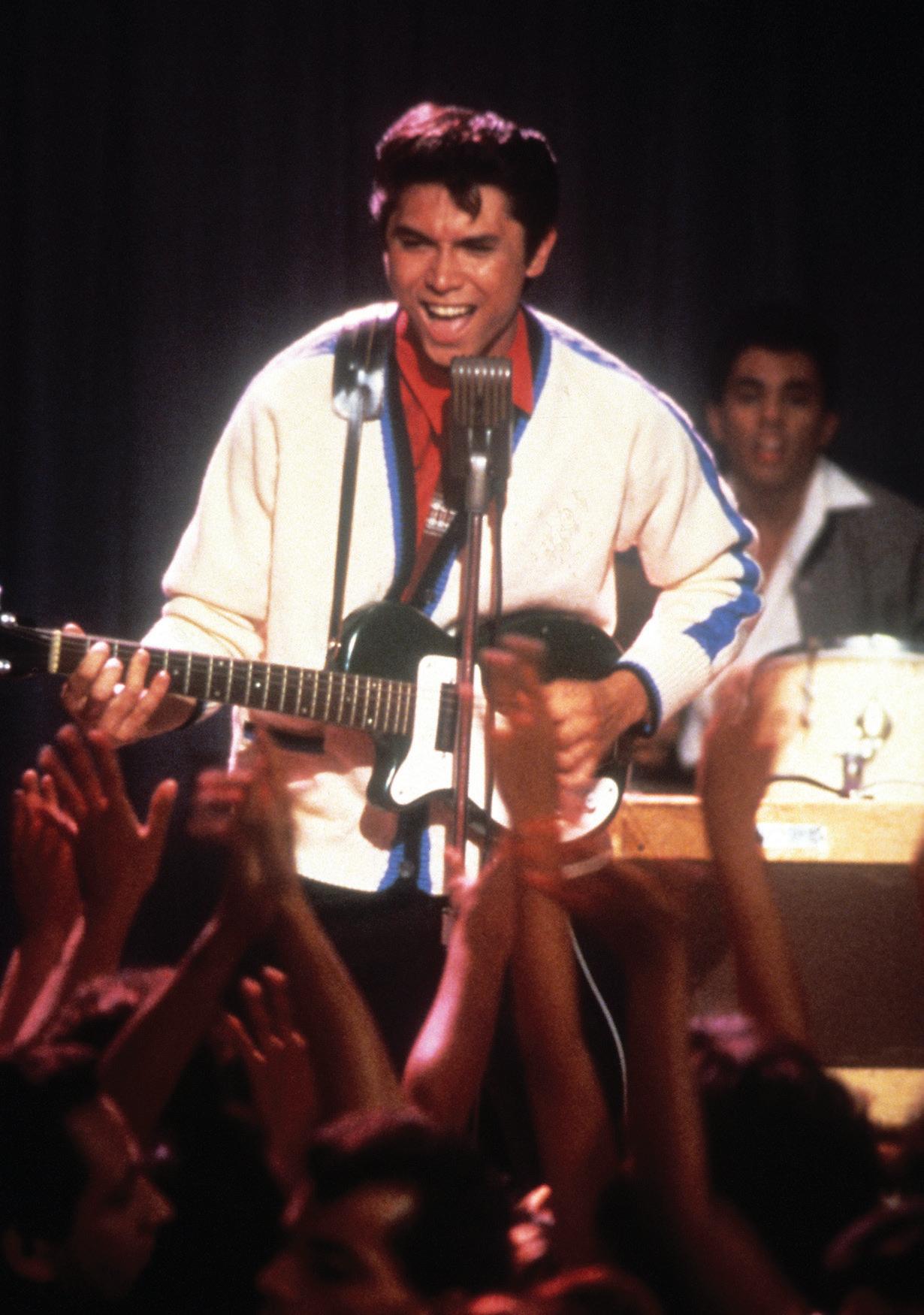
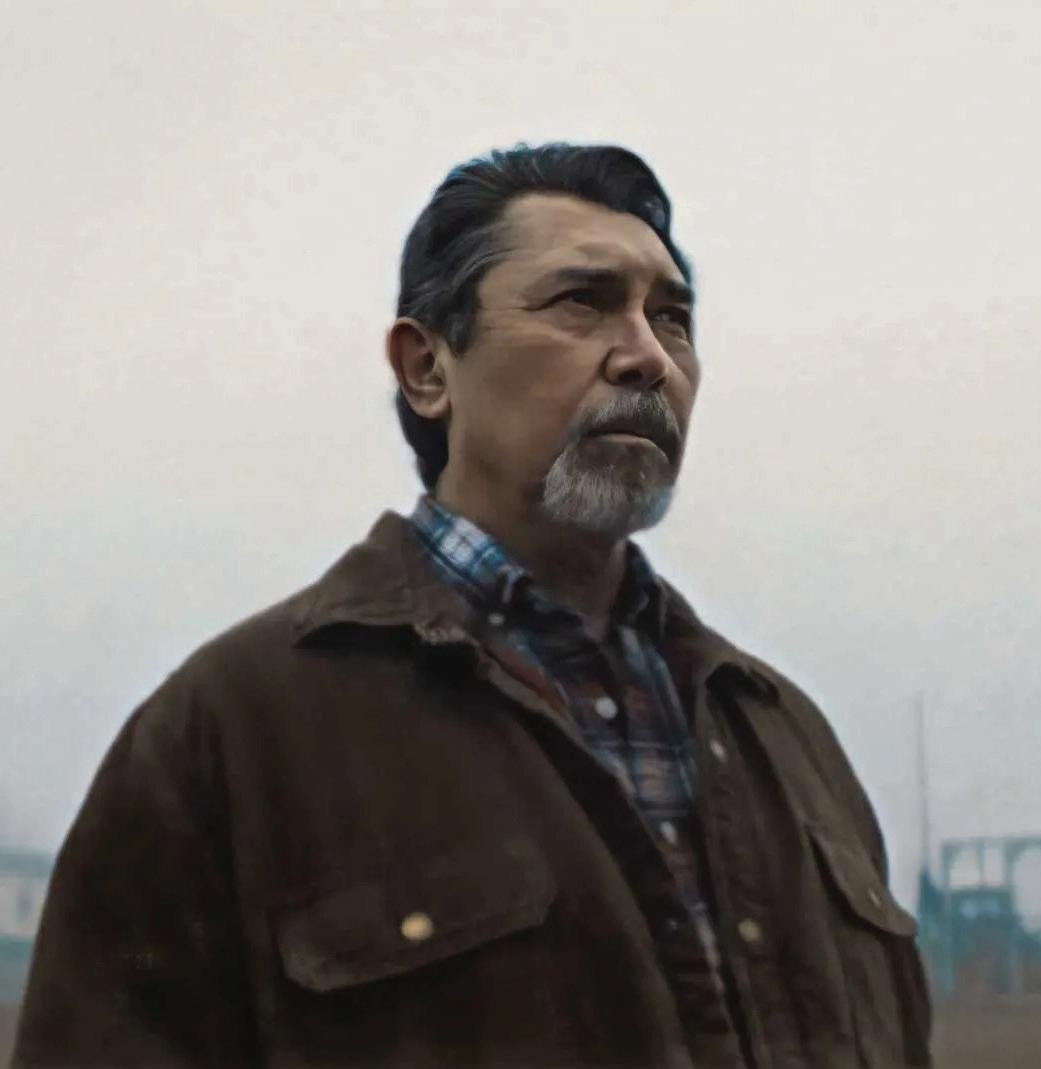
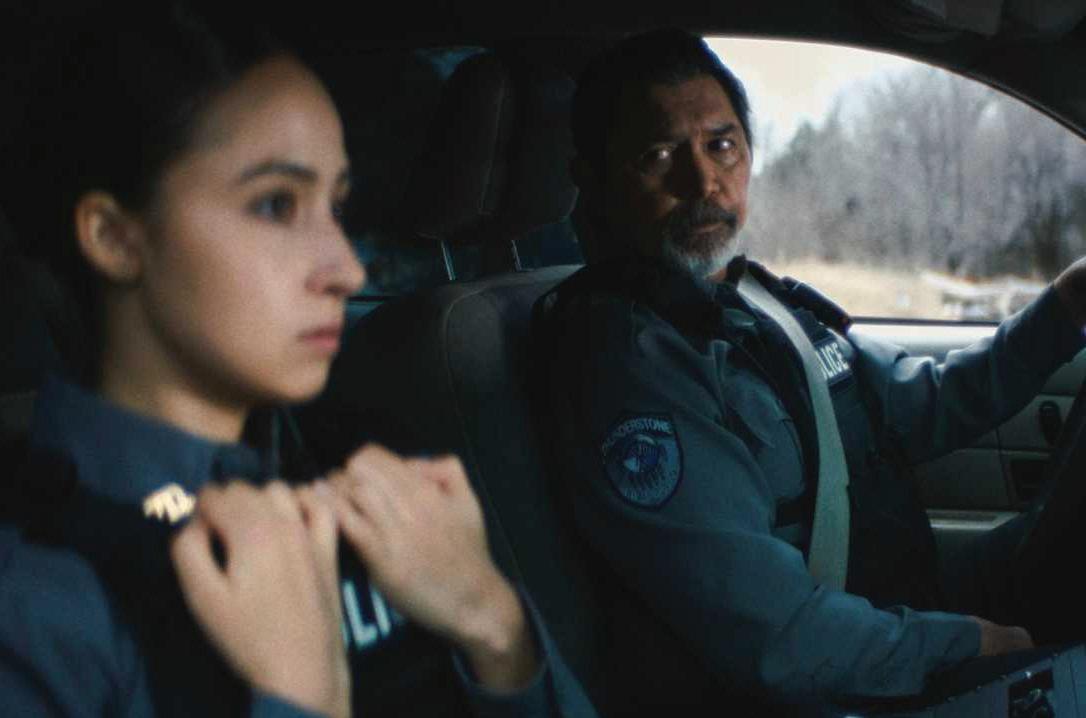
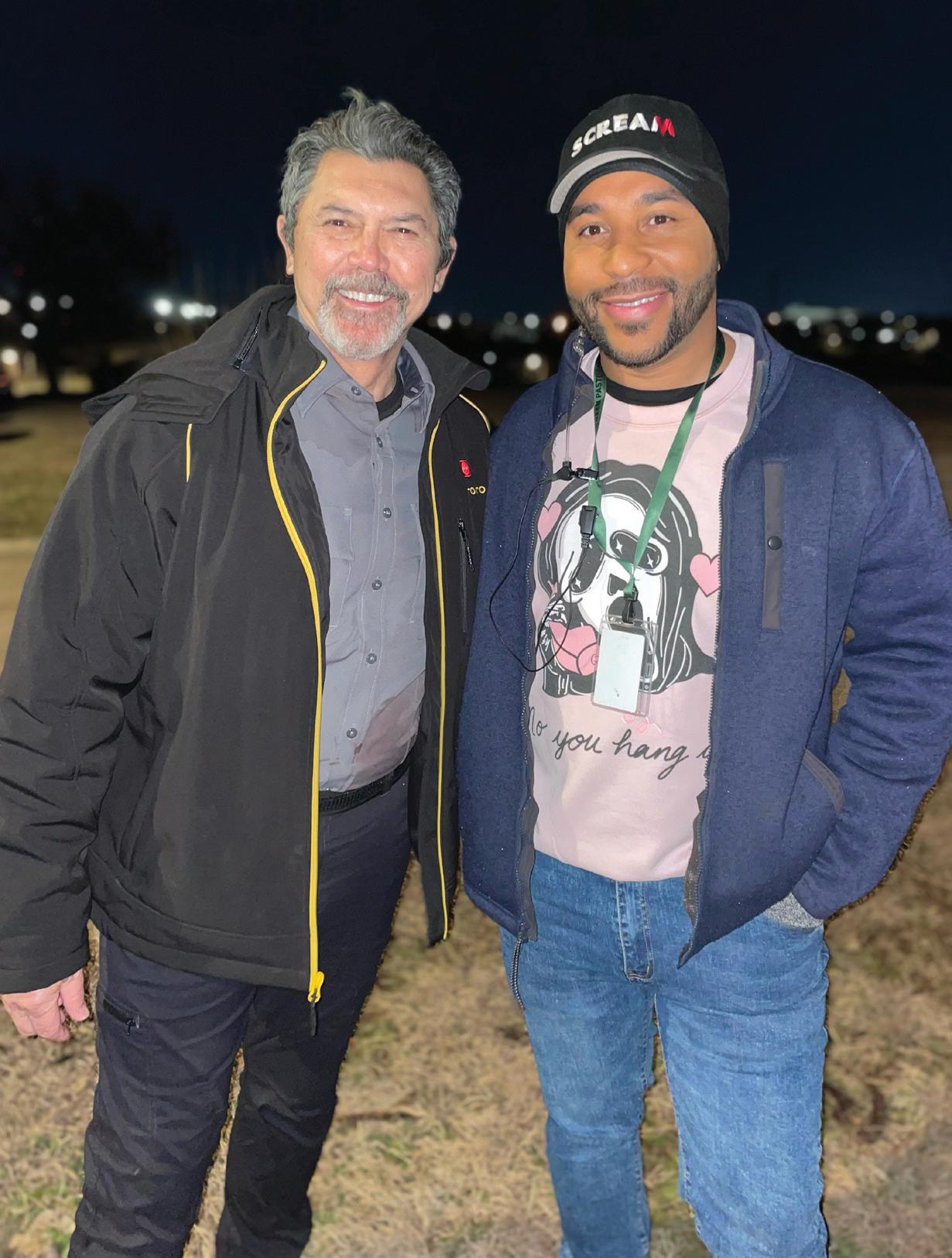
The film, written by former tribal cop Zach Montague, was discovered on The Black List, a platform featuring “Hollywood’s most-liked unproduced screenplays.” Originally titled Keep Quiet, the film was originally set on a reservation in Canada; selecting Oklahoma as the shooting location was motivated in part by the state’s film incentive. As a recipient of the Filmed in Oklahoma program, Gangland employed 149 Oklahomans throughout its different phases of production, according to the Oklahoma Film and Music Office.
But, despite the film incentive being Phillips’ “brass tacks” reason for shooting in the state, he also stressed how much shooting in Oklahoma turned out to be a perfect fit for the film; including the opportunity to work with the Cheyenne and Arapaho tribes. The perfect landscape of their lands near Concho and the tribes’ herd of buffalo facilitated a brand-new scene to include them.
“We worked it out with the tribes to shoot on a day that they were feeding them, and so we were just there to be plopped in the middle of the process. I came in a couple of days early to be able to do that and that became our day zero, wasn’t even day one,” says Phillips on shooting the “gorgeous” buffalo sequence. “Once again, that’s the universe telling you you’re in the right place.”
Second, Phillips highlighted how much the Oklahoma crew’s hard work paid off for a low budget film like Gangland
“I really want to bring flowers to the crew. I mean, this is a little film, man. But those guys went above and beyond. They exceeded expectations and really, really made this film that could stand shoulderto-shoulder with any film. I don’t care what the budget is,” says Phillips.
For the crew that worked with him, the feeling of camaraderie and professional admiration seems mutual.
“They say you should never meet your heroes because they might disappoint you. That doesn’t apply to Lou Diamond Phillips,” says filmmaker Laron M. Chapman, who acted as second second assistant director on Gangland. “As prolific and legendary of a performer as he is, there was no trace of ego. He had such a warm, genuine presence and treated the entire cast and crew like family.”
Chapman explained Phillips was always a consummate professional, but someone who was also very approachable. Often, he would join the crew after wrapping for the day at local bars or restaurants.
It’s that attitude and philosophy of kindness that made awarding Phillips the deadCenter Legacy Icon Award an easy choice, in recognition of his generosity and collaborative approach.
“I really want to start focusing on and pulling that Lou Diamond Phillips energy into our world, our community, because I believe that’s who we are as a state and as people,” says Janes. “He has been able to carry that class and that open heart through decades.”

BY ANDREA SCHULTZ
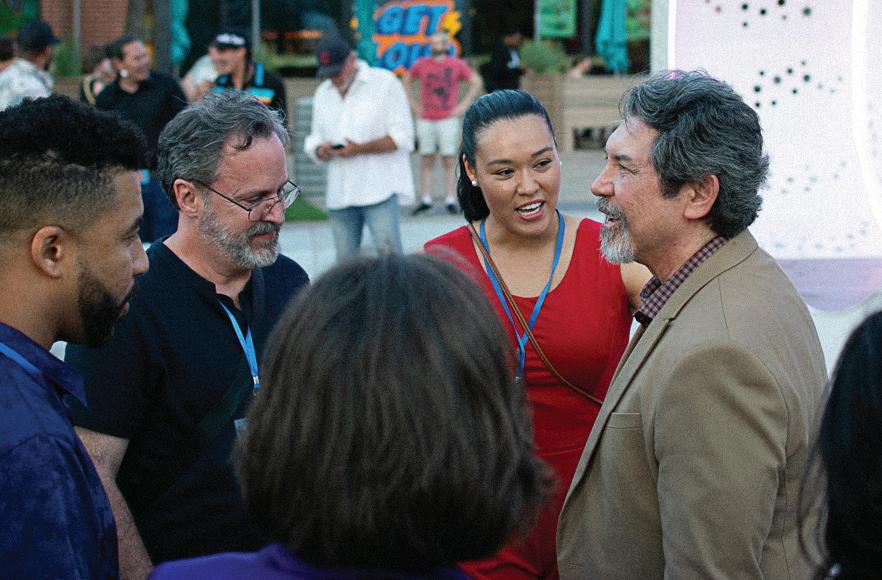
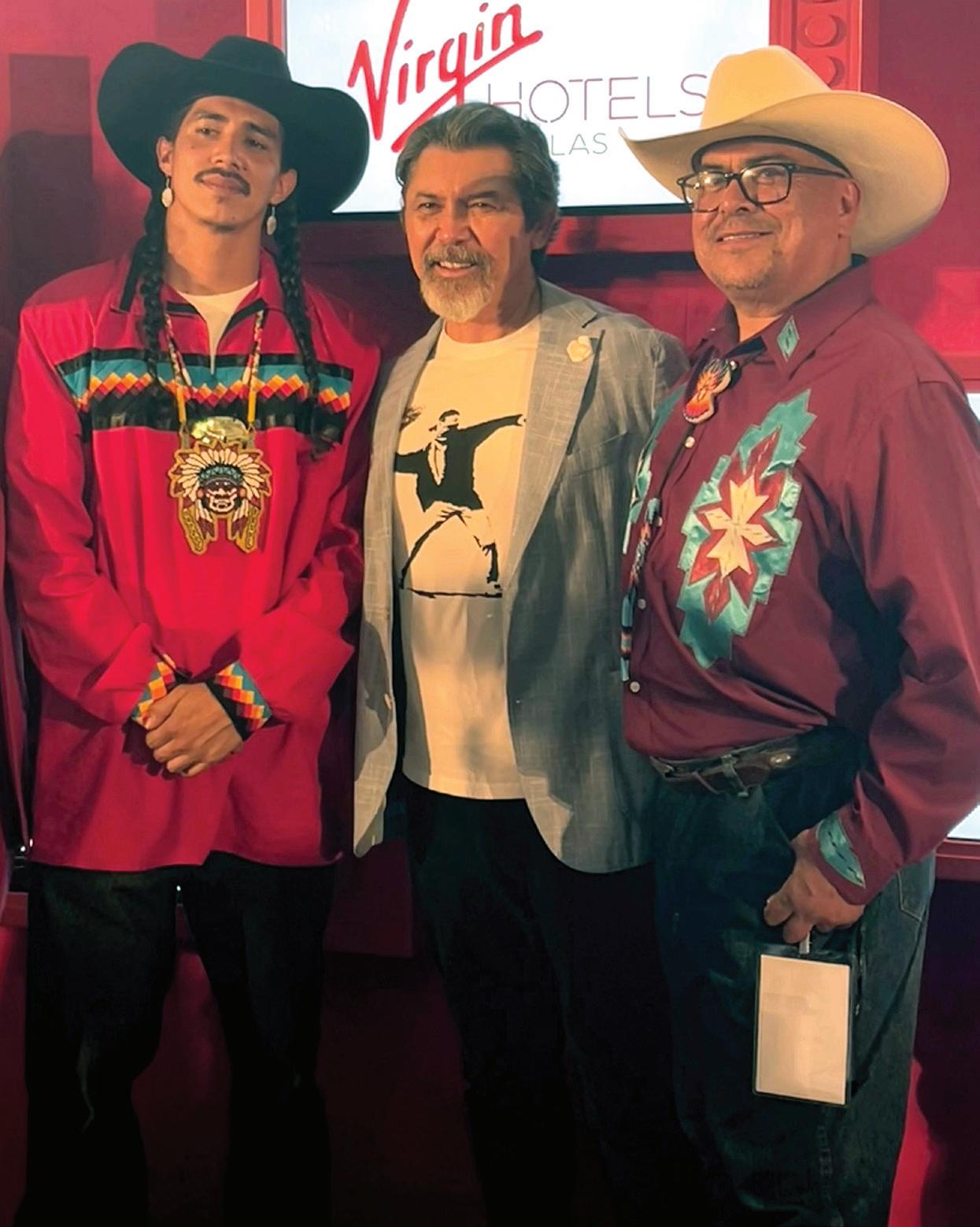
ABOVE: Lou Diamond Phillips talks with deadCenter festival organizers Laron M. Chapman, Kevin Ely and Jamie Loy at dCFF’s screening of Gangland in Oklahoma City.
LEFT: Michael Tubby, Lou Diamond Phillips and Marcus Red Thunder at an event for Gangland
OPPOSITE: Promotional poster art for Gangland
Despite all his overwhelming success, Phillips has not lost touch with his connection to the humanity of the craft, nor his heartfelt way of interacting with the crew on films like Gangland —from the production assistants all the way up.
“I got to say again, kudos to the crew, because they are not only really talented, but really, really lovely people. And when you’ve shot all over the world, you really do get a sense of whose heart is in the right place,” he says.
And for over 40 years, Phillips’ heart has also been in the right place—his philosophy of kindness has shaped how he approaches the work on screen and behind the scenes, helping people feel like welcome members of positive artistic communities.
“We’re lucky to be doing this, man. We could be digging ditches, or being a coal miner or something,” says Phillips. “We’re telling stories and making movies. I mean, it’s like summer at band camp. I love being around people who love making movies.” •
Lou Diamond Phillips received the inaugural deadCenter Legacy Icon Award on Wednesday, June 10. Gangland plays at Circle Cinema in Tulsa on July 3 and will release video-on-demand on July 10.
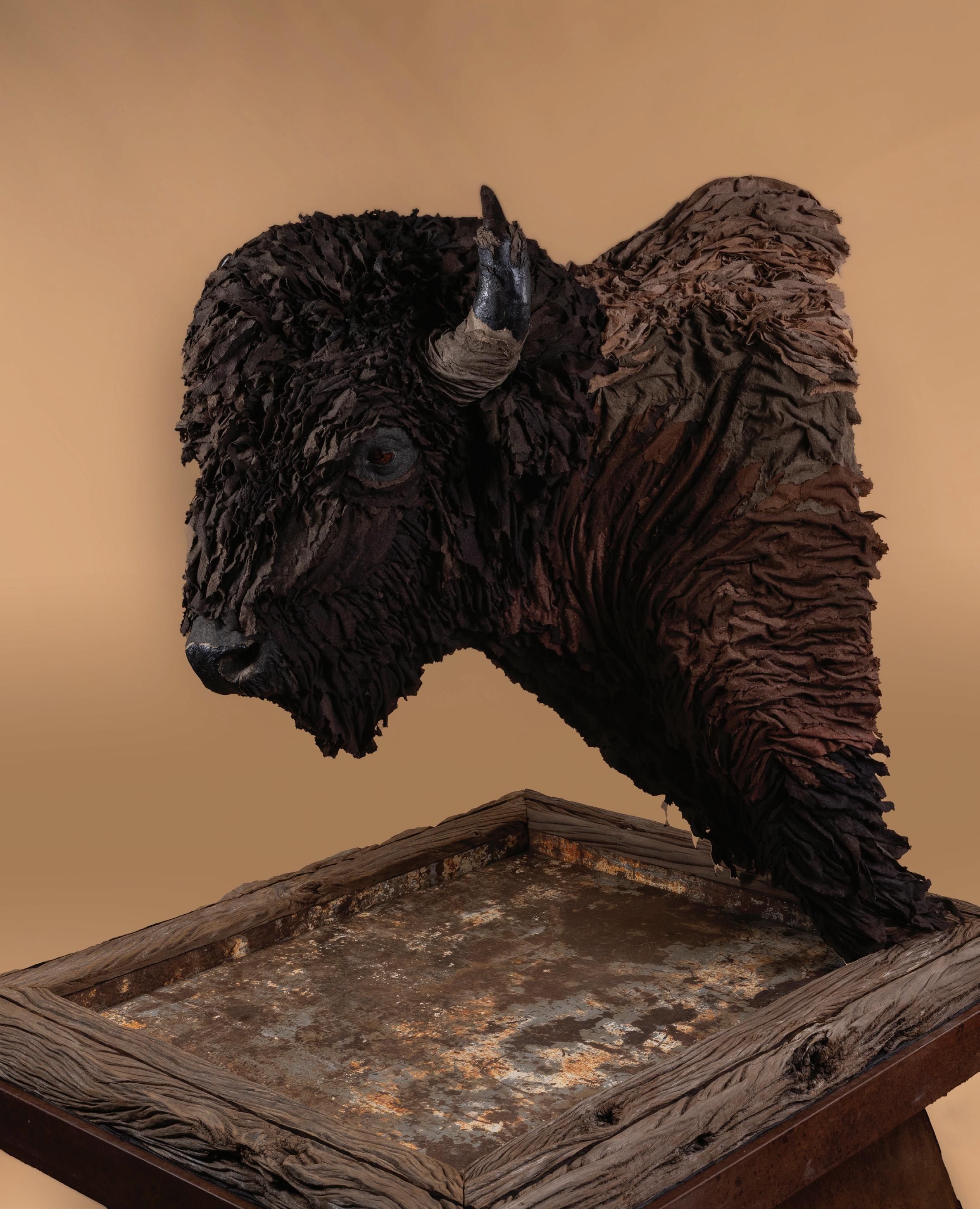
How SWAIA and Santa Fe Indian Market became the world’s greatest stage for Native art
BY CRAY BAUXMONT-FLYNN
Every August, before the New Mexico sun fully crests over the Sangre de Cristo Mountains, something extraordinary begins to unfold in Santa Fe.
Artists arrive carrying generations.
They come with sculpture wrapped in blankets, baskets woven through memory, beadwork born of patience, paintings layered with cosmology, silver shaped by ancestral hands, textiles alive with stories older than the nation itself. Families reunite. Languages surface in quiet greetings. Elders embrace younger makers. Collectors return with intention. Curators arrive searching for the next transformative voice.
For one remarkable weekend, 12 city blocks become something far greater than an art market.
They become a living ecosystem of Indigenous excellence.
For more than a century, the Southwestern Association for Indian Arts has stood at the center of that story—protecting, elevating, and evolving Indigenous artistry through what has become the largest and most prestigious juried Native art market in the world: the Santa Fe Indian Market. Welcoming more than 100,000 visitors annually and representing over 1,000 artists from more than 200 Tribal Nations, Indian Market is not merely an event. It is a cultural force, an economic engine and, increasingly, a global platform for Native authorship.
Yet perhaps what makes SWAIA most remarkable is this: Despite its scale and influence, its mission remains deeply personal.
It has always been about artists.
Long before Native art occupied museum wings, luxury collections, fashion runways or global biennials, there was concern that Indigenous
artistic traditions—particularly Pueblo pottery—might disappear under the pressures of colonization and industrialization.
In 1922, what began as the “Indian Fair,” tied to Santa Fe Fiesta celebrations, emerged as an effort to preserve Indigenous artistic practices and create economic opportunity for Native makers. Over time, the gathering evolved—moving through periods of reinvention, relocation and cultural recalibration before eventually becoming the institution now recognized around the world.
Its early architecture reflected the realities of its time—often filtered through non-Native leadership and outside definitions of Indigenous art. But history, like culture, evolves.
What began as preservation slowly transformed into empowerment.
Today, SWAIA is Indigenous-led and Indigenous-centered, positioning Native artists not as cultural artifacts, but as entrepreneurs, innovators and global storytellers. Executive Director Jamie Schulze understands the weight of stewarding such a legacy.
“One of the huge honors of this position,” she reflects, “but also one of the challenges, is understanding both the entrepreneurship and the cultural preservation that goes into a market of this size and age.”
That dual responsibility—to honor tradition while advancing Indigenous futures—defines the organization today.
To call Santa Fe Indian Market an art fair is to fundamentally misunderstand it.
Commerce exists, certainly. Millions of dollars in sales flow directly into Native communities each year, creating economic independence and sustaining creative livelihoods. Yet the market’s true power lies in what happens beyond transactions. It is reunion. Ceremony. Mentorship. Visibility.
A place where Indigenous brilliance gathers in public view.
Walk the plaza and one quickly realizes this is not transactional retail. Collectors linger. Conversations deepen. Artists speak openly about lineage, technique, worldview and memory. A piece becomes more than an object—it becomes relationship.
“People are looking for deeper connection,” Schulze explains. “They want to understand the story, the artist, the environment that shaped the work.”
And therein lies Indian Market’s quiet revolution. In an increasingly disconnected world, authenticity has become its own form of luxury. What visitors encounter in Santa Fe is not commodified culture, but living culture.
A jeweler discussing family traditions. A painter sharing origin stories. A weaver carrying techniques passed through generations. Buyers are not purchasing decoration; they are investing in continuity.
As Schulze notes, Indigenous cultures are not frozen in history. “We’ve always been here,” she says plainly. “The viewer has finally woken up.”
For decades, Indigenous art was frequently relegated to anthropology museums or categorized as “craft”—an unfortunate distinction that diminished extraordinary technical mastery. That hierarchy is changing.
Today, Indigenous artists are increasingly represented in major museum collections, international exhibitions, fashion houses, film and contemporary art discourse. Institutions once hesitant to fully embrace Native creativity now actively seek Indigenous voices. Santa Fe Indian Market has played a profound role in that shift.
A Best of Show distinction at Indian Market is widely considered career-defining—opening doors to galleries, museum acquisitions, private collections and international recognition. The juried process itself is famously rigorous, creating standards that reinforce artistic integrity and cultural authenticity.
Schulze described it almost as a seal of trust. These artists have been vetted. Their work reflects mastery. Their voices matter. Yet the organization’s influence extends far beyond awards. Sometimes, transformation arrives quietly.
A young artist arrives with little money and uncertainty, risking everything to participate. Then the lights go on: I can do this. I can build a life from my art without leaving home.
For many Native creatives—especially those in rural communities— this realization changes trajectories entirely. Because Indian Market does not simply showcase talent. It builds economies.
During the pandemic, SWAIA discovered something startling: One Native artist often supports as many as nine family members. Art is not individual expression alone—it is infrastructure. It sustains households, preserves knowledge systems and keeps communities intact.
Nowhere is Indigenous evolution more visible than in fashion. What was once marginalized or appropriated has entered global conversation with undeniable force. Through SWAIA Native Fashion Week and events like A Taste of Native Fashion, Indigenous designers are redefining luxury, authorship and identity. The distinction matters. For too long, Native aesthetics were borrowed, commercialized and disconnected from their makers. Patterns appeared on runways stripped of meaning. Symbolism became trend. Indigenous fashion reclaims authorship. Regalia traditions—long rooted in gifting, ceremony and intergenerational storytelling—inform contemporary design in powerful ways. A garment becomes archive. Memory. Protest. Celebration.
Schulze sees fashion as an equalizer. “It allows for difficult conversations to become conversations,” she says. “It lets people ask questions without judgment.” More importantly, it offers Native creatives economic sovereignty.
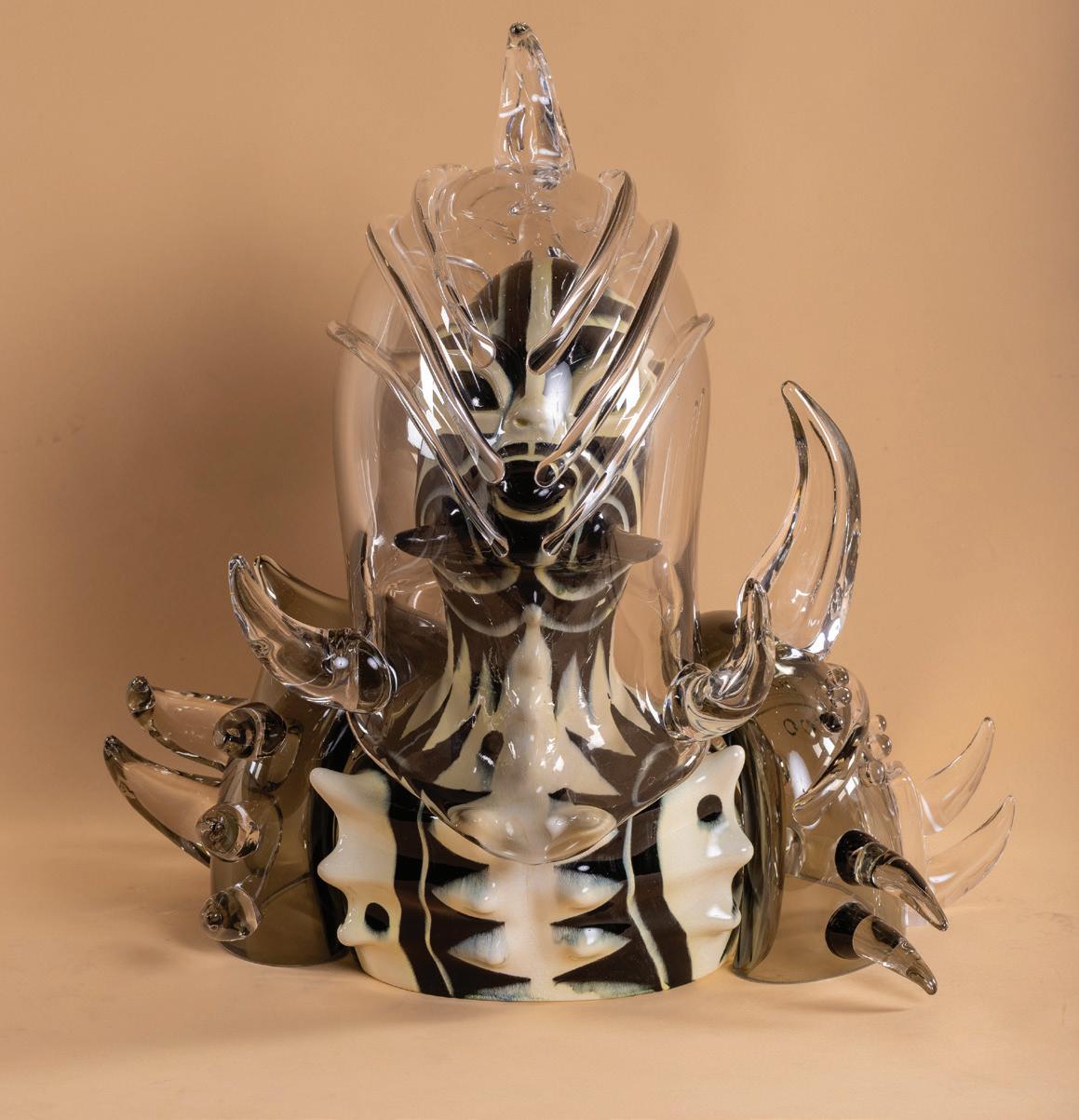

A purchase directly supports a small Indigenous-owned business— not a conglomerate manufacturing diluted ideas elsewhere. A jacket, dress or beadwork piece becomes wearable story.
Luxury, in this context, acquires new meaning. Not scarcity. Meaning. Perhaps one of SWAIA’s most important contributions is education. For generations, mainstream perceptions flattened Native identity into a single category: “Native American.” But Indigenous communities are not monolithic.
There are hundreds of Nations represented at Indian Market— each with distinct philosophies, aesthetics, materials, histories and lived experiences. Navajo weaving differs profoundly from Haudenosaunee beadwork. Pueblo pottery carries entirely different cosmologies than Plains ledger art. Indian Market insists upon specificity. The juried process, artist interactions and educational components encourage audiences to move beyond stereotype and toward understanding. Collectors increasingly seek provenance—not only where a piece came from, but who made it, why it matters and how it exists within larger cultural narratives. This sophistication marks a turning point. Native art is no longer merely admired. It is studied. Respected. Contextualized.
One word surfaces repeatedly in Schulze’s philosophy: stewardship. Not ownership. Stewardship. It reflects a distinctly Indigenous framework— understanding that stories, traditions and cultural knowledge do not belong to one individual. They are cared for, protected and passed forward.

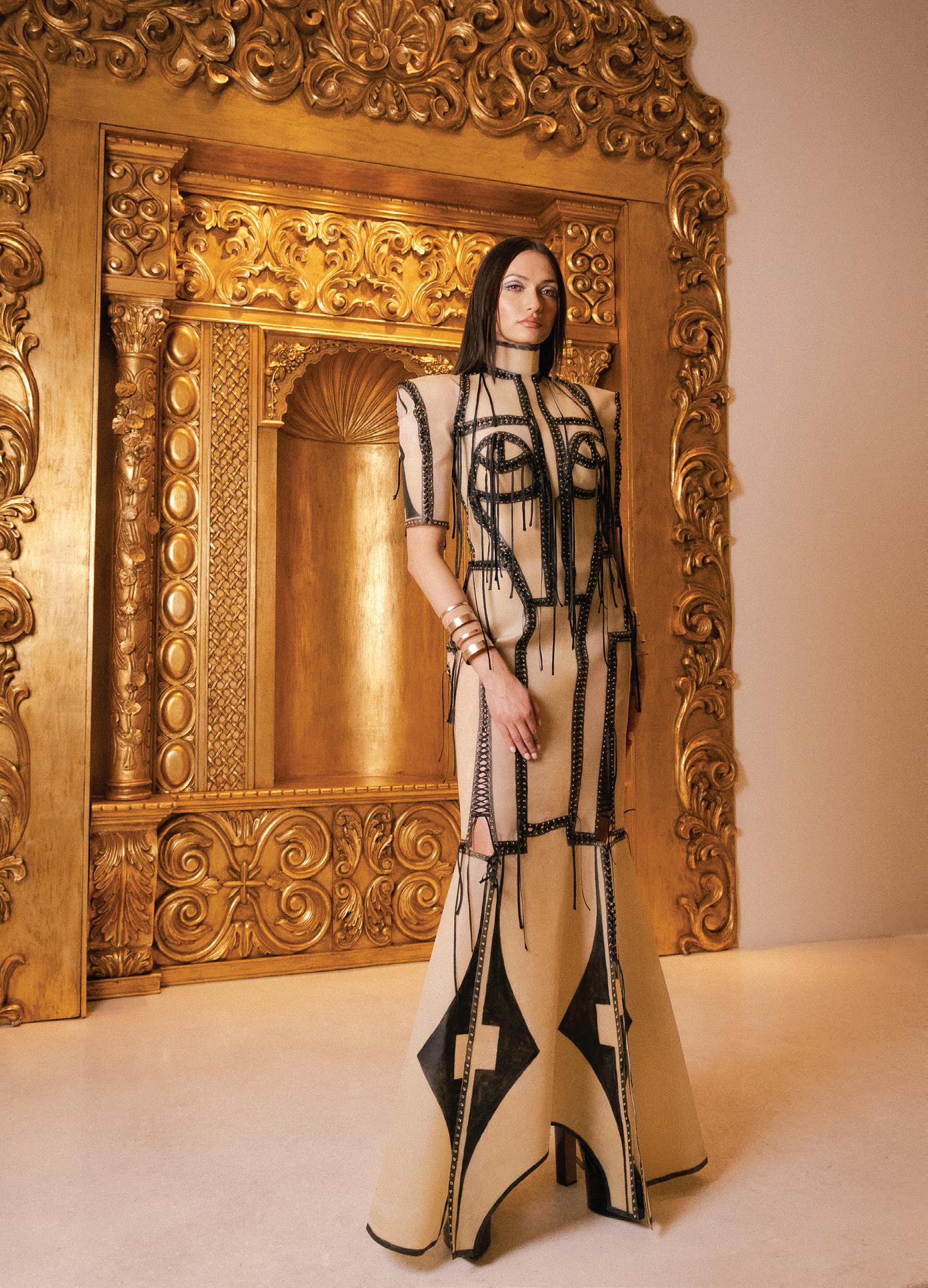
This perspective shapes SWAIA’s future. Rather than imposing topdown decisions, the organization listens. Artist summits, community feedback, year-round dialogue—these are mechanisms for shared evolution. Change emerges collectively, not in isolation.
“We don’t make decisions in a vacuum,” Schulze explains. “The artist community tells us where the challenges are.” That responsiveness matters. Technology shifts. Markets evolve. Younger generations create differently. Yet SWAIA continues to ask the same question: How do we remain deeply rooted while thoughtfully moving forward?
This August, when artists once again gather in Santa Fe, they will bring more than extraordinary objects. They will bring continuity. Food, music, performance, fashion, visual art—each increasingly interwoven into SWAIA’s larger vision of Indigenous excellence. Chefs, musicians, designers, filmmakers and storytellers now stand alongside traditional artists, reflecting the full spectrum of Native creativity.
The future of Indian Market will likely look different than its past. More digital. More global. More interdisciplinary. Yet its soul remains unmistakably intact. Community. Exchange. Story.
More than a century after its founding, SWAIA continues to prove something essential: Indigenous art is not surviving. It is leading. And perhaps that is the real story of Santa Fe Indian Market—not simply that it became the largest juried Native art market in the world, but that it helped Indigenous artists reclaim narrative, economy and visibility on their own terms.
Every August, beneath New Mexico skies, history and future meet. And for a few luminous days, the world gathers to listen. •





4 BEDS | 4 BATHS | 4,402 SQFT | $912,500
Fully remodeled mid-century modern home on a beautifully wooded, nearly one-acre lot in the highly sought-after Tall Oaks community. From the moment you enter, soaring ceilings and a dramatic formal living space create an unforgettable first impression, complete with abundant natural light and a stunning fireplace. The dining room is filled with natural light from two skylights and overlooks the resort-style backyard featuring a pool, koi pond, mature trees, and professionally designed landscaping.
LISTED BY DUNCAN GALS REAL ESTATE
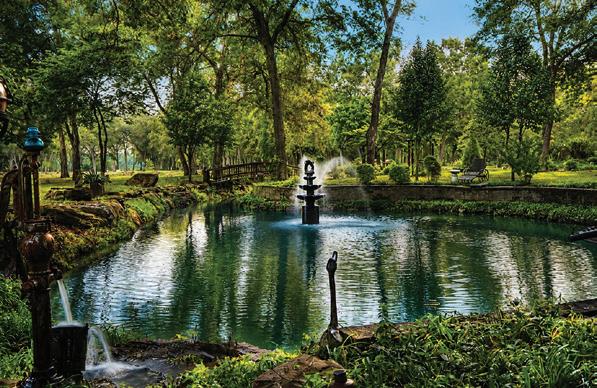
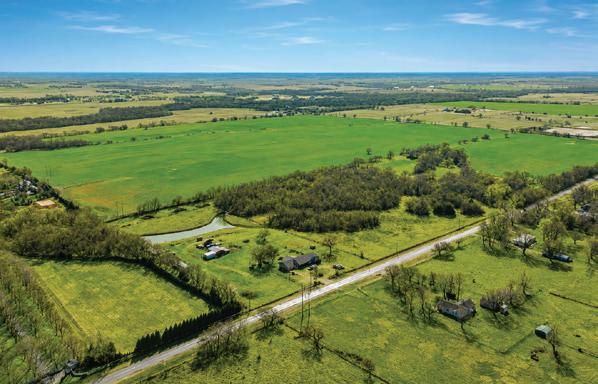






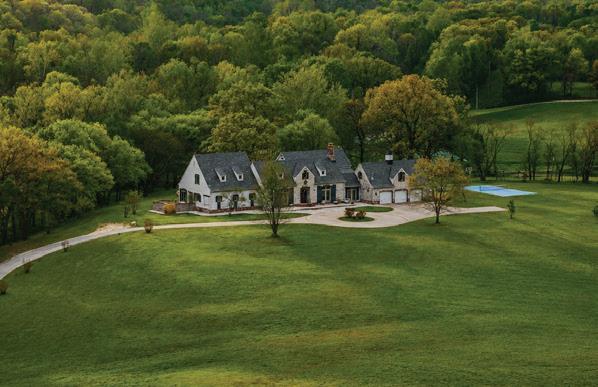

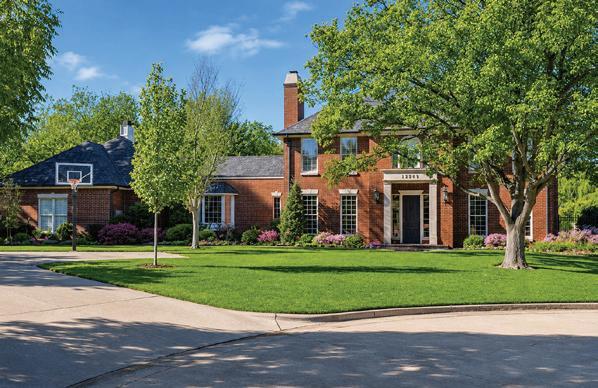








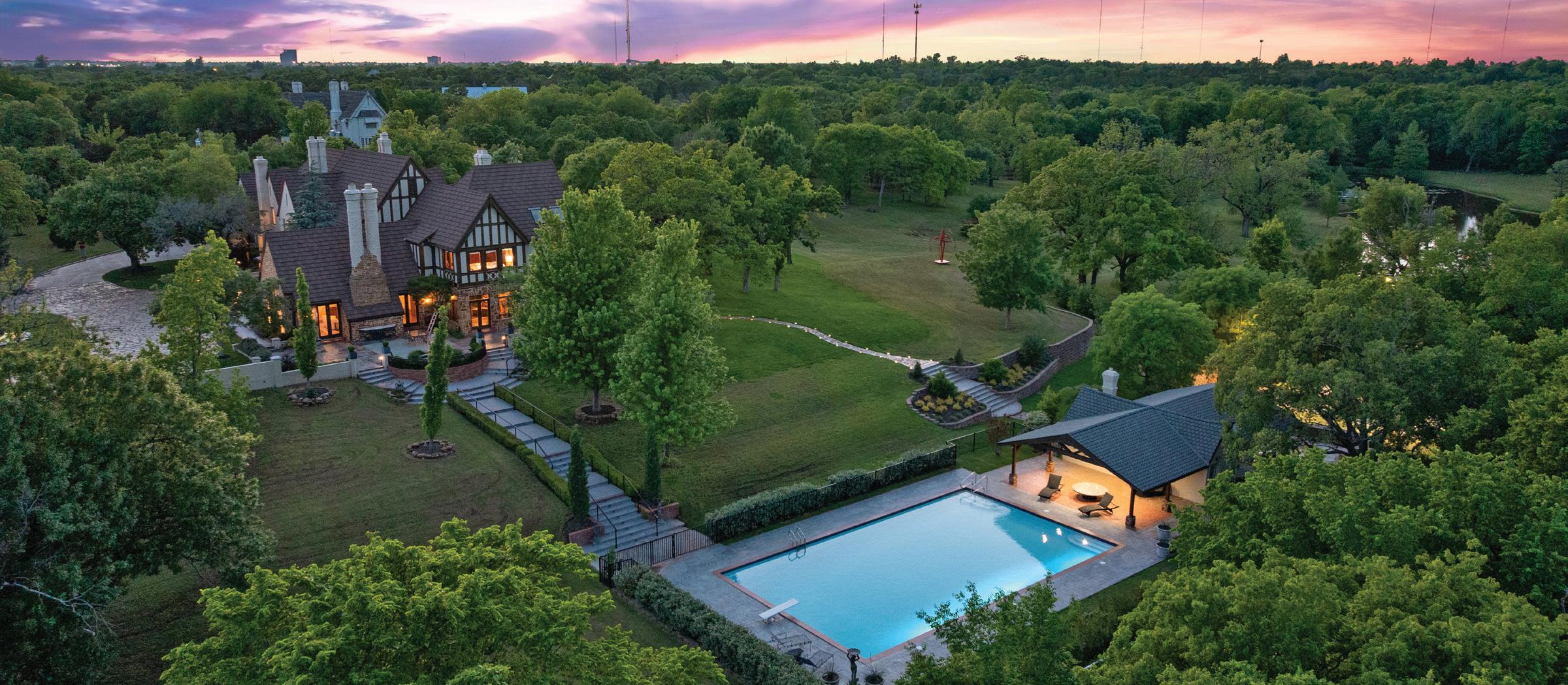

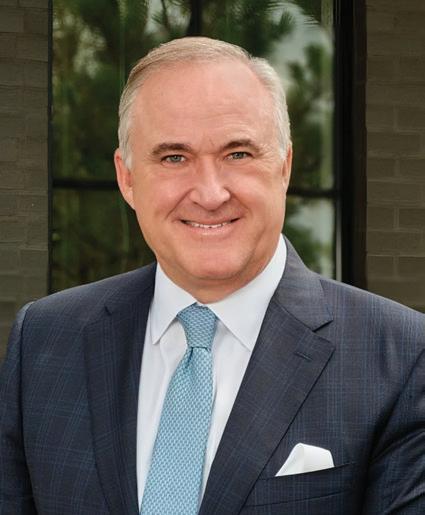












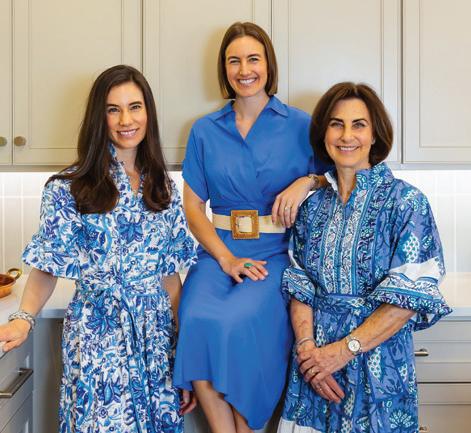





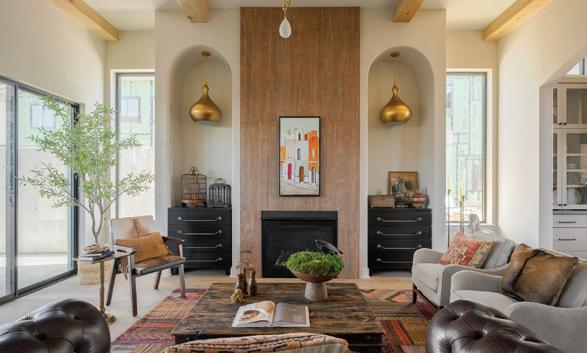

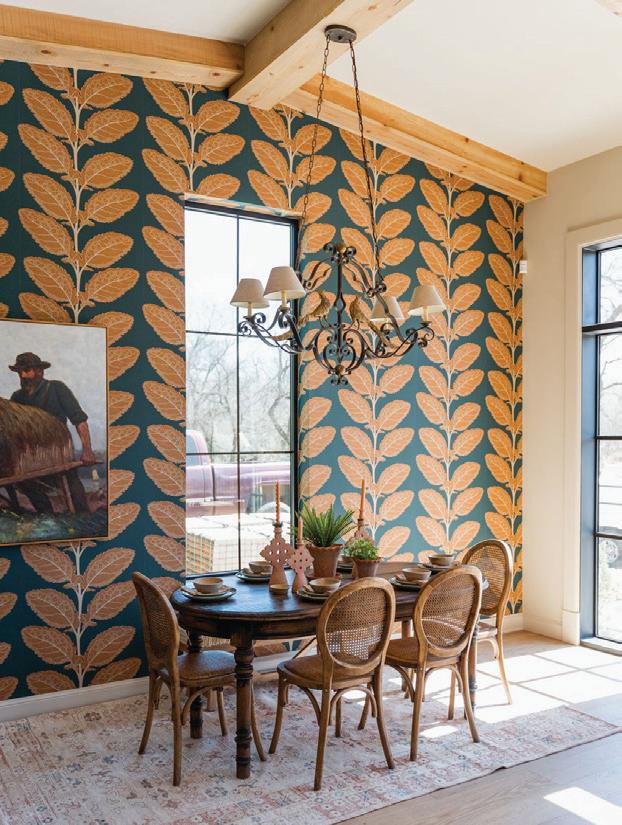






ilshire Point is a fast-growing gated community on the eastern edge of Nichols Hills featuring boutique office sites, the neighborhood restaurant & bar “74,” water features, and much more. Located only 1 mile from Broadway Extension and less than a mile from Nichols Hills Plaza, Wilshire Point is perfectly positioned for both work and play. This HOA-run, maintenance-free community offers the highest quality homesites at affordable prices, perfect for singles, professionals, and empty-nesters … we call it Refined Rightsizing™. But, there are only 13 lots left and they won’t last long, so come and tour one or all of our 3 spec homes and see for yourself!