
I Luxiere - Oklahoma Lifestyle & Real Estate // Edition 59

Page 1


THE SIBLING SYNERGY DRIVING OKC’S LUXURY BOUTIQUE

TWINHAUS

PRIVATE JET CHARTER & MANAGEMENT

Welcome to the Fleet

Range-enhancing winglets combined with two Pratt & Whitney PW-306D turbofans. These powerful engines allow this 2017 Cessna Citation Sovereign+ aircraft to take off and land on smaller runways and at airports surrounded by obstacles, with a max speed of 457 kts. This reduces travel time and grants access to popular destinations such as Aspen, Hilton Head and Ocean Reef. The sizable 12-seat cabin makes every business trip a pleasure.

jewelry designed to be the art you wear

N aifeh f i N e J ewelry . com
NICHOLS HILLS PLAZA | SUN VALLEY RESORT
VALERIE NAIFEH WEARS THE BOVET FLEURIER VIRTUOSO V IN 5N RED GOLD

54

Double Take

Twinhaus, a vintage fashion showcase, is a fairly recent arrival in OKC’s Plaza District but has been a long time coming. Siblings Amber Rae Black and Justice Smithers have dreamed of the concept since they were kids, and are enthused about sharing accessible luxury with their hometown.

BY

18 From OK to NY or Nowhere

When the stage called him at a young age, Christopher RiceThomson had the drive and talent—and support from his family and community—to answer in style.

STORY BY KATE FRANK

40 Going Bigger, Growing Bolder

For Carlos Barboza, “the bigger the better” is often an understatement. The OKC muralist is making a visual splash while processing his childhood as an undocumented immigrant.

STORY BY MICHAEL KINNEY

48 Becoming Brian Bogert

Clarity of purpose can contribute to success—ask Brian Bogert, who found himself and his calling while building

The Social Order Dining Collective into downtown OKC.

STORY BY GREG HORTON

The Legacy of Margaret Roach Wheeler

Now in her 80s, Chickasaw textile artist Margaret Roach Wheeler is a legend of the loom, and her generosity and dedication have strengthened the fabric of her community.

STORY BY CRAY BEAUXMONT-FLYNN

72 Ranking Castles & Building Confidence

Lindy West wears and has worn many creative hats, but her one-woman show Every Castle, Ranked, coming soon to OKC, is a perfect outlet for personal expression.

STORY BY ALEXANDRA BOHANNON

1609 N BLACKWELDER AVE OKC
NICHOLS HILLS PLAZA
WILD ONE SKELETON
39MM 5N RED GOLD
WILD ONE SKELETON
39MM 3N YELLOW GOLD

A Letter from the Editor

It’s always a season of gratitude at Luxiere. When I think about the community we’ve created over these many years, the stories we’ve been honored to tell and the dear friends we’ve made, it takes my breath away. Our own small, but mightily talented team of writers, photographers and designers are the people behind the curtain. They showcase our state from a perspective that is unique. Every edition we have the privilege of curating for you is a love letter to everyone who makes Oklahoma magical.

Edition 59 is no exception. We are honored to bring you the story of one of the most influential Chickasaw textile artists of her generation, Margaret Roach Wheeler, whose methodical processes produce garments both familiar and fabulous. The course of her journey changed in 2006 when she attended a Chickasaw Nation listening conference and the rest, as they say, is history.

Carlos Barboza’s large-scale artwork is equally stunning in an entirely different way. The Costa Rica-born painter has murals scattered across Oklahoma City: bold, vibrant, joy-sparking transformative works, almost like dreamscapes. While some artists dream in vibrant hues, others dream of performing on Broadway. Another talented Oklahoman, Christopher RiceThomson, an actor, director, choreographer and content creator, made his dreams come true in the Big Apple and beyond, and it all started within the walls of his family’s church home. You’ll love his story as much as we do.

While legacy isn’t truly on his mind quite yet, sculptor H Kreg Harrison’s hope is that he’s capturing “honesty” in bronze. Once a denizen of the nine-to-five office grind, Harrison walked away from that world with the certainty that something better lay before him. And he was right.

You may notice that we only bring you occasional travel stories. We focus on the unexpected, the unique and the eclectic, and that’s precisely what we bring you in this issue as we take you to Copenhagen. It’s a quietly sophisticated, beautifully designed city, home to more Michelin-starred restaurants than any other in Scandinavia.

Our Woman of Influence in this edition is Erin Oldfield, a former arts educator who now serves as the vice president of community outreach for the OKC Thunder. Her impressive team has produced hundreds of events, from basketball court dedications to Rolling Thunder bookmobile events, and her ability to find magic in the smallest moments is part of what drives her—and keeps her grounded.

Brian Bogert, founder and CEO of the Social Order Dining Collective, is the driving force behind some of our favorite spots: The Jones Assembly, Fuzzy’s Taco Shops, Dave’s Hot Chicken and Spark. His decades-long career comes down to two words: “experience” and “downtown.”

As ever, our purpose in bringing you these stories is to entertain, inspire, educate and uplift you. As you leaf through our pages, we hope you find a few moments of joy. Let us know what you think – we’d love to hear from you.

Until next time,

Luxiere's Megan Shepherd gives us the skinny on where to eat, drink and be merry while on holiday in Copenhagen.
Pg. 32
custom clothier

Contributors

OUR CONTRIBUTORS

Pg. 40

Muralist Carlos Barboza ponders citizenship and self from his Canopy Art Center studio with Luxiere's Michael Kinney.

Each issue of Luxiere represents the combined efforts of an accomplished team of creative Oklahomans. We are pleased to share their work with you, and grateful for the time and talent each has contributed to bringing this publication into being.

DESIGN nvsble.studio

ON THE COVER

OKC's Twinhaus owners Justice Smithers and Amber Rae Black Photograph by Justice Smithers

LUXIERE MAGAZINE CORPORATE OFFICE

2123 N Classen Blvd Oklahoma City, OK 73106 www.luxiere.co

Luxiere Oklahoma is published bimonthly, direct-mailed to a curated readership and distributed at select retail locations free of charge for individual use. To request copies, please contact the publisher. For more information, visit www.luxiere.co.

ADVERTISING INQUIRIES

Email: stacy@ luxiere.co Phone: 405.808.1332 Advertising

OKLAHOMA NEW YORK NOWHERE FROM TO OR

How Christopher Rice-Thomson’s roots shaped his Broadway rise

Living the Broadway dream may seem far away for many Oklahomans, but Christopher Rice-Thomson’s journey proves that big dreams can begin at home. Rice-Thomson, a Broadway actor, director, choreographer and content creator, is a living example of how Oklahoma roots can quietly shape worldclass artistry. Though his career now spans New York City, national tours and international stages, with his social media platform of nearly 130,000 followers, his story begins in Edmond, Oklahoma, surrounded by after-school theater classes, Disney soundtracks and a community that cultivated big dreams.

Rice-Thomson was first introduced to the arts not through a traditional theater, but within the walls of his family’s church, a setting that would quietly shape the foundation of his creative life. The church’s arts program earned a strong reputation for its technical dance and annual large-scale theatrical productions, offering young performers an unusual opportunity to perform at an early age. For Rice-Thomson, this environment became his first stage, where creativity, discipline and storytelling intersected in a way that felt both accessible and inspiring.

At home, that spark continued to grow. Rice-Thomson became captivated by Disney classics, singing along to every song and gravitating toward the emotional pull of music and movement. His parents quickly noticed the light that seemed to switch on whenever he sang or danced, a joy too evident to ignore. Recognizing his natural pull toward performance, they chose to nurture it, taking the first steps that would allow his passion to grow.

Rice-Thomson began dancing and acting classes, and what began as curiosity quickly turned into new-found love. Age 10 became a pivotal moment in his story, when he attended a live production of Beauty and the Beast at Oklahoma City’s Civic Center Music Hall for his birthday. Sitting in the audience, watching performers bring a beloved story to life onstage, he had a realization that would define the rest of his life.

“That’s what I want to do,” he knew. He realized his love for the arts was far more than a hobby, but a way of living.

From that moment forward, Rice-Thomson immersed himself in training. He took every acting and dance class available, determined to refine his craft. He attended Lyric Theatre of Oklahoma’s Thelma

Broadway dancer Christopher Rice-Thomson

Gaylord Academy, the state’s premier musical theater training program, known for producing alumni who succeed on Broadway, television and beyond. Summers were spent performing in large productions at the Civic Center, gaining professional-level experience while still a student.

Homeschooled for much of his upbringing, Rice-Thomson was able to dedicate himself fully to singing, dancing and performing in local productions. That schedule, combined with Oklahoma’s tight-knit theater community, gave him both discipline and early opportunities to grow as an artist. As far away from Broadway as Oklahoma may seem, the opportunities to learn, perform and develop his craft felt limitless.

After high school, Rice-Thomson enrolled at the University of Oklahoma. He began studying drama, but soon realized musical theater was where his heart truly belonged. OU’s musical theater program is highly selective, accepting only a small number of students each year and providing rigorous training in voice, dance and acting, along with performance opportunities that prepare students for professional careers. He auditioned his freshman year but wasn’t accepted on his first attempt, a setback that only fueled his determination to refine his skills. He auditioned again at the end of his freshman year and earned a spot in the program.

From that point on, his four years at OU were filled with nonstop training, performances and learning, all while keeping up with his class schedule. He thrived in the program, ultimately graduating with distinction. “The training there was top notch,” he says. “Being the underdog really paid off for me.”

After college, Rice-Thomson began his career in New York City. “It was kind of New York or nowhere when it came time for my career,” he jokes. The summer after graduation, he made the move to the city. Though he had visited before, living there felt different ... but soon like home.

Early in his career, Rice-Thomson “crashed” a dance audition for West Side Story, performing among the last performers of the day— and against the odds, he was offered a role on the national tour. That opportunity launched him into a whirlwind career that took him across the United States, Canada and Japan, performing night after night while honing his craft. It was also on that first tour that he met his future husband, Clay Rice-Thomson, beginning a personal journey that would become as meaningful as his professional one. Fourteen years later, the couple are now parents to twin baby boys, just 7 months old, a family built from Broadway with shared adventures on stage and off.

Following West Side Story, Rice-Thomson joined the national tour of White Christmas, then landed a spot in the Broadway company of The Book of Mormon. He would spend four and a half years with the show in New York City, performing for audiences from all over the world, many of whom traveled thousands of miles to experience Broadway.

Next came Pretty Woman, followed by another major milestone when Rice-Thomson began touring with Hamilton —a true bucketlist achievement. “I’m glad to be doing what I love every night and sharing it with people who love it,” he says.

In recent years, his career has expanded beyond performing. RiceThomson now works extensively in Broadway marketing and social media, helping shape how shows connect with audiences online. He spearheaded the social media strategy for The Great Gatsby, which became the fastest-growing Broadway social media account since Hamilton

His online presence has grown alongside that work. Rice-Thomson is regularly invited to red carpets and opening nights to help publicize Broadway productions. With a growing audience, he is committed to using his voice to empower others, advocate for meaningful causes and celebrate under-recognized artists.That instinct to lift others up rather comes naturally to him, a reflection of his Oklahoma roots.

“I’m glad to be doing what I love every night and sharing it with people who love it.”
CHRISTOPHER RICE-THOMSON

Today, Rice-Thomson continues to work across Broadway and beyond, directing and choreographing projects in both Oklahoma and New York City. He brings everything he’s learned from Norman rehearsal rooms to Broadway stages into crafting compelling stories for audiences everywhere.

For young Oklahomans dreaming of a career in the arts, RiceThomson offers advice shaped by both the realities of the industry and the possibilities within it:

“New York may feel far away, but it can be an extension of your life in Oklahoma,” he says. “Oklahoma [City] is the biggest little city you’ll ever go to. There’s always someone from Oklahoma right around every corner.”

Most importantly, he encourages persistence. “Even if New York feels far away, if you trust your heart and can see it in your future, don’t let anything stop you. If you love it enough, keep going and you’ll find your path.”

Rice-Thomson’s journey is proof that extraordinary careers often grow from the roots of home. From Edmond to Broadway, Oklahoma didn’t just support him, it shaped him, giving him the foundation to thrive, one stage at a time. •

ABOVE: Christopher Rice-Thomson walks the red carpet on Opening Night for Broadway’s The Great Gatsby
OPPOSITE: Rice-Thomson on the stage for Broadway’s Hamilton

ERIN OLDFIELD WOMAN of INFLUENCE

You’d be forgiven if you thought that after almost nine years on the job, Erin Oldfield, VP of Community Engagement for the Oklahoma City Thunder, might be acclimatized to the effect her team’s work has on people and communities across the state. After all, they produce about 100 events a season. Happily, she isn’t; in fact the opposite is true. Oldfield, elevated to her current position in 2024, feels a continued sense of awe and knows she’s fortunate to follow in the footsteps of Christine Berney, the mentor and friend who created the Thunder’s philanthropic programs when the team first rolled into town.

“I feel fortunate to be able to come into this role and further refine the work that we’re doing by being very intentional and authentic and building deep, meaningful relationships with our community partners, schools and fans. We really operate at the intersection of a nonprofit mindset and business discipline,” Oldfield says.

Oldfield’s path to the Thunder and professional sports was, she acknowledges, “very unusual.” Her career has mostly been in the arts. “I was the director of education and public programming at Oklahoma Contemporary Arts Center … And before that, I was at the Oklahoma

City Museum of Art, and before that, I was a stay-at-home mom. So I do have a very unusual pathway to sports, but it has all been rooted in community,” she says.

“It’s funny: When I made this decision to go in a new direction with my career, we were just getting ready to open the new [Oklahoma Contemporary] Arts Center. I was part of a team that was very, very heavily involved in the new building there at 10th and Broadway,” she says. One day, she was looking at the Oklahoma Center for Nonprofits website. “Lo and behold, Christine had posted this job position there. I wouldn’t have seen it otherwise. I was not looking for a role to come into the Thunder; I was looking at a way to make a bigger impact in my community. I didn’t know what that might look like. And there it was.”

As a little girl, Oldfield’s career aspirations were quite different. “I wanted to be a pop star,” she says, laughing, but she concedes that she’s “always been a caretaker … since I was 12 years old for my first babysitting gig, through deciding to be a stay-at-home mom until my kids were in school full time and serving my community around me as a community volunteer.”

Oklahoma City Thunder VP of Community Engagement, Erin Oldfield

Though you’ll often see Oldfield on television, grinning and handing off an oversized check or showcasing a nonprofit in front of a soldout home game, those high-visibility moments are not what matter to her. “What I really love the most about the job are the moments behind the scenes that people really don’t get to see. We’re really good storytellers, and we have amazing videos and photos, but it’s really the conversations, the emails and the letters in the mail I get, telling the personal stories afterward, telling me how much the things that we do mean to them. It’s when the cameras are off, getting to see a player who’s interacting with a kid, and they’re having a special moment in conversation. That’s so energizing. We can talk about numbers all day, but it’s really, it’s those life-changing moments that we get to create that are sometimes the most meaningful.”

Oldfield’s voice is full of gratitude and emotion as she tells story after story of the good stuff her small but mighty team of eight in the community engagement department makes happen. Here’s one: In 2019, the Thunder Cares staff, along with Rumble, a clutch of Thunder Girls and plenty of support staff, rolled into Boise City to cut the ribbon on the new Thunder Cares community basketball court. It was a project that had taken a couple of years to finalize.

Alisha Griffith, president of the town’s recreation foundation, had applied for grant after grant, only to be told that Boise City, the westernmost city in Oklahoma with a population that would fill up only four lower-level sections at Paycom Center, was outside most areas of service.

“We knew immediately, when we when we got at that site visit, that we were going to refurbish that court,” Oldfield says. “And during that dedication … the town shut down! We had a police escort upon our arrival.” It was a giant party, and Griffith said what so many across the state feel: “We don’t think of them as the Oklahoma City Thunder.

We think of them as the ‘Oklahoma’ Thunder. And they proved that to us by driving all the way out here to the last county in the Panhandle to make this investment in our community.”

For the Thunder, community engagement falls into four key focus areas: education; healthy and vibrant communities; workforce development; and basic needs. “I think we’re most known for building basketball courts. And we’ve built 31 basketball courts in 17 different counties across the state,” Oldfield says. But there’s so much more. “We have a number of education programs that serve statewide.”

The day before Oldfield spoke to Luxiere , the Rolling Thunder book bus, a Thunder program since day one, had just given away its 250,000th book. “To kind of put that in perspective, the Thunder as a team has played about 75,000 minutes of basketball, and so that means we’ve given away three books for every minute of basketball,” she says.

Then there’s the NBA Math Hoops program, a fun board game and mobile app that teaches students fundamental math skills through the basketball statistics of their favorite NBA and WNBA players. “I cannot believe how wild these kids go over statistics, and it’s kind of like sneaky learning. They don’t even know that they’re doing that,” Oldfield says. “The kids are drafting players. They’re solving math problems.” Kids in that program solve over three million math problems a year.

Oldfield also manages the Thunder’s partnerships and collabs with hundreds of nonprofits statewide. “We want to be a megaphone for those organizations. You know, what we hear a lot is, for any nonprofit, visibility can be difficult, and when we’re able to come alongside our nonprofit partners and tell those stories, that’s what we do really well,” she says. “I just feel so incredibly lucky that I get to do this every single day.” •

THE LUXIERE LIST

THUNDER CARES and the THUNDER COMMUNITY FOUNDATION PROGRAMS

Grants. The Thunder introduced its inaugural grant cycle on Giving Tuesday 2025, distributing 100K in grants to four organizations: Pivot, Cleats for Kids, The Urban Bridge Impact Center and Junior Achievement of Oklahoma.

Youth Innovation Pathways. Thanks to a $1M partnership with Google, the Thunder Community Foundation is excited to leverage cuttingedge technology, hands-on learning and real-world problem-solving, creating pathways to empower students to develop creativity, critical thinking and technical skills. Youth Innovation Pathways include: Thunder AI Sports Scholars, a program that blends sports data analytics, coding and technology; Wonder Rooms, spaces where students use interactive, AI-powered toys and apps to encourage motor skills, cognitive abilities and exploration of concepts like cause and effect, sequences and patterns; and AI Educator Workshops, designed to empower teachers with cutting-edge tools to transform their classrooms.

Holiday Assist. The Thunder held 44 events serving 50+ unique agencies in 2025, helping to meet needs in the community.

Cultural Celebrations. The Thunder participates in parades and special projects to amplify the rich cultural heritage and contribution of our communities.

Thunder Cares Service Project. An all-team staff project is held at various locations; in 2025, the entire business front office, and Thunder and Blue teams, assisted The Regional Food Bank of Oklahoma in food packing.

Rolling Thunder Book Bus. Presented by American Fidelity Assurance Company, the Bus is a statewide outreach program that inspires children, kindergarten to fifth grade, to develop a love for reading. The Book Bus is a truck and custom-built trailer filled with over 2,000 fiction and non-fiction books.

The Thunder Reading Challenge. This school-based reading challenge runs from October through March. This program is open to students in second grade, and challenges schools across the state to compete against each other for monthly prizes, cash prizes and a special assembly featuring Thunder entertainers.

Thunder Reading Timeout. During the season, Thunder representatives take a “timeout” to read books to students, giving every student a copy of the book.

Devon Thunder Explorers. Teachers engage students (grades 4-6) with activities that challenge them to think outside the box, developing problem solving skills around questions that focus on STEM principles. Last year 608 teachers registered from 354 ZIP Codes across the state, reaching over 30,000 students.

Thunder Math Hoops, presented by Devon Energy, is a fast-paced board game and mobile app that teaches students fundamental math skills through the basketball statistics of their favorite NBA and WNBA players. The Math Hoops curriculum has been shown to improve students’ grasp of statistics and interpersonal skills. Over 10,000 students participated in the Math Hoops program last year.

Black Heritage Creative Contest. Students in grades 9-12 are invited to submit an original creative piece describing/depicting an inspiring experience, moment or individual in Black history and how they have been personally influenced.

The Thunder Fellows Program aims to unlock new opportunities in sports, entertainment and technology for high school and college students. There are 59 students in the 2025-26 Thunder Fellows Cohorts: 32 high school juniors and 8 seniors from Tulsa and 19 college undergraduates from Oklahoma institutions.

A FULL-CIRCLE APPROACH TO AGE MANAGEMENT

WHERE SCIENCE, SKIN, AND LONGEVITY ALIGN

Aging isn’t something to resist—it’s something to manage with intention . True age management requires more than isolated treatments; it demands a philosophy that honors the connection between internal wellness , skin health, and advanced aesthetics

Our full-circle approach blends medical innovation with personalized care to address aging at every level—cellular, structural, and visible. The result is not transformation, but refinement: a stronger body, healthier skin, and results that evolve naturally over time.

We don’t chase trends. We don’t overcorrect. We support longevity, protect skin integrity, and create results that feel effortless and enduring.

SERVICES

The ToxPass A strategic neurotoxin membership designed for consistency and balance. Thoughtfully timed treatments and expert placement maintain facial harmony while preserving expression.

Wellness Medical-grade peptide therapies and wellness protocols tailored to support energy, metabolism, cognitive clarity, hormone optimization, and longevity from within.

Skin Health Foundational treatments focused on strengthening the skin barrier, improving cellular turnover, and restoring long-term skin function. Because healthy skin is the basis of all aesthetic outcomes.

Skincare A curated selection of medical-grade skincare paired with personalized guidance. Every regimen is designed to complement in-office treatments, protect results, and support skin longevity beyond the clinic.

Tixel® 2 Advanced non-laser fractional skin rejuvenation that stimulates collagen, refines texture, softens fine lines, and improves scars and pigmentation—with minimal downtime.

Personalized Age Management Plans A personalized roadmap combining aesthetics, wellness, skincare, and regenerative medicine—customized to your goals, lifestyle, and biology.

AGING WELL ISN’T ABOUT LOOKING YOUNGER. It’s about aging intelligently, beautifully, and confidently.

Our Executive Leadership Team has over 100 years of combined banking experience. We will continue to follow the tried and true banking principles that have served us well.

Mel Martin President & CEO
Shawn Null Div. President & Director, Commercial Lending
Pat Rooney Executive Chairman

A HOLIDAY in DELECTABLE DENMARK

Food, drink, exploration and fun on a Scandinavian getaway

Copenhagen is the kind of city that subtly spoils you. At Christmastime, it glows with candlelit holiday markets and merriment in the city center; in spring and summer, locals slip into the harbor for brisk swims before biking off in a Nordic uniform of chic layers, still dripping from the dip. Like its signature Scandinavian aesthetic, Copenhagen is sophisticated without trying—design-obsessed but deeply livable.

On a trip this past December, the daylight hours were short, but full of experiences worth savoring. Here, we found a city with pastries that weren’t just breakfast or dessert, but a daily devotion, and with more Michelin-starred restaurants than any other in Scandinavia.

On a five-day trip, expect equal parts indulgence, inspiration and that sneaking feeling that you’ve landed in a city that’s somehow operating at a slightly higher frequency than the rest of the world.

The best part of Copenhagen is wandering around it in the name of delicious discovery, but if you need a bit of inspiration, the following spots make for great places to start.

FOR PASTRIES

First things first: when in Copenhagen, your first order of business is to track down a cardamom bun—ideally one a day. (At least. Accept your fate and lean into life!)

Copenhagen is world-renowned for the cardamom bun (or as I’ve affectionately started calling them, Cardi Bs). Ask any local connoisseur where to find the best one, and Juno the Bakery is guaranteed to top the list. It is world-famous and always attracts a line. So, even if you have to walk to Juno before the 9 a.m. sun comes up, even if you have to wait in drizzly rain, tucked under an umbrella while the tantalizing aroma of fragrant, spiced Scandi pastries curls in the air, teasing you while you wait for the shop doors to open—do it. One bite of its saffron bun, its delectable laminated pastries and, of course, its must-taste Cardi B, and you’ll understand why.

Named for famed former Tartine baker Richard Hart, who founded the bakery after escaping to Copenhagen from San Francisco, Hart’s Baggeri cardamom buns are a must-stop on any Copenhagen tour (thankfully, there are multiple Hart locations around the city). Opened with support from culinary icon Rene Redzepi of Noma, Hart is widely regarded as one of Copenhagen’s most esteemed bakeries. For a truly standout bite, taste the twice baked cardamom bun.

Honorable mention baggeris include Alice, Andersen & Maillaird and Rug Bakery. Plot out your own tasting tour and see what hits!

FOR THE STAY

While on a full Copenhagen itinerary, great accommodations are a must. Thankfully, there’s The One Hotel

No matter the city you find it in, there’s so much to love about a One Hotel—be it the iconic scent piped through the premise, the natureinspired design, the lobby bars absolutely dripping with vibes, the banquet-style breakfast spread that could give many of Copenhagen’s gastronomically acclaimed restaurants a run for their stars, the complimentary cardamom hot chocolate served throughout the day or the ambient background music that lulls you into relaxation. Copenhagen’s One Hotel is centrally located on Stroget Street, just a short walk away from some of the city’s best shopping and dining. Don’t feel like hoofing it? Grab one of the hotel’s complimentary bikes and spend the day touring on two wheels.

FOR DRINKS

Rustic Laban Wine Bar in the Vesterbro neighborhood is as cozy as they come. Warm with soft lighting and plenty of wide tables to tuck around, it’s the perfect place to fall into after a day of sightseeing before an early dinner with friends. It’s known for a deep list of natural wines, so you’ll have plenty to taste over an hour or two while you stave off the jet lag.

For a vibey cocktail in a low-lit lounge, grab a table at bird. , a lo-fi listening room slinging martinis and records all night. The interiors are simple, sleek and evocative of Nordic warmth and sophistication— warm woods, the low hum of vinyl in the background and an impressive spread of signature martinis and negronis. With two locations in Copenhagen, the stylish birds (downtown and uptown) are tough to get into without a reservation, so be sure to call ahead.

For something a little less Nordic, a lot more opulent, slide into happy hour at Ambra . This Italian spot in Indre By (translation: City Centre) has strikingly high ceilings, shareable Napoletana-style pizzas cut with table-side scissors, an extremely Instagrammy bathroom and a White Star Wine List designation … all the makings of a delightfully elevated but unstuffy aperitivo hour.

Kodbyens Fiskebar leans into surprise: a raw bar in a meatpacking district, an old warehouse turned restaurant that feels surprisingly chic and yet another selfie-worthy bathroom that doubles as an immersive experience. With all this and fresh seafood caught from the Nordic waters nearby, and a Bib Gourmand designation from the Michelin Guide, Fiske is more than worth a visit for happy hour. Widely respected as one of the seminal restaurants responsible for kickstarting Copenhagen’s recognition as a culinary mecca, Fiske is considered essential dining in the city. Stop by around 3 p.m. and enjoy a crisp white, a dozen oysters and the last lights of golden hour.

Cardamom buns at Hart’s Baggeri
Drinks at bird.

As impossible as it’d seem to pick a favorite meal in Copenhagen, Barr made it easy. Much as we would’ve liked to pop into Noma or Alchemist on this trip, shockingly, they were booked! As an alternative, we grabbed a reservation at Barr, which gave us just enough of an elevated experience to scratch our fine dining itch.

Expect gold stars across food, ambiance and hospitality, and an hours-long dinner with zero pressure to hustle out. If you’re open to it, put the fate of your order in your server’s hands; expect curation, curiosity and excellent “bedside.” From the moment our sly server greeted us, to the mental gymnastics he performed to make recommendations that accounted for the competing allergies and preferences of our party, to the homemade limoncello he treated us to at the end of the meal, the hospitality at Barr is as delectable as the food itself.

As for the dishes, standouts include the beef tartare, the pork chop and the schnitzel, but lean into the experience and let your server suggest a few paths for exploration.

Locals say that Baest is the best pizza in town, and I’m inclined to believe them. The sourdough crust is pillowy, the cheese and charcuterie on the charcuterie board are homemade and if you’re ever feeling a little touch of nostalgia or homesickness for the States, a large painting of Obama looms lovingly nearby to keep you company. If you’re not in a hurry (and you probably won’t be, given the hourlong average wait for a table) swing by Baest’s sister restaurant Mirabelle next door to sample its homemade sourdough.

With its state-wide focus on beef and dairy production, some might say Oklahoma has all but perfected the burger. So color me surprised to discover that the best I’ve ever tasted doesn’t hail from anywhere near Tulsa, but rather, from a shack inside an amusement park called Gasoline Grill

If it’s true that the ingredients make a burger, perhaps none better exemplify this than GG’s butterburger. It’s made with 100% organic beef, hand-ground in house daily and topped with locally made cheese and butter, nestled on a housemade potato bun griddled to golden perfection. Our group ordered two to share, then promptly ordered two more. But don’t just take our word for it; Dua Lipa and Bloomberg named Gasoline among their favorite burgers, too!

FOR EXPLORING

With all that eating, you’re going to want to get your steps in. Copenhagen is a beautifully walkable city—and truthfully, there’s something cathartic about a mid-morning walk in the dark. Once the Nordic sun makes its arrival, time to set your sights on shopping. Collector’s Cage is a must-stop for fans of premium vintage and second-hand designer bags, and Astrid Andersen , Ganni , Brand Space Studio and Boii Studios will tempt you with outfits to match.

Need some quiet time? New Mags bookshop is stacked with highend coffee table books, limited edition magazines, architectural tomes and travelogue paperbacks, all served up in a minimalist, Scandinavianchic shop. Pop in, find a book to thumb through and recharge before your evening plans.

After a day spent taking in the iconic canals and colorful homes at Nyhavn, spend the evening at Tivoli Gardens, the iconic amusement park located smack dab in the city center. If you’re lucky enough to visit around Christmastime, you’ll see the picturesque park decked out in Christmas light s and holiday markets . Yet even without the merriment, Tivoli is packed with charm and nostalgia. Opened in 1843, Tiovli is the second oldest amusement park in the world, and the inspiration that sparked Walt Disney’s creation of Disneyland. A century and a half hasn’t compromised a bit of Tivoli’s magic, but the park now boasts over 30 rides that sit somewhere on a spectrum between charming and thrilling. The Daemon Coaster is chief among them, which one coaster head in our group described as an attraction that “rides like Wes Anderson decided to design a roller coaster.”

Need a change of pace? CopenHot is a Scandi-inspired sauna park with hot tubs, saunas and cold plunges, perfect for resting tired bones. Of course, Malmo, Sweden, is a quick 20-minute train ride away, too— but who needs another country on the itinerary? With all this and more to see, a few days in Copenhagen is hardly enough. •

Dinner at Barr
Shopping at Collector’s Cage

Join Dr. Miles on March 10

Join Dr. Laura Miles among many other doctors, scientists, innovators, business leaders and community members for the Oklahoma Health & Wellness Summit, a two-day gathering focused on one mission: launching Oklahoma City toward becoming one of the healthiest cities in America through knowledge, collaboration and actionable solutions. Dr. Miles will show you how you can become more proactive in your own health by sharing some tips on how to read between the lines with your everyday lab work and which labs you need to be tested for in order to achieve optimal health.

MAGGIE ALLEN, NP

BIGGER , BOLDER GOING GROWING

Muralist Carlos Barboza ponders citizenship and self

WORDS & IMAGES BY MICHAEL KINNEY

OPPOSITE:

Muralist Carlos Barboza in his studio at Canopy Art Center

Carlos Barboza just can’t help it. When it comes to his art, the phrase “the bigger the better” feels like an understatement. The Costa Rican-born painter has murals scattered across Oklahoma City as a testament to his love of making art as big, bold and vibrant as possible.

“Anytime that I do a painting, I always try to find the biggest canvas possible,” Barboza says. “I think mostly I love to do details. So, the bigger the canvas is, the more real estate I have to add details. To go even further, I think with murals, I discovered how they’re such a great tool to democratize art, and to make it available to everybody.”

Barboza’s work can be found on the sides of grocery stores, office buildings and schools. He has more than 50 murals to his name.

Aside from scale, Barboza’s other calling card is realism combined with a strong, striking color palette.

“Maybe this comes from my love for film and the movie-going experience,” Barboza says. “I like things big, and seeing something rendered 20 feet tall does kind of give you a weird psychological kind of feeling of being overwhelmed by something when it’s large.”

The overwhelming majority of Barboza’s paid work has nothing to do with his life. He describes them as fun, but just surface deep. It’s not until you step inside his office at the Canopy Art Center (1717 NW 16th St.) that you see Barboza’s life displayed in living color. There, his existence as a once undocumented immigrant growing up in the United States starts to come into focus.

“My childhood in that situation, I think it is very much like people who grew up in poverty.  They don’t know that they’re poor,” Barboza says. “I think it was somewhat similar where I didn’t quite know what the implications were of my situation up until I think I was maybe like 16 when I couldn’t get a driver’s license. I couldn’t go to college and get an education. My therapist said it’s no wonder why I’m an artist—because I really had no other choice.

“I think once you kind of understand the situation that you’re in, it is very traumatizing, and it was a very fearful time.”

The paintings that adorn his office walls tell the story of a boy who grew into a man just as a battle over immigration was starting to heat up in America. They include a large portrait of his father, whose eyes seem to bore into the viewer’s thoughts. But it’s the one of his sister, sitting in water with large goldfish swimming around her, that may depict his story of immigration and artistic inspiration the best.

By the time Barboza’s parents and youngest sibling had gained U.S. citizenship, he and his sister had passed the age of being included. That left them still being a part of the family, but not according to the government.

“It was just her and I in this situation, living undocumented in the United States, with our parents being citizens now,” Barboza explains. “She and I, we had no path toward citizenship other than getting married or something like that. But ultimately, my sister decided to leave. She was kind of fed up with it, and I totally understood that. She had all this hope and promise for what she wanted to do for a living, and she just was not getting the opportunities that she wanted when she was here.”

“I had this idea of someone being isolated in a fish tank, separate from everybody else.”
CARLOS BARBOZA

Barboza’s sister decided to leave for Europe. At the time, they both believed they would not see each other again for at least a decade, because he couldn’t leave the country and she wouldn’t be able to return. After surviving the life of being undocumented children together, they had to say goodbye without knowing when they would see each other again.

“There was this moment when we were driving to the airport, she was about to leave, and the song ‘Wish You Were Here’ by Pink Floyd was playing on the radio,” Barboza remembers. “That always stuck with me. It was almost like a movie scene. Very cinematic, and anytime that I hear that song, I associate it with her.”

When Barboza was looking through photos to use for a portrait of his sister, he was trying to figure out what he wanted to say. That’s when a lyric from the Pink Floyd song popped into his head. “We’re just two lost souls swimming in a fishbowl” was the inspiration he needed.

“I had this idea of someone being isolated in a fish tank, separate from everybody else,” Barboza says. “That’s very personal as well, but people wouldn’t know that. I always wanted to still like a thing that works as a painting, something that’s beautiful to look at, a little bit surrealist too. But I know what it means to me.”

Fortunately for Barboza, he didn’t have to wait a full decade to see his sister again. After he got married in 2020, he obtained his Green Card the following year—and he immediately booked a flight to Italy to visit her.

“It was the first time that I left the country in that long,” Barboza says. “So it was like a very scary thing being on the plane. I remember when we went over the border of the United States, and that was the first time in 20-plus years that I’d been outside of these borders, so it was a very profound kind of thing.”

It wasn’t until recently that Barboza began to sprinkle more personal life into his work. As part of the ArtNow 2025 exhibition at Oklahoma Contemporary, he unveiled a piece titled “What We Buried (We Became).”

“It explores themes of identity, assimilation and the quiet ways in which our childhood lingers within us,” Barboza says. “Especially when we hide or suppress fundamental parts of ourselves in order to feel like we belong. This work is about that split. The innocent nostalgia of growing up in a new culture, and the darker undercurrents of what gets left behind in the process.”

A trip back to his native land of Costa Rica reminded him that he does have two homes to be proud of. But he’s also moved by the recent debate over immigration and the effect it’s having on the country that he loves.

“What’s happening right now was like my worst nightmare,” Barboza says. “You see things like back when Ryan Walters was wanting kids in school to be outed as undocumented. That was my biggest fear, because it was like a very deep secret that I had—to the point where I wanted to go by Charlie and not Carlos. I just wanted to try and hide this as best as I can. And that’s also what your parents tell you. You know, keep your head down. Don’t put yourself out there. Don’t get in trouble.”

However, after staying quiet for most of his career, he no longer finds that option appealing. Even though Barboza has a wife and daughter and is just a Green Card holder trying to gain full citizenship, keeping his head down and staying quiet means the other side wins.

That is definitely not doing it big, which is not in Barboza’s nature. •

ABOVE:
“What We Buried (We Became)” on display in the ArtNow 2025 exhibition at Oklahoma Contemporary
OPPOSITE: Barboza in his studio with a piece inspired by his sister

BOGERT BRIAN BECOMING

The identity and purpose behind The Social Order Dining Collective

The Social Order Dining Collective founders and co-owners Brian Bogert and Manny Leclercq

Experience is the secret sauce at The Social Order Dining Collective,” Brian Bogert says. The founder and CEO of the company behind The Jones Assembly and Spark, as well as Fuzzy’s and Dave’s Hot Chicken franchises, turns 50 this year, and a half-century of living typically invites reflection. We first sat down at Citizen House—a members-only club in downtown that will soon be part of the Social Order experience—to navigate this story.

Summarizing 50 years ordinarily requires a book-length treatment, but two words came up repeatedly in our two sessions—plus years of conversations over cocktails and Jones events: “experience” and “downtown,” as in downtown OKC. One of the things that age provides to those who are paying attention is clarity of identity, and from that

clarity of purpose or calling. For Bogert, an Oklahoma City native who has spent most of his life in the city, that clear sense of purpose is focused on downtown.

“Every decision I’ve made since opening Jones has been based on a question I asked myself after deciding OKC is where I belong,” Bogert says. “‘What can we do to help progress this city?’ That question shapes all our decisions from Jones to Spark, and next Citizen House.”

Bogert was deeply entrenched in a career with Accenture after graduating Southern Methodist University with a degree in finance, and minors in marketing and Spanish. “Immediately after 9/11, Accenture won a government contract to implement new security measures in U.S. airports,” Bogert says. “Oddly enough, the first to

“‘What can we do to help progress this city?’ That question shapes all our decisions from Jones to Spark, and next Citizen House.”
BRIAN BOGERT

roll out was Mobile, Alabama, and I’d been in charge of procurement for that airport—new security equipment, scanners, every detail down to the dog bowls you toss your keys in.”

(I will never toss my key into one again without thinking “dog bowl” and “Brian Bogert,” so score one for Mr. Bogert.)

The period immediately after being named Dallas Consultant of the Year seems an odd time to consider a career change, but he’d always found his joy in events, entertaining, dining—experiences, basically—and flying from city to city every week of the year had proved stultifying to his joy and creativity. “I knew I needed to do my own thing,” he says, “so I moved to Norman in 2003, and my college friend Manny Leclercq and I opened Texadelphia. It had been our hangout in Dallas, so we wanted to recreate that experience in Norman.”

Bogert’s successes with restaurants are well publicized, but the shortest version is: Texadelphia, Seven47, Fuzzy’s, The Jones Assembly, Dave’s Hot Chicken, Spark. The takeaway is that Bogert was succeeding at the highest level possible in consulting, but he recalled the moment of reflection not as one of satisfaction or joy, but of the realization that he’d seen where his life was headed, and he wasn’t interested in that narrative. The man who started his hospitality career as a 15-year-old line cook at Quail Creek Country Club, who had fallen in love with hospitality in his paternal grandfather’s Hobnobbers bar (NW 59th and May) as a kid, whose family always treated dining out as an event, figured out that his life’s trajectory was pointed squarely at a career in food and beverage.

When the world slowed down in 2020, he had another moment to home in on his identity, and this time, the decisions would affect his personal and professional life. He had always been close to his paternal grandparents, and he lost both, which led to what he called a “very lonely time.” It was also when he finally had time to come to grips with a key component of his identity, one that had been shaped in the heteronormative environs of Oklahoma sports.

“I don’t shout my personal life from the mountaintop,” Bogert says, “and until Tanner, I’d dated women, but I’ve honestly only had two serious relationships because of my commitment and passion about my career. Growing up in the heteronormative world of sports had shaped me into someone who hadn’t really questioned who I was in that respect, but it became clear that I’d been toning myself down in certain settings—I don’t think repressed is the right word, but maybe.”

He and Tanner Muse, an artist now and Realtor then, had started dating, and Bogert said while he’d met many of Muse’s family and friends, he’d been unfair to Muse by not reciprocating. “I learned that I was still worried about what people would think of me.”

That experience of sporty Oklahoma has had its effect on more than a few Okie kids. Bogert was individual and team tennis state champion in high school at Heritage Hall, and at one time, he and his father and two siblings coached five sports at that school: football,

The Jones Assembly co-owners Graham Colton and Brian Bogert

soccer, volleyball, tennis and golf. Bogert was still coaching tennis two years after Jones Assembly opened, but his schedule eventually meant that he had to leave sports behind. He’s leaned into the relationship now, because after realizing he’d been unfair to Muse, he had an epiphany.

“At some point, I just decided ‘F–k it! Why am I trying to appease everyone around me?’” He’s always been an advocate and haven for young people of all kinds who come to Jones and the other SO concepts, and his reluctance to talk about himself at a personal level has changed into open advocacy, such that when I called a couple of years ago to ask about adding him to a list of LGBTQ-owned businesses for Pride Month, he enthusiastically agreed.

The other change in 2020 was the meeting that led to Social Order’s relationship with Citizen House. It will assume operations on behalf of owners Bond Payne and Renzi Stone formally on March 1, but the transition began Feb. 2. “When we met in 2020, I thought I just wanted to be a member,” Bogert says. “Social clubs are having a renaissance all over the country, and our commitment to Oklahoma City, especially the urban core, means that we had to seriously consider our level of involvement—and the operational responsibility makes sense given our understanding of our own role in the community and our desire to progress this city.”

For a sneak peak of what’s next for The Social Order, see the sidebar on Wildcat. •

THE LUXIERE

LIST

THE CALL of the WILD

Brian Bogert is calling Wildcat “our most ambitious project since The Jones Assembly.” Located at the corner of Main and Hudson downtown (432 W. Main), Wildcat is a restaurant and bar due in the first quarter of 2027 if all goes according to plan.

“We’re looking at this as the next extension of the downtown core story we want to be part of,” Bogert says. “Honestly, it’s going to be unlike anything I’ve seen in OKC food and hospitality. I think many operators are back on the trajectory we had before COVID: opening cool new restaurants, unique spots that aren’t just more of the same.”

The Social Order has leased both the Wildcat space, which is basically a corner bar with awning, and the former Pizza Town space adjacent on the east. Bogert said the Pizza Town spot will be yet another concept, but he won’t be making an announcement until later this year. The goals for Wildcat are ambitious—it will feature breakfast through late-night dining, and when prep is factored in, that’s a nearly roundthe-clock operation.

“We want to bring back downtown lunch,” Bogert says. “We will have state-of-the-art culinary equipment, and the goal is to create a community space. It sounds odd, but Wildcat is the answer to the question ‘What would a modern-day saloon look like if the form had evolved?’”

That is a fascinating lens through which to approach concepting, and in addition to the food and beverage program, Bogert talks about saloons as community gathering places, so Wildcat is designed to be a third space in every sense of the term.

Scott Marsh is a Social Order team member and operating partner at The Jones Assembly; he’s also deeply involved in the planning of Wildcat. His relationships with farmers and ranchers all over Oklahoma have made him an ideal choice to help craft the food and beverage program at Wildcat, given that the operators want to focus on local as much as possible, just as they do at Jones—and yes, that includes the bar programs.

“We want to lean into French, but with some level of playfulness,” Marsh says of the food program. “It will be classic in many ways— bread service, tartares, crudos, oysters, pommes dauphinoise—but we’re also looking at a decadent lobster roll, lamb shank sloppy joes and pizzas. We’ll also have items for the table like Peking duck, dryaged, whole roasted chicken, tomahawk rib eyes, that sort of thing, and we want a delicious sundae for dessert.”

Playful is the right word, given that list, and of course the bar program will be well thought out, creative and focused on balance; just the areas where The Jones Assembly already excels. “We’ll push the envelope, bar-wise, but we always want technique-driven with balanced and refreshing as the goals. In terms of inspiration, we love Overstory in NYC, and we’ll be taking the team to London over the next year, as we’re convinced it’s the best cocktail city in the world right now.”

CIRC PILATES STUDIO

MIDTOWN OKC

PRIVATE & DUET PILATES SESSIONS SMALL GROUP CLASSES

Trained and taught under Joseph Pilates protégé, Romana Kryzanowska, Carrie Kenneally is Romana Pilates International® Certified for 20+ years.

KENNEALLY

CARRIE

DOUBLE TAKE

The sibling duo bringing accessible luxury to OKC vintage

Vintage showcase Twinhaus is the stylish brainchild of Oklahoma multi-disciplinary artist and sibling duo Justice Smithers and Amber Rae Black. “We were the artists of the family, and so we kind of banded together. And then the older we got, it was like, ‘Oh, are we best friends?’” Black smiles while reminiscing about what their brother-sister dynamic was like growing up as the genuine “black sheep” of the family. “We’re family but also best friends.” Smithers emphasizes, “People think we’re twins, so we just leaned into that lore.”

Justice, a seasoned photographer turned full-time small business owner, has been a lifelong creative collaborator with his sister and business partner Amber, who is also the lead artist at the immersive art experience Factory Obscura, and an apprentice at local studio Cassie Stover Tattoos.

“We differ enough to where it helps balance each other out. She is more Victorian and I’m more Modern, and Twinhaus is the merging of those things,” Smithers says. “They meet to create our aesthetic,” Black continues, reinforcing the “twin” rumors simply in the way they often finish each other’s sentences.

Beyond surrendering to the twin allegations, the intentional spelling of “haus” refers to fashion design houses, but the backstory of the name Twinhaus ties back to another shared coming-of-age memory: Black distinctly remembers how “we would do this thing when we were younger where we would drive around and dream of living in

these big, fancy houses. We would always try to find two houses that were next door to each other, that were like each of our styles. And so when we would find them, we would call those the ‘twin houses,’ and that’s where the name Twinhaus comes from.”

Their shared goal to bring “accessible luxury” to their hometown through a brick-and-mortar experience has solidified the strength of their brand among the rest of Oklahoma’s vintage scene. By staying true to their curated aesthetic and unwavering commitment to quality and presentation, they have successfully created a physical manifestation of their partnership resulting in an immersive retail store located in the heart of the Plaza District.

“Justice managed a thrift store for 15 years, and I worked there for a few years, and then moved more into art installation, working with Factory Obscura for about 10 years now.” Black says. “That is our foundational contribution to the brand. He does most of the sourcing and running the shop full-time, I contribute the art and installation element, and we work together on the vision and the aesthetic.”

“We always talked about having a store when we were teenagers.” says Smithers. “This has been a dream since we were kids. Don’t ask how long ago; it was early days in the Plaza, whenever Bad Granny’s [Bazaar] had just opened. We had always talked about how it would be fun to have a vintage shop, and then if we ever did, we would open it in the Plaza District because this is where the cool people are. It just felt natural whenever the opportunity presented itself.” After being

Twinhaus’ Justice Smithers and Amber Rae Black
“People think we’re twins, so we just leaned into that lore.”

JUSTICE SMITHERS

a pop-up concept for almost five years, that dream became a reality in 2024, and they recently moved into a larger retail space across the street from award-winning restaurant Bar Sen.

Another draw to this location was the variety of vintage sellers who have found success in the retail and dining hotspot. “The other vintage shops around us have their own point of view. We each have our own niche. We’ve always said this—the items have to find their person, and so there’s really no competition in that,” says Black. “I really believe that you should look at it with the outlook of abundance rather than scarcity, and that if you’re doing something authentic, it cannot be emulated.”

Another piece of their business model that sets them apart is the way they exude luxury in every detail. Upon being greeted when you enter Twinhaus, Smithers is eager to provide recommendations and become your one-on-one personal shopper. “Having that connection with people is important. I think people are wanting that and craving it, which is something that we offer. Going back to ‘accessible luxury,’ that is in what we offer as far as merchandise, but also in the experience.”

The word luxury often sounds intimidating, especially in retail spaces, but the definition’s intent is supposed to be centered around ease and comfortability. Twinhaus serves as a space to access luxury in all of its forms. “It’s an accessible boutique experience, an accessible resale experience, and an accessible art installation experience.” Smithers explains. “We have like the $30 thing on the rack, but we also have like $1,200 gowns, so you have the full gamut.”

A frequently asked question they receive is where they source their merchandise—and if you have visited their store, you understand why. Smithers has built rapport in the resale community throughout his career, and it is evident now that they have their own curated brand. “We have wholesalers from out of state, because a lot of the stuff that we want to carry is harder to come by here. It’s not as readily available, so we have some connections where they’ll bring us the merchandise and let us be the first in line for curation.”

Black praised Smithers’ ability to source and curate their selection, explaining that, “We started with primary local sourcing, thrifting— and we still do that, but Justice primarily is the sourcing engine. Since starting, we really had a lot of people come to us, which has been great. We are probably moving more in that direction of personal buys and connections out of state.”

Pieces by Sue Wong, Alberta Ferretti, Cavalli Escada and Gail Blacker
ABOVE: Red Cavalli Escada Boots
OPPOSITE: Prada, Ferragamo and Stuart Weitzman heels

“People keep [things] in their collections until they want it to go somewhere that feels safe and that feels appreciative.”

“We look at it like rehoming the things. Adopting the things. We’re fostering.” Black laughs. “We feel that way about how special these things are. By giving them a second home and a second life, you’re letting these items continue to live their life. I think people who have purchased these things and kept them for so many decades appreciate that about us and then feel comfortable selling to us.”

“We always talked about having a store when we were teenagers. This has been a dream since we were kids.”

Their ability to connect with collectors stems from their relationship with their grandmother. “She just always had impeccable taste. She would take us into thrift stores and I just vividly remember her being like, ‘I’m gonna show you how to find what looks expensive.’ She could find the thing on the rack that had French seams or was made from natural fiber. She could just pick it out. We get our taste from her. Aesthetics and curation are so important. Presentation is so important.”

Having grown up in Oklahoma City, it is also important for them to ensure that these types of experiences and items are more accessible to the local market. Black reiterated their goal of widening the lens of what Oklahoma City’s creative capacity can be: “We want to offer it locally first. We want that small business, brick-and-mortar boutique experience. We know that we want to be in that environment, and we want to offer that to the city.” •

Visit their store in Oklahoma City located at 1609 N. Blackwelder Ave. in the Plaza District, and follow them on Instagram @twin_haus and individually @justicesmithers and @bambierae.

Gucci suede loafers and Gucci heels

As Oklahoma’s first board-certified dermatologist and fellowship-trained laser and cosmetic surgeon, Dr. Kimberly Jerdan wants you to reach your skin, hair, and nail health goals from a comprehensive medical and aesthetic approach. Specializing in general, surgical, and aesthetic dermatology needs, Dr. Jerdan is trained in skin of color and sees patients of all ages.

Call today for your consultation.

Dr. Kimberly Jerdan

Providing quality tax and financial guidance to individuals and businesses since 1996.

Founded in 1996, Regier & Associates is a public accounting firm comprised of a team of highly qualified professionals from various backgrounds who bring a wealth of knowledge and experience from public accounting and other professions. Our firm provides tax compliance and planning services, in addition to bookkeeping, compilations, reviews, and other attestation projects. We strive to provide personalized services with the highest level of quality to our clients.

THE LEGACY OF

MARGARET ROACH WHEELER

Weaving time, memory and the living legacy of Chickasaw women

Long before she ever sat at a loom; before awards, museums or national recognition, her earliest memories were stitched together by women—mothers and grandmothers whose needles moved instinctively, whose lives were measured in acts of making. Fabric surrounded her childhood. Sewing, crocheting, knitting—these were not hobbies but a way of being. By the age of 3, she already held a needle with confidence.

What she did not yet know was that she would become one of the most influential Chickasaw textile artists of her generation—an award-winning weaver, painter, sculptor, educator, historian and cultural bearer whose work would reconnect centuries of Indigenous knowledge to a contemporary world.

Today, at nearly 83, Margaret Roach Wheeler speaks with quiet clarity about her life’s singular mission: to weave. Not merely cloth, but memory. Not simply garments, but identity. Her work carries

the voices of the women who came before her—her great-great-greatgrandmother Mahota, Nancy Mahota, her grandmother Juel, and her mother Rubey—forming an unbroken matrilineal lineage of Chickasaw strength, creativity and resilience.

Wheeler’s formal training began in fine art. She studied painting and sculpture, winning early recognition—including first place for welded sculpture at the Philbrook Museum in the 1970s. But during graduate studies, while exploring jewelry, she noticed something quietly transformative: the looms in the textile studio behind her.

The moment she sat down at one, she knew.

Unlike knitting or crocheting—techniques with which she never felt entirely at ease—the loom offered order, structure and balance. It “kept her straight,” she says. Over time, she would understand that this physical alignment mirrored something deeper: Weaving gave her a language for who she was becoming.

In the 1970s, textile art was still largely relegated to wall hangings and experimental forms. Wheeler was not yet creating garments. That changed when she decided, almost casually, to weave herself something to wear. Using a summer-and-winter weave pattern she adapted instinctively, she created a dress that, when worn, felt unmistakably familiar. Buckskin-like. Fringed. Alive with movement.

The revelation was immediate: Weaving could become clothing; clothing could become cultural expression. This moment ignited what would become her pioneering handwoven fashion practice—and eventually, her internationally recognized body of work.

Wheeler never viewed weaving as craft alone. From the beginning, she approached it as painting with yarns and sculpting her fabric for the body. Critics and writers soon echoed this sentiment, describing her work as “painting on fabric” and “sculpting through cloth.”

Her process was methodical yet intuitive. She developed her own patterns, worked extensively with samplers, meticulously documented her experiments—colors, treadlings, structures—before committing them to finished works. The loom became a site of constant inquiry, a place where research and instinct met.

Though her early influences spanned Plains and Southwestern tribes—reflecting the regions where she lived—her focus sharpened dramatically after a pivotal return to Chickasaw Nation territory in the mid-2000s.

In 2006, Wheeler attended a Chickasaw Nation listening conference. She brought her portfolio with her, not knowing that this single decision would redirect the remainder of her career. Introduced to cultural leaders and artists, including composer Jerod Tate, she was invited to participate in Lowak Shoppala’, a multimedia stage production chronicling Chickasaw history through clothing, music and poetry.

Tasked with designing a thousand years of Chickasaw dress—from mound-builder societies to boarding-school eras—Wheeler immersed herself in historical research. The project was transformative. For the first time, her work became wholly, unapologetically Chickasaw. Shortly after, she was named a Chickasaw Nation Artist in Residence.

From that point forward, her artistic focus narrowed not in limitation, but in depth. Southeastern Native design became her sole influence. Her meticulous research translated into garments and textiles that brought history vividly into the present; hunting coats, ceremonial pieces, contemporary interpretations grounded in ancestral knowledge. When one such Chickasaw hunting coat earned Best of Show at the Heard Museum Indian Market, Wheeler understood the power of cultural specificity. By returning home, both physically and creatively, she had found her truest voice.

The name Mahota had long carried weight for Wheeler. She had used it publicly since opening her studio in 1984, to honor her greatgreat-great-grandmother, who was remembered in historical records as Granny Hoda or Granny Love. Though the precise translation of “Mahota” remains debated, Wheeler understands it poetically as “pulling apart the strands”—a metaphor that perfectly mirrors her life’s work.

Mahota eventually became more than a name. It became a collective. Through Mahota Studios and later Mahota Textiles—a nationally recognized textile company owned and operated by the Chickasaw Nation—Wheeler helped establish one of the first Native-owned weaving enterprises of its kind. The venture would not have been possible without institutional support. Wheeler is candid about this: She is an artist, not a businessperson. What the Chickasaw Nation provided was not charity, but partnership, requiring business plans, product development and accountability. In return, it offered infrastructure, funding and belief. That belief, Wheeler said, made everything possible.

OPPOSITE:

“Murder

Headdress

Perhaps Wheeler’s greatest pride lies not in accolades, but in people.

Over the years, she mentored dozens of weavers, many of whom entered her studio knowing nothing about the loom. Some would go on to make a living through their craft; others carried weaving into leadership roles within the Nation. Even today, former students return weekly—drawn not only to the looms, but to the sense of community Wheeler fostered.

She speaks of camaraderie, shared lunches, intergenerational exchange. Of watching young artists realize they belong—not just within their tribe, but on the world stage. One of her initiatives sent Chickasaw fashion students to New York, where they encountered peers from across the globe and recognized their own excellence.

Mentorship, for Wheeler, is not instruction. It is permission.

In recent years, recognition has arrived in waves: induction into the Chickasaw Nation Hall of Fame, the Oklahoma Governor’s Arts Award, designation as a Creative Arts Ambassador, the United States Artists Fellowship and being named Chickasaw Nation Dynamic Woman of the Year.

These honors came after decades of persistence—after being rejected from exhibitions, told fibers were not a “serious” medium and forced to rebuild her reputation from scratch when weaving was excluded from major Native art shows.

A stroke in her early 80s tested her resolve yet again. Determined to see her work exhibited at the Metropolitan Museum of Art, she used that goal as motivation for recovery—walking farther each day, rebuilding strength step by step.

“I’m resilient,” she says simply. “I didn’t know that about myself before.”

Today, Wheeler has stepped back from formal roles, but not from purpose. She still weaves. She still teaches. She still lives deliberately— on Chickasaw land, in a compound inspired by ancestral architecture, within miles of her forebears’ graves.

Asked what she hopes a future Chickasaw girl might understand when encountering her work decades from now, Wheeler paused. Then she spoke not as an artist, but as an elder.

She hopes that girl finds purpose. That she follows her dream. That she understands belonging, not as permission granted, but as a birthright.

Margaret Roach Wheeler’s legacy is not confined to museums or accolades. It lives in hands newly learning the loom, in fibers pulled apart and rejoined, in a matriarchal continuum that refuses to fade.

Her life is proof that when tradition is honored and innovation embraced, culture does not disappear—it endures. •

LEFT:
“Chikasha Issoba, Chickasaw Horse” Margaret Roach Wheeler
of One, The Crow”
Margaret Roach Wheeler
collaboration with Alice McKee and Maria Mayo

Come Stay at Our Home On the Range

UP TO 8 GUESTS • 3 BEDROOMS • 4 BEDS • 3 BATHS • MOORELAND, OK

Escape to this unique and peaceful getaway. Relax and enjoy plenty of privacy in our charming modern rustic cabin. With a cozy welcoming atmosphere, this cabin is the perfect place to unwind and create lasting memories. In addition to fresh air and beautiful views, enjoy cozy evenings under the stars, hang out around the fire pit, do some grilling in the outdoor cooking area or enjoy gathering in the silo for fun and entertainment. Get refreshed in the outdoor shower and unique outhouse.

Author, actor and performer Lindy West

CASTLES & CONFIDENCE RANKING BUILDING

No castle is safe from Lindy West’s one-woman show, coming to OKC

Lindy West has opinions about castles. Well, she has opinions about a lot of things, actually. The New York Times bestselling author of Shrill: Notes from a Loud Woman tends not to be shy about opinions, responding to internet trolls or being vulnerable about the real stuff; stuff that many of us wish we could also feel liberated to share.

With four books, three seasons of a hit Hulu show, podcasts, a Substack newsletter and work appearing on outlets like “This American Life,” The New York Times and The Guardian (to name a few), West has not been shy about speaking her mind in print and on the internet for a very, very, very long time.

If that’s the case, then why has her one-woman show, Every Castle, Ranked , which plays at the Oklahoma City Repertory Theater for select dates April 10-19, been such a revelation of confidence for her?

“I hosted ‘The Moth’ live storytelling show, and that was kind of the thing, when I think back,” says West, tracing where her live storytelling yearnings began.

“That might be the thing in the world that I am the best at, just being on stage. It’s all riffing, it’s all just talking to the crowd, and it

was really fun. And I have very low self-esteem, so I don’t usually say things like this, but I was just like, ‘Man, I’m really good at this!’”

A live show, for West, was such a contrast to the work she had created so far. “Shrill,” the adaptation of her bestselling memoir, was a production in every sense of the word. West served as showrunner, executive producer and writer, working with at least 200 other people on the show. With so many cooks in the kitchen, West’s vision was, naturally, diluted.

And while writing books also appealed to West (again, four books down, more to go), it also came with hidden pangs of frustration. Books are solitary, sure, but still receive notes from editors, publishers and other interested parties. Plus, she didn’t exactly want every tiny detail of her life circulated to her wide audience.

“I think when I’m putting a book out with a mainstream press, I’m like, ‘OK, so potentially, lots of people are gonna read this,’ whereas doing a stage show, a live show, one time in a theater—you can be a little bit riskier. I feel safer, a little bit, to be kind of weird,” says West. And in Every Castle, Ranked she does have the chance to get kind of weird.

DOUBLE ACT

But West wasn’t flying solo for this first crack at a one-woman show. Her spouse and creative partner, Ahamefule J. Oluo, co-creator of Every Castle, Ranked, was right there for every step, from brainstorming to revisions, from rewrites to reworks.

“So we worked together, before we were a couple, in a writing relationship. And I think that it’s, in a way, that’s kind of our home at this point,” says Oluo, who mentions how the pair have experienced all the growing pains together in how to collaborate, offer criticism and listen.

“We’ve really gone through all of those processes before. And I think we have a really smooth, beautiful, co-writing arrangement that we really fall into.”

Oluo, whose one-person show The Things Around Us played at OKC Rep in January 2025, has been a perfect creative partner for West’s Every Castle, Ranked. Plus, Oluo knows a thing or two about live performance; The New York Times said Oluo expanded the experimental theater format to “dizzying proportions.”

So after the first iteration of Every Castle, Ranked debuted, selling out Seattle’s historic Neptune Theatre on April 6, 2023, West added more show dates to her calendar. As she traveled the country, the duo would repeatedly crack open the show and rework it, trying to sculpt it into perfection, its final form.

The spine of the show was always West on stage with a PowerPointslash-slide-deck (depending on what generation of computer usage you’re from), and yeah, to some extent, it’s what it says on the tin. It’s every castle, ranked —a slideshow of castles from around the world, how they would fall into a ranking system versus other castles.

“There’s basically three castles that spin off into bigger stories and then, little castles in between, little jokey ones, as sort of connective tissue, which I think really makes it feel more substantial. The evolution has been a process of finding the meaning, giving it more meaning and more emotional weight and taking away some of the stuff that was silly filler,” says West. “It it feels like the show sort of grew up as we worked on it.”

From city to city, some bits, jokes or stories from the show would change (“Oh, it seemed like the audience really liked that part when I humiliated myself. We should put in more stories like that,” quips West). But always, the castles and the poignant examination of what castles represent metaphorically were always at the heart of the show.

“‘It opens with my dad reading Lord of the Rings to me, that’s the first castle,” says West, who explains how being from a Hollywood family made her feel as a shy child.

“My dad and my grandparents were all big performers and I was like, ‘I want to be invisible.’ But then I also have this weird drive to perform. And [the show] is just trying to sort all that stuff out,” says West. “Life isn’t as simple as a castle is simple.”

Now, after nearly three years of performing the show and making so many iterations of it, when do West and Oluo know it’s done?

“I think it’s there,” says West. Oluo adds, “That’ll be in Oklahoma City.”

“Yeah, I think OKC is going to be it,” says West.

Then the couple high-five.

“If you work hard on something that you care about, and then you make it a good thing, sometimes people do find it and help you. It’s just nice, yeah? It’s like a nice little light in the darkness.”
LINDY WEST

ROAD TRIPPIN’

What makes OKC part of the secret sauce to the show’s completion? Some of it has to do with the magic of OKC Rep.

“I brought my last show to OKC Rep last year. They’re just such an incredible organization,” says Oluo. “How dedicated everyone is at that organization, in terms of everyone kind of buckling down to make shows the best that they could possibly be, is such a perfect environment for this show. We’ve really just been flying by the seat of our pants with this show, and it’s so nice to have actual infrastructure.”

West has played Every Castle, Ranked at venues like small comedy clubs to theaters of all sizes, and most of the performances have been fairly pared down. She and Oluo agree that OKC Rep’s magic is helping them take a “leap forward in the show” in a way they hadn’t experienced previously.

“They’re like, ‘What props do you want? What do you want the set to look like?’ I’m like, ‘Set?’ The set is just me standing in the dark,” says West with a laugh. “I think for OKC we’re hoping to just do some fancier stuff with lights and build a little bit of the fantasy world on stage.”

Another magical thing about Oklahoma for West? Both West and Oluo can claim honorary “Oklahomie” status: West’s father lived in Ponca City for a few years, and Oluo’s family lived in Enid for a time. West is even planning to take a few weeks to explore Oklahoma during her tour stop in the state and to take a trip out to check out her father’s old house in Ponca City.

“He loved it. He had really fond memories of it, and always talked about it. So I was like, ‘I’m sorta from Oklahoma, it’s sorta a homecoming for me,’” West says with a chuckle.

Right before West lands in Oklahoma for the first time, she’ll have just finished the final leg of the book tour for her fourth book, Adult Braces: Driving Myself Sane, which hits bookshops on March 10. The new book takes readers through West’s emotional rock bottom, cross-country road trip and, yes, having braces in her 40s. Touring for both Adult Braces and Every Castle, Ranked at the same time seems to align with West energetically.

“One of the chapters in Adult Braces is adapted from part of Castle because I was working on them at the same time,” she says. “I hate to steal from my own pocket, but I think actually I’m allowed to.”

After West’s performances of Every Castle, Ranked in OKC in April, she’ll be signing copies of Adult Braces and her other books for new and die-hard fans, which folks can bring from home or purchase from a pop-up booth hosted by OKC bookstore Commonplace Books.

So what’s next after Every Castle, Ranked plays Oklahoma City? West has high hopes for the show. “My dream trajectory would be a national tour, an international tour and then a Netflix special, and then someone gives me a travel show and a theme park ride,” says West wryly.

Thanks to the show, she’s built years of confidence, not just to share written opinions or shut down trolls, but also to be witnessed when she shares her story—and to find a community of people who resonate with that.

“I’ve been lucky enough that I have ended up getting institutional support, like with OKC Rep. It’s like, hey, if you work hard on something that you care about, and then you make a good thing, sometimes people do find it and help you. It’s just nice, yeah?” says West. “It’s a nice little light in the darkness.”

OPPOSITE:

Lindy West’s one-woman show Every Castle, Ranked plays at the OKC Rep Theater for select dates April 10-19. To buy tickets, visit okcrep.org/everycastle-ranked. You can follow Lindy West on Instagram at @thelindywest and OKC Rep at @okcreptheater.

PASSION , PERSONA NOT

H Kreg Harrison’s quiet determination to create

Despite working in a space that often demands acknowledgment, H Kreg Harrison has done a great job of staying out of the limelight. A quick Google search of the longtime artist’s name brings up a few scant articles, a barebones social media presence and suggestions on how to spell his first name. There isn’t even a Wikipedia page that details his work or the buyers who paid big money for his one-of-a-kind bronze sculptures.

But that is how Harrison likes it. He embraces being anonymous in his own solitude.

“I do not try to capitalize on sensationalism or the grandiose,” Harrison says. “I do my thing. My bronzes are found in some of the finest art collections in the world. And it doesn’t bother me if people don’t know me, especially where I live.”

That is also one of the reasons the Utah native now calls Oklahoma a part-time home. He moved to Guthrie and set up shop in a secondfloor apartment that is packed wall to wall with a large and growing collection of items that range from vintage cowboy boots to ice cream scoopers. Harrison sees them all as potential pieces to a masterpiece that just hasn’t found the right form yet.

While he built his name molding sculptures into works of art, modern art has been Harrison’s focus of late. He recently partnered with his daughter, Sydnie Peebles, the founder of Sydnie Banks, on a collaboration titled “Pressure and Time.” Along with Peebles’ new line of handbags, it featured a woven tapestry he created that

was made up of 1,000 vintage leather belts that were once worn by friends, strangers and even himself. Many include belt buckles he molded by hand.

As part of their collab, the duo made their way to Art Basel. Typically, Harrison would never have seen himself at that type of event on Miami Beach. As someone who has spent the majority of his career sculpting dogs, horses and world-class athletes or hiking around remote locales in Chile and Argentina, he had to be nudged by Peebles to make his way to one of the art world’s most prestigious events with an experimental piece.

“I’m most comfortable in nature. And I like being alone,” Harrison says. “I don’t mind it, like some people. I fish alone. I hike alone. Not completely a hermit or a recluse, but I’m partially. Sitting on a mountainside with no human noise, that’s a symphony to me.”

But when it was all said and done, even Art Basel provided Harrison with something he craves: knowledge. “So, it was a good start. It’s led to some other things because I’ve learned through it,” he says. “I’ve never gone to one event where I didn’t say, ‘OK, what can I grasp here?’ Something good is there if you work hard and don’t get down and just work through it.”

Harrison is currently working on several new pieces that he plans to introduce this year and is keeping under wraps. While they are a far departure from his previous works, to him, they all spring from the same creative well.

Artist H Kreg Harrison

“I think for me, art is life,” Harrison says. “Every part of it. It’s not just photography, sculpture, painting and watercolors. You can divide it up into a lot of things. But I see art really everywhere I look. In nature, obviously, that’s the great art. But in texture of clothing, in color, in leather—and that’s probably part of the reason I’m a pack rat.”

Harrison, 62, and his wife, Brooke, have five daughters (Madison, Sydnie, Shaeli, Nykelle, Erica) and an only son (KJ), who passed away at an early age. He said his daughters have gone on to do amazing things in their own professional careers. That includes Peebles, who has become one of the most sought-after designers in the country from her home in Edmond.

The life Harrison has created for him and his family was not a forgone conclusion. One of seven kids, he was never projected to be the next Rodin, Bernini or Brâncuși. Early on, art was more of a side passion to his endeavors as a four-sport athlete.

Harrison drifted through his college and early adult years trying to find his niche while also supporting a family. He recalled working as a guide on fly fishing trips when the only food he would have for his family was the fish he caught.

While in his late 20s, Harrison had a chance at a stable career and a good income when he received offers from advertising agencies in New York and California. With a wife and five kids at home, he was on the verge of finally being in a position where he wasn’t going to have to struggle to provide for his family.

However, he took an alternate path.

“We moved into our first home, into a neighborhood with a man named Grant Speed, who was a world-renowned cowboy artist,” Harrison recalls. “He became a friend and then a mentor. And then he critiqued my work for almost two years. I asked, ‘When should I approach a gallery?’ Once he said, ‘Okay, go for it,’ I walked away from everything cold turkey. From a good income, a great job. We actually moved to Montana.”

Even though Harrison said the 9-to-5 office life was like a prison to him, turning his back on the money and job was a definite risk.

“For whatever reason, I was not afraid,” Harrison says. “Making it in the fine arts is not easy, even at its best. But, for whatever reason, the fear of failing wasn’t the issue. My wife was busy at home; she could not hold a job at that time. So, I had to make it. I had to make it, or we didn’t eat.”

Harrison did make it. Built on a foundation of constant research and attention to detail, his bronze sculptures were displayed in art galleries across the country. They included the Legacy Gallery in Jackson Hole, Wyoming, the J.N. Barfield Galleries in New York and Collectors Covey in Dallas.

“But I chose to walk away from that,” Harrison says. “I walked away from gallery representation. I started doing primarily commission work for private collectors. And I started attending large exhibitions—I would sculpt live at their booths as an attraction, and the people would stop to see what I was working on.”

The same thing would happen when Harrison attended sporting events and would sculpt his clay models live as the competitions were taking place.

“I would go to track meets, go on the infield, I was able to get a credential and sculpt what I was watching,” he says. “And I realized that was magical to people. And the company saw that, too. They didn’t pay me. They wanted me to be there because it’s so captivating.”

Some of the athletes Harrison has sculpted include Olympic track stars Edwin Moses,  Michael Johnson and Maurice Green.

He is currently working on long-term projects, including spending the past two and a half years visiting Spain, where he was focused on Spanish horses and working cowboys.

With foundries in Europe and South America, Harrison has clay models and bronzes that are waiting to be completed and added to his legacy. That’s not a word he has much use for, but he did say there is one word he would want people to take away from his art.

“I guess if someone were to see it in 50 years, I would hope the word ‘honesty’ comes up,” Harrison says. “Because there’s nothing counterfeit about what I do, the way I work. There’s no gimmick to what I do.”

He sees the oncoming change. With the implementation of Artificial Intelligence into the art world, fewer and fewer artists will be able to say they created a piece from their imagination or memory. It’s a world he has no enthusiasm to work in.

“I’m just glad I’m not going to be around for most of that, because I’m not interested in that,” Harrison says.

He hasn’t put away his bronze sculpting tools just yet. He still dives so deeply into his creative process that he loses track of what day, what month and even sometimes what year it is. While that may upset his wife sometimes, it’s something he relishes.

“The way I feel about what I’m doing, it’s never changed,” Harrison says. “The passion is never … There’s not less. The passion to make something is just as strong today as it was 40 years ago, or when I was a kid. I’ve never felt like I have a job. Every day is Saturday in my mind. That to me is more important than money; the fact that I have complete autonomy. I don’t see myself stopping until I fall over.”

To find out more, please call 405.767.7861 or visit midfirst.com/private-wealth.

DREAM WORLD

Uncanny Art House’s David Lynch tribute exhibit is a surreal step into the art life

Your invitation into the surreal, the provocative and the otherworldly has arrived. Uncanny Art House’s In Dreams: A David Lynch Tribute Exhibition , open weekends through March 1, welcomes audiences to step inside the world of auteur director David Lynch through the eyes of multi-disciplinary artists from across the nation and region.

“I think he would appreciate a multidisciplinary show, like the one we have,” says Chase Spivey, Uncanny Art House and Uncanny Media Creative Director. “He’s just all about the art life and all about promoting creativity in all forms. I love that he was a filmmaker, photographer, visual artist, musician—and he even liked to cook.”

As part of this multidisciplinary exhibit, Uncanny Art House presents paintings, ink drawings, textiles, collage, ceramics, mixed-media sculpture, music, video and interactive experiences in its exhibition space on Main Street in downtown Norman. There’s even a lamp that is a miniature recreation of the Black Lodge from “Twin Peaks.”

But, as Spivey explained, the curatorial team at Uncanny Art House didn’t want to mount a pop art exhibit or showcase only pieces that directly reference Lynch’s filmmaking for In Dreams

“It was a balance of deciding to have pieces that immediately represent stuff from his own work, but then also pieces that have the same themes or invoke the same kind of feelings that you can get from seeing a David Lynch film or a David Lynch piece,” says Julius, Uncanny Art House Gallery Manager and Multimedia Specialist for Uncanny Media, who served on the curation team for the exhibit.

“Lynch’s work has had such an impact on so many people that [this exhibit] is just something that needed to happen.”

“IN HEAVEN / EVERYTHING IS FINE ”

The idea for a Lynch exhibit had been circulating the Oklahoma City-Norman art scenes for a few years, even before his passing. After an attempt to mount an exhibit at the 51st Street Speakeasy stalled, the Uncanny Art House team took up the mantle and began brainstorming for the show.

The initial plan for the exhibit was an 80th birthday celebration for Lynch; Spivey was even going to try to contact Lynch about attending or sending a piece. After Lynch’s death—four days before his 79th birthday in January 2025—there were lingering questions about whether they should still do the show. With some time and contemplation, the team decided to shift the exhibit’s focus to be in tribute to Lynch’s legacy.

When the public open call for artists went out in August of 2025, the team received over 70 submissions for the show and invited many artists to apply, selecting around 42 for exhibition, including “Twin Peaks” actor and award-winning Yaqui artist Michael Horse.

The resulting exhibit begins with pieces that directly refer to Lynch’s body of work, then moves to a selection of Horse’s paintings, culminating in a section of work that interprets Lynch’s themes more abstractly. Toward the end of the exhibit, two short films screen in the Blue Velvet Theater; a recreation of the Black Lodge serves as a stage and photo op; and audiences are encouraged to experience more of In Dreams via an exclusive online-only exhibit.

An unusual (and surreal) component of In Dreams is the interactive video art installation entitled Through the Rabbit Hole, created by Spivey, Julius and artist Helen Grant. Walking up to the first station, viewers will see a distorted video feed of a set through an ear hole—a nod to Blue Velvet. Then, from the set in the other room, performers can, as Julius explains, “pretend like they’re on a Lynch set” while a stealth camera shows the actors what their audience is doing in reaction to their performance.

It’s voyeristic invitation to both consume and be the art.

“The willingness of people to be guided, perform and immerse themselves in the environment echoed the spirit of Lynch’s work and reinforced our belief in interactive installation as a core part of how we program exhibitions.”
CHASE SPIVEY

ABOVE:
Visitor of the exhibit takes a peek at Through the Rabbit Hole by Uncanny Art House’s Chase Spivey and Julius
OPPOSITE:
“Bob Finds Himself in a World for Which He has No Understanding” (2000)
David Lynch
ABOVE: Actors Kyle MacLachlan and Sheryl Lee working in David Lynch’s television series “Twin Peaks”
RIGHT: Exhibit-goers take a seat in the “Twin Peaks”-inspired installation

THE ART LIFE

On Jan. 9, throngs of art fans and Lynch diehards crowded at Uncanny Art House during Norman’s Second Friday Art Walk. As the team reports, the turnout for the show’s opening reception “exceeded every expectation.” During the opening, co-curator and collaborator Brett Fieldcamp played an original Lynch-inspired soundtrack as his one-man act, Meteorology; local brewery Lazy Circles was busy slinging exclusive seltzer for the exhibit. (The flavor of In Dreams? Mulberry, vanilla and sage.)

“This became one of the most well-attended Art Walk events we’ve hosted since opening Uncanny Art House,” says Spivey. “The energy in the space was immediate and sustained throughout the night.”

Through the Rabbit Hole was also a hit on opening night—“one of the most impactful elements of the show”—despite some trepidation and uncertainty about how the audience would react to it. Some of these potential qualms were helped by stationing Julius, Grant and other members of the Uncanny crew to direct and guide participants in performing.

“Visitors were eager to participate, take direction and fully immerse themselves in the experience,” says Spivey. “The willingness of people to be guided, perform and immerse themselves in the environment echoed the spirit of Lynch’s work and reinforced our belief in interactive installation as a core part of how we program exhibitions.”

Part of that programmatic philosophy includes a focus on continuing educational events. So far, there has been a screening of the documentary Los Angeles Plays Itself, co-presented with the Oklahoma Film Exchange (OFX), and another night of live music—this time a Lynch soundtrack cover show—along with other workshops and events.

Audiences still interested in expanding their perspectives on Lynch can attend the next 4th Friday Film series in partnership with the Pioneer Library System and OFX. For February’s film, Uncanny Art House will screen The Art Life: David Lynch , hosted by OFX at its headquarters on 701 W. Sheridan Ave. in Oklahoma City on Friday, Feb. 27, at 7 PM. This documentary screening also features a panel discussion with two former “Twin Peaks” actors: Horse and Josh Fadem, discussing the artistic process after the film is concluded, moderated by the Uncanny Art House team.

When asked why the team picked The Art Life over any of Lynch’s narrative features, Spivey said the film “ties it more to his visual arts side” because it focuses on Lynch’s early days as a painter, his burgeoning career and his artistic philosophy.

“One of my takeaways from his philosophy, too; the art life means that everything that you do is a kind of art, whether you’re cooking or parenting or fixing your car,” says Spivey. “I think a lot of people don’t understand that the difference between work and fun is just your state of mind, whether or not you choose to be fully there and have fun with it. So hopefully, we can inspire some more people to have fun with their lives and create more.”

For the Uncanny Art team, Lynch’s influence has directly helped a generation of artists to get out of their heads and just create.

“He never really shied away from doing interviews or anything like that, and talking about his process,” says Julius. “His core message was ‘Go do it.’ Don’t just sit and think on it. A lot of the things that I’ve done in my artistic career, as well as Chase and so many people that are part of our team, we live that every day. That’s something that I’ve always really appreciated about Lynch, and his method: Just don’t wait.”

The same kind of encouragement that Lynch gave during his life, the Uncanny Art team is now stewarding through exhibits like In Dreams, giving artists a platform for their work and an opportunity to find a community.

As Lynch himself said: “The art spirit sort of became the art life, and I had this idea that you drink coffee, you smoke cigarettes and you paint, and that’s it.” •

“One of my takeaways from his [Lynch’s] philosophy, too; the art life means that everything that you do is a kind of art, whether you’re cooking or parenting or fixing your car.”

CHASE SPIVEY

In Dreams: A David Lynch Tribute Exhibition is free and open to the public on weekends at 106 E. Main St. in Norman through March 1. For a full calendar of In Dreams-related events, visit uncannyarthouse.com or follow the community art space on Instagram @uncannyarthouse.

2203 E. Wilshire Boulevard, Oklahoma City

6 BEDS | 9 BATHS | 11,168 SQFT | $5,600,000

2203 E Wilshire Boulevard is a property of extraordinary provenance and architectural distinction. This gated 12.4-acre estate is one of Oklahoma City’s most revered legacy homes, where timeless Tudor elegance meets curated modern luxury. Meticulously reimagined yet historically preserved, this is not simply a residence, it’s a private sanctuary built to transcend generations.

Oliver Real Estate Group

At the David Oliver Real Estate Group, we don’t just sell homes—we craft stories of success, built on a distinctive heritage of selling and an unwavering dedication to our clients. With a foundation rooted in tradition and a forwardthinking approach to modern marketing, we have become a trusted leader in Oklahoma’s real estate landscape.

ilshire Point is a fast-growing gated community on the eastern edge of Nichols Hills featuring boutique office sites, the neighborhood restaurant & bar “74,” wildlife and water features, and much more. Located only 1 mile from Broadway Extension and less than a mile from Nichols Hills Plaza, Wilshire Point is perfectly positioned for both work and play. This HOA-run, maintenancefree community offers the highest quality homesites at affordable prices. But there are only 14 lots left and this best-kept secret won’t be a secret for long, so come and tour one or all of our spec homes and see for yourself!

STETSON BENTLEY REAL ESTATE

W e a r e h o n o r e d t o r e c o g n i z e o u r 2 0 2 5 T o p L i s t i n g

a n d S e l l i

We are honored to recognize our 2025 Top Listing and Selling Agents by sales volume. At Stetson Bentley, these accomplished professionals define excellence, pairing exceptional market leadership with a client-centered approach that continues to shape the industry.

F r o m L e f t t o R i g h t : C o d y R e e d , A m y S t o k e r ,

C o n n i e W i l l i a m s , A m a n d a T a y l o r , Z a k H e n s l e y ,

T r a c y T h o m a s J u n g e l s , L e i s a D a v i s , B r i a n a

P o l i t i s , K i n d r a E l d e r , J o A n n P a t t e r s o n

From Left to Right: Cody Reed, Amy Stoker, Connie Williams, Amanda Taylor, Zak Hensley, Tracy Thomas Jungels, Leisa Davis, Briana Politis, Kindra Elder, Jo Ann Patterson

ASHTON GROVE

is a unique and picturesque community nestled on a rare expanse of land in Northwest Norman. With its gently rolling hills, mature trees, and serene lakes, this exceptional neighborhood offers the perfect balance of natural beauty and refined living. Through the gated entrance, you’ll be greeted by elegant homes surrounded by lush landscapes and peaceful vistas. Every detail of this community is thoughtfully crafted to offer an unparalleled living experience, providing a serene environment where elegance and nature come together.

at Rock Creek Road and 48th Ave. NW in Norman

Turn static files into dynamic content formats.
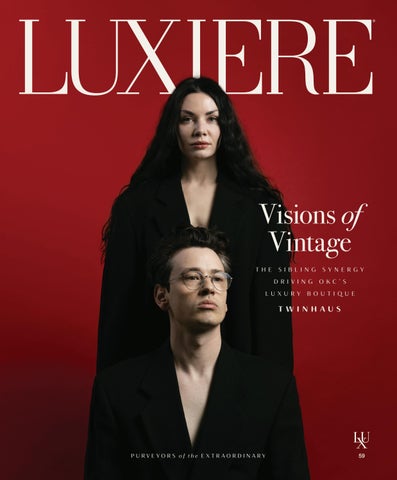
Create a flipbook