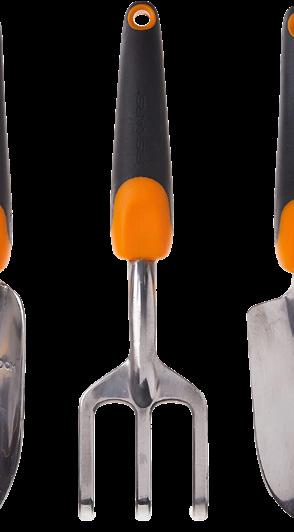
…right? Wait, what’s the forecast? Whatever Nature decides it’s going to be—and she’s a Mother. It seems every day is her special holiday, and if we want to appease her, we’d best bring her flowers. Even when she doesn’t bring them to us.
I was maybe five years old when my own mother told me that tomorrow was the first day of spring! At that time there was probably a foot of snow on the ground so I could not wait to wake up, run outside and jump rope among the green grass and butterflies. The next day dawned to—a foot of snow on the ground. Sigh.
And that, dear readers, is spring—and sometimes life— as this Inside & Out home and garden issue will attest. Unpredictable, sure, but sometimes you just have to trust that things will work out and eventually the tulips will poke through.
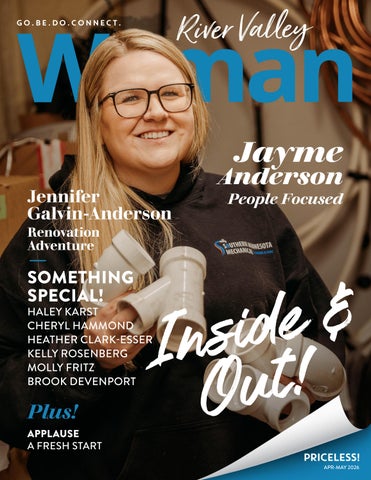
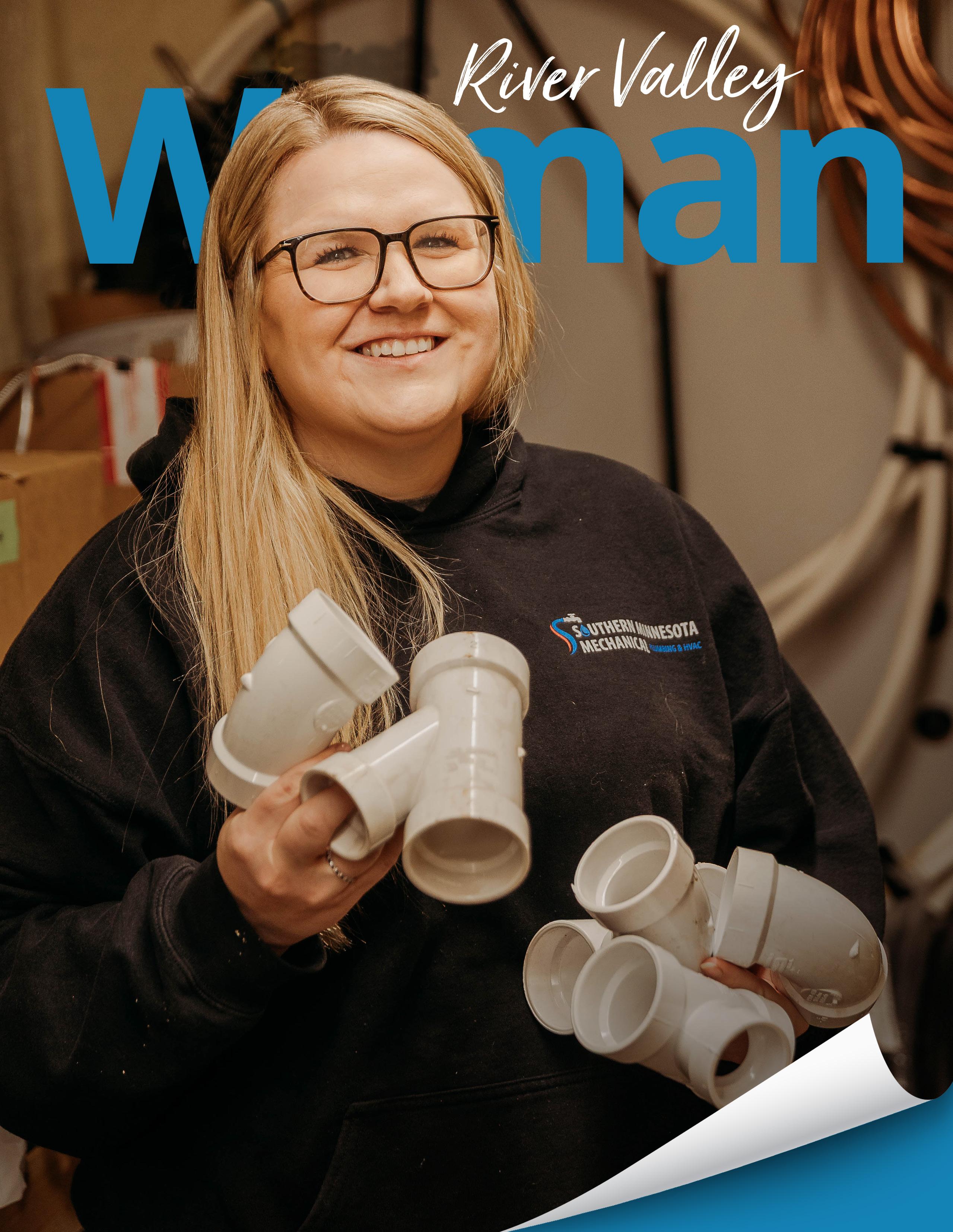
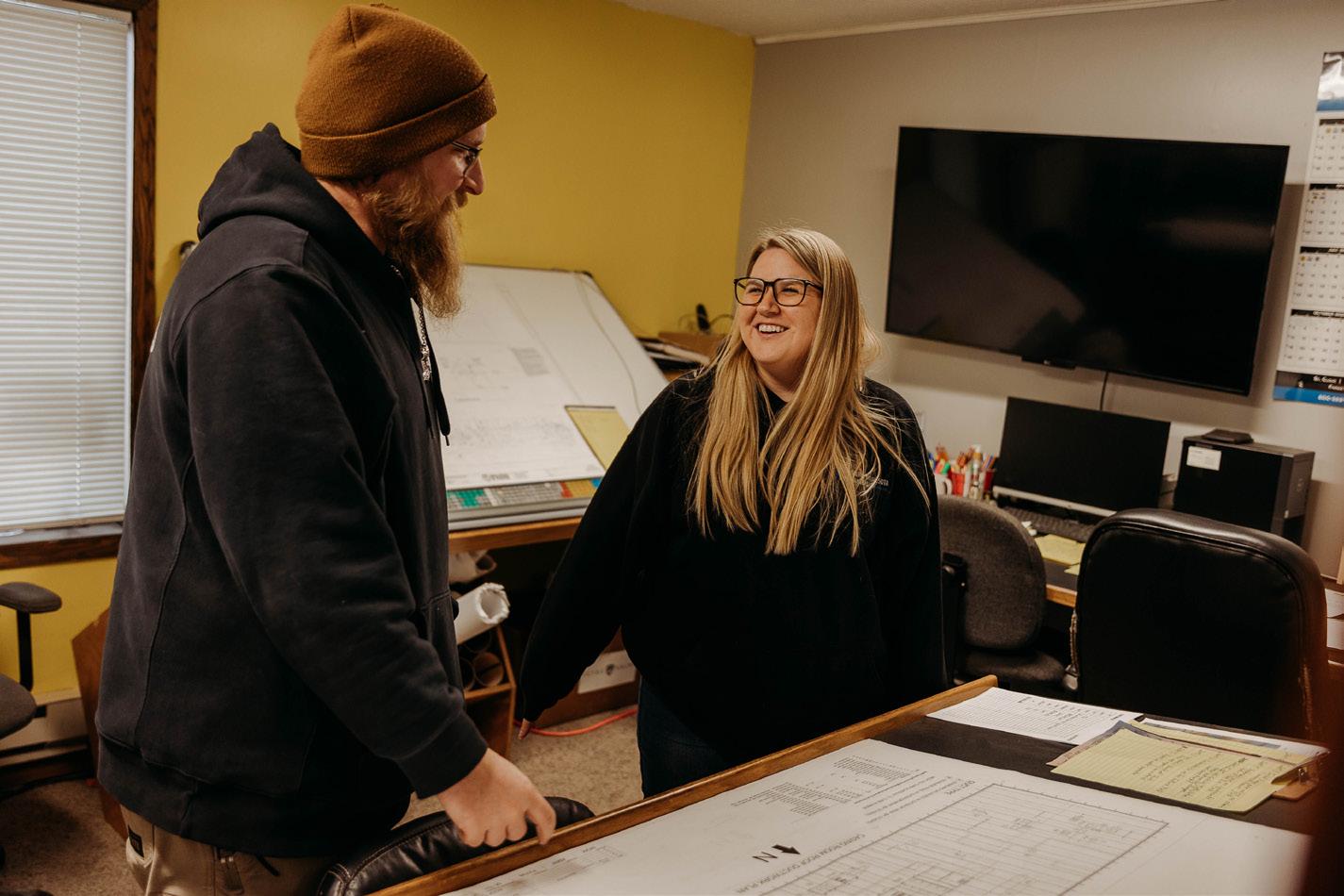
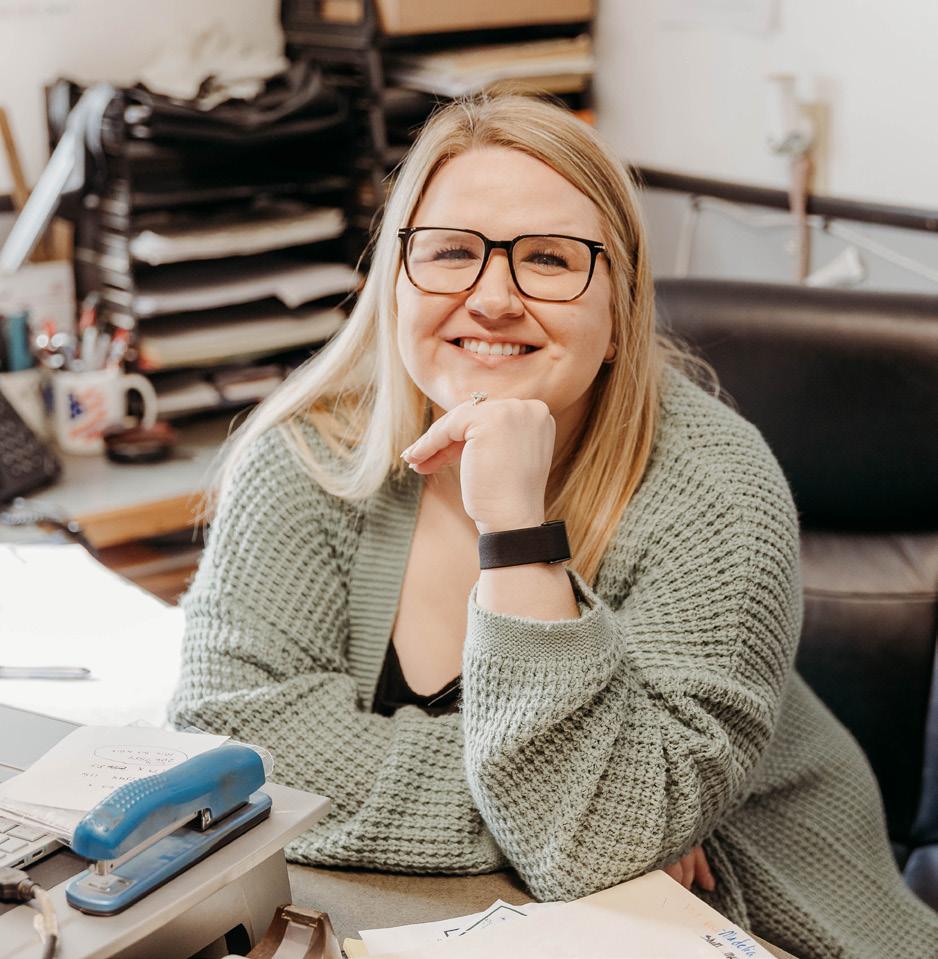
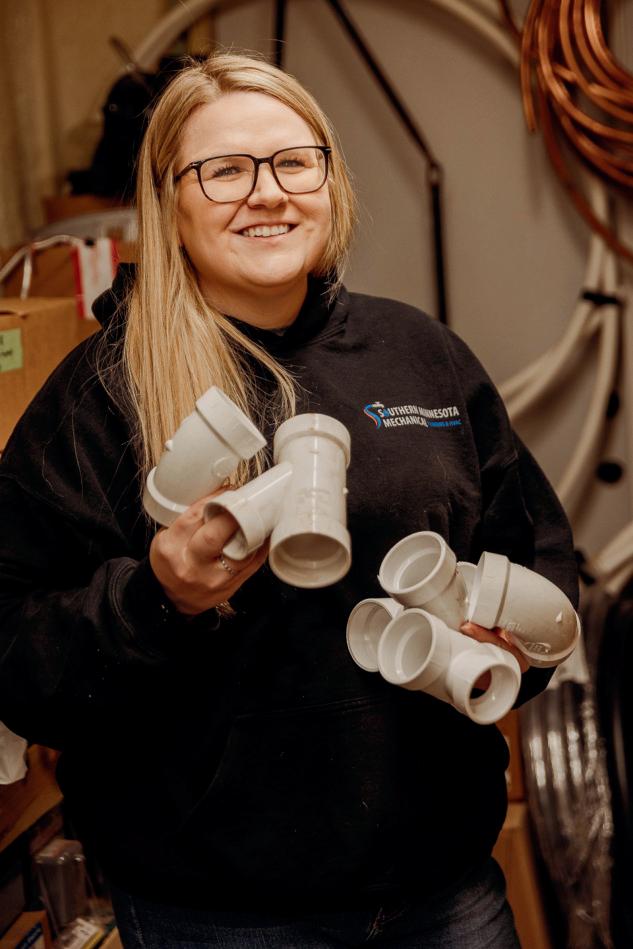
Trust is the foundation for Jayme Anderson, our reluctant cover feature. And I say that with the utmost respect. One of the most humble women I have spoken with, Jayme claims she is nothing special, then proceeds to reveal that is not the case. Owner of Southern Minnesota Mechanical, a plumbing and HVAC company, this people-focused, driven-yetcaring, young woman came into what is typically a man’s world, determined to do it on her terms. Jayme built success through education, calculated planning, and putting her trust in teamwork, proving entrepreneurship was no pipe dream.
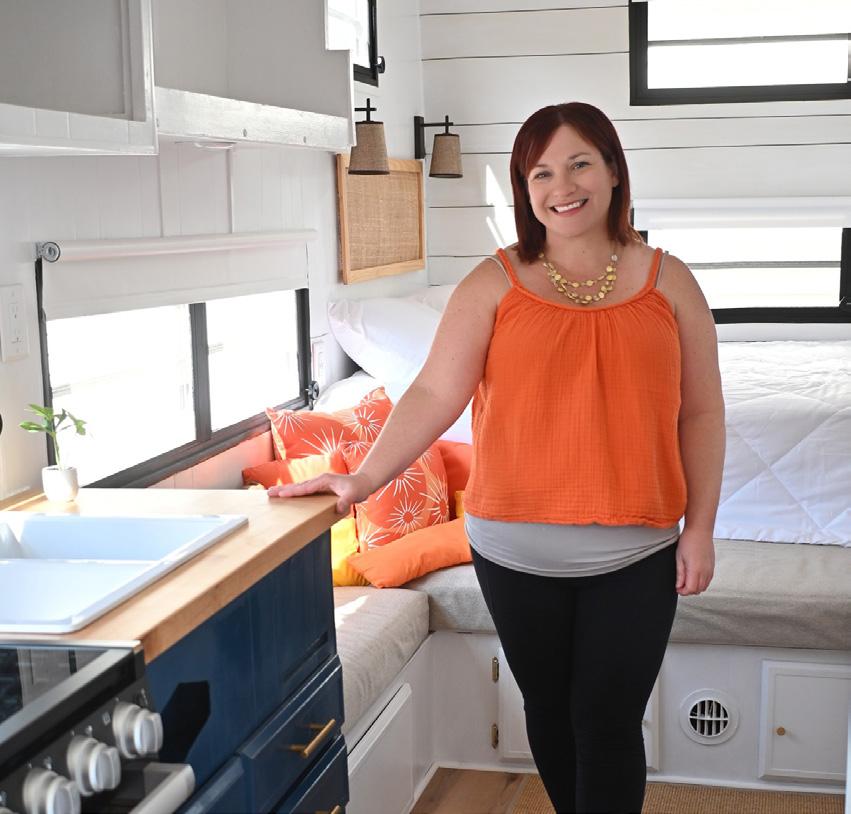
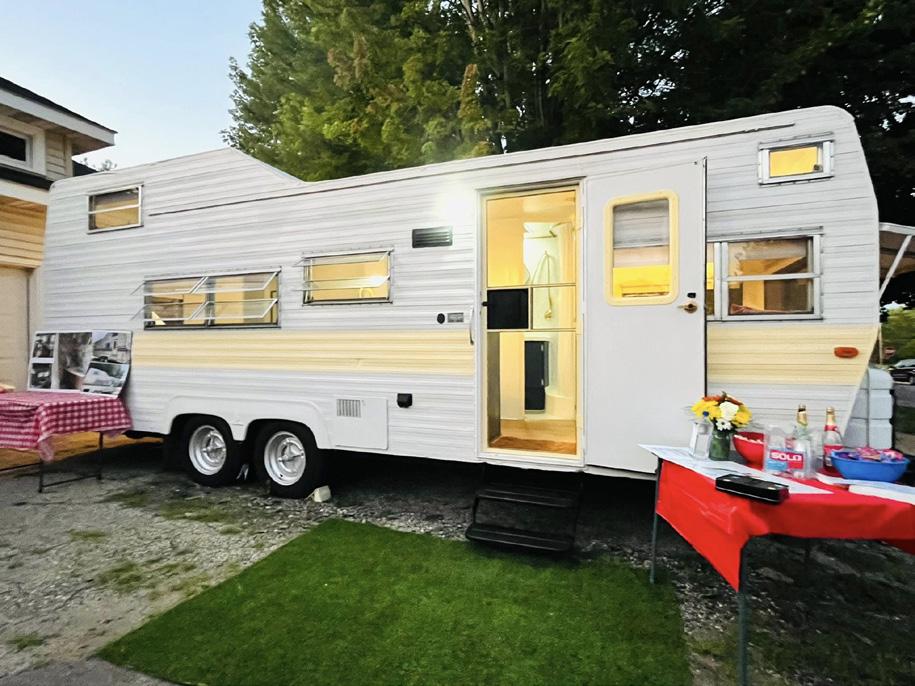
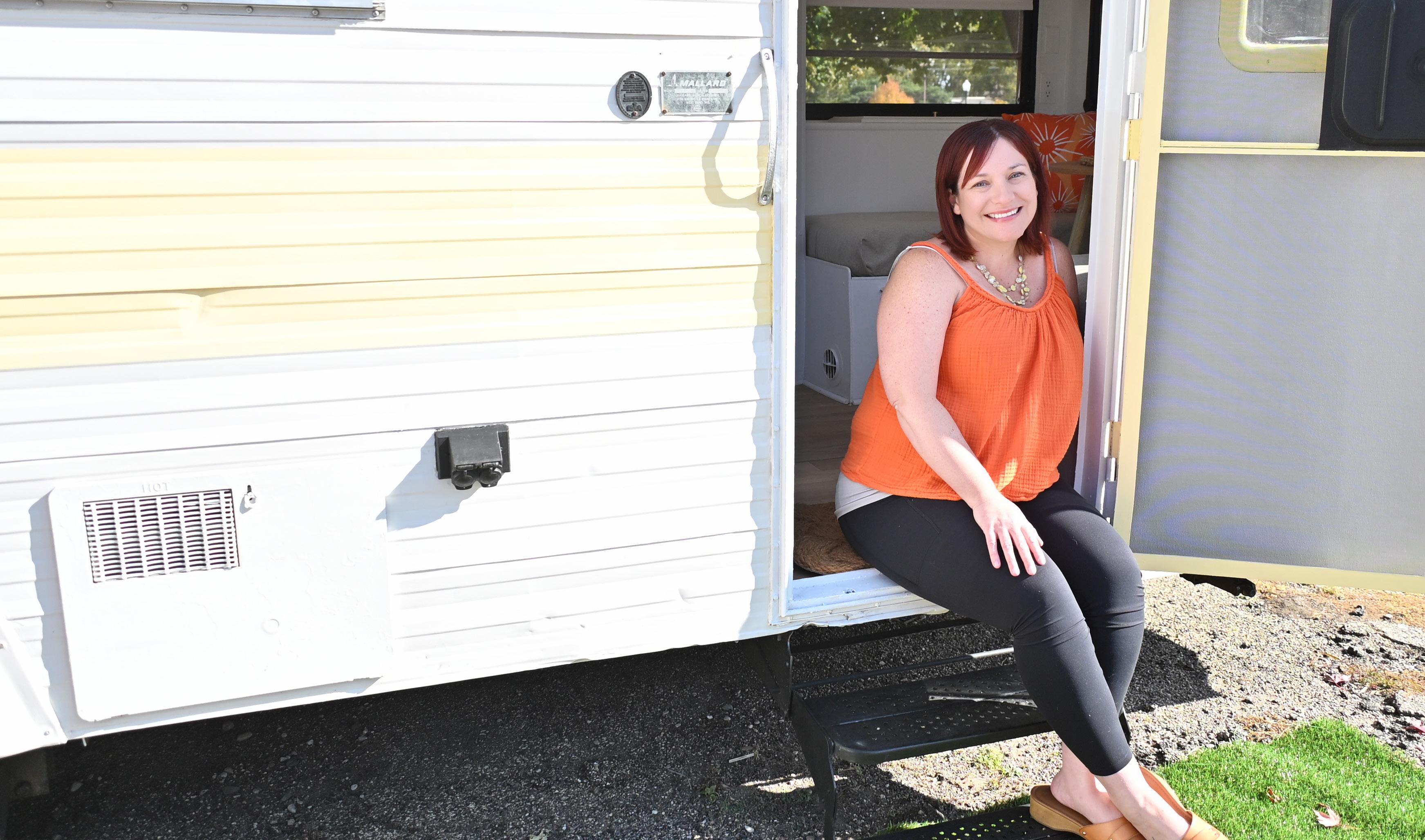
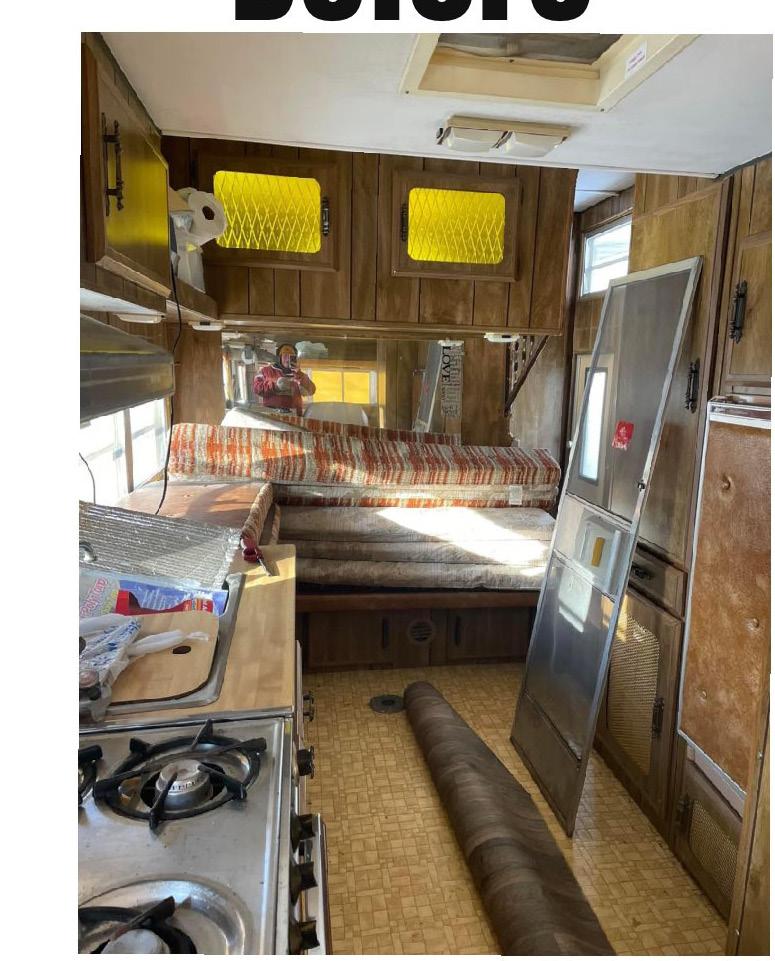
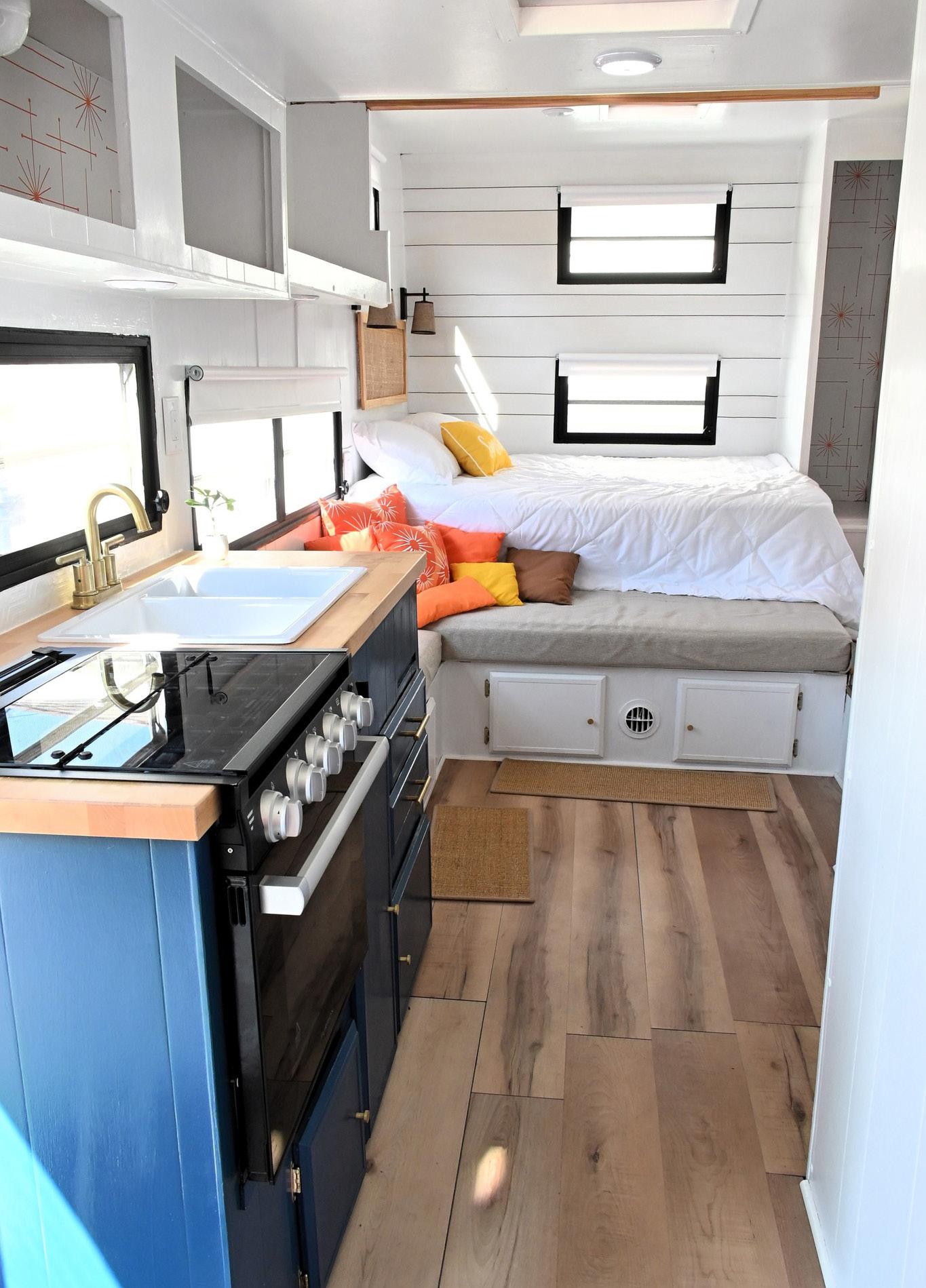
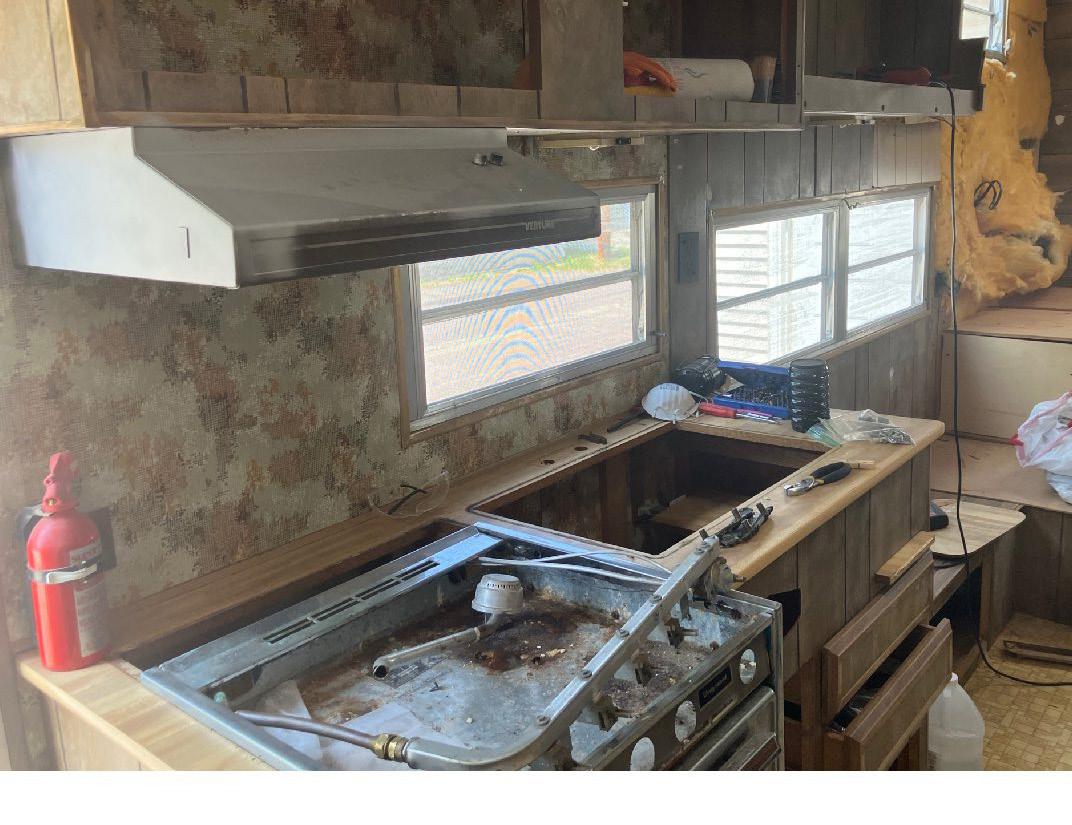
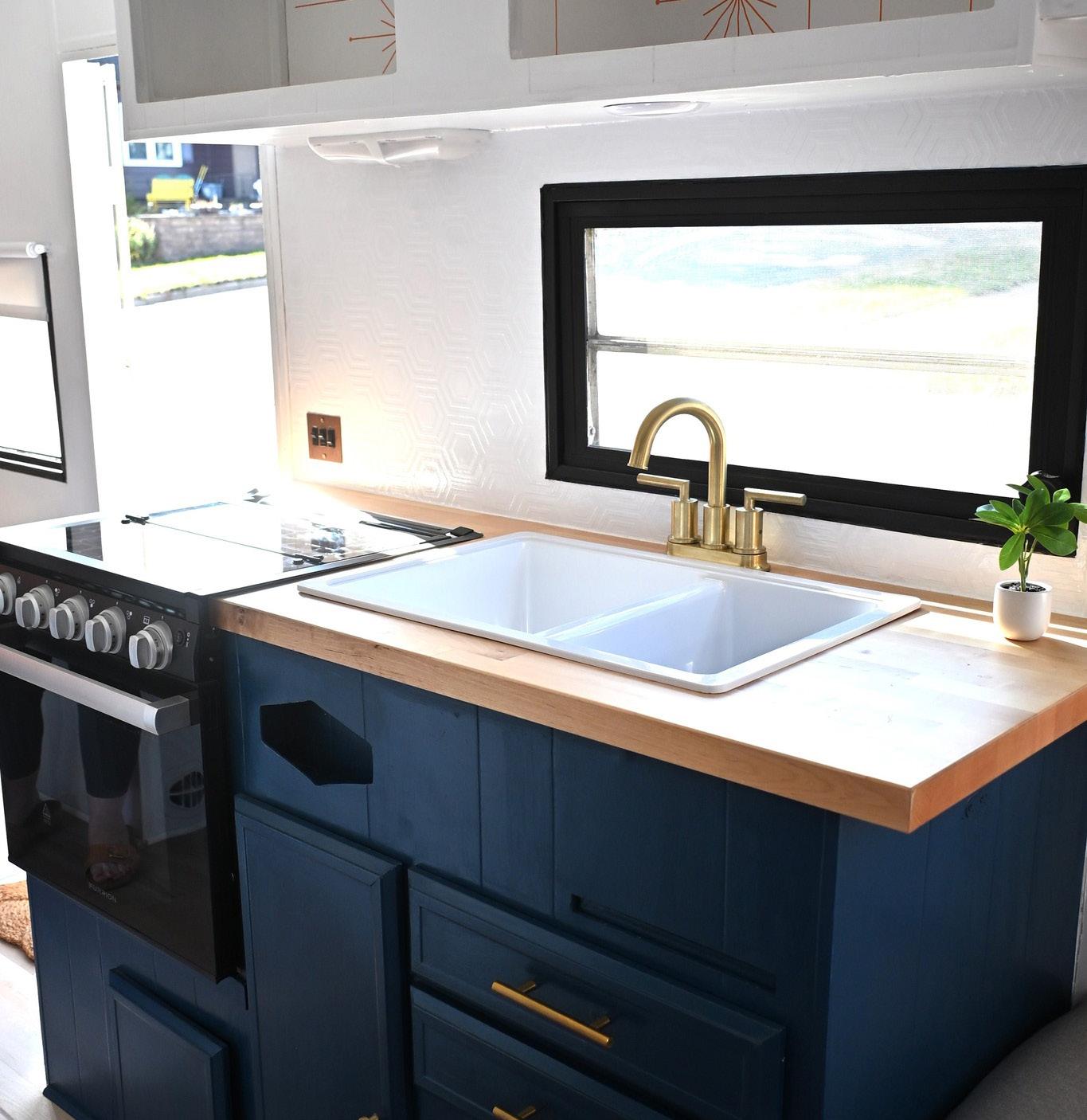
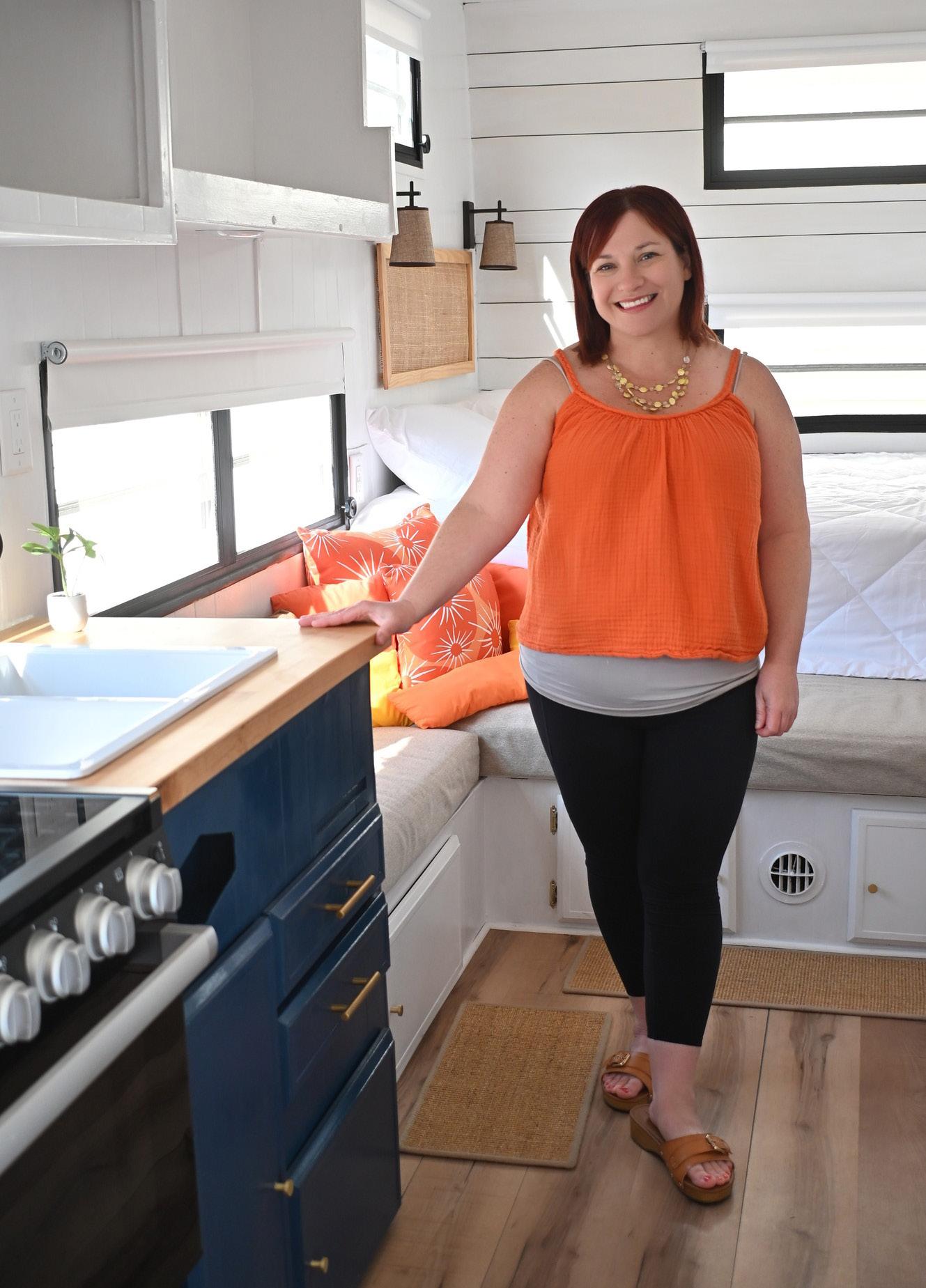
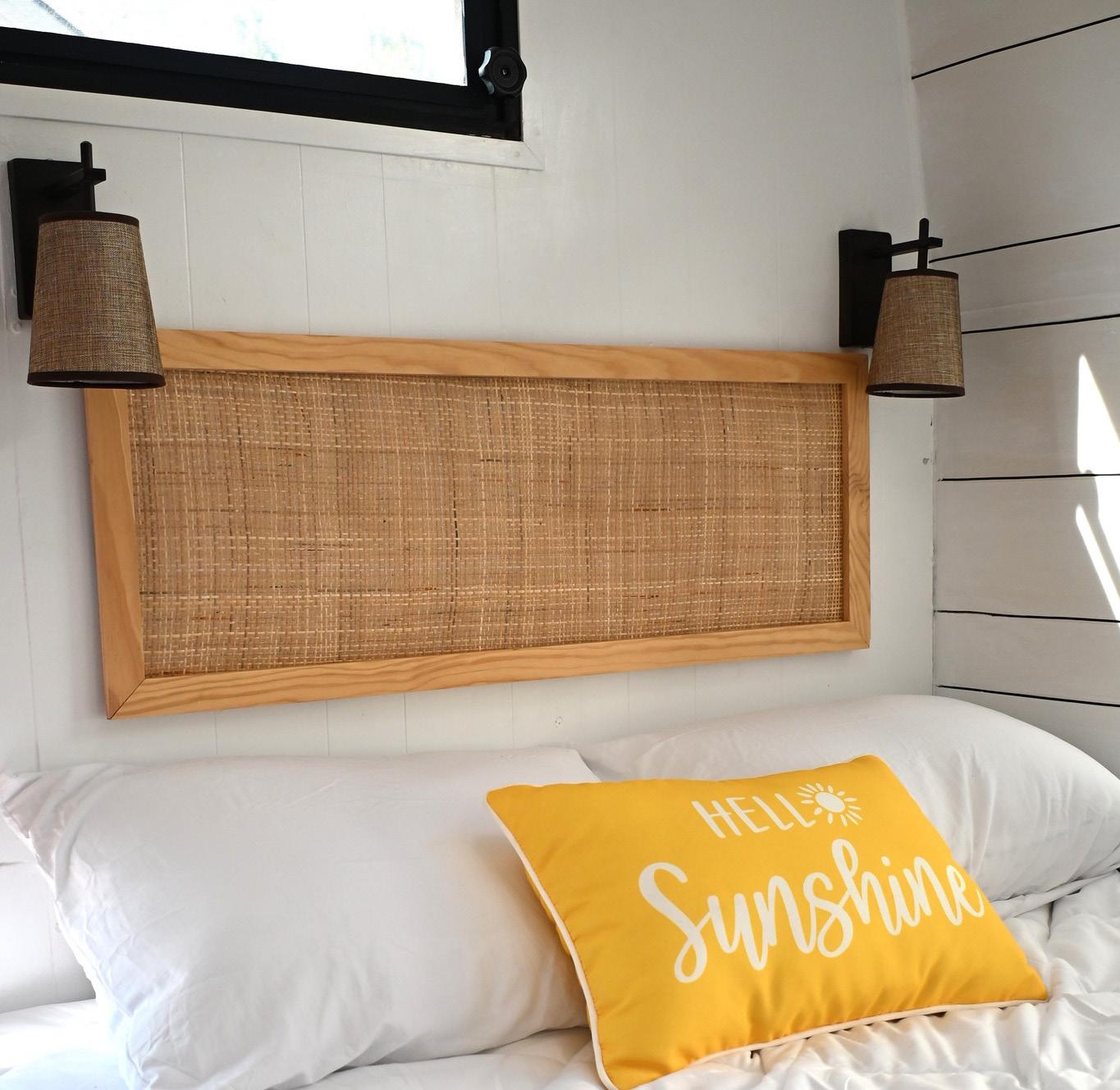
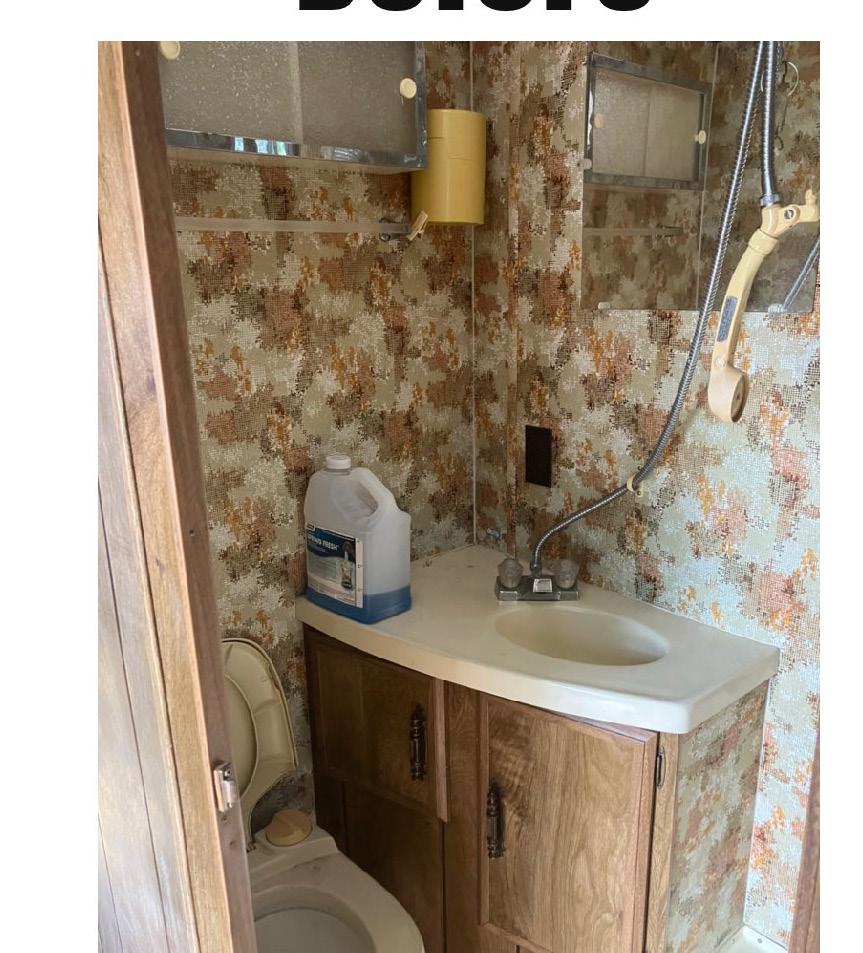
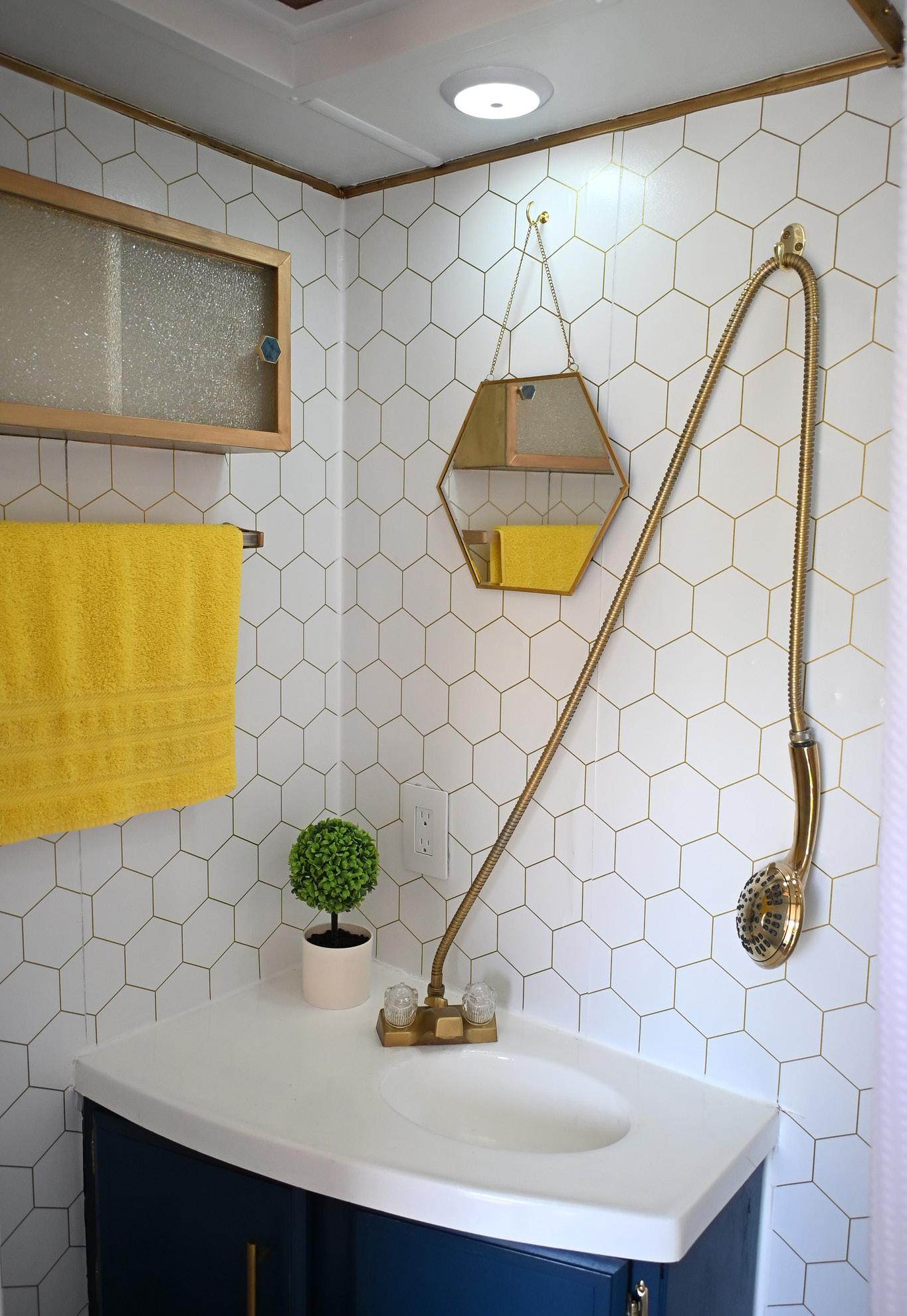
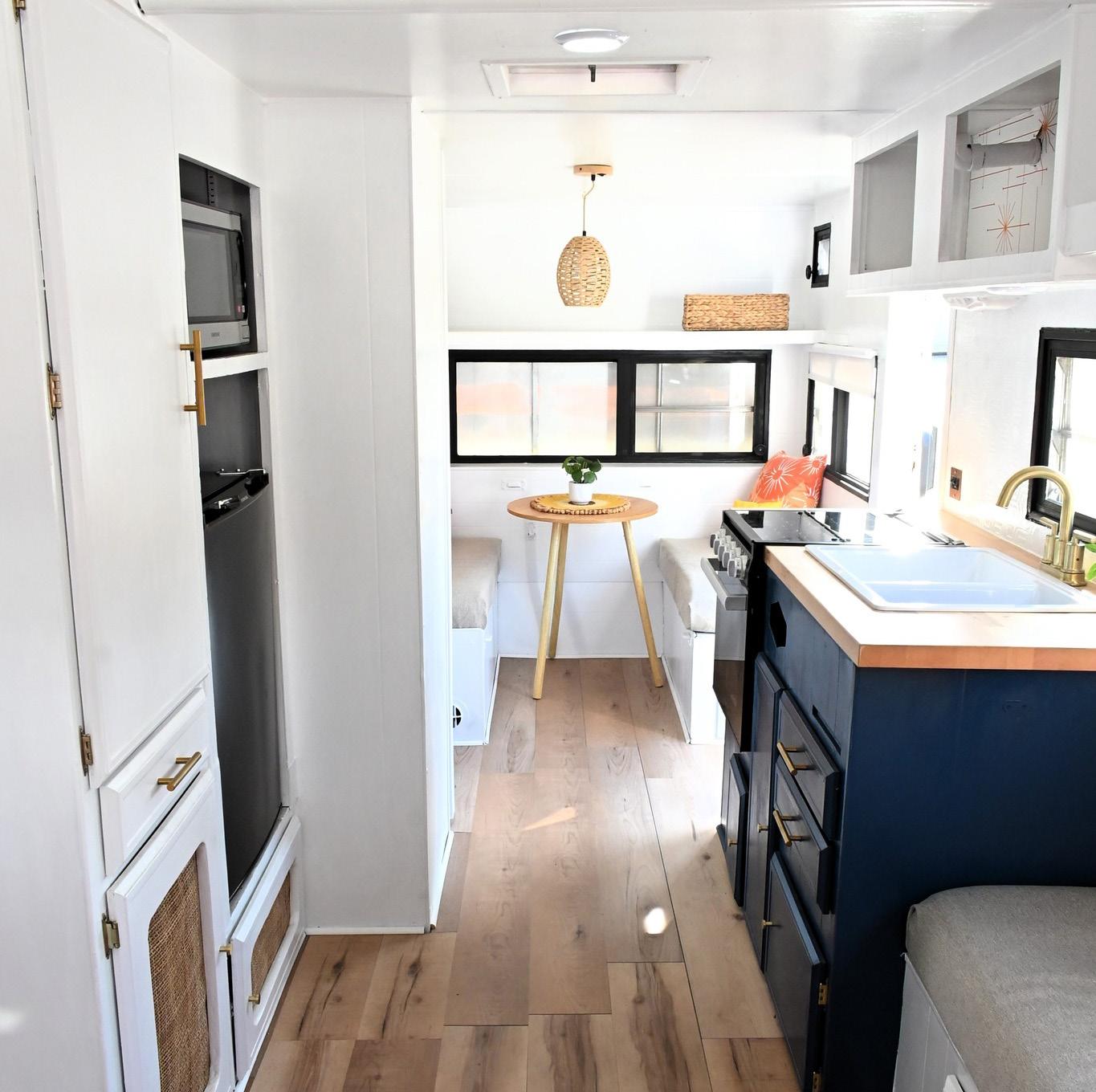
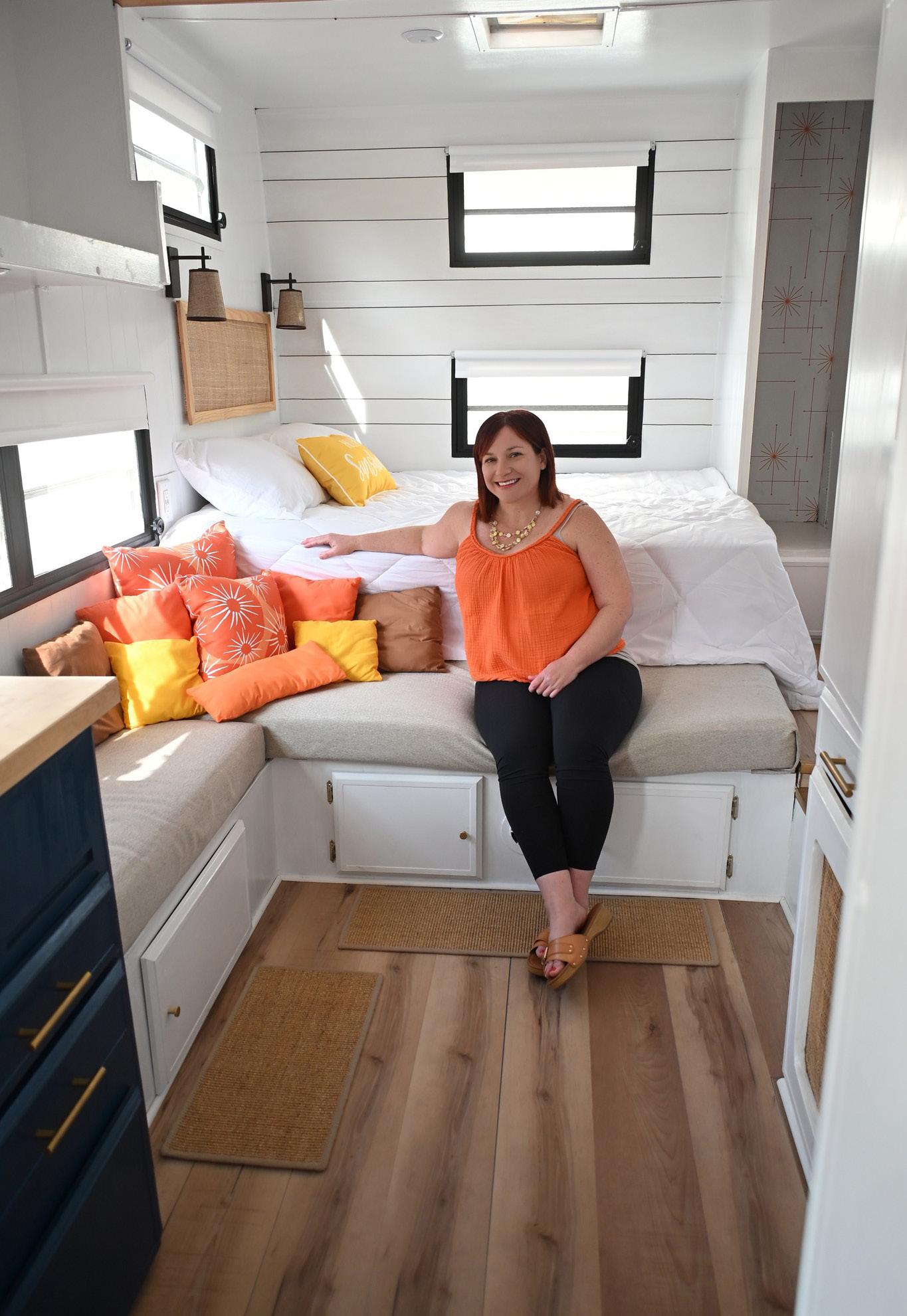
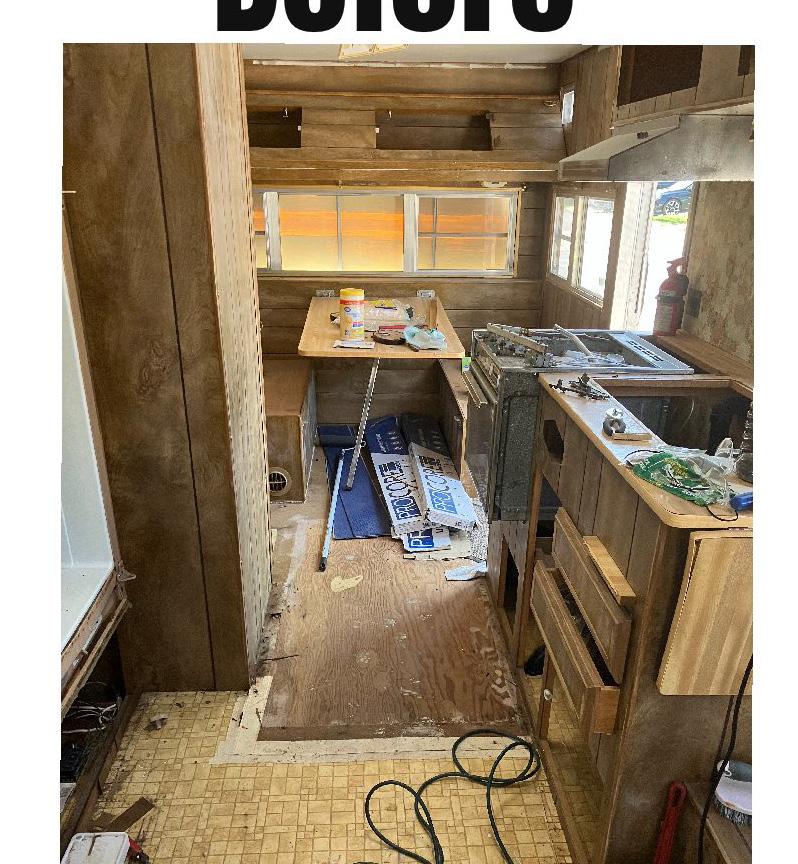
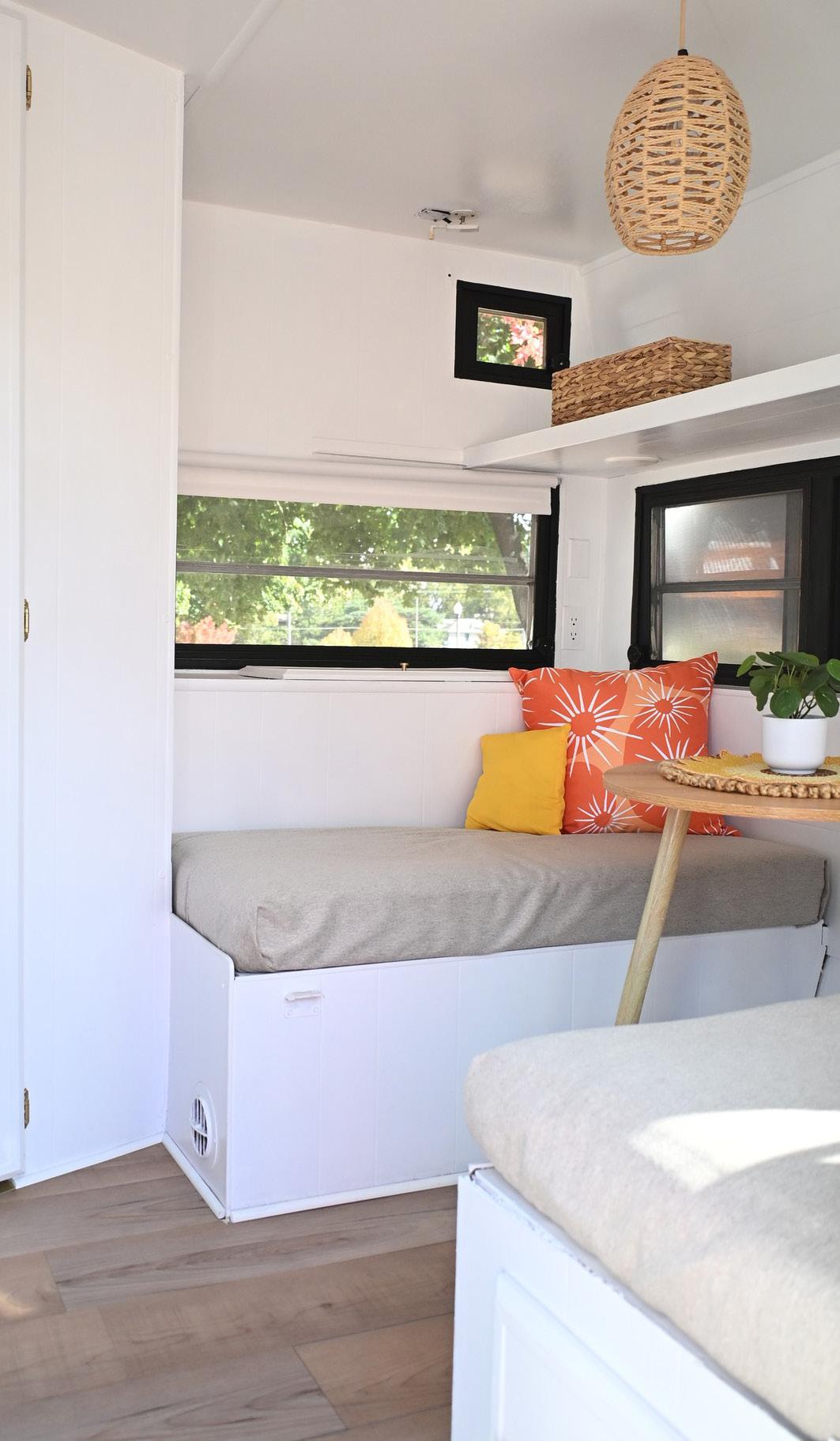
Much like how those dirt-laden snow banks melt into a puddled oasis for robins as the seasons change, Jennifer Galvin-Anderson tapped into her midlife malaise, and need for a creative outlet, to transform something homely to homey. On a whim she decided to purchase a beat-up 1980 RV that she lovingly named Paulette, and threw herself into a renovation adventure. But this was more than just a something-to-do DIY project. The process was a cathartic experience that helped her heal from several traumatic childhood illnesses. Leaning into an “ignorance is bliss”’ mindset to challenge herself to try something new, both she and Paulette found a road to recovery.
While this is our home and garden-themed issue, there are families in the river valley who don’t have a home, much less a garden. That’s where A Fresh Start (AFS) organization comes in. We all know how spring weather can be a roller coaster, and people’s live can be just as changeable—from having job and a home, to unemployment and nowhere to sleep, or a relationship filled with hope, to one full of fear. AFS partners with businesses and organizations in the area to make sure those in need have a safe place to live, equipped with all the comforts of home.
Columnist Laura Curtis from Cedar Hills Health contributed an article this issue on mindful practices whilst cleaning, gardening, and eating. It reminded me of one May, probably 30 years ago, when all it did was rain. Each day I was filled with hope, like I did when I was five, looking for that sun-soaked day full of promise, only to be greeted with gray skies and showers. I was so anxious to dig in the dirt and plant flowers that I decided to defy the drizzle and do it anyway. In shorts and T-shirt. No shoes. Looking as if I had entered a mud-wrestling contest with a pack of petunias, I embraced the task fully, giving in to the fact that conditions weren’t ideal, and actually enjoying simply going with flow, feeling the warm drops on my skin, not caring about my flat wet hair. Had it been clear and 75 degrees, it’s doubtful I would even remember that day—when I truly did wake up to spring.
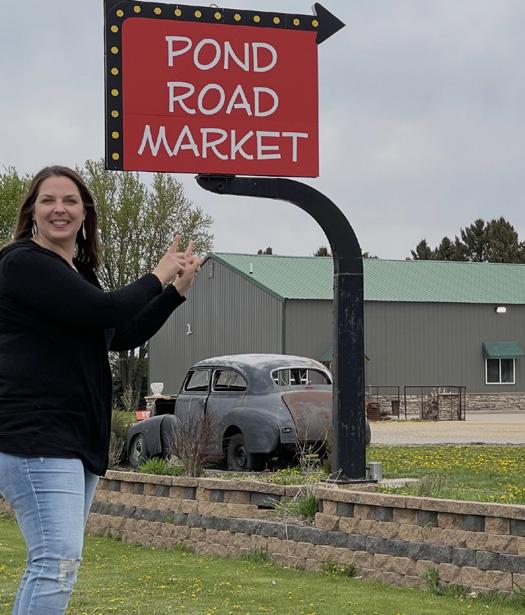
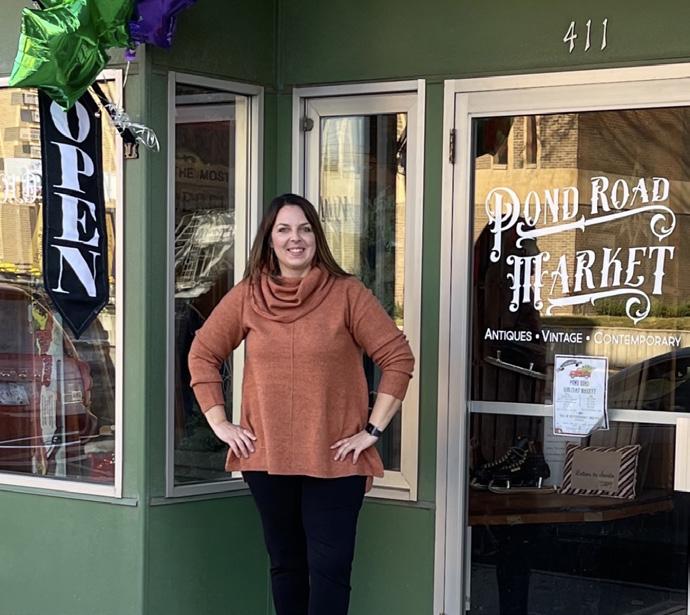
Our Something Special pages feature six women who are experts in their fields, share the ins and outs of all things inside and out. Haley Karst from Berger Interiors, reveals the latest colors and materials trends. Cheryl Hamond, owner of Pond Road Market, explains that items and furnishings with a story behind them help create a feeling of home. Heather Clark-Esser from OHA Architecture + Design, lets us know how to create a clean and productive work environment.
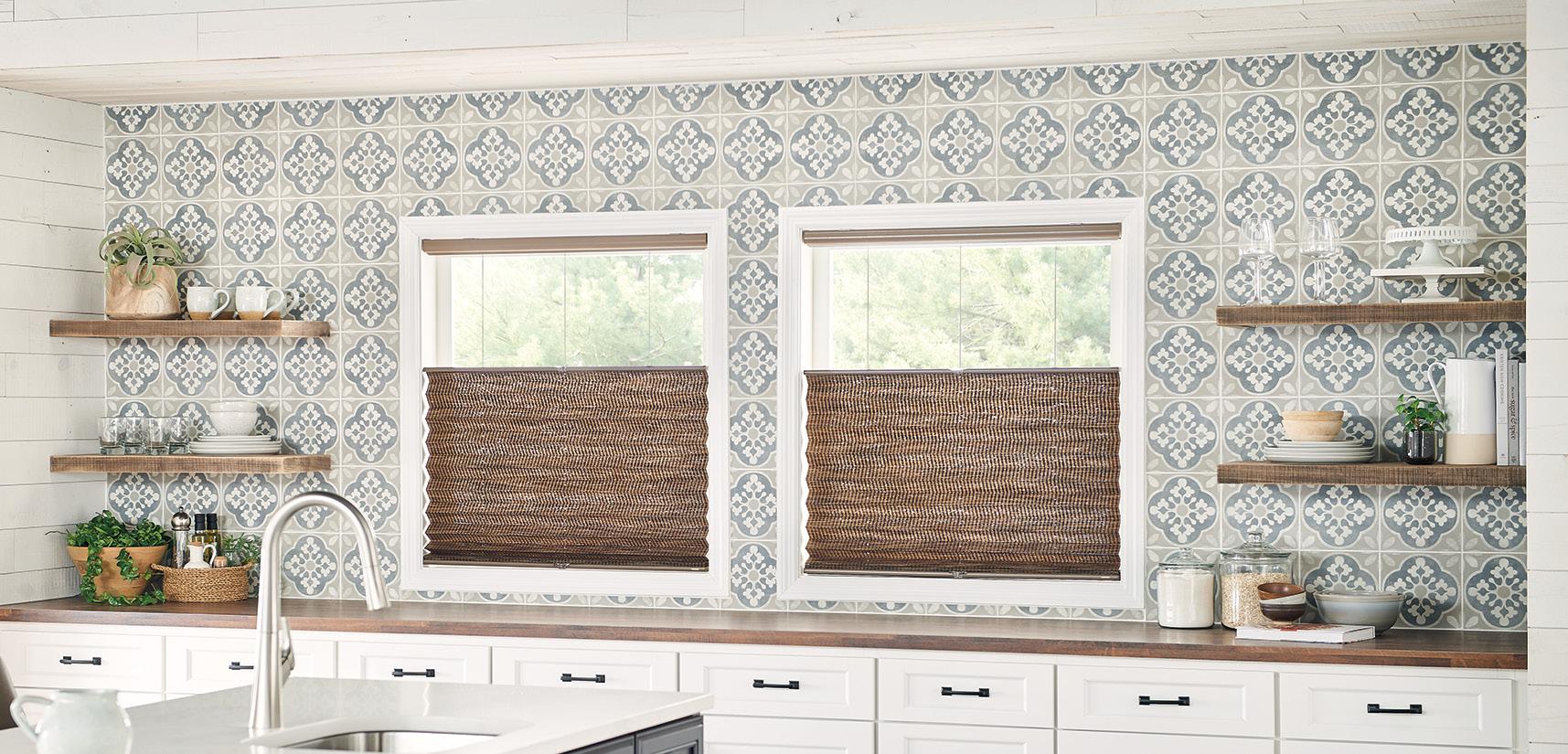
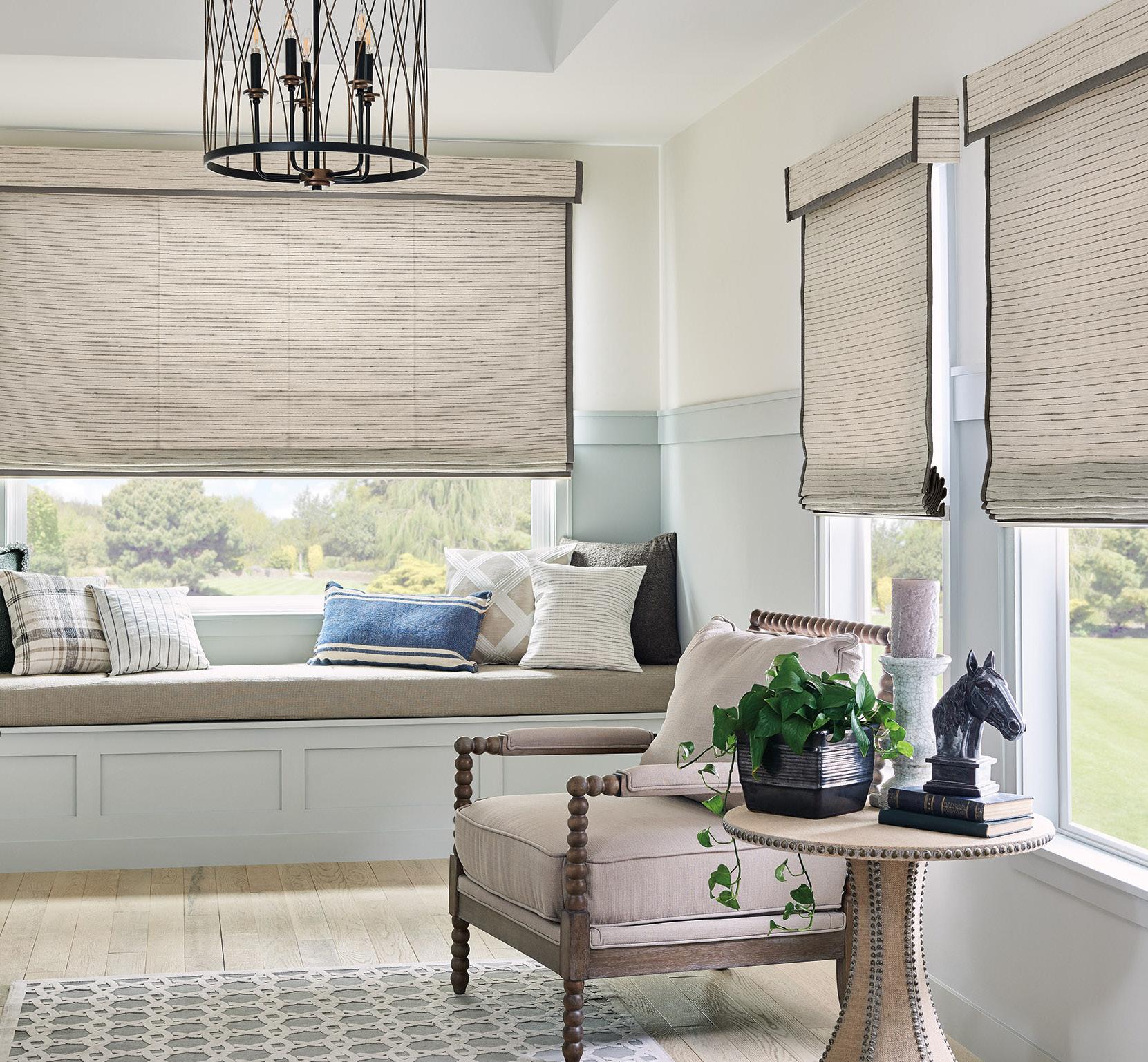
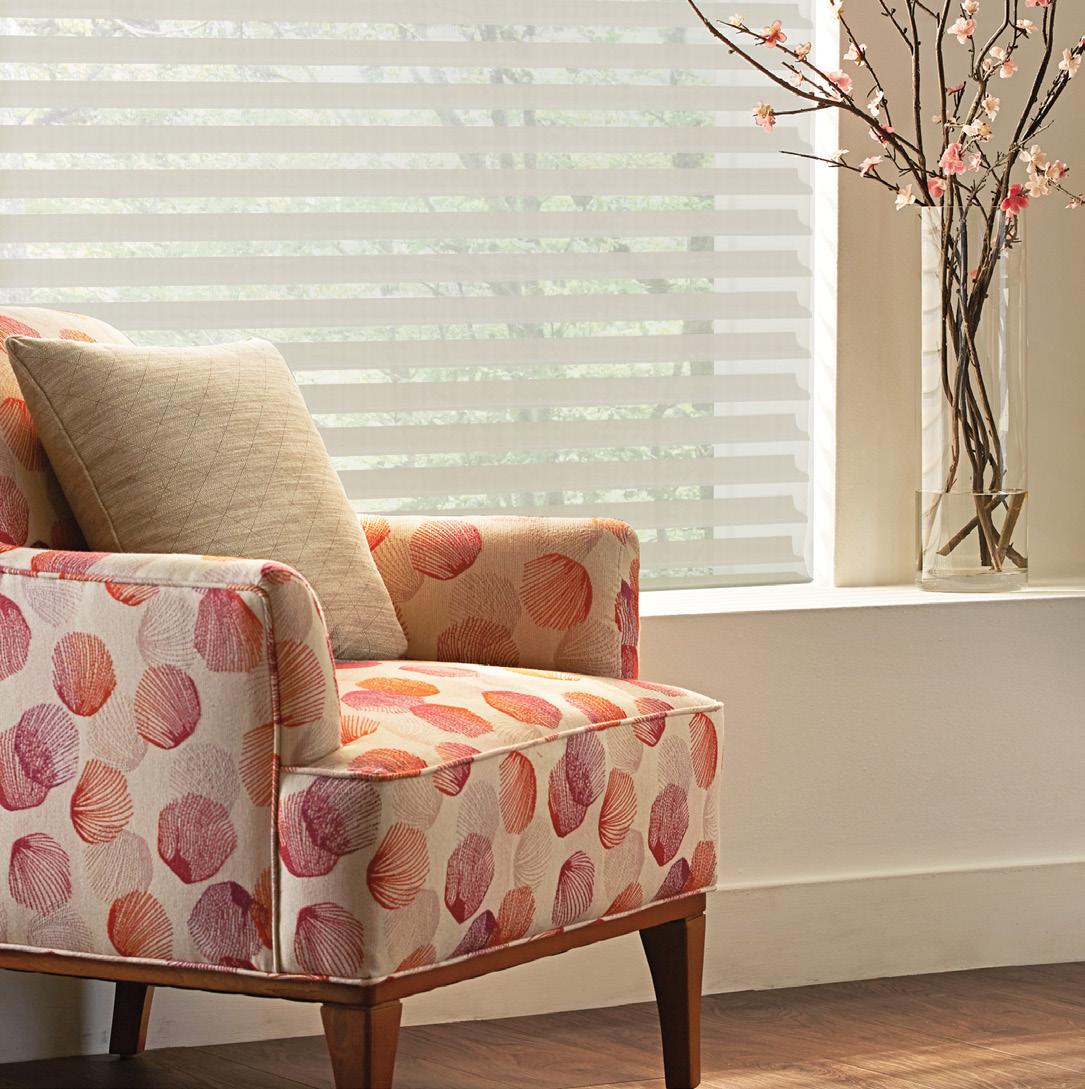
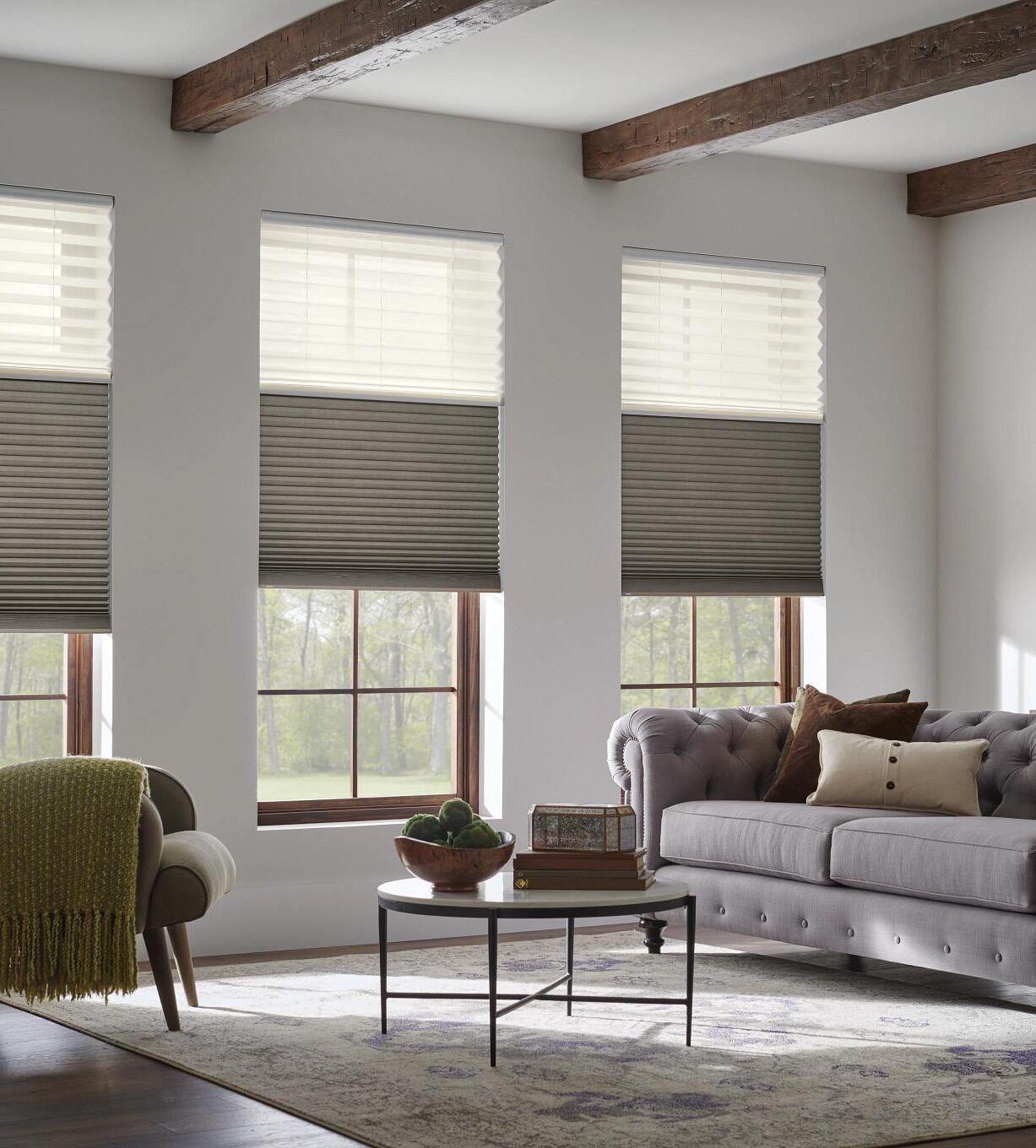
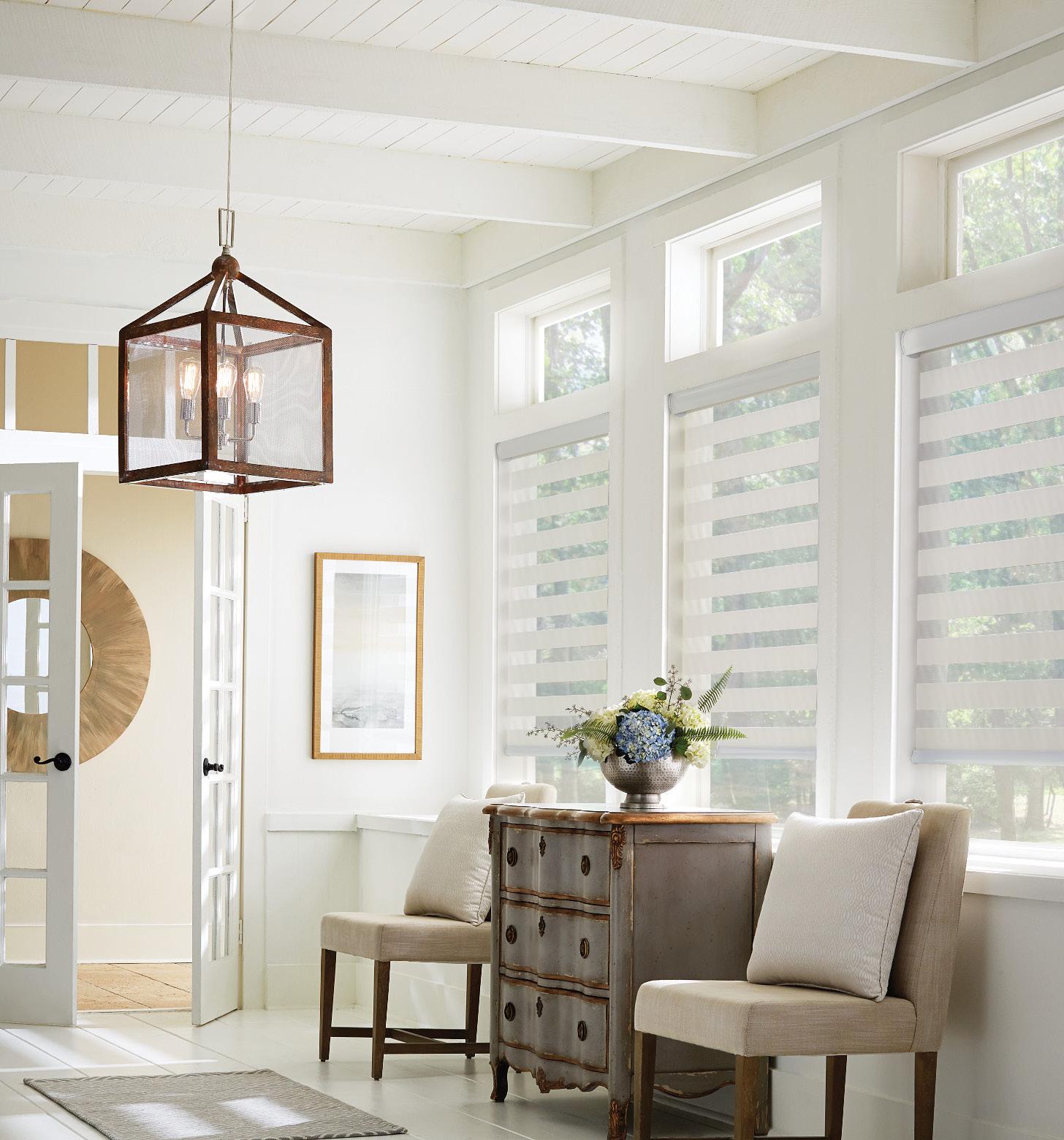
Brook Devenport, owner of Blinds & More, solves the dilemma of coverings for irregular-shaped windows.
Kelly Rosenberg, owner of Mankato Vintage Market, tells how to mix vintage pieces with modern design.
Molly Fritz, owner of Little Roots Farm, gives tips on how we can grow a cut flower garden.
River Valley Woman is thinking spring, come rain or shine. Either way, let’s go pick some tulips.
Happy Mother’s Day!
By CATE DEBATES
BY KAMRA JOOSTEN PHOTOGRAPHY
When Jayme Anderson talks about her company, Southern Minnesota Mechanical, she doesn’t start with revenue targets or growth metrics. She starts with people. She talks about employees who get to go home to their families at night. Homeowners who feel empowered instead of intimidated. Young women who are testing the waters in male-dominated industries. She talks about trust.
At just 26 years old, Anderson assumed ownership of a shuttered local mechanical company and transformed it into a people-first enterprise grounded in service, humility, and long-term impact. But her journey into the trades didn’t begin in a boardroom or even on a job site.
It began in middle school, in a welding shop, watching her dad build something from nothing.
When Anderson was in middle school, her father launched his own high-pressure piping and welding business. As the company took shape, so did conversations about the future. He wanted to make sure she would always be taken care of. He floated the idea of building something that could one day become a family business. It was never a mandate. Never pressure.
“It was always an option,” she said. “But I felt a pull.”
She grew up in Hutchinson, yet often returned to see her dad and spend time in the shop. Their bond deepened over shared projects, problem-solving, and candid conversations about responsibility. Today, she calls him her best friend.
That early exposure gave her a rare vantage point: she saw not only the craftsmanship of the trades, but the grit of entrepreneurship— the payroll stress, the regulatory hurdles, the weight of providing for employees. Those lessons embedded early.
In school, Anderson had an Individualized Education Program (IEP) for a learning disability. Instead of internalizing it as a setback, she reframed it as a prompt to approach learning differently. That adaptive mindset would become a through line in her life.
In high school, she immersed herself in FFA. Beyond competitions and leadership development, FFA offered something tangible: shop time for school credit. It was hands-on. Applied. Practical. For Anderson, it was a space where she could translate effort directly into outcomes.
After graduation, she enrolled at Vermilion Community College in Ely—often referred to as “North College”—pursuing a degree in
law enforcement, and a certificate in ecology. At the time, she believed she was following the prescribed path. After all, college was what you were “supposed” to do.
She graduated with honors in 2016, and initially set her sights on becoming a Department of Natural Resources officer.
Though she ultimately pivoted from that career trajectory, college proved formative. She became more social, expanded her worldview, and built friendships she still maintains today. The experience refined her confidence and independence—assets she would soon need in abundance.
Despite the early exposure to her father’s business, Anderson was determined to carve her own path. After college, she entered the trades on her own terms, traveling across the country for industrial insulation and heavy construction work. For three to four years, she followed the projects wherever they led—larger markets, demanding timelines, constantly shifting job sites.
And she made a deliberate decision: she would not rely on her father’s name. In fact, when applying for roles, she downplayed her connection to his company. She wanted to ensure her credibility was earned independently. She contacted professionals in town who knew her work ethic and asked them to vouch for her.
The work environment was intense and overwhelmingly male. At times, she was the only woman on site. In some cases, she was also the only person fluent in English. She became a bridge— interpreting not just blueprints and code, but expectations and communication gaps.
The technical scope of the work remained similar from project to project. What changed were the codes, the municipalities, the crews, the nuances of each job site. Success required more than mechanical skill. It demanded situational awareness. She learned to read rooms quickly. To adapt her communication style. To advocate firmly but respectfully.
A six-month assignment out-of-state marked both a high and low point. The professional challenges were significant. The culture could be isolating. Yet the relationships she built there felt familial. Even in transient environments, she discovered the power of connection.
Still, the constant travel and cultural friction took a toll. She began to question whether the industry had to operate the way she was experiencing it. She believed she could build something better.
PHOTOS
• Change Filters Monthly Swap HVAC filters about once a month (sooner if you have pets or poor air quality). Clean filters protect airflow and extend system life.
• Don’t Skip Seasonal Tune-Ups Book service checks in spring and fall. Warning signs include odd noises, blinking indicator lights, or a thermostat that can’t keep up.
• Plumbing Rule: No Grease. No “Flushable” Wipes.
Grease in sinks and wipes in toilets are two of the most common—and costly—mistakes homeowners make.
• Know Your Shutoffs
Every adult in the home should know where water shutoff valves are located—especially in winter when pipes may freeze.
• Fire Extinguishers Matter
Keep one in the kitchen and another near space heaters for quick response in high-risk areas.
• Cheapest Bid ≠ Best Value
Always compare contractor bids line by line. Make sure you understand exactly what’s included to avoid surprise costs later.
Recognizing that long-term scalability required deeper trade credentials, Anderson joined the union as an apprentice in welding and went to work for her dad. It was a calculated step—investing in formal skill-building while observing operations through an ownership lens.
Then, in 2022, opportunity arrived unexpectedly.
A local mechanical company closed, leaving more than 20 employees without work. What began as lighthearted conversation about taking over the business turned serious when her father asked a direct question: Could this be a viable move? Within days, Anderson spoke with former employees. Seven agreed to join her. One week later, at age 26, she began the process of acquiring and launching Southern Minnesota Mechanical.
It was, in her words, trial by fire.
The first three months were relentless. Government contracts. Insurance requirements. Payroll logistics. Compliance documentation. The administrative complexity mounted quickly. She jokes now about asking her team if anyone wanted to replace her as owner. “At this rate, I’ll have a heart attack by 35,” she would say.
But beneath the humor was a deeper reality: she had lost herself in the mission.
Her mindset was singular—do it for everyone else. Protect the crew. Keep the doors open. Deliver excellence. She carried the weight personally. Eventually, she recognized the need to recalibrate. Sustainability required balance. Leadership required self-awareness. Today, she sees the company not as a burden, but as a platform— an opportunity to serve the community and create stability for tradespeople who were once accustomed to chasing projects across state lines.
Her vision was clear from the outset: build a family-based company focused on people over profit.
Anderson’s leadership philosophy is rooted in humility.
“In my company, I sign your paycheck,” she tells employees. “But that doesn’t mean I know more than you. Let’s talk through it.”
She stepped into ownership with limited field experience compared to some of her crew. Rather than compensate with rigidity, she doubled down on listening. Open conversation is non-negotiable. So is mutual respect. She describes herself as a utility player. If someone needs tools delivered, she runs them. If equipment needs to be pulled, she’s there. Much of her work happens behind the scenes— clearing obstacles so her team can thrive.
Nearly five years in, many of the same employees who joined her at the beginning are still with the company. Retention, she believes, is built on trust and shared purpose. She takes pride in being a barometer for safety and job site code. She thrives in the chaos of complex projects and stands shoulder to shoulder with her male counterparts—confident, prepared, and solutions-oriented.
But she is equally committed to reshaping culture. Beyond job sites, Anderson sees a growing knowledge gap among homeowners.
Misunderstandings about heating, cooling, and plumbing systems are common. For example:
• Humidifiers should use distilled water, not tap water, to prevent calcification and keep systems working properly.
• Water heaters and boilers serve different purposes and are not interchangeable.
• DIY components purchased off the shelf may not match contractor-grade quality—and improper installation can void warranties.
She advocates for proactive maintenance: seasonal inspections in fall and spring, regular furnace filter changes with the correct size and type, thermostat battery checks, and monitoring for ice buildup before storms. Clear communication matters, too. Reviewing equipment manuals before placing a service call can accelerate solutions and reduce costs.
These insights inspired a broader vision: a practical adult education course covering home safety, maintenance basics, and financial literacy—offered in both English and Spanish. The idea emerged from conversations with a Hispanic homeowner she grew up with—now a caretaker for her family—who frequently sought guidance navigating home systems. Together, they recognized an opportunity to make families feel included, informed, and empowered.
For Anderson, it’s not just about mechanics, it’s about access. To young women considering careers in the trades, her message is unequivocal.
“Forget the stigma, just go for it,” said Anderson. “If you want it, go after it.”
Her message to the next generation is to not be discouraged by environments that don’t fit. Improve them. The trades demand open-mindedness and a willingness to learn. Every project is different. Much of the job is problem-solving. Sometimes the victory is simply identifying the issue.
If she could advise her younger self, Andersone says this, “Stand tall. Even on difficult days, strive to be your best. Failure is an opportunity to learn. Regret is heavier than risk. The fact that you tried is more than many ever do.”
From a middle school shop floor to leading Southern Minnesota Mechanical, Jayme demonstrates that strength and humility are not opposing forces. They are the foundation to success. RVW
By JENNIFER GALVIN-ANDERSON
About four years ago I started to get that little midlife nudge to do something daring (my Brene Brown books have impacted me a bit over the years, wink wink.) Plus, I’ve lived in my 1918 house for over a decade now, and have updated almost every square inch of it, but I still get antsy now and again to make something “ugly,” “pretty” again.
Looking back though, this has always been a bigger reflection of a personal hunger within that is forever evolving. Go figure, right? I firmly believe behind every “little project” is really something deeper and a seeking within of something more. I know many of us have experienced similar feelings, when a tangible opportunity comes into our lives that ends up turning into a much bigger lesson and spiritual rite of passage in some way or another. This was mine.
Despite having no experience with campers or RVs of any kind, and being a kid who did not grow up camping, one day in 2021 I got hit with a lightning bolt of inspiration and the bright idea to find an old beat-up RV that I could transform and make pretty! I figured since it was a smaller space than a house, it would be an easy undertaking. HA! Those words were swallowed quickly!
But I’m the type of person who, when I get an idea, it takes a lot for me to not follow through with it. Some may call it stubbornness, I prefer the term “persistent.”
I also have had some life experiences on my journey that have instilled in me a few lessons on the power of resilience and grit—both playing big parts in this
“Midlife Renovation Adventure”!
When I was 14 years old I had a near-death-experience stemming from a virus that attacked my brain that put me in a coma for 5 days, from which I woke with no short-term memory. Doctors informed my family to hope for the best but prepare for the worst, with any chance of me attending college and having any successful traditional career in the future being very unlikely.
Fourteen months after this virus, I found a lump on my neck and found myself at the mercy of my doctors yet again, who would then diagnose me with Hodgkin’s Disease, a form of cancer that would have me facing six months of chemotherapy.
A year later they discovered a mass on my leg that also had to be surgically removed.
My teen years were nothing normal, but without a doubt transformative and powerful in lessons on surrendering to the path life presents to us, and having to adapt to a new reality.
Certain events in life change us, and getting sick in 1995 was a big one for me. I have been blessed to find meaning and purpose in my life since then and have found various ways to share my gifts with the world through different outlets, the main one being my Holistic Energy Healing practice that I started and still practice after receiving my Masters of Arts degree in Holistic Health from St. Catherine University in 2008.
But over the past few years something was brewing inside of me to find a creative outlet that could be representative of my own healing journey, and that’s when I was blessed with the opportunity of the RV renovation. I decided to post my inspirational idea on Facebook one day, and how I was considering embarking on this renovating adventure. After my uncle saw it, he reached out to me and shared that he was looking for a small business to invest in, and wanted to support me with finding an RV to renovate! The seed was planted and slowly began to grow. That was four years ago.
This past winter marked 30 years since my near-death-experience, and just a couple of months before that I put the final details on this full-circle healing renovation of a 1980 Mallard RV I eventually named Paulette. Her name comes from my friend Paul who helped me get her into my driveway, which was an adventure in and of itself. I owe him and a handful of other earth angels in my life much gratitude for their many acts of kindness in making this dream a reality!
And yes, I refer to the RV as a “her” because she quickly became a representation to me of something bigger than just an RV. She became a tangible representation of me and my survivor journey and the many times throughout my survivor journey I was told “no” and “you never will _______” … that is where I drew my determination from to not quit on her. And boy, were there many times I wanted to walk away and quit over those four years!
If anyone has done a renovation like this, you can understand, it’s always at least three times the cost, time, energy and effort you think you’re going to need!
But beyond that, I’ve learned over these past years that there’s definitely an emotional process of healing that takes place in the stages of creativity. Lessons I have finally began putting to use in my life with the recent addition of now offering renovation support to others because of my love and appreciation for all things transformation
I’m going to share with you just a couple of the major lessons I’ve taken away from this project and hope they provide a little inspiration to possibly embark on your own Midlife Renovation Adventure:
The only thing that keeps one going in projects like this is VISION. Remain as committed and focused to the end-goal
vision you have for it as much as you possibly can and with everything you have! Not everyone has that ability, but I do believe it is a practice, and like meditating or exercising, the more energy and intention you put into truly visualizing it as already done, the more likely you are to follow through and finish.
There is also something to be said about the meditative-like creative zone you can get into with renovation projects like this. At least for me, this was the case. Sanding, priming and painting are especially activities that feel more like a healing experience to me because of the intentional focus being put into it, which becomes almost-meditative for me, and then followed with an adrenaline rush seeing the progress I make! I especially love getting lost in the time and space of working on any renovation that when you are so into it, you don’t even realize you’ve been working on it for hours. If you can get lost in a project like that, then yes, find something that is right for you and go for it!
Whole-parts-whole thinking is helpful! Break down your projects into miniprojects and sections or else you can easily become overwhelmed by it, losing sight of the focus, getting frustrated, and wanting to give up completely! Unfortunately, this is often what happens. One of the blessings of me living with a disability since 1995 is that whole-parts-whole theory is a big part of how I function, eventually becoming a norm which helped me stay focused and committed to the renovation, never quitting.
Renovations can be risky and come with challenges, but every once in awhile you need to dare greatly, as Brene Brown suggests, and find the courage to go outside your comfort level and do something you didn’t think you could ever do! As the saying goes, “ignorance is bliss!”
In the end, Paulette healed me more than I healed her and she became a tangible symbol of my own full-circle healing Journey, being able to bring life back to something that was left to rot, sit and be useless. Nothing is completely useless. There can be beauty, hope and life brought back to any space or item with a little bit of vision, grit and belief! That also applies to each of us!
I’m forever grateful for this little Midlife Renovation Adventure that became much more than just a project, and I wish for each of you to find your own Paulette on the journey. RVW
SPRING HOME REFRESH
FAMILY OWNED
Blinds & More is located in North Mankato and has been locally owned and operated since 2008. We work with both residential and commercial accounts throughout Southern Minnesota and Iowa.
Brook, Davvy & Sadie
A FRESH START REPRESENTING HOPE
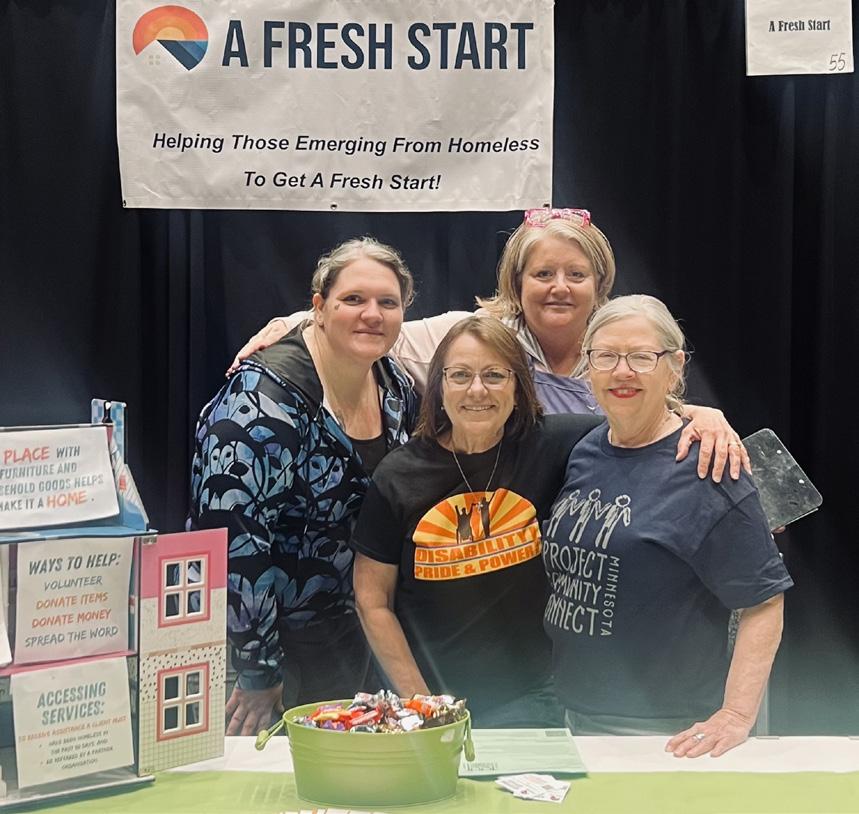
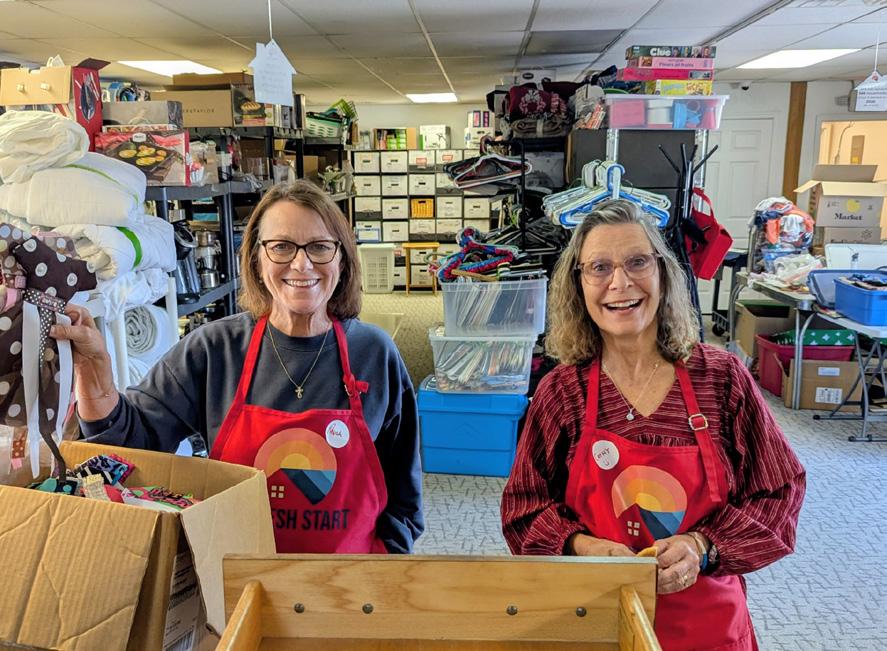
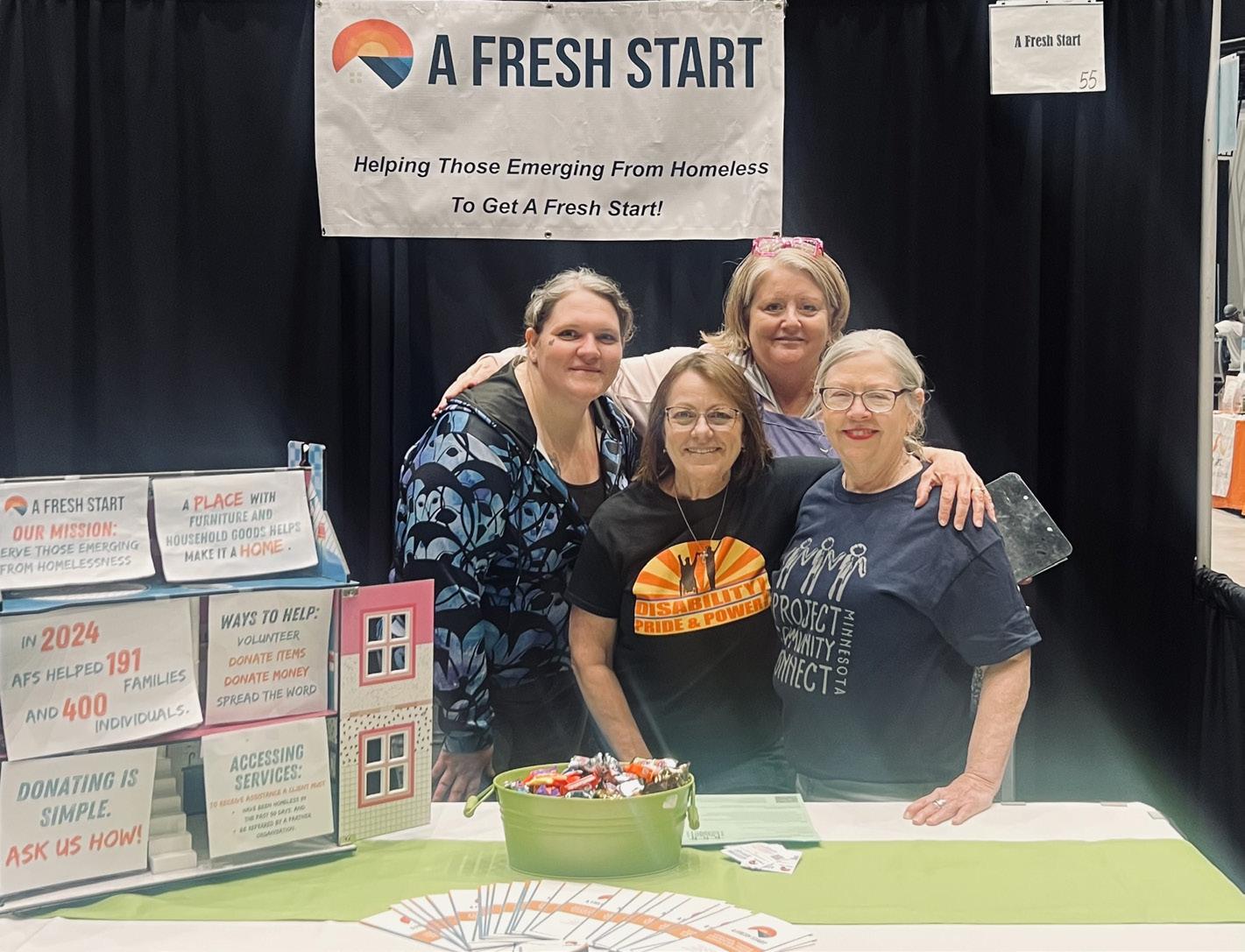
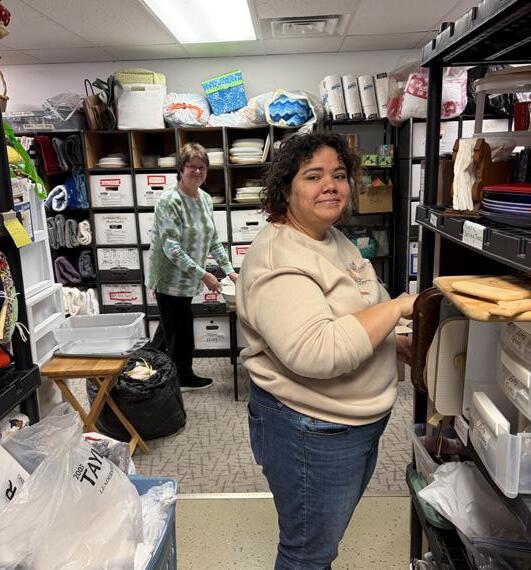
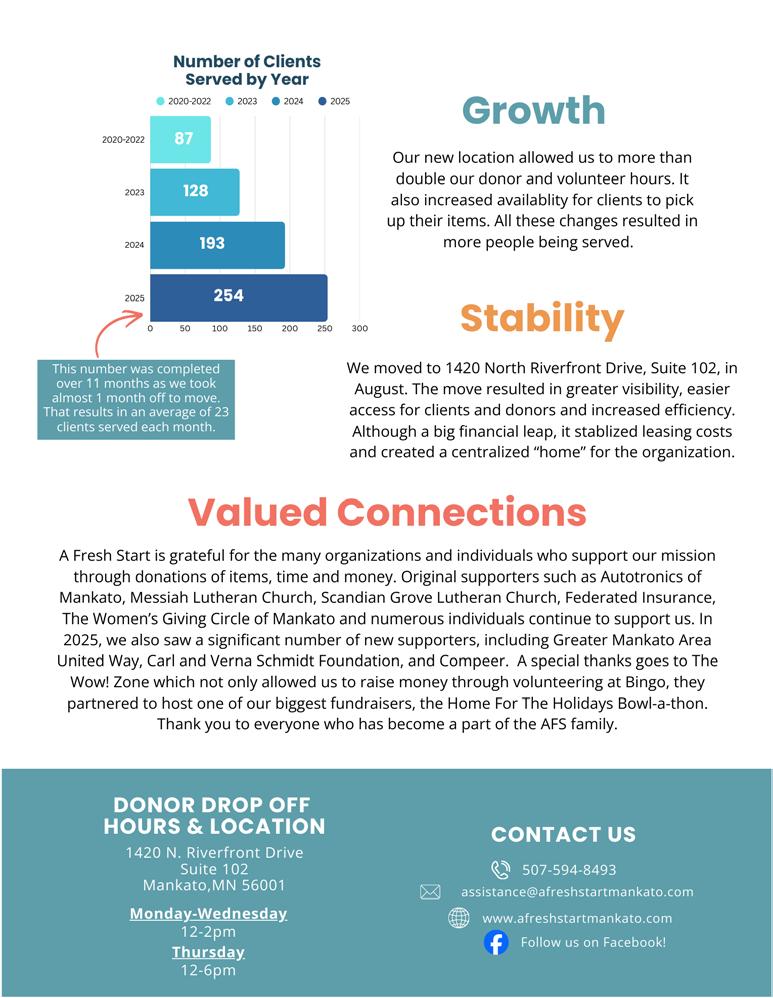
A Fresh Start (AFS) is a nonprofit organization dedicated to helping individuals and families emerging from homelessness turn housing into a true home. They believe that a safe, comfortable, and fully furnished home creates stability, dignity, and is the foundation for long-term success.
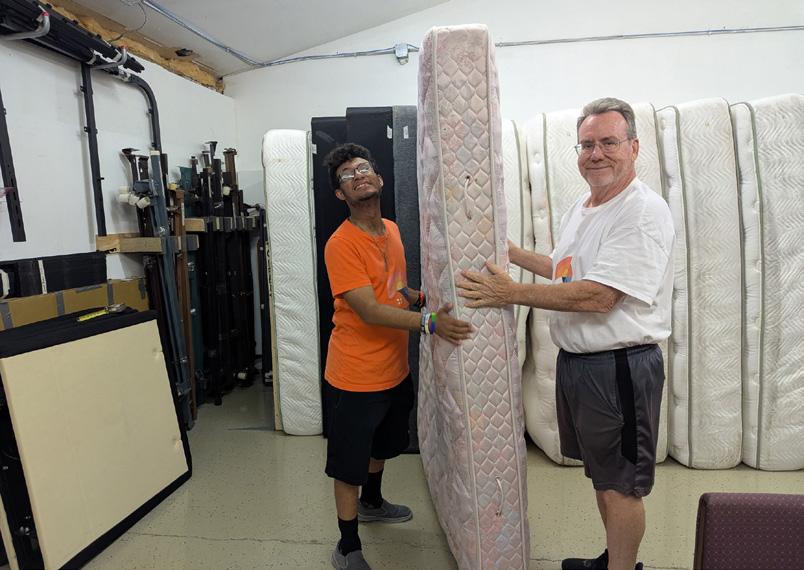
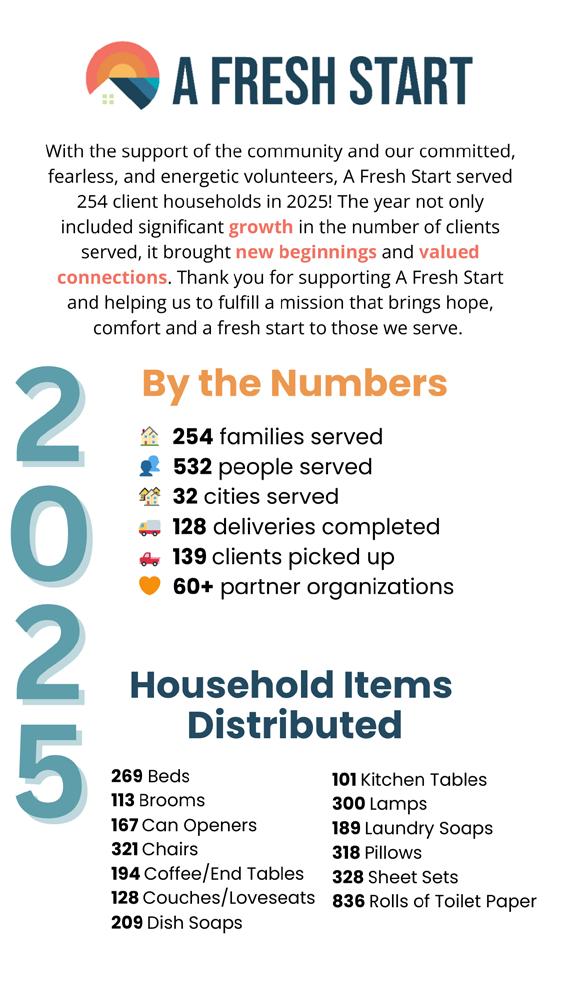
Through community donations and volunteer support, AFS provides essential household furniture and items at no cost to their clients. From beds and dressers, to kitchenware and small household necessities, they help transform empty spaces into welcoming homes for those starting over.
Since its founding, AFS has partnered with local agencies, churches, businesses, and individuals throughout the region to serve hundreds of families each year. Every item distributed is donated by the community, sorted and prepared by volunteers, and thoughtfully selected to meet each client’s needs.
Beyond furniture, AFS represents hope. Many of the individuals served are rebuilding after experiencing homelessness, domestic violence, job loss, or other life-altering challenges. By providing practical support during a critical transition, AFS helps remove barriers and offers encouragement during one of the most vulnerable times in a person’s life.
Community involvement makes their work possible. Supporters can partner with AFS through donation drives, financial gifts, volunteering, sponsorship opportunities, and in-kind contributions. Together, they are creating stability — one home at a time.
THE BIG PICTURE: DESIGNED FOR REAL LIFE IN 2026
By HALEY KARST
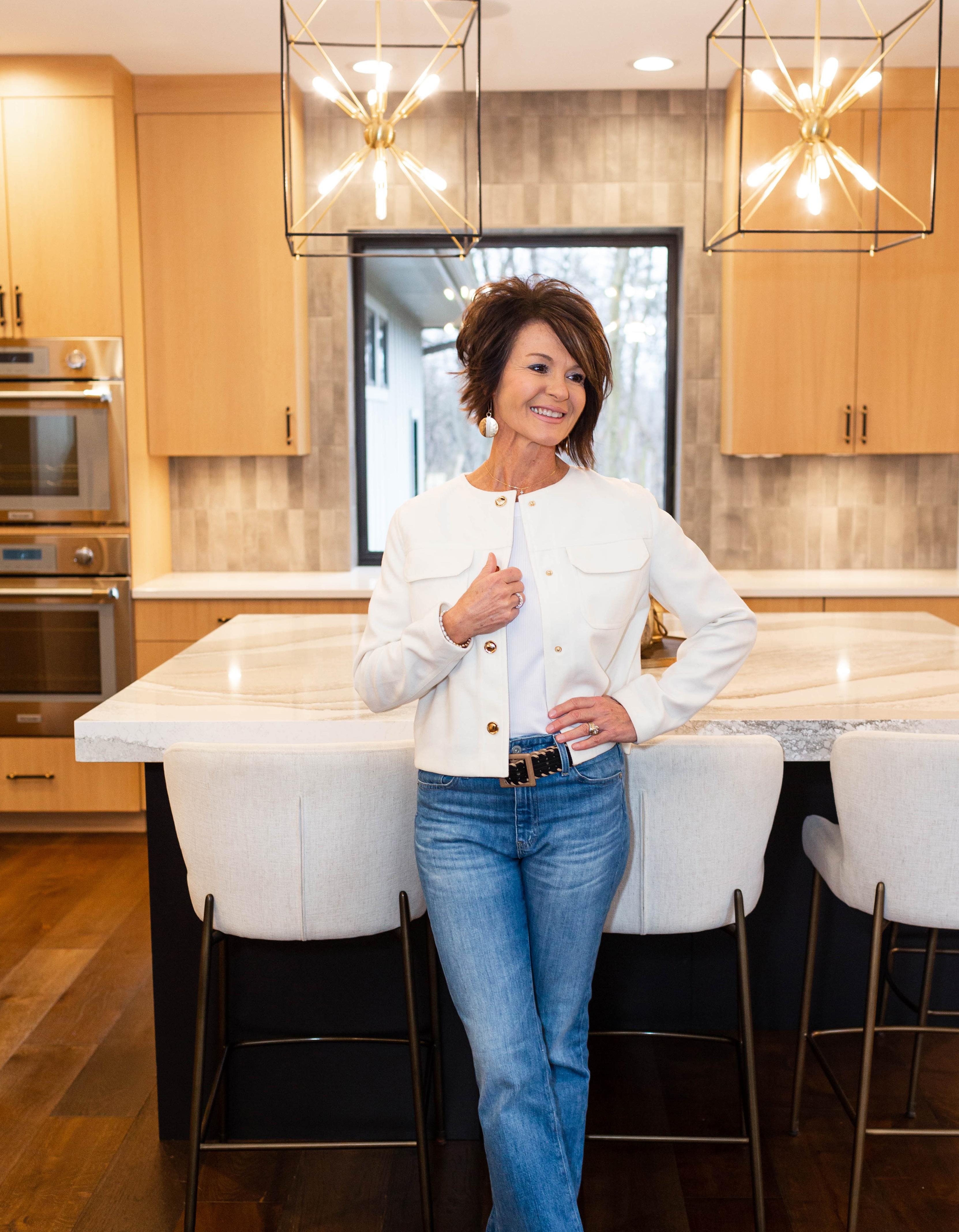
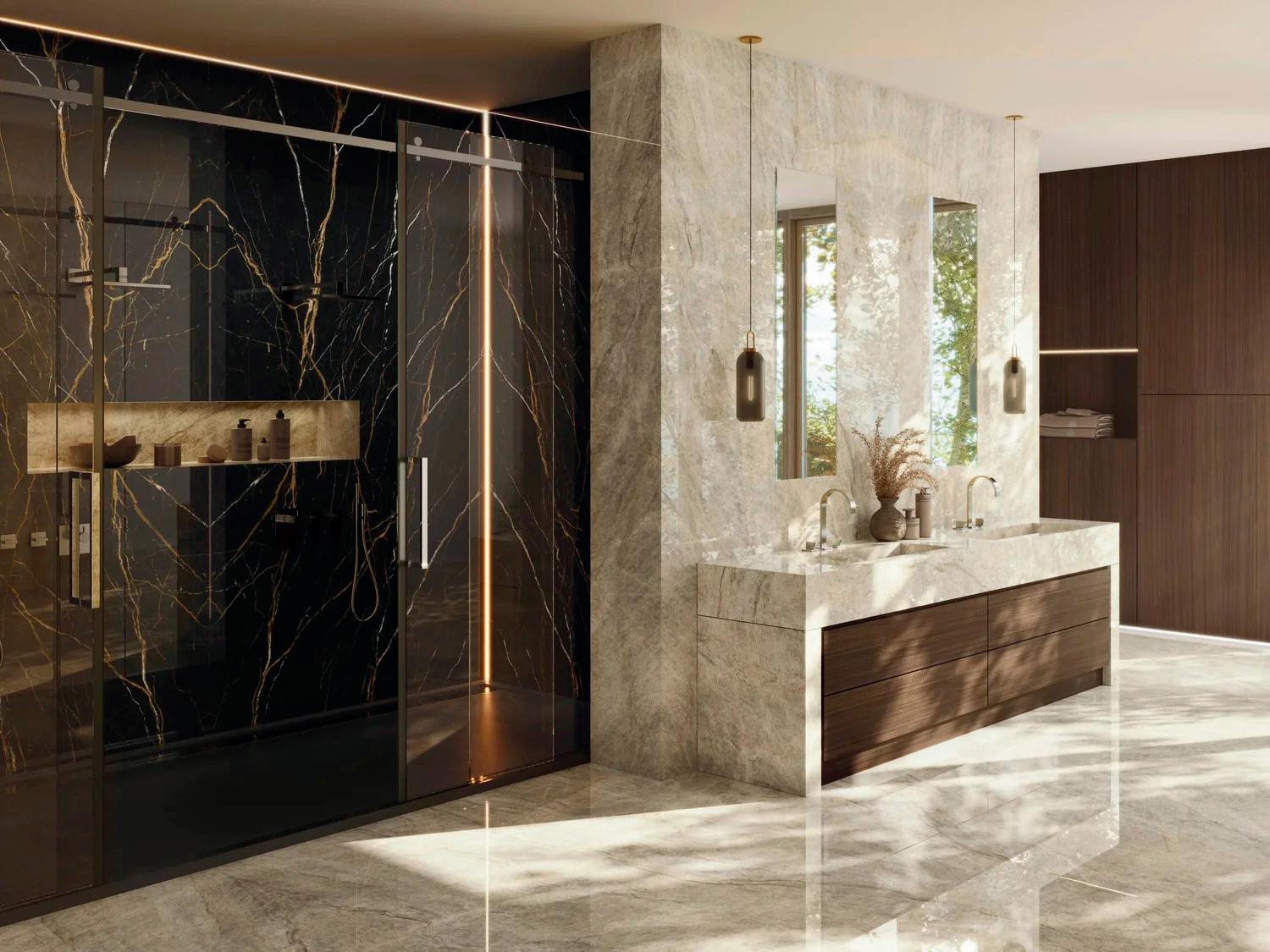
In 2026, design isn’t about perfection, it’s about creating spaces that reflect your life and bring comfort every day. Across flooring, cabinetry, countertops, and furniture, the common thread is warmth and livability. Natural materials, soft colors, and thoughtful function are shaping homes that feel personal and inviting.
Flooring: Texture, Tone, and Timeless Appeal
Flooring remains one of the most influential design decisions, and this year’s trends lean into warmth and authenticity. Cool grays have stepped aside for neutrals, honeyed browns, and soft taupes that make a space feel grounded and inviting. Wide-plank hardwood continues to lead, especially white oak with subtle grain movement. Homeowners are gravitating toward matte and low-sheen finishes that mimic natural, untreated wood surfaces that feel organic and wear beautifully over time. For busy households, high-performance luxury vinyl plank (LVP) is still a strong contender. Newer options feature realistic textures and warmer undertones, making them nearly indistinguishable from hardwood while offering added durability.
Cabinetry: Soft Modernism with Character
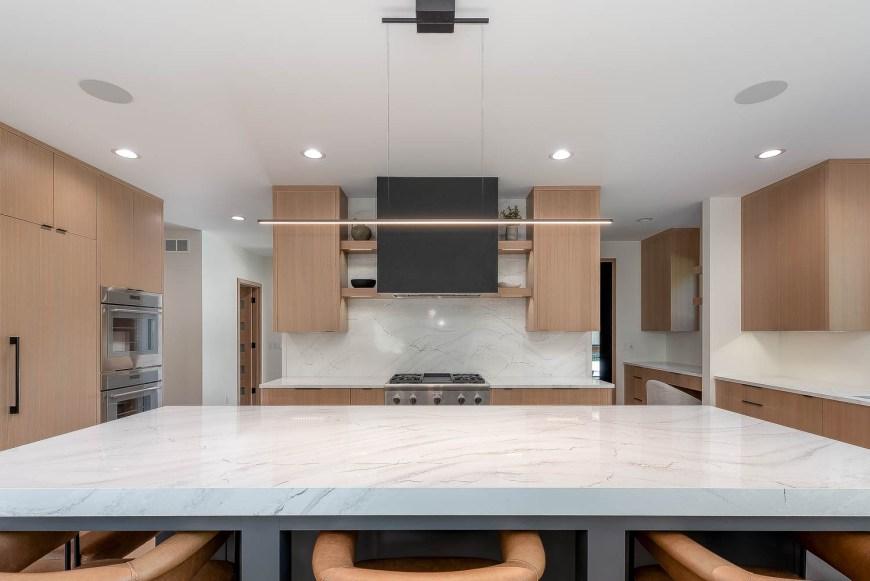
The all-white kitchen has given way to a more layered, expressive look. In 2026, cabinetry blends clean lines with organic finishes to create spaces that feel modern yet welcoming. Natural wood tones, especially white oak and walnut, are leading the way. Painted cabinetry remains popular, but the palette has shifted toward earthy hues like mushroom, clay, eucalyptus green, deep navy, and warm charcoal. Functionality plays a key role, with built-in organizers, pullout pantries, and hidden storage becoming everyday expectations rather than luxury upgrades.
Countertops are embracing soft veining and subtle movement. Quartz continues to dominate for its durability, now showing up in warmer creams, sands, and soft browns that pair effortlessly with wood cabinetry. Quartzite is also gaining popularity for homeowners who love the uniqueness of natural stone with greater resilience than marble. Its organic patterns make it a standout in kitchens and baths alike.
Haley Karst is an interior designer at Berger Interiors in St. Peter with five years of experience transforming spaces into meaningful, personalized homes. She is passionate about bringing each customer’s unique vision to life blending creativity, functionality, and thoughtful design to create spaces that truly reflect who they are. Her goal is simple: to turn houses into homes that feel warm, inviting, and uniquely theirs.
H E W A
SPECIALTY-SHAPED WINDOWS: OFTEN A MYSTERY TO COVER
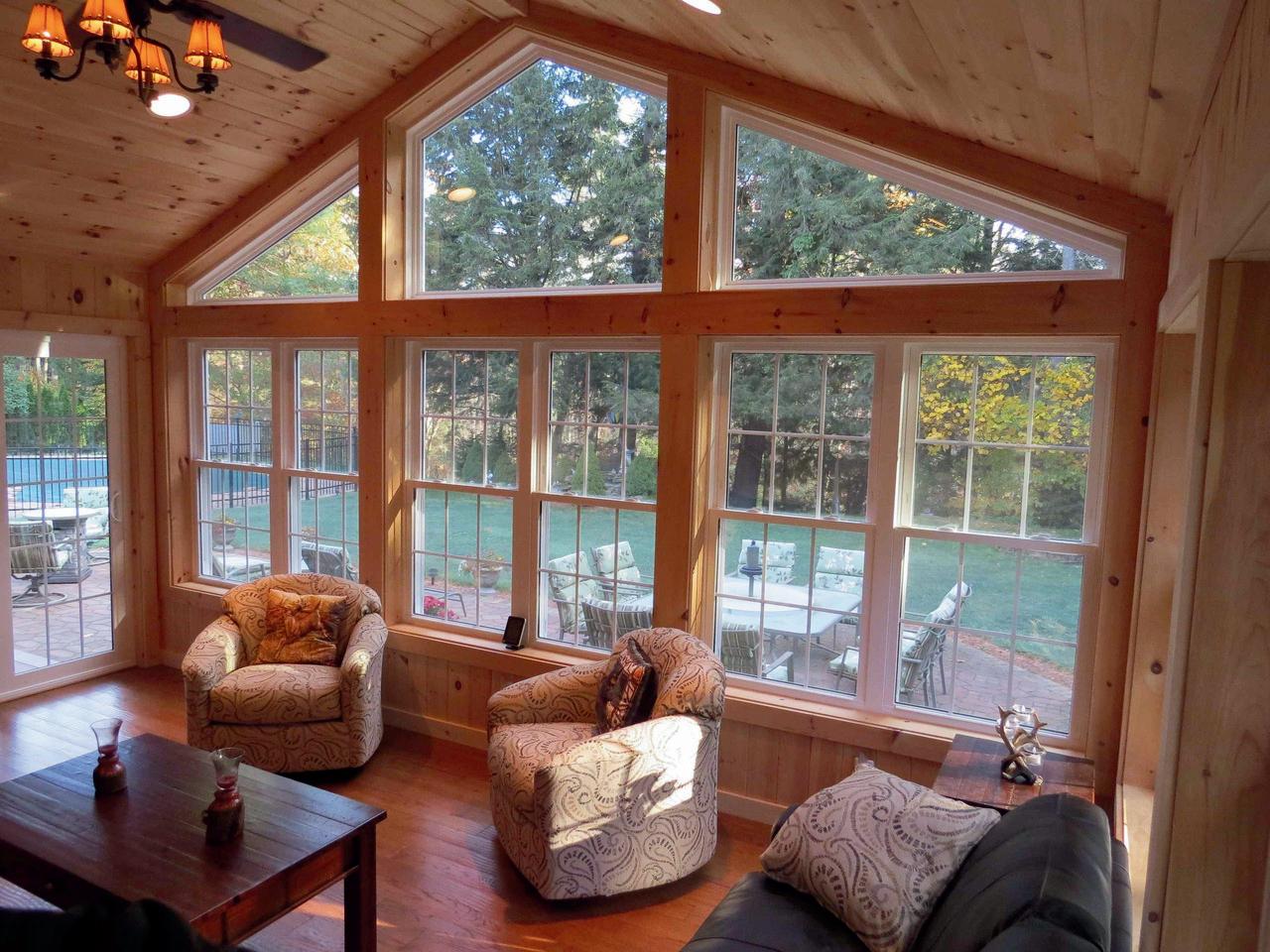
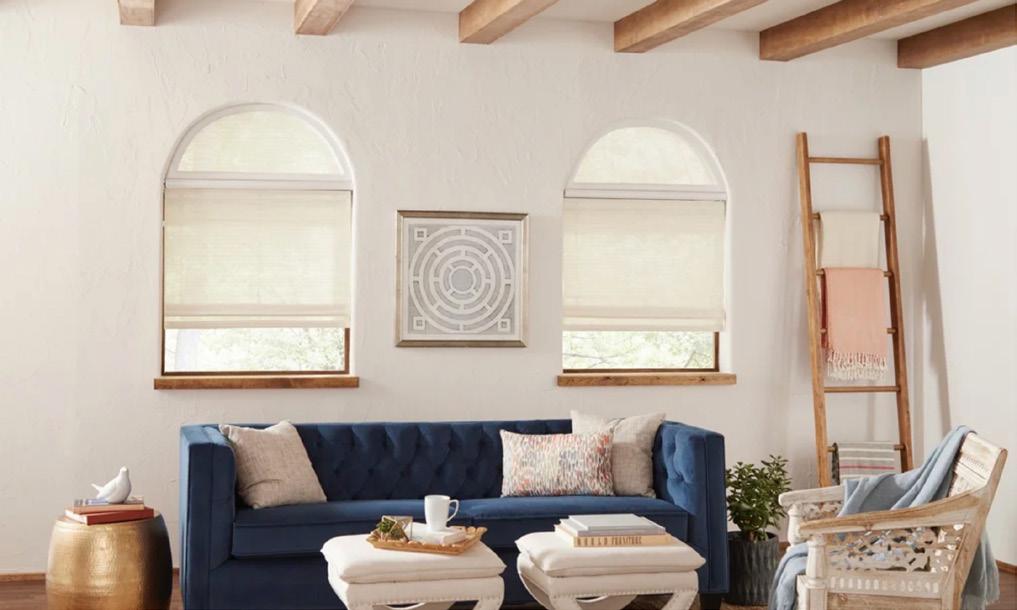
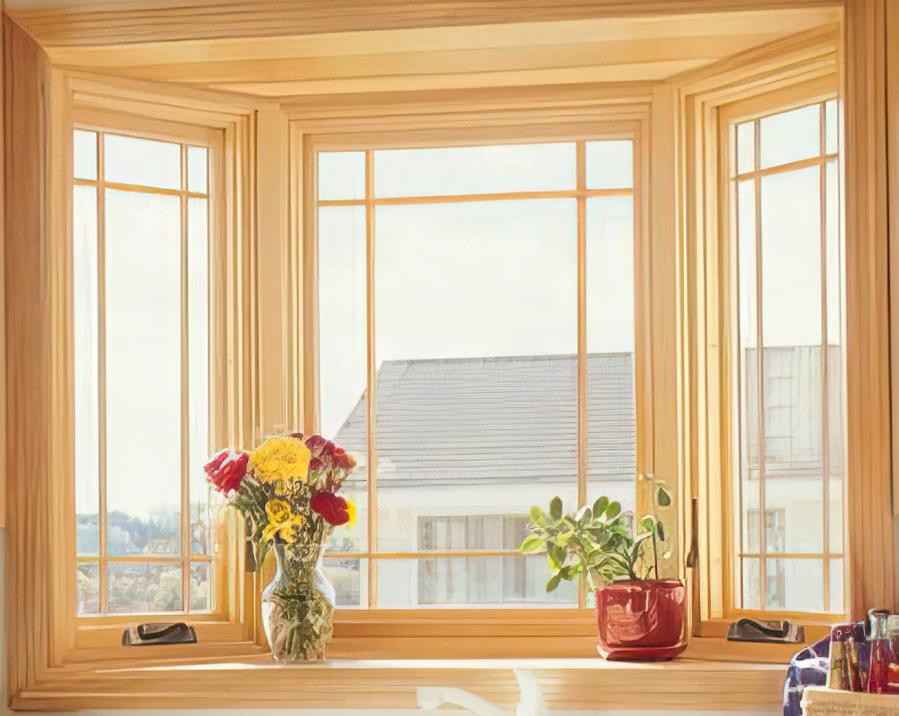
Walk into almost any home with architectural character and you’re likely to find them—specialty-shaped windows. Triangles tucked into roof peaks, elegant half-moon windows above picture windows, circular accent windows in stairwells, or trapezoid windows that follow the slope of a vaulted ceiling. These windows are stunning design elements that flood a space with natural light and add visual interest. But once the sun starts glaring in, or privacy becomes an issue, homeowners often ask the same question: “How do I cover that?”
Specialty-shaped windo ws are beautiful, but they don’t work with standard, off-the-shelf window treatments. Fortunately, there are several smart and stylish solutions that allow homeowners to maintain the architectural beauty of these windows while gaining light control, privacy, and energy efficiency.
Custom Solutions for Unique Shapes
The key to covering specialty windows is customization. Because shapes such as triangles, circles, half-moons, and trapezoids are not standard sizes, treatments must be precisely measured and manufactured to fit each window.
One of the most popular solutions is custom cellular (honeycomb) shades. These shades can be made to fit many specialty shapes while providing excellent insulation. Cellular shades are particularly helpful for windows that receive a lot of sunlight, helping regulate indoor temperatures and reduce energy costs.
For half-moon or arched windows, homeowners often choose a sunburst-style cellular shade designed specifically for arches. These shades follow the curve of the window and maintain the elegant shape while softening incoming light.
Triangular and trapezoid windows—often found in vaulted ceilings—can also be fitted with custom shades that match the angle of the frame. These shades may be fixed in place, making them ideal for windows that are primarily decorative or located high on a wall.
Maintaining the Architectural Look
One concern homeowners often have is covering up the very feature that makes the window special. The good news is that specialty window treatments are designed to complement the shape rather than hide it.
Many treatments are available in light-filtering fabrics that allow natural light to pass through while reducing glare and protecting
By BROOK DEVENPORT
interiors from UV damage. This preserves the bright, open feeling these windows were meant to create.
For homeowners who prefer to keep the window fully visible, interior shutters can be crafted to match specialty shapes as well. Custom shutters can follow the lines of arches, angles, and circles, creating a clean, architectural look that blends seamlessly with the window frame.
When Leaving it Uncovered is an Option
Sometimes the best solution is simply not covering the window at all. Many specialty windows are positioned high on walls specifically to provide light without sacrificing privacy. In these cases, homeowners may choose to leave them uncovered and instead focus treatments on the main windows below.
However, if heat, glare, or fading becomes a concern, a custom shade can still provide protection without compromising the beauty of the window.
Professional Measuring Makes the Difference
Because specialty windows require precision, professional measuring and installation are extremely important. Even small measurement errors can affect how well a treatment fits or functions.
Whether the goal is privacy, light control, energy efficiency, or simply enhancing the look of the room, there is almost always a solution.
The Bottom Line
Specialty-shaped windows add architectural charm and character to a home—but they don’t have to remain a mystery when it comes to window coverings. With today’s custom options, homeowners can enjoy the beauty of these unique windows while gaining the comfort and functionality of professionally designed window treatments.
If you’ve ever looked at a triangular, circular, or arched window and wondered, “How do I cover that?,” the answer is simple: with the right custom solution.
Brook Devenport is the proud owner of Blinds & More, where she has spent years helping homeowners across southern Minnesota transform their spaces with beautiful window coverings. She believes great design should not only look good but make homes more comfortable. Brook is passionate about her community, love supporting local animal rescues and enjoys life with her family and a house full of much-loved dogs.
Since 1992, Minnesota Pork Inc. (DBA MPI Farms) has built a legacy of excellence in agriculture. What began with constructing and managing our own hog facilities quickly grew into a comprehensive operation—including livestock transportation and multi-state production across Minnesota, Iowa, Nebraska, and Wyoming. Today, we specialize in providing innovative agricultural services to some of the world’s leading livestock producers. With decades of hands-on experience and a commitment to quality, MPI Farms continues to drive the future of modern farm management.
From the ground up, MPI Farms delivers reliable, resultsdriven agricultural solutions. With decades of experience and a hands-on team, we support farmers and producers with services tailored to every stage of the operation.
Our Services Include
• RESOURCE APPLICATION
• TRANSPORTATION
• FACILITY MAINTENANCE
• DEMOLITION
• CONSTRUCTION
• DRAINAGE INSTALLATION
• CUSTOM FARMING
• GRAIN HANDLING
MORE THAN A HOUSE: CREATING A HOME THAT TELLS YOUR STORY
Have you ever walked into someone’s home and instantly felt comfortable? Maybe it was the warmth of the space, the mix of meaningful pieces, or the sense that the home truly reflected the people who live there.
The average person spends about 18 hours a day at home, which means our homes aren’t just buildings where we live— they’re the places where life happens. It’s where we gather with family, unwind after a long day, and create memories in the everyday moments. Your home should be a place that feels welcoming, comforting, and full of joy.
But if we’re being honest, it’s also the place where we tend to accumulate a lot of stuff.
Over time, closets fill up, shelves become crowded, and corners collect things we once loved but no longer use. That’s why spring is the perfect time to take a fresh look at your home. With the season of renewal all around us, it’s a great opportunity to evaluate your space and make thoughtful decisions about what truly belongs there.
Keep, Give, or Repurpose
A great place to start is by gathering items that no longer serve a purpose or no longer bring you joy. These pieces had their time and place, but sometimes their season has simply passed. Many items can easily be donated. Choose an organization you feel good about supporting and know that someone else may enjoy those items during their own season of life. If something holds sentimental value, consider passing it along to a family member who might appreciate it just as much.
Of course, if an item is broken or in poor condition, don’t hesitate to let it go. Clearing out things that no longer serve you creates room for the things that do.
If you have collections or special pieces that may hold value, you might consider selling them. Garage sales, Facebook Marketplace, or even locally owned shops can be great places to find new homes for items that still have worth.
Giving Old Pieces New Life
Repurposing is another wonderful way to refresh your space. Sometimes a tired or outdated piece just needs a little creativity to feel new again. A fresh coat of paint or updated hardware can completely transform a piece of furniture.
Many older furniture pieces were built with higher quality materials than much of what we see today, making them well worth the effort.
By CHERYL HAMOND
If you happen to have an antique piece that’s still in good condition, you may not want to paint it at all. Products like hemp oil and other wood restoration treatments can beautifully revive the natural finish and highlight the craftsmanship.
That said, many of us have those “one day” piles—the projects we fully intend to get to someday. When you come across these items, it can be helpful to pause and ask yourself honestly: Will I really get to this project? If the answer is probably not, it may be time to donate it and clear that mental and physical space. Letting go of clutter often feels incredibly freeing.
Creating a Home That Feels Like Home
Your home should reflect what makes you happy. My dad was a pastor, so I grew up in the church. Stained glass windows and old church pews bring me back to a place in my heart that feels like home. In my own home, I’ve mixed vintage, antique, and modern pieces. There’s both natural wood furniture and painted pieces, along with special items that remind me of meaningful memories or loved ones.
Those personal touches are what make a house feel warm and lived in.
As you begin sorting through your own spaces and deciding what to keep, repurpose, or let go of, simply ask yourself one question:
Does this help create the feeling of home?
When you surround yourself with things that hold meaning, beauty, and memories, your house becomes more than just a place you live— it becomes a place that truly reflects who you are and a place you love coming back to every day.
Some of the best pieces in a home have a story behind them. Whether they come from a family member or a local antique shop those pieces are often the ones that make a house truly feel like home.
Cheryl Hamond is the owner of Pond Road Market in Mankato, a boutique specializing in vintage, antique, and unique home décor. She is passionate about helping people create spaces that feel personal, warm, and full of character. Cheryl enjoys sharing tips and ideas for making a house truly feel like home.
FRESH SPRING ROLLS
3 tbsp. bottled lemon and herb Italian-style marinade
3 tbsp. ground fresh chili paste
3 tbsp. Hy-Vee creamy peanut butter
3 c. shredded romaine lettuce
1 c. Napa cabbage
2 tbsp. fresh mint
2 tbsp. cilantro
2 tbsp. Hy-Vee lightly salted cashews
1 tbsp. fresh basil
1 tsp. lime
2 tbsp. lime juice
12 Blue Dragon Spring Roll Wrappers 15 Count
¼ c. yellow bell pepper
¼ c. red bell pepper
¼ c. cucumber
¼ c. carrot
Hy-Vee crushed red pepper
Whisk together Italian-style marinade, chili paste, and peanut butter for dipping sauce; set aside.
Combine lettuce, cabbage, mint, cilantro, cashews, basil, lime zest, and lime juice in a medium bowl. Fill a wide shallow bowl with warm water. Dip 1 rice paper into water for a few seconds or just until moistened. (Rice paper will still be firm but will continue to soften during assembly.) Place rice paper on a work surface.
Build each roll by placing about 1/2 cup lettucecabbage mixture across lower third of the rice paper. Top with a few slices each bell pepper; add some cucumber and carrot. Fold bottom of rice paper over filling. Fold in sides and roll up tightly.
Repeat with remaining rice papers and filling ingredients. Serve immediately with dipping sauce. Garnish dipping sauce with crushed red pepper, if desired.
SPRING CLEAN YOUR HEALTH:
WHY WOMEN SHOULD PAY ATTENTION TO HEMOGLOBIN A1C
Spring is the perfect time to clear out what no longer serves you, such as closets, habits, and even outdated assumptions about your health. As warmer weather inspires fresh routines, it’s also a great opportunity to “spring clean” your wellness by checking in on key health numbers. One important health number is hemoglobin A1c (A1c).
A1c reflects your average blood sugar levels over the past two to three months. Unlike a fasting glucose test, which captures a single moment, A1c offers a long-term picture of how your body handles glucose day after day.
Why A1c Matters for Women: Women often juggle many roles, and symptoms of blood sugar imbalance can easily be overlooked or blamed on stress, fatigue, or a busy schedule. Tracking your A1c helps uncover silent changes that can increase the risk for
Even active women, like those who walk regularly, garden, attend exercise classes, or train for a running event, can experience elevated A1c if nutrition, stress, sleep, or hormones are working against them.
A1c vs. Fasting Glucose: A fasting glucose test provides information about your blood sugar at a single point in time. It reflects your glucose level after an overnight fast and helps identify immediate elevations or abnormalities. However, because it captures only one moment, it can be influenced by recent meals, stress, illness, or activity.
Hemoglobin A1c (A1c), in contrast, offers a broader and more reliable picture of your glucose patterns. It measures the percentage of sugar attached to hemoglobin in your red blood cells, reflecting your average blood sugar levels over the past two to three months. This makes A1c useful for identifying longterm trends that a single fasting measurement cannot reveal.
April Graff, MS, RD, LD Hilltop Dietitian
507.625.9070
AGraff@hy-vee.com
Scan this QR code to find your Hy-Vee dietitian
CONSIDER AN A1C TEST IF YOU:
• Are 45 or older
• Have a family history of diabetes
• Carry excess weight
• Have high blood pressure or high cholesterol
• Experienced gestational diabetes
• Feel unusually fatigued, thirsty, or sluggish
Testing is simple and doesn’t require fasting, making it an easy addition to your spring wellness routine. This spring, give your health the same fresh start you bring to your home. Checking your A1c is a simple, powerful way to understand your body, prevent complications, and support steady energy, so you can enjoy the season feeling lighter, clearer, and more in control.
VACCINATION SERVICES
Your Hy-Vee Pharmacy offers many vaccinations to help you stay healthy throughout the year. We offer vaccinations for COVID-19, pneumonia, shingles, tetanus, influenza, and meningitis. We offer these vaccines anytime the pharmacy is open with no appointment necessary. Stop in and talk with one of our pharmacists to discuss your vaccination needs.
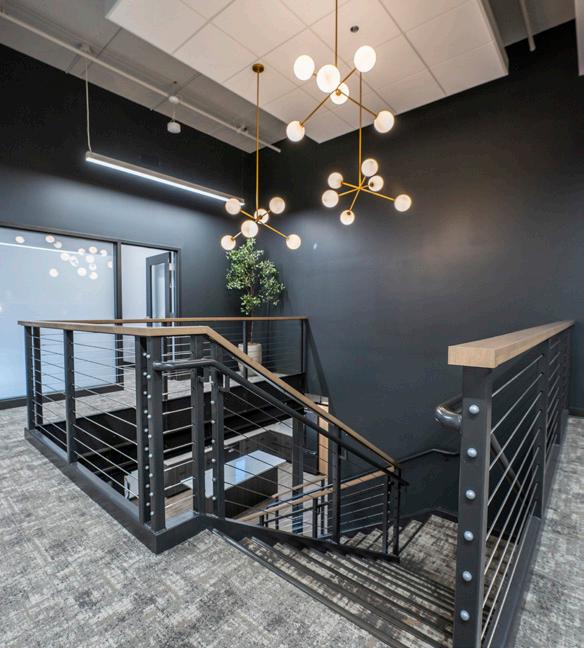
CREATING INVITING & PRODUCTIVE WORK ENVIRONMENTS
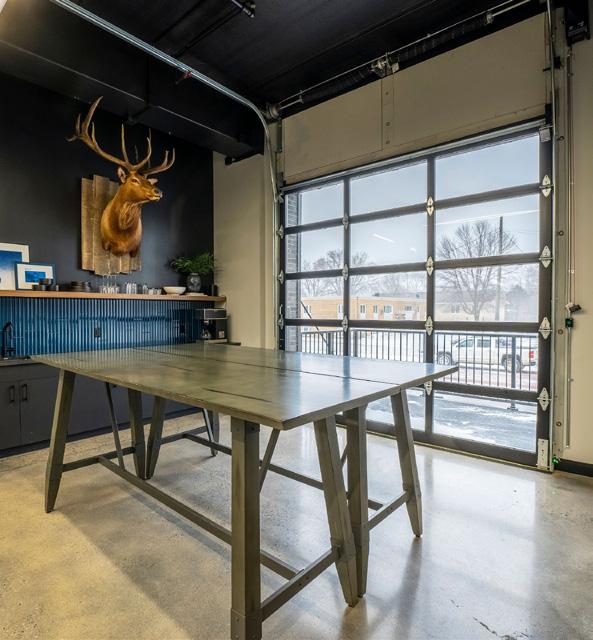
In today’s evolving work landscape, design has become far more than an aesthetic choice, it’s a powerful tool that shapes productivity, wellbeing, and even how clients perceive your business. Whether you’re a business owner refreshing a commercial office or a hybrid employee carving out a functional nook at home, thoughtful design directly impacts how people feel and perform throughout the day.
Most of us spend at least 40 hours a week in our workspace. When that environment is intentional, clean, organized, and visually coordinated it naturally promotes better focus and comfort. Even within the limited footprint of a cubicle or small office, simple design upgrades can turn an ordinary area into a welcoming, productive space.
Start by incorporating elements that bring life and personalization. Plants are an easy place to start. They boost mood, improve air quality, and soften the look of an office. Pair this with matching organizational tools such as pen holders, file folders, and trays to create visual consistency. A clutterfree setup not only looks polished, it reduces distraction and mental fatigue. Adding small personal touches helps make the space your own without overwhelming it. Display certificates, meaningful artwork, or children’s creations in matching frames or on a designated shelf. This keeps the look intentional while still making room for personality.
For employers, creating a comfortable, organized office environment is a powerful investment in workplace culture. Clean, tidy work areas encourage focus and convey professionalism not just to employees but to clients who walk through the door. Elements such as natural daylight, functional overhead lighting, ergonomic seating, and branded interior finishes help reinforce your identity while supporting employee wellbeing. Collaborative areas, quiet zones, and flexible furniture layouts also give teams the ability to work the way they work best. When employees feel supported by their environment, morale and performance naturally improve.
Whether you work from home fulltime or parttime, your home office has a major influence on your productivity and your household’s overall mood. Home workspaces often serve multiple purposes, so design decisions need to be intentional. A dedicated room makes this easier, but even a small desk in a living room or hallway can be transformed with the right strategies.
By HEATHER CLARK-ESSER
1. Use Color Intentionally
Color sets the emotional tone of a workspace. Soft whites and pale blues create calm, while deep greens or charcoal shades add focus and coziness. Colordrenching is a painting technique where walls, trim, and builtins are painted in the same hue. This creates a modern, immersive feel.
2. Prioritize Natural Light
Place your desk near a window when possible. Natural light elevates mood, clarity, and energy. If glare is an issue, use adjustable shades to soften brightness without blocking daylight altogether.
3. Create Smart Storage Solutions
Clutter is the quickest way to kill productivity. Invest in attractive, functional storage such as decorative boxes, cabinets, or slim vertical file holders to keep work essentials out of sight but within reach. When everything has a place, the whole area feels more serene and efficient.
4. Craft a Professional Video Background
Your video backdrop is part of your professional presence. Choose items that look clean and intentional: books, plants, artwork, neutral wallpaper, or a styled shelf. Avoid personal photos or busy patterns. And always keep your camera at eye level, it makes a world of difference on screen.
5. Scale Your Workspace
Even small home offices can be highly effective with a good layout. Choose fewer, larger statement pieces rather than lots of small items. Prioritize ergonomics so you can work comfortably and ensure you have enough open space to move, stretch, and stay energized.
No matter what the work environment, design makes a measurable difference. Light, sound, color, temperature, movement, and storage all affect how a person feels in a space and when people feel comfortable, energized, and supported, their performance naturally improves.
Heather Clark-Esser is a commercial interior designer at OHA Architecture + Design, serving clients in Mankato, MN, and Sioux Center, IA. She specializes in workplace and education spaces, creating thoughtful, functional designs for new construction and renovations. Heather holds a degree in Interior Design and Construction Management from Minnesota State University, where she also teaches as an adjunct professor. Outside of work, she’s a proud mom of three— Hazel, a talented singer; Samson, an aspiring pilot; and Oliver, a dedicated hockey player.
If you or your child struggle with poor sleep, mouth breathing, headaches, jaw pain, or chronic fatigue, the airway may be the missing piece.
modern, airway-focused dental practice treats patients from infancy through adulthood, helping improve sleep and breathing by supporting healthy facial development and function.
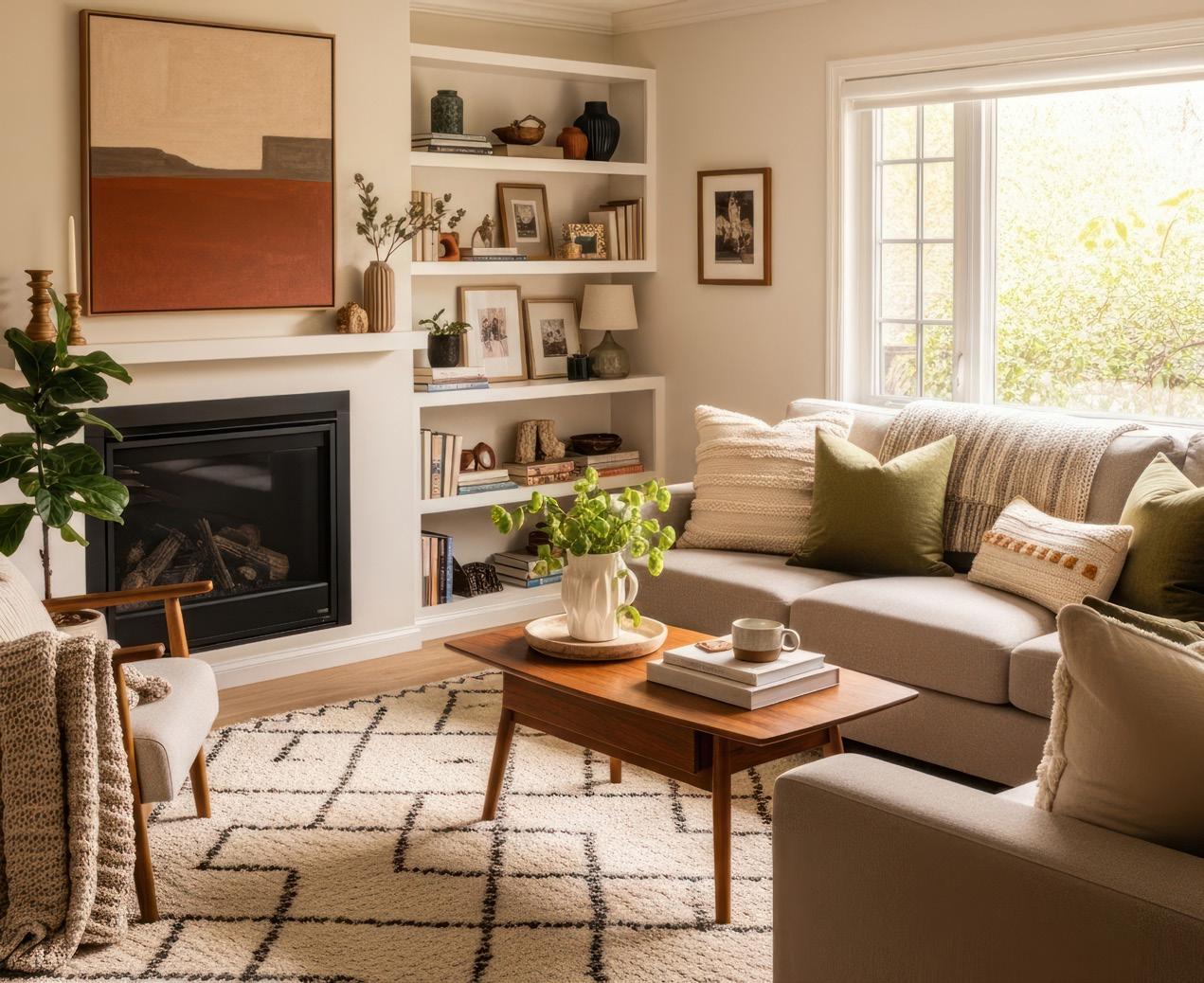
CREATING A COLLECTED HOME: HOW TO MIX OLD AND NEW
You probably know that feeling when you walk into someone’s home and it just feels good. The kind of home that feels layered, comfortable, and personal. But when it comes time to create your own, intimidation sets in.
What goes together? What if it clashes? Where do you even begin? Do I need to get rid of everything I own and just start over?
The answer to the last question is no.
Many people think creating a beautiful home means buying everything new or making sure every piece matches perfectly. But the homes that feel the most inviting and personal usually didn’t come together that way. They are layered over time.
Mixing old and new isn’t about being trendy or eclectic. It’s about creating depth. And depth comes from contrast.
Older pieces bring craftsmanship and permanence. Solid wood furniture was built to last. It can be painted when styles shift, stripped back to its original finish, re-stained, or repurposed. It holds up through decades of change.
That doesn’t mean new is bad. New brings comfort and function. Updated upholstery, modern lighting, and clean lines can make a space feel fresh and livable. But when everything is new and from the same moment in time, a room can feel temporary, and then it becomes dated.
When you blend the two, something different happens.
An antique dresser paired with modern lamps. A vintage dining table surrounded by simple contemporary chairs. An older wood cabinet grounds a room with a beautiful new vase in it.
The contrast creates balance. The room feels collected instead of decorated.
By KELLY ROSENBERG
Often when people feel like their home is “off,” it isn’t because they need more things. It’s because the space lacks something that anchors it. Something that feels established, and brings a sense of history into the room.
The good news is you don’t need to redo everything to create that feeling.
Start slowly with one meaningful piece that can evolve with you. Choose materials that will last. Over time, those pieces begin to connect. A chair that has been in the family for years sits comfortably next to a newer sofa. A vintage mirror reflects a room and adds light. Nothing feels rushed or disposable.
One of the easiest ways to add personality to a home is by displaying collections or family pieces that already have meaning. A set of dishes from a grandmother, a collection of old books, or a group of small antiques gathered over time, that makes a home more personal.
Grouping similar items together can make them feel intentional. These pieces tell a story about the people who live in the home. They connect the past with the present and remind us that a home isn’t just about decorating. When collections and heirlooms are layered in with everyday pieces, the room begins to feel more authentic. It looks like a home.
Kelly Rosenberg is the owner of Mankato Vintage Market in Mankato, which celebrates its 10-year anniversary this April. For the past decade, she has helped customers create collected homes by mixing vintage pieces with thoughtfully chosen new items. She believes a home should be built over time with pieces that last and reflect the people who live there. Mankato Vintage Market specializes in vintage and new home décor that helps customers create a collected home.
Kelly Rosenberg is the owner of Mankato Vintage Market in Mankato, which celebrates its 10-year anniversary this April. For the past decade, she has helped customers create collected homes by mixing vintage pieces with thoughtfully chosen new items. She believes a home should be built over time with pieces that last and reflect the people who live there. Mankato Vintage Market specializes in vintage and new home décor that helps customers create a collected home.
BankVista Receives SBA Lender of the Year for the 10th consecutive year, setting the gold standard in small business lending.
Rock JULEE WILL
YOUR WORLD
Idar-Oberstein, Germany
Antwerp, Belgium
E U R O P E A N R O C K T O U R
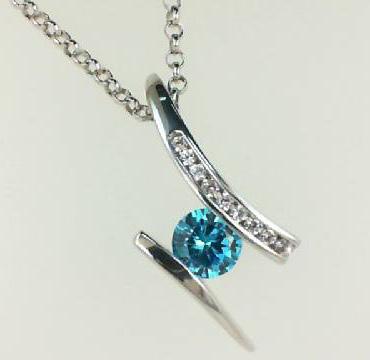
European Rock Tour, Julee travels to Germany, Italy, London, and Antwerp, hand-selecting diamonds and gems at the source. From there, Julee brings them back to design bold, one-of-a-kind pieces, custom created to rock your world.
refresh& relax rejuvenate
If
MEET THE STARKEYS
Supporting families through every stage of life
In every season of life, having the right people by your side makes all the difference. For the Starkey family, that belief isn’t just something they say—it’s something they live out every day through the businesses they’ve built to serve the Mankato community.
From first steps to future planning, the Starkeys are committed to helping families grow and feel supported—every step of the way.
First Steps: Building Confidence & Passion
For Marissa Starkey, it all starts with empowering the next generation.
A former University of Minnesota Dance Team member and National Champion, Marissa had opportunities that could have taken her anywhere. Instead, she chose to come back home—to the very community that shaped her—to pour into young dancers at Studio M Dance.
Through movement, mentorship, and encouragement, she helps young dancers build confidence, discipline, and a love for the art that goes far beyond the studio.
Because those first steps matter.
Next Steps: Finding the Place You Call Home
For families ready to take the next step, Michelle Starkey is there to guide the journey.
As a top-producing agent with TRUE Real Estate and the #2 agent in the company in 2025, Michelle has helped countless families find not just houses—but homes where life happens. Her approach is built on trust, relationships, and a deep understanding of the local market. Whether it’s a first home, a growing family, or a new chapter, Michelle is dedicated to making the process seamless and meaningful.
Because where you live shapes how you live.
Future Steps: Planning for What’s Ahead
With a legacy rooted in service investment representative, Matt Starkey, has spent years helping families prepare for the future.
Through Cetera Investment Services, Matt brings experience, insight, and a personalized approach to financial planning—helping generations of families navigate life’s biggest decisions with confidence. His commitment goes beyond numbers—it’s about building long-term relationships and creating strategies that support families for years to come.
Because the future deserves a plan.
From Our Family to Yours
Three businesses. One shared purpose.
The Starkey family believes that when you invest in people—when you show up, give back, and stay rooted in your community—you create something bigger than business.
You create lasting impact.
THINK SPRING BY STARTING A CUT FLOWER GARDEN NOW
In Minnesota the winters can seem bitter cold and never ending. Many of us can’t wait for when the earth starts to look a little less brown and we can add some color to our yards. As a flower farm this is also a time to enjoy the calm, reflect on last season and plan to make those dreams for next season’s crop a reality. Since Minnesota growing season is so short you need to prepare to hit the ground running in early May.
Starting a cut flower garden can be overwhelming. When it comes to gardening it should be enjoyable, not stressful, and even as a seasoned gardener I, too, have failures each year. When you are growing outdoors there are many things out of your control.
First, first pick your space. Even if it’s limited and you do not have room for a plot of rows, there are options to grow in containers and raised beds. Most cut flowers require 6+ hours of sunlight, and soil that is well drained, so make sure your selected spot checks these boxes. If planting directly into the ground, and not using soil you brought in, I recommend doing a yearly soil test. This is super easy and inexpensive. Simply send in two cups of soil for testing to the University of Minnesota, and you get a report that allows you to determine the health of your soil, and if any additional nutrients are needed to improve the health of your dirt contributing to the success of your growing season. I have used the U of M test for years. They provide great service and the directions are right online at soiltest.cfans.umn.edu.
Once your space has been selected, the excitement of choosing your seed varieties comes next. There are tons of annual and perennial options, so the biggest challenge is to not over-commit yourself to more than you can handle, which is easy to do. Take time to research your varieties. Most seed packets will provide you with the details on how to plant each seed in order to have the best success. Some of the best seeds for beginners are cosmos, sunflowers, and zinnias—they last all season long and provide continuous blooms. Some seeds take time to germinate, so starting seeds indoors is a great way to kick start our fairly short growing season, and also
By MOLLY FRITZ
get your hands in the dirt a few weeks sooner. Bonus is doing so can help ease seasonal funk with the thrill of sunshine and warmth on the horizon. This doesn’t need to be overly complicated—trays, dirt, lights, and a fan from your garage can suffice. I recommend always planting a few extra than you intend on planting as not all seeds will germinate.
Finally after all the planning and tending to your seedlings, it is time to plant outside. For southern Minnesota, Mother’s Day weekend in May is the target date to plant, or when the last threat of frost is in the forecast. Depending on the weather leading up to this you will want to start acclimating your seedlings to outside; this is referred to as hardening off. Each day you will bring your plant babies out for a few hours increasing their exposure to the elements prior to planting. This helps increase their success and survival rate. When planting cut flowers you can tighten the recommended plant spacing and place them closer together. This encourages the plants to put more growth into height than width, providing longer stems in your bouquets. From here it is just making sure to keep your plants free of weeds, provide water and nutrients. Remove any expired blooms from your plants to keep encouraging new growth. From there, watch your plants grow and make beautiful bouquets.
Each year there are always new things to learn, so make sure to take notes on what was successful and what was not, so you can make adjustments next season. Lastly, remember to give yourself grace. Even as a business whose focus is growing flowers, we continue to learn and have failures. Every year we have a struggle—whether it’s bugs, weeds, weather, road construction or simply time. I highly encourage you to set a goal at the beginning of the season on what success looks like for your growing season, as it is often easy to get wrapped up in all that went wrong not what went right.
Molly Fritz is owner of Little Roots Flower Farm, a family-run flower farm, and full-service florist nestled in the heart of southern Minnesota, just outside of Mankato. At Little Roots, everything they grow and create is rooted in a love for flowers, community, and the wild beauty of nature. Whether planning a wedding, picking up a cheerful bouquet, or grabbing a bucket of blooms, their flowers are grown with care and arranged with intention. They believe flowers mark life’s most meaningful moments. From U-Pick days to workshops, kids’ activities, and private events, we love welcoming visitors to experience the joy of the farm.
Sharing Your Home with Pets
Sharing your home with a pet is not always simple, and as much as we love them, it can come with some challenges that test the strongest family relationships. Have no fear—here are some tips for amicable living with Rosco and Slinky.
+ Pets have accidents, but if you are not cleaning appropriately, it can lead to constant problems. A quick internet search suggests trying vinegar, Resolve, and baking soda. These cleaners act like a mask (smells better to us) when what you really need is something to “eat” the bacteria such as enzymatics that break down the stains at a molecular level. Proteases break down proteins in the urine that support odor causing bacteria, and ureases target urea that is responsible for the strong, pungent smell, are two common enzymes that are used. These enzymatics need to be applied by following the package directions when using. You can find them easily at pet supply, and big box stores.
+ Do you feel badly when guests arrive with black pants and leave with your pet’s coat on? Of course there are certain breeds of dogs and cats that shed less, but the majority will
drop hair like it’s a job. Using washable blankets to cover furniture, and rubber products (gloves, brooms and rakes) and/ or investing in a good vacuum can be helpful to remove pet hair. Not all pet hair is visible, so be sure to have air vents cleaned often and don’t forget to check the dryer vent! Hair can act like kindling and quickly catch fire.
+ OOO that smell—can you smell that smell? Have you ever walked into a store and been hit with the aroma of perfumes, or been overwhelmed when someone puts on scented hand lotion? Cats’ sense of smell is 14 times stronger than humans, and dogs have a thousand times better nose than humans. So those fancy air fresheners and wall plug-ins can be a bit much for these very sensitive creatures. This includes scented cat litter. Skip the floral scent and just clean the box twice a day. Use caution with candles and waxes, as not only can they be offensive but they also “spark” a lot of interest and can lead to severe burns. Just as those scented items that we may love can cause stress to pets, so can cleaners. Bleach for example can cause “nose blindness” for up to 10 days in pets! Imagine not being able to smell your food?
+ If you are a brave soul who has plants AND cats, you are a glutton for punishment. Cats like “salad,” so be sure that the plants in your house are not toxic. For example, Easter lilies are VERY toxic to cats and should NOT share a home with them.
+ Other dangers lurking in your home that you may not have considered include hair ties, twist ties, rubber bands and dental floss. These can become intestinal foreign bodies in your pet should it consume one, and could require expensive surgeries. Keep these things securely locked up. But not all dangers are little. Each year we see severe injuries and deaths from cats getting stuck in washing machines, dryers and under recliner chairs. Triple check these places are cat free before using them.
+ Secure garbage cans. Aside from having to clean up gross egg shells and soggy food should you pet decide it’s lunch, it can lead to pancreatitis, gastroenteritis, and foreign bodies. This includes bathroom garbage as well!
+ Counter surfing can be super rewarding for pets. Cats like to be in high places and counters can provide great views, and sometimes even better sun spots. Deter them from using this space by providing much better options in the home to climb up on. To keep dogs off this space, put food away and keep them out of the kitchen with baby gates or designated spots when eating and prepping food.
+ Sleeping with pets is always a debate. If you don’t want your pet in the bed, be sure to provide a comfy bed option on the floor and reward them for using it. Kennels can be good options as they allow a dog to have their own space without hogging the bed. If you are sharing your room with a baby, a barrier of some kind is strongly encouraged. Babies make weird noises and a curious pet in this situation can, unfortunately, be life threatening. If your cats are throwing a party over night and you don’t want to be on the guest list, you may have to sleep with a closed door and provide some quiet options for them, such as puzzle toys or boxes to play in.
+ Destruction of furniture and carpet by a pet can be devastating and expensive—and ultimately a deal breaker for some. Avoid this by placing sturdy, tall cat trees in rooms that have good views, and near places the cat likes to sleep. Cats like to scratch to groom nails, mark territory, and enjoy the stretch that comes with it. Destruction can occur for other reasons, such as separation anxiety. If this is what you are seeing, reach out to your vet for help.
We want our pets as well as our human family members to coexist in harmony. These tips can help us all live happily ever after.
NICOLE LUECK, BS, CVT MN Valley Pet Hospital Mankato
PEOPLE CARING FOR PEOPLE
Lab Services
River’s Edge Hospital uses state-of-theart equipment to provide a variety of laboratory clinical testing to diagnose, monitor and prevent disease. And for your convenience, Direct Access Testing (DAT) is available so you can receive commonly asked for tests without an order from your physician. Call 507-931-2200 today for your easy to schedule appointment!
Dr. Amanda Bohn
Visit us today and let us help you rediscover the vibrant world of sound. Our locally owned practice in St. Peter, MN, offers comprehensive hearing services tailored to your unique needs.
Too Much of a Good Thing
Stuff. Everywhere. Photos, clothes, furniture, collectibles, and well…just stuff. There may come a time when you have to deal with clearing out your parents, grandparents or other loved ones’ homes after they have passed. It won’t be a walk in the park. Unless the park has muddy paths, fallen branches, dogs that chase you, and no bathrooms. In other words, it takes some navigation.
I was in that position twice. Once, when my mom moved to assisted living, and we prepared her house for sale. And again, with her assisted living apartment, after she died.
Let me tell you, when it comes to nostalgia, you can have too much of a good thing. Sifting through a house full of items that held sentimental value can be fun and meaningful—but also overwhelming and a heck of a lot of work!
Even old photo albums can turn from a stroll down memory lane, to a sprint to the garbage can. In fact after sorting photos we wanted to keep, the rest, along with the musty, mildewed albums, were tossed into a bonfire. And it felt… glorious.
At first, when my siblings and I started the task of going through the stuff in the house we grew up in, it was a challenge to know what we wanted to keep, what to sell, and what to pitch. And time was spent fondly reminiscing over certain pieces of furniture, clothing, and other items. As time went on though, the novelty wore off, and what we thought we wanted to keep either ended up in the sell pile, the pitch pile, or the “I don’t care anymore, I want this over with” pile.
However, in retrospect, had we not been so rushed to get the house on the market, we may have made better decisions. There are things we wish we would have done, not done, or kept. Although every situation is different, here are some things I’ve learned from my experience.
1. Take a breath. Leaping into action like a Tasmanian devil can lead to rash decisions just to get things done. When I think back on it, there actually are some items I wish I would have kept. Simple things, such as the offset spatula I was enamored with as a kid, or the abstract wall plaques I got my parents for Christmas one year. Taking a step back may help with future regret.
2. Don’t do it all yourself. If you are able, hire someone to clean after the house is emptied. My sister and I ran ourselves ragged trying to clean everything ourselves. And let me tell you, after a 99-year-old woman lives in a house for 75 years there are surprises around every corner, on the floors, in the closets, under the sink….
3. If you have an estate sale, hire an experienced professional. Do your research and understand the costs, percentages, and who is doing the work. Get referrals. There are in-person sales and online “auction” options. Get details on exactly how both work to see what is right for you. See a demo of the online option to eliminate any surprises.
4. Talk to your family members prior to when the time comes to clear out the home, to help keep squabbles and misunderstandings at bay. Having a list of items that go to specific people, agreed upon in advance is very helpful.
5. If a parent or other loved one moves to a care facility, or down-sizes to a smaller home or apartment, be careful of filling their new apartment or room with clutter, either from their original home, or brought in from well-meaning visitors. If you don’t keep a watch on it, you’ll be back in the same boat as when they moved from their home. I swear my mom’s apartment spontaneously bred holiday décor, knick-knacks, and clothing.
1 2 3 4 5 6
6. After hours and days of going through photo albums, slides, and scrapbooks, decisions will have to be made. In our case, if no one knew who was in the photo, or where it was taken, out it went. Steeping oneself in yesterday for too long, I found to be a waste of today. Eventually you’ll want, and need, your own life back.
Bottom line is, don’t rush, but don’t dilly dally either. And don’t kick yourself after the fact if you have some regrets, or dwell on what could have been done differently. No one, or no family is perfect, nor makes the right decisions all the time. But with some trusted advice, planning, and perhaps an offset spatula, the process can be less stressful.
EILEEN MADSEN Publisher of Chapters Newsletter
“Turning the Pages through Grief”
ADHD in Adulthood: More Than a Childhood Diagnosis
Attention-Deficit/Hyperactivity Disorder—commonly known as ADHD—is often discussed casually; however, its impact on adults is frequently misunderstood. One of the most persistent myths is that ADHD is a childhood condition people outgrow. In reality, ADHD often continues into adulthood, though symptoms often change.
ADHD is a neurodevelopmental disorder that affects attention, impulse control, and executive functioning across the lifespan. Current estimates suggest that approximately 4–5% of adults worldwide live with ADHD, many of whom were never diagnosed as children. When ADHD goes undiagnosed in childhood, research suggests that as adults, there is an increased risk for depression and anxiety, as well as addiction and low self-esteem.
Adult ADHD often goes unnoticed because symptoms tend to be less disruptive than those seen in childhood. Instead of overt hyperactivity, adults may experience chronic disorganization, difficulty managing time, internal restlessness, and mental fatigue. Clinicians often explain ADHD as highlighting struggles due to how affected brains process attention, time, and general regulation.
There are three primary presentations of ADHD:
Inattentive- This presentation commonly includes difficulty sustaining attention, organizing tasks, following through on responsibilities, avoiding tasks that require sustained mental effort, frequently misplacing items, and forgetfulness in daily life.
Inattentive ADHD is more commonly seen in girls and women.
Hyperactive-impulsive-This is what most people think of when discussing ADHD. However, it is beyond restlessness. People with this presentation exhibit excessive talking, interrupting others, difficulty waiting one’s turn, and impulsive decision-making.
Hyperactivity is typically more visible in childhood, but in adulthood, it often shifts into subtler symptoms such as distractibility, difficulty prioritizing tasks, and feeling overwhelmed by everyday demands.
Combined-Those with a combined presentation met the criteria for both inattention and Hyperactivity.
Beyond diagnostic criteria, many adults with ADHD experience lesser known but deeply impactful traits.
Time blindness refers to difficulty accurately perceiving the passage of time, often leading to chronic lateness or underestimating how long tasks will take.
Hyperfocus involves intense concentration on topics of interest, sometimes to the exclusion of basic needs or responsibilities.
Task paralysis describes the inability to initiate tasks that feel overwhelming, even when motivation is present.
Rejection sensitivity, sometimes referred to as Rejection Sensitive Dysphoria (RSD). This involves an intense emotional reaction to perceived criticism, rejection, or failure—even when no rejection is intended. Individuals may experience sudden waves of shame, anxiety, sadness, or anger, leading to peoplepleasing, avoidance, or withdrawal.
If these experiences feel familiar, it’s important not to selfdiagnose. ADHD remains significantly underdiagnosed in adults—particularly women—who often internalize symptoms and attribute their struggles to personal shortcomings rather than neurological differences. A comprehensive evaluation by a qualified medical or mental health professional is essential.
With accurate diagnosis, treatment options such as therapy, medication, skills-based coaching, or a combination of approaches can lead to meaningful improvement. As experts often remind patients, “ADHD doesn’t reflect a lack of ability— it reflects a difference in how the brain works. With the right support, adults with ADHD don’t just cope—they thrive.”
Christina Mellenberger MS, LPCC in progress Mending Roots Therapy
Kelly Simmons MA, LPCC in progress Mending Roots Therapy
BEAUTY IS IN YOUR BONES
Beauty starts from the inside. One source of inner beauty is strong, healthy bones. Our bones affect posture, movement and how we age. Let’s take a good look at how to promote good bone health.
Bone mass peaks between age 25 and 30 for most women. In our 30s, the body begins to lose more bone than it builds. In menopause, bone loss speeds up due to reduced estrogen.
At any age, women can boost bone health.
• Nourish your bones: Calcium, vitamin D and protein are vital for bone health. Make sure your daily diet includes low-fat dairy products, leafy green vegetables and milk, juices and grains fortified with calcium and vitamin D.
• Daily Vitamins and Minerals: Talk to your healthcare provider to see if daily vitamin D and calcium supplements are advised.
• Be active: Weight-bearing activities such as walking, dancing, hiking, pickleball, and strength training help build bones and keep them strong.
• Stop smoking and vaping: Smoking and vaping can reduce bone density and increase the risk for osteoporosis – bone weakness that causes fractures. Here’s why. Both contain nicotine which slows the production of bone-forming cells and reduces the body’s ability to absorb calcium. While more is known about the effects of smoking, studies suggest vaping also impacts bone health. For help quitting, visit quitpartnermn.com or talk with your primary care provider.
How is bone health measured?
One of the most common ways to measure bone health is a bone density scan, called a DEXA or DXA scan. It’s a simple, quick and painless X-ray that scans the hip and spine with a movable arm. The test is recommended for women age 65 and older.
Bone density scans may begin earlier for women with risk factors such as early menopause, smoking, a family history or use of certain medications. A scan is also advised for anyone who has broken a bone after age 50 or lost 1.5 inches in height.
Bone density scores that are lower than normal indicate osteoporosis or the less severe osteopenia.
Treatments are available. Your healthcare provider may recommend lifestyle measures such as walking, and calcium and vitamin D supplements.
Medications can also slow bone loss or rebuild bones. Fosamax (alendronate) is a weekly pill that helps prevent the worsening of osteoporosis. Injectable options given once or twice a year are also an option. A conversation with your healthcare provider can help you find a medication that suits your needs and lifestyle.
Building strong bones and treating low bone density is vital to staying active, independent and confident. That’s beautiful at every age!
DR. BITHIKA RAY Mankato Clinic Internal Medicine
Partnering with Your Bank
Many women are excellent savers. We’re thoughtful, cautious, and intentional with our money. But even with those strengths, one thing often gets overlooked: how much more our banking relationship could be doing for us.
Too often, we treat our bank as a place to store money rather than a partner that can help us grow and manage it strategically. Checking and savings accounts get opened, deposits settle in, and then… they just sit there. Not because we’re doing anything wrong, but because no one told us there might be better options—or because we didn’t think to ask.
One of the biggest missed opportunities is not having regular, proactive conversations with your banker. Many women only reach out when there’s an issue or a major change. But a quick annual checkin can uncover smarter ways to structure deposits, improve liquidity, or earn more on idle cash— without adding risk or complexity. Your banker can’t help optimize what they don’t know about.
Life transitions are another moment we often underestimate. Selling a business, receiving a bonus or inheritance, expanding a company, or even preparing for retirement can dramatically change cash balances. Yet deposits often remain in the same accounts out of habit. Taking time during these moments to reassess where money is held—and why—can make a meaningful difference.
Another common oversight is underestimating the value of the full relationship. Many women spread their deposits, loans, and services across multiple institutions without realizing how powerful a more coordinated approach can be. When your bank understands the full picture, they’re better equipped to offer customized solutions, stronger guidance, and more competitive options.
And then there’s the hardest part for many of us: asking. Asking for better rates. Asking about alternatives. Asking for education. Women sometimes hesitate, worried about seeming demanding or uninformed. But advocating for yourself isn’t pushy—it’s smart. Banking works best when it’s a twoway conversation.
Growing deposits isn’t just about chasing yield. It’s about intention. When women view their bank as a partner rather than a utility, deposits become a strategic tool—not just money sitting on the sidelines.
JENN FAUST Vice President, Treasury Management Officer Pioneer Bank, Mankato
DEDICATED TO THE JOY OF HOME
2026 Women of Distinction Women
Distinction of
Distinctive Difference Business
Advancing Racial Justice Grant Recipients
The Women of Distinction event is a powerful celebration of leadership, impact, and meaningful change. For more than 50 years, this honored tradition has recognized the extraordinary contributions of women and organizations whose work reflects and advances the mission of the YWCA.
eliminating racism + empowering women
On April 23, 2026, our community will come together at the Country Inn & Suites to celebrate the individuals who help shape a stronger, more equitable Greater Mankato. This gathering is an opportunity to recognize the dedication, leadership, and compassion of those whose efforts uplift others and create lasting change.
The Women of Distinction celebration honors individuals whose work, service, and vision inspire progress within our community. More than an award, it is a moment to reflect on the power of leadership, collaboration, and commitment to building a future where everyone can thrive. Join us as we celebrate the extraordinary people whose passion and impact make our community better for all.
April 23, 2026 | 5:30pm
Country Inn & Suites, Mankato
Tickets are $70 per person or $500 for a table. Scan the QR code to register today.
Helen Bednar
SkyAnne Walker Linda Good
Yusra Omar
Natasha Weis
Martha Croyle
SkyAnne Walker Community Advocate and Justice Leader
SkyAnne Walker is a Ho-Chunk/Winnebago community leader whose work advances equity, food justice, and opportunities for Indigenous families in the Greater Mankato region. Through leadership with organizations such as the Native American Parental Advisory Committee, the St. Peter Good Neighbor Diversity Council, and Blue Earth Community Farm, she builds partnerships that expand access to culturally relevant food, resources, and community support. Her food recovery and distribution efforts intentionally serve Indigenous families and help strengthen a more equitable regional food system.
SkyAnne also uplifts women and youth through mentorship, cultural programming, and community events, including organizing graduation feather ceremonies and supporting Indigenous cultural celebrations. Her collaborative leadership style centers listening, relationship-building, and trust, allowing her to bridge communities across healthcare, food systems, and local organizations. By advocating for culturally responsive resources and creating opportunities for emerging growers and entrepreneurs, SkyAnne helps break down systemic barriers and build long-term pathways toward racial justice, economic empowerment, and community well-being.
Linda Good Pioneer of Empowerment and Community Connection
Linda Good has demonstrated decades of leadership dedicated to empowering women and strengthening the Greater Mankato community. In the 1970s, she helped establish the Southern Minnesota Women’s Center at the Mankato YWCA, which later evolved into the Women’s Center at Minnesota State University, Mankato—an enduring institution advancing gender equity and social change. Through this work and ongoing advocacy, she has contributed to systems that elevate women’s voices, challenge isolation, and address inequities affecting women and families.
Linda continues to foster inclusive community spaces through her leadership of the VINE Memoir Group, which she co-founded in 2011. The group provides a supportive environment—primarily for older women—to share personal stories, build connections, and experience healing and empowerment. Her leadership emphasizes dignity, respect, and cross-cultural understanding, welcoming individuals from diverse backgrounds and life experiences. Through mentorship, relationship-building, and sustained community engagement, Linda’s work uplifts others and contributes to a more inclusive and compassionate community.
Helen Bednar Storyteller and Community Changemaker
Helen Bednar is recognized for her community-centered leadership and commitment to strengthening inclusive opportunities across the Greater Mankato region. Through board service and volunteer leadership with organizations such as MY Place, the Mankato Symphony Orchestra, VINE Faith in Action, and the Flamboyant Flamingo Flock Foundation, she supports youth development, arts access, family stability, and community care. Helen also contributes to culturally inclusive initiatives such as the Day of the Dead celebration in Old Town Mankato, helping foster cross-cultural understanding and belonging.
Helen’s leadership is characterized by using her professional skills in storytelling, design, and communication to elevate community organizations and expand their reach. She has supported initiatives that empower women and girls, including storytelling and advocacy connected to the YWCA’s Trades Trailblazers Tiny Home project, which introduces young women to trade careers and builds confidence through hands-on experience.
Her impact reflects a collaborative approach to leadership that uplifts others, strengthens community partnerships, and increases access to resources and opportunities for diverse groups. Through sustained service and behind-the-scenes leadership, Helen helps build more inclusive systems and community spaces that benefit women, families, and marginalized populations across Southern Minnesota.
HAVES Must
1. Custom-Built Windows
Transform your home with beautiful, custom-built windows that fit your style and space perfectly. Renewal by Andersen of Mankato can replace your old windows. Take advantage of our special offers and call us today!
Schmidt Siding & Window
901 N 5th St. | Mankato, MN
507.625.6412 | schmidtmankato.com
2. Dance Party
Looking for a unique and fun birthday party idea? Throw a dance party at Dance Express! Let your child and their friends experience music, dancing, games, and fun to keep everyone moving and having a blast!
Dance Express
2105 N Broad Ct. | Mankato, MN
507.625.3865 | danceexpressmankato.com
3.
Gardening Supplies
Shop our large selection of garden supplies, hats, gloves and more. Get everything you need to keep your yard and garden in prime condition season after season.
C&S Supply
1951 N. Riverfront Dr. | Mankato, MN
507.387.1171 or 800.879.1938
candssupply.com
4. HPerks
Hy-Vee PERKS is a free and easy program for Hy-Vee shoppers. Access Exclusive PERKS Prices, earn discounts on gas when you purchase designated products at Hy-Vee and save more with exclusive deals, offers and rewards. Did we mention it's free? Sign up today at hy-vee.com/perks
Hy-Vee | hy-vee.com
Mankato Hilltop
507.625.9070
Mankato Riverfront
507.625.1107
New Ulm
507.354.8255
St. Peter 507.519.1910
5. Red Light Therapy Bed
The Body Concepts Red Light Bed delivers powerful red light therapy in just 15 minutes for only $20—or go all in with 30 days of unlimited sessions for $129. Designed to support muscle recovery, circulation, skin health, and overall wellness, this quick treatment fits perfectly into your routine.
Body Concepts LLC 1615 N. Riverfront Dr. | Mankato, MN 56001 507.381.5467 | bodyconceptsmankato.com
6. American Legacy Prairie
A Rug That Checks All the Boxes. Cozy? Yep. Classic? Always. Durable? You bet. Our American Legacy rug from Capel is a longtime fave for a reason—and it’s waiting for you at Blinds & More. Blinds & More Window Coverings
507.380.5019 blindsandmore.org
7. Infinity ® by Marvin®
– Proudly installed by Lacina Siding & Window’s Inc.
Enhance the look and feel of your home with Infinity® by Marvin®. Made of Ultrex® fiberglass, Infinity windows are 8x stronger than vinyl and 3x stronger than Fibrex. EverWood® is an engineered wood grain interior finish that looks, feels, paints, and stains like real wood but without the maintenance. Replacing your windows is a decision you only want to make once. Sold exclusively by Lacina Siding & Windows, Inc. Call us today for a free in-home consultation from one of our home improvement experts.
Lacina Siding & Windows, Inc.
Your Friends In The Business 2104 N. Riverfront Dr. | Mankato, MN 507.625.5064 | lacinasidingandwindows.com
Excellence in Motion
Time to get moving!
The first step is easy. It’s OrthoEdge, the award-winning collaborative effort between River’s Edge Hospital and the Orthopaedic & Fracture Clinic. This combination has resulted in a level of care that truly impacts people in a positive way and drives a higher quality of life.
Choose with Confidence, Choose OrthoEdge
• Close to home
• More than 13,000 orthopedic procedures since 2014
• 250 years of combined orthopedic surgery experience
• River’s Edge Hospital is a DNV-GL Healthcare Certified Orthopedic Center of Excellence
• OFC providing orthopedic care to the area since 1957