The Oneota Review
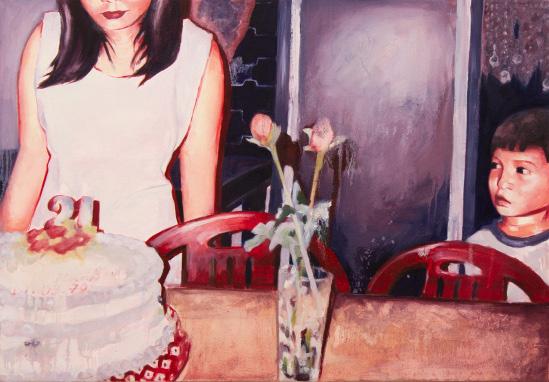
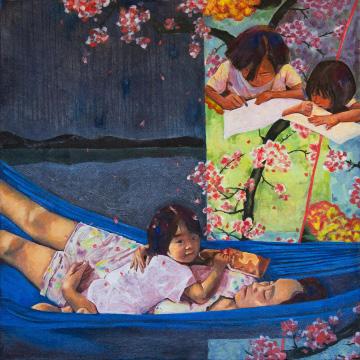
Cover Photo: “Untitled” by Anh Nguyen

Edie Meehan
Jersie Benson
Maria Paula Vega
Sea Orme
Kate Griffin
Lilly Timm
Faculty Advisor
Martin Klammer
It was such a rewarding experience to put together the 54th volume of the Oneota Review. We feel especially grateful to each and every student who contributed to the Review though submitting, volunteering on our editorial board, or both! As a 100% student-run publication, this literally would not exist without all of you!
This year, we were particularly excited to see how much amazing artwork was submitted. While we are historcally a literary magazine, we always strive to create a balance between written and visual work. Thank you to all of the talented artists and writers who made this year’s review so beautiful, thoughtful, and engaging!
Lastly, thank you, reader, for picking up this magazine. Enjoy these wonderful pieces of creativity!
36 The Cow Painted Gray by Jenna Kleven
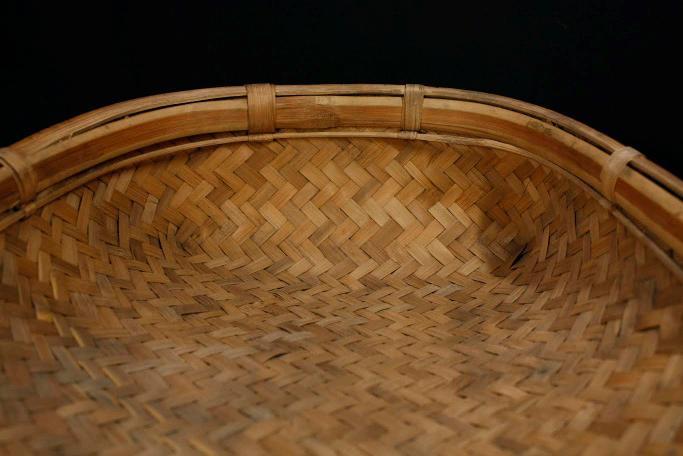
37 Nostalgia Rush by L’Engle Charis-Carlson 38 Woven Field by Louis Breimhurst 39 the light we made by Eva Kraske
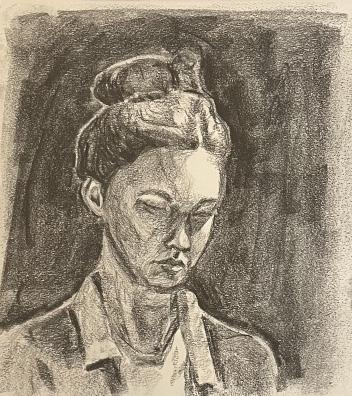
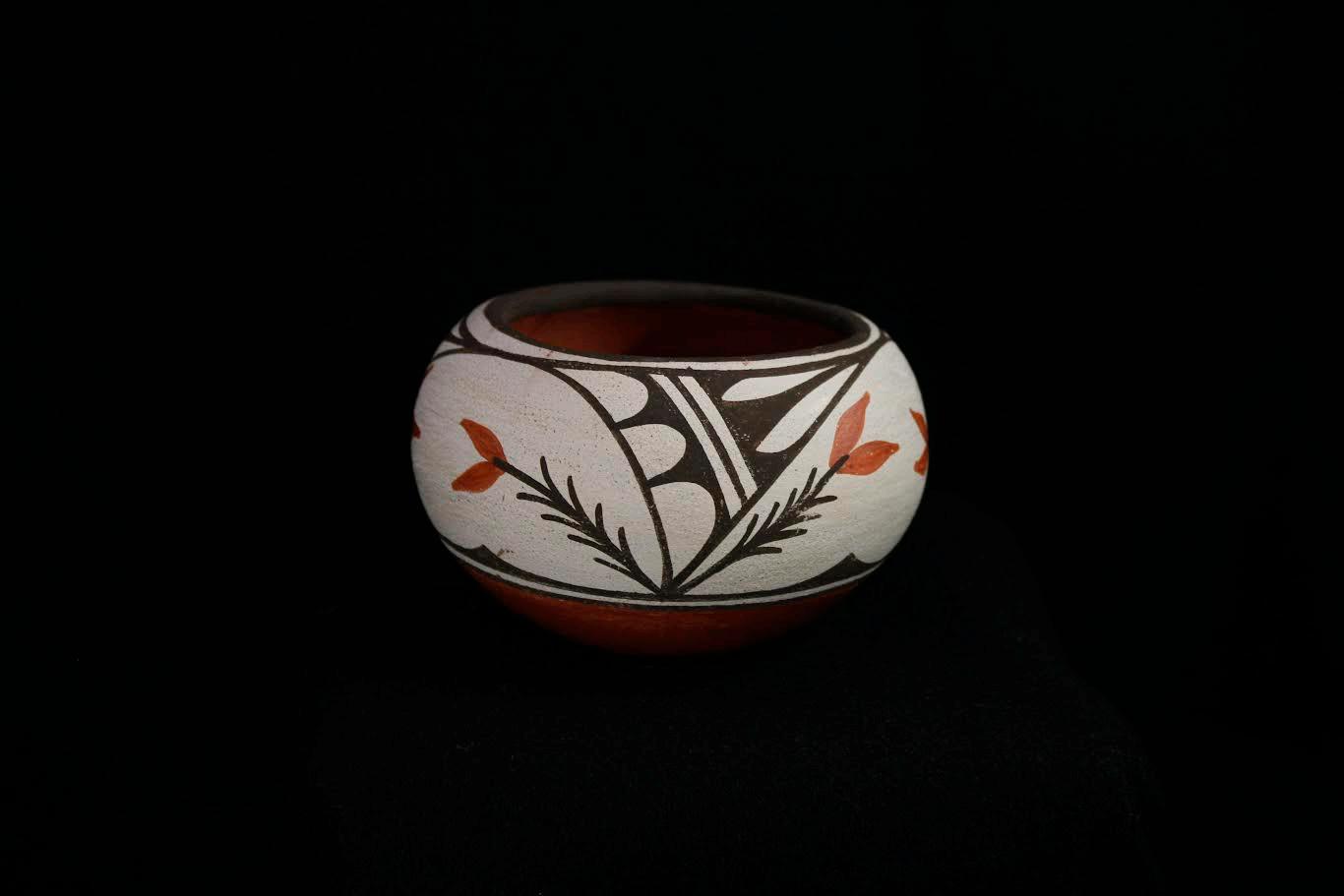
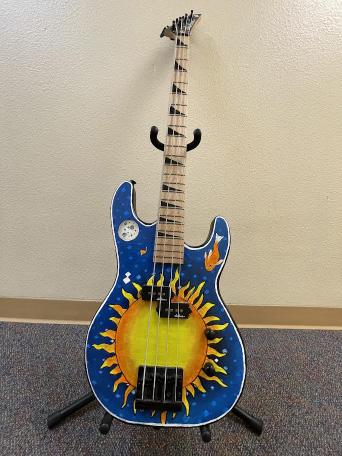
Golden Grooves by Kate Griffin 42 Portrait of Woman by Brynn Larson 43 Zia Pueblo Bowl by Louis Breimhurst 44 Untitled by Blythe Peterson
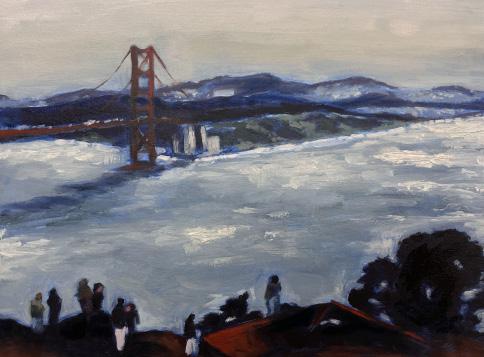
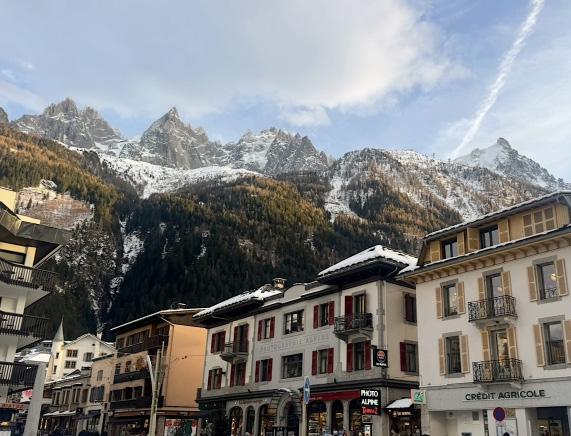
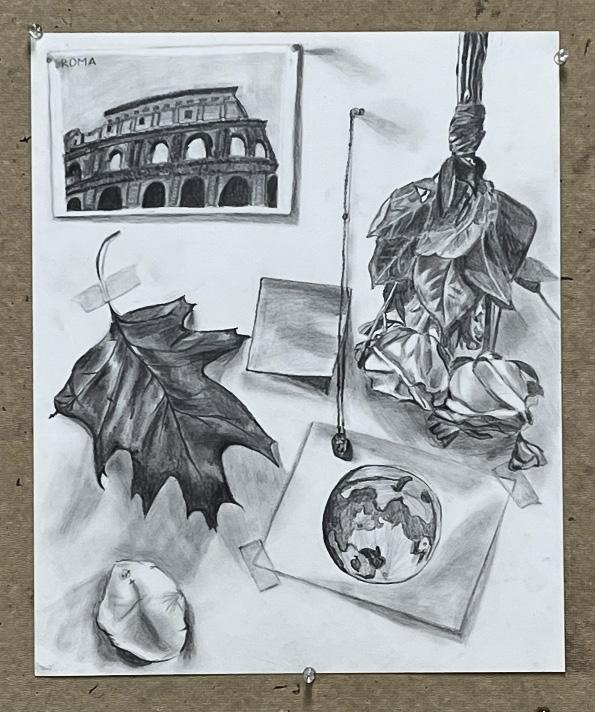
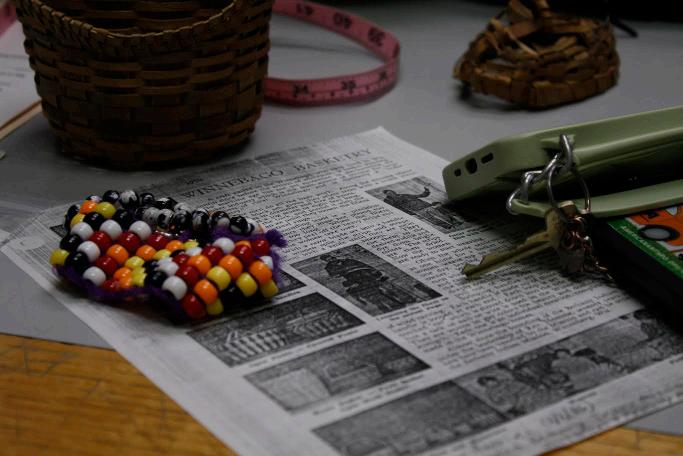
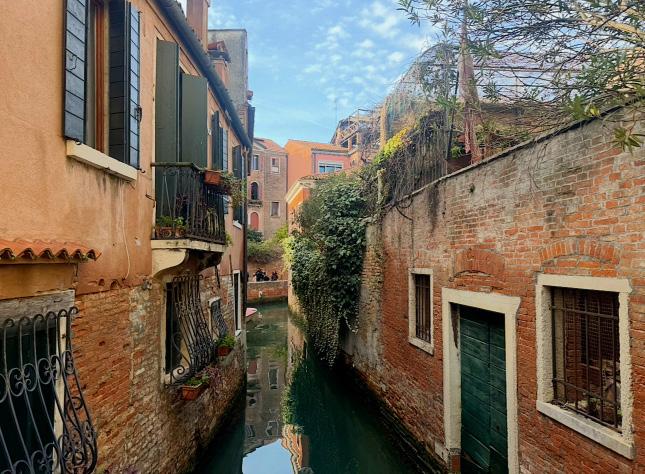
46 Trompe-l’oeil Self Portrait by Brynn Larson 47 Research and Leisure by Louis Breimhurst 48 Solar Swimmers by Tanner Risley 49 Winter in Italy by Eva Hemenway
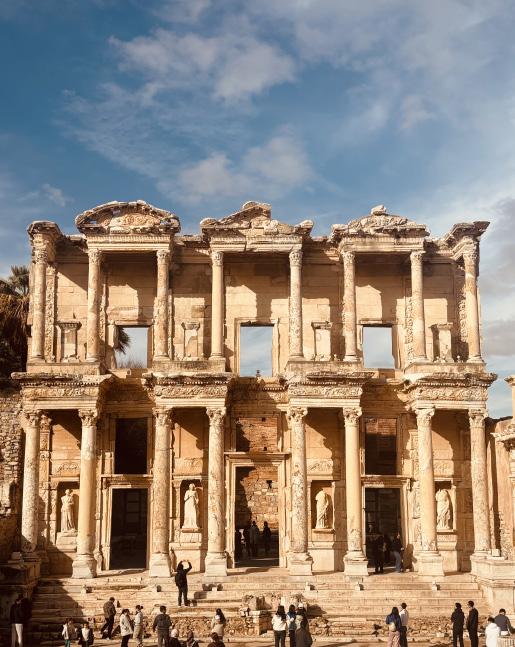
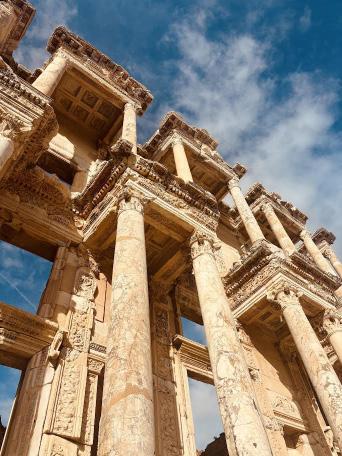
50 Untitled by Anh Nguyen 51 Shadow Play by Resana Zayan
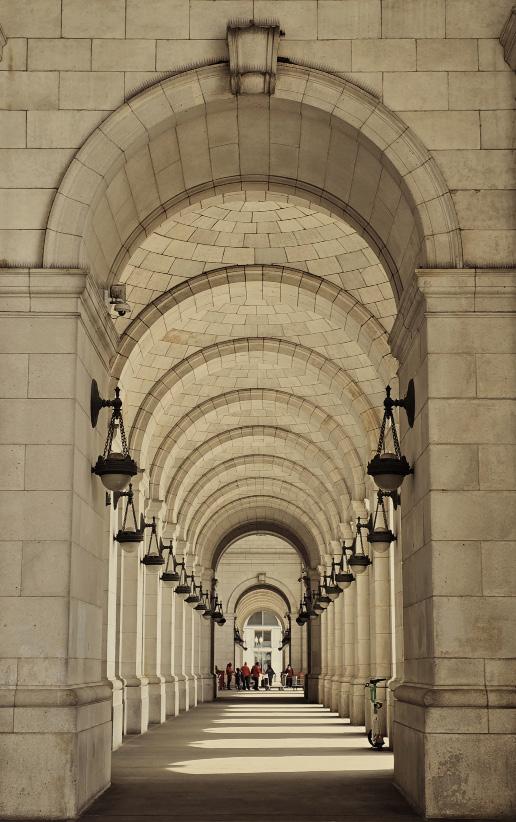
52 Through the Arches by Resana Zayan 53 Voulez-Vous by Orchesis Dance Group
Climb Kate Griffin
Standing in the bowels of the York Minster, staring up at the medieval stained glass called ‘Last Judgment’, you can’t help but wonder if this is the thing that you spent 16£ on seeing. It’s a legendary piece of history that was spared during the British Civil War because a general who loved medieval history said: Hey, let’s not destroy a masterpiece that people in a few hundred years will have to buy tickets to see. It was legendary because of the grandeur of the glass and the fact that it survived that long. But these sorts of things were never your forte. The large-and-in-charge things, like the stained glass in front of you, have always seemed to be too loud and have taken up too much space. You lean more towards the little things. The slivers of shadows that hid the sections of gothic stones that have broken off either to age or by some clumsy mishap. The sections of railing that have been worn down to bronze underbelly due to all the hands that have grasped them in support on their journey. The sections of life that only a glance can catch, never a camera.
As your eyes shift away from the glass, you continue to take stock of those small indicators of human life that the Minster has to offer. You admire the golden embellishments that form a web out of the arches in the ceiling. Each center of a web is adorned in differing symbols, ones that not even you can make out. They glitter in the sunlight but not the glittering of the stained glass – no, it is the glittering of something not demanding to be seen, but rather something hoping those who see them will point them out to their friends.
A little further down the sloping walls, there is a hallway a floor above you. It’s hidden by shadows and arches but you can just make out a door that has light slipping through the crack. You trace the path with your eyes, carving along as you follow the hallway down staircases and more corridors. Eventually your eyes land on a door at your level.
It is guarded by an uninterested teen, working the ‘Tower Challenge,’ or at least that’s what you read the sign in front of the desk. The challenge is climbing the two-hundred and seventy-five steps to reach the top of the tower and look out over the city of York from the 360° observation deck. After some digging of the deep and dark web (a simple google search), you find you can buy a ticket for the ‘Tower Challenge’ for an extra 6£.
After paying this fare, the teen slowly moves to open the door leading to the tower. This is your last chance to back out. You can go back to observing those small things that you love so dearly and not face the stairs and heights that are just beyond the door. You have never been one for heights, choosing to plant your feet firmly on the ground whenever there was a chance to climb higher.
There is no one to tell you to go up or to stay on the ground where it is safe. It is just you and the stairs leading to the top. The staircase spirals above you. No promise of what you will find once you get to the top, only the assurance that you have a path to get there. Just you and the tower. You and the stairs.
The stairs and you.
So why are you willing to take the climb now? Is it because you want to prove that heights don’t affect you anymore or that you have gone away with your phobia entirely? If that were the case your heart wouldn’t be pounding against your ribs, trying to run away from the staircase. It has to be something else, some other reason to make this climb, isn’t there?
You breathe in, ribs moving out of the way as your lungs fill with the air of the Minster.
Fuck it.
Excelsior Motherfuckers.
You said you were going to “Live with your eyes open”, so go live with your eyes open and see the city from a new perspective. To see those large things become small.
and Up
Each step is worn down by thousands of other feet that have taken this journey before you, eroding down to the private innards of the stone. It seems that the medieval stonemasons were not as thorough with their precision as their artisan brothers, because each step differs from the rest. One step might be tall in height and short in width, another short in height and lengthy in width. Some slanted to the right, others to the left.
Each step upward makes it feel as if the walls slowly cave in on you. Not because you are starting to think about the fact that you are now at least a hundred feet to the air and could very well die if you fell, though that could explain some of it, but because the walls are quite literally funneling you up into the point of the tower. It has gotten so tight that you have to continue upwards at an angle because your shoulders no longer fit properly (The Tower Challenge is not for those with big shoulders).
Just when you think it can’t be that much further, feeling like an eternity already, you walk out onto the catwalk. It’s fifty-feet of a narrow walkway
on the outside of the main hall’s arched roof that leads to, you guessed it, another set of stairs to climb (you are only half way there). But before you scurry to the other side, take a moment and look up.
Look at the intricate crockets of the gothic architecture lining the pinnacles. The tiny shapes that add just a dash of whimsy to the Minster. You can’t see those from the ground, only the birds and you can see them now. Feel that wind blow just a little stronger against you.
See the city a little smaller than before. Before it was chaotic and claustrophobic, now it is simply a set of buildings and streets. You can still make out the people that walk the streets, doing some shopping no doubt. Now that you’ve seen it, continue your journey up.
This time take stock of the windows that were built to let light in even on the drearist of English day. The pains are filthy, no need to clean them if they aren’t colorful beauties. Soot and grime cover the glass to the point where you only see the light shining through.
There are still another hundred and twenty-three stairs left to climb but something in you settles. Those once loud and boisterous things are a little smaller now. It is easier to see the human life in them, rather than simply the legendary interments of ages past.
The steps are even more uneven and narrow now. Losing your footing more than once on the way up. Spiraling up and up. Getting a little dizzy and nauseous as you continue.
You can feel the rise
of panic within you, but also the kernel excitement for what you are going to witness. No one else you know will have seen this. It is yours alone. You did not sit idle but rather climbed higher. Lived with your eyes open, if you will.
On the verge of hurling from dizzying heights, you emerge into the light, stumbling around the observation deck like a bear emerging from its cave after a long winter. You almost miss the sprawling city all around you. There are no more people or streets anymore, just the roofs of buildings, the two mammoth bell towers, and you. You are in a place that would have made the person you were two months ago sob, begging to be let down. Breathe in the air, no longer stifled by buildings or streets.
Just breathe.
There is a clock ticking somewhere, maybe in your mind or maybe somewhere in the city. You know you cannot linger here. You have to catch a train to the Lake District in an hour. You begin to take your first step back down the two-hundred and seventy-five stairs again, when you hear the bells begin to chime noon.
Maybe a few more minutes won’t hurt.
Macy Taylor
Eva Hemenway
Elijah Lehmann
What do you do with a poem that moves In ways you don’t fully understand? Its words coat your brain in wonderment, They’re sharp and significant, they burn.
It’s a darkness you wish to enlighten, An ignorance mixed in with an image You cannot fully shake or resolve.
It sparks a dangerous determination – to repeat The perpetual cycle of reading and then Reading it again – it pleads with my mind:
Help me to snow angel in the words, To fall with force into the mud of the images, Ruining my shoes, damning them to My stomps and jumps, bathing in The exfoliant dirt of the hill or possible valley.
Lead me into desperately long showers, With the words pouring in hot, violent Streams down my back, scorching my skin. Where the message will melt within and find Its pocket of meaning in my beliefs of more.
How does one know, without another telling? If I read it a thousand times, Do I trust my intellect to grabs its fibers In a hold that will last, that won’t evade me?
At times, the child within me bubbles And sprouts from the carpeted floors of my past. Curiosity, it’s driving component, stirring.
And I realize wonderment was never a virtue, It is a necessity that allows concrete land To arise from the depths of an unimaginable sea.
Read it again, please try and read it again!
Jersie Benson
Anh Nguyen
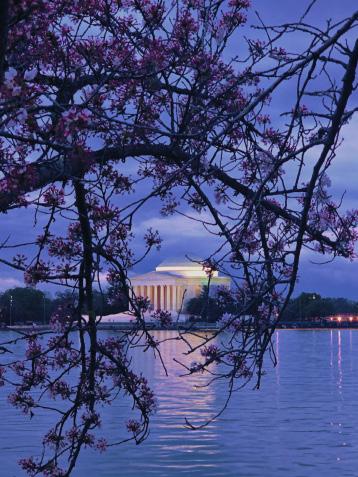
Maria Paula Vega
I’ve worn so many faces, I forgot which one was real, which one was not. Learned early how to tuck away the ugly crying, save it for another day— the inconvenient anger, all the fear that doesn’t match the moment we’re in here.
They say a mask protects, keeps you safe, lets you hide what might disgrace. But god, I’m tired of the weight, of swallowing down what I really hate. Pretending rage is just dramatic flair, that disappointment vanishes in air.
Under all this—the feathers and the lies, the careful words, the practiced alibis, the face I wear to make it through the week— there’s something wild that longs to speak. It doesn’t know how to pretend, it only knows how feelings bend.
Maybe that’s the point of all this pain. Maybe real isn’t pretty, isn’t sane. It’s crying at commercials, holding grudges tight, loving too damn hard, feeling wrong at night for no good reason you can name— just bone-deep wrongness, quiet shame.
Strip away the composure, the deflection, the version of me that needs no correction— what’s left is messy, raw, and true, so honest that it aches right through. That’s the face I’m searching for: the one that feels, and nothing more.
Macy Taylor
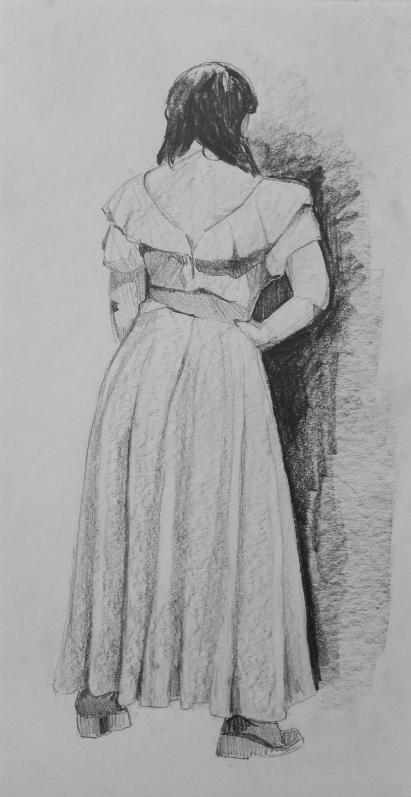
The kitchen was comfortably quiet, save the occasional rasp of paper as Jude turned a page; the hum of the refrigerator, at constant war with the summer heat.
Paul finished his tea as Jude scrawled his final signature. When he looked up from the papers, the eyes that met Paul’s were filled with tears. Paul nearly told him to get ahold of himself. Walking around outside, looking like that? The man would get himself in deep shit within a matter of minutes.
“You can do this?” Jude asked from his perch atop the counter. His voice had Paul wanting to clap his hands over his ears. You’d think it might get easier, after all these years: watching folks shatter at the smallest chance of a stranger’s decency. Paul was no savior – had no desire to hold the position – but Jude still clutched at those papers like they were words from God himself. Paul wondered if there’d ever be a day someone would look at him without that raw, reverent desperation. “Is there– there’s really no cost?”
“‘Course not.” Paul held out a hand for the papers. He flicked through them, skimming Jude’s jagged handwriting. The man had atrocious spelling. “Yeah,” he said at last, setting the pile aside. “This won’t be a problem. You want it done now? It’ll take you out for a few days.”
“Now is fine,” Jude said.
Paul frowned a little. “You don’t need to call no one? Family? Coworkers?”
“I don’t have a job,” said Jude. “Same for family.” At the confusion evident on Paul’s face, he explained, “Clementine’s not really my aunt, she just likes when I call her that. We met on the streets. She shows me the safe shelters, for. You know. People like me. Us.”
Right. Us. Paul didn’t remember Clementine all too well, but figured this was the sort of person she’d raise. An irritating, prideful, tea-hating enigma.
“I can go prepare the site,” he told Jude. “If you want it done now.”
“Kay,” said Jude. He swung his legs back and forth, banging his heels against the lower cupboards. The noise had Paul wincing as he slipped out the back door into the humid heat of his garden.
He found an empty plot of soil and did what he needed to do. Hand flat on his breast, he pushed inward, fingers sinking through flesh like thick mud. The necessary ribs were removed, shaped into shovels to gouge a wound of dirt in the earth. The ache in his chest faded once he’d finished, slid his ribs back home. He fed the grave some fertilizer, humming under his breath as he did so. It stared up at him like an empty mouth.
When he returned to the house, Jude hadn’t moved.
“Ready?” asked Paul. He received a wordless nod.
They went out to the garden. Jude came up beside Paul, looking down into the deep square of hollowed soil. His fingers were starting to twitch at his sides. He’d moved on from chewing at his lip to gnawing at the inside meat of his cheek.
At last, he spoke. “Looks like a–”
“Grave?” Paul finished, well-accustomed to this part of the process. He jutted his chin forwards. It was better not to dance around the subject. “Get in.”
Jude swallowed hard before he took a big breath. “Right.”
“Need help?”
Already crouching beside the edge, Jude shook his head. He steadied himself against the ground, dropping into the hole. He was followed by an ungainly slide of soil. With a startled gasp, he caught himself on the walls, dirt peppering his sleek black hair. A clump of soil clung staunchly to one of his eyelashes like a dirty tear. “Now what?”
Paul gazed down with cool, clinical intensity. “Strip. Throw your clothes up here. Don’t freak out,” he added.
Jude scowled. “Do I look like I’m freaking out?” he demanded. “Yes.”
Jude’s scowl darkened, even as he pulled his shirt over his head, followed by his bra, tattered pants and under clothing.
“Socks,” said Paul.
Looking annoyed, Jude snapped, “I’m getting there. Jesus, give a guy some time.”
Paul didn’t respond, having shifted his focus from Jude’s preparations to his own body’s role in all this. “Don’t freak out,” he said again, absently, before taking the hem of his sweatshirt between his fingers. He pulled it up and over his head with a swift tug.
Clumps of wildflowers grew from Paul’s chest and stomach, tendrils worming deep into his flesh-made earth. The scars that looped beneath what were once his breasts held a dark, greenish brown tint. They had long since fuzzed over with moss and sprouted scraggles of pale lichen. Without hesitation, he sunk his hand into his torso. A splintered sound accompanied the emergence of a yellowed rib. It grew in his hand, stretching in cracking contortions to vaguely resemble a shovel. Jude stared up at him, mouth open, stars shining in his eyes. He looked like he’d just witnessed Paul fish the moon from the sky and hang it from rafters for decoration.
“Lie down,” said Paul, gesturing with the bone shovel. Jude did so, still gazing upwards in naked awe. His awe dulled to a startled flinch as Paul started to shovel soil into the grave. “Don’t freak out,” Paul said, for the third time.
There’s only so many breathing exercises one can do while being buried alive. Jude lasted longer than most, but as dirt began to land on his face, he started to twitch. His eyes grew wide and white and panicked, darting from the sides of the dirt walls, back up to the sky, landing on Paul’s face with a silent plea. Paul kept shoveling.
“Paul,” Jude said, voice thin. He opened his mouth and caught a lungful of dirt. When he tried to spit off to the side, he started coughing like crazy. “Paul,” he gasped, gagged; choking on the next shoveled mound of dirt. His words quickly became unintelligible. Paul moved faster, recognizing the shifting of dirt above Jude’s legs. He’d started struggling.
When Paul had done this with Clem, he’d dug the grave too shallow. She’d struck out with her hand and caught him on the wrist, nearly dragged him down with her. He’d pulled free eventually; left bits of bloodied skin dangling from her fingernails and a distinct sense that he’d fucked up. Not this time. This time, the grave was deep and he worked quickly, piling soil upon soil until Jude went quiet, the movement ceased, and the ground was level once more. He swept dirt from his stained jeans, sank his rib into the earth to mark the location, fetched the hose. He watered the plot with shaking hands. The soil drank the water greedily, softening to a damp dark black like the velvet lining of a purse.
Paul made his rounds, hung the hose on its hook and filed the papers, radio crooning in the background. There’s a starman, waiting in the sky. David Bowie. Paul paused. He’s told us not to blow it, ‘cause he knows it’ s all worthwhile.
Bowie wasn’t authorized for public consumption. How someone had gotten him on the station, Paul couldn’t begin to guess, but he knew it was only a matter of time before the big guns shut the whole thing down.
Odd things in the waters, these days.
Let the children lose it, let the children use it, let all the children boogie.
On the night of the 20th – days later, at any rate – Jude’s plot collapsed inward. A muddied brown body laid limp on the earth beside it, nude, hair matted with soil. It shook as it gulped down swallows of air and stared up at the stars, eyes wide, white, dazed.
Paul crouched beside it and half-offered an horrendous orange robe. Jude sat up slowly. His face was glowing, lips stretched painfully wide in a grin that dug deep into the sides of his cheeks. The newborn flatness of his chest boasted sloped, mossy scars that echoed Paul’s own.
When Jude stood, he wobbled like a baby giraffe. “Behold,” he told Paul. The start of a giggle coiled under his words. He gave a little twirl, and then another, a model on a runway. Arms flung out wide and loose, free from tension, he laughed. “A man!”
They’d lost much in these last few years, Paul knew. People were tired; queer siblings and cousins dying in the streets, torn bloody and raw. But as he watched Jude sway in the moonlight, he felt his own body slacken, and release. He released a breath, gave its weight to the earth, the soil beneath his feet.
There’d always be this. The awed sheen in the eyes of a young man as he basked in the pleasure of making oneself anew. The flowers in his chest, ever blooming; a self-made garden.
L’Engle Charis-Carlson
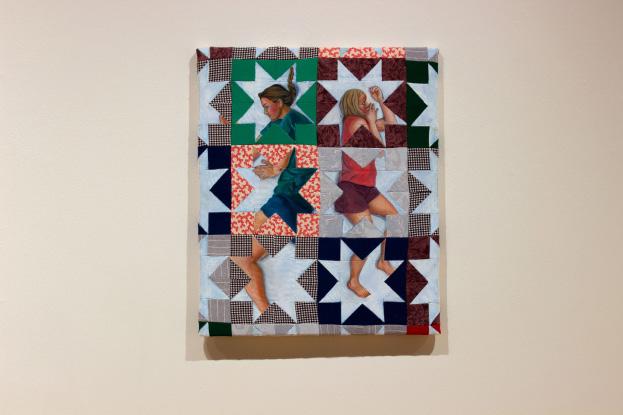
There is a jar of sunflowers on Koa’s windowsill. She does not like to look at them.
Pulled from a picture book, each stem carried with it a modest curve and a ladder of perfectly symmetrical leaves, three on each side. The ones near the base had been clipped off, so as to fit in the jar; the jar, which did not contain any water, hasn’t ever, not since the flowers first began to brighten up her otherwise colorless apartment.
Koa lived on Little Collins Street, just down the road from Green’s Grocer’s, and to the left of Victoria park, which had more than enough fountains but not nearly enough park benches. The current number on her apartment complex read 332, but this was entirely incorrect. 8:00 AM, every Monday on the dot, found Terry the building manager stenciling a new number over the previous, due to his multiple counts of tax evasion and possible accusations of manslaughter. Last week had been 207. Last week, Koa hadn’t been concerned with self-defense; hadn’t thought it necessary to carry a weapon on her person at all times.
Regardless, it was surprisingly easy to acquire a switchblade in Indiana.
On the weekends, Koa was a practiced people watcher. Her territory – down beyond Victoria park – extended for about three to four blocks, before bumping right up against Kelly Michael’s. She and Mike were on fairly good terms. Not quite cozy enough to risk proper friendship, which was fine by her. Mike was an odd one, whose love of platypuses went beyond socially acceptable and drifted slowly, but surely, towards being alarming.
On this particular Saturday morning – a Saturday morning in which she still lived at apartment building 207, and did not own a switchblade – the forecast predicted a light drizzle. Koa’d brought her umbrella. It was quite large, even for umbrella standards, and an atrocious rubber duck yellow, but tucked under her arm it was relatively unobtrusive.
Her brother had given her this umbrella for her fifty-third birthday. It was the first and only gift he’d given her in twenty years, at least, and she took better care of it than her credit card statements – cleaned it on the regular. Aside from the color, it was a reliable creature.
Saturday morning, umbrella under her arm, Koa slipped out of her apartment building – 207 – nodded a greeting to Terry – definitely guilty of manslaughter, if the new mound of soil in the front garden was any indication – and made her way towards Cinderleaf park. Cinderleaf was a further walk, but it had five benches, as opposed to Victoria’s two. She idly wondered if a letter to the city council would prompt action.
Halfway down the street, it started to rain. She popped open her umbrella, slung it over a shoulder, and made to continue on her merry way.
Someone tapped her shoulder. “May I come in under your umbrella? We appear to be going the same direction.”
Koa glanced behind her – then craned her head up, lips parting briefly in astonishment. The voice had come from the tallest, grandest woman in existence. Her platinum blond hair shone star white with rain, slicked back from her forehead in a smooth, helmet-like carapace; her limbs were long, and thin, and altogether uncanny. But her smile was the most beautiful thing Koa had seen in years. Rows of sparkling teeth had her relaxing in seconds.
“I’m not sure you’ll fit,” she said honestly, with an expression that she hoped properly conveyed her sympathy.
“I could hold the umbrella, if you’d like,” the woman offered, extending one giant hand.
“Go on, then,” she agreed, feeling rather gratified as she handed it over
The woman’s movements were all ridiculously elegant, lifting the umbrella to shield both of their heads, offering her free hand for Koa to take – it was as if she were made of smooth, free-flowing liquid. The movements were accompanied by a light clinking. Aside from her long, flowing black dress, the woman was also adorned in silver chains. Upon these there hung thousands of tiny, sparkling bells and charms. It was certainly a fashion choice. Koa wouldn’t say she disliked the overall effect.
“Where are you headed?” she asked.
“I am meeting with someone,” answered the woman, slowing her larger strides to match Koa’s.
“A friend, I hope?” Koa smiled. “Or is it a business call?”
The woman smiled back, dipping her head to meet Koa’s gaze. “Oh, a bit of this and that.”
Something in her intonation sent a shiver trailing down Koa’s spine – or perhaps her smile? There was something particularly unsettling about it, the more she looked. She broke eye contact, looking away hurriedly with cheeks flushed.“I see,” she said, though she didn’t, not really. Her thoughts were more slow-moving molasses. “That’s… nice.”
“It is,” said the woman. She spun the umbrella languidly, droplets of water sent flying in all directions. “Will you tell me your name, pretty one?”
The truly horrifying thing was that Koa felt her name tripping on the tip of her tongue, dragged up from deep within her – in fact, she would have spoken it aloud if not for the sudden, blaring horn of a nearby taxi which startled them both. She swallowed hard, forcing the words back down, goosebumps prickling along her exposed skin.
“Actually,” she said, “This is my stop. My, ah– this is where I was headed.”
A lie.
“Such a shame,” the woman said, with a huge, gusting sigh. Warm breath curled across Koa’s face. It smelled faintly of rose. “I’ll be seeing you.” This was followed by another sharp smile that Koa was beginning to realize had a few too many teeth. Too many teeth, which were far too sharp.
“Mm.” There. Neither agreement, nor a dismissal. It wouldn’t be interpreted as rude, but it certainly wasn’t an invitation. Still, the woman’s smile widened. She winked once, playfully, before pushing past Koa and disappearing around the next street corner, Koa’s umbrella floating over her head.
“That’s mine,” Koa said to herself, distantly aware that she probably ought to chase after the woman.
She didn’t. She went home, and locked her doors.
The next morning, Koa left her apartment building at an earlier hour than was typical.
She nodded a greeting to Terry, who was painting a large 332 over the current number. She ignored the new, second mound of soil that had joined the first in the front yard. She bought a switchblade at the nearest hardware store for two hundred and fifty dollars and thirty two cents; she did not buy a new umbrella. She did not need a new umbrella.
Her old umbrella had been returned to her apartment sometime over the course of the night. Tucked just inside the door, still slightly damp from the rain of yesterday. Her floors had been swept – her trash had been taken out. She suspected her rug had been vacuumed, and her clothes laundered.
On the windowsill closest to her bed, there sat a mason jar. The bundle of sunflowers within that jar were the same atrocious yellow of her umbrella. It has been a week now. Koa has not watered the flowers once; can hardly look at them without feeling nauseous and flushed all at once.
They have yet to wilt.
Tanner Risley
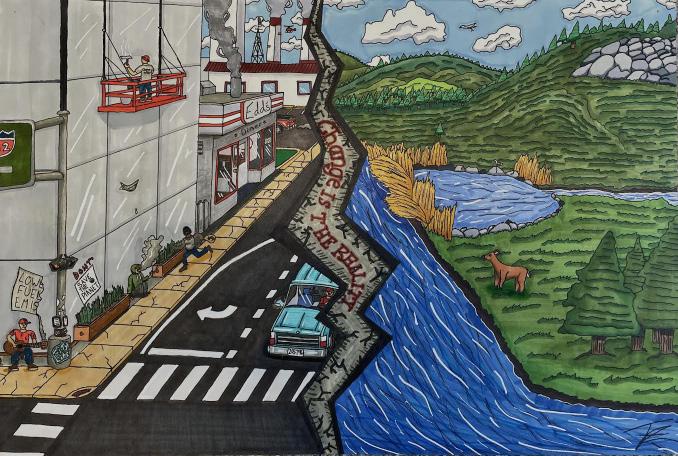
Tanner Risley
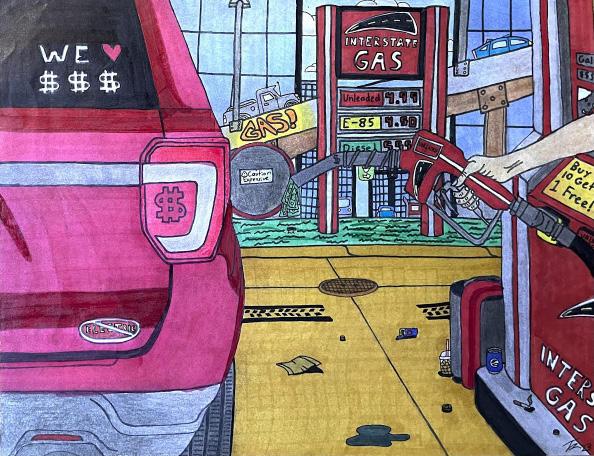
Edie Meehan
“I wouldn’t touch that if I were you.” Mary looked up from the pile of alien goo she had been poking at. A girl about her age had stopped beside her, drifting, presumably, from the passing tour group. She was watching Mary with a frightened look, eyes wide and head reared back.
“Why?” Mary asked, continuing her investigative prodding. The slime was an eerie green, much like the spore clouds that gathered above, and smelled faintly of boiled eggs.
“My auntie got that alien flu a couple years ago and went crazy. My dad found her holed up in a shelter eating a stray dog right before she died.”
Mary did pause at that. The itching feeling she’d felt within her hadn’t gone away – it’d been months. Given how comfortable she’d become with the spore storms, Mary understood the itching was a sign of somthing bigger, something new, developing inside her. She pulled her hand away, considering. This world was a lost cause, she knew, and things wouldn’t get better until people found a way to adapt to what was left. Mary turned back, submerging her whole fist back into the goo.
“I would never eat a dog,” she said as the startled girl wandered back towards the tour group.
It was only weeks later that Mary went to the hospital. The itch within her had continued to intensify until she could no longer hide it from her parents. Her father, a nurse at the Clean Earth Medical Unit, had quickly recognized the signs of infection and ushered her to the company’s doctor.
“This thing inside you is alien, Mary.” Her mother was turned to face Mary in the backseat, appalled by her lack of concern.
“What makes it alien?” she asked.
“It will make you...” Mary’s mother pursed her lips, glancing at her father, “...different.”
“I am already different,” Mary replied. “Maybe this will give me an excuse.”
When they reached the hospital, Mary’s father walked her in, nodding at the guard at the front desk. The guard nodded back. Without further ceremony, he took Mary straight through the waiting room. The doctor was sitting in his office, staring at the doorway as if waiting for them to appear.
“This must be Mary,” he said, dismissing the guard, though his deep-set eyes were focused right on her. The icy-blue pinch of his stare sent the itch in Mary’s chest writhing down into her stomach.
The doctor took Mary into a big white room stuffed with numerous gadgets that Mary didn’t like the look of. “You must be very confused and scared by what’s happening to you,” he said, rather presumptuously. He then poked and prodded at her, stuck her with needles of various sizes, and put her through several varieties of body scans, which made Mary feel like a roast in the oven.
“The infection is becoming quite advanced,” he concluded. “But we can help you.” Mary looked around, but with her father waiting in the lobby, it was only her and the doctor in the room. She wondered who the ‘we’ could be. “Why don’t you begin by telling me how it feels?”
Seeing no reason not to, Mary told him. She told him how it began with the itch, growing stronger in her chest with each day. She told him how she had soon stopped scratching, how it became the only thing about her body that felt familiar. She told him how lately, she had felt something shifting inside – something growing. She told him, before all of this began, how lonely she used to be.
The doctor listened to all of this with a face kept carefully blank. When it was clear she had finished, he stretched his smile across the skin of his face, taut as if pulled backwards by invisible hands.
“Not to worry. We can free you.”
Mary felt her chest tighten and expand. “I am free,” she said, and there was something new in her voice.
The doctor’s smile fell flat, quick as the snap of a closed book. It was only momentary; the grin crept back along his jaw as he inhaled audibly through the gap in his teeth. “I see the infection is more advanced than I thought. Let us begin now.”
He turned his back to Mary, beginning to press buttons on the largest, loudest, most unsettling machine in the room. Mary felt the growth inside her begin to churn; it felt angry, it felt hot, and she began to understand the burning sensation of the alien storms. Her mouth began to taste of eggs as every pore on her body swelled with green. She opened and closed her mouth in repetition, feeling her jaw stretch farther each time, her teeth feeling sharper and eager to prove it. As she watched the doctor prepare the extraction, she felt every spore of infection blending itself into her body, becoming one with her, becoming whole. The doctor turned, barely casting Mary a glance before reaching out for her. His fingers were poised for gripping; it would not be a request. Mary, in her new, fully realized form, leaned forward and bit off his hand. As she chewed, the beeping of the machine, the doctor’s screams, and the senselesness of the humans around her seemed to fall away. She swallowed with satisfaction, the first she’d felt in years. It tasted like home.
Edie Meehan
If grief is alive, it is something feral. It comes and goes, never a warning, never a reason–
Grief is a monster you know by name. It comes into your home and grips you by the neck, Crawls down your throat and builds a nest in your lungs.
Happiness, now, Will also be anguish, it says, Holding your unwilling gaze
Like a child gripping Daddy’s finger–
A parasite, almost,
Something that needs you to live Even as it drains your life away.
You open your mouth, when it happens, but nothing comes out But the croak of something missing, something gone unexpressed. What will you do with this feeling?
Where will you put it?
A ballad with no ears to listen, A sculpture you can only know By touch.
Apollo Blomberg
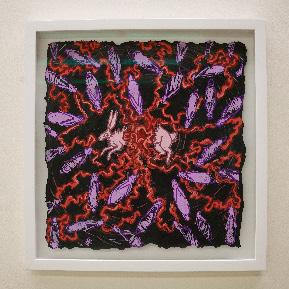
Elijah Lehmann
This poem is dedicated to all my teammates that I have had the privilege of playing with over my four years at Luther. It’s strange being gone this final semester and yet I am so grateful for the countless memories I’ve made with you all. Special thanks to my fellow seniors, for sticking it out with me for the past four years and always having my back. I look forward to seeing just how much more you returners are going to accomplish next season. Don’t take any of it for granted, It all goes by way too fast! I love you guys!
Somehow a ball placed us in rural land
Traversing the globe to join the Norse
Football the language we all understand
The beautiful game sailing our course
It wasn’t easy, leaving families behind
The substitute being forced team bonding
Everyone deferring to those of their kind
In delight of their own language responding
Friendships formed, chemistry created
Trips to the springs to soothe aching legs
Constant caf visits, lineups awaited
Everyone cheering over cheeky megs
School starting and the paideia struggle
Papers assigned and exam season begins
Now the ball is not all that we juggle
We’re chasing an A and big conference wins
Two footed tackles and theatrical flops
Level tests and the sweeping of sheds
Low and hard shots and goal keeping stops
Collisions of feet, and bodies, and heads
Bumpy pitches that worsen with cold
Leaves turning yellow as we play out the season
Five passes and switch and slice never getting old
Were there rain or shine, whatever the reason
Tactical drills with numb toes and jokes
Layers and monsters and getting our feet
Close games tied, missed chances and chokes
The pain of division in damning defeat
Sometimes we crack, especially in loss
We question it all and part to our sides
We blame the pitch, the ref, or a lucky cross
Disappointment the game willingly provides
But it’s still a brotherhood, even with the cracks
Our own melting pot of language and culture
Brazilian strikers and Spanish outside backs
All bringing their own formations and structure
Germans, Swedes, crazy Chilean bangers
Italian and Minnesotan kwik trip runs
Blue and black striped kits on hangers
The competitive naming of newfound sons
Mindfulness, mobility and immutable flow
Away game bus rides full of Iowan corn
International hatred for the first winter snow
The preseason heat we solemnly mourn
Alums around the world pack the virtual stands
Haters of Loras and their man marking tact
Supporters with a love that joyfully demands
Our lifelong inclusion into a brotherhood pact
We’ve sweat the jersey to death every game
Got over ourselves to support the team
Not one jersey has held even a single name
Together we chase the trophies and dream
Lines, eyes, and layers, first and second balls
Festina lenta and our desire to defend corners
Deep breaths, rest defense, and bad ref calls
The bench becomes a voice of collective warners
So much love, mixed with constant frustration
It’s not perfect and it’s hard and humbling
But as I reflect on our brotherly relation
I wouldn’t trade any of the anger or grumbling
For it’s worth the sacrifice and six am lifts
It’s worth the hours, and bruises, and pain
For when the end is in sight, perspective shifts
And it’s your brothers which act as the ultimate gain
I’ll definitely miss Ramos’ pregame speeches
And Matty’s grunts and constant singing along
I’ll miss Aitor’s strange bus ride screeches
And calling Enzo my son after playing ping pong
I’ll remember Lenny’s laugh and his telling of stories
And my runs with Hugo to blow off steam
I’ll reflect on Kike’s incredible brawl star glories
And Janik’s views on politics, however extreme
And as we move on and enter our own fates
I hope we’ll remember our Luther pregame theme
We’ll believe in ourselves, believe in our teammates
And continue to support and believe in our team
Kate Griffin
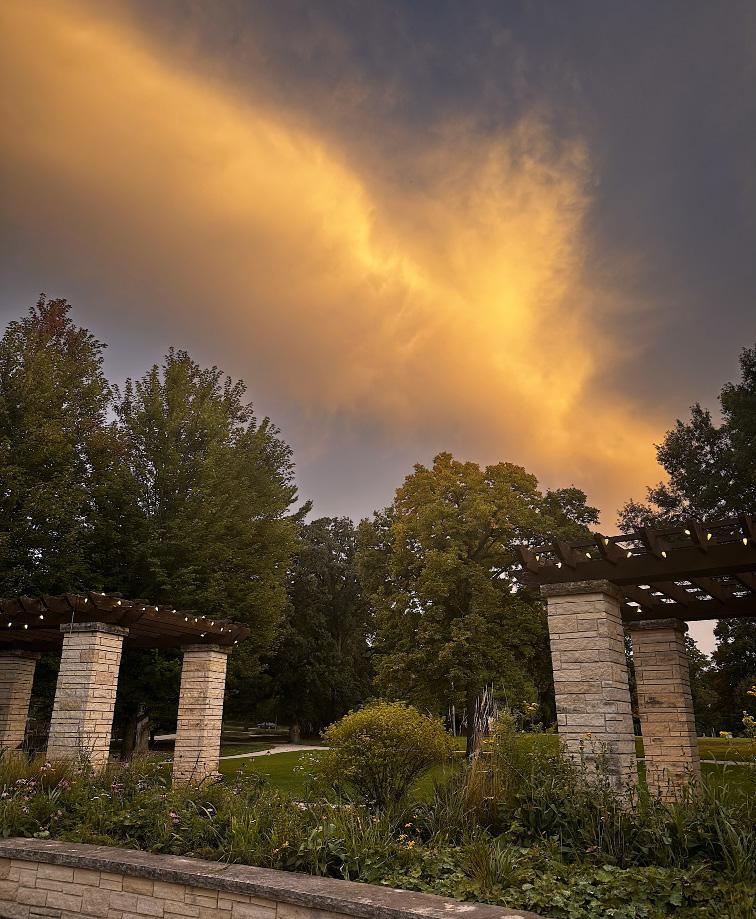
Macy Taylor
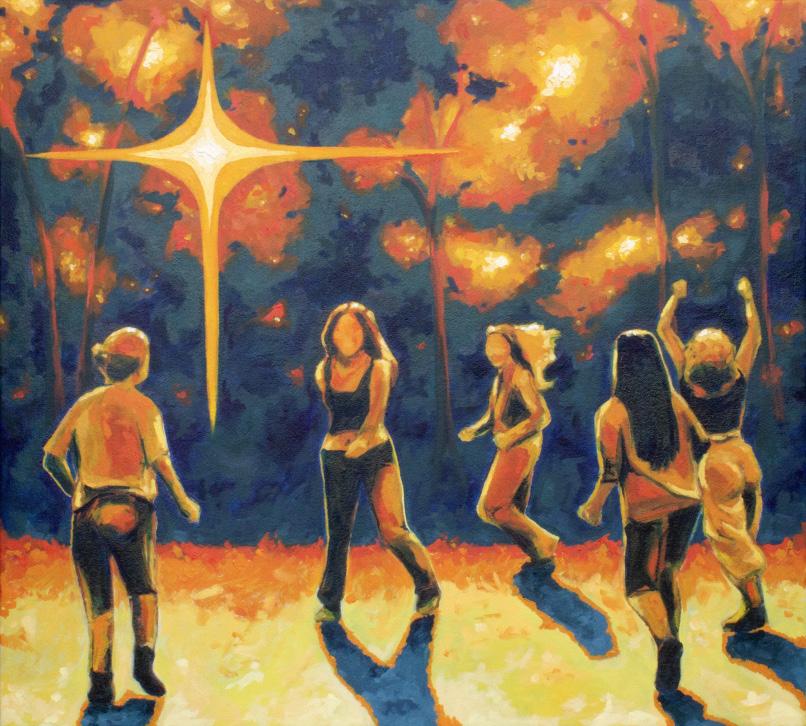
Jenna Kleven
I am a rhino, Though I am a cow, painted gray. I may moo; When it rains I may be spotted. Yet, I am a rhino. It is the rhinos who are my brothers— They believe I am a rhino. Little do they know, I am but a cow, painted gray.
L’Engle Charis-Carlson
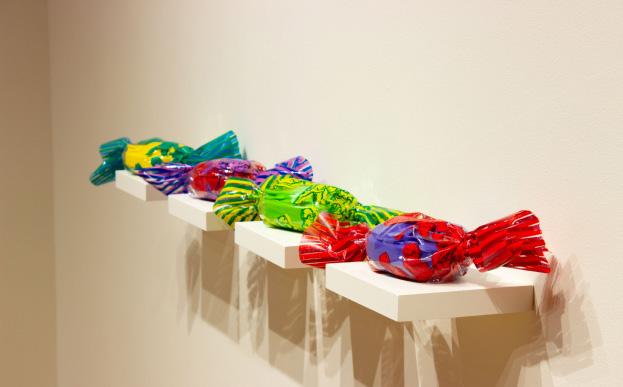
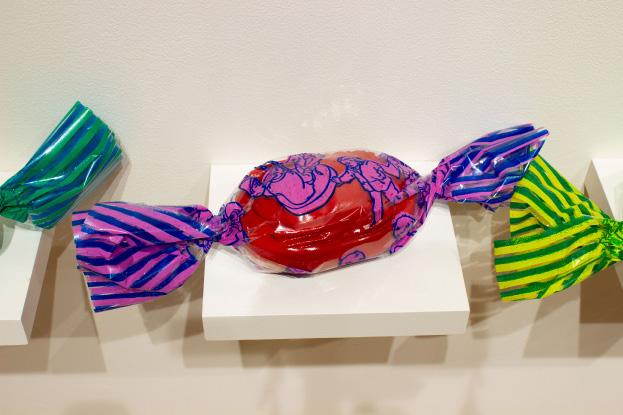
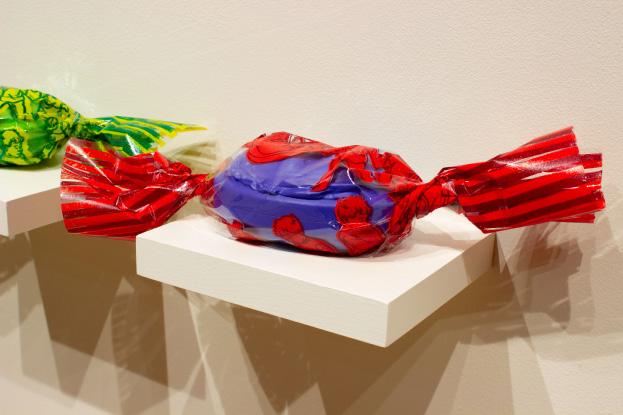
Louis Breimhurst
you hold me tight pull me closer.
i know i shouldn’t but i could get used to this.
i thought it might be you! i saw our summer laid out before us drenched in golden honey and sweet stolen kisses our time in the winter indescribable like nothing i’d felt before you held me close, and i’d hold you closer two lonely stars on a course for destruction oh, but little did they know the light they’d make in the meantime. it was so much and then it wasn’t.
the light we made
Eva Kraske
and a shroud of gray was pulled over my heart. my heart, once so receptive and open to love now unsure and hesitant to let new lovers in.
what i do know is this: what we had however brief, however uncertain, however unclear was something beautiful. and i’d rather have spent this short and furious time with you than no time at all. so even though it might not have been what we wanted it was ours, and that’s enough, isn’t it?
Kate Griffin
Sunlight reflects off of the golden band.
The ruby at its center shines like a drop of blood waiting to fall.
The ring sits on the hand that has written my way here. It’s the hand opposite to Love’s.
Wrapped around a finger that shows my history in golden glimmers for all to see –not some hidden part of my subconscious mind.
I am free –yet I am trapped by the path I have taken. Free on the wings of my eduction, but nevertheless shackled to the expectation of greatness I must achieve.
I am the eldest daughter of the eldest daughter. Greatness, always expected by never guided.
My own mother never got the chance to be great –shoved aside when love came to her door.
This ring is my grandfather’s.
Something that my uncle would have worn –had he not died.
Passed to my mother – the eldest daughter –even though she would never have one of her own. Three sizes too big and a taunting reminder of the life she could have had.
My history lies within these grooves –but I was not meant to inherit this legacy. Wars fought to gain education.
My grandmothers and mother cry out for me to bear the weight of my lineage.
To make use all their sacrifices to fight for a better life –my daughters and their daughters.
The call to war is deafening in my ears.
Drums beating to the sound of my sister, mother, grandmothers, great-grandmother.
The women before me chants for freedom rings out from the golden band –beckoning me to fight.
The archers take their positions –notching their arrows.
The vanguard’s hooves thunder through the earth to rouse the dead to join the battle.
Inhaling in mud-soaked earth, trampled by eager women ready to fight for their freedom.
Tasting the sweat from the horses and the frost in the air.
This is the quiet before the storm.
The moment when the world slows –I can make out each individual breath of every living thing. For a moment I hesitate.
But can my hands, meant for pen and paper, carry the sword and shield?
Can these feet march into war alongside the knights with pleated hair down their spines?
The moment passes –as all moments must.
I exhale doubt and fear.
Setting my gaze across the field to the war that awaits me on the other side.
‘Tis time for me to add my own grooves –to pick up the weapons of war to continue to fight for that greatness. Not because it is expected –But to give it to my mother.
Give her the life she deserves, even at the cost of my own.
Brynn Larson
Louis Breimhurst
Blythe Peterson
Never was I a fan of people who made the difference between moths and butterflies distinct
How could someone say that? I would think. How?
I wondered how someone could see her, a moth, fighting to find its way in the world
Looking for any inkling of light to cling to
Finding fire and drawing closer and closer until it’s burnt
And think, it’s just not quite beautiful.
She’s like us, the moth is. Or like me anyhow
Trying to reach for something, anything.
Anything different than where I am now
She is made up of shaky limbs and wings that are scared to soar far from comfort
But yet they do soar. Into the burning fire.
Everyone is always yearning for something better than what they already have.
“I will get out of here someday. I will get out of this God forsaken town and I will never come back”
Bigger and bigger my eyes became as they took in all the light I could not have
Until I found myself scorched by the heat
I had flown to close
My own Icarus. Too high, too close.
The thing is, moths burn. Flowers wilt, people die.
We will all die.
But we don’t stop to think how beautiful something could be.
Midnight smoke from a late cigarette, lit by a crying girl, streaking across the lamp light
The retched, fleeting, sinking feeling in a stomach that has been moved to a new place
A boy who fell for a girl who doesn’t know who he is.
A teacher barely holding on to herself after years of only hoping to make a difference
All rather unfortunate. Unfortunate but beautiful
So I never understood how someone could be scared of a moth.
Sure she isn’t as colorful, but her wings carry the same power that keep butterflies afloat
She doesn’t bounce from flower to flower, but she pushes forward still
The butterfly cannot say it flew too close, and risked it all
Nor can those that choose not to see beauty in the world around them
I can.
I have flown and have had my wings burnt. I have fallen into the ocean many a times, wax melting in the sun I have gotten out of the God forsaken town and wished only to go back I have felt deeply and hurt even more
But it is all beautiful really.
And besides, we are all of the same being For it turns out the moth and the butterfly are sisters
Brynn Larson
Louis Breimhurst
Tanner Risley
Eva Hemenway
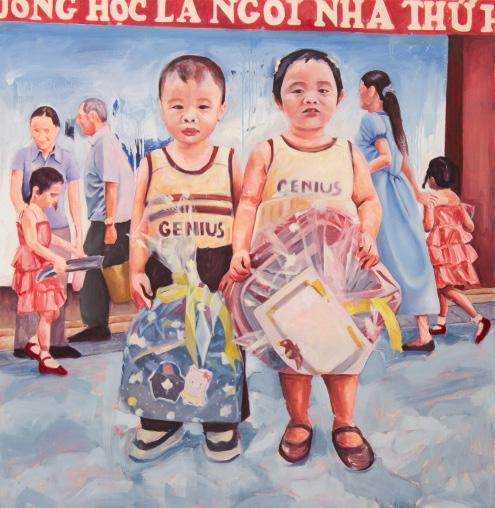
Resana Zayan
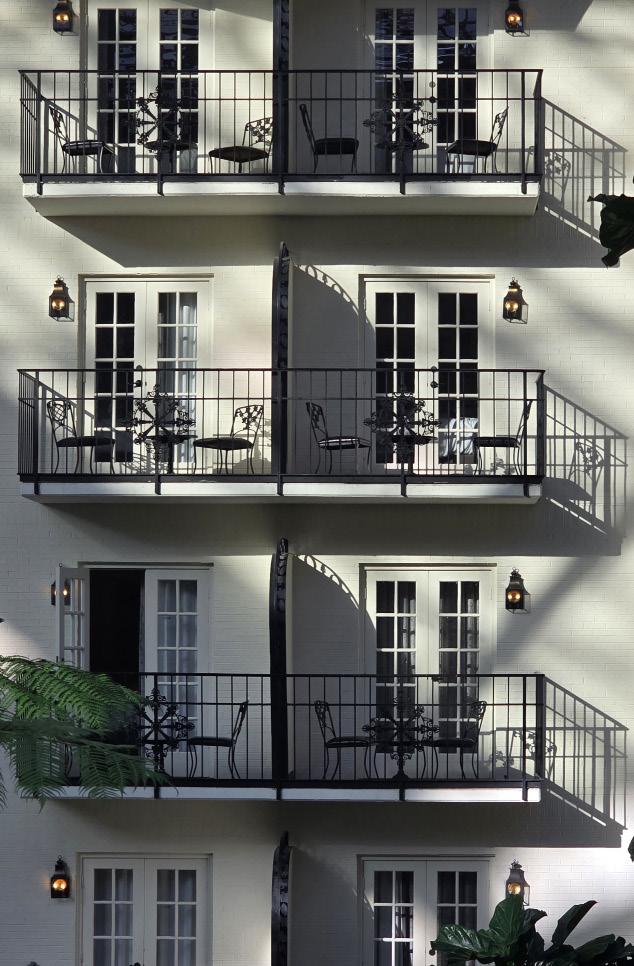
Resana Zayan