goins on
By Ted W. Goins, Jr. | LSC president
Abundant Living even on snow days
am writing this on January 27, 2026. It’s 8:59 a.m., and it’s 15 degrees outside. If you read this in a month or six months, it may be 70 degrees out (we are the Carolinas), but the message still holds. On Saturday night, LSC administrators/executive directors and nursing leadership spent the night in their communities, along with additional teammates, to ensure enough people were at work to care for all our residents and clients. LSC group homes were staffed and ready.
job caring for our residents and clients.

The roads were a mess across most of our geography, so I’m glad they were there. And they made the most of it. It’s The LSC Way. They got the work done, they played a bit in the snow, and they ordered food.
While the rest of us were hunkered down in our snug homes, mostly with heat and electricity, over 1,000 teammates were on the
Inclement weather brings out the worst in conditions and the best in teammates. Teammates were still smiling. Marcheta Campbell hosted a pizza party at the brand new Trinity Village, Hickory apartments for residents. Logan Wilmouth ordered pizza and wings for all the teammates who were working and camping out at Trinity Glen. David Moore serenaded residents and teammates with his ukulele at Trinity View. Bill Johnson chauffeured residents back and forth to their cottages when he wasn’t manning the Mimosa station at Trinity Oaks.
LSC teammates turned a crisis into an event and made it look fun. Abundant Living even happens on snow days.
Behind the scenes, maintenance teams prepped generators and salted steps, dining services ordered extra food and prepared
extra meals, extra supplies were ordered in, and payroll teams even worked from home to ensure everyone gets paid on Friday.
It’s now 9:17 a.m., and the temperature has risen to a balmy 19 degrees. Roads are clearing and teammates are starting to move back to normal operations. Leadership sent out an email this morning for all of us to be prepared for frozen pipes. Does the third shift know how to turn off the water and sprinkler lines? Do I remember how to turn off the water at our office? A burst sprinkler pipe could ruin almost an entire building.
All of the above is life in health and human services. But whether you are reading this in 11-degree weather or 70-degree weather, LSC’s vision from John 10:10 of Abundant Living is happening right now all over both Carolinas. It is The LSC Way, and I wouldn’t want it any other way.
Searstone/Lutheran Services Carolinas award
$656,100
The Searstone/Lutheran Services Carolinas (LSC) Community Benefit Committee recently announced $656,100 in grants to 19 organizations in Wake County.
Since 2014, the committee has directed up to five percent of revenues from the operation of Searstone, an independent living community in Cary, to Wake County nonprofit organizations serving seniors, indigent seniors, and other vulnerable populations. The partnership has awarded almost $7.5 million to these organizations since it began.
to Wake-area nonprofits
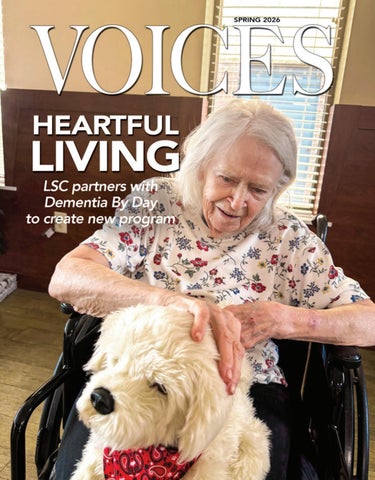
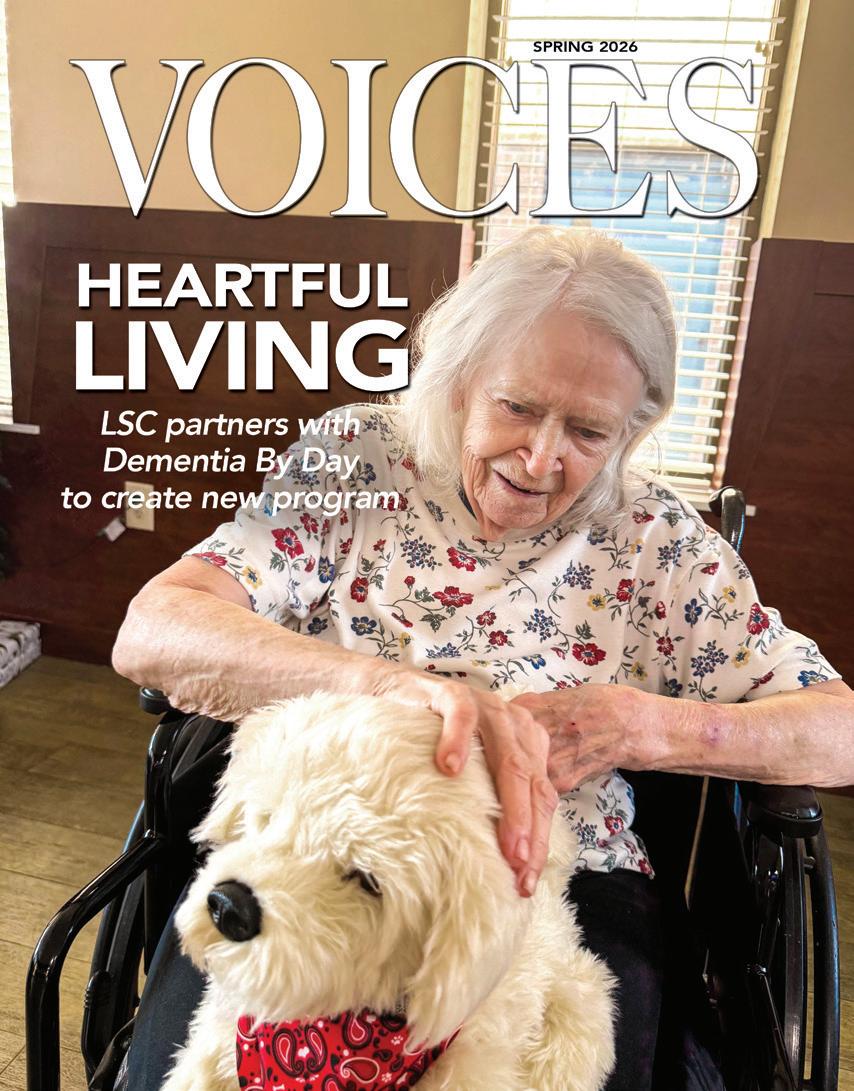
On the cover: Betty Sides, a resident of the Virginia Casey Center for Memory Care at Trinity Oaks health and rehab in Salisbury, N.C.
The following organizations received awards for the last grant cycle: Alliance Medical Ministry, Dementia Alliance of North Carolina, NeighborUp (formerly Dorcas Ministries), Filling in Gaps (FIGS) of Wake County, First Cary United Methodist Church, Habitat for Humanity of Wake County, InterAct, Meals on Wheels of Wake County, Pretty In Pink Foundation, Preserving Home (formerly Rebuilding Together of the Triangle), Shepherd’s Table Soup Kitchen, Ship Community Outreach, Temple’s Table Feeding Ministry, Transitions LifeCare, The Aphasia Project (TAP), Triangle Family Services, Wake Smiles, White Oak Foundation, Inc., and Women’s Center of Wake County.
LSC announces leadership changes


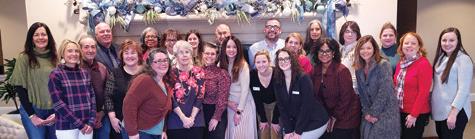
LSC is happy to announce three exciting leadership changes.
Congratulations to Hannah Huffman, who was named LSC Senior Services Director of Operations.
Huffman began as an intern with LSC at Trinity Village in May of 2017 while still a student at Appalachian State University. After her internship, she completed her Administrator in Training (AIT) program at Trinity Village and became the medical records director there in February 2019. She then served as assistant administrator once she received her administrator license in April 2019.
In 2021, Huffman stepped in as interim executive director of Trinity Elms in Clemmons, replacing Mary Beth Lemly, who moved to the LSC Administrative Office. (Lemly is now LSC’s vice president of teammate services.)
In the same year, Huffman was promoted to administrator of Trinity Ridge in Hickory. While there, she precepted three AITs for LSC.
“When I inherited the team, I was surrounded by so many amazing tenured teammates. I’m proud of what we accom-
plished together,” she said.
In October 2025, at age 29, Huffman was tapped as LSC’s senior services director of operations.
“In my new role, I travel frequently to work alongside all nine of LSC’s nursing care communities, supporting each location in their efforts to provide exceptional care,” Huffman explained. “I’m passionate about helping others grow and about working together to implement meaningful changes,” she adds. “My focus is on quality and innovation, and I enjoy collaborating on new ideas and partnerships that strengthen senior care. I also value building stronger relationships with high schools, community colleges, and chambers of commerce so that the most qualified people are inspired to join our team at LSC.”
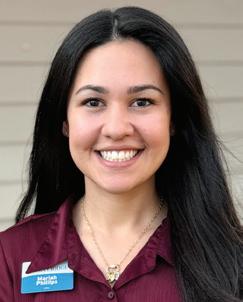
Mariah Phillips was named administrator of Trinity Ridge to fill Huffman’s former role.
She began her career in skilled nursing in February 2014, working in admissions and marketing. She remained in that role until 2019, building strong relationships and gaining a deep appreciation for resident-centered care. In 2019, she began her AIT program, and in July 2020, she became
a licensed nursing home administrator.
She was named administrator of Trinity Ridge in October 2025.
“I am grateful to continue my journey in skilled nursing and especially thankful to be part of a faith-based organization like Lutheran Services Carolinas,” Phillips said. “LSC’s mission and values align closely with my own, and I am proud to work for a company that leads with compassion, integrity, and service to others.”
Kerriann Larmand took over as administrator of Trinity Place in Albemarle in November 2025.
She has more than 20 years of experience in long-term care, including leadership as a Continuing Care Retirement Community (CCRC) campus director, as well as a strong foundation in skilled nursing.
Passionate about creating supportive, connected communities, Larmand values collaboration and meaningful relationships and is deeply committed to fostering environments where residents feel supported, honored, and truly at home.
“I’m grateful to be part of an organization that truly lives out its mission every day,” she says.
Hannah Huffman
Mariah Phillips
Keriann Larmand
LSC receives grant to expand legal services for immigrants
Funding from South Carolina Bar Foundation supports access to justice across the state
LSC is proud to announce it has received a $31,000 grant from the South Carolina Bar Foundation to support the expansion of legal services for refugees and immigrants through its New Americans Program. This funding will help provide low- and pro bono immigration legal services in South Carolina, with a special focus on Horry County.
The New Americans Program provides vital support for individuals and families seeking to adjust their immigration status, reunite with family members, and pursue naturalization. LSC’s Department of Justice (DOJ)- accredited representatives offer these services at a fraction of the cost of private legal assistance, helping vulnerable individuals navigate the complex U.S. immigration system.
“We are so grateful to be able to partner with the South Carolina Bar Foundation in continuing the work of welcome for the refugees and immigrants that we serve,” said Seth Hershberger, South Carolina State Director for LSC’s New Americans Program. “Access to affordable legal immigration services is in high demand. With the help of the South Carolina Bar Foundation, we are fortunate to continue helping those most vulnerable as they strive to adjust status, obtain employment authorization, and achieve citizenship here in the United States.”
In 2024 alone, LSC served over 2,700 individuals through its legal services offices in Charleston, Columbia, Greenville, and Myrtle Beach. Many of those served have fled war, persecution, and humanitarian crises in coun-
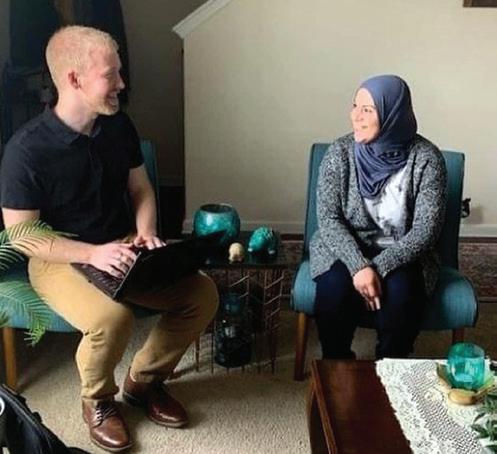
Lutheran Services Carolinas (LSC) recently received a $31,000 grant from the South Carolina Bar Foundation to expand legal services for refugees and other legal immigrants. Shown here: South Carolina State Director for LSC’s New Americans Program Seth Hershberger meets with a legal services client.
tries such as Afghanistan, Syria, Ukraine, the Democratic Republic of the Congo, and Venezuela.
With federal support for refugee and immigration services in flux, this grant from the
South Carolina Bar Foundation ensures LSC can continue to serve those most in need — offering stability, dignity, and hope.
For more information about the New Americans Program, visit www.lscarolinas.net.
Welcome New Shepherd Society members
LSC’s Shepherd Society stands as a pillar of support and dedication within the organization, comprising a community of donors and volunteers whose unwavering commitment fuels the advancement of LSC’s vital services.
The Shepherd Society encompasses three categories:
• The Shepherd Giving Society honors donors whose financial contributions total $1,000 or more within a calendar year — as well as lifetime members, now known as Golden Staff members, whose cumulative giving reaches exceptional milestones of $50,000 for individuals and $100,000 for organizations. These donors not only sustain but amplify LSC’s ability to provide essential services.
• The Shepherd Legacy Society recognizes individuals who have generously included LSC in their estate planning, ensuring a lasting impact that extends far into the future.
• The Shepherd Volunteer Society is comprised of individuals who epitomize the spirit of service by contributing 100 hours or more per calendar year to LSC ministries. They directly enhance the organization’s capacity to support and uplift neighbors in challenging circumstances.
Welcome to the following new LSC Shepherd Society members who have joined since October 2025:
• The Estate of Hazel Abernathy+, Alexandria, VA
• Bethany Lutheran Church, Boone, NC

• Malcolm Bryant
• Mr. & Mrs. Jerry C. Dellinger
• Dennis O. Dixon
• Wendy & David Dubberly
• Duke Energy Carolinas, LLC, Charlotte, NC
• Gregory A. Finchum
• Clyde & Barbara Freeman
• George and Billie Wall Gift Fund, a fund administered by the New Carolina Community Foundation, Charlotte, NC (George and Billie Wall)
• Good Deed Goods, Murrells Inlet, SC
• Good Shepherd Lutheran Church, Walterboro, SC
• Drs. Larry & Ellen Goode
• The Estate of Ethel Ann Hall+, Asheville, NC
• Holy Trinity Lutheran Church Endowment Fund, Raleigh, NC
• Mr. & Mrs. Dennis Ingold
• Carol Jennings
• Mark Kwiatkowski
• Lutheran Church of the Living Word Women of the ELCA, Laurinburg, NC
• MALUV Family Charitable Foundation
of Schwab Charitable, San Francisco, CA (HT Vu and Angela Lam)
• Ellen Menzo
• Ms. Helen Monk
• Jason R. Pawlak, The Benevity Community Impact Fund for Give with Dominion Energy
• John & Julia Phillips+
• Peter Reinhart and Rachel Dieter
• Elaine & Stephen Sluder
• Kenan & Tracy Smith
• St. John’s Lutheran Church, Charleston, SC
• The Lopez Family Charitable Fund through the National Philanthropic Trust, Jenkintown, PA (Ray and Rachel Lopez)
• Tim E. Tise
• Mary S. Tumlinson
• Debra A. Welch
• Mrs. Kathie Whetsell
• Tara Winkelmann ( + indicates that the donor is deceased.) For more information about the Shepherd Society, contact LSC Director of Development Emily Dubay at edubay@lscarolinas. net.
Confirm your gift to Lutheran
Services Carolinas!
Have you already included a legacy gift to LSC in your estate plan? If so, please use the QR code to confirm your gift intent. Your legacy gift allows us to walk together with all we serve for years to come, so thank you! We will also invite you to join LSC’s Shepherd Legacy Society to thank you for standing in support of this important work.
Philanthropists of the Year
You probably know LSC’s mission statement well: “Empowered by Christ, we walk together with all we serve.” But what you might not see every day is just how many generous partners join us on that walk. In 2025 alone, more than 2,550 individuals stepped forward to support our work! Every single contribution helps LSC create abundant living for the communities we’re called to serve.
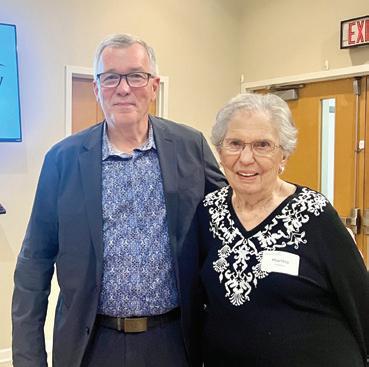
NORTH CAROLINA: MARTHA MARTIN
“Martha’s relationship with Lutheran Services Carolinas spans decades and runs deep. Her family’s story is woven into the fabric of Trinity Village,” LSC President Ted Goins said.
Several of Martin’s beloved aunts and her father received care at Trinity Village, LSC’s senior living community in Hickory. It was there that her bond with LSC began to grow. After she retired in 1989, she attended and assisted with the weekly chapel service at the
senior living community.
Martin accepted LSC’s North Carolina Philanthropist of the Year Award at the Western Shepherd Society Dinner held at Trinity Village.
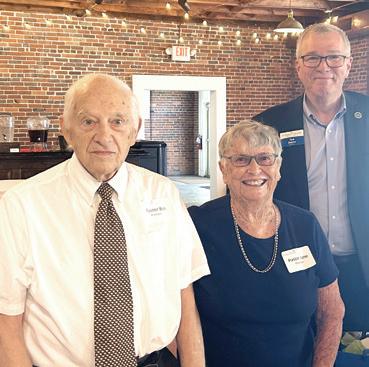
SOUTH CAROLINA: THE REV. DRS. JANE AND BILL MITCHAM
The South Carolina Philanthropists of the Year are The Rev. Drs. Jane and Bill Mitcham, who have been supporting LSC for over 36 years. The Mitchams are long-time Evangelical Lutheran Church in America (ELCA) pastors, members of the LSC board of advisors since 2014, and before that, they both worked for Lutheran Family Services.
“Over the years, Jane and Bill have shown unwavering commitment to LSC, and this past year their generosity has surpassed all previous levels — making an even greater impact than ever before,” Goins said.
The Mitchams were presented with the award during the Shepherd Society luncheon
at 300 Senate in Columbia, South Carolina.
“I’m honored, surprised, and unworthy,” Jane Mitcham said. “Our love for what, for us, began as Lutheran Family Services is just so deep.”
When Bill Mitcham received his first call to become the youth pastor at Reformation Lutheran Church in Columbia, South Carolina, Jane Mitcham said the pastor at the time told them that if they gave 10 percent to the church, they would always have enough. And that advice has proven true, allowing the Mitchams to continue supporting organizations close to their hearts, like LSC.
“Every organization has its own call and mission. For me, LSC reaches out to the least of these. That’s a deep sense of calling for both of us, to be where nobody else wants to be with people who have so much to give you,” Jane Mitcham said. “I just respect so deeply the work that Ted (Goins) and all the teammates do. It’s good to be able to support them in any way we can. I value the work, and I think we are doing what God calls us to do.”
Martha Martin is LSC’s North Carolina Philanthropist of the Year. She received the award during the Shepherd Society dinner at Trinity Village.
Jane and Bill Mitcham are LSC’s South Carolina Philanthropists of the Year. They were presented the award during the Shepherd Society luncheon in Columbia, South Carolina.
W BUILDING FUTURES
Career
Pathways empowers refugee youth in Columbia
hen arrivals of new refugees slowed this past spring, the LSC New Americans Program team in Columbia, S.C., faced an unexpected question: How can we use this pause to better serve the people already here? For Avery Radford, education coordinator, and Gabby Garringer, employment specialist, the answer was clear — help young refugees look beyond their first job and toward longterm career success.
“We’ve spent so much time getting clients into their first job — paperwork, bank accounts, IDs — that we rarely have time to think about what comes next,” Garringer said. “Young adults often get overlooked. They have big goals but no idea how to achieve them.”
A VISION YEARS IN THE MAKING
Radford, who has a background in teaching, had long hoped to create a program for high school newcomers, who often struggle to acclimate.
“High schoolers have the least time to adjust,” Radford said. “They sit in classrooms all day listening to a language they don’t understand. We wanted to give them tools to plan for life after graduation.”
The idea was for the students to start thinking about what they need to do each year of high school to have a successful life and career.
“We wanted to give them the knowledge to understand how the system here works and what they generally should try to do each year they are in high school,” Radford said. “We want to give them the best leg up that we can.”
With support from Refugee Services Coordinator Stacey Keller, the team launched Career Pathways, a pilot program designed to help students explore education and employment options.
“One bright side of the slowdown was the chance to focus on employability services and help clients upgrade their positions,” Keller
said. “We were looking at a continuum of career advancement and identifying different populations that enter that continuum at different stages. That’s how we came up with the idea to go back, not just to people already in the workforce, but to really help young people who sometimes get lost in the system.”
THREE SESSIONS, COUNTLESS LESSONS
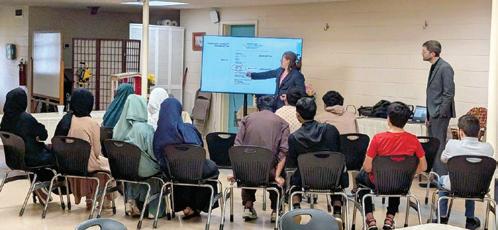
The program consisted of three interactive workshops for a cohort of 16 teenagers.
The first session was titled “The Game of Life.” Students participated in a hands-on simulation to learn how salaries, taxes, housing costs, and family choices impact their finances.
“We assigned all the students a career that came with salaries and basic information on how long they would go to school. Each round was a year, and we would slowly introduce new things, like paying taxes; they can get married and choose if they want their spouse to work, they have the opportunity to have kids if they want, and how much that costs,” Garringer said. “At the end of the day, they are considering what they need to think about to achieve their goals. It got their minds going.”
The second session focused on career planning. Youth explored six career clusters, from health care to business, and learned that
success doesn’t always require a four-year degree.
The third session focused on job readiness. From resume building to mock interviews at Chick-fil-A, students practiced realworld skills. They also acted out skits and had the teenagers pick out bad interviews versus good ones and discussed bad interview outfits versus outfits suitable for an interview.
WHAT’S NEXT?
The team aims to expand Career Pathways through partnerships with schools and churches.
“We want to keep making it practical. Give them opportunities that fit their needs and cultural understanding,” Radford said. “I’ve wanted to do this for three years. Seeing students engaged and excited — it’s been awesome.”
After a difficult spring, the summer brought hope — and a new way forward.
“This is the future generation. As much as we want to help parents achieve their goals, it’s harder for a 50- to 60-year-old to adapt than it is for a 16-year-old; that’s just the reality. And looking at students who have so much potential and such lofty goals and being able to really tap into that, help them figure out what those goals are, and empower them to move toward them was inspiring,” Garringer said. “After a rough spring, it was a very encouraging summer.”
LIVING HISTORY
Trinity Landing’s resident spy shares her story
When Marti Peterson moved into LSC’s Trinity Landing, her fellow residents didn’t know they were welcoming a woman whose life had once been defined by covert operations, Cold War tension, and a daring spirit that defied convention.
“My life was very normal to begin with,” Marti Peterson recalled. “I graduated from high school, went to college, and graduated. While I was in college, I met a wonderful man named John Peterson. He was a physics major, but a very good writer.”
Their plan for the future was quickly altered by the Vietnam War.
“We graduated in 1967, so he went into the Army and eventually went to Vietnam. I was glad he came home alive,” she said.
After his return, John Peterson was recruited by the CIA and assigned to Laos.
“We lived in a little town there where his job was to hire, outfit, and train Lao regular troops — because the Ho Chi Minh Trail was so close to where we lived,” Marti Peterson said.
But tragedy struck.
“One morning early, he kissed me goodbye at 4 a.m. and off he went… and that afternoon, his helicopter went down. We were 27, and he passed away,” she said.
BECOMING THE FIRST FEMALE CIA OPERATIONS OFFICER IN MOSCOW
Back in the U.S., Marti Peterson was adrift.
“A friend said, ‘Why don’t you join the CIA?’ And I said, ‘Well, it sounds as interesting as anything else,” Marti Peterson explained.
She learned Russian and spy tradecraft, and in November 1975, at the age of 30, she was sent to Moscow.
“The CIA had never sent a woman as an operations officer on the street. The Soviet KGB only used men in operations,” Marti Peterson said. “We thought the KGB wouldn’t take a second look at me — which turned out to be true.”
Her mission: to manage dead-drop exchanges with Soviet agents. One of them, codenamed TRIGON, was a high-ranking official in the Ministry of Foreign Affairs (the Soviet State Department). He provided volumes of actual secret Soviet documents that he photographed in his office.
“He really believed he could do more good by providing secrets that would keep the balance of power in favor of the United
States, which would be aware of future Soviet activities,” she said.
SPYCRAFT IN THE SHADOWS
Her work was meticulous and dangerous. During the day, she worked a minor job at the U.S. Embassy, and at night and on weekends, she would go out and deliver packages for TRIGON at drop sites.
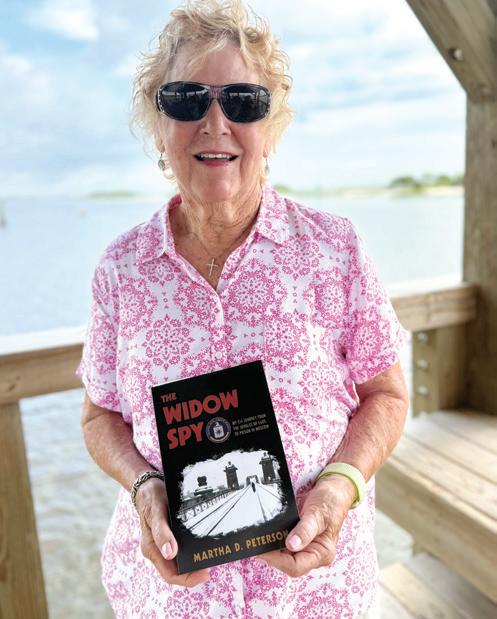
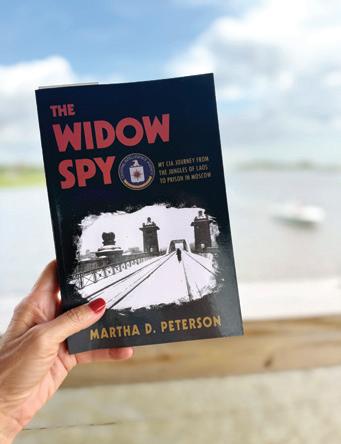
Marti Peterson and her book, “The Widow Spy.”
“To prepare, I would drive two hours around the city to figure out if anyone was following me. The people who follow you change their jackets, put on hats — but they never change their shoes. That’s what I looked at on the Metro,” she said.
She described the typical drop site as a numbered streetlamp pole. She would place TRIGON’s spy gear in a hollowed-out log, then place it near the pole.
“At home, when taking pictures of secret documents he had carried home, he had been using an unmodified 35mm camera whose shutter made a distinct sound. We gave him a miniature camera hidden in a large European fountain pen,” she said. “The pen was identical to the one he carried every day, so he never changed his daily appearance. He was also given a third identical pen, but this one contained poison he could take if he faced arrest and torture.”
The miniature camera produced full-size images of the documents. Every couple of months, the two would exchange packages; his would contain film, and the CIA’s package would include replacement film and other spy gear.
“He knew to look for logs or chunks of concrete that were hollowed out. TRIGON’s packages were disguised as trash — milk cartons, tin cans, or oily single work gloves. The film from him was placed inside a condom to keep it dry and clean,” Marti Peterson said.
They never met in person.
“We did that many times over the course of 21 months,” she said.
THE ARREST AND THE AFTERMATH
In June 1977, Marti Peterson sensed there was something wrong as she approached the drop site.
“It was a dark and stormy night,” she said. “I ran into a man carrying a large flashlight in the woods, dressed in a caped raincoat and a military hat with a shower cap on top. TRIGON didn’t show up that night.”
A month later, she prepared to make a drop to TRIGON. This time, it was along
the pedestrian walkway on top of the railroad bridge, adjacent to the railroad tracks. She saw three men across the street from the bridge, assuming they were just innocuous strangers. They entered a famous cemetery. Then, as she descended the stairs from the bridge walkway after placing her drop, they quickly approached her and grabbed her arms.
“I kicked them hard a few times and told them, ‘You cannot hold me. You need to call the embassy,’” she said.
They searched her and found the SRR-100, a CIA-fabricated receiver. CIA officers used it to hear the KGB speak to each other in the surveillance cars.
They took her to Lubyanka Prison, where Stalin had executed hundreds of thousands of Soviet citizens before and during World War II. It was clear they had no idea who Peterson was. She was put in a large room, and they began questioning her. They opened the package, a large piece of concrete, intended for TRIGON, and found the spy gear.
Despite the pressure, Marti Peterson maintained her composure. She told them she worked at the embassy and provided them with the name of her chief. He was called and showed up at the prison to protect her
from any extreme interrogation. The Soviets also had an officer from the Ministry of Foreign Affairs in the room.
“They tried to get me to say what happened. I refused, just saying I don’t know what you are talking about,” Marti Peterson said.
After three hours of interrogation, she was released. The CIA sent her back to Washington, D.C.
Seven years later, she learned that when TRIGON was apprehended, he bit off the end of the pen with the poison and died.
LEGACY AND LIFE AFTER THE CIA
After her release and return to Washington, Marti Peterson expected her story might remain classified.
“Everybody was worried this would come out in the newspaper, but it didn’t,” she said. “If the Soviets had exposed this in one of their newspapers, then we would expose one of their cases. And it was tit for tat, because you didn’t want your things exposed.”
But a year later, in June 1978, the FBI exposed the arrest of Soviet officers on the New Jersey Turnpike.
“So, then I got a call that said my story was coming out,” she recalled. “I drove home, got into my garage, and then I turned on the TV — CBS, NBC, and ABC — all the channels said, ‘Breaking in Moscow,’ and there was my picture.”
The media frenzy was immediate.
“Newsweek came and stood on my front door, The Washington Post on the front mat — and when you are above the fold, that’s pretty significant,” she said.
Marti Peterson continued her career for 32 years, retiring to North Carolina in 2003. She remarried and raised two children. Her decision to write “The Widow Spy” was inspired by a work colleague who urged her to preserve TRIGON’s story, a man whose sacrifice had remained in the shadows for too long.
It was published in 2012 and is available on Amazon. For more information about Marti Peterson, visit https://widowspy.com/.
Heartful Living brings added compassion to dementia care
What does daily life feel like inside the mind of a person with Alzheimer’s or another form of dementia?
If your loved one has dementia, you know the answer to that question can change from day to day — or even more frequently. One moment, they may be back in childhood, playing with a beloved pet; the next, they may be a young parent responsible for a newborn baby.
Thanks to a new initiative called Heartful Living, local seniors living with dementia and their families now have an added layer of compassionate support when choosing longterm care.
Heartful Living recently debuted at the Virginia Casey Center for Memory Care, part of LSC’s Trinity Oaks campus in Salisbury, North Carolina, named in honor of longtime resident and generous benefactor Virginia Casey. The initiative has also begun at Trinity Grove in Wilmington, North Carolina, and will soon roll out in all LSC senior care communities across North Carolina.
Heartful Living is a partnership between LSC, a Salisbury, faith-based nonprofit health and human services organization, and Dementia By Day, a dementia care consultancy offering customized solutions for longterm care residents, their families, and professional staff.
“The concept is to always embrace the resident’s reality,” said Rachael Wonderlin, Dementia By Day’s founder and chief executive officer. “Whatever is true for them is true for us.”
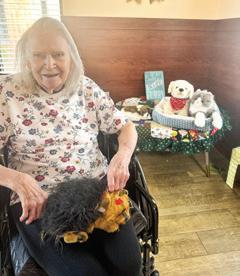
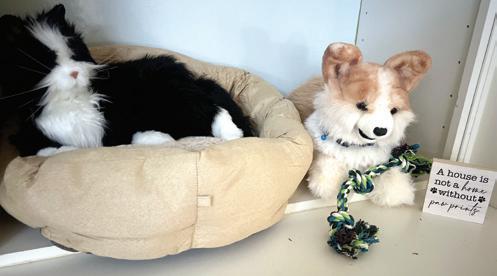
Heartful Living incorporates realistic, onsite “life stations” where seniors with dementia can care for their “pets” and “babies.” Residents receive their own, lifelike baby dolls and cuddly toy animals that appear to breathe as they nap. Professional caregivers and family members, in turn, receive in-person training and online education to help them embrace
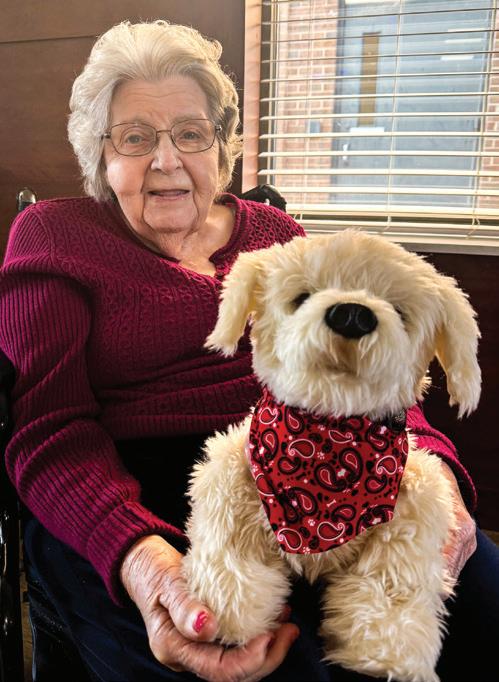
Hazel Stirewalt, a resident of the Virginia Casey Center for Memory Care at Trinity Oaks health and rehab in Salisbury, N.C., shares memories of pets past as she holds a stuffed dog — a therapeutic stand-in that is part of Lutheran Services Carolinas’ Heartful Living program for seniors with Alzheimer’s and other forms of dementia.
and affirm residents’ shifting reality.
Heartful Living also infuses meaning and purpose into residents’ lives by allowing them to participate in real-life activities like folding
laundry or arranging flowers. The journey — not the destination — is what matters.
“LSC has long envisioned new and innovative ways to continually enhance care for

individuals living with dementia,” noted LSC Chief Operating Officer Kesha Smith. “We knew we didn’t want to rely on the same traditional programming that has been used for years. Instead, we sought a partner who could help us elevate our approach — one who could support meaningful, sustainable transformation for our memory care residents and the teammates who serve them each day.
“The Dementia By Day team is the ideal partner to bring this vision to life,” Smith added. “They are already demonstrating the expertise, creativity, and collaboration needed to take our dementia care to the next level and beyond.”
LSC has hired a full-time dementia care director to grow and sustain the Heartful Living program on the Trinity Oaks campus. LSC is establishing dementia care directors at all of its North Carolina nursing homes and at Trinity Elms assisted living in Clemmons. In addition, drawing on Dementia By Day’s expertise, LSC expects to complete exciting, innovative enhancements to its memory care neighborhoods statewide.
“Everyone at LSC is energized by this partnership,” Smith said. “We are excited to embark on this long-term journey together as we continue to innovate and strengthen dementia care for the people who matter most: our residents.”
Betty Sides, a resident of the Virginia Casey Center for Memory Care at Trinity Oaks health and rehab in Salisbury, N.C.
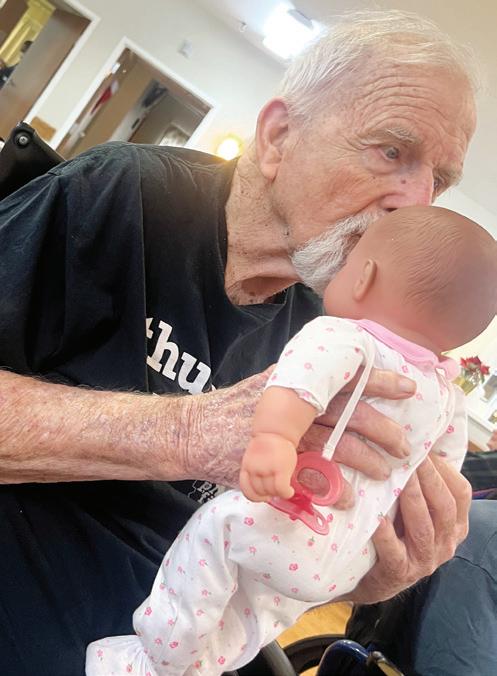
Robert Neal, a resident at Trinity Grove, kisses a baby doll.
Raleigh teammate Arefa Bakhshi receives mid-year LSC Scholarship
Congratulations to Employment Specialist Arefa Bakhshi of LSC’s Raleigh New Americans Program, who received a mid-year LSC Scholarship to support her MBA studies in Business Analytics and Management at the University of North Carolina Wilmington.
“LSC does not have an official mid-year scholarship,” explained Vice President of Teammate Services Mary Beth Lemly. “We happened to have some leftover funds, and Arefa’s supervisor asked if this was possible. We’re pleased to be able to support her studies.”
Bakhshi is a former client of the New Americans Program; she came to the U.S. in 2023 through the Afghan Special Immigrant Visa program. She holds a Bachelor of Arts degree from Kabul University.
“I am very grateful to LSC for the scholarship,” Bakhshi said. “This degree will allow me to enhance how we use data and systems to improve support for refugees and immigrants.”

A lifeline after the storm: LSC helps Greenwood family recover
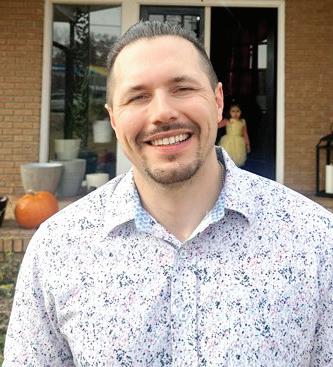
Pictured is Justo Chalaire. When Hurricane Helene swept through South Carolina, the storm left a trail of destruction across the Chalaire property in Greenwood. LSC’s financial help allowed the family to complete their home repairs. The support allowed repairs to begin immediately— work that would have been financially impossible otherwise.
Justo Chalaire never imagined the home he worked so hard to build for his family would become a source of fear and uncertainty. For years, his Greenwood home had been a sanctuary — a safe place where he and his spouse could raise their three young children.
But when Hurricane Helene swept through South Carolina, everything changed.
The storm left a trail of destruction across the Chalaire family’s property. Gutters and vents were torn apart, shingles scattered, and moisture seeped into the crawl space, creating mold. Inside the home, parts of the ceiling began to show signs of weakening. With three children in the home, these structural and health hazards quickly became urgent concerns.
Knowing the dangers of mold, Chalaire applied for home repair assistance through the South Carolina Office of Resilience. A contractor’s inspection revealed the cost to restore safety: $9,000 for gutter repairs, vent replacement, and mold remediation. Determined to protect his family, Chalaire pledged $5,000 of his own funds. But the remaining $4,000 stood between his children and a safe home.
That’s when LSC stepped in.
Recognizing the urgency and vulnerability of the situation, LSC approved funding for the remaining $4,000. This support allowed repairs to begin immediately — work that would have been financially impossible otherwise.
For Chalaire, this wasn’t just financial help; it was a lifeline during one of the most stressful periods of his life.
“Knowing my children can stay in a safe, clean home means everything,” he said.
Today, as repairs move forward, the Chalaire family can finally breathe a sigh of relief. Their home — once threatened by Hurricane Helene — is on its way to being whole again.
PART ONE
2025HIGHLIGHTS
SENIOR SERVICES
LSC held a formal grand opening event for Trinity Village independent living in Hickory, N.C., in March. Located on the same campus as Trinity Village’s assisted living, skilled nursing, rehab, and memory care facilities, it offers 72 monthly rental apartments with no entrance fee. Trinity Village independent living expands the continuum of senior services while maintaining LSC’s commitment to quality at every level.
LSC’s skilled nursing facilities achieved outstanding quality results this year. Two communities — Trinity Village in Hickory, N.C., and Trinity Glen in Clemmons — earned deficiency-free survey ratings during this calendar year, a notable achievement in a highly regulated environment. Across all nine LSC nursing facilities, the average deficiency rate was 2, far better than the North Carolina average of 7 and the national average of 9.6. These results reflect teammates’ dedication and LSC’s strong organizational focus on quality, safety, and resident-centered care. Trinity Oaks assisted living and Trinity at Home, LSC’s licensed home care agency, also received deficiency-free survey ratings this year. LSC is proud of all of its communities’ and programs’ commitment to excellence throughout 2025.
LSC is committed to helping seniors remain healthy, independent, and at home. As part of this effort, LSC is a partner in several PACE programs across North Carolina; they showed steady enrollment and strong financial performance throughout the year. In December, LSC became an equal sponsor of PACE programs in Charlotte, Hickory, and Gastonia—now consolidated under the shared name of Senior TLC. PACE construction and expansion projects also moved ahead in 2025, preparing for future growth.
Trinity at Home is another example of LSC’s commitment to senior health and independence. Early in 2025, LSC expanded its home care offering to New Hanover County, based at Trinity Landing. Later in the year, services expanded to Catawba County, based
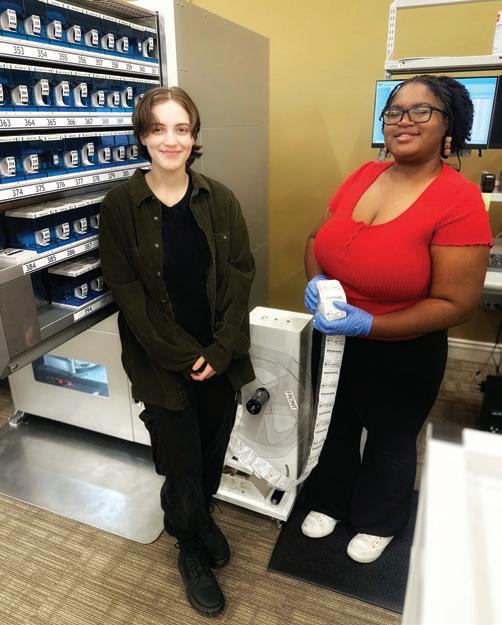
Pharmacy teammates Kaitlyn Smith and Rashida Price work with the automated packaging device that produces the Smart Pass pouches.
at Trinity Village.
Leading Care Pharmacy (formerly LSA Pharmacy) introduced new automation and medication distribution technology across nearly all LSC communities. Older systems were replaced with patient-specific medication packaging that integrates with LSC’s electronic medical records — improving safety, accuracy, and efficiency. The pharmacy also expanded its in-house infusion therapy services, strengthening operations and positioning itself for future growth.
CHILD AND FAMILY SERVICES
LSC teammates worked tirelessly in 2025 to help North and South Carolinians recover and rebuild from Hurricane Helene and other disasters, with support from many generous individual donors, congregations, and grantors. LSC’s Development Team secured over $3 million in grants and over $237,000 in individual gifts for disaster response and recovery. With this funding, LSC’s Disaster Services
team is providing direct support including rebuilding materials, essential supplies, and temporary housing assistance. It is also strengthening local disaster resilience through partnerships with community-based groups, including Voluntary Organizations Active in Disaster (VOADs) and Long-Term Recovery Groups (LTRGs).
LSC’s seven disaster case managers have assisted 286 individuals and families in 20 North Carolina and 15 South Carolina counties. Over 98 percent of households served are low-income.
LSC’s Foster Care program for Unaccompanied Children was almost closed due to federal funding issues, but it is now up and running again. It currently serves unaccompanied children ranging in age from 6 to 17. It is a treasure to watch them study subjects ranging from biology to U.S. history together in one classroom, with the support of LSC teammates.
CULTURE AND VALUES
LSC saw strong participation and encouraging results from its annual Teammate Engagement Survey in 2025. Nearly 79 percent of teammates participated, an increase from the previous year. More than half of respondents reported being engaged or highly engaged in their work, and LSC’s overall engagement score improved compared with 2024. Survey results are already guiding LSC’s planning and continuous improvement.
In 2025, LSC awarded scholarships totaling $22,340 to 10 teammates for educational programs that support their personal growth and LSC’s mission. More than half of the recipients are working toward nursing degrees or credentials, reflecting LSC’s continued investment in high-quality clinical care. Other scholarships support undergraduate studies in fields such as business, communication, and human services, as well as graduate and professional degrees in social work and law. The scholarship program continues to help teammates build skills, advance their careers, and strengthen LSC’s service to communities across the Carolinas. For the fourth year in a row, LSC earned two Candid Platinum Seals — one for Lutheran Family Services, and one for Lutheran Services for the Aging — the
highest level of transparency recognition available. The Platinum seals recognize nonprofits that go beyond basic reporting by providing data and metrics that demonstrate progress toward their goals. Each year, millions of people use Candid’s website to review nonprofit information before choosing where to give.
cover the necessary expenses to
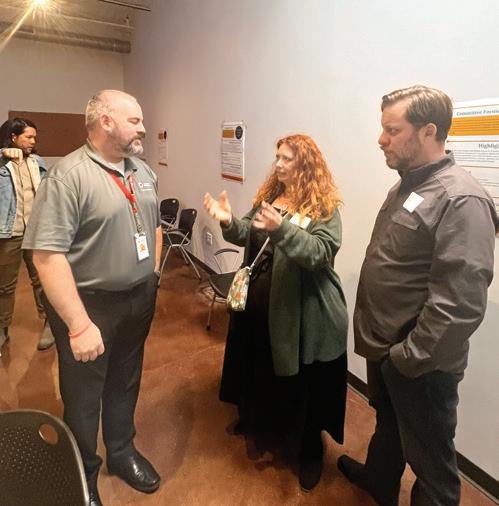
In 2025, LSC’s Disaster Services team attended the Buncombe County Long-Term Recovery Group’s annual event. LSC Disaster Case Manager Tonia Allen, who is leading case management in Buncombe County, discussed the current housing crisis and potential solutions.
Through disaster services, LSC was able to provide utility assistance to
restore power for Larry Wall. Wall’s home in Cayce, South Carolina was damaged by Hurricane Helene.
(Lutheran Services for the Aging, Inc.)
Post Office Box 947
Salisbury, North Carolina 28145
Phone: 704-637-2870
Toll free: 1-800-HELPING www.LSCarolinas.net
Return Service Requested
If you are receiving multiple copies of LSC Voices or no longer wish to receive the newsletter or other mailings which might include LSC fundraising requests, please call or send the mailing label from this page along with your request to LSC at the above address.
“Empowered by Christ, we walk together with all we serve.”
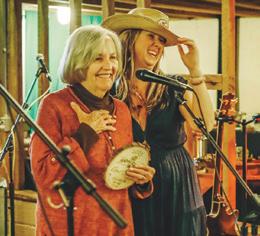
Congratulations to Trinity Oaks Independent Living resident Gail Carter, who received Happy Roots’ Volunteer of the Year Award during its third annual farm-to-table dinner and benefit concert on Saturday, October 1! Every day, Carter puts not just her hands but her whole heart into volunteering with Happy Roots’ horticultural therapy programs at Trinity Oaks assisted living and Trinity Oaks health & rehab. She is shown here with Happy Roots Executive Director Ashley Honbarrier. Scan the QR code to read the full Salisbury Post article about the farm-to-table event.
be directed to Erin Kidd at