Lutheran AMBASSADOR
ent is a melancholic season. This somber reflection is appropriate in the rhythm of our church year, eventually giving way to boundless joy on Resurrection Sunday. “Up from the grave He arose! With a mighty triumph o’er His foes!”
But even the pensive weeks of Lent offer great comfort to the Christian. The image of a dying man on a Roman execution stake is where we see our Creator most clearly. What much of the world sees as defeat was, in truth, God’s greatest victory.
This is such a blessing for us! God is found exactly where we need him most. The strength of God is seen not in raw power or worldly subjugation, but through weakness, shame, and humility. When we are dragging through dark moments of pain or loss, we can rest knowing that God is not absent. Because he suffered for us, our own suffering is not a sign of God’s distance but the very place where he holds us closest. There is great glory hidden in the shadows.

Remembering those verses in Isaiah 9, the church father Irenaeus says the cross is “the sign of his kingship.” While most kings can be recognized by their glittering crowns and royal scepters, our King is known by his cross.
Many of our articles this month explore different aspects of this beautiful Lent and Resurrection season.
Jesus was not the first to be raised from the dead, at least chronologically! Pastor Joe Ocker writes an article for this issue on the “other” resurrections we see in Scripture. The dead are raised in both the Old and New Testaments, and these resurrections are more than simply interesting stories. They point to the perfect and greatest resurrection.
Joan Culler guides us through the evidence of Christ’s resurrection. We can trust that the Gospel accounts are not myths or fables, but that Jesus actually died and rose again.
Elizabeth Jore writes about the history and meaning behind the popular resurrection hymn, “I Know That My Redeemer Lives.” It’s a fascinating story, and it can be helpful to know some of this context and background as you gather to sing this hymn this Easter season.
Dr. Phill Hooper helps us better understand the story of Jesus appearing to the disciples on the road to Emmaus. One of my favorite post-resurrection stories, this account teaches us the meaning of “Christocentric.” All the Scriptures are ultimately about Jesus.
Sarah Langness brings us home by applying the reality of the resurrection to our life and faith today. How does Christ’s once-for-all defeat of death and sin impact us today?
Also in this issue is an article reflecting on the history of Alsace Lutheran Church in Reading, Pa. Founded in 1732, this congregation has a rich history that mirrors the founding of our nation.
As always, we pray the articles and art in these pages are a blessing to you and your congregation. Please do not hesitate to send me your suggestions and feedback on how the Lutheran Ambassador might improve. We deeply appreciate your prayers and financial support.
—Pastor Andrew Kneeland
THE LUTHERAN AMBASSADOR
MARCH 2026
VOL. 64 NO. 3
Editor
Pastor Andrew Kneeland laeditor@aflc.org
Managing Editor
Ruth Gunderson ruthg@aflc.org
Circulation
Liz McCarlson lasubscriptions@aflc.org
Editorial Board
Monica Coyle Pastor Jerry Moan Pastor Craig Johnson
The Lutheran Ambassador (ISSN 0746-3413) (USPS 588-620) is published monthly by the Association of Free Lutheran Congregations, 3110 E. Medicine Lake Blvd., Plymouth, MN 55441 Phone (763) 545-5631
Periodicals postage paid at St. Paul, MN and additional mailing offices. Postmaster send address changes to
The Lutheran Ambassador, 3110 E. Medicine Lake Blvd., Plymouth, MN 55441.
subscriptions & giving
The Lutheran Ambassador is a free publication of the AFLC. Our non-profit ministry is supported by readers’ gifts. To subscribe and give online, visit our website aflc.org/lutheran-ambassador
Checks may be mailed to 3110 E. Medicine Lake Blvd., Plymouth, MN 55441
Email inquiries can be sent to lasubscriptions@aflc.org
For the word of the cross is folly to those who are perishing, but to us who are being saved it is the power of God. [I Corinthians 1:18]
Do you wish to see God’s love? Look at the cross. Do you wish to see God’s wrath? Look at the cross. [D.A. Carson]
If my preaching of this cross is not an offense to the natural man, I am misrepresenting it.
[Martyn Lloyd-Jones]
Now since Christ has passed over and reigns above in heaven over sin, death, devil, and everything, and since He did this for our sake to draw us after Him, we need no longer worry about our resurrection and life, though we depart and rot in the ground. For now this is no more than a sleep. And for Christ it is but a night before He rouses us from the sleep. [Martin Luther]
He is lifted up and nailed to the tree, but by the tree of life he restores us, yes, he saves even the robber crucified with him. He died, but he gives life, and by his death he destroys death. [Gregory of Nazianzus]
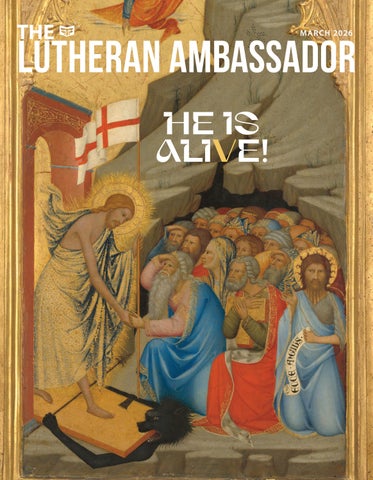
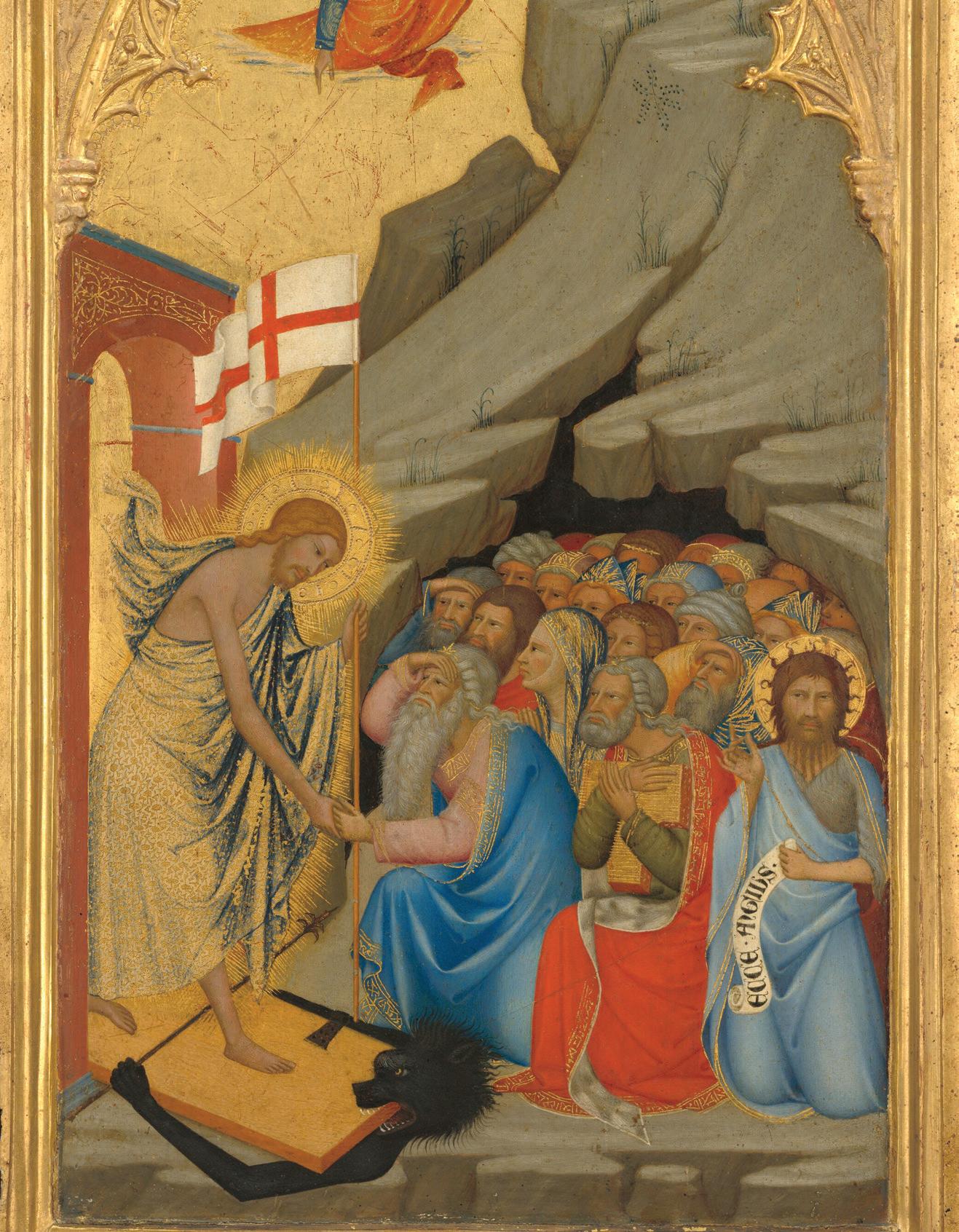
Cover: “Scenes from the Passion of Christ” (right panel), 1380s, Andrea di Vanni, National Gallery of Art.

BY PASTOR JOE OCKER
Amiraculous resurrection got Jesus killed. Oh, certainly the Sadducees and Pharisees had been increasingly frustrated with Jesus and with the size of his following. There were probably some hushed conversations about how to get rid of Jesus of Nazareth, and the pressure was building. But then, Jesus really blew the lid off the whole situation when he raised Lazarus from the dead.
I’ve always been fascinated (horrified?) by the response of the crowd that witnessed Lazarus’ dramatic return to life out of the tomb, four days dead. John writes about the response, “Many of the Jews therefore, who had come with Mary and had seen what he did, believed in him, but some of them went to the Pharisees and told them what Jesus had done” (11:45–46).
Here’s what’s horrifying: some watched Lazarus come stumbling out of that tomb, answering Jesus’ command, and yet refused to believe in Jesus. Instead, they immediately reported to authorities what Jesus had done and concluded that he should die! “So from that day on they made plans to put him to death” (11:53).
Lazarus’ resurrection got Jesus killed. It tripped the trigger that set the serious plans in motion.
There are quite a few other resurrections in both the Old and New Testaments. Do these resurrections tell us anything about Jesus’ resurrection? They most certainly do!
First, God cares about the “sting of death” mentioned in I Corinthians 15:56 and its often-terrible impact on those left behind. Elijah and the widow’s son in Zarephath (I Kings 17:7–16), Elisha and the Shunammite’s son (II Kings 4:8–37), Jesus raising Jairus’ daughter (Mark 5:21–43), the widow’s son at Nain (Luke 7:11–17), and Lazarus himself: all were grieved by loved ones. And most of those raised from the dead were critically important to the ongoing wellbeing of their mourners; three of the five resurrections prior to Jesus’ resurrection involved widow’s sons! And do not forget that Jesus himself famously wept at Lazarus’ passing. God does grieve with us over the consequences of our sin and the impact death has in our world.
Yes, if Jesus himself had stayed dead in the tomb, his mourners would have been inconsolable. But far more than
that, their future and eternal well-being (and ours!) would have been forever destroyed. Without the shedding of blood there is no forgiveness of sin. Without Jesus’ resurrection, there is no victory over sin and death. As the Apostle Paul wrote, “And if Christ has not been raised, your faith is futile and you are still in your sins” (I Corinthians 15:17).
Second, only God can change the last word of death. I Corinthians 15:26 says, “The last enemy to be destroyed is death.” Through the prophets Elijah and Elisha, God did countless jaw-dropping miracles, often by a word or gesture from the prophet. But what about the resurrections each one witnessed? They poured out themselves to God in extraordinary prayer, and God turned death back into life again—once for Elijah and once for Elisha. In all their decades of ministry, each prophet witnessed just one resurrection.
Why do I mention the rarity of their resurrection experiences? Jesus himself accomplished three resurrections in three years of ministry, and he declared them in his own authority over life and death! To both Jairus’ daughter and the widow’s son at Nain, Jesus said, “I say to you, arise.” To Lazarus, Jesus said, “Come out!” Jesus himself had the authority and power to raise the dead!
Jesus used that same authority to come out of his own tomb on Easter morning as well. His words before his death speak to that authority: “No one takes it [my life] from me, but I lay it down of my own accord. I have authority to lay it down, and I have authority to take it up again. This charge I have received from my Father” (John 10:18). Only God can turn death into life, and Jesus’ resurrection proves he is God.
Death had been turned back on a very few rare occasions before Jesus’ own resurrection. But now, as Paul declared, “Death is swallowed up in victory!” (I Corinthians 15:54). Swallowed up, my friends! We do not grieve as those who have no hope. We have a certain hope for eternal life. “But thanks be to God, who gives us the victory through our Lord Jesus Christ” (I Corinthians 15:57).
Ocker serves Dell Lutheran, Frost, Minn.
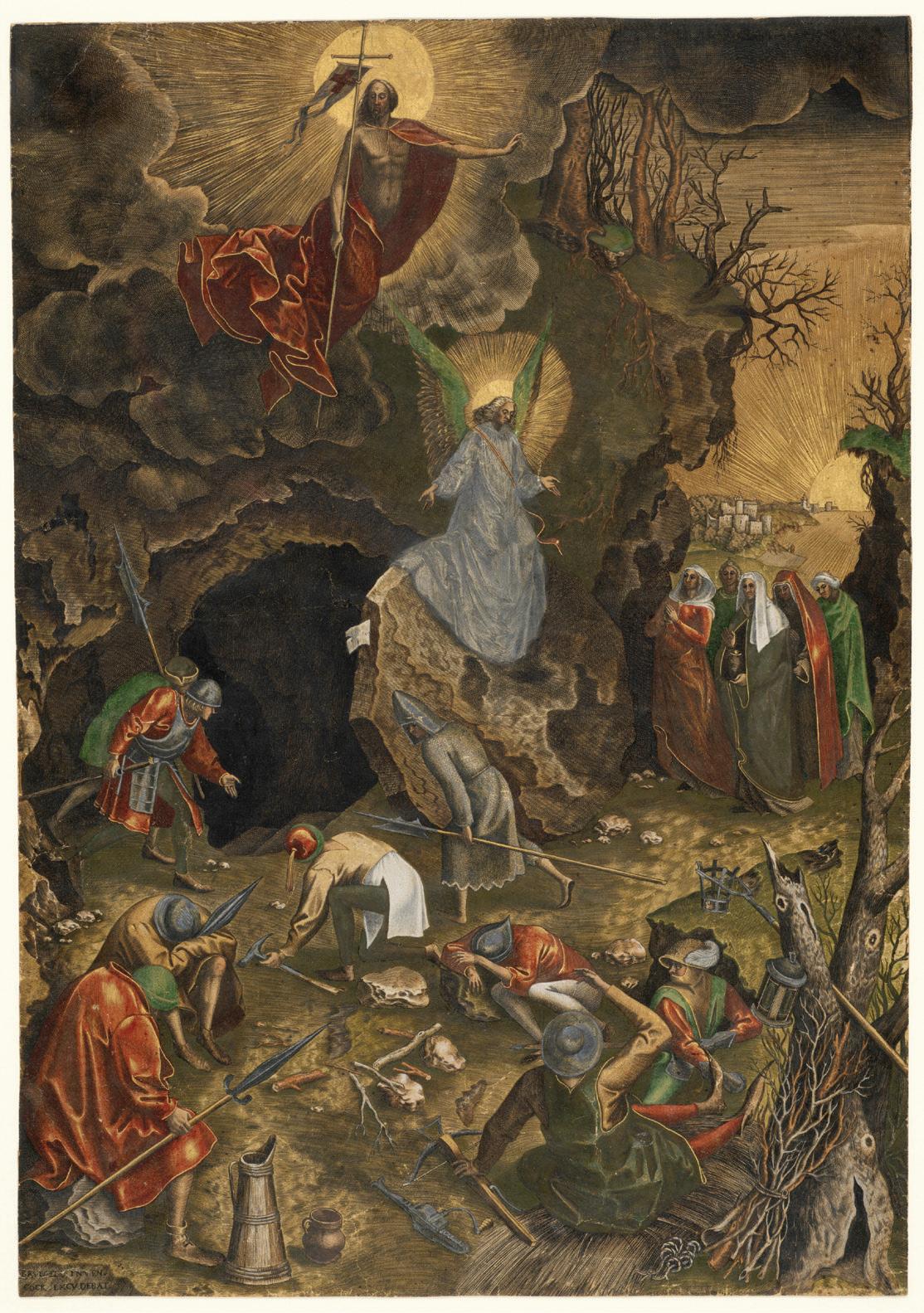
Artwork: “The Resurrection,” by Philips Galle and Pieter Bruegel the Elder, c. 1562, The Met.
BY JOAN CULLER
The resurrection is the linchpin of the Christian faith. The earliest accounts of the disciples cite the resurrection as the primary piece of evidence that Jesus was God. As the Apostle Paul tells us, “… if Christ has not been raised, then our preaching is in vain and your faith is in vain” (I Corinthians 15:14). An account of the resurrection is also included in what is regarded as one of the earliest creeds of the Christian church, found in Paul’s first letter to the Corinthians: “…. that Christ died for our sins in accordance with the Scripture, that he was buried, that he was raised on the third day in accordance with the Scriptures, and that he appeared to Cephas, then to the twelve” (15:3–5).
Most scholars agree that Paul did not create this statement of faith himself—he says he “received” it—which means it must have been shared before he wrote his letter. It would have been formulated and used very soon after the events of the Passion and was a succinct description of what the first Christians believed and taught.
But how do we know that this information is reliable and true? That question has been discussed and debated for centuries. Theologians, academics, historians, and criminologists have examined the evidence. Books have been written by both believers and unbelievers. Most are willing to accept the following minimal facts:
First, Jesus died on the cross and was buried. Physicians reviewing the data conclude that it would be virtually impossible for Jesus to survive the horrific beating, crucifixion, and spearing described in the Gospels. In addition, Roman soldiers were expert killers and would have been subject to execution themselves had they allowed a condemned prisoner to live.
Second, the tomb was empty, and nobody ever produced Jesus’ body. The tomb was guarded, and the site was known. If it wasn’t empty, that would have been reported by other sources, the Jewish leaders, for example.
Third, the disciples and others believed that they saw the resurrected Jesus. The following witnesses are listed in the Bible: Mary Magdalene (John 20:10–18), other women (Matthew 28:8–10), Cleopas and another disciple (Luke 24:13–32), eleven disciples and others (Luke 24:36–49), ten apostles and others (John 20:19–23), Thomas and other apostles (John 20:26–30), seven apostles (John 21:1–14), the disciples (Matthew 28:16–20), 500 brothers, James, and Paul (I Corinthians 15:6–8).
Fourth, the disciples were transformed. The same group of men who were hiding in fear shortly after the crucifixion
became willing to suffer and die to defend their belief in the risen Christ. All except John were martyred.
Since much of the evidence for the resurrection relies on eyewitness reports, there have been many attempts to challenge them. Some of the alternative explanations put forth by doubters include:
• The accounts in the Scriptures are simply legends, written long after the historical events. However, there is an avalanche of historical and archaeological data that confirms people, events, and facts presented in the four Gospels and Acts. The Gospels were circulating soon after the death of Christ when many witnesses were still alive and could have contradicted the information.
• The disciples lied. They had no motive to do so. In fact, most died for their assertions. Also, if they were lying, they would not have listed women as the first eyewitnesses, since at that time the testimony of women was not accepted legally.
• The sightings were a delusion or a spiritual vision. Psychologists report no examples of large groups of people having the same hallucination. Jesus was seen on more than one occasion by different groups of people. Some of the witnesses—Thomas, James, and Paul—were skeptics.
• The disciples were fooled by an imposter. This is unlikely since Jesus was known to them intimately over a course of years. Any imposter would have also had to display miraculous powers (Acts 1:2–3).
• The eyewitness accounts do not agree in all details. In his book, Cold-Case Christianity, detective J. Warner Wallace reports that the Gospels display all the earmarks of true eyewitness testimony. Each witness wrote from a different perspective and saw different pieces of the picture.
Simply put, only a resurrection reasonably explains the events that took place in Jerusalem that week. Belief in the resurrection allowed the apostles to “turn the world upside down” (Acts 17:6). This story continues to inspire and transform Christians today. It provides hope in a life to come, the peace of reconciliation with God, and a sense of purpose as participants in God’s plan for the world. Because of the resurrection, each of us can be “steadfast, immovable, always abounding in the work of the Lord, knowing that in the Lord your labor is not in vain” (I Corinthians 15:58).
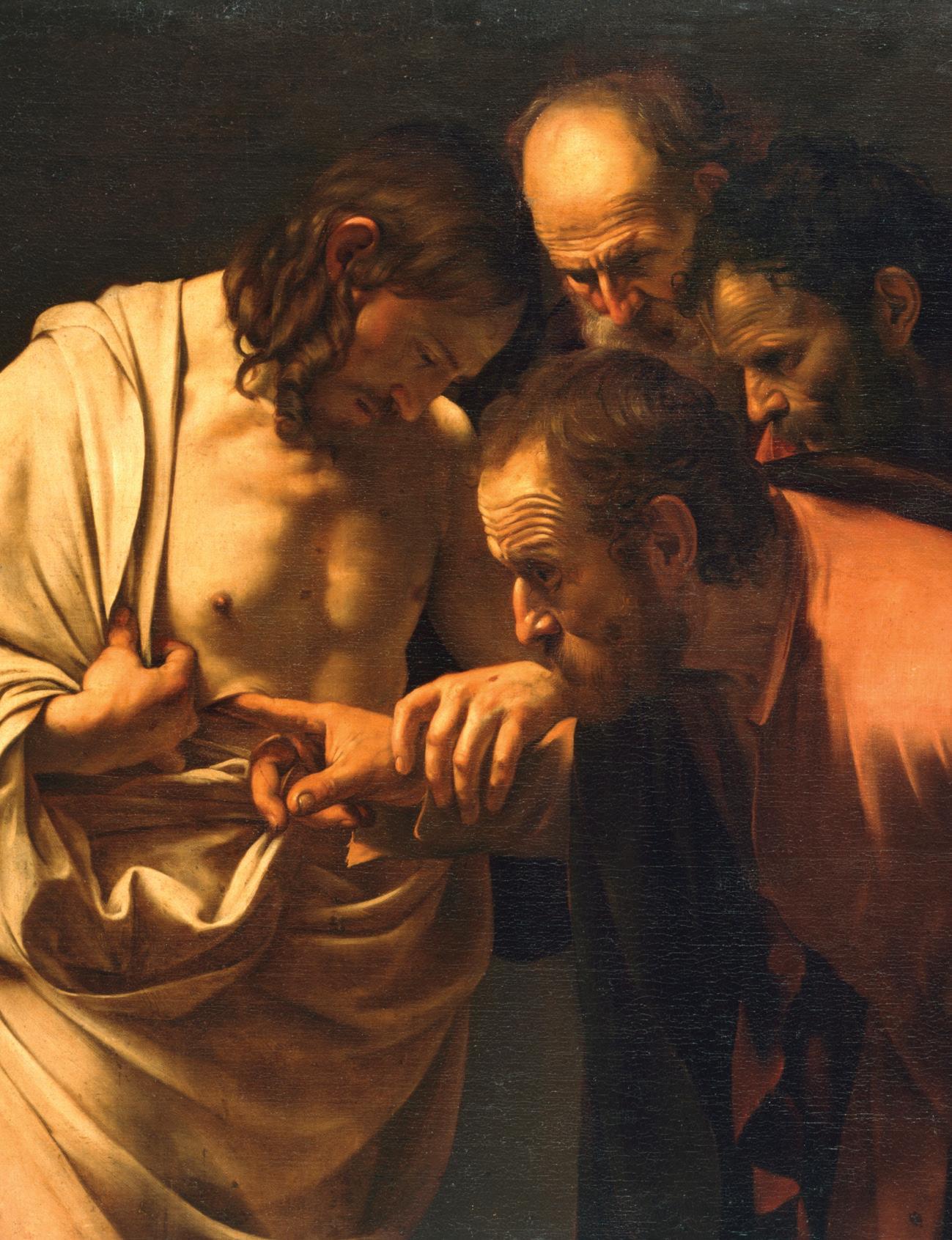
Culler is a member of Alsace Lutheran, Reading, Pa. Artwork: “The Incredulous Thomas,” by Michelangelo Merisi da Caravaggio, c. 1601, Prussian Palaces and Gardens Foundation Berlin-Brandenburg.
BY ELIZABETH JORE
Hymns have held a special place in my heart my entire life and are part of my family history. My great-grandmother, a Lutheran pastor’s wife, wrote hymns for a variety of occasions and had one published in a hymnal, titled “More Like the Man of Galilee.” Her daughter, my grandmother, memorized many hymns as a teenager and later taught a class on hymns. When we had family gatherings, I remember my grandma often wanting the grandchildren to sing “When We All Get to Heaven” (Eliza Hewitt) because she wanted all of us to be there on that day. At her funeral all the grandchildren sang that hymn. Growing up, I also had the tremendous blessing of hearing my mom daily worship the Lord through playing hymns and gospel songs on the piano.
Samuel Medley, the hymn writer for “I Know that My Redeemer Lives,” was born in 1738 in Chestnut, England. In his early years, his grandfather privately educated him both academically and in Christianity, but Samuel’s heart was closed to the gospel. As a young adult in the British Royal Navy, he found himself in a battle with a French ship, which resulted in a severely wounded leg. A physician told him one night that if his leg wasn’t better by morning, he would have to amputate it to save his life. Samuel prayed for God’s mercy, and God answered his prayer with healing. As a result of this miracle, Samuel started reading the Bible his grandfather gave him.
He continued his recovery at his grandfather’s home when his ship arrived in England. Samuel gave his life to Jesus after his grandfather read to him one of Isaac Watts’ sermons based on Isaiah 42:6–7: “I am the Lord: I have called you in righteousness; I will take you by the hand and keep you; I will give you as a covenant for the people, a light for the nations, to open the eyes that are blind, to bring out the prisoners from the dungeon, from the prison those who sit in darkness.”
Samuel later became a pastor and wrote many hymns. “I Know that My Redeemer Lives” was published in 1775 for Easter Sunday and is based on the text from Job 19:25a, “I know that my Redeemer lives.” He repeats the reference in his first stanza: “I know that my Redeemer lives; what comfort this sweet sentence gives! He lives, He lives, who once was dead; He lives, my everlasting Head.”
The Apostle Paul reflects the foundation of the hymn lyrics in his first letter to the Corinthians, “But as it is, Christ has been raised from the dead, the first fruits
of those who have fallen asleep. For since death came through a man, the resurrection of the dead also comes through a man. For just as in Adam all die, so also in Christ all will be made alive” (15:20–22).
In three of the eight stanzas, Samuel lists how the resurrection of Christ affects those who have put their trust in him. “He lives: To bless me with His love … To plead for me above … My hungry soul to feed ... To help in time of need … To grant me rich supply … To guide me with His eye … To comfort me when faint … To hear my soul’s complaint … To silence all my fears … To wipe away my tears … To calm my troubled heart … All blessings to impart.”
In the sixth stanza, “heav’nly Friend” stands out to me.
“He lives, my kind, wise, heav’nly Friend, He lives and loves me to the end;
He lives, and while He lives, I’ll sing;
He lives, my Prophet, Priest, and King.”
Our heavenly friend, Jesus, is like no other friend we have ever had or ever will have. He is the creator of the world and of you and me; he is all-powerful, has full authority over everything; he is all-knowing, always present, loves unconditionally, and forgives and forgets. He is your provider, comfort, truth, protector, guide, peace, strength, and encourager. The last stanza reads:
“He lives, all glory to His name!
He lives, my Jesus, still the same.
Oh, the sweet joy this sentence gives, ‘I know that my Redeemer lives!’”
In 1799, on Samuel Medley’s deathbed, he said, “I am looking up to my dear Jesus, my God, my portion, my all in all!” (Adrian Roach, Little Flock Hymn-book).
May our hearts rejoice this Easter as we ponder all that he gave up for us, and all that our Savior is to us. In turn, may we share with our friends, family, and those who have yet to believe how much he means to us.
“He lives, all glory to his name!”
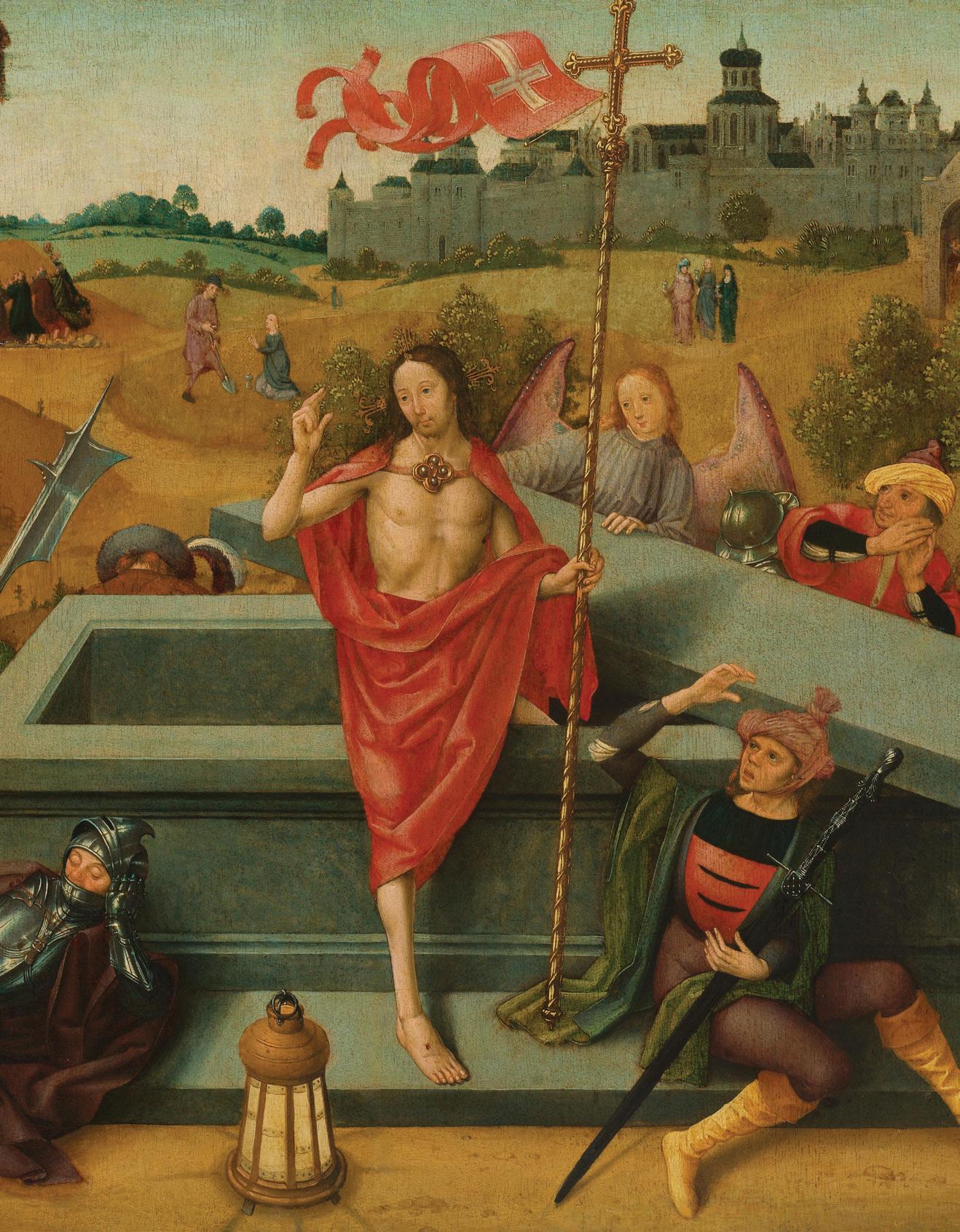
Jore is a member of Grace Free Lutheran, Maple Grove, Minn. Artwork: “Resurrection of Christ,” by the circle of the Master of the Amsterdam Death of the Virgin, c. 1485–1500, Rijksmusem.
BY DR. PHILL HOOPER
It was undoubtedly one of the greatest Bible studies of all time—and I honestly believe it began with a joke. A prank. A playful moment, straight out of the movies. Jesus had died horribly on the cross; after that, everyone had to sit tight for the Sabbath. After that, it was the first day of the week, and Jesus rose from the dead. The frightened, amazed women ran from the empty tomb to tell the disciples, who were, themselves, perplexed. Peter and John ran to the tomb to try and verify events, but Peter seemed mostly to have been confused by what he found, and while John saw and believed, he apparently had not convincingly shared this with the others.
Having business that couldn’t wait, Cleopas and another of Jesus’ disciples schlepped off to Emmaus, about seven miles away. On the way, Jesus fell into step with them and asked them what they were talking about. “Their eyes were kept from recognizing Him” (Luke 24:16, BSB), and so they proceeded to tell him everything that had happened: his trial, his death, and the confused reports of his possible resurrection. With Jesus taking in their explanation, the scene amounts to comedic gold; from the start, I am amazed at how Jesus managed to keep a straight face. (After all he had endured, apparently, he wanted to demonstrate his resurrection while simultaneously having fun with them.)
Although he had tried to warn them that his death and resurrection were coming (cf. Mark 8:31, 9:12, Luke 9:22, 17:25, etc.), they had simply failed to understand him at the time. They probably thought he was being metaphoric or using a parable and they had been afraid to ask for clarification. Out of pride, you and I might have done the same. Now that these things had occurred, perhaps they would finally grasp his meaning. In the guise of a biblically informed stranger, “beginning with Moses and all the Prophets, He explained to them what was written in all the Scriptures about Himself” (Luke 24:27).
Allowing for some stops along the way for them to stare open-mouthed at what he was saying and then ask questions, the walk to Emmaus would have taken maybe three to four hours. This means that Jesus had a relatively short time to explain the contents of a whole lot of Scripture. What might that Bible study have contained? We can only speculate.
He could have begun by identifying himself as the creator, the Word of God, through whom all things were made (cf. Genesis 1). He could have described to them how God’s command to Abraham to sacrifice “your only son Isaac, whom you love” (Genesis 22:2) foreshadowed his own sacrifice on the cross. He could have explained how he was the one who carried away the sins of the people and at the same time was the once-and-for-all sacrifice that atoned
for the sins of all of God’s people collectively (fulfilling the Day of Atonement, cf. Leviticus 16). He could have further explained how he was the once-and-for-all sacrifice that did away with the need for daily sacrifices for the sins people committed as individuals (cf. Leviticus 4–6). He was the prophet like Moses—greater than him, in fact—who was promised to come (Deuteronomy 18:15). He was the fulfillment of God’s promise to David, that he would have an eternal dynasty (II Samuel 7). He was the promised ruler, due to be born in Bethlehem (Micah 5), and he was the Lord’s servant, come to raise up Israel, be a light to the nations (Isaiah 49), and to suffer, bearing the punishment that would bring us peace (Isaiah 53). This much comes from the law, history, and prophets—and myriad further examples from these Scriptures could be cited.
From wisdom literature (Proverbs, Psalms, etc.), he could have identified himself as the wisdom of God and could have shown numerous Psalms that find their truest sense in him—not the least of which is Psalm 22, the opening line of which he cited on the cross: “My God, My God, why have You forsaken me?” (Psalm 22:1).
We have no way of knowing exactly how much detail he went into during that seven-mile walk. At the very least, he showed how the Old Testament pointed to his suffering, death, and resurrection, and all that it entailed. This was God’s plan since Genesis 3 and still is the vital center of any hope for humanity; little wonder Jesus took care to explain it to these two men and, later that evening, to his disciples in Jerusalem (Luke 24:36–49).
Having explained all that he intended to on the road, he joined them at the evening meal. While speaking a blessing and breaking the bread—gotcha! He disappeared. He had been revealed to them in the breaking of the bread. And then he was gone. It must have been an amazing moment, and one that I’m guessing he had a chuckle over. Instead of assembling a formal lecture, he lovingly talked with them on the way, opened their eyes to the truth, and playfully sent them back to Jerusalem thinking, “They’re never going to believe this!”
Almighty Creator, Savior, fulfiller of the Scriptures— Jesus was all this and more. And as the great teacher, he showed us that all of the Scriptures are fundamentally Christocentric: they point to and find their greatest meaning in light of his saving life, death, and resurrection.
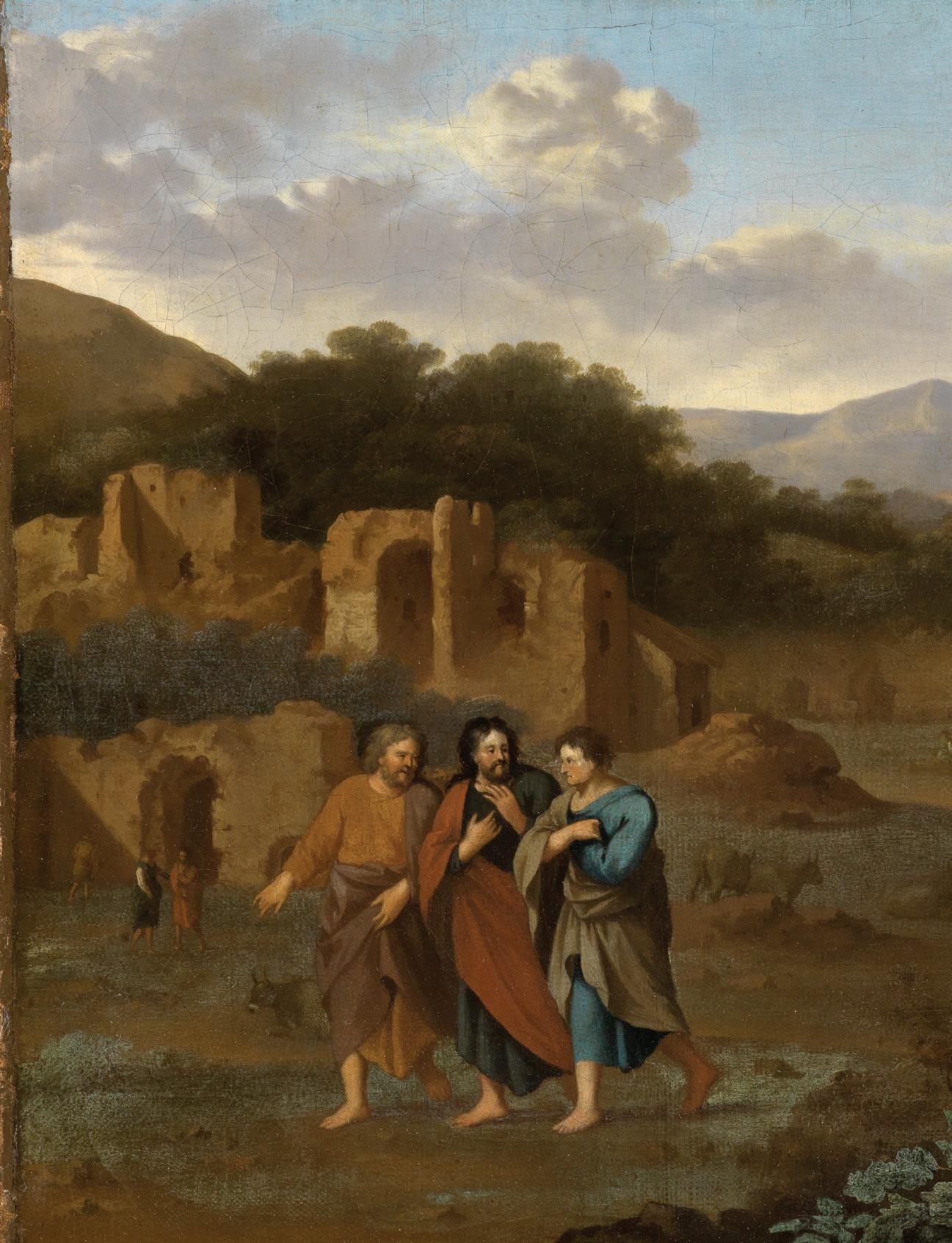
Hooper serves St. John’s Free Lutheran Church, Duluth, Minn. Artwork: “Italian Mountain Landscape with Christ and the Two Disciples on the Road to Emmaus” by Cornelis van Poelenburg, c. 1617–1641, Staatliche Kunsthalle Karlsruhe.
BY SARAH LANGNESS
It was one of the most difficult seasons I’ve experienced thus far. We felt the Lord calling us to leave a home we loved and begin ministry in a different location. Though far from our biological family, the home we were leaving was filled with people who had adopted us into their families; it was the home in which we became a family, first as a couple and then as we added children; it was a home in which I knew my worth and had invested in various ministries, even making a difference. But in this new place, I struggled. I didn’t know where I fit, where I should serve, and when I served, if my serving even made a difference. I felt lost, alone, and bereft. I questioned whether the Lord had actually called us here, and if he had, what purpose he had in mind, because all I sensed was loneliness and loss.
During this difficult season, I was studying the Gospel of Luke. At the beginning of Jesus’ ministry, Luke writes, “But now even more the report about him went abroad, and great crowds gathered to him to hear him and to be healed of their infirmities. But he would withdraw to desolate places and pray” (Luke 5:15–16, ESV). A desolate place? That sounds familiar. Even more so when I looked up the definition for “desolate”: deserted of people; in a state of bleak and dismal emptiness.
Tears came to my eyes, and still do, as I consider that the very place I unwillingly found myself in was a place that Jesus himself willingly sought out! Often when I think of passages like this, the focus seems to be on Jesus seeking a solitary place in order to pray and be with his father. But more significant to me in this season was that Jesus sought out a place filled with bleak and dismal emptiness, a place where perhaps one could feel lost, alone, and bereft. A place where one could feel despair and loneliness. A place that described my present situation.
Knowing that this was the place Jesus himself sought out brought me hope and a peace that I had not experienced for quite some time. I knew now that despite the apparent loneliness, I was not alone in this place. I was reminded that Jesus had experienced the very same feelings as I; that he had felt the same loneliness, the same discouragement. Jesus was no stranger to sorrow and to grief (Isaiah 53:3). He faced not only the three specific temptations recorded in
the Gospels but every temptation we face (Hebrews 4:15). Jesus was tempted to question his father’s will, Jesus was tempted to despair and give up, and Jesus was tempted to feel like what he did wouldn’t matter anyways. The very same temptations I faced.
Yet the beauty of this lies not only in having someone relate to and understand my feelings, my struggles. The beauty is that this One who felt the same as I did lives today, seated at the right hand of his Father! Because of Jesus, I have direct access to God the Father and I am invited to “draw near with confidence to the throne of grace so that [I] may receive mercy and find grace to help in time of need” (Hebrews 4:16). Because Jesus lives, he sits at the right hand of God, and he “lives to make intercession” for me and for you (Hebrews 7:25, Romans 8:34). Because Jesus lives, I have unfettered access to the One who is an ever-present help in time of trouble, abundantly available to help (Psalm 46:1).
The beauty and truth of the resurrection give us more than hope for life eternal; they gives us hope for this earthly life and the difficulties we face each day. Are you tempted, as I was, to feel discouraged? Call to Jesus; he lives to make intercession for you and is abundantly available to help. Are you tempted to feel overwhelmed, either by world events or your own personal struggles? Call to Jesus; he lives to make intercession for you and is abundantly available to help. Are you tempted to doubt the Lord’s provision for you and covet what he’s given to someone else? Call to Jesus; he lives to make intercession for you and is abundantly available to help. And if Jesus can conquer death and the grave, who is to say that your difficulties and struggles are insurmountable?
Truly, thanks be to the Lord, who has given us everything we need for life and for godliness. He has given us himself, and in our hours of need, he knows and understands. He is near, able to help, and lives to intercede on our behalf! Praise God!
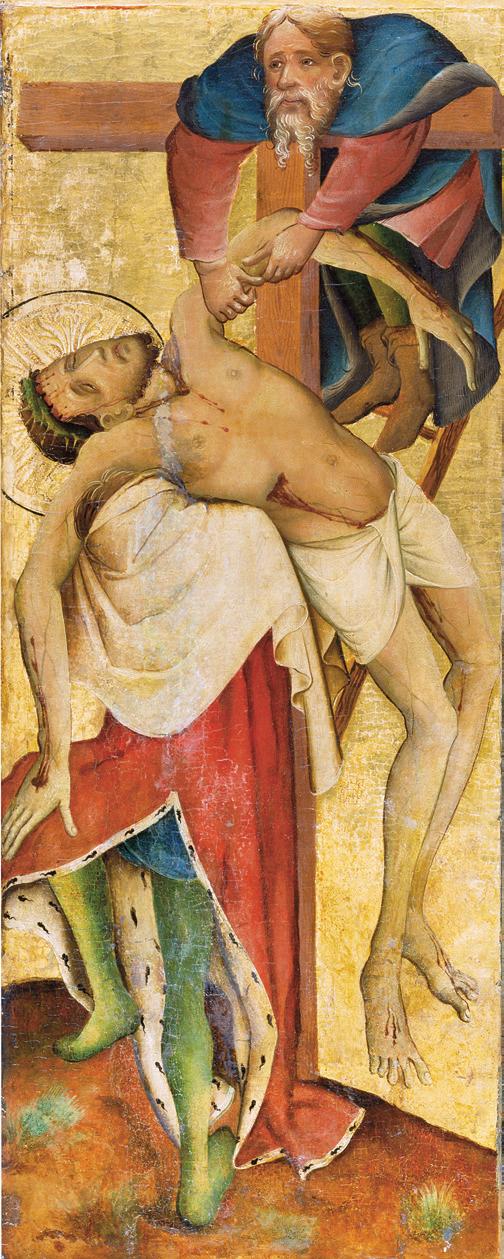
Langness is a member of Hope Free Evangelical Lutheran, Ishpeming, Mich. Artwork: “Deposition and Entombment of Christ,” Master of the Middle Rhine, c. 1420, Städel Museum.


Alsace Lutheran Church, Reading, Pa., one of the oldest Lutheran congregations in North America, has been affiliated with the Association of Free Lutheran Congregations since January 2006. The members of this historic, predominately German congregation left the ELCA after becoming disillusioned with its leftward drift on important theological as well as social issues.
Tradition has established the founding of Alsace in 1732, the birth year of George Washington, by immigrants from the Alsace Lorraine area of Europe by French Protestants (Huguenots) and German Lutherans from the western edge of the Holy Roman Empire. They were fleeing the religious strife in the region and sought refuge in the promise of William Penn’s guarantee of religious freedom in his province of Pennsylvania. Most of them had arrived in Philadelphia from around 1727 to 1733, after which they traveled up the valley of the Schuylkill River to lands that reminded them of their homeland in what is now Berks County. There they received warrants from Penn for tracts of land from which a church and cemetery would be constructed to serve the religious community.
It is generally believed, though not verified, that Jacob Spangler (1698–1756) and Dewalt Baum (1693–1762)
were two of the founders of Alsace Church who donated land from their warrants on which the first Alsace church building was built in 1740. The congregants had worshiped under trees on Alsace Hill or in the homes of the congregation’s members before building that first log church. Spangler, the member who provided the largest portion of the land to Alsace Church, was a great-greatgrandson of Lazarus Spangler, who was a friend of Martin Luther himself and was with him at the Diet of Worms. It is quite a significant link to the Reformation itself.
Alsace’s early history continued to reflect a remarkable connection to its religious heritage. Henry Melchior Muhlenberg, the patriarch of the Lutheran faith in North America, wrote about, visited, and preached to the fledgling congregation. Muhlenberg’s son, Frederick A. Muhlenberg, the first speaker of the U.S. House of Representatives, in addition to his grandson, Dr. Henry A. Muhlenberg, served as pastors of Alsace Lutheran during the first decades of America’s existence.
Fortune smiled on the welfare of Alsace members as well. Alsace was on the American frontier during the French and Indian War. More than 200 Berks County residents were killed by Native American allies of the French along
BY BARRY KAUFFMAN
the northern tier of the county during what was also called The Seven Years War. However, the French-speaking members of the Alsace congregation apparently were enough of a deterrent to keep the natives from attacking the homes of the Alsace parishioners.
From the start and through much of her early history, Alsace Lutheran was part of a union church. This unique arrangement, which was common in southeastern Pennsylvania among Lutheran and German Reformed congregations, featured two different faiths sharing a building and their common expenses. Each congregation had their own leadership and pastor, but a council comprised of an equal number of members from both congregations was responsible for the building and its contents. This continued for much of the first century and a half of Alsace Lutheran’s history.
In 1898, Alsace called their first full-time pastor. Rev. Charles E. Kistler, a recent graduate of the Mt. Airy Seminary in Philadelphia, accepted the unanimous call and began a 42-year ministry at Alsace Lutheran. From the beginning of his call there, Pastor Kistler felt the main impediment to growth was the union church arrangement of which Alsace Lutheran was a part. In 1907, a vote of the
AFLC CHURCH HISTORY
ALSACE LUTHERAN READING, PA
two congregations upheld his suggestion, and the union was dissolved. Due to the fact that many families were split in their membership, it was important to project that the dissolution was without rancor or partisan rivalry.
Therefore, the decision was made to build identical churches on either side of a common parking area. The stained glass windows in both churches facing each other from across the common space were paid for by the Howard Ahrens family, of which Howard was president of the Lutheran congregation and his wife Hannah was a member of and active in the Reformed Church’s Sunday school. The windows were dedicated in honor of the union church history and in memory of their deceased infant children buried just inside the cemetery entrance. It was further agreed that the two congregations would forever worship together each Thanksgiving Eve, alternating between the two churches with the pastor of the guest congregation preaching. This agreement was carried out annually until the Reformed (UCC) congregation dissolved in 2019.
Pastor Kistler’s assessment had been correct. In 1923 alone, Alsace Lutheran confirmed 73 new members into the congregation. By the time he retired in 1939, membership had quadrupled. Steady growth and expansion continued through the next two decades. In 1959, Alsace went on the air every Sunday in a radio broadcast. That event set the stage for the greatest growth of Alsace in its long history.
On January 1, 1960, Rev. Charles E. Fair began his 33-year ministry at Alsace. He had organized two mission churches following his ordination in 1950. His booming voice and ecumenical style were a perfect fit for the new radio ministry, and he used it to his advantage. By about 1980 and for the rest of that decade, Alsace had reached the plateau of being one of the 50 largest Lutheran churches in North America. In addition, Alsace was the oldest of the congregations.
Pastor Fair retired in 1993, and his associate pastor for the previous eight years, Mark E. Brophy, was called to replace him as senior pastor of Alsace. It was Pastor Brophy who led Alsace out of the ELCA, allowing the congregation to follow the faith of our forefathers uncompromised. As Alsace approaches the beginning of its fourth century of worship, this storied congregation will continue to live up to its motto: “Church on the hill ... Standing on the Word.”
Kauffman is a member of Alsace Lutheran, Reading, Pa. Illustration based on artwork by Kyle Seiz.
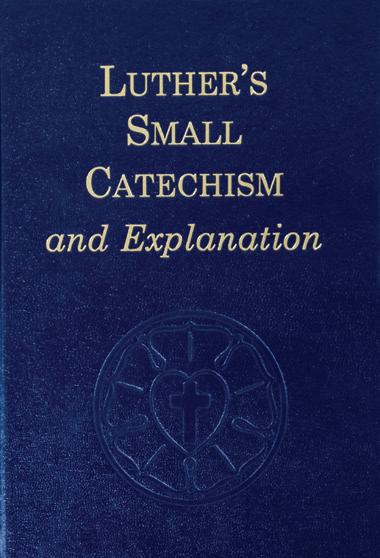

Parish Education is working on new catechism resources, including a 10 Commandments board book for young children coming soon and a 500th anniversary edition of Luther’s Small Catechism to be released in 2029. Find other catechism resources on our website:
• ambassadorpublications.org.
Norby, who serves Grace and Zion Free Lutheran, Valley City, N.D., is the chairman of the Parish Education Board of Publications.
• LUTHER’S SMALL CATECHISM
BY PASTOR DENNIS NORBY
artin Luther’s visits to the congregations of his day revealed a great need for instruction in the foundational teachings of the Christian faith. The need eventually prompted him to write the Small Catechism with headings noting that it was for the heads of households to teach their families. The wider church soon found it to be useful in more places than just the home.
Luther’s Small Catechism and Explanation is one of the most versatile resources we have available to us. It explains the basics of the Christian faith using language that is both clear and memorable. This makes it ideal for:
Sunday school and confirmation instruction
During Sunday school and confirmation instruction, teachers can regularly assign students sections of the catechism to memorize. The Ten Commandments and their meanings, as well as the articles of the Apostle’s Creed, the petitions of the Lord’s Prayer, and the questions connected with the sacraments, are all of such length and vivid language that they can be memorized and recited. Examples of such language in Luther’s explanations include easily recalled phrases like “We should fear and love God so that ...” and “This is most certainly true.”
New members classes
Many people come to new members classes with basic understandings of many biblical teachings. However, they often don’t have a clear and simple way to organize them in their minds or the ability to articulate them when a question is raised on a specific doctrine. Luther’s Small Catechism puts the teachings of Scripture together in a way that follows the clear and profound division of God’s teachings into law and gospel language. The commandments lay out God’s will and show us our need for a redeemer. The Creed describes God’s work on our behalf as we speak of the actions of the Father, the Son, and the Holy Spirit. The Lord’s Prayer reminds us of the gracious access God has allowed for his children, and the sacraments describe the means by which he desires to deliver his gracious gifts of forgiveness and eternal life to us.
Evangelism
In many cases, unbelievers have concepts about who God is and what he has done that are founded on feelings or some rational explanation they have put together. The Catechism places in our hands the Bible’s declarations about our need for forgiveness as well as how it comes to us in Jesus Christ. I have often handed people the Small Catechism and read or pointed out the Second Article of the Creed and Luther’s meaning. It gives us objective statements to talk about, and the explanation that follows provides more questions and answers with Scripture references.
Thanks be to God for this amazing, versatile resource we have available to us. Can you think of other uses? Let us know if there are other ways you are using the Small Catechism in your church, home, or community.

BY PASTOR DAVID PETERSON
ou know the feeling: the hospital waiting room chair that’s never quite comfortable. The heavy, recycled air of a prison hallway. The quiet desperation of a cubicle where the budget feels like the only thing that matters. In those moments, life feels like a wilderness.
Have you ever sat in the dark, wondering if God has the right address? If so, you might remember the door opening to a person who didn’t come with a bill to pay or a chart to check, but with a word to share. That person was a chaplain. And for a few holy moments, they brought the Church to you.
Where the Heart Meets the Hallway
In the AFLC, we cherish our pews and our pulpits. But sometimes, the Kingdom needs to put on its hiking boots. Martin Luther—a man who knew a thing or two about spiritual storms—reminds us that God doesn’t just hang out in the clouds. He comes to the valleys. Luther called it the theology of the cross: the radical idea that God is most visible where life is most broken.
While the world looks for God in the glorious, the chaplain looks for him in the gutter. In a hospice room, the world sees an end; the chaplain sees a beginning. In a memory care unit, when a patient forgets their own name, the chaplain reminds them that they are still named and known by God.
The Impact: Evidence of Grace
This isn’t just feel-good work; it is life-changing ministry backed by real impact. In the hospital, patients who receive spiritual care don’t just feel better; they often heal better. Hope is a powerful medicine. In the office, employees with access to a chaplain report less stress and higher morale because someone finally treated them like a soul, not just a unit of production. On the front lines with fire, EMS, and police, a chaplain provides a safety valve for those who carry the weight of our community’s traumas. In the military, the chaplain appears in the haze of conflict and gently leads the nation’s defenders to the Prince of Peace.
The “Disguised” Christ
Matthew 25 isn’t a checklist for the super pious. It’s a treasure map. Jesus says, “I was sick ... I was in prison.” He didn’t say he was watching the sick; he said he was the sick. When a chaplain walks into a situation, they aren’t just bringing Jesus with them. They are going to meet Jesus, who is already there, waiting with the person who is struggling.
As Free Lutherans, we believe every believer is a priest. That means the call to ministry isn’t reserved for a few people in robes. It’s a call for the Church to be the Church wherever people are hurting. The chaplain is simply the congregation’s ambassador—the one who carries the light of the Word into the places where the shadows are deepest.
AFLC Chaplaincy consists of several ministry emphases:
• Institutional Chaplaincy
• Police and Fire Chaplaincy
• Military Chaplaincy
If you or your congregation want to engage in these vital institutional ministries, AFLC Chaplaincy is here to walk that path with you. Whether you are looking for certification or seeking to place a chaplain in a local facility, let’s talk. Let’s ensure that no matter where our neighbors find themselves, the gospel is there to meet them.
Connect with Chaplaincy:
• Email: revdpeterson@icloud.com
• Phone: 717–33–0934
Peterson, the director of institutional chaplaincy for the AFLC, lives in Chesapeake, Va.

The Association Retreat Center hosts annual events for AFLC groups.
• Women’s Retreat: April 24–26
• Family Work Weekend: May 22–24
• Youth Summer Camps: June 21–25
• Family Camp: July 26–August 1
For more information about these events, visit the ARC website at arc-aflc.org
Rautio, a member of Solid Rock Free Lutheran, Anoka, Minn., is the director of the Association Retreat Center.
BY KIRK RAUTIO
t the Association Retreat Center (ARC), our hearts remain anchored not in numbers, but in the eternal work of the Kingdom of God. As we reflect on this past calendar year, we do so with gratitude, humility, and unwavering trust in the Lord’s provision and purpose.
Scripture reminds us, “For where your treasure is, there your heart will be also” (Matthew 6:21). At the ARC, our treasure is found in changed lives, renewed faith, deepened discipleship, and the quiet moments where God meets his people away from the noise of the world. We are Kingdom-focused and committed to creating space for the Holy Spirit to work through retreats, camps, conferences, and moments of rest and restoration.
As stewards of what God has entrusted to us, we recognize that responsible fiscal management plays a role in supporting Kingdom fulfillment here on earth. Strategic building renovations, thoughtful programming, long-term planning, and structural growth allow us to serve more people more effectively for generations to come. Likewise, decreasing overall debt maintenance and increasing day-to-day operational cash flow directly support sustainability and wise stewardship. These efforts ensure that ministry can continue without distraction or burden.
Over the course of this year, giving has decreased by 4 percent. Overall income decreased by 2.6 percent. While these figures are important to acknowledge and impact our stewardship strategy, they are not, and never will be, the focus of the ARC ministry. Giving supports the work, but it is not the mission. The mission has always been, and will continue to be, pointing hearts to Jesus Christ. We hold this truth firmly: finances serve the mission; the mission never serves finances.
Jesus himself made the focus clear: “For the Son of Man came to seek and to save the lost” (Luke 19:10). The heartbeat of the ARC, and of the AFLC, is souls for the Kingdom. Every room, every meal served, every worship gathering, and every prayer spoken exists for one purpose: that people would encounter Jesus Christ and grow in him.
This year, our theme is “Abundant Growth,” rooted in II Peter 3:18: “But grow in the grace and knowledge of our Lord and Savior Jesus Christ. To Him be glory both now and forever! Amen.” Abundant growth is not measured by numbers alone, but by faithfulness and obedience to and reliance on Christ. It is growth that comes from walking closely with Jesus, surrendering daily, and allowing him to shape our hearts regardless of what lies ahead.
As we move forward together, we invite you to reflect personally: What are you doing to deepen your faith? How are you walking in reliance on Jesus? Where is God inviting you to grow abundantly in him? Thank you for standing with us in prayer, partnership, and purpose. Together, by God’s grace, we will continue to grow, not for our glory, but for his.
BY PASTOR MICAH HJERMSTAD
ne of the most striking pictures in C.S. Lewis’ The Lion, the Witch, and the Wardrobe comes from Mr. Tumnus, who says that Narnia is a place where it is “always winter but never Christmas.” The quote paints Narnia as a dark, cold, and hopeless place, where the light, warmth, and hope of Christmas never come. In the story, it’s the arrival of Aslan (representing God) who brings the return of spring and the hope and life that come with it.
Scripture describes the life-giving work of God in many ways. He brings us from death to life; he delivers us from the domain of darkness into his marvelous light. Often, words like “refreshing” and “renewal” are used to describe this work. In Acts 3, the call is made to “repent … that your sins may be blotted out, that times of refreshing may come from the presence of the Lord” (vv. 19–20). In Titus 3, we read that God saved us “by the washing of regeneration and renewal in the Holy Spirit” (v. 5). Romans 12 exhorts us to “not be conformed to this world, but be transformed by the renewal of your mind” (v. 2).
In 2025, a focus of mine was on spiritual leadership. I hope to continue encouraging healthy leadership in our congregations, including our laity and pastors. As I’ve settled into this role, I’ve found that having a general theme or focus each year is helpful, so in 2026, I want to focus on renewal.
Renewal can mean a lot of things, particularly in our AFLC context. It’s a word that is often associated with revitalization and, specifically, church revitalization. Andy Coyle, our Home Missions director, and I have begun conversations about how we can encourage and support congregations that need renewal. I believe there are pastors in our midst who need refreshment, and I want my office (including PACCT) to look for ways that we can help them. Sometimes renewal can be associated with words like “revival” and “evangelism.” I pray that the rhythms and message of the AFLC and its congregations would be motivated by a zeal for souls, and that the good news gospel message of Jesus Christ crucified and risen for you would be our song.
Former AFLC President Robert Lee wrote a book titled A New Springtime, which describes the revival among Norwegian Americans in the late 1800s. In it, Lee alludes to the fact that some have falsely attributed the revival to the “Americanization” of Norwegian churches. In other words, revival happened because these churches adapted their practices to fit emerging cultural norms in America. One example of that would be speaking English in their worship services rather than their native Norwegian. Lee asserts that it was much more than that. These Norwegians carried with them a heart for revival and renewal from what had happened in Norway in previous generations.
This emphasis goes back even further. The Reformation was marked distinctively by renewal and revival, and as we see in the Bible verses I mentioned above, this kind of language is very consistent with Scripture. I praise God that our heritage over the last 500 years has emphasized the renewal and refreshing that happens when Christ comes to us, and I pray that same emphasis would be a defining mark of the AFLC as we seek to reach this dark, cold, hopeless world with the joy of the gospel.
My life is like a faded leaf, My harvest dwindled to a husk: Truly my life is void and brief And tedious in the barren dusk; My life is like a frozen thing, No bud nor greenness can I see: Yet rise it shall—the sap of Spring; O Jesus, rise in me.
—“A Better Resurrection” by Christina Rosetti Quoted in A New Springtime
Hjermstad, a member of Grace Free Lutheran, Maple Grove, Minn., is president of the AFLC.
Youth Ministries hosts Youth Worker Weekends
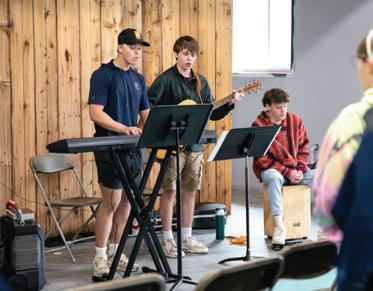
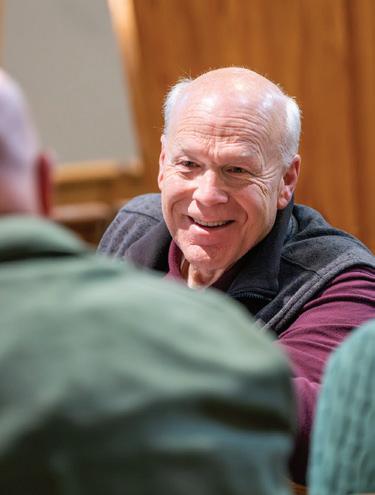
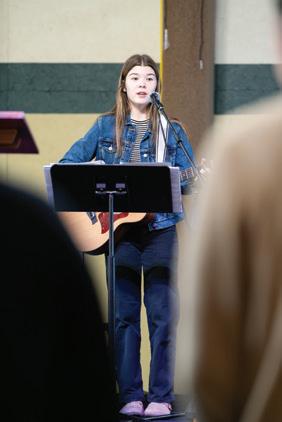
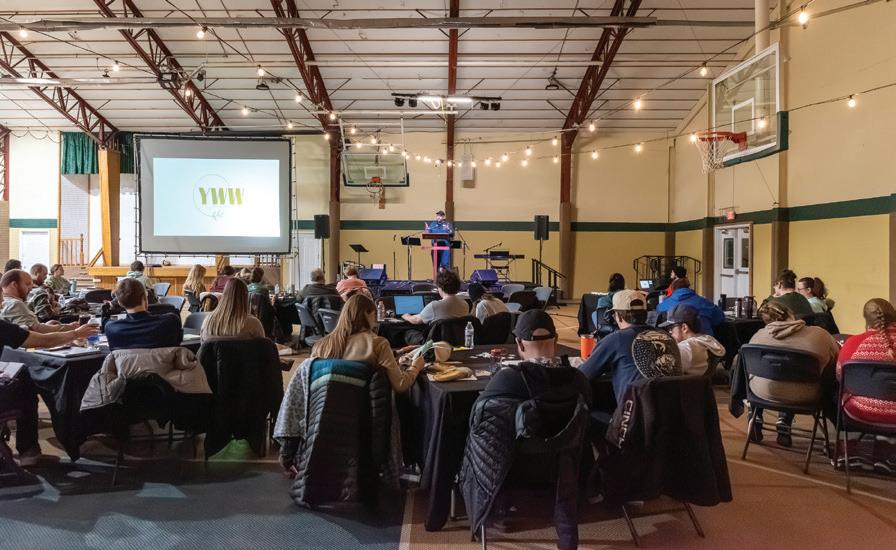
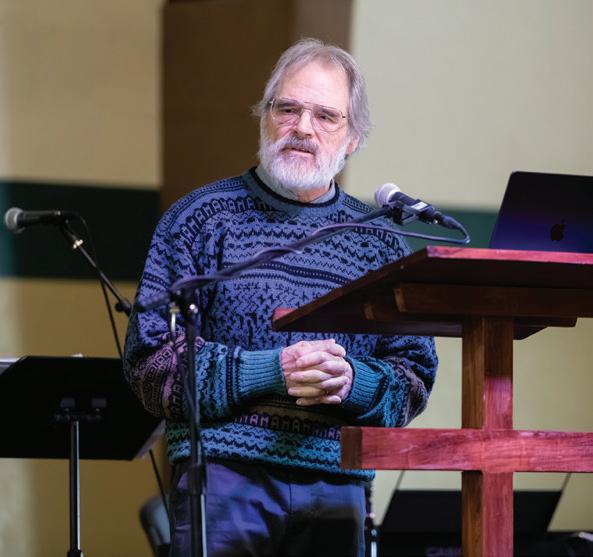
AFLC Youth Ministries hosted a weekend retreat for youth workers Jan. 16–18 at the Association Retreat Center, near Osceola, Wis. Youth Worker Weekend speakers expanded on the theme of “Intentionality” in ministry, focusing on “Intentionally Going to the Cross,” by Pastor Jason Gudim; “Intentionally Using Curriculum,” by Naomi Paige; “Intentionally Navigating AI in Ministry,” by Cliff Fegert; “Intentionally Setting Boundaries,” by Adam McCarlson; and “Intentionally Making Disciples,” by Jeremy Larson.
“God has provided everything that we need to navigate this world, and he didn’t leave AI out of it,” said Fegert, a member of the Dalton Parish, in his session. He challenged youth workers to demonstrate how to use AI in a morally responsible way. “Technology is neither good nor evil. But it is morally amplifying.”

TOP LEFT: Mya Pangman was part of the team from the Free Lutheran Bible College that led worship sessions. TOP RIGHT: Retreat participants listened to the final session on Saturday led by Adam McCarlson, AFLC Youth Ministries director. ABOVE: Naomi Paige sat down with participants during a discussion session. MIDDLE RIGHT: Cliff Fegert speaks on the importance of navigating AI in ministry. RIGHT: Pastor Scott Olson chats with other youth workers.

2026 Annual Conference registration information
The AFLC Annual Conference will be held June 10–13 at Concordia College located in Moorhead, Minn., with the theme “Sure Hope” from Philippians 1:6.
Conference registration is now open (aflc.org/conferences). Prices are $55/single or $95/couple. Online registration options include meals, registration for nursery, vacation Bible school, and youth activities. Online registration and meal registration will close on May 31.
Walk-up registration will be available for the conference ($65/$105), nursery, VBS, and youth. Payment for conference registration will be due upon arrival at the conference. Meal payment is due by May 31. Conference registration policies can be found on the conference webpage.
Nursery is available for children aged 3 and younger. A VBS program will be provided for children entering preschool through those entering sixth grade. The youth track is offered to those entering seventh grade through high school (aged 17 and younger). Those registering youth will receive follow-up communication regarding scheduling, costs, and waivers, as some activities may be held off-site.
Conference housing information can also be found on the conference webpage. The information includes limited campus housing availability with contact information and a list of area hotels and campsites located near Concordia College.
Conference committees will meet on June 10. The conference schedule and nominees will be included in the May issue.
Rekindle the Fire, June 9
AFLC Evangelism and Discipleship will host Rekindle the Fire, a revitalizing and equipping event, on June 9 at St. Paul’s Free Lutheran, Fargo, N.D. With the theme “Loving Your Neighbor to Christ,” the event is open to clergy and lay members. Pastor Tom Parrish will lead two sessions on intentional listening and
FLY Beyond camp planned for July
Registration is now open for FLY Beyond, an equipping conference for teens in grades 7–12. AFLC Youth Ministries will host the event July 12–16 at the Association Retreat Center, located near Osceola, Wis. The event is held every other year opposite of the FLY Convention. This year, students will dig into the theme, “Living Stone,” from I Peter 2:4–9. Speakers include Dr. Brent Olson, who will lead the morning Bible study; Pastor Sam Wellumson, who will be the evening speaker; and Tim Barnett, who will lead sessions on apologetics and worldview.
Registration and information about FLY Beyond can be found on the AFLC Youth Ministries website at aflc.org/youth.

responsive conversations. The event, which is free, will include an evening meal and a time of worship and prayer for the Annual Conference. Registration can be found at aflc.org/evangelism/ events/rekindle-fire.
WMF Day, June 10
WMF Day will be held prior to the conference opening on June 10 at Concordia College with the theme “I Believe, Help My Unbelief” (Mark 9:24). The schedule begins with worship at 9 a.m., followed by devotions and recognition of missionaries in attendance. Workshops will be presented. After lunch, a memorial service and business meeting will close out the day. The Mission Festival service will be held June 11.
Registration ($25/person before June 10, price increases to $30) can be found online (aflc.org/conferences). You may also register for the WMF Day meal ($17) on the AFLC registration form.

PEOPLE & PLACES
Pastor Eric Rasmussen has resigned from Calvary Free Lutheran, Fergus Falls, Minn.
Lorilee Mundfrom, wife of the late Pastor John Mundfrom, died Feb. 15. Arrangements are pending. A full obituary will follow.
Tom Phillips, 67, a member of the AFLC Evangelism and Discipleship Board, died Feb. 7. A service was planned for Feb. 20 at Our Savior’s Lutheran, Zumbrota, Minn., where he was a member.
Pastor Curt Emerson has accepted a part-time call to Trinity Free Lutheran Church, Janesville, Wis.
Pastor David Niemela was installed Feb. 22 at Abiding Faith Free Lutheran, Ortonville, Minn., with Pastor Jason Holt, AFLC presidential ministry associate, officiating.
Pastor George Lautner has accepted a call to Holmes Evangelical Lutheran Church, Clarion, Iowa.
Alsace hosts Vilacello
Alsace Lutheran, Reading, Pa., hosted the Vilacello Winter Workshop, a weekend-long intensive program for violin, viola, cello, and piano students ages 10–25. Vilacello was founded by Bartholomew Fortino-Shields, who saw the need for top-tier instruction in Berks County, Pa. Vilacello has welcomed internationally renowned faculty committed to providing conservatorylevel instruction through festivals and events.
The winter weekend event concluded with two public performances at the church on January 10 and 11. Two of the instructors also performed during the Sunday worship service.
The next festival is planned for July 5–10 in Contursi, Italy.
JANUARY MEMORIALS
AED
Pastor Keith Quanbeck
FLBCS
Pastor Keith Quanbeck
Estella Kamphaugh
Anna Marie Huesers
John Vachal
HIS Fund
Pastor Kieth Quanbeck
Pastor Donald Herman Greven, 81, of Newark, Ill., died Feb. 16 at Morris Hospital and Healthcare Center in Morris, Ill. Born on September 2, 1944, in Minneapolis, he was the son of Herman and Francis (Anderson) Greven. He married Mary Larson, on July 16, 1966.
He was raised and educated in Minneapolis and graduated from Roosevelt High School in 1962. Following high school, Don attended California Lutheran Bible School in Los Angeles. After completing his studies there in 1964, he returned to Minnesota, was married, and continued his education at the University of Minnesota, earning a bachelor’s degree in music education in 1968. He later pursued his calling in ministry by attending the Association Free Lutheran Seminary, where he graduated in 1975. Over the course of 50 years in ministry, he served many AFLC congregations, including Scandia Lutheran, Sedan, Minn.; Salem Lutheran, Radcliffe, Iowa; Stavanger Lutheran, Garden City, Iowa; West Lisbon Lutheran, Newark, Emmanuel Lutheran and Hauge Lutheran, Kenyon, Minn., as well as a congregation in Viroqua, Wis.. His years of service reflected a steady commitment to his calling and the communities he led. In addition to his pastoral ministry, he served for 12 years as dean of the Free Lutheran Bible College, beginning in 1984, where he played an important role in guiding and preparing students for Christian service. Pastor Don dedicated his life to ministry and service, including establishing ministries in places such as Kenya and Hungary. He also served on the board of the Living Faith Christian Missionary Fellowship in Kenya, supporting its work and outreach. Music was a lifelong passion for Don. He served as a choir director and stayed actively involved in church music for many years. He also coached Little League baseball, investing time and care in the lives of young people. A loving husband and devoted father, Don lived his faith every day. Teaching God’s Word and sharing the message of the gospel was at the center of everything he did.
Surviving are his wife Mary; three children, Cynthia (Greg) Bengtson of Newfolden, Minn., Matthew (Lisa) Greven of Newark, and John (Wendy) Greven of Big Lake, Minn.; nine grandchildren; one great-grandchild; and one sister, Audrey (Owen) Miller.
The service was held Feb. 20 at Helmar Lutheran, Newark, Ill., with Pastor Steve Lombardo officiating. Following the services, Donald will be laid to rest at Helmar Lutheran Cemetery in Newark.
In lieu of flowers, memorials may be made as gifts in Pastor Don’s name to the Living Faith Church in Kenya, Africa (Kenyancall.com) or Friends of Israel (FOI.org).
Home Missions
Donna Hass
Roger Evans
Parish Education
Pastor John Chandler Marilyn Hall
Jorgenson
Patricia Benson
Maureen Hatch
World Missions
Debbie Hanson
Jeremy Sundby
Pastor Donald Greven

BY MICHELE MOBLEY
Weaving my brother and me through old treasures buried in prairie grass, Mom drew our squirmy attention to a large rock. There was nothing unique about the rock, yet Mom seemed convinced there was something special underneath it. Eager for buried treasure, my brother and I knelt down and expectantly rolled the field stone over onto its windward, etched side. Winding through matted grass was a matrix of tunnels. Mom smiled as she joined us to point out the tiny engineers behind the marvelous matrix— ants. Following that day, my brother and I spent many summers building forts and imaginations among forsaken junk in northeast Montana. I often paused to turn over a rock, and the ants rarely left me disappointed.
Agur, son of Jakeh, was also amazed by the lowly ant as well as three other lowly creatures. “Four things on earth are small, but they are exceedingly wise: the ants are a people not strong, yet they provide their food in the summer,” he writes (Proverbs 30:24–25). Since that first turned stone, I have spent many summer days considering the diligent workings of the ant. Whether sipping my morning coffee on the patio, kneeling to plant flowers, or walking across a parking lot, my attention is often turned down to the ant. There at my feet, carrying a foraged seed between pinched mandibles, the harvester ant maneuvers to its colony. Steady, disciplined progress results in gathering stores of food wisely placed in prepared chambers. Amazing!
“Four things on earth are small, but they are exceedingly wise … rock badgers are a people not mighty, yet they make their homes in the cliffs,” writes Agur (Proverbs 30:24, 26). Mom warned me about badgers.
She said they could be vicious. And so, I was instructed to leave a wide berth between my prairie wanderings and the rising badger’s mound. One summer a student from France visited our farm. Dad caught him stalking a badger on its mound. Dad urgently interrupted our young guest’s quest “to pet the groundhog,” assuring him that his stalking of the animal would not have ended well. Badgers, though often violent, are vigilant vermin. And it is their vigilance that protects the storehouses of their homes.
“Four things on earth are small, but they are exceedingly wise … locusts have no king, yet all of them march in rank,” continues Agur (Proverbs 30:24, 27). The prairie held this lesson, too. Years of drought and locusts resulted in Mom waving the white flag of surrender. The locusts took the lawn, and Mom planted a rock garden; pea gravel replaced green sod, rusty, repurposed farm implements replaced perennial bushes, and potted silk flowers replaced delicate annuals. The ordered march of the locust has always brought destruction. The many rock gardens of northeast Montana bear witness to a humble beauty redeeming vast destruction.
“Four things on earth are small, but they are exceedingly wise … a lizard you can take in your hands, yet it is in kings’ palaces” (Proverbs 30:24, 28). Lizards are scarce in the Upper Plains, but crumbling foundations of decaying prairie structures offer a warm bed for the lizard-like salamander. One spring, as we prepared to take down two leaning wood granaries, Mom led my brother and me along the crumbling rock foundations of those granaries to search for salamanders. The search resulted in our tentative, chubby
fingers placing squirmy salamanders into an old aquarium transformed into a salamander terrarium of the noblest kind. I spent many hours bending over the aquarium adding treasures fit for a king. I’m afraid for the salamanders it was a shortlived dynasty. But then, Agur’s lizard held no presumption of greatness.
The “Words of Agur” in Proverbs 30 classify for us four creatures who are quite low on the food chain yet “exceedingly wise.” My pulse slows while observing the diligent workings of the ant because I begin considering not the weight of my burdens but the sufficiency of Christ’s grace, resulting in storehouses of mercy. The wisdom of the badger to place his home in the cliffs reminds me to vigilantly guard my heart in the storehouses of God’s wisdom delivered to me in his Word. Knowing that the locust marches in rank, not lusting over the rank of the soldier before him, places in me an excitement for the work that can be accomplished by the Spirit through the local congregation. The lizard’s humility to abide in lowly places when he could be dining in king’s palaces directs my service “to the least of these” as well as checking my presumption at the castle door.
I do not believe Mom was considering the “Words of Agur” while introducing my brother and me to the beauty of prairie life. I’m quite certain Mom was simply stewarding God’s good gifts by introducing her children to the wonders of creation and God’s natural order. Friends, may you and I be found small and wise enough to do likewise while leaving no stone unturned.
Mobley is a member of Solid Rock Free Lutheran, Anoka, Minn.
BY PASTOR STEVE SNIPSTEAD
ne of my favorite conversations about the role of faith comes from the 1983 film Martin Luther: Heretic. Luther is teaching his students that being right with God comes by faith in God’s grace. The class struggles to understand.
One student asks, “What does it take to be a good man?”
Luther replies, “Faith.”
“But every peasant in Germany has faith!”
“So.”
“Will heaven be filled with German peasants?”
“Might be.”
“It can’t be that easy.”
To which Luther replies, “You think faith is easy?”
Faith is simple but far from easy. Faith is simply trusting God for what he has done. Faith is “the assurance of things hoped for, the conviction of things not seen” (Hebrews 11:1). But we would rather trust what we can see and control. We mistake faith for
willpower or self-confidence—anything to avoid trusting the gracious action of a loving God. But it’s only a life of faith grounded in what Jesus has done for us that leads to genuine spiritual growth and empowers the Christian life.
Faith is how we lay hold of grace. It may seem simple enough—we are saved by grace through faith—but when you try to analyze how that works exactly, things get confusing.
Grace is what God does for us. Faith is our response to what God has done. Ephesians 2:8–9 describes how grace and faith work together: “For by grace you have been saved through faith. And this is not your own doing; it is the gift of God, not a result of works, so that no one may boast.” Paul tells us that all of it—God’s offer of grace and our response in faith— is God’s doing. Faith is from the human perspective; grace is from God’s. We may not understand how it works, but we can understand the message and participate in the outcome.
Let’s not make faith harder than it is. Faith is not an explanation. Faith is simply trusting in Christ and taking God at his word. Faith doesn’t mix the finished work of Jesus on the cross with trying to do good or attempting to follow rituals and traditions. Faith isn’t even a strongly held commitment. Simple faith is just that—simple faith—directed toward the unshakable promises of God.
Faith in the gospel’s promise requires no embellishment and needs no explanation. Faith is simply looking to Christ and believing that on the cross all our sins—past, present, and future—were laid on Jesus. In Jesus, we become part of God’s family. Forever and always, God is willing to help and forgive. The life of the Spirit grows in us even when we do not see what we hope for.
This is what it means to live by faith.
Snipstead, who serves on the FLBCS Board of Trustees, is a member of Faith Free Lutheran, Kalispell, Mont.