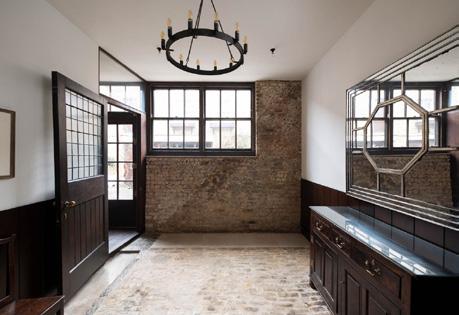
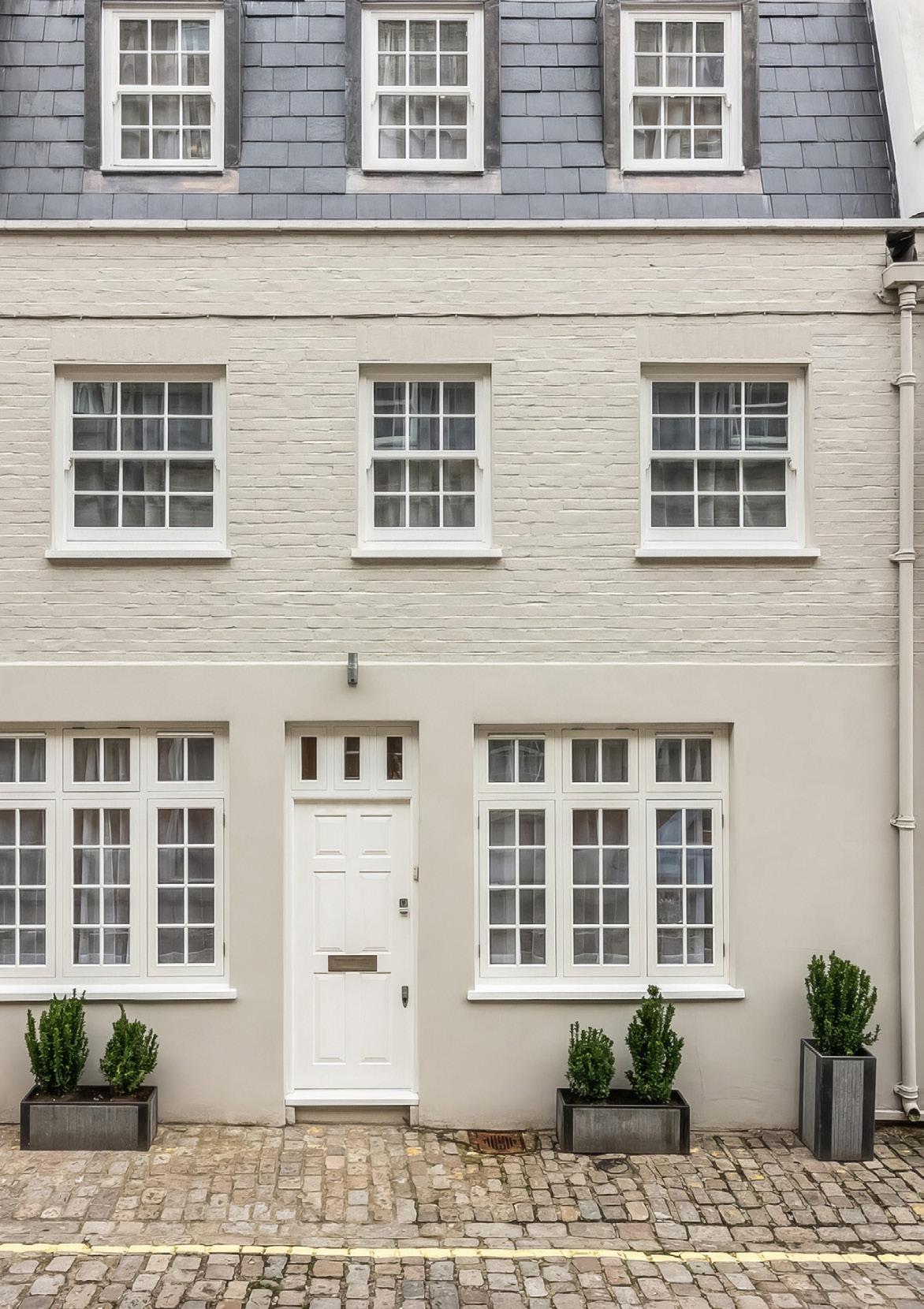
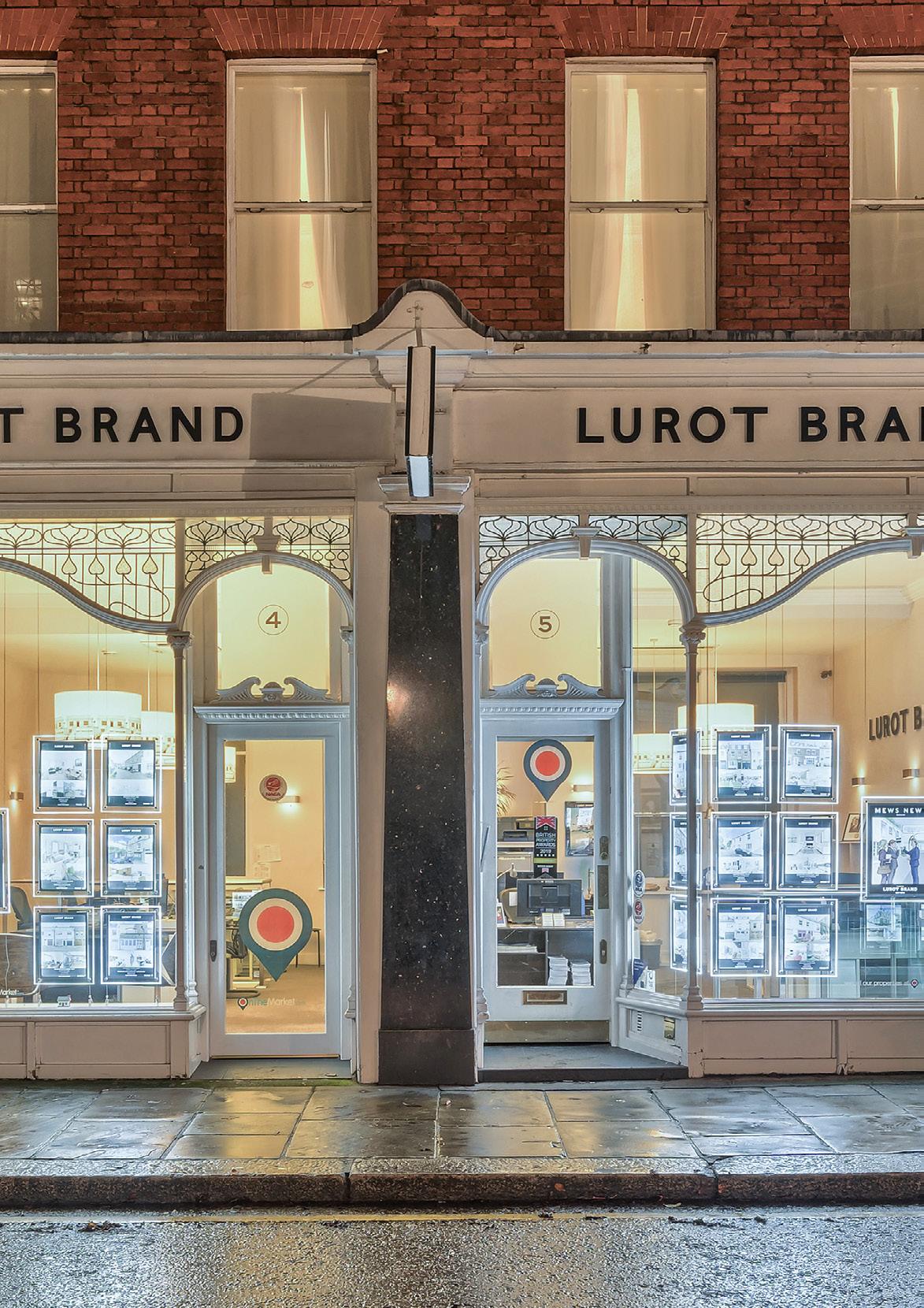
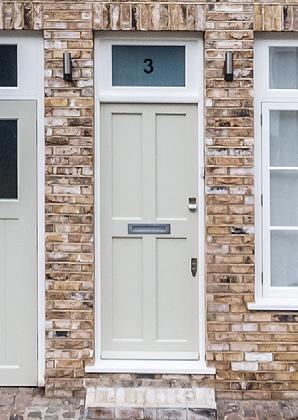
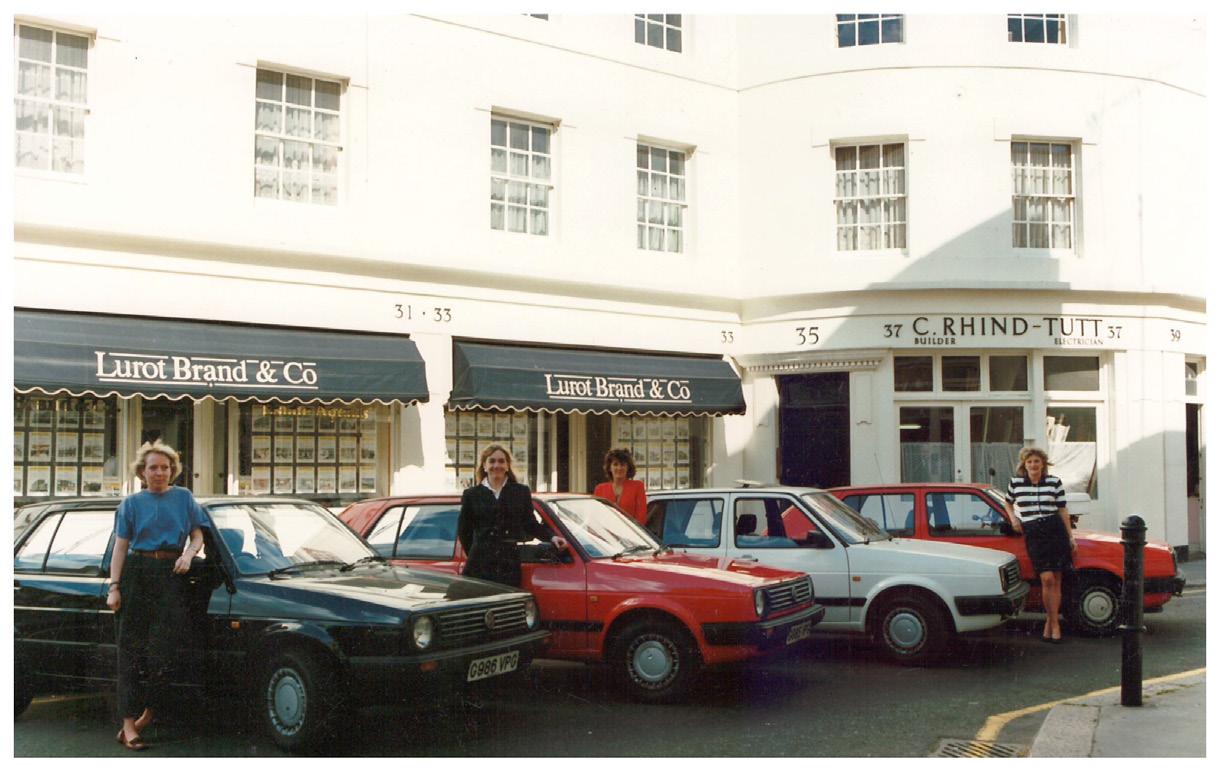
The start of a new year often brings a renewed sense of momentum, and 2026 has begun on an encouraging note for us. After an extended period away, we are delighted to have reopened our Hyde Park office on Sussex Place. Following two separate incidents of water damage, the building required careful and extensive restoration. Thanks to perseverance and teamwork, the office has now been fully restored, and it has been a genuine pleasure to welcome familiar faces back through our doors. We extend our sincere thanks to our clients and local residents for their patience, understanding and continued support throughout what was a challenging period.
While the office was closed, we remained fully committed to the neighbourhood. Operating from our South Kensington office, we stayed closely involved in the local market, continuing to advise clients and successfully completing many sales and lettings. Having served the Hyde Park area for more than four decades and the London mews community since the early 1970s, reopening our Sussex Place office feels particularly meaningful. It not only allows us to reconnect with our neighbours, but also reinforces our long-standing dedication to this unique corner of central London.
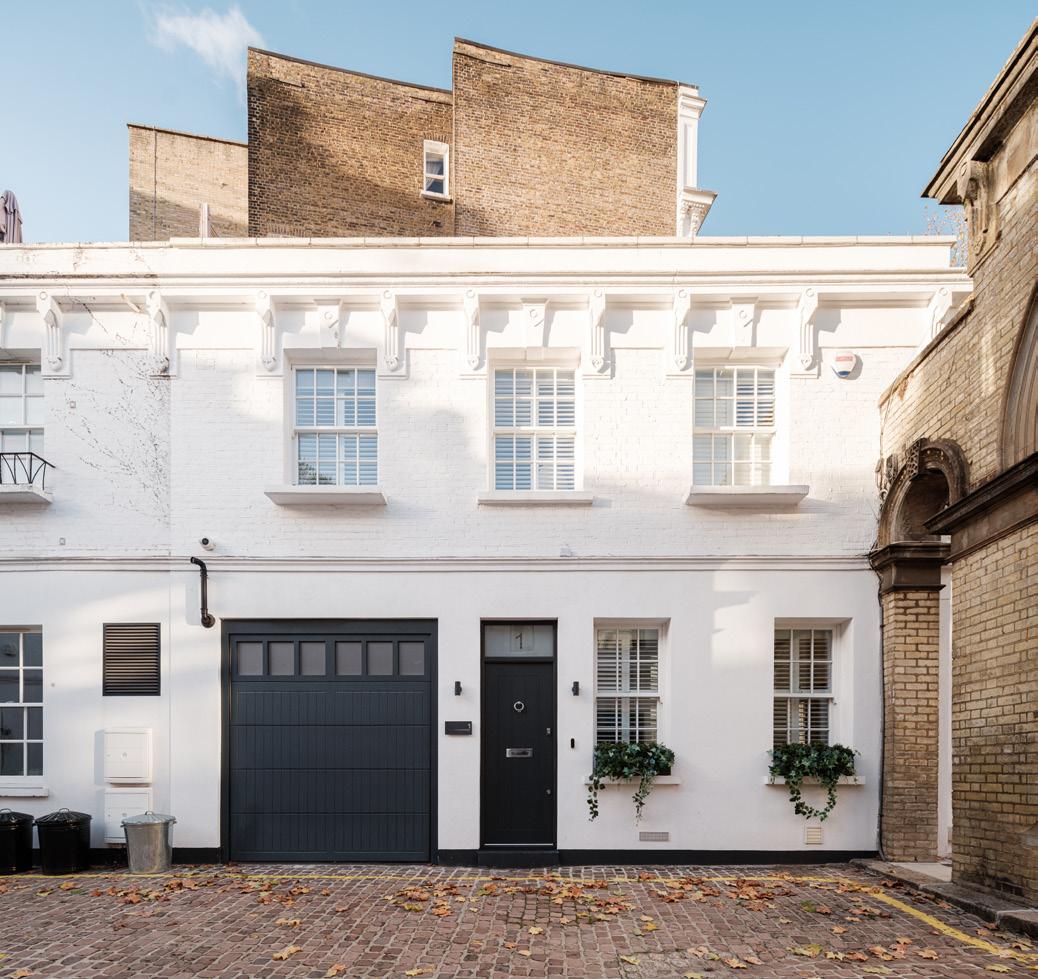
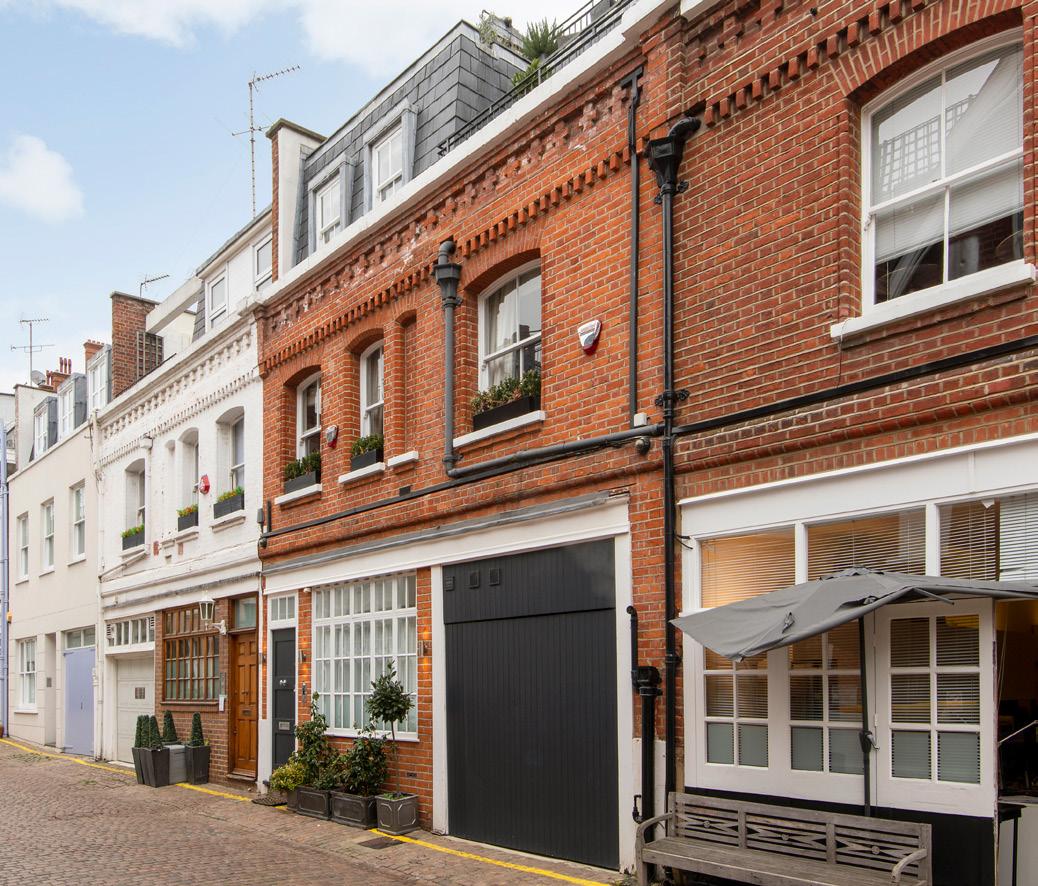
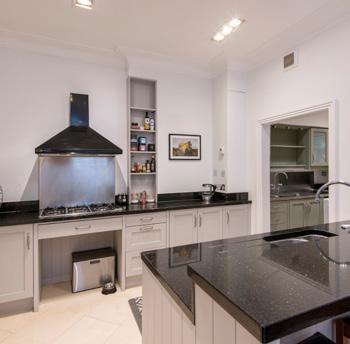
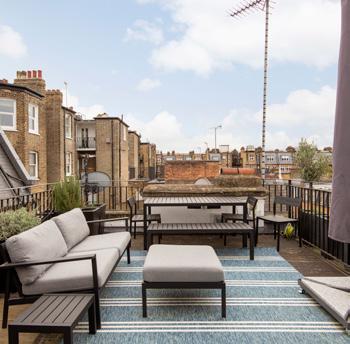
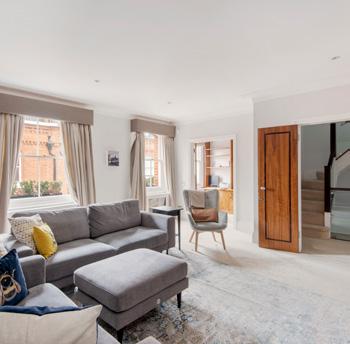
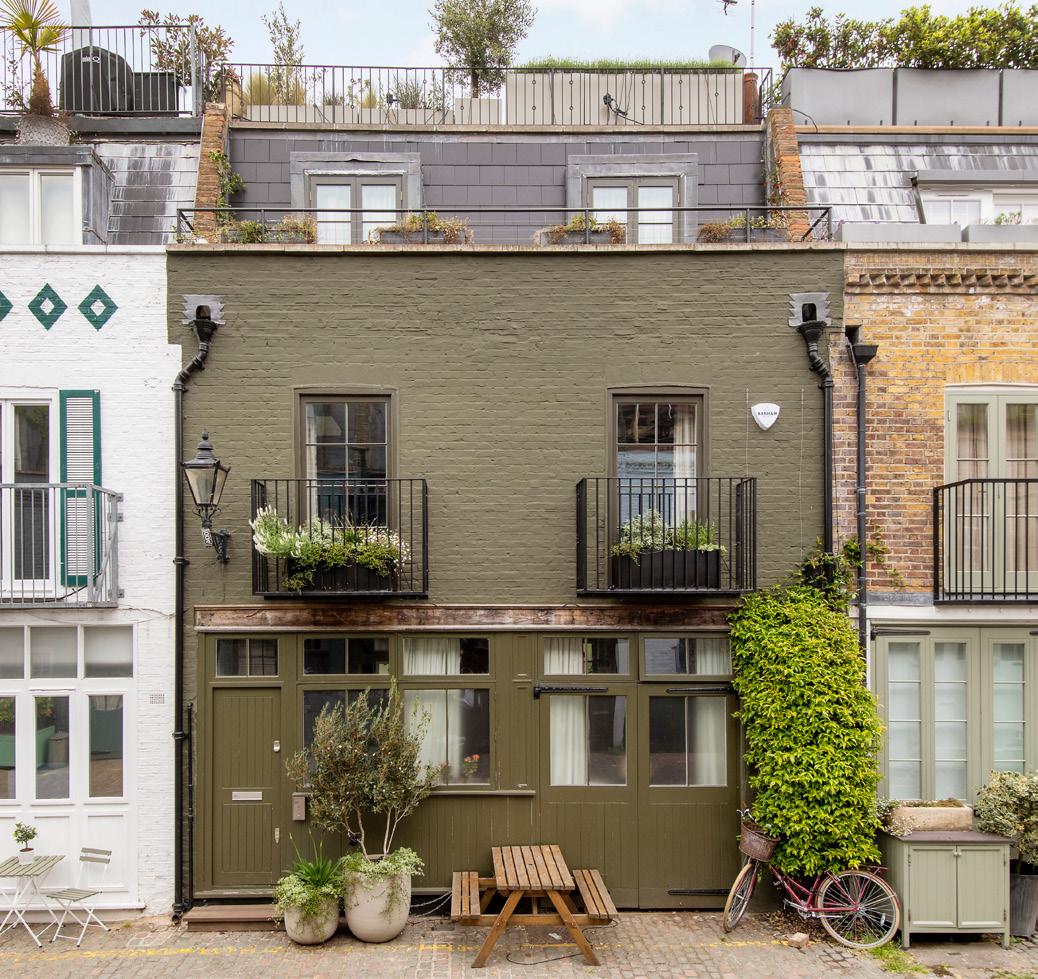
Alongside this, our teams have had a busy and rewarding start to the year, launching several beautifully presented mews properties across London. Many attracted immediate interest, with homes quickly finding buyers and tenants demonstrating a clear reflection of both the enduring appeal of these properties and the expertise of our team.
This surge in activity coincides with a broader sense of optimism in the market. We are seeing growing confidence among buyers, tenants and clients alike. While global and geopolitical challenges persist, locally, London’s communities remain resilient. Many families are choosing to stay in the capital, committing for the long term to the neighbourhoods they value and love, while new families continue to arrive, drawn by the character, charm and sense of belonging that London’s mews streets uniquely offer.
In lettings, demand has returned with pace after the seasonal slowdown. Well-presented homes are attracting strong interest, and while more properties are coming to market, competition remains high, particularly for quality homes, reflecting the continued pressure on supply.
As I write this in the depth of winter, we are already looking forward to spring, our Mews in Bloom competition, and the chance to see the amazing gardens and flowers develop across London’s mews. It serves as a reminder of the beauty, life and renewal that this community consistently brings.
Looking ahead, it is clear that the market is ready to move forward, with buyers and renters searching for homes that suit their lives now and for years to come. We look forward to supporting you on that journey, welcoming you back to our Hyde Park office and continuing to see you in our South Kensington office throughout 2026 and beyond.
Peggy Lurot Managing Director peggy@lurotbrand.co.uk
SPRING UPDATE FROM THE SALES TEAM
As we step into 2026, we’re seeing some positive shifts in the market, and we’re excited to share the latest updates from our team. Following the November 2025 Budget, there’s been a renewed sense of confidence from both buyers and sellers, and we’ve noticed a sharp increase in enquiries, viewings and agreed sales. In this update, we’ll share insights on the current market, including pricing trends, buyer sentiment and why now is a great time to sell.
• The November 2025 Budget and the introduction of an annual tax surcharge for properties worth over £2m, set at levels somewhat lower than expected, is probably the least-worst outcome for owners of prime property. While there will likely be price sensitivity around the surcharge thresholds, the response to both the mansion tax and the overarching budget has, so far,
generally been positive from prospective buyers. The mansion tax has not, to date, been a factor in decision-making for our agreed purchases above £2m this year, especially given the breathing space provided by the delay in its implementation until 2028, while the valuation exercise is conducted.
• Although 2026 has shown continued price sensitivity among buyers, we are pleased to report a significant uptick in enquiries and buyers entering the market. In the first months, we have carried out four times more viewings year-on-year, witnessed a 20% increase in buyers coming to the market, and agreed on four deals (offers accepted) in January alone. We have also seen an increase in market appraisals and stock levels as more sellers enter the market. The intent by both sellers and buyers appears to be driven by reduced speculation, along with greater
‘Lurot Brand has achieved over 95% of the asking price so far this year.’
clarity since the November Budget. Mortgage conditions are also boosting buyer confidence, with two-year fixed rates at around 3.51% and five-year fixed rates at 3.69%, following recent interest rate cuts. With spring upon us, we recommend listing properties now to take advantage of increased buyer activity and positive sentiment.
• With stock levels across London remaining high, bridging the gap between asking price and achievable sale price remains crucial for enabling our clients to sell in a competitive environment. Buyers remain value-driven, and with more properties entering the market in 2026, they will have a wider range of options. Lurot Brand has achieved over 95% of the asking price so far this year, demonstrating that sensibly priced properties perform well relative to the asking price.
• Freehold mews properties continue to be seen as stable investments for buyers, particularly considering the ongoing uncertainty surrounding the implementation of the Freehold & Leasehold Reform Act and associated leasehold service charges. With a high number of second homeowners and international buyers seeking to purchase mews houses, this underscores the continued appeal of a London foothold.
For more information on how we can sell your mews or help you buy a mews property, please email the team: sales@lurotbrand.co.uk
SPRING UPDATE FROM THE LETTINGS TEAM
‘Mews properties remain a particularly popular choice for tenants.’
We have made a strong start to the year in Lettings, with applicant registrations up by 72% compared to the same period last year. One- and two-bedroom properties are being snapped up quickly. We received multiple offers on a smart one-bedroom property in Brook Mews North, as well as on a beautifully presented two-bedroom property in the ever-popular Kynance Mews, which was ultimately agreed at above the asking price. As a result, some applicants missed out and continue their search for their ideal rental home.
This demonstrates that mews properties remain a particularly popular choice for tenants, especially those relocating from overseas, as they offer a genuine sense of historic London. Both properties were very well presented and will require minimal work between tenancies, proving that tenants are willing to pay a premium for quality.
For landlords with rental properties in Westminster, the council received tens of thousands of licence applications after licensing became mandatory in November 2025. Prior to issuing a licence, the council may request a property inspection and require additional works to be carried out beyond those stipulated in the Housing Act.
Properties fully managed by Lurot Brand benefit from a comprehensive service, with our Property Management team assisting landlords throughout the licensing process, attending council inspections, organising any required remedial works, and arranging the installation of all necessary safety equipment.
Landlords have now had time to consider the potential implications of the Renters’ Rights Act 2025 and how it may affect them when it is implemented on 1 May 2026.
Following some initial hesitation towards the end of last year, the majority of landlords who have received notice from their tenants this year have chosen to remain in the rental market and re-let their properties. They feel sufficiently protected by the proposed changes to the Housing Act and are confident in the support we have been providing, and will continue to provide, as the Renters’ Rights Act 2025 is introduced.
If you’re looking to let your mews property or are looking for a mews to rent, please email us: lettings@lurotbrand.co.uk.
THE MEWS WHERE A CLASSIC CAR COLLECTION COLLIDES WITH
ART
Heritage Classic’s showroom at 6 Kendrick Place, located off Reece Mews, once a Morgan dealership, has a long classic car pedigree.
Owner Paul Giovanni leads an interesting life. Recently, Kendrick Place was transformed back to the ‘80s to shoot a biographical drama, ‘Elsinore’ starring actors Olivia Coleman and Andrew Scott. Next, he was off to Paris’ Retromobile classic car show.
Paul’s passion for cars began as a boy, helping his father, an engineer and professional classical guitarist, at his Knightsbridge garage.
Paul’s plans to attend university changed and a successful sales career in luxury cars followed. In 2011, he joined Hexagon Classics. In 2022, they gave up the mews lease and Paul, with a client turned business partner, started Heritage Classic.
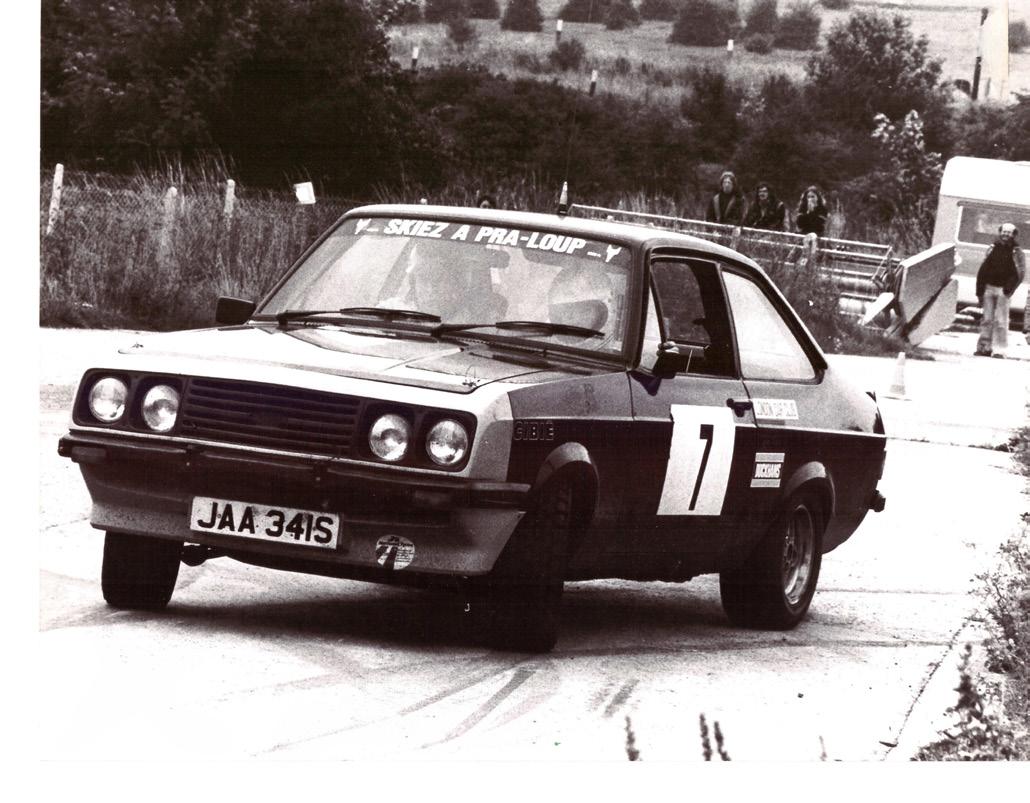
Paul remembers in the ‘70s, aged about 10, when our own Antoine Lurot (a devotee of classic motorbikes and cars), turned up at the North Terrace garage from his office nearby.
‘It was incredible! He would take me out in his black Ford Escort RS2000 driving helterskelter around the streets.’ He recollects
Paul Giovanni and his business partner Gary Burke
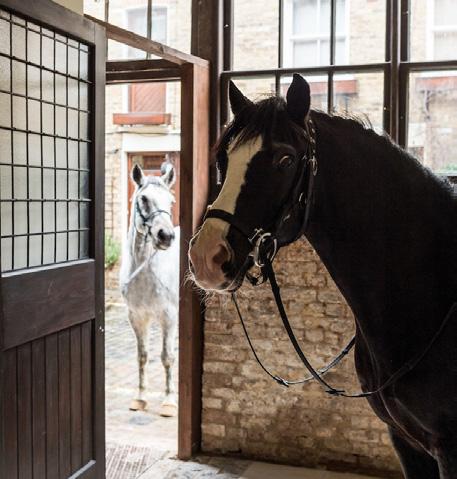
that, ‘the mews from Queen’s Gate Place and across the Cromwell Road, were full of workshops for the motor industry, plus a few car dealers.’ It seems by then that the roar of engines and whiff of petrol had replaced the historic sound of hooves on cobbles and smells of the horses.
‘If you were to step back 30 years, the mews would look almost the same today,’ Paul says. ‘It’s an ideal setting for housing classic cars, with a strong connection to heritage, time and place. Unlike today’s bulky modern sports cars, classic cars were built and driven in an era suited to these old London streets. They’re smaller, narrower, lighter and much easier to manoeuvre.’
‘Over the years, the marketplace has changed,’ adds Paul. ‘The cars get older and so do the buyers. Old school and old money are far easier to deal with. Our business is niche – it’s about building relationships and having conversations. We have clients who live in nearby mews properties, drawn to
the discreet location and the garages. New buyers come from a different generation, nostalgic for a different era, like the ‘80s classic cars. New money, in particular, isn’t borrowed. People often expect classic cars to appreciate quickly, but just like property investment, you’ve got to take a long-term view. They can go down as well as up, but over time, they tend to increase in value.’
What’s perfectly clear is that there’s no better showcase than a mews for these beautifully crafted cars. As Paul Giovanni says, ‘We’re a mews gallery of fine motor cars. Some people passing think it’s a museum – funny really; I guess you could call us curators of the classics.’
Interested in learning more?
You can visit Heritage Classic Cars, at 6 Kendrick Place, South Kensington, London SW7 3HF.
Antoine Lurot in his Ford Escort RS2000
THE SCIENTIST & ULTRA-ATHLETE WHO INHERITED A MEWS LEGACY
Still standing: A mews house bombed, burnt down and rebuilt to ignite childhood ambition and provide a cherished home.
A long-term resident of Rutland Mews South, Hilary Walker spent many years as a post-doctoral radiobiologist before embarking on her scientific civil service career. Not only has DNA featured prominently in her professional life, but her personal connection with this mews is deeply rooted in her past. From early childhood, ‘when I travelled up from The Chilterns,’ Hilary enjoyed staying with her aunt, who had purchased the restored mews property for £5,500 in 1951. Living so close to South Kensington’s museums meant young Hilary was ‘never lost for activities’ and says, ‘both the Science and Natural History Museums helped foster my love of science and shaped my career.’
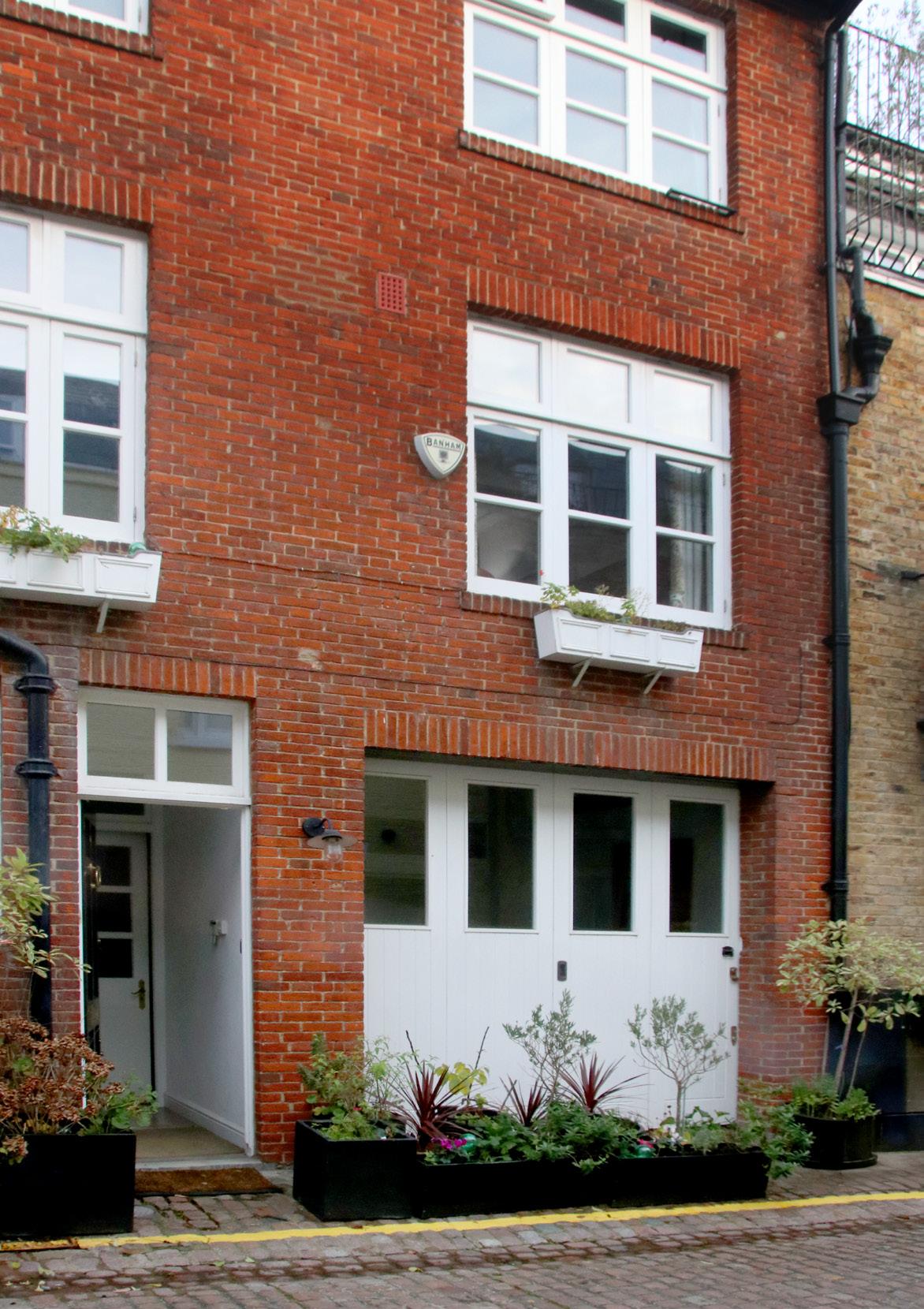
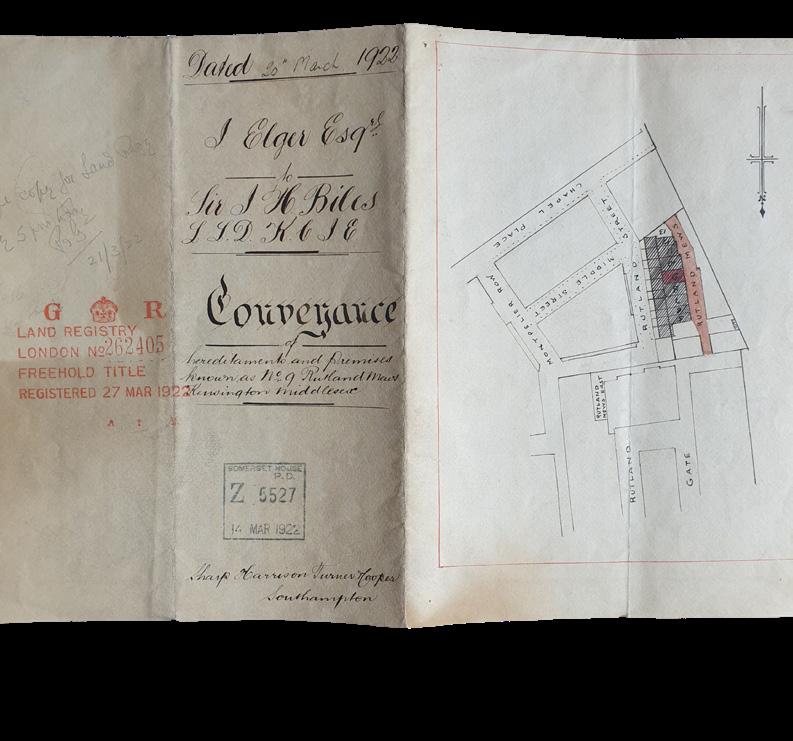
Hilary explains, ‘The original land registry document, dated 1922, records the sale of the mews house in 1899 by John Elgar to Sir John Biles (Professor of Naval Architecture). Bomb damage to the street in 1940 rendered the house uninhabitable until post-war reparation grants permitted the then owners to rebuild – but not before it was burnt to the ground during restoration work in 1947.’ The 1946 blueprint design, which Hilary retains, reveals a three-storey red-brick building; today, the front façade remains unchanged except for a replaced window. The layout comprised a ground-floor garage (original doors and rails remain intact) and a bathroom, with the first floor housing the living room and kitchen, and two bedrooms on the second. A lightwell ran the full height of the house at the rear.
Hilary’s aunt, Clare Lawrance, returned from missionary work in South Africa and purchased the restored house. Hilary remembers her adding a third bedroom for her and her brother on visits from the countryside. When Hilary moved to London to study and then to work, she bought a flat in West Kensington. In 1980, her aunt became terminally ill and was hospitalised, which led Hilary to move into her home as a sitting tenant, thus halving the probate value of the house when Hilary and her brother inherited their aunt’s mews legacy.
‘On warmer days, I enjoy coffee or sit with friends without being overlooked. During Covid, my private outdoor space provided a real boost, and I also benefited from the close proximity of local parks. I love hearing the dawn chorus resonating from surrounding balconies, trees and local green spaces. We’re very lucky as it’s so peaceful and the noise from Brompton Road or Kensington Gore doesn’t reach our mews. We’re grateful to have the Albertopolis’s cultural delights, convenient public transport and the Royal Parks on our doorstep. Having been an ultra-endurance runner and a member of both the Serpentine Running Club and Serpentine Swimming Club, I couldn’t wish for a better spot.’ LAND
FREEHOLD
TITLE 1922
Hilary has lived in the mews since April 1980. She explains, ‘Since then, I have filled in the ground floor to the rear, creating a terrace at the back of my living room with a wrought-iron staircase leading to the upper roof terrace, which had already been created by my aunt. I enjoy wonderful light from both east and west on each floor. I was relieved that these roof gardens and bedroom windows gave me ancient light rights, reducing the likelihood of planning extensions for our neighbours.’
MEWS HISTORIES REVEALED UPBROOK MEWS, W2 –NAMED FOR THE BROOK BELOW, BUILT BELOW THE STREET
By Martyn Brown, of Everchanging Mews
A MEWS OF UNUSUAL DISTINCTION
Concealed by its entrance beneath a building on Chilworth Street in Westminster, Upbrook Mews is distinguished by two features: its position nine feet below nearby Craven Road and its naming after the Westbourne Brook, the defining watercourse of Bayswater. Both reveal the engineering principles and geographical realities that shaped Victorian London.
NAMED FOR THE WESTBOURNE
Most London mews take their names from the streets they served – Belgrave Mews from Belgrave Square, for instance. Upbrook Mews, an abbreviation of Upper Brook Mews, is named instead for the Westbourne Brook, which flows directly underneath the Mews. This ancient stream, now culverted, carved the terrain and determined where development could occur. It gave its name to Westbourne Grove, Westbourne Park and Westbourne Terrace.
That a mews would be named for the brook rather than for the grand houses it served – Gloucester Terrace and Devonshire Terrace – acknowledges that fundamental geography was shaped by hydrology, not human design. The mews does not merely sit above the brook; it is defined by it.
THE ENGINEERING OF DEPTH
The position nine feet below street level was deliberate. Bayswater’s main roads were built on causeways above natural ground level, meaning the basement at the front of grand houses aligned with garden level at the rear. By placing the mews at true ground level, the stables sat level with the service quarters in the basements of the main houses. This facilitated movement of servants, horses and goods without constant negotiation of stairs or ramps. This created a clear spatial hierarchy: the public realm on raised causeways, the private domestic spaces in reception rooms, and the service realm in sunken basements and mews. Walking into Upbrook Mews today is to descend into that service world – a hidden layer of Victorian life below the street.
WORKING LIFE TO RESIDENTIAL
By 1882, the Mews housed job masters, coach builders, smiths and bellhangers. The 1895 Post Office Directory lists chandlers, gas engineers and harness makers. By 1914, motor job masters had
arrived, marking transition from horsepower to horsepower. Charles Booth’s Poverty Maps recorded mixed living conditions – some comfortable, others poor. A high-explosive bomb struck nearby Cleveland Square during World War II, though the Mews escaped direct damage.
CONSERVATION & CHARACTER
Upbrook Mews lies within Westminster’s Bayswater Conservation Area. The two and three-storey properties display mansard and parapet roofs, with several original garages intact. Cobbled surfaces and partial raised pavements preserve historic character. Planning applications since 2003 have focused on roof extensions and fenestration alterations, reflecting modernisation within conservation constraints.
A GEOGRAPHY MADE LEGIBLE
What distinguishes Upbrook Mews is how its physical form – sunken position and connection to the Westbourne Brook –makes visible the underlying geography and engineering that shaped Victorian Bayswater. It is not merely a residential street but a three-dimensional document of how natural topography, hydraulic infrastructure and social hierarchy were woven together. The mews sits at the intersection of these forces: below the street, above the brook, bridging the service world and the world of display.
Such is life in the everchanging Mews.
charlotte@studiolurot.co.uk
www.studiolurot.co.uk
AN OLD MEWS BROUGHT BACK TO LIFE BY CLEVER DESIGN
The Lurot name is synonymous with mews. Cue Studio Lurot who project manage, have architectural vision and always bring clever design.
Charlotte Lurot, Director of Studio Lurot, was the obvious choice when a couple bought an unmodernised house in Cranley Mews through Lurot Brand. They knew they wanted to create a comfortable pied-à-terre incorporating a country cottage style. A second home that they, and their children, could use when staying in South Kensington at weekends, going to the theatre, concerts, social events or entertaining and hosting. Being based away in the country meant that they needed a skilled and safe pair of hands to manage the build and design process, while overseeing the project from conception to completion.
With over 10 years working on many homes across London, from apartments to mews and country houses, Charlotte’s experience in overseeing mews refurbishments meant she was very aware of the challenges and restrictions that could arise. Charlotte explained, ‘Like many mews, Cranley Mews is located within the Thurloe Estate and Smith’s Charity Conservation Area. As part of this protected area in SW7, properties in Cranley Mews are subject to strict planning controls and external works require planning permission to preserve their architectural heritage and appearance.’
‘Another important consideration is the quiet location of mews properties in narrow cobbled streets. Their neighbourly aspect means particular consideration and planning is needed during the construction phase –managing deliveries with large, loaded lorries and overseeing noisy works during the project. Mews are built around close communities; it’s important not to upset the neighbours by respectfully keeping them informed to preempt potential problems’, Charlotte added.
‘Each project is unique, every client and building different, and that’s why my approach is personal and bespoke to the clients’ lifestyle and taste. On this project, as well as incorporating a country feel, they wanted to use high quality finishes and fitting, without unnecessary overspend.’
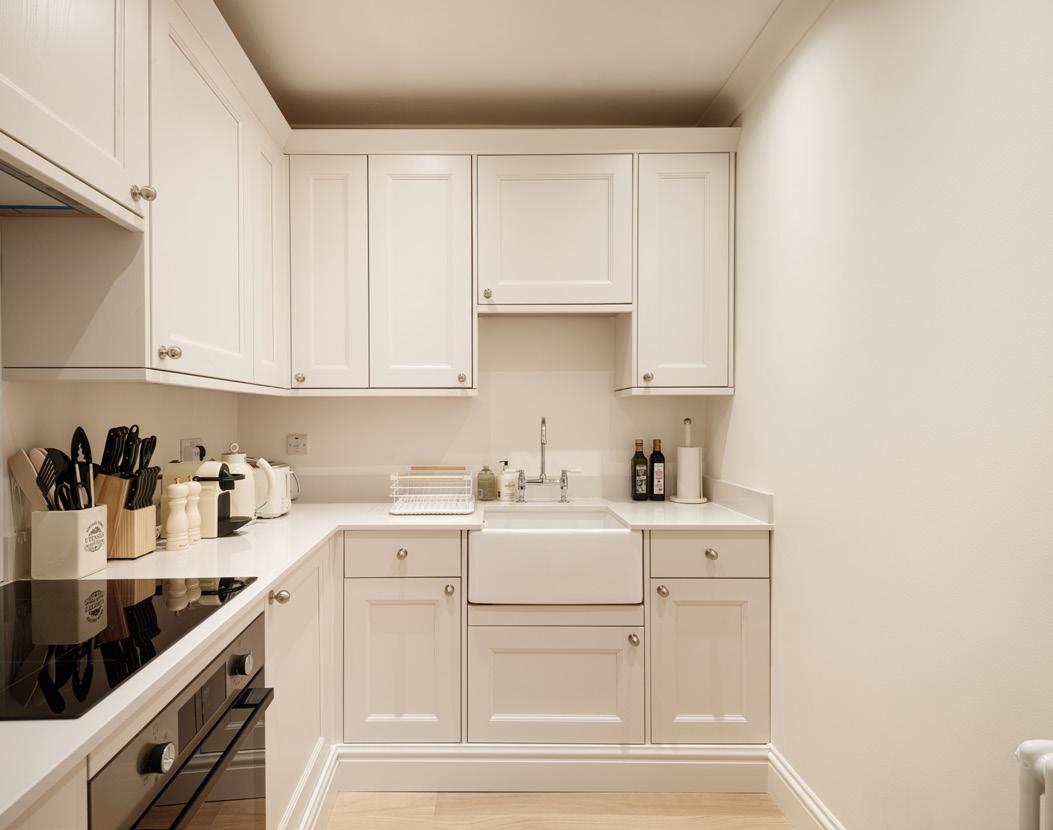
When Studio Lurot started the project, the property was unmodernised and needed a full strip-out, which included joinery, new roof lights, electrics, kitchen and bathrooms, redecoration to both interior and exterior with light repairs to external features. Traditional mews often benefit from a large
garage and this was a key factor in the clients’ purchase to make driving into London easier. Minor structural alterations were made to accommodate their large modern car.
‘Maximising space and storage are a priority in a mews house,’ said Charlotte. ‘My clients required bespoke joinery units for storage space and we were careful to make this timeless to complement the traditional mews interior. Mews houses can also present challenges with light due to their size, so thoughtful and considered design needs to sit within the holistic design approach.’
What the clients had to say:
‘Charlotte was an absolute lifesaver, totally renovating our mews house while we were living in the depths of the country. She was fantastic at sending us endless samples after listening carefully to our needs, preferred coloured schemes and so forth. She showed enormous patience, especially when we changed our minds about various aspects of the project. ’
AFTER BEFORE
‘We are thrilled with the final result.’
A MEWS LIKE A FINE MISTRAL WINE IMPROVES WITH AGE
Raise a glass to these vintage years in Junction Mews where extraordinary buildings attract extraordinary people and make extraordinary lives.
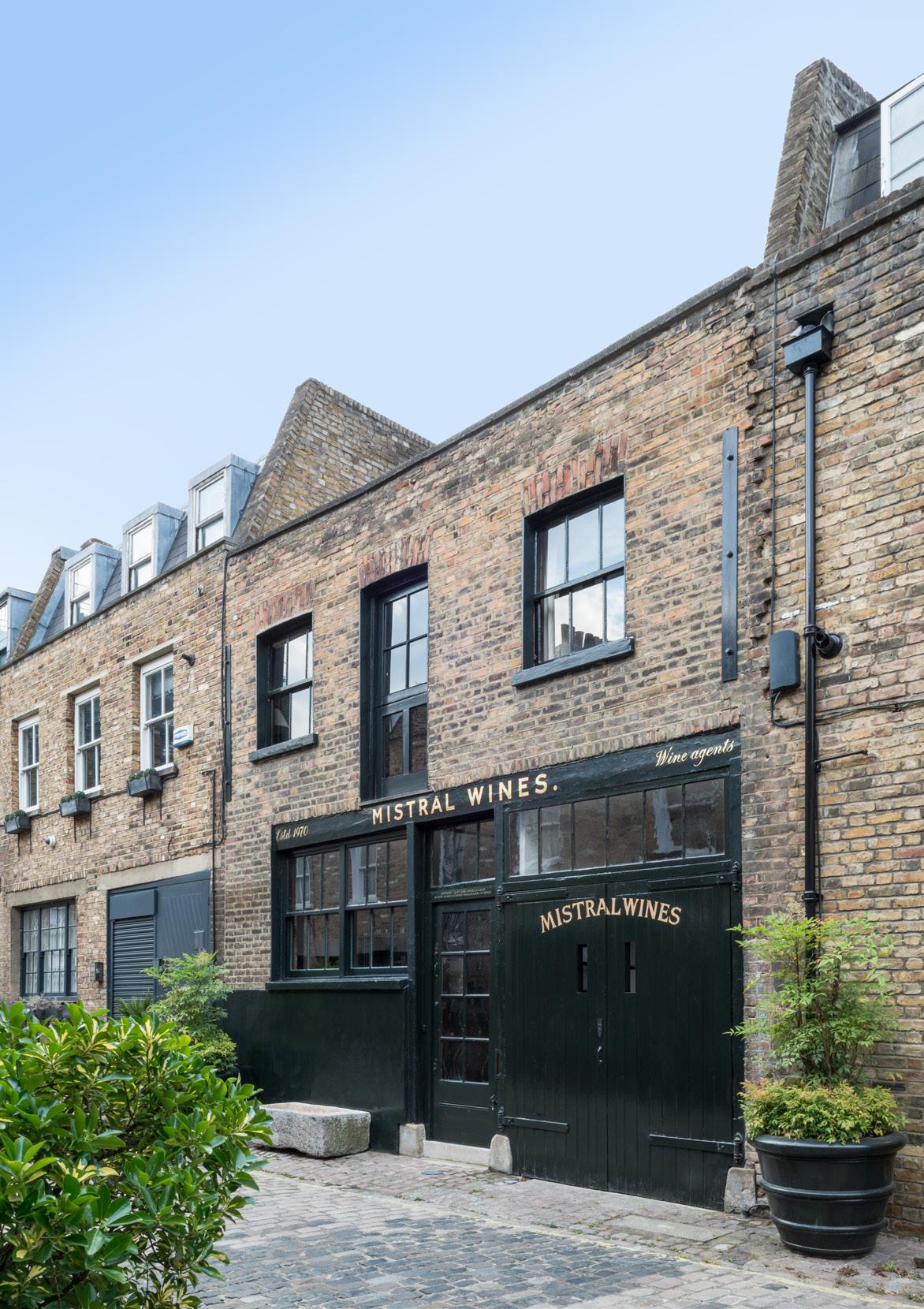
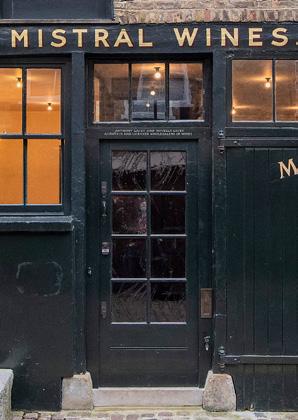
Junction Mews celebrates its 200th anniversary this year. Fifty years ago, in 1976, Anthony and Novella Lacey took on Mistral Wines, moving into the Mews in 1980. They built a very successful wine agency business specialising in wines from the Loire, Beaujolais, Rhône and Midi, acquired in 2007 by Berry Bros. & Rudd.
Quietly tucked away in Paddington, Junction Mews is an evocative example of the ebb and flow of history and the impact brought by the industrial revolution. In 1801, the Paddington arm of the Grand Junction Canal was completed opening the floodgates for the residential development of Tyburnia.
Architect Samuel Pepys Cockerell’s design centrepiece for Tyburnia was Sussex Gardens (formerly Grand Junction Street), a tree-lined avenue established on land leased to the Grand Junction Canal Co. Its first houses, including Junction Mews, were built up from the Edgware Road end in 1826, followed by Praed Street (named after canal company chairman William Praed), three canal company reservoirs, most of Market (now St Michael’s) Street and part of Star Street, all completed in 1828. Ten years later, the Great Western Railway would arrive at Paddington Station.
In 1826 – when Junction Mews’ new buildings served as stabling for the grand houses on Sussex Gardens – Paddington Basin and the working life of the canal permeated the local landscape. The Boatmen’s Institution at the entrance of Junction Mews, a residential dwelling today, was founded in 1828 by the Paddington Society for Promoting Christian Knowledge, who converted a stable and coach house to provide an interdenominational chapel, schoolroom and social hub for canal boatmen and their families.
Fast forward to the 1970s and Junction Mews had become a run of commercial units and lock-ups, not an obvious place to make home. One brave couple took the plunge and bought two derelict mews properties back in 1978. Over time others followed, seeing the potential of this mews for creating homes and self-contained workspaces to build a thriving friendly community. The start of the transformation of the Mews was underway. In the 1980s, the Boatmen’s Institution became an art gallery, the architect Christopher Bowerbank worked at the far end of the cul-de-sac and Christina Leder’s gilding workshop was next door to Mistral Wines. Anthony Lacey recalls,
‘Christina framed our pictures and we gave her wine!’
Makers of many things have always gravitated to Junction Mews: boatmen, Mistral Wines, the Getty family, Ellie Goulding, David McCallum and Astley Clarke. No 5, the former home of Mistral Wines, has been let since 2008. The Laceys’ son Max, a heritage project director, has carefully conserved the building and its historic legacy; it offers a beautifully intriguing living space that lends itself to creative and celebrity tenants. Max said,
‘My parents kept the building’s original timber and brick structure, stable cobbles for the horses and its many other working features intact; it’s this that makes Mistral Wines so characterful.’
While much of the wine may have left the building, the vintage mews spirit remains.
THE JOY OF DOWNSIZING: FROM A COUNTRY ESTATE TO A MEWS HOME IN LONDON
Janet Tinker shares her journey of downsizing to a mews house in Upbrook Mews.
After years of owning both a country estate and a family home in London, Janet Tinker and her husband decided to downsize to a more manageable home in the heart of the city. With the help of Lurot Brand, they successfully bought a property in Upbrook Mews and found the perfect spot to settle down. Here, Janet talks about the decision to downsize and her experience of living in a mews home.
What prompted your decision to downsize from the countryside and return to London at this stage of your lives?
• We had always owned a large family home in the countryside, but over time, the space wasn’t being used as much, and the cost of maintenance was high. Spending more time travelling made us realise it was time to simplify. We wanted to be closer to our children and enjoy the cultural opportunities London offers.
You divide your time between Hong Kong, Chamonix and London – how did that international lifestyle shape what you were looking for in a home here?
• With frequent travel, convenience and accessibility became vital. We needed a property that required minimal maintenance yet offered comfort. Proximity to Heathrow was key, especially for my husband, who flies often. We sought a home that would be easy to manage while offering the convenience we needed.
You were drawn specifically to mews houses. What has always appealed to you about this type of property?
• I’ve always been drawn to the charm of mews houses. They offer privacy, quiet and character, while being in the heart of the city. Although smaller, they provide a manageable, comfortable living space. Initially, my husband was hesitant, but after renting a mews in Chelsea, we both realised how much we loved the tranquillity and charm they offered. How important was location when choosing a mews house, particularly in terms of accessibility and ease of living?
• Location was essential. We needed privacy, good transport links and proximity to parks for our dog. Paddington offered perfect access to Heathrow, and the area around Upbrook Mews ticked all the boxes. We also wanted easy access to cultural opportunities in London, which the location provided.
What were your first impressions when you moved into the mews – did it feel like home straight away?
• When we first put in a bid for the house, we didn’t get it, but I couldn’t stop thinking about it. It felt like the ideal home – private mews, front door, great transport and the Cleveland Arms pub nearby. So, we increased our offer, and when it was accepted, we were thrilled. When we finally moved in, despite the rain, it immediately felt like home. We loved the summer, spending time with the front door open and getting to know the community.
You’ve spoken about being pleasantly surprised by the sense of community. How has that manifested day to day?
• The sense of community has been wonderful. Neighbours are friendly and always stop for a chat, whether we’re walking the dog or sitting outside. Some have invited us for drinks, and the sense of belonging has been a pleasant surprise.
How does mews living compare to other London homes you’ve lived in previously?
• Mews living is much quieter and more peaceful than previous homes in London. The charm and character of the mews give it a unique feel, offering a calm escape while still being close to everything London has to offer.
With your children now living independently in London, how does this home work for family life and visits?
• The house is perfect for family visits; cosy but spacious enough for gatherings. Our eldest works in Soho, so it’s easy to meet for lunch or dinner. Sometimes he stays here before early flights from Heathrow, making family time simpler.
Looking back, what has been the biggest benefit of choosing a mews house for this chapter?
• The biggest benefit has been simplicity. It’s far easier to manage than our large country house. The location is ideal for both work and leisure, and the ease of maintenance allows us to focus on what matters most.
What would you say to someone considering downsizing to a mews property in London?
• I would say go for it! The privacy, charm and community make it an ideal choice. With no noisy neighbours or service charges, it’s a low-maintenance way of living without sacrificing any of the things we love about London.
1
2
LUROT BRAND’S
Mewsflash 2026 Announcements
The Sales department has had a strong start to the year, including securing an offer on a property just three weeks after launching, with over 20 viewings and multiple bids. This early demand seems to be driven by reduced speculation, alongside greater clarity since the November Budget. Mortgage conditions have further boosted buyer confidence, with two-year fixed rates at around 3.51% and five-year fixed rates at 3.69%, following recent interest rate cuts.
The Lettings team has also achieved great success, with a property in Brook Mews North going under offer just two business days after launching and a home in Kynance Mews achieving above asking price with multiple bids. The ongoing shortage of rental homes continues to put upward pressure on rents, with average rents in London expected to rise by 2% in 2026. This highlights the critical importance of pricing, presentation and timing in the lettings market. (Source: Rightmove)
3
We’ve seen record engagement on social media this January, showcasing the power of effective social media marketing. On Instagram, we kicked off January with 259,029 impressions – up from over 45,000 the previous month. For the first time, our highest audience age group shifted to 25-34 (37.8%), surpassing the previous leader, 35-44 (29.2%). LinkedIn also had a strong start, with impressions up by +358.8% since December 2025, which brought the total to over 1,900 impressions.
4
5
Our Hyde Park office has now officially re-opened and it’s fantastic to be back. While we’ve been successfully serving clients from our South Kensington office, it’s a real pleasure to welcome clients in person again. Feel free to pop in at 37-41 Sussex Place for any mews enquiries – we’d be happy to assist!
And finally, a warm welcome to Boriana, our new Marketing Assistant, who’s helping drive the marketing efforts alongside Emily, Head of Marketing. Be sure to check out the fantastic recipe Boriana has written on page 27!
Calling all mews enthusiasts
Over the years, we’ve heard numerous heartwarming stories from residents in the mews that we’d love to share with the community.
If you have a story or an event related to the mews that you’d like to contribute, we’d love to hear from you. Contact us with your mews news!
marketing@lurotbrand.co.uk 020 7590 2528
LB LOVES… BAYSWATER
GUILLAM COFFEE HOUSE
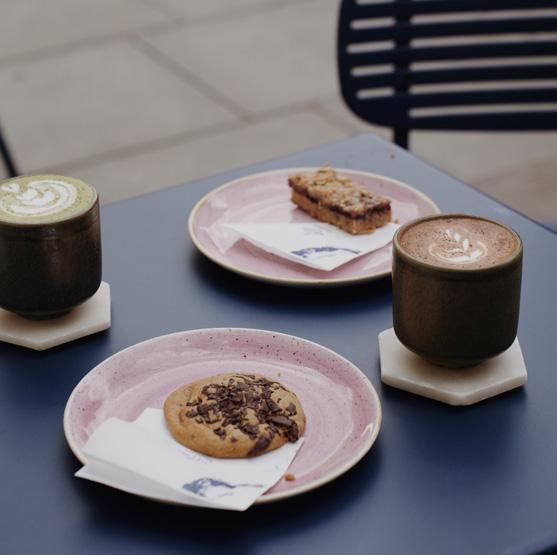
A Bayswater staple at 32 Petersburgh Place W2, this café takes its coffee beans very seriously. With a stylish yet cosy interior, tucked away off the main street, it offers the perfect spot to unwind. Enjoy the rich aroma of your single-origin coffee of choice, paired with an irresistible pastry treat. Pet- and cycle-friendly, it’s an ideal meeting place before or after a walk or ride in Hyde Park. Plus, they recently opened a second location in the historic Whiteleys building, just a 10-minute walk from Hyde Park, giving you even more options to indulge!
www.guillam.co.uk
Here are some of our favourite places to visit in the neighbourhood.
LES FILLES
Nestled at 31 Moscow Road in Bayswater, W2, this charming café has quickly become a local favourite since opening just over a year ago. Everyone speaks highly of the friendly staff and the wonderful vibe that makes it such a welcoming spot. In addition to the chef’s specials and a tempting selection of savoury and sweet dishes, they serve a fantastic brunch menu from 8am until 5pm, with plenty of gluten-free options. The atmosphere strikes a perfect balance between relaxed and stylish, and they also offer rental space for business meetings, workshops or private events.
www.lesfilles.co.uk
There’s a charming cosmopolitan air about Bayswater that blends seamlessly with the refined atmosphere of its Hyde Park Estate neighbour. Enjoying a prime location just north of Kensington Gardens and Hyde Park, the area is culturally rich. The magnificent St Sophia’s Greek Orthodox Cathedral near Bayswater, built in 1879, reflects the thriving Greek community that has been part of the area since the 19th century. Just around the corner is the beautiful Grade II-listed New West End Synagogue on St Petersburgh Place. The recent revamp of Whiteleys, the 1911 department store, and the £3bn planned redevelopment of Queensway are paving the way for Bayswater to capture even more hearts and minds.
TORTELLO
Located on Lancaster Terrace, this Italian restaurant is dedicated to bringing people together over food made with heart. Chef Giuseppe leads the kitchen, crafting authentic family recipes with the finest ingredients sourced from artisan producers. Whether you’re enjoying a lively family meal with antipasti and homemade pizza or sharing an intimate dinner for two with handmade pasta, delicious sauces and expertly prepared fish and meat dishes, Tortello’s welcoming atmosphere and impeccable cooking are sure to impress. www.tortello.com
3812 GALLERY
Co-founded by Calvin Hui and Mark Peaker, 3812 Gallery is a dynamic art space with locations in Hong Kong and London. In 2025, the gallery relocated to a new and exciting destination, The Whiteley, on Queensway. 3812 represents both modern and contemporary Chinese artists, such as Hsiao Chin, a major post-war painter whose works are exhibited in M+ in Hong Kong and New York’s Metropolitan Museum of Art; Ma Desheng, an internationally renowned Chinese artist based in Paris; and Hong Kongbased ink artist Raymond Fung. The gallery’s unique name ‘3812’ refers to an ‘arête’ ridge (3,812m) that the co-founders had to navigate while skiing La Vallée Blanche in Chamonix. www.3812gallery.com
If you’re looking to eat more mindfully as 2026 kicks off, make your way to Queen’s Gardens. The Yeotown restaurant offers a light, airy space with award-winning Scandinavian design. Their Californianinspired menu is not only delicious but also packed with nutrition, featuring a variety of health-conscious options –including meat, vegetarian and vegan dishes – complemented by a carefully curated selection of slow-grown, grassfed meats and sustainably sourced fish. Many dishes are naturally gluten-free, dairy-free and free from refined sugars. At the impressive marble bar, you can also enjoy Conscious Cocktails, Mindful Mocktails, and a curated selection of organic, biodynamic and natural wines.
www.london.yeotown.com
PORCHESTER SPA
The Art Deco Grade II listed building is an iconic local landmark and home to London’s oldest spa dating back to 1929. In 2020, it underwent a £3m refurbishment and features two steam rooms, a sauna, three Turkish hot rooms, a cold plunge pool and two swimming pools. Celebrated therapists, Vanessa Cox and Sandie Duncan, offer bespoke massage and beauty treatments using premium products, and their years of experience and a passion for wellness complement the indulgent spa experience.
A hearty, wholesome spring meal with an umami twist
INGREDIENTS
For the topping
• 1 tbsp nutritional yeast
• A handful of cashews
For the risotto
• 1 leek, finely sliced
• 200g of your preferred mushrooms, I like oyster mushrooms, sliced or whole
• 1-2 cloves of garlic, finely chopped
• Fresh thyme, de-stemmed
• 4-5 cups vegetable broth
• ¼ cup dry white wine
• 1 cup risotto rice
• Vegetable oil
• 1.5 tsp miso paste
• 1 tbsp plant-based butter (optional)
We’re excited to share a delicious new plant-based recipe from Boriana, our marketing assistant. This Mushroom and Leek Risotto combines the earthy flavours of fresh vegetables, miso paste for a delicate umami depth and thyme to elevate the dish’s natural flavours. Whether you’re looking to try more plant-based meals or simply want a comforting dish for a chilly day, this risotto is sure to impress!
METHOD
Step 1. Make the topping: Blend nutritional yeast and cashews until fine. Set aside.
Step 2. Cook the mushrooms: Sauté the mushrooms in oil until they’re deeply browned (about 20 minutes).
Step 3. Prepare the broth: Heat vegetable broth and miso paste, then keep warm.
Step 4. Cook the leeks: Sauté the leek in oil until slightly golden.
Step 5. Add garlic and rice: Stir for 2 minutes.
Step 6. Add white wine: Let it evaporate.
Step 7. Start adding stock: Add broth a ladle at a time, stirring constantly until absorbed.
Step 8. Finishing touches: Add mushrooms, butter and thyme. Salt and pepper to taste.
Step 9. Serve: Top with cashew mixture and enjoy!
COME, FRIENDLY BOMBS, FALL ON... KNIGHTSBRIDGE
The story of a community divided by both class… and physical barrier
by David Edwards, Mews Resident
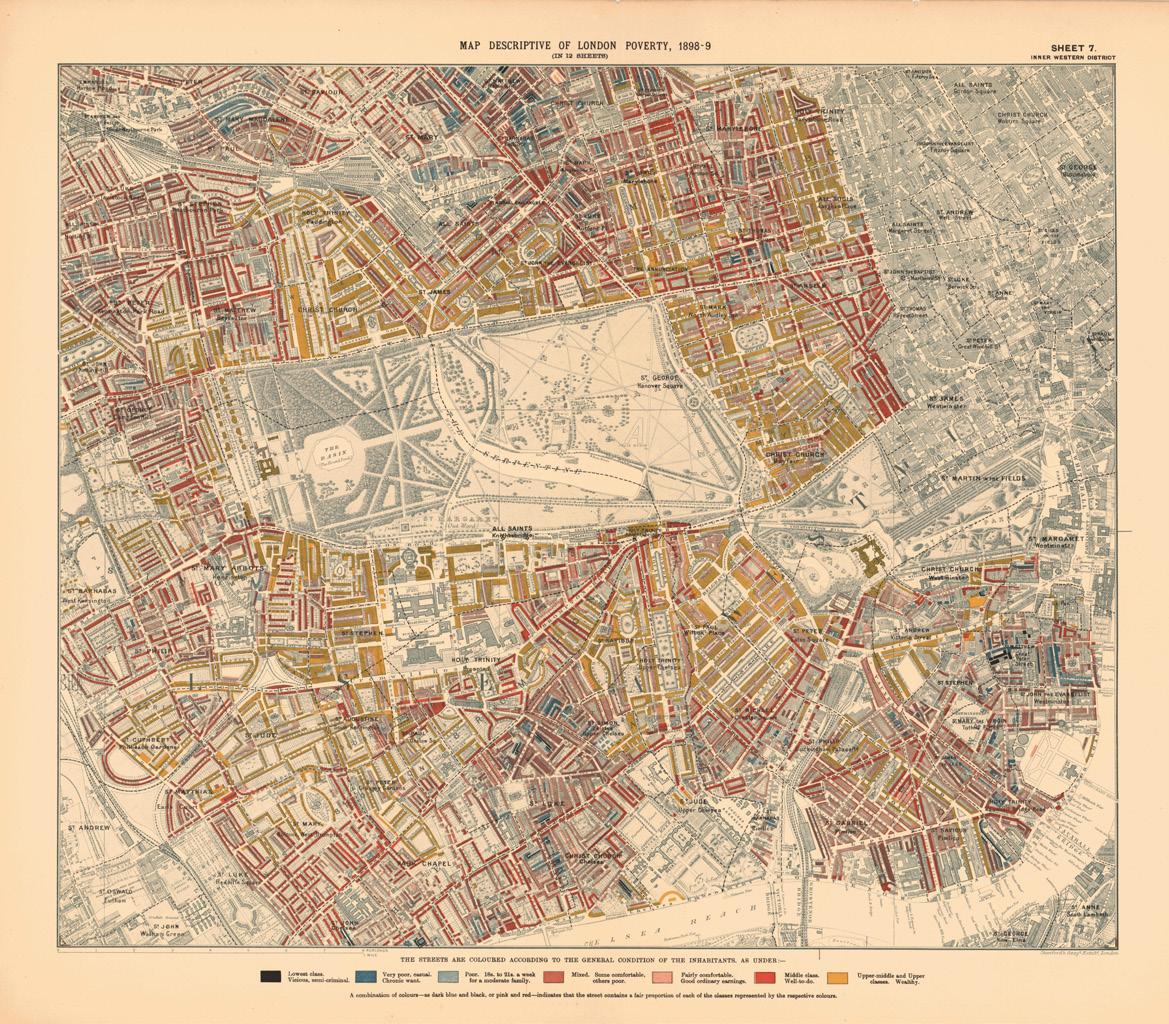
Charles Booth’s Poverty Maps of the 1880s show a clear division in Knightsbridge between the bourgeois middle class southeast (red/pink), and extraordinary affluence of its northwest (yellow), and developers such as Lord Listowel were hell-bent on maintaining the exclusivity of his aristocratic enclave of vast townhouses of unsurpassed luxury, encompassing Ennismore Gardens and Rutland Gate. There were to be no north-south access roads, with Listowel’s development effectively quarantined by way of a curtain wall impenetrable to either coach and horse or pedestrians; and so it remained for a century… until Hitler’s bombs fell.
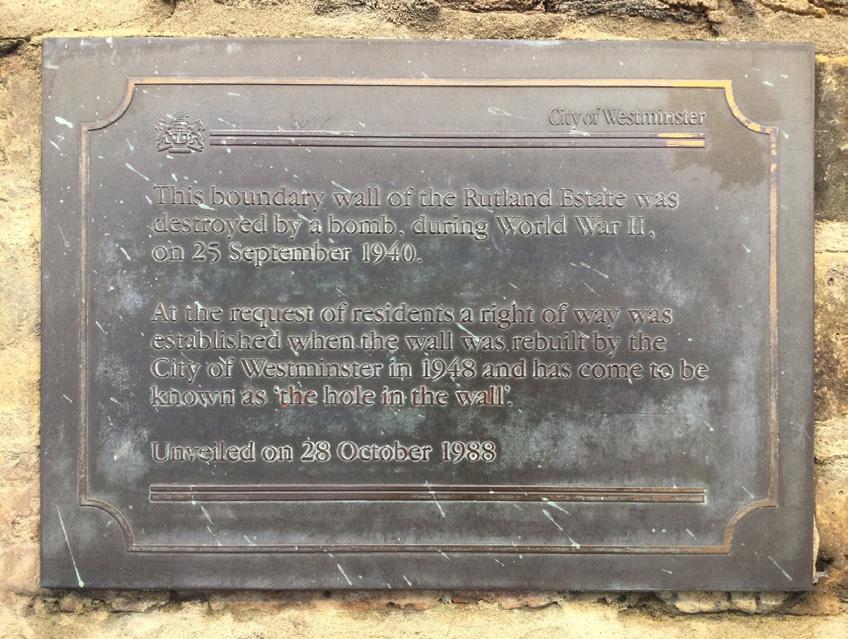
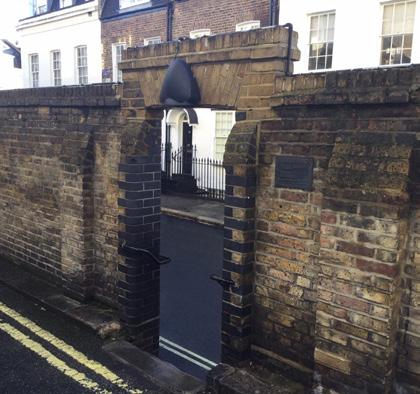
Betjeman’s poem, disparaging the architecture of Slough, could well have been written with Knightsbridge in mind, albeit for wildly different reasons. Ask for directions from any resident of the scores of mews that make up a great swathe of northwest Knightsbridge, and likely as not they’ll make reference to ‘the hole in the wall’. For how else is one to traverse Knightsbridge without breaching what was originally intended by the Victorian developers of Knightsbridge as an impenetrable boundary ensuring that the hoi polloi of the artisan cottages of the south of the village were denied access to the incalculably wealthy district including Rutland Gate and Ennismore Gardens. For nearly a hundred years, residents of the mews serving the great houses of Rutland Gate and Ennismore Gardens – perhaps the greatest concentration of mews in all of London – were forced to take a long and circuitous journey, west, then south via the footpath along the bounds of Holy Trinity Brompton and Brompton Oratory, then east, in order to reach their nearest shops on Brompton Road; particularly galling given that they resided almost in the shadow of the boiler chimney of Harrods. Then came the Blitz. Dozens of houses in Ennismore Mews, Rutland Mews South, East and West were completely or largely destroyed on
25 September 1940. But so was the wall that had preserved the ghetto of northwest Knightsbridge, the breach very conveniently allowing access between Rutland Mews East and its adjacent Rutland Street. Clambering over the rubble, residents of the former could now pop to the shops of Brompton Road in a fraction of the time, and so popular was this pedestrian ‘rat run’ that a neat portico with steps was constructed, known as…’the hole in the wall’. An unintended consequence of the Blitz.
OUR MEWS LEGACY
Interesting facts about Lurot Brand
Some of you may have been with us since our early days, while others are new to our community, whether you’re recent buyers, tenants, or just have an affinity for the mews. Whatever your connection to us, we share a common love for these unique spaces, and we’re proud to be the go-to agency for all things mews.
Here are some interesting facts you might not have known before.
Lurot Brand opened its doors in 1971.
The company’s first office was located on Brompton Road, Knightsbridge.
The founders mapped every mews in London.
Lurot Brand was a pioneer in property. At the time when mews houses were undervalued & overlooked, we recognised their charm, saw their potential & invested in them.
We were the first estate agency in the UK to introduce floor plans & the price per square foot.
Lurot Brand was one of the three founding members of CLEA (Central London Estate Agents), which developed The London Magazine & PrimeLocation. (Antoine Lurot, David McLean-Watts, & Ian Homersham set up CLEA & its associated publication.)
The company was once known as The London Mews Company.
For over 45 years, we’ve been based in the W2 area.
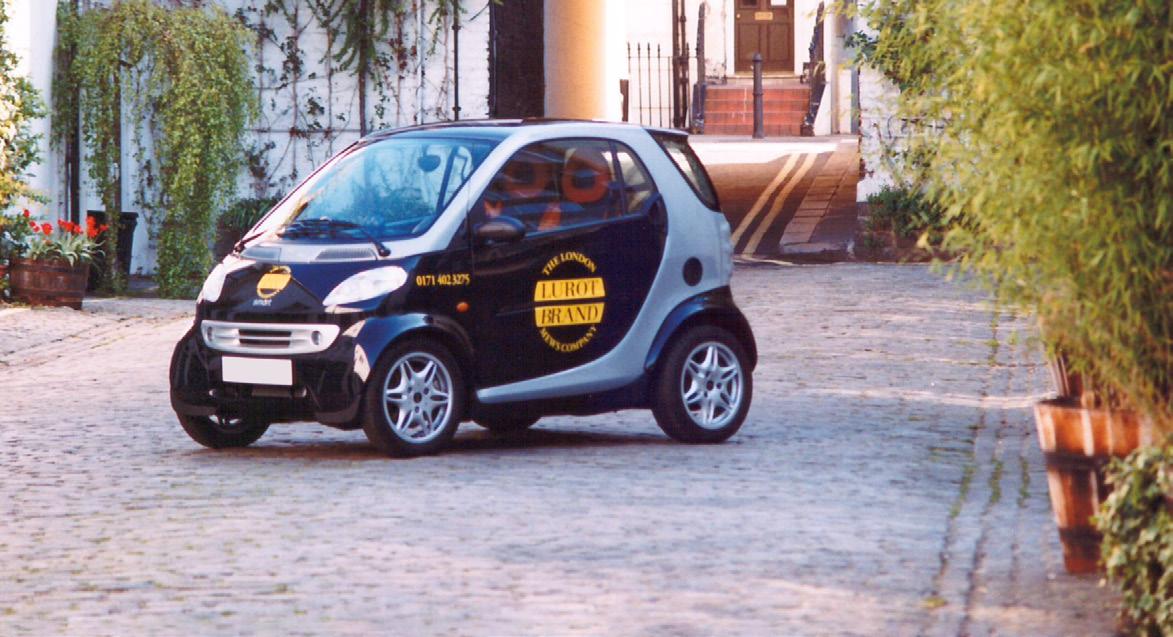
Lurot Brand was one of the first to own a Smart Car in the UK, which caused quite a stir in the mews of London.
Lurot Brand created the only comprehensive mews directory, which you can find on our website.
We remain the UK’s only estate agency dedicated entirely to mews properties.
Lurot Brand has long been a sponsor of London French RFC, an amateur rugby union club based in Barnes. Antoine Lurot was one of the founding members & served as Chairman for an extended period.
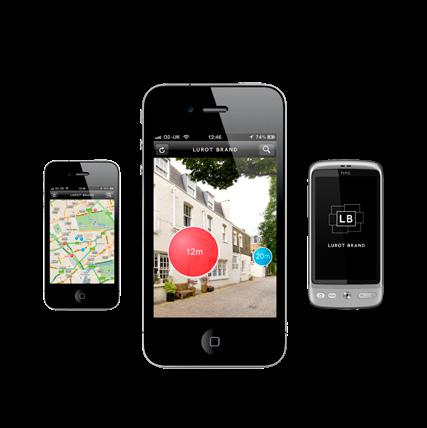
In early 2010, we launched the first augmented reality, property search app in the UK.
From humble beginnings to a pioneering role in the mews market, we’ve come a long way – but we couldn’t have done it without the mews community and the many enthusiasts who appreciate the history and charm of these beautiful streets.
MEWS IN BLOOM
Spring into action with Mews in Bloom 2026, for your chance of winning £1,000 for a charity of your choice.
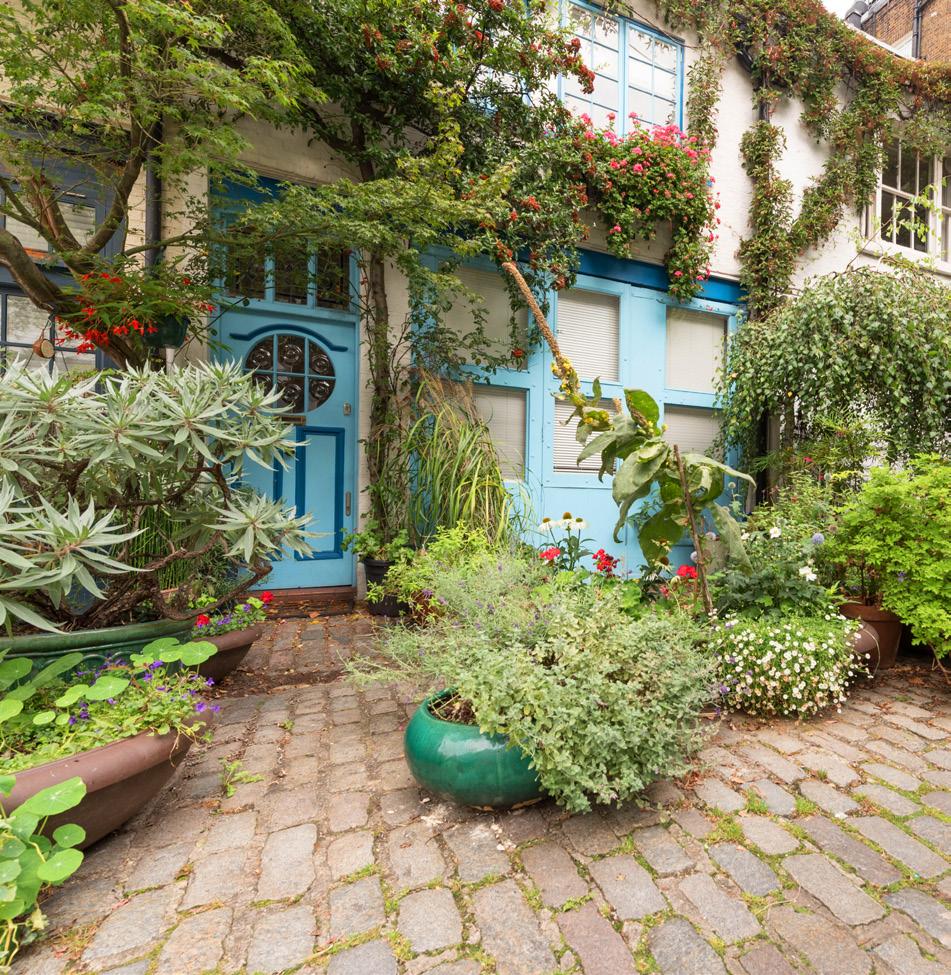
It’s time to grab your trowels and get ready for Lurot Brand’s annual Mews in Bloom competition. This is a wonderful opportunity to spend time with neighbours, make new friends and enjoy being outside in your mews, planting and pruning as a team, so it’s as colourful and pretty as can be. Whether you’re new to gardening or a horticultural wizard, this is a chance to collectively showcase your mews and be in with a chance of winning a gold plaque for your street, as well as £1,000 for a charity of your choice.
Every year, our managing director, alongside a guest judge, visits the competing mews streets, to decide the winner. Last year, celebrated artist Endellion ‘Delli’ Lycett
Green brought her painter’s eye and botanical knowledge to the judging, choosing Gloucester Place Mews as the winner of Mews in Bloom 2025 for its coordinated planting, which Delli described as ‘outstanding in unity, colour and care.’
Could your mews be this year’s winner?
TO ENTER OUR COMPETITION:
Please email your contact details to mewsinbloom@lurotbrand.co.uk alongside a picture of your mews and the location on the street that you have arranged for the winning plaque to be placed, by 26th June.
We will be judging over the course of July, so save the date and we wish you luck!
THE HYDE PARK ESTATE: A HIDDEN GEM IN LONDON’S WEST END
Not the largest or most high-profile ‘Great Estate’, but still undeniably significant, the Hyde Park Estate has quietly emerged as one of London’s most desirable spots.
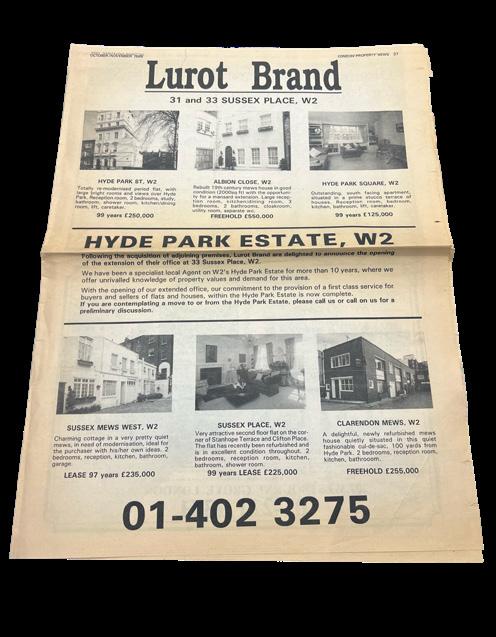
Like an old friend, the Hyde Park Estate is close to our hearts: full of life, familiar faces and charming mews. For over 45 years, we’ve had an office at the corner of Sussex Place on the Hyde Park Estate, making this local neighbourhood feel like a home-from-home. We’ve been proud to be part of the friendly local community and have watched as the area has blossomed over the years through investment, improvement and conservation – resulting in a coveted ‘village’ atmosphere. Residents enjoy a calm, charming life that’s conveniently close to busy central London, yet feels like its own welcoming world.
The 90-acre Hyde Park Estate, located within Westminster’s Bayswater Conservation Area, is bounded to the
north by Sussex Gardens, to the south by Bayswater Road, overlooking Hyde Park and to the east by Edgware Road. Until 1807, this extensive site was owned by the Bishop of London, and between 1836 and 1868, ownership transferred to the Church Commissioners. Today, the freehold interests of the Church Commissioners cover approximately 1,700 residential, commercial, and retail properties.
In the early 19th century, the Estate saw the introduction of a Georgian grid-pattern of residential development by architects Samuel Pepys Cockerell and George Gutch, creating garden squares, terraces and grand townhouses, with mews located behind them. However, the Second World War caused bomb damage to the Hyde Park
Estate. While some mews streets, such as Radnor Mews, were lightly affected, others like Hyde Park Gardens and Sussex Square largely escaped damage.
In the post-war years, Paddington Borough Council requisitioned many properties with expired and disclaimed leases. The subsequent poor quality of the refurbishments led to much of the Estate looking neglected. This became a catalyst for the Church Commissioners to embark on a major post-war rebuilding campaign, introducing high-density blocks of flats alongside the Georgian and Victorian properties.
In 1954, Chesterton appointed to manage the Estate, made several critical observations that led the Church Commissioners to reevaluate the Estate and develop an ambitious rebuilding plan. Over the next 18 months, they launched a de-requisitioning policy and substantial redevelopment, adopting a modern open-plan approach and
constructing several architecturally significant buildings during the 1960s, including Norfolk Crescent, 25 Porchester Place, The Quadrangle and The Water Gardens. A more modest phase followed, with Sussex Square and the creation of Sussex Mews East, which was built on the site of an original mews.
One of the major 21st-century focuses of the Church Commissioners has been the development of vibrant Connaught Village, home to a curated selection of independent shops and eateries. It leads into a network of squares and mews, which have been home to notable residents including Lady Violet Bonham Carter, William Makepeace Thackeray, Sir Randolph Churchill, Robert Stephenson, and even UK politician Tony Blair. Acclaimed potter Dame Lucie Rie also lived and worked at No. 18 Albion Mews, and a blue plaque dedicated to her can be seen on one of the houses.
The Hyde Park Estate is one of London’s Great Estates, constantly evolving while maintaining its timeless appeal. As shown, its storied past and ongoing transformation ensure it remains a dynamic and cherished part of the city.