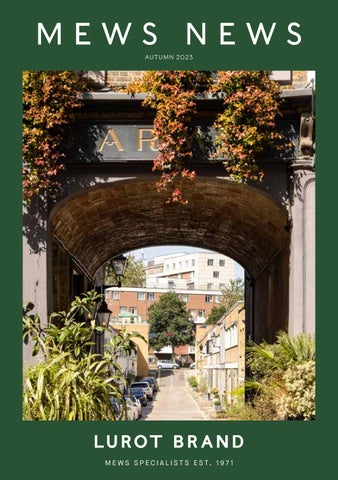
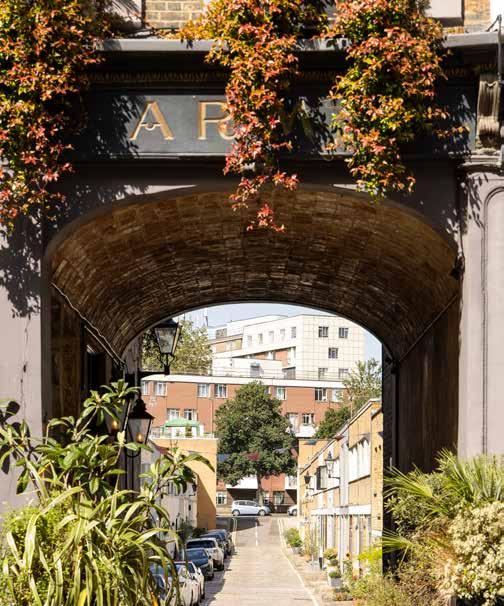
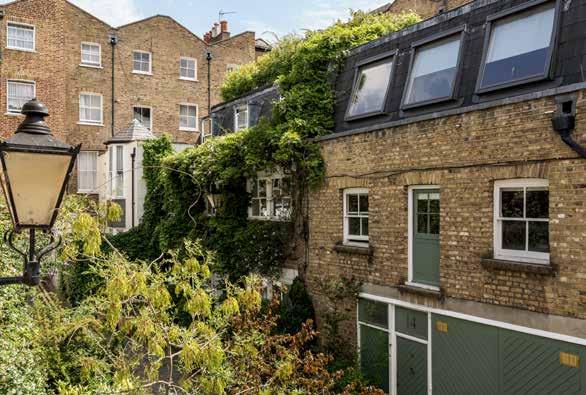
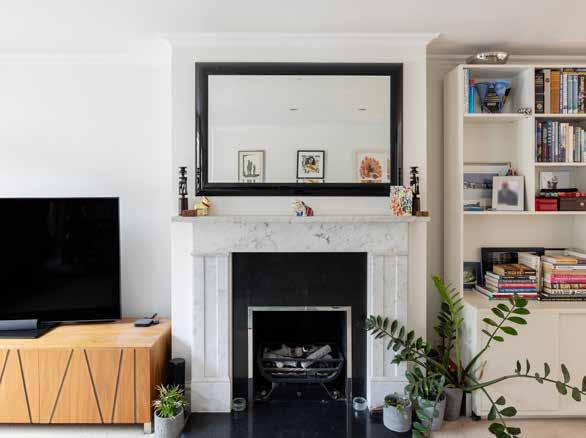
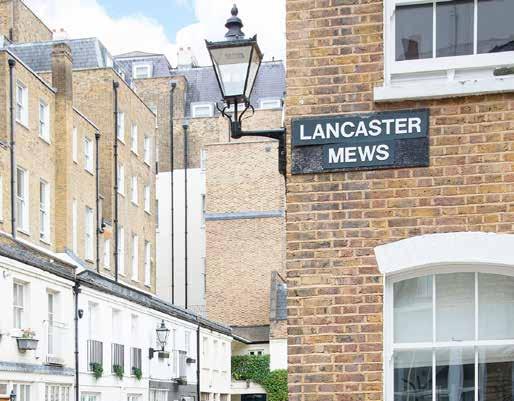
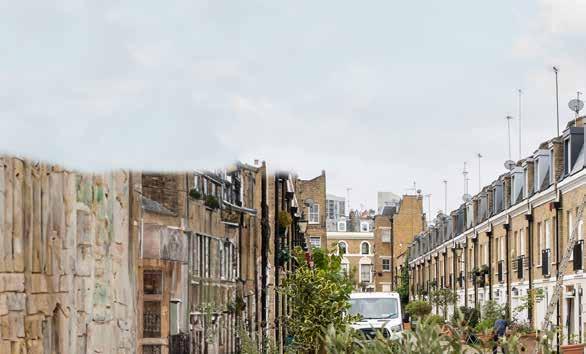
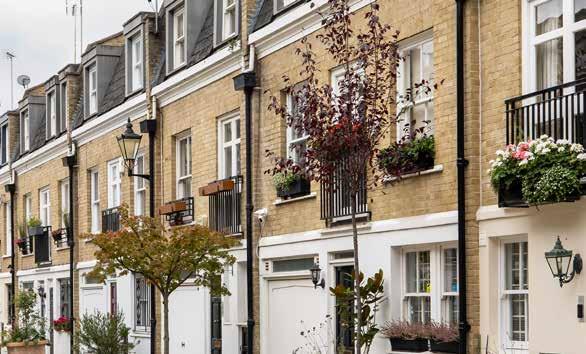
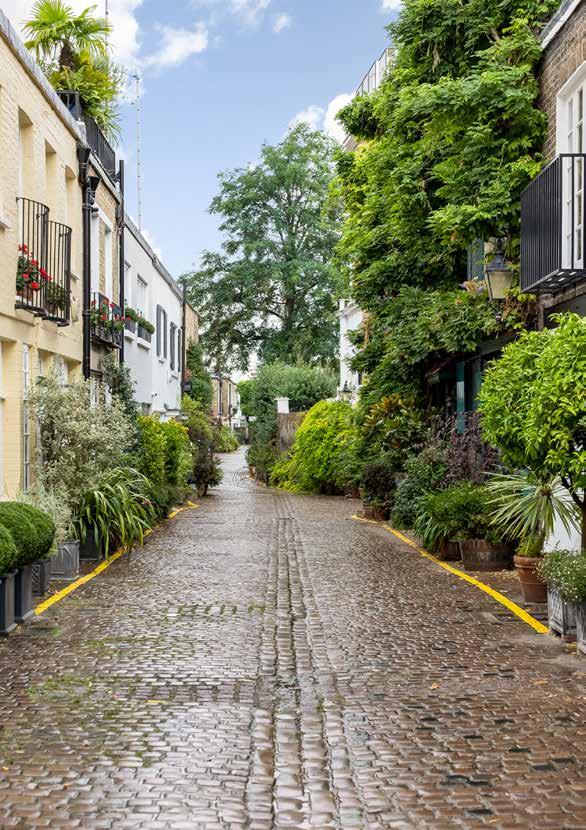
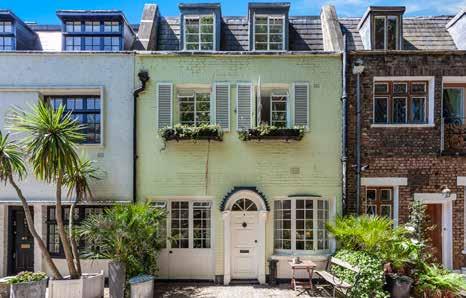
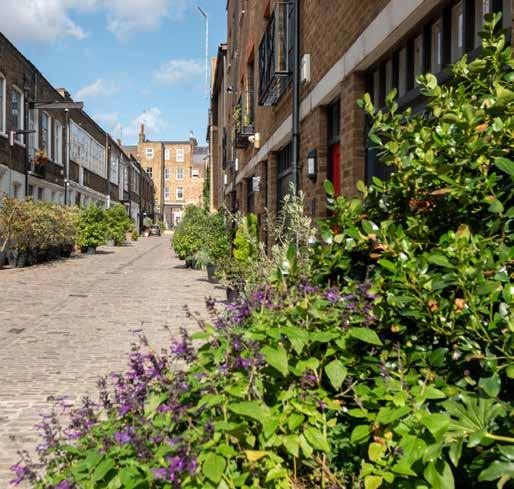
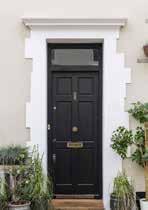
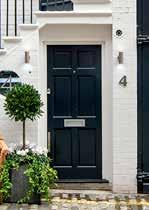
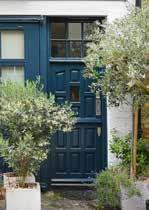
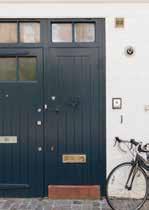
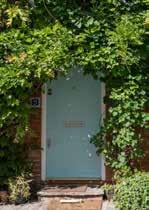
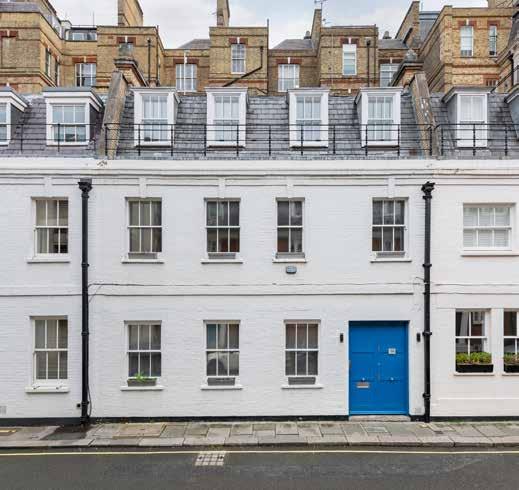
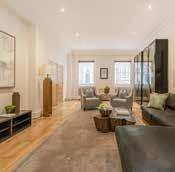
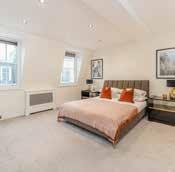
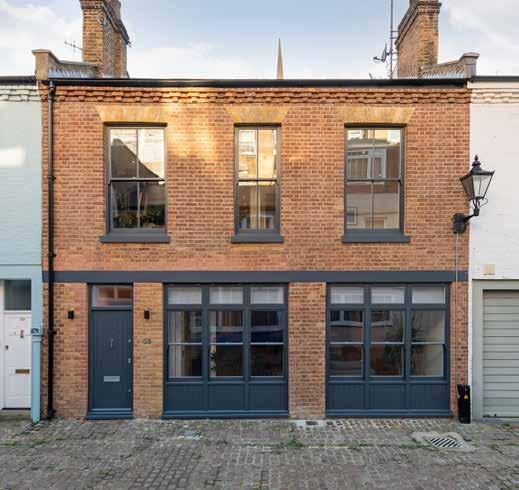
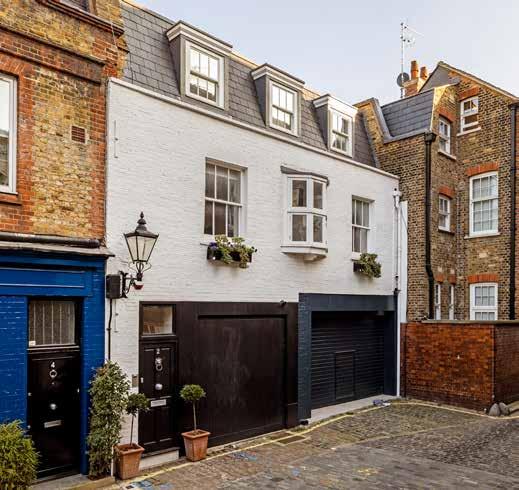
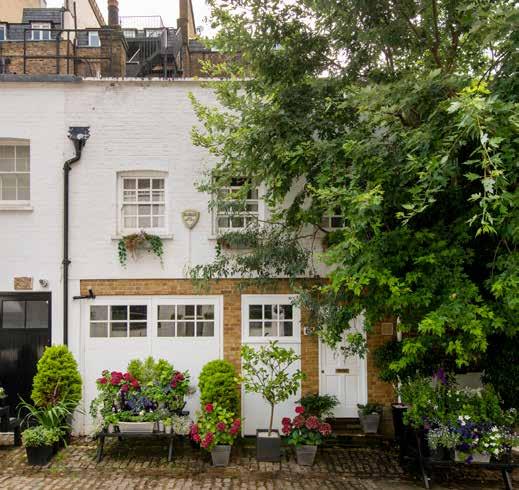
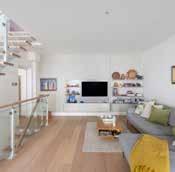
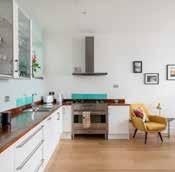
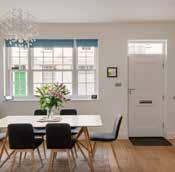
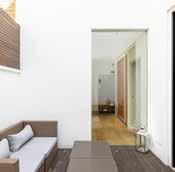
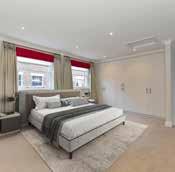
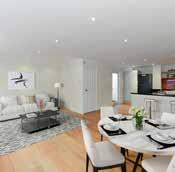
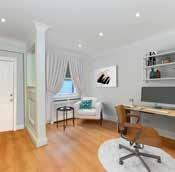
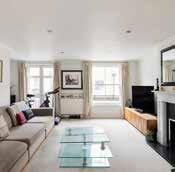
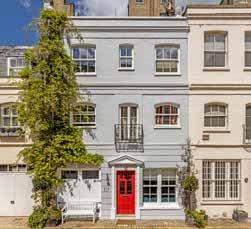
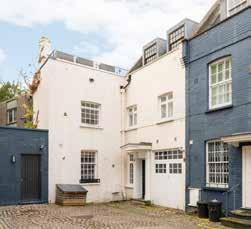
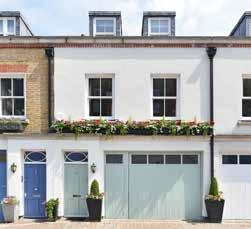
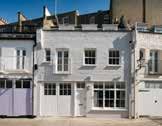
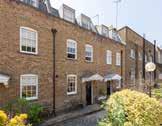
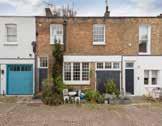
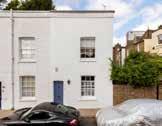
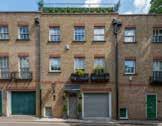
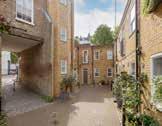
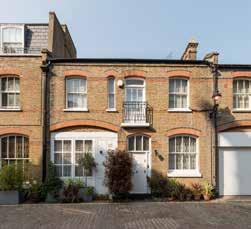
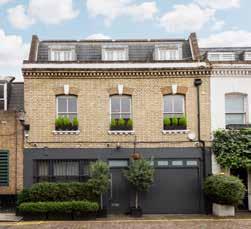
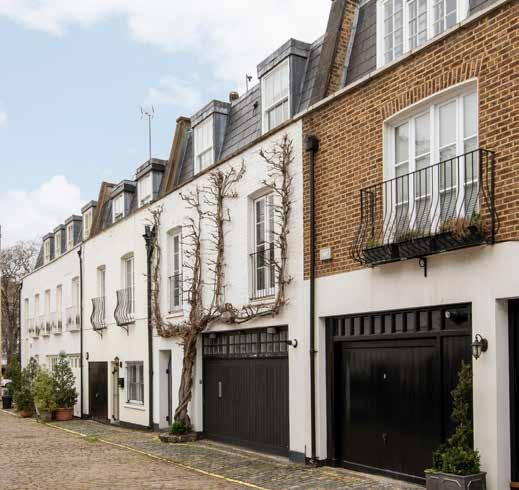
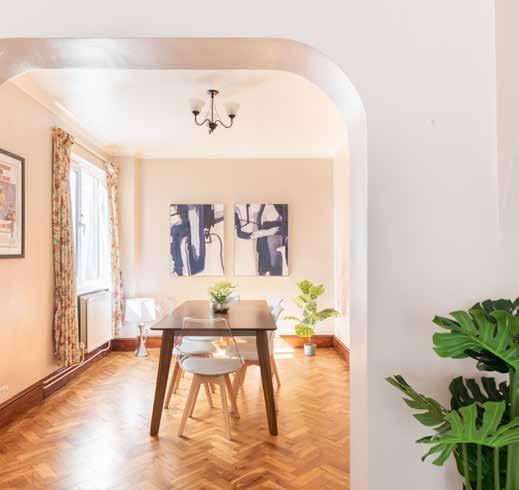
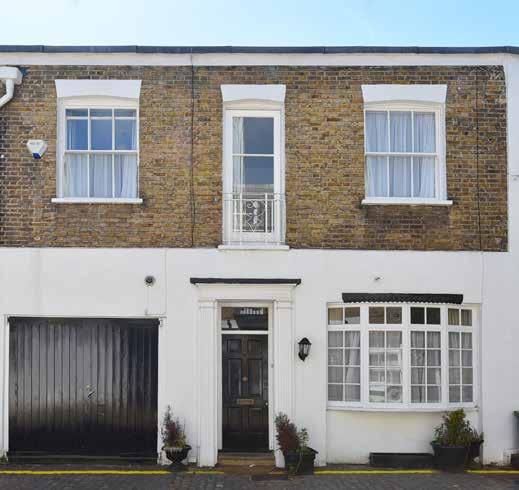
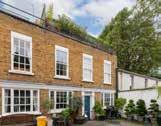
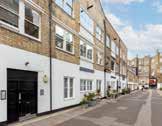
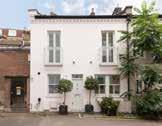
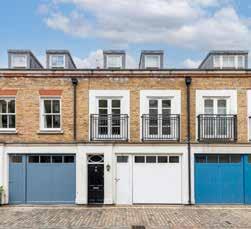
Summer’s over and there’s a definite autumnal feel in the air – trees starting to turn, leaves falling and evenings beginning to feel slightly chillier. At this time of year, the mews take on a cosy atmosphere, and conjure up images of hunkering down for the later winter months.
In my regular discussion with journalist Zoe Dare Hall about the mood of the prime market, I explain how the heat of the market has gone along with summer and we’ve entered a more reflective, considered period. Price sensitivity among buyers means vendors must be realistic and be poised to act quickly when an offer comes along. The ‘fun’ has fizzled out, no more people deciding on a whim to buy a home, we’ve returned to a need to attitude in these uncertain economic times.
Property maintenance might sound like a dull topic but keeping on top of essential repairs as landlords will always pay off in the end. Now is the time to tackle guttering and potential leaks, as Dawn
Sparks, head of property management explains in this edition.
Director and Head of Lettings, Mollie Swallow provides a letting bulletin and talks us through the first half of the year and how the final quarter looks for landlords, rental values and tenant demand.
Our Mews in Bloom winner is announced and we’re already looking ahead to another gardening adventure next spring.
For now, it’s all about bringing out the extra layers, turning up the thermostat, appreciating the joy of London’s parks and squares with autumn colours in overdrive, and enjoying the comfort that living in a mews house brings whatever the season.
Edited by Amanda Sharpe
MEWS HOMES OFFER CALM IN A STORM
Somehow whatever is happening in turbulent times, mews homes offer an irresistible sanctuary, that buyers are drawn to.
By Zoe Dare Hall
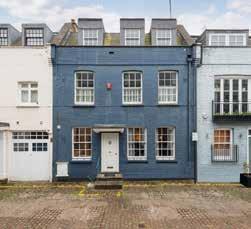
Seen as one of the wealthiest areas of central London, the cobbled, bougainvillea-clad phenomenon that is the mews street could be seen as a microcosm of the capital’s prime property market in current times.
Found only a few steps away from some of the busiest main thoroughfares in the city, where the masses rush along every day, worrying about missing their bus to work, paying bills or juggling childcare. Yet the mews is a sanctuary untouched by the surrounding hecticness.
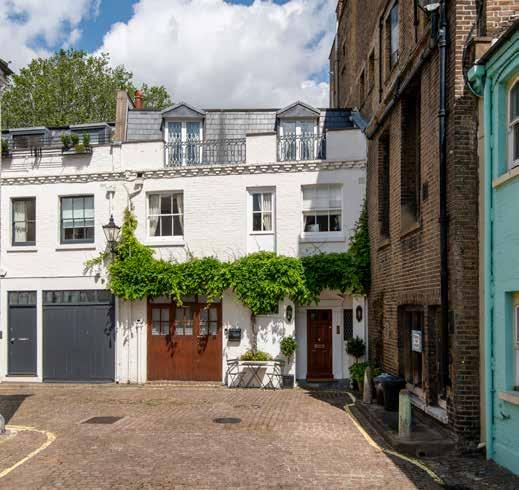
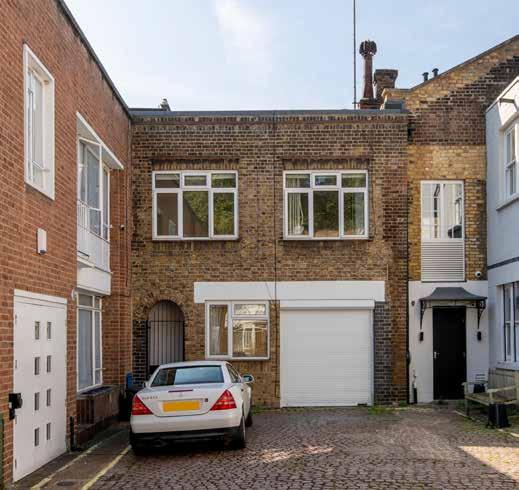
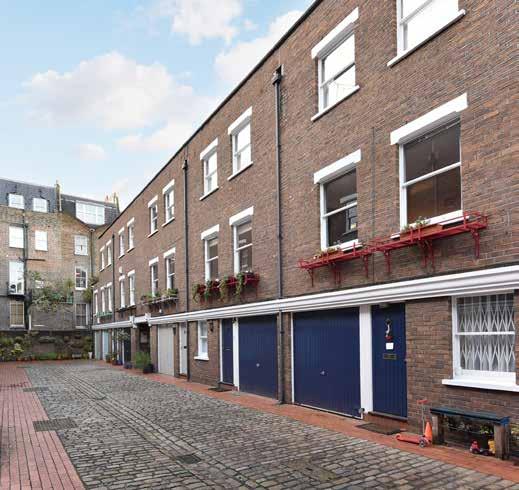
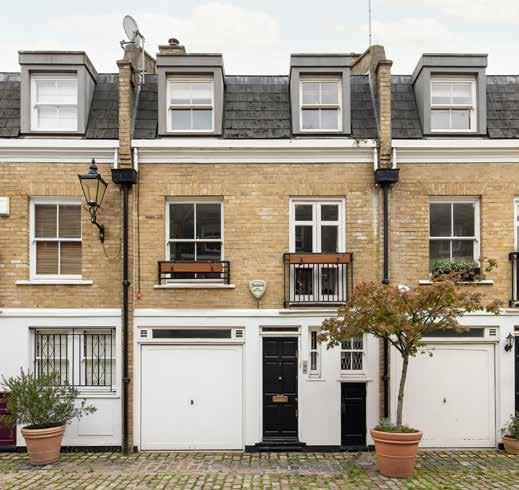
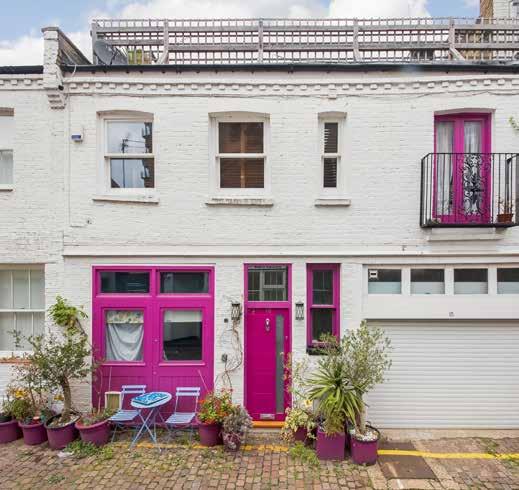
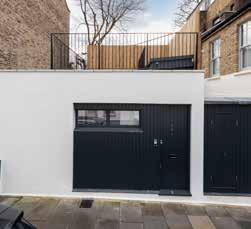
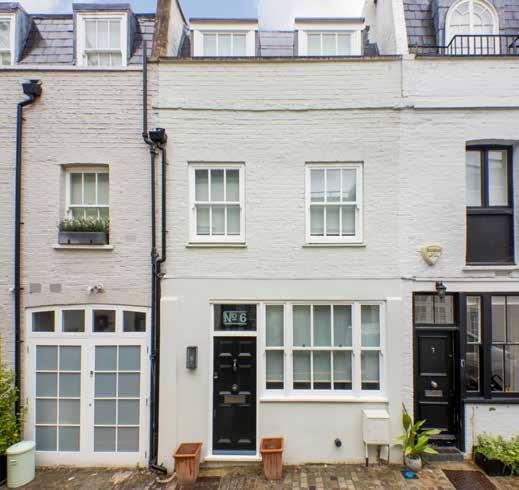
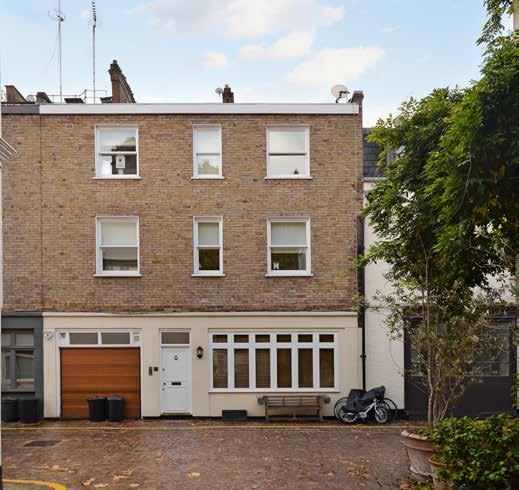
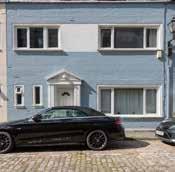
Often entered through arches historically built tall enough to let horses and carts pass, with their distinctive village appearance of painted low-rise terraces. Mews lead to a different city environment - tranquil, timeless, largely traffic-free enclaves, where owners’ fortunes are discreetly hidden behind old stable doors.
Elsewhere in the property market, there is currently much to give homeowners sleepless nights. On top of the way-to-work worries, 5.25% interest rates – though spared the 15 th monthly increase in a row in September – are causing nightmares for many mortgagees. But mews streets always feel a step away from the strains and stresses of modern life. Most mews property buyers are fortunate to purchase without the need for a mortgage.
They may be downsizing, buying a first home for their grown-up child or seeking a city bolthole to escape every so often from the country, but a mews house is invariably a discretionary purchase. If they can’t find what they want, they’ll wait. Similarly with mews vendors, if the price isn’t right, then they’ll hold out for a better one.
This more relaxed stance means that in an unstable economic climate as of now, the mews market feels as quiet as one of its idyllic streets. “Prices are stable and holding up well, but there are simply fewer buyers in the market, so transaction levels are down,” says Billy Harvey, head of sales at Lurot Brand. “The three Ds – debt, divorce, death – continue to drive transactions. But the fun market has gone quiet. Aspirational buyers who want to upsize to get an extra bedroom are being priced out.”
Where selling a house in London “used to be a sprint,” he adds, “now it’s a marathon. It can be a long process. It can take two or more months to go under offer.”
Buyers still keen to press ahead regardless are in a strong position, of course, as a relatively rarefied species. “The first thing that buyers always ask is how long the property has been on the market,” says Harvey. “Pre-pandemic, if it was more than a few weeks, they would assume
10-20 other viewers had already seen it and they would wonder what’s wrong with it. That’s not the case now.” He mentions a mews house in Prince’s Gate Mews that was recently on the market and had just a handful of viewings in four months. “Then suddenly we agreed a sale at a great price to a downsizing couple who emerged from nowhere,” he says.
When at its most active, the upper end of the market has a “game” feel about it, says Harvey. “People have a fun ‘let’s buy a house’ attitude,” he comments – again, setting the luxury mews market starkly apart from the mainstream market. Currently, though, house-hunters aren’t in much of a game mood. “They aren’t putting in silly offers. They are offering good prices. But it’s not a negotiation, it’s more a case of ‘take it or leave it’,” says Harvey.
Vendors should also bear in mind that buyers at present may regard any obstacle – however small – as a reason
to reconsider their purchase, and they won’t hang around any longer than necessary. “Sellers should make the process as smooth as possible for buyers by getting their house in order,” advises Harvey. “Get your solicitor’s pack ready to avoid delays, as time can kill a deal.”
Mews buyers – and the mews market – may be immune to many of the issues facing other sectors of the market, but some pockets of good news will be universally welcomed. “Inflation is going down; so too are energy bills. And we don’t know about the election yet, but Labour have suggested a wealth tax focused on property may not be on the cards” says Harvey.
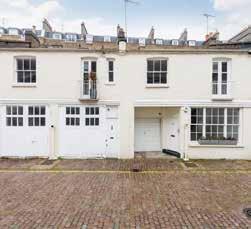
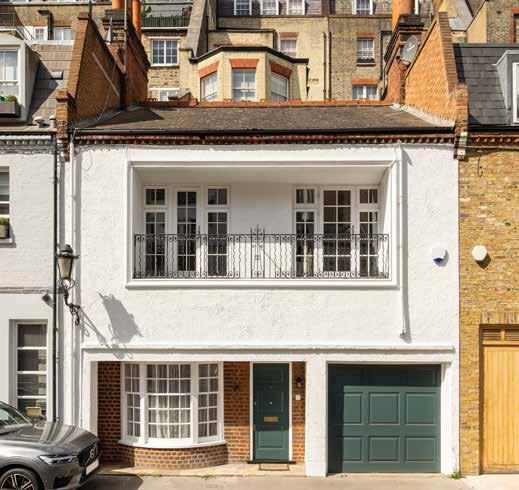
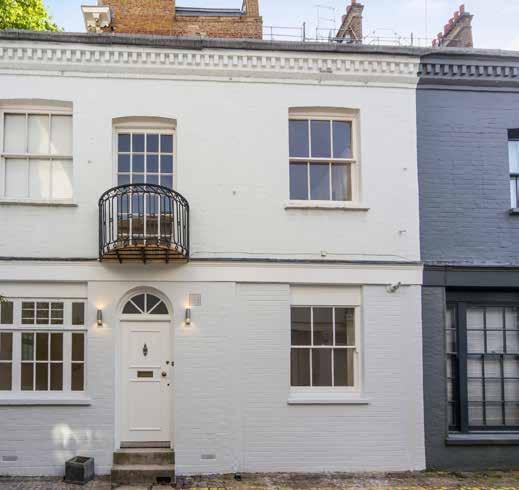
And although buyers are thin on the ground, every now and again a property comes on to the market that inspires the kind of spontaneity that is in short supply at present. “We have a property, now under offer, that is on sale for the first time in 45 years – a legacy sale,” says
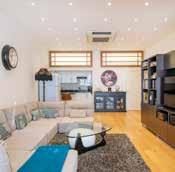
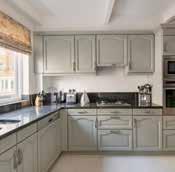
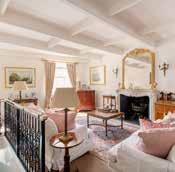
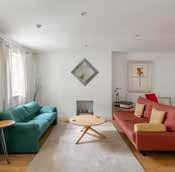
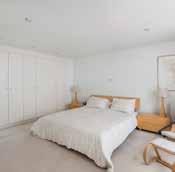
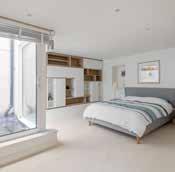
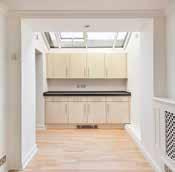
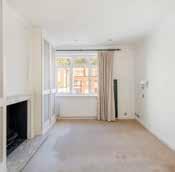
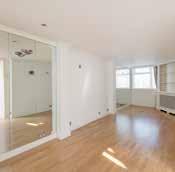
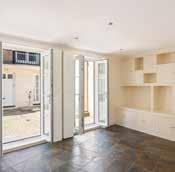
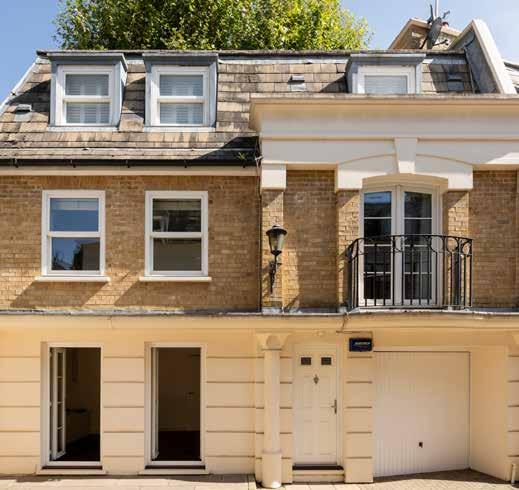
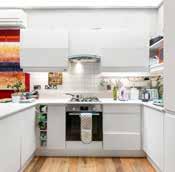
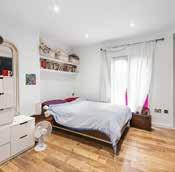
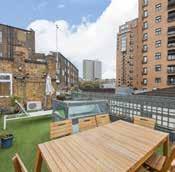
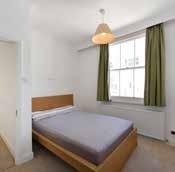
Harvey of a refurbished two-bedroom house, priced at £1.9m, in a quiet cobbled Junction Mews in Paddington.
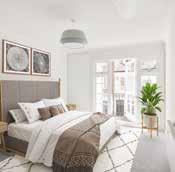
It will doubtless provide its new owners with the perfect haven, away from all the noise, to weather out whatever storms lie ahead this Autumn.
BY ZOE DARE HALL
Property Freelance Journalist of the Year 2021, International Property Journalist of the Year 2021, Lifestyle & Interiors Journalist of the Year 2021 (Property Press Awards)
TIPS BENEFITS OF CLEANING GUTTERS
As we start to see Autumn appear, we have a month or so to prepare for the change in seasons and make sure our homes are ready for the wetter, colder, windier months.
Boring as this job may sound, cleaning gutters will protect you against further problems to your property, which could result in hefty bills if you choose to ignore this essential maintenance.
Dawn Sparks, head of property management gives some sensible practical advice on tackling your mews gutters.
1 PREVENT GUTTER DAMAGE TO YOUR HOME
The main purpose of gutters is to help drain rainwater from your roof. Clogging caused by falling autumn leaves and debris can cause gutters to become very heavy, with overflowing water having nowhere to drain. This extra weight and stress can cause structural damage to your gutters, including rust, sagging, detaching, and even falling to the ground. Damaged gutters typically need to be replaced entirely, which can be very expensive. Ensure the downpipes are not blocked and water can drain freely. We always recommend regular maintenance of all guttering throughout the year to ensure that no downpipes are blocked and water is able to drain freely.
2 PROTECT YOUR ROOF FROM DAMAGE
If rainwater on the roof has nowhere to drain because of clogged gutters, water may collect in one spot on your roof tiles. Left unattended, even small pooling and leaks can lead to major roof damage, including water seeping through roof tiles and into the home. Without regular gutter cleaning and care, it can lead to damp problems internally, and far more costly repairs to the roof and possibly inside the home.
3 AVOID DAMAGING YOUR HOME’S FOUNDATIONS
The main purpose of gutters is to direct rainwater runoff into drains, rather than straight onto your lawn or ground.
Just like pooled water can damage a roof, the structural integrity of the home can suffer from pooled water that seeps through to the home’s foundation.
4 REDUCE HEALTH RISKS FROM MOULD & BACTERIA
Water that can’t drain properly from the roof has the potential to go stagnant, which is not healthy. Leaf and other debris in the gutters are also a prime breeding ground for dampness, mildew, mould and bacteria, which can spread and escalate.
To help prevent the build-up of material causing harmful mould from multiplying in your home’s air and becoming a health risk, it’s important to stay on top of looking after your gutters and undertake regular cleaning.
5 PREVENT PEST INFESTATIONS
As grim as it sounds, the reality is unwelcome pests such as rodents, cockroaches and mosquitos are all attracted to stagnant water and rotting leaf debris. These pests thrive in damp, dark conditions and can soon infest the home.
Make sure to remove any debris like leaves and twigs from your gutters regularly so that water can flow cleanly and freely and discourage insects and birds from nesting in the eaves.
Head of Property Management
dawn@lurotbrand.co.uk
020 7479 1972
IN S UMMAR Y
As you can see, there are many benefits to cleaning your gutters. Of course, for some homeowners the prospect of climbing a ladder, or embarking on the job yourself, is not a welcome prospect and so it’s tempting to ignore the task. We would always err on the side of safety and caution, so best to arrange for a professional or handyman to check and clean your gutters rather than attempt this yourself. We can always help when it comes to finding a reliable tradesperson to come and do the work.
As Autumn is when your gutters are likely to fill up and cause the most concern, try to organise the work to be done as early as possible and minimise the time and cost required.
Dawn Sparks
MOLLIE’S LETTING BULLETIN WITH A SNAPSHOT OF PCL’S RENTAL MARKET BEFORE THE AUTUMN
Mollie Swallow marla , Head of Lettings Director sums up the rental market across Prime Central London as we end Q3 of 2023. Once again, it’s about price sensitivity when it comes to attracting tenants as the second half of this year calms down.
In line with the first half of 2023, the PCL rental market has maintained its fast pace during Q3. The month of August alone saw rents across central London increase by almost 9 per cent, triggered by the ongoing lack of stock and high demand for rental properties.
August 2023 was particularly quiet in terms of the number of new lets agreed. Across the board, data revealed a fall of 22% across Prime Central London, although we saw an increase in new instructions for rent in the same location this August.
The second half of this year has seen a slowdown in rental values achieved. During the first six months of 2023 rents were consistently securing the asking price or over and above. This momentum has shifted, which I put down to an unusually quiet August along with perhaps rather excessive confidence from other letting agents and landlords’ appetite for income, and the market’s ceiling.
What continues to ring true is that a sense of realism is required. If you wish to make sure your property is let for a good rental value and at worst a very minimal void period, then not over valuing is key. Price, presentation and a professional agent are the important factors when
it comes to renting out your investment and maximising your returns. A property maintained and presented well and handled by an experienced agent with the right local market knowledge should see you through.
BEWARE THE SUB-LETTER SCENARIO
Subletting in Prime Central London is on the rise again. During the months of July and August we noticed a huge increase in companies inquiring about subletting properties for short term rentals.
My advice, is to stay away from this business model. Mews streets are communities, by introducing these types of tenancies not only are you upsetting your neighbours, but you are increasing your risk of having to evict such companies or people for non-payment of rent, which, as we know, is a lengthy and costly process. The high wear and tear this inflicts on the property is also detrimental to re-letting, in addition to the problems we experience when trying to do viewings when the property comes back up for rent.
For all your rental questions and advice on letting out your property, do get in contact or pop in and see me or one of the lettings team.
EVERCHANGING MEWSTHE FIVE BASIC MEWS TYPES
Resident mews expert Martyn John Brown from ‘The Everchanging Mews’ walks us through the distinguishing elements of the mews in its original form and how to recognise these in today’s sophisticated residential streets.
Today’s mews have changed considerably from their original simple build designed for a humble functional purpose. The Everchanging Mews now include different adaptions from roof terraces to converted stable accommodation turned into stylish open plan living space. But take a closer look and peel back the decades of alteration and the original simple uniform elements remain.
Whilst in modern times mews are predominantly private homes, the planning process and conservation controls have allowed a semblance of the authenticity and character to remain intact, with original architectural features still evident.
Mews built during the Georgian and Victorian eras were elementary structures, often shaped by the site they occupied. Overall, the template and configuration consistent with different forms. The mews similarities remarkable;
we have identified five basic types; each of which has numerous permutations.
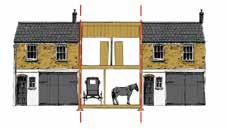
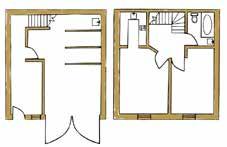
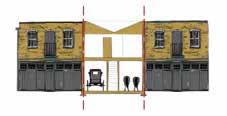
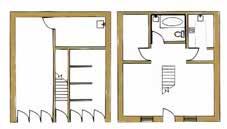
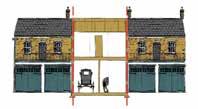
Man-built mews are built on an equine scale – designed to be purely functional, occupied, and used by horse and carriage.
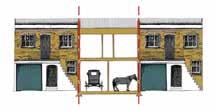
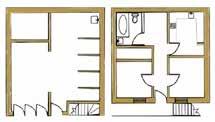
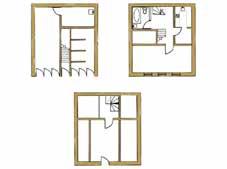
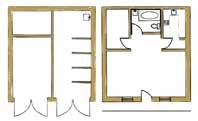
Generally, the mews conformed to similar layouts, which would be as follows:
• First floor: sleeping and living quarters for the coachman and family
Character, style and scale link the mews exteriors. At the time, surveyors were instrumental in the way mews proportions were designed and laid out because they were responsible for overseeing the overall layout of London’s vast hereditary estates. They endeavoured to use standard coordinating dimensions, although overall dimensions differed from one development to another.
Type A
Simple Mews with sloping roof
Type B Simple Mews with parapet roof
Type C Embellished Mews
Type D Gabled Mews
Type E Mews with continuous balcony
Type A Example - Albion Mews
TYPE A: SIMPLE MEWS WITH A FRONT-TO-BACK SLOPING ROOF
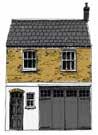
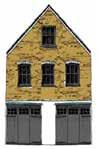
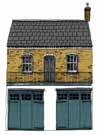
The earliest derivation of a mews is a simple brick-built structure with a sloping slate roof, pitched from front to rear. Modest in size with ground floor equine height, typically 10 feet (3 metres) and a proportioned upper floor, typically 7’6” feet (2.3 metres). Generally, the property is 16’6” wide (5 metres) with timber folding concertina doors allowing access for horses and carriages.
Conventionally built these structures have shallow foundations comprising only rudimental stone, brick, and timber floors, with external drains, cast-iron gutters, and ironmongery.
The striking impression was uniformity - a repetitive collection of buildings around a courtyard or alongside an access way to form a uniquely low-rise small-scale environment, entered from a secondary street, discreetly located behind more substantial buildings.
Examples: Albany Mews, Albion Mews.
TYPE B: SIMPLE MEWS WITH
PARAPET ROOF
This is becoming all too common these days, especially in mews streets.
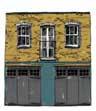
Similar to type A mews but it is often wider, at around 18 feet wide (5.5 metres), and distinguished by its parapet roof (roof hidden by the extended wall). These were built at the same time as type A mews, although often with hayloft access on the first floor.
This is becoming all too common these days, especially in mews streets.
Type C Example - Holland Park Mews
TYPE C: EMBELLISHED MEWS
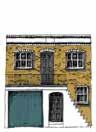
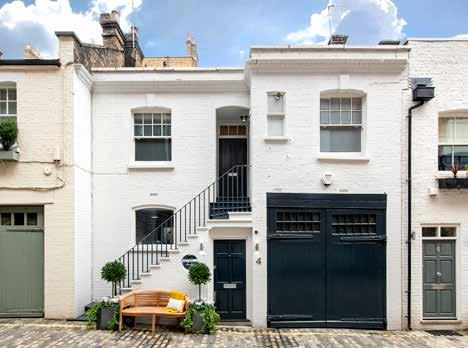
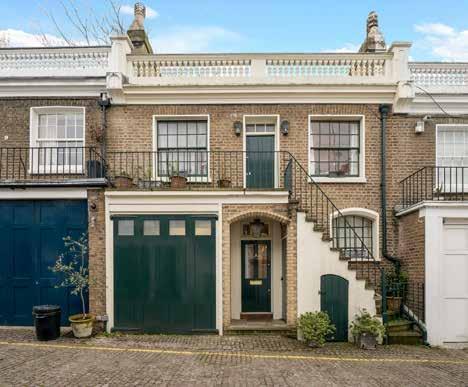
Similar to type B and, again, often wider than type A, additional features include steep external staircases, larger and more prominent windows, some form of balustrading and other detailing to brickwork parapet with a roof hidden behind. The parapets often have decorative brickwork. They also had roof balustrading and steep external staircases leading to the first floor. First-floor windows often have six over six paned sashes. Ground floors are designed with a pair of doors allowing access for the horses and carriages, with a separate entrance via the stairs to the flat above them.
Examples: Holland Park Mews, Queensbury Mews West, and Weymouth Mews.
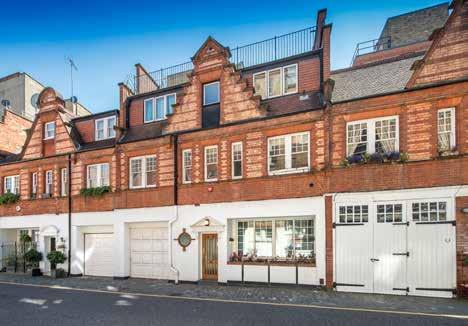
TYPE D: GABLED MEWS
Built on a grander scale - more equine palaces than modest mews and tended to be built later than types A and B.
Take Adams Row, a second-generation mews built around 1896 on the site of a demolished mews, appearing when mews accommodation was going out of fashion.
Adams Row is one of the last purposebuilt mews constructed in Westminster, just before stables were replaced by garages for motor cars.
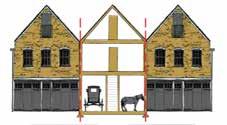
Gabled mews often have distinctive, stable doors at ground floor level, with a gabled red brick façade above and matching party walls standing proud of the roof. They are larger and higher than earlier mews, possibly 22 feet wide (6.7 metres). Characterised by hoisting beams, upperstorey external doors and ornate gables.
Examples: Astwood Mews, Bourden Street, Colbeck Mews, Holbein Mews, Reeves Mews, Rex Place, and Adams Row.
Type
D Example - Holbein Mews
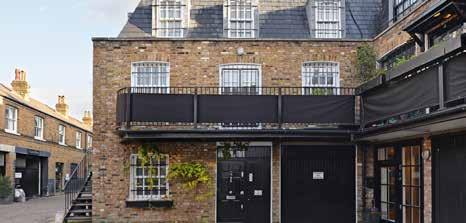
TYPE E: CONTINUOUS BALCONY MEWS
A balcony provides access to the firstfloor accommodation, providing full separation between the ground and first-floor living accommodation. This enabled horses to be kept separately from people, which allowed for different ownership of the ground and the firstfloor accommodation. Construction is generally similar to types A and B, often using concrete to construct the balconies. John Nash’s Carlton Mews accommodated the carriages at ground floor level and had its stabling accessed by a ramp on the first floor.
Examples: Albert Mews, Dove Mews, McCrone Mews, DeVere Mews (now demolished), Carlton Mews, the Royal Mews, Kensington Court, Mews, Holly Mews, Ledbury Mews North, and Petersham Place.
Having considered the various types of original mews in terms of their design in the winter edition, my next article will address the more substantive subject of their authenticity.
Blooming lovely BROWNLOW MEWS IN BLOOMSBURY THE OVERALL WINNER OF MEWS IN BLOOM 2023
We are tickled pink to bring you news of the overall winner of this year’s Mews in Bloom competition and delighted to congratulate all the residents of Brownlow Mews in Bloomsbury for putting on a wonderful horticultural display in 2023. The winners will be presented with a celebratory plaque to display in their mews.
The hard work, ingenuity, and flair of all those locals who helped design, plan, plant, and weed certainly paid off as the expert judges were bowled over by Brownlow’s burgeoning mews street, full of a variety of planting, eye-catching pots, window boxes, floral displays and seating areas for everyone to stop, sit and mingle in the mews.
As always, we’d like to extend a thank you to everyone who took part in this terrific annual event; a name-check to the runners-up at Ennismore Mews and Stanhope Mews South for their sterling efforts, and grateful thanks to our wise judges for their critique and time.
Mews with their friendly relaxed outdoor spaces provide great pleasure, not just to local residents, but to passers-by, visitors, tourists, and Londoners not as fortunate to live in these unique city enclaves.
So whether you’re a seasoned Mews in Bloom competitor or a gardening newbie, we’d love you to enter next year’s event. Now is the time to grab your bulbs, browse a seed catalogue and let your imagination run wild.
Calling all mews enthusiasts
Over the years we’ve heard many lovely stories about the people living in mews that we would love to share with the mews community.
If you have a mews-related story or event in a mews that you would like to share, then we’d love hear from you.