










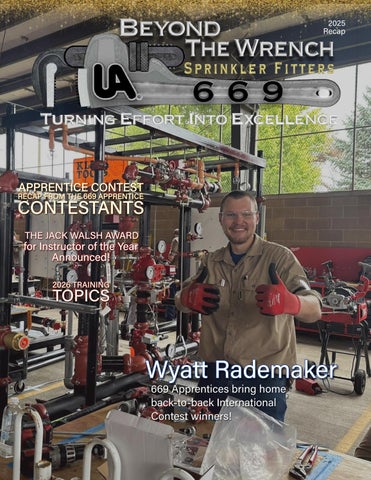




This year's 669 apprentice contestants share their journey to the international contest


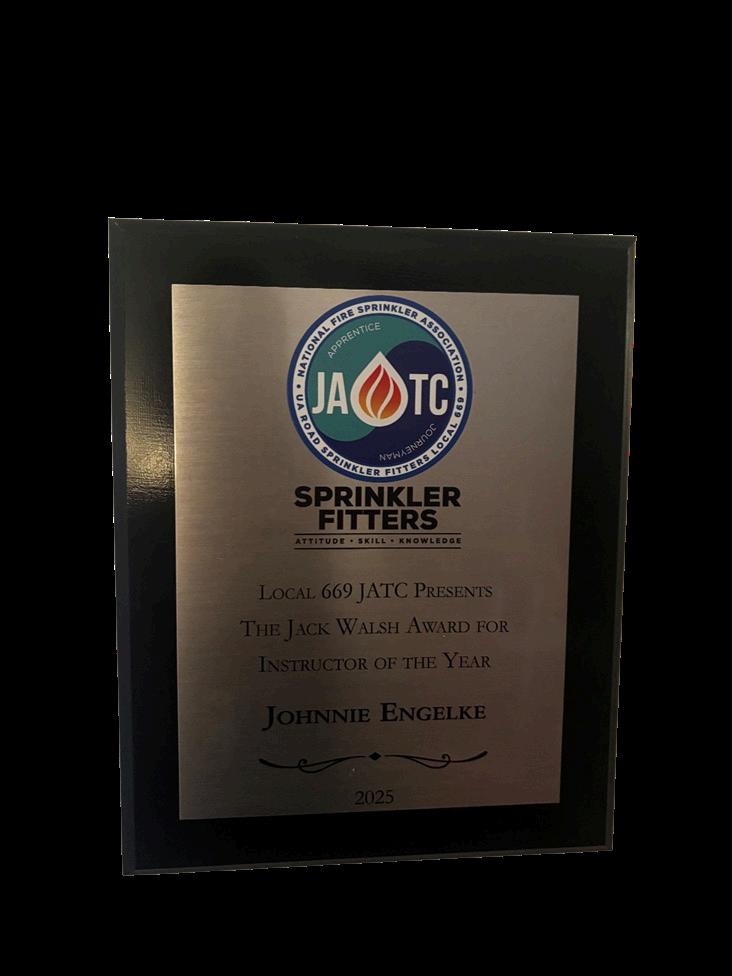
Jack Walsh Award for Instructor of the Year





Message from the Executive Director
Message from the Director of Training
SPF Course Updates
OSHA Training
Backflow Training
Specialty Classes
Instructor of the Year
669 Apprentice Contestants
2026 Class Topics
JATC Class Locations
Test Your Sprinkler Knowledge



The new year provides both a moment of reflection and the opportunity to focus on the future. Our total apprenticeship population has remained strong. The population has hovered just below the 3,700 mark all of 2025, any given month we were within arm’s reach of breaking past that mark. More importantly our active apprenticeship numbers grew during the year by nearly 200. This is backed up by our lack of work, pending, suspended, and canceled numbers being down for the year. The takeaway is more apprentices employed throughout the year and more hours being reported by our contractors.
Number of new apprentices hired: 1,158
Number of apprentices advanced to journeyworker: 447
Total apprentice population December 2025: 3,684
Looking ahead, many of our contractors’ report that 2026 is shaping up to mirror the strength of the previous year, with some regions experiencing higher demand than others. We anticipate continued strong employment for our workforce as well as our apprentices and members making the projects profitable for our contractors.




Technology addressing
Technology continues to accelerate, bringing new milestones and initiatives at a pace our industry has never experienced. Like the rest of the world, we are working to understand and adapt to the growing influence of artificial intelligence. What we see today is only the beginning. A.I. will become faster and more impactful in the years ahead.
Our success will depend on how we choose to embrace these tools. Ignoring or resisting them will only leave us further behind with a steeper climb later. Our apprenticeship program is taking a proactive approach, exploring how A.I. can support training, enhance curriculum development, and improve the delivery of instruction. By leaning into innovation, we position ourselves to be able to deliver more impactful training.
We are proud to have several instructors who serve on NFPA technical committees. Being an active participant in NFPA codes and standards is vital, not only to the success of those documents, but also to our program and training initiatives. Having a voice at the table that represents the interest of safety, the worker, and better fire protection is an important role for the training department. This involvement also gives our program a significant advantage of early insight into upcoming changes before they are finalized and implemented. This provides the opportunity for us to develop curriculum in a timely manner to deliver to our membership.
As we move into 2026, our focus remains clear: continue building excellence beyond the wrench by strengthening our workforce, embracing innovation, and staying engaged in the standards that shape our industry. Thoughtful adoption of new technologies and active participation in code development reinforce the value of a well-trained, highly skilled membership. By investing in our apprentices, instructors, and curriculum today, we ensure our members, contractors, and industry are prepared not just for the challenges ahead, but for continued success well into the future.
the Wrench, Turning Effort into Excellence!
We are committed to providing the best education and training for sprinkler fitters nationwide.


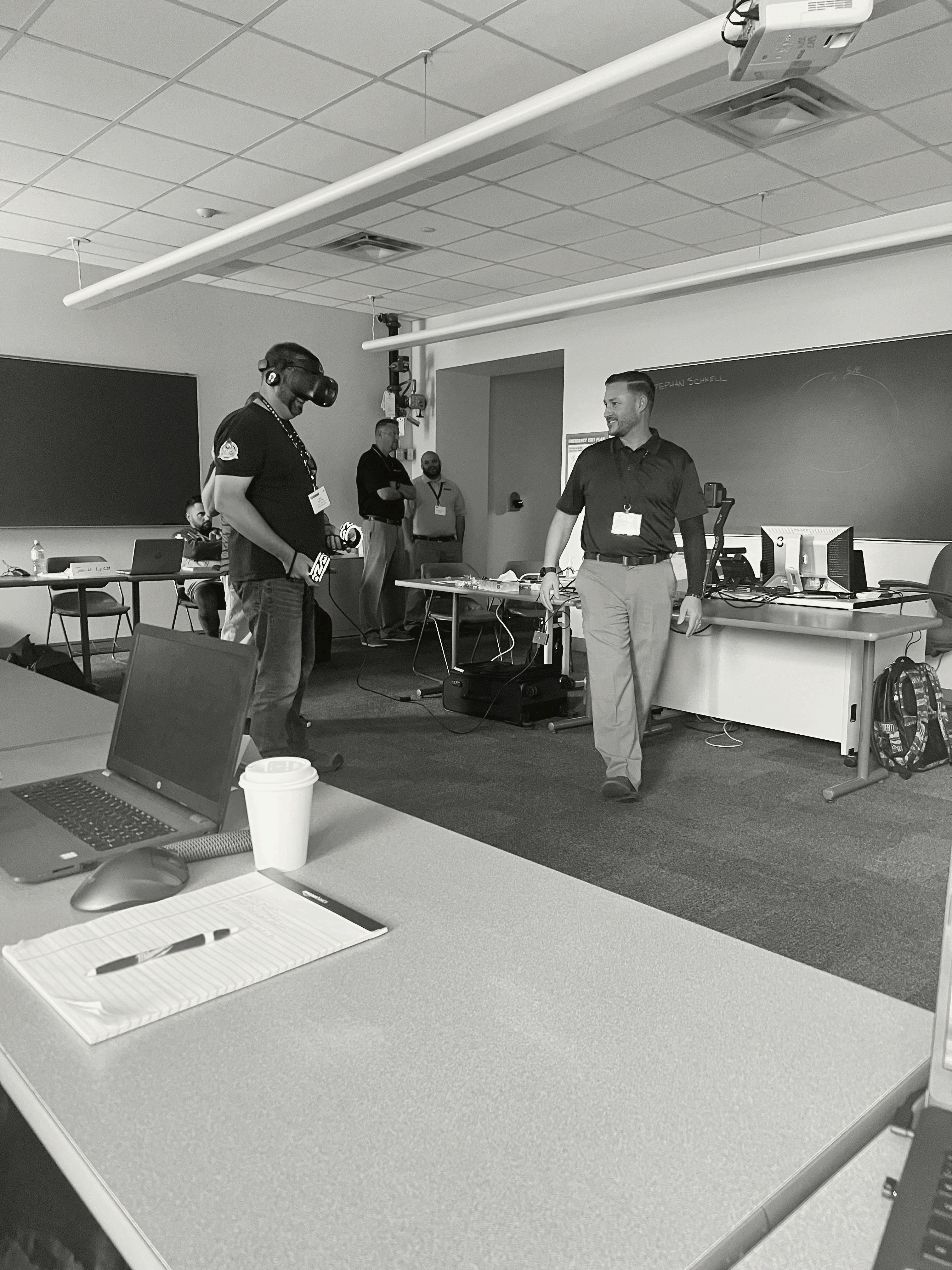
With the full-time coordinator roles established and now fully operational, 2025 focused on execution and refinement. Curriculum alignment, technology integration, specialty classes, and outreach efforts all benefited from clearer structure and dedicated leadership. The result has been improved coordination, stronger communication, and a more unified training experience across locations.
In addition, we have received tremendous support from our industry partners through tool donations. Their generosity will directly enhance our training efforts, allowing us to improve hands-on learning opportunities and resources in many locations across the country. We are grateful for these partnerships and the continued investment in the success of our members.
2025 marked an unprecedented milestone for our training program. Our apprentices captured four of the five available UA District Contest wins, earning the opportunity to advance to Ann Arbor, MI to compete at the UA International Apprenticeship Contest, a remarkable achievement that reflects the strength of our instruction, preparation, and commitment to excellence.
We would like to congratulate all four of our district contest winners on an outstanding performance:
▫ Logan Imming – Indiana
▫ David Sandoval – Texas
▫ Zachary Gardner – Idaho
▫ Wyatt Rademaker – Wisconsin
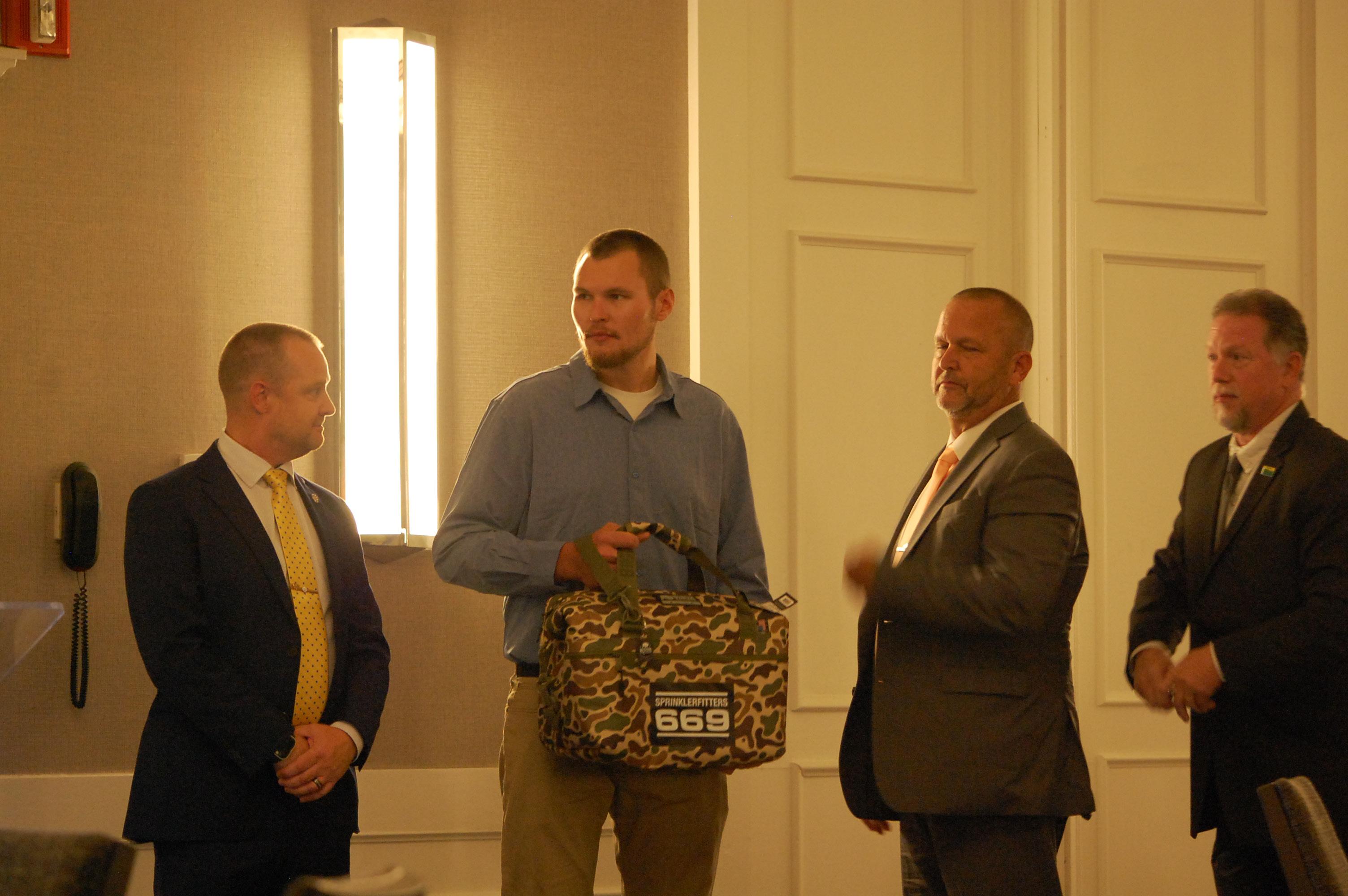
Each of these apprentices represented our local and our training program with professionalism, skill, and pride. We would also like to extend special recognition to Wyatt Rademaker, who went on to win the 2025 UA International Apprenticeship Contest, an exceptional accomplishment and a testament to his hard work and dedication. Congratulations, Wyatt!
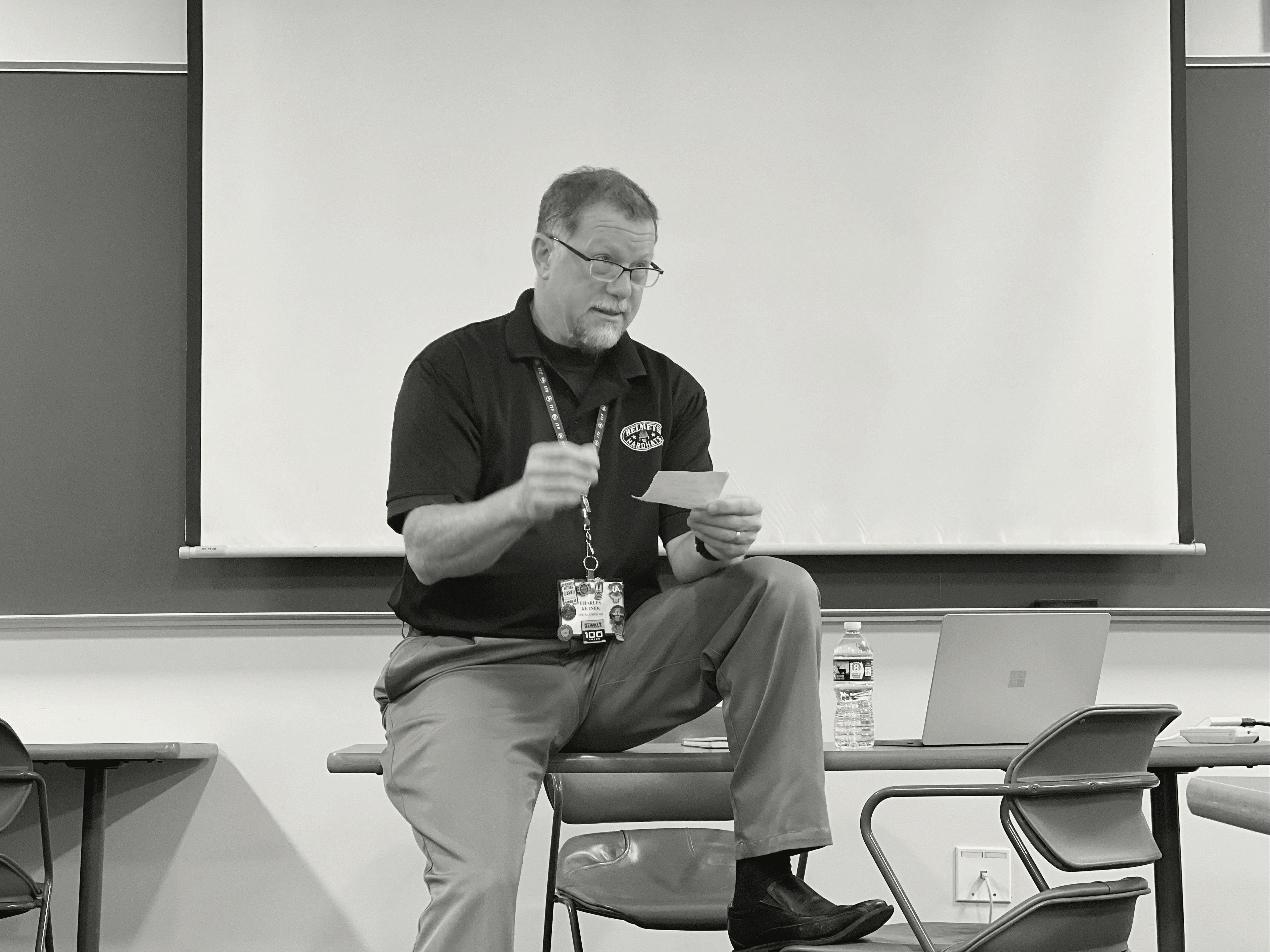
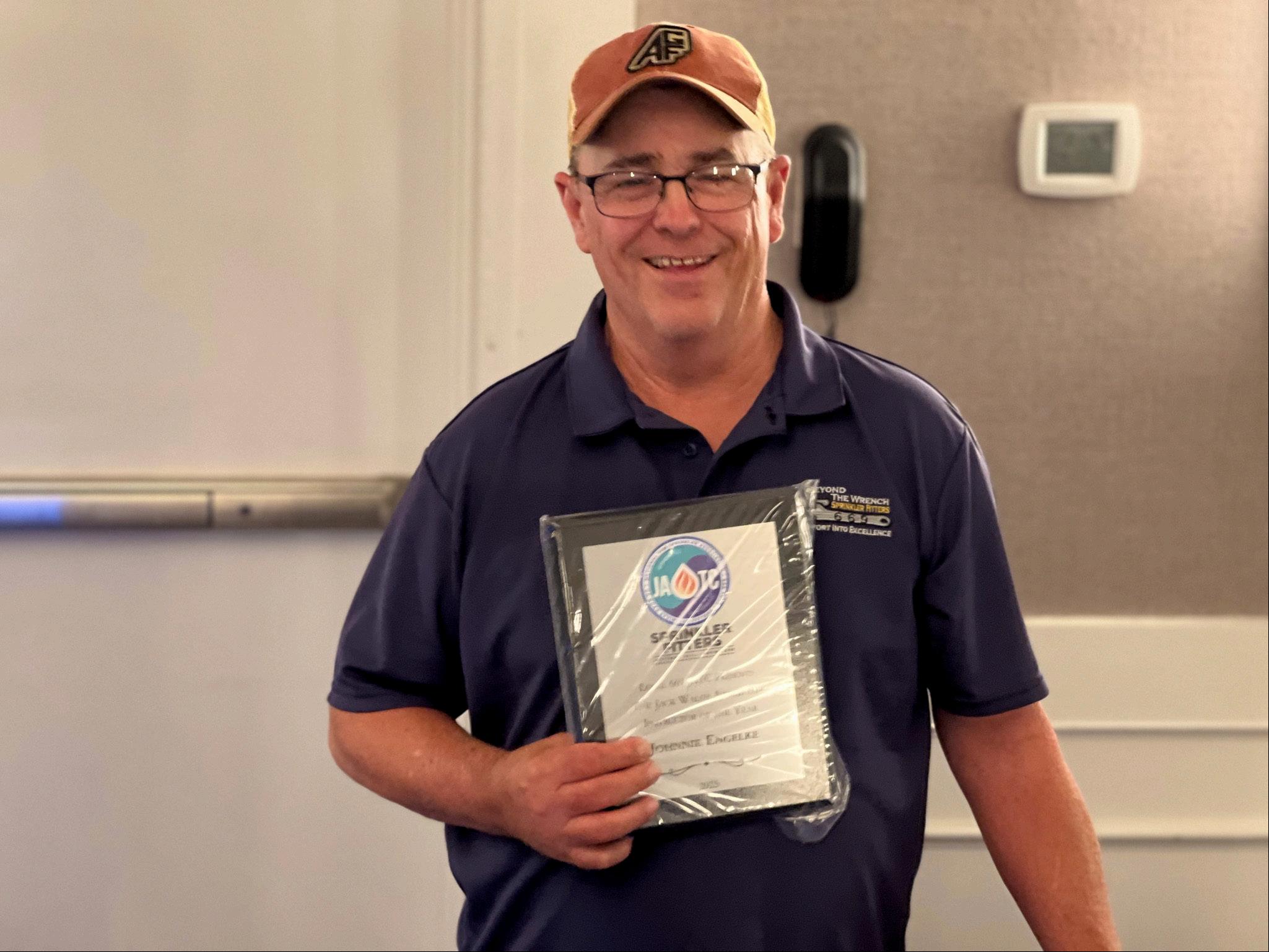
In addition, we are proud to recognize Johnnie Engelke as the recipient of the 2025 Jack Walsh Instructor of the Year award. This recognition reflects Johnnie’s long-standing dedication to the trade, his leadership in the classroom, and his unwavering commitment to developing the next generation of skilled professionals. His passion for training, mentorship, and excellence has had a lasting impact on apprentices and continues to elevate the program as a whole. Thank you, Johnnie, for all your years of hard work and devotion for instructing.
We enter this year with laser focus on continuous improvement. By building on last year’s foundation and thoughtfully expanding our team, we are well positioned to support growth, innovation, and excellence in training throughout 2026 and beyond.
Thank you to everyone who continues to invest their time, expertise, and passion into the success of our training program. Together, we are shaping a strong future for the next generation of our membership.

Since the last JATC newsletter, we have received valuable feedback regarding recent course revisions. I’m pleased to share that this feedback has been overwhelmingly positive. We continue to receive compliments on the updated course content and the clarity of its presentation, which has been both encouraging and motivating as we look ahead to revising the remaining courses.
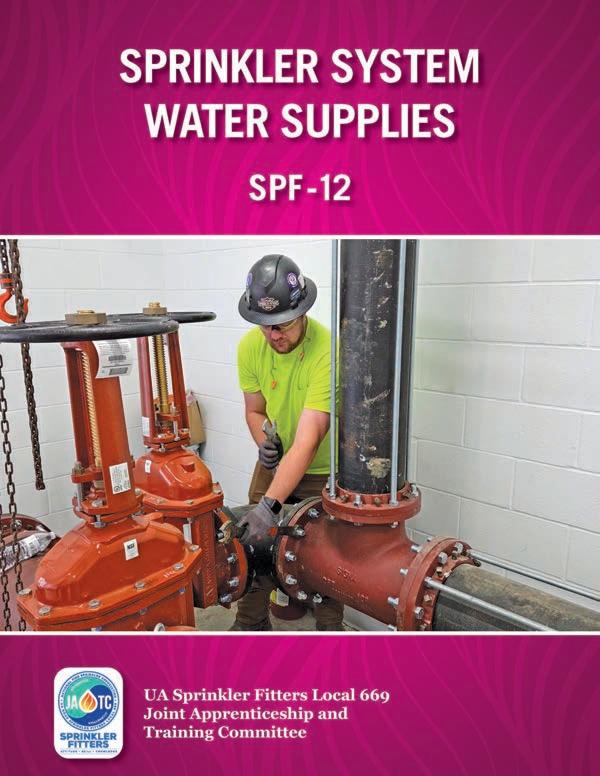
Since our last update, work has focused on one SPF course: SPF 12 – Sprinkler System Water Supplies. This course previously included older lessons covering various fire pumps and controllers. Those lessons were relocated to the new SPF 13 –
Installation of Fire Pumps course, allowing SPF 12 to be expanded with additional water supply–related topics. Here’s what you’ll find in the revised SPF 12:
Kevin Holbrook
Core Curriculum and Code Coordinator


Lesson 1: Introduction to Sprinkler System Water Supplies

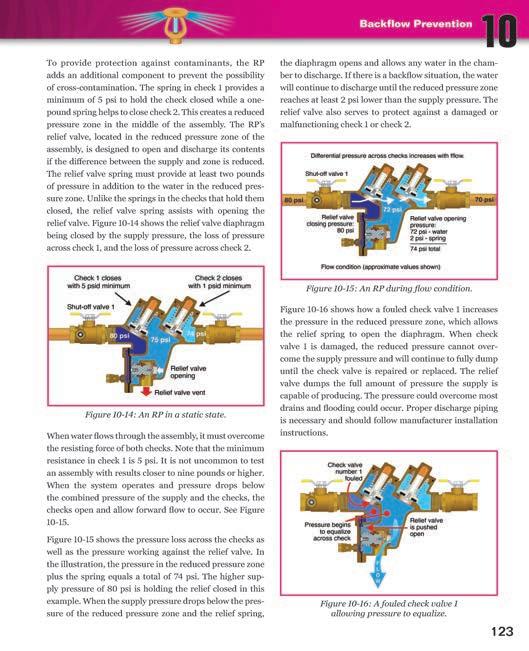

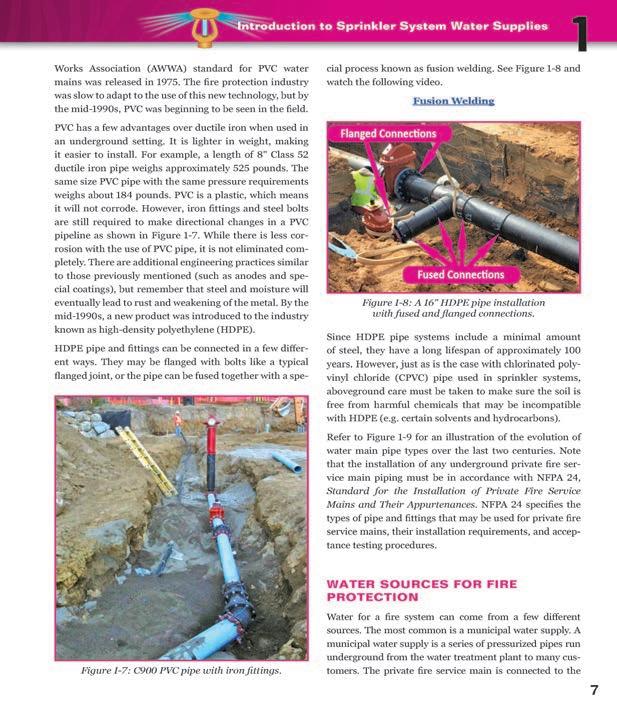
Discover why a dependable water supply is critical for fire protection. This lesson reviews historical failures, explores materials used in underground mains over time, and introduces multiple water sources available for sprinkler systems.
Lesson 2: Occupancy Classifications and Water Supply Requirements
Learn how occupancy classifications shape sprinkler system design. This lesson covers determining system demand and concludes with water supply requirements and design methods for compliance and performance.
Lesson 3: Excavation Safety
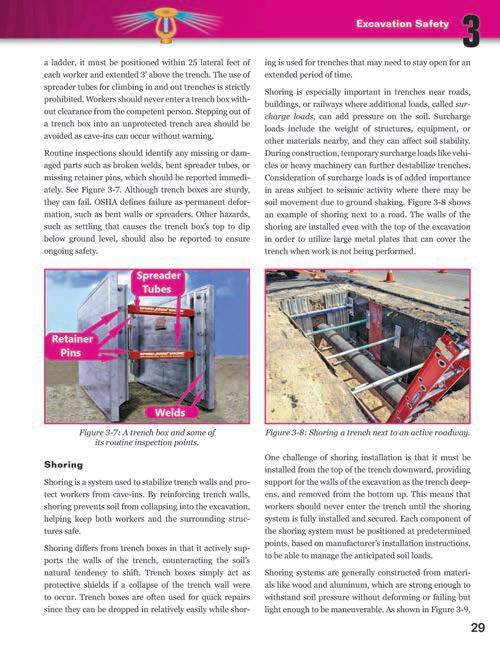
Understand the importance of trench safety during underground piping installations. You’ll examine excavation hazards, protective measures like trench wall stabilization, and soil assessment and classification techniques.
Lesson 4: Private Fire Service Mains and Appurtenances
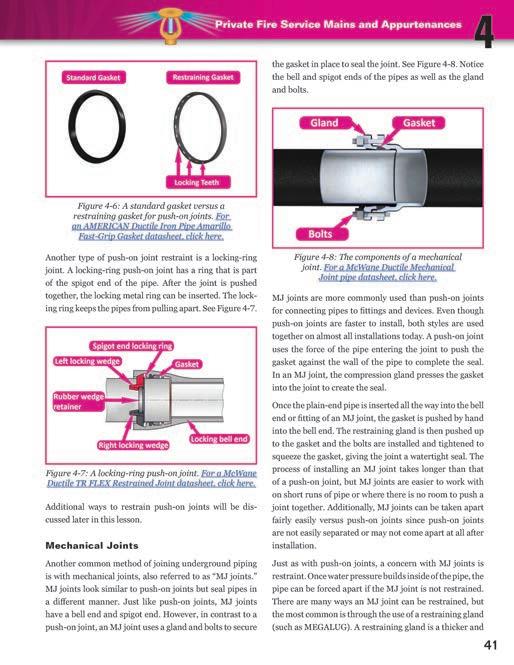
Learn about underground fire main piping, fittings, and restraints. This lesson covers material requirements and joining methods for private fire service mains.
Lesson 5: Installation of Private Fire Service Mains
Understand proper depths of cover, connection procedures, and restraint methods for underground piping, including thrust blocks, restraining glands, rods, and eye bolts.



Explore proven methods for investigating, locating, and repairing leaks in underground private fire service mains, a process far more challenging than above ground repairs.
7:
Review acceptance test procedures, including flushing and hydrostatic pressure tests. Learn about specialized tools, flow rate requirements, and best practices for servicing fire mains.
Lesson 8: Fire Hydrants, Attachments, and Remote FDCs
Discover the types, operation, and installation of fire hydrants and fire department connections. This lesson also covers hydrant attachments and key ITM requirements for hydrants and remote FDCs.
9:
Explore the types and purposes of water storage tanks used in fire protection systems. Learn calculation methods for sizing tanks, key NFPA 22 installation requirements, and essential ITM practices.
10:
Understand the critical role of backflow prevention in protecting water supplies. This lesson covers causes of backflow, types of preventers used in sprinkler systems, installation requirements, and ITM standards.
Lesson 11: Sprinkler
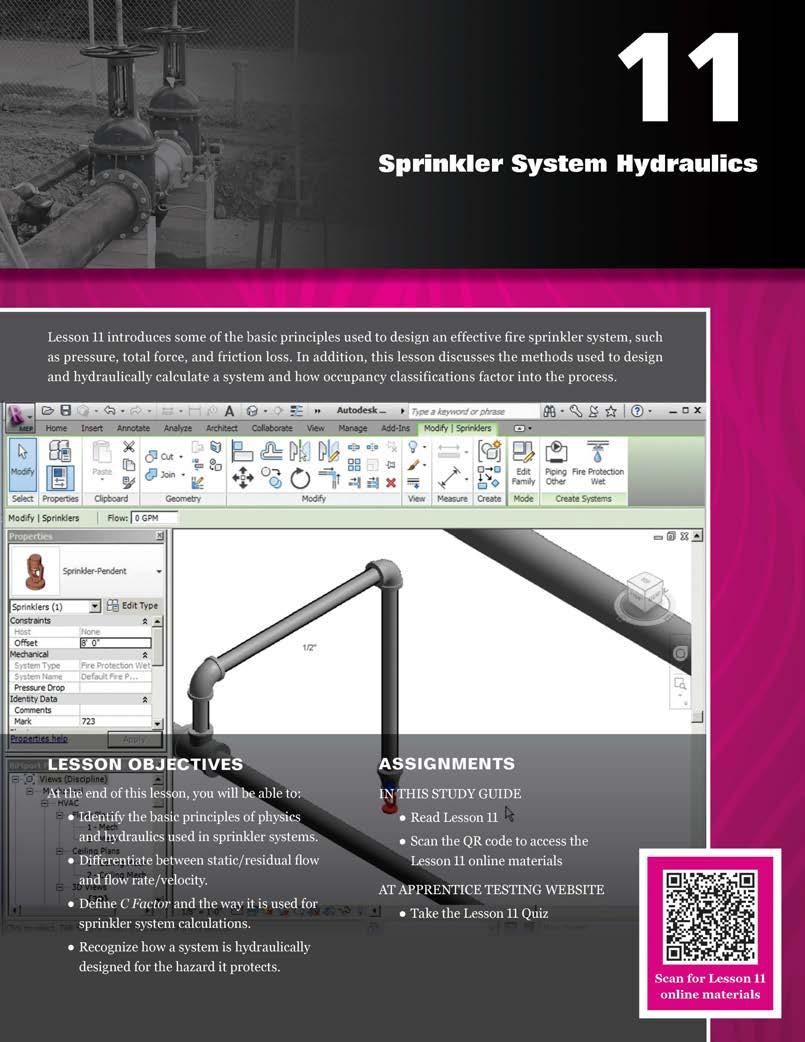
Gain insight into the principles of hydraulics and physics behind sprinkler system design. Learn about pressure, friction loss, hydraulic calculations, and how occupancy classifications influence system performance.
Several lessons address critical safety considerations related to the installation, maintenance, and repair of private service mains, including water supply sources and methods used to protect public water supply systems.

SPF 12 is scheduled to be ready for enrollment during the first quarter of 2026.
Apprentices who have not completed the previous version of SPF 12 will be automatically enrolled in the revised course. Members in good standing may also request enrollment in any of the 19 available SPF courses by contacting the JATC office.
We will continue updating and replacing the remaining courses to ensure apprentices are learning the most current practices and technologies in the sprinkler industry.
The pursuit of knowledge never ends, and by advancing together, we help shape the future of the sprinkler industry.

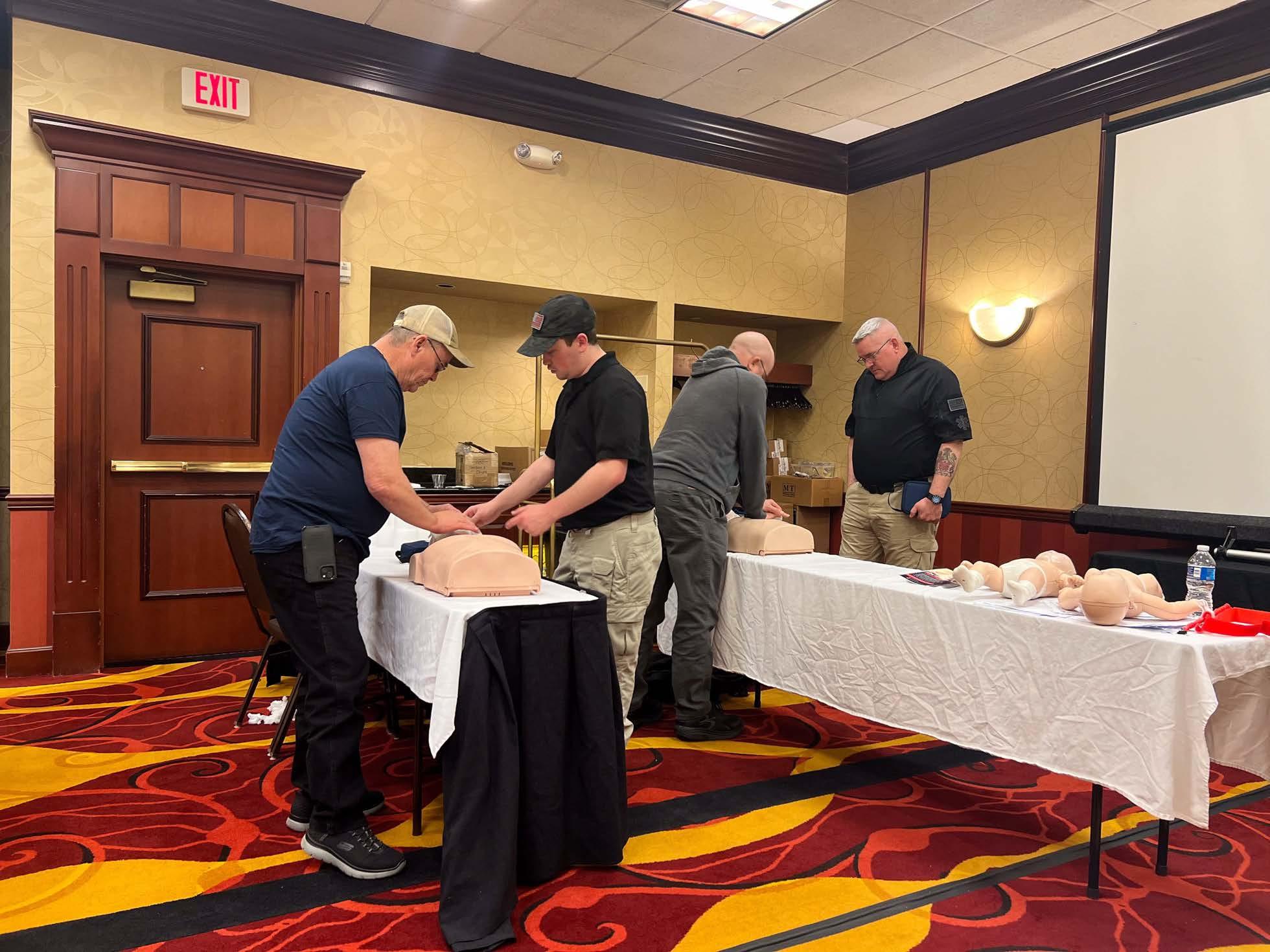
Here is an Overview of our OSHA and Mental Health training activity conducted during calendar year 2025, and to share important information as we look ahead in 2026.
I would like to recognize the members of the 2025 OSHA Training Team for their continued professionalism and commitment to delivering consistent, high-quality training to the membership:
◦ Brad Wilder – Syracuse, NY
◦ Shaun Martin – Willimantic, CT
◦ Kevin Vaughn – Spring Hill, TN
◦ Kevin Holbrook – West Jefferson, OH
◦ Brian Downey – Cicero, IN
◦ Chris Fulkerson – Cloverdale, IN
◦ Tony DIapico – Newton, IA
◦ Sam Sanchez – Houston, TX
◦ Collin Michaels – Phoenix, AZ
◦ Bob Chaffee – Whittier, CA
In 2025 the OSHA team taught six in-person OSHA 30 classes in the following locations:
• Plymouth, IN
• Columbus, OH
• Phoenix, AZ
• Madison, WI
• Lanham, MD
• Denver, CO
161 members successfully completed OSHA 30 training and received their completion cards.

Requests for in-person OSHA 30 classes should be submitted through the District Business Agent.
Requests for virtual OSHA 30 classes contact:
Tony DIapico at tdiapico@jatc.org or Text 515-321-9277

Program requirements are as follows:
• In-person classes require a minimum of 20 participants and a 60-day advance notice to allow for approval and mailer distribution.
• Virtual classes require a minimum of 15 participants, with a maximum enrollment of 20
Journeypersons and Apprentices may also enroll in individual OSHA courses through the Local 669 website by navigating to:
Training → JATC Links → OSHA Course Portal
2026 OSHA Schedule
Information regarding scheduled OSHA 30 classes for 2026, including dates and locations, will be posted on the Local 669 website:
Training → Continuing Education & Training → OSHA 30
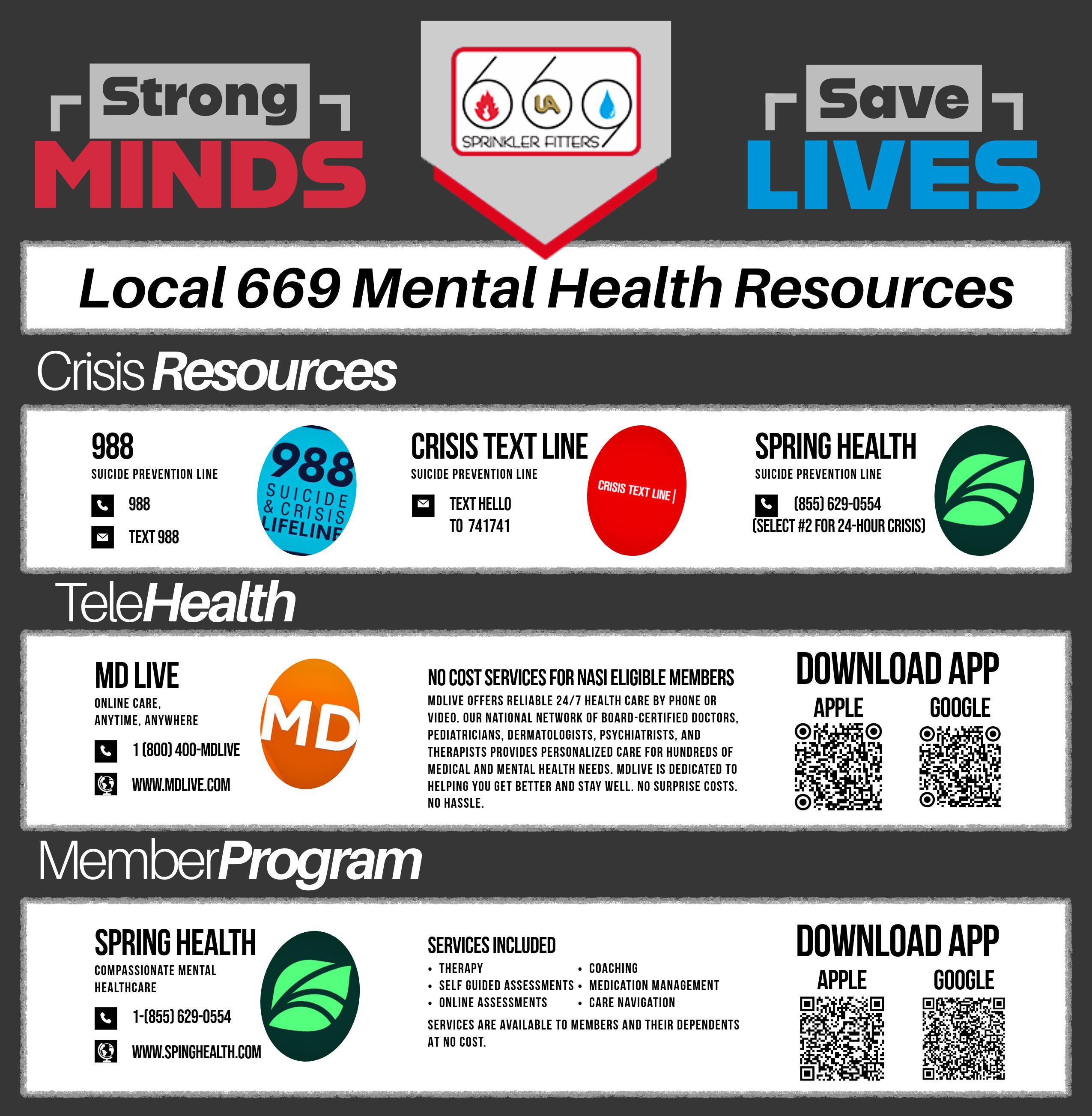
In the US Construction Industry an estimated 5,000 Construction workers die by SUICIDE each year.
The Helen and Arthur Johnson Depression Center (JDC) created classes to promote critical thinking about suicide prevention, risk factors, and warning signs to be able to open dialogue about Mental Health. These classes are titled Vital Cog
In addition to OSHA training, the JATC conducted four (4) Mental Health Awareness (VITAL COG) classes in 2025 at the following locations:
Columbus, OH (2) Baltimore, MD Phoenix, AZ

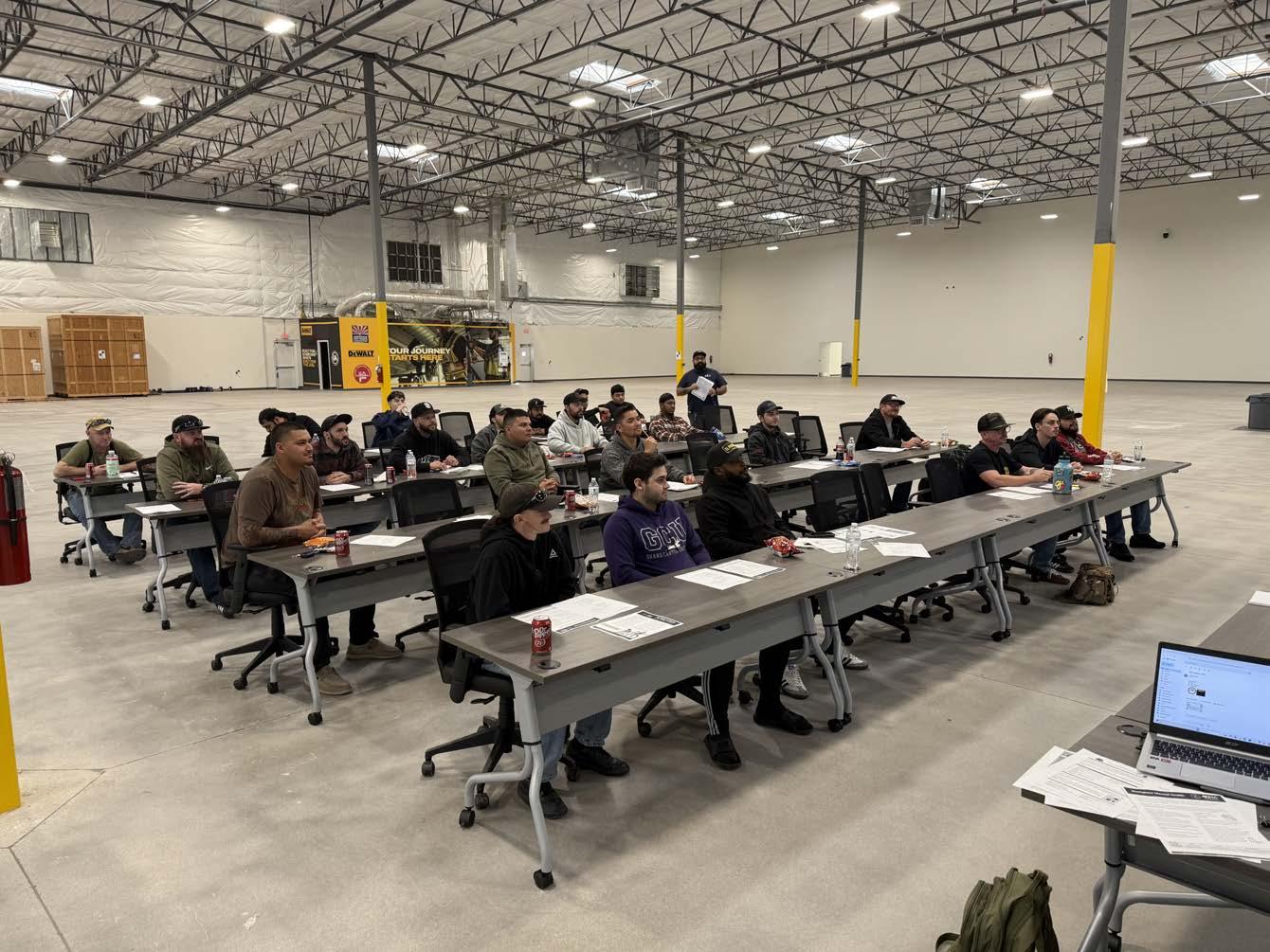
A total of 48 participants attended these important sessions.
We would like to extend our appreciation to the JDC and Dr. Sally Spencer-Thomas in bringing this resource to our Local.
• MENTAL HEALTH AWARENESS MONTH: MAY 2026
• NATIONAL SUICIDE PREVENTION MONTH: SEPTEMBER 2026
The OSHA team extends its appreciation to all Business Agents, Instructors, Local 669 leadership, and JATC staff for their continued cooperation and support in advancing safety training and mental health awareness across the membership.

Chris Fulkerson
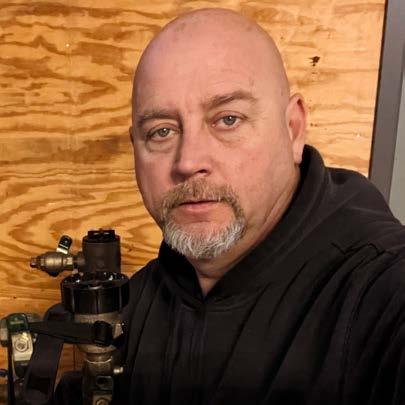
Backflow Training Instructor
Ask anyone familiar with fire protection systems if they want to drink water from the sprinkler system and the answer is a resounding “No”.
But a quick Google search of recent backflow incidents revealed that is exactly what happened in Neville Twp, PA in October of 2019. An estimated 2000 gallons of fire suppression water was back-pressured into the potable drinking water. No injuries or illness were reported, but imagine going to your tap and getting a glass of sprinkler water!
Backflow preventers play an important role in safe guarding the public water supply not only in the fire suppression industry but all industries that utilize the public piping network for their water needs. It is important to understand that although we, as sprinkler fitters, may be in tune with the requirements of NFPA 13, when we utilize the public water supply for our system needs, our installation must also comply with the relevant requirements of the local plumbing code or water utility.
While a backflow preventer for domestic use and a backflow for a fire protection system might be identical and their testing procedures are alike, the fire protection backflow has additional testing requirements placed on it, per NFPA 25 (forward flow, main drain testing…). For this reason, it is imperative that these assemblies are being tested by those who are trained to tackle the challenges specific to sprinkler systems, such as tamper switches, alarms, and fire pumps just to name a few.
The JATC backflow training program meets or exceeds the training requirements of the 31 states where we are authorized training providers while attempting to relate the heavily plumbing focused curriculum to the fire sprinkler industry.
Below is a list of states that, either through our association with ASSE or our own state application, we are approved training providers:
The ASSE certification is recognized in the following states:
Alabama Iowa MissouriPennsylvania
AlaskaKansasMontana South Dakota
ArizonaKentuckyNebraskaVirginia
ArkansasLouisianaNevada West Virginia
ColoradoMaine New Jersey Wisconsin
FloridaMichigan North Dakota Wyoming
GeorgiaMinnesotaOhio Parts of California
IndianaMississippiOklahoma

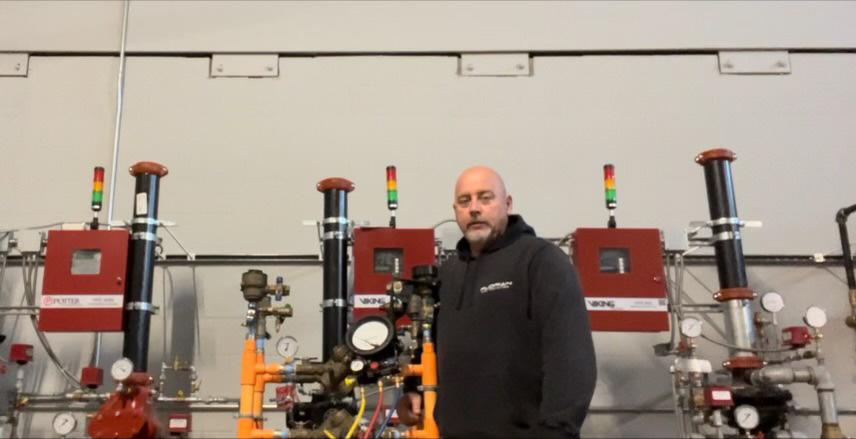
In 2025, we provided 20 training classes in 14 states, that resulted in a total of 390 members either receiving their initial certification, or renewing their existing certifications.
If you are interested in a course, contact your Local Business Agent to request a class from the JATC office. Most classes are limited to 12 attendees and must contain a minimum of 8 members to hold a class. Upon approval, the training staff will work with the Local Agent to finalize the details and set up the class. The class schedule for this training fills up quickly. Most classes require a minimum of 3 months advance notice.
Brian Downey
Specialty Classes and Journeyworker Coordinator

Over the course of the past year, the JATC has been updating and creating specialty classes that provide value to our brothers and sisters. Specialty classes consist of topics such as backflow certification, OSHA, training for licensing exams, UA Star prep, and leadership. These classes are typically presented in-person at locations where there is a demonstrated need or request. Most recently, the team has focused on two very specific needs: UA STAR Mastery Exam preparation and leadership.
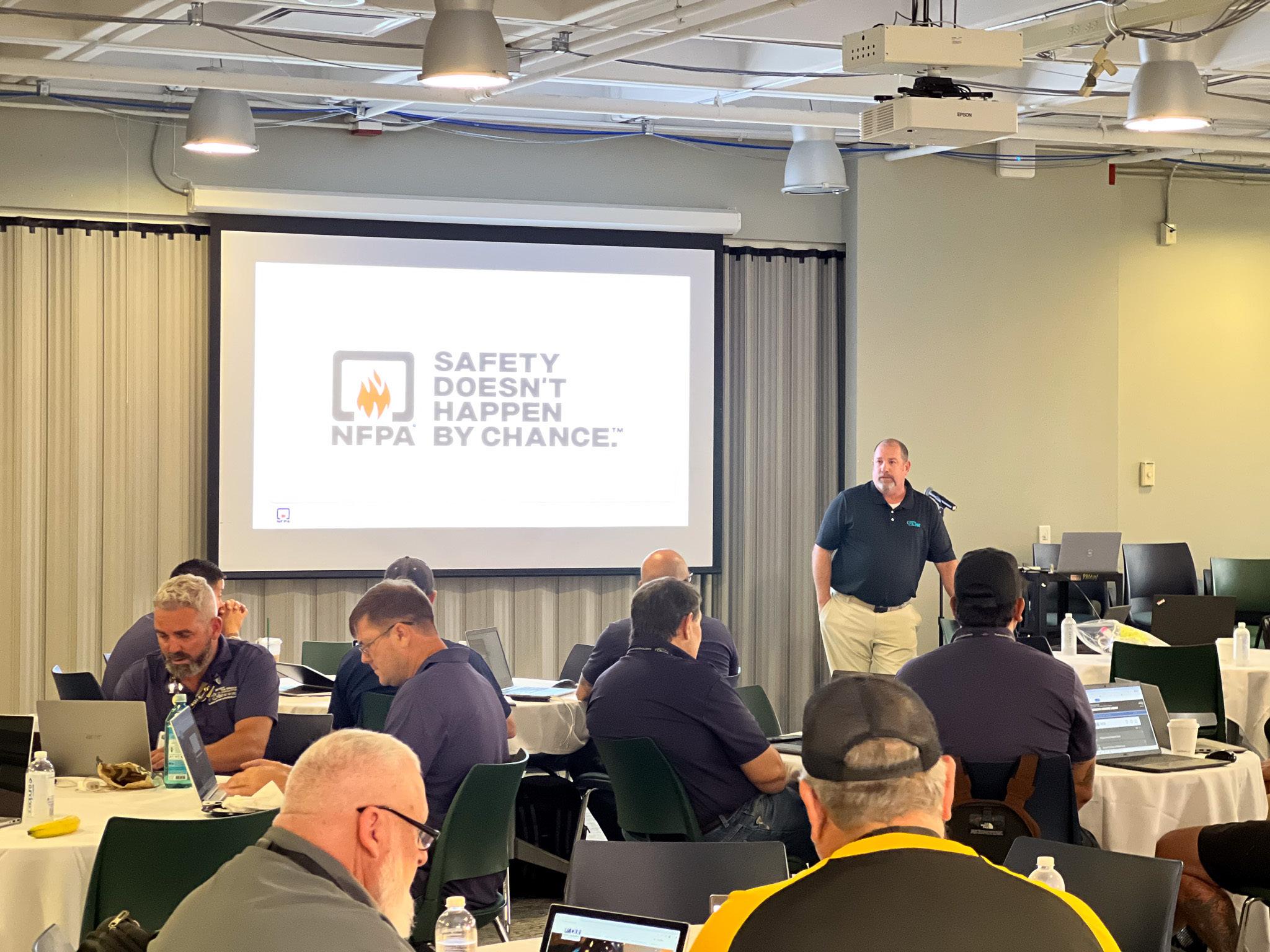
The review and prep class for the UA STAR has been around for a number of years and has yielded tremendous success rates for those who attend and put in the work. In the past year, this course has undergone a major overhaul. Though the foundation of the review section remains similar to the original, the revised course places a higher emphasis on teaching our membership how to navigate the standards to find answers on the exam and in the field. The new presentation addresses how to best use NFPA Link, as well as determining appropriate keywords that will improve search results. Although success still relies heavily on time and preparation prior the class, attendees will learn test-taking techniques that can make a difference.
Leadership Language: Communicating with a Purpose in Construction is the JATC’s new leadership class which takes the place of what was previously known as the foremanship class. After receiving input from apprentices, foremen, superintendents, and ownership, the JATC set a goal to create a course that addresses not only leadership, but communication. Strong leadership starts with strong communication. This course focuses on the critical need for effective leadership and communication in our industry. Strong, effective communication is the foundation for not only great leaders, but teams and organizations that strive to succeed. Through practical training in communication strategies and personality assessment tools, this course prepares foremen to foster more productive, respectful, and responsive jobsite environments.


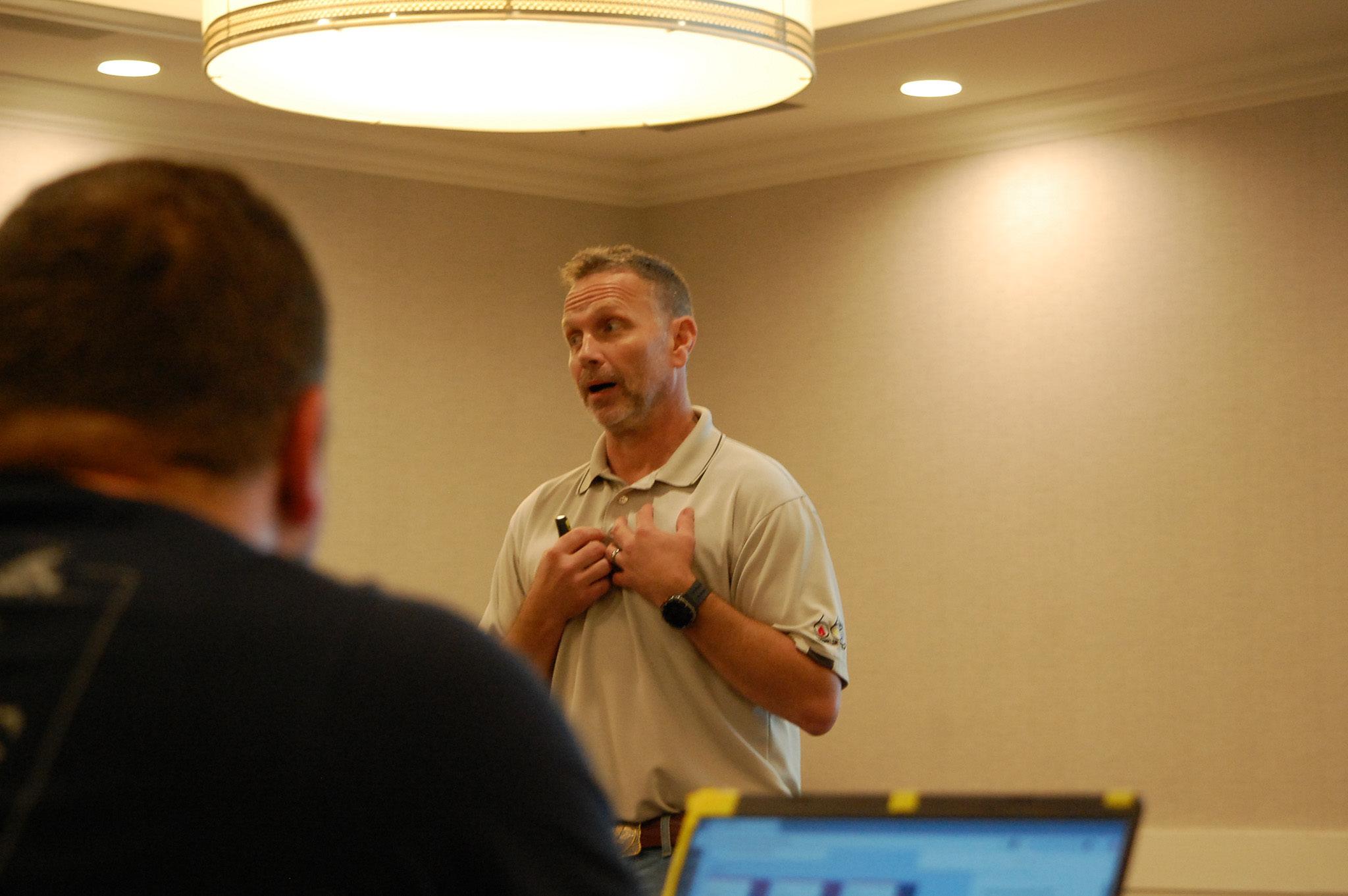
Leadership Language was designed around simple, proven concepts, not quick-fix slogans. This course introduces and reinforces effective communication methods. It addresses how our own personalities and generational differences can interfere with our team objectives, and how to work through these challenges. Furthermore, the class discusses how to lead and act with a “mission-first” purpose that benefits everyone involved. Lastly, participants will explore the most effective, simple ways to build and maintain a team in a manner that values the various skills that each member brings to the table.
During this course, attendees will engage in dynamic discussions to enhance their understanding and application of leadership and communication principles. This requires heavy participation and the JATC encourages key office staff and management to attend alongside field personnel, to ensure the entire team is working towards the same goals.

In closing, the JATC staff is working to not only improve on the current classes but create new ones that will add valuable knowledge and skills to our entire membership.
If you are interested in either a UA STAR review or the Leadership Language class, contact your Business Agent.
Stay safe and healthy in 2026!

Written by 2025 Instructor of the Year, Johnnie Engelke
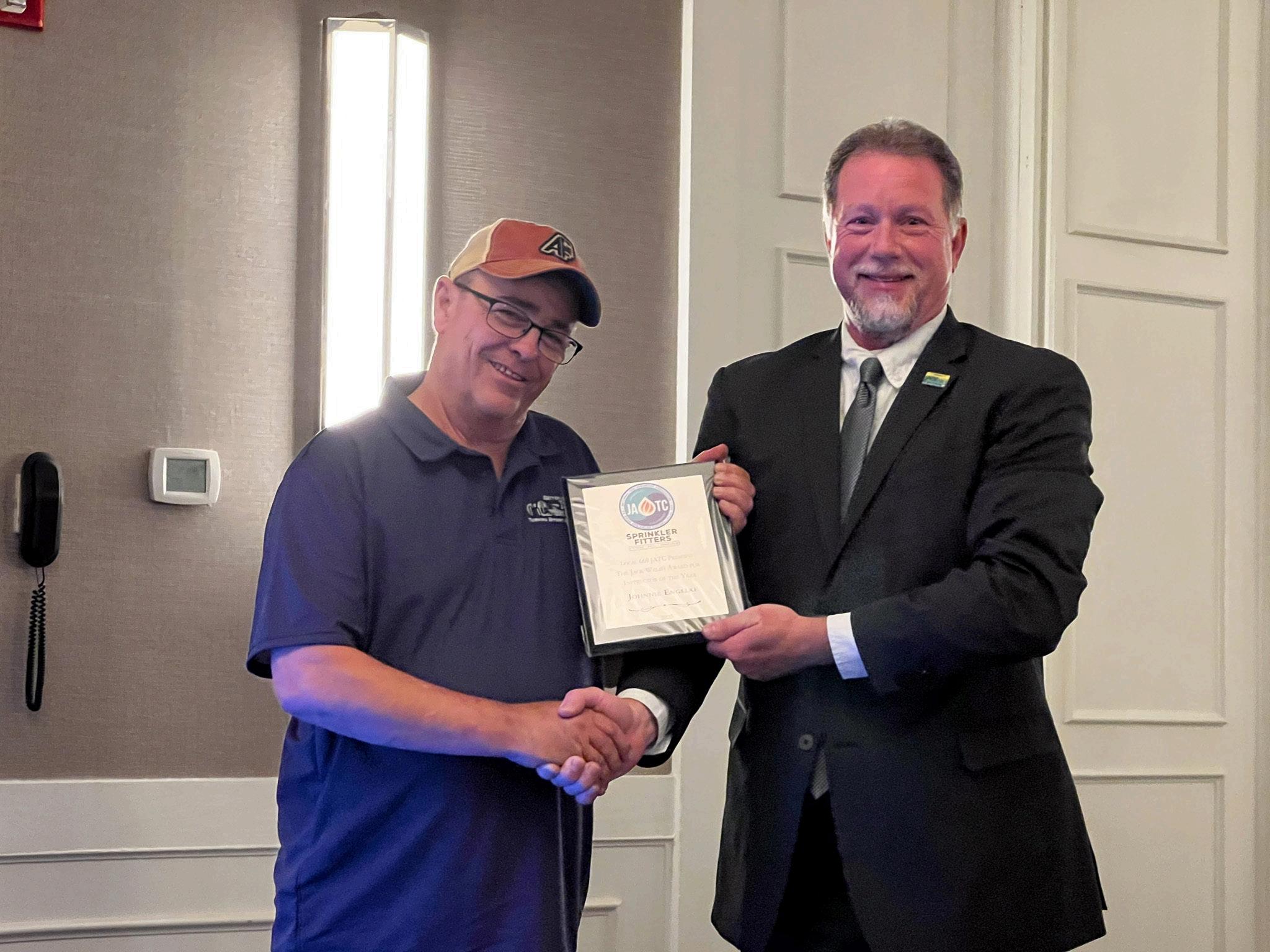

My name is Johnnie Engelke. I am the Local 669 Instructor for the Omaha, Nebraska area.
Being chosen the 2025 Instructor of the Year has to be at the top of the list as far as some of my proudest moments as a Local 669 member.
I started my career in Houston, TX. on November 7th, 1989. I was chosen as the Omaha, NE Instructor and taught my first class in May of 2014.
I completed my apprenticeship lessons in 1992. I was fortunate enough to work with a fitter who was not only my foreman but also a good friend. He never once laughed at one of the many questions that I would ask him and looking back, I asked him some out of this world questions.
When conducting my instructional classes, I try to be as prepared as possible. I normally have access to the materials a couple of months ahead of class. I will download them, print out what needs to be printed out, and review them numerous times before class. This gives me an opportunity to be prepared for any questions that the apprentices may have about the material.
Being prepared to go down a different path is key to keeping the apprentices engaged with the material. The more participation that I get at class, the more that the apprentices learn. Nobody wants to sit and listen to an instructor talk for hours at a time. Involving the class is one aspect of teaching that works well for me because the apprentices are able to explore material from their point of view. This allows the class to follow their thinking methods rather than the pathways of someone who has been there. Rather than tell someone why one way or another is the best way, they find out on their own and realize one way is better than another. Telling somebody to do something a certain way (because we have tried their way and made mistakes), they learn what not to do and why not to do it.
I believe that if I can give apprentices guidance about the trade, they will be able to make smart decisions about their career. Having been a 669 member for 36 years, the apprentices know that I don’t treat this as a job but rather as a career. I give them honest answers to their questions. When an apprentice asks if I will stay after class with them to help them understand one of their lessons, I feel appreciated and I try to use my past experiences in a way that makes the material easier for them to comprehend. I always try to answer questions in a manner so that the apprentice can understand and get an idea of how something works or why the code is written the way it is. Experience is the best teacher but sometimes learning by doing is a better teacher.


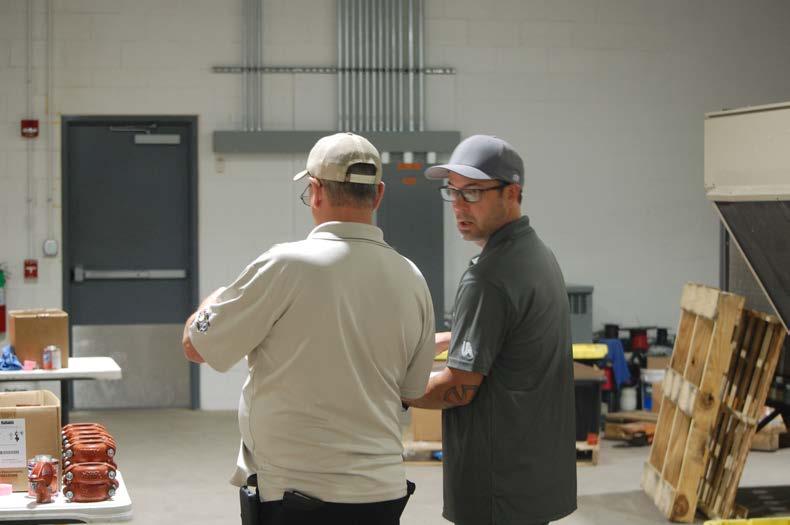

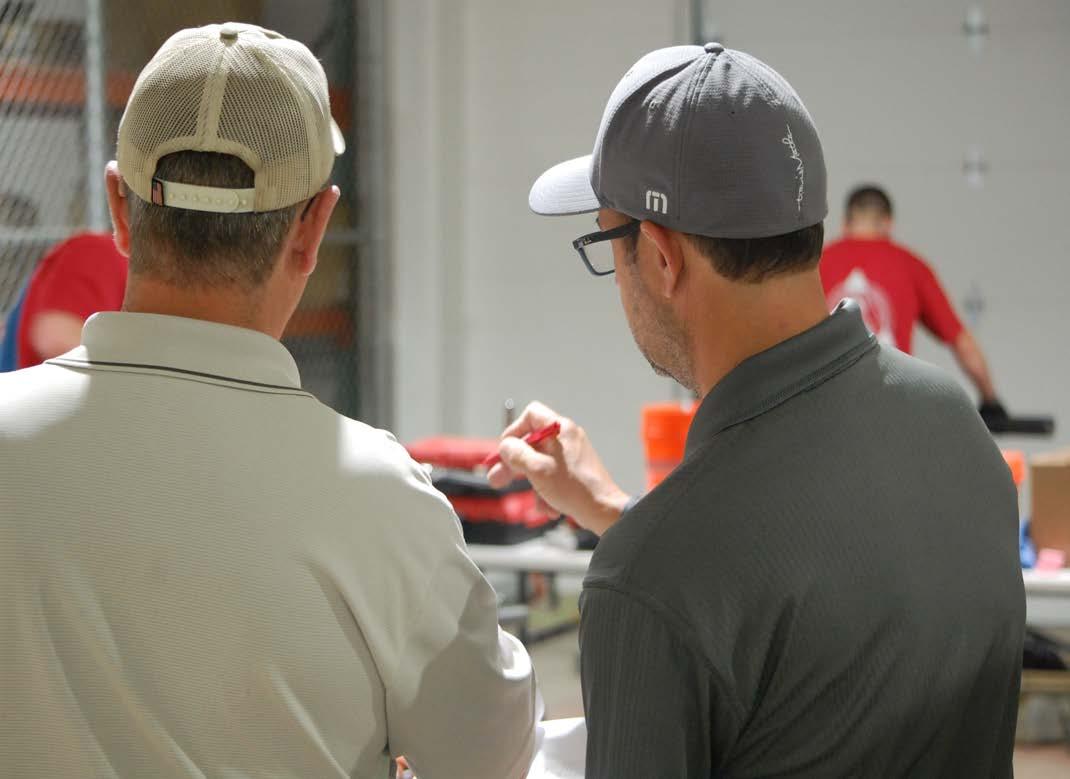
I am excited about this upcoming year because we will be having more opportunities for hand-on projects. With donations from tool vendors, I will be having Class 7-10 apprentices ‘run’ small projects during class. They will practice leading Class 3-6 apprentices and will learn the difficulties of being a foreman. Hopefully, this will give them a new respect for foremen and what they need to do to be a foreman in the future.
Sometimes I am fortunate to have Industry professionals come speak at my class. When they are there, I allow them to present their materials and answer questions from the apprentices. The apprentices seem to like this and have asked for me to bring back some vendors.
The apprentices that are assigned to my area know that I am just a phone call away. I have even had prior apprentices who have become journeyman call me for guidance. My apprentices know that I will answer any question that they ask, and if I don’t know the answer, I will get them the answer. It allows me a learning opportunity as well as them.

Lastly, I would not be able to do what I love to do without the support of my wife, Heidi. She has never complained when I have had to travel for classes or training. She only says that it is your job and you enjoy it. What amazing support I have from this woman!



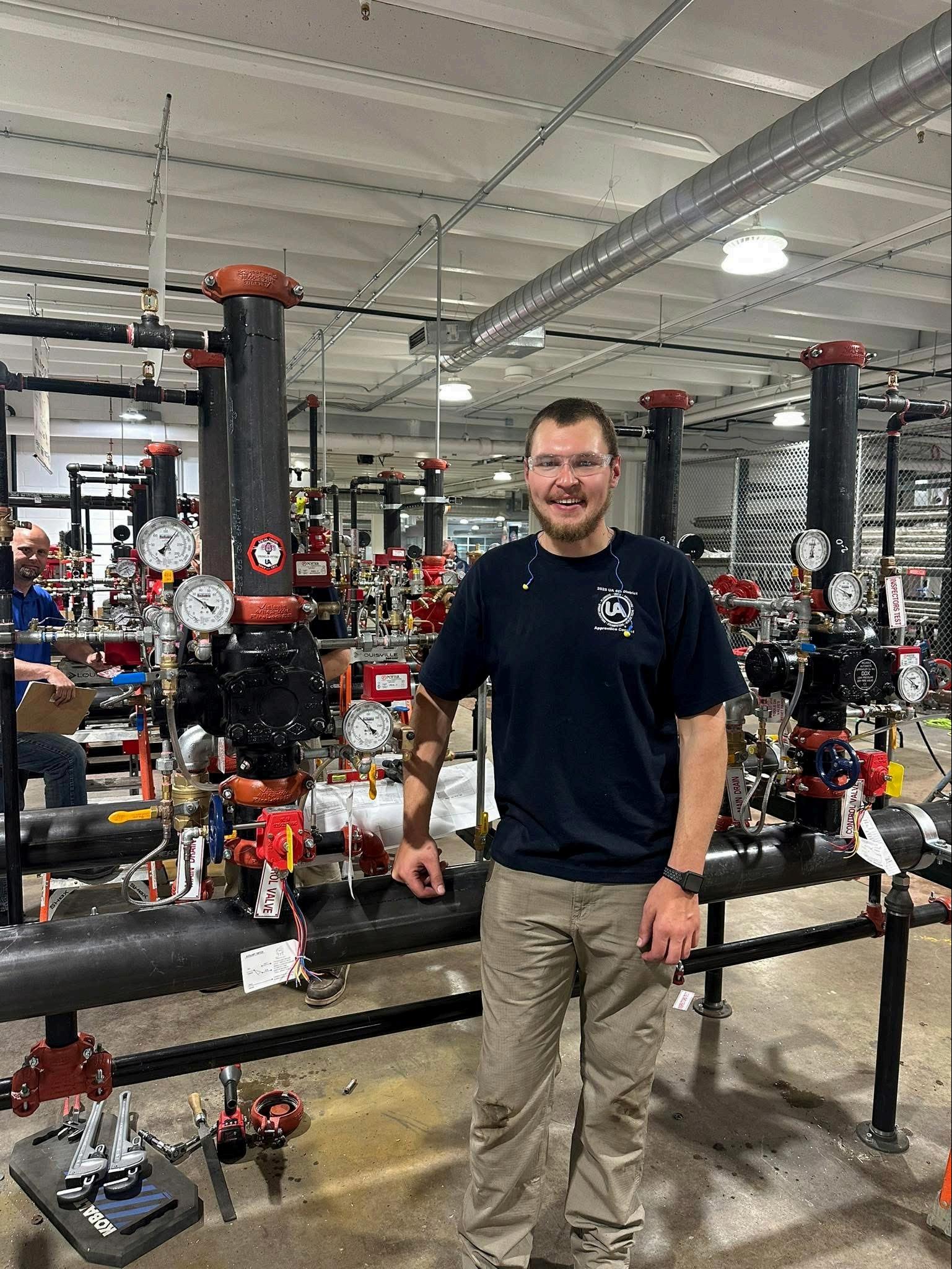

Written by: Sprinkler Fitter Apprentice Champion

also take home the win has definitely been the greatest experience o� my career thus �ar. When I first sta�ted in this trade, I remember guys talking about these contests and I knew I wanted to see i� I have
spent many hours studying the code book, practicing the math, reviewing many di�erent valves and even put together my own piping projects in my garage to make sure I had it all figured out come contest time. All that extra time and e�o�t made it all wo�th it in the end.






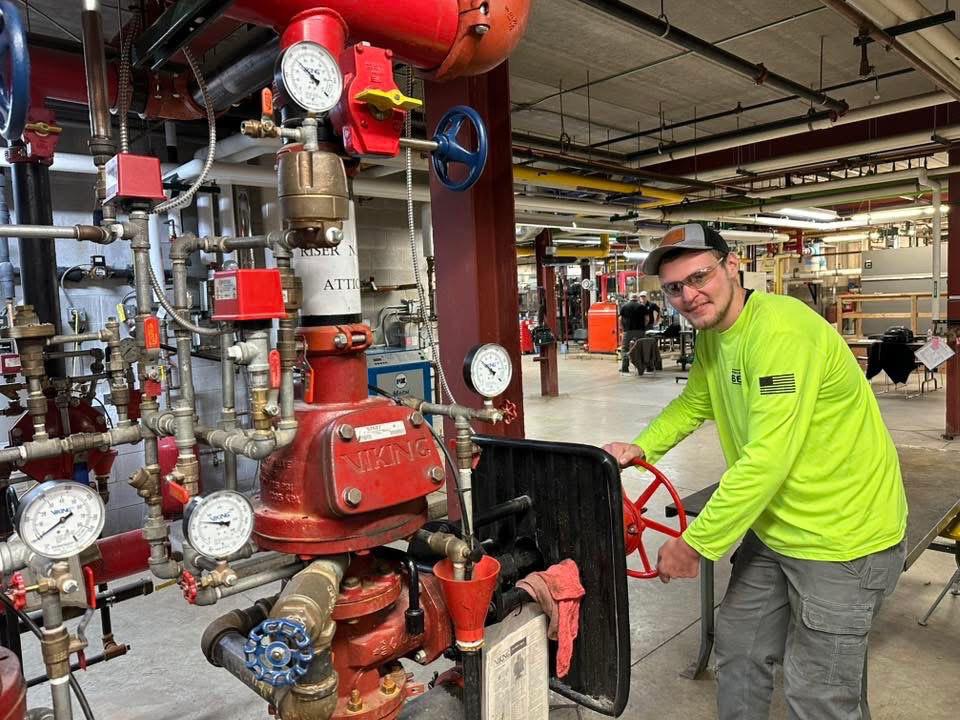



Each contest included wri�ten exams as well as hands on projects.
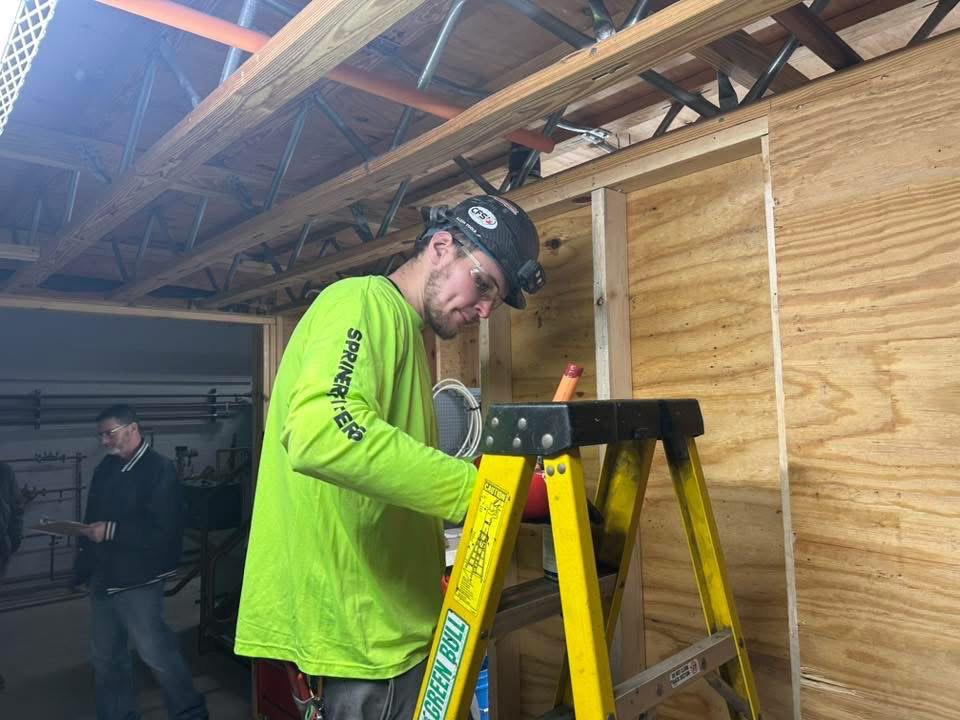
A �ew o� the things they had me do along the way I’ve never actually used in the field be�ore.
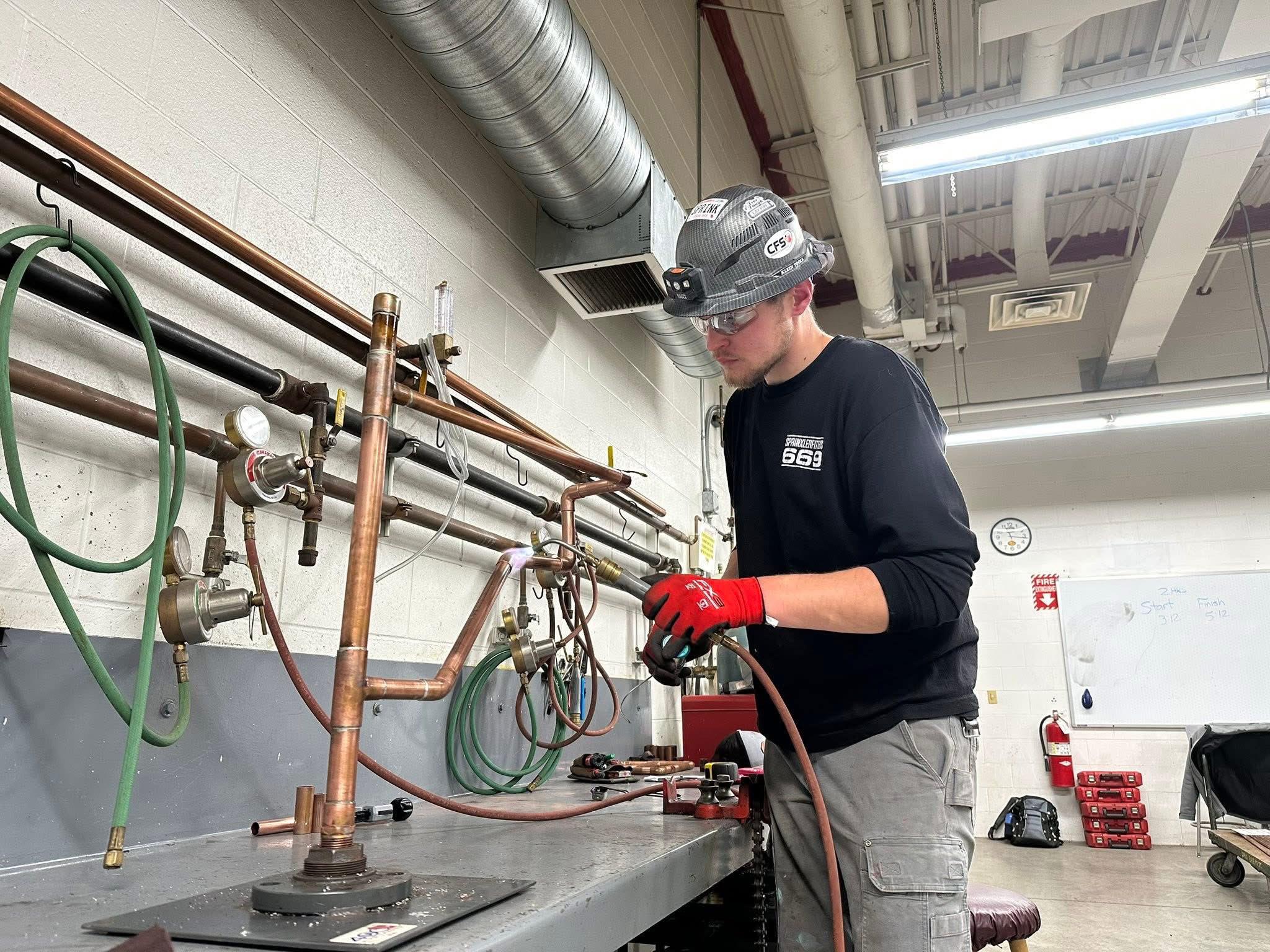
Two tasks that really challenged me were copper soldering and rigging. These tasks aren’t pa�t o� our regular work at my company, so I didn’t have much hands-on experience with them. With a li�tle patience and practice I was able to get it figured out.
Each contest �ollowed a strict timeline and schedule o� events. Eve�y day began with a group break�ast, and then it was straight to work. The days flew by quickly, and some projects pushed me right to the final seconds o� our allo�ted time to get them completed. Time management proved to be a critical skill in these contests. While some o� my competitors weren’t able to finish their projects on time, I’m proud to say I was able to complete eve�y project I was assigned.



variety o� tools, shi�ts, and some awesome prizes. It really doesn’t cost the competitor anything to take pa�t, so there’s no reason not to go �or it and give it your all.
My advice to the �uture apprentices that want to compete is to get out there and do it! You have nothing to lose no ma�ter where you place. Also, make sure you know how to navigate through the NFPA 13 and be proficient with the trade specific math because you use it eve�y step o� the way throughout the contests.

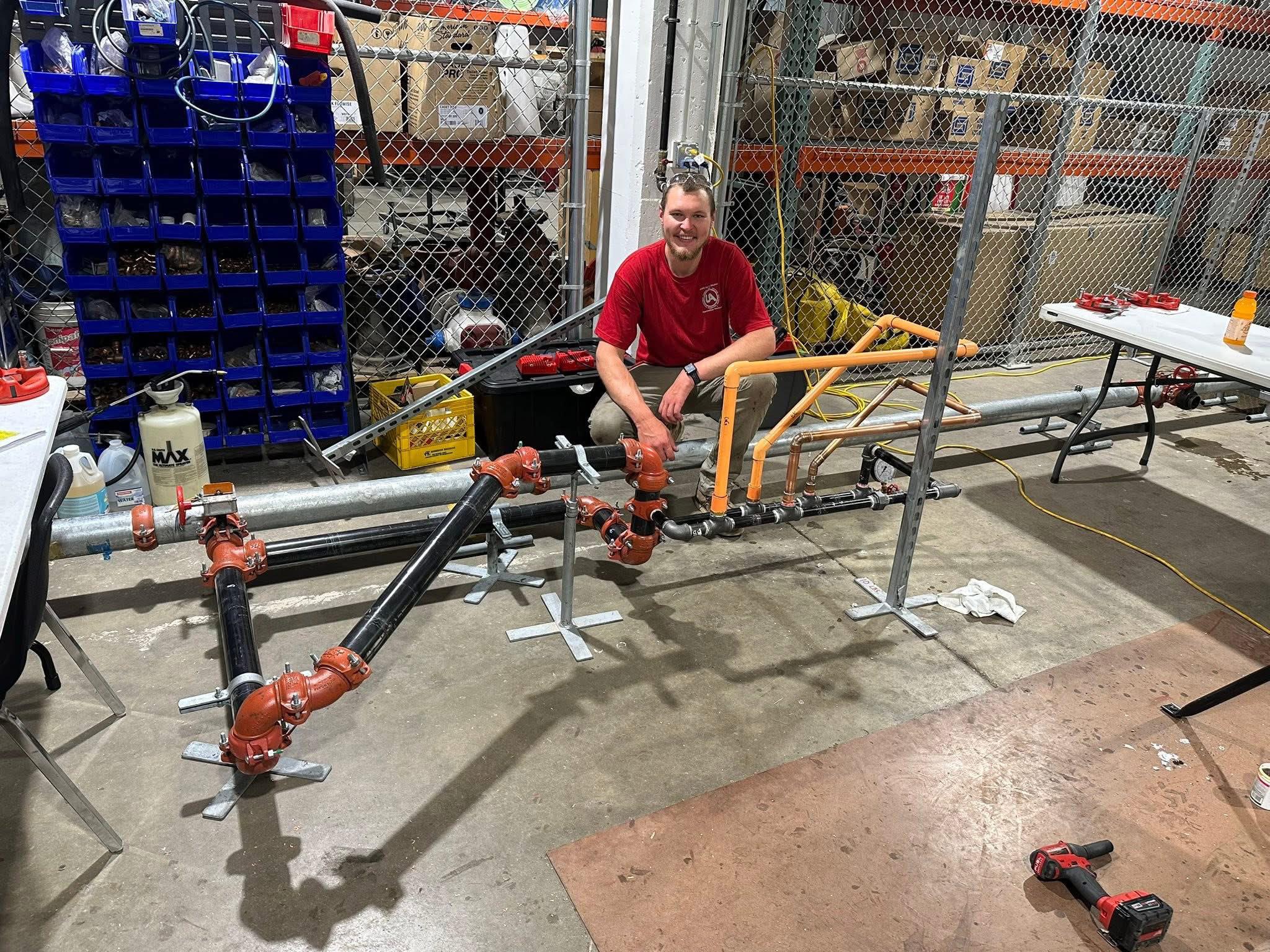
At the end o� eve�y day you want to have a completed project even i� it’s not the pre�tiest project because nobody ends up with pe��ect score. A compete project is wo�th more to the judges than a “pe��ect” looking project.
I would like to thank Dave Natzke, District 31 Business Agent, Kyrik Rudd, instructor in Kaukauna, WI, Ma�t Gerrity, instructor in Rock Island, IL, Michael Zurek, Technology and Codes Coordinator, Dave Dewhurst, President/Owner o� Complete Fire Solutions and all the other Foremen, Journeymen, and Apprentices that helped and suppo�ted me along the way.

Lastly, I want to thank Local 669, the JATC and the UA �or giving me this once in a li�etime oppo�tunity to put eve�ything I’ve learned on the line and become the 2025 International Sprinkler Fi�ter Apprentice champion!





Winner Congratulations to

David Sandoval 2025 UA District 3
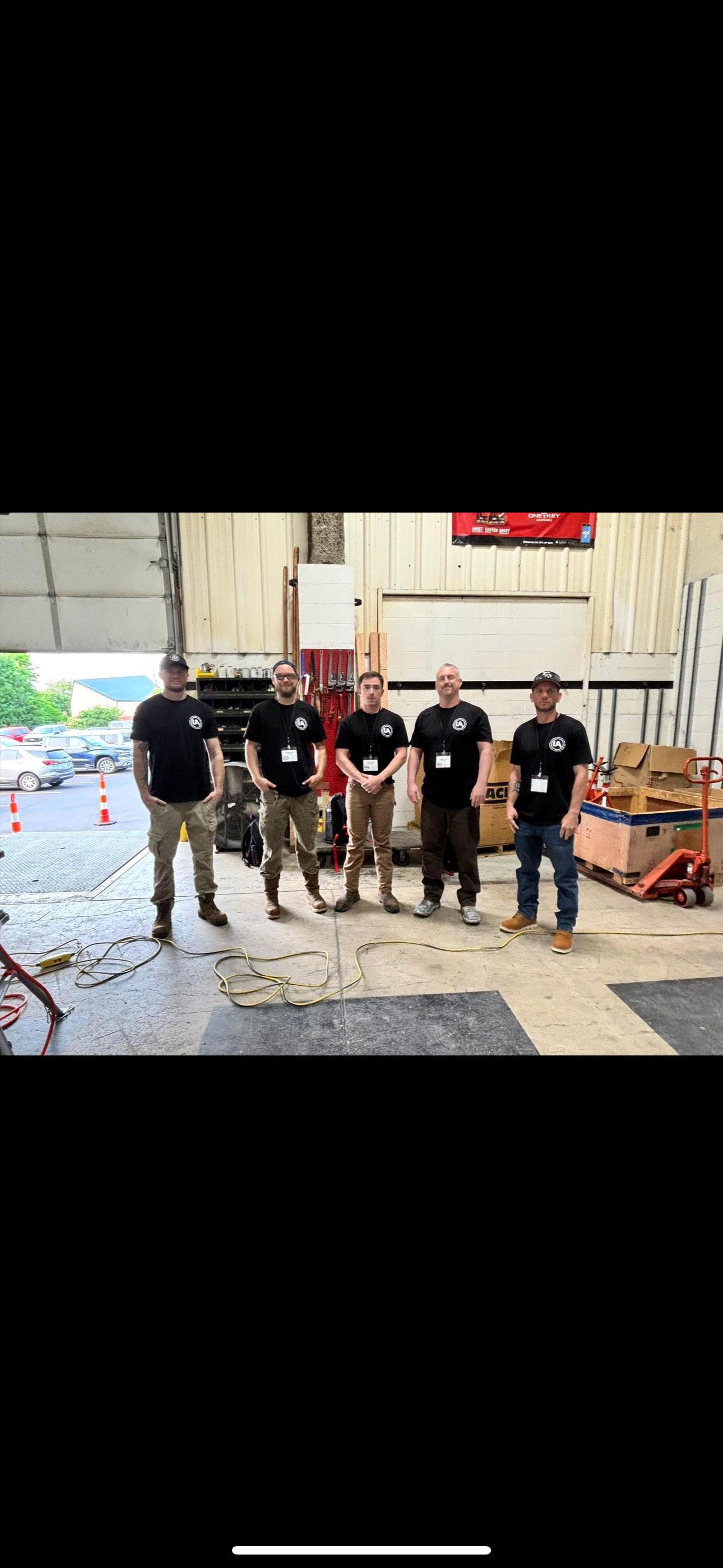
The International Apprentice Competition is a 5-day contest featuring 32 apprentices from the United States, Canada, and Australia. Contestants are chosen by their locals and compete at state, regional, and district levels before qualifying for the international competition. The contestants are divided by craft: each district provides their best Welder, Pipe Fitter, Sprinklerfitter, Plumber and HVAC technician. Australia provides their best Plumbers and Sprinklerfitters.

Over the course of the week, the contestants are tested on their skills, their knowledge, and their abilities at a series of activities and assignments, including a written test, hands-on projects, and interviews. The highest-scoring apprentice is announced at the Instructor Training Program graduation.






Written by:
When I first heard about the International Apprenticeship Competition, I knew it was an opportunity I couldn’t let pass by. I made some goals and challenges for myself to be a part of this year's competition. This wasn’t just about competing on a big stage; it was about pushing myself to see how far I have come in my trade and proving that the years of training, hard work, and dedication had prepared me for this. Entering the competition was a decision built on pride in my craft, the drive to challenge myself, and the desire to represent my Local and my Union on an international level. I dedicated lots of my free time into studying NFPA 13, 25, 20, 22, 24, 25, and more. I decided to attend extra classes at my local training center with other trades to educate myself further on things that I was not well educated in, such as rigging.
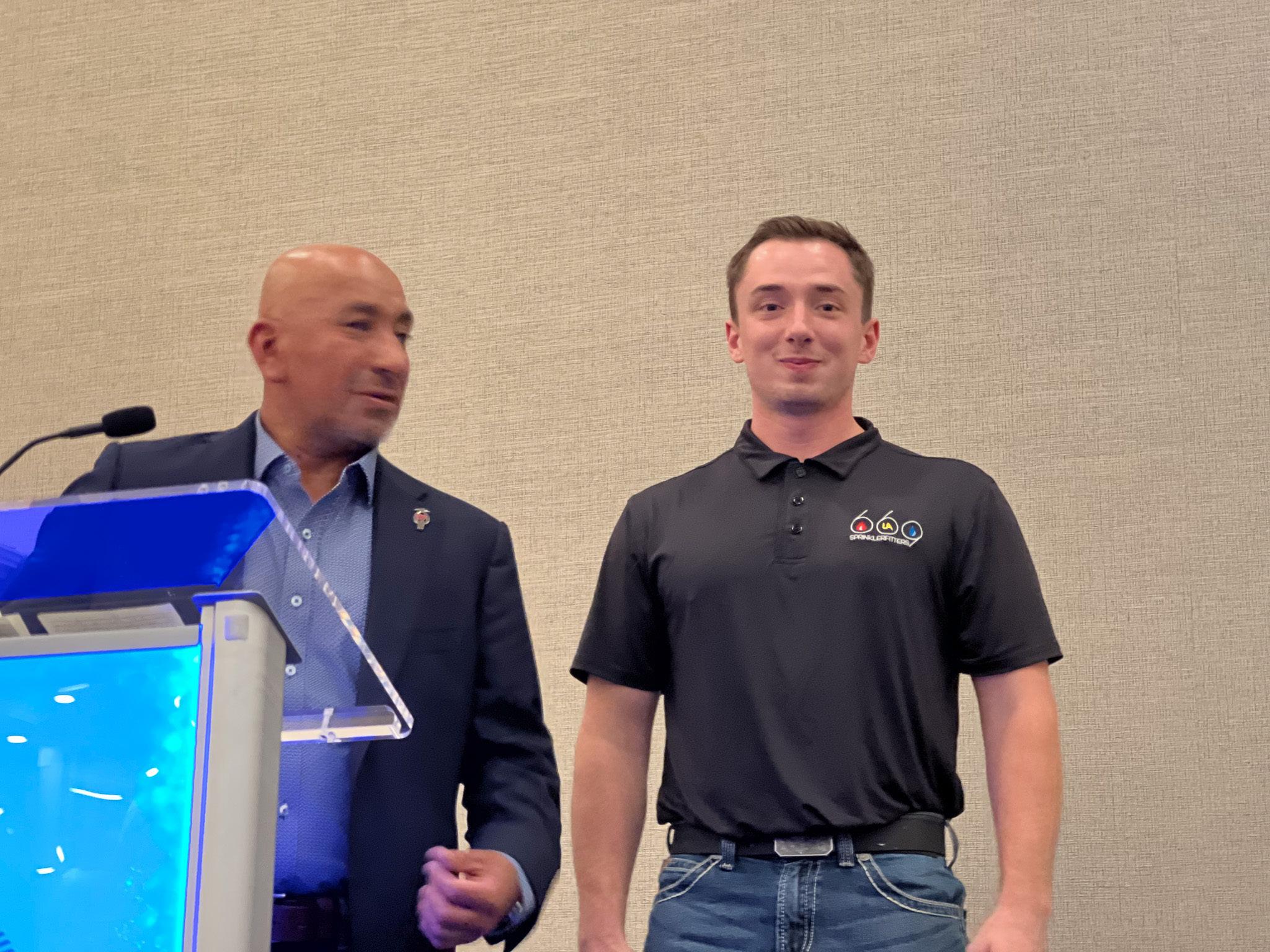

My motivation to participate came from a mix of personal ambition and responsibility. I wanted to test my skills against the best apprentices from across the world, not for bragging rights, but to learn where I stood and how much more I could grow. At the same time, I felt a responsibility to my mentors and peers who had invested in me. Competing was a way to honor their teaching, represent my trade, and set an example for the apprentices coming behind me. My instructors over the years brought a great experience for me into our classes. My main instructor, Mark Spall, helped inspire me to be better not just for myself but to uphold what the trade is about.
My motivation to participate came from a mix of personal ambition and responsibility. I wanted to test my skills against the best apprentices from across the world, not for bragging rights, but to learn where I stood and how much more I could grow. At the same time, I felt a responsibility to my mentors and peers who had invested in me. Competing was a way to honor their teaching, represent my trade, and set an example for the apprentices coming behind me. My instructors over the years brought a great experience for me into our classes. My main instructor, Mark Spall, helped inspire me to be better not just for myself but to uphold what the trade is about.

Preparing for the competition was no small task. I spent countless hours after work and on weekends practicing techniques, reviewing materials, and brushing up on areas I knew would be tested on. I simulated competition conditions as much as possible, timing myself, working under pressure, and holding myself accountable for precision and accuracy. I also leaned on mentors and coworkers, who critiqued my work and offered guidance. Their feedback pushed me to refine small details that made a huge difference in competition. I spent a lot of time on the weekends in the classroom with an instructor and if not one of my instructors, it was an instructor from the 440 hall. I joined several rigging classes to help get more hands-on experience with the technique. The JATC held a copper class for journeymen that I was able to attend, that definitely helped my soldering skills.
The journey wasn’t smooth. Balancing long workdays with extra training took a toll. There were moments I felt exhausted, even questioning whether I had what it took. However, I learned to push through those doubts. My family reminded me of the bigger picture, my instructors encouraged me when I stumbled, and my coworkers kept me sharp. My fiancé supported me every single step and encouraged me to be better. Without everyone’s support and patience, I would not have made it to the competition floor.
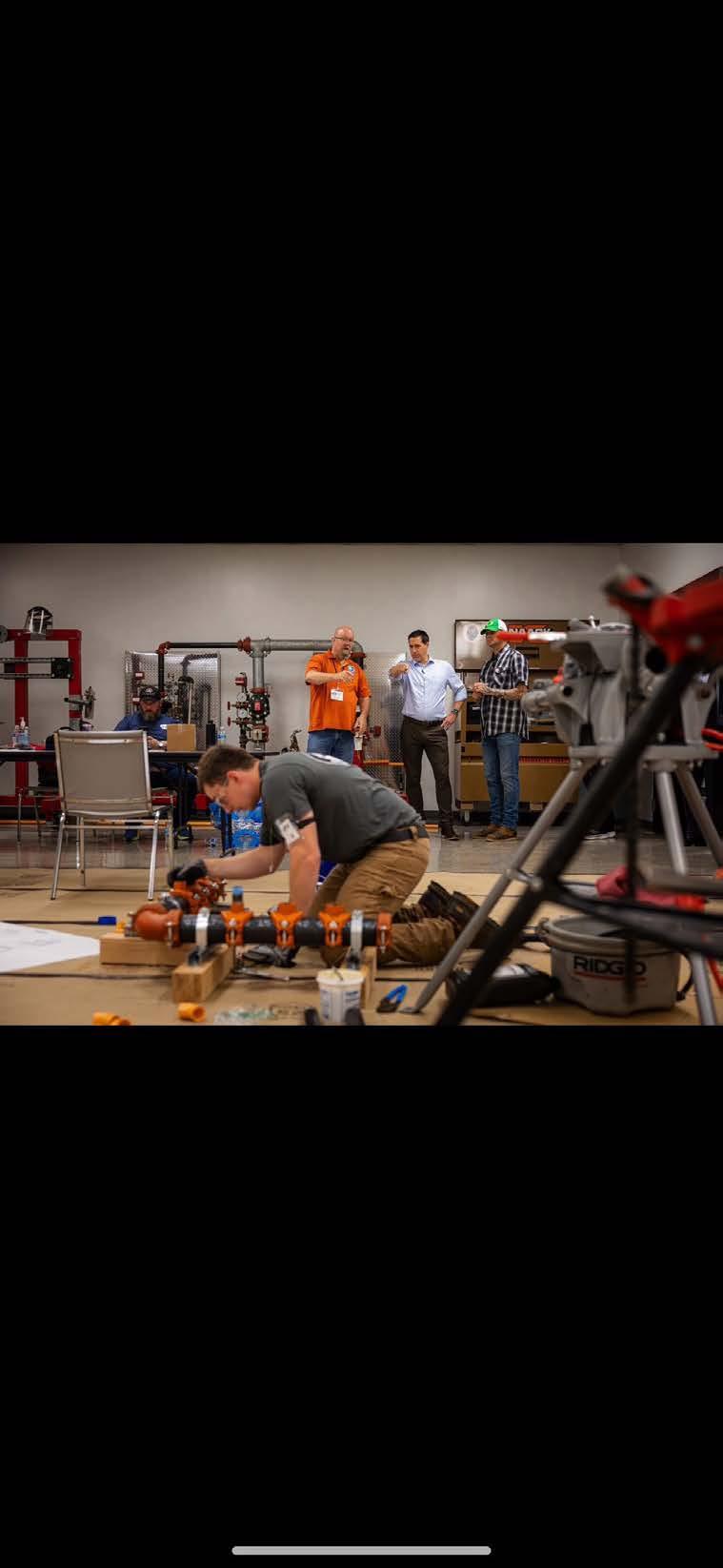

Walking into the event was surreal. I was surrounded by some of the most skilled apprentices from around the world. The atmosphere was intense, but also inspiring. Each challenge tested a different side of my skillset, from technical accuracy to speed, from problem-solving to adaptability under pressure. Some tasks felt familiar, while others forced me to think on my feet in ways I had never practiced before. Competing on that stage wasn’t just a test of knowledge, it was a test of composure, focus, and mental toughness. Everyone got in on a Friday night and we got to introduce ourselves to each other. At that moment we really came together and didn't see each other as competition but as brothers in the trade. The next morning, we dove right into the competition. Saturday and Sunday was spent on exams and technical skills. Monday through Wednesday was our hands-on training. I was pushed a little out of my comfort zone when we first started our in-class skills assessments. I feel like I am under pressure when I have to finish tasks under a certain time. I also over-analyze small things and felt worried I was missing small things quite often.
Through this experience, I gained more than just technical skill. I learned how to stay calm when the clock is ticking, how to adapt when plans don’t work, and how to lean on preparation instead of panicking. My confidence grew as I realized that I could hold my own against the best. Beyond the trade, I developed resilience, discipline, and the ability to see setbacks as lessons rather than failures. Even though I did not win, I'm incredibly proud to have made it to the international level. Being a part of something bigger than myself was definitely the highlight of my apprenticeship. Networking with hundreds of individuals from the Union and in our trade was great. Talking to teachers from across the nation, hearing about how busy each different area is, hearing about how the trade has taken care of others, and more. I would say my biggest takeaway from the competition is the pride I carry to be a part of the international competition and the relationships I developed.
The competition didn’t mark the end of my journey, it fueled my future. I want to continue developing my skills, not only for my career but also to mentor others the way I was mentored. My goal is to give back to the trade, to help apprentices realize that opportunities like this are within their reach if they’re willing to put in the work. I also hope to take the lessons I learned, especially the importance of preparation and persistence, and carry them into every challenge ahead. I really hope to be able to be a part of the JATC in the future or somehow be a part of the UA pipe trades organizers. I feel really called to share the trade with others and to properly educate future apprentices. I recently have been donating my time to Indiana Careers in Construction to share my story with high schools and teach the next generation about how I got into the trade, how it impacted my life, and how proud I am to be a 669 member.
For anyone considering entering this competition, my advice is simple: commit fully, prepare relentlessly, and don’t let fear of failure stop you. Build a routine, seek out honest feedback, and don’t be afraid to make mistakes in practice. Surround yourself with people who push you to improve, and never underestimate the value of small, consistent effort. Success comes from dedication long before the event begins. Take the time to be consistent in studying and going to extra classes to be at the top of your game. Interact with your teachers, foreman, and other apprentices to further get yourself involved. Push yourself every day to be a better apprentice by being curious and asking the questions that need to be asked.
Looking back, I am grateful above all else. Competing at the international level was an unforgettable experience that shaped me in ways I never expected. I owe my progress to the people who stood by me: my instructors, mentors, coworkers, family, and friends. Their encouragement lifted me in difficult times and reminded me why I started this journey. Even though I walked away without being first, the real victory was the growth, the lessons, and the relationships forged along the way. I’m extremely proud to have been a contestant of the 2025 Apprenticeship Competition. Every step of the way has been a blessing in disguise. The amount of people I got to meet and create relationships with, to the amount of hard work I put in to better shape my career, and the experience I got to have making it to the international level have been second to none.
In the end, entering the International Apprenticeship Competition was about more than competition. It was about pushing limits, honoring those who guided me, and discovering the strength to keep improving. I leave the experience with gratitude, renewed ambition, and a deeper appreciation for the craft I’ve chosen as my career. I would like to thank Local 669 and the JATC for giving me this opportunity. I would not have made it without the training and organization of 669.
I would like to thank my instructors: Mark Spall, Brandon Kingsbury, Josh Swanson, and Brian Downey. Without their influence on my career, I would not be where I am now. Without their great influential teaching skills I would not have been hooked to push myself to be better. They dedicated extra time and did more than what they needed to do. I want to thank the District 13 business agent, Chad Scott, for being an outstanding BA, for having my back, and always keeping me properly educated. Lastly, I want to thank all my fellow members that were a part of my career and for shaping me into the foreman I am today.
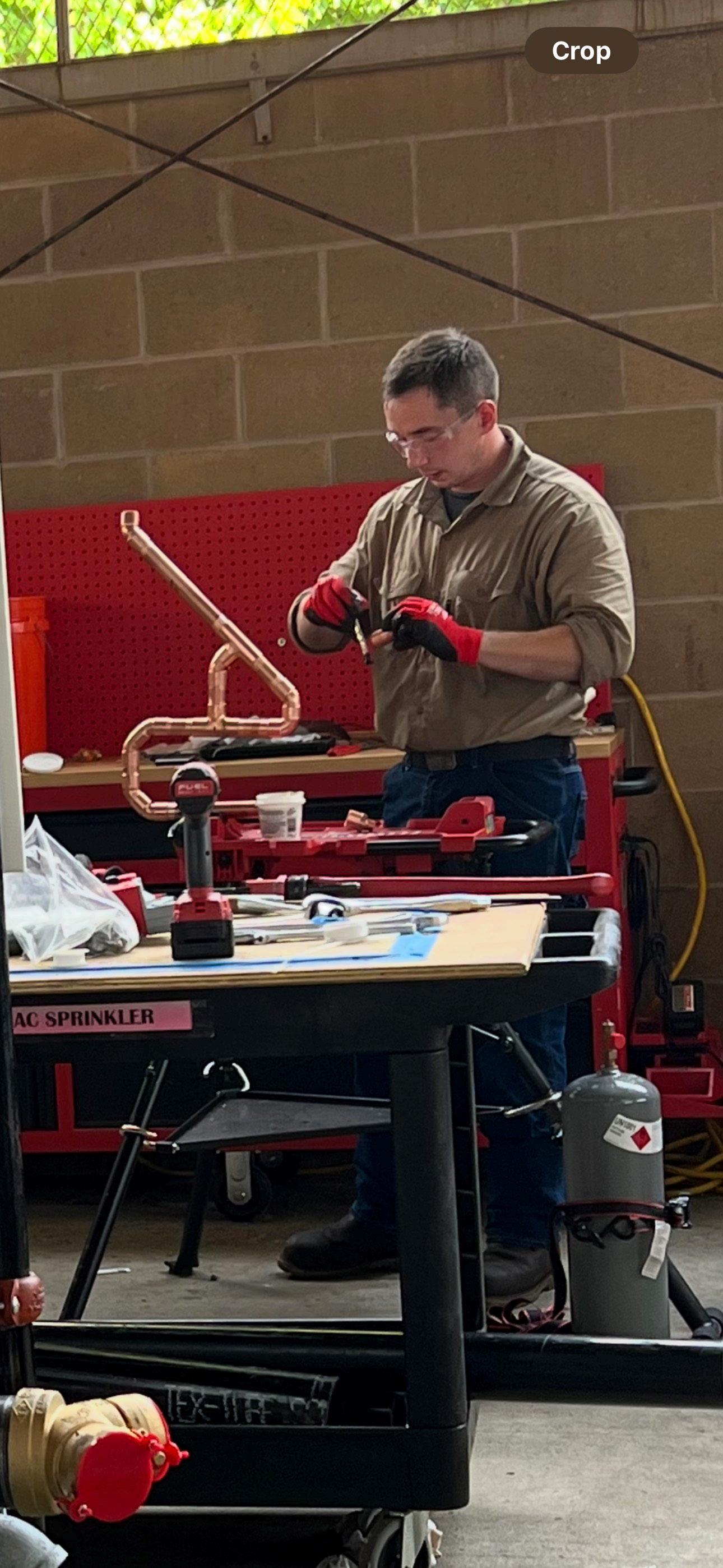



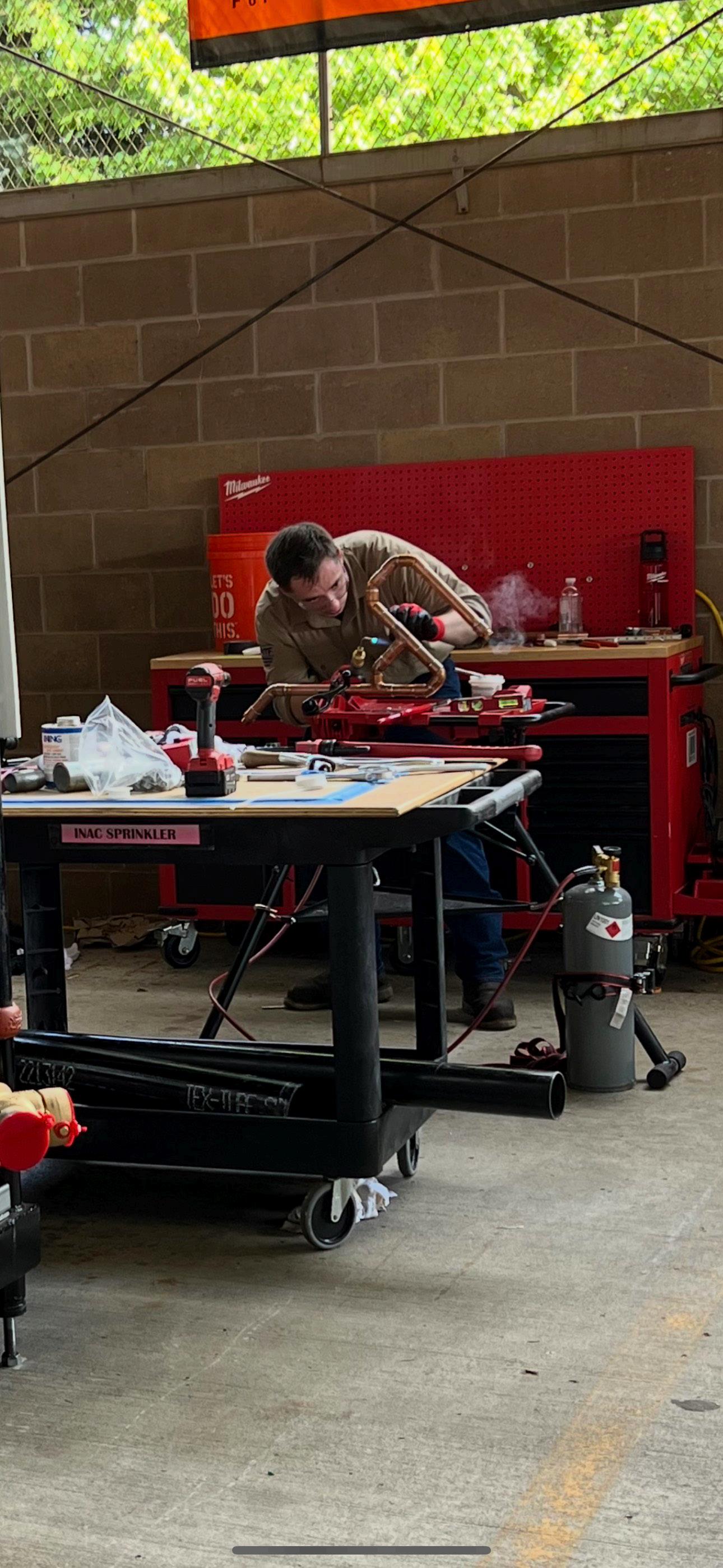
Written by:

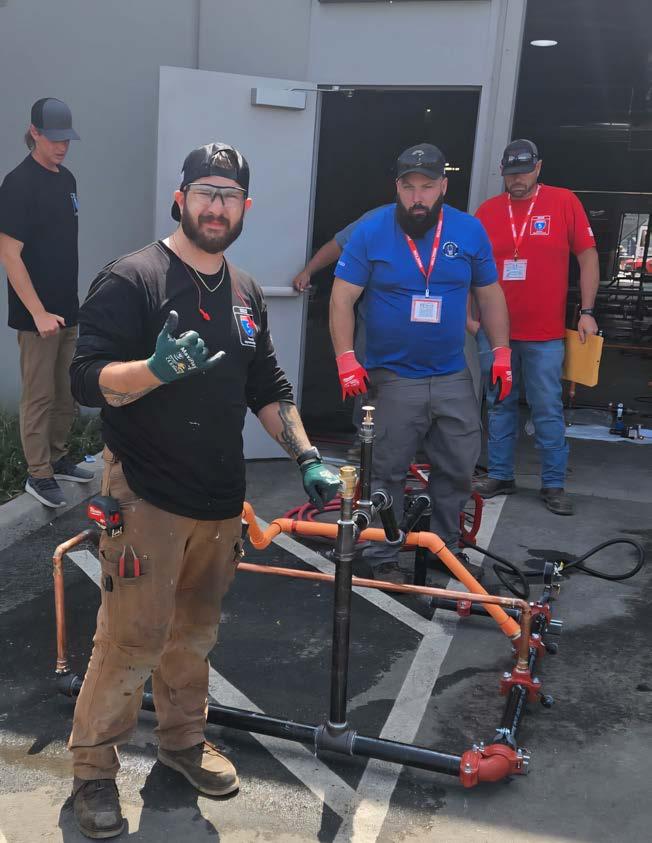

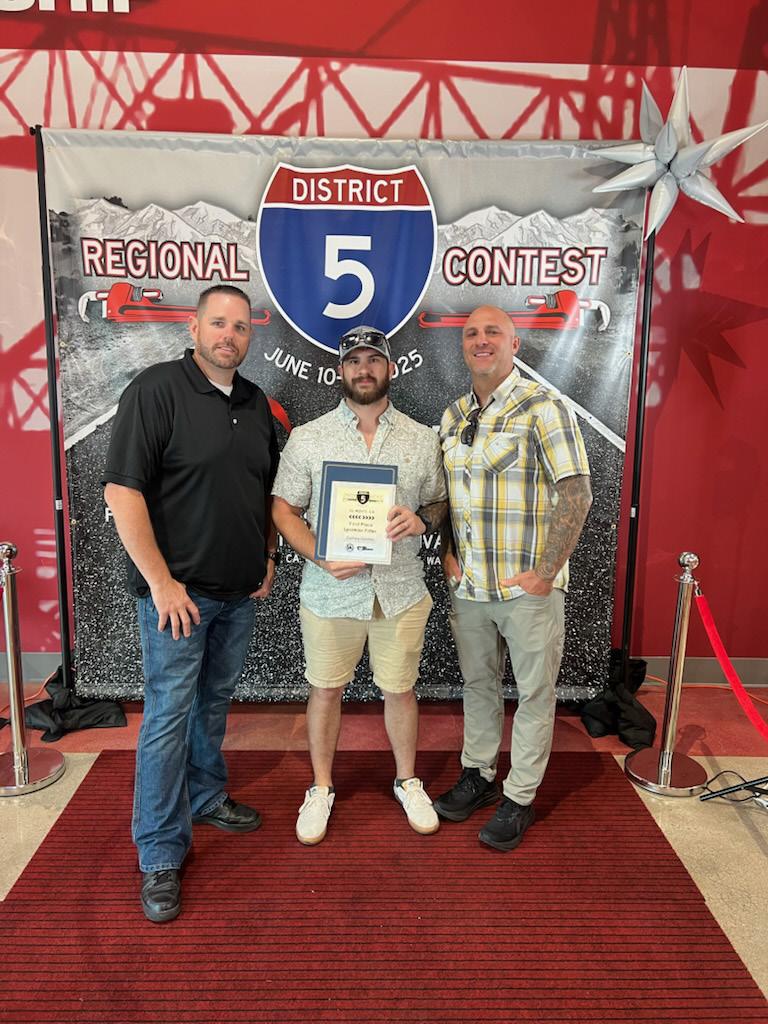
Zachary Gardener 2025 UA District 5 Winner
Afternoon Brothers and Sisters,
This year, I had the honor of being the first apprentice from Local 669 to win the District 5 competition and represent District 5 Sprinkler Fitters at the international level. My name is Zachary Gardner, a Class 10 apprentice in District 21 of the Inland Northwest. When I first heard about this competition only a few weeks into my career as a fire sprinkler fitter, I never imagined I’d make it this far. What I accomplished is something I’ll carry with me for the rest of my career, and it wouldn’t have been possible without the mentors who guided me.
Leading up to the competition, there are a few men I want to thank for their support and training: Danny Pellegrino, Dan Kay, Brian Hutto, and a special shout-out to Shannon Smith for the pre-district contest prep week. These men are truly amazing teachers. Working with them before districts and afterward up to the competition was a tremendous help. They are not only knowledgeable instructors but also strong role models for apprentices coming up in the West Coast district.
My local instructor, Tracy Gordon, was also a huge help with quizzes and one-on-one training before the competition. Thanks to these mentors, I learned the skills needed to perform at both the district and international levels. With their guidance, the obstacles leading up to and through the international competition were not as daunting as I once imagined.



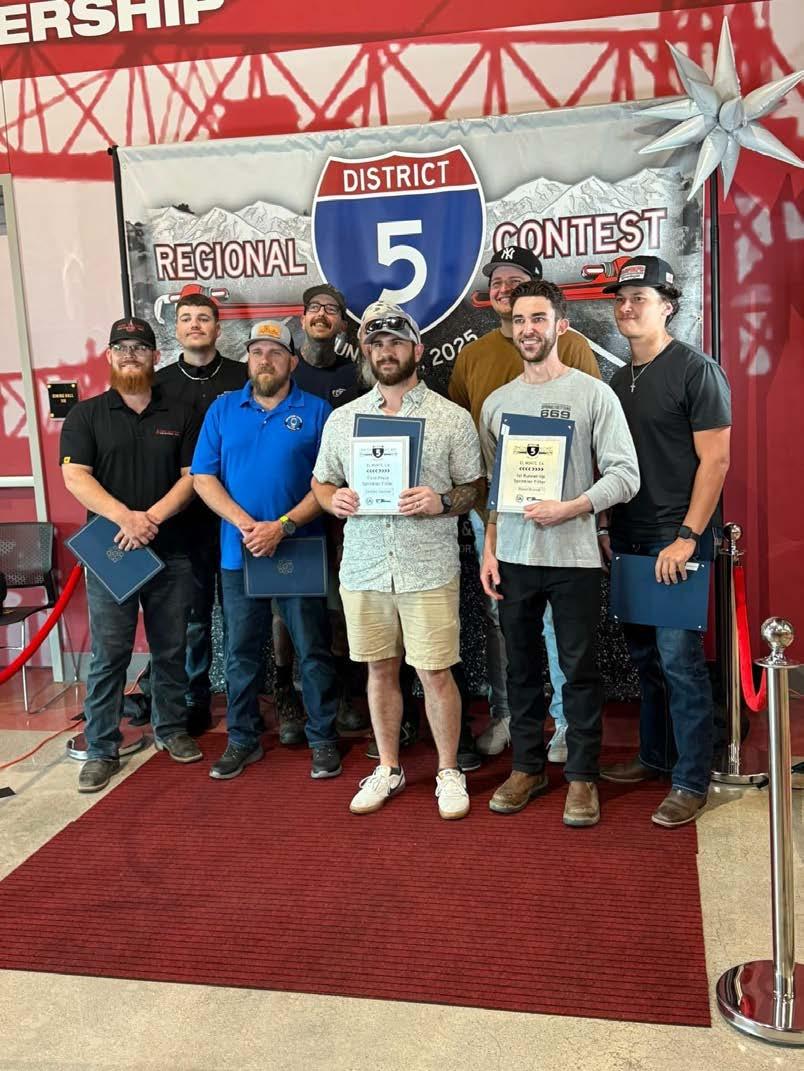
The competition itself was both challenging and rewarding. I am proud to be the first apprentice from Local 669 to win the District 5 competition. The international was tough, it tested math, attention to detail, and efficiency. In my opinion, the beginning stages focused on training, learning new skills, and hands-on experience. From fire pump trailers to virtual inspections, Revit, and ISO piping in digital form, much of it was new to me, but I enjoyed gaining deeper, practical understanding. The final project, however, was a whole different ballgame. It involved more pipe sizes, systems, materials, and joining methods than I could have imagined.
My only regret is that I did not finish the project, but I was not alone in that, many of the best apprentices I’ve met also faced the same challenge. Every one of them brought incredible skill and deserves respect for what they accomplished. Looking back, my biggest takeaway isn’t just the skills I gained, but the brotherhood I experienced, the friends I made, and the lasting relationships I built.



Through this competition, I learned new skills I can carry forward in my career as a fitter. I am now confident working with copper, a material rarely used in my area. I gained a stronger understanding of fire pump run tests and general inspections. I also grew personally. My confidence as a fire sprinkler fitter has increased, and I know these lessons will help me continue to be an asset to both the union and my employer, while propelling my career upward.
For next year’s competitors, and all future ones, my advice is simple: Just go for it!
No matter the outcome, put yourself out there and try. I had my sights set on this for the last four and a half years. Even though I did not win, I still consider this my single greatest accomplishment so far. I am a Marine Corps veteran and a master diesel mechanic. I have traveled the world and been a part of many incredible opportunities, but competing at the international level with the best apprentices in the UA has been the experience of a lifetime. Apply, do your best, and see where it takes you.
You’ll discover how big the UA truly is, stretching across countries, states, and cities you may never have known. At this level, you will meet brothers and sisters from literally all over the world. I wish all future competitors the very best in their journey.

To thank everyone who helped me get here would take a book. Each person taught me something along the way. The District 5 training team is amazing. Thank you to the JATC without them none of this would be possible. My BA, Greg Watts, has been a huge help throughout this process. Jimmy Davitt taught me most of what I know about speed and efficiency. Mike Ladyman shared his wisdom and guidance. Corey Husk showed me the definition of hard work and the importance of seeing a job through the right way. Corey Ramsey has been the best leader I’ve had the pleasure of working for, setting the example and giving me a chance to prove my worth. Erv Nave is the man who helped me get into the trades, I cannot thank you enough for the opportunities and future you’ve helped me build. A special thank you also goes to McKinstry and all the people who make it an amazing employer. Without them, I wouldn’t be here. And finally, to my amazing wife Marina, thank you for your support and for always being my biggest cheerleader.

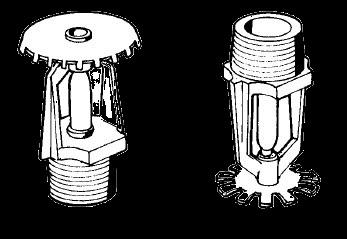
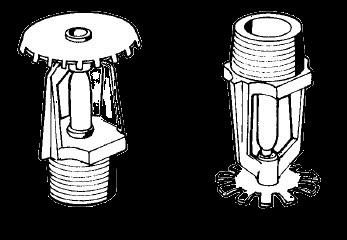
This class will review the NFPA 13 definition of a special sprinkler and the requirements for proper installation. It will cover several common types of special sprinklers used in the industry and the applications in which they are selected.
This class provides a detailed review of NFPA 13 requirements for proper hanging and bracing and examines the wide range of specialty fasteners used to support sprinkler piping. Participants will examine technical data sheets to evaluate fastener options to find the most suitable components for specific installation conditions.
This class explores the components that make up the full cost of an hour of labor, beginning with the key expense categories behind every billable hour. Additionally the training will cover basic financial concepts and banking terms to promote financial literacy.
This class provides and in-depth review of NFPA 25 Inspection, Testing, and Maintenance (ITM) requirements for common components and valves in sprinkler systems, as well as specific ITM frequencies.

This class will discuss the different requirements associated with pressure testing of piping systems, including techniques for proper system depressurization, system testing, and worker safety.

This class is an overview of how manufacturers have designed tools to maximize worker safety and comfort in order to protect from injury, as well as assessing proper working position to minimize repetitive motion injuries.
This class will review electrical signaling devices for fire protection, including how they work, installation, testing, and adjustment of these devices.

This class will discuss where and why these systems are installed, including an overview of the general operating principle of these systems, as well as identifying the installation requirements found in NFPA 13.
This class will introduce air-aspirating smoke detection systems installed by sprinkler fitters to activate water control valves when sample air contains smoke particles. Additionally, it will review basic installation requirements and system operation.
This class provides and in-depth overview of NFPA 750, the Standard on Water Mist Fire Protection Systems. It begins with an introduction to the standard's origins, followed by a chapter-by-chapter review of water mist system requirements.
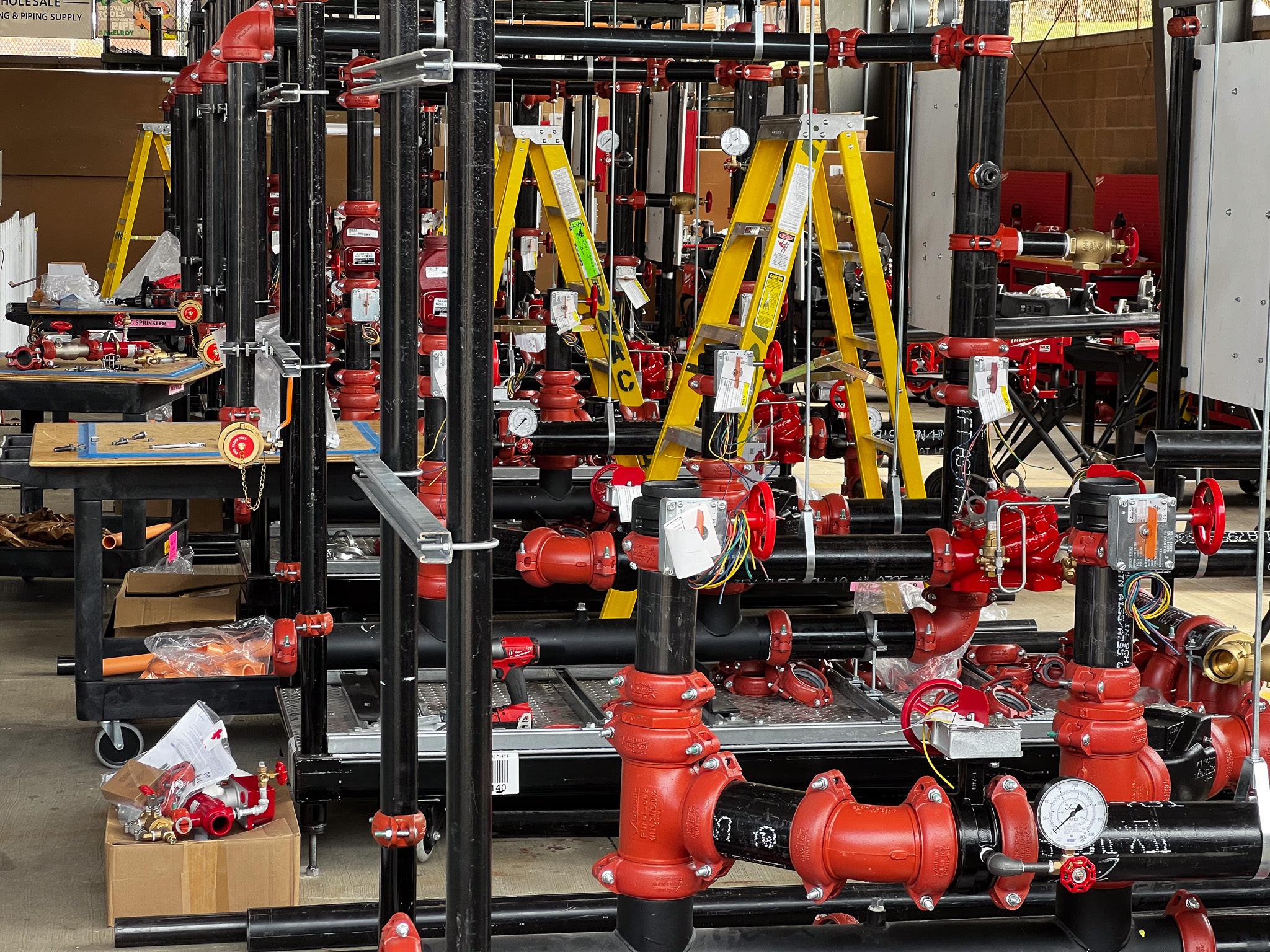
This class explores the proper methods for threading pipe, joining threaded pipe, grooving pipe, joining grooved pipe, installing grooved flanges, and installing mechanical tees.
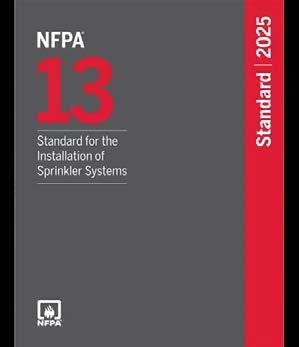




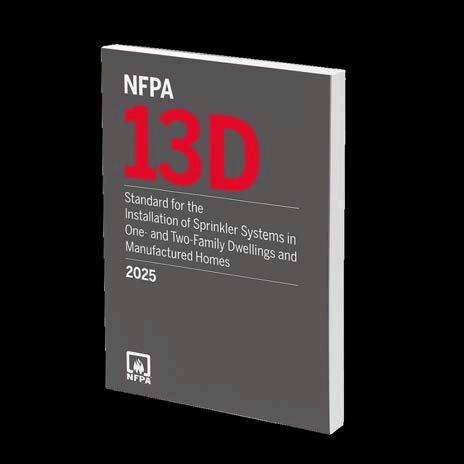
This class provides an in-depth review of the changes and updates to the 2025 editions of NFPA 13, NFPA 13D, and NFPA 13R. Participants will gain a clear understanding of how the latest revisions impact the design and installation of sprinkler systems, with a focus on how these updates affect the work of sprinkler fitters in the field. Practical examples and real-world scenarios will be used to illustrate how these changes in the standards influence system layout and installation practices, helping attendees apply the standards accurately and efficiently on the jobsite.
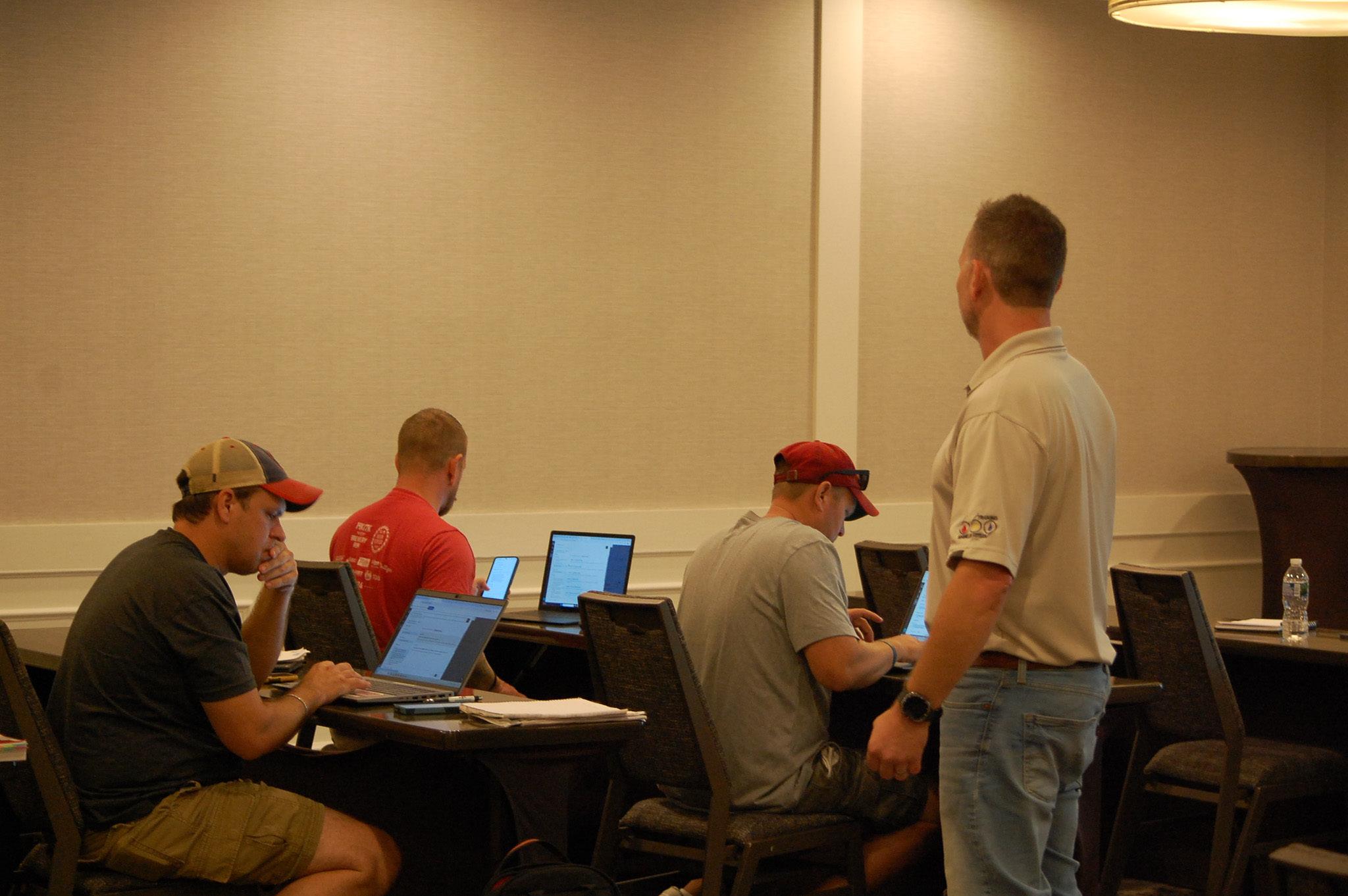
This training also provides guided instruction on utilizing NFPA LiNK, NFPA’s digital platform for accessing and navigating the standards. Attendees will be guided through the process of setting up and accessing their own personalized NFPA LiNK account. We will also demonstrate how to effectively use the platform’s tools to locate code requirements, cross reference sections, and quickly retrieve information when needed. This hands-on approach ensures participants will leave this training confident in using NFPA LiNK as a practical resource in their daily work. Participants are encouraged to bring a fully charged laptop, tablet, or smartphone as they will be an essential tool to help attendees participate and gain the most benefit from the training.
Albuquerque, NM
Instructor: Justin Pippin
Atlanta, GA
Instructor: Damian Diaz
Birmingham, AL
Instructor: Dave Malin
Bloomington, IL
Instructor: Eric Smith
Camdenton, MO
Instructor: Wade Gilbertson
Charleston, WV
Instructor: Wayne Aldridge
Cincinnati, OH
Instructor: James Dorn
Columbus, OH
Instructor: Tim Riggs
Denver, CO
Instructor: Ray Castillo (Class 1-5 Apprentices)
Denver, CO
Instructor: Manuel Barajas (Class 6-10 Apprentices)
Des Moines, IA
Instructor: Dustin Mason
Evansville, IN
Instructor: Steve McKim
Exton, PA
Instructor: Bill Irey
Fresno, CA
Instructor: Dan Kay
Grand Prairie, TX
Instructor: Jacob Forbes
Harmony, PA
Instructor: Dave Coss
Houston, TX
Instructor: Joshua Garza
Indianapolis, IN
Instructor: Brandon Kingsbury (Class 1-3 Apprentices)
Indianapolis, IN
Instructor: Josh Swanson (Class 4-7 Apprentices)
Indianapolis, IN
Instructor: Mark Spall (Class 8-10 Apprentices)
Kaukauna, WI
Instructor: Kyrik Rudd
Lanham, MD
Instructor: Bob Linkins
Lansing, MI
Instructor: Clint Robertson
Latham, NY
Instructor: Skylor Edwards; Brian McTague
Las Vegas, NV
Instructor: Cody Harris
Louisville, KY
Instructor: Nathan Owen
Madison, WI
Instructor: Jody Scott
Memphis, TN
Instructor: Danny Furniss
Newburgh, NY
Instructors: Matt Waldman; Gary Frunzi
New Braunfels, TX
Instructor: Chase Umsted
Niota, TN
Instructor: Dave Malin
Norwalk, OH
Instructor: Mike McMurray
Omaha, NE
Instructor: Johnnie Engelke
Orchard Park, NY
Instructor: Josh Bruce; Dave Coss
Paducah, KY
Instructor: Steve McKim
Pasco, WA
Instructor: Freddy Delgado
Plymouth, IN
Instructor: Gary Engel
Portland, OR
Instructor: Shannon Smith
Rochester, MN
Instructor: Jordan Amos
Rockdale, TX
Instructor: Billy Baldwin
Rock Island, IL
Instructor: Matt Gerrity
Sacramento, CA
Instructor: Dustin Kuehne
Salt Lake City, UT
Instructor: Robert Hill
Santee, CA
Instructor: Brian Hutto
Sparks, NV
Instructor: Jeremy Low
Spokane, WA
Instructor: Tracy Gordon
Spring Hill, TN
Instructor: Kevin Vaughn
Syracuse, NY
Instructor: Brad Wilder; Steven Shepard
Tempe, AZ
Instructor: Ehinar Monobe (Class 1-5 Apprentices)
Tempe, AZ
Instructor: Collin Michael (Class 6-10 Apprentices)
Whittier, CA
Instructor: Bob Chaffee
Wichita, KS
Instructor: Wade Gilbertson
Willimantic, CT
Instructor: Shaun Martin
Virtual Training Schedule (Only for assigned apprentices)
Instructor: Danny Pellegrino

1. Apprentices are to begin lessons once they are received from the college; there are 19 courses in the program, and all lessons are required to be submitted through the college’s online testing site.
2. You are required to submit 12 lessons per quarter.
3. Average lesson grade must be 60% in order to request an exam. Exams must be passed with a minimum of 60%.
4. Courses should be completed and submitted in the order in which they are received. However, courses submitted out of order will be accepted provided the apprentice is enrolled in the course which is submitted. You will not be enrolled into new books until the oldest book is completed and passed.
5. The cut-off dates for the minimum of 12 lessons received by the College is the last day of each quarter March 31st, June 30th, September 30th and December 31st.
6. Lessons received by the College in any amount less than the student’s requirement on the last day of the quarter constitutes a delinquency. The lesson requirement is 12 lessons per quarter starting with the student’s first course enrollment date.
7. Apprentices current in the Related Training Program on June 30th will be eligible for advancement in classification (receive a pay raise) on the 3rd Monday in August.
8. Apprentices current in the Related Training Program on December 31st will be eligible for advancement in classification (receive a pay raise) on the 3rd Monday in February.
9. An apprentice’s first delinquency will result in a warning letter and a possible missed raise. If the first delinquency is in the quarter ending March 31 or September 30, they will receive a warning letter. If they are delinquent in the quarter ending June 30 or December 31, they will receive a warning letter and miss a raise.
10. Warning Letter: You did not meet your quarterly lesson requirement and are poised for a larger disciplinary impact if not caught up by the end of the next quarter.

11. Apprentices delinquent on June 30th will be eligible for advancement in classification on the 3rd Monday in November if current on September 30th.
12. Apprentices delinquent on December 31st will be eligible for advancement in classification on the 3rd Monday in May if current on March 31st.
13. Apprentices who are delinquent two consecutive quarters, regardless of the number of lessons, will be suspended (removed from the job) for a minimum of five days or until current in lessons (whichever is greater).
14. Suspension Letter: You are delinquent two consecutive quarters; you are removed from the job and must serve a minimum five day suspension or remain off the job until you are caught up on your lesson requirement.
15. Apprentices who are delinquent three consecutive quarters will have their Apprenticeship and Membership in Local 669 cancelled. Such former apprentices will have the right to appeal. If the appeal is honored and the former apprentices completed the delinquent lessons, the former apprentice’s will be eligible for reinitiating into Local 669 upon payment of a new initiation fee and reinstatement into the Joint Apprenticeship Program.
16. Failed courses must be redone and passed to continue receiving new course material. Repeat lessons do not count towards quarterly lesson requirements.

Regular and Regional classrooms will be enrolled into the O.I.L.S. classes and have the opportunity to attend a virtual live class to obtain training hours. They still have the same 40-hour annual requirement.





Instructor

Skylor Edwards
Latham, NY




Instructor
Chris Bittner
Duncansville, PA


Instructor

Dan Kay Fresno, CA

Instructor
Tracy Gordon Spokane, WA



Instructor
Dustin Mason Des Moines, IA


Instructor
Jacob Forbes Grand Prairie, TX

Instructor

Wayne Aldridge Charleston, WV



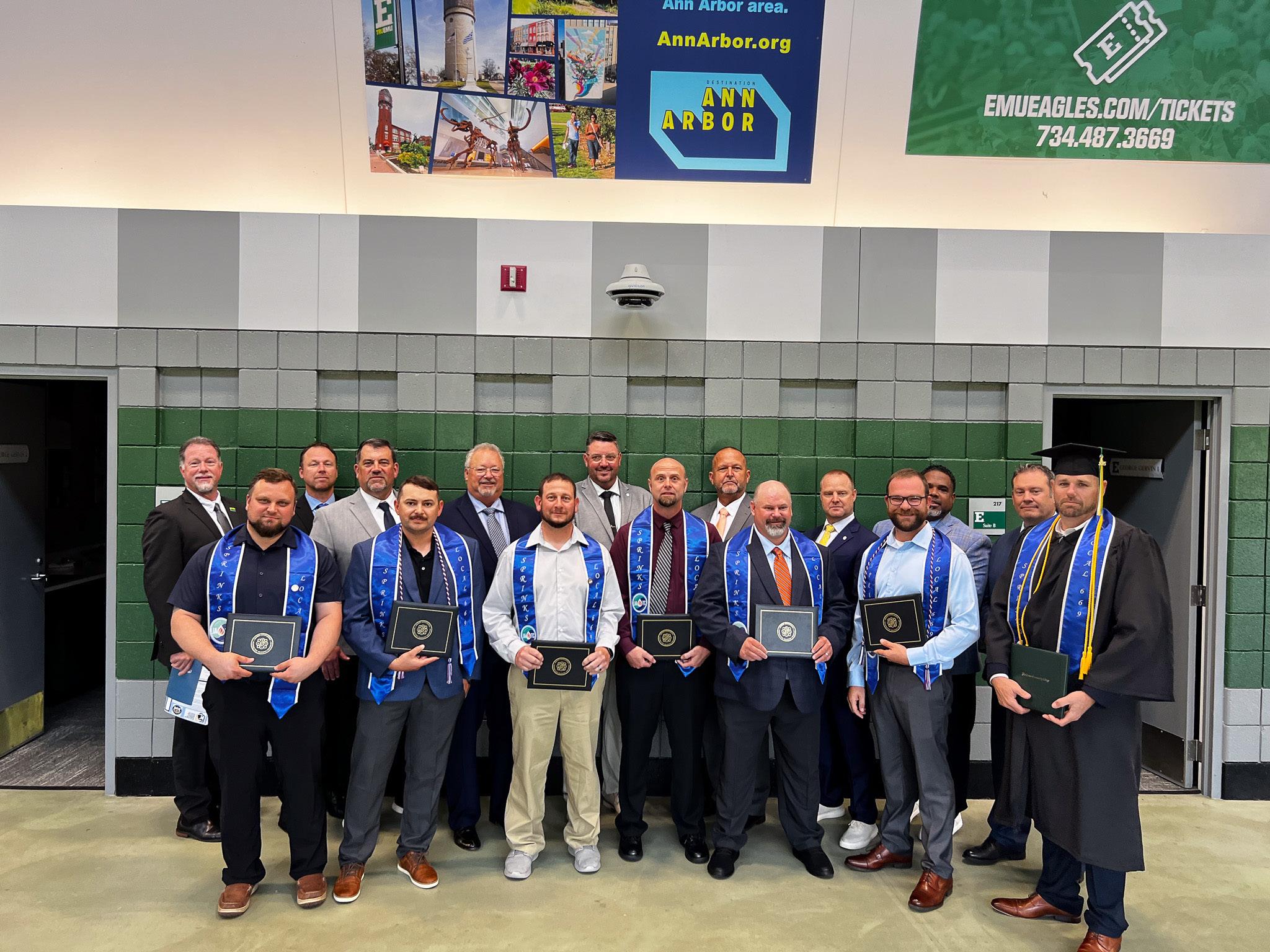

UA members have an opportunity help prepare the next generation of skilled tradespeople. By becoming a UA instructor, our members show their commitment to passing on the skills of the trade to their brothers and sisters.
As new techniques and technologies are developed, these instructors help both apprentices and journeymen stay up to date on all these new processes and equipment—thus giving them an edge over their non-union competition.
Those who choose this path also have the opportunity to become Certified Instructors, thanks to the internationally recognized Instructor Training Program(ITP). It takes five years to become certified, but this designation is highly coveted, and contractors and owners recognize the dedication and hard work required to achieve this milestone.
They learn not only how to better present the skills of the trade, but they also take professional and theoretical classes to help them become better teachers.
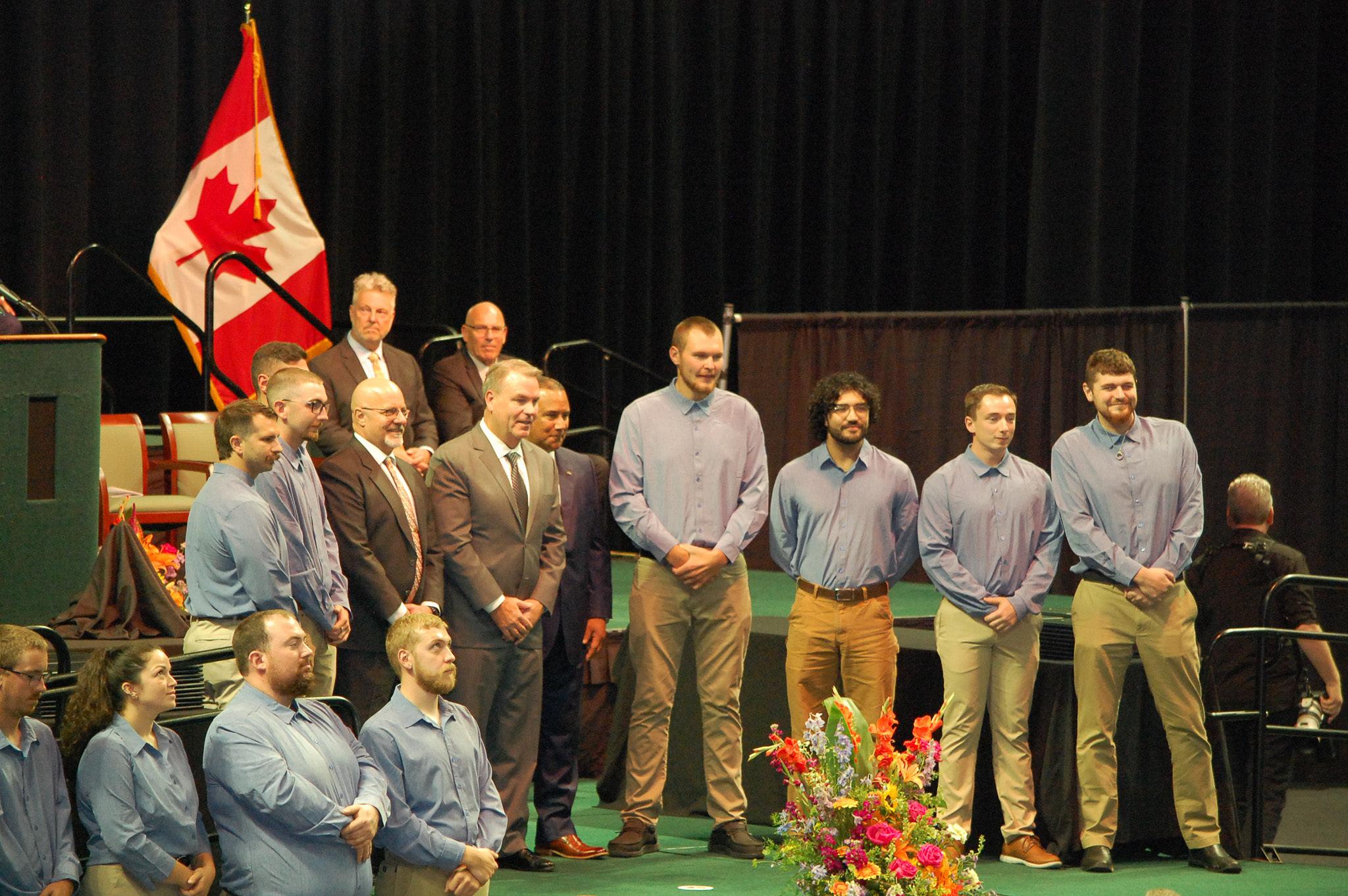
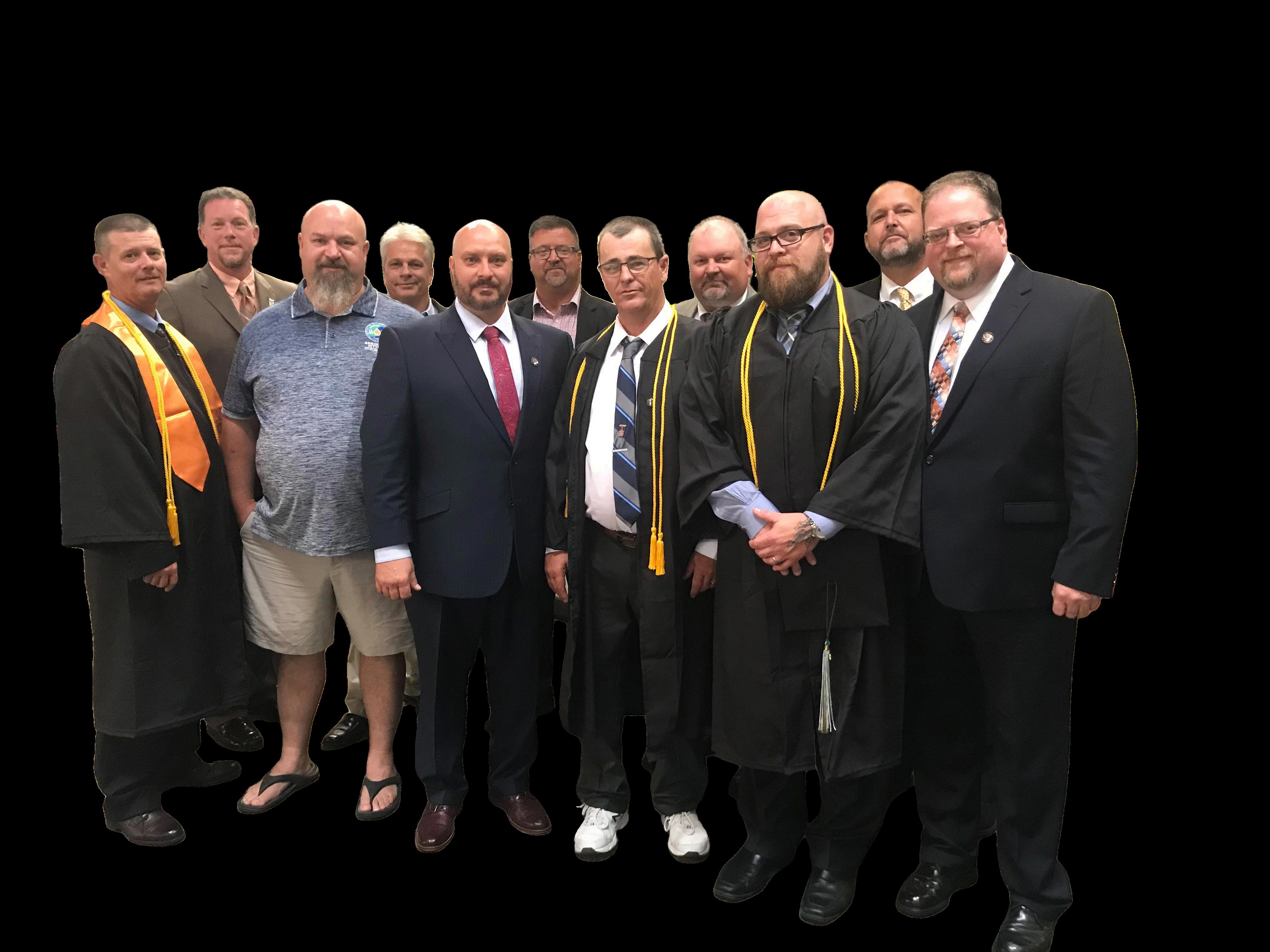
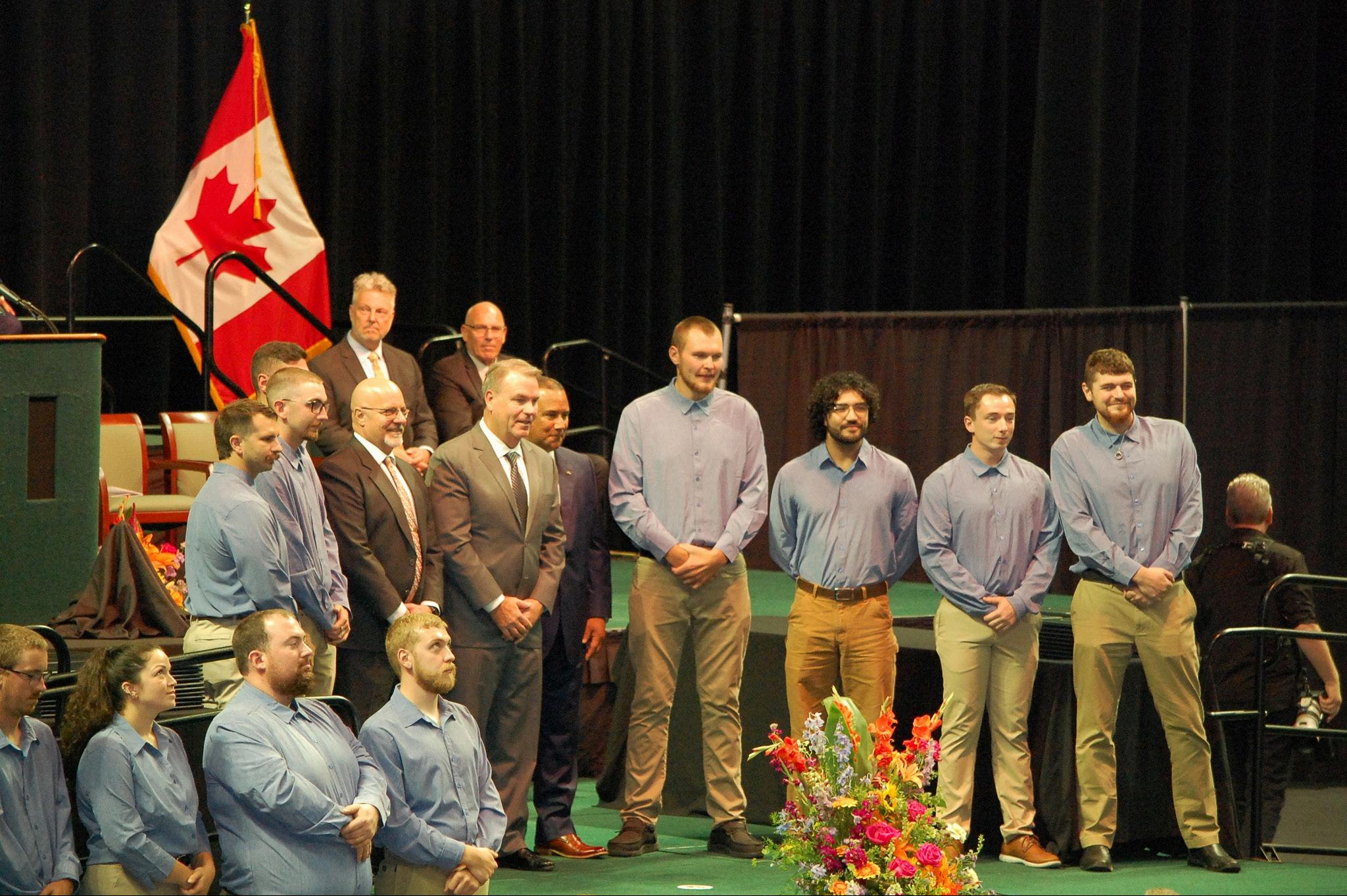
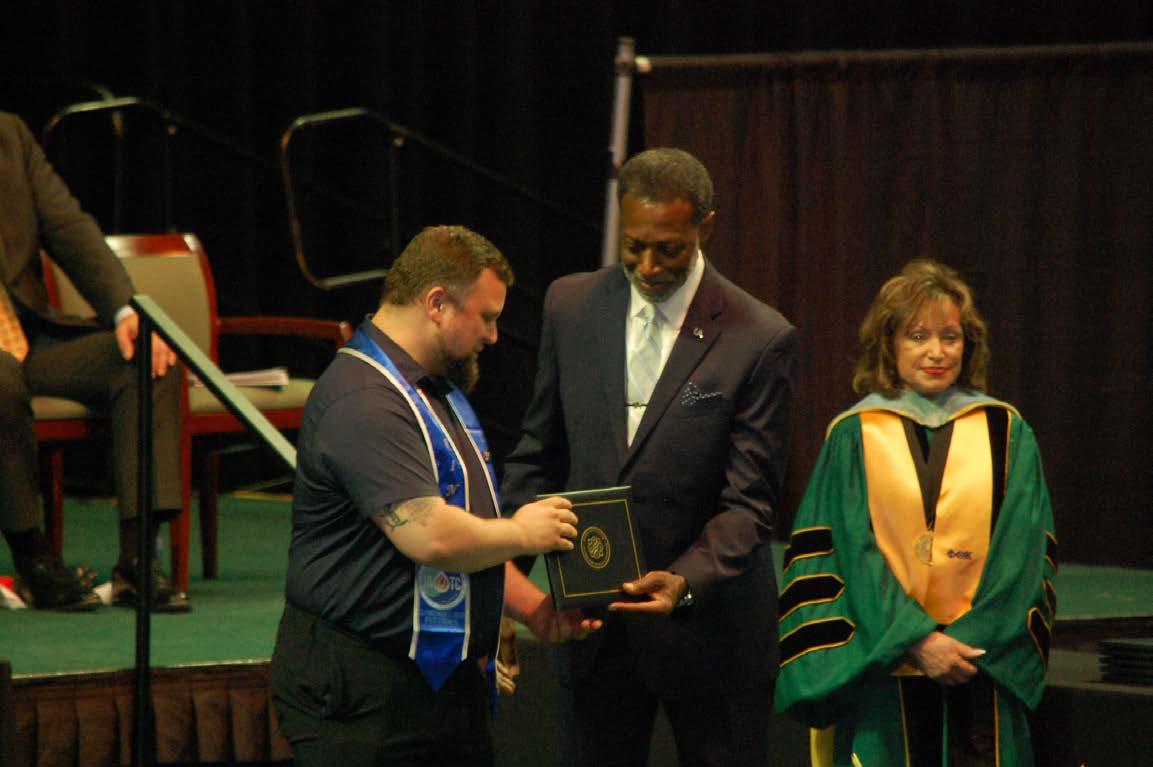
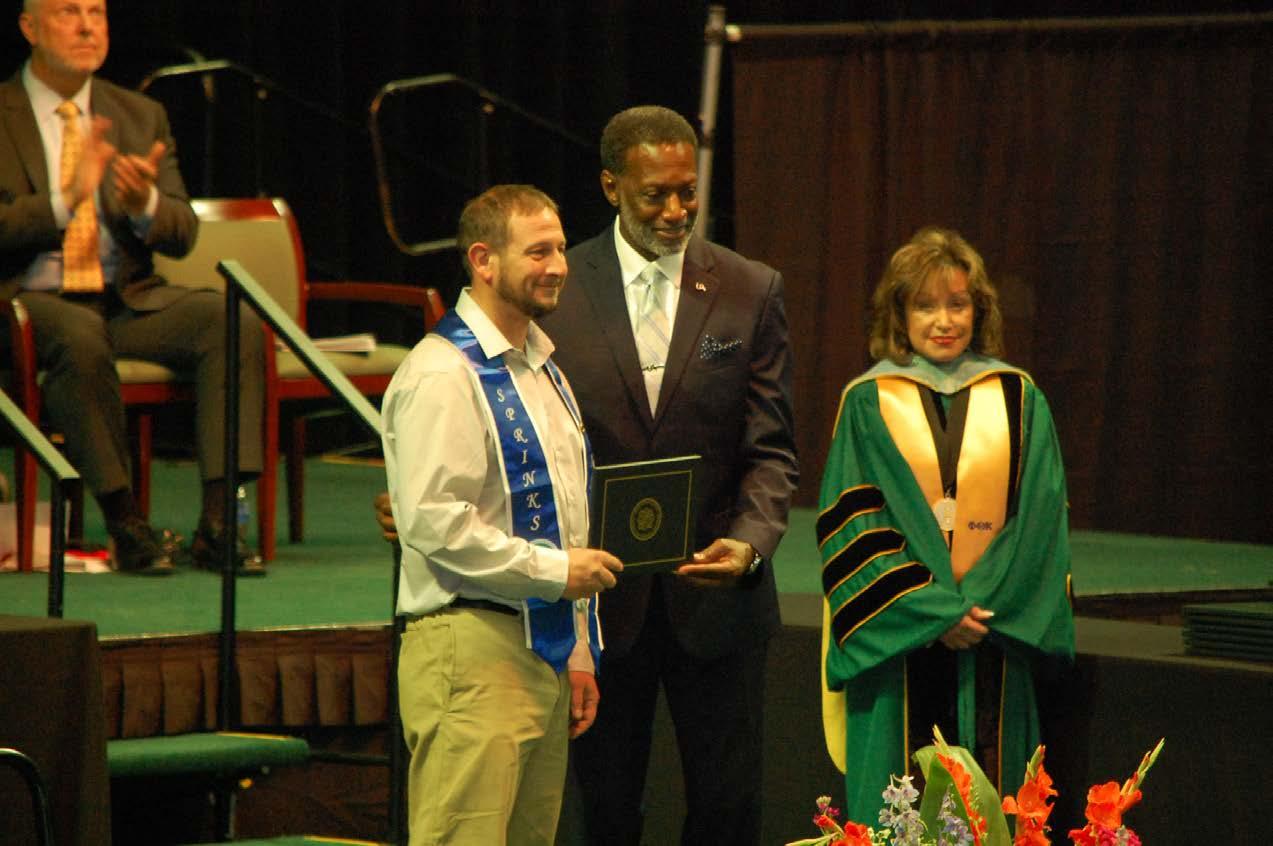
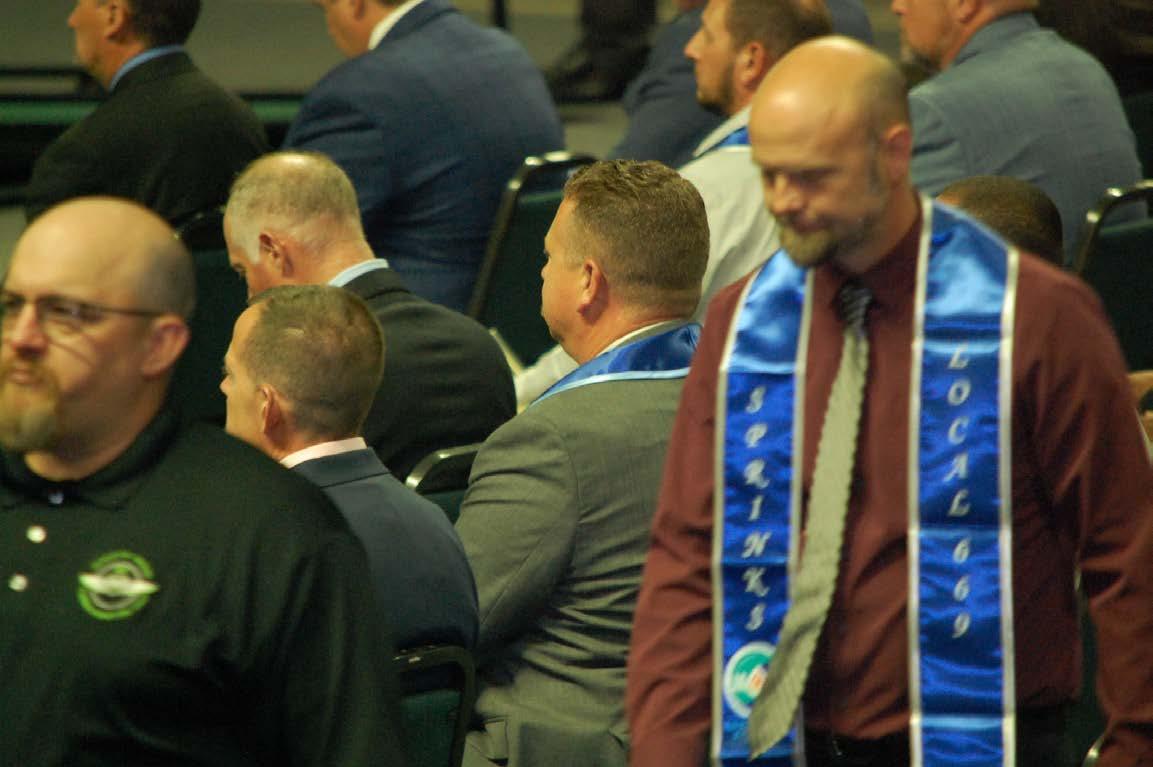
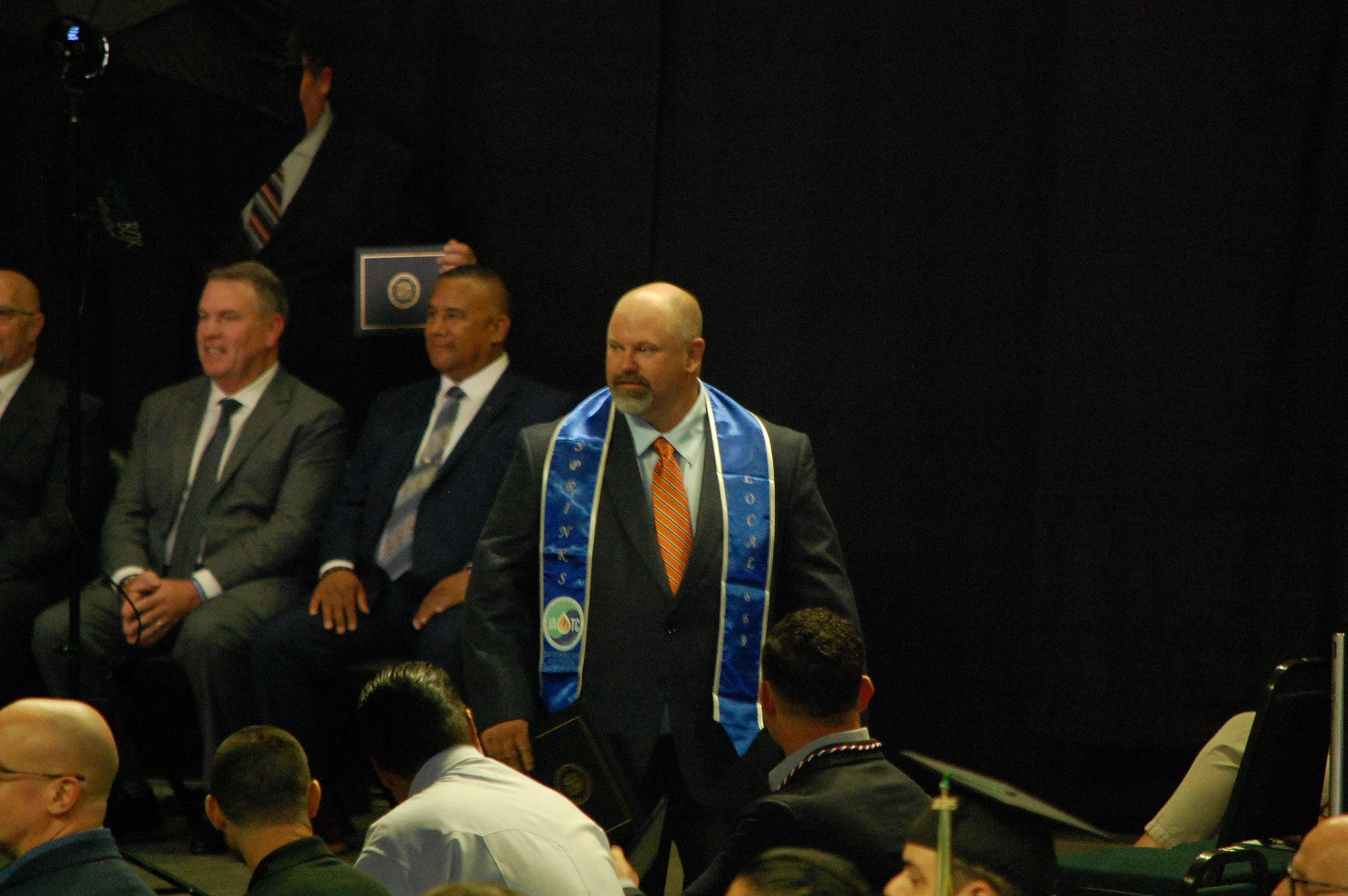
Congratulations to our 2025 ITP Graduates!



Take this quiz to see how sharp your NFPA Standards skills are!

1) Which of these applications requires copper tubing to be brazed, not soldered?
a) Exposed copper tubing supplying ordinary temperature sprinklers in a light hazard wet system
b) Concealed copper tubing in an ordinary hazard wet system
c) Copper sensing lines for a fire pump controller
d) Concealed copper tubing for a residential wet system (NFPA 13D)
2) Where soffits used for the installation of sidewall sprinklers exceed ____ inches in width, additional sprinklers shall be installed below the soffit.
a) 12
b) 8
c) 6
d) 16
3) The pressure sensing line connection for jockey pumps and fire pumps shall be made ____.
a) between the suction control valve and suction flange
b) downstream of the discharge control valve
c) between the pump discharge flange and discharge check valve
d) between the discharge check valve and discharge control valve
4) A wet system with 1,500 installed sprinklers will require ____ spare sprinklers in the head cabinet.
a) 12
b) 24
c) 36
d) 48
5) Holes for bolts or rods in steel shall not exceed ____ greater than the size of the bolt or rod.
a) 1/8"
b) 3/16"
c) 1/16"
d) 3/32"
6) Underground piping must be flushed at a minimum rate of ____, regardless of pipe diameter.
a) 10 feet/second
b) 6 feet/second
c) 15 feet/second
d) 50 feet/second
7) A sprinkler relocate job involving 27 sprinklers has just been completed. The sprinklers cannot be isolated from the rest of the system for hydrostatic testing. The acceptance testing shall consist of ____ for 2 hours.
a) pneumatic testing at 40 psi
b) a hydrostatic test at system working pressure
c) a hydrostatic test at 200 psi
d) a hydrostatic test at 175 psi
8) Bypass piping around a fire pump is required to be at least as large as ____.
a) the underground service main
b) the largest riser supplied by the system
c) the discharge piping
d) the suction piping
9) A section of a wet system is trapping more than 5 gallons, but less than 50 gallons of water, requires a drain consisting of a ____ to meet NFPA 13 standards.
a) 3/4" plug or nipple & cap
b) 3/4" valve with plug or nipple & cap
c) 1/2" plug
d) 1/2" valve with plug or nipple & cap
10) When applying the "small room rule," NFPA requires that the room ____.
a) has a maximum area of 800 ft2
b) cannot contain windows larger than 36 ft2
c) has a maximum ceiling height of 9 feet
d) must contain an ADA-compliant door
Answers: 1) A - At a minimum, fire pump rooms are considered Ordinary Hazard Occupancies. NFPA 13 requires that all exposed copper tubing in these occupancies must be brazed. (NFPA 13, 2025 - 7.5.4); 2) B - NFPA 13, 2025 10.3.5.1.3.1; 3) D - NFPA 20, 2025 4.32.2; 4) B - NFPA 13, 2025 16.2.7.5; 5) C - NFPA 13, 2025 17.2.2.10.2; 6) A - NFPA 24, 2025 Table 10.10.2.1.3; 7) B - NFPA 13, 2025 30.7.1.2; 8) C - NFPA 20, 2025 4.16.4.3; 9) B - NFPA 13, 2025 16.10.5.2.2; 10) A - NFPA 13, 2025 3.3.214