District Board of Trustees MeetingWednesday, April 15, 2026 5:00 pm South Lake Campus Spring Nurse Pinning Ceremony Tuesday, May 5, 2026 5:00 pm Leesburg Campus
MAY
South Lake Commencement Ceremony Thursday, May 7, 2026 AM & PM Clermont
North Lake Commencement Ceremony Friday, May 8, 2026 AM & PM Leesburg Campus
Taralyn Pierce, Assistant Professor of SLS/Sociology
Faculty Continuing Contract Candidates
Andy Dail, Librarian
Nancy Parks, Assistant Professor of Mathematics
NEW BUSINESS
Recommendation of Faculty
Background/References
Per Florida Statute 1001.64 (18), each board of trustees shall establish the personnel program for all employees of the Florida College System institution including promotion and other conditions of employment.
Description
The review process was completed for this year’s faculty candidates eligible for promotion. If approved by the Board of Trustees, the following candidates would be promoted to the listed rank beginning August 11, 2026, and receive an increase in compensation per Faculty Union Article 10:
• Mr. James Brian Rogers – promote to Associate Professor
• Ms. Taralyn Pierce – promote to Associate Professor
Recommendation
Motion to approve the promotions of Mr. James Brian Rogers and Ms. Taralyn Pierce to their next-level rank with associated salary increases beginning August 11, 2026 and receive an increase in compensation per Faculty Union Article 10 as written.
Recommendation to Award Faculty
Continuing Contract
Background/References
Per Florida Statute 1001.64 (18), each board of trustees shall establish the personnel program for all employees of the Florida College System institution including promotion and other conditions of employment.
Description
The review process has also been completed for this year’s faculty candidates eligible for continuing contract. If approved by the Board of Trustees, the following faculty member would receive continuing contract (no change in rank therefore compensation would remain as assigned) beginning August 11, 2026:
• Mr. Andy Dail, Assistant Librarian
• Ms. Nancy Parks, Assistant Professor of Mathematics
Recommendation
Motion to approve award Mr. Andy Dail and Ms. Nancy Parks of continuing contract with no rank or salary increase, all effective August 11, 2026.
Second
Reading of New Board Rule 7.06 Agenda Item: 0326-03
Submission & Consideration of Offers to Purchase College Property
Background/References
The District Board of Trustees is authorized to establish rules in accordance with the Administrative Procedures Act (Florida Statutes 1001.64) that insure proper operation, improvement, and management of the College consistent with the rules adopted by the State Board of Education.
Description
At a previous District Board of Trustees meeting in November 2025 the College received an unsolicited inquiry regarding the potential purchase of a parcel of property located within the Leesburg Campus. At this meeting, it was suggested the Board Attorney develop language for a new board rule regarding offers to purchase college property and bring back to a future meeting.
Recommendation
Motion to approve new Board Rule 7.06 Submission and Consideration of Offers to Purchase College Property as written.
LAKE-SUMTER STATE COLLEGE BOARD RULE
TITLE: Submission and Consideration of Offers to Purchase College Property NUMBER: 7.06
AUTHORITY: s. 1001.64(34), Florida Statutes; 1013.28(1), Florida Statutes PAGE: 1 of 1
HISTORY: NEW – 2/18/26
To establish a formal, transparent process for the submission of offers to purchase college-owned real estate ensuring that the Board of Trustees only reviews serious, binding proposals.
Submission Procedure
• All offers to purchase college property must be submitted in writing directly to the Office of the President.
• Offers sent to other departments, faculty, or individual board members will not be considered "submitted" for the purposes of this policy and are invalid.
Requirements for Consideration
• Formal Contract Required: To be considered by the Board of Trustees, an offer must be in the form of a formal, executed contract to purchase.
• Definition of Executed Contract: The contract to purchase must be signed by the proposed buyer, detailing essential terms including the property description, parcel identification number, purchase price, payment terms, closing date, and any contingencies. The contract to purchase must also provide for an earnest money deposit equal to 10% of the offered purchase price.
• Ineligibility of Informal Offers: Letters of intent, memoranda of understanding, letters of interest, or verbal offers will not be presented to the Board of Trustees for consideration.
Board of Trustees Review
• Upon receipt of a valid, executed contract, the President will acknowledge the offer within five business days and will submit the proposal to the Board of Trustees The President will include consideration of the proposal on the next available agenda of the Board of Trustee. The Board may provide direction on the offer to the President at a meeting of the Board of Trustees. If the College’s educational plant survey does not already determine the real property is to be unnecessary for educational purposes, the Board of Trustees may direct an updated educational plant survey be prepared. Board direction may also include obtaining an appraisal.
• The Board reserves the right to reject any offer.
Tuition and Fee Schedule and
Cours
e Fee Changes FY27
Background/References
In accordance with Florida Statutes 1009.23(20), Lake-Sumter State College is required to notify the community of any proposed changes in tuition and fees. The District Board of Trustees approves the tuition and fee schedule for each fiscal year in accordance with Florida Statutes 1009.23(23). Lake-Sumter State College is notifying the community of proposed changes in institutional student tuition and fees before their consideration at the District Board of Trustees of Lake-Sumter State College meeting on April 15, 2026.
Description
The Tuition and Fees, Other Fees, and Course Fees are attached. Affidavit of Publication and Press Release for tuition and fee change notice is at: LSSC proposing student fee modifications for 2026-27 year - Lake-Sumter State College.
Recommendation
This item is for informational purposes only.
Lake-Sumter State College
Tuition and Fees Per Credit Hour
Associate in Arts/Associate in Science Degree Non-Resident
Motion to approve the updated 2026-2027 Personnel Calendar to include the College closure on Monday, February 15, 2027 for President’s Day and adjust faculty duty days to start on Monday, January 4, 2027 as written.
202 6- 202 7 PERSONNEL CALENDAR
Thursday,July2,2026
Monday,September7,2026
Wednesday,November11,2026
College Closures
Wednesday,November25–Sunday,November29,2026
Saturday,December19,2026–Sunday,January3,2027
Monday,January18,2027
Friday,February5,2027 (workday)
Monday,February15,2027
Sunday,March21,2027–Sunday,March28,2027
Monday,May31,2027
Monday,July5,2027
Work Periods
IndependenceDay
LaborDay
VeteransDay
ThanksgivingBreak
WinterBreak
MartinLutherKing,Jr.,Birthday
LSSCDayofService
President'sDay
SpringBreak
MemorialDay
IndependenceDay
Staff/Non-Instructional Faculty Wed, July 1, 2026 – Wed, June 30, 2027
Fall 2026 Instructional Faculty Mon, Aug 17 – Sat, Nov 28
Final Exams Mon, Nov 30 – Sat, Dec 5 Tues, Aug 11 – Fri, Dec 11 (84)
Spring 2027 Instructional Faculty Mon, Jan 11 – Sat, April 24
Final Exams Mon, April 26 – Sat, May 1 Mon,Jan4–Fri,May7(83)
Summer A 2027 – 11 - month Instructional Faculty Mon, May 10 – Sat, June 26 Mon, May 10 – Mon, June 28 (35)
Summer AE 2027 – 12 - month Instructional Faculty Mon, May 10 – Sat, Aug 7 Mon, May 10 – Mon, Aug 9 (65)
Summer B 2027 – 11 - month Instructional Faculty Mon, June 28 – Sat, Aug 7 Mon, June 28 – Mon, Aug 9 (30)
Summer 2027 Four Day Work Week (Monday – Thursday) Monday through Friday Mon, May 10 through Fri, July 30
*July 5th, 2027 is excluded from duty days. Fall 2026 grades due Monday, Dec 7 by noon, Spring 2027 grades due Monday, May 3 by noon, Summer A grades due Monday, June 28 by noon, Summer AE & B grades due Monday, Aug 9 by noon
1001.64 Florida College System institution boards of trustees; powers and duties.—
(1) The boards of trustees shall be responsible for cost-effective policy decisions appropriate to the Florida College System institution’s mission, the implementation and maintenance of highquality education programs within law and rules of the State Board of Education, the measurement of performance, the reporting of information, and the provision of input regarding state policy, budgeting, and education standards.
Description
Lake-Sumter State College is committed to expanding educational opportunities that empower students and strengthen the region’s economic future. To advance this priority, the College seeks authorization to establish a Collegiate High School within its service district, in partnership with local school districts.
This proposed initiative will expand access to higher education and create structured pathways for high school students to earn both a high school diploma and college credit, positioning them for accelerated degree completion and early entry into the workforce. A Collegiate High School will enhance the local talent pipeline by connecting secondary and postsecondary education with regional and state workforce needs in high-demand career fields. This approach supports college readiness, reduces the time required to earn a credential or degree, and contributes to the longterm economic growth of Lake and Sumter counties.
This initiative directly supports the College’s strategic commitments to:
• Develop innovative academic and technical pathways that meet the evolving needs of Florida’s workforce.
• Strengthen partnerships with K–12 institutions and industry to advance college and career readiness.
• Promote access, affordability, and success for all students through seamless educational experiences.
Recommendation
Motion to approve the College’s request to establish an opportunity for a Collegiate High School as written.
CONSENT CONSIDERATIONS
Lake-Sumter State College
FINANCE COMMITTEE OF THE DISTRICT BOARD OF TRUSTEES
Thereareatotalof7,391studentregisteredthissemester,whichisa23.1%increase. This numbershowsnewstudentgrowthof39%.Retentionfromfalltospringisat75.5%with82.5% offallstudentsretainedorgraduated.
MOTION to approve adding academic program Associate in Science in Physical Therapist Assistant, Mr. Tim Morris, SECOND, Mr. Roger Croft, motion passed unanimously.
0226-15 PRELIMINARY NEW PROGRAM REQUEST – AS IN AGRISCIENCE
MOTION to approve exploring, developing, and adding an Associate in Science (or other applicable academic program) focused on Agriscience or related fields, Mr. Steve Munz, SECOND, Mr. Roger Croft, motion passed unanimously.
0226-16 REQUEST FOR EXPLORATION OF EUSTIS PROPERTY PURCHASE
MOTION to grant the College to further explore the possibility of purchasing the Eustis property, Mr. Steve Munz, SECOND, Mr. Tim Morris, motion passed unanimously.
MOTION to approve the request from PFX, Inc. to serve beer, wine, and alcohol at Legends Way Softball Complex for Spring 2026 games for the dates listed, Mr. Steve Munz, SECOND, Mr. Tim Morris, motion passed unanimously.
OTHER CONSIDERATIONS
:
The next regular meeting is scheduled for March 25, 2026 at the Leesburg Campus
The meeting was adjourned at 6:05 p.m.
ATTEST: Mr. Bret Jones, Chair
Recording Secretary: Kailyn Simone
Mr. John Temple, Secretary/ College President
0226-13
Lake-Sumter State College
FINANCE COMMITTEE OF THE DISTRICT BOARD OF TRUSTEES
Per the Florida Statute 1001.64 (18), each Board of Trustees shall establish the personnel program for all employees of the Florida College System institution. Human Resources personnel transactions includes New Hires, Resignations, Retirements, and Separations that are presented to the District Board of Trustees for review.
Description
Staff New Hires:
Samantha Langley Specialist II, Financial Aid 2/2/2026
Each month a report is provided to the District Board of Trustees accounting for any purchases that have been approved by the President which fall between $65,000 and $195,000. This report is prepared by the Office of the Vice President of Finance and Chief Financial Officer, and is intended to apprise the Board of purchases that fall under the authority of the President to approve. The authorization requiring the President’s approval of such purchases is guided by Board Rule 6.09, Purchasing.
Description
Purchase Orders Over $65,000 – February 2026
Vendor: Air Mechanical & Service Corp.
Item Description: SL Science Health AHU Water Coil Replacement Amount: $71,246.00
Purchase Order #: P2600480 Vendor Code: X00136524
Recommendation
Motion to approve the purchases over $65,000 for the months of February 2026 as written.
The existing fire alarm panel and devices were replaced at the Leesburg Campus Health Science Center Nov 2025. The fire alarm system upgrades for the Gym are in progress and expected to continue through March 2026.
Funds have been expended on door locks, repairing gate valves, and for cabling to expand the emergency speaker system.
Roofs and Building Envelope
$45,000 $3,840
$30,000 $10,680
Building exterior maintenance and repairs as needed for all Campuses. Faden is scheduled March 7 to provide stucco repair work for the Gym exterior wall.
$400,000 $0 Lake Hall and William Johnson Buildings roof mitigations and repairs in process. Leesburg Campus Building M Exterior Wall Refurbishment
Leesburg Campus Science-Math Roof Refurbishment
Roof Maintenance and Repairs
Sumter Center Repave, Repair, and Re-stripe Parking
Irrigation Improvements
Parking Lot Repairs and Sealing/Striping
$5,130 $5,130
$25,000 $10,959
The west exterior wall cleaning, repairs, painting and gutter work completed January. Powerwashing and additional exterior wall painting is in progress.
Met with Garland early Aug 2025. A roof scan was performed to verify the condition and confirmed that the roof requires replacement in lieu of refurbishment. This work is delayed at least until the next Fiscal Year due to the unbudgeted cost.
Roof maintenance and repairs as needed for all Campuses.
Paving-Grounds
$230,000 $220,115
$20,000 $7,705
$280,000 $7,000
Repaving and modifications to Parking Lots B, C & D completed end of July. Additional improvements are in planning.
On going as needed.
Several concrete repairs were completed at the Leesburg Campus late Sept., including Lake Hall sidewalk, Science-Math handicap areas and pot-holes. A PO is in process for Paquette to resurface and restripe at the South Lake Campus, primarily around CML and Bldg.1 parking lots. This work is proposed over spring break or June 2026.
South Lake Campus Concrete Slab Refresh
$8,000 $3,500
A color coating to match the adjacent basketball court concrete slab was applied and completed January.
South Lake Campus Irrigation $80,000 $0 Planning in progress.
Eustis CDL Pad and Building
Leesburg Campus Workforce Development Center
Capital Improvement Projects FY 2025-2026
March 2026 Update
$5,750,000 $112,002
$17,070,000 $1,089,420
HVAC Projects (exhaust fans, air handler units, coil overhaul, etc.)
South Lake Campus Chiller Pipe Insulation
South Lake Campus Bldg. 2 Transformers
$300,000 $205,453
$60,000 $59,881
Design Development at 60% is on hold. The SJRWMD permit application is currently in process to meet a December 2025 deadline. Funding through grant is pending.
Design Development efforts that completed Aug. 13, 2025 are on hold. Design restart is pending. Owner occupancy is currently projected for Fall 2027.
Automated Logic (ALC) completed the controls retrofit work for the Leesburg Campus Student Services Building 1st floor in December . A PO was issued to ALC for the Health Science Center; this work is projected to start early May once materials are received.
On going maintenance, repairs and replacements for all Campuses. At the Leesburg Campus; the Student Center 8 Ton Trane HVAC Sys was replaced in December. The Williams-Johnson Bldg. AHU heating coils replacement work completed January.
The South Lake Campus chiller piping and equipment reinsulation project work completed November 25, 2025.
$20,000 $0 In planning to replace three transformers inside SL Bldg.2. Quotes are currently in review.
Furniture and Equipment (All Campuses)
$75,000 $10,011 On going procurement as approved by leadership.
ADA Braille Room Signage $30,000 $23,000
Signage (All Campuses)
College Vehicles
$40,000 $38,109
$110,000 $139,245
New signs are in procurement and being prioritized across multiple buildings; including Sumter Bldgs. 1&5 and Leesburg Campus SSB & Lake Hall. Some installs have started. Planning to complete all signs by June.
In planning/programming. The City of Leesburg has approved a $16,000 grant for a new sign at College Drive; currently working on Bids from two sign vendors.
Acquired two vans end of July 2025 and installed College logos on the vans. Three new golf carts are currently in procurement to be used by (Facilities, IT, Production Studio).
New Structure
HVAC General
Project
Athletic Complex Upgrades
Leesburg Campus Library Demolition
Leesburg Campus Safety Office Renovations
Leesburg Campus Facilities Main Office Renovations
Capital Improvement Projects FY 2025-2026
March 2026 Update
Building Upgrades
$80,000 $68,690
New Baseball and Softball Field Scoreboards are operational. In planning to install electrical for Hud1 outfield cameras.
$375,000 $7,500 Faden Builders' GMP proposal approval to demo the Library is pending.
$20,000 $14,847 New flooring and painting completed in September.
$15,000 $12,946 New flooring for the Lobby and Admin offices completed in September.
Leesburg Campus STEM Center Flooring $0 $0 New flooring installed August 2025 with Foundation donation.
Painting Projects
$20,000 $0 In planning.
Restroom Refresh
South Lake Campus Building-2, 1st Floor Remodel
South Lake Campus Simulation Lab Cameras and Microphones
$55,000 $41,277
Leesburg Campus Lake Hall and Student Services Building single use restrooms flooring restoration completed October. Lake Hall's main Men and Women's restroom refresh, including epoxy flooring and recoating of the walls, completed December. The Student Center Restrooms are scheduled around Spring Break to have the ceiling tiles/grid replaced, new LED lighting, painting and the flooring refreshed.
$160,000 $9,991 Planning to start design services. Some refresh work for the Lobby has started.
$45,000 $40,191
In planning with Nursing and IT Teams. Elevate Healthcare is scheduled April 20- 1 to install additional cameras and microphones. The IT cabling work completed January.
Proposed Curriculum Changes
Background/References
Per Florida Statute 1001.64, each District Board of Trustees is specifically authorized to adopt rules, procedures, and policies, consistent with law and rules of the State Board of Education, related to its mission and responsibilities as set forth in s. 1004.65, its governance, personnel, budget and finance, administration, programs, curriculum and instruction, buildings and grounds, travel and purchasing, technology, students, contracts and grants, or college property. The Curriculum Committee prepares a monthly report on the status of committee business.
Description
A report on the status of Curriculum Committee transactions approved by the Strategic Planning Council and the President's Cabinet is attached.
Recommendation
Motion to approve the proposed curriculum changes as written.
Curriculum Proposals
0326-18
50 Credit Course Addition PHT 1930 Introduction to the Physical Therapist Assistant Profession
51 Credit by Exam EDF 2005 Introduction to Education
52 Credit Course Modification MAE 4326 Practicum for Teaching Mathematics in the Elementary School
53 Credit Course Modification RED 4942 Practicum for Assessment and Instruction of Reading
PRESIDENT’S REPORT
VICE PRESIDENT’S RE PORTS
Back to agenda ITEM: 0326-20
Institutional Advancement Division Update for the President and Board of Trustees
March 2026
Dr. Laura Byrd, Executive Vice President of Operations & Institutional Advancement
• ResearchinganemployeeoptionforDeferredComp. GIFTS AND CONTRIBUTIONS RECEIVED
RECEIVED February 1, 2026 – February 28, 2026 $175,839.89
Back to agenda ITEM: 0326-20
Academic Affairs Division
Update for the President and District Board of Trustees
March 2026
Ms. Karen Hogans, Vice President of Academic Affairs
Access
• Spring 2026 Health Professions Program new enrollments: ASN General track 89 students; ASN Bridge track 18; MLT 7; Respiratory Care 18.
• Respiratory Care held an open house on Wednesday, February 25, 2026 4-6pm.
• Health Profession program directors are actively participating in the recruitment information sessions.
Learning & Work Environment
• Dr. Roland Nuñez and Assistant Professor Taralyn Pierce presented the SLS Pilot program at the Florida Alliance for Dual Enrollment Partnerships conference.
• Dean Megan Cavanah and Dean Woody Weber attended the Association of Florida Colleges Leadership Summit, focused on strategic leadership and institutional effectiveness.
• Sybil Brown, Associate Professor of Mathematics, received the statewide Excellence Award in Math Education at the February 2026 MAA–Florida/FTYCMA conference.
• Communications faculty presented at the Florida College English Association Conference, showcasing scholarship in AI-informed pedagogy, literary studies, banned books, and rhetoric and composition.
• Dr. Justin Greathouse and Dr. Rachel Morgan attended the Training Magazine Network Convention, gaining insights on AI-supported instructional design to be shared through upcoming professional development.
• Brian Rogers and Jeremy Norton delivered “Meet at the Flagpole” Presidents Day remarks as part of America 250 programming.
Student Learning & Success
• Jeff Stephens, Assistant Professor of Mathematics, and Dr. Deep Kundu, Lecturer of Mathematics, attended UCF’s Spring 2026 Math Curriculum Alignment meeting on February 6.
• Under the leadership of Professors Brandon Thigpen and Aspacia Lindstrom, the LSSC Collegiate Forensics Team won the Florida State Championship in Readers Theatre for Antigone and earned multiple individual state awards, marking a successful return to state-level competition and highlighting the impact of high-engagement learning.
Workforce Development
• A new Program Director for Sports Tourism will begin March 23, 2026, bringing industry expertise to support development of a new baccalaureate program in partnership with the LiveWell Foundation.
Back to agenda ITEM: 0326-20
Enrollment & Student Affairs Division
Update for the President and District Board of Trustees
March 2026
Dr. Joseph Mews, Vice President of Enrollment & Student Affairs
Update for the President and District Board of Trustees
March 2026
Thom Kieft, Vice President of Facilities Planning and Operations
Learning & Work Environment
Leesburg Campus
• Building M has been pressure washed and is being painted on the exterior.
• Several parking lots white lines and speed bumps have been re-painted.
• The Student Center restroom renovations have commenced with new ceiling grid, ceiling tiles, and LED lights.
• The electrical power to the Lake Jem Beach Volleyball Complex is being completed with under road boring and improvements to the electrical panels. Poles are being added for the HUDL cameras.
• Chilled water coils for two of the four air handler units for the Science-Math Bldg. burst in the recent deep freeze. The chilled water coils were replaced over Spring Break.
UF Health Central Florida – Leesburg
• LSSC and UF Health are partnering to create a Nursing Simulation Center on the UF Health Leesburg Campus. An MOU and licensee agreement are being drafted for the project.
• The floorplan has been approved and the project is moving into the design development phase.
• The $1.25M equipment list has been submitted to the state for approval as this project was awarded a matching LINE grant from the state. UF Health donated $1.25M that will be used for building renovations.
South Lake Campus
• Freeze damage impacted the domestic water for Cooper Memorial Library (CML), a bypass for a backflow at CML, irrigation well, and a chilled water coil on the 2nd floor of the Science-Health Bldg. A temporary air handler unit has been connected to the ScienceHealth Building for the east end of the 2nd floor as the coil replacement lead time is 12 weeks.
• A space has been identified as a temporary location for the South Lake Campus Food Pantry in Building 2. Work has started on removing furniture and technology from the space to begin renovations.
Sumter Center
• A new outdoor building identification sign was created and installed at the west end of Bldg. 5.
Back to agenda ITEM: 0326-20
Financial Services Division
Update for the President and District Board of Trustees
March 2026
Michelle Matis, Vice President of Finance & Chief Financial Officer
Update for the President and District Board of Trustees
March 2026
Nick Kemp, Vice President of Technology Innovation & Chief Information Officer
Learning and Work Environment
• Intercepted and processed over 140,000 phishing emails and cyberattack attempts in February, with yearto-date mitigation exceeding 219,000 threats at one every 25.47 seconds, leveraging 24/7 monitoring to neutralize dangers before reaching employees, preventing disruptions, credential compromises, and exposure while boosting employee reporting through security protocols and training to strengthen vigilance, layered defenses, and overall organizational risk reduction.
• 25Live campus calendar implementation now fully in production, seamlessly transitioning events from The Nest by the events department, and delivering training for those missing original sessions to ensure complete adoption and operational efficiency.
• Preparing beach volleyball camera installations with power setup complete, Wi-Fi coverage in place for courts, and audio equipment delivered, pending pole arrival to finalize setup and enable full broadcast capabilities.
• Merging data from Snipe IT, PDQ/Entra device inventories, and Active Directory to generate an updated Fund 7–supported laptop and desktop refresh list, driving the annual first in/first out replacement cycle and enforcing refresh standards for desktops, laptops, servers, network gear, and AV equipment to maintain a modern, reliable technology environment.
• Advancing the outdoor speaker initiative into final implementation by leveraging existing InformaCast licensing and completing installation and configuration of approximately eight exterior speakers this month, enabling campuswide activation of enhanced safety alerts and announcements.
• Advancing Cat6a infrastructure upgrades on the Leesburg and South Lake campuses by completing port testing and activation in nursing classrooms, the Student Center, and the Health Science Center, while coordinating targeted cable run adjustments with vendor to finalize validation and maintain momentum on the outdoor speaker rollout and upcoming office moves.
• Aligning with UF Health IT on hardware, rack layout, and wireless coexistence for the UF Health Sim Center, advancing a shared statement of understanding on installation and support responsibilities, finalizing data drops and coordinated architect layout this month, and securing most infrastructure, compute, routing, and integration quotes to accelerate project readiness.
• Resolving PaperCut and copier disruptions stemming from legacy architecture, Canon licensing mismatches, and environmental issues through a v25 PaperCut rebuild, corrected licensing, stocked spares, staged hot-swap copiers, enhanced power protection, and proactive term-start inspections to replace failing parts, with a coordination meeting this week to slash downtime, boost first-visit repairs, reshape campus perceptions, and enable long-term fleet strategy.
• Deploying a technology-driven fraud detection system with data analytics and real-time credential validation to identify and prevent fraudulent applicants during admissions and financial aid, paired with a new Apex Dashboard for real-time insights, visual analytics, and actionable alerts that streamline investigations, reduce manual reviews, ensure compliance, minimize financial losses, boost staff efficiency, protect genuine students, and uphold institutional integrity and reputation.
• Completing the DegreeWorks upgrade to the latest version through coordinated planning with IT, academic advising, and student services for seamless transition, introducing streamlined academic planning tools, improved interfaces, enhanced reporting, real-time data accuracy, reduced manual processing, intuitive student decision-making support, early at-risk identification, and boosted efficiency to drive student success and operational excellence.
BOARD ATTORNEY'S REPORT
Ani1r1Gerr1ci-e]r,1er ESQUIRE
LAWOFFICEOFANITAGERACI-CARVER.PA
March18, 2026
DistrictBoardof Trusteesfor Lake-SumterStateCollege 9501 U.S. Highway 441 Leesburg, Florida34474
Brittany Whittemore as parent and natural guardian of L M, a minor v. PFXA Inc. and Independent Sports Association LLC ISA. Lake County Case No. 35-2024-CA-001404. This case was filed in July of2024against PFXAInc. and IndependentSportsAssociation LLC ISA. The complaint alleges Negligence against PFXA, Inc. for negligently designing, placing, and maintain the practice pitch area without adequate protective measures and alleges as a result L.M. was struck by a wild-practice pitch while walking to a designated spectator area causing L.M. to suffer injuries and damages. Attorney Rick Mitchell of GrayRobinson, P.A. is assigned to defend the College. Discovery is ongoing. On February 12, 2026, Plaintiffserved on all the defendants, including the College a Joint Proposal for Settlement. This is used as an attempt to limit a party'sattorneyfees by shifting the responsibility to the other parties if a final judgment awards damages within acertain percentage ofthe proposal for settlement. OnFebruary 20, 2026 Plaintiff filed its Fourth Amended Complaint. The College has an extension of time to file a responsive pleading.
Kelly McLean v. Lake Sumter State College Foundation. Inc.. Board of Trustees. a/k/a Lake-Sumter College. Lake County Case No. 2024-CA-002270. A former employee filed an action undertheFloridaCivilRights Act for claimsof discriminationbasedon her disabilityand retaliation claims of Family Medical Leave Act interference and retaliation. The Consortium assignedattorneysMark E. LevittandHowardM. Waldmantorepresent the College. On July 3, 2025 attorney Levitt filed an Answer and Affirmative Defenses on behalf of the College. Mediation previously scheduled on January 13, 2026 has been cancelled because the parties are not prepared for mediation. Since the last Board meeting Dr. Byrd and I spoke with attorney Levitt to discuss the status of the case. On January 22, 2026 Plaintiffserved the College with its answers to Intenogatories and Request to Producepropoundedby the College. On February 27, 2026 the Court granted the paiiies'joint motion to extend ce11ain pre-trail deadlines. Discovery must be completed on, or before September 30, 2026 and any motions for pre-trial rulings must beheardprior toDecember18, 2026.
Lake Sumter State College March18, 2026
Page 2of2
Shelia Williams v. Lake Sumter StateCollege,Lake County CaseNo. 35-2025-CA-001358-A. A former employeefiledacomplaintalleging disabilitydiscriminationand failuretoaccommodate, both under the Forida Civil Rights Action of1992. A Case Management Order was entered on August26, 2025. The Court entered an Amended Case Management Order on February 3, 2026. On February 3, 2026 the Court granted the College's Unopposed Motion to Amend Case Management Order. Discovery must be complete no later than September 11, 2026, mediation must be held no later than October 23, 2026, dispositive motions must be filed no later than December 7, 206 and the project trial termremainssetfor March 2027 or soon thereafter.
Protest - P3 Workforce Development Center. The College received a Notice ofIntent to Protest on January 30, 2026 from Florida Development Solutions, followed by a Formal Written Protest letter on February 9, 2026. Attorney Rick Mitchell ofGrayRobinson, P.A. is representing the Collegeinthis matter.
Ifyou have any questions, please feel free to call me. I look forward to seeing you at the Board meeting.
Respectfully submitted, ,a�/1v\_�-�
Anita Geraci-Carver
cc:
John Temple, President
BOARD COMMITTEE REPORTS
I. Executive Committee – Mr. Bret Jones
II. Facilities Committee – Mr. Steve Munz
III. Finance Committee – Mr. Tim Morris
IV. Private-Public Partnerships Committee – Mr. Bret Jones
V. Strategic Planning Committee – Mr. David Hidalgo
VI. Student Engagement Committee – Ms. Ivy Parks
VII. The LSSC Foundation, Inc. Liaison – Ms. Samantha Scott
OTHER
March 23, 2026
President John Templ e Lake - Sumter State College 9501 US Highway 44 1 Leesburg, FL 34788 templej@lssc.edu 352 - 787 - 3747
Re: Proposal for Schematic Master Plan Services Lake - Sumter State College Initiative
Dear President Temple
We t hank you and the LSSC leadership for the opportunity to collaborate again on the Clermont campus . Based on the program information you have transmitted, DPZ CoDESIGN is prepared to undertake a focused effort to prepare a Schematic Main Street Phase 1 Plan that details the southern portion of our proposed 2024 Campus Master Plan. The design will focus on the Main Street connecti on to the Sunset Plaza , with a mix of retail, residential and academic uses.
Our role will be to advance the urban design framework and shape the architectural direction of the master plan, thereby establishing a coherent spatial structure that guides subsequent architectural and engineering development.
PROJECT TEAM
The schematic master planning effort will be undertaken by a coordinated team led by DPZ CoDESIGN , with specialized contributions in the area of civil engineering
DPZ CoDESIGN
Lead consultant responsible for urban design studies, spatial framework development, parcelization strategies, building massing studies, review and production of 3- D visualizations, and the architectural direction of the Main Street corridor. DPZ will coordinate all planning work and integrate engineering advisory input and visualization materials.
Crabtree Group, Inc.
CGI, Inc will serve as our Colorado and Florida - based c ivil engineering advisor providing guidance related to site infrastructure, topography, existing conditions, and development constraints. Their input will inform the planning framework and assist coordination with local engineering teams if needed.
SCOPE OF SERVICES
1.Academic Programming
DPZ will rely on the approximately 40,000 square feet of identified academic and support space provided by LSSC, along with the additional program elements outlined in Appendix A. DPZ will not further develop, modify, validate, or expand the program, nor w ill we provide detailed programming services.
The provided square footage will be incorporated into schematic - level test fits to establish approximate building sizes, massing assumptions, and development envelopes for integration into the Main Street framework. These studies will inform the scale and placement of academic facilities within the overall urban structure but will not constitute detailed building planning or interior layout development.
Any refinement of departmental relationships, operational requirements, technical criteria, or formal SREF compliance shall be the responsibility of LSSC and subsequent architectural and engineering teams under separate agreement s.
2. Schematic Master Plan – Main Street Segment
DPZ will prepare a Schematic Master Plan establishing the urban structure and architectural direction for this portion of Main Street. The work will define parcelization consisten t with a 25 - to 75 - foot lot rhythm or similar, buildable envelopes, massing s tudies, diagrammatic circulation , and parking and service allocations. The design will also address the expected impact to southern edge of the existing west parking lot.
DPZ will prepare sketches or drawings of street elevations sufficient to guide character, scale, frontage articulation, and public realm proportions along the corridor.
Civil engineering advisory input will inform the schematic planning effort, particularly with respect to infrastructure considerations and site constraints.
Illustrative 3D visualizations will translate the planning work into c onceptual visual representations of the proposed Main Street environment. DPZ will provide the master plan, massing models, street sections, and elevation studies required to guide the visualization process.
Engineering services beyond advisory input are excluded. Deliverables are conceptual planning documents intended for decision - making purposes and are not suitable for permitting or construction.
BASE INFORMATION DISCLAIMER
The documentation obtained in advance of the 2024 Master Plan Charrette offers sufficient existing conditions information on which to base the above - described schematic design . Nevertheless , a more detailed proposal leading to the preparation of signed and sealed permitting and construction documents will not be possible until a complete topographic and boundary survey locating existing underground utilities, easements, and other site constr aints is provided.
TIMELINE, SCHEDULE OF SERVICES & PAYMENT MILESTONES
Upon receiving a signed agreement and the initial retainer , DPZ shall commence with t he work that is anticipated to proceed over approximately t wo months.
PROJECT TIMELINE:
We are proposing a Scope of Services that incorporates Four (4 ) Phases spanning over a flexible, approx. 8- week, schedule:
Weeks 0 – 2
Weeks 3 - 4
Phase 1 – Team Review, Initial Assumptions & Draft Studies
Phase 2 – Team Video Conference & Initial Feedback Response \ Weeks 5 – 7
Week 8
Phase 3 – Final Draft Study Preparation
Phase 4 – Final Schematic Phase 1 Main Street Plan Package & Presentatio n
Phase 1 – Team Review of Initial Assumptions & Draft Studies (2- Weeks)
Team m eeting with the Client/ College representatives via video - conference to review base information , initial assumptions, and early studies; coordination of base information; Commencement of ur ban framework and massing studies.
Deliverable: Initial PowerPoint package.
Payment : $ 20 ,000 non - reimbursable retainer due upon execution of the agreement.
Phase 2 – Team V ideo Conference & Initial Feedback Response ( 2 Weeks )
A Team meeting with the Client via video - conference to discuss draft of design concepts. Feedback to the design team shall be sent within 1- week via a single consolidated list of comments/ revisions.
Deliverable: Draft 1 P owerPoint package.
Payment : $5 0,000 due upon issuance of the D raft 1 PowerPoint package.
Phase 3 – Draft Study Preparation (3 Weeks)
Team meeting with Client via video - conference to review Draft 2 of refinement s to the master plan . Feedback to the design team shall be sent within 1 - week via a single consolidated list of comments/ revisions. Preparation of final design materials.
Deliverable: Draft 2 PowerPoint package.
Payment : $2 0,000 due upon issuance of the Dr aft 2 PowerPoint packag e.
Phase 4 – Final Schematic Phase 1 Main Street Plan & Presentation ( Week 8)
Refinement of the master plan and preparation of final materials. Final P resentatio n to Client Team.
Deliverable: Final Design Package.
Payment : $ 10 ,000 due upon deliver y of Final Design Package.
PROFESSIONAL FEE SUMMARY
The total fixed fee for services described herein is $100,000, structured as follows:
$ 20 ,000 non - reimbursable retainer upon authorization to proceed
$ 50 ,000 upon first draft issuance
$ 20 ,000 upon second draft issuance
$ 10 ,000 upon final design delivery
This fee includes urban design studies, schematic master planning, coordination of engineering advisory input, and preparation of visualization materials. A detailed summary of the client - provided space program is attached as Appendix A.
Given the multi - party nature of this work, we strongly recommend that the College designate a single individual to serve as project manager on its behalf to facilitate coordination and communication the planning effort.
We appreciate the opportunity to assist in shaping this important initiative and look forward to advancing a clear and compelling framework for Main Street as a first step toward implementation of the broader campus vision.
Sincerely,
Galina Tachieva, FCNU, AICP, LEED AP Managing Partner
DPZ CoDESIGN galina@dpz.com
C 305 798 8479
W 305 644 1023
Appendix A
Client - Provided Academic Space Program Summary
The following program represents preliminary space needs transmitted via email , which identifie s that academic and support space equals approximately 37,380 square feet and is subject to refinement. Priority programs include Nursing (RN), Respiratory Care, and Physical Therapist Assistant. Future programs and housing components are to be integrated as desc ribed above. All facilities must comply with SREF (2014).
SUPPLEMENTAL DOCUMENTS
State
Board of Education
Ryan Petty, Chair
MaryLynn Magar, Vice Chair
Members
Grazie P. Christie
Layla Collins
Daniel P. Foganholi, Sr.
Erika Fritz-Ochs
Luis Fuste
Anastasios Kamoutsas Commissioner of Education
Back to agenda ITEM: 0326-07
February 6, 2026
Dear Florida College System Presidents and Members of the Boards of Trustees,
As you are aware, Governor Ron DeSantis has announced that state offices will be closed on Monday, February 16, 2026, in observance of Washington’s Birthday. This additional holiday recognizes the nation’s 250th anniversary, with particular emphasis on honoring the legacy of George Washington.
While this action does not mandate changes to college operating schedules, I write to encourage and recommend that Florida’s colleges, where feasible, align with the Governor’s decision and observe Washington’s Birthday as a holiday.
I recognize that each institution must carefully balance its academic calendar and obligations to students and staff. As you and your boards consider future calendar planning, I encourage you to evaluate the feasibility of formally adopting Washington’s Birthday, observed as the third Monday in February, as an institutional holiday moving forward.
Thank you for your continued leadership and dedication to Florida’s higher education system.
Sincerely,
Kevin O'Farrell, Ph.D. Senior Chancellor
The Florida College System - Summary Budget Side-by-Side February 19, 2026
37
The Florida College System - Summary Budget Side-by-Side February 19, 2026
2026-27
Current Year Budget
2026-27
House HB 5001 As Introduced February 17, 2026
Senate SB 2500 As Introduced February 19, 2026
Senate over/(under) House
Program Fund allocations do not include the nonrecurring projects listed in the proviso language. The nonrecurring projects are included here for consistency.
Florida College System Program Fund Allocations by College Compared to Prior Year Funds February 19, 22026
2026-27
Report No. 2026-059
December 2025
LAKE-SUMTER STATE COLLEGE
For the Fiscal Year Ended June 30, 2025
Sherrill F. Norman, CPA Auditor General
Board of Trustees and President
During the 2024-25 fiscal year, Dr. Laura Byrd served as Interim President from August 30, 2024, Dr. Heather Bigard served as President of Lake-Sumter State College before that date, and the following individuals served as Members of the Board of Trustees:
County
Bret D. Jones, Chair
Lake
Jennifer Hooten through 6-15-25, Vice Chair a Sumter
David Hidalgo Lake
Emily A. Lee through 6-15-25 Lake
Timothy Morris Lake
Steve Munz from 6-16-25 Sumter
Ivy Parks Lake
Samantha Scott from 6-16-25 Sumter
a Vice Chair position vacant from 6-16-25
Note: One Trustee position was vacant the entire period.
The Auditor General conducts audits of governmental entities to provide the Legislature, Florida’s citizens, public entity management, and other stakeholders unbiased, timely, and relevant information for use in promoting government accountability and stewardship and improving government operations.
The team leader was Nicholas J. DeCandia, CPA, and the audit was supervised by Jeffrey M. Brizendine, CPA.
Please address inquiries regarding this report to Jaime N Hoelscher, CPA, Audit Manager, by e-mail at jaimehoelscher@aud.state.fl.us or by telephone at (850) 412-2868
This report and other reports prepared by the Auditor General are available at: FLAuditor.gov
Printed copies of our reports may be requested by contacting us at: State of Florida Auditor General Claude Pepper Building, Suite G74 ∙ 111 West Madison Street ∙ Tallahassee, FL 32399-1450 ∙ (850) 412-2722
SUMMARY
SUMMARY OF REPORT ON THE AUDIT OF THE FINANCIAL STATEMENTS
Our audit disclosed that the basic financial statements of Lake-Sumter State College (a component unit of the State of Florida) were presented fairly, in all material respects, in accordance with prescribed financial reporting standards.
SUMMARY OF REPORT ON INTERNAL CONTROL AND COMPLIANCE
Our audit did not identify any deficiencies in internal control over financial reporting that we consider to be material weaknesses.
The results of our tests disclosed no instances of noncompliance or other matters that are required to be reported under Government Auditing Standards issued by the Comptroller General of the United States. However, we did note an additional matter as summarized below.
Additional Matter
Finding AM 2025-001: College controls over credit card charges were deficient. As a result, an employee was able to incur unauthorized College credit card charges totaling $64,000 without timely detection.
AUDIT OBJECTIVES AND SCOPE
Our audit objectives were to obtain reasonable assurance about whether the financial statements as a whole were free from material misstatements, whether due to fraud or error, and to issue an auditor’s report that included our opinions. In doing so we:
• Exercised professional judgment and maintained professional skepticism throughout the audit.
• Identified and assessed the risks of material misstatement of the financial statements, whether due to fraud or error, and designed and performed audit procedures responsive to those risks.
• Obtained an understanding of internal control relevant to the audit in order to design audit procedures that are appropriate in the circumstances, but not for the purpose of expressing an opinion on the effectiveness of the College’s internal control.
• Evaluated the appropriateness of accounting policies used and the reasonableness of significant accounting estimates made by management, as well as evaluated the overall presentation of the financial statements.
• Concluded whether, in our judgment, there are conditions or events, considered in the aggregate, that raise substantial doubt about the College’s ability to continue as a going concern for a reasonable period of time.
• Examined various transactions to determine whether they were executed, in both manner and substance, in accordance with governing provisions of laws, rules, regulations, contracts, and grant agreements.
An examination of Federal awards administered by the College is included within the scope of our Statewide audit of Federal awards administered by the State of Florida.
Report No. 2026-059 December 2025
AUDIT METHODOLOGY
We conducted our audit in accordance with auditing standards generally accepted in the United States of America and applicable standards contained in Government Auditing Standards, issued by the Comptroller General of the United States.
AUDITOR GENERAL
S TATE OF F LORIDA
Sherrill F. Norman, CPA Auditor General
Claude Denson Pepper Building, Suite G74 111 West Madison Street Tallahassee, Florida 32399-1450
The President of the Senate, the Speaker of the House of Representatives, and the Legislative Auditing Committee
INDEPENDENT AUDITOR’S REPORT
Report on the Audit of the Financial Statements
Opinions
We have audited the financial statements of Lake-Sumter State College, a component unit of the State of Florida, and its discretely presented component unit as of and for the fiscal year ended June 30, 2025, and the related notes to the financial statements, which collectively comprise the College’s basic financial statements as listed in the table of contents.
In our opinion, based on our audit and the report of the other auditors, the accompanying financial statements referred to above present fairly, in all material respects, the respective financial position of Lake-Sumter State College and of its discretely presented component unit as of June 30, 2025, and the respective changes in financial position and, where applicable, cash flows thereof for the fiscal year then ended in accordance with accounting principles generally accepted in the United States of America.
We did not audit the financial statements of the discretely presented component unit, which represent 100 percent of the transactions and account balances of the discretely presented component unit columns as of June 30, 2025. Those statements were audited by other auditors whose report has been furnished to us, and our opinion, insofar as it relates to the amounts included for the discretely presented component unit, is based solely on the report of the other auditors.
Basis for Opinions
We conducted our audit in accordance with auditing standards generally accepted in the United States of America (GAAS) and the standards applicable to financial audits contained in Government Auditing Standards, issued by the Comptroller General of the United States (Government Auditing Standards) Our responsibilities under those standards are further described in the Auditor’s Responsibilities for the Audit of the Financial Statements section of our report. We are required to be independent of the College and to meet our other ethical responsibilities, in accordance with the relevant ethical
requirements relating to our audit. We believe that the audit evidence we have obtained is sufficient and appropriate to provide a basis for our audit opinions.
Responsibilities of Management for the Financial Statements
Management is responsible for the preparation and fair presentation of the financial statements in accordance with accounting principles generally accepted in the United States of America, and for the design, implementation, and maintenance of internal control relevant to the preparation and fair presentation of financial statements that are free from material misstatement, whether due to fraud or error.
In preparing the financial statements, management is required to evaluate whether there are conditions or events, considered in the aggregate, that raise substantial doubt about the College’s ability to continue as a going concern for 12 months beyond the financial statement date, including any currently known information that may raise substantial doubt shortly thereafter.
Auditor’s Responsibilities for the Audit of the Financial Statements
Our objectives are to obtain reasonable assurance about whether the financial statements as a whole are free from material misstatement, whether due to fraud or error, and to issue an auditor’s report that includes our opinions. Reasonable assurance is a high level of assurance but is not absolute assurance and therefore is not a guarantee that an audit conducted in accordance with GAAS and Government Auditing Standards will always detect a material misstatement when it exists. The risk of not detecting a material misstatement resulting from fraud is higher than for one resulting from error, as fraud may involve collusion, forgery, intentional omissions, misrepresentations, or the override of internal control. Misstatements are considered material if there is a substantial likelihood that, individually or in the aggregate, they would influence the judgment made by a reasonable user based on the financial statements.
In performing an audit in accordance with GAAS and Government Auditing Standards, we:
Exercise professional judgment and maintain professional skepticism throughout the audit.
Identify and assess the risks of material misstatement of the financial statements, whether due to fraud or error, and design and perform audit procedures responsive to those risks. Such procedures include examining, on a test basis, evidence regarding the amounts and disclosures in the financial statements.
Obtain an understanding of internal control relevant to the audit in order to design audit procedures that are appropriate in the circumstances, but not for the purpose of expressing an opinion on the effectiveness of the College’s internal control. Accordingly, no such opinion is expressed.
Evaluate the appropriateness of accounting policies used and the reasonableness of significant accounting estimates made by management, as well as evaluate the overall presentation of the financial statements.
Conclude whether, in our judgment, there are conditions or events, considered in the aggregate, that raise substantial doubt about the College’s ability to continue as a going concern for a reasonable period of time.
We are required to communicate with those charged with governance regarding, among other matters, the planned scope and timing of the audit, significant audit findings, and certain internal control-related matters that we identified during the audit.
Required Supplementary Information
Accounting principles generally accepted in the United States of America require that MANAGEMENT’S
DISCUSSION AND ANALYSIS, the Schedule of Changes in the College’s Total Other Postemployment Benefits Liability and Related Ratios, Schedule of the College’s Proportionate Share of the Net Pension Liability – Florida Retirement System Pension Plan, Schedule of College Contributions – Florida Retirement System Pension Plan, Schedule of the College’s Proportionate Share of the Net Pension Liability – Health Insurance Subsidy Pension Plan, Schedule of College Contributions – Health Insurance Subsidy Pension Plan, and Notes to Required Supplementary Information be presented to supplement the basic financial statements. Such information is the responsibility of management and, although not a part of the basic financial statements, is required by the Governmental Accounting Standards Board who considers it to be an essential part of financial reporting for placing the basic financial statements in an appropriate operational, economic, or historical context. We have applied certain limited procedures to the required supplementary information in accordance with GAAS, which consisted of inquiries of management about the methods of preparing the information and comparing the information for consistency with management’s responses to our inquiries, the basic financial statements, and other knowledge we obtained during our audit of the basic financial statements. We do not express an opinion or provide any assurance on the information because the limited procedures do not provide us with sufficient evidence to express an opinion or provide any assurance.
Other Reporting Required by Government Auditing Standards
In accordance with Government Auditing Standards, we have also issued our report dated December 4, 2025, on our consideration of the Lake-Sumter State College’s internal control over financial reporting and on our tests of its compliance with certain provisions of laws, rules, regulations, contracts, and grant agreements and other matters included under the heading INDEPENDENT AUDITOR’S REPORT ON INTERNAL CONTROL OVER FINANCIAL REPORTING AND ON COMPLIANCE AND OTHER MATTERS BASED ON AN AUDIT OF FINANCIAL STATEMENTS PERFORMED IN ACCORDANCE WITH GOVERNMENT AUDITING STANDARDS The purpose of that report is solely to describe the scope of our testing of internal control over financial reporting and compliance and the results of that testing, and not to provide an opinion on the effectiveness of the
College’s internal control over financial reporting or on compliance. That report is an integral part of an audit performed in accordance with Government Auditing Standards in considering the College’s internal control over financial reporting and compliance.
Respectfully submitted,
Sherrill F. Norman, CPA
Tallahassee, Florida December 4, 2025
Report No. 2026-059
MANAGEMENT’S DISCUSSION AND ANALYSIS
Management’s discussion and analysis (MD&A) provides an overview of the financial position and activities of the College for the fiscal year ended June 30, 2025, and should be read in conjunction with the financial statements and notes thereto. The MD&A, and financial statements and notes thereto, are the responsibility of College management. The MD&A contains financial activity of the College for the fiscal years ended June 30, 2025, and June 30, 2024.
FINANCIAL HIGHLIGHTS
The College’s assets and deferred outflows of resources totaled $103.5 million at June 30, 2025. This balance reflects a $1.9 million, or 1.8 percent, decrease as compared to the 2023-24 fiscal year, primarily attributable to increased personnel to support increasing enrollment and the cost of employee benefits, resulting in a decrease in restricted cash and cash equivalents. While assets and deferred outflows of resources declined, liabilities and deferred inflows of resources slightly increased by $0.3 million, or 1 percent, totaling $26.4 million at June 30, 2025, resulting primarily from an increase in net pension liabilities. As a result, the College’s net position decreased by $2.2 million, resulting in a year-end balance of $77.1 million
The College’s operating revenues totaled $12.6 million for the 2024-25 fiscal year, representing a 8.9 percent increase compared to the 2023-24 fiscal year due primarily to a growth in enrollment which increased net student tuition and fees. Operating expenses totaled $57.2 million for the 2024-25 fiscal year, representing an increase of 5.3 percent as compared to the 2023-24 fiscal year due mainly to an increase in scholarships and waivers
Net position represents the residual interest in the College’s assets and deferred outflows of resources after deducting liabilities and deferred inflows of resources. The College’s comparative total net position by category for the fiscal years ended June 30, 2025, and June 30, 2024, is shown in the following graph: Net Position
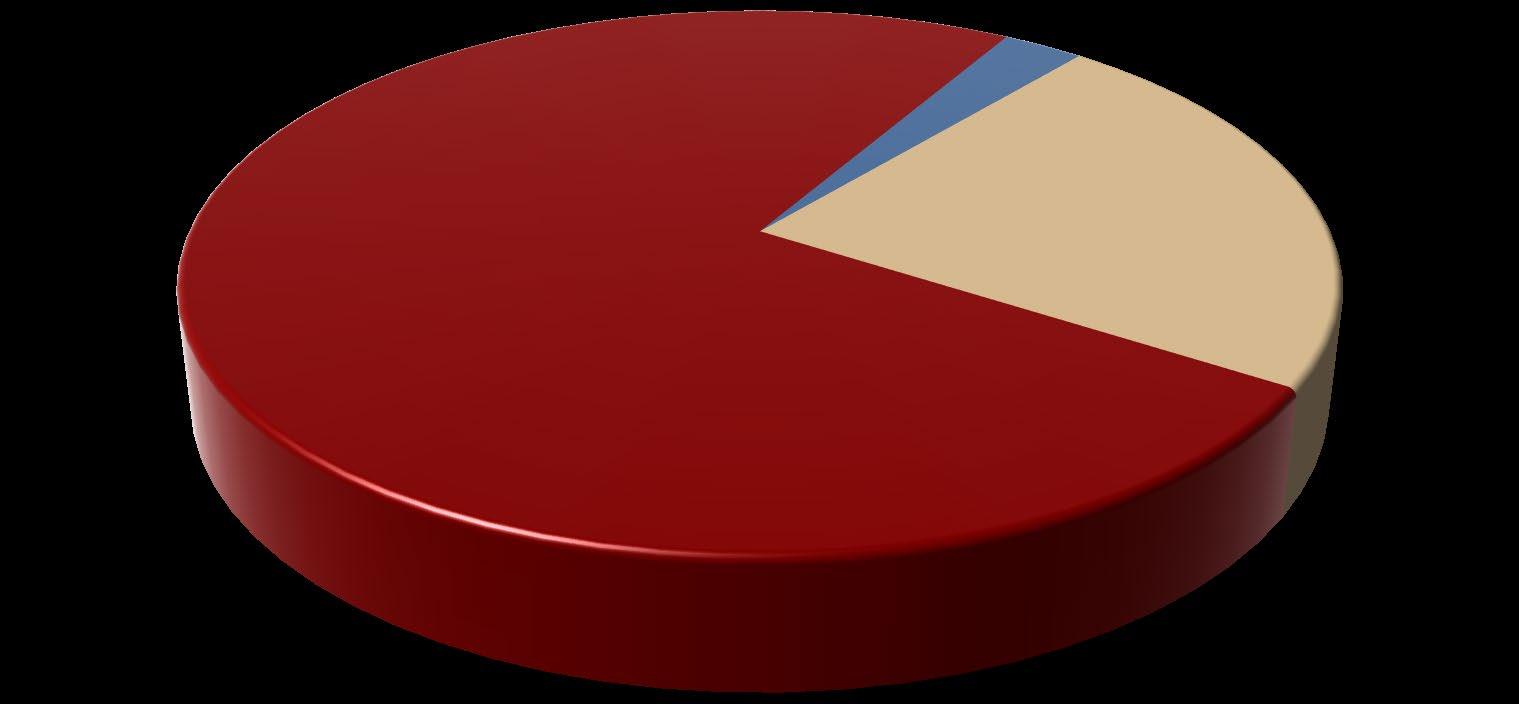
The following chart provides a graphical presentation of College revenues by category for the 2024-25 fiscal year:
Total Revenues 2024-25 Fiscal Year
OVERVIEW OF FINANCIAL STATEMENTS
Pursuant to the Governmental Accounting Standards Board (GASB) Statement No. 35, the College’s financial report consists of three basic financial statements: the statement of net position; the statement of revenues, expenses, and changes in net position; and the statement of cash flows. The financial statements, and notes thereto, encompass the College and its component unit, the Lake-Sumter State College Foundation, Inc. (Foundation). Based on the application of the criteria for determining component units, the Foundation is included within the College reporting entity as a discretely presented component unit. This MD&A focuses on the College, excluding the discretely presented component unit. MD&A information for the Foundation is included in their separately issued audit report.
The Statement of Net Position
The statement of net position reflects the assets, deferred outflows of resources, liabilities, and deferred inflows of resources of the College, using the accrual basis of accounting, and presents the financial position of the College at a specified time. Assets, plus deferred outflows of resources, less liabilities, less deferred inflows of resources, equals net position, which is one indicator of the College’s current financial condition. The changes in net position that occur over time indicate improvement or deterioration in the College’s financial condition.
The following summarizes the College’s assets, deferred outflows of resources, liabilities, deferred inflows of resources, and net position at June 30:
Condensed Statement of Net Position at June 30 (In Thousands)
The Statement of Revenues, Expenses, and Changes in Net Position
The statement of revenues, expenses, and changes in net position presents the College’s revenue and expense activity, categorized as operating and nonoperating. Revenues and expenses are recognized when earned or incurred, regardless of when cash is received or paid.
The following summarizes the College’s activity for the 2024-25 and 2023-24 fiscal years:
Statement of Revenues, Expenses, and Changes in Net Position For the Fiscal Years (In Thousands)
Operating Revenues
GASB Statement No. 35 categorizes revenues as either operating or nonoperating. Operating revenues generally result from exchange transactions where each of the parties to the transaction either gives or receives something of equal or similar value.
The following summarizes the operating revenues by source that were used to fund operating activities for the 2024-25 and 2023-24 fiscal years:
Revenues
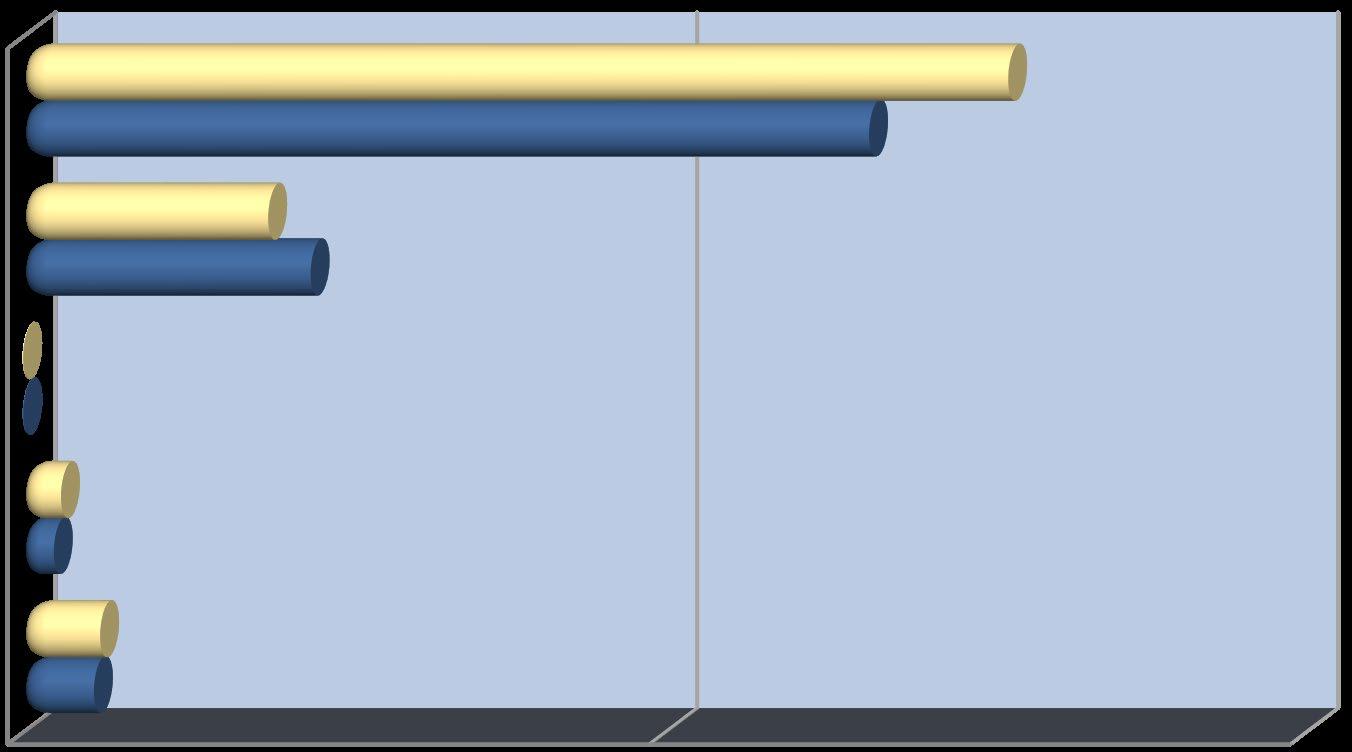
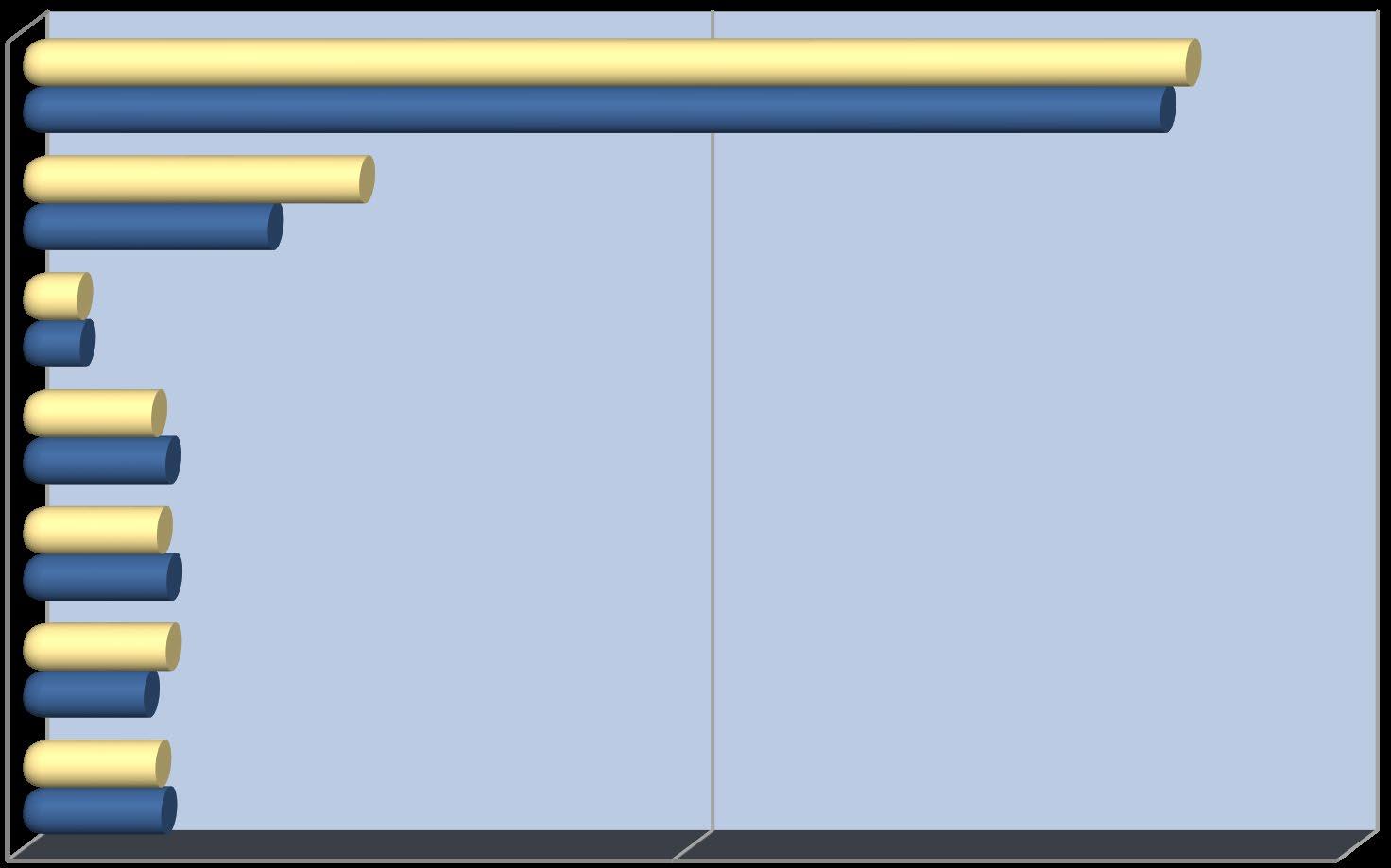
The following chart presents the College’s operating revenues for the 2024-25 and 2023-24 fiscal years:
Operating Revenues
Expenses are categorized as operating or nonoperating. The majority of the College’s expenses are operating expenses as defined by GASB Statement No. 35. GASB gives financial reporting entities the choice of reporting operating expenses in the functional or natural classifications. The College has chosen to report the expenses in their natural classification on the statement of revenues, expenses, and changes in net position and has displayed the functional classification in the notes to financial statem ents.
The following summarizes operating expenses by natural classification for the 2024-25 and 2023-24 fiscal years:
Operating Expenses For the Fiscal Years
(In Thousands)
The following chart presents the College’s operating expenses for the 2024-25 and 2023-24 fiscal years:
Operating Expenses
(In Thousands)
Nonoperating Revenues and Expenses
Certain revenue sources that the College relies on to provide funding for operations, including State noncapital appropriations, Federal and State student financial aid, certain gifts and grants, and investment income, are defined by GASB as nonoperating. Nonoperating expenses include capital financing costs and other costs related to capital assets. The following summarizes the College’s nonoperating revenues and expenses for the 2024-25 and 2023-24 fiscal years:
Nonoperating Revenues (Expenses)
For the Fiscal Years
(In Thousands)
Nonoperating Revenues
Nonoperating revenues and expenses for the 2024-25 fiscal year were $40.9 million, an increase of $4.5 million compared to the 2023-24 fiscal year. The change was primarily the result of an increase in Federal and State student financial aid attributed to the growth in student enrollment
Other Revenues
This category is composed of State capital appropriations and capital grants, contracts, gifts, and fees. The following summarizes the College’s other revenues for the 2024-25 and 2023-24 fiscal years:
Other Revenues
For the Fiscal Years
(In Thousands)
Other revenues for the 2024-25 fiscal year declined by $17.1 million compared to the 2023-24 fiscal year. The change was primarily due to the revenue recognition of the State capital appropriations for Public Education Capital Outlay in the 2023-24 fiscal year.
The Statement of Cash Flows
The statement of cash flows provides information about the College’s financial results by reporting the major sources and uses of cash and cash equivalents. This statement will assist in evaluating the College’s ability to generate net cash flows, its ability to meet its financial obligations as they come due, and its need for external financing. Cash flows from operating activities show the net cash used by the operating activities of the College. Cash flows from capital financing activities include all plant funds and related long-term debt activities. Cash flows from investing activities show the net source and use of cash related to purchasing or selling investments, and earning income on those investments. Cash flows from noncapital financing activities include those activities not covered in other sections.
The following summarizes the College’s cash flows for the 2024-25 and 2023-24 fiscal years:
Condensed Statement of Cash Flows For the Fiscal Years (In Thousands)
Major sources of funds came from State noncapital appropriations ($26.3 million), Federal and State student financial aid ($13.3 million), as well as net student tuition and fees ($9 million) Major uses of funds were for payments to employees and for employee benefits ($31.7 million), and payments to suppliers ($10.9 million).
Changes in cash and cash equivalents were the result of the following factors: Increases in personnel costs due to higher enrollment and increased cost of employee benefits.
CAPITAL ASSETS AND CAPITAL EXPENSES AND COMMITMENTS
Capital Assets
At June 30, 2025, the College had $127.5 million in capital assets, less accumulated depreciation of $55.4 million, for net capital assets of $72.1 million. Depreciation charges for the current fiscal year totaled $3.7 million. The following table summarizes the College’s capital assets, net of accumulated depreciation, at June 30:
Capital Assets, Net at June 30 (In Thousands)
Additional information about the College’s capital assets is presented in the notes to financial statements.
Capital Expenses and Commitments
Major capital commitments through June 30, 2025, were primarily for the construction of the Workforce Development Center. The College’s construction commitments at June 30, 2025, are as follows:
Additional information about the College’s construction commitments is presented in the notes to financial statements.
ECONOMIC FACTORS THAT WILL AFFECT THE FUTURE
The College’s economic condition is closely tied to the appropriation of funds by the State of Florida. Due to increased demand for State resources, only a modest increase in State funding is anticipated in the 2025-26 fiscal year. The Board of Trustees did not increase the tuition rate or fees and is hopeful the State will provide funding to support the services mandated by State statute. Both Lake and Sumter Counties are continuing to experience population and economic growth and as a result, the College anticipates enrollment to continue to steadily grow. The College’s current financial and capital plans indicate that the infusion of additional financial resources from an increase in tuition rates will be necessary to maintain its present level of services
REQUESTS FOR INFORMATION
Questions concerning information provided in the MD&A or other required supplementary information, and financial statements and notes thereto, or requests for additional financial information should be addressed to Michelle D. Matis, Vice President for Finance and Chief Financial Officer, Lake-Sumter State College, 9501 US Hwy 441, Leesburg, Florida 34788
THIS PAGE INTENTIONALLY LEFT BLANK
BASIC FINANCIAL STATEMENTS
LAKE-SUMTER
STATE COLLEGE
A Component Unit of the State of Florida Statement of
Position June 30, 2025
(Continued)
The accompanying notes to financial statements are an integral part of this statement.
THIS PAGE INTENTIONALLY LEFT BLANK
LAKE-SUMTER STATE COLLEGE
A Component Unit of the State of Florida Statement of Revenues, Expenses, and Changes in Net Position
For the Fiscal Year Ended June 30, 2025
(EXPENSES)
LAKE-SUMTER
STATE COLLEGE
Component Unit of the State of Florida Statement of Cash Flows For the Fiscal Year Ended June 30, 2025
The accompanying notes to financial statements are an integral part of this statement.
NOTES TO FINANCIAL STATEMENTS
1. Summary of Significant Accounting Policies
Reporting Entity. The governing body of Lake-Sumter State College, a component unit of the State of Florida, is the College Board of Trustees. The Board of Trustees constitutes a corporation and is composed of seven members appointed by the Governor and confirmed by the Senate. The Board of Trustees is under the general direction and control of the Florida Department of Education, Division of Florida Colleges, and is governed by State law and State Board of Education (SBE) rules. However, the Board of Trustees is directly responsible for the day-to-day operations and control of the College within the framework of applicable State laws and SBE rules. The College serves Lake and Sumter Counties.
Criteria for defining the reporting entity are identified and described in the Governmental Accounting Standards Board’s (GASB) Codification of Governmental Accounting and Financial Reporting Standards, Sections 2100 and 2600. These criteria were used to evaluate potential component units for which the Board of Trustees is financially accountable and other organizations for which the nature and significance of their relationship with the Board of Trustees are such that exclusion would cause the College’s financial statements to be misleading Based on the application of these criteria, the College is a component unit of the State of Florida, and its financial balances and activities are reported in the State’s Annual Comprehensive Financial Report by discrete presentation.
Discretely Presented Component Unit Based on the application of the criteria for determining component units, the Lake-Sumter State College Foundation, Inc. (Foundation), a legally separate entity, is included within the College’s reporting entity as a discretely presented component unit and is governed by a separate board
The Foundation is also a direct-support organization, as defined in Section 1004.70, Florida Statutes, and although legally separate from the College, is financially accountable to the College. The Foundation is managed independently, outside the College’s budgeting process, and its powers generally are vested in a governing board pursuant to various State statutes. The Foundation receives, holds, invests, and administers property, and makes expenditures to or for the benefit of the College.
The Foundation is audited by other auditors pursuant to Section 1004.70(6), Florida Statutes. The Foundation’s audited financial statements are available to the public and can be obtained from Dr. Laura Byrd, Senior Vice President for Institutional Advancement, Lake-Sumter State College, 9501 US Hwy 441, Leesburg, Florida 34788 The financial data reported on the accompanying financial statements was derived from the Foundation’s audited financial statements for the fiscal year ended December 31, 2024
Basis of Presentation. The College’s accounting policies conform with accounting principles generally accepted in the United States of America applicable to public colleges and universities as prescribed by GASB. The National Association of College and University Business Officers (NACUBO) also provides the College with recommendations prescribed in accordance with generally accepted accounting principles promulgated by GASB and the Financial Accounting Standards Board (FASB). GASB allows public colleges various reporting options. The College has elected to report as an entity engaged in only
business-type activities. This election requires the adoption of the accrual basis of accounting and entitywide reporting including the following components:
Management’s Discussion and Analysis
Basic Financial Statements:
o Statement of Net Position
o Statement of Revenues, Expenses, and Changes in Net Position
o Statement of Cash Flows
o Notes to Financial Statements
Other Required Supplementary Information
Measurement Focus and Basis of Accounting. Basis of accounting refers to when revenues, expenses, assets, deferred outflows of resources, liabilities, and deferred inflows of resources are recognized in the accounts and reported in the financial statements. Specifically, it relates to the timing of the measurements made, regardless of the measurement focus applied. The College’s financial statements are presented using the economic resources measurement focus and the accrual basis of accounting. Revenues, expenses, gains, losses, assets, deferred outflows of resources, liabilities, and deferred inflows of resources resulting from exchange and exchange-like transactions are recognized when the exchange takes place. Revenues, expenses, gains, losses, assets, deferred outflows of resources, liabilities, and deferred inflows of resources resulting from nonexchange activities are generally recognized when all applicable eligibility requirements, including time requirements, are met. The College follows GASB standards of accounting and financial reporting.
The College’s component unit uses the economic resources measurement focus and accrual basis of accounting whereby revenues are recognized when earned and expenses are recognized when incurred, and follows GASB standards of accounting and financial reporting.
Significant interdepartmental sales between auxiliary service departments and other institutional departments have been accounted for as reductions of expenses and not revenues of those departments.
The College’s principal operating activity is instruction. Operating revenues and expenses generally include all fiscal transactions directly related to instruction as well as administration, academic support, student services, physical plant operations, and depreciation of capital assets. Nonoperating revenues include State noncapital appropriations, Federal and State student financial aid, gifts and grants, and investment income. Interest on capital asset-related debt is a nonoperating expense. Other revenues generally include revenues for capital construction projects.
The statement of net position is presented in a classified format to distinguish between current and noncurrent assets and liabilities. When both restricted and unrestricted resources are available to fund certain programs, it is the College’s policy to first apply the restricted resources to such programs followed by the use of the unrestricted resources.
The statement of revenues, expenses, and changes in net position is presented by major sources and is reported net of tuition scholarship allowances. Tuition scholarship allowances are the difference between the stated charge for goods and services provided by the College and the amount that is actually paid by
the student or the third party making payment on behalf of the student. The College calculated its scholarship allowance by identifying amounts within its student accounts receivable system paid by student aid for tuition. The College records those amounts as a scholarship allowance against tuition and fee revenue.
The statement of cash flows is presented using the direct method in compliance with GASB Statement No. 9, Reporting Cash Flows of Proprietary and Nonexpendable Trust Funds and Governmental Entities That Use Proprietary Fund Accounting
Cash and Cash Equivalents. The amount reported as cash and cash equivalents consist of cash on hand, cash in demand accounts, and cash with the State Treasury Special Purpose Investment Account (SPIA) and the Florida Cooperative Liquid Assets Securities System (FLCLASS) investment pools. For reporting cash flows, the College considers all highly liquid investments with original maturities of 3 months or less, that are not held solely for income or profit, to be cash equivalents. Under this definition, the College considers amounts invested in the State Treasury SPIA and the FLCLASS investment pools to be cash equivalents.
College cash deposits are held in banks qualified as public depositories under Florida law. All such deposits are insured by the Federal Deposit Insurance Corporation, up to specified limits, or collateralized with securities held in Florida’s multiple financial institution collateral pool required by Chapter 280, Florida Statutes. Cash and cash equivalents that are externally restricted to make debt service payments, maintain sinking or reserve funds, or to purchase or construct capital or other restricted assets are classified as restricted.
At June 30, 2025, the College reported as cash equivalents at fair value $2,213,414 in the State Treasury SPIA investment pool representing ownership of a share of the pool, not the underlying securities (Level 3 inputs, as discussed in Note 4.). Pooled investments with the State Treasury are not registered with the Securities and Exchange Commission. Oversight of the pooled investments with the State Treasury is provided by the Treasury Investment Committee per Section 17.575, Florida Statutes. The authorized investment types are set forth in Section 17.57, Florida Statutes. The State Treasury SPIA investment pool carried a credit rating of AA-f by Standard & Poor’s, had an effective duration of 3.33 years and fair value factor of 1.003 at June 30, 2025. Participants contribute to the State Treasury SPIA investment pool on a dollar basis. These funds are commingled and a fair value of the pool is determined from the individual values of the securities. The fair value of the securities is summed and a total pool fair value is determined. A fair value factor is calculated by dividing the pool’s total fair value by the pool participant’s total cash balance. The fair value factor is the ratio used to determine the fair value of an individual participant’s pool balance. The College relies on policies developed by the State Treasury for managing interest rate risk or credit risk for this investment pool. Disclosures for the State Treasury SPIA investment pool are included in the notes to financial statements of the State’s Annual Comprehensive Financial Report.
At June 30, 2025, the College reported as cash equivalents $425,554 in the FLCLASS investment pool. The FLCLASS Investment Pool was created via an interlocal agreement by and among state public agencies as described in Section 163.01, Florida Statutes. FLCLASS provides Florida governmental entities with a convenient method for investing high-quality, short to medium-term securities carefully
Page 22 December 2025
selected to optimize interest earnings while maximizing safety and liquidity. FLCLASS strives to minimize risk by managing portfolios in a manner that emphasizes the preservation of principal and only invests in securities that are permitted pursuant to the laws of the State of Florida, Florida’s Investment of Local Government Surplus Funds Act, Chapter 218.415, Florida Statutes, and the FLCLASS Investment Policies.
The FLCLASS Investment Pool is permitted to invest in the following: Obligations of the United States Government and its Agencies and Instrumentalities, Floating-Rate and Variable-Rate Obligations, Repurchase Agreements, Corporate Notes and Bonds, Obligations of Banks, Asset-Back Securities, Insurance Contracts, Collateralized Certificates of Deposit, Foreign Securities, Mortgage-Backed Securities, Securities Issued by Other Money Market Funds, and Section 218.415(16) Florida Statutes investments. Most of the investments are in Commercial Paper, Asset-Baked Commercial Paper, Repurchase Agreements, Collateralized Bank Deposits, Treasury Bills, Money Market Funds, and Certificates of Deposit. The FLCLASS received a credit rating of AAAm by Standard & Poor’s Global Ratings, offering same-day liquidity, a $1 Stable NAV and WAM of equal to or less than 60 days.
Withdrawal from FLCLASS requests will be honored on a same day basis. Although the FLCLASS has no limitations on participant withdrawals and each participant has the ability to withdraw 100 percent of its account balance on any business day, the FLCLASS Administrator (with consent of the investment pool’s board) reserves the right to suspend or postpone a participant’s right to withdrawals during a period of crisis in the United States financial markets. The investments in the FLCLASS Investment Pool (consisting primarily of Level 2 inputs, as discussed in Note 4.) are reposted at fair value rather than amortized cost.
Capital Assets
College capital assets consist of land, construction in progress, buildings, other structures and improvements, furniture, machinery, and equipment, leasehold improvements and assets under lease. These assets are capitalized and recorded at cost at the date of acquisition or at acquisition value at the date received in the case of gifts and purchases of State surplus property. Additions, improvements, and other outlays that significantly extend the useful life of an asset are capitalized. Other costs incurred for repairs and maintenance are expensed as incurred. The College has a capitalization threshold of $5,000 for tangible personal property and $25,000 for buildings and other structures and improvements. Depreciation is computed on the straight-line basis over the following estimated useful lives:
Buildings – 40 years
Other Structures and Improvements – 10 years
Furniture, Machinery, and Equipment:
o Computer Equipment – 3 years
o Vehicles, Office Machines, and Educational Equipment – 5 years
o Furniture – 7 years
Leasehold Improvements – 7 years
Assets Under Lease – 3 to 10 years
Noncurrent Liabilities. Noncurrent liabilities include a lease payable, compensated absences payable, other postemployment benefits payable, and net pension liabilities that are not scheduled to be paid within the next fiscal year.
Pensions. For purposes of measuring the net pension liability, deferred outflows of resources and deferred inflows of resources related to pensions, and pension expense, information about the fiduciary net positions of the Florida Retirement System (FRS) defined benefit plan and the Health Insurance Subsidy (HIS) defined benefit plan and additions to/deductions from the FRS and HIS fiduciary net positions have been determined on the same basis as they are reported by the FRS and the HIS plans. Benefit payments (including refunds of employee contributions) are recognized when due and payable in accordance with benefit terms. Investments are reported at fair value.
2. Change in Accounting Principle
The College implemented GASB Statement No. 101, Compensated Absences, which updates the recognition and measurement guidance for compensated absences and requires that liabilities for compensated absences be recognized for (1) leave that has not been used and (2) leave that has been used but not yet paid in cash or settled through noncash means.
3. Deficit Net Position in Individual Funds
The College reported an unrestricted net position which included a deficit in the current funds - unrestricted, as shown below. This deficit can be attributed to the full recognition of long-term liabilities (i.e., compensated absences payable, other postemployment benefits payable, and net pension liabilities) in the current unrestricted funds.
Fund
Net Position
Current Funds - Unrestricted (13,547,978)
4. Investments
The Board of Trustees has adopted a written investment policy providing that surplus funds of the College shall be invested in those institutions and instruments permitted under the provisions of Florida Statutes. Section 218.415(16), Florida Statutes, authorizes the College to invest in the Florida PRIME investment pool administered by the State Board of Administration (SBA); Securities and Exchange Commission registered money market funds with the highest credit quality rating from a nationally recognized rating agency; interest-bearing time deposits and savings accounts in qualified public depositories, as defined by Section 280.02, Florida Statutes; direct obligations of the United States Treasury; obligations of Federal agencies and instrumentalities; securities of, or interests in, certain open-end or closed-end management type investment companies; and other investments approved by the Board of Trustees as authorized by law. SBE Rule 6A-14.0765(3), Florida Administrative Code, provides that College loan, endowment, annuity, and life income funds may also be invested pursuant to Section 215.47, Florida Statutes. Investments authorized by Section 215.47, Florida Statutes, include bonds, notes,
commercial paper, and various other types of investments. The College did not report any investments at June 30, 2025.
Component Unit Investments - Foundation
As of December 31, 2024, the Foundation had the following investments and maturities:
Maturity In Years
The Foundation categorizes the fair measurements of its investments based on the hierarchy established by generally accepted accounting principles. The fair value hierarchy, which has three levels, is based on the valuation inputs used to measure an asset’s fair value: Level 1 inputs are quoted prices in active markets for identical assets; Level 2 inputs are significant other observable inputs; Level 3 inputs are significant unobservable inputs.
Investments held by the Foundation at December 31, 2024, are reported as follows:
Fair Value Measurements Using
The Foundation mitigates risk by utilizing investment managers to build up a portfolio within prudent risk ranges.
The following risks apply to the Foundation’s investment debt securities:
Interest Rate Risk – Interest rate risk is the risk that changes in interest rates will adversely affect the fair value of an investment. The Foundation’s investment policy does not limit investment maturities except with respect to cash equivalents, which must have a maximum average maturity of less than 1 year. The Foundation manages its exposure to fair value losses from increasing interest rates through the segmented time distribution method.
Credit Risk – Credit risk is the risk that an issuer or other counterparty to an investment will not fulfill its obligations. The Foundation’s investment policy limits its fixed income investments to an overall weighted average credit rating of “A” or better by Moody’s or better by Standard & Poor’s. No more than 15 percent of the fixed income portion of the portfolio shall be rated below investment grade (below Baa/BBB). All commercial paper investments must have a minimum rating of A1/P1 by Standard & Poor’s and Moody’s, respectively. Obligations of the United States Government and obligations explicitly guaranteed by the United States Government are not considered to have credit risk. At December 31, 2024, the Foundation’s investments in bonds and notes had credit quality ratings by nationally-recognized rating agencies ranging from Baa1 to Aaa by Moody’s and from BBB- to AAA by Standard & Poor’s.
Custodial Credit Risk – Custodial credit risk is the risk that, in the event of failure of a counterpart to a transaction, the Foundation will not be able to recover the value of investment or collateral securities that are in the possession of an outside party. Lending of the Foundation’s portfolio of securities is expressly prohibited by the Foundation’s investment policy. While the brokerage and trust accounts are in the name of the Foundation, the securities are actually held in the trust department or agent’s name.
Concentration of Credit Risk – Concentration of credit risk is the risk of loss attributed to the magnitude of the Foundation’s investment in a single issuer. The Foundation’s investment policy limits investments in any one company to no more than 7 percent of the equity portion of its portfolio and no more than 10 percent of the fixed income portion of its portfolio, and the equity portion of the portfolio must maintain a minimum of 20 positions, with no position of any one issuer exceeding 8 percent of the manager’s total portfolio. Securities issued by the United States Government or its agencies are not subject to these limitations. The policy also provides that no more than five percent of the portfolio may be invested in commercial paper of any one issuer, and no more than $3,000,000 in bank certificates of deposit of any single issuer, unless the investments are fully collateralized by U.S. Treasury or agency securities. The policy further limits investments in any one economic sector to no more than 10 percent of the equity portion of the portfolio may be in American Depository Receipts, and no more than 60 percent of the fixed income portion of the portfolio may be invested in either corporate or mortgage-backed securities.
5. Accounts Receivable
Accounts receivable represent amounts for student fee deferments, various student services provided by the College, uncollected commissions for food service and vending machine sales, unused credit memos, and contract and grant reimbursements due from third parties. The accounts receivable are reported net of a $211,044 allowance for doubtful accounts.
6. Leases Receivable
Leases receivable represent contracted arrangements for the use of the College’s assets including facility rentals. The terms of the lease arrangements are determined by evaluating the non-cancelable term length, the optional term length, and assessing the likelihood with reasonable certainty the option to extend the term or terminate the agreement may occur. The term lengths are from 1 to 10 years. Lease revenues and interest revenues totaling $752,306 and $47,514, respectively, were received during the 2024-25 fiscal year.
7. Due From Other Governmental Agencies
The amount due from other governmental agencies primarily consists of $17,312,023 of Public Education Capital Outlay allocations due from the State for construction of College facilities.
8. Due From Component Unit
The amount due from component unit totaling $285,130 consists of amounts owed to the College by the Lake-Sumter State College Foundation, Inc. (Foundation) for scholarships and student aid pursuant to an agreement to support the College’s operations. The College’s financial statements are reported for the fiscal year ended June 30, 2025. The College’s component unit financial statements are reported for the fiscal year ended December 31, 2024. Accordingly, amounts reported by the College as due from component unit on the statement of net position do not agree with amounts reported by the component unit as due to the College.
9. Capital Assets
Capital assets activity for the fiscal year ended June 30, 2025, is shown in the following table:
10. Unearned Revenue
Unearned revenue at June 30, 2025, totaling $604,165 includes funds received in advance from the Open Door grant, the Workforce Development Capitalization Incentive Program grant, and the America Rescue Plan Act for the Construction Management Associate in Science degree program.
11. Long-Term Liabilities
Long-term liabilities activity for the fiscal year ended June 30, 2025, is shown in the following table:
Compensated Absences Payable. College employees may accrue annual and sick leave based on length of service, subject to certain limitations regarding the amount that will be paid upon termination. Compensated absences are estimated and accrued as liabilities to the extent that it is more likely than not that the leave will be used for time off or otherwise paid in cash or settled through noncash means. The College reports a liability for the accrued leave; however, State noncapital appropriations fund only the portion of accrued leave that is used or paid in the current fiscal year. Although the College expects the liability to be funded primarily from future appropriations, generally accepted accounting principles do not permit the recording of a receivable in anticipation of future appropriations. At June 30, 2025, the estimated liability for compensated absences, which includes the College’s share of the Florida Retirement System and FICA contributions, totaled $1,994,215. The current portion of the compensated absences liability, $279,138, is the amount expected to be paid in the coming fiscal year and represents historical percentage of leave used applied to total accrued leave liability.
Other Postemployment Benefits Payable. The College follows GASB Statement No. 75, Accounting and Financial Reporting for Postemployment Benefits Other Than Pensions, for other postemployment benefits administered by the Florida College System Risk Management Consortium.
General Information about the OPEB Plan
Plan Description. The Other Postemployment Benefits Plan (OPEB Plan) is a single-employer defined benefit plan administered by the Florida College System Risk Management Consortium that provides OPEB for all employees who satisfy the College’s retirement eligibility provisions. Pursuant to the provisions of Section 112.0801, Florida Statutes, former employees who retire from the College are eligible to participate in the College’s health and hospitalization plan for medical, prescription drug, dental, vision, and life insurance coverage. The College subsidizes the premium rates paid by retirees by allowing them to participate in the OPEB Plan at reduced or blended group (implicitly subsidized) premium rates for both active and retired employees. These rates provide an implicit subsidy for retirees because, on an actuarial basis, their current and future claims are expected to result in higher costs to
the OPEB Plan on average than those of active employees. The College does not offer any explicit subsidies for retiree coverage. Retirees are required to enroll in the Federal Medicare (Medicare) program for their primary coverage as soon as they are eligible. The OPEB Plan contribution requirements and benefit terms of the College and the OPEB Plan members are established and may be amended by action from the Board. No assets are accumulated in a trust that meets the criteria in paragraph 4 of GASB Statement No. 75.
Benefits Provided. The OPEB Plan provides healthcare benefits for retirees and their dependents. The OPEB Plan only provides an implicit subsidy as described above.
Employees Covered by Benefit Terms. At June 30, 2023, the following employees were covered by the benefit terms:
Inactive Employees or Beneficiaries Currently Receiving Benefits 4
Inactive Employees Entitled to But Not Yet Receiving Benefits 5
Active Employees 240
Total OPEB Liability
The College’s total OPEB liability of $204,073, was measured as of June 30, 2024, and was determined by an actuarial valuation as of June 30, 2023
Actuarial Assumptions and Other Inputs. The total OPEB liability in the June 30, 2023, actuarial valuation was determined using the following actuarial assumptions and other inputs, applied to all periods included in the measurement, unless otherwise specified:
Bond Index Rate
percent
percent Healthcare cost trend rates
7.00 percent for 2023, decreasing to an ultimate rate of 4.40 percent by 2034 5.125 percent for 2023 decreasing to an ultimate rate of 4.40 percent by 2027
The discount rate was based on the Bond Buyer General Obligation 20-year Municipal Bond Index.
Mortality rates were based on the PUB-2010 mortality tables, with adjustments for FRS experience and generational mortality improvements using Scale MP-2021.
The demographic actuarial assumptions for retirement, disability incidence, withdrawal, and salary increases used in the June 30, 2023, valuation were based on the results of an actuarial experience study for the period July 1, 2018, through June 30, 2023, adopted by the FRS.
The remaining actuarial assumptions (e.g., initial per capita costs, health care cost trends, rate of plan participation, rates of plan election, etc.) used in the June 30, 2023, valuation were based on a review of recent plan experience done concurrently with the June 30, 2023, valuation.
Changes in the Total OPEB Liability
Changes of assumptions and other inputs since prior measurement date:
Change in mortality, retirement, disability, termination rates
Change in DROP entry assumptions
Change in salary increases
Change in discount rate
Sensitivity of the Total OPEB Liability to Changes in the Discount Rate. The following table presents the total OPEB liability of the College, as well as what the College’s total OPEB liability would be if it were calculated using a discount rate that is 1 percentage point lower (2.93 percent) or 1 percentage point higher (4.93 percent) than the current rate:
Sensitivity of the Total OPEB Liability to Changes in the Healthcare Cost Trend Rates. The following table presents the total OPEB liability of the College, as well as what the College’s total OPEB liability would be if it were calculated using healthcare cost trend rates that are 1 percentage point lower or 1 percentage point higher than the current healthcare cost trend rates:
OPEB Expense and Deferred Outflows of Resources and Deferred Inflows of Resources Related to OPEB
For the fiscal year ended June 30, 2025, the College recognized negative OPEB expense of $39,381 At June 30, 2025, the College reported deferred outflows of resources and deferred inflows of resources related to OPEB from the following sources:
assumptions or other inputs
to the
Of the total amount reported as deferred outflows of resources related to OPEB, $8,771 resulting from benefits paid subsequent to the measurement date and before the end of the fiscal year will be included as a reduction of the total OPEB liability in the fiscal year ending June 30, 2026. Other amounts reported as deferred outflows of resources and deferred inflows of resources related to OPEB will be recognized in OPEB expense as follows:
Ending June 30
Net Pension Liability As a participating employer in the Florida Retirement System (FRS), the College recognizes its proportionate share of the collective net pension liabilities of the FRS cost-sharing multiple-employer defined benefit plans. As of June 30, 2025, the College’s proportionate share of the net pension liabilities totaled $17,095,090. Note 12 includes a complete discussion of defined benefit pension plans.
12. Retirement Plans – Defined Benefit Pension Plans
General Information about the Florida Retirement System (FRS)
The FRS was created in Chapter 121, Florida Statutes, to provide a defined benefit pension plan for participating public employees. The FRS was amended in 1998 to add the Deferred Retirement Option Program (DROP) under the defined benefit plan and amended in 2000 to provide a defined contribution plan alternative to the defined benefit plan for FRS members effective July 1, 2002. This integrated defined contribution pension plan is the FRS Investment Plan. Chapter 121, Florida Statutes, also provides for nonintegrated, optional retirement programs in lieu of the FRS to certain members of the
Senior Management Service Class employed by the State and faculty and specified employees of State colleges. Chapter 112, Florida Statutes, established the HIS Program, a cost-sharing multiple-employer defined benefit pension plan to assist retired members of any State-administered retirement system in paying the costs of health insurance.
Essentially all regular employees of the College are eligible to enroll as members of the State-administered FRS. Provisions relating to the FRS are established by Chapters 121 and 122, Florida Statutes; Chapter 112, Part IV, Florida Statutes; Chapter 238, Florida Statutes; and FRS Rules, Chapter 60S, Florida Administrative Code; wherein eligibility, contributions, and benefits are defined and described in detail. Such provisions may be amended at any time by further action from the Florida Legislature. The FRS is a single retirement system administered by the Florida Department of Management Services, Division of Retirement, and consists of two cost-sharing multiple-employer defined benefit plans and other nonintegrated programs. An annual comprehensive financial report of the FRS, which includes its financial statements, required supplementary information, actuarial report, and other relevant information, is available from the Florida Department of Management Services Web site (www.dms.myflorida.com).
The College’s FRS and HIS pension expense totaled $2,125,458 for the fiscal year ended June 30, 2025.
FRS Pension Plan
Plan Description. The FRS Pension Plan (Plan) is a cost-sharing multiple-employer defined benefit pension plan, with a DROP for eligible employees. The general classes of membership are as follows:
Regular Class – Members of the FRS who do not qualify for membership in the other classes.
Senior Management Service Class – Members in senior management level positions.
Employees enrolled in the Plan prior to July 1, 2011, vest at 6 years of creditable service and employees enrolled in the Plan on or after July 1, 2011, vest at 8 years of creditable service. All vested members, enrolled prior to July 1, 2011, are eligible for normal retirement benefits at age 62 or at any age after 30 years of creditable service. All members enrolled in the Plan on or after July 1, 2011, once vested, are eligible for normal retirement benefits at age 65 or any time after 33 years of creditable service. Employees enrolled in the Plan may include up to 4 years of credit for military service toward creditable service. The Plan also includes an early retirement provision; however, there is a benefit reduction for each year a member retires before his or her normal retirement date. The Plan provides retirement, disability, death benefits, and annual cost-of-living adjustments to eligible participants.
The DROP, subject to provisions of Section 121.091, Florida Statutes, permits employees eligible for normal retirement under the Plan to defer receipt of monthly benefit payments while continuing employment with an FRS-participating employer. An employee may participate in DROP for a period not to exceed 96 months after electing to participate. During the period of DROP participation, deferred monthly benefits are held in the FRS Trust Fund and accrue interest. The net pension liability does not include amounts for DROP participants, as these members are considered retired and are not accruing additional pension benefits.
Benefits Provided Benefits under the Plan are computed on the basis of age and/or years of service, average final compensation, and service credit. Credit for each year of service is expressed as a
percentage of the average final compensation. For members initially enrolled before July 1, 2011, the average final compensation is the average of the 5 highest fiscal years’ earnings; for members initially enrolled on or after July 1, 2011, the average final compensation is the average of the 8 highest fiscal years’ earnings. The total percentage value of the benefit received is determined by calculating the total value of all service, which is based on retirement plan and/or the class to which the member belonged when the service credit was earned. Members are eligible for in-line-of-duty or regular disability and survivors’ benefits. The following table shows the percentage value for each year of service credit earned:
Regular Class members initially enrolled before July 1, 2011
Regular Class members initially
or after July 1, 2011
As provided in Section 121.101, Florida Statutes, if the member was initially enrolled in the Plan before July 1, 2011, and all service credit was accrued before July 1, 2011, the annual cost-of-living adjustment is 3 percent per year. If the member was initially enrolled before July 1, 2011, and has service credit on or after July 1, 2011, there is an individually calculated cost-of-living adjustment. The annual cost-of-living adjustment is a proportion of 3 percent determined by dividing the sum of the pre-July 2011 service credit by the total service credit at retirement multiplied by 3 percent. Plan members initially enrolled on or after July 1, 2011, will not have a cost-of-living adjustment after retirement.
Contributions. The Florida Legislature establishes contribution rates for participating employers and employees. Contribution rates during the 2024-25 fiscal year were:
Reemployed Retiree (2) (2)
(1) Employer rates include 2 percent for the postemployment health insurance subsidy. Also, employer rates, other than for DROP participants, include 0.06 percent for administrative costs of the Investment Plan.
(2) Contribution rates are dependent upon retirement class in which reemployed.
The College’s contributions to the Plan totaled $1,811,964 for the fiscal year ended June 30, 2025. Pension Liabilities, Pension Expense, and Deferred Outflows of Resources and Deferred Inflows of Resources Related to Pensions At June 30, 2025, the College reported a liability of $11,054,455 for its proportionate share of the net pension liability. The net pension liability was measured as of June 30, 2024, and the total pension liability used to calculate the net pension liability was determined by an actuarial valuation as of July 1, 2024. The College’s proportionate share of the net pension liability was based on the College’s 2023-24 fiscal year contributions relative to the total 2023-24 fiscal year contributions of all participating members. At June 30, 2024, the College’s proportionate share was 0.028575779 percent, which was an increase of 0.001539833 from its proportionate share measured as of June 30, 2023.
For the fiscal year ended June 30, 2025, the College recognized pension expense of $1,792,970. In addition, the College reported deferred outflows of resources and deferred inflows of resources related to pensions from the following sources:
Deferred Outflows Deferred Inflows Description of Resources of Resources
between expected and
difference between projected and actual earnings on FRS Plan investments
Changes in proportion and differences between College FRS contributions and proportionate
The deferred outflows of resources totaling $1,811,964, resulting from College contributions subsequent to the measurement date will be recognized as a reduction of the net pension liability in the fiscal year ending June 30, 2026. Other amounts reported as deferred outflows of resources and deferred inflows of resources related to pensions will be recognized in pension expense as follows:
Actuarial Assumptions The total pension liability in the July 1, 2024, actuarial valuation was determined using the following actuarial assumptions, applied to all periods included in the measurement:
Inflation
2.40 percent
Salary increases 3.50 percent, average, including inflation
Investment rate of return 6.70 percent, net of pension plan investment expense, including inflation
Salary increases were changed from 3.25 percent in the previous valuation to 3.50 percent in the current valuation.
Mortality rates were based on the PUB-2010 base table, projected generationally with Scale MP-2021. This is a change from the previous valuation in which the mortality rates were based on the PUB-2010 base table, projected generationally with Scale MP-2018.
The actuarial assumptions used in the July 1, 2024, valuation were based on the results of an actuarial experience study for the period July 1, 2018, through June 30, 2023
The long-term expected rate of return on pension plan investments was not based on historical returns, but instead is based on a forward-looking capital market economic model. The allocation policy’s description of each asset class was used to map the target allocation to the asset classes shown below. Each asset class assumption is based on a consistent set of underlying assumptions, and includes an adjustment for the inflation assumption. The target allocation and best estimates of arithmetic and geometric real rates of return for each major asset class are summarized in the following table:
(1) As outlined in the Plan’s investment policy
Discount Rate The discount rate used to measure the total pension liability was 6.70 percent. The Plan’s fiduciary net position was projected to be available to make all projected future benefit payments of current active and inactive employees. Therefore, the discount rate for calculating the total pension liability is equal to the long-term expected rate of return. The discount rate used in the 2024 valuation was unchanged from the previous valuation
Sensitivity of the College’s Proportionate Share of the Net Pension Liability to Changes in the Discount Rate. The following presents the College’s proportionate share of the net pension liability calculated using the discount rate of 6.70 percent, as well as what the College’s proportionate share of the net pension liability would be if it were calculated using a discount rate that is 1 percentage point lower (5.70 percent) or 1 percentage point higher (7.70 percent) than the current rate:
Pension Plan Fiduciary Net Position. Detailed information about the Plan’s fiduciary net position is available in the separately issued FRS Pension Plan and Other State Administered Systems Annual Comprehensive Financial Report.
HIS Pension Plan
Plan Description. The HIS Pension Plan (HIS Plan) is a cost-sharing multiple-employer defined benefit pension plan established under Section 112.363, Florida Statutes, and may be amended by the Florida Legislature at any time. The benefit is a monthly payment to assist retirees of State-administered retirement systems in paying their health insurance costs and is administered by the Florida Department of Management Services, Division of Retirement.
Benefits Provided For the fiscal year ended June 30, 2025, eligible retirees and beneficiaries received a monthly HIS payment of $7.50 for each year of creditable service completed at the time of retirement with a minimum HIS payment of $45 and a maximum HIS payment of $225 per month, pursuant to Section 112.363, Florida Statutes. To be eligible to receive a HIS benefit, a retiree under a State-administered retirement system must provide proof of health insurance coverage, which can include Medicare.
Contributions The HIS Plan is funded by required contributions from FRS participating employers as set by the Florida Legislature. Employer contributions are a percentage of gross compensation for all active FRS members. For the fiscal year ended June 30, 2025, the contribution rate was 2 percent of payroll pursuant to Section 112.363, Florida Statutes. The College contributed 100 percent of its statutorily required contributions for the current and preceding 3 years. HIS Plan contributions are deposited in a separate trust fund from which HIS payments are authorized. HIS Plan benefits are not guaranteed and are subject to annual legislative appropriation. In the event the legislative appropriation or available funds fail to provide full subsidy benefits to all participants, benefits may be reduced or canceled.
The College’s contributions to the HIS Plan totaled $363,315 for the fiscal year ended June 30, 2025.
Pension Liabilities, Pension Expense, and Deferred Outflows of Resources and Deferred Inflows of Resources Related to Pensions. At June 30, 2025, the College reported a net pension liability of $6,040,635 for its proportionate share of the net pension liability. The current portion of the net pension liability is the College’s proportionate share of benefit payments expected to be paid within 1 year, net of the College’s proportionate share of the HIS Plan’s fiduciary net position available to pay that amount. The net pension liability was measured as of June 30, 2024, and the total pension liability used to calculate the net pension liability was determined by an actuarial valuation as of July 1, 2024. The College’s proportionate share of the net pension liability was based on the College’s 2023-24 fiscal year contributions relative to the total 2023-24 fiscal year contributions of all participating members. At
June 30, 2024, the College’s proportionate share was 0.040268275 percent, which was an increase of 0.004728053 from its proportionate share measured as of June 30, 2023.
For the fiscal year ended June 30, 2025, the College recognized pension expense of $332,488 In addition, the College reported deferred outflows of resources and deferred inflows of resources related to pensions from the following sources:
Differences between expected and actual experience
Net difference between projected and actual earnings on HIS Plan investments -
Changes in proportion and differences between College HIS contributions and proportionate share of HIS contributions
College contributions subsequent to the measurement date
The deferred outflows of resources totaling $363,315, resulting from College contributions subsequent to the measurement date will be recognized as a reduction of the net pension liability in the fiscal year ending June 30, 2026. Other amounts reported as deferred outflows of resources and deferred inflows of resources related to pensions will be recognized in pension expense as follows:
Actuarial Assumptions. The total pension liability in the July 1, 2024, actuarial valuation was determined using the following actuarial assumptions, applied to all periods included in the measurement:
Salary increases were changed from 3.25 percent in the previous valuation to 3.50 percent in the current valuation.
Mortality rates were based on the PUB-2010 base table, projected generationally with Scale MP-2021. This is a change from the previous valuation in which the mortality rates were based on the PUB-2010 base table, projected generationally with Scale MP-2018.
While an experience study had not been completed for the HIS Plan, the actuarial assumptions that determined the total pension liability for the HIS Plan were based on certain results of the most recent experience study for the FRS Plan.
Discount Rate. The discount rate used to measure the total pension liability was 3.93 percent. In general, the discount rate for calculating the total pension liability is equal to the single rate equivalent to discounting at the long-term expected rate of return for benefit payments prior to the projected depletion date. Because the HIS benefit is essentially funded on a pay-as-you-go basis, the depletion date is considered to be immediate, and the single equivalent discount rate is equal to the municipal bond rate selected by the plan sponsor. The Bond Buyer General Obligation 20-Bond Municipal Bond Index was adopted as the applicable municipal bond index. The discount rate changed from 3.65 percent to 3.93 percent.
Sensitivity of the College’s Proportionate Share of the Net Pension Liability to Changes in the Discount Rate The following presents the College’s proportionate share of the net pension liability calculated using the discount rate of 3.93 percent, as well as what the College’s proportionate share of the net pension liability would be if it were calculated using a discount rate that is 1 percentage point lower (2.93 percent) or 1 percentage point higher (4.93 percent) than the current rate:
Pension Plan Fiduciary Net Position. Detailed information about the HIS Plan’s fiduciary net position is available in the separately issued FRS Pension Plan and Other State Administered Systems Annual Comprehensive Financial Report
13. Retirement Plans – Defined Contribution Pension Plans
FRS Investment Plan. The SBA administers the defined contribution plan officially titled the FRS Investment Plan (Investment Plan). The Investment Plan is reported in the SBA’s annual financial statements and in the State’s Annual Comprehensive Financial Report.
As provided in Section 121.4501, Florida Statutes, eligible FRS members may elect to participate in the Investment Plan in lieu of the FRS defined benefit plan. College employees already participating in the State College System Optional Retirement Program or DROP are not eligible to participate in the Investment Plan. Employer and employee contributions are defined by law, but the ultimate benefit depends in part on the performance of investment funds. Service retirement benefits are based upon the value of the member’s account upon retirement. Benefit terms, including contribution requirements, are established and may be amended by the Florida Legislature. The Investment Plan is funded with the same employer and employee contributions rates, that are based on salary and membership class
(Regular Class, Senior Management Service Class, etc.), as the FRS defined benefit plan. Contributions are directed to individual member accounts and the individual members allocate contributions and account balances among various approved investment choices. Costs of administering the Investment Plan, including the FRS Financial Guidance Program, are funded through an employer contribution of 0.06 percent of payroll and by forfeited benefits of Investment Plan members. Allocations to the Investment Plan member accounts during the 2024-25 fiscal year were as follows:
Regular
Senior Management Service
For all membership classes, employees are immediately vested in their own contributions and are vested after 1 year of service for employer contributions and investment earnings regardless of membership class. If an accumulated benefit obligation for service credit originally earned under the FRS Pension Plan is transferred to the Investment Plan, the member must have the years of service required for FRS Pension Plan vesting (including the service credit represented by the transferred funds) to be vested for these funds and the earnings on the funds. Nonvested employer contributions are placed in a suspense account for up to 5 years. If the employee returns to FRS-covered employment within the 5-year period, the employee will regain control over their account. If the employee does not return within the 5-year period, the employee will forfeit the accumulated account balance. For the fiscal year ended June 30, 2025, the information for the amount of forfeitures was unavailable from the SBA; however, management believes that these amounts, if any, would be immaterial to the College.
After termination and applying to receive benefits, the member may roll over vested funds to another qualified plan, structure a periodic payment under the Investment Plan, receive a lump-sum distribution, leave the funds invested for future distribution, or any combination of these options. Disability coverage is provided in which the member may either transfer the account balance to the FRS Pension Plan when approved for disability retirement to receive guaranteed lifetime monthly benefits under the FRS Pension Plan, or remain in the Investment Plan and rely upon that account balance for retirement income.
The College’s Investment Plan pension expense totaled $549,722 for the fiscal year ended June 30, 2025.
State College System Optional Retirement Program Section 1012.875, Florida Statutes, provides for an Optional Retirement Program (Program) for eligible college instructors and administrators. The Program is designed to aid colleges in recruiting employees by offering more portability to employees not expected to remain in the FRS for 8 or more years.
The Program is a defined contribution plan, which provides full and immediate vesting of all contributions submitted to the participating companies on behalf of the participant. Employees in eligible positions can make an irrevocable election to participate in the Program, rather than the FRS, and purchase retirement and death benefits through contracts provided by certain insurance carriers. The employing college contributes 5.15 percent of the participant’s salary to the participant’s account and 4.84 percent to cover the unfunded actuarial liability of the FRS pension plan, for a total of 9.99 percent, and employees
contribute 3 percent of the employee’s salary. Additionally, the employee may contribute, by payroll deduction, an amount not to exceed the percentage contributed by the college to the participant’s annuity account. The contributions are invested in the company or companies selected by the participant to create a fund for the purchase of annuities at retirement.
The College’s contributions to the Program totaled $58,703 and employee contributions totaled $34,196 for the 2024-25 fiscal year.
14. Construction Commitments
The College’s construction commitments at June 30, 2025, were as follows:
(1) Individual projects with a current balance committed of less than $1 million at June 30, 2025.
15. Risk Management Programs
The College is exposed to various risks of loss related to torts; theft of, damage to, and destruction of assets; errors and omissions; injuries to employees; and natural disasters. The College provided coverage for these risks primarily through the Florida College System Risk Management Consortium (Consortium), which was created under authority of Section 1001.64(27), Florida Statutes, by the boards of trustees of the Florida public colleges for the purpose of joining a cooperative effort to develop, implement, and participate in a coordinated Statewide college risk management program. The Consortium is self-sustaining through member assessments (premiums) and purchases excess insurance through commercial companies for claims in excess of specified amounts. Excess insurance from commercial companies provided coverage of up to $100 million to February 28, 2025, and up to $125 million from March 1, 2025, for property insurance. Insurance coverage obtained through the Consortium included fire and extended property, general and automobile liability, workers’ compensation, health, life, and other liability coverage. Settled claims resulting from these risks have not exceeded commercial coverage in any of the past 3 fiscal years.
Beginning in January 2025, College employees may participate in the State group health insurance plan. The State’s risk financing activities associated with State group health insurance, such as risk of loss related to medical and prescription drug claims, are administered through the State Employees Group Health Insurance Trust Fund. It is the practice of the State not to purchase commercial coverage for the risk of loss covered by this Fund. Additional information on the State’s group health insurance plan, including the actuarial report, is available from the Florida Department of Management Services, Division of State Group Insurance.
16. Litigation
The College is involved in several pending and threatened legal actions. The range of potential loss from all such claims and actions, as estimated by the College’s legal counsel and management, should not materially affect the College’s financial position.
17. Functional Distribution of Operating Expenses
The functional classification of an operating expense (instruction, academic support, etc.) is assigned to a department based on the nature of the activity, which represents the material portion of the activity attributable to the department. For example, activities of an academic department for which the primary departmental function is instruction may include some activities other than direct instruction such as public service. However, when the primary mission of the department consists of instructional program elements, all expenses of the department are reported under the instruction classification. The operating expenses on the statement of revenues, expenses, and changes in net position are presented by natural classifications. The following are those same expenses presented in functional classifications as recommended by NACUBO:
Auxiliary Enterprises 285,555
Total Operating Expenses 57,193,175 $
OTHER REQUIRED SUPPLEMENTARY INFORMATION
of Changes in the College’s Total Other Postemployment Benefits Liability and Related Ratios
THIS PAGE INTENTIONALLY LEFT BLANK
Schedule of the College’s Proportionate Share of the Net Pension Liability –Florida Retirement System Pension Plan
(1) The amounts presented for each fiscal year were determined as of June 30.
(2) Covered payroll includes defined benefit plan actives, investment plan members, State college system optional retirement plan members, and members in DROP because total employer contributions are determined on a uniform basis (blended rate) as required by Part III of Chapter 121, Florida Statutes.
Schedule of College Contributions – Florida Retirement System Pension Plan
contribution deficiency (excess)
(1) The amounts presented for each fiscal year were determined as of June 30.
(2) Covered payroll includes defined benefit plan actives, investment plan members, State college system optional retirement plan members, and members in DROP because total employer contributions are determined on a uniform basis (blended rate) as required by Part III of Chapter 121, Florida Statutes.
Schedule of the College’s Proportionate Share of the Net Pension Liability –
Insurance Subsidy Pension Plan
(1) The amounts presented for each fiscal year were determined as of June 30.
(2) Covered payroll includes defined benefit plan actives, investment plan members, and members in DROP
Schedule of College Contributions – Health Insurance Subsidy Pension Plan
(1) The amounts presented for each fiscal year were determined as of June 30.
(2) Covered payroll includes defined benefit plan actives, investment plan members, and members in DROP.
NOTES TO REQUIRED SUPPLEMENTARY INFORMATION
1. Schedule of Changes in the College’s Total Other Postemployment Benefits Liability and Related Ratios
No assets are accumulated in a trust that meets the criteria in paragraph 4 of GASB Statement No. 75 to pay related benefits.
Changes of Assumptions. Since the prior measurement date, changes included the following:
The discount rate increased from 3.65 percent to 3.93 percent due to a change in the municipal Bond Index Rate.
Changes occurred in retirement rates, termination rates, disability rates, mortality rates, DROP entry assumptions, and salary increases.
2. Schedule of Net Pension Liability and Schedule of Contributions –Florida Retirement System Pension Plan
Changes of Assumptions. In 2024, salary increases including inflation increased from 3.25 percent to 3.5 percent and the mortality assumptions were updated.
3. Schedule of Net Pension Liability and Schedule of Contributions –Health Insurance Subsidy Pension Plan
Changes of Assumptions. In 2024, the municipal rate used to determine total pension liability increased from 3.65 percent to 3.93 percent and the demographic and coverage election assumptions were updated
AUDITOR GENERAL
S
TATE OF F LORIDA
Sherrill F. Norman, CPA Auditor General
Claude Denson Pepper Building, Suite G74 111 West Madison Street Tallahassee, Florida 32399-1450
The President of the Senate, the Speaker of the House of Representatives, and the Legislative Auditing Committee
INDEPENDENT AUDITOR’S REPORT ON INTERNAL CONTROL OVER FINANCIAL REPORTING AND ON COMPLIANCE AND OTHER MATTERS
BASED ON AN AUDIT OF FINANCIAL STATEMENTS PERFORMED IN ACCORDANCE WITH GOVERNMENT AUDITING STANDARDS
We have audited, in accordance with the auditing standards generally accepted in the United States of America and the standards applicable to financial audits contained in Government Auditing Standards issued by the Comptroller General of the United States (Government Auditing Standards), the financial statements of the Lake-Sumter State College, a component unit of the State of Florida, and its discretely presented component unit as of and for the fiscal year ended June 30, 2025, and the related notes to the financial statements, which collectively comprise the College’s basic financial statements, and have issued our report thereon dated December 4, 2025, included under the heading INDEPENDENT AUDITOR’S REPORT. Our report includes a reference to other auditors who audited the financial statements of the discretely presented component unit, as described in our report on the College’s financial statements. This report does not include the results of the other auditors’ testing of internal control over financial reporting or compliance and other matters that are reported on separately by those auditors
Report on Internal Control Over Financial Reporting
In planning and performing our audit of the financial statements, we considered the College’s internal control over financial reporting (internal control) as a basis for designing audit procedures that are appropriate in the circumstances for the purpose of expressing our opinions on the financial statements, but not for the purpose of expressing an opinion on the effectiveness of the College’s internal control. Accordingly, we do not express an opinion on the effectiveness of the College’s internal control.
A deficiency in internal control exists when the design or operation of a control does not allow management or employees, in the normal course of performing their assigned functions, to prevent, or detect and correct, misstatements on a timely basis. A material weakness is a deficiency, or a
combination of deficiencies, in internal control such that there is a reasonable possibility that a material misstatement of the College’s financial statements will not be prevented, or detected and corrected, on a timely basis. A significant deficiency is a deficiency, or a combination of deficiencies, in internal control that is less severe than a material weakness, yet important enough to merit attention by those charged with governance.
Our consideration of internal control was for the limited purpose described in the first paragraph of this section and was not designed to identify all deficiencies in internal control that might be material weaknesses or significant deficiencies. Given these limitations, during our audit we did not identify any deficiencies in internal control that we consider to be material weaknesses. However, material weaknesses or significant deficiencies may exist that were not identified.
Report on Compliance and Other Matters
As part of obtaining reasonable assurance about whether the College’s financial statements are free from material misstatement, we performed tests of its compliance with certain provisions of laws, rules, regulations, contracts, and grant agreements, noncompliance with which could have a direct and material effect on the financial statements. However, providing an opinion on compliance with those provisions was not an objective of our audit, and accordingly, we do not express such an opinion. The results of our tests disclosed no instances of noncompliance or other matters that are required to be reported under Government Auditing Standards
We identified a certain additional matter which is described as Finding AM 2025-01 on pages 51 through 54
College’s Response to Finding
Government Auditing Standards requires the auditor to perform limited procedures on the College’s response to the finding identified in our audit and included as College Response on pages 54 and 55 in Finding AM 2025-001 The College’s response was not subjected to the other auditing procedures applied in the audit of the financial statements and, accordingly, we express no opinion on it.
Purpose of this Report
The purpose of this report is solely to describe the scope of our testing of internal control and compliance and the results of that testing, and not to provide an opinion on the effectiveness of the College’s internal control or on compliance. This report is an integral part of an audit performed in accordance with Government Auditing Standards in considering the College’s internal control and compliance. Accordingly, this communication is not suitable for any other purpose.
Respectfully submitted,
Sherrill F. Norman, CPA
Tallahassee, Florida
December 4, 2025
Report No. 2026-059 Page
December 2025
FINDING AND RECOMMENDATION
ADDITIONAL MATTER
CREDIT CARDS
Finding Number 2025-001
Opinion Unit Lake Sumter State College
Financial Statements
Account Title Not Applicable
Adjustment Amounts Not Applicable
Statistically Valid Sample Not Applicable
Prior Year Finding No
Finding
Criteria
College controls over credit card charges were deficient. As a result, an employee was able to incur unauthorized College credit card charges totaling $64,000 without timely detection.
Section 1010.01(5), Florida Statutes, requires each college to establish and maintain internal controls designed to, among other things, prevent and detect fraud, waste, and abuse. Effective controls over administration of credit card programs promote accountability and support economical and efficient operations To promote and support such operations, controls should ensure that the responsibilities for obtaining new credit cards, increasing credit card charge limits, incurring credit card charges, recording the charges into the accounting system, and monitoring the propriety of those charges are effectively separated. College Administrative Procedures 6-09, Requisition/Purchase Procedures and 6-27, Assignment of Credit Cards for Business Use, established the College Credit Card Program and allows goods and services to be procured with College credit cards without using the traditional purchasing process. The College Credit Card Procurement Manual (Manual) establishes cardholder responsibilities, limits College credit card use to official business, and provides that employees found guilty of fraudulent use will be subject to dismissal and may be subject to legal action Additionally, the Manual requires:
Cardholders to verify that vendor receipts supporting their credit card charges agree with bank credit card billing statements and to enter credit card charges into the College credit card system, which generates credit card expense reports. Cardholders must then submit a copy of their credit card billing statement, receipts, and credit card expense report into the College credit card system. College administration indicated that cardholder supervisors did not receive information about their subordinates’ credit card charges directly from the bank but are prompted to review charges for approval when expense reports are submitted into the credit card system or when prompted by the Purchasing Department
The Purchasing Department, consisting of only the Director of Procurement, to routinely conduct reviews of monthly cardholder receipts and bank credit card billing statements received directly from the bank, reconcile cardholder expense reports to the monthly bank credit card billing statements, and record all credit card transactions into the accounting system. According to College management, the Purchasing Department is responsible for sending notices to cardholders and cardholder supervisors when the Purchasing Department determines cardholders did not promptly submit their credit card expense reports into the College credit card system.
Condition
Controller Office staff to conduct periodic audits of credit card transactions. The audits include, for example, monitoring card use and charges for appropriateness, compliance with College regulations and Manual requirements, and sales and use tax charges.
According to College records for the 2024-25 fiscal year, 49 employees had College credit cards and incurred credit card expenses totaling $693,143, representing 5 percent of the College’s service, supplies, utilities, and communications expenses. Our discussions with College personnel and examination of College records disclosed several deficiencies in the controls over College credit card use. Specifically:
Without submittal of monthly expense reports into the credit card system or a notice from the Purchasing Department, cardholder supervisors were not notified of record that charges were made and needed their review and approval.
According to College management, the Chief Financial Officer (CFO) assigned the three credit card administrators with responsibilities to obtain new cards from the bank based on College departmental requests and to notify the bank about changes in credit card charge limits. However, the Manual did not:
o Specify credit card administrator responsibilities or the basis for the number of credit card administrator assignments.
o Effectively address the separation of responsibilities for obtaining new credit cards, increasing credit card charge limits, incurring credit card charges, recording the charges in the College accounting system, and monitoring the propriety of the charges.
o Require credit card charges to be promptly recorded into the College accounting system.
o Require the CFO or other College supervisory personnel to document verification that credit card billing statements were promptly and properly reconciled to College credit card receipts and the College accounting records.
In September 2024, the Director of Procurement, who had a College credit card, was assigned credit card administrator responsibilities. With these new responsibilities and his existing Purchasing Department duties, the Director of Procurement/Credit Card Administrator (Director/Administrator) was assigned incompatible duties that allowed him to, for example, increase his credit card charge limit and incur unauthorized credit card charges without timely detection.
Our examination of College records supporting five selected journal entries for credit card purchases totaling $365,936 during the period August 2024 through March 2025 disclosed that the Director/Administrator did not record four entries totaling $310,589 into the College accounting system until 76 to 101 days after the credit card transaction dates. College records demonstrated that credit card charges incurred by College personnel other than the Director/Administrator were independently approved and that credit card billing statements were received directly from the bank and reconciled to related support.
Neither the CFO nor other College personnel documented verification that credit card billing statements received directly from the bank were promptly and properly reconciled to the College accounting records.
Cause
Effect
Recommendation
Contrary to the Manual, the Controller Office did not conduct any audits of College credit card transactions during July 2024 through July 2025. College policies and procedures were not always followed and did not always provide effective controls over the accountability for and use of College credit cards.
Deficiencies in controls over College credit card charges increase the risk for credit card errors and fraud to occur without prompt detection. According to College records:
The Director/Administrator passed away in July 2025 and another College employee was assigned his responsibilities. As a result of the reassignment of responsibilities, the College discovered that the Director/Administrator had incurred unauthorized credit card charges, which had previously gone undetected, and subsequently initiated an investigation. The College determined through investigation that, during the period November 2024 to July 2025, the Director/Administrator:
o Increased his credit card purchasing limit from $5,000 to $14,500 without CFO approval.
o Incurred unauthorized College credit card charges totaling $64,000 without supervisory approval including, for example, charges totaling $35,900 to online shopping vendors and $25,300 for personal finance payments.
o Forged bank credit card billing statements to misrepresent the charges and did not enter his expense reports into the College credit card system.
o Did not promptly record credit card charges into the College accounting system.
o Incurred additional credit card charges totaling $11,000 for College purposes without independent approval or entering expense reports into the College credit card system.
The investigation results were reported to the Lake County Sheriff’s Office and, in August 2025, the Sheriff’s Office determined that the billing statements were consistent with the College investigation, acknowledged that the suspect was deceased, and closed the case.
As of October 2025, College personnel were working to prepare an insurance claim to recover the alleged $64,000 fraudulent amount.
The College should enhance controls over the accountability for and use of College credit cards. Such enhancements should include:
Establishment of a mechanism to promptly notify cardholder supervisors when their subordinates incur credit card charges and maintenance of records demonstrating review and approval of all charges and related support.
Revisions to the Manual to:
o Define credit card administrator duties and provide the basis for the number of credit card administrator assignments.
o Ensure that the responsibilities for obtaining new credit cards, increasing credit card charge limits, incurring credit card charges, recording the charges in the College accounting system, and monitoring the propriety of the charges are effectively separated.
College Response
o Require credit card charges to be promptly recorded into the College accounting system.
o Require the CFO or other College supervisory personnel to document verification that credit card billing statements are promptly and properly reconciled to the College accounting records.
In addition, Controller Office staff should regularly conduct and document College credit card transaction audits as required by the Manual. The College should also continue efforts to recover through the College insurance carrier amounts lost due to fraud.
Lake-Sumter State College is in receipt of the preliminary and tentative finding and recommendations from the recently completed financial audit. We have reviewed the initial report and submit the following response.
Finding 2025-001: College controls over credit card charges were deficient.
The College agrees with the finding and has implemented changes to improve controls. The Credit Card Procurement Manual (Manual) has been updated to clarify the credit card administrator responsibilities, define which staff are administrators, and a breakdown of their specific responsibilities. Card administrator responsibilities are spread out so that no one administrator can circumvent processes. Card administrators are: CFO, Controller, Director of Purchasing, and the Accounts Payable Manager.
The Director of Purchasing is still a credit card administrator but no longer oversees the credit card expense report reconciliation process. That is now managed by the Accounts Payable Manager. The Director of Purchasing can authorize new users and temporary increases to credit limits only after prior approval from the CFO has been obtained. Additionally, the Director of Purchasing is responsible for deactivating or placing holds on cards in cases of employee separation, reported loss or stolen cards, or non-compliance. Annually, the Director of Purchasing will review the total list of issued cardholders and associated activity and recommends to CFO to deactivate cards with little to no activity.
The Director of Purchasing has oversight of employee credit card training and is responsible for reviewing the manual and training materials periodically to ensure they are still aligned with the State Purchasing Guidelines and College policies. A Canvas course for Credit card training will be required for all cardholders on an annual basis and no longer just biennially.
The Accounts Payable Manager monitors the credit card expense report submissions in Workflow and prepares a reconciled schedule for the accounting journal entry. Each report received in Workflow will be reconciled to the statement activity. The Accounts Payable Manager will verify that each report includes complete supporting documentation, that expense details match the statement activity, and that the expense account code used on each line item is accurate. The Accounts Payable Manager follows up with card holders for late or missing reports. First notice is a reminder to the cardholder, second notice includes the manager, and third notice includes the appropriate VP and the CFO. Specific deadlines for submitting reports are outlined in the Manual. The Accounts Payable Manager does not have a credit card.
The CFO will review the reconciled schedule for the accounting journal entry and credit card expense report submissions with a comparison to the corporate account statement. The CFO downloads a copy of the corporate statement directly from the bank portal to compare to the reconciled schedule for the accounting journal entry and backup to verify the validity of the statement.
The Controller will authorize a member of the Accounting staff to prepare and upload the reconciled schedule for the accounting journal entry once the Accounts Payable Manager and CFO have completed their review. The CFO will provide the final approval. The Controller will conduct random audits of cardholder statements on a quarterly basis, and the results will be shared with the CFO, the cardholder and their supervisor. The Controller is a backup card administrator in the absence of the Director of Purchasing or the Accounts Payable Manager. The Controller does not have a credit card.
While the bank does not require a second approver for a card administrator to make changes to their own credit limit, the College has instructed the bank to not allow an administrator to make a change to the credit limit of their own account. Another layer of oversight added by the College is to require approval from two card administrators to authorize a new card from the bank.
The Controller and CFO recently conducted an internal audit of a recent corporate statement and all transactions by cardholders to verify accuracy. Communications are being sent to each cardholder and their supervisor to make them aware of any actions needed. Random internal audits will continue by the Controller on a quarterly basis.
The CFO continues to work with the insurance company on the claim filing process to recover the amounts lost, less the deductible.
Lake-Sumter State College is committed to improving processes and procedures to improve the efficient delivery of services and instruction to our students and other stakeholders.