Bucks shedding early
By Nate Skinner
For Lone Star outdoor newS
Wildlife managers and hunters across the state have reported they are already starting to see bucks shedding their antlers. In many cases, this has occurred earlier than in previous years.
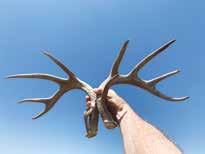
Miguel Morales, the ranch foreman at the 501 Ranch near Uvalde, said he usually sees one or two bucks shed their antlers by early February, but has already found matching sheds for five different bucks.
“That’s only the one’s that we know of, as there could be more bucks that have already shed their antlers,” Morales said. “The first buck we saw shed its antlers this year dropped them back around January 9. Most of the sheds that we have found are from younger deer.”
Morales has also heard from buddies that hunt or manage properties in the area who have seen more bucks that have already
Sheepshead on a feed at jetties
By Robert Sloan For Lone Star outdoor newS

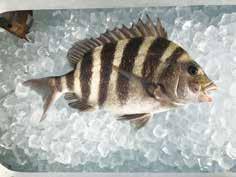
The sheepshead may not be the most glamorous fish in the Gulf of Mexico, however they put up a good fight, are plentiful along the jetties and taste pretty good when grilled or fried.
“You can’t beat them,” said Robert Sanders who, along with his wife, specifically tar-
get sheepshead during the win ter months. “Right now, there are lots of them along the Port O’Connor jetties and in some of the canals leading into ma rinas and subdivisions. Most of the time we’ll catch them under corks fishing about 4 feet deep. The best baits are live shrimp. But right now, there aren’t too many live shrimp to be had, so we just use dead shrimp.”
Goose hunters finish strong out west
Conservation snow goose season underway
By Nate Skinner
For Lone Star outdoor newS
The regular goose season in Texas’ West Zone extended through the first week of February, and those who made it out west were rewarded.
Crooked Wing Outfitters’ Jake Henriksen said there were large concentrations of lesser Canada geese and snow geese in the Lubbock area, along with a fair number of specklebellies, to close out the final week of the regular goose season.
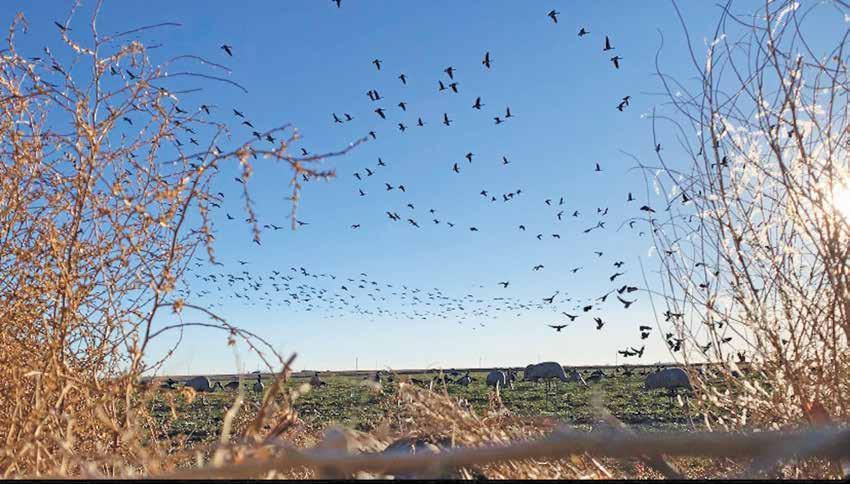
“We were still consistently landing big wads of Canadas, with some specks mixed in, through the last day of our goose season which ended on February 5,” Henriksen said. “The birds were mainly hitting wheat and milo fields, but we did have some good hunts over nut-bearing crops as well.”
During the last week, Henriksen said the birds seemed to become a little more relaxed with the decrease in hunting pressure after duck and sandhill crane seasons closed.
“The geese were definitely feeding hard with the cold weather that greeted us at the beginning of the month,” he said. “This also made for more consistent hunting, as the weather forced them to hit the fields.”
Small spreads of full-body decoys helped
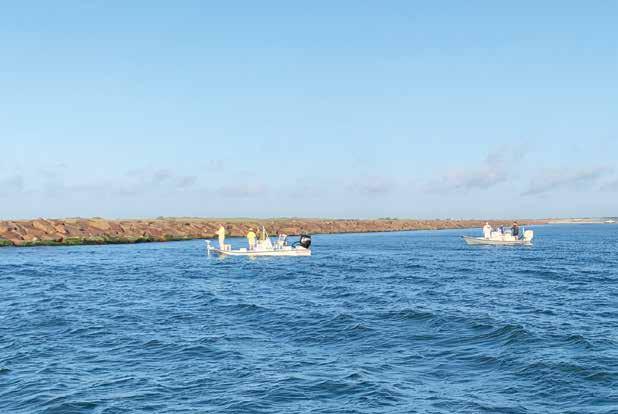
fool most of the birds.
“With the light goose conservation season upon us now, we still have huntable concentrations of snows around,” Henriksen explained. “The cold weather has really kept large numbers of birds in our area.”
Panhandle outfitter Jacob Salmon, of Full Throttle Outdoors, said cold weather made for excellent goose hunting to end the season.
“Snow goose numbers are looking good, which should bode well for some great conservation hunts as well,” Salmon said.
Along the middle and upper Texas coastal prairies, waterfowl hunters desiring to extend their season have been enjoying some of the best conservation season snow goose
February 10, 2023 Texas’ Largest Hunting and Fishing Newspaper Since 2004 Time Sensitive Material • Deliver ASAP PRSRT STD US POSTAGE PAID DALLAS, TX PERMIT 3814 FISHING INSIDE CONTENTS HUNTING Freshwater Fishing Report Page 10 Game Warden Blotter Page 12 Saltwater Fishing Report Page 13 Heroes Page 14 Sun, Moon & Tides Page 16 Datebook Page 18 Classifieds Page 19 Sharing the bounty (P. 4) Hunter shares adventures. Quail spotty, better south (P. 4) Late hatch in South Texas Adjusting goals (P. 8) Big speckled trout there, fewer giants. White bass run begins (P. 9) Sabine River action. Please turn to page 13
turn to page 6 Please turn to page 6
Please
Hunters and landowners are reporting bucks shedding their antlers earlier than normal. According to biologists, it could be a result of poor range conditions from recurring drought. Photo by Lone Star Outdoor News.
West Texas hunters enjoyed the final weeks of the season, with good numbers of Canadas, snow geese and specklebellies. Photo by Jake Henriksen.
Jetty anglers and winter Texans are fans of catching and eating sheepshead, usually caught on live or dead shrimp. Photos by Lone Star Outdoor News.
WEAPON SIGHT

The Contractor Series
THERMAL WEAPON SIGHTS BY ARMASIGHT
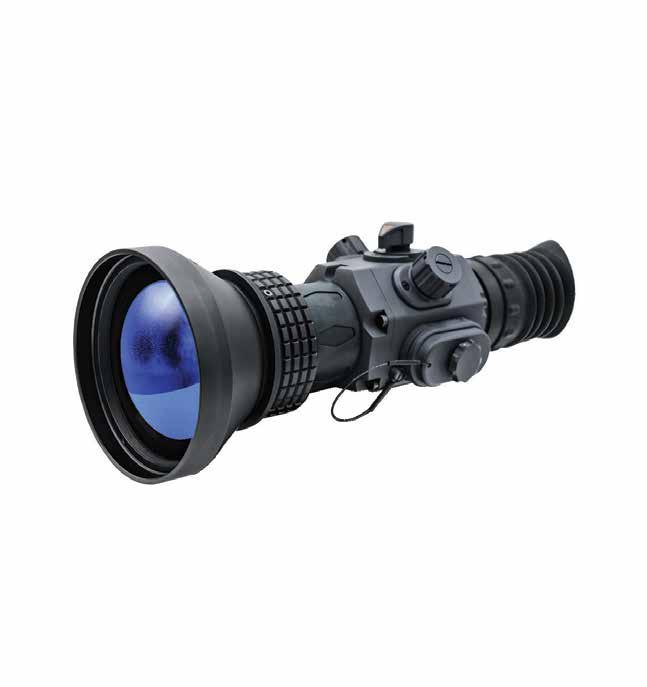


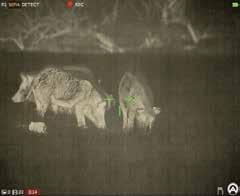
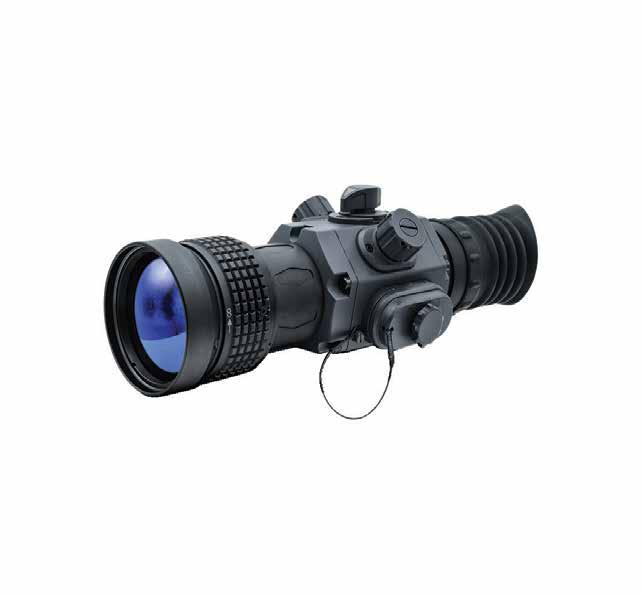
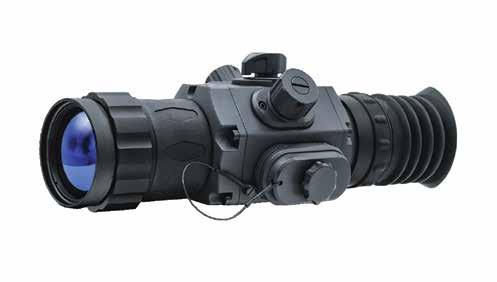
The Contractor Thermal Weapon Sight series is built around our proprietary ArmaCORE 12 Micron Sensor and combines image processing, wireless communication interface, GPS, and internal memory in a single housing that yields a 40% reduction in size and 25% reduction in weight. This translates to pixel size reduction and increased resolution. All combined, the ArmaCORE features represent a 35% reduction in power consumption, allowing the units to run continuously for up to four hours on two CR123 batteries.
armasight.com
Contractor 640 2.3–9.2 × 35mm THERMAL
FOR THE FIELD OR BACKCOUNTRY



WHATEVER YOUR ADVENTURE IS, WE'VE GOT YOU COVERED.

2 1 1 4 U S - 8 4 G O L D T H W A I T E , T X 7 6 8 4 4 ( 8 5 5 ) 6 4 8 - 3 3 4 1
F I N D Y O U R N E W R I D E A T H O F F P A U I R
Quail hunting fair down south
Lone Star outdoor newS
Some quail hunters in the Rolling Plains have shut down hunting for the season, not wanting to put any more pressure on the low numbers of birds.
Joe Crafton hunted in January in Stonewall County on a ranch managed for quail. He reported six coveys in five hours of hunting.
When the freeze and light snowfall came, Crafton said the birds hit the feeders.
Crafton also examines harvested birds for eyeworms, and said only 12 percent had visible eyeworm, the lowest total he has measured in the past five years.
Jay Stine hunted in South Texas near Hebbronville the first weekend of February and said while bird numbers were down from last year, the hunting was still good in certain areas.
“We found 16 coveys on Saturday but only seven on Sunday,” he said. “We quit at lunch Sunday because it got too hot — it got hot fast even after the big cold front.”
Stine said last year, about 25 coveys per day was the average on his hunts.
“There seems to be about 75 percent of the bird numbers this year when compared with last year,” he said. “But there were lots of young birds, so they had a good late hatch. A few of the birds barely got off the ground and several of the birds were real small.”
Century-old gun store carries the best
By Mark Hahn
For Lone Star outdoor newS
Thirty miles west of Houston, a hallowed legacy lives on and well at family owned Joseph’s Vintage Guns. Stepping into the Richmond building becomes a lifetime memory thanks to the lively walls filled with African game. Carefully cu-

Surprise hunt for new hunter
By Craig Nyhus Lone Star outdoor newS
James Jeanes has been sharing his love of hunting with others, especially new hunters, for decades. This winter, he took a friend and new hunter on adventures sure to kick-start a lifelong passion.
“I met JP (John Paul St. Charles) at a winery in Lakewood Village,” Jeanes said. “It’s the same place where I met my wife, Susie Kitchen, about 10 years ago. She knows the owners and JP started working there.”
As he got to know St. Charles, Jeanes assumed he had some hunting experience since his father owned some land and he was knowledgeable about cattle and working the land.
“But his father never hunted,” Jeanes said. “No one ever taught JP how to
A fine vintage
rated through experience, Joseph’s captures the essence of an international sportsman. With more than four generations of history, Joseph’s is one of Texas’ finest specialty shops offering a unique place to enjoy a coffee, a cigar or even an English shotgun.
Joseph’s got its start in 1900 after Mary Joseph, a determined widow with five children, moved to Richmond from Lebanon. Upon her arrival she began
selling goods out of her wagon across the county, creating the foundation for the business. In 1919, Mary Joseph’s eldest son, Emil, opened the doors to the brick-and-mortar store on Morton Street. Today, Joseph’s is in the care of Michael Joseph, Mary’s great-grandson, and his wife, Kathryn. Succeeding his father Richard and his grandfather Emil, Michael has overseen the shop since 2011 and has made Joseph’s his own.
hunt.”
Jeanes sought out to correct that.
“I invited him to the ranch (the Promise Land Ranch in Throckmorton County),” he said. “But JP always worked weekends. Finally, after nearly 10 years at about 30 years old, he came to the ranch in December.”
On the trip, St. Charles shot his first deer and received instructions on gutting, quartering and deboning the deer. He also made his own European mount of the 8-pointer. There was more, though.
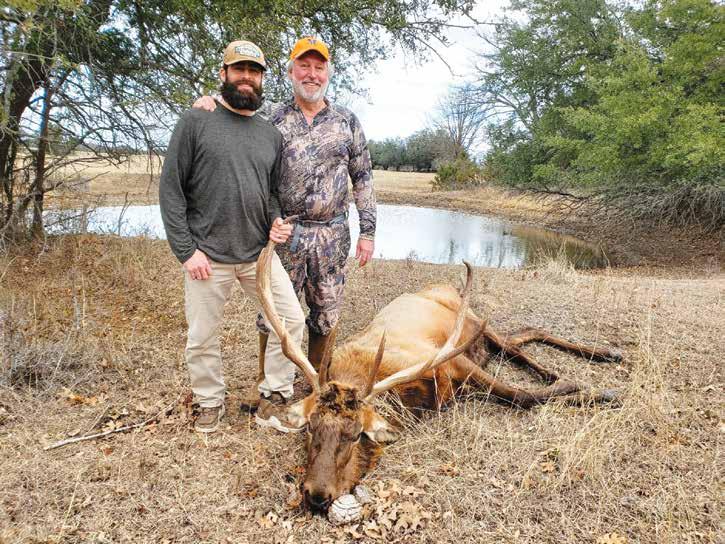
“I won the elk hunt at the Lone Star Outdoor News Foundation Wild Game Night in October,” Jeanes said. “I won a raffle, but with as many tickets as I bought, I almost could have bought it.”
After the Dallas Safari Club convention in January, where Jeanes has
Michael’s penchant for English shooting and passion for Africa are the heart of the store, inspiring guests to dream about new adventures. In fact, it’s Michael’s own adventures and firsthand experience that make Joseph’s special. As regulars to England and Africa, the Josephs have deep knowledge of shooting driven pheasant and partridge in the countryside of England and dangerous game in Africa. Their expertise is
been the volunteer in charge of raffles for more than 20 years, it was time to go on the elk hunt at the Riata Ranch near Glen Rose. And Jeanes invited St. Charles.
“He thought he was going to observe and learn how to butcher the elk ourselves,” Jeanes said. “I knew I was going to let him shoot it — but I didn’t tell him.”
The elk hunt was a success, as the bull was located by Roy Washburn, Riata Ranch’s owner.
“JP made a great shot,” Jeanes said.
“He dropped him and then had the biggest grin on his face — and he was shaking. The bull weighed 700 pounds.”
After the elk adventure, it was back to the ranch for the last day of duck season.
“He shot his first duck — a bluebill,”
Page 4 February 10, 2023 LoneOStar Outdoor News LSONews com
turn to page 7
HUNTING Please turn to page 7 Please
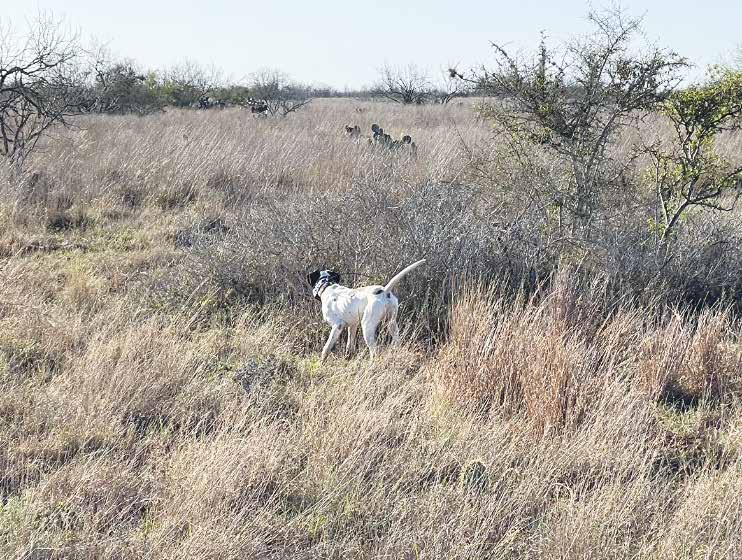
South Texas hunters and their dogs found fair numbers of bobwhites coveys. While in the Rolling Plains, the birds are hard to find. Photo by Jay Stine.
James Jeanes, right, won a raffle elk hunt at the Lone Star Outdoor News Foundation Wild Game Night and surprised JP St. Charles with the hunt. Photo from James Jeanes.
Kathryn and Michael Joseph operate Joseph’s Vintage Guns, in business in Richmond since 1919. Photo from Joseph’s Vintage Guns.
Outdoor clothing for kids
Protective and stylish styles
By Lili Keys Lone Star outdoor n
Have you ever struggled to find good-looking, outdoorsy clothes for your children? You might re member your own struggles of finding clothes to fit your outdoor lifestyle as a kid. Maybe you had to wear hand-me-down camo T-shirts or pick out clothes from the boy’s section.
Amanda Lundgren, of Aledo, knew that feeling all too well. When it came time to clothe her own children in outfits appropriate for their outdoor lifestyle, the op tions were limited, so she decided to create her own line of clothing.
“It all started before I even had kids of my own,” she said. “A lot of my friends were having kids, mainly boys, and we were all com plaining about the options for boys clothes. When I found out that I was pregnant with twins, one girl and one boy, I thought, ‘where can I buy clothes like my husband wears? Where were kid-size Simms fishing shirts or lightweight button downs for the ranch?’”
The Lundgrens are an active outdoor Texas family.
“My family has a ranch and we spend a lot of time outdoors,” Lundgren said. “If we aren’t at home, 90 percent of the time we are at the ranch.”

When the twins were about 6 months old, the family went on a trip to the lake. That’s where frustration with options pushed Lundgren into designing her own clothing line, calling it BlueQuail Clothing Co.
“The thought of limited options and limited options for sun protection of my babies kept festering in my brain; I couldn’t let it go,” she said. “Pretty much by the end of that weekend, I had a name and everything for the business.”
Sun protection is very important for children and skin cancer runs in Lundgren’s family, so designing functional and protective clothing was important. All BlueQuail designs are stain resistant, UPF50+ rated fabrics, so you can rest easy knowing your little one will be protected from harmful UV rays and stains.
“We want our kids to spend as much time as possible outdoors, hunting and fishing and knowing they are protected from the sun and dressed in cute everyday outfits,” she said.
When it came to the name, Lundgren was researching animals and came across the blue quail. Originally from Midland, she was familiar with hunting for the game bird. In her research, she found quail will protect one another’s covey whether the chick is theirs or not.
“When reading that, I thought to myself, there it is,” she said. “That’s what I want to do- protect the skin of the youth.”
Lundgren’s brother is a graphic designer and created the company’s logo. Sourcing the materials and the right manufacturer took time, as Lundgren wanted to get it right. After some time, the company was up and running. They sell online and in select children’s boutiques, sporting goods stores and lodges across the state and beyond.

Being a hunting family, friends encouraged Lundgren to get involved with the Dallas Safari Club, where their booth stayed crowded during the 2023 convention in January.

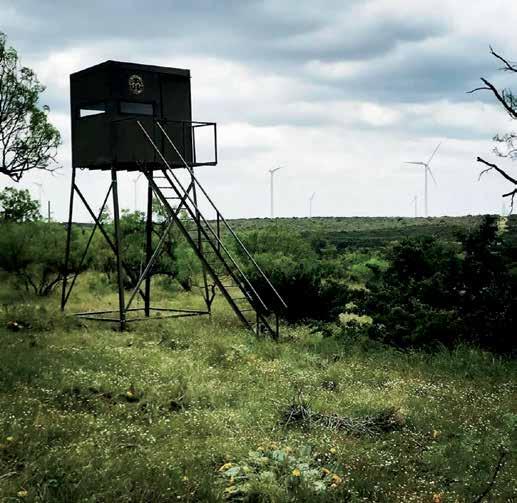
“Our sales were really taking off in the children’s boutiques, but we weren’t really reaching who we though our real customer base was until we got involved with DSC,” Lundgren said. “I was able to get in front of the people who I created this line for, the outdoor-loving community.”
TEXAS RIO GRANDE SPRING TURKEY HUNT

Whether you’re looking to take your very first turkey or need to check one off your Grand Slam,Turkey Hunt Co has got a gobbler for you!
We are committed to providing you with the highest quality turkey hunting experience and can offer you some of the finest Rio Grande spring turkey hunting trips in the country, all on our private hunting ranches across the Great State of Texas!
DATES: April 1 to May 14 (North Zone)

March 18 to April 30 (South Zone)
CALL OR EMAIL:
Jonathan Freeman
806.786.4976
Scott Sewall
806.335.0051
info@turkeyhuntco.com


LSONews com LoneOStar Outdoor News February 10, 2023 Page 5 (361) 774-2442 O U T F I T T E R S BLINDS & FEEDERS, DEER CORN, PROTEIN, ACCESSORIES, DELIVERY & SETUP AVAILABLE V I S I T C 4 R A N C H O U T F I T T E R S I N C O R P U S C H R I S T I 5 0 0 1 A l l e n P l a c e C o r p u s C h r i s t i , T X 7 8 4 1 1
1/23/2 - WI
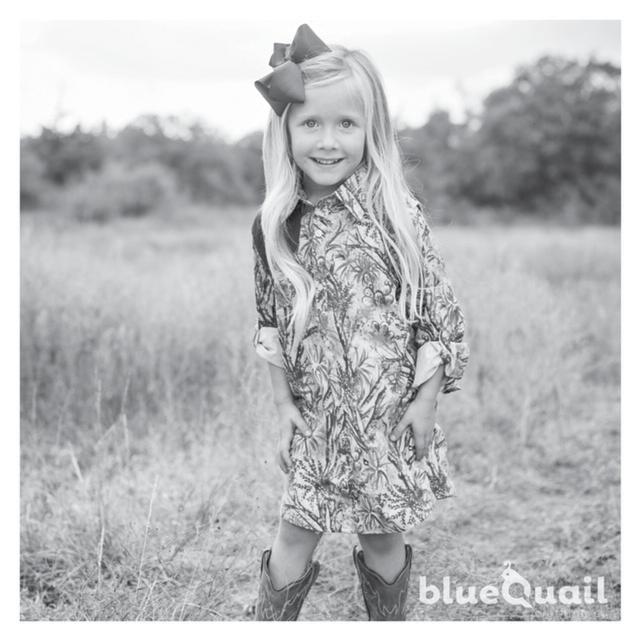
Amanda Lundgren was frustrated with outdoor clothing options for children, so she created her own line of clothing that looked good but also protected kids from the sun. Photo by BlueQuail Clothing Co.
Good numbers for geese
Continued from page 1 hunts in many years.
El Campo guide



Chris Slemp said El Campo, Eagle Lake and the surrounding regions have had several impressive concentrations of geese since the extended conservation season began.
“Most of our hunts have produced an average of 20 to 25 geese, but we have had some hunts where we have harvested 80 or more,” Slemp said. “There have been a few large fields of geese around El Campo and Eagle Lake with tens of thousands of snow geese in them, and some smaller feeds of 1,000 to 3,000 geese scattered about. The cold weather at the start of the conservation season really helped us.”
The geese have been bouncing back and forth between various fields, feeding, and have been decoying in groups of 20 to 30 birds over spreads of full-body decoys.
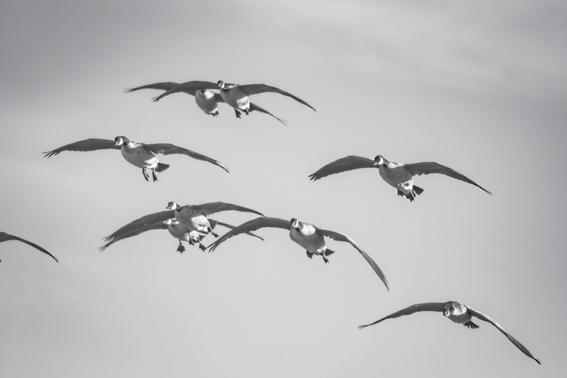
“For the most part, we have been laying on the ground in the spread, and the birds have been working really well,” Slemp explained. That’s what really makes a hunt great. We try to be selective and only take shots at birds that are cupped up and committed over the spread.”
Slemp has been employing the use of waterproof, wireless speakers.



“We used to have to run wires across the field to project electronic calls with speakers, which didn’t always work well in wet and muddy conditions,” Slemp said. “Using these wireless speakers has been a game-changer and saves us a lot of time early in the mornings when we get set up before a hunt.”
In the Winnie area, guide for Southern Wings Outfitters, Devin Cryer, said there was a decent concentration of snow geese hitting rye grass fields located inland of Anahuac to start the conservation season.
“Decoy spreads consisting of full bodies and socks have been working the best, and Aframe blinds have been keeping our hunters concealed,” Cryer said.
Early sheds

should be aware of is whether they are just seeing a few bucks that have shed their antlers already, or if they are seeing a large population of bucks dropping their antlers
“Some bucks drop their antlers earlier than others for whatever reason,” Cain said. “Peak antler shedding periods can vary from property to property and from one geographic region of the state to an-


Cain said if people are seeing a larger number of bucks drop their antlers earlier than they normally do, then this is likely a result of poor range conditions and/or lack of nutrition due to recurring drought conditions in recent seasons.
“Whether this means that bucks will shed their antlers just days earlier, weeks earlier or a solid month earlier than normal, nobody really knows,” he explained. “With us coming off of two breeding seasons for white-tailed deer that were preceded by significant drought conditions in many areas of the state, bucks shedding early could be a common theme in various places over the next few weeks.”
Page 6 February 10, 2023 LoneOStar Outdoor News LSONews com 600#
For prices and information call 1-800-221-6398 or visit us online at www.mummesinc.com Follow the Mumme’s Facebook page for info on the latest items and special sales!
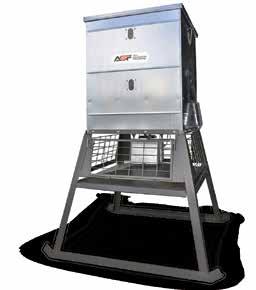
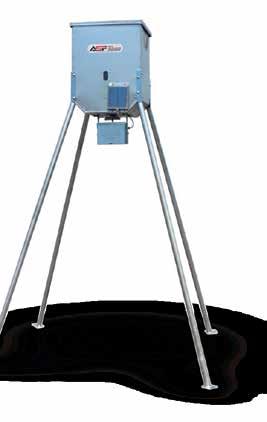
STAND & FILL BROADCAST FEEDER WITH CORN SHIELD
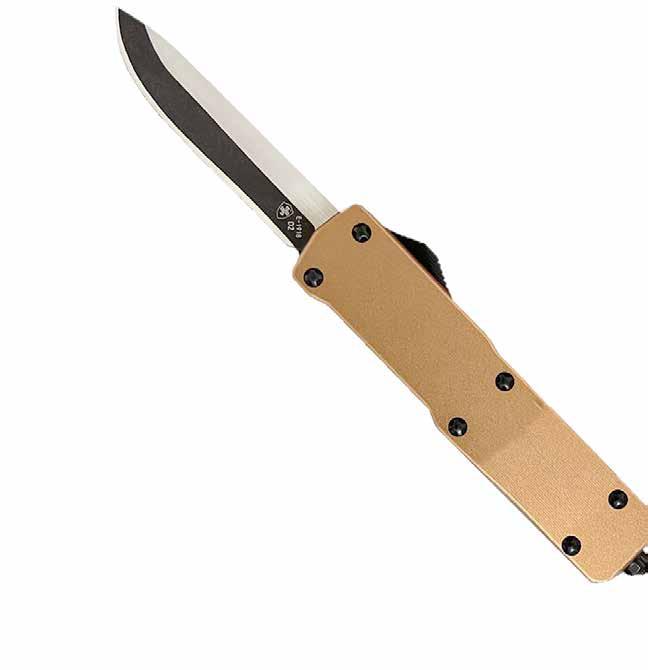
• • • • • OTF’S AUTO FOLDERS CALI LEGAL NECK KNIVES HUNTING
Photo by Nate Skinner, for Lone Star Outdoor News
Timeless treasures
Continued from page 4
reflected in the masterfully crafted range of field wear and sporting accessories.


“Joseph’s Vintage Guns is about the experience of English and African shooting,” Kathryn said. “We carry a wide variety of beautiful yet functional attire, which give you a feeling of the countryside. Our products are beautiful, stylish yet comfortable, unique and of the finest quality.”
Quality is no stranger to Joseph’s, and the gun selection represents only the best. A favorite is the walk-in gun vault, filled with vintage side-by-side shotguns and double rifles from world-renowned makers such as Holland & Holland, Purdey, Westley Richards and Rigby. Rows of walnut stocks and bespoke gun cases remind visitors that quality and tradition live on. For the discerning customer, many other side-by-side guns can be found in the vault, all sourced directly from England by Michael.
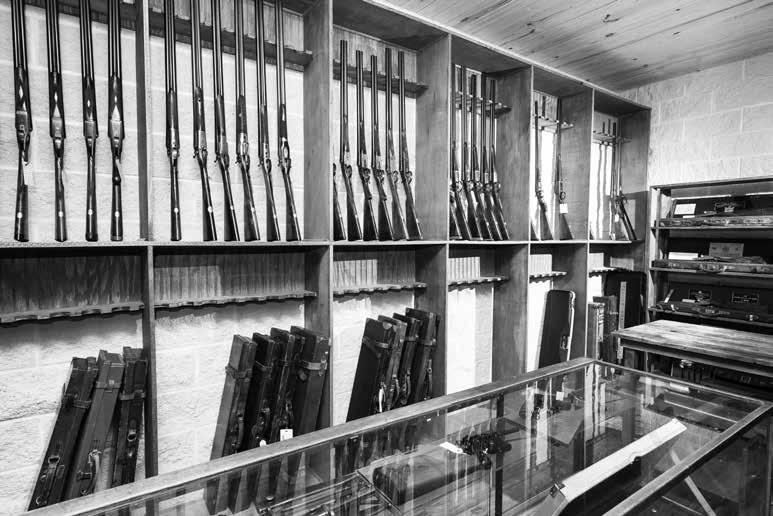
“We sell heirlooms, and unless you’re buried in it, or with it, it will last far beyond your lifetime,” Michael said.

For more than a century, Joseph’s has been a staple corner store in downtown Richmond, coming from humble beginnings selling candies and supplies to selling first-class sporting goods and fine vintage guns. It’s aged well under the Joseph name and will for years to come.
Hunting mentor
Continued from page 4
Jeanes said. “It was one of two ducks that came in that morning. Now, he’s been cook ing and eating ducks, deer and elk. He sends me pictures of him cooking them.”
Taking in S. Charles is nothing new for Jeanes — he does it all the time.
“Every one of my friends that I grew up with — I taught their kids to hunt,” he said. “I got my first lease in the 1990s when I was mostly a duck hunter. I started taking their kids with me, and they all named me the Duck Boat Captain. I guess it’s my personal mission in life.”
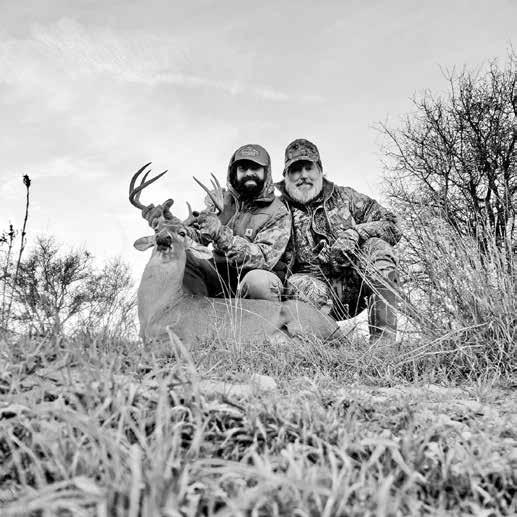
As for St. Charles, a new lifelong hunter has been created.
“I think he’s hooked, for sure,” Jeanes said. “He’s now married with a 1-year-old son, and he’s already looking for ways to get off work to hunt next year.”

LSONews com LoneOStar Outdoor News February 10, 2023 Page 7 Uncond tiona Warranty A ert Spot & Stalk Spot or F ood Revers ble Lens 100 Yard Remote Year-Round So ar Power Turns up S owly Motion Act vated
John Paul St. Charles took his first deer earlier this season with mentor James Jeanes. Photo from James Jeanes.
The collection of fine guns at Joseph’s Vintage Guns includes side-by-sides and double rifles from age-old brands. Photo from Joseph’s Vintage Guns.
Tempering expectations
Big trout still in LLM, but need time to grow
By Craig Nyhus Lone Star outdoor newS
Those thinking of heading to the Lower Laguna Madre to fish for speckled trout can be in line for a successful trip — as long as they temper their expectations a little bit.
“People tell me they want to catch a 30-inch trout,” said Capt. Preston Long of Wreck ‘Em Outdoors in Corpus Christi. “I have to chuckle a little bit. Even in the good years, we hit one or two of those each year.”
Long said a trophy trout doesn’t have to stretch the tape to 30 inches.
“I consider anything over 28 inches to be a trophy, and while those are still uncommon, they do happen,” he said. “And a 24-inch trout will make your heart stop, as hard as they fight.”
Long said there are still good trout in the LLM, but the numbers of giants need some time to build back up after the 2021 freeze. During the first weekend in February, the fishing started off slow until the wind started blowing.
“It turned them on,” he said.
Big cats on the feed
By Nate Skinner
For Lone Star outdoor newS
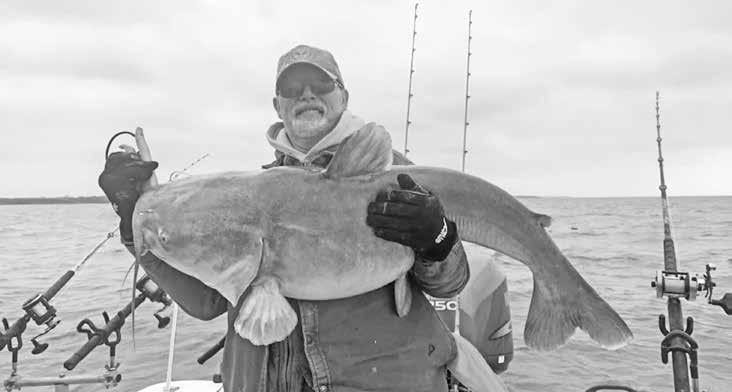
Catfish of all sizes have been feeding in changing depths across Texas lakes. Both eating-sized and trophy cats have been in the mix. There have been some fish found up shallow, but for the most part, the catfish are still concentrating in deeper areas.
of the month seemed to make
larger catfish feed more consistently.
Guide Trey Franklin, of Tight Lines Guide Service, has been running catfish trips with his guide buddy, Daniel Armstrong, of Southern Monsters Guide Service, on Lake Texoma and Lake Ray Roberts. According to Franklin,
to 70 feet of water,” Franklin said. “Drifting hasn’t been too productive, so we have had to mark fish on the ledges using sonar, and then anchor over them to drop baits down to where they are.” Catfish on Texoma have been sluggish, so the bites are not coming very quickly.
“We caught fish up to 5 1/2 pounds in deep grass pockets away from the crowds. If it’s slick, the bite is usually tougher.”
Long said working slowly is best this time of year and favors a Down South Lure in High Cotton and a Corky.
“Approaching an area quietly is important,” he said.
At recent Saltwater Legends Series event in Corpus Christi, several fish topping 6 pounds and 7 pounds were weighed and released.
Capt. Joe Prado, of Harlingen, said there are plenty of fish in the bay, but they have become harder to catch with all of the pressure.
“They get run over by boats and don’t do anything,” he said. “They’re almost turning nocturnal — the big trout go off deep and just sit there. I don’t blame them, if aliens flew over your house again and again you would stay inside, too.”
Prado said the best thing for winter fishing is when the Dallas Cowboys keep winning.
“Everyone is on the water unless they are playing,” he said.
The wind picking up in early February also helped Prado’s fishing.
“We had three good days of
Catching pre-spawn slabs
By Nate Skinner Lone Star outdoor newS
Crappie are beginning to make their move toward their spawning grounds, and anglers are finding them staged in a variety of areas across inland lakes. Creek channels, mid-depth structure, boat docks, timber, brush piles and deep-water areas are all worth checking if you’re on the water looking for crappie.
On Lake Ray Roberts, crappie guide Daniel Koberna said the fish are slowly migrating towards the backs of creeks to stage prior to their peak spawning season.
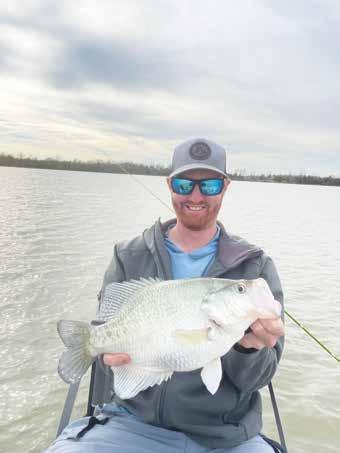
“There are really three patterns for crappie right now on Ray Roberts,” Koberna said. “Deep holes and structure along creeks are holding plenty of fish,
mid-depth areas with timber in 8 to 14 feet are also a great option, and stretches of structure out deep in depths of 30 to 40 feet have plenty of crappie as well.”
Koberna is mostly targeting trees in 8 to 14 feet of water with his anglers.
“You can fish most of the areas that are holding crappie along creeks from the bank, and these crappie are just easier to target in the wind, in my opinion, than the fish concentrated in really deep water,” he said. “The fish are definitely gorging themselves in preparation for the spawn.”
The majority of the crappie are from 11 to 13 inches with the occasional 15-incher mixed in.
Koberna said the best areas are located along creek channels, as well as adjacent flats. Small profile, 1.5-2-inch
Please turn to page 15 Please
soft plastic baits rigged on a 1/4-ounce jig head have been his preferred bait presentation.
On Lake Palestine, guide Sam Parker said the crappie are definitely in a prespawn transition and on the move.
“They are starting to make their way out of deeper water, so they can be tough to get in front of at times because they are really traveling a lot right now,” Parker said. “Funnel areas like a bridge or a river channel passing near a bridge have been holding the most fish, and the majority of the crappie are hanging tight to the bottom.”
Water depths anywhere from 10 to 22 feet have produced action, depending on the day.
“You have to cover a lot of water right now to catch numbers,” Parker said.
Page 8 February 10, 2023 LoneOStar Outdoor News LSONews com
FISHING
to page 17
turn
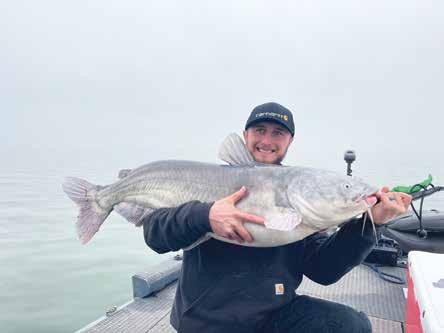
Jesse Hoffschneider caught this trophy blue catfish with Chris Moody of Texas Fishing Addiction Guide Service. Photo by Chris Moody.
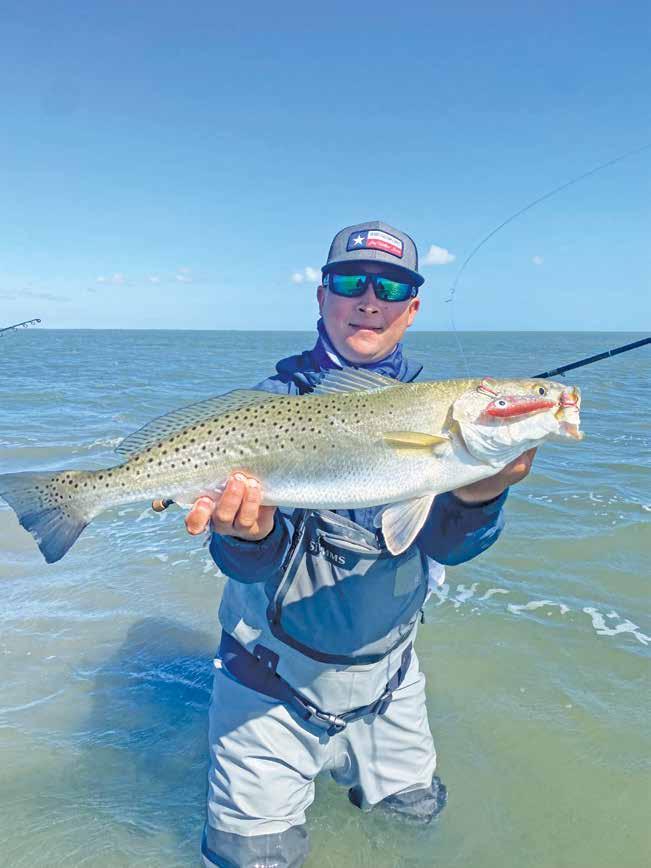
Wade-fishermen work the flats and grass lines in the Lower Laguna Madre in search of trophy speckled trout. Joe Prado of Ultimate Flats Fishing landed this 7-pounder on Feb. 5. Photos from Capt. Joe Prado.
Lake Palestine guide Sam Parker recently landed his personal best crappie which weighed in at 3.3 pounds. Photo from Sam Parker.
Sabine white bass begin run
By Robert Sloan
For Lone Star outdoor newS
This is the time of year when white bass start moving out of the big lakes and heading up the rivers and creeks to spawn. On the Sabine River above Toledo Bend Reservoir in the Pineywoods, the anticipated run has begun.
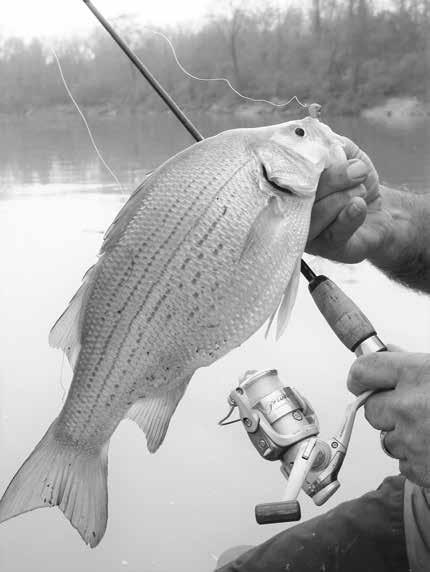
“The river was running low, but we got some rain and it’s back up to about normal level now,” said longtime white bass guide Bill Fondren. “It’s always fun fishing because the whites we get up this river are mostly big and healthy and fun on ultralight tackle. We are beginning to see more and more people up fly-fishing for the whites. They wade the sand bars and boaters ease along using their trolling motors.”
Another white bass option is south of San Antonio. The South Texas run of white bass on the Nueces River is going strong. The fishing here is way off the beaten path, but not difficult to find. To reach the boat ramp, take Airport Road in George West and follow it to the end. They have been catching white bass there for the past few weeks, but the water is very low and may require pulling the boat over gravel bars or wading.
On the Sabine, some of the best ramps are at Logansport, where there’s a county ramp called Yellow Dog and another one at FM 2517. The ramp at River Ridge is open, along with the cabins there. River Ridge is owned and operated by the Gallenbachs. Once you launch at River Ridge the best fishing is usually upstream a couple of miles. You’ll see the boats. This place is the worst kept secret on earth.
“Even when you have lots of boats the fishing is still good,” Fondren said. “I like to stay on the trolling motor until we hit a school of fish. Some of the better areas will be at the mouth of creeks feeding into the river.”
Another good option is to troll crankbaits right down the middle of the river channel. That’s the way Bill Johnson has been catching spawning whites on the Sabine for years.
“I like to just idle along while trolling with two rods,” he said. “It’s a good way to catch lots of the bigger whites. The water in the river channel is usually anywhere from 5 to 10 feet deep. The cranks that dive down from 5 to 8 feet deep usually get the most bites. You want to use a lure that stays close to bottom. Chrome or chartreuse cranks are best.”
Fondren leans toward the Road Runner for spawning sandies.
“Regardless of where you fish for spawning white bass, the number one white bass lure is a 1/4-ounce Road Runner,” Johnson said. “Some of the best colors are white with a red head or chartreuse with a red head. The 1/4-ounce Rattle Traps are good as well. The best colors with cranks are chrome/blue back or chrome/black back. I like to fish with 8-to-10pound test monofilament line on an ultralight spinning rig.”

The water body record for this river is 4.04 pounds. That huge white was 20 inches long and was caught on March 19, 2010 by Ben Cornelius with a live minnow.
“As the run slows down, using live baits is a very good way get more bites,” Fondren said. “I like to use live minnows or small crawfish.”
Man dies after boat, barge collision
By Craig Nyhus
Lone Star outdoor newS
One man was found more than a week after being reported missing following a tragic boat accident that occurred the night of Jan. 27 in Port O’Connor when a boat struck a barge in the Intracoastal Canal.

The Coast Guard said it was notified of the collision at 10:56 p.m. by a vessel that had been towing the barge.
The man was identified as Hunter Hadley, 20, by Calhoun County Sheriff Bobbie Vickery. The passenger on the boat, McCoy Wagner, was found and taken to a hospital with serious injuries.
According to reports from persons familiar with the incident, two boats were running side by side in the Intracoastal after one boat received refueling assistance. Hadley’s boat was in front of the other boat, and a spotlight from the barge blinded the boaters, and they didn’t see where the barge was. Calhoun County Sheriff’s Bobby Vickery confirmed that the Hadley’s body was found on the evening of Feb. 4 around 5 p.m.
Wagner was thrown from the boat, but the following boat operator jumped in and rescued him, contacted authorities and met them at the nearby Sanctuary development where Wagner was taken to the hospital. The boat was underneath the barge and was later towed.
According to social media posts by Wagner’s family members, his condition is improving, although surgery was required.
An extensive search was conducted by Texas Parks and Wildlife Department, the Calhoun County Sheriff’s Office and the U.S. Coast Guard, plus numerous community volunteers.
Haynie Boats founder dies
Rayburn Alan Haynie, 77, passed away on Jan. 29 at his home in Victoria.
Rayburn was a graduate of Calhoun High School and attended Victoria College. He enjoyed duck hunting, fishing, shrimping, and water-skiing in his younger years. Later, he owned and operated Haynie’s Seafood, as well as building steel hull shrimp boats, gulf shrimp boats, and oyster boats.
In the early 1980s Rayburn began the large-scale production of Haynie Custom Bay Boats, a shallow draft fishing boat design. The boats were designed, manufactured and sold in Seadrift. In recent years, he sold the business and retired.
—Staff report
Marina fire at Chandler’s Landing
A large fire at Chandler’s Landing Marina in Rockwall destroyed multiple boats and a portion of the marina at Lake Ray Hubbard on Monday, Jan 30. The Rockwall Fire Department was notified of the fire just before 5:30 p.m. According to fire officials, four boats and parts of the dock system were damaged during the fire.
Freezing conditions created difficulties for firefighters to access the fire and obtain available water. More than 40 firefighters from five agencies responded.
The cause of the fire is unknown at this time.
4” Jerk Bait
Jerk
LSONews com LoneOStar Outdoor News February 10, 2023 Page 9
www. doa lures.com Made in USA C.A.L. 5” Swim Bait C.A.L. 4” Shad Tail C.A.L. 3” Shad Tail C.A.L.
Curl Tail 201596_DOA_2.17_Tx Outdoor Journal_CAL ad_5.125x3.75.indd 1 2/17/20 3:37 PM
C.A.L. 5.5”
Bait C.A.L. Paddle Tail C.A.L.
—Staff report
The much-anticipated white bass run has begun in southeastern parts of the state, and is expected to begin soon on other creeks and rivers. Photo by Robert Sloan, for Lone Star Outdoor News.
TEXAS FRESHWATER FISHING REPORT
ALAN HENRY: Water clear; 46 degrees; 10.33’ low. Crappie are fair over brush and off docks on jigs and minnows.
AMISTAD: Water stained; 60 degrees; 35.43’ low. Largemouth bass are fair on deep-diving crankbaits, jigs, Carolina rigs and drop shots. Catfish are good on cheese bait and cut shad.
ARLINGTON: Water lightly stained; 55 degrees; 0.53’ low. Largemouth bass are fair on heavy finesse jigs, Carolina rigs and deep-diving crankbaits.
ARROWHEAD: Water lightly stained; 42-46 degrees; 6.22’ low. Catfish are good drifting with fresh cut shad.
ATHENS: Water clear; 52-54 degrees; 0.03’ high. Largemouth bass are slow. Crappie are slow to fair on small jigs.
AUSTIN: Water clear; 56 degrees; 0.68’ low. Largemouth bass are slow to fair on Ned rigs and drop shots. Crappie and catfish are fair on minnows.
B.A. STEINHAGEN: Water stained; 65 degrees; 0.12’ high. Largemouth bass are slow to fair on craw lipless crankbaits and weightless flukes.
BASTROP: Water clear; 55 degrees. Largemouth bass are fair on flukes and shaky head trick worms.
BELTON: Water lightly stained; 52 degrees; 13.89’ low. White bass are slow to fair on shad-imitating soft plastics. Catfish are good drifting with cut bait.
BENBROOK: Water lightly stained; 50 degrees; 4.70’ low. Largemouth bass are slow. Catfish are slow.
BOB SANDLIN: Water stained; 52 degrees; 0.24’ low. Largemouth bass are slow. Crappie are fair on jigs or minnows. White bass are good on slabs.
BRAUNIG: Water slightly stained; 64 degrees. Largemouth bass are slow. Red drum are fair on cut bait and frozen shrimp. Catfish are fair on frozen shrimp and nightcrawlers.
BRIDGEPORT: Water clear; 48-52 degrees; 9.04’ low. White bass are fair deadsticking with soft plastics. Catfish are good drifting cut bait.
BROWNWOOD: Water stained; 48-54 degrees; 8.41’ low. Largemouth bass are slow. Crappie are slow. White bass are slow. Catfish are fair on cut shad.
BUCHANAN: Water lightly stained; 56 degrees; 17.66 feet below pool. Largemouth bass are fair to good on jigs, crankbaits and Texas rigs. Crappie are good on char-
treuse jigs. Striped bass are fair under birds on live bait. Catfish are good on punch bait.
CADDO: Water stained; 46-47 degrees; 2.32’ high.
Largemouth bass are slow. Catfish are slow.
CALAVERAS: Water slightly stained; 62 degrees. Red drum are slow to fair on frozen shrimp and cut bait. Blue catfish and channel catfish are good on cut bait, frozen shrimp and cheese bait.
CANYON: Water clear; 53 degrees; 10.72’ low.
Largemouth bass are fair on swimbaits and drop shots. Striped bass are good on white swimbaits.
CEDAR CREEK: Water stained; 53-56 degrees; 3.19’ low. Largemouth bass are fair on lipless crankbaits and chatterbaits. Crappie are fair on minnows and jigs. White and hybrids are excellent deadsticking slabs.
CHOKE CANYON: Water clear; 60 degrees; 24.22’
low. Largemouth bass are slow to fair on Carolina rigs.
CONROE: Water stained; 55 degrees; 0.28’ high.
Largemouth bass are fair on Texas-rigged soft plastics and lipless crankbaits. Crappie are good on jigs. Hybrid striped bass are fair deadsticking slabs. Catfish are good on punch bait.
COOPER: Water lightly stained; 51 degrees. Blue catfish are fair drifting in deep water with cut bait.
CORPUS CHRISTI: Water stained; 62 degrees; 3.75’ low. Largemouth bass are slow. Crappie are slow. Catfish are slow.
EAGLE MOUNTAIN: Water stained; 50 degrees; 4.39’ low. White bass are fair to good deadsticking spoons. Crappie are fair on jigs and minnows. Blue catfish and channel catfish are fair to good on punch bait and shad.
FAIRFIELD: Water slightly stained; 50 degrees.
Largemouth bass are fair on lipless crankbaits, Carolina rigs, wacky worms and jerkbaits.
FALCON: Water stained; 65 degrees; 40.81’ low. Largemouth bass are fair on spinner baits, Texas- and Carolina-rigged creatures or worms and crankbaits. Catfish are fair on cut bait.
FAYETTE: Water lightly stained; 52 degrees; 1.00’ low. Largemouth bass are good on shad crankbaits, top-
waters and Texas rigs. Catfish are good on punch bait and chicken liver.
FORK: Water stained; 56-59 degrees; 5.47’ low. Largemouth bass are slow to fair on jigs. Crappie are good on minnows and hand-tied jigs.
FT. PHANTOM HILL: Water stained; 44-47 degrees; 6.97’ low. Catfish are good drifting with cut gizzard shad.
GRANBURY: Water lightly stained; 55 degrees; 2.34’ low. Largemouth bass are fair to slow on soft plastics. Striped bass are fair on flukes and trolling swimbaits. White bass are fair on slabs. Crappie are good on small jigs and minnows. Catfish are good on live perch and cut bait.
GRANGER: Water lightly stained; 53 degrees; 0.13’ low. Largemouth bass are slow. Crappie are slow. White bass are fair upriver on spinner baits. Blue catfish are good on jug lines baited with shad or cut bait. Yellow catfish are slow.

GRAPEVINE: Water clear; 50 degrees; 0.03’ high. White bass are slow. Crappie are fair on jigs. Catfish are fair drifting cut bait.
HOUSTON COUNTY: Water stained; 50 degrees; 0.22’ low. Largemouth bass are fair on jerkbaits, Ned rigs and shaky heads. Crappie are fair on minnows.
HUBBARD CREEK: Water stained; 53 degrees; 7.64’ low. Largemouth bass are fair on swimbaits. Crappie are fair on live minnows and jigs. White bass are fair in creeks on slabs. Catfish are fair on live and cut shad.
JOE POOL: Water slightly stained; 52 degrees; 0.89’ high. Largemouth bass are fair on Texas-rigged soft plastics and jigs.
LAKE O’ THE PINES: Water stained; 52 degrees; 1.56’ high. Largemouth bass are slow. Crappie are good drifting with minnows or jigs. Catfish are fair on punch bait.
LAVON: Water lightly stained; 55 degrees; 1.04’ low.
Largemouth bass are slow. Crappie are fair on slabs. White bass are fair over humps on spoons and slabs. Catfish are good on cut shad.
LBJ: Water stained; 51 degrees; 0.37’ low. Largemouth bass are fair on Texas or Carolina rigs and squarebilled crankbaits. Crappie are fair on chartreuse jigs.
Catfish are good on punch bait.
LEWISVILLE: Water lightly stained; 51 degrees; 1.84’ low. White bass are good on flukes, small swimbaits and live bait. Catfish are good drifting cut shad or chicken breasts.
LIMESTONE: Water clear; 50 degrees; 5.11’ low. Largemouth bass are fair on lipless crankbaits and finesse jigs. Crappie are fair on minnows. White bass are good on silver jigging spoons. Catfish are fair on cut bait.
LIVINGSTON: Water stained; 58 degrees; 0.56’ high. Largemouth bass are slow. Catfish are good drifting with cut bait.
MEREDITH: Water stained; 42 degrees; 55.05; low.
Largemouth bass are slow. Crappie are slow to fair on minnows. Walleye are slow. Catfish are slow.
MILLERS CREEK: Water stained; 50 degrees; 5.87’ low. Largemouth bass are fair on Texas or Carolina rigs, football jigs and crankbaits. Crappie are good on minnows or small jigs. Catfish are good on cut bait and cheese bait.
NACOGDOCHES: Water stained; 52-56 degrees; 0.74’ low. Largemouth bass are good on swimbaits and lipless crankbaits. Crappie are fair on minnows and jigs.
NACONICHE: Water clear; 49 degrees. Largemouth bass are fair on jerkbaits and underspins. Catfish are slow.
NASWORTHY: Water murky; 50 degrees; 1.01’ low.
Largemouth bass are slow. Crappie are fair on black and chartreuse jigs and minnows. Catfish are fair on cut bait and stink bait.
NAVARRO MILLS: Water stained; 55 degrees; 2.98’ low. Largemouth bass are slow. Crappie are slow to fair on small minnows and jigs.
O.H. IVIE: Water stained; 53 degrees; 23.41’ low. Largemouth bass are fair to good on swimbaits and white swim jigs. White bass are good on live bait and crankbaits. Crappie are fair on jigs and minnows. Catfish are fair on prepared baits, cut bait and live bait.
OAK CREEK: Water lightly stained; 56 degrees; 11.14’ low. Largemouth bass are fair on soft plastics. Crappie are good on minnows.
PALESTINE: Water lightly stained; 55 degrees; 0.02’ low. Largemouth are fair on black and blue craws on a
big-eyed jig. Crappie are fair on minnows. White bass are slow. Catfish are fair on juglines and trotlines with live shad or small perch.
POSSUM KINGDOM: Water lightly stained; 48 degrees; 5.99’ low. Striped bass are good on live shad. White bass are fair on small shad and small jigs. Catfish are good on cut shad.
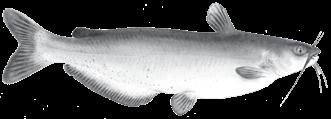
PROCTOR: Water stained; 55 degrees; 9.29’ low. Largemouth bass are slow. Catfish are good on whole and cut shad.
RAVEN: Water stained; 55 degrees; 2.00’ low. Largemouth bass are slow. Crappie are slow. Catfish are slow to fair on cut bait and stink bait.
RAY HUBBARD: Water lightly stained; 48-50 degrees; 0.10’ low. White bass are fair on jigging spoons. Crappie are slow. Catfish are good drifting cut shad.
RAY ROBERTS: Water clear; 51 degrees; 1.34’ low. Largemouth bass are slow. Catfish are slow.
RICHLAND CHAMBERS: Water clear; 52 degrees; 4.55’ low. Largemouth bass are slow. White bass and hybrid stripers are slow. Catfish are good on punch bait.
SAM RAYBURN: Water stained; 50 degrees; 2.68’ low. Largemouth bass are fair on lipless crankbaits, crankbaits and Carolina rigs. Crappie are slow. White bass are running and are good on jigs and minnows. Catfish are fair on cut bait and minnows.
SOMERVILLE: Water stained; 48 degrees; 4.14’ low. Largemouth bass are slow. Crappie are slow. Catfish are fair on juglines with shad.
SPENCE: Water stained; 50 degrees; 44.72’ low. Largemouth bass are slow. Crappie are slow. Catfish are fair drifting cut bait.
SQUAW CREEK: Water stained; 65 degrees; 0.21’ high. Largemouth bass are slow. Channel catfish are good on punch bait, cut bait and hot dogs.
STILLHOUSE HOLLOW: Water lightly stained; 51 degrees; 11.92’ low. Largemouth bass are slow. White bass are fair to slow on small slabs.
TAWAKONI: Water lightly stained; 52 degrees; 0.97’ low. Largemouth bass are slow. White bass and hybrid striper are good on flukes, swimbaits and slabs. Crappie are fair on minnows. Catfish are fair on fresh gizzard
n Saltwater reports Page 13
shad.
TEXANA: Water stained; 52 degrees; 0.02’ high. Largemouth bass are fair on crankbaits and swimbaits. Crappie are slow. Catfish are slow.
TEXOMA: Water stained; 65 degrees; 0.81’ low. Striped bass are good under birds deadsticking and drifting flukes. Crappie are slow. Catfish are slow.
TOLEDO BEND: Water stained; 52 degrees; 2.00’ low. Largemouth bass are fair on bladed swim jigs, spinner baits and lipless crankbaits. Crappie are fair on minnows. White bass are running and are good on small swimbaits, beetle spins and roadrunners.
TRAVIS: Water clear; 57 degrees; 41.73’ low. Largemouth bass are fair on crankbaits, jerkbaits and Alabama rigs.
TWIN BUTTES: Water stained; 50 degrees; 22.68’ low. Largemouth bass are slow. Crappie are fair on minnows and jigs. White bass are slow. Channel catfish are slow. Yellow catfish are fair on big minnows.
TYLER: Water stained; 50 degrees; 0.98’ low. Largemouth bass are slow. Crappie are slow. Catfish are slow.
WACO: Water stained; 55 degrees; 11.88’ low. Largemouth bass are fair on finesse jigs and shaky heads. Crappie are good on minnows and chartreuse and white jigs. White bass and hybrids are fair on slabs.
WHITNEY: Water lightly stained; 54 degrees; 6.81’ low. Largemouth bass are fair on crankbaits and soft plastics. Striped bass are good to excellent on jigs, swimbaits and live shad.
WORTH: Water stained; 50 degrees; 2.61’ low. White bass are fair to good on spoons. Crappie are good on minnows. Blue catfish and channel catfish are fair on cut bait, shad and punch bait.
WRIGHT PATMAN: Water lightly stained; 50 degrees; 5.73’ high. Largemouth bass are slow. Catfish are good drifting with cut bait.
—TPWD
Page 10 February 10, 2023 LoneOStar Outdoor News LSONews com



LSONews com LoneOStar Outdoor News February 10, 2023 Page 11 OPPORTUNITY OPPORTUNITY GIVE SOMEONE THE R E C R U I T I N G H U N T E R S A N D A N G L E R S F O R A L I F E T I M E T H E L O N E S T A R O U T D O O R N E W S F O U N D A T I O N C R E A T E S H U N T I N G A N D F I S H I N G O P P O R T U N I T I E S F O R T H O S E P E O P L E E A G E R T O J U M P H E A D F I R S T I N T O T H E O U T D O O R S , B U T W H O L A C K T H E O P P O R T U N I T Y . T H E L O N E S T A R O U T D O O R N E W S F O U N D A T I O N I S A 5 0 1 ( C ) 3 C H A R I T A B L E O R G A N I Z A T I O N T O D O N A T E O R F O R M O R E I N F O R M A T I O N C A L L ( 2 1 4 ) 3 6 1 - 2 2 7 6 O R D O N A T E O N L I N E A T W W W L S O N E W S C O M / L S O N - F O U N D A T I O N R O L L I N G P L A I N S Q U A I L R E S E A R C H F O U N D A T I O N U B A T H I G L O B A L S A F A R I S
GROUP WITH SHARKS, 590 POUNDS OF SNAPPER
The Coast Guard interdicted five lancha crews and seized 590 pounds of illegally caught fish in federal waters. Coast Guard Station South Padre Island boat and air crews located and stopped five lanchas with a total of 22 Mexican fishermen engaged in illegal fishing. Officials seized three sharks and 590 pounds of red snapper, along with fishing gear, radios, GPS devices and high flyers on board. The Mexican fishermen were detained and transferred to border enforcement agents.
WARDENS HOST HUNTS, TRAINING
Texas game wardens hosted hunts in January. One group, along with a department biologist, took a group of five women deer hunting for the first time. The group was taught hunter education, field dressing, rifle sighting and wild game meat options. Also, at Inks Lake State Park, wardens from multiple divisions mentored hunters on a drawn hunt coordinated by the department’s R3 Team. Several participants were successful and
GAME WARDEN BLOTTER
TWO RESCUED FROM SKIFF TAKING ON WATER
The Coast Guard rescued two boaters from a vessel taking on water near Port Mansfield. A report was received from a friend of two boaters, a 59-year-old man and an 80-year-old man, whose 17-foot skiff was reportedly taking on water south of the Arroyo Colorado in the Laguna Madre. A Shallow Water crew was launched, along with a helicopter crew, and the boaters and skiff were located, but crews were unable to reach them due to water depth. The helicopter crew hoisted the boaters and transported them to Port Isabel-Cameron County Airport. They were in stable condition.
all went home with a cooler full of food.
TWO WARDENS RECOGNIZED
Texas Game Wardens Dyke McMahen and Brannon Meinkowsky were presented with separate awards as Shikar Safari Officer of the Year and the Southeastern Association of Fish and Wildlife’s Officer of the Year, respectively, by the Texas Parks and Wildlife Commission at its January meeting. Nominated by their supervisors for outstanding service in the line of duty, both officers share a passion for
conservation, youth outreach and criminal investigation. In Wilbarger County, McMahen’s 30-year career in the field culminated with receiving the Shikar Safari Officer of the Year award. Known for his positive attitude and wildlife expertise, McMahen’s work ethic often makes him the district’s “go-to.” “There is no one more willing to go the extra mile for fellow officers or members of the public than Warden McMahen,” said Capt. Lacy Loudermilk.
“Recently, he assisted the Texas and Southwestern Cattle Raisers Association with felony theft and
illegal hunting cases. Numerous stolen cattle, horses, trailers and tack were recovered. McMahen’s dedication to community and officer trust sets a precedent throughout the state.” Often found patrolling Lake Conroe, Meinkowsky leads his team in boating accident investigations. His thoroughness and attention to detail on cases resulted in high accolades from the Montgomery County District Attorney’s office and various law enforcement organizations. “As a leader among his peers, he is integral to training local game war-
SPONSORED BY:

dens,” said Capt. Jonathan Heaton, Meinkowsky’s supervising officer. “He is considered a resource among his peers, devoting his time to classroom instruction for other officers and our partner organizations on Lake Conroe.”
DREDGE CREW RESCUES THREE
Crew members from Great Lakes Dredge & Dock Company, while conducting dredging operation in the Houston Ship Channel, identified an oyster boat on fire. The crew jumped into action to rescue all three persons in the water and extinguished the raging fire. Coast Guard officials arrived shortly thereafter and transported the three victims for additional medical care.
REPORT ILLEGAL HUNTING AND FISHING ACTIVITY FOR A REWARD OF UP TO $1,000. CALL OPERATION GAME THIEF AT (800) 792-4263

AN AMERICAN LEGEND
RUGER.COM/AMERICANRIFLE


Page 12 February 10, 2023 LoneOStar Outdoor News LSONews com
TEXAS SALTWATER FISHING REPORT

SABINE LAKE: 58 degrees. When the weather allows, speckled trout are good at the levees on shrimp and swimbaits. Redfish are fair on shrimp under a popping cork.
BOLIVAR: 59 degrees. Redfish are fair on cut bait and shrimp under a popping cork.
Big limits at Big Sam
Sam Rayburn Reservoir appears to be bouncing back into a big-fish factory.
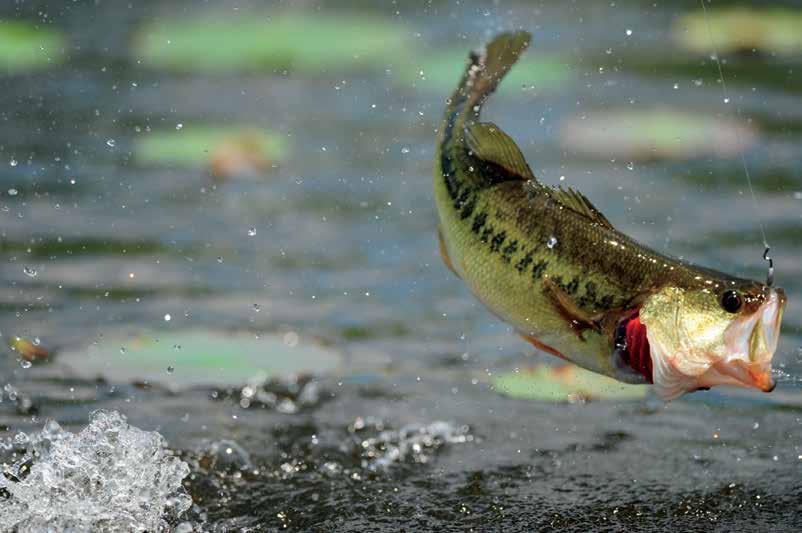
On Jan. 28, the familiar fishing pair of Brian Shook and Danny Iles beat 155 other teams at the Outlaw Outdoors team tournament with an incredible five bass limit weighing 41.56 pounds, including the big fish of 10.65 pounds.
WEST MATAGORDA BAY: 60 degrees. Speckled trout are slow after recent rains.
PORT O’CONNOR: 59 degrees. Speckled trout are good on the outside of the jetties on live shrimp, root beer artificial shrimp and live shrimp. Redfish are fair on sardines and live shrimp.
ROCKPORT: 60 degrees. Redfish are slow. Trout are slow to fair on soft plastics and top-waters.
PORT ARANSAS: 62 degrees. Redfish, drum and speckled trout are are fair on live shrimp.
The pair beat the second-place team by more than 22 pounds.
Shook and Iles’ big total came one day after the MLF Toyota Series was at the lake for two days. At that event, Dakota Ebare brought in 32 pounds, 4 ounces on Day 2, bringing his twoday total to 48 pounds, 10 ounces to win the event and more than $80,000. The day also was big for second place finisher Wyatt Frankens, who brought in more than 28 pounds to finish with 47 pounds, 5 ounces, and win $17,000.
—Staff report
Winter favorite
Continued from page 1
TRINITY BAY: 59 degrees. Speckled trout and black drum are slow to fair on shrimp under popping corks.
EAST GALVESTON BAY: 60 degrees. Speckled trout are fair wading with mullet-imitation plugs and soft plastics.
WEST GALVESTON BAY: 62 degrees.
CORPUS CHRISTI: 65 degrees. Speckled trout and redfish are fair to slow on live shrimp under a popping cork.
BAFFIN BAY: 64 degrees. Speckled trout are slow. Black drum are good on shrimp under a popping cork.
PORT MANSFIELD: 70 degrees. Speckled
The daily limit on sheepshead is 5 with a 15-inch minimum length limit. One issue people have is that these fish can be difficult to clean.
“You definitely need a knife that’s sharp and strong enough to cut through the tough hide of a sheepshead,” Sanders said. “The best thing to do is to fillet them, then trim off the red meat and you end up with some very tasty meat. During the winter months they are very easy to catch and between my wife and I we can box up to 30 per day. But, more often than not we’ll just keep about 10, that’s more than enough to clean.”
Mike Barnes has been fishing the jetties along the Texas coast for years, and like a lot of other folks he will box a few sheepshead when nothing else is biting. His favorite tactic is to use a slip cork.
“Sheepshead will often be suspended along the jetties, and very close to the rocks,” he said. “Some days they will be 5 feet deep, and other days the best bite will be 10 to 20 feet deep. That’s why I use a slip cork. I like to fish the jetties and that’s a way to stay on reds, trout and sheepshead just about any time of the year.”
Barnes threads braided line through a cone-shaped float. Next, he ties the tag end of the line to a torpedo weight that has a wire loop on each end. He’ll tie a monofilament leader to the lower end of the sinker. The leader is about 24 inches long. On the tag end of the leader, he’ll tie on a No. 4 treble hook.
“Once I have a slip cork rigged up, I’ll tie a tiny piece of a rubber band into a slip knot in the braided line,” he said. “I can adjust the depth by simply pulling out the rubber band. With this rig I can fish at any depth I choose.”
On most days Barnes said the best dept will be 8 to 10 feet deep for sheepshead. “If you’re just catching small fish, make a move, don’t waste your time,” he said. “Sooner or later you are going to find the big ones. They are good fighters, and are at the jetties at Port O’Connor, in big numbers for the next couple of months. Another good place to catch them is at the Galveston jetties.”

LSONews com LoneOStar Outdoor News February 10, 2023 Page 13
G I F T R E N E W A L C U T O U T T H I S S U B S C R I P T I O N F O R M A N D M A I L T O : L O N E S T A R O U T D O O R N E W S P O B O X 5 5 1 6 9 5 D A L L A S , T X 7 5 3 5 5 S U B S C R I P T I O N S A L S O A V A I L A B L E O N L I N E O R B Y P H O N E N A M E A D D R E S S C I T Y / S T A T E / Z I P E M A I L P H O N E N U M B E R C R E D I T C A R D N O E X P D A T E C V V B I L L I N G Z I P C O D E S I G N A T U R E M A K E C H E C K S P A Y A B L E T O L O N E S T A R O U T D O O R N E W S S U B S C R I B E T O R E C E I V E 2 4 I S S U E S P E R Y E A R O F T H E B E S T H U N T I N F I S H I N G N E W S D E L I V E R E D S T R A I G H T T O Y O U R M A I L B O X O n t h e h u n t f o r t h e b e s t o u t d o o r n e w s $35 A L L T H E N E W S Y O U N E E D F R O M T H E S O U R C E Y O U T R U S T S U B S C R I B E T O D A Y T O L O N E S T A R O U T D O O R N E W S F O R A 1 Y E A R S U B S C R I P T I O N C A L L ( 2 1 4 ) 3 6 1 - 2 2 7 6 L S O N E W S C O M


Page 14 February 10, 2023 LoneOStar Outdoor News LSONews com SHARE AN ADVENTURE n Want to share hunting and fishing photos with other Lone Star Outdoor News readers? Email them with contact and caption information to editor@lonestaroutdoornews.com. High-resolution original jpegs only. Mail prints to Heroes, Lone Star Outdoor News, P.O. Box 551695, Dallas, TX 75355. HEROES
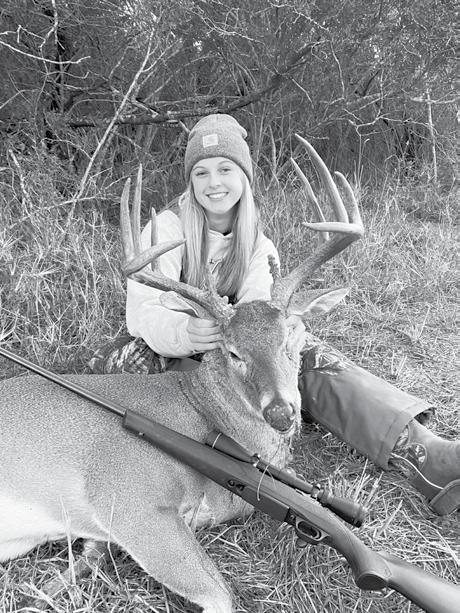
Harper Haas shot this 10-point buck on Christmas Day 2022 in Nueces County on her family ranch. She was using her new Browning .308 that she got for Christmas.
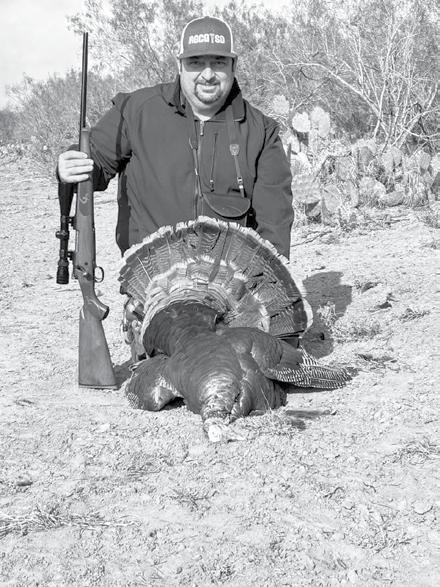
Jorge Bazan took this tom at the La Presita Ranch using a .22-250 Remington.
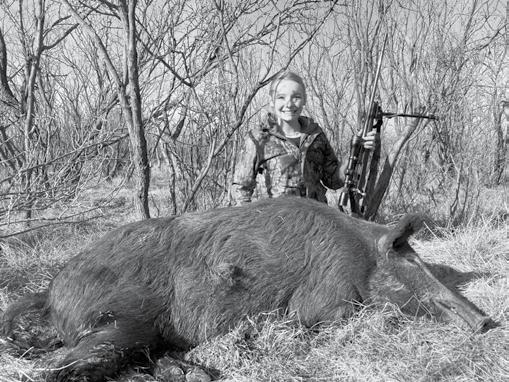
Addie Lewis harvested this 300-plus pound hog in Throckmorton County. She used the spot-and-stalk method and got within 50 yards for the shot.
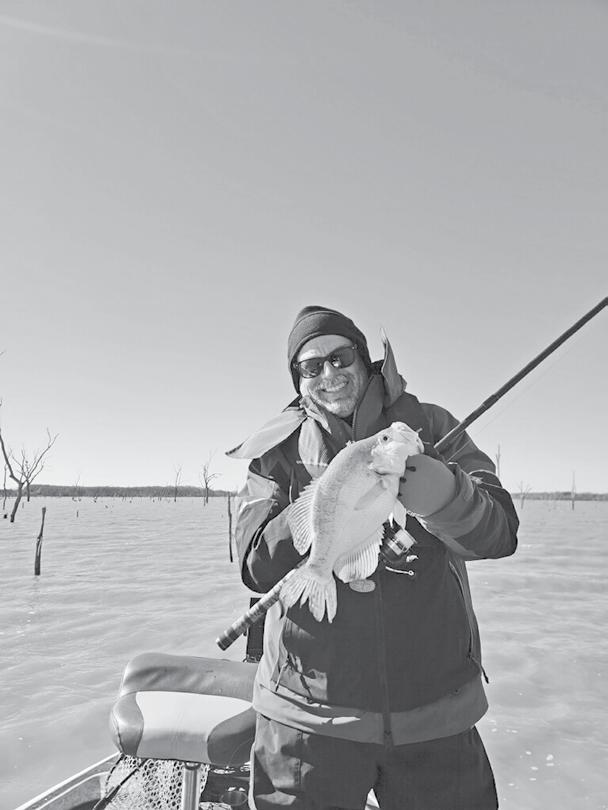
Charlie Simpson caught this crappie while fishing along timber on Lake Ray Roberts with fishing guide Daniel Koberna
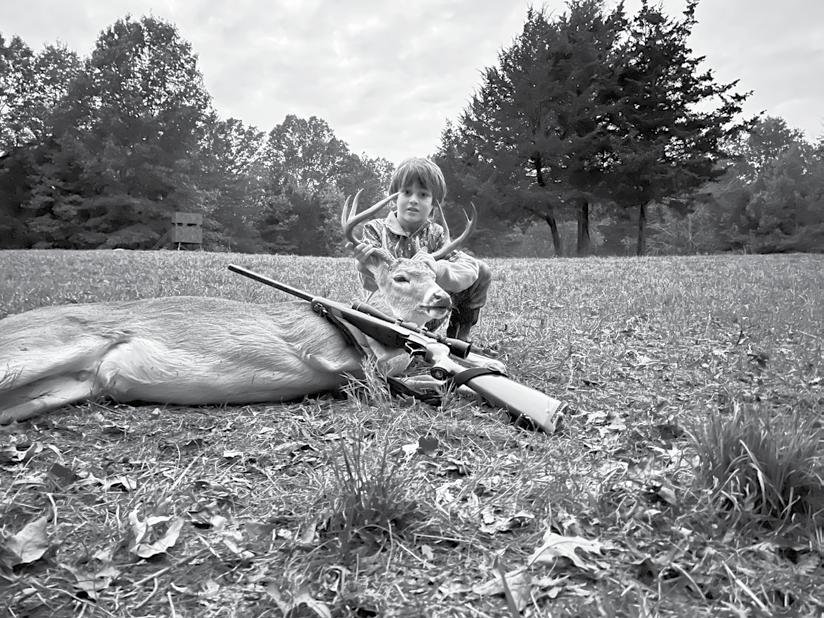
Reed Parker, 5, took his first deer.
INDUSTRY
LONE STAR OUTDOOR PUZZLER

Solution on Page 18
Outdoor News
DOWN
1) African game species
2) The rig named after a state
4) A lab color
5) Rifle, shotgun brand
7) Hill Country lake
11) A Texas crane
12) Weatherford’s county
14) A wild pig sound
16) The smaller shad
17) Salmon species
19) An African cat
20) A turkey sound
21) Botswana’s capital
23) Ammo brand
25) Northwest Texas lake
29) Thermal scope brand
31) Alpine’s county
33) One of the Great Lakes
34) A Texas port (two words)
35) Texas bay susceptible to freezes
36) Saltwater lure brand
37) Marks left by strutting gobblers
Cummins to lead B&C
James L. Cummins, the executive director of Wildlife Mississippi, has been elected to serve as the Boone and Crockett Club’s 36th president.
Knickerbocker joins KastKing
KastKing named Eric Knickerbocker as national sales strategist to lead retail and wholesale sales efforts across America.
Sales rep for iAiming
Thermal rifle scope manufacturer iAiming retained Leisure Sales as its sales agency in 13 western states.

Sales position for Texas, Oklahoma
1791 OLG is seeking a territory sales representative for Central Texas and Oklahoma.
Big specks
Continued from page 8
catch-and-release fishing,” he said.
Corbetta joins Burris
Optic manufacturer Burris appointed Alberto Corbetta vice president of strategic brand and product marketing.
New positions at Rapala
Rapala VMC hired Charlie Davis as director of product development–North America and promoted Bart Rosen to senior product manager.
Agencies for knife maker
BUBBA named Frontier Sales & Marketing Group its sales agency for the southern U.S., R.D.O. Marketing for the northeastern U.S., and named Dave Bertolozzi fishing sales manager for the eastern U.S.
International sales job at Easton
An international sales manager position is available at Easton to develop its overseas archery market.
Prado has been having the best luck with Custom Corky Floaters, and he landed a 27 1/2-inch fish that he estimated at 7 pounds on Feb. 6.
“It was healthy and swam away good,” he said. “I had another one hit but he came to the top shaking and threw the Corky.”
Long said the big fish will be back, but it will take a few years. But he stressed that it’s the anglers who can help that happen.
“We lost the upper-class, older fish in the freeze,” he said. “It takes time for that class of big fish to come back.”
Releasing fish has become much more important to the guide and angler.
“Ever since the freeze, I don’t care if I keep another one,” Long said. “It’s up to us if we want to get the fishery back. Big fish are rare. That’s why they’re special.”
Quail red curry
1 lb. quail meat
2 cups bamboo shoots
1/2 yellow onion
1 bell pepper
1 cup snow peas
1/4 cup green onions
1 tbsp. minced garlic
3 tbsp. cooking oil
3 tbsp. Thai red curry paste
14 oz. can coconut milk
1-1/2 tbsp. sugar
1 tbsp. fish sauce
1/2 tbsp. salt
Slice onion and bell pepper into thin strips. Strain the bamboo shoots and slice into thin strips. Mince garlic and chop green onion. Set the green onion aside for garnish. Chop quail meat into small pieces. In a large pan over medium heat, drop in oil and minced garlic and wait until you hear the garlic sizzling. Add meat and lightly brown it. Add curry paste and coconut milk. Bring the pan to a simmer and stir. Add in the sliced onion, bell pepper, snow peas, bamboo shoots and sugar, and stir to coat all vegetables in the coconut milk. Cover and let simmer on medium low heat for 15-20 minutes, stirring occasionally. Add fish sauce and stir. Serve over white rice and garnish with green onions.
—Quail Forever
Pear curry and crispy duck
3/4 cup chopped pecans
1 tbsp. sesame seeds
11/2 lbs. crappie
1 clove garlic, minced
2 tbsp. butter, melted
Salt and pepper
Stir together pecans and sesame seeds and set aside. Arrange fish on a baking dish or baking sheet. Add garlic to melted butter and brush on the fish. Cover fish with nut mixture. Salt and pepper to taste. Chill or let stand for 30 minutes. Heat oven to 400 degrees. Heat a small amount of olive oil in the bottom of a skillet and sauté the fish, pecan side down for about 5 minutes. Transfer to an oiled baking sheet. When all fish are sautéd, bake with pecan side up until meat flakes.
—Missouri Dept. of Conservation
LSONews com LoneOStar Outdoor News February 10, 2023 Page 15
Puzzle by Craig Nyhus, Lone Star
*email LSON your favorite recipe to editor@lonestaroutdoornews.com.
FOR THE TABLE
ACROSS
The red lava rock 6) Reel device that slows the fish 8) River bordering Oklahoma 9) Hunting boot brand 10) Spinner bait blade named after a state 13) Safari destination 15) Texas border lake 17) Camo brand 18) Forage fish in South Texas 22) The invasive swan in the U.S. 24) Henrietta’s county 26) Duck hunters’ org. 27) Shotshell brand 28) Falls County’s seat 30) Callahan County’s seat 31) Winters’
36)
42)
3)
team name 32) Where the turkey sleeps 34) Turkey call type
The female duck 38) Maker of the Model 12 39) Fishing reel manufacturer 40) Sinker type 41) Ice pellets on the ground, road
Fly rod brand
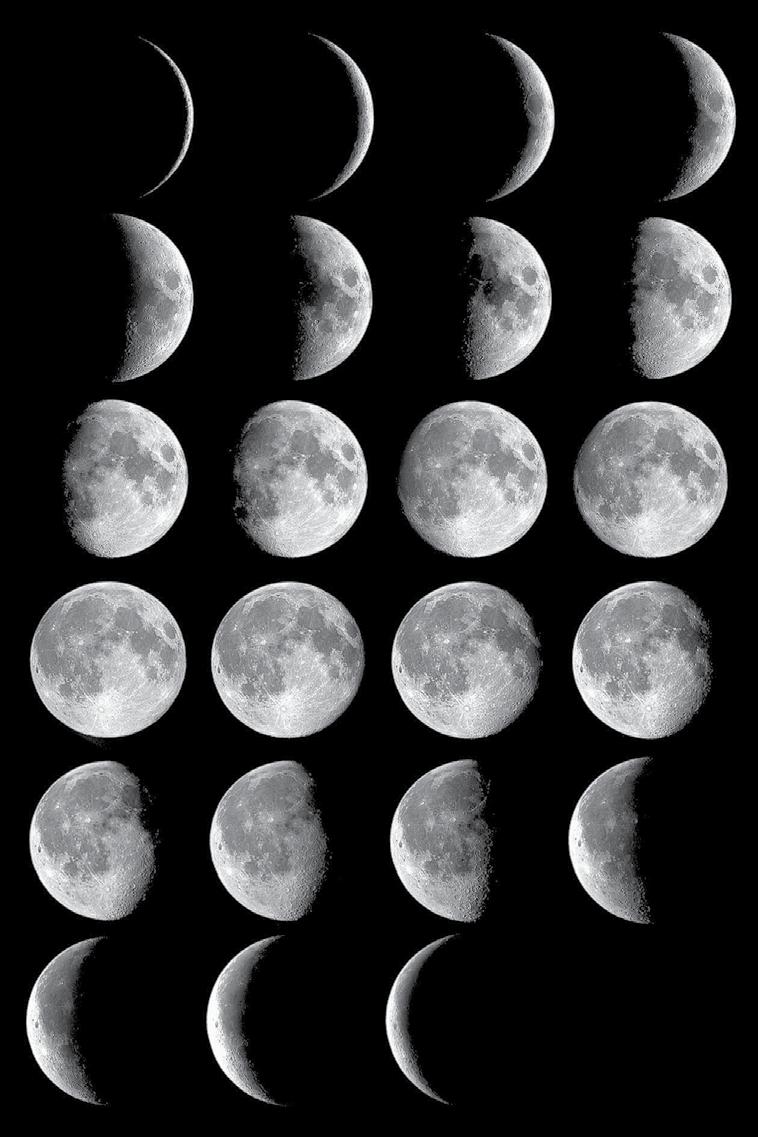
LoneOStar Outdoor News TEXAS SUN, MOON AND TIDES Texas Coast Tides Sabine Pass, north Galveston Bay entrance, north jetty Freeport Harbor Port O’Connor Nueces Bay East Matagorda Port Aransas South Padre Island Date Time Height Time Height Time Height Feb 10 2:16 AM -0.38L 8:50 AM -0.30H 1:03 PM -0.32L 6:28 PM Feb 11 3:13 AM -0.42L 6:07 PM -0.18H Feb 12 4:10 AM -0.46L 5:59 PM -0.11H Feb 13 5:05 AM -0.48L 6:18 PM -0.04H Feb 14 6:00 AM -0.49L 7:19 PM 0.01H Feb 15 6:56 AM -0.49L 8:33 PM 0.06H Feb 16 7:56 AM -0.48L 9:47 PM 0.10H Feb 17 8:57 AM -0.47L 11:14 PM 0.12H Feb 18 9:57 AM -0.45L Feb 19 12:55 AM 0.13H 10:52 AM -0.41L Feb 20 2:14 AM 0.12H 11:40 AM -0.35L Feb 21 3:23 AM 0.09H 12:24 PM -0.26L 9:27 PM -0.04H Feb 22 12:04 AM -0.06L 4:39 AM 0.04H 1:06 PM -0.16L 5:57 PM Feb 23 1:06 AM -0.14L 7:10 AM -0.01H 1:47 PM -0.06L 5:45 PM Feb 24 2:04 AM -0.21L 4:48 PM 0.04H P.M. Minor Major Minor Legend: Major=2 hours. Minor=1 hour. Times centered on the major-minor window. For other locations, subtract 1 minute per 12 miles east of a location, and add 1 minute per 12 miles west of a location. 13 Mon 11:06 4:53 11:32 5:19 07:02 06:07 12:43a 11:28a 14 Tue ----- 5:46 12:00 6:14 07:01 06:08 1:49a 12:12p 15 Wed 12:25 6:41 12:56 7:11 07:00 06:09 2:57a 1:05p 16 Thu 1:21 7:37 1:53 8:09 07:00 06:10 4:04a 2:07p 17 Fri 2:19 8:35 2:51 9:07 06:59 06:10 5:06a 3:17p 18 Sat 3:17 9:33 3:49 10:04 06:58 06:11 6:02a 4:31p 19 Sun 4:15 10:30 4:45 10:59 06:57 06:12 6:49a 5:45p 20 Mon 5:12 10:54 5:39 ----- 06:56 06:13 7:30a 6:57p 21 Tue 6:07 11:51 6:33 12:20 06:55 06:14 8:06a 8:05p 22 Wed 7:02 12:50 7:27 1:14 06:54 06:14 8:39a 9:09p 23 Thu 7:57 1:45 8:20 2:09 06:53 06:15 9:11a 10:13p 24 Fri 8:50 2:38 9:14 3:02 06:52 06:16 9:43a 11:15p 8:45 2:34 9:05 2:55 9:32 3:21 9:54 3:43 10:21 4:09 10:44 4:33 13 Mon 11:12 4:59 11:38 5:25 14 Tue ----- 5:51 12:06 6:20 15 Wed 12:31 6:46 1:02 7:17 16 Thu 1:27 7:43 1:59 8:15 17 Fri 2:25 8:41 2:57 9:13 18 Sat 3:23 9:39 3:54 10:10 19 Sun 4:21 10:36 4:50 11:05 20 Mon 5:18 11:00 5:45 ----21 Tue 6:13 12:01 6:39 12:26 22 Wed 7:08 12:56 7:32 1:20 23 Thu 8:02 1:51 8:26 2:14 24 Fri 8:56 2:44 9:20 3:08 New Feb 20 0.58H 0.59H Date Time Height Time Height Time Height Feb 10 12:26 AM 0.28L 5:58 AM 0.72H 11:53 AM 0.19L 6:32 PM Feb 11 1:08 AM 0.07L 7:56 AM 0.72H 12:24 PM 0.46L 6:40 PM Feb 12 1:55 AM -0.15L 9:50 AM 0.82H 1:03 PM 0.74L 6:41 PM Feb 13 2:45 AM -0.39L 3:40 PM 1.01H Feb 14 3:40 AM -0.61L 1:35 PM 1.23H Feb 15 4:42 AM -0.81L 2:27 PM 1.39H Feb 16 5:46 AM -0.97L 3:11 PM 1.48H Feb 17 6:44 AM -1.07L 3:46 PM 1.49H Feb 18 7:42 AM -1.09L 4:17 PM 1.43H 9:41 PM 1.10L Feb 19 12:45 AM 1.22H 8:41 AM -1.00L 4:44 PM 1.32H 9:48 PM 0.93L Feb 20 2:08 AM 1.27H 9:41 AM -0.83L 5:08 PM 1.19H 10:12 PM 0.68L Feb 21 3:25 AM 1.29H 10:34 AM -0.56L 5:30 PM 1.06H 10:47 PM 0.40L Feb 22 4:37 AM 1.26H 11:23 AM -0.21L 5:50 PM 0.96H 11:28 PM 0.13L Feb 23 5:53 AM 1.18H 12:12 PM 0.16L 6:05 PM 0.90H Feb 24 12:15 AM -0.09L 7:32 AM 1.12H 1:13 PM 0.52L 6:13 PM 0.88H Height 0.23H 0.25H 0.31H Feb 15 4:53 AM -0.95L 3:39 PM 0.77H Feb 16 5:53 AM -1.05L 4:26 PM 0.82H Feb 17 6:54 AM -1.10L 5:04 PM 0.82H Feb 18 7:53 AM -1.09L 5:29 PM 0.75H Feb 19 8:50 AM -1.01L 5:41 PM 0.65H 10:13 PM 0.54L Feb 20 1:27 AM 0.62H 9:47 AM -0.85L 5:45 PM 0.53H 10:26 PM 0.36L Feb 21 2:59 AM 0.58H 10:43 AM -0.61L 5:47 PM 0.43H 11:02 PM 0.15L Feb 22 4:24 AM 0.54H 11:41 AM -0.34L 5:49 PM 0.38H 11:47 PM -0.08L Feb 23 5:55 AM 0.50H 12:43 PM -0.04L 5:52 PM 0.38H Feb 24 12:35 AM -0.28L 7:56 AM 0.49H 1:56 PM 0.23L 5:56 PM 0.41H Date Time Height Time Height Time Height Time Height Feb 10 12:25 AM 0.30L 5:47 AM 0.72H 11:58 AM 0.19L 5:58 PM 0.73H Feb 11 12:51 AM 0.10L 7:32 AM 0.75H 1:04 PM 0.46L 5:54 PM 0.70H Feb 12 1:27 AM -0.12L 9:37 AM 0.90H 2:45 PM 0.72L 5:02 PM 0.74H Feb 13 2:09 AM -0.34L 11:28 AM 1.12H Feb 14 2:59 AM -0.54L 12:42 PM 1.33H Feb 15 3:58 AM -0.72L 1:42 PM 1.50H Feb 16 5:11 AM -0.88L 2:40 PM 1.61H Feb 17 6:18 AM -0.99L 3:29 PM 1.64H Feb 18 7:17 AM -1.03L 4:06 PM 1.58H Feb 19 8:13 AM -0.96L 4:32 PM 1.46H 10:27 PM 1.00L Feb 20 1:19 AM 1.11H 9:12 AM -0.77L 4:52 PM 1.28H 10:29 PM 0.81L Feb 21 2:46 AM 1.14H 10:11 AM -0.47L 5:06 PM 1.10H 10:45 PM 0.55L Feb 22 4:08 AM 1.15H 11:10 AM -0.11L 5:18 PM 0.95H 11:12 PM 0.27L Feb 23 5:25 AM 1.15H 12:18 PM 0.27L 5:27 PM 0.85H 11:50 PM 0.03L Feb 24 7:06 AM 1.15H 1:52 PM 0.61L 5:30 PM 0.82H Date Time Height Time Height Time Height Time Height Feb 10 2:16 AM -0.38L 8:50 AM -0.30H 1:03 PM -0.32L 6:28 PM -0.24H Feb 11 3:13 AM -0.42L 6:07 PM -0.18H Feb 12 4:10 AM -0.46L 5:59 PM -0.11H Feb 13 5:05 AM -0.48L 6:18 PM -0.04H Feb 14 6:00 AM -0.49L 7:19 PM 0.01H Feb 15 6:56 AM -0.49L 8:33 PM 0.06H Feb 16 7:56 AM -0.48L 9:47 PM 0.10H Feb 17 8:57 AM -0.47L 11:14 PM 0.12H Feb 18 9:57 AM -0.45L Feb 19 12:55 AM 0.13H 10:52 AM -0.41L Feb 20 2:14 AM 0.12H 11:40 AM -0.35L Feb 21 3:23 AM 0.09H 12:24 PM -0.26L 9:27 PM -0.04H Feb 22 12:04 AM -0.06L 4:39 AM 0.04H 1:06 PM -0.16L 5:57 PM -0.03H Feb 23 1:06 AM -0.14L 7:10 AM -0.01H 1:47 PM -0.06L 5:45 PM -0.00H Feb 24 2:04 AM -0.21L 4:48 PM 0.04H Date Time Height Time Height Time Height Time Height Feb 10 2:20 AM -0.14L 8:11 AM -0.06H 1:27 PM -0.15L 7:20 PM -0.01H Feb 11 2:59 AM -0.26L 6:25 PM 0.08H Feb 12 3:48 AM -0.37L 6:10 PM 0.18H Feb 13 4:46 AM -0.46L 6:23 PM 0.29H Feb 14 5:52 AM -0.54L 7:05 PM 0.38H Feb 15 7:03 AM -0.60L 8:04 PM 0.45H Feb 16 8:17 AM -0.65L 9:07 PM 0.50H Feb 17 9:29 AM -0.70L 10:15 PM 0.52H Feb 18 10:31 AM -0.71L 11:38 PM 0.50H Feb 19 11:23 AM -0.67L Feb 20 1:18 AM 0.44H 12:08 PM -0.57L Feb 21 2:51 AM 0.35H 12:49 PM -0.41L Feb 22 4:29 AM 0.24H 1:26 PM -0.22L 8:55 PM 0.04H Feb 23 12:56 AM -0.04L 7:52 AM 0.16H 1:58 PM -0.01L 6:30 PM 0.08H Feb 24 1:53 AM -0.18L 11:10 AM 0.19H 2:11 PM 0.17L 5:26 PM 0.20H Date Time Height Time Height Time Height Time Height Feb 10 12:19 AM 0.10L 5:11 AM 0.32H 11:54 AM 0.05L 5:21 PM 0.34H Feb 11 12:57 AM -0.05L 7:15 AM 0.30H 12:18 PM 0.23L 5:11 PM 0.38H Feb 12 1:37 AM -0.21L 4:37 PM 0.47H Feb 13 2:23 AM -0.36L 3:42 PM 0.61H Feb 14 3:18 AM -0.50L 3:52 PM 0.74H Feb 15 4:22 AM -0.61L 4:30 PM 0.83H Feb 16 5:26 AM -0.70L 5:18 PM 0.86H Feb 17 6:27 AM -0.75L 6:23 PM 0.84H Feb 18 7:24 AM -0.73L 10:55 PM 0.80H Feb 19 8:20 AM -0.65L Feb 20 12:42 AM 0.77H 9:17 AM -0.51L Feb 21 2:12 AM 0.73H 10:16 AM -0.30L 4:37 PM 0.44H 9:38 PM 0.31L Feb 22 3:33 AM 0.68H 11:15 AM -0.07L 4:42 PM 0.44H 11:02 PM 0.12L Feb 23 4:55 AM 0.61H 12:13 PM 0.17L 4:52 PM 0.48H 11:59 PM -0.06L Feb 24 6:49 AM 0.56H 1:11 PM 0.40L 4:59 PM 0.53H Date Time Height Time Height Time Height Time Height Feb 10 12:07 AM 0.51L 5:31 AM 0.81H 11:59 AM 0.41L 5:47 PM 0.83H Feb 11 12:36 AM 0.28L 7:22 AM 0.83H 12:50 PM 0.64L 5:19 PM 0.83H Feb 12 1:13 AM 0.04L 10:05 AM 0.91H 1:58 PM 0.87L 4:36 PM 0.90H Feb 13 1:56 AM -0.20L 1:05 PM 1.09H Feb 14 2:49 AM -0.43L 2:26 PM 1.26H Feb 15 3:50 AM -0.63L 3:23 PM 1.40H Feb 16 4:56 AM -0.77L 4:14 PM 1.47H Feb 17 6:02 AM -0.85L 5:02 PM 1.48H Feb 18 7:05 AM -0.84L 5:42 PM 1.41H Feb 19 8:05 AM -0.72L 6:06 PM 1.27H Feb 20 9:03 AM -0.49L 5:55 PM 1.09H 9:31 PM 1.00L Feb 21 1:59 AM 1.18H 10:00 AM -0.18L 5:19 PM 0.95H 10:04 PM 0.74L Feb 22 3:37 AM 1.16H 10:57 AM 0.17L 5:05 PM 0.89H 10:47 PM 0.46L Feb 23 5:10 AM 1.14H 11:57 AM 0.51L 5:00 PM 0.89H 11:33 PM 0.21L Feb 24 7:01 AM 1.13H 1:02 PM 0.81L 4:50 PM 0.94H Date Time Height Time Height Time Height Time Height Feb 10 6:29 AM -0.12L 12:54 PM -0.04H 3:53 PM -0.06L 9:49 PM 0.11H Feb 11 6:44 AM -0.24L 9:37 PM 0.18H Feb 12 7:11 AM -0.35L 9:21 PM 0.27H Feb 13 7:56 AM -0.43L 9:13 PM 0.35H Feb 14 9:06 AM -0.48L 9:40 PM 0.41H Feb 15 10:27 AM -0.52L 10:33 PM 0.45H Feb 16 11:42 AM -0.54L 11:59 PM 0.46H Feb 17 12:51 PM -0.56L Feb 18 1:54 AM 0.46H 1:51 PM -0.55L Feb 19 3:19 AM 0.44H 2:43 PM -0.50L Feb 20 4:40 AM 0.39H 3:27 PM -0.41L Feb 21 6:08 AM 0.32H 4:05 PM -0.28L Feb 22 7:43 AM 0.23H 4:38 PM -0.12L 10:51 PM 0.10H Feb 23 4:39 AM 0.03L 9:43 AM 0.16H 5:06 PM 0.05L 9:14 PM 0.15H Feb 24 5:29 AM -0.10L 8:41 PM 0.24H
NATIONAL
MINNESOTA
Teen wins world’s largest ice-fishing tourney
At age 13, Zac Padrnos, of Hutchinson, pulled in a 9.45-pound walleye on a pink and white tungsten jig with a wax worm to win the Brainerd Jaycees Ice Fishing Extravaganza on Gull Lake. Nearly 12,000 ice anglers competed at the 33rd annual event, considered to be the largest ice fishing tournament in the world.
Padrnos won the grand prize, a Ford or GMC pickup. He plans to sell the truck and keep the money for his future, including buying a new shotgun to use on the school trap team.
More than 100 volunteers drilled 14,300 holes through the 15 inches of ice for the event.
—Staff report
Bear, stuck in ice, rescued
A bear was rescued Feb. 6 after getting stuck in the deep snow of a ditch in Roseau County. According to Andy Tri, bear project leader for the Department of Natural Resource in Grand Rapids, the adult male bear had been denned up in a culvert that started to flow during a recent warmup and became stuck when he attempted to seek drier cover.
“He tried to push himself out and kind of got wedged on some frozen water that had frozen and thawed and got stuck in place and tired,” Tri said.
Tri sedated the bear and with assistance from conservation officers, used a rope with “paw cuffs” to extract the bear from the deep snow. The bear was in good shape and weighed 375-400 pounds,

After the ordeal, the bear was taken to a new den at Thief Lake Wildlife Management Area in Marshall County.
—MNDNR
SOUTH DAKOTA
First hen houses in state wetlands
Hen houses were installed in the state for the first time as part of an expansion of the program by Delta Waterfowl. Thanks to a gift from John Dale, of Waubay, Delta will place 515 Hen Houses in the state to keep nesting hen mallards out of the reach of mammalian predators. Hen Houses have proved to dramatically boost nest success.
The South Dakota nest structures are large portion of the 2,075 new Hen Houses that will be placed into service this winter. Delta delivery specialists are erecting 450 in Manitoba, 400 in Saskatchewan, 300 in Alberta and 210 in North Dakota. Another 200 Hen Houses are going in as part of graduate
Big blues
Continued from page 8
research in California’s Central Valley.
With the additions, Delta’s Hen House Program will have more than with more than 11,700 nest structures in place for the 2023 nesting season in key breeding areas for mallards.
—Delta Waterfowl
MISSOURI Scholarships for fisheries degrees
The Bass Fishing Hall of Fame is instituting a college scholarship program for students seeking a degree in a natural resource field with the goal of becoming a practicing fishery manager.
Up to $15,000 will be awarded in July 2023 to the selected applicants. Applications are now being accepted at bassfishinghof.com.
“Within many fishery management agencies, there is a definitive need to fill vacant positions with qualified individuals who understand and have a passion for both the sport of bass fishing and the science needed to manage those fisheries,” said BFHOF Board president John Mazurkiewicz. Scholarship applicants must be a high school senior who has committed to enroll or be an undergraduate and graduate student currently enrolled in a four-year college, university, or accredited graduate program. They must declare or have declared a major in biology, aquatic ecology, fisheries, marine science, or a closely related natural resources field.
—BFHOF
ALASKA Bristol Bay protected
On Jan. 30, the Environmental Protection Agency announced it would apply the Clean Water Act Section 404(c) to protect Alaska’s Bristol Bay watershed. This final determination ensures that Bristol Bay and its salmon fishery is permanently protected against the Pebble Mine development.
—ASA OHIO
Deer harvest tops
200,000
Ohio’s 2022-23 white-tailed deer hunting season concluded Feb. 5, with 210,977 deer checked, according to the Ohio Department of Natural Resources Division of Wildlife. The final total represents all deer harvested during archery, gun, muzzleloader, and youth hunting seasons since Sept. 10, 2022. The total represents the first time since 201213 that the number of deer taken surpassed 200,000.
—ODNR
pounds, as well as some larger ones.”
Franklin said the action on Lake Ray Roberts is much more consistent.
“The best catfish are holding in 35 to 45 feet of water along ledges with a gradual slope,” he said. “Drifting has worked well for these fish, and whole shad has been the most productive bait. We’ve seen a lot of catfish recently with shad as large as 1 pound inside of their stomachs.”
Franklin recently guided an angler that caught a 52-pound blue cat.
“On that particular trip, we caught 15 catfish in the 20 to 30-pound range, in addition to the 52-pounder,” he said.
On Lake Conroe, Darrell Taylor said the bite has been fairly consistent near the edges of deep holes along creek channels in 20 to 22 feet of water.
“We are catching mostly channel cats, with some blues mixed in,” Taylor said. “On average the fish have been around 5 pounds, but we have seen some blue cats pushing 15 to 40 pounds as well. Punch bait has been producing the best action.”
North Texas guide Chad Ferguson, has been spending most of his time on Eagle Mountain Lake where he said numbers of quality blue catfish and channel catfish have been coming pretty steady.
“The recent drop in water temperature at the beginning of the month did make
the action from larger fish more consistent,” Ferguson said. “There have been fish up shallow and out deep. I’ve found them anywhere from 45 feet of water up to 1.5 feet of water, and everywhere in between.”
Most of the fish are laying in the mud along the bottom and are somewhat lethargic.
“Points, ledges, humps and other areas with a gradual depth changes have been holding the most catfish,” Ferguson said. “Once you find them, the bite is pretty steady.”
Ferguson has been catching plenty of smaller blue cats with a few each day weighing 20 to 30 pounds or more. Punch bait and cut shad have been drawing the most strikes.
On Richland Chambers, guide Chris Moody said he has been drifting over 30 to 35 feet of water along main creek channel areas and open flats with a soft muddy bottom.
“A lot of the fish are laying along the bottom in the mud, and their bellies are pretty muddy when we land them,” he said. “We’ve been catching blue cats consistently up to 45 to 47 pounds, and there are ton of fish in the 20- to 30-pound range out there. Large chunks of fresh cut bait have been working well.”
Suspended slabs
Continued from page 8
“They have been awfully spooky, so you can’t really get your boat right over them. You have to cast or pitch to them from a distance to get them to bite.”
Most of the fish Parker and his anglers are catching are fairly large, and he’s even seen a few topping 3 pounds.
“I have caught and then broken my own personal best record a few times for crappie lately,” he said.
On Cedar Creek Lake, guide Kyle Miers said crappie are suspended and scattered around boat docks and brush piles.
“Boat docks in 8 to 12 feet have been
holding the most crappie,” Miers said. “Brush piles in 18 to 27 feet also have plenty of fish.”
The fish aren’t concentrated in huge schools.
“You really have to target several areas to catch numbers of fish, but for the most part, they have all been in the 11to 14-inch range,” he said. “Lightweight jigs as small as 1/32-ounce have been working the best. The fish are really reacting much better to a super-slow presentation.”
LSONews com LoneOStar Outdoor News February 10, 2023 Page 17
Junior Howell landed this 52-pound catfish on Lake Ray Roberts with guide Trey Franklin. Photo by Trey Franklin.
FEBRUARY 11
DUCKS UNLIMITED

Red River Valley Dinner
Gainesville Civic Center (940) 390-0081 ducks.org
FEBRUARY 11-12
TEXAS GUN & KNIFE SHOWS


Fredericksburg Fairgrounds (830) 285-0575 texasgunandknifeshows.com

FEBRUARY 13
DALLAS SAFARI CLUB
DSC 100 Volunteer Party Empire Room Dallas biggame.org
FEBRUARY 17
COASTAL CONSERVATION ASSOCIATION
Texas State Banquet
Texas Ski Ranch, New Braunfels (713) 626-4222 ccatexas.org
FEBRUARY 17-18
TEXAS DEER ASSOCIATION
Antler Extravaganza
Kalahari Resort, Round Rock (512) 499-0466 texasdeerassociation.com
FEBRUARY 17-19
GUADALUPE RIVER TROUT UNLIMITED Troutfest Lazy L&L Campground New Braunfels grtu.org
DATEBOOK
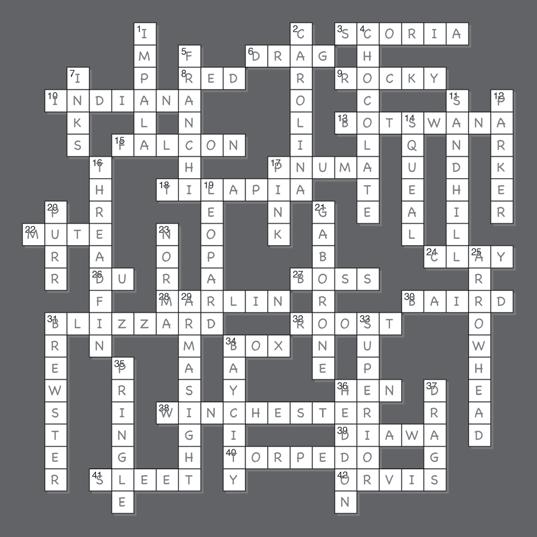
FEBRUARY 18
MULE DEER FOUNDATION


Parker County Banquet
Sheriff’s Posse Rodeo Grounds, Weatherford (817) 565-7121 muledeer.org
FEBRUARY 23
COASTAL CONSERVATION ASSOCIATION

Saltgrass Banquet
Winnie Stowell Community Building (409) 782-7934 ccatexas.org
FEBRUARY 24
NATIONAL WILD TURKEY FEDERATION

Smith County Hunters Gala The Orchard at Martins Pecanville, Bullard (903) 724-1853 nwtf.org
FEBRUARY 25
DELTA WATERFOWL

Lamar County Banquet Love Civic Center, Paris (903) 249-2380 deltawaterfowl.org
ROCKY MOUNTAIN ELK FOUNDATION Hill Country Banquet
Pedrotti’s Ranch, Helotes (210) 854-5093 rmef.org
FEBRUARY 23-25
RICHARDS OUTDOOR PHOTOGRAPHY
Waterfowl Photography Workshop (210) 218-4375 richardsoutdoorphotography.com
FEBRUARY 25-26
TEXAS GUN & KNIFE SHOW
Kerrville Expo Hall (830) 285-0575 texasgunandknifeshows.com


TEXAS FLY FISHING AND BREW FESTIVAL
Mesquite Convention Center, Mesquite txflyfishingfestival.org
FEBRUARY 28-MARCH 19
HOUSTON LIVESTOCK AND RODEO
Ranching and Wildlife Expo and Auction NRG Center, Houston (832) 667-1000 rodeohouston.com
MARCH 2
SAN ANTONIO SCI
Chapter Banquet Aggie Park Brant Center, San Antonio info@scifsanantonio.com
MARCH 2-5
EXOTIC WILDLIFE ASSOCIATION
Membership Meeting Embassy Suites San Marcos info@myewa.org (830) 315-7761 myewa.org
MARCH 4
SAN ANGELO SCI Banquet and Auction First Financial Pavillion sanangelosci.com
TEXAS BRIGADES
Conservation on the River fundraiser Gruene Event Center, New Braunfels texasbrigades.org
Page 18 February 10, 2023 LoneOStar Outdoor News LSONews com
Advertising: Call (214) 361-2276 or email editor@lonestaroutdoornews.com to request a media kit. For home delivery subscriptions www.LSONews.com (214) 361-2276 For home or office delivery, go to LSONews. com, or call (214) 361-2276, or send a check or money order to the address below. Lone Star Outdoor News, ISSN 2162-8300, a publication of Lone Star Outdoor News, LLC, publishes twice a month. A mailed subscription is $35 for 24 issues. Newsstand copies are $3, in certain markets copies are free, one per person. Copyright 2023 with all rights reserved. Reproduction and/or use of any photographic or written material without written permission by the publisher is prohibited. Subscribers may send address changes to: Lone Star Outdoor News, P.O. Box 551695, Dallas, TX 75355 or email them to editor@ lonestaroutdoornews.com. Executive Editor Craig Nyhus Managing Editor Lili Keys Design Editor C2-Studios, Inc. Copy Editor Hannah Bush Operations Manager Mike Hughs Billing & Accounts Payable Lea Marsh Website Bruce Solieu National Advertising Mike Nelson Founder & CEO David J. Sams Puzzle solution from Page 15 $ 4 0 C A L L 2 1 4 - 3 6 1 - 2 2 7 6 O R P U R C H A S E O N L I N E A T L S O N E W S C O M E E N G U L F E D N G U L F E D A photographic celebration of the people, places, and fish around the gulf coast This 112 page, 9 5" x 12 5” is the perfect coffee table book & makes a great gift! includes tax and s&h SINCE 1960 U s e d a n d n e w f i r e a r m s , a m m u n i t i o n , k n i v e s , a n d o p t i c s f o r a l l o f y o u r h u n t i n g , s h o o t i n g a n d p e r s o n a l p r o t e c t i o n n e e d s B U Y I N G , S E L L I N G A N D T R A D I N G G U N S 123 Carroll Rd, Wharton, TX 77488 (979) 532-3175 howdy@carrollsgunshop.com F o l l o w u s c a r r o l l s h u n t i n g f i s h i n g C a r r o l l ' s G u n S h o p
CLASSIFIEDS
TEXAS TROPHY
WHITETAILS
Axis, Blackbuck, Hogs Free range whitetail and exotic hunts in Sonora, TX
www.HuntTexasWhitetails.com
(717) 512-3582
WHITETAIL + HOGS
QUAIL HUNTING
Guided-Self Guided-Training
700 yard RANGE PoetryShootingClub.com
(214) 728-2755
TDHA - JOIN TODAY
23FT FORMULA CUDDY CABIN DEEP V I/O
HUNTING MISC
GUN/ACCESSORIES FOR SALE
Weatherby Vanguard bolt-action
270 Win.
C4 RANCH - WHITETAIL & EXOTIC HUNTS

Cull, Management & Trophies up to 300” Duval County, TX
High Fenced & MLD Managed
10+ Years Vernon Carr (361) 774-2442
DOS HERMANOS RANCH
Trophy Whitetails & Exotics
On 4000 acres near San Angelo, TX doshermanosranch.com
Jake at (208) 477-9065
PATAGONIA ARGENTINA RED STAG HUNTS
100% free range
5 day guided hunts, luxury lodging and meals.
Trophy and management packages available. (210) 748-9392
Brush country whitetail bucks! Doe, management bucks and hog hunts
All-inclusive guided hunts zacatehunts.com (325) 446- 6716

ANTLERS WANTED Buying all species, all conditions. Looking for large quantities Call Del
(830) 997-2263
NEED ARCHERY RANGE? www.TexasArchery.info

AXIS HIDES Tanned axis hides Axis pillows / gbroach@ktc.com (830) 896-6996
Texas Dove Hunters Association TexasDoveHunters.com


(210) 764-1189
EXOTICS + WHITETAIL
Several species Trophy and meat hunts Owner guided Very reasonable Let’s have fun! (325) 475-2100
DUVAL COUNTY South Texas Dove Hunting 65 acres, Lodging RV Power Available Huntershilton.com for more info
(361) 244-0544 or (361) 443-9330

FISHING
BAY FISHING
6 Hour Trip from $275 Port Isabel, TX (956) 551-1965
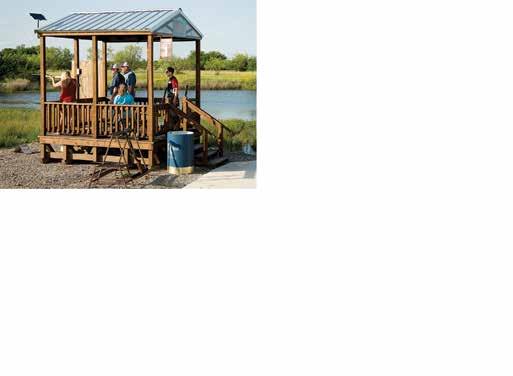
CLASSIFIEDS (PER WORD) $1

Excellent condition Stored indoors, Fully equipped and ready to go as is $5,599.00 rustynailranch7599@outlook.com (903) 390-5466
BAFFIN BAY ADVENTURE Offshore, Nearshore Fishing and Bay fishing at its best! Come enjoy the beauty of Baffin Bay and surrounding areas. Reasonable prices and family oriented! (361) 371-1857
Pelican Vault Single Gun Case Vortex Viper HS Scope Call David (214) 909-2747
SKID STEER BRUSH CUTTING / HYDRO AX
All your clearing needs, right-of-ways, senderos, creek & river bottoms, fence lines etc. South Texas Call Frank (512) 699-5381

LAWN BOY TILLER
5HP Briggs & Stratton Runs Great $250 (830) 708-7160
THE CHIMEY BOX OUTDOOR FIREPLACE
LIKE NEW 2014 NEWWATER showroom condition, stored indoors, 9 ft. T-Top, Front & rear casting platforms, Raised Console, Livewell, 90 HP Yamaha 4 stroke motor, less than 40 hrs. Located in Port Mansfield. $49,500 Call Capt. Steve (956) 492-8472
Great for your hunting camp or backyard Keeps smoke out of your face. New $1,500, asking $800 (214) 695-2950
2
(214)
LSONews com LoneOStar Outdoor News February 10, 2023 Page 19
A PHOTO/LOGO $25 ALL BOLD LETTERS $15
ISSUE MINIMUM
ADD
2
EASY OPTIONS:
CALL THE OFFICE
361-2276, OR E-MAIL: LSONACCT@GMAIL.COM

Page 20 February 10, 2023 LoneOStar Outdoor News LSONews com
