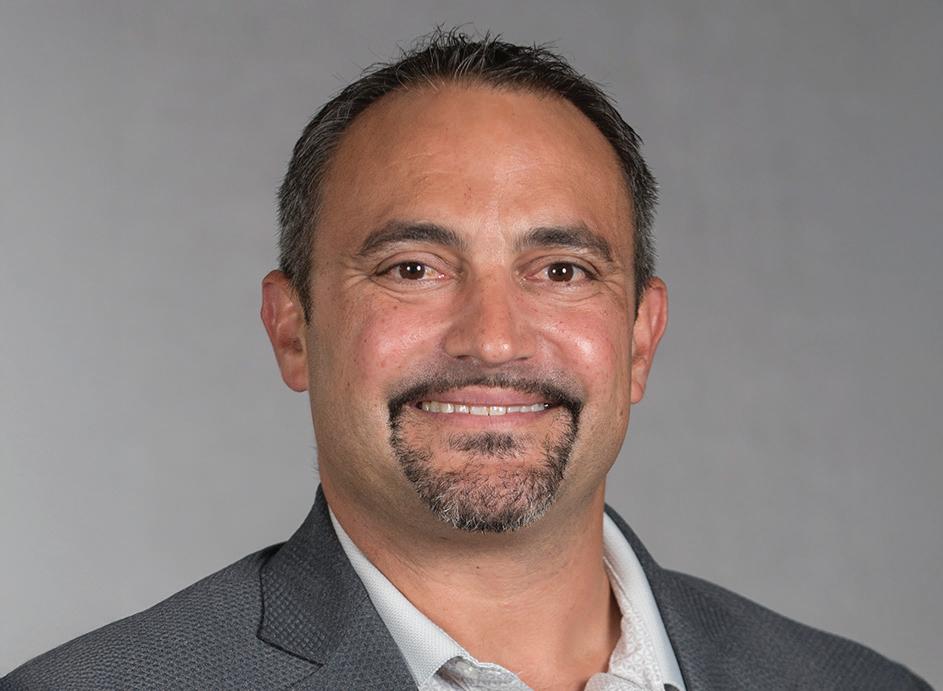
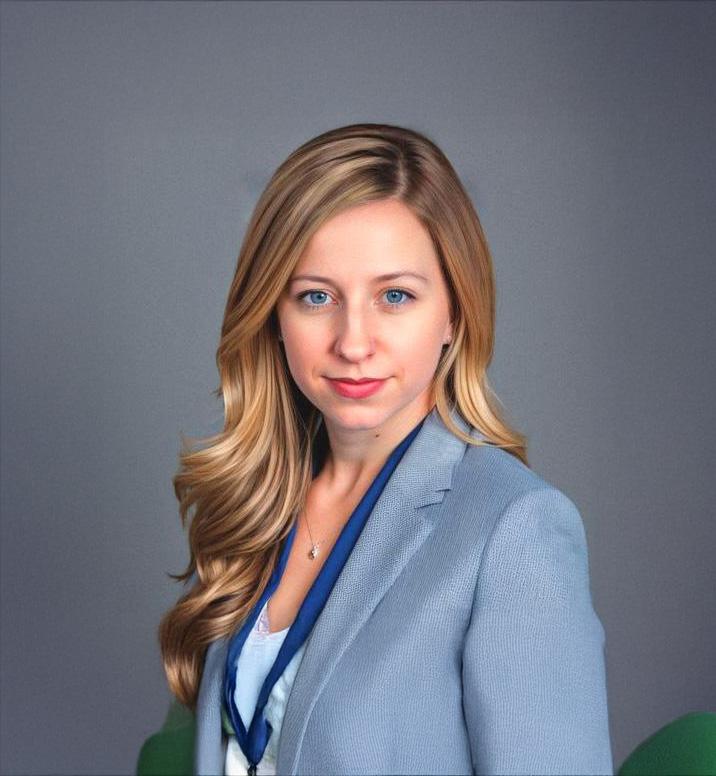
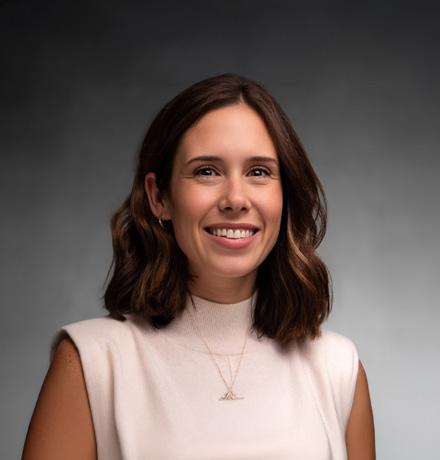
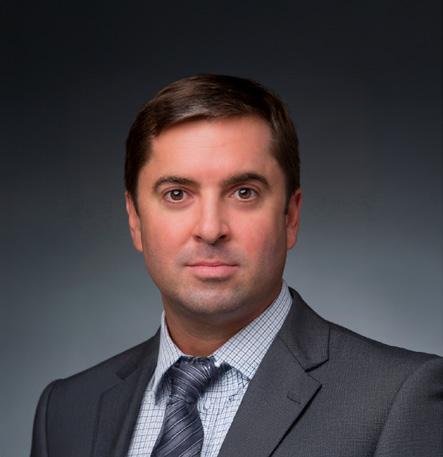
Nicholas Talamantes Sr. Director of Market Intelligence, Contributing Author
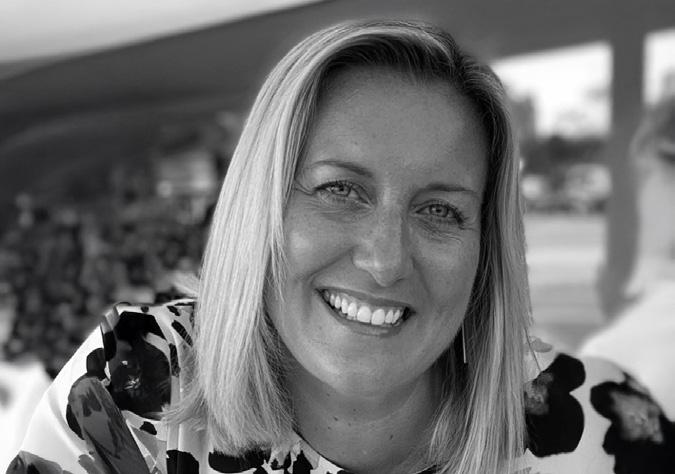
Kelly Williams
Subscriptions & Enterprise Sales
Daniel St Louis Contributing Photographer
Created by LSI, The Lens leverages LSI’s deep industry relationships and proprietary market intelligence to help executives like you build lasting medtech companies. Start your Individual, Group or Enterprise-Wide subscription today!
Scan QR Code to activate your subscription.
(LSI)
714 847 3540 tel/fax email: info@ls-intel.com
Vol. 3, No. 2 February 2026
The Lens is published monthly and available in print and electronic formats. Copyright 2026 by Life Science Intelligence, Inc. All rights reserved. Editor takes care to report information from reliable sources and does not assume liability for information published.
Interested in subscribing? email to: info@ls-intel.com
Interested in advertising? email to: kelly@ls-intel.com
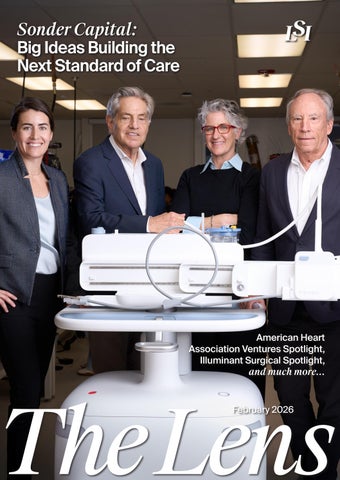
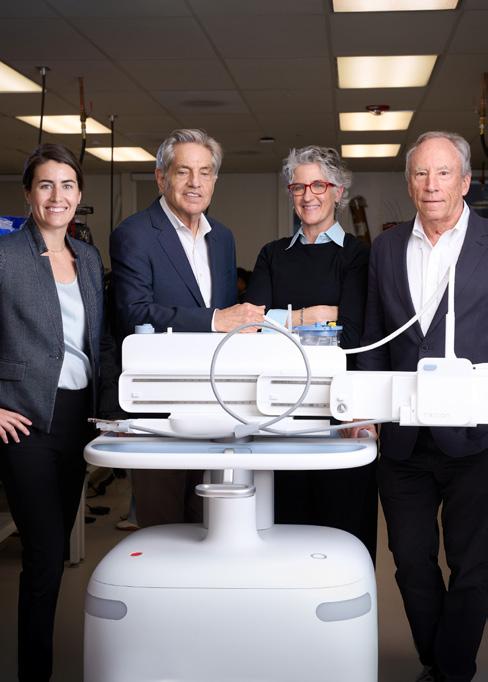
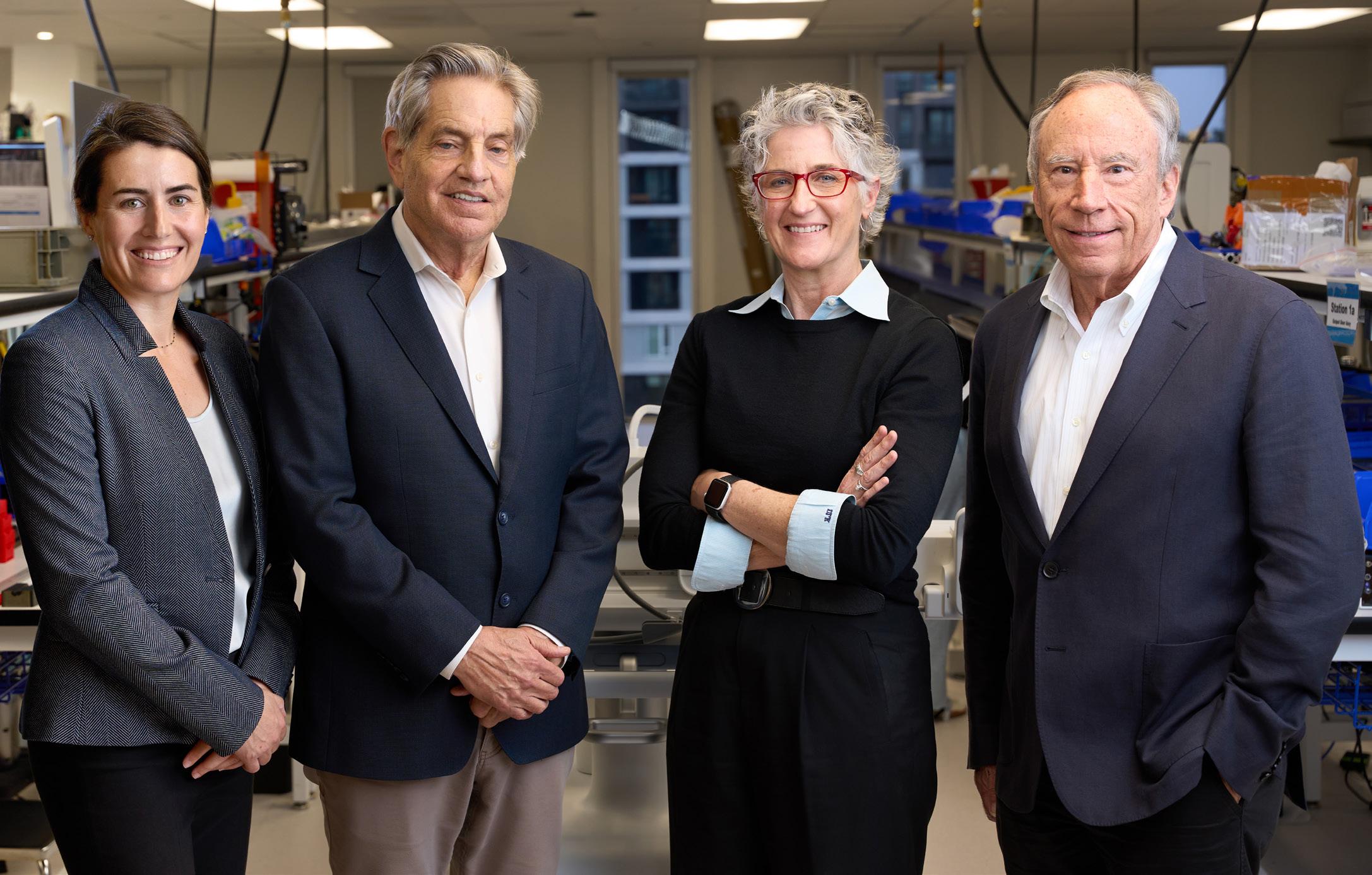
Left to right: Kate Garrett, Fred Moll, MD, Deborah Kilpatrick, and Jay Watkins, onsite at Neptune Medical with the Triton 1 endoluminal robotic system (Source: Dan St Louis, HeadShots Inc.)
Letter from the Editors
Dear Readers,
Medtech has always been shaped by big thinkers. Across the industry, the leaders we are speaking with are leaning into a shared understanding: progress will be driven not by incremental improvements alone, but by platforms and partnerships capable of redefining how care is delivered.
That spirit runs through this edition of The Lens
Our cover story explores Sonder Capital, a firm built by some of the most influential operators in modern medtech. Sonder represents a distinct model of venture, one grounded in deep operating experience and a willingness to pursue the kinds of big ideas that can reshape the standard of care. Their focus on AI-enabled robotics and novel minimally invasive therapies reflects a broader shift toward intelligent systems designed to expand access, improve outcomes, and fundamentally change how healthcare is practiced.
This theme of mission paired with discipline continues in our spotlight on American Heart Association Ventures. Under Lisa Suennen’s leadership, American Heart Association Ventures demonstrates how capital, scientific rigor, and purpose can align to accelerate innovation across cardiovascular and brain health.
We also examine how the infrastructure layer of healthcare is evolving through our feature on NVIDIA and Oath Surgical, and what their collaboration signals about the rise of “physical AI.” As software-defined environments move from concept to reality, the operating room, the ambulatory surgery center, and the broader care ecosystem are becoming increasingly intelligent, connected, and data-driven, reshaping not only how procedures are performed but also how systems learn and improve over time.
All of this momentum will come together next month at LSI USA in Dana Point, which will be our largest summit to date. With nearly 2,000 investors, strategics, innovators, and executives gathering from across the global medtech community, the event will meet the scale and energy of the moment. The conversations happening there about capital formation, innovation, clinical adoption, and the future of care expand on many of the themes explored throughout this issue.
As we look ahead, what stands out most is the collective ambition of the people building in this industry. Whether through operator-led venture firms pursuing transformative platforms, missiondriven investors translating science into care, or technology leaders redefining the infrastructure of healthcare, the through-line is clear: the goal is not simply to innovate, but to create lasting impact for patients around the world.
We are grateful to convene and support this community, and to share the stories of the leaders shaping what comes next.
All the best,
Scott Pantel Chief Executive Officer, LSI Editor-in-Chief
Henry Peck Chief Business Officer, LSI Editor-in-Chief
Hot Takes: Compelling Quotes from Industry Thought Leaders
Need fresh inspiration for your medtech company as we navigate Q126? We’ve gathered insights from some of our LSI alumni thought leaders to help you stay ahead.
“We all fall into FOMO and, with it, a degree of groupthink. Venture is built on backing contrarian insights and unconventional founders, yet in practice, many decisions are influenced by what others are funding, what categories feel validated, or what looks de-risked in the moment.”
— Jeff Chu, Co-Founder & Managing Partner, Features Capital
Direct Statement to LSI
“Because of the uncertainty that we live in, you have to have a resilient organization that can make it past whatever you thought the exit milestone might be. So that means you have to build a real company.”
— Catherine Jennings, President, Peripheral Vascular, Boston Scientific
LSI Asia ‘25 Panel: M&A and Partnerships: How Strategics Approach Asia
“Once you get to the commercial stage, the biggest line item is sales and marketing. If you’re not spending at least 50% of the revenue to upwards of 200% investing in your commercial team, you’re doing something wrong. The bad news is that it crushes your early investors.”
— Brent Ahrens, General Partner, Canaan Partners
LSI Europe ‘25 Debate Session: Including Medtech, Biotech, or Healthtech in Your VC Thesis
“Very often in our business lives, the single most important factor in success is timing.”
— Martin Frost, Chairman of the Board, Hypervision Surgical
LSI Europe ‘25 Signature Series: Hypervision Surgical
“Especially on the therapeutic side, I’ll be the first one to say, you can do all the due diligence you want, you’re rolling the dice. There’s always a certain element of luck to this.”
— Dr. Luc Marengere, Managing Partner, TVM Capital Life Science
LSI Europe ‘25 Panel: Growth Unleashed: Unlocking Potential in Global Markets
“Every one of those strategics basically has the capacity to do anything, but they can’t do everything. That’s allowing us to work with them to find out what those underfunded opportunities are.”
— Andrew Cleeland, CEO, Fogarty Innovation
LSI USA ‘25 Panel: Runaway Brides: Build-to-Buys at the Altar of Consummation (a Guide to Reinsurance)
Power Moves
Celebrating recent leadership shifts and other announcements and accolades impacting our global LSI Alumni medtech community.
Amsel Medical has appointed Jeff Carr, MD, as Chief Medical Advisor, enhancing the company’s clinical, regulatory, and advocacy expertise as it advances novel solutions in vascular and endovascular care. Dr. Carr brings decades of experience as a physician leader, clinical innovator, and national advocate for outpatient endovascular medicine. His career spans clinical practice, registry development, healthcare policy, and executive leadership across both private and organizational settings.
Dr. Carr is the Founder and Medical Director of the Outpatient Endovascular and Interventional Society (OEIS) National Registry, and the Founding and Past President of OEIS. He also serves as a Founding and Current Board Member of the CardioVascular Coalition (CVC) and as a Director of the CVC Political Action Committee. His prior industry experience includes serving as Chief Medical Officer of Venclose, where he provided strategic and clinical leadership supporting innovative vascular technologies, including the launch of the Maven Perforator Catheter prior to the company’s acquisition by BD
In his new role, Dr. Carr will play a key role in advancing Amsel’s commercial strategy in the vascular and trauma space and expanding its clinical footprint through engagement with physicians, stakeholders, and health system partners.
Capstan Medical has appointed Marshall Mohr to its Board of Directors to support the company’s mission of bringing its robotic-enabled, minimally
invasive structural heart solution to market and expanding treatment access for patients. Mohr previously held senior leadership roles at Intuitive Surgical, including Senior Vice President and Chief Financial Officer, and later Executive Vice President of Global Business Services. His appointment comes as Capstan builds on recent clinical milestones and prepares for its next phase of growth.
During his tenure at Intuitive, Mohr played a key role in guiding the company through a period of exceptional growth that helped position it among the most valuable and trusted companies in medtech. He currently serves on the boards of Veeva Systems, Pacific Biosciences of California, and SRI International.
Mohr joins Capstan at a pivotal moment following the successful completion of first-in-human robotic-assisted transcatheter mitral valve replacement procedures in 2025. He brings deep financial and operational expertise as the company advances development of its suite of next-generation heart valve implants and a first-of-its-kind catheter-based robotic delivery platform.
Diality has appointed Michael Alspaugh as its new Vice President of Commercialization. Alspaugh brings 30 years of diverse medtech leadership experience, having led teams across the U.S., Europe, Asia, and Latin America in the renal, medical/surgical devices, and diagnostics markets. His combination of dialysis experience from roles with Gambro, Baxter, and Physidia, combined with time at Abbott and Boston
Scientific, is expected to help guide Diality’s growth aspirations.
The company says that his commitment to patients, customers, and developing highly effective teams is a perfect fit for Diality as it strives to empower patients, inspire innovation, and redefine kidney care.
Diality is developing the Moda-flx Hemodialysis System, a user-friendly, mobile, and connected hemodialysis platform designed to maximize clinical flexibility by combining prescription capabilities of in-center systems with the ease-of-use of next-generation hemodialysis devices.
Invenio Imaging has announced the appointment of Adrian Whitford as Independent Board Director and welcomed Biao He of Oak BioCapital and John Seamans of Michigan Biomedical Venture Fund to its Board of Directors. These additions bolster the company’s leadership as it advances the commercialization of its fresh tissue imaging and artificial intelligence platform.
Whitford brings global commercialization and marketing leadership across
Jeff Carr, MD (Source: LinkedIn)
Marshall Mohr (Source: Cardiovascular News)
Michael Alspaugh (Source: LinkedIn)
Adrian Whitford (Source: LSI Europe ‘25)
oncology and digital health, including his prior role as Worldwide President of the Monarch Robotics and Lung Cancer Initiative at Johnson & Johnson MedTech. He currently serves as President of Biobot Surgical, which focuses on robotic-assisted diagnosis and treatment of prostate cancer, and previously led digital health initiatives dedicated to scaling programs that improve patient outcomes in respiratory and immunology. His strategic insight is expected to help shape Invenio’s commercialization and market strategy.
The expanded board supports Invenio’s focus on improving access to rapid fresh-tissue imaging and AI-enabled analysis in procedure-driven cancer care.
Officer, continuing to support operations alongside Chief Technical Officer and Co-Founder Rebecca Cleary The University of Glasgow spinout is targeting a rapidly growing roboticassisted surgery market, which Nami says is projected to surpass $25 billion by 2030.
The leadership transition was announced alongside the close of Nami’s latest £1.9 million investment round, led by Eos Advisory with participation from Maven Capital Partners and Scottish Enterprise. The funding will support Nami’s transition from advanced development into commercialization, further positioning the company to bring its high-performance ultrasonic technology into next-generation robotic surgical platforms.
go-to-market strategies that achieved unprecedented market growth year over year.
As CEO, Laurel will lead SurgiBox through a critical period of growth, focusing on anchor sales across its distributor network and capital raising to scale global operations. Her leadership comes as the company’s CE-marked, ISO 13485-compliant SurgiField System gains momentum across public and private sector healthcare systems globally, with recent sales in Malaysia and Japan.
Nami Surgical has appointed Nikki Palfrey as Chief Executive Officer, strengthening its leadership team as the company advances toward commercialization of its miniaturized ultrasonic scalpel technology for robotic-assisted surgery. Palfrey brings more than 25 years of leadership experience in the medtech sector, having led companies such as Summit Medical and BOWA Medical UK through phases of growth, transformation, and international expansion.
Palfrey previously served as a NonExecutive Director at Nami Surgical and now steps into the CEO role to guide the company’s commercial strategy and partner engagement. Co-Founder Nico Fenu has transitioned to Chief Operating
SurgiBox has named Kelly Laurel as President and Chief Executive Officer, ushering in a new chapter of global expansion for the company’s award-winning SurgiField System. Laurel succeeds Co-Founder Dr. Mike Teodorescu, who will continue advising the company as a Board Member. Her appointment follows a tenure as Chief Operating Officer and Business Development Director, during which she played a pivotal role in establishing SurgiBox’s international commercial infrastructure, building distribution partnerships across 20 countries, and securing initial sales in 16 countries.
A retired U.S. Army Lieutenant Colonel with more than 35 years of leadership experience across federal service, healthcare innovation, and business development, Laurel brings deep operational expertise to the role. Her military career included senior advisory roles to the U.S. Secretary of the Army and the Army Surgeon General. Following her transition to industry, she joined Siemens as the Director for Federal Healthcare and was responsible for establishing new
TYBR Health has appointed Jeff Tyber to its Board of Directors as the company prepares for commercial growth of its FDA-cleared B3 GEL System for soft tissue protection during post-surgical healing. Tyber brings over 25 years of management, engineering, regulatory, and operational experience. Most recently, Tyber served as Chief Executive Officer and Founder of Tyber Medical, which was acquired by Montagu and subsequently merged with Intech and Resolve Surgical Technologies to form EXALTA Group, where he currently serves as Group President and Board Member.
An industry veteran with deep expertise in the orthopedic extremities and trauma markets, Tyber was a founding member of Extremity Medical and Co-Founder of MedShape. His appointment adds proven strategic and operational insight as TYBR Health commercializes its first-to-market, flowable, bioabsorbable B3 GEL System, which is designed to protect healing tissue in both open and minimally invasive procedures.
Tyber joins the board at a time of accelerating momentum as the company scales its presence in regenerative medicine, with the goal of improving functional restoration and optimizing recovery for patients and providers.
Kelly Laurel (Source: LinkedIn)
Jeff Tyber (Source: EXALTA Group)
Nikki Palfrey (Source: LinkedIn)
John Seamans (Source: LinkedIn)
Select Medtech Industry Financings and Deals
January 2026, by Date Announced
Cedars-Sinai Health System, Intermountain Health, University of Utah Hospital System, Temple University/Fox Chase Cancer Center, Tampa General Hospital, Khosla Ventures, Bold Brain Capital, existing investors
AI
Powered by proprietary insights from LSI Europe, LSI Asia, and LSI USA, Compass AI gives you access to thousands of private company profiles and presentations you won't find anywhere else.
Groupe Pasteur Mutualité, Groupe Etchart, European Innovation Council, FH Founders, existing investors
Odyssée Venture (led), GO Capital (led), Mussallem CHD Alliance, Lift Value, IDAHO HealthTech Club, Sofinnova Partners, Laurent Salomon, Sacha Loiseau, John Gridley
ViCentra Series D Extension Insulin delivery system for people living with type 1 diabetes $13M ROM Utrecht Region, Venturing Tech, Innovation Industries, a consortium of Dutch
Medical Series A Solutions to better cancer care
Series B AI monitoring solution for the operating room
Surgerii Robotics Series D Single-port surgical robot for laparoscopy and transluminal endoscopy
M&A Proprietary, conformable left atrial appendage device to reduce stroke risk
ARTIS Ventures (led), Lachy Groom (led), Western Alliance Life Sciences, 8VC, Y Combinator, Atlantic Bridge, Faber, SciFounders, and others.
Loyal Valley Capital (led), Shanghai Healthcare Capital, V Star Capital, DNV Capital, Hefei Industrial Investment, and a strategic investor
W. L. Gore announced its agreement to acquire Conformal Medical 1/5/2026 Spiro Medical Series A Implantable neuromodulation for asthma and other respiratory conditions
*Currency converted to $USD for data consistency
Andrea Partners (led), Omega Funds (led), Sherpa Healthcare Partners (led), HSG, Supernova Invest, Northern Light Venture Capital, Hero Inc. 1/5/2026
Cover Story Sonder Capital: Big Ideas Building the Next Standard of Care
Founded by some of the most respected business builders and thought leaders in medtech, Sonder Capital is extending a decades-long track record of shaping modern medicine. Through Sonder Futures II, the firm is backing AI-enabled medical robotics and novel, minimally invasive platforms tackling some of the largest markets in healthcare. These intelligent systems are designed to expand access, improve outcomes, redefine what patients can expect from care, and help set a higher standard for how innovation reaches the bedside.
There are moments in medtech when progress feels incremental. Then there are moments when a new standard quietly begins to take shape.
Sonder Capital was built for the latter.
Around the table for our Lens interview sit Fred Moll, MD, Co-Chair, Co-Founder, and Partner at Sonder Capital, co-founder of Intuitive Surgical, and one of the architects of modern surgical robotics; Jay Watkins, MBA, Co-Chair, Co-Founder, and Partner, and a veteran dealmaker who has guided companies across multiple innovation
cycles; Todd Brinton, MD, Venture Partner and a physician-operator who has helped scale cardiovascular platforms from concept to clinical adoption; Kate Garrett, Co-Founder and Managing Partner, a serial medical device entrepreneur whose disciplined leadership anchors the firm’s long-term strategy; and Deborah Kilpatrick, PhD, Partner, engineer, and enterprise builder known for translating complex technologies into durable companies.
Each has shaped medtech individually. Together, they represent something rarer: a shared operating history that
informs how capital is deployed and how companies are built, with a commitment to creating better options for patients that endure.
“Sonder grew out of the conversations happening already between all of us,” says Watkins. “We were very likeminded about both the challenges and the opportunities in the space. And we had a history of working together in various configurations individually over many, many years.”
That history runs through startups and strategic exits, boardrooms and clinical
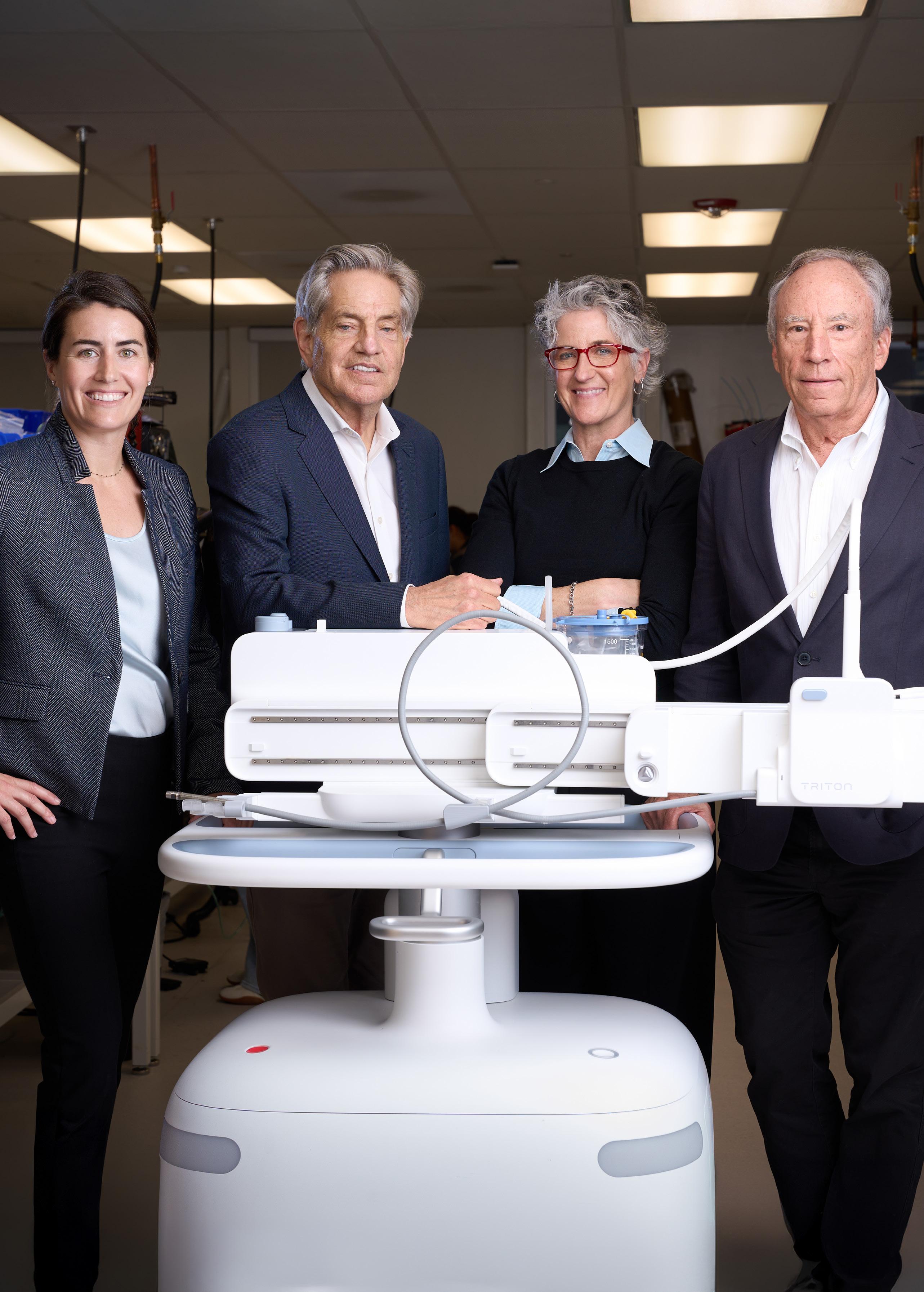
Left to right: Kate Garrett, Fred Moll, MD, Deborah Kilpatrick, and Jay Watkins, onsite at Neptune Medical (Source: Dan St Louis, HeadShots Inc.)
trenches, and the long, often unforgiving work of building technologies that must prove themselves in outcomes, workflows, and real-world adoption. It also runs through a shared recognition that, in medtech, even world-class ideas struggle without world-class execution.
Garrett often cites a line that has become a kind of internal compass: “Our goal at Sonder is that 10 years from now, patients have better options when they walk into the door of the hospital than they do today.”
“That vision and desire to work on the really big ideas and to change the standard of care has been consistent since the firm's inception,” she continues. “We are each intrinsically motivated at the end of the day by patient impact and by the desire to move the needle significantly.”
“We are each intrinsically motivated at the end of the day by patient impact and by the desire to move the needle significantly.”
— Kate Garrett
Garrett is also clear about Sonder’s posture as an investor. The firm is not built for incremental bets.
“We’re not afraid to take on the big ideas,” she explains. “Other investors in the sector may be less inclined to take on the big projects, particularly early in a technology’s development cycle.
But given our operating and entrepreneurial backgrounds, we’re very comfortable doing that. In fact, we love it. And because these big projects can take time to mature, we’re looking for very large markets and high-return potentials. We’re not investing in lowrisk, two-times-return opportunities. A deal we would back typically has a multi-billion dollar TAM, and the technology is the first of its kind in the sector. They’re looking at a problem in a totally different way.”
Garrett has 20 years of experience in the medical device industry as a serial inventor, entrepreneur, and operator across the spectrum of early-stage
startups to large multi-national organizations. Creating better options for patients is her passion, not her job.
The firm is actively investing in two categories the partners believe can reshape the next decade of care: medical robotics and novel minimally invasive therapies.
“Healthcare is facing a care delivery crisis,” Garrett continues, “we don’t have enough clinicians to meet growing demand, and the gap is widening. We must change the trajectory of this problem, and we think both of those categories can help by increasing access for patients, improving outcomes, and fundamentally disrupting our business models so that we can do this in a more capital-efficient way.”
Big Ideas Require a Team Effort
Moll believes the firm’s structure matters as much as its thesis. Big ideas do not simply need capital. They need time, attention, and an operating stance that stays engaged through uncertainty.
“This idea of looking for disruptive technologies that can fundamentally change behaviors in surgery and healthcare generally is the core of what we are trying to accomplish,” he says. “Big ideas take time, energy, and focus. A smaller portfolio gives us the ability to execute on things. In the early days of technologies and big opportunities, there are more unknowns than knowns. It takes time and effort that managing a big portfolio will not allow individual partners to do.”
Sonder’s model is built around a practical truth that the partners have all lived: in medtech, the difference between promise and adoption is rarely a single breakthrough moment. It is the sustained, challenging work of closing gaps in evidence, usability, manufacturing readiness, reimbursement alignment, clinical training, and system fit. Sonder is designed to bring a high-density operator presence to the earliest decisions, long before a story feels inevitable.
Watkins frames the “how” in equally practical terms.
“Medtech is a category that’s difficult,” he says. “Having said that, it gets better when you work in teams, and you can resource and leverage what
(Source: LSI USA ‘25)
Kate Garrett
Co-Founder and Managing Partner
Career Highlights:
• Associate Director of Stanford Biodesign Innovation Fellowship
• Co-founder and CEO of Ciel Medical (acquired by Vyaire Medical)
• Vice President of Airway Technologies at Vyaire
• Strategic Marketing Consultant at Acclarent (acquired by Johnson & Johnson)
• R&D Engineer at Pathway Medical (acquired by Bayer)
Board and Advisory Seats:
• Director at BRIUS
• Director at Spirair
• Director at Neptune Medical
• Director at SquareMind
• Advisor, Jackson Medical
• Advisor, Caltech Fund Advisory Committee
Education/Accolades:
• B.S. in Mechanical Engineering from Olin College of Engineering
• Stanford University Biodesign Fellow
• One of the first recipients of the Ferolyn Fellowship
• 12+ patents in urology, critical care, women’s health, and vascular surgery
Source: Sonder Capital
(Source: LSI USA ‘23)
Fred Moll, MD
Co-Founder and Partner
Career Highlights:
• Co-founder, CEO, and Medical Director of Intuitive Surgical
• Founder and CEO of Auris Health (acquired by J&J)
• Chief Development Officer, J&J Medical Devices Companies
• Founder and CEO of Hansen Medical
• Founder of Restoration Robotics
• Medical Director, Surgical Devices of Guidant Corporation
• Founder and Chief Medical Officer Origin Medsystems
• Founder and CEO of Endotherapeutics Corporation
Board and Advisory Seats:
• Advisor at JP Morgan Life Sciences Private Capital
• Director of Procept BioRobotics
• Chairman of Neptune Medical
• Director at Vitestro
• Director at Insightec
• Chairman at Moon Surgical
• Director at Momentis Surgical
• Director at SS Innovations International
• Former Director, Mako Surgical (acquired by Stryker)
Education/Accolades:
• B.A. in Economics from UC Berkeley
• M.D. from the University of Washington
• M.S. in Management from Stanford University
Source: Sonder Capital
people’s talents uniquely bring to any given challenge in creating high-impact companies. We’ve rolled the team into play where the skills and talents match the development of the opportunity as it occurs over time.”
In other words, Sonder stays fluid. The talent moves to the problem as the company evolves.
“If we can bring the best resources within the group to the problem,” Watkins continues, “we’re going to collectively all do better.”
Not only does Sonder leverage their own operating experience, but they are supported by a world class group of advisors and limited partners including Andrew Weiss, Operating Partner and former CEO of Recor Medical; Joe Mandato, Operating Partner and longtime CEO and Board Director in the medtech space; Roberta Lipson, Operating Partner, Founder, and CEO of United Family Healthcare in China; and Doug Godshall, Limited Partner, and former CEO of Shockwave Medical.
It is venture capital practiced as a team sport.
A Vision for Robotics
Fred Moll, MD, with over 40 years of experience, is an icon in the medtech industry and has been called “the father of robotic surgery.” His inventions have helped pave the way for improved surgical procedures for decades. Moll describes his own origin differently.
“I got very excited at an early age, not by robotics, but by minimally invasive surgery,” he says.
Early laparoscopy promised less trauma and faster recovery, but the tools were rigid, the dexterity was limited, and precision was compromised. The gulf between what surgeons could do with their hands and what they could do through a tube was wide.
“There was a general belief that there’s nothing too terribly wrong with a big incision,” Moll recalled.
That mismatch became a motivating force across his career. It shaped his early work in laparoscopy, then expanded into a new platform era through Intuitive Surgical, the company that helped convert minimally invasive surgery from a technique into an industry.
But Moll does not treat robotics as a finished chapter. He treats it as an evolving infrastructure, especially as computational power changes what the embodiment can do.
“If you step back and look at healthcare and its unique challenges,” he says, “there is an overwhelming need for manual labor, a lot of knowledge together with that manual labor, and then intellect and decision-making at a very high and critical level.”
In Moll’s view, surgical robotics is not only about precision. It is about access, consistency, and scale, and the applications for robotics go well beyond the operating room.
“If you broaden the view of what a robot is, it really is that thing that can be used to accomplish a lot of manual labor, whether it’s diagnostic or therapeutic, whether it’s drawing blood or doing surgery. In an age where computational capability is expanding exponentially, you now have the knowledge base to match with the embodiment that can help with that manual labor.”
Robotics, he emphasized, should elevate the clinician rather than complicate them.
“It puts physicians and healthcare workers in a position to do what they do best, make critical decisions, together with the information and the capabilities of those machines and that software.”
Foresight for the Win
If Sonder’s thesis is long-term, its tactics are tuned to a reality that has shifted quickly. In the last five years, the medtech environment has become both more demanding and more specific in what it rewards.
Capital has become more selective. Timelines have stretched. Evidence expectations have sharpened. Buyers are more disciplined. Health systems are strained, meaning technologies must show clear value to workflow, outcomes, and staffing. The bar for “nice innovation” is higher. The bar for “adopted innovation” is higher still.
Sonder’s answer to this environment is to build companies differently from the start.
One way that shows up is in the firm’s insistence that enterprise value
is created in parallel with de-risking, not afterward. Kilpatrick sees this as a defining edge of an operator-led partnership.
Deborah Kilpatrick, with 30 years of healthcare industry experience, is a passionate innovator working in the evolution of the medtech sector as it rapidly evolves to incorporate multi-modal health data and AI. Her expertise is rooted in a strong foundation in traditional medtech, complemented by her experience in software-as-medical devices and digital health tech.
“Joining Sonder was an incredible opportunity to sit around a table with people with very broad and deep operating experience,” she says, “and focus on building enterprise value beyond capital while simultaneously de-risking that enterprise.”
Enterprise value, in her framing, is not simply growth. It is regulatory clarity, reimbursement alignment, clinical validation, scalable culture, and durable strategy built with foresight rather than reaction.
“I believe our collective operating experience helps us identify failure modes very early,” Kilpatrick added, “and then work with our portfolio leaders to manage through them.”
That idea of early failure-mode recognition shows up in how Sonder approaches clinical strategy, product definition, and market entry. It favors companies that can win because they are built to fit the evolving needs of today’s healthcare systems, not because they are hoping the market will bend just for them.
Watkins is a veteran of the medtech industry with over 45 years of experience. Having bought or sold dozens of companies, he is considered one of the most elite dealmakers in the healthcare field. He offered a related lens on what it means to invest when answers are not yet available, and why Sonder’s “operator confidence” matters more now than ever.
“Sometimes investors look for conviction that comes from answering all of the questions,” he says. “Most of the questions at the beginning of these companies don’t have answers. They’re open.”
Sonder’s conviction is a bet on capability.
This is especially relevant in a market where “proceed until you get to the next round” is no longer a plan. The companies that win are the ones that can earn belief through clear milestones, disciplined spending, clinical relevance, and a credible path to adoption.
Kilpatrick also sees a shift in the setting where care is delivered, which adds another layer of urgency and design constraint.
“The continuing rise of care in distributed settings, in ambulatory care settings, is incredibly important,” she says. “We’re watching carefully to see which product categories will enable care in rural or community settings to be delivered with just as high a patient impact as in urban or academic settings.”
“We’re watching carefully to see which product categories will enable care in rural or community settings to be delivered with just as high a patient impact as in urban or academic settings.”
— Deborah Kilpatrick
This shift rewards technologies that are easier to use, more consistent, less dependent on rare specialists, and more aligned with constrained staffing, and on a global basis. It also rewards intelligent systems that can improve outcomes while reducing burden.
Venture Built on Lived Experience
Brinton brings a unique blend of engineering, clinical practice, and senior executive leadership to Sonder. A trained interventional cardiologist and senior leader at Edwards Lifesciences, he has spent his career at the intersection of cardiovascular innovation and patient care. Before medicine, he began as an engineer in the medtech industry and advanced into clinical
(Source: LSI USA ‘23)
Jay Watkins Co-Founder and Partner
Career Highlights:
• Co-founder of Origin Medsystems (acquired by Eli Lilly)
• Management Committee and President of several divisions at Guidant, including the Minimally Invasive Surgery Group and Heart Rhythm Technologies
• Co-founder of Gynecare (acquired by J&J)
• General Partner at De Novo Ventures
• Founding President of Compass, Guidant’s corporate business development and new ventures group
• Led venture investments in 14 companies, including Impella (acquired by Abiomed) and Intuitive Surgical Board and Advisory Seats:
• Director at Jupiter Endovascular
• Director at uLink
• Board Observer at Neptune Medical
• Chairman at Tissium
• Director at SafeHeal
• Senior Advisor and Faculty Member at Stanford BioDesign
• Former Chairman at RefleXion Medical
• Former Chairman/Director at Shockwave (acquired by J&J)
• Former Director at Cephea (acquired by Abbott)
• Former Director of Gauss (acquired by Stryker)
• Former Chairman at ReCor (acquired by Otsuka)
Education/Accolades:
• B.A. from Stanford University
• MBA from Harvard Business School
Source: Sonder Capital
research and development, experience that still shapes how he evaluates what is technically possible and clinically usable.
This is venture as partnership, not portfolio management.
Sonder Futures II and the Timing Window
(Source: LSI Europe ‘24)
(Source: LSI Europe ‘24)
Todd Brinton, MD Venture Partner
Career Highlights:
• Chief Scientific Officer and Corporate Vice President, Advanced Technology for Edwards Lifesciences
• Founder, Board Member, and Chief Medical Officer of Shockwave Medical
• Clinical professor of medicine (cardiology) and adjunct professor of bioengineering at Stanford University School of Medicine
• Attending interventional cardiologist at Stanford University Medical Center and Palo Alto VA Medical Center
• Fellowship director at Stanford Biodesign
Board and Advisory Seats:
• Board Member for Medical Device Manufacturers Association (MDMA)
• Incoming Board Chair for the American Heart Association Western Region
• Advisory Board member for Stanford Mussallem Center for BioDesign
• Advisory Board Member for the Edwards Lifesciences Center for Advanced Cardiovascular Technology at UC Irvine
• Director at uLink
Education/Accolades:
• B.S. in Biomedical Engineering from the University of California, San Diego
• M.D. from Chicago Medical School
• Internship, residency, and fellowships in cardiology and interventional cardiology at Stanford
Source: Sonder Capital
Brinton joined Sonder as a venture partner several years ago, but his history with the group runs deeper. He has worked alongside Watkins and Moll across companies and boards going back decades, and he has seen what distinguishes firms that claim to be operator-led from firms that truly are.
“There are financial investors,” says Brinton. “And there are strategic investors.”
Sonder, he believes, operates differently. “I would qualify Sonder as a disruptive investor,” he continues. “The goal is to invest in things that truly disrupt medicine.”
“What differentiates this group is that everyone has been in a role as a founder or a CEO,” says Brinton. “They’ve been in a role where they had real responsibility for building something, for carrying something forward.”
“What differentiates this group is that everyone has been in a role as a founder or a CEO. They’ve been in a role where they had real responsibility for building something, for carrying something forward.”
— Todd Brinton, MD
That lived accountability becomes practical support for founders.
Brinton returned repeatedly to one theme: the hard work that separates early promise from clinical reality.
“What separates Sonder is the amount of time and investment in nurturing the team, the entrepreneur, and the early technology,” he continues. “They’ve been there. They know what it’s been like. And they know a lot of the lessons learned and experiences that help teams avoid those challenges and think about how to move the technology forward.”
The Sonder Futures II fund represents a thesis and a timing statement. The partners see an era of platform opportunity emerging from the convergence of robotics, minimally invasive approaches, and advanced computing capability.
“Healthcare, like every other sector of the economy, is benefiting from an incredible up-leveling of computational power and processing capacity,” notes Kilpatrick. “When we talk about the thesis of Sonder Futures II, it’s directly driven by medtech product categories benefitting from that–novel minimally invasive therapies creating a new standard of care, and AI-enabled medical robotics.”
She described the technological shift with a thought-provoking statement.
“These hardware-software combinations, computational power, and new kinds of platform approaches are allowing those categories to do things that in some cases weren’t even thinkable five to ten years ago. And along with that comes new business models as well.”
“These hardware-software combinations, computational power, and new kinds of platform approaches are allowing those categories to do things that in some cases weren’t even thinkable five to ten years ago.”
— Deborah Kilpatrick
Moll agreed that the timing is right.
“In this era of hardware coupled with computational capability and AI,” he says. “It is exactly the right time.”
Watkins summarized the goal in a powerful way.
“We’re looking for things that we could imagine could change everything.”
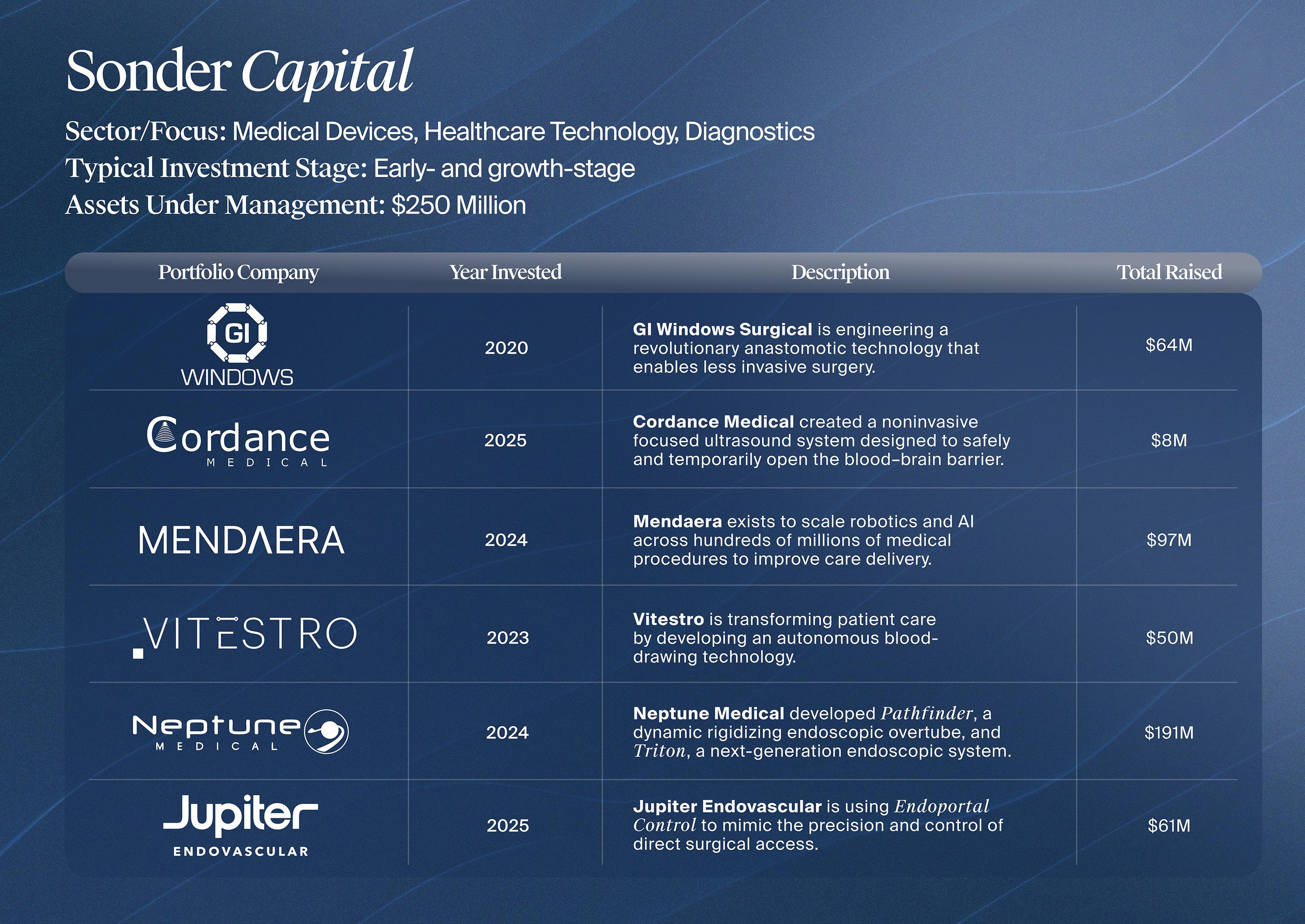
Across Sonder’s portfolio, the theme is consistent: precision, automation, and access. Portfolio medical device, diagnostic, or healthtech companies exemplifying this theme include Vitestro, SquareMind, Cordance Medical, and GI Windows Surgical, to mention a few, alongside Sonder’s work with Neptune Medical and its spinout Jupiter Endovascular, detailed in the next section.
“Manual labor is a real problem in healthcare,” says Moll. “Good, welltrained manual labor that has the knowledge base to be efficient and not make mistakes.”
Automation can be framed as robotics, but he sees it more broadly.
“You can describe it as robotic,” he continues, “or you can describe it as a way to dramatically increase efficiency via automation and using not only hardware, but fancy software to make tasks that still get in the way of healthcare efficiency disappear, or become much less burdensome. “We can argue about where healthcare should go technically, but more efficiency is something that no one’s going to argue about.”
The through-line of the firm’s timing window reflects products that are creating novel patient impact while amplifying the reach of clinical expertise across care settings.
Neptune Medical: Robotic Endoscopy as the Next Step Forward
Sonder portfolio company Neptune Medical is a clear case study of how Sonder moves from thesis to hands-on building.
Neptune Medical designs medical devices built on Dynamic Rigidization technology that toggles thin-walled tubes between flexible and rigid states. Its technology began with a deceptively simple capability.
“That was the entire extent of what was going on there,” says Watkins, describing early impressions. “A technology that could stiffen a catheter and cause it to be flexible at the push of a button.”
For Moll, that mechanism immediately connected to an older pattern, one he had lived through in laparoscopy.
“The reason why I am so personally excited about the future of Neptune,” he says, “is that I spent a lot of my career having an impact in the practice of laparoscopy.”
He described how minimally invasive surgery was once treated as a novelty, and how the gap between technique and toolset kept it from reaching its potential.
“When I was trained in general surgery, laparoscopy got little respect from all surgeons except maybe gynecologists,” says Moll. “The idea of minimally invasive surgery was a new concept.”
The barrier was not ambition. It was dexterity and precision.
“Even in the early days of general surgical laparoscopy,” he continues, “it was clear that it wasn’t very precise, and it was not a match for the dexterity and capability that one had if one made a big incision and used the wrists and the digits.”
That mismatch drove robotics in laparoscopy.
“The fundamental mismatch between the technology and the resulting technique was what gave the opportunity to convert a lot of laparoscopy to robotics.”
Then he pivoted to endoscopy as the modern parallel.
“Given the success of robotics in surgical technique, it’s an inevitability that endoscopy becomes largely a robotic technique.”
— Fred Moll, MD
“If you look at endoscopy,” describes Moll, “it has some very similar features to where laparoscopy was 20 years ago. It is a manual technique. It does not provide precise manipulation of tissue. It is primarily a diagnostic tool, although obviously can be now used therapeutically.”
He believes robotic endoscopy is not an optional upgrade.
(Source: Dan St Louis, HeadShots Inc.)
Deborah Kilpatrick, PhD, Partner
Career Highlights:
• Co-Founder and Director of MedtechWomen and the MedtechVision Conference
• CEO and Executive Chair of the Board at Evidation Health
• Innovation Team Coach at Stanford University Biodesign Fellows Program
• Research Fellow and Director of New Ventures at Guidant Corporation
Board and Advisory Seats:
• Director at Sutter Health
• Director at Jupiter Endovascular
• Director at Sleep Number
• Director at NextGen Jane, Inc.
• College of Engineering Advisory Board (former chair), Georgia Institute of Technology
Education/Accolades:
• B.S. in Engineering Science & Mechanics from Georgia Institute of Technology
• M.S. in Mechanical Engineering from Georgia Institute of Technology
• Ph.D. in Mechanical Engineering, focus in bioengineering and applied math, from Georgia Institute of Technology
Source: Sonder Capital
“Given the success of robotics in surgical technique,” he says, “it’s an inevitability that endoscopy becomes largely a robotic technique.”
Moll framed the technical challenge in a way that makes the opportunity feel intuitive.
“Moving through a tube in the body demands it be flexible,” he says, “but from a control standpoint, it needs the ability to have rigidity significant enough to manipulate tools at the end of that tube in a precise fashion. That is exactly what Neptune can do and will do.”
Then he widened the aperture.
“We think not only about colonoscopy,” he continues, “but upper GI endoscopy, in the urinary tract, in the sinuses, in the vascular system. It is a robotic endoluminal platform.”
The scale is what makes it Sonderworthy.
“I think there’s a fundamental shift in procedures that are numbered in the tens of millions that are done every day around the world that Neptune technology can impact,” according to Moll. “We think it’s one of the fundamental investments we have in fund two. It is emblematic of the kinds of opportunities we’re
looking for, and certainly a special one in my book.”
Brinton described how Sonder engaged with Neptune in operator mode, not just board-level oversight.
“With Neptune, it was getting a deeper understanding of what the capability was,” he says. “We got involved directly with the founding team.”
Then he got hands-on.
“I was doing animal labs trying to understand the core technology,” he says.
That direct work shaped strategic choices and platform expansion.
“It helped us better understand what was possible,” Brinton continues, “and helped the team think about guiding it, to the point where we helped spin out Jupiter from Neptune [to develop a novel endovascular technology platform, while Neptune focuses on gastrointestinal], thinking about what it could be doing for other applications.”
Moll returned to a principle that has guided robotics adoption for decades.
“The big lesson in robotics has been that it doesn’t necessarily have to create a new procedure,” he says. “What it can do is bring existing techniques up to
a superior level for most people, most of the time.”
Neptune, in their view, is not a device story. It is a platform story. It is the kind of platform that can take an existing clinical reality and raise its ceiling, and then broaden its reach.
This is where Sonder’s legacy becomes visible: the ability to recognize a mechanism, envision a platform, and build the bridge in between.
The Heart Behind the Method
Watkins, in particular, wanted to make sure Sonder’s discipline doesn’t read like a set of investing criteria.
“There’s a challenge in all this,” he says. “You’re hearing us describe what can sometimes feel like a formulaic approach, and it could honestly come off feeling a little dry.”
Then he explained what actually drives Sonder: the ability to recognize possibility early, and to respond to it with genuine energy.
“What I enjoy about this group,” adds Watkins, “is that when we are at our
Left to right: David Mintz, CTO and SVP Product Development, Fred Moll, MD, Chairman of the Board, and Alex Tilson, Founder and CEO, Neptune Medical, onsite at Neptune Medical with the Triton 1 endoluminal robotic system (Source: Dan St Louis, HeadShots Inc.)
best, we can see that kind of innovation and bring some sort of kid-like energy to appreciating where that could possibly go.”
He described how rare that is, even for people with decades in the game.
“I’ve been doing that with Fred for 34 years,” he continues, “and he still gets as excited today as he did back then. That’s pretty rare.”
When people ask what Sonder is looking for, Watkins offered an answer that feels like a compass.
“If we see something that we can begin to believe could change everything for patients, that’s worth it.”
— Jay Watkins
“Fundamentally, if we see something that we can begin to believe could change everything for patients, that’s worth it.”
He tied it to a legacy that becomes both confidence and obligation.
“Every day we wake up, somewhere in the world, in some cath lab or operating room, there’s a patient who’s being treated by something we’ve touched,” says Watkins. “Every single day.”
“When you’ve had the opportunity to create things that have that enduring kind of role and impact on patients,” he continues, “you get drawn back to the beginning to wonder whether you can do it again.”
Sonder’s North Star
Looking forward, Garrett returns to the firm’s simplest articulation of purpose and the team’s big ideas that are building the next standard of care.
“We go back to what our overarching goal is,” she explains. “That patients have better options 10 years from now walking into the hospital or clinic. That’s what motivates us every single day to do this.”
That north star also shows up in the public conversations Sonder is helping shape across the industry.
“We go back to what our overarching goal is ... That patients have better options 10 years from now walking into the hospital or clinic.”
— Kate Garrett
Garrett is taking to the LSI USA ‘26 stage in Dana Point, CA next month as part of three sessions: “Behind the Funds: How Venture Capital’s LPs Affect the Future of Medtech,” a Mayo Clinic panel entitled “Let’s Build the Future of Healthcare,” and a MedtechWOMEN Moonlight Chat, “Growth. Access. Innovation. Redefined.”
Together, those conversations reflect precisely what the team is building at Sonder: capital that understands where innovation is headed, a partnership approach that expands capabilities, and a commitment to redefining the delivery of care in ways that ultimately give patients better options.
Jay Watkins and Kate Garrett in the garage where Sonder portfolio company Spirair's SeptAlign product, a novel minimally invasive approach to septoplasty, was first incubated. (Source: Dan St. Louis, HeadShots, Inc.)
NVIDIA, Oath Surgical, ASCs, and the Future of Physical AI in Healthcare
Today, not a minute goes by without news about the AI giants. Financings, acquisitions, large-scale buildouts, and more.
It’s understandably easy for something like the recently announced collaboration between Oath Surgical and NVIDIA to be gleaned and missed as part of the AI milieu.
But, it shouldn’t be.
This announcement was the catalyst for the LSI team to reach out to the leaders at Oath Surgical and NVIDIA, and dissect the real signals we are seeing from NVIDIA’s increasing integration into the healthcare industry.
This partnership is significant for many reasons. At the macro level, it is as clear an example as any of where healthcare is actually heading, and how platform companies like NVIDIA are positioning themselves as the operating system for AI-native care delivery.
To understand why this matters, our team created this special edition of The Numbers, unpacking what Oath is building, why NVIDIA is involved, and what this combination signals for the broader medtech and healthcare ecosystem.
Special thank you to the leaders at NVIDIA and Oath for sharing their perspectives on what the next generation of healthcare delivery will look like.
What Oath Surgical Is Building
Oath Surgical is building OathOS, a software and AI-defined operating layer that sits on top of existing infrastructure, integrating with sensors, video, imaging systems, and medical devices already in place in the OR.
Oath’s model is focused on the ambulatory surgery center (ASC), the site-of-care where the majority of all surgical procedures are now performed in the U.S.
Rather than requiring greenfield builds, Oath’s model allows ASCs to:
• Upgrade intelligence without rebuilding facilities
• Improve operational performance using real-time, ambient data
• Adopt AI-native workflows incrementally
In effect, Oath is targeting the “installed base” of outpatient surgical facilities, as opposed to just new centers. And it’s paying off, as Oath is already active across 30+ surgical centers.
In Portland, for example, the company has centers including Oath West and Oath Central, which are “premium and technology-supported surgical centers” that “are multi-specialty, including general surgery, urology, urogynecology, gastroenterology, pain management, neurosurgery, spine, and other specialties.”
Rather than treating AI as a bolt-on, Oath is designing centers where:
• Video, audio, robotics, and device data are captured continuously
• AI models interpret workflows and spatial context in real time
• The environment itself becomes an intelligent participant in care delivery
Oath is led by Dr. Oliver Keown, MD, the former head of Intuitive Ventures and a long-time LSI Alumni. In Oliver’s assessment, complex surgical care will continue to move to outpatient settings, and the facilities delivering it must evolve accordingly.
“We believe the future of complex surgical care is outpatient and that the center of gravity will soon shift to ‘outpatient until proven otherwise’ as quality-first delivery models like Oath scale. That means the entirety
of the $1TN+ surgical care delivery market is in scope for our nextgeneration outpatient platform.”
The Oath-NVIDIA Partnership
Through this new partnership, the tech giant is supplying the underlying AI infrastructure that makes Oath’s mission possible.
According to David Niewolny, Director of Business Development for Healthcare and Medical at NVIDIA, the collaboration sits squarely with NVIDIA’s vision for where healthcare is heading through Physical AI:
“The
transition to physical AI, where AI models are no longer confined to screens but are physically integrated into the clinical environment to perceive, reason, and act in real time, brings great opportunity. Working with medical device leaders, we can bring advanced spatial intelligence to the operating room, transforming static hardware into software-defined, autonomous and semi-autonomous systems.”
This framing is important. NVIDIA isn’t talking about better dashboards or post-hoc analytics. It’s talking about AI embedded into the physical workflow of care, from surgical robotics to ambient sensing and real-time decision support.
Oath is one of the first care delivery platforms attempting to build around that premise from the ground up. Oliver highlights that this partnership is focused on proving the unique value that premise can unlock:
“We expect to demonstrate the power of a fully integrated and intelligent, ambient, multimodal platform, both physical and AI, on the quality of care delivered to patients as well as the financial and operational performance of our centers.”
The Numbers on the Outpatient Shift
We are constantly speaking with teams in the industry that are trying to quantify and understand the trends in outpatient surgical volumes.
LSI’s Market Intelligence team estimates that the majority (~80%) of all surgical procedures performed in the U.S. are performed in ASCs. That’s approximately 56 million procedures.
At the inception of the ASC movement, these sites of care were initially focused on elective, low-risk, high-volume procedures that were technically simple and financially significant. However, new technologies and models, like what Oath is building, continue to enable the shift of more complex surgical procedures to the ASC.
The shift is driven by a confluence of stakeholders, each with different goals, but all made possible through:
• Patients wanting convenience, without compromising on quality of care.
• Payors wanting lower costs, like what
an ASC can deliver with lower overhead, zero length-of-stay, and high procedural efficiency.
• Providers wanting greater control of their environments (i.e., staffing, workflow optimization, equipment choice).
With these factors in mind, it’s no surprise that the number of ASCs in the U.S. has nearly doubled since 2020, from ~5,900 to over 10,000 active ASCs today.
According to Oliver (and consistent with LSI’s market research), this shift is not confined to the U.S.:
“Care is transferring rapidly … the trend is undeniable … It’s not just a U.S. phenomenon. While the U.S. could be viewed as being ahead, we’re seeing the start of activity in many other
countries and regions, including Europe.”
Enter the opportunity for Oath Surgical and other forward-thinking organizations.
Ambulatory surgery centers are structurally better positioned than traditional outpatient hospitals to adopt next-generation, AI-enabled platforms. ASCs operate with leaner, standardized workflows, more flexible technology infrastructures, and faster decision-making processes than larger hospital systems.
Our friends at AcuityMD, a valuable software provider to help medtech companies grow revenue and a longtime partner of our summits like LSI USA, have published interesting data on ASCs. Some of their findings are detailed in charts 1 and 2 on page 27.
While it is undeniable that infrastructural debt remains a key barrier and growth can vary by region and procedure, platforms like OathOS are
Oliver Keown of Oath Surgical (Source: LSI USA ’25)
David
Niewolny of NVIDIA at the Mayo Clinic Beahrs Surgical Innovation Summit Dinner, co-hosted by LSI and TMG (Source: LSI and TMG)
enabling providers to leapfrog traditional limitations.
The vision to transform ASCs into AInative, high-performance environments sets the stage for impact both within individual procedures and far beyond.
How NVIDIA Thinks in Healthcare
From NVIDIA’s perspective, David notes that NVIDIA’s involvement in medtech, and more broadly healthtech, is increasing as systems become software-defined:
“NVIDIA’s involvement is accelerating rapidly as the industry moves toward software-defined physical systems. The future of healthcare relies on the digital twin of the surgical environment, where physical AI allows for the continuous monitoring and optimization of both the tools and the space they operate in.”
The technical backbone enabling this vision includes platforms like NVIDIA IGX and Holoscan, which are designed to run multimodal AI models directly at the edge, where latency and reliability matter most.
When you hear David’s insights, you start to put the pieces together. These aren’t one-off collaborations. They are part of NVIDIA’s strategy to position itself as a foundational layer across the ecosystem.
When speaking to what NVIDIA is looking for when determining who to partner with, David shared:
“As a foundational platform company, NVIDIA works across the healthcare ecosystem, from early-stage startups to global medical device leaders … we prioritize partners that share a clear vision for the future of AI in healthcare and are tackling complex, high-impact problems.”
Oath certainly checks those boxes.
Where Else NVIDIA Is Embedding Itself
Across multiple domains, NVIDIA is not competing with device companies, pharma, or care providers. Instead, it is becoming the shared compute, simulation, and “AI substrate” that sophisticated systems are built on.
There are a few key areas where their activity is painting a picture.
Surgical Robotics and Physical AI
The synergy between surgical robotics and physical AI is undeniable. NVIDIA has established partnerships or deep technical collaborations with:
• Intuitive: through research collaborations focused on simulation, autonomy, and AI-assisted surgery.
• XCath: with the development of autonomous navigation and digital twins to enhance the company’s platform for endovascular and stroke care.
• EndoQuest Robotics: to integrate NVIDIA’s compute, AI, and visualization technologies into EndoQuest’s flexible endoscopic system.
Medical Imaging and Diagnostics
If surgical robotics is the emerging frontier, medical imaging is where NVIDIA’s position is already entrenched. Major imaging players like GE HealthCare, Siemens Healthineers, Philips, and Canon Medical Systems Corporation have standardized significant portions of their AI pipelines on NVIDIA GPUs and SDKs.
Today, hundreds of FDA-cleared imaging applications explicitly rely on NVIDIA hardware or software for:
• AI-driven image reconstruction
• Real-time guidance
• Workflow automation
NVIDIA has become the de facto compute layer for advanced imaging.
As imaging systems evolve toward realtime AI interpretation and autonomy, replacing that layer becomes increasingly non-trivial.
Biotechnology, Healthtech, and Beyond
NVIDIA partners with established pharma leaders such as Amgen, Genentech, Eli Lilly and Company, and Novo Nordisk, as well as AI-native biotech firms like Recursion, Insilico Medicine, and Schrödinger. Through platforms like BioNeMo and DGX Cloud, NVIDIA supports foun-
dation models for molecular design, large-scale simulation, and integration of wet-lab and dry-lab workflows.
Beyond drug discovery, NVIDIA works with companies such as Illumina, Thermo Fisher Scientific, and IQVIA to make genomic, clinical, and real-world data AI-ready, enabling scalable digital twins of biological and clinical systems.
Why This Matters
AI-native operating environments are still early. Broad adoption will take time, validation, and regulatory comfort.
However, the momentum is building, and NVIDIA is positioning itself as the operating system for the increasingly software-defined healthcare of tomorrow.
In that context, the Oath Surgical collaboration is a key signal and preview of how AI-native care delivery platforms, device manufacturers, and biotech companies may increasingly converge on a shared foundation.
The question is no longer “will AI reshape healthcare?”
It’s “who builds the foundation everyone else ends up standing on?”
1: Specialized, individualized care provided by ASCs may lead to better health outcomes than hospital-based care in general.
(Source: AcuityMD)
2. ASCs offer more cost-effective surgeries than hospitals without compromising the high quality of care. On average, a colonoscopy with a snare lesion removal and a spine laminectomy are each over 40% less expensive in an ASC setting.
(Source: AcuityMD)
allowed costs, ASCs vs. hospitals (2021)
Market Dive
Tissue Heart Valves
Despite declining surgical volume, the global tissue heart valve market is forecast to grow modestly through 2029, driven by rising prices and sustained demand in select patient populations. While transcatheter valves continue to take share, tissue valves remain a critical option for patients who cannot tolerate long-term anticoagulation therapy. Innovation in surgical platforms and materials continues to support this segment.
Market Overview
Tissue heart valves are artificial implants used to replace or repair damaged natural valves. These devices are typically made from animal tissue, supported by a frame and sewing ring, and are preferred for patients who cannot
tolerate lifelong anticoagulation therapy. Although less durable than mechanical alternatives, tissue valves offer advantages in recovery and quality of life.
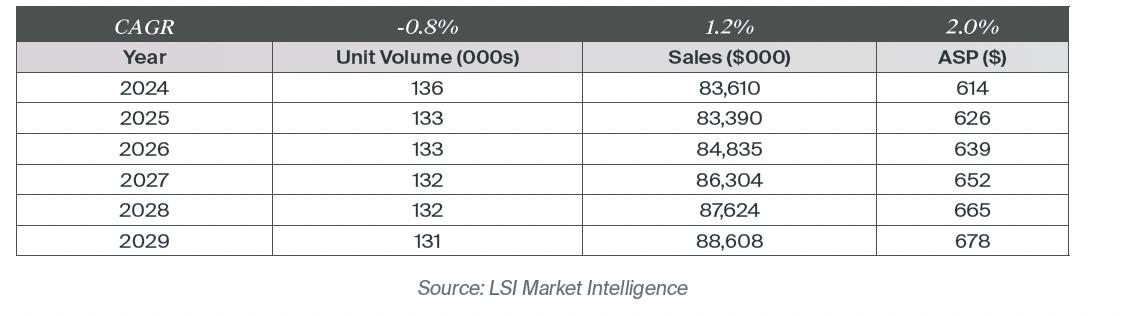
Over the 2024–2029 forecast period, global sales of tissue heart valves are projected to grow at a compound annual growth rate of 1.9%, rising from
$1.28 billion to $1.40 billion. This modest growth is fueled by a 2.6% annual increase in average selling price, which is expected to reach $5,091 per unit by 2029. However, unit volumes are forecast to decline by 0.7% annually, reflecting the continued transition toward transcatheter approaches.
A Market in Transition
Tissue valves represent one of three core segments in the broader heart valve market, alongside mechanical and transcatheter valves. While transcatheter procedures are expected to grow nearly 10% annually, surgical volumes for both tissue and mechanical valves are projected to decline over the forecast period. Total heart valve repair and replacement procedures are expected to increase by 5.6% annually, largely due to expanding transcatheter options and rising global incidence of heart valve disease.
Within the tissue valve category, Edwards Lifesciences and Medtronic remain the dominant players, supported by long-standing platforms and proprietary tissue technologies. Despite the competitive pressure from newer
Global
transcatheter systems, the surgical segment continues to benefit from innovations in valve materials and the ongoing need for durable, biocompatible solutions for select patient populations.
Tissue Heart Valves in the Headlines
In April 2025, Edwards Lifesciences presented eight-year outcomes showing improved durability of surgical valves built with its proprietary RESILIA tissue. The study demonstrated 99.3% freedom from structural valve deterioration (SVD) and 99.2% freedom from reoperation due to SVD, signaling a potential step forward in surgical valve longevity.
In May 2025, the FDA approved the Edwards SAPIEN 3 platform for use in patients with asymptomatic severe aortic stenosis, the first FDA approval for TAVR in asymptomatic patients.
In December 2025, Edwards received FDA approval for the SAPIEN M3 transcatheter mitral valve replacement system, marking the first transcatheter therapy utilizing a transseptal approach to receive FDA approval for the treatment of mitral regurgitation (MR). Oneyear results from the ENCIRCLE trial showed significant elimination of MR and improvements in symptoms and quality of life.
In August 2025, the FDA approved an expanded Redo-TAVR indication for Medtronic’s Evolut system, allowing implantation in patients with failing transcatheter valves. Additionally, in January 2026, Medtronic announced a potential $90 million stake in Anteris Technologies, whose DurAVR valve is being studied in the PARADIGM clinical trial and features anti-calcification technology designed to mimic natural valve performance.
Tissue Heart Valves Market Forecast: by Sales, Unit Volume, and ASP Trends, 2024–2029
Source: LSI Market Intelligence
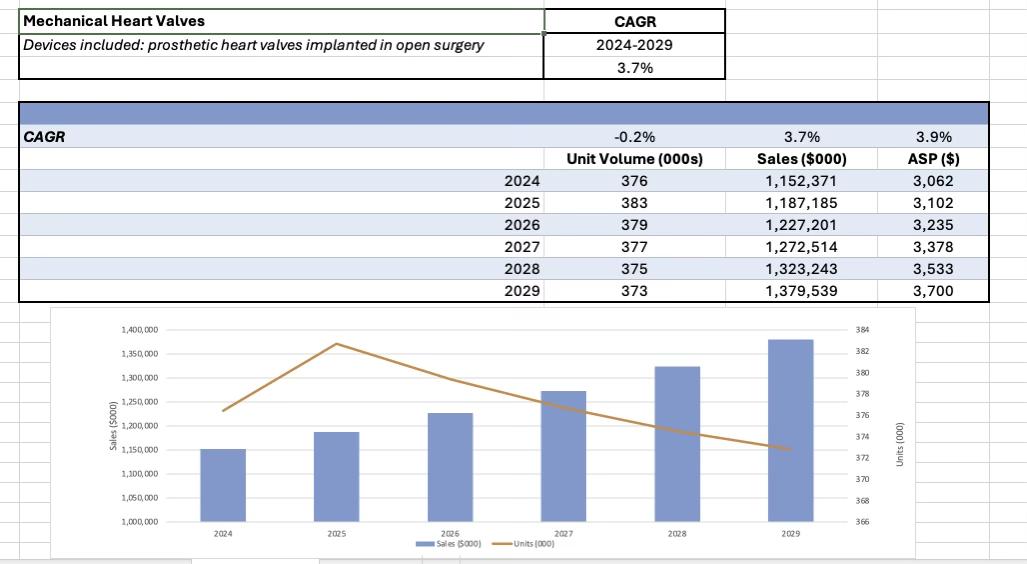
Market Dive Mechanical Heart Valves
While surgical valve procedures are declining overall, the mechanical heart valve market is projected to grow steadily through 2029. This growth is driven primarily by increasing prices, along with sustained relevance among younger patients.
Market Overview
Mechanical heart valves are prosthetic implants used to replace damaged natural valves through open-heart surgical procedures. Made of non-biological materials, these devices offer long-term durability and are typically recommended for younger patients who can tolerate long-term anticoagulation therapy.
Although mechanical heart valves face increasing competition from trans-
catheter alternatives, they remain a cornerstone in structural heart disease management for specific patient populations.
Global sales of mechanical heart valves reached $1.15 billion in 2024 and are projected to grow at a compound annual growth rate of 3.7%, reaching nearly $1.38 billion by 2029. This growth is primarily driven by rising prices, with the average selling price expected to climb from $3,062 in 2024 to $3,700 in 2029. Unit volumes are expected to
decline slightly at –0.2% per year, from 376,000 in 2024 to 373,000 in 2029.
Market Dynamics
Mechanical heart valves are one of three core categories in the broader heart valve market, alongside tissue and transcatheter valves. Total heart valve repair and replacement unit volume is projected to grow at a 5.6% compound annual rate from 2024 to 2029, reflecting the projected rate of increase
in hospital admissions for heart valve disease worldwide, combined with the impact of less invasive transcatheter technologies.
However, the mechanical segment is expected to remain relatively flat in volume due to increasing preference for transcatheter valves, especially in older patients. Unit volume growth in the transcatheter segment is forecast at 10% annually as an increasing number of physicians and patients convert to less invasive therapy and new devices are introduced for additional indications (e.g., mitral, tricuspid, and pulmonary valve treatment).
Mechanical valves, however, are showing pricing resilience. Average selling prices are increasing faster than the overall medical device market, which contributes to modest dollar volume growth despite slight procedural decline.
Key suppliers in this market include Abbott, Medtronic, and Artivion, who collectively command the vast majority of global sales.
Global
Mechanical Heart
Mechanical Valves in the Headlines
New data presented at the 2025 Society of Thoracic Surgeons (STS) annual meeting reinforces the survival benefits of mechanical valves in patients aged 60 and younger. The study, which analyzed more than 100,000 patients in the STS Adult Cardiac Surgery Database, found lower all-cause mortality in younger patients who received mechanical aortic valves versus bioprosthetic valves.
While mechanical valve use declined from 20% to 10% over the study’s 12year period, the findings challenge the recent trend of bioprosthetic transcatheter aortic valve implantation in younger populations. The authors emphasized that these new data could guide more informed clinical decisions and support the continued relevance of mechanical valves in younger patient cohorts.
In February 2026, a team from Centro Nacional de Investigaciones Cardio-
Valves
Market
Forecast:
vasculares and Hospital Clínico Universitario de Valladolid published the first successful demonstration of a catheter-based procedure to treat defective mechanical aortic valves. Historically, when mechanical valves fail, repeat open-heart surgery has been the only treatment option. For many patients, this approach carries prohibitively high risk.
The new approach, called valvein-mechanical, involves transcatheter removal of the mobile discs followed by implantation of a new valve, restoring function without the need for open surgery. The first three patients treated with this method recovered quickly with no major complications, and all remained asymptomatic at six-month follow-up.
This breakthrough suggests that patients with dysfunctional mechanical valves may soon have access to minimally invasive repair options, potentially reducing the need for high-risk reoperations and improving quality of life.
by Sales, Unit Volume, and ASP Trends, 2024–2029
Source: LSI Market Intelligence
Venture Spotlight Capital with a Heart: Inside American Heart Association Ventures with Lisa Suennen
With February being American Heart Month, we’re spotlighting American Heart Association Ventures and its evolution into a disciplined, mission-driven investment platform. Led by veteran venture capitalist Lisa Suennen, the organization bridges the gap between scientific discovery and real-world care, deploying capital across medical devices, women’s health, social drivers of health, and company creation/co-creation to accelerate heart and brain health innovation at scale.
February is American Heart Month, recognizing cardiovascular disease as the leading cause of death for both men and women in the U.S. It also celebrates the research and innovations that are creating meaningful, equitable, and sustainable positive change for cardiovascular as well as brain health patients, and the healthcare system. Despite decades of research, these leading causes of mortality and disability
continue to exact an enormous toll across the entire population, and also uniquely among women, who remain underrepresented in clinical research and unserved or underserved by many existing solutions.
For Lisa Suennen, Managing Partner of American Heart Association (AHA) Ventures, the mission is personal. But the platform she leads is built on strategy and true venture capital discipline.
“You have to connect research to real-world delivery,” says Suennen, in a recent conversation with The Lens. “If innovation never leaves the lab or the pages of a journal, we have not finished the work.”
American Heart Association Ventures was designed to close that gap. The organization is meant to ensure that scientific and clinical discovery makes it into commercial deployment. It bridges
Lisa Suennen (Source: LSI USA ‘25)
the funding and execution gap between research breakthroughs and real-world patient application in the urgent-need landscapes of cardiovascular and brain health, to translate credible science and clinical insight into products, services, and technologies that meaningfully improve patient outcomes.
The Association, founded in 1924, has long fueled the earliest stages of innovation through research grants, clinical guideline leadership, and professional education and certification. American Heart Association Ventures ensures that promising science continues its journey all the way to adoption, across the full spectrum of the healthcare landscape. The team approaches this landscape through multiple lenses, which include medical technology, women’s health, and social drivers of health.
The organization's four funds, detailed here, invest in companies that translate evidence-based science, research, and clinical know-how into commercially actionable, meaningful, equitable, and sustainable positive change for patients and the healthcare system.
The uniquely focused funding platform is supported in part by donors who want to see research translated into clinical impact. When portfolio companies generate returns, those returns are reinvested into future innovation, turning it into a model of regenerative philanthropy. In other cases, they employ an LP strategy that looks like more traditional venture funds. The flexibility and diversity of the platform are among its greatest assets.
For American Heart Association Ventures, success is not defined solely by financial return. Patient impact, clinical relevance, value creation across the healthcare system, and adoption matter just as much. Those goals resonate with entrepreneurs and investors alike, particularly in an era when healthcare systems face mounting cost pressure and workforce strain.
The AHA’s mission, to be a relentless force for a world of longer, healthier lives, is a key driver of the work. The American Heart Association Ventures team firmly believes that one doesn’t have to compromise financial returns to achieve that mission.
“Healthcare is being forced to
change,” says Suennen. “We can fight that reality, or we can design solutions that work within it and improve care at the same time.”
American Heart Association Ventures is an integrated investment platform. And, the work requires more than passion: it demands disciplined venture experience.
A Venture Capitalist at the Helm
Suennen brings more than 35 years of experience across venture capital, operating leadership, and strategy consulting. She has served as a General Partner at firms including GE Ventures, Psilos Group, and Manatt Ventures. She has been an advisor to many funds, including Nina Capital, ANDHealth, PROOF.vc, and Longitude Capital. She has worked inside both corporate venture structures and independent funds.
She has advised early-stage startups and growth-stage companies across digital health, medical devices, diagnostics, services, payor, and provider environments, at the intersection of technology and biotechnology, and has participated as a consultant in the formation and structuring of numerous funds.
Suennen has also been an entrepreneur, helping build successful companies, including Merit Behavioral Care, which she joined at its earliest stage and helped lead through its IPO and sale for over $800 million.
Additionally, she is in her 18th year teaching healthcare venture capital at the Haas School of Business at the University of California, Berkeley
Suennen’s CV meshes perfectly with American Heart Association Ventures, where she offers a compelling leadership lens as a seasoned VC who chose purpose, science, and translation over traditional returns-only models.
“I have spent most of my career focused on one core question,” says Suennen. “How do you take good science and make sure it actually reaches patients in a way that changes outcomes?”
That question has followed her across sectors and business models. It also explains why she ultimately was able to build a venture platform inside
one of the most trusted healthcare organizations in the world.
“A lot of people ask me why I would leave so-called traditional venture to come to the American Heart Association,” she says. “The answer is that the mission here sharpens the work. It does not dilute it.”
Her vision and background shape how American Heart Association Ventures evaluates opportunities. Scientific alignment is necessary, but not sufficient. Companies must demonstrate scalability, reimbursement viability, regulatory clarity, and a credible go-to-market strategy.
“I like to think that I understand what makes a good idea, what makes a good company, and what makes a good venture investment,” she continues. “They are not always the same thing.”
“I like to think that I understand what makes a good idea, what makes a good company, and what makes a good venture investment. They are not always the same thing.”
Mission and Momentum
Suennen explicitly frames American Heart Association Ventures as a strategic fund, akin to a corporate VC, but where the “corporate” is the American Heart Association, bringing scientific credibility, clinical insight, and mission alignment rather than commercial product pull. It also brings a wealth of assets that can help companies advance.
“That means we are thinking every day about impact, evidence, and adoption, not just exits,” she says.
Mission sharpens the focus, but doesn’t soften the standards. “Mission does not replace discipline,” Suennen says. “It requires it.”
In recent months, American Heart Association Ventures has announced
several investments that underscore this approach. Its portfolio highlights continued momentum across cardiovascular innovation, digital health integration, and data-driven solutions aligned with heart and brain health.
“The world is moving away from devices in one lane, services in another, and digital somewhere else,” says Suennen. “The best solutions are designed with all of those elements in mind from the start.”
“Each of our four complementary investment vehicles is distinct by design,” she continues. “And each one has a clear mandate. Together, they reinforce the same mission.”
It is not unusual for large nonprofit organizations to deploy venture capital. What is unusual, Suennen notes, is the breadth of models American Heart Association Ventures spans, from social impact investing to return-oriented commercial investing.
A multi-dimensional structure allows the platform to evaluate opportunities through a wider lens. Investments are assessed not only for technological novelty, but for how well they integrate into care delivery, reimbursement realities, and patient workflows. The portfolio of investment funds work together to address and reinforce the multiple factors shaping health and well-being.
“Our through line is the mission,” she says. “We are connecting science and medicine to the strongest opportunities to drive positive change for people, communities, and the healthcare system.”
Cardeation Capital, the first venture fund built around the AHA mission, was launched in 2018. The fund, which began as a conversation in 2013 between Suennen and AHA CEO Nancy Brown, reflects American Heart Association Ventures’ belief that devices, digital tools, and services must work together to deliver measurable impact.
It launched with a $30 million collaborative venture capital fund designed to spur healthcare innovation in heart
disease and stroke care, and is managed by Aphelion Capital, with the close engagement of American Heart Association Ventures. Today, supported by Philips, UPMC Enterprises, and RTC Ventures, it continues to anchor American Heart Association Ventures’ device innovation strategy.
The fund invests in emerging healthcare and medtech companies that are measurably impacting the prevention and treatment of cardiovascular diseases and stroke, and risk factors, including diabetes, as well as companies driving innovation in the operating room.
Today, the fund manages $73 million in assets and has made 16 early- to midstage investments across its first two funds. The strategy centers on Series A through C medical technologies that address poorly treated cardiovascular and brain health conditions.
Its portfolio includes commercialstage LSI alum Phagenesis, whose Phagenyx System was FDA-cleared via De Novo in 2022 as a neurostimulation device to improve swallowing in patients with severe post-stroke dysphagia. Phagenyx improves swallowing safety and efficiency by restoring the brain’s ability to initiate and coordinate safe swallowing via pharyngeal electrical stimulation (PES).
Additionally, new AHA/ASA clinical practice guidelines recommend that PES can be beneficial to reduce dysphagia severity, decrease the risk of aspiration, and expedite decannulation. In 2025, Phagenesis expanded use of its system to more than a dozen U.S. hospitals, with nearly 200 patients treated.
Another portfolio company, Zeto, is a privately held medtech company focused on transforming the way electroencephalography is done in clinical and research settings. Zeto’s EEG systems, which received FDA clearances in 2018 and 2024, are currently commercially available in the U.S. Another, the cardiac monitoring solutions company BardyDX, was acquired by Hillrom (which was acquired by Baxter International in 2021).
Cardeation reflects the disciplined, device-focused core of the platform.
“This is about bridging the final mile,” emphasizes Suennen. “From research breakthrough to standard of care.”
Go Red for Women: Scaling Innovation in Women’s Heart and Brain Health
Long known as an education and awareness movement, Go Red for Women now extends into venture investing, targeting heart and brain health and related conditions (such as metabolic disorders, autoimmune disorders, and others) that disproportionately, differentially, or distinctly affect women. The fund seeks to mitigate longstanding gaps in research, product design, and care delivery that have left women underserved.
American Heart Association Ventures’ Go Red for Women Venture Fund invests in companies that are translating evidence-based science and clinical expertise into evidence-based products and services specifically intended to drive better heart and brain health outcomes for women.
“There has been enormous attention on women’s health recently, which is overdue,” says Suennen. “But cardiovascular disease and brain health remain the leading threats to women’s lives, and they are still not getting enough focused innovation. Most people don’t realize that cardiovascular disease kills more women annually than all cancers and accidental deaths combined.”
“Cardiovascular disease and brain health remain the leading threats to women’s lives, and they are still not getting enough focused innovation.”
Launched in 2024, the Fund has raised the majority of its target of $75 million, positioning it among the largest venture funds focused specifically on women’s cardiovascular and brain health. The fund has already begun writing checks.
Go Red for Women invests primarily at the Series A and B stages, typically writing initial checks between $2
million and $4 million, with the ability to deploy up to $7 million over the life of an investment.
Its first-ever investment was in September 2025, when it led an $11.4 million Series A round in Neura Health The company is a leading tech-enabled care model that supports a broad spectrum of neurological conditions.
Neura is tackling one of the most persistent, yet often overlooked, bottlenecks in neurological and cardiovascular care: timely access to specialty expertise. In the U.S., an estimated 145 million people live with neurological conditions ranging from migraine and chronic pain to epilepsy, concussion, stroke recovery, dementia, pain, vertigo, and other complex conditions. Yet average wait times of four to six months to see a neurologist are commonplace, especially in underserved and rural communities. For many patients, delayed or fragmented care contributes to worsening outcomes and costly complications.
Neura’s care model combines virtual visits with board-certified neurologists and sub-specialists alongside an intuitive app that integrates symptom tracking, AI-assisted workflows, and personalized education and coaching. The platform blends human expertise with technology to streamline care navigation, helping patients and physicians manage conditions more proactively and collaboratively. By unifying realtime symptom data, structured care pathways, and coordinated follow-up, Neura is designing a system that supports longitudinal care rather than episodic reaction.
For the Go Red for Women Venture Fund, Neura represents a compelling intersection of unmet clinical need and evidence-based design. Many neurological conditions, like migraine and stroke sequelae, disproportionately affect women, yet are too often marginalized in traditional specialty care delivery models. Neura’s virtual model reduces barriers of geography and wait time, making sub-specialty support more accessible and personalized, which aligns directly with the fund’s mission to improve heart and brain health outcomes for women. In Suennen’s view, Neura exemplifies the future of equitable care delivery: technology that supports providers, empowers
patients, and expands capacity where it is needed most.
“Neura is pioneering a new standard of care for neurological conditions, many of which affect women disproportionately or differently,” says Suennen. “By providing faster, more personalized access to care, Neura aligns directly with the Go Red for Women Venture Fund’s purpose.”
The fund subsequently invested in Ultromics, whose EchoGo platform is the first FDA-cleared, AI-driven diagnostic tool that helps clinicians detect heart failure with preserved ejection fraction and cardiac amyloidosis earlier and more precisely. Both conditions are notoriously difficult to diagnose and disproportionately affect women. The technology is built on years of clinical studies and hundreds of thousands of echocardiography scans, reinforcing American Heart Association Ventures’ emphasis on rigor.
Ultromics’ EchoGo platform represents the kind of convergence Suennen referenced earlier: traditional imaging combined with AI, delivered directly into the clinical workflow. Rather than requiring new hardware or additional scanning time, the platform analyzes standard echocardiograms and generates enhanced diagnostic insights within minutes. HFpEF, in particular, has long been underdiagnosed due to the subtlety of its presentation and the limitations of conventional imaging interpretation. By training algorithms on hundreds of thousands of scans, Ultromics is enabling cardiologists to identify complex disease states earlier and with greater confidence.
This company was an ideal fit for the Go Red for Women Venture Fund because, according to the NIH, HFpEF disproportionately affects women, who comprise approximately 60% of cases. Women have a nearly double lifetime risk of developing HFpEF compared to men, with prevalence rising significantly after age 55.
In Suennen’s view, the investment reflects not only alignment with women’s health, but also the belief that data science must integrate seamlessly into care delivery if it is to meaningfully improve outcomes.
“Making sure good science and medical know-how gets to the market is
the whole way we think about this," she says. "We’re old school that way.”
Studio Red: Accelerating Commercialization Through Company Creation
American Heart Association Ventures’ Studio Red represents the platform’s most proactive approach. If Go Red directs capital toward neglected areas, Studio Red goes one step further: it builds.
Through company creation and co-creation, the venture studio targets unmet needs in heart and brain health that traditional venture pathways may overlook, pairing entrepreneurial execution with AHA scientific and clinical assets. It functions as an innovation incubator, sourcing ideas, validating demand, developing go-to-market strategies, and designing solutions before spinning them out or scaling them.
One standout example is Auxira Health, where American Heart Association Ventures and Studio Red are co-creators and investors. Auxira is a virtual cardiology services company that addresses the needs of overwhelmed cardiology practices with teams of experienced advanced practice providers (APPs), reducing physician burnout and increasing patient access. Since launching in 2025, Auxira has grown significantly and has partnered with several major U.S. health systems.
Auxira’s model is designed to embed directly into cardiology practices, rather than being separate or in competition with them. The company deploys precision-matched clinical “pods” consisting of advanced practice providers, registered nurses, and medical assistants who work in coordinated teams to manage follow-up care, chronic disease monitoring, and virtual visits. Patients move seamlessly between in-person and digital touchpoints, allowing cardiologists to focus on higher-acuity and new patients while maintaining continuity of care for existing ones. The result is expanded access without expanding infrastructure, and greater physician and patient satisfaction.
“Patient access and workforce strain are inseparable problems,” says Suennen. “Auxira is designed to address both.”
Another Studio Red portfolio company, MDisrupt, is helping shape a future where emerging healthcare solutions are built on a foundation of clinical rigor and real-world insight. The company’s AI-powered health expert marketplace, which includes professional AHA members, equips health companies to scale smarter and faster. The company recently launched a “clinician-in-the-loop” product that helps companies access AI-savvy clinicians to help design medically accurate algorithms.
Studio Red allows the Association to deploy not only capital, but clinical credibility, scientific knowledge, and national reach at the earliest stages of company formation. The organization partners closely with its network of advisors, mentors, translational researchers, entrepreneurs-in-residence, and co-investors to support innovators.
“We are not just investing,” says Suennen. “We are helping design the future.”
Social Impact Funds: Funding Equitable
(Source: LSI USA ‘24)
Lisa founded and serves as Managing Partner of American Heart Association Ventures, a platform of four venture funds focused on improving outcomes in cardiovascular and brain health. Those funds include Go Red for Women, Cardeation Capital, the Social Impact Funds, and Studio Red.
Lisa has held General Partner and leadership roles at multiple venture funds (GE Ventures, Psilos, Manatt Ventures) and has also held senior executive roles at Canary Medical, and Manatt, Phelps & Phillips, and Merit Behavioral Care (fka American Biodyne), where she
Health and Well-Being
American Heart Association Ventures Social Impact Funds reinforce a parallel truth to the other funds, that clinical excellence cannot overcome systemic barriers alone.
Although not device-focused, the fund supports diverse for-profit and nonprofit businesses that are tackling the social drivers of health: life conditions that have a direct correlation to cardiovascular and neurovascular risk, health outcomes, and longevity. Launched in 2019, the Social Impact Funds address these social drivers through investments, loans, and grants.
More than $45 million has been committed so far to fund 168 nonprofit and for-profit organizations, as of March 2025. Every dollar has been deployed to address needs in under-resourced communities, with more than 12 million people impacted. Notably, most of the fund’s portfolio companies are led by founders with relevant lived experience, and most of the fund’s holdings are in equities of companies serving this sector.
A recent follow-on investment in SIMPLIFIED reflects this approach,
supporting solutions that reduce administrative friction and improve access to post-partum care. Nectar is expanding programs that deliver medically tailored groceries to patients with chronic conditions such as diabetes and hypertension. Pear Suite is an all-in-one care management software for community health workers.
“You cannot improve heart health if you ignore the ecosystem around the patient,” says Suennen.
The Through Line
Four funds with clear mandates, defined strategies, and measurable progress.
Behind it all is a venture capitalist who understands both the economics of scale and the weight of the mission.
“This is one of the few places in venture where you can live the mission every day,” says Suennen.
Capital with a heart is not softer capital. It is capital deployed with intention, backed by science, and disciplined by experience.
And that combination may be exactly what heart and brain health innovation requires.
Lisa Suennen Managing Partner, American Heart Association Ventures
was instrumental in driving company growth from early-stage startup to over $800 million in revenue and 35 million covered lives before and after the company’s IPO and acquisition. Lisa was also founding CEO of CSweetener, a company focused on matching mentors with rising female healthcare leaders, which was sold to HLTH Foundation.
Lisa is a founding member of the Duke Margolis Institute Capital Impact Council. She is past chair of the Scientific Advisory Board of the NASAfunded Translational Research Institute for Space Health, and serves on the
boards and advisory boards of several emerging companies. She also serves as chair of the International Investment Committee of ANDHealth in Australia, and on the advisory boards of Nina Capital and PROOF VC. Lisa is a Fellow of the Aspen Institute’s Health Innovators Fellowship, and has been on faculty and actively teaching at the UC Berkeley Haas School of Business since 2008.
Lisa was featured in the Forbes 2025 List of 50 Over 50. She also writes the Venture Valkyrie blog and is an internationally recognized author and speaker.
MCRA is now part of IQVIA MedTech, giving emerging MedTech companies access to therapeutic specialization, connected data, and integrated solutions from early strategy through global commercialization.
By uniting regulatory, clinical development, evidence generation, and reimbursement expertise, we’re able to support your goals with the same trusted MCRA guidance — now strengthened by the broader capabilities of IQVIA MedTech.
Scan the QR code to book a 20‑minute strategy conversation with IQVIA MedTech + MCRA leaders.
Kelley Kennedy
President, MedTech
John McDermott
President, Reimbursement
Alyssa Howard Vice President, Business Development
Illuminant Surgical is building a new way to see into the body during procedures by projecting patient-specific anatomy directly onto the skin. Co-Founder and Co-CEO Eldrick Millares is leading the company toward a single, ambitious mission: “X-ray vision for the body.” Starting with spine surgery, Illuminant aims to transform surgical access, making procedures faster, more accurate, and more intuitive.
One Mission: X-Ray Vision for the Body
Illuminant Surgical’s story is easiest to understand through the clarity of its north star. As Eldrick Millares put it, “We want to be able to see into the
human body, essentially creating X-ray vision for the body.” The team is chasing that goal without adding friction to the procedure room and without asking surgeons to change how they work.
That mission shows up in the details of the platform, but it starts with a mindset. Millares has spent his career
building at the intersection of hardware and software, first in deep tech and then in medtech. “I started working on LiDAR sensors for self-driving cars,” he said, describing the early foundation that now informs Illuminant’s approach to sensing, tracking, and real-time computation.
Eldrick Millares (Source: Illuminant Surgical)
“We want to be able to see into the human body, essentially creating X-ray vision for the body.”
From Stanford Dormmates to Co-Founders
Illuminant was founded by Millares and his Co-Founder and Co-CEO, James Hu, MD. Their relationship dates back to their freshman year at Stanford University, where they were dormmates, and their complementary backgrounds continue to shape the company’s approach today.
Hu brings the clinician’s and researcher’s perspective. Trained as a bioengineer, he earned his MD from the University of California, Irvine while simultaneously working full time at the startup. “Imagine 80-, 90-hour work weeks where he had to drive from Orange and Irvine all the way up to our offices in Culver City,” Millares said.
Illuminant’s broader team reflects that same cross-disciplinary mindset. The company intentionally recruited software talent from outside traditional medtech, pulling from graphics and video games to rethink how visualization can work in the procedure room. “We get to use amazing technology to model and create realistic 3D characters,” Millares said. “You’ve seen it in Disney and Pixar movies. How hair moves, how muscles move, skeletal animation. We want to bring that same technology into medicine to understand how bones move in real time, how skin and tissue behave, and ultimately achieve X-ray vision into the human body.”
Spine Surgery as the Proving Ground
Illuminant is starting with spine surgery as its initial indication because it is both high-need and high-bar. “Spine is a really forward-looking, innovative market,” Millares said. “It’s complex surgery, and it can take many hours. There’s a really high bar for technology
that makes it into spine surgery.”
The company also has strong clinical proximity to the problem, including advisors who are Co-Directors at the USC Spine Center, and a network that supports rapid iteration. For Illuminant, spine surgery is not just a beachhead; it is a proving ground where a platform has to earn the right to expand.
“There’s a really high bar for technology that makes it into spine surgery.”
Turning the Patient Into the Display
Illuminant’s core bet is that image guidance becomes more intuitive when you remove the mental translation step. Traditional navigation systems often force surgeons to shift their attention between the patient and multiple screens, mentally translating 2D scans into 3D reality. Illuminant’s approach is different: put the information where the work is happening.
“We’re using projectors to project information directly on the patient’s skin,” Millares shared. “Imagine being able to see the bones, blood vessels,
anything that can show up on a scan. We project that in a way that’s spatially accurate, within millimeters of that structure in the body.”
Instead of asking a surgeon to interpret anatomy, Illuminant aims to visualize it in the operative field itself, using dynamic projection mapping that adapts in real time. “As the patient moves, we can adapt the visualization in real time so it remains accurate,” he said. “We’re talking millimeter-level accuracy.” This concept is often described as anatomical projection, and for Millares, it represents a fundamental shift in how surgeons visualize and interact with anatomy during procedures. As Millares explained, “Just as laparoscopic cameras revolutionized minimally invasive surgery, anatomical projection will redefine how doctors interact with anatomy.”
Non-Invasive Registration, Built for Expansion
Accuracy is the prerequisite for trust, and Illuminant built a second core capability to make accuracy practical without invasive workflow burdens. “We’ve developed little stickers you can put onto the patient’s back, arrange them in any pattern, and use them to align the medical image to the patient
(Source: Illuminant Surgical)
“Just as laparoscopic cameras revolutionized minimally invasive surgery, anatomical projection will redefine how doctors interact with anatomy.”
with sub-millimeter accuracy,” Millares said.
This matters because traditional spine navigation can require drilling a reference array into the patient’s hip bone. Illuminant’s approach is designed to be fully non-invasive, faster to set up, and easier to extend into lower-acuity procedures.
Inside the Market Opportunity
Illuminant’s initial focus is spine surgery, but the platform is designed to scale across adjacent procedural categories where image guidance can be both clinically meaningful and operationally limiting today.
Millares cited more than 1.7 million spine procedures annually in the U.S.
alone across fusions, discectomies, and laminectomies. Beyond spine, the company sees expansion into interventional radiology and pain management, where procedure volumes are even higher. “There are nearly 10 million procedures for pain management every year in the U.S.,” he said. Across spine, interventional radiology, and pain management, Illuminant Surgical estimates a $5.6 to $6 billion opportunity for advanced image guidance.
Progress, Proof, and What Comes Next
Illuminant is approaching a major transition point from development into formal verification and validation work. Along the way, the company has built multiple prototype systems and used them to validate performance in preclinical settings.
One milestone that stood out came from porcine model studies that tested accuracy in a highly constrained anatomy. “These are 40- or 50-pound pigs,” Millares said. “Their vertebrae are really small, basically the vertebrae of a small child.”
He described the test result in a way that makes the impact easy to visualize: “James placed eight screws, all right down the middle, achieving our accuracy targets,” Millares said. “If he can
do that, and he’s not a spine surgeon, when we get actual spine surgeons in for cadaver testing, it’s going to be a slam dunk.”
Beyond internal progress, Illuminant has shared its work with the spine community, including a presentation at the Global Spine Congress in Rio de Janeiro. “We had an amazing response from the surgeon community,” Millares said.
Looking forward, the team is preparing for the next stage of testing and regulatory submission planning. “In the next few months, we’re looking to build our V&V units, complete the canonical set of testing, and then take all that data and submit it to the FDA,” Millares said.
A Message to the Next Generation of Builders
In December 2025, Millares and Hu were named to the Forbes 30 Under 30 list in Healthcare, and Millares used the moment to advocate for more young builders entering medtech.
“In our experience building in medical technology for the past four years, it’s clear that there aren’t enough of our peers choosing to work in this space. The classic refrain is that medtech is hard. And it is. It requires rigor in clinical testing, the ability to communicate with regulators, discipline in quality, and patience navigating reimbursement and commercialization. Not to mention the nitty-gritty of research and development and truly understanding the clinical problem. Yet, in my opinion, it’s the best thing I could ever imagine working on. Why not do the hard things to make a profound impact on human life?”
See Millares Live at LSI USA ‘26
Millares has been selected to present at LSI USA ’26, taking place March 16th–20th in Dana Point, CA, where he will share the latest progress toward Illuminant Surgical’s vision for real-time anatomical projection in spine surgery and beyond. As the company advances into its next phase of verification, validation, and FDA preparation, LSI USA will be a key moment to showcase how Illuminant is bringing “X-ray vision for the body” closer to clinical reality.
James Hu, MD (left) and Eldrick Millares (right) (Source: Illuminant Surgical)
LSI Alumni Milestones: Recently Announced Wins
Celebrating the accomplishments of a few of the many bright stars in our LSI presenting company and speaker alumni community.
Be sure to check out presentations from these and many other innovative companies from our recent LSI events, available exclusively in our Compass platform.
AliveCor
AliveCor has received FDA clearance for five new cardiac determinations for its AI-powered Kardia 12L ECG System, bringing the total to 39. The latest update expands the diagnostic capabilities of KAI 12L, the AI powering the system, to include detection of three additional rhythm modifiers: Short PR Interval (Short PR), Atrial Bigeminy, and Ventricular Bigeminy, and two axis-related morphology determinations: Left Axis Deviation (LAD) and Right Axis Deviation (RAD). These additions enhance the clinical utility of Kardia 12L, the world’s first AI-powered, handheld 12-lead ECG system with a unique single-cable design.
Launched in 2024, the portable device delivers rapid, high-fidelity ECG acquisition, helping clinicians rapidly detect life-threatening conditions such as myocardial infarction across diverse care settings. AliveCor has expanded availability of the system into India, Australia, and New Zealand, with European regulatory reviews underway. The system has been adopted by more than 250 practices and has identified over 4,000 instances of myocardial infarction and ischemia.
Aspect Biosystems
Aspect Biosystems and Novo Nordisk have entered a new phase of their partnership to accelerate the
development of potentially curative cellular therapies for diabetes. As part of this expanded collaboration, Aspect has acquired rights to stem cell-derived islet cell and hypoimmune cell engineering technologies from Novo Nordisk and will lead development, manufacturing, and commercialization efforts. Novo Nordisk retains defined rights to expand its role in later stages and will support the program through an additional equity investment and research funding. Novo Nordisk will be eligible to receive royalties and milestone payments on future product sales from Aspect.
To bolster these efforts, Aspect will integrate select Novo Nordisk cell therapy research, development, and manufacturing capabilities from the U.S. and Denmark into its Canada-anchored platform. The companies describe the partnership as a powerful fusion of Novo Nordisk’s century-long leadership in diabetes and Aspect’s leadership in cell therapies, with the shared goal of delivering cellular therapies that could functionally cure diabetes without the need for chronic immune suppression.
EndoQuest Robotics
EndoQuest Robotics has announced two major milestones in its development of endoluminal robotic surgical technology. The company announced new initiatives as part of its collaboration with NVIDIA to integrate NVIDIA IGX
Thor into EndoQuest’s next-generation robotic system. The effort will focus on integrating EndoQuest’s visualization system, robotic control, and secure cloud services using NVIDIA’s Physical AI software stack and aims to deliver real-time image processing, robotic control, and cloud-enabled intelligence in a unified architecture. The platform is being designed as a suite of realtime, image-based solutions supporting intraoperative tissue differentiation, perfusion visualization, and the execution of select autonomous surgical tasks, along with advanced capabilities for remote robotic operation, teleproctoring, and collaborative surgical workflows, all orchestrated and optimized for the lowest latency possible with the NVIDIA Holoscan SDK.
In parallel, EndoQuest received FDA approval to initiate the next and final stage of its pivotal PARADIGM Trial, an IDE study evaluating its Endoluminal Surgical System for use in endoscopic submucosal dissection procedures. The approval follows submission of a report on the safety results from the first set of subjects and allows completion of enrollment ahead of the company’s planned De Novo Classification Request.
GT Medical Technologies
GT Medical Technologies has an-
Priya Abani, CEO (Source: AliveCor website)
Tamer Mohamed, Founder & CEO (Source: Aspect Biosystems website)
Todd Wilson, CMO (Source: LSI USA ‘25)
nounced that the first patients have been treated with GammaTile therapy in the BRIDGES clinical trial, a randomized U.S. study evaluating survival outcomes for patients with newly diagnosed glioblastoma. The trial, titled Beginning Radiation Immediately with GammaTile at Glioblastoma Excision versus Standard of Care, is designed to determine whether radiation delivered at the time of surgery can improve survival in one of the most aggressive types of brain cancer.
The first enrollments took place at Westchester Medical Center and Brown University Health. GammaTile is an FDA-cleared, bioabsorbable collagen implant embedded with radiation seeds, designed to deliver localized therapy immediately after tumor removal. According to the company, this approach eliminates the typical delay between surgery and radiation, targeting residual cancer cells when tumor burden is at its lowest. The BRIDGES trial builds on the momentum of the recently completed ROADS trial for newly diagnosed brain metastases and reflects GT Medical Technologies’ continued commitment to advancing treatment options for patients with brain tumors.
HighLife
HighLife has received CE Mark approval for the HighLife Transcatheter Mitral Valve Replacement (TMVR) System for the treatment of adult patients with symptomatic moderate-severe or severe mitral regurgitation who are deemed unsuitable for surgical repair or replacement and transcatheter edgeto-edge repair. The system is designed as a transfemoral, dual-component valve-in-ring solution capable of treating native mitral annulus sizes ranging from 30 to 53 mm. With CE Mark approval, HighLife will begin a phased commercial introduction across Europe, working closely with experienced structural
heart centers to support physician training and early clinical adoption.
Clinical experience with the HighLife system across multiple countries has demonstrated durable outcomes with sustained reduction of mitral regurgitation to mild or less, durable annular sealing enabled by its sub-annular ring fixation design, and no reported cases of clinically significant hemolysis, clinical valve thrombosis, or left ventricular outflow tract obstruction. Longer-term follow-up has also shown evidence of left ventricular reverse remodeling and improvements in NYHA functional status and quality of life measures. HighLife plans to continue expanding its clinical evidence base while supporting broader European access to this new transcatheter option for patients with limited treatment alternatives.
LEADOPTIK
LEADOPTIK has received FDA 510(k) clearance for its LIA system, the world’s first system to use silicon photonics imaging technology and software designed to improve the accuracy of lung biopsy procedures. The system integrates proprietary silicon metamaterials for depth imaging directly into standard biopsy tools, delivering real-time optical insight at the point of care with “50x better imaging resolution than current technologies.” With clearance covering the consumable biopsy tool, imaging console, and software, the LIA system is intended to address a critical gap in bronchoscopy workflows by helping
physicians confirm that the biopsy tool is actually sampling the target tissue.
According to the company, preclinical data supporting the clearance demonstrated biopsy accuracy exceeding 95%. With FDA clearance secured, LEADOPTIK is preparing for a limited launch and advancing its roadmap toward AI-driven tissue interpretation to provide immediate, actionable insights during interventional procedures.
Proprio
Proprio has received FDA clearance for Picasso, a new feature within its Paradigm platform, marking the company’s fourth FDA-cleared capability. The Paradigm AI platform provides real-time, 3D measurements that allow surgeons to assess spinal alignment intraoperatively. The Picasso clearance expands Paradigm’s surgeon-controlled registration workflow by enabling trace-based optical registration to support intraoperative spinal alignment measurement across a broader range of spine procedures. The radiation-free, trace-based approach is designed to allow surgeons to verify and refine registration optically without requiring CBCT spins or restarting the workflow.
The clearance reflects growing clinical research highlighting the limitations of traditional 2D assessment and the value of richer 3D characterization in understanding spinal anatomy and alignment. Picasso is intended to give surgeons more direct control over registration at the point of care while supporting more precise, measurement-driven surgical workflows. Proprio’s Paradigm platform combines proprietary computer vision, light-field imaging, and AI to provide real-time 3D visualization, intraoperative measurement, and automated data capture to reduce radiation and support more informed surgical decision-making. (Also see: LSI Alumni Innovator Spotlight: Proprio’s Gabriel Jones, The Lens, August 2025.)
Reza Khorasaninejad, Co-Founder & CEO (Source: LSI USA ‘24)
Per Langoe, CEO (Source: LSI USA ‘24)
Gabriel Jones, Co-Founder & CEO (Source: LSI ‘25)
Jose Calle Gordo, Chairman (Source: LSI Europe ‘22)