BROUGHT TO YOU BY THE HOWARD DE WALDEN ESTATE AND THE PORTMAN ESTATE
P.14
ORRERY’S EXECUTIVE CHEF ON SOURCING, SAUCES AND THE CURSE OF INSTAGRAM
P.22
SUZANNAH
P.44
KEVIN
Marylebone Journal marylebonejournal.com
Marylebone Village marylebonevillage.com
Instagram: @marylebonevillage
Twitter: @MaryleboneVllge
Portman Marylebone portmanmarylebone.com
Instagram: @portmanmarylebone
Publisher LSC Publishing lscpublishing.com
Editor Mark Riddaway mark@lscpublishing.com
Advertising sales
Donna Earrey 020 7401 2772 donna@lscpublishing.com
Contributors
Jean-Paul Aubin-Parvu
Lauren Bravo
Ellie Costigan
Clare Finney
Orlando Gili
Viel Richardson
Design and art direction Em-Project Limited mike@em-project.com
Owned and supported by The Howard de Walden Estate 23 Queen Anne Street, W1G 9DL 020 7580 3163 hdwe.co.uk
annette.shiel@hdwe.co.uk
The Portman Estate 4th Floor, One Great Cumberland Place, W1H 7AL 020 7563 1400 portmanestate.co.uk rebecca.eckles@portmanestate.co.uk
MARYLEBONE JOURNAL ISSUE NO.115
BROUGHT TO YOU BY THE HOWARD DE WALDEN ESTATE AND THE PORTMAN ESTATE
Published June 2026
3
HAPPENINGS IN MARYLEBONE
Events, exhibitions, film, music, shopping, talks, theatre and walks 8
Q&A: LINA KANAFANI
The founder of Mint Gallery on design, originality and the importance of preserving nature
IN PROFILE: PIERRE MINOTTI
Orrery’s new executive chef on sourcing, sauces and the one question every young chef should be asked
22
WISE BEFORE THE EVENT
Suzannah Crabb of Suzannah London offers an expert guide to dressing for a summer wedding or social event
DIFFERENCE MAKERS
Amel Eltohami, communications intern at Young Westminster Foundation
Food, style, home, wellbeing a nd healthcare
JOE HARPER
The food and beverage director at The Zetter on British eccentricity, seasonality and the rediscovery of lost cocktail classics
Q&A: KEVIN MARTEL
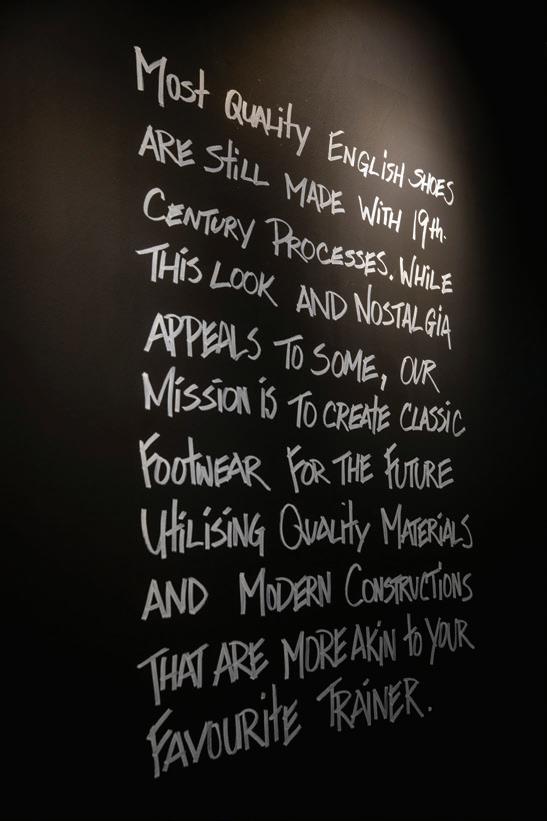
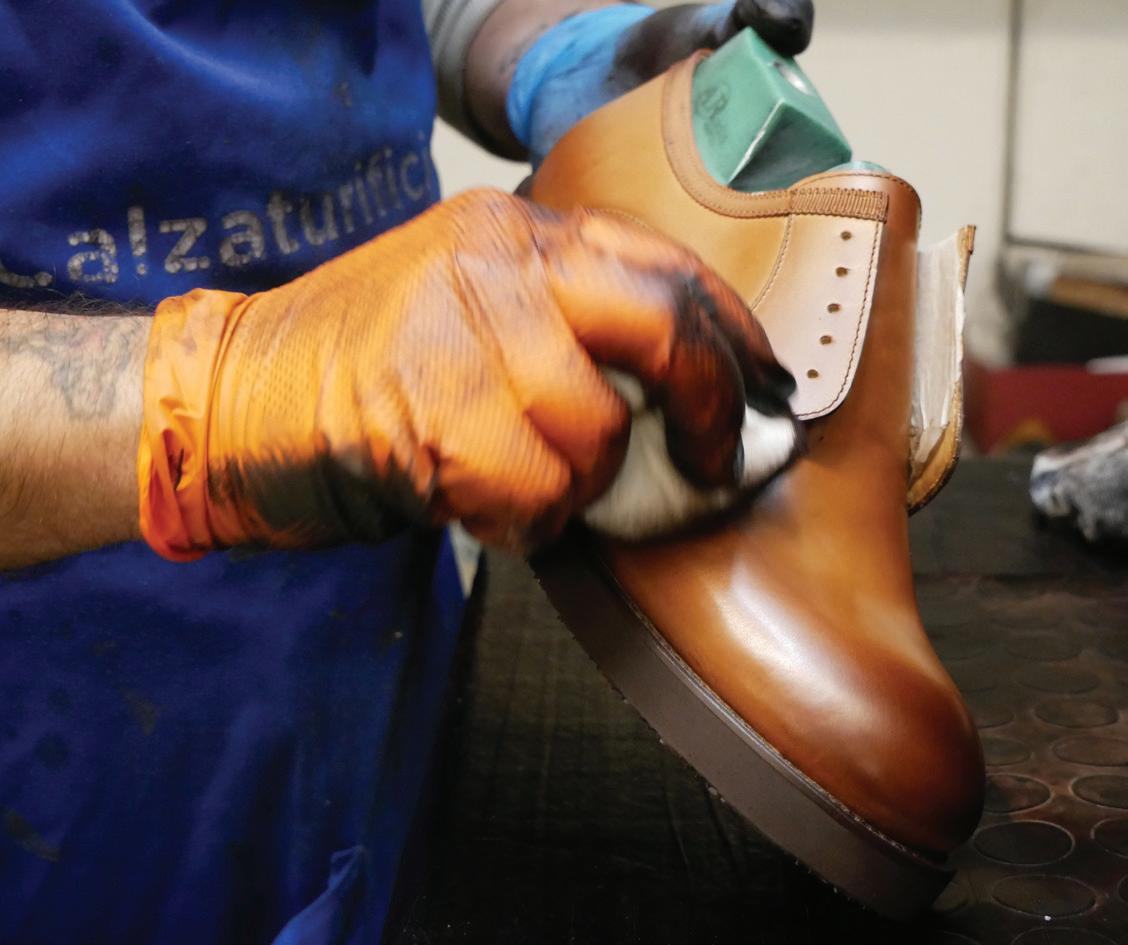
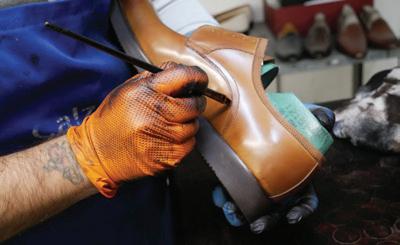
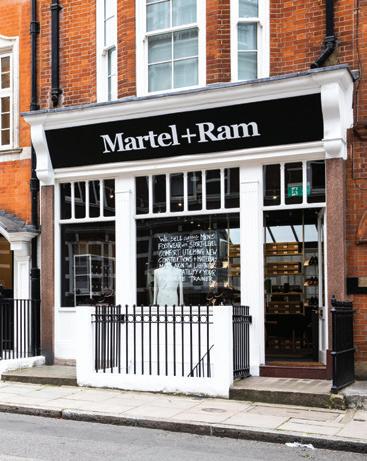
The Martel+Ram co‑founder on his crusade for comfort, learning from a legend, and why footwear is architecture on a mi niature scale
ANATOMY OF A DESIGN
Corin Mellor of David Mellor on capturing the joy of ice cream in a stainless steel vessel
ON THE RIGHT TRACK
Consultant haematologist Prof Martin Kaiser on the creation of personalised treatments for multiple myeloma
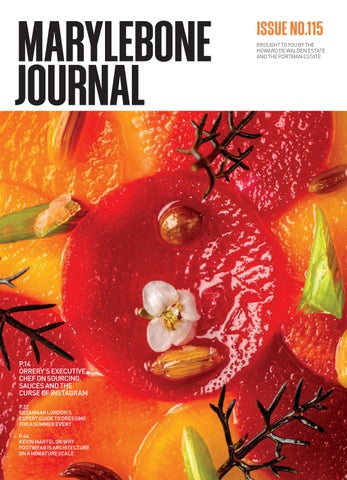
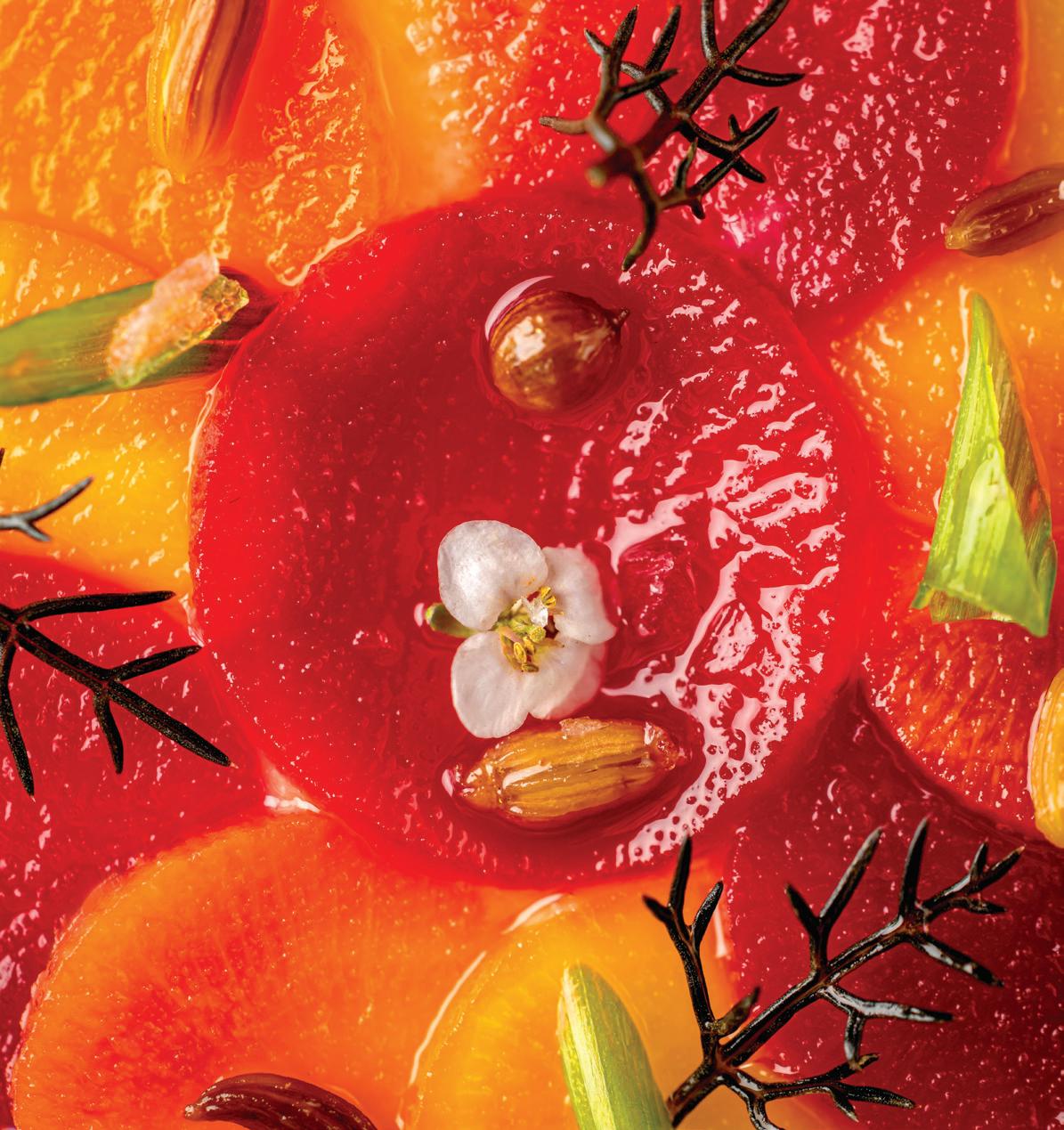
Cover: An Orrery canape by Justin De Souza
We tried retirement, it wasn’t for us
After taking a short hiatus, we’re back doing what we do best. From Marylebone to Mayfair, Hyde Park to Bayswater, we’ve helped generations of owners achieve exceptional results.
Considering a move or curious about your property’s current value? We’d love to hear from you. 020 7486 6338 | hello@kayandco.com kayandco.com
Wigmore Hall 36 Wigmore Street, W1U 2BP wigmore-hall.org.uk
The Carducci Quartet and pianist Tom Poster give the first performance of a new piano quintet by Edinburgh-based composer Ninfea-CruttwellReade, conceived for Wigmore Hall Voices of Today to mark the Hall’s 125th anniversary.
OPERA
19 – 20 JUNE
HANDEL’S RINALDO
The Cockpit Gateforth Street, NW8 8EH thecockpit.org.uk
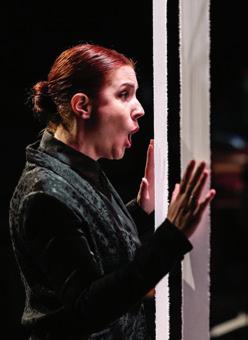
Marcio da Silva’s minimalist production of Handel’s Rinaldo, presented by Ensemble OrQuesta, is perfect for The Cockpit’s intimate setting. The opera, which debuted in London in 1711, features some of the composer’s most famous arias.
1. Ninfea-CruttwellReade, Wigmore Hall
2. Resounding Shores, Royal Academy of Music
3. Handel’s Rinaldo, TheCockpit
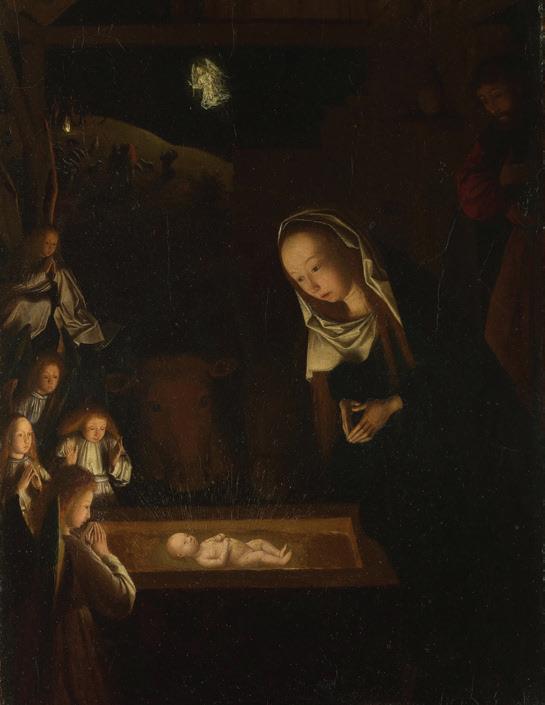
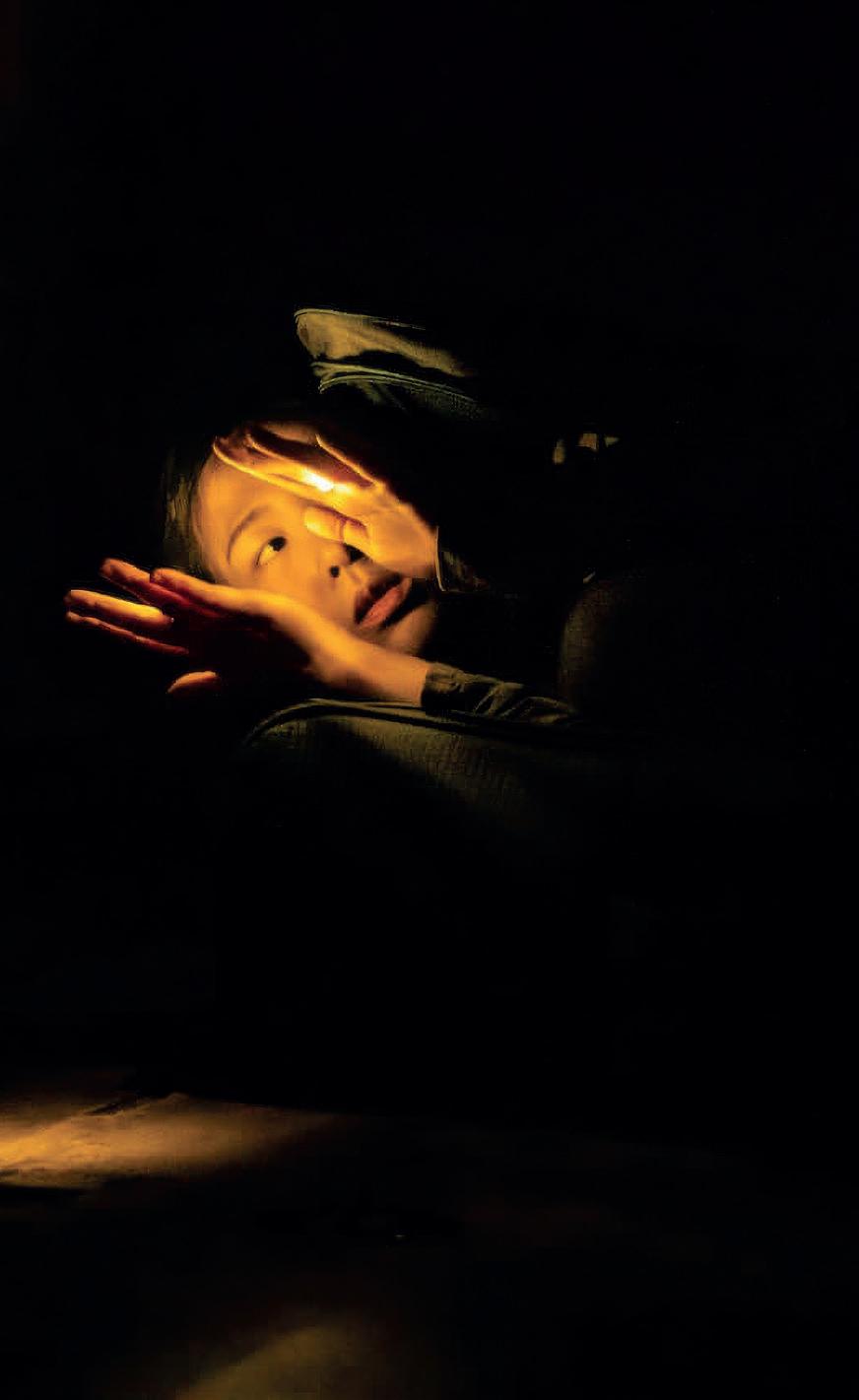
4. Nativity at Night by Geertgen tot Sint Jans, Visual Desperation, The Brown Collection
MUSIC
20 JUNE, 5pm
RACHMANINOV’S VESPERS
St Marylebone Parish Church 17 Marylebone Road, NW1 5LT stmarylebone.org
For the final concert of this year’s St Marylebone Festival, the Choir of St Marylebone Parish Church performs Rachmaninov’s All-Night Vigil, alongside mystical works by Sir John Taverner and Arvo Pärt, conducted by Bertie Baigent and Luke Mitchell.
TALK
Drawing on works by JMW Turner, Geertgen tot Sint Jans and Alma Thomas, poet, novelist and essayist Lavinia Greenlaw explores how artists see beyond the impositions and constraints of the familiar in attempting to describe the unknown.
23 JUNE, 6.30pm VISUAL DESPERATION
The Brown Collection 1 Bentinck Mews, W1U 2AF glenn-brown.co.uk
MUSIC
21 JUNE, 12pm RESOUNDING SHORES: AND AGAIN I SAY, REJOICE Royal Academy of Music Marylebone Road, NW1 5HT ram.ac.uk
As part of Resounding Shores series celebrating 17th century English music, Henry Purcell’s uplifting anthem ‘Rejoice in the Lord alway’ appears alongside other works that reveal his dramatic and heartfelt approach to sacred music.
MUSIC
15 – 21 JUNE
MARYLEBONE MUSIC FESTIVAL
Manchester Square Gardens, W1U 3PL marylebonemusicfestival.com
Set in Manchester Square Gardens and inspired by Marylebone’s rich history as a home of pleasure gardens and musical performance, this annual festival – returning for its 11th year – features an eclectic programme of classical music, opera, folk and jazz.
UNTIL 22 JUNE
GEORGE POL. GEORGHIOU: TIMELESS CYPRUS
The Hellenic Centre 16-18 Paddington Street, W1U 5AS helleniccentre.org
To mark Cyprus’s presidency of the Council of the European Union, the AG Leventis Gallery presents works by the great Cypriot painter George Polyviou Georghiou – the most extensive selection ever shown outside of his home country.
MUSIC 24 JUNE, 7.30pm
LEA DESANDRE, THOMAS
DUNFORD & JUPITER
ENSEMBLE
Wigmore Hall 36 Wigmore Street, W1U 2BP
wigmore-hall.org.uk
Thomas Dunford’s Jupiter Ensemble and French-Italian soprano Lea Desandre dive deep into Handel’s oratorios and embrace some of the composer’s most expressive arias, including ‘With darkness deep, as is my woe’.
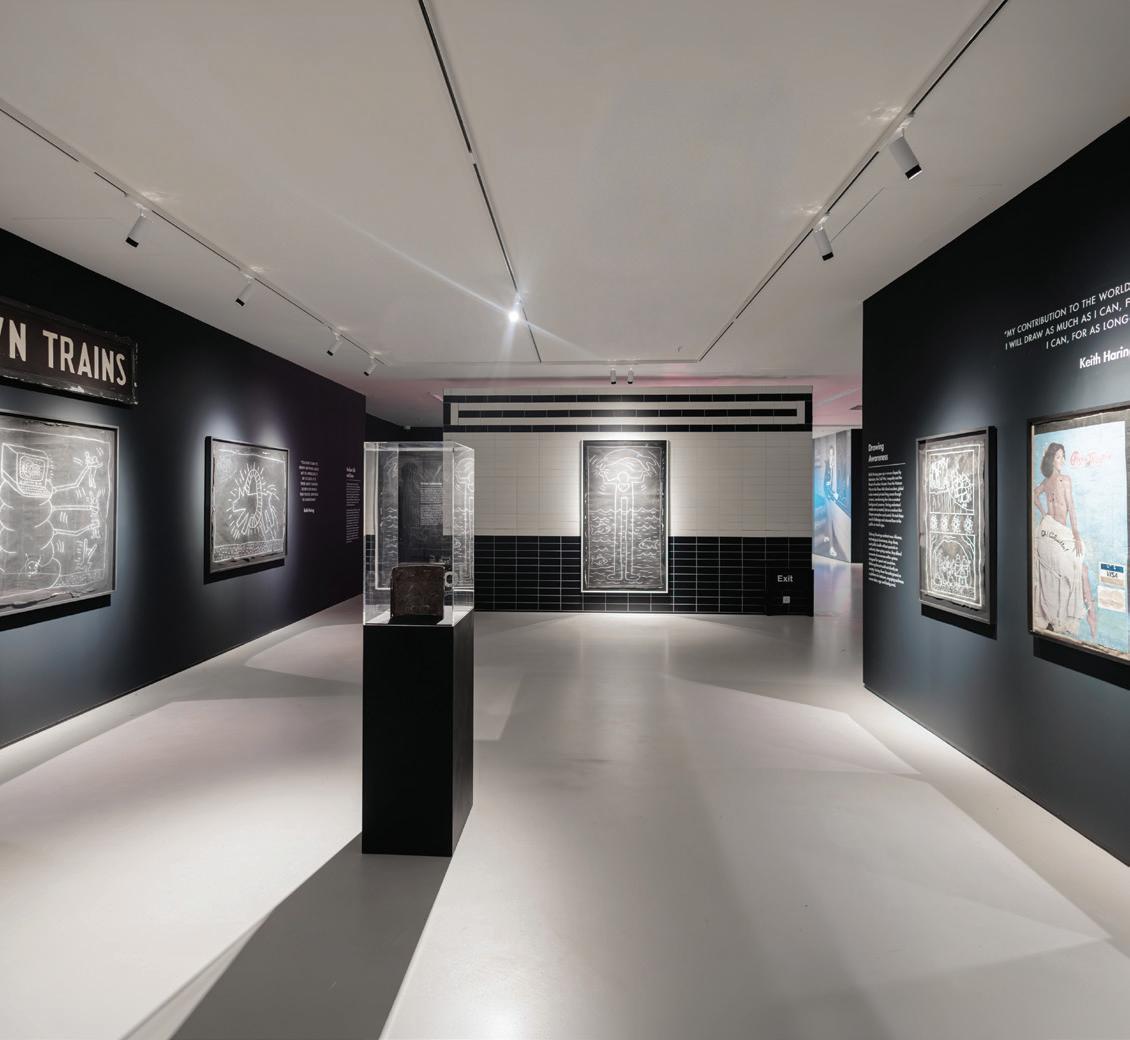
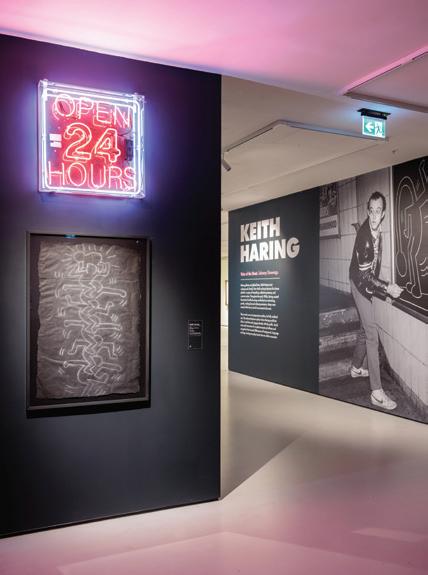
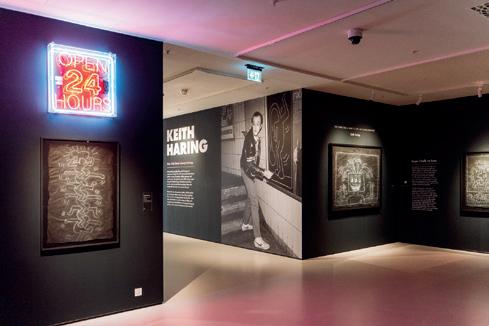
1. Voice of the Street: Keith Haring’s Subway Drawings, Moco Museum London
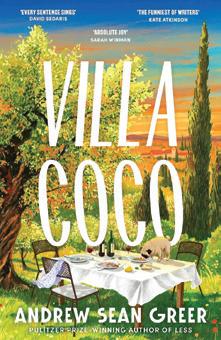
2. Andrew Sean Greer, Daunt Books
3. A Visitor to My Own Story by Emi Avora, Mandy Zhang Art 2.
1. EXHIBITION
TALK
NEW
Moco Museum London’s new exhibition is dedicated to the Subway Drawings of Keith Haring, created in New York City subway stations by the then‑unknown artist between 1980 and 1985. Executed in chalk on black paper advertising panels and created at break neck speed to avoid being spotted by the police, these works established the visual language – the radiant baby, the barking dog, the dancing figures – that would come to define Haring’s art.
VOICE OF THE STREET:
KEITH HARING’S SUBWAY DRAWINGS
Moco Museum London 1-4 Marble Arch, W1H 7EJ mocomuseum.com
25 JUNE, 7pm
ANDREW SEAN GREER
Daunt Books
84 Marylebone High Street, W1U 4QW dauntbooks.co.uk
Pulitzer-winning author
Andrew Sean Greer discusses his latest book, Villa Coco, a coming-of-age novel and warm, witty exploration of the enduring power of friendship, set amid the Tuscan hills. Fellow novelist Holly Gramazio leads the chat.
TALK
In Jorge Luis Borges’ story The Garden of Forking Paths, a Chinese scholar conceives of time as a garden – branching, proliferating, alive with possibilities. This new body of work by painter Emi Avora, which explores that metaphor, creates a realm in which multiple realities share a colourful coexistence.
UNTIL 26 JUNE
EMI AVORA: MYRIAD: THE GARDEN OF INFINITE PATHS
Mandy Zhang Art 16 Seymour Place, W1H 7NG mandyzhang.art
MUSIC
25 JUNE, 7.30pm
RYAN BANCROFT CONDUCTS THE ACADEMY SYMPHONY ORCHESTRA
Royal Academy of Music Marylebone Road, NW1 5HT ram.ac.uk
Ryan Bancroft, principal conductor of the BBC National Orchestra of Wales, leads Academy students through a powerful orchestral work, sumptuous songs and Sofia Gubaidulina’s dreamlike Fairytale Poem.
EXHIBITION UNTIL 26 JUNE IN TRANSIT: GREEK ARTISTS ABROAD
The Hellenic Centre 16-18 Paddington Street, W1U 5AS helleniccentre.org
Bringing together the works of Greek artists who have lived abroad, this exhibition reflects an in-between state where memory, displacement and adaptation collide, revealing how constant movement reshapes who we are.
MUSIC
27 JUNE, 3pm
MANDELA TALES
Wigmore Hall
36 Wigmore Street, W1U 2BP wigmore-hall.org.uk
Presented as part of a day of concerts dedicated to the 50th anniversary of the Soweto Uprising, Mandela Tales is a production by composer Shirley J Thompson, inspired by the book Nelson Mandela’s Favourite African Folktales and designed to appeal to families and young people.
MUSIC
29 JUNE, 7.30pm BRASS DECTET
Royal Academy of Music
Marylebone Road, NW1 5HT ram.ac.uk
An all-female brass dectet performs new arrangements by Alice Knight of vocal works written by under-represented women, including Ethel Smyth’s Mass in D. The programme also includes brass quintet repertoire by two living composers, Charlotte Harding and Joan Tower.
EXHIBITION
27 – 30 JUNE
MY PLACE
67 York Street Gallery
67 York Street, W1H 1QB 67yorkstreetgallery.com
This group exhibition brings together eight artists from different cultures whose diverse works – spanning painting, printmaking, photography, calligraphy, sculptural textiles, film and text art – explore themes of identity, belonging, memory and location.
MUSIC
1 – 2 JULY
SEEN & HEARD
Royal Academy of Music
Marylebone Road, NW1 5HT ram.ac.uk
Returning for its sixth year, this series of concerts explores diversity in classical music. The first night honours the heritage of the indigenous peoples of Latin America, while the second day’s performance celebrates gender-diverse voices in contemporary music.
EVENT
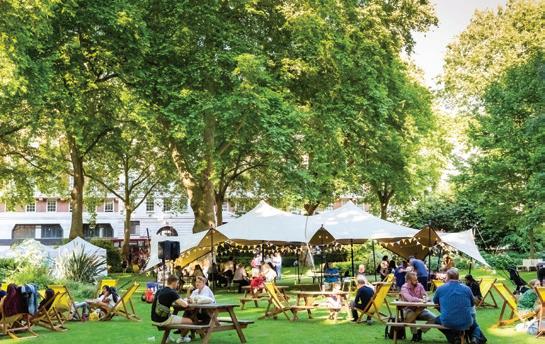
Spend the final week of Wimbledon in the tranquil setting of Portman Square Garden watching live tennis on the big screen (ideally from a deck chair with a drink in hand). Refreshments will be available from high quality street food stalls as well as a guest kitchen, sponsored by Portman Marylebone, with chefs from popular local restaurants on rotation, cooking up some of their signature dishes.
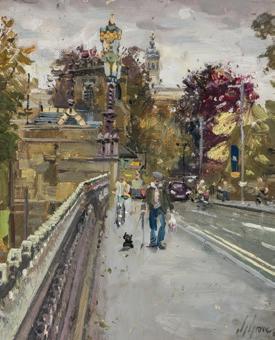
Nick Grove is a British painter known for his expressive oil paintings of landscapes and figures, created directly from life. Produced both outdoors and in his studio, his paintings capture the light, atmosphere and lived experience of the places he encounters.
THEATRE
30 JUNE – 4 JULY
OUR PUBLIC HOUSE
Marylebone Theatre
35 Park Road, NW1 6XT marylebonetheatre.com
In a town divided by politics, a local pub on the brink of closure is the only place left where people are able to come together to talk. Inspired by the real words of over 600 people nationwide, this new play transforms those conversations into drama and song.
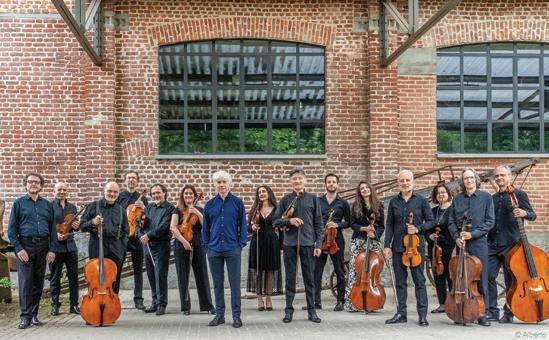
1. Il Giardino Armonico, Wigmore Hall
2. Summer in the Square, Portman Square Garden
3. Hallie Rubenhold, Daunt Books
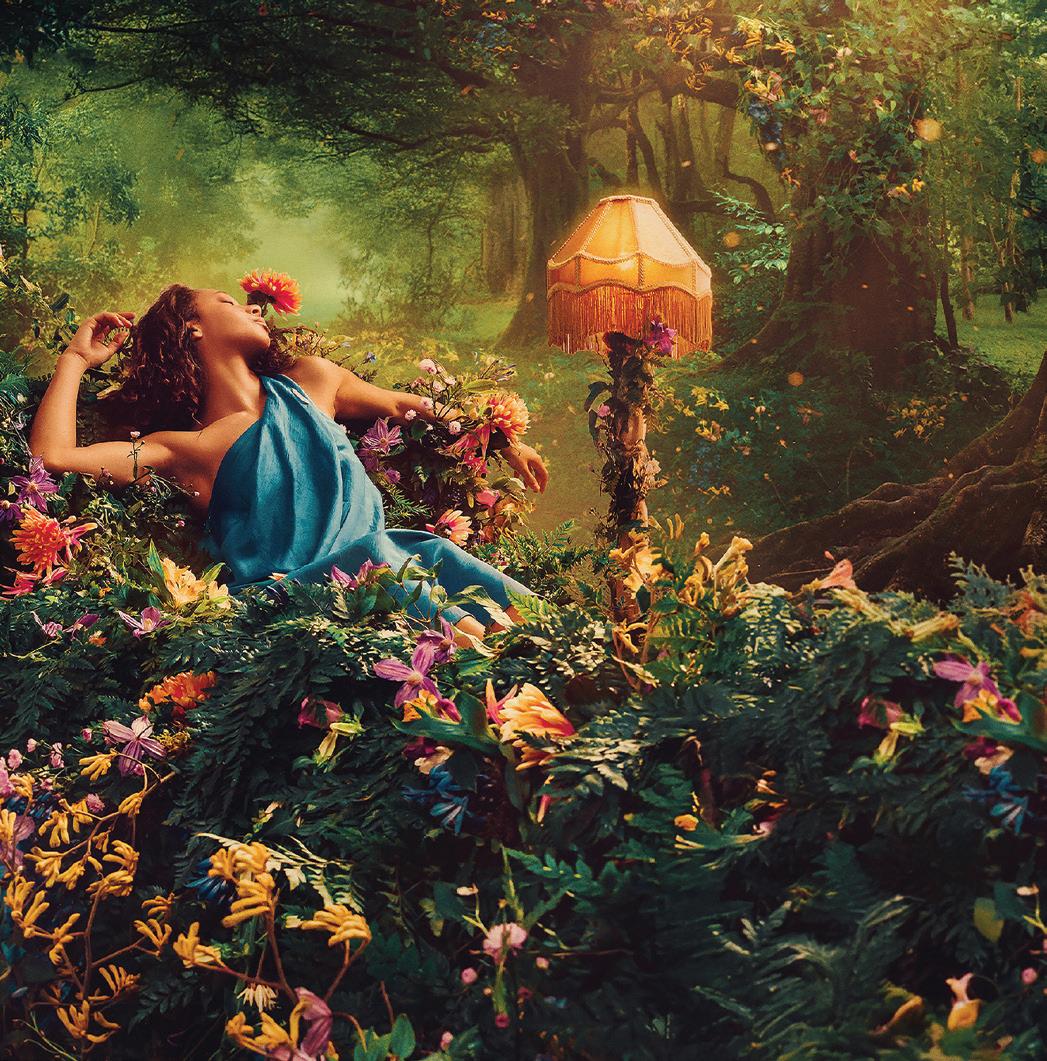
4. A Midsummer Night’s Dream, Regent’s Park Open Air Theatre
5. The Old Man of York by Nick Grove, Thompson’s Gallery
MUSIC
8 JULY, 7.30pm
IL GIARDINO ARMONICO, GIOVANNI ANTONINI & JULIA LEZHNEVA
Wigmore Hall
36 Wigmore Street, W1U 2BP wigmore-hall.org.uk
Il Giardino Armonico and visionary conductor Giovanni Antonini are joined by Russian soprano Julia Lezhneva for a selection of arias from Vivaldi’s operas and Haydn’s dark-hued dramatic cantata, Arianna a Naxos.
TALK
9 JULY, 7pm
HALLIE RUBENHOLD
Daunt Books
84 Marylebone High Street, W1U 4QW dauntbooks.co.uk
Hallie Rubenhold, bestselling author of The Five, talks about her new book, Story of a Murder, which tells the story of the disappearance in 1910 of the vivacious music hall performer Belle Elmore and the fevered manhunt for her husband, Dr Hawley Harvey Crippen.
THEATRE Shakespeare’s magical (and fundamentally summery) comedy finds a natural home in the beautiful outdoor setting of the Open Air Theatre, surrounded by trees and flowers. This brand‑new production is underscored with folk infused melodies composed by Maimuna Memon.
20 JUNE – 18 JULY A MIDSUMMER NIGHT’S DREAM
Regent’s Park Open Air Theatre
Regent’s Park, NW1 4NU openairtheatre.com
Q&A: LINA KANAFANI
The founder of Mint Gallery on contemporary design, originality, and the importance of preserving nature
Interview: Ellie Costigan
Q: For anyone new to Mint Gallery, how would you describe what you do?
A: Mint Gallery was established in 1998 as a contemporary design gallery, with a focus on collectible design, craftsmanship and innovation. Our aim has been to champion both internationally recognised designers and emerging talents, while creating a dialogue between functional design and artistic expression.
Over time, the gallery has evolved alongside changes within contemporary design itself. There is now a much stronger emphasis on sustainability, circular design and material consciousness, which have become central to how we curate and commission work. The core philosophy has remained the same, though: to present thoughtful, timeless pieces that combine innovation with emotional resonance and exceptional craftsmanship.
Q: Is there a common thread that unites the designers?
A: What matters most is originality and authenticity. We’re drawn to designers who have a distinctive visual language and a strong point of view, whether they’re established figures or at the beginning of their careers. There also needs to be an alignment with Mint’s philosophy – craftsmanship, innovation, material awareness and timelessness are all important. I’m particularly interested in work that feels emotionally engaging or poetic, while still being functional and intelligently made. Sometimes it’s an instinctive reaction to an object or idea. There must be a certain energy and excitement around the work.
Q: How do your collaborations tend to unfold?
A: The collaborations are always very organic and collaborative. Every designer works differently, so
the process naturally varies from project to project. Sometimes we commission entirely new pieces specifically for Mint, while other collaborations involve ongoing conversations around materials, function or presentation. I tend to be quite involved creatively, particularly in shaping the overall narrative of a collection or exhibition. At the same time, it’s very important that the designer’s own identity and vision remain at the centre of the work. The goal is never to impose an aesthetic, but rather create an environment where innovation can flourish.
Q: How does your commitment to sustainability and circular design manifest in practice?
A: It means prioritising designers who value craftsmanship and longevity, and create objects intended to last, both physically and aesthetically. We’re interested in pieces that people will live
with for many years. There’s also an increasing focus on natural materials, local production and innovative approaches to re use and fabrication. I believe that respecting and preserving nature should ultimately be at the heart of contemporary design.
Q: Tell us about some of the people you’re working with at the moment.
A: I’ve always been particularly interested in designers and artists who bring playfulness or unexpected perspectives into their work. Thanos Paspaliaris, for example, approaches design through a fascinating dialogue between imagination and craftsmanship. His projects translate children’s drawings into collectible furniture pieces, preserving the honesty and spontaneity of their ideas. There’s something incredibly compelling in the way his work captures
uninhibited creativity while remaining functional.
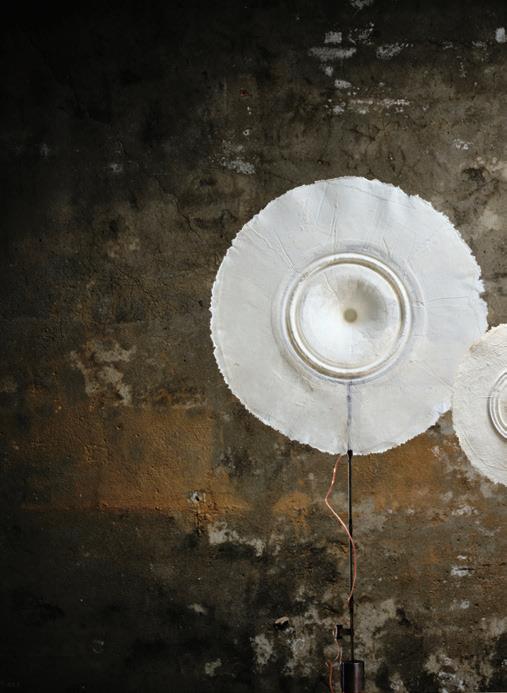
Matthijs Koerts similarly rethinks familiar forms through experimentation and material exploration. In Anatomy of Sound, he exposes the essential mechanics of the loudspeaker, turning technical components into sculptural acoustic forms. I’m drawn to the openness of his process and the balance he achieves between engineering, craftsmanship and poetry.
Remi Bouvier’s practice also resonates strongly with me, because of its sense of atmosphere and storytelling. He incorporates automotive materials into photography and sculptural works, exploring memory, movement and subculture in a way that feels deeply personal yet universal. His work captures overlooked environments and transforms them into emotionally charged narratives and objects.
Q: What’s coming up at the gallery?
A: Over the summer, the gallery presentation will continue to evolve through works introduced in our recent spring exhibitions, Break with Care and CTRL Matter, which was presented during London Craft Week. We’re constantly refreshing the display with pieces from previous exhibitions, alongside new additions and commissions.
Looking ahead, we’re also beginning preparations for London Design Festival in September, which is always an exciting moment for the gallery. It’s an opportunity to present new collaborations and continue conversations around contemporary design, sustainability and innovation with an international audience.
MINT GALLERY LTD
3-5 Duke Street, W1U 3ED mintgallery.co.uk
1.
2.
3.
4.
MUSIC
12 JULY, 11.30am
CHIAROSCURO QUARTET
Wigmore Hall
36 Wigmore Street, W1U 2BP wigmore-hall.org.uk
Appropriately named after the Italian term for light and shade in art, the Chiaroscuro Quartet begin this concert with Beethoven’s intricate String Quartet No.16 in F Op.135, followed by Mendelssohn’s String Quartet No.2 in A minor Op.13, all performed using gut strings and historical bows.
MUSIC
23 JULY, 7.30pm
GWENETH ANN RAND: MIGRATIONS
Wigmore Hall
36 Wigmore Street, W1U 2BP wigmore-hall.org.uk
Soprano Gweneth Ann Rand, a Wigmore Hall associate artist, is joined by pianists Allyson Devenish and Simon Lepper to perform an inspired selection of songs and poems that explore themes of migration and exile from both historic and contemporary perspectives.
4.
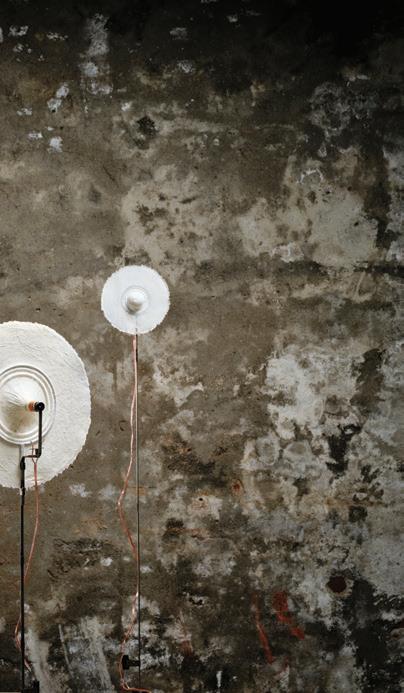
Three Eyed Monster Chair by Thanos Paspaliaris, Mint Gallery
Anatomy of Sound by Matthijs Koerts, Mint Gallery
Chiaroscuro Quartet, Wigmore Hall
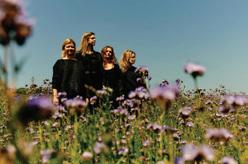
Gweneth Ann Rand, Wigmore Hall
EXHIBITION
UNTIL 25 JULY
KEN PRICE
Lisson Gallery
27 Bell Street, NW1 5BY lissongallery.com
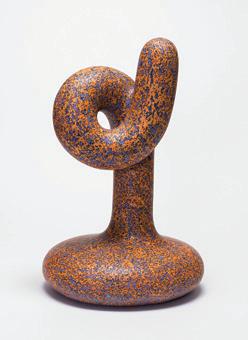
Ken Price (1935-2012) was a relentlessly inventive artist who, from his base in Los Angeles, challenged the conventions of sculpture, painting and drawing through a five-decade career. This solo presentation includes works that are appearing in London for the very first time.
EXHIBITION
10 – 26 JULY
PAUL KENTON: URBAN ECHOES
Bomb Factory Art Foundation
206 Marylebone Road, NW1 6JQ bombfactory.org.uk
In this major exhibition, one of Britain’s most prominent painters offers an insight into his process. What begins instinctively – throwing, dripping and scraping paint across aluminium, canvas and wood – slowly resolves into vivid, impressionistic scenes of London, New York and beyond.
MUSIC
Irish pianist
Finghin Collins pays tribute to the Austrian composer Ignace Pleyel, who studied with Haydn then found fame as a pioneer of piano building. The programme includes beautiful miniatures by Joseph O’Kelly and Georges Pfeiffer, both partners in the Pleyel piano firm.
27 JULY, 7.30pm
FINGHIN COLLINS: HOMMAGE À PLEYEL
Wigmore Hall
36 Wigmore Street, W1U 2BP wigmore-hall.org.uk
EXHIBITION
14 – 31 JULY
NORMAN SMITH
Thompson’s Gallery
3 Seymour Place, W1H 5AZ thompsonsgallery.co.uk
Norman Smith is an English painter celebrated for his atmospheric landscapes and expressive use of colour. Working primarily in pastel and oil, he captures the shifting moods of the natural world, from coastal light and open skies to quiet, fleeting moments in the countryside.
EXHIBITION
UNTIL 8 AUGUST
HOI POLLOI
The Brown Collection
1 Bentinck Mews, W1U 2AF glenn-brown.co.uk
Curated by Glenn Brown, this exhibition brings together paintings, drawings, prints and sculptures from the 16th century to the present day, including his own distinctive works. It explores how artists through the ages have represented, resisted or reimagined the ordinary man.
EXHIBITION
UNTIL 13 AUGUST
STORIES – BROUGHT TO LIFE
Frameless
6 Marble Arch, W1H 7AP frameless.com
Created in partnership with the National Portrait Gallery, this 15-minute immersive experience explores the lives of five icons – Queen Elizabeth II, Nelson Mandela, William Shakespeare, Amy Winehouse and Malala Yousafzai – using archival imagery, animation and sound.
THEATRE
Transit is a genre bending exploration of migration, told through a series of vignettes utilising physical theatre, poetry, dance, multimedia and live music. It follows a cast of contemporary migrants as they navigate the feeling of being too foreign for here, too foreign for home.
22 – 26 JULY TRANSIT
The Cockpit Gateforth Street, NW8 8EH thecockpit.org.uk
1. Yin 2009, fired and painted clay, by Ken Price, Lisson Gallery
London Embers by Paul Kenton, Bomb Factory Art Foundation
Stories – Brought to Life, Frameless
Finghin Collins, Wigmore Hall
Transit, The Cockpit 6. Daniel Buren, Lisson Gallery
EXHIBITION
24 JULY – 17 AUGUST
PAM FISH: ALWAYS IN MY MIND...
St Marylebone Art Space 17 Marylebone Road, NW1 5LT stmarylebone.org
This debut exhibition by 77-year-old painter Pam Fish brings together approximately 50 abstract paintings. These colourful works were created over a period of five years during her recovery from a mental health crisis, which led to a surge of creativity.
EXHIBITION
UNTIL 22 AUGUST
LUBAINA HIMID & MAGDA STAWARSKA Lisson Gallery
67 Lisson Street, NW1 5DA lissongallery.com
Reflecting on themes of memory and movement, loss and belonging, this immersive mixed-media installation comprises nine diptychs painted by Lubaina Himid between 1999 and 2003, paired with a multi-layered libretto composed by Magda Stawarska.
EXHIBITION
UNTIL 22 AUGUST
DANIEL BUREN: PAGES IN SITU Lisson Gallery
67 Lisson Street, NW1 5DA lissongallery.com
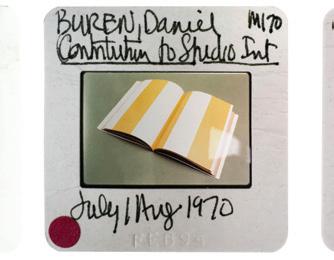
Curated by graphic designer Fraser Muggeridge, Pages in Situ charts Daniel Buren’s repetition of the 8.7cm stripe over almost six decades of work, tracing his use of this famous motif from the street to the gallery wall, from the canvas to the printed page.
1.
EXHIBITION
During World War II, The Wallace Collection staged exhibitions designed to galvanise public opinion and strengthen ties with allies, including the Soviet Union. This free display explores how Hertford House became a forum for cultural diplomacy.
15 APRIL – 25 OCTOBER THE WALLACE COLLECTION AT WAR
The Wallace Collection Manchester Square, W1U 3BN wallacecollection.org
THEATRE
3 – 30 AUGUST
THE CAMDEN FRINGE 2026
The Cockpit Gateforth Street, NW8 8EH thecockpit.org.uk
The Camden Fringe offers performers from a wide range of disciplines, including drama, comedy, dance and poetry, the chance to present new material in a festival setting, without the time and money needed to take a show to Edinburgh. The Cockpit will, as always, be one of the main venues for the festival.
THEATRE
15 AUGUST – 6 SEPTEMBER
ANANSI THE SPIDER
Regent’s Park Open Air Theatre
Regent’s Park, NW1 4NU openairtheatre.com
Long ago, the cleverest of all the animals was a spider – the infamous Anansi. But sometimes Anansi could be a little too clever for his own good. This summer, these classic West African and Caribbean folk tales are being brought vividly to life on the Open Air Theatre lawn.
1. 25 Years of Progress exhibition poster, The Wallace Collection at War, The Wallace Collection
2. I Am Wonderfully Made by Patricia Bidi, St Marylebone Art Space
3. Hung Grapes, 2024 by Reijiro Wada, Daiwa Anglo-Japanese Foundation
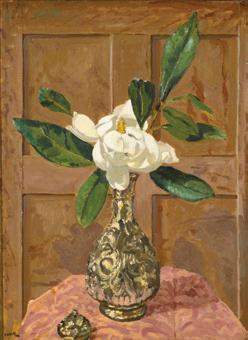
4. Magnolia C183, 1930s by Sir Winston Churchill, Winston Churchill: The Painter, The Wallace Collection
THEATRE
25 JULY – 19 SEPTEMBER CATS
Regent’s Park Open Air Theatre
Regent’s Park, NW1 4NU openairtheatre.com
This new production of Andrew Lloyd Webber’s megamusical leaps into the open air. Based on TS Eliot’s Old Possum’s Book of Practical Cats, its legendary score features Old Deuteronomy, Macavity: The Mystery Cat and the chart-topping hit Memory.
EXHIBITION 19 AUGUST – 28 SEPTEMBER PATRICIA BIDI: DREAMS OF LIGHT
St Marylebone Art Space 17 Marylebone Road, NW1 5LT stmarylebone.org
Expressing themes of heritage and identity, Patricia Bidi’s work draws on her Peruvian roots and her life in London. Her linocut prints explore how inner experience can cross cultures, histories and emotional landscapes and inspire connection.
EXHIBITION
UNTIL 24 SEPTEMBER
REIJIRO WADA: SECOND LAW Daiwa Anglo-Japanese Foundation 13/14 Cornwall Terrace, NW1 4QP dajf.org.uk
The second law of thermodynamics holds that the universe tends towards disorder. Inspired by this law, Berlin-based Japanese Reijiro Wada explores how, despite the chaotic cosmos, life can still give rise to things that are both beautiful and profound.
EXHIBITION
UNTIL 29 NOVEMBER
WINSTON CHURCHILL: THE PAINTER
The Wallace Collection Manchester Square, W1U 3BN wallacecollection.org
This retrospective of Churchill’s paintings is the first substantial UK exhibition devoted to his art since his death. Bringing together more than 50 works, it casts new light on a worldfamous figure who was defined by politics but sustained by a lifelong passion for painting.
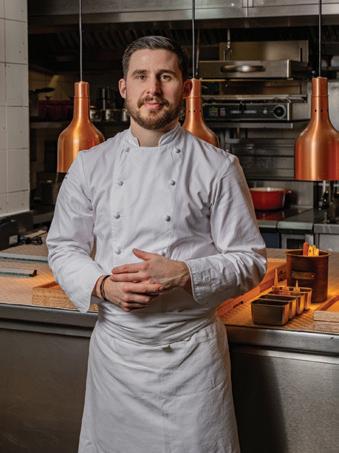
IN PROFILE PIERRE MINOTTI
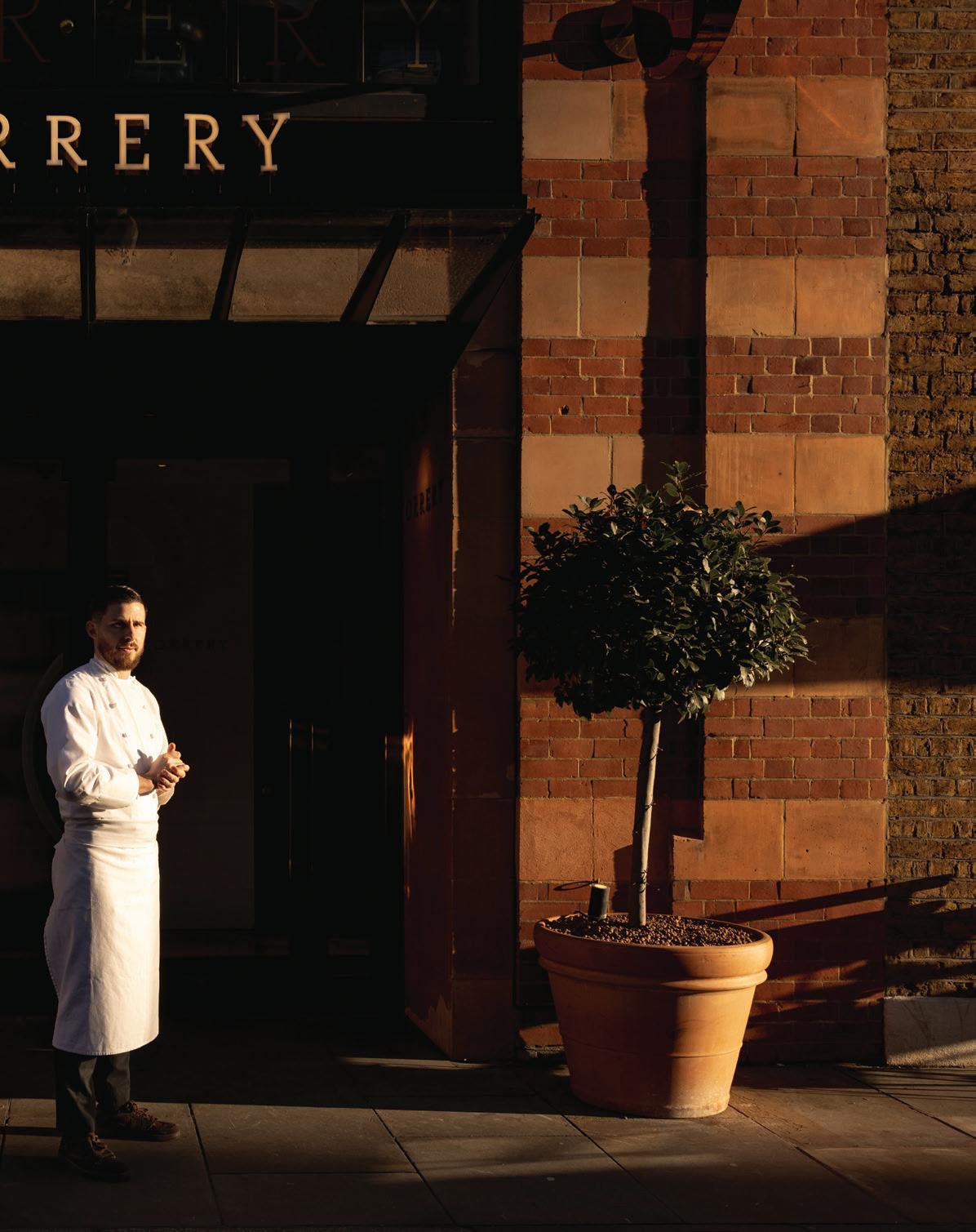
Orrery’s new executive chef on embracing classical French cooking, the one question every young chef should be asked, and why the secret to a great sauce can’t be written down
Interview: Vi el Richardson
Images: Ju stin De Souza
Not everybody has a signature dish by the time they turn 10 years old, but Pierre Minotti did. It was blanquette de veau – a slow simmered veal stew with a glossy egg and cream sauce, served with rice. His mother often made it for family lunches at their home in Besançon in eastern France, and Pierre had been her unofficial commis chef for as long as he could remember. One day she walked him through the dish’s creation, and he started trying to master it himself. There were a couple of stumbles, but soon it wasn’t his mother’s anymore – it was the dish young Pierre made, and he made it very well.
Three decades and several Michelin starred kitchens later, Pierre is the new executive chef at Marylebone’s storied Orrery restaurant, which reopened this spring after a full rebuild of its dining room and, for the first time, the addition of the chef’s name to its branding: Orrery by Pierre Minotti. The proposition is a French classical restaurant working with seasonal ingredients, with around 95 percent of the produce sourced within the UK. It is an approach Pierre frames in terms notably stricter than the usual seasonality soundbites. “As a chef you have a responsibility to use the
ingredients around you,” he tells me. “The UK produces so many world class products so it’s our job to build our dishes around them.”
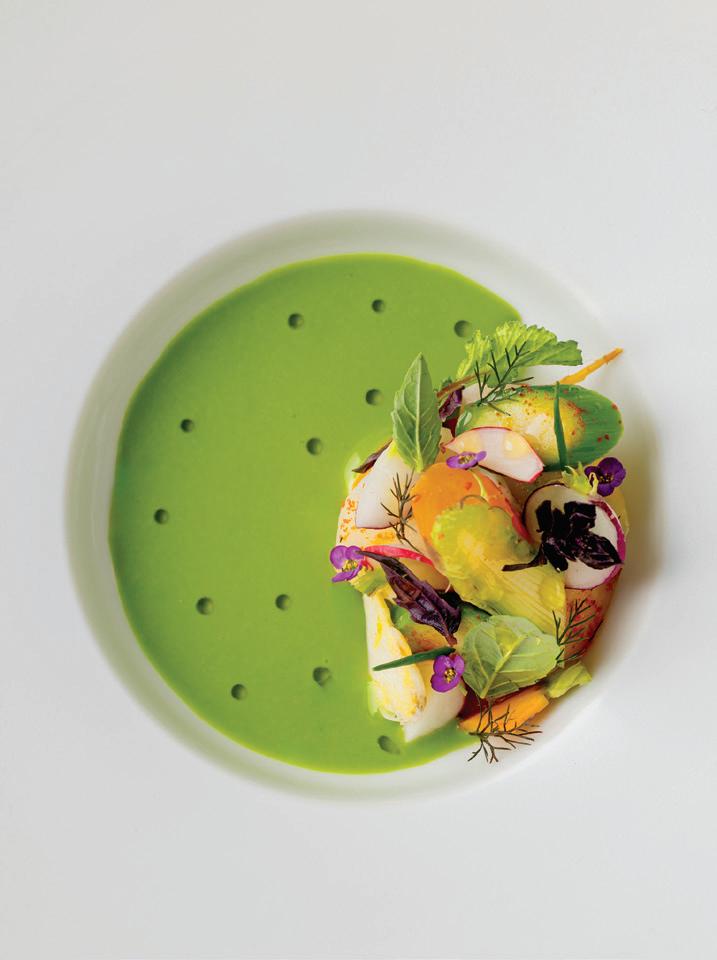
Of course there will be occasional – mainly French –exceptions, but they will be exactly that. “A supplier recently sent through a box of white asparagus from Peru by mistake, so I sent it back. British and French growers are producing beautiful white asparagus and while the Peruvian product is the same on paper it is not the same product on the plate,” Pierre insists. And for him, both knowing the difference and honouring it are the key s to his job.
The moment of release came when I stopped thinking about being a chef and started thinking about taste above everything.
Pierre’s sense of what dining could be was set early in life. In the Minotti household, mealtimes were taken seriously. There was always a starter, a baguette and a cheese course at the end, and conversation was an important part of the meal. “It was strict,” he says. “You ate what was cooked and you had to clear your plate.” This was never a problem for him – he remembers “a boy who just loved food” – but the structure was the point. Food was something that brought the family together. “You ate what everyone else did and talked about your day.”
Pierre always wanted to be
a chef. Never a fireman or an astronaut. A chef. None of his family worked in hospitality but everyone assumed that Pierre would one day cook for a living. But at 16, when the time came to apply to culinary college, he was filled with doubt. Luckily, his father was there to push him forward. “My dad understood the difference between wanting something and doing it, so he practically forced me to go,” Pierre remembers. “My mum disagreed at the time. But I loved it from the moment I arrived, so today I can only thank him.”
The college was the prestigious Lycée Polyvalent Hyacinthe Friant in Poligny, and Pierre still remembers an early lesson. “Ninety percent of us wanted to be Michelin‑star chefs,” he says with a wry grin. “The teacher said, I don’t want to scare you, but only two percent of you will make it.” Pierre started paying close attention. He has never stopped.
His first real job out of school was working for the hugely respected Anne Sophie Pic at Valence, a three star kitchen known for its innovation and inventiveness. The restaurant also ran a bistro where new chefs worked for a year or two before moving across to the main kitchen. Pierre made the move in three months. “It was not about my skills or my knowledge,” he says modestly. “It was about my attitude. It’s what I tell my chefs today. If you’re passionate and have the right attitude, you can go far.”
Attitude got Pierre through the door, but what kept him there was discipline. The real shock of entering the professional kitchen had little to do with knowledge or technique. What he hadn’t yet understood was the sheer relentlessness of the job. “It is easy to cook at home,” he says. “You cook because you are motivated. In a kitchen, it is five or six days a week, 12 to 14 hours a day. Some days, every chef wakes up tired and
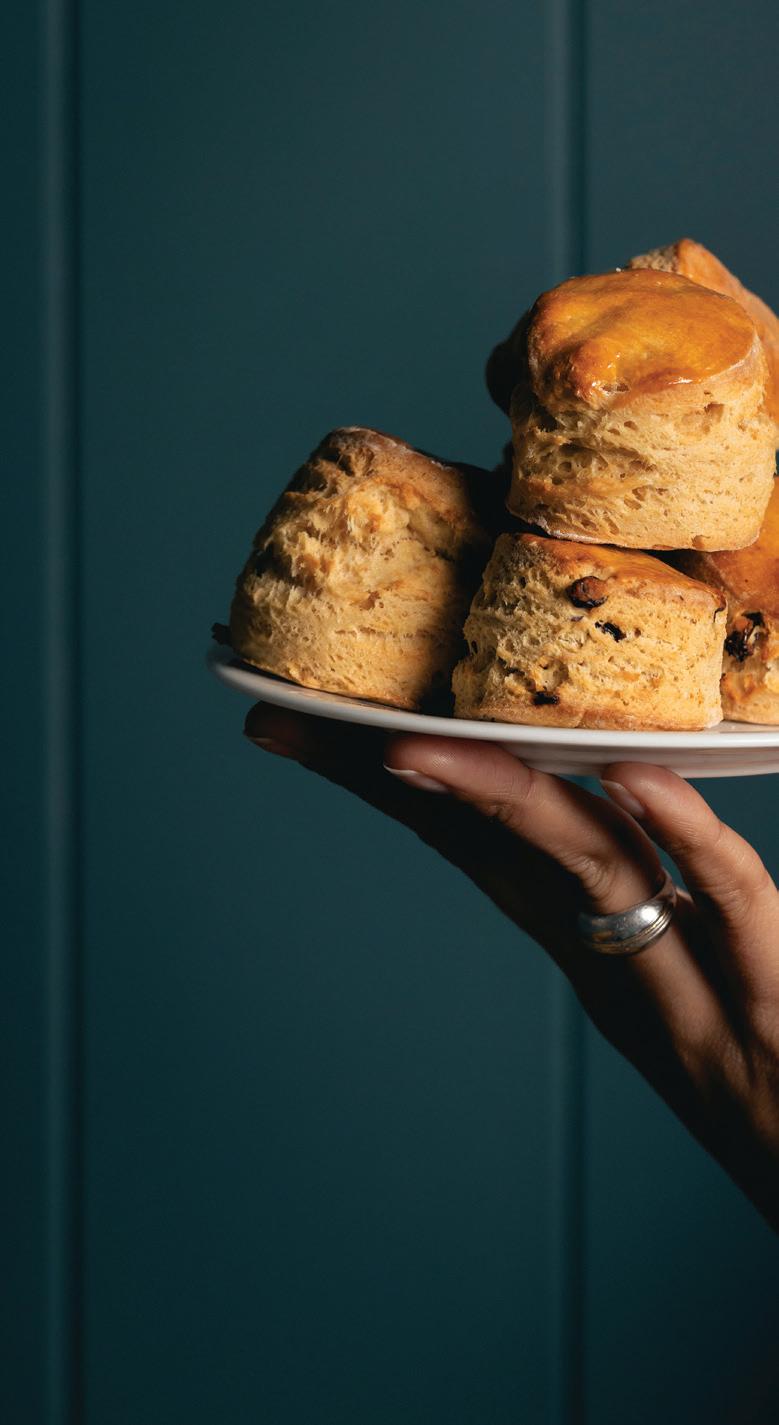
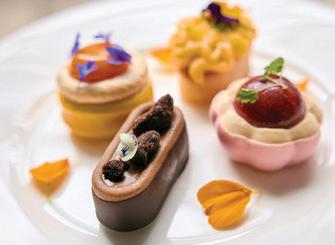
Crudités de printemps
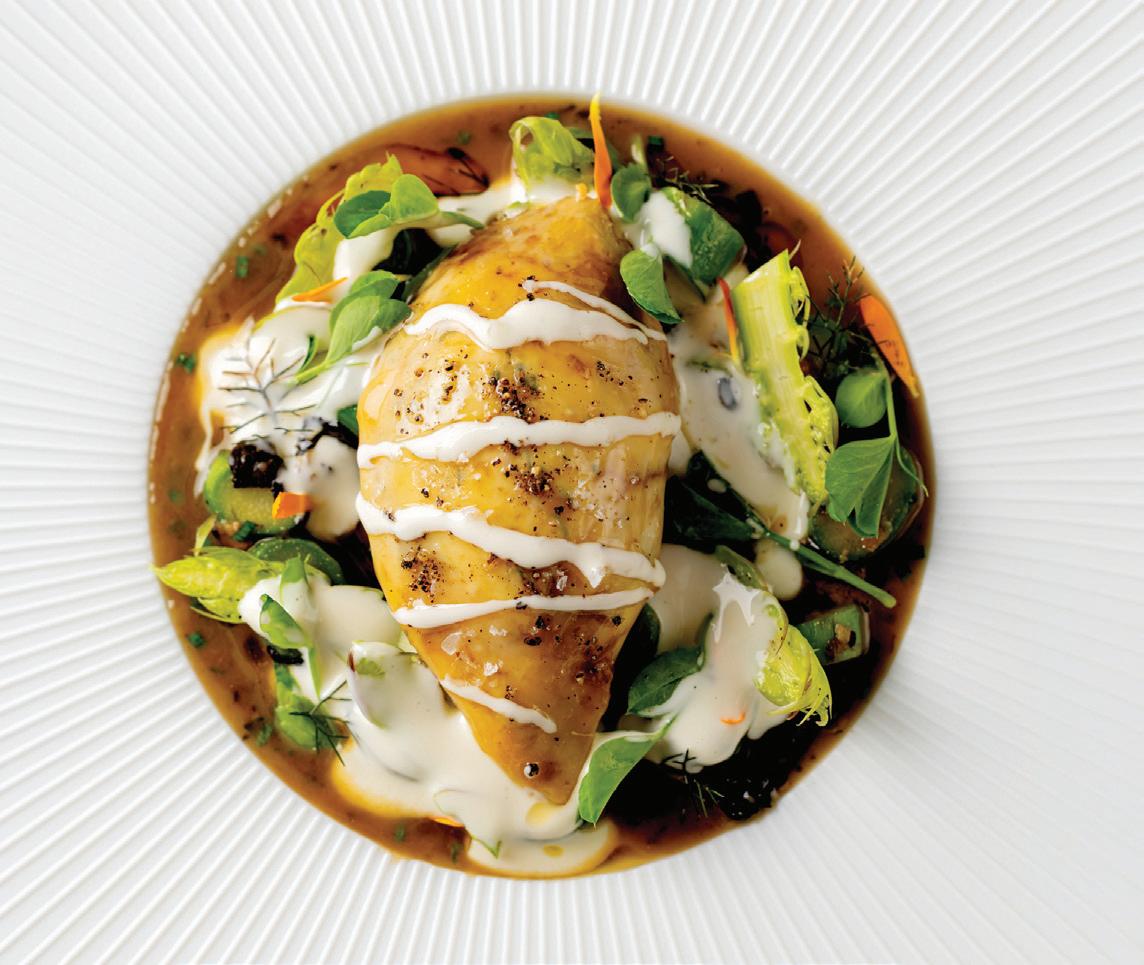
Left: Caille de chez
unmotivated, but you still have to find the right energy, achieve the same standards and that only comes from discipline.”
After his time with Anne‑Sophie Pic, Pierre worked with other culinary royalty, such as Hélène Darroze and Alain Ducasse.
Regardless of which great chef Pierre found himself standing next to, the lessons were always broadly the same: show discipline, work clean, understand your ingredients. The chef he stood next to for the longest period was Alex Dilling. First at The Greenhouse in Mayfair, a two Michelin‑star restaurant, and then at Hotel Café Royal, which holds the same accolade. “He was my true mentor as a chef,” Pierre says.
It was not all plain sailing. For nearly two years at the Greenhouse, Pierre failed to create a dish he was proud of. Full of ideas, he felt unable to execute them. “I was overthinking everything,” he admits. “There was too much technique. I wanted to show off. I would make something very technical, but when I tasted it, deep down I knew it wasn’t working.”
This led to weeks of agonising over aspects of a single dish. Sometimes he would physically shake while plating a new creation, even though he was alone in the kitchen. “I was putting too much pressure on myself. I thought I was not capable, that I was not creative.” Then, in common with so many modern stories, Covid happened and everything changed. The Greenhouse closed and the team found themselves running a pop up in Malta. The format was simple: you went to the local fish market in the morning and found a way to cook what the fishermen caught.
“I focused on the fish and decided to remove anything I didn’t need,” Pierre says. “One sauce, one protein, cooked properly.” He made one or two dishes that Alex finally approved of. Suddenly, he was a different chef. He calls it a moment
of release, a psychological shift. “I stopped thinking about being a chef and started thinking about taste above everything.” Through all the years in all the kitchens this was the lesson, it turned out, that was hardest to learn.
Pierre sees something of his old self in many young chefs: overthinking everything, reaching for the extra technique, seeking to plate something technically impressive. He always asks them the question he wishes someone had asked him years ago: “Is it going to be tasty, I mean really tasty? If someone placed that in front of you, would you want to eat it?”
His diagnosis when asked why so many young chefs fall into this trap is instant. “Instagram,” he says flatly. “Every day chefs post pictures of food that looks beautiful. Suddenly Instagram is the way to prove you’re a good chef. Make something that looks beautiful in a picture. But most of the people who see it will never taste your food, never smell the aromas. Creating something that looks good on Instagram should not be how you prove your skil l as a chef.”
He also believes that the way fine dining now works has made it more difficult for young chefs to develop the culinary versatility his generation took for granted. “In the old days you had a tasting menu and an à la carte, so a table calling for two duck, one quail, one sole was normal. Today more restaurants have a fixed tasting‑menu format. You know what’s coming next and follow a well laid out path. The random order I mentioned would cause chaos in many fine dining kitchens today because chefs just don’t have the experience of working that way. So, we must accept some blame, as we are the ones making this format.”
Pierre’s adherence to classical French foundations (the Orrery website goes so far as to explicitly
Precision is key. Ensuring each ingredient of a dish is perfectly cooked at exactly the same time. Understanding the importance of those final touches. That last drop of lemon juice. That hint of basil just before serving.
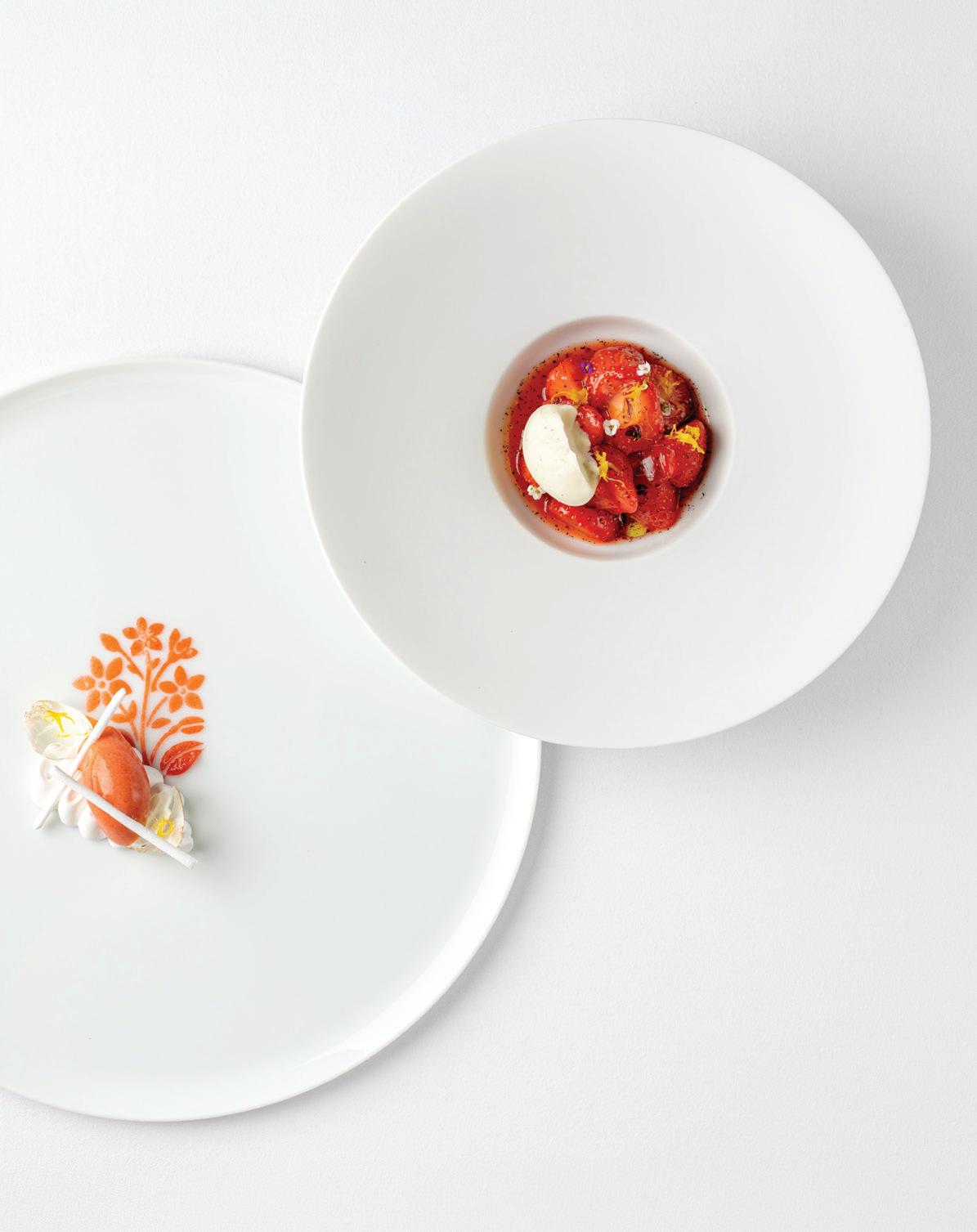
Fraise gariguette
I want local diners to return because they trust us to take them on a wonderful journey.
British seasonal ingredients, a contemporary tasting menu format, a climate aw are approach to cooking, and the playful adoption of the ‘trou Normand’ –a break between courses to enjoy a special drink at the bar with one of the chefs.
I ask what he most wants to preserve from the way he was taught, and his answer is simple and heartfelt. “Precision,” he says. “Precision in timing and judgement. Knowing the moment an ingredient is cooked and having the ability to ensure each part of a dish reaches that point at the same time. Understanding the importance of those final touches before a plate leaves the kitchen. That last drop of lemon juice. That hint of basil just before serving, to bring some freshness. You also need precision when balancing a dish. If it contains anchovy, the sauce has to account for the salt the anchovy is going to bring. None of this can be written into a recipe. It is a kind of precision developed over thousands of plates of food.”
who really cares if the cheese is not perfectly shaped? The taste is all that matters.”
This all ties in to Pierre’s growing sense of the importance of balance. “Before I would just assess a dish and think, yes, this is good. Now I think, is this dish still nice after four courses, or with three more to come? Or, does this dish work when it is 35 degrees outside?”
This last question is crucial for Pierre’s highly seasonal menu, as he can feel the produce calendar shifting underneath him. The first white asparagus now arrives in late January. Some products come earlier, others finish later and he is uneasy about how this sometimes sits on the plate. “When it’s 10 degrees outside, eating white asparagus feels wrong,” he says. “Asparagus is a spring dish. Eating it should be a celebration of spring.” A dish, in his mind, has to harmonise with the world the diner walked in from, so food from Pierre’s kitchen does not ignore the weather outside.
reference Auguste Escoffier, the historic high priest of classicism) swims against the tide; some would even call it radical. The dominant currents in London’s high end restaurant culture have been flowing away from those old traditions towards more global influences, relaxed environments and vegetable forward kitchens. Even in French restaurants, ‘modern French’ has largely replaced the strict brigade and mother sauce tradition that Pierre came up through. However, he is by no means a conservative devoted to simple preservation. He combines classical foundations with
That kind of hard earned sense of precision is, he says, the secret to a well made sauce. “If you ask 10 different chefs to make a bouillabaisse with identical ingredients they will produce 10 different sauces,” says Pierre. “How do you sear the bones. Do you dry them in the fridge first? Did you sweat the vegetables for two minutes or for 20? All that makes a difference. You have to feel it, watch others and make a sauce again and again, until you understand what works and why it works. Making great sauces needs an understanding of balance that comes from the heart not from a page.”
But there are times where rigid precision is not necessary. The cheese course at Orrery is, by intent, not trimmed to specific shapes. Pierre wants none of that. “Cheese is cheese,” he says simply. “When you’re at a family meal,
I ask Pierre what success looks like for someone with his Michelin starred pedigree. “To have a full restaurant. To have local diners returning to experience the tasting menu because they trust us to take them on a wonderful journey. To be a place where people feel happy to come for a casual lunch or a special occasion.”
That, in the end, is what Pierre came to Marylebone to create. A place where the family dinner table is reflected in the fine dining experience. A table where the cheese simply tastes wonderful, the asparagus arrives in spring and a boy who just loves food would be happy to come for lunch. But if a Michelin star were to arrive, I suspect that might look a lot like success as well.
ORRERY BY PIERRE
MINOTTI
55 Marylebone High Street, W1U 5RB
orrery-restaurant.co.uk
WISE BEFORE THE EVENT
As the season for weddings and big social events gets into full swing, Suzannah Crabb of Suzannah London shares her wisdom on navigating summertime occasion dressing
Words: E llie Costigan
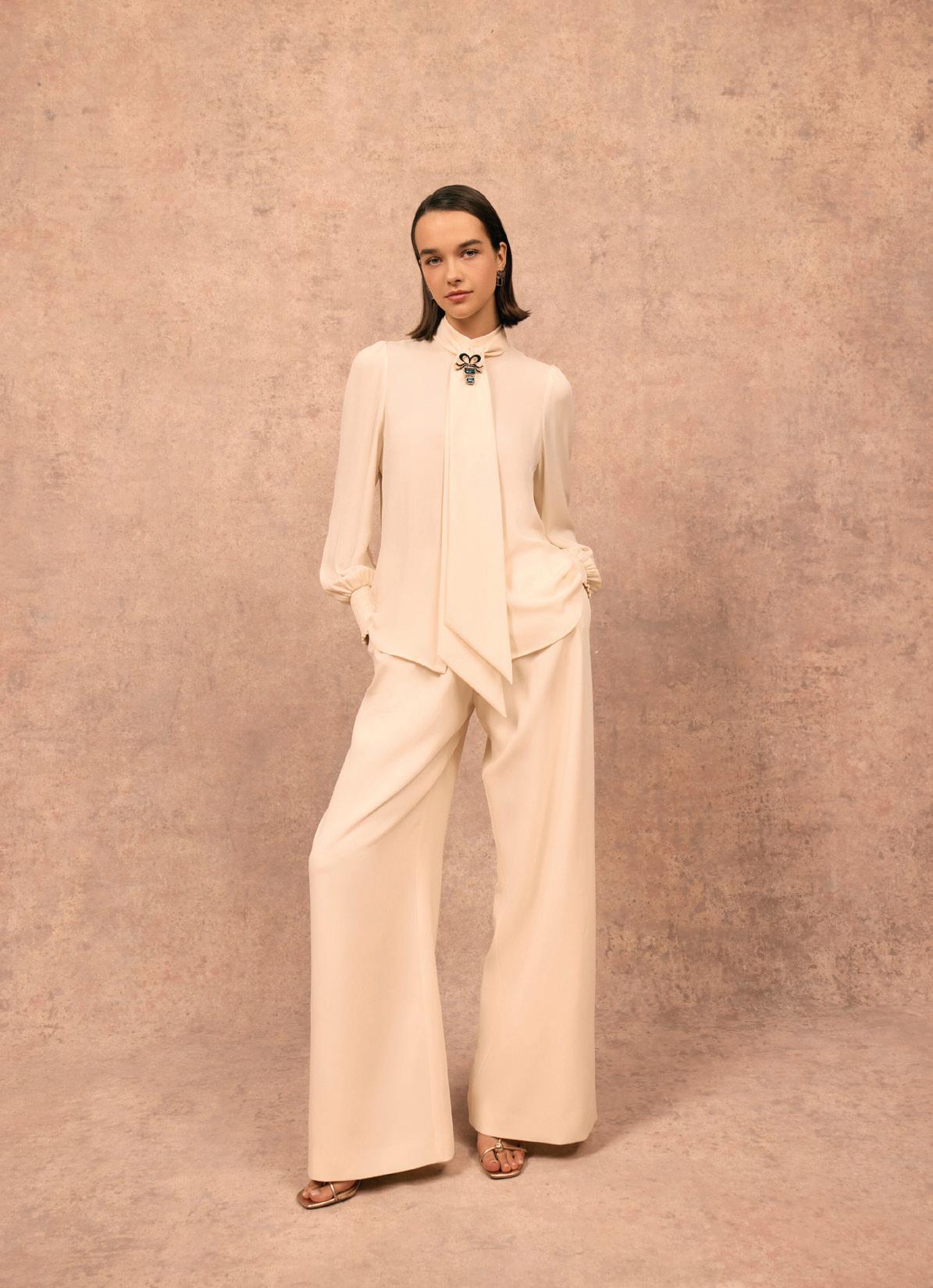
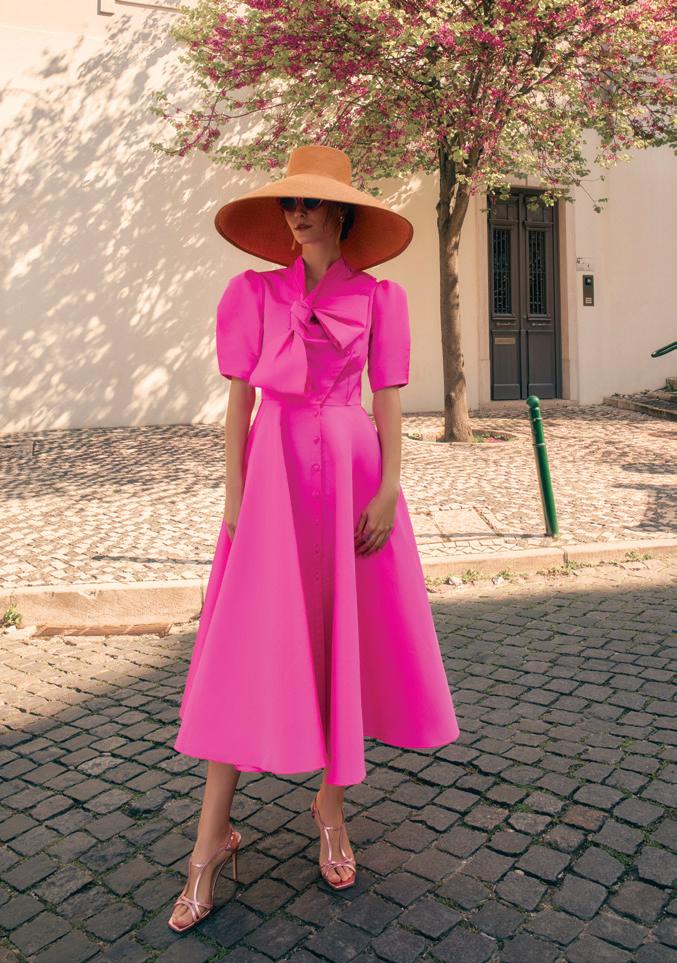
Monterey suit and Phillipa Herbert jewellery
As we emerge bleary eyed, pale skinned, unvarnished toed and more than ready for the simple pleasures of a pint in a pub garden, so too does London experience something of a reawakening with the coming of the summer months.
I’m a committed Londoner, but I can admit that, even in an area as beautiful as Marylebone, the city loses a little of its shine in the winter. There are only so many weeks of the year you can bear being splashed by black cabs and squidged into aggressively overheated tubes wearing far too many layers. But summer in the city is a different beast. Suddenly everyone is outside, spilling onto pavements, slightly warm rosé in hand. It’s the time of year when all the weddings, parties and big social events you forgot you’d agreed to attend six months ago are suddenly only weeks away.
An overflowing social calendar is a good problem to have, but the issue remains: what exactly do you wear to it all? You want to look great without looking like you’ve tried too hard – and, importantly, without spending good money on something you’ll never wear again. You want it to be special enough to honour the event itself, but versatile enough to justify the investment. The solution to this dilemma can be found at Suzannah London.
Set on New Quebec Street –home both to the brand’s boutique and its atelier – Suzannah London’s location itself feels apt: “Marylebone has such a distinctive atmosphere,” says founder Suzannah Crabb. “There’s a calmness and village like quality to it that feels incredibly special. Everything feels beautifully curated and thoughtfully cared for” – qualities that align naturally with both her own approach and that of her business.
Suzannah has dressed everyone from British royals to Olivia Colman (unofficial British royalty) and Emma Watson. Not that she’ll brag about it – much too classy for that. She speaks with the calm practicality of somebody far more interested in how women feel in her clothes than who ends up being photographed wearing them. “Most women want to invest in pieces they can style differently and continue wearing for years to come,” she says. “The best occasion pieces are those you can look back on in photographs years later and still feel pleased with. They shouldn’t feel too tied to a particular trend or moment in time.”
Suzannah sees occasionwear less as a one off purchase and more as something that accumulates meaning. “It’s the outfit that becomes part of someone’s story
– the piece that’s talked about afterwards, worn to multiple occasions, perhaps even borrowed by a friend.”
This feels particularly resonant in an era where so much of what we do (and wear) is documented online, creating an exhausting pressure to wear something new and interesting for every occasion. Fortunately, Suzannah observes, that attitude is shifting. “People are now far more comfortable –even proud – to re wear beautiful pieces,” she continues. “There’s much more appreciation for investing in something versatile and well made that can be styled differently over time.”
Her advice is to invest in simple, modern pieces, beautifully cut and genuinely flattering. “Simplicity gives you the greatest versatility,” she counsels. “Those pieces are easier to restyle and adapt for different occasions and seasons. Good tailoring and proportion matter far more than anything else.”
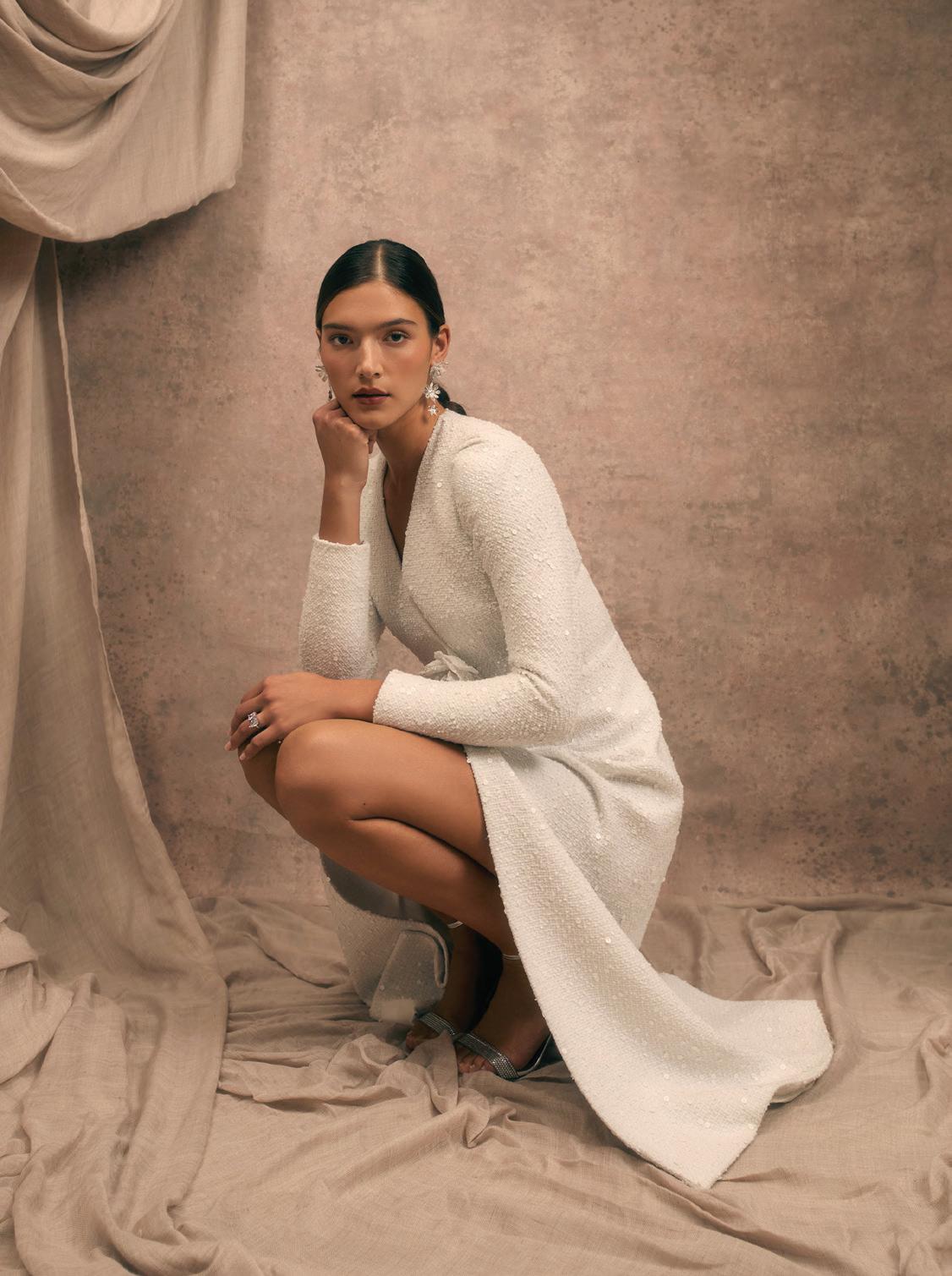
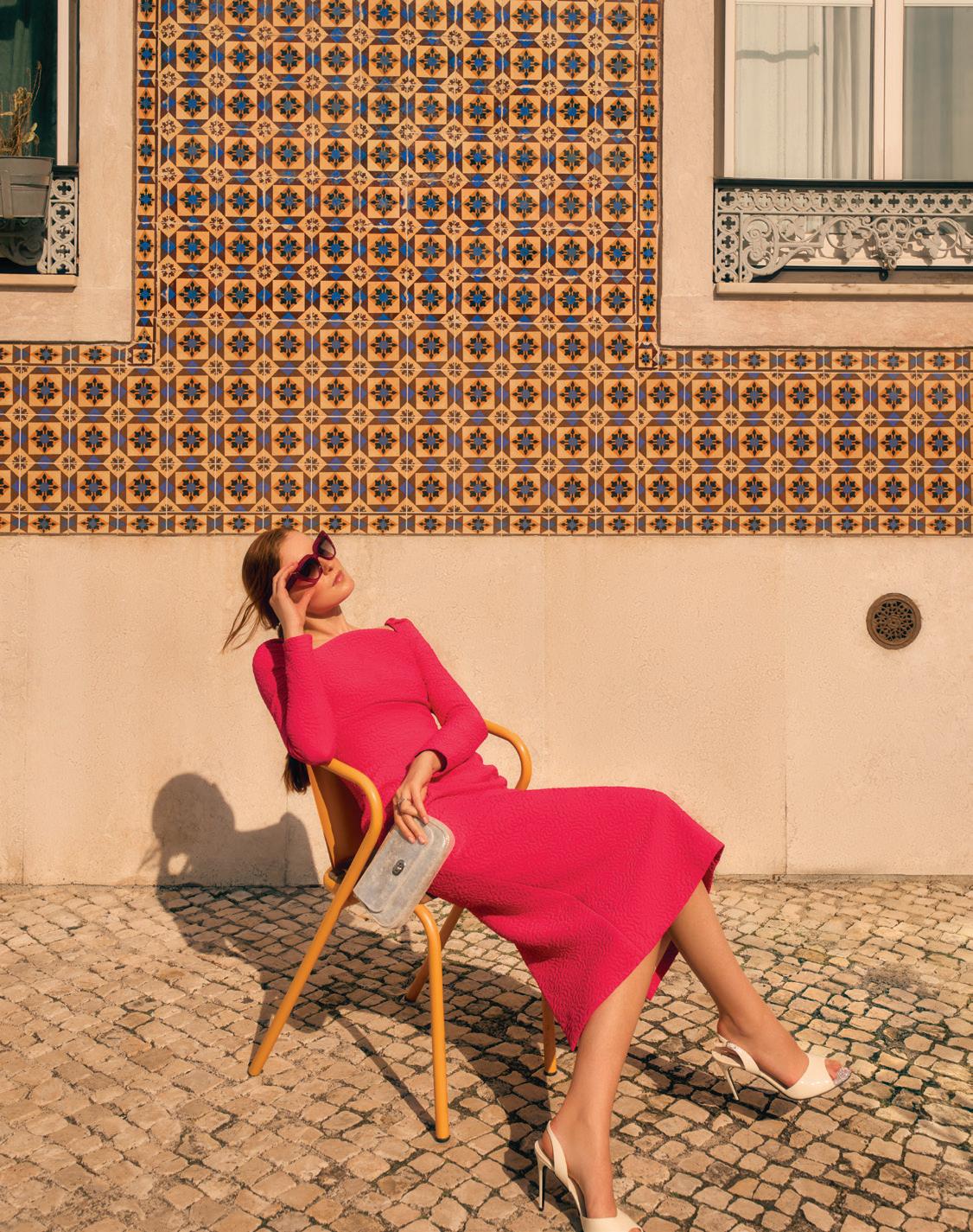
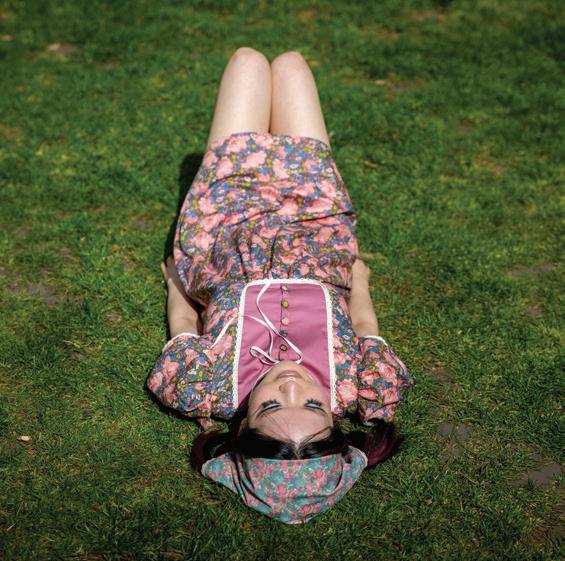
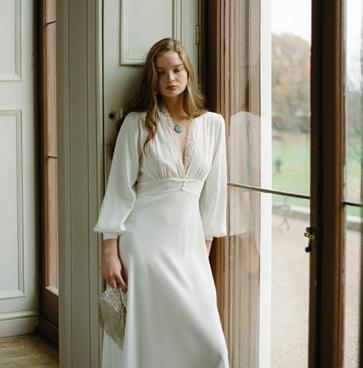
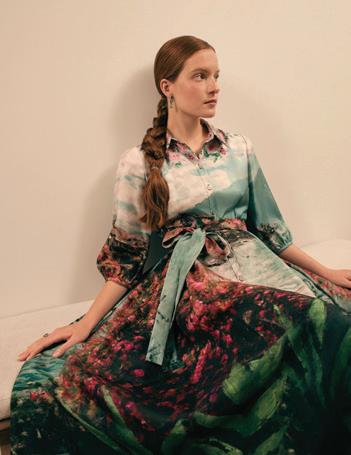
The key isn’t endless novelty, but confidence – and Suzannah designs her pieces with exactly that in mind. Her signature silhouettes – think bias cut tea dresses, fit‑and‑flare skirts and coat dresses – and colour palette (fuchsia, pastels, botanical prints) are inspired by her love of vintage 1940s and 1950s couture.
The best occasion pieces are those you can look back on in photographs years later and still feel pleased with. They shouldn’t feel too tied to a particular trend or moment in time.
Cindy dress
The process begins with beautifully considered fabrics and the most exquisite colour palettes. We then pour our expertise into every silhouette. The fit has to make women feel confident and at ease.
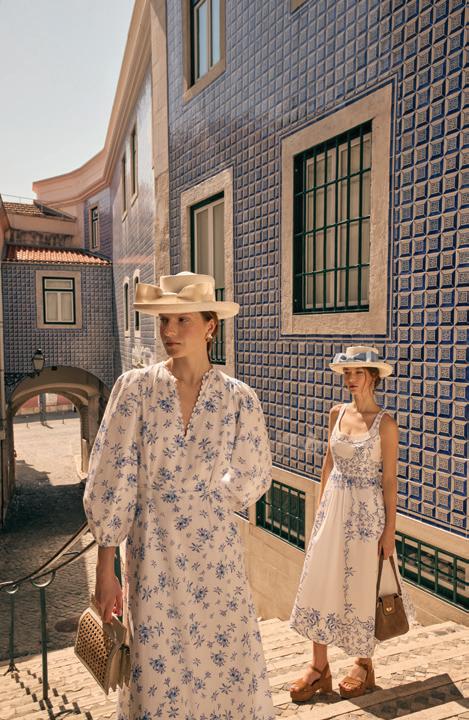
Above: Valletta dress x Rachel Levy, Madeira sun dress x Rachel Levy
Centre: Victoria shirt dress
Right: Lottie dress
“Those influences naturally lend themselves to event dressing that feels elegant, refined and enduringly smart,” she reflects. “That era, alongside my own archive of treasured pieces collected over the years from designers like James Galanos, has continually informed the aesthetic of the brand.”
Suzannah’s approach has evolved to balance that sense of timeless glamour with modern ease and wearability. “Often it’s not the style itself that changes with each new collection, but the fit and the way a garment moves and feels on the body.” The result is shapes that never go out of style paired with a modern desire for effortlessness.
The latter point is crucial: pieces are designed to “perform as beautifully as they look”, as Suzannah puts it – to survive a daytime event, an evening dancefloor and a late night taxi. “They need to feel comfortable, flattering and easy to wear, while still feeling distinctive and special.”
That process begins with “beautifully considered fabrics and the most exquisite colour palettes,” she continues. “We then pour our expertise and passion into every silhouette. I personally fit everything on myself before we grade sizing, and I’m incredibly particular
EVENT HORIZON
The Journal’s guide to special occasion shopping
THE PERFECT SHOES Marylebone is not short of beautiful women’s shoes. You’ll find elegance aplenty among the heeled sandals at Bobbies on Marylebone High Street, while Crispins Shoes on Chiltern Street offers an unparalleled range of glamorous options for women who take larger shoe sizes. And then there’s Emmy London on New Quebec Street, a brand whose entire raison d’être is to provide the perfect footwear for special occasions. Its founder, Emmy Scarterfield, was originally inspired by the complaints of a friend who’d had a hard time finding beautiful bridal shoes comfortable enough to be worn through a long, strenuous day of being fabulous. “If shoes are uncomfortable, it ruins your day,” says Emmy. “Especially when it comes to big life occasions: you’ve put a lot of thought and money into it, so it’s a shame to not enjoy it because of your feet.” Made in a small Portuguese workshop using the softest possible materials, her shoes are designed to feel as good as they look, which – with their simple, timeless aesthetic –is very good indeed.
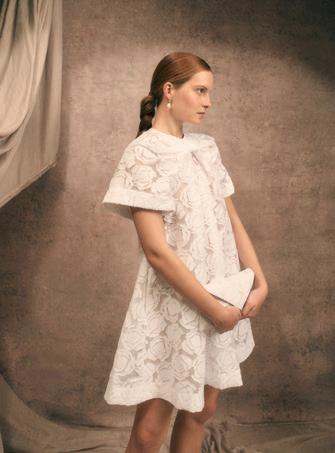
Aida mini dress
THE PERFECT HAT
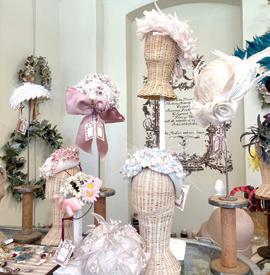
There are two types of people: the tiny subset of society who regularly wear stylish hats, and the vast swathes of people whose experience of headwear is limited to floppy sunhats and battered baseball caps. For them, the need to buy a proper hat for a special occasion can be daunting, to say the least. Which is why having your hand held by a friendly expert is so important – and Marylebone has several of those. For a bespoke hat made by a craftsperson steeped in the traditions of British millinery, head to John Boyd Hats on New Quebec Street, a brand whose founder was one of the greats of 20th century couture. Sarah Marshall, who worked alongside John Boyd for over 14 years, was entrusted with the business after the death of her mentor in 2018, and she has maintained the artistry associated with his name while bringing her own unique sensibilities to the creative process. For a similarly personalised service, VV Rouleaux, famed for its ribbons and trimmings, has made a welcome pivot into headwear. Created at its Marylebone Lane atelier, VV Chapeaux’s headbands, saucers and perchers are perfect for Royal Ascot or a glam wedding. The shop’s supply of a trillion feathers, flowers and other embellishments means that the possibilities for adaptation are almost endless.
THE PERFECT SUIT
Being something of a menswear mecca, Marylebone is not short of options for a summer ‘whistle’. Oliver Spencer on Chiltern Street offers relaxed, unstructured suits in suitably luxe but lightweight fabrics, as does its close neighbour Sunspel. When it comes to the challenge of looking good in a suit on a hot summer’s day, very few people in the world pull it off quite as effortlessly as the Italians, so Slowear and Luca Faloni, both on the high street and both Italian to the core, are well worth a visit. Just up the road, Paul Smith does what Paul Smith does – and does it very well indeed. Or, if you’re looking for something bespoke, Grey Flannel, owned by legendary tailor Timothy Everest, offers a made-to-measure service, as does Casely-Hayford’s beautiful flagship store. “A lot of people liken a well-cut suit to body armour,” says Charlie Casely -Hayford. “I think the confidence comes from something fitting you so well, and the fact that you’re part of the design process; it’s a collaboration between tailoring house and client.”
THE PERFECT DRESS
You could wander up Marylebone Lane and Marylebone High Street with a blindfold on, randomly picking up items (and paying for them, obviously), and be pretty sure that you’d come away with a stylish frock suitable for a special occasion. But in this womenswear treasure trove, there are a few jewels to look out for. RIXO, founded just over a decade ago by two friends, Henrietta Rix and Orlagh McCloskey, has a feel for light fabrics and gorgeous colours that really comes into its own in the summer months. The brand offers special edits of its timeless, beautifully tailored dresses for brides, bridesmaids and guests, and has its own dedicated bridal team. The vintage-inspired floral dresses from O Pioneers are also perfectly suited to a summer event, and can be dressed up for an occasion or dressed down for everyday use. Their limited-edition O Pioneers x Mary Quant collection, the result of an exciting invitation to dive deep into the legendary designer’s archive, uses variations of the same Liberty prints that adorned Jane Asher in the 1966 film Alfie.
THE PERFECT JEWELLERY Special-occasion jewellery fits into two broad categories – bold statement pieces designed to catch and hold the eye, transforming the effect of an otherwise understated look; and small, elegant touches of sparkle and shine that offer harmonious notes without crashing the consciousness. Marylebone has plenty of both. For something with real character, Kastur Jewels is a great place to start. Rooted in her Indian heritage but shaped by her grounding in contemporary design, Rajvi Vora’s jewellery is bold and eye-catching, but never overbearing. Kimaï on Chiltern Street sits on the delicate side of the equation: refined pieces based on simple organic shapes and the use of labgrown diamonds, which are physically identical to mined stones but create none of the social and environmental impacts that scar many parts of the global diamond industry. Cox & Power, a Marylebone stalwart, has a foot in each camp. Pairing minimalism of form with opulent colours and unusual shapes, you’ll find pieces that can either grab the attention or generously share the limelight, depending on how you wear them.
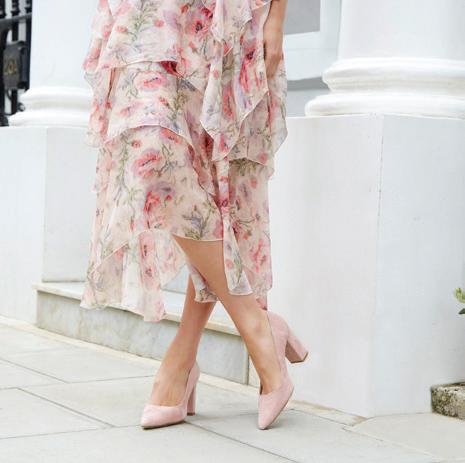
Left to right: Emmy London, VV Chapeaux, O Pioneers, RIXO
about cut and proportion. The fit has to make women feel confident and at ease.”
The clothes are created by people who are just as exacting, with the made to order and atelier collections crafted in house, in the mews behind the boutique. Cotton pieces are produced in family run ateliers in Portugal, while silk fabrics are woven and dyed in small partner factor ies in Italy.
“Craftsmanship and British manufacturing play a hugely important role, perhaps now more than ever,” says Suzannah. “Clothing created with authenticity and skill is ultimately what people respond to most deeply. Customers increasingly want pieces that feel genuinely well made.”
There’s a particular emotional weight attached to dressing for milestone moments; the ones that often sit in family albums for decades afterwards. Event dressing – especially for life’s most important occasions, like the wedding of a close family member – can often be a stressful affair, from battling your way around the shops to constantly tugging at a hem on the day itself.
Suzannah London sets out to be the antithesis of that, with how you feel in the atelier being just as important as how you feel when you come to wear the clothes.
“Our team are wonderfully warm and approachable,” she says. “We always encourage clients to begin with some of our signature classics. Once women find a silhouette that makes them feel confident, the entire process becomes much more enjoyable and relaxed.”
When you’ve found The One, the piece is then altered to precisely fit the individual – which, Suzannah says, “can make all the difference”. The made to order and made to measure services take that one step further, allowing clients to create something truly personal, whether choosing a unique colourway or adapting the length of a gown.
Suzannah’s success lies in her understanding that people don’t necessarily want to reinvent themselves for an event; rather, they want to feel like the best version of themselves. That’s especially true of the mother of a bride or groom, a category in which she has carved out a particular niche. “Weddings have become much more expansive celebrations, often stretching across an entire weekend,” she says. “With that comes a different pressure, particularly for the mothers, who feel enormous expectation around how they should look.”
Women now want pieces that feel polished and appropriate,
without feeling overly formal or rigid. “They’re looking for clothing that feels flattering, modern and effortless, but still special. Women don’t want to feel pushed into something trend led at the expense of feeling comfortable or confident.”
That instinct perhaps comes from the fact that, for Suzannah, the job has never really been about clothing alone. “There have been so many memorable moments over the years, but ultimately it’s always the people who stay with me,” she reflects. “We dress such an extraordinary range of women – from breast cancer surgeons to the wives of war veterans, all with completely different stories and lives.”
For Suzannah, designing for weddings and celebrations is less about creating a look than becoming part of a moment. The right dress isn’t about getting through a season of weddings or parties; it becomes woven into the fabric of your life – “versatile enough to accompany someone through different celebrations and milestones over time,” she agrees. “It’s an incredible privilege to play a small part in such meaningful moments. Those are the experiences you never forget.”
SUZANNAH LONDON
10 New Quebec Street, W1H 7RN suzannah.com
Craftsmanship and British manufacturing play a hugely important role, perhaps now more than ever. Clothing created with authenticity and skill is ultimately what people respond to most deeply.
Como shirt dress
THE DIFFERENCE MAKERS
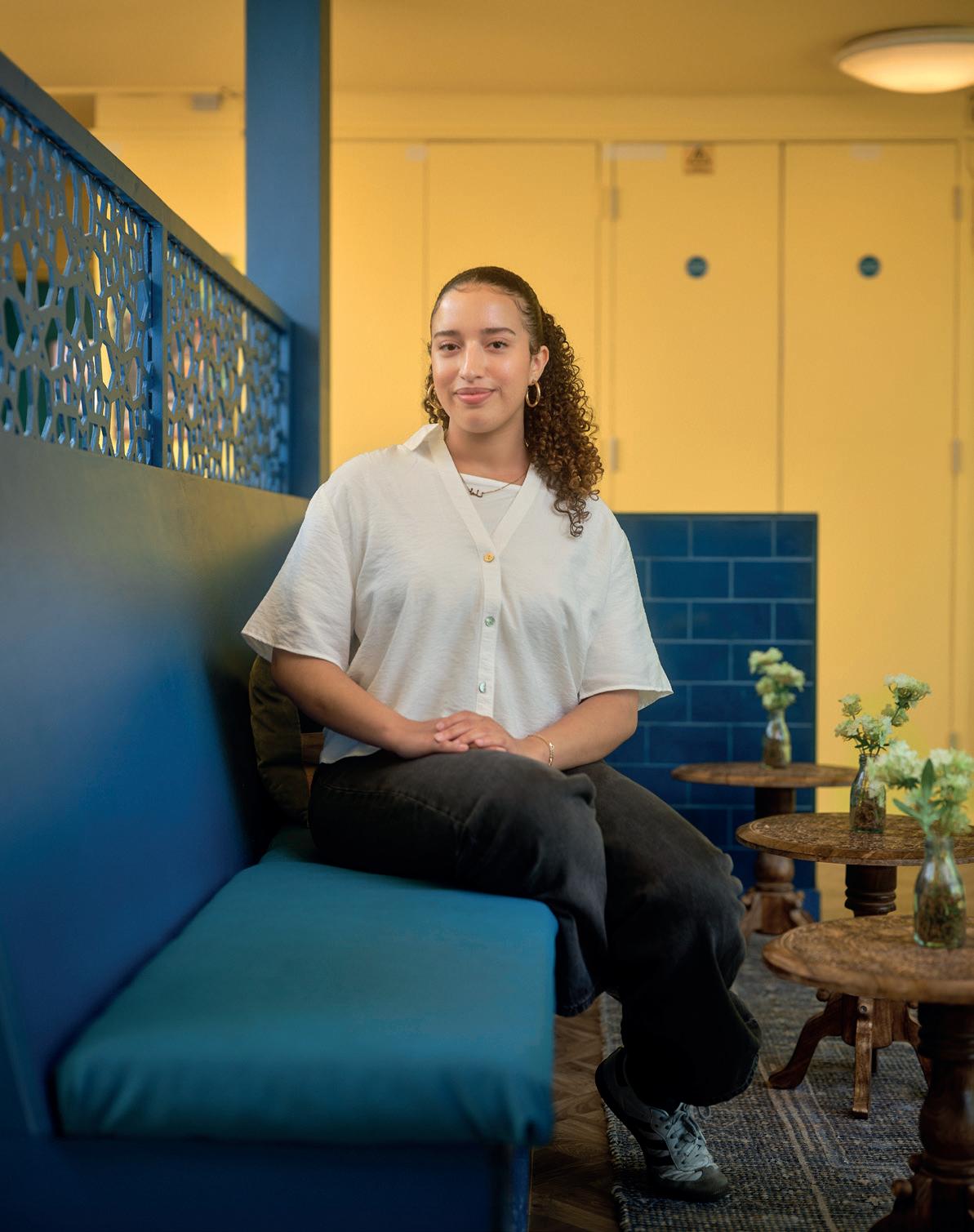
Introducing the people behind central London’s vital charities and community organisations: Amel Eltohami, communications intern for Young Westminster Foundation
Interview: Jean-Paul Aubin-Parvu
Images: Orlando Gili
I am Westminster born and raised. I grew up on Harrow Road, Fifth Avenue, but 10 years ago, when I was 11, my family moved to Edgware Road, Church Street, and I’ve lived here ever since. My parents are both first generation immigrants. When my dad migrated to the UK, the first place he ever lived was Edgware Road, so it was going full circle for us to move back there. This area is all I’ve ever really known. My secondary school was literally across the road from me, and we were very close to both the park and the library, two places where I spent a lot of time.
Growing up, I was quite a loud child. I enjoyed being outside and never wanted to leave the park. I became more introverted at secondary school. I think that coincided with the increasing academic pressure. During the GCSE period I stopped doing as many extracurricular activities and focused more on my studies. That was a recurring theme right up until university, where I felt able to branch out, explore my interests, get myself out there and become a bit more extroverted again.
I became involved with the Young Westminster Foundation during my second year at university – I’m currently in my third year at the London School of Economics. My friend was hosting The Childhood Trust’s London child poverty summit as part of an internship and had invited a bunch of people and organisations that support young people. I was there helping her out as an usher, setting up tables and counting the heads of the people coming in. During the event she asked if I wanted to do some networking. I’d never networked before so was rather hesitant, but she insisted that I go and speak to these people because they were all so interesting and had incredible jobs.
So, I wandered around speaking to people, finding out more about what they do, and ended up talking to Laurie Poole, who’s now one of my colleagues, about my experience as a young person in Westminster. She started telling me about the work of Young Westminster Foundation, how they support youth clubs and other local organisations. She mentioned some of the sporting facilities, and it turned out they support London Tigers, a sports facility in Church Street which my brothers attend. I remember thinking, this >
I can do something with my life experience. It’s not something I have to pretend doesn’t exist. It can empower me and help me make informed decisions.
is crazy, what a coincidence that I’m sat talking to someone who just happens to be part of an organisation that supports a facility that my siblings go to.
Laurie told me about the foundation’s youth engagement programme and suggested I sign up. She took my email and got in touch the following day. Meeting her came at a time when I was feeling very nervous about my future, not knowing if I’d ever find an opportunity, because it can be so hard now as a young person to even get a foot in the door. I really appreciate her doing that for me, and I’m glad I had the courage to put myself out there. When I accepted to become one of their youth associates, I was so happy because I’d always wanted to be in a role where I could help my community. And it meant that I had something alongside my university work – at LSE, everyone seems to have an internship or grad thing lined up.
Young Westminster Foundation strengthens the youth sector in the borough by funding, connecting, training and championing organisations that support children and young people. Particularly with the funding cuts of recent years, it fills some really important gaps. We support the organisations that work to ensure young people have high quality opportunity access and a safe space to make brighter futures – the Brighter Futures Fund is actually the name of one of our funding programmes. The Community Solutions Grants Programme is another. This fund supports community projects in the borough. I was one of the youth associates on last year’s panel, and it was lovely to see in practice how our decisions to fund certain clubs and organisations benefit the loca l community. I learnt so many skills on the youth engagement programme. You don’t only get to work with the foundation. They put you in contact with external opportunities – for example, attending events at London Business School and the Mayor’s Fund for London. It really opens doors for you. It felt wonderful to be part of a programme that really values you for being you. Coming from a low socioeconomic background, the programme made me feel that my life experience could be meaningful and useful. I can do something with it. It’s not something I have to pretend doesn’t exist. It can empower me and help me make informed decisions. That’s how it felt being on the grant panel, with members from different organisations and different backgrounds, speaking about my personal experience as a young person in Westminster and being listened to and respected. Young Westminster Foundation gives young people confidence in their skills and their ability to reflect on their own experiences, and that is something quite rare.
Towards the end of my second year at university I was given the opportunity to apply for funding to do an internship with a charity. The deadline was approaching, so I reached out to Young Westminster Foundation to see if they would take me on. I came in as a communications intern, working behind the scenes, producing newsletters, doing social media, writing emails and being part of that vital communication between the organisation and its members. I have learnt so many new skills, increased my commercial awareness and connected with other communications teams across London, having online training days and speaking to people about communications.
I’ve loved being involved with the arrangements for Young Westminster Foundation’s participation at the Marylebone Summer Festival in June, which is organised by The Howard de Walden Estate. We’re putting on loads of family activities in Paddington Street Gardens, including fencing, beat the clock football challenges and lots of crafts and games. It’s a great opportunity to raise some money and showcase our work. The Howard de Walden Estate’s continued support means so much to us. It shows that by coming together we can make big changes for young people in Westminster. That spirit really shines through in t heir support.
My time with Young Westminster Foundation has solidified my desire to work with young people in the future. It’s such an important field. We’ve seen on the news that youth unemployment is higher than ever before, which is particularly nerve wracking to hear as a young person myself. I would really like to be part of an organisation that puts young people at the forefront of what they do.
My involvement here has been life changing. That might sound a bit dramatic, but beforehand I genuinely did not know what direction I would go in. Being from quite a deprived area, that instability and uncertainty about your future can be quite scary. There’s always this lingering feeling that your life could go either way. I’m still young, so I don’t really know where my life will eventually take me, but Young Westminster Foundation has given me a sense of stability and a confidence in myself that I simply wouldn’t have had without them. The way they bring young people in, get them involved and give them opportunities is something incredible. Their work is all about engaging with young people in a way that feels honest, authentic and fully committed. What they’ve done for me is such a g reat example.
YOUNG WESTMINSTER FOUNDATION youngwestminster.com
A CLOSER LOOK
FOOD » 36
STYLE » 44
HOME » 56
WELLBEING » 58
HEALTHCARE » 60
STYLE »44 Q&A
Kevin Martel, co founder of Martel+Ram, on why footwear is architecture on a miniature scale
HOME »56 ANATOMY OF A DESIGN
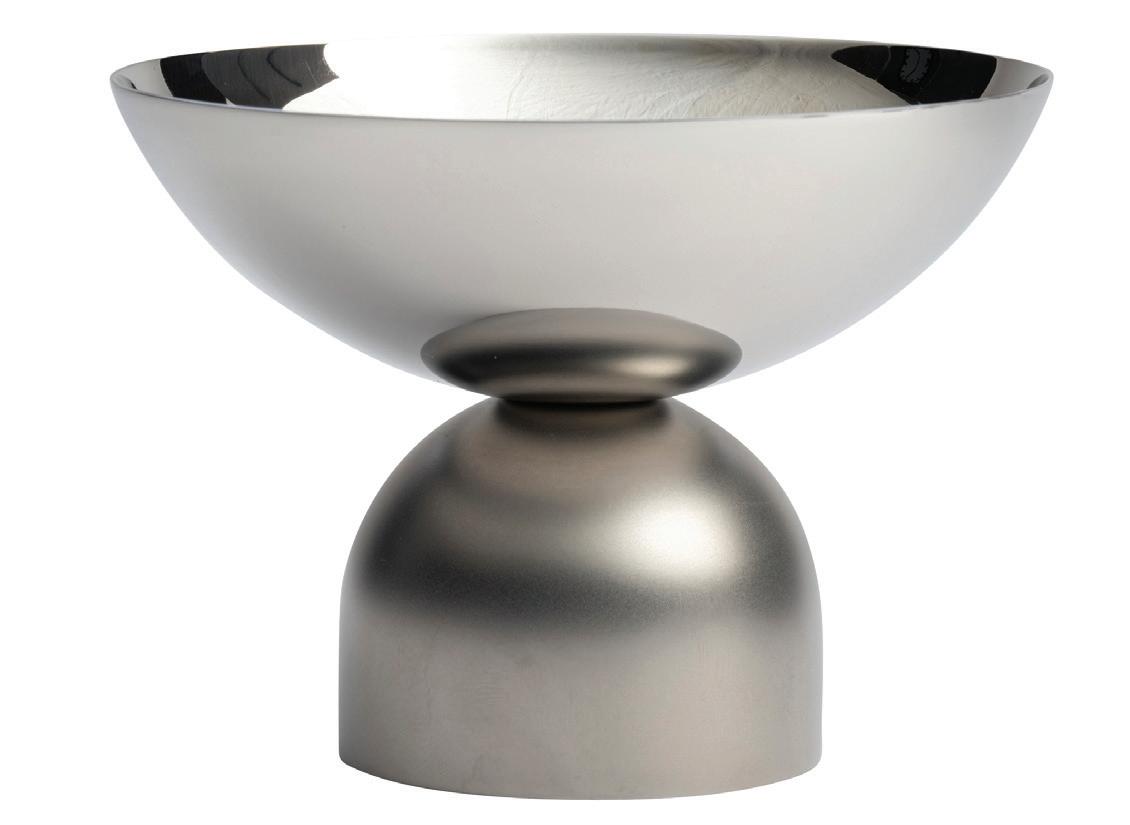
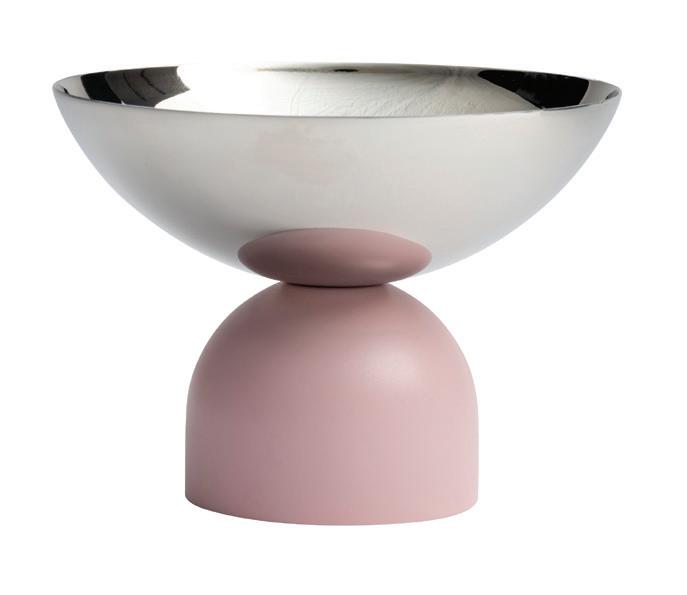
Corin Mellor of David Mellor on capturing the joy of ice cream in a stainless steel vessel
HEALTHCARE »60 ON THE RIGHT TRACK
Consultant haematologist
Prof Martin Kaiser on personalised treatments for multiple myeloma
Q&A: JOE HARPER
The food and beverage director at The Zetter on British eccentricity, the joys of seasonality, and the rediscovery of lost cocktail classics
Interview: Clare Finney
Q: What was the journey you took to arrive at The Zetter?
A: I’ve been in the bar industry for some time. My first ‘set up’ was The Booking Office at St Pancras. We made a menu that reflected the bar, the building and the concept. That went well, and I had the opportunity to do the same thing at Gleneagles. It taught me a lot about how to relaunch a place that people have a lot of affection for already.
I was at the Savoy from 2017 to 2020, which was a real golden era, so it was a very special place to work. Since then, I’ve worked with Soho Farmhouse and The Hoxton hotel in Holborn. But after three and a half years there I was looking for a new challenge.
Q: What appealed to you about The Zetter?
A: I’ve always had a lot of affection for Zetter as a brand. I remember going to the Zetter Townhouse in Clerkenwell when it first opened. I had friends who worked there and it was always so enchanting –you’d walk in and feel like you were in another world or another time. Having the opportunity to come in and take its collection of sites into the next phase was just so exciting to me.
Q: In this new phase, are you keeping hold of The Zetter’s famous British eccentricity?
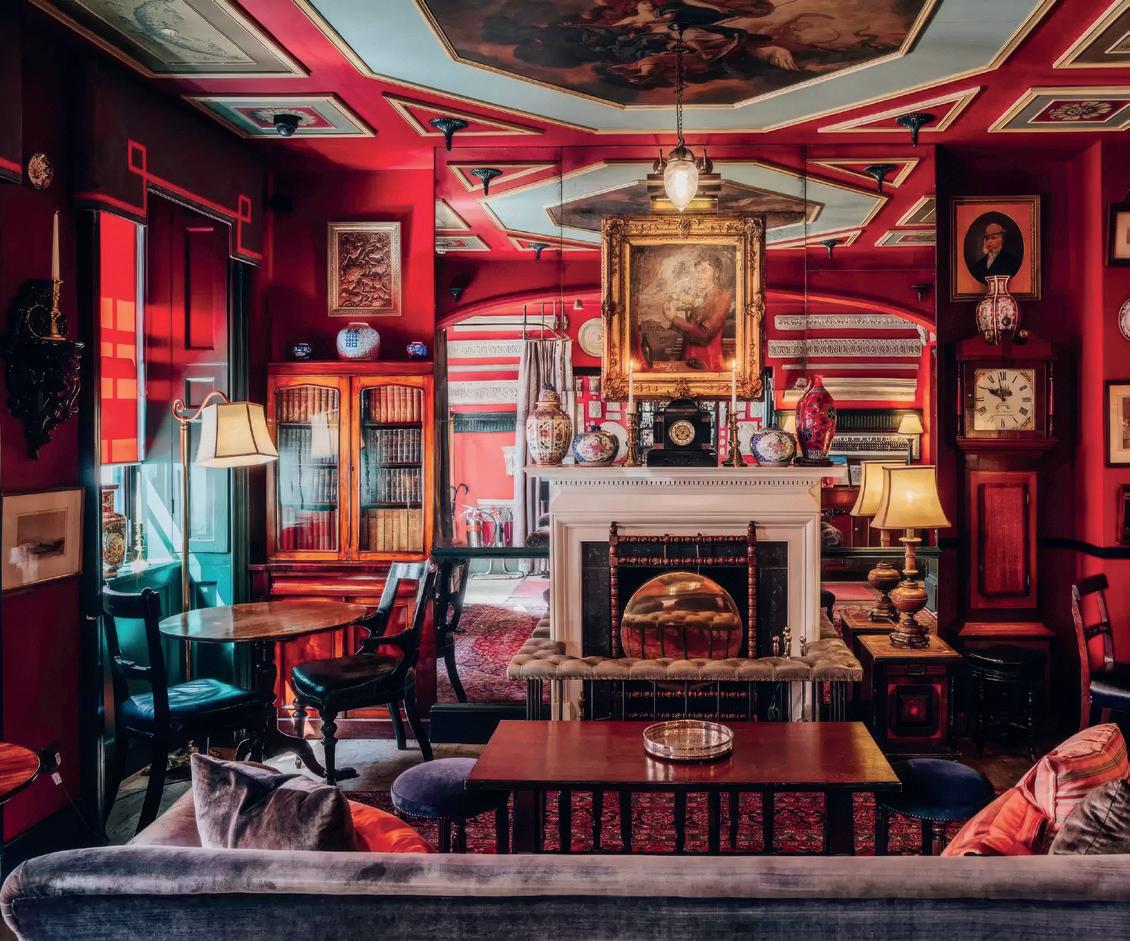
A: That will always be a really important part of who we are. From the colour palette and the choice of furniture all the way down to the crockery and cutlery we use, it all feels quite quirky and very British. The Marylebone parlour is a really great example of that approach. There are lots of intricate trinkets decorating the room, lots of different pieces of art and furniture. We don’t want it to feel like a beige London hotel. As soon as you walk in, you get a sense of being home. One thing that’s really key to all our locations is the fireplace – having an open fire always makes it feel like you’re in someone’s home.
Q: Is this mix of eccentricity and homeliness reflected in your food and drink menus?
A: When it comes to food and drink, Zetter has worn quite a few different hats over the years. At the moment, we’re really doubling down on that British essence – using British ingredients to make British classics but trying to elevate them, reflecting the kind of opulence you would have seen in these townhouses when they were grand private residences.
For example, we do a scotch egg in which the meat is spiced lamb and the egg is from Mayfield Farm, a beautiful farm in the Cotswolds. So
it’s an elevated scotch egg, and it’s really tasty. We make sausage rolls using our own sausage meat, which is made with duck fat and is really velvety. They’re baked to order. It’s simple comfort food but taken to an eccentric level of opulence!
Q: How important is the sourcing of your ingredients?
A: I’m really inspired by British produce, so finding great ways to showcase that is something that excites me. One of the things that I struggle with is how, as a nation, we’ve sort of abandoned seasonality. I don’t know if we really need to have strawberries 365
OPEN SEASON
Finding an outdoor table in central London – especially somewhere genuinely pleasant – can be as rare as hen’s teeth. But Marylebone does alfresco very well: hidden terraces, suntrap courtyards, pavement tables on quiet streets. Here are some of favourite spots, combining exceptional food and drink with an attractive outdoor space in which to consume it.
days a year. I think it’s important to be able to showcase seasonal produce that’s locally sourced. We want to show people that you can live in sync with the natural rhythms that happen around you. We try to source everything from as close as we can – we always try to work directly with producers. Our charcuterie is all British, from Cobble Lane, the meat’s all British, and we’re also using exclusively British cheese. The producer from Mayfield Farm actually came down to Bloomsbury on our opening day because he wanted to see where the eggs were going. I think those relationships are real ly important.
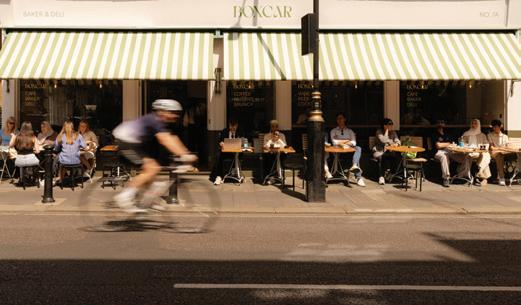
Boxcar
The queue that snakes out of Boxcar on Wyndham Place every lunchtime is there for good reason – and well worth joining. A seat on their long suntrap of a terrace is the icing on the cake: a perfect spot for brunch or a coffee and pastry – from classic pains au chocolat to matcha croissants – which are baked in house each morning. Their ‘croissant benedict’ is quite special, too, if you’re wanting something more substantial. Equal attention is given to the drinks: wines are biodynamic, juices are cold-pressed, the coffee hand roasted. A thoroughly lovely spot on a summer day.
Cavita
Mexican food in London has gone far beyond a skillet of sizzling fajitas at TGI Fridays, and Cavita on Wigmore Street offers someof the very best. The menu created by chef-patron Adriana is rooted in heritage Mexican dishes, but with a modern spin – think okra, ricotta and habanero sauce on heirloom corn tacos. In the winter, the underground agave bar is a dream hideaway for a few truly delicious cocktails; in summer, the outdoor terrace is one of the best places to have a margarita anywhere in Marylebone. Bring friends, so you can try as many dishes as possible!
Q: What about you r cocktails?
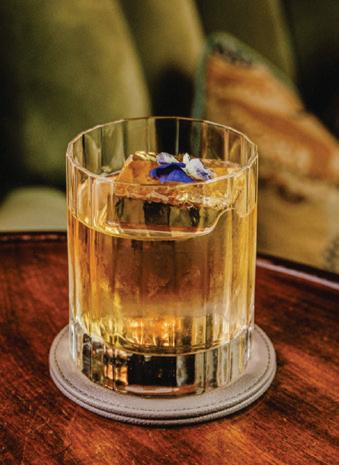
A: When it comes to drinks, I’m very passionate about elegance and simplicity – finding great products and letting them be the stars of the show. The Zetter brand has had a long history of using quite complex techniques and equipment. When Zetter first appeared on the scene, that seemed new and fresh. But we’ve seen many of those techniques taken to the limit in a lot of places, and it doesn’t feel that unique anymore.
So, we’ve decided to split the menu into two parts. We’ve got the Classics – five cocktails that have real heritage but are slightly
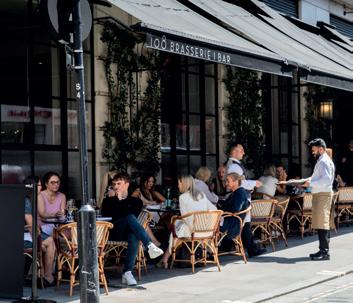
108 Brasserie
An oldie but a goodie. Nabbing a spot outside 108 Brasserie, or ‘La Terrasse on the Lane’, as they call it, is about as close as a Londoner can get to stumbling upon a gem of a French backstreet bistro without actually crossing the Channel. It’s the perfect place to watch the world go by, situated as it is on the pretty, pedestrianised Marylebone Lane – a street blessed with loads of alfresco dining options. Add a seafood platter and a glass or two of Chateau La Coste and you’ll feel like you’re halfway to Provence before you’ve even looked at the dessert menu.
lesser‑known; drinks that have stood the test of time, but which people might not have met before. One example is the Airmail. Classically, that’s made with aged rum and honey, topped with champagne. We’ve found a great little single origin honey producer in Britain called Black Bee, and we’re using their honey to make a honey syrup. And then rather than champagne, we’re using English sparkling wine. So, it’s taking a classic formula, then doing it our way, celebrating some British produce, and introducing people to a great drink that’s been around for ages that they might not have tried.
Clarette
Covering two sides of a quiet street corner, around an elegantly repurposed mock-Tudor pub, Clarette’s terrace has always had a strong pull. But the drinks at this Blandford Street wine bar are just as good as the location.Its carefully selected bottles are curated by founder Alexandra Petit of Château Margaux, the 500-year-old Bordeaux estate. The list leans heavily French and the food follows suit –classic, refined, French-led dishes. You might recognise the face behind the pass, too: head chef Aaron Ashmore reached the final of MasterChef: The Professionals.
Then we have the Zetter Classics, where we take inspiration from classic drinks but use them to create something new. There’s one we’ve called Between the Streets, which is halfway between a Bellini and an old cocktail called Between the Sheets. It’s inventive, but rooted in the classics.
Q: Who designs the drinks menus?
A: We all do. I learned a lot about how I like to develop a menu during my time at the Savoy, where everybody in the team was involved. That meant that the whole team were proud of it, and there was
>
108 Brasserie
Boxcar
always something for them to get excited about. The Classic cocktails are consistent across our three sites, but the Zetter Classics section changes, to make sure that each one is unique to that part icular team.
Q: How do you walk the line between appealing to tourists and attracting regular guests from the local area?
A: It can be a bit of a balancing act. But with us, if you’re coming from far away and Zetter has appealed to you, it’s our unique sense of Britishness that you’re looking to experience, so we don’t need to
compromise on that. As we’re always following our North Star in terms of our design, food and drink, I think the residents will always find something that they’ll enjoy. We try to produce a bar offering that has something for everybody. As long as we’re making changes often enough to keep it fresh, we’re giving locals enough reason to come back, while also being able to surprise and delight someone who’s staying in a bedroom.
Q: How important is good service to creating that appeal?
A: Whoever you are, it’s the interactions with our team that
“As Hamish Schmmet said: ‘Give me a bad drink and a great experience every time and I’ll come back.’ Obviously, we try to make the drinks the best we can, but we know that everything outside the glass matters just as much.”
NEW
Mour
The Leonard, the boutique hotel on Seymour Street, is marking the latest phase of a significant redevelopment project with the launch in the next door building of a new restaurant, Mour. Set in a ‘reimagined’ Georgian townhouse with its own on street entrance, an intimate dining room and a sun lit courtyard with a retractable roof, it has been designed to attract locals and destination diners as well as guests. Set up for relaxed daytime dining and a more elevated evening experience, the Mediterranean inspired menu will follow the seasons and rely heavily on British produce. For founder Saachi Sehgal, this is a deeply personal project –together with his sister Sienna, he grew up around The Leonard, which has been run by his family for many years, and he wants Mour to provide the same sense of ease and familiarity he’s always felt there.
MOUR
13 Seymour Street, W1H 5BT mour.uk
really make the experience. If the team are excited about something, then it’s much easier for the guest to get excited too. As Hamish Schmmet, the editor of Class Magazine, said: “Give me a bad drink and a great experience every time and I’ll come back.” Obviously, we try to make the drinks the best we can, but we know that everything outside the glass matters just as much. If we’ve got good products and good service, then we should be able to make ever ybody happy.
Q: What are your own inspirations when it comes to foo d and drink?
A: It’s a combination of the people I’ve met and the places I’ve worked throughout my journey. I have been really lucky to have such inspiring mentors for the bulk of my career. Even now, my boss is great and really supportive.
If you want to get anywhere in this industry, it’s really important to find people who can help you express your creativity in the right direction. If I ever reach the heights, it’ll be because I’ve stood on the shoulders of giants.
THE ZETTER, MARYLEBONE 28-30 Seymour Street, W1H 7JB thezetter.com
NEW ARRIVALS
KUDU ‘KIT KAT’ TART
Patrick Williams, chef patron at Kudu, on a chocolate dessert inspired by his childhood
Interview: E llie Costigan
Image: Patricia Niven
In a nutshell
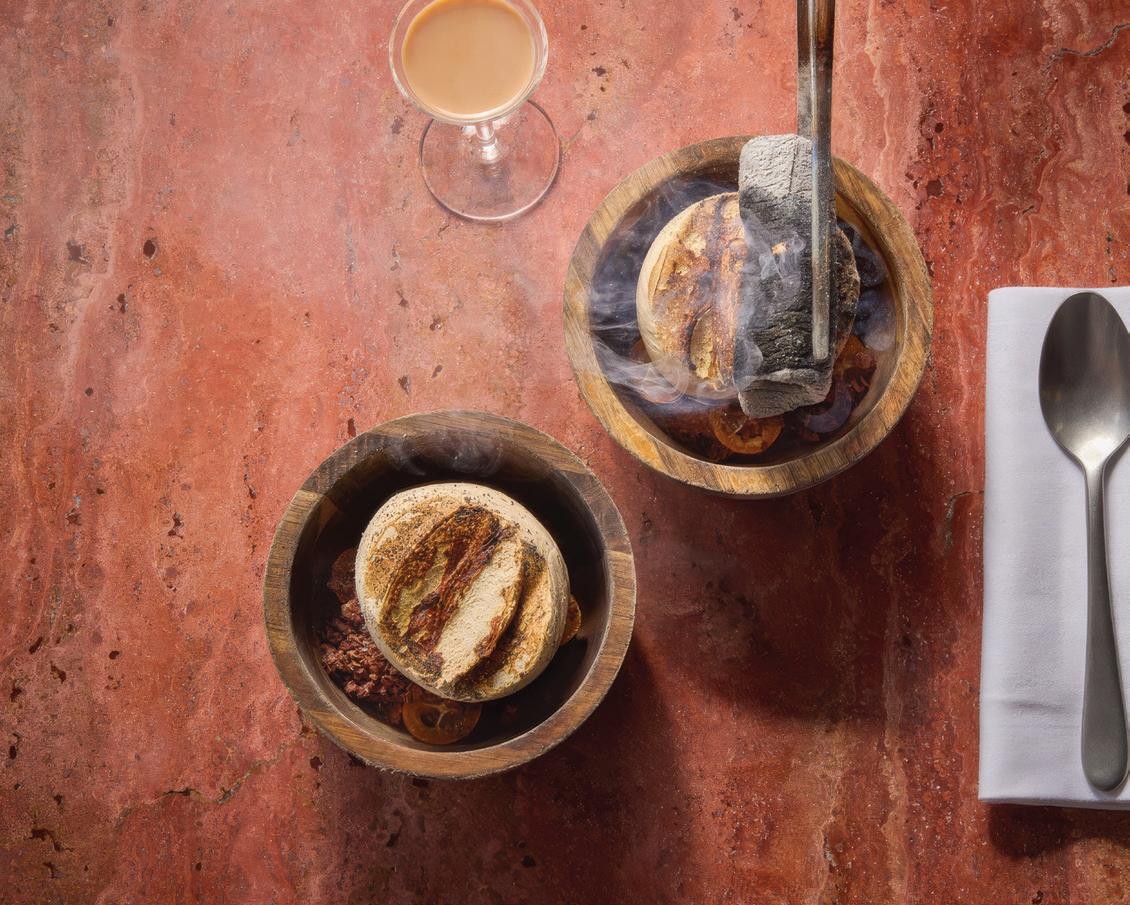
This tart is a reworking of a dish we had on the menu at our original site in Peckham for about seven years. It became a staple; Amy, my wife and business partner, wouldn’t let me take it off the menu. It combines some of my favourite things: sweet, sharp candied kumquats – little citrus fruits you eat whole – with a luxurious dark chocolate crema. Then we add what we call ‘KFC ice cream’ – our version of a soft serve –with crispy feuilletine pastry and a caramelised meringue. Finally, we take a bit of hot charcoal from the braai and toast the marshmallow at the table.
The inspiration
When I was a kid in South Africa, the highlight of a braai was having marshmallows. You’d rummage around the garden for a stick, and toast them over the fire. Drawing on that childhood memory felt like a fun, interactive way to finish the dish. It’s like a grown-up version of a s’more.
The purpose If I go to a restaurant and there’s no chocolate option, I genuinely don’t order dessert. Amy feels the same, so we’ve always had a chocolate dish on the menu. So often you have a fantastic starter and main course, then the desserts aren’t on the same level. We
put the same amount of effort into every stage of the meal, from start to finish.
The technique
The chocolate crema takes a good day to set. We bring a mix of double cream, milk and butter to a scald, then pour it over tempered dark chocolate. A good pinch of sea salt goes in before it’s blended until smooth and glossy. It’s then set into piping bags and chilled overnight.
The ice cream is straightforward. I find eggbased ice creams heavy and claggy, so we use single cream, whole milk, stabiliser, sugar and flavourings –here it’s creme fraiche and
clementine. We let it infuse for about a day, warm it to around 65C, chill it again, then strain and blend it until super smooth before freezing overnight.
The kumquats are the bane of our pastry section’s life. They’re full of seeds, so you don’t get much yield, but the flavour is fantastic. We slice and vacuum-pack them, with sugar and orange juice to balance the sharpness.
The feuilletine is coated in melted cocoa butter and dark chocolate. It has a texture a bit like Weetabix, but less dry, and adds texture to the dish. For the meringue, we make a very dark caramel and pour the hot sugar into whisked egg whites, finishing with a pinch of salt.
The secret
The most important thing is making sure the chocolate is well blended, with that beautiful shiny coat. To get that, the temperature needs to be perfect: the chocolate needs to be fridge cold and the milk and cream mix needs to stay pretty much at the same temperature while you’re blending it, to make sure it doesn’t split. It’s not complex, but you have to get it right.
KUDU
7 Moxon Street, W1U 4EP kuducollective.com
A GLASS APART
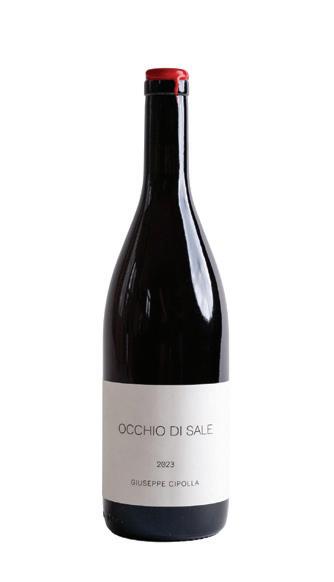
Nicola Ruda, head of wine at Lina Stores, on a ‘dark rosato’ from Sicily that offered love at first sip
Interview: Vi el Richardson
Sicily is not often seen as a producer of great wine. For most people, it means bulk production of easy, fruity, uncomplicated wines. In recent years, producers such as Frank Cornelissen and Arianna Occhipinti have brought recognition through the volcanic drama of Etna. But for me, a more compelling story lies f urther south. I first encountered Giuseppe Cipolla’s Occhio di Sale – which translates as ‘eye of salt’ – on a wine list in my hometown of Cagliari. I knew immediately that I had to have it. I even tried to bring a case back to London myself, but that proved complicated. Eventually, through a friend who had just begun importing the wines in tiny quantities, the circle was completed. I got to meet Giuseppe himself at a London tasting, quite by chance, barely a month after that first glass. Things moved very
A rosato can be anything from a dark rosé, retaining much of the structure of a red wine, to something lighter with more of the freshness and energy of a white. Occhio di Sale is emphatically the former. Around 80 percent of the blend pressed Nero d’Avola grapes, which Giuseppe co ferments with small proportions of Catarratto, Inzolia
and Moscato d’Alessandria using indigenous yeasts, keeping intervention to an absolute minimum throughout. The idea is that you can ta ste the soil!
The wine comes from a particular parcel of land near Agrigento with exceptional concentrations of clay, gypsum and rock salt. The area was once home to active sulphur and salt mines, and the vineyards climb from 200 to 500 metres above sea level, which helps preserve a freshness that feels almost miraculous for one of the hottest corners of the Mediterranean.
On the nose I find delicacy – hibiscus, rose water, high‑toned red fruit. On the palate there is bright, crunchy fruit and a salinity that lingers beautifully. This wine is complex and sophisticated, but never subtle. When we ran it as a special, members of my team with no wine background whatsoever started asking to buy bottles for themselves. That, for me, says everything. Giuseppe farms only around 15 hectares in the ancient ‘alberello’ bush vine style, keeping yields naturally small. This is not a wine you will find in many places, but it is absolutely worth the effort of seeking out.
LINA STORES
13-15 Marylebone Lane, W1U 2NE linastores.co.uk
Once chilled, it’s piped on top of the ice cream.
Q&A: KEVIN MARTEL
The Martel+Ram co‑founder on his crusade for comfort, learning from a legend, and why footwear is architecture on a miniature scale
Interview: Lauren Bravo
Q: Martel+Ram shoes promise ‘trainer-level comfort’ in a formal shoe. Were you the first designer to t hink of that?
A: They don’t just promise, they deliver! But yes and no. Rubber soles have been used on shoes like desert boots since the 1940s and 50s, but back then they were hard and heavy – lightweight materials like the ones we use weren’t available. When I first started in the business, I worked for an American company called Cole Haan, which was owned by Nike, and we first put a Nike Air sole on a dress shoe back in the late 1990s. It was ugly. You had this massive heel that was meant for a big clunky running shoe and making that look elegant was really hard. So, in a way, I’ve been working on this for 30 years. Everybody always wanted this kind of footwear, because the desire for comfort never goes away. Especially for guys, because we’re wimps.
Q: How do you feel about the great casualisation of our wardrobes?
Do you yearn for the formality of the old days?
A: The pendulum swung way too casual during Covid, when everyone was working from home in their slippers. But now it’s swung back to (I hate this phrase) ‘quiet luxury’. You want to look appropriate, you can’t look shabby, but you’re still a bit more casual than the old suited and booted days. A lot of companies are forcing everyone back to the office, but nobody wants to give up the comfort. Heavy, Goodyear welted brogues used to be your only option. Now, you have a choice.
Q: Men aren’t the only ones limping towards comfort. Do many women try to buy your shoes?
A: Every day! I’ve had lots of women buy our loafers in the smallest size we make, and our plan is eventually to extend the sizing down. But they’ll be unisex, they won’t be shoes ‘for women’. It’s like wearing your boyfriend’s shirt – women love the
fact that it has a masculine fit. They just want it in their size.
Q: So are high heels really dead?
A: Oh no, heels will never go away. They’re sexy, they’re fun. But fashion is a pendulum. Or maybe a rollercoaster – however you want to think about it!
Q: Growing up in Boston, did you always love shoes? Were you a teenager wearing brogues when everyone else was in sneakers?
A: No! This was never the plan. I studied graphic design. I loved the geeky parts of typography, but once everybody had a computer and could be a graphic designer, I got bored. So, after I finished art school, I got a job working for a shoe designer because I could draw well. And I just took to it; I loved the business. It’s architecture. Women’s shoes are very much fashion, decoration, flamboyance. But men’s shoes are more about craft and material, and tiny architectural shifts. I got amazing jobs and worked with incredible people who just made it fun.
Q: Incredible people like Giorgio Armani and Ralph Lauren. What did you learn from your experiences at those big, global fa shion houses?
A: Everything. They were massive companies, and it’s a lot of pressure. At Ralph Lauren I was responsible for a £90 million sector in footwear alone. The pace of it was just crazy – you’re making shoes all over the world. And with Armani, I was watching a master. The man could lecture a whole room about a white shirt for an hour – it was amazing. But trying to create a small business from scratch, as opposed to working in a huge machine like that, is so different. I come here every day. I work on Saturdays. Yesterday I was hoovering! One day you’re getting coffee served to you on silver trays in Milan, the next day you’re hoovering.
Q: Does being a small brand provide more agility, as well as more grunt work?
A: Oh, it’s wonderful. In those huge companies, you never actually meet the customer. Whereas here, it’s been eight years of talking to customers every single day, finding out what they like and what they need. It’s incredibly insightful. And the pace is way slower. We only make seven models. Men are simple creatures! We’re afraid of change, and we don’t like colour.
Q: Giorgio would probably agree…
A: I’m dressed in navy blue every
day – that’s from years of having it beaten into me by Armani, who always wore head to toe navy. But he really was a pioneer. Back in the 1970s, he took old Savile Row tailoring, ripped out all the lining and reinforcements and made these drapey soft jackets using beautiful Italian materials. Meanwhile I took an English dress shoe and removed the reinforcements to make this soft, beautiful, easy shoe. His philosophy was timeless, because it was all about making somebody comfortable. When you feel comfortable, you project a whole other confidence.
Q: Your shoes are made in Italy. W hy not here?
A: I’m not competing with English shoes. Those old Northamptonshire brands are wonderful – I have great respect for Church’s, Cheaney, Crockett & Jones, Trickers, Loake, all those guys. But they all own their own factories, which produce under their name and that’s it. Whereas in Italy, factories produce for lots of different brands. I’d known these craftspeople for years. They’re the fourth generation of a family who’ve been making shoes since before the war, and they’re experts. It’s a big, beautiful, modern facility but there is such art in everything they do.
“Working with Giorgio Armani, I was watching a master. The man could lecture a whole room about a white shirt for an hour –it was amazing.”
No AI, no robots. People always ask: “Are these made by hand?” and I say: “Yes, they’re made by hand by nice Italians who take two hour lunches and six week holidays.”
Q: What’s so special about a Vibram sole?
A: It’s the gold standard of a rubber sole. Vibram is a 100‑year‑old company based at the foot of the Italian Alps. They started making rubber soles for hiking boots in the 1920s, and it’s still family owned today. They’re really, really innovative and I’ve worked with them for years. A lot of luxury brands make their own soles
because they want their logo on the bottom, but I think of it like this: if you’re going to buy a Ferrari, you’re not going to put Ferrari tyres on it – you’re going to buy Pirelli, or Bridgestone. You’re going to go to the expert tyre makers, right? You’re going to use all the best components you can.
Q: Your shoes use Blake construction, as opposed to the classic Goodyear welt. What does that mean?
A: The Goodyear welt, which is how most English shoes are made, means that a strip of rubber or leather is sewn to the upper and insole, then >
Left: Calfskin derby
Above: Calfskin penny loafer
Right: Martel+Ram’s mission statement, on the wall of the Marylebone shop
the midsoles, the outer sole and so on. Whereas with Blake, the sole is sewn directly through to the upper, so you don’t need all the midsoles and you get a much more flexible construction. You’ve eliminated the layer cake. A lot of people think it means you can’t re sole them, but you can! You just need someone who knows what they’re doing.
Q: Are your customers invested in all the geeky details?
A: Our customers ask a lot of questions. Guys are very practical, especially English guys – they all ask: “Can this be re soled? How long’s it going to last?” For some reason,
because the shoes are so lightweight, that doesn’t always signify quality to people – I think we’re used to ‘good’ shoes being heavy, like a tank. But it’s the best rubber, so it’ll take you years to wear it down. And if you do, bring them in and we’ll send them to the Vibram academy in Shoreditch to be re soled.
Q: How long should a good pair of shoes last?
A: Look, shoes are made to be worn. It depends how you treat them. If you’re abusive to your shoes, you’re going to need to replace them every couple of years. If you wear them to muck out a barn, or get dragged
behind a moving cab every week, I can’t help you! But they’re built for England. We use water resistant suede, so you can wear them in the rain. If you take care of them and put shoe trees in them at night, give them a nice brush every once in a while, they’re going to last.
Q: What’s leaping off the shelves at the moment?
A: Our bestseller right now is this very soft calf leather called ‘bottalato’ in Italian, which means it’s been tumbled in a barrel to give it a beautiful texture. It’s really squishy and soft, and it feels great on the foot.
“I work with the fourth generation of a family who’ve been making shoes since before the war, and they’re experts. People always ask: ‘Are these made by hand?’ and I say: ‘Yes, they’re made by hand by nice Italians who take two‑hour lunches and six‑week holidays.’”
Q: What brought you to New Cavendish Street?
A: Originally, I wanted to just do online, but I realised very quickly that wouldn’t work. You need physical retail in this business. People want to try on shoes. People want to touch and feel the product. It immediately brings your return rate down. We opened our first pop up in St James, which was a tiny space. I knew we needed a bigger store, and I was walking around Marylebone and saw that this building was empty. It’s an amazing space and we’ve built an incredible clientele from here. It’s less flashy than Mayfair or Knightsbridge, and
way more residential than people realise; people really live in this neighbourhood. Including me! I moved just round the corner around the same time we opened the store. A lot of my customers live and work here too, which is really nice. They like supporting local brands.
Q: So, no plans to go global a ny time soon?
A: I’ve really changed my focus over the past few years. Instead of expanding, it’s about saying: “Let’s make this a destination.” It isn’t about having 50 stores. That’s the mistake that a lot of entrepreneurs make: you try to expand too fast, you take on crazy money, you lose control; it’s a tale as old as time. But it’s amazing what you can do with one store in a good neighbourhood.
Q: When you’re not manning the shop, what’s your favourite thing to do i n Marylebone?
A: I’m always puttering around. Fischer’s is one of my favourite restaurants. Who doesn’t love a schnitzel? It’s the kind of place you want to go on a Sunday night, but I will tuck in there on any given day. And I’ve always loved Slowear – I send guys there all the time when they ask where they can get some good trousers. I say: “Go there, they know what they’re doing.”
Q: What’s the best thing anyone has ever done wearing a pair of your shoes?
A: I just made a pair of velvet tasselled loafers for a friend of a friend who was receiving a technical Oscar. That was pretty cool. But the thing is, no one takes pictures of the guys! Especially guys’ feet. So, it’s kind of a thankless job, dressing men on the red carpet. No one cares unless they’re wearing something completely foolish. But hey, I’m just happy that they’re comfortable.
MARTEL+RAM
56 New Cavendish Street, W1G 8TH martelandram.com
SUMMER IN THE CITY
Zack Moscot, chief design officer of MOSCOT, on the PLOTZ SUN
The PLOTZ is a modern evolution of one of our beloved metal silhouettes, The MAZEL. What makes it special is the semi rimless construction – the rimless bottom creates a lighter visual feel, while maintaining a strong, confident presence. It features thin‑gauge striped metal detailing on the front and temples, titanium nose pads, and colour‑coordinated acetate temple tips. It is sleek, architectural and incredibly wearable. I love the tension between the sharp metal detailing and the minimalism of the fr ame itself –it feels understated but distinct.
Like many of our designs, it draws from our archives while being interpreted through a modern lens. That balance between heritage and evolution is central to how I design. Our story began in 1899 when my great great grandfather Hyman Moscot started selling glasses from a pushcart in New York’s Lower East Side. Five generations later, my father Dr Harvey Moscot and I continue to build on that foundation – merging optical expertise with timeless design. Every frame is designed in New York, with an emphasis on longevity, functionality a nd character.
Made for city life, the PLOTZ is versatile enough to wear daily but has enough personality to elevate a simple look. I’d style it with classic wardrobe staples: a crisp white shirt, relaxed tailoring, denim, a great jacket. At the same time, it can easily be dressed up with a sharp suit or formalwear for more extravagant occasions, as the semi rimless construction and refined metal detailing give it a luxurious feel without being overly flashy. It does a lot with very little, which is very much how I approach personal style.
MOSCOT
68 Marylebone High Street, W1U 5JH moscot.com
NEW
Marella
To the general air of continental sophistication fostered by Marylebone Village’s many European womenswear brands, this new arrival brings a touch of northern Italian elegance. Established in 1971 in Reggio Emilia, Marella began as a specialised line within the Max Mara Group, before being promoted to a fully fledged, standalone business in 1988. Offering a modern, refined wardrobe, based on clean lines, quality materials and premium finishes, the new Marylebone High Street boutique is the brand’s first standalone UK store. Designed to reflect the modern Italian aesthetic of the clothing, its arrival marks an important step in Marella’s expansion into Europe’s fashion capitals, following recent openings in Paris and Munich.
JOYBIRD SKIRT AMERICAN VINTAGE, £95 americanvintage-store.com
THAÏS MULES BOBBIES, £180 bobbies.com
ISABEL MANNS, £15 isabelmanns.com
JELLYFISH BEADED EARRINGS ANNA + NINA, £29.95
SILVER SILK SCRUNCHIE
NICENESS M.LESH BAG
SWIMSUITS
Tummies can be sensitive souls, quite regardless of what’s going on underneath the surface. Some days, they might enjoy the limelight; others, they would much rather hide away under four layers of fabric and a hot water bottle. Those days are vehemently not beach days; but when the sun comes out and the seaside calls, there’s a lot to be said for the middle ground a swimming costume offers: modest, flattering, fun and maybe even flirtatious, but with enough cover to reassure even the most self conscious tummies. In a well constructed costume, they can be guaranteed to look fabulous, even if they don’t necessari ly feel it.
1.
PRINTED SWIMSUIT POETRY, £189
poetryfashion.co.uk
You don’t need to have your stomach on show to make a statement. This printed swimsuit comes from Poetry, whose designers take inspiration from the wider world of art and culture, not just trends in fashion. That’s in evidence in this one-piece, with its striking digital print and understated design: square neckline, lightly padded cups and adjustable straps, so you can dive in if you want to. The technical fabric is made using premium regenerated nylon made from waste materials, which is helpfully both chlorine and suncream resistant.
2.
HALTERNECK SWIMSUIT ME+EM, £225 meandem.com
Even if your holiday weather ends up being a little greyer than you might wish, the colour of this one-piece swimsuit – ‘sunny orange’ is its official name – will offer its own little boost of sunshine. Made in Portugal, the suit has a pleasingly soft, flexible finish, thanks to the textured jersey fabric, and it’s designed with a halter-tie neckline and a scooped back for a naturally flattering shape. But it’s that gorgeous colour that’s guaranteed to add pizzaz to any promenade.
3.
SOLARA SWIMSUIT
SEZANE, £100
sezane.com
It seems gingham is going nowhere as a trend – but it might well be going on holiday with you, in the form of this swimsuit. Created in collaboration with Ysé Paris, the Solara’s pale blue check sings of summer; the plunging back, thin straps and cute little tie are enchanting rather than exposing; and the swimsuit is fully lined, for comfort and quality. For bonus points, it’s made with 81 percent recycled materials.
ANATOMY OF A DESIGN
ICE CREAM BOWL
Corin Mellor, creative director of David Mellor, on capturing the joy of ice cream in a stainless steel vessel
Interview: Viel Richardson
Requirement
There is a particular delight in discovering that something so universally loved has been so comprehensively ignored by anyone with serious design intentions. Ice cream is one of life’s great pleasures: joyful, celebratory and reminiscent of summer. Restaurants had been approaching us looking for a well-made stainless steel ice cream bowl, so I looked at what was available. It was all plain, functional, budget objects. My criteria were simple. The bowl had to hold three generous scoops. If it couldn’t fulfil that basic purpose, the rest was irrelevant. It also needed a sense of whimsy. Stainless steel is very well suited to this task, so as someone who has spent a career working with stainless steel, this felt like something that would be great fun to do.
Inspiration
Ice cream has an inherent joy to it. A sense of fun, of celebration, of childhood. I knew from the outset that I
didn’t want to simply produce a well-made but cliched bowl, but equally I didn’t want something so wacky that it tipped into being comical. When I was a design student in the 1980s, the Memphis movement was a powerful influence on my generation of designers. Founded by Ettore Sottsass, it was the punk rock of design – radical, irreverent and entirely uninterested in convention. It was enormously exciting, and that spirit has never quite left me. I found myself going back to my student design language, arriving at the idea of two spheres, one referencing the scoop of ice cream itself, the other referencing the bowl. It instinctively felt right for the product.
Process
My process always begins the same way – I pick up a pen and start sketching. The sketches are not Picassos, just a way of trying out different concepts and details. Once I had a sketch I felt might work, I produced a full-size line drawing to establish the basic measurements, such as deciding that the bowl needed to be 110 millimetres wide. From there, rather than building physical prototypes (which I usually do), I went straight to CAD drawings and began creating 3D-printed models. We printed, assessed, adjusted dimensions and printed again, until the proportions felt resolved. I knew I wanted a textured finish on the outside, which meant the bowl had to be painted. I also knew that spot welding was the best way to join the two sections. However, I had slightly underestimated the problem of the distinct scar that spot welds leave, so we had to develop a secondary process to remove them from the interior of the bowl.
Materials
Stainless steel is the traditional material for ice cream bowls for good reason. Its high conductivity and relatively low mass mean it reaches the temperature of its contents quickly and
holds it there. This means the ice cream stays colder for longer. It can be pre-chilled, which extends that effect further. Stainless steel is also exceptionally hygienic, dishwasher safe, resistant to chipping or cracking and doesn’t absorb odours or flavours over time. The interior carries a mirror polish, which is a practical decision as well as an aesthetic one. A mirror finish prevents food and bacteria lodging in microscopic scratches. However, creating the contrast between that polished inner bowl and the textured, coloured base was something I felt very strongly about. The matte finish was achieved with an exceptionally fine sandblast, fine enough to resist marking during use. For colour, the choices were not difficult: pink and pistachio are simply ice cream to me. For those wanting something more restrained, the raw stainless version uses the same sandblasted finish to echo the coloured bases, keeping the family visually coherent.
Philosophy
Form should follow function, with a bit of fun. That is the most honest description of what we do. We always try to design things that are very pure in their aesthetics and built to last; nothing we make is ever discontinued. But design without a sense of joy is just engineering. This bowl sits towards the more playful end of what we produce, which is exactly right for the product. The risk with introducing that element of fun is that it can start to undermine the object’s fundamental reason for existing, and finding that balance is always the challenge. This bowl holds ice cream beautifully and it could still be in daily use in 50 years. It also makes people smile when they see it. For me, if we’ve got that right, then we’ve done our job.
DAVID MELLOR
14 New Cavendish Street, W1G 8UW
davidmellordesign.com
HORACE X MONOCLE TRAVEL SET MONOCLE SHOP, £38 monocle.com
SLIP PURE SILK SLEEP MASK JOHN BELL & CROYDEN, £63 johnbellcroyden.co.uk
CARIBBEAN SHORES HAIR & BODY MIST SPACE NK, £18 spacenk.com
WASHBAG SUNSPEL, £215 sunspel.com
ON THE RIGHT TRACK
Professor Martin Kaiser, consultant haematologist at The Royal Marsden, on precision diagnostics, patient confidence and creating personalised treatments for multiple myeloma
Interview: Vi el Richardson
Q; What is mult iple myeloma and why has it historically been so diffic ult to treat?
A: Multiple myeloma is a cancer of the plasma cells, which are part of the immune system and live inside the bone marrow. In myeloma, these cells acquire genetic changes that stop them behaving normally and cause them to grow uncontrollably. The disease is often hidden deep inside the bones, particularly the spine and pelvis, so many patients don’t realise anything is wrong until complications develop, such as bone breaks, kidney damage or serious infections. One of the biggest challenges is that myeloma is not the same in every patient. Some forms develop relatively slowly while others are much more aggressive. Historically, we treated most patients in essentially the same way, because we lacked both the diagnostic tools and the treatments to tailor therapy properly. Patients would often live for around five years after diagnosis. That has changed completely, with many now living 10 or 15 years on the right treatment. But we’ve realised that some are probably over treated while others still need intensive therapy. That’s where precision diagnostics are so important to the pathway.
Q; What is MyTrack Myeloma, and what problem is it desig ned to solve?
A: It’s a diagnostic led pathway designed to personalise treatment for myeloma patients. Traditionally, most patients have received a standard long term treatment approach. The aim of MyTrack is to understand both how aggressive the disease is at diagnosis and how well it responds to treatment, which then enables us to make more individualised decisions. The pathway combines several advanced tests. One examines the genetic activity of the cancer to help identify higher risk disease,
while another can detect extremely small amounts of residual cancer cells after treatment. Together, this gives us a much clearer picture of who might benefit from continuing intensive therapy and who might safely consider a carefully monitored treat ment break –what we call a treat ment holiday.
Q; Why is it important to understand the genetic profile of a patient’s myeloma before treatment begins?
A: Myeloma is an extremely complex disease genetically. Some forms are relatively slow growing and respond very well to treatment, while others are much more aggressive and more likely to return early after a period of remission. Understanding that difference from the outset is incredibly important because it helps us tailor treatment more appropriately. One of the key advances within MyTrack is the use of a gene expression test called MM Profiler. This gives us a much more detailed understanding of the disease biology than traditional tests alone. It helps us identify higher risk patients before treatment starts. That matters because patients with more aggressive disease may benefit from longer or more intensive treatment, whereas lower risk patients may eventually be candidates for a treat ment holiday.
Q; How does MyTrack handle this diverse dia gnostic data?
A: The pathway brings together two types of information that have historically been looked at separately: how biologically aggressive the myeloma appears to be at diagnosis and how deeply the disease responds once treatment begins. One of the most important tools here is a highly sensitive test called clonoSEQ. This test can detect tiny amounts of residual disease after treatment – down to one cancer cell among a million normal cells. If a patient >
with lower risk disease achieves that kind of exceptionally deep remission, it gives us much greater confidence that they may be able to safely pause treatment under close monitoring. For someone with higher risk disease, even a good response may still mean they benefit from continuing therapy. The innovation is not the tests themselves, but the way the information is combined to support more personalised decisions.
Q; What do tests such as MM Profiler, clonoSEQ and EXENT allow you to see that standard monitorin g might miss?
A: MM Profiler helps us understand the biology of the myeloma by identifying genetic patterns linked to higher risk disease, giving us a clearer sense of how aggressive the cancer is likely to be. The other major advance is the ability to detect extremely small traces of disease. The clonoSEQ test tells us whether a patient has achieved a very deep remission, and EXENT then allows us to detect tiny traces of the disease, often long before the patient develops symptoms or conventional tests would detect a problem. Together, these technologies give us a much earlier and more precise understanding of what the disease is doing.
Q; How could this pathway change day-to-day life for patients who respond well to initi al treatment?
A: The biggest change is the possibility of the treatment holiday. Traditionally, many myeloma patients remained on continuous therapy for years, taking a chemotherapy tablet every day alongside three or four other medications to manage side effects. One of our patient advocates, treated the traditional way, counted up the number of tablets he had taken over his 10 years of therapy. It came to several
hundred thousand pills. Even when treatment is effective, that has a huge impact on quality of life. If we can identify patients whose disease is behaving in a less aggressive way and who have responded exceptionally well, there may be an opportunity to safely pause therapy while continuing close monitoring. That could mean periods of several years without chemotherapy tablets, injections or supportive medications. Many describe a significant improvement in energy levels and overall wellbeing once treatment stops. The aim is not to remove treatment from patients who need it, but to avoid unnecessary treatment for those who do not.
Q; Are there mental health benefits too?
A: One of the things we have traditionally heard from patients is that finishing treatment can feel unexpectedly unsettling. During active therapy, they’re seeing their clinical team regularly, having blood tests, having conversations and feeling closely supported. When treatment stops, some patients suddenly feel as though that safety net has disappeared, even when the disease is in remission. What this pathway offers is reassurance through closer and more sensitive monitoring. Patients know we’re still keeping a very careful eye on the disease and have the ability to detect any change early, even during a treatment break. We also hear from patients that it is often only after stopping therapy that they realise quite how much the treatment had been affecting them – many say they had forgotten what their old selves felt like. Nobody is forced to pause treatment, but for those who do, the experience can be l ife changing.
Q; How about patients with more aggres sive disease?
A: One of the important things
we’ve learnt from clinical trials is that aggressive disease is much more likely to relapse early if treatment is stopped too soon. Maintaining control of the disease remains the priority. What changes with MyTrack is that we understand much more clearly who those patients are from the beginning. That allows us to have more informed discussions about why ongoing therapy is important in their case. Equally, it helps avoid the opposite problem of exposing lower risk patients to long term treatment they may not actually need. The aim is always to get the right treatment to the right patient at the right time.
Q; Myeloma often follows a pattern of remission and relapse. How much difference can it make, detecting the earliest sig ns of change?
A: A very significant difference. Traditionally, we often only became aware that the disease was
“Myeloma is extremely complex. Some forms are relatively slow growing and respond very well to treatment, while others are much more aggressive. Understanding that difference from the outset is incredibly important.”
returning once it was visible on standard tests or once the patient started developing symptoms. By that stage, the myeloma may already be affecting the bones, kidneys or immune system. Because the EXENT blood test can detect traces of disease activity 10 to 20 times earlier than conventional testing, it allows us to restart treatment at the very earliest stages of a relapse. All the evidence suggests treatment is more likely to be effective when we intervene at that stage rather than waiting for a full clinical relapse to occur.
Q; What has surprised you most about the way patients and clinicians have responded?
A: The biggest surprise has been just how empowering patients find it. How much more clearly they understand why certain decisions are being made and what the potential trade offs are. There has also been a growing recognition among both patients and clinicians
of how much quality of life matters alongside survival. The seriousness of the disease meant much of the focus was traditionally on simply keeping the patient alive. The treatments we now use are far more effective than in the past, but they can still place a significant burden on patients over many years. Having better diagnostics allows us to have more nuanced conversations about who genuinely needs long term intensive therapy. That shift towards more personalised care has been received very positively by both sides.
Q; How is the information shared with patients without overwhelming them?
A: MyTrack is designed to work alongside the patient’s existing haematology care rather than replace it. Myeloma is a complex disease that requires specialist oversight, so the information generated by the pathway is intended to support discussions
between the patient and their clinical team, not appear as raw data without context. Importantly, this is not a system that depends on patients managing complicated technology at home. Most monitoring is still done through routine clinic visits and blood tests and the results are then discussed in a structured way with the treating physician. Over time, many patients become very confident in understanding what the results mean. So, for example, good news from a test may be shared with the patient through the pathway app. However, especially early on, information needs to be introduced in the right clinical setting to ensure the patient understands what it means for them.
Q; How do you think precision diagnostics could change the relationship between myeloma patients and their clinicians over the next decade?
A: We are moving towards a much more personalised and collaborative model of care. Historically, myeloma was viewed as incurable, and the main focus was on extending survival. Increasingly, we’re seeing patients live for very long periods with excellent disease control and that changes the nature of the conversation completely. My hope is that within the next decade we’ll be able to identify a proportion of patients whose disease may be functionally cured. Diagnostics will be central to that, because we’ll need extremely accurate ways of identifying who can safely stop treatment and who still requires ongoing therapy. More broadly, patients will become far more involved in decision making, with monitoring tools providing reassurance, allowing them to really enjoy those extra years of life.
A spacious, fully furnished two-bedroom lower ground floor apartment with private terrace, ideally situated in Marylebone Village. Beautifully presented throughout, the property features impressive high ceilings and elegant wooden flooring, creating a bright, stylish living environment.
The apartment comprises two generously sized double bedrooms, including a principal bedroom with a modern en suite shower room, plus an additional contemporary shower room. The open-plan reception and kitchen area offers excellent space for both relaxing and entertaining, centred around a charming feature fireplace.
Furnished
£1,150 PER WEEK
A well-positioned and bright two-bedroom apartment situated on the second floor of a sought-after residential building, ideally located just moments from the beautiful open spaces of Regent’s Park. The building further benefits from a porter service and passenger lift, offering both convenience and security for residents.
The apartment comprises a spacious reception room with ample space for both living and dining, a separate fully fitted kitchen, two well-proportioned bedrooms, and a contemporary bathroom. Large windows throughout allow for plenty of natural light.
Leasehold
£1,150,000
Balcombe Street
London NW1
Guide price £1,595,000
Located in the sought-after Dorset Square Conservation Area, this beautifully refurbished threebedroom apartment is arranged over the upper three floors of an elegant Georgian terrace.
Three bedrooms • Three bathrooms • Two private terraces • Share of freehold • EPC rating D
Marylebone & Regent’s Park 020 7486 8866 marylebone@carterjonas.co.uk
Private Health & Fitness Studio in the
Private Health & Fitness Studio in the heart of Marylebone
& Fitness Studio in the heart of
Look, feel and perform at your best with science led, coaching based training in a discreet gym environment, minutes from your office or home. Tailored to the schedules of London's busiest professionals.
Look, feel and perform at your best with science led, coaching based training in a discreet gym environment, minutes from your office or home. Tailored to the schedules of London's busiest professionals.
Look, feel and perform at your best with science led, coaching based training in a discreet gym environment, minutes from your office or home. Tailored to the schedules of London's busiest professionals.
Look, feel and perform at your best with science led, coaching based training in a discreet gym environment, minutes from your office or home. Tailored to the schedules of London's busiest professionals.
Look, feel and perform at your best with science led, coaching based training in a discreet gym environment, minutes from your office or home. Tailored to the schedules of London's busiest professionals. Transform Your
Look, feel and perform at your best with science led, coaching based training in a discreet gym environment, minutes from your office or home. Tailored to the schedules of London's busiest professionals.
Look, feel and perform at your best with science led, coaching based training in a discreet gym environment, minutes from your office or home. Tailored to the schedules of London's busiest professionals.
Look, feel and perform at your best with science led, coaching based training in a discreet gym environment, minutes from your office or home. Tailored to the schedules of London's busiest professionals.
Transform Your Body with Personal Training, Yoga & Pilates.
Transform Your Body with Personal Training, Yoga & Pilates.
Transform Your Body with Personal Training, Yoga & Pilates.
Transform Your Body with Personal Training, Yoga & Pilates.
Fix What Hurts with Physio, Osteopathy and our Recovery Zone.
Fix What Hurts with Physio, Osteopathy and our Recovery Zone.
Transform Your Body with Personal Training, Yoga & Pilates.
Fix What Hurts with Physio, Osteopathy and our Recovery Zone.
Increase Your Energy with Nutrition & Sleep Coaching.
Fix What Hurts with Physio, Osteopathy and our Recovery Zone.
Increase Your Energy with Nutrition & Sleep Coaching.
Increase Your Energy with Nutrition & Sleep Coaching.
Transform Your Body with Personal Training, Yoga & Pilates. Fix What Hurts with Physio, Osteopathy and our Recovery Zone. Increase Your Energy with
Fix What Hurts with Physio, Osteopathy and our Recovery Zone.
& Sleep Coaching.
Increase Your Energy with Nutrition & Sleep Coaching.
Support Your Team with a Corporate Membership.
Support Your Team with a Corporate Membership.
Support Your Team with a Corporate Membership.
Increase Your Energy with Nutrition & Sleep Coaching.