
Materials in Practice
A Conversation with Practice Professional Tori Vick
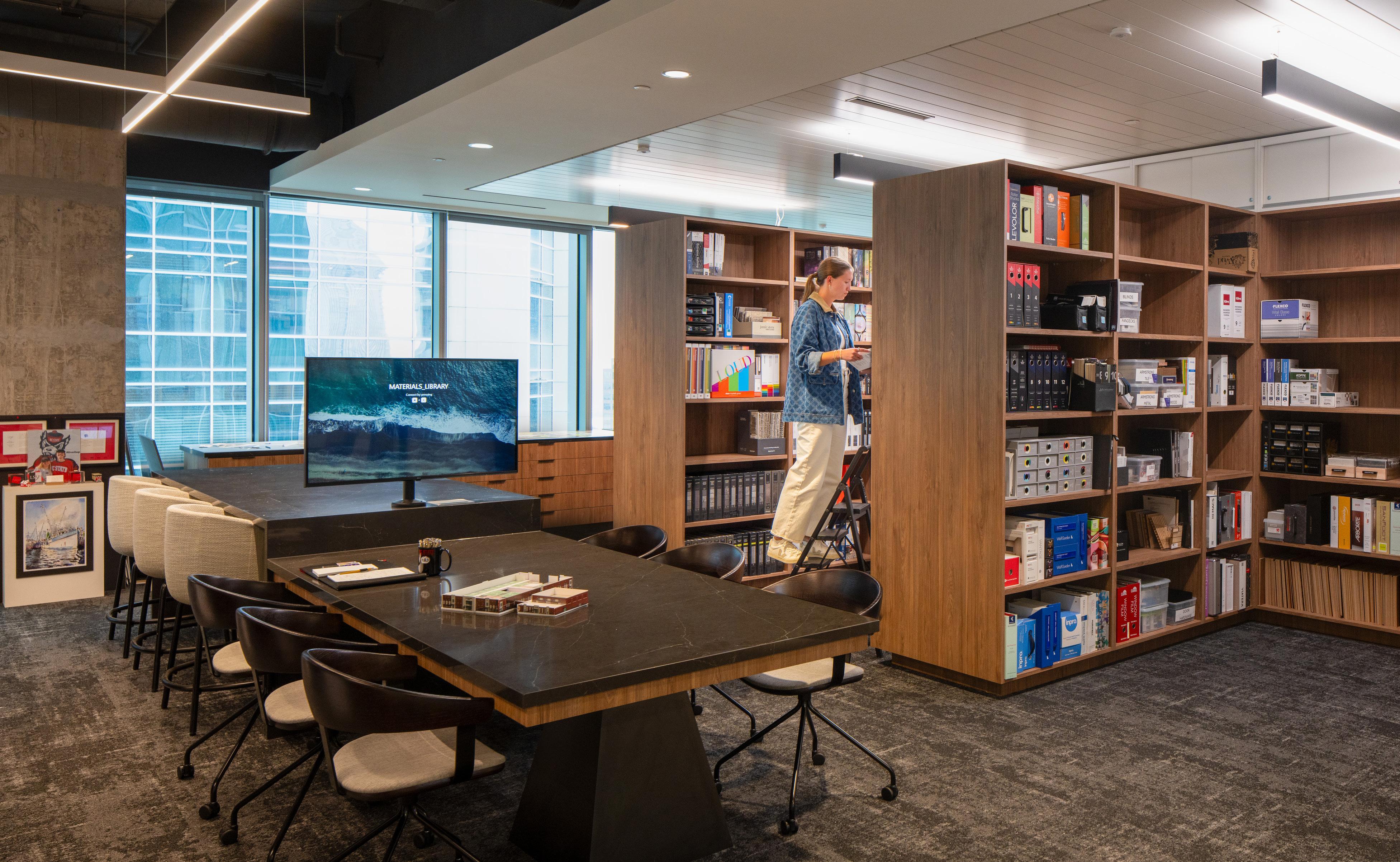
LS3P’s Materials Champions maintain the firm’s materials libraries across 12 separate offices. Though the process is similar in each location, architectural and interiors materials still come with different challenges, and each location has its own unique constraints. We sat down with Practice Professional Tori Vick to learn more about the process in Charleston, SC.
First of all, how did you get involved in becoming a Materials Champion for LS3P’s Charleston office? Did this stem from an interest you had?
I was definitely tapped on the shoulder, but this was a challenge I was excited to tackle. I had noticed that our library of architectural materials needed attention; samples would come in for specific projects or vendor visits and organically accumulate. When an office reorganization moved some departments around and we needed to think about how to maximize our shared space, we had to look critically at what we had and how we were using it. That was a great time for me to step in and help organize, purge, and rethink how the library functions.
This sounds like a potentially arduous process. What was that experience like?
Well, it was little stressful, but honestly kind of fun as well. Architectural samples tend to be larger and bulkier than interiors materials – think brick, fiber cement, and metal panels, not neat binders of wall coverings. We needed to go from eight shelves down to about four; we spent time purging samples that were dated or duplicates. It was particularly difficult for people to part with samples that had a lot of nostalgia attached, like samples for landmark projects. We did an all-call for anyone who wanted to keep some of these special materials (at their own desks). Once the library was cleaned up, the rule was that nothing could come back in unless it was vetted by
the material champions. We learned that we really don’t have to keep every sample that passes through the office, and that being selective about what we keep makes the library much more usable.
Are there particular challenges or constraints unique to Charleston that affect material choices?
Absolutely. In the projects I’m working on, we use a lot of brick, fiber cement, and metal panel. Buildings in Charleston, particularly downtown, require multiple layers of architectural review. The Board of Architectural Review (BAR) has preferred materials (such as that brick I mentioned), and those standards influence what gets approved. Finding the right materials
that balance AIA Materials Pledge goals, cost, and BAR requirements involves finding the best middle ground.
What does your role like in practice?
Day to day, it’s a mix of project work and stewardship. I’m still heavily involved in construction administration, especially on projects like Courier Square Phase 2, which has been years in the making, so a lot of my time is spent supporting what’s actively being built. Alongside that, I’m managing the architectural materials library, tracking what comes in, what stays, and what really makes sense for us to keep. Because space is limited in the Charleston office, being thoughtful and selective about materials is a big part of the logistics.
How does your work support the Materials Pledge and its implementation within architectural projects?
A big part of it is removing barriers. If someone comes to the library and can quickly understand what materials are good options and which ones don’t meet the pledge, it makes it much easier to do the right thing. Right now, we’re sorting by spec divisions and removing materials we know don’t align with the pledge. The next step is figuring out a clear system for labeling or marking materials. That step is a little bit easier for interiors materials which can be color-coded with a sticker; architectural materials are a little harder to tag. Overall, the goal is to do that Materials Pledge research once, then communicate that information so everyone else benefits from it moving forward.
Are you seeing a growing awareness of the pledge among the vendors you meet?
Vendors are definitely more aware. Many of them now lead with the fact that they have Environmental Product Declarations (EPDs) and the documentation we need for things like LEED or materials tracking. The challenge is less about availability and more about habits. People tend to stick with products or manufacturers
they’ve used forever, especially if they know they work and fit the budget. So even when better options exist, there’s sometimes hesitation to try something new.
What inspires you most about this role, and what excites you about continuing the process?
For me, it’s about finding my voice and learning how to advocate for myself and others. I’m younger than some of my colleagues, and it can feel intimidating to bring a new idea or a new product to the table. However, I get excited about asking, “What about this?” and pushing a little. Even if it’s just one product that’s better than what we were using before, that feels like a win. I also love the idea of hands-on learning, building mock-ups, understanding how systems actually go together. If we can make materials easier to understand and easier to choose, then we’re setting everyone up to make better decisions.
About Tori
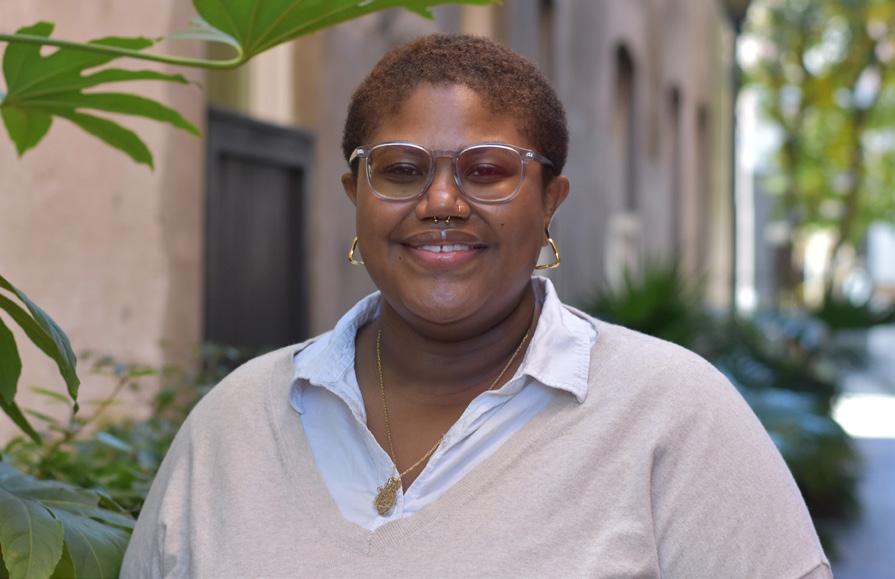
Practice Professional Tori Vick joined LS3P’s Charleston office in 2021. Tori holds a Bachelor of Architecture and Bachelor of Environmental Design in Architecture from NC State University, and primarily focuses on designs for multifamily and hospitality projects.