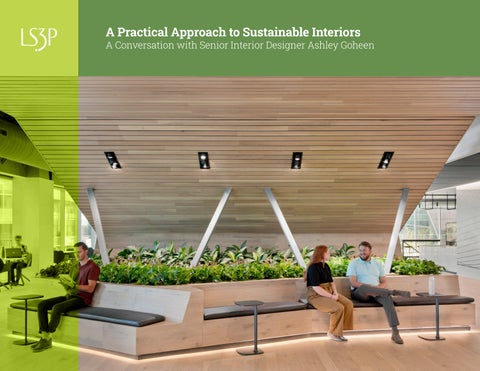
A Practical Approach to Sustainable Interiors
A Conversation with Senior Interior Designer Ashley Goheen
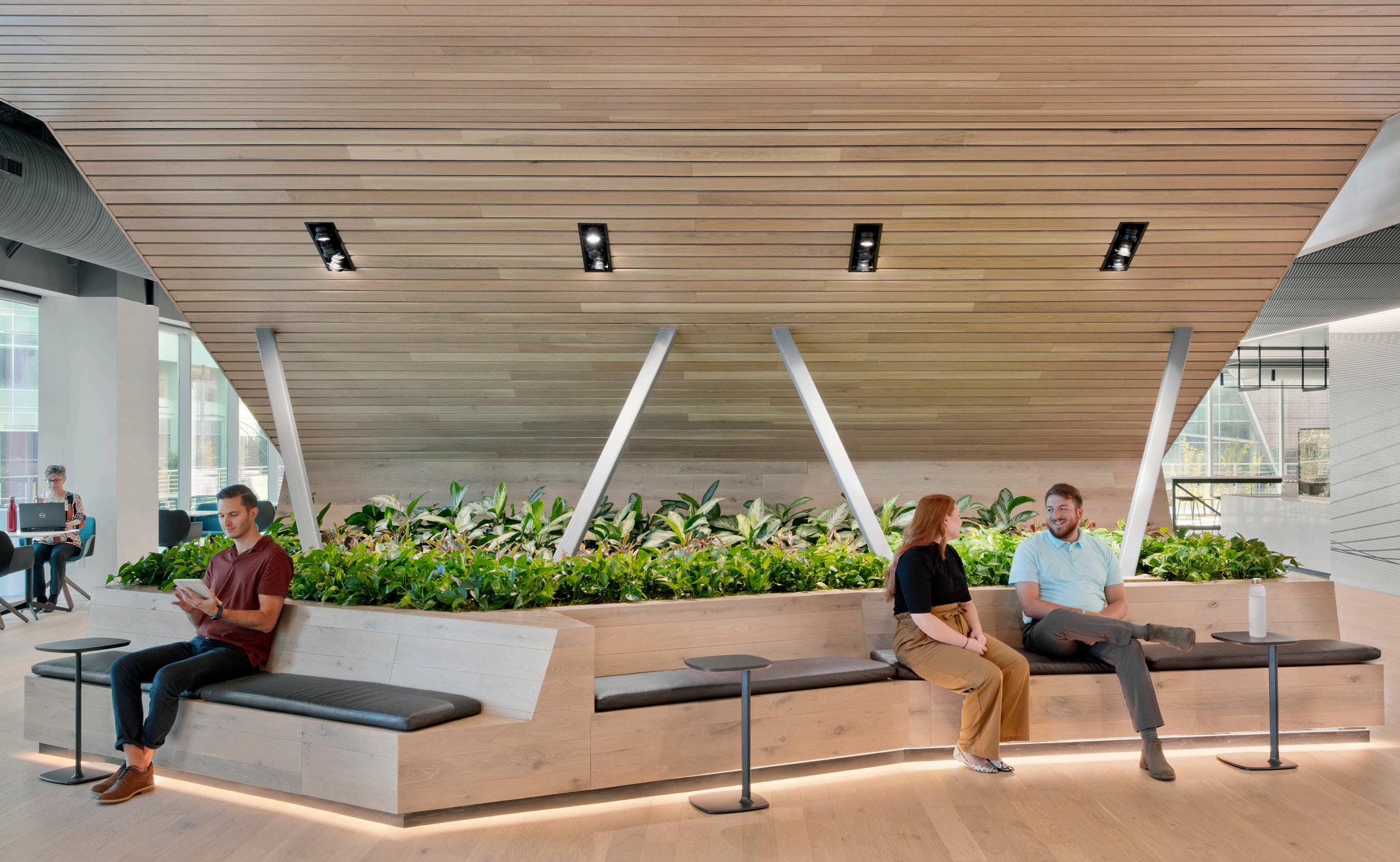

For Senior Interior Designer Ashley Goheen, sustainability has never been a niche pursuit; it’s an integral part of her practice working across multiple markets. Ashley brings a pragmatic, design-driven approach to the AIA Materials Pledge that steadily advanced healthier choices while balancing client priorities, cost, and performance. We sat down with Ashley to reflect on how the industry has evolved, how she works with manufacturers to find innovative products, and what it will take to keep sustainability moving forward.
You have been engaged with sustainable design for much of your career. What first sparked your interest, and how has that commitment evolved as the industry has changed?
Early in my career, I was already interested in sustainability, but the reality was that products that met third-party sustainability benchmarks were limited and often prohibitively expensive for our clients’ budgets. Fifteen or twenty years ago, many clients simply were not willing or able to consider those options.
What has changed dramatically is the industry itself. Manufacturers are now pushing sustainability forward in a way that feels realistic and achievable. Costs have come down, options have expanded, and it is much easier to specify products that support both human health and environmental responsibility without fundamentally changing the project budget. That shift has made it possible for sustainability to move from aspiration to standard practice.
How are you talking with clients about the AIA Materials Pledge and what it represents?
I usually start by framing it around the idea of creating healthier interior environments, for people and for the planet. The pledge is about being more thoughtful with what we put into buildings, similar to how we think about what we consume in other parts of our lives. The goal is materials that last, perform well, and have a lower impact over time.
I also emphasize starting small. The pledge does not require perfection! Incremental improvement helps us to make better choices where possible and build momentum over time. That mindset is especially important for encouraging buy-in for those who may be newer to these ideas.
When you are starting a project, how do you practically integrate the Materials Pledge into your workflow?
Everything starts with design direction. I need to understand the brand, the aesthetic, the color palette, and the overall intent before anything else. Once I have that anchor, I usually start with one key material, often carpet or flooring, because those products tend to meet multiple criteria within the Materials Pledge.
From there, I build out the palette and then use tools like Ecomedes to check other products I have selected. If a material meets even one of the pledge criteria, I consider that a positive step. I try not to get too far into the weeds. We have to keep the process manageable, especially when designers are juggling multiple projects at once.
How do you navigate conversations around cost and performance?
Cost is, understandably, a primary concern for most clients. Fortunately, many of today’s sustainable products are comparable in price to traditional options. As long as the material performs well and meets durability expectations, there’s no reason not to select the better option. It’s a natural part of the conversation rather than a
hurdle. I try to introduce sustainable products early as part of the overall design; when these products already look great and fit the client’s goals and budget, they tend to be easily accepted. The health and sustainability benefits are a bonus!
Where have you seen the most progress in sustainable interior materials, and where do challenges still remain?
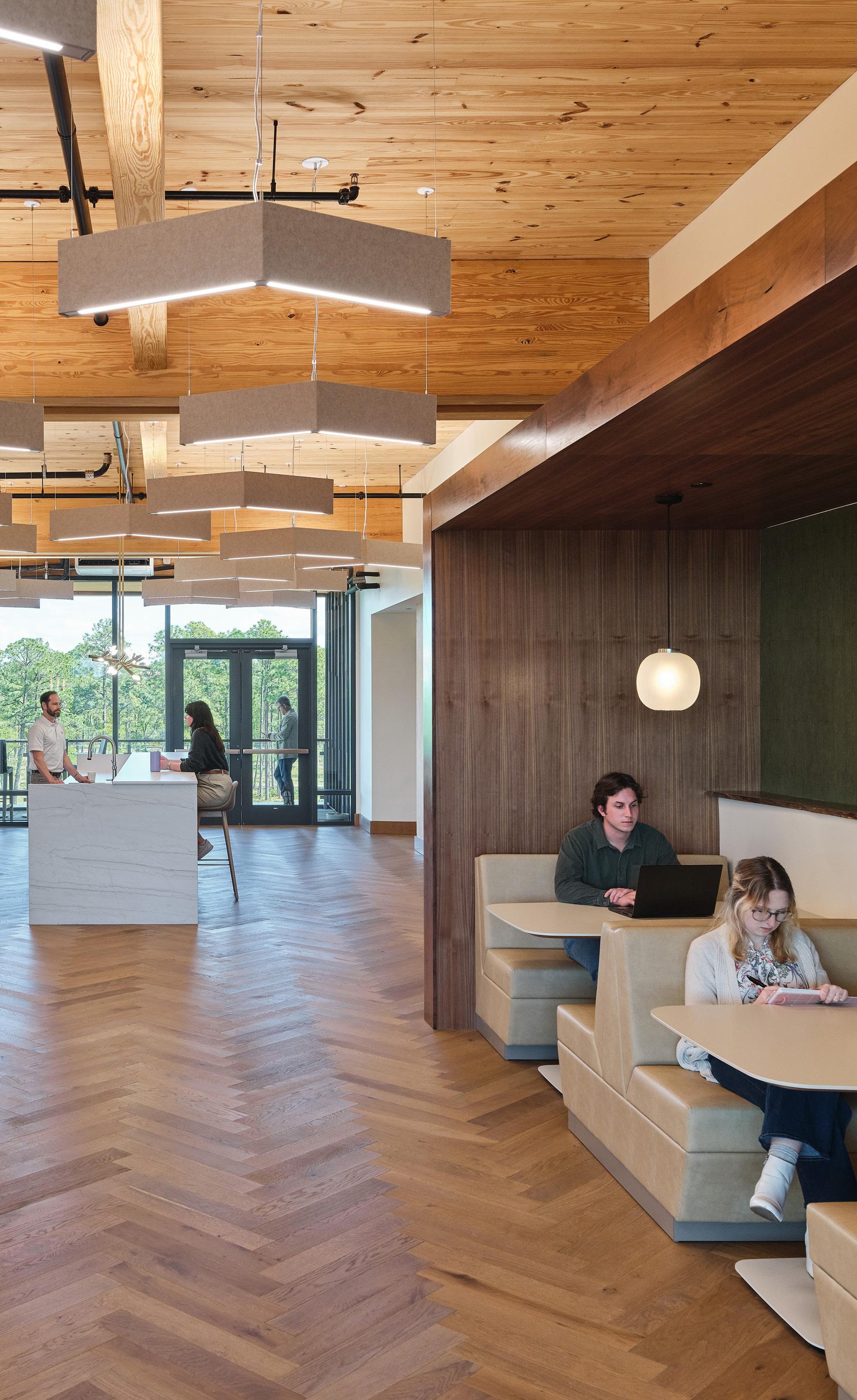
Flooring and carpet have seen significant progress. Those categories offer a wide range of products that meet multiple sustainability criteria without limiting design creativity. Lighting has also become more interesting, particularly with manufacturers experimenting with recycled and reclaimed materials.
Some areas are still more challenging, such as paint, concrete coatings, or certain PVC-related products. Durability and long-term performance are critical, so it is important that sustainable alternatives meet warranty and lifecycle expectations. We want to avoid specifying products that may fail prematurely, because demolishing and replacing materials that didn’t work out is not sustainable in the long run either.
You work closely with vendors and manufacturers. What do you look for when evaluating their sustainability efforts?
Transparency and documentation are key. Many vendors are eager to talk about sustainability, but it is important that they can support those claims with clear information that aligns with the Materials Pledge. Larger manufacturers often have the resources to provide third-party verification, while smaller companies may still be working toward that level.
We really value knowledgeable representatives who understand their products and can speak confidently about how they meet specific criteria. When vendors come prepared and are actively developing better products, it’s much easier to incorporate those materials into projects.
Looking ahead, what do you think will help move the Materials Pledge and sustainable material adoption to the next level?
Visibility is critical. We have the opportunity now to tell this story through case studies. We can show real projects, describe the actual materials used, and explain how the process works from start to finish.
When people see that others have successfully integrated the Materials Pledge into their work, it feels more approachable and less intimidating.
I think sharing examples of both large and small projects, will help dispel the idea that this is too complicated or time-consuming. Once designers and clients start seeing these fantastic outcomes, it feels much more achievable and becomes much easier to take that next step.
About Ashley

and Business Administration, Ashley
over twenty years of experience as a business owner, Interior Designer, and Project Manager for a broad range of commercial interiors projects.