
Seeing it Sooner:
How AI Is Changing the Conversation in Interior Design
Few tools have changed the way people interact with technology as quickly as artificial intelligence. In a remarkably short time, AI has become accessible, intuitive, and visual, allowing people to generate images through simple prompts rather than technical expertise. People (even clients!) enjoy experimenting with these tools and using them to bring their own ideas to the table.
Working
with the Zeitgeist
For interior designers, this shift raises an important question. How do we harness this momentum in a way that strengthens, rather than dilutes, the design process?
At its best, AI lowers the threshold for participation. Interior designers have long navigated a familiar challenge: many clients find it difficult to interpret drawings or anticipate how a space will actually feel. Traditional tools, including floor plans, elevations, and even static renderings, often delay true understanding until late in the process when changes might have significant budget and schedule impacts.
Easily accessible visualization tools, however, allow people to gain a more robust understanding of how a concept design might translate to a fully realized space. Instead of relying on abstraction, everyone can point to an image and start a conversation.
AI visualization tools help to create a shared language, one that potentially allows designers and clients to meet in the middle much earlier in the process. Senior Interior Designer Laura Twomey sees huge value in this new ease of communication. “This is a great example of how we’re using technology to respond to our clients’ needs and continuously evolve our workflow to take advantage of emerging tools,” she explains.
This shift in mindset reframes AI not as a shortcut, but as a way to invite clients more fully into the process, helping them become active participants rather than passive reviewers.
From Weeks to Minutes: The Power Of Rapid Iteration
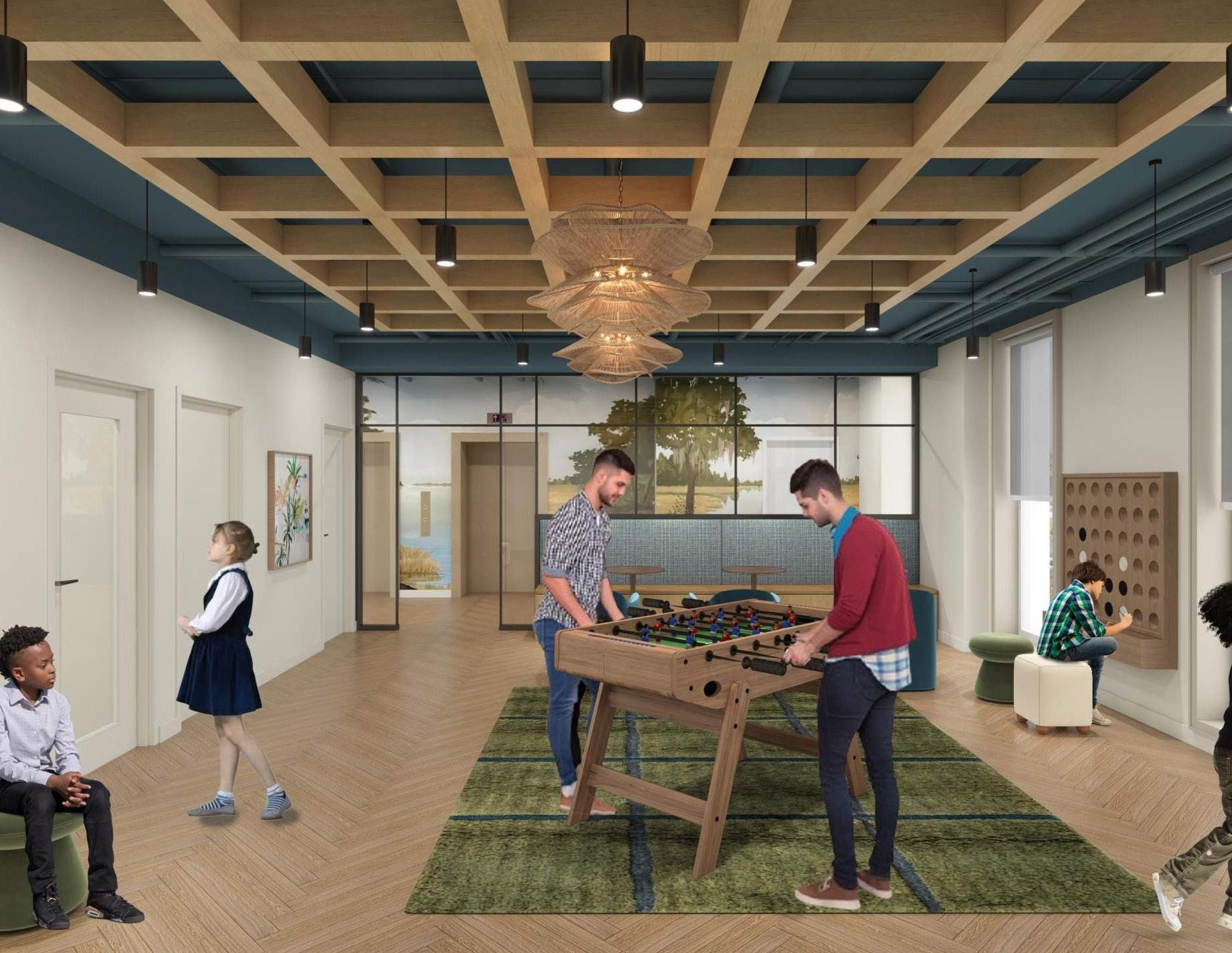
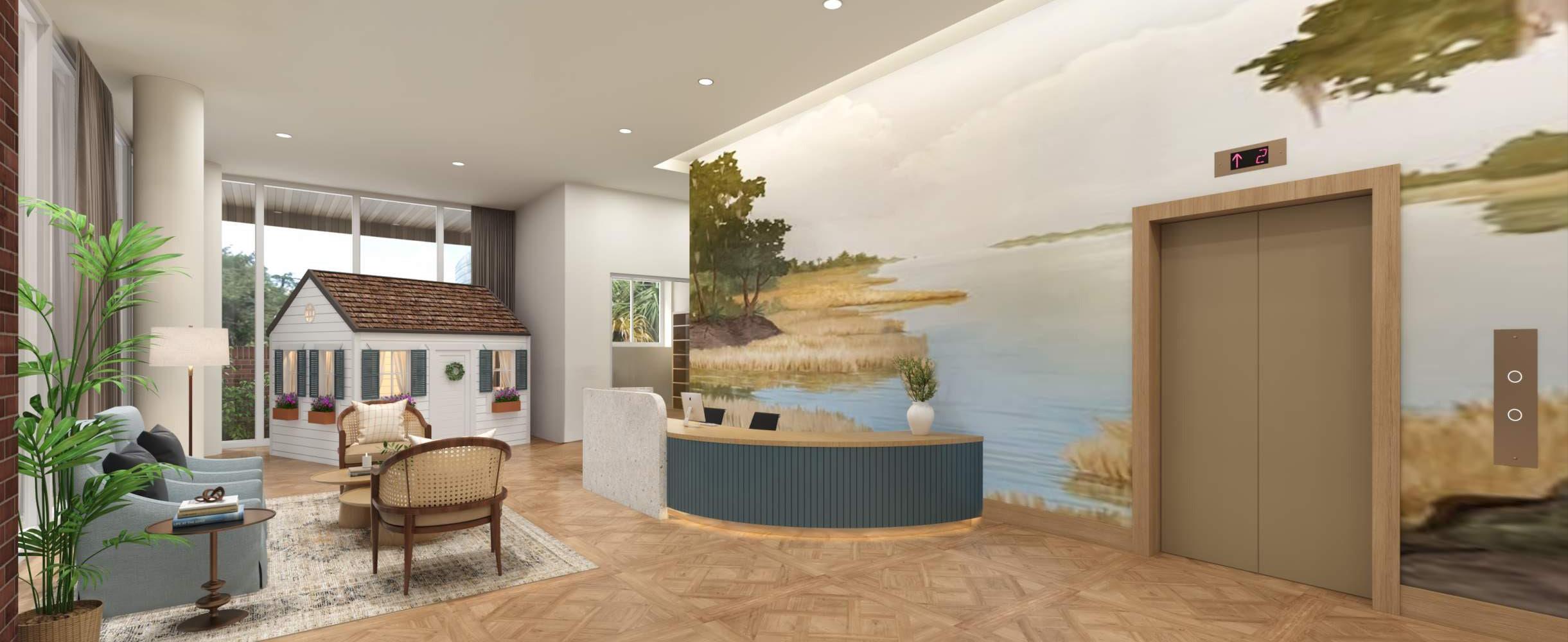
That shift was on full display during a recent AI workshop in LS3P’s Charleston office, where ten interior designers participated in a focused design sprint. Over the course of a few hours, teams generated mood boards and branding concepts, and rendered multiple spaces directly from Revit linework using AI visualization tools. What stood out was not just the speed, but also the range: five distinct design directions emerged from the same brief in a single afternoon. Iterations that once took days or weeks were happening in real time. For designers, this acceleration means less time waiting and more time evaluating. For clients, it means earlier clarity and a more responsive design experience.
“This isn’t about replacing design,” says Senior Interior Designer Kelly Gilreath. “It’s about speeding up exploration so we can get to better conversations and better decisions sooner.”
Visualization as a decisionmaking tool
During the workshop, the designers explored design capabilities beyond AI-generated “pretty pictures.” Using new tools, the team tested finishes, furniture layouts, lighting conditions, and material swaps quickly for side-by-
side comparisons. The emphasis shifts from presentation to evaluation.
“When we actually have an image we can share with the contractor or use to guide a detail, the whole team can reach alignment faster,” says Gilreath. That early alignment reduces downstream risk. When intent is visually clear to all parties, there are fewer surprises in the field. Contractors, consultants, and clients share a common understanding before construction begins, strengthening coordination across the project team.
Collaboration, Reimagined
The workshop reinforced a truth that the designers already knew: AI tools can do a lot of things, but they can’t replace professional expertise. “Even if something gets rendered a certain way, it doesn’t mean it’s a good idea,” Twomey explains. “We still need to use our design expertise and critical thinking skills to understand what will actually work in the physical world.”
In the AI environment, the designer’s role becomes more critical, not less. Designers interpret what works and what does not, applying knowledge of codes, constructability, durability, and human experience. AI can generate options, but it cannot understand nuance, context, or professional responsibility. It does, however, give
designers clearer insight into client priorities earlier, creating space for better guidance and stronger outcomes.
Looking Forward: Embracing Opportunities
Internally, fluency with AI starts with shared experimentation and collective learning. Externally, the value is evident. Clients experience clearer communication, faster feedback loops, and a more inclusive design process. AI does not define the design, but it does change when and how people understand it. By accelerating the moment when everyone can see a space and discuss its impact, these tools remove long standing barriers to communication.