
Accountability by Design:
Building a Scalable Reporting Process

Ethan
Atherton Architect
Heather Warren Sustainability Design Specialist
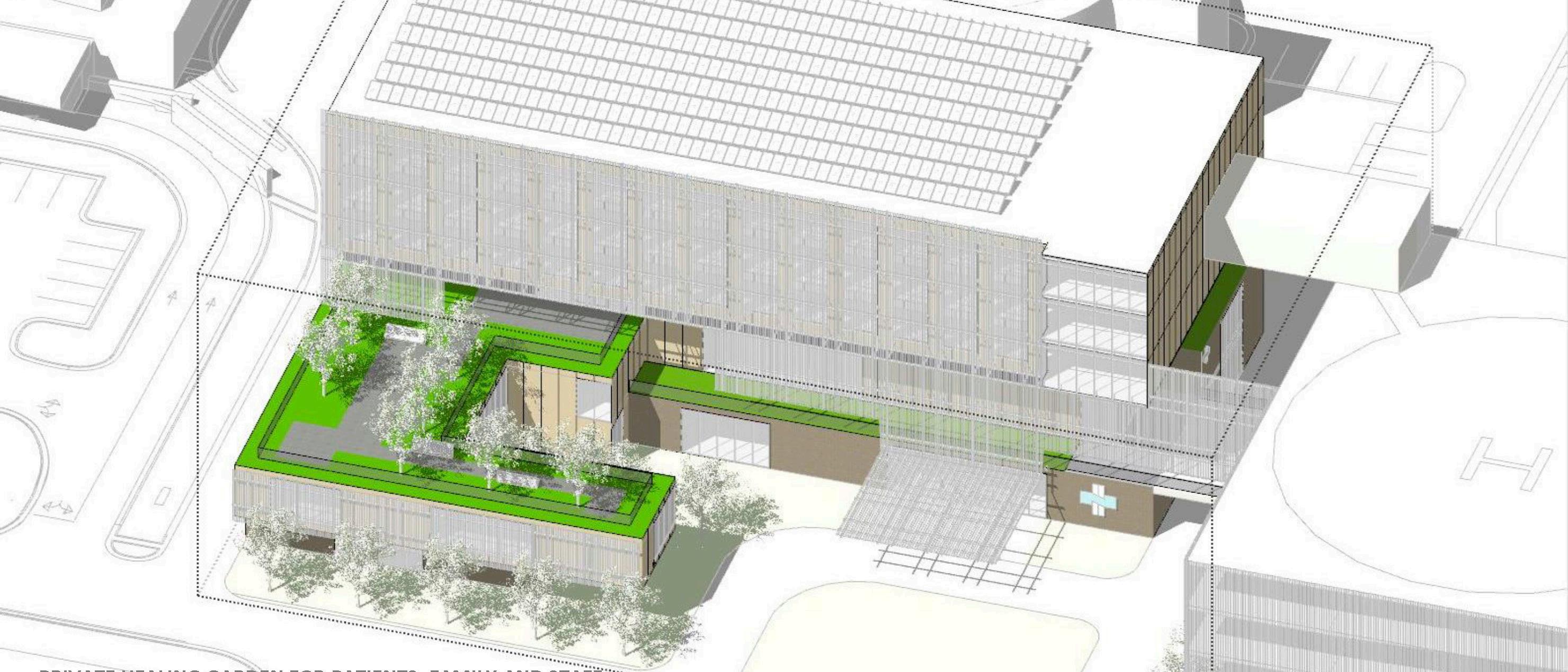
LS3P signed the AIA 2030 Commitment in 2009. Each year, the firm reports predicted energy data, including Energy Use Intensity (EUI) and Lighting Power Density (LPD), to the AIA for eligible projects across all offices and project types.
Annual energy reporting is a deceptively complex task. It requires synthesizing information from hundreds of active projects, multiple software platforms, and dozens of project teams. Because data lives in many places, the challenge is as much organizational as it is technical. The central question becomes how a large, distributed firm consistently gathers accurate, reliable data across its footprint,
and how systems can be designed to support that work with clarity and accountability.
Sustainability Design Specialist Heather Warren and Architect Ethan Atherton were instrumental in the latest round of 2030 reporting. Together, they have been refining the process toward greater automation, guided by human judgment at critical decision points.
Driven By Experts (But Assisted By Technology)
Synthesizing project data requires context and interpretation. Decisions about whether a project needs a full energy model, a lighting power density calculation, or no action at all cannot
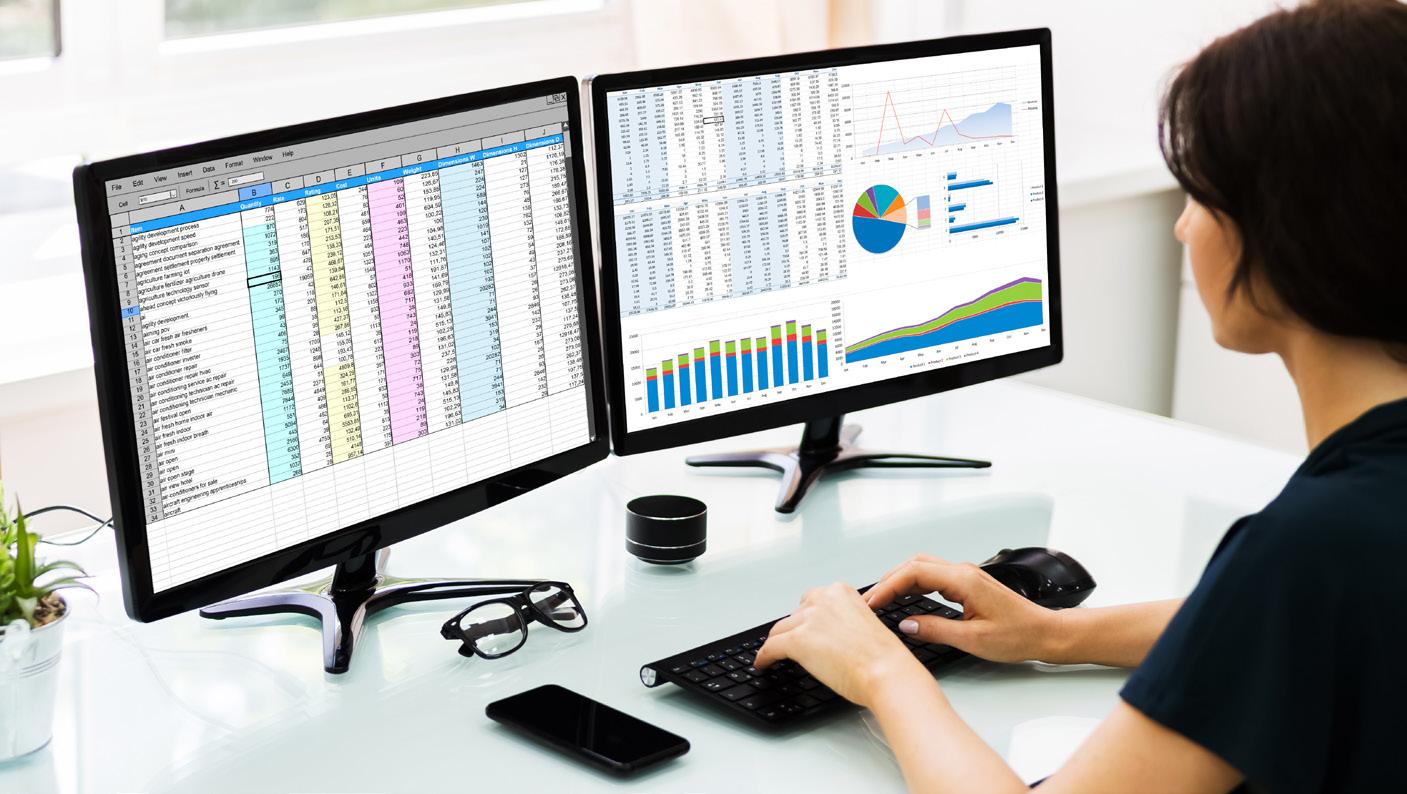
goes out of Excel, and often returns to Excel again after review or enrichment. This central coordination point allows teams to bring together information from different systems and make it usable, reviewable, and actionable before any downstream steps occur. The process begins with structured data pulls from Deltek and other platforms, all consolidated into Excel as a shared, transparent workspace. Multiple datasets are merged into a single, formatted table that includes pre filled information alongside fields for verification and completion.
Streamlining Communication
be fully automated. As Warren notes, “the first step is always figuring out reporting eligibility. Project information doesn’t live in one place, so it takes human review to verify what’s correct, what’s missing, and what needs clarification.” Human review remains essential to safeguard human effort. Quality data signals a clear ‘off-ramp’ for projects before it becomes a complex undertaking.
Establishing
The Data Structure Excel As The Central Coordination Hub
Atherton and Warren rely heavily on Excel as a clearinghouse for information. Data comes into Excel,
Automating Messages And Feedback Loops
Manual email communication has proven to be one of the most time intensive and error-prone aspects of the process. Copying, pasting, and swapping project information across hundreds of messages is slow and susceptible to mistakes. Power Automate introduces targeted, consistent communication. Automated emails flag missing information, issue reminders, and consolidate requests so project managers receive what they need in a clear, organized way. Automation reduces repetitive work while preserving space for questions, clarification, and support.
Filtering Complexity Early First Round Reviews And Eligibility Decisions
Early review of project information is critical. By filtering complexity upfront (thereby eliminating ineligible projects and identifying where further documentation is required) the team reduces noise and avoids unnecessary, often time-intensive, modeling. Clear categorization at this stage significantly reduces the reporting workload, a small investment of time that pays dividends across the entire reporting cycle.
Tracking Progress At Scale From Individual Projects To Portfolio Level Insight
Once projects are categorized, tracking shifts from the individual level to the portfolio scale. A centralized tracking system built in Power BI replaces the need to manually compile task lists. Power BI dashboards track project completion status, eligibility, and unresolved items across the entire portfolio.
As Atherton explains, “Structured data (regardless of platform) allows us to build a visual story around data points like what has been reviewed, what is eligible, and what still needs attention without clicking into each project individually.” This level of tracking may not be necessary for a handful of
projects, but when evaluating hundreds of projects across multiple offices, this medium becomes essential.
Structured Data Collection Through Automation Reducing Friction For Project Teams
To make the process as easy as possible for project teams, Warren began routing data collection through structured surveys built in Microsoft Forms. Project managers follow prompts that auto populate relevant questions in real time and remove those that do not apply, greatly reducing mental clutter. This approach also minimizes data entry errors and prevents accidental data overwrites. In this case, automation is more about clarity and respect for people’s time and attention that it is about speed.
Energy Modeling & Technical Inputs
Supporting Design Excellence
The overarching goal of the 2030 Commitment is improving building performance, so ideally teams are modeling energy use early enough in the design process to inform better design decisions. EUI or LPD values may also be calculated by engineering consultants as part of their design work, and in some cases may be estimated based on energy code. If no
energy modeling has been conducted, LS3P’s AIA 2030 reporting team runs energy models to fill the gap for reporting requirements.
Reporting & Submission From Raw Data To Official Disclosure
Once finalized, the reporting team submits all data through the AIA’s Design Data Exchange (DDX) platform. The DDx is the AIA’s official reporting platform, and it allows firms to compare project performance across a wider industry portfolio. This final reporting step represents the culmination of human review, automated data handling, and technical analysis by LS3P’s sustainability and energy modeling experts.
Turning Reporting Into Usable Knowledge
Where The Biggest Gains Emerge
The most significant gains appear when reporting data is translated more quickly into usable project knowledge To better communicate results to project managers, the reporting team has automated the creation of individualized EUI scorecards for each project. Rather than building hundreds of project one sheets by hand, Atherton developed a process that connects the DDX platform to
InDesign
. Power Automate scrapes charts and visuals from DDx (along with the master Excel spreadsheet) and uses InDesign’s data merge function to populate a standard LS3P template. These pages can be spot-checked and refined before final distribution.
Atherton sees multiple gains from the process so far. “We’ve gotten better at collecting and working with data, and we’ve demonstrated the effort it takes to support an initiative at scale,” he says. “As we continue to refine the process, we can compare that investment to alternative, hopefully more impactful, approaches that can get actually helpful data and processes into the hands of project managers sooner, for more responsive design.”
More importantly, getting actionable data into the hands of project managers sooner allows teams to make faster decisions to elevate their designs, potentially saving clients substantial energy costs over the life of the building.
Looking Ahead A Repeatable Model For Complex Data Efforts
This automation-heavy approach extends beyond energy reporting to offer a repeatable, flexible, adaptable model for other large, multi tool, multi stakeholder data challenge. Ultimately, the process helps teams get from collecting the data to understanding and using the data faster. As the AEC industry grows more complex, design professionals will need to become more aware of how information can be leveraged downstream, like in automating repetitive tasks so that we can focus our attention on what we do best: designing better buildings for our clients and communities.

About the Contributors
Ethan Atherton is an Architect on LS3P’s Digital Practice team. Ethan joined the firm in 2018 after earning a Master of Architecture from NC State University, following a Bachelor of Science in Architecture from Western Kentucky University. Over the years, Ethan worked on civic and healthcare-related projects before transitioning into Digital Practice, where he supports and implements design technology efforts for effective design and delivery workflows across digital technologies and platforms.
Heather Warren is a sustainability-focused architectural professional with a Bachelor of Architecture, cum laude, from Syracuse University and a minor in Sustainable Construction Management. As a LEED Accredited Professional (LEED AP) and WELL Accredited Professional (WELL AP), she plays a key role on the firm’s sustainability team, supporting project teams through early design studies and green building certifications. Heather also leads firm-wide sustainability initiatives such as AIA 2030 and AIA Materials Pledge reporting, and champions internal education by organizing workshops, presentations, and events that promote sustainable design practices. Her architectural approach is rooted in a deep consideration of community, policy, society, and sustainability—elements she believes are essential to creating impactful and resilient projects.