Experiential Graphic Design in Higher Education
A Conversation with Sr. Experiential Graphic Designer
Katherine Howell-Kiser
Creating Places that Communicate, Connect, & Endure
Higher education campuses shape identity, foster belonging, and leave lasting impressions that can influence life‑defining decisions. In today’s competitive landscape, colleges and universities must do more than offer strong programs; they must also reinforce campus identity, celebrate shared values, and create community. LS3P’s Senior Experiential Graphic Designer, Katherine Howell‑Kiser, is here to help institutions meet that challenge.
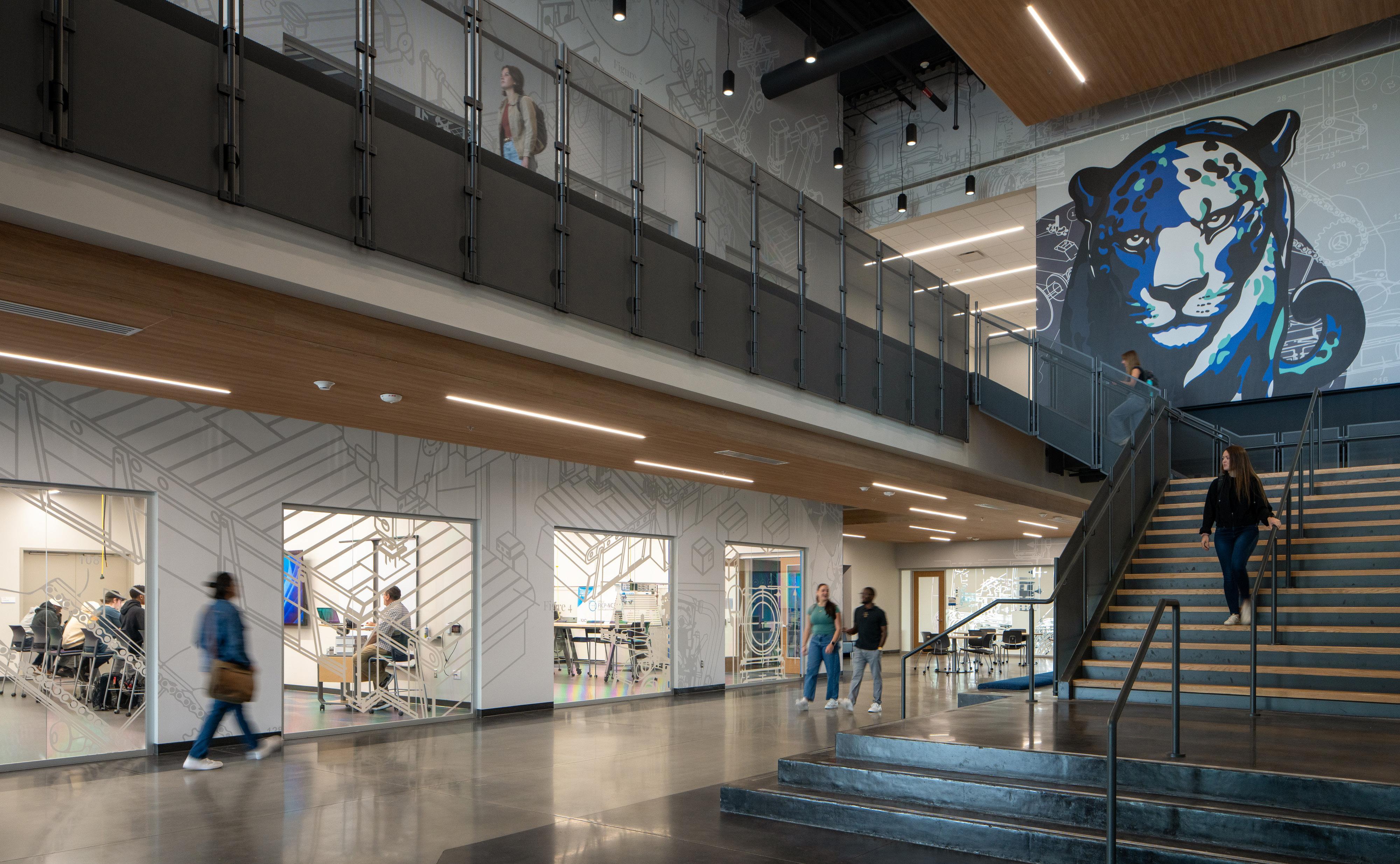
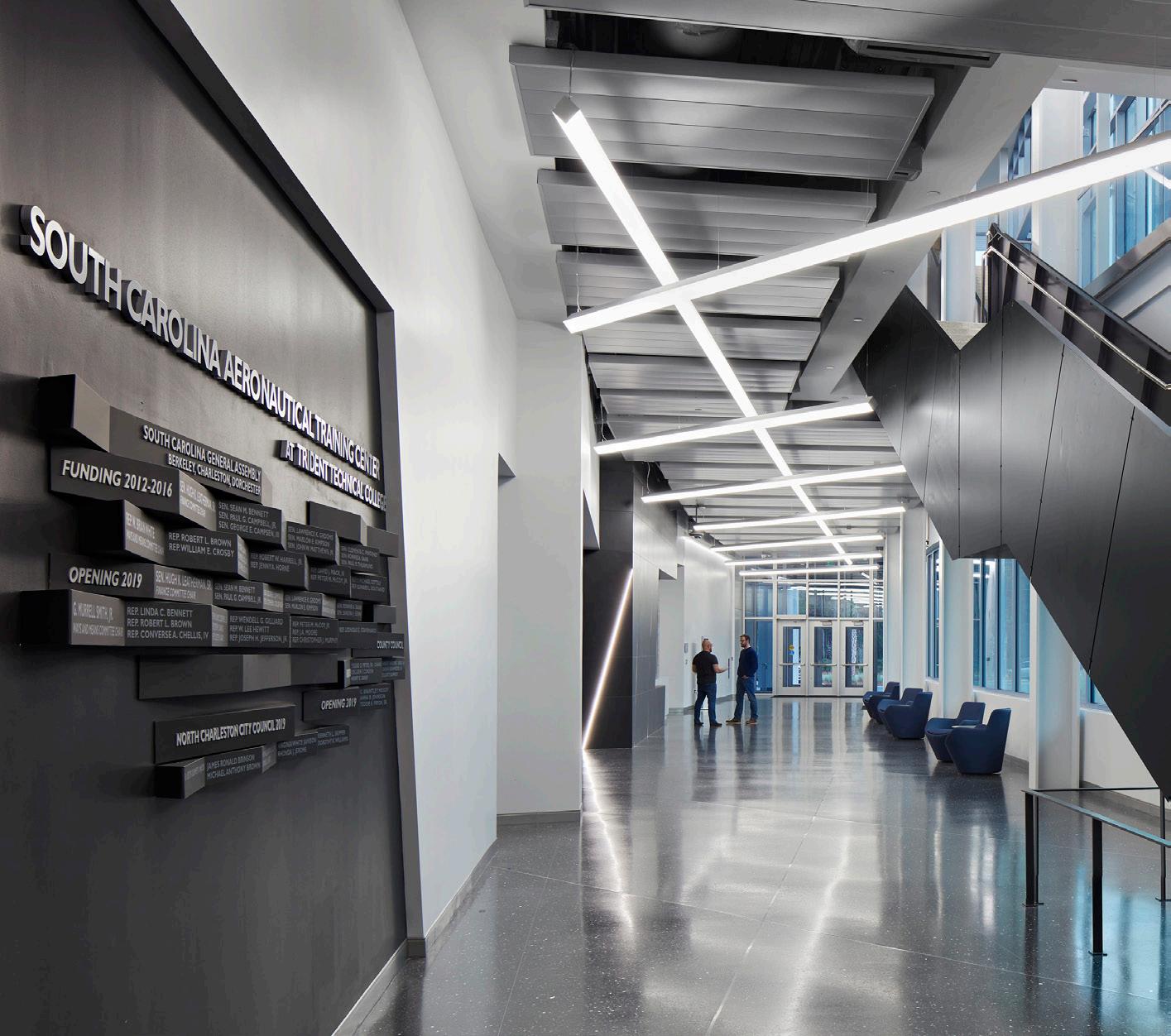
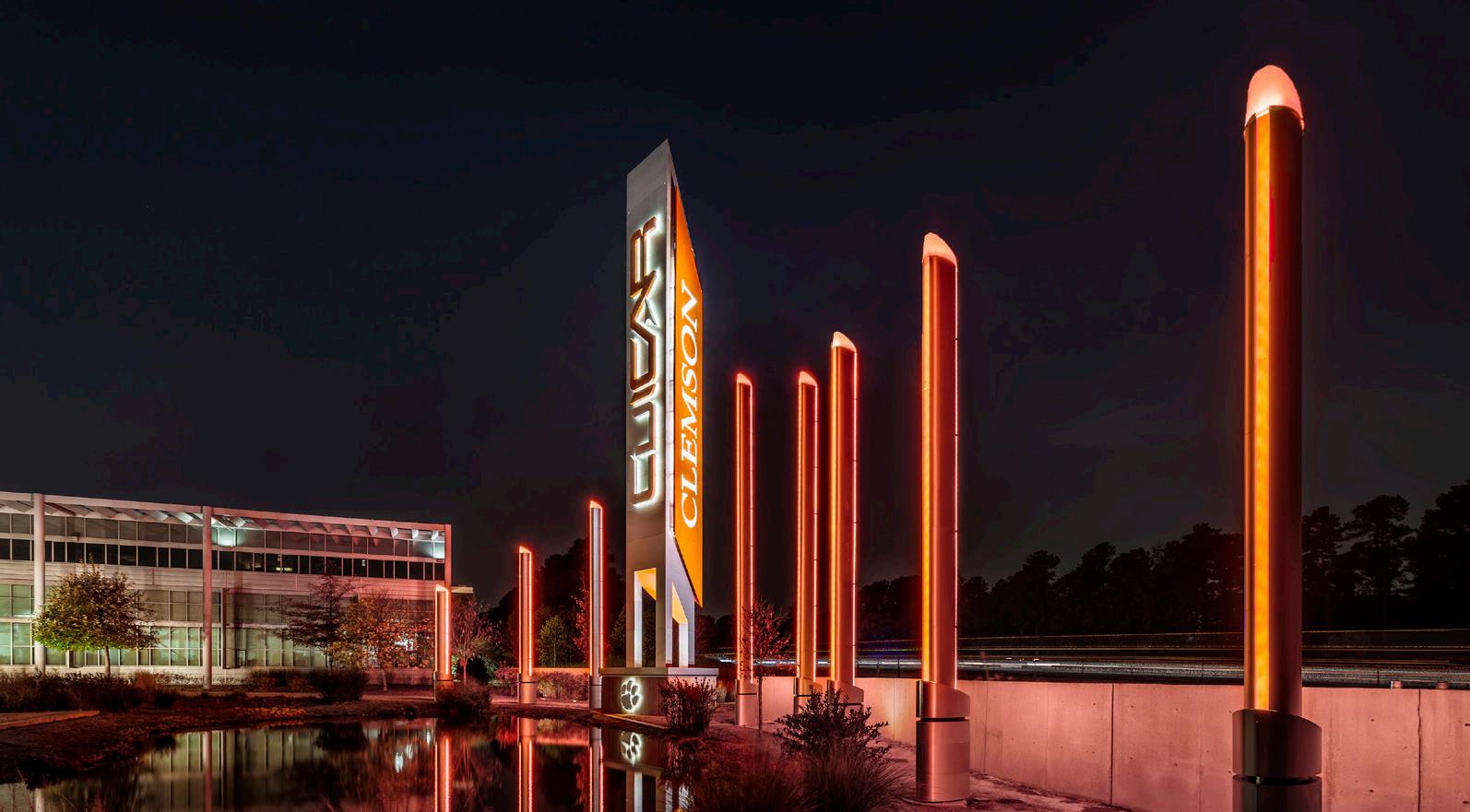
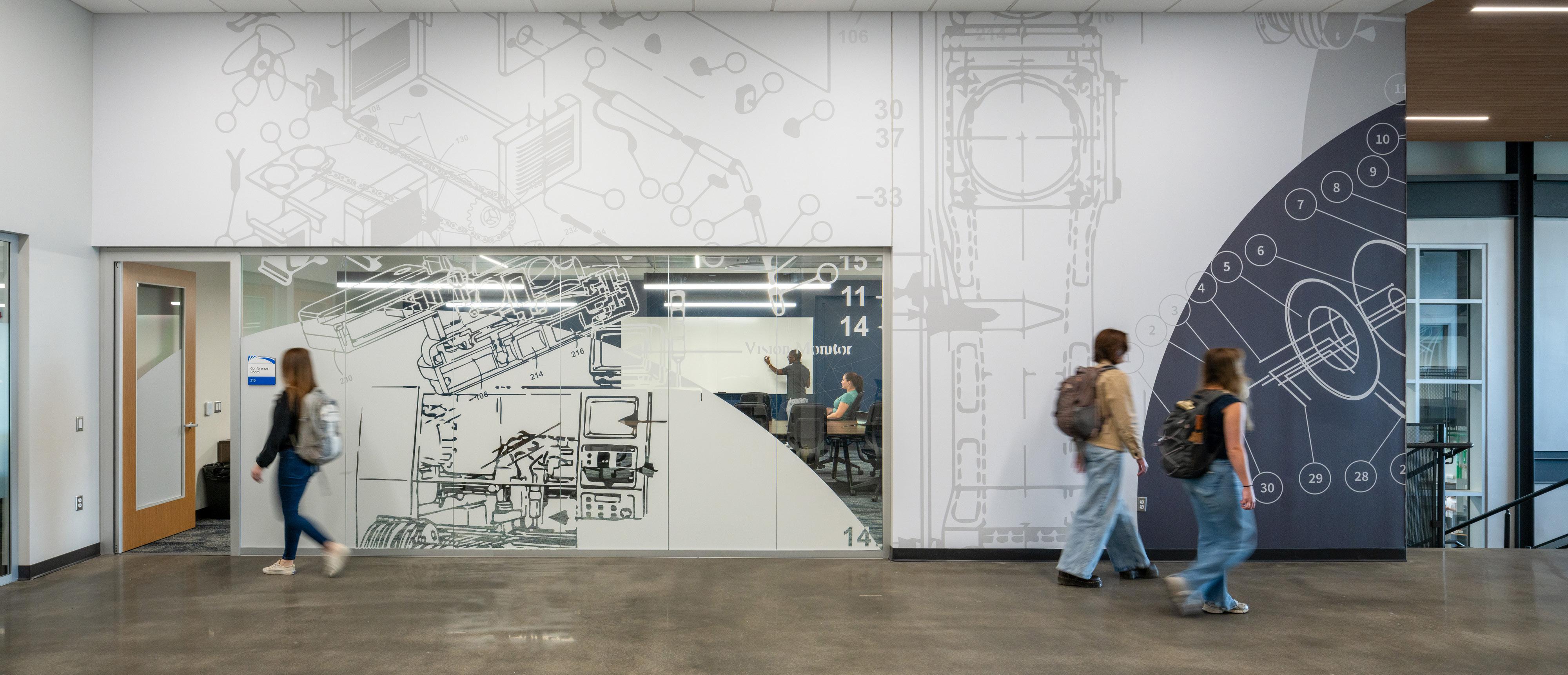
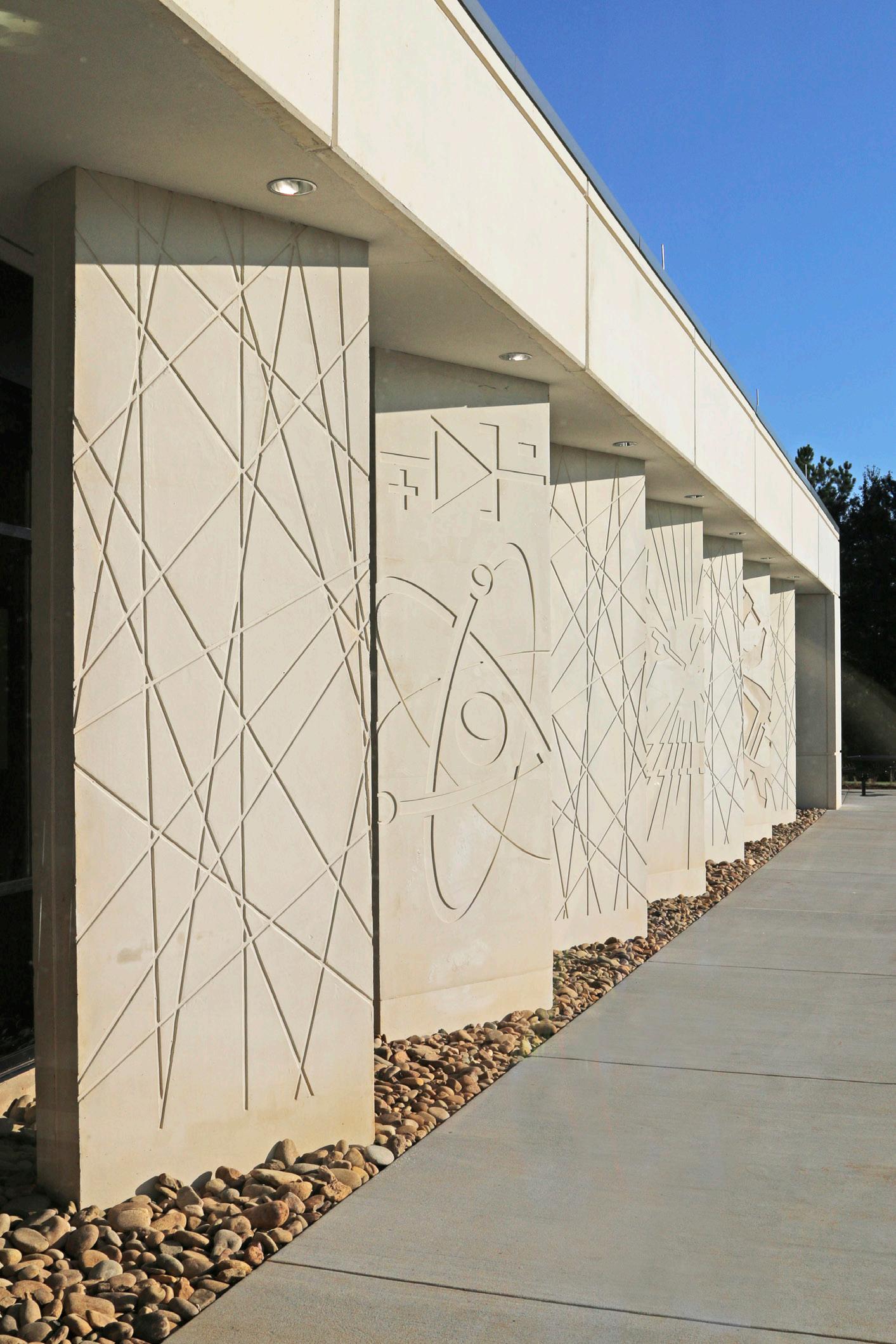
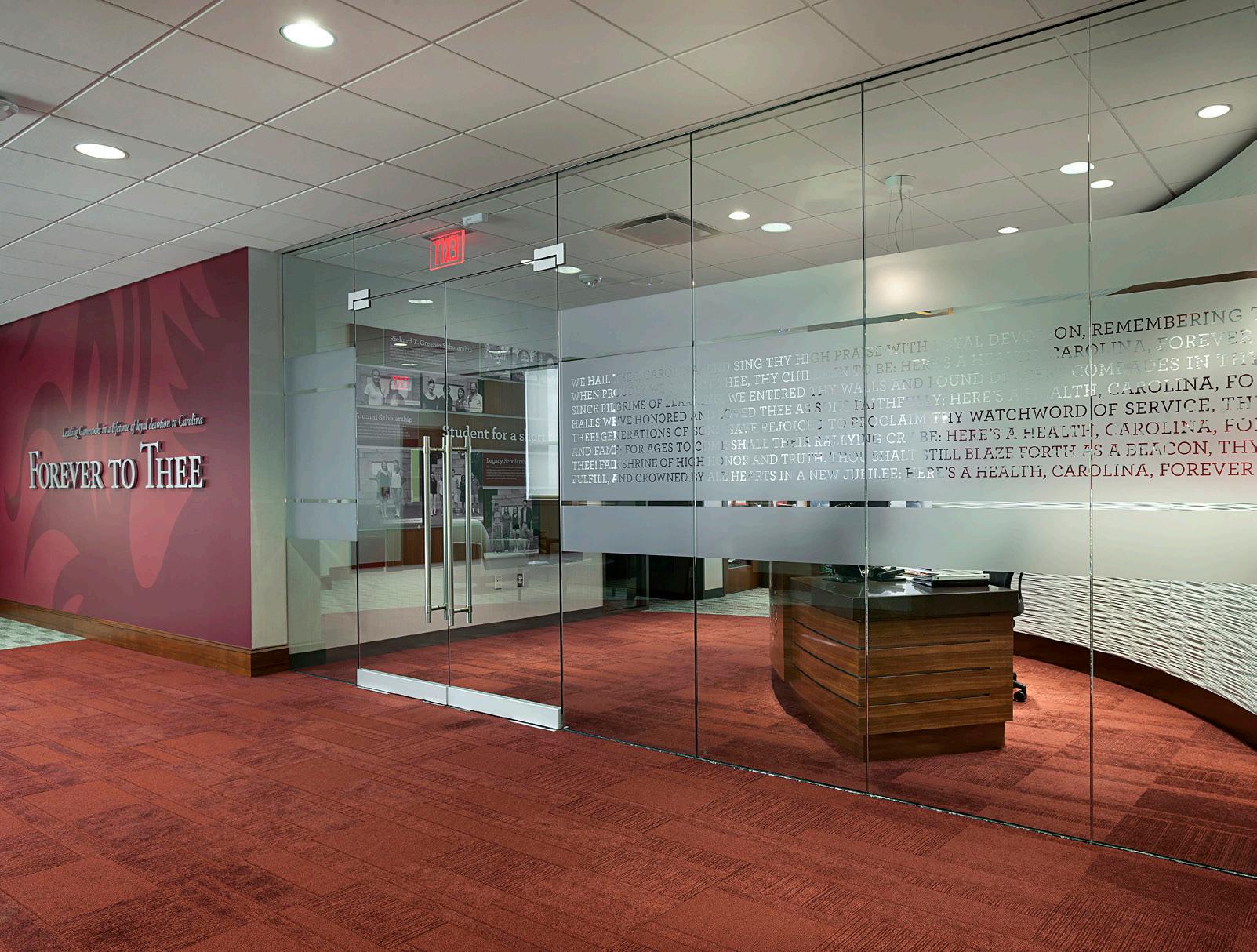
According to Howell Kiser, Experiential Graphic Design (EGD) is a key element in transforming “spaces” into “places.” EGD can take many different forms, including integrated signage and wayfinding, branded environments, murals, donor walls, and storytelling displays embedded into walls, finishes, or glazing. “EGD really exists at the intersection of architecture, interiors, branding, and user experience,” she explains. “It’s the connective tissue that runs between all the facets of design.”
Why EGD Matters in Higher Education
Higher education environments are uniquely complex. Campuses function like small cities, made up of student centers, libraries, residence halls, academic departments, STEM facilities, athletics venues, innovation hubs, alumni centers, and outdoor spaces. Each serves a different audience and purpose, yet all contribute to a shared institutional identity.
At the same time, institutions face growing pressure around recruitment, retention, donor engagement, wellness, and belonging—all of which are shaped by the campus experience. According to Howell‑Kiser, “People know how a campus or a department building makes them feel before they fully understand what’s happening within it. That initial impression of a place is crucial, and it’s often hard to override.”
EGD helps to shape these lasting impressions through wayfinding, storytelling, placemaking, and branded environments. When integrated thoughtfully, EGD helps people navigate, understand, and remember spaces while reinforcing campus identity and institutional values. “The ‘vibes’ are actually very important in higher education,” Howell‑Kiser notes. “Every campus communicates something, not just through architecture and interiors, but also through navigation, storytelling, and emotion, or the lack thereof.”
More than Aesthetics
A common misconception is that experiential graphics are primarily decorative. In reality, EGD serves a greater strategic role. “When EGD is leveraged to its fullest, it creates meaningful connections between people and the spaces they inhabit by shaping how those environments are experienced, understood, and remembered,” Howell‑Kiser explains. For example, in student centers, EGD may celebrate student culture and create moments of pride. In libraries, it often works more quietly, supporting wayfinding and reinforcing a sense of place without distraction. Department buildings can use experiential graphics to express their missions and attract specific student populations, while alumni and welcome centers often rely on storytelling, history, and interactive elements to build engagement.
Athletics and innovation spaces offer opportunities for bold expression, while campus‑wide signage and wayfinding systems provide clarity and cohesion across large, complex environments. As Howell‑Kiser notes, “Campuses are intricate, and different departments and buildings have different functions and audiences. EGD helps us dial up or dial down the mood depending on what that space needs to communicate.”
Beyond Service to Strategy
One of the most important shifts the LS3P EGD team advocates for is viewing experiential graphics not as an add‑on, but as a strategic design tool. Too often, EGD is introduced late in a project, making it vulnerable to being value engineered out as non‑essential “decoration.” Early integration allows teams to demonstrate value more clearly. Showing space concepts with and without experiential graphics can help clients understand that EGD is not just decoration, but rather the layer that ties everything together and elevates the overall experience.
The most successful projects integrate EGD from the start within the project pursuit, programming, and schematic design project phases. This helps shape the design narrative and identify opportunities where EGD can be woven directly into the architecture and interiors. “Truly integrated projects utilize EGD as a differentiating strategy that helps our work stand apart from the sea of sameness,” says Howell Kiser.