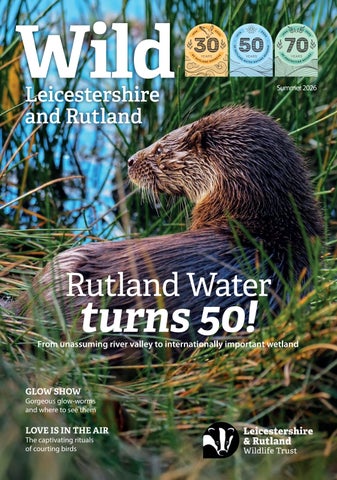
Wild Leicestershire and Rutland

From unassuming river valley to internationally important wetland
GLOW SHOW
Gorgeous glow-worms and where to see them
LOVE IS IN THE AIR
The captivating rituals of courting birds







Welcome
Get out there!

Welcome to our Summer edition of Wild. I especially look forward to this time as the long, warm evenings allow the opportunity to get out and visit our spectacular nature reserves. It is, of course, the very best time to see them at their most alive and to be reminded of the beauty and importance of the places we care for.
This year continues to be a celebration for Leicestershire and Rutland Wildlife Trust, and in this issue we recognise a remarkable milestone: 50 years of Rutland Water Nature Reserve. Whenever I visit Rutland Water, I find it almost impossible to imagine this incredible landscape as anything other than the thriving nature reserve we know and love. But as our special four-page feature reveals, within living memory this extraordinary place was simply dry land. Its transformation through our stewardship into one of the most important wetland sites in the country stands as a powerful example of nature’s resilience, and of what can be achieved through shared vision, dedication and care.
In this issue we also shine a light on one of nature’s most enchanting spectacles, the mysterious and magical glowworm. These tiny creatures remind us that wonder can be found even in the most hidden corners of our countryside, especially on warm summer evenings when their gentle glow brings our grasslands to life.
This is really a wonderful time to be out and about in nature. This year I have set myself the challenge of visiting every one of our reserves over these warmer months, so if you see me on a site near you, please do come and say hello!
Enjoy the best of nature this summer and thank you, as ever, for your support.
Mat Carter CEO
Leicestershire and Rutland Wildlife Trust Get in touch
WILD Leicestershire and Rutland is the membership magazine for Leicestershire and Rutland Wildlife Trust and is free to members.
Email info@lrwt.org.uk
Telephone 0116 262 9968
Address The Old Mill, 9 Soar Lane, Leicester, LE3 5DE Website lrwt.org.uk
Registered charity number 210531
facebook.com/leicswildlife youtube.com/@lrwt56 instagram.com/leiceswildlife linkedin.com/company/leicswildlife
Protecting and enhancing the wildlife and wild places of Leicestershire and Rutland and engaging people with nature.
Leicestershire and Rutland Wildlife Trust
Chair Ann Tomlinson
Co-Vice Chairs John Atherton, Andrew Moffat
Hon. Secretary Peter Williams
Hon. Treasurer Andy Thorpe
CEO Mat Carter
Head of Reserves Joe Davis
Head of Nature Recovery Ben Devine
Supporter Development Manager
Josephine Taylor

The Wildlife Trust Magazine Team
Editor Benedict Vanheems
Designers Kolt Graphic Design
UK Editor Tom Hibbert
UK Designer Ben Cook
Cover image Tony Marshall
Views expressed in this magazine are not necessarily those of the Editor, CEO or the Council of the Trust. Articles, letters, photographs and artwork are welcomed on the understanding that no liability for their safe custody or return is incurred and the right to abridge or refuse publication is reserved.













10
4 Wild news
All the latest stories from LRWT and around the country.
10 Your Wild Summer
Soaring swifts lift our spirits, and birds of the riverbank too.
14 From river valley to wetland
Celebrate 50 years of Rutland Water as we look back on its creation.
18 Our natural treasure trove
The essential role of Rutland Water in local nature’s recovery.
20 Summer stroll
Discover the dizzying array of birds at Rutland Water.
22 Close up on Bird courtship. Love is in the air!
24 Glow show
Tim Sexton shines a light on the beguiling glow worm.
26 My Wild Life
Meet our passionate band of wildlife trainees.
28 Reptiles of Leicestershire and Rutland
Get to know our local lizards, snakes and slow-worms.
30 Resilient by nature
Facing up to the challenges of a changing climate.
34 Events and activities
Join one of our events and feed your wild side.
6 ways to get involved with your local Wildlife Trust
Local groups Join one of our friendly local groups and make a difference for wildlife near you. lrwt.org.uk/local-groups
Fundraise From taking part in a sponsored run to organising a tea party, you could help us raise funds. lrwt.org.uk/fundraise
Volunteer Could you offer your skills and time to help look a er local wildlife? We would love to hear from you. lrwt.org.uk/volunteer
Donate Help us protect local wild spaces by donating to our work across Leicestershire and Rutland. lrwt.org.uk/donate
Businesses Become a corporate supporter of LRWT and make wildlife part of your business. lrwt.org.uk/corporate
Campaign Play an essential role in raising awareness and lobbying on local and national issues. lrwt.org.uk/campaign
WILD NEWS
All the latest local and national news from The Wildlife Trusts
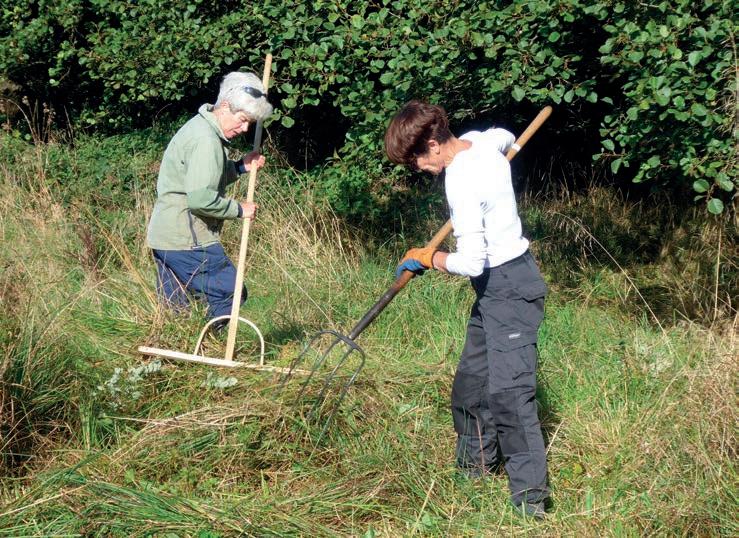
Volunteers matter – many hands make
light work!

Thanking our unsung heroes
Volunteers are the beating heart of Leicestershire and Rutland Wildlife Trust, helping us achieve more for wildlife, wild places and local communities every single day, and this anniversary year, the Trust is preparing a very special way to say thank you.
From practical conservation teams caring for nature reserves in all seasons, to office support, events helpers and passionate wildlife ambassadors inspiring others to take action, our volunteers bring energy, knowledge and enthusiasm that makes a real and lasting difference. Quite simply, without them, much of the Trust’s essential work protecting threatened species and restoring habitats across the two counties would not be possible.


Volunteering offers far more than giving back to nature. Many volunteers discover new friendships, build confidence and develop valuable skills while spending time outdoors and learning more about the


fascinating wildlife on their doorstep. Whether it’s gaining work experience, improving wellbeing, keeping active in the fresh air or sharing a love of wildlife with others, volunteering connects people to nature and each other.


Happy birthday

Sir David!
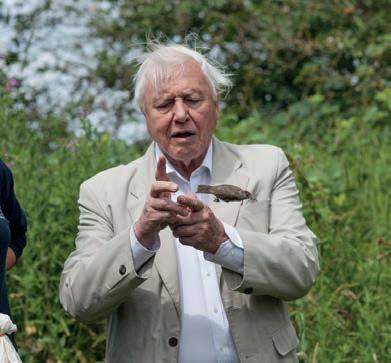
Few voices have done more to bring the wonders of the natural world into our homes, and our hearts, than Sir David A enborough. As he celebrates his 100th birthday this year, we join millions around the world in thanking a truly extraordinary naturalist and conservation champion – one we are proud to call our President.
To celebrate this incredible contribution, we are planning a special volunteer ‘thank you’ later this year.
It promises to be a chance to come together, celebrate achievements and recognise the thousands of hours generously given in support of local wildlife.
Inspired to get involved?


Sir David’s story is rooted here in Leicestershire and Rutland. As a young boy he explored Tilton Railway Cu ing nature reserve, searching for fossils and discovering the wildlife that would spark a lifelong passion for nature. That early curiosity grew into a career that has inspired generations to care for the planet.
Becoming a volunteer is flexible and open to everyone. Some people help weekly, others monthly or just a few times a year, there’s a position to suit everyone. Opportunities range from hands-on conservation work and community engagement to administration and events support.
If you would like to play a part in protecting wildlife for future generations, find out more at www.lrwt.org.uk/volunteer or register your interest by emailing volunteering@lrwt.org.uk


Since becoming President of Leicestershire and Rutland Wildlife Trust in 1991, Sir David has been a steadfast supporter of our work, opening reserves, championing conservation campaigns and helping people reconnect with nature close to home. Across the wider Wildlife Trust movement, his advocacy has spanned more than six decades, raising vital funds and shining a global spotlight on the importance of protecting wildlife.
At 100, his message remains as powerful as ever: nature ma ers and, together, we can help it recover. Happy birthday, Sir David.
Sir David at the opening of our Volunteer Training Centre. ERIC RENNO



LRWT NEWS
Community plants roots
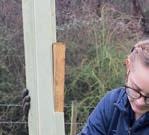
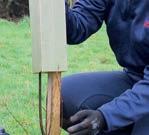
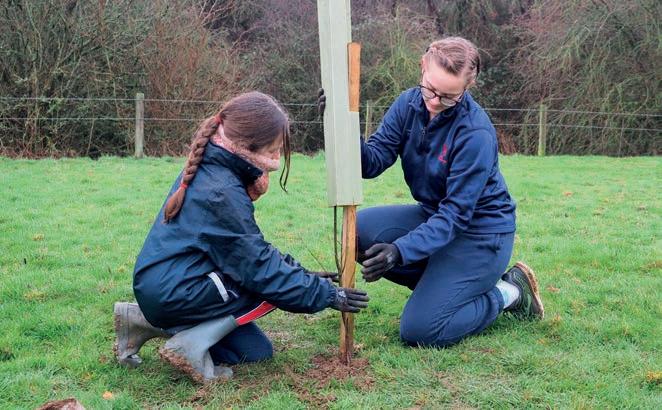
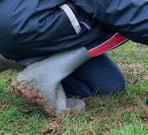
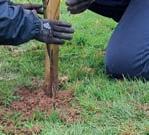
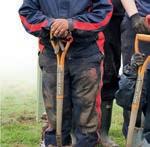
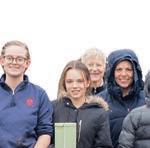
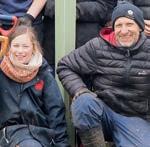
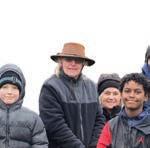
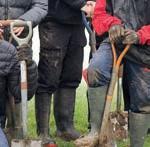
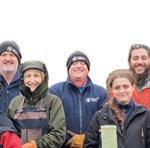
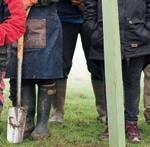
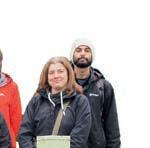
Spades hit the soil recently as students from Leicester Grammar School, alongside volunteers, trustees and supporters from the Trust, planted the first of 22,000 trees at our new James Adler Nature Reserve, due to open later this year.
Willow and alder saplings now mark the beginning of a wet woodland that will one day shelter birds, beetles and fungi, transforming former pasture into a thrivin g wildlife haven. The planting represents a major milestone in the Trust’s 70th anniversary year and a growing commitment to restoring nature across our counties.
The tree planting was a truly collaborative effort, with businesses and the community working together to help people forge lasting connections with the nature on their doorstep.
for wildlife and people alike. Our plan is to create a truly special nature reserve loved by the local community and that honours James’ memory.
The project sits alongside wider landscape recovery work, including Rewilding Harborough near Market Harborough, delivered with partners Harborough District Council, East Mercia Rivers Trust, Anglian Water, Market Harborough & The Bowdens Charity, and the Canal and River Trust. Together, we aim to restore more than 500 acres of connected habitat, moving us closer to our vision of a wilder, more resilient Leicestershire and Rutland.

Go wild!
Embrace nature like never before this summer! Every June we set the exciting 30 Days Wild challenge, inviting everyone to do one wild thing each day. Long midsummer days give time to be outdoors, watching birds, planting wildflowers for bees or relaxing beside a pond. Time in nature connects us with wildlife, boosts wellbeing and can make a positive impact on the planet. Visit lrwt.org.uk/30-days-wild to sign up for a free pack of inspiring ideas and fun information to help you, your family and friends get started.
Smooth passage


The reserve was gi ed to us in 2024 by Michael Adler in memory of his son James Adler, creating a lasting legacy the nature on their doorstep.
We would love to hear from anyone wishing to get involved in these exciting new nature recovery projects to get in contact with us. Our hope is to establish new volunteer groups in connection with the local people of South Leicestershire. Please contact info@lrwt.org.uk or visit lrwt.org.uk/volunteer
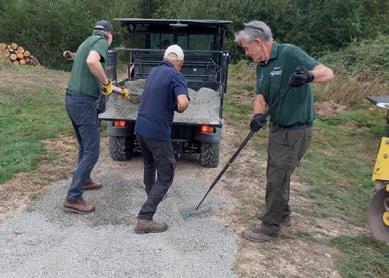
Visitors to Rutland Water Nature Reserve can now enjoy a safer, smoother walk a er volunteers and staff upgraded 300 metres of footpath between the Anglian Water Birdwatching Centre and Redshank Hide. The work has replaced a slippery, flood-prone surface with 30 tonnes of permeable granite. Funded by Anglian Water, the improvements boost year-round access, helping visitors explore the reserve in greater
comfort and safety.


LRWT NEWS
News from
How we are helping more people to connect with nature.
Pond spruce up

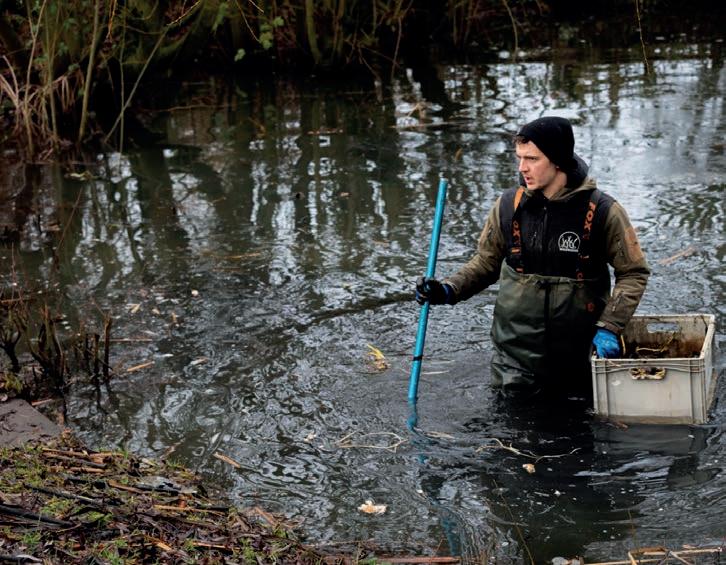
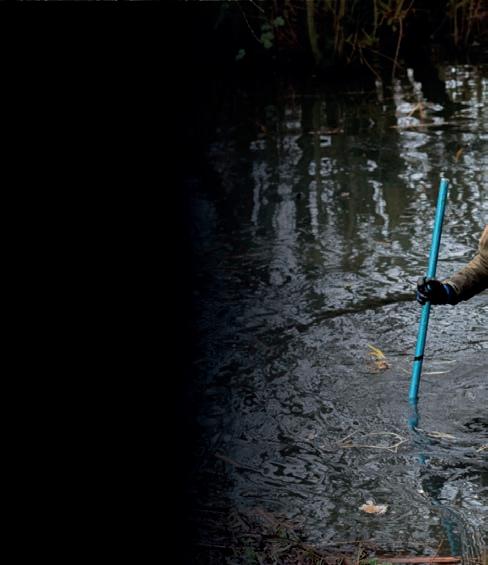
An icy start didn’t stop spirits from running high on a recent work party at Eko Joe Community Garden, Blaby. Braving the cold, the fantastic team from WildWater Ponds got stuck into essential winter maintenance to help this much-loved natural space thrive in the months ahead.
Work began with careful clearing back of some of the reedmace, pulling it from the root where possible to keep growth in check and ensure the pond doesn’t become overrun. The pond’s island also received a ention, with scrub and bramble removed to smarten up its appearance and create a more welcoming spot for birds to nest this spring. Sections of the lower

tree canopy around the pond’s edge were li ed while other areas were le untouched, creating a variety of wildlife habitats and shelter.
One of the day’s highlights was giving a new home to salvaged water lilies from another local pond. These have now been planted in the centre of the pond, where they will soon provide beautiful blooms for everyone to enjoy.
Despite frozen fingers, the team made fantastic progress – and the hot coffee definitely helped! WildWater Ponds will continue to support this wonderful pond throughout the year, and we look forward to seeing it flourish with the changing seasons.
Connecting with nature
Hamilton Library Community Garden in Leicester is brimming with fresh energy thanks to new volunteers. While the garden had previously benefited from a small but dedicated group of volunteers, it had been a challenge to grow participation and extend gardening activities beyond a few days. That began to change when we teamed up with Daxa Ralhan from Leicester City Council to help reconnect the Hamilton Library community with this hidden green gem. Working together, we reached out to local partners, including Tesco and the neighbouring medical practice, encouraging patients and residents alike to spend time in the garden and enjoy its benefits. To spark interest, we ran a four-week wildlife gardening workshop. The response was fantastic, with 14 local people joining in to learn the basics of gardening while creating

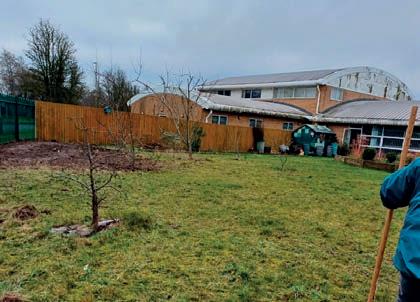
new habitat areas to support wildlife within the garden.
One highlight came through our Queens Road Allotment group, The Neighbourhood Nook Project. One of the volunteers, newly qualified as a yoga instructor, offered a free ‘yoga through nature’ taster session for the Hamilton Library garden group. The session was a huge success, nurturing friendships and a deeper connection with nature.
Support for the garden continues to grow and a new weekly group has now been established. Tesco is providing refreshments and umbrellas, as well as encouraging staff to take part in our workshops. Meanwhile, the library has seen an increase in people borrowing gardening books and signing up as new members.
From growing plants to growing friendships, Hamilton Library Community Garden is fast becoming a vibrant hub for learning, wellbeing and community connection.



To learn more about our projects, or get involved yourself, please get in touch with Sally Pearce, Community Engagement O cer, at spearce@lrwt.org.uk or on 0116 262 9968.
Hamilton Library Community Garden
Pond dip: Clearing the reedmace.




Gardening for nature





What does regenerative gardening mean?




My pillars are maintaining healthy soil, caring for wildlife and growing organically, using renewable and reusable resources (including ethically sourced plants and seeds and growing peat-free) and using water responsibly. I also make sure my garden benefits people outside of my household. That could look like sharing tools or knowledge by joining a community garden, seed swaps or giving away gluts.


What do you mean when you say, “we are nature”?



We humans are simply another species on Earth, reliant on healthy ecosystems to thrive. Recognising our interdependence inspires me to live kindly – toward myself and all of nature. Not seeing ourselves as separate reshapes our cultural story, encouraging care. Gardening brings us into the present, empowering and reminding us we can care, create and heal.





How do you create both beautiful and ecological gardens?
I fi nd beauty in signs of care – whether in the organised chaos of vegetables muddled in with companion flowers, a wild garden meadow, or the skeletons of herbaceous perennials le standing through winter as habitat… telltale traces of a compassionate, sensible gardener at work. To me, beauty is an emergent property of a harmonious garden.






What can people do to support biodiversity and soil health?


Turn waste into a resource. Create habitats with compost heaps, log and leaf piles (life thrives on decay), and invite water in. Industrial chemical agriculture is one of the most devastating forces driving wildlife destruction, so above all, support ecological (or organic) food production –buy it, grow it, vote for it.




What has gardening taught you?
Tolerance, hope, resilience and trust. Caring for a living space teaches acceptance of life and death – an idea I loved exploring in my book A Wilder Way






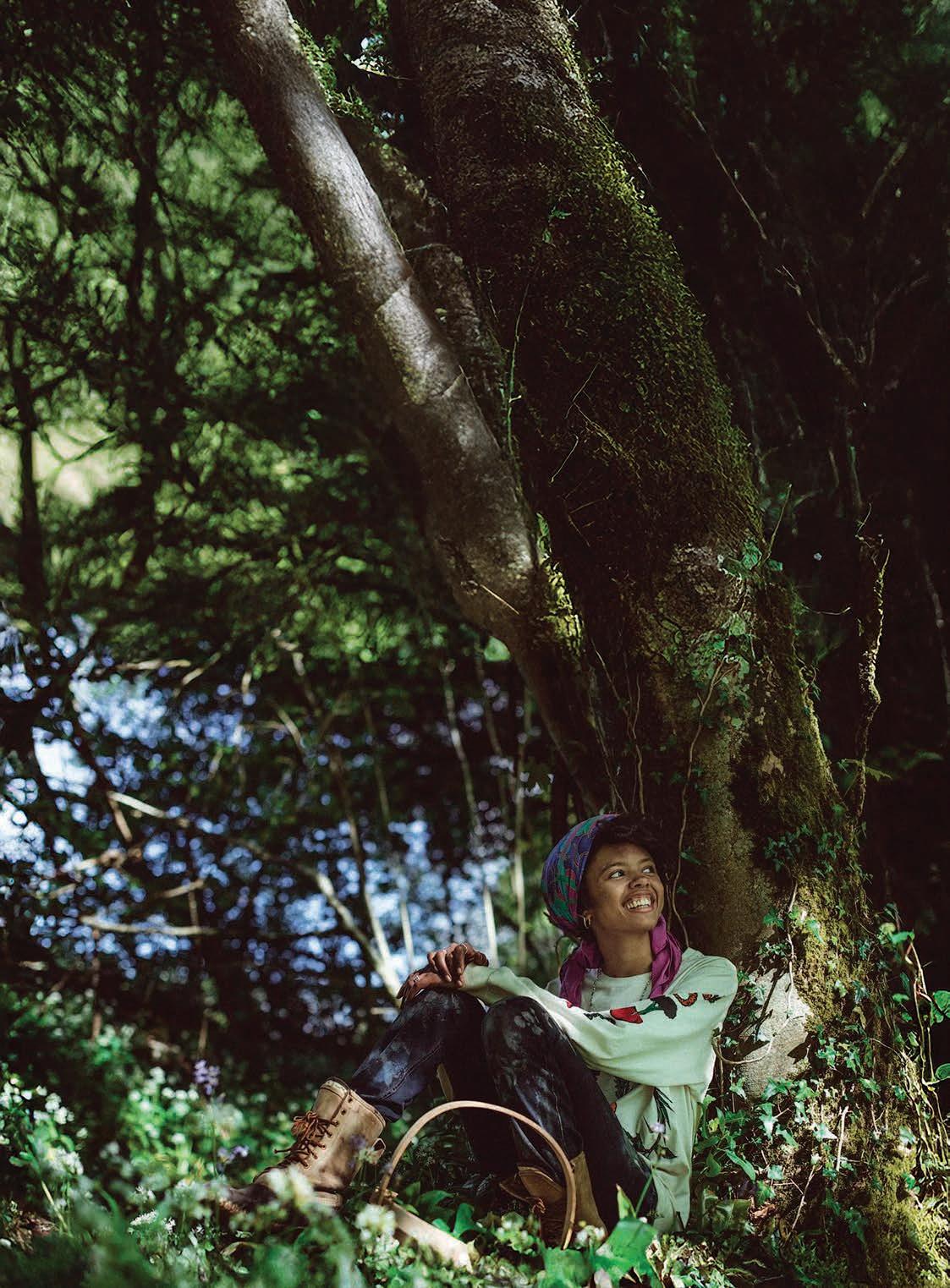
Poppy Okotcha is a fashion model with a passion for regenerative gardening. Poppy talks to us about all things wild.
Poppy Okotcha

Reaching Rothbury

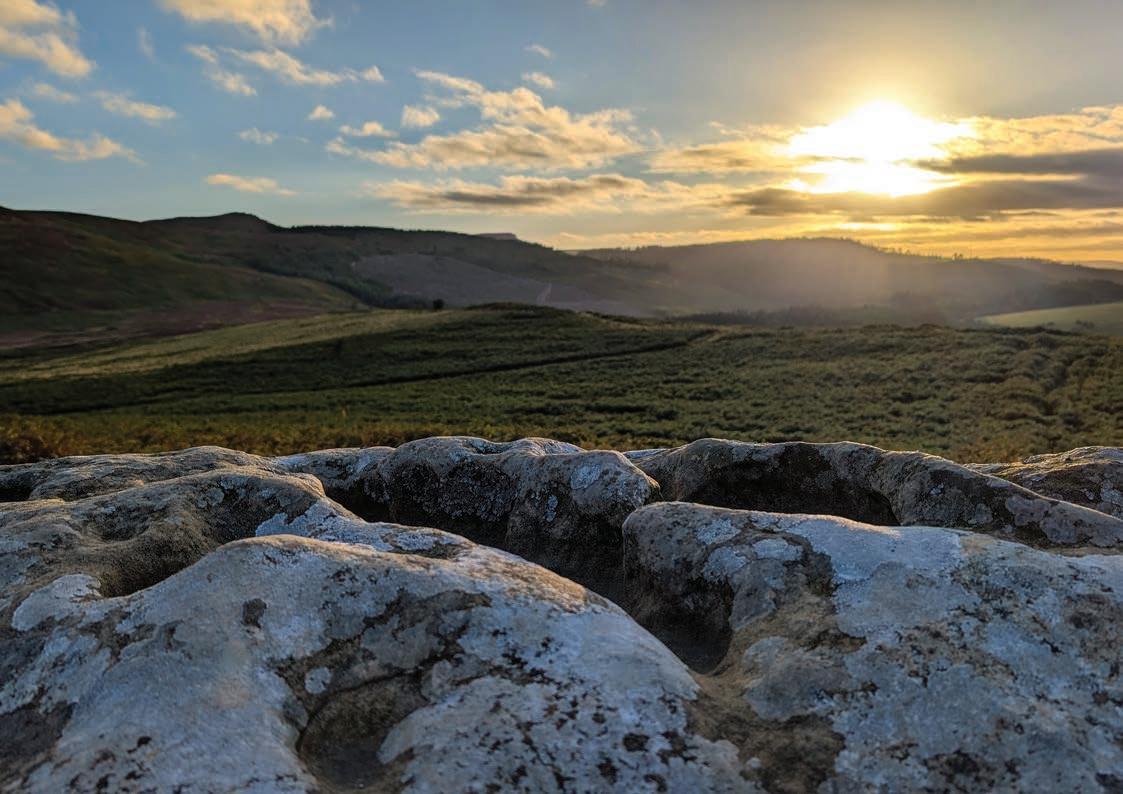
Sir David A enborough, now in his hundredth year, has stepped forward at a critical time to champion the Rothbury Estate Fundraising Appeal, with just one year le to raise the £30 million needed to complete the purchase. Over £10 million has already been raised from individual donations ranging from £5 to £5 million.
This vast upland of over 3,800 hectares, the size of central London, is the largest area of land to be put on sale in England in decades.
at the astonishing rock carvings le by our distant ancestors, who once lived here.
“The Wildlife Trusts have launched an appeal to buy this very special place. They will work with local farmers to care for the area and breathe new life into its precious wildlife habitats”.

“Time forest and upland in Northumberland for the calls of the curlew.

Sir David A enborough says: is running out to save the historic Rothbury Estate. This huge, heartshaped expanse of moorland, rivers, forest and upland in Northumberland needs your help. People know and love the Simonside Hills that rise here. They walk the ridges and listen for the calls of the curlew. They watch for red squirrels and admire the views as they scramble among the crags. They walk along its remote paths and marvel
The size of the Rothbury Estate gives it great potential to contribute to nature restoration targets in the UK. Restoring its habitats for wildlife such as curlew, pine marten, beaver and golden eagle will have real significance for a greater area beyond its boundaries because the Estate lies at the heart of a 40-mile nature corridor, stretching from the north-east coast of England to the central Sco ish border.




The Wildlife Trusts, in partnership with Northumberland Wildlife Trust, have ambitious plans to integrate nature recovery with farming, recreation, education and tourism on the Estate.
a 40-mile nature corridor, stretching from the Northumberland Wildlife Trust, have education and tourism on the Estate. ways purchase of the Rothbury Estate at
Discover the ways to support our purchase of the Rothbury Estate at wtru.st/rothbury-appeal
Marine Views
Ruth Williams, Head of Marine Conservation at The Wildlife Trusts, gives us the deep dive into the 2025 Marine Review.
What did you discover in this year’s Marine Review?
We had a great year for puffi ns on Skomer in Wales and Muck in Northern Ireland! But also had to deal with a couple of serious incidents, including a bio-bead spill in Sussex and oil tanker collision in the North Sea. Our Wildlife Trust staff and volunteers were brilliant at providing a rapid response.
Were there any surprising or rare species sightings?
We love ge ing reports of leatherback turtles, which are rarely seen but are resident in UK seas, feeding on jellyfi sh. The spread of non-native slipper limpet is not such good news. We also saw huge blooms of octopus—an indication our seas are warming.
What’s the latest on banning bo om trawling in Marine Protected Areas?
Following Sir David A enborough’s Ocean, we had an incredible swell of public support for our campaign to ban bo om trawling collecting 18,435 responses to the UK Government’s consultation. Now we need to keep the pressure on to

seabed protections are implemented swi ly and strongly.
Why do we need to protect seabeds in the fight against climate change?
In the UK our muddy seabeds store 240 million tonnes of carbon. But bo om towed fi shing gear and developments that damage the seabed can also release carbon back into the atmosphere.
What can we do to support healthier, more resilient seas?
Choose seafood from sustainable local stocks, caught using low impact fi shing methods and give different species a try —check out the Cornwall Good Seafood Guide for info. Get involved in a local beach clean or Wildlife Trust-led citizen science programme, like Shoresearch, to help gather evidence needed for be er ocean policies.
What gives you the most hope for the future of our marine wildlife?
fi lm, ensure these reserves,
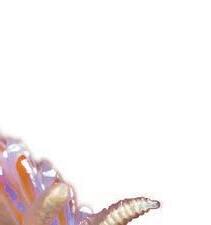
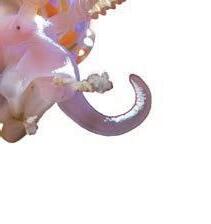
From disco coloured seaslugs in our rockpools, to lush seagrass meadows teeming with fi sh and humpback whales or tuna breaching just off the shore —our seas are awesome, but under huge pressure. By working together, with UK and devolved governments and industry, and supporting your local Wildlife Trust, we can achieve healthy seas for the future.

A new Wildlife Trusts report reveals the UK pig and poultry sector’s vast pollution impact, with intensive farms creating waste equivalent to 4,160 Olympic-sized swimming pools and driving pesticide-heavy grain production that harms rivers, wildlife and countryside. wtru.st/ppreport


SPACE FOR EVERYONE
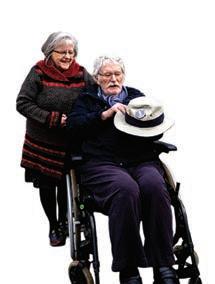
A Space for Everyone, a new guide for land managers funded by People’s Postcode Lottery, gives practical tips on making nature reserves, walking trails, lakes and rivers more accessible, inclusive and welcoming for all visitors. wtru.st/everyone


UK HIGHLIGHTS


Discover how The Wildlife Trusts are helping wildlife across the UK





Saving wild spaces


Scottish Wildlife Trust has purchased its largest landholding, coming in at over 7,500 hectares! Inverbroom Estate was aquired by the Wildlife Trust in 2025, thanks to £750,000 from the National Lottery Heritage Fund, and will develop nature conservation and work with the local community across its newest nature reserve.
wtru.st/Inverbroom-Estate
Tree-mendous work
Radnorshire Wildlife Trust planted more than 16,000 trees across the Wye catchment during the winter tree planting season. This achievement was made possible through a partnership with The Woodland Trust, who provided trees, along with support from local nurseries and farmers who donated surplus native seed stock.
wtru.st/Radnorshire-trees
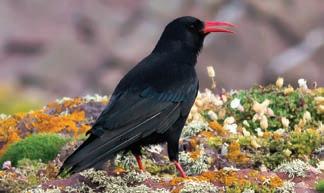
Choughed to bits
Red-billed choughs are soaring again in Kent skies after 200 years thanks to the Chough Reintroduction Project, led Kent Wildlife Trust and partners. in Spring 2025 a nest was discovered at Dover Castle which produced a chick that successfully edged, marking a signi cant step toward restoring this species to its natural habitat. wtru.st/Kent-choughs























Your wild summer











eeding
The best of the season’s wildlife and where to enjoy it







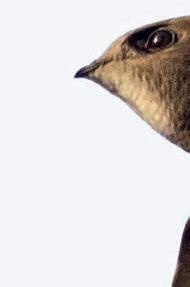
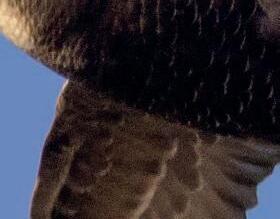
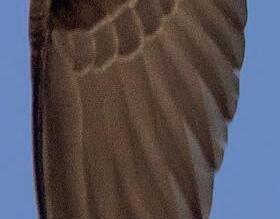
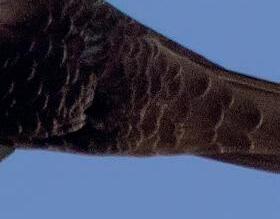
Soaring swi s





Breeding swi s arrive by early May and fly directly into their familiar nest sites; they haven’t stopped flying since they le last summer. They gather airborne grass and feathers to refresh their nests.









Swi s fly in groups and nest in colonies beneath roof eaves, in nestboxes and nest-bricks within walls. In June the aerial groups grow with the arrival of young, non-breeding birds to create ‘screaming parties’ swooping fast and spiralling high.






By the end of July nestlings are well-fed and doing wing pressups to strengthen flight muscles. Early in August the adults leave for Africa and the youngsters soon follow.






SEE THEM THIS SUMMER






Listen to swi s calling as they fly past nestboxes and hear the nesting birds call back.
Leicestershire County Council and the Leicestershire & Rutland Ornithological Society’s Swi Action for Swi s project has installed more than 350 swi nestboxes across Leicestershire. Learn more at: lros.org.uk/swi -action-for-swi s




















Good hare day
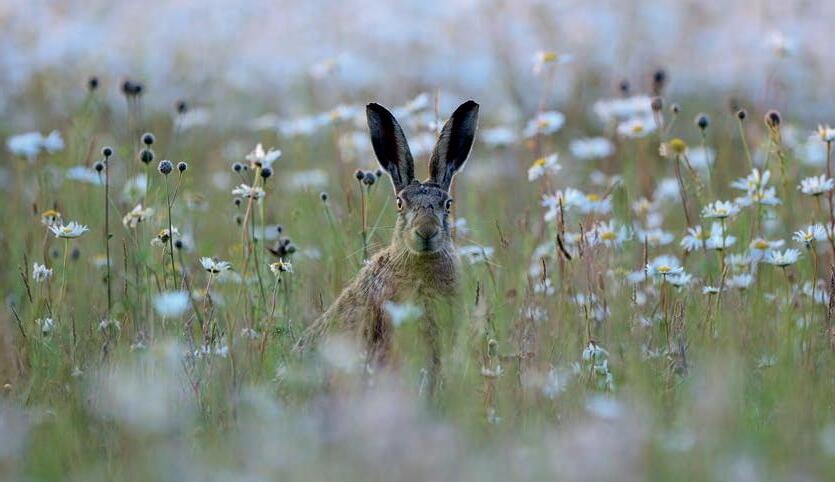
Brown hares, with their golden-tipped fur, amber eyes and remarkable zig-zagging runs are creatures of mystery and beauty. Their large eyes, set on the sides of their heads and black-tipped ears to catch distant sounds both serve as early warning systems.
Introduced to Britain by European travellers during the Iron Age, their springtime ‘boxing’ behaviour gives us a chance to see them. The female ‘does’ are in season for just a few hours, releasing pheromones that send the bucks into a frenzy. Does stand on their strong hindlegs to repel the bucks with their forepaws and give them the run around to test their stamina.
Wild but true
In country lore Jack is a colloquial term for the buck, while Jill is the term for the doe.

Hares can leap up to four metres and run incredibly fast, sometimes reaching 45mph. They are solitary creatures that crouch in a shallow ‘form’ of fla ened grass during the day before feeding at night.
Does give birth to three or four li ers a year. Leverets are born fully furred with their eyes open and stay hidden during daytime. Their mother feeds them at dusk for the first few weeks until they can forage for themselves.












Plants for pollinators


Plant wildflowers to a ract bu erflies, moths, bees, hoverflies and wasps. Perennial flowers such as red and white campions and foxgloves have tubular flowers that provide nectar for long-tongued insects. Leave dandelions, daisies and bu ercups in the lawn to feed the flying insects that swallows, swi s and bats will eat.












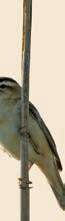
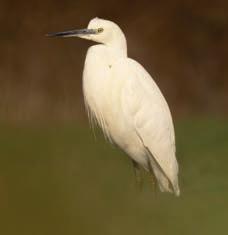
Hear the chattering song of reed warblers, their brown and bu Little egret





The elegant white head plumes of the little egret contrast with its black bill, legs and yellow feet.
King sher
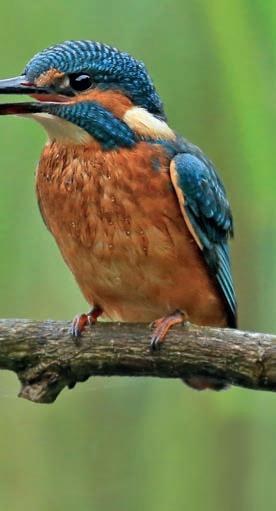
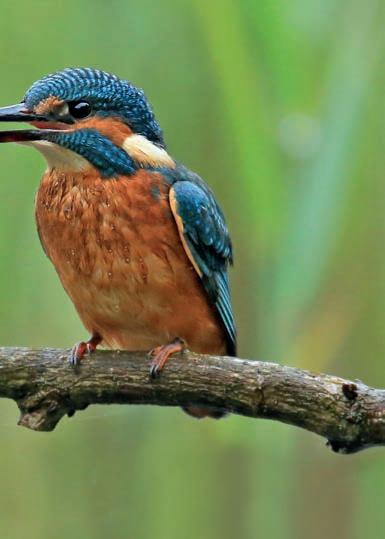
Be alert for its high pitch ‘peep’ then catch a ash of




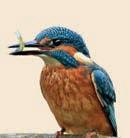
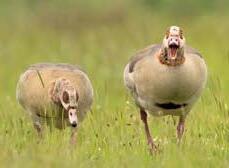
darts across the Egyptian goose

These noisy, territorial birds with pink bills and feet breed several times a year, even nesting in trees.



For more wildlife-friendly gardening tips visit wildaboutgardens.org.uk



WATCH THIS
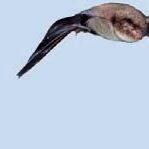








Head into the garden or a park at sunset to watch bats swooping around hedges and trees as they come out to feed.
HEAR THIS
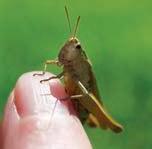
The common green grasshopper’s characteristic song lasts around 20 seconds and sounds like the ticking of a free-wheeling bike.
Yourwild summer
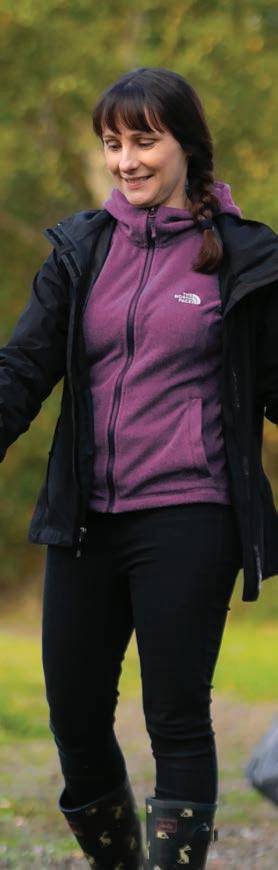

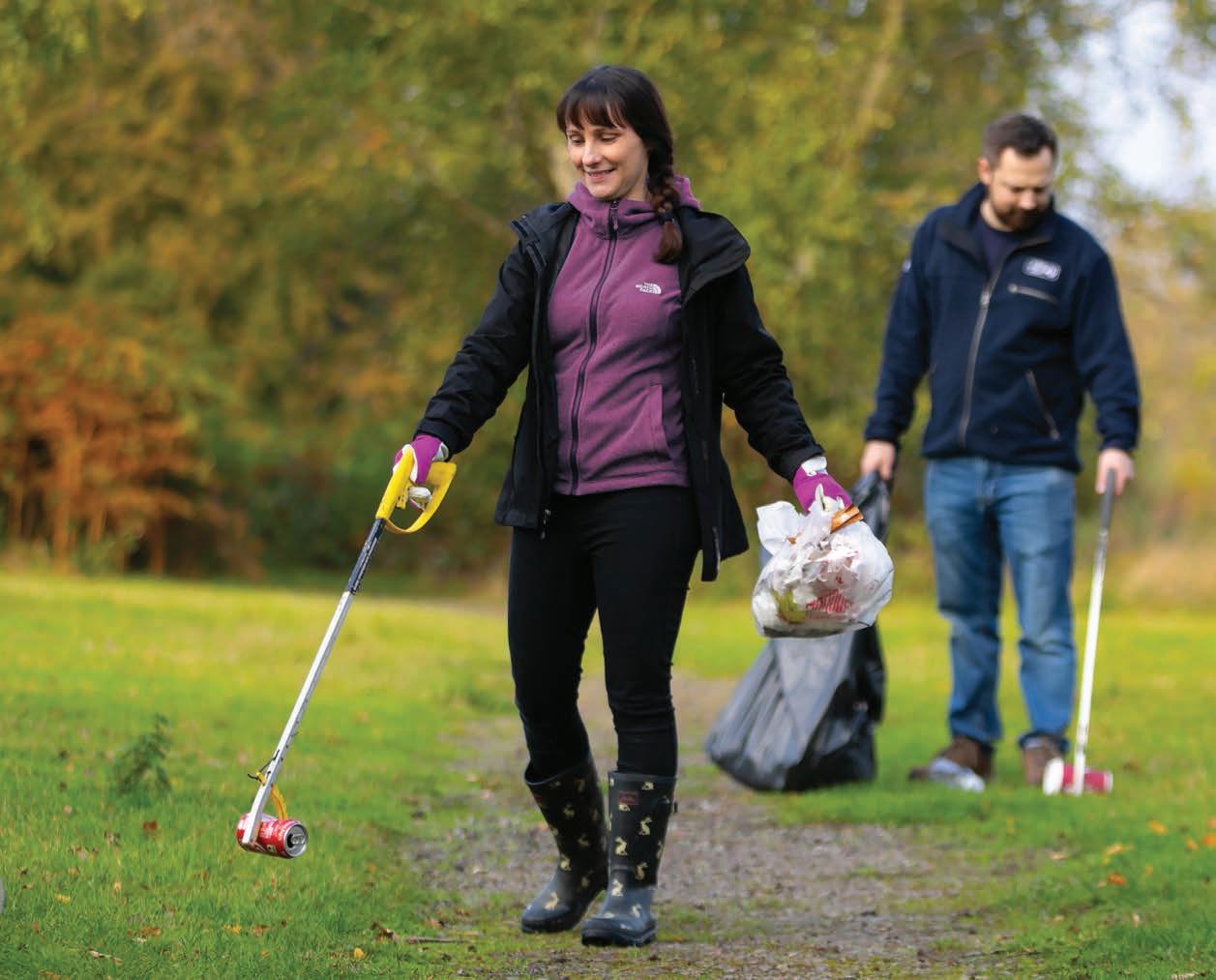
Spring cleaning for nature

Get equipped
1 4 5 6 2 3
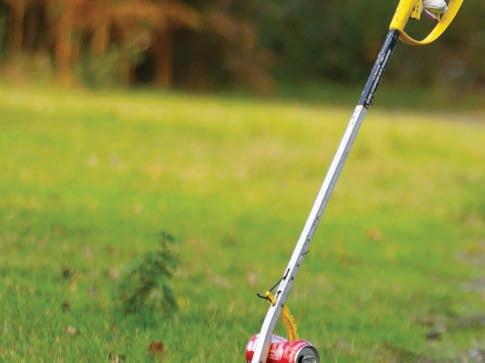
Welcome li er pickers! You’ll need heavy-duty gloves, appropriate footwear, a li er picker (to protect hands and backs) and two bags: one for general waste and one for recycling. Check with your local council or library for free li er pickers and bags.
Pick the right spot
Although you might notice rubbish on roadsides or in waterways, it’s important to stay safe and avoid these areas. Keep to well-lit areas with accessible paths. Think carefully about your li er pick and plan your route beforehand.
Safety first
Bo les, bags, food wrappers, toys and clothing are common fi nds. But some things are best to avoid, including sharp metal and glass. Report hazardous materials, like needles and syringes, to your local council instead.
Look out for wildlife
Enjoy spo ing wildlife and taking action for nature at the same time. Joyful birdsong, erupting sprays of ox-eye daisy and bu erfl ies on the wing are just some of this season’s delights.
A team effort
Invite family and friends, join an organised li er pick, beach clean or set up a spring pickers challenge in your local community. If you’re going solo, make sure you let someone know where you are going.
A clean sweep
When you have fi nished li er picking, give yourself a pat on the back with those well-washed hands. Welcome ssummer with hundreds or even thousands of fewer pieces of li er!



Join a local li er picking group. Search ‘Leicestershire Li er Wombles’ on Facebook for details of sessions and support in both the north and south of the county. For more tips and advice head to


lrwt.org.uk/actions/do-li er-pick-or-beach-clean


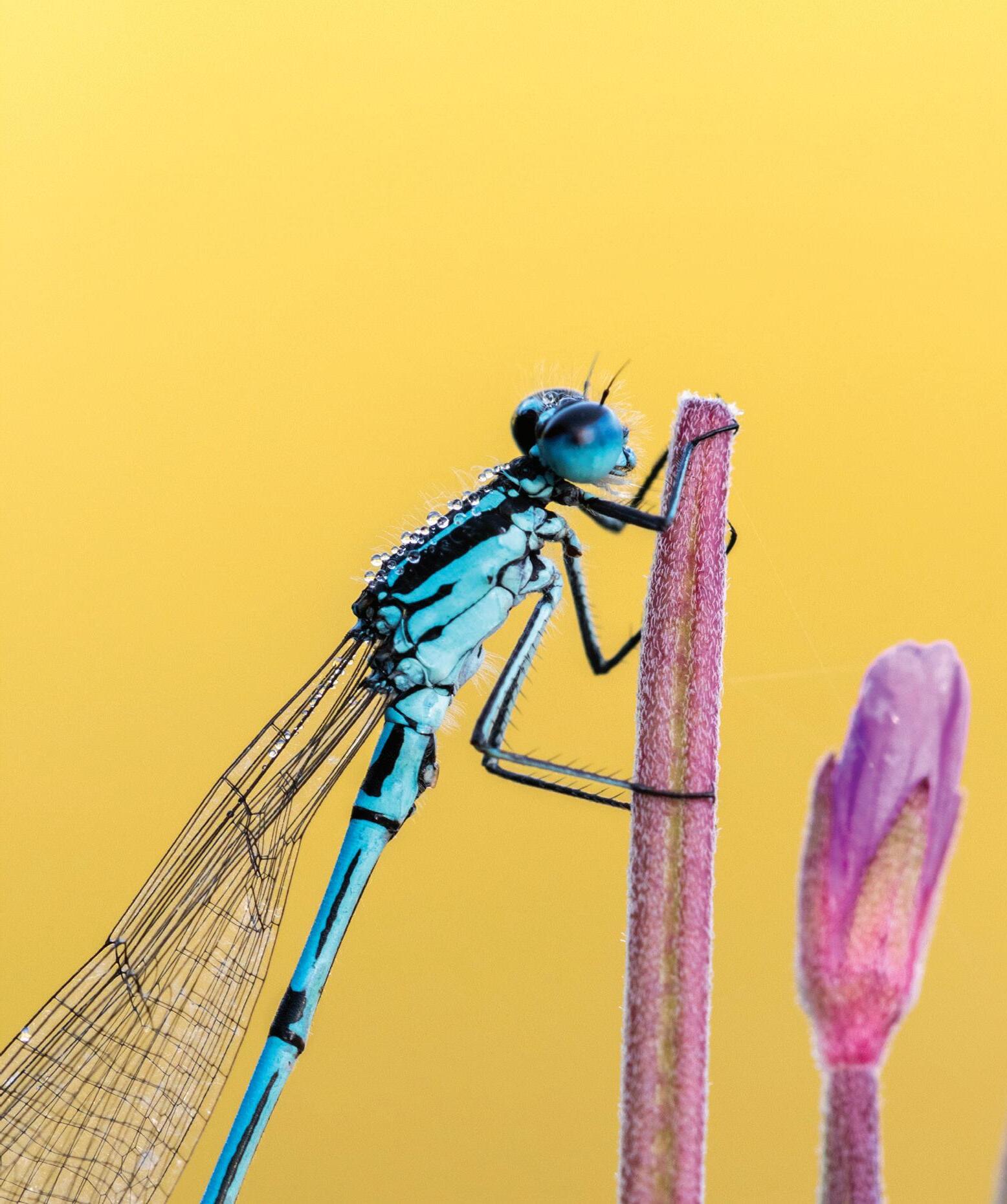
Thorax Broad blue or pale stripes on the top.
Thorax No black spur on the side.
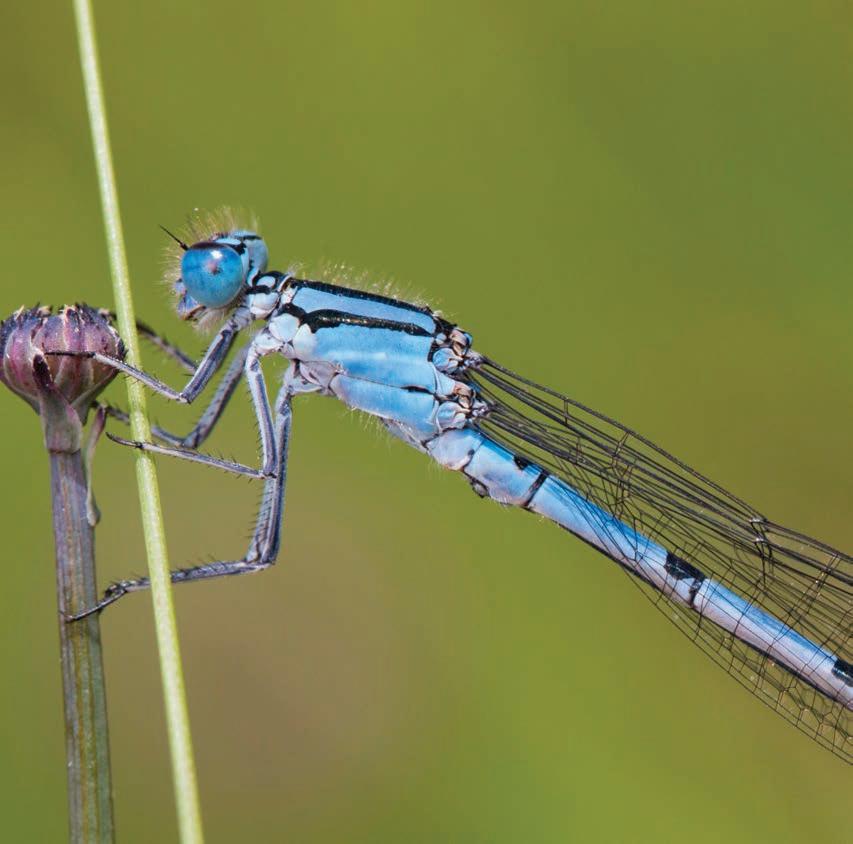



Azure damselfly
Coenagrion puella

When April to September


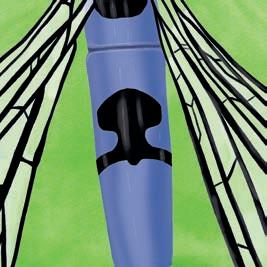





Black mark Males have a mushroom-shaped marking below the base of the wings.
Common blue damselfly Enallagma cyathigerum
When April to October
Where Most waterbodies. Visits open water more than other blue damselflies.
Females Blue/dull green and black. Have a spine beneath segment eight (near the end of the body).




COMMON BLUE AZURE
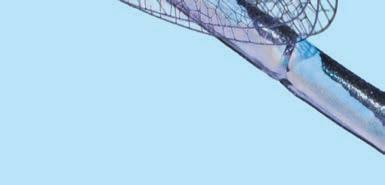



Females Green (occasionally blue) and black. No spine beneath segment eight of the abdomen.


VWhere Prefers smaller, sheltered ponds and streams. Stays near the edges of larger lakes.


Two of our most common damselflies,easilyconfused ataglance.Sohowdoyou spotthedifference?

Thorax Narrow blue or pale stripes on the top of the thorax.
Thorax Black spur on the side of the thorax.

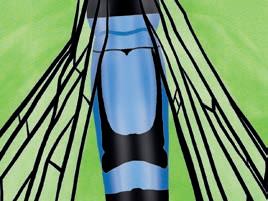
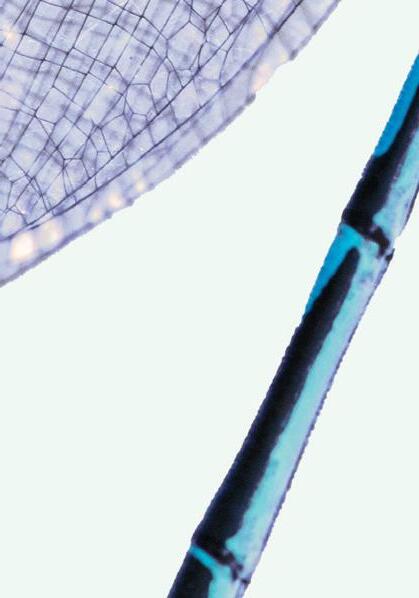











Black mark Males have a U-shaped marking, detached from the black ring below.










RUTLAND WATER: FROM RIVER VALLEY TO VIBRANT WETLAND
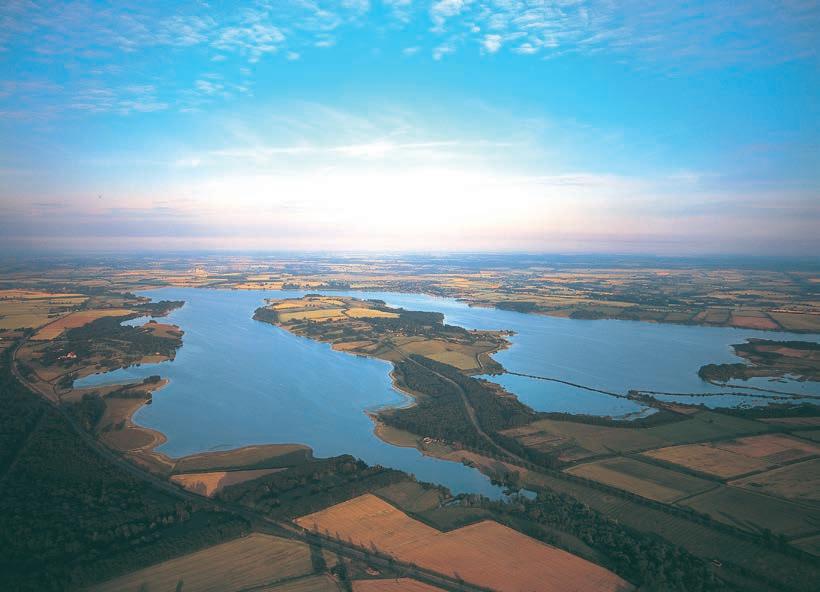
Over the past 50 years, Rutland Water has become a sanctuary for wildlife, transforming the local landscape into one of the UK’s most dramatic nature conservation success stories.
The story of Rutland Water begins in the early 1960s, at a time of rapid post-war change. In 1963, the Welland and Nene River Authority and the MidNorthamptonshire Water Board were grappling with a pressing problem: how
to meet the future water demands of a fast-growing population.
More than 60 potential sites were assessed for a new reservoir. Most were ruled out for being too small, remote or geologically unsuitable. Eventually, two valleys in the heart of Rutland emerged as contenders: the Chater and the Gwash. Plans were drawn up for reservoirs in both, but the Gwash Valley scheme, initially known as the Empingham Pumped Water Storage Project, was prioritised. Offering greater capacity and lower running costs, the Chater Valley proposal was eventually shelved.
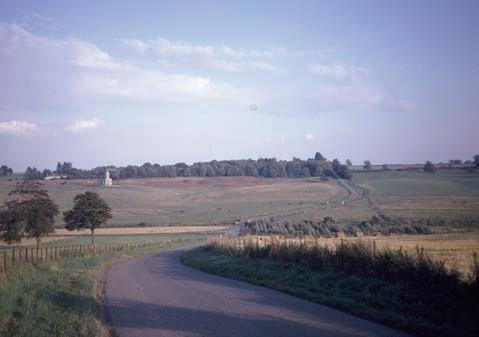
In May 1970, Parliament gave its approval and just a month later work began on what would become the largest manmade lake in England. Few could have imagined how profoundly the project would reshape Rutland, or how central Rutland Water would become to the county’s identity.



Engineering feat
The construction of Rutland Water was a vast feat of civil engineering, played out over much of the 1970s. A huge dam had to be built across the Gwash Valley, while pumping stations and pipelines were installed to bring water from the rivers Welland and Nene. Roads were rerouted, buildings demolished and the River Gwash itself diverted so work could begin. Materials for the dam were sourced
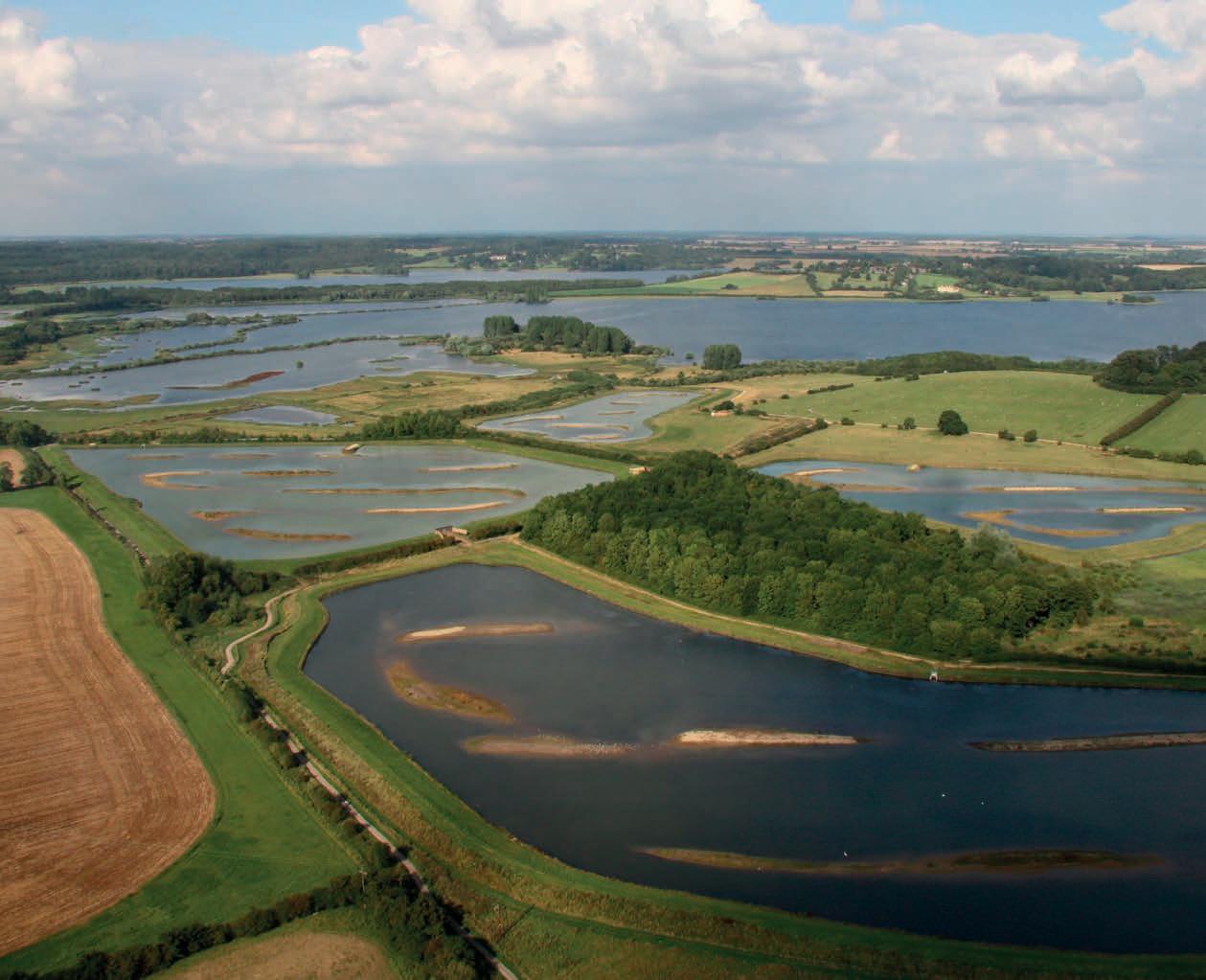
Aerial view shortly after the addition of ve new lagoons.
Lost landscape: Looking towards Normanton Bridge before work began.
Spreading and compacting clay ahead of lling.
RICHARD ADAMS
DAVE NEEDHAM
RICHARD ADAMS

from within the reservoir basin itself, as stipulated in the project plans.
Upper lias clay was excavated and used to form the dam, while thousands of tonnes of concrete were poured. Tunnel construction was particularly demanding. Teams of workers laboured in cramped conditions, manually positioning 83kg concrete segments to line the tunnels. In a single ten-hour shi , one gang managed to install 51 lining rings – a testament to the skill and endurance of those involved.
The local landscape was irrevocably altered. Spinneys and woods were partially or fully felled, though foresight ensured hundreds of oaks and birch from Hambleton Wood were carefully transplanted to higher ground above the future waterline.
In September 1975, the pumps were switched on for the first time. Yet nature had its own say in the timetable, with the severe drought of 1975 and 1976 delaying significant filling to 1977. Finally, in March 1979, a er nearly a decade of work and £30 million of investment, Rutland Water reached full capacity. In the process, around 3,000 acres of countryside, or roughly three per cent of Rutland, were flooded. Villages, farms and familiar landscapes were lost, and change came swi ly. Yet even as the waters rose, new possibilities were already emerging.
What went before
One of the quiet triumphs of Rutland Water’s story is the way its natural history
was documented before the valley disappeared. In 1965, a group of dedicated enthusiasts formed the Rutland Natural History Society, recognising that once the reservoir was filled, knowledge of what had lived in the Gwash Valley would be gone forever.
Over the next five years, members surveyed as much of the valley as they could, recording mammals, birds, insects and plants. Their work created a priceless baseline, allowing future generations to understand how the area changed and, later, how nature returned in new and o en unexpected ways.
Unearthing the past
As soil was stripped during construction, archaeologists seized a rare opportunity to explore thousands of years of human history. Local volunteers, historical societies and university teams worked together to investigate the area with some extraordinary discoveries. Beneath what is now the Rutland Water Visitor Centre at Sykes Lane lay an Anglo-Saxon burial ground containing around 150 skeletons, many accompanied by grave goods such as spears and shields.
Elsewhere, two Romano-British farmsteads were uncovered on opposite sides of the Gwash. Finds included jewellery and gaming pieces, as well as evidence of underfloor heating, painted walls and a bathhouse. At each site, a stone coffin was found – one holding a man, the other a woman and child – facing one another across the river, feet pointing towards the water. These poignant discoveries can still be glimpsed today in Rutland County Museum.
A nature reserve is born
What’s in a name?
Naming the new reservoir proved more than a formality. ‘Empingham Reservoir’ seemed the obvious choice, but local feeling ran deeper. Rutland was about to lose its independence, becoming a district of Leicestershire in 1974, and there was a strong desire to keep the county’s name alive. In the end, it was a petition submi ed by Jane Merri , a Rutland Sixth Form College student, that helped tip the balance and, in 1976, ‘Rutland Water’ was officially adopted – a name that has become synonymous with the county itself.
stewards of what would soon be Rutland Water Nature Reserve.
Three key areas were identified: Egleton, Lyndon Hill and the Old Burley Fishponds. Lagoons and islands were designed and built, thousands of trees planted, hides erected and trails laid out. Volunteers played a vital role, giving up countless hours to shape the reserve in its earliest days.

Perhaps the most remarkable point of note in Rutland Water’s story is that its future as a wildlife haven was recognised before it even existed. In 1975, the Leicestershire and Rutland Trust for Nature Conservation (as it was then) signed a management agreement with the Anglian Water Authority, becoming
Yet even as the waters rose, new possibilities were already emerging.
Even before the reservoir filled, wildlife responded. Cleared ground a racted corn buntings, skylarks, turtle doves and stonechats. Then as the water accumulated, waders and wildfowl arrived in ever-increasing numbers. Within a few years of opening, counts of more than 20,000 waterfowl were being recorded. Recognition quickly followed: Site of Special Scientific Interest (SSSI) status in 1981 then designation as a Special Protection Area (SPA) and Ramsar site in 1991.
Welcoming people
Rutland Water has always been about people as well as wildlife. The Lyndon Hill Visitor Centre, opened in 1985 by Sir David A enborough, provided a welcoming gateway to the reserve. Meanwhile, the Anglian Water Birdwatching Centre at Egleton has
Miners celebrate a tunnel breakthrough during construction.
An unearthed Romano British coin.
SHIRLEY
PALMER
grown from a modest wooden hut into the much-loved facility it is today.
For more than 30 years, Egleton was also home to the British Birdwatching Fair. Fondly known as the Birdfair, it became a global gathering for birders –a place where friendships were formed, ideas shared, and millions raised for international conservation. For many, it remains an unforge able highlight of Rutland Water’s social and conservation history.
Nature on the move
Rutland Water has never stood still. In 2011, the Rutland Water Habitats Project added five new lagoons, creating an extra 120 hectares of wetland. These shallow waters, reedbeds and muddy margins brought new life, benefiting species from avocets and wigeon to countless invertebrates and aquatic plants. At
the same time, the project increased water storage capacity, showing how infrastructure and conservation can go hand in hand.
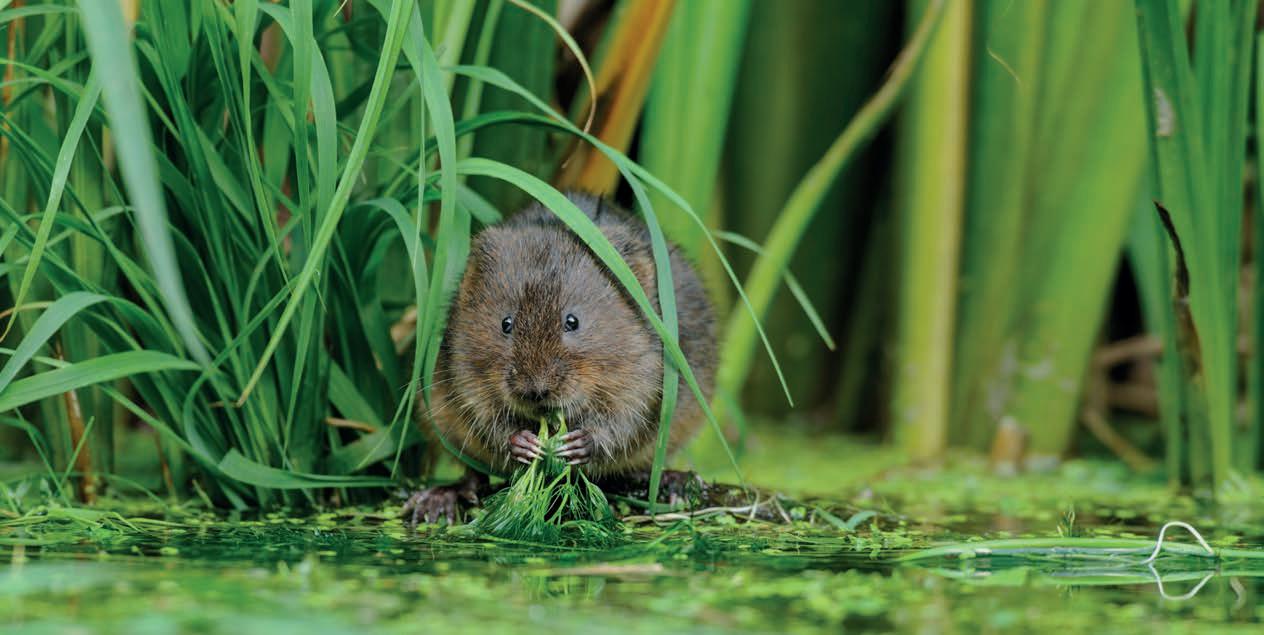
That same year saw the launch of a water vole reintroduction programme. Once widespread but now rare, these charismatic mammals, immortalised as Ra y in The Wind in the Willows, found a new home at Rutland Water and along the Oakham Canal, where they are once again part of the landscape.
Supporting all this work is people power. The Volunteer Training Centre, completed in 2015, provides space for training, learning and collaboration, ensuring volunteers remain at the heart of the reserve’s success.
Watching, learning
For half a century, volunteers have also been quietly counting birds. Since
Saving Normanton Church
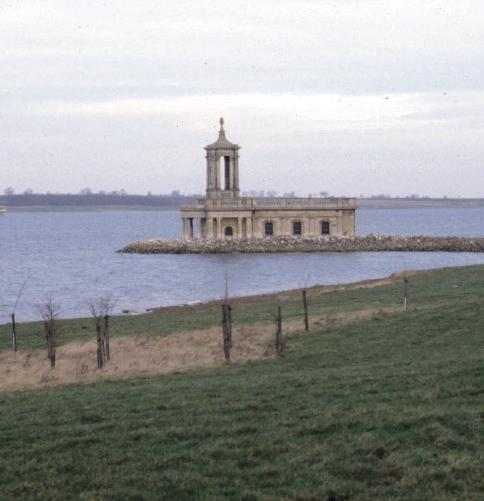
The image of Normanton Church standing serenely at the water’s edge is iconic, yet its survival was far from guaranteed. The church was set to be lost but thanks to swift action by Anglian Water and the newly formed Normanton Tower Trust, a rescue plan was devised. Floors were raised, lower levels lled, and a protective embankment and causeway constructed around the building. Normanton Church reopened as a museum and today is a much-loved landmark and events venue.
September 1975, the Wetland Bird Survey (WeBS) at Rutland Water has recorded more than six million birds of 131 species, representing over 15,000 hours of effort. These vital counts help us track changes in bird populations and enable us to assess the health of this precious wetland. Then there are the ospreys. Once extinct as a breeding species in England, these magnificent birds were spo ed migrating over Rutland Water soon a er its creation. Their story is still unfolding and this year we are celebrating 30 years of Rutland’s ospreys. Why not join one of our special osprey cruises with Dr Tim Mackrill and help us celebrate? See page 35 for details.
From a flooded valley to a flourishing wetland, Rutland Water’s first 50 years have been nothing short of extraordinary. Its story is one of vision, resilience and hope – proof that with care and commitment, places shaped by human need can become sanctuaries for nature too. As we celebrate this anniversary year, Rutland Water stands not just as a reservoir, but as a living landscape, rich in wildlife, history and community.
Get involved in helping Rutland wildlife. For more on the Rutland Natural History Society please visit rnhs.org.uk or for our own local Rutland Group head to lrwt.org.uk/local-groups
To learn more about the fascinating history of Rutland Water visit lrwt.org.uk/history-rutland-water
Water vole
THE EARLY DAYS
Tim Appleton MBE was Rutland Water’s very rst warden and instrumental in shaping the nature reserve as we see it today.
How did you first get involved with Rutland Water?
I was Deputy Curator of the Wildfowl and Wetlands Trust’s (WWT) Slimbridge Wetland Centre, so waterbirds and wetland habitats were very much my world. When the job of Reserve Warden for Rutland Water was advertised, it was to create a nature reserve – from scratch! I jumped at the chance.
When I arrived, there was nothing. I was handed an Ordnance Survey map and told, in effect, ‘There you go’. The dam was still being built, while the reserve existed only as a line on a map. I built relationships with Anglian Water, worked alongside the engineers, and began shaping what the reserve could be. It was all about turning an outline into a living place for wildlife.
What were those very early days like? Extraordinary, and o en chaotic. I was rescuing li le ringed plovers from bulldozers while stone was still being hauled to the dam. It felt like conservation happening in real time, right in the middle of a construction site.
It was an incredibly exciting time too. For example, it was up to me to decide where the first lagoons should go and how they should work, then collaborate with the engineers to make it happen. We added features like shallow duckling bays – simple ideas that made a huge difference to wildlife survival but that were pre y groundbreaking for the time.
It all sounds very hands-on. It was. Lots of my work in those early days was just planting, planting, planting! I would go across to A enborough Nature Reserve and bring back thousands of willow stakes. Then in the morning I’d be out drilling holes with the tractor before planting all a ernoon. It was hard, physical, practical conservation.
How did you find working with the water authority?
Respect was key. This was and still is a working reservoir, not just a nature reserve. By working closely with the water company and understanding
their needs, we built a partnership that’s lasted decades.
Right at the start we set up a reservoir users’ panel so that anglers, sailors and conservationists could share the space sensibly. That way of zoning has since been used as a model worldwide. In fact, that sort of pioneering approach to things is partly what has helped make Rutland Water the place it is today. Nothing like this had been done on a reservoir before, at this scale. We borrowed ideas from smaller sites and applied them on a much bigger canvas.
Working with people has been essential to its success: everyone from fishermen to farmers, engineers to volunteers. You have to bring people with you. Conservation doesn’t work in isolation.
Looking back, what stands out most for you personally?
Seeing Rutland Water become internationally recognised. Today it is designated as a SSSI, SPA and Ramsar site. Those don’t happen by accident. Then of course there was pu ing together the plan to translocate ospreys and seeing that come to fruition.
The biggest satisfaction for me personally, though, is how much Rutland Water has inspired people. It hasn’t just created habitat, it’s fuelled a passion for nature and that is perhaps its greatest legacy.
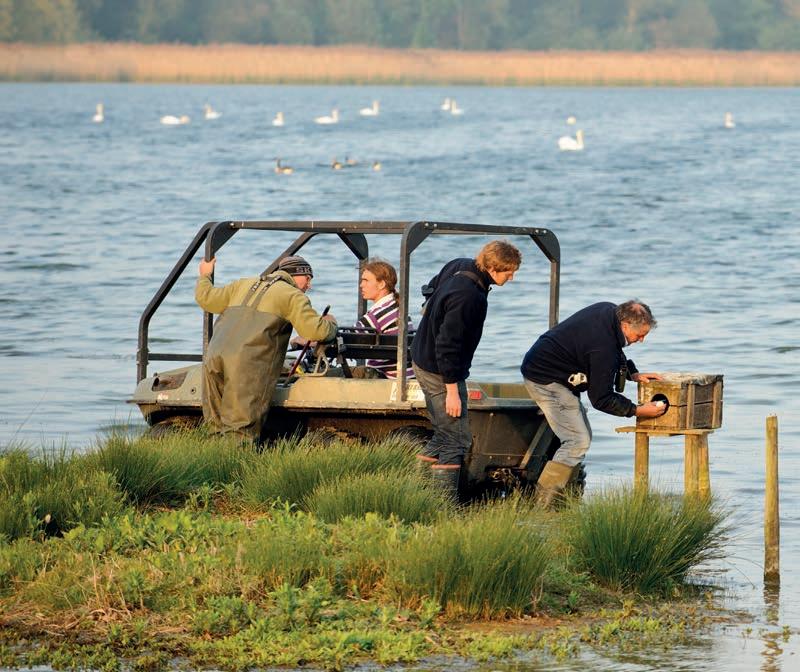
Tim checking a nesting island.
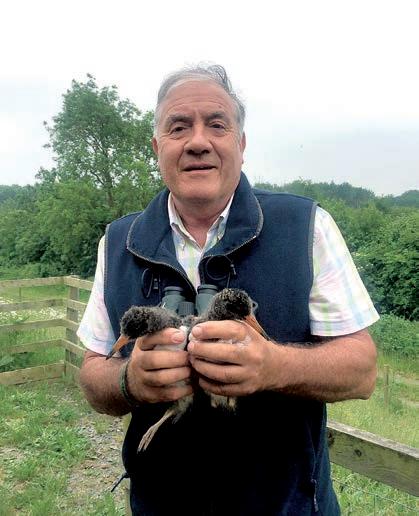
Tim ringing oystercatcher chicks.














Rutland Water may be a relatively young landscape but already it feels timeless. Created just 50 years ago, the reservoir and nature reserve have evolved into one of the most important wildlife sites in the region, and a place that means a great deal to locals and visitors alike. As both a staff member and local resident with a young family, I see every day how Rutland Water supports wildlife, people and the wider landscape. Looking ahead to the next 50 years, I am more optimistic than ever about its future.

Centre and a level of resourcing that many sites simply don’t have, we can focus all of our energy on improving wildlife habitats rather than ba ling logistics. That efficiency translates directly into be er outcomes for wildlife.





One of Rutland Water’s greatest strengths is that it allows us to be proactive. Thanks to purpose-built facilities such as the Volunteer Training






















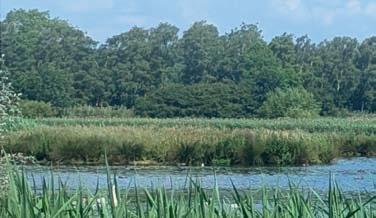
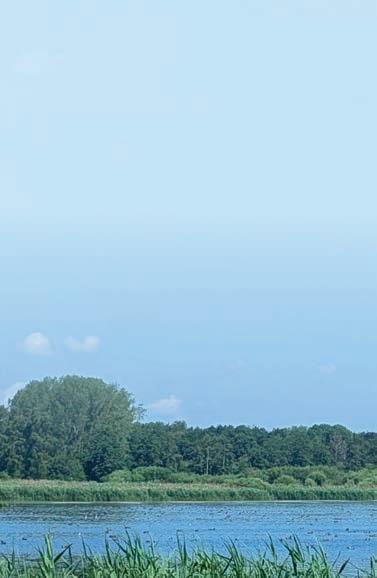
Rutland Water was created from scratch and in just half a century has evolved into a mosaic of habitats: open water, reedbeds, lagoons, grassland, scrub, new woodland and ancient woodland, all woven together. The sheer density and diversity of species here is remarkable, and today it has become one of the best places for some distance to experience a full day of birding, with winter visitors, summer breeders and passage migrants all found here.
Ageing gracefully

OUR NATURAL TREASURE TROVE



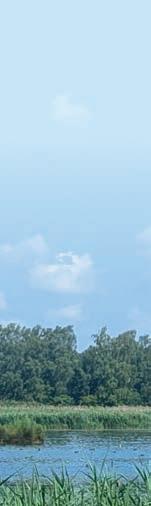
richer as soils and plant communities
What excites me most about the future is watching these habitats continue to mature. Over the coming decades, reedbeds will expand and change, woodlands will develop greater structure, and grasslands will become richer as soils and plant communities evolve. With maturity comes






Rutland Water has grown into a thriving wildlife stronghold. Yet with thoughtful management and smart conservation, its best years are still to come, says Senior Reserves O cer Paul Trevor.
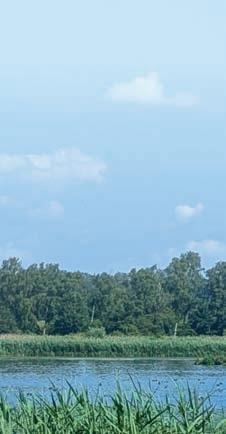
complexity, and with complexity comes opportunity for more specialist species. Our role will be to guide that process carefully, evolving our management as the landscape changes. For example, some of the reedbeds planted decades ago are now so well established that they require
What excites me most about the future is watching these habitats continue to mature.

new approaches and new tools to manage them effectively. This is a good problem to have – it is a sign of their success.
Woodland management is a great example of how we can think long-term. Unlike many established woods, our newer woodlands have been managed with wildlife in mind from day one. We can thin trees at the right pace, create standing deadwood and even veteranise trees early on – the process of deliberately damaging or wounding young trees to develop microhabitats typical of older trees for the likes of fungi, insects and birds.

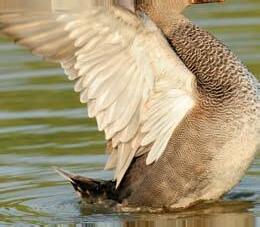
Gadwall

Rather than aiming for a single outcome, we create a mosaic: open canopy areas rich in ground flora, denser patches for shelter, and transitional edges where woodland grades into meadow or scrub. These ecotones – the blurred boundaries between habitats – are incredibly important for wildlife, and I would expect to see more of them develop naturally across the reserve.
Le ing nature lead
That idea of interwoven habitats reflects a broader shi towards more nature-led processes. This isn’t about abandoning management but allowing natural dynamics to play a greater role. Meadows spilling into woodland, reedbeds grading into wet woodland then drier ground –these transitions make landscapes more resilient and more alive.

Rutland Water can act as a nature-rich core from which wildlife spreads out into the wider countryside, supporting nature recovery far beyond the reserve’s boundary. We are already seeing this happen. The return of ospreys is a powerful symbol of what is possible; Rutland Water is now an osprey stronghold. In many cases, it’s not so much about recolonisation as Rutland Water acting as a reservoir of species, boosting populations across the region. As habitats here continue to thrive, they can seed the wider landscape with life.
People too
People are also a vital part of this future. Rutland Water offers so much for us, from walking and cycling to fishing, sailing and, of course, wildlife watching. One of our ambitions over the coming year is to create an even more immersive visitor experience, allowing people to feel closer to nature while still protecting sensitive areas. Where we’ve done this already, for example at areas like Fran’s

Pond and along new boardwalks, the response has been incredibly positive. More carefully placed hides, additional viewing platforms and new walking routes will help people further connect with wildlife and that connection will turn visitors into advocates for nature. Technology will also play an increasing role in how we manage and understand the reserve. We are already using drones for surveys, experimenting with AIassisted bird counts, and introducing GPS ca le collars that will allow us to manage grazing more flexibly and responsively. Thermal imaging cameras are another technology we might be able to deploy to help us monitor wildlife with greater accuracy and less disturbance. These tools won’t replace traditional field skills, but they will enhance them, helping us make be er decisions for habitats and species.
Greener future
Alongside this, we are working to make our operations ever more sustainable. Projects like Rutland Recharged are helping us reduce carbon emissions, generate energy on site and make be er use of the resources we already have.
As the nature reserve itself continues to mature, it will also deliver more in terms of ecosystem services: cleaner water, carbon storage, flood mitigation, alongside huge benefits for mental and physical wellbeing. These services are o en overlooked, but they are fundamental to the value of places like Rutland Water.


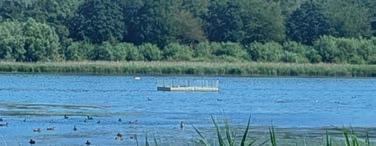
Ultimately, our vision for Rutland Water is one of abundance. That means more wildlife, richer habitats and deeper connections between people and nature. The challenges facing the natural world are real, but so is the opportunity. With careful management, long-term thinking and the passion of staff, volunteers and supporters, Rutland Water can continue to be a beacon for nature recovery.
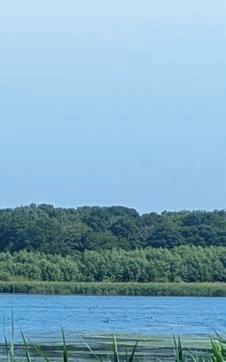
Habitat such as reedbeds will continue to expand and change.




PAUL TREVOR
RUTLAND
ROD BAKER
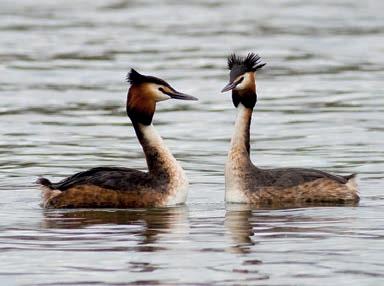
Great crested grebes

Birder’s paradise

Take
a gentle, self-guided walk around
Rutland Water
Nature Reserve with Reserve O cer Matt Heaver to admire a dizzying
array of birds.
Rutland Water Nature Reserve is a fantastic place to visit at any time of year. There is always something to see, from thousands of wildfowl in winter to our breeding birds, including ospreys, in summer. Then there are the migratory species passing through in spring and autumn.
There are two visitor centres to choose from for your visit. Lyndon Visitor Centre is an ideal place to head out from to watch our breeding pair of ospreys at Manton Bay. For this walk though, we will focus on the large reserve near Egleton village, starting from the Anglian Water Birdwatching Centre (AWBC). The centre enjoys panoramic views across Lagoon 1 in addition to facilities such as a well-stocked shop, snacks, hot drinks and toilets. Maps of the nature reserve are available to help you make the most of your visit.
Next to AWBC is Tree Sparrow Hide 1 , which is a great spot to sit awhile and watch the birds flocking to the wellstocked feeders. You can get very close views of familiar species such as chaffinch, robin and blue tits here.
Now head through the gate to the north, passing through the Egleton
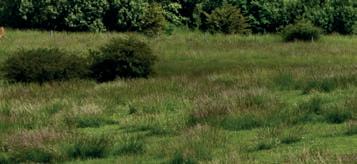
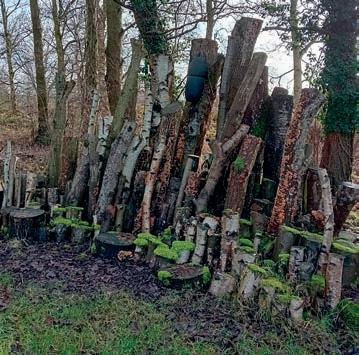
meadows 2 . In spring, these traditionally manged hay meadows are awash with colour from a variety of wildflowers. Further along, you will come across our brand-new beetle bank (look for the giant lesser stag beetle carving). These upright logs are slowly ro ing underground, providing a home for all manner of invertebrates.
Head along the summer woodland trail next and pop into Grebe Hide 3 to look across to our sand martin bank. At this time of year there are hundreds of sand martins over Lagoon 2, collecting insects to feed to their young in the artificial nesting bank. Hundreds of chicks fledge



from these nests every year. The lagoon may also hold breeding mute swans and gadwall.
At the end of the summer trail, go straight through the gate and on into Sharples Meadow to be met with the humming of insects and the flu ering of bu erflies. This area has been sown with a special wildflower mix which ensures there are flowers for pollinators from April all the way through to September. Take the ramp directly across from the gate up to Sandpiper Hide 4 and look across Lagoon 4. Here you might see our breeding avocets, along with numerous passage waders such as whimbrel, sanderling, dunlin and ringed plover. In some years, osprey are regular visitors to this lagoon too.
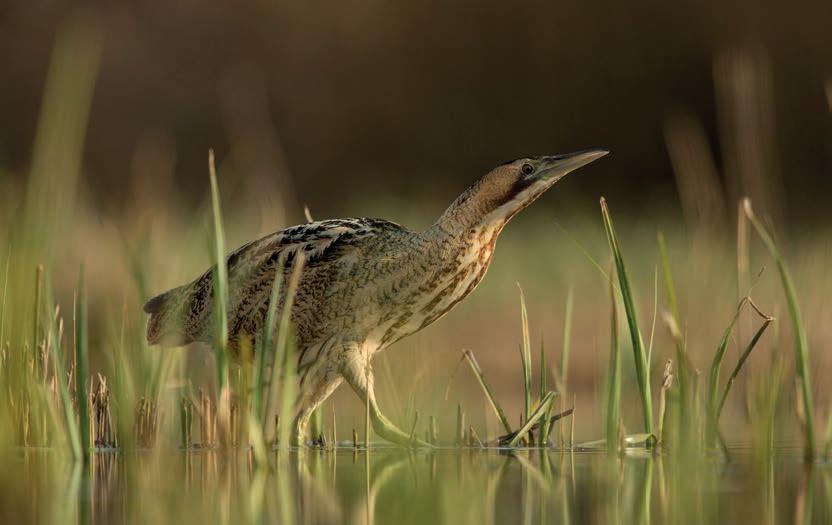
Head back out from the hide and follow the path straight around to the north. A er 120m, go through the small pedestrian gate on your right and a further 80m takes you to Shoveler Hide 5 , overlooking Lagoon 3. Look across the reedbed where a marsh harrier may be hunting and, if you are really lucky, you may spot the elusive bi ern. Reed and sedge warblers will be fli ing about in the reeds in front of the hide. The main water will be home to great white
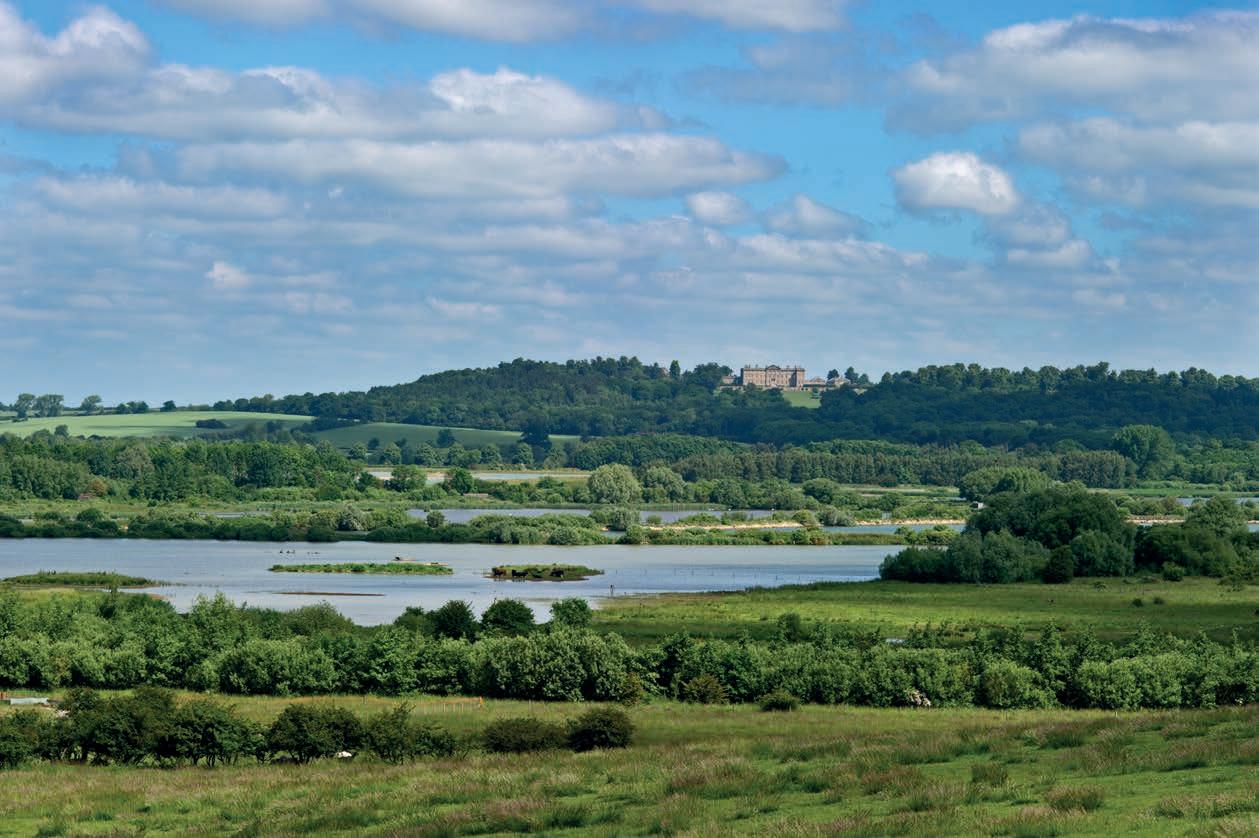
View over the nature reserve towards Burley House.
Bug’s eye view: The beetle bank.
egrets and a colony of common terns on the ra s in front of you. May is also an excellent time to look for passage black and Arctic terns.
A short walk further down the path leads to Smew Hide 6 , which again overlooks Lagoon 2. Keep an eye out for a flash of electric blue that lets you know a kingfisher is about. If the water levels are low, look for common and green sandpipers along the muddy edges. Now retrace your steps, popping into any hides you pass on the way back to the AWBC.
Once you are back at the AWBC, take a chance to grab a snack and a cuppa then head south through the pedestrian gate and follow the path for 420m where you will come across the peaceful Fran’s Pond 7 with a boardwalk and bench from which to view the abundance of life. This is the best place on the reserve to admire dragonflies and damselflies in summer, with more than 20 species recorded. Head south for a further 250m and then turn le through the small pedestrian gate. A short stroll further along leads to Snipe Hide 8 , overlooking the wet meadow. Here you have a superb view overlooking lagoons and towards Burley House on the hillside. Look out for red kites and buzzards soaring over the reserve and, from May, up to 10 hobby can be seen hawking for insects; marvel at their extreme acrobatics and aerial agility!
From Snipe Hide, continue along the path to the east and keep right to approach Tern Hide 9 . Behind the hide is a new wildflower meadow that is in the early stages of becoming established. From the hide, overlooking Lagoon 6, you may see nesting oystercatcher, lapwing and redshank.








Continue heading around the path and turn right to follow the edge of Lagoon 6 and you will see the 360 Hide 10 directly in front of you, which looks over Lagoon 5. The hedges here are home to a variety of breeding warblers such as blackcap, willow warbler, chiffchaff and lesser whitethroat. More waterbirds will be viewable from the hide here and li le egret and grey heron may also be seen. Kestrels may be hovering in the wind over the adjacent fields too, and a cuckoo might alert you to its presence with its song. From the 360 Hide, turn le at the bo om of the ramp and head back to the AWBC.
The visitor centre, car park and trails are on the western side of Rutland Water, near the village of Egleton. Assistance dogs only please.
Nearest postcode: LE15 8BT
Map ref: SK 878 075
what3words: stamp.newsprint.ditching
Parking: Please use the car park
Size: 293 ha
To access the nature reserve, permits can be purchased at either visitor centre during opening hours. Members bene t from a 10% discount and may also buy an exclusive annual permit (please remember to quote your membership number upon arrival).






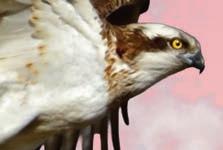
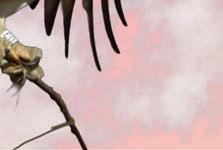



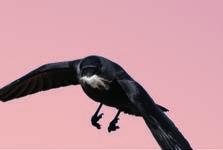





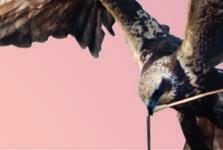


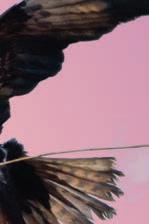




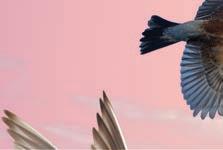

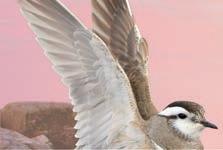









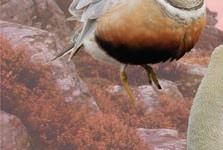


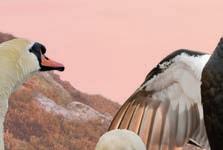
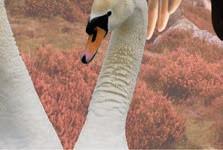
An ode to lovebirds across the British Isles and their rituals of courtship.























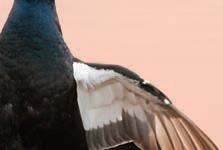
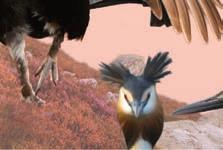











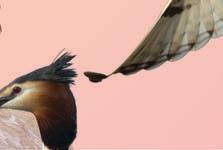

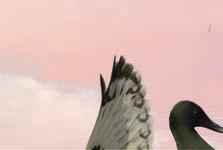

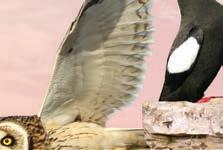

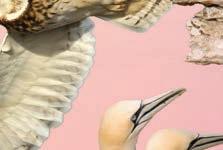










Jenny Shelton, Senior Media Officer at The Wildlife Trusts, shares her life-long passion and fully-fledged fascination for birds.
Jane Austen, one of our great English writers and an authority on ma ers of the heart, once observed that, in courtship, ‘the man has the advantage of choice, woman only the power of refusal’.
The same can be said of the bird kingdom. In spring, birds – from mighty ospreys to garden robins – turn their sights to the business of breeding. Much like in Jane Austen’s time, the rules of romance are strictly observed. A female might find herself courted in a number of ways: a serenade, a dance, or the giving of a gi , like the kingfisher’s delicate presentation of a fish. Then, once the male has declared his intentions, it’s up to her to accept or refuse.
I once watched a male osprey return to a nest in southern England, where these birds had once vanished from the landscape. He had flown ahead of his mate from West Africa to claim their territory and awaited her arrival. When she appeared, he wooed her with gi s of sticks and shiny fish until she seemed satisfied with his devotion.
Courting birds o en use visual cues, with more glamorous males coming out on top. The extravagance of the peacock’s tail, which offers li le protection from predators, was evidence to Darwin that it must therefore be appealing to the female. Many birds can also see on the ultraviolet spectrum, which makes some colours glow vividly – like the blue of a blue tit’s crown (the brighter the be er).
Along with gi -giving and looking gorgeous, another route to a female’s heart is through performance – be
it an impressive vocal range or elaborate dance.
I was creeping through a thicket one day in early spring when a sound of such richness exploded from the thorny branches. The nightingale’s song is unmistakable: a heart-piercing performance of different sounds, hi ing notes both high and low in a combination of complex phrases. It’s easy to appreciate how a bird with such vocal abilities must be in tip-top breeding condition. Sadly, nightingale numbers have plummeted by 90% in the UK in the last 50 years.
My final focus brings us back to the ballroom, where all the best romances play out from Persuasion to Grease Now’s the time to watch for the alluring dance of the great-crested grebe. What begins with tentative head-shaking and bill-dipping builds to the pair’s wonderful weed dance.
But there’s one bird that outperforms them all with an aerial ballet that few get to witness: the hen harrier. On a windswept hill somewhere, right now, a silvery male will be twisting and turning through the air, its wings opening and folding, its body rolling as it climbs and dives, cha ering in an urgent a empt to charm a female hidden in the heather. If he wins her heart, he wins the chance to pass on his genes.
So, while Austen may have lamented a lack of female agency, had she looked to her garden finches or the singing starling, she might have been encouraged to find that female choice, in fact, holds the power to perpetuate life itself.

to see 3
Lyndon Visitor Centre
Leicestershire and Rutland
Wildlife Trust
Visit the south shore of Rutland Water to admire the breathtaking osprey, a stunning sh eating ird of prey. Depending on when you visit you might see the ospreys mating, sitting on their eggs, catching sh, or perched on the poles.
Location: Manton, Oakham, LE15 8RN
Fingringhoe Wick
Essex Wildlife Trust
Experience the magical nightingale chorus on a guided walk at Fingringhoe Wick in spring, where up to males ll the e ening air with their unforgetta le, melodic song.
Location: Fingringhoe, CO5 7DN
Tring Reservoirs
Hertfordshire Wildlife Trust
Tring reservoirs are known as one of the est ird watching spots in the south of ngland. itness the passion of the great crested gre e courtship dance here in spring.
Location: Tring, HP23 4PA






OGLOW SHOW


Summer surveys are helping to save a truly special insect, as Senior Species and Recording O cer Tim Sexton explains.

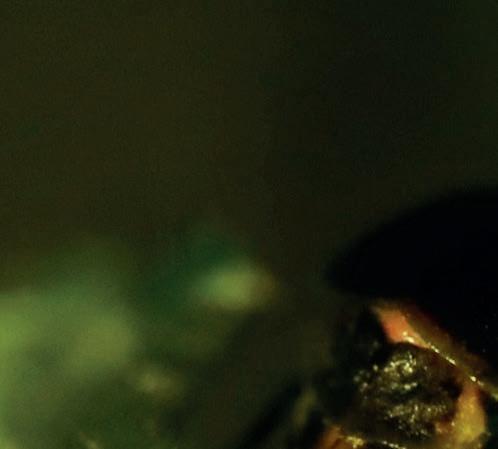
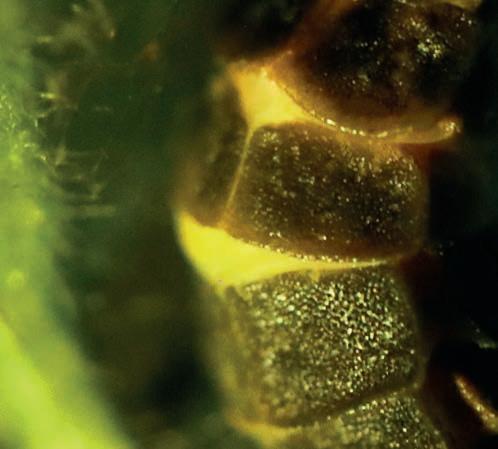
nce a common sight across much of the country, the so , magical light of the glow-worm is now increasingly rare. These enchanting insects, whose wingless females emit a gentle green glow to a ract mates, have seen steep declines due to habitat loss, pesticide use and increasing light pollution.
Since 2001, glow-worm populations have dropped by as much as three-quarters in some parts of Britain, particularly in the south. As their habitats become more fragmented, and with females unable to fly, many glow-worm colonies have become geographically isolated and vulnerable. Yet surprisingly, despite these recent large declines, glow-worms still aren’t legally protected.
Glimmers of hope Rutland, however, remains something of a stronghold. Rich in limestone grasslands and ancient woodland, the county has long supported several
healthy glow-worm colonies. Stories passed down from the Second World War tell of verges twinkling in the dark countryside, their glow unchallenged by modern streetlights.
Formal monitoring of glow-worms in the county began in the 1990s, led by Linda Worral and the Rutland Natural History Society. Today, five key sites still host large numbers of these remarkable creatures: Burley Wood, Ke on Quarry, Barrowden Verges, Essendine Verges, and Pickworth Woods.

As a result, the Local Nature Recovery Strategy for Leicestershire and Rutland has included glow-worms as a priority species, which means they should now benefit from targeted actions, enhanced habitat


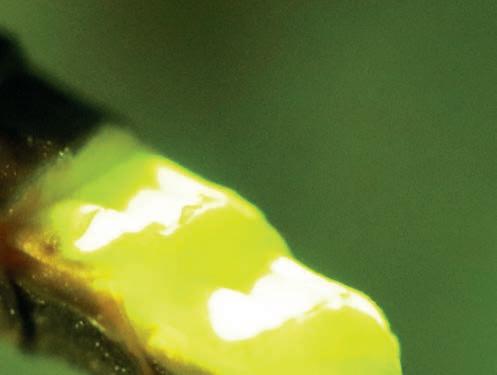
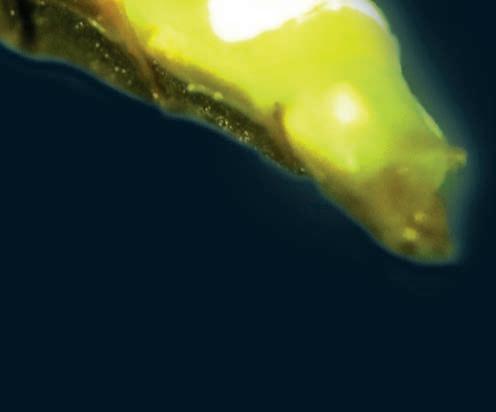
Glow-worm at Burley Wood.



GLOW-WORM FACTFILE



Length: 15-25mm


Habitat: Grasslands, hedgerows, woodland edges
Diet: Slugs and snails




Two male suitors on a glowing female.

Lifespan: up to 3 years




Eggs laid: 50 to 200 per female







management and specific consideration in the planning process.
Leicestershire and Rutland Wildlife Trust is actively looking to work with local partners to connect habitats to benefit our glow-worm populations. In 2023, public interest in glow-worms was reignited thanks to a new conservation project developed by the Trust called Lite-Lines. The initiative, aimed at enhancing local roadside verges and grasslands to support glow-worm recovery, launched a citizen science recording effort that summer. Volunteers across both counties confirmed that many historical sites were still viable and even discovered two new populations in Leicestershire.
Illuminating results
Building on this momentum, the summer of 2024 saw more detailed weekly surveys at Rutland’s five key sites. Carried out by Wildlife Trust staff, volunteers and members of the Rutland Natural History Society, the surveys spanned the prime ‘glowing season’ in June and July. In total, 465 glow-worms were recorded – an encouraging result.
The 2025 survey season saw record counts at Burley Wood and Ke on Quarry, perhaps helped along by the warm start to spring and early summer. Nearly 600 glow-worms were counted across the five sites in Rutland. For the first time, artificial lures were used to monitor populations of male glow-worms alongside the glowing females. These proved very effective at Burley Wood, with double the number of males to females discovered there, though worryingly fewer males than females likely at Ke on, proving there is much more work to be done to ensure the glow-worm’s future in the county.
Beetle or worm?
Glow-worms, despite their name, are beetles. Two species are found in the UK, although the most common (and the species found in Rutland) is the common glow-worm. Their life begins as tiny eggs laid in sheltered grassland or woodland habitats.
A er hatching, the larvae spend up to three years living on the ground, feeding mainly on snails and slugs. They use their sharp mandibles to inject a paralysing fluid into their prey – a surprising feat for such small creatures!
A er this long juvenile stage, they pupate and transform into adults. The adult phase is short,

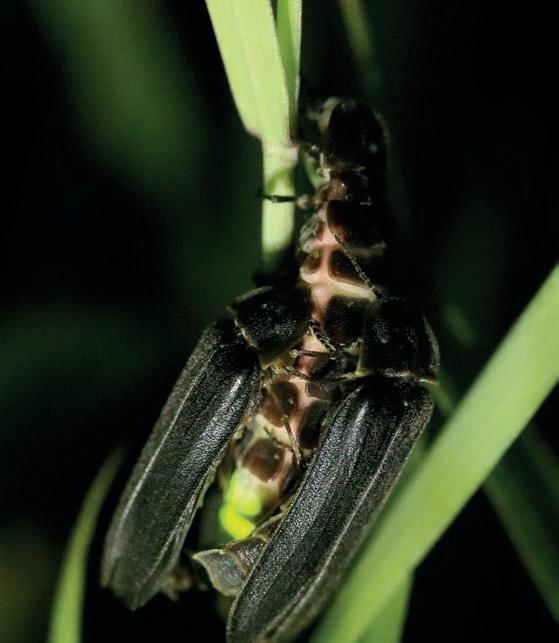
lasting only two to three weeks in summer. During this critical time, the flightless females glow to a ract males flying overhead to mate with. The females start to glow in late May or early June with the peak of activity in the first two weeks of July.
Like most bioluminescent insects, it is a chemical reaction that causes the light, or bioluminescence. In the glow-worm a molecule called luciferin combines with oxygen to create a high-energy intermediate called dioxetanone. As this then decomposes it produces the molecule oxyluciferin, which emits light. Unlike fireflies, glow-worms can’t easily regulate the supply of oxygen, so they can’t flash their lights on and off, opting instead for a more steady, continuous glow of light.
By mid-August the number of glowing females starts to diminish, although glowing larvae can o en be seen well into September. A er reproducing, the females lay between 50 and 200 eggs. Both sexes die shortly a er mating, leaving behind the next generation to continue the cycle.
Brighter outlook
Plans are already underway for continued monitoring this year, with volunteers from the Rutland Natural History Society once again stepping up to help alongside staff from the Trust. As part of wider efforts to restore wildflower-rich grasslands across the county, these surveys not only provide vital data to support species recovery but also reconnect us with one of our most quietly spectacular summer creatures.
So, if you’re out walking on a warm July evening, keep your eyes peeled – you might just spot one of Leicestershire and Rutland’s rarest and most magical creatures twinkling in the grass.
Join us on a special glow-worm safari at Ketton Quarry on 2nd or 9th July at 10pm. Full details on page 34.



MY WILD LIFE
Our fabulous Trainee Reserves O cers

“I can’t change the world, but I can at least try and make the li le patch of the world I’m in be er”
Our Trainee Reserves O cer scheme has helped to launch many successful careers in the conservation sector. Wendy Tobitt asks current and past trainees what the scheme means to them.
Leicestershire and Rutland Wildlife Trust’s Trainee Reserves Officer (TRO) scheme is a core part of the Trust’s operations. Since the scheme started in 2006, 70 young people have gained practical skills and valuable experience as TROs to launch their careers.
Senior Reserves Officer Andy Neilson runs the scheme and is a graduate himself: “I’ve seen first-hand the benefits it brings and am quite certain that without it I would not be in the position I am now, helping to look a er the next generation of trainees.”
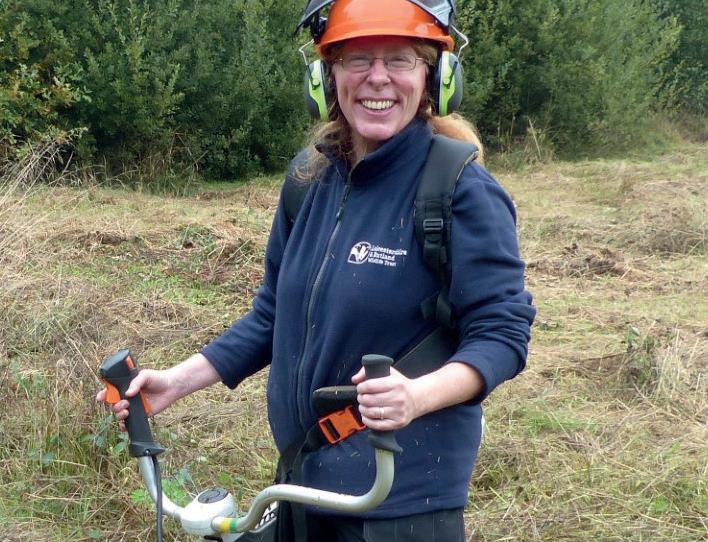
Helen Case is one of the current TROs. She studied Countryside and Environmental Management before joining LRWT in September.
“I have a firm commitment to making things be er, both for nature and people. I can’t change the world, but I can at least try and make the li le patch of the world I’m in be er. With the Wildlife Trust, I know we are all on the same page with the same goal in mind and that ‘like mind’ is really powerful.
“The highlight so far is working

with our lovely volunteers; it really is a community of everyone trying to help look a er and repair nature.
“I love working in woodlands, they are really where my heart is. Charnwood Lodge is just awesome. It has everything you could want: rugged landscape, heathland, woods, water, old buildings and history. I feel I could spend an eternity exploring and learning there!”







Seb Elwood was a TRO in 2019-20. He now manages the Species Survival Project at Dorset Wildlife Trust.
“The experience I gained has underpinned my career, providing an excellent base for growth into the conservation sector. The scheme was the perfect opportunity to leave the retail job I was working in post-university. Having built on the skills learnt during my traineeship I have worked for environmental NGOs, managed rewilding sites and multi-site projects, and continue to learn every day.
Helena Bolingbroke is now a ranger with the National Trust for Scotland, with fond memories of her time as a TRO in 2020-21.
“I had a great time working for LRWT. It’s a great stepping stone into a career in wildlife conservation; I would definitely recommend it.
“Some memorable moments include spo ing my first purple emperor bu erfly at Rutland Water and another at Coalville Meadows, a green hairstreak at Charnwood Lodge and
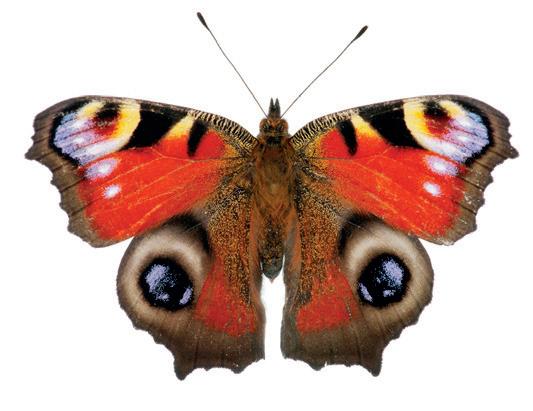
dark green fritillary at Bloody Oaks Quarry. Bracken pulling at Timberwood Hill was therapeutic and rewarding, especially when you’d catch up with the Wednesday Volunteers.
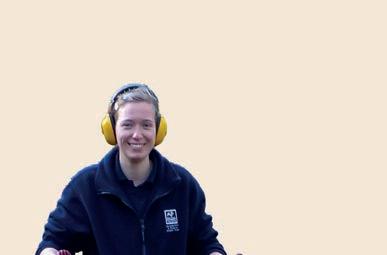


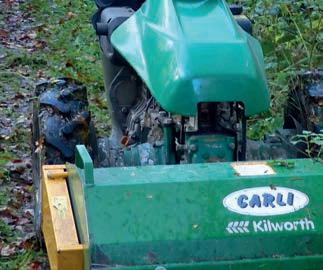

“The natural world and the wildlife within it are increasingly under pressure from human threats. It is our responsibility to help minimise and begin repairing the damage to the environment. Being a TRO arms you with the skills to begin protecting and restoring UK habitats. Without the TRO position, I wouldn’t have gained the well-rounded experience and practical skills I needed to become a Ranger.”

“It’s a great stepping stone into a career in wildlife conservation”


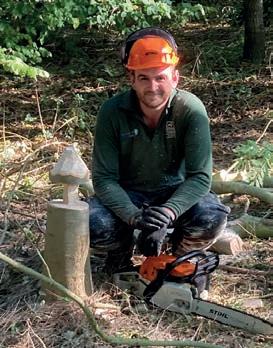
Andy Neilson, Senior Reserves O cer, recalls his year as a TRO, and highlights the scheme’s achievements.
“Quite simply it was one of the best years of my life back in 2012 when I spent a year in the wonderful surrounds of Rutland Water and began my career as a conservationist, surrounded by wonderful colleagues, volunteers and, of course, the wildlife.
“Ge ing to grips with all manner of reserve work: wrangling ca le, fixing fences, coppicing woodlands, leading guided walks, manning visitor centres, surveying wildlife or splashing around in muddy ditches, the trainees get a thorough insight into managing nature reserves!
“Traineeships offer a structured pathway into the environmental sector, providing clear development plans and mentorship, giving hands-on experience, and equipping individuals with formal qualifications needed for entry-level positions.
“If you’re unsure whether to apply or not, I would wholeheartedly encourage you to put in an application, ask questions on what the experience will be like, and anything else to make the process more comfortable. There will always be support there to help any situation and guide you into your career.”

“TROs contributed to great achievements in the last 20 years. They’ve ringed osprey chicks and undertaken overnight nest monitoring, helped establish new nature reserves and worked with landowners to encourage wildlife away from our reserves.


Fancy a career in conservation?
Learn more about our Trainee Reserves Officer scheme. Contact Andy Neilson for more information at info@lrwt.org.uk
“This year is an exciting time for our current crop of trainees: Helen, Josh and Ruth. During the coming year they will lead events to celebrate our triple anniversary and assist with rewilding schemes.”
Contact us if you or someone you know could feature in a future issue of Wild. We’re looking for inspiring stories from people like you!
Email info@lrwt.org.uk















and




Amphibianreptile network






LRecording reptile species is a key step towards their conservation. , Chair of the recently reestablished Leicestershire and Rutland Amphibian and Reptile Network tells us more.
eicestershire and Rutland are o en celebrated for their red kites, ancient woodlands and rich farmland wildlife. Less well known, but no less remarkable, is the quiet community of reptiles that inhabit the counties’ woodlands, grasslands and disused quarries.
Despite the absence of coastal dunes or extensive heathland, the region supports nine of Britain’s 13 native herpetofauna species – a notable diversity for an inland landscape. Four widespread reptiles occur here: adder, grass snake, slow worm and viviparous (common) lizard. The UK’s two rarest reptiles, smooth snake and sand lizard, remain confined to specialised habitats not found locally.
Of particular interest, and perhaps the jewel in the crown, is the adder. Whilst widespread across the country, this species is in general decline, mainly due to loss and fragmentation of habitat. In the Midland counties it is rare and


confined to a handful of sites. Locally there are two large populations, here and in the nearby Rockingham Forest area, and there are several smaller satellite populations which are considered extremely vulnerable. It is likely that at least some of these populations are remnants of previously much larger healthier populations.


On the menu
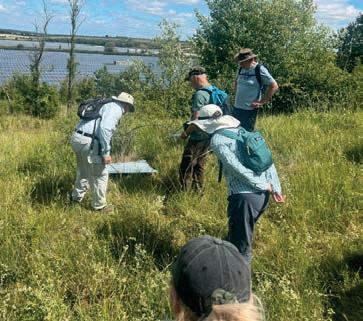
Grass snakes are strong swimmers, feeding primarily on amphibians and sometimes sh.
Reptile habitats


Reptiles depend on warmth and sunlight. They favour open, sunlit patches close to dense cover, enabling them to bask while remaining safe from predators. Woodland edges, hedgerows, rough grassland, scrub and even brownfield sites reclaimed by nature all provide this essential mosaic of sun and shelter. Water plays a particular role for grass snakes, which hunt along ponds, drainage ditches and wet margins rich in amphibians.
As autumn temperatures fall, reptiles seek out frost-free hibernation sites.

Volunteers gain new skills on the Ketton Quarry training day.

On the menu
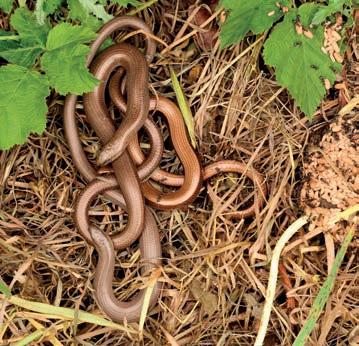
Slow worms predate slugs, snails and soft-bodied invertebrates.

Old mammal burrows, deep bracken banks, ro ing stumps, log piles and dry stone wall crevices offer the stable microclimates they require. These hibernacula are o en south facing and surrounded by thick vegetation, enabling safe entry and exit as the animals wait for spring.
During early spring, dependant on daytime temperatures and sunshine, reptiles emerge from their winter quarters and begin to bask. Sexually mature adults are focussed on mating, which can make them easier to find and observe.
Observing species
Observing reptiles requires patience and careful fieldcra . Slow, deliberate walking and watching a short distance ahead can reveal basking individuals before they slip into cover. A brief rustle may be the only sign of an animal’s presence but returning to the same spot
10 to 15 minutes later o en yields another opportunity.
Weather is critical: cool mornings with temperatures of around 10°C and rising, warm humid a ernoons, or the period following a summer rainstorm, can all be productive times to survey.


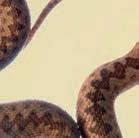




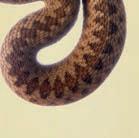
Accurate recording is essential for monitoring reptile populations. When in doubt, a photograph taken from over a metre away can usually confirm identification, while minimising disturbance. Date and grid reference are key data; sex and life stage are helpful, but not essential. Records can be passed to the Trust or recorded by individuals through recordpool.org.uk
Amphibian and Reptile Groups of the UK, or ARG-UK, is a charity commi ed to the conservation of our native amphibian and reptiles by supporting the work of a network of regional volunteer groups, of which Leicestershire & Rutland Amphibian and Reptile Network (L&R ARN) is one. L&R-ARN was re-established early in 2025 and works closely with neighbouring group, Northants-ARG.


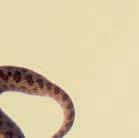
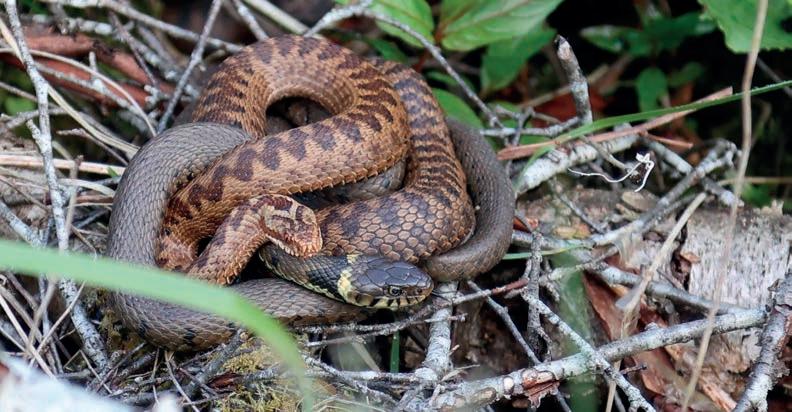
Twister: Grass snake and female adder basking together. Slow worms
Last summer, L&R ARN partnered with Leicestershire and Rutland Wildlife Trust to deliver a training day at Ke on Quarry Nature Reserve, combining indoor learning with practical field experience. Surveys at other nature reserves are planned, and new volunteers are encouraged to get involved.
On the menu
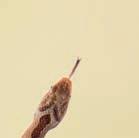
Adders prey mainly on small mammals and viviparous lizards; young adders take smaller prey including juvenile frogs.
SPOTTERS’ GUIDE


A stocky snake up to 70cm long with a bold zig zag dorsal pattern and a distinctive red eye with vertical pupil. Females give birth to brick red young in late



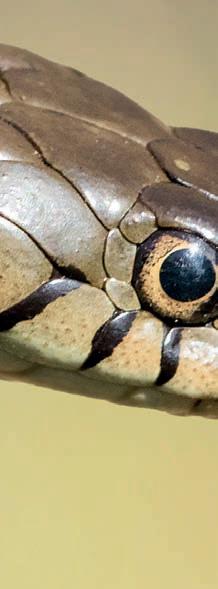
Grass snake: Britain’s longest native snake, with females reaching one metre in length. Olive brown or greenish with dark ank bars and a yellow or cream collar. Eggs are laid in compost or grass heaps.
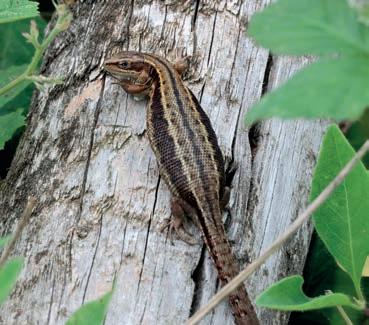
Viviparous lizard: Up to 15cm long, agile and often seen basking on logs or stones; gives birth to live young which are almost black.


Slow worm: A smooth, legless lizard up to 40cm, brown or grey, with females often showing a dark dorsal stripe. Juveniles are a stunning caramel colour with a distinct dorsal stripe. Slow worms frequently shelter under rocks and debris. Despite their common name slow worms can move quite quickly! summer. often stunning











Fancy taking part? Get in contact via the ARG at arg.org.uk/ get-involved/local-groups or for more on volunteering with the Trust head to lrwt.org.uk/volunteer

ALAN
Eleanor Johnston, Climate Change Manager at The Wildlife Trusts, introduces a new era of nature conservation, defined by extremes
F NATURE RESILIENT BY

ROM RECORD-BREAKING heatwaves to devastating floods, the impacts of climate change are no longer distant threats but everyday realities reshaping our landscapes and our lives.
Across the UK, The Wildlife Trusts are already helping nature adapt. We’re working on a national scale to build resilience, restore habitats and show the huge benefits of pu ing nature at the heart of climate adaptation, not just for wildlife, but for people too.
Take the Pevensey Levels in Sussex: a vast, low-lying area of grassland that has become increasingly dry due to climate change and water extraction. Sussex Wildlife Trust is revitalising this important wetland to hold more water again, helping to bring back the wading birds and waterfowl that would have once been in abundance.
When the Project Officer, Charlo e Pestell, visited the site in May last
year during an exceptionally dry spring she “knew things had gone well when it was still a complete necessity to wear wellies”. She described the “delight to walk onto the reserve, splashing along and marvelling at the big skies reflected in the new pools.”
At The Wildlife Trusts we regularly review progress and consider what we must do differently to prepare for the extreme and unpredictable weather that has become the norm. Our latest progress report, Resilient Nature, celebrates climate adaptation work and collaborations across the UK.
For many years, our work has been guided by the Lawton Principles –creating more, bigger, be er and joined up natural habitats. Now, we are building on these principles through more flexibility, more diversity and the ability to bounce back. We’re applying this to a wide range of habitats, helping wildlife and people adapt to the changing climate.
Peatlands
Across The Wildlife Trusts we’re restoring peatlands—when healthy, they absorb rainfall and release it slowly, helping to reduce flooding downstream. This work also supports rare wildlife too, including the whitefaced darter dragonfly. Thanks to Cumbria Wildlife Trust‘s extensive restoration of peatbogs at Drumburgh Moss, this dragonfly is on the rise.
Coastal
Sometimes, adapting to climate change means accepting that nature will have to change too. In 2013, a powerful tidal surge flooded Suffolk Wildlife Trust’s Hazel Wood Marshes Nature Reserve with saltwater. This meant that freshwater habitats and species were
lost, but now the reserve has been transformed. New saltmarsh is developing and with it new flora and fauna is flourishing.
Woodlands and wetlands
Derbyshire Wildlife Trust’s Derwent Living Forest project is creating wooded habitats and wetlands to connect the National Forest with the soon-to-be established Northern Forest. This living corridor will allow species to move more freely, adapt and survive as climate conditions shi .
Bringing adaptation home
Climate adaptation isn’t just about vast landscapes—it can begin in towns and our own gardens too. Every patch of green space can help wildlife move

between a mosaic of habitats, provide water, food, shelter and shade, and make our homes more resilient to extreme weather.
Let’s advocate for adaptation
Our weather is swinging between extremes—but we all have the power to help nature adapt. Whether it’s by supporting your local Wildlife Trust, creating a pond, or simply le ing your garden grow a li le wilder, every action counts.
Let’s challenge the idea of tidy, manicured gardens and instead embrace spaces full of life—messy, diverse and resilient. These are the places that will withstand drought, heavy rain and heatwaves, while providing sanctuary for beetles, bu erflies, birds and us too.
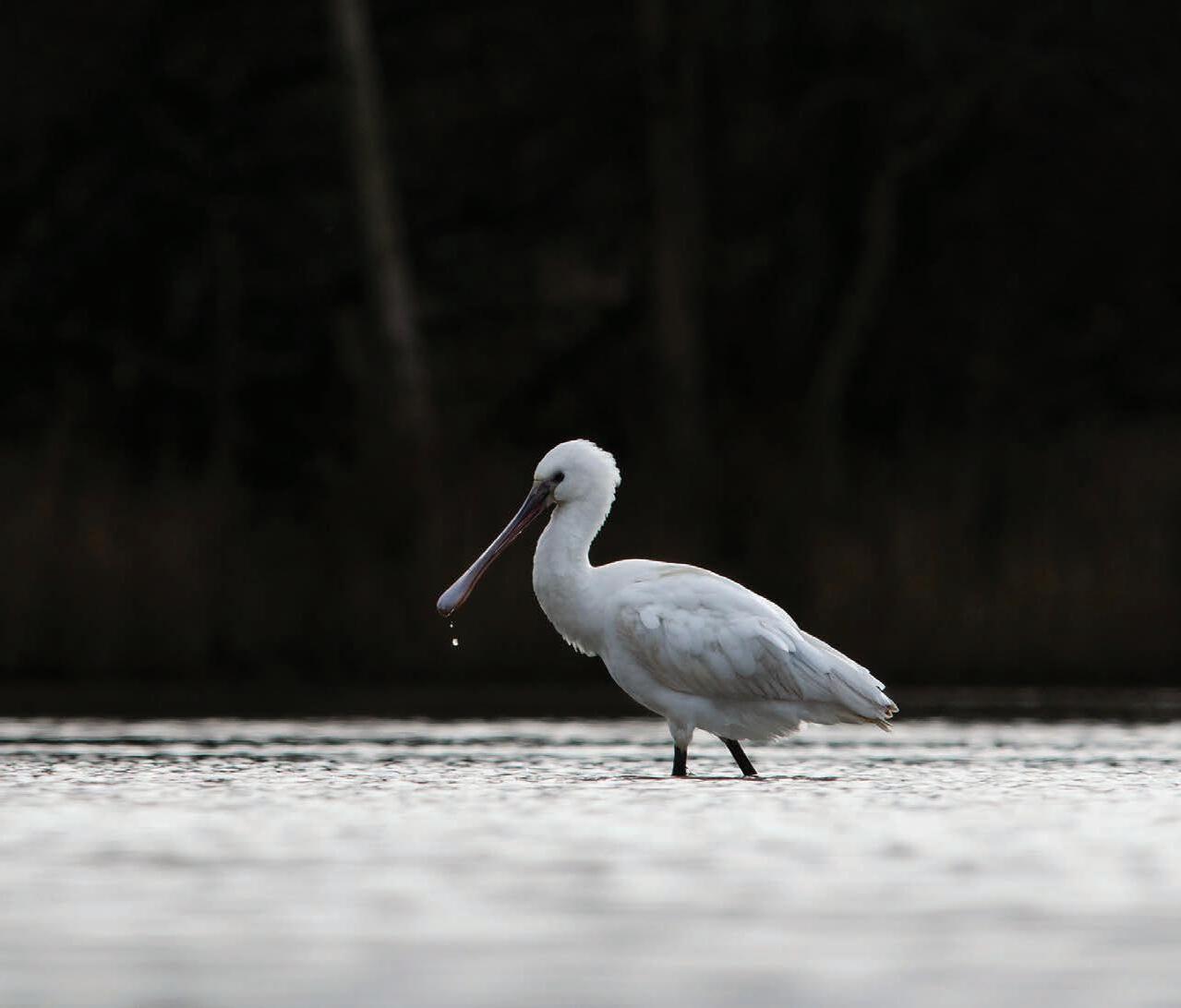
But beyond our own gardens, we must call for climate adaptation on a national scale—with nature at its heart. As extreme weather events become more frequent, it’s vital that our governments plan ahead to prioritise resilience. You can make a difference by writing to your MP, AS or MSP: share your experiences, highlight local climate challenges and urge them to support action that helps both nature and communities thrive.
When we give nature the space and time to adapt — whether in a vast forest, sprawling peatland, a saltmarsh or a small garden pond — nature has extraordinary resilience, can restore balance and protect us in return.
Climate-friendly gardening tips
With an estimated 24 million gardens in the UK, our gardens are a vast living landscape and can help us adapt to climate change.
Grow wild
Longer grass cools the soil and provides refuge for insects.
Dig Ponds
Stores water in storms and provides refuge during drought.
Why not pledge to take action for wildlife local to you: lrwt.org.uk/actions
Add logs
Deadwood shelters beetles, frogs and provides habitat for fungi.
Shades homes, cools air and locks up carbon.
Events & Activities
May – August 2026
Join an event and feed your wild side
Our full events programme can be found online. Check there for further details, including how to book, prices, times, and venue.
Anyone booked on an event will be notified of any changes. New events are constantly being added, so please check regularly for the latest updates: lrwt.org.uk/events
MAY
Halstead Hill Farm
Sat 2 May, 10am or 1.30pm start
May Day Bird Song
Join a fully funded farm walk with pauses to look, listen and learn about birds with agri-ecologist Prof Chris Stoate and regenerative farmer Dr Miriam Stoate.
Rutland Water Nature Reserve: Volunteer Training Centre
Sun 3 May, 5-8am
Dawn Chorus Walk
Join us on International Dawn Chorus Day for a walk around Rutland Water to hear the spectacular dawn chorus. Coffee, tea and pastries included. £20pp.
Cossington Meadows
Weds 6 May, 10am –12.30pm
Managing Cossington Meadows
Guided walk to enjoy the wildfowl and butterflies £15pp.

Rutland Water Nature Reserve: Anglian Water
Birdwatching Centre
Fri 8 May, 10am – 12.30pm
The Rutland Sea Dragon Special event to celebrate our triple anniversary year! Hear about the discovery of the Rutland Sea Dragon from Joe Davis, Head of Nature Reserves, who discovered the fossil, then join a guided walk to look over the area where it was discovered. £20pp (£15 for annual permit holders).
Rutland Water Nature Reserve: Anglian Water
Birdwatching Centre
Fri 8 May, 9.30am – 12.30pm
Guided Walk with Je
Jeff Davies has a wealth of knowledge making your walk enjoyable and informative. £10pp (£5 for annual permit holders).
Rutland Water Nature Reserve: Volunteer
Training Centre
Sat 9 and Sun 10 May, 9.30am – 4pm
Drystone Walling
Get to grips with the skills necessary to make your own drystone wall. £105pp.


North West Local Group
Sat 9 May, 6am or 8am start

Ringing Demonstration
Enjoy a bird ringing demonstration at Kelham Bridge Nature Reserve.
To book email katemoore123@yahoo.co.uk
Prior’s Coppice
Sun 10 May, 5-7am
Dawn Chorus Walk
Experience the outbreak of birdsong across the wood. £15pp.
Charnwood Local Group Weds 13 May, 7.30pm
Exploring Nature
Evening talk about Home Farm Nanpantan, exploring nature in Charnwood Forest.
Leicestershire & Rutland Bat Group
Sat 16 May, 9pm
Bat Walk
Search for bats on this walk at Watermead North. Meet at Meadow Lane Car Park, LE4 4FX. Booking essential.
Rutland Water Nature Reserve: Anglian Water Birdwatching Centre Fri 22 May, 9.30am – 12.30pm Guided Walk with Je See Fri 8 May for details.
Cossington Meadows Fri 29 May, 10am – 3pm Open Day at Cossington Meadows
Enjoy family fun, including bug hunts, trails and craft-making. Treats and refreshment available.
JUNE
Barn Owl Walks
Dates: 3 & 24 June, 8.30-10pm; 5 & 19 Aug, 7.45-9.15pm
Join us on one of these special Wild Walks at Cossington Meadows led by Chris Hill. Search for signs of the resident barn owls as they head out to hunt. £15pp.
Rutland Water Nature Reserve: Volunteer Training Centre Sat 6 and Sun 7 June, 9.30am – 4pm Drystone Walling See Sat 9 May for details.
Rutland Water Nature Reserve: Anglian Water Birdwatching Centre Fri 12 June, 9.30am – 12.30pm Guided Walk with Je See Fri 8 May for details.
Melton Mowbray Local Group
Sun 14 June, 11am – 4pm
Holwell Reserves Open Day
Learn more about the reserve with guided walks, refreshments and plant and book stalls.
Lea Meadows
Mon 15 June, 10-11am
Discover Lea Meadows Lea Meadows offers the chance of rare sightings on this members-only Wild Walk. £10pp.
Ulverscro
Mon 15 June, 12.30 – 2.30pm Orchids Walk


Holwell Reserves


Rutland Water Nature Reserve: Anglian Water
Birdwatching Centre Fri 15 May, 9.30am – 12.30pm
Guided Walk with Terry Join Terry for a morning stroll to discover some amazing wildlife.



Thurs 4 June, 10am – 1pm
The hidden life of ponds Morning workshop to discover the pond wildlife. Workshop suitable for adults. £15pp.
Leicestershire & Rutland Bat Group
Fri 5 and Sat 6 June, 9pm Dusk survey of soprano pipistrelles
Join the count at All Saint’s Church, LE15 8QS (Friday), then on Saturday at St Edmund’s Church, LE15 8AD.
Rutland Water Nature Reserve: Volunteer Training Centre
Admire the orchids of Herbert’s Meadow, including fragrant, bee and heath-spotted orchids. £15pp.
Rutland Water Nature Reserve: Anglian Water Birdwatching Centre Fri 19 June, 9.30am – 12.30pm Guided Walk with Je See Fri 8 May for details.
Halstead Hill Farm Sat 20 June, 10am or 1.30pm start

Sat 6 June, 10am or 1.30pm
New members welcome event Meet the team and discover more about the work of the Trust. Choice of two start times. Booking essential.
Solstice Stroll
Join a fully funded farm walk to celebrate the height of summer.
Rutland Water Nature Reserve: Anglian Water Birdwatching Centre Fri 26-Sun 28 June
Rutland Bioblitz
Join us for an incredible 50 hours of wildlife recording to celebrate 50 years of Rutland Water.
Rutland Water Nature Reserve: Anglian Water Birdwatching Centre Fri 26 June, 9.30am – 12.30pm


Guided Walk with Terry See Fri 15 May for details.

Leicestershire & Rutland Bat Group
Fri 26 and Sat 27 June, 9pm
Survey of soprano pipistrelles
Join the maternity roost count at All Saint’s Church, LE15 8QS (Friday), then on Saturday at St Edmund’s Church, LE15 8AD.
Holwell Reserves
Sat 27 June, 2pm Butter ies and Wild owers
Discover skippers, streaks and blues – orchids and wildflowers too. £12pp.
Rutland Local Group
Sun 28 June, 2-4pm Bloody Oaks Quarry Walk
Summer walk highlighting the history and wildlife of the reserve. No need to book. Park opposite the entrance to Grantham Lane.
JULY
Ke on Quarry
Thurs 2 July, 10pm Glow Worm Safari
Go on the lookout for glow worms. This special anniversary event is open to all. £19pp.
Rutland Water Nature Reserve: Anglian Water Birdwatching Centre Fri 3 July, 9.30am – 12.30pm Guided Walk with Je
See Fri 8 May for details.
Rutland Water Nature Reserve: Volunteer Training Centre Sat 4 and Sun 5 July, 9.30am – 4pm Drystone Walling
See Sat 9 May for details.

Ke on Quarry Thurs 9 July, 10pm Glow Worm Safari
See 2 July for details.
Cloud Wood Fri 10 July, 10am – 12.30pm Purple Emperors Walk
A chance to look for magnificently iridescent purple emperor butterflies. £15pp.
Rutland Water Nature Reserve: Anglian Water Birdwatching Centre Fri 17 July, 9.30am – 12.30pm
Guided Walk with Je
See Fri 8 May for details.


Osprey Cruises on Rutland Water Dates: May 23, 27 & 30; June 3, 6, 10, 17, 20 & 24; July 4, 8, 15, 18, 25 & 29; Aug 7 & 12.


Join us for our guided boat trip to see the ospreys at Rutland Water. Members of the team will be there to guide you throughout the trip, sharing details about the Rutland Ospreys. With luck, you will enjoy views of the birds diving for fish, making it a trip to remember.





EVENTS AND ACTIVITIES

Extra-special Celebration Osprey Cruises run on 7 and 12
Feanedock Woods
Fri 17 July, 9.15pm Bat Walk
Learn about bats from a local expert. Meet at Hanging Hill Farm car park, Moira. Booking essential. Email phil235471@googlemail.com
Triple Anniversary Celebration Evening Fri 17 July, 6-11pm
Join us for a three-course meal accompanied by talks from wildlife experts as we celebrate our triple anniversary. Tickets are just £45pp or £55 to include an optional donation to the Trust.
Rutland Water Nature Reserve: Volunteer Training Centre Sat 18 July, 9.15-11.30pm Moth Night
The focus of this year’s Moth Week is micro moths.
Cossington Meadows Fri 24 July, 10.30am – 1pm Land of the Dragons
Take a stroll to marvel at the jewelled dragonflies and damselflies. £15pp.
AUGUST

August, when we will be joined by Dr Tim Mackrill. Tim has a PhD on osprey migration and managed the Rutland Osprey Project for more than ten years. He will be providing his keen insights during these cruises.
Local groups


The 90-minute evening cruises leave from Whitwell Harbour on the north shore of Rutland Water (LE15 8BL) at 6pm. Adults £29, Under 16s £19.
Rutland Water Nature Reserve: Anglian Water
Birdwatching Centre
Fri 7 Aug, 9.30am – 12.30pm
Guided Walk with Je
See Fri 8 May for details.
Leicestershire & Rutland Bat Group
Fri 7 Aug, 8.45pm Bat Walk
Join a dusk bat walk around Thornton Reservoir.
Leicestershire & Rutland Bat Group Fri 14 Aug, 8.30pm Bat Walk
Take in the bats of Moira Furnace. Park on Furnace Lane.
Leicestershire & Rutland Bat Group
Sat 15 Aug, 8.30pm Bat Walk

Halstead Hill Farm Sat 1 Aug, 10am or 1.30pm start Grassland Habitats
Join a fully funded farm walk through different grassland.
Search for pipistrelles at Knighton Park. Car park off Palmerston Way.
Rutland Water Nature Reserve: Volunteer Training Centre
Sat 15 and Sun 16 Aug, 9.30am – 4pm
Drystone Walling
See Sat 9 May for details.
Leicestershire & Rutland Bat Group Fri 21 Aug, 8.15pm Bat Walk
Admire the bats of Dishley Pool.



Charnwood Local Group Indoor meetings: Woodhouse Eaves Village Hall, 50 Main St, Woodhouse Eaves, Loughborough, LE12 8RZ. Admission £3 members, £3.50 non-members, children free. Check website for walk events. Contact Kate Moore on 01509 891005, katemoore123@yahoo.co.uk
South Leicestershire Local Group Indoor meetings: The Village Hall, The Green, Great Bowden, LE16 7EU. Admission £4. Contact Bruce White on 07919 935496, bruceywhite@yahoo.co.uk
Melton Mowbray Local Group Indoor meetings: United Reformed Church, 2 Chapel St, Melton Mowbray, LE13 1LZ. Admission £2.50 members, £3 non-members. Contact Peter Dawson on 01664 852119, peter.dawson69@ntlworld.com
North West Local Group Indoor meetings: Ashby Methodist Church, 5 Burton Road, Ashby-de-la-Zouch, LE65 2LF. Admission £4. Contact Roger Collier on 07910 019158, colliereroger@outlook.com
Rutland Local Group
Indoor meetings: Volunteer Training Centre, off Oakham Road, Hambleton, LE15 8BP. Admission £2. Contact Becky Howard on 07908 252271
Leicestershire & Rutland
Badger Group For any enquiries contact Dr David Duckett on 0116 259 7231, david.p.duckett@ btinternet.com
Rutland Water Nature Reserve: Anglian Water
Birdwatching Centre
Fri 21 Aug, 9.30am – 12.30pm
Guided Walk with Je
See Fri 8 May for details.

Leicestershire & Rutland Bat Group
Walks are free to bat group members and £5 for others. Booking essential. Please email batevents@outlook.com






















RUTLAND SEA DRAGON! DISCOVER THE
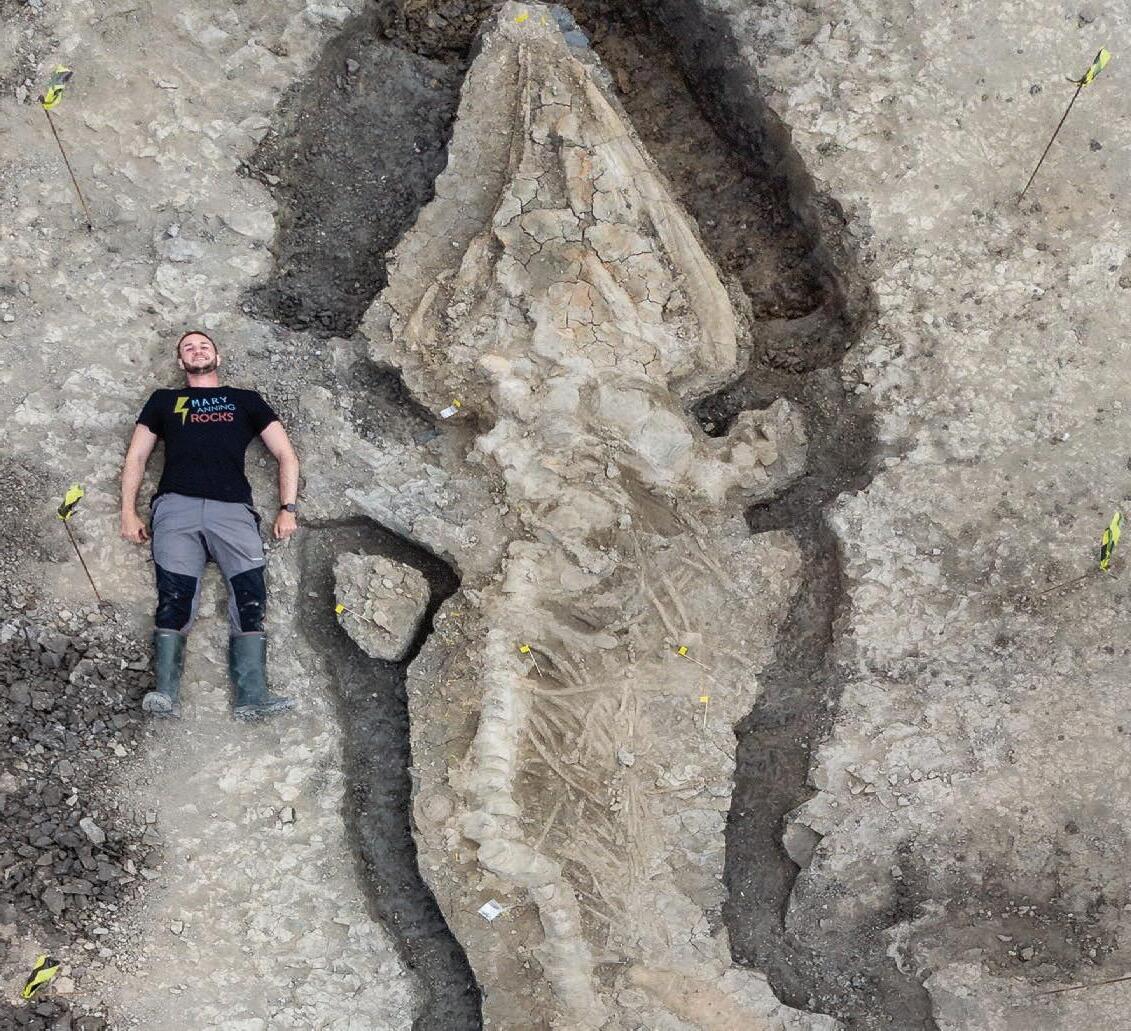







Join us for a truly special one-o talk and walk to celebrate our triple anniversary: 70 years of Leicestershire and Rutland Wildlife Trust, 50 years of Rutland Water Nature Reserve and 30 years of the Rutland Water ospreys.
Learn about the discovery of the Rutland Sea Dragon directly from Joe Davis, our Head of Nature Reserves who discovered the incredible 10m-long fossil – the largest and most complete ichthyosaur skeleton ever found in the UK.
Following the talk head out on a guided walk
Following the talk head out on a guided walk to Lagoon 4 to look over the area where it was discovered.
This not-to-be-missed event on Friday 8th May begins at 10am at the Anglian Water Birdwatching Centre, with the walk around the reserve starting at 11am and running till 12.30pm. Secure your place for just £20* per person or £15* if you are an annual Rutland Water Nature Reserve permit holder (*plus booking fee).
For more information or to book please visit lrwt.org.uk/events