THE EXTRAORDINARY Brahms’s
Third Symphony M A R C H 5 , 7 & 8 , 2 0 2 6
Turn to the Experts Who Care
At Cleveland Clinic, we understand that every patient’s story is different and every journey deserves exceptional care. That’s why we turn your unique needs into our dedicated focus. From routine check-ups to complex treatments to trusted second opinions, we’re here with expertise and compassion at every step along the way. Experience care centered around you.
P A G E 7
I N T R O D U C T I O N
PA G E 9
T H I S W E E K ’ S P R O G R A M
Brahms’s Third Symphony
Jakub Hrůša, conductor
P R O G R A M N O T E S :
Symphony No. 3 in F major, Op. 90 by Johannes Brahms • PA G E 1 0
Symphony No. 3 by Bohuslav Martinů • PA G E 1 3
Military Sinfonietta, Op. 11 by Vítězslava Kaprálová • PA G E 1 6
Conductor Biography • PA G E 2 1
P A G E 2 7
T C O S P O T L I G H T A Conversation with Michael Sachs
P A G E 3 1
I N T H E N E W S
Noteworthy happenings at The Cleveland Orchestra
P A G E 3 8
T H A N K Y O U
The community of supporters who bring the music to life



Create W here You Belong







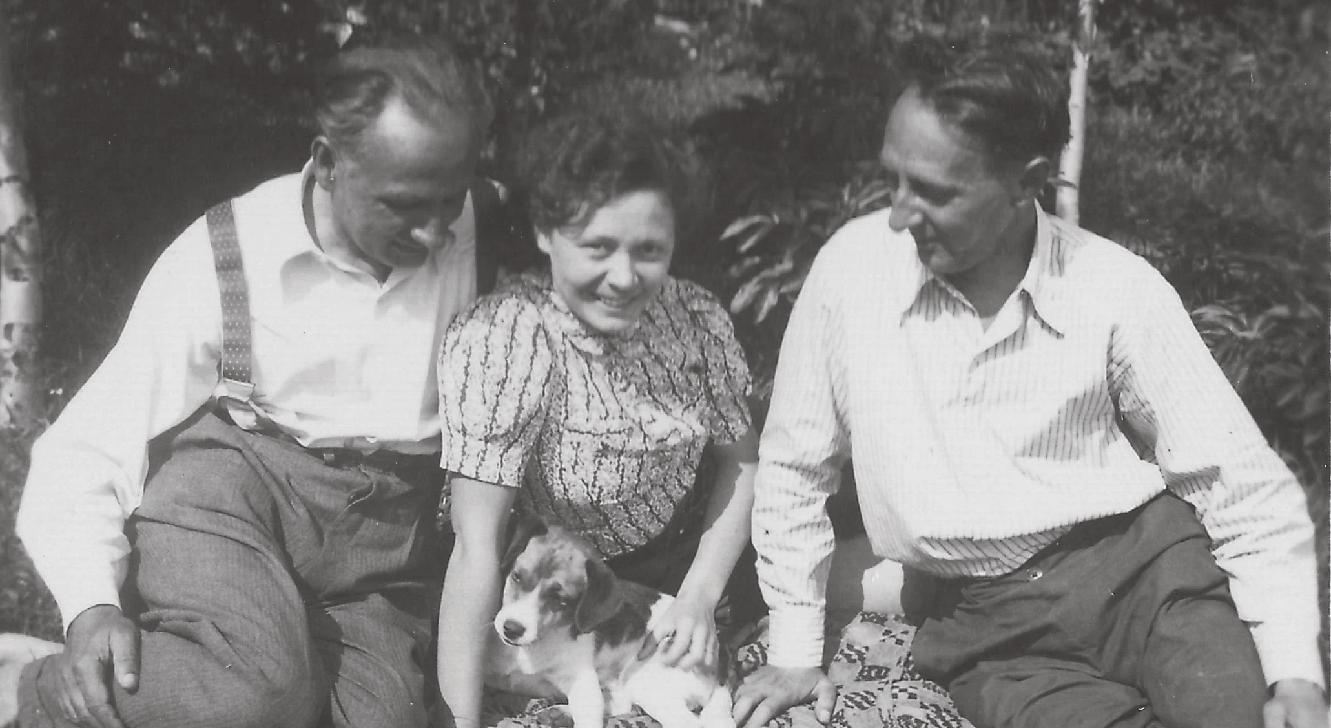
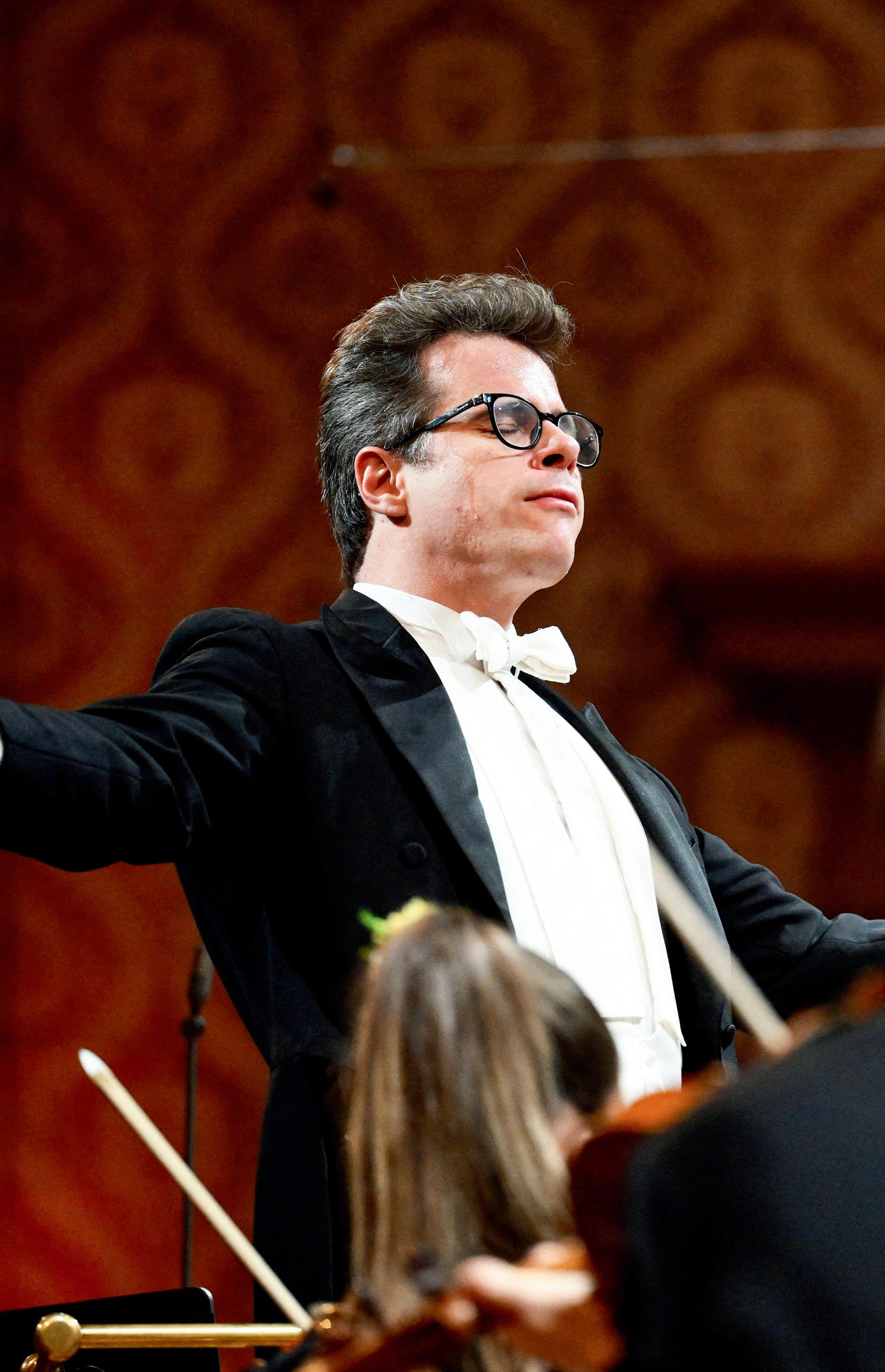
C Z E C H C O N D U C T O R Jakub Hrůša began his conducting career with the Bohuslav Martinů Philharmonic in the early 2000s Originally the Symphony Orchestra of Baťa National Enterprise, the orchestra was renamed in 1988 in honor of the celebrated Czech composer. The second half of tonight’s program features Hrůša conducting two works by his Czech compatriots a symphony by Bohuslav Martinů (right) and a sinfonietta by Vítězslava Kaprálová (center, with her father to the left).
Martinů spent the duration of World War II in the United States, where he composed his six symphonies The Second was, in fact, a commission by Cleveland’s Czech population and premiered by The Cleveland Orchestra in 1943. Martinů composed his Third Symphony, heard on this program, the following year and dedicated it to the Boston Symphony Orchestra, which premiered it in October 1945. Scholars speculate that this symphony, which journeys from darkness to light, captures the hope of the Allies’ Normandy landings in June 1944.
Martinů’s student Kaprálová, on the other hand, wrote her Military Sinfonietta in 1937, as the storm clouds of nationalism were gathering over Europe. Although her works herald the emergence of a bright, young musical voice, Kaprálová’s career was cut tragically short. She contracted typhoid fever in 1940 and died at age 25, shortly after the German invasion of Czechoslovakia, never having seen the resolution that Martinů hoped for.
Hrůša pairs these two Czech works with a much earlier Third Symphony that of Johannes Brahms. Brahms’s joyous, self-reflective work contrasts with Kaprálová’s and Martinů’s reflections on World War II. The opening, three-note motive (F–A-flat–F) captures Brahms’s personal motto, “frei aber froh” (free but happy) perhaps both Kaprálová’s and Martinů’s wish for their crumbling world. Ellen Sauer Tanyeri
Ellen Sauer Tanyeri is The Cleveland Orchestra’s Archives & Editorial Assistant and is a PhD candidate in musicology at Case Western Reserve University
THE MUSIC
Thank you for silencing your electronic devices.
Brahms’s Third Symphony
Thursday, March 5, 2026, at 7:30 PM
Saturday, March 7, 2026, at 7:30 PM
Sunday, March 8, 2026, at 3 PM
Jakub Hrůša, conductor
Johannes Brahms (1833–1897)
Concert Preview with Caroline Oltmanns Reinberger Chamber Hall one hour prior to performance
Bohuslav Martinů (1890–1959)
Vítězslava Kaprálová (1915–1940)
Symphony No. 3 in F major, Op. 90 35 minutes
I. Allegro con brio
II. Andante
III. Poco allegretto
IV. Allegro
I N T E R M I S S I O N 20 minutes
Symphony No. 3 30 minutes
I. Allegro poco moderato
II. Largo
III Allegro Andante
Military Sinfonietta, Op. 11 15 minutes
This concert is sponsored by ParkOhio.
Symphony No . 3 in F major, Op . 90
by Johannes Brahms
B O R N : May 7, 1833, in Hamburg
D I E D : April 3, 1897, in Vienna
▶ C O M P O S E D : 1883
▶ W O R L D P R E M I E R E : December 2 , 1883, with Hans Richter conducting the Vienna Philharmonic
▶ C L E V E L A N D O R C H E S T R A P R E M I E R E : March 29, 1923, led by Music Director Nikolai Sokoloff
▶ O R C H E S T R AT I O N : 2 flutes , 2 oboes , 2 clarinets , 2 bassoons , contrabassoon , 4 horns , 2 trumpets , 3 trombones , timpani, and strings
▶ D U R AT I O N : about 35 minutes
D U R I N G T H E V E RY H O T S U M M E R O F 1 8 5 3 , when Johannes Brahms was 20 years old, he fulfilled a childhood dream by walking alongside the Rhine River from Mainz to Bonn This is a spectacular hike of about 100 miles, filled with reminders of German history and legend. One of the first places he stopped was Wiesbaden and the little town of Rüdesheim nearby, famous for the Rheingau wines made there.
Memories of those days were behind Brahms’s decision, 30 years later, to spend the summer of 1883 in Wiesbaden. A further enticement was the presence of a young singer, Hermine Spies, whom Brahms had first heard that January. Her lovely contralto voice and bright personality enchanted him to the point that Brahms’s sister assumed an engagement was in the air. Even though he remained a committed bachelor,
the company of this “pretty Rhineland girl,” as he described her, undoubtedly brightened those summer months and even perhaps pervaded the great work that took shape on his desk the Third Symphony.
It had been six years since he completed the Second Symphony, and in the interval Brahms had composed two other major works the Violin Concerto and Second Piano Concerto as well as two overtures. He was no longer nervous about engaging the most challenging of forms
The Third Symphony differs from Brahms’s other three in being shorter and milder in tone, without the heroic passages that the others display. It is the only one in which material from one
Though it took Johannes Brahms nearly 20 years to write and premeire his First Symphony, his remaining three were composed with greater speed and confidence
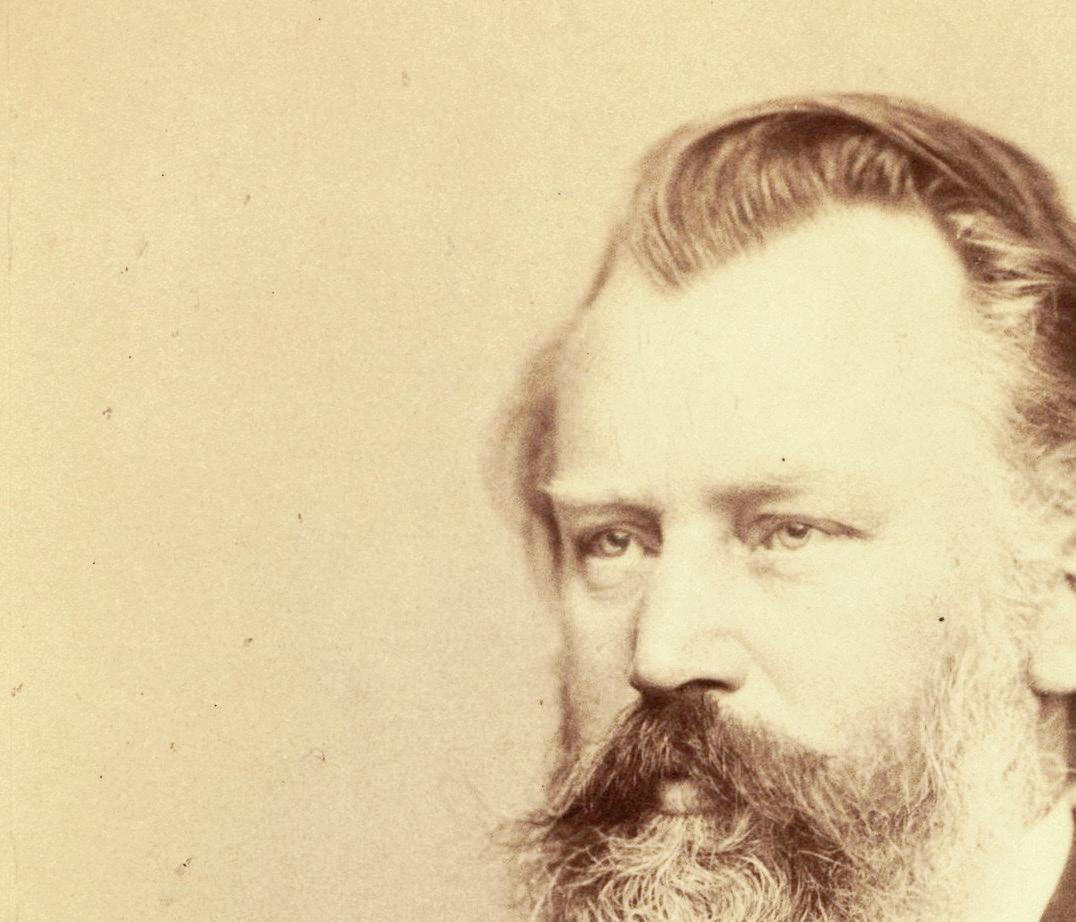
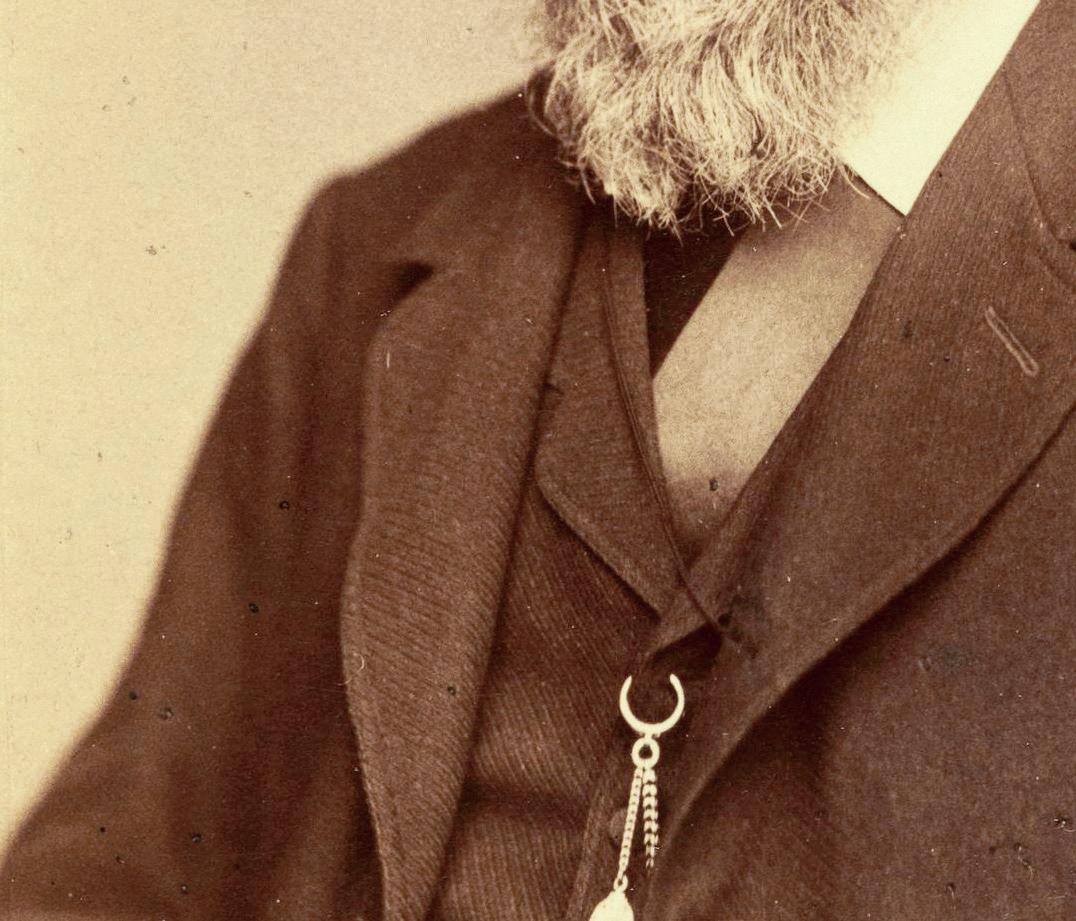

movement reappears in another, and the only one to end quietly in a soft pianissimo a radical departure from symphonic tradition. For these reasons, it is less often played. But many connoisseurs prize it above Brahms’s other symphonies for the delicacy of its scoring and its ravishing melodic richness.
The Third Symphony differs from Brahms’s other three in being shorter and milder in tone, without the heroic passages that the others display. the scoring
The first movement’s opening gesture is an upward motive (F–A-flat–F) similar to the F–A–F motto associated with the violinist Joseph Joachim, one of Brahms’s dearest friends. By substituting an A-flat, Brahms introduces the ambiguity of major-minor tonality that appears throughout this symphony. This ambiguity is not fully resolved until we reach the luminous, soft chords at the end of the last movement, which are solidly in the major key.
The two central movements are exceptionally touching. The second movement feels like a set of meandering variations on the clarinet’s elegant theme and some strange and solemn chords in the lower strings provide an enigmatic interlude. The restrained writing for trombones is masterful
The melody of the third movement, heard at the start in the cellos, is one to cherish long after the performance is over. For expressive elegance, it has no
rival, and this effect intensifies when it passes first to the woodwinds, then to the horn. Neither of these two middle movements ever rises in volume to forte for more than a passing moment.
Energetic music is plentiful in both the opening and final movements, along with musical argument (reshaping themes and moving through keys) in Brahms’s sure-handed manner. But they both come to rest with the same dreamlike reminiscence of the rising motto and its balanced descending theme. Brahms seems to be perfectly at peace with the world
The symphony’s first performance took place in Vienna in December 1883, in a concert which featured Dvořák’s Violin Concerto, also new to the Viennese. Although Vienna was his home, where he had many friends and supporters, there was usually a portion of the press determined to cut Brahms down to size. Yet, in this instance, those sour voices were silent, and the symphony was acclaimed by all, going on to be successfully welcomed in performances across Germany and beyond.
Hugh Macdonald
Hugh Macdonald is Avis H. Blewett Professor Emeritus of Music at Washington University in St . Louis . He has written books on Beethoven, Berlioz , Bizet , and Scriabin, as well as Music in 1853: The Biography of a Year
Continue your journey with Brahms and The Cleveland Orchestra on Adella .live with Towards Silence, a digital production featuring Igor Levit playing the Second Piano Concerto. Try it free by visiting adella .live and using the promo code ADELLA30 at checkout .
Symphony No . 3
by Bohuslav Martinů
B O R N : December 8, 1890, in Polička , Austria-Hungary (now the Czech Republic)
D I E D : August 28, 1959, in Liestal, Switzerland
▶ C O M P O S E D : 1944
▶ W O R L D P R E M I E R E : October 12 , 1945, with Serge Koussevitzky conducting the Boston Symphony Orchestra
▶ These concerts mark the first Cleveland Orchestra performances of Bohuslav Martinů’s Symphony No. 3.
▶ O R C H E S T R AT I O N : 2 flutes , piccolo, 2 oboes , English horn , 3 clarinets , 2 bassoons , 4 horns , 3 trumpets , 3 trombones , tuba , timpani, percussion (bass drum , cymbals , snare drum , tam-tam , triangle), harp , piano, and strings
▶ D U R AT I O N : about 30 minutes
B O H U S L AV M A RT I N Ů WA S O N E of the most prolific composers of the 20th century, writing over 400 works in multiple genres a seemingly unlikely accomplishment for someone who, as a young student, was twice dismissed from the Czech National Conservatory for his “incorrigible negligence.” Despite those early setbacks, Martinů spent three years as a violinist in the Czech Philharmonic, where his exposure to the music of Debussy piqued his interest in composition. In 1923, he moved to Paris, where he encountered the neoclassicism of Stravinsky and Les Six, blending this new music with Czech traditions and techniques derived from Renaissance polyphony and Baroque counterpoint to forge a uniquely personal style
Upon the Nazi invasion of France in 1940, Martinů fled with his wife to America, where he worked to resume his career. Although he had previously written a number of works for orchestra, he had studiously avoided the symphony, disdaining what he called the “climax cliché” that he felt was inherent in the genre. But American audiences loved symphonies so, in 1942, he wrote the first of what would turn out to be five symphonies in five years (He wrote a sixth in 1953.) These proved quite popular and, during the 1940s, he was among the most frequently performed contemporary composers in the US. Contrary to what one might expect of works written in such close proximity, Martinů’s symphonies all differ in character while sharing certain attributes:
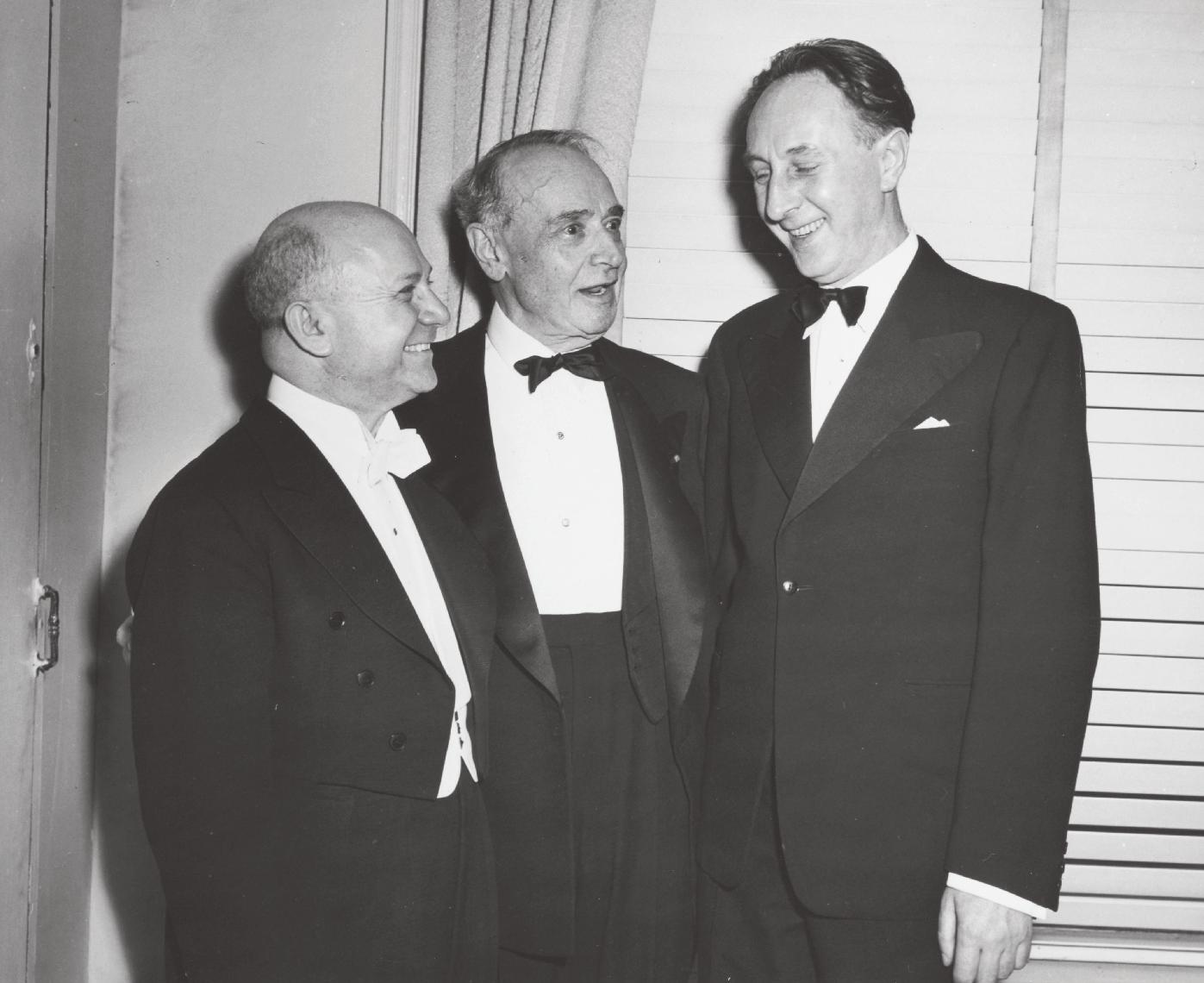
Bohuslav Martinů (right) seen in 1943 with conductor Serge Koussevitzky (center) and violinist Mischa Elman (left), for whom Martinů composed his Second Violin Concerto The following year, Martinů wrote his Third Symphony for Koussevitzky and the Boston Symphony Orchestra .
an energetic rhythmic style, fluid phrasing, shimmering textures, a rich harmonic language (with frequent conflicts between major and minor keys), and featured roles for harp and piano.
Martinů’s first two symphonies are colorful and exuberant works, but the Third written in 1944 and dedicated to Serge Koussevitzky and the Boston Symphony Orchestra comes from a different, darker world. Unlike his earlier symphonies, this one is in three
movements instead of four, omitting the typically lighthearted scherzo movement, which would have seemed out of place in this more somber composition. The Third is also the most overtly programmatic of Martinů’s symphonies, with an unmistakable musical and emotional journey from darkness to light, personified by the opening movement’s E-flat minor key later giving way to a radiant E major in the finale.
The first movement is built around a series of short motives that soon expand into a swirling contrapuntal web that obscures any sense of meter. Against this, the timpani and harp play a steady and ominous rhythmic ostinato A long,
plaintive flute solo introduces a moment of repose toward the end of the exposition. After a frenzied development section, the recapitulation repeats the opening material almost exactly, but with the English horn replacing the solo flute. Minor-key harmonies dominate throughout, contributing to the overall sense of dread.
The darkness of the first movement gives way to a more contemplative mood in the second. The opening section features another flute solo and a remarkable shimmering passage that ends in B-flat major, offering, for the first time in the work, a brief glimmer of light. The middle section begins with a desolate contrapuntal passage in the strings that grows in intensity as the strings and timpani pound out a steady, insistent rhythm. After an agonized climax, the reflective mood of the opening returns. Once again, Martinů replaces the solo flute with English horn, and the movement ends quietly in C major
and we hear the first of three distinct passages, each suggesting another stage in the move away from the violence of the Allegro. The first is built around a quiet, mournful melody in the violas. The second features four solo strings and the same shimmering, almost hallucinatory textures we heard in the second movement. With the addition of the percussion, triumphant figures in the brass, and the final establishment of E major, the music at last emerges
The Third is . . . the most overtly programmatic of Martinů’s symphonies , with an unmistakable musical and emotional journey from darkness to light . . . in opening section
fully into the light. But even in the
fully into the light But even in the symphony’s final moments, we hear reminders that the hard-won peace is tenuous, with the intrusion of quiet minor chords and, at the very end, three dissonant exclamations in the piano.
The structure of the finale is unique, with an Allegro opening that gives way to a longer Andante section. With two startling brass fanfares, the opening music returns in the minor mode, suggesting restless, bitter conflict, interrupted by a few moments of quiet, hopeful repose. The intensity finally dissipates,
Many see this symphony as Martinů’s response to World War II, then in its fifth long year. Others have suggested that its character was shaped by his personal despair and longing for his distant homeland. However one interprets the meaning of his Third Symphony, there can be no denying the power with which Martinů conveys his message.
Michael Strasser
Michael Strasser is professor emeritus of musicology at Baldwin Wallace University. He has published numerous articles and reviews and presented papers at international conferences on fin- de-siècle France , Arnold Schoenberg , and colonial music in British North America and Mexico
Military Sinfonietta, Op . 11
by Vítězslava Kaprálová
B O R N : January 24, 1915, in Brno, Moravia , Austria-Hungary (now the Czech Republic)
D I E D : June 16, 1940, in Montpellier, France
▶ C O M P O S E D : 1936 – 37
▶ W O R L D P R E M I E R E : November 26, 1937, with the composer conducting the Czech Philharmonic
▶ These concerts mark the first Cleveland Orchestra performances of Vítězslava Kaprálová’s Military Sinfonietta.
▶ O R C H E S T R AT I O N : 3 flutes (3rd doubling piccolo), 2 oboes , English horn , 3 clarinets , bass clarinet , 2 bassoons , contrabassoon , 6 horns , 3 trumpets , 3 trombones , tuba , timpani, percussion (bass drum , chimes , cymbals , glockenspiel, snare drum , tam-tam , tambourine, triangle, xylophone), harp , piano, and strings
▶ D U R AT I O N : about 15 minutes
W H E N V Í T Ě Z S L AVA K A P R Á L O VÁ completed her Military Sinfonietta in 1937, Europe was on the precipice of its second global conflict in less than 40 years. In her native Czechoslovakia, Hitler’s increasing insistence on acquiring the Sudetenland to “protect” its German-speaking population was destabilizing a new and fragile independence following the collapse of the Habsburg Empire. The composer’s own description of her work stated that the sinfonietta “does not represent a battle cry, but it depicts the psychological need to defend that which is most sacred to the nation.”
Kaprálová was born in Brno in 1915 to composer Václav Kaprál and voice teacher Vítězslava Uhlířová She received
her musical education first at the Brno Conservatory and later in Prague, where she studied with Vítězslav Novák. A year after completing her second degree, she continued her education at the École Normale de Musique in Paris, where she studied with another Czech composer, Bohuslav Martinů (the two were also briefly lovers). Although it remains unconfirmed, Kaprálová’s biographers agree that, while in Paris in 1940, she likely also took at least one lesson with the great pedagogue Nadia Boulanger. Following the outbreak of World War II, Kaprálová made plans to apply to The Juilliard School in New York City, though it is unknown whether her application was ever submitted or reviewed. Despite her premature death at age 25, the
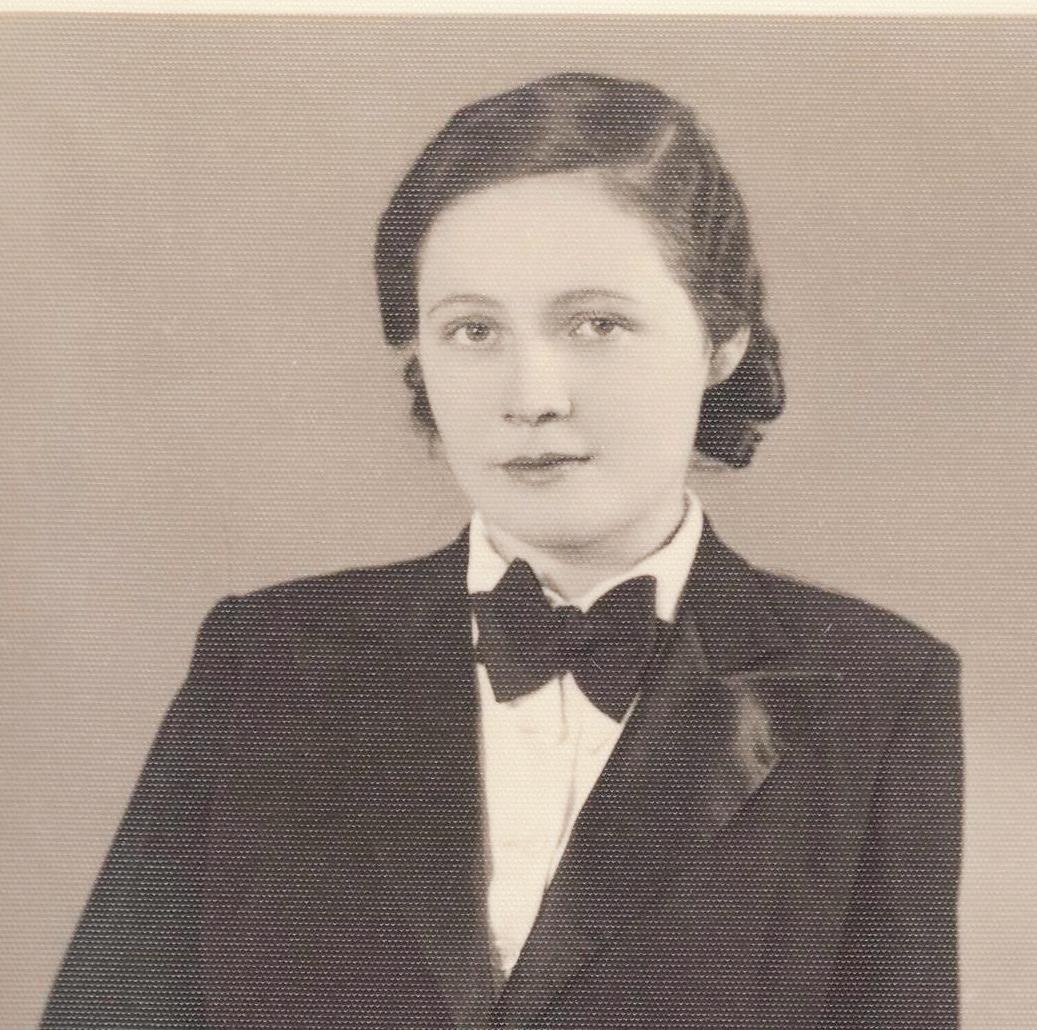
In recent years , her life and work have seen renewed attention, driven in part by her depiction in the Amazon series
composer produced more than three dozen pieces, including piano works, chamber music, art songs, melodramas, and several symphonic works. She also crossed borders, both geographical and social, by becoming the first woman to conduct both the Czech Philharmonic and the BBC Orchestra.
Kaprálová dedicated the Military Sinfonietta, her graduation piece for the Prague Conservatory, to the Czechoslovak president Edvard Beneš. The work received its premiere under the composer’s baton in the Czech capital in 1937
and was paired with the overture to Dvořák’s Šelma sedlák and Josef Suk’s Aesrael Symphony. This program suggests the perceived promise her music held for the Czech canon and, according to her own program notes, her intention was to use “the language of music to express her emotional relationship towards the questions of national existence, a subject permeating the consciousness of the nation at the time.”
The sinfonietta also brought her recognition beyond her homeland. It was selected for performance by the BBC Orchestra at the opening of the 1938 International Society of Contemporary Music Festival in London, where Kaprálová once again conducted.
The budding career of Vítězslava Kaprálová was cut tragically short by her premature death at age 25.
Mozart in the Jungle.
Despite its title, Kaprálová’s singlemovement Military Sinfonietta is less militaristic than it is striving. Indeed, the work initially opened with a funeral march, a possible homage to fellow Moravianborn composer Gustav Mahler, whose own symphonies battle for interior victory rather than external confrontation. On Novák’s advice, however, Kaprálová changed the opening, and it begins instead with a more conventional drumroll and an ascendant brass fanfare.
development also teems with variety and experimentation A contrasting, majormode melody ripples through the strings and winds before pulsating repetitions throughout the orchestra suspend the work’s momentum. The entry of a solo violin offers a new direction, its smooth, meandering melody leading the orchestra to ever higher registers. But this progress, too, is cut short. The entry of dancing rhythms in the piccolo and bassoon, accented by the snare drum, ultimately
The composer’s own description of her work stated that the sinfonietta ‘does not represent a battle cry, but it depicts the psychological
is
most sacred to the nation . ’ t l ry, e d th hic
need to defend that which
The full orchestra enters shortly thereafter with what the composer called “the aggressive main theme” placed in the violins. The theme’s intensity is not threatening but evocative, particularly of the aspirational sonic worlds of early jazz and old Hollywood. The “tender singing” second theme is led by the oboe, once again mediating any sense of conflict. The exposition closes with a punctuated return of the strings. Accented motives amplified by percussion and piano offer the closest we have come so far to any sense of musical showdown.
Introduced by “the deep singing voices of the basses and cellos,” the work’s middle section initially takes on the expressive character of a separate slow movement. However, according to the conventions of sonata form, the
destabilizes the ensemble, and the return of the reflective melody in the trumpet only temporarily clears the path to the recapitulation
Like sides of a battle, several further contrasting characters alternate, including a battery of ominous percussion and sharp dotted rhythms that finally express the work’s martial dimension, before the exposition returns in full. The fragility of this arrival at a resolution is underscored by one more menacing interjection. Rescued by a final fanfare, the sinfonietta’s primary theme drives the work to a triumphant close.
Leah Batstone
Leah Batstone is a musicologist and visiting scholar at the Jordan Center at New York University. She is also the founder and creative director of the Ukrainian Contemporary Music Festival, which takes place each spring in New York City
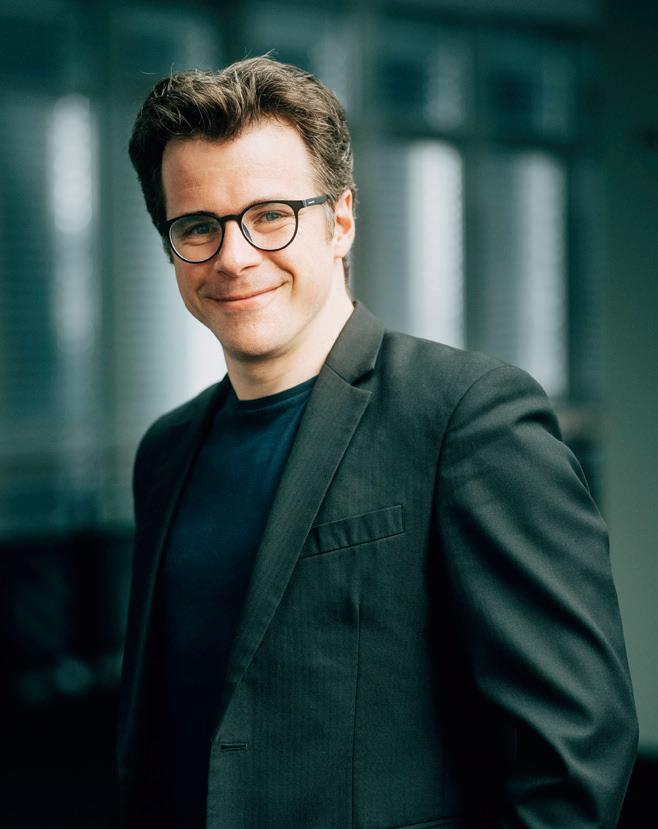
Jakub Hrůša
B O R N I N T H E C Z E C H R E P U B L I C , Jakub
Hrůša is chief conductor of the Bamberg Symphony, music director of The Royal Opera, and chief conductor and music director designate of the Czech Philharmonic (from 2028).
Hrůša performs regularly with the world’s greatest orchestras, including the Vienna Philharmonic, Berlin Philharmonic, Bavarian Radio Symphony Orchestra, Royal Concertgebouw Orchestra, Orchestre de Paris, NHK Symphony, and the Mahler Chamber Orchestra and in the US with The Cleveland Orchestra, New York Philharmonic, and Boston Symphony Orchestra
Hrůša has led opera productions for the Lyric Opera of Chicago, Salzburg Festival, Vienna State Opera, Opéra National de Paris, and Zurich Opera. He has also been a regular guest with the Glyndebourne Festival, conducting Vanessa, The Cunning Little Vixen, A Midsummer Night’s D ream, Carmen, The Turn of the Scre w, D on Giovanni, and La bohème, and was music director of Glyndebourne on Tour for three years.
As a recording artist, Hrůša has received numerous awards and nominations. He was a double winner at the 2024 Gramophone Awards for his recordings of Britten’s Violin Concerto with Isabelle Faust and the Bavarian Radio Symphony Orchestra, and Janáček’s Káťa Kabanová with the Vienna Philharmonic at the Salzburg Festival. With the Bamberg Symphony,
he received the ICMA Prize for Symphonic Music in both 2022 and 2023 for his recordings of Rott’s First Symphony and Bruckner’s Fourth Symphony. In 2021, his disc of Dvořák’s Violin Concerto with Augustin Hadelich and the Bavarian Radio Symphony Orchestra was nominated for a Grammy Award.
Hrůša is an Honorary Member of the Royal Academy of Music in London. In 2025, he was awarded the Medal of Merit in the field of Arts by the President of the Czech Republic, and in 2024, he was awarded the Silver Medal of the President of the Czech Senate, its highest award. He was the inaugural recipient of the Sir Charles Mackerras Prize and has also been awarded the Bavarian Order of Merit, the Bavarian Culture Prize, the Czech Academy of Classical Music’s Antonín Dvořák Prize, and with the Bamberg Symphony the Bavarian State Prize for Music
($18
($1,

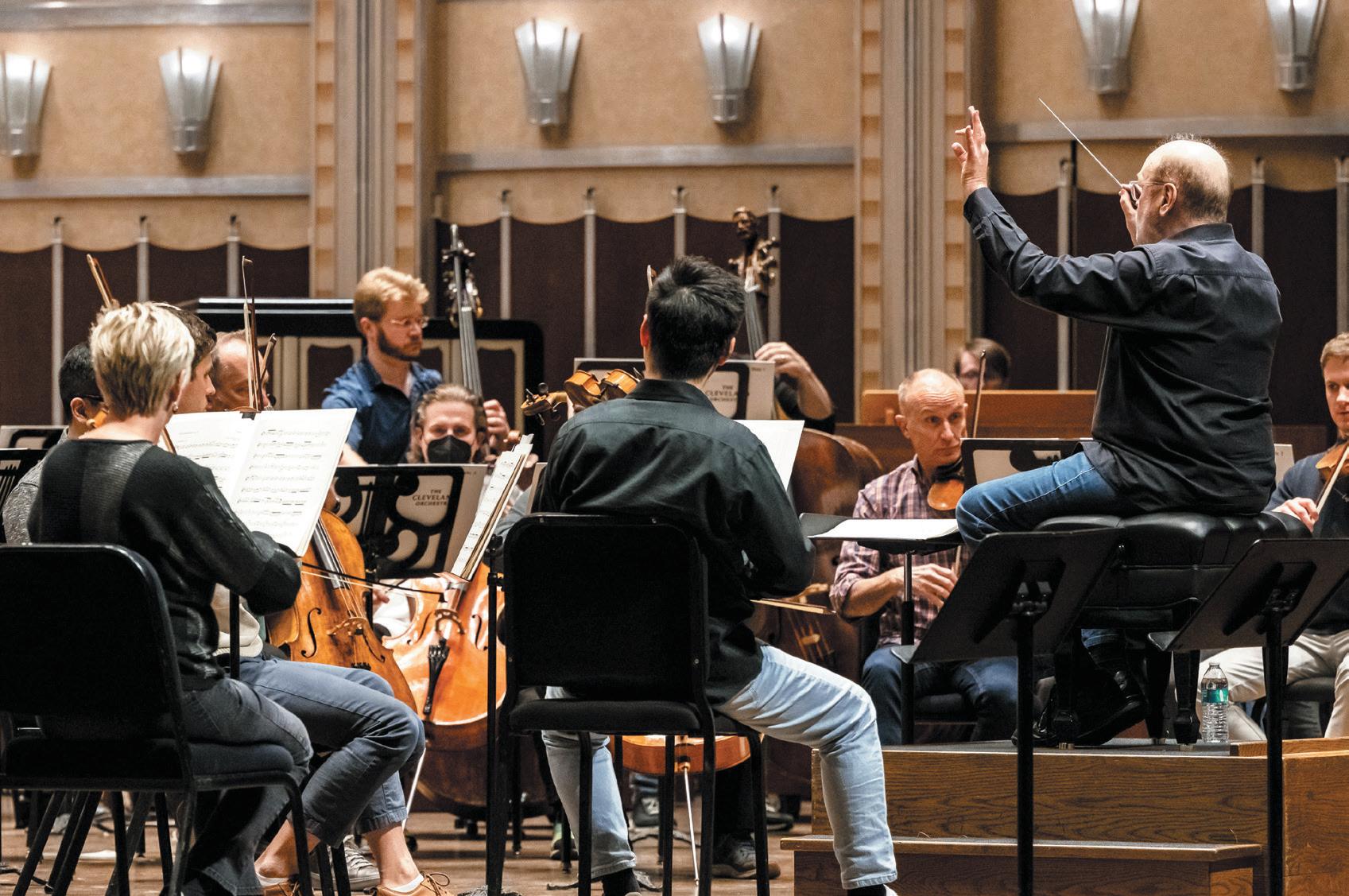
The Cleveland Orchestra rehearses under the baton of guest conductor Bernard Labadie
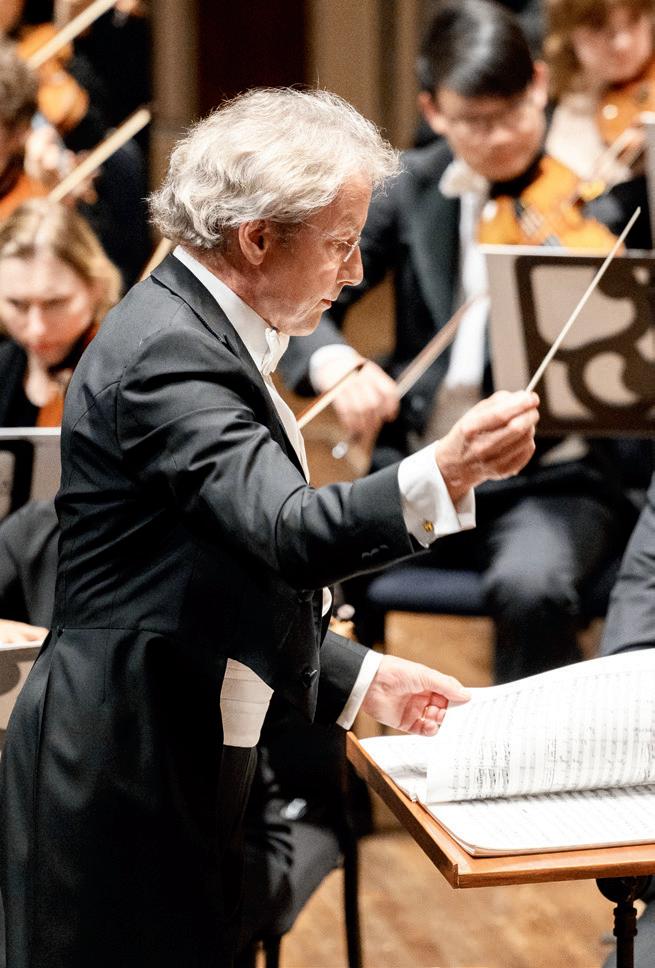
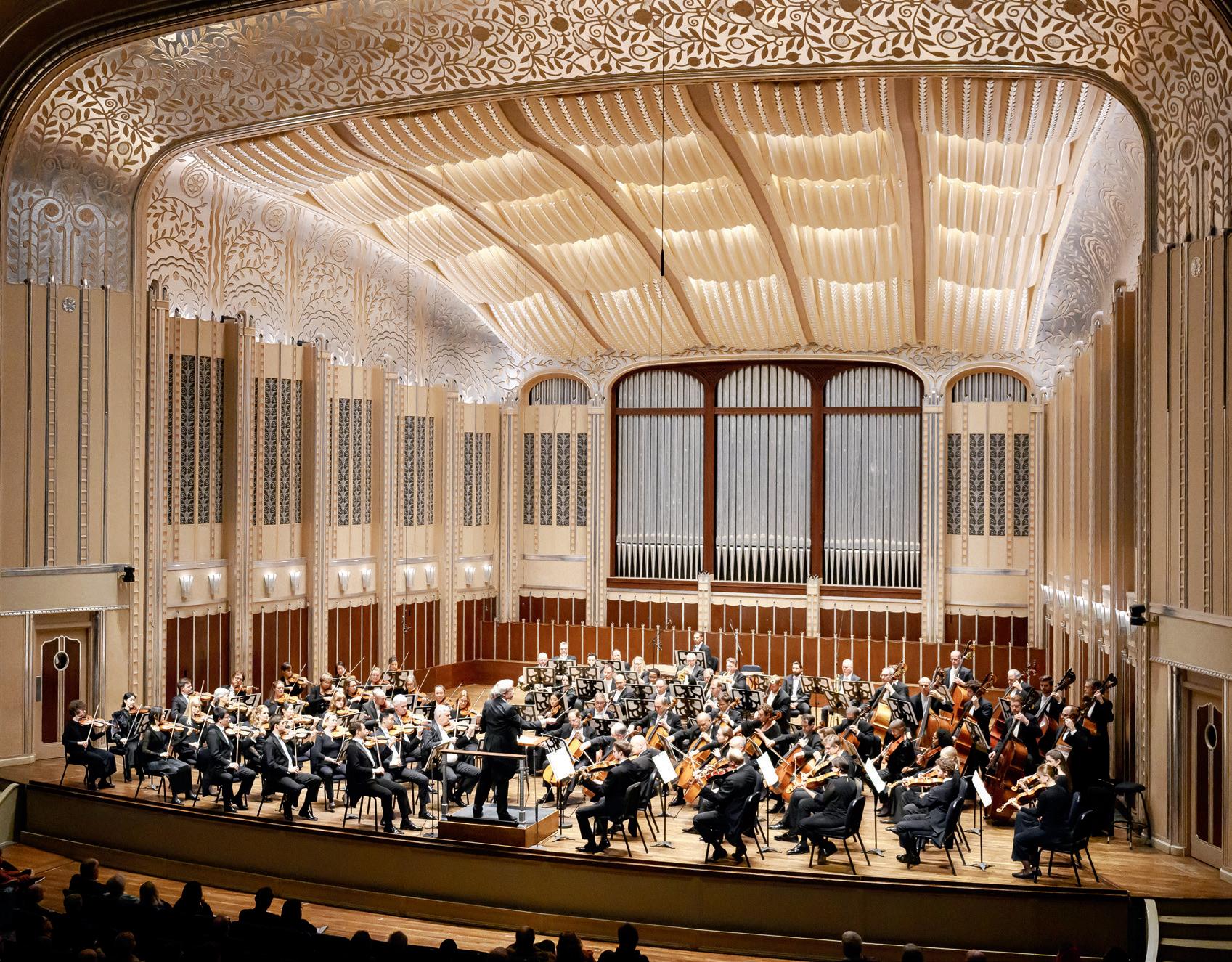
N O W F I R M LY I N I T S S E C O N D C E N T U RY , The Cleveland Orchestra, under the leadership of Franz Welser-Möst since 2002, is one of the most sought-after performing ensembles in the world. Year after year, the ensemble exemplifies extraordinary artistic excellence, creative programming, and community engagement. In recent years, The Ne w York Times has called Cleveland “the best in America” for its virtuosity, elegance of sound, variety of color, and chamber-like musical cohesion.
Founded by Adella Prentiss Hughes, the Orchestra performed its inaugural concert in December 1918. By the middle of the century, decades of growth and @ClevelandOrchestra

sustained support had turned the ensemble into one of the most admired around the world.
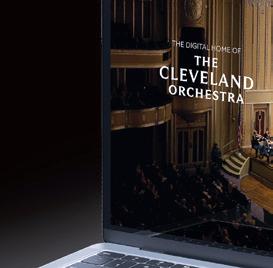
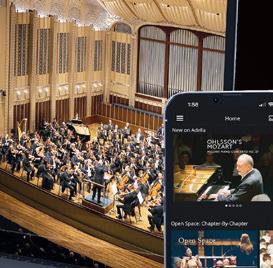
The past decade has seen an increasing number of young people attending concerts, bringing fresh attention to The Cleveland Orchestra’s legendary sound and committed programming. More recently, the Orchestra launched several bold digital projects, including the streaming platform Adella.live and its own recording label. Together, they have captured the Orchestra’s unique artistry and the musical achievements of the Welser-Möst and Cleveland Orchestra partnership.
The 2025 – 26 season marks Franz Welser-Möst’s 24th year as Music Director, a period in which The Cleveland Orchestra has earned unprecedented acclaim around the world, including a series of residencies at the Musikverein in Vienna, the first of its kind by an American orchestra, and a number of celebrated opera presentations.
Since 1918, seven music directors
Nikolai Sokoloff, Artur Rodziński, Erich Leinsdorf, George Szell, Lorin Maazel, Christoph von Dohnányi, and Franz Welser-Möst have guided and shaped the ensemble’s growth and sound. Through concerts at home and on tour, broadcasts, and a catalog of acclaimed recordings, The Cleveland Orchestra is heard today by a growing group of fans around the world.

Franz Welser -Möst, Music Director
K E LV I N S M I T H FA M I LY C H A I R
F I R S T V I O L I N S
Joel Link
C O N C E RT M A S T E R
Blossom-Lee Chair
Jung-Min Amy Lee
A S S O C I AT E
C O N C E RT M A S T E R
Gretchen D. and Ward Smith Chair
Zhan Shu
A S S I S TA N T
C O N C E RT M A S T E R
Clara G. and George P. Bickford Chair
Stephen Tavani
A S S I S TA N T
C O N C E RT M A S T E R
Dr. Ronald H. Krasney Chair
Wei-Fang Gu
Drs . Paul M. and Renate H. Duchesneau Chair
Kim Gomez
Elizabeth and Leslie Kondorossy Chair
Chul-In Park
Harriet T. and David L . Simon Chair
Miho Hashizume
Theodore Rautenberg Chair
Jeanne Preucil Rose
Larry J B and Barbara S
Robinson Chair
Alicia Koelz
Oswald and Phyllis Lerner
Gilroy Chair
Yu Yuan
Patty and John Collinson Chair
Isabel Trautwein
Trevor and Jennie Jones Chair
Katherine Bormann
Analise Handke
Gladys B Goetz Chair
Youngji Kim
Paul and Lucille Jones Chair
Genevieve Smelser
This roster lists full-time members of The Cleveland Orchestra The number and seating of musicians on stage varies depending on the piece being performed Seating within the string sections rotates on a periodic basis
S E C O N D V I O L I N S
Stephen Rose*
Alfred M and Clara T Rankin Chair
Eli Matthews1
Patricia M. Kozerefski and Richard J Bogomolny Chair
Jason Yu2
James and Donna Reid Chair
Sonja Braaten Molloy
Carolyn Gadiel Warner
Elayna Duitman
Ioana Missits
Jeffrey Zehngut^
Kathleen Collins
Beth Woodside
Emma Shook
Dr Jeanette Grasselli Brown and Dr Glenn R Brown Chair
Yun-Ting Lee
Deborah L . Neale Chair
Jiah Chung Chapdelaine
Liyuan Xie
Gawon Kim
V I O L A S
Wesley Collins*
Chaillé H and Richard B Tullis Chair
Gareth Zehngut1^
Charles M. and Janet G.
Kimball Chair
Stanley Konopka2
Mark Jackobs
Jean Wall Bennett Chair
Lisa Boyko
Richard and Nancy
Sneed Chair
Richard Waugh
Lembi Veskimets
The Morgan Sisters Chair
Eliesha Nelson^
Anthony and Diane
Wynshaw-Boris Chair
Joanna Patterson Zakany
William Bender
Thomas Lauria and
Christopher Lauria Chair
C E L L O S
Mark Kosower*
Louis D Beaumont Chair
Richard Weiss1
The GAR Foundation Chair
Charles Bernard2
Helen Weil Ross Chair
Bryan Dumm
Muriel and Noah Butkin Chair
Tanya Ell
Thomas J and Judith Fay
Gruber Chair
Ralph Curry
Brian Thornton
William P. Blair III Chair
David Alan Harrell
Martha Baldwin
Dane Johansen
Marguerite and James Rigby Chair
Paul Kushious
B A S S E S
Maximilian Dimoff*
Clarence T. Reinberger Chair
Charles Paul1
Mary E . and F. Joseph
Callahan Chair
Derek Zadinsky2
Mark Atherton
Thomas Sperl
Henry Peyrebrune
Charles Barr Memorial Chair
Charles Carleton
Scott Dixon
Brandon Mason
H A R P
Trina Struble*
Alice Chalifoux Chair
F LU T E S
Joshua Smith*
Elizabeth M. and William C.
Treuhaft Chair
Saeran St. Christopher
Jessica Sindell2^
Austin B and Ellen W Chinn Chair
Mary Kay Fink
P I C C O L O
Mary Kay Fink
Anne M and M Roger Clapp Chair
O B O E S
Frank Rosenwein*
Edith S Taplin Chair
Corbin Stair
Sharon and Yoash Wiener Chair
Jeffrey Rathbun2
Everett D. and Eugenia S . McCurdy Chair
Robert Walters
E N G L I S H H O R N
Robert Walters
Samuel C and Bernette K
Jaffe Chair
C L A R I N E T S
Afendi Yusuf*
Robert Marcellus Chair
Robert Woolfrey
Victoire G and Alfred M
Rankin, Jr Chair
Daniel McKelway2
Robert R and Vilma L Kohn
Chair
Amy Zoloto
E-F L AT C L A R I N E T
Daniel McKelway
Stanley L and Eloise M
Morgan Chair
B A S S C L A R I N E T
Amy Zoloto
Myrna and James Spira Chair
B A S S O O N S
John Clouser*
Louise Harkness Ingalls Chair
Gareth Thomas
Catherine Van Handel2
Sandra L Haslinger Chair
Jonathan Sherwin
C O N T R A B A S S O O N
Jonathan Sherwin
H O R N S
Nathaniel Silberschlag*
George Szell Memorial Chair
Michael Mayhew§
Knight Foundation Chair
Jesse McCormick
Robert B Benyo Chair
Hans Clebsch
Richard King
Meghan Guegold Hege^
T RU M P E T S
Michael Sachs*
Robert and Eunice Podis
Weiskopf Chair
Jack Sutte
Lyle Steelman2^
James P. and Dolores D.
Storer Chair
Michael Miller
C O R N E T S
Michael Sachs*
Mary Elizabeth and G Robert Klein Chair
T RO M B O N E S
Brian Wendel*
Gilbert W and Louise I
Humphrey Chair
Richard Stout
Alexander and Marianna C McAfee Chair
Shachar Israel2
B A S S T RO M B O N E
Luke Sieve
E U P H O N I U M &
B A S S T RU M P E T
Richard Stout
T U B A
Yasuhito Sugiyama*
Nathalie C Spence and Nathalie S Boswell Chair
T I M PA N I
Zubin Hathi*
Otto G. and Corinne T. Voss Chair
Peter Nichols2
P E RC U S S I O N
Marc Damoulakis*
Margaret Allen Ireland Chair
Thomas Sherwood
Tanner Tanyeri
Peter Nichols
K E Y B OA R D I N S T RU M E N T S
Carolyn Gadiel Warner
Marjory and Marc L Swartzbaugh Chair
L I B R A R I A N
Michael Ferraguto*
Joe and Marlene Toot Chair
E N D O W E D C H A I R S
C U R R E N T LY
U N O C C U P I E D
Virginia M. Lindseth, PhD, Chair
Sunshine Chair
Rudolf Serkin Chair
Michael Miller C
Mr and Mrs Richard K
Smucker Chair
Christoph von Dohnányi †
Taichi Fukumura
Elizabeth Ring and William Gwinn Mather Chair
James Feddeck
Sidney and Doris Dworkin Chair
Lisa Wong
Frances P and Chester C Bolton Chair
* Principal § Associate Principal
1 First Assistant Principal
2 Assistant Principal
^ Alum of The Cleveland Orchestra Youth Orchestra † In Memoriam
With sincere gratitude to the musicians of The Cleveland Orchestra for their in-kind contributions supporting community programs and securing funding opportunities
A Conversation with Michael Sachs
Principal Trumpet | Principal Cornet
with The Cleveland Orchestra , Principal Trumpet Michael Sachs has stepped into the spotlight on several occasions to premiere new works for trumpet and orchestra by leading contemporary composers such as Wynton Marsalis, Matthias Pintscher, Michael Hersh, and John Williams. For the Orchestra’s March concerts with Elim Chan, Sachs instead revisits an old favorite — Haydn’s Trumpet Concerto, arguably the most famous concerto in the instrument’s repertoire . We caught up with Sachs to learn more about this piece and his relationship with it .
T C O : What’s the history of Haydn’s Trumpet Concerto?
M I C H A E L S A C H S : This piece was a genesis moment for the modern trumpet. Haydn wrote the work in 1796 for Anton Weidinger. Not only was Weidinger a virtuoso trumpeter, but he was the inventor of the keyed trumpet, which, for the first time, allowed the instrument to play a chromatic scale, much like a piano. Before, the trumpet could only produce a select few notes in the harmonic series. But with Weidinger’s keyed trumpet, Haydn now had the ability to write things for the
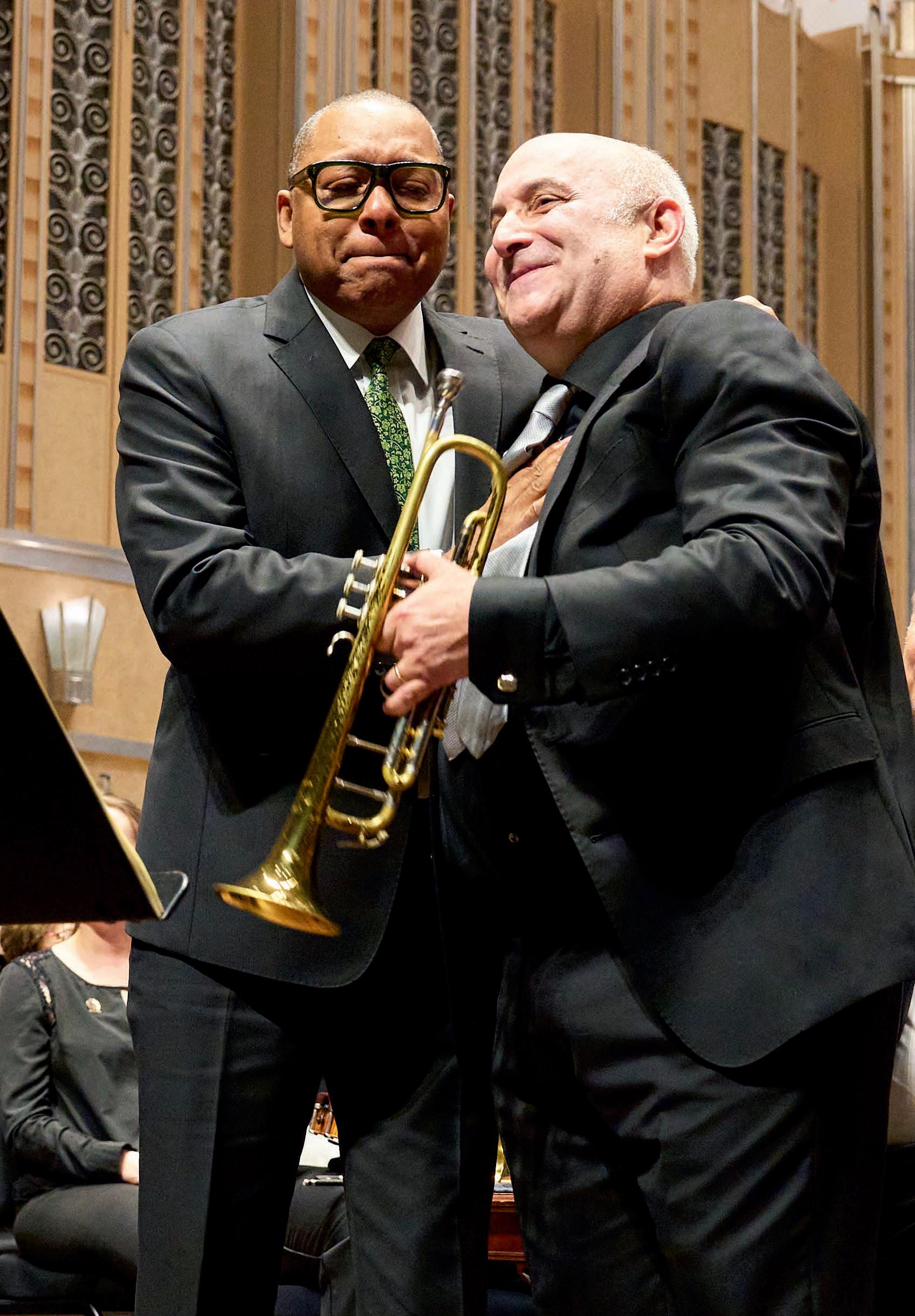
Michael Sachs (right) and Wynton Marsalis share a bow after the world premiere of Marsalis’s Concerto for Trumpet and Orchestra in April 2023 (which can be seen on Adella .live)
instrument that were not possible up to that moment.
Take the opening of the solo part, for instance. The first three notes would have been the first time that anybody would have heard the trumpet play those notes in that sequence! Besides the historical significance of this piece, it’s also one of the first major concertos that most trumpet students learn.
Was that the case for you?
I started learning the second movement when I was about 14. Then, during my senior year of high school, I performed the first movement with my school wind ensemble, which was my first real foray into the piece.
Will this be your first time playing this concerto with The Cleveland Orchestra?
It’ll actually be my third time I first performed it at Severance in 1993, which marked my concerto debut with the Orchestra on a subscription concert. I then played it again at Severance in 2006. That performance was particularly special because it was the first time my daughter, then 3 years old, heard me play with the Orchestra.
This is my first time playing the concerto with the Orchestra since that performance, and it’s very special to me that my daughter can come back and hear it again 20 years later. Having a piece that I performed just a few years into being with the Orchestra, a second time in the middle, and now again closer to the end of my career it’s become a signpost for me.
What is your preparation process like, especially for a piece you know so well?
lap puzzled
To prepare her for the concert, I played parts of the concerto so she would know what to recognize, and my wife gave her an overview of how to behave in the concert hall. The funny thing is that on the night of the performance, she was sitting on my wife’s lap and started looking really puzzled
Having a piece that I performed just a few years into being with the Orchestra , a second time in the middle, and now again closer to the end of my career it’s become a signpost for me .
after the piece began. She turned to my wife and said, “What’s daddy doing?!” because I wasn’t playing during the orchestral introduction; I was just standing there. Then, once I finally started playing, she went, “Ooohhh,” and was dead silent the rest of the way, totally mesmerized.
Even though I’ve been living with this piece for basically 50 years, there are always new things to discover. Any time I dust off a piece, I take it down to the studs and rebuild it from scratch, just to make sure that I’m not going on automatic pilot
First, I have my general conditioning, which is a healthy dose of daily fundamentals on the B-flat trumpet. I play E-flat trumpet in this concerto, so I start introducing the E-flat trumpet into some of that fundamental work until it starts feeling as natural as my primary instrument Then, as I begin a deep dive into the piece, I’m either reinforcing what I’ve done in past performances or evolving it into something even better. Over time, you learn more and find deeper meanings
Several years ago, I actually got to see Haydn’s original manuscript in Vienna, thanks to Otto Biba, who was then the archive director at the Musikverein. It was fascinating to see the adjustments
Haydn made based on Weidinger’s performance and input, and to copy those things into my own music.
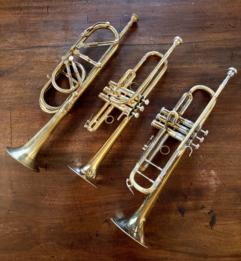
I’ve also practiced a bit on a keyed trumpet (above) to get a sense of how Weidinger would have originally performed the piece. I’m using that sonic presence to inform what I do stylistically on the modern instrument.
How might audiences hear these historical considerations in your performance?
In Haydn’s time, composers often left an open space for the soloist to create their own cadenza. It is that one moment when the musician’s personal voice joins the composer’s stylistic framework. I wrote this particular cadenza in 1987, which reflects something that I would be able
A replica of a keyed trumpet (left) sits alongside modern E-flat (middle) and B-flat (right) trumpets. Sachs will play the E-flat trumpet in his performances.
to play on a keyed trumpet, instead of something that I would only be able to do on a modern instrument.
I’ve since tweaked my cadenza a bit, but the bones of it came from cobbling together things from my favorite recordings with a few of my own ideas. And that’s something very akin to what performers would have done in Haydn’s day.
You’ve played a lot of concertos with the Orchestra over the years. What does it mean to you to get to perform like this with your colleagues?
Whenever I stand in front of this orchestra, I feel enormously grateful and inspired, because I’m usually in the back of the ensemble with everyone in front of me. It’s like the feeling a professional surfer would get riding some giant wave, feeling this energy coming from the group and the incredible artistry happening around me. It’s just magnificent incredibly inspiring and humbling.
2026 Mandel Opera & Humanities Festival: Courage
T H E F O U RT H A N N UA L Jack, Joseph and Morton Mandel Opera & Humanities Festival kicks off in May with a bold lineup of music, visual and spoken art, and conversations. Held at Severance Music Center and partner locations from May 15 to 24, this year’s festival explores the theme of Courage and is anchored by three performances of Beethoven’s only opera, Fidelio, led by Music Director Franz Welser-Möst (May 16, 21 & 24).
For the first time, the festival welcomes a guest curator trumpeter and composer Terence Blanchard, who is acclaimed for bridging classical music, jazz, and film Audiences can experience his genre-bending artistry firsthand at The World(s) of Terence Blanchard on May 15, a two-part evening that features music from his celebrated opera Fire Shut Up in My Bones, as well as a suite from his score for Spike Lee’s Malcolm X, with projections by Andrew F. Scott.
On May 18, renowned lawyer, advocate, and founder of the Equal Justice
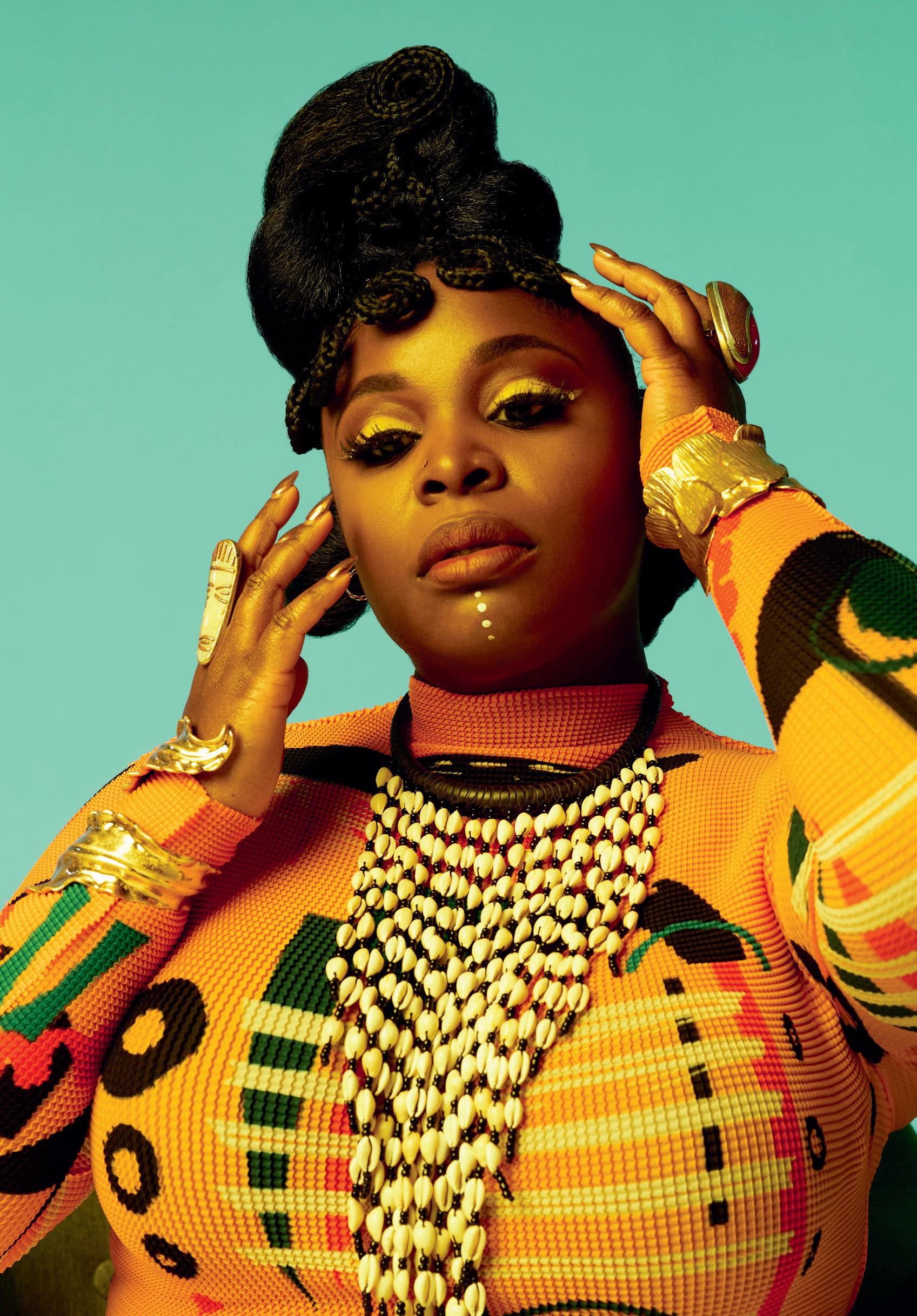
Initiative Bryan Stevenson delivers the festival’s opening keynote address, reflecting on the meaning of courage in the pursuit of justice and his life’s work serving incarcerated individuals. The evening prior, May 17, Grammywinning spoken-word artist Tank Ball presents an intimate and uplifting evening of poetry and storytelling.
Throughout the festival, visitors to Severance can experience a special exhibition featuring an original series of works by visual artist Halim Flowers inspired by the festival’s theme. Imprisoned for a crime he didn’t commit, Flowers’s advocacy and artwork embody courage in the face of injustice.
Returning festival-favorite events include United in Song! on May 16, bringing together voices from across the Greater Cleveland area, and The Moth Mainstage (May 19), featuring unforgettable true stories told live from Mandel Concert Hall.

Additional festival events will be announced in March. See page 37 or visit clevelandorchestra .com/ festival for details and ticketing information
Tank Ball brings her inspiring poetry and captivating stage presence to Severance on May 17
TCO Audio Producer Elaine Martone Wins Seventh Grammy
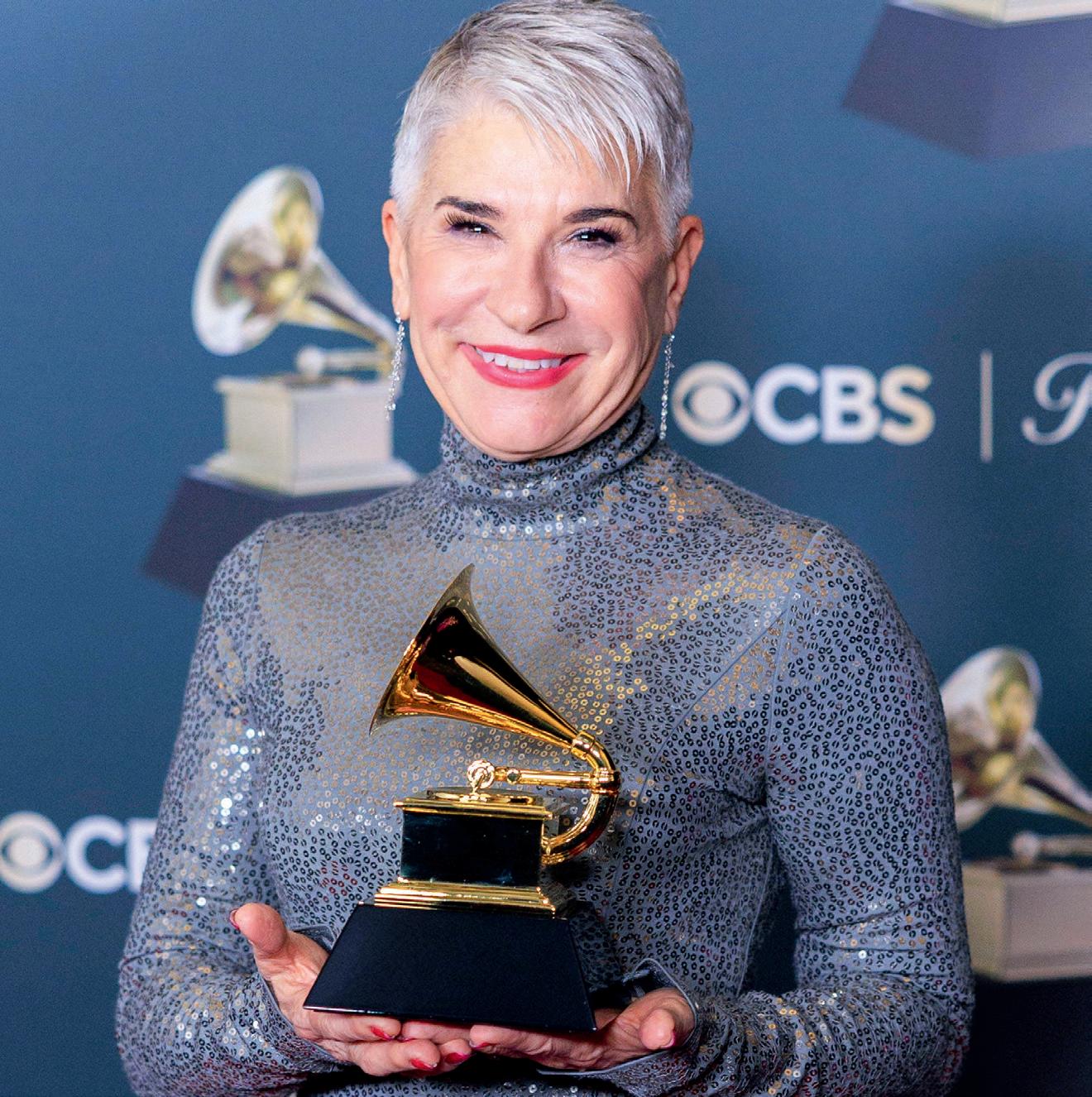
O N F E B R UA RY 1 , The Cleveland Orchestra’s audio producer, Elaine Martone, won the Grammy Award for Producer of the Year, Classical. This marks her fourth victory in the category and third in a row and her seventh Grammy overall.
This latest Grammy win acknowledges Martone’s work on three recent recording projects by The Cleveland Orchestra
and Music Director Franz Welser-Möst Berlioz: Symphonie fantastique, Eastman & Tchaikovsky, and Mozart: Piano Concerto No. 27 and Symphony No. 20.
“With Franz and the Orchestra, I feel like I get to be another contributor, if not musician, in that great group,” Martone reflected in a recent interview with Cle veland Magazine. “I feel incredibly lucky that I get to do that.”
Join the TCO Summer Choral Institute
F RO M J U N E 2 2 T O 2 6 , The Cleveland Orchestra Chorus will host a week-long Summer Choral Institute, providing aspiring conductors, singers, and collaborative pianists the opportunity to work with director Lisa Wong, pianist Daniel Overly, Grammy-winning baritone Dashon Burton, and members of The Cleveland Orchestra and The Cleveland Orchestra Chorus.
The week includes masterclasses, coaching sessions, roundtable discussions, and more in a supportive and enriching
environment. The experience culminates in a vocal recital in Reinberger Chamber Hall and a performance of Craig Hella Johnson’s oratorio, Considering Matthe w Shepard, in Mandel Concert Hall.
Applications are now open until May 29 or until full. Visit clevelandorchestra .com or scan the QR code below for more information.

Tyler Taylor to Work with COYO Musicians
T H I S S P R I N G , Tyler Taylor and The Cleveland Orchestra Youth Orchestra (COYO) are teaming up for a special collaboration. As The Cleveland Orchestra’s Daniel R Lewis Composer Fellow, Taylor has chosen to dedicate a portion of his fellowship to working with a group of COYO musicians in a series of intensive composition workshops.
These sessions will cover not only the tools of composition but also help the students identify their personal style, allowing them to refine their new works alongside a professional composer and project their own creative voices.
The students’ works will be heard in a performance before COYO’s spring concert on May 10









W I N T E R
M A R 1 2 – 1 5
B E E T H OV E N ’ S
FAT E F U L F I F T H
Elim Chan, conductor
Michael Sachs, trumpet
S T R AV I N S K Y Suite from Pulcinella
H AY D N Trumpet Concerto
B E E T H O V E N Symphony No. 5
R E C I TA L
M A R 1 7
I S ATA K A N N E H - M A S O N
I N R E C I TA L
Isata Kanneh-Mason, piano
Works by Beethoven, Ravel, and Dobrinka Tabakova
M A R 1 9 – 2 1
C H A N C O N D U C T S
B A RTÓ K
Elim Chan, conductor
Patricia Kopatchinskaja, violin
D A N I E L K I D A N E Sun Poem*
B A RT Ó K Violin Concerto No. 1
B A RT Ó K Dance Suite*
S C R I A B I N The Poem of Ecstasy
S P R I N G
A P R 2 – 4
D E B U S S Y ’ S L A M E R
Daniele Rustioni, conductor
Paul Jacobs, organ
FA U R É Suite from Pelléas et Mélisande
P O U L E N C Concerto for Organ, Strings , and Timpani
C A S E L L A Italia
D E B U S S Y La mer
C A L E N D A R
A P R 9 – 1 1
S C H U B E RT &
S H O S TA KOV I C H
Santtu-Matias Rouvali, conductor
Sol Gabetta, cello
S H O S TA KO V I C H Cello Concerto No. 2
S C H U B E RT Symphony No. 9, “ The Great”
R E C I TA L
A P R 1 6
A LE X A N D R E
K A N TO RO W I N R E C I TA L
Alexandre Kantorow, piano
Works by J.S. Bach, Medtner, Chopin, Scriabin, and Beethoven
A P R 2 3 , 2 5 & 2 6
B R I T T E N ’ S WA R
R E Q U I E M
Daniel Harding, conductor Tamara Wilson, soprano
Andrew Staples, tenor
Ludwig Mittelhammer, baritone
The Cleveland Orchestra Chorus
The Cleveland Orchestra Children’s Chorus
B R I T T E N War Requiem
A P R 3 0 & M AY 2
M E N D E L S S O H N ’ S
R E F O R M AT I O N
S Y M P H O N Y
Jörg Widmann, conductor
J Ö R G W I D M A N N Fanfare for Ten Brass Instruments
J Ö R G W I D M A N N Con brio
J Ö R G W I D M A N N Danse macabre
M E N D E L S S O H N Symphony No 5, “Reformation”
R E C I TA L
M AY 5
M A RC - A N D R É H A M E LI N I N R E C I TA L
Marc-André Hamelin, piano
Works by Haydn, Beethoven, Weinberg, and Rachmaninoff
M AY 7 – 9
WAG N E R ’ S
G ÖT T E R DÄ M M E RU N G
Franz Welser-Möst, conductor
Jörg Widmann, clarinet
P RO KO F I E V Symphony No. 1, “Classical”
O L G A N E U W I RT H Zones of Blue*
WA G N E R Excerpts from Götterdämmerung
M AY 1 6 , 2 1 & 24
B E E T H OV E N ’ S F I D E LI O
Franz Welser-Möst, conductor
Malin Byström, soprano (Leonore)
David Butt Philip, tenor (Florestan)
Tomasz Konieczny, bass-baritone (Don Pizarro)
Martin Summer, bass (Rocco)
Dashon Burton, bass-baritone (Don Fernando)
Ashley Emerson, soprano (Marzelline)
Owen McCausland, tenor (Jaquino)
The Cleveland Orchestra Chorus
B E E T H O V E N Fidelio
Opera presentation sung in German with projected supertitles
M AY 2 2
H E RO ’ S S O N G
Franz Welser-Möst, conductor
Leila Josefowicz, violin
Trina Struble, harp
A D O L P H U S H A I L S T O R K Epitaph for a Man Who Dreamed
B A C E W I C Z Symphony No. 4
J Ü R I R E I N V E R E Concerto for Violin, Harp, and Orchestra
D V O Ř Á K Hero’s Song
* Not performed on the Friday matinee concert
Generous support for the 2025 – 26 Recital Series provided by the Art of Beauty Company, Inc.

M AY 1 5 – 2 4
Join us for the fourth annual Jack , Joseph and Morton Mandel Opera & Humanities Festival, which delves into the many facets of Courage and how it shapes our hopes , our fears , and our actions .
A P R I L 9 – M AY 24
Halim Flowers: It Takes Courage to Love All Unconditionally
In this special exhibit at Severance Music Center, celebrated artist Halim Flowers unveils a new body of work created in Cleveland expressly for the Mandel Opera & Humanities Festival, drawing its energy and vision from the festival’s central theme of Courage
F R I D AY, M AY 1 5
The World(s) of Terence Blanchard
This genre-bending opening night of the festival features selections from Terence Blanchard’ s groundbreaking opera Fire Shut Up in My Bones and a suite from his score for Spike Lee’ s Malcolm X, paired with immersive projections
S AT U R D AY, M AY 1 6
United in Song! A Community Choral Celebration
An afternoon of joyous vocal performances representing the rich diversity of the Greater Cleveland choral community
S AT U R D AY, M AY 1 6
T H U R S D AY, M AY 2 1
S U N D AY, M AY 24
Beethoven’s Fidelio Franz Welser-Möst lifts The Cleveland Orchestra and an all-star cast of soloists to the life-affirming heights of Beethoven’ s only opera , a testament to courage and human resilience .
S U N D AY, M AY 1 7
Courage and Poetry: An Af ternoon with Tank Ball
Grammy-winning artist Tarriona “ Tank” Ball shares her spellbinding blend of spoken word and poetry in a performance that digs deep into the meaning of courage, featuring music by Terence Blanchard.
M O N D AY, M AY 1 8
Bryan Stevenson on Courage
In this keynote address , acclaimed civil rights leader, bestselling author, and founder of the Equal Justice Initiative Bryan Stevenson reflects on the meaning of courage: how we confront injustice, stay proximate to suffering, and choose to hope in the face of overwhelming odds
T U E S D AY, M AY 1 9
The Moth Mainstage: Live from Severance
Five extraordinary storytellers share true stories inspired by the festival theme of Courage tales of risk and resilience, of stepping into the unknown, and of finding courage amid fear

F R I D AY, M AY 2 2
Hero’s Song
Franz Welser-Möst leads The Cleveland Orchestra in a wideranging program inspired by the festival theme, featuring works by Adolphus Hailstork, Bacewicz, Jüri Reinvere, and Dvořák

Heritage Society
The Heritage Society recognizes dedicated supporters who have entrusted their legacy with The Cleveland Orchestra by including the Orchestra in their estate plans . Thank you to these individuals for their generous support .
To learn more about the Heritage Society, contact Legacy Giving at legacy@clevelandorchestra .com
Leonard Abrams*
Gay Cull Addicott*
Norman* & Marjorie Allison
Mr. & Mrs . A . Chace Anderson
Sarah May Anderson
George N Aronoff
Herbert Ascherman, Jr
Jack & Darby Ashelman
Mr & Mrs William Winfield Baker
Ruth Balombin*
Jack L . Barnhart
Henry & Margaret Barratt*
Phyllis I. Bates*
Rev. Thomas T. Baumgardner & Dr. Joan Baumgardner*
Fred G. & Mary W. Behm
Fran & Jules Belkin
Carol Bergman
Marie-Hélène Bernard
Howard R & Barbara Kaye Besser
Dr & Mrs Murray M Bett*
Dr Marie Bielefeld
Raymond J Billy (Biello)
Mr. William P. Blair III*
Doug & Barb* Bletcher
Madeline and Dennis Block
Trust Fund
Robin Dunn Blossom
Mrs . Flora Blumenthal
Mr. Richard J. Bogomolny & Ms . Patricia M. Kozerefski
Mr. & Mrs . Charles P. Bolton
Drs . Christopher P. Brandt & Beth Brandt Sersig
Mr D McGregor Brandt , Jr
David & Denise Brewster
Richard F Brezic*
Robert W Briggs
Elizabeth A . Brinkman
Dr. Jeanette Grasselli Brown* & Dr. Glenn R . Brown*
Mr. John P.Brucken
Thomas Brugger, MD*
Joan & Gene* Buehler
Douglas M. Bunker
Gretchen L . Burmeister
Milan & Jeanne* Busta
Ms . Lois L . Butler
Mr.* & Mrs . William C. Butler
Gregory & Karen Cada
Mary Freer Cannon*
Mary Jane Hawn Cariens*
Harry & Marjorie* M. Carlson
Janice L . Carlson
Dr * & Mrs Roland D Carlson
Ms Maria Cashy & Ms Laura Cashy
Barbara A Chambers , D Ed
Dr Gary Chottiner & Anne Poirson
NancyBell Coe
Kenneth S. & Deborah G. Cohen
Victor J. & Ellen E . * Cohn
Robert & Jean* Conrad
Mr. & Mrs . Gerald A . Conway*
Alexander B. & Marilyn Cook*
Tom & Anita Cook
The Honorable Colleen Conway
Cooney & Mr. John Cooney
Marilyn Cotman*
Dr. Dale & Susan Cowan
Martha Wood Cubberley
Tom & Susan Cucuzza
William* & Anna Jean Cushwa
Alexander M. & Sarah S. Cutler
Karen & Jim Dakin
Mr.* & Mrs . Don C. Dangler
Mr. & Mrs . Howard J. Danzinger
Barbara Ann Davis
Carol J. Davis*
Charles & Mary Ann Davis*
Ronald J. Davis & Cheryl A . Davis
William E . Dean Jr. & Gloria P. Dean*
Mary Kay DeGrandis & Edward J. Donnelly
Carolyn L Dessin
Dr & Mrs * Richard C Distad
Maureen A Doerner & Geoffrey T White
Henry & Mary* Doll
Gerald & Ruth Dombcik
Barbara Sterk Domski
Dr. Doris Donnelly
Mr.* & Mrs . Roland W. Donnem
Nancy E . & Richard* M. Dotson
Mrs . John Drollinger
Drs . Paul M. &
Renate H. Duchesneau*
George* & Becky Dunn
Jere & Rochelle Dutt
Mr. & Mrs . Robert Duvin
Dr. Robert E . Eckardt
Paul & Peggy Edenburn
Mr. & Mrs . * Alfred M. Eich, Jr.
Roger B. Ellsworth
Oliver & Mary Emerson*
Lois Marsh Epp
Patricia Esposito
C Gordon & Kathleen A Ewers*
Patricia J Factor
Carl Falb
Regis & Gayle Falinski
Mrs . Mildred Fiening
Gloria & Irving* Fine
Joan Alice Ford
Gil & Elle Frey*
Arthur* & Deanna Friedman
Mr.* & Mrs . Edward H. Frost
Ms . Dawn M. Full*
Dr. Stephen & Nancy Gage
Barbara & Peter* Galvin
Mr. & Mrs . Steven B. Garfunkel
Donald* & Lois Gaynor
Albert I * & Norma C Geller
Frank & Louise Gerlak
Dr. James E . Gibbs
S. Bradley Gillaugh*
Mr.* & Mrs . Robert M. Ginn
Fred & Holly Glock
Ronald & Carol Godes*
William H. Goff
Mr.* & Mrs . Henry J. Goodman
John & Ann Gosky
In Memory of Margaret Goss
Mr. Michael Gotwald
Harry & Joyce Graham
Elaine Harris Green*
Tom* & Gretchen Green
Anna Zak Greenfield*
Richard & Ann Gridley
Nancy Hancock Griffith
David E . * & Jane J. Griffiths
Bev & Bob Grimm
Candy & Brent Grover
Thomas J. & Judith Fay Gruber*
Henry & Komal Gulich
Mr. & Mrs . David H. Gunning
Mr. & Mrs . William E . Gunton*
Richard* & Mary Louise Hahn
Megan Hall & James Janning
Raymond G. Hamlin, Jr.
Kathleen E Hancock
Norman C * & Donna L Harbert
Nancy Hausmann
Barbara L . Hawley &
David S. Goodman
Scott Healy
Gary D. Helgesen
Clyde J. Henry, Jr.
Ms . M. Diane Henry
Wayne & Prudence Heritage
T. K . * & Faye A . Heston
Fred Heupler, M.D.
Mr & Mrs Daniel R High*
Alvin Hinmam*
Bruce F Hodgson
Mary V. Hoffman
Amy & Stephen Hoffman
David & Nancy Hooker
Thomas H. and Virginia J. Horner Fund*
Patience Cameron Hoskins
Elizabeth Hosmer
Dr. Christine A . Hudak , Mr. Marc F. Cymes
Dr. Randal N. Huff
Mrs . Marguerite B. Humphrey*
Ann E Humphreys & Jayne E Sisson
David & Dianne Hunt
Karen S Hunt
Mr & Mrs G Richard Hunter
Gerri Hura
Ruth F. Ihde*
Pamela & Scott Isquick
Mr. & Mrs . Donald M. Jack , Jr.*
Carol S. Jacobs
Pamela Jacobson
Milton* & Jodith Janes
Mr. Gary & Dr. Maita Jarkewicz
Allan V. Johnson
E . Anne Johnson
Nancy Kurfess Johnson, M.D.
Susan Albrecht Johnson*
David* & Gloria Kahan
Julian & Etole Kahan
David George Kanzeg
Bernie & Nancy Karr
Milton & Donna* Katz
Ms . Beverly Kaveney
Nancy F. Keithley & Joseph P. Keithley
Bruce* & Eleanor Kendrick
Malcolm E . Kenney*
Mr. & Mrs . Douglas A . Kern
George & Janice Kiteley*
James & Gay Kitson*
Mr Clarence E Klaus , Jr *
Fred* & Judith Klotzman
Paul & Cynthia Klug
Martha D Knight
Mr. & Mrs . Robert Koch*
Mr. Clayton Koppes
Susan Korosa
Margery A . Kowalski*
Janet L . Kramer
Dr. Ronald H. Krasney
Mr. James Krohngold*
Mr. & Mrs . Gregory G. Kruszka
Thomas* & Barbara Kuby
Mr. & Mrs . Dennis W. LaBarre
James I. Lader
Mr. & Mrs . David A . Lambros
Mrs . Carolyn Lampl*
Kenneth M. Lapine & Rose E . Mills
Lee & Susan Larson
Charles K László & Maureen
O’Neill-László
Anthony T * & Patricia Lauria
Jordan R & Jane G Lefko
Teela C. Lelyveld
Mr. & Mrs . Roger J. Lerch
Judy D. Levendula
Dr. & Mrs . Howard Levine
Bracy E . Lewis
Mr. & Mrs . * Thomas A . Liederbach
Ms . Cathy Lincoln
Rollin* & Leda Linderman
Virginia M. & Jon A . Lindseth
Dr.* & Mrs . William K . Littman
Ms . Mary Beth Loud*
Dr Jack & Mrs Jeannine Love
Jeff & Maggie Love
Dr Alan & Mrs Min Cha Lubin
Linda* & Saul Ludwig
Patricia MacDonald
Alex & Carol Machaskee
Mrs . H. Stephen Madsen
Mr. & Mrs . Donald Malpass , Jr.
Clement P. Marion
Dr.* & Mrs . Sanford E . Marovitz
Mr. & Mrs . Anthony M. Martincic
Kathryn A . Mates
Dr. Lee Maxwell &
Michael M. Prunty
Nancy W. McCann
Nancy B McCormack
Mr William C McCoy*
Dorothy R McLean
James & Virginia Meil
Ms . Linda Meixner
Brenda Clark Mikota
Christine Gitlin Miles*
Antoinette S. Miller
Chuck & Chris Miller
Edith & Ted Miller*
Leo Minter, Jr.
Robert L . Moncrief
Ms . Beth E . Mooney
Beryl & Irv Moore
Ann Jones Morgan
George & Carole Morris
Mr & Mrs Thomas W Morris
Ken & Sharon Mountcastle
Susan B. Murphy
Anne & Chris Myers
Mr. Michael Napoli
Dr. & Mrs . Clyde L . Nash, Jr
Deborah L . Neale
Mrs . Ruth Neides*
Jay & Joyce Nesbit
David & Judith Newell*
Steve Norris & Emily Gonzales
Bernadette Norwood*
William R . & Sylvia O’Connell*
Paul & Connie Omelsky
Katherine T. O’Neill
The Honorable John Doyle Ong
David A Osage & Claudia Woods
Henry Ott-Hansen
Mr J William & Dr Suzanne* Palmer
R Neil Fisher & Ronald J Parks
Nancy* & W. Stuver Parry
Dr.* & Mrs . Donald Pensiero
Mr. & Mrs . Peter Pfouts*
Drs . Roland Philip & Linda Sandhaus
Elisabeth C. Plax*
Florence KZ Pollack
Julia & Larry Pollock
Richard J. Price
Ms . Rosella Puskas*
Leonard* & Heddy Rabe
M. Neal Rains
Dr James & Lynne Rambasek
Mrs Alfred M Rankin, Sr *
Barbara & Scott Reed
James* & Donna Reid
David J. Reimer & Raffaele DiLallo
Gloria & David Richards
Jane N. Richmond
James & Marguerite Rigby
Larry J.B. & Barbara S. Robinson*
Dwight W. Robinson
Margaret B. Robinson
Janice & Roger Robinson
Amy & Ken Rogat
Carol Rolf & Steven Adler
Margaret B Babyak & Phillip J Roscoe*
Audra & George Rose*
Robert* & Margo Roth
Howard & Laurel Rowen
Professor Alan Miles Ruben & Judge Betty Willis Ruben*
Marc Ruckel
Michael J. & Roberta W. Rusek
Dr. Joseph V. Ryckman
Marjorie Bell Sachs*
Dr. Vernon E . Sackman & Ms . Marguerite Patton*
Mr. & Mrs . * James A . Saks
John A Salkowski
Larry J Santon*
Stanford* & Jean B Sarlson
Dorian Sarris & Scott Inglis
James Dalton Saunders
Patricia J. Sawvel
Ray & Kit Sawyer
In Memory of Hyman and Becky Schandler
Sandra J. Schlub
Ms . Marian Schluembach
Robert & Betty Schmiermund
Richard B & Cheryl A Schmitz
Mr * & Mrs Richard M Schneider
Jeanette L Schroeder*
Frank Schultz
Carol & Albert Schupp*
Raymond B. Scragg
Lawrence M. Sears & Sally Z . Sears
Roslyn S. & Ralph M. Seed
Nancy F. Seeley
Meredith M. Seikel
Reverend Sandra Selby
Eric Sellen
Holly Selvaggi
Thomas & Ann Sepúlveda
The Seven Five Fund
B Kathleen Shamp*
Jill Semko Shane
David Shank
Helen & Fred D. Shapiro*
Dr. & Mrs . William C. Sheldon
John F. Shelley &
Patricia Ann Burgess*
Frank* & Mary Ann Sheranko
Kim Sherwin*
Reverend* & Mrs . Malcolm K . Shields
Robyn Shifrin
Mr. & Mrs . David L . Simon*
Dr.* & Mrs . John A . Sims
H Scott Sippel & Clark T Kurtz
Ellen J Skinner
Ralph* & Phyllis Skufca
Janet Hickok Slade
Bartholomew Slak
Drs . Charles Kent Smith &
Patricia Moore Smith
Ms . Mary C. Smith
Sandra & Richey* Smith
Roy Smith
Mr.* & Mrs . Ward Smith
Drs Pat & Jess Spiess
Myrna* & James Spira
Barbara J Stanford & Vincent T Lombardo
George R . & Mary B.* Stark
Sue Starrett & Jerry Smith
Lois & Tom Stauffer*
Elliott K . Stava and Susan L . Kozak Fund
Saundra K . Stemen
Dr. Myron Bud & Helene* Stern
Mr. & Mrs . John M. Stickney
Dr. & Mrs . William H. Stigelman, Jr.
Arthur J. & Nancy L . Stokes
Mr.* & Mrs . James P. Storer
The Strawbridge Family Foundation/Holly Strawbridge
In Memory of Marjory Swartzbaugh
Dr Elizabeth Swenson
Lorraine S. Szabo
Nancy & Lee Tenenbaum
Mr. Joseph F. Tetlak*
Carol Tevis
Dr. & Mrs . Friedrich Thiel
Christina & Thomas Thoburn
Gary & Beryl Tishkoff
Mr. & Mrs . William M. Toneff
Joe & Marlene Toot
Alleyne C. Toppin
Janice & Leonard Tower
Dr & Mrs James E Triner
Mrs Ellen Tschappat*
William & Judith Ann Tucholsky
Mr. Jack G. Ulman
Robert & Marti* Vagi
Robert A . Valente
Nicholas J. Velloney*
Steven Vivarronda
Hon. & Mrs . William F.B. Vodrey
Roy C. Waas*
Pat & Walt* Wahlen
Mrs . Clare R . Walker*
John & Deborah Warner
Mr & Mrs Russell Warren
Joseph F & Dorothy L * Wasserbauer
Richard & Barbara Watkins*
Reverend Thomas L . Weber
Lucile Weingartner
Max W. Wendel
William Wendling* & Lynne Woodman
Robert C. Weppler
Paul & Suzanne Westlake
Marilyn J. White
Yoash & Sharon* Wiener
Linda R . Wilcox
Helen Sue & Meredith Williams*
Dr Paul R & Catherine Williams
Carter & Genevieve* Wilmot
Paul F & Barbara Wingenfeld
Nancy L Wolpe
Mrs . Alfred C. Woodcock*
Katie & Donald Woodcock
Dr.* & Mrs . Henry F. Woodruff
Nancy R . Wurzel
Michael & Diane Wyatt
Tony & Diane Wynshaw-Boris
Mary Yee
Carol Yellig
Libby M. Yunger
William Zempolich & Beth Meany
Anonymous (52)
Whatever greatness The Cleveland Orchestra has achieved is because of all the people here in this community, who believe in what the power of music can do.
Franz Welser-Möst , TCO Music Director
The Cleveland Orchestra Endowment
For over a century, The Cleveland Orchestra has sought to inspire and unite people through the extraordinary power of music . The Cleveland Orchestra’s Endowment provides vital funds each season and is a long-term investment in the institution’s future .
We share our deepest gratitude to the following supporters who have established and contributed to a named fund in the Cleveland Orchestra Endowment . Their leadership support creates a legacy of music that will be shared for generations .
General Operating endowed funds provide foundational support for The Cleveland Orchestra’s programs , from artistic initiatives to education and community programs , and beyond
Gay Cull Addicott & Robert R . Cull Art of Beauty Company, Inc.
Randall & Virginia Barbato
John P. Bergren & Sarah S. Evans
William P. Blair III
Cynthia R . Boardman & Jane R Horvitz
Clarence E Klaus
Elizabeth Ring Mather & William Gwinn Mather
Margaret Fulton-Mueller
Amy & Stephen Hoffman
Virginia M. & Jon A . Lindseth
The Jack , Joseph and Morton
Mandel Foundation
Nancy McCann
MJH Foundation
Harlan & Elizabeth Peterjohn
Barbara Robinson
Leighton A . Rosenthal Family
Naomi G. & Edwin Z . Singer
Artistic endowed funds support a variety of programmatic initiatives ranging from guest artists and radio broadcasts to the all-volunteer Cleveland Orchestra Chorus and the commissioning of new works
Artistic Excellence
George Gund III
Artistic Collaboration
Dr Feite F Hofman
Joseph P & Nancy F Keithley
Artistic Initiatives
Barbara Robinson
Young Composers
Daniel R Lewis
Friday Morning Concerts
Mary E . and F. Joseph Callahan Foundation
Radio Broadcasts
Robert & Jean Conrad
Dr. Frederick S. & Priscilla Cross
The Cleveland Orchestra Chorus
Jerome & Shirley Grover
Meacham Hitchcock & Family
American Conductors Fund
Douglas Peace Handyside
Holsey Gates Handyside
Severance Guest Conductors
Roger & Anne Clapp
James & Donna Reid
Concert Previews
Dorothy Humel Hovorka
Guest Artists
Kulas Foundation
The Payne Fund
Julia & Larry Pollock Family
James S. Reid Jr.
Timothy J. & Jennifer C. Smucker
International Touring
Frances Elizabeth Wilkinson
Mandel Opera & Humanities Festival
The Jack , Joseph and Morton
Mandel Foundation
Center for Future Audiences
supports programs to develop new generations of audiences for The Cleveland Orchestra .
Center for Future Audiences
Marguerite B. Humphrey
Maltz Family Foundation
Saul & Linda Ludwig
Student Audiences
Alexander & Sarah Cutler
Severance Music Center endowed funds support maintenance of keyboard instruments and the facilities of the Orchestra’s concert home in Cleveland.
Keyboard Maintenance
Mary Freer Cannon
William R . Dew
The Frederick W. and Janet P. Dorn Foundation
Mr & Mrs Richard A Manuel
Vincent K & Edith H Smith
Memorial Trust
Organ
D. Robert & Kathleen L . Barber
Arlene & Arthur Holden
Kulas Foundation
Descendants of D.Z . Norton
Oglebay Norton Foundation
Severance Music Center
Preservation
Severance family and friends
Blossom Music Center and Blossom Festival endowed funds support the Orchestra’s summer performances and maintenance of Blossom Music Center.
Blossom Festival Guest Artists
Dr. & Mrs . Murray M. Bett
The Hershey Foundation
The Payne Fund
Mr & Mrs William C Zekan
Blossom Festival Family Concerts
David E . & Jane J. Griffiths
Landscaping and Maintenance
The William Bingham Foundation
Emily Blossom family members and friends
The GAR Foundation
John S. and James L . Knight Foundation
Education and Community endowed funds support programs that deepen connections to symphonic music at every age and stage of life, including music instruction, performances , and classroom resources for thousands of students and adults each year.
Education Programs
Hope & Stanley I Adelstein
Kathleen L Barber
Isabelle & Ronald Brown
Dr. Jeanette Grasselli Brown & Dr. Glenn R . Brown
The Brown and Kunze Foundation
Joan Y. Horvitz
Frank & Margaret Hyncik
Junior Committee of The Cleveland Orchestra
Mr. & Mrs . David T. Morgenthaler
John & Sally Morley
Jane B. Nord & the Eric and Jane Nord Family Fund
The William N Skirball Endowment
Family Concerts
Stanley & Barbara Meisel and the Meisel and Pesses Foundation
In-School Performances
Alfred M Lerner
Make Music a Part of Your Legacy
Classroom Resources
Charles & Marguerite C Galanie
Education Concerts
Courtney & Marguerite Rankin
Burton
Malcolm E . Kenney
Jane B. Nord & the Eric and Jane Nord Family Fund
The Max Ratner Education Fund, given by the Ratner, Miller, and Shafran families and by Forest City Enterprises , Inc
The Cleveland Orchestra Youth Orchestra
William E . Dean Jr. & Gloria P. Dean
Geoffrey & Sarah Gund
The George Gund Foundation
Christine Gitlin Miles , in honor of Jahja Ling
Jules & Ruth Vinney
Music Explorers
Pysht Fund
Community Programming
Alex & Carol Machaskee
Your support for the Endowment creates a long-lasting connection to The Cleveland Orchestra . Whether you endow a chair or establish an endowed fund, your generosity is a powerful investment in classical music that will endure for years to come .
To learn more about ways to support The Cleveland Orchestra’s Endowment , contact : Marta Kelleher, Esq., Senior Major Gift and Planned Giving Officer
216 - 456 -8400 | legacy@clevelandorchestra .com
The Cleveland Orchestra Board of Trustees
O F F I C E R S
Richard J. Kramer
Chair
André Gremillet
President & CEO,
Richard K . Smucker Chair
Richard K Smucker
Immediate Past Chair
Richard J. Bogomolny Chair Emeritus
Dennis W. LaBarre Chair Emeritus
Norma Lerner
Honorary Chair
David J. Hooker
Secretary
Victor Alexander
Treasurer
Victor Alexander
Robin Dunn Blossom
Yuval Brisker
Helen Rankin Butler
Nancy Slocum Callahan
Irad Carmi
Bill Clawson
Matthew V Crawford
Lisa Fedorovich
Michael Frank , MD JD
Hiroyuki Fujita
Robert Glick
Arthur C. Hall III
Iris Harvie
Dee Haslam
Stephen H. Hoffman
David J. Hooker
Michelle Shan Jeschelnig
Sarah Liotta Johnston
Elizabeth B. Juliano
Nancy F Keithley
Douglas A Kern
John D Koch
Richard J Kramer
Dennis W. LaBarre
Heather Lennox
Cathy Lincoln
Robert W. Malone
Ben Mathews
Nancy W. McCann
Stephen McHale
Scott C. Mueller
Christine Myeroff
Katherine T. O’Neill
Hyun Park
Alfred M Rankin, Jr
Charles A Ratner
Zoya Reyzis
Richard K . Smucker
James C. Spira
R . Thomas Stanton
Richard Stovsky
Russell A . Trusso
Daniel P. Walsh
Thomas A . Waltermire
Jes Warren
Jeffery J. Weaver
Anya Weaving
Meredith Smith Weil
Paul E Westlake Jr
David A Wolfort
Anthony Wynshaw-Boris
Virginia Nord Barbato (NY)
Mary Jo Eaton (FL)
Michael J. Horvitz (FL)
Thomas E Lauria (FL)
Loretta Mester (PA)
Benjamin N Pyne (NY)
Geraldine B Warner (OH)
Tony White (OH)
Wolfgang C. Berndt (Austria)
Herbert Kloiber (Germany)
André Gremillet
Todd Diacon
Sarah Hutchins
Eric Kaler
Judith E . Matsko
Beverly J Schneider
Thomas F McKee
Richard J. Bogomolny
Charles P. Bolton
Robert D Conrad
Alexander M Cutler
Richard C Gridley
Norma Lerner
Virginia Lindseth
Alex Machaskee
Robert P. Madison
Milton S. Maltz
Beth E . Mooney
John D. Ong
Audrey Gilbert Ratner
Hewitt B. Shaw
Luci Schey Spring
L AT E S E AT I N G
As a courtesy to audience members and musicians , late-arriving patrons are asked to wait quietly until the first convenient break in the program. These seating breaks are at the discretion of the House Manager in consultation with the performing artists .
C E L L P H O N E S , WAT C H E S &
O T H E R D E V I C E S
To ensure a quiet and respectful listening environment , please silence all electronic devices .
P H O T O G R A P H Y, V I D E O G R A P H Y & R E C O R D I N G
Audio recording, photography, and videography are not allowed during performances at Severance Photographs can only be taken when the performance is not in progress .
In consideration of others , please reduce the volume on hearing aids and other health-assistive devices that may produce noise. For Infrared Assistive-Listening Devices , please see an usher. To request one in advance, email info@cleveland orchestra .com.
I N T H E E V E N T
O F A N E M E RG E N C Y
Contact an usher or a member of house staff if you require medical assistance. Emergency exits are clearly marked throughout the building Ushers and house staff will provide instructions in the event of an emergency A G E G U I D E L I N E S
Regardless of age, each person must have a ticket and be able to sit quietly in a seat throughout the
T H E C L E V E L A N D O R C H E S T R A A P P
Official Mobile App of TCO

Explore upcoming concerts , purchase and access your tickets , receive performance updates , and more .
For more information and direct links to download, visit clevelandorchestra .com/visit/ tco-app or scan the QR code with your smartphone camera .
Available for iOS and Android on Google Play and at the Apple App Store

performance. Classical Season subscription concerts are not recommended for children under 8. However, there are several ageappropriate series designed specifically for children and youth, including Music Explorers (for 3 to 6 years old) and Family Concerts (for ages 7 and older) F O O D & M E RC H A N D I S E
Beverages and snacks are available at bars throughout the building and in the Lounge at Severance Only bottled water is permitted in the hall. For Cleveland Orchestra apparel, recordings , and gift items , visit the Welcome Center.
T E L L U S A B O U T YO U R
E X P E R I E N C E
We are so glad you joined us! Want to share about your time at Severance? Send your feedback to cx@clevelandorchestra .com. Hearing directly from you will help us create the best experience possible.
The Cleveland Orchestra is grateful to the following organizations for their ongoing generous support of The Cleveland Orchestra: the State of Ohio and Ohio Arts Council and to the residents of Cuyahoga County through Cuyahoga Arts and Culture
Cleveland Orchestra performances are broadcast as part of regular programming on ideastream/WCLV Classical 90.3 FM, Saturdays at 8 PM and Sundays at 4 PM.
The Cleveland Orchestra is proud of its long-term partnership with Kent State University, made possible in part through generous funding from the State of Ohio
The Cleveland Orchestra is proud to have its home, Severance Music Center, located on the campus of Case Western Reserve University, with whom it has a long history of collaboration and partnership.
©2026 The Cleveland Orchestra and the Musical Arts Association Program books for Cleveland Orchestra concerts are produced by The Cleveland Orchestra and are distributed free to attending audience members
E D I T O R I A L
Kevin McBrien, Editorial & Publications Manager, The Cleveland Orchestra kmcbrien@clevelandorchestra .com
Ellen Sauer Tanyeri, Archives & Editorial Assistant, The Cleveland Orchestra
D E S I G N
Elizabeth Eddins, Eddinsdesign eddinsdesign@gmail com
A D V E R T I S I N G Live Publishing Company, 216-721-1800