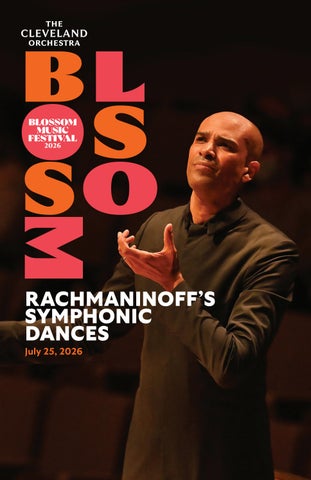
RACHMANINOFF’S SYMPHONIC DANCES
July 25, 2026

R ACHMANINOFF ’S SYMPHONIC DANCES
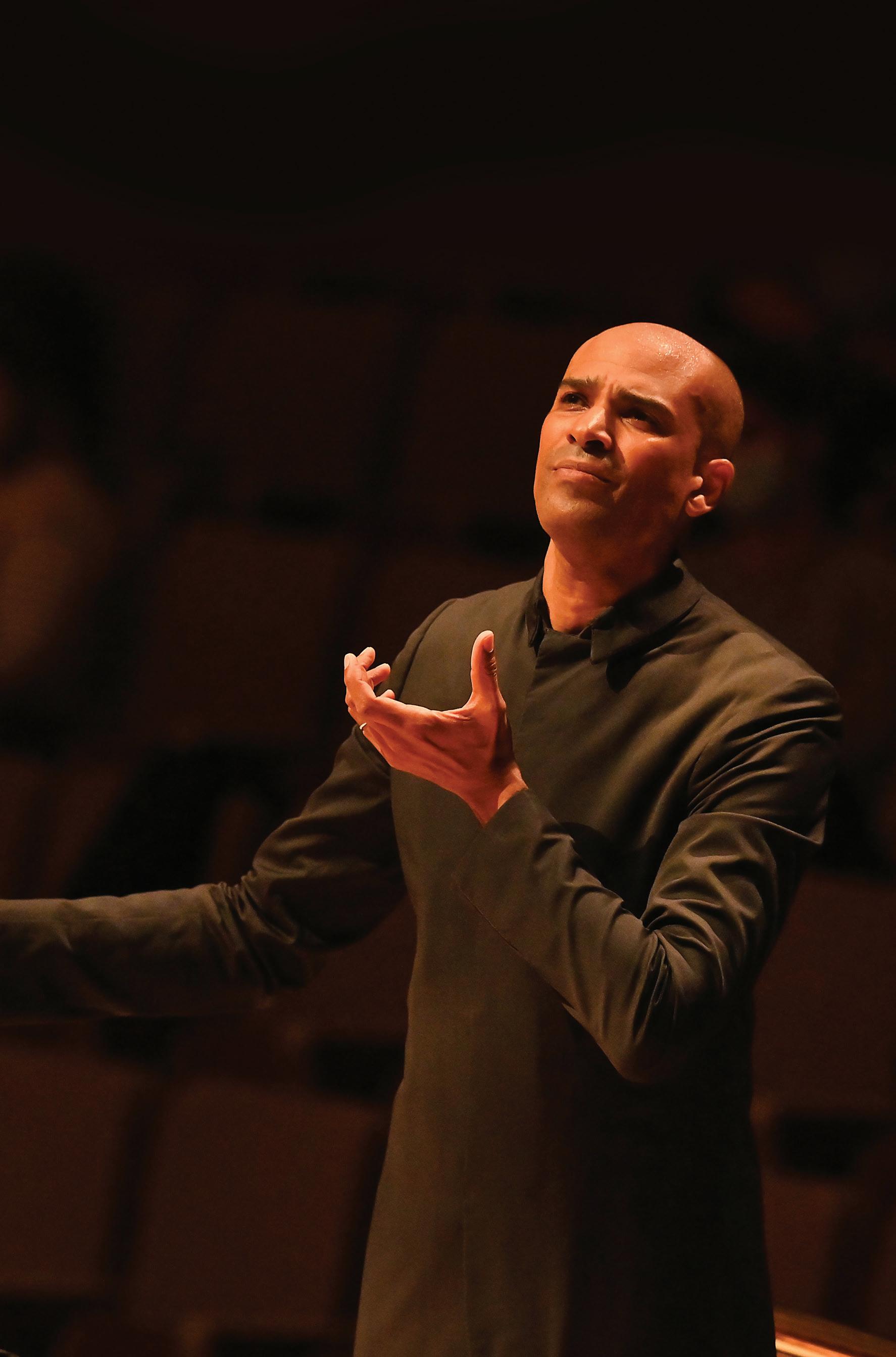
Saturday, July 25, 2026, at 7 PM The Cleveland Orchestra Kevin John Edusei, conductor
ZOLTÁN KODÁLY Dances of Galánta 15 minutes (1882–196 7)
BOHUSL AV
MARTINŮ
Cello Concer to No. 1 25 minutes
I. Allegro moderato (1890 –1959)
II. Andante poco moderato
III. Allegro Mark Kosower, cello
N T E R M I S S I O N | 20 minutes
SERGEI
R ACHMANINOFF
Symphonic Dances, Op. 45 35 minutes
I. Non allegro (187 3 –1943)
II Andante con moto (Tempo di valse)
III. Lento assai Allegro vivace with the Kent Blossom Chamber Orchestra

Total approximate running time: 1 hour 35 minutes
Pre - concer t per formance at 6 PM, featuring the Kent Blossom Chamber Orchestra playing Sergei Rachmaninof f ’s Vocalise and Ludwig van Bee thoven’s Symphony No. 1, conduc ted by Taichi Fukumura .
Tonight’ s concer t is sponsored by ParkOhio.


INTRODUCTION
In 1918, unnerved by lingering tensions sparked by the Russian Revolution, Sergei Rachmaninoff left his homeland for the United States, never to return. From then until his death in 1943, he dedicated most of his creative energies to performing. “I left behind my desire to compose,” he later reflected. “Losing my country, I lost myself also.”
Despite the compositional dry spell, Rachmaninoff managed to compose six works in these years of exile, including the Symphonic Dances. The piece offers a remarkable mix of nostalgia and forward thinking, quoting two of Rachmaninoff’s early works and offering harmonic twists that point to the musical paths the composer might have followed, had he lived longer. Alas, the Symphonic Dances would be his last orchestral composition. The “Dances” of the title reflect the work’s initial conception as a ballet that never came to fruition, though one can easily imagine a corps de ballet whirling across the stage to the sounds of this sumptuous music.
The two other works on this program also hold dance connections, courtesy of Eastern Europe. Hungarian composer Zoltán Kodály is perhaps best remembered for his contributions to music education — the so-called “Kodály method” is still taught around the world today — but his compositions also present a distinctive contribution to the repertoire. His 1933 Dances of Galánta were an attempt to capture, through extensive research, the flavors of his homeland’s folk songs and dances, resulting in a riotously exciting work for full orchestra.
Though Czech composer Bohuslav Martinů sought to capture a more “international” style in his neoclassically tinged First Cello Concerto, its syncopated, dancelike rhythms still simmer with Czech color. Tonight’s performance — headlined by Principal Cello Mark Kosower — marks the first time The Cleveland Orchestra will perform this piece. (See page 11 for Kosower’s thoughts on the work.) Eager for more Martinů? On September 24 and 26, the Orchestra will perform the composer’s Second Symphony — commissioned specifically for The Cleveland Orchestra — for the first time since its premiere in 1943. Come “Czech” it out!
—
Kevin McBrien Kevin McBrien is The Cleveland Orchestra’s Editorial & Publications Manager.
Dances of Galánta
by Zoltán Kodály
B O R N : December 16, 1882, in Kecskemet , Hungar y
D I E D : March 6, 196 7, in Budapest
COMPOSED: 1933
WORLD PREMIERE: October 23, 1933, with Ernő Dohnányi conducting the Budapest Philharmonic Societ y
CLE VEL AND ORCHESTR A PREMIERE: November 12, 1936, led by Music Direc tor Ar tur Rodziński
ORCHESTR ATION: 2 flutes (2nd doubling piccolo), 2 oboes, 2 clarinets, 2 bassoons, 4 horns, 2 trumpets, timpani, percussion (chimes, tambourine, triangle), and strings
DUR ATION: about 15 minutes
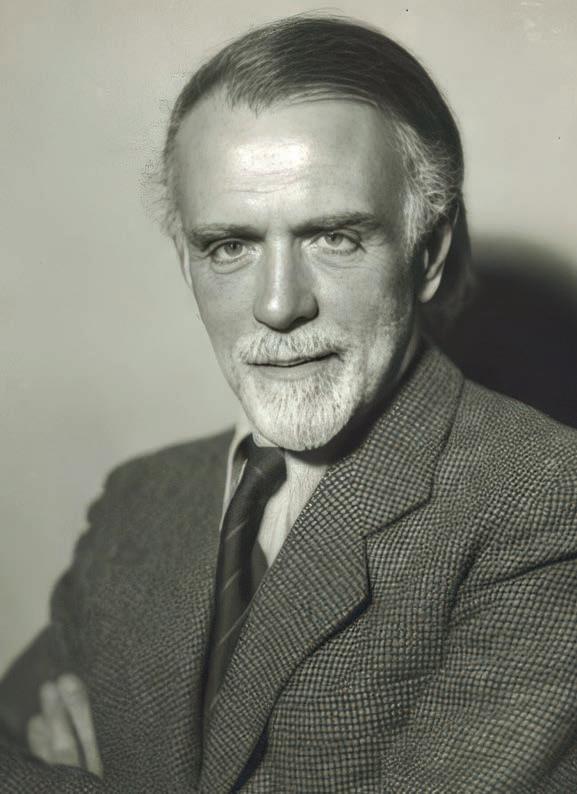
THE COMPOSER ZOLTÁN KODÁLY MADE IT HIS LIFE’S WORK to st udy the folk music of hi s nat i ve Hunga r y a nd t o w r i t e or ig ina l comp o s i t ion s in s pire d by i t . T hat s a id , hi s
Dances of Galánta f rom 1933 are much more than arrangement s of folk dances f rom a f ield t rip. This music held deep personal meaning for Kodály, because he had grown up in the town of Galánta , hav ing moved there a s a toddler with his family. (The town, then in Nor thern Hungar y, is now par t of Slovak ia .)
In the preface to the printed score, Kodály wrote:
The author spent the most beautif ul seven years of his childhood in Galánta . The town band, led by the f iddler Mihók, wa s famous . But it must have been even more famous a hundred years earlier. Several volumes of Hungarian dances were published in V ienna around the year 1800 One of them lists its source this way : “ f rom several Gypsies in Galánta ” May my modest composition inspired by this music ser ve to continue the old tradition
During his research, Kodály found extensive evidence to show that the fame of those musicians had indeed spread far beyond the boundaries of their hometown.
As a child in Galánta, Kodaly not only had ample occasion to hear Mihók ’ s band, he a lso lea r ne d ma ny folk songs f rom ser va nt s a nd his “ ba re -foot e d compa nions f rom the Galánta public school.” During his t ime in Galánta , Kodály wa s also int roduced to We s t er n cla s sica l music . He t ook up the cello a nd, b e cause his pa rent s love d t o play chamber music with friends, young Zoltán was soon able to par ticipate directly in musical evenings at home.
For t y-odd years af ter this init ial encounter with the music of Galánta, Kodály returned to the published source material a s a mat ure composer and leading scholar of Hungarian musical t radit ions. He took the melodies f rom the early 19 th-cent ur y Viennese edit ions, which had re cently b e en re discovere d by a musicolog is t named Er vin Major. But Kodály didn’t have to rely solely on the printed notes, for he also had the sound of the old town band st ill in his ears a s he scored the music.
T he s t yle of the se da nce s is k now n a s verbunkos, from the German Werbung or “recruitment.” In centuries past, Austrian army recruiters t raveled the count r yside with impressively-dressed t roops and musicians in tow; the of f icers would dance in format ion to rhy thmic music all meant to ent ice young men to sign up. This verbunkos became the dominant Hungarian inst r umental t radit ion of the 19th centur y.
In his Dances of Galánta, Kodály gave the various verbunkos melodies exquisite musical coloring, and arranged them in a ma ster f ul sequence with alternat ing moods and tempos. The pensive int roduc t ion ant icipates the stately principal melody, played by solo clarinet . Later on, this melody ret urns several t imes a s a rondo (or variat ion) theme. Two inter vening episodes (one played by f lute, the other by oboe) are fa ster in tempo and lighter in charac ter.
In the second half of the composit ion, the variat ions of the rondo form are ca st a side and we hear a series of dance t unes that apar t f rom one cont ra st ing slower theme gradually get fa ster.
The climac t ic ending is delayed for a moment by the ret urn of par t of the opening melody, with a shor t clarinet cadenza added. The ent ire second half of the piece is dominat e d by a cha rac t er is t ic s y ncopat e d rhy thmic f ig ure (shor t – long – shor t), which prov ides an ending that is a s st rik ing a s it is simple.
Peter Lak i
Peter Laki is a musicologist and frequent lecturer on classical music. He is a visiting associate professor of music, emeritus, at Bard College and was The Cleveland Orchestra’s program annotator from 1990 to 2007.
ZOLTÁN KODÁLY
Cello Concer to No. 1
by Bohuslav Mar tinů
B O R N : December 8, 1890, in Polička , Aust ria-Hungar y ( present-day Czech Republic)
D I E D : August 28, 1959, in Liestal, Switzerland
COMPOSED: 1930; revised 1939 and 1955
WORLD PREMIERE: Cellist Ga spar Ca ssadó premiered the first version in Berlin on December 13, 1931. The second and third versions were premiered by Pierre Fournier, the lat ter on December 5, 1955, with Vic tor Desarzens conducting the Orchestre de Chambre de Lausanne.
This concer t marks the f irst Cleveland Orchestra per formance of Bohuslav Mar tinů’s Cello Concer to No. 1.
ORCHESTR ATION: 2 flutes, 2 oboes, 2 clarinets, 2 bassoons, 4 horns, 2 trumpets, 3 trombones, timpani, percussion (bass drum, cymbals, snare drum), and strings, plus solo cello
DUR ATION: about 25 minutes
BOHUSLAV MARTINŮ WAS BORN IN A SMALL TOWN IN BOHEMIA where he showed early promise a s a violinist , giv ing his f irst public concer t at age 15. The proud townspeople raised money for his schooling and he enrolled at the Nat ional Conser vator y in Prague a year later. He turned out to be a rather poor st udent , however, being t wice dismissed f rom the Conser vator y because of his “ incorrigible negligence.” Despite these early setbacks, Mar tinů spent three years as a violinist in the Czech Philharmonic, where his exposure to the music of Debussy piqued his interest in composition. In 1923, he moved to Paris, where he encountered the Neocla ssicism of Stravinsk y and Les
Six, A merican ja zz , and other novel sounds, which he blended with his nat ive Czech traditions and techniques derived from Renaissance polyphony and Baroque orchestral music to forge a uniquely personal st yle. Over the course of his career, he composed over 400 works in many genres, becoming one the 20 th cent ur y ’ s most prolif ic composers.
A mong Mar t inů’s numerous composit ions were some 30 concer tos or concer tolike works, including three for cello. The first of these, writ ten in 1924, wa s a concer tino for cello, winds, piano, and percussion, an ensemble that wa s t y pical of the empha sis on w ind ins t r ument s in ne ocla s sica l circle s dur ing the ea rly 1920 s . (St rav insk y, for example, wrote his Symphonies of Wind Instruments and his Concer to for Piano and Winds at about the same t ime.)
Mar tinů’s First Cello Concer to dates from 1930. The accompaniment wa s originally scored for a small Baroque-inspired chamber orchest ra , but the composer re-scored
the work for f ull orchest ra in 1939, dedicat ing this new version to the French cellist Pierre Fournier. In one f ina l rev ision, dat ing f rom 1955, the composer thinne d out the orche s t rat ion a bit for greater clarit y, and again de dicat e d the score t o Four nier, who playe d it of t en over the re s t of his ca re er. (Ma r t inů compose d a se cond cello concer t o while liv ing in the US dur ing World Wa r II , which wa s premiere d in New York in 194 5.)
The f irst movement begins with a lively orche s t ra l int roduc t ion that feat ure s a g reat deal of syncopat ion, perhaps ref lec t ing the rhy thmic ener g y of the A mer ica n ja z z ba nds that were tak ing Paris by storm in the years af t er World Wa r I . T he cello’s f ir s t s t at ement int roduces the faint hint of a blues melody and one of the mos t impor t ant feat ures of Mar t inů’s music: that it rarely follows the regular phra sing and met rical feeling charac terist ic of most Western music of the pa st 300 years. Instead, Mar t inů incorporated the odd meters of Czech folk music a s well a s the irregular phra sing of Rena is sa nce poly phony, which he a dmire d g reatly. Event ua lly, the ener g y of the opening sec t ion dissipates and gives way to quieter, more ref lec t ive music. These t wo cont ra st ing moods alternate unt il, with an abr upt quickening of tempo, a shor t , spark ling coda brings the movement to a close.
A quietly unset tling chorale, played by clarinet s, ba ssoons, and solo t r umpet , introduces the second movement The cello expands on this plaintive melody, accompanied by woodw inds and unobt r usive st rings interr upted only by a brief but ominous appearance of the f ull orchest ra . A n extended meditat ive cadenza for the cello sit s at the hear t of the movement , which event ually builds to an anguished clima x for f ull orchest ra . The chorale melody reappears, it s mournf ul nat ure confirmed by the orchestra’s outburst, and the movement concludes with a feeling of quiet lamentat ion.
Mar t inů’s debt to Baroque music is most apparent in the f inal movement . The text ure of the opening sec t ion, with it s constant alternat ion bet ween orchest ra and soloist , recalls a V ivaldi or J . S . Ba c h concer to, and the pulsat ing
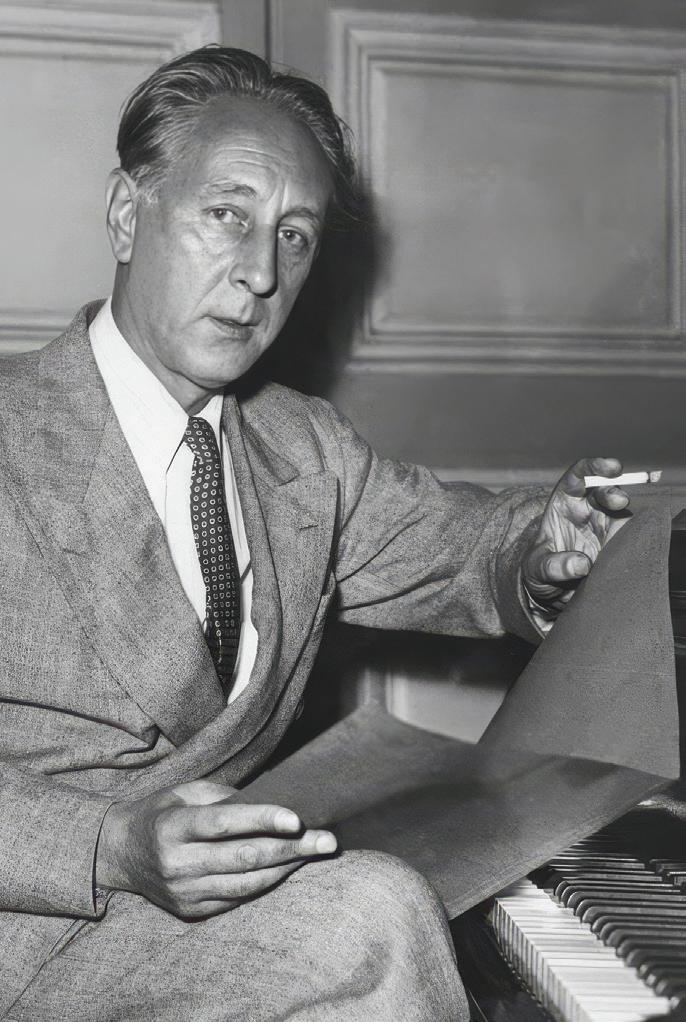
BOHUSL AV MARTINŮ
“spinning out ” qualit y of the cello’s melody mirrors that of Baroque writing for solo string ins t r ument s . T he liveline s s of this op ening music is cont inue d in a se cond, more convent ionally melodious sec t ion whose bouncy, irregular rhy thms evoke the feel of a Cze ch folk da nce. T he excit ement come s t o a n abr upt ha lt dur ing a n ex t ende d cello solo that re colle c t s the se cond movement ’ s mour nf ul at mosphere. A ga in the cello inter venes with a long cadenza-like solo that gradually increases in intensit y and tempo, set t ing the stage for a ret urn of the movement ’ s energet ic opening music, which brings the movement , and the concer to, to a thrilling conclusion.
Michael Stra sser is professor emeritus of musicolog y at Baldwin Wallace Universit y. He ha s published numerous ar ticles and reviews and presented papers at international conferences on f in-de-siècle France, Arnold Schoenberg, and colonial music in British Nor th America and Mexico

S U M M E R S @ S E V E R A N C E
Thursday evenings at Severance with music , food , cocktails & more!
S

J U LY 3 0 | 7 PM
A N I G H T AT T H E O PE R A
AU G U S T 13 | 7 PM

AU G U S T 27 | 7 PM

Presenting Sponsor




Michael Stra sser
MARK KOSOWER ON MARTINŮ
The Cleveland Orchestra’s Principal Cello Mark Kosower is no stranger to off-thebeaten path music. In recent years, he’s brought hidden gems by Dutilleux, Walton, and Gulda to the Cleveland stage. For his Blossom appearance, Kosower will dust off another rarity: the First Cello Concerto of Bohuslav Martinů. We sat down with Kosower to learn more about this work and what makes Martinů’s music so special.
When did you first learn about this concerto? Have you played it before?
I first encountered this work in college when my sister (also a cellist) performed it on a master’s degree recital at Indiana University. Her performance inspired me, and I added it to my list of concertos I wanted to learn. It’s always been one of those pieces that’s grabbed my attention, but this will be my first time performing it.
This work has three different versions. Why is that?
Sometimes a composer has brilliant ideas with an important message behind them but struggles to put the pieces together. Martinů first wrote this concerto in 1930 and it’s very Neoclassical — you can hear influences of Stravinsky. To fit in within that aesthetic, the first version was deliberately scored for chamber orchestra and the solo part was more integrated into the ensemble and less “stand out” like concertos in the Romantic tradition. By the time the third version rolls around in 1955 — which is the version I’m playing — the concerto is scored for full orchestra with a flashy and virtuosic solo part.
What’s your preparation like for this piece?
Alongside learning the notes, I like to dig deeper to learn about the context in which the piece was written, especially what was going on in the world. I always say that working on a piece of music is like a mosaic, because you start by identifying little things before it evolves into a much bigger image. What’s challenging with Martinů is ensemble coordination for the complex syncopated rhythms, so there’s quite a bit to work out in rehearsals with the Orchestra. It should have a buoyant, folklike feel to it; if you approach it from the angle of heavy, Germanic music, it won’t work.
Any final thoughts?
Performing this work is going to be a lot of fun. It’s such uplifting, inspired music that it’s hard not to enjoy. It’s also perfect for a summertime performance at Blossom. There are certain pieces that become even more magical outdoors, and I think this concerto is going to be one of them.

Scan the QR code to read an extended version of this conversation on The Cleveland Orchestra’s Content Hub.
Symphonic Dances, Op. 45
by Sergei Rachmaninof f
B O R N : April 1, 1873, in Semyonovo, Russia
D I E D : March 28, 1943, in Beverly Hills, California
COMPOSED: 1940
WORLD PREMIERE: Januar y 3, 1941, with Eugene Ormandy conducting
The Philadelphia Orchestra
CLEVELAND ORCHESTR A PREMIERE: Januar y 8, 1942, led by Music Director
Ar tur Rodziński
ORCHESTR ATION: 2 flutes, piccolo, 2 oboes, English horn, 2 clarinets, bass clarinet , alto sa xophone, 2 bassoons, contrabassoon, 4 horns, 3 trumpets, 3 trombones, tuba , timpani, percussion (bass drum, chimes, cymbals, glockenspiel, side drum, tambourine, tam-tam, triangle, x ylophone), piano, harp, and strings
DUR ATION: about 35 minutes
IN HIS YE ARS OF SELF- E XILE FROM RUS SIA , SERGEI R ACHMANINOFF FOUGHT a cons t a nt bat tle w ith the a rbit er s of t a s t e, both in Europ e a nd in A mer ica , who ha d de cide d that moder n music ha d t o b e … moder n . His root s were de eply pla nt e d in Rus sia n soil a nd in the way of life h e le d there, a nd his music ha d evolve d w ithin the great (but relat ively recent) Russian t radit ion, best represented by Tchaikovsk y. His technique a s a composer and orchest rator wa s unequaled, and his imaginat ion wa s never dormant , but his st yle had lit tle in common with the spirit of the Ja zz A ge or the va r ious approache s t o Ne ocla s sicism or Moder nism that were coming t o life in the f ir s t decades of the 20 th cent ur y.
Perhaps because his Four th Piano Concer to had been poorly received in 1927, Rachmaninof f ca st his next piano concer to a s a R hapsody (in name) and a set of variat ions on a theme by Paganini (in form). This worked, and the public responded enthusia st ically. The same approach brought into being the Symphonic Dances the Third Sy mphony had similarly been roughly handled by the press in 1936. Rather than a Four th Sy mphony, the new work which t ur ne d out t o b e Rachma ninof f ’ s la s t major composit ion wa s originally t itled Fanta stic Dances and then, ack nowledging it s t r ue ident it y, Symphonic Dances.
This ma sterly swansong wa s composed in quiet seclusion in the summer of 1940 when Rachmaninof f wa s liv ing in Centerpor t , New York, in a house overlook ing Long Island Sound. Ballet wa s in his mind, in any ca se, because the great Russian choreographer Mikhail Fokine was planning a ballet using the Rhapsody on a Theme of Paganini,
a project which had Rachmaninof f ’ s enthusia s t ic suppor t . T his wa s premiere d in 1939 w ithout much accla im , a nd a follow-up Fok ine ba lle t on the Sy mphonic D a nce s never materialized (owing to Fokine’s death in 1942, followe d by Rachmaninof f ’ s death a year later).
Perhaps Rachmaninof f did feel this music a s da nce music , w ith the power f ul s t a mping rhy thm of the f ir s t movement echoing ballets by Stravinsk y and Prokofiev, and with the f leet waltz rhy thm of the second movement sug gest ing Ravel. The f inale is more int ricate and elusive, rhy thmically, for behind the restless f low of sounds, the composer wa s think ing of plainchant , specif ically the Dies irae f rom the Lat in Requiem Ma ss, a mot ive Rachmaninof f cited f requently. There is also reference to the Russian chant “Blagosloven yesi, Gospod,” which he had set for chor us in his All-Night V igil of 1915. These t wo references emerge a s int rinsic to his melodic st yle, deeply rooted, probably subconsciously, in the chant ing of Or thodox priest s he had heard in his childhood. It is also signif icant that a theme f rom his First Sy mphony is quoted at the end of the f irst movement of the Symphonic Dances, played in a quiet and dignif ied manner and standing apar t f rom the st rong pulse of the rest of the movement .
The f irst movement is a superb example of how to build a large musical st ruc t ure f rom simple materials, in this ca se a descending t riad, weav ing under and over f irm rhy thmic suppor t and planted (with endless chromat ic digressions) in the key of C minor A dialogue bet ween oboe and clarinet puts the brakes on for the second section, which is slower, ca s t in a remot e key, a nd r ichly melodic . Here, a n a lt o sa xophone introduces one of Rachmaninoff ’ s rapturous melodies that grow and reshape themselves in a pa ssionate evolut ion, of ten hint ing at a Russian f lavor.
The middle movement is a ma sterpiece of elegance in a waltz rhy thm f ull of shif t s and t urns, it s main t une being a plaint ive melody f irst presented by English horn and oboe in par t nership. T he orches t rat ion is da zzling, and a muted bra ss fanfare punc t uates the movement f rom t ime to t ime.
The third-movement f inale combines melancholy wist f ulness with rhy thmic exhilarat ion and v ir t uosit y. The movement is a quest for it s theme, which makes the
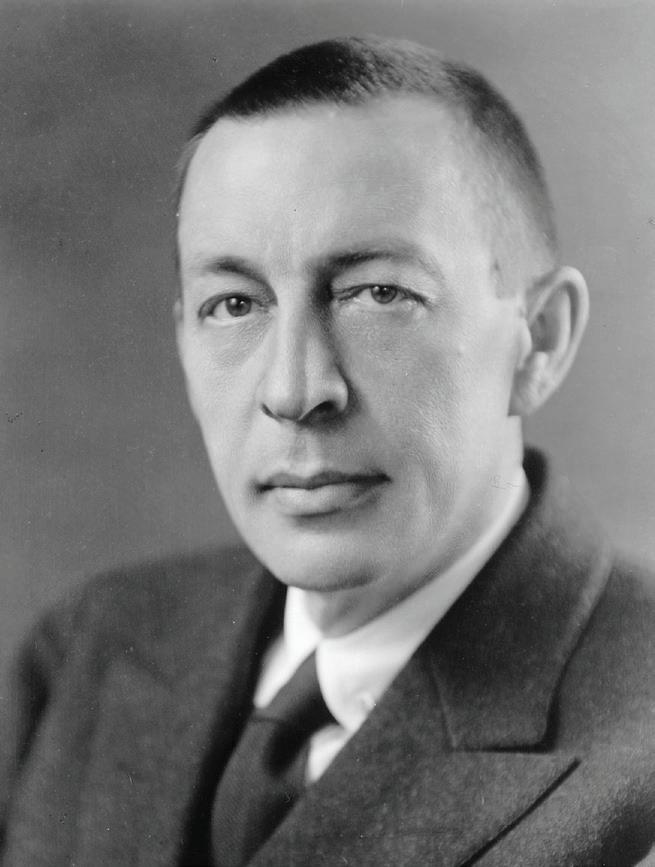
SERGEI R ACHMANINOFF
initial Allegro sound restless and fragmentar y, with contributions from the piccolo and t r umpet that help to form a melodic core. But this is not to be reached unt il af ter a leng thy ret urn to the slower tempo, when the cellos press the claim of something close to the Dies irae. The A llegro ret urns for an exuberant mi xt ure of plainchant s for the full orchestra. With so much of the finale devoted to gloomy Russian introspection, not remotely sug gest ive of dance, the whole work comes nearer to being the Four th Sy mphony Rachmaninof f never wrote, with slow movement and f inale being persua sively combined.
ld
Hugh Macdonald is Avis H. Blewet t Professor Emeritus of Music at Wa shing ton Universit y in St . Louis . He ha s writ ten books on Beethoven, Berlioz, Bizet , and Scriabin, a s well a s Music in 1853: The Biography of a Year.
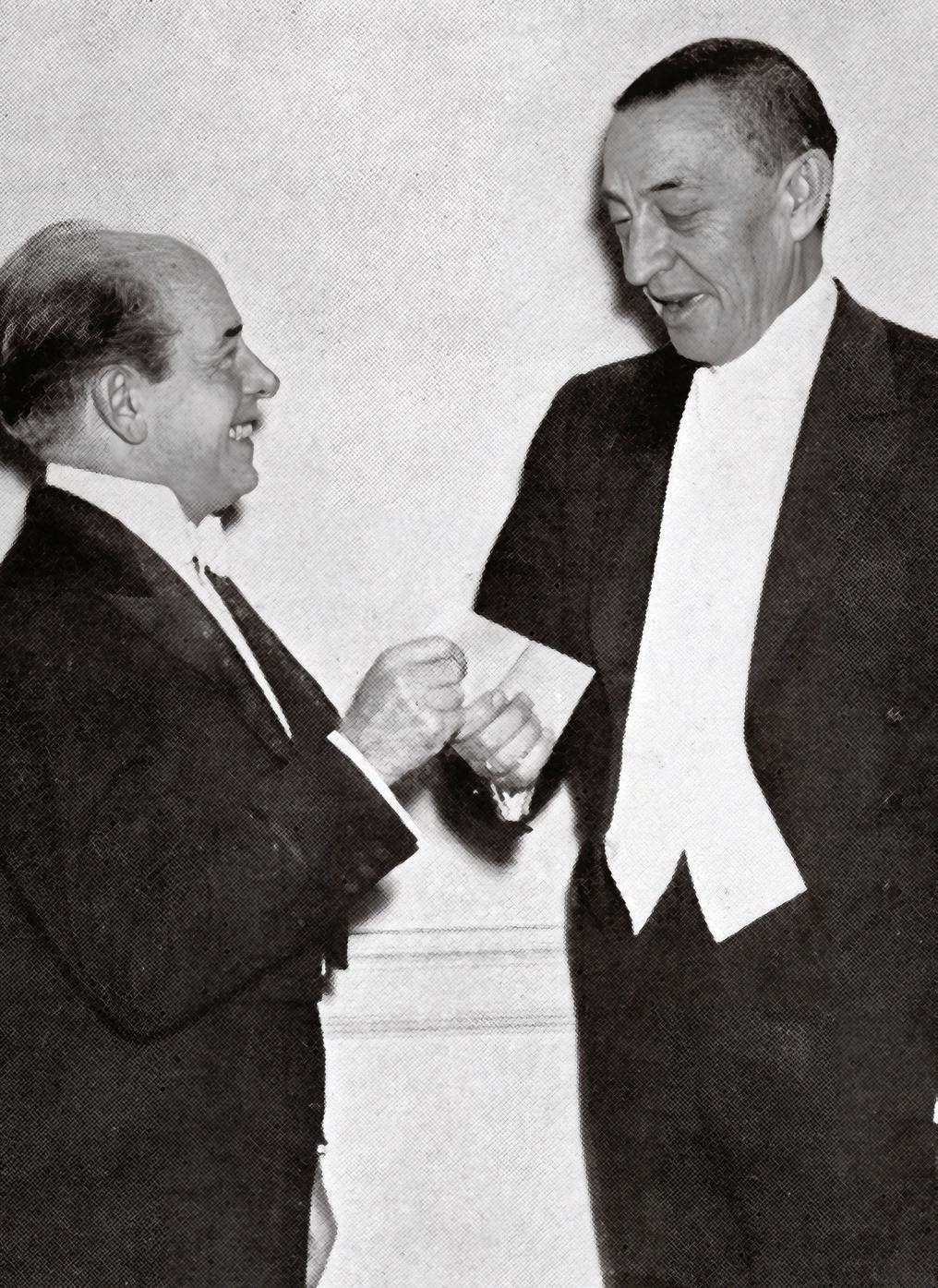
Conductor Eugene Ormandy (lef t) shares a jovial moment with Sergei Rachmaninof f Ormandy and The Philadelphia Orchestra premiered Rachmaninof f ’ s Symphonic Dances in Januar y 1941.
Hugh Macdona



The best classrooms have no w alls. Learning happens differently when students extend their studies beyond the classroom and into the natural world


O F F V I N E th e
STAN HYW ET HALL & GAR D E N S
July 31 • 5:30–8:30 PM
Experience an all-inclusive summer evening of fine wines and artisanal pairings from the region’s premier purveyors. Enjoy live music, sample curated vintages, and take home your favorite bottle | stanhywet org



Preschool to Grade 8 | OldTrail org
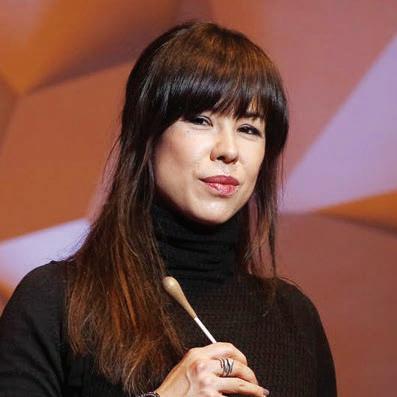
KE VIN JOHN EDUSEI
conduc tor
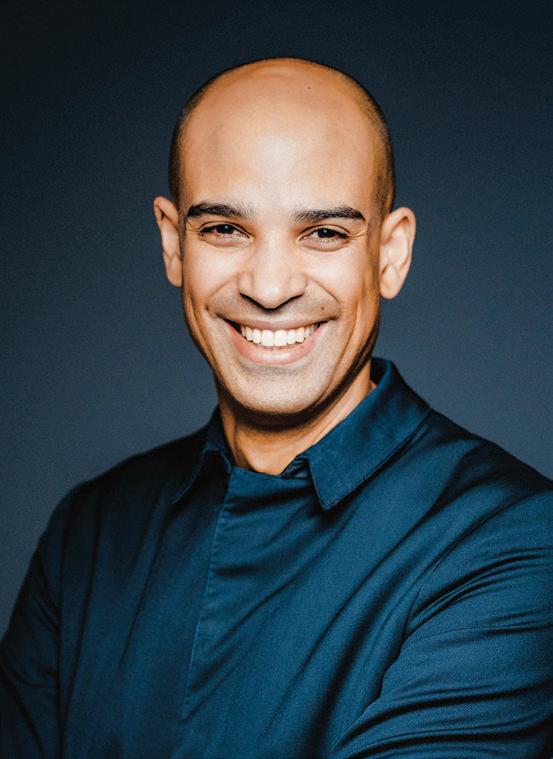
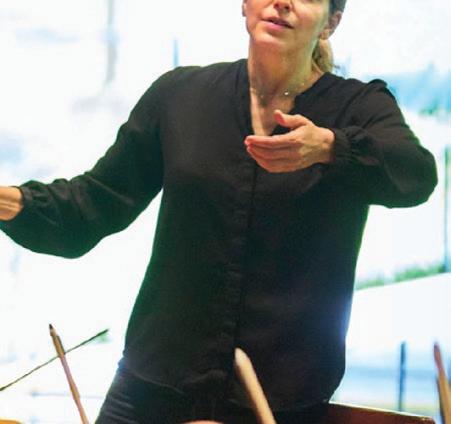
German conduc tor Kevin John Edusei is praised rep eat e dly for the dra ma a nd t ension in his musicma k ing a nd the sense of a rchit e c t ure, wa r mth, a nd s t ylis t ic insig ht that he br ings t o his per formances. He is deeply commit ted to the creative elements of per formance, cultivating audiences and conduc t ing an eclec t ic range of reper toire.
In the 2025 –26 sea son, Edusei wa s conduc torin-residence with the Royal Philharmonic Orchestra, which included three specially curated programs at London’s iconic Cadogan Hall. He cont inues to be in high demand in Nor th America, where he recently debuted with the Atlanta and St . Louis sy mphony orchest ra s and ret urned to the Kansa s Cit y, Colorado, Indianapolis, and Seat tle sy mphonies. O ther recent engagement s include per formances with New York Philharmonic, Los Angeles Philharmonic, Sydney Symphony Orchestra, Royal Scot tish National Orchestra, and Vienna Radio Symphony Orchestra . He is also the former chief conductor of the Munich Sy mphony Orchest ra .
In 2022, Edusei made his debut at the Royal Ballet and Opera conducting Puccini ’ s L a bohème, which wa s s t rea me d acros s cinema s worldw ide, a nd in 2023 –24, he ret urned for a produc t ion of Madama But ter f ly. Prev iously, he enjoyed great success with produc t ions at the Semperoper Dresden, English Nat ional Opera , Hamburg State Opera , Volksoper Wien, and Komische Oper Berlin. During his tenure a s chief conductor of the Bern Opera House, he led highly acclaimed new produc t ions, including Peter Grimes, Salome, Bluebeard ’ s Ca stle, Káť a Kábanová, Tannhäuser, Tristan und Isolde, and a cycle of the Mozar t- Da Ponte opera s.
Edusei st udied orchest ral conduc t ing at the Universit y of the A r t s Berlin and The Hague’s Royal Conser vator y. In 2004, he wa s awarded a conduc t ing fellowship at the Aspen Music Fest ival and School. In 2007, he wa s a prizewinner at the Lucerne Fest ival Conduc t ing Compet it ion, under the ar t ist ic direc t ion of Pierre Boulez, and he won first prize of the 2008 Dimitri Mitropoulos Competition in Athens. Edusei is an alumnus of the Deut sche Bank A kademie Musik theater heute and the Dirigentenfor um of the G er ma n Music C ouncil. He re side s w ith his fa mily in Munich.
MARK KOSOWER
cello | Louis D. B eaumont Chair
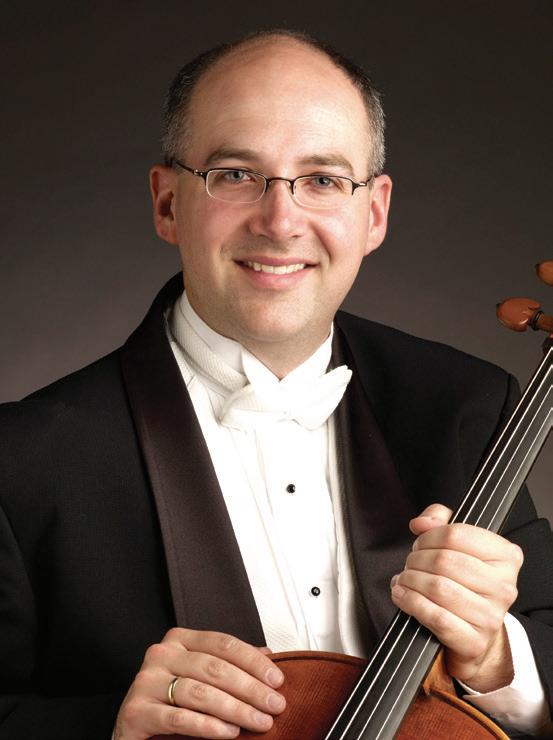
Mark Kosower joined The Cleveland Orchest ra a s P r incipa l C ello in 2010, a nd is e qua lly k now n a round the world a s a re cit a lis t , concer t o solois t , and chamber musician. Prior to his appoint ment in Clevela nd, he wa s solo cellis t of the Ba mb er g Sy mphony (2006 –10).
Most recently, Kosower made solo appearances with the Nat ional Sy mphony Orchest ra of Costa Rica, Puer to Rico Symphony, Pasadena Symphony, Columbus Pro Musica Chamber Orchestra, and The Cleveland Orchestra, among others. He also per formed at the Santa Fe Chamber Music Festival, Nor th Shore Chamber Music Festival, Seat tle Chamber Music Societ y, and as soloist at the Sunriver Music Festival.
During the pandemic, Kosower per formed J. S. Bach ’ s complete cello suites at Cleveland ’ s Trinit y Cathedral as par t of his ongoing Bach for Humanit y initiative. He has recorded for the Ambitus, Delos, and VAI labels, and was the first to record the complete solo cello music of Gina stera , which he completed for Na xos and wa s described a s a “ power f ul advocate of Gina stera’s ar t ” by MusicWeb Internat ional.
In addit ion to per forming, Kosower regularly ser ves on facult y for Carnegie Hall ’ s Nat ional Youth Orchest ra of the United States of A merica , Colorado College’s Summer Music Fe s t iva l, a nd Ca lifor nia’s Hidden Va lley Music Semina r s . He ha s a lso t aug ht students around the world, including at the New World Symphony, Shanghai Orchestra Academy, and Baccareli Inst it ute of São Paulo.
Born in Wisconsin, Kosower began st udy ing cello at age one-and-a-half with his father who st udied with Ernst Silberstein, Principal Cello of The Cleveland Orchest ra under George Szell. He later st udied with János Starker at Indiana Universit y and with Joel Krosnick at The Juilliard School. A mong his many accolades, Kosower ha s received an Aver y Fisher Career Grant , a Sony Grant , and grand prize in the Ir v ing M. K lein Internat ional St ring Compet it ion.





















THE CLE VEL AND ORCHE STR A
Fra nz Wel s er - Mös t Music Dir e c tor
K E LV I N S M I T H FA M I LY C H A I R
FIRST VIOLIN S
Joel Link
CONCERTMASTER
Blossom-Lee Chair
Elizabe th Faye t te FIRST ASSOCIATE
CONCERTMASTER
Virginia M Lindseth, PhD, Chair
Jung- Min Amy Lee
ASSOCIATE CONCERTMASTER
Gretchen D and Ward Smith Chair
Zhan Shu
ASSISTANT CONCERTMASTER
Clara G and George P Bickford Chair
Stephen Tavani
ASSISTANT CONCERTMASTER
Dr Ronald H Krasney Chair
Wei- Fang Gu
Drs Paul M and Renate H Duchesneau Chair
Kim Gomez
Elizabeth and Leslie Kondorossy Chair
Chul- In Park
Harriet T and David L Simon Chair
Miho Ha shizume
Theodore Rautenberg Chair
Jeanne Preucil Rose
Larry J B and Barbara S Robinson Chair
Alicia Koelz
Oswald and Phyllis Lerner Gilroy Chair
Yu Yuan
Patty and John Collinson Chair
Isabel Traut wein
Trevor and Jennie Jones Chair
Katherine Bormann
Paul and Lucille Jones Chair
Analise Handke
Gladys B Goetz Chair
Genevieve Smelser
SECOND VIOLIN S
Stephen Rose*
Alfred M and Clara T Rankin Chair
Eli Mat thews1
Patricia M Kozerefski and Richard J Bogomolny Chair
Ja son Yu2
James and Donna Reid Chair
Sonja Bra aten Molloy
Carolyn Gadiel Warner
Elayna Duitman
Ioana Missit s
Jef frey Zehngut^
Kathleen Collins
Be th Woodside
Emma Shook
Dr Jeanette Grasselli Brown and Dr Glenn R Brown Chair
Yun -Ting Lee
Deborah L Neale Chair
Jiah Chung Chapdelaine
Liyuan Xie
Gawon Kim
Dus tin Wilkes- Kim
VIOL
AS
Wesley Collins*
Chaillé H and Richard B Tullis Chair
Gare th Zehngut 1^
Charles M and Janet G Kimball Chair
Stanley Konopka 2
Mark Ja ckobs
Jean Wall Bennett Chair
Lisa Boyko
Richard and Nancy Sneed Chair
Richard Waugh
Lembi Veskime t s
The Morgan Sisters Chair
Eliesha Nelson^
Anthony and Diane Wynshaw-Boris Chair
William Bender
Thomas Lauria and Christopher Lauria Chair
CELLOS
Mark Kosower*
Louis D Beaumont Chair
Richard Weiss 1
The GAR Foundation Chair
Charles Bernard2
Helen Weil Ross Chair
Br yan Dumm
Muriel and Noah Butkin Chair
Tanya Ell
Thomas J and
Judith Fay Gruber Chair
Ralph Curr y
Brian Thornton
William P Blair III Chair
David Alan Harrell
Mar tha Baldwin
Dane Johansen
Marguerite and James Rigby Chair
Paul Kushious
BAS SES
Ma ximilian Dimof f *
Clarence T Reinberger Chair
Charles Paul1
Mary E and F Joseph Callahan Chair
Derek Zadinsk y 2
Mark Ather ton
Thoma s Sperl
Henr y Peyrebrune
Charles Barr Memorial Chair
Charles Carle ton
Sco t t Dixon
Brandon Ma son
HARP
Trina Struble*
Alice Chalifoux Chair
FLUTES
Joshua Smith*
Elizabeth M and William C Treuhaft Chair
Saeran St . Chris topher
Jessica Sindell2^
Austin B and Ellen W Chinn Chair
PICCOLO
Mar y Kay Fink
Anne M and M Roger Clapp Chair
OBOES
Frank Rosenwein*
Edith S Taplin Chair
Corbin Stair
Sharon and Yoash Wiener Chair
Jef frey Rathbun 2
Everett D and Eugenia S McCurdy Chair
Rober t Walters
ENGLISH HORN
Rober t Walters
Samuel C and Bernette K Jaffe Chair
CL ARINETS
Afendi Yusuf *
Rober t Marcellus Chair
Rober t Woolfrey
Victoire G and Alfred M Rankin Jr Chair
Daniel McKelway2
Rober t R and Vilma L Kohn Chair
Amy Zolo to
E- FL AT CL ARINET
Daniel McKelway
Stanley L and Eloise M Morgan Chair
BAS S CL ARINET
Amy Zolo to
Myrna and James Spira Chair
BAS SOON S
John Clouser*
Louise Harkness Ingalls Chair
Gare th Thoma s
Catherine Van Handel2
Sandra L Haslinger Chair
Jonathan Sher win
CONTR ABAS SOON
Jonathan Sher win
HORN S
Nathaniel Silberschlag*
George Szell Memorial Chair
Michael Mayhew§
Knight Foundation Chair
Jesse Mc Cormick- Stepp
Rober t B Benyo Chair
Hans Clebsch
Richard King
Meghan Guegold Hege^
Gay Cull Addicott and Robert R Cull Chair
TRUMPETS
Michael Sa chs*
Rober t and Eunice Podis Weiskopf Chair
Ja ck Sut te
Lyle Steelman 2^
James P and Dolores D Storer Chair
Michael Miller
Mar y Kay Fink
With sincere gratitude to the musicians of The Cleveland Orchestra for their in-kind contributions suppor ting communit y programs and securing funding oppor tunities.
CORNETS
Michael Sa chs*
Mary Elizabeth and G Rober t Klein Chair
Michael Miller
TROMBONES
Brian Wendel* Gilber t W and Louise I Humphrey Chair
Richard Stout
Alexander and Marianna C McAfee Chair
Sha char Israel2
BAS S TROMBONE
Luke Sieve
EUPHONIUM & BAS S TRUMPET
Richard Stout
TUBA
Ya suhito Sugiyama*
Nathalie C Spence and Nathalie S Boswell Chair
TIMPANI
Pe ter Nichols2
Mr and Mrs Richard K Smucker Chair
PERCUS SION
Marc Damoulakis*
Margaret Allen Ireland Chair
Thoma s Sher wood
Tanner Tanyeri
Pe ter Nichols
KE YBOARD
IN STRUMENTS
Carolyn Gadiel Warner
Marjory and Marc L Swar tzbaugh Chair
LIBR ARIAN
Michael Ferraguto*
Joe and Marlene Toot Chair
ENDOWED CHAIRS CURRENTLY UNOCCUPIED
Sunshine Chair
Otto G and Corinne T Voss Chair
Rudolf Serkin Chair
CONDUCTORS
Chris toph von Dohnányi † MUSIC DIREC TOR L AURE ATE
Taichi Fukumura
ASSISTANT CONDUC TOR
Elizabeth Ring and William Gwinn Mather Chair
James Feddeck
PRINCIPAL CONDUC TOR & MUSICAL ADVISOR OF THE CLE VEL AND ORCHESTR A YOUTH ORCHESTR A
Sidney and Doris Dworkin Chair
Lisa Wong
DIREC TOR OF CHORUSES
Frances P and Chester C Bolton Chair
* Principal § Associate Principal
1 First Assistant Principal
2 Assistant Principal
^ Alum of The Cleveland Orchestra Youth Orchestra
† In Memoriam
This roster lists full-time members of The Cleveland Orchestra The number and seating of musicians on stage varies depending on the piece being performed
Seating within the string sections rotates on a periodic basis
The Cleveland Orchestra, under the leadership of Music Director Franz Welser-Möst since 2002, is widely recognized a s one of the world ’ s leading ensembles. Praised by The New York Times a s “America’s Finest,” the Orchestra is renowned for it s v ir t uosit y, elega nce of sound, a nd cha mb er-like musica l f lex ibilit y. In his 25th a nd f ina l sea son a s Music Dire c t or, Welser-Möst concludes a transformative par tnership that has been marked by exceptional ar tistic ambition, growing international recognition, and deep communit y connection.
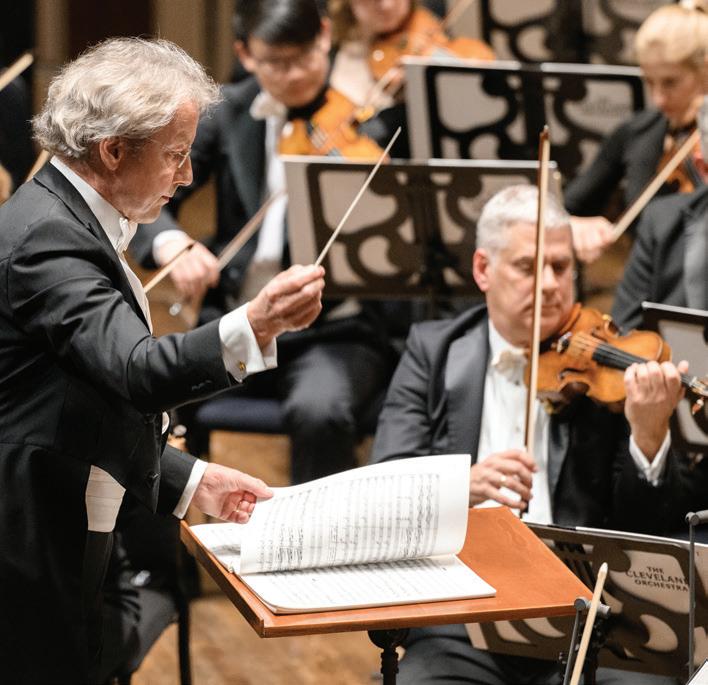
During his tenure, the Orchestra has achieved major institutional milestones, including g roundbrea k ing re sidencie s at the Musik verein in V ienna the f ir s t by a n A mer ica n orchestra and at the Adrienne Arsht Center in Miami. In 2023, The Cleveland Orchestra launche d the annua l Jack , Joseph a nd Mor t on Ma ndel Op era & Huma nit ie s Fe s t iva l, presenting acclaimed opera productions alongside ar t exhibits, communit y events, and civic conversations.
Through concer ts, broadcasts, recordings, tours, and digital initiatives, The Cleveland Orchest ra reaches an ever-growing audience around the world. It s in-house recording label and st reaming plat form, Adella .live, capt ure and share per formances f rom the Welser-Mös t era while int roducing new generat ions of fans to the Orches t ra ’ s ar t is t r y.
Founde d by Adella Pren t is s Hughe s, T he Clevela nd Orche s t ra gave it s inaug ura l concer t in December 1918 . O ver more than a cent ur y, it ha s g row n into a t rea sured communit y ins t it ut ion, enr iching lives through music, educat ion, and a deep commitment t o Nor thea s t Ohio. Today, more tha n 4 0 0,0 0 0 p e ople at t end Clevela nd Orches t ra concer t s each year. From it s year-round home at Severance Music Center t o it s summer sea son at Blo s som Music C ent er in Cuya hoga Va lley Nat iona l Pa rk , the Orches t ra cont inues to ser ve audiences across the reg ion.
Seven Music Directors
Nikolai Sokolof f, Ar tur Rodziński, Erich Leinsdorf, George Szell, Lorin Maazel, Christoph von Dohnányi, and Franz Welser-Möst have shaped the ensemble’s distinctive musical identit y and celebrated “Cleveland sound.” Welser-Möst ’ s tenure a s the longest-ser v ing Music Direc tor in Cleveland Orchest ra histor y stands a s a defining chapter in that evolution. @ClevelandOrchestra


KENT BLOSSOM MUSIC FESTIVAL
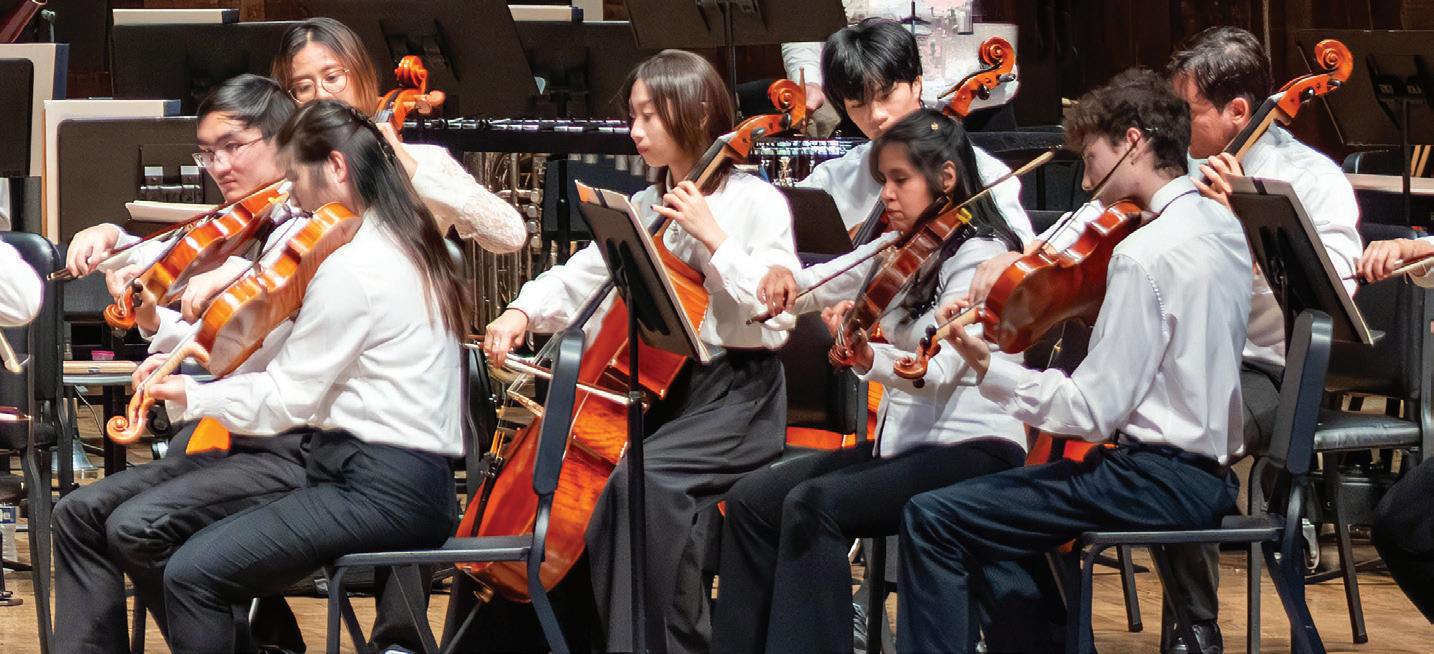
Since the inaugurat ion of Blossom Music Center a s the summer home of The Cleveland Orchest ra in 1968, Kent State Universit y ha s par t icipated in helping to develop Blossom’s role a s a center for professional t raining in the v isual and per forming ar t s.
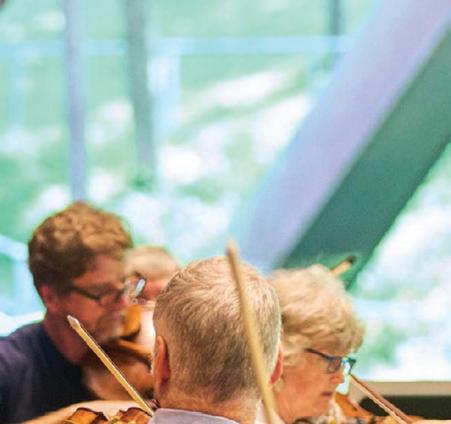
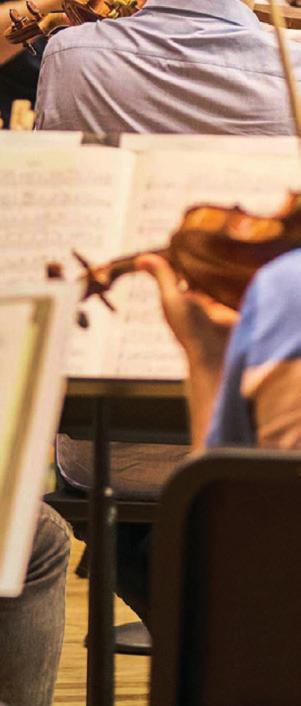
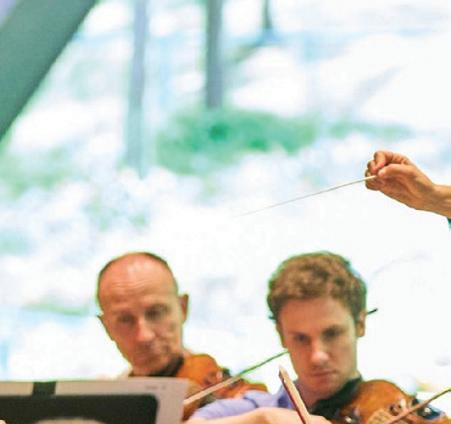
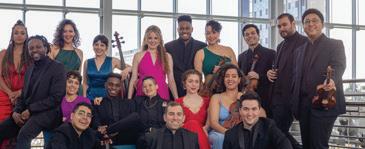
Each summer, advanced young musicians f rom around the globe gather together w ith pr incipa l members of T he Cleveland Orches t ra , the cr it ica lly acclaimed Miami String Quar tet , and major guest ar tists for five weeks of intensive chamber music study and per for mance at the professiona l level.
Since it s founding, over 2,7 1 2 t a lent e d young musicia ns have b e en af forde d
the oppor t unit y t o hone their sk ills , a nd a lumni have b e come memb er s of renow ne d orche s t ra s a nd cha mb er g roups . Cur rently, 17 Kent Blos som Music Fe s t iva l a lumni p er for m w ith T he Clevela nd Orche s t ra .
VIOLIN S
Camila Bosch
Qiufan Chen*
Sean Ellis
Park Eunchae
Alivia Ga skins
Julie ta Grosso
Hiu Wai Lam
Claire Laux
Lyra Lenigk
Alvaro Molina*
Sophia Perez- Monroe*
Aaron Tseng*
VIOL AS
Chung-Wen Lee*
Wesley Lim
Gerson Rodriguez
Mingkun Wang
Quinn Wilson
CELLOS
Pablo Elizalde Niño
Mitchell George
John Lee*
Kevin Nguyen
Ada Or tan
Kwabena Owusu
BAS SES
Sonja Swe t tenham
Charles Paul
FLUTES
Claressa Ca s tro
Par v Gosai
OBOES
Anne Crites*
Ma x x well Mejia
Adit ya Pandey
CL ARINETS
Brahin Ahmaddiya
Edie Flunker Grant Karhu
BAS SOON S
Wilson Lu
Maya Silver *
Aus tin Vitello
HORN S
Joey Joyce
Tay vis May f ield
Ryan Pe terson
TRUMPETS
Larr y Herman
Erik Sunde t
PERCUS SION
Andrew Pongra cz
* Denot es re turning Young Ar tis t s


2026




JUL 26
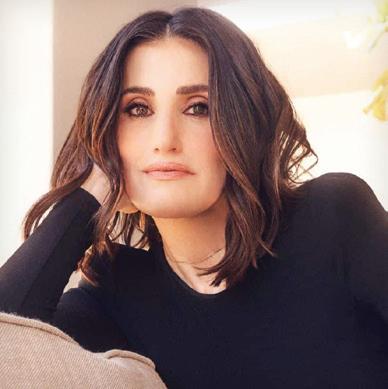
AN EVENING WITH IDINA MENZEL
Andy Einhorn, conductor
Idina Menzel, vocals
AUG 1
SCHUMANN’S SECOND SYMPHONY
Kazuki Yamada, conductor Blossom Festival Chorus
TAKEMITSU Dreamtime
STR AVINSK Y Symphony of Psalms
R. SCHUMANN Symphony No. 2
AUG 8
THE VOICES THAT CHANGED MUSIC
Lucas Waldin, conductor
Capathia Jenkins, vocals
Ryan Shaw, vocals
AUG 15
PROKOFIEV’S ROMEO & JULIET
Tabita Berglund, conductor
Simone Lamsma, violin
SIBELIUS Finlandia
SIBELIUS V iolin C oncer to PROKOFIE V Suite No. 2 from Romeo and Juliet


AUG 20
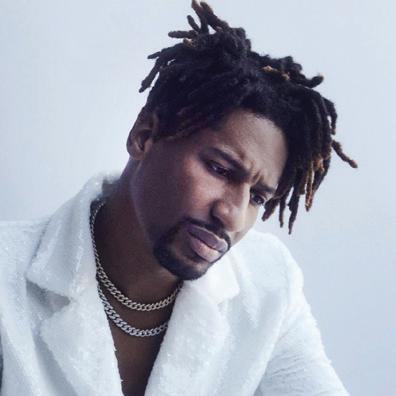
JON BATISTE WITH THE CLEVELAND ORCHESTR A
Jonathan Taylor Rush, conductor
Jon Batiste, vocals and piano
AUG 22
R AVEL’S
PIANO CONCERTO IN G
Antonello Manacorda, conductor
Nelson Goerner, piano
The Cleveland Orchestra Youth Chorus
DEBUS SY Prelude to the Af ternoon of a Faun
R AVEL Piano C oncer to in G
DEBUS SY Noc turnes
R AVEL Suite from Mother Goose
AUG 23
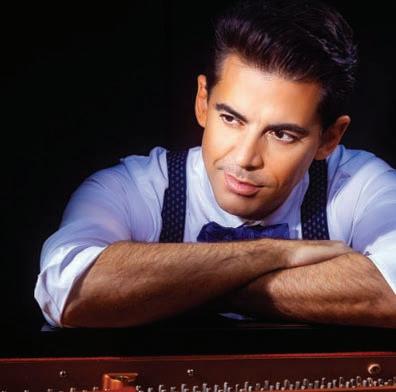
COLE PORTER: LET’S MISBEHAVE
Steven Reineke, conductor
Tony DeSare, vocals and piano
Aubrey Logan, trombone and vocals


AUG 29
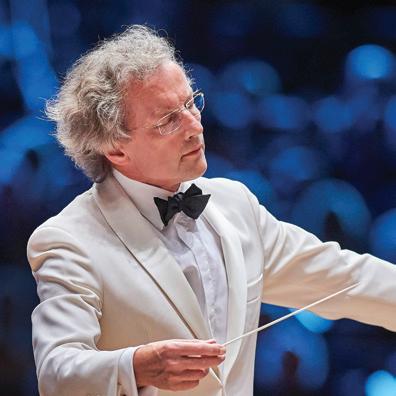
SUMMER IN VIENNA
Franz Welser-Möst, conductor
R . STR AUS S Introduc tion and Finale to Daphne
MOZ ART Symphony No. 3 4
J STR AUS S , JR Over ture and Ballet Music from The Carnival in Rome
J STR AUS S , JR Entr ’ ac te from A Night in Venice

PRESENTED BY SEASON PARTNER



MOVIE NIGHT PRESENTER
John Manzari, tap dancer and vocals
J STR AUS S , JR Bauern-Polka
JOS STR AUS S Friedenspalmen Walzer
J . STR AUS S , JR . Quadrille from The Gypsy Baron
SEP 4 – 6
THE MUSIC OF JOHN WILLIAMS
Sarah Hicks, conductor




FAMILY ENGAGEMENT PARTNER















YOUR VISIT
L ATE SEATING
Gues t s w ith Pav ilion seat s who arrive af ter the s t ar t of the concer t may be a sked to wait out side the Pav ilion unt il the f irs t convenient pause in the music, af ter which our ushers w ill help you to your seat s
L AWN SEATING
Gues t s on the L aw n may br ing their ow n chairs, but g ues t s w ith high-backed chairs that obs t r uc t others’ v iews may be a sked to relocate to the rear of the L aw n. Rent al chairs are available for a fee of $10 per evening. Tent s, f lags, balloons, or other s t r uc t ures that might obs t r uc t v iews or present a ha zard are not allowed. Open f lames are also prohibited.
PHOTOGR APHY, VIDEOGR APHY & RECORDING
Audio recording, photography, and videography a re not a llowe d dur ing p er for ma nce s at Blossom. Photographs and videos can only be taken when the per formance is not in progress. As a cour tesy to others, plea se silence all elec t ronic dev ices prior to the s t ar t of the concer t .
SMOKING
All Blossom Music Festival events are presented in a smoke-free environment Smoking or vaping are not allowed any where on the grounds or in buildings once you have entered through the ticket gates A smoking area is available outside the gates in a designated area of Park ing Lot A
WEATHER INFORMATION
In the event of severe weather, a coordinated campus-w ide aler t w ill be issued. Gues t s and s t af f w ill be direc ted to safet y by venue staf f and the public address system. Download T he Clevela nd Orche s t ra a pp or v isi t clevelandorches tra .com/weather for weather updates and more informat ion.
FREE TR AM & ADA VAN SERVICE
Free t ram ser v ice bet ween the park ing lot s and Smith Pla za and the Pav ilion is available on a cont inuous ba sis before and af ter each concer t . The ADA Van Ser v ice can pick up at the Main Gate w ith ser v ice to the Tram Circle.
QUESTION S?
Visit our Informat ion Center, hos ted by the Blossom Friends of The Cleveland Orches t ra , inside the Main Gate on Smith Pla za
P P

Explore upcoming concerts , purchase and access your tickets , receive performance updates , and more .
For more information and direct links to download, visit

The Clevela nd O rche s tra is grat eful t o the se or ga nizations for their ongoing generous supp or t of The Clevela nd O rche s tra : Nationa l Endowment for the A r t s , the St at e of O hio a nd O hio A r t s C ouncil, a nd t o the re sident s of C uya hoga C ount y through C uya hoga A r t s a nd C ulture
© 2026 The Cleveland Orchestra and the Musical A r ts Association
Program books for Cleveland Orches tra concer t s are produced by The Cleveland Orches tra and are dis tributed free to at tending audience members
EDITORIAL
Kevin McBrien, Editorial & Publications
Manager, The Cleveland Orches tra k mcbrien@clevelandorchestra .com
Ellen Sauer Tanyeri, Archives & Editorial
Assistant, The Cleveland Orches tra
DESIGN
Judy Baraba s, Red Swing Creative
ADVERTISING
Live Publishing Company, 216 -721-1800
PLE ASE REC YCLE




















Every so often you reach a moment that demands an important conversation. When it arrives, Glenmede is ready with sophisticated wealth and investment management solutions delivered with the personalized service you deserve. glenmede.com