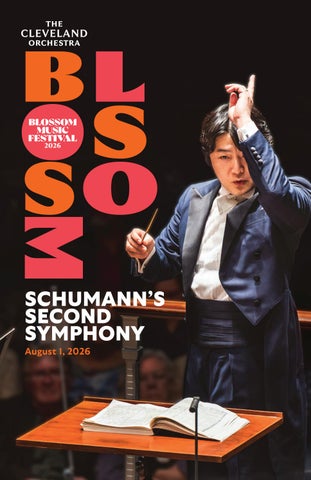
SCHUMANN’S SECOND SYMPHONY
Augus t 1, 2026

SCHUMANN’S SECOND SYMPHONY
Saturday, August 1, 2026, at 7 PM
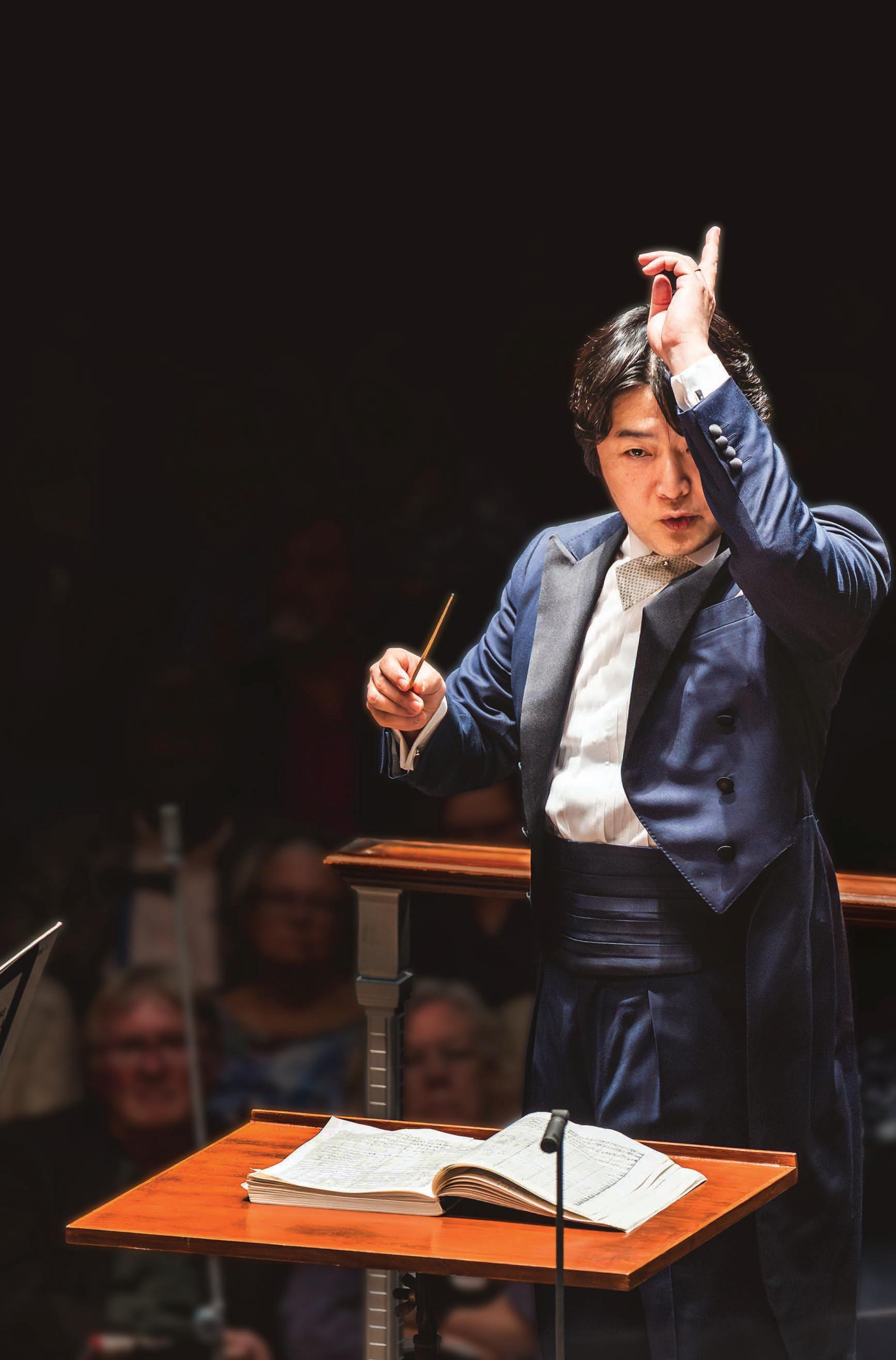
The Cleveland Orchestra Kazuki Yamada , conductor
TŌRU TAKEMITSU Dreamtime 15 minutes (1930 –1996)
IGOR Symphony of Psalms 20 minutes
STR AVINSK Y I. Psalm 38 (1882–197 1)
ROBERT
II. Psalm 39
III. Psalm 150 Blossom Festival Chorus
Symphony No. 2 in C major, 40 minutes SCHUMANN Op. 61 (1810 –1856) I Sostenuto assai Allegro ma non troppo
II. Scherzo: Allegro vivace
III Adagio espressivo
IV. Allegro molto vivace
Total approximate running time: 1 hour 35 minutes
Tonight’ s concer t is sponsored by Acme Fresh Markets.
Tonight’ s per formance is dedicated to Amy & Stephen Hof fman and Bill & Jennifer Clawson in recognition of their generous suppor t of music.

INTRODUCTION
In many ways, Robert Schumann represents the prototypical “Romantic artist versus the world” mentality that so captured the 19th-century imagination. He was a deep thinker and emotional personality who was firmly dedicated to his art while battling forces that threatened to silence his creative voice.
This conflict often took the form of persistent mental health challenges. Throughout his life, Schumann suffered from crippling depressive episodes, headaches, and hallucinations. One particularly stifling bout of illness occurred in 1845, as he was composing his Second Symphony. As such, the work presents an audible “darkness to light” narrative, opening with a mostly tender first movement followed by a devilish scherzo. Clouds again gather in the melancholic third movement before the work ends with a radiant celebration, perhaps a musical representation of the composer’s gratitude upon his return to health.
The other two works on tonight’s concert also dabble in shades of light and dark. The Book of Psalms contains some of the most expressive writings in the Abrahamic tradition, ranging from full-throated songs of praise to garment-tearing laments. With their original sung melodies lost to time, the intensely emotional qualities of the Psalms have inspired composers for centuries, including Igor Stravinsky. In his Symphony of Psalms, Stravinsky uses dark orchestral and vocal colors to paint a subdued, meditative landscape, which makes the moments when the sun does break through — as in the third movement’s boisterous dance — all the more striking.
The program opens with an evocative work by Tōru Takemitsu. Titled Dreamtime, the music inhabits an ephemeral landscape — melodies and harmonies flicker into focus before drifting back into a hazy in-between world. By the end, the barrier between dreams and reality, sound and silence, seems almost non-existent as the music slowly melts into the quiet sounds of the night.
— Kevin McBrien
Kevin
McBrien
is The Cleveland Orchestra’s Editorial & Publications Manager.
Dreamtime by Tōru Takemitsu
B O R N : Oc tober 8, 1930, in Tok yo
D I E D : Febr uar y 20, 1996, in Tok yo
COMPOSED: 1981
WORLD PREMIERE: June 27, 1982, with Hiroyuki Iwaki conducting the Sapporo Symphony Orchestra
This concer t marks the f irst Cleveland Orchestra per formance of Takemit su’s Dreamtime.
ORCHESTR ATION: 3 flutes (2nd doubling piccolo, 3rd doubling piccolo and alto flute), 3 oboes (3rd doubling English horn), 3 clarinets (3rd doubling ba ss clarinet), 2 ba ssoons, contraba ssoon, 4 horns, 3 trumpets, 3 trombones, tuba , percussion (cymbals, gongs, glockenspiel, marimba , tam-tams, tubular bells, vibraphone), 2 harps, celesta , and strings
DUR ATION: about 15 minutes
IN THE OF TE N WE STE RN - C E NTRIC WORLD of cla ssical music, Tōru Takemit su achieved an ext raordinar y amount of success out side of his nat ive Japan. W hile some of his contemporaries graced internat ional concer t stages (including Akira Ifukube and Ya sushi Akutagawa), most people today a ssociate Japanese cla ssical music with either Takemit su ’ s works or the f ilm scores of Joe Hisaishi.
Takemit su ’ s 1981 orchest ral work Dreamtime commissioned by the Nederlands Da ns T heat er cont inue d a four- de ca de t rend of combining my r ia d inf luence s . He f requently took philosophica l and musica l cues f rom sources nat ive to Japan and impor ted f rom the Wes t , including t radit iona l musics like ga ga ku, bunra ku, and noh, a nd the work s of composer s like J . S . Ba c h, Debus s y, Me s sia en, a nd Ca ge.
A writer and teacher a s well a s a composer, Takemit su also inf used his personal philosophy into his compositions. His beliefs, which similarly combined inf luences from the Ea st and West , valorized sound objec t s a s they are, rather than a s they f it into a whole. He made no dist inc t ion bet ween “ high ” and “ low” ar t and saw his ar t a s ext rac ted f rom a “ st ream of sound,” where the piece exist s cont inuously in the aether, f rom which he merely ext rac t s a f ragment . As Takemit su described, “My music is composed a s if f ragment s were thrown together unst r uc t ured, a s in dreams You go to a far place and suddenly f ind yourself back home without hav ing not iced the ret urn. ”
While Takemitsu had been preoccupied with modernist and avant-garde techniques in the 1960s and early ’70s, a marked change happened in 197 7 His orchest ral work

A Flock Descends into the Pentagonal Garden f rom that year began a t rend in Takemit su ’ s works t owa rds a Ne oroma nt ic concept ion of t ona lit y that had been lost in his earlier works. He described this shif t in 1982: “It wa s [my] intent ion to create a series of works, which like their subjec t , pa ss through various metamorphoses, culminat ing in a sea of tonalit y. ” As such, many works f rom the late-70s on feat ure water a s a recurring mot ive, with evocat ive t itles like Toward the Sea (1981) and Rain Tree (1980) and a programmat ic thread of ten literalized through tones. For example, throughout these works, Takemit su uses the musical cr y ptogram “S –E–A” a s a melodic f ragment . (“Es” is E f lat in German, and thus the mot ive is the notes E f lat–E–A and it s t ransposit ions.)
Beyond the “ sea of tonalit y ” and Takemitsu’s “ Waterscape” pieces, he also developed a pre occupat ion w ith drea ms a nd numb er s , lea ding t o a c ycle of pie ce s w ith “Drea m ” in their t itle in the 1980 s . In his philosophy, drea ms a re undef ine d a nd ephemeral, and numbers are the antagonist ic and conscious desire for form and st r uct ure. His “Dream and Number ” pieces capt ure the f luidit y of dreams into sound and color : “ T hrough the absolute simplicit y of numbers I want to clar if y the complex it ies of the dream.”
Takemit su ’ s Dreamtime builds upon this series of musical and philosophical concept s that he wa s grappling with at the t ime. Musical dev ices f rom his Waterscape and Dream and Number pieces namely the S –E–A mot ive and the not ion of the sea of tonalit y are both present Listen as the piece opens sof tly in pianissimo, of fers clusters of sound, f loat s upon waves of undulat ing dy namics, and ult imately fades away on a pentatonic collec t ion of st ring tones.
One final inf luence on the piece is the notion of “Dreamtime” or “The Dreaming,” which de scr ib e s the cult ura l b eliefs a nd my tholog ie s of the Aus t ra lia n abor ig ina l people. While “Dreamtime” is a rich and intricate series of symbols and practices, this term generally describes an ancestral period when the aboriginal people believe the la nd wa s inhabit e d by sup er nat ura l f ig ure s . Ta kemit su t a ke s this not ion a nd combine s it w ith his broa der fa scinat ion w ith drea ming, summa r izing the work a s follows: “Jus t a s a dream, for it s v iv idness of detail, point s to an unant icipated, unreal
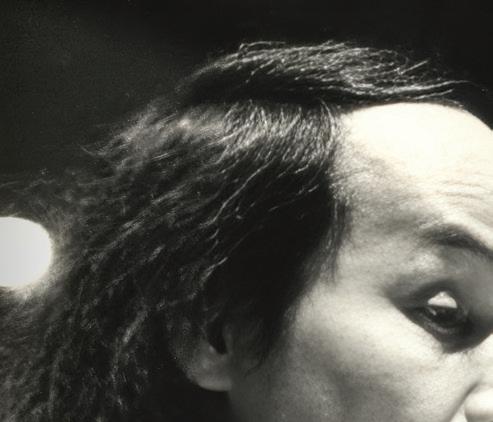
TŌRU TAKEMITSU
whole, so in this work shor t episodes hang suspended in seeming incoherency to form a musical whole.”
Dreamtime thus functions as a rich access point to Takemitsu’s broad range of philosophies, musical st yles, and influences. Just as his “stream of sound” extracts musical segments from an implied whole, Dreamtime offers just a sliver that reveals much about Takemitsu as an ar tist, thinker, and human.
Tanner Cassidy is director of ar tistic operations and communit y engagement at Tuesday Musical Association. He holds a PhD in music theor y from the Universit y of California, Santa Barbara, and has writ ten program notes for Music Academy of the West and the Four Seasons Chamber Music Festival.

S U M M E R S @ S E V E R A N C E
Thursday evenings at Severance with music , food , cocktails & more!


A N I G H T AT T H E O PE R A
AU G U S T 13 | 7 PM
W E L S E R- M Ö S T C O N D U C T S S T R AU S S
AU G U S T 27 | 7 PM

Presenting Sponsor




Tanner Ca ssidy

Symphony of Psalms
by Igor Stravinsk y
B O R N : June 17, 1882, in Oranienbaum (now Lomonosov), Russia
D I E D : April 6, 197 1, in New York Cit y
COMPOSED: 1930; revised 1948
WORLD PREMIERE: December 13, 1930, with Ernest Ansermet conducting the Brussels Philharmonic Societ y
CLEVELAND ORCHESTR A PREMIERE: March 18, 1954, led by Music Director George Szell
ORCHESTR ATION: 5 flutes (5th doubling piccolo), 4 oboes, English horn, 3 bassoons, contrabassoon, 4 horns, 4 trumpets, piccolo trumpet , 3 trombones, tuba , timpani, bass drum, 2 pianos, harp, and lower strings (cellos and basses), plus mixed chorus
DUR ATION: about 20 minutes
See page 13 for the sung text s.
I G O R S T R AV I N S K Y B E C A M E
PR AC T I C I N
C H R I S T I A N in the mid-1920s. His spir it ua l t ransfor mat ion culminated in 1926, when he for ma lly rejoined the Russian Or thodox Church, in which he had grown up.
Some musicologists have of fered some probable links bet ween Stravinsk y ’ s revived religiousness and his evolving musical st yle. An immediate and obvious connection is the appearance of religious subjects in his music. In 1926, he set The Lord ’ s Prayer in Old Church Slavonic (Otche nash) for a cappella chorus; he would later adapt it to the Latin translation (Pater noster) in 1949. In the 1930s, he wrote t wo more liturgical pieces to Old Church Slavonic texts: the Simbol ’ v yeri (Credo) and the Bogoroditse d ’ vo (Ave Maria).
During the same years, St rav insk y composed the Symphony of Psalms, the f irst of many large-scale composit ions on sacred text s. He had received a commission for a sy mphony f rom Serge Koussevitzk y and the Boston Sy mphony Orchest ra , but at that point had lit tle interest in sy mphonies in the t radit ional form. In his autobiography, he recalled the successive steps in which his thought s took shape:
My idea wa s that my sy mphony should be a work w ith g reat cont r apunt a l development , and for that it wa s necessar y to increa se the media at my disposal I f inally decided on a choral and instrumental ensemble in which the t wo elements should be on an equal footing, neither of them out weighing the other. ... I sought for my words ... among those which had been w rit ten for singing. And quite naturally my f irst idea wa s to have recourse to the Psalms .
T he ver se s chosen by St rav insk y represent some of the principal t ypes of psa lms . T he thre e movement s of the s y mphony playe d w ithout pause s are in t ur n a prayer, a song of sa lvat ion, and a song of praise, taken from the 38th, the 39 th, a nd the 150 th Psa lms . (T he se numbers are f rom those of the Vulgate, the L at in t ra nslat ion St rav insk y use d.)
In the Symphony of Psalms, emotional int ensit y is achieve d w ithout a t race of sentimentalit y. Stravinsk y used simple means like modified triads, single inter vals, and elementar y rhy thmic pat terns. (His orchest ra is also built on darker inst r umental colors, omit t ing clarinet s f rom the woodwind sec t ion and v iolins and v iola s from the string section.) The entire first movement is based on a striking E-minor chord, and a simple melody consisting solely of t wo notes: E and its upper neighbor, F. Musically speak ing, the movement could be described as a progression from this yearning musical world toward the luminous G-major chord at the end, which is underscored by a continuous crescendo in the orchestra.
The second movement is a double f ugue bet ween the orchest ra and chor us. In St ravinsk y ’ s words:
The “ Waiting for the Lord ” Psalm makes the most over t use of musical symbolism in any of my music before The Flood [1962]. An upside-down py ramid of f ugues , it begins with a purely instrumental f ugue of limited compa ss and employs only solo instruments. ... The next and higher stage of the upside-down pyramid is the human fugue, which ... also represents a higher level in the architectural symbolism by the fact that it expands into the bass register The third stage, the upside-down foundation, unites the t wo f ugues .
The la st movement ha s alternat ing slow and fa st tempos. The word “A lleluia” is sung to harmonies that , like the E-minor chord in the f irst movement , consist of t radit iona l pat ter ns modif ied ever so slightly to sound completely new. T he fa s t tempo is ba sed on t ypical Stravinskian ostinatos. Of this, the composer wrote: “The allegro in the 150 th Psalm wa s inspired by a v ision of Elijah ’ s chariot climbing the heavens; I do
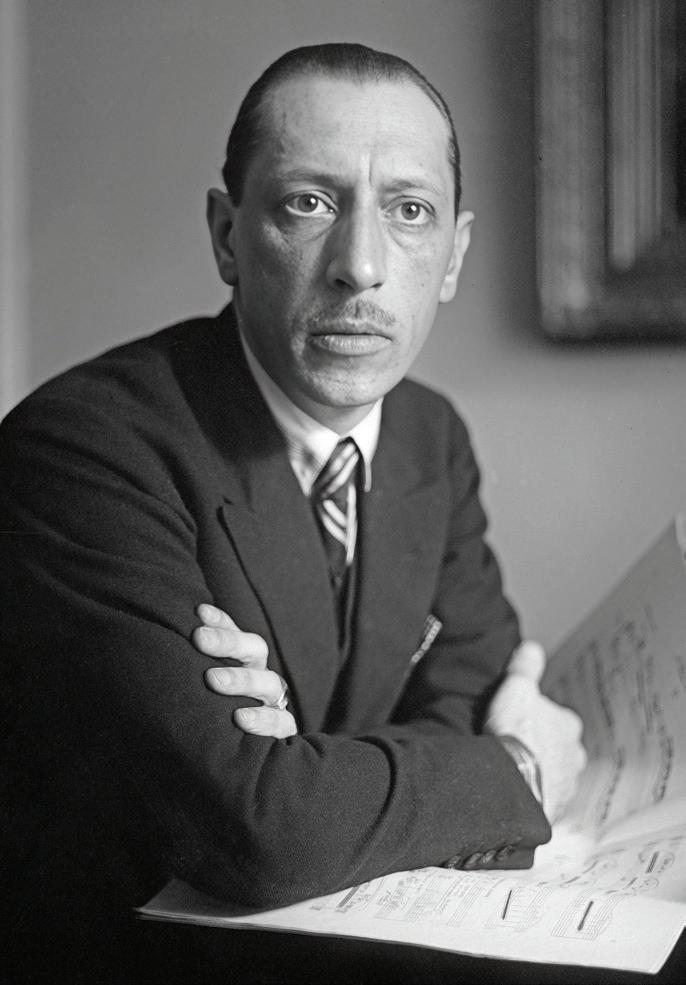
IGOR STR AVINSK Y
not think I had ever w r it ten any thing so litera l a s the t r iplet s for hor ns and piano to sug ge s t the hor se s a nd cha r iot . ”
T he end of the movement re t ur ns t o a slow t empo, a nd the op ening “A lleluia” theme is expanded into a serene hymn which is unexpec tedly def lec ted into a new key. The la st sonorit y is an other worldly C major that again ha s something unusual about it: the C is sounded in si x dif ferent oc taves, with it s f if th, the G, v ibrat ing along a s a nat ural over tone. The E , however, the pitch that makes the chord complete, hovers in the uppermost register, played ethereally by f lutes, oboes, harp, and piano.
Peter Lak i is a musicologist and f requent lecturer on cla ssical music He is a visiting a ssociate professor of music, emeritus , at Bard College and wa s The Cleveland Orchestra ’ s program annotator f rom 1990 to 2007.
O P E R A C L U B
Enjoy the best vocal ar tists of our time alongside fellow suppor ters.
• Oppor tunit y to sponsor a vocalist
• Invitations to par ties, meet and greets, and more
• Join the Orchestra’s New York tour
C O N T A C T : Angela Mortellaro, Major Gift Officer 216 -231 - 8 014 | amortellaro@clevelandorchestra . com clevelandorchestra . com/operaclub
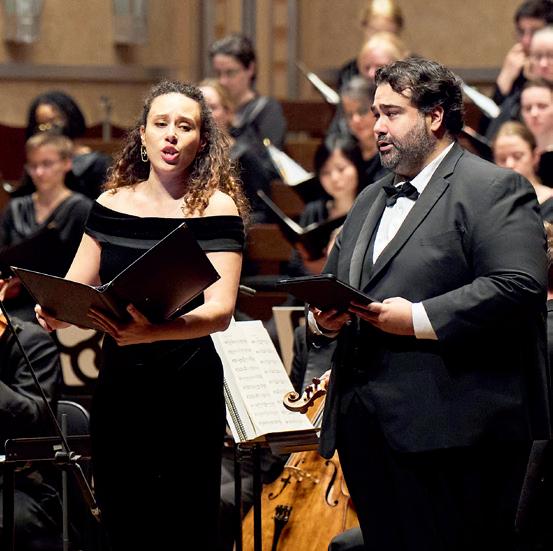
B E C O M E A M E M B E R T O DAY ! Membership begins with donations of $2 , 500 and more . U N D E R 4 0? Join with your gift of $1,000!
Peter Lak i
Symphony of Psalms
by Igor Stravinsky
Texts from the Book of Psalms
I. Psalm 38
Exaudi orationem meam, Domine, et deprecationem meam: auribus percipe lacrymas meas.
Ne sileas, quoniam advena ego apud te, et peregrinus, sicut omnes patres mei.
Remitte mihi, ut refrigerer priusque abeam, et amplius non ero.
II. Psalm 39
Exspectans expectavi Dominum et intendit mihi.
Et exaudivit preces meas; et eduxit me de lacu miseriae, et de luto faecis.
Et statuis supra petram pedes meos; et direxit gressus meos.
Et immisit in os meum canticum novum, carmen Deo nostro.
Videbunt multi et timebunt, et sperabunt in Domino.
III. Psalm 150
Alleluia.
Laudate Dominum in sanctis ejus; laudate eum in firmamento virtutis ejus.
Laudate eum in virtutibus ejus; laudate eum secundum multitudinem magnitudinis ejus.
Laudate eum in sono tubae … Laudate eum in tympano et choro; laudate eum in chordis et organo.
Laudate eum in cymbalis bene sonantibus; laudate eum in cymbalis jubilationis.
Omnis spiritus laudet Dominum! Alleluia.
Hear my prayer, O Lord, and my supplication: give ear to my tears.
Be not silent: for I am a stranger with You, and a sojourner, as all my fathers were.
O spare me, that I may be refreshed before I go forth, and be no more.
Patiently I have waited for the Lord and He was attentive to me.
And He heard my prayers; and brought me out of the pit of misery, and the mire of dregs.
And he set my feet upon a rock; and directed my steps.
And he put a new canticle into my mouth, a song to our God.
Many shall see, and shall fear, and they shall hope in the Lord.
Alleluia.
Praise the Lord in His holy places; praise Him in the firmament of His power.
Praise Him for His mighty acts; praise Him according to the multitude of His greatness.
Praise Him with the sound of the trumpet … Praise Him with timbrel and dance; praise Him with strings and organs.
Praise Him on high-sounding cymbals; praise Him on cymbals of joy.
Let everything that has breath praise the Lord! Alleluia.
Symphony No. 2 in C major, Op. 61
by Rober t Schumann
B O R N : June 8, 1810, in Zwickau, Sa xony
D I E D : July 29, 1856, in Bonn
COMPOSED: 1845 – 46
WORLD PREMIERE: November 5, 1846, with Felix Mendelssohn conducting the Leipzig Gewandhaus Orchestra
CLEVELAND ORCHESTR A PREMIERE: October 20, 1932, led by Music Director Nikolai Sokoloff
ORCHESTR ATION: 2 flutes, 2 oboes, 2 clarinets, 2 bassoons, 2 horns, 2 trumpets, 3 trombones, timpani, and strings
DUR ATION: about 40 minutes
ROBERT SCHUMANN COMPOSED HIS SECOND SYMPHONY a s he wa s re cover ing f rom a ser ious ner vous brea kdow n, the re sult of a long 18 4 4 concer t t our t o Rus sia w ith his w ife, the g reat pia nis t a nd composer Clara Schumann. T he t our wa s a t r iumph for Cla ra , but Rob er t ’ s “ ner vous fever ” wa s debilit at ing for a good pa r t of the Rus sia n jour ney His a ilment s including diz zine s s , a n x ie t y, a nd ha llucinat ions cont inue d throug h much of 18 4 5 a nd ’4 6 .
T he hea lth cr isis wa s pos sibly linke d t o over whelming a r t is t ic cha llenge s in
Schumann’s career The composer, who had spent his early years writ ing exclusively for solo pia no, wa s s t r iv ing t o e s t ablish himself in la r ge -sca le s y mphonic for ms , but ha d ye t t o write a work to match the grandeur of Schuber t’ s “Great ” C-ma jor Sy mphony. (Schuma nn ha d discovered the manuscript of that sy mphony in Vienna and had boundless admirat ion for it .) In an ef for t to concent rate on composit ion, Schumann relinquished the editorship of the music journal Neue Zeitschrif t f ür Musik, of which he ha d a lso b e en the chief music
crit ic. At f irst , however, this only gave him a sense of loss that wa s f ur thered by his relocat ion f rom Leipzig to Dresden in fall 18 4 4.
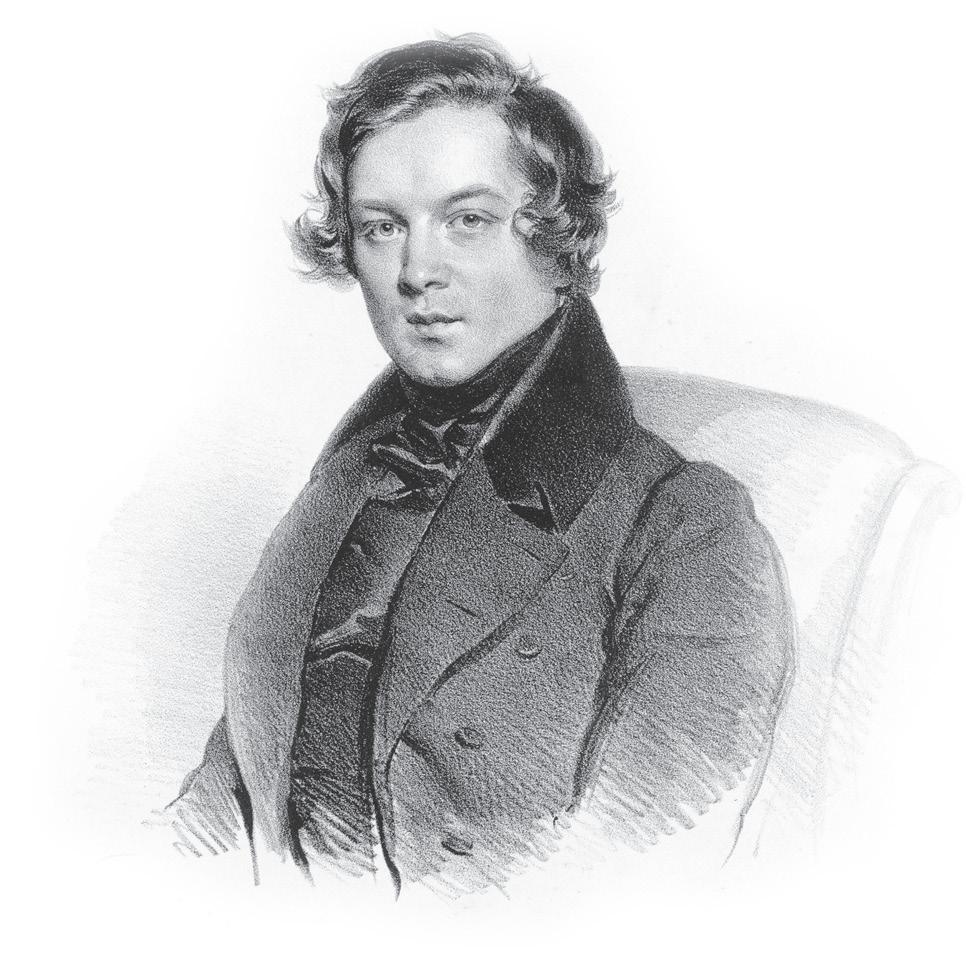
ROBERT SCHUMANN
Schumann enjoyed a respite from his ailments in December 1845. It was during this period of Aufschwung (“upswing,” to borrow the title of a famous youthful piano piece) that he began the Second Symphony, though the orchestration and the revision of the score took up the better part of 1846, amidst more ups and downs. Schumann himself felt that the difficulties he experienced before and during composition had an impact on the work. He wrote to D.G. Otten, the music director in Hamburg, in 1849:
I wrote my symphony in December 1845, and I sometimes fear my semi-invalid state can be divined from the music. I began to feel more myself when I wrote the last movement, and was certainly much better when I finished the whole work. All the same it reminds me of dark days.
The work has a rather curious reception history. The first reviews after the premiere were enthusiastic. Both Brahms and Tchaikovsky considered the symphony the high point of Schumann’s output, and musicologist Philipp Spitta , writing in 1883, saw Schumann’s Second as closest to Beethoven in “its bold decisiveness of form and overpowering wealth of expression.” Later, however, critics started finding fault with the symphony for what they perceived as formal incoherence, and the work was relatively neglected for decades. Only in the relatively recent past has the music world fully “rehabilitated” this forgotten symphony.
One way of understanding this symphony would be to view it as a struggle between the forces of light and darkness. The two opposing forces are present from the symphony’s opening measures, where a fanfare motive in the brass is set against mysterious chromatic figures in the strings. Transformations of both motives dominate the entire first movement. Though the “light” fanfares seem to have the last word at the end of the first movement, they will briefly reappear in the second and third movements.
The “dark” chromaticism returns at the beginning of the second-movement Scherzo which, for all its briskness and dynamism, has been aptly described by British author Brian Schlotel as “pervaded by a mood of restlessness and uncertainty.” The Scherzo has two trios; the first moves in a light-footed triplet motion led by the woodwinds, the second is a chorale for strings, in which one may recognize the first germs of the last movement’s final melody, the ultimate goal of the symphony’s progress.
The Adagio espressivo is one of Schumann’s most profound slow movements. In it, echoes of J.S. Bach are combined with some personal touches, including an unusually subtle orchestration. Schumann wrote in his letter to Otten: “That my melancholy bassoon in the Adagio, written into that place with special affection, did not escape you gave me the greatest pleasure.” First intoned by the strings, the main theme is soon
taken over by the “melancholy ba ssoon ” and an equally melancholy oboe. Af ter a shor t f ugal interlude, the main melody ret urns. A lthough the tempo is slow to begin with, there is a fur ther ritardando (slowing down) near the end, and the final chords are marked “molto Adagio.”
Musicologist Anthony Newcomb ha s writ ten of the f inale: “[It] star t s a s one thing and becomes another, and this formal transformation is par t of its meaning.” The opening sug gest s a cheer f ul movement with a spirited melody that ret urns af ter an episode of equally bright charac ter. Then, about half way through the movement , we reach three solemn C-minor chords followed by general rest s. Schumann quick ly int roduces a new theme, one that will gradually evolve into a quote f rom Beethoven’s song cycle To the Distant Beloved, which he had already used prominently in his Fantasy in C ma jor (Op. 17 ) f rom 1836 . T his t ime, the melody b e come s the t r iumpha nt conclusion of the symphony; the ending is made even more grandiose by the spectacular t impani solo in the la st mea sures.
Peter Lak i

AUG 8
THE VOICES THAT CHANGED MUSIC
Lucas Waldin, conductor
Capathia Jenkins, vocals | Ryan Shaw, vocals
AUG 15
PROKOFIEV’S ROMEO & JULIET
Tabita Berglund, conductor
Simone Lamsma, violin
AUG 20
JON BATISTE WITH THE CLEVELAND ORCHESTR A

MOVIE NIGHT PRESENTER PRESENTED BY SEASON PARTNER
FAMILY ENGAGEMENT PARTNER

Sarah Hicks, conductor 2026
Jonathan Taylor Rush, conductor
Jon Batiste, vocals and piano
AUG 22
R AVEL’S PIANO CONCERTO IN G
Antonello Manacorda, conductor
Nelson Goerner, piano | The Cleveland Orchestra Youth Chorus
AUG 23
COLE PORTER: LET’S MISBEHAVE
Steven Reineke, conductor
Tony DeSare, vocals and piano | Aubrey Logan, trombone and vocals
AUG 29

John Manzari, tap dancer and vocals
SUMMER IN VIENNA
Franz Welser-Möst, conductor
SEP 4 – 6
THE MUSIC OF JOHN WILLIAMS



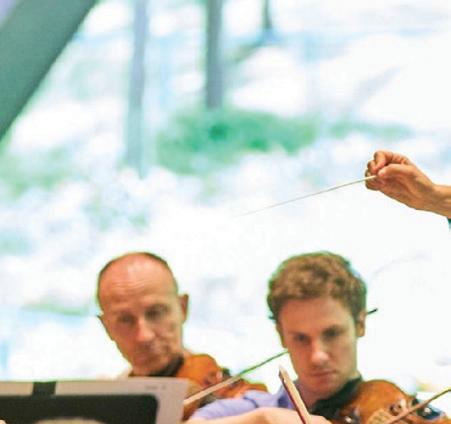
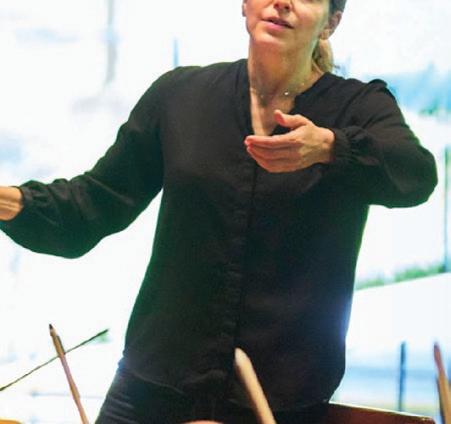






K A ZUKI YAMADA
conduc tor
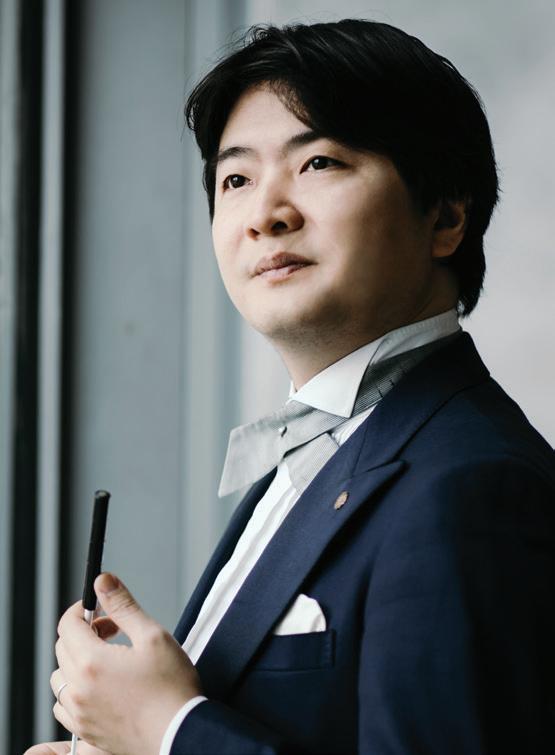
Ka zuki Yama da is music dire c t or of the Cit y of Birmingham Symphony Orchestra (CBSO). Alongside his commit ment s in Birmingham, he is also ar t ist ic and music direc tor of the Orchest re Philharmonique de Monte-Carlo (OPMC) and will become chief conductor and ar tistic director of the Deutsches Symphonie-Orchester Berlin star ting in the 2026–27 season.
Yamada commands a busy schedule of orchest ral, opera , and choral conduc t ing. Recent highlight s include an appearance at the BBC Proms and a European tour with the CBSO, a ret urn to Tanglewood with the Boston Sy mphony Orchest ra , and debut appearances with the Bamberger Sy mphoniker, NDR Elbphilharmonie Orchester, Rot terdam Philharmonic Orchest ra , and Wiener Sy mphoniker. Yamada also conduc ted the Monte Carlo Opera in a produc t ion of Debussy’ s Pelléa s et Mélisande.
In addition, Yamada appears regularly with The Cleveland Orchestra, Finnish Radio Symphony Orchestra, Oslo Philharmonic, Orchestra dell ’Accademia Nazionale di Santa Cecilia , Orchest re Nat ional du Capitole de Toulouse, and Swedish Radio Sy mphony Orche s t ra . He a lso re t ur ns t o Japa n ever y sea son t o work w ith orche s t ra s such a s the NHK Sy mphony Orchest ra and Yomiuri Nippon Sy mphony Orchest ra , among others.
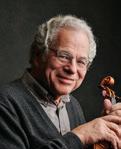
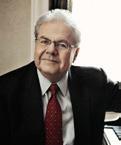
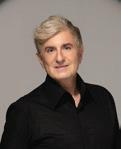
Yamada of ten performs with distinguished soloists such as Emanuel A x, Seong-Jin Cho, Isabelle Faust, Alexandre Kantorow, Yunchan Lim, Julian Prégardien, Baiba Skride, Fazıl Say, and Jean-Yves Thibaude t.
Strongly commit ted to his role as an educator, Yamada appears annually as a guest ar tist at the Seiji Ozawa International Academy Switzerland and is strongly commit ted to the CBSO’s outreach program. The impact of the pandemic on international concer t halls reaf f irmed his belief that in his words “The audience is always involved in mak ing the music. As a conduc tor, I need an audience there a s much a s the musicians.”
Yamada st udied music at Tok yo Universit y of the A r t s, where he discovered a love for both Mozar t a nd the Rus sia n Roma nt ic rep er t or y. He achieve d int er nat iona l at tent ion upon receiv ing First Prize in the 51st Internat ional Besançon Compet it ion for Young C onduc t or s in 20 09. Hav ing live d in Japa n for mos t of his life, Ya ma da now resides in Berlin.



































THE CLE VEL AND ORCHE STR A
Fra nz Wel s er - Mös t Music Dir e c tor
K E LV I N S M I T H FA M I LY C H A I R
FIRST VIOLIN S
Joel Link
CONCERTMASTER
Blossom-Lee Chair
Elizabe th Faye t te
FIRST ASSOCIATE
CONCERTMASTER
Virginia M Lindseth, PhD, Chair
Zhan Shu
ASSISTANT CONCERTMASTER
Clara G and George P Bickford Chair
Stephen Tavani
ASSISTANT CONCERTMASTER
Dr Ronald H Krasney Chair
Wei- Fang Gu
Drs Paul M and
Renate H Duchesneau Chair
Kim Gomez
Elizabeth and Leslie Kondorossy Chair
Chul- In Park
Harriet T and David L Simon Chair
Miho Ha shizume
Theodore Rautenberg Chair
Jeanne Preucil Rose
Larry J B and Barbara S Robinson Chair
Alicia Koelz
Oswald and Phyllis Lerner Gilroy Chair
Yu Yuan
Patty and John Collinson Chair
Isabel Traut wein
Trevor and Jennie Jones Chair
Katherine Bormann
Paul and Lucille Jones Chair
Analise Handke
Gladys B Goetz Chair
Genevieve Smelser
SECOND VIOLIN S
Stephen Rose*
Alfred M and Clara T Rankin Chair
Eli Mat thews1
Patricia M Kozerefski and Richard J Bogomolny Chair
Ja son Yu2
James and Donna Reid Chair
Sonja Bra aten Molloy
Carolyn Gadiel Warner
Elayna Duitman
Ioana Missit s
Jef frey Zehngut^
Kathleen Collins
Be th Woodside
Emma Shook
Dr Jeanette Grasselli Brown and
Dr Glenn R Brown Chair
Yun -Ting Lee
Deborah L Neale Chair
Jiah Chung Chapdelaine
Liyuan Xie
Gawon Kim
Dus tin Wilkes- Kim
VIOL AS
Wesley Collins*
Chaillé H and Richard B Tullis Chair
Gare th Zehngut 1^
Charles M and Janet G Kimball Chair
Stanley Konopka 2
Mark Ja ckobs
Jean Wall Bennett Chair
Lisa Boyko
Richard and Nancy Sneed Chair
Richard Waugh
Lembi Veskime t s
The Morgan Sisters Chair
Eliesha Nelson^
Anthony and Diane Wynshaw-Boris Chair
William Bender
Thomas Lauria and Christopher Lauria Chair
CELLOS
Mark Kosower*
Louis D Beaumont Chair
Richard Weiss 1
The GAR Foundation Chair
Charles Bernard2
Helen Weil Ross Chair
Br yan Dumm
Muriel and Noah Butkin Chair
Tanya Ell
Thomas J and
Judith Fay Gruber Chair
Ralph Curr y
Brian Thornton
William P Blair III Chair
David Alan Harrell
Mar tha Baldwin
Dane Johansen
Marguerite and James Rigby Chair
Paul Kushious
BAS SES
Ma ximilian Dimof f *
Clarence T Reinberger Chair
Charles Paul1
Mary E and F Joseph Callahan Chair
Derek Zadinsk y 2
Mark Ather ton
Thoma s Sperl
Henr y Peyrebrune
Charles Barr Memorial Chair
Charles Carle ton
Sco t t Dixon
Brandon Ma son
HARP
Trina Struble*
Alice Chalifoux Chair
FLUTES
Joshua Smith*
Elizabeth M and
William C Treuhaft Chair
Saeran St . Chris topher
Jessica Sindell2^
Austin B and Ellen W Chinn Chair
Mar y Kay Fink
PICCOLO
Mar y Kay Fink
Anne M and M Roger Clapp Chair
OBOES
Frank Rosenwein*
Edith S Taplin Chair
Corbin Stair
Sharon and Yoash Wiener Chair
Jef frey Rathbun 2
Everett D and Eugenia S McCurdy Chair
Rober t Walters
ENGLISH HORN
Rober t Walters
Samuel C and Bernette K Jaffe Chair
CL ARINETS
Afendi Yusuf *
Rober t Marcellus Chair
Rober t Woolfrey
Victoire G and Alfred M Rankin Jr Chair
Daniel McKelway2
Rober t R and Vilma L Kohn Chair
Amy Zolo to
E- FL AT CL ARINET
Daniel McKelway
Stanley L and Eloise M Morgan Chair
BAS S CL ARINET
Amy Zolo to Myrna and James Spira Chair
BAS SOON S
John Clouser*
Louise Harkness Ingalls Chair
Gare th Thoma s
Catherine Van Handel2
Sandra L Haslinger Chair
Jonathan Sher win
CONTR ABAS SOON
Jonathan Sher win
HORN S
Nathaniel Silberschlag*
George Szell Memorial Chair
Michael Mayhew§
Knight Foundation Chair
Jesse Mc Cormick- Stepp
Rober t B Benyo Chair
Hans Clebsch
Richard King
Meghan Guegold Hege^
Gay Cull Addicott and Robert R Cull Chair
TRUMPETS
Michael Sa chs*
Rober t and Eunice Podis Weiskopf Chair
Ja ck Sut te
Lyle Steelman 2^
James P and Dolores D Storer Chair
Michael Miller
CORNETS
Michael Sa chs*
Mary Elizabeth and G Rober t Klein Chair
Michael Miller
With sincere gratitude to the musicians of The Cleveland Orchestra for their in-kind contributions suppor ting communit y programs and securing funding oppor tunities.
TROMBONES
Brian Wendel*
Gilber t W and Louise I Humphrey Chair
Richard Stout
Alexander and Marianna C McAfee Chair
Sha char Israel2
BAS S TROMBONE
Luke Sieve
EUPHONIUM & BAS S TRUMPET
Richard Stout
TUBA
Ya suhito Sugiyama*
Nathalie C Spence and Nathalie S Boswell Chair
TIMPANI
Pe ter Nichols2
Mr and Mrs Richard K Smucker Chair
PERCUS SION
Marc Damoulakis*
Margaret Allen Ireland Chair
Thoma s Sher wood
Tanner Tanyeri
Pe ter Nichols
KE YBOARD IN STRUMENTS
Carolyn Gadiel Warner
Marjory and Marc L Swar tzbaugh Chair
LIBR ARIAN
Michael Ferraguto*
Joe and Marlene Toot Chair
ENDOWED CHAIRS CURRENTLY UNOCCUPIED
Gretchen D and Ward Smith Chair
Sunshine Chair
Otto G and Corinne T Voss Chair
Rudolf Serkin Chair
CONDUCTORS
Chris toph von Dohnányi †
MUSIC DIREC TOR L AURE ATE
Taichi Fukumura
ASSISTANT CONDUC TOR
Elizabeth Ring and William Gwinn Mather Chair
James Feddeck
PRINCIPAL CONDUC TOR & MUSICAL ADVISOR OF THE CLE VEL AND ORCHESTR A YOUTH ORCHESTR A
Sidney and Doris Dworkin Chair
Lisa Wong
DIREC TOR OF CHORUSES
Frances P and Chester C Bolton Chair
* Principal
§ Associate Principal
1 First Assistant Principal
2 Assistant Principal Alum of The Cleveland Orchestra Youth Orchestra
† In Memoriam
This roster lists full-time members of The Cleveland Orchestra The number and seating of musicians on stage varies depending on the piece being performed
Seating within the string sections rotates on a periodic basis
BLOS SOM FE STIVAL CHORUS
Lis a Wong Dir e c tor of Choruse s
SOPR ANOS
Jesse Bobbit t
Carolyn Brunelle
Signe Carlson
Ruby Chen
Natasha Dudick
Lisa Fedorovich
Sarah Gaither
Jennifer Gilles
Julia Halamek
Rebecca S. Hall
Casey Hasen
Audrey Hudak
Katie Kitchen
Heidi Lang
Kate Macy
Sophia Marshall
Samantha Miller
Julie Myers-Pruchenski
Rachel O’Connell
Victoria Peacock
Stephanie Popik
Kaitlin Privara
Mandi Rice
Nicole Rounick
Ellie Kleber Smith
Morgan Smock
Sophia Young
Kathr yn Zorman
ALTOS
Cam Armstrong
Roma Bandza
Kimberly E . Barrios
Debbie Bates
Ellen Beleiu
Kristina Bodnar
Katherine Brown
Carla Cashman
Amber Dimof f
Brooke Emmel
Hope Ezell
Grace Farrell
Rachel Favet ta
Karen S Hunt
Sarah Hutchins
Victoria Karpuszka
Diane Landoll
Emily Longenecker
Victoria Marquard-Schultz
Audra Naille
Pegg y A . Norman
Kathleen Pacyna
Sarah Rozmar ynow ycz
Stephanie Summers
Michelle Wagner-Skinner
Haley Wheeler
Leah Wilson
Jennifer R . Woda
Keri Wood
Debra Yasinow
Lynne Leutenberg Yulish
TENORS
Samuel Arnold
Daniel DiFilippo
Clay Hof fner
Adam Kilo
Mat thew Rizer
Ted Rodenborn
Lee Scantlebur y
Andrew Stamp
William Venable
BAS SES
Simon Beck
Mat thew Brit ton
Eric Cof felt
Ben Cutarelli
Ronnie Dailey
Christopher Dewald
Alexander Flood
Thomas Flowers
Jef frey D. Gershman
Mat thew Héber t
Samuel Olumba-Nedum Ifeacho
Kevin Kutz
Tyler Mason
Brandon Randall
Rober t Seaman
Daniel J. Singer
Alexander Truver
Bob Winters
Ryan Yonek
Daniel J Singer
Assistant Director
Daniel Overly
Collaborative Pianist
Jill Harbaugh
Director of Choral Operations
Victoria Peacock
Chorus Coordinator
The Cleveland Orche s tra op ene d Blos som Music C ent er in 19 6 8 t o ser ve a s the Orchestra’s summer home. A large new volunteer chorus was assembled for the inaugural concer t and included many members of The Cleveland Orchestra Chorus and members of other Nor thea s t Ohio choral groups . The Blos som Fe s tival Chorus ha s sinc e established it self a s a permanent and beloved annual par t of the Blossom Festival and ha s sung well over 100 concer t s since it s 1968 debut .
The Blossom Festival Chorus joins The Cleveland Orchestra Chorus at Severance ever y December for Holiday C oncer t s with The Cleveland Orche s tra . They have also per formed at Chautauqua and on Cleveland’s Public Square for the annual Four th of July concer t s .
V isit cochorus .com for more information on the Chorus and auditions .






Preschool to Grade 8 | OldTrail org


YOUR VISIT
L ATE SEATING
Gues t s w ith Pav ilion seat s who arrive af ter the s t ar t of the concer t may be a sked to wait out side the Pav ilion unt il the f irs t convenient pause in the music, af ter which our ushers w ill help you to your seat s
L AWN SEATING
Gues t s on the L aw n may br ing their ow n chairs, but g ues t s w ith high-backed chairs that obs t r uc t others’ v iews may be a sked to relocate to the rear of the L aw n. Rent al chairs are available for a fee of $10 per evening. Tent s, f lags, balloons, or other s t r uc t ures that might obs t r uc t v iews or present a ha zard are not allowed. Open f lames are also prohibited.
PHOTOGR APHY, VIDEOGR APHY & RECORDING
Audio recording, photography, and videography a re not a llowe d dur ing p er for ma nce s at Blossom. Photographs and videos can only be taken when the per formance is not in progress. As a cour tesy to others, plea se silence all elec t ronic dev ices prior to the s t ar t of the concer t .
SMOKING
All Blossom Music Festival events are presented in a smoke-free environment Smoking or vaping are not allowed any where on the grounds or in buildings once you have entered through the ticket gates A smoking area is available outside the gates in a designated area of Park ing Lot A
WEATHER INFORMATION
In the event of severe weather, a coordinated campus-w ide aler t w ill be issued. Gues t s and s t af f w ill be direc ted to safet y by venue staf f and the public address system. Download T he Clevela nd Orche s t ra a pp or v isi t clevelandorches tra .com/weather for weather updates and more informat ion.
FREE TR AM & ADA VAN SERVICE
Free tram ser vice bet ween the parking lots and Smith Pla za and the Pav ilion is available on a cont inuous ba sis b efore a nd af t er ea ch concer t . The ADA Van Ser v ice can pick up at the Main Gate w ith ser v ice to the Tram Circle.
QUESTION S?
Visit our Informat ion Center, hos ted by the Blossom Friends of The Cleveland Orches t ra , inside the Main Gate on Smith Pla za
WANT TO LEARN MORE ABOUT THE CLE VEL AND ORCHESTR A?
Sc an the QR code below t o explore the Orche s tra’s his t or y, me e t the musicians , and discover upcoming per formanc e s at S everanc e Music C ent er and Blos som .
Follow us on social me dia at :
@ClevelandOrchestra




© 2026 The Cleveland Orchestra and the Musical A r ts Association Program books for Cleveland Orches tra concer t s are produced by The Cleveland Orches tra and are dis tributed free to at tending audience members
EDITORIAL
Kevin McBrien, Editorial & Publications Manager, The Cleveland Orches tra k mcbrien@clevelandorchestra .com
Ellen Sauer Tanyeri, Archives & Editorial Assistant, The Cleveland Orches tra
DESIGN
Judy Baraba s, Red Swing Creative
ADVERTISING
Live Publishing Company, 216 -721-1800
PLE ASE REC YCLE




















Every so often you reach a moment that demands an important conversation. When it arrives, Glenmede is ready with sophisticated wealth and investment management solutions delivered with the personalized service you deserve. glenmede.com