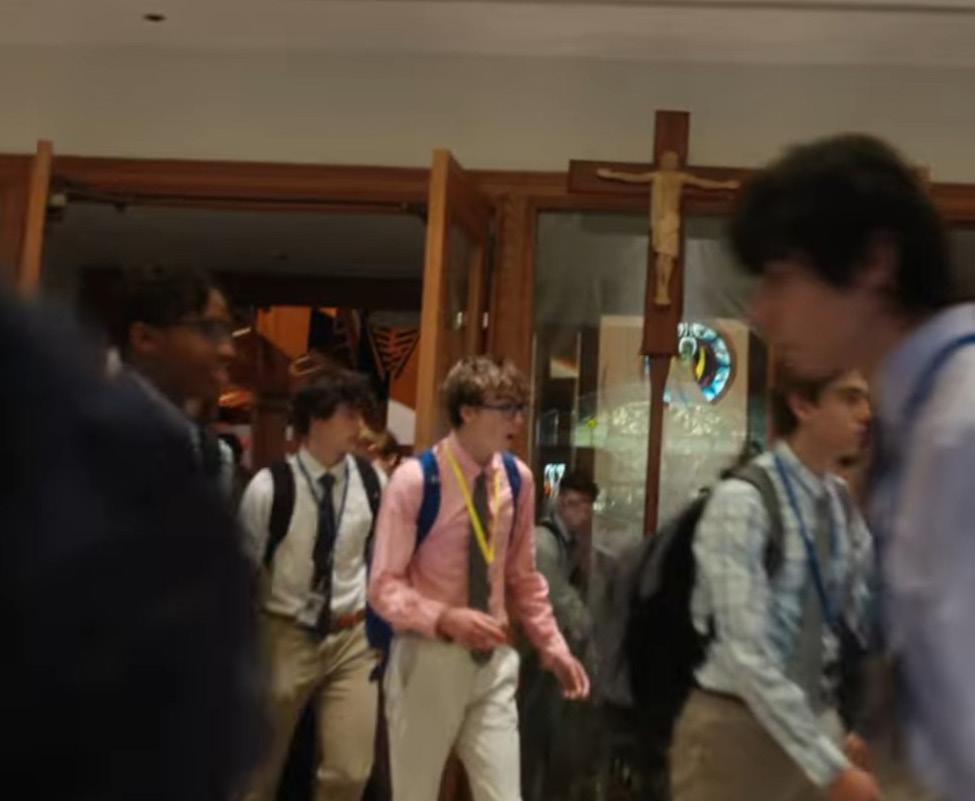
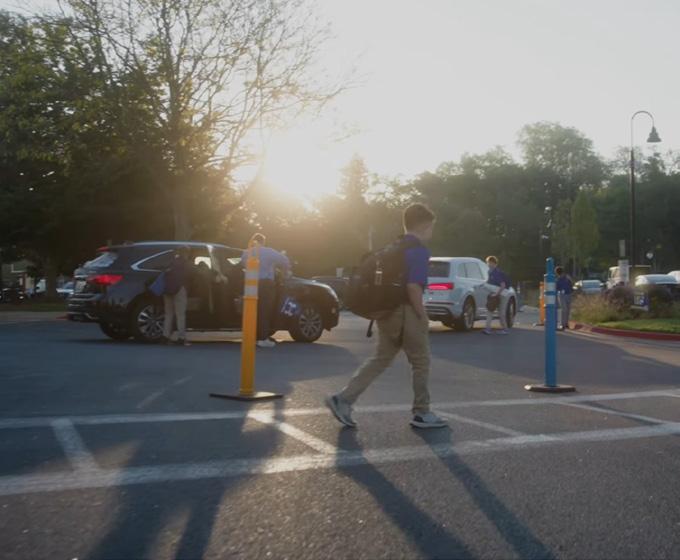
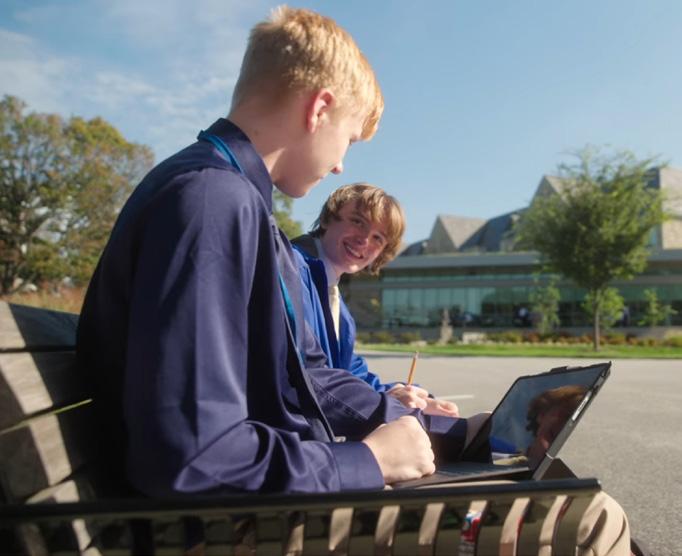
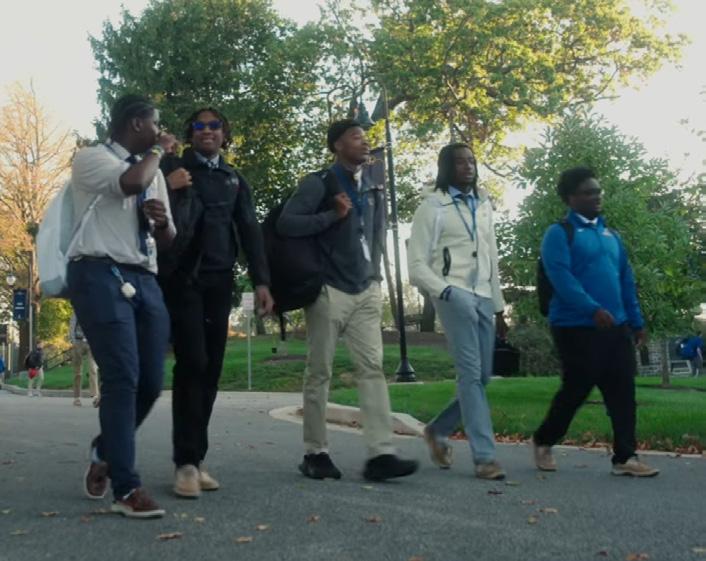
As winter settles over Baltimore and our campus is quieted by shorter days and colder nights, I am drawn to reflect on the enduring call that animates Loyola Blakefield’s Catholic, Jesuit mission. Plenty of schools, both public and private, engage in community service as the result of a sense of altruism. At Loyola, we do not do that. The service we do is the result of Jesus’ call we read about in Matthew 25.
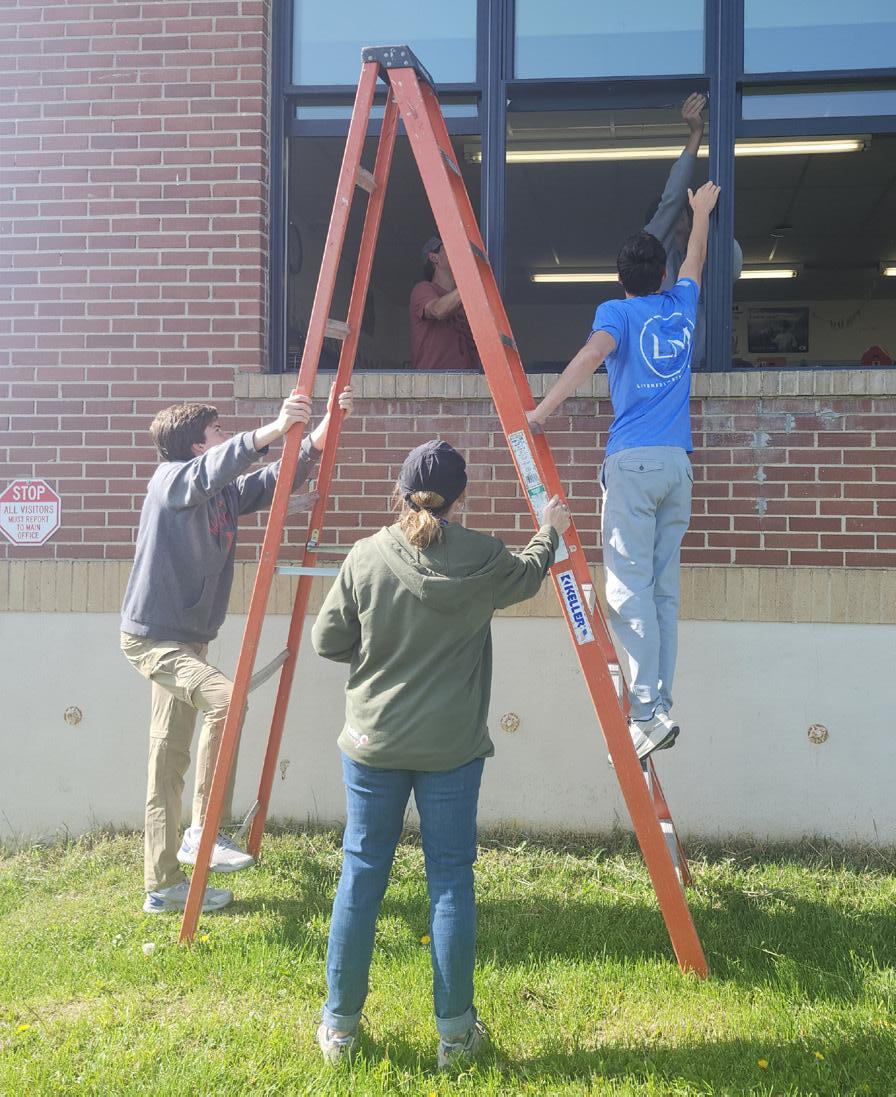
Throughout the year, our students engage in Christian service—often alongside our faculty and staff. Together, they serve neighbors in need here in Baltimore as well as far beyond our campus, including
service experiences in places such as Belize, Micronesia, Montana, and West Virginia. Whether at home or abroad, these shared efforts reflect a community committed to accompaniment, solidarity, and faith made visible through action. In doing so, our students learn that, as theSuperior General Fr. Pedro Arrupe, S.J. said in 1973, “Love of God which does not issue in justice is a farce.”
Christian service at Jesuit schools is not new. As a senior at Canisius High School in Buffalo, my service commitment took me to Vive La Casa on Buffalo’s East Side, an organization dedicated to providing safety, shelter, food, and legal assistance to those seeking refuge—whether making a refugee claim in Canada or pursuing legal asylum in the United States. Now known simply as Vive, working there left a lasting mark on my life and continues to shape how I understand leadership, community, and mission.
I see that same spirit alive at Loyola Blakefield, particularly in our community-wide initiatives that invite everyone to take part. Our annual food collection for our pantry and partner organizations, as well as our Adopta-Family effort, are awe-inspiring to witness. I am struck by both the remarkable scale of these initiatives and the joy that surrounds them. From the generosity of those who give, to the care taken in the collection, organization, and delivery of food and gifts, the entire process reflects
a community united in purpose, compassion, and God’s love.
In the Spiritual Exercises, St. Ignatius writes, “Love shows itself more in deeds than in words.” That is, our Jesuit education demands we’re attentive to God’s presence in the world and responsive to the needs before us. Loyola Blakefield strives to be a place where Ignatius’ vision comes alive each day: a community where faith and service are inseparable, and where young men are formed to serve with hard work and open hearts.
As we continue through the 2025–2026 academic year, may we continue to commit ourselves to forming young men who serve not for some altruistic aim, but for a supernatural one instead. May our service always flow from faith and return us more fully to God.
May this season be one of peace, reflection, and renewed purpose for you and your loved ones.
A.M.D.G,
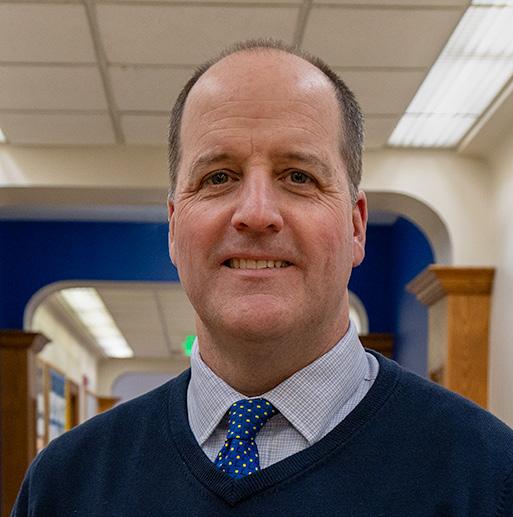
Rev. Dennis M. Baker, S.J. President
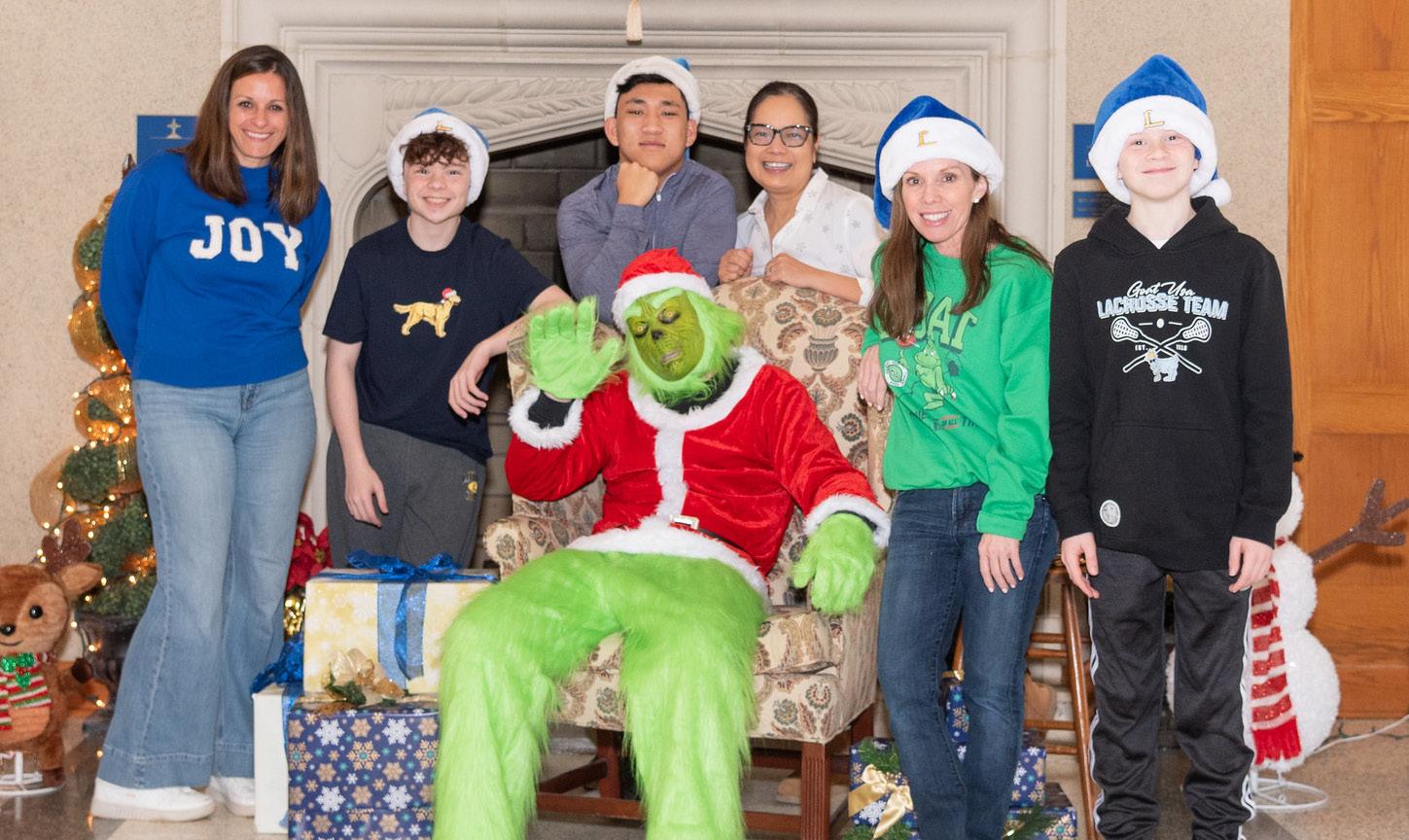
COOKIES WITH SANTA BRINGS HOLIDAY CHEER
More than 400 members of the Loyola Blakefield community gathered on December 13 for the 2nd annual Cookies with Santa celebration, enjoying festive treats, activities, and visits from Santa and the Grinch.
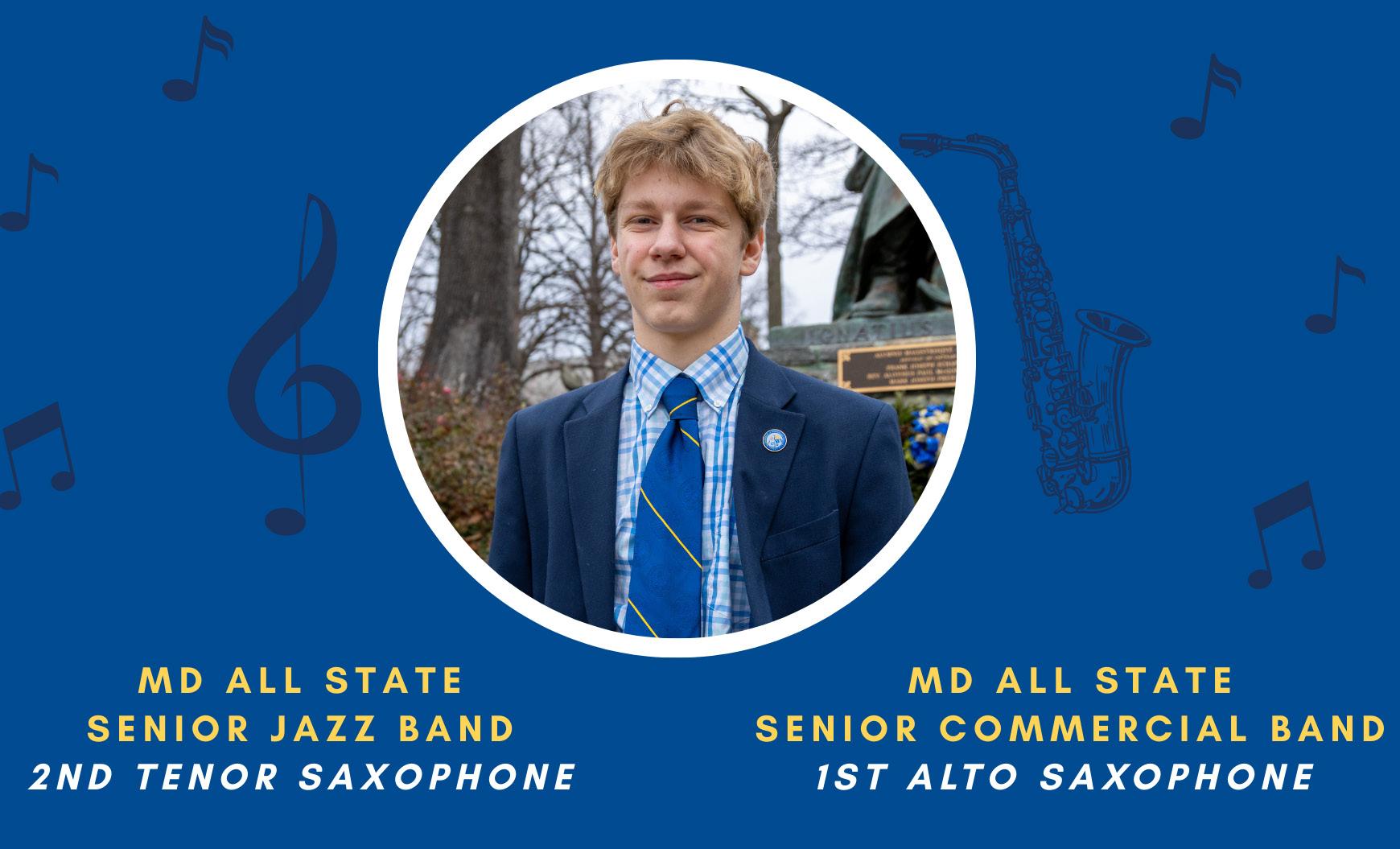
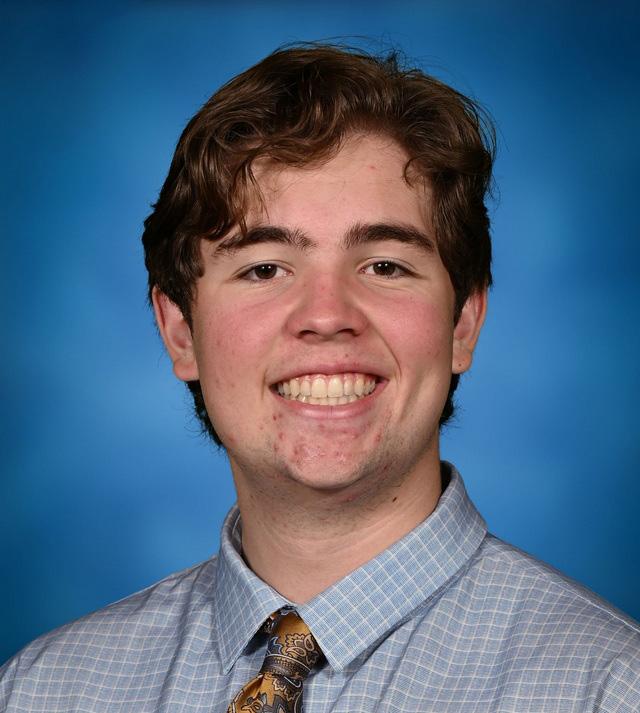
MAX BALTO
’28
SELECTED FOR TWO MARYLAND MUSIC EDUCATORS ALL STATE ENSEMBLES
Max achieved a rare musical milestone, earning spots in two Maryland Music Educators All State Ensembles while excelling across multiple school music programs.
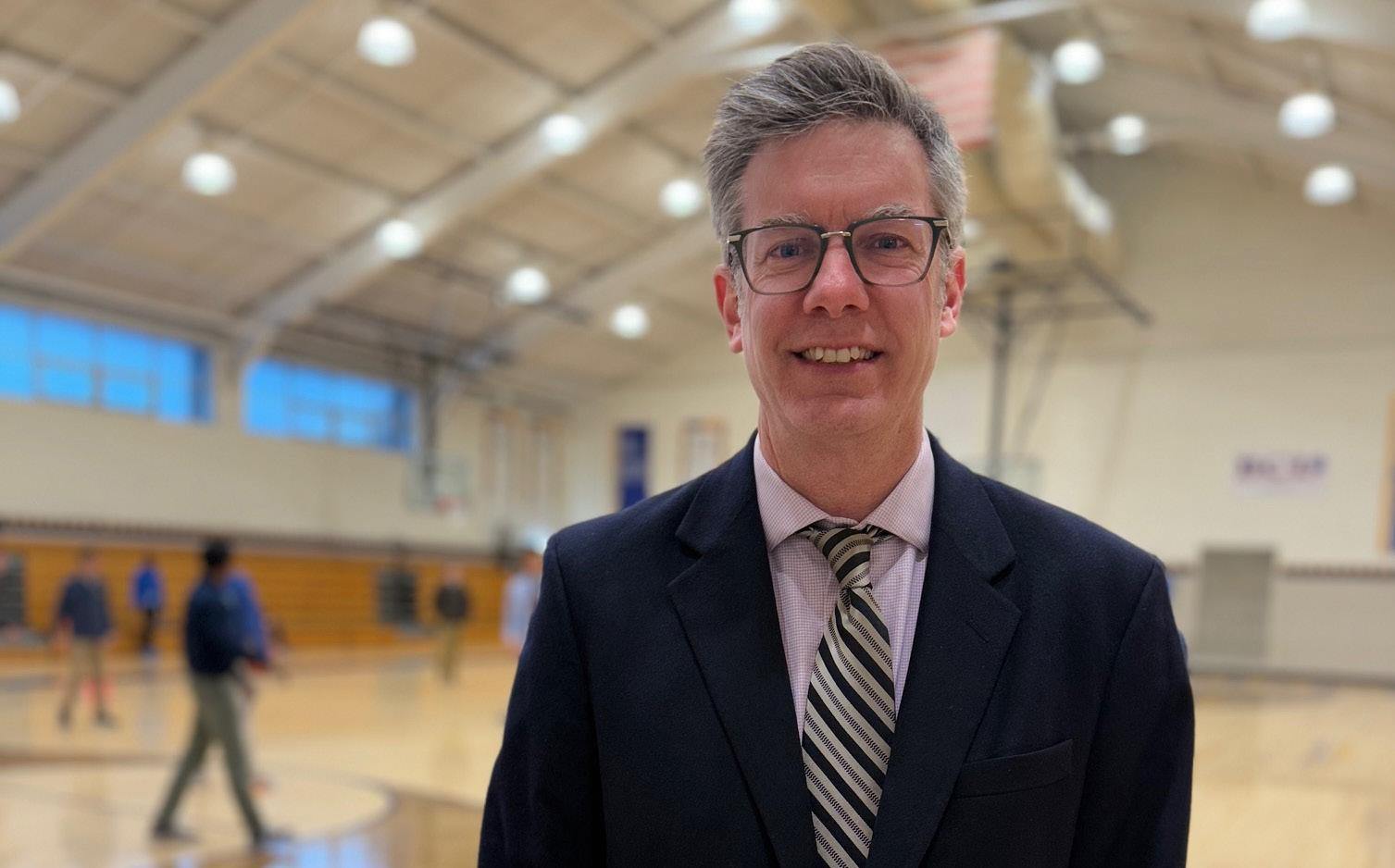
TIM BAIER ’90 NAMED MARYLAND MIAA VOLLEYBALL COACH OF THE YEAR
Coach Baier capped a historic season by earning Maryland MIAA Volleyball Coach of the Year honors.
CAMPUS
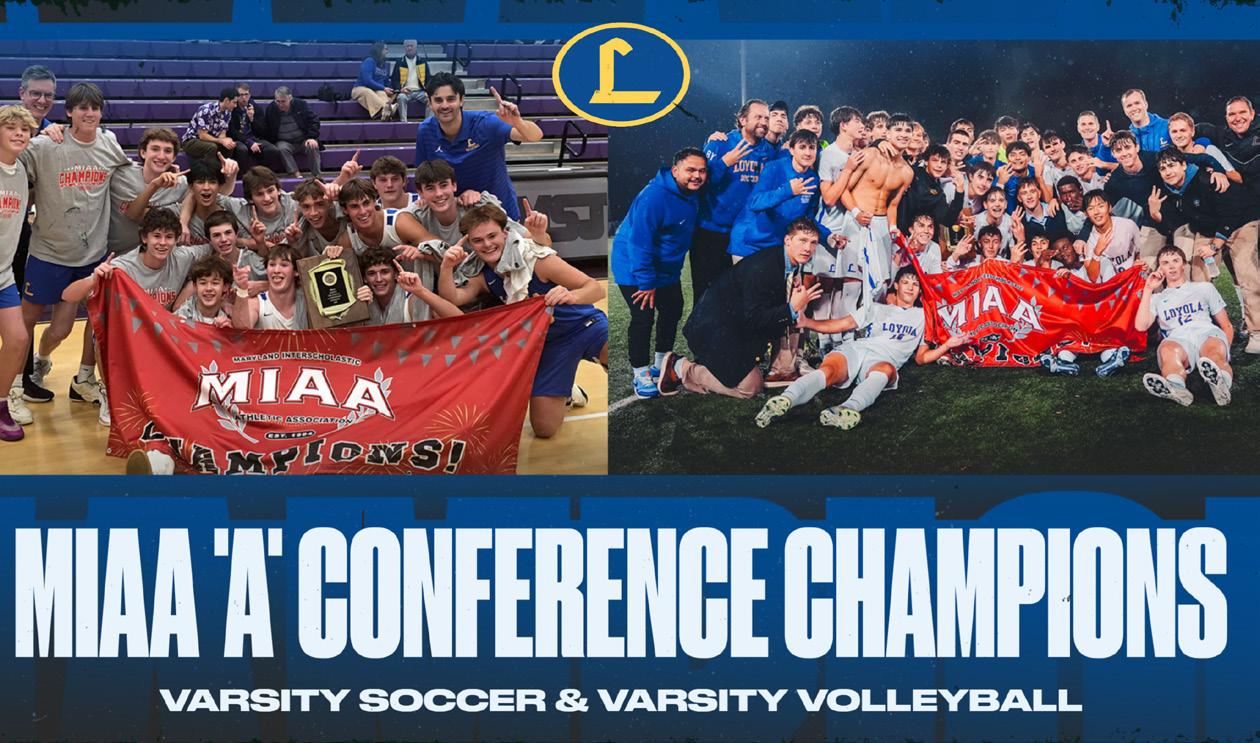
DONS DOMINATE CHAMPIONSHIP WEEKEND
Both Varsity Soccer and Varsity Volleyball captured MIAA A Conference titles in commanding fashion— each program adding another chapter to a proud legacy of excellence and teamwork.
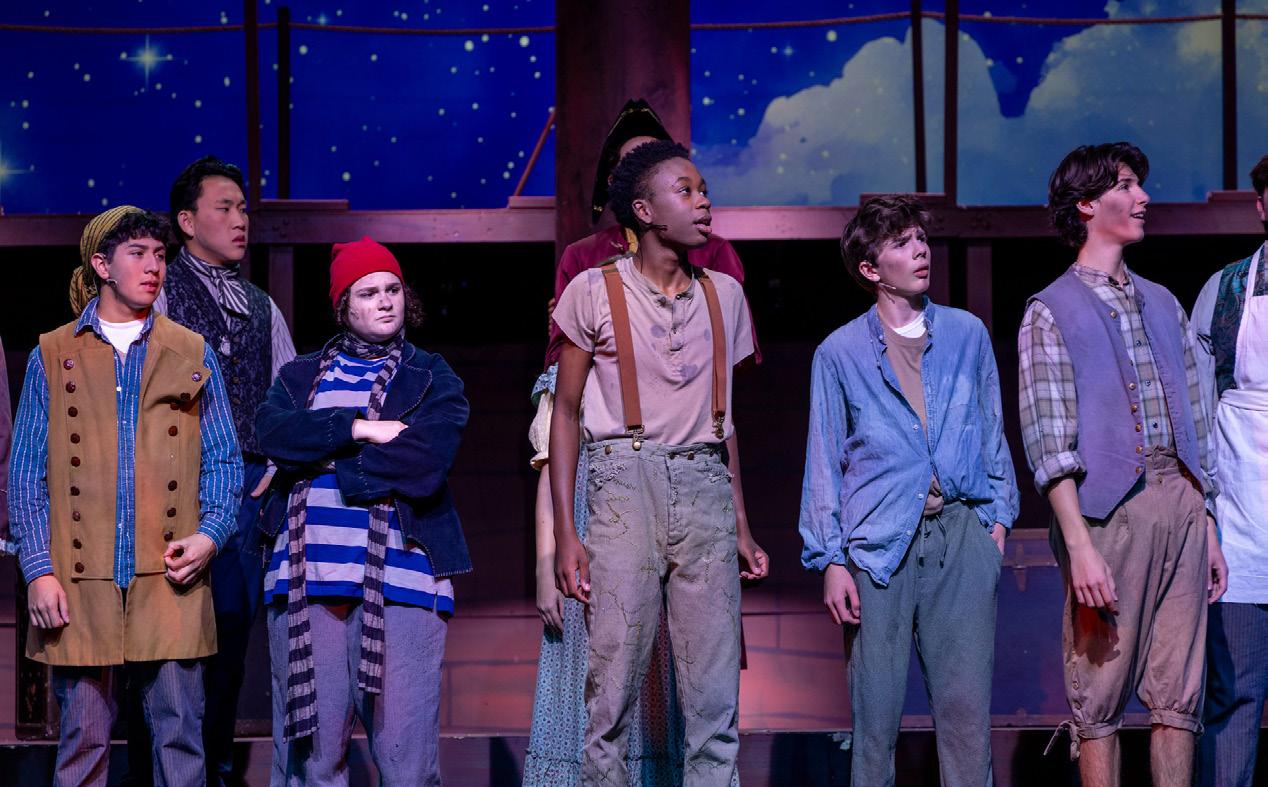
THE BLAKEFIELD PLAYERS SHINE IN PETER AND THE STARCATCHER
Adventure took center stage as the Blakefield Players brought the imaginative world of Peter Pan and the Lost Boys to life in October.
CAMPUS NEWS
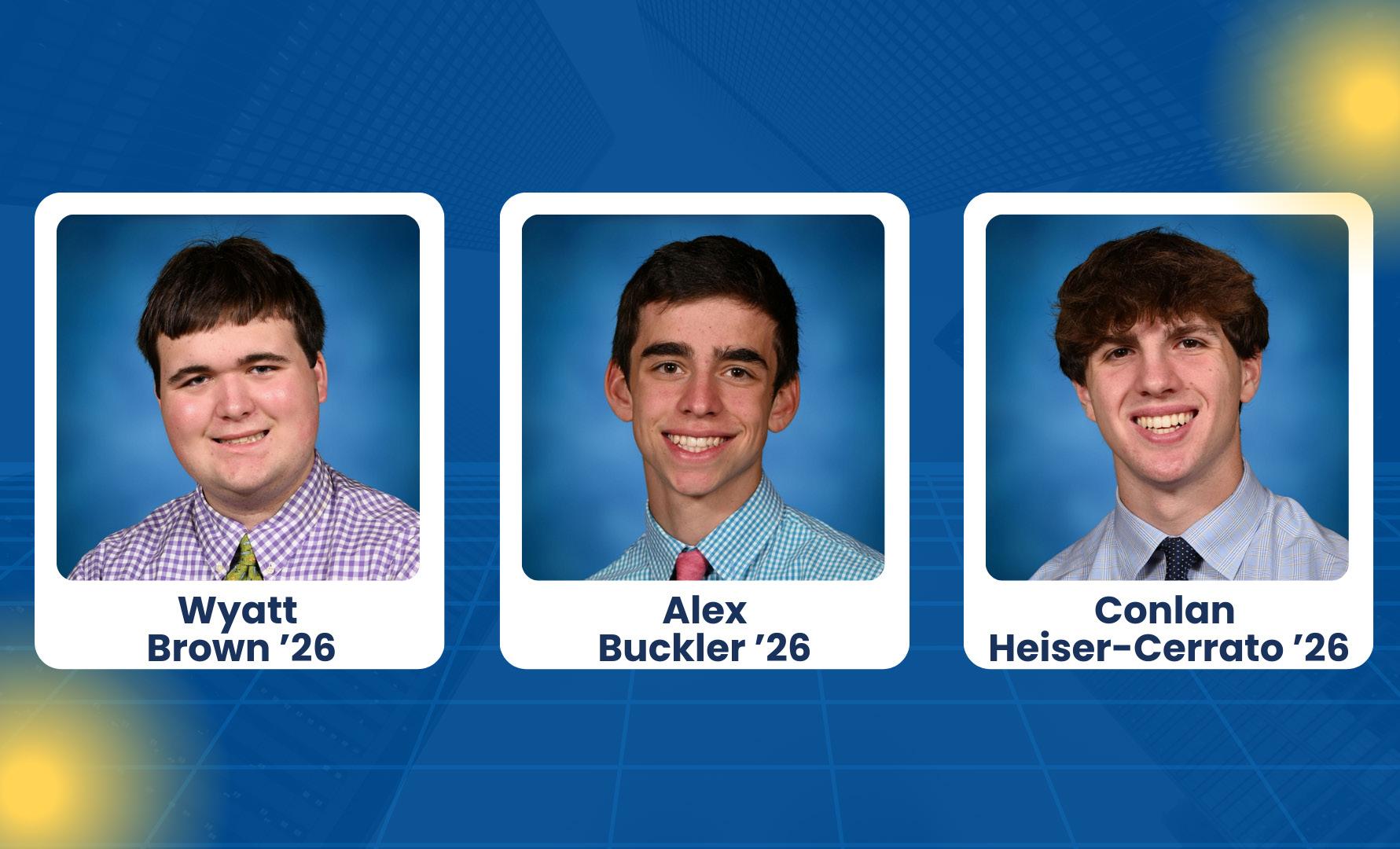
THREE SENIORS NAMED NATIONAL MERIT SEMIFINALISTS
We are proud to celebrate three members of the Class of 2026—Wyatt Brown, Alex Buckler, and Conlan Heiser-Cerrato—who have been named National Merit Semifinalists by the National Merit Scholarship Corporation.
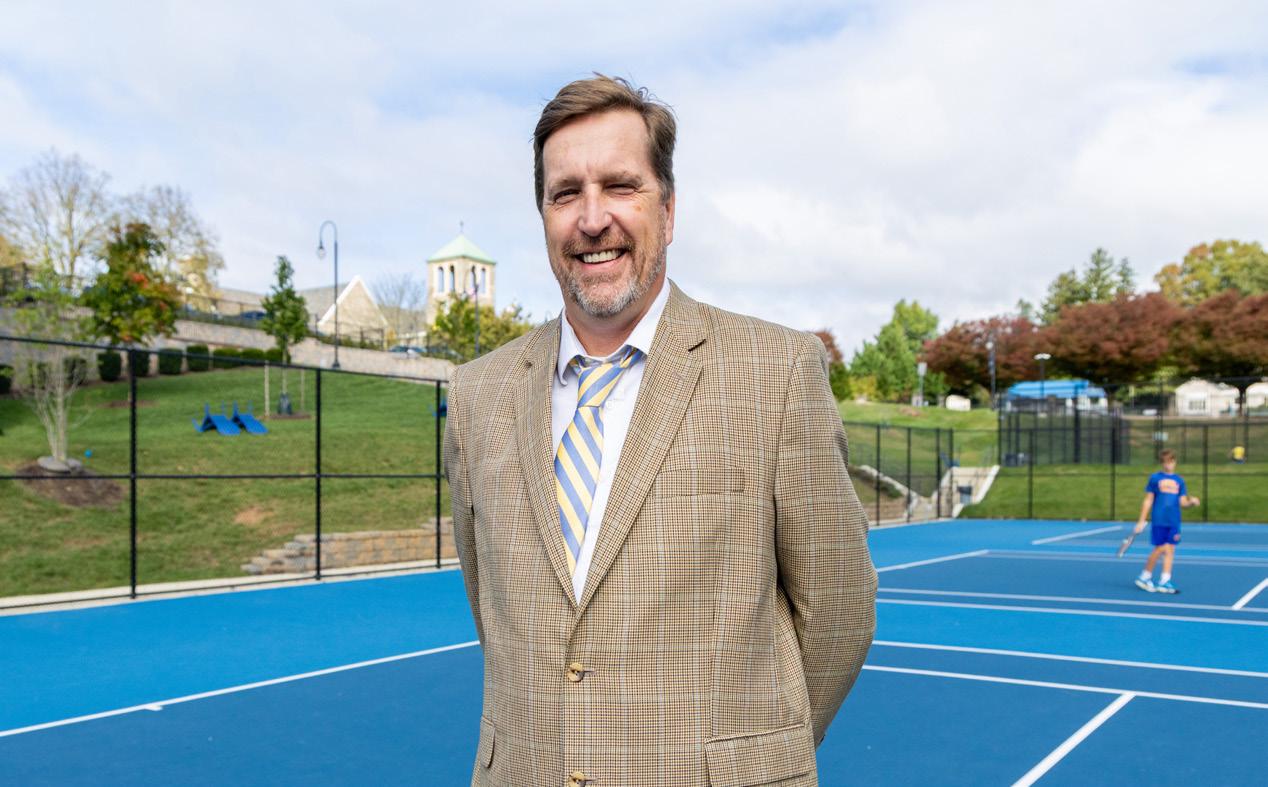
CHRISTIAN ANDERSON ’89 NAMED VARSITY TENNIS COACH
A longtime Loyola educator and coach, Christian Anderson ’89 brings his passion for teaching, mentorship, and the Jesuit tradition of excellence to his new role as varsity tennis coach.
NIGHT AT THE YARD BRINGS COMMUNITY TOGETHER FOR A MEMORABLE EVENING
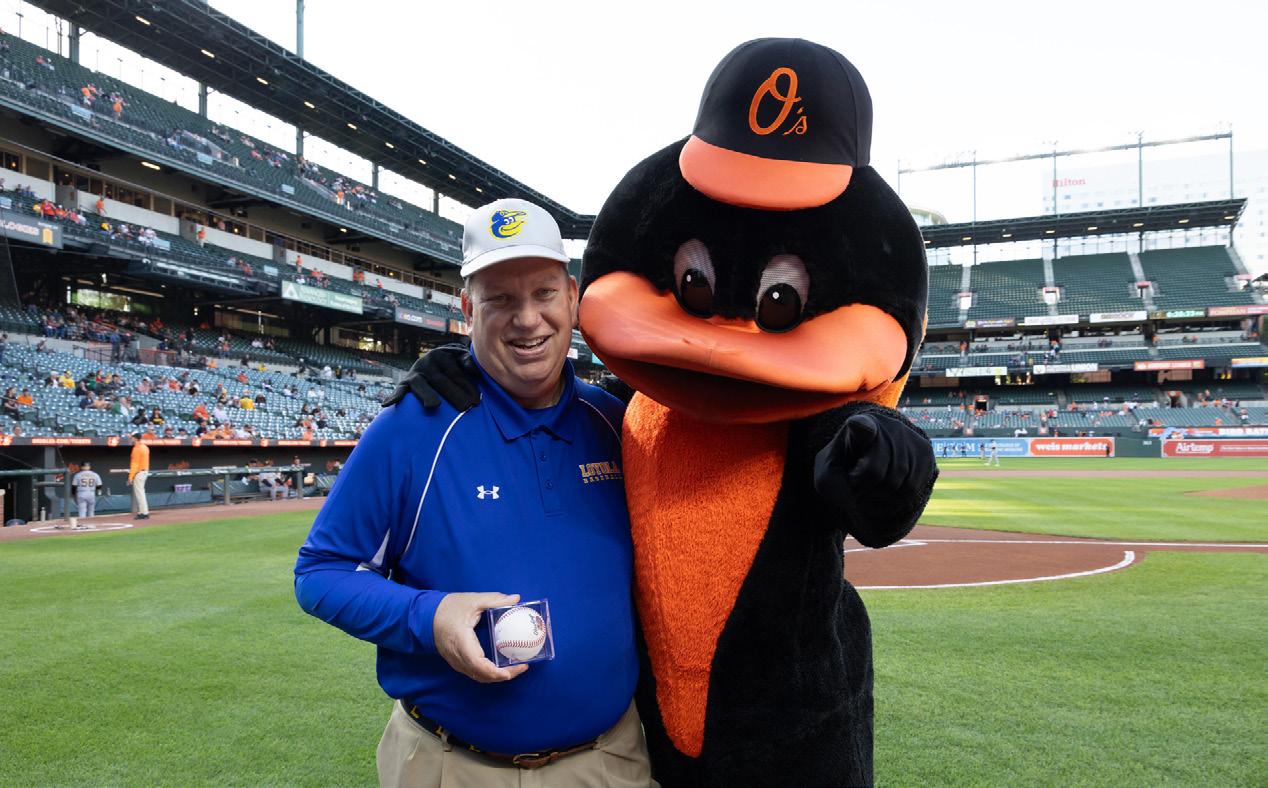
Families, alumni, students, and friends packed Camden Yards for the annual Loyola Blakefield Night at the Yard, celebrating Don pride alongside a thrilling Orioles victory.
LOYOLA BLAKEFIELD CELEBRATES 30 YEARS OF MURRAY LEARNING SERVICES
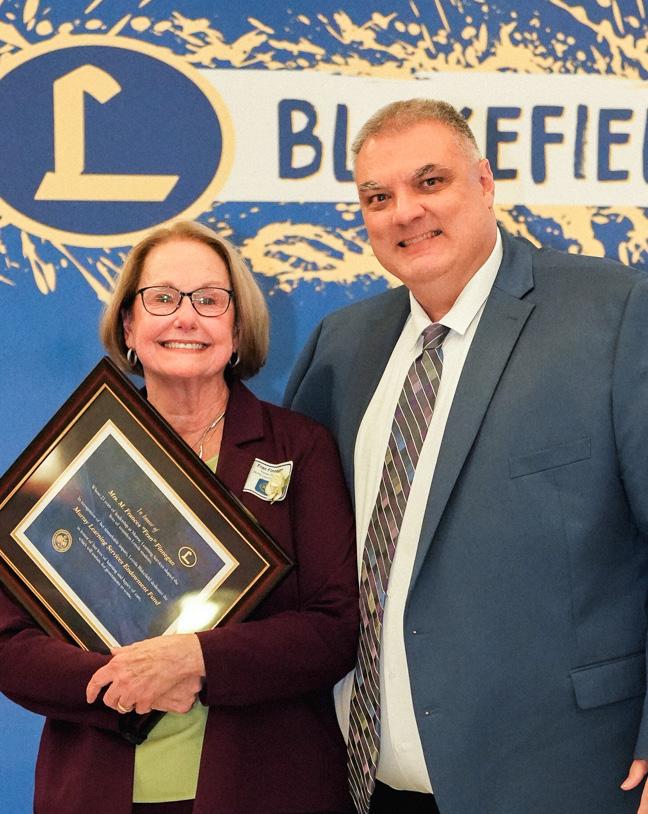
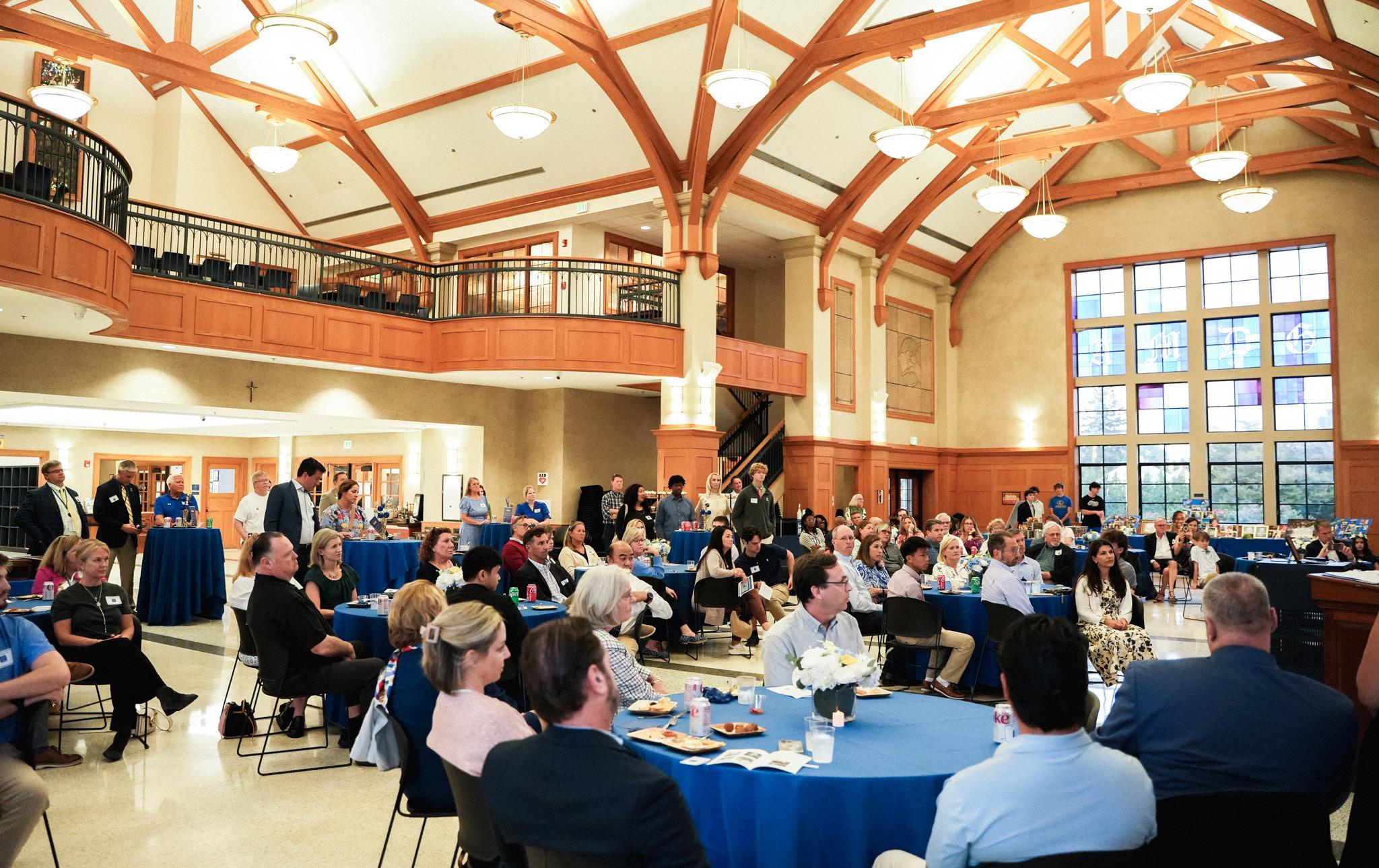
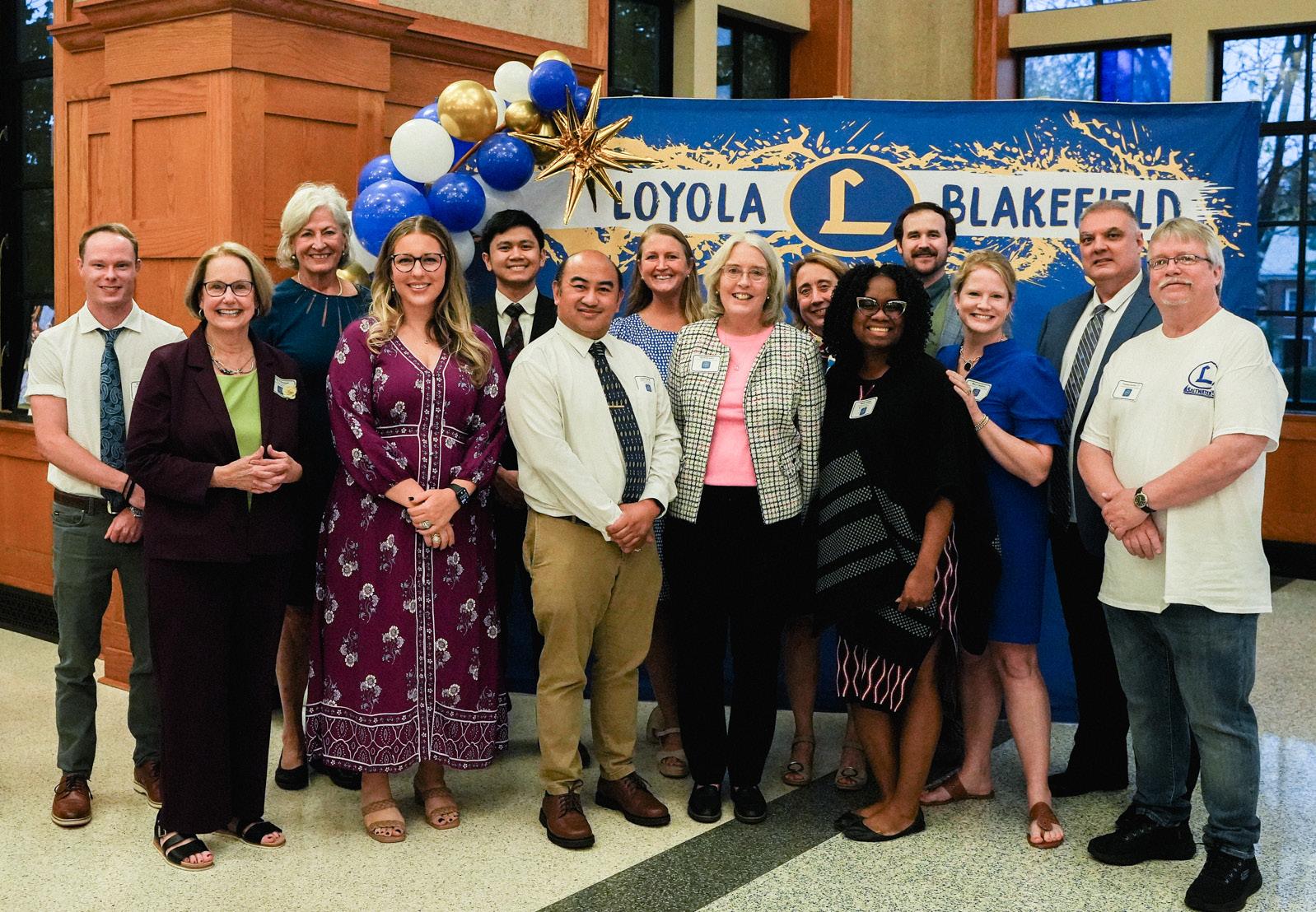
On September 30, the Loyola Blakefield community gathered to celebrate a milestone that speaks to the very heart of the school’s Jesuit mission: the 30th anniversary of Murray Learning Services. The evening was both a celebration of impact and a moment of remembrance, honoring a program that has transformed countless lives and the extraordinary educator whose spirit continues to animate its work— Rev. Daniel Bradley Murray, S.J.
In his remarks, Loyola Blakefield President Rev. Denis M. Baker, S.J., reflected on how Murray Learning Services embodies the Jesuit belief that education is never one-sizefits-all, but rather a deeply personal endeavor rooted in care for the whole person. For three decades, the program has stood as a living expression of cura personalis, meeting students where they are and equipping them with the tools, confidence, and support needed to thrive academically and personally.
Today, Murray Learning Services serves students with diverse learning profiles, helping them develop strategies for success while affirming their dignity and potential. Its impact is evident not only in academic outcomes, but in the confidence,
resilience, and self-advocacy its students carry with them long after graduation.
At the heart of this program’s story is the life and legacy of the man for whom it is named.
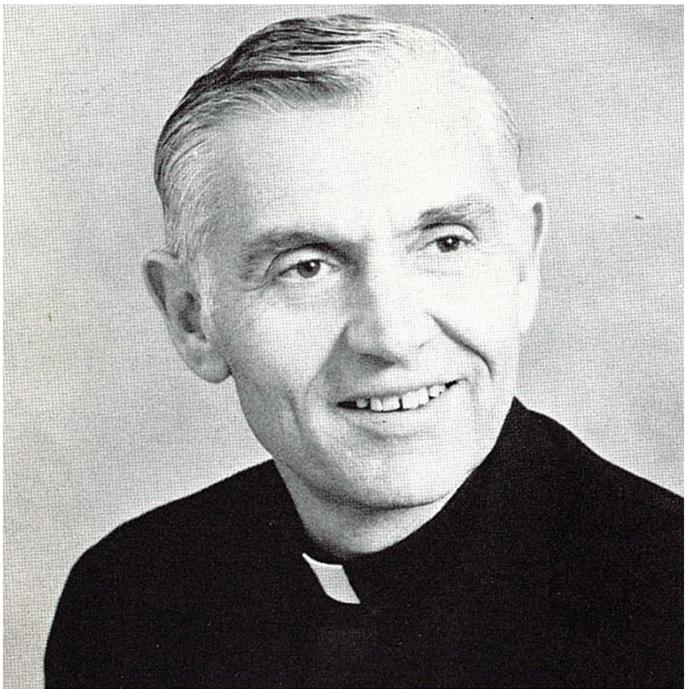
Rev. Daniel Bradley Murray, S.J., was a beloved and unmistakable presence at Loyola Blakefield for more than three decades. As The Baltimore Sun observed following his death in 2003:
“For more than three decades, Father Murray, with his tousled white hair, black-rimmed glasses and wide smile, was a familiar and welcoming presence to Loyola students, faculty and parents. He wasn’t simply a teacher; he was a constant companion to students, attending their activities,
grading papers in the corner, his head bobbing as he kept a sharp eye on whatever action was unfolding.”
At the core of Father Murray’s vocation was a profound love for students and an unshakable belief in their growth. Former Loyola President Rev. James F. McAndrews, S.J., captured this conviction simply and powerfully:
“He was the kind of person who thought that schools were for the students and that everything should be geared to them, and them alone.”
That belief—that education must begin and end with the student experience—remains the soul of Murray Learning Services.
Father Murray was also remarkably forward-thinking. Long before technology became commonplace in schools, he recognized its potential as a powerful tool for access and learning. Bernard J. Weigman, professor of physics and computer science, once recalled:
“He latched onto the microcomputer, or desktop computer, and felt it was a much better way of teaching. He was a great proponent of the personal computer. He was ahead of his time and innovative.”
In the late 1960s, Father Murray was among the first educators in the nation to introduce computer technology into a high school classroom. Later, at Loyola Blakefield, he continued to embrace innovation—not for technology’s sake, but always in service of student learning.
The origins of Murray Learning Services are rooted in one especially powerful act of compassion and creativity. When a Loyola student broke his back and faced the prospect of falling behind academically, Father Murray devised a way for him to continue his studies by teaching him to use a computer with a pencil held in his mouth. That student went on to graduate from Loyola Blakefield and later earn a college degree—a testament to what becomes possible when educators refuse to give up on their students.
Dr. Vincent Fitzpatrick, a longtime Loyola English teacher, remembered Father Murray as “an exceptionally
intelligent and self-effacing man. He cared deeply about the students he taught and tutored, and they had great respect and affection for him.” Others recalled his simplicity and directness. As Father McAndrews once noted, “He was a man who liked simplicity and didn’t stand for fluff. He liked things both simple and direct, and that’s what endeared him to so many people.”
That blend of humility, kindness, academic rigor, and clarity defined Father Murray’s presence at Loyola and continues to shape the ethos of the program that bears his name.
During the anniversary celebration, attended by 115 parents, alumni, faculty, and friends of the school, Fr. Baker emphasized that the success of Murray Learning Services over the past 30 years is the result of educators and staff who have faithfully carried Father Murray’s spirit forward. Many of those individuals were present in the room—teachers, mentors, and advocates who have
Murray theThrough Years
1995
Murray Learning Services is founded by Father Murray. The program consists of four students and two teachers .
2004 Testing Center Opens to provide testing accommodations for students.
Murray Learning Services Middle School Program created.
2018
2020
Murray Learning Services leads a Graduation Train to celebrate all graduating seniors.
2025
Murray Learning Services has 76 students in the high school with 6 learning specialists and 11 students in the middle school with 1 learning specialist!
dedicated themselves to lifting up Loyola’s Dons. The evening also welcomed back longtime members of the Murray Learning community, including Fran Finnegan, who devoted 23 years to Loyola Blakefield before retiring in 2018. In recognition of her extraordinary dedication and service, an endowment has been established in her honor to support the continued success of Murray Learning Services for generations to come.
As Loyola Blakefield looks to the future, Murray Learning Services remains a powerful reminder of what Jesuit education strives to be at its
best: an act of faith in the boundless potential of every student. Thirty years on, the program continues to affirm that with creativity, compassion, and belief, students can overcome challenges and discover strengths they may not yet see in themselves.
In celebrating this anniversary, the Loyola Blakefield community honors not only a program, but a legacy— one rooted in love for students, trust in innovation, and an enduring commitment to helping every young man realize the fullness of his Godgiven gifts.
For three decades, the program has stood as a living expression of cura personalis, meeting students where they are and equipping them with the tools, confidence, and support needed to thrive academically and personally.
One thing Loyola always did was encourage going for whatever you want to go for... That kind of belief is huge for young people.
MICHAEL STRASSNER ’07
FROM THE LOYOLA STAGE TO THE BIG SCREEN
For Strassner, the path to filmmaking began long before movie premieres and film festivals. It started with a borrowed wig, a childhood love of Mrs. Doubtfire , and a stage at Loyola Blakefield that helped shape a lifelong passion for storytelling, comedy, and community.
“I’ve always kind of wanted to act,” Strassner said. “I just loved making people smile and laugh.” That instinct followed him from early school plays to Loyola’s theater productions, where he discovered not only a creative outlet, but a supportive environment that encouraged him to take risks, even when the roles were small.
Before he was a student, Strassner’s first exposure to Loyola’s theater program came as a seventh grader, when his mother took him to see Godspell performed in the school library. “I was just so impressed,” he recalled. “I remember thinking, ‘How do these guys do it?’”
By the time he enrolled at Loyola, theater became a cornerstone of his experience. He appeared in productions
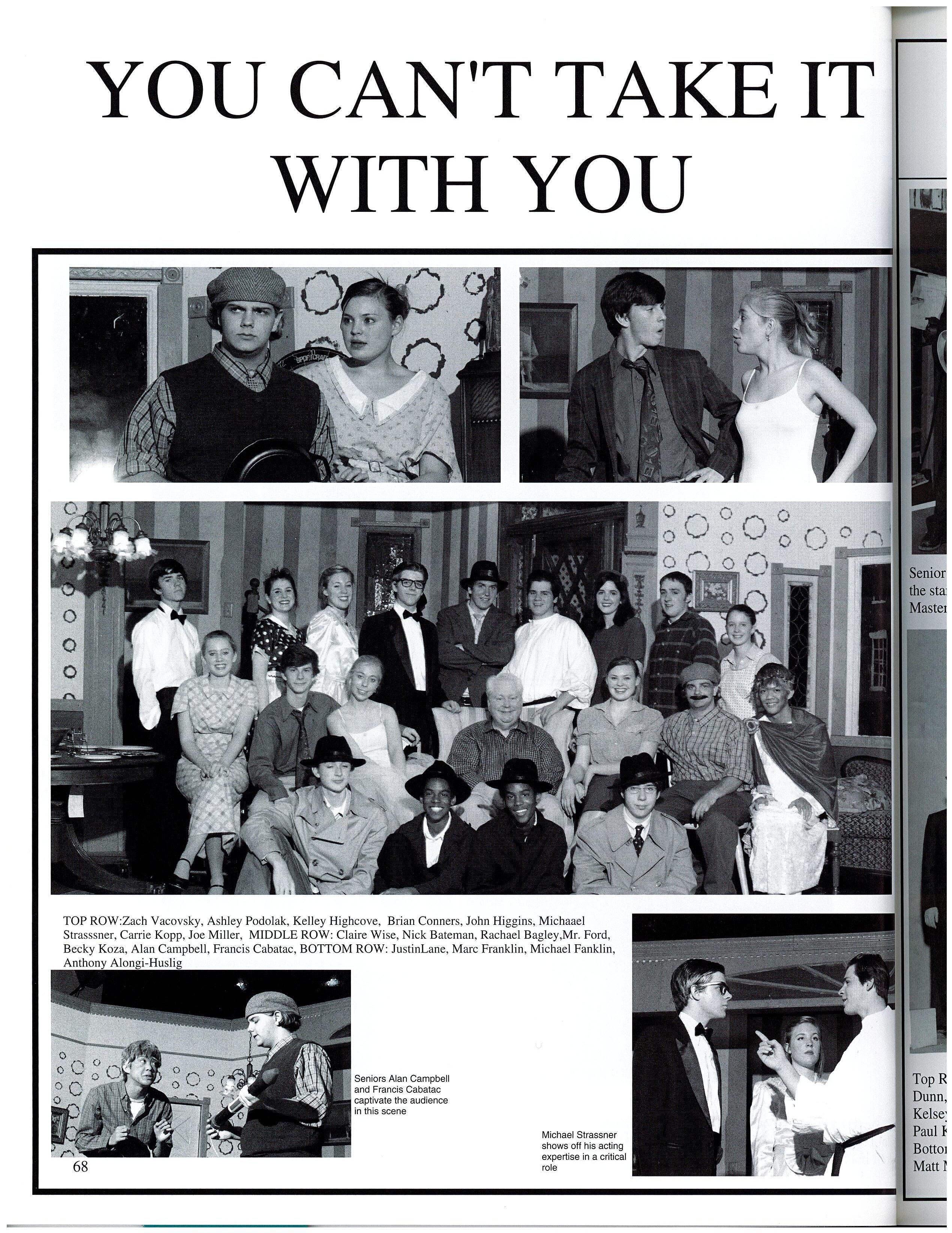
like South Pacific and You Can’t Take It With You , the latter of which remains one of his favorites. While he didn’t always land leading roles, Strassner says that never mattered. “I just loved doing it.”
That love was nurtured by teachers who believed in him. Whether it was Mr. Garrison’s one-on-one acting class, Mr. Stewart’s willingness to lean into humor, or the quiet support of teachers like Mr. Feeley, Mr. Bromwell, and Ms. Warfield, Strassner remembers Loyola as a place where creativity was taken seriously. “One thing Loyola always did was encourage going for whatever you want to go for,” he said. “That kind of belief is huge for young people.”
Loyola, Strassner recalled, was a place where creativity wasn’t treated as a distraction from academics, but as something that could exist alongside them. Even as a self-described class clown, he felt supported rather than sidelined. Teachers laughed along with him, challenged him when needed, and encouraged him to channel his energy productively.
“I caused a lot of havoc in classes,” he admitted, “but they still encouraged me.” That balance—structure paired with understanding—gave him permission to explore who he was without fear of failure. For Strassner, that atmosphere made all the difference. It was a place where humor wasn’t something to suppress, but something to shape.
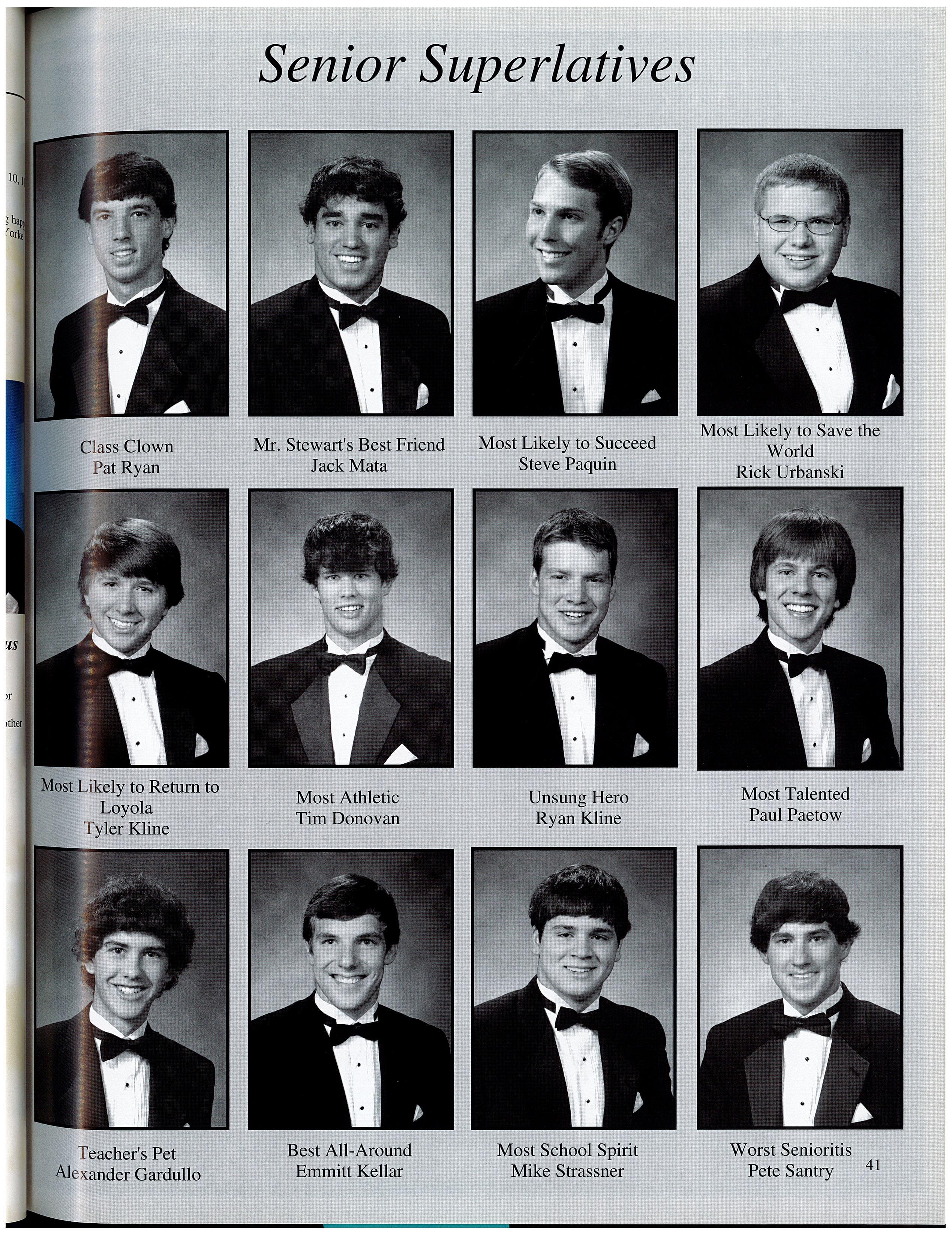
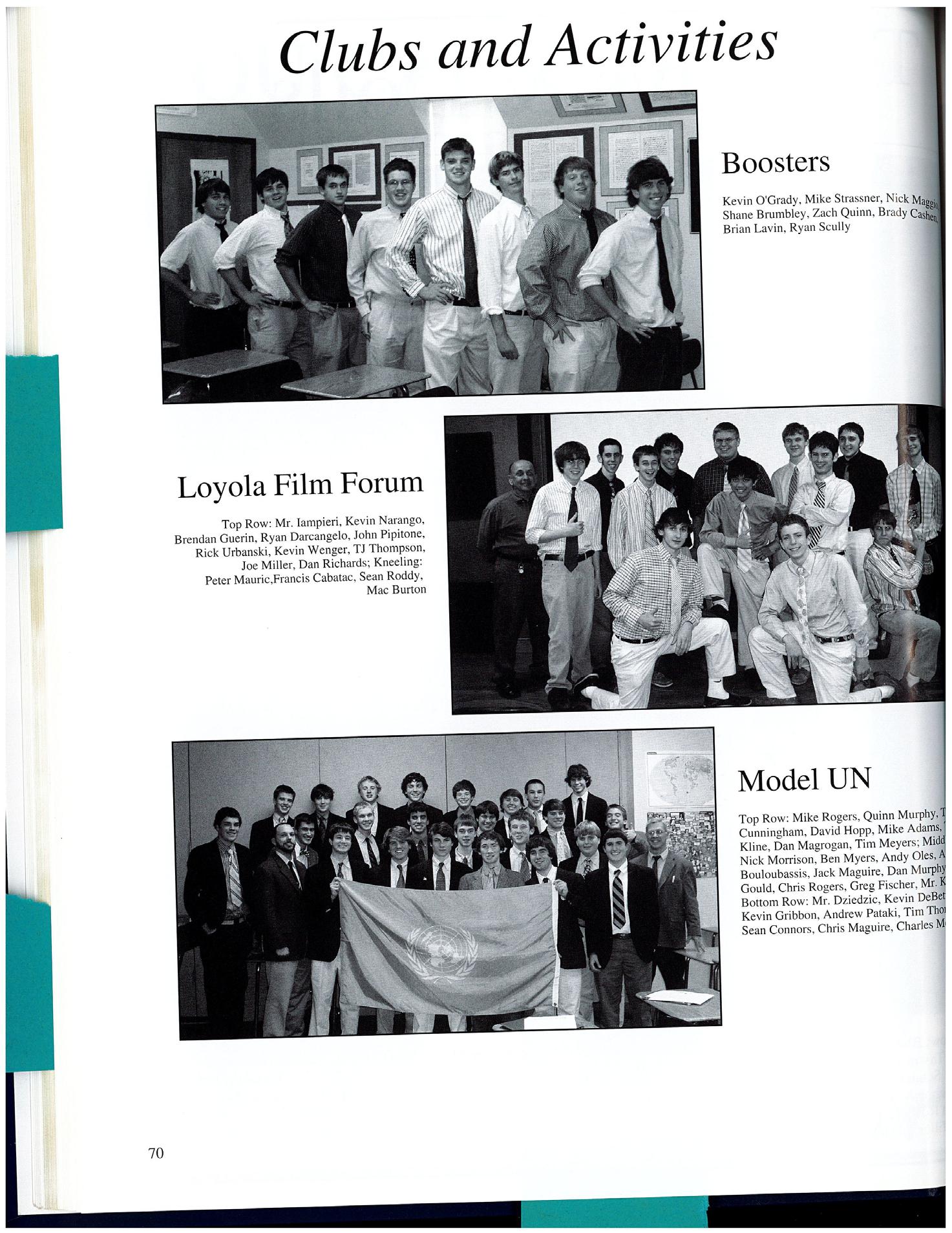
Strassner’s creativity extended beyond the stage. As a senior, he served as class president, a member of the Boosters club, and helped pioneer what has now become a Loyola tradition: pep rally video productions. His favorite memory? Creating movie-trailer-style videos for the Turkey Bowl, complete with Godfather parodies and over-the-top humor. “That’s where I really started to get my comedic voice,” he said. “Seeing how people responded to the jokes—it meant everything.”
Those early experiences of making people laugh, bringing a community together, and using humor as connection continue to define Strassner’s work today.
PARALLEL COMMUNITIES, SHARED VALUES
Most recently, he co-wrote and starred in The Baltimorons , a film deeply rooted in his hometown and the community that raised him. The movie reflects Baltimore not as a headline, but as Strassner knows it: warm, strange, funny, and full of people willing to show up for one another. “The city just opened its doors to us,” he said. “We could not have made this movie without the Baltimore community.”
In many ways, the making of The Baltimorons mirrored the film itself.
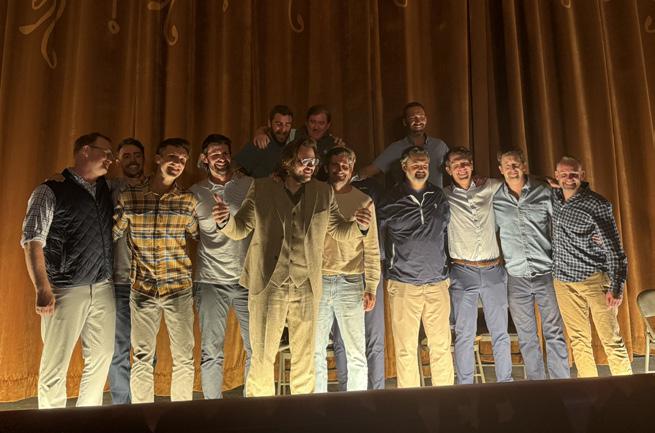
The project came together not through large budgets or studio systems, but through people— many of them Loyola alumni— who volunteered their time, space, and energy.
“There were Dons everywhere,” Strassner said. “People came out just to help. That’s the Loyola community.
That’s Baltimore.”
Filming in familiar neighborhoods like Hampden, Strassner was struck by how closely the spirit of Baltimore mirrored what he remembered from Loyola: a place where people say hello, open doors, and show up without being asked. “In L.A., you don’t always get that,” he said. “In Baltimore, and at Loyola, you do.”
Strassner sees a clear throughline between his time at Loyola Blakefield and the filmmaker he is today: an emphasis on service, encouragement without fear, and the belief that creativity has value.
“Loyola taught me that helping others gives you purpose,” he said. “That’s stayed with me in my life, in recovery, and in my work.”
That sense of purpose became especially clear as Strassner navigated sobriety. Recovery, he said, reinforced
the same values Loyola had introduced years earlier: humility, service, and the importance of showing up for others. It also reshaped how—and when—he felt ready to tell certain stories.
“I had to do a lot of work on myself first,” he said. “I couldn’t have made this film earlier in my life.” The support he received from friends, alumni, and the wider Baltimore community, mirrored the support structures he had learned to rely on in recovery. The project became not just a creative milestone, but a personal one, rooted in gratitude and readiness rather than ambition alone.
LOOKING AHEAD
Following The Baltimorons continues to build momentum. He appears in The Musical Lowe, which premiered at the 2026 Sundance Film Festival, and recently completed work on York , an independent film about friendship, self-discovery, and change.
While his career increasingly takes him beyond Baltimore, Strassner hopes the city, and the values that shaped him, remain central to his work. “I just love telling honest, vulnerable, funny stories,” he said. “And if I can keep doing that in Baltimore, even better.”
For current Loyola students dreaming of creative careers, Strassner offers advice shaped by years of trial and persistence: create relentlessly.
“I made a lot of bad things before I made anything good,” he said. “That’s how you find your voice. You just have to keep going.”
The trip changed each of us in ways that will stay with us, strengthening our commitment to the Jesuit mission of being ‘people for others.’
blackfeet nation, mt: A summer service reflection
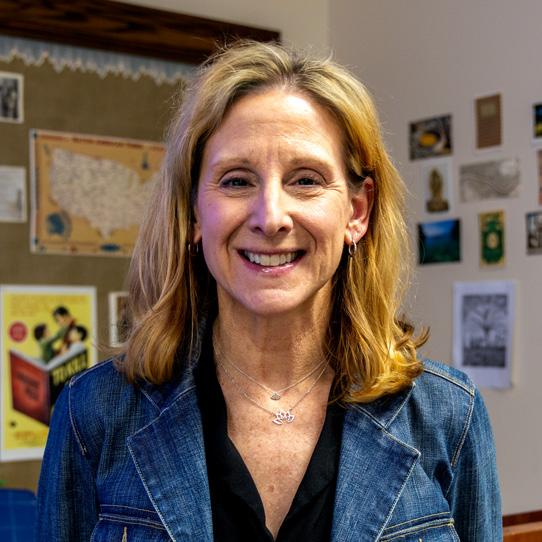
Kelly Blackburn, English Teacher
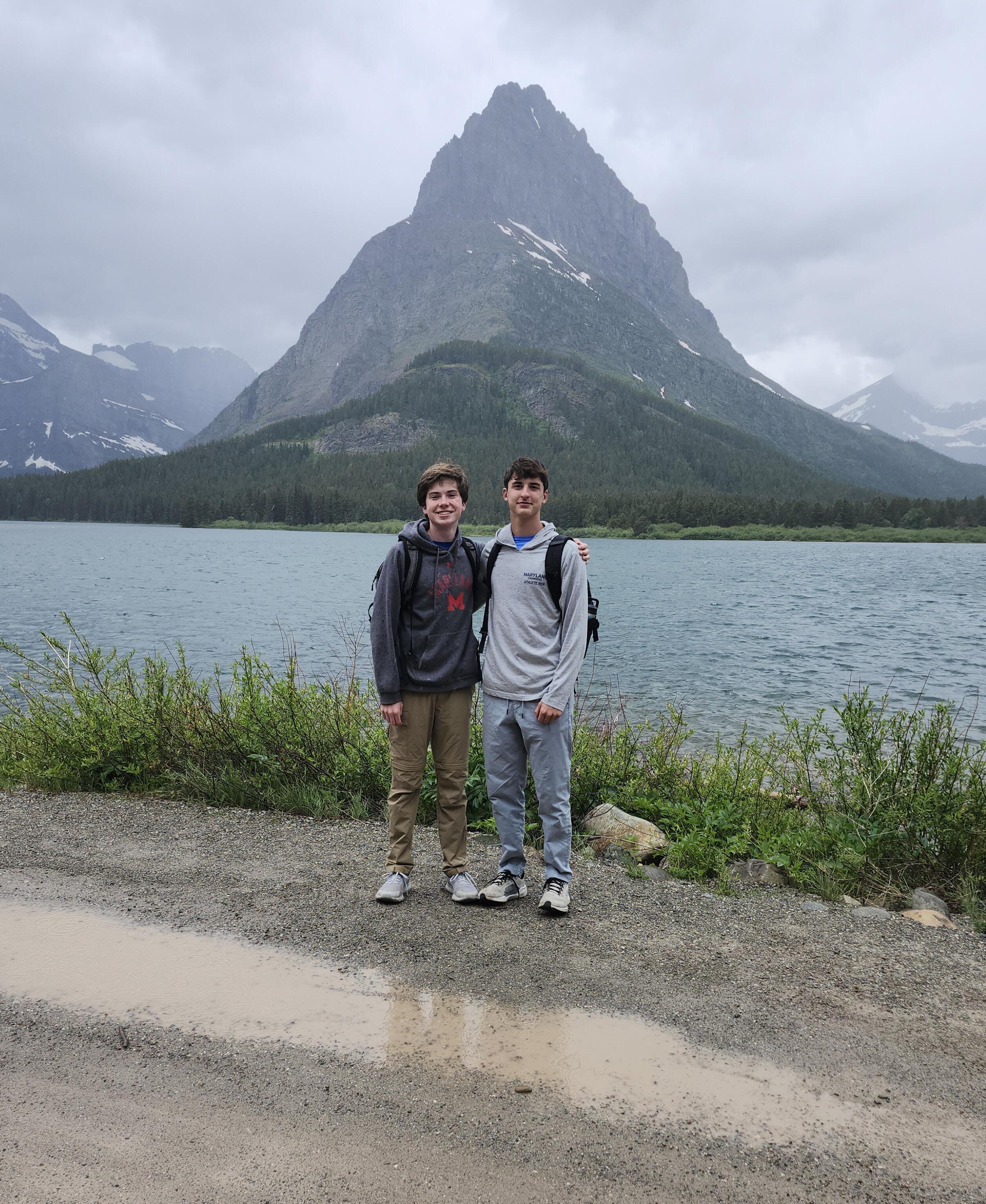
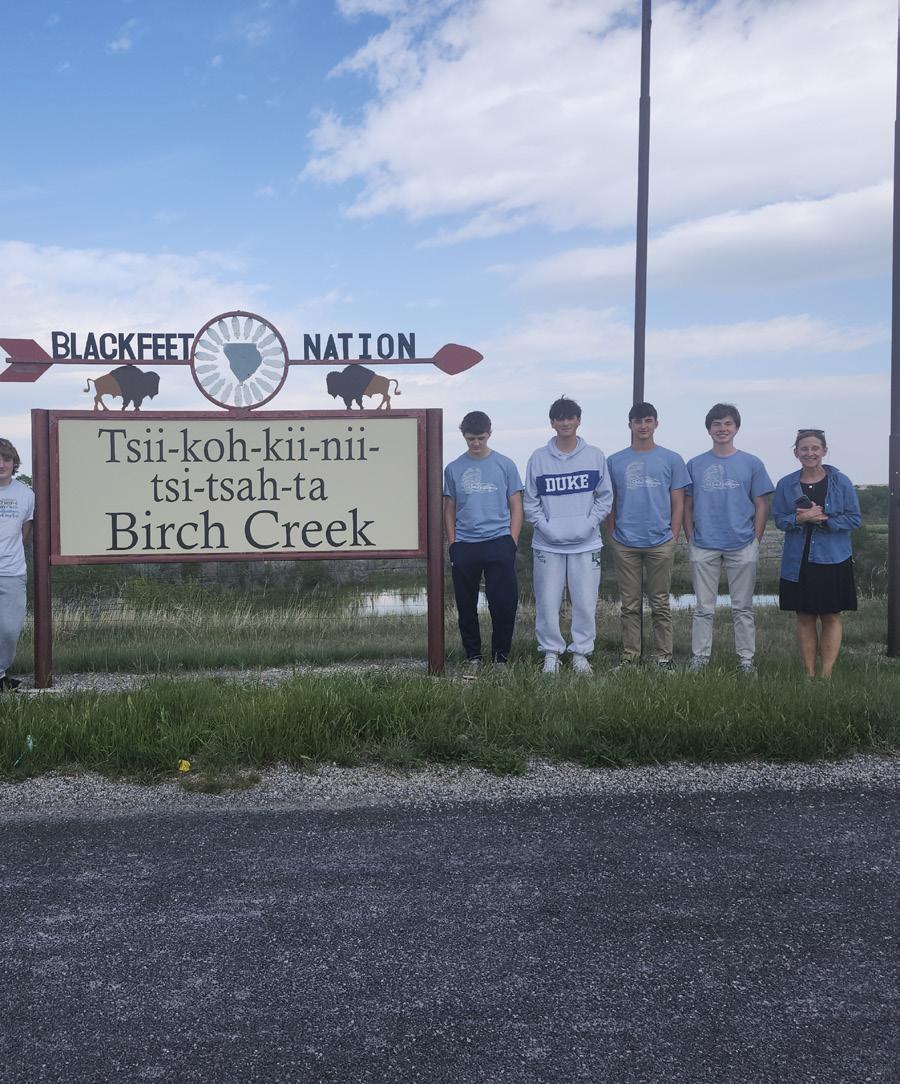
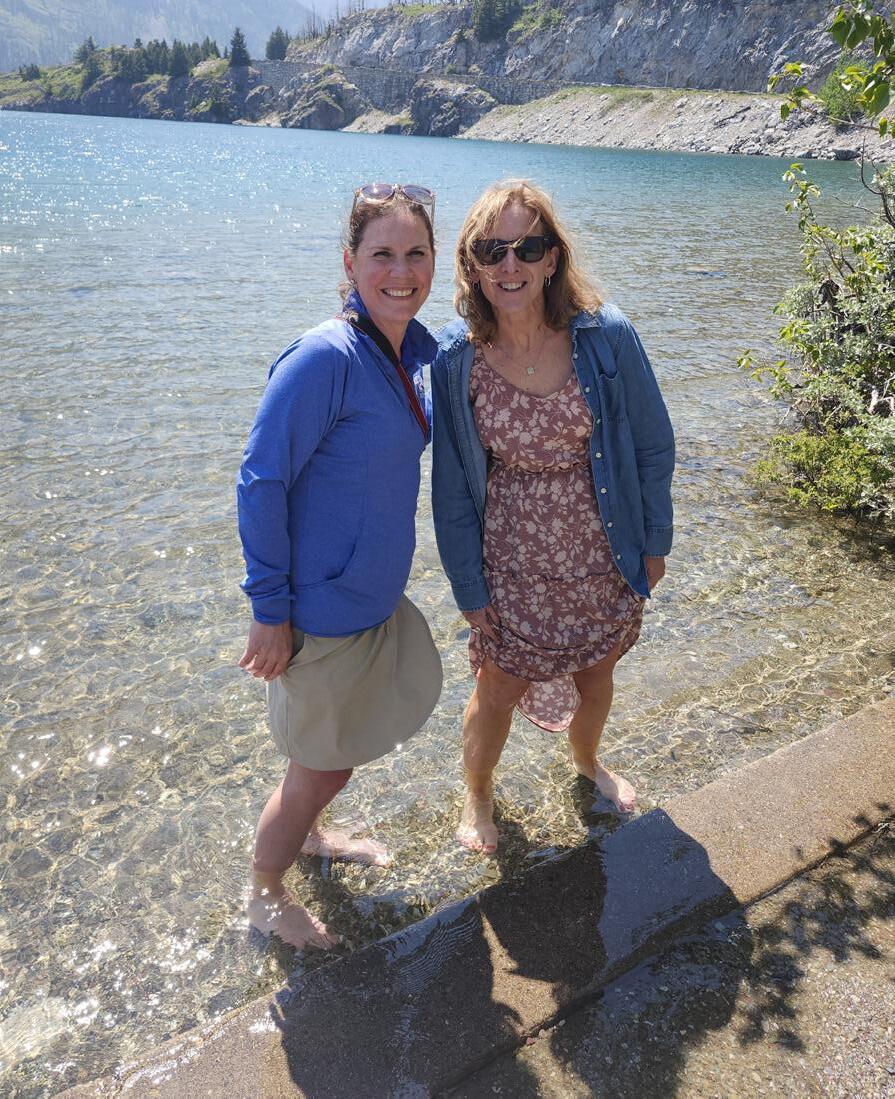
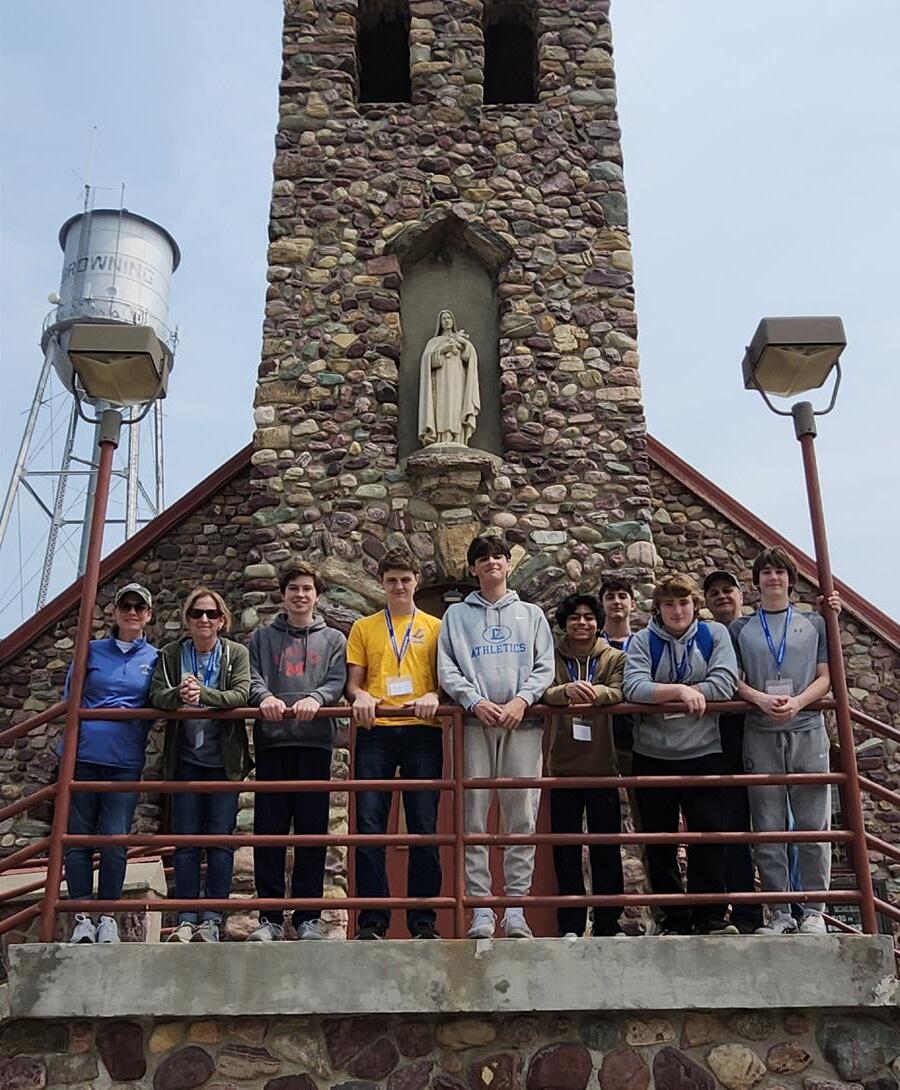
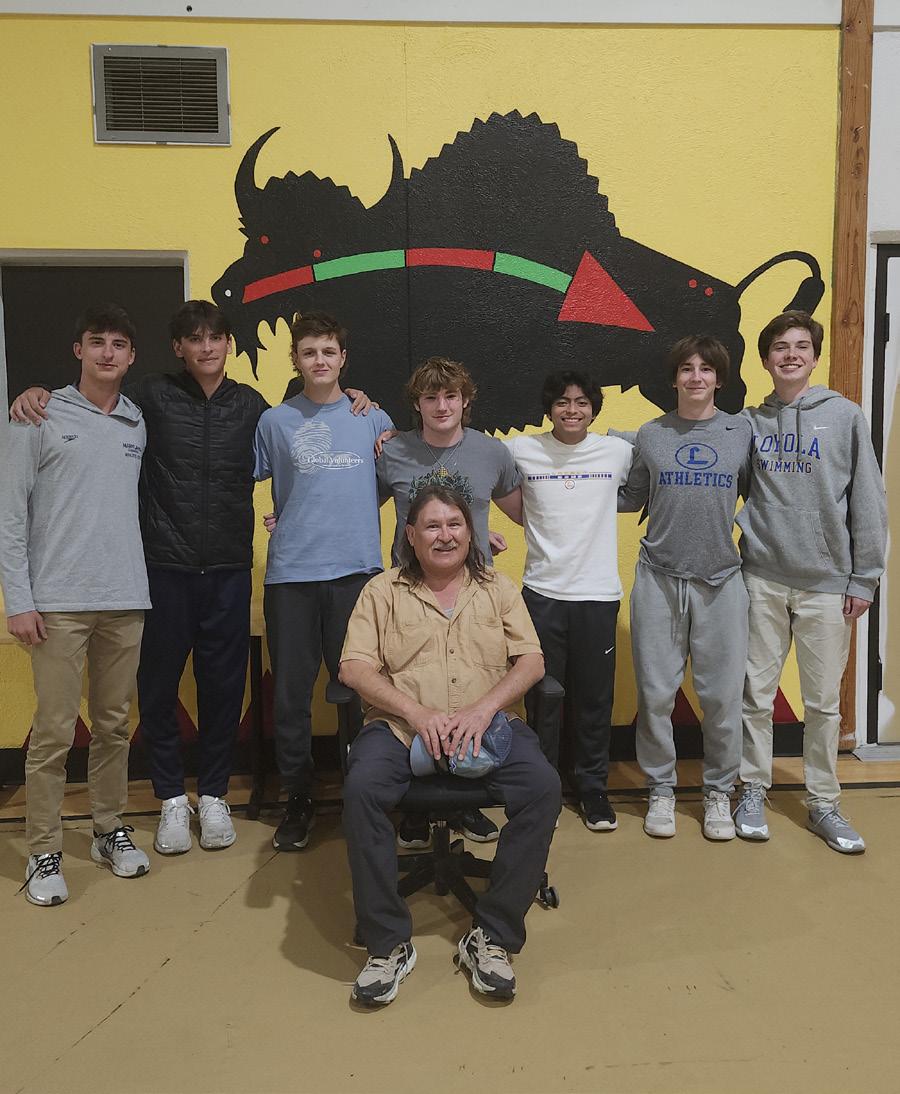
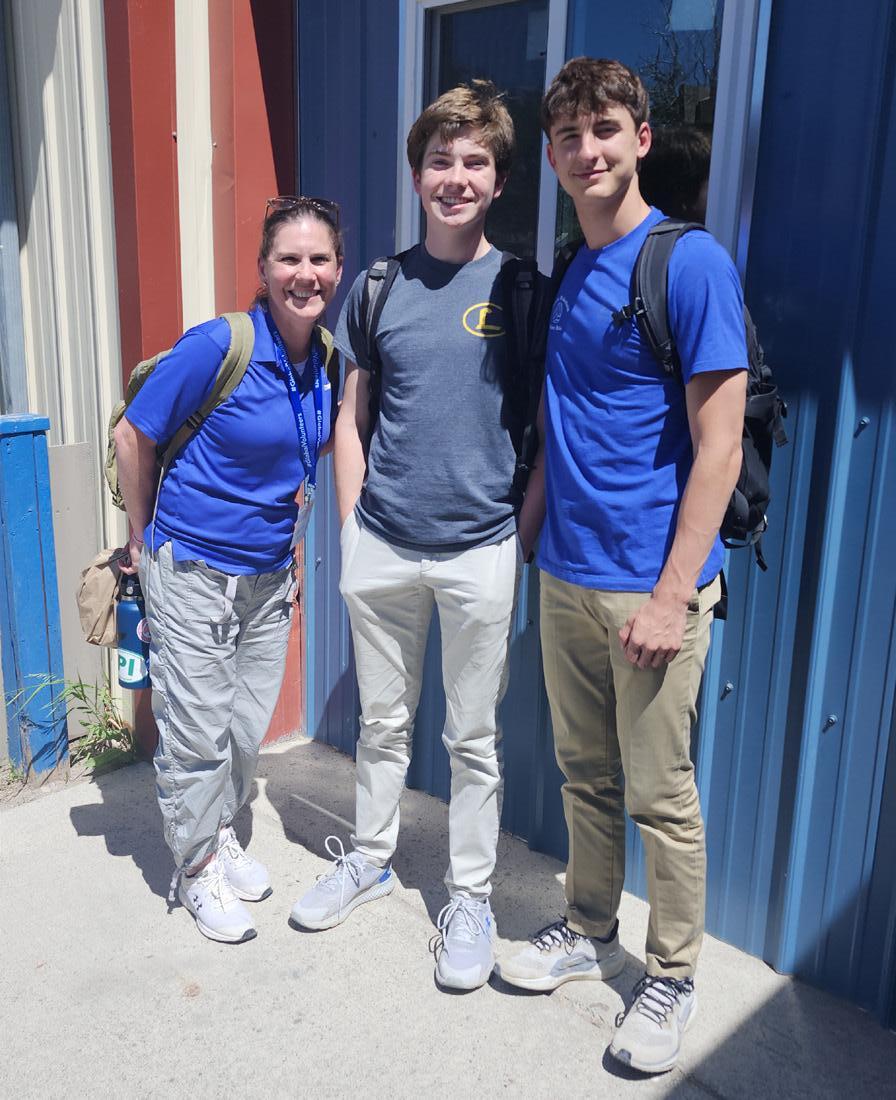
Coming from a thirty-year career in public schools, the idea of a service trip—and especially a solidarity trip—was new to me. I knew the definition of “solidarity,” but pairing it with “service” opened a new way of thinking about what it means to be present with others. Last summer, I had the privilege of traveling to the Blackfeet Nation in Browning, Montana with seven rising seniors and two faculty peers. There, we didn’t simply volunteer; we served with members of the tribe and learned from their culture, their history, and their daily lives.
Mr. Jim Katchko, a veteran teacher at Loyola Blakefield, had made this trip several times before. Ms. Danielle Hart, an Information Systems Associate, and I were grateful for his experience and for the guidance he offered as we prepared to travel across the country. Having known little about the Blackfeet Nation, I appreciated how Jim introduced the students and faculty to aspects of the culture, the traditions, and the realities we would encounter. His preparation helped us arrive with open minds and a willingness to learn.
Once in Montana, we worked with Global Volunteers, a nonprofit that partners with communities around the world. We were supported by Rosie
Morrison, Montana Team Leader, and Shawnee Bullshoe, a member of the Blackfeet Nation. Their warmth and leadership welcomed us immediately. Everyone we met shared pieces of their lives with us, inviting us into the community in ways I hadn’t anticipated.
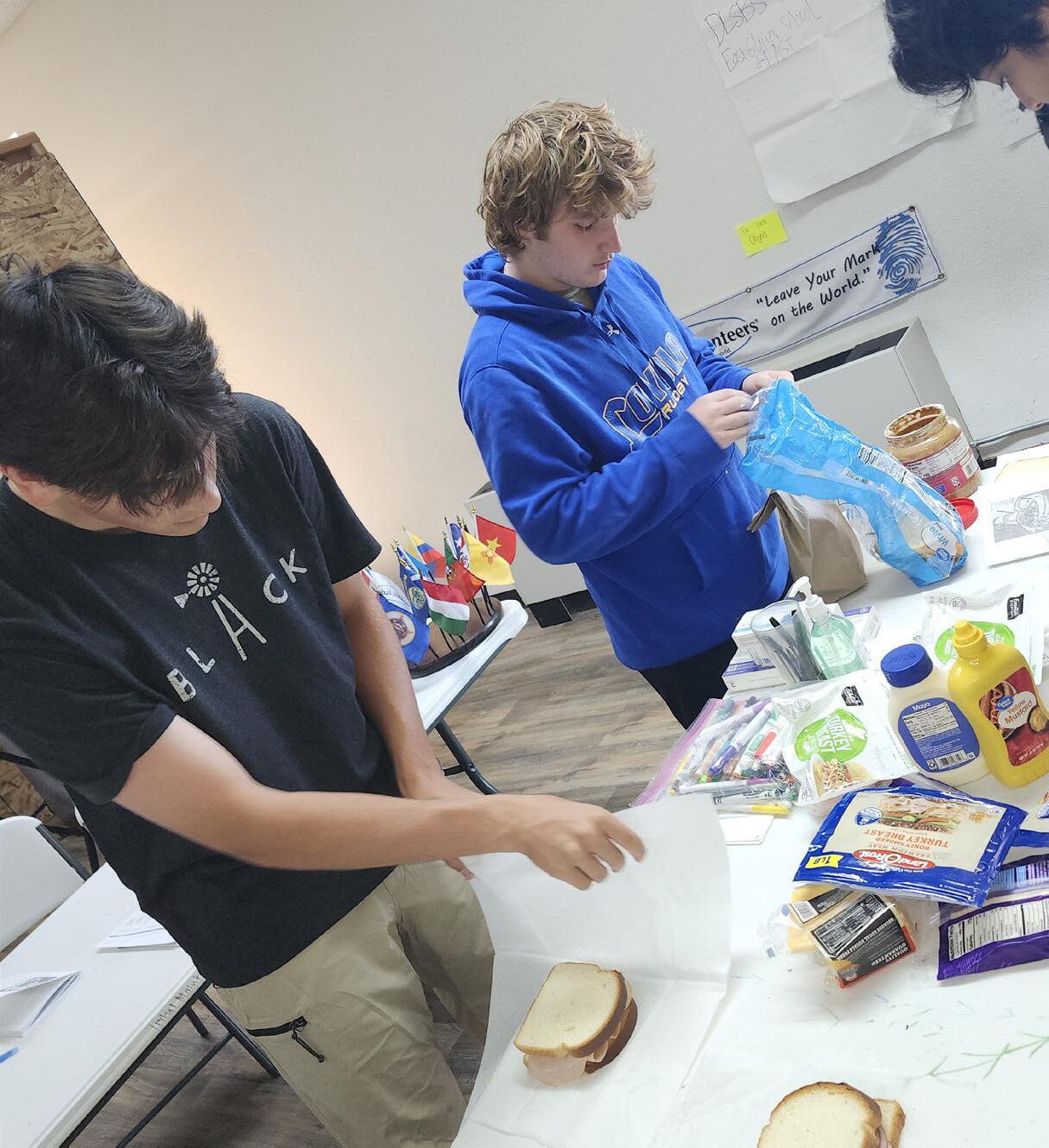
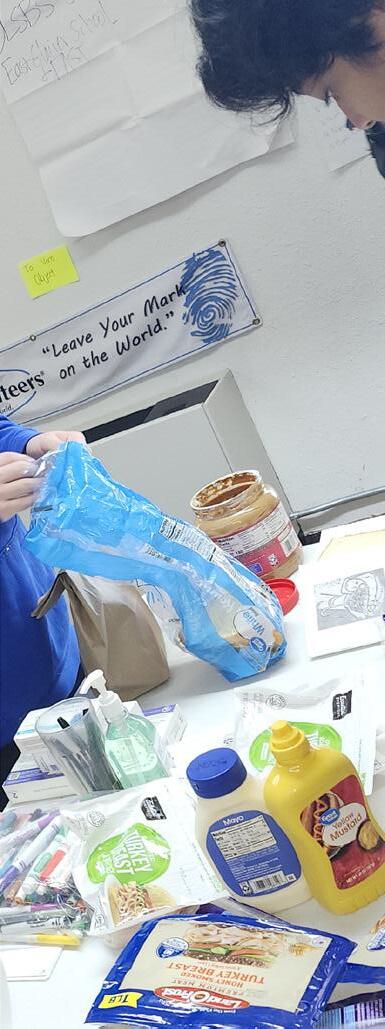
One of our service opportunities was with the Food Access and Sustainability Team (FAST). Like many Indigenous communities in the United States, the Blackfeet Nation faces significant economic challenges. Over 69% of the tribe experiences food insecurity, and the Food Pantry serves individuals and families five days a week in a dignified, “supermarket-style” setting. FAST also provides nutrition education and recipes to help community members prepare healthy meals with the foods available. Working at the pantry allowed both students and adults to connect with local residents. We served alongside Ms. Cindy Salway, the pantry manager, and Red Bird, a devoted volunteer—both of whom work tirelessly to ensure that community members receive what they need with dignity and care.
We also had the chance to support the summer program at De La Salle Blackfeet School. The school offers academic practice and enrichment
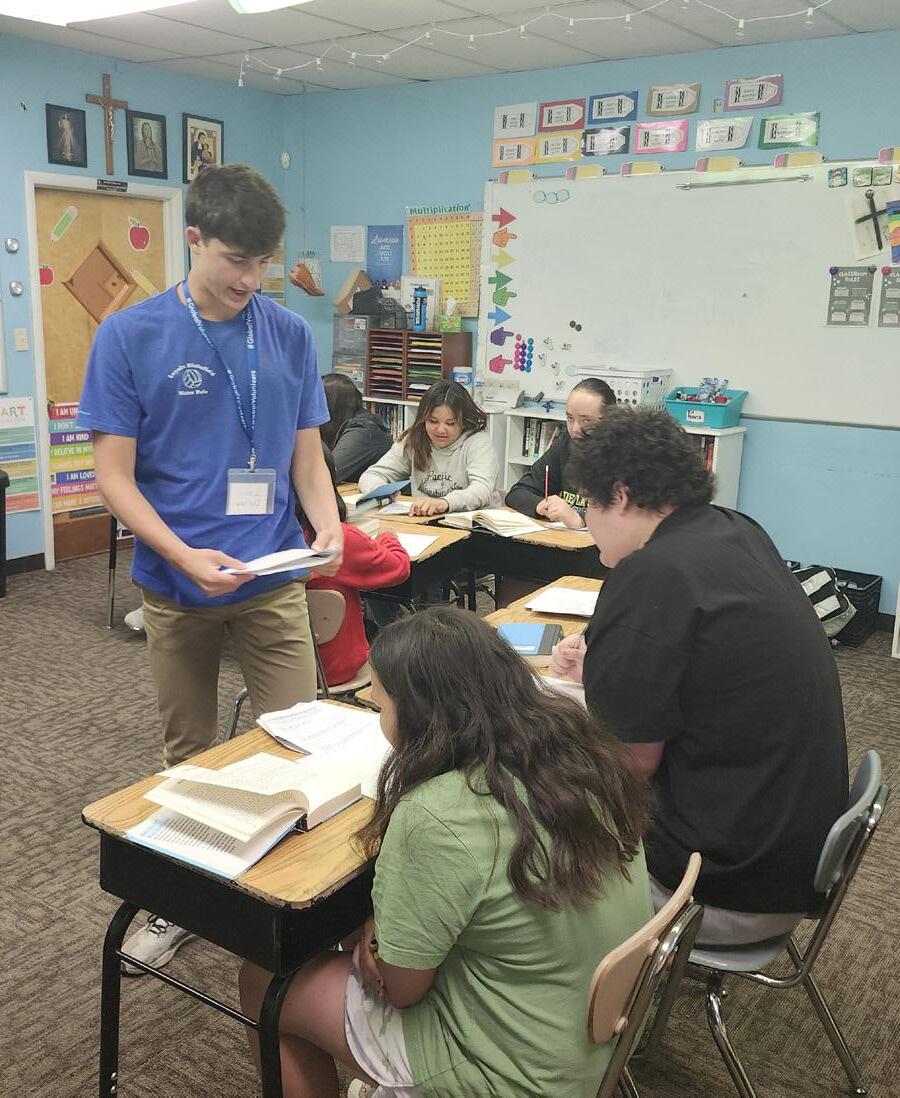
activities to help students avoid summer learning loss. We worked with dedicated teachers such as Joe Riordan and Brother Dale Mooney, as well as college volunteers from Notre Dame and Villanova. Spending time with the students—whether practicing skills, swimming at the high school, or joining field trips—was one of the highlights of the week.
Another meaningful experience was serving at the Blackfeet Eagle Shield Senior Center. There, we helped prepare and serve lunch, which is provided free to elders and offered at a reasonable cost to all tribal members. The meals are more than food—they are moments of community. We met elders who generously shared stories, history, and humor, making us feel a genuine part of the Blackfeet Nation during our time with them.
These experiences are what truly made this a solidarity trip rather than simply a service trip. We formed relationships, listened deeply, and learned from the people who welcomed us into their community. The trip changed each of us in ways that will stay with us, strengthening our commitment to the Jesuit mission of being “people for others.”
Walking the Past, Serving the Present:
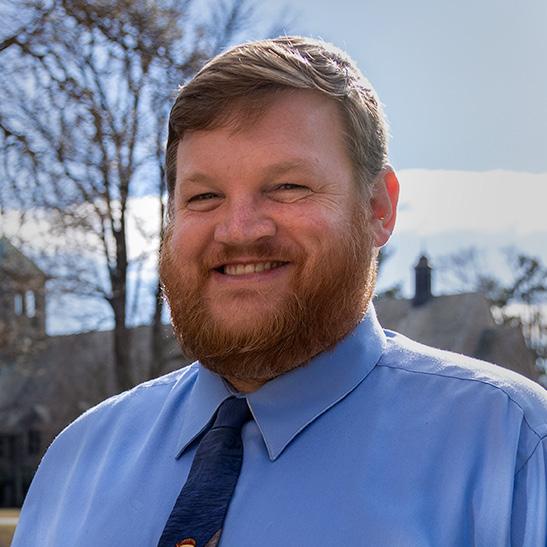
Josh Poole, Business Office Associate
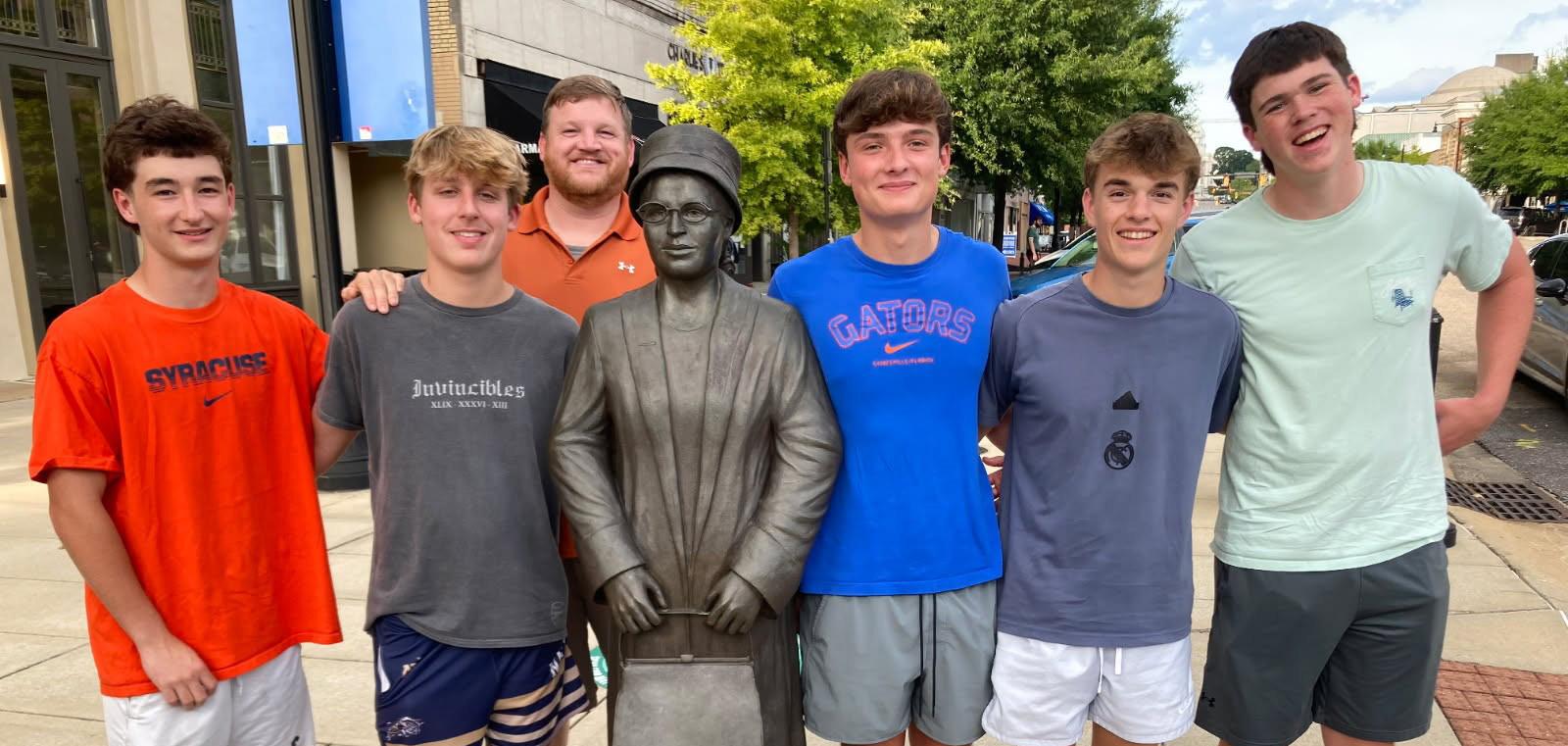
Last February, I was asked whether I would be willing to chaperone the Civil Rights service trip to Alabama. I gave the request serious thought, as I juggle a busy work life alongside caring for two young daughters and had never previously considered going on a school trip of this length. Thankfully, my wife saw it as a wonderful opportunity and assured me she could take care of things on the home front while I was away. Knowing that Elizabeth Wise—a trusted colleague and friend— would be the other adult chaperone ultimately sealed my decision to say yes.
Colleagues who had taken this trip before all warned me of one thing:
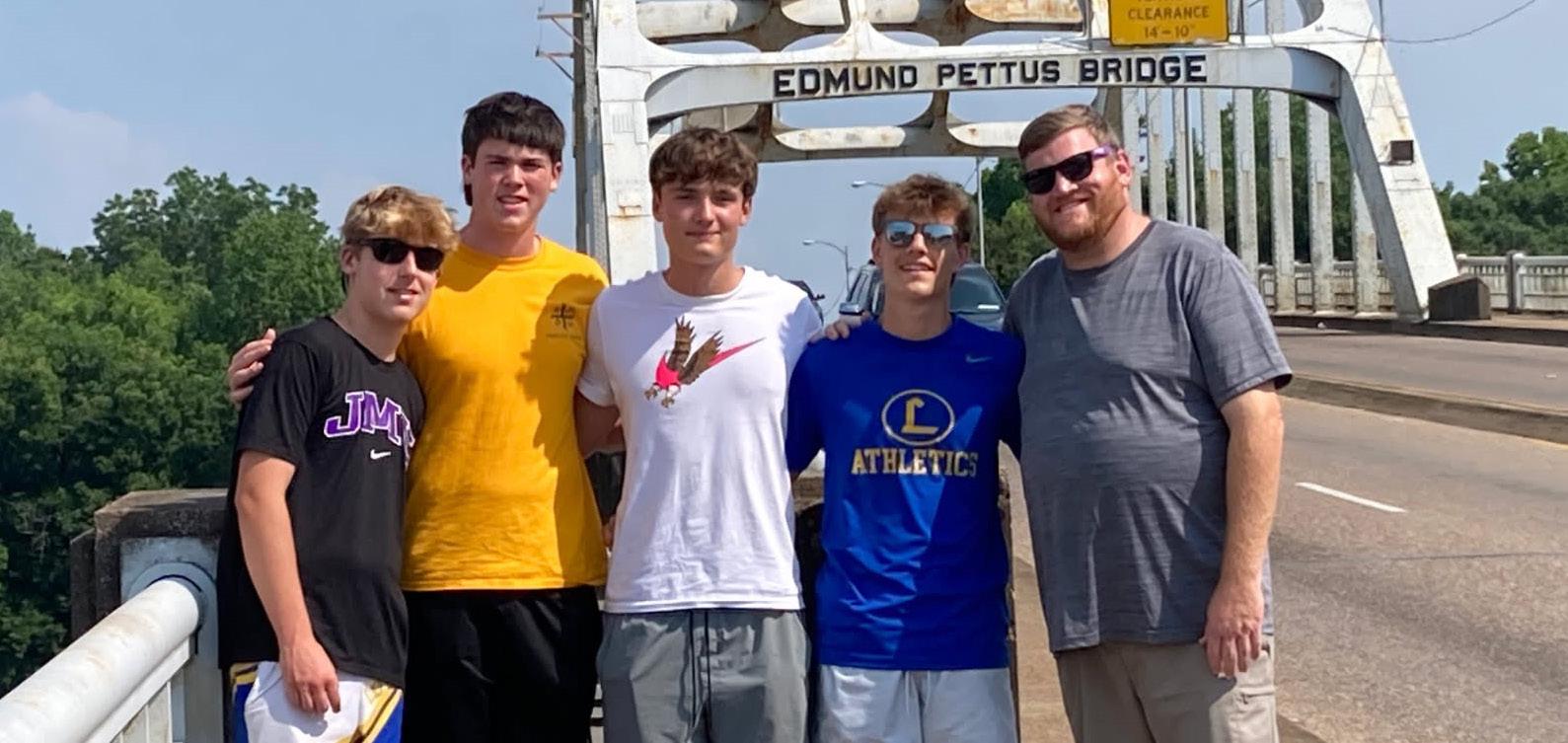
it is hot in Alabama in June. They were absolutely right. Still, the heat didn’t stop our small group—just five rising seniors—from serving the people of Selma. We stayed on the Edmundite Missions campus, where they operate something called The Boutique. The Boutique is similar to a Goodwill or Salvation Army store, except no one ever has to pay for anything. Mrs. Wise, the students, and I spent a significant amount of time sorting through the steady stream of donations. We also cleared out an entire garage so that The Boutique could accept larger items such as furniture and beds for families in need.
Our work extended well beyond
The Boutique. We also prepared and served meals at a soup kitchen across the street from the Edmundite Mission buildings. Next to The Boutique is a house where a free summer camp is offered to many of Selma’s children. Our students did an outstanding job serving as temporary camp counselors—leading crafts, helping with educational activities, and playing countless games. The children were especially delighted to have the full attention of five 17-year-old young men.
Throughout this serious and meaningful trip, our students truly impressed me. While we were in Alabama to serve, this Summer Solidarity experience was also deeply
A Summer Solidarity Experience in Alabama
educational. I was proud of the maturity our students showed as they studied difficult topics such as civil rights, segregation, and minority voting rights. Early in the trip, we visited the Legacy Museum in Montgomery. I found myself moved to tears more than once inside this powerful and sobering space, which begins by honoring enslaved people who never even reached the shores of the United States—those who perished during the brutal journey across the Atlantic.
Our group traveled the route from Selma to Montgomery more than once, walking in the footsteps of Dr. Martin Luther King Jr. and the thousands who marched in March of 1965 to fight for Black voting
rights. Standing in those places gave historical lessons a depth that no classroom ever could.
On the second-to-last night of the trip, Mrs. Wise and I took the students to a Montgomery Biscuits minor league baseball game. After a long, physically demanding day in the summer heat, it was a joyful and wellearned highlight.
Ultimately, this service trip was about gaining perspective—for Mrs. Wise and me, but especially for the five students entrusted to our care. If any of them once took for granted the clothes on their backs, the food on their tables, or the beds they sleep in each night, I am confident they do not anymore.
Standing in the places where history happened gave our students a perspective no classroom ever could.
CLUB SPOTLIGHT: ART FOR OTHERS
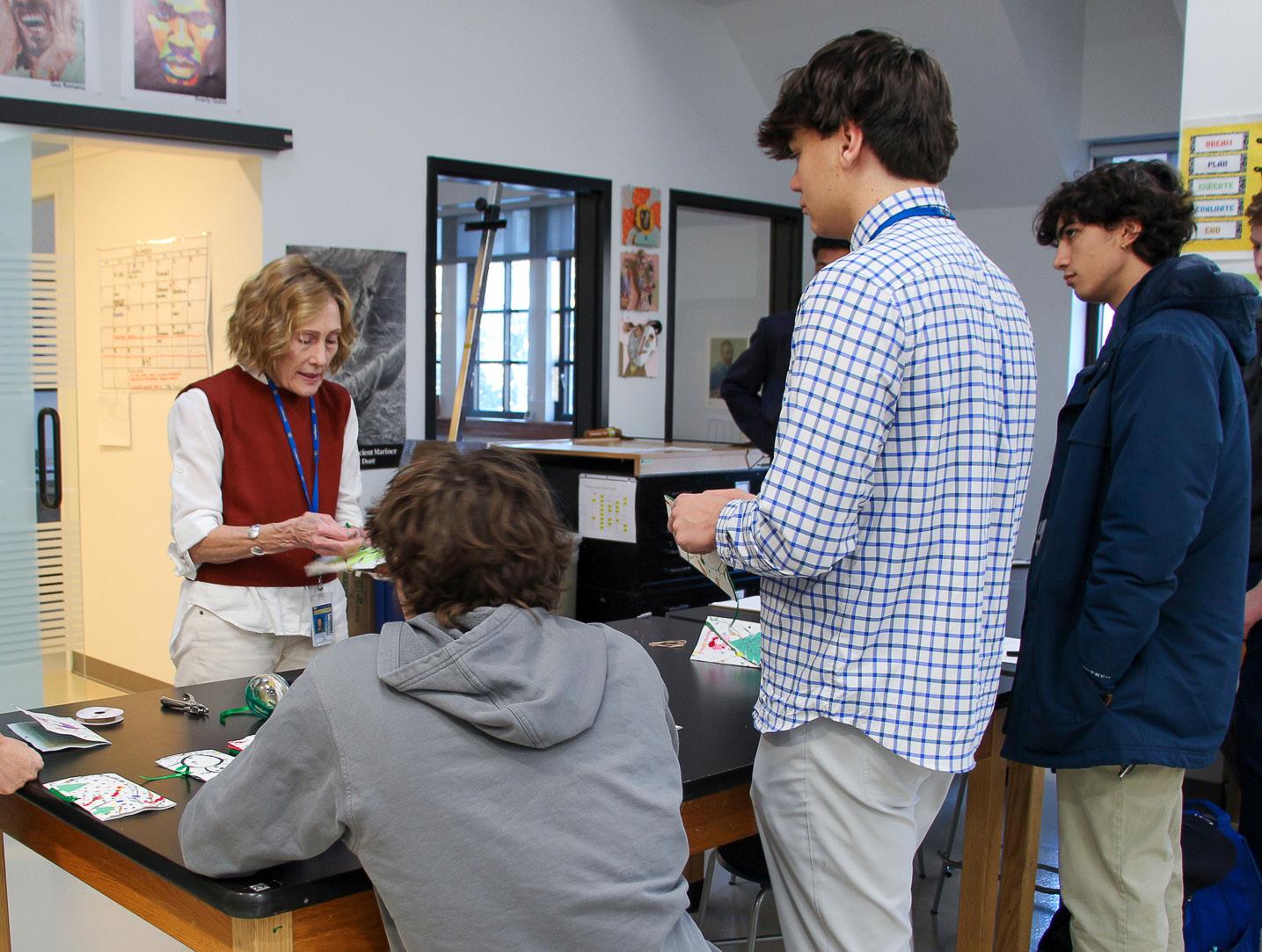
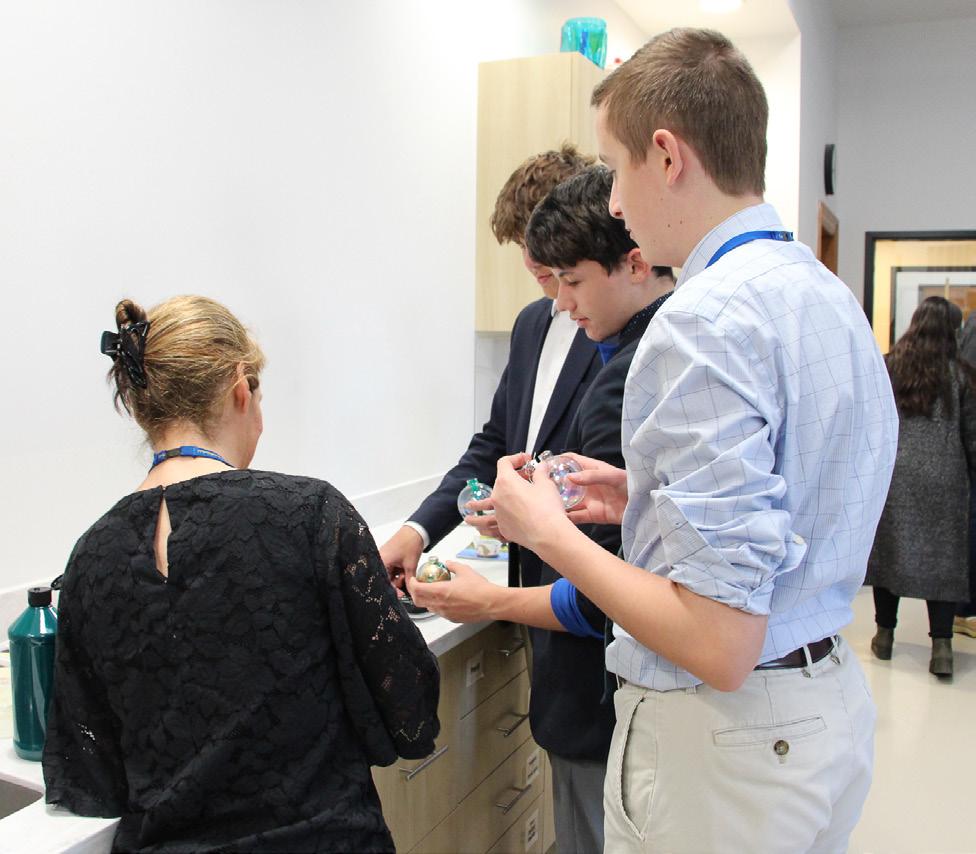
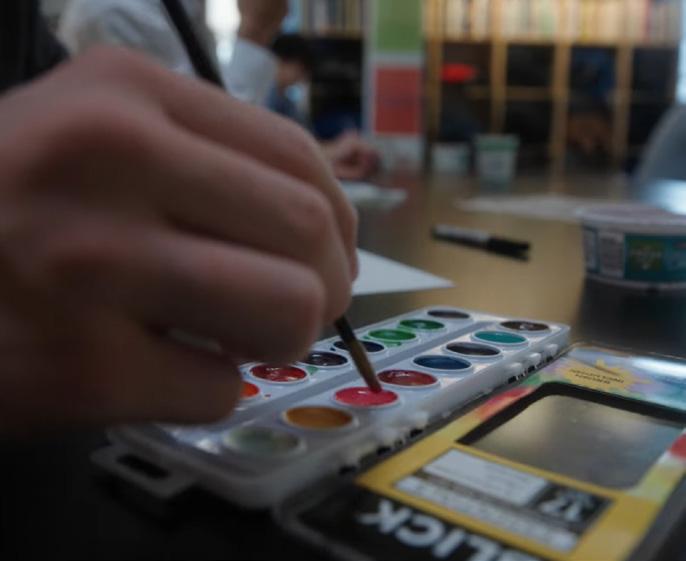
Art for Others isn’t about perfect paintings or finished projects—it’s about showing up. The club brings students together to create alongside others, using art to connect, listen, and build relationships. Members plan thoughtfully, reflect honestly, and keep asking how they can better serve the people they meet. In the end, what matters most isn’t what’s made, but the companionship that grows through the process. Learn more about how the club sparks connections through creativity and care.
At Loyola, service is central to the student experience and permeates across our entire community. For more than a decade the Art for Others club has lived out that mission by uniting creativity, companionship, and compassion in meaningful ways.
Founded by Ginny Petr (Visual Arts Department Chair) and Ryan Taggarse ‘15, Art for Others began when Taggarse expressed a desire to desire to explore how art and creative
expression could provide help and make connections on our campus and beyond. From that moment in 2012, he and Ginny began reaching out to schools, nursing homes, and care centers, hoping to engage both the young and the elderly through artmaking and human connection.
While art is the shared activity, the heart of the club is service. All students are welcome to join— not just aspiring artists.. Through
reflection after each visit, students come to recognize the impact of their presence and the joy they bring simply by showing up.
For Will Aumiller ’26, the club has become one of the most meaningful parts of his Loyola experience. While he joined his sophomore year because of his passion for art, over time, that passion grew into leadership, as Will now serves as Art for Others President. “The fact that
I’m able to serve a community I’m so connected to through Art for Others while sharing my love for art gives a sense of fulfillment that I cannot find elsewhere.”
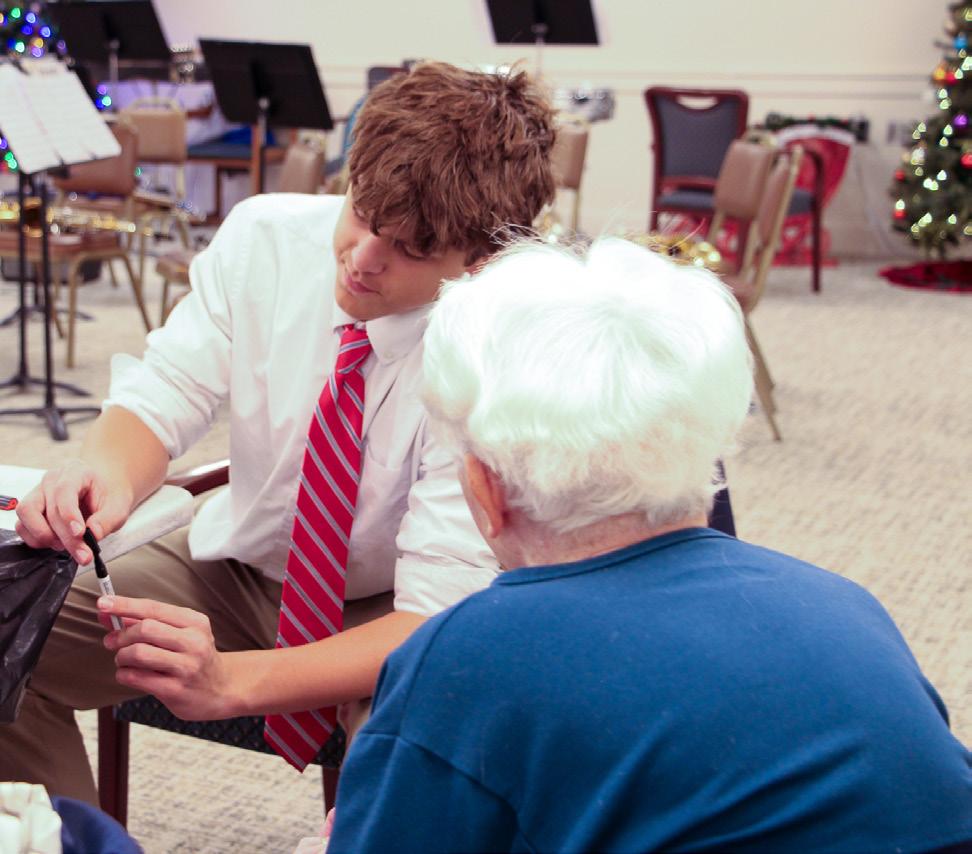
That fulfillment is often found in moments of simple companionship. Many of the senior citizens the club visits may not be able to participate in the art itself, but they are deeply engaged in the experience. Conversations flow naturally, often centered on family memories and stories from the past—connections students frequently relate back to their own lives. Repeated visits to the same locations allow students to see the anticipation and excitement their presence creates, reinforcing the lasting impact of consistent service.
Will values the joyful traditions that make Art for Others meaningful and memorable. Through weekly afterschool meetings, members collaborate to plan creative art projects for their visits, strengthening both their teamwork and sense of purpose. One of Will’s favorite experiences is the club’s annual Halloween trip to Saint Vincent Villa, where members dress in costumes and participate in a trunk-or-treat with residents— an event that captures the spirit of creativity, service, and joy at the heart of the club.
Art for Others experience with them. “The value of service for others is priceless,” she says. “No matter how busy you are, there is someone who will benefit from your companionship—and you do not have to go far.”
For Will, the club’s impact is undeniable. “Art for Others has become a huge part of my time at Loyola,” he reflects. Through this work, members live out the Jesuit call to serve others with generosity and intention, using creativity as a bridge for connection. What begins as service in the club evolves into a ministry of presence—an enduring commitment students bring into the world, influencing how they accompany and care for others in ways both big and small.
As participants graduate and reflect upon their time at Loyola, Ginny hopes they carry lessons from their
The fact that I’m able to serve a community I’m so connected to through Art for Others while sharing my love for art gives a sense of fulfillment that I cannot find elsewhere.
HALFWAY AROUND THE WORLD:
A SUMMER OF SERVICE AND DISCOVERY
IN MICRONESIA
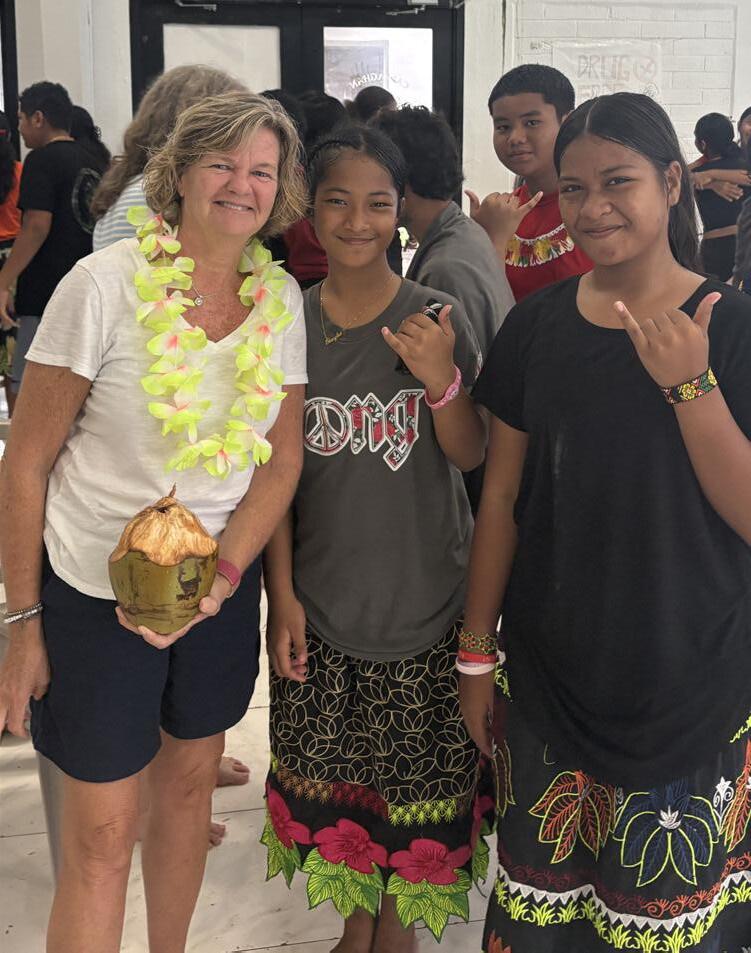
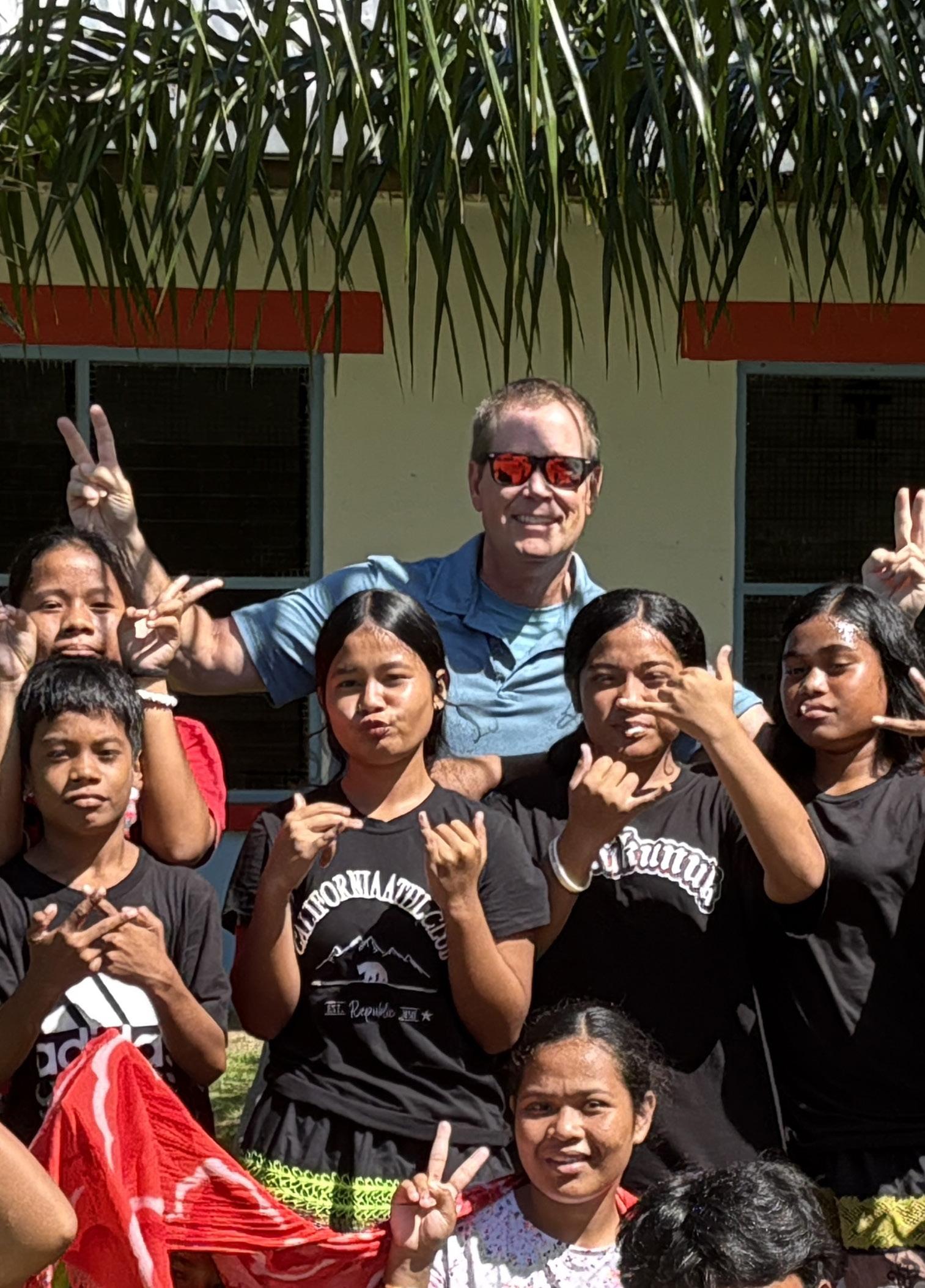
The heat was relentless. Geckos darted across the walls. Learning happened everywhere — in classrooms, over shared meals, during long conversations at the end of the day, and in moments of quiet surprise. Last summer in Chuuk, Micronesia, discovery was not reserved for students alone.
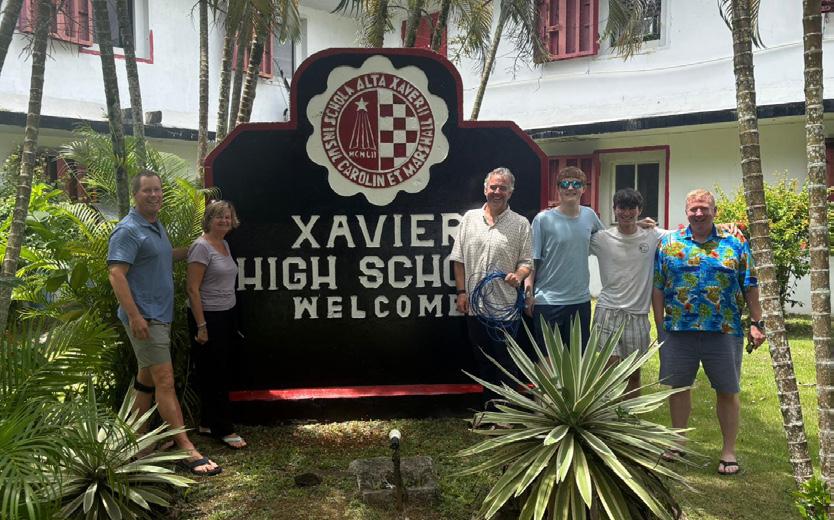
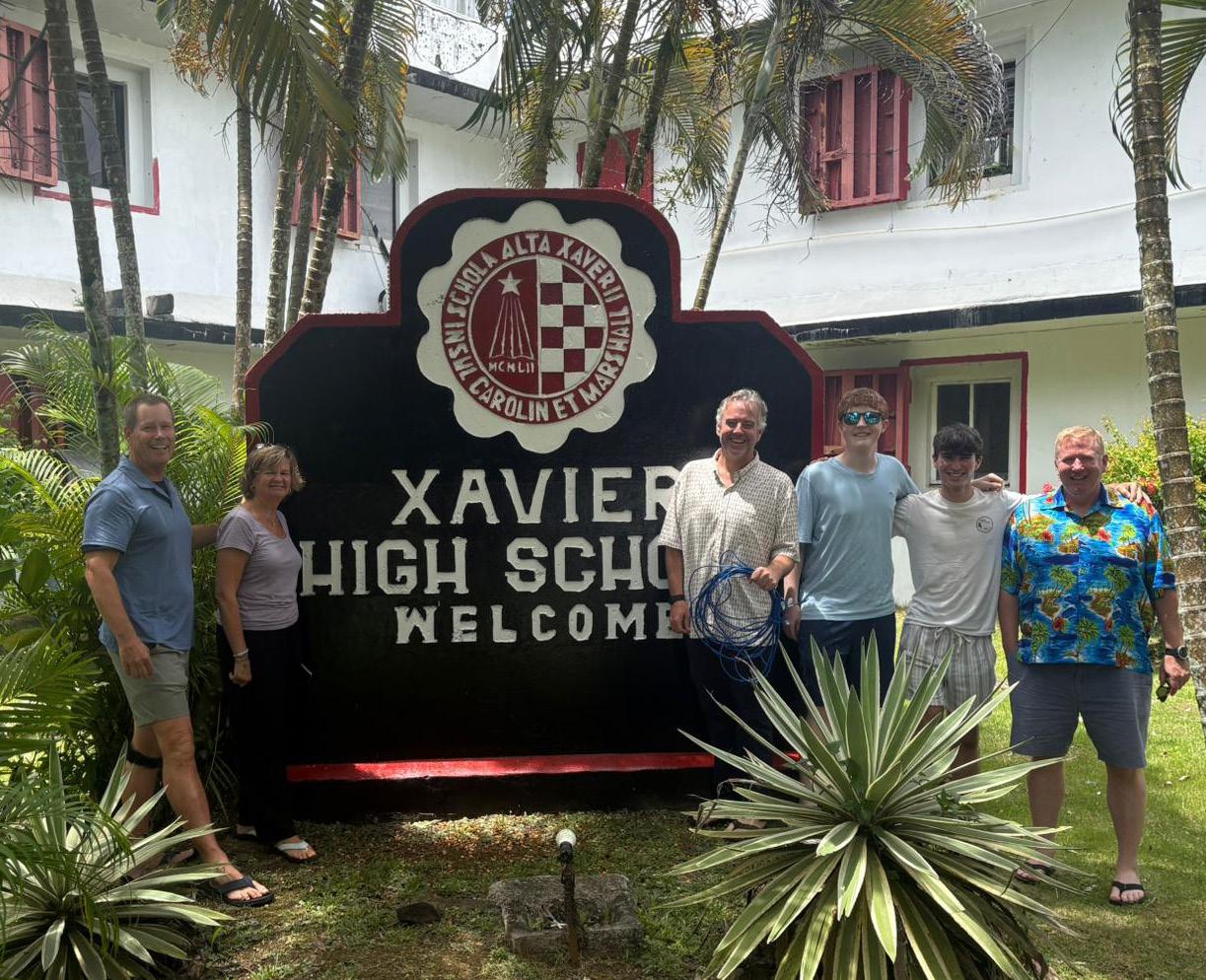
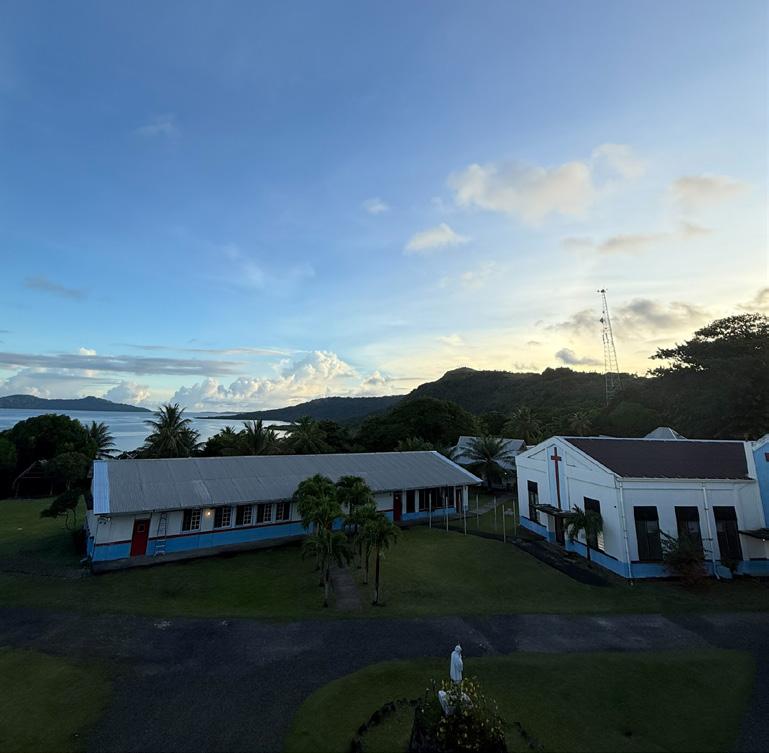
For Brigid Mitcherling (Computer Science Teacher), the month of July became an immersive experience of teaching, service, and mutual learning. Traveling with colleague Keith Schertle, a physical education teacher, she spent five weeks at Xavier High School on the island of Weno as part of the school’s Higher Achievement Program, an intensive academic summer initiative serving students from across Micronesia.
After nearly two days of travel — including an overnight in Japan on four hours of sleep — Brigid finally reached Guam, adjusting quickly to island time and the generosity of strangers. Hosted by friends she had never met, she caught up on muchneeded rest, attended Mass, and explored the island before completing the final leg of her journey. Delayed but undeterred, she arrived with a new sense of perspective — and a new geography lesson: Chuuk refers to the group of islands, while Xavier High School is located on the island of Weno.
Founded in 1952, Xavier High School was the first secondary school in what was then the Trust Territory of the Pacific Islands. Originally envisioned as a minor seminary, the school soon evolved into the first college preparatory high school in the Western Pacific, educating students drawn from multiple island nations. Over the decades, Xavier graduates have gone on to serve their communities as educators, healthcare professionals, public servants, clergy, and through military careers with some gaining entry to United States service academies — carrying forward a tradition of academic rigor, service, and responsibility to others.
Brigid chronicled her experience in her blog, A Jesuit Micronesian Experience , capturing daily life with candor and humor. From the outset, the realities of island living required adaptability:
“Today we woke to no water in our building… NO one wants to see me in the morning without a shower. Thankfully, a bucket bath and a sense of humor go a long way.”
Those small moments — learning to laugh, adjust, and move forward — became part of the rhythm of the summer.
A particularly meaningful chapter of Brigid’s stay came when Fr. Baker joined them for part of their time. Fr. Baker had previously served as President of Xavier High School, and his return resonated deeply with the campus community. His presence reflected the enduring relationships that continue to link educational institutions across continents and generations.
Beyond the classroom, Micronesia itself became a place of awe and exploration. On a rare free day, Brigid joined fellow teachers for a dive in Chuuk’s legendary waters:
“Right off the bat we saw a beautiful, elegant turtle just gliding along. The wreck was spectacular, the water was clear, and there was sea life everywhere. It felt unreal.”
Yet, as her writing makes clear, the heart of the experience was found in relationships — especially with the educators who lived and worked alongside one another for five intense weeks.
“I was sad to leave the amazing teachers I worked, ate, watched movies, read, graded, disciplined, and laughed with over the last five weeks.”
One colleague, in particular, stood out — a fellow teacher whose warmth and humor became a constant source of encouragement:
“She was such a breath of fresh air — fun, lively, and always willing to laugh at herself. We bonded, and she was such an uplifting part of this journey.”
Brigid expressed gratitude for the leadership that made the experience possible, thanking the presidents of both Loyola and Xavier High School, as well as the teachers, cooks, and staff whose daily efforts sustained the Higher Achievement Program. But, in her words, it was the students who
truly defined the summer.
“The kids, though… they really made it.”
One moment in particular stayed with her. When a student who had not yet been offered acceptance to the school received the news, the response was marked not by defeat, but by hope:
“‘I’m just going to pray really hard that something changes in the next few weeks.’ What an incredibly positive way to handle what was obviously some sad news.”
As July came to a close, goodbyes
were filled with hugs, laughter, and hopeful invitations to return. When students asked if she would come back the following summer, Brigid answered with honesty and affection:
“I don’t know that I have it in me — but the opportunity, the experience, and especially the people were barnone so unique.”
To experience the full depth of Brigid’s reflections — from classrooms and ceremonies to geckos on the walls and unexpected moments of grace — we invite you to explore her complete blog, A Jesuit Micronesian Experience, at
My five-week trip to Micronesia—specifically to Xavier High School on the island of Weno in Chuuk—was the most rewarding service experience of my life. I was fortunate to teach the lowest-level students based on the English grammar exam they took as part of the HAP program. I truly do mean fortunate. These students were engaged, pleasant, and eager to learn.
Most of them had very little—often nothing more than a roof over their heads, and some did not even have a complete one. They were in the program at Xavier High School because their parents or grandparents had sent them there in the hope that they would be admitted to Xavier in September 2025 or September 2026. Acceptance to Xavier represented their chance at a better life—there is no better way to put it.
The students arrived at school each day on the backs of large flatbed trucks, rain or shine. They brought whatever food they could, often hoping for some source of protein, while Xavier provided daily rice and clean drinking water. Morning Mass was offered every day, and as time went on, more and more students chose to attend.
On a personal level, the living conditions were challenging. The bathroom conditions were even worse. The climate was extremely hot and humid, and mosquitoes, ants, and other insects were everywhere. That said, the views were breathtaking, and if asked, I would return in a minute.
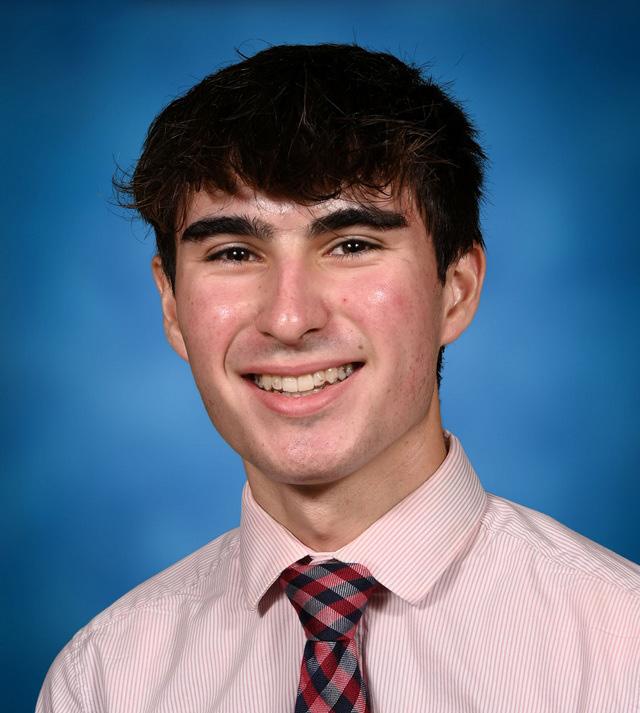
CONNECTING MORE THAN NETWORKS A SUMMER SERVICE REFLECTION FROM KAI COOKE ’26
When I first heard about the possibility of a trip to Micronesia, I jumped at the opportunity. I went straight to Mr. Morrill, the person who proposed the idea, to express my interest. At the time, I had little understanding of what the work would entail, whether I had the right skills, or, quite honestly, where Micronesia even was. What I did know was that I wanted to travel, experience somewhere new, and put my skills to meaningful use.
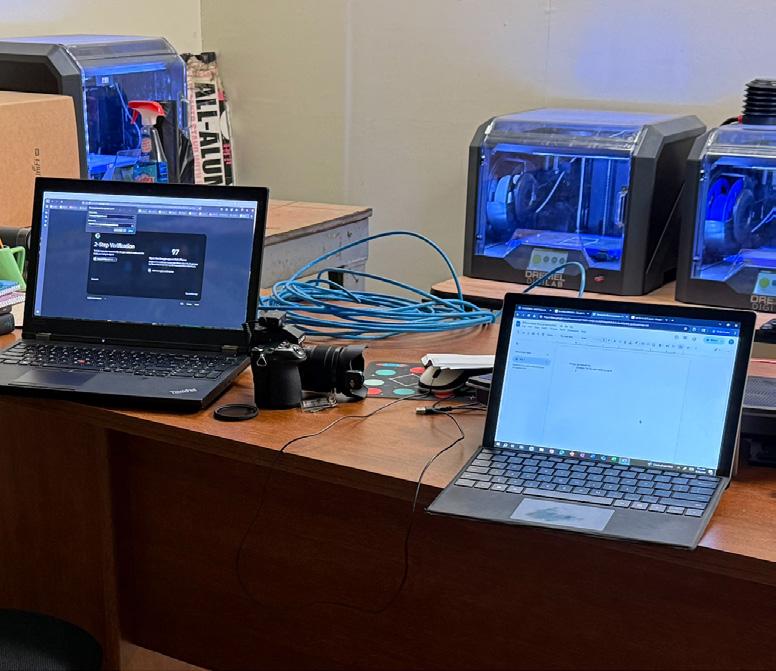
I soon learned that this trip would be far from easy. Multiple days of travel, uncertain living conditions, and limited information about what actually needed to be fixed were just a few of the challenges we would face. Over the next few months, I worked alongside my friend and fellow member of the Class of 2026, Billy Nicholson, spending countless after-school hours earning network certifications, analyzing satellite imagery of the campus, and poring
over the sparse details we had about the school’s existing network.
Before long, the two of us found ourselves more than 7,000 miles from home at Xavier High School, equipped with only a small set of tools and the combined knowledge we had built together. With no dedicated network or IT staff at the school, we were quite literally on our own. Nevertheless, through many long, frustrating days and nights, we were able to bring their network back up to speed over the two weeks we were there.
Seeing the tangible results of our work—and the culmination of years of effort through LBCSI—was incredibly rewarding. Experiencing firsthand the opportunities that reliable internet access can bring to education made me realize how easily those privileges are taken for granted at Loyola. More importantly, this journey reinforced a core belief I have come to hold: that our gifts and talents are not meant to be used solely for ourselves, but in service of others. By applying what we had learned to help a community in need, we were able to leave Xavier High School stronger than we found it. This experience helped me truly appreciate the extraordinary opportunities Loyola
Blakefield has given me—and the responsibility that comes with them— to use what I have been given to make a lasting, positive difference wherever I go.
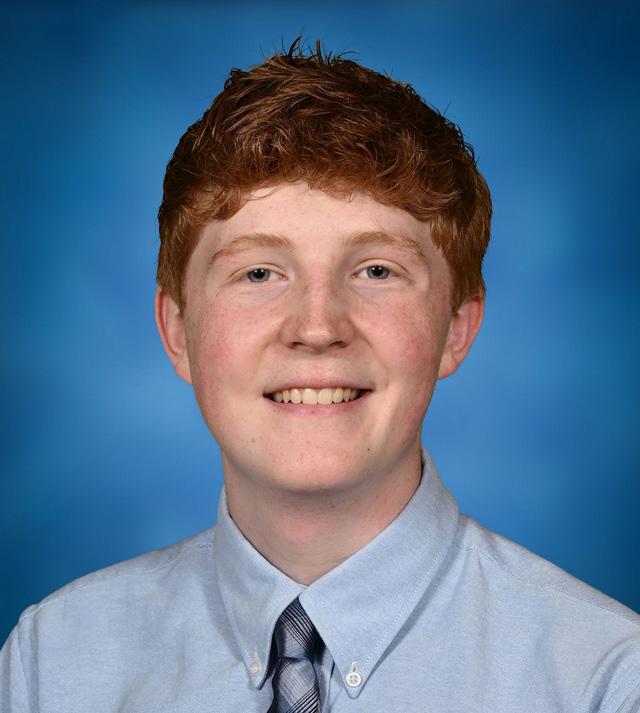
“Our journey to Xavier High School in Chuuk was perhaps the most rewarding experience of my life. Though certainly challenging, every moment spent piecing the Xavier network together and troubleshooting different issues was completely worth it. We each have callings in life toward certain skills and areas in which we are talented, and the most fulfilling endeavor in which to spend oneself, at least in my opinion, is one which utilizes those skills and talents in the service of one’s neighbors. For me, Micronesia was my first significant chance to utilize unique technical skills I had developed through my own passion and hard work to provide a service for a community in need. The fulfillment of knowing that our efforts would impact the lives of so many students on this island led me to a deeper understanding of the value of serving using one’s skills, and I know this will continue to guide me throughout my life.
Billy Nicholson ’26
DONS COMPLETE ON-CAMPUS EAGLE SCOUT PROJECTS
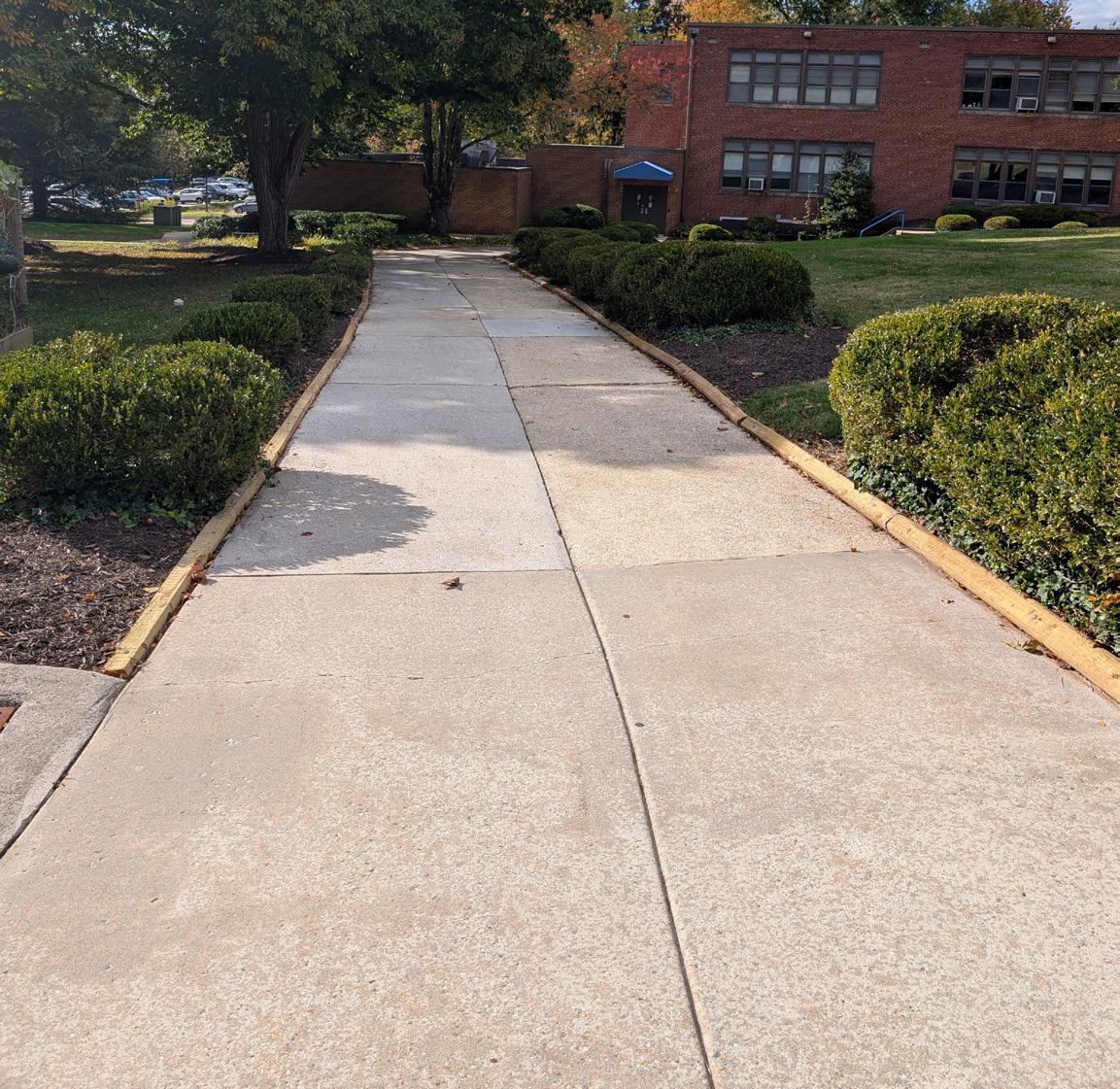
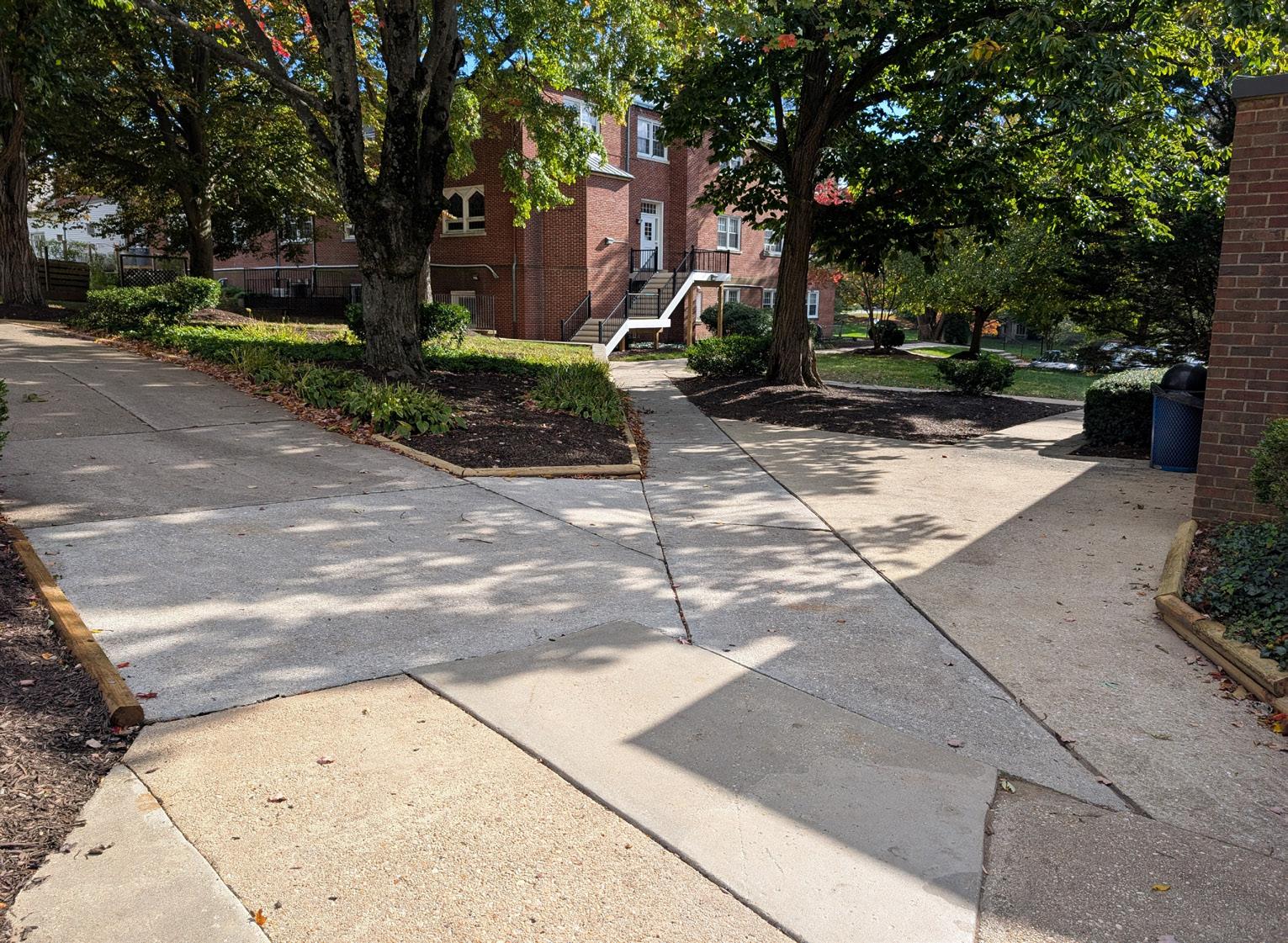
ELIAS PAUGH ’26
Elias improved the landscaping surrounding the entrance to Sheridan Hall by removing overgrowth, replacing deteriorated landscaping timbers, adding fresh mulch, and power-washing the walkways. His work significantly enhanced the appearance of the entrance, creating a cleaner, more welcoming space that reflects pride in the campus.
“I wanted to create something that students would see every day—something that would improve the look and feel of our campus—so I chose to redo the path leading to Sheridan. I had classes in that building during my freshman and sophomore years, and I always hated how neglected the path looked. Even though I don’t have classes there anymore, I wanted to fix it up for the Dons who walk it every day. Because classes meet in Sheridan daily, students were passing flower beds that had become rotten, deteriorated, and overgrown. I removed the old wooden borders, rebar, and unwanted plants, and replaced them with new wood, fresh mulch, and a cleaner, more inviting layout. My goal was to restore the area so it better reflects the pride we take in our school.”
NATHAN KOORS ’26
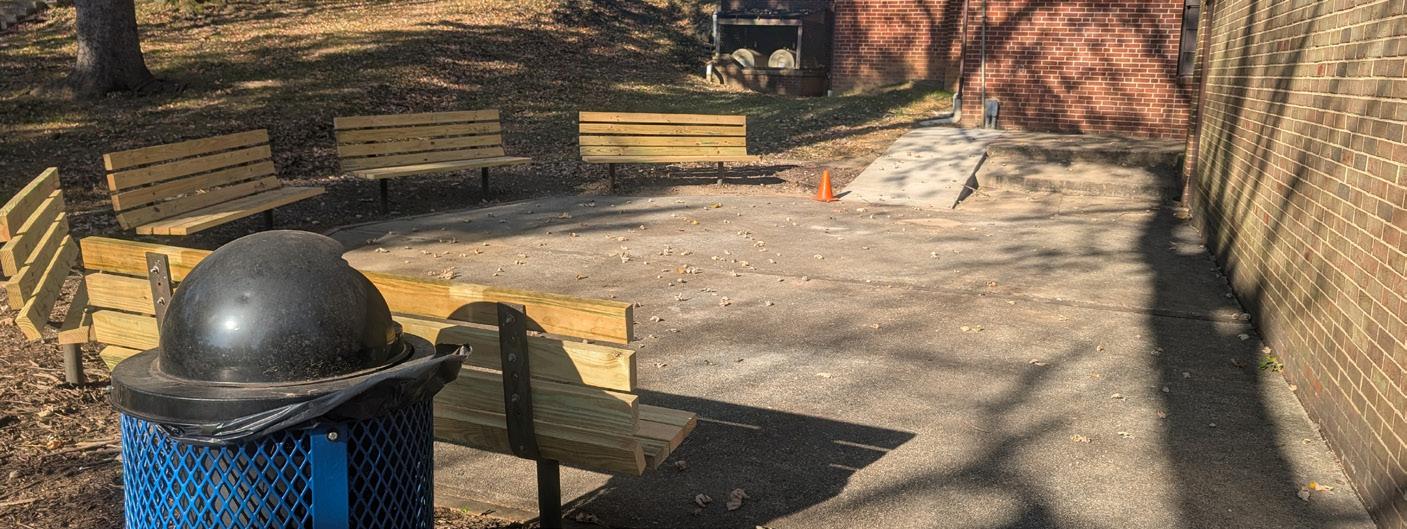
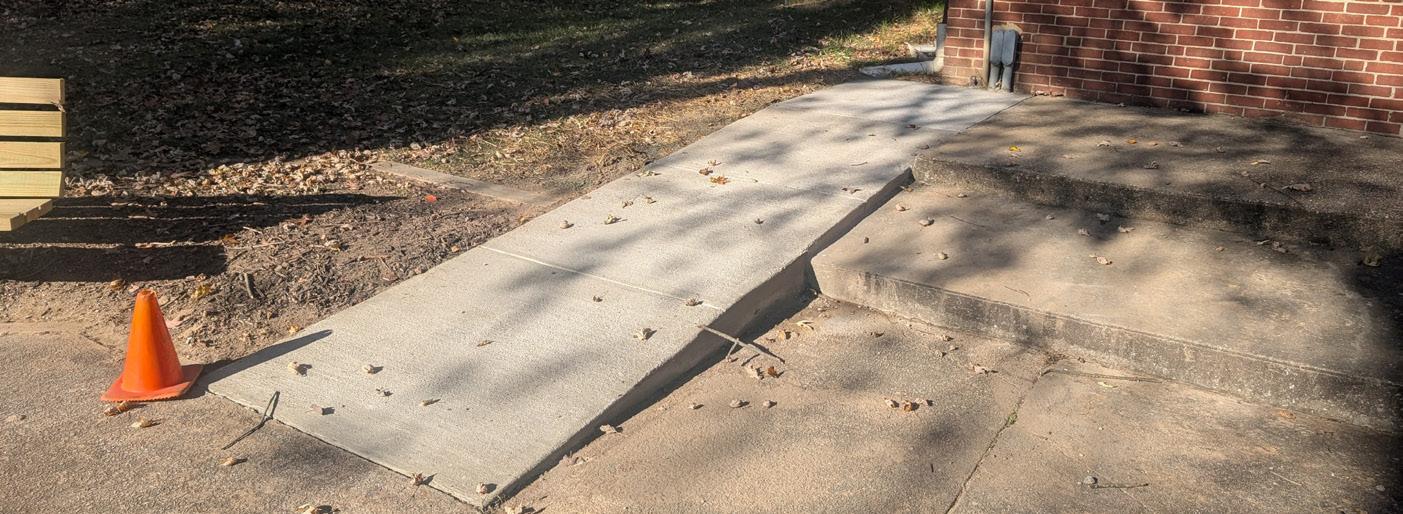
Nathan replaced the timbers on the benches behind Sheridan Hall and constructed a concrete ramp providing handicapped access to the building’s basement. The ramp also allows the Robotics team to safely move carts of equipment in and out of their lab, improving both accessibility and functionality; a handrail will be added to complete the project.
LUCA FINCATO ’27
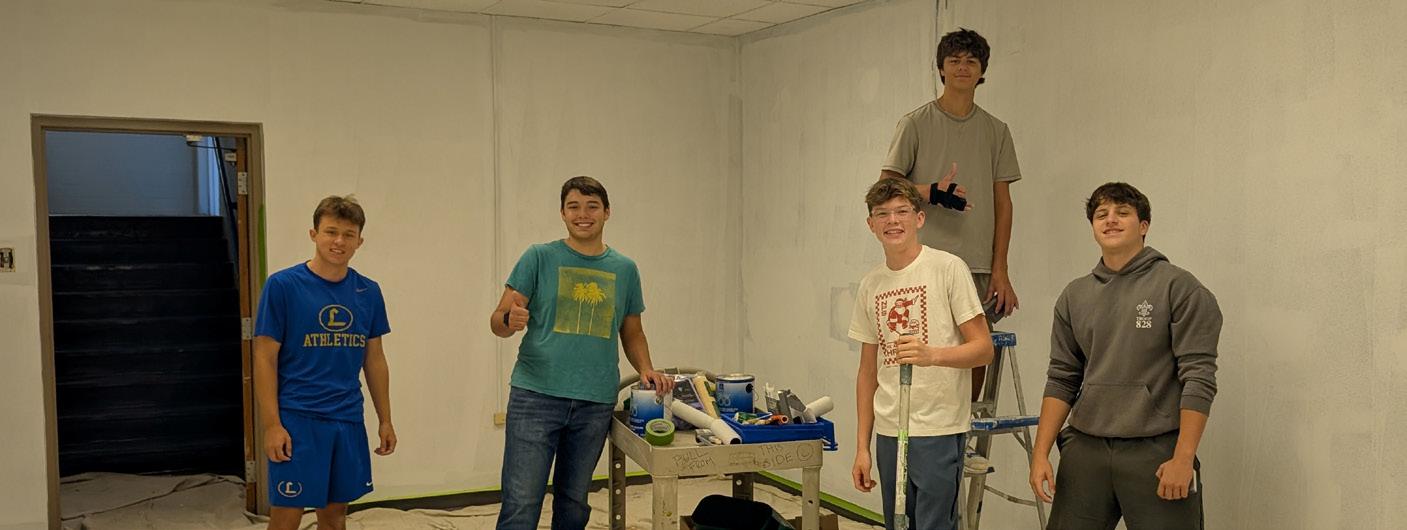
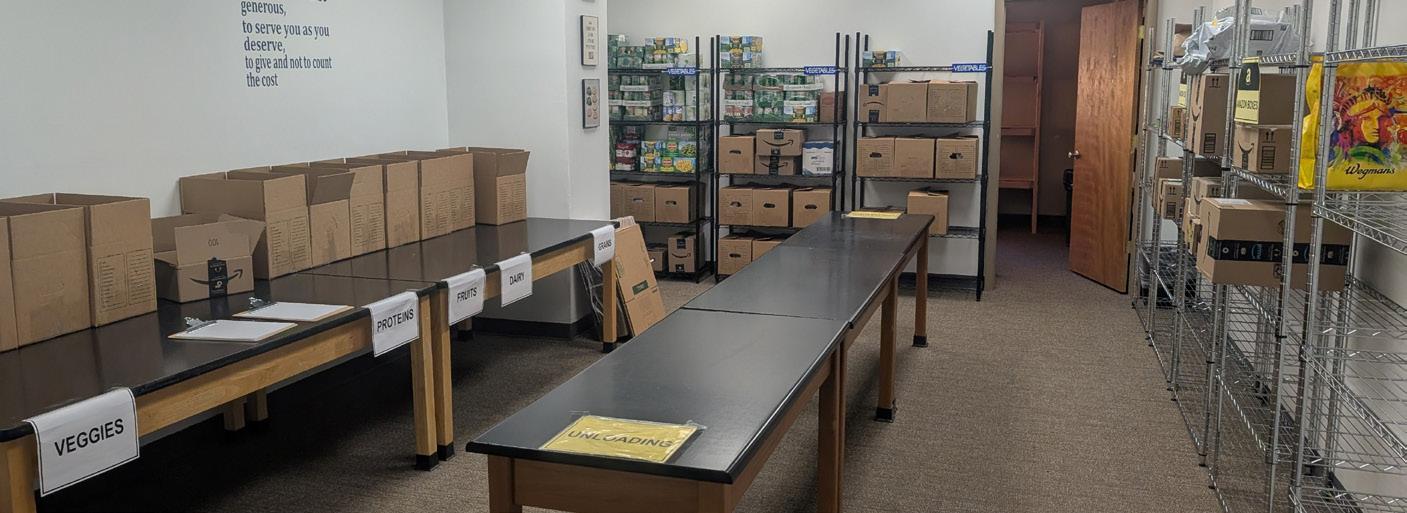
Luca repainted the Food Pantry located in Sheridan Hall and installed new shelving to improve the organization and storage of food donations. These enhancements support Loyola’s ongoing partnership with St. Peter Claver Parish in Baltimore City, making the space more functional and efficient for collecting and distributing donated goods.
LEO GABRIELE ’26
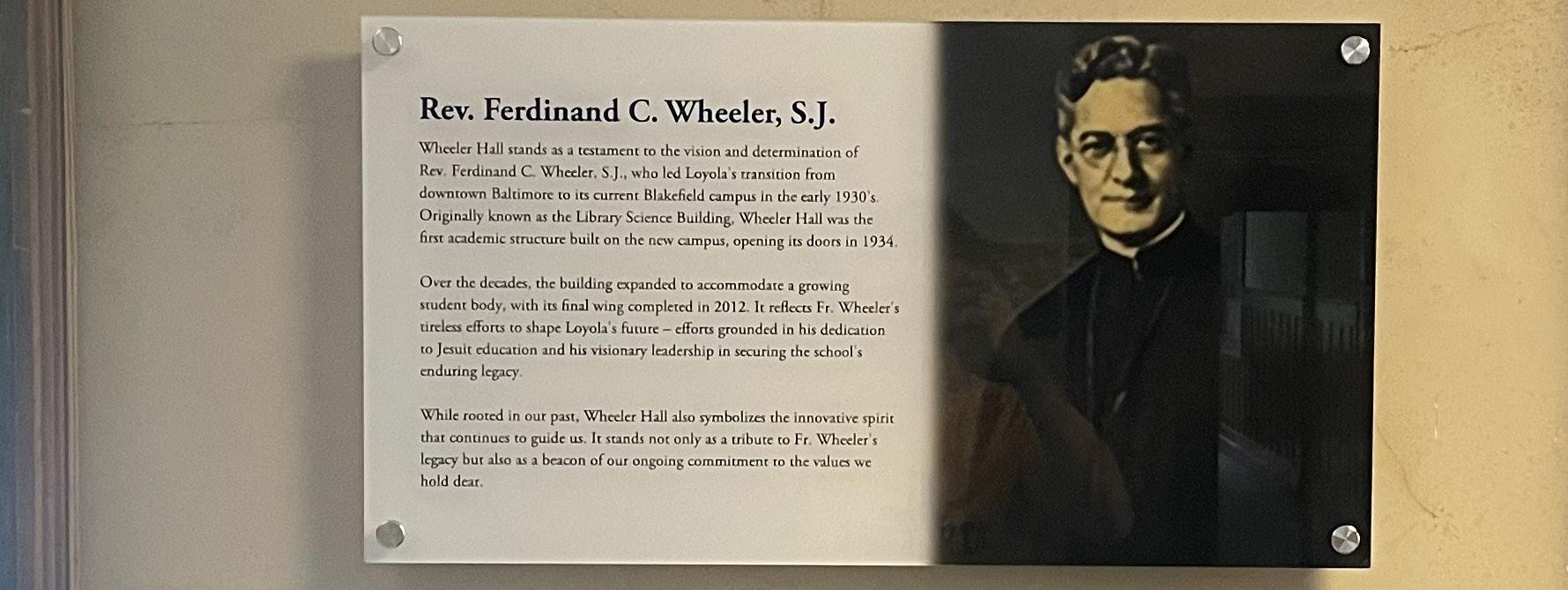
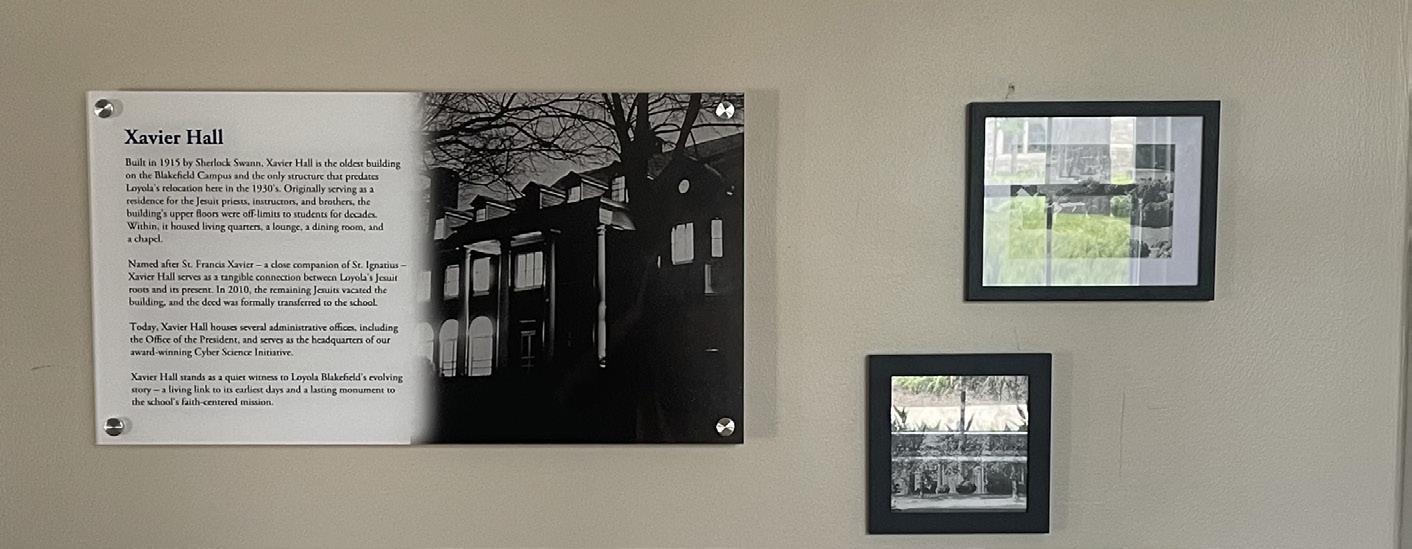
Leo researched, designed, sourced, and installed three permanent history exhibits across campus. Two of the exhibits highlight the history of Xavier Hall and Wheeler Hall, while the third provides background on the legacy of Miss Mary Creaghan, in whose honor the former library—now the Performing Arts Center—was named. His project preserves and shares Loyola’s history, helping students and visitors better understand the school’s heritage.
TEN YEARS OF OPPORTUNITY:
CELEBRATING A DECADE OF THE FISCHER PROGRAM AT LOYOLA BLAKEFIELD
Bernie Bowers ’78 has been a constant presence at Loyola Blakefield—first as a student shaped by the school’s mission, and later as an educator, mentor, and advocate for students whose talent might otherwise go unseen. Tasked with expanding access and increasing diversity within the student body, Bowers approached the work not simply as an administrator, but as an alumnus deeply invested in Loyola’s future.
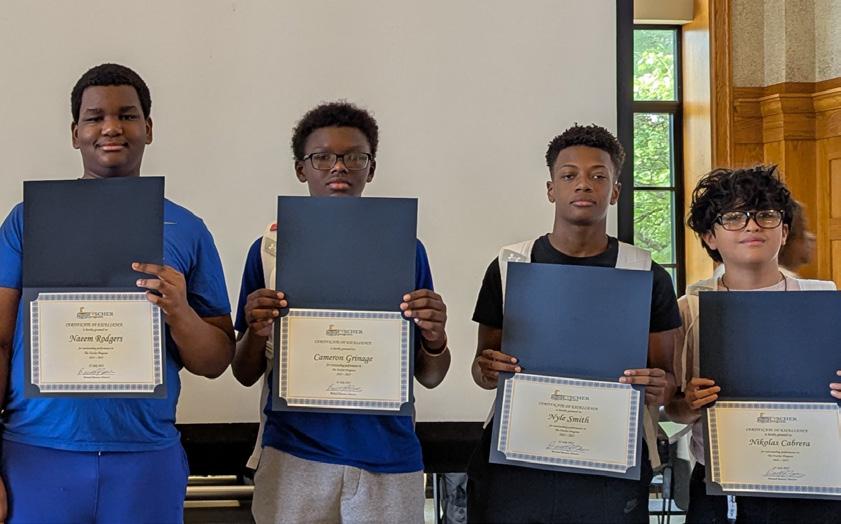
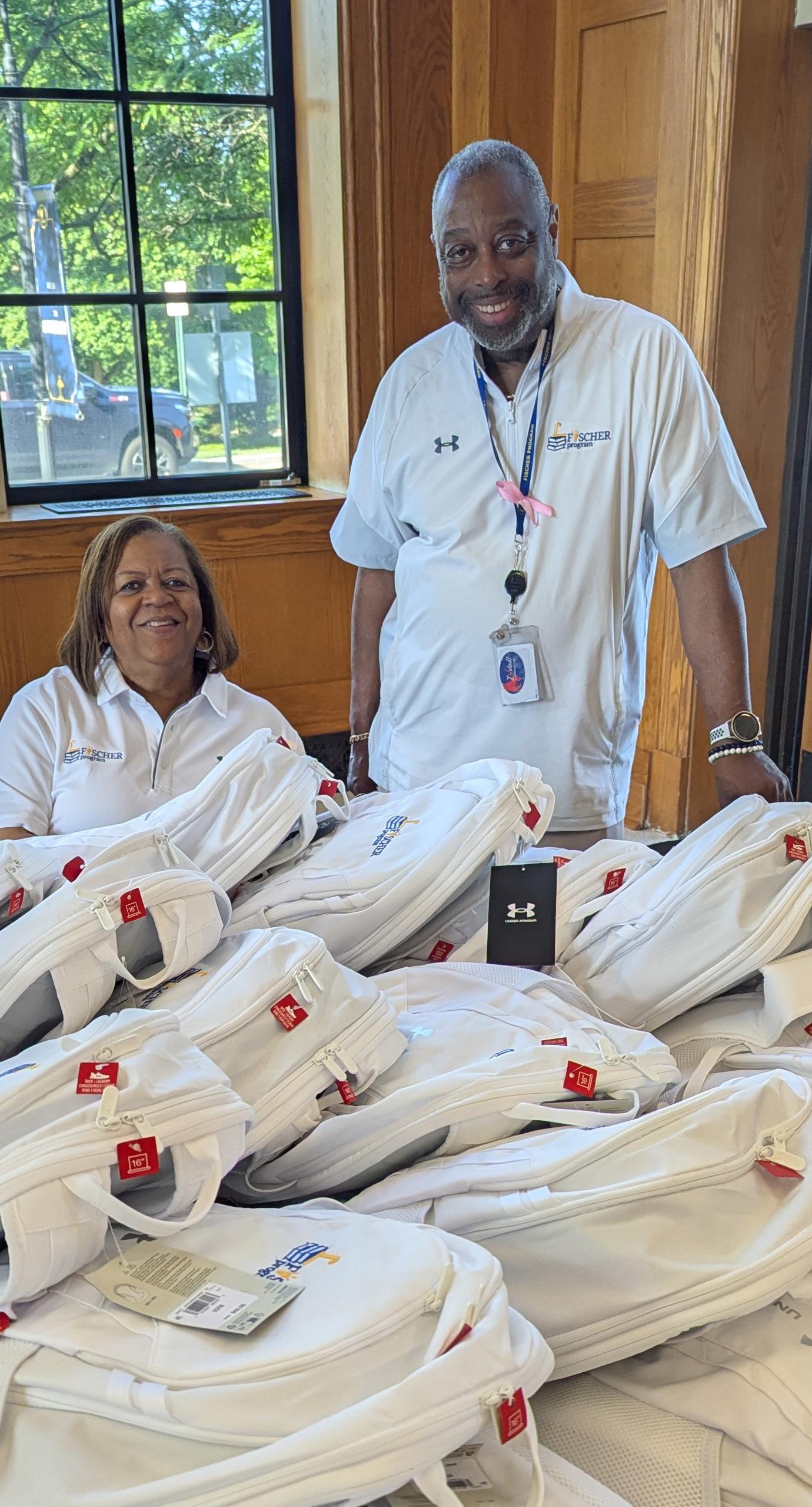
That commitment helped give rise to the Fischer Program, launched in the summer of 2015 with a small cohort of fewer than ten students, a bold sense of purpose, and a deep belief in what early exposure, sustained support, and strong family partnerships could make possible. Ten years later, the program has emerged as one of Loyola Blakefield’s most impactful initiatives, broadening access to a Loyola education and shaping the lives of hundreds of young men and their families.
The Fischer Program was created to honor the legacy of Mr. Frank Fischer, whose work in the late 1960s helped bring African American students from Baltimore City to Loyola through the Higher Achievement Program. Inspired by that model, Bowers sought to build something both rooted in tradition and responsive to the realities facing families today.
“I took the Higher Achievement Program and put it on steroids,” Bowers said. “The goal was always to prepare students academically, socially, and communicatively for Loyola, but to do it in a way that respected their whole lives and their families.”
A PROGRAM BUILT WITH INTENTION
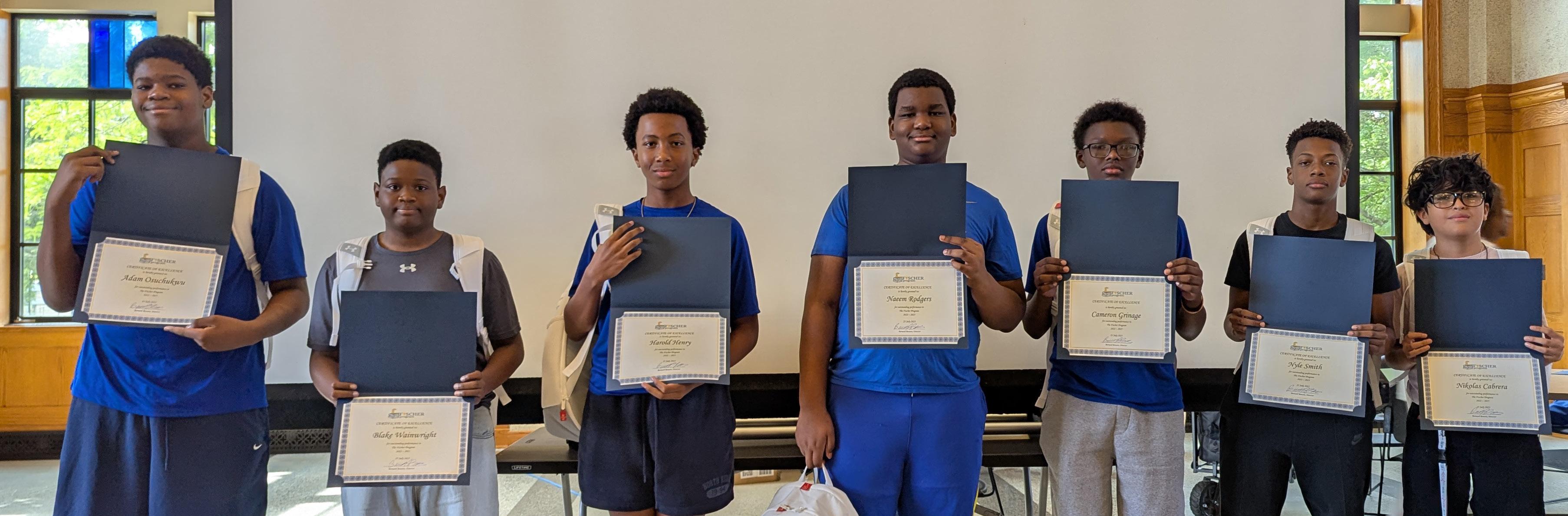
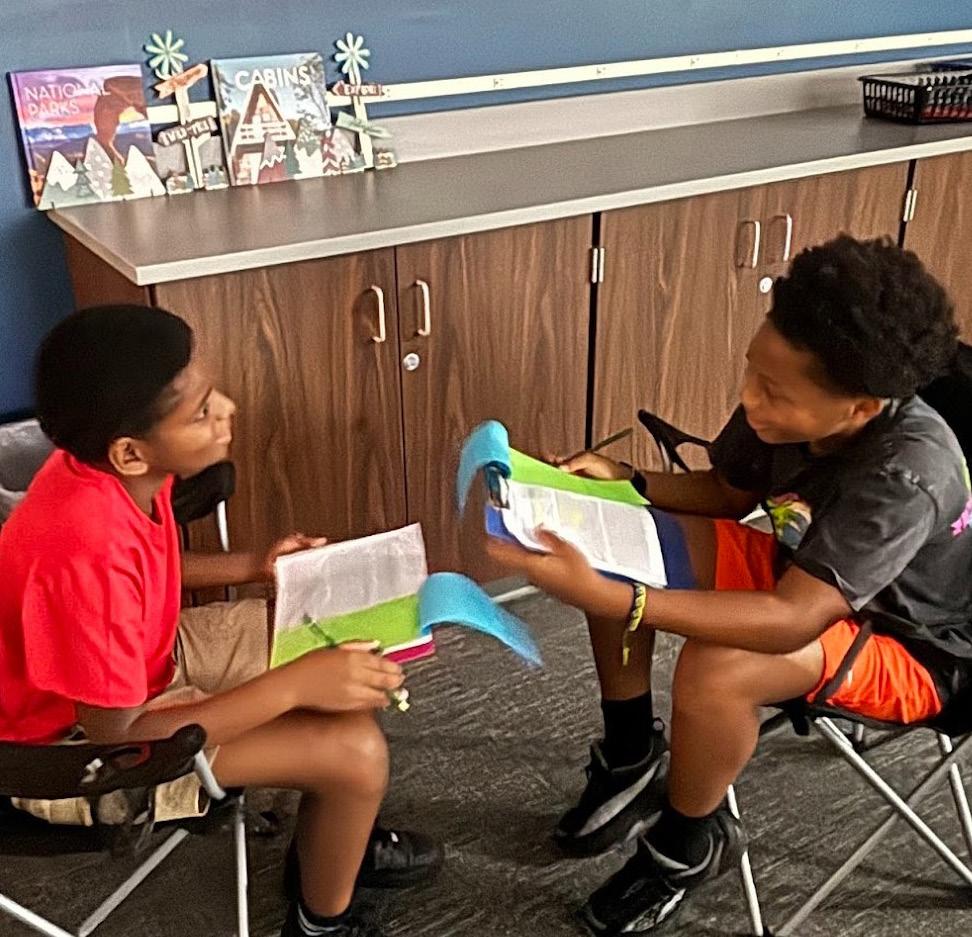
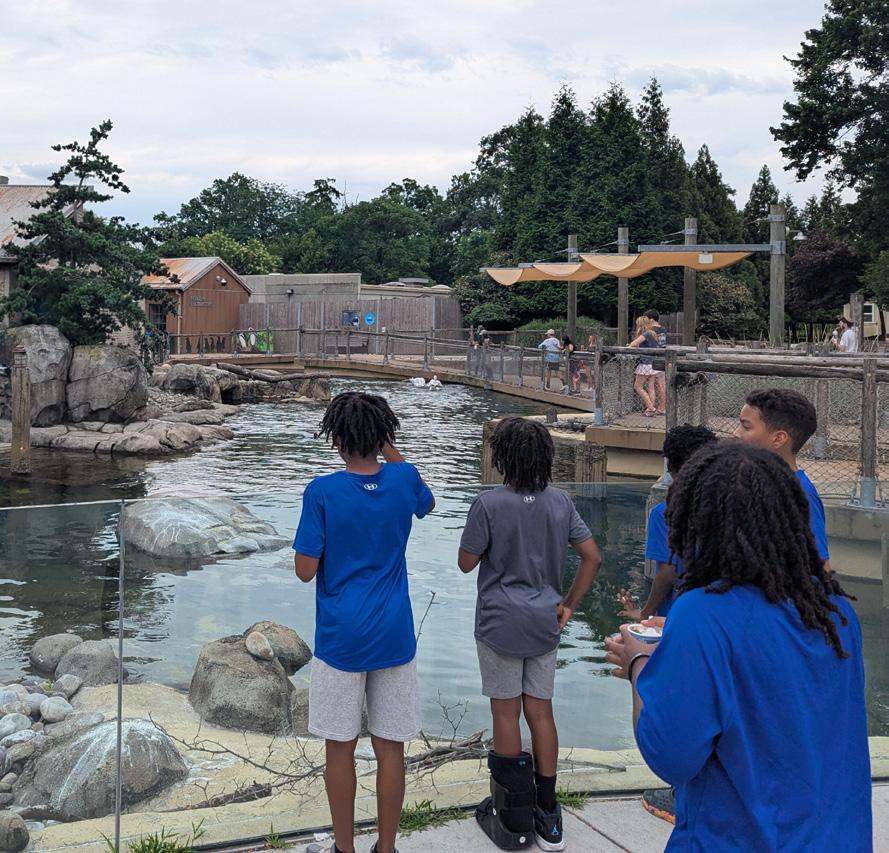
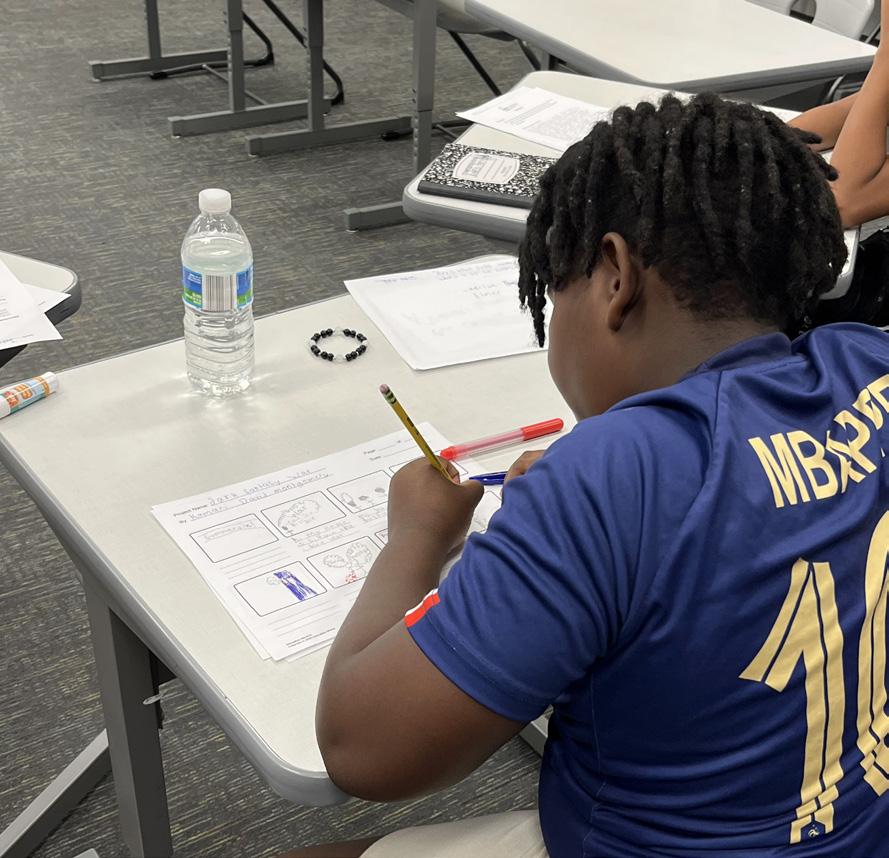
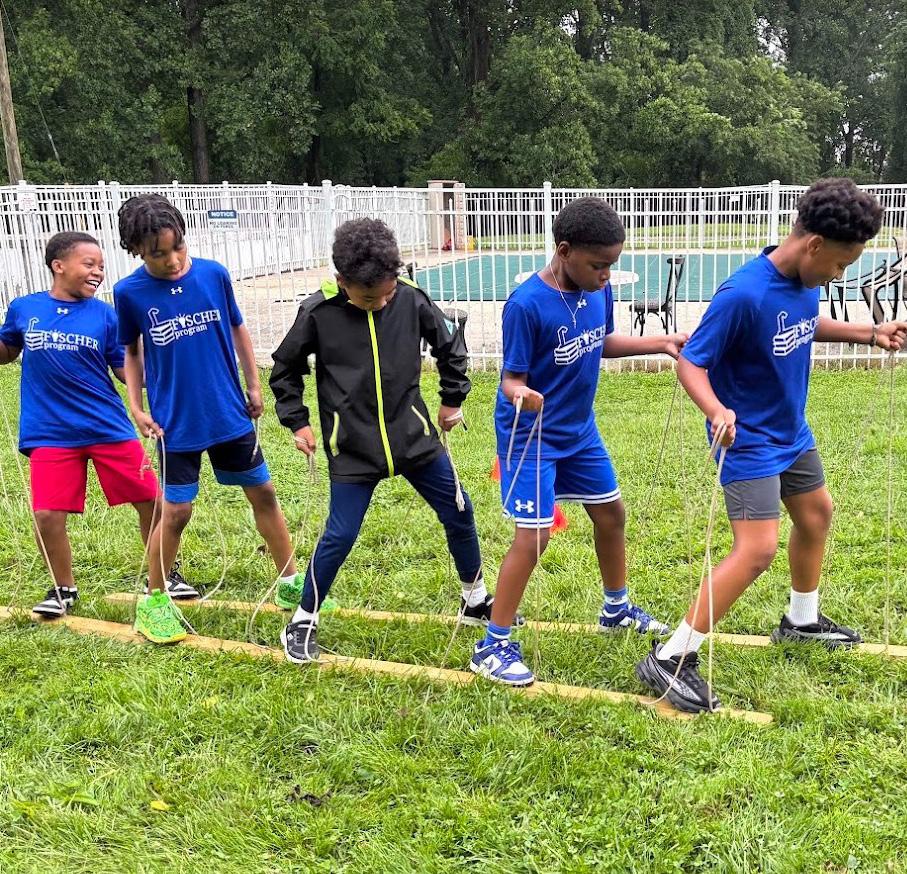
From the start, the Fischer Program was designed as a three-year, tuition-free commitment, beginning the summer before sixth grade and continuing through the transition to high school. Students spend five weeks each summer on Loyola’s campus, balancing rigorous academics in English, math, science, and humanities with enrichment activities, team-building experiences, and exposure to life on a Jesuit high school campus.
Recognizing that five uninterrupted weeks of summer school could not succeed without joy, the program was intentionally structured to feel both challenging and affirming.
“I’m taking up these kids’ summers,” Bowers explained. “You can’t do that without building in fun, relationships, and experiences they might not otherwise have.”
Small class sizes—often no more than six to eight students—allow for individualized attention and meaningful relationships with educators. Over time, the curriculum evolved to include science, study skills, humanities, and explicit preparation for Loyola’s academic culture and expectations. The program also provides transportation, meals, school supplies, and year-round support, removing many of the barriers that often limit access to opportunity.
GROWTH ROOTED IN RELATIONSHIPS
What began as a partnership with five Baltimore City schools quickly expanded through word of mouth. Trusted relationships with principals, counselors, and families helped identify students who were not only academically capable, but ready to commit to the program’s intensity and structure.
Today, Fischer students come from Baltimore City, Baltimore County, and beyond—drawn not by marketing, but by reputation.
“That first class didn’t yield Loyola students until year four,” Bowers noted. “But once families started seeing what the program could do, everything changed.”
As the program matured, so did its outcomes. In its earliest years, only two students from a cohort transitioned to Loyola. In recent classes, that number has grown dramatically: most recently one eighth-grade class sent eight of its ten students to Loyola, with the remaining two enrolling in elite public Baltimore City schools.
IMPACT THAT EXTENDS FAR BEYOND LOYOLA
While the Fischer Program was designed to prepare students academically for Loyola Blakefield, its impact reaches far beyond admission decisions. At its core, the program expands access to opportunity, ensuring that talented young men from historically underrepresented communities are able to see themselves, and succeed, within Loyola’s academic rigor and Jesuit tradition.
Over the past decade, Fischer Program alumni have gone on to thrive at highly competitive colleges and universities, earning scholarships, pursuing demanding academic disciplines, and emerging as leaders both on campus and in their communities. Their success reflects not only academic preparation, but the confidence, discipline, and sense of belonging cultivated through early exposure to high expectations and sustained support.
Eduardo “Eddie” Rosa ’22 entered the Fischer Program with strong academic promise and an interest in engineering, gaining the preparation and confidence needed to thrive at Loyola University Maryland with significant scholarship support. Now a first-generation college student, he is applying his education through an engineering internship—an outcome that reflects both opportunity realized and momentum sustained.
His younger brother, Lalo, a current Loyola senior, follows a similarly impressive path, leveraging the academic foundation built through the Fischer Program and Loyola
Blakefield to earn acceptance through the highly selective QuestBridge program. Next year he will attend Boston College on a full four-year scholarship, a milestone achievement that underscores the Fischer Program’s role in opening doors at the highest levels.
Jason Hill ’23 used the Fischer Program as a deliberate turning point, recognizing early that without intervention his path forward was headed in a difficult direction. Determined to change his trajectory, he embraced the academic structure, mentorship, and opportunity the program provided, flourishing at Loyola Blakefield and now competing in collegiate football while pursuing studies in law-related fields—an embodiment of education as a catalyst for choice, purpose, and possibility.
“These kids are flourishing,” Bowers said. “They know what it takes to get here. And once they’re here, they learn what it takes to get to the next level.”
Just as important, Fischer students return to their home schools during the academic year as leaders, role models, and ambassadors of possibility, often becoming the first in their communities to see Loyola as an attainable goal.
A FAMILY-CENTERED MODEL
One of the Fischer Program’s defining features is its emphasis on family engagement. From the application process through high school placement, families are guided, supported, and welcomed into the Loyola community.
“For many families, this is a world they’ve never been exposed to,” Bowers said. “Applications, shadow days, placement tests, it’s all new. We walk with them through every step.”
LOOKING AHEAD
As the Fischer Program marks its 10th anniversary, it continues to evolve. Recent expansions include opportunities for younger students in fourth and fifth grades, increased alumni engagement, and plans for yearround academic and enrichment programming. Fischer alumni now return as mentors, tutors, and summer staff, earning service hours while modeling success for the next generation.
“It’s not just about getting students here,” Bowers said. “It’s about making sure they’re ready, supported, and confident enough to thrive.”
That support continues year-round, reinforcing that the Fischer Program is not just a summer camp, but a sustained partnership. Families receive regular communication, students receive academic monitoring and mentorship, and the Loyola community builds lasting relationships long before ninth grade begins.
What has remained constant over the last decade is the program’s purpose: to expand access, deepen diversity, and ensure that Loyola Blakefield reflects the full talent and promise of the communities it serves.
From eight students in 2015 to nearly 50 today, the Fischer Program stands as a testament to the power of vision, sustained commitment, and meaningful relationships. Over the past decade, it has opened doors, nurtured potential, and created a foundation for success that extends far beyond Loyola Blakefield.
As the program enters its next chapter, its mission remains the same: to provide access, foster growth, and support students and families every step of the way. The impact is clear, and the possibilities ahead are just beginning.
ALUMNI SERVICE CORPS:
AN INTRODUCTION AND OVERVIEW
The following Q&A features Bob Schlichtig, Assistant Principal for Student Life and coordinator of the Alumni Service Corps program, who shares insight into the purpose, structure, and impact of this renewed initiative at Loyola Blakefield. He reflects on how the program connects alumni to Loyola’s Jesuit mission while supporting young men in a formative year of service, leadership, and professional growth.
For alumni who may not be familiar with it, what is the Alumni Service Corps, and what makes it such a meaningful experience at Jesuit schools?
The Alumni Service Corps (ASC) is a program that invites two enthusiastic alumni to commit to a year of service to the Loyola community. Designed primarily for recent college graduates, the program offers professional experience, mentoring, communal living, and a generous stipend. Some alumni may recall that Loyola sponsored an ASC during the 2013–2014 school year. For a variety of reasons, including the need for a more sustainable living arrangement, the program was paused. Our current Strategic Plan, drafted in 2022, includes a renewed commitment to restarting the ASC.
The ASC is not unique to Loyola. Many Jesuit high schools sponsor similar programs. St. Joseph’s Prep in Philadelphia, for example, recently celebrated the 30th anniversary of its ASC. These programs emerged, in part, in response to the decline in the number of Jesuit scholastics available to serve during their Regency years in Jesuit high schools.
Our elder alumni will remember the many scholastics—often referred to as “the Misters”—who animated the life of the school. More recent alumni may recall Fr. Gotschall, SJ or Mr. Briand, SJ, who completed the Regency phase of their Jesuit
formation at Loyola in recent years. That same energy—young men on fire for the mission of the school— is what ASC members bring to campus today.
How does the Alumni Service Corps reflect Loyola Blakefield’s Jesuit values and commitment to service, faith, and leadership?
ASC volunteers embody Loyola’s values of service, faith, and leadership. These are young men who have internalized Loyola’s mission and seek to live it out while serving as visible role models for today’s Dons. Volunteers live in community, participate in monthly community nights, and share a common desire to serve Loyola wholeheartedly.
The very existence of the Alumni Service Corps demonstrates Loyola’s willingness to invest time, space, and resources in forming young men who remain committed to service, faith, and leadership long after graduation.
What kinds of experiences can participating alumni expect, both in terms of hands-on service and personal growth?
ASC members serve in a variety of roles across campus, with placements tailored to their individual talents and interests as well as the needs of the Loyola community. They may teach, coach, or moderate student activities. They might assist in Admissions, Athletics, Development, or the Office
of Ignatian Mission and Ministry. No two ASC experiences are the same.
Participants gain valuable professional experience while deepening their engagement with Loyola’s mission. Many young men find the transition from school life to professional adulthood challenging, and both research and experience support this reality. The ASC is uniquely positioned to help with that transition by offering mentorship, structure, and meaningful professional responsibility.
On a practical level, how does the Alumni Service Corps work day to day—where do participants live, what does their schedule look like, and do they receive a stipend or compensation?
ASC volunteers live together at Loyola’s newly acquired property at 520 Chestnut Avenue. They receive a monthly stipend, along with financial support for shared household expenses and communal meals. Participants carry a full workload, comparable to that of other Loyola employees, and are encouraged to be involved beyond the school day.
This includes participation in clubs, activities, events, retreats, service opportunities, and athletic programs. Loyola is a vibrant and active community, and there is no shortage of meaningful roles for enthusiastic young men eager to serve.
Who should consider getting involved, and what would you say to an alumnus who’s on the fence about participating?
For the Fall 2026 cohort, the program is specifically seeking alumni from the Classes of 2021 and 2022. If I could speak directly to those alumni, I would simply say: Call me. We can discern together whether the Alumni Service Corps is the right next step.
Even if that discernment does not lead to participation in the ASC, I am confident that the process itself will help bring clarity about the future. That invitation extends not only to those who are unsure, but to any alumnus interested in learning more. I know there will be questions, and I am happy to help answer them.
For more information and to apply, please visit the Alumni Service Corps page on the Loyola Blakefield website: WWW.LOYOLABLAKEFIELD. ORG/ALUMNI-SERVICE-CORPS
TWO YEARS OF LEADERSHIP: A Q&A WITH FR.
BAKER, S.J.
At the invitation of Blakefield Magazine, Conlan Heiser-Cerrato ’26 sat down with Fr. Baker for a wide-ranging conversation reflecting on leadership, vocation, and life at Loyola Blakefield. Over the course of their discussion, Conlan explored Fr. Baker’s experiences during his early years as president, touching on Jesuit formation, campus traditions, alumni connection, and the moments—both ordinary and sacred—that shape the school’s daily life. What follows represents the breadth of that conversation: a thoughtful exchange between student and president that offers insight into Fr. Baker’s pastoral approach to leadership and his deep appreciation for the Loyola community.
Fr. Baker was generous with his time in allowing me to speak with him about his experiences at Loyola thus far. We met in his office in Xavier Hall between class periods, the pathway just outside filling and emptying as students moved through their day. Despite the steady rhythm of the school around us, the conversation felt unhurried.
We spoke about Loyola, Jesuit life, and the quiet, ordinary moments through which he has come to know the school during his first two years as president. Throughout his reflections, Fr. Baker returned again and again to themes of joy, community, and presence, offering a portrait of leadership grounded not in distance or authority, but in genuine care.
Q: You’re still relatively new to Loyola. What’s something students might be surprised to learn about you?
A: I’m an avid scuba diver. What I love most is the silence—nobody can call or text you. It’s just breathing, sea life, and landscape. I’ve dove in Micronesia, Africa, and the Keys, and you meet people from all over the world. It’s peaceful and adventurous at the same time.
Q: Since arriving in Baltimore, have you picked up any Maryland traditions?
A: Crabs, without question. I’ve learned how to pick them—not quickly, but competently. I love Nick’s Fish House, especially after Orioles games. Being outside in the summer here is one of the great joys of living in Maryland.
Q: You took your final vows last year. Looking back, what part of Jesuit formation shaped you most?
A: It’s hard to isolate one stage because each matters. Regency stands out because teaching while not yet a priest shows you the kind of priest people need you to be. Students and colleagues formed me—they taught me the importance of honesty, kindness, humor, and hard work. Theology was also deeply formative, not just academically, but because of the Jesuit communities I lived with.
Q: You’ve spoken about advice you’ve received along the way. Is there a Jesuit whose words have stayed with you?
A: A Jesuit named Charlie Beirne gave me a book he authored the first year I was in the Society. He inscribed it, and he wrote about how joyful this life can be—how rewarding and adventurous it is. Charlie had worked all over the world, including at the University of Central America after the Jesuits in El Salvador were killed. He wanted me to know that this vocation isn’t grim or narrow—it’s full, global, and deeply human. That sense of joy and gratitude has stayed with me.
Q: What advice would you give to young people— whether they’re considering the Jesuits or not?
everywhere: educating students for the greater glory of God and the good of humanity. You can feel it in classrooms, retreats, and conversations. When Jesuit-educated students meet later in life, there’s an immediate understanding—shared experiences, shared values, shared language.
A: Consider a Jesuit vocation honestly. Think about Jesuit life the same way you’d think about becoming a doctor, teacher, or writer. Ask questions. Do the research. And if you enter formation, be patient and open. Ignatius designed the process the way he did for a reason, and formation takes time.
Q: You’ve worked in Jesuit schools across the world. What connects them?
A: There is a shared history, language, and purpose. Visiting another Jesuit school feels like going to a cousin’s house. The aim is the same
Q: Now just over two years in as president, what stands out about Loyola day to day?
A: The space and the community. We’re incredibly fortunate in terms of facilities, but more importantly, people care deeply about this place— students, faculty, alumni. That loyalty is a tremendous strength.
Q: How would you describe Loyola in a few words?
A: Loyalty, pride, fraternity, and gratitude. People form deep friendships here and carry them for life.
Q: Do you have a favorite moment or place on campus?
A: My early morning walk to the chapel to celebrate Mass. The campus is quiet, almost empty, and it feels prayed over. Not too long later, it’s full of life—that contrast is beautiful.
Q: Loyola’s middle school is still relatively new. What does it add to the campus and to Loyola’s mission?
A: It adds a tremendous amount of joy. Its smaller school size makes it special, and the kids’ enthusiasm
for learning is contagious. They have wonderful teachers and are genuinely excited to be in the classroom. I like stopping in whenever I can—there’s still a real sense of innocence. Being around that energy and laughter is refreshing for the whole campus.
Q: Traditions like the Turkey Bowl loom large here. What do they represent?
A: A joyful, faith-rooted rivalry— two Catholic schools coming together around a tradition that’s lasted more than a century. It’s communal, meaningful, and fun.
Q: Loyola places a strong emphasis on alumni connection. How do you think about engaging alumni— especially those who may have drifted away over time?
A: Many alumni want to stay connected, which is a real gift. The challenge is reaching those who became untethered after graduation. Finding those men matters, because re-engagement can be transformative. I’ve met alumni who hadn’t been back
in 30 years and rediscovered Loyola in a new way.
Q: Why is Loyola Blakefield worth investing in?
A: It will change your life—and your family’s life. Whatever you end up doing, you’ll look back and say, “My time at Loyola Blakefield was essential to who I became.” This experience is transformative, and that’s why it’s worth investing in.
Q: What kind of leader do you hope to be remembered as?
A: First of all, I hope I am a long way from worrying about legacy since there is still so much work ahead. But ultimately, I want to be a good pastor. This school is my parish. If people say I was a good priest for this community, that’s enough.
As Loyola Blakefield approaches its 175th anniversary, Fr. Baker is clear-eyed about the challenges facing Jesuit education, yet deeply grateful for the strength of the community he leads. He speaks with genuine appreciation for the students, faculty, alumni, and families who care so deeply about this place and continue to shape it.
At a moment of both reflection and celebration, his aim remains simple: to walk closely with this community as its pastor. In that steady presence, Fr. Baker affirms Loyola’s mission and looks forward with confidence and hope to what lies ahead.
LOYOLA DONS GIVE THEIR ALL IN THE 105TH TURKEY BOWL
Thanksgiving morning once again brought the Loyola Blakefield community together for one of the most cherished traditions in Maryland sports—the annual Turkey Bowl. More than 10,000 fans filled Johnny Unitas Stadium at Towson University, while thousands more followed from across the country and around the world via television and live stream, united by a shared love for Loyola and this storied Thanksgiving tradition.
In the 105th playing of the Turkey Bowl, the Dons battled with determination and heart, ultimately falling by a narrow 28–24 margin. From the opening kickoff to the final whistle, Loyola Blakefield competed with intensity, resilience, and the brotherhood that defines Don football.
The Dons’ offense showed balance and grit, led by strong leadership under center and meaningful contributions from playmakers across the field. Defensively, Loyola answered the challenge time and again, making key stops and keeping the contest within reach until the closing moments. While the final score did not go Loyola’s way, the effort, discipline, and pride displayed on the field reflected the highest standards of the program.
The Turkey Bowl is far more than a football game—it is one of the oldest continuous Catholic high school football rivalries in the nation and a defining experience for generations of Dons. Through 105 meetings, Loyola Blakefield proudly owns the all-time series with an overall record of 52-45-8, a testament to decades of excellence, perseverance, and competitive spirit.
Each Thanksgiving morning honors not only the players on the field, but also the countless alumni who once wore the Blue and Gold and helped build a tradition that continues to unite the Loyola Blakefield community today.
Loyola Blakefield extends heartfelt thanks to every member of the Loyola community—near and far— who continues to honor this storied and sacred Thanksgiving tradition. To the students who brought unmatched energy to the stands; the alumni who return home year after year; the families who make Turkey Bowl morning part of their Thanksgiving celebration; and the faculty, staff, and supporters who sustain this tradition—your presence, pride, and loyalty are what make the Turkey Bowl truly special.
To those watching from afar, your continued connection to Loyola Blakefield reminds us that the Don family spans generations and continents.
While the outcome of this year’s game did not fall in our favor, the meaning of the Turkey Bowl
remains unchanged. We celebrate the tradition, the brotherhood, and the enduring bonds that define Loyola Blakefield.
Thank you for continuing to honor this sacred Thanksgiving tradition. Onward, Dons—always.
Q&A WITH BETH ANN SZCZEPANIAK,
DIRECTOR
OF IGNATIAN SERVICE AND JUSTICE
As Director of Ignatian Service and Justice in the Office of Ignatian Mission and Identity, Mrs. Beth Ann Szczepaniak leads programs rooted in the Jesuit values of reflection, action, and solidarity. Through service-learning, immersion experiences, and community partnerships, she helps students understand what it means to be Men With and For Others . We spoke with her about her journey, her work, and how service becomes a lifelong commitment to justice.
How would you describe who you are—both personally and professionally—and what drew you to Ignatian service work?
“I was formed by Catholic education and a family grounded in service, and my year with the Capuchin Franciscan Service Corps in Baltimore solidified that commitment by teaching me what it means to serve in true solidarity. I began my career as a biology teacher and gradually moved into Campus Ministry and service-learning, where I saw how transformative direct, relational service can be for students. Ignatian service draws me because it calls us to encounter the whole person—to see God in others through presence, compassion, and shared experience.”
In your role as Director of Ignatian Service and Justice, what does your day-to-day look like? What are the core responsibilities you hold within the Ignatian Service office?
“My role centers on forming Men for Others, dedicated to doing justice through direct, relational service. The Office of Ignatian Service and Justice connects students with communities across Baltimore and beyond, helping them recognize, respond to, and advocate for those most in need. Day to day, I work closely with students and community partners, coordinating grade-level service, after-school opportunities, and more than 90 service trips each year. Our work is seasonal, from organizing food pantry support and Adopt-A-Family in the fall to hosting the Justice Summit in the spring and preparing students for summer solidarity experiences.”
Ignatian spirituality emphasizes reflection, discernment, and finding God in all things. How do these values shape the way you approach your work and your interactions with students?
“Ignatian spirituality shapes our work as a developmental journey. As students mature from sixth through twelfth grade, we guide them from recognizing immediate needs and responding charitably to engaging in deeper reflection on systemic injustice. Through direct service, structured reflection, and experiences like the Justice Summit, students are challenged to discern their responsibility as servant leaders and to grow into engaged citizens and advocates for those most vulnerable.”
Our world is facing complex social, political, and moral challenges. What do you see as the most urgent justice issues for students today—and how does your office help them engage these issues thoughtfully and courageously?
“The most urgent justice issue I see is apathy and a growing sense of hopelessness. Our role is to help students discover their passions and recognize that meaningful change happens when people engage their gifts in service of others. Through direct service, reflection, and exposure to a range of justice issues, we encourage students to move beyond indifference and respond thoughtfully and courageously to the needs they encounter in their communities and the wider world.”
Day in the Life
Ever wonder what a day in the life at Loyola Blakefield really looks like? From morning classes to afternoon activities, spirited traditions, and the moments that make our community unforgettable — we’ve packed it all into an exciting 2-minute highlight reel!
WATCH IT HERE
CLASS NOTES
‘41
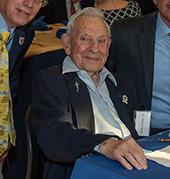
We are sad to announce the passing of Robert W. Pahr Jr. ’41. At the time of his passing, he was our oldest living alumnus. Mr. Pahr lived a remarkable 103 years defined by service, faith, and lifelong commitment to family and community, from his time as a Loyola student to his distinguished military and legal career. HIS OBITUARY MAY BE FOUND HERE. photo 1
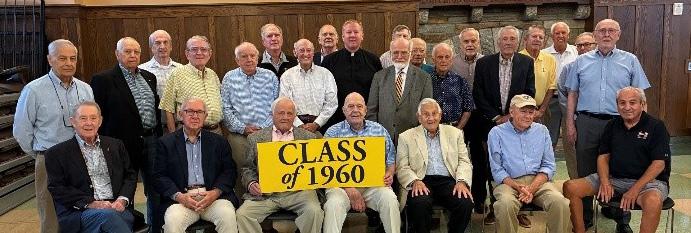
The Class of 1960 returned to Loyola to celebrate their 65-year reunion with a luncheon in Fr. George Lounge, Wheeler Hall Basement. More than 30 Dons returned to share life updates and renew friendships. Many laughs were also enjoyed. photo 2
Mark’ Christhilf ’66 has a new book, THE TENANT IN THE MIND: CONSCIOUSNESS AND ITS IMPERATIVES answers one of the most pressing questions of science and philosophy: what is human consciousness? The book will be released in February. photo 3
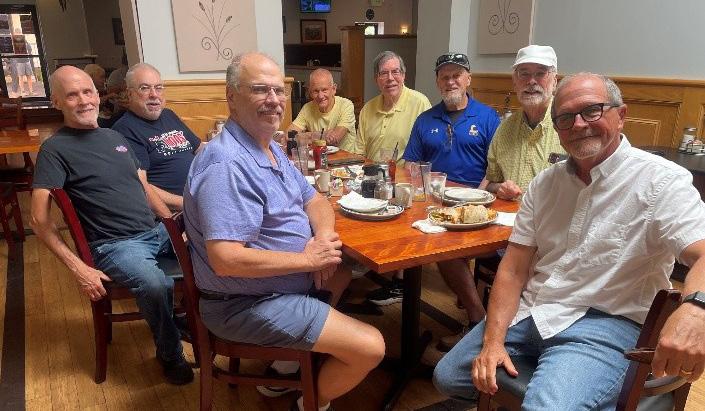
The Class of ‘72 enjoyed its monthly get-together at the Ashland Cafe in September. Seated from back left moving forward are Joe Fluri, John “Flash” Forrester, Mike Souchak, Tom Crowley (a first-time attendee visiting from Lewis, DE), Harry Stricker, Chuck Trader, Rick Roby, and Joe Wyda. A special guest appearance by John Stewart ‘60 was included with the lunch. photo 4
‘78 ‘88
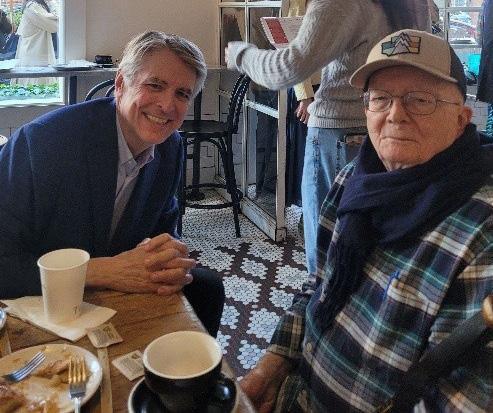
Vic DeSantis ’78 enjoyed lunch with longtime teacher and Cross-Country Coach, Br. Paul Cawthorne at the Campion Jesuit Center in Weston, MA. photo 6
Colin Furst ‘88 was recognized by the U.S. Department of State for his 25 years of service. A member of the Senior Foreign Service, Colin serves as General Director of U.S. Embassy Riyadh’s bilateral technical assistance program linking Saudi civilian ministries with U.S. Government experts in the antiterrorism, cyber, and infrastructure security realms.
Michael Dowgiewicz ‘94 married Kimberly Furnish on October 11, 2025 in Nassau, Bahamas with Dons Chris McGlone ‘94, Tom O’Hara ‘ 94, Brian Byrnes ‘94, Brian Oates ‘94, Aaron Greene ‘94, Dave Ford ‘94, Dave Cummings ‘96, Bill Grothmann ‘94, Jack Miglioretti, Kevin Dowgiewicz ‘97, and J.T. Kahl ‘79 by his side. photo 5
1 2 3 4 5 6
‘94 ‘95
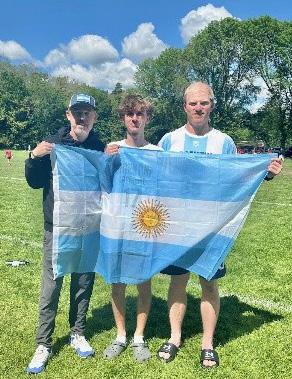
Brian Byrnes ‘94 & Jarrod King ‘19 represented Team Argentina during The Heritage Cup Lacrosse tournament over Memorial Day weekend in Boston. The Heritage Cup is an annual lacrosse tournament featuring the national teams of 25+ countries. Brian’s son, Bautista (center), and Jarrod took the field for Argentina, which finished in sixth place out of thirty-two teams. Brian is a Board Member of the Argentina Lacrosse Association, and previously coached the team in the early 2000s when he lived in Buenos Aires, where Bautista was born. Jarrod previously played D1 lacrosse for the University of Utah and is currently the Defensive Coordinator for the Loyola Blakefield JV Lacrosse team. Vamos Argentina and RDR! photo 9
Nate Fick ‘95 HAS JOINED CERBERUS CAPITAL MANAGEMENT following a distinguished career with the State Department as the US Ambassador for Cyberspace and Digital Policy.
‘96
Ryan Burch ‘96 recently joined T. Rowe Price as a VP, Managing Legal Counsel - Privacy & Data Protection, IP, and AI.
‘04
Daniel Marcin ‘04 and Amy celebrated the baptism of their daughter, Vera, in the Blakefield chapel in January, with Fr. Dennis Baker S.J. Mrs. Jennifer Jordan Miller (former Loyola Music teacher) provided music. Daniel continues to work for HUD, moving from Ginnie Mae into Fair Housing in October 2024, and then into FHA in March 2025. photo 7
Tony Minadakis ‘04 Congratulations to Tony Minadakis ‘04 on winning THE BALTIMORE SUN’S Chef of the Year Award! The Prestigious Honor is a testament to the hard work, passion, and tireless creativity he consistently shares with Jimmy’s Famous Seafood customers. photo 8
Raffi Wartanian ‘04 was named by the Academy of American Poets as one of 23 Laureate Fellows across the nation in 2025. The Academy has a great write-up with each fellow and project SUMMARIZED HERE. Raffi’s project is called the San Gabriel Valley Phoenix Poets and the mission is to champion and celebrate the authentic selfexpression of individuals and groups impacted by the Eaton Fire of January 2025.
‘05
Carroll Galvin ‘05 was recently recognized by the Baltimore Business Journal in its 40 Under 40 list of business leaders in Baltimore. Carrroll serves as the VP of Institutional Advancement & University Communications at Notre Dame University of Maryland.
‘06
Van Brooks ‘06 recently celebrated the grand opening of his new Workforce Development Center offering hands-on construction trades training for middle and high school students and industry-recognized certification for young adults. The Center will prepare students and young adults for high-demand careers in the trades.
‘09 ‘10 ‘13
Marshall Edrington ‘09 started a new position as Academic Counselor & Learning Support Specialist, Student-Athlete Support at American University!
Adam Conner ‘10 is hitting it big with his Thought Liters podcast series.
Thomas Brennan ‘13 was recently appointed as the Board of Public Works Liaison for the State of Maryland.
CLASS NOTES
Sean Stanton ‘13 conquered a 140.6-mile Ironman triathlon in 2025, an incredible test of endurance and determination. Reflecting on the experience, he shared, “I wanted to see what this accomplishment might teach me about my work as an investment banker. It taught me absolutely nothing about investment banking—but it was a pretty cool accomplishment.” photo 10
Ryan Floyd ‘15 is excited to announce his official conferral of a Master of Business Administration from LSU Shreveport. photo 11
Patrick Brow ‘16 started a new position as Clinical Outreach Manager at Charlie Health.
Thomas Flynn ‘16 started a new position as Senior Admissions Coordinator at Maryland Wellness.
Nick Goles ‘16 was recently named President and CFO at Parke!
Rick Nickel ‘16 joined SBI as an Executive Consultant.
Koby Smith ‘17 hoisted the Premier Lacrosse League Championship Trophy with the New York Atlas after their incredible title win! CHECK OUT THE FULL STORIES AND CELEBRATION HIGHLIGHTS FROM THE CHAMPIONSHIP GAME HERE.
Jake Stout ‘17 has joined Vast as a Technical Product Manager, responsible for financial and enterprise systems.
Stefan Toomey ‘17 recently started as an Associate Dentist at Henrik L. Anderson, D.D.S., P.C.
Henry Ballentine ‘18 was just named Senior Cyber Security Analyst at T. Rowe Price. The picture is from Henry’s recent wedding. Congratulations on both accounts, Henry! photo 12
Evan Boozer ‘18 started a new position as Associate District Manager at ADP.
Cameron Commodari ‘18 CJC Detailing Company was featured in the 2025-2026 Collector Car Guide Magazine. Only trusted, honest and well-reputable automotive businesses get the chance to be featured in this top-notch magazine.
Ryan Dunn ‘18 has been promoted to Senior Associate with Cushman & Wakefield.
‘19
Grady Kuhn ‘18 started a new position as Account Executive at WBAL-TV 11 Baltimore.
Xander Burchell ‘20 recently accepted a position as a Business Development Specialist Contractor at Constellation Energy. ‘13 ‘15 ‘16 ‘17 10 11 12 ‘20
Brighton Lorber ‘18 started a new position as Client Advisory and Business Development Analyst at Asset Strategy Consultants.
Kyrle Preis ‘18 started as a Physical Therapist at Architech Sports and Physical Therapy.
Jack Reinhardt ‘18 recently started a new position as Account Executive - DoD at Affigent, an Akima Company.
Matt Moore ‘19 received his Certified Public Accountant (CPA) from Maryland State Board of Accountancy.
Pierce Shearin ‘19 started a new position as Assurance Senior at EY, previously known as Ernst & Young.
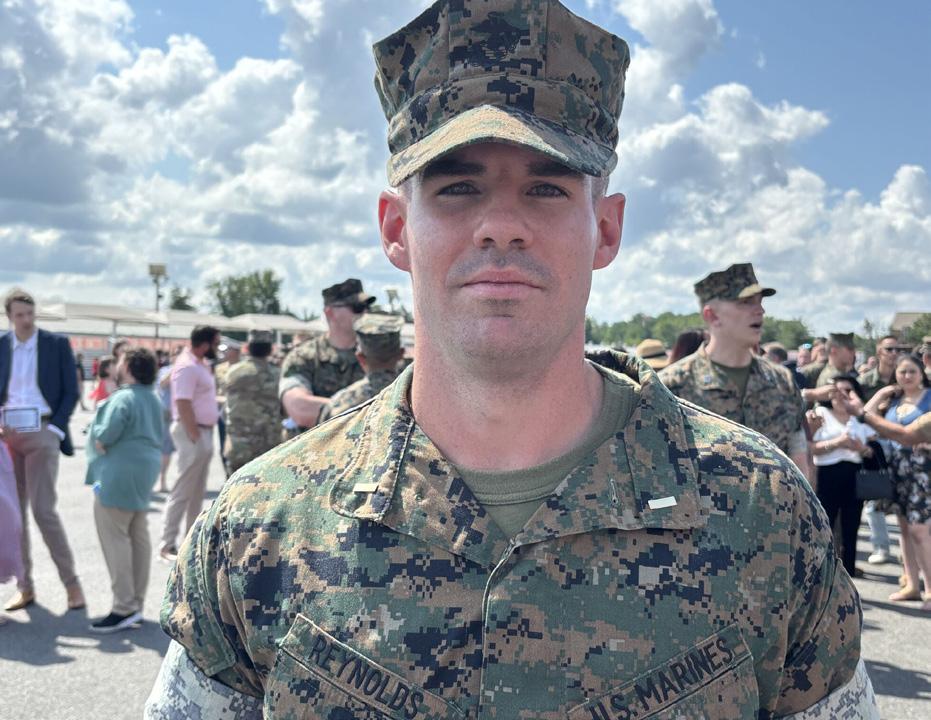
Emmet Reynolds ‘19 completed 10 weeks of training at Quantico and received a commission in the US Marine Corps. Emmet is going into his third year of law school and intends to join the Judge Advocate General (JAG) Corps after graduation. photo 13
Kevin Ellington ‘20 has co-founded 896 Lacrosse, a company committed to developing the next generation of goalies and shooters, working on skill development and building an environment where athletes can grow.
Keegan Pross ‘20 started a new position as Business Development Representative at Trident.
Kyle Zgorski ‘20 and Bennett Dieter ‘26 were busy patrolling the OCMD beaches this past summer. photo 14
‘21
Patrick Bagliani ‘21 recently started a new position as Staff Engineer with Partner Engineering & Science, Inc.
Kevin Doyle ‘21 has started as the Mid-Atlantic Sales Representative for Marketing & Sales Associates, covering Maryland, Delaware, Pennsylvania, and Southern New Jersey in the building materials industry.
Tyler Franklin ‘21 is now an Associate Research Consultant with the CoStar Group.
Charlie Koras ‘21 has obtained a new certification: Series 7 from FINRA!
Benick Mbaya ‘21 has been published for his RESEARCH ARTICLE ON EXERCISE ASSISTING BREAST CANCER PATIENTS
Brock Pivec ‘21 joined FGC Securities as Trainee Broker of U.S. Equity Derivatives. He looks forward to building a strong foundation in the options market, preparing for the Series 7 and Series 63 exams.
Matt “Krispy” Rice ‘21 is starting a new position as Director of Lacrosse Operations & Graduate Assistant Coach at Fairfield University.
After his graduation from Pennsylvania State University, John Rineman ‘21 has accepted a role as an Associate Sales Representative at Arthrex Annapolis!
Mike “Rizzo” Risser ‘21 started a new position as a Production Assistant working on true crime documentaries with Fox Nation at Fox Corporation.
Kwaku Marfo-Sarbeng ‘21 has accepted a job as an Advisory Consulting Associate at KPMG.
Kevin Tucker ‘21 is a new Sales Representative with Zimmer Biomet (ZBMA).
Ryan Wright ‘21 has joined Morgan Stanley’s Fixed Income Team as an Operations Analyst in the Baltimore, MD office.
‘22 ‘24 ‘25 ‘23
Following his 10-week internship as an FP&A Intern at McCormick & Company, Charlie Hepting ‘22 has accepted a return offer to join the firm as a Finance Rotational Analyst.
Jacob Ritz ‘22 has accepted a return offer from Bank of America Private Bank, where he will be a full-time Wealth Management Analyst in Wilmington, DE in the trust division.
Nate Jackson ‘23 completed his summer internship in the office of the Lieutenant Governor of Maryland, Aruna Miller. This internship experience has been invaluable.
Deji Battle-Olley ‘24 has accepted a new position as an Operating Room Equipment Technician at Mercy Medical Center in Baltimore.
Christian Renaldo ‘24 started a new position as Associate Analyst | Healthcare Coverage at The William C. Dunkelberg Owl Fund!
During the summer of 2025 Hunter Simms ‘25 worked with The Board Room Chess, a non-profit organization in Baltimore City. TBRC not only instructs youth in the game of chess but imparts to them key life lessons they can take beyond the board.
14
In Memoriam
We pray for the repose of the following departed souls. May their souls and the souls of all the faithful departed, through the mercy of God, rest in peace. And may the Lord grant comfort for those who grieve them.
ALUMNI
John Amato IV ’74
Matthew R. Bernhardt ’24
Joseph E. Blair Jr. ’49
Daniel J. Callahan Jr. ’70
Daniel R. Cuddy ’62
Charles E. Dailey Jr. ’68
Thomas E. Dewberry ’69
Lawrence H. Jones ’53
Wallace M. Kowalczyk ’60
J. Nicholas Leyko D.D.S. ’57
John A. Miller Jr. ’85
Joseph A. Murphy Jr. ’58
John S. O’Shea M.D. ’62
John H. Otenasek ’83
Robert W. Pahr Jr. ’41
Gregory A. Rapisarda ’65
Louis A. Reinhardt Jr. ’49
Leroy A. Wagner ’48
Adam M. Walsh ’88
FAMILY & FRIENDS
Harriet R. Douthirt
Mark R. Fetting
Catherine M. McKew
FORMER
FACULTY & STAFF
Rev. Robert E. Hamm, S.J.
Rev. Thomas P. McDonnell, S.J.
FORMER TRUSTEE/ PAST PARENT
Roger A. Waesche Jr.
PAST PARENTS
John W. Guckert
Thomas E. Hutchinson
Catherine M. McKew
Rosanna Moore
This list represents data gathered from 8/1/25 - 1/20/26.