Why Warranty Software Is No Longer Just a Support Tool
For a long time, most businesses treated warranties like an after-sales headache.
A customer would face an issue, raise a complaint, the support team would search for invoices or warranty details, approvals would move slowly through emails or spreadsheets, and eventually the problem would get solved somehow. It worked, but barely. Today, that approach feels outdated.
Businesses are now realizing that warranties are not just about handling complaints anymore. They directly affect customer trust, repeat purchases, operational efficiency, and even brand reputation. A poor warranty experience can easily push customers toward competitors, while a smooth one can turn frustrated buyers into loyal customers.
That’s exactly why modern businesses are investing in smarter warranty management software and advanced warranty management system solutions.
The role of warranty management has changed completely over the last few years. It is no longer sitting quietly in the support department. It has become part of the overall customer experience strategy. And honestly, that shift was overdue.
Customers Expect Faster Service Now
Think about how customers behave today
People can order food within minutes, track deliveries in real time, book appointments online instantly, and get updates directly on their phones Because of that, expectations have changed everywhere, including warranties.
Nobody wants to fill out long forms, send multiple emails, or wait weeks just to know whether their claim was approved.
Customers expect things to be quick, simple, and transparent.
That’s where a modern warranty management system makes a huge difference.
Instead of relying on manual processes, businesses can now automate the entire warranty journey. Customers can register products online, upload invoices digitally, track claim progress, and receive faster approvals without constant follow-ups.
And from a business perspective, that matters more than ever.
A bad warranty experience doesn’t stay private anymore Customers share frustrations online, leave negative reviews, and openly compare service experiences. On the other hand, businesses that handle claims smoothly often build stronger customer trust without spending extra money on marketing.
In many cases, the warranty experience becomes the real test of a brand.
Manual Warranty Management Creates More Problems Than Most Businesses Realize
A lot of companies still manage warranties using spreadsheets, emails, paper records, or disconnected systems. At first, it may seem manageable, especially for smaller teams.
But as operations grow, cracks start appearing everywhere.
Teams lose track of warranty claims. Customers keep asking for updates. Duplicate claims happen. Service delays increase. Approval workflows become confusing. And support staff spend hours doing repetitive manual tasks.
Over time, this affects both customers and internal teams.
This is one of the biggest reasons businesses are shifting toward centralized warranty management software. Modern systems help companies organize everything in one place instead of handling warranty operations through scattered tools.
With the right platform, businesses can:
● Track claims in real time
● Verify warranty eligibility instantly
● Maintain complete product history
● Reduce paperwork
● Prevent duplicate or fraudulent claims
● Automate approvals and notifications
● Improve communication between departments
Instead of constantly reacting to problems, businesses can manage warranties in a much more structured and efficient way.
And honestly, that saves a lot of unnecessary stress for everyone involved.
Warranty Software Is Becoming a Customer Retention Tool
One of the biggest mindset shifts happening right now is this:
Businesses are finally understanding that warranties influence customer loyalty.
A customer may forget a marketing campaign within a few days. But they usually remember how a company treated them when something went wrong.
If the warranty process feels frustrating, slow, or confusing, trust disappears quickly. But when the process feels smooth and supportive, customers are far more likely to come back again.
That’s why modern businesses no longer see warranties as just a support responsibility. They see them as part of customer retention.
A strong warranty management system helps businesses stay connected with customers even after the sale is complete. It creates confidence that the company actually stands behind its products.
And in competitive industries, that matters a lot.
Sometimes customers don’t stay loyal because a product is perfect. They stayed loyal because the company handled problems properly when they happened.
Businesses Want Data, Not Just Claim Tracking
Another big reason warranty software is evolving is because businesses want better visibility into what’s actually happening after products are sold.
Traditional systems usually create scattered information. Claims sit in emails, spreadsheets, or separate service systems. That makes it very difficult to spot patterns or make smarter business decisions.
Modern warranty management software changes that completely.
Today’s platforms help businesses collect valuable insights such as:
● Which products fail most often
● Which regions generate higher claims
● Which suppliers create recurring issues
● Which dealers submit unusual requests
● Which product batches may have quality concerns
This kind of information is extremely valuable.
Instead of waiting months to discover recurring product issues, businesses can identify patterns early and improve quality faster. Warranty data is now helping companies improve manufacturing, service operations, and even future product development.
That’s why warranty management is becoming more strategic than ever before.
It’s no longer just about processing claims. It’s about learning from them.
Automation Is Saving Businesses Huge Amounts of Time
One of the most frustrating parts of manual warranty handling is the amount of repetitive work involved.
Support teams often spend hours checking invoices, verifying serial numbers, approving requests, updating spreadsheets, and answering the same customer questions repeatedly.
Modern warranty platforms remove much of that manual workload through automation.
A smart warranty management system can automatically:
● Validate warranty periods
● Check product eligibility
● Route claims to the correct department
● Send customer updates instantly
● Generate reports automatically
● Detect duplicate claims
● Maintain digital audit trails
This speeds up the entire process while reducing human errors at the same time.
For growing businesses, automation becomes especially important because warranty requests naturally increase as customer bases grow. Without automation, scaling support operations becomes difficult and expensive very quickly.
That’s why companies are moving away from outdated manual systems and investing in platforms that simplify operations behind the scenes.
Warranty Experiences Are Becoming Part of Brand Value
In the past, businesses mostly competed on product pricing or features. Now customer experience plays a massive role in purchasing decisions. And warranty experience is becoming part of that conversation.
Customers feel more confident buying from brands that offer smooth post-sales support. They want reassurance that if something goes wrong, the process will not become stressful.
A reliable warranty management software platform helps businesses create that confidence.
It gives customers:
● Faster responses
● Better communication
● More transparency
● Easier claim submissions
● Real-time tracking
● Less frustration overall
Those things may sound simple, but they strongly influence how people feel about a brand. And emotional trust matters more than many businesses realize.
Why More Businesses Are Choosing Centralized Warranty Platforms
One clear trend happening across industries is centralization.
Businesses no longer want warranty operations spread across multiple disconnected tools or departments. They want one platform where everything is visible and manageable in real time.
A centralized warranty management system allows businesses to manage:
● Customers
● Dealers
● Products
● Claims
● Suppliers
● Service records
● Approvals
● Reporting all from one place. This improves visibility across the organization while reducing confusion and delays.
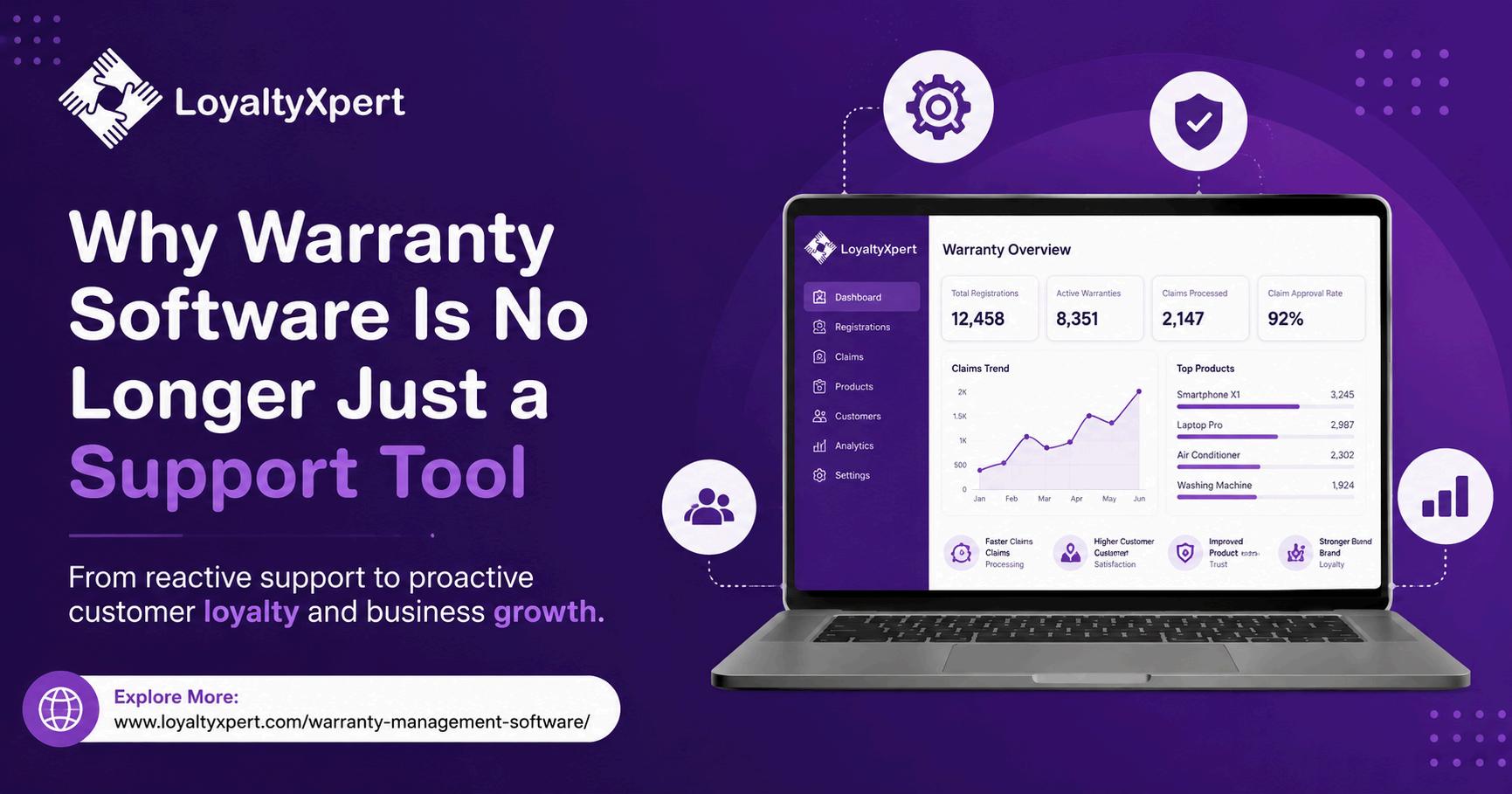
Platforms like LoyaltyXpert Warranty Management Software are helping businesses modernize their warranty operations with automation, real-time tracking, and customer-focused workflows that simplify the entire post-sales experience.
Instead of treating warranties like an isolated support function, businesses are now integrating them into larger customer engagement and operational strategies.
And that shift is only going to grow stronger in the coming years.
Final Thoughts
Warranty management is no longer just about handling complaints after a sale.
It has become an important part of customer experience, operational efficiency, and long-term business growth.
Businesses that still rely on spreadsheets, manual approvals, and disconnected systems are finding it harder to keep up with customer expectations. At the same time, companies using modern warranty management software are improving service speed, reducing operational workload, gaining better product insights, and building stronger customer trust.
The biggest change is not just technological.
It’s the mindset shift.
Businesses are finally realizing that warranties are not simply support tasks anymore. They are opportunities to strengthen customer relationships, improve brand reputation, and t l t l lt

And in today’s competi ver.