GREAT IDEAS NEED ROOM TO GROW.
Your support of our Annual Giving campaign is shaping the students of the future. YOUR IMPACT. THEIR FUTURE.
lcc.ca/donate

Mark
LION
Dawn Levy
ASSISTANT
Dana Kobernick
COPY
Katherine Leblanc
Jane Martin
ARCHIVES,
Jane Chau
Jane Martin
Adrianna Zerebecky TRANSLATION
Katherine Leblanc
CONTRIBUTORS
Mark Boghen
Kristine Jones, Pre U ’93
Dana Kobernick
Katia Ostrowski
Mark Salkeld
Nancy Smith
Chris Auclair
Vic Badian ’61, Pre U ’62
Jane Chau
Anabela Cordeiro
Susan Ferguson LCC Archives
Kyle Williams
by Lower Canada College 4090, avenue Royal Montréal, Québec H4A 2M5 Tel 514 482 9916 @ communications@lcc.ca Website www.lcc.ca
Headlines
Inside Today’s
LCC Classrooms
À l’intérieur des classes d’aujourd’hui à LCC
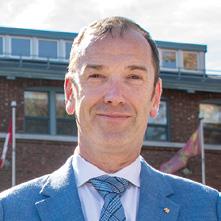
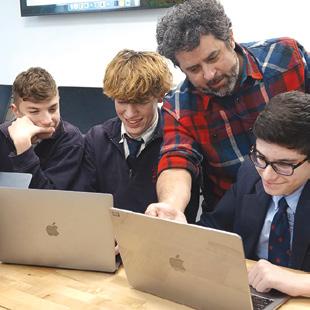
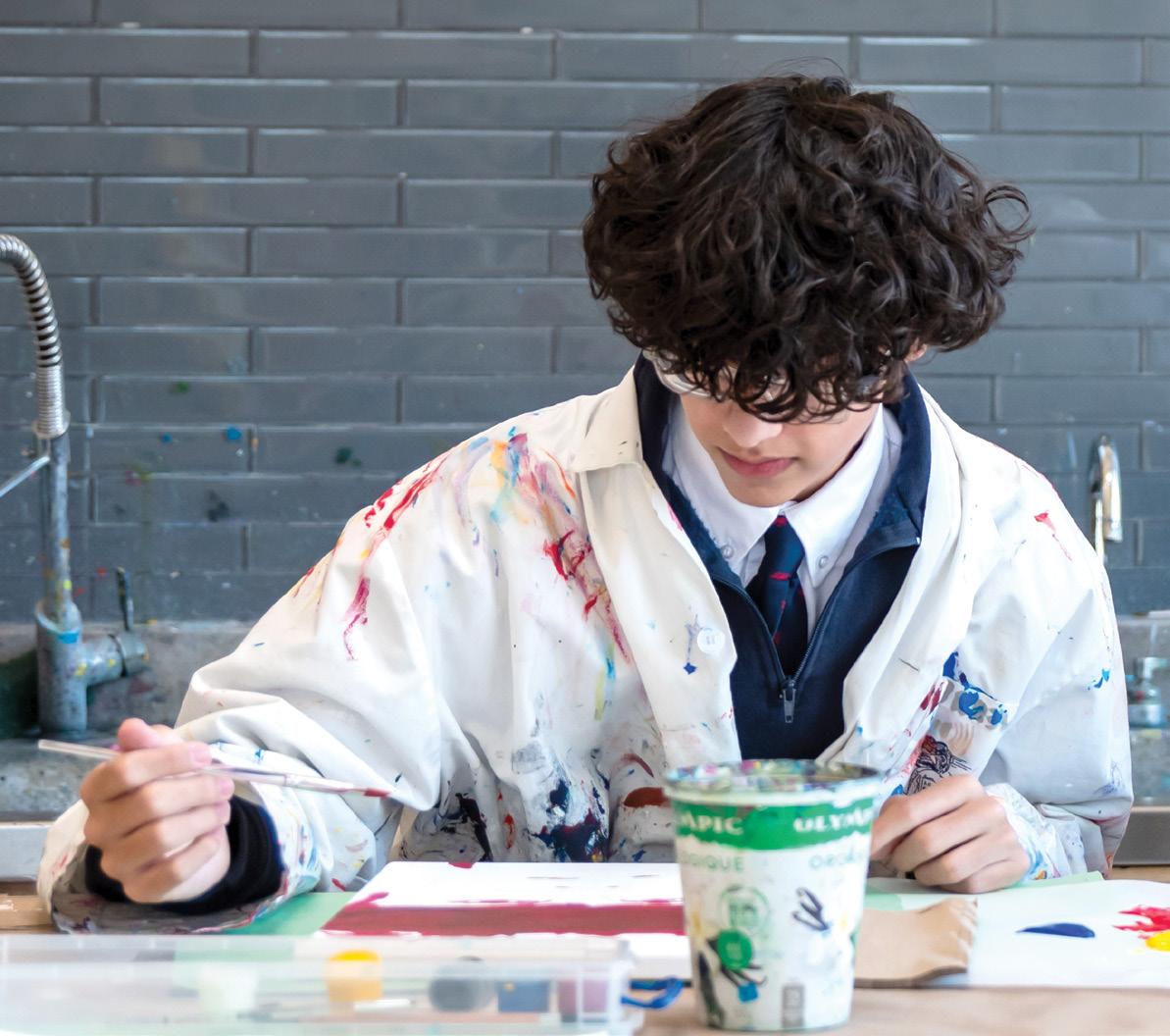
One of the most rewarding parts of being head of school is witnessing student life as it happens. Catching up with students in the hallways, cheering them on at games, and watching their performances always feels meaningful. But the most significant moments often unfold in the classroom. Observing great teaching in action, seeing students light up with understanding, and overhearing their animated post-class conversations as they continue the discussion are key experiences that help define an LCC education.
Earlier in the year, I attended a conference which focused heavily on the need for change in the education sector. I heard arguments suggesting that teachers simply imparting knowledge does not prepare students for the real world. While statements like this may apply to some schools, LCC has already recognized and responded to the need for change and continues to evolve in notable ways. The classroom experience has been transformed over the last 10 years and is largely unrecognizable compared to a classroom from 25 years ago.
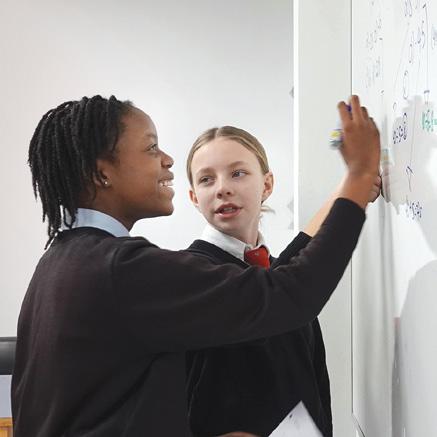
This issue of the LION magazine offers a window into some of the unique learning moments at all grade levels. What you’ll see here is just a snapshot, but it underscores that today’s LCC classroom is a dynamic environment. Students are active and inquisitive. They are thinkers. They are central to their own learning and that of their peers. They present, discuss, discover, explain and create. Moreover, students engage with topical and real-world issues. They use the technology critically and apply the skills and concepts they learn in one class to their other classes.
I am proud of how we approach the craft of teaching, and I am grateful to our teachers. They are the ones whose creativity, dedication and caring create the breadth of learning. Their professionalism and commitment to best practice ensure that the student experience is unparalleled, memorable and relevant as our students prepare for their futures.
Enjoy these glimpses into the LCC learning environment on the pages that follow.
L’ un des aspects les plus gratifiants de mon rôle en tant que directeur général de l’école est de pouvoir observer la vie étudiante au quotidien. Retrouver les élèves dans les corridors, les encourager lors des matchs de sports ou assister à leurs performances artistiques est toujours significatif. Mais les moments les plus marquants se déroulent souvent en classe. Voir un enseignement de grande qualité à l’œuvre, observer les élèves s’illuminer lorsqu’ils comprennent, et entendre leurs conversations animées après leurs cours alors qu’ils poursuivent la discussion, représentent des expériences essentielles qui définissent l’éducation offerte à LCC.
Plus tôt cette année, j’ai participé à une conférence qui portait largement sur la nécessité de transformer le secteur de l’éducation. J’y ai entendu des arguments selon lesquels le simple fait de transmettre des connaissances ne prépare pas les élèves au monde réel. Si ce constat peut s’appliquer à certaines écoles, LCC a déjà reconnu ce besoin de changement et y répond depuis longtemps, en poursuivant une évolution notable. L’expérience en classe s’est profondément transformée au cours des dix dernières années et n’a plus grand-chose à voir avec celle d’il y a 25 ans.
Cette édition du magazine LION offre un aperçu de certains moments d’apprentissage uniques à tous les niveaux scolaires. Ce que vous découvrirez ici n’est qu’un instantané, mais il illustre bien que les classes d’aujourd’hui à LCC sont un environnement dynamique. Les élèves sont actifs et curieux. Ce sont des penseurs. Ils jouent un rôle central dans leur propre apprentissage et dans celui de leurs pairs. Ils présentent, discutent, découvrent, expliquent et créent. De plus, ils s’engagent dans des enjeux actuels et concrets. Ils utilisent la technologie, en évaluent l’usage, et appliquent les compétences et concepts appris dans un cours à leurs autres cours.
Je suis fier de la manière dont nous abordons l’art de l'enseignement, et je suis reconnaissant envers nos enseignants. Ce sont eux qui, par leur créativité, leur dévouement et leur bienveillance, donnent toute leur richesse à l’apprentissage. Leur professionnalisme et leur engagement envers les meilleures pratiques garantissent une expérience étudiante incomparable, mémorable et pertinente alors que nos élèves se préparent pour l’avenir.
Je vous invite à découvrir, dans les pages qui suivent, cet aperçu de l’environnement d’apprentissage à LCC.
Non Nobis Solum,
MARK SALKELD Head of School / Directeur général
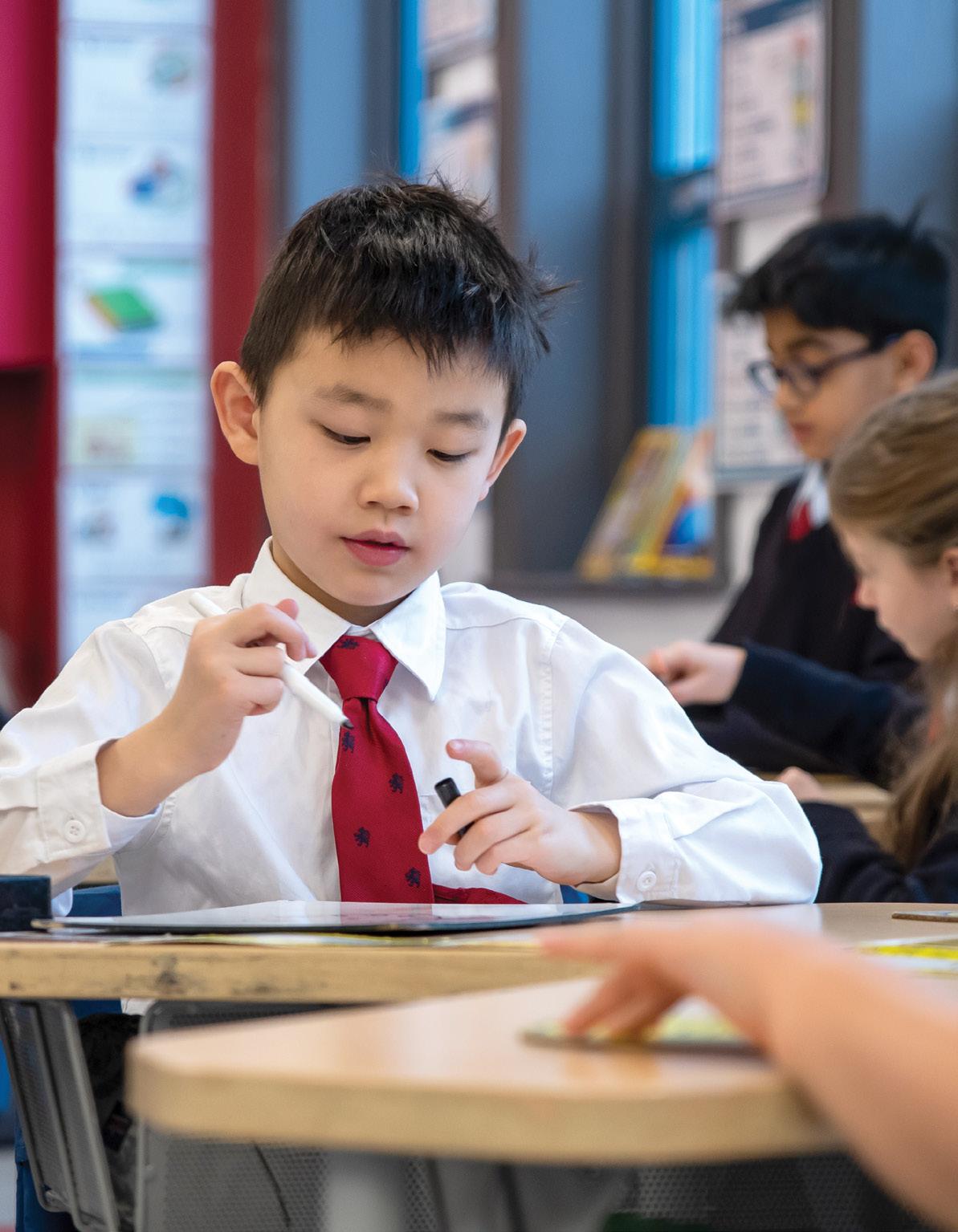

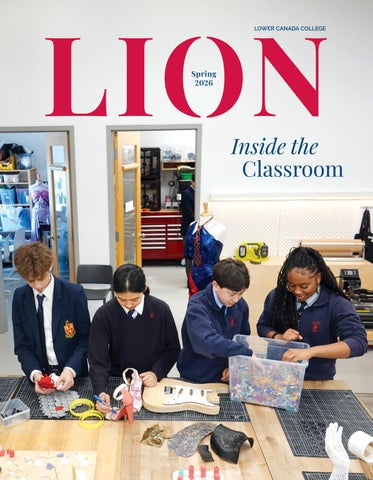
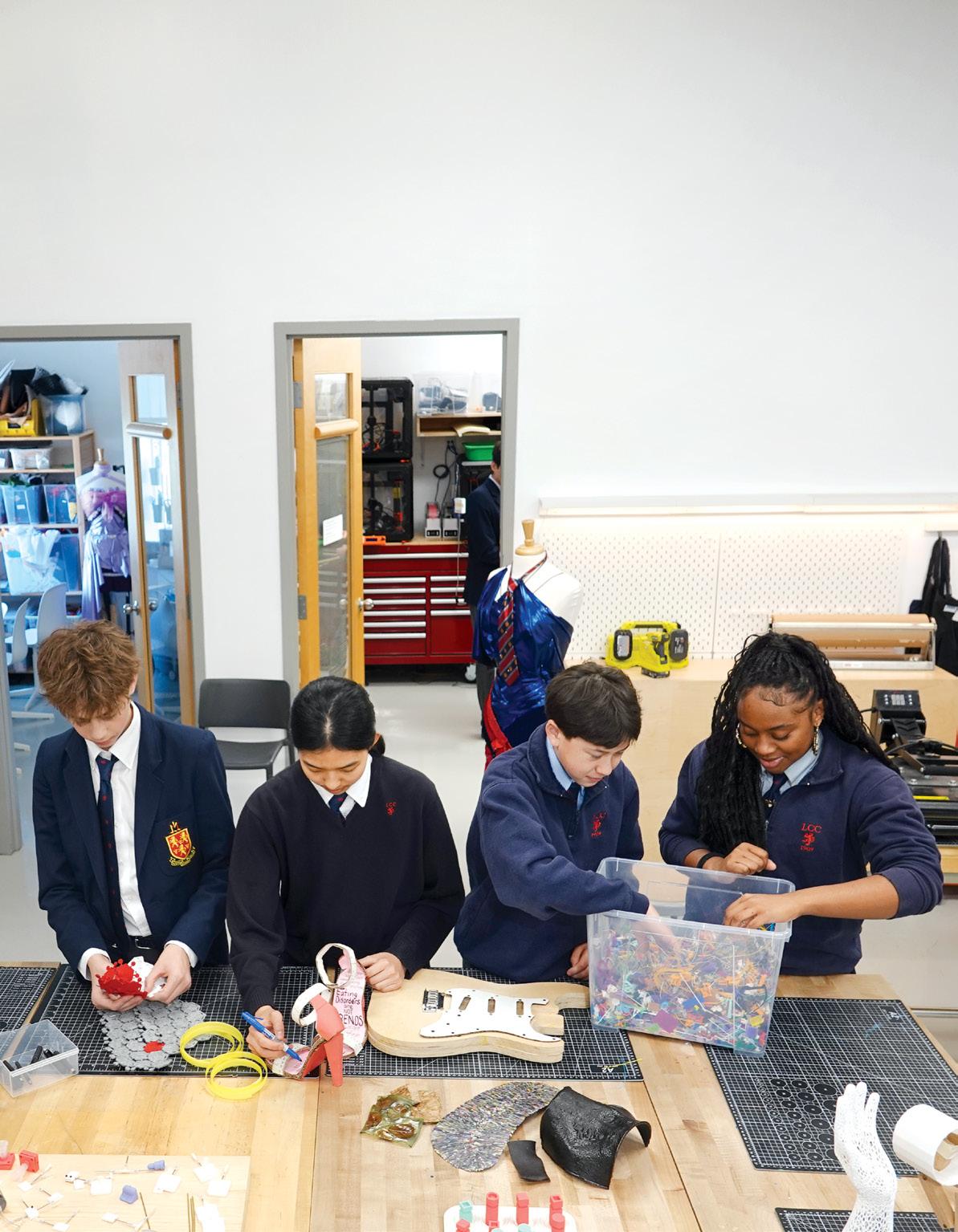
INSIDE THE CLASSROOM
EDUCATION AT LCC IS MORE THAN A CURRICULUM; IT IS A SERIES OF LIVED EXPERIENCES THAT SHAPE HOW OUR STUDENTS SEE THE WORLD. VISIT OUR CLASSROOMS FROM K–12 FOR SNAPSHOTS OF EVERYDAY LIFE AND LEARNING THAT UNFOLD AT THE SCHOOL.
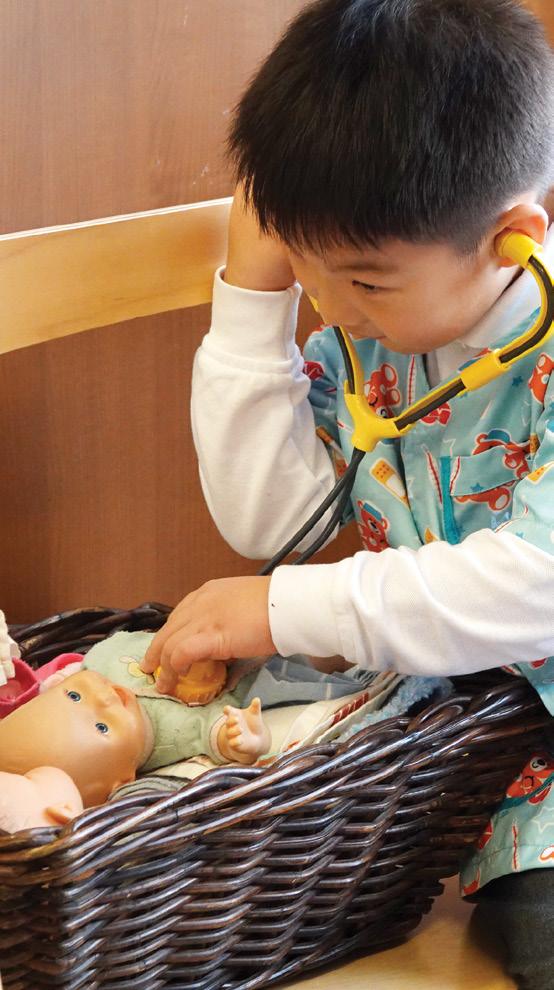
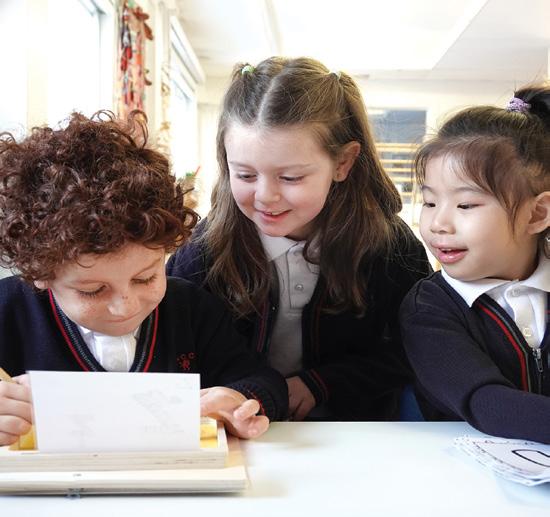
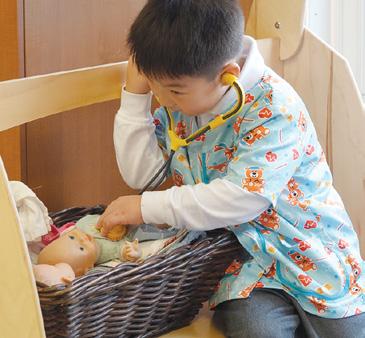
LEARNING THROUGH PLAY IN KINDERGARTEN
PLAY IS CHILDREN’S WORK, ACCORDING TO LCC’S FIVE KINDERGARTEN TEACHERS, GUYLAINE CYR, KATERIN JURETIC, MARIE-PIERRE NORMANDEAU, NICOLE PITSOLANTIS, AND ANGELIQUE ROUMBOS.
It is through play, they say, that children learn everything, including academic foundations, social-emotional skills, language, problem-solving, and independence.
Students engage in many forms of play, from structured activities to free play, dramatic play, and outdoor exploration. At any moment, they might be shaping letters with clay, acting out real-life scenarios, or designing their own activities indoors or in the kindergarten backyard. With teachers as their guides, they are learning math and language and literacy, while also developing important skills like conflict resolution, how to listen to different perspectives, communication, sharing, emotional regulation, collaboration and resilience.
Play is also where children take risks—not dangerous ones but the healthy, productive kind that come from trying something new. In this safe environment, mistakes become learning opportunities. One child, for example, decided to “cook” in the play kitchen with a recipe consisting of cut-up paper, a creative idea that came with the consequence of cleaning up the confetti afterward!
For the teachers, play provides a front-row seat to observing and understanding where each child is developmentally, what skills they’re practicing, when to intervene and when to step back. By the end of the year, they marvel at the enormous growth of the students, from not knowing how to hold a pencil to confidently navigating school life.
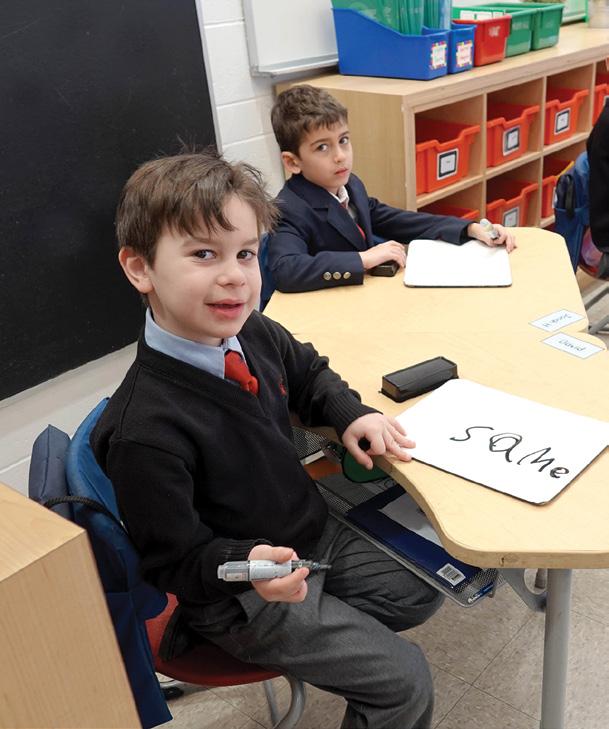
CRACKING THE CODE: THE MAGIC OF STRUCTURED LITERACY
In grade 1, a carefully sequenced, research-driven approach to reading is giving young learners the tools and the confidence to become successful, joyful readers. Rooted in decades of cognitive science and brain research about how children learn to read, this model was originally developed for children with dyslexia, but was soon found to be beneficial to all learners.
With the University of Florida Literacy Institute program as their roadmap, teachers Vanessa Mastromonaco, Giselle Murphy, Orla Wallace, and Caitlin McLeod lead lessons that follow predictable routines and a clear sequence, allowing students to progress only once they’ve
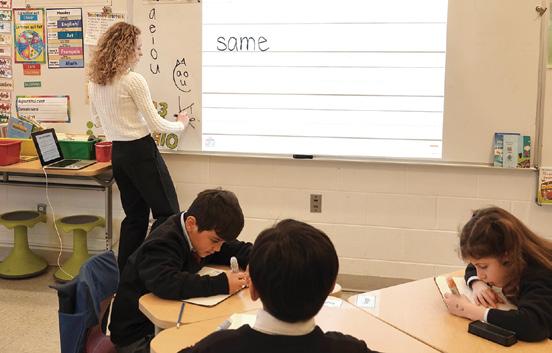
mastered each concept. After learning a new concept together, students rotate through classroom stations at their own pace. One child may be decoding text at the reading centre, while another practices writing, works independently, or engages in game-based learning. This kind of differentiated instruction allows students to experience mastery and success regardless of their level.
The results are tangible. Students are more engaged and eager to participate. From the children’s perspective, they feel like they are cracking a secret code and gaining access to a once-hidden world filled with new stories and discoveries.
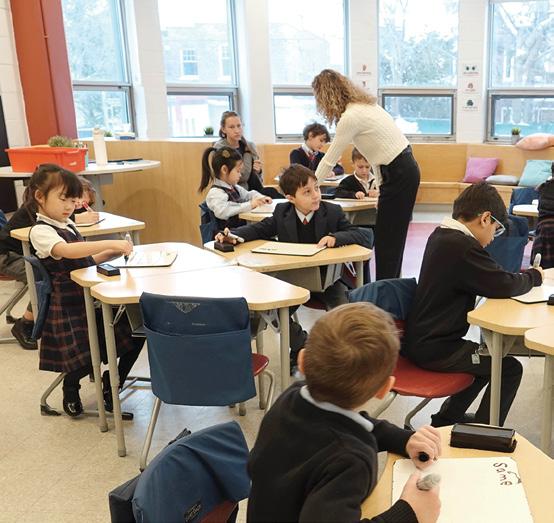
STORIES COME ALIVE IN GRADE 2
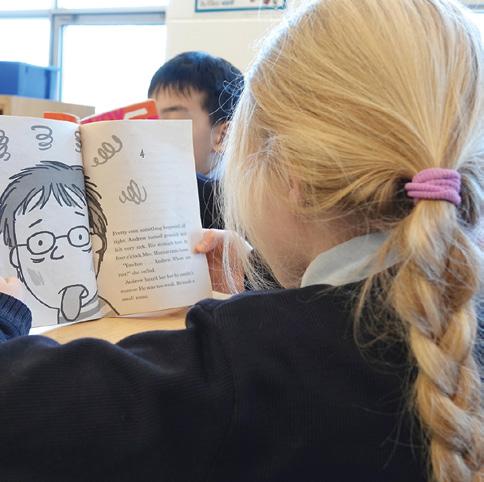
In grade 2, stories aren’t just read—they’re lived, imagined, and woven into everyday dreams. Students are captivated by their first novel study, where English teachers Tania Wehlan and Shoshana Weinberger read aloud in an activity that blends technical literacy with deeper comprehension.
In the fall, they dive into their first novel. Before opening the book, students study the cover and title, searching for clues and making predictions about how the story will unfold. Once they begin, they focus on vocabulary, discuss the content, and write short reflections linking their own experiences to those of the protagonist.
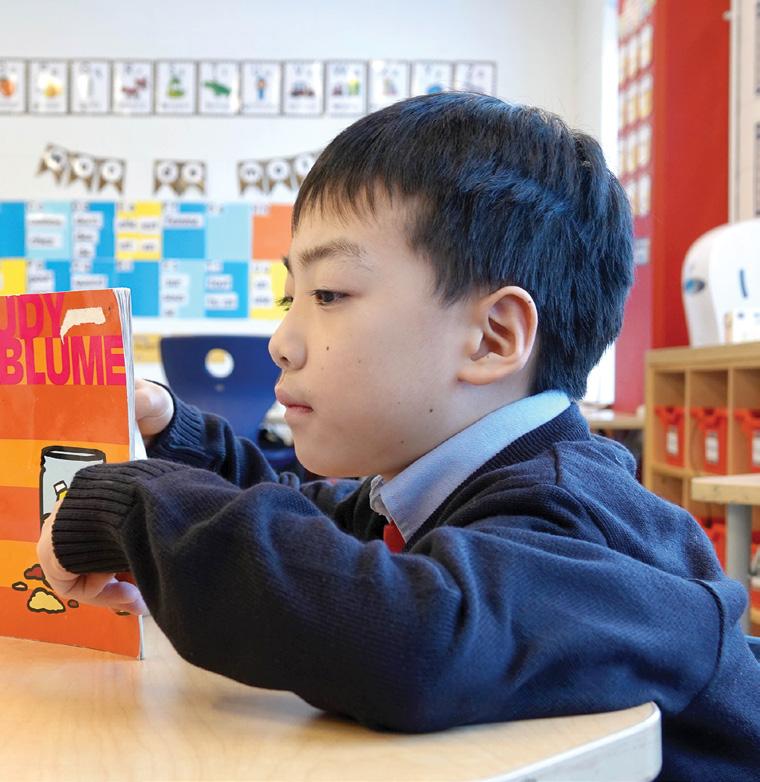
In the spring, the students turn to their second novel. To encourage metacognition—reflection on how they think and learn—students select one of five comprehension strategies and demonstrate their understanding through either a written or illustrated response. They may visualize by creating mental images of what they’ve read, predict what might happen next, question what they have read, make connections to personal experiences or other stories, or summarize a chapter with a concise recap.
As students sit poised on the edge of their chairs, eager to hear how the narrative continues, they are not only expanding their vocabulary. They are also learning to think beyond the literal, recognize essential story elements and, most importantly, cultivate a love of reading.
FROM THE CLASSROOM TO REAL‑WORLD DISCOVERY
AT LCC, SARAH BULLOCK, MARIE-FRANCE PERRON, AND MARGARET ROPER USE OUTDOOR EDUCATION TO TRANSFORM THE NATURAL WORLD INTO A DYNAMIC EXTENSION OF THE CLASSROOM.
Each activity invites students to observe, question, collaborate, and connect with the environment in meaningful ways.
In the fall, grade 3 students step into the open air at the Droulers-Tsiionhiakwatha Archaeological Site Interpretation Center in Saint-Anicet, QC, for an immersive outdoor experience in Indigenous culture. As the starting point of their social science unit on Haudenosaunee society, they explore reconstructed longhouses, examine artifacts in the interactive museum, and even play a game of lacrosse.
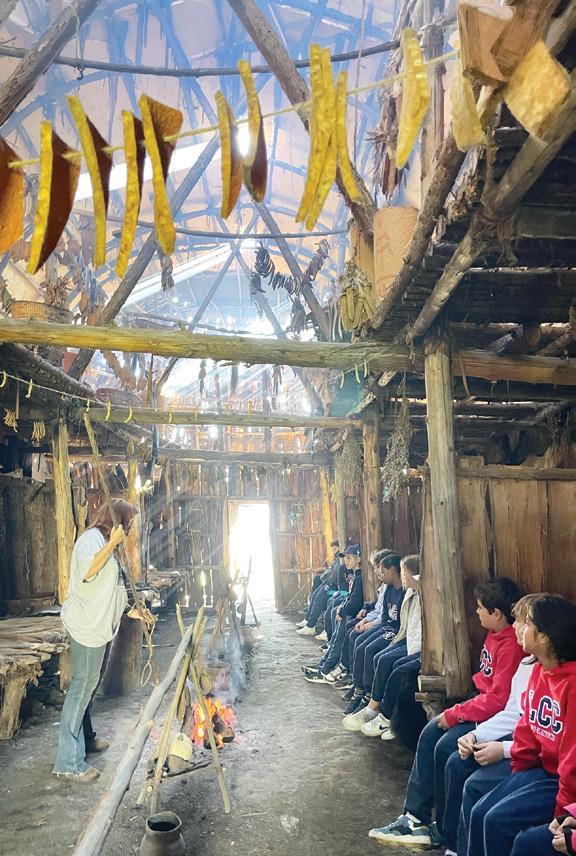
DROULERS-TSIIONHIAKWATHA ARCHAEOLOGICAL SITE INTERPRETATION CENTER
When winter is in full stride, they head to Mount Royal for a vigorous snowshoeing excursion. As part of the geography, history and citizenship education curriculum, students compare traditional Indigenous snowshoes with modern designs, identify animal tracks and sounds, and observe birdlife—all in French! The outing allows the students to develop resilience and stamina, while applying and strengthening their French language skills.
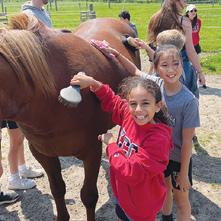
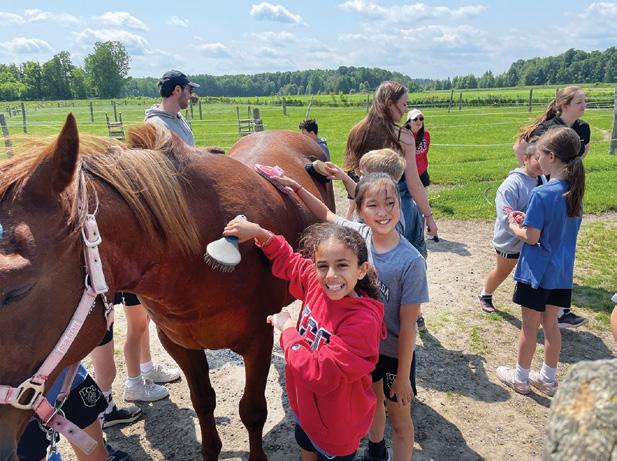
To cap off the year, they visit La Ferme d’André south of Montreal, where they brush and feed the animals, learn to move calmly around them, and work together as a group—an experience that incorporates social-emotional learning.
By engaging with nature across the seasons, students deepen their understanding of curriculum content, strengthen essential skills, and discover the joy of learning beyond the classroom walls.
LA FERME D'ANDRÉ
WORDS TAKE FLIGHT IN GRADE 4 POETRY
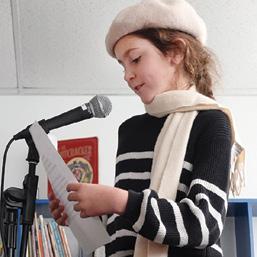
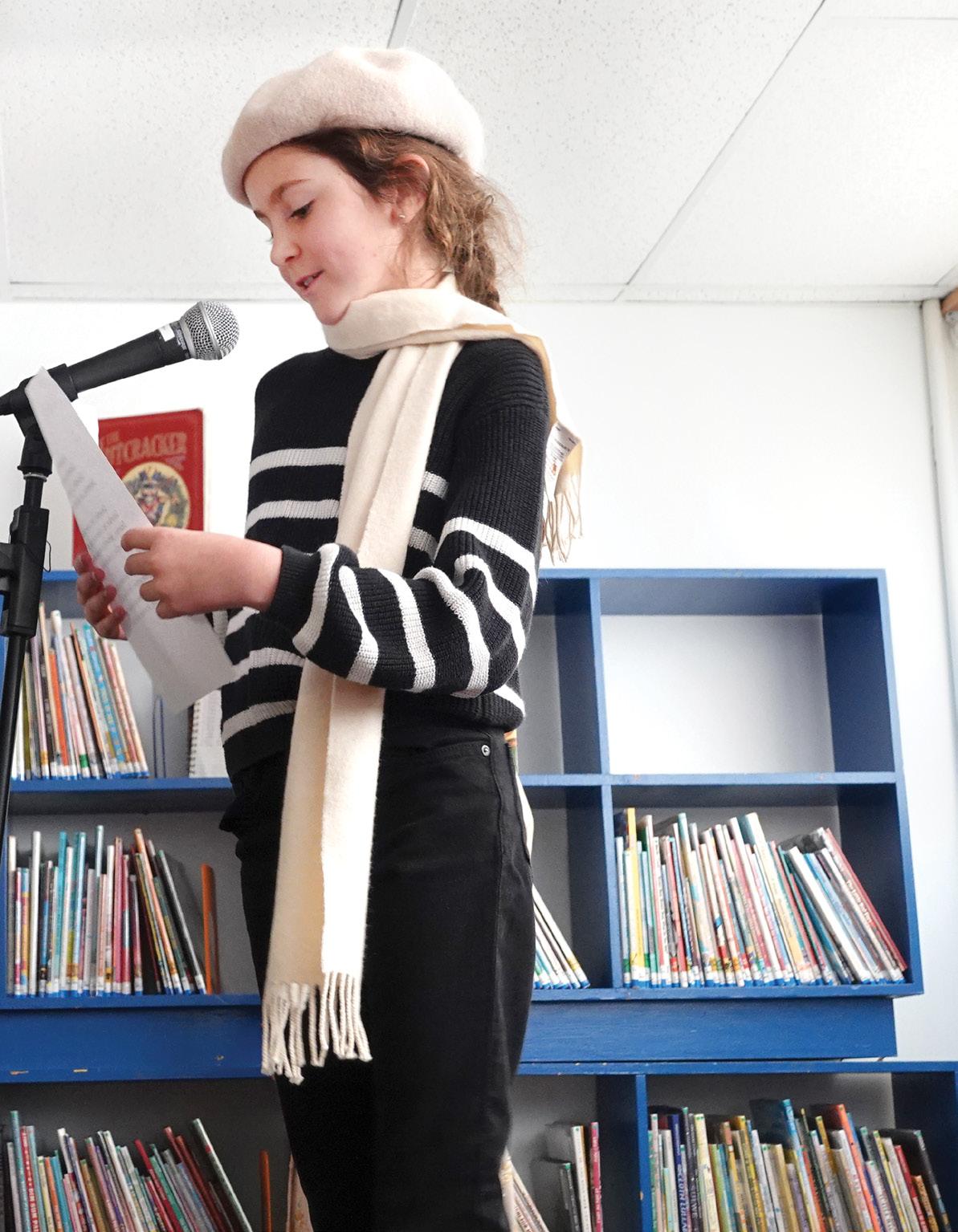
In grade 4, teachers Cassidy Vollweiter, Michelle Daigneault, and Maryam Lucinian make poetry accessible, memorable, and meaningful for their nine-year-olds. Together, students reflect on poems, act them out, learn poetic devices, and even write original works.
Tennyson’s The Eagle, for instance, may seem elusive at first, but with teacher guidance and a makeshift stage, students transform the poem into performance. Taking on the roles of the eagle, the crag, and even the wrinkled sea, they animate each image and bring the verse to life. At the same time, they read Sharon Creech’s novel-in-verse Love That Dog, which introduces students to classic poems, among other types, and invites deeper analysis.
Their study of the iconic In Flanders Fields is especially powerful. Teacher Clay Bertoia, a former member of the Royal Canadian Air Force, visits the class to offer firsthand insight, helping students connect the poem’s meaning to lived experience.
Students then channel their creativity into crafting original poetry using the “three Rs”—repetition, rhyme, and rhythm—building a portfolio of pieces they are proud to share. A “Gallery Walk” activity allows them to present their work to peers.
In French, students follow a similar process, studying poetic techniques before creating their own pieces inspired by Vincent Vallières’ song Février They then welcome their parents to Café Poésie, a Parisian-style reading complete with croissants, hot chocolate, and heartfelt performances, celebrating a tradition that has been a grade 4 staple for a decade.
Poetry nurtures imagination, emotional expression, and risk-taking, and in these classrooms it becomes a joyful practice that helps students find their voices and see themselves as emerging writers.
CRÉATIVITÉ TERRIFIANTE
LES ÉLÈVES DE 5e ANNÉE TRANSFORMENT LEURS HISTOIRES EFFRAYANTES EN FILMS PROPULSÉS PAR L’IA
Lorsque l’enseignante de français
Elizabeth Martel a donné un exercice d’écriture à ses élèves de 5e année, elle était loin de se douter que sa classe se transformerait en véritable plateau de tournage, où de jeunes cinéastes utiliseraient l’IA pour donner vie à leurs récits d’Halloween.
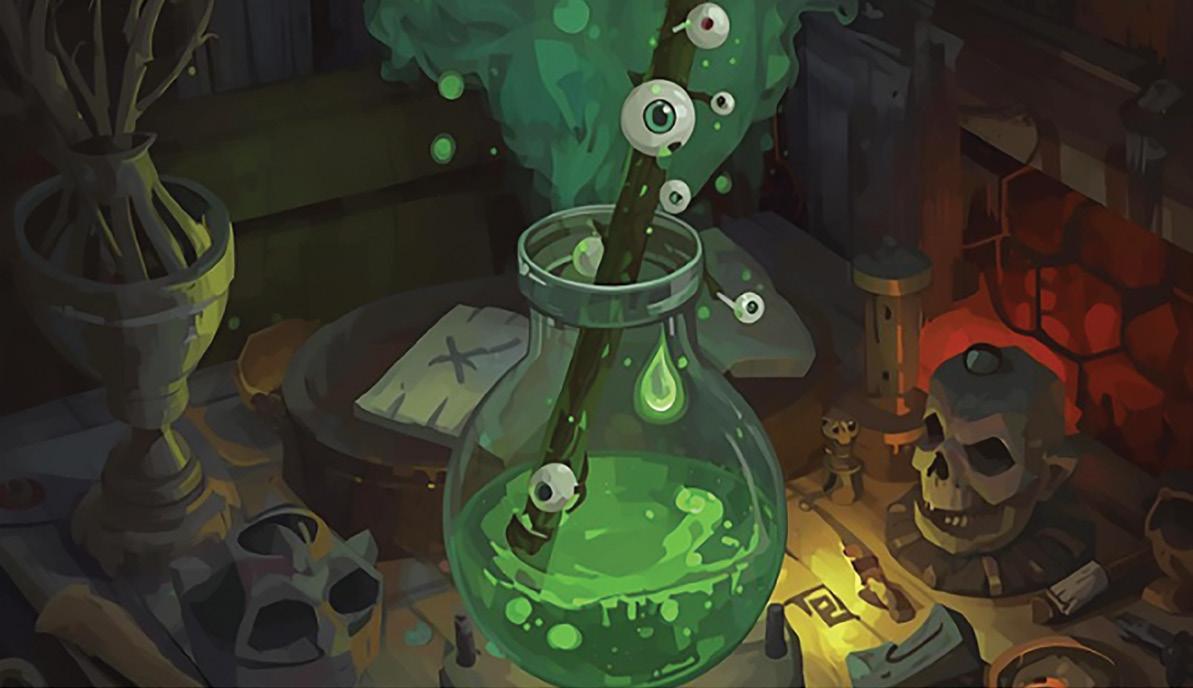
L’activité avait commencé comme une simple rédaction, mais l’enthousiasme des élèves a inspiré Mme Martel à pousser le projet plus loin. Rapidement, ils ont adapté leurs histoires en courts métrages grâce à Magic Media de Canva, rédigé des prompts pour générer des images effrayantes, assemblé le tout en séquences cinématographiques et enregistré des narrations dignes de bandes-annonces.
Les scénarios, inspirés de leurs histoires originales, devaient être rédigés sans l’aide de l’IA. Une fois cette étape complétée, les élèves se sont plongés dans la production du film. Pour les écrivains plus timides, voir leur texte prendre vie à l’écran a rendu le processus beaucoup plus stimulant. Tandis que les courts métrages ont ajouté une dimension ludique et créative, l’évaluation de Mme Martel portait à la fois sur la composante écrite et sur une présentation orale. Ce projet a non seulement encouragé l’écriture descriptive en français, mais il a aussi renforcé l’engagement des élèves et leur a permis de découvrir le potentiel de l’IA de manière constructive—un outil qui soutient leur créativité et amplifie leur apprentissage sans jamais remplacer leurs efforts.


FRIGHTFULLY CREATIVE
GRADE 5 TURNS SPOOKY STORIES INTO AI-POWERED FILMS
When French teacher Elizabeth Martel assigned a writing exercise to her grade 5 students, little did she know that her classroom would morph into a veritable movie set, where budding filmmakers harnessed AI to bring their Halloween tales to life.
The activity began as a simple story assignment, but the students’ enthusiasm inspired Ms. Martel to extend the project. Soon, they were adapting their stories into short films using Canva’s Magic Media, crafting prompts to generate eerie images, weaving them together into cinematic sequences, and recording trailer-style narrations.
The scripts, based on their original stories, had to be crafted without the assistance of AI and, once written, students delved into the film production. For reluctant writers, seeing their text come alive through visuals made the process far more exciting. While the short films added a fun and playful dimension, Ms. Martel’s assessment focused on both the written component and an oral presentation.
The project not only encouraged descriptive writing in French, it also enhanced engagement, and introduced students to the power of AI in a way that was constructive, supporting the students’ creativity and amplifying their learning without replacing their effort.
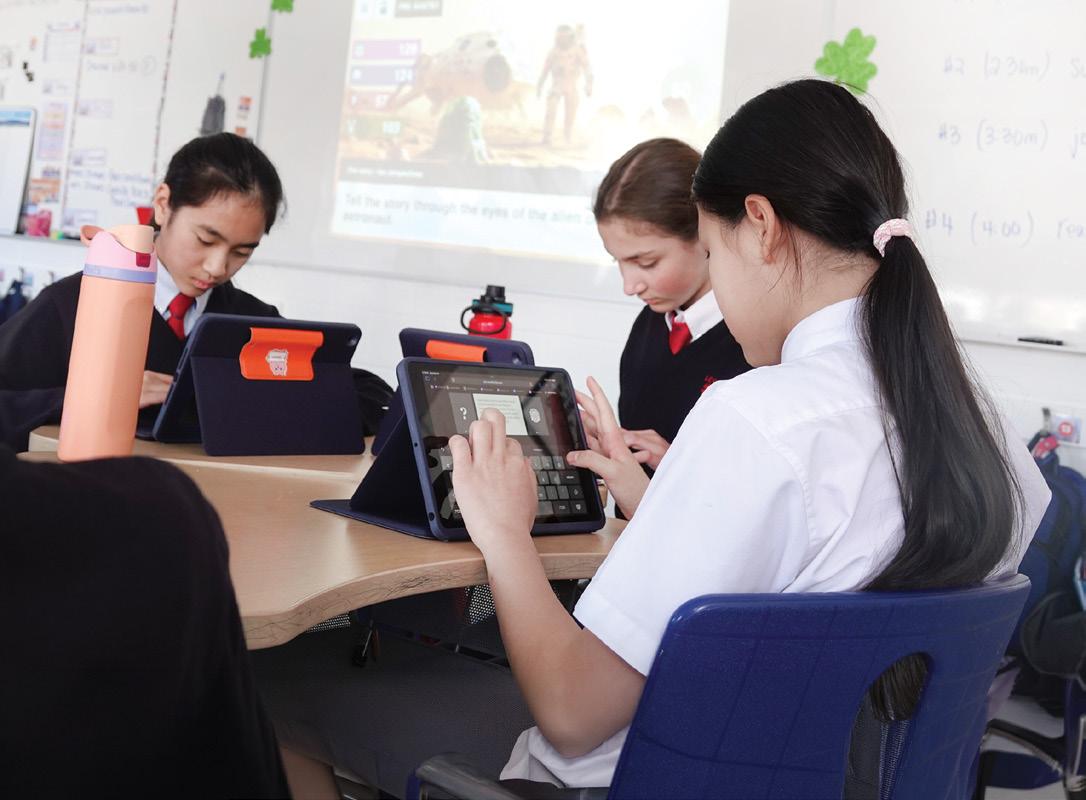
STUDENTS EXPLORE HISTORY AND FIND THEIR VOICES
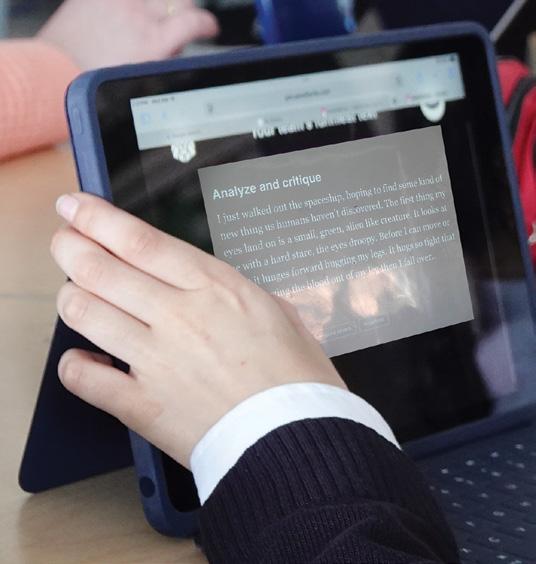
Grade 6 students are finding their voices as writers, stretching their thinking, and diving into complex ideas. In Rachel Armstrong’s classroom, writing is a tool for exploring new viewpoints, deepening understanding, while also combining responsible use of technology. She brings this to life using a variety of strategies that invite students to question, connect and create.
In their study of novels and short stories, students revisit historical events through the eyes of young protagonists, discovering how a narrator’s point of view shapes their understanding. Alongside this work, reflective writing tasks push them beyond summary, encouraging them to analyze what they’ve read with an ethical lens. They leverage AI tools as learning supports that help them to clarify ideas, improve their writing, and assess the suggestions made by the AI platforms, while maintaining full ownership of their work.
And then they take it one step further, making connections with other areas of the curriculum, including Black History in Canada and residential schools, and identifying the voices that are often missing from historical narratives. In doing so, they develop a richer, more critical understanding of history and learn how to become more informed citizens.
GRADE 7 STUDENTS
DISCOVER DRAMA
FROM PAGE TO STAGE
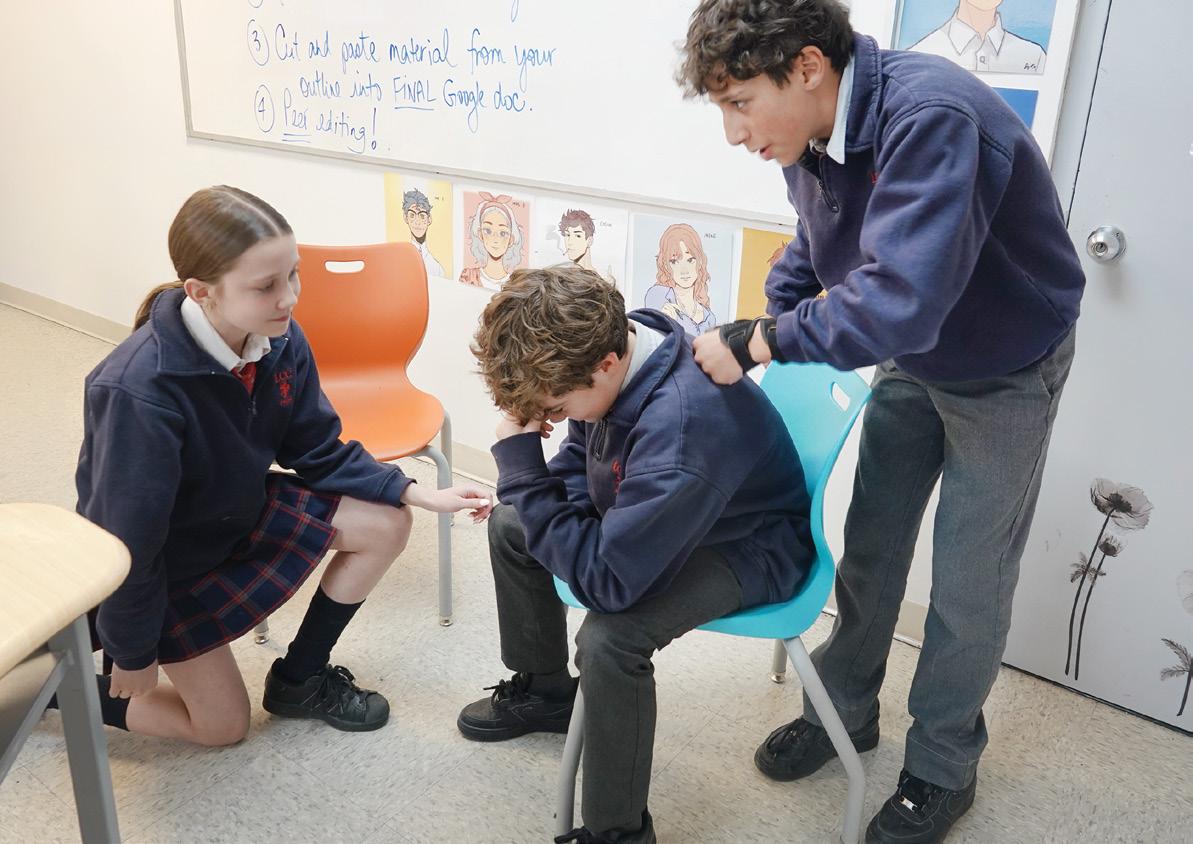
ON THE INITIATIVE OF SARAH MAHONEY, LCC’S THEATRE ARTS TEACHER, DRAMA IS MAKING ITS DEBUT IN GRADE 7 ENGLISH CLASS.
Since drama is not offered at this level, Ms. Mahoney was eager to step into the classroom, foster interdisciplinary learning as encouraged by the IB Middle Years Programme, and get to know the students as they begin their high school journey. Seeing the natural connection between English and drama, she approached the four grade 7 English teachers, and they all opened their doors.
Drama sessions are woven into the existing English curriculum, supporting what students are already learning. Word Nerd by Susan Nielsen, one of the books studied in class, is approached from a theatrical perspective, as Ms. Mahoney guides students to explore physicality and connect movement to characterization, imagining how the characters might walk. She also encourages them to experiment with
voice levels and, in small groups, improvise scenes and plays with accents. Through these activities, students demonstrate a more nuanced understanding of literary characters in ways not apparent in written assignments.
Next up is Romeo and Juliet, where Ms. Mahoney offers students a chance to see Shakespeare’s language as relatable, reframing some of the banter and helping them recognize the play as an authentic teenage experience.
While some students are hesitant initially, by the end of just one class, students are engaged, having fun, and building confidence. Drama allows them to access knowledge differently and, although mistakes are made publicly, it is in a safe, supportive environment allowing them to develop resilience.
Mastery Learning in Grade 7 Math
LCC’s grade 7 math program is built on a dynamic mastery learning approach, where students must have a solid understanding of each concept before advancing to the next. Unlike a traditional model, where an entire class moves forward at the same pace regardless of individual readiness, mastery learning ensures that no student is pushed ahead with gaps in their comprehension and no student is held back from further exploration.
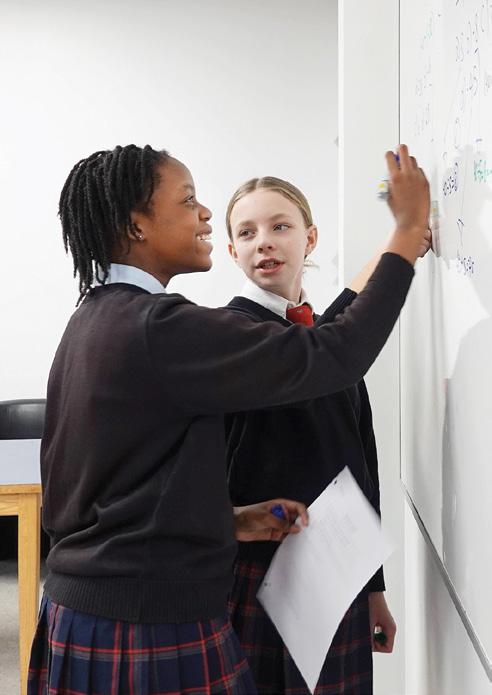
HERE’S HOW IT WORKS:
Teachers Lisa Rutherford, Natalie Weber, Lucia Coretti, and Dan Goldman introduce the same core content to all grade 7 math classes.
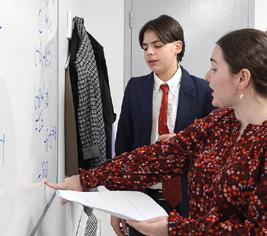
After an assessment, students are differentiated based on their results, and are grouped for the following week. 2
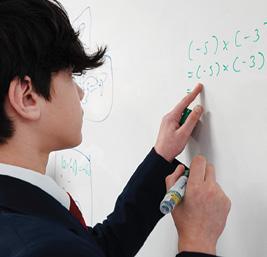
Those who have clearly mastered the material join the challenge group, where they stretch their thinking and tackle more complex applications. 3
Students who need additional support join review groups, where they receive targeted instruction, extra practice, and sometimes a different teacher who may bring another perspective. 4
5
After this focused week, all students return to their regular class, stronger, clearer, and ready for what comes next.
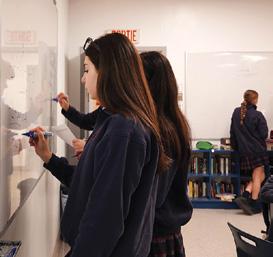
Instead of locking students into year-long levels, as streaming does, this flexible model shifts with them. A student who excels in one unit may require more time in the next, and that’s exactly what the structure is designed for. In the end, mastery learning empowers every student to move forward with confidence, clarity, and a deeper understanding of mathematics.
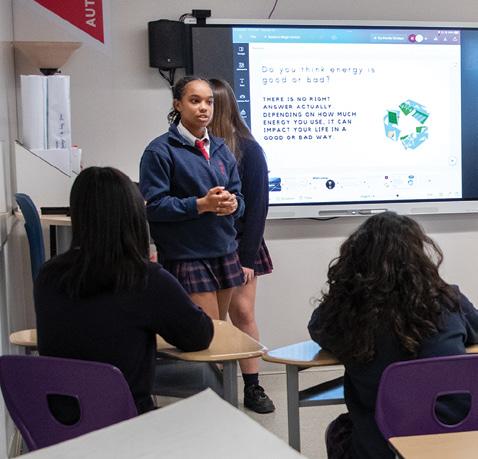
DESIGN THINKING AS A BRIDGE ACROSS THE CURRICULUM
Design thinking has become a powerful thread in grade 8, woven into a variety of subjects to help students make meaningful connections through inquiry, creativity, and iteration. Far from being limited to fabrication and building things, it is a mindset and a process where learners collaborate to develop creative solutions for real-world problems.
Supported by their teachers and inspired by this year’s guest speakers David Bensadoun ’87, Pre-U ’88, Natanya Khazzam ’02, and Meghan Rose ’02, students have been moving through cycles of designing, building, testing, and refining their ideas.
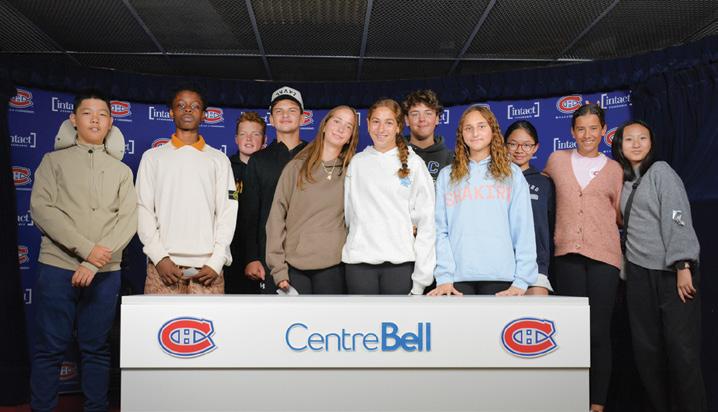
These two examples highlight the impact of this approach. In the fall, students toured Montreal’s Bell Centre, explored its operations, and gathered specific information to assist them with their project. Working in advisory groups, they designed a new product or space to enhance the fan experience for a specific audience. Students built prototypes
and pitched them to the entire grade and a panel of judges. Concepts ranged from a fast-food delivery system that brings snacks directly to spectators’ seats, to a dedicated kids’ activity zone.
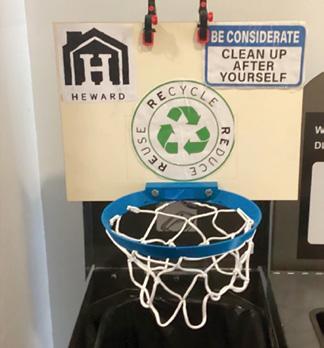
Later in the year, the students researched global environmental issues in their advisory groups and worked in design class to create innovative solutions. Students had the opportunity to explore technologies and build their own prototypes, from timer-based water and lighting systems, to an air-purification system now in use in the Fab Lab. They also experimented with ideas like a basketball hoop mounted above recycling bins to encourage better recycling habits, as well as concepts such as glow-in-the-dark lanterns that reduce reliance on electricity.
These experiences show how design thinking can be used to generate new ideas, solve real world problems, and incorporate diverse perspectives. Students see their learning as interconnected, multidisciplinary, and full of possibility.
GRADE 8 STUDENTS AT THE BELL CENTRE
2e & 3e
SECONDAIRES
LE FRANÇAIS EN ACTION !
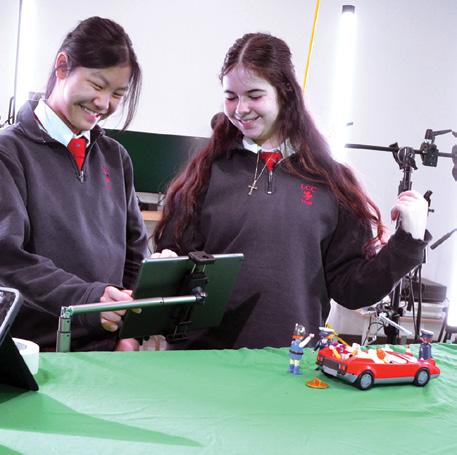
Conçu pour les élèves de 2e et 3e secondaires qui ont besoin d’un soutien supplémentaire dans le développement de leurs compétences en français, le cours Français en action propose un programme multimédia dynamique, axé sur des projets, qui aide les élèves à développer leur confiance en eux dans un environnement à la fois ludique et flexible. Le cours encourage les élèves à s’engager avec la langue à travers des créations pratiques et concrètes, significatives et en lien avec leurs intérêts.
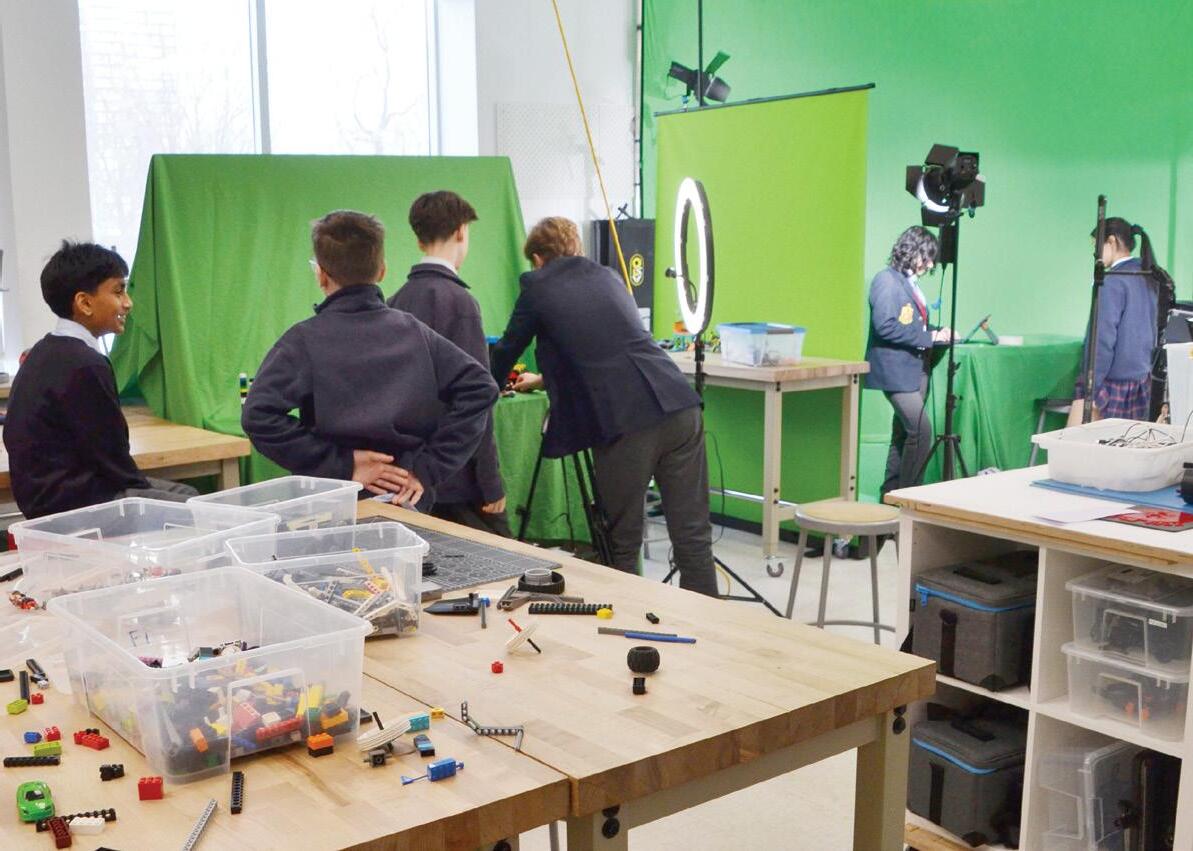
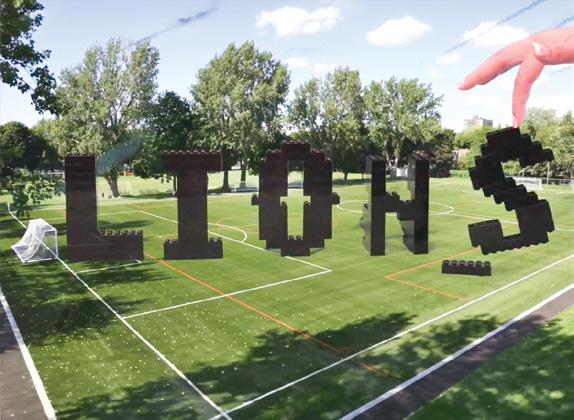
Guidés par Karl Forgues et Chris Auclair, les élèves explorent une vaste gamme de médias — production de vidéos, animations en stop-motion, couvertures de magazines et autres projets de design. Chaque activité est conçue pour renforcer les trois compétences essentielles en français : la communication orale, la compréhension écrite et l’expression écrite.
Grâce à une pratique répétée intégrée à des tâches créatives, les élèves consolident leurs acquis tout en découvrant de nouvelles façons de s’exprimer en français.
Maintenant dans sa deuxième année, cette initiative suscite un enthousiasme marqué tant chez les parents que chez les élèves. Plusieurs élèves démontrent déjà une plus grande aisance et un meilleur confort à s’exprimer en français au-delà de la salle de classe, dans leurs interactions quotidiennes.
Le cours s’avère particulièrement précieux pour les élèves arrivant de l’extérieur de la province, qui peuvent avoir besoin d’un point d’entrée plus immersif et soutenu dans l’apprentissage du français. Français en action les aide à se sentir inclus, compétents et prêts à s’épanouir dans un environnement scolaire bilingue.
FRENCH IN ACTION!
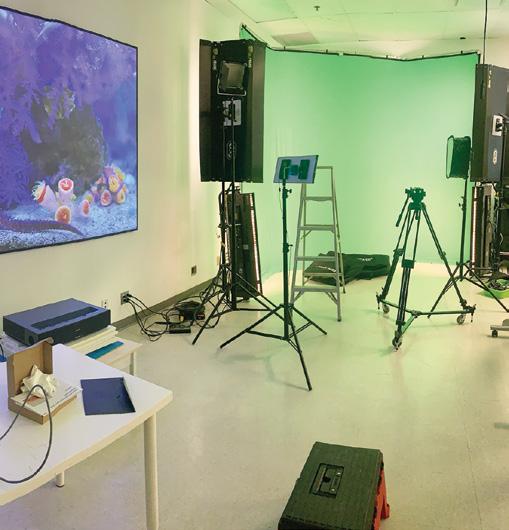
Designed for grades 8 and 9 students who need additional support in developing their French language skills, Français en action offers a dynamic, project-based multimedia class that helps learners build confidence in a fun and flexible environment. The course encourages students to engage with French through hands-on creative work that feels meaningful and relevant to their interests.
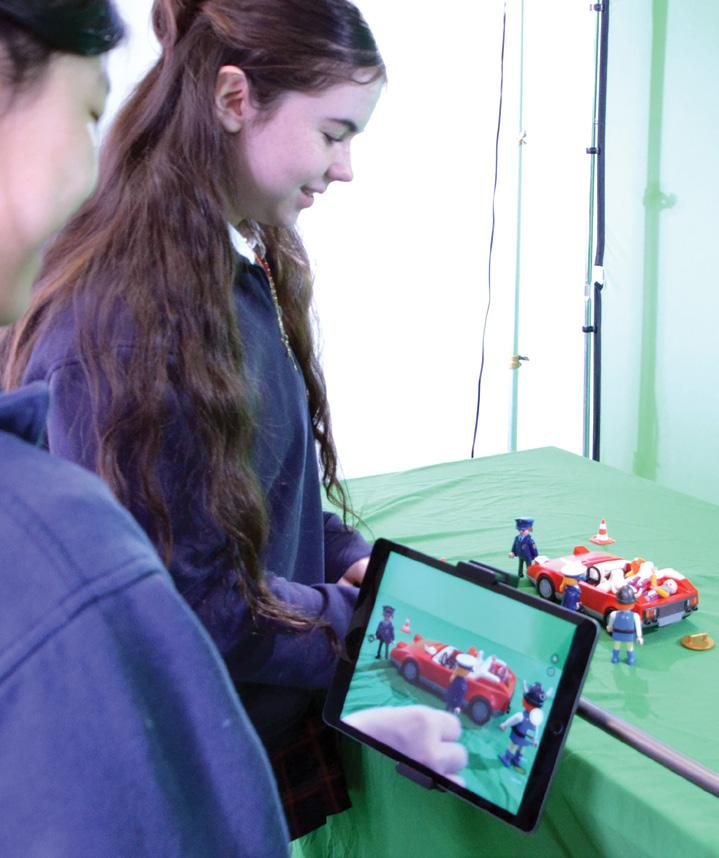
Guided by teachers Karl Forgues and Chris Auclair, students experiment with a wide range of media— producing videos, stop-motion animations, magazine covers, and other design projects. Each activity is structured to reinforce the three core French competencies: oral communication, reading comprehension and written expression.
Through repeated practice embedded in creative tasks, students strengthen their skills while discovering new ways to express themselves in French.
Now in its second year, parents and students alike have responded enthusiastically to this offering. Many students are already demonstrating greater comfort and ease speaking French beyond the classroom in everyday interactions.
The class has proven especially valuable for students arriving from outside the province who may need a more immersive, supportive entry point into French. Français en action helps them feel included, capable, and ready to thrive in a bilingual school environment.
THE ART OF CREATIVE COMPUTING
IN CREATIVE COMPUTING, GRADE 10
STUDENTS DISCOVER THAT COMPUTER PROGRAMMING ISN’T JUST A TECHNICAL SKILL; IT’S A CREATIVE MEDIUM, WHERE LOGIC MEETS IMAGINATION.
They are invited to treat code as a canvas, building interactive, expressive digital experiences that reveal how the technology around them actually works. Students explore software development as both a way of thinking and a method of action and develop practical skills in research, analysis, and programming, which are reinforced through exercises that emphasize critical thinking across many fields and connect their learning to contexts that matter to them personally.
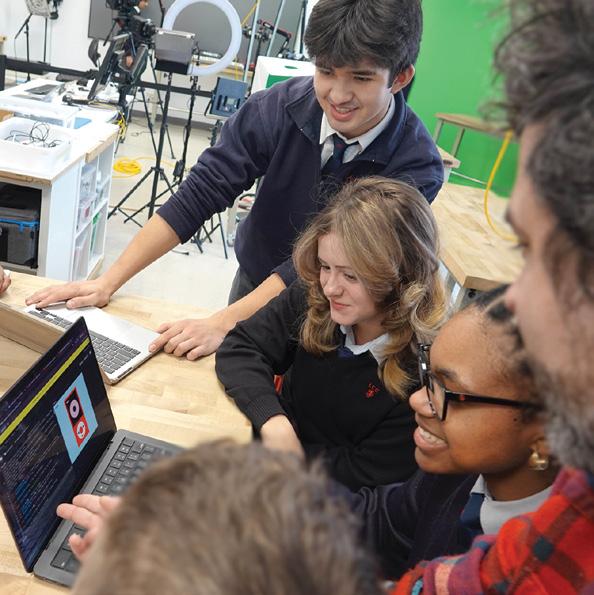
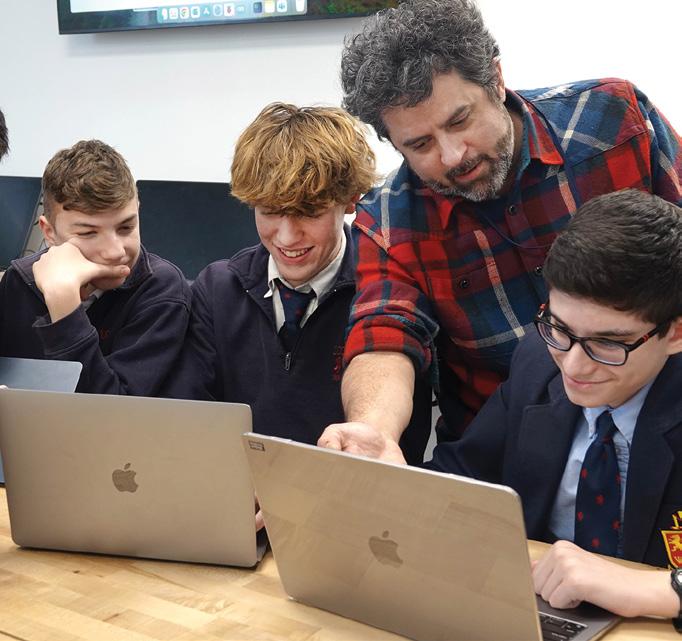
Don Undeen sets the ground rules from day one: no AI shortcuts. By removing automated tools, he encourages students to work with the thinking behind programming: the trial, the error, and the moments that make concepts stick. Instead, students use a JavaScript-based coding platform where they bring ideas to life through graphics, animations and sound.
Through open-ended assignments and guided conversations with their peers, students are given the space to explore and grow, developing the ability to make creative decisions and understand the consequences of those decisions. They might animate a superhero they’ve designed, for example, with results often looking like quirky, imaginative art pieces, each one a reflection of the student’s creativity and growing technical fluency.
By the end of the course, students aren’t just writing code, they’re also developing confidence and problem-solving skills.
THE VALUE OF FAILURE
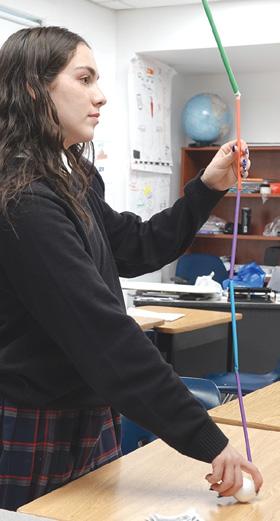
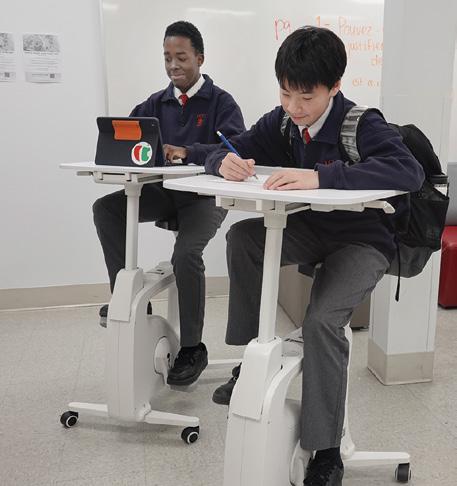
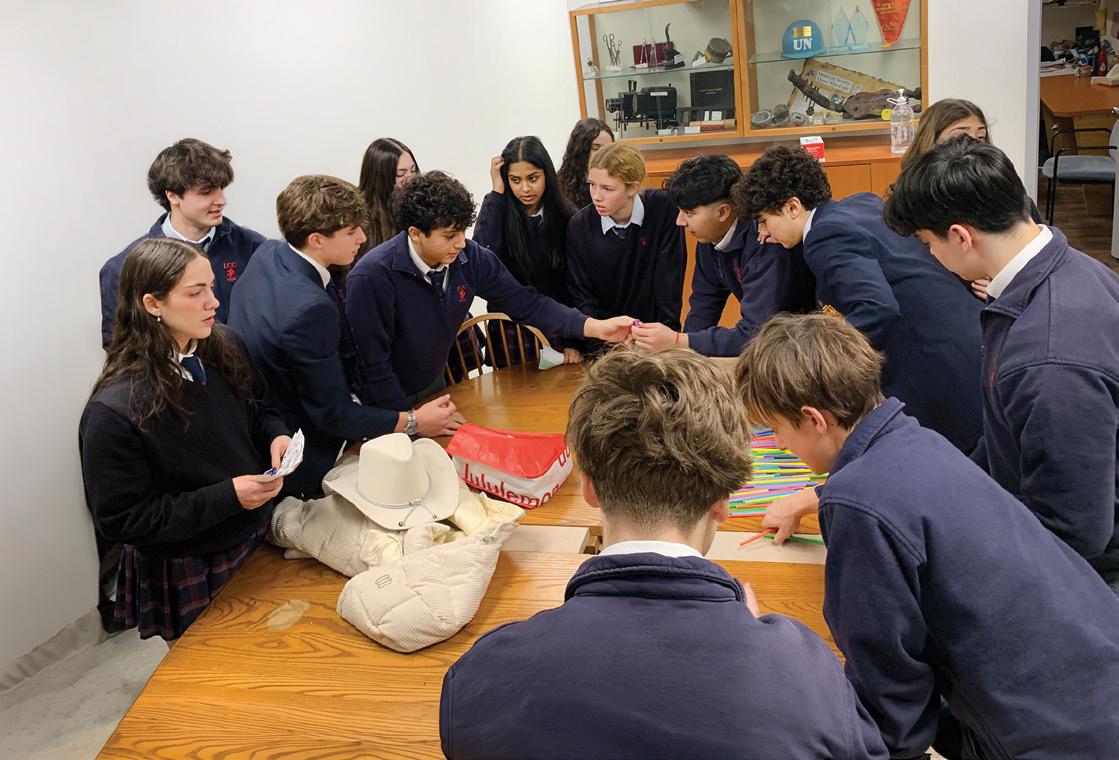
In its inaugural year, the Grade 10 Entrepreneurship class focuses on the uniquely human skills students need in an AI-driven future. They enter into a dynamic, hands-on learning environment where experimentation, conversation, and failure are embraced as essential parts of becoming confident, capable problem-solvers and entrepreneurs.
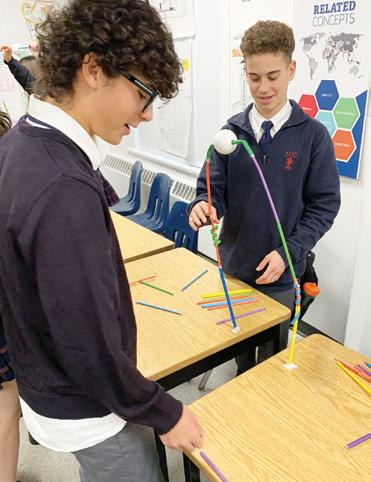
Designed by social science teachers Connor Girouard and Ted Shaw, the course helps students develop essential skills like communication, empathy, active listening, critical thinking, and ethical and principled reasoning, while placing less emphasis on content memorization.
Blending elements of business, economics, design, and environmental sustainability, class activities might involve discussions around bartering and trading, building bridges under economic constraint, or design challenges with sustainability considerations. During class, students sit facing one another to encourage ongoing discussion and, in their very first activity, take part in what Mr. Shaw and Mr. Girouard call a “failure feast,” where students toast to their failures and explore what lessons they learned. This counteracts the increasing risk-aversion seen in younger generations and highlights the value of making mistakes and learning from them.
Above all, the class promotes student engagement and challenge because, as Mr. Shaw notes, if the work is not meaningful or challenging, students will not participate or grow.
A DUAL-PERSPECTIVE CLASSROOM DESIGNED FOR REAL‑WORLD THINKING
In grade 11 and Pre-U, students in the Environmental Systems and Societies (ESS) course move between two teachers and two disciplines, exploring issues through both a scientific and social science lens.
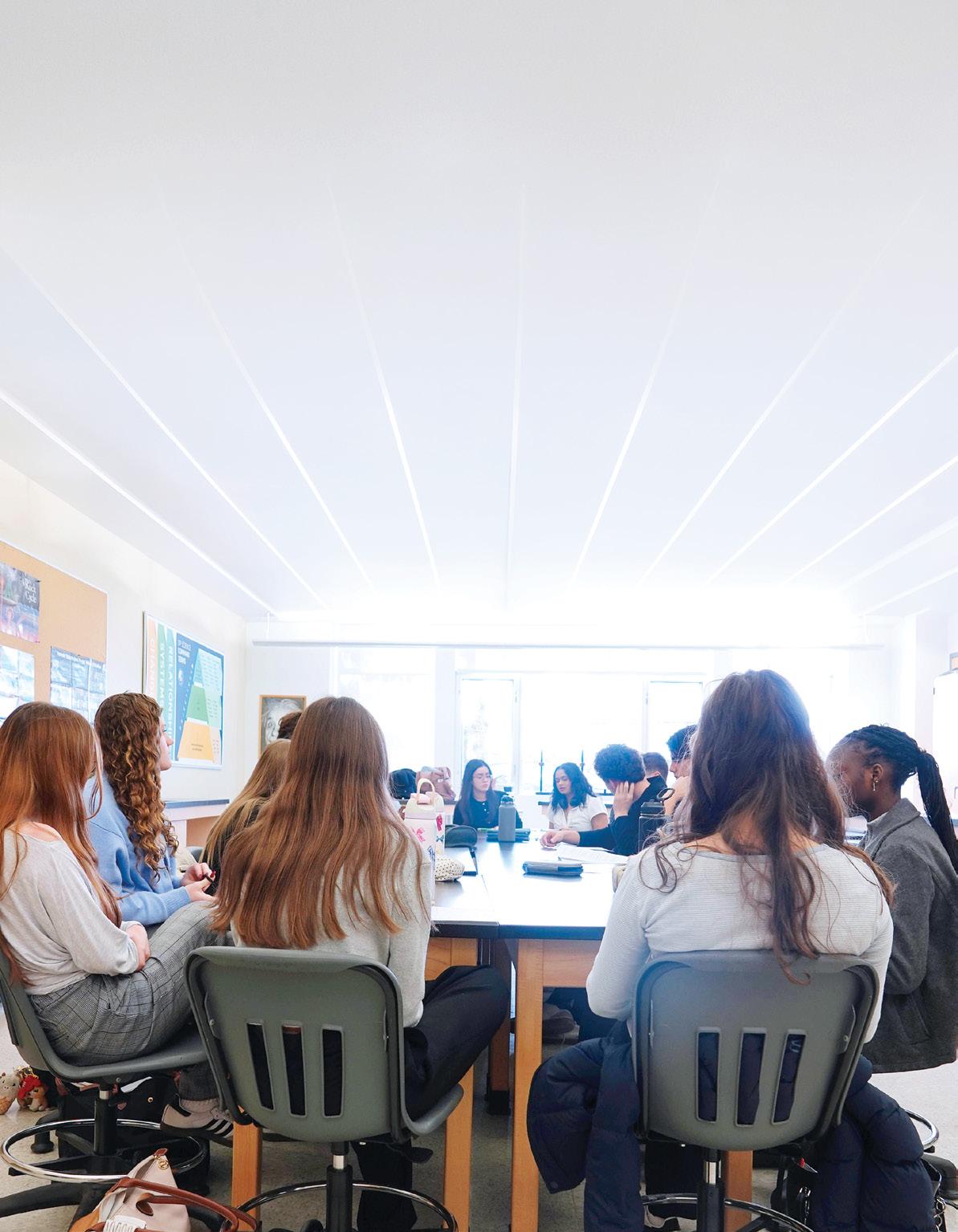
This co-teaching model gives students a multidimensional understanding of the world around them and allows them to delve into the same topic from two distinct, complementary perspectives.
The two sections of ESS run in parallel, with Ettore Zuccheroso (Mr. Z.) and Lisa Lamantia each teaching one group for three to four weeks before they switch. On a topic like global water scarcity, for example, students might first study the political, economic, and social implications, before examining climate impacts, desalination, rain harvesting, and irrigation technologies.
Students also have the opportunity to head outdoors for hands-on labs. With Mr. Z. they take a field trip to Mount Royal Park to collect environmental data, which they later analyze for its relevance to ecotourism, ethics, human behaviour, and policy.
Students engage in debates, case studies, discussion and read peer-reviewed journals. Mr. Z. and Ms. Lamantia emphasize that this co-teaching model enables students to foster their skills in critical thinking, application of knowledge across subjects, research and fact-checking, public speaking, comparing scientific and social science perspectives, interpreting data, and allowing for a more integrated understanding of complex global issues.
The Science‑Driven Future of Kinesiology
Beyond the Gym
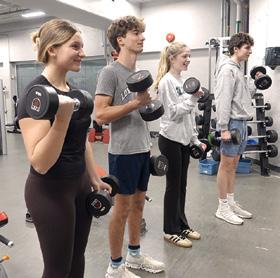
The Pre-U Kinesiology course, once centered largely on physical education, has undergone a transformation that now blends scientific rigour with a deeper study of physical fitness.
In addition to spending time in the fitness centre, students explore anatomy and physiology, examine how physical activity affects health and performance, and consider the physiological, psychological, and social factors that shape a person’s engagement in movement.
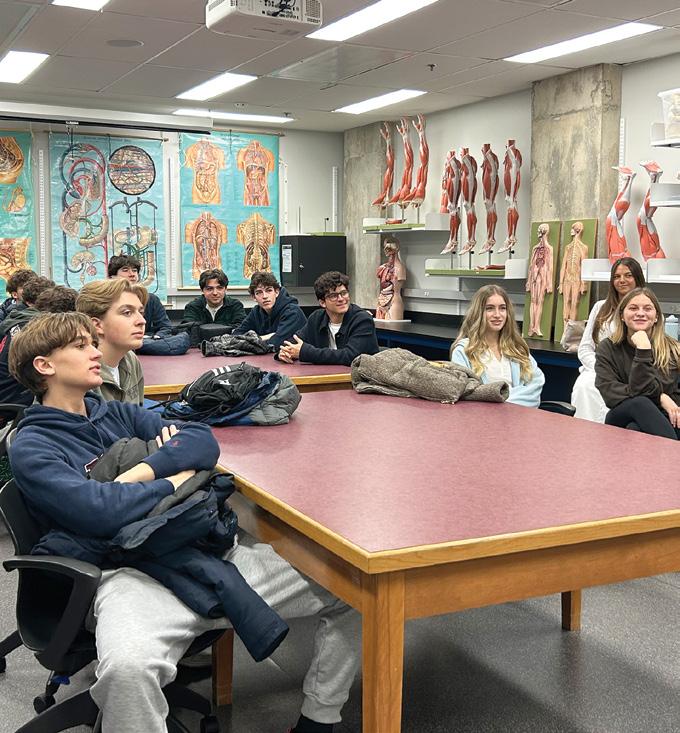
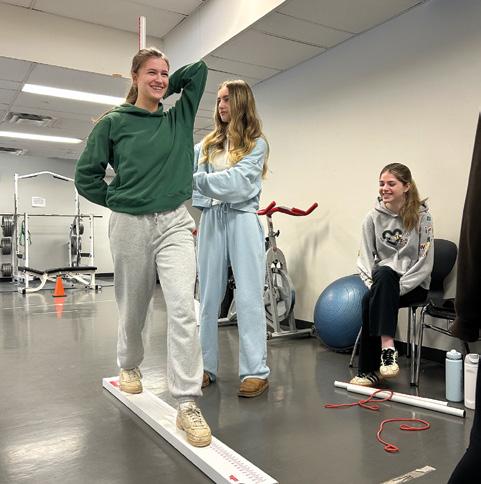
Through a balanced mix of lab work, classroom learning, and practical application, students design meal plans, training plans, and exercise programs grounded in scientific principles. They also step outside the classroom to see how these ideas take shape in real scientific settings.
A highlight this past year was a field trip to Concordia University’s exercise science department, where Ettore Zuccheroso and his students entered the anatomy lab and examined human cadavers to further their understanding of how the body functions. The experience also opened the door to meaningful discussions about ethics in scientific research and education.
The course introduces students to sports psychology, exploring topics such as performance anxiety and the mental skills that support focus and consistency, which are relevant to both athletes and recreational participants.
Next year, the plan is for the Intro to Kinesiology course to become part of the IB Diploma Programme as Sport, Exercise and Health Science.
These enhancements ensure that students gain a richer, more informed understanding of how the human body works, and why it matters.
CLASS ACTS
Talia Brott ’97, Pre-U ’98
Alex Shaw ’05, Pre-U ’07
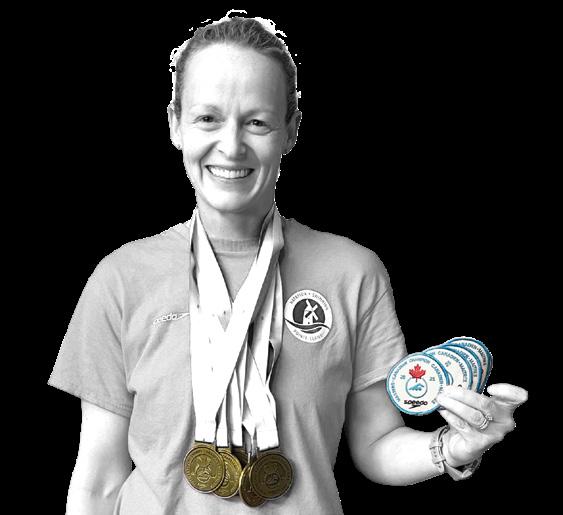
“I directly attribute my personal and professional trajectory to the strong foundation I built at LCC.”
Talia Brott ’97, Pre-U ’98
Redefines What’s Possible
BY LION STAFF WRITERS
Talia Brott ’97, Pre-U ’98 developed a strong sense of discipline and an ability to think critically at LCC— qualities that she says shaped her evolution as a leader and mentor. She also gained self-confidence and trust that hard work would open doors. “LCC was a place where academics mattered, but so did community, leadership and character,” she says. “And I directly attribute my personal and professional trajectory to the strong foundation I built at LCC.”
Following graduation, Talia pursued her post-secondary studies at Mount Allison University, the University of California, Santa Barbara, and Concordia University, shifting along the way from anthropology and classics to journalism and then sociology. This diverse academic background positioned her well for a career in sales which, she notes, is fundamentally about relationship-building and communication.
Talia’s professional career has taken her from a high-pressure, commission-based environment to launching the Canadian operations of LivingSocial, and then into the position of director of sales for North America at OneSpan. She founded her own sales consulting firm before ultimately landing at SecureOps as vice president of revenue, where she has been for a year and a half. In these roles, she has taken particular pride in mentoring team members and seeing them develop as leaders.
Alongside her career demands, family has always been a grounding force in Talia’s life. She has been married to Cliffert Peschlow ’00, Pre-U ’01 for the past 11 years, and together they have four children. Though it seemed

impossible to add another commitment to her busy life, it was with the support of her husband that she returned to competitive swimming in 2024 after a 23-year hiatus. Having nurtured a love for swimming at a young age, her development in the sport was frequently interrupted by persistent health issues.
“Initially, I was fearful,” Talia says, “but my experience at the Pointe-Claire swimming pool brought back memories from the community I had known when I was a child and young adult. The friendships and camaraderie propelled me well beyond what I thought was possible.”
Her rigorous daily routine begins at 4 am, has her out the door by 4:50 am, and returning just in time to transition from elite athlete to mother, taking her children to school. This discipline paved the road to a remarkable 2025 season, beginning in May with a five-goldmedal sweep at the Canadian Championships and culminating in Singapore at the World Aquatic Championships this past August.
However, the path to the global stage in Singapore was anything but linear. In a recent TEDx Talk, Talia shared a raw, pivotal moment from the World Aquatic Masters Championships that nearly extinguished her dream. After facing what she felt were disappointing early results, the pressure peaked just before her final race.
“I found myself lying on the floor outside the call room. I had barely slept, I felt sick to my stomach, and I couldn’t stop crying,” Talia recalls. “I kept thinking, ‘I shouldn’t be here. I’m not good enough.’”
In that moment, Talia realized she had a choice: let the panic consume her or let it fuel her. She asked herself one clarifying question: “What do I want my kids to see?”
Talia rose from the floor, walked to the starting blocks, and focused on a single command: just spin those arms. Fifty meters later, she touched the wall and looked up to see her name at the top of the leaderboard. She captured the World Championship title in the 50m backstroke, shattering a 16-year-old Quebec record. While she rounded out the week with four other world-class finishes, placing as high as 5th, 7th, 8th and 13th, Talia maintains that the real victory had little to do with records or podiums. It was the decision to get back up.
“The medal will tarnish,” she says. “The record will fall. But what lasts is what we pass on. For me, my achievement came from picking up something I put down 20 years ago. It came from showing my kids, and my teams, that you can be broken on the floor, and still get up and win.”
That commitment is reflected in her latest honour: being named the Pointe-Claire Aquatic Centre’s 2026 Athlete Ambassador, recognized for the resilience, consistency, and community spirit she brings to PCAC, in and out of the pool.
Alex Shaw ’05, Pre-U ’07 Harvests Innovation
BY DANA KOBERNICK, COMMUNICATIONS MANAGER
“What matters most is learning from the mistakes, believing in yourself, and trusting the power
of your soft skills.”

Sometimes the true value of an educational experience only reveals itself once you’ve stepped out into the world. For Alex Shaw ’05, Pre-U ’07, an LCC lifer, what he learned at the school became increasingly apparent well after graduation, as his career unfolded.
He thoughtfully highlights three skills in particular that were nurtured during the 13 years he spent at LCC: communication, delegation, and critical thinking.
“I have seen that many people struggle with communication, but the skills I developed at LCC have been essential in helping me to effectively deliver information,” he notes. “Translating complex information into clear, actionable messages helps prevent problems down the line. Also, as I progressed in my work life, I discovered the value of delegating tasks to others, a lesson rooted in the leadership experience I gained on LCC’s sports teams. Lastly, the ability to think critically has served me well, allowing me to approach challenges from new angles and break down problems into manageable steps, even when they fall outside of my expertise.”
These qualities, cultivated at the school, became integral to his professional journey, as he moved across different sectors and industries.
When Alex graduated from grade 11 in 2005, he enrolled at Dawson College, but returned to LCC after just two semesters, realizing that the CÉGEP environment was not the right fit. Then, upon completion of his Pre-U year, he pursued paramedicine, beginning his career as a paramedic in Newfoundland. He later moved to Nova Scotia, where he earned his qualification as an advanced care paramedic—a role with responsibilities comparable to those of a nurse.
In 2018, with the legalization of cannabis in Canada, Alex’s focus shifted to agriculture. Leveraging his background as a paramedic, he qualified as a master grower and started a consulting company specifically for controlled environment agriculture (CEA)—the practice of growing crops indoors—and worked with equipment manufacturers to explore how vertical farming could be implemented into their operation. His first contracts were with cannabis-related companies, but he soon learned that growing produce was more exciting.
He gained a deep understanding of both grocery operations and food distribution, training under one of the major grocers. That well-rounded knowledge drew the attention of industry clients, especially those committed to food sovereignty, which supports communities and individuals to produce food on their own. One grocery store, for example, approached him to design a greenhouse and provide hands-on training in strawberry farming. With his reputation as an emerging agricultural expert steadily growing, one of Alex’s clients offered him a full-time position as head of agriculture at Neavie Greens Farm in Kingston, ON. The property includes a sprawling five-acre vineyard, 200 orchard trees bearing apples, pears, peaches, and plums, and three acres of outdoor gardens. Indoors, spanning 4,500 square feet, is a vertical farm

that features living walls of vegetation, where 55–60 tonnes of leafy greens are produced each year.
A model of sustainability, the farm grows crops hydroponically, pesticide-free, and uses 95% less water than traditional farms. The produce is sold to food distributors that deliver to grocery stores and restaurants, and goes from farm to table in as little as one day.
Alex admits to being surprised by his burgeoning passion for farming. “This has been unexpected, but I like empowering communities to grow their own food and become more sustainable,” he says. “Also, there are so many avenues to explore. I have worked with hospitals and food banks to create small farms. Hotels are looking to integrate farms as well. There is a high barrier to entry given the initial capital costs, but the technology has become much more economical and ultimately organizations can become more sustainable and efficient.”
Reflecting on what he might share with today’s LCC graduates, he likens life to a dart board: “Sometimes you miss but you will have other opportunities to take another shot. What matters most is learning from the mistakes, believing in yourself, and trusting the power of your soft skills.”
INDOOR VERTICAL FARMING
( Alex Shaw ’05, Pre-U ’07 continued)
Branching Out ALUMNI GATHERINGS FAR & WIDE
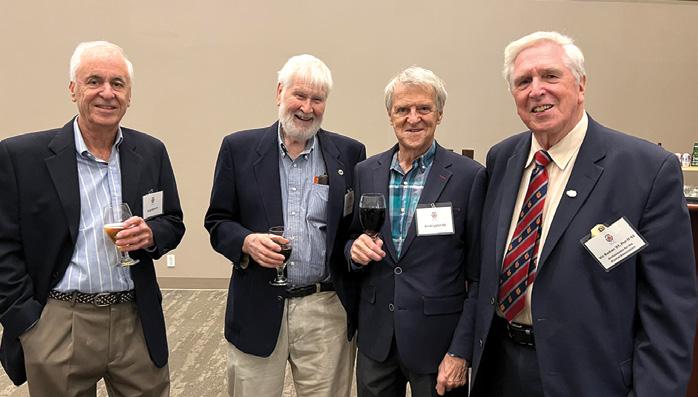
KINGSTON ALUMNI REUNION
OCTOBER 7, 2025
It was wonderful to return to Kingston to catch up with our alumni after so many years. From students hitting the books at Queen's to those building careers or enjoying a well-earned retirement, it was special to see everyone together.
MONTREAL ALUMNI WHISKY NIGHT
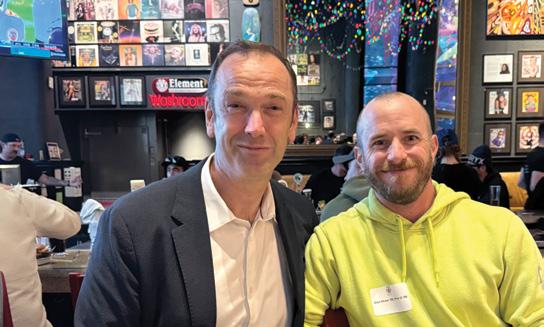
November 12, 2025
Once again, Toby Lyle ’94 welcomed us to The Burgundy Lion. His expertise made for a memorable night, perfectly blending entertainment with a fascinating look into the world of whisky. Thank you, Toby, for your continued generosity.
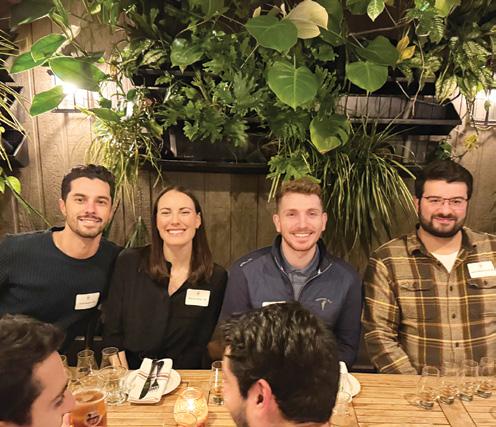
OTTAWA ALUMNI REUNION
October 8, 2025
We were happy to be back at the Ottawa Conference and Event Centre for this year's Ottawa Reunion. It was a fantastic evening connecting alumni with Head of School Mark Salkeld. A special thank you to Marco Vocisano ’80 for making the event possible by helping to secure the venue.

COMMUNITY HOLIDAY SKATE
December 7, 2025
It was a magical day on the ice as skaters of all ages joined Santa and the LCC lion mascot for our annual Community Holiday Skate. We were proud to support the Bring Some Joy and Give A Toy Drive, organized by Sandy Milroy ’74, benefiting the city’s oldest charity, Alima, formerly the Montreal Diet Dispensary.
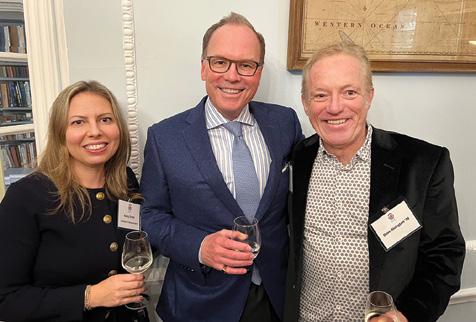
LONDON ALUMNI REUNION
January 13, 2026
It was a pleasure to return to the UK. A huge thank you to David Kippen ’86 and Chris Pilot ’86 for hosting us at the Royal Ocean Racing Club. The evening was an excellent opportunity to catch up, and we are already looking forward to our next visit.
YOUNG ALUMNI MENTORING EVENT:
THINGS YOU WISH YOU KNEW BEFORE GRADUATING FROM LCC
January 27, 2026
Our Senior School and Pre-University students gained valuable perspective during this year’s virtual mentoring event. We are grateful to the seven alumni panelists who discussed their post-secondary choices and answered questions about life after graduation.
Shivani Bawa ’24, Pre-U ’25 (Babson University, Business Administration – Entrepreneurship); Daniella Kalil ’24 (Exeter Prep School); Zenon Patten, Pre-U ’25 (Queen’s University – Commerce); Anja Martin-Prashad ’25 (Marianopolis College –Arts & Science); Nicholas Rutenberg ’24, Pre-U ’25 (Queen’s University – Health Sciences); Daniel Shlien ’25 (Vanier College – Commerce); Jayden Wadera ’24, Pre-U ’25 (Concordia University – Commerce)
FLORIDA ALUMNI REUNION
February 4, 2026
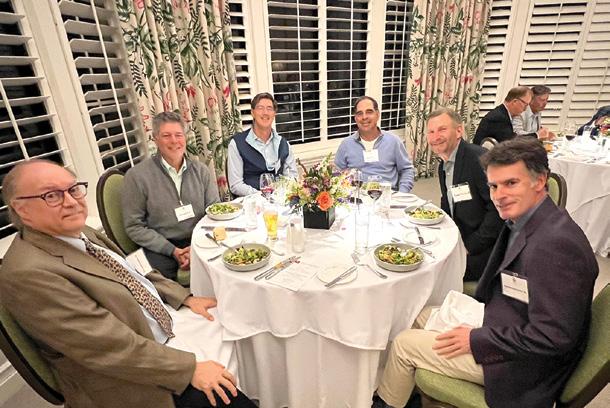
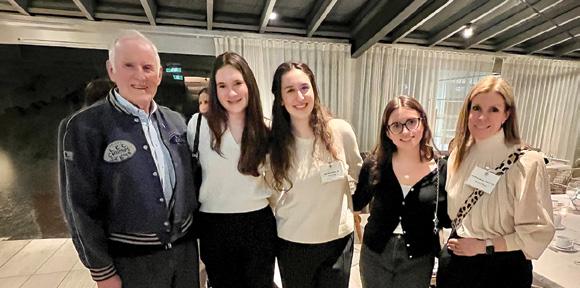
We were delighted to gather with alumni once again in sunny Florida. A special thank you to John Nixon ’72 for helping bring us together at the beautiful Country Club of Florida. It was a lovely evening with a welcoming atmosphere and delicious dinner.
MONTREAL ALUMNI WINE TASTING
February 18, 2026
The Montreal cold weather had no impact on a memorable evening at Améa Café, where alumni reunited to enjoy excellent food, wine and conversation. A special thank you to former LCC parents Leo Rabinovitch of Leanto Wines and Pino Forgione of Beatrice Hospitality Group for ensuring the event was a resounding success.
VANCOUVER ALUMNI REUNION
February 24, 2026
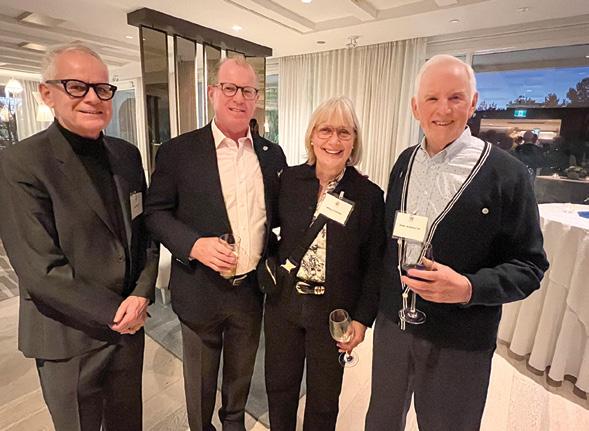
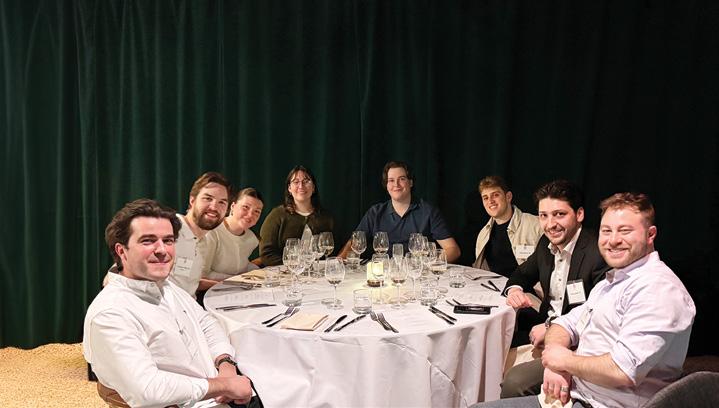
The Arbutus Club provided the perfect setting for our Vancouver alumni reunion. It was wonderful to see such a nice turnout, particularly from the younger generation of grads. We are grateful to Peter W. Webster ’60 for helping us secure the venue for the event.
NON NOBIS SOLUM LUNCHES
Calling all Montreal-area alumni from the classes of 1950 through 1975 to join us at Le Manoir for our Non Nobis Solum monthly lunches. It is a fine opportunity to reconnect, and retired faculty and staff are always welcome. We hope to see you there! For details, contact: alumni@lcc.ca
LION fest
ALUMNAE BASKETBALL
Come hit the hardwood with fellow grads on Wednesday nights. Players of all ages are welcome to join our weekly pickup games. Want to play? Contact alumni@lcc.ca
September 25 & 26, 2026 Save the date for the LIONfest Alumni Reunion Weekend! We will be welcoming back all classes ending in 1 and 6 for their milestone reunions this year. Be sure to mark your calendars for a weekend of reconnection and fun.
FOR MORE INFORMATION ABOUT OUR ALUMNI EVENTS AND PROGRAMMING, CONTACT KRISTINE JONES, PRE-U ’93, ALUMNI OFFICER, AT KJONES@LCC.CA, OR CALL 514 482 9797, EXT. 359.
A New Chapter FOR OUR LIBRARY
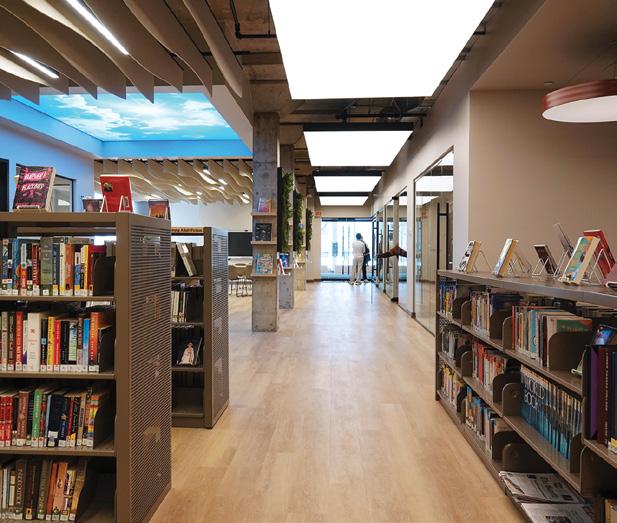
LCC is proud to announce the opening of THE GOLDEN LIBRARY, thanks to the generosity of Matthew Golden ’98, Jennifer Liu, and Martin Golden.
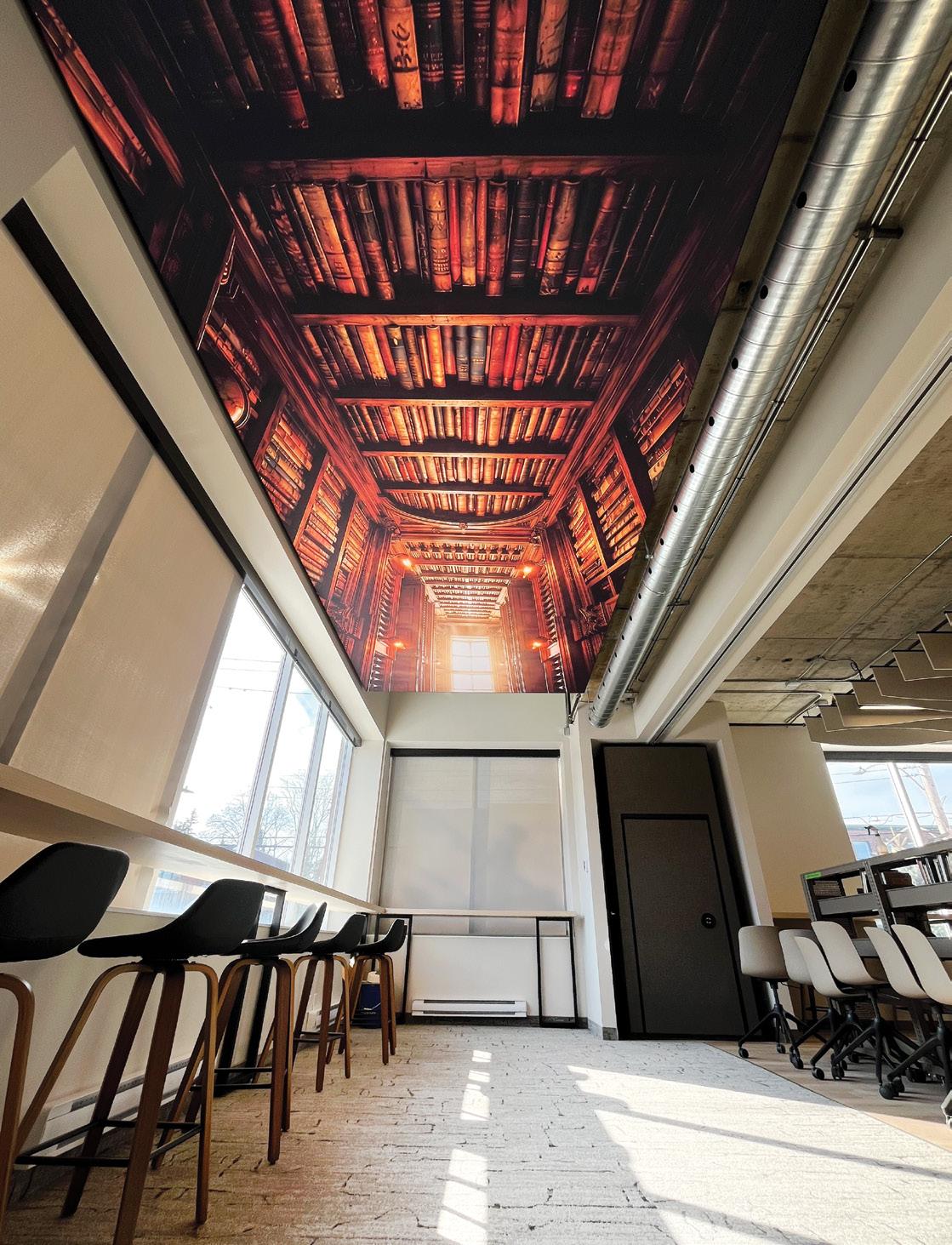
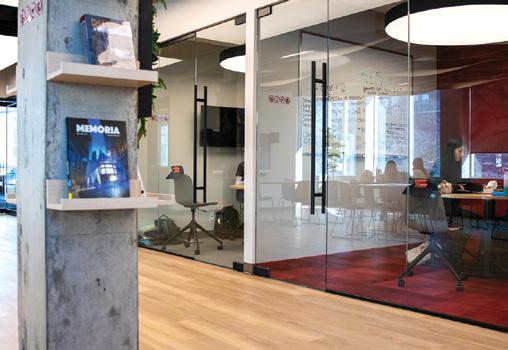
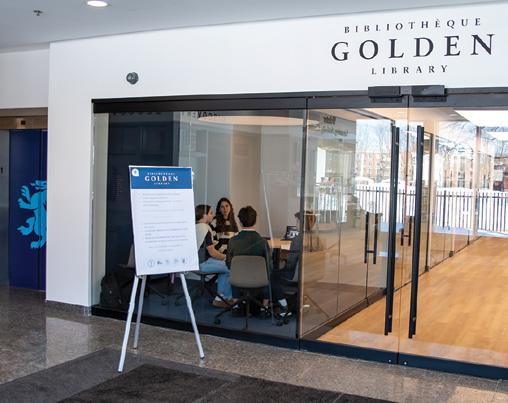
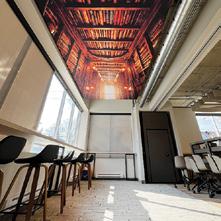
This newly renovated space is now a dynamic and flexible learning hub designed to support the evolving academic needs of today’s students.
“Students are able to discover resources and find community in ways they never could before,” says Head Librarian Laura Sanders. From independent study to small group work and tackling problems in larger groups, students have multiple ave-
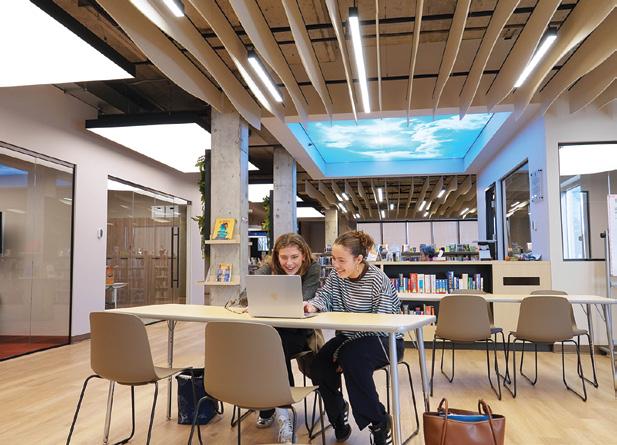
nues to engage, test ideas, and build understanding together.
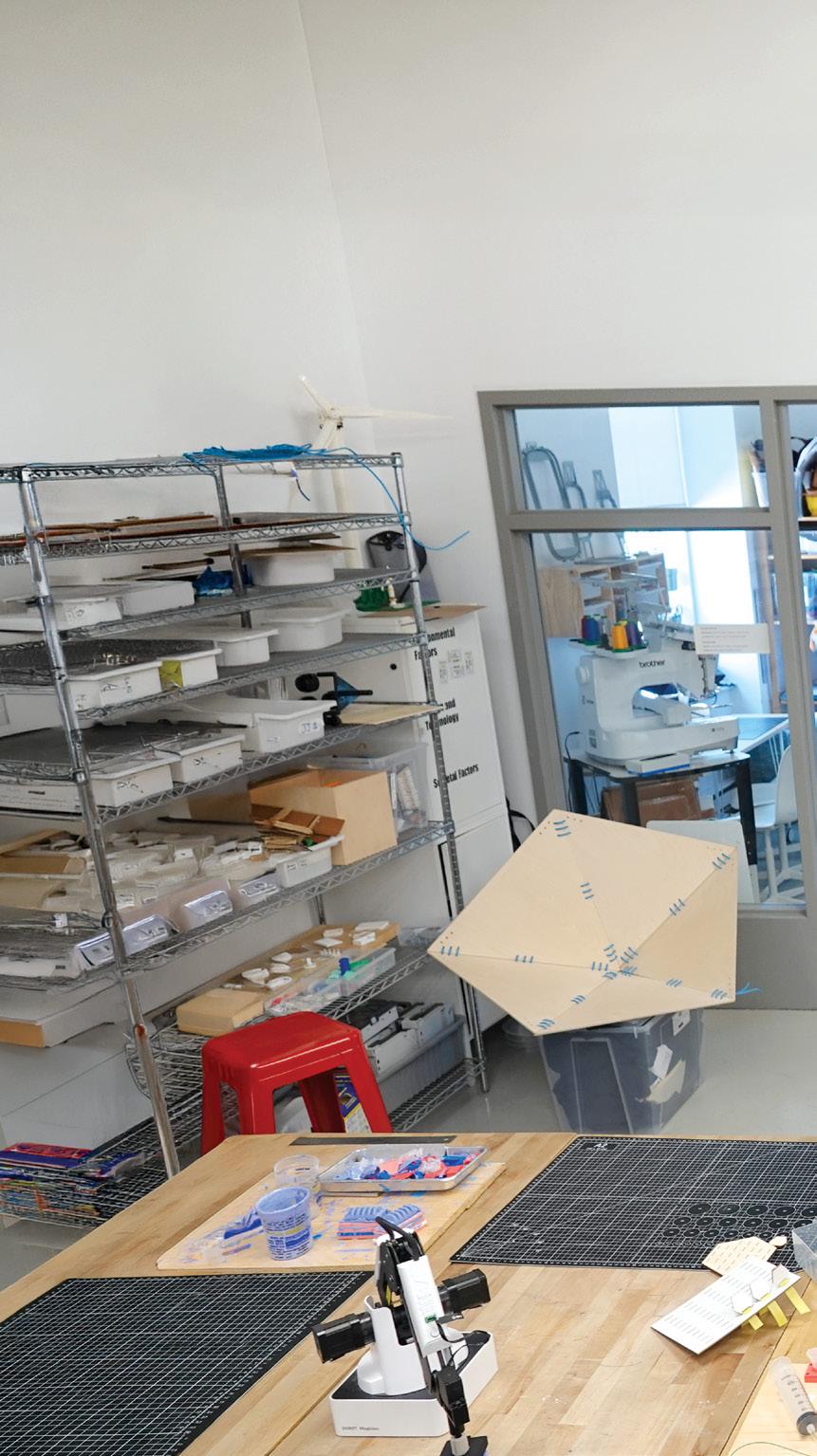
Far more than a renovation, the transformation reflects a strengthened commitment to inquiry-based learning, literacy development, and student-centered research. Every element of the redesigned space has been intentionally created to enhance thinking, collaboration, and independent study. Steps away, the Centre for Discovery (Fab Lab) invites
students to bring their thinking to life. Research begun in the library evolves into hands-on projects next door, encouraging students to move fluidly between imagining and making, building a culture of creativity, iteration, and purposeful exploration. With this reimagined space, we are investing in the kind of learning environment that will inspire curiosity and achievement for years to come.
ANTONY
BESSO ’86 NOT FOR HIMSELF ALONE

When I think about my LCC friends, many are successful and accomplished, and all of them are good people who care about others.”
— ANTONY BESSO
BY MARK BOGHEN
, WRITER
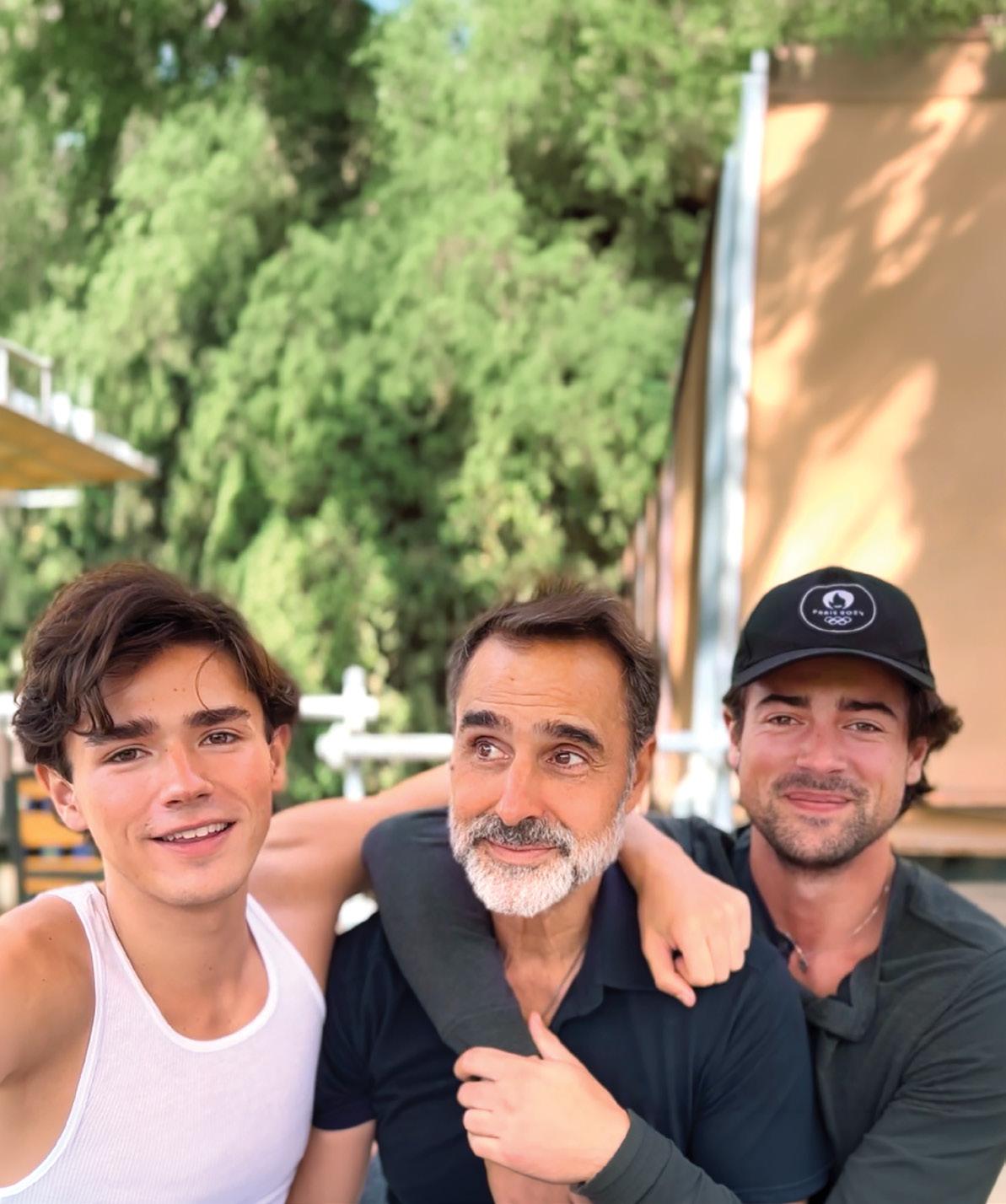
Antony Besso ’86 has had a long and varied business career. After LCC he got his undergraduate degree at Queen’s University and earned a master’s degree at Dalhousie University. In the decades since, he has built and overseen numerous companies, become partner in a private equity fund, and recently took on the role of CEO of an industrial firm, Aeritek, with 6,000 employees in 30 countries. After spending 14 years in France where his sons Nick and Charlie were born, Southern California has been ‘home base’ for the last 15 years.
Not long ago, following a major health scare, Antony was working with a coach, pondering his future. The coach asked why he was taking on this big new challenge at a stage in his career when he clearly didn’t need to. Antony replied that the company had the potential to become something special and he wanted to help its team reach their goals. It wasn’t solely about his own ambitions, the coach pointed out to him, but about others, a theme that she had detected in many of his ventures—efforts that might on the surface have seemed motivated by business and financial success.
“I was suddenly aware of a recurring theme,” Antony recalls. “I told her that my high school’s motto was Non Nobis Solum, not for ourselves alone. It was an omnipresent message in my formative years, baked into everything that we did at school. I had come to LCC at a period in my young life when my parents’ marriage was coming apart. It was a tough time. I remember being very sad on my first day of school and begging my mother not to make me go. Before long though, LCC
brought me a sense of discipline, excellence and pride in doing things well. I’ve always felt grateful for the whole experience.”
Antony had an epiphany: what about creating an LCC Non Nobis Solum bursary to support prospective students who showed a natural sense of outward-looking social-mindedness at a young age? When he contacted Nancy Smith, the school’s director of advancement, he expected her to say that such a fund already existed. It didn’t, and he jumped at the chance to establish one, immediately pledging $100,000 to get it started.
“Not long afterward, I was with some old LCC friends and I told them about the bursary. They instantly wanted in. So right away, I had two other co-sponsors. It’s really heartening to see this kind of support just within my own graduating year.”
The bursary is still in its formative stage, but Antony hopes to encourage others to participate. “When I think about my LCC friends, many are successful and accomplished, and all of them are good people who care about others. LCC had a part in that.” Non Nobis Solum indeed.
THE GUINDO FAMILY EXPERIENTIAL EDUCATION AWARD

BY MARK BOGHEN , WRITER
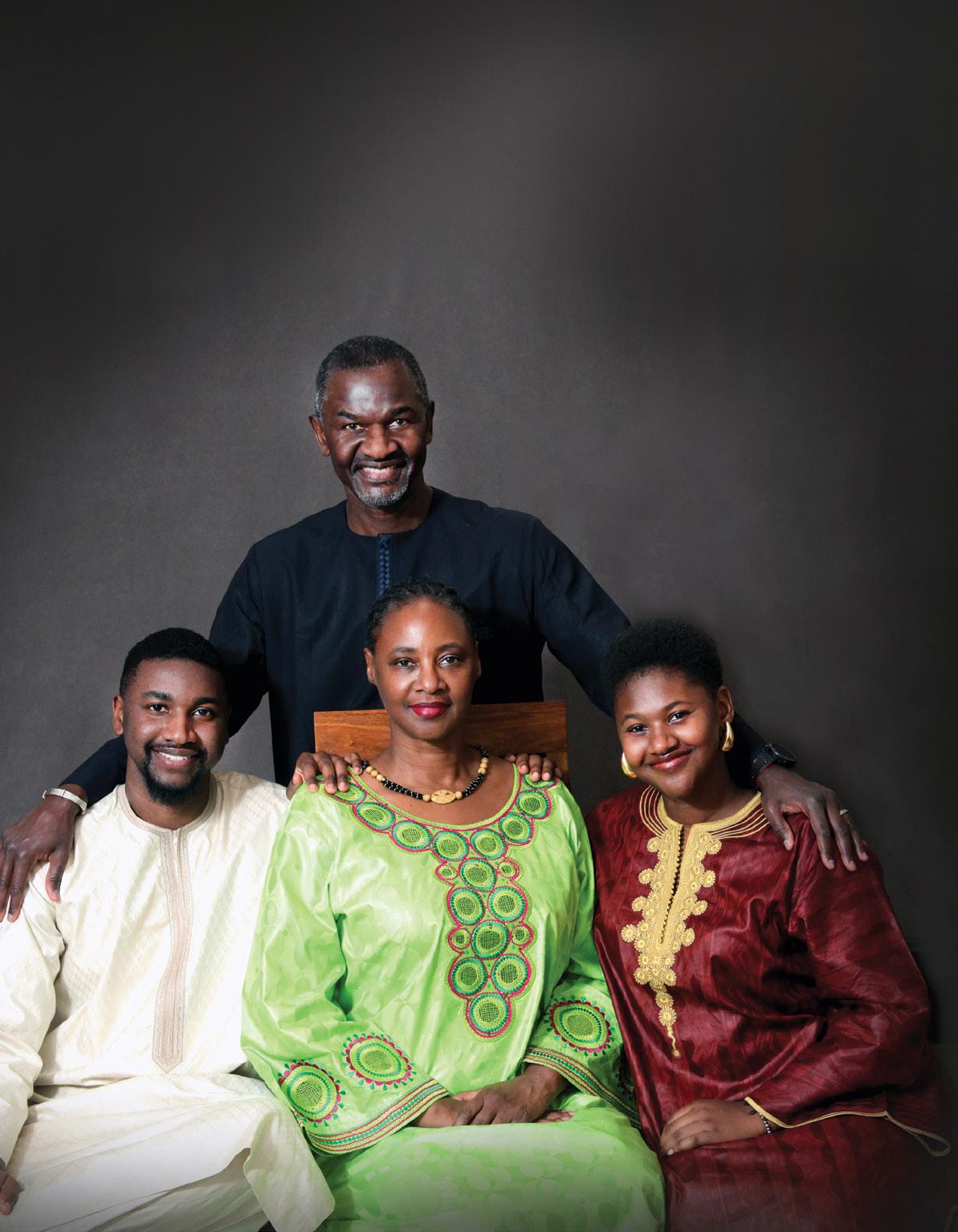
Aïssa Guindo ’16, Pre-U ’17 and her younger brother Aly Guindo ’18 spent their childhood moving between countries as their father’s career took the family across continents. They studied in France, the Netherlands, South Africa, the United States, and Canada. While each place shaped their global perspective, it was their time at LCC that left the most enduring mark—an experience that continues to shape their values, relationships, and approach to leadership.
After graduating, Aïssa went on to Yale University and now works in New York City as a technology strategy consultant. Aly followed his own path to Princeton University and is currently an investment banking analyst, also based in New York City. Though their professional lives are demanding, both remain closely connected to LCC. They stay in regular contact with former classmates and teachers, and credit the lessons they learned in Montreal with helping to define who they are today.
Aïssa joined LCC in g rade 11 and quickly immersed herself in school life. Alongside her academic work, she became deeply involved in theatre and debate, travelling to competitions across Canada “I was really given the space to grow and take ownership of my future,” she recalls. “The openness of the community pushed me to think big, and I carried that LCC mindset into university and my career.” That sense of curiosity and confidence continues to guide how she approaches leadership and problem-solving.
“ We are proud to invest in experiences that help students grow, explore, and lead.”
— CONSTANCE GUINDO
Aly arrived at LCC in g rade 9 and immediately felt at home. Sports played a central role in his experience, particularly soccer and basketball. In g rade 11, his basketball team won the D3 championship. When his family planned a move to Boston after g rade 10, Aly asked to remain at LCC to complete high school with his classmates. His parents agreed, and his mother, Constance Guindo, stayed in Montreal with him for an additional year. Aly describes his final year, when he was elected Head Student for 2017–2018, as transformative. “I led assemblies, launched initiatives, and joined the inaugural improv club,” he says. “LCC taught me what leadership really looks like.”
Inspired by the impact LCC had on her children, Constance later joined the Board of Governors, serving from 2021 to 2024. Having navigated multiple education systems, she believes deeply in the value of a well-rounded education. “All learners deserve a high-quality school experience beyond the classroom,” she says, “yet financial constraints are often a barrier.” Together, Constance, Chirfi, Aïssa and Aly decided to take action.
The Guindo family has committed $100,000 to establish a bursary in perpetuity. The fund will support LCC students receiving financial aid by enabling access to experiential trips and co-curricular opportunities. All four family members contributed. “LCC puts students first,” Constance says. “We are proud to invest in experiences that help students grow, explore, and lead.”


1950s
DOUGLAS (ROB) ALLAN ’54 and his wife Lynne recently moved into a retirement home in Collingwood, ON. Rob still remembers the fun he had playing on winning golf and hockey teams at LCC in the 1950s.
1960s
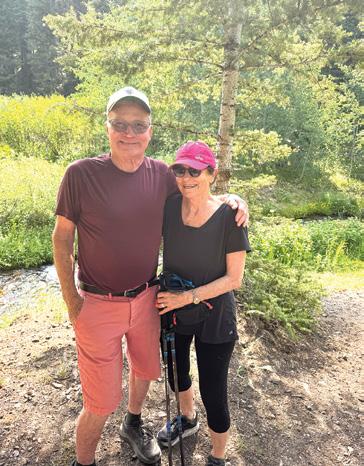
DANNY HEFFERNAN ’61 has been living in San Francisco in the same house for the last 44 years with his wife who is still gardening and painting. Danny plays golf and delivers groceries for Meals on Wheels. He and his wife sold their place in France this past fall after 25 years. They stay in touch with Ivan Velan ’61 and his wife Penny, and this past summer attended the Sun Valley Writers’ Conference in Idaho with them. He hopes Ivan will host the 65th class reunion at his house.
(Photo 1) PICTURED WITH WIFE BARBARA AT THE SUN VALLEY WRITERS’ CONFERENCE IN IDAHO
1970s
ANDY FYON ’70 authored Walking Together: Engagement Lessons from My First Nations Learning Journey in 2024. The book chronicles Andy’s experiences and lessons learned while engaging with remote First Nations across Ontario’s far north to promote understanding and collaboration. More information can be found on his website andyfyon.com.
RENÉ BALCER ’71 opened his photo exhibition Gazing into the Mirror in China on December 19, 2025. The 50-work solo exhibition is touring the country, with stops in museums in Ningbo, Chengdu, Shanghai, and other cities. It is René’s first photo exhibition in China. He began his photo practice as a student at LCC in 1968, developing photos in an improvised darkroom in the basement of the main building.
(Photo 2) 1 3 2
RICHARD GROOME ’76
co-founded and is currently executive chairman of the board at Latam Silver. He acquired a former artisanal high-grade producing mine in silver and gold in Southern Guerrero, Mexico, with the richest grades of silver and gold ever recorded in Mexico’s history. They will acquire up to 200,000 additional hectares in the surrounding areas and drilling will commence shortly to determine the size of the deposits.
BRUCE HILL ’76 and a number of his former classmates are hard at work planning their 50th class reunion in September. Contact alumni@lcc.ca for more information.
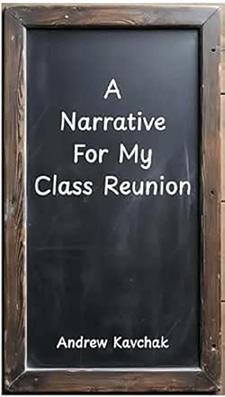
ANDREW (STAN) KAVCHAK ’79, PRE-U ’80 attended his 45th year reunion in September 2024 after having not been to one since his 20th in 1999. He was inspired to dig up his diaries from the 1970s and wrote a story based on his high school experience and the joy of taking a walk down memory lane at the reunion with his former classmates. A Narrative for my Class Reunion is now available on Amazon. Recently, Andrew was presented with the Polish Army Medal (Gold Class) by the Polish Ambassador and Military Attaché at the annual Katyn Forest Massacre commemorative event in Ottawa, in recognition of his writing and lecturing on Polish military history.
(Photo 3)
1980s
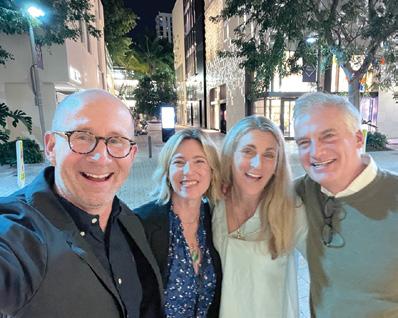
GARVIN BROWN ’86 is pleased to report that after 21 years in the UK, he is spending more time in North America with both of his kids who work and live in New York City. He attended the Florida reunion in Delray, and is looking forward to the 40th reunion this September at LCC. He hopes to see some classmates back in town.
(Photo 1) GARVIN AND HIS WIFE STEFFIE OUT ON THE TOWN WITH CHRIS PILOT ’86 AND WIFE SALLIE
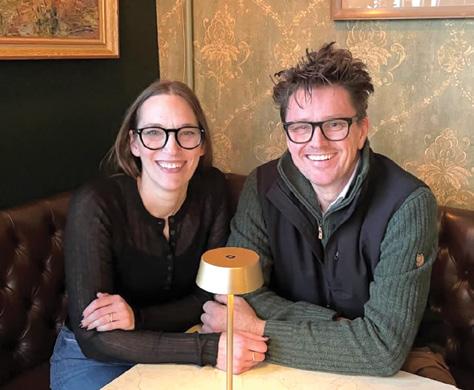
PETER SAMPSON ’86 and his partner bought Winnipeg’s historic Langside Grocery in 2025, a cocktail lounge and small plates concept bar in the city’s vibrant West Broadway neighbourhood. Peter continues to own and operate Public City Architecture with his partner, landscape architect Liz Wreford. In the summer of 2026, their firm’s winning entry in the international competition for the Canadian Monument to the 2SLGBTQI+ Purge (memorializing historic discrimination) will be completed and open to the public in Ottawa.
(Photo 2)
1990s
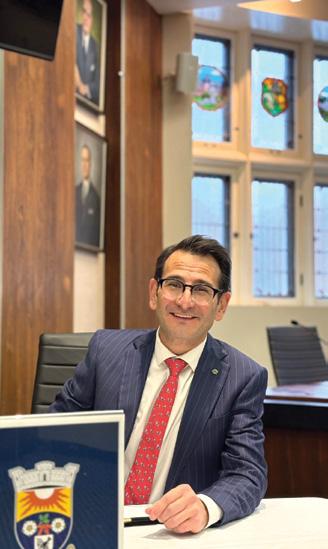
MATT ARONSON ’95 was re-elected to Westmount City Council in November 2025, representing District 7, where he serves as commissioner of Legal Affairs & Communications, as well as Parks and Green Spaces. In January 2026, he was named a partner at Adessky Aronson LLP, where he heads the immigration practice group.
(Photo 3) BEING SWORN INTO OFFICE FOR A SECOND TERM
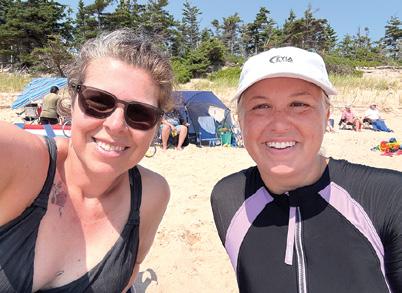
CLAUDIA GORENKO ’99 and JESSICA DEAKIN ’98 had not seen each other since graduating from LCC. They crossed paths in PEI while vacationing with their families last summer and spent a day catching up at the beach! (Photo 4)
2000s
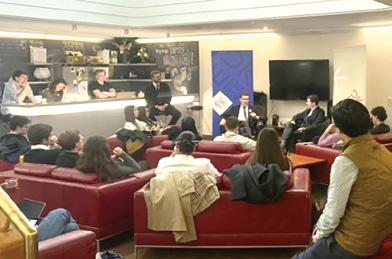
ROGER HILTON ’04 organized off-therecord briefings with the ambassadors of Denmark and Lithuania during last fall’s Danish EU Presidency and amid Lithuania’s resilience against greyzone tactics. Hosted at the Diplomatic Academy of Vienna’s student bar, these sessions offered students and alumni candid access to the frontlines of European security and diplomacy.
(Photo 5) MODERATING A HIGH-LEVEL DIALOGUE WITH THE AMBASSADOR OF DENMARK AND LITHUANIA FOR THE DIPLOMATIC ACADEMY OF VIENNA’S STUDENTS AND ALUMNI
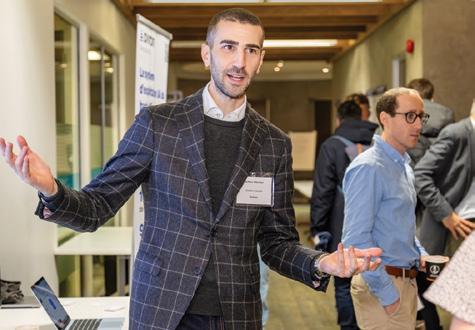

ARTHUR LIBERIAN ’05 is now leading sales and growth efforts at Aviron, a leading Canadian fintech startup. Aviron is the operating system of the back office of finance, automating complex financial workflows. He helps companies deploy true agentic solutions directly within the office of the CFO to deliver exceptional results and remove the complex manual work.
(Photo 6) PRESENTING AVIRON AT AN AI CONFERENCE IN MONTREAL
ALEXANDER
HUTCHISON ’05 was featured on Insurance Business Canada’s list for Insurance Broker of the Year for 2025.
CRAIG KLINKHOFF ’06 recently launched his art advisory practice, enlisting fellow LCC alumnae Ariela Alperstein, Pre-U ’24, and Lillian Dumbrille ’23, Pre-U ’24, to tackle a major legacy project dedicated to preserving and sharing the life’s work of Montreal artist John Little. The John Little Archive contains 11,000 images of Montreal history and was recently released to the public. Beyond archiving, they also co-curated a museum exhibition. See klinkhoff.art/john-little
MISHA SOLOMON ’08 just had his first book published. My Great-Grandfather Danced Ballet is now available at brickbooks.ca.
2010s
MATTHEW LANDRYVESPOLI ’11 and his wife Cassandra Airoldi welcomed their second child, William, on August 21, 2025.
(Photo 7) WILLIAM AND MACKENZIE ARE EXCITED TO ATTEND LCC!
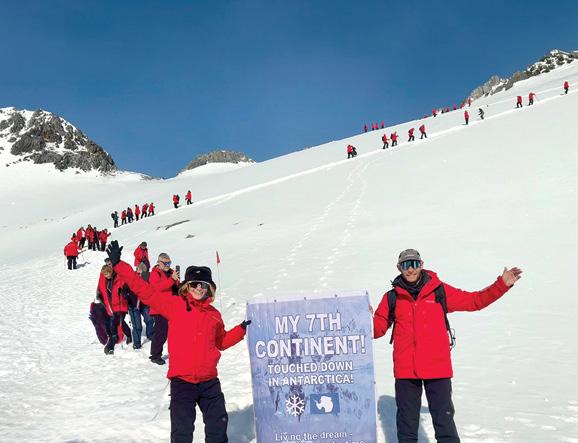
HAILEY LAXER ’11 is travelling and experiencing the world by learning and visiting new places—one of her greatest joys—and has already been to all of the world’s seven continents before reaching the age of 32. In November, she went on an Antarctic expedition and visited some of the most remote places on the planet. She also spent time in Patagonia, the Falkland Islands, and South Georgia. One afternoon, she visited the second largest penguin colony on the planet, where
she was up close and personal with 250,000 king penguins! She is just getting started learning about the world’s natural experiences, wildlife, and immersing herself in local cultures.
(Photo 8) STEPPING FOOT ONTO THE CONTINENT OF ANTARCTICA
2020s
FELIKS KĘDZIERSKI ’25 left LCC after grade 9 and returned to Germany. Having gained experience in theatre while at LCC and at the Montreal Children’s Theatre, he has been able to transition from school performances to professional theatre. Currently, Feliks is in the cast of two productions: Junges Theater Bonn: Frühlings Erwachen (Spring Awakening) and Die Welle. His profile is available on the website Junges Theater Bonn.
IN MEMORIAM

It is with deep sadness that we announce the passing of the following members of the LCC community:
ALUMNI
CHILION HEWARD ’49 on April 22, 2026, in Montreal, QC. He was a member of the LCC Board of Governors from 1956–1962. Chil is predeceased by his father Brian ’15 and is survived by his sons Jamie ’77 and Geoff ’79, and his grandchildren Cassie ’15, Pre-U ’16, Charlotte ’19, Pre-U ’20 and Brian ’21, Pre-U ’22
TREVOR CARON ’51 on November 21, 2025, in Montreal, QC. Trevor is survived by his brother Derek ’56 and his son Eric ’84
FRED IRWIN ’52 on April 4, 2026, in Burlington, ON. Fred is predeceased by his father Selwyn ’27, and his brother Peter ’50. He is survived by his brothers Michael ’56 and John ’61
PAUL TRUDEL ’54 on October 29, 2025, in Calgary, AB. Paul was predeceased by his brother Guy ’56.
DR. RICHARD BOLTON ’56 on October 10, 2025, in Montreal, QC. Richard is survived by his sons Andrew ’88 and Philip ’93.
WILLIAM ROBERT “BILL” CAMPBELL ’56 on March 1, 2026, in Burlington, ON.
ROBERT MATOSSIAN ’56 on September 5, 2025, in Monthey, Switzerland.
Robert is survived by his brother Nick ’57.
PAUL MARCHAND ’58 on April 21, 2026, in Montreal, QC. Paul was chair of the LCC Board of Governors from 1985–1987 and a member of the LCC Foundation since 1991. He is survived by his son Matthew ’87.
BRAD HORWOOD ’59 on January 10, 2026, in Barrie, ON. Brad was predeceased by his father Bill ’32.
ALLEN WIGHTMAN ’59 on March 22, 2026, in Burlington, ON. Allen was a member of the LCC staff from 1971–1993. He is survived by his son Jackson ’93.
GORDON BYERS ’65 on December 16, 2025, in Ottawa, ON.
BRAD WYNDHAM ’76 on January 8, 2025.
CLIFFORD SHAMY ’79 on December 11, 2025, in Ottawa, ON. Clifford is survived by his brother Michel ’98
FORMER STAFF
RICHARD HOVEY on November 28, 2025, in Montreal, QC. Richard was a member of the LCC staff from September 1990–January 1996.
Passed Down. Shared Forward.