This magazine is printed on 100% recycled paper. Continue the green process by recycling this copy.
Lowcountry Dog’s mission is to be the leading local resource for dog owners regarding regional events, health and wellness information, trends, style and lifestyle choices. We also strive to be a mouthpiece to the public for various dog related non-profits and promote pet adoption and other responsible pet care practices.
Dog lovers can pick up the bi-monthly magazine for free at most area veterinarians and pet stores throughout the lowcountry, as well as numerous restaurants, coffee bars and retailers. A full distribution list is posted to the magazine’s web site, lowcountrydog.com. Subscriptions are also available. Please call 843-478-0266 for more information.
The entire contents of this magazine are copyrighted by Lowcountry Dog Magazine with all rights reserved. Reproduction of any material from this issue is expressly forbidden without permission of the publisher.
Lowcountry Dog Magazine does not endorse or guarantee any product, service, or vendor mentioned or pictured in this magazine in editorial or advertising space. Views expressed by authors or advertisers are not necessarily those of the publisher.
friends 4
pets 14
of events 21
and wellness 22
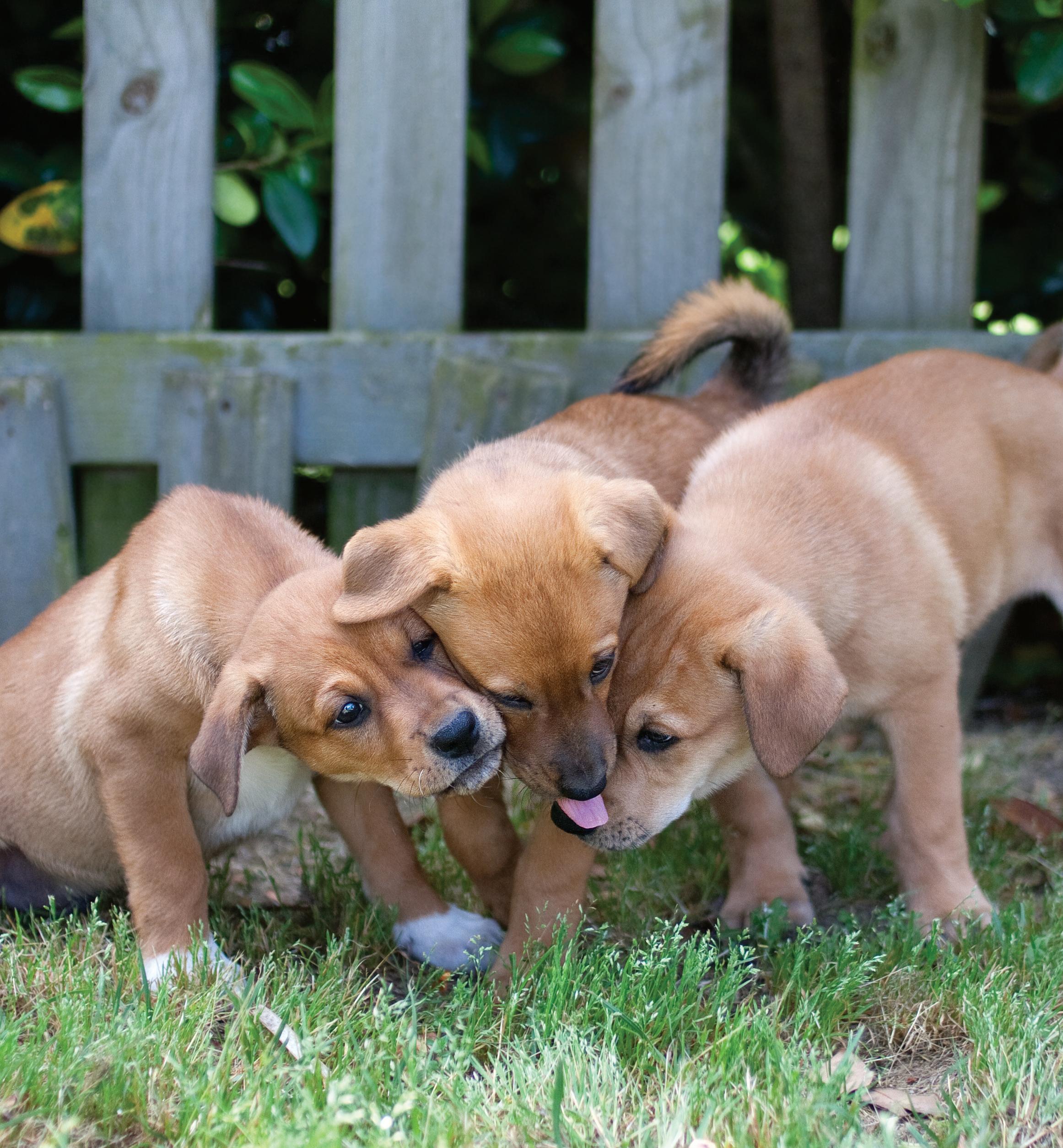
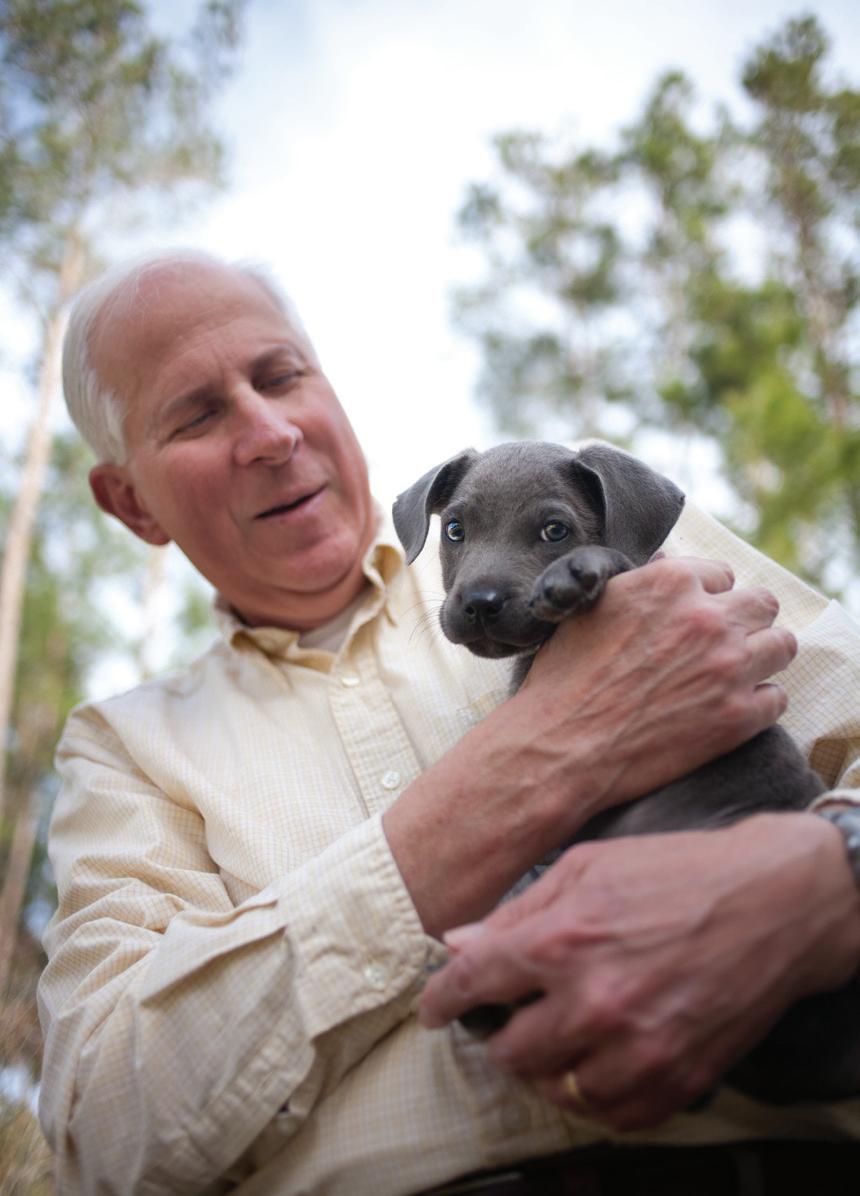
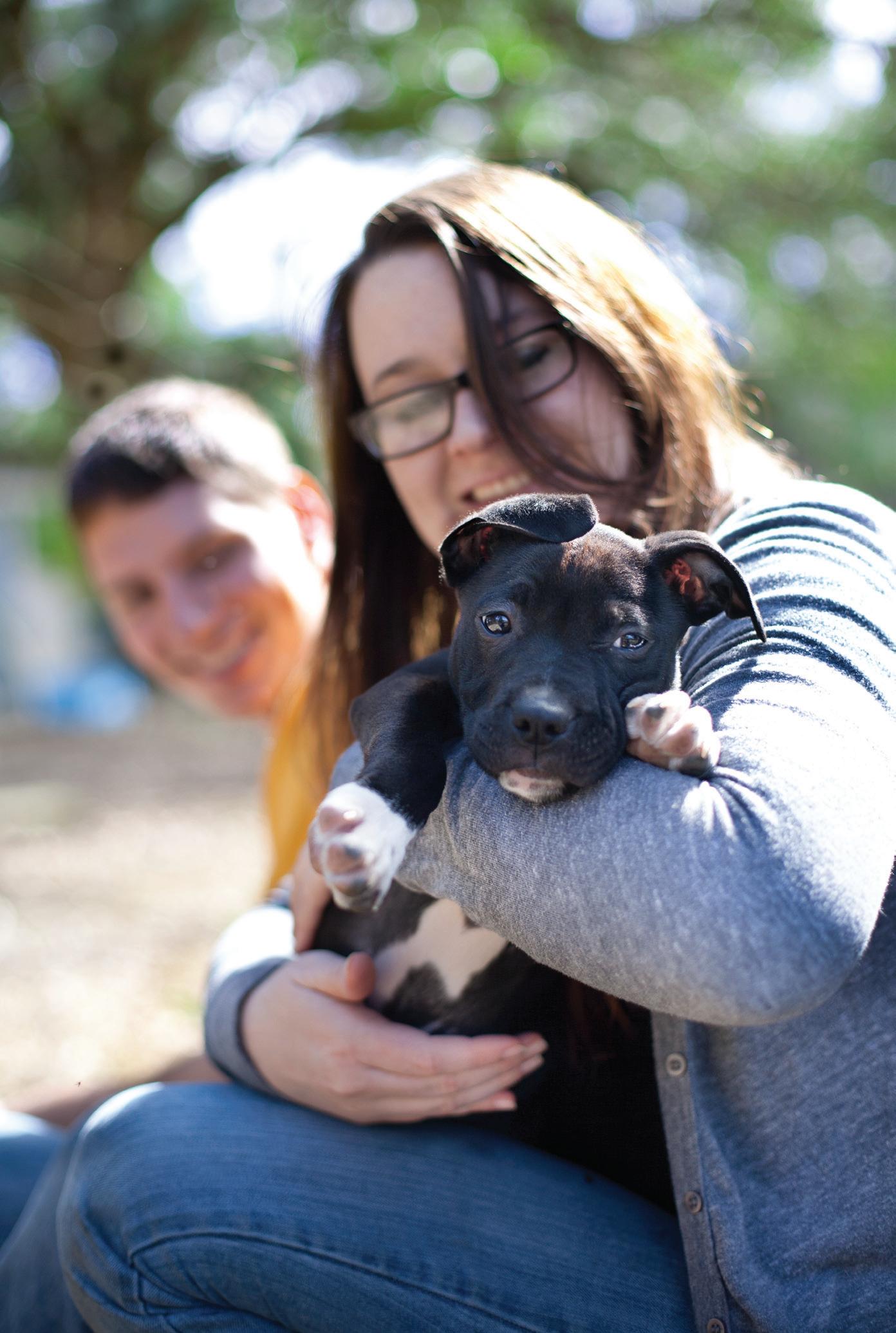
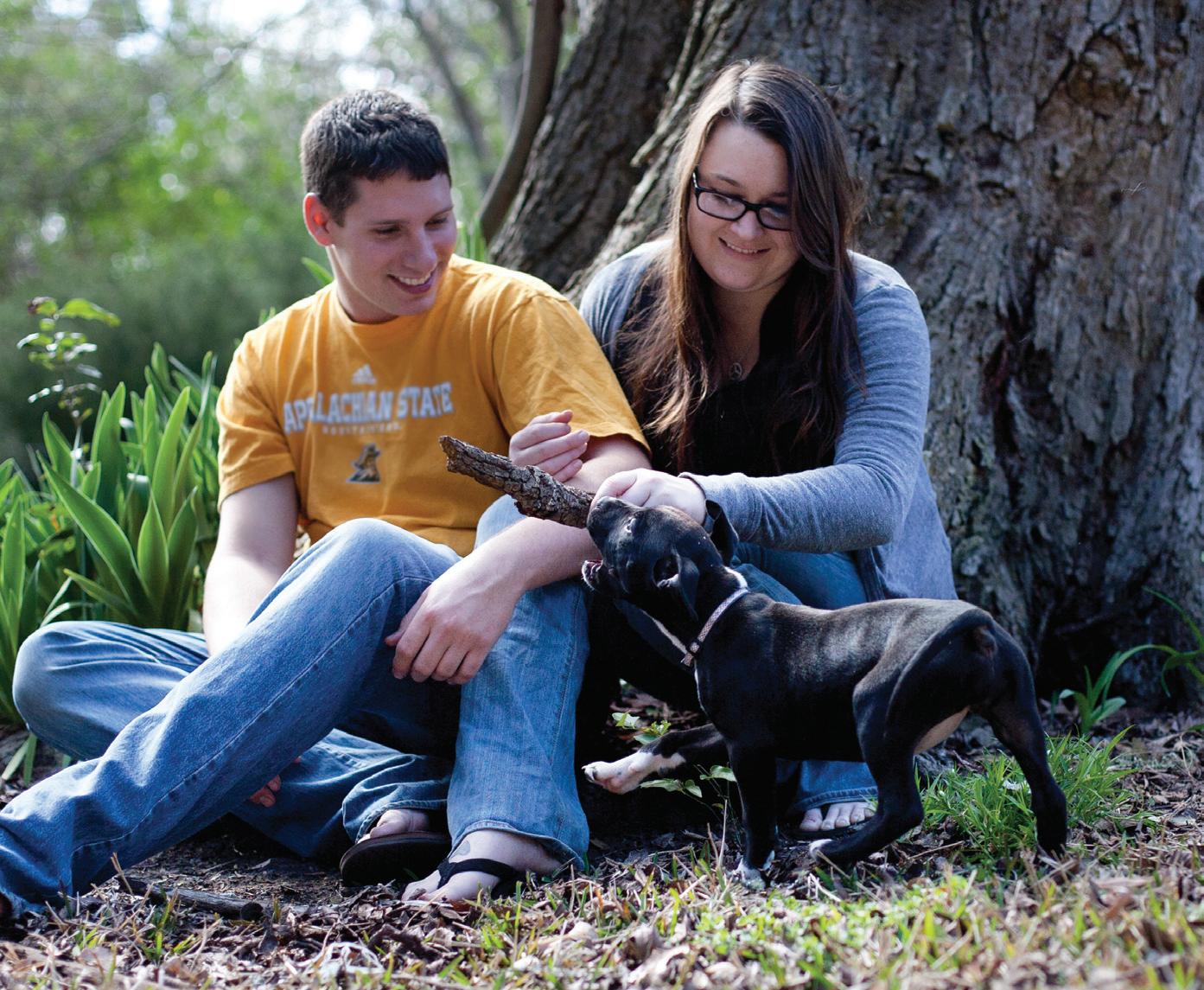
Make sure to check out the birthday party of our cover puppies on pages 18 &19.
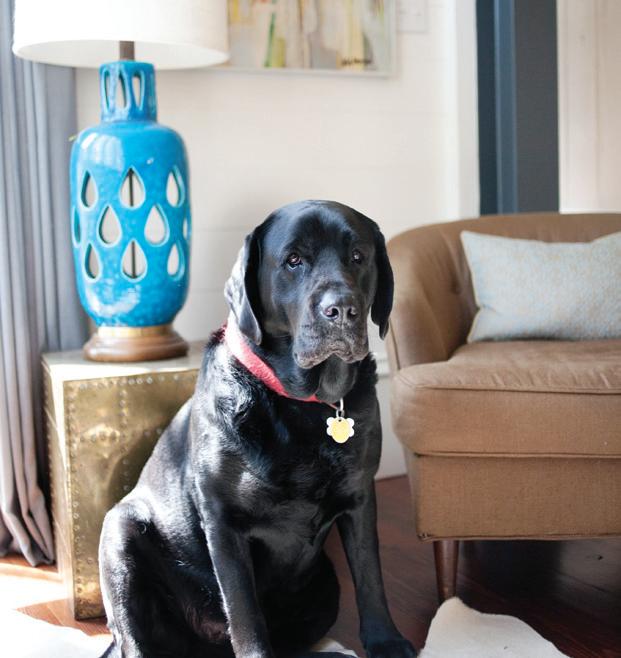
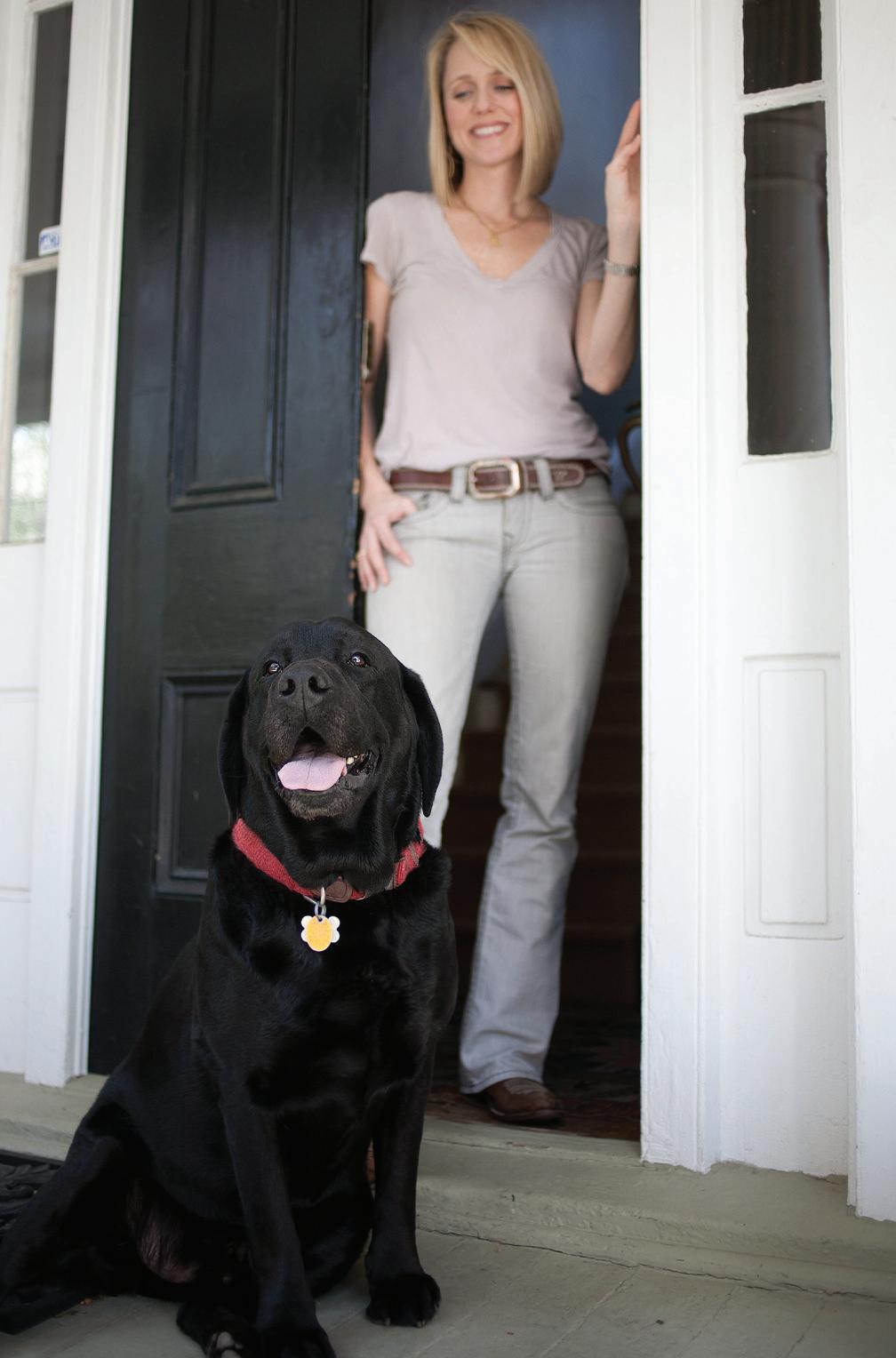
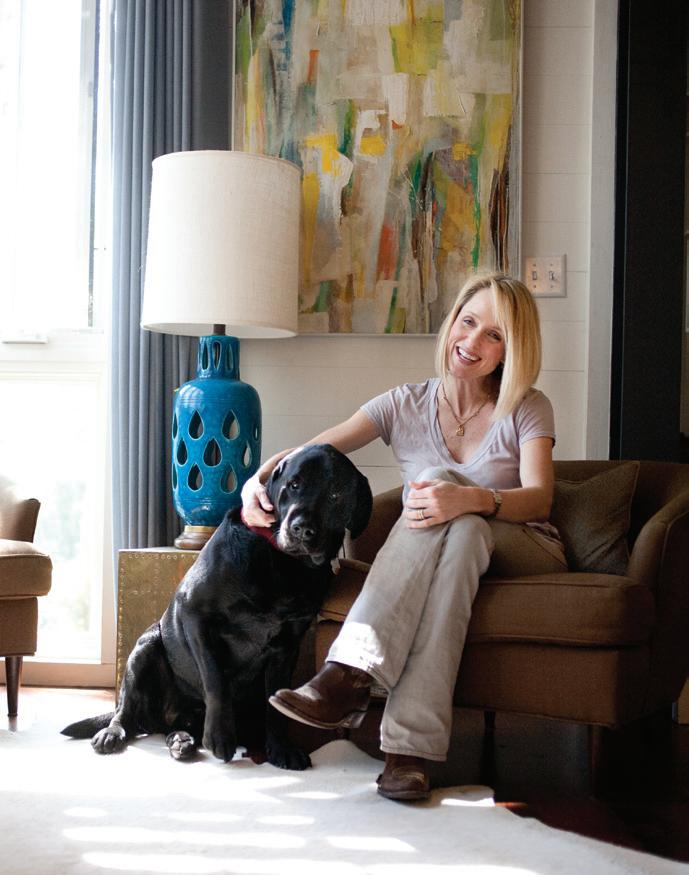
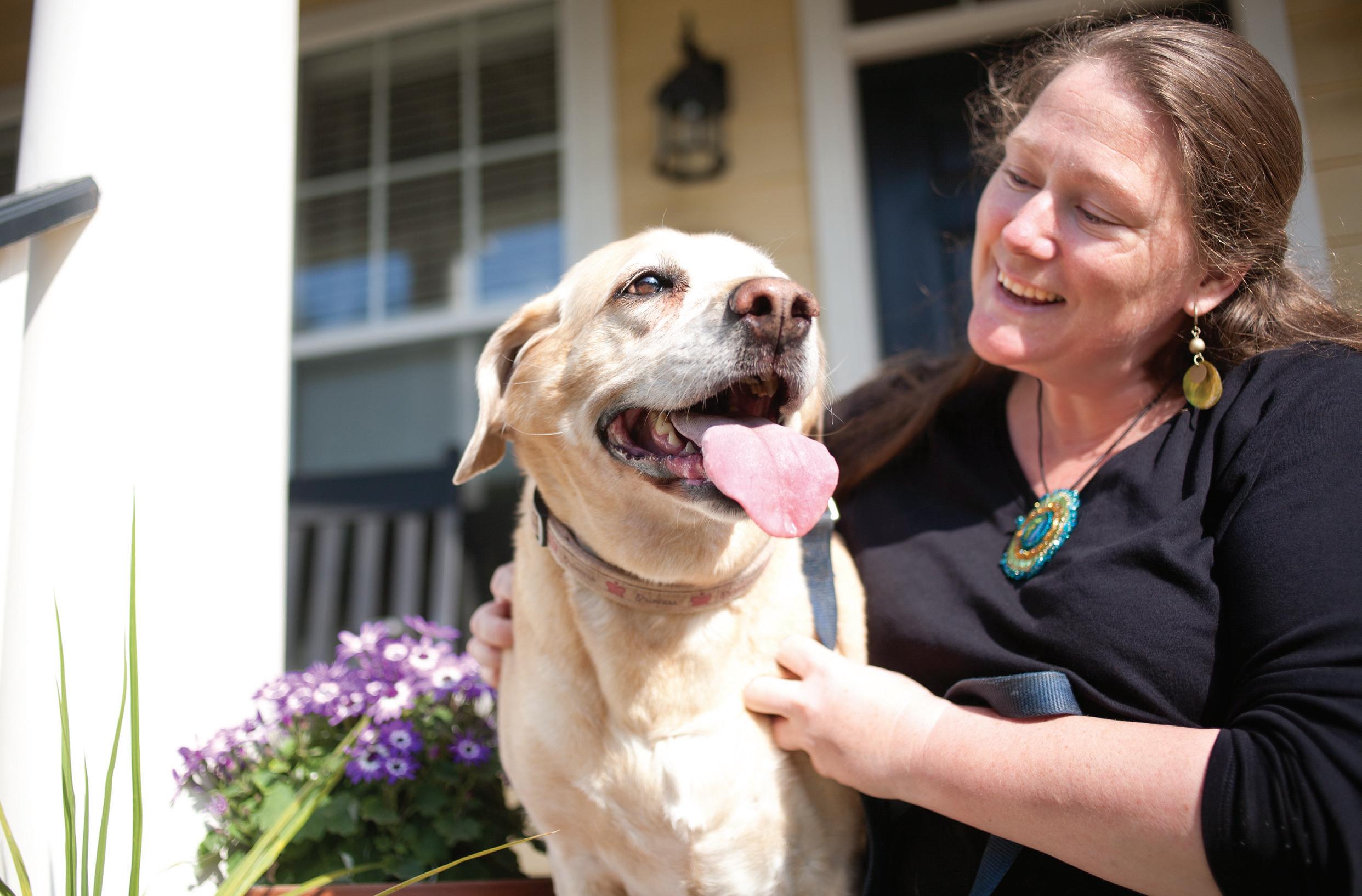
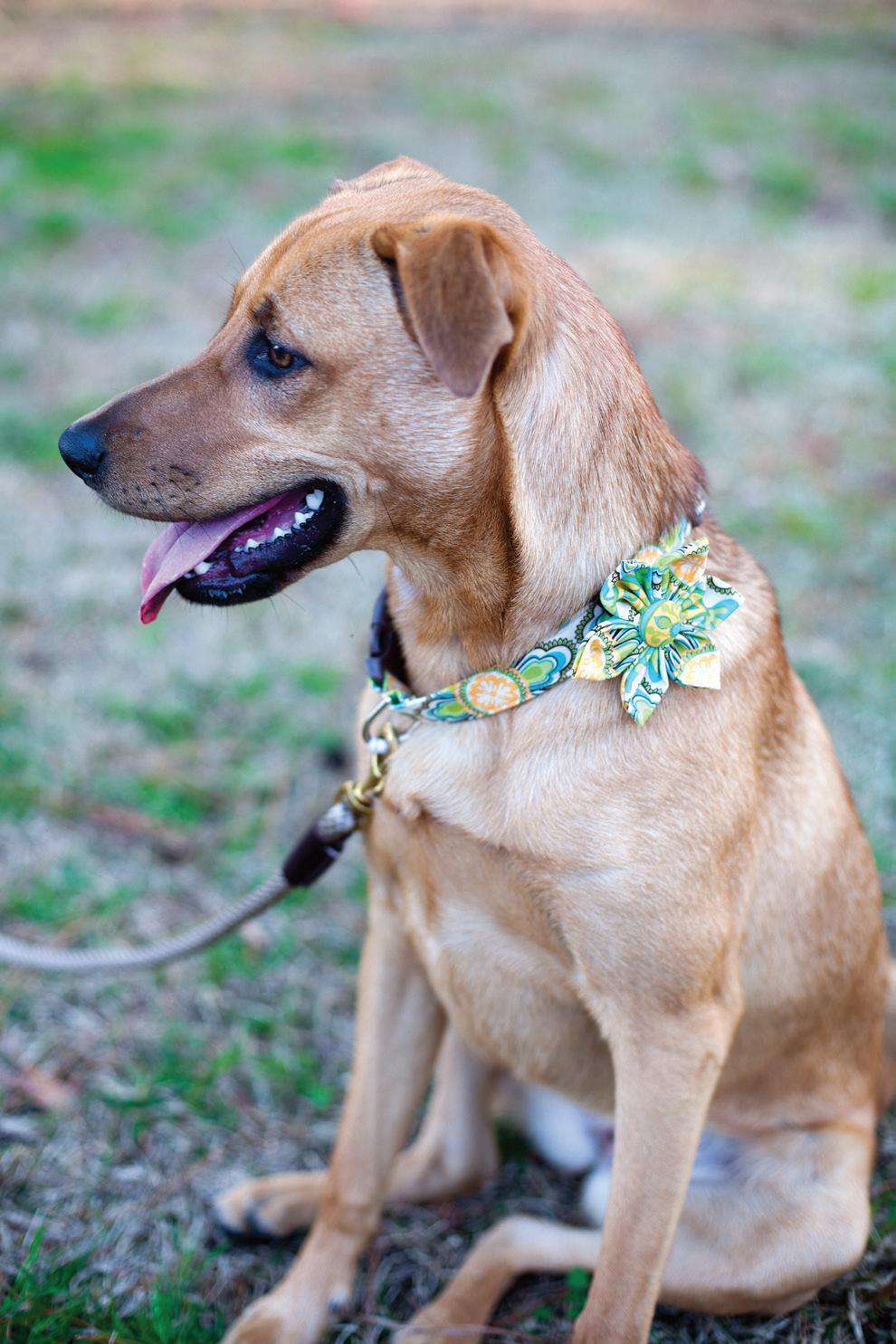
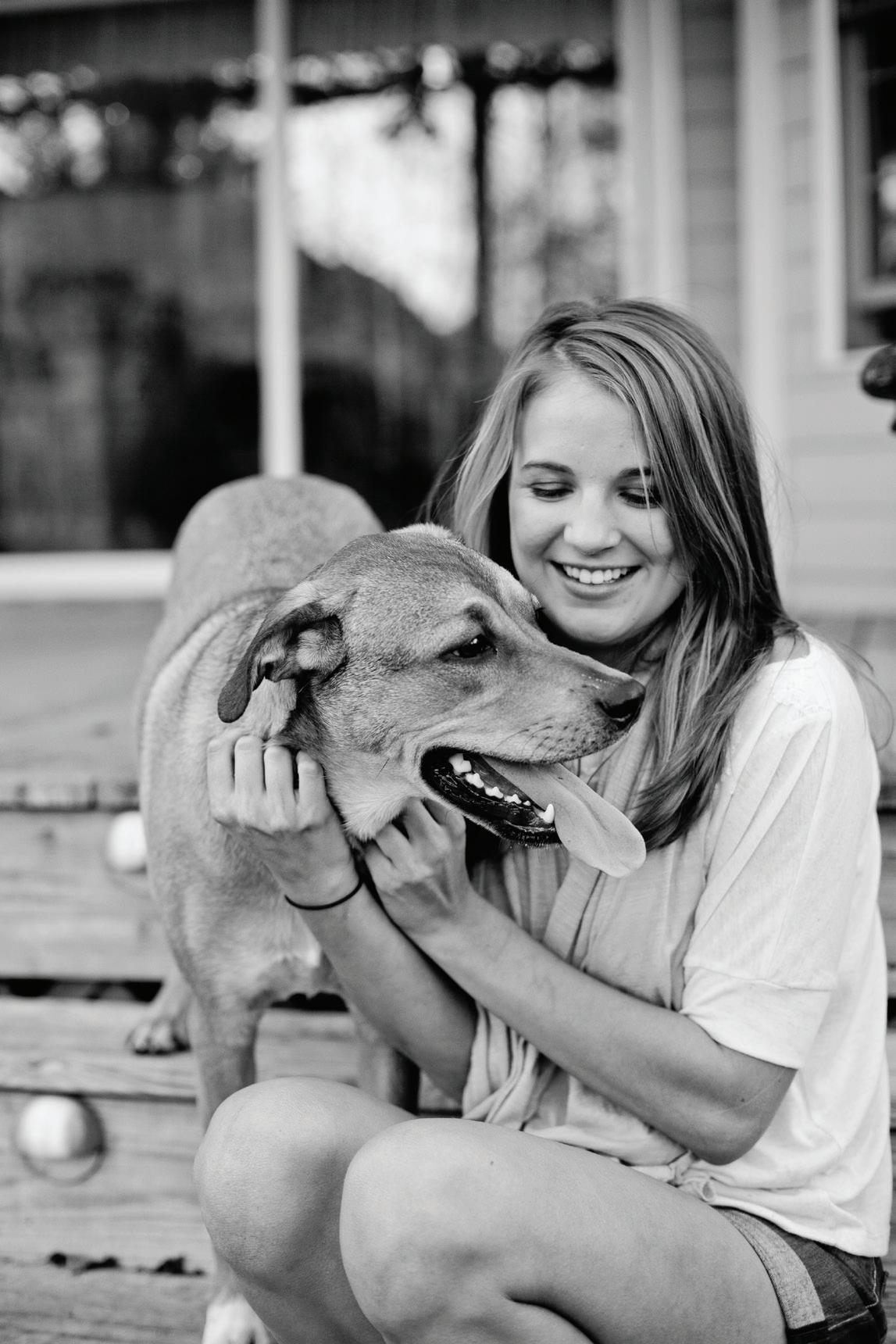
Fido’s Friends CAROLYN EVANS
Occupation: AUTHOR of forty beads; the simple, sexy secret for transforming your marriage. available anywhere books are sold and at www.fortybeads.com
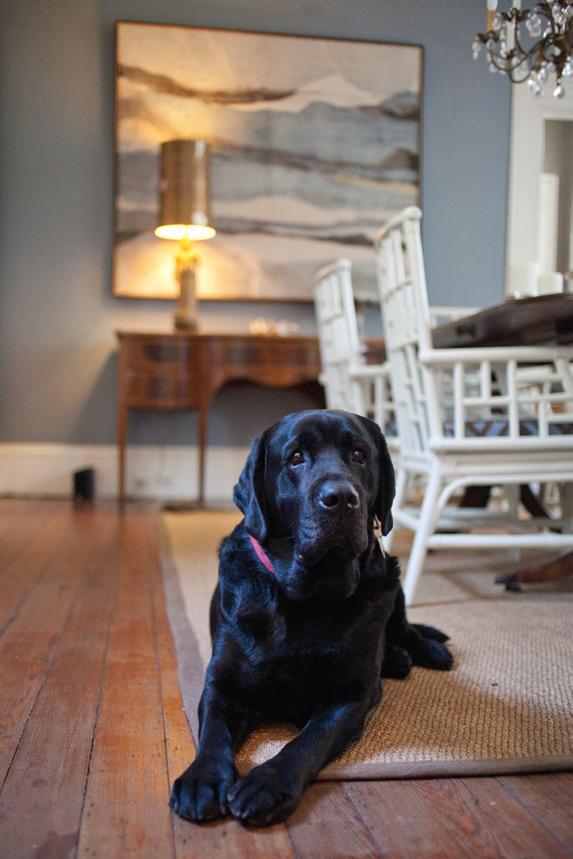
Dogs in Household: ONE
Named: HOPPER (a family name)
Lives: DOWNTOWN CHARLESTON
1. What’s the best thing about owning a dog?
The unconditional love and unbridled enthusiasm our dog has for everyone in the family.
2. What do you find the most frustrating about your dog, or struggle with as a dog owner ?
I’ve been so busy with my new book, and I feel guilty when I don’t get to walk him every day.
3. All time favorite memory of your dog?
When we met him at Surrey Labs on Wadmalaw. He was seven months old, so not really a baby, but we knew he was our baby!
4. Favorite place to hang out with your dog in Charleston?
Our front steps.
5. With what aspect of your dog’s personality do you most identify?
His impatience when he’s hungry.
6. In your opinion, what’s the one item all dog owners must have?
A comfortable leash.
7. If your dog were some other sort of animal, what would he/she be?
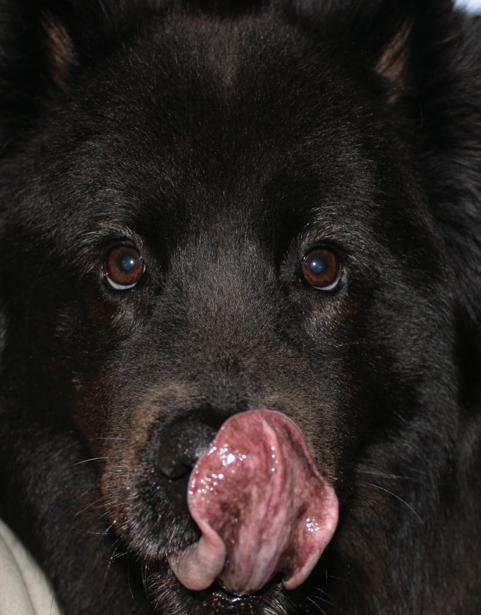
He’d be a baby black bear.
8. How does your dog inspire you? Or what has your dog taught you about life and work?
He inspires me to take deep breaths. He’s lying next to me right now and just let out a big, contented sigh.
9. How do you KNOW you and your dog are best friends?
I think Hopper has lots of best friends—he loves every member of this family and when my parents come to visit? Forget about it—he goes crazy mauling them with kisses.
10 .What’s your favorite thing about Lowcountry Dog Magazine?
All the different breeds you find for the cover.
All photos by Laura Olsen Imagery.
Photos by Tiffany Benford Photography
K-9 Boat Safety
by Jennifer Heisler
If you’re like me, your dogs are part of your family. They go everywhere with you—shopping, out to eat, and to the beach. Boating with your dog can be just as fun, as long as you keep your furry friend’s best interests in mind. With just a few steps, both you and your dog will be able to safely enjoy a day on the water.
Making Friends with the Boat
One mistake people make is assuming that their dogs will automatically enjoy boating as much as they do. With a proper introduction, you and your dog will enjoy many days together on the boat. Before taking them out for a day on the water, introduce them to both the boat and the life jacket. Let them explore the boat on the trailer or at the dock, first with the engines off, and then after turning them on. You may need to do this several times. Make sure that the first time underway is a short trip on a calm day. Gradually take longer trips to let your dog get his sea legs. Some dogs adjust quickly, and in no time at all they will be feeling their ears blowing in the wind. Some pets get seasick just like humans and aren’t going to enjoy themselves. In this case, it’s best to leave them at home.
Why does my dog need a life jacket?
Some dogs seem as though they were born to lead a life in the water. They love swimming and splashing through the surf. On the other end of the spectrum are the dogs who abhor the idea of even stepping on wet grass, never mind getting wet by choice. Most dogs fall somewhere inbetween.
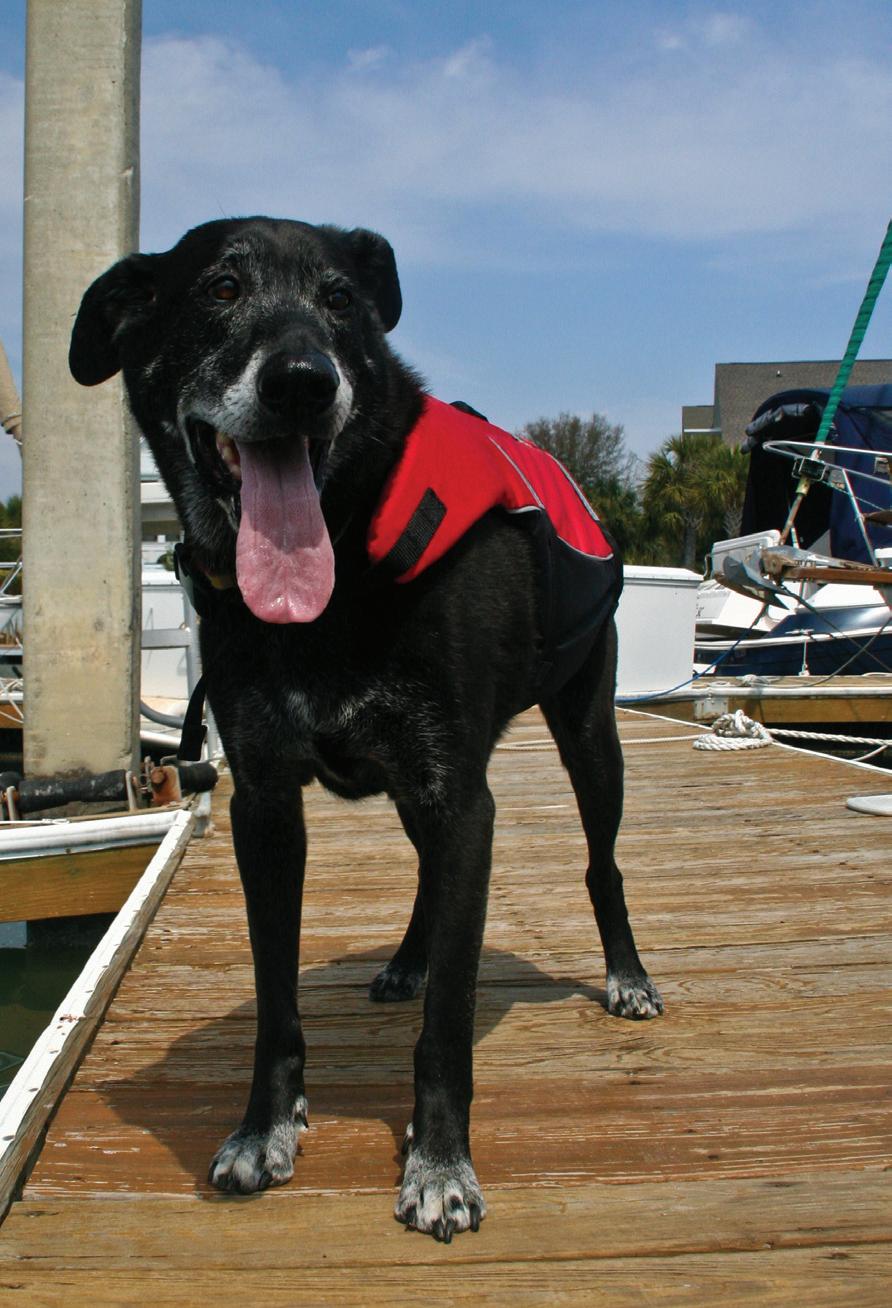
But what happens if your dog falls overboard in the middle of Charleston harbor, or worse, offshore? It’s a long way back to solid ground. He may not be able to get back to you, especially against the strong currents we have in Charleston, before he suffers from exhaustion or even hypothermia. By having your dog wear a life jacket, he will be able to float in the event he falls overboard, even in choppy water, giving you more time to rescue him.
When considering life jackets for your dog, the most important thing is that they fit right and that they provide enough flotation for the size of your dog. Life jackets should fit snugly and have several straps that go under the dog’s body, plus a handle on the top of the life jacket. These may not seem like important details now, but if you have to lift your dog back into the boat these will make the difference between an easy hoist and a struggle to bring your dog back onboard.
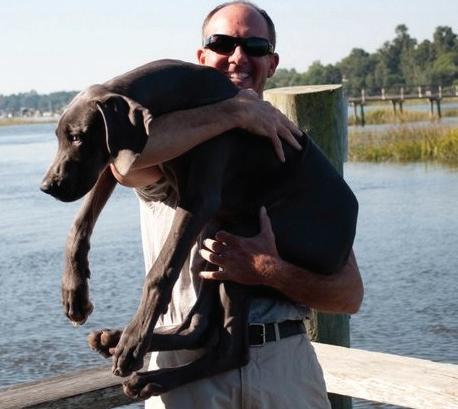
My husband and I can vouch for how helpful that handle is in an emergency. Last summer our 85-pound Great Dane mix fell off the dock into the water at our marina while getting onto our boat. Fortunately my husband was right there with her, but he struggled for quite some time trying to lift a wet, flailing, uncooperative dog out of the water and back onto the dock. Had she been wearing her life jacket the recovery would have been less stressful and less wet (for my husband) in the dark of night. Now imagine if you had to lift your dog up and over the gunwale of your boat while the boat bobs in the water surrounded by other boat traffic.
For even the choosiest doggie fashionistas, life jackets are now available in many fun colors and designs. Life jackets are available for every dog, from the smallest Chihuahua to a bull mastiff that weighs as much as a person. Because life jackets do not have standard sizes, do
not specify buoyancy, the best thing to do is test several on your dog to find the one that fits the best.
Heat Stroke, Sunburn, and Dehydration
Dogs are susceptible to heat stroke just like humans are. Shade and drinking water are two other major considerations to prevent heat-related conditions. A shaded place onboard with some air flow will help keep your pet cooler. Be aware of the common signs of heat stroke— excessive panting, pale gums and bright red tongue, thick saliva, vomiting, difficulty breathing. If you feel as through your dog is overheating, the first step is to cool him down. For more severe cases, you may need to seek emergency care.
Keep the drinking bowl nearby with plenty of fresh, cool water because dogs lose a great deal of fluid through respiration and panting, particularly when it’s hot or they’ve been swimming. Don’t be afraid of forcing them to drink water if necessary. And since a full water bowl won’t usually survive the first minute underway on a boat, I recommend bringing a sports bottle or small beverage cooler along so you can squirt water right into their mouths.
One thing we may not consider is the pads of their feet. The pads on a dog’s feet are sensitive to heat and it’s important to protect their feet from the scorching hot fiberglass on the boat. It’s simple to make them more comfortable by providing a towel or weather-resistant bed for them on the boat.
Some light skinned and short haired dogs can sunburn. By applying an SPF-15 or higher sunscreen on noses and other exposed areas, you can help prevent sunburn on your dogs and in the long-term help protect them from skin cancer.
Mind your manners
Finally, don’t forget about your dog’s other basic need. Stop often enough during the day for your pets to have a chance to relieve themselves. Bring along plenty of poop bags to pick up after them. Remember, you are responsible for your dog’s behavior. Prevent them from chasing wildlife and don’t let them bother other beach goers.
Have a great day on the water!
@
lowcountrydog.com
Percy: Short for Perseverance
Read the story of Percy, an adorable lab puppy whose foster parents helped him overcome Swimmer’s Syndrome. Click to http://bit.ly/igQjjZ
Filed under: Foster Pets
Carolina Canines Partners with FR Willis SPCA
Carolina Canines provides service dogs to veterans, and will be assessing FR Willis shelter dogs for the specialized training. Click to http://bit.ly/fX7mDX
Filed Under: Local News
A Favorite Reader Comment
Chaser, Smartest Dog Extended Materials
Enjoy last issue’s article on Chaser, the smartest dog in the world? Make sure to check out the online video and full research paper. Click to:
http://bit.ly/dGfMhX
Filed under: Local News
New Feature: Reviews
We have 6 new taste testers and product reviewers letting you know if the latest thing is worth woofing about. Most reviews have a giveaway too! Click to http://bit.ly/cwR7iR Filed Under: Reviews
I was so appreciative for the opportunity to work with Stacy and Hurley. For them to find each other through Leash on Life is a true testament to the miracles of life ~Kristie Allen from The Learning Canine, in response to Meet a Lowcountry Dog: Hurley
Doggie Indigestion?
How to help your pooch when they have tummy trouble, and how to know when it’s something serious enough for a trip to the veterinarian. Click to http://bit.ly/i7k7sP
Filed under: Health & Wellness
The Considerate Canine: Jumping Rawhide Recommendations
Mindful Manners trainer Cindy Carter provides tips for teaching your dog NOT to jump up on people. Click to http://bit.ly/i2xcK2
Filed under: Training
Local veterinarian Dainelle Cain discusses rawhides, their oral benefits, differences in their production methods, and how to keep your dog safe while they’re gnawing on this tasty treat. Click to http://bit.ly/eKM848
Filed Under: Health & Wellness
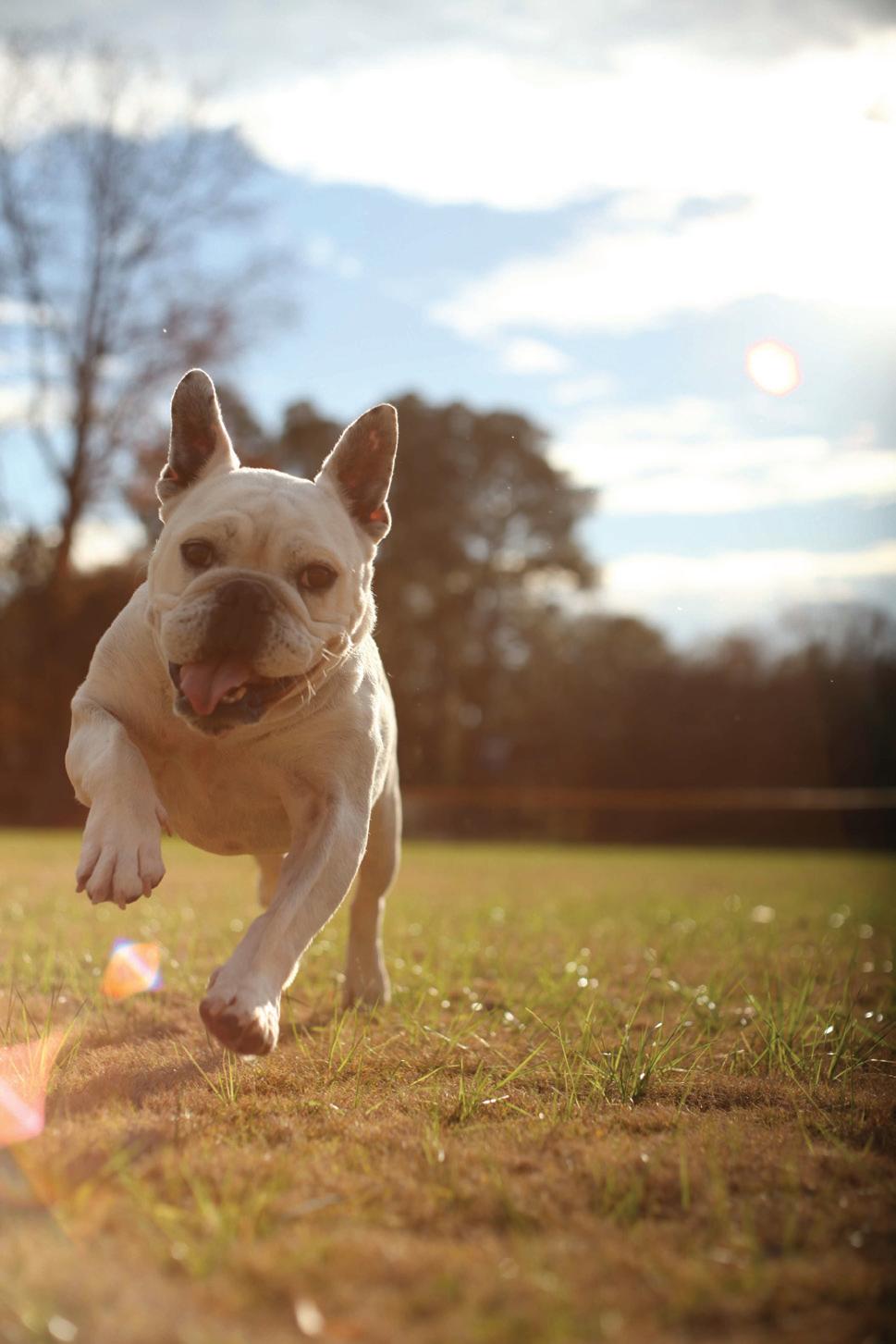
Porkie enjoys a nice run in the park on a spring day.
Photo submitted to LCD by Ryan Cockrell
Tails from the charleston veterinary referral center
in loving memory of hunter
Over the past 10 years veterinary medicine has witnessed an explosion in the number of veterinarians heading into three- and four-year residency programs after veterinary school.
An estimated 40% of veterinary students now vie for postgraduate positions, up from less than 10% a decade ago.
Translation? More education means more veterinarians offering expert services in cardiology, neurology, oncology, surgery, internal medicine, critical care and more. No longer is your general-practice veterinarian expected to provide you with all the services your pets need, à la James Herriot.
Enter Charleston’s newest and most advanced 24/7 emergency, critical care and specialty veterinary center—Charleston Veterinary Referral Center (CVRC).
CVRC founder, Dr. Alan Green, has worked as a small animal veterinary practitioner for more than 25 years. In 2009, after a year of
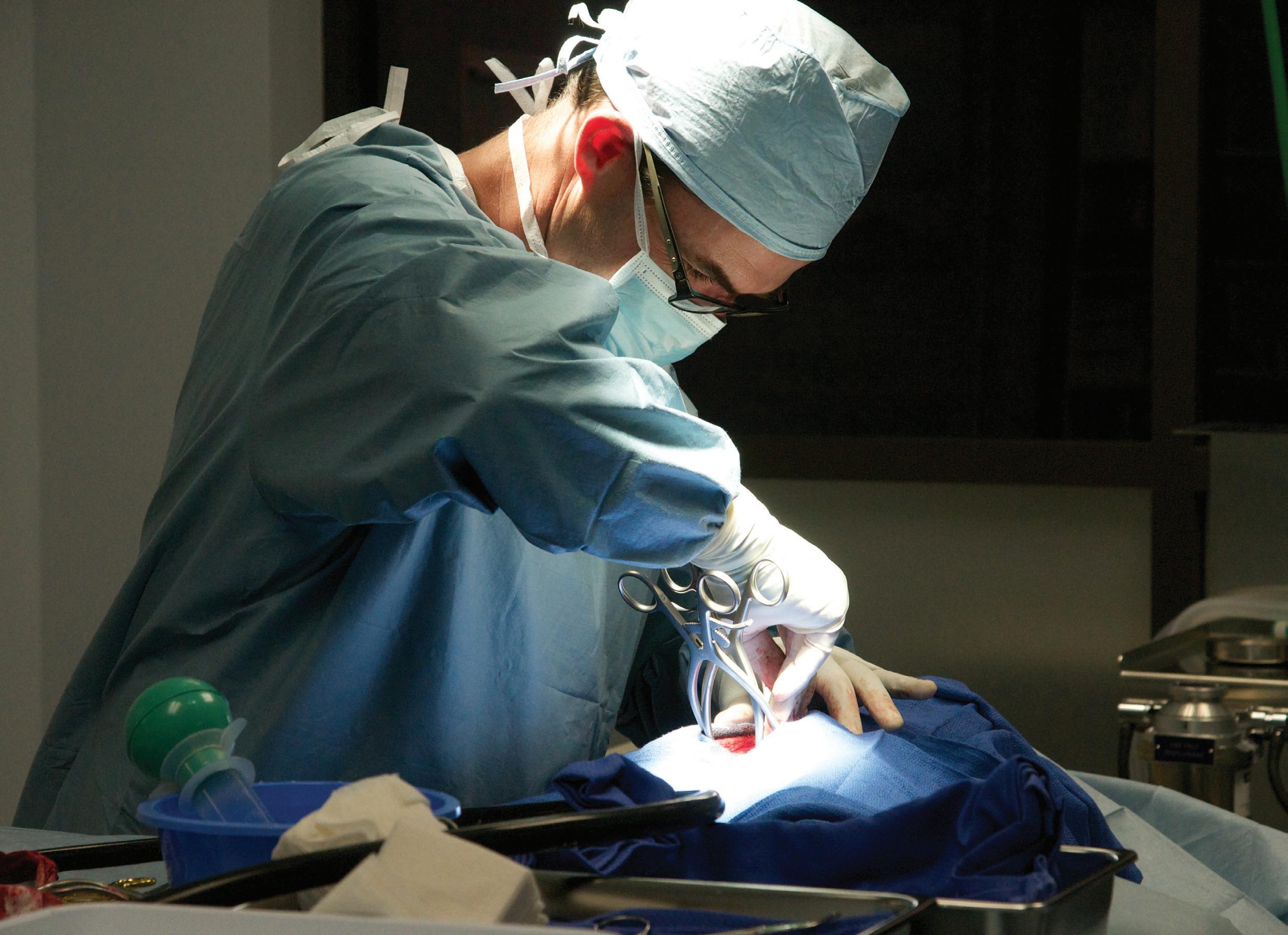
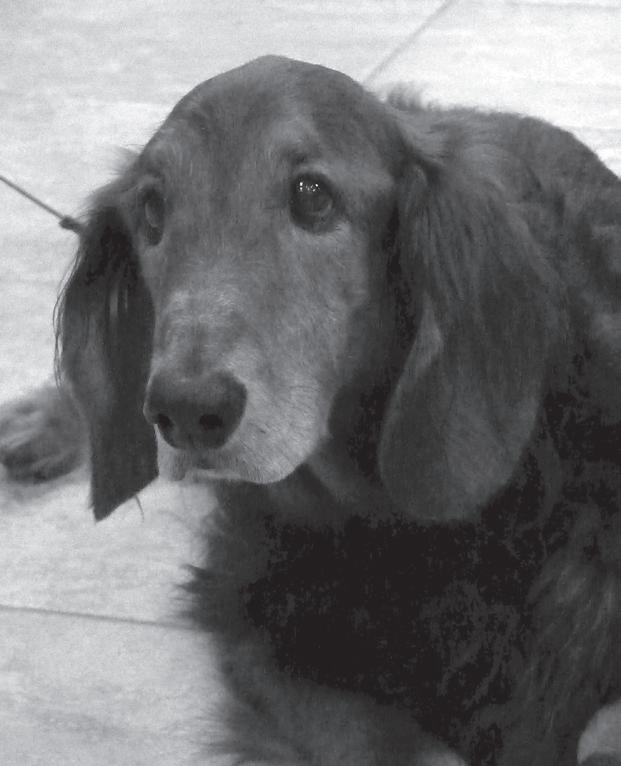
Board certified neurologist Dr. Jason King performs spinal surgery. Left, Hunter who was suffering from cancer, and in whose memory this article is dedicated.
retirement, Dr. Green found he missed his staff along with managing and mentoring young veterinarians. He also recognized the need for an emergency and specialty veterinary referral center in Charleston, and set out to attract the very best and brightest veterinary specialists and staff motivated to bring a new standard of excellence to the area.
“The two most important commitments of our practice are to outstanding patient care and exceptional client service,” explains Dr. Green, who has assembled a team of board certified veterinary specialists, emergency doctors, and experience veterinary nurses. “CVRC employs a cohesive team of veterinary professionals and staff dedicated to practicing the highest caliber of medicine and surgery available. But we also believe that medical care and customer service are intertwined and that how pet owners and referring veterinarians feel and are treated is just as important as great medicine.”
Construction began in October 2010 on the new 16,000-square-foot hospital that is intended to serve a three-fold purpose. It offers 24hour, seven-day-a-week emergency and critical care in a dedicated, state of the art intensive-care unit (ICU). Highly trained emergency staff, led by South Carolina’s only residency trained critical care doctor, are
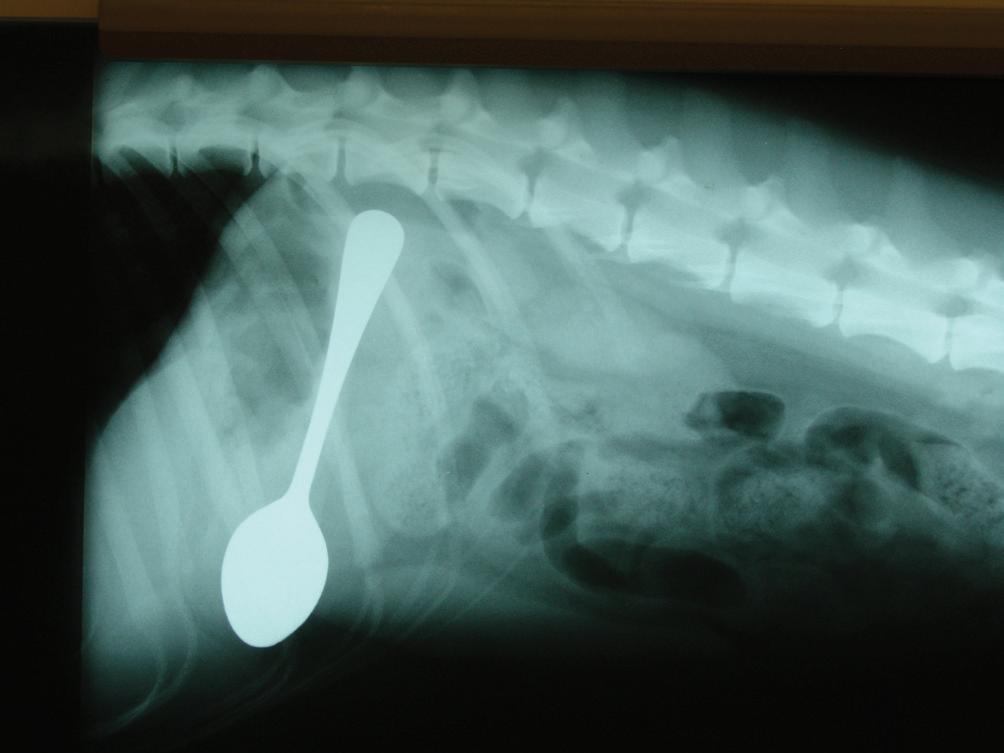
An X-ray shows an ingested spoon.
photos by MJ Green
In memory of Hunter.
available to attend to the most seriously ill patients. CVRC’s imaging center consists of technologies such as MRI, CT scan, ultrasound and color flow Doppler, digital radiology and fluoroscopy.
The hospital also serves as a referral service to area veterinarians for pets requiring the added expertise of board certified specialists in a range of fields. Specialty referral services include cardiology, dentistry and orthodontics, internal medicine, nephrology, neurology and neurosurgery, oncology, emergency and critical care, as well as minimally invasive, orthopedic and soft tissue surgery. CVRC has future plans for anesthesiology, ophthalmology, dermatology and more and is dedicated to being a valued extension of the referring veterinarian’s practice.
Finally, CVRC is committed to being a center of veterinary education, as well as a medical center of excellence. Dr. Green has formed a strategic alliance with the Trident Veterinary Technical College to create better opportunities for those students to have access to organized externships and internships at CVRC. “I feel it is the responsibility of the specialty community to raise the level of awareness and expertise in a region. CVRC is excited to bring continuing education to veterinarians, veterinary nurses, and pet owners alike.”
While most pet owners pray to never need this new veterinary expertise, CVRC delivers university-level care, with hometown doctor appeal.
“I never thought I would need a neurosurgeon for my dog,” said Arlene Campi, who had a chance encounter in June 2010 with now CVRC Neurosurgeon, Dr. Jason King, at an airport baggage claim. King had just finished his residency at UC Davis and was in Charleston interviewing with Dr. Green. In March of 2011, when her seven year old poodleBichon “Willow” began suffering from neck pain, Arlene was considering making the four hour drive to North Carolina State University College of Veterinary Medicine in Raleigh, before she heard about CVRC’s opening and sought out Dr. King.
Using MRI to isolate the cause of Willow’s pain—a ruptured disk in the dog’s neck—Dr. King was able to prescribe a initial conservative treatment regime of medication and rest for Willow. “It’s absolutely amazing that we have such wonderful, highly trained specialists and the newest technology available to us right here in Charleston,” she said.
Dr. Green explained that CVRC is already treating a wide variety of specialty cases and “we have had emergency cases at all times of day and night.” From needles being removed from a dog’s stomach by endoscopy, an emergency back surgery performed late at night, to the repair of a Bichon’s chest that was traumatized by a large dog, CVRC’s team of specialists and emergency veterinarians are always available for the pet population and owners of Greater Charleston, as well as from Savannah to Myrtle Beach.
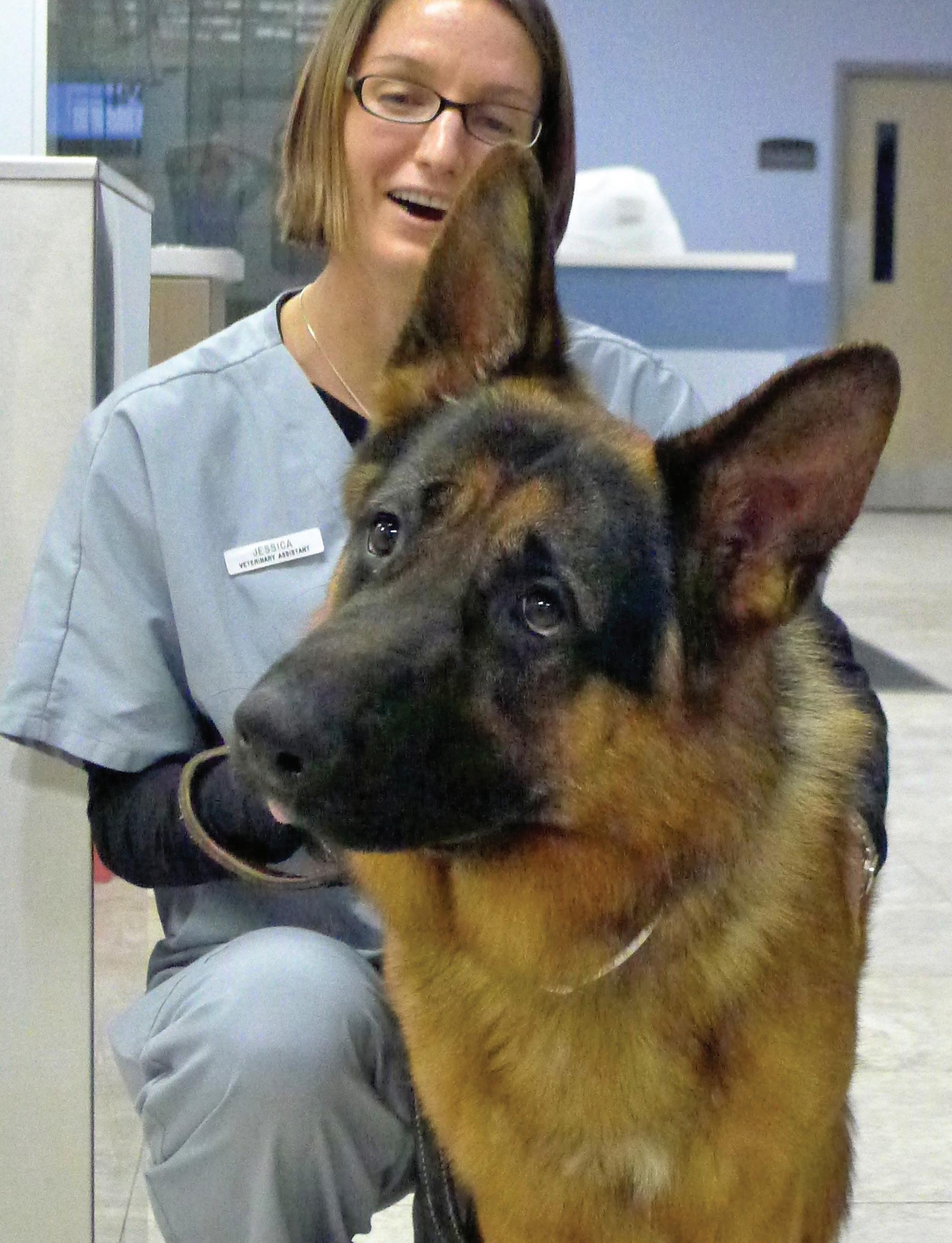
CVRC’s first client, a 18-month old German Shepherd named Rubin, arrived with acute kidney failure secondary to leptospirosis (a highly contagious infectious disease from rodents) and left enjoying the wind in his ears in the family’s convertible.
But not all of CVRC’s early cases have had such happy endings.
When Charleston residents Dan and Beth McCue heard media reports about the grand opening of the new hospital in late February, they didn’t have the faintest idea that they would wind up there just two weeks later with their long-haired Dachshund, Hunter.
In early March, twelve-year-old Hunter stopped eating with his usual
Rubin must stay for treatment, but loves his new friends.
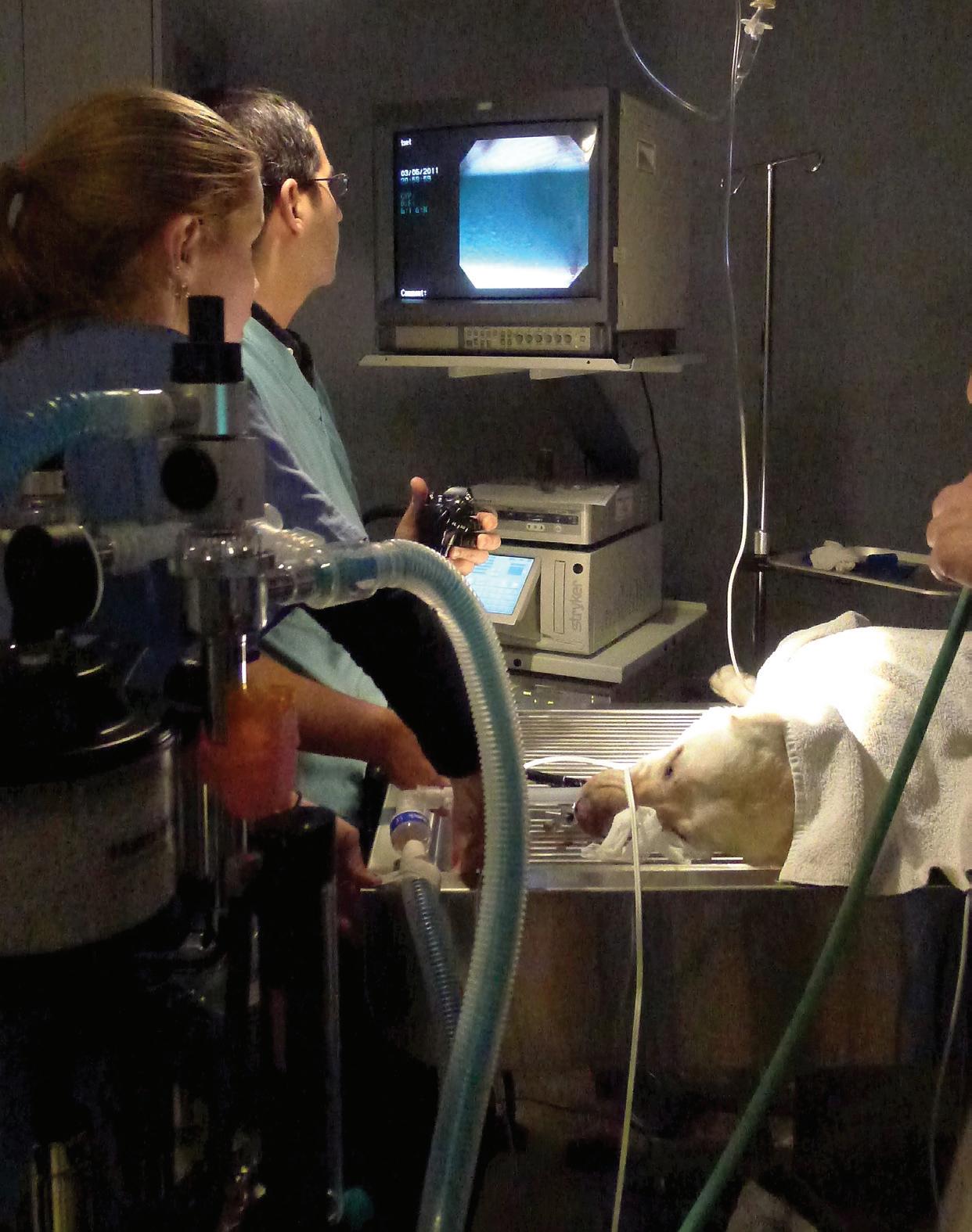
Dr Serge Chalhoub and his team perform an endoscopy.
gusto and appeared to be feeling ill. The McCue’s thought he might have gotten hold of something he shouldn’t have at the park and took him to their regular veterinarian. Initial tests and X-ray’s seemed to suggest Hunter had eaten some foreign object and that it had gotten stuck. But it also looked like he had pancreatitis. After the visit, though, Hunter rallied. And for a day he was back to his old self.
Then he stopped eating again. Unsure of what to do to make him feel better, Hunter had an ultrasound and, later, a barium swallow and X-ray. These expanded the number of possible things that could have been ailing him—his gall bladder or spleen, for instance—but they were still stumped.
After nearly a week of Hunter’s ups and downs and a trip to the emergency veterinary hospital for intravenous fluids, the McCue’s still didn’t have a definitive answer about what was ailing Hunter. Thinking a veterinary specialist of some sort might be able to help, Beth reached out to CVRC. When CVRC founder Dr. Alan Green received Beth’s email of distress, he responded immediately, and had the McCue’s bring Hunter to the state-of-the art hospital that had been completed just weeks before.
Dr. Green requested that Dr. Serge Chalhoub, head of CVRC’s Internal Medicine and Nephrology Department, examine Hunter. “Throughout the exam, Dr. Chalhoub never seemed to stop absorbing impressions and bearing down on what was wrong,” explained Dan. “Dr. Chalhoub
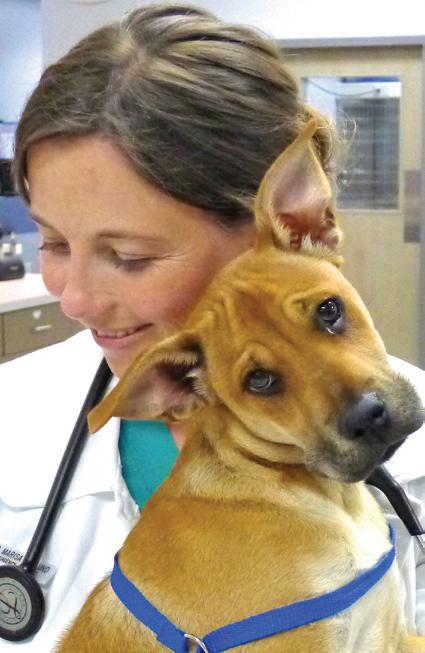
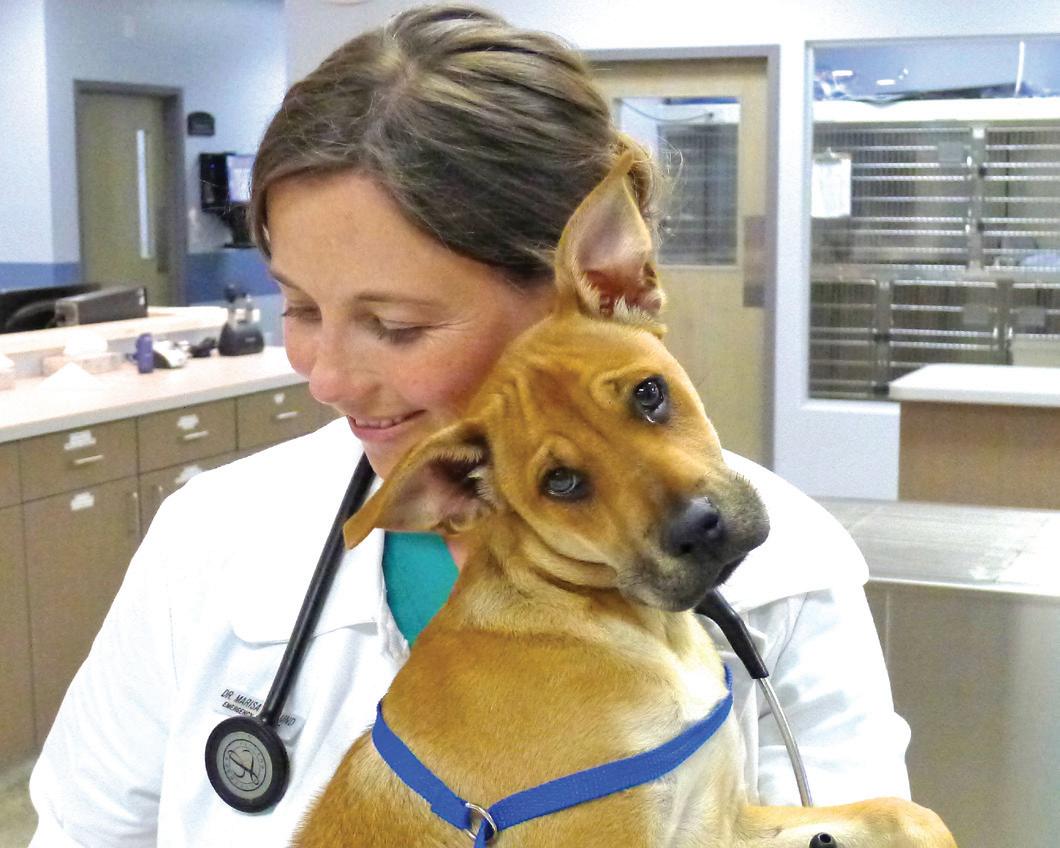
Dr. Marisa Hedlund treats a very cute puppy.
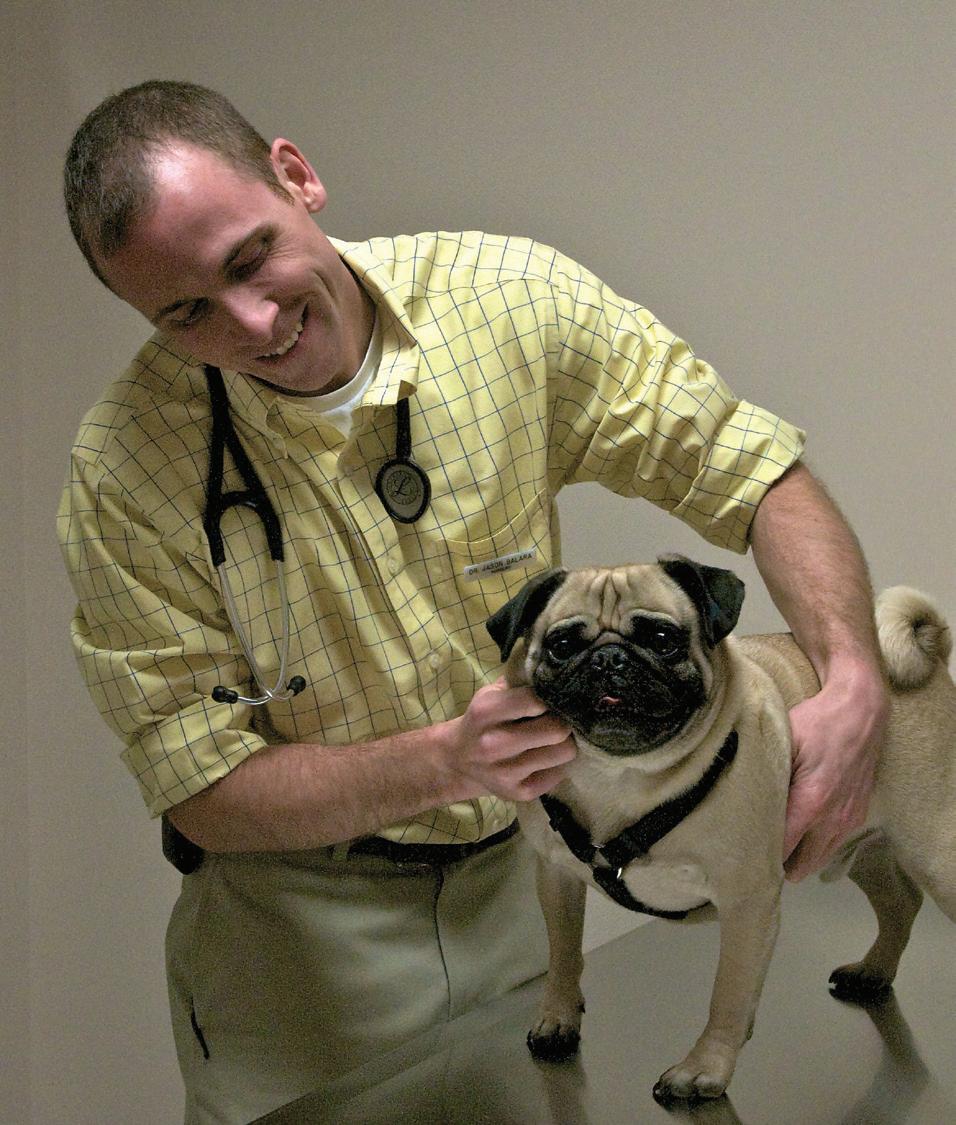
Surgeon Jason Balara examines his patient Pete.
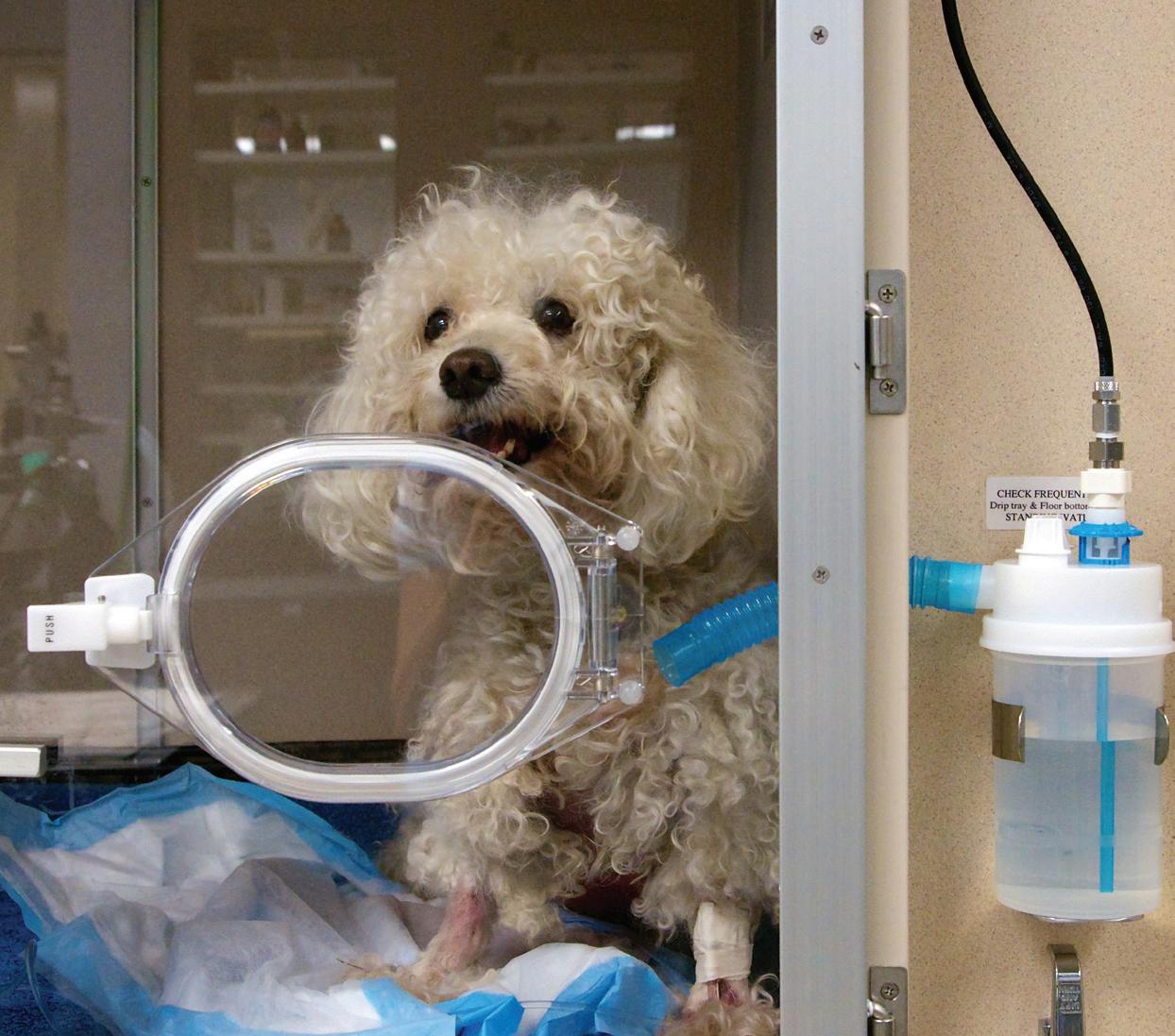
A patient feels better with oxygen therapy.
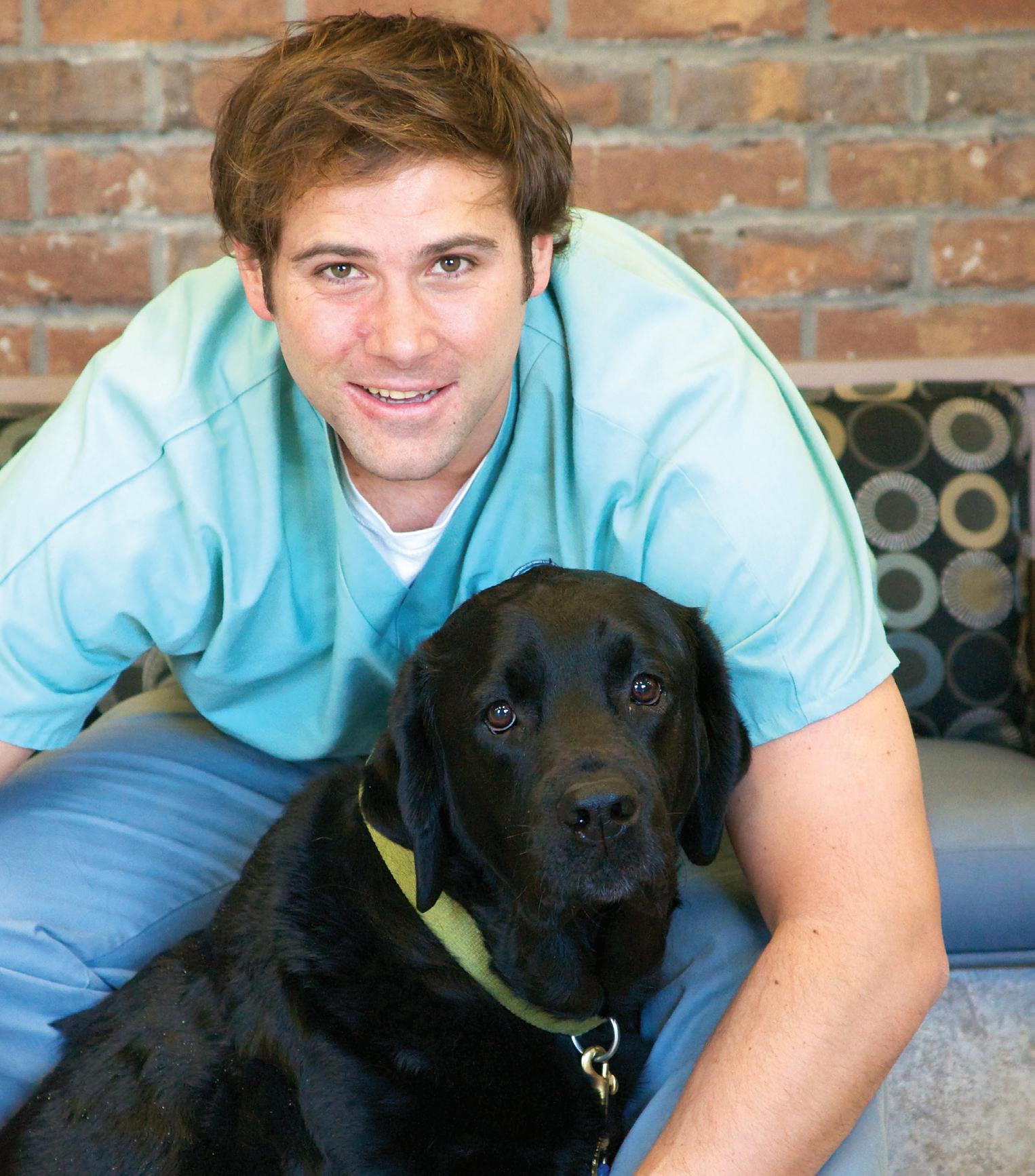
Dr Michael Cocchiaro with his patient Duck.
was certain pancreatitis was playing a role in Hunter’s health crisis, but he also immediately grasped that there was more to it.”
While Hunter’s gall bladder was fine, his spleen, Dr. Chalhoub explained, looked like swiss cheese and his liver was enlarged. Dr. Chalhoub gave the McCue’s several options for Hunter’s pancreatitis and spleen issue, and ultimately tissue samples taken from the spleen and liver revealed an aggressive form of cancer.
Dr. Chalhoub explained and weighed out all of the by-now dwindling options available to Hunter with empathy and compassion to Dan and Beth. “But in the end, we made the hardest decision in our lives—to put Hunter down,” said Dan. We knew that because of the way Drs. Chalhoub and Green treated us—through their care, empathy and honesty—that it was the right thing to do for Hunter.”
“I could go off on a tangent and talk about the wonderful, clean and inviting facility, the well trained, friendly staff, and so on,” continued Dan. “But what more can be said than at the toughest, most heart-breaking time of our lives, Beth and I felt we had friends who were selflessly doing all the could to alleviate our pain and our tears.”
“CVRC set out to be a center of excellence, comfort and security for area pet owners,” agreed Dr. Green with a smile. “I am proud to say that we are accomplishing that goal everyday.”
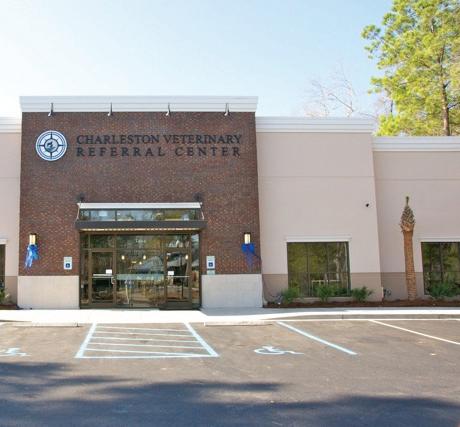
Charleston Veterinary Referral Center is located at 3484 Shelby Ray Court in the West Ashley area of Charleston.
The facade of beautiful facility in West Ashley.
FOSTER PETS
Pam Haskell cradles Eeyore, a foster puppy who came into Pet Helpers with a fractured leg and pelvis. Left, Eeyore casts his spell over foster dad Larry Haskell.
text by Vikki Matsis photography by Laura Olsen Imagery
The more helpless a creature, the more entitled it is to protection by man, from the cruelty of man. –Gandhi
Until he extends the circle of his compassion to all living things, man himself will not find peace –Albert Schweitzer
Animals of all kinds are vulnerable in a world of wild predators, highways filled with speeding cars, and the horrors humankind can inflict upon them. To make a significant impact on the lives of helpless animals, many animal lovers in the lowcountry have become foster parents, and have offered their time, love and attention to a creature in need. Foster parents are an integral part of the success of animal shelters, taking in animals who would die if the doors of homes and hearts were not opened to them.
What Does it Mean to Foster?
When an animal is not in the condition to be at a shelter because of malnourishment, lack of socialization, tender age, or injury, their greatest hope for survival is found in a foster home. Foster parents become a shelter for a wounded animal, guardian angels for the puppy with the broken leg or the dog with disease that would otherwise be put down. With no longterm commitment, and costs often covered by the shelter or rescue group, fostering is an incredible way to give back to your community and make a difference in the life of an animal; without you, they may not be given the chance to live.
Foster Stories
Larry and Pam Haskell are on their 11th foster. In their retirement, the Haskell’s wanted to give back to their community and stay busy. “We feel like we’re doing something very important and making a big difference in a vulnerable animal’s life,” Larry Haskell said. They currently have Eeyore, a grey lab mix that was found on the side of the road with a fractured leg and pelvis. In the two weeks they’ve had Eeyore, he has doubled his weight from 4 to 8 pounds and is becoming an active, curious puppy. He is best known for falling asleep while curled up in the comforting embrace of his foster parents’ arms. The Haskells have made a marketing youtube video of Eeyore playing in the yard, and despite being clearly in love with the little fellow, they are actively involved in finding him a forever home.
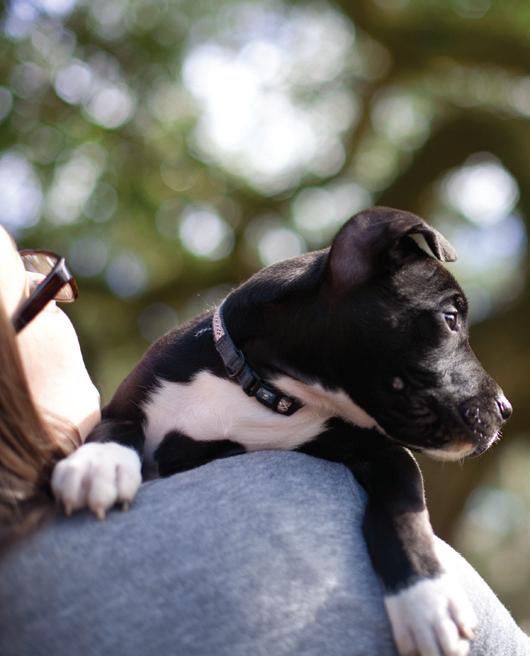
Adam Jolley and Hannah Conway moved to Charleston from Boone, NC last May and have since fostered 9 dogs. Currently, their affection and tenderness has been focused on Pax; a 10 week old black pit bull puppy with a floppy left ear. Pax was a stray that was found when she was just six weeks old. Around her neck was a cat collar with a bell and on her nails, bright pink nail polish. Pax was malnourished and was in desperate need of some TLC. She has since gained weight and become a social, happy puppy. Adam and Hannah say that she is energetic, loves to cuddle, gets along with cats and dogs, and is a joy to have
Adam Jolley and Hannah Conway play with Pax, their 9th foster dog.
as a companion. “Fostering is the easiest way for us to help out. We can’t afford to donate or adopt a dog, so it’s the best way for us to give back,” Adam said. Hannah added, “It’s so rewarding to see the changes Pax has gone through and to watch her come out of her shell.”
Diane Echlin is on her 6th foster, caring for Tori, a nine-year-old yellow lab that Daisy’s Place Retriever Rescue pulled from death row at a shelter. Tori’s picture on the Daisy’s Place Facebook page pulled Diane’s heartstrings, and Diane made the decision to offer her a temporary home. Tori is a friendly, extremely well- trained dog that is simply a victim of divorce, a perfect example that it is often people who are the broken ones, not their abandoned dog. “Fostering a dog gives them the family experience and keeps them connected with human beings. Dogs need a family. It’s really gratifying knowing Tori could have ended up in a kill shelter, or on the street, but now she has the chance at a have a happy, healthy life. It’s gratifying to know I’ve had a positive effect on another creature,” Diane said about her experience being a foster parent.
Shelters In Need
Every shelter depends on foster homes. “There’s never enough room to house all the animals and (fostering) is a way for us to save lives,” said Kay Hyman, the PR director for the Charleston Animal Society. Operations Manager Kristen Kifer from Pet Helpers added, “If we don’t
Tori, a 9 year-old yellow lab who was surrendered after her owners divorced, is fortunate to have a temporary home with long time foster parent Diane Echlin.
have those foster homes out there to take care of the animals and raise them for us, especially the young and injured, they won’t make it in the shelter setting; they will die. We need to get them into homes so they can grow and recover.”
An animal that has been fostered is healthier, happier and better adjusted than an animal that has only seen the inside of a shelter. The biggest benefit is that the animals are more socialized. Often they have spent time with children and other dogs in a nurturing environment. Dogs will learn basic obedience and become house-trained through the attention and instruction of their foster parents, a task that is too demanding for shelters to cope with on a large scale. Laura Olsen, photographer and foster parent to this issue’s cover puppies said, “People who foster animals want them to be developed and exposed to different things. If you adopt an animal that has been fostered, you’re getting an animal that has been well-educated in the ways of the world. They are more relaxed, willing to play, and more sociable. There’s not a lot of fear or skittishness; they’re ready to rock and roll.”
The benefits of fostering an animal are endless: if you have space in your home and your heart, consider fostering an animal so more animals may have a chance at life.
Every third Saturday of the month at one o’clock, there is a fostering orientation at Pet Helpers. The session lasts only one hour and volunteers can sign up to be on an email list that sends out pictures and descriptions of all the animals that are in need of foster homes. Pet Helpers takes cares of all the animal’s needs; contact them at (843) 795-1110 and visit their website at www.pethelpers.org for more info.
To foster for the Charleston Animal Society, fill out a foster application online at www.charlestonanimalsociety.org or pick one up from the shelter facility. Those accepted into the program will receive an email with pictures and descriptions of available foster animals. The shelter supplies all food and medical care, including supplies like crates and blankets. Contact them at (843) 747-4849.
Daisy’s Place is a retriever rescue that focuses on pulling Labradors and Golden Retrievers six years and older from high kill shelters. All the dogs are in private foster homes and it is a volunteer-based organization. Daisy’s Place takes care of all medical care; foster homes only provide food and love. To become a foster parent, email Melissa@daisysplace.org and visit the rescue website at www.daisysplace.org.
Most rescues and shelters in our area have a foster program. Love boxers? German Shepherds? Or have an attachment to mixed breeds and one of the other county shelters? Check out our full rescue and shelter list at www.lowcountrydog.com/page/rescuesshelters and inquire about their fostering program.
You’re Invited
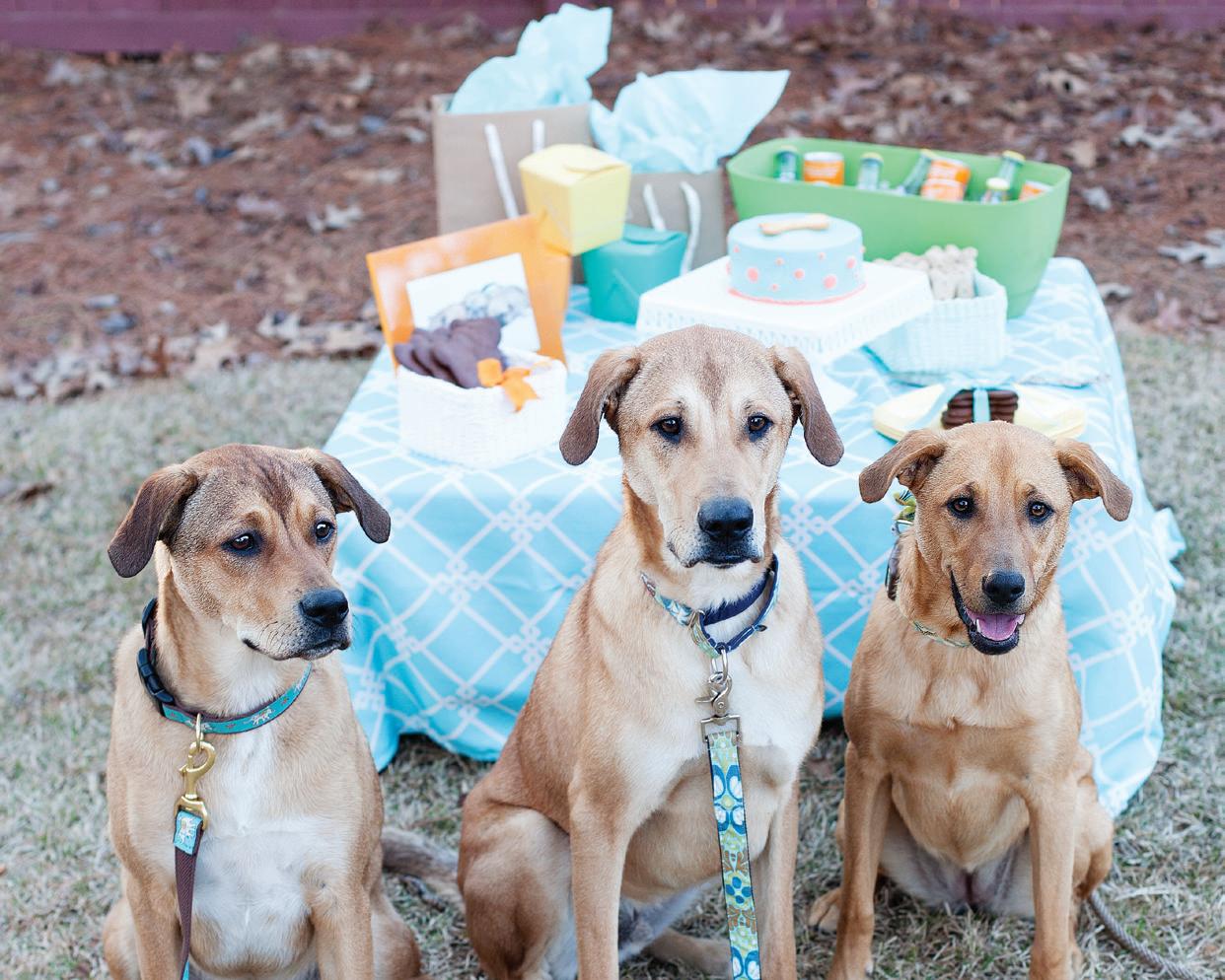
to the cover foster puppies’ 1st Birthday Celebration!
No RSVP needed, just turn the page to see the adorable teenage pups embracing life with their new owners.
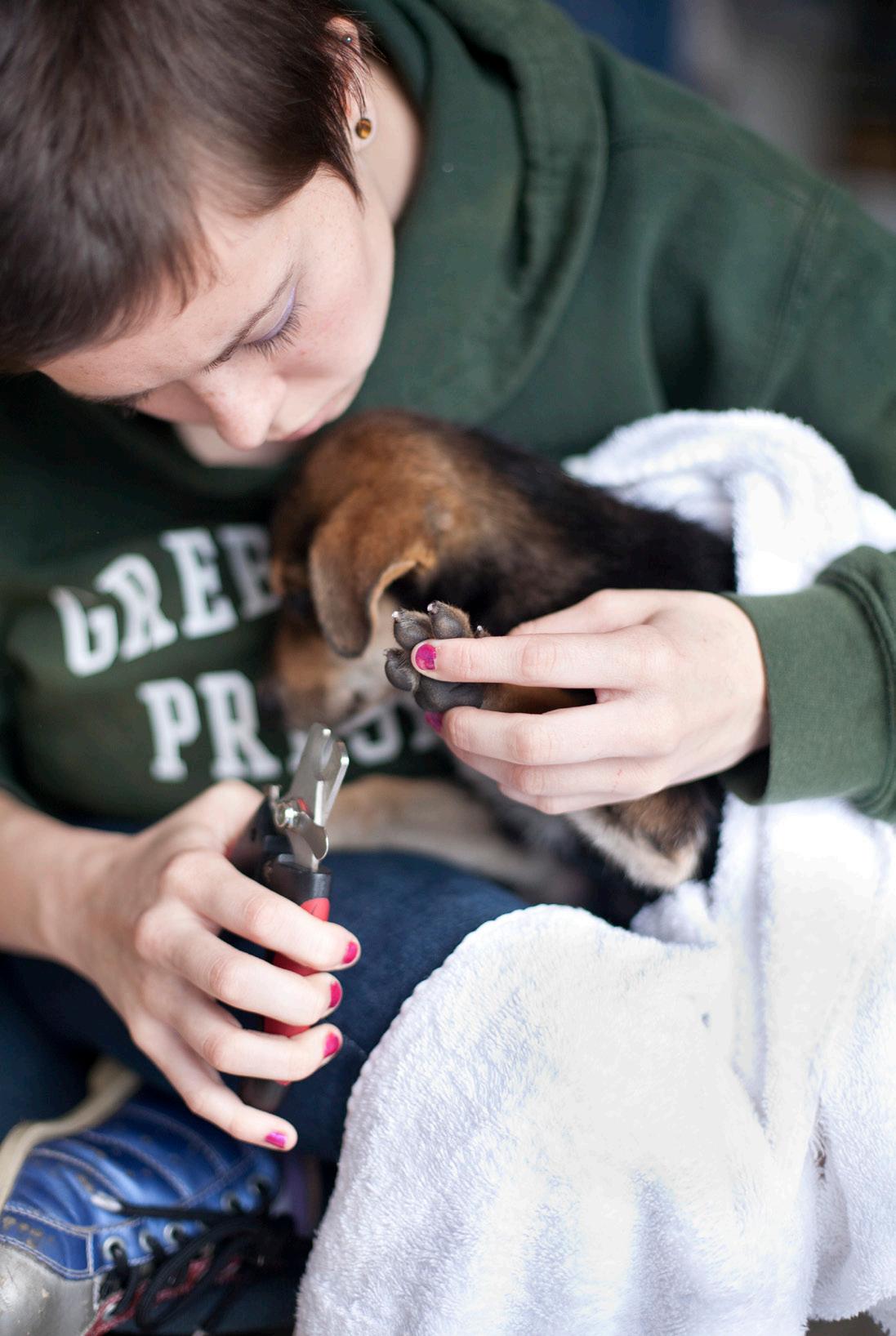
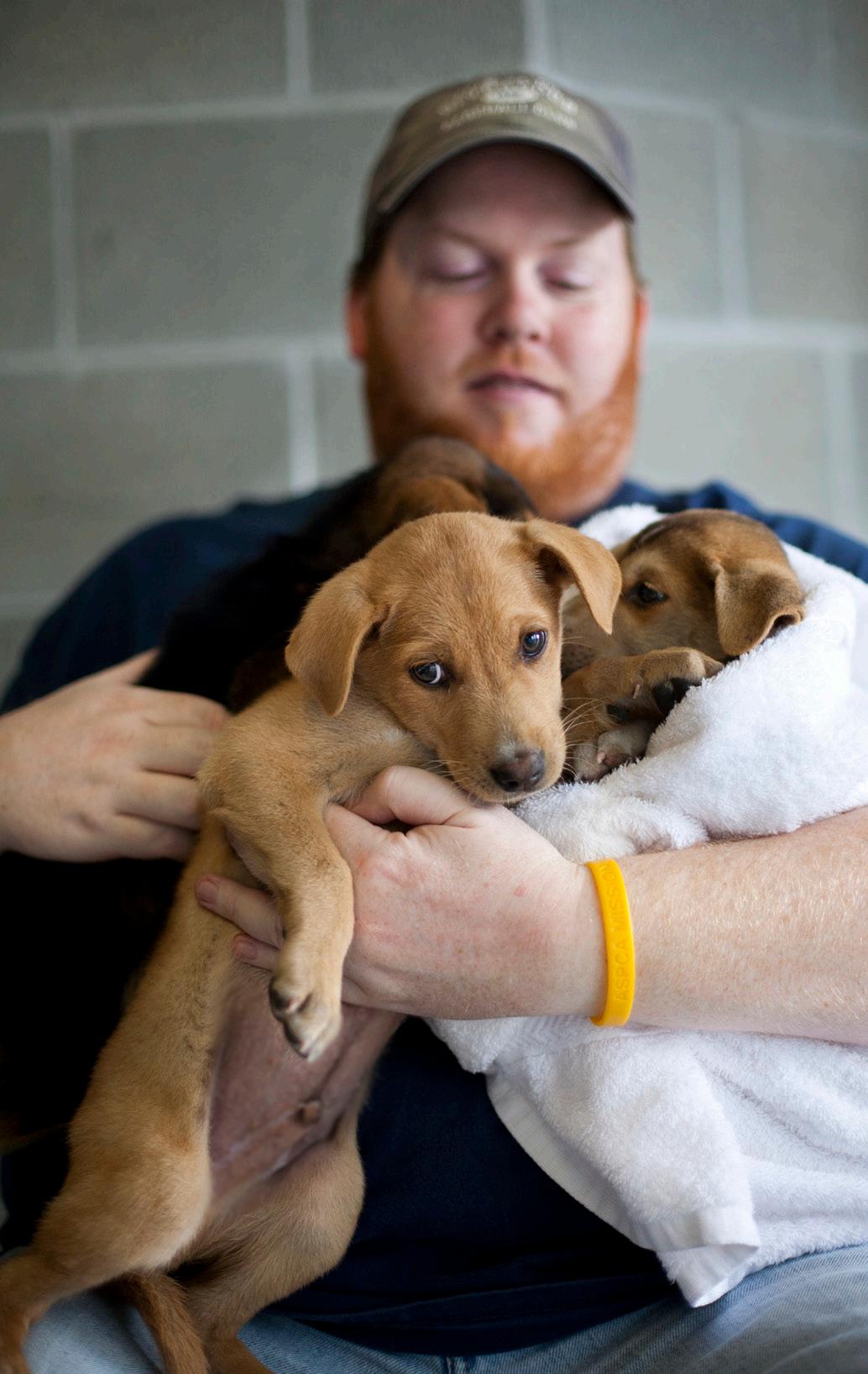
Pet Helpers volunteers Nicole Fredericks and Brian Foster get puppies ready for their foster homes by giving them a bit of love, a scrub and a nail trim.
Finuala, Baron & Seamus
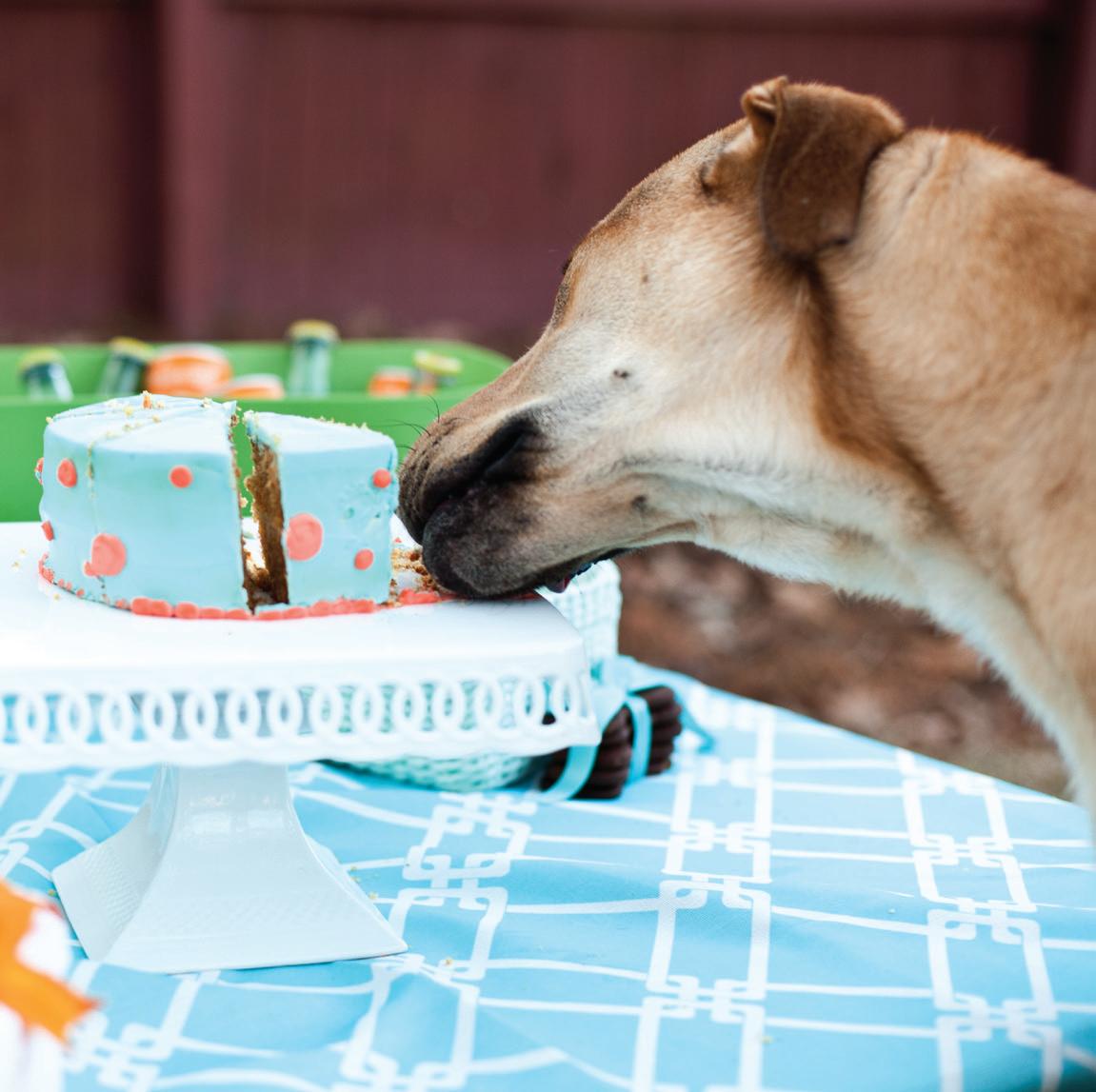
The lovely birthday cake, homemade biscuit bones and pup cream were graciously given to the puppies by the Good Dog Bakery.
Special
thanks to Palmetto Paws and Hairy Winston for the leashes, collars and toys for the pups’ party!
Christin Stewart with Baron, who she adopted after his time with foster parents Laura Olsen and Brian Foster.
second saturday of every month. 11:00am-2:00pm frances r willis adopt-a-thon. All is Well, 440A Trolley Road, Summerville. Call 871-3820.
every saturday in the spring and summer. cas adoption event at downtown farmer’s market. Meet adoptable animals at the Marion Square Farmer’s Market!
monthly. 5:00pm square onion too and earthly artifacts pour it forward giving event. A $10 donation is requested for libations, music, snacks and more. The donation will go to a local nonprofit chosen for the event. Square Onion Too! at 411 Coleman Blvd, Mount Pleasant . April 6th, Animal Rescue and Relief; May 18th, Louie’s Kids; June 22nd Warriors Wear Pink.
april 9th & 10th 10:00am-4:00pm, 12:00pm-4:00pm lcd model contest and pet fest 2011. Do you dream of your dog on the cover of Lowcountry Dog Magazine? Now’s your chance! Your dog will meet publisher Leah England and their doggie headshot will be taken. A fun event filled with vendors, rescues and shelters, a charity walk, a microchip clinic, frisbee demonstrations, entertainment, food tents and much more. $5 per person. Palmetto Islands County Park in Mt. Pleasant. www. ccprc.com or (843) 795-4386 for more info.
april 9th 10:00am-2:00pm pet helpers at car & bike show at james isl. christian school. Come check out the beautiful cars and bikes and adoptable dogs!
april 9th 8:00am-10:00pm cas rabies clinic. Charleston Animal Society 2455 Remount Road North Charleston.
april 9th 10:00am-2:00pm cas roper hospital adoption event. 3500 North Highway 17 Mount Pleasant.
april 10th 9:00am-4:00pm rally obedience workshop with susan marett of purely positive dog training. Hosted by the Charleston
Working Dog Club at El Recuerdo Plantation in Manning, SC. The cost is $20 and includes lunch. www.purelypositive.com
april 15th 2:00pm-6:00pm and 16th 10:00am-2:00pm paws & prayers at gwynn’s of mt. pleasant. Come by on Friday for a blessing by a Rabbi or Saturday for a blessing from an Episcopal Priest. 20% of all sales will be donated to the Charleston Animal Society!
april 16th 8:00am-12:00pm the frances r willis garage sale. Taking place at the home of Kathy & Mark Eckels, 215 So. Magnolia Summerville, SC.
april 16th 1:00pm-4:00pm easter eggstravaganza for dogs & their people. A benefit for Daisy’s Place Retriever Rescue featuring an Easter Egg Hunt and photos with the Easter Bunny. Refreshments provided by the Square Onion. Cost to attend Easter Egg Hunt is $10, photos with the Easter Bunny are $10. Aubergine, 215 Coleman Blvd., Mt. Pleasant.
april 16th 6:00pm four-legged frenzy. Benefits the CAS and Trident Tech’s Veterinary Technology Club. Click to www.fourleggedfrenzy.org for tickets. Held at Charleston Animal Society. Food by Two Keys Tavern, drinks by Brooklyn Brewery, live music by The Bluestone Ramblers.
april 26th 10:00am-2:00pm frances r willis adopt-a-thon. Windsor Hill Elementary School Carnival from 10am-2pm. Come on out and find your forever friend! 8600 William Moultrie Dr. N. Charleston, SC 29420.
april 29th 9:00am charleston dog training club akc agility trial. Dogs will compete on courses including jumps, tunnels, weave poles, seesaws, and tires. Park admission is $1, spectators and well-behaved dogs welcome. Visit www. charlestondogtraining.com or call (843) 696-2892 for info. Stono Shelter at James Island County Park, 871 Riverland Drive.
april 30th 1:00pm free fur all toy group at daniel island
events
grille. The goal of the Toy Breed Play Group is to help Toys better interact and be comfortable around other dogs, people and different environments. 259 Seven Farms Drive, Charleston, SC 29492
may 7th 8:00am the 8th annual charleston dog show. Marion Square. The Charleston Dog Show promises all of the fun and none of the fuss of a traditional dog show. 14 different classes. Entry fees are $10.00 per dog per class and participants can enter up to 10 minutes prior to each class. Blessing of the Dogs, Dog Rescue Village, Dog Vendors, Microchipping, Canine Good Citizen Testing, Silent Auction and Obedience Demonstrations. Proceeds support LCGRR, Greyhound Pets of America-Chs Lowcountry Lab Rescue and Middleton Place Hounds charlestondogshow.com.
may 14th 8:00am 3rd annual leslie mccravy memorial 5K run/ walk. Benefits Pet Helpers. Edwin S. Taylor Fishing Pier in Folly Beach. www. pethelpers.org for registration info.
may 14th 2:00pm-7:00pm body mind & spirit for dogs and their people. A benefit for Daisy’s Place Retriever Rescue and LCGRR featuring 30 local artists, food vendors and fun activities including doggy tarot card readings, pet psychic, people and doggy massages. There will also be adoptable dogs looking for their forever homes. Square Onion Too, 411 Coleman Blvd., Mt. Pleasant
may 28th 5:00pm free fur all toy breed play group at pet emporium. The goal of the Toy Breed Play Group is to help Toys better interact and be comfortable around other dogs, people, and different environments. 1000 Johnnie Dodds Blvd, Mt. Pleasant.
Questions? Comments? Call 843-478-0266. Want to submit event information? Visit www.lowcountrydog.com and click on Add an Event. We will do our best to include your event as space allows. Our online calendar lists all events in full.
Easter Perils
by Dr. Kelly Love
For most of our pets the worst part of Easter is the costumes we make them wear for family holiday photos, however any emotional trauma caused to them by this semiannual ritual is easily undone by a couple of visits to the pet therapist. On the flipside, the most enjoyable part of Easter for pets is likely the same as for their biped counterparts: the tasty delights that appear around our homes. Unlike humans, Easter can damage more than just our pet’s waist line. Many common holiday household products can be toxic or hazardous to your pet(s) and can cause permanent organ damage or even death. Here are some of the more common medical problems we encounter at the Veterinary Emergency clinic during this time of year: Chocolate
Most pet owners are probably aware that chocolate is harmful for pets. It is a combination of your pet’s size and weight and the amount and type of chocolate ingested that make it dangerous. The stimulants in chocolate are toxic to pets. The higher the cocoa content the more stimulants are contained in the chocolate and therefore more dangerous to your pet. So it stands to reason dark chocolate is more dangerous than milk chocolate and so on. The chocolate will typically effect the gastrointestinal tract, the nervous system,
and the cardiac system. The result can be vomiting, diarrhea, seizures, heart arrhythmias (which can lead to a heart attack), and ultimately death. Prognosis is typically good when treated properly, which usually is inducing vomiting to evacuate the chocolate as quickly as possible then hospitalizing them to control heart arrhythmias and seizures.
Take home tip: Keep the Easter basket out of reach of your pets.
Easter Basket Grass
Most people will not think twice about lining their baskets with the green plastic Easter grass. Homes with cats should use this product cautiously. Our feline friends catch a whiff of the grass and cannot resist eating it. Unfortunately the long plastic strands do not always smoothly pass through the intestinal tract. The grass can anchor in the stomach or around the tongue and, as it passes through the intestinal tract it can bunch the bowel loops together. As this happens, the plastic grass can slice through the layers of the intestine, leading to septic peritonitis (a severe and life threatening infection of the abdominal cavity). The common result of eating this grass is an intestinal obstruction leading to vomiting. So if you are missing your Easter grass and your pet is vomiting then you might have an Easter basket thief on your hands. Most of these patients have to undergo abdominal surgery to remove the foreign material. Prognosis is typically good if caught in time, but can be difficult to predict if septic peritonitis develops. Treatment can be very costly since this requires major abdominal surgery. Take home tip: Same as above. Be careful to keep any Easter baskets out of reach of your furry friends.
Ham
Table scraps are not recommended cuisine for our pets. Despite this, I often have owners tell me that when they fix
a plate of food for themselves on Easter, they also make one for their dog. I see a lot of dogs in the emergency room for vomiting and/or diarrhea along with loss of appetite. This time of year owners often fess up that they fed their dog some Easter ham. Ham is not tolerated well by dogs as it easily causes pancreatitis. Pancreatitis is an inflammatory and sometimes infectious process of the pancreas, an organ that aids in digestion. It commonly occurs in small breed dogs, especially schnauzers and once inflamed, it can lead to vomiting, loss of appetite, lethargy, and diarrhea within a couple of days. Pancreatitis is best diagnosed with an ultrasound of the abdomen although history, blood work, and abdominal radiographs can help lead us to this diagnosis as well. Treatment usually consists of hospitalizing the patient and keeping them well hydrated with intravenous fluids, controlling vomiting/ diarrhea with medications and keeping the patient off food for 2-3 days to allow the pancreas to rest. Once a patient has developed pancreatitis, they are much more likely to have it occur in the future, especially if given table scraps or high fat food again. Prognosis is typically good if the condition is mild to moderate but can become life threatening in certain animals. Take home tip: When you look into your dog’s sad brown eyes begging you for a piece of that honey baked ham, give them a carrot instead. They will thank you for it when they find out they do not have to spend a week in the hospital. Easter Lilies
Lilies may look beautiful in flower arrangements but a lot of pets also think they taste delicious, especially cats. Unfortunately, they can be quit toxic if ingested. If a pet eats any part of the plant, owners may notice a variety of signs, such as vomiting, loss of appetite, lethargy, trouble urinating or not urinating at all. If there is any possible exposure to a lily and your pet is acting abnormal, I recommend having them seen by a vet immediately. Your vet will likely want to do blood work to evaluate your pet’s kidney function. Lily ingestion can cause renal failure (kidney shut down) within 24-48 hours of ingestion. There is no antidote to reverse this toxin. Treatment is hospitalization to
flush the kidneys, medications to control nausea, and monitoring their kidney values on blood work. This plant can easily cause fatalities, especially if treatment is started after the kidneys have been affected (i.e. they are exhibiting trouble urinating or if blood work comes back with abnormal results with respect to kidneys). Take home tip: My advice is to not purchase lilies if you have a pet. If a house guest brings you a lily arrangement, politely tell them that you appreciate the warm gesture, but due to the potential hazard to your furry family member you will not be able to keep the flowers. Maybe brighten someone else’s day by giving it to a neighbor or a nursing home. I am sure no one will mind you re-gifting if you explain to them why. This is not an all inclusive list but some of the more common problems I see during the Easter holidays. I hope to pass along some good advice as these medical conditions can be costly to treat and can be life threatening. For a list of other toxins, please visit the Animal Poison Control website at www. aspca.org/pet-care/poison-control
Happy Easter to you and yours from Dr. Kelly Love and her beautiful boxer, Adelheid.
Dr. Love is a veterinarian at Veterinary Specialty Care in Mount Pleasant. The specialty center and 24 hour emergency care clinic has two locations at 930-A Pine Hollow Road in Mount Pleasant and at 3163 West Montague Ave. in North Charleston.
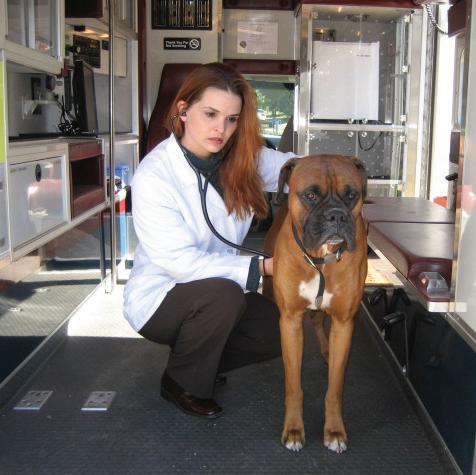
Dr. Kendra Findley diagnoses a patient in her clinic on wheels.
Relationship Based Training
by Danielle Kane
We all love our dogs; we share our homes and often even our beds with them. We take them to parks; we worry about their safety, their nutrition, and their medical needs. We treat them like children except when it comes to training. They are dogs and we are people, different species with different instinctive behaviors and different languages. We have serious communication differences that often lead to conflict.
Traditional dog training is based on the outdated theory that dogs are descendants of wolves and need a pack leader. The theory sounds logical but is not supported by current science. The traditional training methods are based on physical force. For example;
Problem: Pet urinates and defecates in the house.
Traditional Solution: Scold the dog, spank him and rub his face in the mess.
Problem: Dog nips and mouths at people’s clothing and skin.
Traditional Solution: Hold the dog’s mouth
closed or grab his tongue and scold him.
Problem: Dog jumps on people. Traditional Solution: Knee him in the chest when he jumps.
Problem: Dog pulls on the leash. Traditional Solution: Use a choke collar or pinch collar and jerk on the leash.
Problem: The dog barks too much. Traditional Solution: Scold the dog, or use a shock collar or spray the dog in the face.
If this was the way you treated your human best friend, they would not be your best friend very long. Sometimes these solutions do change the dog’s behavior. Unfortunately they also damage the relationship between the owner and the dog. All these solutions damage the trust between the pet and humans. They also make the owner feel bad. It is frustrating to have to experience the dog’s misbehavior in order to train him or her. Punishment often makes an owner feel guilty and often the owner makes a negative association
with training and starts to avoid it. Fortunately science has provided us with new and better ways to train. Called scientific dog training, positive training, and my favorite; relationship based dog training, new science calls for us to see the dog’s side of things. A dog is a dependent creature that does not speak our language and does not know our culture, similar to an exchange student from a foreign country. When we treat dogs more like a young exchange student with empathy, patience and respect and pro-actively set them up for success, not only will we feel better about our methods and protect the trusting relationship we have with our pets but we will also often see faster results. Training becomes something that you look forward to, something fun and exciting! Susan Clothier, in her book If Bones Rain from the Sky, mentions a game she often plays in class. The group is divided into groups of two with one person being the trainer and the other a trainee. The trainers are given a behavior to train but are only permitted to speak the names of fruit. Try it with a
photo by Flickr user bandini’s.on.fire, creative commons
friend. The overall lesson that seems to be learned at the end of the exercise is that being pushed, prodded, positioned and scolded causes stress to the trainee and they stop trying to learn because they are more focused on preventing the stress. Praise and gentle luring gets much better results with much less stress on trainer and trainee.
Human Problem: Dog is urinating and defecating in the house.
Dog’s Perspective: Almost no natural reason to ever “hold it.”
Solution: Manage the dog so that there is no opportunity to eliminate in the home. Accompany the dog and praise it lavishly every time it eliminates outdoors.
Human Problem: Dog is mouthing and biting and it hurts.
Dog’s Perspective: Mouthing and biting is a natural, very effective way to get a human’s attention. Solution: Any and every time a dog’s tooth touches a human’s skin or clothing immediately and silently remove all attention from the dog. Teach another behavior, such as sit, and be careful to always reward it with attention.
Human Problem: Dog jumps on people. Dogs Perspective: Dogs are shorter that humans and are ritual greeters. Solution: Same as above plus train a greeting routine such as run to the kitchen and sit for a treat.
Human Problem: Dog is pulling on the leash making walks uncomfortable or unsafe. Dogs Perspective: We are moving in this direction, let’s go. It is very hard to tell how long a leash is when it is behind your back. Solution: Be less predictable. Practice sits or downs at every driveway and reward with treats. Take an unexpected U-turn or figure 8 in the road. This way the dog needs to pay attention to you and will stay close.
Human Problem: Dog barks and I can’t hear the telephone, TV, my friends… Dogs Perspective: Barking is a reflex action related to different emotions. Dogs often do not even realize they can control it.
Solution: Teach the dog to bark on cue. Teach a different response to scary or stimulating events. The mail trucks arrival is a cue to the dog meaning it is treat time continued on page 27
Keep you pup cool this spring with Cold Nose Pupcream!
Come visit us Saturdays at the Charleston Farmers Market or purchase at Rococo Bakery and now at Whole Foods!
www.thegooddogbakery.com
We deliver! Check out our website for details
1750 Savannah Hwy Charleston, SC 29407 (in with Rococo Bakery)
adoption
Animal Rescue & Relief
Animal Rescue & Relief is a non-profit, NO-KILL rescue organization. We are a 100% volunteer organization funded by private donations and adoption fees. We strive to make a difference through rescue, rehabilitation, re-homing, disaster work & educating the public. We view all animals equally. Meaning, we do not discriminate. We assist all animals whether it’s a dog, cat, parrot, snake or horse. All animals are living breathing creatures unable to speak for themselves. We are here to be their voice and protect them, giving them the chance they deserve. Please contact us for info on adopting, fostering, volunteering or donating. We currently have a variety of animals in need of sponsors to assist with food and medical care.
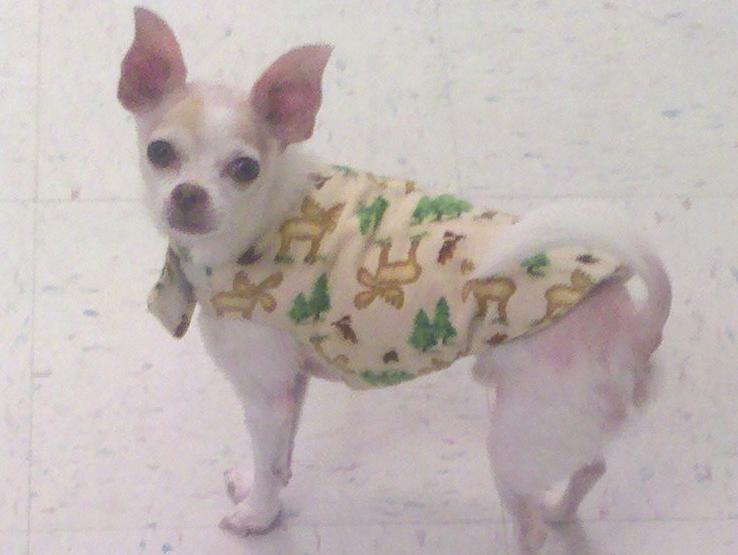
Lexi is a 2 yr old female Chihuahua/Terrier mix that weighs about 6.2 lbs. She does well with people, larger dogs and cats. She even loves well behaved children! Lexi enjoys long walks, car rides and watching Animal Planet.
Rooster is a 1-1.5 yr old male Chihuahua. He is a funny little guy that gets along with other dogs and cats. Rooster can be bit feisty at times but it’s all an act. He has had a rough life and sometimes needs to be reassured that not all people are bad. Rooster really is a cool little man!
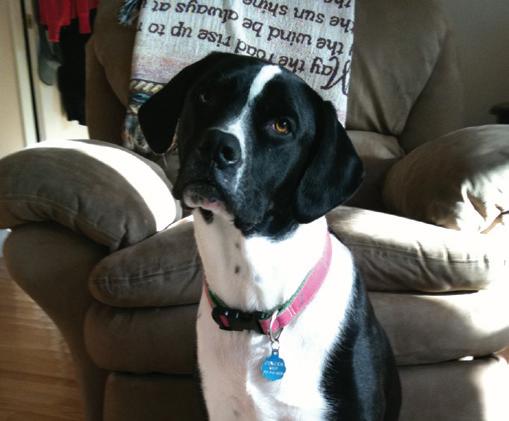
Ginger is a 2 yr old female Border Collie/Lab Mix. She weighs 93lbs and is super smart! Ginger likes cats and calmer dogs. She sometimes gets nervous around new people and small children.
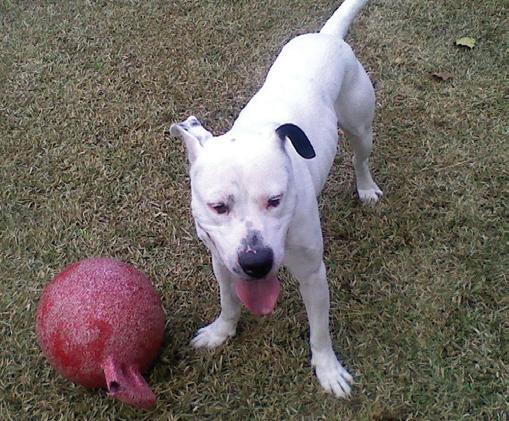
Obie is a 2 yr old male Dogo Argentino mix. He was part of an abandonment case several months ago. Obie has been through a lot and has turned out to be awesome! He is a sweet loving dog that enjoys the company people and other dogs.
Reese is a 1 yr old Shepherd mix. He weighs around 40 lbs. Reese likes other dogs, cats, people and yes, chickens. His original owner adopted him from a shelter only to later abandon him at an apartment complex. Reese is a great dog and deserves a great owner.
Bobby is a 1 yr old Boxer mix that weighs around 60lbs. He does well with other dogs and children. We would prefer that Bobby had a fenced in yard to play in.
in the kitchen. Distract the dog before he barks and praise him while he is quiet.
The principles of relationship based training are simple. First, provide for a dog’s physical, mental, emotional, social and spiritual needs. Dogs need food, shelter, medical care and exercise. Dogs need variety, they need to have a reason to think and process new things. Dogs need our affection and they need to be free of fear. They need opportunities to interact with their own species Dogs need to experience fun, joy, and freedom. Often more exercise and interactive toys can solve behavior problems with no other effort. Second, see things from the dog’s perspective: dogs only do what works. Try to understand their motivation. Next, manage the environment so misbehavior is less likely or preferably impossible. Gates, crates, tethers and food toys are great management tools. Finally, teach the dog what to do right, but do it gently, luring the dog rather than using physical pressure to communicate the correct behavior. Start with small easy steps and
gradually work up to the end behavior. How can you tell if you are doing it right? Ask yourself two questions. Are both my dog and I enjoying the training process? Is our relationship stronger because of the training? If you can answer yes to both questions you are well on your way to relationship based training.
Danielle Kane, CPDT-KA is the owner of Pets Potential in Summerville, SC. Visit www.petspotential.com to find out more about her custom dog training programs and behavior counseling for both cats and dogs.
References: Mech, L. David. What Happened to the Term Alpha Wolf? www.4pawsu.com/alphawolf.pdf
American Veterinary Society of Animal Behavior (AVSAB). Position Statement on the use of dominance theory in behavior modification of animals: www.4pawsu.com/dominancestatement.pdf