MEDICINE S A N A N TO N I O
THE OFFICIAL PUBLICATION OF BEXAR COUNTY MEDICAL SOCIETY
WWW.BCMS.ORG • $4.00 • OCTOBER 2026 • VOLUME 79 NO. 10
IN THIS ISSUE One Condition, Two Opposite Failures: Adult ADHD in 2026 New Frontiers in Epilepsy Treatment Migraine in Children
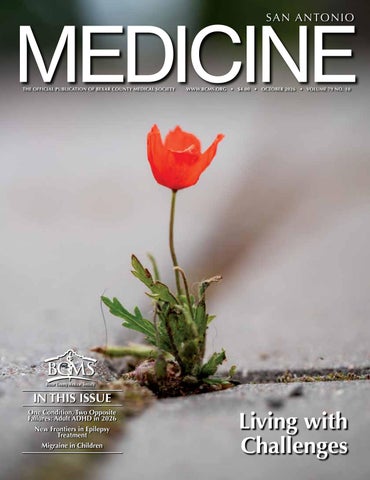
Living with Challenges
ProAssurance has the experience, financial resources, and network of defense litigators you can rely on. For five decades, ProAssurance has stood alongside physicians and healthcare professionals through some of the most complex and challenging moments in medicine. We were founded during a time of profound change in healthcare liability. Since then, the industry has evolved—but our focus has remained the same. Through experience gained, cases defended, and trust earned, we have remained committed to supporting good medicine with strength and stability. As we mark our 50th year, we honor the physicians, partners, and professionals who shaped our story.
ProAssurance.com • 800-282-6242
ProAssurance is the marketing name for subsidiaries of ProAssurance Corporation that write medical professional liability insurance. Coverages may be underwritten by ProAssurance Indemnity Company, Inc., Birmingham, AL, ProAssurance American Mutual, A Risk Retention Group, Birmingham, AL, or NORCAL Insurance Company, San Francisco, CA. Certain coverages may be provided through surplus lines insurance subsidiaries of ProAssurance Corporation through licensed surplus lines brokers. That coverage may be underwritten by ProAssurance Specialty Insurance Company, Birmingham, AL, or NORCAL Specialty Insurance Company, Austin, TX. Insurance coverage is subject to underwriting guidelines, review, and approval.
SAN ANTONIO
TABLE OF CONTENTS
THE OFFICIAL PUBLICATION OF THE BEXAR COUNTY MEDICAL SOCIETY
MEDICINE S A N A N TO N I O
THE OFFICIAL PUBLICATION OF BEXAR COUNTY MEDICAL SOCIETY
WWW.BCMS.ORG • $4.00 • OCTOBER 2026 • VOLUME 79 NO. 10
•
WWW.BCMS.ORG
•
$4.00
•
OCTOBER 2026
LIVING WITH CHALLENGES One Condition, Two Opposite Failures: Adult ADHD in 2026
By Julie Gilbreath, MD.................................................................12
New Frontiers in Epilepsy Treatment
By Adetoun Abisogun Musa, MD.................................................16
Migraine in Children: An underrecognized condition
By Sheldon Gross, MD................................................................18
Maternal Mental Health: Addressing an overlooked contributor to maternal mortality
By Isabella DiMercurio, OMS-IV; Kreny Savaliya, OMS-III; and Scheel Nayar, DO.................................................................20
PTSD: Psychiatry's great imitator
By Jeffrey Benzick, MD................................................................22
IN THIS ISSUE One Condition, Two Opposite Failures: Adult ADHD in 2026 New Frontiers in Epilepsy Treatment Migraine in Children
Living with Challenges
Aquablation Therapy for Benign Prostatic Hyperplasia: A modern approach to relief of bladder outlet obstruction
By Christopher Cantrill, MD..........................................................24
Every Visit is Preconception Care: Addressing female subfertility and diabetes in Bexar County
By Inara Hirani, OMS-II, and James Mayberry, MD.....................................................................................................26
Chronic Pain: An invisible illness
By Hussein Musa, MD...............................................................................................................................................28 BCMS President’s Message By Jennifer Rushton, MD, President, Bexar County Medical Society...............................8 Perspectives: Seize the Moment Before It’s Gone By Gerardo (Gerry) Ortega, MD, FACS.........................................10 Health Begins with Confianza.....................................................................................................................................30 OB Billing Just Got Its First Real Rewrite Since the 1990s: What it means for Bexar County By Atiya Hasan, MD, MBA, MSHLS...........................................................................................................................34 In Memoriam: George Edward Mimari, MD................................................................................................................35 BCMS Auto Program: More than four decades of serving members By Gabriella Bradberry.....................................36 Opioids in Practice: Strategies for safe use Courtesy of MedPro Group....................................................................38 Bexar County Medical Society Business Partners Program........................................................................................40 Buy an Analog Car By Stephen Schutz, MD.............................................................................................................44 Recommended Auto Dealers.....................................................................................................................................46
PUBLISHED BY: Traveling Blender, LLC. 10036 Saxet Boerne, TX 78006
ADVERTISING SALES: AUSTIN: Sandy Weatherford sandy@travelingblender.com
PUBLISHER: Louis Doucette louis@travelingblender.com
SAN ANTONIO: Gerry Lair gerrylair@yahoo.com
BUSINESS MANAGER: Vicki Schroder vicki@travelingblender.com GRAPHIC DESIGNER: Jennifer Nelson jennifer@travelingblender.com
4
For more information on advertising in San Antonio Medicine, Call Traveling Blender at 210.410.0014 in San Antonio
SAN ANTONIO MEDICINE • OCTOBER 2026
•
VOLUME 79 NO. 10
San Antonio Medicine is the official publication of Bexar County Medical Society (BCMS). All expressions of opinions and statements of supposed facts are published on the authority of the writer, and cannot be regarded as expressing the views of BCMS. Advertisements do not imply sponsorship of or endorsement by BCMS. EDITORIAL CORRESPONDENCE: Bexar County Medical Society 4334 N Loop 1604 W, Ste. 200 San Antonio, TX 78249 Email: editor@bcms.org MAGAZINE ADDRESS CHANGES: Call (210) 301-4391 or Email: membership@bcms.org SUBSCRIPTION RATES: $30 per year or $4 per individual issue ADVERTISING CORRESPONDENCE: Louis Doucette, President Traveling Blender, LLC. A Publication Management Firm 10036 Saxet, Boerne, TX 78006 www.travelingblender.com
For advertising rates and information Call (210) 410-0014 Email: louis@travelingblender.com SAN ANTONIO MEDICINE is published by SmithPrint, Inc. (Publisher) on behalf of the Bexar County Medical Society (BCMS). Reproduction in any manner in whole or part is prohibited without the express written consent of Bexar County Medical Society. Material contained herein does not necessarily reflect the opinion of BCMS, its members, or its staff. SAN ANTONIO MEDICINE the Publisher and BCMS reserves the right to edit all material for clarity and space and assumes no responsibility for accuracy, errors or omissions. San Antonio Medicine does not knowingly accept false or misleading advertisements or editorial nor does the Publisher or BCMS assume responsibility should such advertising or editorial appear. Articles and photos are welcome and may be submitted to our office to be used subject to the discretion and review of the Publisher and BCMS. All real estate advertising is subject to the Federal Fair Housing Act of 1968, which makes it illegal to advertise “any preference limitation or discrimination based on race, color, religion, sex, handicap, familial status or national origin, or an intention to make such preference limitation or discrimination.
Established in 2009, Traveling Blender, LLC. has grown into a multifaceted publication management firm operating primarily in the Central Texas area which includes San Antonio, Austin and the surrounding Hill Country. However, our staff has been involved in publications throughout the country. We provide our clients with solutions to all of their publication needs including but not limited to Total Publication Management, advertising sales and training, establishing publication production processes, developing effective distribution models and any other solutions their publications may need to become successful.
Copyright © 2026 Traveling Blender, Inc. PRINTED IN THE USA
BCMS BOARD OF DIRECTORS ELECTED OFFICERS
Jennifer Rushton, MD, President Lauren E. Tarbox, MD, Vice President Lubna Naeem, MD, President-Elect Dan Powell, MD, Treasurer Lyssa N. Ochoa, MD, Secretary John Shepherd, MD, Immediate Past President
DIRECTORS
Heather Aguirre, DO, Member Alexander Arena, MD, Member Woodson “Scott” Jones, MD, Member John Lim, MD, Member Sumeru “Sam” Mehta, MD, Member M. “Hamed” Reza Mizani, MD, Member Priti Mody-Bailey, MD, Member Saqib Z. Syed, MD, Member Nancy Vacca, MD, Member Luis O. Rohena, MD, Military Representative Heather Yun, MD, Veterans Affairs Representative Jayesh Shah, MD, TMA Immediate Past President John Pham, DO, UIW Medical School Representative Lori Kels, MD, UIW Medical School Representative Robert Leverence, MD, UT Health Medical School Representative Cynthia Cantu, DO, UT Health Medical School Representative Ronald Rodriguez, MD, UT Health Medical School Representative Melody Newsom, BCMS CEO/Executive Director George F. "Rick" Evans, Jr., General Counsel
Curated banking from a trusted local partner. At Broadway Bank, our Private Banking and Wealth Management teams offer comprehensive, integrated financial solutions tailored to your unique goals. Rooted in the communities we serve, our entire in-house team of highly credentialed professionals brings specialized expertise to help you move forward with confidence. P R I V A T E B A N K I N G • W E A LT H M A N A G E M E N T ( 2 1 0 ) 7 6 4 - 0 1 6 6 • B R O A D W AY. B A N K / P R I V AT E
Investments and Insurance products are: Not FDIC insured Not guaranteed by the bank or any bank affiliate Not a deposit Not insured by a federal government agency May lose value
Private Banking at Broadway Bank is subject to eligibility qualifications. Eligibility criteria may include financial, professional, and/or account verification and evaluation. Subject to change without notice. Member FDIC. #4441165856/05/26
6
SAN ANTONIO MEDICINE • OCTOBER 2026
BCMS SENIOR STAFF
Melody Newsom, CEO/Executive Director Brissa Vela, Chief Membership & Development Officer Yvonne Nino, Controller Betty Fernandez, BCVI Director of Operations Phil Hornbeak, Auto Program Director Al Ortiz, Chief Information Officer Jacob Hernandez, Advocacy and Public Health Specialist
PUBLICATIONS COMMITTEE Jennifer C. Seger MD, Chair Shiv Goel, MD, Member Animesh Chidanandrao Gour, MD, Member James Mayberry, MD, Member Rajam S. Ramamurthy, MD, Member Adam V. Ratner, MD, Member Patrick Todd Reeves, MD, Member Amith Skandhan, MD, Member Francis Vu Tran, MD, Member Elizabeth Allen, Volunteer Rita Espinoza, DrPH, MPH, Volunteer Melissa Rosales, Volunteer Andrea Wazir, MS, Volunteer Ayomide Akinsooto, Student Youyou Cheng, Student Gabrielle Holliefield, Student Michael Hueste, Student Kreny Savaliya, Student Gabriella Bradberry, Staff Liaison Trisha Doucette, Editor Louis Doucette, Consultant
PRESIDENT’S PERSPECTIVES MESSAGE
An Invitation to
SHARE Your
STORY Every physician carries a story — moments that shaped you, challenges that tested you and insights that continue to guide your practice. These experiences hold tremendous power, not only for personal reflection but also for inspiring colleagues who walk similar paths.
We invite you to contribute your personal stories, professional challenges or accomplishments, and unique viewpoints to our “Perspectives” collection in San Antonio Medicine magazine for the Bexar County Medical Society — a column created by doctors, for doctors. Whether it’s a breakthrough moment, a difficult lesson, an unexpected joy or a perspective that changed the way you practice medicine, your voice matters. Your contribution will help build a space where physicians can learn from one another, feel seen, and find renewed purpose in the work you all share. If you’re willing to participate, please submit your story to editor@bcms.org. Submissions can be brief or in-depth — whatever feels authentic to you. Thank you for considering this opportunity to uplift and inspire fellow physicians. Your experience could be exactly what someone else needs to hear.
SUBMIT YOUR STORY TO
EDITOR@BCMS.ORG
PRESIDENT’S MESSAGE
We Don’t Have to Meet These Challenges Alone By Jennifer R. Rushton, MD, President, Bexar County Medical Society
Dear friends and colleagues, Our patients live with the challenges of illness and disease. Patients living with chronic ailments face uncertainty about when the next symptom will occur or whether they will develop a new complication. Some patients question whether they will be able to see the right doctor or be able to get the medication they need. The worries of their illness are added to the other common worries that we all face in life. Their futures are even more uncertain, as their illnesses take them to unexpected places. These patients live with uncertainty, change and challenges they never expected. They need help understanding how to live with a diagnosis that changes the life they thought they would have. Physicians too are living with the challenges of practicing medicine in today’s healthcare environment. We entered this profession because we wanted to care for people, solve difficult problems, and make a difference. Yet the work of being a physician today can sometimes feel far removed from that original calling. We face growing administrative burdens, increasing regulatory requirements, workforce shortages, rising costs, declining autonomy and other relentless demands on our time. We navigate an increasingly complex healthcare system where we are asked to do more with less time. The challenge that may be hardest to quantify is the emotional burden of caring. We must find ways to not let these challenges define us. Changes to our broken healthcare system will be much more effective than any individual improvements we make. We need systems that do not just ask us to withstand more and carry an unlimited burden but that support physicians. When the administrative noise around us becomes overwhelming, reconnecting with the reason we entered medicine can provide perspective. Rediscovering our purpose can be empowering. As a pathologist, finally solving a challenging diagnosis, assisting a treating physician interpret laboratory testing, or helping the hospital implement a new test that improves patient care help to reinforce my purpose. Physicians can be reluctant to acknowledge vulnerability, but we need to recognize that asking for help is not weakness. We are accustomed to being the person others turn to for answers, but medicine is too demanding to practice in isolation. We need colleagues with whom we can talk honestly, mentors who can provide perspective, and friends and family who remind us that our identities extend beyond our professional roles. Organized medicine can help us with these challenges. As individual physicians, our ability to change healthcare policy, payment structures, scope of practice issues, regulatory requirements and workforce shortages is limited. But collectively, our voice is strong. With BCMS,
physicians can effect change outside of our individual practices. In partnership with the TMA and AMA, we can advocate for policies that protect the physician-patient relationship, improve access to care, strengthen the physician workforce, and reduce unnecessary burdens on physicians. Advocacy is another form of patient care. When we advocate for adequate physician payment and a strong workforce, we are advocating for the sustainability of practices that serve patients and preserve access to care. When we ask for reduced administrative requirements, we are asking for more time to care for patients. When we prioritize physician wellness, we are protecting physicians and the patients that depend on us. BCMS provides a collective voice and a community. Our community is one of the most important tools we have to face the challenges of modern medicine. Even with our diverse specialties and practice settings, we share a common commitment to our patients and to our profession. With our shared purpose, we can learn from each other and conquer our challenges together. Our patients living with challenges need more than diagnosis and treatment. They need connection, understanding, resources and hope; and so do we. Organized medicine may not solve every frustration we face practicing medicine today, but we can listen to each other, ask for help, support one another, and celebrate our progress along the way. We can use our collective voice to advocate for the healthcare system we want. Just as patients are more than their diagnoses, physicians are more than our productivity. We are people caring for people, and BCMS is here to help us create the conditions in which both patients and physicians can live our lives as fully as possible. We cannot choose every challenge that comes our way, but we can choose how we meet them, and we do not have to meet them alone. That is the strength, the value and the promise of BCMS. With gratitude, Jennifer R. Rushton, MD Jennifer R. Rushton, MD, 2026 President of the Bexar County Medical Society, is a partner at Oculus Pathology and the Medical Director of Pathology and Laboratory Medicine for the Baptist Health System. She is board certified in Anatomic and Clinical Pathology, Hematopathology and Molecular Genetic Pathology. Dr. Rushton currently serves as Chief of Staff for Baptist Medical Center Hospital. She is a long-time member and co-chair of the BCMS Legislative Committee, serves on the TMA Council on Healthcare Quality, and is a Texas Delegate to the AMA.
2027 BCMS Election On September 13, ballots for the BCMS 2027 elected leadership positions were emailed to eligible voting members. Your participation helps shape the future leadership of BCMS and we encourage you to participate in this important election. Voting will close at 5:00 p.m. on October 13. Please see the September issue of San Antonio Medicine magazine for a complete list of candidate bios. 8
SAN ANTONIO MEDICINE • OCTOBER 2026
SAVE THE DATES IN 2027! FEB. 2 • MARCH 2 • APRIL 6 • MAY 4
LIVING WITH PERSPECTIVES CHALLENGES
Seize the Moment Before It’s Gone By Gerardo (Gerry) Ortega, MD, FACS
I was granted an academic scholarship to attend Medical School at the University Autonoma de Nuevo Leon in Monterrey, Mexico, and at the graduation ceremonies, I was asked to deliver the valedictory speech. Then I encountered my first critical decision: where to attend residency training in surgery. The professors at the medical school and university hospital had trained in Mexico City, the U.S. or at the university hospital in Monterrey. Not having significant connections in Mexico City institutions, I opted for the U.S. As soon as that was clear in my mind, I investigated the mechanisms required to accomplish that, which included competency testing, becoming proficient in the language, and acquiring English translations of all my education documents. Upon completing the requirements, I applied to surgical programs through the Matching program. Timing was of the essence so I wouldn’t see myself waiting for another year. I got the results in March of 1974; I matched at Mount Sinai in New York City. I found myself in a cultural shock and a pyramidal surgical program with 25 intern positions and five chief resident positions — not a very good situation. At that point, I applied to about 10 other places for a residency position for the July 1975 cycle, with no immediate responses. It wasn’t until April of 1975 that I got a phone call from Dr. Frederick at Deaconess Hospital in St. Louis, MO., offering me a position. Deaconess Hospital was a private hospital with lots of common surgical procedures, but I also discovered the surgical program was on probation. So, I started looking again and was accepted in the surgical program of the University of Rochester in July of 1975. By August 1975, I had met a very beautiful nurse, Catherine Lee, and we started dating. In June of 1976, it was time to move to Rochester, NY, and it was also time to make one of the most important and critical decisions of my life: who to share this journey with? Was she the right person? Fifty years later, I still think it was the right decision. That is commitment. The surgical program in Rochester had five chief resident positions — one for each hospital participating in the residency program. I wanted Rochester General Hospital (RGH); however, the selection committee chose another resident that was in research at the time. So, I started my conversations with the chief of surgery at St. Mary’s Hospital. They had already selected a resident, but somehow, they changed their minds and took me. Later, I found out that the position at RGH was reopened because the resident decided to do ortho instead of general surgery. That was the original position that I had wanted, so I made an appointment to talk to the chief of surgery there. He said if they would release me from the other hospital, he would take me. It was not easy to face the chief of surgery at St. Mary’s Hospital, and they were not happy. I returned to RGH and told the chief of surgery that I wanted to be at RGH, and I thought he could make it happen. He did. 10
SAN ANTONIO MEDICINE • OCTOBER 2026
Do not underestimate your capabilities and your value. Identify help when you need it. At the end of general surgery residency, I was very interested in vascular surgery. That required a fellowship, and at the time, there were 25 fellowship positions in the country. I applied to five and interviewed for three programs. I loved general surgery and had done many gastrectomies, colectomies, pancreatectomies, etc. I felt, at the time, that I would miss these procedures if I dedicated myself to vascular surgery. Dr. Joseph Geary, an attending at RGH, had a good relationship with Dr. Kaupp, the director of the vascular program at Allentown and Sacred Heart Hospital. He made a phone call and I was accepted to this program. In October of 1980, I attended the American College of Surgeons meeting in Chicago and the Alumni Association meeting of my medical school. I met Dr. Raul Ramos, a colon and rectal surgeon, and I indicated to him that I was looking for a job as a vascular surgeon. He went back to San Antonio and the next day, in the surgeons’ dressing room, he met Dr. Mozersky, a vascular surgeon, both getting ready for their daily activities. He mentioned me, and Dr. Mozersky said for me to call him the next day. I had never been to San Antonio, despite the fact that I grew up in Monterrey, a six-hour drive away. When I came for an interview, Dr. Mozersky took me on rounds on a Sunday morning. We started at Santa Rosa Hospital, where he introduced me to a patient who immediately started speaking to me in Spanish. At that point, I realized this was my town. Sometimes we think we have accomplished a lot by ourselves, but almost always there is someone that will open a door for you. YES, it is your work, your dedication and your effort, but you better be ready to jump at the opportunity when someone opens a door for you. One evening, we were at the Angio Club, an organization set up by Dr. Julio Palmaz from the UT Radiology department to review angiogram and new endovascular procedures. The cases were presented by the residents and a few vascular surgeons in private practice. It was very well attended. While we were waiting in line for our pasta dinner, I was talking to a rep that sponsored the meeting and mentioned to him that we needed to have a separate meeting called the Endovascular Club, to specifically discuss endovascular cases, which were in their infancy. His response was, “I can sponsor it.” A vascular surgeon next to me commented that it was a great idea, and the Endovascular Club was born. Many years later, Dr. Palmaz left San Antonio and asked me to incorporate the Angio Club into the Endovascular Club. I soon realized that these new endovascular procedures would be the way of the future. With angioplasty and stents, these procedures were moving fast from research and university settings to private practice and Cath labs where many different specialties were working — many times not together. Obviously, I did not have any training of these new proce-
LIVING WITH PERSPECTIVES CHALLENGES
dures in my vascular fellowship so, again, keeping the vision of the future, I had to go for training. I spent several weeks at the Vascular Center at Union Memorial Hospital in Baltimore with Dr. Criado, and a month at the Arizona Heart Institute with Dr. Dietrick, as well as taking many courses on the topic, all while suspending my practice. Thankfully, I was in a group that understood the need for us to do this. Now, vascular fellowships are two years — one of interventional procedures. There are some situations in life when you need to think fast and act faster. What attracted me to vascular surgery is the fact that you can see immediate results, like when you remove a clot from an artery and establish immediate blood flow; when you clamp the abdominal aorta or inflate a ballon in the aorta on a patient with a ruptured aneurysm and you see immediate hemodynamic changes; or when you repair an abdominal aneurysm with a stent graft and you see an immediate radiologic result. When I came to San Antonio and joined the vascular group, I became very busy and never again thought about general surgery. I may be wrong, but without a doubt, your vision cannot be stationary. Upon my arrival in San Antonio in August of 1981, I visited many physicians to let them know that I was a new vascular surgeon in town. I discovered that about 80 of the physicians had gone to the same medical school as myself, although there were only two of us from the same class. Back in Monterrey, my classmate, Dr. Zacarias Villarreal, was elected Dean of the Medical School. I saw the opportunity to get together, so I invited 40 of the doctors from San Antonio and the Dean of the Medical School from Monterey to my house for dinner, socializing and looking at the possibility of a renewed relationship with the medical school. After that event, I thought about forming a Foundation to benefit the alma mater. We did some research, and in addition to the 80 doctors in Bexar County, we located an additional 500 doctors in the U.S. Letters were sent to all of them inviting them to participate in this new organization, and the University of Nuevo Leon Medical School Foundation was born. I became the founding President, and eventually a board of directors was formed. Through the Foundation, we donated beds, dialysis units, buses for the students and an industrial incinerator donated by Baptist Health System. We transported it to Monterey, and this incinerator even provided services to other hospitals in the area. Never miss an opportunity to give back. The most effective way to improve the health and the socioeconomic well-being of a community is through education. That belief has always been important to me and inspired me to create programs like Vascular Update, Wound Care Update, multiple medical education lectures in the community, and a television program sponsored by Baptist Health System titled “Consulte a Su Médico.” I also participated in three seasons of a weekly program called “Desde San Antonio” with Amparo Ortiz at Univision.
By 1999, I had been with the Bexar County Medical Society for 19 years (now 45 years), participated on many committees and was member of the board for several years, including Secretary and Treasurer. I expected to move to Vice President, as it was the tradition at the time. Instead, another physician decided to run for the same position. Initially, I did not want to be challenged and decided not to run, but over the weekend I changed my mind. I needed to do something outside the box, so with a help of my wife, Catherine, we printed fliers with my picture, previous positions and activities at BCMS, then distributed to all hospitals, nurses’ stations and bulletin boards, and attended many medical staff meetings and medical specialty meetings. Nobody had done this before. I won the election, and the following year, proceeded unchallenged to the position of President-elect. The position of President of the Baptist Health System was a bit different. Being a member of the medical executive board, we discussed the need to have a position of Vice President. As soon as the meeting was over, I communicated to the President and several key members my desire to get that position, so I was elected Vice President the following year. If you want to do something in life, you need to act fast. Finally, I saw the opportunity to run for the 2027 Treasurer position of BCMS and took it. As WE physicians move up in the socioeconomic ladder of the community, it is our duty to open doors and help those that come behind us. Gerardo (Gerry) Ortega, MD, FACS President BCMS Library Foundation BCMS 2001 President BCMS Delegate to the TMA
Gerardo Ortega, MD (center, seated), speaks in a meeting with the office of Rep. John Lujan, flanked by Daniel Deane, MD, and Catherine Ortega at First Tuesdays at the Capitol 2025. Visit us at www.bcms.org
11
LIVING WITH CHALLENGES
One Condition, Two Opposite Failures: Adult ADHD in 2026 By Julie Gilbreath, MD
M
ariela is 42. She has been treated for anxiety since middle school and for depression since the birth of her second child. She is in your office because her son was evaluated last month, and the psychologist’s report and the questionnaires read like her own biography. She has never been asked a single question about attention, focus or working memory. She handled things, somewhat. But after 2.5 kids and a full-time job she is exhausted, and now she is asking whether this is perimenopause. Down the hall is a 24-year-old who watched three TikTok videos, believes the algorithm tells the whole truth, took a quiz from an Instagram ad, had a fifteen-minute video visit, and has been taking 30 mg of dextroamphetamine for a year. Nobody has ever asked him about his childhood, his sleep, his drinking or his gaming. Both patients are living with ADHD as it is actually practiced in Texas in 2026. One condition, two opposite failures. I would argue no other diagnosis in adult medicine is handed out so freely to people who do not have it while being missed so reliably in people who do. Both problems are real, both are measurable and both have the same fix. The Overdiagnosis is Real We are not imagining it. Adult ADHD diagnoses more than doubled in one large health system in a decade, from 0.43% to 0.96% of members.¹ Since COVID, stimulant fills have climbed fastest of all, especially in women aged 15 to 44.² And we have had some bad players. A national telehealth company paid $6.5 million in 2024 to resolve federal allegations that it tied provider incentives to stimulant prescriptions.³ The problem seems to be the method of diagnosis. A 2025 meta-analysis of 311 studies found adult ADHD prevalence in psychi12
SAN ANTONIO MEDICINE • OCTOBER 2026
atric settings of 26% when measured by rating scale, 19% by diagnostic interview and 16% by chart review.⁴ Rating scales on their own inflate the number of diagnoses. Any evaluation that ends at the questionnaire will diagnose ADHD in people who have anxiety, depression, sleep apnea, a substance problem or a bad year, not to mention perimenopause. The 2021 scoping review of 334 studies that documented overdiagnosis found that the majority of the surplus were milder cases, and that only five of 334 studies asked whether those milder cases benefited from the label at all.⁵ So are we really diagnosing ADHD, or are we treating any mild problem with focus as if it were ADHD and not digging any deeper? The Underdiagnosis is Larger That is one side of the coin. The pandemic, social distancing, the TikTok explosion and the sudden growth of telehealth all landed at once, and it seems that a diagnosis is now something you can get online in an afternoon. The other side of the coin is underdiagnosis, and it is the bigger problem. The studies tell us to expect somewhere between 3 and 5% of adults to have ADHD. Globally, about 2.6% of adults have persistent ADHD and 6.8% meet symptom criteria.²³ The best U.S. estimate, from clinician-confirmed interviews, is 4.4% of Americans aged 18 to 44, a figure the authors called conservative, and only 10.9% of those adults had received any treatment in the prior year.⁶ Yet when researchers count the diagnoses actually recorded in health registers, meaning the ones written in medical records, they find 1.6% of adults. When they survey the same populations for symptoms, they find 5.0%.⁷ For
LIVING WITH CHALLENGES
every adult with ADHD on the books, about two more are walking around without a diagnosis. We are finding roughly a third of the people we expect to find. Seen that way, the doubling from 0.43 to 0.96% is not a bubble. It may just be catching up, because we have been missing women. The gap between what we believe the prevalence to be and our actual numbers has a face, and it is usually a woman. In childhood, three to 16 boys are referred for evaluation for every girl,⁸ so ADHD in children looks like a three-to-one male condition. In adulthood, the ratio is closer to one to one.⁹ Girls did not suddenly develop ADHD when they grew up. They were missed, and most likely treated for anxiety or depression, or labeled bipolar or borderline, before anyone considered ADHD. Fourteen percent of girls versus 5% of boys received an antidepressant before any ADHD treatment.¹⁰ Among U.S. adults who carry the diagnosis today, 55.9% were diagnosed at 18 or older.¹¹ And as with so much else in medicine, the missing are also disproportionately Black and brown. Black patients are about 26% less likely than white patients to receive the diagnosis, and Black women are the least likely of any group.¹² Among 4.2 million commercially insured young people, Hispanic, Black and Asian youths were diagnosed less often than white youths at every age, yet once diagnosed, they were treated at nearly the same rate. The bottleneck is the diagnosis, not the treatment.²⁴ Being missed is not benign. In a Danish cohort of 1.92 million people, ADHD first diagnosed at 18 or older carried an adjusted mortality rate ratio of 4.25, driven by accidents, versus 1.58 for diagnosis in childhood.¹³ Late diagnosis is not a milder form of the condition. Its features may just be less loud and less disruptive. It is a longer stretch of unrecognized risk. Why Both are True at Once The same study that documented overdiagnosis also documented underdiagnosis. It talked about girls being missed.⁵ We are overdiagnosing at the mild end of the ADHD spectrum and underdiagnosing women, and Black and brown women most of all. On one side, you have mild cases where a checklist and a short visit produce a label. On the other, you have women who clearly meet criteria and spend decades being treated for anxiety and depression, coping with the stress, and holding it together until they grow in their careers, have children, and burn out, because the systems that carried them start failing. It is very tempting to blame telehealth for the overdiagnosis. The data do not support that. A 2026 analysis of 119,138 adults found no significant difference in stimulant treatment rates, prescription counts or benzodiazepine and opioid co-prescribing between telehealth-only, hybrid and in-person care.¹⁴ The platform was never the problem. In person or on a screen, the problem is the assessment. First, nobody thinks that a middle-aged working mother of two has ADHD. We assume depression and anxiety, because she has plenty of both. Second, the same assessment that hands the 24-year-old gamer a diagnosis he does not have is the one that never asks the woman about her childhood, and not just about hyperactivity. Was she the daydreamer twirling her hair in the back of the class, who got far because she was smart and hard-working, and who is now tired and burned out?
What is at Stake If you do the proper assessment and the person has the diagnosis, treating it is the right thing to do. Two large Swedish studies that followed nearly 150,000 newly diagnosed people found that those who started medication were less likely to die of unnatural causes over the next two years, and less likely to attempt suicide, misuse drugs, crash a car, or end up charged with a crime.¹⁵ ¹⁶ When the diagnosis is wrong and the person is on a stimulant anyway, you are adding risk with no benefit. New-onset psychosis is rare, roughly one in 650 treated young patients, but it is 1.65 times more likely with amphetamine than with methylphenidate, and above 30 mg of dextroamphetamine equivalents the odds rise more than fivefold.¹⁷ Efficacy plateaus around 50 mg of amphetamine a day, so there is no reason to be above it.¹⁸ And there is a whole issue about treating, titrating and following up. Across nine countries, only 48% of adults were still on medication one year after starting.¹⁹ You do not start a medication and send them on their way. You assess, and you reassess. The Evaluation That Fixes Both If the problem is not the questionnaire but stopping at the questionnaire and not digging further, then the solution is not that everyone needs a psychiatrist or a full battery of psychological testing, computerized testing included. The solution is structure and time. Nobody untrained should be making this diagnosis. But what the diagnosis needs most is time with the patient and a structure for that time. • A full interview, not just a questionnaire or a screening scale. Screening is not the diagnosis. Screening is data. • The DSM-5-TR criteria, applied deliberately. • Onset in childhood, before age 12. And not just “were you disruptive in class.” Were you the distracted child staring out the window, not sure what was going on, but smart enough to get good grades and never get in trouble? • Information from family members, people who knew them when they were little. • A check for what else is going on. Just as diabetes, high blood pressure and high cholesterol like to hang out together, ADHD likes to hang out with depression, anxiety and substance use. Make sure it is not bipolar disorder, untreated sleep apnea or thyroid disease. Think about perimenopause.²⁰ And just because they have hypothyroidism or are going through perimenopause does not mean they do not have ADHD. • Computerized testing where available. It is useful in addition to a comprehensive history. It is not a substitute for one. • A baseline blood pressure, heart rate and cardiac history, including sudden death in a young relative. • Then actually follow up. Titrate. At each visit ask about mood changes, and remember the possibility of psychosis. There are three things happening this year that shape all of this. One, there is still a shortage of stimulant medications despite the DEA quota increases, and 71.5% of adult stimulant users reported difficulty filling a prescription.¹¹ Two, the federal telemedicine flexibilities that allow controlled-substance prescribing without a prior in-person exam change on December 31, 2026, and the DEA’s replacement rule is still Visit us at www.bcms.org
13
LIVING WITH CHALLENGES
unpublished as of September.²¹ Every adult ADHD chart should record the date of the last in-person exam. Three, there is no published U.S. clinical practice guideline for adult ADHD, although we are expecting one next year.²² Until then, NICE NG87 and the European consensus are the working standards. The Honest Summary Overdiagnosis and underdiagnosis are not opposing camps. They are two symptoms of the same shortage, which is clinical time. The shortcut that labels the wrong 24-year-old is the same shortcut that never asks the right 42-year-old. The fix is the same in both directions: a careful history, a structured interview, collateral information, comorbidity screening and a plan to follow through. That is not new medicine. It is old medicine, applied to a condition we are only now learning to see in adults. Nothing in this article is legal or regulatory advice. Verify DEA and Texas telemedicine rules with counsel before relying on them. References: 1. Chung W, et al. (2019). Trends in the prevalence and incidence of attention-deficit/hyperactivity disorder among adults and children of different racial and ethnic groups. JAMA Network Open, 2(11), e1914344. https://doi.org/10.1001/jamanetworkopen.2019.14344 2. Danielson ML, et al. (2023). Trends in stimulant prescription fills among commercially insured children and adults, United States, 2016 to 2021. MMWR, 72(13), 327-332. https://doi. org/10.15585/mmwr.mm7213a1 3. US Department of Justice. (2024, November). Cerebral Inc. agrees to pay $3.6 million and enter deferred prosecution agreement. Press release 4. Johnson J, et al. (2025). Prevalence of adult ADHD in psychiatric clinical settings: A systematic review and meta-analysis. Molecular Psychiatry. Advance online publication 5. Kazda L, et al. (2021). Overdiagnosis of attention-deficit/hyperactivity disorder in children and adolescents: A systematic scoping review. JAMA Network Open, 4(4), e215335. https://doi. org/10.1001/jamanetworkopen.2021.5335 6. Kessler RC, et al. (2006). The prevalence and correlates of adult ADHD in the United States. American Journal of Psychiatry, 163(4), 716-723. https://doi.org/10.1176/ajp.2006.163.4.716 7. Popit S, et al. (2024). Prevalence of attention-deficit hyperactivity disorder in adults: Register versus survey studies. European Psychiatry, 67(1), e68 8. Young S, et al. (2020). Females with ADHD: An expert consensus statement. BMC Psychiatry, 20, 404. https://doi. org/10.1186/s12888-020-02707-9 9. Attoe DE & Climie EA. (2023). Miss. Diagnosis: A systematic review of ADHD in adult women. Journal of Attention Disorders, 27(7), 645-657 10. Madhoo M & Quinn PO. (2014). Sex differences in ADHD diagnosis and treatment. Primary Care Companion for CNS Disorders, 16(3) 11. Staley BS, et al. (2024). Attention-deficit/hyperactivity disorder diagnosis, treatment, and telehealth use in adults, National Cen14
SAN ANTONIO MEDICINE • OCTOBER 2026
ter for Health Statistics Rapid Surveys System, United States, October to November 2023. MMWR, 73(40), 890-895 12. Shalaby N, et al. (2024). Racial and ethnic disparities in ADHD diagnosis and treatment. Scientific Reports, 14, 25123 13. Dalsgaard S, et al. (2015). Mortality in children, adolescents, and adults with attention deficit hyperactivity disorder: A nationwide cohort study. Lancet, 385(9983), 2190-2196 14. Olfson M, et al. (2026). Telehealth and stimulant treatment of adult ADHD. Molecular Psychiatry 15. Li L, et al. (2024). ADHD pharmacotherapy and mortality in individuals with ADHD. JAMA, 331(10), 850-860. https://doi. org/10.1001/jama.2024.0851 16. Zhang L, et al. (2025). ADHD medication and risk of suicidal behaviour, substance misuse, accidental injuries, transport accidents, and criminality: Target trial emulation. BMJ, 390, e083658 17. Moran LV, et al. (2019). Psychosis with methylphenidate or amphetamine in patients with ADHD. New England Journal of Medicine, 380(12), 1128-1138; and Moran, L.V., et al. (2024). American Journal of Psychiatry 18. Nourredine M, et al. (2026). Dose-effect of ADHD medications in adults: A network meta-analysis. Lancet Psychiatry, 13(6), 485-495 19. Brikell I, et al. (2024). Medication treatment persistence in ADHD across nine countries and regions. Lancet Psychiatry 20. Wynchank D & Kooij S. (2026). Pharmacological management of ADHD in women across perimenopause, menopause and post-menopause. Drugs and Aging, 43(5), 385-395. https://doi. org/10.1007/s40266-026-01291-z 21. Drug Enforcement Administration. (2025, December 31). Fourth temporary extension of COVID-19 telemedicine flexibilities for prescription of controlled medications. Federal Register 22. American Professional Society of ADHD and Related Disorders. US adult ADHD clinical practice guideline, in development, expected 2027 23. Song P, et al. (2021). The prevalence of adult attention-deficit hyperactivity disorder: A global systematic review and meta-analysis. Journal of Global Health, 11, 04009. https://doi. org/10.7189/jogh.11.04009 24. Adams DR, et al. (2024). Racial and ethnic disparities in ADHD diagnosis and treatment among commercially insured youths. Psychiatric Services. https://doi.org/10.1176/appi.ps.20230268
Julie Gilbreath, MD, is a board-certified internal medicine physician and the founder of Avo Direct Care, a direct-pay practice in Stone Oak, San Antonio, focused on the evaluation and treatment of ADHD in adults. She earned her medical degree from the University of Puerto Rico School of Medicine and completed her internal medicine residency at UT Health San Antonio, where she later served on the faculty. Her clinical interest is adults, especially women, whose ADHD was missed for decades and mislabeled as anxiety or depression. Dr. Gilbreath is a member of the Bexar County Medical Society.
LIVING WITH CHALLENGES
The Impact of Physician Burnout, Depression and Suicide 45.2% of physicians surveyed report feeling the effects of burnout daily1
28% 2 out of 3 physicians who are experiencing depression say it affects their work2
of residents surveyed report experiencing a major depressive episode during training3
Drivers of Burnout
• Workload • Work inefficiency • Lack of autonomy and meaning in work • Work-home conflict
Medical students have rates of depression 15-30% higher than the general population4
300 to 400 physicians die by suicide each year4
Suicide Warning Signs Talk
• Killing themselves • Having no reason to live • Being a burden to others • Feeling hopeless • Feeling trapped • Unbearable pain
Behavior
The suicide rate among male physicians is 1.41x higher than the general male population4
The suicide rate among female physicians is 2.27x higher than the general female population4
1. “Measuring and addressing physician burnout,” May 15, 2025, https://www.ama-assn.org/practicemanagement/physician-health/measuring-and-addressing-physician-burnout. 2. Leslie Kane, MA, “Medscape National Physician Burnout, Depression & Suicide Report 2019,” Medscape, January 16, 2019. 3. Mata, DA, et al. (2015). Prevalence of Depression and Depressive Symptoms among Resident Physicians. JAMA, 314(22), 2373. 4. “10 Facts About Physician Suicide and Mental Health,” American Foundation for Suicide Prevention.
• Increased use of alcohol or drugs • Withdrawing from activities • Isolating from family and friends • Sleeping too much or too little
Mood • Depression • Anxiety
• Loss or interest • Irritability • Humiliation/shame • Anger/agitation
Prioritizing mental health enables physicians to provide better patient care and maintain resilience by combining self-care with effective mental health treatment. Learn more at afsp.org/physicians
If you or someone you know needs support now, call or text 988 or chat 988lifeline.org
Visit us at www.bcms.org
15
LIVING WITH CHALLENGES
New Frontiers in Epilepsy Treatment By Adetoun Abisogun Musa, MD
For much of my career as an epileptologist, the primary goal of epilepsy treatment has been to the point: stop the seizures. If we can, we identify the seizure type, select an antiseizure medication, and adjust therapy until seizures are controlled or adverse effects limit treatment. This approach has helped countless lives. Yet approximately onethird of people with epilepsy continue to experience seizures despite appropriate medication therapy. Even when our medications work, most suppress seizures rather than alter the underlying disease process that causes the epilepsy. There is a major paradigm shift occurring in treatment that makes this era of epilepsy treatment so exciting. We are beginning to ask more ambitious questions: Instead of just stopping seizures, what if we could understand and ultimately change the underlying biology that makes the individual brain generate seizures to begin with? Advances in genetics, molecular medicine, augmented intelligence, electrophysiology, neurostimulation and minimally invasive surgery are moving us toward the era of precision epileptology: treating not only a seizure, but the specific molecular abnormality, neural network and patient in whom the seizures occur. From Seizure Suppression to Precision Epileptology Epilepsy is not a uniform disease, but is an electrical manifestation of a biologically heterogeneous disorder. Abnormalities involving ion channels, receptors, synaptic proteins, cellular signaling pathways, brain development, traumatic and environmental factors can all create neural networks that are susceptible to seizures. Our increasing ability to identify those mechanisms is beginning to change treatment. Dravet syndrome provides one of the clearest examples. Most cases are associated with loss-of-function variants in SCN1A, resulting in insufficient function of the Nav1.1 sodium channel. Traditionally, we have treated the resulting seizures with medications. Now investigators are asking whether we can intervene upstream. For instance, Zorevunersen is an experimental antisense oligonucleotide medicine designed to treat the root genetic cause of Dravet syndrome. It is potentially the first disease-modifying therapy for Dravet Syndrome designed to increase production of functional Nav1.1 protein. Early clinical studies in children and adolescents with Dravet syndrome have reported encouraging reductions in convulsive seizures, with signals of improvement extending beyond seizure frequency into areas such as adaptive behavior and quality of life. Larger controlled studies are necessary, but the concept signals a fundamental change in treatment of the molecular abnormality rather than simply its electrical consequence. The 2026 epilepsy-development pipeline illustrates how quickly the field is changing. Investigational treatments now include therapies targeting serotonin receptors, NMDA and AMPA-receptor systems, sodium and potassium channels, GABA metabolism, RAS/MAPK signaling and genetic mechanisms. Some programs are explicitly pursuing disease modification rather than symptomatic seizure suppression. The future of medicating epilepsy is this: What is the molecular mechanism of this patient's epilepsy, and can we target it? 16
SAN ANTONIO MEDICINE • OCTOBER 2026
The Seizure is More Than an Electrical Event Another frontier is changing how we think about epilepsy itself. We once conceptualized epilepsy primarily as abnormal electrical firing by neurons. We now understand a much more complex biological environment involving neurons, astrocytes, microglia, inflammation, metabolism, vascular factors, intracellular signaling and even the gut microbiome. Neuroinflammation, for example, is increasingly being investigated as both a consequence of seizures and a potential contributor to epileptogenesis. Experimental approaches are targeting inflammatory pathways and neuro-glial interactions in an attempt to reduce the conditions that support persistent hyperexcitability. The mTOR pathway provides another important example of precision and mechanism-based therapy already reaching clinical medicine. Everolimus, an mTORC1 inhibitor, can reduce seizures associated with tuberous sclerosis complex. This illustrates the larger principle: when we understand the pathway producing abnormal network behavior, we may be able to design treatment around that pathway. It has been repeatedly established that the gut and brain communicate through neural, immune, endocrine and metabolic pathways collectively known as the gut–brain axis. Researchers have identified differences in microbial composition among some patients with epilepsy, including drug-resistant epilepsy. There are researchers investigating how microbial metabolites, neuroinflammation, blood–brain barrier integrity and neurotransmitter metabolism influence neuronal excitability. Even the antiseizure effects of the ketogenic diet, an intervention used for over a century, may be mediated partly through changes in gut microorganisms and their effects on GABA and glutamate metabolism. Future precision approaches, although investigational, may potentially combine genomics, microbiome profiling, metabolomics, EEG and clinical data to identify biological subtypes of epilepsy, predict treatment response, and design individualized dietary or microbiome-targeted interventions. From the “Seizure Focus” to the Epilepsy Network This evolution is equally evident in epilepsy surgery. Traditional epilepsy surgery has focused heavily on identifying an epileptogenic region and removing it. For appropriately selected patients with medically refractory focal epilepsy, resective surgery remains one of the most effective treatments available. We do not delay this avenue of treatment beyond two to three failed medication trials. However, we are coming to a greater understanding that epilepsy is a network disorder. Stereo-electroencephalography, or SEEG, allows us to place electrodes strategically within the brain and observe how seizures begin and propagate through interconnected regions. Advanced MRI, PET, functional imaging, computational modeling and connectivity analysis can further define these networks. Once the epileptogenic network has been mapped, our interventions are becoming increasingly precise. Laser interstitial thermal therapy, or LITT, allows selected epileptogenic tissue to be thermally ablated through a small intracranial
LIVING LIVING WITH WITH CHALLENGES CHALLENGES probe under MRI guidance. SEEG-guided radiofrequency thermocoagulation provides another targeted approach. Focused ultrasound is also being investigated as a means of reaching deep structures without conventional open surgery. Focused ultrasound may provide a noninvasive means of ablative destruction of seizure foci. The goal is not to replace traditional surgery. In some patients, conventional resection still offers the greatest probability of seizure freedom. The innovation is that we now have a growing spectrum of interventions that can be matched to the patient's anatomy, seizure network and functional risk. Devices That Listen to the Brain and Modify it Through Neuroplasticity Neuromodulation offers another way of treating the epileptic network. Neuromodulation is the alteration of neuronal activity through the targeted delivery of electrical, chemical or mechanical stimuli to specific neurological sites in the body. While conventional medications act systemically throughout the entire body and require ongoing chemical presence to remain effective, modern neuromodulation modalities target specific neural pathways directly and effectively “train” the nervous system through neuroplasticity to generate fewer seizures over time. Vagus nerve stimulation and deep brain stimulation can reduce seizure burden in patients who are not candidates for curative resection through neuromodulation. VNS exhibits anti-inflammatory effects, modulates neurotransmitter release, enhances neural plasticity, inhibits apoptosis and autophagy, maintains blood–brain barrier integrity, and promotes angiogenesis. Responsive neurostimulation, or RNS, goes a step further. RNS is a closed-loop system. Electrodes monitor electrical activity in selected regions of the brain. When the system recognizes abnormal patterns associated with a patient's seizures, it delivers electrical stimulation intended to disrupt the developing pathological activity. The device listens to the brain and responds to what it hears. Newer research is exploring how biomarkers, network mapping and machine learning might make stimulation even more personalized, determining where, when and how the brain should be stimulated. Noninvasive approaches, including transcranial magnetic stimulation and low-intensity focused ultrasound, are also being studied. Focused ultrasound at lower intensities provides a preventative strategy for those at risk for post-traumatic epilepsy after head injury. However, their evidence base is less mature than that of established invasive neuromodulation therapies. Can the Brain Learn to Regulate Itself? There is another fascinating extension of neuroplasticity: neurofeedback. Rather than delivering electrical stimulation to the brain, neurofeedback asks whether patients can learn to modify aspects of their own neurophysiology through real-time feedback. One approach studied in epilepsy is slow cortical potential neurofeedback. Slow cortical potentials reflect changes in cortical excitability. In a long-term follow-up study of patients with difficult-to-treat epilepsy who underwent self-regulation training, seizure reductions were reported to persist nearly a decade after training. These findings are intriguing, but they require perspective. The long-term study involved a small number of follow-up participants, and the evidence supporting neurofeedback in epilepsy is far less exten-
sive than that supporting antiseizure medications, appropriate epilepsy surgery or established neurostimulation devices. The concept is scientifically compelling because the epileptic brain may not simply be something we medicate, remove tissue from or electrically stimulate. Neuroplasticity raises the possibility that, in selected circumstances, aspects of pathological network regulation might also be trained and modified for lasting impact. Augmented Intelligence: From Snapshots to Longitudinal Brain Medicine Augmented intelligence may eventually connect many of these innovations. Today, epileptologists often make major decisions using relatively small snapshots of a patient's life: an office visit, an MRI, a routine EEG, laboratory studies or several days of inpatient video-EEG monitoring. But epilepsy exists continuously within a changing biological system. Machine learning and deep learning are being investigated for automated EEG analysis, seizure detection, imaging interpretation, localization of epileptogenic networks, surgical planning and treatment selection. Wearable devices using machine learning can potentially add movement, sleep, heart rate, electrodermal activity and other physiological information. Ultimately, this technology and data collection will be applied to seizure forecasting. We still have a long way to go before this becomes reality, because systems that perform well in research datasets must prove accurate and generalizable in the real world. The Future: Seizure Freedom For me, this is perhaps the most important frontier. The innovations now converging in epilepsy are precision genetics, molecular therapeutics, gut-brain axis applications, advanced neuroimaging, minimally invasive surgery, closed-loop stimulation, neurofeedback, wearable technology and augmented intelligence. These give us an opportunity to redefine successful treatment. We are moving from treating the seizure toward understanding the person, the network, the molecular causes and the bidirectional interactions of each individual’s complex biological ecosystem and its effects on the brain. Seizure freedom remains critically important, but our patients want more than a lower number in a seizure diary. They want to think clearly. They want to learn, remember, work, drive when safely possible, sleep normally, build relationships and live without constantly anticipating the next seizure. With scientific advancements and the courage to think outside of the box, we are approaching this reality one innovative step at a time. Adetoun Abisogun Musa, MD, is a double board-certified neurologist and epileptologist dedicated to advancing brain health through innovation and integrative care. She is the CEO and founder of Kingdom Healing Institute, a direct specialty care practice designed to address gaps in timely care for patients with epilepsy and other severe neurological conditions. Under her leadership, the center utilizes advanced neurotechnology and neuromodulation as adjunctive therapy for cognitive resilience and emotional regulation in individuals with neurological and mental health conditions. Dr. Musa is a member of the Bexar County Medical Society. Visit us at www.bcms.org
17
LIVING WITH CHALLENGES
18
SAN ANTONIO MEDICINE • OCTOBER 2026
LIVING WITH CHALLENGES
Migraine in Children: An underrecognized condition By Sheldon Gross, MD
M
igraine is a common condition with clear descriptions dating back thousands of years. Most of us think of an adult with severe headache with photophobia, nausea and vomiting. What many are unaware of is that migraine occurs in children and occurs commonly. Migraine comes in many different forms that are exclusively seen in pediatrics. I am always surprised when a physician colleague tells me, "I didn't know children could have migraine." I respond that I had days in private practice that were nothing but childhood migraine. This is a brief overview of pediatric migraine presentation, variants and treatment. Certainly, we see the classic presentation as mentioned above. Patients can complain of severe headache, with or without aura, associated with photophobia, nausea and vomiting. One of the most interesting chief complaints I have ever had on my schedule was a patient complaining of having "an ambulance in my head." On further history, it became apparent that she was describing visual aura of flashing red lights. Whenever I would enter an exam room with the lights turned off and the patient wearing sunglasses, it was always childhood migraine. Migraine can occur as young as 2 or 3 years of age and at times younger. The more unusual forms of pediatric migraine can be harder to recognize. The most common is benign recurring vertigo. This can be with or without headache. Patients can have recurring visual changes with or without headache. There are numerous migraine auras that can occur without headache. These include paresthesias, usually unilateral, fatigue, neck and shoulder pain, feeling hot or feelings of anxiety. Confusional migraine can present with altered mental status and belongs on the differential of acute altered mental status. One of the most unusual variants is the Alice in Wonderland Syndrome. This is characterized by episodic distortions of three-dimensional perception. Objects can appear very large or very small. People can appear to walk very quickly or very slowly. The literature describes this as a rare condition. In the past five years as faculty at UTSA Long School of Medicine, I have had two residents come to me after a discussion about migraine telling me they had this and always wondered what it was. Recurring abdominal pain, or "abdominal migraine," can occur with or without headache. Cyclical emesis can also be a migraine variant, occurring every four to six weeks. The most frightening of all is hemiplegic migraine. These patients can have either complete hemiplegia, partial hemiplegia or aphasia. Basilar artery migraine can include acute visual loss, syncope or other cranial nerve deficits. All of these syndromes are referred to as migraine variants because they respond to a migraine approach and are felt to have similar pathophysiology. It is not uncommon for me to be the fourth or fifth specialist to evaluate these patients. What do I mean by a migraine approach? The initial step in evaluating all headache patients is to be certain there is no serious underlying
pathology. Many adult neurologists will order MRI scans of the brain on all patients with significant headache. In pediatrics, we will often try other approaches first, assuming the neurological exam is normal and the history and physical does not suggest more serious pathology. A first step is to avoid foods that are well known to trigger migraine. This list includes chocolate, caffeine, processed meats containing nitrites, aged cheese, peanuts and peanut butter, artificial sweeteners and MSG. I recommend supplemental vitamin B2 and magnesium. I recommend never missing sleep and having three regular meals daily. There has been recent interest in strengthening exercise as well. Our division is in the process of beginning a study specifically looking at this. One of the most common triggers is stress and anxiety. There is often a role for family therapy and possibly antidepressants. I would estimate that 40% of the patients I see for headache never require medicine. For those patients that don't respond to a nonmedical approach, we have a long list of medical options. For the children younger than 7 or 8 years of age, cyproheptadine is a common first choice. If this doesn't help or is poorly tolerated, we have a long list of alternatives including topiramate, propranolol, amitriptyline, verapamil, valproic acid and many others. The newest class of medicines are the CGRP antagonists. Recently, one of these is approved for children over 45 kilograms and over the age of 12 years. There is active research and drug development regarding migraine. This article is meant to give a very brief overview of how pediatric migraine presents and common treatments. One of the most rewarding aspects of my clinical experience is to follow a patient initially incapacitated by migraine and help them find the right approach to control it. These are some of my most grateful patients. In summary, migraine does occur in children and can take many forms. The first step is to be aware of this. Referral to pediatric neurology is strongly recommended for those suffering from headache or one of the variants mentioned above. Sheldon Gross, MD, graduated AOA from UTHSCSA, completed a three-year residency in pediatrics at UTHSCSA, and completed a three-year residency in neurology at UTHSCSA. He is board certified in both pediatrics as well as neurology with special competence in child neurology, and since 1983, he has been in the private practice of child neurology in San Antonio. He has continuously been either clinical faculty or part-time faculty at UTHSCSA in the department of pediatrics, and has been training child psychiatry fellows from UTHSCSA in child neurology for over 20 years. Dr. Gross is a Past-President of the Bexar County Medical Society and state chair of the TMA PAC as well as national chair of the AMA PAC. He enjoys teaching students and residents as well as the clinical practice of child neurology. Visit us at www.bcms.org
19
LIVING WITH CHALLENGES
Maternal Mental Health: Addressing an overlooked contributor to maternal mortality By Isabella DiMercurio, OMS-IV; Kreny Savaliya, OMS-III; and Scheel Nayar, DO
W
e often celebrate pregnancy and motherhood as inherently joyful experiences, but the transition to motherhood can also be one of the most psychologically vulnerable periods of a woman's life. Pregnancy and the postpartum period bring profound physiologic, emotional and social changes, yet maternal health discussions have historically focused more heavily on obstetric complications than on mental health. The United States has the highest maternal mortality rate among high-income countries. Of particular concern, maternal mental health has emerged as a leading contributor to pregnancy-related mortality. To better understand why women die during or after pregnancy, Regional Maternal Mortality Review Committees (MMRCs) were developed to identify contributing factors, determine whether the death was potentially preventable and develop recommendations for prevention. The Texas Maternal Mortality and Morbidity Review Committee (MMMRC), established within the Texas Department of State Health Services (DSHS), follows this multidisciplinary approach. Pregnancy-related deaths are defined by the CDC as “a death during pregnancy or within one year of the end of pregnancy from a pregnancy complication, chain of events initiated by pregnancy, or the aggravation of an unrelated condition by the physiologic effects of pregnancy.” According to data from the CDC’s MMRCs, mental health conditions were identified as the underlying cause of 27.7% of pregnancy-related deaths in 2022, making mental health conditions the leading underlying cause of pregnancy-related death that year. In Texas, the burden is similarly striking. Among 148 pregnancy-related deaths reviewed by the Texas MMMRC from 2019–2020, mental health conditions accounted for 22% of deaths, making them one of the leading causes of pregnancy-related mortality in the state. Maternal Mental Health Conditions (MMHC) affect approximately one in five mothers in the period immediately before, during and after pregnancy. MMHCs include depression, anxiety, obsessive-compulsive disorder, bipolar disorder, postpartum psychosis, post-traumatic stress disorder and substance use disorder. The Policy Center for Maternal Mental Health’s State Report Card provides one way to measure changes in state-level maternal mental health infrastructure from year to year. The report evaluates each state across four major domains: screening and detection, providers 20
SAN ANTONIO MEDICINE • OCTOBER 2026
and treatment, policy and payment and, as of 2026, parental support. Texas received an “F” in 2023, improved to a “D” in 2024, and a “D+” in 2025. In the most recent 2026 report, Texas improved further to a “C.” Although the report-card grade does not directly measure patient outcomes or access to care, the year-to-year progression provides a useful measure of changes in the policies, resources and infrastructure available to support maternal mental health. The Maternal Depression Strategic Plan for Fiscal Years 2021– 2025 sought to improve access to screening, referral, treatment and support through provider education, community referral networks, peer support and efforts to reduce stigma. One of its most significant developments was the creation and expansion of the Texas Perinatal Psychiatry Access Network (PeriPAN), which provides clinicians with real-time consultation from reproductive mental health specialists, individualized referrals and continuing education at no cost. The plan called for a new five-year strategic plan beginning in fiscal year 2026 to be published by September 1, 2025; as of September 2026, that plan has not been publicly released. TexasAIM, launched in 2018, is a statewide quality-improvement initiative that works with birthing hospitals to implement evidence-based maternal safety practices. In 2023, TexasAIM launched its Opioid and Other Substance Use Disorders Innovation and Improvement Learning Collaborative. As of August 2024, eight hospitals across Texas were participating in the first wave rollout. Its goal is to standardize the identification and treatment of substance use during pregnancy and the postpartum period, including screening, connection to recovery services and medications for substance use disorders, naloxone provision and coordination with community partners. By embedding these practices into hospital systems and extending support beyond discharge, TexasAIM seeks to reduce preventable complications and deaths associated with substance use. Texas has also recognized that maternal health risks extend beyond the traditional six-week postpartum period. The MMMRC found that 27% of reviewed 2019 pregnancy-related deaths occurred between 43 days and one year after pregnancy, highlighting the importance of continued postpartum care. In response, Texas expanded Medicaid coverage to 12 months postpartum in 2024, providing women with a longer period of access to medical and mental health services. This expan-
LIVING WITH CHALLENGES
sion is particularly relevant given that mental health conditions affect approximately 30% of women enrolled in Texas Medicaid from pregnancy through the first postpartum year. Expanding coverage therefore represents an important step toward maintaining access to care during a period when mental health conditions may emerge or worsen. Additionally, Texas has increased state funding for maternal mortality and morbidity initiatives. The 2024–2025 General Appropriations Act allocated $3.5 million annually to DSHS for maternal safety initiatives, high-risk maternal care coordination, risk assessment tools, provider training and public awareness and prevention activities. The 2026–2027 General Appropriations Act increased this allocation to $4.25 million annually, while continuing support for these initiatives and requiring annual collection of postpartum depression screening and treatment data from state health programs, including Medicaid and Healthy Texas Women. Taken together, these efforts demonstrate meaningful progress in Texas’ maternal mental health infrastructure. Expanded postpartum Medicaid coverage, increased state investment, strengthened hospital-based initiatives and expanded access to perinatal psychiatric consultation have helped build a more comprehensive system of support. The improvement in Texas' State Report Card grade from an “F” in 2023 to a “C” in 2026 reflects this growing infrastructure. However, a higher grade does not necessarily mean that women are consistently able to access or benefit from these resources. State-level measures capture the presence of policies, programs and systems — not whether those systems are reaching the women who need them. The progress made in Texas is meaningful, but the remaining gaps reveal an important problem: identifying maternal mental health conditions is not the same as treating them. One of the most important gaps is continuity of care. Continuity is particularly important in maternal mental health because the postpartum period remains a time of significant risk for mental health conditions and their consequences. Pregnancy-related mortality does not end with delivery, and neither does maternal health risk. The Texas MMMRC specifically recommends improving postpartum care management and healthcare coordination for women with mental health or high-risk conditions. In a recent study across seven U.S. jurisdictions, among people reporting postpartum depressive symptoms, only 25.4% reported receiving a perinatal mood or anxiety disorder diagnosis, and 52.8% reported receiving any postpartum mental healthcare. A positive depression or anxiety screen should not simply become another item documented in a medical record. It should initiate a process that connects the patient with an appropriate clinician, medication or psychotherapy when indicated, social support and follow-up. Postpartum psychosis presents an additional diagnostic challenge. It is rare, has no standardized screening tool and may present with a range of psychiatric symptoms that overlap with other conditions, making it particularly challenging to recognize and distinguish from other psychiatric disorders when it is infrequently encountered in general obstetric practice. At the same time, the longstanding normalization of the “baby blues” and the challenges of new motherhood can make it difficult to recognize when symptoms have become more serious, potentially delaying help-seeking until symptoms become severe. ACOG recommends that screening be paired with systems for timely assessment, diagnosis, treatment and ongoing follow-up through at least the first year postpartum.
Finally, maternal mental health cannot be separated from the social conditions in which women live. Maternal health is influenced by factors at the individual, family, provider, facility, system and community levels. Rural provider shortages, housing instability, intimate partner violence, transportation barriers, financial insecurity, lack of childcare and limited access to culturally responsive care can all make it more difficult for women to seek and remain engaged in treatment. Maternal mental health is therefore not simply an obstetric issue. It is a maternal safety issue. Texas has made meaningful progress, suggesting that these efforts are beginning to move the state in the right direction. The goal should therefore extend beyond simply improving Texas’ grade. The goal is to ensure that a woman experiencing a maternal mental health condition is recognized, heard, connected to treatment, and supported before, during and after pregnancy. References: 1. American College of Obstetricians and Gynecologists. Patient Screening. Perinatal Mental Health Program 2. Centers for Disease Control and Prevention. Maternal Mortality Review Committees 3. Centers for Disease Control and Prevention. Preventing Pregnancy-Related Deaths 4. Gunja MZ, Gumas ED, Masitha R, Zephyrin LC. Insights into the U.S. Maternal Mortality Crisis: An International Comparison. The Commonwealth Fund. 2024. doi:10.26099/cthn-st75 5. Haight SC, Daw JR, Martin CL, et al. Racial and Ethnic Inequities in Postpartum Depressive Symptoms, Diagnosis, and Care in 7 US Jurisdictions. Health Affairs. 2024;43(4):486–495. doi:10.1377/hlthaff.2023.01434. 6. Policy Center for Maternal Mental Health. 2025 U.S. Maternal Mental Health Risk and Resources by County. 2025. doi:10.69764/RRMH2026 7. Policy Center for Maternal Mental Health. Maternal Mental Health Fact Sheet. 2025 Isabella DiMercurio, OMS-IV, is a medical student at the University of the Incarnate Word School of Osteopathic Medicine, Class of 2027. She is deeply interested in women’s health, with a passion for patient advocacy and education. She hopes to use her future career to improve maternal health outcomes and address gaps in care. Kreny Savaliya, OMS-III, is a medical student at the University of the Incarnate Word School of Osteopathic Medicine, Class of 2028. She is deeply interested in children’s health and pediatric surgery, with a passion for improving outcomes in vulnerable populations. She aspires to provide compassionate, high-quality medical and surgical care to communities that lack adequate access to healthcare services. She serves on the BCMS Publications Committee. Scheel Nayar, DO, is an Associate Professor and the Obstetrics and Gynecology Clerkship Director at the University of the Incarnate Word School of Osteopathic Medicine. He maintains a private practice on the Southside of San Antonio. His passion is teaching and integrating clinical experience and, whenever possible, travels on medical mission trips. Dr. Nayar is a member of the Bexar County Medical Society. Visit us at www.bcms.org
21
LIVING WITH CHALLENGES
PTSD: Psychiatry's great imitator By Jeffrey Benzick, MD
P
ost-traumatic stress disorder (PTSD) is a gifted impersonator. It can walk into the office looking depressed, revved up, inattentive, paranoid or — on a particularly confusing day — some combination of all four. That does not mean PTSD is diagnostically vague, it means that many of its most visible symptoms are shared with other psychiatric conditions, while its more identifying features are often the ones patients do not volunteer. The word "mimic" is useful, but imperfect. PTSD does not merely masquerade as other illness; it commonly coexists with it. In a meta-analysis, about half of people with current PTSD also met criteria for major depressive disorder.1 ADHD and PTSD also co-occur at substantial rates, and trauma exposure can complicate virtually any psychiatric presentation.2 The clinical task, therefore, is not to choose the cleverest single label (which, not uncommonly, is what patients and insurance companies ask us to do). It is to determine which symptoms belong to trauma, which reflect another disorder, and which represent both. 22
SAN ANTONIO MEDICINE • OCTOBER 2026
Depression is the easiest resemblance to recognize. PTSD can produce anhedonia, social withdrawal, insomnia, poor concentration, guilt, emotional numbing and a foreshortened sense of the future. A patient may say, quite accurately, "Nothing sounds good anymore," and score impressively on the PHQ-9. The clue is not necessarily the severity of the depressive symptoms, but their architecture and trigger. Are they organized around an event? Is the withdrawal partly avoidance? Is guilt global and depressive, or anchored to survival, action or inaction during the trauma? Are nightmares, intrusive memories, physiologic reactivity and hypervigilance present if we ask directly? Sleep problems, irritability, concentration difficulty and loss of interest are common ties between PTSD and depression.3 PTSD’s irritability, reduced sleep, agitation, impulsive or risky behavior, and bursts of apparent energy can make chronic hyperarousal look like mania or hypomania. Trauma-related shifts can also be abrupt: a reminder appears, the nervous system hits the accelerator, and the patient seems like a different human. Triggered arousal,
LIVING WITH CHALLENGES
though, is not the same as a sustained mood episode. I listen for a distinct period of elevated, irritable or expansive mood. I ask about increased goal-directed activities like texting or sending emails. I look for grandiosity or expansiveness. I inquire about a decreased need for sleep — not simply an inability to sleep while exhausted and scanning for danger. Episodicity, independence from trauma cues and the patient's longitudinal baseline (so talking to family or friends is vital) matter more than any single symptom. A careful trauma-informed assessment is specifically recommended because PTSD and bipolar disorder can be misdiagnosed for one another and can, frustratingly, occur together.4 The overlap with psychosis may be the most unsettling. Flashbacks can be mistaken for hallucinations; dissociation can sound disorganized; hypervigilance can harden into suspiciousness; and trauma-related voices or images may be experienced as fully real. Conversely, trauma is common among people with primary psychotic disorders, given the life circumstances many find themselves in, and psychosis itself can be traumatic. PTSD with secondary psychotic features has been described, although its boundaries remain debated.5 Is the experience a replay, or sensory fragment of the trauma? Does it occur during dissociation, or in response to reminders? Is thought process otherwise organized? Are delusions bizarre, fixed and unrelated to the trauma? We should resist both reflexes: declaring every unusual perception "just a flashback," or reaching for a schizophrenia diagnosis before exploring a detailed life history. PTSD can impair attention through poor sleep, intrusive memories, dissociation, exaggerated startle and the exhausting cognitive workload of threat monitoring. Patients may be forgetful, restless, distractible, impulsive and emotionally reactive. On most checklists, including those that well-meaning influencers share on Tiktok, this can look remarkably ADHD-like. The most useful discriminator is usually developmental chronology. ADHD is a neurodevelopmental condition, so convincing symptoms and impairment should reach back into childhood and appear across settings. Trauma-related inattention typically begins or worsens after trauma and often fluctuates with perception safety, reminders, sleep and arousal. Still, the two diagnoses frequently coexist, and recent systematic review data reinforce the importance of assessing both rather than treating them as mutually exclusive.2 So, what should the busy clinician do? First, ask about trauma routinely, gently and without requiring a detailed narrative. "Have you had experiences that still affect how safe you feel, how you sleep, or how your body reacts?" is often more productive (and kind) than "Did you have trauma?" Second, build a timeline: childhood symptoms, traumatic exposures, onset, episodes, triggers, remissions, substances, medications and collateral observations. Third, look for the PTSD pattern — intrusion, avoidance, negative changes in cognition and mood, and alterations in arousal and reactivity — rather than counting nonspecific symptoms alone.6 Finally, use validated tools as aids, not oracles. A positive screen warrants assessment; it is not a diagnosis. The CAPS-5 remains the reference-standard structured interview when diagnostic clarity is especially important.7
The larger lesson is reassuringly old-fashioned: psychiatric diagnosis is a story. We clinicians are the diagnostic tool. Checklists tell us what symptoms are present. The narrative tells us what those symptoms may mean. When the presentation seems not quite to fit — depression that never lifts despite adequate treatment, "bipolar" symptoms that appear only around reminders, voices that replay an assault, or "adult-onset ADHD" after a catastrophe — it is worth asking at least one more compassionate question about trauma. References: 1. Rytwinski NK, Scur MD, Feeny NC, Youngstrom EA. The co-occurrence of major depressive disorder among individuals with posttraumatic stress disorder: a meta-analysis. J Trauma Stress. 2013;26(3):299-309. doi:10.1002/jts.21814. 2. Magdi HM, Abousoliman AD, Lbrahim AM, et al. Attention-deficit/hyperactivity disorder and post-traumatic stress disorder adult comorbidity: a systematic review. Syst Rev. 2025;14:41. doi:10.1186/s13643-025-02774-7. 3. Afzali MH, Sunderland M, Teesson M, et al. A network approach to the comorbidity between posttraumatic stress disorder and major depressive disorder: the role of overlapping symptoms. J Affect Disord. 2017;208:490-496. doi:10.1016/j. jad.2016.10.037. 4. Cogan CM, Paquet CB, Lee JY, Miller KE, Crowley MD, Davis JL. Differentiating the symptoms of posttraumatic stress disorder and bipolar disorders in adults: utilizing a trauma-informed assessment approach. Clin Psychol Psychother. 2021;28(1):251260. doi:10.1002/cpp.2504. 5. Compean E, Hamner M. Posttraumatic stress disorder with secondary psychotic features (PTSD-SP): diagnostic and treatment challenges. Prog Neuropsychopharmacol Biol Psychiatry. 2019;88:265-275. doi:10.1016/j.pnpbp.2018.08.001 6. American Psychiatric Association. Diagnostic and Statistical Manual of Mental Disorders. 5th ed, text rev. American Psychiatric Association Publishing; 2022 7. U.S. Department of Veterans Affairs, National Center for PTSD. Clinician-Administered PTSD Scale for DSM-5 (CAPS-5). Accessed September 2, 2026. https://www.ptsd.va.gov/professional/assessment/adult-int/caps.asp 8. Department of Veterans Affairs, Department of Defense. VA/ DoD Clinical Practice Guideline for Management of Posttraumatic Stress Disorder and Acute Stress Disorder. Version 4.0. 2023. https://www.healthquality.va.gov/guidelines/MH/ptsd/
Jeffrey M. Benzick, MD, is a psychiatrist in private practice in San Antonio. After serving the U.S. Air Force, he has spent nearly 20 years helping patients pursue emotional and physical well-being through a holistic, integrative approach. His practice emphasizes psychotherapy, behavioral change and lifestyle strategies while using medication only when truly needed. Dr. Benzick is a member of the Bexar County Medical Society. Visit us at www.bcms.org
23
LIVING WITH CHALLENGES
Aquablation Therapy for Benign Prostatic Hyperplasia: A modern approach to relief of bladder outlet obstruction By Christopher Cantrill, MD
B
enign prostatic hyperplasia (BPH) is one of the most common conditions affecting aging men. Often considered a disorder of urinary symptoms, clinically significant BPH can produce bladder outlet obstruction (BOO), progressive changes in bladder function, urinary retention, recurrent urinary tract infections, bladder stones, and, in severe cases, deterioration of the upper urinary tract. For patients who fail medical therapy or whose symptoms progress, surgical removal of obstructing prostate tissue should be considered. Aquablation therapy, performed using the AquaBeam® robotic system developed by PROCEPT BioRobotics, is a live image-guided approach to removing prostate tissue. Unlike conventional transurethral resection of the prostate (TURP), which uses electrosurgical energy, Aquablation uses a high-velocity saline waterjet to ablate prostate tissue with minimal thermal energy to control bleeding; minimizing long-term side effects. Understanding BPH and Its Consequences BPH is a histologic diagnosis characterized by nonmalignant proliferation of stromal and epithelial cells, predominantly in the transition zone of the prostate. As this tissue enlarges, it compresses the prostatic urethra increasing resistance to urinary flow. Prostate size alone does not determine the severity of symptoms or obstruction; bladder function, urethral resistance, and the degree and configuration of prostatic enlargement all contribute to the clinical picture. Chronic bladder outlet obstruction places increased pressure demands on the detrusor muscle. Initially, the bladder compensates through detrusor hypertrophy and increased contractility. With persistent obstruction, progressive remodeling occurs, including changes in smooth muscle, extracellular matrix, innervation and bladder compliance. Eventually, the bladder becomes less effective at storing or emptying urine. A systematic review of human studies describes this process as progressive bladder remodeling with an initial hypertrophic phase followed by compensation and, in some patients, eventual decompensation. 24
SAN ANTONIO MEDICINE • OCTOBER 2026
This is clinically important because treatment of BPH is not simply about improving bothersome symptoms such as weak stream, urgency, nocturia and incomplete emptying. In appropriately selected patients, relieving obstruction may also help prevent progression of bladder dysfunction and complications associated with chronic urinary stasis and retention. How Aquablation Works Aquablation combines real-time ultrasound imaging, computerized treatment planning and robotic control of a high-pressure waterjet. The patient is treated under general anesthesia or a spinal. A specialized handpiece is introduced transurethrally, and ultrasound imaging provides a three-dimensional view of the prostate, bladder neck, verumontanum and surrounding anatomy. The surgeon creates a customized treatment plan to the patient’s anatomy targeting the obstructing tissue. The robotic system then delivers a high-velocity saline jet to selectively remove the obstructing prostate tissue. Because the waterjet is nonthermal, there is no electrical cutting current or thermal coagulation injury to the surrounding tissue. The system is particularly useful because the surgeon can tailor the treatment to the individual anatomy, including the presence of a median lobe. After the planned waterjet ablation, bleeding control is achieved using a focal cautery protocol at the bladder neck as well as removing any anterior obstructing tissue. Cautery in this location does not impact sexual function. The actual waterjet treatment is relatively brief compared with the total operative time. In the initial clinical experience, mean operative time was approximately 48 minutes, while mean Aquablation treatment time was only eight minutes. Recovery and the Postoperative Course Patients often are discharged the same day from surgery or may stay overnight for observation. Recovery after Aquablation generally involves a short period of catheterization, typically three days in my
LIVING WITH CHALLENGES
practice, followed by return to normal activity without restriction in three to four weeks. Patients should expect hematuria, as well as urinary frequency, urgency and dysuria during the early recovery period. These symptoms generally improve as the treated prostate cavity heals. Medications are provided to improve patient comfort. With less cautery, bleeding remains an important potential complication. This is particularly relevant in men with larger prostates, where the amount of tissue removed is greater. The WATER II trial evaluated Aquablation prospectively in 101 men with prostates measuring 80–150 mL. Mean hospital stay was 1.6 days, although bleeding requiring intervention or transfusion occurred in a minority of patients. Bleeding complications are now less than 1% of cases since implementing the focal bladder neck cautery protocol, making same-day discharge common. For larger prostates, WATER II demonstrated substantial improvement in urinary function, with mean International Prostate Symptom Score (IPSS) decreasing from 23.2 at baseline to 6.7 at three months and maximum urinary flow increasing from 8.7 to 18.8 mL/s. Although WATER II was a prospective, nonrandomized study rather than a controlled trial, it provides important evidence regarding the feasibility of Aquablation in larger glands. Evidence From Randomized Controlled Trials The strongest comparative evidence comes from the WATER trial, a multicenter, double-blind, randomized controlled trial comparing Aquablation with TURP in 181 men with moderate-to-severe LUTS attributable to BPH. Patients were randomized in a 2:1 ratio and followed using blinded outcome assessment. At six months, Aquablation produced substantial improvement in IPSS, with symptom improvement that was noninferior to TURP. Importantly, the benefits were durable. At two years, IPSS improved by approximately 14.7 points with Aquablation compared with 14.9 points after TURP, while maximum urinary flow improved by 11.2 and 8.6 mL/s, respectively. The differences in symptom and flow improvement were not statistically significant, demonstrating comparable efficacy between the two procedures. The five-year follow-up of the randomized WATER trial continued to demonstrate durable symptom and flow improvement. Mean IPSS improvement remained approximately 15 points with Aquablation and 13 points with TURP. An important distinction was sexual function: procedure-related ejaculatory dysfunction occurred in approximately 7% of Aquablation patients compared with 25% of those undergoing TURP. These findings suggest that Aquablation can provide symptom relief and improvement in urinary flow comparable to TURP while potentially preserving ejaculatory function in a greater proportion of patients. The Clinical Role of Aquablation For medical professionals who do not routinely manage BPH surgically, Aquablation can be viewed as a tissue-removing procedure that combines the effectiveness of an anatomic debulking procedure with image-guided robotic planning and a nonthermal method of tissue removal. The primary objective is straightforward: reduce prostatic resistance to urinary flow and thereby relieve bladder outlet obstruction.
Randomized evidence demonstrates that Aquablation can achieve symptom and flow improvements comparable to TURP, with sustained results through five years and a lower rate of ejaculatory dysfunction. The best method to determine if an individual is a candidate is to be evaluated by a Urologist with a cystoscopy, flow rate and volume study. BPH should not be considered part of aging. In men with clinically significant obstruction, persistent high-pressure voiding can progressively alter bladder structure and function. Aquablation provides another evidence-based option for relieving obstruction, particularly for patients in whom preservation of sexual function and treatment of larger or anatomically complex prostates are important considerations. References: 1. Gilling P, Barber N, Bidair M, et al. WATER: A Double-Blind, Randomized, Controlled Trial of Aquablation® vs Transurethral Resection of the Prostate in Benign Prostatic Hyperplasia. Journal of Urology. 2018;199(5):1252–1261 2. Gilling P, Barber N, Bidair M, et al. Two-Year Outcomes After Aquablation Compared to TURP: Efficacy and Ejaculatory Improvements Sustained. Advances in Therapy. 2019;36:1326– 1336 3. Gilling P, Barber N, Bidair M, et al. Five-Year Outcomes for Aquablation Therapy Compared to TURP: Results from a Double-Blind, Randomized Trial in Men with LUTS Due to BPH. Journal of Urology. 2022 4. Desai M, Bidair M, Zorn KC, et al. Aquablation for benign prostatic hyperplasia in large prostates (80–150 mL): 6-month results from the WATER II trial. BJU International. 2019;124(2):321– 328 5. Zorn KC, Bidair M, Trainer A, et al. Aquablation therapy in large prostates (80–150 cc): WATER II 3-year trial results. BJUI Compass. 2022;3:130–138 6. Fusco F, Groutz A, Balsamo R, et al. Progressive bladder remodeling due to bladder outlet obstruction: a systematic review of morphological and molecular evidence in humans. International Urology and Nephrology. 2018 Christopher Cantrill, MD, attended Austin College in Sherman, Texas, for his undergraduate studies before completing his medical education and urology residency training at UT Health San Antonio. Following residency, he joined Urology San Antonio, where he has practiced for the past 15 years. Early in his career, Dr. Cantrill developed a strong interest in the treatment of benign prostatic hyperplasia (BPH), with a particular focus on providing effective treatment while minimizing long-term side effects. His expertise has led to participation in multiple clinical research trials that helped advance several of the BPH treatment options available to patients today, and he regularly shares his knowledge through physician and community education and speaking engagements. Dr. Cantrill was again recognized in 2026 as a Top Doctor in San Antonio. He is a member of the Bexar County Medical Society. To learn more about BPH treatment options, or refer a patient to Dr. Cantrill, please call 210-614-4544. Visit us at www.bcms.org
25
LIVING WITH CHALLENGES
Every Visit is Preconception Care: Addressing female subfertility and diabetes in Bexar County By Inara Hirani, OMS-II, and James Mayberry, MD
I
n South Texas, managing diabetes is a daily clinical reality across primary care, internal medicine and specialty clinics alike. In Bexar County, where adult diabetes prevalence consistently hovers well above national benchmarks,¹ clinicians are intimately familiar with screening for classic end-organ damage: retinopathy, nephropathy, peripheral neuropathy and atherosclerotic cardiovascular disease. Yet for a substantial subset of the patient population — women of reproductive age — one vital system is frequently left out of routine complication surveillance: the reproductive system. Historically, the intersection of diabetes and pregnancy has been viewed almost exclusively through the lens of prenatal management. Clinical discussions center on tightening glycemic targets after a positive pregnancy test to reduce risks of macrosomia, preeclampsia and congenital malformations.² However, reproductive literature increasingly underscores that dysglycemia acts as a potent barrier long before conception ever takes place. Infertility and subfertility in women with both Type 1 and Type 2 diabetes are widespread, complex and 26
SAN ANTONIO MEDICINE • OCTOBER 2026
under-recognized.² Recognizing that every clinic visit with a reproductive-age woman serves as an opportunity for proactive preconception care can fundamentally alter reproductive health outcomes across the community. The physiological impact of diabetes on female fertility unfolds across three main areas: the brain's hormonal signaling, ovarian egg development and uterine lining receptivity. At the level of central hormonal regulation, the brain relies on a finely tuned conversation between the hypothalamus, the pituitary gland and the ovaries to trigger ovulation each month. The hypothalamus releases regular pulses of gonadotropin-releasing hormone, which prompts the pituitary to send out luteinizing hormone and follicle-stimulating hormone to guide egg maturation. Chronic hyperglycemia and fluctuating blood sugar levels disrupt these hormonal pulses. Without consistent signals from the brain, the mid-cycle hormonal surge blunts or fails altogether, resulting in irregular menstrual cycles, delayed ovulation or anovulatory cycles where no egg is released.³
LIVING WITH CHALLENGES
At the ovarian level, insulin resistance introduces another major obstacle. In Type 2 diabetes, high circulating insulin levels do not simply handle glucose; insulin also acts directly on ovarian tissue. Working alongside luteinizing hormone, excess insulin stimulates the ovary to overproduce androgens like testosterone, while simultaneously reducing the liver's production of proteins that bind and neutralize these hormones.⁴ The resulting androgen excess stalls follicle maturation, preventing healthy eggs from reaching full development. This mechanism drives the profound clinical overlap between insulin resistance and polycystic ovary syndrome, a condition frequently encountered in clinics across San Antonio.⁴ Even when ovulation occurs, successful implantation presents a final hurdle. High circulating glucose and advanced glycation end-products create persistent oxidative stress and inflammation within the uterine environment. Microvascular damage reduces healthy blood flow to the endometrium, while high glucose alters the cellular proteins responsible for welcoming an embryo. In short, the uterine lining becomes less hospitable, leading not only to difficulties with initial implantation, but also to higher rates of very early, undetected pregnancy loss.² The most encouraging takeaway from reproductive research is that these metabolic barriers are largely reversible. When women achieve sustained glycemic control prior to conception, the fertility gap between diabetic and non-diabetic patients narrows substantially. Bringing glycated hemoglobin down toward target levels — generally aiming for an HbA1c under 6.5% when clinically safe and feasible without hypoglycemia² — restores regular ovulatory cycles in many women, improves egg quality, and dramatically lowers the risk of early miscarriage. Integrating proactive fertility discussions into routine diabetes care does not require extending the clinical encounter. It begins with simple, intentional screening during standard follow-up visits. Clinicians can initiate this conversation by routinely discussing reproductive and family planning goals throughout a patient’s adult life, well before conception is actively pursued. While optimizing glycemic control, titrating medications, and achieving folate saturation requires a dedicated three- to twelve-month clinical runway ahead of planned conception, establishing open dialogue early ensures patients understand how long-term metabolic health directly preserves future fertility.⁵ This forward-looking inquiry also provides an essential window for medication reconciliation. Many first-line pharmacotherapies for diabetic comorbidities, such as ACE inhibitors, angiotensin receptor blockers and statins, carry significant fetotoxic risks and must be transitioned to pregnancy-compatible alternatives like labetalol or nifedipine well ahead of conception.² ⁵ For patients managed on newer non-insulin agents, clinicians can evaluate the appropriateness of transitioning toward insulin or metformin regimens.² Concurrently, initiating high-dose folic acid supplementation at four to five milligrams daily at least three months prior to conception offers essential protection against neural tube defects, which occur at higher baseline rates in pregnancies complicated by maternal diabetes.² ⁵
Finally, preconception optimization involves establishing a thorough baseline assessment of microvascular health. Completing a dilated eye exam and a spot urine albumin-to-creatinine ratio ensures that any pre-existing retinopathy or nephropathy is identified and stabilized.² This step is particularly vital, as rapid glucose normalization can transiently worsen unmonitored retinal disease, and existing kidney impairment warrants early collaborative management with maternal-fetal medicine specialists.² ⁵ In Bexar County, healthcare systems and ambulatory clinics stand on the front lines of metabolic disease. By broadening routine diabetes visits to encompass reproductive and ovulatory health, local physicians can address the root causes of subfertility long before a patient faces the emotional, physical and financial strain of a specialized fertility evaluation. Every A1c check, medication adjustment and follow-up appointment is an opportunity to practice preventative obstetrics. Proactively addressing these metabolic barriers not only supports reproductive autonomy for women across the community but also helps build healthier foundations for the next generation of South Texans. References: 1. Texas Department of State Health Services. Texas Diabetes Program and Regional Epidemiologic Profiles. Texas DSHS; 2024. https://www.dshs.texas.gov/diabetes 2. American Diabetes Association Professional Practice Committee. Management of diabetes in pregnancy: Standards of Care in Diabetes—2026. Diabetes Care. 2026;49(suppl 1):S282-S296. https://diabetesjournals.org/care/issue/49/Supplement_1 3. Codner E, Soto N, Lopez P, et al. Hyperandrogenism and polycystic ovary syndrome in women with type 1 diabetes mellitus. J Clin Endocrinol Metab. 2007;92(4):1229-1237. https://academic.oup.com/jcem/article/92/4/1229/2597341 4. Chang RJ. The reproductive phenotype in polycystic ovary syndrome and insulin resistance. Nat Clin Pract Endocrinol Metab. 2007;3(10):688-695. https://www.nature.com/articles/ncpendmet0550 5. American College of Obstetricians and Gynecologists. Prepregnancy counseling. Clinical Consensus No. 5. Obstet Gynecol. 2023;142(6):1532-1547. https://www.acog.org/clinical/clinical-guidance/clinical-consensus/articles/2023/12/prepregnancy-counseling
Inara Hirani, OMS-II, is a medical student at the University of the Incarnate Word School of Osteopathic Medicine, Class of 2029. She is dedicated to women’s health and preventive medicine, with an aspiration to serve medically underserved communities. James Mayberry, MD, is an Assistant Professor in the Clinical Applied Sciences and Education Department at the University of the Incarnate Word School of Osteopathic Medicine. He is board certified in Family Medicine and trained in Clinical Genetics and Genomics. Dr. Mayberry serves on the BCMS Publications Committee. Visit us at www.bcms.org
27
LIVING WITH CHALLENGES
Chronic Pain: An invisible illness By Hussein Musa, MD
C
hronic pain is an invisible illness. It affects a large portion of our population — in 2023, 24.3% of U.S. adults reported chronic pain, and 8.5% had pain severe enough to limit daily life or work.1 As a pain doctor, I most often treat chronic low back pain. Over 30% of the population will experience low back pain, and a small subset of those will progress to chronic back pain. Globally, an estimated 619 million people were living with low back pain in 2020, making it the leading cause of disability worldwide.2 When Pain Becomes the Illness Pain in itself is a natural reaction of the body to tissue damage, but after wound healing should have occurred, pain itself becomes an illness. Oftentimes, we define chronic pain as pain lasting beyond three months, or beyond the time frame in which normal tissue healing should have occurred. How We Treat Chronic Pain To deal with chronic pain, there are often three different modalities: 1. We treat with medications. 2. We treat with physical therapy. 3. We can treat pain with interventional pain management and procedures. It is important, when dealing with chronic pain, that you accurately diagnose the cause of the pain. Oftentimes, patients can develop chronic pain after an injury. Unfortunately, it can also happen after medications. For example, in patients who have experienced cancer or autoimmune conditions, the medications can have significant side effects causing nerve pain or neuropathy. In fact, roughly half of patients who receive chemotherapy develop peripheral neuropathy.3 Some patients may have pain after a surgery that did not heal correctly. These patients can develop syndromes such as complex regional pain syndrome, which often requires multimodal pain therapy treatment — meaning that it needs to be treated with a combination of medications, physical therapy and sometimes interventional pain management. New Technology, New Hope Newer therapies and technology are starting to exist to treat chronic pain. I personally am a big fan of neuromodulation. I like how we are now using technology to provide novel treatments for chronic pain conditions. For example, low back pain has been significantly impacted by the use of neuromodulation through spinal cord stimulators.4 We also have a new treatment modality at our practice that has been helpful with neuropathic pain, specifically diabetic peripheral 28
SAN ANTONIO MEDICINE • OCTOBER 2026
neuropathy — a condition affecting roughly a quarter of people with diabetes.5 This technology (Neuralace-Axon Therapy) uses magnetic peripheral nerve stimulation to help with pain. There are many modalities for the treatment of chronic pain. It is important to have a pain specialist who can guide you and inform you on the best treatment options for you. Treating the Whole Patient Overall, chronic pain is a complex condition that requires a team of doctors. A pain specialist who can coordinate care is important. It is critical that the doctor sees the patient as more than just their condition. Oftentimes, this invisible illness can lead patients to depression, anxiety and complete isolation. At our private practice, we focus on treating the whole patient, using medications, technology and procedures. I find that this comprehensive approach gets the best outcomes for the patient. References: 1. Lucas JW, Sohi I. Chronic Pain and High-impact Chronic Pain in U.S. Adults, 2023. NCHS Data Brief No. 518. National Center for Health Statistics; November 2024 2. GBD 2021 Low Back Pain Collaborators. Global, regional, and national burden of low back pain, 1990–2020, its attributable risk factors, and projections to 2050. Lancet Rheumatology. 2023;5(6):e316–e329 3. Moradi Y, et al. The global prevalence of peripheral neuropathy following chemotherapy in cancer patients: a systematic review and meta-analysis. Orphanet Journal of Rare Diseases. 2026. (Pooled prevalence 51.9% across 49 studies, n = 33,667.) 4. Kapural L, et al. Treatment of nonsurgical refractory back pain with high-frequency spinal cord stimulation at 10 kHz: 12-month results of a pragmatic, multicenter, randomized controlled trial. Journal of Neurosurgery: Spine. 2022;37(2):188–199 5. Zhang Y, et al. Painful diabetic peripheral neuropathy occurs in approximately 25% of people with diabetes. Frontiers in Neurology. 2024;15:1366796 Hussein Musa, MD, is triple board-certified in Anesthesiology, Pain Medicine and Addiction Medicine, and works at Kingdom Healing Institute, a concierge private practice focused on providing personalized treatment plans for chronic pain conditions. He is also the founder of a nonprofit medical ministry, The Kingdom Healthcare System in San Antonio, Texas. Dr. Musa is a member of the Bexar County Medical Society.
LIVING WITH CHALLENGES
Visit us at www.bcms.org
29
LIVING WITH CHALLENGES
30
SAN ANTONIO MEDICINE • OCTOBER 2026
LIVING WITH CHALLENGES
Visit us at www.bcms.org
31
SAN ANTONIO MEDICINE
Health Begins with Confianza San Antonio Medicine recently sat down with Health Confianza, a health literacy program housed at UT Health San Antonio, to learn about its newest preventive health campaign, Health Begins with Confianza, is a Bexar County-funded health campaign focused on educating the community on the four dimensions of preventive health: check-ups, vaccines, mental health and lifestyle. We asked the team to share their goals for the campaign, what makes it different, and how San Antonio Medicine readers can get involved. Q&A Jason Rosenfeld, DrPH, MPH, CHWI • Co-director of Health Confianza • Associate Professor of Medicine • Director of Global Health Education, The University of Texas Health Science Center at San Antonio Melanie Stone, DrPH, MEd • Co-director of Health Confianza • Assistant Professor of Family & Community Medicine • Director of Community Engaged Learning Sandra Zaragoza • Senior marketing and communications specialist at Health Confianza.
SA Medicine: What made you want to focus a campaign on preventive health as opposed to one of the chronic illnesses that San Antonio faces such as diabetes? Rosenfeld: What I am about to say may be considered controversial, but I am of the opinion that we have more than enough disease-specific programs — programs that focus on the prevention and/or management of one specific condition, like diabetes, hypertension, mental health or others. One of the challenges with these programs is that they either focus on individuals who already have the condition or those that have an increased risk for the condition. This approach can 32
SAN ANTONIO MEDICINE • OCTOBER 2026
unintentionally exclude people or create unnecessary stigma. Further, the factors that increase risk and poor health outcomes — the social determinants of health — are cross-cutting. There are much fewer programs that focus on holistic health and well-being — that promote preventive health and health literacy principles. Programs that promote health decision making and the small steps we can take, each day, to achieve our individual version of health and well-being. Programs that aim to reduce risk for all causes of poor health. Health Confianza, and specifically this campaign, is designed to fill that gap. To provide our community, and the healthcare and social service providers serving them, with the information, skills and social support to make informed decisions.
SA Medicine: We hear that you also had the idea for a marketing workgroup comprised of your nonprofit partners and internal team members. Why was it important to have this collaborative structure? Rosenfeld: This was important because too often, health promotion materials and public health campaigns like this one, are designed by public health ‘experts’ with minimal input from community ‘experts.’ Since one of our goals at Health Confianza is to become a trusted and respected information source for our community, it was important that this campaign not only be scientifically accurate, but also culturally and contextually appropriate and acceptable. Every decision, from the content to the images, was designed collaboratively with our partners. We sought to integrate the expertise of physicians, public health experts, community members, nonprofit leaders and our community. We feel this has helped make these materials more authentic and desirable by our community. We have already seen this play out, where members of our community who have engaged with the roadmaps find joy in identifying the San Antonio landmarks that serve as the backdrop for the roadmaps. And further, because of this collaborative approach, it is our hope that our partners feel that this is their campaign too. This will contribute to the wider use and dissemination of the materials. SA Medicine: When thinking about the start of this project, what were your initial goals as a health literacy expert? Stone: One of the biggest misconceptions is that the problem is a lack of health information. It isn't. Evidence-based preventive health rec-
SAN ANTONIO MEDICINE
ommendations already exist. The challenge is that they are often difficult to find, understand, and act on. They also tend to be written from a clinical perspective, with sterile, generic visuals that don't resonate with people's everyday lives. I often tell my medical students, "What's the value of your medical knowledge if your patient doesn't know what to do when they get home?" That is the essence of health literacy — helping people access, understand, and use health information to make informed decisions. Our goal was to make preventive health the easy choice. We created visual roadmaps that translate complex recommendations into simple, actionable steps organized by age and life stage using plain language. We also developed practical tools — including glossaries, appointment checklists and questions to ask your provider — to help people take the next step with confidence. From the beginning, we recognized that creating health-literate materials alone would not be enough. Public health experts understand community engagement, cultural relevance and health literacy principles, while marketing professionals understand what motivates people to act. By partnering with an advertising agency, we combined those strengths — using the psychology of marketing not to sell a product, but to inspire healthier behaviors. That intersection of marketing and public health is what sets this campaign apart and, we believe, is what will motivate people to take action.
SA Medicine: We understand that you are also offering free training for the community on how to share the campaign. Why was it important to you to marry this marketing campaign with outreach education? Stone: A successful public health campaign doesn't end with creating great materials — it depends on getting those materials into the hands of trusted messengers. People are far more likely to act on health information when it comes from someone they know and trust, whether that's a healthcare provider, community health worker, faith leader, educator or employer. Our goal is to equip organizations and individuals across San Antonio to use these resources in ways that fit their communities. We've developed facilitator guides for classrooms, health fairs, community presentations and one-on-one conversations, and we've been encouraged by the demand for our train-the-trainer workshops. Creating health-literate information is only half the equation. The real impact comes when that information is actively shared, discussed, and used to help people take preventive health actions. SA Medicine: What were your goals for the campaign as a marketing expert? Zaragoza: As a marketer, I had several goals in mind. First, because we are a small grant-funded organization, we are always looking to create materials that are evergreen and shareable. There really is nothing more foundational than prevention, catching things early through screenings and making changes that can keep you from getting sick. It is the essence of public health. Importantly, we plan to continue to update our digital and print materials when medical guidance changes. Secondly, we wanted to create something that the nonprofits we serve would be proud to share with their networks and communities. When Dr. Rosenfeld asked me to make sure they were part of the
development of the campaign from the beginning, I paused because I knew it would add to the timeline, but it was the right move. We were able to benefit from their collective knowledge, and they now have ownership in the campaign. Thanks to Dr. Stone, we were able to meet our goal of becoming a model for health literacy. Another underlying goal was creating something that could have utility in other cities/markets with similar demographics. Early on, we asked our creative partners, Rest of the World, to create something that could be replicated. Could this be used in Phoenix or San Diego? Yes, we believe it could work with a few design and narrative changes.
SA Medicine: To everyone, what’s one thing you would want our readers to know about this campaign? Stone: This campaign is just the beginning. Our vision is to build a trusted, community-wide platform for preventive health that helps people navigate health information with confidence throughout their lives. The roadmap model can be applied to many topics — from heat safety and cancer prevention to perimenopause and other health priorities. We welcome partnerships with healthcare organizations, businesses, schools and community groups that want to help bring these resources to more people. Together, we can make preventive health easier to understand and easier to act on for everyone in our community. Rosenfeld: Engaging in preventive health can be difficult. We all face constraints associated with time, resources and confidence to do things like visiting a healthcare provider, becoming more physically active, or addressing our mental well-being. This campaign reminds us that the best way to begin is with one small step. As healthcare providers, our job is to help the people we serve identify that small action and to connect them to the additional resources and support needed to build confidence in taking each subsequent step. And remember, start today, not mañana! Zaragoza: I would like readers to know that this campaign is for everyone, regardless of socioeconomic status. That is why you see Bexar County’s logo proudly displayed on the WellnessCultura.org website and materials. Importantly, it’s a free, flexible campaign that you plug into as opportunities arise. For instance, the women’s roadmap can be referenced during National Breast Cancer Awareness month in October, or the children and teen’s roadmap in the Back-to-School timeframe that coincides with sniffle season. By working together to encourage the use of preventive health services, we can drive those small changes that will lead to healthier, longer lives for all our community members. The Health Begins with Confianza campaign offers: • Community Health Worker (CHW) Toolkits with bilingual educational and digital marketing materials • Website widgets • Flyers • Social Media Calendar • Videos in Spanish and English • Community Training for health advocates and community health workers If you would like to engage in this county-wide campaign, please contact our team at Confianza@uthscsa.edu. Visit us at www.bcms.org
33
SAN ANTONIO MEDICINE
OB Billing Just Got Its First Real Rewrite Since the 1990s: What it means for Bexar County By Atiya Hasan, MD, MBA, MSHLS
Since the 1990s, most pregnancy care in the United States has been billed under a single flat “global” fee: one code covering roughly nine months of prenatal visits, the delivery itself and postpartum care, regardless of how complicated the pregnancy actually was. Starting January 1, 2027, that changes. The American Medical Association’s CPT Editorial Panel has approved the first real restructuring of maternity care codes in more than three decades, unbundling that single global fee into four separately billable phases: antepartum, labor management, delivery and postpartum. For physicians practicing in Bexar County, this is not an abstract coding update. It lands in the middle of a regional access picture that looks better than much of Texas, but not nearly as good as it should. The Local Backdrop Bexar County was rated “full access” for maternity care in March of Dimes’ most recent Texas report, unlike neighboring Bandera, Atascosa and Wilson counties, which were ranked as low access or outright maternity care deserts. That distinction matters, because statewide, more than 46% of Texas’ 254 counties carry that maternity care desert designation. Bexar County sits on the right side of that line, but not by as wide a margin as the label suggests: our county’s preterm birth rate, 11.8%, still runs slightly above the state’s own D- average of 11.4%, and the average distance to a birthing hospital here, 8.3 miles, essentially matches the statewide average of 8.2, meaning plenty of local patients are traveling farther than that number implies. The picture shifted further when Texas Vista Medical Center closed its South Side campus in 2023, even as University Health’s new Women’s and Children’s Hospital opened that same year. Zoom out further and the state context gets tighter still: Texas leads the nation in rural hospital closures, with roughly 26 rural facilities losing labor and delivery service over the past decade, leaving only about 40% of the state’s rural hospitals still delivering babies. Every one of those closures pushes more patients from outside Bexar County into San Antonio’s delivery units. At the same time, the workforce behind those units is shrinking: a 2024 Texas OB-GYN workforce study projects the statewide OB-GYN shortfall could reach 15% by 2030, up from 4% in 2018, and separately found that 44% of surveyed Texas OB-GYNs have considered leaving the state, retiring early or relocating since the state’s abortion restrictions took effect. San Antonio’s practices are absorbing more referral volume with a workforce under more strain, which is exactly the environment this billing overhaul is landing in. What's Actually Changing CPT 2027 deletes the old global codes (59400, 59510, 59610, 59618) and replaces them with per-phase billing. Antepartum and postpartum care move to standard E/M codes rather than one bundled fee, with a new HCPCS modifier (TH) flagging them as pregnancy-related. Labor management gets four new codes split by complexity and by day. 34
SAN ANTONIO MEDICINE • OCTOBER 2026
Delivery gets its own streamlined codes, with third- and fourth-degree laceration repairs and cesarean-related hysterectomy now separately billable regardless of who performs them. Midwives bill under this same structure when acting as the billing provider; doulas, who were never CPT billers to begin with, are unaffected. The postpartum unbundling is worth sitting with clinically, not just administratively. Per the CDC’s own data, roughly a third of all pregnancy-related deaths occur sometime between one week and a full year after delivery, the phase that has historically been the least reimbursed and least closely tracked under the old global fee. Whether unbundling actually produces more postpartum follow-up, or simply more separately billed line items for care that was already happening, will depend on how payers write their contracts and how practices use the new codes. The Unresolved Fight The code structure itself is locked. The dollar values are not. CMS released its proposed relative values for the new codes on July 14, 2026, with the RUC’s stated goal being budget neutrality: the total value of the unbundled codes is intended to match the old bundled total, not exceed it, which means some phases will land higher and others correspondingly lower. Public comment runs through September 14, 2026. CMS has also proposed 15 new HCPCS G-codes that would let practices keep billing something close to the old global package as an alternative option. ACOG opposes that proposal, arguing that running two parallel billing systems undermines the transparency the restructuring was meant to create. What to do Before January 1 Start mapping documentation workflows now: per-encounter E/M billing for antepartum and postpartum visits requires visit-level medical necessity, not one global note covering nine months, and that is a real change for staff trained under the old model. Read CMS’s proposed values and comment before September 14 if your patient mix skews toward complex antepartum management or high delivery volume, since budget neutrality at the aggregate level says nothing about how it nets out for your practice specifically. Update EHR templates and superbills well ahead of the cutover; the AMA has been explicit that there is no grace period, and claims systems will reject the deleted codes outright for dates of service on or after January 1, 2027. Samar Health is a Silver Sponsor in the Bexar County Medical Society Business Partners Program.
Atiya Hasan, MD, MBA, MSHLS, is the founder of Samar Health, a revenue cycle and billing consultancy for physician practices in San Antonio and beyond.
MEMORIAM IN IN MEMORIAM
George Edward Mimari, MD November 17, 1945 - September 7, 2026 George Edward Mimari, MD, devoted husband, beloved father and grandfather, and respected General Surgeon, passed away peacefully on September 7, 2026, at the age of 80. Dr. Mimari was born on November 17, 1945, in Mexico City to Angel Joseph Mimari and Angela "Najla" Julia Harfoush Mimari. When he was only 3 years old, his father passed away. With extraordinary courage and deep conviction, his mother moved George and his older brother, Joseph, and sister, Sesie, to San Antonio, Texas, where she raised her children with unwavering devotion. From her, George learned perseverance, reverence for education and steadfast commitment to family — virtues that guided him throughout his life. Dr. Mimari graduated from the University of Houston College of Pharmacy in 1968 and became a registered pharmacist. He earned his medical degree from The University of Texas Medical Branch in Galveston, Texas, in 1973, where he was inducted into Alpha Omega Alpha Honor Medical Society in recognition of his academic excellence, leadership and integrity.
He completed his surgical internship at the Hospital of the University of Pennsylvania (1973–1974) and his surgical residency at the University of Texas Health Science Center at San Antonio (1974–1978). For 41 years, Dr. Mimari practiced as a General Surgeon, dedicating his life to the care of his patients and the advancement of his profession. He approached medicine not merely as a career, but as a calling. Known for his steady hands, disciplined mind, and reassuring presence, he earned the trust and respect of patients and colleagues alike. He was a member of the American Medical Association, Texas Medical Association, Bexar County Medical Society, Texas Surgical Society, and the J. Bradley Aust Surgical Society. He is survived by his beloved wife, Maureen Diana Mikels Mimari; his sister, Sesie Mimari; his sons, Nik A. Mimari, Damon A. Mimari and Leon A. Mimari; and his cherished grandchildren. Dr. George Mimari leaves behind a legacy of compassion, devotion, steadfast love, resilience and scholarship.
Visit us at www.bcms.org
35
SAN ANTONIO LIVING WITH MEDICINE CHALLENGES
BCMS Auto Program: More than four decades of serving members By Gabriella Bradberry
For 43 years, the Bexar County Medical Society’s Auto Program has been providing members with a valuable benefit designed to make vehicle ownership more convenient and affordable. Over the decades, the program has evolved to meet the needs of BCMS members while continuing to deliver personalized service and competitive options. For 23 years, Phil Hornbeak has been a trusted resource for physicians through the BCMS Auto Program, helping members find the right vehicle to fit their needs. With his experience, knowledge of the automotive market and commitment to personalized service, Phil has made the car-buying process easier and more convenient for countless BCMS members. Whether helping a physician find a specific make and model or simply exploring the best options available, Phil has built lasting relationships with members by putting their needs first. His dedication is an important part of the BCMS Auto Program’s 43-year history and its continued commitment to serving physicians. 2026 marks the 40th anniversary of BCMS’s annual Auto Show, where members can socialize, enjoy great food and music, and explore the latest vehicle models — all at the BCMS headquarters. “My first Auto Show was held at our building on French Place. We had a catering service that cooked handmade tacos. The vehicle display was a little hilly, as was the parking lot. The attendance was good but we had a few nearby apartment residents crash our food line! That food line was long and our current set-up is much improved!” laughed Phil. This year, we’re celebrating 40 years of the Auto Show on October 15 from 5:30 to 8:30 p.m., and we look forward to seeing you there! So, as we celebrate more than four decades of the BCMS Auto Program, here’s a quick overview of how the program works and how it can benefit you as a BCMS member.
36
SAN ANTONIO MEDICINE • OCTOBER 2026
What is the BCMS Auto Program? The Auto Program is a service designed to save you time and spare you the aggravation normally associated with purchasing a vehicle. Furthermore, through fleet pricing (the price that large corporations receive) and the power of group purchasing, we can get you a better price than what you can get on your own. What does it cost to use the Auto Program? Nothing. This is a free member service of BCMS. How does the Auto Program work? Simply tell us what make and model of vehicle you would like, along with the options and color specifications. Once you contact us, we locate the vehicle to your specifications and negotiate a fleet price or substantial discount. If you wish to purchase, the name of a contact person at the dealership will be given to you. How does financing work? A participating lender will finance your new vehicle at a very competitive rate. The entire loan origination process can be done over the phone. All loan documents will be sent via secure e-mail. There is no downpayment required, and the note has no prepayment penalty in the event that you pay the note off early. Right now, our loan rate starts at 3.85% for up to 60 months with approved credit. Are family and office staff eligible to use the service? All family members and office staff may use the Auto Program. However, the financing rate is reserved for BCMS members only, unless, in the case of an immediate family member, you co-sign the note. For more information, contact Phil Hornbeak at 210-896-4191 or phil@bcms.org.
LIVING WITH CHALLENGES
Visit us at www.bcms.org
37
SAN ANTONIO MEDICINE
Opioids in Practice: Strategies for safe use Courtesy of MedPro Group
Accredited for: CME / CNE / CDE Released: August 1, 2026 / Expires: July 31, 2029 / Format: Enduring / Credit: 1.0 CME, 1.0 CDE, or 1.0 CNE Faculty: Sonny Nguyen, RRT, JD, CPHRM, Senior Risk Solutions Consultant, MedPro Group Program Details Opioids remain an important component of pain management; however, inconsistencies in prescribing practices, monitoring and system-level safeguards continue to contribute to preventable patient harm and liability exposure. Even appropriate prescribing decisions can introduce risk when reassessment, communication and oversight processes are not consistently applied. This activity provides a practical, risk-based approach to opioid prescribing and pain management. Participants will examine casebased adverse outcomes and review evidence-based strategies for initiating, monitoring, and adjusting therapy, with emphasis on safe prescribing, reassessment, early risk identification and patient-centered communication and documentation. Educational Objectives Upon completion of this activity, learners should be able to: • Recall organizational strategies to address opioid management • Understand prescribing considerations when initiating opioid therapy • Discuss strategies for effectively adjusting opioid therapy treatment plans • Identify nonopioid treatment options for pain management • Recognize the role all providers have in battling the opioid epidemic CE and Premium Credit Details MedPro Group is pleased to offer insureds an opportunity to earn continuing education (CE) hours. There is no cost for this test or the 38
SAN ANTONIO MEDICINE • OCTOBER 2026
corresponding CE credit. Please make sure you have viewed the activity completely before taking this test. Webinars do not need to be completed in one sitting, but participants should note the time they stop watching so they can restart the video at the appropriate time. If you pass the test with a score of 70% or higher, you will be issued 1.0 CE credit(s) and can print a copy of the CE certificate for your education files. Premium credit eligibility and amount are subject to state insurance filings and policy type. If eligibility requirements are met, each course may be applied as risk credit one time only. Courses cannot be repeated for additional premium credit. Completion of a risk management course does not imply or guarantee renewal. If you have questions about your specific risk management premium credit options, call 800-463-3776, option 5. Premium Credit This activity offers 1.0 hour(s) of risk education credit with full documented participation. MedPro Group insureds who successfully complete this activity might be eligible to apply earned risk education hours toward a premium credit. To receive a 1-year risk management premium credit, insureds must take two 1-hour on-demand programs. Insureds who successfully complete risk courses may be eligible for a risk management premium credit at their next policy renewal. Approval by MedPro Group does not imply acceptance by a state or provincial board. Premium credit eligibility and amount are subject to state insurance filings and policy type. Completion of a risk management course does not imply or guarantee renewal. Participants should claim only the credit commensurate with the extent of their participation in the activity. Individuals not seeking CME, CDE or CNE may take the test and submit their certificates to their professional CE accrediting bodies for review and consideration. To learn more about premium credit eligibility, please contact us at 800-463-3776, option 5.
SAN ANTONIO MEDICINE
Program Approval MedPro Group is accredited by the Accreditation Council for Continuing Medical Education (ACCME) to provide continuing medical education for physicians. MedPro Group designates this enduring activity for a maximum or 1.0 AMA PRA Category 1 Credit(s)™. MedPro Group is accredited as a provider of nursing continuing professional development by the American Nurses Credentialing Center's Commission on Accreditation. MedPro Group designates this enduring activity for a maximum of 1.0 CNE. Participants must complete all program components, including obtaining a score of 70% or better on the post-test. MedPro Group is a Nationally Approved PACE Program Provider for FAGD/MAGD credit. Approval does not imply acceptance by any regulatory authority or AGD endorsement. October 1, 2025 to September 30, 2029. Provider ID# 218784 MedPro Group designates this continuing dental education activity as meeting the criteria for up to 1.0 hour(s) of CE credit. Doctors should claim only those hours actually spent in the activity. Commercial Support and Faculty Disclosure MedPro Group developed this CE activity without commercial support. CE planners, content developers, editors, committee members, and MedPro Group Risk Solutions staff report that they have no relevant financial relationships with any commercial interests or ineligible company.
Legal Disclaimers The information and guidance provided here should not be construed as medical or legal advice and should not be construed as rules or establishing a standard of care. Because the facts applicable to your situation may vary, or the regulations applicable in your jurisdiction may differ, please contact your attorney or other professional advisors if you have any questions related to your legal or medical obligations or rights, state or federal laws, contract interpretation, or other legal questions. About MedPro Group MedPro Group is the marketing name used to refer to the insurance operations of The Medical Protective Company, Princeton Insurance Company, PLICO Inc., and MedPro RRG Risk Retention Group. All insurance products are underwritten and administered by these and other Berkshire Hathaway affiliates, including Wellfleet Insurance Company, Wellfleet New York Insurance Company, and National Fire & Marine Insurance Company. Product availability is based upon business and/or regulatory approval and may differ between companies. Visit https://medprogroup-psrs.rievent.com/a/GRGSON to register or scan code.
Visit us at www.bcms.org
39
Bexar County Medical Society Business Partners Program As a BCMS member, you can find exclusive discounts on premium products and services that you and your practice use every day.
Shop Businesses Who Support BCMS ACCOUNTING FIRMS
Sol Schwartz & Associates P.C. (HHH Gold Sponsor) Sol Schwartz & Associates is the premier accounting firm for San Antonio-area medical practices and specializes in helping physicians and their management teams maximize their financial effectiveness. Christopher Davis, CPA 210-384-8000, ext. 118 cbd@ssacpa.com www.ssacpa.com “Dedicated to working with physicians and physician groups.” CLA - CliftonLarsonAllen LLP (HH Silver Sponsor) Transform complexity into opportunities. Work with professionals who understand the specific financial, operational, clinical, and strategic needs of physician practices and medical groups. Our team is made up of knowledgeable, accessible, and responsive individuals devoted to the healthcare industry. Bryan Garcia, CPA Principal 210-298-7924 (direct) Bryan.Garcia@CLAconnect.com www.CLAconnect.com "Right there with you"
ASSET WEALTH MANAGEMENT
Aspect Wealth Management (HHH Gold Sponsor) We believe wealth is more than money, which is why we improve and simplify the lives of our clients, granting them greater satisfaction, confidence and freedom to achieve more in life. Michael Clark President 210-268-1520 (direct) MClark@aspectwealth.com www.aspectwealth.com “Your wealth. . .All aspects”
40
Atlas Retirement Strategies LLC (HHH Gold Sponsor) Atlas Retirement Strategies LLC is a comprehensive financial planning firm dedicated to serving the unique needs of the medical community. We offer customized strategies in business planning, retirement planning, risk management, wealth preservation, estate planning, and wealth transfer – empowering healthcare professionals to achieve long-term financial security, clarity, and peace of mind. David M. Webb, Ph.D., MSM, CLF, CLTC, LACP Founder & Principal 210-281-4400 (office) David@atlas-plans.com www.atlas-plans.com
BANKING
Bank of Texas (HHH Gold Sponsor) Bank of Texas, powered by BOK Financial, is a top U.S.-based financial services company, offering sophisticated wealth, commercial, and consumer products and services. Still, we do business one client at a time—focused on delivering thoughtful expertise and tailored advice—because we know that when our clients succeed, we succeed. Orlando Hinojosa VP, Senior Sales Manager NMLS# 513530 210-240-9743 (cell) OHinojosa@bankoftexas.com George Pedraza SVP, Private Wealth Management Market Executive 210-568-7685 (direct) GPedraza@bankoftexas.com “We go above. So you can go beyond.”
Broadway Bank (HHH Gold Sponsor) Healthcare banking experts with a private banking team committed to supporting the medical community. Thomas M. Duran SVP, Private Banking Team Lead 210-283-6640 (direct) TDuran@broadway.bank www.broadway.bank “We’re here for good.”
SAN ANTONIO MEDICINE • OCTOBER 2026
Texas Partners Banks (HHH Gold Sponsor) Our private banking team specializes in healthcare banking and will work with you to craft and seamlessly integrate financial solutions for you and your practice, including practice loans, lines of credit and custom local lockbox solutions headquartered in San Antonio. Maria Breen 210-807-5562 (direct) Maria.Breen@texaspartners.bank www.texaspartners.bank Amegy Bank of Texas (HH Silver Sponsor) We believe that any great relationship starts with five core values: Attention, Accountability, Appreciation, Adaptability and Attainability. We work hard and together with our clients to accomplish great things. Eric Johnston SVP, Private Banking Team Lead 210-343-4485 (direct) Eric.Johnston@amegybank.com Scott Gonzales Vice President, Private Banking 210-343-4494 (direct) Scott.Gonzales@amegybank.com Chris Stewart Assistant Vice President, Private Banking 210-343-4425 (direct) Chris.Stewart@amegybank.com www.amegybank.com “Community banking partnership” First Citizens Bank (HH Silver Sponsor) For more than 125 years, First Citizens Bank has served the financial needs of our clients and communities with specialized support and an emphasis on service. We bank on a first-name basis, taking a genuine interest in our clients' well-being. Our values-driven approach combines deep sector expertise with high-touch service, helping clients achieve their financial goals and aspirations. Jorge Saenz Jr. VP Business Banker III 210-749-3022 (cell) Jorge.SaenzJr@firstcitizens.com Robert Moreno VP Business Banker II 210-310-8411 (cell) no@firstcitizens.com www.firstcitizens.com “Forever First”
South State Bank (HH Silver Sponsor) In healthcare, success depends on precision, expertise and smart financial management. At SouthState Bank, our dedicated healthcare banking team combine industry knowledge, tailored products and relationship-focused service to deliver forward thinking financial solutions that help your practice thrive. Robert Lindley Senior Vice President, Private Banking 210-806-5506 (direct) Rob.Lindley@southstatebank.com www.southstatebank.com “Banking Forward” Synergy Federal Credit Union (HH Silver Sponsor) Looking for low loan rates for mortgages and vehicles? We've got them for you. We provide a full suite of digital and traditional financial products, designed to help physicians get the banking services they need. Synergy FCU Member Services 210-750-8333 (office) info@synergyfcu.org www.synergyfcu.org “Once a member, always a member. Join today!”
BUILDING /CONTRACTOR SERVICES Huffman Developments (HH Silver Sponsor) Building spaces that inspire success. Huffman Developments specializes in custom commercial and medical projects from concept to completion. With over 40 years of experience, our team delivers high-quality, long-lasting facilities tailored to each client’s vision and business goals. Steve Huffman President 210-979-2500 x207 (direct) 210-213-2421 (cell) SHuffman@huffmandev.com www.huffmandev.com "Building Excellence One Project at a Time"
CREDENTIALS VERIFICATION ORGANIZATION
Bexar Credentials Verification, Inc. (HHHH 10K Platinum Sponsor) Bexar Credentials Verification Inc. provides primary source verification of credentials data that meets The Joint Commission (TJC) and the National Committee for Quality Assurance (NCQA) standards for healthcare entities. Betty Fernandez Director of Operations 210-582-6355 (direct) Betty.Fernandez@bexarcv.com www.bexarcv.com “Proudly serving the medical community since 1998”
FINANCIAL ADVISORS
Elizabeth Olney with Edward Jones (HHH Gold Sponsor) We learn your individual needs so we can develop a strategy to help you achieve your financial goals. Join the nearly 7 million investors who know. Contact me to develop an investment strategy that makes sense for you. Elizabeth Olney Financial Advisor 210-858-5880 (office) Elizabeth.Olney@edwardjones.com www.edwardjones.com/elizabeth-olney
FINANCIAL SERVICES
Aspect Wealth Management (HHH Gold Sponsor) We believe wealth is more than money, which is why we improve and simplify the lives of our clients, granting them greater satisfaction, confidence and freedom to achieve more in life. Michael Clark President 210-268-1520 (direct) MClark@aspectwealth.com www.aspectwealth.com “Your wealth. . .All aspects”
HOSPITALS/PRACTICE SERVICES Graystone Consulting (HH Silver Sponsor) At Graystone Consulting, an institutional consulting business of Morgan Stanley, we are focused on providing you with holistic, objective advice and strive to be your trusted partner by delivering the best of two worlds to you: the personalized service of a consulting boutique, and the resources of a global financial powerhouse. We offer a wide spectrum of investment consulting solutions designed to meet your desired level of service and discretion. And we can provide all the intellectual capital, specialized resources, and analytical tools you need to help implement a successful, personalized investment strategy. Logan Sammons Financial Advisor 210-366-6685 (direct) 210-500-8768 (cell) Logan.Sammons@msgraystone.com www.graystone.morganstanley.com/ graystone-sanantonio
GERIATRICS/PRIMARY CARE
UT Health San Antonio MD Anderson Cancer Center (HHH Gold Sponsor) UT Health provides our region with the most comprehensive care through expert, compassionate providers treating patients in more than 140 medical specialties at locations throughout San Antonio and the Hill Country. UT Health San Antonio Laura Kouba Business Development Manager 210-265-7662 (cell) NorrisKouba@uthscsa.edu Appointments: 210-450-1000 UT Health San Antonio 7979 Wurzbach Road San Antonio, TX 78229
Equality Health (HHH Gold Sponsor) Equality Health deploys a wholeperson care model that helps independent practices adopt and deliver value-based care for diverse communities. Our model offers technology, care coordination and hands-on support to optimize practice performance for Medicaid patients in Texas. Cristian Leos Network Development Manager 210-608-4205 (cell) CLeos@equalityhealth.com www.equalityhealth.com “Reimagining the New Frontier of Value-Based Care.”
Golden Billing & Benefits (HHH Gold Sponsor) Golden Billing is owned and operated for over 20 years in Houston, TX. The owner, Marcus Yi, is focused on creating a partnership with clients. We are dedicated to optimizing the small business doctor’s productivity and maximizing practice cash flow by accurate claims coding and timely processing. Call today for a free consultation. If you don’t want to use us at lease maybe we can help you fine tune your decision. Marcus Yi 713-263-0054 (office) MYi@goldenbilling.com www.goldenbilling.com
Practice Care Plus (HHH Gold Sponsor) We understand that your practice has real constraints: time, staffing, compliance risk, and revenue pressure. Practice Care Plus connects you to a curated network that can handle the business side of medicine, from targeted fixes to larger operational upgrades. You stay in control of scope and move at the pace that fits your schedule. What to expect from Practice Care Plus: Clear scope before any work begins, Direct contact with preferred partners, Support for practices of many sizes. Judy Brown Principal info@practicecareplus.com 817-686-3949 www.practicecareplus.com Start your practice assessment today.
Physicians Connection (Previously known as DialOPS) (HH Silver Sponsor) Dialops is a trusted U.S.-based medical answering service and virtual receptionist solution designed specifically for healthcare practices. We provide 24/7 live call handling, HIPAA-compliant messaging, appointment scheduling, and reliable after-hours and overflow support. Our medically trained agents answer every call with professionalism and care— just like your in-office staff—ensuring your patients always feel heard and supported. From solo providers to busy clinics, Dialops helps reduce missed calls, ease front desk overload, and improve the patient experience—all at a fraction of the cost of hiring in-house. Rachel Caero Rachel@dialops.net 877-2-DIALOPS/210-699-7198 www.dialops.net SpeedE'z (HH Silver Sponsor) For over three decades, SpeedE’z has been Bexar County’s truly local partner for answering service, contact center and courier solutions. R.N. owned and family-led, we combine compassionate care with professional expertise. Our HIPAA Certification, SOC 2 Type II Compliance and Woman-Owned HUB status reflect our commitment to integrity and security. Ranked Top Ten nationally in the ATSI Award of Excellence, our team delivers results that stand out – rooted right here in San Antonio! Lauren Garza Vice President 210-615-0964 (office) Lauren@speedez.com www.speedez.com Straight Edge Technology (HH Silver Sponsor) Straight Edge Technology is a San Antonio-based IT company that works with medical practices to manage their technology, security and compliance needs. With a methodical, partnership-driven approach, we work closely with practices to keep patient data protected and technology running smoothly behind the scenes, so providers can stay focused on patient care and practice optimization. We proudly support several members of the Bexar County Medical Society and welcome the opportunity to discuss how we can help safeguard your practice's IT infrastructure and help your business run smoother. Brooke Hernandez Director of Business Development 210-213-6189 BHernandez@straightedgetech.com Healthcare IT - Straight Edge Technology
Continued on page 42 Visit us at www.bcms.org
41
BCMS Business Directory INSURANCE
TMA Insurance Trust (HHHH 10K Platinum Sponsor) TMA Insurance Trust is a full-service insurance agency offering a full line of products – some with exclusive member discounts and staffed by professional advisors with years of experience. Call today for a complimentary insurance review. It will be our privilege to serve you. Guy Patterson Executive Director 512-370-1744 (direct) 800-880-8181 (toll-free) Guy.Patterson@tmait.org www.tmait.org“We offer BCMS members a free insurance portfolio review.”
INSURANCE/MEDICAL MALPRACTICE
Texas Medical Liability Trust (HHHH 10K Platinum Sponsor) With more than 20,000 healthcare professionals in its care, Texas Medical Liability Trust (TMLT) provides malpractice insurance and related products to physicians. Our purpose is to make a positive impact on the quality of healthcare for patients by educating, protecting and defending physicians. Patty Spann Director of Sales and Business Development 512-425-5932 (direct) Patty-Spann@tmlt.org www.tmlt.org “Recommended partner of the Bexar County Medical Society” MedPro Group (HH Silver Sponsor) Rated A++ by A.M. Best, MedPro Group has been offering customized insurance, claims and risk solutions to the healthcare community since 1899. Visit MedPro to learn more. Kirsten Baze, RPLU, ARM AVP Market Manager, SW Division 512-658-0262 (cell) 844-293-6355 (fax) Kirsten.Baze@medpro.com www.medpro.com
42
MEDICAL SUPPLIES AND EQUIPMENT Henry Schein Medical (HH Silver Sponsor) From alcohol pads and bandages to EKGs and ultrasounds, we are the largest worldwide distributor of medical supplies, equipment, vaccines and pharmaceuticals serving officebased practitioners in 20 countries. Recognized as one of the world’s most ethical companies by Ethisphere. Kelly Emmon Field Sales Consultant 210-279-6544 (cell) Kelly.Emmon@henryschein.com www.henryschein.com “BCMS members receive GPO discounts of 15 percent to 50 percent.”
PHYSICIAN ORGANIZATIONS LGND Acme Solutions (HH Silver Sponsor) LGND Acme Solutions provides essential revenue cycle solutions to clinics, hospitals, emergency departments, surgery centers, and physician groups. Our services include providing certified support teams and services, such as radiology technicians, phlebotomists, billing, coding, insurance verification, patient access, housekeeping and all types of administrative support. Yoceline Aguilar Chief Operations Officer 915-691-9178 (cell) YAguilar@lgndacme.com https://lgndacme.com
PROFESSIONAL ORGANIZATIONS The Health Cell (HH Silver Sponsor) “Our Focus is People” Our mission is to support the people who propel the healthcare and bioscience industry in San Antonio. Industry, academia, military, nonprofit, R&D, healthcare delivery, professional services and more! Kevin Barber President 210-308-7907 (direct) KBarber@bdo.com Valerie Rogler Program Coordinator 210-904-5404 (cell) Valerie@thehealthcell.org www.thehealthcell.org “Where San Antonio’s Healthcare Leaders Meet”
SAN ANTONIO MEDICINE • OCTOBER 2026
San Antonio Medical Group Management Association (SAMGMA) (HH Silver Sponsor) SAMGMA is a professional nonprofit association with a mission to provide educational programs and networking opportunities to medical practice managers and support charitable fundraising. Jeannine Ruffner President info4@samgma.org www.samgma.org
REALTOR SERVICES JLL (HH Silver Sponsor) Lee N. McKenna, MHA Managing Director, Healthcare 210-293-6842 (direct) Lee.McKenna@jll.com www.jll.com/en-us/ “See a brighter way.”
STAFFING SERVICES
Favorite Healthcare Staffing (HHHH 10K Platinum Sponsor) Serving the Texas healthcare community since 1981, Favorite Healthcare Staffing is proud to be the exclusive provider of staffing services for the BCMS. In addition to traditional staffing solutions, Favorite offers a comprehensive range of staffing services to help members improve cost control, increase efficiency and protect their revenue cycle. San Antonio Office 210-301-4362 (office) www.favoritestaffing.com “Favorite Healthcare Staffing offers preferred pricing for BCMS members.”
This program is designed for companies and organizations looking to connect with our physician members and the broader medical community. It offers a strategic opportunity to showcase your products and services while fostering business growth within the healthcare sector.
JOIN TODAY
Visit us at www.bcms.org
43
AUTO REVIEW
Dr. Schutz with his 2011 Porsche 911
Buy an Analog Car By Stephen Schutz, MD
Recently, I and two of my best car friends purchased analog enthusiast cars, and it was a very good thing. Of course, I love new cars and happily review them for this space, but good quality used cars can elevate your garage (and life), too. As regular readers know, I am a manual transmission sports car enthusiast. The analog car I recently purchased was a 15-yearold Porsche 911. One of my car friends purchased a similar vintage Porsche 911, but his was a convertible, and another friend bought, of all things, a 1960s Ford Shelby Cobra replica. Wowsa! My 2011 911 followed the purchase of a new 2021 Porsche 911 that I took delivery of in June 2021. I purchased my new 911 to celebrate a number of milestones, most notably the graduation of the youngest of my three sons from college, as well as the entry of all of my sons into the workforce (hallelujah!). I loved and still love my 2021 Porsche, but driving it reminds me that all cars of the modern era are digital. Software dominates, and the essence of driving, which used to be everything, now takes a backseat. For that reason, I decided to buy a 997.2 generation 911, which provides modern performance, some but not too much technology, and a very analog driving experience. I found my 2011 Carrara (not a miss-type, that’s how it’s spelled) white-on-black car on the internet 44
SAN ANTONIO MEDICINE • OCTOBER 2026
and bought it sight unseen from a reputable dealer. Everything that I thought the car would be, it was, and it ended up being a purchase experience with no surprises. That’s a good thing. Driving my 2011 Porsche is terrific. Is it better than my 2021 model? No, but it’s definitely different. Going to the grocery store or driving on back roads is a total joy in the 2011 Porsche. However,
AUTO REVIEW
that (smaller and less insulated) car is not nearly as good on the open highway or interstate as my 2021 model is. I’m glad I have both. After driving my 2011 Porsche, my friend Jeff had an epiphany: “I need this!” He already wanted one and immediately went online and found a similar vintage 2009 911 model, but he opted for a convertible. Like me, he insisted on a manual transmission. Good for you, Jeff. Jeff ’s car provides open air motoring during the warmer months, but otherwise it’s just like my car. I’m not interested in hairin-the-wind automotive experiences, so I’m happy with my coupe. But Jeff, who has two young daughters, is very happy as well. The girls love riding in back with the top down. My other car friend, Stephan, took an entirely different approach to buying an enthusiast car. He’s always loved the famous Shelby Cobra convertibles from the 1960s and decided that that’s what he wanted. He actually owned a similar Cobra in the 1990s, which he sold after having children, and he was determined to get the perfect Cobra replica all these years later. Stephan spent many hours (years?) deciding on the perfect paint color, interior and other parts and pieces of his replica Cobra. He ended up choosing a blue over brown car that was literally from his dreams (not just any brown btw — a brown inspired by the Air Force A1 leather jacket that he wore when he was an active-duty U.S. Air Force flight surgeon; thank you for your service, Col Moran). Stephan’s car is the opposite of a daily driver. It’s loud, light, V8 powered and, honestly, nasty. However, for a 100% analog driving experience that will wake you up more than any Starbucks coffee ever could, you can’t beat a Cobra replica like Stephan’s.
2009 Porsche 911s
All three of us are enthusiasts who live in the real world. We drive SUVs for our daily transportation and have enthusiast cars for other times. But it’s worth emphasizing that those “other times” can enrich and enliven our otherwise busy (boring?) and family-oriented lives like no SUV or crossover ever could. So, if you’re living a busy suburban family life and want something to spice it up, consider following Jeff, Stephan and me into the old car enthusiast world. If you do, for moments — probably mostly on weekends — you can buy a vintage enthusiast car and get away from it all and immerse yourself in the joys of an analog driving experience. Take it for me, it’s hard to beat. Stephen Schutz, MD, is a board-certified gastroenterologist who lived in San Antonio in the 1990s when he was stationed here in the U.S. Air Force. He has been writing auto reviews for San Antonio Medicine magazine since 1995.
1960s Ford Shelby Cobra Visit us at www.bcms.org
45
RECOMMENDED AUTO DEALERS AUTO PROGRAM
GUNN ACURA
• We will locate the vehicle at the best price, right down to the color and equipment. • We will put you in touch with the right person at the dealership to handle your transaction. • We will arrange for a test drive at your home or office. We make the buying process easy! • When you go to the dealership, speak only with the representative indicated by BCMS.
NORTHSIDE CHEVROLET
11911 IH 10 West San Antonio, TX 78230
21105 West IH 10 San Antonio, TX 78257
9400 San Pedro Ave. San Antonio, TX 78216
NORTHSIDE FORD
12300 San Pedro San Antonio, TX 78216
NORTHSIDE HONDA
Coby Allen 210-725-5447
Rick Cavender 888-901-8483
Emilio Gonzalez 210-341-3311
David Starnes 210-319-5684
Daniel Garcia 210-988-9644
of Boerne
of San Antonio
GUNN HONDA
MERCEDES BENZ OF BOERNE 31445 IH 10 West Boerne, TX 78006
MERCEDES BENZ OF SAN ANTONIO
9600 San Pedro San Antonio, TX 78216
PORSCHE OF SAN ANTONIO
9455 IH 10 West San Antonio, TX 78230
CAVENDER TOYOTA
Mark Hennigan 210-941-4556
William Taylor 830-981-6000
James Godkin 210-366-9600
Jordan Trevino 210-738-3499
Spencer Herrera 210-862-9769
14610 IH 10 West San Antonio, TX 78249
AUDI DOMINION
9100 San Pedro Ave. San Antonio, TX 78216
5730 NW Loop 410 San Antonio, TX 78238
Kahlig Auto Group
611 Lockhill Selma San Antonio, TX 78216
NORTH PARK LEXUS AT DOMINION
25131 IH 10 W Dominion San Antonio, TX 78257
NORTH PARK LINCOLN
Jose Contreras 210-308-8900
James Cole 210-816-6000
Sandy Small 210-341-8841
NORTH PARK LEXUS
9207 San Pedro San Antonio, TX 78216
NORTH PARK TOYOTA
NORTH PARK SUBARU
NORTH PARK SUBARU AT DOMINION
Justin Boone 833-669-2401
Steven Markham 726-226-0028
Phil Larson 888-718-9510
10703 SW Loop 410 San Antonio, TX 78211
9807 San Pedro San Antonio, TX 78216
21415 IH 10 West San Antonio, TX 78257
Call Phil Hornbeak 210-896-4191 or email phil@bcms.org
As of March 31, 2026, our loan rate will be
3.85%
for initial borrowers with approved credit for up to 60 months.
Get Ready for Open Enrollment 2027
Every Practice Is Different
After helping more than 800 practices secure group health insurance, a few things have become clear to the advisors at TMA Insurance Trust.
No two medical practices look exactly alike. Depending on your practice structure, staffing needs, and plan goals, there may be more group health solutions available than you realize.
Experience Matters Working with a TMA Insurance Trust advisor can help uncover coverage opportunities, explain eligibility requirements, compare plans, and simplify group health decisions. From Group PPO and HMO plans for solo practice owners, to level-funded solutions for practices of 5 to 50, our advisors help physicians evaluate options at no cost and with no obligation.
Start Early The best group health decisions often happen before Open Enrollment begins. Reviewing your coverage now can help you prepare for the year ahead and may uncover opportunities to manage costs and improve benefits.
Call us today to see if you can still lock in your 2026 rate for the next 12 months before Open Enrollment begins.
Whether you’re evaluating coverage for your staff, your family, a new practice, or simply yourself, a TMA Insurance Trust advisor is ready to help you prepare for Open Enrollment. Call 1-800-880-8181 Monday through Friday, 8:00 AM to 5:00 PM CST, or visit tmait.org. SCAN TO CALL