PUBLISHER: Louis Doucette louis@travelingblender.com
BUSINESS MANAGER: Vicki Schroder vicki@travelingblender.com
GRAPHIC DESIGNER: Jennifer Nelson jennifer@travelingblender.com
ADVERTISING
Sandy Weatherford sandy@travelingblender.com
Gerry Lair gerrylair@yahoo.com
San Antonio Medicine is the official publication of Bexar County Medical Society (BCMS). All expressions of opinions and statements of supposed facts are published on the authority of the writer, and cannot be regarded as expressing the views of BCMS. Advertisements do not imply sponsorship of or endorsement by BCMS
EDITORIAL CORRESPONDENCE:
Bexar County Medical Society 4334 N Loop 1604 W, Ste. 200 San Antonio, TX 78249
Email: editor@bcms.org
MAGAZINE ADDRESS CHANGES: Call (210) 301-4391 or Email: membership@bcms.org
SUBSCRIPTION RATES: $30 per year or $4 per individual issue
ADVERTISING CORRESPONDENCE: Louis Doucette, President Traveling Blender, LLC.
A Publication Management Firm 10036 Saxet, Boerne, TX 78006 www.travelingblender.com
For advertising rates and information Call (210) 410-0014
Email: louis@travelingblender.com
SAN ANTONIO MEDICINE is published by SmithPrint, Inc. (Publisher) on behalf of the Bexar County Medical Society (BCMS). Reproduction in any manner in whole or part is prohibited without the express written consent of Bexar County Medical Society. Material contained herein does not necessarily reflect the opinion of BCMS, its members, or its staff. SAN ANTONIO MEDICINE the Publisher and BCMS reserves the right to edit all material for clarity and space and assumes no responsibility for accuracy, errors or omissions. San Antonio Medicine does not knowingly accept false or misleading advertisements or editorial nor does the Publisher or BCMS assume responsibility should such advertising or editorial appear. Articles and photos are welcome and may be submitted to our office to be used subject to the discretion and review of the Publisher and BCMS. All real estate advertising is subject to the Federal Fair Housing Act of 1968, which makes it illegal to advertise “any preference limitation or discrimination based on race, color, religion, sex, handicap, familial status or national origin, or an intention to make such preference limitation or discrimination.
SmithPrint, Inc. is a family-owned and operated San Antonio-based printing and publishing company that has been in business since 1995. We are specialists in turn-key operations and offer our clients a wide variety of capabilities to ensure their projects are printed and delivered on schedule while consistently exceeding their quality expectations. We bring this work ethic and commitment to customers along with our personal service and attention to our clients’ printing and marketing needs to San Antonio Medicine magazine with each issue.
Robert Leverence, MD, UT Health Medical School Representative
Cynthia Cantu, DO, UT Health Medical School Representative
Ronald Rodriguez, MD, UT Health Medical School Representative
Melody Newsom, BCMS CEO/Executive Director
George F. "Rick" Evans, Jr., General Counsel
BCMS SENIOR STAFF
Melody Newsom, CEO/Executive Director
Brissa Vela, Chief Membership & Development Officer
Yvonne Nino, Controller
Betty Fernandez, BCVI Director of Operations
Phil Hornbeak, Auto Program Director
Al Ortiz, Chief Information Officer
Jacob Hernandez, Advocacy and Public Health Specialist
PUBLICATIONS COMMITTEE
Jennifer C. Seger MD, Chair
Shiv Goel, MD, Member
Animesh Chidanandrao Gour, MD, Member
James Mayberry, MD, Member
Rajam S. Ramamurthy, MD, Member
Adam V. Ratner, MD, Member
Patrick Todd Reeves, MD, Member
Amith Skandhan, MD, Member
Francis Vu Tran, MD, Member
Elizabeth Allen, Volunteer
Rita Espinoza, DrPH, MPH, Volunteer
Melissa Rosales, Volunteer
Andrea Wazir, MS, Volunteer
Ayomide Akinsooto, Student
Youyou Cheng, Student
Gabrielle Holliefield, Student
Michael Hueste, Student
Kreny Savaliya, Student
Gabriella Bradberry, Staff Liaison
Trisha Doucette, Editor
Louis Doucette, Consultant
An Invitation to Your SHARE STORY An Invitation to Your SHARE STORY
Every physician carries a story — moments that shaped you, challenges that tested you and insights that continue to guide your practice. These experiences hold tremendous power, not only for personal reflection but also for inspiring colleagues who walk similar paths.
We invite you to contribute your personal stories, professional challenges or accomplishments, and unique viewpoints to our “Perspectives” collection in San Antonio Medicine magazine for the Bexar County Medical Society — a column created by doctors, for doctors. Whether it’s a breakthrough moment, a difficult lesson, an unexpected joy or a perspective that changed the way you practice medicine, your voice matters.
Your contribution will help build a space where physicians can learn from one another, feel seen, and find renewed purpose in the work you all share.
If you’re willing to participate, please submit your story to editor@bcms.org. Submissions can be brief or in-depth — whatever feels authentic to you.
Thank you for considering this opportunity to uplift and inspire fellow physicians. Your experience could be exactly what someone else needs to hear.
Honoring 250 Years of American Medicine
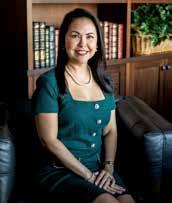
By Jennifer Rushton, MD, President, Bexar County Medical Society
Dear friends and colleagues,
The 250th anniversary of our nation is an appropriate time to reflect on the history of medicine in America and the history of the Bexar County Medical Society. Across the United States, Americans are looking back on the people, ideas and institutions that shaped our country’s history. For physicians, it is an opportunity to recognize how far healthcare has come and acknowledge a rich history of scientific discovery and medical progress. This magazine is often dedicated to educating us on the newest technologies and emerging treatments; in this issue, we will also reflect on our past.
Bexar County has a rich medical heritage. San Antonio has long been a center for medical education, military medicine and biomedical research. The development of the South Texas Medical Center created one of the largest concentrations of healthcare institutions in the country. The history of BCMS is also remarkable. Founded in 1853, the Society predates the Civil War and has served physicians through the transformation of American medicine. BCMS members practiced medicine in an era when infectious diseases like tuberculosis, cholera and typhoid fever were serious threats to public health. They lived through the introduction of anesthesia, germ theory, antiseptic surgery, X-rays, antibiotics, vaccines and organ transplantation. Throughout these changes, BCMS provided support, resources and a forum for physicians to share knowledge and advocate for our patients and our profession.
As I just returned from the annual American Medical Association (AMA) meeting, it is also worth acknowledging the history of organized medicine nationally. In 1847, just six years before BCMS, physicians from across the country met in Philadelphia to
establish the AMA. At a time when medical education and standards of practice varied widely, the AMA sought to elevate our profession, improve medical training, and advance the science of medicine for the benefit of patients. Today, the Texas Delegation is one of the largest and most influential state delegations at the AMA House of Delegates.
At this year’s meeting, attended by several BCMS members that serve on the Texas delegation, hundreds of resolutions were considered with many focused on prior authorization reform, augmented intelligence in healthcare and public health policy. A resolution written by BCMS member Dr. Kevin Kirk, “Addressing the epidemic of fragility fractures through improved osteoporosis screening and treatment,” was widely supported and adopted as AMA policy. The AMA also adopted several resolutions calling for stronger oversight of AI in prior authorization and insurance coverage decisions, asserting that AI should not replace physician review. This is in alignment with the AMA’s position that AI must support, not substitute, clinical judgment. Other resolutions aimed to hold insurers accountable for prior authorization decisions, in line with AMA advocacy to reduce administrative burdens and patient care delays caused by prior authorization. Texas has been a national leader on prior authorization reform, and these AMA actions are closely aligned with TMA objectives.
The AMA also adopted policy opposing the use of the term “provider” when referring to physicians and stating that physician credentials should be clearly identified to avoid confusion for patients. This policy aligns with AMA efforts concerning scope of practice transparency and advocacy for physician-led care. The leadership at the AMA also remains focused on physician payment, including
Medicare payment reform and opposition to repeated physician payment cuts, another issue important to Texas physicians.
As a pathologist, the history of pathology and laboratory medicine is of particular interest. While pathologists often work behind the scenes, the field has been central to many of medicine’s most important milestones. Most advances in diagnosis and treatment start with a deeper understanding of disease at the cellular and molecular level. Autopsy was an early tool for physicians, allowing us to correlate clinical signs and symptoms with anatomic findings. Then microscopy opened our eyes to a whole new world of cells and microorganisms, where we could identify infectious diseases, blood disorders and cancers based on their microscopic appearances. These foundations of pathology helped transform medicine into an evidence-based science.
Clinical laboratories introduced sophisticated testing methods that improved diagnostic accuracy and patient outcomes. Blood banking transformed surgery and trauma care. Microbiology labs helped control infectious disease outbreaks. Cytology screening dramatically reduced deaths from cervical cancer. Immunohistochemistry and molecular methods allowed us to classify tumors with more certainty and develop therapies tailored to individual patients. During the COVID-19 pandemic, the critical importance of laboratory medicine became visible to the public in a way rarely seen before. Now digital pathology and augmented intelligence promise to transform how we diagnose disease.
As we celebrate America 250, we are reminded of our predecessors’ commitment to service and advocacy. For more than 170 years, physician members of BCMS have contributed to the health of our community by
advancing science and caring for patients. The mission of BCMS — empowering physicians, protecting the practice of medicine, and serving communities — remains as relevant today as it was in the nineteenth century.
Many of our successes in medicine — controlling infectious disease, improving childhood health, and prolonging life expectancy — have contributed to the success of our country. As we look to our future, let us honor the achievements of those who came
before us by continuing to advance the profession of medicine while caring for the patients of Bexar County. We have a responsibility to future generations to ensure they inherit a healthcare system that is stronger and more equitable.
“The past is never dead. It’s not even past.”
-William Faulkner
With gratitude, Jennifer R. Rushton, MD
Jennifer R. Rushton, MD, 2026 President of the Bexar County Medical Society, is a partner at Oculus Pathology and the Medical Director of Pathology and Laboratory Medicine for the Baptist Health System. She is board certified in Anatomic and Clinical Pathology, Hematopathology and Molecular Genetic Pathology. Dr. Rushton currently serves as Chief of Staff for Baptist Medical Center Hospital. She is a long-time member and co-chair of the BCMS Legislative Committee, serves on the TMA Council on Healthcare Quality, and is a Texas Delegate to the AMA.
BCMSA Honors Past Presidents at Annual Luncheon
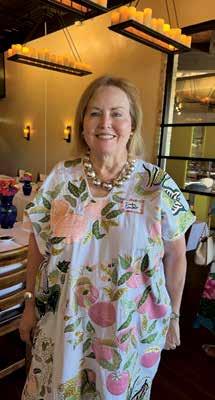
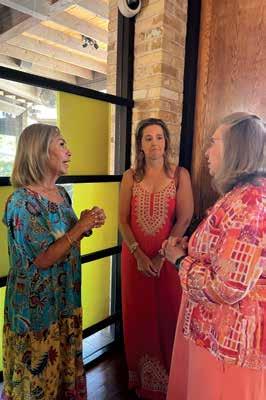
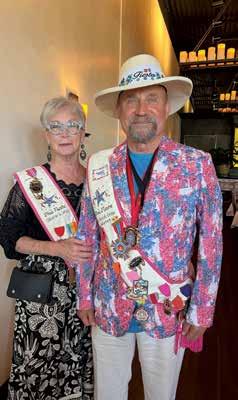
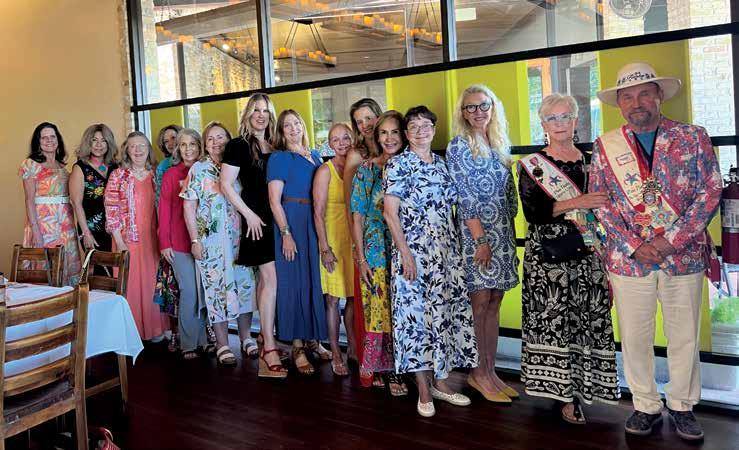
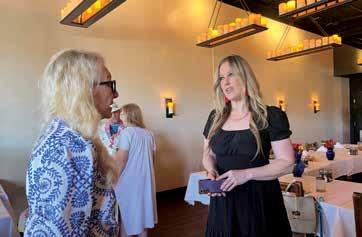
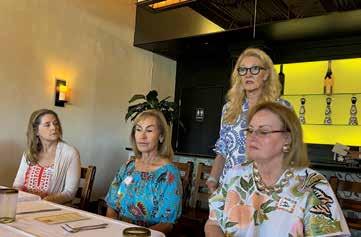
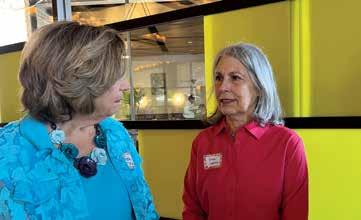
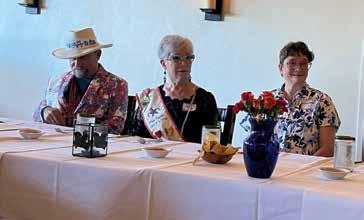
Each year, the Bexar County Medical Society Alliance celebrates Fiesta® and honors past leadership at their Past President’s Luncheon. For this year’s signature spring event, Alliance members gathered at Paloma Blanco, donning their Fiesta best, ready to celebrate the special bond created by the Alliance.
At this all-member event, the Alliance highlighted their defining roles: Community Outreach, Legislative Advocacy and Strengthening the Medical Community. Members of the Alliance and their leadership proudly give their time to manage the organization and its volunteers, serve their community, and to support Bexar County physicians and families.
Perhaps most notably, the Alliance can often be defined by the bond of friendship and community that binds the group together. This special bond is evidenced by the frequent laughter and joy observed at meetings such as this eagerly anticipated event.
The Bexar County Medical Society Alliance continues to exist and thrive because of active participation. Whether you enjoy book clubs, writing for San Antonio Medicine magazine, planning social gatherings, or helping behind the scenes, there is a place for you. The Alliance is what our members want it to be, and your interests and passions help shape what we do next. We’d love to see familiar faces and welcome new ones, too, at our next meeting!
Get involved today!
To learn more about the Bexar County Medical Society Alliance, email membership@bcms.org.
Scan the QR code to submit your application to join the Alliance today. https://www. texmedalliance.org/tmaimis/TMAA/Membership/New_Member_App.aspx
From Medicine Women to the AI Physician: What medicine gained, lost, and must remember
By Shiv Kumar Goel, MD, FACP, Image courtesy of Dr. Shiv Goel, through Canva
During my anesthesia residency in Delhi, I came across a description I could not put down.
Before modern anesthesia existed, surgery meant enduring it. Surgeons used herbs, alcohol, compression, cold and, in some cases, deliberate nerve pressure or intoxication to render a patient insensible enough to cut. Some patients died from the anesthetic attempt before the surgery began.¹ Surgical agony with a fully conscious mind was not a rare historical occurrence. It was the ordinary condition of being sick in a body that needed to be opened.
That image stayed with me for 20 years. Not as a clinical footnote — as a reminder of how thin the membrane is between what medicine can do and what it could not, and how recently we crossed it.
The First Healers
Before the physician wore a white coat, there was the medicine woman.
She was the midwife, the herbalist, the keeper of remedies, the watcher of fevers and the listener at the bedside. In early societies, healing was not divided into departments. Birth, grief, fertility, pain, nutrition, sleep and community all belonged to the same circle of care. Illness was understood as inseparable from the life surrounding it — the family, the season, the loss, the fear.
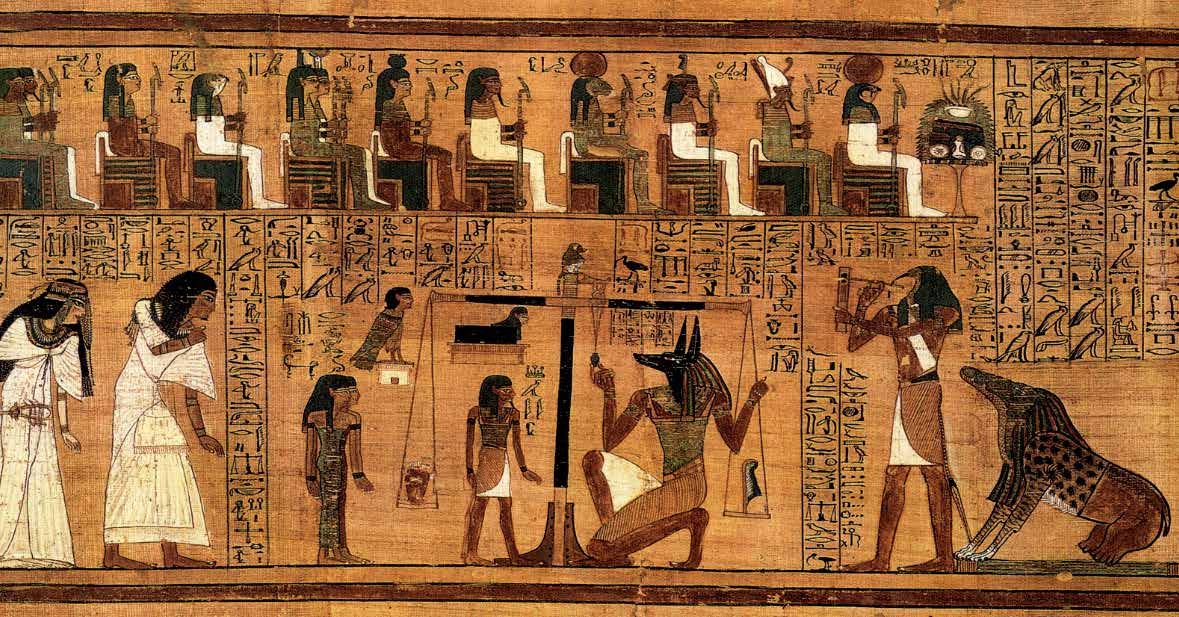
Across ancient cultures, women served as healers in ways both formal and informal. Egyptian historical records give us Peseshet, a figure from the Fourth Dynasty of the Old Kingdom (approximately 2500 BCE), whose title — translated as "overseer of female physicians" — suggests not only that she practiced medicine herself, but that she oversaw a cadre of women doing the same.² She is among the
earliest named medical figures in recorded history. Centuries later, the legend of Agnodice of Athens — a figure from the 4th century BCE and described in Hyginus's Fabulae as practicing medicine disguised as a man, whether strictly historical or partly legendary, reflects a pattern well-documented across ancient societies: women's central role in healing coexisted with their systematic exclusion from its formal institutions.³
Their medicine was limited. It was often mixed with superstition and error, and it could not protect against the pathogens, the cancers, the cardiac events that now yield to intervention. Those limitations were real and often fatal. But it was also intimate in ways our current encounter is not. It understood that illness was never only biological. It was emotional, familial, spiritual, environmental and social. The body that was sick lived inside a life — and the life was always part of the diagnosis.
The Great Acceleration
Then medicine accelerated.
Semmelweis demonstrated in 1847 that physician handwashing reduced puerperal fever mortality from approximately 10% to under 2% — a finding initially rejected by the medical establishment.⁴ Lister's application of Pasteur's germ theory to surgical antisepsis in the 1860s transformed operative mortality.⁵ Fleming's 1928 discovery of penicillin, and its clinical deployment in the 1940s, changed the prognosis of bacterial infection permanently.⁶ What followed — vaccines, organ transplantation, intensive care, diagnostic imaging, genomics, robotic surgery, wearable biosensors — represents the most compressed technical advance in the history of any profession.
We gained years of life. The average American life expectancy at birth in 1900 was approximately 47 years. By 2019, it exceeded 78.⁷ We gained rescue from conditions that were uniformly fatal within living memory. We gained precision where there was once only guesswork.
In the operating room where I trained, the monitors in a modern anesthesia bay — continuous oxygenation, end-tidal CO₂, depth-of-sedation indices, invasive arterial pressure, real-time pharmacokinetic modeling — would have been unimaginable to the surgeons who worked before Morton's first public ether demonstration at Massachusetts General Hospital in 1846.⁸ That transformation is civilizational in scale, and it is worth saying so plainly.
What the Acceleration Cost
But transformation always costs something.
As medicine became more powerful, the clinical encounter became shorter, more structured and more instrument-dependent. The average physician visit in the United States now runs 18 minutes.⁹ The family in the room, the community in the chart, the childhood in the history — these became soft data. Difficult to code. Not reimbursable. The encounter was optimized for the identifiable pathology and was not designed to hold the kind of history that makes chronic, complex illness legible.
The result is a category of patient many of us recognize from our own practices: composed, well-worked-up and still quietly deteriorating. Their standard panels are normal. Their scans are negative. But the biology of chronic psychological stress, circadian misalignment, adverse childhood experience and prolonged relational hypervigilance does not appear on a standard diagnostic panel — even though its physiological signatures are now extensively documented in the psychoneuroimmunology and HPA axis literature.¹⁰ ¹¹
We did not decide to lose presence. We optimized for something else, and presence was what remained after the optimization.
The AI Physician
and the Question It Raises Now medicine accelerates again.
Augmented intelligence systems can analyze retinal photographs and detect diabetic retinopathy with sensitivity and specificity comparable to trained ophthalmologists.¹² They can identify early sepsis trajectories from vital sign patterns before clinical criteria are fully met.¹³ Natural language processing applied to electronic health records can flag readmission risk, medication non-adherence and diagnostic gaps at a scale no individual clinician can replicate.¹⁴
The AI physician is not a future projection. It is an operational present in radiology departments, emergency triage systems and chronic disease monitoring platforms in health systems across the country — including several in San Antonio.
The question this raises is not whether augmented intelligence belongs in medicine. It belongs. The technology is real, the diagnostic capability is real and the lives it will save are real.
The question is what the human physician brings that the algorithm cannot. The algorithm will find the panel abnormality. It will not recognize that the fatigue is grief, that the insomnia is the marriage, that the chest pain began the week the patient's father died. It will not ask when the body first stopped feeling safe. It cannot hold the silence that allows a frightened patient to finally speak.
The physician of the future will need to be bilingual: fluent in data and fluent in humanity. Not one at the expense of the other. Both — in the same encounter, with the same patient.
What the History Teaches
The arc from medicine woman to AI physician is not a story of linear progress abandoning primitive origins. It is a recurring pattern: each technical advance creates new diagnostic and therapeutic power, and each advance carries within it the same risk — that the instrument becomes the limit of the inquiry.
Germ theory liberated medicine from miasma and gave us the pathogen. It also, for a generation, made it easier to dismiss the terrain — the immune status, the social determinant, the lived context — in which the pathogen either took hold or did not. The randomized controlled trial gave us evidence-based medicine and cost us, in its strictest application, the individual who did not fit the trial population. Diagnostic panels gave us the abnormality and cost us, in too many encounters, the narrative.
The AI physician is the next iteration of that risk — and the next opportunity to correct for it before the cost accumulates.
The history of medicine in San Antonio, as in every medical community, is not only a history of technology. It is a history of healers — physicians, nurses, community health workers, promotoras, curanderas — who carried presence alongside knowledge. The curandera tradition in South Texas represents, in fact, an unbroken line from the earliest healing practices: holistic in the clinical sense, community-embedded, attentive to the whole person across physical, emotional and spiritual dimensions.¹⁵
That combination — presence and knowledge, story and data, the ancient art and the modern science — is not a historical artifact to be studied in a July issue and set aside. It is the standard the profession has always aspired to, even when its structures made it difficult.
The oldest medicine knew something the newest medicine is relearning.
The body that is sick lives inside a story.
The story is always part of the diagnosis.
References:
1. Fenster JM. Ether Day: The Strange Tale of America's Greatest Medical Discovery and the Haunted Men Who Made It. New York: HarperCollins; 2001.
2. Hurd-Mead KC. A History of Women in Medicine: From the Earliest Times to the Beginning of the Nineteenth Century. Haddam, CT: Haddam Press; 1938. [Peseshet, pp. 20–22.]
3. Hyginus, Gaius Julius. Fabulae. Translated by Mary Grant. Lawrence, KS: University of Kansas Publications; 1960. [Fabula 274, Agnodice.] See also: Demand N. Birth, Death, and Motherhood in Classical Greece. Baltimore: Johns Hopkins University Press; 1994.
4. Semmelweis IP. Die Ätiologie, der Begriff und die Prophylaxis des Kindbettfiebers. Vienna: CA Hartleben; 1861. English translation: Carter, K.C. Childbed Fever: A Scientific Biography of Ignaz Semmelweis. New Brunswick: Transaction Publishers; 1994.
5. Lister J. On the antiseptic principle in the practice of surgery. Lancet. 1867;2(2299):353–356.
6. Fleming A. On the antibacterial action of cultures of a Penicillium, with special reference to their use in the isolation of B. influenzae. Br J Exp Pathol. 1929;10(3):226–236.
7. Arias E, Xu J. United States life tables, 2019. Natl Vital Stat Rep. 2022;70(19):1–59. Centers for Disease Control and Prevention, National Center for Health Statistics.
8. Bigelow HJ. Insensibility during surgical operations produced by inhalation. Boston Med Surg J. 1846;35(16):309–317.
9. Tai-Seale M, McGuire TG, Zhang W. Time allocation in primary care office visits. Health Serv Res. 2007;42(5):1871–1894.
10. Miller GE, Cohen S, Ritchey AK. Chronic psychological stress and the regulation of pro-inflammatory cytokines: a glucocorticoid-resistance model. Health Psychol. 2002;21(6):531–541.
11. Danese A, McEwen BS. Adverse childhood experiences, allostasis, allostatic load, and age-related disease. Physiol Behav. 2012;106(1):29–39.
12. Gulshan V, Peng L, Coram M, et al. Development and validation of a deep learning algorithm for detection of diabetic retinopathy in retinal fundus photographs. JAMA. 2016;316(22):2402–2410.
13. Mao Q, Jay M, Hoffman JL, et al. Multicentre validation of a sepsis prediction algorithm using only vital sign data in the emergency department, general ward and ICU. BMJ Open. 2018;8(1):e017833.
14. Rajpurkar P, Chen E, Banerjee O, Topol EJ. AI in health and medicine. Nat Med. 2022;28(1):31–38.
15. Perrone M. Curanderismo: Mexican American folk healing in South Texas. In: Perrone B, Stockel HH, Krueger V, eds. Medicine Women, Curanderas, and Women Doctors. Norman: University of Oklahoma Press; 1989:3–72.
Shiv Kumar Goel, MD, FACP, is a board-certified internist and Fellow of the American College of Physicians. He is the founder of Prime Vitality Care® (primevitalitycare.com) in San Antonio, Texas, former Medical Director at Methodist Specialty and Transplant Hospital, and former Assistant Professor of Internal Medicine at Texas Tech University Health Sciences Center. He is the author of the forthcoming book Healing the Split: When Your Biology Is Fighting Your Biography. His peerreviewed work has appeared in the Canadian Journal of Cardiology and the American Thoracic Society proceedings. He writes at drshivgoel.com and healingthesplit.com. Dr. Goel serves on the BCMS Publications Committee.
Serving those who provide care.
Delivering the best imaginable service and unrivaled rewards is at the core of who we are. As an organization owned and led by physicians for 50 years, we understand the value of superior care. Because for us, it’s not just a best practice, it’s in our unique code. Join us at thedoctors.com
Scan here for a rapid premium indication, and discover the unrivaled rewards of The Doctors Company.
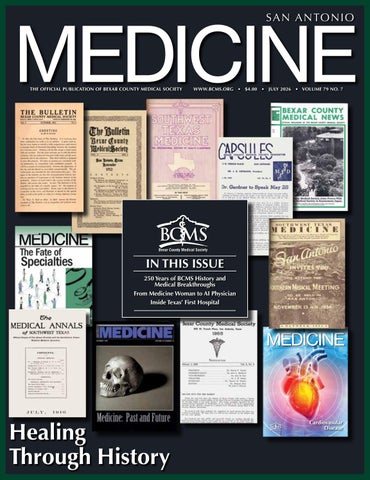
250 Years of BCMS History and Medical Breakthroughs
First U.S. graduate program in medicine established at the College of William & Mary.
Benjamin Franklin invents bifocal eyeglasses, improving vision care and daily functioning.
First English-speaking American medical society (PhysioMedical Society) established in New Orleans.
Oliver Wendell Holmes identifies the cause and prevention of puerperal (childbed) fever, arguing it is contagious and preventable.
Benjamin Waterhouse introduces Jenner's smallpox vaccine to the U.S., helping gain acceptance for vaccination.
First American medical society (Creole Société Médicale de la Nouvelle-Orléans) founded in New Orleans.
Public demonstration of ether anesthesia in Boston by William Morton and John Collins
U.S. hospitals begin adopting antiseptic practices inspired by Joseph Lister, reducing surgical infections.
Expansion of formal medical schools and standardized curricula in the U.S.
Louis J. Dufilho Jr. becomes America's first licensed pharmacist.
Dentist Horace Wells uses nitrous oxide as an anesthetic in dental procedures.
Crawford Long's earlier use of ether as a general anesthetic becomes known, reinforcing anesthesia's role in surgery.
Texas Medical Association (TMA) founded on January 17 and BCMS founded later that year.
adoption of the stethoscope and more systematic physical examinations.
Warren.
CHRISTUS Santa Rosa Health System founded by the Sisters of Charity of the Incarnate Word.
U.S. Army Fort Sam Houston founded.
Widespread
Louis Pasteur establishes the germ theory of disease.
Dr. Josephine Kingsley becomes the first woman physician in San Antonio.
Blood-pressure measurement (sphygmomanometer) begins to enter U.S. clinical practice.
First vaccine for rabies by Louis Pasteur and Émile Roux.
Theobald Smith uncovers mechanisms of insect-borne disease transmission and contributed to early vaccine concepts.
The San Antonio State Hospital opens.
First vaccine for typhoid fever.
Bexar County Medical Society name adopted after realignment with AMA.
Electrocardiograph machine developed by Dutch physician Willem Einthoven.
U.S. Pure Food and Drug Act passed, laying groundwork for modern drug regulation.
Frederick Hopkins suggests that a lack of vitamins causes scurvy and rickets.
Flexner Report reforms U.S. medical education, closing substandard schools and standardizing training.
First vaccine for cholera.
Robert Koch discovers tuberculosis bacterium.
Permanent, brick 12-bed hospital built at Fort Sam Houston.
First rubber gloves introduced in surgery. First vaccine for tetanus.
X-ray imaging adopted in U.S. hospitals after Wilhelm Conrad Röntgen's discovery, founding radiology.
First vaccine for bubonic plague.
Texas State Board of Medical Examiners established.
Alois Alzheimer identifies the first case of what becomes known as Alzheimer's disease.
Karl Landsteiner discovers the existence of different human blood types.
Albert Einstein proposes the Theory of Relativity.
Texas State Board of Health (Texas Department of State Health Services) established.
BCMS helps establish Texas' first sanatorium for the treatment of tuberculosis.
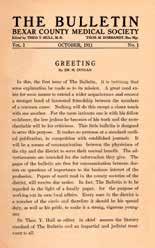
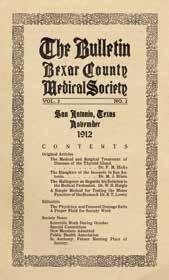
The Bulletin, first BCMS publication, launches.
Legislation passes to establish county hospitals.
1900s
BCMS and BCMS Library Association move to the Bedell Building.
Camp Bullis established in San Antonio as Army training site.
U.S. Army Kelly Air Force Base established.
Robert B. Green Memorial Hospital opens.
Bexar County Medical Society Auxiliary is formed.
BCMS purchases first building.
Eliot Cutler performs the first successful heart valve surgery at Peter Bent Brigham Hospital.
Diphtheria vaccine developed.
Pertussis vaccine developed.
Medical Arts Building opens.
Penicillin is discovered by Alexander Fleming.
The Nix Professional Building opens.
Bexar County Medical Society Medical Library Association established.
Paul Dudley White introduces the electrocardiograph (ECG) to U.S. clinical practice.
Margaret Sanger opens first birth control clinic.
Brooks Air Force Base established, originally named Brooks Field in honor of Cadet Sidney Johnson Brooks Jr., the first flying cadet to die in San Antonio during World War I training.
Public-health responses to the influenza pandemic drive advances in epidemiology and surveillance.
Frederick Banting and Charles Best discover insulin. Elliott Joslin helps bring insulin therapy to American patients.
Dr. Frank Paschal named first life member of BCMS.
Marius Smith-Petersen designs the three-flanged nail for hip fractures, revolutionizing orthopedic fixation.
William Hinton develops a reliable blood test for syphilis, a landmark in lab diagnostics.
Vaccines for tetanus and tuberculosis are developed.
Philip Drinker invents the iron lung, enabling long-term ventilation for polio patients.
Early joint replacement prototypes developed in the U.S.
Development of blood-typing standards and blood-banking systems.
First modern ventilators introduced.
Fuller Albright characterizes hyperparathyroidism and contributes to osteoporosis treatment.
U.S. Army Randolph Air Force Base established as a primary flying training base for the U.S. Army Air Corps.
Dr. Donald Atkinson of San Antonio publishes External Diseases of the Eye, a seminal work in ophthalmology.
James Gamble demonstrates the need to replace intracellular fluid and electrolytes in severe losses — foundational for IV therapy.
BCMS votes to purchase the Bedell Moore property.
First closed-chest defibrillator is developed along with CPR.
Sulfonamide antibiotics introduced into U.S. practice, first widely used systemic antibacterials.
Congress establishes the National Institute of Cancer at the behest of Dr. Dudley Jackson Sr., former BCMS president (1932).
Early chemotherapy experiments (e.g., nitrogen mustards) begin in the U.S. for cancer treatment.
The Federal Security Agency established to oversee government health, education and social security programs.
First successful congenital heart surgery performed by Robert E. Gross.
U.S. scientists develop mass-production methods for penicillin, enabling widespread wartime and civilian use. Influenza vaccine produced.
Communicable Disease Center (CDC) opens.
Trinity University opens in San Antonio.
NIH expands intramural research programs, strengthening U.S. biomedical science.
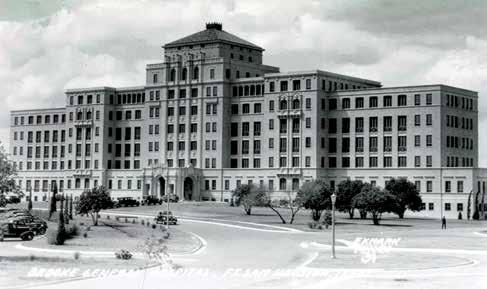
The Medical Field Services School is moved to Fort Sam Houston and designated as Brooke Army Medical Center.
Jonas Salk develops polio vaccine.
The first successful cardiac pacemaker is developed.
First successful kidney transplant between identical twins in Boston.
Early streptomycin and other antibiotics tested and adopted in U.S. hospitals.
The first kidney dialysis machine is invented by Dutch physician Willem Kolff.
Southwest Research Institute opens.
First successful open-heart surgeries performed in the U.S. using cardiopulmonary bypass.
Bexar County Hospital District is formed. Polio vaccine is licensed in the U.S.
BCMS members help San Antonians receive mass immunization of the Sabin Oral Polio vaccine, virtually eliminating summer polio epidemics in San Antonio.
First antiviral drugs developed in the U.S.
TEXPAC forms.
University of Texas Health Science Center at San Antonio is founded.
The modern technique of hip replacement is developed by British orthopedic surgeon Sir John Charnley.
U.S. Surgeon General's report links smoking and lung cancer, reshaping public health policy.
Oral contraceptive pill becomes widely available in the U.S., transforming reproductive health.
Measles vaccine licensed in the U.S. Methodist Hospital in San Antonio opens.
First U.S. liver transplant attempted; techniques improve over the decade.
President Johnson signs legislation creating Medicare and Medicaid programs.
The first commercial ultrasound machine is produced. San Antonio Metropolitan Health District established.
Mumps vaccine is licensed in the U.S.
First bone-marrow transplant successes in the U.S.
Dr. Christiaan Barnard completes first heart transplant in Texas.
CT and MRI introduced into U.S. clinical practice.
More women begin entering medicine — female medical students grow from 9% in 1970 to 25% by decade's end.
DNA sequencing is born as researchers at Harvard and Cambridge simultaneously develop different methods for sequencing DNA.
Laparoscopic surgery begins to develop; full adoption comes in the 1980s–1990s.
The Department of Health, Education and Welfare becomes the Department of Health and Human Services.
Rubella vaccine is licensed in the U.S.
University of Texas at San Antonio is founded.
First vaccine for chicken pox developed.
Italian gynecologists create the blunt tunneling technique known as liposuction.
First balloon angioplasty procedures performed; technique rapidly adopted in U.S. cardiology.
Pneumonia vaccine developed.
First U.S. in vitro fertilization (IVF) attempts.
Deep brain stimulation (DBS) pioneered in the U.S.
1900s
Chemotherapy regimens standardized.
DSM-III published, transforming psychiatric diagnosis. First successful U.S. IVF birth.
Hepatitis B vaccine developed.
Human Growth Hormone (HGH) identified and synthesized.
First commercial MRI scanner on the medical market.
IBM introduces first personal computers.
HIV identified; first U.S. HIV tests developed. American researchers identify HIV, develop early antiretrovirals, and build the foundation for modern HIV therapy.
AZT (zidovudine) becomes first antiretroviral drug approved for HIV.
Census estimates 31 million uninsured Americans (13% of U.S. population).
First use of laser surgery on a patient's eyes.
Construction of new Brooke Army Medical Center begins.
Widespread adoption of laparoscopic cholecystectomy, ushering in minimally invasive surgery.
ICDs (implantable cardioverter-defibrillators) enter broader clinical use.
Healthcare costs rising at double the rate of inflation.
Expansion of managed care begins.
Federal legislation mandates Medicaid coverage of eligible children ages 6–18.
Human Genome Project gets underway.
TMA Foundation established.
State Children's Health Insurance Program (S-CHIP) is enacted providing coverage of lowincome children above Medicaid eligibility levels.
Artificial heart (Jarvik-7) operation is successful.
Anti-depressant Prozac is approved for medical use.
Dr. Julio Palmaz of San Antonio develops the intravascular stent.
Clot-busting drugs for stroke (tPA) adopted.
First targeted cancer therapies emerge from U.S.-led research.
Robotic surgical systems begin clinical use.
44 million Americans (16%) have no health insurance.
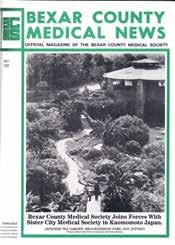
BCMS signs "declaration of cooperation" with Kumamoto City Medical Association in Japan.
Health Insurance Portability and Accountability Act (HIPAA) sets standards for medical records privacy.
Newly renovated Brooke Army Medical Center (BAMC) opens at Fort Sam Houston.
FDA approves drug-eluting coronary stents, reducing restenosis.
Dr. Rajam Ramamurthy becomes the first woman to lead BCMS as President.
First partial face transplant research programs initiated; U.S. cases follow later.
First vaccine for Human Papilloma Virus (HPV) approved.
Dr. Dianna Burns-Banks is first African-American woman to lead BCMS as President.
Growth of electronic health records (EHRs) accelerated by policy incentives.
Widespread clinical adoption of whole-genome sequencing.
Robotic joint-replacement systems adopted.
A windpipe is the first artificial organ implant.
FDA approves ipilimumab, the first checkpoint inhibitor, launching modern cancer immunotherapy.
First kidney grown in vitro in the U.S.
A human liver is grown from stem cells in Japan.
NIH launches the BRAIN Initiative to accelerate neuroscience and neurotechnology.
PD-1/PD-L1 inhibitors expand immunotherapy options across multiple cancers.
RICO lawsuit yields settlements against for-profit HMOs.
First successful telesurgery is performed by a group of French doctors using the Zeuss Surgical Robot
Brooks Air Force Base renamed Brooks City Base.
First robot-assisted prostatectomies become common in U.S. centers.
The Base Realignment and Closure (BRAC) recommends realignment of inpatient services from Wilford Hall to Brooke Army Medical Center.
Widespread adoption of hospital quality metrics and payfor-performance initiatives.
Census Bureau estimates 45.6 million uninsured people in U.S.
The Center for the Intrepid opens at Brooke Army Medical Center to provide world-class care for veteran amputees and burn victims.
The Children's Health Insurance Program (CHIP) is reauthorized, reaching an estimated 4.1 million children.
Patient Protection and Affordable Care Act is signed into law.
First transcatheter aortic valve replacement approvals in the U.S. for high-risk patients.
CRISPR–Cas9 described as a programmable geneediting tool; U.S. labs central to development.
Ebola treatment and vaccine research accelerated in U.S. labs.
First FDA-approved 3D-printed drug (Spritam) marks the beginning of additive manufacturing in pharmaceuticals.
Bexar County Medical Society Building Dedication and Ribbon cutting, May 24.
WHO announces outbreak of the Zika virus.
First approval of a drug for Duchenne muscular dystrophy — Eteplirsen introduces exon-skipping therapy.
The U.S. declares the opioid epidemic a national emergency.
FDA approves first CAR-T cell therapy (tisagenlecleucel) for pediatric ALL.
AI algorithms for diabetic retinopathy screening receive FDA clearance.
The World Health Organization announces on January 9 that a deadly coronavirus has emerged in Wuhan, China.
The coronavirus pandemic triggers a global recessions — the Dow Jones suffers its worst single-day point drop ever on March 9.
FDA issues Emergency Use Authorizations for mRNA COVID-19 vaccines — a historic milestone.
Massive expansion of telehealth and remote monitoring in U.S. care delivery.
First CRISPR-based therapies for sickle cell disease and betathalassemia reach late-stage trials.
TMA wins federal lawsuit on surprise billing rule.
First lab-grown red blood cells transfusion.
First successful Phase 3 results for adult RSV vaccines.
First TIL (tumor-infiltrating lymphocyte) therapy submission.
FDA approves the first CRISPR gene-editing therapy for sickle cell disease.
In vivo CRISPR trials show strong early results for editing genes directly inside the body.
Base-editing therapies demonstrate precise single-letter DNA correction with fewer off-target effects.
Stem cell islet transplants allow some people with type 1 diabetes to achieve insulin independence.
mRNA cancer vaccines reduce recurrence rates in midstage clinical trials.
Radiopharmaceutical therapies expand beyond prostate cancer into additional tumor types.
AI copilots in EHRs draft clinical notes and support decision-making in routine care.
Advanced multimodal wearables provide continuous ECG, oxygen and respiratory monitoring.
Gene therapy approvals (e.g., for inherited retinal disease, spinal muscular atrophy) mark a new era.
Banyan BTI receives FDA clearance for biomarkerbased neurotrauma diagnostics.
Cancer moonshot initiatives accelerate immunotherapy, genomics and early detection.
reSET for substance use disorder marks the rise of prescription digital health.
Esketamine approved for treatment-resistant depression.
First oral therapy for cystic fibrosis targeting root cause approved.
Texas Tobacco 21 law passes.
Rapid development and deployment of COVID-19 monoclonal antibodies and antiviral drugs.
First Alzheimer's disease monoclonal antibody (aducanumab) controversially approved.
Cabotegravir becomes the first bimonthly injectable PrEP for HIV prevention.
First fully implantable artificial heart approved in U.S.
Vaccine for bees against American Foulbrood bacteria approved, making it the first vaccine in U.S. for any insect.
Semaglutide and tirzepatide reshape metabolic disease treatment and public health.
AI-assisted colonoscopy: Real-time polyp detection systems gain widespread adoption.
First gene-edited pig kidney transplanted into a living patient.
Wearable continuous glucose monitors expand to non-diabetics.
First FDA clearance for AI-generated radiology reports.
GLP1 metabolic revolution.
Dr. Paschal Was Called Upon to Respond to the Toast, “The Bexar County Medical Society, It's Past, Present and Future.”
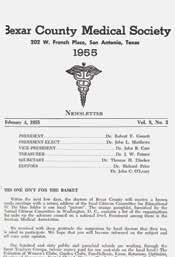
Reprinted in part from the January 1915 issue of The Bulletin for the Bexar County Medical Society.
[…] ITS MEETING PLACE
From the time that the West Texas Medical Association was organized and merged into the Bexar County Medical Society in 1903, it has led, so to speak, a roving life. It has had various kinds of meeting places. In the beginning it met in the county court room in the district courthouse on Soleded street, and continued to meet there until the courthouse was sold and converted into a furniture store. Some historical meetings were held there. The room was dirty and unattractive, and the very surroundings were enough to take away inspirations, if one was possessed of them. Scientific subjects were discussed at these meetings, and often ethics. Sometimes the meetings would be enlivened by fisticuff fights. After the society could meet no longer is the county courthouse room, it held its meetings in Dullnig’s Hall on Commerce Street, where Saul Wolfson’s store is now located. Meeings continued to be held there until the society was again run away. Then it held its meetings in the Knights of Pythias’ Hall. It was again run away from there, and took refuge in Dr. Kingsley’s office in the Hicks Building. The meetings were continued to be held in his office until the society out-grew the
room; it then moved to the Scientific Society’s Hall and occupied jointly with the Brotherhood of Locomotive Engineers their hall. Then moved to the Elk’s Hall over the Shafer Building. Here we would listen to music and shuffling of feet from a dance hall adjoining the meeting place. The music “had its charms,” but would drown the voices of the scientific discuss-ers. We were once more run away from there, and found a lodging place in the dance hall of the St. Anthony Hotel. Meetings continued to be held there until nearly all the chairs were broken. It is now holding its meeting in the Bedell building. As bummers, the Bexar County Medical Society, unquestionable, is the most successful in this country. It can be safely said that during the last ten years that it has probably not spent over $50.00 in hall rent.
LET US HAVE A HOME
Now in all seriousness, this condition should not continue. We have a membership of 166, and we should own our own home. This can be accomplished in a very easy manner, and without entailing hardships on any member. If each member would subscribe $100.00, it would amount to $16,600. Of course, this amount would not be expected to be paid at one time, but the payments could extend over four or five years, and certainly any member of this association ought to be able to pay $25.00 a year, quarterly, semi-annually or annually, and not feel it. With $16,600.00, we could have a splendid home with a large assembly hall, reading room, library, museum and other conveniences. If we owned our own home it would add greatly to the future welfare of this society. Let us trust that this idea will be put into practice, and ere long that we will have a permanent meeting place.
In conclusion, gentlemen, let us hope that the days of medical politics in this society are things of the past. Let us confer honors upon the members who are justly entitled to them, regardless whether personal benefits can be derived thereby. Let is struggle to make our profession united, harmonious and prosperous to the end that benefits may accrue not only to us, but to those to whom we are responsible for their health and lives.
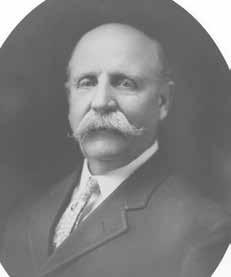
Dr. Frank Paschal, 1893
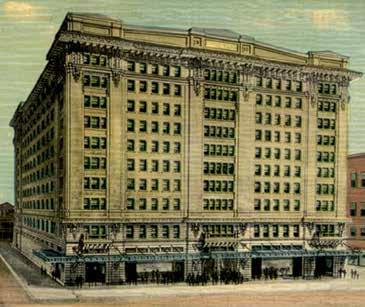
The Bedell Building at 166 Broadway was used by the Society from
A Decade of Service, Leadership and Community: Celebrating 10 years of the BCMS Building
By Melody Newsom
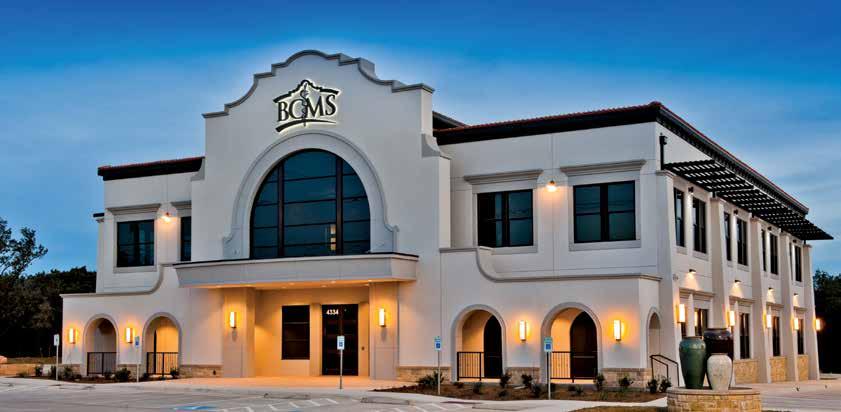
It hardly seems possible that the “new” Bexar County Medical Society (BCMS) building is already celebrating its 10th anniversary. Yet over the past decade, the BCMS headquarters has become far more than simply an office building — it has become a gathering place, a resource center, a hub for physician leadership and a cornerstone for service to the San Antonio community.
The vision for the current BCMS building began with careful planning and thoughtful research. Society leadership evaluated where the majority of physicians in Bexar County lived and practiced to identify a location that would be both convenient and accessible for members across the region. The result was a centrally located facility designed not only to serve the needs of physicians today, but also to support future generations of organized medicine.
BCMS officially moved into the building in January 2016, and the facility was formally dedicated on May 24, 2016. Even before its doors opened, the project had already earned recognition for excellence, receiving the 2015 American Subcontractors San Antonio Chapter Project of the Year Award in the $2.5–$5 million category.
The 20,000-square-foot structure was built using tilt-wall construction and intentionally designed to last for more than 100
years — a reflection of BCMS’ long-standing commitment to physicians and the community it serves. Every detail of the building was planned with both functionality and flexibility in mind.
One of the hallmarks of the facility has been its conference and event space, which was created for physician members, medical practices, business partners and community organizations to gather, collaborate and learn. The building was also intentionally designed to support large-scale community events.
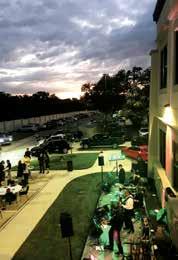
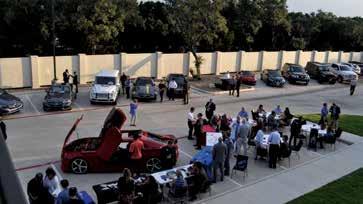
Special parking lot lighting was installed to accommodate the annual BCMS Auto Show — now celebrating its 40th anniversary — and additional electrical infrastructure was added to allow staging and entertainment for major outdoor events hosted onsite.
In May 2022, the BCMS building was officially named in honor of Stephen C. Fitzer, whose leadership, vision and guidance were instrumental in bringing the project to life. His commitment to creating a facility that honored the Society’s rich history while embracing the future of medicine helped shape what has become one of the organization’s greatest assets.
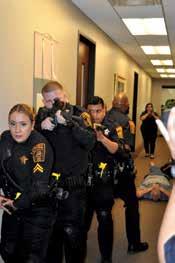
Over the last decade, the building has played a critical role during some of the community’s most important moments. It has served as the site for an Active Shooter Train-
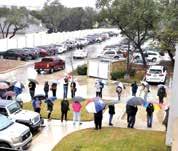
ing program and hosted BCMS COVID-19 vaccination clinics for medical professionals during the pandemic. The facility also became a PPE distribution hub during COVID-19, helping support physicians and healthcare teams during an unprecedented public health crisis.
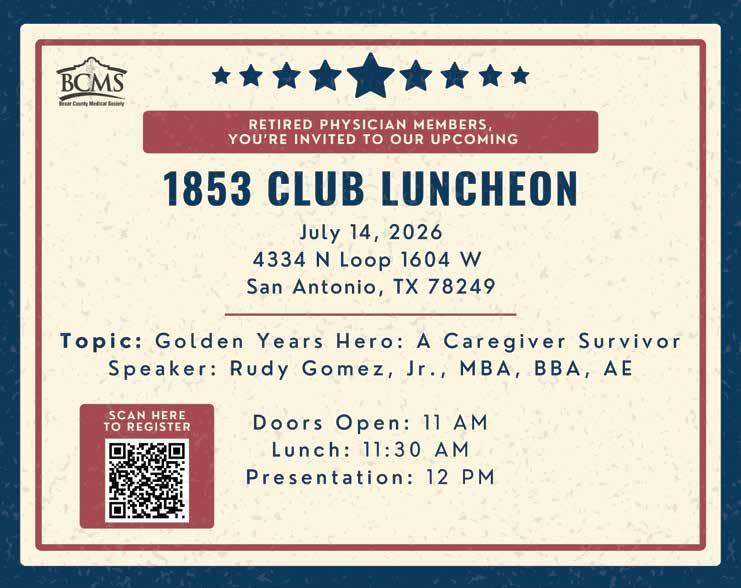
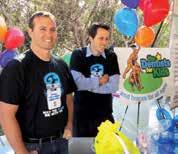
Beyond emergency response efforts, the BCMS building continues to serve as a center for wellness, education and connection. It has hosted Shavano Park Health Fairs, blood drives, Physician Wellness Retreats, meetings of the 1853 Club for retired physicians, luncheons, celebrations, committee meetings and countless gatherings that strengthen the bonds of organized medicine in Bexar County.
Ten years later, the BCMS building stands as more than stone and concrete. It represents the enduring mission of the Bexar County Medical Society: empowering physicians, advancing the practice of medicine, and serving our community. As BCMS looks toward the future, the building remains a symbol of the Society’s legacy of leadership, collaboration and commitment to the health of San Antonio for generations to come.
Melody Newsom is the CEO/Executive Director of the Bexar County Medical Society.
Inside Texas’ First Hospital: The forgotten medical mission at the Alamo
By William V. Scott, PhD Candidate
WA Governor’s Crisis and a Sudden Arrival
The dawn of the 19th century saw the Spanish province of Texas in a state of geopolitical tension and profound isolation. San Antonio de Béxar was a remote frontier settlement, susceptible to epidemics, indigenous raids and political unrest. The healthcare infrastructure was virtually nonexistent. Military personnel and civilians depended on folk remedies, curanderos or simply relied on luck for their survival.
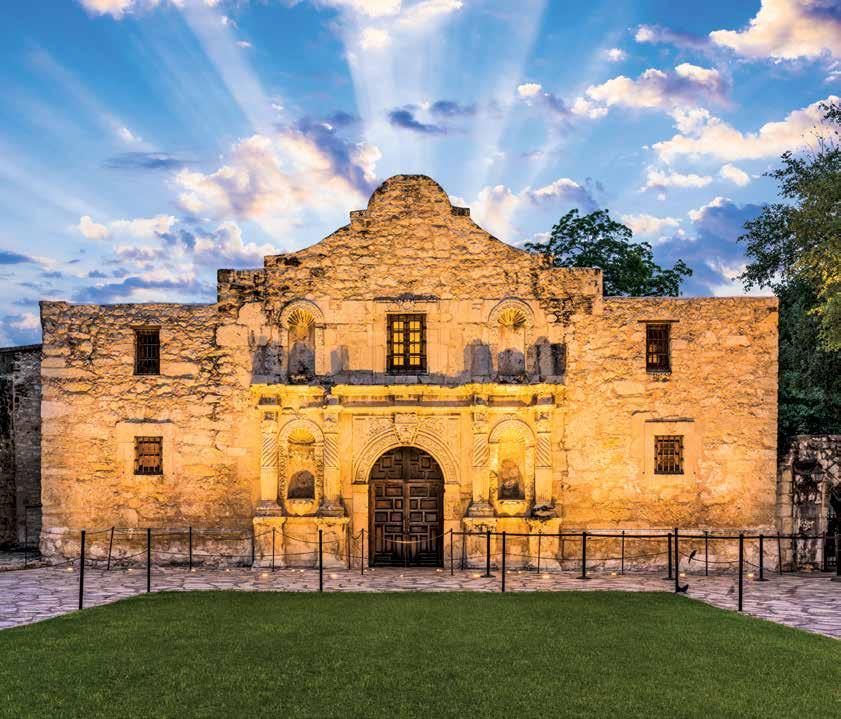
hen most people picture the Alamo, they envision the 1836 battle, the iconic limestone parapet of the old chapel and the modern tourist destination nestled in downtown San Antonio. Yet decades before it became the “Cradle of Texas Liberty,” this secularized Spanish mission served as the cradle of Texas medicine. In the early 1800s, a temporary military infirmary was established within its deteriorating stone walls, marking the official start of institutional healthcare in Texas. This is the history of the military hospital at Mission San Antonio de Valero — an outpost defined by limited resources, creative improvisation and the relentless work of early doctor-surgeons battling disease on the frontier of the Spanish Empire.
Texas’ first hospital was established in 1805 within a ruined chamber of the secularized Mission San Antonio de Valero (The Alamo). Under Spanish military rule, surgeons such as Federico Zerván treated soldiers and townspeople for diseases such as smallpox and pneumonia. The infirmary featured humble reed beds to combat ground dampness and was later expanded to include a pharmacy before closing in 1814.
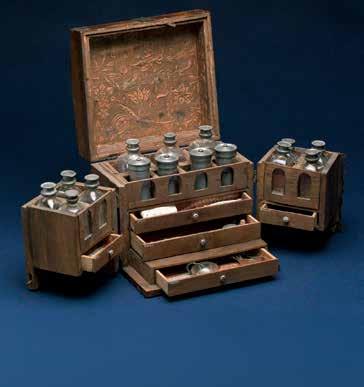
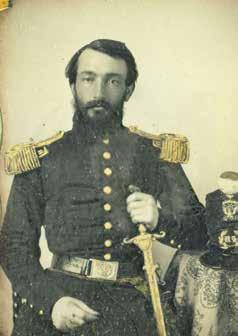
The pivotal moment occurred in autumn 1805 when Col. Manuel Antonio Cordero y Bustamante, acting as the provisional governor of Texas, was responsible for the well-being of hundreds of soldiers and civilians but lacked adequate medical facilities. The arrival of Dr. Federico Zerván, a trained doctor and surgeon, dramatically shifted the situation. Zerván, carrying only a small medicine case, offered a rare chance to improve medical care. Recognizing the urgent need to support his troops, Cordero took decisive action. In a historic letter dated October 19, 1805, addressed to Commandant General Nemesio Salcedo, Cordero declared it “temporarily appropriate for their [soldiers'] doctoring and attendance in spite of the limited means found in this country for their success.” This marked the birth of Texas’s first hospital.
Bamboo Beds and Ruined Walls
The chosen location for this pioneering medical venture was Mission San Antonio de Valero, which was secularized in 1793 and largely deserted. However, in 1803, the initial military personnel to arrive at the historic mission were a Spanish cavalry unit designated as La Segunda Compañía Volante de San Carlos de Parras, or the Second Flying Company of San Carlos de Parras. This unit was also referred to as the Alamo Company because of its hometown, Alamo de Parras. They repurposed the mission’s old convento into barracks and established the first hospital in Texas on the building's second floor. The Alamo Company maintained its presence at the site throughout the protracted struggle for Mexico’s independence from Spain.
Cordero characterized the initial healthcare facility as "a partly ruined chamber" within the mission complex. Although it was not comparable to the elaborate hospitals located in Madrid or Mexico City, it served as a shelter. The immediate challenges were physical. The frontier environment was arduous, and the earthen floors of the disused mission absorbed seasonal rains, thereby endangering the health of already fragile patients. To mitigate these issues, Cordero and his team devised an innovative, localized solution: constructing elevated beds from reeds, bamboo and cane stalks. This rudimentary design elevated patients above the damp ground, thereby minimizing respiratory issues and providing some comfort.
Despite the primitive conditions, Dr. Zerván’s caseload was staggering. Armed with his single medicine case, he treated Governor Cordero himself, about 100 garrisoned soldiers and nearly 300 townspeople. The ruined chamber had quickly evolved from a simple military infirmary into a vital community lifeline. The experiment proved so successful that within a year the hospital expanded to thirty beds. By 1807, Governor Cordero further expanded the footprint, requisitioning two additional rooms at the abandoned mission to serve as a dedicated pharmacy. Texas now had its first official prescription and medicine distribution center.
Changing Guards on the Frontier
Managing a frontier hospital was an arduous task that rapidly depleted even the most dedicated physicians. In 1807, the same year the pharmacy room was established, Dr. Zerván resigned from his military post, seeking relief from the relentless demands of the San Antonio outpost. In his stead, the Spanish authorities appointed Dr. Jayme Gurza to oversee the hospital during its most challenging years. Gurza’s four-year tenure served as an exemplary lesson in bureaucratic frustration and medical resilience. His surviving notes vividly depict a physician struggling against the adverse elements. He frequently lamented that his tenure was afflicted by a rapidly deteriorating building, structural decay and a chronic shortage of inadequate equipment and medical supplies. Whereas European doctors had access to specialized surgical tools, clean linens and a comprehensive pharmacopeia, Gurza had to make do with whatever supplies arrived via the slow and unreliable supply lines from Mexico's interior. When supplies failed to arrive, frontier doctors often had to adapt, utilizing local herbs and native plants to treat pain, inflammation and infection.
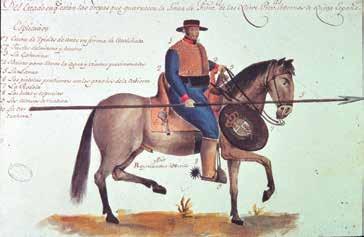
An 1800 presidial soldier from the Province of New Spain, by Ramón de Murillo. Credit: Archivo General de Indias, Sevilla, Spain
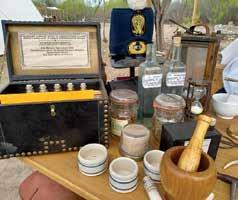
This 18th-century European oak medicine chest features a hinged lid and swivel fronts with iron fittings. The portable apothecary case contains 11 glass bottles and 4 pewter containers, likely used to transport medication. It includes a drawer containing weighing scales and other medical accessories for traveling doctors. Credit: Sir Henry Wellcome's Museum Collection, Science Museum
Fractured Bones and Frontline Fevers
The medical records from the military hospital at the Alamo reveal the tough realities of frontier life. Doctors battled a variety of infectious diseases, environmental issues and injuries. Smallpox was a constant threat across the Americas, with outbreaks capable of destroying both Spanish troops and local indigenous groups. The hospital served as an isolation center during outbreaks, where early methods such as primitive variolation or vaccination were used to try to prevent the spread of the virus. The damp, humid South Texas climate, along with drafts in the old mission buildings, led to frequent cases of pneumonia, which was often fatal. This highlights the importance of Governor Cordero’s focus on building raised beds to keep patients dry and improve survival. Like any military post with young soldiers, the garrison saw high rates of venereal diseases such as syphilis and gonorrhea. Treatment was often harsh, involving heavy metals like mercury, which could be as damaging as the diseases. Additionally, surgeons regularly treated dysentery from contaminated water, malaria and injuries from accidents or skirmishes along the frontier.
The End of an Era
The final chapter of the Alamo’s Spanish medical history was led by Dr. Francisco Farina, who became the last surgeon there in 1814. By then, the Spanish Empire was falling apart, with the Mexican War of Independence in full swing and Texas, a remote province, descending into chaos. As resources ran out, the military hospital eventually ceased to function as a formal medical facility and became a military fort solely. The site changed hands several times over the next 20 years, eventually playing a notable role in the Texas Revolution. In 1836, during the siege and battle, an adjacent room at the Alamo was again used as a makeshift infirmary.
Although the hospital existed for less than a decade, its legacy remains substantial. The provisional infirmary demonstrated that healthcare constitutes a crucial pillar of civilization, even in the
These are antique 19th-century surgical instruments and medical tools typically used during educational demonstrations or historical reenactments. The display includes a variety of specialized items, such as surgical saws, bone cutters and bloodletting tools. The instruments would change little from the Colonial period until the destruction seen in the American Civil War. Credit: Author's Collection
most perilous frontier regions. The insights gained from improvisational care, sanitation and resource management established the fundamental foundations for subsequent medical institutions. Presently, San Antonio is recognized globally as a leading medical center, featuring extensive hospital districts, advanced research facilities and military medical training centers. However, prior to the advent of glass, steel and cutting-edge technology, Texas's medical history commenced with a modest number of beds, a single medicine case and a physician operating from a dilapidated room at the Alamo.
William V. Scott is a sixth-generation San Antonian serving as the Interim Manager of Collections, Exhibits, and Research at the National Ranching Heritage Center at Texas Tech. He is a PhD candidate and history instructor at Texas Tech University, specializing in the intersection of agricultural history and the medical humanities as a medical historian. His work on the Executive Advisory Committee for the Handbook of Texas Medicine, published by the Texas State Historical Association, underscores his expertise in documenting the development of healthcare in Texas and the borderlands. Through his dedication to curatorial preservation and archival medical research, Mr. Scott provides a comprehensive perspective on how health and survival have influenced the history of the American West.
UIWSOM, We Have Lift Off!
By Janki Patel, OMS-III; Ravi Patel, OMS-IV; Ethan Duong, OMS-II; and Annabelle Clark, OMS-II. Advisor: James Mayberry, MD
Brooks Air Force Base
Brooks Air Force Base boasts a history spanning more than a century. It has played a significant role in the development of military aviation and aerospace medicine. Established in 1917 as Kelly Field No. 5, the base was soon renamed Brooks Field to honor Lieutenant Sidney J. Brooks, a San Antonio pilot lost during a training flight. The airbase gained fame during World War I as an aviation cadet training school. At that time, it was well known for implementing the British Gosport System of aviation training. After the war, Brooks became home to a Balloon and Airship School, training military personnel in aerial observation. However, the program ended following several fatal accidents.
In 1922, Brooks Field became the main flying school of the Army Air Corps. Four years later, the School of Aviation Medicine moved from New York to Brooks, focusing solely on integrating flight training and aerospace medical research. After the creation of the United States Air Force, Brooks Field was redesignated as Brooks Air Force Base in 1948. The base evolved into a premier center for aerospace medicine, concentrating on high altitude physiology and flight surgeon education. It also housed a toxicology and drug-testing facility, as well as an occupational lab dedicated to environmental hazard mitigation and readiness. During the late 1950s,
Brooks Air Force Base became home to both the Aerospace Medical Center and the School of Aviation Medicine. When the United States entered the Space Age, the School of Aviation Medicine at Brooks Air Force Base was renamed the United States Air Force School of Aerospace Medicine (USAFSAM) in 1961. At this point, USAFSAM emerged as the hub of aerospace medicine.
United States Air Force
School of Aerospace Medicine
The USAFSAM’s focus at that time was studying the effects of space travel on the human body, while also advancing aerospace medicine research, teaching and clinical medicine. During this time, the school was working closely with NASA, pioneering technological advancements in medicine that would later lead to breakthroughs such as laser eye surgery and magnetic resonance imaging. President John F. Kennedy himself gave his final speech in 1963, announcing the "new era of space travel," at the USAFSAM campus, making the campus buildings a present-day historical marker known as the School of Aerospace Medicine Historic District.
Unfortunately, the Department of Defense considered closing Brooks City Air Force Base due to the Defense Base Realignment and Closure Act of 1990. The act was passed at the end of the Cold War to reallo -
cate funds to new locations in response to changing military needs. The base was eventually closed in September 2011, and the USAFSAM was relocated to Wright-Patterson Air Force Base in Dayton, Ohio, where it continues its operations today. Brooks City Air Force Base became a historic site for a time, at one point risking complete dissolution from private investors. Luckily, in 2002, the U.S. Air Force, the State of Texas, the City of San Antonio and the Brooks Development Authority came together to turn it into the current-day Brooks City Base.
As for the former USAFSAM, the campus-style layout had a new purpose, serving as the site of the newly formed University of the Incarnate Word School of Osteopathic Medicine (UIWSOM), with its inaugural class in 2017. The grounds that once saw brilliant breakthroughs in aerospace medicine and cultivated capable flight surgeons and personnel would now serve as a nurturing environment for future osteopathic physicians in San Antonio.
University of the Incarnate Word School of Osteopathic Medicine
The inaugural class of 2017 at UIWSOM officially graduated with the Doctor of Osteopathic Medicine (DO) degree in 2021. While the curriculum, faculty and staff have evolved over the years, the school's mission has remained constant in “promoting culturally, linguistically,
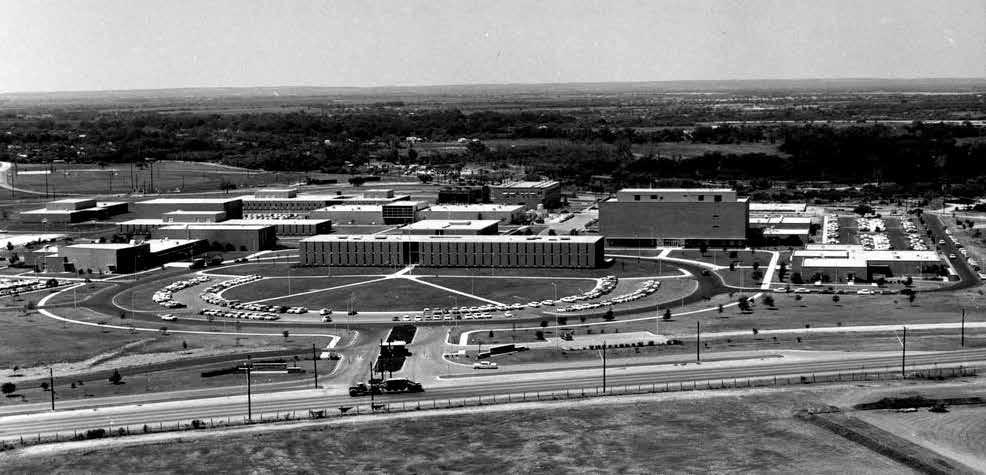
Aerospace Medical Division, Brooks Air Force Base, ca. 1963. Credit: JFK Presidential Library and Museum.
and community responsive care for all patients to enhance patient safety and improve patient outcomes.” The vision for the school began five years earlier, in 2012, under Dr. Louis Agnese Jr., then president of the University of the Incarnate Word. That vision was later advanced by then-Provost Dr. Kathi Light, Chancellor Dr. Denise Doyle, and the founding Dean of UIWSOM, Dr. Robyn Phillips-Madson, whose leadership helped bring the school to fruition and secure its accreditation. It was through Dean Phillips-Madson’s determination that UIWSOM became what it is today. The campus layout of the former USAFSAM provided an opportunity to foster camaraderie between students and faculty outside of classes and to build a greater connection to nature as students walked to different buildings for lessons.
The school currently utilizes four of the previous USAFSAM buildings. Building 1, or Building 150, remains the central hub for faculty. For USAFSAM, Building 150 was where higher-ranked officials gathered. Building 2, or Building 180, which served as the primary lecture hall when it was USAFSAM, now hosts the cafeteria, secondary lecture hall, osteopathic manipulative techniques lab, student-run clinic, standardized patient encounters and simulation labs. Building 3, or Building 155, remains the library as it was in USAFSAM, now with additional multipurpose spaces for student learning. Building 4, or Building 100, is the primary lecture hall, whereas it was the site for pilot health evaluations by the Residents in Aerospace Medicine (RAMs) when it was still USAFSAM. Though not affiliated with UIWSOM, buildings 160 and 170 currently operate as a center dedicated to aerospace medical research conducted by KBR.
Provided the buildings and surrounding areas are a historical marker, little can be changed about their external characteristics aside from what the City of San Antonio Office of Historic Preservation—Brooks Development Authority would allow. Inside, however, the space has been modernized to accommodate the students' learning.
Currently, there is a growing need for primary care providers in South Texas. This objective influenced the decision for the University of the Incarnate Word to pursue an Osteopathic School of Medicine, since many DOs pursue careers in primary care. San Antonio itself is well known for its strong military presence, as it is located near Joint
Base San Antonio, with approximately “one in eight residents in the region having ties to the military.” In 2022, Dr. Phillips-Madson passed the role of dean to Dr. John Pham, who has continued to lead the school’s growth and contribute to its ongoing success. The inaugural class enrolled 162 students, while the current class of 2029 includes approximately 170 students. Between the first graduating class in 2021 and 2026, approximately 800 physicians have graduated from UIWSOM. Since welcoming the first cohort, the school has experienced significant growth and continues to expand its resources and opportunities. UIWSOM remains committed to ongoing improvement to advance healthcare education and serve the needs of the community.
Aerospace Medicine Interest Group
Despite UIWSOM’s historical connection to aerospace medicine and a plaque on the second floor of Building 150 honoring the former USAFSAM, the field itself had not been promoted often with UIWSOM. To revive the spirit of aerospace medicine and make the path towards pursuing the field more accessible to the students, four students and their faculty advisor, Dr. James Mayberry, came together to start the UIWSOM Aerospace Medicine Interest Group (AMIG) in September 2025. The organization's first activity was volunteering at the 2025 Wings Over Houston Air Show alongside current UTMB aerospace medicine residents and faculty. From there, AMIG has expanded students’ interest in this field through organization fairs, general meetings, educational presentations, guest speakers and local journal clubs that discuss hyperbaric medicine, aviation and space medicine. As of late 2025, UIWSOM AMIG has also become a proud local chapter of the Aerospace Medicine Student and Resident Organization (AMSRO) and is affiliated with the Aerospace Medical Association (AsMA).
Their mission is to increase awareness, knowledge and opportunities in aerospace medicine. They strive to continue the spirit of the former USAFSAM by integrating clinical medicine, physiology, engineering and public health related to the challenges unique to this field. Through fostering connections to national organizations such as AsMA and AMSRO, they provide a path for students to network and gain experience.
AMIG embodies UIWSOM’s mission of preparing osteopathic physicians who are skilled clinicians, servant leaders and lifelong learners. By providing exposure to aerospace medicine, a specialty with strong ties to emergency medicine, critical care and preventive medicine, this organization offers students unique opportunities to integrate osteopathic principles across diverse and emerging fields of medicine.
Janki Patel, OMS-III, is a 2026 PreDoctoral Fellow at the University of the Incarnate Word School of Osteopathic Medicine, Class of 2028. She is deeply interested in Internal Medicine, Aerospace Medicine and Osteopathic Neuromusculoskeletal Medicine, with a passion for incorporating more OMM use in aerospace medicine. She is the 20252026 UIWSOM AMIG President.
Ravi Patel, OMS-IV, is a medical student at the University of the Incarnate Word School of Osteopathic Medicine, Class of 2027. He is interested in Emergency Medicine and in the application of augmented intelligence in improving multiple clinical aspects of medicine.
Ethan Duong, OMS-II, is a student at the University of the Incarnate Word School of Osteopathic Medicine, Class of 2029. He is currently interested in issues related to aerospace medicine and sports medicine that affect the human body and how OMM can be utilized to treat people in these fields. He is currently serving as the 2025-2026 UIWSOM AMIG secretary.
Annabelle Clark, OMS-II, is a student at the University of the Incarnate Word School of Osteopathic Medicine, Class of 2029. She is currently interested in aerospace and internal medicine, with a specific focus on women’s health and understanding how to better regulate physiological systems. She is the 2025-2026 UIWSOM AMIG Vice President.
James Mayberry, MD, is an Assistant Professor in the Clinical Applied Sciences and Education Department at the University of the Incarnate Word School of Osteopathic Medicine. He is board certified in Family Medicine and trained in Clinical Genetics and Genomics. Dr. Mayberry serves on the BCMS Publications Committee.
Discovering the History of Mental Healthcare in San Antonio
By William S. Bush, PhD
This past year, San Antonio began participating in an innovative statewide project that seeks to document the history of mental healthcare in Texas’ state hospitals and share that history with the wider public.
Originally known as asylums, these institutions emerged in the 19th century to provide care and treatment for people with mental illness. Believing that effective treatment could only occur in a well-ordered setting walled off from the chaos of a rapidly industrializing and urbanizing United States, the asylum’s proponents, led by Dorothea Dix and Thomas Kirkbride, opened over 30 asylums between 1840 and 1870. Located in bucolic rural settings, the asylum promised to “cure” conditions that were not yet well understood.
Texas was an early adopter in the asylum movement. In 1861, the Texas State Lunatic Asylum opened in Austin as the first asylum west of the Mississippi River. Just over 30 years later, the Southwestern Insane Asylum opened in what was then a remote area in southeastern Bexar County — the state’s
third such institution and the first to offer mental health services to patients in South Texas.
No published histories exist, nor do most Bexar County residents know much about this institution, renamed the San Antonio State Hospital in 1925. Over the past century, public opinion about asylums drew largely from popular films such as The Snake Pit (1948) or One Flew Over the Cuckoo’s Nest (1975), which highlighted overcrowded conditions and controversial treatment protocols such as shock therapy and lobotomy.
Much has changed over time. Stigmatizing words like “lunatic” or “insane” have given way to “person-first” language that aims to lift up the agency and dignity of people living with mental illness. Treatment protocols are more evidence-based, hospitals are better staffed with trained care professionals, and legal protections now exist to safeguard patients’ rights. Nevertheless, even now, with our unprecedented access to information via the Internet, most Texans know almost nothing about their state’s system of hospitals (10 and counting) for people living with mental illness.
In May 2021, this began to change with the inauguration of the Texas State Hospital Historic Preservation Program, within the Texas Health and Human Services Commission. The program’s impetus came from the discovery of physical artifacts and handwritten patient records at the Austin State Hospital during a multimillion-dollar renovation of the facility. Texas HHS appointed one of its longtime employees, Diedra (D.D.) Clark, to lead this effort in the new position of Historic Preservation Officer. Already possessed with an encyclopedic knowledge of the hospitals’ history, Clark assembled a team of academics, librarians and mental health leaders to develop a plan for fulfilling the program’s official charge to preserve historical materials and “to share knowledge about the architectural and cultural past of our mental health community while serving as a foundation for educational and public programming.”
In the last four years, this working group has produced a rotating exhibit at the Bullock Texas State History Museum in Austin; an oral history project featuring interviews with
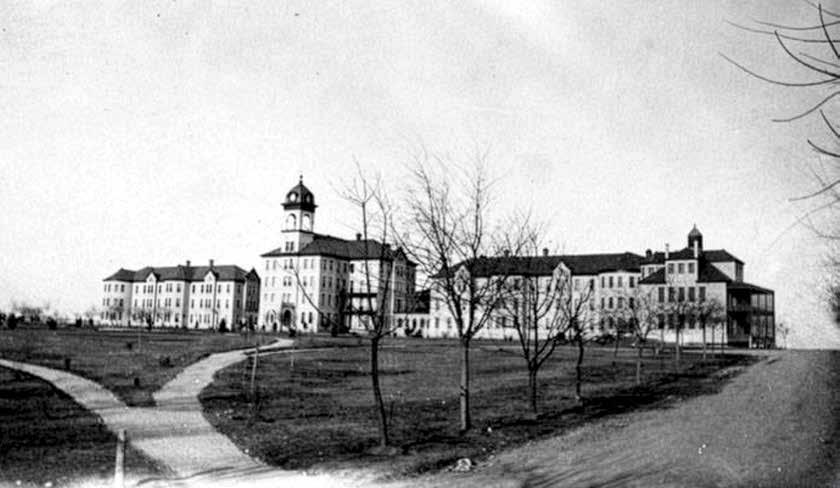
Southwest Texas Lunatic Asylum, South Presa Street, San Antonio, Texas, ca. 1905. Courtesy of the San Antonio Conservation Society. General Photograph Collection, UTSA Special Collections.
over a dozen former employees of the Austin State Hospital; and a “Dialogues on Mental Health Records” speaker series, supported by the Hogg Foundation for Mental Health at the University of Texas at Austin. Meanwhile, Clark has engaged university faculty in historical projects at hospitals around the state: Terrell Hills State Hospital (University of Texas-Arlington), Rusk State Hospital (Sam Houston State University), and our very own San Antonio State Hospital (Texas A&M University-San Antonio).
In November 2022, Clark and I spent a day walking the grounds of the San Antonio State Hospital. We toured buildings abandoned long ago, including a massive congregate cafeteria, patient wards, exam-
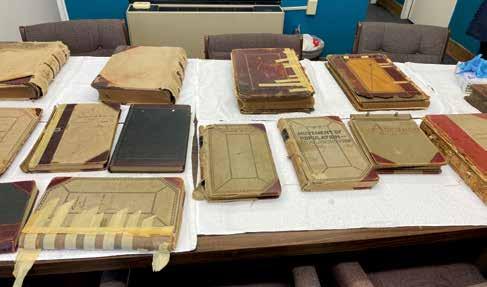
ination rooms, nurses’ quarters and storage spaces piled high with decades-old furniture and equipment. One of the more fascinating structures was the superintendent’s house — a two-story, 19th-century Victorian-style mansion that is no longer in use. We identified over 40 large, leather-bound ledgers with nearly 12,000 pages of handwritten patient records dating back to the very first patient admitted in April 1892.
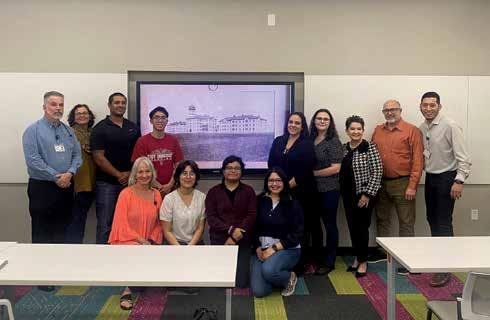
We began working with these records in “Mind Matters,” an upper-level undergraduate History and Honors seminar, which I designed and taught in spring 2025 with invaluable assistance from Leslie Stapleton, our library’s head of archives and special collections. While students engaged with lec-
tures and readings on the history of mental health and mental illness in our weekly classes, they worked in teams on a class project documenting the history of the San Antonio State Hospital. One team visited the hospital regularly to review and catalog the contents of the ledgers, a task so engrossing that some students volunteered to work in the hospital reading room during spring break. Two other teams worked with the decennial U.S. Census reports of the hospital population in 1900, 1910, 1920 and 1930, creating searchable spreadsheets from the census data. A third set of teams collected full-text articles about the hospital published in San Antonio’s two daily newspapers, the Express and the Light, between 1890 and 1940.
The class culminated in a symposium where the student teams each presented their preliminary findings to an audience that included Clark as well as the hospital superintendent and staff. In addition, the students presented their work at a campus event for National Public Health Week, and the entire class received a guided tour of the new $357 million hospital facility that opened in April 2024. The students demonstrated the admission rates of women and men, the age distribution of patients, which included children, young adults and the elderly, the types of diagnoses documented in ledgers (including some, such as “melancholia,” no longer in use), and struggles to manage the size of patient population described in the local newspapers.
Much work remains to be done. The data collected during this semester will contribute to an envisioned interactive website where the history of Texas’ state hospitals for people with mental illness will be made available to all — a major public history project that is still in progress. Closer to home, we are making plans to run the “Mind Matters” course again in spring 2027. This time, the class project will focus on the creation of museum exhibits on the San Antonio State Hospital’s history. In this way, we hope to break down the walls that have obscured the lived experiences of people with mental illness and those who have cared for them.
William S. Bush, PhD, is a Professor of History and Director of the University Honors Program at Texas A&M University-San Antonio.
Class presentations at A&M-San Antonio. Photo taken by the author in April 2025.
Ledgers containing handwritten records of patient admissions, diagnoses, transfers, releases and deaths. Photo taken by the author in November 2022.
Scalpels in the Saddlebags: The medical legacy of Texas' frontier army surgeons
By William V. Scott, PhD Candidate
In the blistering, isolated expanses on the frontier of the 19th-century Lone Star State, United States Army-commissioned surgeons, contract surgeons and citizen physicians were far more than battlefield medics. These physicians constituted a crucial backbone for survival in the newly annexed frontier state. Facing severe isolation, widespread diseases, like malaria and dysentery, and limited supplies, they delivered healthcare to indigenous people, pioneer communities and numerous soldiers. At the same time, they laid the foundation for modern American public health and meteorological sciences.
The Harsh Crucible of the Frontier
Following the annexation and the conclusion of the Mexican-American War, when the United States Army established a military presence on the southern and western Texas frontier, it encountered a challenging environment. The Texas frontier extended for hundreds of miles without railroads, established telegraphs or significant civilian infrastructure. Medical officers — often holding the rank of Assistant Surgeon (equivalent to a Captain) or serving as con-
tract surgeons — were assigned to remote outposts such as Fort Belknap, Fort McKavett, Fort Ewell, Fort Chadbourne and eventually Fort Davis.
Living in isolated forts, military surgeons endured hardships alongside enlisted men. A Post Hospital might start as a tent before becoming a building with an office, a small ward, a dispensary, an operating room and a kitchen, all connected by open porches. In 1850, Assistant Surgeon Thomas M. Getty was transferred to Texas, serving at Fort Inge from February 27, 1850 to August 28, 1854; he was the longest-serving surgeon there. He was the second surgeon on site, taking over from Assistant Surgeon John Campbell. During his time, Getty oversaw the construction of the large limestone hospital, later a storehouse. He was present at Lt. Col. W. G. Freeman's 1853 inspection, noting that the medical department was well organized and well stocked, treating 189 cases that year, including fevers, scurvy and diarrhea. Freeman also inspected Fort Ewell, where Assistant Surgeon Richard French Simpson managed healthcare amid a dry, hot climate that caused dysentery and typhoid. Winter
immunity issues included respiratory diseases, exacerbated by a lack of vegetables, with 35 cases of scurvy. Freeman observed no hospital building; sick soldiers were housed in quality tents under supervision. In 1853, Freeman found Fort Mason's Medical Department under the supervision of Assistant Surgeon Lafayette Guild, with a hospital consisting of a simple log building in excellent condition. Guild later served at Fort Davis, where the hospital was a small tent and a wooden shed. These doctors, isolated from eastern centers, relied on ingenuity and local herbs alongside standard medicines.
The Enemy Within: Disease on the Plains
Contrary to common belief, frontier surgeons mainly battled invisible airborne and waterborne diseases, not battle wounds. Texas' diverse climate and occasionally stagnant water created conditions that led to widespread suffering.
Malaria remained a constant threat, especially in the swampy and riverine areas of Central and South Texas. Simultaneously, gastrointestinal illnesses — commonly called "dysentery" — killed more soldiers than combat weapons. Before germ theory was understood, surgeons' treatments often seemed brutal by today's standards. They frequently prescribed calomel, a mercury compound that caused dehydration, or resorted to bloodletting, blue mass and turpentine to address issues from fevers to venereal diseases. Despite these severe remedies, frontier surgeons did their best with the scientific knowledge available at the time, often demonstrating great compassion and resilience amid widespread suffering.
Additionally, cholera and smallpox outbreaks periodically impacted both military garrisons and nearby civilian and Native American communities. Frontier surgeons took on roles like those of public health officials, working to quarantine affected areas, manage hygiene practices, and distribute early versions of the smallpox vaccine to prevent severe local epidemics.
Assistant Surgeon Thomas M. Getty was the longest-serving garrison physician at Texas' Fort Inge from 1850 to 1854. Overseeing a highly organized medical department, he treated outbreaks of fever and scurvy within the post’s newly built limestone hospital. A well-respected frontier figure, Getty's legacy endures through his friendship with Uvalde founder Reading Black, who named the town's principal avenue, "Getty Street," in his honor. Credit: West Point Museum
Assistant Surgeon Lafayette Guild in his 1851 Pattern uniform, likely photographed in San Antonio. Arriving in Texas in 1851, Guild brought vital medical care to the frontier. He served at Fort Lincoln, scouted with the Dragoons, and commanded the post. He later managed the Fort Mason hospital and established a new garrison at Fort Davis. Credit: The Museum of the Confederacy
Surgical Realities and Trauma Care
Whenever trauma happened, whether from skirmishes with Comanche and Kiowa warriors, accidents involving cavalry mounts or accidental shootings, the medical response was swift and demanding. Medical officers in Texas had only limited surgical kits and relied solely on ether or chloroform as anesthetics.
Amputations were frequently necessary to prevent the propagation of gangrene and severe infections resulting from shattered bones. In the absence of widespread understanding of antisepsis until the late 19th century, conditions such as pyemia (blood poisoning) and hospital gangrene often afflicted field hospitals, leading to elevated mortality rates from secondary surgeries. Despite these challenging circumstances, frontier army surgeons typically served as the sole trained medical professionals across multiple counties. They regularly provided treatment not only to soldiers but also to
civilian settlers, travelers and wounded Native Americans seeking medical assistance, thereby dismantling barriers within the unpredictable frontier environment.
Pioneering Public Health and Meteorology
Perhaps the most enduring, yet frequently overlooked, legacy of the military surgeons of the frontier army in Texas was their contribution to science. Due to the extreme isolation of the frontier, the Army Surgeon General in Washington, D.C. mandated that medical personnel maintain meticulous and highly detailed records. Each post surgeon was required to submit comprehensive monthly sanitary reports concerning the health and mortality rates of their garrison. However, these records extended beyond merely monitoring troop sickness. Surgeons were also responsible for recording weather conditions, maintaining daily meteorological logs, and noting environmental circumstances.
When collected at the national level, this data on disease cases, death rates and weather formed the first public health statistics in the United States. Frontier surgeons played a key role in mapping the epidemiological and climatic histories of early Texas through these responsibilities. The detailed weather information gathered by these military surgeons in Texas and the western territories was crucial to the establishment of the National Weather Service, demonstrating that their duties extended far beyond hospital care.
The Evolution of Military Medicine
The frontier army surgeon in Texas served roughly from the late 1840s to the turn of the century. During this period, the U.S. Army Medical Department saw significant growth. After the Civil War, it began to professionalize, greatly enhancing the medical skills of frontier physicians. As germ theory and antiseptic techniques gained worldwide acceptance in the late 1800s, the U.S. Army Medical Corps adopted these advancements. This shift moved medical practice on the Texas frontier from a trial-and-error method to a more scientific, evidence-based approach.
Today, this profound history is commemorated as a foundational chapter in Texas' medical history. Institutions such as Brooke Army Medical Center in San Antonio stand as modern testaments to the enduring military medical tradition in Texas. Tracing its origins to the rudimentary post hospitals of the 19th century, the military medical infrastructure in Texas has evolved into one of the most sophisticated trauma and healthcare networks worldwide.
The surgeons of the frontier army established the foundations of modern medical excellence. In the solitude of uncharted territory, these medical pioneers not only saved many lives amid significant challenges but also made notable contributions to epidemiology, meteorology and public health. Their legacy, forged with tools like the scalpel and saddle, remains a vital chapter in Texas history, symbolizing a time when medical care was pushed to its limits on the American frontier.
William V. Scott is a sixth-generation San Antonian serving as the Interim Manager of Collections, Exhibits, and Research at the National Ranching Heritage Center at Texas Tech. He is a PhD candidate and history instructor at Texas Tech University, specializing in the intersection of agricultural history and the medical humanities as a medical historian. His work on the Executive Advisory Committee for the Handbook of Texas Medicine, published by the Texas State Historical Association, underscores his expertise in documenting the development of healthcare in Texas and the borderlands. Through his dedication to curatorial preservation and archival medical research, Mr. Scott provides a comprehensive perspective on how health and survival have influenced the history of the American West.
Brooke Army Medical Center, ca. 1940s. Credit: Texas State Historical Association
This is a 19th-century military medical hospital for a living history education day at Fort Inge near Uvalde. Credit: Author's Collection
The Relation of the Old to the New in Medicine
By P.I. Nixon, MD (Read before the Bexar County Medical Society, October 26, 1933)
*Reprinted in part from the June 1934 issue of Southwest Texas Medicine magazine for the Bexar County Medical Society. Sections were copied verbatim from the previously published source.
The time of birth of an individual, or even the manner of birth, need not be of great importance. Take as an illustration the birth of Romulus, the reputed founder of the city of Rome. You will recall that Amulius who was the king of Alba swindled his brother, Numitor, out of his half of the kingdom. Fearing that the daughter of Numitor, Rhea, might have children, he appointed her a priestess, in which capacity she was supposed to remain unmarried and virginal. Soon it was discovered that she was with child, so Amulius had her closely confined and excluded from all associates. When her time was completed she was delivered her two sons of uncommon size and beauty, Romulus and Remus. Alarmed by the multiple pregnancy, Amulius ordered one of his servants to destroy the children. With this in view the children were put in a cradle and placed near the bank of the river Tiber. It happened that a flood came and the cradle was set afloat and carried down to a point which is now the location of the city of Rome. Here the cradle came ashore and the story goes that the two boys were suckled by a she-wolf and watched over by a woodpecker. These animals are sacred to Mars and rumor had it that Rhea had the children by Mars. But a more likely tradition is that Amulius, her uncle, himself, was responsible. My point is this: Plutarch, in his “Parallel Lives,” with what must have been a chuckle in his voice and a twinkle in his eye, tells us that the Latin word “lupa,” meaning she-wolf, also means prostitute. If the God of War were as powerful in 753 B.C. as he is at the present time one would think he would have given a more exalted birth to his reputed children. And yet, regardless of the origin of the city of Rome, no city in ancient or modern times has played such a part in the sacred or profane history of the world as has the Eternal City.
On the other hand, the time of an invention or the introduction of a new remedy or the technic of a new operation may be of great importance. Take as an illustration the compound microscope. For three centuries up to 1878 there were no epoch-making changes. In 1878 Zeiss introduced the oil-immersion lens. It is significant that the germ theory of disease had been propounded just thirteen years before. For twenty years from 1878 there followed in rapid succession the discovery of one pathogenic organism after another, so that this period comprised the Golden Age of bacteriology and medicine. During this time Pasteur, Lister and Koch carried out their monumental work in the experimental field, while Virchow, Von Behring, Fournier, Duchenne, Allbutt, Osler and a host of others were proving themselves to be master-clinicians, the like of which the world has never seen. My point here is that had it not been for the compound microscope and the oil-immersion lens, the names of the immortals mentioned above might not be known to us today.
If we are to correctly determine the relation of the old to the new in medicine we must not only be familiar with the work of our medical forefathers who thrived in this Golden Age, but we must go far beyond that era and recognize that much valuable work was done centuries ago. This work is hid away in old volumes stored in out of the way places. Some of it is altogether antiquated and in the light of modern knowledge may seem ridiculous. On the other hand, some of it is surprisingly practical and new in its conception. If we would properly evaluate the old in medicine, we must consider the subject without prejudice and without preconceived opinions. We cannot afford to assume the illiberal and illogical attitude of the church authorities in the time of Vesalius, the great anatomist. Prior to this time the anatomy of Galen was supposed to be infallible. When Vesalius asked permission to dissect the human body,
these authorities answered, “It is not necessary unless Galen has made a mistake, and he has not made a mistake, therefore it is not necessary" […] Medical history and medical knowledge have played a significant part in world history. Consider England, Henry VIII and syphilis. Henry did not know, as every physician today, that five minutes with Venus may mean a lifetime with Mercury. Had he not contracted syphilis early in life, Catherine would have been spared six or more miscarriages. Henry himself might have refrained from divorcing five wives in rapid succession in the vain hope of having a son and successor. Bloody Mary would never have come into power and the history of England would have been changed. Who can predict the results if Henry could have had the benefits of the work of Schaudinn, Wassermann and Ehrlich?
Could the glory of ancient Greece and Rome have survived if quinine and mosquito control had been known to them? [...] Would Waterloo have had its revenge, if Napoleon’s cancer of the stomach had been resected by methods of modern surgery? [...] Or the effect on American history, if George Washington had received diphtheria anti-toxin?
Our dependence on the work of our immediate medical forefathers is reflected in our attitude toward the two men whose portraits have been presented here tonight, Dr. Herff and Dr. Paschal. These men with their contemporaries were medical pioneers in Southwest Texas. They were resolute and resourceful. Many of their therapeutic measures were the result of personal experience and could not have the benefits of laboratory confirmation. For example, they always preceded their quinine treatment of malaria by giving a “round” or a “thru” of calomel and they gave it in respectable doses. They knew they got better results, but they didn’t know why. We now know that mercury is one of our best parasiticides in malaria. These men were clinicians in their own right and gave to medicine a glamor that is less bright today. We are proud of the heritage they have handed down to us. As Weir Mitchell said of Harvey, they represented all that is best in the physician and the gentleman.
These illustrations will suffice to demonstrate the inter-relationship between the old and the new in medicine. Through failure to properly record its observations by one generation on the one hand and through an intolerant spirit by the next generation on the other, much of the wisdom of the world, both medical and lay, has been lost. Medical history records a part of the medical knowledge of past generations; in it there is ample proof of the Hippocratic aphorism that art is long and time is short and judgement difficult.
Humbuggery, delusions and fallacies have pervaded medicine in all times; they pervade medicine today and will continue as long as human nature retains its qualities of frailty and gullibility. But progress has been made. Witness the discovery of epinephrine, insulin, thyroxin, parathormone; small-pox vaccination, diphtheria antitoxin and toxoid, anti-typhoid inoculation; the conquest of malaria and yellow fever; the marvels of surgery, the safeguarding of women in childbirth; the sphygmomanometer and countless other instruments of precision; the revelations of bacteriology and pathology; the contributions of chemistry and the physiology that loom so large in the medicine of the future. These and many other advances are the products of both the old and the new in medicine. To appreciate the new we must be familiar with the old and this can be done as Walsh has said, only in the pleasant pathway to medical wisdom through medical history.
Pat I. Nixon, MD.
Marvin Forland, MD
March 29, 1933 - May 26, 2026
Marvin Forland, MD, MACP, a founding faculty member of the School of Medicine at what was then The University of Texas Medical School at San Antonio — now the Joe R. and Teresa Lozano Long School of Medicine at UT Health San Antonio — passed Tuesday, May 26, 2026, in hospice care at the age of 93. An internist, nephrologist, educator, mentor and servant leader, Dr. Forland helped shape the school from its earliest years as a community devoted to forming humane and morally serious healers.
Dr. Forland was a native of northern New Jersey and a lifelong student of medicine. After military service in the Renal Branch of the Army’s Surgical Research Unit at Brooke Army Medical Center and faculty service at the University of Chicago School of Medicine, Dr. Forland came to San Antonio in 1968 to help build the newly opening medical school.
At UT Health San Antonio, Dr. Forland became one of the institution’s formative figures. As chief of the Division of Renal Diseases, he helped develop the curriculum and establish hemodialysis, renal biopsy and renal transplantation programs. He authored or co-authored more than 80 papers and book chapters, edited the Concise Textbook of Nephrology, and later served as residency program director, deputy chair for clinical activities and associate dean for clinical affairs.
Dr. Forland served the broader San Antonio community throughout his career. He had been a member of the Bexar County Medical Society since 1969 and gave his time and leadership to various local organizations. These commitments reflected the same pattern that marked his professional life: he built institutions, strengthened communities, and used leadership as a form of service.
Dr. Forland’s life was a lesson in what medicine can be when knowledge is joined to humility, skill to conscience and leadership to
service. He helped build a medical school, but more importantly, he helped shape the moral imagination of those who passed through it.
He is survived by Ellinor, his wife of sixty years, his son Aaron of San Antonio, his daughter Emily, her husband Mark, and his grandson, Theo, of Brooklyn.
Bexar County Medical Society Business Partners Program
As a BCMS member, you can find exclusive discounts on premium products and services that you and your practice use every day.
Shop Businesses Who Support BCMS
ACCOUNTING FIRMS
Sol Schwartz & Associates P.C. (HHH Gold Sponsor)
Sol Schwartz & Associates is the premier accounting firm for San Antonio-area medical practices and specializes in helping physicians and their management teams maximize their financial effectiveness.
Christopher Davis, CPA 210-384-8000, ext. 118 cbd@ssacpa.com www.ssacpa.com
“Dedicated to working with physicians and physician groups.”
CLA - CliftonLarsonAllen LLP (HH Silver Sponsor)
Transform complexity into opportunities. Work with professionals who understand the specific financial, operational, clinical, and strategic needs of physician practices and medical groups. Our team is made up of knowledgeable, accessible, and responsive individuals devoted to the healthcare industry.
Bryan Garcia, CPA Principal 210-298-7924 (direct) Bryan.Garcia@CLAconnect.com www.CLAconnect.com
"We'll get you there."
ASSET WEALTH MANAGEMENT
Aspect Wealth Management (HHH Gold Sponsor)
We believe wealth is more than money, which is why we improve and simplify the lives of our clients, granting them greater satisfaction, confidence and freedom to achieve more in life.
Michael Clark President 210-268-1520 (direct) MClark@aspectwealth.com www.aspectwealth.com
Atlas Retirement Strategies LLC is a comprehensive financial planning firm dedicated to serving the unique needs of the medical community. We offer customized strategies in business planning, retirement planning, risk management, wealth preservation, estate planning, and wealth transfer – empowering healthcare professionals to achieve long-term financial security, clarity, and peace of mind.
David M. Webb, Ph.D., MSM, CLF, CLTC, LACP
Founder & Principal 210-281-4400 (office)
David@atlas-plans.com www.atlas-plans.com
BANKING
Bank of Texas (HHH Gold Sponsor)
Bank of Texas, powered by BOK Financial, is a top U.S.-based financial services company, offering sophisticated wealth, commercial, and consumer products and services. Still, we do business one client at a time—focused on delivering thoughtful expertise and tailored advice—because we know that when our clients succeed, we succeed.
Healthcare banking experts with a private banking team committed to supporting the medical community.
Thomas M. Duran
SVP, Private Banking Team Lead 210-283-6640 (direct) TDuran@broadway.bank www.broadway.bank
“We’re here for good.”
Texas Partners Banks (HHH Gold Sponsor)
Our private banking team specializes in healthcare banking and will work with you to craft and seamlessly integrate financial solutions for you and your practice, including practice loans, lines of credit and custom local lockbox solutions headquartered in San Antonio. Maria Breen 210-807-5562 (direct)
We believe that any great relationship starts with five core values: Attention, Accountability, Appreciation, Adaptability and Attainability. We work hard and together with our clients to accomplish great things.
Eric Johnston
SVP, Private Banking Team Lead 210-343-4485 (direct) Eric.Johnston@amegybank.com
For more than 125 years, First Citizens Bank has served the financial needs of our clients and communities with specialized support and an emphasis on service. We bank on a first-name basis, taking a genuine interest in our clients' well-being. Our values-driven approach combines deep sector expertise with high-touch service, helping clients achieve their financial goals and aspirations.
Jorge Saenz Jr.
VP Business Banker III 210-749-3022 (cell)
Jorge.SaenzJr@firstcitizens.com
Robert Moreno
VP Business Banker II 210-310-8411 (cell) no@firstcitizens.com www.firstcitizens.com “Forever First”
Synergy Federal Credit Union (HH Silver Sponsor)
Looking for low loan rates for mortgages and vehicles? We've got them for you. We provide a full suite of digital and traditional financial products, designed to help physicians get the banking services they need. Synergy FCU Member Services 210-750-8333 (office) info@synergyfcu.org www.synergyfcu.org
“Once a member, always a member. Join today!”
BUILDING /CONTRACTOR SERVICES
Huffman Developments (HH Silver Sponsor)
Building spaces that inspire success. Huffman Developments specializes in custom commercial and medical projects from concept to completion. With over 40 years of experience, our team delivers high-quality, long-lasting facilities tailored to each client’s vision and business goals.
Steve Huffman President 210-979-2500 x207 (direct) 210-213-2421 (cell) SHuffman@huffmandev.com www.huffmandev.com
"Building Excellence One Project at a Time"
CREDENTIALS VERIFICATION ORGANIZATION
Bexar Credentials Verification, Inc. (HHHH 10K Platinum Sponsor)
Bexar Credentials Verification Inc. provides primary source verification of credentials data that meets The Joint Commission (TJC) and the National Committee for Quality Assurance (NCQA) standards for healthcare entities.
Betty Fernandez Director of Operations 210-582-6355 (direct) Betty.Fernandez@bexarcv.com www.bexarcv.com
“Proudly serving the medical community since 1998”
FINANCIAL ADVISORS
Avid Wealth Partners (HHH Gold Sponsor)
For over 15 years, Avid Wealth Partners has been the trusted financial partner for local physician specialists and practice owners. We specialize in physician-focused financial advising, offering proactive tax planning, customized investment strategies, and comprehensive risk management solutions. Our approach addresses every aspect of your financial life, protecting your hardearned assets and building lasting wealth. With a team of credentialed specialists, we simplify complexity so you can focus on what you do best— caring for patients
Elizabeth Olney with Edward Jones (HHH Gold Sponsor)
We learn your individual needs so we can develop a strategy to help you achieve your financial goals. Join the nearly 7 million investors who know. Contact me to develop an investment strategy that makes sense for you.
We believe wealth is more than money, which is why we improve and simplify the lives of our clients, granting them greater satisfaction, confidence and freedom to achieve more in life.
At Graystone Consulting, an institutional consulting business of Morgan Stanley, we are focused on providing you with holistic, objective advice and strive to be your trusted partner by delivering the best of two worlds to you: the personalized service of a consulting boutique, and the resources of a global financial powerhouse. We offer a wide spectrum of investment consulting solutions designed to meet your desired level of service and discretion. And we can provide all the intellectual capital, specialized resources, and analytical tools you need to help implement a successful, personalized investment strategy.
Since the late 1800s, Hancock Whitney has embodied core values of Honor & Integrity, Strength & Stability, Commitment to Service, Teamwork and Personal Responsibility. Hancock Whitney offices and financial centers in Mississippi, Alabama, Florida, Louisiana and Texas offer comprehensive financial products and services, including traditional and online banking; commercial, treasury management, and small business banking; private banking; trust; healthcare banking; and mortgage services.
UT Health provides our region with the most comprehensive care through expert, compassionate providers treating patients in more than 140 medical specialties at locations throughout San Antonio and the Hill Country.
UT Health San Antonio
Laura Kouba Business Development Manager 210-265-7662 (cell)
NorrisKouba@uthscsa.edu
Appointments: 210-450-1000
UT Health San Antonio 7979 Wurzbach Road
San Antonio, TX 78229
HOSPITALS/PRACTICE SERVICES
Genuine Health Group (HHH Gold Sponsor)
Genuine Health Group partners with primary care providers to help them successfully adopt value-based payment models and demonstrate better health outcomes. Providers choose us for our proven expertise and consistency both for their patients enrolled in Medicare Advantage plans and for their patients with traditional Medicare who can align with one of ACOs. We have a track record of effectively reducing the cost of care while simultaneously improving care quality.
Golden Billing is owned and operated for over 20 years in Houston, TX. The owner, Marcus Yi, is focused on creating a partnership with clients. We are dedicated to optimizing the small business doctor’s productivity and maximizing practice cash flow by accurate claims coding and timely processing. Call today for a free consultation. If you don’t want to use us at lease maybe we can help you fine tune your decision.
Marcus Yi 713-263-0054 (office) MYi@goldenbilling.com www.goldenbilling.com
Equality Health (HH Silver Sponsor)
Equality Health deploys a wholeperson care model that helps independent practices adopt and deliver value-based care for diverse communities. Our model offers technology, care coordination and hands-on support to optimize practice performance for Medicaid patients in Texas.
Cristian Leos
Network Development Manager 210-608-4205 (cell)
CLeos@equalityhealth.com www.equalityhealth.com “Reimagining the New Frontier of Value-Based Care.”
Physicians Connection (Previously known as DialOPS) (HH Silver Sponsor)
Dialops is a trusted U.S.-based medical answering service and virtual receptionist solution designed specifically for healthcare practices. We provide 24/7 live call handling, HIPAA-compliant messaging, appointment scheduling, and reliable after-hours and overflow support. Our medically trained agents answer every call with professionalism and care— just like your in-office staff—ensuring your patients always feel heard and supported. From solo providers to busy clinics, Dialops helps reduce missed calls, ease front desk overload, and improve the patient experience—all at a fraction of the cost of hiring in-house. Rachel Caero Rachel@dialops.net 877-2-DIALOPS/210-699-7198 www.dialops.net
SpeedE'z (HH Silver Sponsor)
For over three decades, SpeedE’z has been Bexar County’s truly local partner for answering service, contact center and courier solutions. R.N. owned and family-led, we combine compassionate care with professional expertise. Our HIPAA Certification, SOC 2 Type II Compliance and Woman-Owned HUB status reflect our commitment to integrity and security. Ranked Top Ten nationally in the ATSI Award of Excellence, our team delivers results that stand out –rooted right here in San Antonio!
Lauren Garza Vice President 210-615-0964 (office) Lauren@speedez.com www.speedez.com
Continued on page 42
BCMS Business Directory
INSURANCE
TMA Insurance Trust
(HHHH 10K Platinum Sponsor)
TMA Insurance Trust is a full-service insurance agency offering a full line of products – some with exclusive member discounts and staffed by professional advisors with years of experience. Call today for a complimentary insurance review. It will be our privilege to serve you.
Wendell England
Director of Member Benefits 512-370-1746 (direct) 800-880-8181 (toll-free) Wendell.England@tmait.org www.tmait.org
“We offer BCMS members a free insurance portfolio review.”
INSURANCE/MEDICAL MALPRACTICE
Texas Medical Liability Trust
(HHHH 10K Platinum Sponsor)
With more than 20,000 healthcare professionals in its care, Texas Medical Liability Trust (TMLT) provides malpractice insurance and related products to physicians. Our purpose is to make a positive impact on the quality of healthcare for patients by educating, protecting and defending physicians.
Patty Spann
Director of Sales and Business Development 512-425-5932 (direct) Patty-Spann@tmlt.org www.tmlt.org
“Recommended partner of the Bexar County Medical Society”
MedPro Group
(HH Silver Sponsor)
Rated A++ by A.M. Best, MedPro Group has been offering customized insurance, claims and risk solutions to the healthcare community since 1899. Visit MedPro to learn more.
Eliminate all liabilities caused by non-compliance with state and federal regulations and enjoy true peace of mind. Protect your practice by becoming audit proof as a subscriber to our compliance software that’s affordable and guaranteed. We have been protecting physicians for over 27 years and in 2013 were selected as the exclusive vendor of choice for compliance and medical waste by the 2nd largest Medical Association in the nation.
We work with certified experts who understand the specific compliance requirements imposed by OSHA, HHS/OCR (HIPAA), Boards, DOT, EPA, DTSC, CMS & many more. Everything we do, say, or develop for is guaranteed against fines and backed by our insurance policy that covers all our clients for up to $2 Million per occurrence. This is true peace of mind that is invaluable.
Julian Goduci Founder/CEO
650-655-2045 or 888-323-0583 (office)
JulianG@enviromerica.com www.enviromerica.com "Providing True Peace of Mind."
MEDICAL SUPPLIES AND EQUIPMENT
Henry Schein Medical (HH Silver Sponsor)
From alcohol pads and bandages to EKGs and ultrasounds, we are the largest worldwide distributor of medical supplies, equipment, vaccines and pharmaceuticals serving officebased practitioners in 20 countries. Recognized as one of the world’s most ethical companies by Ethisphere.
Kelly Emmon
Field Sales Consultant
210-279-6544 (cell)
Kelly.Emmon@henryschein.com www.henryschein.com
“BCMS members receive GPO discounts of 15 percent to 50 percent.”
For over three decades, SpeedE’z has been Bexar County’s truly local partner for answering service, contact center and courier solutions. R.N. owned and family-led, we combine compassionate care with professional expertise. Our HIPAA Certification, SOC 2 Type II Compliance and Woman-Owned HUB status reflect our commitment to integrity and security. Ranked Top Ten nationally in the ATSI Award of Excellence, our team delivers results that stand out – rooted right here in San Antonio!
Lauren Garza Vice President 210-615-0964 (office) Lauren@speedez.com www.speedez.com
PHYSICIAN ORGANIZATIONS
Methodist Physician Practices (HH Silver Sponsor)
Methodist Physician Practices is committed to providing exceptional care for patients in greater San Antonio and South Texas. As part of Methodist Healthcare, we are dedicated to raising the standards of performance excellence while advancing the health and well-being of the communities we serve. Our extensive network of highly-skilled primary care physicians, specialists and surgical care providers ensures patients receive comprehensive, coordinated and compassionate care. As part of the Methodist Healthcare System, our physicians are committed to delivering personalized, high-quality services that meet the diverse needs of our patients. At Methodist Physician Practices, we go beyond healthcare — providing hope, healing and unwavering support for each individual we serve.
Erin Fitzgerald
Methodist Healthcare I Methodist Physician Practices 281-673-7350 (cell) Erin.Fitzgerald2@hcahealthcare.com www.methodistphysicianpractices.com
PROFESSIONAL ORGANIZATIONS
The Health Cell (HH Silver Sponsor)
“Our Focus is People” Our mission is to support the people who propel the healthcare and bioscience industry in San Antonio. Industry, academia, military, nonprofit, R&D, healthcare delivery, professional services and more!
Kevin Barber President 210-308-7907 (direct)
KBarber@bdo.com
Valerie Rogler Program Coordinator 210-904-5404 (cell)
Valerie@thehealthcell.org www.thehealthcell.org
“Where San Antonio’s Healthcare Leaders Meet”
San Antonio Medical Group Management Association (SAMGMA) (HH Silver Sponsor)
SAMGMA is a professional nonprofit association with a mission to provide educational programs and networking opportunities to medical practice managers and support charitable fundraising.
Jeannine Ruffner President info4@samgma.org www.samgma.org
REALTOR SERVICES
JLL (HH Silver Sponsor) Lee N. McKenna, MHA Managing Director, Healthcare 210-293-6842 (direct)
Serving the Texas healthcare community since 1981, Favorite Healthcare Staffing is proud to be the exclusive provider of staffing services for the BCMS. In addition to traditional staffing solutions, Favorite offers a comprehensive range of staffing services to help members improve cost control, increase efficiency and protect their revenue cycle.
San Antonio Office 210-301-4362 (office) www.favoritestaffing.com
“Favorite Healthcare Staffing offers preferred pricing for BCMS members.”
This program is designed for companies and organizations looking to connect with our physician members and the broader medical community. It offers a strategic opportunity to showcase your products and services while fostering business growth within the healthcare sector.
JOIN TODAY
The 2026 Acura MDX
Courtesy of Gunn Acura
Introducing the 2026 Acura MDX — the fourth generation of a model that’s been raising the bar since 2001. Back when it debuted, the MDX made history as Acura’s first midsize SUV, the first SUV with standard third-row seating, and it even took home the title of “2001 North American Truck of the Year.”
Now, as Acura celebrates 40 years of Precision Crafted Performance, the MDX continues to lead the lineup with bold styling, innovative engineering and the kind of engaging dynamics that define the brand. Today’s Acura family includes the Integra, ADX, RDX, and MDX, with thrilling Type S versions available for both Integra and MDX.
The 2026 Acura MDX offers 290–355 horsepower, multiple trim levels - Base, Tech, Aspec, Advance, Aspec Advance and Type S, with advanced tech, safety features and versatile interior space.
The 2026 Acura MDX carries forward everything drivers have loved about the model since its debut — blending performance, luxury and cutting-edge technology into a truly modern midsize SUV. It delivers family-ready versatility with its spacious design and advanced safety features, while the Type S trim adds an extra dose of sporty excitement for those who want more dynamic driving. It’s an ideal choice for anyone looking for a premium SUV that’s as refined as it is capable.
Stop by and take the amazing new MDX for a test drive — you’ll see why it’s been a standout since day one.
Coby Allen 210-625-4988 main / 210-599-5036 office callen@gunnauto.com Gunn Acura in the heart of Shavano Park
PERFORMANCE SPECS
Engine and Performance
• Base Engine: 3.5L V6 producing 290 hp and 267 lb-ft of torque.
• Type S Engine: 3.0L turbocharged V6 producing 355 hp.
• Customization: Multiple exterior colors and interior trims available; some combinations may be limited by dealer inventory.
GUNN ACURA
11911 IH 10 West San Antonio, TX 78230
Coby Allen
210-725-5447
GUNN HONDA
14610 IH 10 West San Antonio, TX 78249
Mark Hennigan 210-941-4556
RECOMMENDED AUTO DEALERS
• We will locate the vehicle at the best price, right down to the color and equipment.
• We will put you in touch with the right person at the dealership to handle your transaction.
• We will arrange for a test drive at your home or office. We make the buying process easy!
• When you go to the dealership, speak only with the representative indicated by BCMS.
AUDI DOMINION 21105 West IH 10 San Antonio, TX 78257
Rick Cavender 888-901-8483
MERCEDES BENZ OF BOERNE
31445 IH 10 West Boerne, TX 78006
William Taylor 830-981-6000
NORTHSIDE CHEVROLET
9400 San Pedro Ave. San Antonio, TX 78216
Emilio Gonzalez 210-341-3311
NORTHSIDE FORD 12300 San Pedro San Antonio, TX 78216
David Starnes 210-319-5684
NORTHSIDE HONDA 9100 San Pedro Ave. San Antonio, TX 78216
Daniel Garcia 210-988-9644
NORTH PARK LEXUS
611 Lockhill Selma San Antonio, TX 78216
Jose Contreras 210-308-8900
NORTH PARK TOYOTA
10703 SW Loop 410 San Antonio, TX 78211
Justin Boone 833-669-2401
Kahlig Auto Group of Boerne of San Antonio
MERCEDES BENZ OF SAN ANTONIO 9600 San Pedro San Antonio, TX 78216
James Godkin 210-366-9600
PORSCHE OF SAN ANTONIO 9455 IH 10 West San Antonio, TX 78230
Jordan Trevino 210-738-3499
CAVENDER TOYOTA
5730 NW Loop 410 San Antonio, TX 78238
Spencer Herrera 210-862-9769
NORTH PARK LEXUS AT DOMINION 25131 IH 10 W Dominion San Antonio, TX 78257
James Cole 210-816-6000
NORTH PARK SUBARU 9807 San Pedro San Antonio, TX 78216
Steven Markham
726-226-0028
NORTH PARK LINCOLN 9207 San Pedro San Antonio, TX 78216
Sandy Small 210-341-8841
NORTH PARK SUBARU AT DOMINION
21415 IH 10 West San Antonio, TX 78257
Phil Larson 888-718-9510
As of March 31, 2026, our loan rate will be
ProAssurance has the experience, financial resources, and network of defense litigators you can rely on.
For five decades, ProAssurance has stood alongside physicians and healthcare professionals through some of the most complex and challenging moments in medicine.
We were founded during a time of profound change in healthcare liability. Since then, the industry has evolved—but our focus has remained the same. Through experience gained, cases defended, and trust earned, we have remained committed to supporting good medicine with strength and stability.
As we mark our 50th year, we honor the physicians, partners, and professionals who shaped our story.
A New Way To Save On Group Health Insurance
A New Group Health Option To Help Practice Owners With Staff Reduce Their Costs
Running a practice today means managing rising costs across the board. For many practice owners, employee health coverage remains one of the largest expenses. It’s why affordability has become such a central focus.
At TMA Insurance Trust, we continually evaluate the market to identify options that help Texas physicians provide quality coverage with affordability in mind.
If your practice experienced an increase in the cost of your group health insurance this year, maybe it’s time to think about a new option we are offering Texas physicians for the first time – an option that offers real savings while maintaining the quality of your group’s coverage.
Ready to explore our new option? Scan the QR code to speak with one of our advisors, call us at 800-880-8181 Monday – Friday, 8:00 AM – 5:00 PM CST, or visit us at tmait.org.