


Loudoun Water is pleased to present your drinking water quality annual report. The information contained in this report is based on data collected and reported to Virginia Department of Health in 2025, unless otherwise noted.
Annual dissemination of this report is required under the federal Safe Drinking Water Act (SDWA).
Established to safeguard the quality of drinking water across the United States, the SDWA establishes contaminant level limits in drinking water. These limits are represented in this report as MCLs, or Maximum Contaminant Levels. A glossary of helpful definitions is listed on the following page.
Based on rigorous sampling, the data tables prepared for this report provide important information about the quality of your drinking water throughout the year. On page 12, Table One shows the quality of the water as it flows within the Loudoun Water distribution system; and on page 13, Table Two shows the quality of the water as it leaves the treatment plants that supply our water.
If you have a question or concern that is not addressed in this report, please contact us at 571-2917880. Our staff is available to assist you Monday through Friday between 8:00 a.m. and 5:00 p.m. You may also contact us at any time to obtain the latest drinking water quality data. Previous drinking water quality reports and additional water quality information can be found at www.loudounwater.org
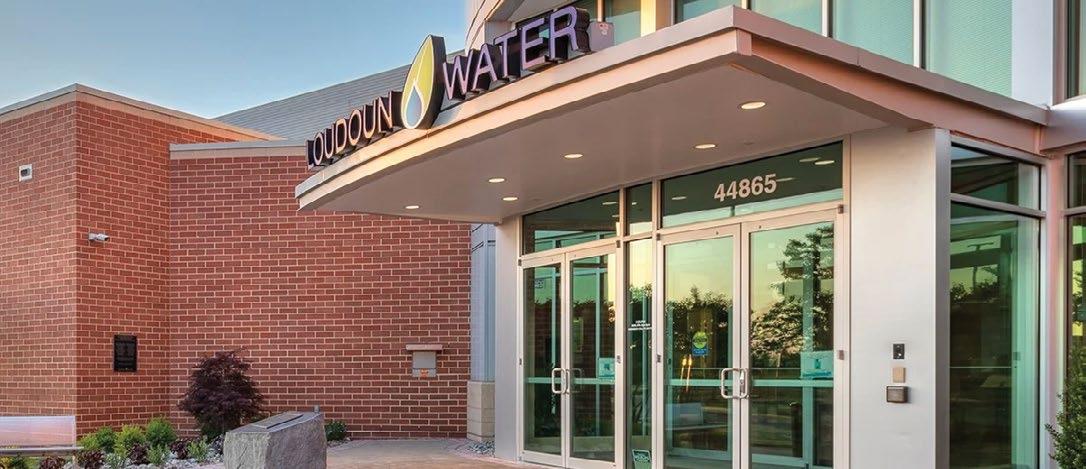
We also invite you to attend our monthly Loudoun Water Board Meetings, which are usually held on the second Thursday of each month in the Boardroom of our Dale C. Hammes Administration Building, located at 44865 Loudoun Water Way, Ashburn, VA 20147.
To learn more about Loudoun Water’s Board of Directors, please visit www.loudounwater.org/about.

Action Level: The concentration of a contaminant which, if exceeded, triggers a treatment or other requirement that a water system must follow.
Level 1 Assessment: An evaluation to identify the possible presence of sanitary defects, defects in distribution system coliform monitoring practices, and, when possible, the likely reason that the waterworks triggered the assessment.
Level 2 Assessment: An evaluation to identify the possible presence of sanitary defects, defects in distribution system coliform monitoring practices, and, when possible, the likely reason that the waterworks triggered the assessment in a more comprehensive investigation than a Level 1 assessment.
Maximum Contaminant Level (MCL): The highest level of a contaminant that EPA allows in drinking water. MCLs are set as close to the MCLGs as possible using the best available treatment technology.
Maximum Contaminant Level Goal (MCLG): The level of a contaminant in drinking water below which there is no known or expected health risk. MCLGs allow for a margin of safety.
Maximum Residual Disinfectant Level (MRDL): The maximum permissible level of disinfectant residual in drinking water, based on a running annual average.
Maximum Residual Disinfectant Level Goal (MRDLG): The level of a drinking water disinfectant below which there is no known or expected health risk. MRDLGs do not reflect the benefits of the use of disinfectants to control microbial contaminants.
mrems/year: Millirems per year. A measurement of radiation absorbed by the body.
N/A: Not applicable.
ND: Non-detect. Concentration levels so low they were not detectable.
Ninetieth (90th) Percentile: Represents the highest value found out of 90 percent of the samples taken in a representative group. If the 90th percentile is greater than the action level, it will trigger a treatment or other requirement that a water system must follow.
NTU: Nephelometric Turbidity Unit.
PCi/L: Picocuries per liter.
PMCL: Primary maximum contaminant level of a contaminant based on health considerations.
ppb: Parts per billion. One ppb is equal to one microgram per liter (ug/L).
ppm: Parts per million. One ppm is equal to one milligram per liter (mg/L).
ppt: Parts per trillion. One ppt is equal to one nanogram per liter (ng/L).
Total Coliform: Bacteria that indicate whether other potentially harmful bacteria may be present.
TT: Treatment Technique. A required process intended to reduce the level of a contaminant in drinking water.
I am proud to present the 2025 Annual Drinking Water Quality Report. At Loudoun Water our mission is to provide high-quality water services to protect public health and the environment. The findings in this report confirm that our drinking water consistently meets or exceeds the strict standards set by the Environmental Protection Agency and the Virginia Department of Health.
As our service area continues to grow, we are actively expanding our capacity and upgrading our systems to ensure this same level of exceptional quality for generations to come. Inside this report, you will find details about where our water comes from and the journey it takes to your tap. This success is a direct result of our dedicated scientists, operators, and technicians who work behind the scenes to monitor our systems around-the-clock.
If you have any questions about this report or your drinking water quality, I encourage you to contact our Customer Relations team at 571-291-7880 or via email at customerservice@ loudounwater.org Our staff at Loudoun Water is always here for you and we are happy to help.
Sincerely,
Brian Carnes General Manager, Loudoun Water

Most of us turn on the faucet without a second thought about where that water started, how it was treated, or the journey it took to reach our homes. In reality, it takes a massive amount of behind-the-scenes coordination from a dedicated team to maintain Loudoun Water’s infrastructure, monitor water quality, and keep treatment facilities running seamlessly.
On behalf of the Loudoun Water Board of Directors, I am pleased to present the 2025 Annual Drinking Water Quality Report. This report explains what is in your water, how it is treated, and how it meets or exceeds EPA and Virginia Department of Health standards. Loudoun Water is dedicated to staying ahead of water safety regulations and meeting the needs of our growing service area.
I invite you to review the findings in this report and reach out to Loudoun Water with any questions about your drinking water or utility services. I appreciate your continued partnership as we collaborate to ensure the long-term safety and sustainability of our community’s water infrastructure. For additional information about our projects, please visit www.loudounwater.org.
Sincerely,
Terrence Allen Chairman, Loudoun Water Board of Directors

Our mission is to provide high-quality water services to protect public health and the environment.
Loudoun Water is committed to providing excellent water, wastewater and reclaimed water services for all our customers in a dynamic county that continues to grow and evolve at a rapid pace. Loudoun Water is preparing for the future; one of continued county expansion, economic growth, adaptable technologies, and enhanced public health and safety. With sustained regional growth, major investments in water infrastructure, and deployment of advanced operational and informational technologies, Loudoun Water remains a proactive resource and partner in our vibrant county.
To do this, Loudoun Water maintains over 1,400 miles of water distribution pipelines, over 1,200 miles of wastewater collection system pipelines and a growing reclaimed non-potable water system.
Loudoun Water is a political subdivision of the State and is not a department of Loudoun County. This means all Loudoun Water income is received either as user fees from customers, which go towards
operating expenses or as developer fees which are used to pay for capital improvements.
Loudoun Water is governed by a Board consisting of nine members appointed by the Board of Supervisors. The Board members serve four-year terms and can be reappointed by the County. The Board appoints the General Manager, who is responsible for the daily management of Loudoun Water.
Loudoun County is a rapidly growing jurisdiction located in the northern tip of the Commonwealth of Virginia approximately 25 miles northwest of Washington, D.C. Loudoun County contains 521 square miles, making it one of the largest counties in the region. It has been one of the fastest growing counties in the country over the past decade. The County is expected to continue to have one of the highest population and employment growth rates in the entire Washington, D.C. region over the next 20 years. Loudoun Water continues to plan for this growth, which is outlined in our Capital Improvement Plan.
Since the Loudoun Water system has two sources of water (Potomac River and Goose Creek), two source water assessment reports have been conducted by the Virginia Department of Health. These reports consist of maps showing the source water assessment areas, an inventory of known land-use activities of concern and documentation of any known contamination.
Based on state criteria, both sources are considered to be highly susceptible to contamination. Additional information about these reports can be obtained by contacting us at 571-291-7880.
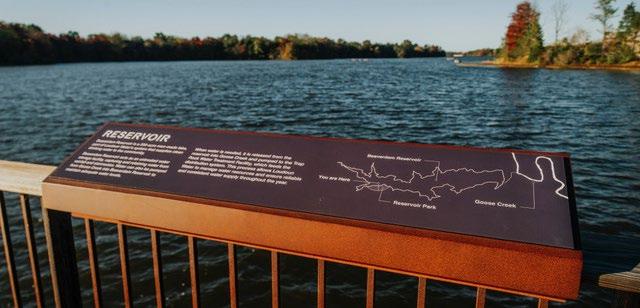
Your drinking water comes from the Potomac River and as needed Goose Creek. The Potomac River is augmented by reservoirs in Maryland, Virginia, and West Virginia through a shared supply agreement with neighboring water providers. Goose Creek receives water from Beaverdam Reservoir and Goose Creek Reservoir. Beaverdam Reservoir fills Goose Creek Reservoir when water levels get low and vice versa.
Your drinking water from the Potomac River was fully treated by Loudoun Water and by our wholesaler, Fairfax Water. Drinking water from Goose Creek can be fully treated by Loudoun Water, if supplemental drinking water is required.
Drinking water, including bottled water, may reasonably be expected to contain at least small amounts of some contaminants. The presence of contaminants does not necessarily indicate that the water poses a health risk. More information about contaminants and potential health effects can be obtained by calling the Environmental Protection Agency (EPA) Safe Drinking Water Hotline at 800426-4791. The sources of drinking water (both tap water and bottled water) include rivers, lakes, streams, ponds, reservoirs, springs and wells. As water travels over the surface of the land or through the ground, it dissolves naturally occurring
minerals and radioactive material and can pick up substances resulting from the presence of animals or human activity. Contaminants that may be present in the water include:
z Microbes (viruses or bacteria) from septic systems, agricultural livestock operations, wildlife and wastewater treatment plants.
z Inorganics, such as salts and metals, which can occur naturally or result from stormwater runoff, industrial or domestic wastewater discharges, oil and gas production, mining or farming.
z Pesticides and herbicides from agriculture, urban runoff and residential uses.
z Organics (like synthetic and volatile organic chemicals) from industrial processes and petroleum production, gas stations, urban stormwater runoff, and septic systems.
z Radioactive contaminants, either naturally occurring or the result of oil and gas production or mining activities.
The Safe Drinking Water Act of 1974 (SDWA), which has been amended most significantly in 1986 and 1996, governs drinking water quality. It sets the limits for contaminants in drinking water. These limits are represented in this report as MCLs, or the Maximum Contaminant Levels. The Food and Drug Administration (FDA) establishes limits for contaminants in bottled water, which must provide the same protection for public health as tap water. Under the SDWA, Loudoun Water is required to test for the presence of a number of organisms and chemicals. We submit the results to the Virginia Department of Health.
z Bacteriological analysis is routinely performed. It is reported based on the presence or absence of total coliform and Escherichia coliform (E. coli) Their presence indicates potential health risks for individuals exposed to this water. Loudoun Water tested for coliform bacteria at a minimum of 180 locations monthly in 2025.
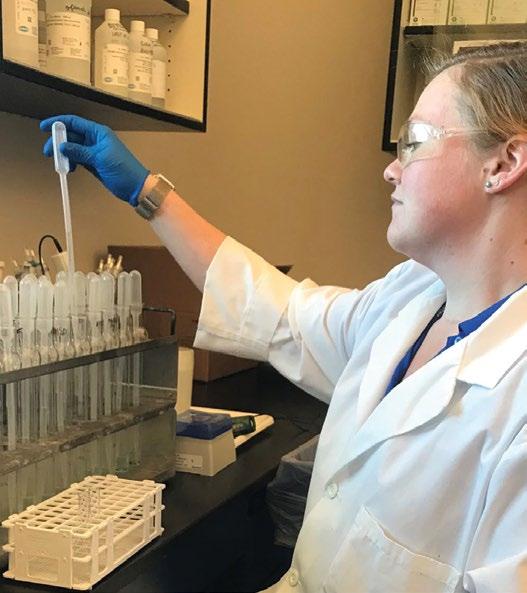
z Total Trihalomethanes (TTHMs) and Haloacetic Acids (HAA5) analyses are a quarterly monitoring requirement. Both of these form in the water supply as chlorine reacts with organic matter. When ingested in large quantities, these chemicals are suspected human carcinogens, so we monitor for them closely. The legal limit for TTHMs is a specific location running annual average of 80 parts per billion (ppb). For HAA5, the limit is a specific location running annual average of 60 ppb. Loudoun Water tests for TTHMs and HAA5 at twelve locations throughout the distribution system.
z Corrosion control parameters (orthophosphate and pH) are a semiannual monitoring requirement. By dosing the drinking water with a minimum of 0.90 ppm orthophosphate and maintaining a minimum pH of 7.0, the potential for corrosion of lead, copper and other metals is greatly reduced. Loudoun Water monitors for these corrosion parameters at multiple locations throughout the distribution system.
Is the EPA Standard for Lead in Drinking Water?
EPA has established an Action Level for lead in water of 15 parts per billion (ppb). When lead testing is performed as required by EPA, 90 percent of the samples must contain less than 15 ppb. This is usually referred to as the 90th percentile results being less than 15 ppb. The Action Level was not designed to measure health risks from water represented by individual samples. Rather, it is a statistical trigger value that, if exceeded, may require more treatment, public education, and possibly lead to service-line replacement where such lines exist. (Loudoun Water does not have any lead service lines within its system.)
Loudoun Water has been testing for lead and copper in accordance with EPA’s Lead and Copper Rule (LCR) since 1992. The 90th percentile value for lead was <1 ppb compared to the EPA action level of 15 ppb. Currently, the Virginia Department of Health requires Loudoun Water to monitor for lead and copper at 50 locations every three years.
Although some utilities use raw source waters that contain lead, Loudoun Water’s sources do not contain lead. In 1986, lead was banned from being used in pipe and solder in home construction. In older homes, where lead is present in pipe and solder connections, it may dissolve into the water after the water sits for long periods.
Some household plumbing components may contain a small amount of lead and can contribute to lead concentrations at the tap. Our water supplier Fairfax Water and Loudoun Water add a corrosion inhibitor to slow this dissolution process.
to Lead in the Drinking Water?
Lead can cause serious health problems, especially for pregnant women and young children. Lead in drinking water is primarily from materials and components associated with service lines and home plumbing. Loudoun Water is responsible for providing high quality drinking water and removing lead pipes, but cannot control the variety of materials used in plumbing components in your home. You share the responsibility for protecting yourself and your family from the lead in your home plumbing. You can take responsibility by identifying and removing lead materials within your home plumbing and taking steps to reduce your family's risk. Before drinking tap water, flush your pipes for several minutes by running your tap, taking a shower, doing laundry or a load of dishes. You can also use a filter certified by an American National Standards Institute accredited certifier to reduce lead in drinking water. If you are concerned about lead in your water and wish to have your water tested, contact Loudoun Water and 571-291-7880. Information on lead in drinking water, testing methods, and steps you can take to minimize exposure is available at http://www.epa. gov/safewater/lead
If you choose to use a water filter, follow these three rules:
1. Choose one designed for the specific filtration desired (chlorine, lead, Cryptosporidium, etc.).
2. Make sure the filter is approved by the National Sanitation Foundation (www.nsf.org).
3. Maintain the filter as directed.
For information on having a lead-level test conducted, call our Customer Relations Department at 571-291-7880.
Loudoun Water has completed its Lead Service Line Inventory, found at the link below, as required by EPA’s Lead and Copper Rule Revisions. The Virginia Department of Health has accepted the inventory,
which contains no lead service lines. If you believe the information on file regarding your service line is incorrect, please contact us.
“Keeping the Lead Out” Service Line Inventory
Poly- and Perfluoroalkyl Substances, also known as PFAS, are a group of synthetic chemicals that have been in use since the 1940s and there are now more than 15,000 different chemicals in the PFAS family. A wide variety of products, including stain-resistant fabric coatings, non-stick coatings (Teflon), food packaging, and firefighting foam contain PFAS. PFAS manufacturing and processing facilities, facilities using PFAS in production of other products, airports, and military installations are some of the potential contributors of PFAS releases into the air, soil, and water. Due to their widespread use and persistence in the environment, most people in the United States have been exposed to PFAS. Exposure to humans can occur by eating, inhaling, or even touching the product. EPA reports that scientists have found traces of one or more PFAS in the blood of nearly all the people they tested. There is evidence that continued exposure above specific levels to certain PFAS may lead to adverse health effects.
PFAS can enter drinking water at sites where they are made, used, disposed of, or spilled. PFAS can be found in the air near manufacturing facilities and can enter rainwater. PFAS are very mobile and can be transported through rainwater run-off and enter surface water (rivers, lakes, ponds, etc.) or seep through the soil and migrate into ground water (underground sources of drinking water). Because PFAS are very long-lasting and are not easily broken down by sunlight or other natural processes, they may remain in the environment for many years.
Loudoun Water has tested for PFAS beginning in 2013. Additionally, as a wholesale purchaser of drinking water from Fairfax Water, Loudoun Water is working closely in the region to understand PFAS implications as a regional initiative.
Mixtures containing two or more of PFHxS, PFNA, HFPO-DA, PFBS
1 MCL does not go into effect until 2029
(unitless) Hazard Index 1 (unitless) Hazard Index ND
2 For MCL compliance, if a sample result is less than the PQL for a regulated PFAS, zero is used for that analyte result for calculating annual averages.
In addition to testing, Loudoun Water has closely followed the US EPA’s drinking water regulatory process. On April 10, 2024, the EPA announced the final national primary drinking water regulation for six PFAS including proposed Maximum Contaminant Levels (MCLs) for perfluorononanoic acid (PFNA), perfluorohexane- sulfonic acid (PFHxS), hexafluoropropylene oxide dimer acid (HFPO-DA or GenX chemicals), perfluorooctanoic acid (PFOA) and perfluorooctanesulfonic acid (PFOS). The standard also establishes a hazard index (HI) for a mixture of two or more of the following: PFNA, PFHxS, HFPO-DA, and perfluorobutane sulfonic acid (PFBS).
Loudoun Water has begun developing our monitoring program in accordance with the regulatory requirements. In this report we are sharing the results of our initial compliance monitoring, completed in 2025. According to the EPA, public water systems have until 2029 to implement solutions that reduce these PFAS, if monitoring shows that drinking water levels exceed these MCLs. Loudoun Water will ensure that our water meets these standards.
As
z Check product labels for ingredients that include the words “fluoro” or “perfluoro.”
z Be aware of packaging that contains greaserepellent coatings, such as microwave popcorn bags, fast food wrappers, and single serve convenience snack bags.
z Avoid or reduce use of non-stick cookware. Stop using products if non-stick cookware shows signs of wear. Avoid stain-resistance and water-proofing treatments. Choose furniture and carpets that aren’t marketed as “stain-resistant,” and don’t apply finishing treatments to these or other items. Avoid clothing, luggage, camping, and sport equipment that were treated for water or stain resistance.
Some people may be more vulnerable to contaminants in drinking water than the general population. Immuno-compromised persons such as persons with cancer who are undergoing chemotherapy, persons who have undergone organ transplants, people with HIV/AIDS or other immune system disorders, some elderly and infants can be particularly at risk from infections. These people should seek advice about drinking water from their healthcare providers. EPA and Centers for Disease Control and Prevention guidelines on appropriate means to lessen the risk of infections by Cryptosporidium and other microbial contaminants are available from the Safe Drinking Water Hotline at 800-426-4791.
The treatment process at both Fairfax Water and Loudoun Water includes chemical coagulation, flocculation, sedimentation, filtration and disinfection. Coagulation and flocculation help condition the raw water so that contaminants combine with particulate matter to form floc (large particles), which will settle out in the sedimentation process. Filtration removes the smaller, lighter particles.
Disinfection with chlorine is the last step, which kills bacteria, viruses and other microbial contaminants. Sufficient chlorine is added to deter the growth of bacteria while water flows through the pipes to your home. Chlorine can be dangerous to human health in high amounts. EPA sets the safe limit for chlorine in your water at a running annual average of 4 ppm. The chlorine amount is maintained to be extremely effective at inactivating bacteria.
Chloramine, a type of chlorine, is used as the chlorine disinfectant for both treatment facilities. Chloramines are created by adding ammonia to chlorine. Chloramines break down much slower than free chlorine, minimizing the creation of TTHMs and maximizing the length of time the disinfectant remains in the water. One downside of chloramines
is they may cause certain types of gaskets or toilet flappers to deteriorate faster, potentially causing leaks.
Fairfax Water and the Loudoun Water Trap Rock Water Treatment Facility also use ozone as another disinfectant. Ozone reduces the amount of chlorine needed to treat the water, offers additional barriers against waterborne pathogens and produces better tasting water. Orthophosphate is also added to the water to help coat the pipes and reduce the ability of the lead to leach out.
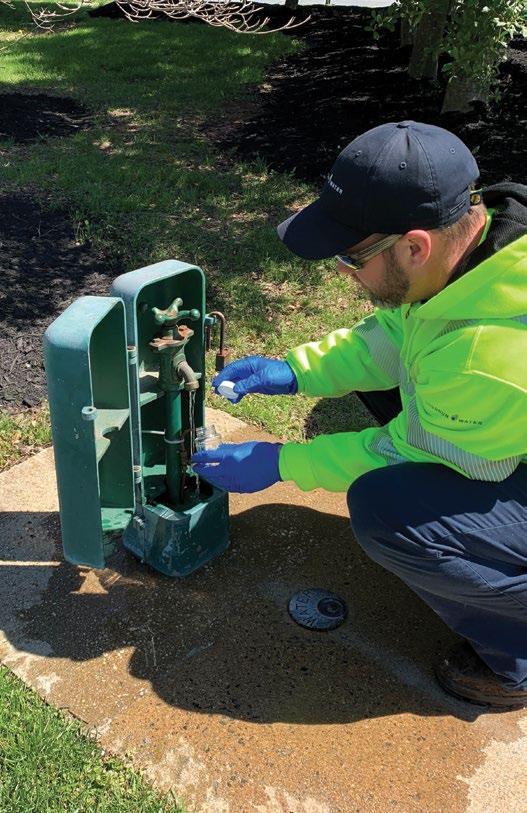
We constantly monitor various components in the water supply to meet all regulatory requirements. The following tables list only those water quality parameters that are regulated and had some level of detection. If you have a question about a parameter not seen here, call us at 571-291-7880.
Turbidity is the clarity of the water. It is measured in Nephelometric Turbidity Units (NTU). Turbidity higher than 5 NTU is just visually noticeable to the average person. Turbidity has no health effects; however, it can interfere with the disinfection process and provide a medium for microbial growth. Turbidity is measured during the treatment process after the water has been filtered, but before disinfection. The turbidity level of filtered water must be less than or equal to 0.3 NTU in at least 95 percent of the measurements taken each month and no single measurement can exceed 1 NTU.
Your water is tested for a large array of water quality parameters at locations as it enters into the distribution system. You’ll find this data on what was detected in Table Two on page 9
Loudoun Water also tests water from within the distribution system for the presence of bacteria, chlorine, total trihalomethanes, haloacetic acids, lead and copper and submits these results to the Virginia Department of Health regularly. This data is found in Table One on page 8
The tables on these pages show the results of monitoring for the period of January 1, 2025 to December 31, 2025, unless otherwise noted.

Repeat sample is E. coli positive OR
Routine sample is E. coli positive followed by Repeat sample that is Total Coliform positive OR
System fails to take all required repeat samples following E. coli positive routine sample OR
System fails to analyze for E. coli when any repeat sample tested positive for Total Coliform
The MCL for Beta particles is 4 mrem/year. EPA considers 50 pCi/L to be the level of concern for
LW Connect, Loudoun Water’s interactive customer system, lets you conveniently access your Loudoun Water account information online.
z Log into your account so you can monitor your water use 24/7.
z Sign up for eBilling Text Alerts for text reminders and alerts.
z Go paperless! Enroll in eBilling and your bill will be emailed to you.
Not an LW Connect user yet? Register online at lwconnect.org to get started!
Partnering with area organizations, schools, community members and customers allows Loudoun Water staff to share their knowledge about water and wastewater treatment, conservation, wetlands and more.
Located inside of our Dale C. Hammes Administration Building in Ashburn is an interactive educational center with over 3,500 square feet of indoor exhibits. Come explore “The Aquiary,” nearly one mile of outdoor trails on our Ashburn campus on your own. School groups, community organizations, scouting groups and HOAs are all welcome to schedule a speaker prior to visiting. Call us at 571291-7880 for more information or visit our website at www.loudounwater.org/community.
Loudoun Water recommends wise watering at home. This includes checking your sprinkler settings to avoid overwatering. For most lawns, 15 minutes of watering is all it takes to maintain a healthy yard. Too much watering does not help roots grow, promotes mold and wastes water. Excessive watering can also result in a much higher bill.

Loudoun Water recommends the watering schedule below to promote healthy plants and turf. The best time to water your yard is between 6:00 a.m. and 11:00 a.m. to avoid excess evaporation. This watering schedule also spreads out the water demand on our system.
Even Number Home Addresses: Thurs & Sun
Odd Number Home Addresses: Wed & Sat
The Loudoun Water Cross-Connection Backflow Program is responsible for protecting the water distribution system from potential hazards caused by cross-connections of non-potable water systems.
Backflow prevention protects both the customer’s drinking water pipes in their home as well as the water mains in the streets. Otherwise, if a pressure drop occurs, any connection to a non-potable source could be siphoned back into the customer’s home or Loudoun Water’s service line, which is dangerous. The only way to prevent such incidents from occurring and to maintain safe drinking water is to use a backflow prevention device that is correctly installed and maintained properly.
For more information, please contact our Customer Relations department at 571-291-7880 or visit our website at www.loudounwater.org.
Loudoun Water is committed to ensuring tap water is safe to drink, which according to Federal and State regulations, requires backflow preventers be tested annually by a certified tester to make sure it is adequately working.
Customers will need to treat tap water before using it in a fish aquarium because drinking water contains free chlorine and chloramines to inhibit bacterial growth. These disinfectants can harm fish. Check with a local pet store to learn what types of chemicals you need to add to the tank to neutralize the effects of these disinfectants.
The U.S. Environmental Protection Agency’s WaterSense® program helps identify a range of certified products that help you use water more wisely as well as save money on your bill. Visit the WaterSense website at www.epa.gov/watersense to learn more about what you can do to make every drop count. Looking for other ways to save?
Visit our website at www.loudounwater.org for some creative ways to optimize your water use in the bathroom, kitchen, laundry room and more!
Source water is untreated water from lakes, rivers, streams, ponds, reservoirs, aquifers, and springs that serve as a community’s water source. Protecting these water sources is an easy way to prevent drinking water from becoming polluted by managing possible sources of contamination.
z Public health protection: Reduces threats to public health due to acute or chronic illness from exposure to contaminated water.
z Economic benefits: Minimizes cost for water treatment, emergency replacement water and finding new supplies.
z Environmental stewardship: Protects rural lands, wildlife habitats, recreational areas and water quality of streams and wetlands.
z Always pick up after your pet.
z Refrain from swimming in known drinking water sources.
z Never dump anything in creeks or lakes.
z If you like boating, only participate in passive boating such as rowing, canoeing or kayaking instead of motorized boating.
z Compost yard waste and use natural fertilizers. Plant trees along creeks.
z Check and repair vehicle fluid levels. Properly dispose of household cleaning products, paint, fertilizers, pesticides and expired/unused medications.