








This City Council hopeful is done letting WeHo residents slip through
By JOEL MEDINA
Amidst the nonstop stream of vitriol that American politics has become, it’s easy for LA residents to forget about the importance of local electi ons.
These are the elections that won’t receive national attention but will decide if you’ll be able to make rent in the next few months. Or if you’ll be able to rely on public transit, or find work within the city, or dozens of other essential ways that electing someone who truly understands your needs would impact someone in Los Angeles today. Local elections are key to making cities like ours livable for all, and especially in communities like West Hollywood, it’s important that the queer people who truly know their neighbors are the ones running to represent them.
It’s a task that not everyone is up to. But for candidate Helen Krieger, the decision to launch her campaign for West Hollywood City Council was one of the easiest this WeHo local has ever made.
“I learned that once things fall apart, it’s so much harder to put them back together,” said Krieger, when she spoke with the Blade about her campaign. “It can be so hard to get people’s buy-in because they don’t trust you anymore as city officials… or as leaders.” It’s an unfortunate truth that Helen learned firsthand; she moved to West Hollywood ten years ago after living in New Orleans, where she banded together with other residents in the midst of the Hurricane Katrina crisis. Helen described the terror of this natural disaster and how deeply the city officials failed residents in its aftermath. After months of mishandled projects that left hundreds of people homeless, it was her work with local advocates that eventually created affordable housing for these displaced residents.
This work saved countless locals and taught Helen a valuable lesson: “I learned [how] to bring everyone in, and [the value of] listening to everyone.”
Krieger’s eventual move to West Hollywood was inspired not only by her career — she’s a professional television writer — but also by the search for a community where she could be comfortable in her bisexual identity. Throughout the interview, she fondly remembered how accepted she’s always felt by other WeHo residents… but also how quickly she learned about the many ways this area fails to support locals.
Whether it’s rundown streets or horrific rent practices, while she has a deep love for West Hollywood, Helen has identified many of the ways that this city can be improved. It’s what drove her to join numerous local organizations like the West Hollywood Bike Coalition and the West Hollywood Dems Club, with her membership with these groups helping her better understand the needs of other WeHo residents. Along with these, Helen would eventually enter the tenuous arena that she would eventually campaign to have her own seat within: the West Holly wood City Council.
“Whenever I’m at city council [meeting], I’m often not going up to speak,” Krieger explained. “But I keep track of every speaker and what they’re saying, what are the comments that are being made — because not everyone can make it there! It’s a weeknight, it starts at 6 pm…if you have a job to go to in the morning, if you have young kids that you have to put to bed, you just can’t make it to that. So I also try to make space for people to give comments who aren’t there, and try to have conversations with them.”
Helen has made it common practice to not only provide rundowns of city council meetings for those who aren’t in attendance but also deliver comments on their behalf, calling out how just because these meetings have an inopportune schedule doesn’t mean local residents deserve to go unheard. This led to her connecting with even more West Hollywood residents and learning about the many issues they wanted addressed by their local government. This, when compounded with her own ideas for improvement, made it clear to Helen that she needed to join the City Council herself and make sure these problems were being solved.
“I am really pro-housing,” began Krieger, when detailing her campaign’s priorities.
“I am really pro-complete streets — streets that should be built for all kinds of people, whether you’re walking, using a wheelchair, or driving a car, [the streets] need to be able to get you there. I think we need to build more houses and build more [affordable] housing units…[I’m pro] not doing stuff that we don’t need to, like making people and bike lanes unsafe. And let’s do stuff that will [actually help].”
These are just a few of the priorities that Helen spoke passionately about in her interview, with the City Council hopeful also describing her plans to bring Hollywood jobs back into the city, implement eco-friendly practices around the city, and develop new ways for the City Council to remain transparent with locals about how their taxes are being used. She stressed that these priorities are based not just on her own observations but are informed by what she’s learned from the other residents around her. She spoke passionately about talks with other community leaders, homeless individuals, and hundreds of others, with each conversation shaping the plans she hopes to implement if elected.
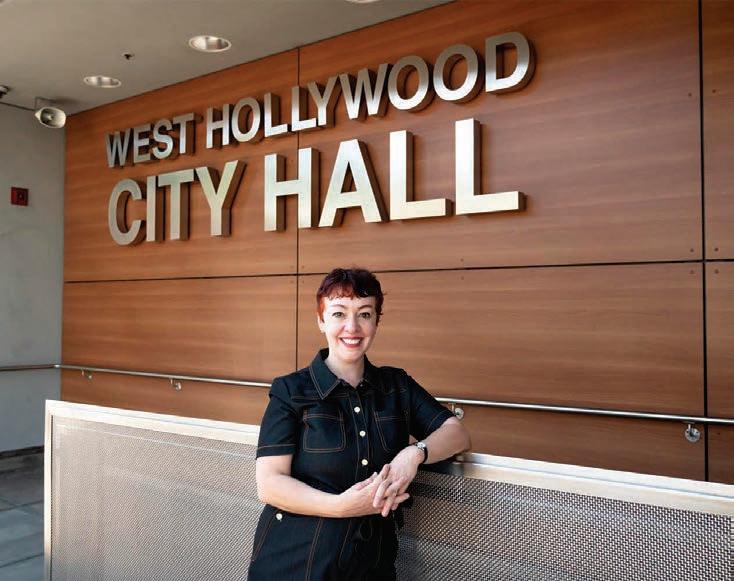
“There are some ways that people can slip through the cracks in the city, and so I want to just do what I can to [stop that,]” said Helen, when discussing why it’s time for her to join the West Hollywood City Council. “I want to make sure these gaps are being filled and that we weren’t getting too complacent in how we do things…I want to hear [people’s] concerns, and learn how we can address them moving forward.” We’re still a few months away from the election, so it’s unclear if Helen Krieger will be able to win her seat and make these plans a reality. But no matter what happens with her campaign, one thing is for sure: if we had more politicians who were as focused on community building and truly listening to their residents as she is, then LA today would be a much better place for us all.
For more information, head to Helen4Weho.org








Featured
in the All Stars
makeover
episode
“Too Many Daddies,” the six gay dads offer a full picture of LGBTQ+ family life
By NOAH CHRISTIANSEN
When Eric Calvario was first contacted by a casting director on Instagram about a possible television opportunity, he was not expecting to end up in drag.
The Los Angeles/Orange County-area dad was ultimately cast in “Too Many Daddies,” the June 5th episode of RuPaul’s Drag Race All Stars, which featured six real-life Southern California gay dads in the show’s makeover challenge. Though the episode aired two weeks ago, it still feels deeply present for the dads who took part.
“I had never considered doing drag; I wasn’t too familiar with the show, and I was deep in raising an infant and toddler,” Calvario told the Blade, describing his initial hesitation. “Ultimately, I knew I had a performance background, I knew I could push myself, and I knew that, if handled correctly, this could mean a lot for the community of gay dads.”
For Calvario, the episode was more than an opportunity to meet RuPaul. It was a chance to show younger LGBTQ+ people that queerness and parenthood are not mutually exclusive. The episode spoke directly to the younger version of himself, who once believed that being gay meant giving up the possibility of being a parent. He wanted viewers to see that parenthood is possible and that LGBTQ+ families can take many forms. “Yes, you can,” Calvario tells readers of the Blade, “and this is one of the many shades of what this might look like for you.”
them from our couch!”
For the Del Valles, appearing on the show was deeply personal because they did not grow up seeing many examples of LGBTQ+ families.
“To appear on Drag Race as gay dads, especially in a challenge centered on family and visibility, felt incredibly profound,” they explained. “It was an opportunity to show the world that LGBTQ+ families exist, thrive, and deserve to be celebrated.”
Jeffrey Williamson-Rose said he and his husband were first contacted through a mysterious Instagram message from a producer. Once the words “World of Wonder” were mentioned, they realized the opportunity was connected to Drag Race.
“My husband and I thought that this was a once-in-a-lifetime opportunity that we were given,” Williamson-Rose said. “The entire process of filming made me smile, and I thought of my daughter and husband the entire time. Seeing her reaction to seeing me on screen made it all worth it for me.”
While the episode included the usual spectacle and humor expected from Drag Race, all of the dads explained that some of the most meaningful moments happened behind the scenes.
For Calvario, hearing about the struggles of other gay dads – including fathers from Florida who had to hide their family to protect their jobs – stayed with him.
“It made me realize that the challenges I feel as a gay dad look different everywhere and, in that moment, I told myself, ‘Talk less and give space for these guys to tell their stories, because no matter what challenges I may face, there is always someone who has it harder.’”
Williamson-Rose left with a similar impression, saying that the bond among the dads became one of the most rewarding parts of the experience.
“[All of the dads] are by far my fave group chat thread, and I normally LOATHE group chats,” he said. “I often think about how we reacted when we first saw ourselves in drag and how we were all somewhat reserved when we first arrived – to 48 hours later, us gushing and showing photos of our kids to each other. The bond for all 6 of us was instantaneous.”
The Del Valles said the conversations in the makeup chairs helped turn a random group of dads into a community.
“We shared our journeys to parenthood, talked about the unique joys and challenges of raising children as gay parents, and celebrated the families we’ve built,” Hector Del Valles said. “What started as a group of strangers quickly became a tight-knit community.”
For Southern California readers, Calvario leaves a heartwarming message:

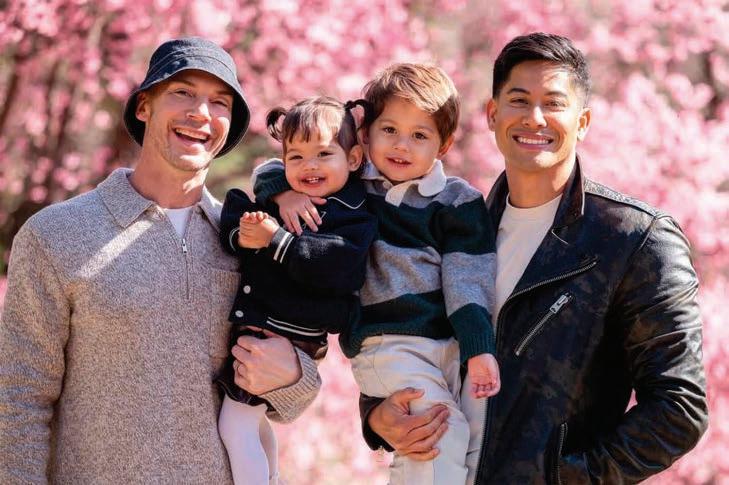
Calvario was not alone in seeing the episode as more than a makeover. For the other fathers, the experience was also viewed as a chance to make queer parenthood visible on one of television’s biggest LGBTQ+ screens.
Hector and Derek Del Valle said they were contacted about a casting opportunity for gay dads before realizing the show was Drag Race
“The minute we found out the show was RuPaul’s Drag Race – let alone “All Stars” – we were completely gagged,” they told the Blade. “We’ve been watching since Day 1. Now as parents, our Friday nights look a bit different, but the one thing that remains the same is getting our drag fix – we just went from watching them in the clubs to watching
“I want my community to know that we exist, that it isn’t always easy, but that any life you want to create is possible,” he said.
Williamson-Rose said he hopes the episode shows the many ways LGBTQ+ people create families, including adoption, fostering, foster-to-adopt and surrogacy.
“I am a firm believer of the idea that ‘You can’t be what you can’t see’ so I hope that this episode is the door that opens for those struggling to visualize what life can look like for them.”
For these fathers, the episode was not only about drag. It was about visibility. That is what makes the Del Valles’ message to readers so simple, yet so meaningful: their family is not defined by division, but by love.
“Our family is, at its core, built on the exact same things that make any family strong: love, commitment, support, and a desire to give our children the best life possible.”
RuPaul’s Drag Race All Stars streams on Paramount+. The “Too Many Daddies” episode is available now.
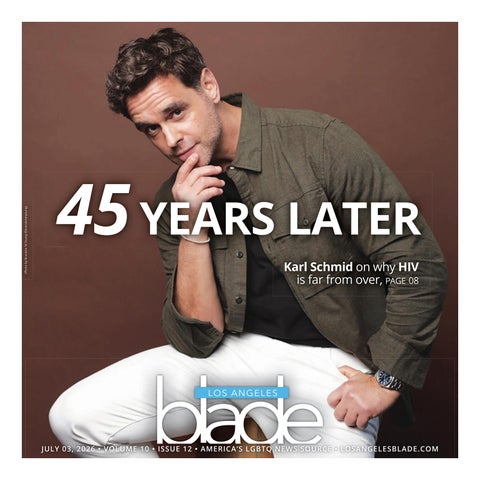
HIV may no longer be a death sentence, but Karl Schmid explains why complacency could impact decades of painstaking progress
By AJ SLOAN
When we think of Pride, our minds go to bright colors, music, and celebration - and rightfully so. But we also must acknowledge our history of resilience, activism, and lives forever changed by the HIV/AIDS epidemic. This year marks 45 years since the first reported cases of AIDS, a milestone that serves as both a testament to extraordinary scientific progress as well as a reminder that the work is far from finished. While HIV is no longer the death sentence it once was, stigma, misinformation, and inequitable access to care continue to impact the lives of millions around the world.
Few people understand the intersection of progress and persistence better than Karl Schmid. A journalist, advocate, and founder of Plus Life Media, Schmid has spent years using his own lived experience to challenge misconceptions about HIV and amplify the voices of those living with it. In our convo, Schmid reflects on coming out as HIV-positive, why society still struggles to talk openly about stigma, the life-changing impact of U=U, and why honoring the past is about making sure the future arrives for everyone.
This Pride Month marks 45 years since the beginning of the AIDS epidemic. What emotions come up for you when you reflect on this milestone?

It’s a mixed bag, really. On one hand, I feel incredibly grateful and proud. The progress we’ve made over the last 45 years is nothing short of remarkable. Thanks to extraordinary advances in science and medicine, I can expect to live a long, healthy life so long as I remain undetectable, which also means I can’t transmit HIV to a sexual partner. The fact that HIV has gone from being a death sentence to a manageable chronic condition within my lifetime is extraordinary, and something I never take for granted.
On the other hand, sadness, anxiety, and even anger bubble up too. We’re 45 years into this epidemic, and we still don’t have a cure. We still don’t have equitable access to prevention, treatment, and care for everyone who needs it. And we’re living through a moment where some of the hard-fought gains we’ve made are not only being threatened, but in some cases actively rolled back.
What’s particularly frustrating is the growing perception that HIV is “solved” and no longer requires the same level of attention, investment, or urgency. The reality is that millions of people around the world still depend on ongoing research, access to treatment, and support services. Those aren’t luxuries. They’re lifelines.
So when I reflect on this milestone, I feel proud of how far we’ve come, grateful for the people who got us here, and determined not to take any of that progress for granted.
For younger LGBTQ+ folks who did not live through the early days of the epidemic, what is most important for them to know and understand about that time in history?
That HIV didn’t become one of the deadliest epidemics in modern history simply because of a virus. It became what it was because of stigma, discrimination, political inaction, and the belief by many that the people most affected weren’t worth fighting for.
Millions of people died, and for far too long, those in positions of power failed to respond with the urgency the crisis demanded. There was a sense among many that because HIV was primarily affecting gay men, people who used drugs, and other marginalized communities, it wasn’t really their problem. That’s the lesson I hope younger people understand.
The progress we’ve made didn’t happen automatically. It happened because people organized, protested, advocated, cared for one another, and demanded better. Every breakthrough in treatment, every advancement in prevention, every right we’ve secured came from people refusing to accept the status quo. I get angry when I hear people say, “HIV isn’t really something we need to think about anymore.” We are incredibly fortunate to have effective treatment and prevention tools today, but complacency is dangerous. The moment we stop paying attention, stop advocating, or assume the work is done, we risk losing ground.
History shows us what can happen when society decides a problem only belongs to someone else. That’s a lesson that extends far beyond HIV.
What was the response like after you came out as HIV-positive, personally, professionally, or otherwise?
I was incredibly fortunate to have an amazingly supportive family. My parents, my brothers, my extended family, and my close circle of friends were all loving and supportive from day one. Their first concern was simply making sure I was OK. I realize what a position of privilege I sit in to be able to say that. Professionally, it was a very different story. I kept my HIV status private for 10 years because I was afraid. I was afraid it would affect my career, my ability to work in television, and ultimately the goals and dreams I had for myself. That fear wasn’t based on science. It was based on stigma.
When I finally did speak publicly about living with HIV, the response from my professional circles was, for the most part, incredibly positive. But who’s to say what conversations happened behind closed doors that I wasn’t privy to? Who knows what speaking publicly about my HIV status meant for opportunities that may have come my way but were perhaps reconsidered because of how it might make an organization look? We’ll never know.
What I do know is that holding that secret for so long did more damage to me than the possibility of losing out on jobs or opportunities ever did. The internalized stigma I carried around was heavy. It affected how I saw myself, how I valued myself, and what I believed I was capable of. Even today, that’s something I continue to work on. HIV is a virus. The stigma surrounding it is often much harder to overcome.
Through your work with Plus Life Media, you’ve focused on education and combatting stigma. What conversations about HIV do you think society is still avoiding?
Honestly, I think society is still avoiding conversations about people living with HIV. We’re fairly comfortable talking about HIV in abstract terms. We’ll talk about statistics, research, prevention, treatment, and public health outcomes. Those conversations are important. But we’re often far less comfortable talking about the lived experience of someone who has HIV.
We’re still not having enough honest conversations about
stigma. About what it feels like to disclose your status to a potential partner. About the fear some people feel when they’re first diagnosed. About the mental health challenges that can come with carrying stigma for years or even decades. About the fact that many people living with HIV continue to face judgment, including within the LGBTQ+ community itself.
I also think we’re avoiding the conversation that HIV is not over. The headlines have moved on, and because treatment and prevention have improved so dramatically, many people assume the crisis has been solved. But millions of people around the world are still living with HIV, millions more remain vulnerable to acquiring it, and access to prevention, treatment, and care remains wildly unequal depending on where you live. Ultimately, I think we’re still avoiding the most important conversation of all: how we treat people living with HIV. Science has done its job. We know HIV cannot be sexually transmitted by someone who is undetectable. We know people living with HIV can live long, healthy lives. The question now is whether society is willing to catch up to the science.
HIV treatment and prevention have advanced exponentially over the past few decades. What developments give you the most hope?
The recent approval of Yeztugo from Gilead Sciences is a phenomenal breakthrough. Study after study has shown just how effective it is at preventing HIV through sexual transmission, and the idea that someone can receive just two injections a year for HIV prevention is pretty remarkable when you stop and think about it.
I also know that the amazing folks at Gilead are working with Merck on a potential once-weekly HIV treatment pill. As someone living with HIV, that’s the kind of innovation that gets me excited. Anything that makes prevention and treatment easier and more accessible for people is a good thing.
Beyond specific medications, what gives me hope is knowing there are people and organizations out there dedicating their lives to finding a cure and improving the lives of people living with HIV. They’re not giving up, and they’re not walking away from this work just because funding is being threatened or public trust in science is under attack.
Seeing thousands of young activists show up at AIDS Walks, speak out against cuts to HIV programs, advocate for LGBTQ+ rights, and get involved in their communities gives me enormous hope too. The science gives me hope. The people refusing to stop pushing it forward give me hope, too.
The concept of U=U (Undetectable = Untransmittable) has been major for many people living with HIV. How has that message impacted folks, and why is it still not universally understood?
U=U is one of the most important developments in the history of HIV. Not only because of what it means scientifically, but because of what it means emotionally and psychologically for people living with HIV. U=U has given millions of people their lives back. It means that a person living with HIV who is on treatment and maintains an undetectable viral load cannot sexually transmit the virus. That’s extraordinary.
the fight that never ended
Stonewall veteran Rusty Rose reflects on Pride’s origins, chosen family, LGBTQ+ history, and why the fight for equality is far from over
By AJ SLOAN
Few folks these days can say they witnessed history - quite literallyfront and center. Even fewer have spent decades ensuring that history is recalled and recounted with accuracy. Revered by generations of LGBTQ+ people as an unwavering advocate, poet, and Mother to us all, Rusty Rose has dedicated her life to preserving the stories behind the movement while reminding us that the fight for equality is far from over. Her reflections are a mix of hard-earned wisdom with a dash of humor, offering a generous glimpse into both the triumphs and unfinished business of queer liberation.
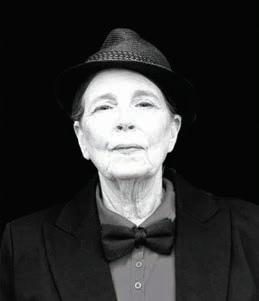
As Pride celebrations unfold across the country, Rose remains steadfast in her belief that Pride is still a civil rights movement rooted in courage and collective action. In our talk, Rose shares her memories of Stonewall, her friendship with her fellow activists, her thoughts on the state of LGBTQ+ rights today, and why younger generations must continue carrying the torch.
As someone who has often been described as a witness to history, what do you think people get right, and also still misunderstand when discussing Stonewall today?
What they get right is that our LGBTQ+ community stood our ground; rebelled against fear, prejudice, and police brutality. What’s misunderstood are the myths about bricks, first punches, and that it was a member of our Transgender community who led the fray, sparked the rebellion.
The biggest disappointment is that a few deceased are honored, not living trailblazers. To be clear, the Stonewall Rebellion was, overall, a concerted effort. Inside, we were rebelling; outside, it was a protest bordering on a riot. Many younger LGBTQ+ folks know Pride as a celebration.
What did Pride mean in its early years, and what do you hope today’s generation never forgets about its roots?
Pride began as a civil march. On a personal level, at the time, finding kids like myself strengthened my resolve that I and others were not as the DSM (Psychiatric Manual) suggested: mentally ill/crazy!
Today’s generations must recognize that PRIDE is and always will be a civil rights march first. It is wonderful that we celebrate how far we’ve come in America, but PRIDE is a fight for civil freedoms, and the struggle continues. Generations today must be aware of the atrocities taking place around the globe in real time, 2026. Many LGBTQ+ people around the world are struggling to take a stand. It is frightening how many countries still penalize us. The penalty is harsh: imprisonment or death!
Today’s American political climate has influenced the world and has added to the fire of hate!
Until all LGBTQ+ people are free around the globe, we are not truly free. It is only an illusion. To my friends in Africa and elsewhere, Mum says, “Aluta Continua!”
You’ve lived through extraordinary changes in queer life. What feels radically better today than it was fifty years ago? What feels disappointingly unchanged?
What feels better today is one’s freedom of expression, both socially and in the arts, and our established recognition. What disappoints me is how the progress we strived for, in the name of civil rights, is being challenged again by the current administration. The hateful campaign coming from those in office harkens back to the Civil War. It disparages and demonizes us in public, provokes gullible citizens to act on fear, which results in harm, and most disheartening is the defunding of Federal programs.
As someone who has been called “the mother of the movement” by many in our community, what does chosen family mean to you, and how has that definition changed or evolved over the years?
It is a deep honor to have earned our community’s respect. It warms my heart to be chosen as Mum/Mother around the globe, too. It is a lifelong role, one in which I promise to do my best to live up to. Important is that not only will I guide my community, but also lead by example in showing that PRIDE is courage, dignity, resiliency, and love. I want to remind everyone that together, we are unbendable!
Evolution of Mother… No one called me Mother of Stonewall at first. It was coined decades after the riot. As time went on and as I became older. Whether on the parade route, when I was shaking hands as kids ran up to cars to say ‘thank you’, or whenever I got up to read poetry to a younger crowd, they called me this… “There she is, the mother of Stonewall.”
It is refreshing to know that younger generations appreciate and truly want to know history. I am living history. I am also proud of how smart this generation is - how they refuse to be pigeonholed by those shaping history to their liking. So much of this is going on. Is our story about Stonewall being altered for economic gain? I don’t know.
I am proud of millennials who want to celebrate all of us, living and dead, who have contributed. We are their history, and they not only want to read about it, but would like to meet us in person! For this, I thank my chosen family, and until God takes me, I will be present for them; teach them about the sacrifices every one of us made to get to this point, whether telling our oral history or through poetry.
Of course, a movement is a collective act that’s built on and fosters community and solidarity. Can you share with us what it was like for you to advocate alongside your
friend Sylvia Rivera, as well as others you’ve grown connected with over the years?
Never in my wildest dreams, and knowing Sylvia, I think it is fair to say that we never thought about the long-lasting impact of our contributions. You just do not see so far ahead when you are a teen and busy living in a teen world. In looking back, I would imagine our focus was to survive the difficulties life tossed at our young lives; be it facing bullies, fighting homophobic slurs, trying to gain acceptance from family and friends, finding a next meal or housing; whatever the angst of youth, our response was spontaneous.
Back then, and when we reconnected later on as adults, our friendship was based on mutual respect and how we could work to help others.
When you think of Sylvia Rivera today, what is the first story, memory, or image that comes to mind?
Me performing, shaking my tambourine in a Greenwich Village park, and laughing while Sylvia tries to sing along with me to my music.
Your friendship with Christy H. Jenkins connects two people who have helped preserve some of the most authentic accounts of Stonewall and the Civil Rights Movement. What does it mean to share that responsibility together, and how has that influenced your friendship?
The responsibility we have in preserving history is that we keep it real. We speak about the only night we were there - the first night of the Stonewall Rebellion. We tell it truthfully, and are mindful of those who have recounted their stories too. Also, our friendship is a sisterhood; we have unconditional loyalty and respect for one another. Our bond is deep. We go back decades, having survived the positive and negative in our lives. Today, when continuing on life’s journey, we laugh, love, sing, and read to one another; we keep on keeping on. In life, we continue to thrive.
The organization Street Transvestite Action Revolutionaries addressed housing, food, and survival. Do you think modern activism sometimes focuses more on visibility than material support?
Being visible is paramount. But I do think today, it is more about ‘corporate’ visibility (CRINGE), which targets gay youths to buy products, than the offering of material support.
Support is out there, more than in my time, but corporate sponsorship is an opportunity to sell; it has hijacked Pride. Pride has been pink-washed, changing the meaning to that of a ‘brand.’ The shift has gone from marching for human rights to showcasing. Many important grassroots organizations cannot compete; they are suffering financially due to not having funding to reel the kids back into true causes.
Trump is doing all he can to harm trans
PHONE 310-230-5266
E-MAIL arodriguez@losangelesblade.com
INTERNET losangelesblade.com
PUBLISHED BY Los Angeles Blade, LLC
PUBLISHER
ALEXANDER RODRIGUEZ
arodriguez@losangelesblade.com, 310-230-5266 x8080
EDITORIAL
NATIONAL EDITOR
KEVIN NAFF
kna @washblade.com, 202-747-2077 x8088
LOCAL NEWS REPORTER
KRISTIE SONG ksong@losangelesblade.com
CONTRIBUTING WRITER
KAREN OCAMB karenocamb@losangelesblade.com
CONTRIBUTORS
MICHAEL K. LAVERS, TINASHE CHINGARANDE, JOHN PAUL KING, LOU CHIBBARO JR., SUSAN HORNIK, JOE REBERKENNY, DANIEL ITAI, ISAAC AMEND, PETER ROSENSTEIN, TERRI SCHLICHENMEYER, JOE PHILLIPS, ANKUSH KUMAR, ESTEBAN RIOSECO, SAM KISIKA, ELVIS KAWEDO, HENRY CARNELL, DAWN ENNIS, AJ SLOAN
SALES & ADMINISTRATION
SALES EXECUTIVE
SHANA WONG SOLARES
swong@losangelesblade.com, 808-386-0872
MARKETING DIRECTOR
BRIAN PITTS
bpitts@washblade.com, 202-747-2077 x8089
NATIONAL ADVERTISING
RIVENDELL MEDIA
sales@rivendellmedia.com, 212-242-6863 ADMINISTRATION
PHILLIP G. ROCKSTROH prockstroh@washblade.com, 202-747-2077 x8092 CREATIVE DESIGN/PRODUCTION
MEAGHAN JUBA production@azercreative.com DISTRIBUTION
CHRISTOPHER JACKSON, 562-826-6602
All material in the Los Angeles Blade is protected by federal copyright law and may not be reproduced without the written consent of the Los Angeles Blade. e sexual orientation of advertisers, photographers, writers and cartoonists published herein is neither inferred nor implied. e appearance of names or pictorial representation does not necessarily indicate the sexual orientation of that person or persons. Although the Los Angeles Blade is supported by many ne advertisers, we cannot accept responsibility for claims made by advertisers. Unsolicited editorial material is accepted by the Los Angeles Blade, but the paper cannot take responsibility for its return. e editors reserve the right to accept, reject or edit any submission. A single copy of the Los Angeles Blade is available from authorized distribution points, to any individual within a 50-mile radius of Los Angeles, CA. Multiple copies are available from the Los Angeles Blade o ce only. Call for rates. If you cannot reach a convenient free distribution point, you may receive a 26-week mailed subscription for $125 per year or $5.00 per single issue. Checks can be sent to Phil Rockstroh at prockstroh@washblade.com. Or send him an email to request directions to make a payment online. Postmaster: Send address changes to the Los Angeles Blade, PO BOX 60664 Washington, DC 20039. e Los Angeles Blade is published bi-weekly, on Friday, by Los Angeles Blade, LLC. Rates for businesses/institutions are $450 per year. Periodical postage paid at Los Angeles, CA., and additional mailing o ces. Editorial positions of the Los Angeles Blade are expressed in editorials and in editors’ notes as determined by the paper’s editors. Other opinions are those of the writers and do not necessarily represent the opinion of the Los Angeles Blade or its sta . To submit a letter or commentary: Letters should be fewer than 400 words; commentaries should be fewer than 750 words. Submissions may be edited for content and length, and must include a name, address and phone number for veri cation. Send submissions by e-mail to kna @washblade.com.


By CHRIS LEWIS
I’m a gay man, I’m a graduate student, here is why I’m afraid of what the Trump administration is doing with the Office of Civil Rights.
I consider myself lucky to have grown up as a gay man in the time that I did. As a millennial, I came of age at the tail end of when it was still almost entirely socially unacceptable to be gay. That decision, 17 years ago, has defined much of my life since. While it is nowhere near perfect, I am mostly happy with the current times as a gay man, though I often lament for how my trans brothers and sisters are treated.
That’s why I’m so terrified with some of the moves the Trump administration has made, especially most recently with its rescission of Title IX provisions. Title IX of the Education Amendments of 1972 is a landmark civil rights law that prevents any school or education program from discriminating on the basis of sex if they receive federal funding. It is a funding pact that effectively remodeled the American education landscape, providing equal opportunity for male and female athletes, outlawing discriminatory admissions practices, ensuring pregnant people have accommodations on campuses, and finally compelling schools to address and investigate sexual assault or harrassment in schools. In short, Title IX exists to create gender and sex based equity primarily in schools that receive federal funding; schools found to have been routinely violating this pact are subject to penalties, including even losing federal funding.
Recently, K-12 Dive reported that the Department of Education rescinded the Title IX provisions that established anti-discrimination protections for LGBTQ+ students. In principle, the provisions barred discrimination against LGBTQ+ students in educational facilities that receive federal funding. Going by the Department’s public statements, Education Secretary Linda McMahon believes that these provisions, which were advanced by the past two Democratic administrations “distorted the law to police discrimination on the basis of ‘gender identity.’”
Essentially, the Trump administration is signaling its inclination to withhold student loans, the lifeblood of higher education finance, from schools that don’t make life miserable for trans students. The administration’s desire to turn back the clock is a real slap in the face of my community, and the activists who fought fiercely for acceptance, protection, and the recognition of gay rights. Beyond the usual anti-queer, right wing slop, this is an indicator that the administration is fundamentally trying to erase the queer identity. This will have unequivocally bleak effects on queer youth.
A bit of background might help. In 2019, the Supreme Court made a landmark employment law ruling in Bostock v Clayton County, which held that Title VII of the Civil Rights Act of 1964 protects employees against discrimination on the basis of sexual orientation or gender identity. The plain text of Title VII only protects against discrimination on the basis of “sex,” but in Bostock, the court found that to be a gay employee requires first being a man, and to be a lesbian employee requires first being a woman. Likewise, to be discriminated against for trans or non-binary identity is to be discriminated against because your gender identity does not match your birth sex. Thus, the court held that workplace discrimination against LGBTQ identities are necessarily forms of sex discrimination, so protections for LGBTQ+ people in the workplace should be read into Title VII s existing language.



This landmark decision was one of the biggest victories for advocates for LGBTQ employees in more than 50 years. Trump appointee Justice Neil Gorsuch even wrote for the majority that “an employer who fires an individual merely for being gay or transgender defies the law,” showing how patently unfair the state of LGBTQ employment was prior to the ruling. Personally, I have navigated so many spaces in
fear of what could happen to me if anyone found out that I’m gay, but since Bostock, I’ve been so much more at ease.
But Bostock only considered Title VII of the Civil Rights Act, the section that prohibits discrimination in employment. It didn’t consider Title IX, which prohibits discrimination at colleges and universities that receive federal funding, even though both Title VII and Title IX are parts of the same statute. As a result, Bostock only prohibited homophobia and transphobia in employment practices, not on college campuses.
Early in his administration, President Joe Biden signed an executive order in hopes of rectifying that limitation. He directed heads of federal agencies to review workforce actions to ensure that departments were complying with the Bostock rule – essentially, even though Bostock only requires anti-discrimination protections for LGBTQ people in employment, Biden established a national policy of voluntarily extending the same anti-discrimination protections into other parts of American life governed by the Civil Rights Act.
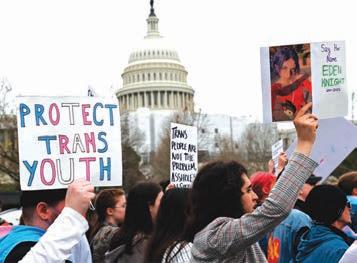
As part of that effort, the Department of Justice issued a memorandum instructing federal agencies to apply Bostock to both Title VII and Title IX (the latter of course is enforced by the Office of Civil Rights in the Education Department). Later, in 2024, the Department of Education amended Title IX regulations to explicitly protect LGBTQ people from discrimination in federally funded buildings (most obviously schools).
The result of all these legal technicalities is that under the Biden rules, OCR must protect trans students who want to use the bathroom of their choice; a gay student cannot be discriminated against for being gay; and most importantly, a student cannot be rejected from a school, or expelled, for simply being who they are.
This small change is actually revolutionary for LGBTQ+ students. Beyond the fact that the second leading cause of death among LGBTQ youth is suicide, queer kids are twice as likely to be called names, verbally harassed, or physically assaulted. This often leads to increased substance abuse, self-harm, chronic absenteeism, and poor academic performance. With younger people coming out earlier than ever, it is critically important that we ensure we are protecting our queer youth.
The administration wants society to backslide. They want these kids to face discrimination. Never mind that one of Trump’s own Supreme Court picks wrote the majority opinion in Bostock, he and his cronies think it is perfectly fine for LGBTQ students to face harassment because they (falsely) claim the Biden administration had a warped interpretation ofBostock. After all, this is the same administration that cut funding to the 988 suicide hotline, banned trans people from serving in the military, and systematically weaponizes federal law against trans people across the country.
The cast of this hit musical promises to start Summer in the queerest way imaginable!
It is no secret that the queer community has a deep love for musicals in general. And some musicals just have that deeper love from the queer community. Mamma Mia!, now celebrating its 25th anniversary, is one of those musicals. And that’s not just because of the fierce women and sequin outfits.
By JOEL MEDINA
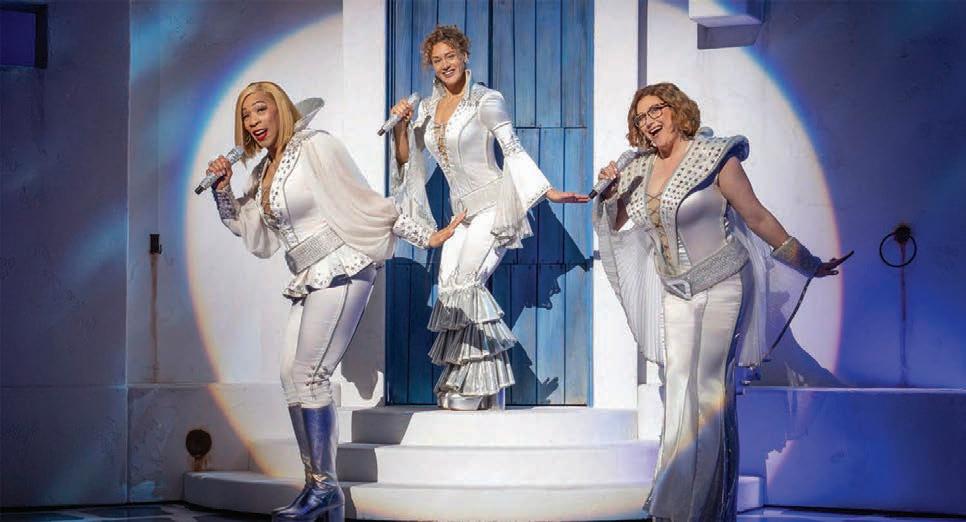
Mamma Mia! follows mother-daughter duo Donna and Rosie as they prepare for the latter’s upcoming nuptials. The story sees them struggle with planning while Donna argues with Rosie about being too young to get married…just before three men arrive on their island home, each with an equal chance of being Rosie’s biological father. This chaotic situation is set to the blissful sounds of ABBA’s greatest hits, with the pair and their many close friends using the legendary (and super queer) group’s music to express their innermost feelings. A lesson on self-discovery and building community — all while being your absolutely fiercest self — Mamma Mia has astounded audiences for almost three decades with its uplifting story.
And, to the delight of queer fans all across LA, Center Theater Group is ending its current season with a production of the show that is promising to be its glitziest, gayest version yet!
The Los Angeles Blade got the chance to speak with two of the musical’s overwhelmingly queer cast: Carly Sakolove, who plays the rough-and-tumble Rosie, and Victor Wallace, who plays Donna’s love interest, Sam. The duo was thrilled to be launching Mamma Mia! during Pride month, raving about being a part of such a beloved piece of theater and how excited they were to introduce it to a whole new batch of viewers. Sakolove and Wallace teased a show that any LGBTQ+ theater fan can fall in love with — not just because of the jaw-dropping vocals, but the heartwarming message of found family at the heart of Mamma Mia!
“Gay men just love seeing iconic women onstage,” laughed Sakolove when discussing why she thinks the musical is such a queer fan-favorite. “It does center around a straight wedding…but there are sequins, there’s women belting, and there’s female empowerment — all things that are attractive to the queer community.” Wallace agreed, understanding why some folks may be confused at queer fans’ love for the show; most classic versions of Mamma Mia! are completely centered around straight couples, with only one scene offering any queer representation. He explained that LGBTQ+ fans love it for everything that Sakolove described, but also for the deeper themes present throughout, aspects of the narrative that can be easily overlooked behind the jaw-dropping musical numbers.
“I think [Mamma Mia] really is about finding your joy in life,” she said. “I think it’s about who you choose to love, and who you decide to keep around you as your found family.”
“It’s a story about a girl who’s trying to find her identity by finding her father, but in that process, we see so many relationships that aren’t just blood,” Sakolove continued. “We see that blood doesn’t necessarily make family.” It’s a part of the story she would know better than most; Rosie acts as a true sister to Donna, with their lifelong friendship emphasizing Mamma Mia’s core theme of finding family in people you might not be related to. “So much of [Mamma Mia!] is that relationships come in all different forms, and I think that is something that really rings true for us as queer people.”
This pair and the many other queer members of their cast stressed how essential it is to have musicals like Mamma Mia! — not just because of its nonstop fun, but because it offers a sense of community that so many in the audience may be looking for. The show not only exemplifies the concept of found family but also teaches that the most fulfilling thing a person can do is love those they’ve chosen to be around. It’s a lesson that so many queer people can benefit from, and this cast is honored to bring it to thousands of people in each show, with Sakolove describing, “You see people that are there with their friends or their family members, and they just leave loving them extra hard…we are the luckiest people in the world that get to just go have fun on stage and affect people in such a positive way.”
While these two spent much of their interview talking about the impact this story has and how proud they are to deliver it, they emphasized that, above all else, Mamma Mia! offers a nonstop sense of fun for everyone in attendance! They were especially honored to be ending Center Theater Group’s current season with this production — and they promised to blow everyone away with just how much they have in store.
“If we’re ending the season, then [CTG] is going out with a bang,” Wallace assured everyone reading. “Because [Mamma Mia!] is such a fun, joyous, much-needed night of theater. It’s a reminder of how great life can be when you’re around your friends — when you’re around your family — so it’ll be a good way to end the season, for sure.”
A lofty promise, yet one that these two stars made wholeheartedly. But Carly Sakolove and Victor Wallace humbly assured their fans that the utter joy of this production can’t just be owed to them or any of their other cast.
Because when you have a musical like Mamma Mia!, one that shows the unadulterated joy of creating a found family and loving your neighbor with all your heart, it’s impossible not to leave the theater smiling.
That, plus all the sequins, of course.
‘Mamma Mia!’ plays at the Ahmanson Theater from June 23 – July 19, 2026. You can buy your tickets at www.centertheatregroup.org.


The County of Los Angeles Department of Beaches and Harbors is seeking qualified and experienced Vendors to enter into Master Agreements to provide as-needed hazardous waste removal services within County of Los Angeles. The selection of Vendors will be based on the qualifications of the firms that submit proposals.
Vendors submitting Statement of Qualifications (SOQs) must have and be able to demonstrate a minimum of five (5) years’ continuous experience in the removal of hazardous materials for public and/or private sector entities. The County may require additional minimum qualifications. The deadline for submitting SOQs will be 5:00 p.m., July 23, 2026, however, County will continuously accept SOQ’s throughout the duration of the Master Agreement.
Further information regarding the RFSQ is available at: https://doingbusiness.lacounty.gov/.
To view and print a copy of the RFSQ, please visit: http://beaches.lacounty.gov/request-for-proposals/.
The County reserves the right to cancel the RFSQ and to modify any and all terms and conditions of the RFSQ, including minimum qualifications. For further information, email Jean Dao at
By JOHN PAUL KING
When one watches movies for a living, it’s as easy to fall into routine as it is with any job. Each movie is different, of course, each with its own characters, its own viewpoint, and its own story – (or at least its own variation on one), but in so many other ways, they have a tendency to be very much the same.
This is because there is an entire “language” of filmmaking, established from the earliest days of cinematic storytelling, a process so subtle that most of us are barely aware of it: the image directs our attention, the script provides the shape and structure of the story, and the actors are our stand-ins, allowing us to “experience” the reality of the film through a transference of identity that occurs so reflexively that we don’t even notice it’s happened.
That’s why it can be such a jolt when we come across a movie that doesn’t follow the expected rules, and we can’t think of a better recent example than Avalon Fast’s “Camp,” which drew attention as it made the rounds at last year’s festival circuit and embarked on a series of screenings in select cities beginning on June 26.
Fast, 26, is a queer Canadian filmmaker who specializes in “Girl Horror” (a genre that centers female experience), and who has already become a prominent force in the “new queer indie” movement. Her first feature, “Honeycomb,” got a Sundance “virtual” screening, and she’s appeared as a performer in films like Alice Maio Mackay’s “The Serpent’s Skin” and leading trans filmmaker Jane Schoenbrun’s yet-to-be-released Cannes hit, “Teenage Sex and Death at Camp Miasma.” With “Camp,” however, she stakes her claim to territory in a burgeoning field of queer/trans/feminist cinema to establish herself as a formidable “brand” of her own.
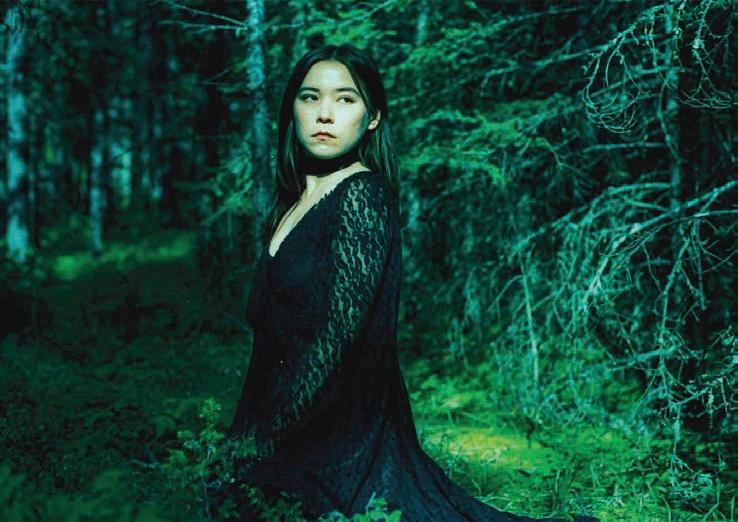
Rooted in a blend of trope-ish horror conventions and presented in a dreamy, ethereal style that elevates feeling over cognition, it’s the story of Emily (Zola Grimmer), a young woman accidentally responsible for two horrific tragedies, who feels hopelessly trapped by guilt and shame. At the suggestion of her father (Mike Tan), she takes a summer job as a counselor at a camp for “troubled” young people like herself, where she is quickly embraced and assimilated by the core group of female counselors – most of them “hot weirdos” who are more interested in all-night partying and a kind of home-grown witchcraft than they are in the wholesome camp activities they supervise during the day. Her initial response to this new environment is guarded, but as the summer goes on she comes to feel a strong connection to her fellow counselors, beginning to hope that she has – at last – found her place among a “family” that accepts her despite the life-shattering incidents that have come to define her sense of self. Yet at the same time, she becomes ever more aware of a call to confront and quiet the ghosts of her misfortunate past – even if it requires an unthinkable sacrifice.
Dreamy and purposefully opaque when it comes to differentiating between real experience and metaphysical reflection, Fast’s movie draws us in from the start with its edgy mix of visual atmosphere, blending an aesthetic that combines home-movie nostalgia with the ironically whimsical flourishes of the digital age to establish a tone that feels like a half-forgotten memory reconstructed in the form of an Instagram “reel.” It’s a potent effect, creating an overall aesthetic of surreal impressionism in which the plot advances more through mood and fragments of subjective experience than through concrete narrative form; at times, it feels untethered, yes, but it always manages to orchestrate its seemingly disjointed perspective into a shape that makes sense — even if we’re not quite sure how or why, or even what is actually happening.
The effect is cumulative, as the story becomes less bound to logic and realism while leaning further into a perspective that favors the arcane and mysterious over the rational and concrete. And while that might prove frustrating for viewers expecting a more traditional kind of “horror,” it provides for an experience that’s more likely to satisfy the kind of fans who appreciate being left to provide their own interpretations. The most obvious comparison would be with the work of David Lynch; there’s clearly an influence there for Fast’s darkly intuitive approach, which goes beyond the obvious parallels of its “Twin Peaks”-ish setting (the forest is most definitely a character here) to emulate the stream-of-consciousness narrative flow that marked much of Lynch’s late-career work.
“Camp” is far from imitative, however. While it may share some traits with the work of Lynch and other masters of contemporary surreal horror, it creates a unique “vibe” by
allowing its own creative feminine energy to take the lead. The traumas it depicts spring from a definitively female space, from first-menstruation nightmares to the absurdities of having to defer to the “leadership” of a mediocre male who has more power than you (in this case, Austyn Van de Kamp as the camp’s supervisor, a naive but endearing yokel whose Jesus-centric worldview is undermined by the “coven” under his tentative command), and the overall treatment of its few male characters is largely less than forgiving. Yet on a deeper level, its subtext of carrying “unforgivable sin” that affects every aspect of one’s interactive life feels ultimately as much an expression of queer trauma as it does feminist ideology. The result is just cryptic enough to leave us pondering what we’ve just seen yet clear enough to deliver a sense of emotional catharsis which feels, if not exactly curative, at least healing enough to pave a way forward.
Admittedly, it’s not a film that will likely tick off all the boxes for hardcore horror fans; while it might deal in dark emotions and a certain witchiness that ties it to the legacy of such pagan-flavored classics as “The Wicker Man” or “Midsommar,” its terrors are more existential than visceral, pondering the difficulties of overcoming self-hatred rather than pitting us against a palpable physical threat, supernatural or otherwise. Indeed, it’s more introspective psychodrama than it is traditional horror – which is less a criticism than it is a disclaimer.
Though it’s Fast’s moody aesthetic that emerges as the “star” attraction of “Camp,” much of its effectiveness hinges on the performances of its cast. Grimmer, especially, is central, and she succeeds admirably not only in winning our empathy but in peeling back the morally murky layers of Emily’s path to redemption in a way that feels like empowerment rather than ethical compromise. However, the ensemble of “soul sisters” that surrounds her (Alice Wordsworth, Cherry Moore, Ella Reece, Lea Rose Sebastianis, and Sophie BawksSmith) all play their own particular part in creating the “magic” that makes the whole thing work.
All in all, “Camp” is an exhilaratingly fresh – if sometimes opaque – expression of queer filmmaking from a feminine perspective; that’s a regrettably rare occurrence which makes Fast’s fastidiously unsentimental (yet deeply empathetic) exploration of queer guilt all the more powerful, and makes her movie an essential addition to your watchlist.
Laverne Cox’s memoir recounts horrific abuse as a child
By TERRI SCHLICHENMEYER
OK, let’s just say it: You’re tired of lies.
They come from above, behind, from either shoulder. They’re repeated, laid out in a line, told as if they’re true but they’re not. You wish people would stop lying to you. As in the new memoir “Transcendent” by Laverne Cox, you wish you could tell the truth about yourself.
Sissy.
If the bullies in the neighborhood weren’t constantly calling Laverne Cox that name, then Cox’s mother was. “Sissy,” was just one word, though; the others were worse. The boys would say those things while they beat Cox, when they could catch her. Her mother screamed at her gentle child who didn’t like “boy” activities.
Even at eight years old, says Cox, “I was a prim and proper lady.”
Despite the verbal abuse about her perceived feminine behavior and a furtive, failed attempt at conversion therapy, Cox’s mother sent her and her brother to the Alabama School of Fine Arts, where Cox learned to dance. It was a lifeline for her, and the talent gained there helped Cox get into college in Indiana.
From there, Cox expected to find fame and fortune in New York City.
And yet, the abuse she suffered as a child held Cox back, and the words “ There is something wrong with me ” became a daily mantra.
“I didn’t know how to say it.” Cox says. “ I’m a girl. ”
There were therapy sessions to get to that point, as Cox learned the language and skills needed to speak the truth. Landing a sense of style helped, as did her brother’s support, a handful of friends, and happy, scent-infused memories of her mother’s make-up table.
At each step, Cox says, “I was expressing myself, I was also allowing myself to edge closer to my girlhood.”
Let’s start here: “Transcendent” is a difficult read – not for style, but for substance.
From her earliest memory of being sexually abused as a toddler; to verbal and physical abuse from many sources; to what, judging by photo captions, seems perhaps like forgiveness, author Laverne Cox glosses over nothing. Be ready, in other words, for pages and pages of memories that, like a roller-coaster, will make you cringe and want to hide your eyes, although doing so would be a mistake.
As this book progresses, Cox’s story does, too. We see a child who knows a truth but has no words for it. The child becomes a teen with a bursting sense of self, then a young adult who craves love as she’s stretching her wings. By the time Cox advances to writing about her career and the abuse is (mostly) over, readers will breathe a well-deserved sigh of relief. Whew, you’ve winced through a harrowing tale to reach a satisfying but not complete update.
Fans of Cox’s work will want “Transcendent,” as will anyone who’s transitioned, is thinking about it, or loves someone who has. It’s a rough read, but a necessary one, then, and that’s no lie.
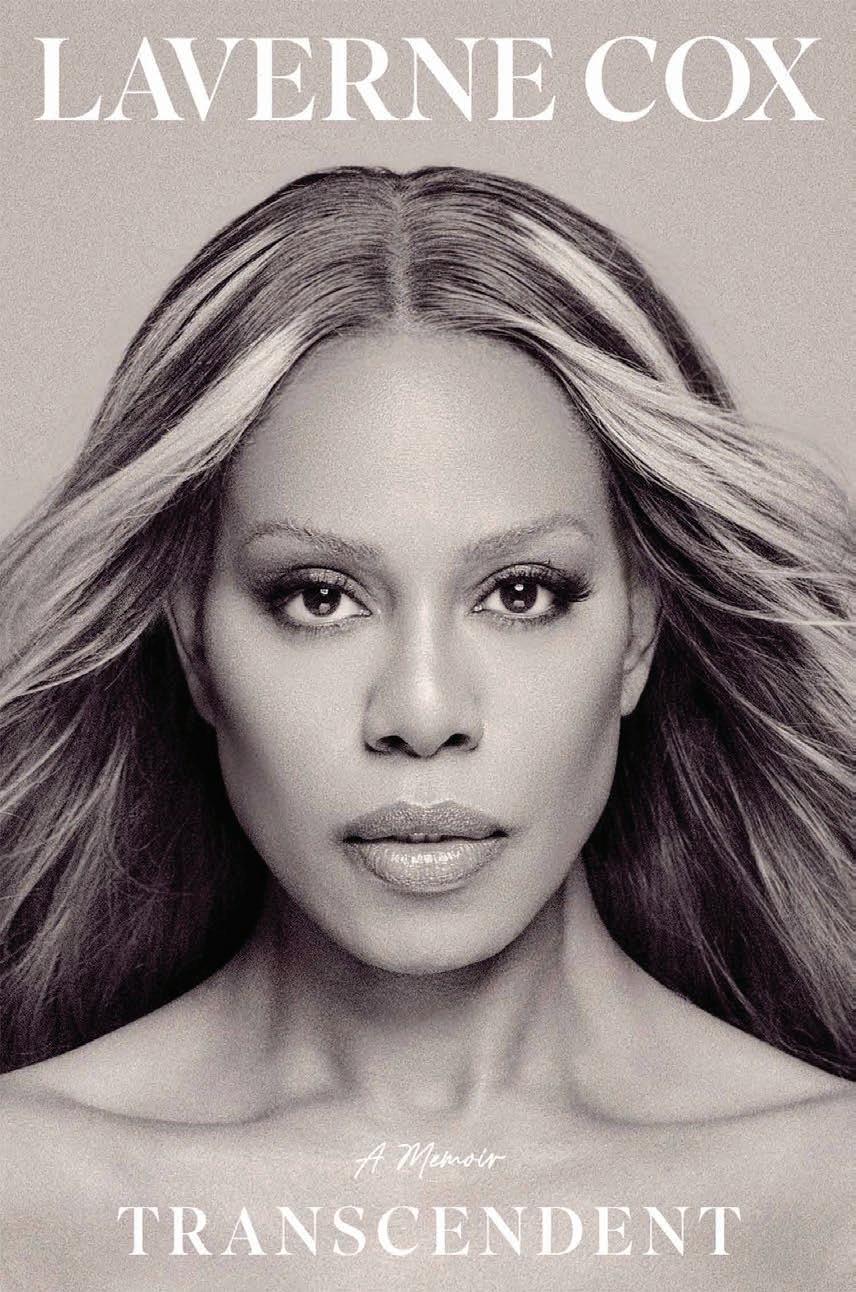
‘Transcendent: A Memoir’
Laverne Cox

Scan