
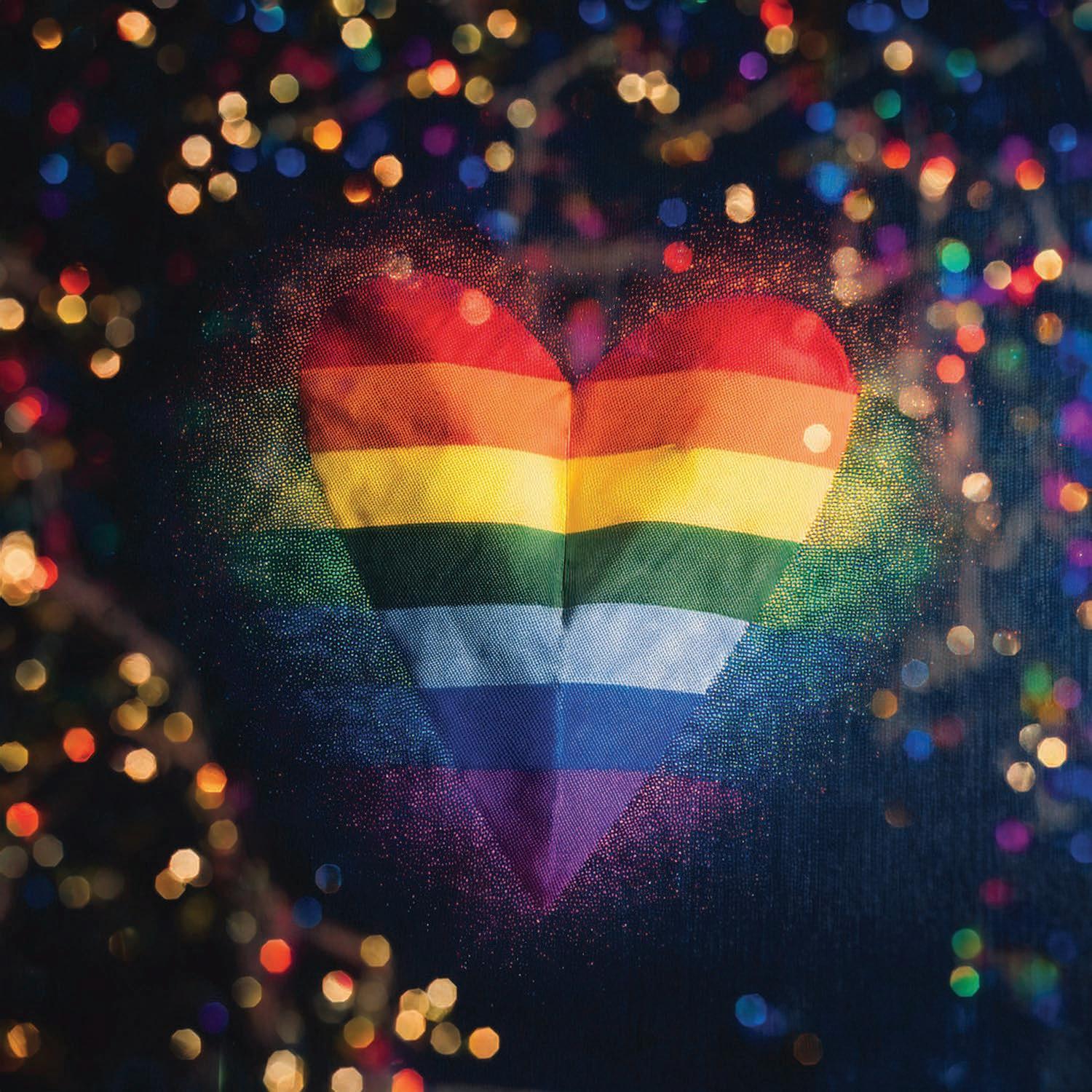
Leaders in Pride
Honoring our own as city prepares to celebrate






From above our heads to underneath our steps: Lynn Segerblom’s ongoing journey of Pride through public art
The co-creator of the rainbow fag shares how one rooftop sewing project in 1978 San Francisco became one of the most recognized and revered queer beacons in
By AJ SLOAN
the world
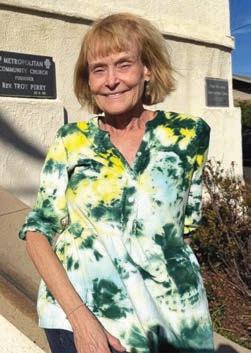
Ages before the rainbow fag became an internationally acknowledged symbol of LGBTQ pride and joy, Lynn Segerblom was already living in the fullest spectrum of colors. Formerly known in 1970s San Francisco as “Fairy Argyle Rainbow,” the artist and self-described lover of color therapy was hand-dyeing fabrics on rooftops, sewing giant panels of muslin, and unknowingly helping to create one of the most widely recognized emblems in queer modern history. Now, nearly fve decades later, Segerblom is still channeling that same spirit, this time through Steps to Liberation, a permanent rainbow staircase installation at Founders Metropolitan Community Church (MCC) in Los Angeles.
In our interview, Segerblom dishes on the chaotic creation of the original 1978 rainbow fags, the exhilaration of watching them fy over San Francisco’s UN Plaza for the very frst time, and why public art is so essential now more than ever, at a moment rife with division and political tensions. Equal parts whimsical, wise, and authentic, Segerblom speaks about rainbows being so much more than mere symbols. They have the power to also act as experiences meant to be immersed in and shared as a community.
You helped create one of the most recognizable symbols in the world, the rainbow fag, in 1978. What inspired you, and what did that moment feel like for you?
I was working at the Gay Community Center at 330 Grove Street in San Francisco. I rented a small room there where I did dyeing and sewing because that was how I made a living. Some people in the ofce asked if I wanted to help create decorations for the 1978 Pride parade, which was only the second parade in San Francisco at the time. They said there would be fag poles available and asked if I thought I could make fags. I said yes because I had made smaller fags before for another project.
A meeting was arranged with Gilbert Baker, James McNamara, and me to discuss ideas for the fags, but I was the only one who showed up. At the time, my name was Fairy Argyle Rainbow, and everyone knew me as “Rainbow.” I was already deeply involved with color healing, tie dye, batik, and making colorful clothing and art. So I said, “Let’s make rainbow fags.” It just felt natural to me.
We planned two giant rainbow fags for the UN Plaza fag poles, which were about 80 feet tall, along with smaller rainbow fags around the refecting pool. The idea of the rainbow was already part of who I was.
You were already using the name “Rainbow” before the fag existed. Where did that come from?
I loved rainbows and color long before the fag project. Since junior high and high school, I had been teaching myself tie dye, batik, sewing, and painting fabrics. I loved bright colors, soothing colors, and deep colors. A friend in the theater company I worked with started calling me “Fairy,” like the fairies in old folklore, and “Argyle” came from her last name. “Rainbow” came from my love of creating rainbows in my artwork. I even had a driver’s license that said Fairy Argyle Rainbow on it. In the 1970s, that was possible.
What was the actual process of making the original fags like?
It was a massive undertaking. We were working with huge amounts of white cotton muslin that had to be dyed by hand. Every piece had to be washed, dried, ironed, measured, pinned, cut, and sewn. We brought sewing machines, ironing boards, scissors, and all our tools into the community center. At frst, we realized the project was far bigger than we expected. I started dyeing fabric on the rooftop of 330 Grove using giant trash cans and the fre hose because it was too messy to do inside. Helpers would carry the soaking wet fabric down to laundromats, wash and dry it, and bring it back.
As far as sewing, it was mostly James McNamara, Gilbert Baker, and me doing the work. James really knew how to sew and taught Gilbert a lot. We had volunteers helping with errands and ironing, but the actual construction of the giant fags was difcult work.
What did it feel like seeing the fags raised for the frst time?
It was such a relief. We had been afraid we would not fnish on time. Once we started, we realized how enormous the project really was. Each completed fag took three people to carry because they were so heavy.
When we fnally saw them fying at UN Plaza, especially in the San Francisco wind, it was incredible. Those huge pieces of fabric were soaring in the sunlight. I was mostly relieved that they worked and that they ft the fag poles correctly. We had put so much efort into them.
Did you ever imagine the rainbow fag would become a worldwide symbol?
No, not at all. We were focused on making something beautiful for the Pride parade. At that time, the parade was still very grassroots. There was no big stage or production. We simply wanted to create something meaningful and uplifting.
I never imagined it would become an international symbol. Gilbert was a very good promoter, but at the time, I was simply focused on creating the design and making the fags happen.
Your new “Steps to Liberation” project transforms the rainbow fag into something people can physically walk through. You said the steps feel like the fag coming to life. What do you mean by that?
The design for the steps is beautiful. The staircase leading into the church will be painted in rainbow colors, and the church doors will be painted indigo, which feels grounded and strong. It really does feel like the fag coming to life because people can physically move through it.
A fag waves above you, but these steps allow people to literally walk into the colors and experience them. That feels powerful to me.
How does “Steps to Liberation” reinterpret the rainbow fag for a new generation?
Today, people are generally much more comfortable expressing who they are openly. Decades ago, many LGBTQ people felt forced to stay hidden. Now, more people can say openly who they are and live authentically, even though there are still places in the world where that is dangerous.
The rainbow steps represent openness, visibility, and acceptance. They invite people to physically experience those ideas instead of just seeing them from a distance.
You have a background as a muralist and public artist. Why is public art so important?
Public art allows people to physically connect with something. They can see it, touch it, walk through it, and experience it directly. Art is not just visual. It can also afect people emotionally and spiritually.
Color especially has a strong efect on people. If you see a garden full of colorful fowers, most people feel moved by it. Rainbow colors can create joy and healing in a similar way.
What do you hope people feel as they walk up the rainbow steps?
I hope they feel inspired. I hope they feel accepted and uplifted. Founders MCC has been welcoming people for nearly 60 years, and these steps refect that spirit of openness and community. People can come there with family or friends and feel that they belong.
The original rainbow fag emerged during a very diferent cultural moment in the late 1970s. What has changed since then?
There was a lot of cultural and political upheaval in the late 1970s. LGBTQ people were still struggling heavily for visibility and acceptance. Today, many more people feel able to live openly. That progress matters. At the same time, there are still challenges, and we still need visibility and community support.
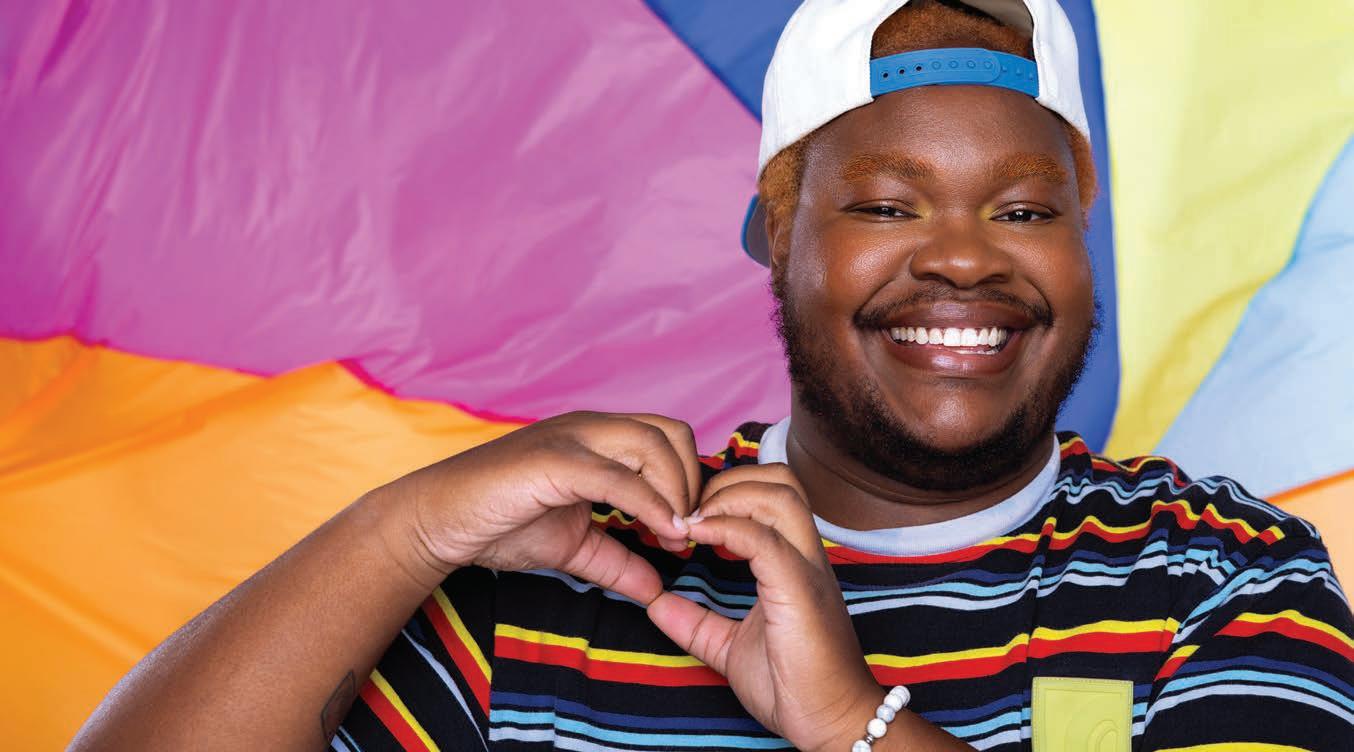

We’ve been the place for LGBTQ+ Angelenos to heal, grow, and belong since 1969.
This month, visit our 2026 Pride Hub to shop partners who give back, find us at events across the city, earn exclusive merch, and sustain the life-saving services our community counts on every day. Turn the moment into a movement.


Pride is thriving at the LA LGBT Center
The pioneering organization breaks down its plans for the 2026 Pride season
By JOEL MEDINA
For LA’s queer community, few places ofer a refuge like the Los Angeles LGBT Center.
Since its founding in 1969, the Center has served as a constant resource for the most marginalized members of this city. Operating on a mission of community building and resource sharing, it has become one of the few places where people can receive the services they need with the respect they deserve.
Like many other nonprofts in LA, the Center has been forced to grapple with a nationwide rise in discrimination. They’ve had to watch as queer folks, immigrants, and the many other groups they serve face attacks every day, with the organization constantly searching for ways to secure these people the safety they deserve. As the 2026 Pride season begins, the Center has decided to launch a campaign focused on uplifting these communities across this city today — by looking back at the past.
Because the Center’s legacy is one that shows it as an organization ready to give people what they need, no matter the circumstances. And this year, the Center wants to remind everyone of something very important: that they’re not new to this fght. And in the words of the LA LGBT Center’s CEO, Joe Hollander, “At a time when so many people feel targeted, isolated, or uncertain about what the future holds, we want Pride in Los Angeles to be centered on connection, belonging, and chosen family.”
“Nearly 60 years ago, a group of queer activists came together with a radical idea: after marching, protesting, and fghting for equality, what if they created the world they had been waiting for?” Said Joe, as he spoke with the LA Blade about the LA LGBT Center’s long history of activism. “That vision became Liberation House, a small shelter that provided safety and belonging for LGBTQ+ people at a time when few spaces existed for our community…decades later, that single home evolved into the Los Angeles LGBT Center, now the largest direct-service LGBTQ+ organization in the world.”
It’s a title that the organization certainly lives up to; featuring ten unique sites, the LA LGBT Center receives more than 50,000 visits per month and has aided millions of folks with resources like free meals, medical services, and mental health support. “We’ve built a holistic model of care,” Hollander explained. “[One] that supports LGBTQ+ people at every stage of life, from housing and afrming healthcare to services for older adults aging with dignity.”
and critical funding is increasingly under threat, including an imminent $2.4 million cut to our youth homelessness services,” said Hollander, describing how federal funding cuts have made it harder for the Center to reach the people in most need of their resources.
But this hasn’t slowed the organization down. And for this Pride season, Hollander wants to reafrm the commitment it has to Los Angeles by refecting back on its long history, one which shows that The Center has gotten through countless hardships while still uplifting its clients (and is ready to do so again)
“Throughout the 2026 Pride season, the Center will participate in and host events across Los Angeles that celebrate LGBTQ+ joy while also creating opportunities for advocacy and community care,” said Joe, excitedly discussing the marches, community events, and wellness programs that the Center will be hosting throughout June. He has also worked with his team to develop the “Pride is the moment. The Center is the Place” campaign, which, in his words, will “[position] the Los Angeles LGBT Center as more than a symbol during Pride season. It reinforces that we are a real, physical place providing housing, healthcare, and other direct services for LGBTQ+ people all year long.”
This Pride, the LA LGBT Center will invite Angelinos to a celebration, a month-long reminisce on the many ways it has pushed forward the fght for LGBTQ+ rights in California. Through this campaign, he wants to remind everyone that the organization has a frm legacy of fghting for those in need, one that has absolutely no chance of ending today.
“The Center’s responsibility is not only to provide services, but to lead with courage, compassion, and integrity. We can feel outraged or exhausted, but we cannot allow fear to stop us from doing what’s right. That means continuing to provide afrming healthcare, housing, legal services, and mental health support while also advocating and speaking out against policies rooted in exclusion and fear,” emphasized Hollander. “I hope people remember that, even in the most difcult moments, the Center never wavered from its values and continued to stand for LGBTQ+ people with courage, integrity, and compassion.”
The Center has proven itself not only as an advocacy organization but as a dynamic team of activists who understand their clients’ unique needs. It’s why so many people have come to rely on the organization — and why it’s been so frightening to see it threatened in recent months.
“We’re proud to [advocate at] a time when the needs of our community are rising,
The Center has a history of advocacy that is impossible to forget, one that showcases the resilience of LA’s queer community and this organization’s ability to serve. For Pride, it invites everyone to join them in honoring this legacy by continuing its impact today. And, most of all, the LA LGBT Center wants everyone to remember: it has always fought for its communities, and it has never failed at getting them what they need while pushing back against the discrimination they fa ce every single day.
And, this year, they’re ready to do it again.







Reclaiming LA’s Black queer identity:
Terrell J. A. Winder talks ‘Shameless’
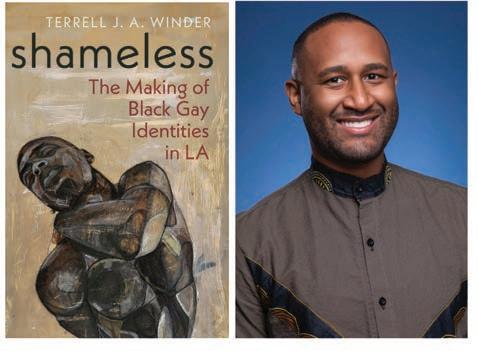
In ‘Shameless: The Making of Black Gay Identities in LA,’ sociologist Terrell J. A. Winder reveals how Black gay men in Los Angeles are transforming stigma into unapologetic queer joy
By AJ SLOAN
As our beloved Pride Month draws near, discussions on queer identity and resistance feel especially appropriate, particularly for the time that we are all currently in. With his forthcoming book Shameless: The Making of Black Gay Identities in LA, sociologist Terrell J. A. Winder explores how Black gay men in Los Angeles navigate stigma while building lives that are deeply rooted in self-worth, community, and queer Black joy. Drawing from years of research and personal refection, Winder challenges many longstanding academic ideas about shame and “spoiled” identities, instead centering the resilience and creativity of Black queer communities.
Set against the cultural backdrop of our City of Angels, his book examines how Black gay men cultivate chosen families, afrming spaces, and authentic forms of self-acceptance in a society that consistently marginalizes us. From the legacy of Jewel’s Catch One to the everyday acts of vulnerability and care that sustain community, Winder reframes stigma as something that can be resisted, transformed, and ultimately rejected. In our conversation, Winder discusses shamelessness, “unspoiling,” and what an afrming future for Black queer people could look like.
The title Shameless resonates hard. What does “shamelessness” mean in the context of Black gay identity formation?
For many Black gay and queer individuals, shame and the process of learning that their identities are shameful is a common part of growing up in the US. We might hear negative things from family members, classmates, teachers, the media, etc. All of these messages create the need for shamelessness. The title is a call to all Black gay and queer people to shamelessly accept all of themselves, no matter the negativity; it is an invitation to reject stigma.
You introduce to your readers the concept of “unspoiling.” Can you walk us through what that process looks like?
For many sociologists and researchers who study stigma, or in other words, negatively marked identities, the researcher Erving Gofman’s idea that these socially unacceptable or contentious identities were “spoiled” resonates still. Many people who experience a stigma might try to “pass,” where they hide their socially negative attribute, or to “cover,” where they downplay the signifcance of an unaccepted identity.
Instead, I show how several young men in the book push back on the idea that they should try to make other people comfortable around them. In efect, these young men decide to prioritize their own comfort over the comfort of people who have an issue with their Blackness or queerness. In the book, I show how community organizations, media representations, and chosen gay family networks can be places where young men learn not to just simply accept negative things about their identities but instead can develop tools to reject stigma in everyday life.
You describe how Black gay men more often than not
navigate competing pressures around masculinity. How do these types of internal negotiations gradually yet surely sculpt one’s identity over time?
Across the life course, these competing pressures and messages about masculinity can solidify in diferent ways related to a number of factors. For example, do you have a supportive social network like a “gay family” that might model diferent forms of masculinity? Do you have a father or father fgure who tells you it’s okay to show emotion? Did you grow up hearing that your single mother couldn’t raise a “real man?” These are the types of internal struggles that many of the young men whom I studied encountered. Their varying expressions of masculinity are shaped by those experiences close to them with family and friends, but also through external factors like media representation.
Sometimes having positive reinforcement to embody masculinity in the way you’d like can result in a sculpted identity that is more expressive and free to experiment. However, being surrounded by a majority of negative messaging and sanctioning of your masculinity expression often leads to one of two choices: 1) you push back against the negativity or 2) you fall in line. While these identities do become more solidifed over time, I hope that the book serves as a reminder that we are all able to continually rework our relationship with masculinity and femininity throughout our lives.
That question “Should I act more masculine to pass?” is pretty loaded. What did your research reveal about how men resolve or live with this very specifc tension?
I think anyone who has ever felt less masculine around other men has considered this question. In the study, the stakes of this question often shaped the response to that tension. For example, some young men discuss feeling that their physical safety was threatened, and thus they elect to express a more masculine persona to avoid physical harm. However, not all of the young men felt that the potential for this physical danger was an acceptable reason to “pass” and instead advocated for facing these threats head-on, no matter the potential consequences.
That is where the “unspoiling” emerges. It became clear that for some of the young men that I studied, it was more important that they were true to themselves and their own expressions of masculinity and femininity than to accommodate other people who put pressure on them, whether physically or verbally, to be more masculine.
Your work shines a spotlight on how stigma operates on multiple levels (race, sexuality, gender expression). How do these layers interact with each other in everyday life?
We often think of stigmas as individual or not layered, or even forget that people are navigating multiple stigmas simultaneously. However, the young men in this study are considering the boundaries of their racial, gender, and sexual expressions daily. The men in this study discussed hearing
both positive and negative messages about their Black identities growing up, but very rarely did someone hear anything positive about their non-heterosexual sexuality.
Also, as Black gay men, we are often tasked with navigating intersectional stigmas like the burden of HIV stigma. Every day, each individual must choose how to respond to stigma on their own terms; the young men in this study often do a mix of things depending on the specifc situation. I think what’s most important is that we learn how to reject the internalization of stigma–the book ofers a few ways to get there.
You also highlight how undoing stigma is the responsibility of the stigmatizer. What does accountability look like in this context?
Yes, I argue that we spend too much time teaching people how to cope with stigma instead of focusing on the stigmatizer and their role in creating it. As someone trained as an elementary school teacher, I think of stigma like bullying in a classroom: while we want children to protect and advocate for themselves, we ultimately recognize that the bully is the problem, not the bullied person. Accountability means refusing to ignore moments when others are being denigrated for who they are and asking ourselves when we are bystanders, stigmatizers, or capable of intervening. What people dismiss as “jokes” or “boys will be boys” can have lasting consequences. It is also important to recognize that someone experiencing stigma may still perpetuate it toward others, which is why everyone must refect on how they contribute to either reinforcing or reducing stigma in the lives of those around them.
At the same time, you show how many folks develop internal strategies to survive and thrive. What are some of the most powerful forms of resilience you observed in your many years of research?
Some of the most memorable examples of resisting stigma came from men who had endured profound hardship. One young man shared that despite being beaten and stabbed for being Black and gay, he still proudly embraces those identities everywhere he goes. I do not take lightly the courage it takes for someone to remain true to themselves while knowing they may face harm for it. Throughout my research, I was also deeply moved by the vulnerability and resilience shown when Black queer men shared their fears and experiences within community organizations and chosen families. Simply seeking out and building these afrming spaces felt like a powerful act of resilience and self-preservation.



The Federal Communications Commission is considering a new rating system that would require a warning label to appear before any television content that includes LGBTQ characters.
On April 22, the FCC issued a public notice asking Americans to submit comments on whether the TV Oversight Management Board should create new TV ratings to alert viewers to “transgender and gender nonbinary programming” and “the discussion or promotion of gender identity themes.”
This proposed warning would appear before content, similar to warnings that explain a program contains sexual content, drug use, or violence — categories that Congress explicitly included in the Telecommunications Act of 1996 on the grounds of obscenity and violence that some parents “believe is harmful to their children.”
The public notice says that “recently, parents have raised concerns that controversial gender identity issues are being included or promoted in children’s programs without providing any disclosure or transparency to parents.”

It goes on to say that not having a warning for trans and nonbinary people is “undermining the ability of parents to make informed choices for their families.”
LGBT Tech is an organization that works to provide LGBTQ representation in mainstream media or entertainment. The group notes 81 percent of trans respondents it surveyed said these representations had a positive impact on them discovering or learning about their identity.
“These numbers refect a basic truth: for many people, and especially young people, seeing LGBTQ+ lives represented in ordinary media is not harmful. It is formative, afrming, and often lifesaving.”
Since the public notice’s publication, more than 40 organizations have come out against the proposed alert.
GLAAD President Sarah Kate Ellis issued a statement in May on the proposal, highlighting what she described as a concerted efort by the Trump-Vance administration to other
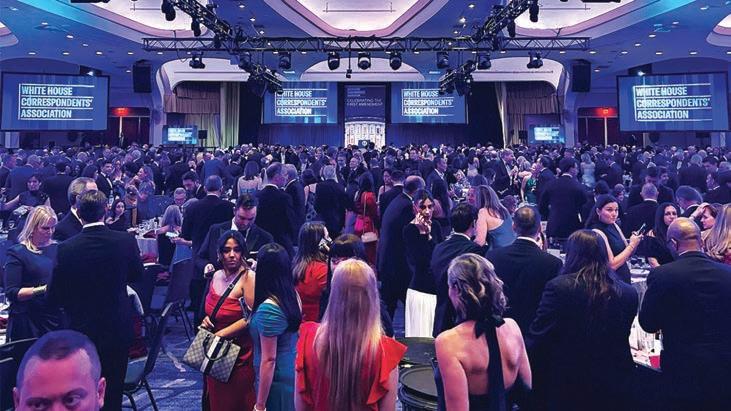
The White House Correspondents’ Association announced on Tuesday that it has rescheduled its annual dinner for July 24 after the April event was halted when gunshots rang out at the Washington Hilton.
Cole Allen, 31, is charged with the attempted assassination of President Trump, who was in the ballroom at the time of the incident. One Secret Service ofcer was wounded in the attack. Ofcers stopped Allen before he could enter the ballroom where 2,500 journalists and politicos were having dinner and waiting for Trump to speak. It was Trump’s frst time attending as president.
“We will not allow an act of violence to have the last word, especially during a year when we are refecting on the 250th anniversary of America and everything we stand for,” said WHCA President Weijia Jiang in a statement to members.
She did not announce further details, including venue and ticketing.
Washington Blade White House reporter Joe Reberkenny was in the audience when shots were fred and reported live on social media from the scene.
This post will be updated as more details are announced.
The scene inside April’s White House Correspondents’ Dinner after shots rang out.
White House Correspondents’ Dinner rescheduled after shooting Advocates push back on proposed FCC warning labels
trans and nonbinary people.
“The FCC does not set TV ratings, but under this administration the FCC has repeatedly tried to control what Americans can see on their own televisions. This government overreach is dangerous and a threat to our community and our democracy,” Ellis said.
“LGBTQ+ people and their families deserve to see their lives represented in the media they watch. And media companies must have the freedom to create programming that appeals to their viewers and subscribers without interference from a government pursuing its own anti-LGBTQ+ political agenda.”
Human Rights Campaign President Kelley Robinson pointed out that this is an act of politically motivated policy, not one based on any rhyme or reason.
“LGBTQ+ stories matter and deserve to be told, seen, and heard,” Robinson said. “The Trump administration does not get to use the FCC to try and erase us simply because they want to pretend to live in a world where we don’t exist. This is a brazen form of political interference that will hurt the ability of all people to appreciate, understand, and learn about the world and people around them.”
Brian Dittmeier, director of LGBTQI+ equality at the National Women’s Law Center Action Fund, echoed Robinson’s concerns that this is attempted censorship for the sake of political gain.
“The FCC is cloaking itself in purported concern for parents in an attempt to censor content, intimidate industry, and silence depictions of our trans siblings and neighbors,” Dittmeier wrote. “The FCC is overstepping its authority to undermine the existing ratings system, which is well understood by parents and enjoys broad public support. The FCC’s presumption that it knows better does not refect parents’ priorities and reeks of government overreach.”
PFLAG National Vice President of Policy and Government Afairs Diego Sanchez said this is federal government overreach into censorship — something the First Amendment protects against.
“The FCC has given us yet another example of what ‘small government’ means: small enough to ft in your living room; to interrupt family movie night; small enough to make home feel unsafe,” Sanchez said. “Parents and families with transgender loved ones in particular know too well how big government actions impact their families directly, because they feel those impacts before everyone else.”
This proposed warning follows a slew of other federal actions targeting trans people in America, including Executive Order 14168, “Defending Women from Gender Ideology Extremism and Restoring Biological Truth to the Federal Government,” which mandated that only sex assigned at birth be used on federal government documents regardless of gender identity, as well as broad-based restrictions on gender-afrming care, particularly for trans minors.
JOE REBERKENNY
(Photo by REDPIXEL.PL/Bigstock)
(Washington Blade photo by Joe Reberkenny)

Scan to find HIV testing & care near you.
Beyond celebration: Pride as a commitment to care, equity, and inclusion
Jefrey Deguia, LA Regional Policy Advocate at Asian Americans Advancing Justice SoCal, refects on Pride from an AAPI activist point of view
By JEFFREY DEGUIA
As we begin Pride month, I have a range of emotions. At the front of my mind is that I’m exhausted (and I say this with some humor). As policy and community advocates can relate, it’s felt like a nonstop barrage of actions in both response to anti-LGBTQ+ rhetoric and policies, but also, we’ve led and supported proactive action to ensure we’re protecting our community.
The second feeling is pride; I’m really proud of myself and my community. I know it sounds quite corny or at least obvious that one would feel pride during this month, but it doesn’t always come so easily. And I don’t think that, as advocates, we always have the time to refect unless we’re scheduling it into our packed calendars. It is also my birthday month, and in recent years, I’ve come to realize how special (and maybe even chaotic) it might be to have AANHPI Heritage Month in May and then have Pride Month follow. It’s awesome, I get the permission to celebrate both major parts of my identity for eight weeks straight, but it also comes with a lot of work since I work at an AAPI civil rights organization. To be honest, it feels quite serendipitous to be in this position.
At my organization, I’m overseeing our frst-ever ofcial LGBTQ+ portfolio, and I am truly grateful to be able to be part of a long history of queer and trans resistance and community work, all while growing and learning more about my queer identity and how it can blend so beautifully with my Filipino heritage.
Our LGBTQ+ portfolio at Asian Americans Advancing Justice Southern California (AJSOCAL) was established ofcially in 2024, but the organization has been a strong ally for the LGBTQ+ community since its founding in 1983, including longtime support for same sex marriage. The portfolio started in 2024 after seeing a gap in representation of the queer, trans Asian Pacifc Islander (QTAPI) community in statewide advocacy. My team knew there were numerous QTAPI organizations in California, many of which do local advocacy, and others that were historically involved in federal advocacy. We knew that the exclusion of QTAPI experiences had to change, and we started with our AAPI Queer Joy coalition.
Our AAPI Queer Joy coalition is AJSOCAL s initiative to become more inclusive by recognizing the intersectionality of being both AAPI and LGBTQ+. It’s a partnership with QTAPI-serving organizations across the state. Together, we identify and highlight the specifc needs of the QTAPI community; we advocate for inclusive policies that empower the QTAPI community and allow all in the larger LGBTQ community to thrive. My current partners in the coalition are Hmong Innovating Politics, Lavender Phoenix, Search to Involve Pilipino Americans, and Viet Rainbow of Orange County.
I feel so honored to do this work on behalf of my QTAPI and larger LGBTQ+ community. When I joined the policy team in 2023, I had no idea I’d be leading our LGBTQ+ portfolio shortly after joining. It feels like the timing was just right to have been between teams and have this opportunity. This opportunity to learn so much about my community, myself, and our long fght for equity and eventual liberation has truly changed my life.
One major highlight this year was our AAPI Queer Joy Coalition’s presence in Sacramento for Equality California (EQCA)’s LGBTQ+ Advocacy Day. To represent the QTAPI community as a group of 14 at the largest LGBTQ+ Advocacy Day in California felt incredible. EQCA’s lobby day is notable because of the leadership role their
organization takes in co-sponsoring bills, working with the LGBTQ caucus members, and keeping all the LGBTQ+ and allied organizations up to date with all the bills and actions. I knew that by bringing a larger group of the AAPI community members to this day of action and communicating with their staf about my plans (and the staf happily accommodating and supporting us), they would continue to understand why it’s important to continue to be intentional about reaching out to diferent communities within the larger LGBTQ+ community and building power and relationships with them (and us).
These advocacy days, community events, rallies, and townhalls remind me how important visibility and participation are, especially as QTAPI community members. We have experiences that bond us with the larger LGBTQ+ community, but also have our own unique set of challenges as AAPIs, many of us are children of immigrants, which means there may be language barriers, especially for certain LGBTQ+ terminology.
If we don’t show up and share those stories with other advocates and also members of the legislature, then they can’t work with us to make our lives better. It’s a reminder that all our stories are different and though we might share a common thread, it’s a moment to learn how our diferences allow us to expand what the LGBTQ+ experience.
As I ve worked with LGBTQ+ partners in Los Angeles and Orange County, I’ve learned so much, and I’ve been able to share a lot of data and stories with our partners who might not have experience with our QTAPI community. I’ve learned so much about our QTAPI community and the type of courageous history we have here in Southern California that spans back decades. I’ve met elders who were community organizers during the AIDS epidemic who worked together with Black and Latine communities to ensure that AIDS advocacy and education were inclusive.
I’ve heard stories of the queer and trans Vietnamese community leaders in Orange County claiming their rightful stake to march in their city’s and community’s annual Tet Festival in the 2010’s. And the list goes on. AAPIs have long been part of the fght for LGBTQ+ equality and equity, and oftentimes, our work and community are invisible. I m hopeful that in my role, I can help to uplift this history and these brave community leaders and trailblazers. That I can foster even stronger cross-community solidarity. And that I can encourage the younger QTAPI generation to engage in these times to continue and lead the fght for progress.
The work we do has truly felt nonstop; it has asked so many of us advocates to dig deep and lock in. Life has required a lot of balancing, asking ourselves, “how much more can I really give?” and I know for many of us the answer is usually, “I can give a little bit more, I need to push a little more.” In my own practice of balance and centering myself after I feel anger, disappointment, sadness, exhaustion, or some combination of all four, I remind myself that rest and joy are essential. It’s a response. It’s an act of resistance.
PHONE 310-230-5266
E-MAIL arodriguez@losangelesblade.com
INTERNET losangelesblade.com
PUBLISHED BY Los Angeles Blade, LLC
PUBLISHER
ALEXANDER RODRIGUEZ
arodriguez@losangelesblade.com, 310-230-5266 x 8080
EDITORIAL
NATIONAL EDITOR
KEVIN NAFF kna @washblade.com, 202-747-2077 x 8088
LOCAL NEWS REPORTER
KRISTIE SONG ksong@losangelesblade.com
CONTRIBUTING WRITER
KAREN OCAMB
karenocamb@losangelesblade.com
CONTRIBUTORS
MICHAEL K. LAVERS, TINASHE CHINGARANDE, JOHN PAUL KING, LOU CHIBBARO JR., SUSAN HORNIK, JOE REBERKENNY, DANIEL ITAI, ISAAC AMEND, PETER ROSENSTEIN, TERRI SCHLICHENMEYER, JOE PHILLIPS, ANKUSH KUMAR, ESTEBAN RIOSECO, SAM KISIKA, ELVIS KAWEDO, HENRY CARNELL, DAWN ENNIS, AJ SLOAN
SALES & ADMINISTRATION
SALES EXECUTIVE
SHANA WONG SOLARES swong@losangelesblade.com, 808-386-0872
MARKETING DIRECTOR
STEPHEN RUTGERS
srutgers@washblade.com, 202-747-2077 x 8077 NATIONAL ADVERTISING
RIVENDELL MEDIA sales@rivendellmedia.com, 212-242-6863
ADMINISTRATION
PHILLIP G. ROCKSTROH prockstroh@washblade.com, 202-747-2077 x 8092 CREATIVE DESIGN/PRODUCTION
MEAGHAN JUBA production@azercreative.com DISTRIBUTION
CHRISTOPHER JACKSON, 562-826-6602





From the desk of Equality California: The legal issues hitting California and beyond this Pride Month
EQCA shares the local and state political developments that afect LGBTQ+ people across California FROM EQUALITY CALIFORNIA
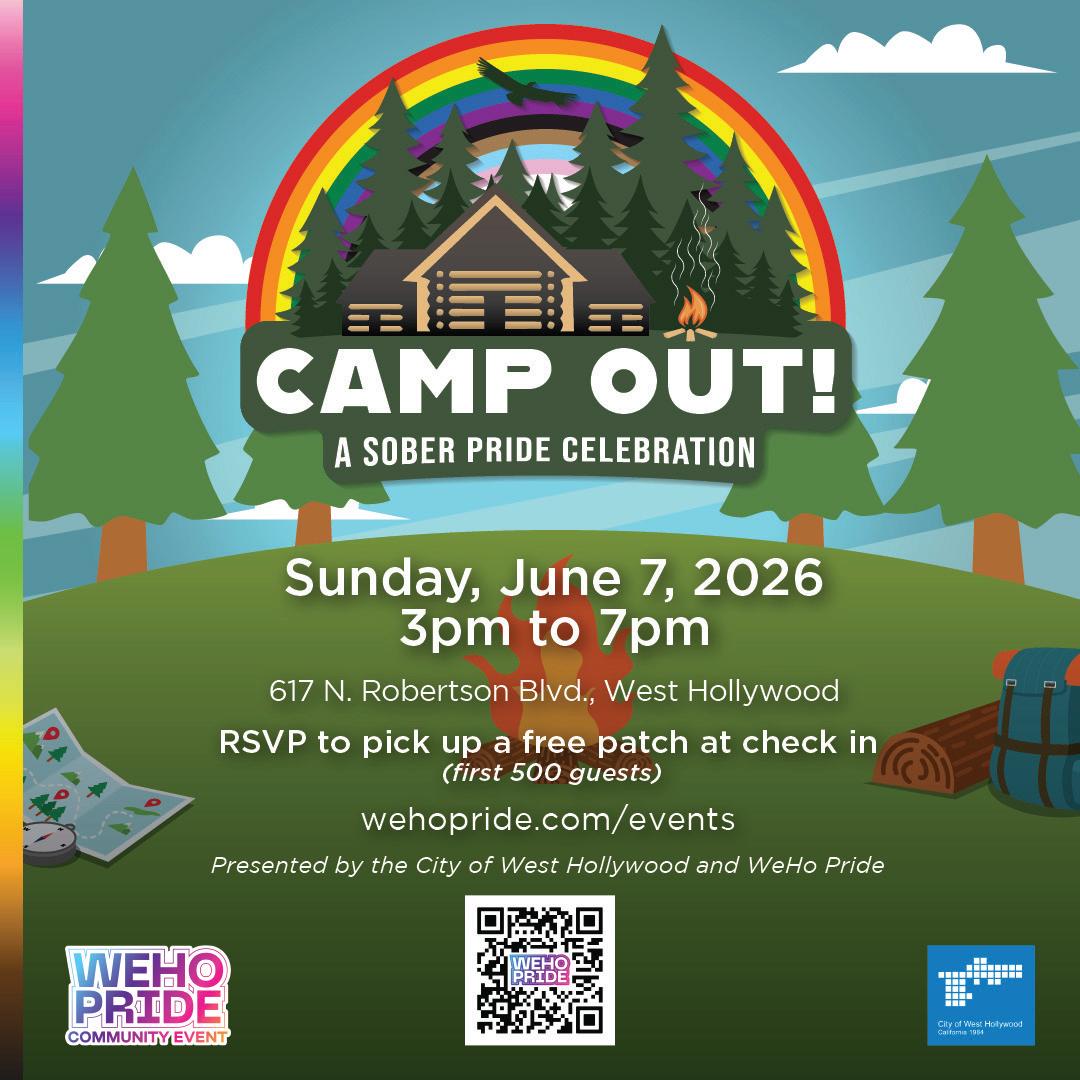
Happy Pride Month! This year, we’re excited to Rise Up in community to celebrate queer joy and continue fghting back against attacks on LGBTQ+ people. Equality California will be present at several Pride events throughout the state — including West Hollywood and Los Angeles — so stop by and say hello if you see our table! Or even better, come volunteer with us! For all things Pride 2026, visit our EQCA x Pride page.
To read more stories and sign up for the weekly Equality Brief, visit eqca.org/equalitybrief.
• Anti-Trans Sports Ban Fails to Qualify for November Maine Ballot: Maine’s Secretary of State announced that a proposed ban on transgender athletes playing sports would not appear on the November ballot following the discovery of signature fraud that disqualifed thousands of petitions. The group spearheading the initiative, Protect Girls Sports in Maine, has fled an appeal with the Secretary of State’s ofce. Similar anti-trans sports ballot initiatives in states like Missouri and Nevada may still make their states’ ballots, pending signature verifcation.
• Federal Judge Renews Preliminary Injunction Preventing Transgender Female Inmates From Transfer to Male Prisons:
U.S. District Judge Royce C. Lamberth once again blocked the Trump administration’s eforts to transfer transgender women in federal custody into male prisons. The case at hand, Doe v. Blanche, was brought in January 2025 after three transgender women incarcerated in federal prison sued over an executive order mandating the federal government only recognize “sex assigned at birth.”
• Barney Frank, First Out Gay U.S. Congressman, Dies at 86: Barney Frank, who represented Massachusetts in the U.S. House of Representatives from 1981-2013, died on May 19 after a prolonged bout with congestive heart failure. Elected to Congress in 1980 following a tenure in the Massachusetts House, Frank came out publicly in 1987, the frst Congressman to do so voluntarily. In 2012 he became the frst incumbent member of Congress to marry someone of the same sex. While Frank is recognized as a pioneer in politics, many took issue with his more recent statements encouraging Democrats to step away from focusing on issues afecting the transgender community.
• Trump State Department Rings Death Knell for Global HIV Prevention Program:
The Department of State has announced that it will end CDC support of PEPFAR (President’s Emergency Plan For AIDS Relief) by September 30 of this year. The program, launched with bipartisan support by President George W. Bush in 2003, has saved the lives of over 26 million people in poor countries living with HIV. PEPFAR had previously sufered a blow in 2025 when the Trump administration dismantled USAID (U.S. Agency for International Development), upending other HIV initiatives in several countries. Critics warn this action could lead to a backslide in prevention and treatment of HIV/AIDS.
• Trevor Project Releases Latest LGBTQ+ Youth Mental Health Report: The Trevor Project has released its 2025 U.S. National Survey on the Mental Health of LGBTQ+ Young People, which surveyed 16,000 LGBTQ+ youth ages 1324 across the U.S. The fndings show that rates of suicidality and risks of self-harming behavior have increased over the past year in large part due to growing anti-LGBTQ+ sentiment, particularly from the federal government. Among the key fndings, 36% of LGBTQ+ youth say they seriously considered attempting suicide in the past year.
If you or someone you know is an LGBTQ+ young person in need of support, text ‘START’ to 678-678 to be connected to a trained counselor from The Trevor Project for 100% confdential, 100% free help.
• Federal Appeals Court Hears Arguments Over Forcibly Outing Trans Students
on School Trips:
A panel of the 10th Circuit Court of Appeals heard arguments in a case challenging a Colorado school district’s policy that allows transgender students to room with peers that share their gender identity. The Alliance Defending Freedom, a notoriously anti-LGBTQ+ legal organization, brought the case on behalf of two parents who sued the Jeferson County Public School District after learning their daughter had shared a hotel room with a transgender girl during a 2023 Washington, D.C. trip. The district’s attorneys argue that any change in policy would single out transgender students for unfair and unequal treatment.
• Texas Hospital, DOJ Reach $10 Million Settlement With Disturbing Caveat: The Department of Justice announced on May 15 that it had reached a $10 million settlement with Texas Children’s Hospital in relation to its provision of transition-related care for minors. While the settlement was reached out of court, with neither party admitting wrongdoing, part of the agreement mandates that the hospital revoke privileges for any physicians involved in providing such care, and also requires the creation of a so-called “detransition clinic.” Both actions stand to have a chilling efect on transgender healthcare providers nationwide.
STATE LEGISLATIVE UPDATE
All of our 2026 priority sponsored bills, with the exception of AB 2014 (Elhawary) — Challenging Unfair Gender Bias in Criminal Trials, moved out of the Appropriations Committee’s “suspense fle,” on May 14 alongside hundreds of other measures.
Following that, all Equality California priority legislation passed the “house of origin” deadline on May 29, 2026 — meaning that the bills successfully cleared a foor vote of the full chamber where they were initially introduced. The bills now await scheduling for policy committee hearings in opposite chambers.
To view our entire 2026 state legislative package, visit eqca.org/legislation
UPCOMING EVENTS
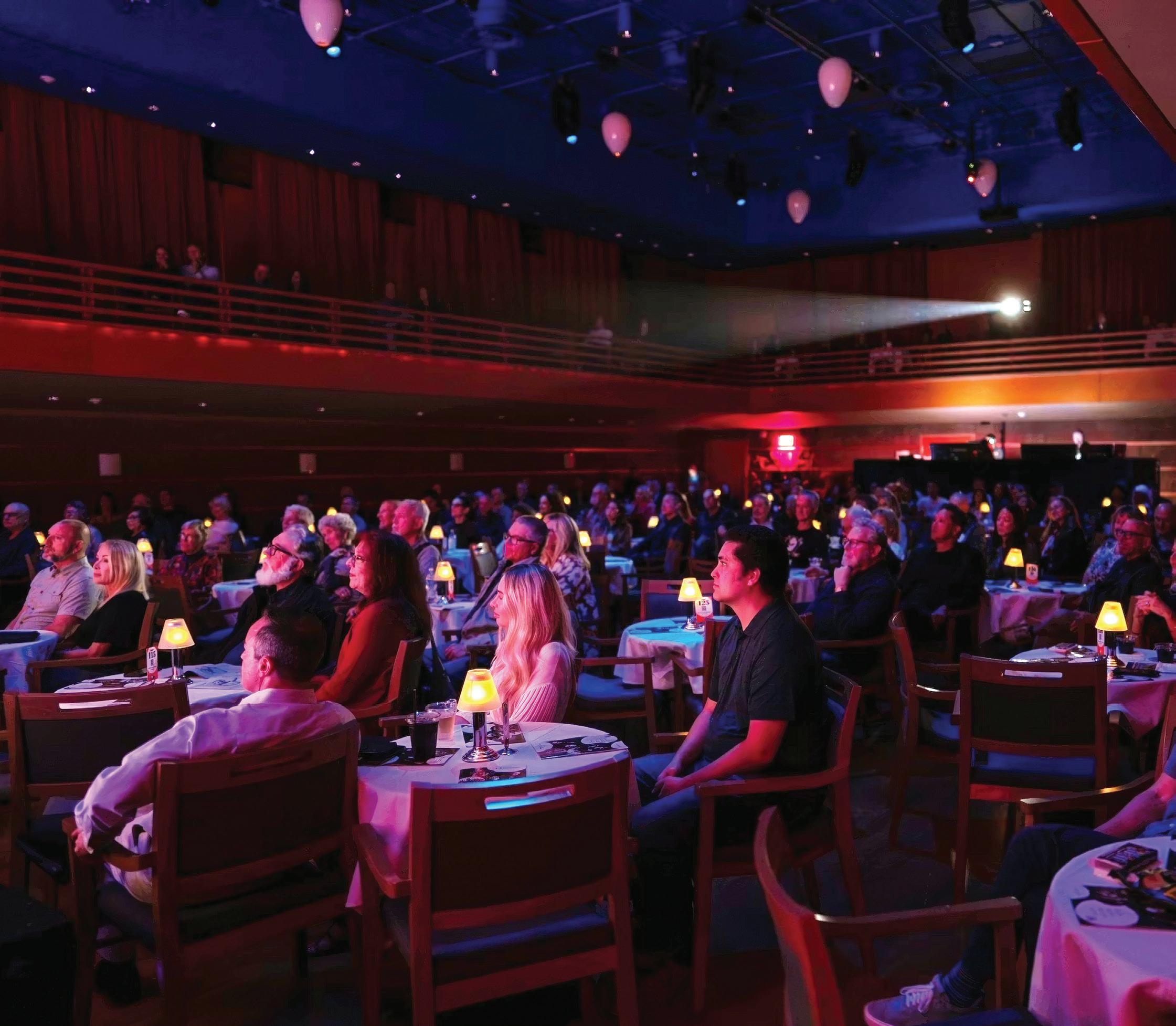
Want to join Equality California at an upcoming Pride festival, or march alongside us in a parade? Visit our Mobilize page to see all the events we’re a part of this June!
Our Pride Parties return this summer as we gather in community and celebrate Pride 2026! Rise Up and join us at an event near you! Tickets are on sale now!
Los Angeles: Wednesday, June 10 @ Hi Tops Los Feliz, 6:00-9:00 PM
San Francisco: Tuesday, June 23 @ El Rio, 6:00-9:00 PM
San Diego: Tuesday, July 14 @ InsideOUT, 6:00-9:00 PM

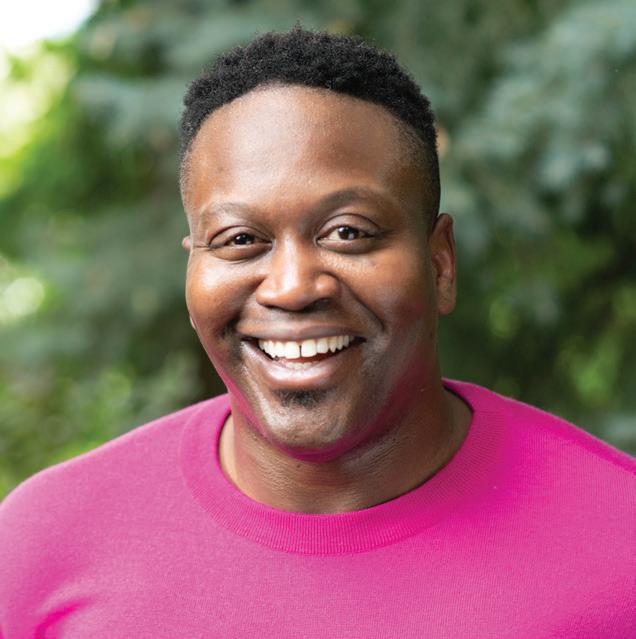
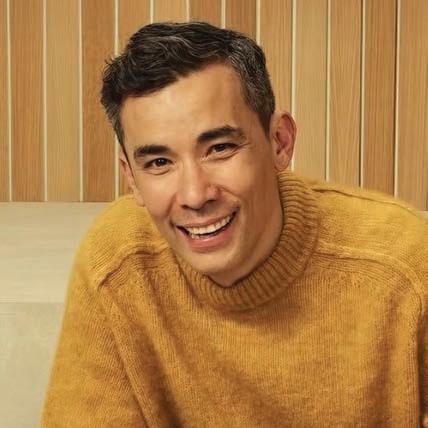

Krysta Rodriguez
Tituss Burgess
Conrad Ricamora
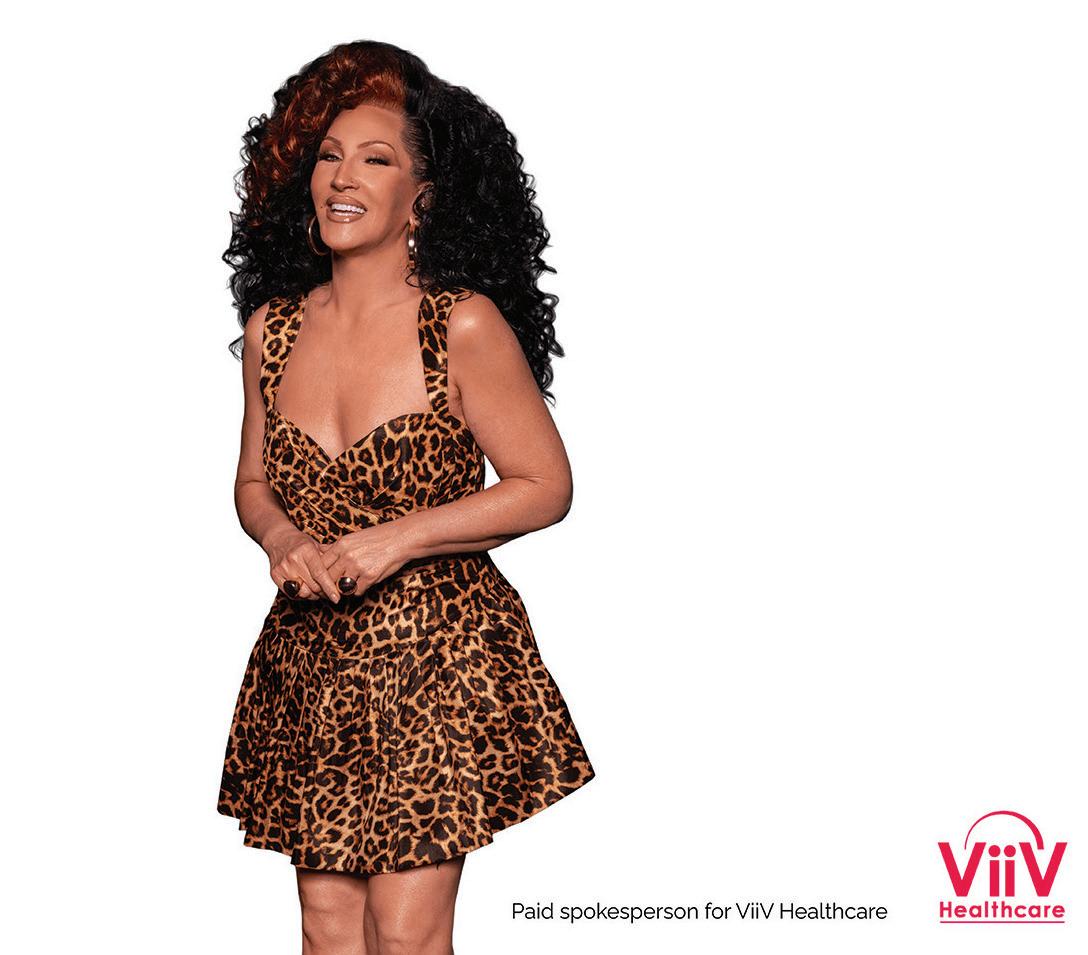
Why Michelle Visage needs you to get ‘PrEP Wise’
The ‘RuPaul’s Drag Race’ judge speaks about her new campaign with ViiV Healthcare
By JOEL MEDINA
If you ask an LGBTQ+ person what Michelle Visage is known for, you’re likely to get a few similar answers. Most people will say that they know her as the co-judge on RuPaul’s Drag Race, with the woman serving looks (and scathing critiques) for more than a decade on this seminal program. Others may bring up her time aweing audiences on the West End, or her initial star turn in the hit girl group Seduction. There are a few answers you may get when asking about Michelle Visage, but there’s one part of the performer’s career that not enough people bring up today: her advocacy.
Before the record deals and hit TV shows, Michelle Visage was a tough teenager from New Jersey. A girl who knew she was meant for fame but was still fguring out how to get there. Eventually, the search for stardom brought her to 1980s New York, a thriving home of queer nightlife that taught Visage how her voice could be used to fght against hatred. And while she fexes that skill every day as a ferce advocate, she’s excited to be louder than ever through ViiV Healthcare’s new ‘PrEP Wisdom Campaign.’
Michelle Visage sat down with the Los Angeles Blade to discuss this campaign and how it feels to speak up about this important issue. But before we could get to the present, she stressed that if people wanted to know about her current work, they frst had to understand how it all began.
Visage detailed her youth in New Jersey, her no-nonsense parents, and the many times she snuck into nightclubs hoping to be ‘discovered.’ It was in these clubs that she found the thriving ballroom scene of 1980s New York, saying, “I felt like Dorothy [from the Wizard of Oz] when she clicked her heels! [Except] Dorothy clicked her heels three times, and she ended up in Kansas — I ended up on Christopher Street with 30 or 40 of the weirdest, craziest looking misfts I’d ever seen in my life.” Michelle smiled widely as she remembered those early moments. “I was like, ‘Oh my god…I think I found my people.”
“I met Willie Ninja and Caesar Ninja Valentino, and they took me in as one of their own and started teaching me how to vogue. And that’s how life began for me in the ballroom!” She began to walk as a member of the House of Valentino — specifcally Face, Body, and Femme Vogue — and found a second home amidst this thriving subculture of marginalized artists. “When I didn’t have anybody or a group or a clique to speak of, the queer scene in New York City took me in as one of theirs — and I became ‘Michelle Magnifque.’”
Through this community, Visage got to see the birth of our modern LGBTQ+ rights movement — as well as just how much the AIDS crisis would come to terrorize these people she’d begun to call her family.
“Because I was so deep in this scene, I was afected greatly by the AIDS crisis and the lack of any kind of support from anything around us,“ said Michelle, speaking candidly about her many days spent at the bedsides of those sufering from this disease, acting as a source of comfort for folks whose blood family had abandoned them long ago. “I was standing by their side and holding their hand and being with them…I didn’t know what I was doing. But I knew that I needed to show up, and I knew that I needed to be there.”
Even when her career took Michelle from New York, she always carried those memories of standing by community members when nobody else would. This, when paired with her massive singing and acting talents, is what made her one of pop culture’s staunchest advocates for LGBTQ+ rights in the 90s and early 2000s. This earned her a massive queer following, and today, it’s what makes her the perfect partner for ViiV’s new PrEP Wisdom Campaign.
“Viiv Healthcare is the only pharmaceutical company solely focused on preventing, treating, and ultimately curing HIV,” Michelle explained. “Their goal is to help end the HIV
epidemic for all — and that, to me, is music to my ears.”
It’s a goal that’s only become more important since the company was founded back in 2009. The only large-scale pharmaceutical company focused on ending the HIV epidemic, ViiV, not only fghts cultural stigma but also saves thousands of lives daily by connecting folks to the treatment and prevention resources they need. Especially as we’re seeing numerous states — including California — begin to slash HIV funding, their work through campaigns like this one is becoming more important than ever.
“The PrEP Wisdom Campaign, frst and foremost, is intended to encourage conversations between people who could beneft from PrEP, and [why they should] talk to their doctors to help determine which injectable PrEP might be right for them,” said Visage. She discussed how the campaign is information-oriented, with ViiV developing easy-to-understand pathways for folks to become more aware of injectable PrEP services as well as general HIV/AIDS-related resources.
“More than 2 million Americans could beneft from PrEP to help prevent HIV [according to the] CDC — yet only 25% of them are currently using it!” She understands that there were many things holding people back from getting PrEP, ranging from cultural stigma to discriminatory doctors to a lack of awareness that these resources even exist. But she emphasizes that people cannot let social judgment hold them back from their health and safety! “If you’re not clicking with your health care provider, please fnd a new one. You don’t have to settle…there are plenty of people to choose from. Plenty of healthcare providers, plenty of doctors who want to work with you, who want to give you the information about PrEP, who want you to be on PrEP so you are protected.”
“Listen, we have come a long way since I started [back in] 1986], and we’ve got so much further to go,” Visage said, refecting on her lifelong role as an HIV advocate, frst as a teenager, and now as an acclaimed performer. But while she may have grown since then, she still carries the commitment to fghting against injustice that the queer community of 80s New York instilled in her. “I will fght forever on this platform. [Discrimination hasn’t] changed, so I don’t plan on changing.”
Michelle Visage knows that change doesn’t happen by being silent — it happens by staying informed and keeping yourself healthy so that you can speak out for what you know is right. In honor of the many lives she fought for in 1980s New York, Visage wants to help as many people as she can today get the PrEP resources they need. And through her new PrEP Wisdom campaign with ViiV, she’s excited to do exactly that.
MICHELLE VISAGE (Photo credit Santiago Felipe/Getty Images for MTV)
How Saunder Choi crafts a queer anthem
The composer discusses the upcoming GMCLA performance of his newest piece
By JOEL MEDINA
Music has always been a key part of every civil rights movement . No matter the cause or the community, the songs of the oppressed have always underscored the fght against their oppressors, with these pieces embodying the passions of a movement — and in Saunder Choi’s newest song, the resilience of Los Angeles’ LGBTQ+ community.
The renowned composer sat down with the Los Angeles Blade to discuss “Credo,” his newest song that he’s putting together for Gay Men’s Chorus of Los Angeles (GMCLA). Debuting at the group’s upcoming Declarations of Independence show, Choi’s goal was to not only create a beautiful piece of music but a literal creed for the many identities this chorus represents. In the man’s own words, “[This song] serves as a way to memorialize, to uplift those stories, and to refect the resilience and strength of our community.”
“Music has always been used as a tool for advocacy,” Choi explained. “Music has always been used to refect one’s beliefs, one’s values, and one’s principles…I choose to use my [music] as a platform for that advocacy.” It’s a sentiment the composer has always embodied; after receiving a Master’s Degree in composition from USC, Choi traveled the world singing in professional choirs, sharing his skills through teaching, and writing pieces for numerous LGBTQ+ choirs. He’d dedicated too uplifting communities through music, and he decided to channel that dedication when the GMCLA reached out and requested a new song for a very important concert.
To do this, Choi collaborated with Brian Sonia-Wallace, Poet Laureate of Los Angeles, to devise lyrics that encapsulate the current moment LGBTQ+ Americans are living in. “With all the attacks that’ve been happening in the LGBTQ+ community, what does our community need at this moment? In these times, how can we, as singers, use our songs to protect our community [and] fght for our values?” It was on this point specifcally that Choi drew inspiration from, with the artist guiding his creative process by asking himself, “What would it mean for a gay men’s chorus to sing and declare [their] beliefs out loud?”
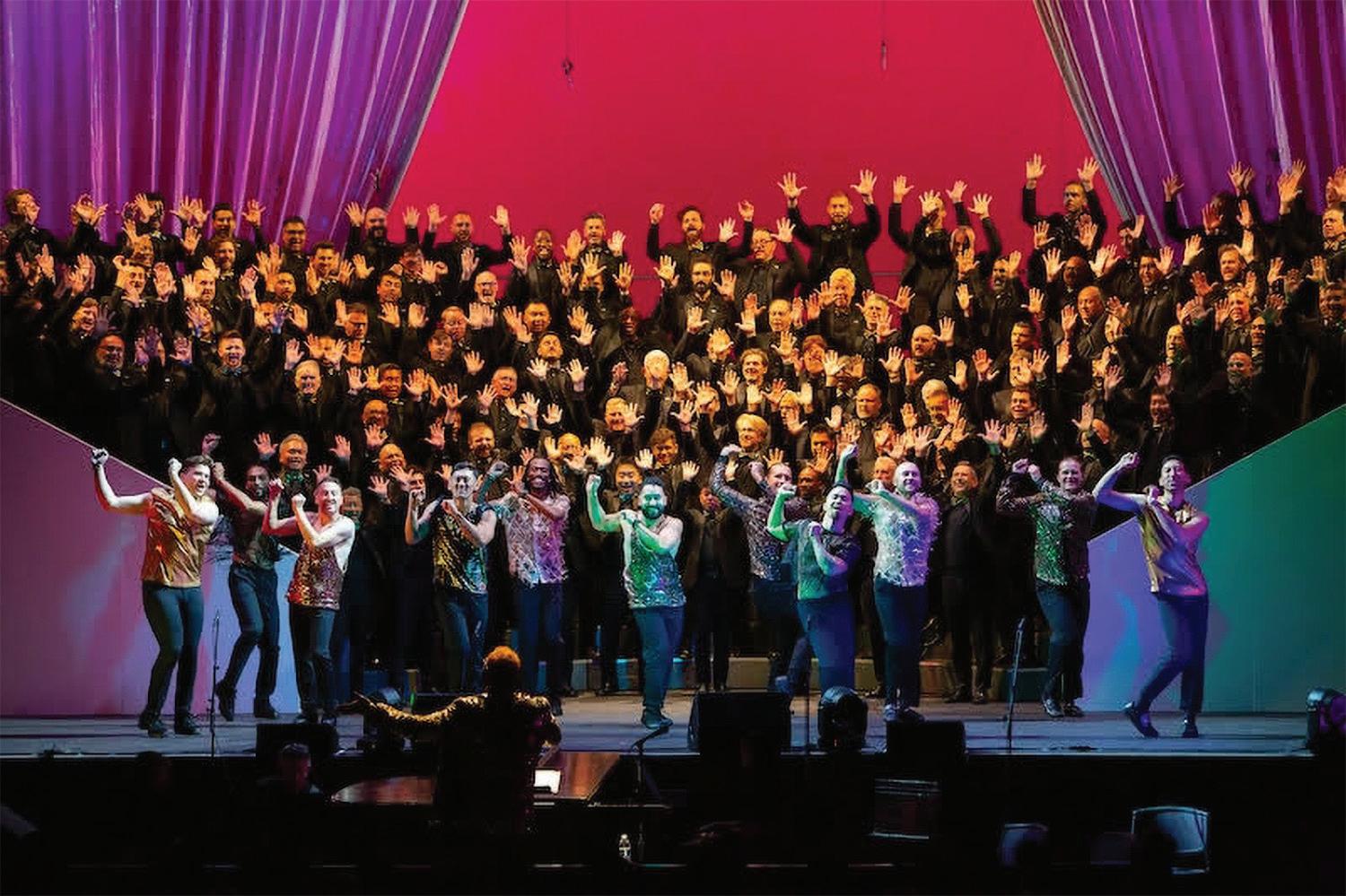
The Declarations of Independence show commemorates America’s 250th birthday, with the GMCLA celebrating our country’s queer legacy by performing the many songs that helped build the LGBTQ+ rights movement. Whether it be Broadway classics or universal hits, each of these songs will refect the queer community’s long history within this country, with Saunders’ new piece “Credo” serving as the show’s defning number.
When tasked with composing for such a symbolic event, Choi knew that the GMCLA wasn’t looking for just any song: they needed a creed. “I wanted to build upon that tradition of creeds being set to music, being sung by a community that believes in them… [I want us] to ask ourselves, ‘What is our creed as the LGBTQ+ community? What do we believe in?”
With all of this in mind, Choi went to work, writing tirelessly to craft a song that embodies the ferce sense of Pride he knows flls this city. It wasn’t always easy — the composer detailed his composing process, a complex combination of musicality and precision that can easily boggle the mind of a non-musician (and many actual musicians). Yet when he was fnished, Choi believed that he had created the perfect song for GMCLA’s Declarations of Independence . A true “Credo,” one that could serve as not only an enjoyable piece of music but an anthem for what queer people all across Los Angeles are experiencing right now.
“I hope that [with ‘Credo,’] folks hear a powerful anthem that they can use as a weapon to protect themselves in an era where you know our lives, our stories, our communities are being actively threatened and erased,” Choi described. “Sometimes the lyrics get a little raw, a little specifc, but as James Joyce said, ‘In the particular is contained the universal.’ These are things that I think a lot of the queer community can believe in…this is our anthem — this is our creed.”
Saunder Choi’s latest piece, “Credo,” is a reminder to whoever is listening — whether they’re in Los Angeles or not — that they are not alone. He captures a true chorus of resistance through lyrics that uplift the voices of those community members who are too often silenced. It’s the perfect song for the Gay Men’s Chorus of LA’s Declarations of Independence show, and it may just be exactly what so many people need to hear right now.
Join GMCLA for Declarations of Independence , a bold celebration of Pride and Protest, happening Saturday, June 27, at 7 pm and Sunday, June 28, at 3:30 pm at the Saban Theatre.
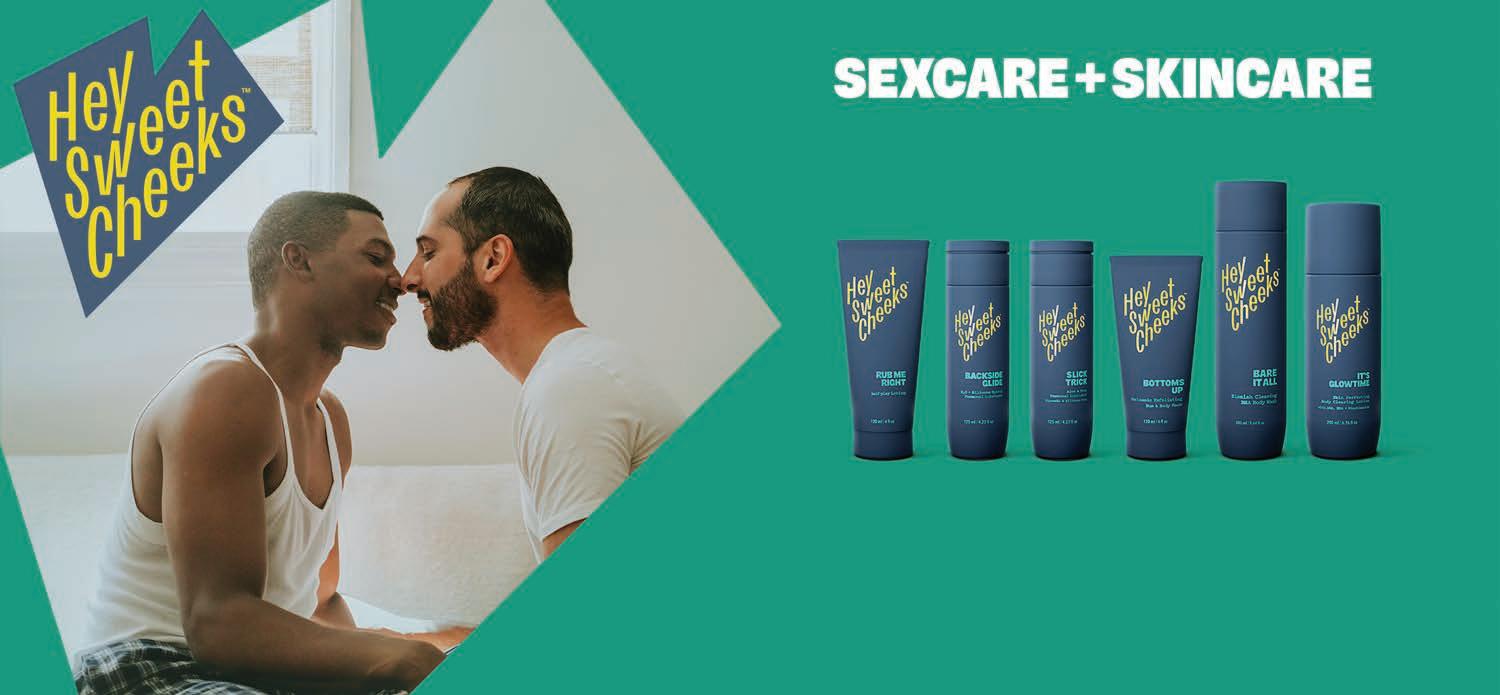
Hey Sweet Cheeks!
LA Blade’s health, beauty, and fitness expert Steven Dehler reviews the beauty and sexcare brand, queer-owned Hey Sweet Cheeks!
By STEVEN DEHLER
Lotions, gels, and lubes. Oh my! Pride season is on the horizon, and everyone wants to look and feel their best in their own skin. With so many skincare products on the market, it’s hard to discern what the right regimen is for you.
Some have an all-in-one bottle (those never work well), and others can’t figure out what works for them, so their bathrooms are littered with various body washes, lotions, serums, etc. In the end, they’re doing a disservice to their skin. It’s particularly difficult for those with sensitive skin, as many products contain harsh chemicals that can react poorly, and for those who shave, it’s even worse. As the name suggests, queer-owned Hey Sweet Cheeks is a skincare and sexcare brand specializing in maintaining blemish-free, glowing cheeks (and we’re not talking about your face). With their unique pH-balanced and hypoallergenic formulas, Hey Sweet Cheeks keeps your skin ready from “prep-to-play.” Does it stack up to the claims? As a new advertiser with the Blade, I wanted to test out a few of their products for myself.
First up, BARE IT ALL BHA blemish-clearing body wash. It all begins with proper cleansing, and body wash is key. BARE IT ALL is light on fragrance, for sensitive skin, that’s also refreshing. I noticed a noticeable change in softness and shine. The gentle combination of salicylic acid and oat milk efficiently kept skin clear and hydrated, which is particularly important after shaving. If you’re as physically active as I am, then you know how important body wash can be to removing sweat and dirt and feeling clean. Some products are overly fragrant, and others can leave your skin feeling heavy. After showering with BARE IT ALL BHA, my skin didn’t feel dry nor did it feel oily with residue - just clean and refreshed.
Second on the list, IT’S GLOWTIME skin-perfecting body-clearing lotion. Lotion is especially important after shaving sensitive areas. Skin can irritate very easily, and blemishes/ingrowns are painful and unsightly. Consistent use of IT’S GLOWTIME proved to not only maintain the integrity of my skin, but kept it soft and hydrated through its most vulnerable moments, one being walking while freshly shaven. Many of us know how quickly a fresh shave can turn into a beautiful disaster. The right lotion can make all the difference. IT’S GLOWTIME absorbed into my skin easily and evenly, giving it instant hydration. It also kept my legs and cheeks soft and smooth throughout all my travels. Lastly, to round out this “prep-to-play” review, I chose the
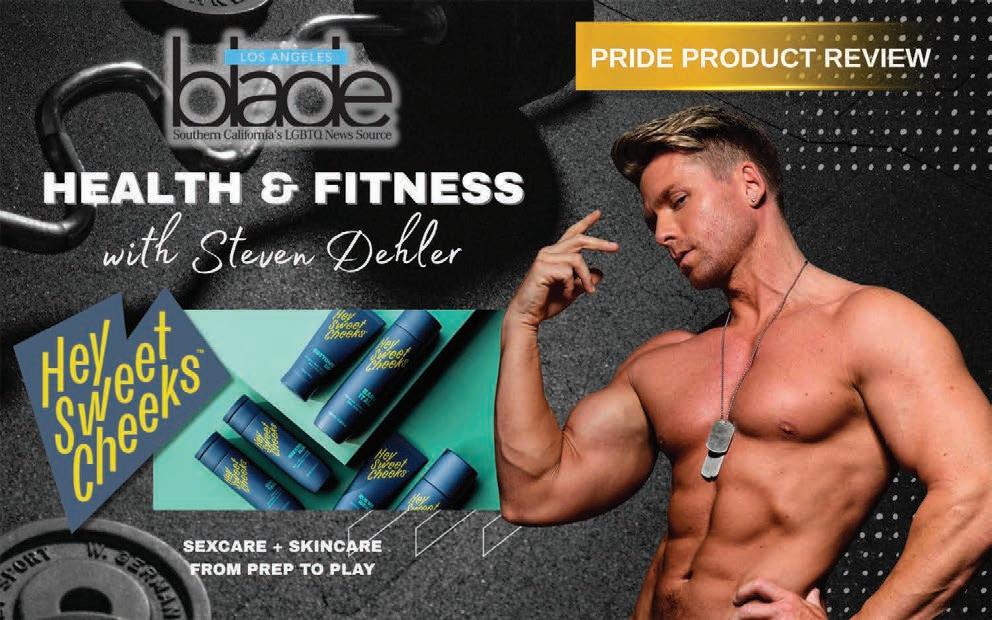
water and silicone hybrid-based lubricant BACKSIDE GLIDE. The hybrid formula is unique. It seems to be the best of both worlds - the smooth, silkiness of silicone, but not difficult to clean up, like most silicone lubes. Water-based lubes are generally easier to clean up than silicone-based ones; however, they tend to dry out more quickly, causing irritation or reapplication. The hybrid combination in BACKSIDE GLIDE gives you the longevity of silicone lube, but it’s less messy and easier to clean as with water based lubes. If you’re looking for a longer-lasting lubricant with that silicone feeling, but without the mess, then BACKSIDE GLIDE is for you.
Overall, I really enjoyed all three of these products. As someone who works out regularly and sweats often, my skin is prone to blemishes, discoloration, and ingrown hairs. I found that consistent use of these products im-
proved the overall health of my skin while also maintaining clear skin. Hey Sweet Cheeks body wash and lotion is an easy and great two-step regimen that anyone can add or replace in their skincare routine. Follow it up with their water/ silicone hybrid lube, and you’ll be ready for Pride season! So if you’re struggling with sensitive skin and blemishes in more sensitive regions of your body, then these products could be your solution.
Be sure to visit Hey Sweet Cheeks. Hey Sweet Cheeks is a proud advertiser of the Los Angeles Blade and will be on the scene for our free Pride singles mixer on June 16th at Mattie’s in West Hollywood. Details coming soon!
Steven Dehler is ISSA certified and a bodybuilding specialist. As a model, dancer, and musician, he performs throughout SoCal and is a co-host of the On the Rocks: Where Celebrities & Cocktails Mix podcast.
Controversial ‘Blue Film’ pushes past taboos for gripping drama
Two-character psychosexual drama explores Dom-sub encounter
By JOHN PAUL KING
When movies are labeled as “controversial,” the efect is often akin to Oscar Wilde’s quip that “there’s only one thing in life worse than being talked about, and that is not being talked about.”
Indeed, a whif of controversy can be the best publicity of all, turning a movie that might otherwise have been no more than a blip on the cultural radar into the buzziest “hidden gem” of the season – and “Blue Film,” a two-character psychosexual drama about an encounter between a male sex worker and a much-older client, is a perfect example. The debut feature of flmmaker Elliot Tuttle, it was rejected for inclusion at last year’s Sundance and SXSW festivals before fnally premiering at the Edinborough International flm fest; and even then, some audience members were walking out of the theater in disgust.
It’s easy to see why, really. The taboos it breaks run far deeper than just frank depiction of queer sexuality to rattle some among the ones most hard-coded into our cultural DNA, and the directness with which it pushes past our comfort zones is merciless. It begins with Aaron Eagle (Kieron Moore), a Los Angeles “fetish cam-boy” who specializes in fnancial humiliation and domination, proudly performing for his online fans by fondling his stacked physique on camera while deriding them with homophobic slurs and other forms of verbal abuse. He also taunts them by bragging that one of them is paying $50,000 to be abused in person overnight.
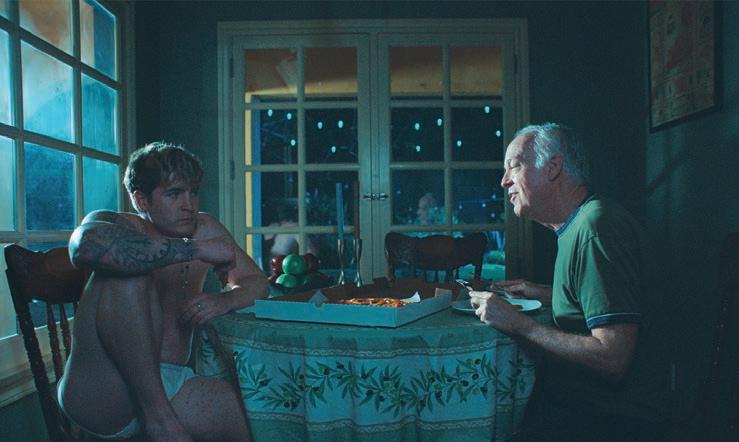
When he shows up for the gig, he’s greeted by an older man in a ski mask (Reed Birney), who wants to begin their session by asking him questions on camera about his personal life. Aaron agrees, but makes up the answers, only to have the client call out his lies; the mask soon comes of, revealing that the man behind it is Hank Johnson, a teacher who had been fred from Aaron’s home town middle school after attempting to molest a student in the boys’ restroom, and who confesses that he has spent his life savings to set up this meeting because he was once “in love” with Aaron from afar. Claiming he doesn’t want a sexual experience, but simply the chance to “get to know” each other and achieve a kind of closure in his old age, he convinces a wary-but-intrigued Aaron to stay, setting the scene for a night of charged conversation, true confessions, and secretive soul-baring, which leads them to discover unexpected common ground.
It’s clear from even the barest description that Tuttle’s movie is not designed for all au-
diences. Even within the “niche” of queer cinema, these are “problematic” characters: sex workers, despite years of growing acceptance and decriminalization, are still largely stigmatized by the culture at large; and as for convicted pedophiles, you’re more likely to fnd tolerance for them in the halls of government than on a big screen. Yet in “Blue Film,” these are the characters we get, and as a result, it’s a movie in which almost everything that is said or done has a layer – and often, several layers – that’s likely to be objectionable to someone in the audience.
That’s not by mistake. In his director’s statement, Tuttle calls his flm an “essay on perversion,” born from “the accumulation of a lifetime of private thoughts regarding sex, fetish, and relationships,” and fueled by his frustration with what he calls the “conceptualization” of sex on the screen. His purpose in presenting a two-person “echo chamber” is an exploration of how these sexually stigmatized individuals fnd a “reckoning with the ways in which they can and cannot connect with those around them,” in which his explicit intention is to make sex on the screen “feel uncomfortable, scary, and laced with signifcance.” It’s safe to say that he succeeded.
Of course, it would be easy enough to stave of the discomfort “Blue Film” creates for us to sit in by dismissing the whole thing as deliberately sensational, if not for the fact that it’s so well done. Tuttle directs it like a thriller – a ftting approach, considering the uneasy dynamic between its characters, each of whom might easily be operating with malicious intent, and the generally “sketchy” circumstances of their arranged meeting – and he uses the resulting tension as a subliminal undercurrent that keeps us feeling unsettled. When things do begin to get sexy (because of course they do, Hank’s protestations of wholesome intent notwithstanding), he plays into the anticipated uneasiness of sexually squeamish viewers by layering in some particularly ominous strains from Isaac Eiger’s moody electronic score; it feels like we’re about to see something horrible, when in fact we don’t even get any full-frontal nudity.
In fact, it’s in these sexual moments – which, though explicit enough to get the point across, never feel pornographic – that “Blue Film” may deliver its most directly transgressive imagery. Though both men are adults, participating in consensual acts, what we are watching is probably the ultimate sexual taboo of all, not because of what we see but because we know the fantasy being played out in their minds. It’s unsettling, perhaps even for the most open-minded fetishists out there, yet in the unvarnished honesty with which the movie strives to deliver its uncomfortable truths, it somehow plays as something almost sweet. As always in a flm that presents characters who push the limits of our ethical and moral boundaries, the actors carry the weight of responsibility for transcending (or at least tempering) our judgment of them; in this case, the two star players face a monumental task, and they rise to it with unfinching commitment. Birney, a Tony-winning actor who also served as an executive producer on the flm, has the more challenging burden, but he defes the odds by bestowing Hank with both the grace of a man who has learned how to endure shame and the cageyness that comes from a life of keeping it hidden. Moore, an up-and-coming British actor (recently seen in the gays-in-the-military series, “Boots”), leans into the aggressive toxicity of his fetish “Dom” persona with a ferocity that makes the “sub” vulnerability he slowly makes visible feel even more delicate; indeed, they both navigate the spectrum of that dynamic in a way that emphasizes its subtle fuidity, and “Blue Film” could not work without their contributions.
But work it does, for those who are able to get past their many layers of discomfort over its subject matter; it will speak most directly to those who have already come to embrace their own alternative sexualities, who understand that sex work can be empowering, who recognize that forbidden desires are not a choice and can fnd empathy for those who must live with them. Still, a movie that acknowledges (among other things) the validity of rape fantasies, the ancient cultural traditions of pederasty, and the transcendence of self-loathing through fetish is a movie that has appeal for only a particular kind of viewer; and with “Blue Film” coming to VOD platforms June 12, you to decide if you’re one of them.
KIERON MOORE and REED BIRNEY in ‘Blue Film.’ (Photo courtesy of Obscured Pictures)
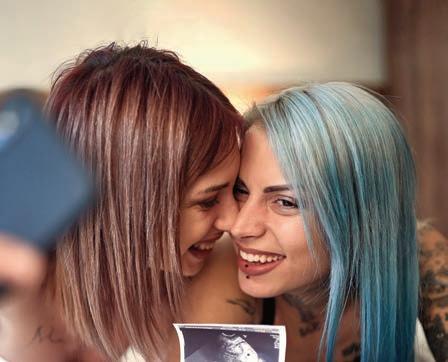
Building Families Together
HRC Fertility continues our 40-year commitment to inclusive, compassionate care tailored to support our LGBTQ+ patients with their family building journey.
All Inclusive Packages
Egg & Sperm Donation
Fertility Preservation
Gestational Surrogacy
Intrauterine Insemination (IUI)
In Vitro Fertilization
Reciprocal IVF
Beverly Hills
9777 Wilshire Blvd, Suite 600 Beverly Hills, CA 90212 (310) 943-5820
encino
15503 Ventura Blvd, Suite 200 Encino, CA 91436 (818) 788-7288 Pasadena 55 S. Lake Ave, 9th Floor Pasadena, CA 91101 (626) 440-9161
CA 91355 (866) 472-4483 West los angeles 11500 Olympic Blvd, Suite 504 West Los Angeles, CA 90064 (310) 481-0881
rancHo cucamonga 8112 Milliken Ave, Suite 101 Rancho Cucamonga, CA 91730 (909) 941-1120 santa clarita valley 26357 McBean Pkwy, Suite 210
Westlake village 1220 La Venta Dr, Suite 103 Westlake Village, CA 91361 (805) 374-1737