


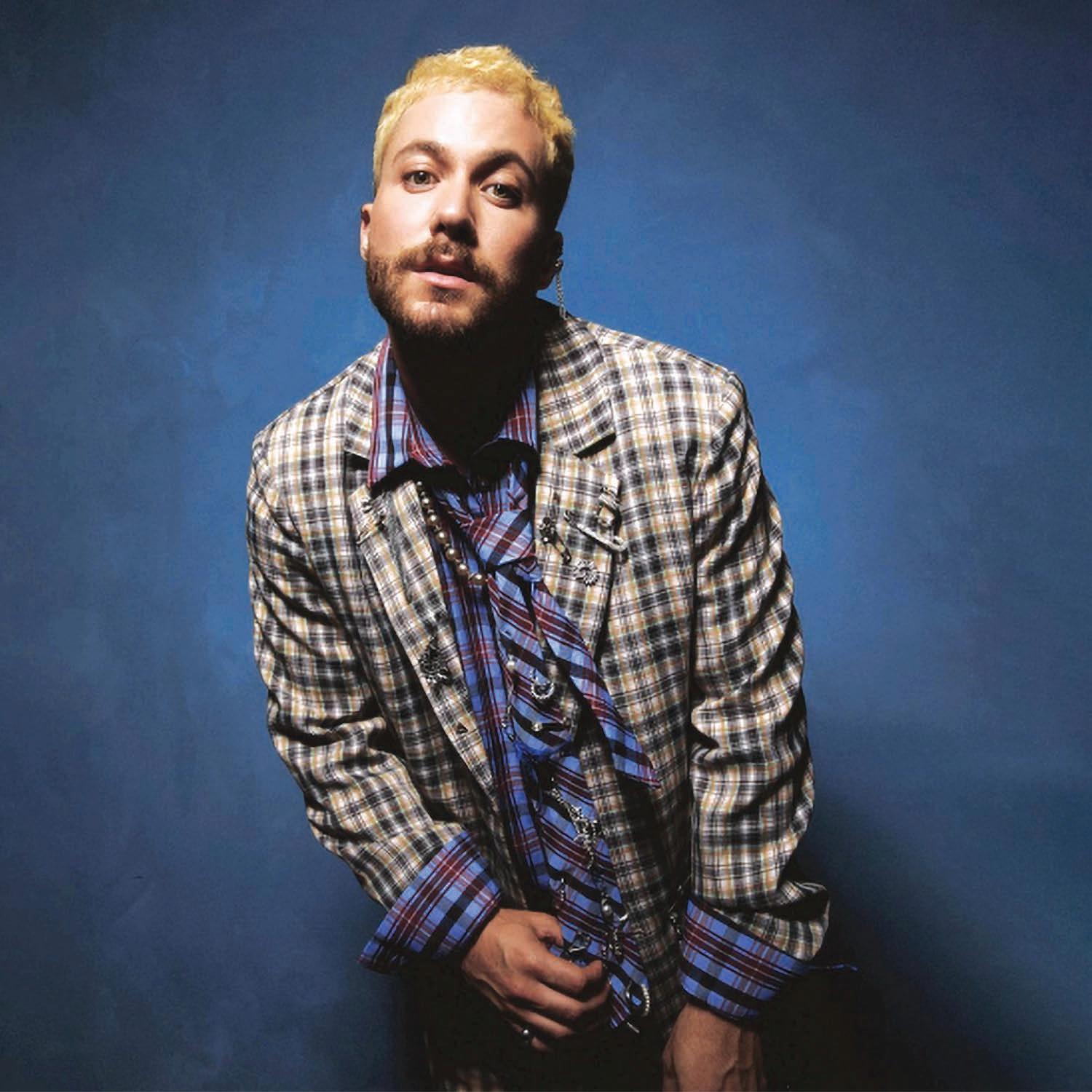






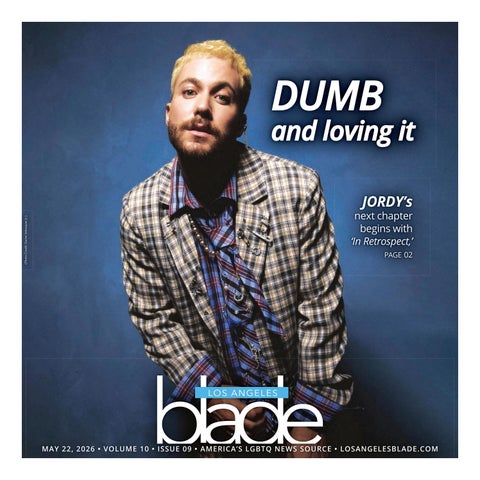
JORDY ditches overthinking and dives headfirst into chaos with “DUMB,” setting the stage for his boldest, most self-assured era yet on ‘In Retrospect’
By AJ SLOAN
JORDY has never been one to shy away from a feeling authentic/messy/euphoric, but lately, he’s been leaning into something a touch more mischievous… the art of letting go. With “DUMB,” the GLAAD and Queerties-nominated pop auteur trades overthinking for overstimulation , bottling up that kind of night where the group chat becomes a glitter-glazed dance fl oor and emotional clarity is gloriously replaced with invited chaos. It’s a track that winks as much as it confesses, proving that even in his most carefree moments, JORDY’s tongue is still razor-sharp.
As he steps into a new era with his forthcoming album In Retrospect , JORDY sounds both freer and more self-assured than ever. With this new album, JORDY fi nds himself less concerned with chasing validation and more interested in capturing the full spectrum of being alive, from introspection to intoxication (emotional or otherwise). “DUMB” might sparkle on the surface, but underneath, it carries a self-aware pulse. Sometimes the smartest thing you can do is stop trying so damn hard.
« DUMB” playfully entertains the idea of escapism. What was your inspiration to play with this particular theme?
I honestly was getting emotionally exhausted from writing songs on my new record that were particularly vulnerable…I needed to write a song that simply felt FUN. Like a night out. A break from reality. I got together with my best friends and did just that.
The title comes across as tongue-in-cheek, but the song itself is emotionally complex. How did you strike that balance between humor and vulnerability?
During the creation of this song, it reminded me that we all need to just forget everything sometimes. While “DUMB” is an upbeat song, I hope it reminds listeners to take a breather and live in the present.
What was the creative process like in the studio for you when creating this track?
We honestly had the best time that day. Again, I wrote this song with my best friends. There are no limits and no rules with us. We were laughing, dancing, and eating yummy snacks. Maybe some glasses of wine. It felt like a sleepover, and I think you can feel that in the track.
How do you think your fans will relate to the theme of not taking things too seriously?
I think it’s what people NEED right now. There’s a lot of heaviness around us constantly, especially within the queer community. It’s my job to speak on those things, but also to create music that allows us to escape. We
deserve those moments of happiness and euphoria. And I want to provide that.
Looking back at your breakout with “Just Friends,” how do you feel your sound and storytelling have evolved leading into this new era?
Oh my goodness - I was in such a diff erent place back then. When I wrote that song, I was desperate for a boyfriend; someone to validate my worth. Now, being in my 30s, my priorities have shifted immensely. I am so much more in love with my own company than I was before. And I’m proud of myself for that. I really think you can hear that too in this new era.
Your projects, like BOY and SEX WITH MYSELF , each had solid identities. Where does “DUMB” sit in the larger arc of your artistic journey?
It’s a part of my next album, In Retrospect . This album means so much to me. It’s my turning 30 album. I think BOY represented me coming into my adulthood, SEX WITH MYSELF felt like a sexual liberation, and now this new record feels like the more mature and experienced version of myself. It’s exactly where I’m at right now.
You’ve amassed a huge global audience. Does that ever influence the way you approach writing, or do you try to stay focused inward?
I want to give my fans what they want, but I think the more I feel connected to something the more they will. I try to focus on what feels good to me, knowing that it will most likely feel good to the fans. I want all of my songs to be an honest and authentic version of what I am going through.
Your live performances are high-energy yet personal. How do you envision DUMB translating on stage?
It’s going to be epic. Absolutely EPIC. I can’t wait to premiere it at Mighty Hoopla Festival in London, May 31st!
You’ve also performed at Pride events and on national television. How have these experiences impacted your art?
It’s my favorite part of what I do. It’s the time we get to come together as a community and shower each other with love. It’s one thing to see people’s comments online, but when we all get to dance together, it’s a completely diff erent experience. It makes it all feel real.
How has it felt receiving recognition from Billboard and Rolling Stone (pretty major, let’s be real)?
I feel incredibly honored to have ever been recognized
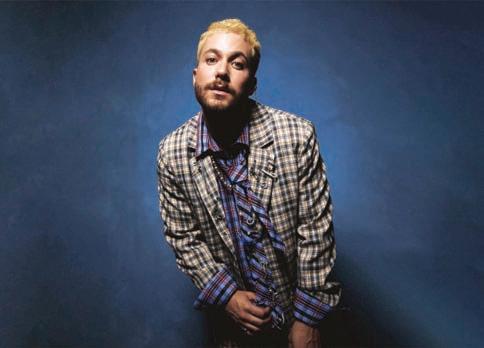
by publications like Billboard and Rolling Stone . As a gay man, it’s so important for the media to lift up queer artists like myself. There are so many incredible queer musicians who deserve the visibility, so it’s very, very impactful when the big companies promote queer art.
What does “pushing pop boundaries” mean to you at this moment in your career?
I think as a queer person, being completely authentic and honest in my music means I’m pushing boundaries. These are the perspectives that a lot of the music industry actively tries to shut down and reject. Instead of conforming, I want to be loud with my truth.
Without giving too much away, how did you go about exploring and translating themes and songs to form your upcoming album In Retrospect ?
It started by getting out of a very toxic relationship. I was angry and upset for a long time, and the songs refl ected that, but the further away I got from that relationship, the more I was able to refl ect. I felt motivated to better myself. I feel like letting go of that relationship allowed me to let go of other things, too. Instead of guilting myself for staying in something toxic for too long, I choose to pat myself on the back for the courage it took for me to leave.
With the assumption that the title In Retrospect suggests reflection, what were you looking back on while creating this project?
I am not in my 20s anymore, and my priorities have changed. This album is truly a refl ection of that and where I’m at mentally at this moment. I look back on that time with zero regrets.
As you enter this next phase of your career, what do you hope your audience takes away from your music, performances, and art as a whole?
I just always want my listeners to feel heard and understood, and safe and loved. It’s easy to bury your feelings, so I like to create spaces for us to feel those feelings together. So we can support each other through it. And of course, I want them to dance the night away and have the best time.

The City-funded and produced Pride Parade will continue as planned, but the community still wants answers
By ALEXANDER RODRIGUEZ
SoCal’s queer social media exploded into a frenzy when Long Beach Pride took to Facebook and Instagram to announce that the City of Long Beach had taken action to cancel this year’s Pride Festival, hours before Teen Pride, the kick-off event for the weekend, was to begin. Tonya Martin, President “Lez Prez,” called on the mayor and the City to move ahead with the Festival, using the current wave of national anti-LGBTQ sentiment as a reason to stand firm. The community wasn’t buying it and wanted more answers from Long Beach Pride.
In a statement made on social media, Martin shared, “Long Beach Pride is deeply disappointed by the City’s decision to cancel the Long Beach Pride Festival, a long-standing community institution built by volunteers, sustained by love, and rooted in the belief that every person deserves to live openly, safely, and with dignity.”
Martin appealed to queer activism as a reason for keeping the Festival going. “This decision comes at a moment when LGBTQ+ people are facing escalating attacks from the current federal administration and from political forces across the country. At a time when our community is being targeted and made vulnerable, Long Beach should be doing more to protect and uplift us, not taking away one of the most visible and meaningful expressions of inclusion our city has.”
Martin further called on the Mayor and the City to rethink the cancellation, “We call on the City of Long Beach to immediately engage in good faith with Long Beach Pride, community leaders, public safety partners, and elected officials to identify a path forward that preserves the festival and protects the community. We call on our Mayor Rex Richardson and the city council members to make the Pride Festival happen. We ask that our city leaders stand with the community at this critical moment and help ensure that Long Beach remains a beacon of equality, safety, and pride.”
It didn’t take long for the local news to show up.
The City was clearly being called out, the statement inciting the community to rally and demand the Festival take place. This year marks the 43rd Long Beach Pride. The Festival is a 100% volunteer organization, supported by allies, business owners, and the community at large.
Is the City the villain here? The City was quick to make an official statement, and the truth behind the cancellation became clear. “The Long Beach Pride Festival will not be able to take place this year as sufficient information to safely permit the
event has not been made available by the event organizers.”
The statement further clarified that the decision was wholly due to the inability of the Festival to comply with City requirements, despite the fact that this event has taken place 42 times prior with the same needs in place.
“Over the past several months, the City of Long Beach ’ s Special Events team has worked closely with Long Beach Pride, the private organizers of the annual Pride Festival, to support their efforts to safely produce this year ’ s event, which was scheduled to take place on May 15, 16 and 17. While the City now manages and funds the Long Beach Pride Parade, the Pride Festival remains an independently organized, ticketed event that requires the submission of detailed operational, construction and public safety plans in order to be permitted to ensure safety of the attendees.
Despite continued collaboration and multiple deadline notices, the City did not receive the required documentation needed to complete safety reviews, inspect critical event infrastructure, such as the stage, electrical systems and tent, and emergency exiting plans to ensure compliance with public safety standards. With event programming scheduled to begin today, May 15 at 5 p.m. with Teen Pride and essential information still outstanding, there is no longer sufficient time to safely permit the festival this year.”
The statement also clarified that the Festival was alerted on Thursday that requirements had not been met, and that the City worked tirelessly with the volunteer organization up until the last minute, with the Festival still being unable to get everything in place. The City also made a promise to refund any businesses that had purchased special licenses or Health permits.
So the truth was out. The fact that the Festival intended to vilify the City and use the community’s spirit of activism to force the City’s hand in moving forward with a weekend that could be unsafe to attendees did not go over well. Social media comments on the Festival’s posts want more answers and they want the Festival to hold itself accountable. How has the Festival gone on for more than four decades prior without a cancellation, why this year? What happened? Yes, credit needs to be given for a volunteer organization to be able to produce the Festival year after year, but when an organization is 100% volunteer based, it is hard to hold people accountable.
But there are always at least two sides to a story. Local drag queen Twiggy D. Warhol took to social media to hold the Festival responsible.
An apparent committee member responded, saying all permits were sent.
As all of this just came to light less than 24 hours ago, there will be more facts that will need to be shared from both the City and the Festival.
As much as local media picked up on the cancellation of the Festival, news channels and social media have also been promoting that the Pride Parade, funded and organized by the City of Long Beach, is still going on, along with five City-approved events.
Visit Long Beach posted a fun video, assuring the community that Pride is still going strong, despite the Festival cancellation. The bars will be open, featuring their own Pride programming and no doubt the streets will be flooded with the community proving that nothing can keep us down.
As many social media comments stated that Pride as a movement can never be canceled, and no one can ever take our spirit away. Where there is a will, there is a way. No doubt many more facts about the Festival cancellation will come to light. Perhaps this is the hiccup the Festival needs to reorganize and revitalize. And maybe this is the hiccup the Festival needs for the community to see that it needs more support from us to ensure this doesn’t happen again.
See you at the Pride parade!
U.S. Rep. Laura Friedman called out the nation’s capital for their “attack” on California and public transportation
By MATT MINTON
Getting around our car-infested city just got a little bit easier.
On Friday, May 8, hundreds of Metro board members and Los Angeles County officials gathered at the Petersen Automotive Museum to celebrate the D Line’s new service to three stations. It’s the latest effort - albeit a long overdue one - to expand L.A. public transportation through the heart of the city. LA Blade was on the scene.
With stations connecting Western Avenue to La Cienega Boulevard, the new line now makes travel from Beverly Hills to Downtown Los Angeles possible in 21 minutes, according to Metro officials. To celebrate the project’s commitment to connecting people to culture, the ribbon-cutting ceremony was followed by a celebratory outdoor event with local food vendors.
CEO Stephanie Wiggins addressed why the L.A. Metro “might just be having a moment” right now: “When gas prices are off the charts, traffic feels endless and parking costs are more than your lunch - $1.75 a ride that gets you pretty much anywhere in the region starts to look pretty smart.”
Getting to West Hollywood by transit - a vital spot for the city’s queer culture and nightlife - is another goal for the
county. But there’s still a ways to go: construction on an official station isn’t expected to start until 2041
While the D Line expansion was made possible by a grant from the federal government, L.A. Mayor Karen Bass said at the press conference that “we don’t wait for the federal government. We know we can’t depend on others. Obviously, we need the federal government and the state government, but Angelenos say we are going to tax ourselves to do what is needed.”
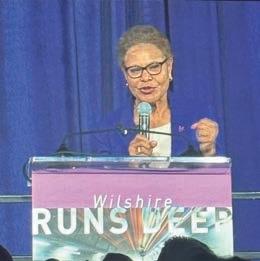
This expansion comes as L.A. invests billions of dollars in public transportation ahead of the 2026 FIFA World Cup, 2027 Super Bowl, and 2028 Olympics - all events placing an extra spotlight on one of the busiest cities in the country. Just last June, a metro stop opened at LAX, connecting residents and visitors to L.A’s main airport.
As L.A. tries to catch up with the public transportation infrastructure of major hubs like New York City, one speaker also took the opportunity to address tensions with the nation’s capital:
“I will tell you, being in D.C., there is such an attack against California coming from Washington right now, and against transit across the nation,” U.S. Rep. Laura Friedman said. “And we are here to show Washington that while you know who is tweeting at 3 a.m., we have Angelenos underground building things for this country. We are showing that transit is essential, and we are not going to let Washington defund our children’s future.”
Ongoing construction for the L.A. Metro continues as the city hopes to make big on its “28 Projects by 2028” promise. But for now, residents can enjoy free rides all weekend long, along with 60 days of activations and events at the three new stations.
“I am looking forward to being at the ribbon cutting in a few more years as we move forward and take this line all the way to Westwood,” Bass said. “We celebrate something that Angelenos deserve - a city that’s easier to move through, easier to connect in, and that’s built for the future.”
First Partner Jennifer Siebel Newsom gathers community and mental health partners to combat loneliness
By CHRISTIAN CINTRON
For many queer folks growing up, the best our schools had to offer us was having lunch or gym class in the library or a knowing glance from your favorite teacher. Decades later, we are still healing wounds that began in childhood. It may be trying to avoid that extra drink at the bar or spending less time on the apps, but the wounds of loneliness, alienation, and struggles with mental health impact us all.
The mass culling of social programs, especially those benefiting LGBTQ youth are startling. The elimination of specialized LGBTQ support from the suicide prevention hotline, with queer folk the most at risk, combined with all the cuts to DEI efforts, can seem like personal attacks that only add to the alienation of our not-quite-United States.
Luckily for Californians, this support is not dead. To commemorate May’s Mental Health Awareness month, California Love, California Strong (CLCS), and The Office of Community Partnerships and Strategic Communications (OCPSC) held an event to celebrate California’s commitment to youth well-being.
Uniting with the formed Exposition Park Foundation, the Los Angeles Memorial Coliseum was converted into a community space to showcase some amazing resources and its successes. There was live music, processing stations to write, talk about, and move through feelings, and space for guests and families to play basketball.
CLCS’s motto, “This is California Love, And Together, We Are California Strong,” highlights how the initiative is about bridging the community. This initiative by First Partner Jennifer
Siebel Newsom was started to combat loneliness, strengthen social connections, and promote community resilience. The event featured a robust fair of resources available to families and young adults, all in the interest of mental health.
Find Your Anchor was on hand, allowing visitors to put together blue boxes. This grassroots movement combats suicides by creating blue boxes that are filled with resources and tangible objects to help people suffering from suicidal ideation find their anchor. It was nice to see what people are doing for the community.
Los Angeles is a huge city with a diverse population of specific needs, not to mention how different the entire state is. Seeing various organizations all committed to mental health was inspiring. The health fair featured The Warm Line (855600-WARM), offering non-crisis emotional support across California, provided by the Mental Health Association of San Francisco. The Child Mind Institute’s Youth Mental Health Academy is committed to helping underrepresented groups enter the mental health field. It boasts 26% of its participants as LGBTQ.
While therapy is becoming ubiquitous and everyone is talking about trauma and narcissism all over social media, how we actually address mental health is evolving. Much of the conversation of the day addressed Adverse Childhood Experiences (ACEs). These are the potentially traumatic events occurring before the age of 18. These can include divorce, abuse, neglect, and household dysfunction. They lead to specific mental health needs for young people, and it’s nice to see that support was there. This highlights the need for interven-
tion for the preservation of the mental health of young people. Given these stressful times, and a generation raised post-Pandemic and pre-whatever is next, children and young people need support. To address this need, there are opportunities to become a certified wellness coach to help support California Children and youth with their physical and emotional well-being.
Newsom addressed the crowd, saying, “Given what’s going on in our country right now, what we’re doing together now in California is more important than ever.” She adds, “No matter what any of us are going through, because we’re all going through something right now, we are not alone. Every single person here has shown up for ourselves today and is showing up for each other.”
In addition to CLCS, there was also a focus on the Children Youth Behavioral Health Initiative (CYBHI). Many of the organizations present have been funded by or partner with the CYBHI.
Soluna, a confidential mental health app for California youth and young adults, funded by the state, targets young people ages 13-25. It offers 1:1 coaching, interactive tools, and community support. Summer Nguyen shared her experiences as a youth ambassador for the app. She directly called out the “apathy epidemic” and spoke about how becoming an ambassador and thanks to help from the app, she’s been able to get over her shyness and introversion.
The Justice Department announced May 15 that it has reached a settlement with Texas Children’s Hospital, one of the nation’s top pediatric hospitals.
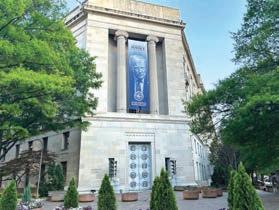
Under the agreement, the hospital will pay more than $10 million in damages and civil penalties related to its provision of gender-affirming care and will establish a clinic specializing in detransition care.
The DOJ partnered with Texas Attorney General Ken Paxton’s office to resolve allegations that the hospital submitted false billings to public and private insurers to secure coverage for pediatric gender-affirming procedures. The department alleges the conduct violated the Federal Food, Drug, and Cosmetic Act, the False Claims Act, and federal fraud and conspiracy laws.
The settlement was reached out of court, meaning neither party formally admitted wrongdoing. Both the DOJ and Texas Children’s Hospital denied liability.
The DOJ’s hardline stance on gender-affirming care sharply contrasts with the positions of major medical organizations, transgender healthcare advocates, and human rights groups, which broadly support gender-affirming care as an evidence-based treatment for gender dysphoria.
Adrian Shanker, former Deputy Assistant Secretary for Health Policy and Senior Advisor on LGBTQI+ Health Equity at the U.S. Department of Health and Human Services under during the Biden-Harris administration, told the Washington Blade the settlement could have sweeping consequences for trans youth and healthcare providers nationwide.
“The Trump administration’s framing of gender-affirming care is wildly inaccurate, scientifically implausible, and frankly, just mean-spirited,” Shanker told the Blade. “What’s really clear is that the science hasn’t changed, the evidence hasn’t changed — it’s only the politics that have changed. Unfortunately, the people that lose out the most with a settlement like this one are the patients that are denied access to care where they live.”
According to Shanker, the agreement also requires Texas Children’s Hospital to revoke privileges for physicians involved in providing gender-affirming care, potentially limiting their ability to practice elsewhere.
“This is a weaponized Department of Justice doing absurd
“The Justice Department will use every weapon at its disposal to end the destructive and discredited practice of so-called ‘gender-affirming care’ for children,” Acting Attorney General Todd Blanche said in a DOJ press release. “Today’s resolution protects vulnerable children, holds providers accountable, and ensures those harmed receive the care they need.”
investigations against providers that are providing care within the established standard of care,” he said. “They’ve come up with an absurd remedy in their settlement to require a socalled ‘detransition clinic’ to open at Texas Children’s. It’s harmful to science, it’s harmful to trans people, and it’s harmful to the medical profession.”
Shanker argued the case reflects a broader politicization of trans healthcare.
“Every American should be concerned about the weaponized Department of Justice and their obsession with trans people and their access to care,” he said. “These hospitals that provide gender-affirming care, the providers of gender-affirming care, have done nothing wrong. They followed the standards of care that are well established and followed the mountain of evidence.”
Karen Loewy, senior counsel and director of constitutional law practice at Lambda Legal, echoed those concerns.
“For Texas Children’s to capitulate to this pressure campaign of both Paxton and the Trump administration and end this care, and go after physicians who had been lawfully and faithfully taking care of their patients, it’s hard to see that as anything other than bending the knee in the face of political pressure,” Loewy told the Blade. “That’s not putting your mission above politics. Your mission is to provide health care for kids that need it.”
The man behind some of the strongest pushes against the Southern Poverty Law Center, who has an extensive anti-LGBTQ history, is being asked to speak before the House Judiciary Committee as part of its ongoing investigations into the nonprofit legal organization.
Last month, the Justice Department indicted the SPLC on 11 counts of wire fraud, false statements made to a federally insured bank, and conspiracy to commit money laundering related to payments to informants.
The DOJ alleges the civil rights group defrauded donors by using their money to fund the extremist groups it claims to be fighting. It also alleges the SPLC used more than $3 million paid to informants through a now-defunct program designed to infiltrate white supremacist and other extremist organizations.
Since then, the House Judiciary Committee, which says its main goals are to “protect constitutional freedoms and civil liberties, provide oversight of the U.S. Departments of Justice and Homeland Security, and manage legal and regulatory matters” has launched its own investigation into the ongoing litigation against the civil rights organization and tapped far-right journalist Tyler O’Neil to speak on the matter on Wednesday. O’Neil has worked for several outlets that advance far-right perspectives, including the Washington Free Beacon and Fox News, and is currently the senior editor at the Daily Signal.
The Daily Signal began as a newsletter for the conservative Heritage Foundation, which authored Project 2025, a policy blueprint for a second Trump administration that outlines expanded executive power, increased conservative control of federal agencies, reduced civil and human rights protections, and a vision of the U.S. as a Christian nationalist nation.
O’Neil has written extensively about progressive organizations — most notably the SPLC. He authored the book “Making Hate Pay: The Corruption of the Southern Poverty Law Center,” in which he argues that the organization’s “hate map,” which identifies extremist groups — including neo-Nazis, Ku Klux Klan groups, and openly antisemitic organizations — is “an organ of disinformation” for also including mainstream conservative groups. He also did an interview with the Heritage foundation in 2022 about his work on the civil rights group, where it was called a “left-wing smear factory.”
In addition to his work on the SPLC, O’Neil has a long history of anti-LGBTQ — and specifically anti-transgender — commentary. At one point, he spotlighted the Reintegrative Therapy Association, a practice likened to conversion therapy by the Global Project Against Hate and Extremism. The American Medical Association has condemned the practice, stating: “Professional consensus rejects pathologizing homosexuality and gender nonconformity and evidence does not support the efficacy of changing sexual orientation.”
He has also attacked Christian groups that actively support LGBTQ people, particularly the Episcopal Church. He called the church “one of the most flaccid and spineless of the dying mainline Protestant denominations” and criticized its theology as a “watered-down bastardization of Christianity.”
O’Neil has also defended the anti-LGBTQ “pro-family” policies of former Hungarian Prime Minister Viktor Orbán, who had been in office from 2010 until earlier this month. Orbán and his government faced widespread criticism for policies including banning Pride celebrations and restricting legal gender recognition for trans and intersex people.
The European Commission in 2022 sued Hungary, a mem-
ber of the EU, over the country’s 2021 anti-LGBTQ propaganda law.
Vice President JD Vance spoke at an April rally for Orbán, supporting the hardline anti-transgender approach the former prime minister has taken in Hungary.
Overall, O’Neil’s work reflects a clear pattern of endorsing anti-LGBTQ rhetoric, defending groups organizations have labeled as hate groups, and consistently writing through a Christian conservative nationalist lens.
Kyle Herrig of the Congressional Integrity Project, an organization “committed to exposing the reality behind Republicans’ politically motivated oversight and investigations,” gave a statement about the Judiciary Committee’s decision to have O’Neil testify, saying it further endangers those most vulnerable.
“House Republicans can’t find credible witnesses for their anti-civil rights crusade next week because they have no credible case. They’re giving a microphone to one of the far-right’s most discredited, anti-LGBTQ+ extremists and dressing it up as congressional oversight. It’s all in service of the Trump administration’s backwards prosecution of the Southern Poverty Law Center, the premiere organization tracking the very extremism people like Tyler O’Neill support. Attacking the SPLC doesn’t do anything to make Americans safer. It just makes it easier for racist, anti-LGBTQ+ organizations to operate in the dark.”
The Washington Blade reached out to O’Neil, the Daily Signal, Judiciary Committee Chair Jim Jordan (R-Ohio) and Ranking Member Jamie Raskin (D-Md.) about O’Neil’s slated testimony for the committee.
JOE REBERKENNY
Measure ER would backfill the cuts to HIV and gender affirming care, as well as fund the Planned Parenthood clinics, community health centers, public hospitals, and emergency rooms that many of us depend on
By JIM MANGIA
As someone who has spent more than twenty-five years working in public health, I’ve seen the devastating impact of people being denied basic medical care because of politics, stigma, or indifference. And as a gay man who came of age in Greenwich Village during the AIDS crisis, I deeply understand what happens when institutions decide certain communities are expendable.
I watched friend after friend die from AIDS while the federal government did nothing, and while much of heterosexual society looked away – or even applauded our suffering. The mass death of LGBTQ+ people was treated as acceptable collateral damage. That era taught me a lesson I have carried throughout my career: when public health systems are weakened, marginalized communities suffer first and worst.
That is why I am deeply alarmed by what is happening in Los Angeles County today.
Because of the Trump administration’s cuts through H.R. 1 — the big, ugly bill — Los Angeles County is projected to lose $2.4 billion in health care revenue over the next three years. Those cuts are already destabilizing the public health infrastructure that millions of Angelenos rely on every day. Additionally, the Trump administration has already slashed federal grant funding for HIV testing and treatment, gender affirming health care, and many other programs critical to the LGBTQ+ community.
But voters have a chance to stop the bleeding.
This June, Los Angeles County voters can pass Measure ER, a temporary funding measure that would generate approximately $1 billion annually to stabilize our health care system. For LGBTQ+ Angelenos in particular, the stakes could not be higher. Measure ER would backfill the cuts to HIV and gender affirming care, as well as fund the Planned Parenthood clinics, community health centers, public hospitals, and emergency rooms that many of us depend on.
The destabilization is already happening. Earlier this year, seven of the Los Angeles County Department of Public Health’s thirteen clinics were forced to close because of severe funding shortfalls. Those clinics provided free or low-cost STI testing and treatment, vaccinations, HIV prevention services, and other essential care. And 200,000 Angelenos have already been disenrolled from Medi-Cal, with at least a million more expected to lose coverage if we don’t act now.
We know what happens when access to preventive care disappears. HIV infections rise. STIs spread more rapidly. Preventable illnesses become emergencies. People delay treatment until they are critically sick, simply because they cannot afford to go to the doctor.
The danger is especially acute for transgender Angelenos. Across the country, the Trump administration and Republican-led states have launched relentless attacks on transgender people. Even here in California, some hospitals and health systems began scaling back gender-affirming services at the first sign of federal scrutiny.
Meanwhile, the Trump administration continues attempting to collect private information related to gender-affirming care nationwide. Luckily, California officials are refusing to give in to this alarming overstep. We must join them in fighting federal attacks on our lives.
If our public health system collapses, transgender folks, low-income people, undocumented communities, seniors, and LGBTQ+ youth will all face even greater barriers to care. And when medical care becomes inaccessible, desperate people often turn to dangerous alternatives. We cannot allow that to happen.
Now, I understand the hesitation some feel when they hear the word “tax.” Frankly, I share some of that frustration myself. Californians already pay a great deal in taxes, and many people are struggling.
But health care is a huge affordability issue. If people lose Medi-Cal and can’t manage their chronic conditions, they can t work. Then, they can’t pay their rent. Then, more people are forced onto the streets.
Plus, if uninsured people delay treatment and end up in the hospital for a preventable illness, the cost to taxpayers down the line is far greater than the temporary half-penny Measure ER asks for. If we don t prevent the collapse of our county’s health care infrastructure, people with private insurance will see significantly higher premiums and reduced benefits. That’s because when health providers take on more unpaid care by treating uninsured people, those costs shift to commercial insurers, who then pass the costs onto consumers. All while wait times become longer, appointment times become shorter, and specialized care becomes harder to find.
In my view, half a penny is a reasonable response to the largest health care cuts in the history of the United States – especially given that groceries, prescriptions, and medical equipment are all exempt from the extra half cent.
Measure ER was well planned. It includes a sunset provision, meaning the tax automatically expires after five years. The funding has also already been designated for specific purposes: community clinics, public hospitals, emergency medical services, and providers like Planned Parenthood. Oversight provisions and an advisory committee are also built in to help ensure the money goes exactly where it is supposed to.
For decades, LGBTQ+ communities have fought to be treated with dignity by our health care system. We organized when the government ignored AIDS. We built networks of care when doctors refused to treat transgender patients. We demanded visibility, funding, research, treatment, and compassion because our lives depended on it.
As my friends died all around me during the AIDS pandemic, I advocated in the streets, with tens of thousands of my sisters and brothers, for lifesaving funding. Now, we are once again being asked to defend the public infrastructure that keeps our communities healthy and alive.
We must ask ourselves: Will we allow federal attacks on public health to dismantle decades of hard-fought progress in LA County? Or will we fight back, like we always have?
LGBTQ+ Angelenos have both an opportunity and a responsibility this June. I urge voters across Los Angeles County to organize their families, friends, neighbors, and communities to vote yes on Measure ER.
Our health care system — and countless lives — depend on it.
PHONE 310-230-5266
E-MAIL arodriguez@losangelesblade.com
INTERNET losangelesblade.com
PUBLISHED BY Los Angeles Blade, LLC
PUBLISHER
ALEXANDER RODRIGUEZ
arodriguez@losangelesblade.com, 310-230-5266 x8080
EDITORIAL
NATIONAL EDITOR
KEVIN NAFF kna @washblade.com, 202-747-2077 x8088
LOCAL NEWS REPORTER
KRISTIE SONG ksong@losangelesblade.com
CONTRIBUTING WRITER
KAREN OCAMB
karenocamb@losangelesblade.com
CONTRIBUTORS
MICHAEL K. LAVERS, TINASHE CHINGARANDE, JOHN PAUL KING, LOU CHIBBARO JR., SUSAN HORNIK, JOE REBERKENNY, DANIEL ITAI, ISAAC AMEND, PETER ROSENSTEIN, TERRI SCHLICHENMEYER, JOE PHILLIPS, ANKUSH KUMAR, ESTEBAN RIOSECO, SAM KISIKA, ELVIS KAWEDO, HENRY CARNELL, DAWN ENNIS, AJ SLOAN
SALES & ADMINISTRATION
SALES EXECUTIVE
SHANA WONG SOLARES swong@losangelesblade.com, 808-386-0872
MARKETING DIRECTOR
STEPHEN RUTGERS srutgers@washblade.com, 202-747-2077 x8077 NATIONAL ADVERTISING
RIVENDELL MEDIA sales@rivendellmedia.com, 212-242-6863 ADMINISTRATION
PHILLIP G. ROCKSTROH prockstroh@washblade.com, 202-747-2077 x8092 CREATIVE DESIGN/PRODUCTION
MEAGHAN JUBA production@azercreative.com DISTRIBUTION
CHRISTOPHER JACKSON, 562-826-6602












By MATT MINTON
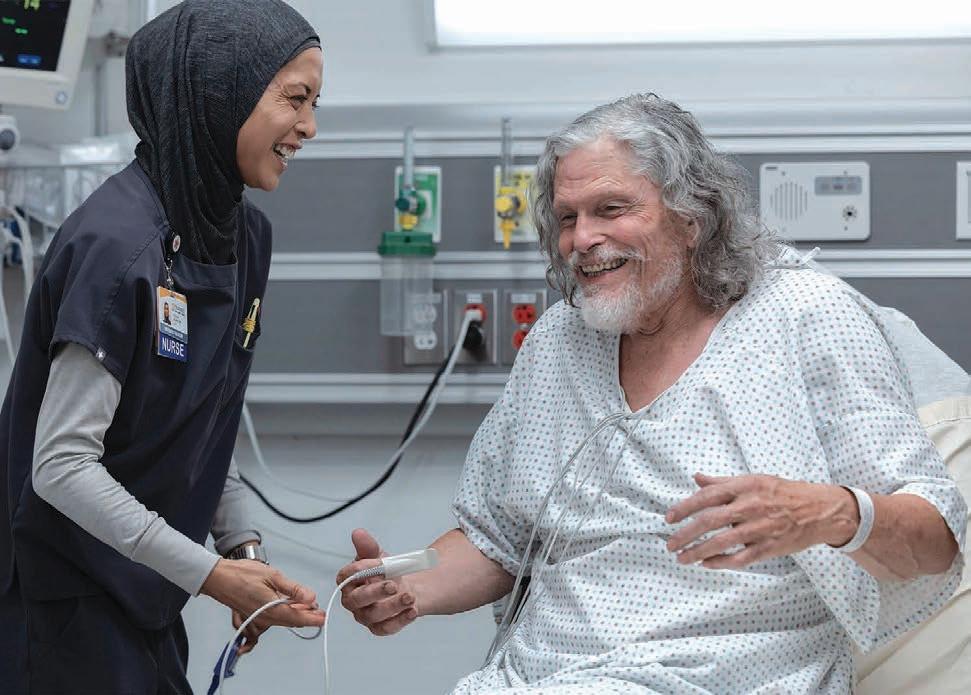
Amielynn Abellera grew up with a nurse practitioner mother and a doctor father, so perhaps she was always destined to appear in a show like The Pitt . Looking at popular media as a Filipino child, though, she never saw “authentic representation” when watching shows about healthcare workers.
“If I did have representation, I would have been more curious and more celebratory, and want to investigate more and ask [my parents] questions,” she tells The Blade. “It’s never too late, and now that there is representation, it’s really making waves across the Filipino and Filipino-American community to initiate conversations.”
Acting on HBO Max’s The Pitt , as she has since the very fi rst episode, carries a deeper meaning for Abellera, who plays the steady and empathetic Nurse Perlah. The second season once again follows a full 15-hour shift in the ER, this time taking place on the Fourth of July.
Abellera refl ects on Perlah’s journey: “As a nurse, she is really good at her job, she’s really calm and composed and confi dent. She knows how to protect herself in such a challenging career. That has been part of how she’s able to get through it. In this season, on this particular day, she hits some challenges, and we start to see a little bit of that armor crack — just a tiny bit.”
It’s been a breakthrough role for Abellera, who previously appeared in episodes of The Cleaning Lady , Bosch: Legacy, and NCIS . The unique fi lming style of The Pitt , where every episode is synchronized with one hour in the hospital, has given Abellera a new experience altogether: “It feels very sporadic, very panicked, and very immediate.”
“It does feel like I’m waking up at fi ve in the morning, starting a shift, and doing a 12hour day. Sometimes, the reality mixed with the not-reality and the pretend can sort of meld together,” she says, while adding with a laugh, “I’m not a nurse, I’m nowhere near anything being a healthcare worker, of course, but sometimes you end up thinking, ‘I can actually put an IV in!’”
As she looks back on the season at large, one episode that stands out to her is Episode 3 (titled 9:00 A.M.) , which incorporated the 2018 Tree of Life synagogue shooting that took place in Pittsburgh, where the show is also located. In a poignant moment, a Jewish patient named Yana (played by Irina Dubova) connects with Perlah, who wears a hijab.
“Quite honestly, I didn’t know so much about the shooting until we started working,” she says. “I really loved how simple the scene was, in terms of it being two people just connecting and caring for each other in that moment, and also acknowledging this bigger thing. It took both Yana and Perlah by surprise — the feelings that came up for them. I remember even fi lming it; it took both of us by surprise.”
When I ask about bringing both Filipino and queer representation to the show, Abellera says “I know I sound like a broken record. But I’m so proud, and it’s such an honor to be able to represent the Filipino community as healthcare workers. It’s such a big part of Filipino history and my personal history.”
On the show, she’s also found solidarity with Isa Briones and Kristin Villanueva.
“Something I like about the three of us is we’re three different dimensions of Filipino,” she says.
Beyond the community she’s cultivated with her cast on-set, The Pitt has been celebrated across the entire industry, most recently winning the ensemble in a drama series prize at the Actor Awards and, of course, the Emmy award for best drama series. The Actor Award recognition was especially notable since it brought the main cast together on stage. With Season 3 already in the works, one can only imagine how many more awards the show will nab.
“I don’t think anybody knew that we were so hungry for this type of going back to how television used to be,” Abellera says, noting the 15-episode order for Season 2. “It’s taken all demographics by surprise.”
By JOHN PAUL KING
It was nearly 60 years ago when über-queer icon Andy Warhol pronounced to the world his prediction that “in the future, everyone will be famous for 15 minutes.” While it may have been an overstatement, we’re now experiencing the future he was talking about; and though it remains statistically impossible for “everybody” to achieve fame, that doesn’t mean that we can’t all “feel” like we’re famous. If social media has delivered any gift to the human race, that might just be it.
In the real-life dystopia that is 2026, Warhol’s 1967 quip has become a kind of cultural mantra: influencers are more famous than movie stars, podcasters can shape political policy, and anybody with a “hot take” can change the way we perceive even the most fundamentally held opinions. Whether or not this is progress is probably a moot point; it’s the reality we live in, and we have a government full of “cosplaying” charlatans to prove it.
That’s why Alex Russell’s “Lurker” – a 2025 Sundance favorite that’s now streaming on HBO Max after a limited theatrical run last summer – cuts so close to the quick. A psychological thriller exploring the dynamics of power and control within the entourage of a rock star, it strikes some uncomfortably familiar chords for an era when “bootlicking” seems to have become a national pastime.
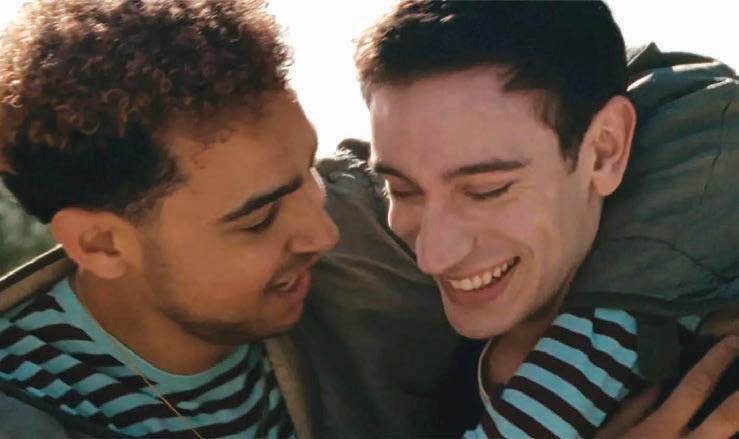
It centers on Matthew (Théodore Pellerin), a young Angeleno who lives in his grandmother’s apartment and works in a trendy designer boutique on Melrose Avenue. When rising pop musician Oliver (Archie Madekwe) brings his entourage to the store one afternoon, Matthew sees a chance to make an impression; plugging his phone into the shop’s sound system, he plays a song that he knows the pop star admires – and minutes later, he’s been given a backstage pass to Oliver’s next concert and invited to hang out with the star himself.
Their relationship continues to develop quickly at the show. Though he’s met at first with some discomfortable hazing from members of the entourage, by the end of the evening he’s on his way to becoming part of the inner circle. Chosen by Oliver to become his “official documentarian,” he’s soon a fixture in the entourage himself, sparking jealousy from members higher in the “pecking order” than he is; but Matthew is better at the game than they suspect, and despite their attempts to keep him in his place, he uses his proximity to Oliver – and a few surgically precise acts of sabotage – to rise quickly to the top.
Staying there, however, is not so easy. Within the volatile social politics of the entourage, he must always be on guard, and his efforts to thwart others from displacing him become increasingly ruthless. Eventually, he crosses a line, resulting in a fall from Oliver’s grace and his ejection from the group; but being close to fame leads to its own kind of fame, and Matthew has worked too hard to give it up so easily – even if it means using his Machiavellian powers to go after Oliver himself.
Slick, stylish, and as hypervisual as any viral pop music video you can imagine, Russell’s sardonically amoral exploration of fame – or rather, the desire for it – is as much a satire as it is a psychological drama, but it plays like a horror movie. Matthew is a protagonist cut from the same cloth as the title character of “The Talented Mr. Ripley,” a schemer whose endearingly awkward appearance masks a devious purpose and a diabolical mind. Oliver, whose creativity seems more about his “vibe” than his actual music, is charismatic but aloof, beneficent but mercurial, and seemingly blind to the massive ego that hides beneath his “chill” persona. There’s a kind of tension between these two characters that feels distinctly romantic, even homoerotic, and though it’s expressed only through subtext, it provides a palpable edge that makes their relationship feel dangerous – as if this were a love story in which anyone who tries to come between them is likely to get hurt.
As to what they actually feel about each other, “Lurker” keeps quiet about it. Matthew “reads” like a queer character, but his inner life is never revealed to us save through the conclusions we can draw from his behavior, and Oliver seems so much in love with himself that nobody else can compare; even so, there’s something between them that plays as much more intimate than the enthusiastic “bro”-ish affection that they exhibit together. In the end, however, the “love story” here is not about romance, nor even sex; it’s about fame. Matthew, even if his own creative talents may be more solid than Oliver’s, is enam-
ored primarily with fame; perhaps he longs for importance, for a life of more excitement and opportunity than his thankless existence as a low-level retail employee, and as the movie proceeds it becomes clear that he is willing to go as far as he has to go in order to achieve it. For Oliver, maybe it’s about the longing of the famous for something more than sycophantic lip-service, for finding the adulation of his fans personified in an authentic, tangible, and individual form. Whatever it is, there’s very little love involved.
Of course, there’s an unavoidable comparison to be made between the mentality on display in “Lurker” with the prevailing trend in our American consciousness, in which performative loyalty and opportunistic friendship feel like the order of the day; from the fickleness of “fan culture” to the escalation of outrage-baiting on social media to the barely-concealed cutthroat narcissism on daily display in our very government, the message that comes through loud and clear is a chilling throwback to the Reagan-era “greed is good” philosophy: loyalty, feelings, and friendship are for suckers, and the most vicious player is the winner who takes it all.
As usual in a character-driven piece like this one, it’s ultimately the actors who make it work; Pellerin (a Canadian actor who won his country’s equivalent of an Oscar for “Family First” in 2018) is the lynch pin, and he delivers an endlessly fascinating portrait of obsessively determined duplicity that we find ourselves rooting for him even as we recoil from the coldness of his tactics; Madekwe captures the vapid pretension of a pop artist who has faked his way to success, but infuses Oliver with enough well-meaning sincerity that we can still feel a little bit sorry for him. In a smaller role, Hannah Rose Liu (“Bottoms”) makes an impression as the manager who keeps Oliver’s life running, offering an anchor of relative sanity in a sea of madness.
Russell’s taut and tantalizingly opaque screenplay manages to capture all these things and more into a compact narrative that keeps us engaged while weaving its observations seamlessly into the plot, and his direction – which somehow yields an expansive scope through an intimate and sometimes frenetic focus – reinforces the unpredictable instability of fame, status, power, and the social hierarchy that governs them all. There are occasionally twists that feel a bit too convenient to be believable, but all in all, it’s a solid piece of cinematic workmanship.
By JOE PHILLIPS
At my stage of life — “somewhere between 40 and death,” as the iconic line goes in the musical “Mame” — I want some pampering. A lot of pampering.
Luckily, for anyone who constantly craves a soothing spa, steam room or sauna, there’s the completely updated Mercedes S-Class. This flagship sedan is now so full of glitz, glamour, and gee-whiz gadgetry, it gives new meaning to the term “auto erotica.”
Does this make the S-Class a “gay” ride? For me, any vehicle that pushes my buttons like this one is a Kinsey 6.
$122,000 (est.) | MPG: 21 city/31 highway
0 to 60 mph: 4.3 seconds | Trunk space: 19 cu. ft.
PROS: Exceptional comfort. Ultra-quiet cabin. Cutting-edge safety.
CONS: Price climbs fast. Tech learning curve. Sportier competitors.
The S-Class continues to define what luxury really means, with a bolder silhouette, larger grille, and striking, next-gen LED headlights. There’s also an optional illuminated Mercedes star on the hood. Overall, nearly 2,700 parts are new or improved, so more than 50 percent of this vehicle has been updated. An extreme makeover, to be sure.
At the same time, this latest S-Class leans harder into intelligence and electrification than ever before. Under the hood, a range of turbocharged inline-six and V8 engines — paired with mild-hybrid systems — deliver power in a way that seems almost edited for smoothness. Braking is solid and strong, too, but never abrupt. All the engineering is finetuned and intentional.
Yes, the top-of-the line S580 version is more expensive, almost $140,000. But it’s also blisteringly fast, zipping from 0 to 60 mph in just 3.9 seconds. That’s as lickety-split swift as a Lamborghini Revuelto supercar, which has a starting MSRP of $610,000 and can easily exceed — yowza! — $800,000.
Colors? There are 150 to choose from for the exterior and 400 for the interior. You can even customize the illuminated door sills, interior stitching and wheel accents.
And the ride quality? Sublime. Adaptive air suspension reads the road constantly, leveling out imperfections before they even register. Rear-axle steering enhances maneuverability, making this full-sized sedan feel surprisingly nimble in tight spaces. On the highway, the S-Class simply glides like a private yacht on the calmest of seas — extremely quiet, composed and completely unbothered.
Whenever you slide inside, the cabin immediately sets the tone. A massive OLED digital display — the same high-def technology used for cinematic viewing and gaming monitors — anchors the dashboard, running the latest MBUX infotainment interface. Highly customizable, this software allows for advanced voice commands that feel natural, not forced. And an augmented-reality navigation system takes your route and overlays it onto live camera feeds. It’s intuitive — mostly, as there is a learning curve for all this cutting-edge gear. Overall, though, such amenities make older setups feel like dial-up internet.
A Burmester surround-sound stereo is available in 3D or 4D, with up to 31 speakers, 1,690 watts and tactile transducers in the seats that vibrate and pulse with the music. Those seats are, of course, extremely comfortable. And the seatbelts? These are now heated.
Let’s not forget the latest cabin air-filtration system, which can remove ultra-fine particles to deliver air quality that rivals medical environments. Clean air, yes, but even this seems like a special treat. It’s like being swaddled in couture, not ready-to-wear. And lastly, there’s the rear-seat area, which — to be honest — is where the S-Class really shines. Executive packages offer multi-contour reclining seats with rapid heating and ventilating, heated armrests and massage functions. You can opt for a footrest, which ups the glam factor to give you a calf massage. Dual 13.1-inch display screens come with their own remote controls. There’s also a video-conferencing feature, to help transform the rear cabin into a fully connected mobile office. For me, it feels less “back seat” and more “private lounge.”
Even in fiction, high-tech luxury carries weight. Tony Stark helped cement the idea that state-of-the art vehicles can be aspirational, not just practical. The magical S-Class fits right into that narrative — minus the flying suit (for now).