















As HIV prevention ushers in a new era, Schukraft reflects on the evolution of sexual healthcare and the power of stigma-free prevention
By AJ SLOAN
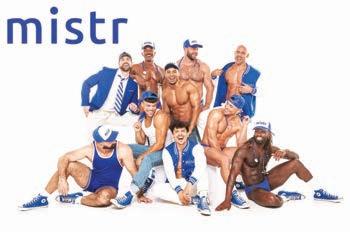
It was not too long ago that an HIV diagnosis was read as a death sentence. In its earlier decades, the HIV/AIDS crisis was synonymous with fear and loss, steeped in stigma. Over recent years, open conversation and science have come together to combat this stigma while proactively paving the way for life-saving treatments and preventive measures like PrEP. Now, in 2026, with discreet and modern platforms that meet people where they’re at in their lives, HIV prevention has evolved from hushed words of warning into something far more sex-positive and accessible. Game-changing services like MISTR are a testament to this shift, showing our community that healthcare doesn’t have to feel clinical or shaming to work. It can be empowering and, dare I say, celebratory. Few people embody this evolution quite like Tristan Schukraft, founder of MISTR. With one hand in healthcare and the other high-fiving through queer nightlife, Schukraft gets that, from the bar to the bedroom and beyond, prevention happens in person and in real life. His approach has helped turn PrEP, DoxyPEP, and testing into normalized parts of our daily queer life, reaching hundreds of thousands of people across the US. In our conversation, Schukraft shares candidly about stigma, policy, and why the future of sexual health depends on keeping it real.
You have one hand in healthcare and the other in nightlife and queer spaces. Can you share with us how these two spheres impact and inform each other? How do they impact and inform you? Honestly, for me, they’ve never been separate. Nightlife and queer spaces are where people meet, date, hook up, fall in love, and make friends. That’s real life. Being in queer spaces all the time keeps me grounded and reminds me who we’re building MISTR for.
MISTR markets sexual health in a sex-positive, stigma-free fashion. Can you share with us how you measure the impact of this approach?
This year, we held the first-ever National PrEP Day. Dua Lipa performed, and Cardi B was there. After the event, Cardi B went on her Instagram live to encourage people to sign up for PrEP. When you make sexual health stigma-free
and sex positive, people talk about it. We see it in how people use the platform. When 700,000 people are willing to sign up, get tested, start PrEP, and add things like DoxyPEP, that tells us we’ve made it feel safe and normal instead of scary or awkward. And then we see it in the results. Since we expanded DoxyPEP, STI positivity among our patients dropped by half.
How have you seen the conversation of sexual health in our LGBTQ+ community change in mainstream culture in recent years?
Ten years ago, nobody was casually talking about PrEP, and if they did, it likely referenced one being a Truvada whore. Now it’s part of the culture. Popstars like Troye Sivan post pictures of their daily PrEP pill on social media. Cardi B goes on Instagram Live telling people to get on PrEP.
For many sexually active gay men, taking PrEP is simply part of the gay experience. For people in more remote areas, it might not be as talked about. Particularly in rural or more conservative places, MISTR can be a life-changing option. No awkward visits to the family doctor or the local pharmacy where everybody knows your business. It’s all done discreetly online and shipped straight to your door.
You have publicly argued that cuts to government HIV prevention funding are of high risk. Would you please elaborate for us on what those budget decisions mean on an individual level?
It means real people fall through the cracks. Someone doesn’t get tested. Someone waits too long to start PrEP. Someone finds out they’re HIV-positive later than they should have. Community clinics will be the hardest hit, especially those in underserved communities. The good news is that MISTR is ready to help people who might lose their access to care. All you need to do is sign up at mistr.com, and it’s totally free with or without insurance.
From your (and MISTR’s) perspective, how do these funding cuts threaten ongoing efforts to end the HIV epidemic?
For the first time, we have all the tools to end HIV. If everybody who is HIV negative
is taking PrEP and everyone HIV+ is virally suppressed, we can end all new HIV transmissions in the United States. We have everything we need today. All we need is to get more people on PrEP. Cutting funding risks losing that momentum. Ending HIV requires scale and consistency. Every time funding gets cut, you lose momentum, trust, and infrastructure, and rebuilding that takes years.
HIV transmissions don’t pause because budgets change.
In our current climate of decreased federal investment, what role do you feel private healthcare and business should play in sexual health?
With reports that the current administration is considering cuts to HIV and prevention funding, we face a moment of reckoning. At the same time, some employers are seeking to exclude PrEP and HIV prevention from their coverage on religious freedom grounds. If these challenges succeed, and if federal funding is slashed, the consequences for public health will be devastating. But this is where the private sector must step up to fill the gap, bridge divides, and deliver results.
Businesses have the power and platform to normalize HIV prevention and drive measurable outcomes. At MISTR, we see firsthand what’s possible: since introducing DoxyPEP, STI positivity rates among our patients have been cut in half. But it’s not just about medication. It’s about messaging.
Our sex-positive, stigma-free marketing speaks directly to our community, making sexual health part of everyday life. No awkward doctor visits, no needles, no paperwork — just free online PrEP and STI testing, prescribed by real physicians and delivered to your door. That kind of impact could grow exponentially if more employers embraced this approach and made HIV prevention part of their employee wellness programs.
Employers, this is your call to action. Start by making sure your health plans cover PrEP and DoxyPEP. Partner with platforms like MISTR to give employees private, stigma-free access to care. Offer on-site testing. Talk openly about sexual health, not just during Pride, but every day of the year. This is not political — this is about protect-

ing lives, strengthening communities, and building a healthier, more productive workforce. Because healthy employees aren’t just good for public health — they’re good for business.
When the private sector steps up, outcomes improve. And when businesses align with platforms like MISTR, scaling impact isn’t just possible — it’s happening.
Has MISTR experienced any direct effects from these recent shifts in public health funding?
MISTR’s unique model is totally free for patients with or without insurance, and we don’t cost the government or taxpayers a penny. We are scaling up our efforts to reach people who might be losing their access or care.
What would be your message to policymakers who are considering further cuts to HIV/AIDS programs?
During his first term, President Donald Trump committed unprecedented resources to the Ending the HIV Epidemic initiative here at home. Bipartisan support has shown what’s possible when bold leadership meets smart strategy. To policymakers: I urge you to reconsider any cuts to HIV prevention funding. This is not the time to pull back. It’s the time to push forward. Ending HIV is within reach — but only if government, private industry, and community organizations stand together.
What is one perhaps overlooked win from last year that impacted you on a personal level?
Seeing our STI positivity rate drop by half after expanding DoxyPEP.
Looking at the year ahead, what are MISTR’s most significant priorities for sexual health in 2026?
Expanding access, especially in the South and in communities that still get left out. Rolling out injectable PrEP. And just continuing to make sexual healthcare easier and more normal.


It seems like the battle for equality never ends, and that’s certainly true for health care.
Access to health care has long been an equality issue for lesbian, gay, bisexual and transgender (LGBT) Americans.
Look at the facts. Prior to the Affordable Care Act, or Obamacare, studies show that nearly 27 percent of transgender people and 7.7 percent of lesbian, gay and bisexual people said they were refused needed medical care.
Covered California refuses to accept that. The battle for equality is part of our history, and our efforts continue to this day.
This year, nearly 10,000 Covered California enrollees self-identified as gay or lesbian, bisexual, queer, or another sexual orientation, and nearly 2,400 enrollees self-identified as non-binary or another gender identity, or as transgender.
That’s more than 12,000 Californians who felt confident being openly themselves, knowing that doing so will not get them denied care.
This year, it’s time to take action. Getting health insurance is the first step toward protecting your physical, mental, and financial health. All health insurance plans offered through Covered California provide access to leading doctors, hospitals and specialists across California and includes essential health benefits — from preventive care and maternity care to mental health services and emergency
coverage. Plans also include prevention, treatment, and care for HIV/AIDS.
Now is the time to explore your options. It’s Open Enrollment, which means you can shop and compare health insurance plans at COVEREDCA.COM and choose the one that works for you and your budget. Open Enrollment runs through Jan. 31.
Covered California is the only place where Californians who qualify can get financial assistance on a sliding scale to reduce premium costs. Depending on your income, you may qualify for the low-cost or no-cost Medi-Cal program.
Learn more about your options at COVEREDCA.COM, see if you qualify for financial help and compare health plans in your area. You can also get free and confidential assistance by phone, in a variety of languages from more than 14,000 certified agents and community-based organizations throughout the state that provide help in whatever language you prefer, or call Covered California at (800) 300-1506 for assistance in English or (800) 300-0213 for help in Spanish.
Covered California is your ally in the fight for equality in health care. Join us and start the new year with a healthy foundation.
This is not the LGBTQ community’s first crisis. We have survived criminalization, moral panics, epidemics, and abandonment—and we survived by acting.
By Dr. GREG CASON
Dr. GREG CASON
The other day, I went to see my doctor—who is gay— for a routine checkup. He asked how I was doing. I said, “Pretty good, considering.” No elaboration needed. No footnotes. No PowerPoint. He nodded and said, “Who would have thought twelve months ago we’d be watching our world fall apart and still going to work the next day?” Exactly.
That single sentence captures a trauma response perfectly. When things become overwhelming, most of us don’t collapse dramatically onto a fainting couch. We get dressed, show up, answer emails, and dissociate just enough to function. This is not denial. It’s survival. And usually, it’s adaptive.
But this time feels different. The stress isn’t isolated. It’s collective. The LGBTQ community is feeling it—and so are many others. By some estimates, at least half the country feels impacted. When that many people are on edge, the nervous system never really gets a break.
What’s Actually Happening (And Why You Feel Like You’re Losing It)
Over the past year, political hostility has
triggered a chronic threat response—hypervigilance, rumination, and emotional exhaustion—especially in communities without the protection of wealth or power. We hear it on the news, see it on social media, and feel it in casual conversations. The nervous system doesn’t distinguish between rhetoric and reality very well. Threatening language alone is enough to activate fear, even when you are not in immediate danger.
That constant activation shows up as anxiety, depression, irritability, emotional numbing, or a creeping sense of shame about who you are. These are not signs that something is wrong with you. They are signs that your brain is doing exactly what it evolved to do: protect you.
Most of us are feeling it. Well, almost all of us. Nicki Minaj, for example, appears delighted with what’s happening politically. Less delighted, perhaps, by fans unfollowing her and adding her name to a deportation petition. But I digress.
Here’s the reality: if you’re not rich or powerful, your direct influence can feel limited. Outside of voting every couple of years, people grab whatever sense of agency they can—attending rallies, wearing a “No Kings” shirt, signing petitions, posting, sharing, speaking up. None of that is pointless. Small actions remind us we are not helpless.
Fear is The Goal
What is harmful is staying in a constant state of rage and fear. That is the goal of authoritarian systems. Fear is the primary tool used to control populations. Supporters are taught to fear the “other.” Opponents are taught to fear the consequences of speaking up. Fear hijacks the brain. When fear is in charge, critical thinking goes offline. Rage-baiting media, vengeful politicians, aggressive enforcement, and spineless institutions all benefit from keeping you dysregulated.
How to Calm Yourself Down (Without Pretending Everything Is Fine)
1. Regulate your nervous system using T.I.P. skills:
• Temperature: Change your body temperature. Cold water on your neck, a hot shower, or holding a warm mug while breathing slowly can interrupt panic.
• Intensity: Move your body. Walk, run, dance, work out, scream at a rally— burn off excess adrenaline instead of letting it rot inside you.
• Pressure: Ground yourself physically. Feel your feet on the floor, press your arms into your chair, do a wall sit, squeeze something, or hug someone safe.
Sobriety isn’t a punishment, it’s a power move
By JOEY BACHRACH
Every January, we’re sold the same tired story: new year, new you. As if who you were before January 1st was somehow broken. For queer people especially, that narrative can feel heavy. We’ve spent enough of our lives being told to fix ourselves.
Sobriety, when done right, isn’t about deprivation or perfection. It’s not about becoming boring, rigid, or suddenly obsessed with green juice. It’s about alignment. It’s about creating a life that actually supports who you are, not just who you survive as.
For a lot of us, substances weren’t the problem. They were the solution we had available at the time. They helped us cope with rejection, trauma, loneliness, or the pressure to perform in spaces that weren’t built with us in mind. So when we
talk about incorporating sobriety into a healthy lifestyle, the conversation has to start with compassion, not shame.
A healthy, sober lifestyle doesn’t mean waking up at 5 a.m. to meditate and journal for an hour. It means learning how to listen to your body again. It means asking yourself simple but radical questions: Do I feel safe? Am I rested? Am I connected? For many people, sobriety creates the space to finally hear those answers. One of the biggest myths about sobriety is that it shrinks your world. In reality, it expands it. You start showing up to things as yourself, not numbed, not performing, not dissociating through the night. Relationships get clearer. Boundaries get stronger. Joy feels sharper. So does grief. And that’s okay. Feeling is the point.
In queer spaces, alcohol and drugs are
often woven into the community. Bars were sanctuaries long before we had other places to gather. Sobriety doesn’t mean you’re rejecting your community. It means you’re redefining how you want to participate in it. Maybe that looks like dancing without drinking. Maybe it looks like finding new spaces altogether. Maybe it looks like leaving earlier and going home, proud of yourself.
Incorporating sobriety into a healthy lifestyle also means letting go of all-ornothing thinking. You don’t have to have it all figured out on January 1st. You don’t need a label. You don’t need to explain yourself to anyone. You’re allowed to be curious. You’re allowed to try. You’re allowed to change your mind and try again.
The New Year doesn’t have to be about becoming someone else. It can be about
2. Change your thoughts:
• Shift from catastrophic thinking (“Everything is collapsing”) to probability-based thinking (“Things are bad, but people are organizing and pushing back”).
• Replace overgeneralization (“Nowhere is safe”) with localized reality checks (“Some places feel unsafe, but I am okay right now”).
3. Change your relationship with your thoughts:
• Try mindfulness, meditation, or slow breathing with music.
• If sitting still makes you want to crawl out of your skin, try active meditation—washing dishes, gardening, walking—while focusing on the task and letting thoughts pass.
Remember Who You Are You are not how you are being treated. Politicians, masked officials, and hateful online trolls want you to internalize shame and retreat. Their cruelty says nothing about your worth. Anchor yourself in your values—love, integrity, family, community— and invest in the relationships that keep you grounded.

becoming more you. More present. More grounded. More honest about what actually supports your mental health, your relationships, and your future.
Sobriety isn’t a finish line. It’s a relationship with yourself, your body, and your life. And like any healthy relationship, it requires patience, grace, and room to grow.
If you’re considering sobriety this year, know this: you’re not behind, broken, or late to anything. You’re right on time. And choosing clarity, care, and self-respect isn’t a restriction.
It’s freedom.
Joey Bachrach is the Co-Founder and Chief Executive Officer of Rainbow Hill Recovery, an LGBTQ-affirming mental health and substance use treatment center based in Los Angeles. For more information, head to RainbowHillRecovery.com.
By DEREK DU CHESNE, Founder of Better U
January has a way of asking harder questions than we expect.
For many people in our community, especially here in West Hollywood, the New Year feels like a lot more than just a reset. It feels like a pause after intensity. After nights filled with music, movement, connection, and release. And sometimes, after months or years of quietly holding things together.
When the noise settles, a more vulnerable question often emerges:
Am I actually healing and progressing in my life or just suriving?
I’ve spent years working in mental healthcare, and I founded Better U after watching too many people (particularly LGBTQ+ individuals here in WeHo) do everything they were told to do and still feel stuck. Therapy. Medications. Meditation. Sobriety breaks. Socializing. Self-work. All of it. Even after doing ALL THE THINGS, something deeper wasn’t shifting.

This isn’t a failure of trying; it’s actually often a mismatch between what you need and the kind of care that’s been available to you.
Nightlife has never been just about partying.
Historically, it has been a refuge, resistance, and chosen family - spaces where safety, visibility, and connection were possible when they weren’t elsewhere. Substances, for many, became part of that ecosystem not out of recklessness, but out of a very real need to manage anxiety, soften hypervigilance, or feel at ease in one’s own body.
There’s no moral judgment in that reality.
But coping mechanisms (no matter how understandable) can eventually stop working. What once offered relief can quietly become a ceiling.
More and more LGBTQ+ adults are asking a different question now:
What’s actually underneath this and how do I heal it without losing myself?
Alcohol occupies a complicated space in queer culture. For some, it’s celebratory. For others, it becomes a tool for regulation - helping manage stress, social anxiety, sleep, or emotional pain.
What’s less widely known is that there are FDA-approved medical treatments that can help people reduce or quit drinking! Without rehab, ultimatums, or shame. When paired with psychiatric care and emotional support, these options can offer relief rather than punishment.
At Better U, we work with people who are sober, sober-curious, or simply exhausted by their relationship with alcohol. The goal isn’t labeling, it’s giving the nervous system another option besides numbing or white-knuckling through it.
For many people, especially here in WeHo, that alone can feel revolutionary.
One thing I hear often (especially from LGBTQ+ clients) is:
“I understand my trauma, but my body doesn’t.”
Talk therapy can be life-changing, but it doesn’t always reach the physiological patterns shaped by chronic stress, shame, or identity-based trauma. This is where ketamine-assisted therapy, when done responsibly, can be meaningful.
Ketamine is a legal, physician-prescribed medication with decades of medical use. In mental health settings, it has shown promise for people struggling with depression, anxiety, PTSD, and entrenched thought loops - particularly those who feel like they’ve “tried everything.”
In a clinical context, ketamine therapy isn’t about escape; it’s about interruption by loos-
ening rigid mental patterns and creating space for new emotional experiences. Those moments only matter if they’re supported, integrated, and grounded in care.
That’s why responsible screening and structure are essential. Ketamine therapy isn’t appropriate for everyone, especially those actively misusing substances. Harm reduction means honoring recovery, not undermining it.
I hear it all the time that so many people in the queer community have learned (often unconsciously) to brace themselves in healthcare settings. Traditional systems haven’t always been safe, affirming, or informed.
Healing at home changes that dynamic.
Receiving care in one’s own space can allow people to soften instead of perform. To cry without being watched. To rest without explanation. To be fully human.
Many of our nurses, clinicians, and therapists at Better U identify as LGBTQ+, and all are trained in trauma-informed, affirming care. That representation and that intention really matter.
Mental health doesn’t exist separately from the body.
We regularly see people whose depression, anxiety, or burnout is deeply connected to hormonal changes, chronic stress physiology, or exhaustion. For some, addressing those biological layers through holistic psychiatry or hormone replacement therapy becomes a turning point.
This is especially important in healthcare, where bodies and identities don’t always fit outdated medical assumptions.
When people feel seen as whole beings (not just symptoms) healing tends to follow.
Chosen family isn’t just cultural, it’s biological!
Attachment research shows that safe, attuned relationships regulate the nervous system and reduce anxiety and depression. For many people whose families of origin may not have been affirming, chosen family can offer something profoundly reparative: consistent presence, emotional safety, and belonging without conditions.
Sometimes, healing looks less like a breakthrough and more like a quiet moment of being understood.
New Year’s resolutions often frame healing as self-correction. Healing tends to look different in our community. It’s less about fixing and more about reconnecting.
We often describe healing as a nonlinear arc (our core at Better U focuses on)
Heal. Grow. Love. Transcend.
Not as a mandate, but as an invitation. As this year unfolds *through sober nights out, chosen-family dinners, therapy, rest, or honest conversations, I’ll leave you with this question:
What if the most meaningful journey you take this year isn’t a party you remember, but a version of yourself you finally understand?
Depth over distraction.
Healing over hiding.
Belonging over isolation.
That’s a New Year’s ritual worth keeping.
This editorial is sponsored by Better U. For more information, head to BetterUcare.com
By EMMA CIESLIK
Earlier this week, the Lemkin Institute for Genocide Prevention and Human Security issued a haunting warning. Dr. Elisa von Joeden-Forgey, president of the Lemkin Institute, stated that the U.S. is in the “earlyto-mid stages of a genocidal process against trans and nonbinary and intersex people.” Dr. Gregory Santon, former president of the International Association of Genocide Scholars, flags “a hardening of categories” surrounding gender in a “totalitarian” way.
Stanton argues that this is rooted in Nazi ideology’s surrounding gender — this same regime that killed many LGBTQIA individuals in the name of a natural “binary.” As Von Joeden-Forgey said, the queer community, alongside other “minority groups, tends to be a kind of canary in the coal mine.”
In his first year in office, Trump and his Cabinet’s anti-trans rhetoric has only intensified, with a report released late September by journalist Ken Klippenstein in which national security officers leaked that the FBI is planning to classify trans people as “extremists.” By classifying trans people as “Nihilistic Violent Extremists,” far-right groups would have more “political (and media) cover,” as Abby Monteil reports for them, for anti-trans violence and legislation.
While the news is terrifying, it’s not unprecedented – the fight against trans rights and classification of trans people as violent extremists was included in Project 2025, and in the past several weeks, far-right leaders’ transphobic campaign has expanded: boycotting Netflix to pressure the platform to remove trans characters, leveraging anti-trans attack ads in the Virginia governor’s race and banning professors from acknowledging that trans people exist. In fact last month, two Republican members of Congress called for the institutionalization of trans people.
It’s a dangerous escalation of transphobic violence that the Human Rights Campaign has classified as an epidemic. According to an Everytown for Gun Safety report published in 2020, the number of trans people murdered in the U.S. almost doubled between 2017 and 2021. According to data released by the Gun Safety report from February 2024, 34 percent of gun homicides of trans, nonbinary, and gender expansive people remain unsolved.
As Tori Cooper, director of Community Engagement for the Transgender Justice Initiative for the Human Rights Campaign Foundation, this violence serves a purpose. “The hate toward transgender and gender expansive community members is fueled by disinfor-
mation, rhetoric and ideology that treats our community as political pawns ignoring the fact that we reserve the opportunity to live our lives full without fear of harm or death,”
Cooper said.
“The genocidal process,” Von Joeden-Forgey said, “is really about destroying identities, destroying groups through all sorts of means.”
And just like the Nazi regime, former genocide researcher Haley Brown said, the Trump administration is fueling conspiracy theories surrounding “cultural Marixsm” — the claim that leftists, feminists, Marxists, and queer people are trying to destroy western civilization. This term, Brown states, was borrowed directly from the Nazi’s conspiracies surrounding “Cultural Bolshevism.”
performers on stage.
But as Hitler rose to power, trans people were targeted. In 1933, Nazi youth and members of the Sturmabteilung ransacked the institute, stealing and burning books –one of the first book burnings of the Nazi regime. German police stopped recognizing the “transvestite” passes and issuing new ones, and under Paragraph 175, which criminalized sexual relationships with men, trans women (who were misgendered by the police) were arrested and sent to concentration camps.
As the Lemkin Intsitute for Genocide Prevention and Human Security wrote in a statement:
trans violence was much more nuanced and individualized and should be explored separately from violence against gay and lesbian individuals during the Holocaust.

As Brown explains, historians are just beginning to research the Nazis’ anti-trans violence, but what they are finding reveals a terrifying pattern wherein trans people are stripped of their identification documents, arrested and assaulted, and outright killed.
Before World War II, Germany – especially Berlin – was a hub for transgender communities and culture. In 1919, Dr. Magnus Hirschfield, a Jewish gay sexologist and doctor, founded the Institut für Sexualwissenschaft, the Institute for Sexual Science. The Institute was groundbreaking for offering some of the first modern gender-affirming healthcare, with a trans-affirming clinic and performing some of the first gender-affirming surgeries in the 1930s for trans women Dora Richter and Lili Elbe.
Researchers at the institute coined the term “trassexualism” in 1923, which while outdated now, was the first modern term that Dr. Hirschfield used when working with Berlin police to acquire “transvestite passes” for his patients to help them avoid arrest under public nuisance and decency laws. During the Weimar Republic, trans people could also change their names although their options were limited. In Berlin, queer press flourished after World War I along with a number of clubs welcoming gay, lesbian and trans clientele, including Eldorado, which featured trans
“The Nazis, like other genocidal groups, believed that national strength and existential power could only be achieved through an imposition of a strict gender binary within the racially pure ‘national community.’ A fundamentalist gender binary was a key feature of Nazi racial politics and genocide.”
History professor Laurie Marhoefer wrote for The Conversation that while trans people were targeted, there was not extensive discussion of them by the regime. But there was evidence of the transphobia behind the regime’s violence, specifically in Hermann Ferdinand Voss’s 1938 book “Ein Beitrag zum Problem des Transvestitismus.”Voss noted that during the Nazi regime, trans people could and were arrested and sent to concentration camps where they underwent forced medical experimentation (including conversion therapy and castration) and died in the gas chambers.
While there is growing recognition that gay, bisexual, and lesbian individuals were targeted during the Holocaust, few know about the trans genocide through which trans individuals were arrested, underwent forced castration and conversion therapy, and were outright killed alongside gay, lesbian, disabled and Jewish individuals in concentration camps. Historians are just beginning to undertake this research, writes Marhoefer, and to delve further into the complex racial hierarchies that affected how trans people were treated.
As Zavier Nunn writes for Past & Present, trans people of “Aryan” racial status and those not considered to be homosexuals were sometimes spared from the worst violence and outright murder. Depending on their skills, they could even be considered for rehabilitation into the Volksgemeinschaft, or Nazi utopian community. As Nunn highlights,
Marhoefer’s research of violence against trans women, as recorded in police files (as is the persecution of gay and lesbian individuals), is groundbreaking but rare. He gave a talk at the Museum of Jewish Heritage in 2023, shortly after a 2022 civil lawsuit about denial that trans people were victims of the Holocaust. The German court recognized that trans people were victimized and killed by the Nazi regime, but in the United States, there is still a hesitancy by the wider LGBTQ community and leftist groups to acknowledge that we are living during a time of anti-trans violence, that trans people are being used as political scapegoats in order to distract from real problems of accountability and transparency around government policy.
As anti-trans legislation escalates, it’s important to remember and call out how trans violence is not only a feminist issue, it’s a human rights one as well. While Shannon Fyfe argues that the current campaigns against trans people may not fit the traditional legal definition of a genocide, the destruction and denial of life saving care, access to public spaces, and escalating violence is still immensely devastating.
Kaamya Sharma also notes that the term “genocide” has deep geo-political implications. As she explained, “western organisations are, historically and today, apathetic to the actual lives of people in the Global South, and put moral posturing above Brown and Black lives,” so the choice to use “genocide” is a loaded one. But as the Lemkin Institute for Genocide Prevention and Human Security writes in the same statement: “The ideological constructs of transgender women promoted by gender critical ideologues are particularly genocidal. They share many features in common with other, better known, genocidal ideologies. Transgender women are represented as stealth border crosses who seek to defile the purity of cisgender women, much as Tutsi women were viewed in Hutu Power ideology and Jewish men in Nazi antisemitism.”
Trans people are not extremists, nor are they grooming children or threatening the fabric of American identity – they are human beings for whom (like all of us) gender affirming care is lifesaving. As we remember the trans lives lost decades ago and those lost this year to transphobic violence, knowing this history is the only way to stop its rewriting.

ADRIAN SHANKER is senior fellow at Lehigh University College of Health. He served as deputy assistant secretary for health policy and senior adviser on LGBTQI+ health equity at the U.S. Department of Health and Human Services in the Biden-Harris administration.
CARL G. STREED, JR. is Associate Professor of Medicine at Boston University Chobanian and Avedisian School of Medicine and Research Director at the GenderCare Center at Boston Medical Center.
Trump proposal would remove most data fields in medical
For most Americans, the ability to change healthcare providers and easily have their health records transfer feels like a given. But it was not until the 21st century Cures Act was signed in 2020 that regulations on health technology mandated that electronic health records had to be able to collect, receive, and transfer specific data fields in a uniform way (known as the U.S. Core Data for Interoperability). Before that, if your new doctor and your prior doctor subscribed to different electronic health records systems, there was a very good chance that the data fields didn’t match up and some patient information would literally be lost in translation. Through the Office of the National Coordinator for Health IT, created through executive order by President George W. Bush, the Biden administration advanced health IT policy specifically to ensure that LGBTQI+ patients records would transfer to new providers with unique information that patients need their providers to have access to. This includes data fields for chosen names, pronouns, and sex parameters for clinical usage – or in other words, what sex should be listed for lab work, regardless of the patient’s gender identity. There were also fields added for sexual orientation and gender identity. To be clear, the requirement was for the electronic health record systems to be able to collect, transfer, and receive these data points. There was never a requirement for providers to ask all these questions or for patients to be required to answer them. But if the IT systems aren’t mandated to have these fields in a uniform way, the impact of a provider asking the questions is limited only to the care that the specific provider offers to the patient. The Trump administration has proposed removing 34 of the 60 required data fields in electronic health records, including the fields for chosen names, pronouns, sexual orientation, gender identity, and sex parameters for clinical usage.
There has been widespread support for these regulations on health IT companies. Having a lowest common denominator for health IT systems is good for patients and for healthcare providers. It also isn’t particularly controversial. Not surprisingly, the only folks cheering on deregulation are those ideologically opposed to any government regulations, and the specific companies who are subject to these health IT regulations.
The deregulators in the Trump administration would have us believe the myth that these regulations somehow hinder innovation and make it harder for tech startups to enter the health IT field. They gaslight us by calling this clear disservice to patients “prosperity.” But imagine what it would be like to go back to a time before these critical health IT regulations. When the new doctor you see doesn’t have very much if any information about the patient and the transfer of patient records was manual and cumbersome,
often requiring someone to pay for their records to be printed, mailed, and then scanned into a different electronic health record system. This won’t lead to innovation, but it will lead to harm for the patient-provider relationship, and worsened health outcomes for the American people.
HHS Secretary Robert F. Kennedy Jr. has been deliberate and unrelenting in his rollbacks of health equity measures for LGBTQI+ Americans. He has proposed rules that would ban hospitals from receiving federal funds if they offer gender affirming care for youth; he has gutted the Office of Infectious Disease and HIV/ AIDS; he has rolled back civil rights protections in health care for LGBTQI+ Americans; and he has eliminated most federal health agency data collection of sexual orientation and gender identity. And this is just a small slice of his crusade at HHS to erase LGBTQI+ people.
There are currently many proposed rules and administrative changes that would harm access to equitable, high quality healthcare for LGBTQI+ people. So it makes sense that LGBTQI+ Americans may not be aware of such a wonky area of policy as federal health IT regulations. But we want to stress that deregulating health IT, with a specific goal of removing the minimum requirements for electronic health record systems to collect, transfer, and receive basic data fields of importance to LGBTQI+ people’s clinical care, will worsen both access to as well as quality of even basic healthcare for LGBTQI+ Americans. And for healthcare providers it is uniquely scary. They rely on the data in patient’s electronic records. And they need the IT systems they use to be able to talk to each other. Deregulating health IT is akin to trying to charge an iPhone with an Android charger, but as if your life depended on it.
There is an opportunity for public comment until Feb. 27, and anyone can make a comment. As a person who receives healthcare and/or a person who provides healthcare, speaking up is imperative. These health IT regulations are described by some as “woke” but really it’s very simple: when you go to the doctor, any doctor, you want them to have some basic information about who you are. Without that information, a healthcare provider could easily make an assumption about the patient that is inaccurate and that leads the provider to make different recommendations than what the patient needs.
This is not radical, this is the very premise of healthcare delivery. And LGBTQI+ patients stand to be left behind, deliberately and systematically, if these deregulations of health IT are put into effect. Without accurate, timely data, providers are unable to live up to the promise of precision medicine and will fail to ensure everyone receives the care that matches their unique needs.
PHONE 310-230-5266
E-MAIL arodriguez@losangelesblade.com
INTERNET losangelesblade.com
PUBLISHED BY Los Angeles Blade, LLC
PUBLISHER
ALEXANDER RODRIGUEZ
arodriguez@losangelesblade.com, 310-230-5266 x8080
EDITORIAL
NATIONAL EDITOR
KEVIN NAFF kna @washblade.com, 202-747-2077 x8088
LOCAL NEWS REPORTER
KRISTIE SONG ksong@losangelesblade.com
CONTRIBUTING WRITER
KAREN OCAMB
karenocamb@losangelesblade.com
CONTRIBUTORS
MICHAEL K. LAVERS, TINASHE CHINGARANDE, JOHN PAUL KING, LOU CHIBBARO JR., SUSAN HORNIK, JOE REBERKENNY, DANIEL ITAI, ISAAC AMEND, PETER ROSENSTEIN, TERRI SCHLICHENMEYER, JOE PHILLIPS, ANKUSH KUMAR, ESTEBAN RIOSECO, SAM KISIKA, ELVIS KAWEDO, HENRY CARNELL, DAWN ENNIS, AJ SLOAN
SALES & ADMINISTRATION
SALES EXECUTIVE
SHANA WONG SOLARES
swong@losangelesblade.com, 808-386-0872
MARKETING DIRECTOR
STEPHEN RUTGERS
srutgers@washblade.com, 202-747-2077 x8077
NATIONAL ADVERTISING
RIVENDELL MEDIA sales@rivendellmedia.com, 212-242-6863 ADMINISTRATION
PHILLIP G. ROCKSTROH prockstroh@washblade.com, 202-747-2077 x8092 CREATIVE DESIGN/PRODUCTION
MEAGHAN JUBA production@azercreative.com DISTRIBUTION
CHRISTOPHER JACKSON, 562-826-6602 All material in the Los Angeles Blade is protected by federal copyright law and may not be reproduced without the written consent of the Los Angeles Blade. e sexual orientation of advertisers, photographers, writers and cartoonists published herein is neither inferred nor implied. e appearance of names or pictorial representation does not necessarily indicate the sexual orientation of that person or persons. Although the Los Angeles Blade is supported by many ne advertisers, we cannot accept responsibility for claims made by advertisers. Unsolicited editorial material is accepted by the Los Angeles Blade, but
ofce only. Call for rates. If you cannot reach a convenient free distribution point, you may receive a 26-week mailed subscription for $125 per year or $5.00 per single issue. Checks can be sent to Phil Rockstroh at prockstroh@washblade.com.





is a writer based in the D.C. area. He is a transgender man and was featured in National Geographic’s ‘Gender Revolution’ documentary. He serves on the board of the LGBT Democrats of Virginia. Contact him on Instagram at @isaacamend
One of the hottest issues in America right now is that of gender affirming care for trans youth. Even people close to me — as close as parents and siblings and dear friends — voice their disapproval of letting trans or nonbinary adolescents (and those who are younger) receive appropriate healthcare in the form of puberty blockers and other medicines to prevent their original gender from onset, and instead establish a new gender that they feel comfortable in. This is a topic that I believe is highly contested among Democrats themselves, so I have taken extra time, patience, and detail to write this article. Out of all of the op-eds I have penned for the Blade, this is the one I have most prepared for.
Trans youth should be able to access quality gender affirming care. Denying these children and teenagers puberty blockers is a human rights offense.
Many older trans people in the current day report feeling “off” about their gender from a young age. The majority of us, myself included, didn’t have a vocabulary to describe our feelings, so we instead lived teenage years under this strange angst — this strange anxiety about our bodies that we couldn’t put a name to. Maybe a lucky few of us grew up in Manhattan, or some other elite coastal city, and were, for instance, raised by lesbian moms or gay fathers or were put into some scenario in which we had access to vocabulary such as “gender dysphoria,” “cisgender,” and “transgender.” I’ve only known one person who had this vocabulary handed to them, but they were intersex, so questions about their genitalia were
asked from a young age. Other than that, the point is this: Many transgender people feel like something was wrong during childhood. And here is the other point to be made: Many youth in the current day feel that something is wrong. The difference now is that modern day youth have access to more puberty blockers, more hormones, and more grown ups who want the best for them, in addition to more evil and cruel grown ups who don’t. Youth who are genuinely transgender — who will likely live the rest of their life as a new gender — are in so much pain that they often want to kill themselves. These kids, be they seven, eight, 11, or 13 years old, engage in extremely unhealthy thoughts about their bodies and lives. Doctors will see signs of suicidality from the get go: the kid might exhibit parasuicidal behavior, such as scratching their arm with a razor, they might think of jumping off of a building, and they generally will not want to wake up the next day to confront the bullies who will tease them about their hair, clothes, and identity. Opponents of gender affirming care for youth often don’t understand the wrath that gender dysphoria places on its beholder: they don’t understand how depressed, anxious, and overall terrorized these kids feel. They perhaps just think that these kids can live a normal adolescence, maybe cross dress on occasion, and wait to fix their bodies until they are of “sane” and “healthy” mind. But I want to ask parents out there if they really feel as if children and teenagers who are suicidal is healthy: Do you think that a boy who wants to be a girl but can’t is going to bed feeling
happy? The answer is no.
It is totally unhealthy for trans youth not to be able to delay their puberty. It is unhealthy for them to have to sit and stew in this wretched, cruel, and twisted universe that scorns their label of a new gender. It is unhealthy for them to turn on CNN and watch as Marjorie Taylor Greene or the president of the United States calls them monsters, or says that they are somehow sick.
Don’t get me wrong — it is appropriate and necessary for these gender nonconforming youth to be screened by doctors. They should be vetted by psychiatrists, psychologists, primary care physicians, endocrinologists, and licensed social workers. A rigorous and intelligent process for evaluating their dysphoria and alleviating their symptoms should be in place. What they are experiencing, after all, is not healthy.
What is healthy is giving these youth access to a new channel of freedom — healthcare that makes their bodies more aligned with their minds and healthcare that will cause them to be less suicidal, and more in touch with their surroundings and school environment. These youth deserve a chance at life–a shot at success. They deserve to learn in schools where their teachers don’t get punished for asking for preferred pronouns. Boys deserve to wear dresses and girls deserve to cut their hair short. The world needs to relax about gender. We are the ones suffering, not you. We are the ones bearing the brunt of cruelty. Let us have healthcare when healthcare is appropriate.
By SUSAN HORNIK
Honoring Tinseltown’s finest actors and actresses in film and television, the 83rd annual Golden Globes awards had a myriad of memorable LGBTQ moments from throughout the show.
The prestigious A-list event had first time winners like LGBTQ ally Teyana Taylor, taking home the award for Best Supporting Female Actor – Motion Picture for her mesmerizing portrayal of Perfidia Beverly Hills in “One Battle After Another.”
Addressing the audience she said: “To my brown sisters and little brown girls watching tonight, our softness is not a liability. Our depth is not too much. Our light does not need permission to shine. We belong in every room we walk into, our voices matter, and our dreams deserve space. Thank you so much, everybody.”
Another first-time winner was Rhea Seehorn, who won Best Female Actor in a Drama Series for her portrayal as Carol, a queer woman in the Apple TV+ series “Pluribus.”
Created by Vince Gilligan, known for“Breaking Bad”and “Better Call Saul,” Seehorn said it was important “to honor getting the chance to play anybody from the LGBTQ community,” adding that she loves that this is not “the remarkable thing” about Carol.
“It is part of who she is as a human being, and her relationship with her wife that she’s lost is given so much weight because it is a partnership of love,” she said backstage in the pressroom.
“Vince is not trying to make a political statement. He’s actually just trying to say something about being human and what real love is. And so, it makes me very proud that it just happens to be a queer woman.”
Also, lesbian actress Erin Doherty was thrilled to be a first-time winner, receiving the award for best performance by a female actor in a supporting role on television, for Netflix’s “Adolescence.”
“I didn’t want to assume, but I feel like we all know therapists,” Doherty said. “Life can be tough. Mental health is everything. Thank you to therapists, and it was an honor to play one.”
Doherty received the accolade from the stars of the gay Canadian hockey series, “Heated Rivalry,” Hudson Williams and Connor Storrie. Experiencing an overnight success, the dynamic duo were first time at-
tendees and presenters at the Globes.
In a fun comedy bit, Storrie, who was pretending to be shy on stage, said: “It’s a little nerve-wracking here, being at our first Golden Globes!” Williams replied: “Just take a deep breath and picture everyone in the audience … you know,” referring to the idea that in order to get over stage fright, you have to picture the audience with no clothes on.
“I don’t really know if that works since everyone’s seen us … you know,” Storrie quipped. Williams then asked if he thought everyone in the Hilton Ballroom had seen their show.
Storrie replied, “That’s a maybe, but their trainers have and their moms have and their daughters have!”
“Rivalry” is based on the gay romance book series by Rachel Reid called “Game Changers.” Earlier in the week, the Washington Blade caught up with Williams, who said it was “truly a dream come true” to be at the Globes. “I had no idea the show would be received so warmly, it has made my heart happy.”
Another phenomenon that won at the Globes was Netflix’s hit animated film, “KPop Demon Hunters,” which received three Golden Globe nominations, including best animated film, cinematic and box office achievement and best original song for “Golden,” with gay co-songwriter Mark Sonnenblick.
A controversial moment in the show was when presenter/comedian/LGBTQ activist Wanda Sykes presented the award for best stand-up comedy performance on TV. “Shoutout to the Golden Globes for having me. You know there’s some people pissed off that a queer Black woman is up here doing the job of two mediocre white guys.”
As she made jokes about each of the nominees, Sykes had a few terse words to say to Ricky Gervais, who was not present. The British comedian got in trouble for his jokes about the transgender community in his 2022 Netflix special.
“I love you for not being here. If you win, I get to accept the award on your behalf, and you’re going to thank God and the trans community.”
While Gervais did win for his stand-up comedy special, “Mortality.” Sykes had a


swift reply, asking Taylor if she could borrow her (acceptance) speech.
“Because [Ricky] would like to thank God and the trans community.”









calling
We
need to look at our goals and make them clear, simple, and in tune with our empowerment.
Happy 2026, my lovies!
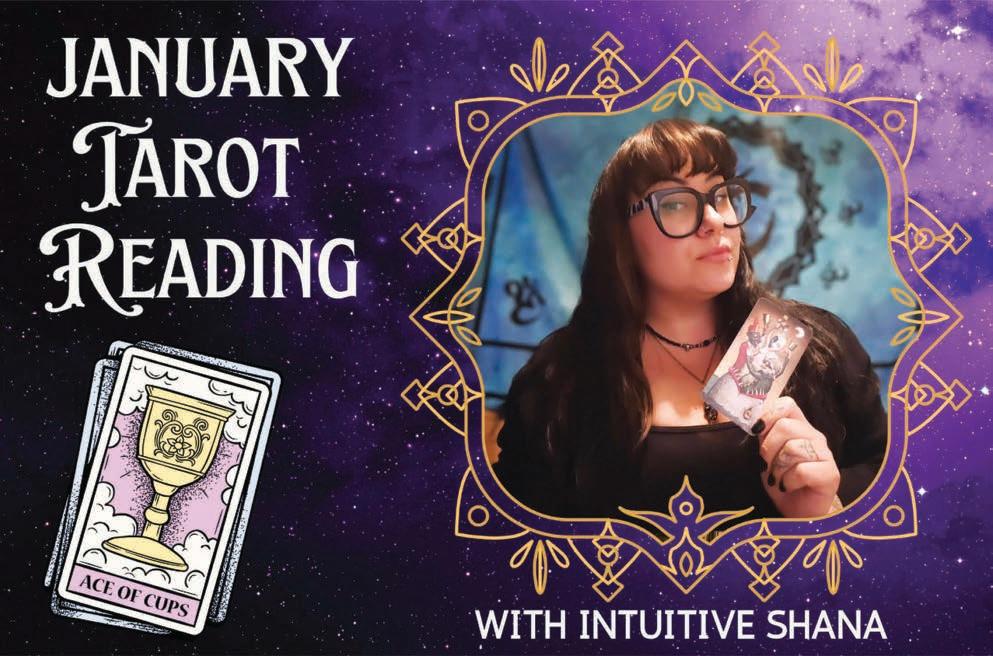
I hope this year is one that sprinkles love, stability, and power into your life, no matter where you are or what you’re going through. I always like to start my year off by cleansing and cleaning my space. I see it as a way of clearing out the energetic and material junk that has accumulated in my life throughout the previous year. So grab your Swiffer and some sage (or whichever herb is sacred in your life and practice) and get to work!
After your space is nice and clean, take a salt bath (and if you feel like there’s some extra ick on you, throw in some rosemary or bay leaves) and cleanse yourself as well. Finish this simple ritual off by taking a bite of something sweet or making the sign of the cross on your tongue with honey to invite sweetness into the coming year and consider the year enchanted from the start!
January is urging us to be strategic. Take your New Year’s resolution one step further than going to the gym a handful of times before getting distracted, or the promise of saving money that all but disappears when we see a sale pop up at our favorite spot on Melrose. We need to look at our goals and make them clear, simple, and in tune with our empowerment.
We are living and growing in a rapidly changing world, which means we need to take a look around us and consider what life will most likely look like over the next 6–12 months. That can seem scary, I know, but knowledge is power. When we arm ourselves with that power, we can set up game plans A, B, and C and know that our goals can and will be achieved, even if our plan of execution is subject to change. So map out a quarterly plan for how you’re living life in 2026 and revisit it often…preferably under the full moon with some candles and herbs that help keep things on track. (Remember, a little magic can take us a long way when we’re trying to get things done.)
I’m seeing that some folks are healing old wounds, especially mother wounds (as cliché as it sounds), that have recently been reopened or revisited. Healing is difficult and requires us to move through painful moments, but it is worth facing so you can process whatever trauma has been living rent-free in your mind or heart and move forward with your life. I’d like to remind you that healing isn’t linear; it’s more of a tango. You’ll take a few steps forward and a few steps back. If
you lean into the healing journey that’s been nagging at you, you may find that January is a bit of an emotional rollercoaster, but one that does have an ending, and that ending is beautiful and peaceful, my friend.
I know we’ve covered some of the heavier elements of the month, but I do have lighter news for you as well! This month brings open roads and possibilities, especially those involving contracts. If you’re dealing with a court case, officially landing a new role, or trying to close a big sale, January looks promising. Make sure you keep everything above board and in writing to protect your success.
As exciting as your good news may be, keep it to yourself until the deal is 100% sealed. We don’t need someone getting jealous of what you’ve got going on
and accidentally (or on purpose) throwing the evil eye your way. Keep your lips closed, and wear an evil eye, a piece of red coral, or black tourmaline can help keep bad vibes away while you work your magic and get down to business.
January is calling for us to be grown-ups. It’s asking us to make plans and stick to them, work on our emotional health, and put our game faces on. I know, it’s a lot, especially since so many of us are just trying to get back into the swing of things after the holidays. Just know that hard work gets sweetly rewarded, too.
Happy January, and happy 2026, everyone!
Shana is an initiated priestess, paranormal investigator, author, and host of the podcast Queer from the Other Side. Follow Shana on IG.
If you’re
What are you going to do differently this year?
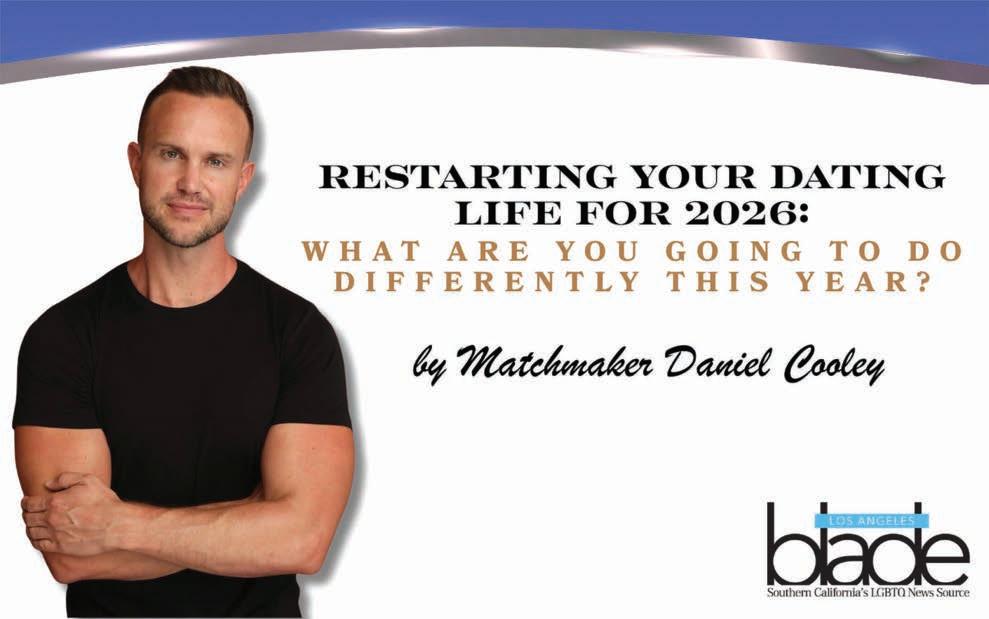
By DANIEL COOLEY
If you ended last year feeling like you’ve dated everyone, tried everything, and there’s no one left, I want you to pause for a second because that feeling is incredibly common, especially for gay men.
So let me ask you something, honestly.
What are you going to do differently this year?
Are you just going to get back on the apps again? Back on Grindr.
Back to the same bars.
Same patterns. Same guys. Same conversations. And hope somehow this year turns out better?
If you change nothing, nothing changes.
A lot of men I talk to are stuck in this back and forth. Do I want a relationship, or do I just want something casual? Am I ready? Is the timing right? Should I focus on dating or my career? Do I have enough money saved? Am I far enough along in life?
That constant indecision keeps you stuck right where you are.
Then we pile on old rejection, trauma from growing up gay, low self-esteem, and suddenly we start believing we need someone hotter than us, richer than us, more put together than us to feel chosen.
But here’s the part I want you to really hear. You don’t fall in love with a checklist.
You fall in love with how someone makes you feel.
Do they make you feel safe?
Do you feel calm around them?
Do you feel seen?
Do you laugh together?
Do you feel good being yourself?
That’s what actually builds connection.
Money doesn’t do that.
Abs don’t do that.
A job title doesn’t do that.
Those things can change. They come and go. So here’s where I’m going to point the finger back to you, in a loving way.
If you’re clear on the kind of man you want, what are you doing to become closer to that person yourself?
If you want someone kind and generous, how are you practicing kindness and generosity in your daily life? Do you volunteer? Do you compliment the person standing next to you even when there’s no attraction? Do you lead with warmth or with judgment?
If you want someone who values family, how much time are you actually spending with yours? Do you prioritize relationships the way you want someone else to?
If you want someone with a full life, hobbies, passions, and friends, what does your life look like right now? Are you doing the things you say you want to do, or are you sitting on the couch thinking about them?
You want to play piano. Travel. Hike. Be more active. What steps are you taking to actually live that life?
If you want someone active and adventurous, are you active and adventurous? If you want someone calm, grounded, and emotionally steady, how are you working on becoming grounded yourself? Do you meditate? Do yoga? Take some quiet time? Do anything that regulates your nervous system?
How about finding someone with an amazing body? How does your body look? Are you working out and eating well yourself?
By the way, you can always help your partner get into healthier habits if you are practicing them yourself.
This isn’t about perfection. It’s about alignment.
If you’re expecting someone to check every box while you’re not checking those boxes yourself, that’s not standards. That’s unrealistic expectations.
And remember, our dating pool is already small. Roughly four percent of the male population identifies as gay, bi, queer, or trans. Cut that down to people who are single. Then emotionally available. Then compatible. Then sexually compatible.
The number gets smaller fast.
So maybe this year we stop being so rigid.
Maybe we loosen the rules a little.
Maybe we focus less on the perfect body and more on the right energy.
Chemistry usually doesn’t show up on the first date. Most of the time it doesn’t. So if there’s even just a little attraction, kindness, and curiosity, maybe give it a second date. Maybe slow down long enough to actually see who’s in front of you.
Doing the same thing over and over is not dating. It’s just repeating patterns.
Dating with intention means being honest with yourself first.
If this year you’re ready to stop guessing, stop burning out on apps, and actually have a plan, matchmaking can help. You don’t need more options. You need clarity, accountability, and guidance from someone who understands queer dating and knows how to help you show up as your best self. If you’re serious about doing things differently this year, that’s where matchmaking comes in. Visit best-man-matchmaking.smartmatchapp.com/client/submissionform/20/ and let’s start 2025 right.
Daniel Cooley is a gay matchmaker & co-owner of Best Man Matchmaking – California ’ s premier service for queer and trans men seeking emotional connections. Learn more at bestmanmatchmaking.com.
By JOHN PAUL KING
Casting is everything when it comes to making a movie. There’s a certain alchemy that happens when an actor and character are perfectly matched, blurring the lines of identity so that they seem to become one and the same. In some cases, the movie itself feels to us as if it could not exist without that person, that performance.
“Marty Supreme” is just such a movie. Whatever else can be said about Josh Safdie’s wild ride of a sports comedy – now in theaters and already racking up awards – it has accomplished exactly that rare magic, because the title character might very well be the role that Timothée Chalamet was born to play.
Loosely based on real-life table tennis pro Marty Reisman, who published his memoir “The Money Player” in 1974, this Marty (whose real surname is Mauser) is a first-generation American, a son of Jewish immigrant parents in post-WWII New York who works as a shoe salesman at his uncle’s store on the Lower East Side while building his reputation as a competitive table tennis player in his time off. Cocky, charismatic, and driven by dreams of championship, everything else in his life – including his childhood friend Rachel (Odessa A’zion), who is pregnant with his baby despite being married to someone else – takes a back seat as he attempts to make them come true, hustling every step of the way.
Inevitably, his determination to win leads him to cross a few ethical lines as he goes – such as stealing money for travel expenses, seducing a retired movie star (Gwyneth Paltrow), wooing her CEO husband (Kevin O’Leary) to sponsor him, and running afoul of the neighborhood mob boss (veteran filmmaker Abel Ferrara) – and a chain of consequences piles at his heels, threatening to undermine his success before it even has a chance to happen.

Filmed in 35mm and drenched in the visual style of the gritty-but-gorgeous “New Hollywood” cinema that Safdie – making his solo directorial debut without the collaboration of his brother Benny – so clearly seeks to evoke, “Marty Supreme” calls up unavoidable connections to the films of that era with its focus on an anti-hero protagonist trying to beat the system at its own game, as well as a kind of cynical amorality that somehow comes across more like a countercultural call-to-arms than a nihilistic social commentary. It’s a movie that feels much more challenging in the mid-2020s than it might have four or so decades ago, building its narrative around an ego-driven character who trig-
gers all our contemporary progressive disdain; self-centered, reckless, and single-mindedly committed to attaining his own goals without regard for the collateral damage he inflicts on others in the process, he might easily – and perhaps justifiably – be branded as a classic example of the toxic male narcissist.
Yet to see him this way feels simplistic and reductive, a snap value judgment that ignores the context of time and place while invoking the kind of ethical purity that can easily blind us to the nuances of human behavior. After all, a flawed character is always much more authentic than a perfect one, and Marty Mauser is definitely flawed.
Yet in Chalamet’s hands, those flaws become the heart of a story that emphasizes a will to transcend the boundaries imposed by the circumstantial influences of class, ethnicity, and socially mandated hierarchy. His Marty is a person forging an escape path in a world that expects him to “know his place,” who is keenly aware of the anti-semitism and cultural conventions that keep him locked into a life of limited possibilities and who is willing to do whatever it takes to break free of them; and though he might draw our disapproval for the choices he makes, particularly with regard to his relationship with Rachel, he grows as he goes, navigating a character arc that is less interested in redemption for past sins than it is in finding the integrity to do better the next time – and frankly, that’s something that very few toxic male narcissists ever do.
In truth, it’s not surprising that Chalamet nails the part, considering that it’s the culmination of a project that began in 2018, when Safdie gave him Reisman’s book and suggested collaborating on a movie based on the story of his rise to success. The actor began training in table tennis, and continued to master it over the years, even bringing the necessary equipment to location shoots for movies like “Dune” so that he could perfect his skills – but physical skill aside, he always had what he needed to embody Marty. This is a character who knows what he’s got and is not ashamed to use it, who has the drive to succeed, the will to excel, and the confidence to be unapologetically himself while finding joy in the exercise of his talents, despite how he might be judged by those who see only ego. If any actor could be said to reflect those qualities, it’s Timothée Chalamet. Other members of the cast also score deep impressions, especially A’zion, whose Rachel avoids tropes of victimhood to achieve her own unconventional character arc. Paltrow gives a remarkably vulnerable turn as the aging starlet who willingly allows Marty into her orbit despite the worldliness that tells her exactly what she’s getting into, while O’Leary embodies the kind of smug corporate venality that instantly positions him as the avatar for everything Marty is trying to escape. Queer fan-fave icons Fran Drescher and Sandra Bernhard also make small-but-memorable appearances, and real-life deaf table tennis player Koto Kawaguchi strikes a memorable chord as the Japanese champion who becomes Marty’s de facto rival.
As for Safdie’s direction, it’s hard to find anything to criticize in his film’s visually stylish, sumptuously photographed (by Darius Khondji), and tightly paced delivery, which makes its two-and-a-half hour runtime fly by without a moment of drag.
It must be said that the screenplay – co-written by Safdie with Ronald Bronstein –leans heavily into an approach in which much of the narrative hinges on implausible coincidences, ironic twists, and a general sense of orchestrated chaos that makes things occasionally feel a little too neat; but let’s face it, life is like that sometimes, so it’s easy to overlook.
What might be more problematic, for some audiences, is Marty’s often insufferable –and occasionally downright ugly behavior. Yes, Chalamet infuses it all with humanizing authenticity, and the story is ultimately more about the character’s emotional evolution than it is about his winning at ping-pong, but it’s impossible not to read a subtext of American Exceptionalism into his winner-takes-all climb to victory – which is why “Marty Supreme,” for all its critical acclaim, is the subject of much heated debate and outrage on social media right now.
As for us, we’re not condoning anything Marty does or says as he hustles his way to the winner’s circle. All we’re saying is that Timothée Chalamet has become an even better actor since he captured our attention (and a lot of gay hearts) in “Call Me By Your Name.”
And that’s saying a lot, because he was pretty great, even then.