








States















States
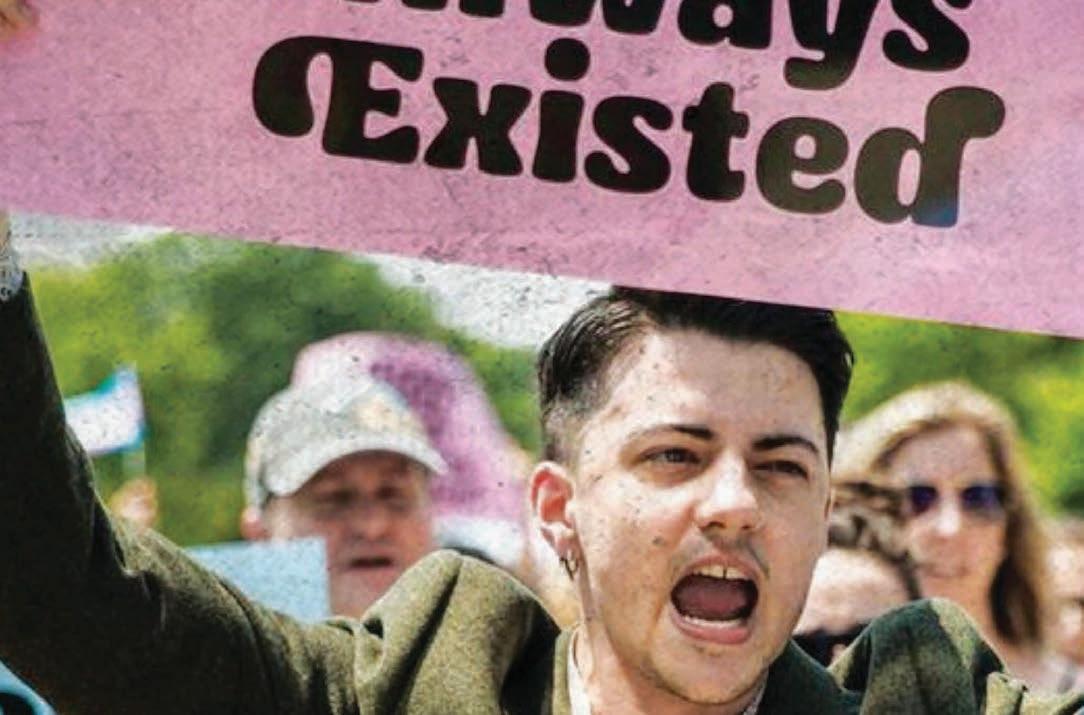
LOS ANGELES — One Institute announced its History Within Us, a one-day exhibition presenting creative research projects by six LGBTQ+ student leaders from the Institute’s 2023-24 Youth Ambassadors for Queer History program.
The students will be honored, and their work will be on display at One Gallery in West Hollywood on Saturday, January 27 from 3:00-5:00 PM. History Within Us is free and open to the public.
One Institute’s Youth Ambassadors for Queer History program ignites LGBTQ+ high school students’ passion for queer and trans history through in-depth archival research, field trips, workshops, and conversations with LGBTQ+ scholars, activists, artists, and community leaders. Utilizing materials from the digital collections at ONE Archives at the USC Libraries, as well as the insights and skills they gain throughout the semester-long program, students are encouraged to create a final project that showcases both their creativity and historical knowledge.
“I am inspired by the dedication our Youth Ambassadors for Queer History have shown to critically examine and creatively showcase our community’s histories,” said Education Programs Manager, Trevor Ladner. “These students, destined to become future leaders and scholars, embody profound respect for queer elders and showcase boundless creativity. They are already leading the charge for LGBTQ+ inclusion and storytelling.”
History Within Us will include a digital zine on lesbian publications in the 1960s and 1970s, an investigation into the impact of corporate funding on grassroots LGBTQ+ activism, and a deep dive into LGBTQ+ student organizations in colleges and high schools, and more. The installation will also include a “Letters to ONE” display, featuring students responses to archival letters sent by ONE Magazine readers in the 1950s and 1960s. Visitors are invited to view the exhibition while enjoying light refreshments, including rainbow and transgender flag-colored conchas from the LGBTQ-allied Los Angelitos Bakery.
RSVP for the free event at oneinstitute.org/history-within-us/
During the event, leaders from Los Angeles County and the City of West Hollywood — including Third District Supervisor Lindsey Horvath, City of West Hollywood Mayor John Erickson, City of West Hollywood Vice Mayor Chelsea Byers, and members of the City of West Hollywood Transgender Advisory Board — will honor this year’s cohort with certificates for their successful completion of the program, as well as their exemplary leadership skills and commitment to civic engagement.
“Learning about queer history is really important to me and has inspired me to take action in my community through sharing the knowledge I have gained,” said Youth
Ambassador JoJo (age 16). Adds Joshua (17), “We’re becoming more unapologetically ourselves. We keep fighting for our rights through protest, love, and art.”
History Within Us is organized by One Institute as part of the 2023-2024 Youth Ambassadors for Queer History program, led by Education Programs Manager Trevor Ladner. This programming is made possible through the support of the Dwight Stuart Youth Fund. Special thanks to ONE Archives at the USC Libraries for their research support, as well as the City of West Hollywood and the Los Angeles County Board of Supervisors.

Queerly Important: Exploring the Impact of Queer Student Unions by Cora, 15, is an interactive photo gallery that examines how LGBTQ+ student groups— such as the Gay and Lesbian Student Union at Los Angeles City College or Project 10 in LAUSD — have served as vital resources for inclusivity, expression, education, and support of LGBTQ+ youth from the 1960s to today.
Follow the Money Trail by Luca, 15, is a visual presentation that explores funding of LGBTQ+ movement from the 1980s to the present, questioning how sources of LGBTQ+ funding today, such as large corporate grants, have impacted movement goals compared to the grassroots fundraising of activists such as ACT UP Los Angeles in the 1980s and 1990s.
Dear Robert by Jojo, 16, is a poetry series that probes various perspectives and ethical questions in the case of Robert Rosenkrantz, who— as a Calabasas High School student during the anti-gay hysteria of the 1980s AIDS crisis— was incarcerated for murder in 1986 after fatally shooting a homophobic bully, his case garnering national LGBTQ+
attention through an article in The Advocate.

Forever Queer: The Hidden Rainbow Inside of Neverland by Star, 17, is a visual art series that celebrates the trailblazing performance of Maude Adams— actress, production designer, and lesbian— who originated the role of Peter Pan on Broadway in 1905, a story which itself continues to inspire young, queer imagining.
Here Before Us by Joshua, 18, is an ofrenda, or altar, honoring the storied lives of queer Latinx individuals and institutions in California, including candidate and drag queen José Sarria, activist and journalist Jeanne Córdova, the popular nightclub Circus Disco, and Gay and Lesbian Latinos Unidos.
Those Lesbians are Everywhere by Sophie, 18, is a digital zine that celebrates lesbian activism and identity in the 1970s through 1990s through an exploration of queer women’s publications, including The Lesbian Tide and Kitchen Table Press, as well as the role of lesbian organizers in political groups, such as the National Organization for Women and ACT UP Los Angeles.
One Institute (formerly ONE Archives Foundation) is a nonprofit organization dedicated to elevating queer and trans histories and embracing emerging stories through collaborative education, arts, and cultural programs. Founded in 1952, One Institute is the oldest active LGBTQ+ organization in the United States. Today, the organization produces one-of-a-kind exhibitions and public programs connect LGBTQ+ history with contemporary culture to effect social change. Through our distinctive K-12 teacher trainings, lesson plans, and youth mentorship programs, we empower the next generation of teachers and students bringing queer and trans history into classrooms and communities. Additionally, the Institute assists in promoting the materials within ONE Archives at the USC Libraries, which houses the largest collection of LGBTQ+ materials in the world.
The curatorial and educational choices made by One Institute are guided by our commitment to social equity and justice. We engage with the complexity of LGBTQ+ history and representation through highlighting the intersectional and authentic narratives of Black, Indigenous, people of color (BIPOC), women, gender- nonconforming and transgender people, people of various abilities, youth, and elders across all socio-economic classes.
Learn more about Youth Ambassadors for Queer History at oneinstitute.org/youth-ambassadors-for-queer-history. More information is available here: oneinstitute.org, and connect on Facebook, Twitter, and Instagram @oneinstitutela.
LA BLADE STAFF

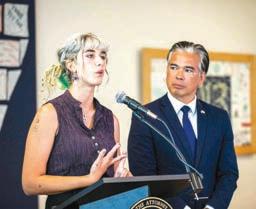
OAKLAND — California Attorney General Rob Bonta today issued a legal alert addressed to all California county, school district, and charter school boards and superintendents, warning them against forced gender identity disclosure policies detrimental to the privacy, safety, and well-being of transgender and gender-nonconforming students.
Forced disclosure policies require schools to inform parents whenever a student requests to use a name or pronoun different from that on their birth certificate or official records, even without the student’s permission or when doing so would put them at risk of physical, emotional, or psychological harm. Such policies also require notification if a student requests to use facilities or participates in programs that do not align with their sex on official records. In today’s alert, Attorney General Bonta reminds all school boards that these forced gender identity disclosure policies violate the California Constitution and state laws safeguarding students’ civil rights.
Today’s announcement comes after Attorney General Bonta secured a ruling from the San Bernardino Superior Court preliminarily enjoining the Chino Valley Unified School District Board of Education’s mandatory gender identity disclosure policy in October 2023.
“Unconstitutional school policies that forcibly out and endanger the psychological and emotional well-being of transgender and gender-nonconforming students have no place in our classrooms,” said Attorney General Bonta. “Today’s alert serves as a reminder to all school officials of their duty to ensure a safe and inclusive learning en-
vironment, particularly for our most vulnerable student populations susceptible to violence and harassment. At the California Department of Justice, we will continue safeguarding the civil rights of all students.”
In today’s alert, Attorney General Bonta stresses that forced gender identity disclosure policies infringe on several state protections safeguarding students civil and constitutional rights, including:
California’s Equal Protection Clause: These policies unlawfully discriminate against and single out students who request to identify with or use names or pronouns different from those on their birth certificates, or who access programs or facilities that, in the view of the board, are not “aligned” with the student’s gender.
California’s Education and Government Code: Education is a fundamental right in California, and California Education Code Sections 200 and 220 and Government Code section 11135 also ensure equal rights and opportunities for every student by prohibiting discrimination on the basis of gender identity and gender expression. Forced disclosure policies violate these fundamental anti-discrimination protections.
California’s constitutional right to privacy: California’s constitution expressly protects the right to “privacy,” including both “informational privacy,” and “autonomy privacy,” and policies that mandates outing transgender and gender-nonconforming students against their wishes or without their consent violates that right.
Research shows that protecting a transgender student’s ability to make choices about how and when to inform others is critical to their well-being, as transgender students are exposed to high levels of harassment and mistreatment at school and in their communities when those environments are not supportive of their gender identity.
One-in-10 respondents in a 2015 national survey said that an immediate family member had been violent toward them because they were transgender, and 15% ran away from home or were kicked out of their home because they were transgender. Fewer than one-in-three
transgender and gender nonbinary youth found their home to be gender-affirming.
Nearly 46% of transgender students reported missing at least one day of school in the preceding month because they felt unsafe or uncomfortable there and 17% of transgender students reported that they left a K-12 school due to the severity of the harassment they experienced at school.
Seventy-seven percent of students known or perceived as transgender reported negative experiences such as harassment and assault, and over half of transgender and nonbinary youth reported seriously considering suicide in the past year.
Equality California, the nation’s largest statewide LGBTQ+ civil rights organization, released the following statement from Executive Director Tony Hoang in response to legal alerts issued by California Attorney General Rob Bonta:
“As LGBTQ+ students head back to school in the new year, Attorney General Bonta is reassuring them that the California Department of Justice has their backs. In 2023, we saw an increase in anti-LGBTQ+ rhetoric from farright extremists in California that led to direct attacks on our youth in the form of forced outing policies that out transgender students without their consent and attempts to censor or ban books and curriculum that so much as mention LGBTQ+ people. Already vulnerable young people should not be subject to even greater harassment and harm in their learning environments..
These legal alerts put those who seek to violate or roll back the rights of LGBTQ+ youth on notice that doing so violates these students’ constitutional and legal protections and will not be tolerated in California.
The Attorney General has been a steadfast ally in combating these efforts by anti-LGBTQ+ extremists, and we are grateful to him and to our legislative allies in Sacramento who have consistently worked to improve the lives of LGBTQ+ students in California.”
LA BLADE STAFF
WEST HOLLYWOOD - In an Instagram post, dated January 5, 2024, RuPaul Charles, the star and host of RuPaul’s Drag Race reminisced on his love for The Sunset Strip in West Hollywood dating back to his childhood in the 70s.
January 5, 2024. The billboard is above Pink Dot, located at 8495 Sunset Blvd.
RuPaul’s Drag Race revealed the cast of 14 new queens for the show’s season 16. Competing for the show’s 16th regular-season crown, a $200,000 prize, and the title of America s Next Drag Superstar across the two-part premiere is an eclectic mix of drag styles from around the country, including season 13 star and All Stars 8 finalist Kandy Muse’s drag daughter, season 14, who was Miss Congeniality winner Kornbread’s drag sister from the House of Jeté.
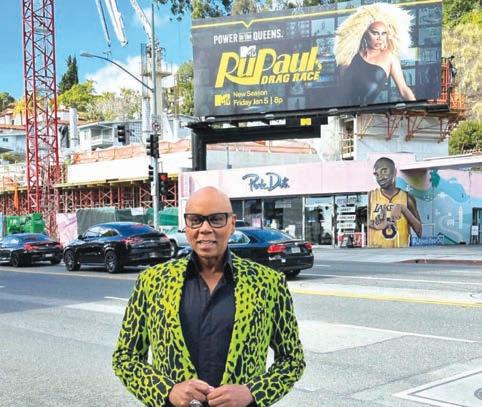
“In the ’70s, my family knew how much I loved the brilliant billboards that lined the Sunset Strip,” wrote RuPaul on his official Instagram account. “When we drove up to LA, they would drop me off on the corner of Fairfax and Sunset Boulevard, and for hours, I’d walk up and down the Strip, captivated by the dazzling billboards featuring icons like Cher, Donna Summer, and Diana Ross. I’d pray that one day, l’d be among them. Dreams come true, and although I’ve had billboards here before, each new one feels like the first. DragRace 16 returns tonight, and remember, If you can’t love yourself, how in the hell you gonna love somebody else?”
A photo shows RuPaul standing on Sunset Boulevard in front of giant billboard promoting the new season of RuPaul’s Drag Race Season 16, which premiered on Friday,
The show s two-part premiere introduced a new twist, as two groups participate in maxi challenges divided into themes: MTV’s Spring Break and the Queen Choice Awards. Following the talent show performances, the queens will be tasked to Rate-A-Queen and rank each other’s performances. This will determine the tops and bottoms of the challenge. The new episodes are followed by regular episodes of Untucked.
MIKE PINGEL
SAN DIEGO - As soon as gay former Republican San Diego city councilman Carl DeMaio in December jumped into the race for the open Assembly District 75 seat, LGBTQ state legislators were wondering if the firebrand conservative would want to join their affinity group for out members of the Legislature should he be elected. And if he did, they jokingly asked who wanted to volunteer to tell him he wasn’t welcome.
They were obvious questions to raise as the 49-year-old DeMaio has vocally disparaged the priorities of the Legislative LGBTQ Caucus on his radio show, social media accounts, and the website of Reform California, the organization he chairs “dedicated to taking back our state from the far-Left politicians and special interests.” Several laws authored or supported by caucus members last year made DeMaio’s list of the top five worst California laws in 2024.
Among them was Assembly Bill 1078 authored by gay Assemblymember Corey A. Jackson, Ph.D., (D-Perris), which restricts school boards from censoring instructional materials based on their LGBTQ content or coverage of topics like race. The law, which took effect in the fall as soon as Governor Gavin Newsom signed it, also prohibits public schools in the state from banning books that address those two topic areas.
DeMaio lambasted the bill for only serving “as an infringement of local control over curriculum decisions” and for limiting “the ability of parents and communities to have a say in what is taught in schools.”
He also criticized Senate Bill 407 by gay state Senator Scott Wiener (D-San Francisco) that requires foster care officials ensure LGBTQ children in the system are placed with foster families that will be supportive of their sexual orientation or gender identity. DeMaio derisively referred to the bill as requiring foster families “to support gender-bending surgeries and therapies for minor children” if they don’t want to lose their ability to be foster parents.
“At a time when there is a severe shortage of foster homes, this new law is insane and only will hurt foster kids!” argued DeMaio, who had railed against the bill last spring for targeting “foster parents who aren’t woke enough.”
It is no wonder there is already speculation about what a victory by DeMaio in his Assembly bid might mean in terms of his membership in the caucus, which currently has a historic 12 members. Three are set to depart come December, lesbian Senators Toni Atkins (D-San Diego), the soonto-step-down Senate president pro tempore, and Susan Talamantes Eggman (D-Stockton) due to term limits and gay Assemblymember Evan Low (D-Cupertino) because he is running for Congress this year.
The LGBTQ caucus formed in 2002; members are required to identify with one of the letters of the LGBTQ acronym. To date, straight legislators with LGBTQ children or siblings have been told they are ineligible to join.
There has never been a Republican member. Gay former GOP senator Roy Ashburn came out in 2010 due to being arrested for drunk driving after leaving a Sacramento gay
club, but he never joined the caucus and left office later that year when his term expired.
There are at least 30 LGBTQ candidates running for state legislative seats in the March primary that the Bay Area Reporter is aware of, with several seeking the same office. Come November it is expected that at least half of them, if not more, will win their races, with DeMaio seen as having the greatest chances of becoming the first out Republican elected to the California Legislature.
Those who do win will help decide if DeMaio, should he also be declared the winner of his contest, should be allowed to become a member of the LGBTQ caucus, gay Assemblymember Chris Ward (D-San Diego) told the B.A.R. in December when he happened to be in San Francisco for a holiday party and meetings with local leaders and housing advocates. As he is currently vice chair of the affinity group, Ward is set to become chair of the LGBTQ caucus during the 2025-2027 legislative sessions.
“We have not had a conversation about the qualifications for membership. I would imagine the caucus members would find it very difficult to accept someone who is not in support of marriage equality, who is married incidentally, or someone who is not consistent with our core priorities,” said Ward, who endorsed Democrat Kevin Juza in the Assembly race with DeMaio.
Dylan Martin, a spokesperson for DeMaio’s Assembly campaign, did not respond to the B.A.R.’s questions about DeMaio’s interest in becoming a member of the LGBTQ caucus.
DeMaio routinely boasts that he was the first “openly gay man” elected to the San Diego council with his 2008 victory. Yet ever since DeMaio has been harshly criticized for not fighting for LGBTQ rights and cynically using his own sexual orientation in his political campaigns.
While running for his council seat DeMaio did nothing to oppose Proposition 8, California’s 2008 ban on samesex marriage. He later accepted campaign donations from backers of the homophobic ballot measure during his failed mayoral run in 2012, reportedly after promising not to push an LGBTQ agenda at City Hall.
Two years later he featured his then-boyfriend, Johnathan Hale, in an online ad for his ultimately failed congressional bid, winning praise for being the first known GOP candidate to do so. The men married in 2015 on the occasion of their sixth anniversary of meeting, though DeMaio makes no mention of his husband in his Assembly campaign bio
In 2020, DeMaio failed to survive a heated primary race when he again ran for Congress. Despite his personal electoral setbacks DeMaio has scored some victories at the ballot box, particularly the successful recall he led of former Democratic state senator Josh Newman in 2018. Newman had drawn DeMaio’s ire for casting the deciding vote the year prior for an increase in the state’s gas and car taxes. More recently DeMaio has focused on pushing statewide ballot measures via his Reform California position. He is
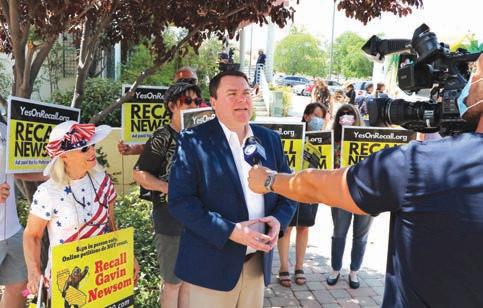
well known in the San Diego area and seen as a formidable contender to succeed termed out Assemblymember Marie Waldron (R-Escondido), as evidenced by the nearly $1 million he has netted ahead of the March primary, in which the top two vote-getters will advance to the November ballot.
Ward told the B.A.R. DeMaio “is a known quantity” and “has a shot” at winning the Assembly seat, which borders on the east his own 78th Assembly District.
“He has a following amongst the Republican base in that Assembly District,” noted Ward, adding that DeMaio speaks to some very “hateful feelings in order to achieve cheap political points. If that is a recipe to win that is unfortunate.”
Wiener told the B.A.R. the issue of DeMaio’s membership in the LGBTQ caucus would need to be addressed should DeMaio win his race. He expressed concern about seeing DeMaio try to derail the affinity group’s legislative work as a caucus member.
“I think we have to definitely take a look at it. I don’t want to go too far out on this, as it should be a caucus discussion and I would want to know what our leadership thinks,” said Wiener. “There is also a range when it comes to Republicans, and Carl has proven himself to be untrustworthy and hostile in many, many ways to our community. I think it could be very problematic; he could end up being a saboteur in our caucus.”
The issue of his being allowed into the affinity group, added Wiener, “is certainly a conversation we will have to have and be respectful of our leadership.”
As for his bill that DeMaio lambasted, Wiener said it makes no sense for the state to be putting foster youth into homes that could be hostile to them. He noted LGBTQ youth can come out at any age and years after being paired with their foster parents, so it is important to have the policy in place when screening potential foster families.
“The idea we would put a kid in a foster home that is then going to kick that kid out when the kid comes out makes no sense. Why on earth would we ever do that?” asked Wiener. “Foster parents can have any opinion they want. But when you are taking care of a child on behalf of the state of California, you should be aware of and able to comply with the legal requirement not to discriminate against these kids.”
MATTHEW S. BAJKO
NEW YORK - The Czech National Building, known as the Bohemian National Hall in New York City, leased a meeting space to Moms for Liberty, a Southern Poverty Law Center listed extremist organization for an event on January 18, which has drawn opposition from the Czech Foreign Minister.
In a statement to Prague-based Czech media outlet Seznam Zprávy, Foreign Minister Jan Lipavský said: “I do not agree with the event, the activities of this organization do not correspond to the interests of Czech foreign policy, and if it were up to me, it would never have taken place on the grounds of the Czech national building.”
Known as the Bohemian National Hall, (Czech: Česká národní budova), the five story building located at 321 East 73rd Street on the Upper East Side of Manhattan in New York City, is a mix of office and meeting spaces along with its famed Grand Ballroom and is owned by the Czech government.
The Ministry of Foreign Affairs further stated to Seznam Zprávy and American media outlets, the event is not an expression of the position of the Consulate General in New York, the Ministry of Foreign Affairs or the Czech Republic.
“This is an event realized on the basis of a commercial lease of the premises of the building by the expatriate organization Bohemian Benevolent and Literary Association (BBLA) as lessor. The Consulate General was not informed in advance of the conclusion of this lease agreement between BBLA and Moms for Liberty,” the ministry said.
The January 18 event also drew the ire of U.S. Representative Jerry Nadler, whose congressional district includes the Upper West Side, represented by Nadler since the
1990s, the Upper East Side, and all of Midtown Manhattan.
Speaking to New York City community news website the Upper East Side, the congressman said: “There is no place for hate or religious extremism in New York.”
Openly gay New York state Senator Brad Hoylman-Sigal tweeted:

To the Prime Minister of the #CzechRepublic@P_Fiala: I urge you to reconsider hosting #MomsforLiberty, a far right and anti- #LGBTQ extremist group, at the Czech Consulate in NYC on January 18 cc: @CzechMFA; @splcenter
The right-wing blogsite Daily Signal, owned by the anti-LGBTQ+ Heritage Foundation reported:
Moms for Liberty co-founder Tiffany Justice responded to harsh criticism from Manhattan s borough president, who attacked the parental rights group ahead of a town hall-style event later this month. Mark Levine, the borough president, said Wednesday [Jan. 03, 2024] that Moms for Liberty “has no place here” after he learned about the event.
“This group is anti-LGBTQ, supports book bans, harasses teachers & school librarians, and has been labeled by the SPCLC as a ‘far right extremist organization,’” Levine wrote in a statement. “Manhattan is the home of Stonewall,” he added.
Justice responded by asking whether Levine would “like to join us” at the town hall. As for the claims that Moms for Liberty is “anti-LGBTQ,” Justice said one of the group’s top leaders is lesbian, the organization has gay chapter chairs, and some chapter chairs have gay kids, the Daily Signal noted.
Moms for Liberty got its start pushing back against
COVID-era school policies in Florida in 2021 later expanding to over 400 chapters across the U.S. pushing anti-LGBTQ and racial book bans, trans outing policies, and other far right extremist policies.

In recent months the group has been plagued by scandals including a sex scandal in Florida by one of its co-founders and her husband, a chapter affiliated member in Tennessee being arrested for retail theft, and its chapter in Indiana which used Adolf Hitler’s quote “He who has the young generation wins the future” in one of its newsletters, as reported by the Associated Press. Then, as first reported by The Philadelphia Inquirer, the Moms for Liberty Philadelphia chapter’s former faith-based outreach coordinator and a local pastor is also a convicted sex offender stemming from a 2012 felony conviction for aggravated sexual abuse of a 14-year-old boy in Illinois.
BRODY LEVESQUE
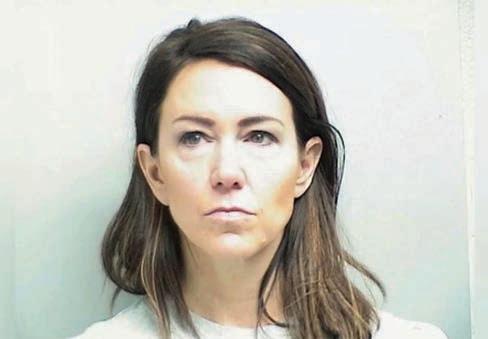
COLLIERVILLE, Tenn. - A Collierville Schools board member backed by anti-LGBTQ+ extremist group Moms for Liberty has resigned after being charged with seven counts of property theft from the Collierville Target retail store located at 325 New Byhalia Rd.
Keri Leigh Blair, 43, was booked into the Shelby County jail Friday, January 5, charged by Collierville Police of shoplifting at Target seven times over a 26-day period on November 25, 30, and then on December 3, 6, 13, 18, 20. According to police, Blair stole $728.61 worth of merchandise by “skip scanning items at the self-checkout.” She would arrive each time in the same car and used a debit card in her name, arrest records show.
The amounts ranged from $63.38-$140.49 and the investigation was launched on Dec. 27, a week after her last alleged theft. She was released from custody on a $7,500 bond.
In a statement the Collierville Schools announced Wednesday, Jan. 10, 2024, that Blair had resigned the day before as a school board member:
Late yesterday afternoon, School Board Chairman Wright Cox received notice from Board Member Keri Blair
of her resignation from the Board of Education for personal, family reasons. Ms. Blair was serving her first term, having been elected to School Board Position 4 in November 2022. Chairman Cox wishes to express his thanks for Ms.
Blair’s service to the community and her commitment to public education in Collierville.
State law requires that Ms. Blair’s replacement be appointed by the Collierville Board of Mayor and Aldermen (BMA). The BMA has worked closely with the Board of Education in the past when selecting a new board member, and the School Board looks forward to continuing in this spirit of cooperation. The appointed board member will serve in the position until the next municipal election on November 5, 2024.
Blair ran her 2022 campaign as a conservative campaign supporting parent choice and with criticism of perceived “social agendas” in public education, The Memphis Commercial Appeal reported.
For the most part, Blair self-financed her campaign but also received contributions from community members including Patricia Woodard, treasurer for the Shelby County chapter of Moms for Liberty. The national conservative political group has grown in recent years and successfully supported school board candidates in recent elections, the Memphis Commercial Appeal noted.
BRODY LEVESQUE
By CHRISTOPHER KANE | ckane@washblade.com
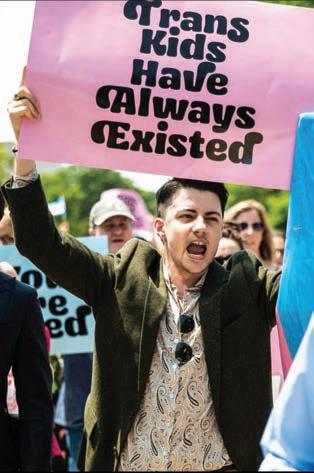
On Wednesday, the Missouri General Assembly was slated to discuss eight anti-trans bills, from regulations barring “discrimination” against health providers who refuse to perform gender affirming care to an exclusionary “bathroom bill.”
Legislative researcher Erin Reed told the Washington Blade on Tuesday that she expects these items will leave no room for other business: “This happened last year on a number of occasions” with hearings that began at 9 a.m. and stretched past midnight.
Missouri “had one day last year where they heard several sports bans and several health care bans and then several drag bans in the same day,” she said. “The idea, I think, is to truly wear people down.”
The Show-Me State’s legislative calendar this week is almost rote: 17 days into the new year, lawmakers in Congress and in statehouses across the country are considering more than 275 anti-trans bills according to the Trans Legislative Tracker and ACLU.
With 150+ pieces of legislation that were carried over from last year and some 100+ new bills, 2024 could break records that have been set for each of the past three consecutive years. “Our count right now is 230 have been introduced this year,” Reed said, referring to new bills. “The number has been going up really quickly.”
“Across the country, state and local politicians have declared war on freedoms, including the freedom to get
necessary medical care, a good education, and to simply exist without fear of violence or state-sanctioned discrimination,” Human Rights Campaign National Press Secretary Brandon Wolf told the Washington Blade.
“The result has been a crisis for millions of LGBTQ+ people, many of whom have been forced to flee their states to access basic civil liberties,” he said, adding, “The 2024 attacks on freedom are already accelerating. MAGA politicians are already doubling down on the agenda to strip transgender people of lifesaving care, ban more books, censor more curriculum, and wield state statutes as a weapon against people’s freedom to exist as their authentic selves.”
Anti-trans legislation can be difficult to categorize. Bills restricting trans young people’s ability to play on sports teams that align with their gender identity, for example, often including sweeping binary and exclusionary definitions of gender and sex.
Bans and restrictions on healthcare remain popular. Measures targeting access to medically necessary healthcare interventions that are supported by every mainstream scientific and medical organization with relevant clinical expertise have surged, totaling 179 bills in 2023 and 68 so far in 2024, according to the Trans Legislative Tracker.
Overall, compared to last year, Reed said, “the frequency of the bills is higher right now. And there are still state legislatures that are not fully in session.”
And looking ahead, the pace is unlikely to taper off as Republican presidential candidates including the party’s frontrunner, former President Donald Trump, have made anti-trans policy proposals and rhetoric cornerstones of their campaigns, Reed noted.
For instance, Florida Gov. Ron DeSantis will participate in a meeting Wednesday in South Carolina focused on “trans people in sports — and so, we’re gonna see more of these bills proposed and the heat and the pressure has ratcheted up this year,” she said.
“There’s already a lot of lack of understanding of transgender people in the United States and Republicans have taken advantage of that,” Reed said. “That lack of understanding is, I think, magnified whenever it comes to sports and whenever it comes to the expectations people have of trans people and our bodies and what we look like and who we are.”
Not only is anti-trans legislative activity outpacing that which was seen last year, but Reed said the scope of bills targeting the LGBTQ community has broadened relative to 2023.
“Some of the states might have passed a sports ban but didn’t pass a drag ban. Some of the states that passed a drag ban might not have passed a sports ban. And so now we’re seeing all of those states kind of say, ‘OK, let’s do that too.’”
At the same time, Reed said, states have expanded anti-LGBTQ laws that were passed in recent years. For example, Florida was the first to pass “don’t say gay” legislation, which prohibited classroom discussion of sexual orientation and gender identity through the fifth grade. It took effect in 2022. After other states followed its lead, last year Florida moved to enforce the law in all grade levels.
This year, Reed noted, Florida proposed a measure “that would essentially make all trans people and all people in the state of Florida sign biological sex affidavits whenever they update their driver’s licenses.”
If passed, the law would “basically end all legal recognition for trans people in the state. It takes every single place in the state law where trans people have any sort of legal recognition of their gender identity and erases it,” she said. Toward the tail end of Missouri’s legislative sessions last year, when the general assembly was debating drag bans, the LGBTQ community and allies continued to show up, Reed said — many dressed in drag, even “at the end of the night, like one in the morning.”
She highlighted the results of the 2022 and 2023 midterm elections, where “These attacks did not work” and “most people that ran on anti-trans campaigns lost their elections — and I can name dozens of examples of this.”
Reed said she could not name a single candidate who, “running specifically on this issue as their main talking point at the end of the election” won their race.
Likewise, Wolf said, attacks against LGBTQ people are accelerating, “But the truth is: LGBTQ+ people have been here before, with fewer allies and fewer resources. We won then and we will win again now.”
He urged folks to “Show up to hearings, call and email lawmakers, organize our communities, and send a clear message: the war on freedom and equality will not win. Resistance is in our DNA. And the time for it is now.”
The U.S. Supreme Court on Tuesday declined to hear an Indiana case on whether schools can bar transgender students from using a bathroom that reflects their gender identity.
The justices in a brief order denied a request from a central Indiana school district to hear the case, which centers around a now-teenage trans boy, identified in court documents as A.C., who was barred from using the boys restrooms at his former middle school, the Hill reported.
Represented by the American Civil Liberties Union of Indiana, an adolescent trans boy and his parents filed a lawsuit against the Metropolitan School District of Martinsville in December 2021 for failing to provide him with access to bathrooms consistent with his gender in violation of his rights under Title IX, the law prohibiting sex discrimination in educational programs, as well as the Equal Protection Clause of the 14th Amendment. In an August 2023 opinion, the 7th
Circuit Court of Appeals found the school district policy did likely violate the student’s rights under Title IX and equal protection.
The Supreme Court has a track record of declining cases involving trans protections. In 2021, the justices declined to review a ruling from the 4th U.S. Circuit Court of Appeals involving Gavin Grimm, a trans boy in Virginia.
FROM STAFF REPORTS
LITTLETON, N.H. – Angry residents of picturesque Littleton, New Hampshire gathered this past Monday demanding an apology for the homophobic remarks made by select board member Carrie Gendreau who called “homosexuality an abomination” and accused a local theatre company of pushing “demonic” pro-LGBTQ+ messages.
There was no apology instead the Town Manager Jim Gleason stepped down from his position, citing the pain he said he experienced during the controversy. Gleason said he has been subject to hateful remarks about his late son, who was gay.
“I’ve been here almost three years, and, yes, I’m an outsider when I came and still the guy from Florida and whatever,” Gleason said in an interview with New Hampshire Public Radio “This is a beautiful community. There are some great people in this community that I’ve got to work with.”
This past summer, North Country Pride, which hosts an annual Pride Festival in the town, collaborated with local artists and the United Way to install the murals. While the artwork generated mostly positive feedback from the community, they led the three-person board to consider banning all public art.
Board member Carrie Gendreau, a conservative Republican who is also a state Senator, first complained about the murals at a town board meeting in August. Gendreau elaborated to The Boston Globe that she believes “homosexuality is an abomination” and explained that she follows to the writings of doomsday cultist Jonathan Cahn.
Among Cahn’s fringe theories is a belief that rainbows are demonic symbols that power the ancient Mesopotamian
goddess Ishtar, who wants vengeance on Christianity for marginalizing her.
The board, which leans conservative even though the town voted nearly 50-50 Biden-Trump in 2020, wanted to ban all LGBT art, but found that there wasn’t a way they could do that without running afoul of anti-discrimination and free speech laws. So instead, the board announced they would consider banning all art in public places.
The murals aren’t the only queer art in the town board’s sights.
A local production of the classic gay musical La Cage Aux Folles in the town Opera House has also been the target of attempted censorship by the town board.
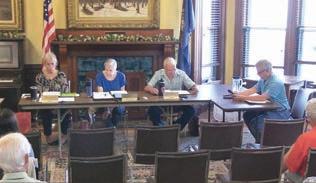
At the meeting, select board Chair Roger Emerson said the board was never planning to ban public art. Emerson and Gendreau suggested the idea could have come from Theatre UP leaders and possibly Gleason. Gleason told NHPR he feels a review of art still places the town in a predicament.
Littleton, New Hampshire Board of Selectmen, from left: CARRIE GENDREAU, Vice-Chair LINDA MACNEIL, Chair ROGER EMERSON and Town Manager JIM GLEASON in a meeting last Fall. (Screenshot/YouTube Granite State PBS)
The 1983 Tony Award-winning musical by Jerry Harmon and Harvey Fierstein tells the story of a gay couple who own a drag nightclub and try to pretend to a be a straight couple when their son becomes engaged to the daughter of a conservative politician. It was adapted into the 1996 film The Birdcage.
Theatre UP President Courtney Vashaw says the company was inspired to put on La Cage after far-right protestors disrupted a drag queen story hour at the local library.
After Monday’s meeting and his resignation, Gleason told NHPR he hopes that, with his departure, the board and community will be able to move forward.
“I will say nowhere in any email from the Board of Selectmen or in public comment did they ever use the word ‘ban,’ ” Gleason said. “But when someone says, ‘we need to do something to ensure that this art on these private buildings doesn’t make it onto public property’ – that to me is a ban. Because the board has two choices: They cannot regulate content, so they either allow it or they don’t.”
Kerri Harrington, co-chair of North Country Pride, a nonprofit that supports LGBTQ+ people in the area, told NHPR it’s been a difficult chapter for Littleton and that Monday’s meeting was a bit of a shock to not receive an apology. The meeting also closed with a reading by Gendreau, in which Harrington said people walked out on feeling upset by its contents.
“People were angry and sad, and it’s been really rough, it’s not been feeling great around here,” Herrington said. “Now we’re in a predicament because we’re not going to have a town manager.”
BRODY LEVESQUE
ENFIELD, Conn. - The Enfield Town Council voted 6-5 Monday night to only allow the U. S. flag, the Connecticut state flag and military flags to be displayed on any town properties.
The town of 44,466, located 18 miles North of the capital city of Hartford, has a newly-elected Republican majority council which in the council session effectively banned the Town Hall from displaying Pride flags during Pride Month in June, reversing a 2022 policy that allowed the flags to be displayed.
NBC News Hartford affiliate WVIT 30 reported that during

WESTMINSTER, Md. — The Carroll County Board of Education voted unanimously to ban any book deemed to have sexually explicit content. The decision on Wednesday, January 10, came after 61 books were challenged by the group Moms for Liberty, including LGBTQ+ titles or themes.
The local chapter of the national group, deemed as an extremist anti-LGBTQ+ group by the Southern Poverty Law Center, led the fight to ban books in Carroll County Public
the discussion over the display of the flag Tom Tyler, the interim town attorney, argued that allowing the flag to be displayed would create a scenario where: “ISIS could come in and want to display one, the IRA…basically anybody. You’d have to be content neutral and let everybody.”
NBC 30 also noted that Greg Gray, a local pastor and president of Enfield Pride, encouraged residents and businesses to display Pride flags in the wake of the town’s decision.
“I am disturbed that the new Republican majority felt this was a decision they needed to make basically on day one of
them coming into office,” Gray said. Brandon Jewell, local advocate and activist for LGBTQ+ people and their families, spoke against the vote
“The meaning of buildings, that you can’t be inside any town-owned property so that’s the schools where many of the teachers have safe space stickers on their doors, they have Pride flags hanging,” he said. “I think there should have been more thought into this before it was actually put on the agenda.”
BRODY LEVESQUE
Schools. Carroll County group chair, Ellicott City resident Kit Hart had previously told the board, “the material that 13yo’s have access to in schools should be very different that the content adults enjoy. We need to stop treating children like adults.”
According to NBC News affiliate WBAL 11 News Baltimore: The rule defines sexually explicit content as “unambiguously describing, depicting, showing or writing about sex or sex acts in a detailed or graphic manner.”
“There is no academic value in providing children access to books with explicit sexual content that goes into graphic and textual detail of sexual activity,” school board member Stephen Whisler said.
Whisler said it’s a parent’s job to decide what is appropriate for their child He then added, “It merely provides our
educators with guidance on what is not appropriate for our students. This policy does not ban books. Instead, it provides responsible standards that our superintendent should consider.”
There were those in the minority, parents, who disagreed. Jessica Bronson a mother of two high schoolers told WBAL: She thinks the wording of the policy is too broad and is concerned that it will cover classical books. She said she has already discussed the policy with her two children.
“Their first thought is, ‘Why are they treating us like we’re babies?’ They’re both high schoolers. They both know what sex is. They know about the things that are talked about in these books, and they think that it’s really silly and ludicrous to try to purge any materials from the libraries.”
BRODY LEVESQUE

is an associate professor in the UCSF Department of Medicine, and a Public Voices Fellow on homelessness with the OpEd Project in partnership with the UCSF Benioff Homelessness and Housing Initiative.
SAN FRANCISCO, Calif. - It should come as no surprise that the new speaker of the U.S. House of Representatives is anti-LGBTQ+, given the escalation of such sentiments across the nation.
During the 2023 legislative session, more than 550 anti-LGBTQ+ bills were introduced across 43 state houses; more than 200 of these targeted transgender and non-binary people, particularly youth. As of August 2023, more than 80 bills had passed, making it the worst year on record for LGBTQ+ rights.
What happens when these discriminatory policies force LGBTQ+ people to move to more supportive enclaves, which also have some of the most expensive housing in the country and highest per capita rates of homelessness? This question is particularly salient for LGBTQ+ adolescents and young adults who often lack social, familial, and financial support.
Discriminatory bills include those that limit gender-affirming care, require schools to notify parents about children s preferred pronouns, and Florida’s infamous ‘Don’t Say Gay’ bill. In 2023, nearly 100,000 transgender adolescents ages 13-17 live in states that have banned access to healthcare, sports, or school bathrooms; one-third of transgender youth live in states where gender-affirming care is banned or severely limited.
States like California, Washington, New York, and Massachusetts rank high on LGBTQ+ equality, and continue passing bills to strengthen LGBTQ+ rights (e.g., all-gender restrooms, transgender adolescents privacy, foster care). These states also have expensive housing markets and high levels of homelessness. While supportive policies are imperative to counteract the discriminatory legislation enacted nationwide, progressive states must also develop policies and programs to support LGBTQ+ adolescents who are being forced to move there to access healthcare and maintain their physical and mental wellbeing. This can include set-aside funding for LGBTQ+ youth-specific housing subsidies and services and the further integration of housing agencies, government services, and community organizations that serve LGBTQ+ adolescents. We must ensure that LGBTQ+ youth who flee to more inclusive states can build a healthy and full life without fear of housing insecurity.
A 2023 Human Rights Campaign Survey among 14,000 LGBTQ+ adults nationwide asked if people would move, have
already moved away or have taken steps to move from a state that passed a gender-affirming care ban: Thirty-four percent of LGBTQ+ adults and 53% of transgender and non-binary adults said they would move. While some LGBTQ+ adolescents have parents with the financial means, and desire, to leave discriminatory states, not all are so lucky: some young adults must move on their own even without social and financial support. Currently, 30% of the homelessness population, and 50% of those experiencing unsheltered homelessness, are in California; it also has the second highest average home price and third most expensive rental prices in the country. LGBTQ+ young people are disproportionately represented among homeless youth. While 10% of adolescents nationwide are LGBTQ+, they constitute 30-40% of all homeless adolescents; nearly 40% of transgender young adults report a history of homelessness and housing instability.
I have worked with LGBTQ+ adolescents for nearly 20 years and have seen the detrimental impact that discriminatory policies have on all aspects of their health. While people may argue that these young people should remain in their home state, LGBTQ+ adolescents in discriminatory environments are more likely to experience bullying, poor mental health, housing and employment discrimination, and physical violence. These outcomes cause poor health and are also known risk factors for homelessness and housing instability. This suggests that the recent and continued uptick in discriminatory policies will continue to force LGBTQ+ adolescents and young adults to flee discriminatory states, while simultaneously putting them at risk for housing instability.
For more than 50 years, states like California, New York, and Washington have been a refuge for LGBTQ+ individuals who felt unsafe in their homes, cities, and states. I am proud to live in a state like California that has historically welcomed LGBTQ+ individuals. As voters, we must demand policies and programs that extend this welcome to LGBTQ+ young people who are currently under attack. To maximize their health, and give them the future they deserve, we must ensure that housing and related services are available and affordable to LGBTQ+ adolescents and young adults fleeing discriminatory states.
ADDRESS
8237 Blackburn Avenue Ste. 201, Los Angeles, CA 90048
PHONE 310-230-5266
E-MAIL tmasters@losangelesblade.com
INTERNET losangelesblade.com
PUBLISHED BY Los Angeles Blade, LLC
PUBLISHER
TROY MASTERS tmasters@losangelesblade.com, 310-230-5266 x8080
SALES & ADMINISTRATION
SALES EXECUTIVE
SHANA WONG SOLARES
swong@losangelesblade.com, 808-386-0872
SALES/EVENT MARKETING EXECUTIVE
ANDREW BEAVER abeaver@losangelesblade.com, 646-907-4482
NATIONAL ADVERTISING
RIVENDELL MEDIA
sales@rivendellmedia.com, 212-242-6863
MARKETING DIRECTOR
STEPHEN RUTGERS srutgers@washblade.com, 202-747-2077 x8077
EDITORIAL
CONTRIBUTING WRITER
KAREN OCAMB karenocamb@losangelesblade.com
NATIONAL EDITOR
KEVIN NAFF kna @washblade.com, 202-747-2077 x8088
EDITOR
BRODY LEVESQUE
California
CONTRIBUTORS
MICHAEL K. LAVERS, TINASHE CHINGARANDE, ERNESTO VALLE, YARIEL VALDÉS GONZALEZ, PARKER PURIFOY, CHRISTOPHER KANE, AUSTIN MENDOZA, JOHN PAUL KING, JOEY DIGUGLIELMO, CHRIS JOHNSON, LOU CHIBBARO JR., REBEKAH SAGER, JON DAVIDSON, SUSAN HORNIK, CHANNING SARGENT, SAMSON AMORE, CHRISTOPHER CAPPIELLO, MICHAEL JORTNER, DAN ALLEN, SEAN SHEALY, SCOTT STIFFLER, RHEA LITRÉ ADMINISTRATION
PHILLIP G. ROCKSTROH
prockstroh@washblade.com, 202-747-2077 x8092 CREATIVE DESIGN/PRODUCTION AZERCREATIVE.COM
DISTRIBUTION
CHRISTOPHER JACKSON, 562-826-6602
All material in the Los Angeles Blade is protected by federal copyright law and may not be reproduced without the written consent of the Los Angeles Blade. e sexual orientation of advertisers, photographers, writers and cartoonists published herein is neither inferred nor implied. e appearance of names or pictorial representation does not necessarily indicate the sexual orientation of that person or persons. Although the Los Angeles
Blade is available from authorized distribution points, to any individual within a 50-mile radius of Los Angeles, CA. Multiple copies are available from the Los Angeles Blade o ce only. Call for rates. If you are unable to get to a convenient free distribution point, you may receive a 52-week mailed subscription




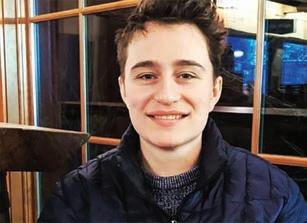
is a trans man and young professional in the D.C. area. He was featured on National Geographic’s ‘Gender Revolution’ in 2017 as a student at Yale University. Amend is also on the board of the LGBT Democrats of Virginia. Find him on Instagram @isaacamend.
The trans identity has been written about extensively from a political perspective. Many columns in the Blade, and other outlets, speak of gender ID laws, barriers in trans healthcare, pronouns, trans representation in state legislatures and eventually Congress, and the legality of offering trans children hormone blockers, among other treatments.
While speaking of politics can be good, it’s equally important to understand trans lives from the perspective of someone with a social work degree — or, in other words, from an emotional and therapeutic perspective.
Trans people, simply put, face many emotional barriers in life that others usually don’t have to encounter. Let me list several here. I don’t have an MSW, but will try my best to articulate these problems in detail.
First and foremost, trans people face lots of change: change in personality, change in appearance, change in passing versus not passing. Whether we like it or not, change invariably means that we have to act differently in the environments that surround us, and when we change as people, we also have to change our behavior and relationships with others. I like to tell friends this saying: “Change is inherently uncomfortable, and change is painful. Moving from one place in life to another means there is lots of growth, but also room for lots of loneliness when you have reached a new personal destination.”
As someone who changed from being a cis female to a man who fully passes as one — and never gets mistaken
as trans — this transformation invariably affected my relationships with others. Suddenly, I was expected to make friends with other cis men, some straight, and forming these new relationships took lots of work and necessitated more personal growth. While change can be good, it is also hard, and few others know what it feels like to have to shuffle friendships.
The second emotional barrier trans people face is one that is almost instantly recognizable: our love lives. To be very frank, trans men often go from being an object of sexual desire, as cis females, to being men who repulse many people away. Others view our bodies as disgusting and something to avoid. Many lesbians like to avoid trans men and think that sleeping with us is some form of betrayal to their own community. If trans men are interested in men, we face the problem of wanting to sleep with people who statistically assault us more, and can be violent and degrading to our bodies. Trans people also sleep with people who want to keep our dalliances secret, which shames us into thinking that our bodies are not something to be proud of, but rather monstrous things that can only exist underneath the sheets, and not outside of bedroom doors.
The third emotional hurdle trans people face is that of passing: some of us pass extremely well, but others don’t. There is conflict within the trans community between those who pass and those who don’t. Some in the community view passing as another sign of betrayal to those of our own kin: trans men who pass fully as men are often

excluded from queer events or groups. Cis people might think that it’s a choice for us to pass well, when in reality passing is often a result of genetics, as people with thicker jaw lines and more muscle can naturally adopt the other gender better. Passing is a source of envy and jealousy, and ignites fault lines within our community, when in reality, we need less rupture in our community in order to survive as one whole group.
The fourth emotional obstacle trans people face is job security, and managing emotions in the workplace. As a transman who passes well and is never mistaken for gender nonconforming, I can say firsthand that it is easy to never have to talk about being trans at a job. In fact, it usually serves us well to not talk about our transness in career settings, as gender variance is something that cruelly detracts from our career prospects, and rarely adds to career growth. Unfortunately, most workplaces are laden with colleagues — usually male, and usually older — who are transphobic to some extent. Navigating these difficult relationships requires a lot of emotional labor that can otherwise be put into finishing memos, leading meetings, and scaling the corporate ladder. But instead, we’re left to fight old crusty men in cubicles.
There are many more emotional hurdles we face, which can be described in other columns. As stated, it is critical to understand trans lives through an emotional lens, comprehending the difficult feelings we face with friendships, romantic relationships, and other facets of daily existence.
By JOHN PAUL KING
In October of 1980, the village of Giarre - a small municipality in Catalania, Sicily - was rocked by the murder of two young men, 25-year-old Giorgio Agatino Giamonna and 15-year-old Antonio “Toni” Galatola. Found hand in hand, two weeks after disappearing together from their homes, they had each been shot in the head, allegedly executed for the “crime” of homosexuality by members of their own families and other factions within the town whose disapproval of their relationship had already made them the target of bullying and violent abuse. The 13-year-old nephew of one of the victims admitted to carrying out the killings at the behest of the two families, even claiming that the two young men forced him to shoot them to prevent shame to their families, but later recanted his confession, leaving the double homicide offi cially unsolved. It was an incident that sparked widespread outrage in Italy, though much of the rest of the world had little awareness of it, and ultimately led to the formation of “Arcigay” the country’s fi rst and largest LGBTQ activist organization. Now seen as one of the most important catalysts in jump-starting the modern queer rights movement in Italy, the killings of Giorgio and Toni – who came to be known by protesters in the wake of their murders as “The Boyfriends” – were commemorated with a memorial plaque at the entrance to Giarre’s town library in 2022.

That’s the real life story behind the Italian import “Fireworks,” which made its U.S. debut on digital and VOD platforms Jan. 18, although it serves as inspiration for a fi ctional retelling rather than as the basis for a docudrama. Known in its nation of origin as “Stranizza d’amuri” [“Strangeness of Love”], it tells the story of Gianni (Samuele Segreto) and Nino (Gabriele Pizzurro), two youths from a small Sicilian village in the early 1980s — though life there has remained largely unchanged for a thousand years — who meet in a moped accident and become friends. At fi rst, their relationship meets with approval from relatives on both sides, with Gianni stepping in to help when Nino’s father is forced to step away from the family fi rework business due to health problems. But as their deeper feelings for each other become more obvious to those around them, their families - and the rest of the town - grow more hostile; unable to resist the attraction they feel toward each other yet facing disapproval, disparagement, and worse from the small-minded morality that surrounds them, the two boys are forced
to choose between turning away from their blossoming love or defying the deeply traditional strictures of their community by living it in the open.
Directed by Giusseppe Fiorello, who also co-wrote the screenplay with Andrea Cedrola and Carlo Salsa in collaboration with Josella Porto, “Fireworks” might, based on its storyline, be easily classed by American audiences as one of those “doomed romance” movies that equate queer love with tragic victimhood. Indeed, knowing the real-world origins of the plot going in, it might well feel like one is being set up from the start for tragedy, and the pervasiveness of the homophobic bigotry we see enacted on the screen can’t help but remind us we’re in for a depressing ride toward a heartbreaking conclusion.
The movie, however, doesn’t quite go that way.
While it certainly establishes the repressive environment of the boys’ community, complete with the kind of ugly bullying that is all too familiar to anyone growing up queer in a similar setting, it is more interested in exploring the experience of falling into fi rst love, and establishing the connection between its two protagonists that ultimately makes them willing to choose each other over the safety of conforming to social taboos. Thanks to the easy chemistry of Segreto and Pizzurro, who capture the tenderness between these two sweet-but-not-quite-innocent souls in a way that blends the wholesome tenderness of youthful love with the irresistible pull of budding sensuality, the harshness and abuse they must endure - as well as the bleakness of their presumed eventual fate - seems less important than the palpable joy they fi nd in each other. Their romance becomes a haven, and their story becomes about the triumph of love instead of the power of hate.
That’s an important distinction that keeps the tone of “Fireworks” from drifting too far into the doom-and-gloom that often dominates such stories — and it’s a good thing, too. While the central romance may provide plenty of uplift, there is a cold reality encroaching upon it that cannot be ignored; and though the inevitable depictions of torment from village homophobes are brutal enough on their own, it’s the attention paid to those closer to the young lovers - the families and friends who, instead of off ering support or protection, become allies to these hostile outsiders for fear of social repercussion to themselves — that will likely hit closest to home for most queer audiences. It’s this aspect of the story that is arguably more “triggering” than any of the physical violence we are shown. It hones in on the social mechanisms through which cultural conditioning is passed down from one generation to the next — a theme that manifests itself in a narrative thread that weaves its way through the fi lm from the fi rst moment to the fi nal frames and leaves us devastated.
Still, what we walk away with from Fiorello’s evocative movie is a sense of beauty, of triumph claimed rather than thwarted. The fi lmmaker honors the memories of his characters’ real-world inspirations — who became heroes of their country’s Equality Movement not because they were killed for their sexuality but because they dared to embrace it — by celebrating the love they found instead of lamenting the fate that befell them. Indeed, the movie’s artfully ambiguous ending gives the real-life murders only a nod of acknowledgment, choosing instead to leave its fi ctionalized lovers in a happy moment that might almost allow us the illusion they will live on.
This choice to emphasize love over hate, of course, does not sugarcoat the fact that “Fireworks” shows us some pretty ugly things, and, for some viewers, no amount of positive focus will be enough to prevent it from being a diffi cult watch. Understandably, many queer fi lm fans, weary of having our love stories turn to heartbreak and horror on the screen, are tired of such grim representation and would prefer movies to give us the same chance at a happy ending as everybody else. Those movies do exist, of course; but as long as there are still places in the world — such as Italy, still considered one of the least LGBTQ-friendly nations in Western Europe, despite the advances made since the murders that inspired this fi lm, and other countries that are far worse, there will always still be a need for movies that expose that reality — especially when they’re as well-made, and authentic, and tender as this one.
When one half of a couple wants kids and the other doesn’t How to navigate the biggest decision spouses will make
Dear Michael,
I’m wrestling with my fiancé about becoming parents and it’s delaying our getting married.
We’ve been dating for three years and would like to spend our lives together. But the issue of becoming parents has always been a source of disagreement for us.
Will says he has never been that interested, while I’ve always wanted to be a dad.
Will says he is willing to do it if it’s important to me but he’s really concerned he will be resentful. He doesn’t want to give up having an active social life that includes going out a fair amount, drinks, dinners, and vacations with our friends, lots of time at the gym, etc.
I like doing those things too but I’m feeling that I’m at a stage of my life (I’m 31) where I can put a fair amount of that behind me in order to focus on creating and raising a family. I wish he would also be willing to do so, but I know I can’t change his priorities.
I am hopeful we can work this out. For starters, I think that since he wants to go out more than I do, I could stay home a fair amount of the time and take care of the kids when he’s doing what he wants to do.
Also, we are both pretty successful and could afford a fair amount of child care (especially as we advance in our careers—and we’re not going to be having children right away) so I’m thinking we could have a nanny who could take care of the kids when we want to stay out late or go away for a weekend, or even come with us sometimes when we travel so that we’re able to also do what’s important to Will and not just be with the kids at every moment.
I’m thinking we can have the best of both worlds.
Will’s not as optimistic as I am and this worries me. I think I’ve come up with some good solutions and would like him to be supportive and on board. He says he doesn’t think it’s that simple but when I press him for what that means, he won’t say.
I don’t feel like we can get married until we’ve figured this out. What are your thoughts for how we can get to a place of agreement on this?
Michael replies:
If you and Will are going to build a successful long-term marriage, you both will need to develop your ability to discuss hard topics, including your differences of opinion on important matters. Otherwise, you will have a lot of resentment, anger, and misunderstandings over the years.
Your current gridlock is an opportunity for both of you to work on tolerating hard conversations and the possibility of tremendous letdowns. This isn’t fun, but it’s an essential part of being in an intimate relationship.
My hunch is that Will won’t give you a straight answer because he doesn’t want to let you down. You can’t force him to tell you what he’s thinking, but perhaps you can get his answer by letting him know that you want to know what he’s thinking, even if what he’s thinking may gravely disappoint you.
For you to have this conversation with Will, you will have to mean what you say: You must be prepared for him to tell
By MICHAEL RADKOWSKY

you that he doesn’t want to be a father.
Unless Will is willing to parent with an open heart and without resentment, going forward with parenthood would be a mistake. The resentment would be corrosive to your relationship and would damage any children you might have. Children should never be made to feel that they are a burden or annoyance to a parent.
Let’s look at your thoughts on making parenting more palatable for Will.
With regard to your idea that the two of you could frequently go out and travel, while leaving the kids with a nanny: Good parenting is time-intensive. Especially in the early years, it’s vital that you consistently convey to children through your presence and actions that you are there for them, that you love them, and that they are your top priority. This is how children develop a “secure attachment” — the bedrock of strong self-esteem, a sense of security that comes from inside, and the ability to form healthy relationships.
I certainly don’t mean being present every minute — obviously, most parents have jobs, rely to some degree on childcare and babysitters, and need some time to occasionally have at least a bit of a life apart from being a parent. And I can’t tell you exactly what “enough” is, other than to say that parents should generally be the ones to wake their children up, feed them at least some of their meals, take them on adventures, bake cookies together, just hang out,
read books to them, do the bedtime routine, and be there in those middle-of-the-nights when a child needs comforting.
Your idea of staying home while Will does his thing seems like a quick road to resentment. Do you think you’d be happy wishing him a fun night on the town while you’re staying home for the umpteenth time with a sick or woundup toddler who refuses to go to sleep, or simply stuck doing the bedtime routine solo, yet again? Moreover, it would be awful for your child to have a sense that one of his or her parents is somehow distant or unreliable. You want to aim for your kids to feel like they are the apple of your eye. Here’s an idea: You are apparently doing all the work to figure out how to make parenting easy on Will. How about asking Will for his ideas on what it would take to make parenting something he’d be willing to do? Perhaps if the two of you collaborate, you could find a way forward that works for you both.
On a related note, talking with parents (gay and straight) of young children about their experiences would be helpful and eye-opening to you both in all sorts of ways.
(Michael Radkowsky, Psy.D. is a licensed psychologist who works with couples and individuals in D.C. He can be found online at michaelradkowsky.com. All identifying information has been changed for reasons of confidentiality. Have a question? Send it to michael@michaelradkowsky. com.)
By TERRI SCHLICHENMEYER

‘Gender Pioneers: A Celebration of Transgender, Non-Binary and Intersex Icons”
By Philippa Punchard
Take a left at the fi rst road, then right and right again.
It’s always a good idea to know where you’re going – but then again, getting lost can have its benefi ts, too. Veering off an easy path gives you a chance to see things, maybe even something better. You can get all kinds of directions for life but sometimes, as in “Gender Pioneers” by Philippa Punchard, you just gotta step off the road.
In 1912, French audiences were thrilled by the talent of a trapeze artist known as Barbette. The lovely Barbette fl ew over the heads of Parisians solo, gracefully, and the best citizens followed those performances avidly. By 1919, Babette added to the end of the performance the revelation that “she” was really Vander Clyde Broadway, a male performer.
We might think that being transgender is “new” and just “a Western thing,” but Punchard has reason to disagree: history is dotted with men passing as women, and women living as men. As Christine Burns says in the foreword, “Trans people are not a new thing.”
Some seemed to do it as a means to an end: Ellen and William Craft wore clothing of the opposite sex


in order to escape slavery in 1848. Betty Cooper may have worn men’s clothing for the same reason in 1771. Neither case, says Punchard, indicates “classical” trans behavior, but we’ll never know for sure.
Biawacheeitchish, who grew up to be powerful, wealthy, with four wives, was kidnapped as a young girl and was encouraged by their Native American adoptive father to engage in male activities, perhaps because he’d lost two sons; in another time and place, Biawacheeitchish would’ve been called a “female husband.” Dora Richter, the fi rst woman to receive vaginoplasty, was killed by “a Nazi mob.” Dr. James Barry, a highly renowned surgeon, used “built-up shoes and... padding to appear more masculine...” James Allen and Billy Tipton were both married to women before death revealed that they were female. And Mary Read was a girl, until their mother lost her only son.
In her foreword, Burns says that there are “two awkward challenges” when we talk about trans people in history: were they intersex, rather than trans; and were they people – mostly women – who presented as the opposite gender to gain the benefi ts of the opposite gender? The questions demand more study and “Gender Pioneers” off ers a launching point.
Open this book anywhere and you’ll see that the theme here is serious, but author Philippa Punchard also lends a bit of breeze. There’s no certain order to what you’ll read, and while the entries reach back to ancient times, they focus more on the past 300 years or so; each of the articles is short and to-the-point, and the soft illustrations invite browsing. For readers who want a quick read, this works.
Be sure to keep going through both appendices of this book, where you’ll fi nd a wealth of further information and dates to remember. Historians and readers of trans history will fi nd “Gender Pioneers” just right.




c.2022, Jessica Kingsley Publishers $22.95 | 118 pages 8:30PM-10PM JANUARY27,2024


















ANNOUNCEMENT
MENLO PARK, Calif. - Social media giant Meta announced Tuesday that new content policies for teens restricting access to inappropriate content including posts about suicide, self-harm and eating disorders on both of its largest platforms, Instagram and Facebook.
In a post on the company blog, Meta wrote:

Take the example of someone posting about their ongoing struggle with thoughts of self-harm. This is an important story, and can help destigmatize these issues, but it’s a complex topic and isn t necessarily suitable for all young people. Now, we’ll start to remove this type of content from teens’ experiences on Instagram and Facebook, as well as other types of age-inappropriate content. We already aim not to recommend this type of content to teens in places like Reels and Explore, and with these changes, we’ll no longer show it to teens in Feed and Stories, even if it’s shared by someone they follow
“We want teens to have safe, age-appropriate experiences on our apps,” Meta said. Implementation of the new polices means teens will see their accounts placed on the most restrictive settings on the platforms, the caveat being that the teen didn’t lie about their age when they set the accounts up.
Other changes the company announced include:
To help make sure teens are regularly checking their safety and privacy settings on Instagram, and are aware of the more private settings available, we’re sending new notifications encouraging them to update their settings to a more private experience with a single tap. If teens choose to “Turn on recommended settings”, we will automatically change their settings to restrict who can repost their content, tag or mention them, or include their content in Reels Remixes. We’ll also ensure only their followers can message them and help hide offensive comments.
Highlights from the newly revealed portions of the complaint include the following:
• Mark Zuckerberg personally vetoed Meta’s proposed policy to ban image filters that simulated the effects of plastic surgery, despite internal pushback and an expert consensus that such filters harm users’ mental health, especially for women and girls. Complaint ¶¶ 333-68.
• Despite public statements that Meta does not prioritize the amount of time users spend on its social media platforms, internal documents show that Meta set explicit goals of increasing “time spent” and meticulously tracked engagement metrics, including among teen users. Complaint ¶¶ 134-150.
• Meta continuously misrepresented that its social media platforms were safe, while internal data revealed that users experienced harms on its platforms at far higher rates. Complaint ¶¶ 458-507.
• Meta knows that its social media platforms are used by millions of children under 13, including, at one point, around 30% of all 10–12-yearolds, and unlawfully collects their personal information. Meta does this despite Mark Zuckerberg testifying before Congress in 2021 that Meta “kicks off” children under 13. Complaint ¶¶ 642-811.
The Associated Press reported that critics charge Meta’s moves don’t go far enough.
“Today’s announcement by Meta is yet another desperate attempt to avoid regulation and an incredible slap in the face to parents who have lost their kids to online harms on Instagram,” said Josh Golin, executive director of the children’s online advocacy group Fairplay. “If the company is capable of hiding pro-suicide and eating disorder content, why have they waited until 2024 to announce these changes?”
BRODY LEVESQUE
In November, California Attorney General Rob Bonta announced the public release of a largely unredacted copy of the federal complaint filed by a bipartisan coalition of 33 attorneys general against Meta Platforms, Inc. and affiliates (Meta) on October 24, 2023. Co-led by Attorney General Bonta, the coalition is alleging that Meta designed and deployed harmful features on Instagram and Facebook that addict children and teens to their mental and physical detriment.
NEW AUTHORS WANTED! Page Publishing will help you self-publish your own book. FREE author submission kit! Limited offer! Why wait? Call now: 1-855-667-0380 (CalSCAN)
Prepare for power outages today with a Generac Home Standby Generator. Act now to receive a FREE 7-Year warranty with qualifying purchase. Call 1-844-4395645 today to schedule a free quote. It’s not just a generator. It’s a power move.
Eliminate gutter cleaning forever! LeafFilter, the most advanced debris-blocking gutter protection. Schedule a FREE LeafFilter estimate today. 20% off Entire Purchase. 10% Senior & Military Discounts. Call 1-855-424-7581
AUTOS WANTED
DONATE YOUR CAR TO KIDS Fast Free Pickup –Running or Not - 24 Hour Response - Maximum Tax Donation – Help Find Missing Kids! Call 1-888-491-1453.
GOT AN UNWANTED CAR??? Your car donation to Patriotic Hearts helps veterans find work or start their own business. Fast free pick. Running or not! Call 24/7: 1-877-529-0495.
Get your deduction ahead of the year-end! Donate your car, truck, or SUV to assist the blind and visually impaired. Arrange a swift, no-cost vehicle pickup and secure a generous year-end tax credit. Call Heritage for the Blind Today at 1-844-491-2884 today.
WANTED! Old Porsche 356/911/912 for restoration by hobbyist 1948-1998 only. Any condition. Top $ paid! Please leave message: 1-707-339-5994. Email: Porscherestoration@yahoo. com.
BOOKS/PUBLICATIONS
Become a Published Author. We want to Read Your Book! Dorrance Publishing-Trusted by Authors Since 1920 Book manuscript submissions currently being reviewed. Comprehensive Services: Consultation, Production, Promotion and Distribution Call for Your Free Author`s Guide 1-877-538-9554 or visit dorranceinfo.com/Cali
INTERNET/
DIRECTV Sports Pack 3 Months on Us! Watch pro and college sports LIVE. Plus over 40 regional and specialty networks included. NFL, College Football, MLB, NBA, NHL, Golf and more. Some restrictions apply. Call DIRECTV 1-888-641-5762
DIRECTV OVER INTERNET
- Get your favorite live TV, sports and local channels. 99% signal reliability! CHOICE Package, $84.99/ mo for 12 months. HBO Max and Premium Channels included for 3 mos (w/ CHOICE Package or higher.) No annual contract, no hidden fees! Some restrictions apply. Call IVS 1-855-404-2509
FINANCIAL SERVICES
Over $10K in Debt? Be debt free in 24 to 48 months. No upfront fees to enroll. A+ BBB rated. Call National Debt Relief 1-888-231-4274.
Jacuzzi Bath Remodel can install a new, custom bath or shower in as little as one day. For a limited time, we’re waiving all installation costs in half and offering a FREE safety upgrade! (Additional terms apply. Subject to change and vary by dealer. Offer ends 3/31/24 Call 1-833-985-4766
SAVE BIG on HOME INSURANCE!
Compare 20 A-rated insurances companies. Get a quote within minutes. Average savings of $444/year! Call 1-844-410-9609! (M-F 8am-8pm Central)
Stroke and Cardiovascular disease are leading causes of death, according to the American Heart Association. Screenings can provide peace of mind or early detection! Contact Life Line Screening to schedule your screening. Special offer - 5 screenings for just $149. Call 1-888-892-5598 Life Line Screening to schedule your screening. Special offer - 5 screenings for $149. Call 1-888-892-5598
RETIRED COUPLE $$$$ for business purpose Real Estate loans. Credit unimportant. V.I.P. Trust Deed Company www.viploan.com Call 1-818-248-0000. Brokerprincipal DRE 01041073. No consumer loans.
THIS SPACE CAN BE YOURS! Call 1-916-288-6011 or cecelia@cnpa.com