


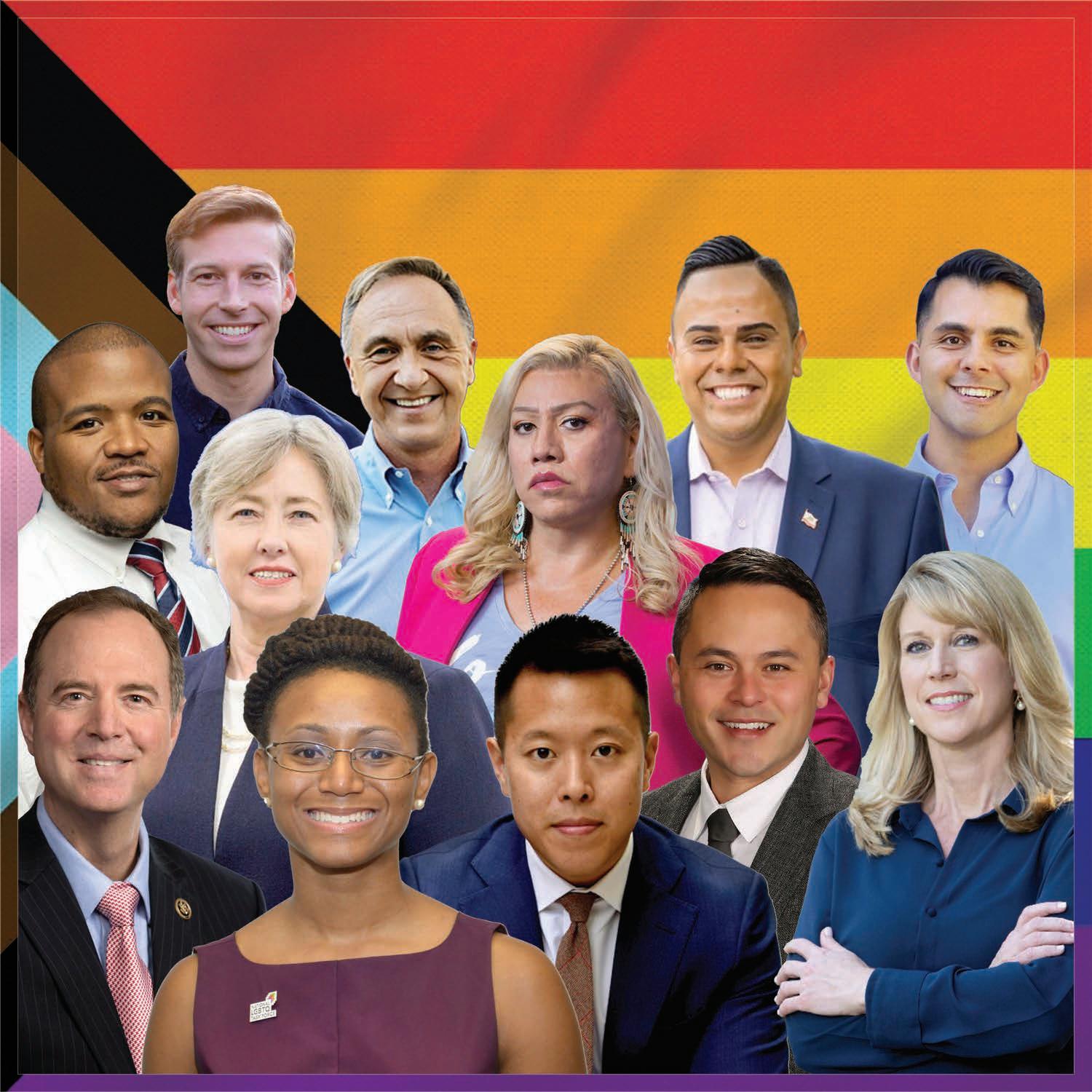
LGBTQ and ally candidates fight for democracy, PAGES 02-08




By KAREN OCAMB
All smart-aleck punditry aside, our future is in our own shaky hands this Nov. 8. Vice President Kamala Harris sees that.
“Today,” Harris told a Human Rights Campaign audience Oct. 29 in Washington DC, “the rights, the freedoms, and the very existence of the LGBTQ+ people are under assault. Children’s hospitals have received bomb threats simply because they care for transgender youth. White supremacists have shown up at Pride festivals armed with assault weapons. Trans folks -- in particular, trans women of color -- have faced record levels of deadly violence. Every day, LGBTQ+ youth are enduring bullying and harassment.”
Extremists have “fanned the fl ames of hate and homophobia for political gain.”
This is not just campaign rhetoric. LGBTQ favorite Rep. Katie Porter — who earned a national reputation for verbally smiting democracy-ruining CEO quislings during congressional hearings — is in a toss-up race against “traditional” Republican lobbyist Scott Baugh to keep her 45th congressional seat. According to NBC News in a segment about the two clashing over “Orange County values,” Katie Porter “has voted with her party to codify federal protections for legal abortion in the Women’s Health Protection Act and same-sex marriage in the Respect for Marriage Act. She also voted for legislation that would ban assault weapons. Baugh said he’d vote against all those bills if he were a congressman.”
But LGBTQs remember the “Orange Curtain” Baugh would restore as the region where Rev. Lou Sheldon set up his Traditional Values Coalition scam and where 19 year old gay Jewish college student Blaze Bernstein was brutally murdered in 2018 by Nazi-loving Samuel Woodward, 20, who was cheered by his violent extremist friends in the Atomwaff en Division, identifi ed by ProPublica as “an armed Fascist group with the ultimate aim of overthrowing the U.S. government through the use of terrorism and guerrilla warfare.”
Hate is manifesting everywhere, including in racist, homophobic and antisemitic thoughts of Democratic leaders and former LGBTQ friends in the Los Angeles City Council. US Senator Alex Padilla was one of the fi rst to call for the resignations of Councilmembers Nury Martinez, Kevin DeLeon, and Gil Cedillo.
“That audiotape of a private meeting that was disclosed that had some horrifi c and appalling commentary, some anti-LGBTQ language that we heard, obviously anti-Black language that we heard, even anti-Hispanic coming from the mouths of Latino leaders was on that tape,” Padilla said during an interview for Race to the Midterms, the limited YouTube series Max Huskins and I have produced for the LGBTQ community in conjunction with the Los Angeles Blade. As a member of the Senate Judiciary Committee, he has way too often heard “divisive rhetoric and some conspiracy theories and hate for some of my colleagues. And if we are to be able to genuinely denounce and hold accountable when extremist Republicans used this language, then we have to call out Democratic friends when they used it, too. We have to be consistent in standing up against hate, standing up against discrimination. And to me, that’s what it boils down to.”
Padilla is in a unique electoral position: he’s on the ballot twice. He was appointed to the US Senate by Gov. Newsom in January 2020 to fi ll the vacancy created when Sen. Kamala Harris left to become Vice President. So, the fi rst vote on the ballot is a special election to fi ll the balance of what was Harris’ current term. The second vote is for his full six-year Senate term. As Nov. 8 speeds towards us ever faster, anxiety couldn’t be higher. Axios reported in early October that “Republicans still have a clear path to retaking the Senate majority. They only need to net one seat to win back the upper chamber, and there are plenty of paths to get there even if many of their recruits fi zzle out.” Meanwhile, California’s MAGA Republican House Minority
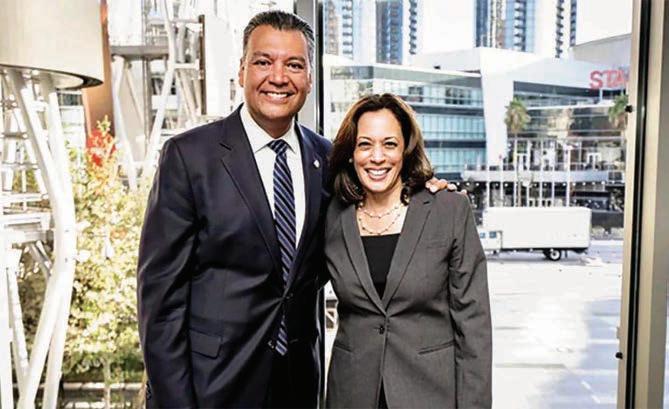
Leader Kevin McCarthy only needs fi ve seats to take back the Speaker’s gavel from fellow Californian, Speaker Nancy Pelosi.
Strong LGBTQ ally Christy Smith, candidate for the CA-27, is running against full-throated Trump fanboy Rep. Mike Garcia who is pals with Marjorie Taylor Green. He was among the MAGA Republicans who signed the amicus brief to the US Supreme Court asking them specifi cally to overturn Roe v. Wade.
Christy says in our interview: “He’s one of the people who coauthored ‘The Life Begins at Conception Act,’ which — don’t let them fool you — is their roadmap for a national abortion ban. So, while my opponent now tries to hide in safe spaces and say, ‘Well, abortion is safe in California — why are you so upset?’ Really? They have clearly signaled — and Lindsey Graham the other day just doubled down on the fact that they plan to pursue a national abortion ban.”
MAGA Republicans in Congress are “very comfortable operating in these spaces where they continue to chip away at fundamental rights to privacy and freedom,” she says. “My opponent is right there on those extremes with these people. And the extremes are where our government is heading…You can’t say that you stand for democracy when you’re literally actively working to take away – not only people’s freedoms — but the structure of the democratic institutions and the structure that protect those freedoms.”
And, she says, “I think the LGBTQ community is next [on the GOP hit list]. “That is really important work that we have to do to stem the tide of the very extreme movement that they’re trying to push on America.”
Also running hard is out gay national security prosecutor Will Rollins whose MAGA Republican Rep. Ken Calvert appears rather cowardly.
Calvert, Rollins says, “has refused to debate me in any public forum. He’s refused to engage in candidate forums. He’s sent hecklers after me. He sends a tracker to follow me around and ask me questions — but he never shows up to confront me face to face. And he’s also been trying to erase and lie about his record. This was somebody who, after January 6, has voted to overturn the election, even after — the Speaker has had her life or her family’s life at risk God knows how many times over the past several years.
CONTINUES ON PAGE 04


CONTINUED FROM PAGE 02
“True leadership, regardless of party, requires condemning political violence,” says Rollins. “This is the United States. We cannot allow our country to slide into autocracy, authoritarianism, where this kind of violent rhetoric and enabling behavior is tolerated. It’s the saying? ‘Evil triumphs when good people do nothing.’ You cannot enable and affi rmatively go out there and vote against even a committee, for example, to investigate what happened afterwards.
“And it’s part of a pattern with him,” Rollins says. “It’s written down what his votes are. It’s written down and recorded what his public comments were when he said, ‘I’m looking forward to the day when the charges against these people will hopefully be dropped.’ He said that in August 2021….
What Republican guys like him are relying on is that you, the voter, will be so fatigued from the last six years from a disbelief and cynicism and any ability to sort through facts, that you won’t call him out or understand that he’s lying.”
Electing Rollins is a top priority for Equality California. “Obviously, this is one of the most consequential election cycles in our lifetimes. And if we want to protect the pro-equality majority that we have in the House, that road runs through California. And so, CA-41, the district where Will Rollins is in, is one of the most important congressional fl ip opportunities in California,” says Equality California Executive Director Tony Hoang.
“Going back to 1994, how Congressman Calvert came into offi ce is that he was attacking a number of folks in our community, specifi cally Congressman Mark Takano, who was not publicly out at the time but [Calvert] was using his LGBTQ identity in those attack ads,” Hoang says. “The sweet irony of being able to fl ip this seat by taking out a member who has been 100% against our community for years and years with someone that is openly LGBTQ is something that we are defi nitely committed to and pouring a number of resources into.”
ers that have been able to learn and grow from so many fi ghters that I’ve seen, particularly addressing HIV and public health” in the 1980s and the ongoing racial justice work “that that’s so needed” in our state and national discourse. Victoria Kirby, deputy executive director at the National Black Justice Coalition, concurs, announcing the release of a new Get-Out-The-Vote video. “We turned out in record numbers during a midterm when people said we wouldn’t,” says Kirby. “LGBTQ people, people of color, young people, diff erently abled or disabled people. We showed up and showed out and we got rid of folks in those statehouses and governor’s mansions.” Kirby notes that the National Black Justice Coalition has a Voter Hub at their website with resources to help people check their voter registration and vote-by-mail information.
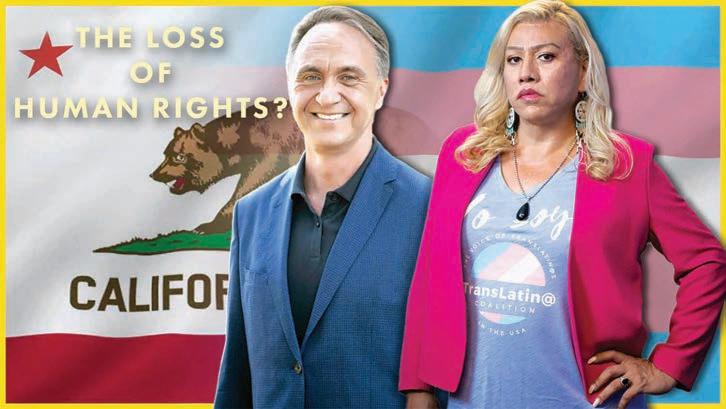
“LGBTQ is on the ballot this year,” Shawn Kumagai, an out gay candidate for California’s 20th Assembly District told us. “I think all of us are feeling just how very important 2022 is. You know, when we see attacks like we saw recently against the Pelosi family – extremism, violence has really gotten out of hand…..Things get pretty nasty at the local level and people take it very personally. But I think we can sometimes be seen as easy targets or people will feel like, ‘Hey, I can bully this person because they’re LGBTQ.’ Well, not this LGBTQ. I’m a 21-year veteran of the US Navy. I will not be intimidated by anyone in carrying out and executing my duties as a council member in any of my positions that I raise a right hand and swear an oath to the Constitution that I will protect.”
No doubt Joseph Rocha would say the same. Rocha is running for the California State Senate.
But, as Victory Fund CEO Annise Parker told us, while the congressional midterms are vital, don’t forget down-ballot races. State legislative races are really important because “the really stupid stuff starts in the state house and the really bad anti-LGBTQ stuff starts in the state houses and it can metastasize. In fact, there are organizations that stamp out some of these really ugly bills like cookie cutter, stamping them out and sharing them with right wing legislators, cross country so we really work hard at that level.” 2022 is on track to set a record for the number of anti-LGBTQ bills introduced in state legislatures. NBC News/NBC Out reported: “State lawmakers have proposed a record 238 bills that would limit the rights of LGBTQ Americans this year — or more than three per day — with about half of them targeting transgender people specifi cally.”
One race Parker highlighted was Venton Jones, a young, Black gay HIV+ man running for a State seat out of his home town of Dallas, Texas. Texas,” Venton told us, “is in desperate need of leadership.” He wants “to make sure that we’re not continuing to perpetuate the hatred and bigotry that we continue to not only see statewide, but also that we see in our national discourse. So, I ran to make a diff erence and use the experience that I’ve gained to be able to do that necessary work, particularly for a new generation of lead-
“I served over two years in the Middle East doing explosive detection,” he says. “And then I was discharged under Don’t Ask, Don’t Tell following a series of well-documented abuse. I went on to be in the case that made the entire policy unconstitutional. It’s a little lost in history that there was a legislative push, a vote to repeal Don’t Ask, Don’t Tell that occurred before our case ruling came out, and it failed. After our ruling, it was reintroduced on the House fl oor and it passed. So I’m defi nitely very proud to have been part of that incredible timing and push towards a decision that made our military, I think, more in line with its values and certainly our country safer because of it.”
“Patriotism is what many of us have done a number of times — which is a commitment to the Constitution, Rocha says. “I have sworn an oath to the Constitution as a Navy enlisted sailor, when I entered the bar, as an attorney in California, and when I earned my commission in the Marine Corps. And I hope to do it again if elected to the Senate.”
One of the most familiar of LGBTQ candidates is Rick Chavez Zbur, an attorney, an environmentalist, former executive director of Equality California and candidate for California’s Assembly District 51.
“Today, we have to realize that we are in a diff erent world — we are fi ghting for our democracy. And this isn’t something that’s theoretical. It’s very, very real,” including the MAGA politicization of the United States Supreme Court,” Rick Chavez Zbur tells us.
ON PAGE 05
“The Court,” he continues, “is actually not following typical Court rules and precedent and is actually a very radical Court. It is not following the doctrine and stare decisis.” And those doctrines “are important because we in the LGBTQ movement and our friends at Lambda Legal and at National Center for Lesbian Rights and Transgender Law Center and the ACLU — we have worked for years to build up the precedent and the legal doctrines we need to advance LGBTQ equality in the courts. These conservative justices are basically ignoring all of that. So at this point, if we can’t rely on the institution because it’s been radicalized, we really need to correct that and the only way to do that is by expanding the court. And I think the term-limit idea is a good one.”
The question about the Court follows an op-ed published in The Hill by Public Justice Executive Director Paul Bland calling for the “modernization” of the US Supreme Court by expanding the Court to 13 members and having term limits on tenure.
a reactionary social agenda. And so I think we need to unstack the court by expanding the court. And I’m supporting legislation to do that.”
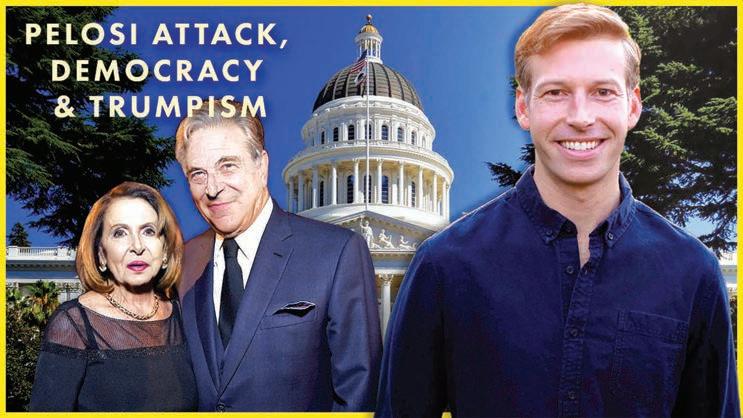
Rep. Adam Schiff , who talked with us soon after the fi nal Jan. 6 Committee hearings concluded, agrees with the idea. “The Supreme Court was stacked by (then-Senate Majority Leader) Mitch McConnell working with Donald Trump — but it was stacked by withholding a justice, withholding giving a hearing for Barack Obama’s nominee, Merrick Garland, for almost a year and then, in completely hypocritical fashion, jamming an appointment down the country’s throat with Amy Coney Barrett while people were literally voting for Joe Biden in the weeks before that election. And as a result, the two justices on that court that don’t belong in that court — there are many others I don’t think belong because of their extreme ideology — but those, in particular, don’t belong because Mitch McConnell gamed the system. And I don’t think we can just accept that.
“I’ve got two kids in their early twenties,” Schiff continues, “and I’m not content to have them live their entire lives under a partisan reactionary Supreme Court. And let’s make no mistake: this Supreme Court is not a conservative court, not in the constitutional legal sense. If it were a conservative court, it would have some respect for precedent. No, this is a partisan court with
Mark Gonzalez, the out chair of the Los Angeles County Democratic Party – which lists their endorsed candidates, including down-ballot candidates, on their LACDP. org website, talked with us about how about the Trump census caused California to lose a congressional seat on the Eastside of LA – undercounting 100,000 people. He also talked about why it’s important for men to stand up for the rights of women who are a major target of MAGA Republicans, along with LGBTQ folks, people of color and migrants. LACDP is working hard in coalition with other groups such as Planned Parenthood to pass the widely supported reproductive rights measure Prop One on the ballot.
Gonzalez reminds vote-naked voters that mail-in ballots must be postmarked by Election Day for it to count.
One of our most moving interviews was with Bambly Salcedo, founder and CEO of the TransLatin@ Coalition. She stands as a beacon of hope for trans, nonbinary and other marginalized people who have suff ered the pain and indignities of systemic oppression. And part of that commitment to hope is a commitment to hold elected leaders accountable.
“What we need to do is to not give up on ourselves and to not give up on our people,” Salcedo says, “and encourage the Democratic Party to not be complacent and to also don’t say that you’re progressive if you’re not doing progressive things for our people.”
Salcedo talks directly to her people — and the rest of us, too: “Beautiful and amazing people. I hope that you understand the power that we have as individuals and as communities, particularly in this midterm election. As we know, there’s a lot at stake. And we need to mobilize, we need to activate, and we need to infl uence those who are able to vote. Have conversations and encourage people to vote for candidates who will do the work of the people.”
Please heed her good advice.
For the entire interview series, The Time is Now, head to: https://www.youtube.com/channel/UCWEpJkPxQwUtTv-o3_WFMaQ

By BRODY LEVESQUE
November marks Transgender Awareness Month, which culminates withTransgender Day of Remembrance on Sunday the 20th. This annual event marks the time to honor, celebrate, and advocate for the transgender and gender diverse community.
Each year on Nov. 20, LGBTQ people everywhere pause to remember and mourn the lives lost to transphobic violence. This tradition began in Boston in 1998 in response to the murder of beloved LGBTQ+ community member Rita Hester in the Boston city neighborhood of Allston.
While there has been incredible progress made in recent years in the fight for transgender rights, recorded instances of transphobic violence and discrimination are higher now than at the time of Hester’s tragic death. People of color and, particularly, transgender women of color face a disproportionate rate of hate violence.
Each year between November 13 – 19, people and organizations around the country participate in Transgender Awareness Week to help raise the visibility about transgender people and address issues members of the community face.
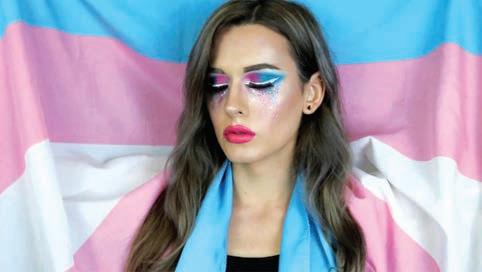
This election year issues over Trans Americans have become political talking points and political platform substance for the Republican party as extremists in the far-right and fringe elements of the GOP continue to attack trans youth healthcare, specifically raising alarm and spreading falsehoods over gender affirmation surgery and treatment for gender dysphoria via HRT (Hormone replacement therapy).
Leading the attacks on social media and right-leaning media has been the infamous Libs of TikTok, authored by former Brooklyn real estate agent and fanatical adherent of far-right extremist ideology, Chaya Raichik, who has wreaked havoc via her social media accounts ‘Libs of Tik Tok’, attacking LGBTQ+ people with special emphasis on spreading lies and propaganda about transgender people. Also actively engaged in singling out and the persecution of Trans people has been Daily Wire host and far-right extremist anti-transgender activist Matt Walsh. In a Twitter post attacking trans people last month wrote: “I believe that gender ideology is one of the greatest evils in human history. There is nothing they can threaten that would
make me back down from this fight. I’d rather be dead than surrender to this madness. It’s as simple as that for me.”
Walsh, who has over a million followers which includes the anti-LGBTQ activist account Libs of Tik-Tok, has called gender-affirming surgery human body mutilation, added in another tweet: “The medical establishment, Big Tech, and the federal government conspire to punish those of us who criticize the accepted narrative. This is full on tyranny, and it will of course be defended by every single leftist who spends every day whining about “fascism.”
Most recently attacks on American hospitals providing trans healthcare, especially those with clinics treating trans youth have been targeted by anti-Trans extremists led by Walsh and Raichik, spreading misinformation and lies about gender-affirming surgery which has fostered attacks on those healthcare facilities by far-right extremist elements.
Misinformation about treatments is rife on social media and in the right wing media, but 7-year-olds do not receive cross-sex hormones and are given puberty blockers only if another underlying disorder is causing precocious puberty. Cross-sex hormones are safe, studied, and effective treatments for gender dysphoria that dramatically reduce symptoms of depression and anxiety in trans people.
Information about where to seek out medical care is vital for trans people. Nearly half of all trans people report experiencing mistreatment from medical providers, including verbal or physical abuse. According to a 2016 study, the biggest obstacle to obtaining safe and effective health care for trans people is a lack of knowledge by medical providers.
Governmental agencies have also targeted the trans community. Last week, the Florida Board of Medicine and Board of Osteopathic Medicine Joint Rules/Legislative Committee Friday advanced a rule that will effectively ban gender-affirming care for minors in the state.
The policy, which would likely block a minor’s access to puberty blockers, hormone therapies and surgeries – a rare intervention for transgender youth – will now head to the full the Board of Medicine and Board of Osteopathy for finalization and a vote.
The Human Rights Campaign (HRC) tracks annual statistics of violence against the people in the transgender community. In the latest statistics currently available, HRC has reported that in 2022 there have been at least 31 transgender or gender non-conforming people fatally shot or killed by other violent means in the United States.
A disproportionately high number of victims are Black and Latinx transgender women. The 2022 report follows reports of 41 deaths in 2021; 33 deaths in 2020; 27 deaths in 2019; 26 deaths in 2018; 29 deaths in 2017; and 23 deaths in 2016.
According to HRC: “it is clear that fatal violence disproportionately affects transgender women of color, and that the intersections of racism, sexism, homophobia, biphobia, transphobia and unchecked access to guns conspire to deprive them of employment, housing, healthcare, and other necessities, barriers that make them vulnerable.”
This wave of violence has been declared an epidemic by
the American Medical Association. Rates of actual violence or deaths may, in fact, be higher but anti-transgender violence can be difficult to accurately measure, as victims are sometimes misgendered in reports, which can delay awareness of deadly incidents.
Some states are taking measures, codified into law to protect Trans people.
As states from Texas to Alabama are considering or have recently passed measures criminalizing parents and providers for providing gender affirming healthcare for trans youth, California is set to welcome them and their families with open arms.
S.B. 107, signed into law by Governor Gavin Newsom provides refuge for trans youth and their families, protecting parents from prosecution for supporting and facilitating their kids’ access to medically approved healthcare –actions for which they may be prosecuted in Alabama, for example, on felony charges carrying prison terms of up to 10 years.
Specifically, S.B. 107 prohibits law enforcement in California from cooperating with out-of-state agencies regarding the provision of lawful gender-affirming health treatments in California to trans children, whether by complying with subpoenas seeking information on such or participating in arrests or extraditions over such.
Conversely, in Virginia, Republican Governor Glenn Youngkin called for schools to out trans and gender nonconforming students to their parents and guardians, prompting a rebuke from GLSEN. The Virginia Department of Education heard testimony on Youngkin’s proposed revisions to guidelines for transgender and nonbinary students last month and the adoption of those changes has been delayed until later this month.
Trans Activist Erin Reed noted: “The effective date of Glen Youngkin’s transphobic Virginia school board policies that force teachers to misgender trans students, deadname them, and ban them from bathrooms has been delayed 30 days.”
U.S. Sen. Ted Cruz (R-Texas) has also attacked transgender people and their supporters most recently during a rally for Virginia congressional candidate Yesli Vega that took place at a Prince William County, Virginia church a week ago.
“Virginia is a parent state … this is a battle between sanity and insanity,” said the Texas Republican during the rally that took place at the Montclair Tabernacle Church in Dumfries. “These people are nuts. They can’t figure out what a woman is. The last I checked, that was not a trick question.”
According to a PEW poll, 68% Americans believe they have never personally met someone who is transgender, that means the majority of the public’s education and awareness about this community has been informed by more than a century’s worth of media which has overwhelmingly misrepresented and mischaracterized who trans people are–significantly influencing public perceptions, policy, and attitudes about the trans community.
This month says activists and advocates is dedicated to change those negative views and stop the spread of misinformation, lies and propaganda.










By BRODY LEVESQUE
“There is always a lull after a tempest, and so the political world has subsided into an unwonted calm since the election,” commented a reporter for The New York Times. “The Republicans are naturally . . . exultant over their sweeping victories.” Actually not a crystal ball prediction for next week’s elections outcome but a look back at a midterm cycle that presaged a violent presidential election cycle that followed two years later.
The American nation was reeling from a controversial U.S. Supreme Court decision on a divisive subject matter, one of the two main political parties had fractured, additionally Congress and the president were caught up in social and cultural issues along with dealing with a continuing financial panic in the United States caused by the declining international economy and over-expansion of the domestic economy.
If any of that sounds familiar and ripped from today’s headlines it actually isn’t. Those were the conditions in America 164 years ago in 1858 two years before the American Civil War. There are parallels and the argument to be made that the current political environment nearly mirrors that time.
The issue of the day was slavery and Chief Justice Roger B. Taney and the court’s Dred Scott decision, the nation reeling from the 1857 financial panic and then the nation’s chief executive James Buchanan, an honest, talented and skillful politician, who was no match for the forces that tore at the country in the late 1850s, set the stage for the violence that followed as the country’s voters became polarized and divided.
The decision earlier this year by the Supreme Court to overturn Roe. v. Wade, the current levels of inflation, the war in Ukraine, which has negatively impacted the world economy and the U.S., and then the fact that the Republican Party has turned the very existence of transgender Americans coupled with a rash of LGBTQ book bans and Don’t Say Gay’ laws both passed and proposed- and finally a nation still recovering from the devastating effects of the coronavirus pandemic has created nearly a similar perfect storm.
The majority of voters in the Republican camp say it’s the economy while Democrats say it’s threats to democracy and the events of the Capitol insurrection on Jan. 6, 2021 that motivate them. Women’s reproductive rights in the aftermath of the demise of Roe v. Wade has also been a focal point of Democratic campaigns. Control of Congress hangs in the balance, with pollsters predicting the GOP will retake the House comfortably, while the Senate remains close with key races in Pennsylvania and Georgia too close to predict.
The focus of many GOP campaigns is still pounding away at LGBTQ issues, “parents’ rights” a talking pointing rallying voters around stopping the so-called ‘LGBTQ+ agenda’ in schools.
More troubling has been the rise in domestic white nationalistic groups, neo-Nazi and far-right extremists who target LGBTQ Americans and other minorities in increasingly violent demonstrations such as those seen at ‘Drag Queen Story’ hours and then too targeting hospitals and healthcare for trans youth with threats of violence.
The rise in anti-LGBTQ animus, especially on trans youth has impacted the campaign trail as a major issue especially in swing states. Politico reported this week that former Trump
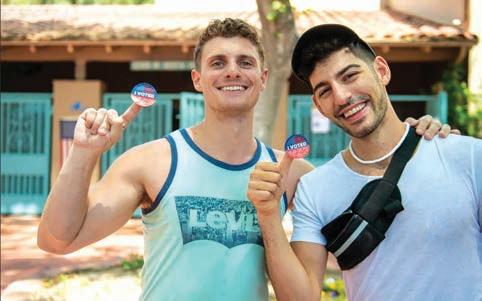
White House aide Stephen Miller, through his America First Legal non-profit political action committee, has targeted swing states with an avalanche of radio adverts and direct mail materials that target trans youth healthcare, which anti-trans pundits have labeled “gender mutilation.”
Governmental agencies have also targeted the trans community. Last week, the Florida Board of Medicine and Board of Osteopathic Medicine Joint Rules/Legislative Committee Friday advanced a rule that will effectively ban gender-affirming care for minors in the state.
Against this backdrop, in a history making first, the LGBTQ Victory Fund, the only national organization dedicated to electing LGBTQ leaders to public office, released a report last month detailing that at least 1,065 out LGBTQ people ran or are running for offices with elections in all 50 states, the most in history.
The following races are considered key in this midterm cycle:
• Tina Kotek, would be one of the nation’s first lesbian governors.
• Maura Healey, would be one of the nation’s first lesbian governors.
• Becca Balint, would be the first woman and the first LGBTQ person elected to Congress from Vermont. Vital to maintaining a pro-equality majority in Congress.
• Erick Russell, would be the first Black LGBTQ statewide elected official in U.S. history.
• Kris Mayes, will be critical to protecting LGBTQ and reproductive rights in Arizona. Arizona has a ban on abortion that Mayes has committed to not enforcing, while her opponent has committed the opposite.
• Kameron Nelson, would restore LGBTQ representation in the South Dakota Legislature. South Dakota is one of four states with zero LGBTQ state legislators.
• Ally Layman, will be vital to restoring reproductive rights in West Virginia. West Virginia was the second state to pass an abortion ban after the fall of Roe.
• Venton Jones, will be one of the first LGBTQ Black
men elected to the state legislature. Will be a vital vote against anti-LGBTQ legislation led by Greg Abbott.
• Janelle Perez, would be one of the first LGBTQ women elected to the state Senate in Florida. In the wake of “Don’t Say Gay,” she would also be the only LGBTQ parent in the state legislature.
• James Roesener of New Hampshire would be the first trans man elected to a state legislature in U.S. history.
New York’s Rep. Sean Patrick Maloney, a gay man and the first LGBTQ person to chair the Democratic Congressional Campaign Committee — in his own reelection race in New York’s 17th congressional district — is in trouble after Republican nominee, state assemblyman Michael Lawler, has shifted the race from “lean Democrat” to “toss up.”
That the newly redrawn district is competitive has come as a shock, given that President Joe Biden won the area by 10 points in 2020, the Cook Political Report noted that if Lawler defeats Maloney, it would be the first time a Republican has defeated the chair of the DCCC in 40 years.
The first out LGBTQ person elected to the U.S. House of Representatives from Minnesota, Angie Craig, who represents Minnesota’s 2nd congressional district; and out Rep. Christopher Pappas from New Hampshire’s 1st congressional district are also considered “toss ups” by Cook Political Report.
Elsewhere MAGA extremists, including Rep. Marjorie Taylor Greene (R-Ga.) and Sen. Ted Cruz (R-Texas) continue to bolster efforts to stymie LGBTQ equality rights and gains hitting the campaign trail on behalf of GOP candidates.
Cruz attacked transgender people and their supporters most recently during a rally for Virginia congressional candidate Yesli Vega that took place at a Prince William County church a week ago.
“Virginia is a parent state … this is a battle between sanity and insanity,” said the Texas Republican during the rally that took place at the Montclair Tabernacle Church in Dumfries. “These people are nuts. They can’t figure out what a woman is. The last I checked, that was not a trick question.”
Greene continues to publicly vilify LGBTQ people using disparaging terms like “groomer” and accusing Democrats of supporting an LGBTQ “pedophile” agenda.
On the West Coast in another critical race, out candidate Jamie McLeod-Skinner, an attorney and regional emergency manager from central Oregon, is locked in a tight race with Republican Lori Chavez-DeRemer for the U.S. House in Oregon’s 5th District. Chavez-DeRemer backed Trump, previously indicated support of a ban beginning around six weeks of pregnancy, the first point at which doctors can detect electrical activity in what would become a heart.
Political analysts see LGBTQ issues as a focal point in many local and state-wide races as school boards and communities continue efforts to ban LGBTQ-themed books and attacks on trans youth.
There are positive indicators, for example, as California is poised to become the first state in the nation to achieve 10% LGBTQ representation in its state legislature. (California’s four out LGBTQ senators are serving terms through 2024).

Former Brazilian President Luiz Inácio Lula da Silva on Sunday defeated incumbent President Jair Bolsonaro in the second round of the country’s presidential election.
Brazil’s Supreme Electoral Tribunal notes Da Silva was ahead of Bolsonaro by a 50.86-49.14 percent margin with 99.29 percent of electronic voting machines counted.
Da Silva on Oct. 2 defeated Bolsonaro in the election’s first round, but neither man received at least 50 percent of the vote.
“Democracy,” tweeted Lula after nearly all of the voting machines had been counted.
Bolsonaro, a member of the right-wing Liberal Party, represented Rio de Janeiro in the Brazilian Congress from 1991 until he took office in 2018.
The former Brazilian Army captain has faced sharp criticism because of his rhetoric against LGBTQ and intersex Brazilians, women, people of African and indigenous descent and other groups.
He has encouraged fathers to beat their sons if they think they are gay.
Bolsonaro during a 2019 press conference in the White House Rose Garden stressed his “respect of traditional family values.” Bolsonaro has expressed his opposition to “gender ideology,” supports legislation that would limit LGBTQ-specific curricula in Brazil’s schools and condemned a 2019 Brazilian Supreme Court ruling that criminalized homophobia and transphobia.
A Brazilian Federal Police investigator in August called for prosecutors to charge Bolsonaro with incitement for spreading false information about COVID-19 after he said people who are vaccinated against the virus are at increased risk for AIDS.

Da Silva, a member of the leftist Workers’ Party, was Brazil’s president from 2003-2010.
Former Justice and Public Security Minister Sergio Moro, who was a judge before he joined Bolsonaro’s government, in 2017 sentenced Da Silva to 9 1/2 years in prison after his conviction on money laundering and corruption charges that stemmed from Operation Car Wash. The Supreme Court in November 2019 ordered Da Silva’s release.
Julian Rodrigues, who was the coordinator of the Workers’ Party’s National Working Group from 2006-2012, noted to the Blade during a previous interview that Da Silva in 2004 created the Health Ministry’s “Brazil without
Homophobia” campaign. Rodrigues also highlighted Da Silva created the Culture Ministry’s Diversity Secretariat that, among other things, funded community centers and sought to make police officers and other law enforcement officials more friendly to LGBTQ and intersex people.
Da Silva during the campaign has publicly highlighted his support of LGBTQ and intersex rights.
Bolsonaro efforts to discredit Brazil’s electoral system have increased concerns that violence could erupt if he does not accept the election results. It is not immediately clear whether Bolsonaro will acknowledge he lost.
Sources throughout the country with whom the Washington Blade spoke on Sunday said they are “worried” about what will happen after the Supreme Electoral Tribunal determines the results.
Edgar Souza, the country’s first openly gay mayor, in a WhatsApp message to the Blade proclaimed Lula “is our president.” Renato Viterbo, vice president of Parada LGBT+ de São Paulo (São Paulo LGBT+ Parade), echoed Souza.
“We waited so long for this moment,” Viterbo told the Blade. “Hope conquered fear.”
President Joe Biden is among the world leaders who congratulated Lula.
“I send my congratulations to Luiz Inácio Lula da Silva on his election to be the next president of Brazil following free, fair and credible elections,” said Biden on Sunday in a statement the White House released. “I look forward to working together to continue the cooperation between our two countries in the months and years ahead.”
Lula’s inauguration will take place on Jan. 1.
MICHAEL K. LAVERS
The first openly gay governor of Brazil on Sunday won re-election.
Rio Grande do Sul Gov. Eduardo Leite, a member of the centrist Brazilian Social Democracy Party, defeated Onyx Lorenzoni of the right-wing Liberal Party who is President Jair Bolsonaro’s former chief-of-staff, by a 57.12-42.88 percent margin.
Lorenzoni defeated Leite in the election’s first round that took place on Oct. 2, but neither received at least 50 percent of the vote. A runoff election took place on Sunday.
“Rio Grande spoke louder,” tweeted Leite after he defeated Lorenzoni. “I appreciate all the votes (we) received. It’s out of love, it’s out of respect, it’s for the project. Starting today, we start another chapter of our history. It is all of us for all of us — and we go much further!”
Leite, 37, became governor of Brazil’s southernmost state in 2019. He came out in July 2021 during an interview with a late-night talk show host.
Incumbent President Jair Bolsonaro, who is also a mem-
ber of the Liberal Party, on Sunday lost to former President Luiz Inácio Lula da Silva of the leftist Workers’ Party in the second round of Brazil’s presidential election.
Leite in 2018 endorsed Bolsonaro, despite his rhetoric against LGBTQ and intersex Brazilians and his opposition to marriage equality and other issues. Leite, who unsuccessfully sought his party’s nomination to run against Bolsonaro in this year’s presidential election, has sharply criticized the soon-to-be-former president over his handling of the COVID-19 pandemic in Brazil.
Leite is one of the 324 openly LGBTQ candidates who ran in this year’s gubernatorial, state legislative, congressional and presidential elections.
Two transgender women — São Paulo Municipal Councilwoman Erika Hilton of the leftist Socialism and Liberty Party and Belo Horizonte Municipal Councilwoman Duda Salabert of the leftist Democratic Labor Party — on Oct. 2 won seats in Congress. Fábio Felix, a gay member of the Socialism and Liberty Party who is a member of the Federal District’s Legislative Chamber in Brasília, the country’s capital, also won re-election on Oct. 2.



Proposition 1: YES
Constitutional Right to Reproductive Freedom
A “yes” vote on this measure makes reproductive freedom an explicit constitutional right in California, ensuring that the right to an abortion and contraception is clear in the law.
Proposition 27: NO
Permits Online and Mobile Sports Wagering
Outside Tribal Lands
A “no” vote means that online gambling and mobile sports wagering outside tribal lands in California would continue to be prohibited.
Proposition 28: YES
Provides Additional Funding for Arts and Music Education in Public Schools
A “yes” vote on this measure means California would provide up to $1 billion for art and music education in public schools.
Proposition 30: YES
Reduce Air Pollution and Prevent Wildfires Fund by Increasing Tax on Personal Incomes Over $2 Million
A “yes” vote on this measure means people with annual incomes of over $2 million would pay an additional income tax of 1.75%.
Proposition 31: YES
Prohibit the Retail Sale of Flavored Tobacco Products
A “yes” vote on this measure means stores in California can no longer sell most flavored tobacco products and tobacco product flavor enhancers.
Los Angeles City Measure LH: YES
Authorization for Low-Income Housing
A “yes” vote will authorize the City of Los Angeles to acquire up to 75,000 additional units of low-income rental housing across Los Angeles to address homelessness and affordable housing needs.
Los Angeles City Measure SP: YES
Parks and Recreational Facilities Parcel Tax
A “yes” vote will establish a parcel tax on Los Angeles City-owned buildings, providing $227 million annually for improvements to our city’s parks and recreation facilities.
Los Angeles City Measure ULA: YES
Affordable Housing and Tenant Assistance
Programs Through a Tax on Real Property
Transfers Over $5 Million
A “yes” vote will authorize and establish city funding for affordable housing programs and resources for tenants at risk of homelessness.
Removal of Sheriff Charter Amendment
A “yes” vote would grant the Los Angeles Board of Supervisors the authority to remove a Sheriff who violates the law or abuses power through a 4/5ths vote.
The Los Angeles LGBT Center (Center) believes that passing legislation is the role of elected officials, not a simple majority of voters. Many of these ballot measures are of such complexity that few voters will have the opportunity to fully educate themselves on all the issues. In an effort to help our community sift through the most important measures in this election, the Center’s Policy & Community Building Team has studied each proposition. These are our recommendations for the propositions on which we have chosen to take a position—because of their impact on the LGBTQ community, the services we offer as an organization, or, in many cases, their impact on both.
as
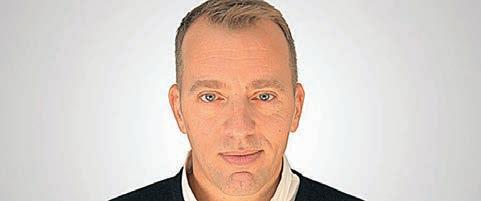
is editor of the Washington Blade. Reach him at knaff@washblade.com
GOP election deniers want to take our country away
It was a perfect fall afternoon at Beaver Stadium in State College, Pa., last weekend and I was enjoying a homecoming tailgate party at my alma mater when I noticed something strange.
Amid the peak fall foliage and tens of thousands of students and alumni playing corn hole or watching TVs perched in the back of pickup trucks broadcasting the game via portable satellite dishes, a handsome man in a suit and tie was making his way through the crowd. He had two camera men and a sound guy in tow. We watched with interest as he made his way toward our circle of camping chairs. Then he approached me.
“I’m Robert Costa with CBS News, can I interview you,” he said to me.
I told him I recognized him and asked what he wanted to talk about. He replied, “politics and the upcoming election.”
At a tailgate? My husband intervened and suggested that I decline as I’d already had a beer. But I couldn’t resist. Costa asked what I thought was at stake in next week’s elections.
“Our very democracy is at stake in this election and soon it could be taken from us,” I replied. “And that’s what this election, I think, is about. Because when these election deniers come into office as secretaries of state and in roles where they control the process, and somebody wins an election that they don’t like, they’ll overturn it. And will we care then? It’ll be too late.”
That may sound hyperbolic, but consider that CBS News has identified more than 300 Republican candidates for state and national office who are on the record as election deniers, falsely claiming that President Biden is illegitimate due to fraud in the 2020 election. It’s all demonstrably false and at least 60 lawsuits filed on behalf of Donald Trump and his enablers challenging the 2020 results were dismissed by judges across the country, including judges appointed by Trump himself.
But the lunatics of MAGA never let facts get in the way of a good conspiracy theory. The results of a former president endorsing Q-Anon conspiracy theories can be seen in last week’s horrific and brutal attack on Paul Pelosi. When pres-
idents talk, people listen and act. When Trump denies the results of the 2020 election and spreads dangerous, reckless conspiracies, his followers act and one of them nearly killed Nancy Pelosi’s husband.
The antidote to all this madness infecting our politics? Well, until the MAGA nuts can be de-programmed — that’s what must happen to cult followers, after all — the rest of thinking people must vote like our democracy depends on it, because it does. Don’t let the talk of inflation and crime distract you from the key issue in this race: upholding our Constitution and our democratic principles of free and fair elections.
Nothing else will matter if we lose the integrity of our elections and make no mistake that GOP candidates on the ballot next week, if elected, will refuse to certify elections of Democrats and will undermine the process and continue to erect barriers to voting by people of color.
Stopping the MAGA lunatics won’t be easy and won’t happen in a single election. After all, they now have a super majority on the Supreme Court and have already overturned Roe; affirmative action is next and marriage equality not far behind.
But voters can blunt the progress and influence of these Trump cultists by sending a message on Nov. 8 that we won’t embrace authoritarianism and we will defend our democratic institutions from the MAGA crowd. They’ve already defiled and invaded our capitol, threatened the lives of scores of Democratic and Republican lawmakers, and attacked the husband of the House Speaker. What’s next could be worse if they come into political power.
CBS aired Costa’s report on Sunday featuring my remarks from the Penn State tailgate as well as comments from Margaret Sullivan, the former public editor of the New York Times. She and I share concerns about Republican election deniers.
“I think we need to stop being asleep at the switch and sound the alarm more about what could happen if election denialists are, you know, in power and decide, ‘Oh, well, we only like the results of this election, but not that one,’” Sullivan said. “I mean, we no longer have a country anymore.”
ADDRESS
8237 Blackburn Avenue Ste. 201, Los Angeles, CA 90048
PHONE 310-230-5266
E-MAIL tmasters@losangelesblade.com
INTERNET losangelesblade.com
PUBLISHED BY Los Angeles Blade, LLC
PUBLISHER
TROY MASTERS tmasters@losangelesblade.com 310-230-5266 x8080 (o), 917-406-1619 (c)
SALES & MARKETING
SALES EXECUTIVE
CHRIS WILMORE cmwilmore@losangelesblade.com 310-230-5266 x9461
NATIONAL ADVERTISING
RIVENDELL MEDIA sales@rivendellmedia.com, 212-242-6863
MARKETING DIRECTOR
STEPHEN RUTGERS srutgers@washblade.com, 202-747-2077 x8077
EDITORIAL
CONTRIBUTING WRITER
KAREN OCAMB karenocamb@losangelesblade.com
NATIONAL EDITOR
KEVIN NAFF kna @washblade.com, 202-747-2077 x8088
EDITOR AT LARGE
BRODY LEVESQUE
California CONTRIBUTORS
MICHAEL K. LAVERS, TINASHE CHINGARANDE, ERNESTO VALLE, YARIEL VALDÉS GONZALEZ, PARKER PURIFOY, CHRISTOPHER KANE, AUSTIN MENDOZA, JOHN PAUL KING, JOEY DIGUGLIELMO, CHRIS JOHNSON, LOU CHIBBARO JR., REBEKAH SAGER, JON DAVIDSON, SUSAN HORNIK, CHANNING SARGENT, SAMSON AMORE, CHRISTOPHER CAPPIELLO, MICHAEL JORTNER, DAN ALLEN, SEAN SHEALY, SCOTT STIFFLER, RHEA LITRÉ
CREATIVE DESIGN/PRODUCTION AZERCREATIVE.COM
DISTRIBUTION
CHRISTOPHER JACKSON, 562-826-6602 All material in the Los Angeles Blade is protected by federal copyright law and may not be reproduced without the written consent of the Los Angeles Blade. e sexual orientation of advertisers, photographers, writers and cartoonists published herein is neither inferred nor implied. e appearance of names or pictorial representation does not necessarily indicate the sexual orientation of that person or persons. Although the Los Angeles Blade is supported by many ne advertisers, we cannot accept responsibility for claims made by advertisers. Unsolicited editorial material is accepted by the Los Angeles Blade, but the paper cannot take responsibility for its return. e editors reserve the right to accept, reject or edit any submission. A single copy of the Los Angeles Blade is available from authorized distribution points, to any individual within a 50-mile radius of Los Angeles, CA. Multiple copies are available from the Los Angeles Blade o ce only. Call for rates. If you are unable to get to a convenient free distribution point, you may receive a 26-week mailed subscription for $195 per year or $5.00 per single issue. Checks or credit card orders can


is a Washington-based press professional who specializes in political advocacy communications strategy. He currently serves as Communications Lead at the Global Women’s Institute.
a more
There has never been a more urgent time to race to the polls
Midterm turnout is historically dismal, with most Americans more concerned with who sits in the White House rather than who walks the halls of Congress. But voters who are waiting until 2024 to cast a vote, should consider supporting a new wave of LGBTQ candidates fighting for their lives this election season.
More than 100 openly LGBTQ candidates have run or are running for a congressional seat this November. This marks a 16% increase from 2020 and a dramatic shift in the potential for a more diverse 118th Congress. The LGBTQ community, allies, and advocates should feel empowered now more than ever according to The Victory Fund’s President and CEO, Annise Parker.
“For those voters who are staying home this season because of hopelessness, because of one candidate, or because of one issue, I have a simple ask: suck it up. This election our lives are on the ballot, our rights are on the ballot, and our future is on the ballot,” said Parker.
The Victory Fund is an organization dedicated to increasing the number of openly LGBTQ elected officials at all levels of government, a mission that Parker knows intimately. In 2009, she was elected as the first openly LGBTQ person to serve as mayor of a major American city, serving the city of Houston for several years.
The ask is simple: elected representation that reflects the identity of the American people. According to the Victory Fund, we are 35,854 LGBTQ public servants short of this benchmark. Change begins this midterm season and the voting power of the LGBTQ community, and our allies, is growing with every ballot.

This election season, 11% of the eligible voting population identifies as openly LGBTQ, a demographic with enough weight to sway a congressional race in most states. This voter bloc continues to grow with estimates that by 2040 almost one-fifth of eligible voters will identify as LGBTQ.
This voting bloc is not only growing rapidly but is also a consistent and dependable voice at the polls. In 2020, 93% of registered LGBTQ voters cast a ballot. Queer communities are a force in our electoral system, and collectively have the power to be instrumental agents of change in races across the country.
This could be a dramatic season of change, and voting is just the first step to being engaged in electing a new diverse brand of leadership according to Parker.
“No candidate has ever been elected because of a majority of LGBTQ voters, it is essential to mobilize your circles in your locality and in campaigns across the country that are important to you … You can phone bank from your house and it will make an impact, you can give $10 to a school board candidate and it will make an impression,” stated Parker.
Activism does not begin and end at the polls, it is a consistent dedication to candidates that will defend your rights and freedoms. This is not just another midterm season, this is an opportunity to pull a seat up to the table, a seat that has been missing for generations. Amid waves of anti-LGBTQ legislation and attacks on our most vulnerable populations, there has never been a more urgent time to race to the polls.
By KATHI WOLFE
Some creators agonize for years before plunging into their art. This wasn’t the case with queer, blind writer and teacher Caitlin Hernandez. Hernandez wrote her first “novel,” “Computer Whiz,” she writes in her bio, when she was in the fourth grade. She kept her monitor off so no one would see her “masterpiece.”
Reading and writing have been a part of Hernandez’s life for as long as she can remember. “I was writing, even as a little kid,” Hernandez, who was born in 1990 and grew up in Danville, Calif., said in a telephone interview with the Blade, “In first grade, I wrote stories in braille. They taught me to type. Because people were having to translate.”
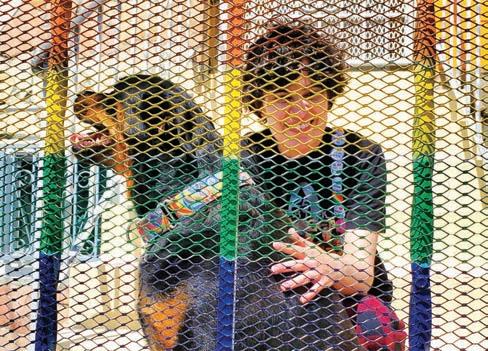
As a kid, Hernandez used a tape recorder to tell stories. “That happens so often with blind kids,” said Hernandez, who lives in San Francisco with her partner Martha and Maite their Rottweiler.
Maite was Martha’s dog when the couple got together. “I call her my ‘stepdogter,’” Hernandez said. It’s clear from the get-go that she doesn’t take herself too seriously. Maite, her “stepdogter,” is “currently writing a picture book,” Hernandez jokes in her bio.
It’s commonly thought that disabled people lead sad, tragic lives. But Hernandez busts this myth. Martha, her partner, “reads braille with her eyes,” Hernandez whimsically writes in her bio Hernandez is committed to teaching and writing. But, she “loves eating coffee ice cream, watching Star Trek Voyager, singing, skipping and using her rainbow cane – sometimes all at once,” Hernandez writes in her bio.
Queerness is an integral part of Hernandez’s life: from her fiction, which tells stories of LGBTQ people, disabled people, and people of color to her rainbow cane.
“Queerness is considered cool now in many places,” Hernandez said, “it’s normalized.”
But that’s not true with disability, she added. “Generally, there’s more fear and misperceptions around disabled people,” Hernandez said.
Because of their discomfort with disabled people, she’s often left alone at social and literary gatherings.
“Because I’m blind, people frequently won’t talk to me,” Hernandez said, “even if I’ve read at an open mic.”
To make people feel more comfortable with her, Hernandez, totally blind since birth, sometimes uses a rainbow cane. “I designed it,” she said, “it has the colors of the rainbow flag. If you’re queer, you’ll get that.”
But it’s also beautiful because it’s a rainbow, Hernandez said, “It’s a great ice-breaker.”
(Hernandez uses her rainbow cane when she’s out with friends. When traveling by herself, she uses the white cane used by most blind people.)
Once people get to know [disabled people],” Hernandez said, “they’re chill with us.”
The Americans with Disabilities Act of 1990 (ADA), a landmark civil rights law, despite problems of enforcement and compliance, has done much to change life for disabled people.
The ADA generation (those born when or after the law was passed) has grown up with the expectation that disabled people have rights. They’re not surprised to see curb cuts or braille menus. They expect employers to make accommodations for disabled employees and hospitals to have sign language inter-
preters for Deaf people.
Yet despite the ADA, ableism persists (even within her own ADA generation), Hernandez said. A key reason why discomfort with and fear of disabled people is still so pervasive is the problem of representation, she said.
Hernandez, a Lambda Literary Emerging Writer Fellow in 2015 and 2018, is acutely aware of how disabled and queer and disabled people are portrayed in fiction and nonfiction.
“Our lives are often represented so badly,” Hernandez said, “often by nondisabled creators. There’s a lot of fear and inaccuracy.”
Thankfully, there are a few fab books with disabled characters by disabled authors, Hernandez said. She loves “The Kiss Quotient” by Helen Hoang, who is autistic. The novel portrays the romance of an autistic econometrician and her biracial male escort.
Hernandez is a fan of “The Silence Between us,” a young adult romance featuring a Deaf character, by hard-of-hearing author Alison Gervais.
“The Chance to Fly,” co-authored by Ali Stroker, the bisexual, Tony-winning actress who uses a wheelchair, and Stacy Davidowitz, is one of Hernandez’s faves. The book, a novel for middle-schoolers, tells the story of a theater-loving, wheelchair using girl, who defies ableist expectations.
Hernandez began to think she was queer when she was in high school. But, she didn’t come out then to anyone except a few of her friends. “They kinda didn’t believe me,” Hernandez said, “because a friend of ours had already come out as queer and they thought I was trying to copy him.”
After she was in college, Hernandez, who earned a bachelor’s degree in literature from the University of California, Santa Cruz in 2012, came out to her parents.
Her folks, now divorced, were fine with her being queer.
Because nondisabled people frequently don’t see disabled people as datable or sexy, some aspects of coming out are more difficult if you have a disability, Hernandez said. “We often miss one of the rites of passage of coming out,” she said, “of saying ‘I am queer – here with my queer date (or partner).’”
Hernandez’s first relationship was with a woman who was closeted. “We couldn’t be out,” she said.
Hernandez got together with her partner Martha in November 2019. Then there was the pandemic and everything was cancelled. “So we didn’t get to go out as an out queer couple,” Hernandez said.
“Everybody knows I’m partnered with Martha,” she added.
But because of ableism, sometimes people don’t see her as Martha’s romantic partner, Hernandez said.
Like many, Hernandez navigates intersecting identities. “I’m thinking more about my being of mixed race,” Hernandez said, “My Mom is white. My Dad is one-half Mexican and one-half German. I can pass as white,” she added.
She’s grappling with what it means to have a Latinx last name, Hernandez said.
She wishes she had taken Spanish. “But I took French,” Hernandez said, “I wanted to do what my friends were doing.”
As a writer, Hernandez hopes to help children who live with intersecting identities.
Her work has appeared in “Aromatica Poetica,” “Wordgather-
(Editor’s Note: One in four people in America has a disability, according to the Centers for Disease Control and Prevention. Queer and disabled people have long been a vital part of the LGBTQ+ community. Take two of the many queer history icons who were disabled: Michelangelo is believed to have been autistic. Marsha P. Johnson, who played a heroic role in the Stonewall Uprising, had physical and psychiatric disabilities. Today, Deaf/Blind fantasy writer Elsa Sjunneson; actor and bilateral amputee Eric Graise who played Marvin in the “Queer as Folk” reboot; and Kathy Martinez, a blind, Latinx lesbian, Assistant Secretary of Labor for Disability Employment Policy for the Obama administration, are only a few of the queer and disabled people in the LGBTQ community. Yet, the stories of this vital segment of the queer community have rarely been told. In its monthly, yearlong series, “Queer, Crip and Here,” the Blade will tell some of these un-heard stories.)
ing” and in “Barriers and Belonging,” “Firsts: Coming Of Age Stories by People with Disabilities” and other anthologies.
In 2013, “Dreaming in Color,” a musical written by Hernandez, was produced by CRE Outreach at the Promenade Playhouse in Santa Monica, Calif.
Hernandez’s unpublished young adult novel “Even Touch Has a Tune” is about a queer, blind girl falling in love with another girl and surviving sexual assault, Hernandez said in an email to the Blade. “It’s fiction but has a lot of autobiographical content,” she added.
If you’re disabled, you’re more vulnerable to sexual assault. When she was a freshman, Hernandez became friends with a fully sighted guy who she’d met in her classes. “He seemed nice,” she said, “but then he came over and touched me inappropriately.”
“I froze up,” Hernandez added, “if you’re disabled, you’re vulnerable. You’re taught to be polite – to keep quiet.”
While there’s more representation of disabled people in fiction, Hernandez is still discouraged.
Because of ableism, many literary agents may not want her “disabled and assault novel,” Hernandez said. (Her unpublished YA novel “Even Touch Has a Tune” is represented by Emily Keyes of Keyes Agency.)
Too frequently, representation of disabled people is focused on ableist tropes like “inspiration porn” and “overcoming,” Hernandez said. There isn’t interest in portraying scary, difficult aspects (like sexual assaults) of disabled people’s lives, she added. But discouragement doesn’t stop Hernandez from writing or from connecting with kids as a teacher.
Hernandez earned a master’s degree in special education and her teaching credentials from San Francisco State University in 2016. Today, she is a resource specialist with the San Francisco Unified School District.
Hernandez enjoys forging a connection with disabled and nondisabled students. “Nondisabled kids come to me for extra help,” she said.
Hernandez has accomplished much. But, “I’ve learned I don’t have to be a role model,” she said, “I don’t have to be perfect.”


















By JOHN PAUL KING
The only thing you need to know before going to see “Tár” is that it is not a true story.
Lydia Tár, the acclaimed female conductor profiled in Todd Field’s newest film, is entirely fictional, despite confusion online from people who mistakenly believed otherwise. It’s easy to see why; a story about a respected cultural figure’s fall from grace might easily be drawn directly from current headlines, and the world depicted onscreen – an exclusive, insular environment in which high art, big money, and base motives exist in uneasy tension with each other – comes across as completely authentic, down to each granular detail. It feels real, even if it’s not – and that, of course, is one of the things that make “Tár” such a singular film.

This shouldn’t surprise those familiar with writer-director Field, whose short-but-eloquent resume – he’s made only three films in 21 years, perhaps mirroring the less-than-prolific pace of former mentor Stanley Kubrick, and “Tár” is the first since 2006 – speaks volumes about his mastery of cinematic craft. His earlier works – “In the Bedroom” (2001) and “Little Children” (2006) – were distinguished by a literary instinct for finding big truth in tiny details and for a keen, almost merciless understanding of the psychology of their characters. In each case, too, there was a focus on the uncomfortable corners of our lives – grief, adultery, domestic violence, pedophilia, murder – and on the way that our intimate secrets spin webs into our public lives. Above all, perhaps, those films were about the masks we wear to disguise the desires we don’t want others to see.
Lydia Tár (Cate Blanchett) is the natural legacy of these previous explorations, a culmination of all those potent themes in one enigmatic character. As maestro of the prestigious Berlin Philharmonic, she’s at the peak of an already monumental career; she’s renowned for her interpretations of the classical canon and an accomplished composer in her own right, a respected musical theorist and practitioner who has achieved world-class fame and success as a woman in a field overwhelmingly dominated by men. She’s also a lesbian, raising a young daughter with her wife, Sharon (Nina Hoss).
None of these biographical facts, however, tell us anything about who she really is. To learn that, we have to watch as Field’s intricately crafted movie unspools her for us.
More a montage of slice-of-life episodes than a traditional narrative, “Tár” introduces us to its title character through a series of text messages about her between unknown others, just enough to imply that something about her is not what it seems. From then on, everything we see is tinged with suspicion. Field examines her life like a researcher documenting observations, drawing us in with a perspective heightened by specificity – more hyperreal than surreal – as he reveals the gradually widening cracks in her inscrutable façade.
At first, she seems an aspirational figure – brilliant, poised, and supremely
confident; gradually, her personal interactions – with overworked PA Francesca (Noémie Merlant), or fawning associate-and-rival Eliot (Mark Strong), or promising young cellist Olga (Sophie Kauer), among others – reveal glimpses of more questionable qualities, perhaps even a hint of narcissism; finally, a pattern emerges, and we begin to recognize, even before she does, that Lydia’s compartmentalized life is about to come crashing down around her.
It’s an intensely visceral experience, a twist on the “unreliable narrator” motif that invites us to identify with a character that will later be revealed as a fraud. It’s hardly a new tactic, but in Field’s provocative movie, it strikes a hauntingly dissonant chord – in large part because of the cultural moment in which it comes. Without revealing too much detail, it’s clear enough that sexual misconduct is part of the equation in “Tár,” so it’s not a spoiler to discuss the way the film subverts an all-too-familiar narrative. We are now, sadly, so saturated with scandals around men who use their power as a vehicle for sexual predation that they are dangerously close to becoming a trope. By suggesting that a woman might be the predator, Field challenges our assumptions about that dynamic; far from diminishing the culpability of male abusers by showing females are capable of the same behavior, he reminds us that “toxic masculinity” is a systemic phenomenon. Lydia Tár is the product of a long-established order in which the road to success is both paved and defined by male-centric hierarchy; though that order may have become more inclusive, the hierarchy remains unchanged – and the gender lines around sexual predation have become blurred.
Some queer audiences, it should be said, may also find controversy in the film’s presentation of the queer woman as victimizer – an old and toxic bit of coded subtext that has been a part of cinematic storytelling ever since the days of the silent vamp. While this might feel particularly tone deaf when current conservative rhetoric includes terms such as “grooming” in its effort to stigmatize LGBTQ people, there’s no homophobic agenda in “Tár” – only a cautionary assertion that real life is not subject to the expectations of the bubbles in which we find safe haven. More than that, Field arguably accomplishes the fairest representation possible by allowing its queer protagonist – and despite whatever moralistic judgments his movie may invite us to explore, that’s what she is – to be as imperfect a human being as anyone else.
There are many other perspectives, as well, through which to view “Tár” – much has been made by commentators about its focus on “cancel culture,” for example, and the influence of social media and virtual discourse over our social mores and ethics – and it’s a testament to the genius – yes, we’ll use that word – of Todd Field that all of them are valid.
Great as his talent may be, though, none of what works about the movie would be possible without its star. Field has said he wrote the role for Blanchett – if she had declined it, the movie would never have been made – and she gives a career-defining performance as Lydia Tár; her dedication goes much further than simply learning the necessary musical skills required – which she did, playing piano for herself and conducting a live orchestra in front of the camera – to realize a monumental and multi-faceted character from the ground up. Fierce yet vulnerable, tender and loving yet cold and compassionless, she’s a walking contradiction, subject to the same hubris as the rest of us; because of this, we are able to find empathy for her no matter how far out of control she goes – and without that crucial element, the film would fall flat.
It doesn’t. Instead, it’s an engrossing piece of cinema, even thrilling, that keeps us wrapped around its finger for a two-and-a-half-hour-plus running time that feels far shorter than that. It’s also the kind with which one must to sit for a while before deciding whether we loved it or hated it, and the kind for which there can really be no response in between.
That means we can’t guarantee which side you’ll come down on – but for our part, “Tár” might just be the best film of the year so far.

Drag stars tell you how to get along with co-workers, ask for a raise
By TERRI SCHLICHENMEYER
You want stuff.
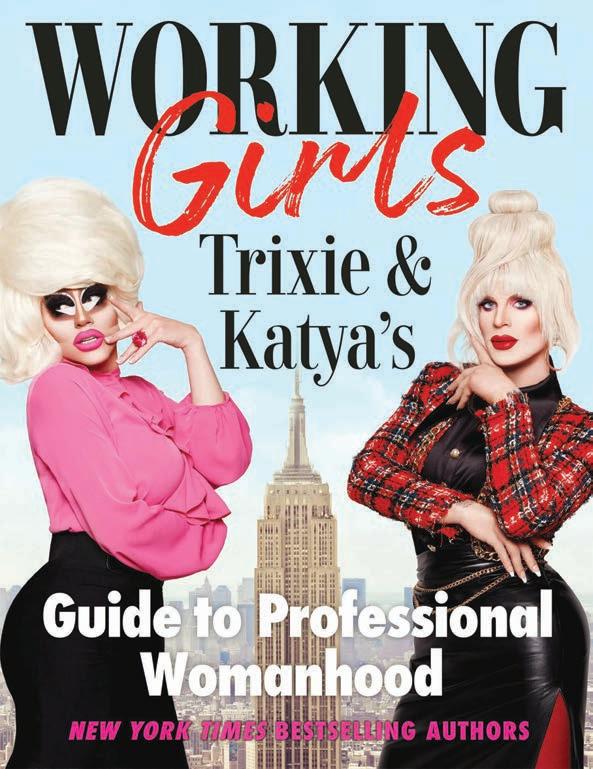
A nice wardrobe, say. Decent dishes, nice lamps, food and drink. Somewhere to relax and a place to sleep. You want stuff, and a home to put that stuff in, but that generally takes money, honey, and it usually comes from a j-o-b. Fear not, though: help is on the way with “Working Girls: Trixie & Katya’s Guide to Professional Womanhood” by Trixie Mattel and Katya Zamolodchikova.
If you must work, at least you should find a job that fits you, right? So grab Trixie and Katya’s guide and start with the career aptitude test. You might be surprised – or you might “qualify for 0 percent APR financing.”
Next, think about what you really want to do with your life. How about a career of service as a cleaner who removes “the carnage of lowly grifters, criminals, and monsters”? You might rather hang out with kids as a nanny, or be a “tipped laborer.”
Remember, always tip the waitstaff.
You could work in publishing, “big tech,” financing, whatever you choose, always dress for the job. If that means drag, “grab a wig, some fabric, and two lashes... and poof!” You’re ready to hire.
But wait. First, you’ll have to go through an interview, so think about the skills you want to showcase, then “reel them in” with thoughtful answers to those silly interview questions. Once you’ve got a job offer in hand, be forearmed with the handy guide to the types of coworkers you might encounter. Remember: work is not like college, where you can avoid “germs, viruses, and nonessential enzymes named Carol from Accounts Receivable.”
Know how to ask for a raise (do you even deserve one?). Be glad if they ask you to do a Zoom meeting from home. Know how to manage your time, know when it’s time to leave your job, and know how to be graceful if it wasn’t exactly your idea. Learn to recognize work scams. And then prepare for retirement. Yeah, you do deserve that.
It should be crystal-clear by merely looking at the cover of “Working Girls: Trixie & Katya’s Guide to Professional Womanhood” that this book pokes plenty of fun at the world of work. It’s funny, saucy, and over-the-top and it actually includes surprisingly decent advice, too.
Just be willing to read between the lines, although that shouldn’t be a problem. Readers who are old enough to handle the theme of this book should be smart enough to know when authors Trixie Mattel and Katya Zamolodchikova aren’t exactly trying for Dear Abby here; there’s an overload of snark and sarcasm in these pages, and it’s in neon. Still, the fact remains that there are usable nuggets inside this book – on working from home, on getting along with coworkers, on asking for more money, and on how to quit.
Bring your sense of humor when you tackle this book, but bring your resume, too. “Working Girls: Trixie & Katya’s Guide to Professional Womanhood” is funny and useful, and, well, you want it.

‘Working Girls: Trixie & Katya’s Guide to Professional Womanhood’
By Trixie Mattel and Katya Zamolodchikova
c.2022, Plume | $28 | 224 pages


WANTED! Page Publishing will help you self-publish your own book. FREE author submission kit! Limited offer! Why wait? Call now: 1-855-667-0380
Become a Published Author. We want to Read Your Book! Dorrance Publishing-Trusted by Authors Since 1920. Book manuscript submissions currently being reviewed. Comprehensive Services: Consultation, Production, Promotion and Distribution. Call for Your Free Author`s Guide 1-877-538-9554 or visit http://dorranceinfo.com/ Cali
Prepare for power outages today with a GENERAC home standby generator. $0 Money Down + Low Monthly Payment Options. Request a FREE Quote -Call now before the next power outage: 1-844-439-5645
Eliminate gutter cleaning forever! LeafFilter, the most advanced debris-blocking gutter protection. Schedule a FREE LeafFilter estimate today. 15% off Entire Purchase. 10% Senior & Military Discounts. Call 1-855424-7581
Switch and save up to $250/year on your talk, text and data. No contract and no hidden fees. Unlimited talk and text with flexible data plans. Premium nationwide coverage. 100% U.S. based customer service. Limited time offer get $50 off on any new account. Use code GIFT50. For more information, call 1-844908-0605
Old Porsche 356/911/912 for restoration by hobbyist 1948-1973 Only. Any condition, top $ paid! PLEASE LEAVE MESSAGE 1-707-339-5994. Email: porscherestoration@ yahoo.com
DONATE YOUR CAR TO KIDS Fast Free Pickup – Running or Not - 24 Hour ResponseMaximum Tax Donation – Help Find Missing Kids! Call 1-888-4911453.
DONATE YOUR CAR OR TRUCK TO HERITAGE FOR THE BLIND. Free 3 Day Vacation, Tax Deductible, Free Towing, All Paperwork Taken Care Of. CALL 1-844-491-2884
CABLE / INTERNET/ SATELLITE TV
DIRECTV for $79.99/ mo for 12 months with CHOICE Package. Watch your favorite live sports, news & entertainment anywhere. First 3 months of HBO Max, Cinemax, Showtime, Starz and Epix included! Directv is #1 in Customer Satisfaction (JD Power & Assoc.) Some restrictions apply. Call 1-888-641-5762
COMPUTER & IT
TRAINING PROGRAM! Train ONLINE to get the skills to become a Computer & Help Desk Professional now! Grants and Scholarships available for certain programs for qualified applicants. Call CTI for details! 1-877-806-0935 (M-F 8am-6pm ET). Computer with internet is required.
Over $10K in Debt? Be debt free in 24 to 48 months. No upfront fees to enroll. A+ BBB rated. Call National Debt Relief 1-888-231-4274.
SAVE BIG on HOME INSURANCE! Compare 20 A-rated insurances companies. Get a quote within minutes. Average savings of $444/year! Call 1-844-410-9609! (M-F 8am-8pm Central)
RETIRED COUPLE
$1 MIL for business purpose Real Estate loans. Credit unimportant. V.I.P. Trust Deed Company www.viploan.com Call 1-818-248-0000 Broker-principal DRE 01041073. No Consumer Loans.
FREON WANTED: Certified buyer looking to buy R11, R12, R500 and more. Call Joe at 312-697-1976.
TOP CA$H PAID FOR OLD GUITARS! 1920-1980 Gibson, Martin, Fender, Gretsch, Epiphone, Guild, Mosrite, Rickenbacker, Prairie State, D’Angelico, Stromberg. And Gibson Mandolins / Banjos. 1-844-9101960.
The difference in winning and losing an election is how campaign dollars are spent. Get the best ROI by using our deep relationships in every community in California. Our on-theground knowledge is indispensable to campaigns that want results. For more info on multi-market ethnic and non-ethnic solutions call Cecelia @ (916) 288-6011 or cecelia@ cnpa.com