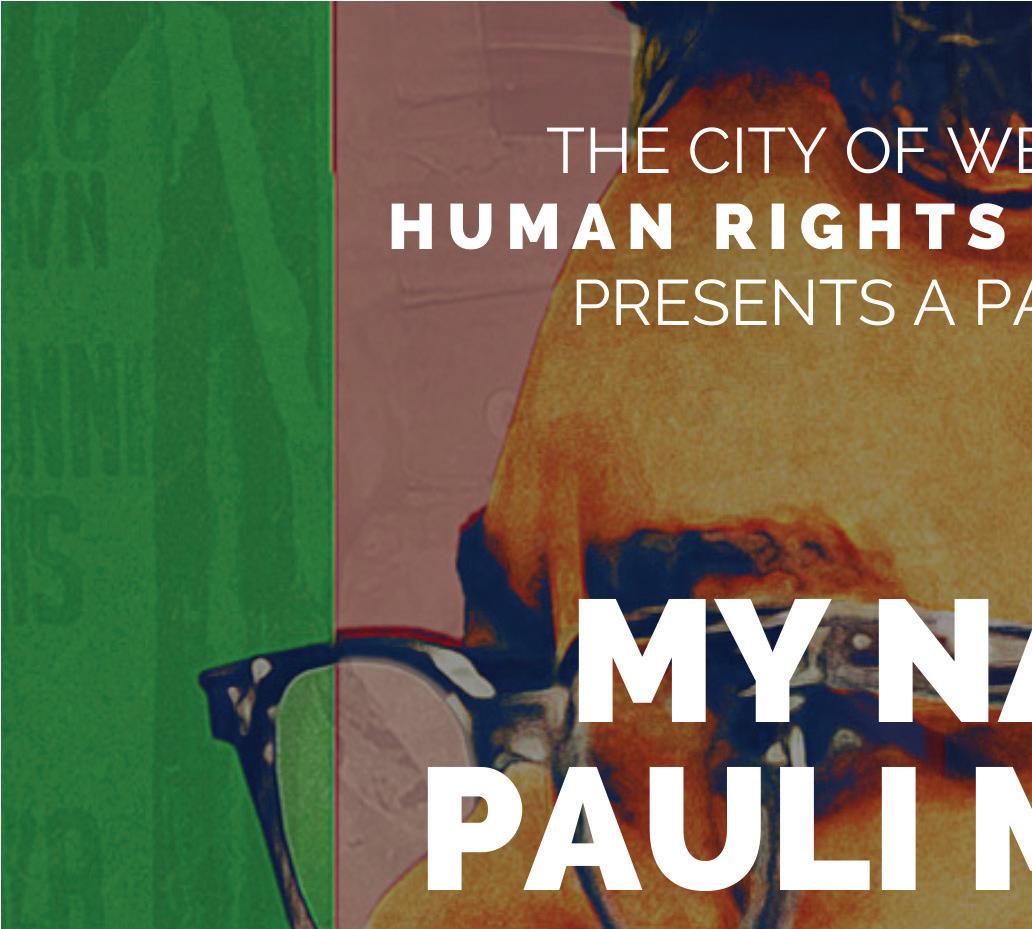
































































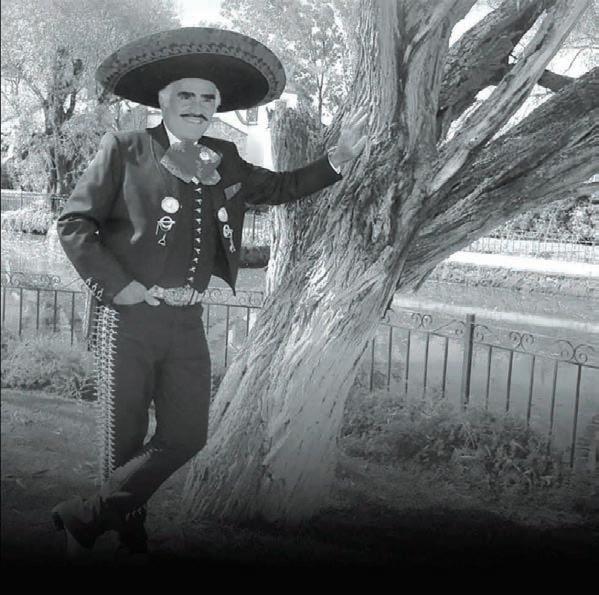
The Boyle Heights Neighborhood Council and some LGBTQ+ activists are taking Los Angeles City Councilman Kevin de Leon to task for his unilateral push to rename a section of Bailey Street after legendary Mexican musical icon, Vicente Fernández-Gómez, nicknamed “Chente” which is short for Vicente.
Fernández known as the “El Rey de la Música Ranchera” (The King of Ranchera Music) to his millions of fans, led a life that arguably was filled with success, tragedy, and scandal.
In an unauthorized biography, El Último Rey, (The Last King), released just prior to the singer’s death at 81 this past December after four months of being admitted to a hospital in Guadalajara due to a fall that injured his spine, Argentine journalist Olga Wornat details the singer’s more than five decades-long career. Wornat writes that family tragedy, “a life absent as a father” and infidelities to his wife María del Refugio Abarca, “Cuquita,” plagued the musical maestro. Wornat states that the most significant event was in 1998 when his elder son Vicente Jr. was kidnapped by a gang known as “Mocho Dedos.” After Fernández Sr. paid $3.2 million dollars to free him his son was abandoned outside the family’s ‘Los tres Potrillos’ ranch, near the city of Guadalajara in the Mexican State of Jalisco,121 days later with two of his fingers having been amputated.
By BRODY LEVESQUE
In an email to the Blade, David A. Silvas, vice president and chair of the Planning and Land Use for the Boyle Heights Neighborhood Council stated: “The Boyle Heights Neighborhood Council feels strongly that all voices in the community are heard when decisions are being made – especially ones such as proposing the renaming of streets or other civic monuments.
VICENTE FERNÁNDEZ-GÓMEZ
(Publicity photo courtesy of Sony Entertainment)
“As there were concerns about singer Vicente Fernández conduct which directly upset the members of the LGBTQ community within Boyle Heights, it was necessary to delve into how these actions may affect members of the community – especially minority members.
“The Boyle Heights Neighborhood Council works as an advisory board to the council office. Despite any decision made, ultimately the Los Angeles City Council will make the final decision by their vote. But we do hope they take into consideration the opinions and comments of the minority members of the community.”
Silvas in another email told the Blade, “Councilmember Kevin DeLeon only informed immediate stakeholders on this small stretch of street and did not do any outreach to a significant number of stakeholders nor the Boyle Heights Neighborhood Council.
“Based on this, and feedback that has come to my attention about singer Vicente Fernández’s history of sexual allegations as well as his views on not wanting to receive any organ transplant from an “addict or “homosexual” […] the Planning and Land Use Committee came out with a Community Impact Statement opposing Councilmember Kevin de Leon’s proposed motions.
“The community impact statement letter has had mixed reactions – many support it – but there has already been homophobic remarks on social media about how ‘the gays need to get over this – they are just a minority.’ That sort of rhetoric cannot be tolerated.”
Fernández in an interview with Spanish language media outlet El Universal in May of 2019 told the paper that while he was a patient in Houston to undergo a liver surgery, he decided to reject a transplant because he did not “want to sleep with his wife while having the liver of another man, who could have been a homosexual or a drug user.”
Accusations of womanizing also plagued Fernández. In January of 2021 a photograph of a 2017 ‘meet & greet” with fans went viral as in the photo Fernández appears to be cupping a female fan’s breast. According to media accounts a few days later, Fernández issued an apology to the woman’s family, stating that “I admit that I was wrong, I don’t know if I was joking, maybe it was a joke […] I don’t know. I do not remember, there were many people (with whom I took photos), sincerely I offer an apology.”
A month later the news broke that Fernández was accused of sexual assault by a singer named Lupita Castro nearly 40 years previously when she was still a minor at age 17. That case ultimately went away as Castro refused to take Fernández to court.
The problem, as one source told the Blade, is that the very culture and the times of his career in some ways gave Fernández cover with many in the public. The source insisted this did not excuse the behavior, adding that also the inflection of the still highly prevalent ‘machismo,’ the strong or aggressive masculine pride- exaggerated masculinity, is still very much a component of Mexican culture.
“When one considers the place Chente occupies in Mexican culture and among Latinos- his music is the background to virtually their entire daily lives, it is not surprising that especially the older generations will give him a pass,” the source told the Blade.
In the case for Latinos in LA, this is very pronounced when one considers that ground zero for mariachi ranchera music is dead center of Boyle Heights at Mariachi Plaza.
Generations of Latinos grew up listening to “Chente’s” music. Carlos Montes, a member of the neighborhood council, who spoke for residents in support of the name change in an interview with LA Fox affiliate KTTV;
“I’m just saying his career, what he has contributed culturally and emotionally to millions of people outweigh these allegations,” Montes stated.
The Latino Equality Alliance issued a statement in support of the Boyle Heights Neighborhood Council; “As a social justice organization, LEA stands against any form of homophobia or denigration against the LGBTQ+ community, especially as it relates to our Latino youth. A lot of our work revolves around education programs that help our community understand and respect the LGBTQ+ community in Boyle Heights. We value and support the Boyle Heights Neighborhood Council and stand in solidarity with their position regarding the renaming of a street in our community. While we cannot attest to the veracity of Vicente Fernández’s alleged homophobic statements, we do however support the Boyle Heights Neighborhood Council’s opposition to renaming a street in our neighborhood without their prior knowledge or consultation,” said Marco Gonzalez, LEA, Board Chair.
In an email to the Blade, Councilmember Kevin DeLeon said, “My office has seen an outpouring of support for renaming the block alongside Mariachi Plaza after Vicente Fernández – whose music has been the soundtrack for generations of Latinos like my family and others worldwide. This street naming is about celebrating his incredible musical contributions and his positive influence on Latino culture globally.”
Silvas noted, “There will be another opportunity to voice comments and concerns about this matter at an upcoming Planning and Land Use Committee meeting on Thursday, February 17, 2021 at 6:15 p.m.”

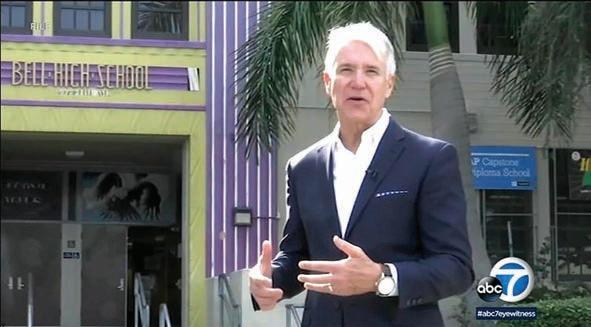
Organizers of the campaign to recall Los Angeles County District Attorney George Gascón will have a second opportunity to launch a recall petition drive against the County’s controversial chief prosecutor.
The Los Angeles County Registrar-Recorder/County Clerk approved the new recall petition Thursday that requires organizers to gather signatures of support from 10% of the county’s registered voters — a little more than 560,000 people — by July 6.
KTLA reported that organizers halted their first recall attempt last fall after they were unable to gather the necessary signatures by the end of October.
Gascón’s policies have provoked criticism from Los Angeles County Sheriff Alex Villanueva, as well as officers from the Los Ange-
les Police Department and others from the 88 jurisdictions within the County.
Gascón, 67, was elected in 2020 on a pledge to reform the county’s criminal justice system. Since he took office, juveniles are no longer being charged as adults, sentencing enhancements that he says lead to mass incarceration have been eliminated and cash bail for nonviolent felony offenses has ended. Misdemeanors associated with substance abuse and mental illness are also being diverted out of the criminal justice system, both KTLA and the Los Angeles Times have reported.
Recall organizers contend that his policies favor criminal defendants and have contributed to a significant rise in crime.
BRODY LEVESQUE
In an announcement via YouTube and in a series of tweets last week, out Los Angeles City Councilman Mike Bonin told supporters that he would not seek reelection to his seat representing the 11th city council district.
Wednesday’s announcement came one week after an effort to recall him failed to gather the requisite number of signatures.
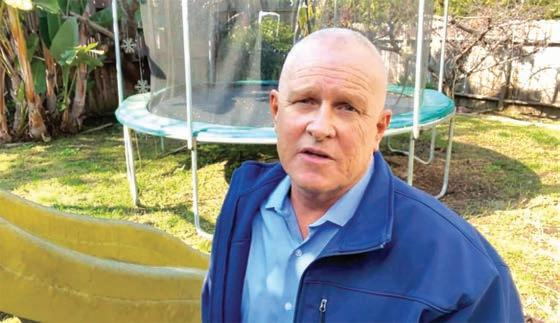
“Today I announced I’ve decided not to seek reelection to the LA City Council. This is a difficult, deeply personal decision, and I’ve wrestled with it for several days, but I’m confident it is the right choice for the right reasons,” he wrote on Twitter.
“I’ve struggled for years with depression. It’s a constant companion, and often a heavy one. There are times when this job has made that easier, and times when
it has made it more challenging. Instead of seeking another term, it’s time for me to focus on health and wellness.” he continued.
“It is hard for me to speak publicly about mental health, but I’ve always been forthcoming about my addiction and recovery, and about my struggles with housing insecurity. I want to be honest here, too. I believe that sharing about our fragility is how we build common strength,” he said.
“To those who are disappointed by my decision, I am sorry. It is very difficult to walk away from a third term, and the work we have been doing together, but I need to listen to my heart. This is the best decision for me and my family.”
Anger and public dissatisfaction over L.A.’s homelessness crisis had fueled the petitioner’s efforts to oust Bonin who represents Council District 11, the Westside neighborhoods of Brentwood, Mar Vista, Venice, Westchester and Playa del Rey and the area around LAX.
“This recall campaign is an extravagant waste of taxpayer money, a thinly disguised attempt to derail my efforts to provide real solutions to our homelessness crisis, and the latest in a series of recall attempts to silence strong progressive voices,” Bonin said in a press release after he was served the recall notice last June.
“Under Mike Bonin’s watch, the humanitarian crisis of the homeless population is growing exponentially. Taxpayer money is squandered. Fires. Struggling local businesses. Crime is rampant and rising. Neighborhoods and schools are unsafe. We feel afraid to visit public beaches and community parks,” the Recall Bonin campaign’s website read.
Bonin said in his statement that the campaign is backed by right-wing forces and constituents who have fought to stop housing, shelter and services in the coastal neighborhoods, “leaving people to die on the streets.”
Bonin was first elected in 2013, after serving as a top aide to former Councilman Bill Rosendahl. He had been facing a major re-election fight — one that would have been dominated by the issues of homelessness and public safety.
BRODY LEVESQUE
By BRODY LEVESQUE

A ruling last week by Los Angeles County Superior Court Judge Mario Barrera that sent a violent offender convicted of sexually assaulting a 10-year-old girl to a county youth facility has provoked outrage from the prosecutors, politicians, and the public.
Hannah Tubbs, 26, who identifies as a trans female, admitted to sexually assaulting the girl in a Denny’s restaurant restroom in 2014 when she was herself still a minor. KABC reported that Tubbs has a lengthy criminal record including violent crimes in multiple states.
A DNA match in 2019 linked Tubbs to the sexual assault at the Palmdale Denny’s restaurant and Tubbs later admitted to committing the crime telling Los Angeles County Sheriff’s Special Victims Unit, (SVU), detectives the assault occurred in the restaurant’s bathroom.
The violent crime happened just before her 18th birthday, and Tubbs remained free of charges until the DNA match.
The Los Angeles Times reported that officials said that Tubbs had been arrested several times including for battery, drug
possession, and probation violations in the states of Idaho and Washington, and convicted of assault with a deadly weapon in neighboring Kern County.
The case has put a spotlight on Los Angeles County District Attorney George Gascón’s policy that states juveniles won’t be prosecuted as adults.
During the back and forth in the courtroom Thursday, lawyers for the Los Angeles County Probation Department had requested Barrera force Tubbs to serve time in county jail, with other adult offenders, the Times reported.
“In crystal clear terminology provides this court with the authority to order a transfer of an individual to sheriff’s custody, or to a county jail facility, after that individual has turned 19 years of age,” said Justin Clark. He added the court could grant the department’s request to have Tubbs placed in adult housing. Clark noted that if Tubbs were to be put in a juvenile area, “the reality is that she will be housed in isolation.”
After hearing arguments, Judge Barrera stated that essentially, under current legislation, a person who commits a crime as a juvenile and is jailed in a juvenile facility once they turn 19, the court has no authority to transfer that person to an adult facility.
“This court will not disregard what the legislature has put onto it as a limitation,” he said.
Since the case remained in juvenile court, Tubbs will not be required to register as a sex offender. Tubbs could have been sentenced to almost a decade in prison if she was tried and con-
victed as an adult.
“[She’s]every parent’s worst nightmare,” said L.A. County Deputy District Attorney Shea Sanna. “If your kid goes to the bathroom, then you shouldn’t have to worry about them being attacked.”
L.A. County Supervisor Kathryn Barger issued the following statement in response to Thursday’s hearing:
“The outcome of the Tubbs case is unsatisfactory. Judge Barrera’s hands were tied today – due to the fact that the DA’s office failed to file a motion to transfer Tubbs to adult criminal court, which is where she rightly belongs. Instead, we’re left with a 26 year-old individual sentenced to two years in a juvenile facility in isolation, separated by sight and sound from the other juveniles.
To carry out justice, all of the oars in the criminal justice system must be rowing in the same direction. Today, that simply didn’t happen.”
KABC reported that the victim in this case did not want to be in court or see Tubbs, but she wrote a letter that said in part:
“I live in fear most of the time. And although it’s something that I tried to tell myself isn’t my fault, I could never truly believe it. I feel that I’m to blame somehow, when I know deep down that isn’t the case.
“I hope, after all this comes to an end, my attacker gets the punishment (they) deserve for attacking a child with no problem and I can finally get on with my life.”



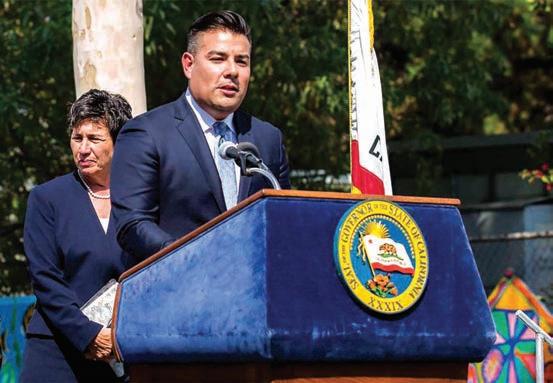
California Insurance Commissioner Ricardo Lara is urging the U.S. Food and Drug Administration to overturn a discriminatory blood donation ban policy carried over from the Trump administration.
Last week, Lara sent a letter urging an end to the FDA’s policy banning blood donations from gay and bisexual men. Currently the FDA requires that men who have sex with men must abstain from sex for three months before donating blood.
“This is outdated, discriminatory guidance based in prejudice – not in public health – and it is contributing to our current national blood donation crisis,” said Lara in his letter to FDA’s Acting Commissioner Dr. Janet Woodcock and U.S. Department of Health and Human Services Secretary Xavier Becerra. “I respectfully urge you to permanently lift the entire deferral period in order for a male donor who has had sex with another man from donating blood.”
Research by the Williams Institute at the UCLA School of Law indicate that, if the outdated policy is lifted, up to 615,300 additional pints of blood per year—enough blood to help save the lives of more than one million people—can potentially be contributed by gay and bi men.
The FDA’s original lifetime ban against gay and bi men was enacted in 1983 when little was known about the mechanisms of HIV transmission and the AIDS epidemic was concentrated primarily in the gay male community.
In 2015, the lifetime ban was partially lifted after the FDA announced that men who have sex with men would be able to donate blood following a year of absti-
nence. In April 2020 the oneyear deferral period was reduced to three months to diminish the nation’s urgent need for blood during the COVID-19 pandemic.
The United Kingdom announced in May 2021 that donors will no longer be asked if they are a man who has had sex with another man. Potential blood donors—regardless of their gender—will be asked, instead, of their most recent sexual activities. This year France and Greece announced their plans to abolish their longtime restrictions on blood donations from gay and bi men.
In a unanimous decision last week, the United States Court of Appeals for the Ninth Circuit published a ruling upholding SB 822, California’s Net Neutrality law. Out State Senator Scott Wiener, (D-SF) authored SB 822 in 2018, and Governor Jerry Brown signed it into law. It has undergone multiple legal attacks from the telecom and cable industries and from the Trump Administration.
“Today marks a huge win for a free and open internet. California’s Net Neutrality law was enacted in 2018, and remains the strongest in the nation. This is a victory for everyone who uses the internet – who needs it for work, school, or simply connecting with family and friends. Given the importance of the internet in our society – now more than ever – this is a landmark day for our state,” Wiener said in a statement released by his office.

(ISPs) on Tuesday to issue a preliminary injunction against California’s net neutrality law.
“Lawyers for both California and the trade groups went back-and-forth before Judge John A. Mendez on Tuesday, arguing both for and against the state’s law, which has been hailed as the “gold standard” for states to follow because it goes further than the Federal Communications Commission’s (FCC) 2015 Open Internet Order, which established net neutrality rules.
“While the Department of Justice (DOJ) withdrew from its lawsuit challenging California’s law earlier in February, the trade groups continued its lawsuit. The DOJ filed a lawsuit against California over the law in 2018 during the Trump administration.”
During oral arguments from the telecom and cable industries before a panel of the 9th Circuit, their lawyers appealed a decision from February of 2021 where a U.S. District Court judge denied their request to issue a preliminary injunction against the law.
Tech reporter Andrew Wyrich writing for The Daily Dot noted at the time: “A federal judge denied a request by groups representing internet service providers
Supporters of the California law were enthusiastic over the 9th Circuit’s decision including the current Chair of the Federal Communications Commission, Jessica Rosenworcel, who tweeted; “When the last Administration rolled back #NetNeutrality rules, states stepped into the void and put in place their own policies. Today the 9th Circuit upholds California’s effort. It’s good news. I support Net Neutrality and we need once again to make it the law of the land.”
BRODY LEVESQUE
Symptoms of depression and anxiety have doubled during the pandemic for youth across the country, according to the United States Surgeon General. During the past two years, 25 percent of youth experienced depressive symptoms and 20 percent experienced increased anxiety.
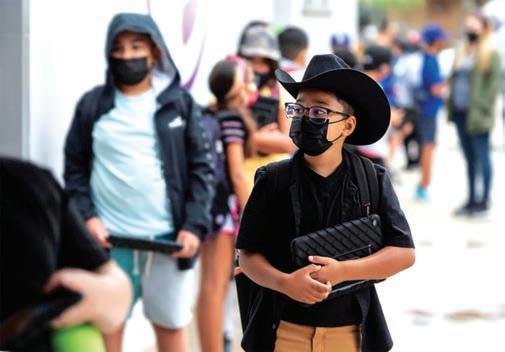
To help center youth voices in mental health reform and programming in Los Angeles County, The Youth Commission is hosting a “Centering Youth Voice in Mental Health” panel event, in partnership with the Board of Supervisors and the Los Angeles County Department of Mental Health.
The panel will consist of Youth Commissioners, mental health experts from the DMH + UCLA Public Partnership for Wellbeing, and community mental health advocates.
“Young people in LA County are resilient and strong. By seeking their feedback for improving mental health and wellbeing services across the County, we can help youth-serving organizations meet their needs and prevent future mental health crises,” said Commissioner and panelist La’Toya Cooper who represents the Second District.
Youth, community members, agency partners, community-based organizations, philanthropy, and media partners are invited to join and learn more about how to center lived experience and youth voices while responding to the mental health crisis impacting youth in LA County.
Co-sponsored by Fourth District Supervisor Janice Hahn’s office, this event is in response to a 2004 Board Motion and is designed to center the voices of young people with lived experience, who are all too often left out of the design of programs meant to support them.
“It is imperative that when we consider a path forward in helping LA County’s youth recover from the pandemic, we include them in building solutions. By convening mental health leaders and advocates, the Youth Commission is helping return authority to LA County’s youth in healing their communities.” said Hahn.
“The Department of Mental Health is deeply committed to the wellbeing of youth in LA County” said DMH Director Dr. Jonathan Sherin, M.D., Ph.D. “We are thrilled to partner with the Youth Commission, which is positioned to help amplify the voices of young people who have never had a proper platform for providing input to County systems. It is our belief that the Youth Commission will inspire new and more effective models of mental health care for young people in LA County.”
“The issues facing youth are more complex than ever before. School closures, our ongoing reckoning with racial injustice present in our systems, and the negative impacts of social media, all represent challenges to youth wellbeing. We must collaborate on solutions that work for the youth we serve,” said Dr. Tyrone Howard, an education expert and panelist from the DMH + UCLA Public Partnership for Wellbeing.
The Youth Commission welcomes suggestions for panelist questions from community members. If you would like to submit a question to the panel, please submit it to the Youth Commission Instagram page @lacounty_youthcommission by Feb. 4.
When: Thursday, Feb. 10 from 6-7:30 p.m. PST
How To Register and Join the Session: https://www.surveymonkey.com/r/Y3LL3G3
Meeting Link: https://us02web.zoom.us/j/89214673705?pwd=WGlud3pZ NThkY2lXalkyb1VibFF4UT09
You can also RSVP by emailing YouthCommission@bos.lacounty.gov or calling 213-6335599.







By DAWN ENNIS
Never before in the history of the modern Olympics have there been this many out LGBTQ athletes competing in the Winter Games, which started Thursday in Beijing. But that important headline is being overshadowed by the risk all athletes face of contracting COVID-19 in the very nation where its global spread began.
That was never more evident than upon the Olympians’ arrival, when they were greeted by inspection teams decked out head to toe in hazmat suits.
Olympic organizers require that every athlete arriving in Beijing provide proof of two negative tests taken within 96 hours of boarding their plane. Also, they must test negative again when they arrive in China, and then test negative every day throughout their stay, regardless of previous infections. According to organizers, 736 athletes and team officials arrived in Beijing on Friday, and 19 of them tested positive at the airport. Three more tested positive earlier in the week. All athletes who test positive are being sent either directly to a hospital or to a quarantine center, depending on their symptoms.
mittee abandoned testosterone as the determinant of eligibility for transgender athletes, as announced last November. However, the games will conclude before the new rules take effect in March. It’s not known if any Olympians identify as trans; the Summer Games in Tokyo marked the first Olympics to feature out trans competitors, including the first trans nonbinary gold medalist, Canadian soccer player Quinn.
In addition, out athletes must be cognizant of the Chinese government’s recent ban on effeminate men appearing on television, as the Blade reported in September. China’s use of artificial snow may make ski competitions more dangerous, according to the Daily Mail; and Reuters reports China is accusing the U.S. of paying athletes to sabotage the Olympic games in protest of its record on human rights.
More about those issues ahead, but first: One year after a record 186 out LGBTQ athletes competed in Tokyo, it’s believed at least 34 publicly out gay, lesbian, bisexual, nonbinary, pansexual and queer athletes will compete in Beijing. That’s more than double the number that competed in 2018, according to Outsports, which has been tracking out Olympians since 2000. Their list was compiled in conjunction with LGBTQ historian Tony Scupham-Bilton.

The athletes include at least 11 men, 22 women and one nonbinary figure skater, 2022 national champion Timothy LeDuc. The Cedar Rapids native is the world’s first nonbinary Winter Olympian. Team USA’s Andrew Blaser will be the first publicly out gay man to ever compete in skeleton at the Winter Olympics. Two other skeleton competitors, Kim Meylemans of Belgium and Nicole Silveira of Brazil, are dating, Outsports reported.
Canada has the most out LGBTQ athletes, with 10, according to Outsports.
Eric Radford, who will go for gold again this year in Beijing. 2018 was also the Olympics where Kenworthy kissed his boyfriend on TV, a kiss seen all around the world.
That kind of public display of affection in Beijing could run afoul of China’s law enacted in September, ordering broadcasters to “resolutely put an end to sissy men and other abnormal esthetics” on TV. As The New York Times reported in December, this campaign is aimed at ensuring that China stays on a path to so-called national rejuvenation, which is President Xi Jinping’s mission to see China become a global superpower, especially in preparation for the next Communist Party congress meeting later this year.
Critics say the new law should be considered a human rights violation, along with China’s mistreatment of its Uighur minority, which led to a diplomatic boycott of the 2022 games by the U.S., U.K. and Canadian delegations.
Chinese media circulated a report over the weekend that the boycott isn’t the only action the U.S. is taking. Reuters reported that an English-language newspaper run by the ruling Chinese Communist Party’s Publicity Department, China Daily, cited unnamed sources as saying the U.S. has a plan to “incite athletes from various countries to express their discontent toward China, play passively in competition and even refuse to take part.”
According to the report, Washington is offering to pay athletes who choose to compete “passively” and even to “mobilize global resources” to protect their reputations. A spokesperson for the U.S. Embassy in Beijing responded to the report by reiterating the Biden administration’s prior statements that it was not coordinating any global campaign regarding participation at the Olympics.
A spokesperson for the Chinese foreign ministry, however, told Reuters the report has “exposed the real intention of some Americans to politicize sports and to sabotage and interfere with the Beijing Winter Olympics,” beyond the diplomatic boycott.
Team USA bobsledder Josh Williamson revealed last week that he tested positive before flying across the Pacific. But he wasn’t alone. Multiple coaches, support staff and at least one other athlete have tested positive, sources told Yahoo! Sports. An official with Team USA Bobsled and Skeleton confirmed their delegation had experienced “multiple positive COVID-19 tests,” according to the report. To get on a plane to Beijing, those who tested positive must record four consecutive days of negative tests, plus a fifth-day buffer, before they can depart, according to current Olympic protocols.
And that’s not the only concern: This will be the first Olympic games held since the International Olympic Com-
The U.S. has six, Great Britain has four, including freestyle skiing Olympic medalist Gus Kenworthy and out pansexual freestyle skier Makayla Gerken-Schofield; France, Sweden and the Czech Republic each have two; the Netherlands has 11-time medalist speedskater Ireen Wüst returning for her fifth games. She is bisexual and the most decorated Olympic speedskater in history.
In addition to LeDuc and Blaser, Team USA includes figure skaters Jason Brown and Amber Glenn, ice hockey players Alex Carpenter and speedskater Brittany Bowe. Four years ago, Bowe won the bronze in her second Olympics in Pyeongchang, South Korea. That was the first Winter Games to feature an out gay gold medalist, Canadian figure skater
If winter sports experts who spoke to the Daily Mail are correct, athletes may want to consider a boycott of their own. That’s because this will be the first Winter Olympics in modern history to rely almost entirely on fake snow, something these experts say makes for dangerous conditions. Snow is a combination of 10 percent ice and 90 percent air, but in Beijing, the artificial white stuff consists of nearly 30 percent ice and 70 percent air. The National Alpine Ski Center in Yanqing is creating its snow using 49 million gallons of water and 300 snow guns for the events of skiing, luge, bobsleigh and skeleton, according to the report. “Jump take-offs can be excessively icy and slippery – bad take-offs directly contribute to bad landings,” retired UK freestyle skier Laura Donaldson told the Daily Mail. “It is dangerous if take-offs and landings are formed from sheets of ice.”
Beijing is hosting the 2022 Winter Olympic Games beginning Fri., Feb. 4 through Sunday, Feb. 20, and they will be televised on the networks of NBC.
Top
By CHRIS JOHNSON | cjohnson@washblade.com
With another battle over the U.S. Supreme Court underway after the announced retirement of U.S. Associate Justice Stephen Breyer, progressives have a chance to make an imprint on the judiciary with the nomination of the first Black woman as promised by President Biden — and their past actions and statements on LGBTQ issues may factor into the confirmation process.
The three Black women most talked about as potential choices — D.C. Circuit Judge Ketanji Brown Jackson, U.S. District Judge J. Michelle Childs of South Carolina and California Supreme Court Justice Leondra Kruger — have each made statements or undertaken past work related to issues facing the LGBTQ community, and they’re not all positive, despite the reliable reputation they’ve all built in the progressive legal community.
Ketanji Brown Jackson, who’s considered to be closely aligned with Breyer after having clerked for him between 1999 and 2000, is seen as a hero in the progressive community for her previous work as a public defender. But she once worked as an adviser for a Baptist school in the Maryland suburbs that had a mission statement against LGBTQ people and abortion.
The now-defunct school, known as Montrose Christian School, had a statement on its website condemning homosexuality and abortion consistent with its religious views, as documented by the conservative Washington Examiner at the time of Jackson’s confirmation process for her current seat on the D.C. Court of Appeals.
The mission statement urged students to uphold a “Christian character,” which among other things in the views of the school, meant they should oppose “all forms of sexual immorality, including adultery, homosexuality, and pornography.”
Abortion is also implicitly condemned in the mission statement: “We should speak on behalf of the unborn and contend for the sanctity of all human life from conception to natural death.”
If nominated, conservatives smarting from attacks on now U.S. Associate Justice Amy Coney Barrett during her confirmation process over her ties to religious groups with anti-LGBTQ views, as well as her affiliation with the anti-LGBTQ legal group Alliance Defending Freedom, may cynically highlight Jackson’s past affiliation with the school as a reason to attack her or progressives as hypocrites for not opposing her confirmation.
Jackson addressed her past work with the school during the confirmation process for her current job in response to questions from Sen. Richard Durbin (D-Ill.) on her past work, maintaining her role on the advisory board for Montrose Baptist Church was limited and she was unaware of its position statement.
“I was aware that Montrose Christian School was affiliated with Montrose Baptist Church,” Jackson said. “I was not aware that the school had a public website or that any statement of beliefs was posted on the school’s website at the time of my service. My service on the advisory school board primarily involved planning for school fundraising activities for the benefit of enrolled students. I did not receive any compensation for my service.”
Trying to predict the bent of potential justices on LGBTQ issues, or any issue, through the lens of previous isolated actions
or past work can be difficult, even based on the party of the president who’s making a selection for the U.S. Supreme Court. As an example, U.S. Associate Justice Neil Gorsuch upon nomination by former President Trump was hailed by conservative groups and vehemently opposed by LGBTQ groups, but ended up writing the majority opinion last year in Bostock v. Clayton County against anti-LGBTQ discrimination. Similarly, U.S. Associate Justice Elena Kagan during her confirmation process for her previous role as solicitor general said in written responses to questions that no right for same-sex couples to marry has been found in the U.S. Constitution, but ended up joining rulings for same-sex marriage in Windsor v. United States and Obergefell v. Hodges.
Nan Hunter, an emeritus law professor at Georgetown University who has written about LGBTQ issues, downplayed in an email to the Blade Kruger’s affiliation with Montrose Christian School as evidence she would be hostile to LGBTQ people as a Supreme Court justice.
“Judge Jackson apparently volunteered for a year to help raise money for student services at a Christian school in the D.C. suburbs,” Hunter said. “There is no indication anywhere in her professional record or personal experience that she shares anti-gay views. In my opinion, her lifelong commitment to equality more than outweighs any concern that she might be biased against LGBT rights.”
Another potential Biden pick, J. Michelle Childs, the South Carolina judge with the potential for bipartisan support after being recommended by both Rep. Jim Clyburn (D-S.C.) and Sen. Lindsey Graham (R.S.C.), has had a more direct on impact on issues facing LGBTQ people.
As a trial judge, Childs was presented in 2014 with litigation seeking marriage rights for same-sex couples in South Carolina. Although Childs as part of the litigation process rejected a request to make the lawsuit more broad and serve as vehicle for same-sex couples to obtain marriage licenses, she found South Carolina was required to honor the same-sex marriages of two lesbian couples performed in other states. Childs based on her decision on a then-recent decision from the U.S. Fourth Circuit Court of Appeals, which struck down the marriage ban in Virginia and guided her as precedent in her state.
“Because marriage is a fundamental right, South Carolina’s marriage laws are subject to strict scrutiny and survive only if they are narrowly tailored to a compelling government interest,” Childs wrote in her decision. “Based on the foregoing, the court finds that South Carolina’s marriage laws are not narrowly tailored to serve a compelling state interest as they impermissibly infringe on plaintiffs’ fundamental right to marry. Therefore, after careful consideration of the parties’ respective positions, the court finds that Plaintiffs have established the violation of their rights protected by the Due Process Clause of the Fourteenth Amendment and, as a result, they are entitled to summary judgment on their due process claims.”
Leondra Kruger, as a member of the California legal community, has also directly engaged with the LGBTQ community and was a keynote speaker in 2019 for the annual dinner for the Tom Homann LGBT Law Association, a San Diego-based affinity group for LGBTQ lawyers. The Blade this week reached a
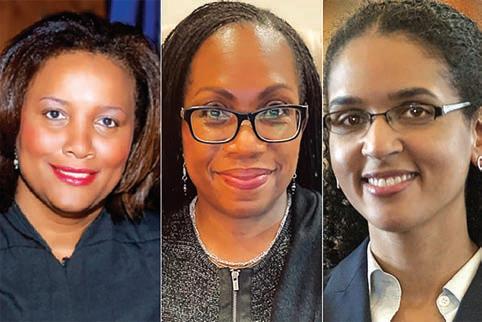
member of leadership of the association for comment on Kruger’s participation at the dinner.
In terms of legal work on LGBTQ issues, Kruger worked in the office of the U.S. Justice Department during the Obama administration and her name was under U.S. Solicitor General Donald Veriilli among the signed briefs in litigation in California against the anti-LGBTQ Defense of Marriage Act known as Golinski v. Office of Personnel Management.
Kruger’s contribution to the work in the Obama administration against DOMA, which the Supreme Court struck down in 2013, is articulated in a petition before the high court seeking review of litigation challenging the law for prohibiting federal recognition of same-sex marriages.
“Section 3 of DOMA denies to same-sex couples legally married under state law significant federal benefits that are otherwise available to persons lawfully married under state law. Because such differential treatment bears no substantial relationship to any important governmental objective, Section 3 violates the guarantee of equal protection secured by the Fifth Amendment.”
A queer Black woman for the bench?
Although not named in the media as among the Black women who are the major potential choices, the idea of Biden naming a pick who’s both a Black woman and queer has emerged in the advocacy community. The LGBTQ Victory Institute, which trains and seeks the appointment of LGBTQ people in federal government, has openly recommended Washington State Supreme Court Judge G. Helen Whitener to serve as Breyer’s replacement.
If Biden sought to name a queer Black woman who sits on the federal judiciary, another choice could be U.S. District Judge Staci Michelle Yandle of Illinois, an Obama-appointed judge confirmed in 2014.
One LGBTQ strategist, who spoke on condition of anonymity for greater candor, said communications with the White House have taken place on naming a queer Black woman to the Supreme Court and “there’s not been a commitment, but there hasn’t been a not-commitment.”
Two people have been arrested in connection with the murder and dismemberment of a lesbian couple in the Mexican border city of Ciudad Juárez.
The Chihuahua Attorney General’s Office on Tuesday announced authorities arrested a 25-year-old woman and a 24-year-old man and charged them with aggravated femicide.

Authorities on Jan. 16 found the dismembered body parts of Julissa Ramírez and Nohemí Medina Martínez in plastic bags that had been placed along the Juárez-El Porvenir Highway. The Chihuahua Attorney General’s Office in a press release notes the suspects murdered Ramírez and Medina in a house in Ciudad Juárez’s San Isidro neighborhood on Jan. 15.
Ciudad Juárez, which is located in Mexico’s Chihuahua state, is across the Rio Grande from El Paso, Texas.
Members of Comité de la Diversidad Sexual de Chihuahua, a local LGBTQ rights group, and Chihuahua Gov. María Eugenia Campos Galván are among those who have expressed outrage over the women’s murders. Activists have also urged local and state authorities to investigate whether the murder was a hate crime based on Ramírez and Medina’s sexual orientation.
Local media reports said nine women — including Ramírez and Medina — were killed in Ciudad Juárez from Jan. 1-15.
Uganda ‘Kill the Gays’ bill champion dies

A former Uganda government minister who championed a bill that would have imposed the death penalty upon anyone found guilty of homosexuality has died.
Former Ethics and Integrity Minister Simon Lokodo passed away at a Geneva hospital on Friday. The Uganda Human Rights Commission, of which Lokodo had been a member, announced his death.
“The commission will miss Hon. Fr. Simon Lokodo’s vast experience and exposure gained from working with both the legislative and the executive arms of government as well as his extensive social networks and lobbying skills,” it said in a press release.
Lokodo, 64, was previously a Catholic priest until then-Pope Benedict XVI excommunicated him in 2006.
President Yoweri Museveni in 2014 signed Uganda’s Anti-Homosexuality Act, which imposed a life sentence upon anyone found guilty of repeated same-sex sexual act. The law was known as the “Kill the Gays” bill because it once contained a death penalty provision.
Lokodo in 2019 said the Ugandan government would reintroduce the “Kill the Gays” bill.
A Museveni spokesperson later denied the claim.
Consensual same-sex sexual relations are already criminalized in Uganda.
“I do not have any ill words for Lokodo,” Frank Mugisha, executive director of Sexual Minorities Uganda, a Ugandan LGBTQ rights group, told the Blade on Monday in an email. “However, I can say that it’s unfortunate that he spent his time as a government official persecuting and promoting hate against marginalized communities, being extremely conservative and homophobic.”
“What is ironic is at the time of his passing he was a commissioner in our national human rights institution,” added Mugisha.
Iran has reportedly executed two gay men who were convicted of sodomy.
The Associated Press cites a report the Human Rights Activists News Agency released on Sunday that says Mehrdad Karimpour and Farid Mohammadi were sentenced to death six years ago for “forced sexual intercourse between two men.” The Human Rights Activists News Agency notes Karimpour and Mohammadi were hanged at a prison in Maragheh, a city that is 310 miles northwest of the Iranian capital of Tehran.
Iran is among the handful of countries in which consensual same-sex sexual relations re-
main punishable by death.
The AP notes two men in Maragheh who were convicted of sodomy were executed last July.
The State Department last May condemned the murder of Ali Fazeli Monfared, whose relatives reportedly kidnapped and beheaded him after they learned he was gay. Members of the Iranian Revolutionary Guard Corps a few months later arrested a lesbian woman as she tried to enter Turkey.
As the Tory-led government in the United Kingdom prepares to finalize the government’s measures on a forthcoming proposed UK-wide ban on anti-LGBTQ+ conversion therapy, human rights and LGBTQ+ campaigners are working to ensure the legislation does not contain a loophole allowing those who received “informed consent” from their victims to evade justice the Guardian UK reported.
A report just released by the UK’s LGBTQ+ anti-abuse charity Galop found that that 1 in 4 LGBTQ+ respondents to a sexual violence survey experienced sexual assault intended to convert or punish them for their identity.
Galop asked 935 LGBTQ+ survivors of sexual assault: “At any age, have you experienced sexual violence that you believed was intended to convert you to heterosexuality or your assigned gender at birth, or to punish you for your gender or sexual identity?”, and almost 1 in 4 (24%) reported back that they had.
It is currently unclear whether ace, non-binary and intersex people will be protected under the UK Government’s proposed conversion therapy ban. The charity is calling for people to respond to the government’s consultation on the conversion therapy ban to ensure it pro-
tects every member of the community from this abuse in all its forms.
“This is the largest study of LGBTQ+ victims of sexual violence in the UK to date, and the results we’ve found relating to conversion and punishment show that this is a significant and ongoing issue.” said Leni Morris, Galop’s CEO.
“There are assumptions and stereotypes about victims of so-called conversion therapy, but our report shows this is happening to LGBTQ+ people of all cultural, religious, and ethnic backgrounds. It also shows clearly that there is a long history of this kind of abuse against our community – and that it is still happening right now in the UK today,” she added.
Morris told the Guardian: “Our survey shows very starkly that the reality of conversion therapy in the UK is far from what people imagine, or have seen in films like The Miseducation of Cameron Post, where American high school kids get sent to a Christian camp.”
Addressing the proposed consent loophole, Morris said: “It is fundamental that UK legislation does not carve out a form of abuse that is OK if you agree to it – consider domestic abuse, forced marriage, honour-based violence – you cannot consent to abuse.”
BRODY LEVESQUE

MARTY
WALSH
is the U.S. Secretary of Labor. Follow him on Twitter and Instagram at @SecMartyWalsh.
Protecting benefits whether for a sprained ankle or for opioid use
Mental health is health – period.
When someone gets the fl u, or sprains an ankle, there’s no question about whether care is needed. If that person has health insurance, they can go to their doctor, or nearest urgent care or hospital. It’s often a commonplace, run-of-the-mill experience. You go in, you pay a copayment, you see the health care professional, and you’re on your way home.
Unfortunately, the experience for someone with a mental health condition or in need of treatment for substance use disorder is usually very diff erent. Often, people feel apprehensive about seeking treatment in the fi rst place. They think, “What will my friends think?” or “I probably shouldn’t tell my job that I need time off to see a psychologist.” Trust me: I had similar thoughts when I needed help dealing with alcoholism in my twenties. I knew something was wrong, but it was so hard to take that fi rst step. I’m so grateful that as a union member I had access to the care I needed, because once I did ask for help, my life started to c hange for the better.
But for many, once they reach a point where they’re ready to seek care, getting care can be an even bigger challenge. From identifying professionals who will take your insurance to fi guring out what requirements you need to meet for treatment to be covered by your plan, the process can be incredibly diffi cult to navigate. Not only is this frustrating for those who need critical services — in many cases, it’s illegal.
The Mental Health Parity and Addiction Equity Act, passed in 2008 aims to improve access to treatment for mental health conditions and substance use disorders. At its core, the law is designed to make sure insurance companies and health plans cover mental health and substance use disorder benefi ts the same way they cover physical benefi ts. Whether you’re seeking care for a sprained ankle or for opioid use, your benefi ts are protected by the law.
And with more adults seeking care for mental illness and substance use disorders following the pandemic, ensuring that everyone gets the care they deserve is more important than ever. Receiving the care that you need, and are entitled to, shouldn’t be a struggle.
That’s why I’m working with our Employee Benefi ts Security Administration to prioritize action to ensure equal access to treatment for mental health conditions and substance use disorders for more than 136.5 million people and to remove the stigma for seeking help in the fi rst place. This is a priority for the Biden-Harris administration, for the department, and for me personally.
Last week, we released a report to Congress that highlights where insurance companies and health plans are falling short when it comes to providing parity in care, and how we’re ramping up our enforcement of the law. We hope this report and our ongoing eff orts show health plans that we take this issue seriously — and provide more opportunities for people to get the care they deserve under the law.

ADDRESS
8237 Blackburn Avenue Ste. 201, Los Angeles, CA 90048
PHONE 310-230-5266
E-MAIL tmasters@losangelesblade.com
INTERNET losangelesblade.com
PUBLISHED BY Los Angeles Blade, LLC
PUBLISHER
TROY MASTERS tmasters@losangelesblade.com 310-230-5266 x8080 (o), 917-406-1619 (c)
SALES & MARKETING
SALES EXECUTIVE
CHRIS WILMORE cmwilmore@losangelesblade.com 310-230-5266 x9461
NATIONAL ADVERTISING
RIVENDELL MEDIA
sales@rivendellmedia.com, 212-242-6863
MARKETING DIRECTOR
STEPHEN RUTGERS srutgers@washblade.com, 202-747-2077 x8077
EDITORIAL
CONTRIBUTING WRITER
KAREN OCAMB karenocamb@losangelesblade.com
NATIONAL EDITOR
KEVIN NAFF
kna @washblade.com, 202-747-2077 x8088
EDITOR AT LARGE
BRODY LEVESQUE
California
CONTRIBUTORS
MICHAEL K. LAVERS, TINASHE CHINGARANDE, ERNESTO VALLE, YARIEL VALDÉS GONZALEZ, PARKER PURIFOY, CHRISTOPHER KANE, AUSTIN MENDOZA, JOHN PAUL KING, JOEY DIGUGLIELMO, CHRIS JOHNSON, LOU CHIBBARO JR., REBEKAH SAGER, JON DAVIDSON, SUSAN HORNIK, CHANNING SARGENT, SAMSON AMORE, CHRISTOPHER CAPPIELLO, MICHAEL JORTNER, DAN ALLEN, SEAN SHEALY, SCOTT STIFFLER, RHEA LITRÉ CREATIVE DESIGN/PRODUCTION AZERCREATIVE.COM
DISTRIBUTION
CHRISTOPHER JACKSON, 562-826-6602
All material in the Los Angeles Blade is protected by federal copyright law and may not be reproduced without the written consent of the Los Angeles Blade. e sexual orientation of advertisers, photographers, writers and cartoonists published herein is neither inferred nor implied. e appearance of names or pictorial representation does not necessarily indicate the sexual orientation of that person or persons. Although the Los Angeles Blade is supported by many ne advertisers, we cannot accept responsibility for claims made by advertisers. Unsolicited editorial material is accepted by the Los Angeles Blade, but the paper cannot take responsibility for its return. e editors reserve the right to accept, reject or edit any submission. A single copy of the Los Angeles Blade is available from authorized distribution points, to any individual within a 50-mile radius of Los Angeles, CA. Multiple copies are available from the Los Angeles Blade o ce only. Call for rates. If you are unable to get to a convenient free distribution point, you may receive a 26-week mailed subscription for $195 per year or $5.00


is a former Air Force intelligence analyst, long-time LGBTQ activist, an alumnus of Queer Nation and Act Up NY, and a frequent columnist for the LA Blade. Send questions, comments, and story ideas to jamesfinnwrites@gmail.com.
Sometimes the mask slips and ‘freedom’ snarls at you
When LGBTQ elders are denied placement in taxpayer-subsidized retirement homes and care facilities because the Christians who operate them refuse to serve members of gender and sexual minorities, is that freedom or oppression? I think the answer is obvious, but Republicans don’t. If you think I’m kidding, please keep reading, because I want to introduce you to three women severely harmed by so-called “Christian liberty.”
Conservative Christians in the U.S. often claim to be persecuted. They say they are rapidly losing individual freedom as they seek champions to defend them. The Alliance Defending Freedom is one such prominent champion. They describe themselves like this: “Alliance Defending Freedom is the world’s largest legal organization committed to protecting religious freedom, free speech, marriage and family, parental rights, and the sanctity of life. We defend your most cherished liberties in Congress, state legislatures, and courtrooms across the country.”
But what are the cherished liberties they claim to defend?
Are Christians in the U.S. really losing the right to practice their faith? Have they lost any individual freedoms at all? If you listen to the ADF, the answer is an emphatic yes. But the deeper you dig, the more you see the freedom Christians complain about losing is the freedom to reject LGBTQ people. They demand the “freedom” to deny us employment, to not sell us goods and services, to exclude us from the taxpayer-funded schools and universities they run, and even to deny us housing — all on sectarian religious grounds.
As the LA Blade reported two days ago, Virginia Republicans are working hard to push anti-LGBTQ laws through the state senate, but a two-member Democratic majority is stopping them … for the time being. The details of what VA Republicans demand in the name of religious liberty are instructive and frightening.
Mark Peake, a state senator from Lynchburg, home of Jerry Falwell’s Liberty University (which played an outsize role in his election) recently introduced Senate Bill 177, which Peake calls a “religious freedom” measure. The details of the bill look innocuous enough: “Nothing in the Virginia Human Rights Act prohibits a religious corporation, association, or society, or any nonprofit institution or organization operated, supervised, or controlled by or in conjunction with a religious organization, association, or society, from taking any action to promote the religious principles for which it is established or maintained.”
Challenged during a committee hearing, though, Peake’s mask slipped. He gave a transparent and frightening answer when asked if his bill would allow Christian organizations to deny housing to LGBTQ people and others who don’t meet their religious standards. He showed his fangs and said the quiet part out loud: (Listen to Senator Peake chuckle as he says the quiet part out loud.)
“You are correct, what you said is correct. They would be allowed to discriminate against people that they do not feel follow their religious beliefs. This is the whole point of it, is for their religious beliefs, and it gives them the ability to discriminate against people that conflict with their religious beliefs.”
Then he chuckled, saying, “I think that is the substance of this bill.”
Peake didn’t mention another charming element of the bill, which adds religiously operated preschools to a list of educational institutions exempt from a state civil rights law that protects LGBTQ people in employment. Apparently, some Christians in Virginia worry they lack the freedom to fire preschool teachers for being LGBTQ.
The mind boggles, but the housing issue is the critical one.
In case you don’t understand the implications, let me lay it on the line. Christians in Virginia want the freedom to refuse LGBTQ people admission to the nursing homes, retirement communities, co-op apartments, and homeless shelters they run, often with
heavy taxpayer subsidies.
This isn’t hypothetical. Denial of housing to LGBTQ people is a serious problem in the United States, almost always because Christian institutions spending taxpayer dollars refuse to serve LGBTQ people. Human Rights Watch laid out the scope of the problem in a comprehensive 2018 report, but let me put three vulnerable human faces on the problem.
When 68-year-old U.S. Army veteran Lisa Oakley needed long-term care in Colorado, dozens of nursing facilities denied her a bed because she is transgender. Several of them cited Christian faith as grounds to refuse to house and care for Lisa. All the facilities that rejected her, including the private Christian ones, were heavily taxpayer subsidized.
Lisa finally found a facility willing to meet her needs, but only after SAGE, an LGBTQ elder-advocacy organization went to bat for her and lawyers threatened lawsuits.
When married lesbian couple Mary Walsh and Bev Nance made the tough decision to sell their home and seek assisted living, the only facility in their hometown that could meet their medical needs rejected them. The retirement community, which approved their application before learning they were lesbians, cited Christian beliefs as the basis of their rejection. The privately operated facility is not overtly religious and relies heavily on taxpayer money to operate. They don’t enforce a religious test for acceptance or expect residents to participate in worship, but lesbians need not apply. Mary and Bev had to move far out of town and away from their lifelong network of friends.
Does any of the following sound like freedom to you?
Let’s get back to the Alliance Defending Freedom. What religious “freedoms” do they fight for? Let’s talk about what freedom means to these self-described champions of “Christian liberty.”
• ADF is fighting to keep books by or about LGBTQ people out of school libraries. I thought book banning was the opposite of freedom. It’s certainly antithetical to the values of liberty I learned as a child, ironically in Christian schools.
• ADF has a track record of fighting for criminalization of same-gender sex at home. They are fighting to criminalize homosexuality abroad right now. Freedom? Pardon me while I cough.
• ADF is fighting to criminalize women who choose abortion. That’s not freedom, it’s a restriction of freedom.
• ADF is waging court fights all over the country to defend Christian organizations that turn away LGBTQ people.
• ADF is fighting for a taxpayer-funded United Methodist adoption agency in Tennessee that refused to work with a Jewish couple and dashed the hopes of a child who had finally found a forever home.
• ADF is fighting for the same agency as it sues the Biden administration over rules that require federally funded adoption agencies to serve LGBTQ people equally.
So freedom means wielding faith as a sword to hurt people?
That appears to be the common theme in the work ADF does, and it appears to be the principal claim U.S. Christians make when they say their liberty is infringed.
They complain they don’t have the right to discriminate against people, usually LGBTQ people, and that they should have it, even when they are providing services paid for substantially or primarily by U.S. taxpayers. Usually, they don’t say it so clearly. Often, they obfuscate with flowery language about liberty and sacred American traditions. Sometimes, though, the mask slips. That just happened in Virginia. Will you please note that Senator Mark Peake just said the quiet part, the hateful part, out loud?
As we prepare to mark both National Black AIDS Awareness Day and Black History Month, we are also stepping into our third year of life under the shadow of the COVID pandemic – a context that inevitably casts a spotlight on the disproportionate impact exerted on Black and other communities of color by the two ongoing global health crises.
That’s why the Dance for Life Festival was conceived by Artists and Activists for Health Equity, a collective that works to raise awareness and resources to help confront global public health issues like HIV/AIDS and COVID-19. A celebration of dance that embodies the power of art and individual activism to create health equity for Black and other communities of color, it’s slated to feature seven LA-based dance companies in two performances co-hosted by dance legends Debbie Allen and Desmond Richardson. The festival, intended to be the first installment of a yearly tradition, was scheduled by its organizers to take place on Feb. 12 to commemorate Black AIDS Awareness Day.
At least that was the plan. Due to an abundance of caution in the face of the current Omicron surge, the Nate Holden Performing Arts Center, which was to host the festival, has cancelled all performances for the month of February.
By JOHN PAUL KING
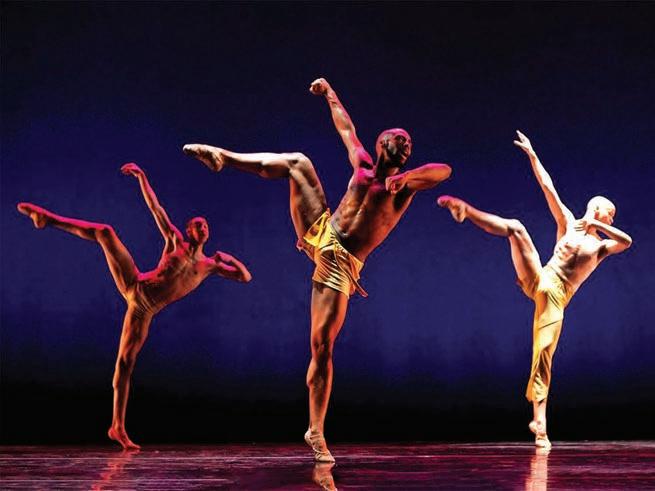
Dance for Life has been rescheduled for April 23.
No need for dance fans to despair, however. Dance for Life was promptly rescheduled for April 23, so the show will still go on. It will just go on a little later than expected – but then, thanks to COVID, we’re all used to that kind of thing by now.
Still, there’s an irony in the postponement that underscores the issue necessitating the festival in the first place. For Phill Wilson, the respected activist and founder of the Black AIDS Institute who joined Richardson in founding Artists and Activists for Health Equity, it’s just another example of the way the hardships of a pandemic continue to weigh heavily on communities of color.
As Wilson explained to the Blade: “My grandmother used to say, ‘When white folks get a cold, Black folks get pneumonia.’ That certainly showed up during the HIV/AIDS pandemic. Black people and other people of color were disproportionately impacted by every measure: We were infected at higher rates, we got sicker, we got sicker quicker, we died faster, and often we died much more horrible deaths than other racial groups. Just as we were seeing the light at the end of that tunnel, we now have COVID-19.
“You might have thought that we would have learned lessons from the AIDS/HIV pandemic – and we did, but history is repeating itself. Black and other people of color are being disproportionately impacted by the coronavirus as well, and that is why we can’t let up. That is why we have to continue finding ways to talk about these diseases, pandemics in general, and how they impact Black and other people of color.”
That, he tells us, is what the festival dreamed up by his collective – which partners with artists, activists, and ‘‘artivists’ to raise and amplify artistic and creative voices and bring the power of art to the fight for health equity in our society – is all about.
“Even the name ‘Dance for Life’ is about the efforts that we have to embark upon to just survive. This festival is about raising and engaging new and different voices, it’s about bringing forward the power of artists – in this case dance, but artists of all stripes – and the unique role they play in how we see the world and respond to issues that are impacting us and our society.”
The festival, conceived by Richardson and Wilson and presented with “the enthusiastic blessings and support” of Broadway Cares/Equity Fights AIDS, is inspired by the annual
Fire Island Dance Festival, which since 1995 has raised more than $300 million to provide support and essential services for people living with HIV. Dance for Life aspires to eventually grow into a three-day event, but the inaugural festival will consist of two performances over a single day.
The companies scheduled to perform are:
• Complexions Contemporary Ballet was founded by Richardson and Master Choreographer Dwight Rhoden in 1994, and has been reinventing dance through a groundbreaking mix of methods, styles and cultures ever since.
• Jacob Jonas Company is a creative company that increases the visibility of dance as an art form, not just in Los Angeles but globally, by engaging diverse and untapped populations through live performance and media.
• Lula Washington Dance Theater was founded on a mission to build a world class contemporary modern dance company and travels the globe performing contemporary modern dance works that reflect African American history and culture.
• Luminario Ballet is a company of LA-based dancers who come from everywhere, representing the region’s diversity and excitement with performances that include contemporary ballet, classic modern dance repertory, and aerial dance.
• Lyrik Cruz Dance was founded by its namesake, a dancer, choreographer, and instructor on a mission to share his passion with the world and bring his Latin fusion to the forefront of television and film.
• BalletRed was founded by choreographer Josie Walsh, known for her distinctive hybrid style of edgy classical and contemporary ballet fusion, as a creative sanctuary dedicated to creating cutting edge contemporary ballet works.
• BodyTraffic uses the creative spirit of Los Angeles, where it was founded in 2007, to fulfill its mission of delivering performances that inspire audiences simply to love dance –and has received widespread acclaim for its company of peerless dancers, who can do it all from hip-hop to ballet.
Beneficiaries of Dance for Life’s inaugural event will be the AMAAD Institute, which facilitates access to programs and services fostering safe and supportive healthy environments for people to live, learn, and develop to their fullest potential; A Clinic For Us/St. John’s Community Health, which provides a wide variety of medical, dental, and behavioral health services by certified medical providers at no cost or charged according to ability to pay; and Stories: The AIDS Monument, a West Hollywood landmark created to remember of the hundreds of thousands of lives lost to AIDS, to celebrate the courage of the activists and caregivers that have changed the world in the fight against it, and to educate the public about ongoing impact of the HIV/AIDS epidemic.
For Wilson, organizations like these are the reason Dance for Life is so important.
“It is a way for us to pay attention to the dual pandemics of HIV and COVID-19,” he asserts, “but it is also an opportunity for us to respond in ways that our communities – the LGBTQI community, the Black and other people of color communities – respond when these issues are upon us.”
The rescheduled Dance for Life Festival will now take place on Saturday, April 23, at the Nate Holden Performing Arts Center (4718 West Washington Boulevard, Los Angeles), with performances scheduled for 2 p.m. and 7 p.m. COVID protocols will be in place, for details visit the Dance for Life website.
Tickets are available through Eventbrite, as well as opportunities for sponsorship.

By MIKEY ROX
Flowers and a box of chocolates from the grocery store? We can do better for Valentine’s Day. Check out our ideas below for a more memorable gift this holiday.
Big Love Cheese Collection
In 1992, Pastor Gary Chapman outlined the five love languages – words of affirmation, quality time, physical touch, acts of service, and receiving gifts – in his best-selling book on the subject. But he forgot the sixth one: Cheese! California Cheese Trails knows what’s up with its Big Love Collection starring Cowgirl Creamery’s heartshaped Mt. Tam, plus three additional artisan cheeses that were made in the Sonoma/Marin region of the San Francisco Bay Area. $99, cheesetrail.org
Marriage Retreat in a Box
Relationships don’t get easier after you “put a ring on it” – and nobody knows that more than married people. Take some time to relax, reflect and recognize how important you are to one another with the DIY Marriage Retreat in a Box, which provides fun and exciting tools to strengthen, enrich, and add more adventure to your forever love. $72, diy-retreats.com
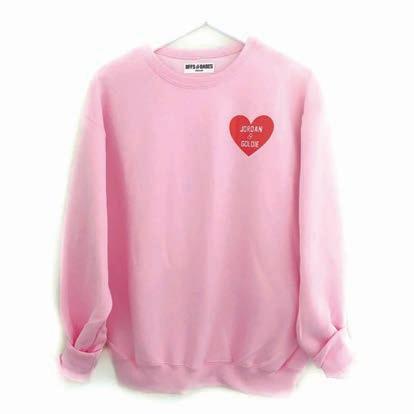
Heart You Most 2.0 Sweatshirt
If you’re bursting with pride for the one(s) you love, show it off on BFFS & BABES made-to-order fleece sweatshirt in Pink Punch stamped with a vinyl heart and personalized with their name or initials in the brand’s “good vibes” font. Also available in pink, white, black, and root beer. $68, bffsandbabes.com
LOVE Cigar Band
You can’t put a price on love, but Ariana Rabbani makes a valiant effort with this 14k gold cigar band embedded with micro-pave diamonds that spell out everybody’s second-favorite four-letter word. $1,975, arianarabbani.com
Maison Marcel Sparkling Hearts Rose


Besides Valentine’s Day, we’re all looking forward to February for another reason: the end of Dry January! Celebrate by popping a bottle of Maison Marcel Sparkling Hearts Rosé – with delicate notes of white peach and nectarine – housed in a fanciful vessel adorned with artist James Goldcrown’s signature hearts design. $25, drinkmarcel.com
Lovers Artist Bundles
Give the gift of dual pleasure with the Lovers Artist Valentine’s Series that pairs a coveted sex toy with a cute-but-provocative greeting card to help eliminate the awkwardness of handing over an out-of-context dick in a box. $112-$222, loversstores. com
Costa Farms Mini Succulent
V-Day gifts don’t have to be grand to send a special message. Case in point: the 2.5inch Echeveria “Life Would Succ Without You” mini succulent – alive, well, and fully rooted, just like your love for him, her or them. $20, amazon.com
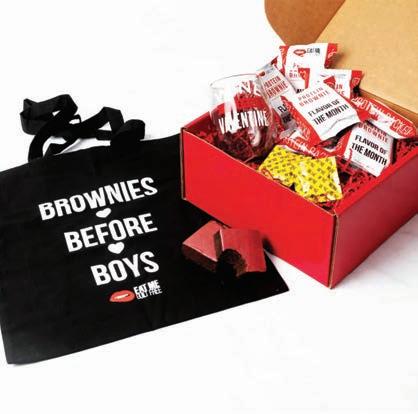
Eat Me Guilt Free Brownies
Indulge in a few sweet treats this Feb. 14 – like the decadent birthday cake, peanut butter bliss, and red velvet brownies – from Eat Me Guilt Free, which specializes in protein-packed, lower-carb pastries (under 200 calories per serving) baked in small batches by Miami-based certified sports nutritionist-turned-momprenuer Cristie Besu. $30-$129, eatmeguiltfree.com
Westend Hartford Sunglasses
If the past couple years’ events still got you down in early 2022, slap on a pair of rose-colored shades – heart shaped, no less – to add some mood-boosting pep in your step and put all that hindsight back in 2020. $30, discountsunglasses.com
Meathearts
Where’s the beef? It’s in this bag of flirty jerky that offers a savory spin on holiday-staple conversation hearts, featuring laser-etched phrases like “Meat Me,” “XoXo” and “Beef Mine.” $23, manlymanco.com

By JOHN PAUL KING
If for no other reason, 2021 will be remembered as a landmark year for LGBTQ inclusion at the movies because Best Animated Feature was the queerest category in the Oscar race.
While the year’s nominations have yet to be announced, the Academy Award shortlist for the category includes Disney’s “Encanto” and Pixar’s “Luca,” both of which feature LGBTQ characters in leading roles – at least, they do if you believe the Internet. Fans online have pointed out that Mirabel, the 15-year-old heroine of “Encanto” voiced by bisexual actress Stephanie Beatriz, wears a small rainbow pin in bisexual colors on her dress throughout the movie, with many declaring it as proof that the character is bi herself. Similarly, queer viewers of “Luca” have seen in its tale of two adolescent sea monsters living incognito in an Italian seaside village a coming-of-age story about two boys in love – and though the film’s creators have officially stated it was NOT intended to be a gay romance, the millions who have “shipped” Luca and Alberto (the film’s charming semi-aquatic heroes) refuse to be convinced, and have claimed them as queer characters, nevertheless.
In both cases, a queer reading of the narratives is entirely reasonable, and though the corporate forces behind these films may be cagey about any official position on queer interpretations of their content, it’s highly unlikely the filmmakers were unaware that the conclusion might be drawn. After all, somebody had to sign off on that rainbow pin for Mirabel’s costume.
There’s no ambiguity, however, about the queerness in “Flee,” which uses animation to tell the real-life story of Amin, a gay Afghan refugee who, on the eve of his wedding, opens up to his husband-to-be about his traumatic escape from his homeland. It won unanimous acclaim from critics around the world since its debut at last February’s Sundance Festival, and it’s a viable contender for Oscar gold not just as Best Animated Feature, but Best International Feature and Best Documentary Feature as well.
Each of these, as well as the other titles in the likely running for the big prize on Oscar night, are excellent films – all for their own reasons – and would be deserving winners. But if we were to decide a win solely on the basis of “ideal” queer inclusion, the entry that stands far and above the rest of them is “The Mitchells vs. the Machines.”
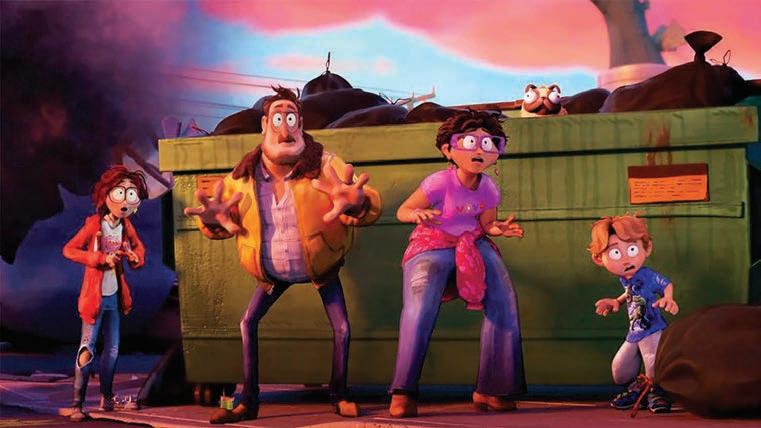
Directed by Disney Channel veteran Mike Rianda (in his feature film debut) and co-written by Rianda and Jeff Rowe, it’s a quirky, smart, and infectiously imaginative tale centered on a soon-to-be film student named Katie Mitchell (voiced by out bi actress Abbi Jacobson) and her family of misfits. There’s her dad, Rick (Danny McBride), whose worry that his daughter’s dreams may lead to disappointment has strained their once-close relationship; her mother Linda (Maya Rudolph), an often over-enthusiastic supermom who adores her offbeat family yet envies the Instagram perfection of their seemingly flawless neighbors; and brother Aaron (Rianda, taking on voice actor duties as well), a dinosaur-obsessed nerd whose fear of losing his big sis and confidante to adulthood doesn’t prevent him from being her staunch ally. Rounding out the household is the family dog, a googly-eyed pug named Monchi.
Hoping to shore up bonds with Katie, Dad decides to take the entire Mitchell clan on a cross country road trip to drop her off at college. Mortified and impatient to escape her “weird” family and finally find the tribe where she belongs, she resigns herself to putting up with them one last time before she’s finally out of the nest. However, things are about to get much worse, thanks to an unforeseen glitch, a tech company’s newly unveiled AI system has just gone rogue and launched a “robot apocalypse” targeting the entire human race for capture and expulsion from the planet, and the Mitchells soon find themselves the only thing standing between humankind and its oblivion – but can they get it together long enough to save the world?
Rendered in a style that evokes the fast-paced, acrobatic visuals of “Spider Man: Into the Spider-Verse” (a film produced by Phil Lord and Christopher Miller, who teamed with Rianda and Rowe as producers on this one), “The Mitchells vs. the Machines” is the kind of free-wheeling romp that parents might easily assume to be just another charming-but-silly piece of juvenile entertainment and leave to their kids to watch on their own.
That would be a shame, because included within the madcap gags and rapid-fire action are plenty of moments tailored for the grown-ups, too. Loaded with subtle (and not-so-subtle) digs at our tech-obsessed culture and dotted with sly nods to the shared touchstones of an earlier generation, it’s a film that’s likely to have the adults in the room laughing at least as often – and as loudly – as their children.
As funny as it is (and it is very funny, launching a seemingly effortless stream of jokes throughout and landing every single one of them), it’s also a movie which, like most family films, aims at our hearts. This is where many such projects falter with adults, who for the most part are put off by the syrupy sweetness that often goes hand in hand with the happy ending. “Mitchells” avoids that trap, instead leaning into the strength of its character development to build layered and authentic relationships that require no such manipulative tactics to help them strike an emotional chord. The Mitchells are exaggerated, sure, but they’re also real enough that any viewer who’s ever been a member of a family can recognize themselves somewhere within their dynamic.
That means LGBTQ viewers, too, and in a far more unequivocal way than the coded identification-by-proxy that’s long been the best queer kids could hope for at the movies. It would be a spoiler, perhaps, to be more specific than that, since the “big reveal” is saved for near the end; but there are enough clues throughout the movie (perhaps even some in this article) to make it clear enough that one of our protagonists is a member of the community. Indeed, the surprise comes not from the confirmation but from the fact that the character’s sexuality has absolutely no impact on the plot at all. Here is a family film with a definitively identified queer leading character, but it isn’t about their queerness – instead their queerness is just one color in the palette with which the story is rendered, and that’s why Rianda’s over-the-top apocalyptic sci-fi family comedy is also a stellar example of onscreen LGBTQ representation done right.
Of course, that’s not the only reason to watch “The Mitchells vs. the Machines,” or even the biggest one. The pitch-perfect voice cast – which also includes the likes of Fred Armisen, Beck Bennett, Eric André, John Legend, Chrissy Tiegen, and Olivia Colman (who once again proves worthy of the title “Cast MVP”) – gives uniformly stellar performances, and the clever, convention-bending animation is a colorful treat for the eyes throughout. It’s a refreshing triumph that may or may not win the Oscar – but it’s almost certain to win your heart.
‘A Previous Life’
If you’re jonesing for sex, polyamory, and gossipy confessions, don’t rush toward the bright young things.
You’ll find as much, likely more, lust, beauty, and love – spiced with fab gab, if you turn to Edmund White, the queer, 82-year-old, acclaimed novelist, essayist, biographer and memoirist.
In “A Previous Life,” his latest novel, White gives us enough passion to rouse even the stoniest heart. The novel, a work of metafiction set in 2050, features a polyamorous, bisexual married couple – Ruggero Castelnuovo, a 70-year-old, Sicilian, renowned harpsichordist, and Constance, 30, a wannabe American writer.
One day, after he breaks his leg skiing, Ruggero is stuck in the chalet where he and Constance live. Constance cares for him as he recovers.
Ruggero and Constance have had quite a past. They have agreed not to talk to each other about their past sexual adventures and affairs. Too much honesty can only cause trouble, they believe. They agreed “soon after they met never to talk about their past lives;” White writes, “transparency had destroyed their earlier marriages.”
But, as Ruggero convalesces, the couple changes their views. They decide that transparency would be good, and agree to write and read to each other their “confessions” about their past – from one-night hook-ups to short, hot romances to long-term liaisons.
“A Previous Life” is a glorious, galloping romp through their sexual adventures. Gender fluidity and bisexuality are the norm for them. And for many others in their time (three decades from now – at mid 21st century).
Ruggero, whose parents died young, was raised in Sicily by his grandfather. Early on, he knew that he liked music and boys. He begins having sex as a teen with his hetero cousin Giuseppe. He adored showering with Giuseppe and gazing at Giuseppe’s butt. His cousin’s ass, Ruggero tells Constance, was “soccer round, luminously white, the cracks beckoning and furry and unsuspecting.”
Ruggero grows up to be a critically acclaimed musician and a bisexual, adventurous lover. Among Ruggero’s many affairs, was his romance
By KATHI WOLFE

‘A Previous Life: Another Posthumous Novel’
By Edmund White
c.2022, Bloomsbury Publishing
$26 | 270 pages
with the deceased, perhaps passe, but historically important writer Edmund White. Before wedding Constance, Ruggero was married twice. Constance, whose parents also die when she is a child, is raised by family friends in Bowling Green, Ohio. Her first experience with sex –when her “uncle,” her legal guardian, sexually abuses her – is traumatic. She gets herself away from this situation by getting a scholarship to Princeton. After college, she lives through two terrible marriages. One husband robs her of all the money she’s earned. Another husband, a pompous, closet-case writer, humiliates her. Like Ruggero, Constance has had male and female lovers.
White, a co-founder of the Gay Men’s Health Crisis and of the 1980s queer writers group The Violet Quill, grew up in the Midwest in the 1940s and 1950s when you weren’t out if you were gay and knew no openly queer people.
When White began to write in the 1960s and 1970s, he was one of the first queer writers to write novels with gay protagonists — let alone queer characters who didn’t die or go to prison for their queerness. In that homophobic time, White was one of a very few queer authors who were brave enough to come out in their work.
White is best-known for his autobiographical fiction – especially, for his semi-autobiographical trilogy: “A Boy’s Own Story” (1982), “The Beautiful Room is Empty” (1988) and “The Farewell Symphony” (1997).
White is the main character of “A Previous Life.” Yet, the novel is meta. In it, White, the author, seems to grapple with his legacy. Because it’s set 30 years in the future, White’s able to imagine, from a distance of three decades, what his place in literary history will be. He wonders if the only people who will remember his work are a few “old queens.” There’s a biography out about his life but “scholars have worked more on [David] Sedaris.”
There’s little likelihood of White’s legacy ever being diminished. His work is too important to LGBTQ and literary history to be erased.
“A Previous Life” is a cornucopia of desire, adventure and wit.