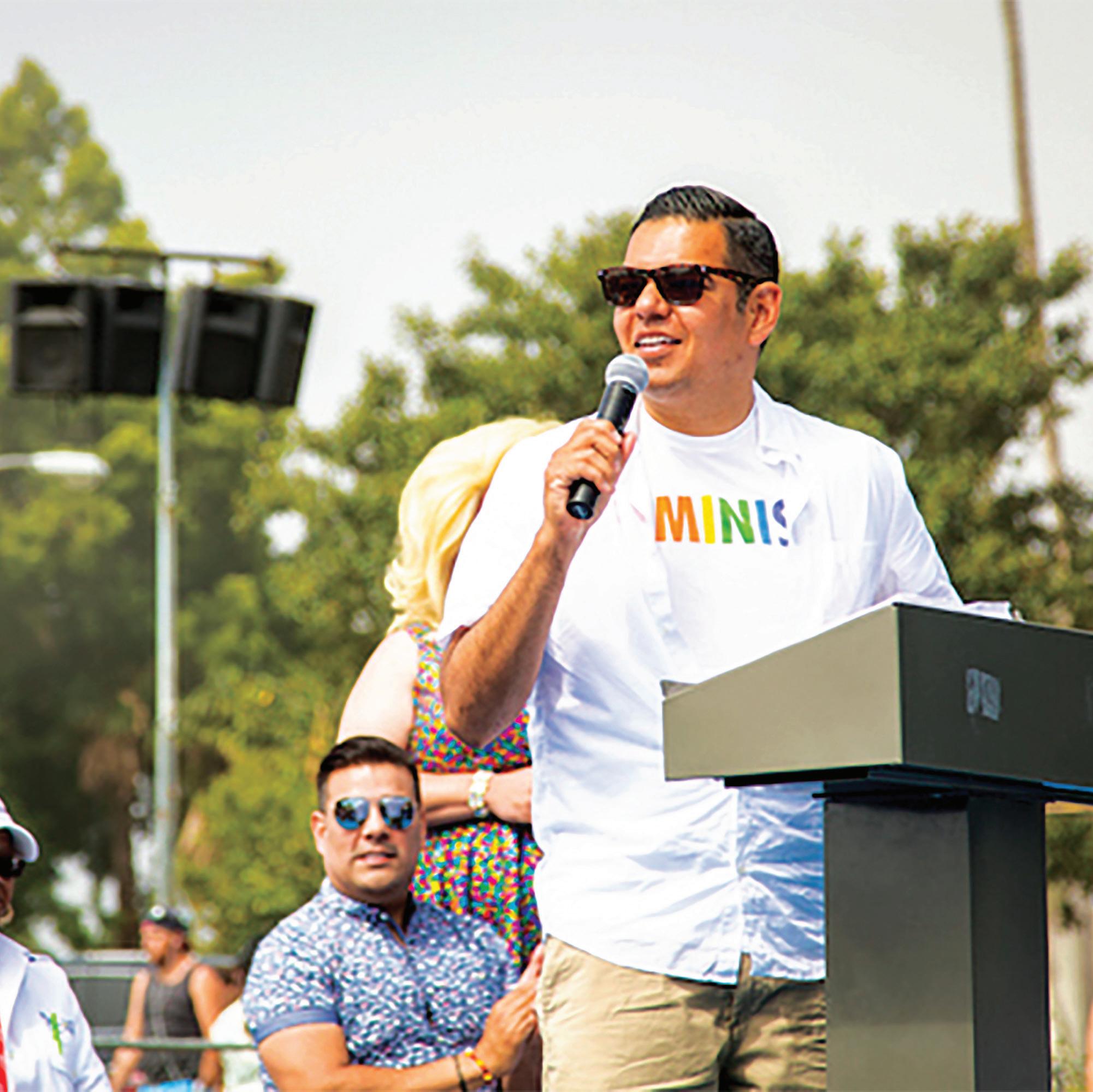







(Photo by Liezl


By BRODY LEVESQUE
In a tweet last week, Long Beach Mayor Robert Garcia announced that he would be running for the congressional seat currently held by Rep. Alan Lowenthal (D-CA47), who announced he is retiring from Congress.
Garcia celebrated his 44th birthday on December 2 and is an openly gay Latino originally from Peru. First elected to the city council in April 2009 to much fanfare as the council’s youngest, first Latino male, and first gay person of color. He became Long Beach’s first gay mayor in 2014 with 52.1% of the vote.
If he is elected to fill the seat in the U.S. House, Garcia would be the first openly LGBTQ+ immigrant and the second openly LGBTQ+ Latino elected to Congress — and the first LGBTQ+ Latino elected to Congress from California. Currently, Congressional LGBTQ+ Equality Caucus Chair and U.S. Rep. David Cicilline, (D-RI), is the only out LGBTQ former mayor ever elected to the U.S. Congress. U.S. Rep. Ritchie Torres, (D-NY), is the only out LGBTQ Latinx person ever elected to the body.
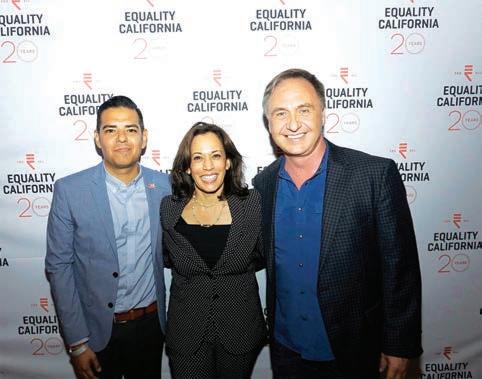
The mayor won the immediate endorsement of Equality California, the nation’s largest statewide LGBTQ+ civil rights organization:
“Mayor Garcia has shown throughout his nearly 13 years in elected office that he has the skill, tenacity and compassion to improve the lives of LGBTQ+ people and the diverse communities to which we belong,” said Equality California Executive Director Tony Hoang. “From creating one of the country’s most comprehensive responses to the COVID-19 pandemic to establishing transgender-inclusive healthcare coverage in the City of Long Beach, he has been there for our LGBTQ+ community and for all Californians. We need a leader like him in Congress, and we’re prepared to do everything in our power to ensure he is elected in 2022.”
As he enters the race, the California Citizens Redistricting Commission is still finalizing district lines, the Commission’s nearly final congressional lines would make the district majority Latino and include Long Beach, Signal Hill, Lakewood, Bellflower, Downey, Bell Gardens, Bell, Maywood and Huntington Park.
The Washington D.C.-based LGBTQ Victory Fund, the only national organization dedicated to electing LGBTQ leaders to public office, also endorsed Mayor Garcia as he announced his run:
“Big city mayors make excellent members of Congress because of the scope of their knowledge and experience and their focus on practical governing over excuses and scapegoating,” said Mayor Annise Parker, President & CEO of LGBTQ Victory Fund. “Mayor Garcia went to Long Beach to get things done – and he has – including making the city a national role model for its response to the pandemic and vaccine distribution strategy. His competence is only matched by the heart he brings to governing – using his experiences as an LGBTQ immigrant who lost parents to COVID to inform his policymaking and governing. Mayor
Garcia is the type of leader Washington, DC desperately needs and voters are ready to send him there.”
Garcia has deep ties to the Democratic Party’s leadership. In the 2020 campaign race he was a prominent surrogate for Vice President Kamala Harris’ presidential campaign, later becoming a strong supporter of President Joe Biden. During the course of the ongoing coronavirus pandemic the mayor has acted in concert with California Governor Gavin Newsom’s measures including masking mandates and the push to get Californians vaccinated.
The effects of the pandemic painfully impacted Garcia directly when in summer of 2020, he lost his mother, Gaby O’Donnell, and stepfather, Greg O’Donnell, to COVID. His mother was a medical assistant who immigrated from Peru when the mayor was five years old.
In an interview with journalist Karen Ocamb during the height of the pandemic, Garica when asked if any measures being taken to address the vulnerable and sizable LGBTQ population in Long Beach, responded saying:
“I had some communication with our center as well as some LGBTQ leaders in the community about this,” Garcia said. “I think everyone is working together, making sure that people have the resources they need. I also talked to the leaders of our hospitals. They’re aware that Long Beach has a higher HIV-positive rate than other parts of the state, in large part because of our LGBTQ population and that’s similar in other places in the state that have larger populations. That’s something that we take very seriously.
“We’re trying to get folks resources and my advice to someone who is LGBTQ is the same as it would be to anyone — which is: if you can please stay home and if you need help call a doctor, call your doctor, get ahold of our health department and we’ll try to help,” Garcia added.
As the Redistricting Commission finishes its work, one potential political primary rival, California State Sen. Lena Gonzalez (D-Long Beach) endorsed the mayor and dropped out of contention even as other Latina state lawmakers had publicly pushed her to run for the seat.
Despite the mayor’s ties to the current Democratic Party leadership, the mayor was once a Republican. In another interview with Ocamb, Garcia noted;
“My whole family registered as Republicans when we became citizens. We did so because we loved Ronald Reagan. At the time he had signed the amnesty bill. So, we didn’t know much about politics, but we loved the president because he’d signed this bill, giving us an opportunity to become U.S. citizens.
“Today, it’s ironic that it was a Republican president that signed the most comprehensive path to citizenship that we’ve had this last generation. And a president who’s idolized by the Republican Party also did more for immigrants than any other president recently. I think the Republican Party needs to take a page out of the Ronald Reagan playbook and work with Democrats on a comprehensive immigration
program that will create citizenship for the millions of folks that are here,” he said.
The mayor’s previous political affiliation with the GOP brought a pointed response from Monterey County Supervisor, former State Assemblymember, and the former mayor of the city of Watsonville in Santa Cruz County, Luis Alejo.
In response to Garcia’s tweet announcing his candidacy Friday, in a reply Alejo tweeted an article from the Orange County Register dated May 29, 2014 profiling the race for Long Beach mayor which read in part:
“Garcia was a member of the Republican Party during a period that is still regularly attacked by Democrats. He joined the GOP shortly after voters approved Proposition 187, a 1994 ballot measure championed by then-Gov. Pete Wilson. The law created a screening system to deny certain services, including health care and education, to illegal immigrants and was eventually declared unconstitutional by a federal court,” The Register reported.
Despite that early political track record, a source tells the Blade Friday that Garcia is an absolute champion of progress politics, committed especially to issues that are related to the LGBTQ+ community. “There will be detractors always but I think that Robert has shown that he is committedplus he was young he evolved and will well represent the interests of both his major constituencies, [LGBTQ+ and Latino communities]” the source said.
The primary election will be held June 7, 2022 and the two top finishers will advance to the general election Nov. 8, 2022.
Garcia, who won re-elected as mayor in 2018 with nearly 80 percent of the vote, holds a doctorate degree in education from California State University Long Beach, a M.A. from the University of Southern California, and a bachelor’s degree also from CSU-Long Beach. He lives in Long Beach with his husband, Matthew Mendez Garcia, who teaches political science at CSU-Long Beach.





By BRODY LEVESQUE
Rep. Alan Lowenthal (D-CA47) announced last Thursday that he was not going to seek reelection in 2022 and would be stepping back from public engagement.
“It is time to pass the baton. It is time to rest and surround myself with the benefits of a life well lived and earned honorably in the service of my fellow citizens,” he said in a statement.
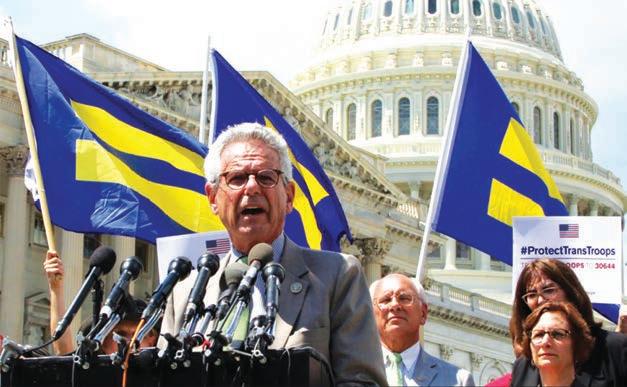
The congressman has been a longtime ally of the LGBTQ+ community. After being elected to the U.S. House in 2012, Lowenthal put a display of the U.S. flag, the California state flag, and then the LGBTQ+ Rainbow Pride flag.
“As you enter my office, there is the United States flag on the right side,” Lowenthal told a Washington D.C. based journalist at the time. “And then, on the other side are two flags. One is my state flag of California, and the third flag is…the rainbow flag, the Pride flag.”
“I was listening to the oral arguments on the two cases before the Supreme Court — the Prop 8 and DOMA cases,” he added. “Listening to those that were against providing equality, I decided that, until there is true equality, I’m going to fly the flag. The next day, we went out and purchased a flag and have been flying it ever since.”
It was that LGBTQ+ flag that later caused an incident in March of 2017, when a visitor to the congressional office building where Lowenthal’s office is located, angrily removed it from where it was hanging from the wall beside the door to the office and repeatedly stomped on it.
According to a statement released by Lowenthal’s office, the unidentified man acted on his displeasure with the flag minutes after he entered Lowenthal’s office and “angrily exclaimed his belief that the Pride flag outside the office was inappropriate alongside the American flag.”
“The man left the Congressman’s office, removed the Congressman’s Pride Flag from its holder, threw it to the ground, and proceeded to repeatedly stomp on it,” the statement says. “Other visitors in the hallway verbally reprimanded him and after he left, replaced the flag,” it says.
“They then notified the Congressman’s staff, who caught up to the man, verified he was the one who had stomped on the flag before escorting him into the custody of Capitol Police officers,” the statement states.
That visitor later sued Lowenthal to ‘remove’ the flag.
Despite that incident, the congressman- a former community activist, Long Beach city council member and who served in the California State Assembly from 1998-2004, maintained his public and vocal support of the LGBGT+ community with whom he has longstanding ties.
“Discrimination [against the LGBTQ community] still goes on today,” Lowenthal said. “We’re going to keep the flag until discrimination ends.”
]On his official House office page under LGBT, Lowenthal laid out his legislative priorities’ to advance LGBTQ+ Equality and civil rights.
“I am strongly committed to working with my colleagues to ensure equal rights; the repeal of discriminatory laws; the elimination of hate-motivated violence; and to improve the health and well-being for all people, regardless of sexual orientation or gender identity. Fundamentally, I believe that LGBT rights are human rights,” Lowenthal says.
“I believe in the equality of individuals. I oppose discrimination in any form, whether it is based on gender, race, religion, sexual orientation, or gender identity. The 47th Congressional District is home to a large and diverse LGBT community, and as a Vice Chair of the Congressional LGBT Equality Caucus, I have tried to be a champion for equality. I have fought to end discrimination against gay, lesbian, bisexual, and transgender individuals, and
I will continue to fight to support all efforts to end discrimination in the workplace, in the military, in our schools, and in our everyday lives,” he adds.
As a Vice Chair of the House LGBT Equality Caucus, Lowenthal has co-sponsored and championed H.R.2282, the “Equality Act,” the International Human Rights Defense Act, H.R.846, the Student Non-Discrimination Act and H.R.519, the “Uniting American Families Act” (UAFA).
He is also a member of the Congressional HIV/AIDS Caucus.
“Throughout his career, Congressman Lowenthal has been an unwavering ally to the LGBTQ+ community and a champion for civil rights and social justice in Congress. He’s served Long Beach with honor and distinction and has been an invaluable partner in our fight for full, lived equality,” Sam Garrett-Pate, the Managing Director of External Affairs for Equality California told the Blade in a text Thursday.
In his statement announcing that he was leaving at the end of this term, Lowenthal noted: “During this journey, I have had the pleasure of raising two fine sons who have blessed me with four grandchildren who I adore. I now look forward to spending my time with them and watching them grow and flourish into wonderful people like their parents.
“It is also a chance for me and my wife, Debbie, who has been my rock throughout this journey and who has been by my side despite her own sacrifices, to even more deeply enjoy our lives together.
“But this is not the end. I will be your champion in Washington for another year, and I am determined to make the most of that time. After that, there are certainly other pages left to write in my life and other challenges I would like to take on beyond the halls of government.
“As Robert Frost [ American poet laureate] wrote, there are miles to go before I sleep.”
One of the leading contenders to run for the departing Lowenthal is the City of Long Beach’s Democratic Mayor Robert Garcia. If Garcia were to be elected, he would be the first out immigrant to represent California in the U.S. House.
In an email Garcia thanked Congressman Lowenthal: “Congressman Lowenthal has been a true leader in our community and I can’t thank him enough for his decades of service to the people of Long Beach.
“Personally, I am grateful for Congressman Lowenthal’s friendship, mentorship, and commitment to Long Beach. I wish him all the best as he looks ahead and I hope you’ll join me in honoring his work by taking care of the city he has helped us build. -Thank you, Mayor Robert Garcia.”
By BRODY LEVESQUE
The 32-year-old food charity founded by Marianne Williamson as an outreach program of the Los Angeles Center for Living during the height of the HIV/AIDS pandemic, has grown into a 501(3) nonprofit organization in Los Angeles County that has delivered almost 14 million meals to Angelenos too sick to shop and cook for themselves since 1989.
Project Angel Food, (PAF), serves the majority of Los Angeles County with South Los Angeles and Metro Los Angeles being the two largest service areas for the organization providing nutritional meals and counseling for people living with serious illnesses, such as cancer, heart disease, HIV/AIDS, and renal failure.
Over the past six years since 2015, Richard Ayoub has served as the organization’s Executive Director. When Ayoub signed on, the organization was $400,000 in debt. Under his leadership, the organization has flourished to meet the needs of L.A.’s critically ill, more than doubling its clients from 1,050 to over 2,400, its annual budget from $3.8 million to $8.3 million, and its staff from 31 to 75 full time employees.
“Through each challenge we have grown as the need. I’ve been inspired by the dedication of our staff, volunteers, community leaders and benefactors big and small who have stepped up to meet every obstacle with a resolve so powerful that the impossible became possible time and time again,” Ayoub said in a statement.
Currently PAF delivers 21,000 meals per week; has over 2,400 clients served per year; clocks in 42,000 volunteer hours invested per year; and there are 95,000 meals delivered per month, of which the non-profit offers 13 medically tailored menus.
Last Wednesday PAF announced that Ayoub had been elevated to Chief Executive Officer.
Last month, the Board of Directors elected a new slate of executive officers including Tim Robinson, Chairman; Robin Fujimoto, 1st Vice-Chair; John Sonego, 2nd Vice-Chair; Charles Frazier, Treasurer; and Steven Entezari, Secretary. Jason Ball continues in a leadership role as Chair Emeritus.
Ayoub announced that the food charity is expanding its leadership team, adding Bill McDermott in the newly created role of Director of Special Projects. In this position, McDermott is responsible for exploring the possibilities of a much-needed expansion of Project Angel Food’s facilities, building a major donor program and a legacy program.
McDermott is known as one of the top fundraising professionals in the country; for the last two years he served as Chief Development Officer for GLAAD in New York City, and before that he led the development department of the Los Angeles LGBT Center, including management of their $74 Million dollar capital campaign.
“At this critical juncture in our history, I’m thrilled to have Bill join Mark McBride, Director of Philanthropy, and Mindy

Glazer, Director of Institutional Giving and Strategic Partnerships in a development dream team to fund our vital work today and into the future,” Ayoub said in a statement.
Ayoub was raised in El Paso, Texas and earned his Bachelor of Arts degree from the University of Texas at El Paso and became an Emmy-award winning television and news executive producer in Texas, Arizona, Florida, and Los Angeles, where he was executive producer at KCAL9, KCBS2, and KABC7, in addition to the syndicated magazine show Extra.
Ayoub was Executive Producer of Project Angel Food’s 2020 and 2021 Lead with Love Telethons on KTLA 5. He is a hands-on leader who frequently delivers meals, sometimes on his own, and sometimes with folks like Mayor Eric Garcetti, Jesse Tyler Ferguson, Adam Lambert, or the Duke & Duchess of Sussex – Harry & Meghan, but he says that the real stars are Project Angel Food’s clients.



By BRODY LEVESQUE
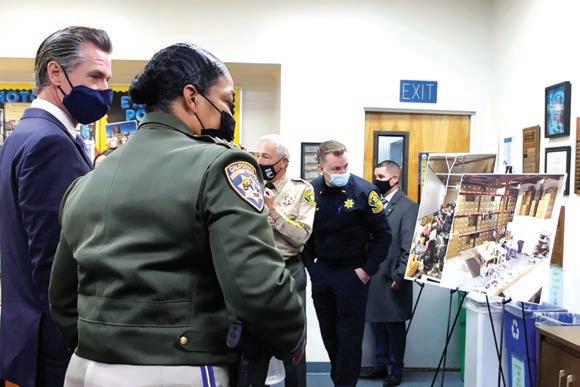
Gov. Gavin Newsom unveiled a multi-pronged plan to fight and prevent crime in California last week. Referring to the recent surge in high-end retail smash and grab thefts, the governor said that he will seek more than $300 million in state funding over three years to boost law enforcement efforts to combat retail theft.
The announcement was made alongside California Attorney General Rob Bonta, California Highway Patrol, (CHP), Commissioner Amanda Ray, Alameda County District Attorney Nancy O’Malley, CAL OES Director Mark Ghilarducci and other state and local leaders at the CHP’s Dublin Area Office.
“The issue of crime and violence is top of mind all throughout not only the state of California but across the United States, highlighted recently by some highprofile retail theft operations,” Newsom said.
He added that “these organized retail mobs … (have) a profound impact on our feelings of safety here in this state, this region and as I note, this country.”
The Governor’s Real Public Safety Plan focuses on new investments that will bolster local law enforcement response, ensure prosecutors hold perpetrators accountable and get guns and drugs off the state’s streets.
“We’re doubling down on our public safety investments and partnerships with law enforcement officials up and down the state to ensure Californians and small businesses feel safe in their communities – a fundamental need we all share,” said Newsom. “Through robust new investments and ongoing coordination with local agencies, this plan will bolster our prevention, deterrence and enforcement efforts to aggressively curb crime, hold bad actors to account and protect Californians from the devastating gun violence epidemic.”
create a new grant program to help small businesses that have been the victims of smashand-grabs to get back on their feet quickly.
• Dedicated Retail Theft Prosecutors: The plan will ensure District Attorneys are effectively and efficiently prosecuting retail, auto and rail theft-related crime by providing an additional $30 million in grants for local prosecutors over three years.
• Fighting Crime Statewide: The Real Public Safety Plan will allow the Attorney General to continue leading anti-crime task forces around the state, including High Impact Investigation Teams, LA interagency efforts and task forces to combat human trafficking and gangs.
Retailers in California and in cities elsewhere around the U.S., including Chicago and Minneapolis, have recently been victimized by large-scale thefts when groups of people show up in groups for mass shoplifting events or to enter stores and smash and grab from display cases the Associated Press reported.
Solo shoplifters and retail thieves have also been a growing problem for California retailers, who have said the criminals face little if any consequences after they are caught, the AP noted.
Earlier this month, Newsom criticized local prosecutors for not doing enough to crack down on the criminals by using existing state laws. also He defended a voter-approved 2014 initiative that reduced certain thefts from felonies to misdemeanors, though prosecutors said it left them without enough legal tools.
In Newsom’s plan, the Real Public Safety Plan’s three core areas of focus crack down on crime to keep communities safe by:
• Increased Local Law Enforcement to Combat Retail Theft: The Real Public Safety Plan includes $255 million in grants for local law enforcement over the next three years to increase presence at retail locations and combat organized, retail crime so Californians and small businesses across the state can feel safe.
• Smash and Grab Enforcement Unit: Governor Newsom’s Plan includes a permanent Smash and Grab Enforcement Unit. Operated by the California Highway Patrol, the unit will consist of enforcement fleets that will work with local law enforcement to crack down on organized retail, auto and rail theft in the Bay Area, Sacramento, San Joaquin Valley, Los Angeles and San Diego regions.
• Keeping Our Roads Safe: With the Real Public Safety Plan, CHP will now be able to strategically deploy more patrols based on real-time data to help keep our roads safe. Governor Newsom will also work with the Legislature to upgrade highway camera technology to gather information to help solve crimes.
• Support for Small Businesses Victimized by Retail Theft: Governor Newsom’s Plan will
• Statewide Organized Theft Team: Governor Newsom’s plan includes $18 million over three years for the creation of a dedicated state team of special investigators and prosecutors in the Attorney General’s office to go after perpetrators of organized theft crime rings that cross jurisdictional lines.
• The Largest Gun Buyback Program in America: The Governor’s plan will create a new statewide gun buyback program, working with local law enforcement to provide matching grants and safe-disposal opportunities to get guns off our streets and promote awareness of gun violence.
• Holding the Gun Industry Accountable: In light of the recent U.S. Supreme Court decision, the Governor is working with the California Legislature to propose a nation-leading law that would allow private citizens to sue anyone who manufactures, distributes or sells unlawful assault weapons, as well as “ghost guns,” ghost gun kits or their component parts.
• Leading the Nation’s Gun Violence Research Efforts: When Congress refused to allow America to study the impacts of gun violence, California stepped up. The Real Public Safety Plan includes additional funding for California’s nation-leading gun violence research center at UC Davis.
• Intercepting Drugs: The Governor’s plan will keep drugs off our streets and includes $20 million to support the National Guard’s drug interdiction efforts, targeting transnational criminal organizations.
“Every family in every neighborhood in California deserves to feel safe and be safe as they live, work, and play in their communities,” said the Attorney General Rob Bonta. “That’s what the Real Public Safety Plan is about – keeping Californians safe by doubling down and allocating additional resources to fight and prevent crime. My office is proud to partner with the governor in this effort, and build upon our existing work to combat organized retail crime, dismantle gangs, defend our commonsense gun laws, and hold those who commit crime accountable.”
Newsom also said that he also plans to turn an existing retail theft task force into a permanent “smash and grab enforcement unit.”
Working under the task force, California Highway Patrol “enforcement fleets” would coordinate with local law enforcement departments to target organized retail and auto theft in the San Francisco Bay Area, Sacramento, San Joaquin Valley, Los Angeles and San Diego regions.
“On behalf of retailers across California, I want to thank Governor Newsom for his commitment to addressing the growing problem of organized retail crime,” said President and CEO of the California Retailers Association Rachel Michelin. “The Smash and Grab Enforcement Unit and other state- level theft teams will provide more regions of the state with the vital expertise necessary to bring resolution to these often challenging and complex crimes without further compromising local resources.”
After a series of recent violent ‘smash & grab’ crimes along with a rise in physical assaults and robberies, the City of Los Angeles is installing automated license plate recognition cameras in the Melrose business corridor and surrounding neighborhoods.
Solomon Alpha Ahumuza, a gay man from Uganda, is only just beginning his journey in the United States. But his journey to get to his new home in Long Beach, California, was long, difficult and transformative.
Ahumuza left Uganda back in 2015. He told the Blade in an interview just before Thanksgiving that he decided to leave because of the homophobia in his country.
Uganda has long been a dangerous place for LGBTQ+ individuals to live. Not only are homosexuality and same-sex marriage illegal, but an Afrobarometer survey found only 5% of Ugandans have “tolerance for homosexuals.”
His road wouldn’t get any easier as he fled to neighboring Kenya, another country where homosexuality and same-sex marriage are illegal, and there is a frighteningly low percentage, 14%, of acceptance.
While in Kenya, he stayed in the Kakuma refugee camp, which has a history of violence and discrimination towards LGBTQ+ people, for two months. It was in Kakuma where Ahumuza would be attacked and beaten, he said.
After the attack, he was transferred to Kenya’s capital of Nairobi. Ahumuza was kidnapped while living here. He said he still has scars from the injuries he suffered. “They kidnapped me for one night,” he said. “Then they dumped me somewhere I didn’t know.”
“Then we were tortured by the police,” he added. Now, 6 years later, Ahumuza lives in Long Beach after the U.S finally granted him asylum.
By ZACHARY JARRELL
Before moving to America, he was introduced to The Dream Academy, an educational program for LGBTQ+ refugees and asylum seekers. Ahumuza, who was and still is a very active member of The Dream Academy, considered himself lucky. “I was happy to meet all of them,” he said.
The Dream Academy is a program of Safe Place International, a group that provides multiple services dedicated to supporting the dignity and self-actualization of the most marginalized members of the refugee community, according to its website.
Justin Hilton, the founder of Safe Place, told the Blade over Zoom that refugees, like Ahumuza, are at worst “dehumanized – you know, put in cages and in, put in camps in ways that are a sad commentary on humanity at this point. And at best they’ve been commoditized is a problem that we need to collectively deal with.”
He added: “I think the thing that we’ve realized through training leaders is that there’s so much talent, and there is a voice and a perspective in this community that the larger culture absolutely needs. So we’re committed to representation. We think representation in leadership and decision making positions for marginalized people is absolutely essential for the health of the larger culture and world.”
The Dream Academy has enhanced Safe Place’s mission, giving LGBTQ+ refugees a chance to learn invaluable leadership and safety skills. “What we found is that, not only was it kind of healing trauma and stabilizing people, but it was pre-
paring them for leadership in a way that we hadn’t expected before,” Hilton said.
The program is also rapidly growing. According to Hilton, The Dream Academy is graduating 140 people this year. Next year, the goal is 700 – substantial, considering the pilot program started in only April of this year.
Though it has only been around for a short time, The Dream Academy has already seen a large group of people arrive in the U.S. – “from West Virginia, to Atlanta, to Denver, to Austin, to Houston, to Long Beach, to the Bay Area,” according to Hilton.
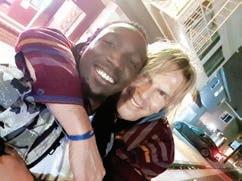
Among them was Ahumuza, who Hilton called “an amazing, beautiful, brilliant man who I adore.”
“There’s a whole community of LGBT Ugandan refugees there, and he just feels like he’s home,” Hilton said.
Still, Ahumuza is adjusting to the U.S. “It’s not yet good,” he said of living in Long Beach. “But I think it’s because it’s a new country, new people, new environment.”
But he remains optimistic. “I have received very, very warm support from Safe Place and the Dream Academy,” adding, “I think I will be alright.”


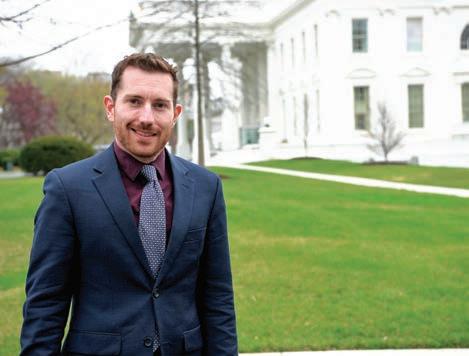
The Washington Blade, the nation’s oldest LGBTQ newspaper, has secured an officially designated seat in the White House James S. Brady briefing room, marking the first time an LGBTQ publication has been afforded the honor.
The White House Correspondents Association, which is responsible for the seating assignment in the briefing room, made the announcement last week as part of the updated seating chart, which will take effect on Jan. 3.
Chris Johnson, White House reporter for the Blade, will be responsible for filling the seat for the LGBTQ news outlet.
According to the WHCA, the seating assignment represents 65 different news organizations and entities and of those outlets, a total of 14, or 22 percent, are receiving their first-ever assignment.
Steven Portnoy, WHCA president and White House reporter for C-SPAN Radio, said in a memo changes were made “to enhance diversity in the briefing room,” including seat designations for “organizations that target Black, Hispanic and LGBTQ audience” as well as publications “across the ideological spectrum.”
The Blade is set to share a seat with the Boston Globe. The two publications have made an arrangement to rotate a presence in the seat on a weekly basis. The seat is in the seventh group and next to a seat shared with the Daily Caller, a conservative publication, and EWTN, a social conservative news outlet billing itself as a global network for Catholic-themed programming.
The seating assignment marks the latest development in the Blade’s reporting on the White House and integration in the White House press corps.
“Thank you to the Correspondents Association for this designation,” said Blade editor Kevin Naff. “This was decades in the making and a credit to the hard work of Chris Johnson and Lou Chibbaro Jr. before him. This will enable us to devote more focus to national political news impacting the LGBTQ community.”
In 2013, the Blade earned a spot in the White House in-town pool rotation, a system giving reporters the responsibility of shadowing the president of the United States and reporting back on his movements and statements in the form of pool reports for the entire White House press corps.
FROM STAFF REPORTS
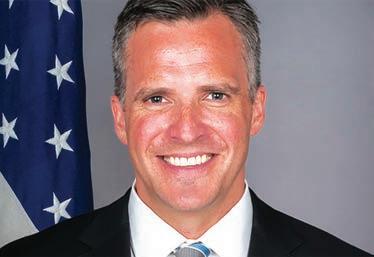
The U.S. Senate confirmed Rufus Gifford on Saturday as chief of protocol for the State Department, giving him the distinction once again of the rank of ambassador and a lead role in diplomatic engagement for President Biden.
The Senate confirmed Gifford for the role unanimously by voice vote as part of a series of votes on Biden’s ambassadorial nominees who were similarly confirmed on a voice vote.
The confirmation marks a return to foreign affairs for Gifford, who had served as U.S. ambassador to Denmark, a role he obtained after his work as a fundraiser for the
Obama campaign and the Democratic National Committee in the 2008 and 2012 elections. During the 2020 presidential primary, Gifford early on endorsed Biden for president and became a top adviser and deputy campaign manager.
The chief of protocol for the State Department is responsible for being on the front-lines of engagement in U.S. foreign policy, which means being the gateway between foreign leaders and the president. For example, Gifford would likely be a point person for any meeting between Biden and Russian President Vladimir Putin, making an openly gay man the face of the United States for a country in talks with a leader who has rolled back LGBTQ rights and looked the other way amid violence against LGBTQ people in Chechnya.
According to a White House bio, Gifford is actively engaged as a civil society leader and has promoted and sponsored a variety of organizations, including UTEC in Lowell, Mass., the LGBT History Museum in New York, the Human Rights Campaign and the Provincetown Center for Coastal Studies in Provincetown, Mass. Gifford received a bachelor’s degree from Brown University in 1996.
Queer Kentucky – an LGBTQ+ nonprofit located in Louisville, Kentucky – has extended a helping hand to LGBTQ+ Kentuckians affected by the recent tornadoes that ravaged parts of the state by giving out approximately $7,000 in aid, according to Spencer Jenkins, the group’s founder and executive director.
Jenkins told the Blade that Queer Kentucky’s effort was able to give 25 LGBTQ+ people affected by the storms around $300, most of whom were Black, brown or Indigenous.
“They are usually the most marginalized within our own community, so we were very grateful to be able to do that for them,” he said. “There were a lot of trans people that needed assistance, a lot of nonbinary people. So, I mean, we were able to impact the marginalized of the marginalized.”
However, Jenkins wishes he could do more. “Unfortunately, we only had $7,000. And we wanted to be able to give $300 each, so that they can actually do something with the money,” he said. “$100 is great, but I’ve kind of always been on the thought that $300 is a super impactful amount to give to someone.”
The tornadoes tore through Western Kentucky – and parts of Illinois, Missouri, Tennessee and Arkansas – last week. One of the twisters, originating in Arkansas and ending in Kentucky, spun for more than 200 miles.
At least 75 people have died from the storms in Kentucky, with 16 people still missing and about 3,280 without power.
Kentucky Gov. Andy Beshear (D) described the event as one of “the worst tornado events” in state history.
But the actual effect that the extreme weather had on the LGBTQ community will likely never be known because states generally do not collect that demographic data in times like last weekend.
Though Jenkins didn’t have any specific numbers, he thinks that the tornadoes have left many queer people – at least 100, he estimates – in Kentucky with almost nothing. He came to this conclusion because of how many people reached out to his group in need of assistance.
On Wednesday, President Joe Biden traveled to Kentucky to survey the damage and announce that the federal government would cover 100% of the costs of emergency work for the first 30 days after storms.
“You know, the scope and scale of this destruction is almost beyond belief … These tornadoes devoured everything in their path,” Biden said at a press conference in Dawson Springs, Kentucky – one of the hardest-hit areas.
ZACHARY JARRELL














By LOU CHIBBARO JR. | lchibbaro@washblade.com
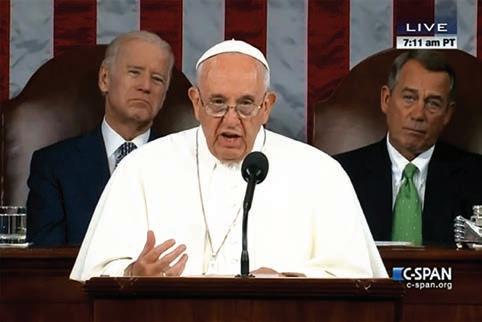
In a development that Catholic Church observers consider to be unprecedented, a high-level Vatican official apologized last week to LGBTQ people and to the Mt. Rainier, Md., based LGBTQ Catholic group New Ways Ministry for removing from a Vatican open forum website a link to an LGBTQ supportive video on New Ways Ministry’s website.
The apology by Thierry Bonaventura, communication manager of the Vatican-based General Secretariat of the Synod of Bishops, came five days after New Ways Ministry released excerpts from two letters that Pope Francis sent to New Ways Ministry in May and June of 2021 praising the organization for its work in support of LGBTQ Catholics.
According to the National Catholic Reporter, conservative Catholic media outlets reported that Bonaventura removed the link to the New Ways Ministry video from the Synod’s website on Dec. 7 after he learned that the U.S. Conference of Catholic Bishops censured New Ways Ministry in 2010 because of its support for civil marriage for same-sex couples.
Supporters of New Ways Ministry believe Bonaventura may have issued his apology and subsequently reposted the video link to the Synod website after learning that the Pope himself had expressed a favorable opinion of New Ways Ministry in his recent letters to the LGBTQ ministry.
Francis DeBernardo, executive director of New Ways Ministry, said in a statement that the New Ways Ministry video, among other things, encourages LGBTQ people to participate in Synod consultations. The Synod provides advice to the Pope on a wide range of church-related matters.
DeBernardo said it was someone from the Vatican, not New Ways Ministry, who placed the link to the LGBTQ group’s video on the Synod’s website.
“In recent days, I have personally taken the initiative to depublish a post promoted by the reality ‘New Ways Ministries’ for internal procedural reasons,” Bonaventura says in his apology, which he posted on Facebook. “This brought pain to the entire LGBTQ community who once again felt left out,” he said.
“I feel I must apologize to all LGBTQ people and to the members of New Ways Ministries for the pain caused,” Bonaventura said. He added that he reposted the link to the New Ways Ministry video on the Synod website. He also posted in his Facebook message a link to the Synod’s resources web page, suggesting that LGBTQ Catholics should submit messages on the site.
“Certainly, LGBTQ groups and those groups who feel they live on the ‘margins’ of the Church can direct their contributions, resources, or what they want to share with the whole people of God to [this website],” he wrote.
“New Ways Ministry warmly accepts the apology of Thierry Bonaventura,” DeBernardo said in a Dec. 13 statement. “Apologies are powerful in their ability to build
bridges of reconciliation and justice,” DeBernardo said. “Mr. Bonaventura’s kind words and his reposting of the video will be effective in helping to repair the rift that exists between LGBTQ people and Catholic institutions,” he said.
“We appreciate that apologies are never easy to make,” DeBernardo continued. “New Ways Ministry had not requested one, making this gesture all the more authentic,” he said. “Vatican officials rarely apologize, and they almost certainly have never apologized to LGBTQ people or an LGBTQ Catholic Ministry,” said DeBernardo.
“This action signals that Vatican officials are becoming aware of how their decisions impact LGBTQ lives,” he said. “It also reveals a desire to repair damages they may have caused. In these respects, this is an historic moment.”
DeBernardo said Pope Francis’s two letters to New Ways Ministry came in response to messages that he sent to the Pope discussing problems LGBTQ people and New Ways Ministry have faced with Catholic Church officials, including the Vatican.
“We wrote to the Pope in April, introducing ourselves as an organization, providing him with a brief history, including two major censures by church officials,” DeBernardo told the Blade.
Among the issues he said his group raised with the Pope was a 1999 decision by the Vatican’s Congregation of the Doctrine for the Faith to prohibit the two co-founders of New Ways Ministry – Sister Jeannine Gramick and Father Robert Nugent – from engaging in pastoral work with gay people.
The National Catholic Reporter, which published a story about the Pope’s letters to New Ways Ministry, reports that the 1999 action against Gramick and Nugent was based on claims by Vatican officials that the two LGBTQ supporters promoted “ambiguities and errors” in their ministerial work.
The newspaper, which operates independently from the Catholic Church, points out in a Dec. 8 story that the
notification sent to Gramick and Nugent prohibiting them from providing pastoral support for homosexuals was signed by then Cardinal Joseph Razinger, who later became Pope Benedict XVI.
DeBernardo told the Blade New Ways Ministry decided to release excerpts of the Pope’s two letters rather than the entire letters because some of the content “were pastoral and personal messages which it was not appropriate or relevant to release.” He said the decision to release the excepts was made after a National Catholic Reporter journalist contacted the group for comment after the newspaper learned that the link to the New Ways Ministry video had been removed from the Vatican based Synod’s website.
“We made the decision that we would let him know about the papal correspondence as a way to show that Pope Francis was indeed genuinely interested in LGBTQ people, as evidenced by the fact that he was in supportive correspondence with New Ways,” DeBernardo said.
“In two letters to New Ways Ministry this year, Pope Francis commended the organization for its outreach to the LGBTQ community and referred to one of its co-founders, Loretto Sister Jeannine Gramick, as ‘a valiant woman’ who suffered much from her ministry,” the newspaper reports.
“Written in Spanish on official Vatican stationary, Francis’ letters mention that the Pope is aware that New Ways Ministry’s ‘history has not been an easy one, but that loving one’s neighbor is still the second commandment, tied ‘necessarily’ to the first commandment to love God,” the National Catholic Reporter story continues.
“Thank you for your neighborly work,” the newspaper quoted Francis as telling DeBernardo in a June 17 letter. In that same letter, the Pope also expressed praise for Sister Gramick. “I know how much she has suffered. She is a valiant woman who makes her decisions in prayer,” the newspaper quoted the Pope as saying.
“It helped me a lot to know the full story you tell me about New Ways Ministry’s history,” the newspaper further quoted the Pope as saying in a May 3 letter. “Sometimes we receive partial information about people and organizations, and this doesn’t help. Your letter, as it narrates with objectivity its history, gives me light to better understand certain situations,” National Catholic Reporter quoted the Pope as saying to DeBernardo in the May 3 letter.
“In ongoing communications with us and with others, it is clear that Pope Francis wants LGBTQ ministry to thrive,” DeBernardo said in a Dec. 13 statement. “He has publicly emphasized that he wants all people to participate in synod discussions, especially those who have been marginalized or alienated from the church,” he said.
“This unprecedented apology from a Vatican office corrects the earlier mistake and amplifies, even louder, the welcome that Pope Francis has extended to LGBTQ people,” said DeBernardo.
Chilean Congressman Gabriel Boric on Sunday won the second round of the country’s presidential election.
Boric, who previously led a student protest movement, defeated Jos é Antonio Kast, a farright former congressman, by a 55.9-44.1 percent margin. Boric will succeed President Sebastián Pi ñ era when he takes offi ce on March 11.
Boric’s election comes less than two weeks after Pi ñ era signed a marriage equality bill into law. The law takes eff ect on March 10.
“ Chile has spoken,” tweeted Movilh, a Chilean

LGBTQ rights group, after Boric defeated Kast. “ Democracy, equality, justice advances.”
Emilia Schneider, who became the fi rst openly transgender person elected to the Chilean congress last month, also applauded Boric’s election.
“ Hope always defeats fear,” tweeted Schneider. “ We are going to need the same organization and commitment that we showed in this second round (of the election) to defend a transformative government.”
MICHAEL K. LAVERS
Lawmakers in Senegal plan to introduce bill that would further criminalize consensual same-sex sexual relations.
Souleymane Diouf, a spokesperson for Collectif Free du Sénégal, a Senegalese LGBTQ rights group, told the Blade in an email the bill would add the “crime of homosexuality” to the provision of the country’s penal code that “already targets LGBTI people.”
Article 319 of the Senegalese penal code states anyone convicted of “any indecent or unnatural act committed between individuals of the same sex” faces up to five years in prison and a fine of up to 1,500,000 CFA (West African CFA) francs ($2,579.70.) Diouf told the Blade that “any LGBTI person” would face between five to 10 years in prison and a fine of between 1,000,000-5,000,000 CFA francs ($1,719.80-$8,599) if lawmakers approve the bill.
“It is paradoxical that people want to increase the penalties for homosexuality in our country, especially since there is already a legal arsenal against LGBTI people,” said Diouf.
Alioune Souare, a member of the Senegalese National Assembly, told Reuters he helped write the bill that was to have been introduced by the end of last week.
Diouf said Collectif And Samm Jikko Yi — an anti-LGBTQ group that roughly translates as the “Values Defense League” — is behind the effort to introduce the bill. It remains unclear whether Souare and/or other lawmakers have officially put forth the measure.
Senegal is a former French colony in West Africa that borders Gambia, Mauritania, Mali,
Guinea-Bissau and Guinea.
Senegal is among the dozens of countries in which consensual same-sex sexual relations are criminalized. Mauritania is one of a handful of nations in which homosexuality remains punishable by death.
Then-President Obama in 2013 discussed Senegal’s LGBTQ rights record with reporters after a meeting with Senegalese President Macky Sall that took place in Dakar, the country’s capital. The press conference took place a day after the U.S. Supreme Court struck down the Defense of Marriage Act.
“When it comes to how the state treats people, how the law treats people, I believe that everybody has to be treated equally,” said Obama. “I don’t believe in discrimination of any sort. That’s my personal view. And I speak as somebody who obviously comes from a country in which there were times when people were not treated equally under the law, and we had to fight long and hard through a civil rights struggle to make sure that happens.”
(Editor’s note: Souleymane Diouf is a pseudonym. Colin Stewart of Erasing 76 Crimes, a website that documents the impact of criminalization laws around the world, translated Diouf’s responses to the Blade’s questions from French into English.)
MICHAEL K. LAVERS

French lawmakers last week approved a bill that would ban so-called conversion therapy in the country.
Têtu, an LGBTQ magazine in France, notes anyone who “practices, (engages in behaviors), or (makes) repeated comments aimed at modifying or repressing a person’s real or supposed sexual orientation or gender identity that physically deteriorates their physical or mental health” would face two years in prison and a €30,000 ($33,778.50) fi ne. The penalties would increase to three years in prison and a €45,000 ($50,667.75) if the person who undergoes conversion therapy is a minor.
The National Assembly in October unanimously approved a conversion therapy ban bill. The chamber and the French Senate agreed to the measure that passed on Tuesday.
France would join Malta and a handful of other countries to ban conversion therapy if President Emmanuel Macron signs the bill. A bill that will ban conversion therapy in Canada received fi nal approval in the country’s Senate on Dec. 7. The measure will take eff ect next month after it received royal assent.
MICHAEL K. LAVERS
ROB WATSON
is the host of RATED LGBT RADIO, a national podcast and he’s one of the founders of the evolequals.com. A gay dad, business man, community activist and a blogger/writer, Watson is a regular contributor to the Los Angeles Blade.
It could have been just a small-town school board election, with no one, including many in the town itself, barely noticing. That is not how it went down last month in Hastings, Minnesota however.
Kelsey Waits was an incumbent running for her third term on the school board. It was a contentious time to be running. The town of Hastings and its 22,000 citizens was evenly divided on their complaints about how the Covid-pandemic plagued school system should run. The incumbents on the ballot were in danger, anything they had done the past year was guaranteed to have pissed off about half the population.
Kelsey Waits and the other incumbent in the election both lost their seats. She accepted that. That, was not the problem. It was an attack against her 8-year old daughter Kit.
The attack occurred on a private Facebook page first known as “Conservative Parents of Hastings”, and later changed to “Concerned Parents of Hastings.” As attacks against Kelsey ramped up, a post appeared that outed Kit as transgender. “She should be locked up for child abuse,” the parent wrote about Kelsey. “Her younger ‘daughter’ is actually a boy.” Other parents piled on, trashing the Hastings.
Kelsey began hearing about it all over town, as did her husband, Chris. Worse, Kit became the target of bullying at school. Kelsey wrote an op-ed in the local paper trying to explain both the damage, and the complete violation of ethics in attacking a child. The response from “Concerned Parents?”
“Thanks for the publicity.”
Fortunately, the latest chapter of the story is heartwarming. CNN ran a piece about the Kelseys. It was seen by nearly a million people. The town of Hastings stood up against the bullies in its midst with an #IStandWithKit campaign that included a showing of support by leaving their porch lights on. This weekend, there was a demonstration featuring transgender experts and activists that drew almost 1000 people.
The support has been important. Kit was feeling broken and apologizing for who they were as the rumors and attacks circulated. The support has shown them the other side, that love can drown out the hate.
earned coal in your stockings on all three counts.

It is Christmas time. As the dad of two teenagers, as a dad who has dedicated almost two decades fighting for them, protecting them, and loving them more than anything other in life, I hurt for Kelsey and Chris. Attack me, I will fight back. Attack my kid, we are going nuclear.
Instead of annihilation, I decided a softer more gentle approach. Here is my open Christmas card to the “Concerned Parents of Hastings.”
Dear “Concerned (Conservative) Parents”, You have not earned the right to a “Merry Christmas”, at least not yet. Christmas, to me, is about a principle of peace on earth, good fellowship and loving your neighbor. You have
You outed a transgender child. You attacked their family.
You are completely oblivious to their reality. The facts are that a trans child with no support, forced into a gender with whom they do not relate, and oppression, leads they into a very high rate of mental health issues and suicide. Children with support, who have, as Psychiatry Advisor states, “School connectedness and caring adult relationships” would be protected against these mental health symptoms.
The support that the Kelsey’s afford their child is not optional. It is not being “woke.” It is not a trendy phase. It is a life saving requirement that they recognized, and stepped up to provide.
As one dad of a trans daughter told me, “I had to face the choice of a son who would die miserable and prematurely or a live, happy, thriving daughter.” He picked the latter.
This is your Christmas Card, and with it, I want to send you a traditional Dickens Christmas wish. No, I am not wishing you hot cider and plumb pudding.
I am wishing for you to be visited by Scrooge’s three ghosts. The Ghosts of Transgender past, present and future.
First to arrive is the ghost of Trans Christmases Past. The ghost who will appears is named Leelah Alcorn. She shows you the Christmases of the past you thought were “great.”
They were times when, sure, there were rumors of “troubled” kids becoming drug addicts, committing suicide because they had “issues.” Everyone “normal” was fine. It was the time of facade. Things for many were not happy, not OK, and the imposed normalcy just made it worse.
It was just after Christmas in 2014 that your ghost guide, Leelah, stepped in front of a tractor trailer to kill herself. She left a note: “The life I would’ve lived isn’t worth living in … because I’m transgender. I could go into detail explaining why I feel that way, but this note is probably going to be lengthy enough as it is. To put it simply, I feel like a girl trapped in a boy’s body, and I’ve felt that way ever since I was 4.” She ended the note with, “The only way I will rest in peace is if one day transgender people aren’t treated the way I was, they’re treated like humans, with valid feelings and human rights. Gender needs to be taught about in schools, the earlier the better. My death needs to mean something. My death needs to be counted in the number of transgender people who commit suicide this year. I want someone to look at that number and say “that’s f***** up” and fix it. Fix society. Please.”

The second ghost to arrive, of Trans Christmas Present, is Kit Kelsey, the innocent child you outed. They hand you a cup of eggnog. They take you through the town to show you all the lit porch lights. They show you the signs with #IStandWithKit. They show you the nights before, when they cried themselves to sleep, after being called a “freak” all day at school. Yes, they
will survive in a world where Leelah did not, but it no thanks to you. They are asking you why. What would motivate you to be so unabashedly evil?
You take a sip of the eggnog that she has handed you. It has turned however. It is no longer sweet and creamy, but pungent and bitter. It is a new fermented drink called Toxic Masculinity. With each sip, you find yourself falling darker and darker into a terror of men not “being men.” You fear compassion. You find yourself falling in love with foul mouthed people who hate the people of whom you are afraid.
Except, you know deep down that Toxic Masculinity is not your friend. When you look at Kit Kelsey, you do not see a transgender child, you see a toxic masculinity child in a dress, a boy who is either insulting what it is to “be a man”, or a bad guy in disguise looking to prey on girls.
This fear of damaged men in our society, seems to be a subconscious factor in the attack against trans people who embracing their feminine natures. JK Rowling lost her footing as she aired her fears about trans people. She also revealed she was a long-term survivor of abuse from a toxically masculine man. Unrelated? I don’t think so.
The third ghost, the ghost of Trans Christmas Future, is that of someone who does not yet have a name. You find a strange familiarity with this ghost, but you are quite sure you have not seen them before. The look in their eyes… it reminds you of your dad. The smile they shoot at you, that looks just like your mom’s. Yes, this is your unborn offspring—your child, your grandchild. They take you to a dorm room, where you see a figure hanging in the dark corner. It is their body. At their foot, it is a letter… from you.
You turn to the ghost and declare that you would never…. They cut you off, and as they do, your head is filled with the thousand of voices of parents, who have found their children this way. They “would never” either, but they did.
The ghost takes you to a deserted side street of a nearby city. You see a woman. She is a kind lady you have seen before in passing. Tonight, she is beaten and lying in a heap. Her ghost emerges. She is next year’s final transgender death. You are returned to your room. Your transgender tour has ended, the ghosts have left you.
For those of us who care, the transgender ghosts of the past, present and future, have not left us. They haunt us every day. They will continue to do so until Leelah’s final wishes are at last fulfilled.
This is the point in the story where Ebenezer Scrouge has his revelation. He finds humanity, compassion, and a new generosity he had not known before. He finds the motivation to step outside with the joy that he can correct his mistakes. He finds his Christmas.
Will you find yours?










SHARITA GRUBERG is the vice president of the LGBTQI+ Research and Communications Project at the Center for American Progress.MARK BROMLEY is the chair of the Council for Global Equality.
U.S. in critical need of improvement
Earlier this month, world leaders from government, civil society, and the private sector gathered virtually for the Summit for Democracy to set forth an affirmative agenda for democratic renewal and to tackle today’s greatest threats to democracy. In advance of the summit, the Council for Global Equality—a coalition of LGBTQI advocacy organizations of which the Center for American Progress is a proud member—in collaboration with F&M Global Barometers published report cards assessing the extent to which participating states have fulfilled their obligations to ensure LGBTQI+ people are full citizens and able to contribute to and benefit from democratic institutions. Unfortunately, the United States’ score on the human rights of LGBTQI+ people is in critical need of improvement. While we scored a 70 percent on basic human rights—a Cif our country were a school—we received failing grades in protecting LGBTQI+ Americans from violence and upholding the socioeconomic rights of LGBTQI+ Americans. We clearly need to catch up on our homework.
Why the terrible scores? A key reason is that LGBTQI+ Americans continue to lack comprehensive nondiscrimination protections at the federal level, leaving them vulnerable to discrimination in key areas of life such as taxpayer-funded programs like emergency shelters and in stores and restaurants. On top of that, this year marked the most anti-LGBTQI+ state legislative session in history, with transphobic attacks lodged at our most vulnerable community members: our children. From blocking access to necessary medical care, to prohibiting transgender kids from joining school sports teams, to erasing all mention of the existence of LGBTQI+ people from textbooks, more than 100 bills targeting transgender people were introduced in state legislatures last session. And school districts across the country are racing to pull LGBTQI+ -themed books and authors from library shelves. These attacks against the basic rights and dignity of LGBTQI+ people, and transgender people, in particular, have devastating consequences.
It should come as no surprise that, according to a 2020 survey by the Center for American Progress, over half of transgender people reported avoiding public spaces like stores and restaurants in order to avoid the trauma of

discrimination. In addition to being the most anti-trans legislative session, 2021 is also the deadliest year on record for transgender and gender-nonconforming people, with over 50 reported killings of transgender or gendernonconforming people, the majority of whom were Black and brown transgender women.
According to the Public Religion Research Institute, over 80 percent of Americans support protections for LGBTQI+ Americans such as those found in the Equality Act, which passed the House in early 2021 yet still awaits a vote in the Senate. The bill’s provisions also have support from majorities in every state across the country, regardless of political ideology or faith tradition. Despite the protections’ broad popularity, support among elected officials lags behind that of the people they are supposed to represent. Congress’ failure to enact massively popular legislation advancing LGBTQI+ equality while state legislatures launched attacks on transgender children emphasizes how our country’s crisis in democracy impacts the basic rights of LGBTQI+ Americans. It also is reflected in our country’s dismal LGBTQI grades as compared to other countries participating in the Summit for Democracy this week. Unsurprisingly, research has shown a strong correlation between the strength of a country’s democratic institutions and the legal rights of its LGBTQI+ citizens. We are also coming to understand that the inverse is also true: The full and inclusive participation of LGBTQI+ citizens strengthens democratic institutions and the democratic process itself.
The Summit for Democracy is not the end but the launch of a year of action. LGBTQI+ Americans need the Senate to get to work and bring the country closer to realizing its founding ideals by passing the Equality Act. And to ensure our elected leaders better represent the American public, Congress should also pass the Freedom to Vote Act, which would strengthen the integrity of our elections and the John R. Lewis Voting Rights Advancement Act, which would restore and strengthen the Voting Rights Act of 1965. Let’s work together to hold our elected representatives accountable for strengthening our democracy for all Americans and bring home straight As next year.
ADDRESS
8237 Blackburn Avenue Ste. 201, Los Angeles, CA 90048
PHONE 310-230-5266
E-MAIL tmasters@losangelesblade.com
INTERNET losangelesblade.com
PUBLISHED BY Los Angeles Blade, LLC
PUBLISHER
TROY MASTERS
tmasters@losangelesblade.com 310-230-5266 x8080 (o), 917-406-1619 (c)
SALES & MARKETING
SALES EXECUTIVE
CHRIS WILMORE
cmwilmore@losangelesblade.com 310-230-5266 x9461
NATIONAL ADVERTISING
RIVENDELL MEDIA
sales@rivendellmedia.com, 212-242-6863
MARKETING DIRECTOR
STEPHEN RUTGERS srutgers@washblade.com, 202-747-2077 x8077
EDITORIAL
CONTRIBUTING WRITER
KAREN OCAMB karenocamb@losangelesblade.com
NATIONAL EDITOR
KEVIN NAFF kna @washblade.com, 202-747-2077 x8088
INTERNATIONAL EDITOR
MICHAEL K. LAVERS mlavers@washblade.com
EDITOR AT LARGE BRODY LEVESQUE California CONTRIBUTORS
TINASHE CHINGARANDE, ERNESTO VALLE, YARIEL VALDÉS GONZALEZ, PARKER PURIFOY, CHRISTOPHER KANE, AUSTIN MENDOZA, JOHN PAUL KING, JOEY DIGUGLIELMO, CHRIS JOHNSON, LOU CHIBBARO JR., MARIAH COOPER, REBEKAH SAGER, JON DAVIDSON, SUSAN HORNIK, CHANNING SARGENT, SAMSON AMORE, CHRISTOPHER CAPPIELLO, MICHAEL JORTNER, DAN ALLEN, SEAN SHEALY, SCOTT STIFFLER, RHEA LITRÉ CREATIVE DESIGN/PRODUCTION AZERCREATIVE.COM
DISTRIBUTION
CHRISTOPHER JACKSON, 562-826-6602
All material in the Los Angeles Blade is protected by federal copyright law and may not be reproduced without the written consent of the Los Angeles Blade. e sexual orientation of advertisers, photographers, writers and cartoonists published herein is neither inferred nor implied. e appearance of names or pictorial representation does not necessarily indicate the sexual orientation of that person or persons. Although the Los Angeles Blade is supported by many ne advertisers, we cannot accept responsibility for claims made by advertisers. Unsolicited editorial material is accepted by the Los Angeles Blade, but the paper cannot take responsibility for its return. e editors reserve the right to accept, reject or edit any submission. A single copy of the Los Angeles Blade is available from authorized distribution points, to any individual within a 50-mile radius of Los Angeles, CA. Multiple copies are available from the Los Angeles Blade o ce only. Call for rates. If you are unable to get to a convenient free distribution point, you may receive a 26-week mailed subscription for $195 per year or $5.00 per single issue. Checks or



Eligibility for
if your home meets one of the following criteria
Participant in Lifeline; Participant in an existing affordable Home Internet offer
Child
CalFresh (food
Medi-Cal
Student



The Emmy Award-winning “L.A. County Holiday Celebration,” a Los Angeles holiday tradition since 1959, joyously returns to The Music Center’s Dorothy Chandler Pavilion to celebrate its 62nd anniversary with a free, live in-person holiday spectacular.
The annual event will feature over 20 music ensembles, choirs, and dance companies from the many neighborhoods and cultures that make up L.A. Internationally renowned mezzo-soprano Suzanna Guzmán and actor Brian White are back to co-host.
Returning performers include the Gay Men’s Chorus of Los Angeles, gospel singers Lorenzo Johnson & Praizum, Jung Im Lee Korean Dance Academy, klezmer band Mostly Kosher, and two-time GRAMMY award-winning Mariachi Divas de Cindy Shea. Newcomers include Dembrebrah West African Drum and Dance and cellist and autistic savant Adam Man-

tradition will also be broadcast and streamed live


F RIDAY , D EC . 24 FROM 3 P . M . – 6 P . M .
• Doors open at 2:30 p.m.
• Patrons may come and go throughout the three-hour performance.
• A live broadcast of the show airs from 3 p.m. – 6 p.m. on PBS SoCal and online at pbssocal.org/holidaycelebration and kcet.org/holidaycelebration, with an encore broadcast on PBS SoCal at 10 p.m.
• Re-broadcast of the show airs on KCET on Saturday, Dec. 25 at 6 p.m.
• Performing artists from across Los Angeles County (go to HolidayCelebration.org for a complete list)
• Hosted by internationally renowned mezzo-soprano Suzanna Guzmán and actor Brian White (Monogamy, Ambitions, Bronx SIU, Ray Donovan)
• Sponsored by the Los Angeles County Board of Supervisors
• A presentation of The Music Center produced in association with CDK Productions
• Live telecast on PBS SoCal
• Live streaming at PBSSoCal.org and KCET.org

• FREE; no reservations or tickets to the show.
• First come, first seated.
• The line usually begins to form around noon.
dela Walden.
Tickets to the in-person event are free and available on a first-come, first-seated basis. Doors open at 2:30 p.m., although the line usually begins to form around noon. Proof of vaccination for Covid-19 or a negative test within 72 hours will be required for admission; patrons should allow extra time for check-in prior to getting in line. Masks must be worn throughout the performance.
The Music Center’s Dorothy Chandler Pavilion is located at 135 N. Grand Ave., Los Angeles, CA 90012. Parking is free in The Music Center parking garage (arrive early, before the lot fills up). Those who can’t make it to The Music Center on Dec. 24 can watch the broadcast on PBS SoCal or stream live online at pbssocal.org/ holidaycelebration and kcet.org/holidaycelebration. For more information, go to HolidayCelebration.org.
• Proof of vaccination for Covid-19 or a negative test within 72 hours required; please allow extra time for check-in prior to getting in line.
• Masks required throughout the performance.
T HE M USIC C ENTER ’ S D OROTHY C HANDLER P AVILION 135 N. G RAND A VE . | L OS A NGELES | CA 90012
PARKING: FREE IN T HE M USIC C ENTERPARKINGGARAGE.
HOW:
INFORMATIONHOTLINE : (213) 972-3099 OR H OLIDAY C ELEBRATION . ORG


By JOHN PAUL KING
When it comes to LGBTQ Christmas movies, it’s safe to say we’ve gone from famine to feast. Not so long ago, you’d be hard-pressed to find a holiday film in which LGBTQ people even existed, let alone had anything to do with the plot; in 2021, however, it’s difficult to even count the number of queer Christmas stories being offered to make our Yuletides just that much gayer as we sit down with our families and friends to let our food digest in front of the TV.
This is, of course, great news – but let’s be honest. While we can all be thrilled that there are finally heartwarming Christmas movies being made about LGBTQ people finding true love during the holidays, that doesn’t necessarily mean we all want to watch them.
If it feels like we’re talking about you, then you’re in luck, because the Blade has assembled a few suggestions for seasonally appropriate movies and shows that are decidedly NOT the kind of Hallmark-style tropefests that now represent the norm in holiday entertainment – and while they may not always have “officially” LGBTQ characters or storylines, they may not all be “politically correct,” and they may not really even all be about Christmas, they all have the kind of non-conformist appeal that somehow makes them quintessentially queer.
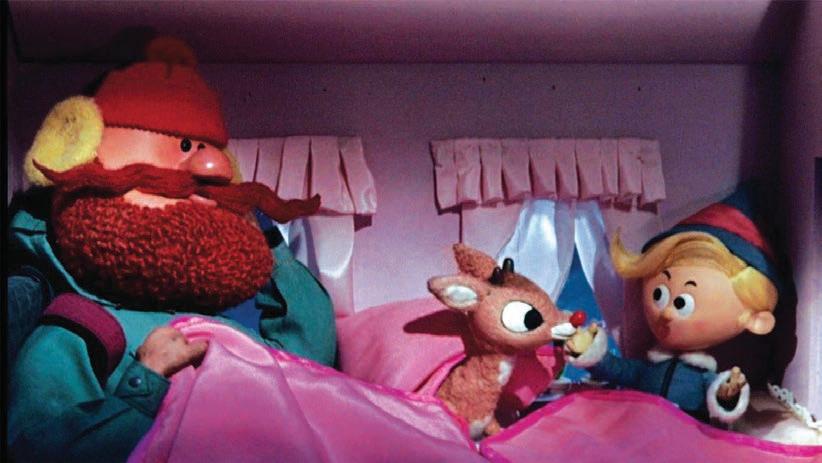
1. Rudolph the Red Nosed Reindeer (1964) OK, it’s not a movie, and it’s gotten a lot of flak in recent years for a plot that involves bullying, male chauvinism, verbal abuse at home and in the workplace, and a group of socially ostracized pariahs who are finally “redeemed” only because they possess skills that can be exploited by the capitalist hierarchy in which they live – but this Rankin-Bass stop-motion classic also carries a deeply subversive undercurrent of queer empowerment that puts it at the top of our must-see holiday viewing list. It’s chock full of “coded” characters, from aspiring elf dentist Hermey to at least half the inhabitants of the Island of Misfit Toys, and it’s a musical – both of which are reasons enough for it to have become a beloved tradition for at least a couple generations of queer kids who have grown up watching it.
decades before it became the inspiration for countless seasonal social media posts, and it strikes a hilariously relatable chord for any viewer – queer or otherwise – for obvious reasons. But it’s just the tip of the iceberg in a movie packed with such non-PC absurdities as a pair of evil salon owners who mainline eyeliner, ketchup-soaked games of “car crash” on the living room sofa, and the ongoing efforts of Aunt Ida (snaggle-toothed Waters stalwart Edith Massey, at her batty best) to turn her nephew gay because “the world of the heterosexual is a sick and boring life.” Trust us on this one – it may not be big on Christmas spirit, but it’s the perfect palate cleanser after all that holiday sweetness you’ve been feasting on since Thanksgiving.
3. Carol (2015) If you are in the mood for a Christmas romance but would prefer something with more substance than the usual sparkly fluff, you can’t do better that Todd Haynes’s modern classic about two 1950s women – a young aspiring photographer and a well-to-do older woman in the middle of a difficult divorce – whose chance meeting at a store counter leads to a life-changing love affair. Based on a semi-autobiographical 1952 novel by Patricia Highsmith and brought to the screen with loving care (not to mention an eye for period detail) by one of the queer cinema’s foremost auteurs, it offers career-topping performances from Cate Blanchett and Rooney Mara in a mesmerizing lesbian love story that rises as effortlessly as a butterfly above the oppressive circumstances of its retro setting. And while the season is only incidental to its narrative, the fact that things don’t go in the direction we expect is enough of a Christmas miracle to make this sumptuous film a legitimate holiday staple.
But more than that – even more than the obvious couple status between Hermey and his rough-and-tumble ginger bear companion Yukon Cornelius – it depicts a group of individuals who, having been relegated to “other” status by the community around them, find acceptance, companionship, inspiration, and a higher purpose with each other. On the surface, perhaps, it’s a morally questionable tale of finding a way to “fit in” to a culture that doesn’t have a place for you, but the story it REALLY tells is about finding your chosen family – and it’s hard to think of a more LGBTQ-relevant Christmas message than that.
2. Female Trouble (1974) You’ve seen the memes, now see the movie. Before John Waters became a queer icon, he was an underground filmmaker whose work was designed to shock and disgust anyone who wasn’t cool enough to laugh at it – and for many of his faithful longtime fans, this over-the-top saga of a teen delinquent named Dawn Davenport (played to sublimely antisocial perfection by the great Divine, Waters’ once-and-forever muse) who grows up to embrace a life of crime and beauty is the pinnacle of his entire, gloriously trashy career. The scene in which Dawn takes out her anger at not getting the black cha-cha heels she asked for by trashing the family Christmas tree was iconic
4. Tangerine (2015) Things are unapologetically queer in this shot-on-an-iPhone indie darling from filmmaker Sean Baker, which takes place in the streets of Hollywood on Christmas Eve. An episodic and interwoven tale of a fresh-out-of-jail trans prostitute who goes on a quest with one of her fellow sex workers to find the boyfriend/pimp who cheated on her, it’s audacious, inappropriate, racy, hilarious, heartbreaking, sassy, sweet, outrageous, and everything else you might expect from a movie about trans sex workers – starring, incidentally, two authentic trans women, Kitana Kiki Rodriguez and Mya Taylor, in the leads. More importantly, it never treats its characters as anything less than fully human, even when they are engaged in shady behavior (and there’s lots of shady behavior), and it never judges them; instead, it takes us into their world for a while and shows us that, just like the rest of us, sex workers need a little Christmas cheer, too.
5. Home for the Holidays (1995) Rounding out the collection and bringing it full circle is this ensemble dramedy directed by Jodie Foster, a seminal holiday film that goes for a deep dive into dysfunctional family drama. Yes, it has all the cliches – a divorced mom (Holly Hunter) loses her job and goes back to her hometown for Christmas, where she spars with her parents (Anne Bancroft and Charles Durning) and assorted other relatives, connects with her gay brother (Robert Downey, Jr.), and finds love where she least expects it – but it’s also smart, genuinely funny when it’s trying to be (and not when it isn’t), and has a refreshingly positive queer character who steals every scene he’s in. Is it a masterpiece? Probably not, but it’s more authentic (and much better acted) than most entries to the genre.









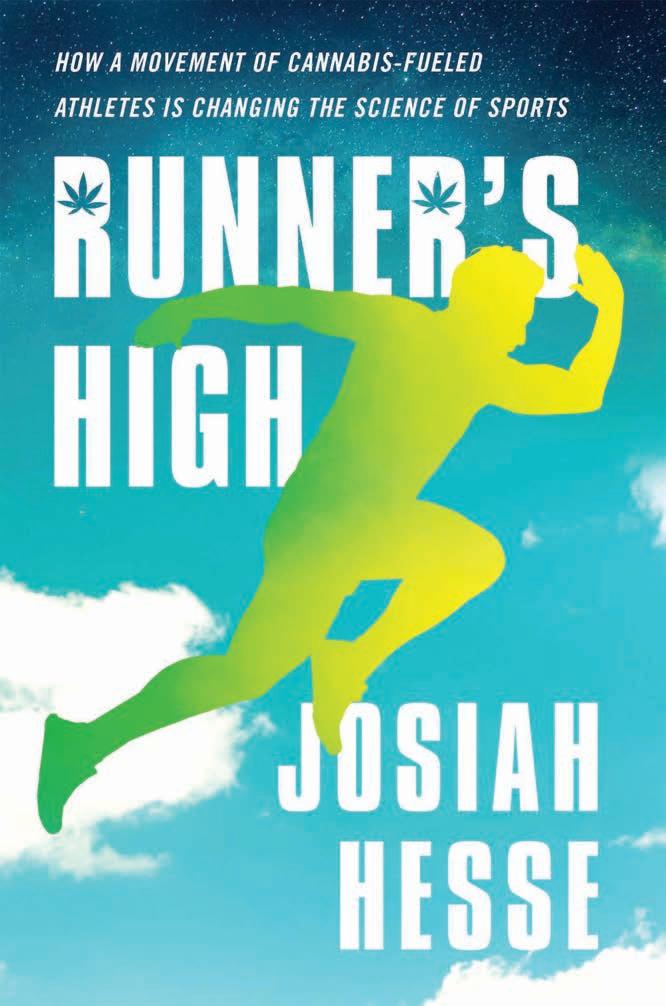
By Josiah Hesse
c.2021, Putnam | $28 | 308 pages
By TERRI SCHLICHENMEYER
The top of the mountain is well above your head.
You can’t see it from the bottom, but you’ve been there a time or two. You’re going up there again, in fact, on a trail that’s filled with rocks and branches, streams and trees, and seems to go straight up. You’ll run it, all of it, and as in the new book
“Runner’s High” by Josiah Hesse, you’ll go high.
For most of his life, Josiah Hesse looked at exercise as something like punishment. He hated the very idea of competition, and any kind of physical effort reminded him of high school “locker rooms” and “homophobic meatheads who threatened my safety.”
These thoughts were drifting through his mind when, in 2015, he was waiting for the start of a marathon and noticed discarded edibles wrappers in a garbage can. He’d brought edibles along and had planned on “discreetly consuming” them; by the end of the race, he was joyful and “giddy” and had discovered something he believes is “underreported.”
He thought he was alone in his enjoyment of running high, but Hesse found a surprise: many athletes – particularly distance runners, he says – use CBD, THC, and marijuana to enhance performance. It’s quietly common in amateur sports and, he avers, though most organizations ban or discourage it, marijuana use is also wellknown in pro sports.
Science, he says, has proven in many ways that marijuana and its derivatives can actually help athletes. The human body contains cannabinoid receptors; it’s wellknown that marijuana works to eliminate pain and induce relaxation, and it can decrease anxiety. Hesse noticed that “ripping a bong” before he ran made running more like “play”; if couch-potatoes could tap into that feeling, then maybe, Hesse posited, they wouldn’t be sedentary.
So why isn’t marijuana legal and easily available, then?
Says Hesse, “Enter Big Tobacco, Alcohol, and Pharma.”
Getting any useful information out of “Runner’s High” is very clearly, pure and simple, going to depend on your stance on the use of marijuana.
If you’re steadfastly negative, you can stop here and page ahead.
Lean toward the positive, and author Josiah Hesse still won’t make things easy for you. Readers, for example, will quickly notice that several iterations of the word “play” show up in this book really often, which is generally distracting and doesn’t, until toward the end of it, leave much room for serious discussion on what he’s found. While there is a good amount of science-and-businesslike dialogue here, the antsy insistence on “play” overshadows it.
Others, particularly those who are specific in their usage, may find deep offense in labels like “stoner,” “pothead runners” and “dirtbag.” Casual use of user slang also changes the tone of this book, from investigative to impudent.
For athletes who want to make their daily run fun, or for “couch-monsters” who need impetus to get up and go, there’s a lot of solid science to be had inside “Runner’s High.” If you aren’t anywhere convinced, though, this book could be a mountain of controversy.









By EVAN CAPLAN

Brunch — that all-day weekend affair — is where days can begin, and end. In a town that already wakes up early, brunch has a special place among meals. With the cooler weather, there’s no better time to head to Palm Springs for a taste of the brunch festivities it has to offer. Below, four distinctive – and distinct – brunch options.
Jake’s: Helmed by industry veterans (and gay men) Chris Malm and Bruce Bloch, Jake’s is an institution, as much a destination as it is a spot for locals. The goal of Jake’s, says Malm, is to make it “a hip, fun dinner party with good friends.”
At brunch time, plan to spend some time with other new besties, Mary and Rita. Jake’s offers one of the most extensive and diverse brunch cocktail lists in Palm Springs: 10 Bloody Marys, six mimosas, six margaritas, seven “refreshers,” several other cocktails, and of course, rosé. It’s no surprise that the bartender has collected awards.
The shaded, cozy patio is also a hit. Lined with soaring, 20-foot Ficus trees, locals refer to it as “The Ivy” of Palm Springs. In the winter, there’s space for heaters; summertime brings in misters.
As for the dishes, it’s the crab cake benedict that repeat customers dive in for. There’s also a tempura softshell crab BLT that’s a menu mainstay. Malm points out that the tater tots, infused with truffle, “are incredibly popular.”
Finally, if you’re especially lucky, you’ll meet Jackson: a West Highland Terrier who serves as mascot (though he won’t serve your mimosa).
Oscar’s: Located in the heart of Palm Springs, Oscar’s is the town’s epicenter for fulloctane energy. While the party rarely stops at Oscar’s, Sunday brunch turns it up to an 11.
The restaurant didn’t hold back by christening its Sunday event as the “Bitchiest Brunch.” It doesn’t hold back. The show’s drag queen star is Anita Rose; she’s supported by a rotating cast, bringing distinctive attitude and style to brunch. Soon after pandemic restrictions were lifted, Oscar’s restarted the brunch party, taking advantage of one of its biggest selling points: a patio that can seat up to 120.
Dan Gore, the owner and a gay man, said that the restaurant quickly outgrew one showtime. They quickly added a second. There’s now a full three seatings (9 a.m., 11 a.m., and 1 p.m.); two outside and one inside.
One of the reasons that this brunch has been wildly popular is that Oscar’s can draw “different kinds of families and feel welcome and accepted. It’s not just entertainment by fabulous performers, but also a loving, safe space. It’s an all-ages event.”
Of course, Oscar’s serves bottomless mimosas; there are also super-size (16-ounce) Bloody Marys.
To dine, it’s a classic egg-focused menu, with omelets and eggs Benedicts. Pancakes, French toast, breakfast tacos, and bagels and lox round out the menu.
After brunch concludes, adult diners tend to hang out for another of Oscar’s mainstays: afternoon tea dance.
Parker: As quintessential Palm Springs as it gets: Parker is an upscale resort designed by Jonathan Adler. Its restaurant, Norma’s, distills that chic styling into brunch. Norma’s serves breakfast all day and all night, but brunch is the time to see and be seen. The extensive patio and wraparound orange banquette allow for both people-watching and nature-watching. Inside, white stone and wooden accents keep things cool.
A Parker representative notes that “the concept of breakfast at Norma’s can be a noholds-barred extravaganza of decadent proportions,” something that certainly extends to brunch time.
Diners can start off minimalist with an egg white omelet – or go maximalist with the “zillion dollar lobster frittata,” on which diners can toss an ounce of Sevruga caviar. There’s a slew of traditional carb-heavy diner items, like blueberry pancakes and chocolate French toast. Gluten-free, vegan, and vegetarian options abound.
In terms of cocktails, there’s a short list of classics (Bloody Mary, mimosa), plus French and Californian roses, as well as glasses (or bottles) of Dom Perignon and Veuve. King’s Highway: Infused with the desert spirit, King’s Highway brings chic to cactus country. Snug inside the Ace Hotel & Swim Club, King’s is a roadside diner with retro nods (it used to be a Denny’s) and handsome saddle leather banquettes. Khuong Phan, food & beverage communications director at the hotel, notes that “we’ve kept that same diner vibe and spirit… but we’ve completely made it Southern California contemporary.”
Beveled mirrors slope above the bar for some surreptitious people-watching; the outdoor patio is just as welcoming, situated as it is next to the popular pool.
Beyond coffee and pastries, substantive and diner-forward entrees include Belgian waffles, bagel sandwiches, and biscuits and gravy built on pork sausage. East Coast visitors will feel comfortable with the salmon lox plate; locals dig in to the homey and filling King’s Highway Breakfast of eggs, potatoes, and sausage. Additional salads, sandwiches, and burgers are available after 11 a.m.
To drink, detoxers may wish to choose the Sunrise (orange, coconut water, lemon, ginger, turmeric). The date shake is concocted with local dates, plus oat milk and vanilla ice cream. Naturally, there’s a Bloody Mary, using housemade mix. Another tropicalstyle drink is the Pina Antigua: pineapple rum, rye, and creme de banana. A popular local bottle shop, Dead or Alive, curates the wine list.