

‘There’s no place like home,’ The Ariadne

‘There’s no place like home,’ The Ariadne
‘My sanctuary. It is safety. It is my place of peace.’
By BRODY LEVESQUE
LOS ANGELES – The impact of a philanthropist’s work on a community may often be felt although the public at large may not actually be informed on the character of that person sometimes mistaking the physical recognition such as naming rights on buildings as ego driven.
This simple truth is hardly applicable to the Ariadne Getty Foundation’s founder and namesake, Ariadne Getty, as her work is not driven by ego, instead a unyielding devotion to community.
In Los Angeles the Getty family name can be found in public spaces that enhance the culture and education of Angelenos, the two most notable being the J. Paul Getty Museum at the Getty Center and the Getty Research Institute Library.
At LA’s central library one of the largest exhibition spaces carries the family’s name.
Ariadne Getty’s significant philanthropic efforts however, are more focused on a marginalized community and aren’t comprised of a grouping of public spaces adorned with plaques. This quiet unassuming mother of two instead prefers to direct efforts into funding organizations that directly benefit the LGBTQ+ community. Her foundation has been underwriting the efforts of the Los Angeles LGBT Center and GLAAD. Getty joined the board of directors of the latter in 2016 and on Feb 1, 2018 at the World Economic Forum in Davos, Switzerland, Getty pledged $15 million to the organization, which focuses on media and increasing the visibility and acceptance of the LGBTQ community.
completely — that I would inherit money. And the first thing that I did was set up the foundation and that’s become my passion.”
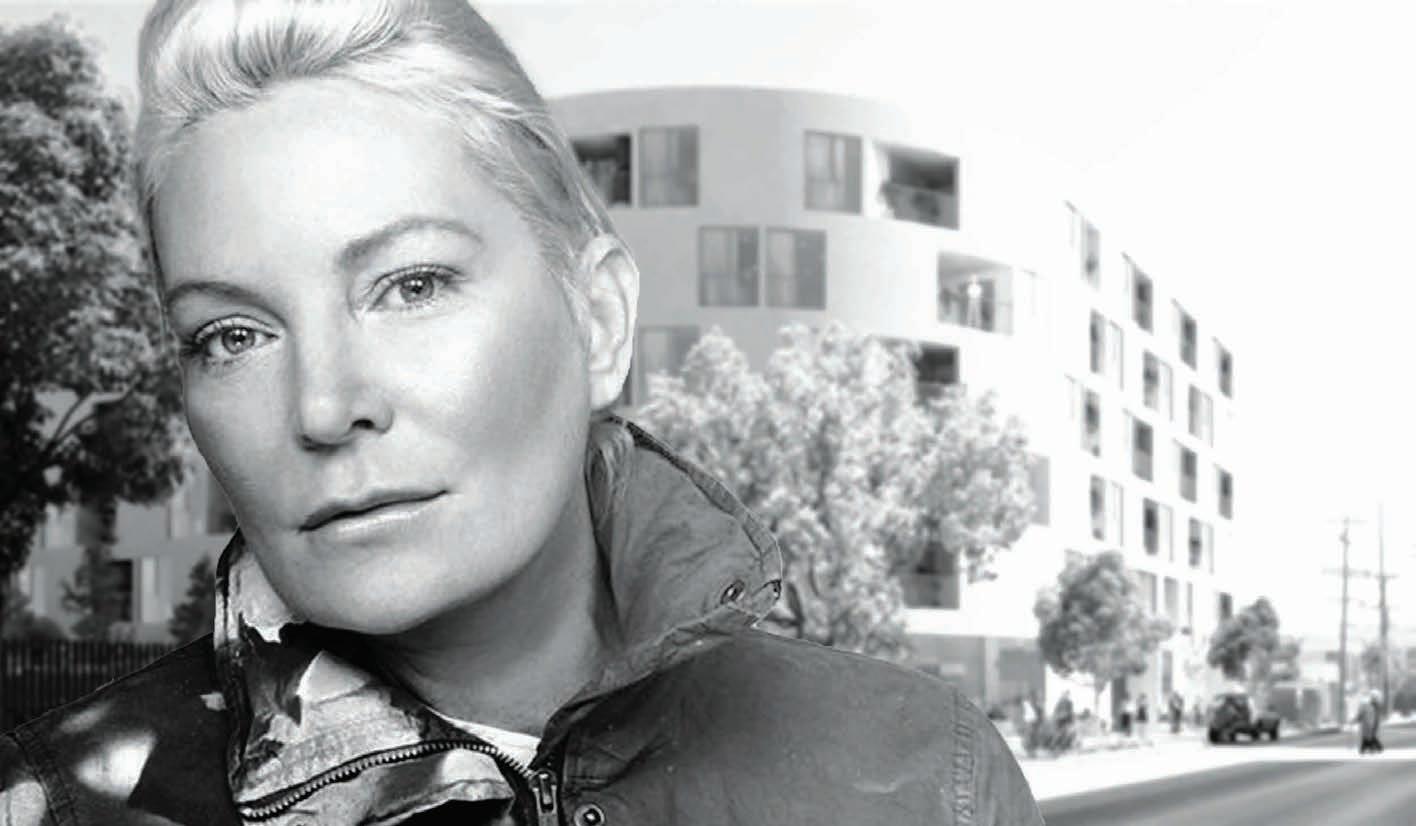
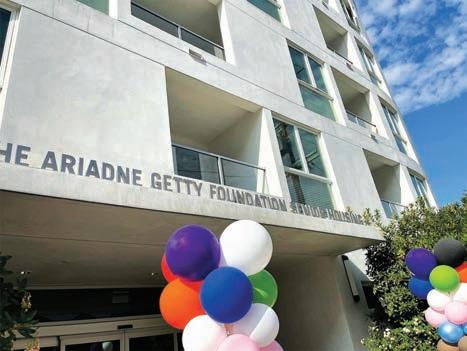
The Ariadne Getty Foundation Senior Housing is a result of Getty’s focus. Located on the LA LGBT Center’s Anita May Rosenstein Campus off Santa Monica Boulevard in Hollywood, the 70,000-square-foot building has 98 affordable housing units for seniors ages 62 and above. It also has a series of large common spaces and interconnected courtyards and areas for its residents tied to the larger Rosenstein campus. While the building bears the Getty name, the focus very much reflects the spirit of her ambition to offer a secure and communal safe space for LGBTQ+ seniors.
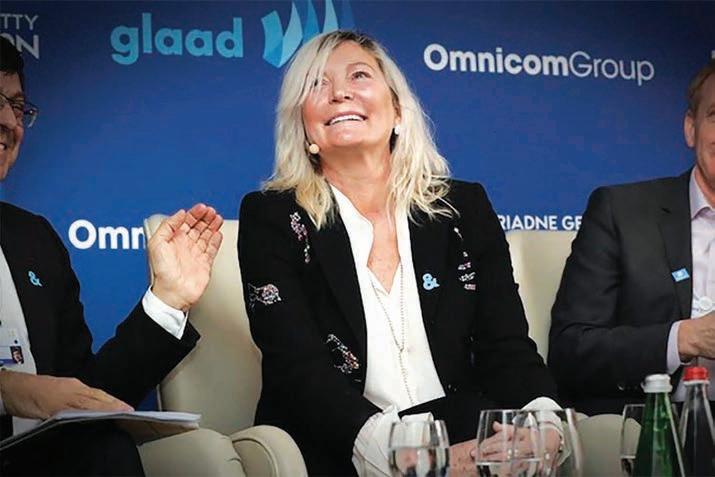
Getty is the mother of two twenty-something children who are members of the LGBTQ+ community and is the mother-in-law to a high-profile Trans social media influencer who is married to one of her kids. While naturally focused on the younger set as a result, she also has deep compassion for LGBTQ+ seniors telling journalist Karen Ocamb in an interview this past January: “I’m particularly excited about the seniors,” Getty says. “My heart goes out to them so much because they’ve lost lots of their friends and they’re lonely and the Center [LALGBT] provides such a hub of activity. And I love the fact that we’re going to be joining the youth with the seniors, because the seniors will be able to educate the youth about really the history and the hardships of getting to where we are today, where we still have so far to go. But this is a far cry from being gay in the ’40s or the ’50s — let alone during the ’80s with AIDS. I think people, as they get older, get afraid of new things like technology and I think that the youth can help the seniors with just staying up to date and feeling a part of that side. That’s definitely the thing that makes me the happiest: they’re in a Center where they’re surrounded by people. There’s no room for loneliness.”
Getty had a dream. “My goal has always been that I’ll be somebody that would give to community, to be a part of philanthropy on a larger scale,” she told Ocamb. “It’s been many years that I’ve known that — I can’t shy away from the question
“The lack of affordable housing in this country is at an all-time high and presents even greater hardships for the LGBTQ community given the many biases which continue to exist. It’s an even greater problem amongst LGBTQ seniors,” Getty told journalist Greg Hernandez in a Blade interview conducted in March of 2020.
Getty’s assertion that a lack of housing presents greater hardship for LGBTQ+ seniors has been backed by studies released by the Williams Institute on Sexual Orientation and Gender Identity Law and Public Policy at the UCLA School of Law and in a study that showed LGBTQ+ people are being left out of generational wealth for many reasons including family rejection, systematic barriers and a lack of financial education.
With almost half of LGBTQ+ adults saying they have been excluded by a family member or close friend as a result of their sexual orientation or gender identity, according to a study by the Pew Research Center, a lack of familial financial support is a common problem for many in the community.
It is that disconnect from family or death of a partner or spouse that leaves a substantial portion of LGBTQ+ seniors alone. Many of them at risk for homelessness which has reached epic crisis levels in Los Angeles.
An estimated 65,000 LGBTQ seniors live in Los Angeles — 68 percent of whom live alone. Many struggle to afford housing and other necessities. They are four times less likely than their heterosexual counterparts to have children and grandchildren to support them and twice as likely to live alone.
These factors were reflected in the high demand during the application process to become a potential resident of the Getty Foundation/LA Center Senior Housing two years ago.
On Tuesday the formal dedication in a press-only event culminated the yearslong process that opened the Senior Housing, celebrating the latest resource for the community. The process though had also been very much affected by the coronavirus pandemic. Prior to the Tuesday event, the in-house communications team at the LA LGBT Center interviewed Getty.
The Ariadne Getty Foundation Senior Center is the “cherry on the top” which
completes the Center’s dream of building an intergenerational campus—congratulations! How do you feel knowing that the Senior Center is finally open, particularly when we experienced delays due to the pandemic?
“I’m feeling a big sigh of relief knowing there are more LGBTQ seniors who finally have the housing and care they need and deserve. For decades, LGBTQ seniors have been on the front lines advocating for equality. Without the progress they achieved and their personal sacrifices, the LGBTQ community would not have the same rights it does today. COVID-19 has been incredibly challenging, but even before the pandemic, LGBTQ seniors faced disproportionate rates of homelessness,” Getty answered.
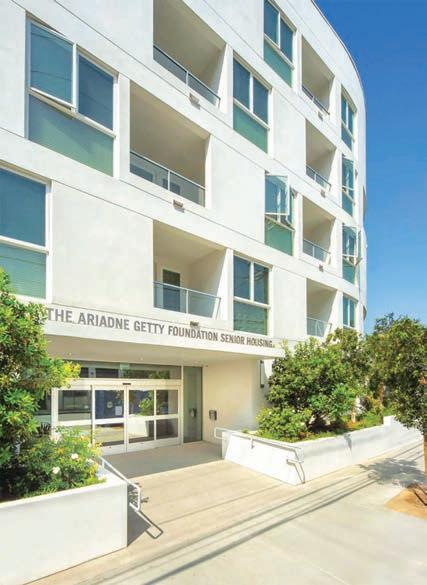

“Unfortunately, the pandemic deepened disparities, making the The Los Angeles LGBT Center’s The Ariadne Getty Foundation Senior Center an urgent need not only for the Los Angeles community, but as an example and inspiration for communities nationwide. It’s only right that we meet this urgent need and repay their decades of hardships with the services LGBTQ seniors need to live and age with dignity and respect. The Senior Center is another step towards achieving that goal and ensuring that the most vulnerable seniors receive the care they deserve.”
In an email to the Blade, Getty’s children Nats and August Getty expressed their admiration and support for their mother’s charitable work as now physically evident with the completion of the Senior Housing.
“We couldn’t be prouder to have a mom who cares so deeply for the LGBTQ community. Since we came out as queer, our mom and her foundation, The Ariadne Getty Foundation’s commitment to LGBTQ equality has only deepened – and the new Los Angeles LGBT Senior Center’s Ariadne Getty Foundation Senior Housing is a standing tribute to that commitment. Because of her advocacy and philanthropy, she has helped create a home where LGBTQ seniors can live and age with dignity and respect.
As out-queer, young adults, our ability to be our authentic selves comes on the back of the
tireless advocacy of LGBTQ elders. It is only right that these seniors receive the care and support they deserve. We are thankful our mom has helped make that a reality.”
In addition to Getty’s foundation, the Senior Housing received support from investors and government agencies, including the City of Los Angeles; Los Angeles County; City of West Hollywood; State of California; California Community Reinvestment Corporation; Federal Home Loan Bank of California; and Wells Fargo Bank.
Also partnering was property management company Thomas Safran & Associates. In a phone interview Tuesday, the company’s President Jordan Pynes told the Blade that community was the primary focus that was incorporated into every aspect of the design. From the physical layout to the interconnectivity with the center’s main campus, every element was purpose driven to make sure that residents had the ability to mingle and build that sense of community.
Joining in the interview call, Kevin Napoli, cofounder of the LENA Group, Inc. told the Blade that all the elements of the design were based on the larger campus, but stressed that the focus was on the interconnected courtyards and common spaces. The effect to engender interactions between all members of the center’s community and the seniors.
Senior Housing residents will have access to the full range of wraparound services and support provided by the Center, including case management; home-delivered meals; in-home care and benefits assistance; connection to health and mental health care; HIV support and wellness; counseling and support groups; and more than 100 monthly activities and events provided for free or at low-cost.
“We are immensely proud to finally open the doors of The Ariadne Getty Foundation Senior Housing following months of construction interruptions caused by the COVID-19 pandemic—but the wait was worth it,” said LA LGBT Center CEO Lorri L. Jean. “Just in time for Thanksgiving and the upcoming holidays, our residents can celebrate with each other in a safe, warm environment where they are able to live freely and fearlessly as their authentic selves. We have many reasons to be grateful this year, and are particularly thankful for Ariadne Getty, her foundation, and our affordable housing developer partner Thomas Safran & Associates, who stepped up to work with us to improve the lives of many low-income seniors!”
“This is probably the most important home I’ve ever had,” said new resident Lisa Chilton. “For 10 years, whether it was renting a room or sleeping on various sofas, I had been in many other people’s space, trying to stay small, and following their schedules. My new home is my sanctuary. It is safety. It is my place of peace.”
By LOU CHIBBARO JR. | lchibbaro@washblade.com
Lisa Wentzel, an out lesbian, shared her life with her partner of 30 years, Judith Kahn, at the couple’s home in Illinois until Kahn died in 2013 of colon cancer.
As is the case with some same-sex couples who never married, Kahn’s family took legal possession of the couple’s home several years later, forcing Wentzel, who suffered from severe arthritis, to move into the Glen St. Andrew Living Community, a retirement and assisted living facility in Niles, Ill.
According to a lawsuit filed on her behalf in 2016 by the LGBTQ litigation group Lambda Legal, when word got out that Wentzel was a lesbian after she disclosed her sexual orientation to a fellow resident, she was called homophobic slurs, spat on, and assaulted on several occasions by other residents of the facility. The lawsuit, which later resulted in a court ruling in Wenzel’s favor, charged that officials at the Glen St. Andrew facility illegally failed to take action to prevent Wenzel from being subjected to abuse and threats by fellow residents and retaliated against her when she complained.
Lambda Legal announced one year ago, on Nov. 20, 2020, that Wenzel passed away at the age of 73 of natural causes after a landmark 2018 appeals court ruling in her favor affirmed that residential facilities such as the one in which she lived are legally responsible for the safety of tenant residents.
“Marsha spent the rest of her days in a senior living community where she was out and affirmed,” said Lambda Legal attorney Karen Loewy, who represented Wetzel in the lawsuit.
Advocates for LGBTQ seniors were hopeful that the 2018 U.S. Court of Appeals for the Seventh Circuit ruling in the Wentzel case would speed up the gradual but steady advances in the rights of LGBTQ elders in long-term care facilities and in society in general.
A short time later, the New York City-based national LGBTQ elder advocacy group SAGE expanded its programs providing cultural competency training for the nation’s long-term care residential facilities. And in some cities, including New York, Los Angeles, and San Francisco, LGBTQ specific retirement and long-term care facilities began to open to provide LGBTQ elders with a wide range of “wrap around” services in addition to a safe place to live.
But LGBTQ elder advocates were taken aback in October of this year when news surfaced that transgender U.S. Army veteran Lisa Oakley, 68, was denied placement in more than twodozen long-term care facilities in Colorado in 2020 and earlier this year.
“When they found out I was transgender, a lot of the facilities didn’t want me,” Oakley told USA Today. “A lot of transgender people, I’m sure, face the same thing,” she said. “We’re humans, just like everybody else.”
Oakley told other media outlets her ordeal in trying to gain admission to a residential care facility began in October 2020, when she became unable to care for herself due to complications from diabetes. Her first choice was a facility in her hometown in rural Craig, Colo., where she had lived for the previous 25 years. She believes that facility turned her down because of her gender identity.
A social worker who assisted in Oakley’s applications for long-term care facilities said the facility in Craig said Oakley would have to be placed in a private room, which was at the time unavailable, “because she still has her ‘boy parts’ and cannot be placed with a woman” in a shared room.
Many other Colorado facilities to which Oakley applied for admission, according to social worker Cori Martin-Crawford, cited the COVID pandemic as the reason for not accepting new residents. But as COVID related restrictions began to subside, other facilities continued to deny Oakley admission.
With Martin-Crawford’s help, Oakley finally found a facility that is LGBTQ supportive in Grand Junction, Colo., which is nearly three hours away from her hometown of Craig, where she had hoped to remain.
LGBTQ activists expressed concern that the discrimination that Oakley faced took place in the state of Colorado, which has a state law that bans discrimination based on sexual orientation and gender identity. Experts familiar with long-term care facilities for older adults have said many private elder care facilities can get around state LGBTQ nondiscrimination laws by claiming other reasons for turning down an LGBTQ person
Michael Adams, the CEO of SAGE, told the Blade that the wide range of programs and initiatives put in place by SAGE and other groups advocating for LGBTQ elders in recent years have resulted in significant changes in support of LGBTQ seniors.
“It is the case now that in almost all states there are one or more elder care facilities that have been trained through our SAGECare program,” Adams said. “But it’s nowhere near what it needs to be,” he said. “It needs to be that there are welcoming elder care facilities in every single community in this country” for LGBTQ elders.
Adams was referring to the SAGE program started recently called SAGECare that arranges for employees and other officials at elder care facilities throughout the country to receive LGBTQ competency training. The facilities that participate in the program are designated “SAGECare credentialed,” and are included in SAGE database lists available to LGBTQ elders looking for a safe facility in which to reside.
SAGE spokesperson Christina Da Costa provided the Blade with data showing there have been 136,975 professionals trained at a total of 617 SAGECare credentialed organizations nationwide. Out of 617 organizations, 172 are residential communities. Also, out of the total of 617 are 167 Area Agencies on Aging, Aging and Disability Resource Centers, Senior Centers, and senior Ombudsman offices.
Da Costa said 278 of the credentialed entities that have received the SAGECare training throughout the country are “other aging focused nonprofit and for-profit businesses.”
Adams of SAGE said the Los Angeles LGBTQ Center opened the nation’s first LGBTQ elder residential facility over eight years ago called Triangle Square. He said the L.A. Center opened a second LGBTQ elder residential facility a short time later. And this week, the L.A. Center announced it has opened a third LGBTQ elder residential facility in Hollywood that is part of a larger “intergenerational campus” that will bring together LGBTQ seniors and LGBTQ youth.
SAGE, meanwhile, operates two LGBTQ elder long-term care residential facilities in New York City, one in Brooklyn called the Stonewall House and one in the Bronx called Pride House.
The other U.S. cities with LGBTQ elder residential facilities include: Philadelphia, Minneapolis, Chicago, Cleveland, San Francisco (which has two such facilities), San Diego, Houston, Fort Lauderdale, and Islip, N.Y.
Adams said the LGBTQ elder residential facilities range in size, with the largest – New York’s Stonewall House – having 143 apartments that can accommodate 200 residents. He said others vary from 40 or 50 residential units to 120.
Advocates for LGBTQ elders point to what they consider another important breakthrough for LGBTQ elders this year in the release of a joint SAGE-Human Rights Campaign Long-Term Care Equality Index report for 2021. Adams said the report is the first of what could become an annual report and rating and scorecard for long-term care elder residential facilities and other elder facilities.

Ahead of Veterans Day, California Governor Gavin Newsom visited veterans receiving COVID-19 vaccines and flu shots at the West Los Angeles Veterans Affairs Medical Center Wednesday, where he highlighted the state’s ongoing efforts to increase vaccination rates and promote booster shots for eligible populations and investments to address veterans’ homelessness.
Joined by California’s U.S. Senator Alex Padilla, California Department of Veterans Affairs Secretary Dr. Vito Imbasciani, and California Health and Human Services Agency Secretary Dr. Mark Ghaly, the Governor also announced a $750,000 donation from Lennar Homes and Five Point Communities that will purchase 86 tiny homes for veterans on the West Los Angeles Veterans Affairs campus to help ensure that veterans have a safe and dignified place to live. Most of the veterans from the “Veterans Row” encampment at San Vicente and Wilshire recently moved onto the campus.
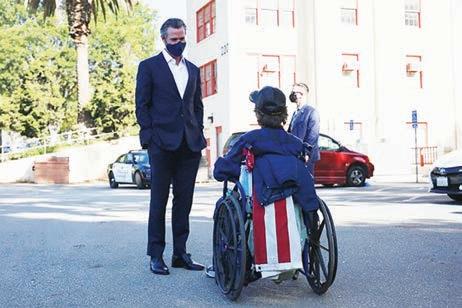
“California is home to over 1.6 million veterans, the most of any state in the nation. We’re continually working to ensure that our veterans and their families receive the resources and support they need and have earned many times over,” said Newsom. “Thanks to a partnership between California, the VA and Los Angeles County, more veterans in the region have a safe place to go to receive mental health services and health care, including their COVID-19 vaccines. Vaccines are how we end this pandemic, and boosters are how we keep our immunity strong.”
The Governor also issued a proclamation declaring November 11, 2021, as Veterans Day.











The West LA VA Medical Center administers 90 to 100 boosters on-site daily through walk-ins or by appointment, and is still administering first and second vaccinations regularly. The VA Greater Los Angeles Healthcare System (VAGLAHS), which includes the West LA center, is one of eight VA Healthcare Centers in California and offers services to veterans residing in five counties in Southern California. VAGLAHS is organizing a number of outreach events and efforts to vaccinate all veterans and eligible individuals.
The Governor today also announced a partnership with the Hilton Foundation on a $69,000 grant to provide coordinated services to veterans to find more permanent housing. The announcements build on the Governor’s unprecedented $22 billion investment to address housing and homelessness, including $12 billion for homelessness and behavioral health services to help get tens of thousands of people off the streets or avoid homelessness altogether. This package includes $25 million specifically for homeless veterans services and $20 million to support the West LA Veterans Affairs campus.
Administered by the California Department of Housing and Community Development in collaboration with the California Department of Veterans Affairs and the California Housing Finance Agency, the Veterans Housing and Homelessness Prevention Program (VHHP) finances the development of a variety of rental housing for veterans and their families, and has announced three awards today that are part of the West LA campus. VHHP will fund 189 of the 192 units, with awards for the three programs totaling $39.6 million.



WeHo
‘Most
‘Significant right now because of everything we’ve been through’

The City of West Hollywood has been awarded the Los Angeles County Economic Development Corporation’s 2021 Most Business-Friendly City Award. Awards were conferred at the 26th annual Eddy Awards evening ceremony on Wednesday, November 10, 2021 at SoFi Stadium.
The City of West Hollywood was a finalist among five cities with a population under 60,000 people; the four other cities named as finalists were the cities of: Culver City, El Segundo, Rosemead, and Vernon.
“It’s an honor for the City of West Hollywood to be selected as the recipient of this year’s Los Angeles County Economic Development Corporation award for Most Business-Friendly City,” said City of West Hollywood Mayor Lauren Meister. “It’s especially significant right now because of everything we’ve been through as a community in adjusting to the difficult realities of the COVID-19 pandemic. Our city and our businesses have responded, throughout the pandemic, by working together to rise to the challenges of balancing shifting health-and-safety guidelines with creative solutions that support our community, our local economy, and one another.”
The Los Angeles County Economic Development Corporation’s Eddy Awards annual dinner gala and awards


ceremony celebrates exceptional public and private leadership in economic development in Los Angeles County. The Most Business-Friendly City Award recognizes demonstrated outstanding contributions to economic development in the region in business, education, and government throughout LA County.
This year’s awards stand out as they recognize cities that prioritized creating the most supportive environment for business recovery, reinvention, growth, and hiring during the COVID-19 pandemic. The 2021 Most Business-Friendly City Award honors the community’s extraordinary resilience and collaborative efforts, in celebration of economic reinvention by creating more equity and inclusion throughout LA County.
In March 2020, the City of West Hollywood approved a declaration of local emergency in response to the emerging COVID-19 pandemic and it began implementing a series of immediate programmatic responses to address community needs and to provide regular updates to the community. Early in the pandemic, the City approved residential and commercial eviction moratoria to protect renters and tenants and the City regularly extended these moratoria and then aligned with state and county policies.
Throughout the COVID-19 pandemic, the City of West Hollywood has taken extensive action to support businesses and workers. This includes weekly business-specific meetings, regular business outreach, enhanced technical assistance, and deferment and reduction of certain fees, as well as:



• A Small Business Grant and Microenterprise Program, which allocated general funds to assist eligible and qualified small businesses with small grants to meet operating expenses and retain or hire staff;
• A COVID-19 Free Webinar Series with informational presentations to assist community members in accessing information about a range of topics including health and safety information for businesses; mediation for commercial tenants and landlords; employer and employee resources; job assistance programs, and more; and
• A temporary outdoor expansion program, called OUT Zones, to provide businesses in West Hollywood with outdoor commercial space in the public right-of-way to meet protocols set forth by the LA County Department of Public Health and State of California, which prohibited many indoor operations. More than 60 restaurants, shops, and personal care establishments expanded operations outdoors through OUT Zones.
The Los Angeles County Economic Development Corporation (LAEDC) was founded in 1981 as a nonprofit public-benefit organization to harness the power of the private sector in collaboration with LA County, to guide economic development, and to create more widely shared prosperity. The LAEDC drives action in support of a reimagined Los Angeles regional economy that is growing, equitable, sustainable, and resilient, and that provides a healthy and high standard of living for all. For more information, please visit www.laedc.org.






















More than 100 anti-trans bills have been introduced in seven states
By BRODY LEVESQUE
The San Diego LGBT Center kicked off Transgender Awareness Week 2021 on Nov. 13 by raising the Transgender Pride Flag over Hillcrest, San Diego’s ‘gayborhood.’ Several community members, activists and representatives from the city and county’s elected officials were in attendance.
This has become an annual tradition leading up to the Transgender Day of Remembrance on Nov. 20, which brings awareness to the continued struggle the transgender community faces and gives trans folks an opportunity to speak with their unique voices.
Last month hundreds of out transgender people and allies from across Florida and from as far away as Southern California gathered in Orlando to rally and to march, demanding justice, equality and acceptance.
Chanting, “Trans Solidarity,” and “Hey Hey, Ho, Ho, Transphobia Has Got To Go!” participants in the third annual National Trans Visibility March stepped off for their first march to be held outside Washington, D.C. This was also the first in-person parade since last year’s march was held mostly virtually, on account of the COVID-19 pandemic.
“There are so many of us who feel excluded from our cities and our communities,” said Ariel Savage of Riverside, Calif.
Ebony Harper, executive director of California TRANscends, a statewide initiative that promotes the health and wellness of transgender people throughout California with a focus on Black and Brown transgender communities spoke to the Blade Saturday afternoon addressing the needs of the Trans community.
week and show our community that we are in this together,” Harper told the Blade. With the news of the killing of Marquiisha Lawrence in Greenville, S.C. on Nov. 4, the Human Rights Campaign has recorded more violent deaths of transgender and gender non-conforming people than any year prior.
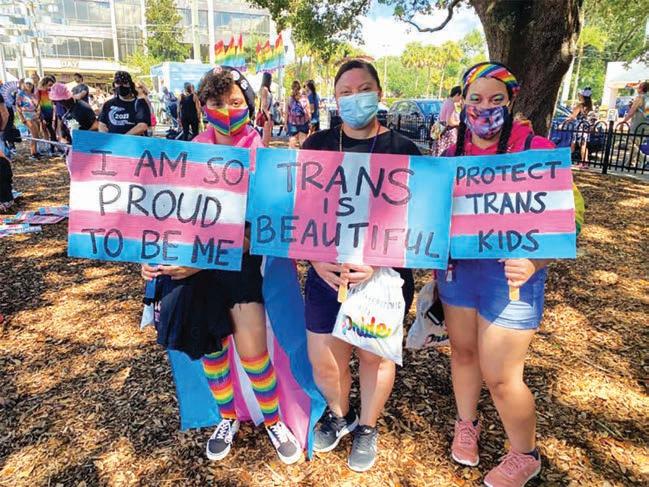
“While our community has some visibility in media, we still live under threats of violence and having our rights stripped from us. That’s our reality. This isn’t a narrative; these are facts,” Harper said.
This year alone, more than 102 anti-trans bills have been introduced in seven states — 47 to prevent trans kids from playing sports and the majority attacking how trans folks receive healthcare.
“At least 45 transgender people were murdered this year, the majority Black and Latinx transgender women. I’m one of many Black trans women advocating for our community, but you as an ally can have a powerful impact. Spreading awareness, resisting ‘the status quo’ for us, speaking-up, is harm prevention. That’s humanizing our experience. We are divinely human, just as you are divinely human. That’s what this week is about. It’s about our humanity,” Harper said.
“I’ll be speaking at several Trans Day of Remembrance events here in Northern California and I will talk about how you, the ally, have contributed to what we have now, but we’re just getting started. Find you a Transgender Week of Awareness event this
At least 45 transgender or gender non-conforming people have been killed this year; HRC Foundation uses “at least” because too often these stories go unreported or misreported. Previously, the highest number of deaths of transgender or gender non-conforming people that HRC Foundation has tracked over a 12-month period was just last year in 2020, when at least 44 transgender or gender nonconforming people were killed.
“We are at a tragic and deeply upsetting moment: With the death of Marquiisha Lawrence, 2021 has become the deadliest year ever for transgender and gender nonconforming people. Each of these 45 names represents a whole person and a rich life torn from us by senseless violence, driven by bigotry and transphobia and stoked by people who hate and fear transgender people and the richness of their experience,” said Joni Madison, interim president of the Human Rights Campaign.
“Dehumanizing rhetoric has real-life consequences for the transgender community, particularly transgender women of color but especially Black transgender women. As we have seen an unprecedented number of bills introduced in state legislatures attacking transgender youth and trans adults, the moment we are in is clear. They have attacked transgender people’s right to health care, right to exist in public, and right to live openly, with the ultimate goal of dehumanizing and erasing their lives and experiences,” she added.
In Tampa, Fla., another trans woman of color was found murdered further raising the number of trans women who were killed this year.
“In the face of seemingly insurmountable barriers, including a record number of antitransgender bills and fatal violence, the trans community remains resilient and vibrant. The strength displayed by transgender and nonbinary youth in response to these attacks has been remarkable and should serve as a call to action for us all,” said Carrie Davis, chief community officer for The Trevor Project. “Every person has a role to play in creating a safer world for young trans people. The Trevor Project recently released a study that found transgender and nonbinary young people who feel accepted by the people in their lives are less likely to attempt suicide. This week, and every week, let us make clear that transgender and nonbinary youth deserve love, respect, and to live their lives without fear of discrimination and violence.”


White House Press
Secretary Jen Psaki said last week she was unsure whether President Biden has been briefed on continued violence against transgender and non-binary people, with 2021 so far at 45 deaths and the highest number of killings ever reported.
Psaki, asked by the Blade just days before the Transgender Day of Remembrance on Nov. 20, said reports of the violence are “terrible, heartbreaking” after saying she was uncertain whether Biden was briefed.
“I’m not sure, Chris, and I’m happy to ask the president’s — see with out domestic policy team if they briefed on that,” Psaki said. “That’s devastating, and that’s terrible, heartbreaking to hear. It is a commitment by the president to address violence, address threats to transgender people and anyone who is facing those threats, but I will see if he’s been briefed on that.”
When the Blade followed up with an inquiry on what options are on the table to combat the violence, Psaki said she needed to do more research.
“In terms of reducing violence?” Psaki said. “Let me just see if he’s been briefed, and I’ll talk to our domestic policy team and maybe we can connect you directly with them.”
Biden as a 2020 presidential candidate highlighted ongoing anti-transgender violence, including its disproportionate reported impact on transgender people of color. In his comprehensive LGBTQ platform, Biden repeatedly pledged he’d take steps to protect LGBTQ people from violence.
In fact, Biden predicted the killing of transgender people would end if former President Trump were voted out of office, telling attendees at the Human Rights Campaign dinner in 2019: “The fastest way to end it is to end the Trump administration.”
The year 2021 reached a new record for anti-transgender violence upon the death of Marquiisha “Quii” Lawrence, a 28-year-old Black transgender woman who was shot and killed in her home in Greenville, S.C.
Joni Madison, interim president of the Human Rights Campaign, said in a statement this week announcing 2021 has broken the record for violence against transgender and non-binary people a “tragic and deeply upsetting moment.”
“With the death of Marquiisha Lawrence, 2021 has become the deadliest year ever for transgender and gender non-conforming people,” Madison said. “Each of these 45 names represents a whole person and a rich life torn from us by senseless violence, driven by bigotry and transphobia and stoked by people who hate and fear transgender people and the richness of their experience.”
The White House has given recognition to the grim milestone via White House Deputy Press Secretary Karine Jean-Pierre, who’s a lesbian and tweeted about the issue last week.
“This year is the deadliest on record for transgender and non-binary people,” JeanPierre tweeted. “It’s unacceptable. Our hearts are with all who knew and loved the 45 people who have been killed this year. The march to end this epidemic of violence continues.”
CHRIS JOHNSON
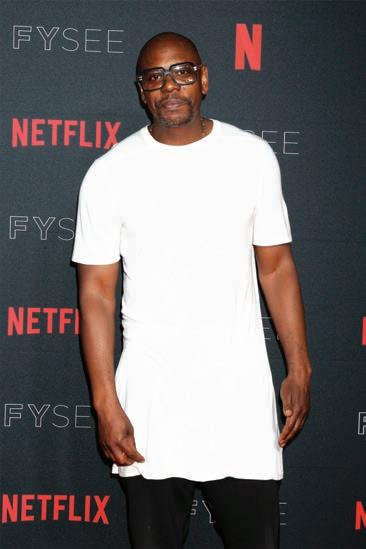
D.C.’s Duke Ellington School of the Arts announced last week that it has postponed for five months its plan to rename its theater after comedian Dave Chappelle, a graduate of the acclaimed performing arts high school, following complaints about his comments about LGBTQ people, particularly transgender people, in a Netflix special program.
The school initially said it would hold a ceremony to rename the theater after Chappelle, one of its most famous alumni, on Nov. 23. In a statement released on Friday, the school said it would go ahead with the remaining at a ceremony rescheduled for April 22, 2022.
In the statement, the school said Chappelle’s Netflix stand-up special, The Closer, “contains controversial material juxtaposing discrimination against Black Americans with that against non-Black members of the LGBTQ+ community.”
The statement adds that holding the event this month “without first addressing questions and concerns from members
of the Ellington community would be a missed opportunity for a teachable moment.”
The Washington Post reports that LGBTQ organizations, Netflix employees and some Duke Ellington students, including LGBTQ students, have criticized Chappelle’s comments about LGBTQ people in his Netflix special The Closer.
“We have engaged in listening sessions with our students and have allowed space for diverse viewpoints,” the statement released by the school says. “We are committed to fostering a community where every individual feels both heard and supported.”
“We recognize that not everyone will accept or welcome a particular artist’s point of view, product or craft, but reject the notion that a ‘cancel culture’ is a healthy or constructive means to teach our students how society should balance creative freedom with protecting the rights and dignity of all its members.”
LOU CHIBBARO JR.

SAN SALVADOR, El Salvador — LGBTQ youth in El Salvador frequently face violence in their families and communities, and this abuse often happens with impunity. Many of these community members have either fled their homes or have been kicked out of them because they are not accepted for who they are.
A shelter that supports this vulnerable population has opened.
The Anglican Episcopal Church of El Salvador in 2009 created its Sexual Diversity Ministry, a pastoral mission that brings together LGBTQ people and their communities. The ministry has become a space in which everyone can live their faith free of discrimination.
Hogar Santa Marta opened in August, and is one of the ministry’s initiatives.
By ERNESTO VALLE

Bishop Juan David Alvarado of the Anglican Episcopal Church of El Salvador told the Washington Blade this project responds to human needs, especially when there is so much injustice. He said the shelter is a temporary home for young people as they work to solve their problems or find a way to better themselves.
“We as a church wanted to give an answer to LGBTQ people who have suffered human rights violations,” said Alvarado.
Hogar Santa Marta has already helped a number of LGBTQ young people. Three of them moved into the shelter and others have been able to receive assistance at their time of need.
“Our first option is that people do not necessarily have to experience family abandonment, so it is about achieving a conciliation with families,” explained Cruz Torres, coordinator of the Anglican Episcopal Church of El Salvador’s Sexual Diversity Ministry. He added the goal is to allow these young people to remain with their families.
Young people as of now primarily contact the shelter through its social media networks. A technical team evaluates the cases and then determines the way to proceed with each of them based on whether they are victims of violence or forced displacement or have been kicked out of their homes.
“This method of using networks has been deliberate in order to control our growth and not to have an immediate saturation,” said Hogar Santa Marta Director Eduardo Madrid, who explained the shelter’s opening was delayed because it was not ready to support young people who need support.
Helen Jacobo, the shelter’s psychologist, and Madrid created a protocol to determine the process to use with a person who is seeking help.
The technical team creates a profile of the person when it establishes contact with them and notes the situation in which they are living. It then passes this information along to the psychologist who will then schedule an interview.
“We can find out about their support networks, if they have a shelter or a safe place (to live) through a small interview,” said Jacobo.
Carlos, 25, sought the shelter’s support because of a series of the problems the pandemic made worse.
“I had to leave my house because of mistreatment, insults and beatings,” he recalled.
Carlos said he was relieved to arrive at a safe place, and even more so when he knew that he would have a lot of support.
“They have provided me with a lot of services, such as psychosocial support and I will get a job very soon,” he said with joy.
The shelter first offers its residents a place to live with access to regular meals and psychological therapy to address the traumas they have experienced. The shelter also accepts donations to provide residents with their basic needs.
“For my part I am very grateful, we have worked on ourselves as a person,” said Carlos with an assured look that conveys happiness from behind a face mask with a smile drawn onto it. He also expressed that he is grateful the shelter allowed him to live there with his pet that he took with him when he left his house.
Religion is not imposed upon the shelter’s residents, even though a church group
created it.
“If you want to believe, you believe,” said Carlos. “They don’t impose religion on you.”
“I feel more complete and more secure,” he added, while saying that he has learned to put himself first. “That has been the most noticeable change that I have been able to have.”
With this self-empowerment in mind, the second stage for the shelter’s residents is to learn how to fight for their rights and know how to maintain them. Sustainable relocation, family awareness and creating a life plan are also part of this effort.
Alejandro, 23, has already been able to leave the shelter with the technical team’s support. He was able to get a job and find a new place to live.
He learned about the shelter from a friend who is a member of the Anglican Episcopal Church of El Salvador. The friend helped him present his case and he became the first young person to live in the shelter.
“Even though I was only there for a month, I felt the necessary support from the whole team,” says Alejandro.
He said he feels very involved with the shelter because he is its first successful case. Alejandro said he had the opportunity during his first meetings to propose ideas about how the shelter can approach future cases. Alejandro added it was very rewarding to him that both the director and the psychologist took his thoughts into account.
Now that he has been able to find a job, Alejandro said he will do everything he can to remain stable. He will particularly rely on the psychological support the shelter still provides him, which is the third stage of its work. This support lasts for up to a year after admission and is supported through an alliance with NGO’s, the government and private companies.
Hogar Santa Marta has made a variety of strategic alliances that allow it to carry out its work. One of them is with the U.N.’s International Organization for Migrants and specifically with its Integrated Responses on Migration from Central America project.
The shelter hopes to use this partnership to further develop a psychosocial program that will be able to help more vulnerable LGBTQ youth. Hogar Santa Maria hopes it can use some of these same strategies that IOM uses.
“Some of the instruments that they have specifically respond to psychological issues,” Jacobo explained.
Hogar Santa Marta’s programs have been made available to IOM in order to improve the way it views sexual diversity-related issues. They also hope to receive support for when they implement a group management program once more LGBTQ youth live in the shelter.
Rosalinda Solano, the national coordinator of the IOM project, said she is very interested in following up on the in-home work and hopes to enter into a collaboration with the shelter, such as the one that provides psychosocial support to LGBTQ people who have been returned to the country.
“We have also managed to identify other possible links, through profiles that can be linked to job opportunities,” she said.
Solano said the project seemed to be something very innovative and needed in the country, which does not have anything else. She hopes it will do something that has not been done before in El Salvador.
“It takes a fairly comprehensive approach, not it is just providing shelter,” she said.
There are two other shelters in El Salvador that specifically serve the LGBTQ community— ASPIDH ARCOIRIS TRANS’ Casa Trans and COMCAVIS TRANS’ Casa Refugio Karla Avelar but they primarily serve displaced transgender women. Hogar Santa Marta is the first LGBTQ shelter in El Salvador that a church created.
“Young people see home with great hope for a new life,” said Alvarado.
The shelter can be found at Facebook as Santa Marta LGBT and on Instagram as @ santamartalgbt. There is a link to a GoFundMe account there where donations can be made.
















is a longtime LGBTQ rights and Democratic Party activist. He writes regularly for the Blade.
To win in 2022, Democrats must be laser focused
This is not the time to attack moderates in the party
Democrats have had a few weeks to think about and digest recent election results and clearly it had to be sobering. Virginia lost and New Jersey won by a thread. Across the nation, signs voters are retreating to their side of the aisle and independents are not happy with Democrats. In most areas it was only moderate Democrats who could win. In Buffalo, N.Y., the socialist candidate for mayor who managed to win the Democratic primary was soundly defeated by a write-in candidate. In New York City, the moderate candidate won the Democratic primary and became mayor. In Ohio, Shontel Brown, the more moderate Democratic candidate won the open congressional seat having beaten the left-wing candidate in the primary. Yes there were some progressive wins such as the mayor of Boston. But overall it was moderate Democratic candidates who managed to hold on.
Now it’s time to look at the House of Representative seats that will be open because of retirements or people moving on to run for higher office. It may be tempting for everyone to jump into those races but Democrats need to look at who is retiring and find candidates who can replicate their wins if they were Democrats. If those open seats were Republican then Democrats must look at the general electorate in the district or state to see who has the best chance of winning.
One of the best chances for a Democratic pick-up of a Senate seat is in Pennsylvania. Clearly the statewide electorate in Pennsylvania is moderate to moderate right. Currently one of the candidates who seems to have the best record for such a win is Connor Lamb who is leaving his House seat to run for the Senate. Democrats will have to look at the open seat he leaves and determine who best can win in a very moderate district. This will happen in a number of other states like Florida, where Val Demings is leaving her seat to run for the Senate and Charlie Christ is leaving his seat to run for a second term as governor.
In each case Democrats will need to be realistic when they look at whom to support in the primary and make
the determination on who can win not only the primary but the general election. This is not the time to attack moderate Democrats in Districts where only a moderate can win.
It will be the time to tout what Democrats and President Biden have done on issues that will reverberate around kitchen tables. I recently heard about an LGBTQ group touting the teaching of ‘porn literacy’ in the schools. While understanding the concept behind this, helping young people digest and understand the things they are seeing, the term ‘porn literacy’ will be as much of a lightening rod as ‘defund the police.’ To recognize that just look at the fights in many districts against their school boards from the right. The fight in Virginia against teaching ‘Critical Race Theory’ by people who don’t know what it means, and where it isn’t even taught. The fight over the obscenity of trying to remove Toni Morrison’s Pulitzer Prize-winning book “Beloved” from a school library. These are race-baiting fights but they made a difference in the gubernatorial campaign against the Democrat.
Maybe it’s time for those like Alexandra Ocasio-Cortez (D-N.Y.) to stop casting protest votes, like the one she cast against the hard infrastructure bill, which will bring billions to New York City, including to its subway system, which is used by thousands of her own constituents. Will she and other progressives cast a vote against the final Build Back Better bill if it doesn’t have everything they want in it? AOC is smart and should continue to fight for what she believes, but she asked to be elected to a legislature in which all progress is based on compromise, the system set up by our founders, and she needs to come to grips with that. It is a role different from one who is only an outside agitator. Those inside are responsible for actually passing legislation beneficial to their constituents.
While things look difficult for Democrats today there is still time to turn that around. Intelligent messaging, action by Congress, and a laser-like focus on winning congressional seats can make the difference.
ADDRESS
8237 Blackburn Avenue Ste. 201, Los Angeles, CA 90048
PHONE 310-230-5266
E-MAIL tmasters@losangelesblade.com
INTERNET losangelesblade.com
PUBLISHED BY Los Angeles Blade, LLC
PUBLISHER
TROY MASTERS tmasters@losangelesblade.com 310-230-5266 x8080 (o), 917-406-1619 (c)
SALES & MARKETING
SALES EXECUTIVE
CHRIS WILMORE cmwilmore@losangelesblade.com 310-230-5266 x9461
NATIONAL ADVERTISING
RIVENDELL MEDIA
sales@rivendellmedia.com, 212-242-6863

MARKETING DIRECTOR
STEPHEN RUTGERS srutgers@washblade.com, 202-747-2077 x8077
EDITORIAL
CONTRIBUTING WRITER
KAREN OCAMB karenocamb@losangelesblade.com
NATIONAL EDITOR
KEVIN NAFF kna @washblade.com, 202-747-2077 x8088
INTERNATIONAL EDITOR
MICHAEL K. LAVERS mlavers@washblade.com
EDITOR AT LARGE BRODY LEVESQUE
California
CONTRIBUTORS
TINASHE CHINGARANDE, ERNESTO VALLE, YARIEL VALDÉS GONZALEZ, PARKER PURIFOY, CHRISTOPHER KANE, AUSTIN MENDOZA, JOHN PAUL KING, JOEY DIGUGLIELMO, CHRIS JOHNSON, LOU CHIBBARO JR., MARIAH COOPER, REBEKAH SAGER, JON DAVIDSON, SUSAN HORNIK, CHANNING SARGENT, SAMSON AMORE, CHRISTOPHER CAPPIELLO, MICHAEL JORTNER, DAN ALLEN, SEAN SHEALY, SCOTT STIFFLER, RHEA LITRÉ CREATIVE DESIGN/PRODUCTION
AZERCREATIVE.COM
DISTRIBUTION
CHRISTOPHER JACKSON, 562-826-6602
All material in the Los Angeles Blade is protected by federal copyright law and may not be reproduced without the written consent of the Los Angeles Blade. e sexual orientation of advertisers, photographers, writers and cartoonists published herein is neither inferred nor implied. e appearance of names or pictorial representation does not necessarily indicate the sexual orientation of that person or persons. Although the Los Angeles Blade is supported by many ne advertisers, we cannot accept responsibility for claims made by advertisers. Unsolicited editorial material is accepted by the Los Angeles Blade, but the paper cannot take responsibility for its return. e editors reserve the right to accept, reject or edit any submission. A single copy of the Los Angeles Blade is available from authorized distribution points, to any individual within a 50-mile radius of Los Angeles, CA. Multiple copies are available from the Los Angeles Blade o ce only. Call for rates. If you are unable to get to a convenient free distribution point, you may receive a 26-week mailed subscription for $195 per year or $5.00 per single issue. Checks or credit card orders can be sent to Phil Rockstroh at prockstroh@washblade.com.




Major DANIELLE STEWART
lives in Beckley, W.Va. She serves as chair of the city’s Human Rights Commission as well as on the boards of directors of numerous nonprofits. Reach her at stewartda69@hotmail.com.
I’ll never forget the day the Common Council for the city of Beckley, W.Va., voted to amend our nondiscrimination ordinance to protect individuals from discrimination based on their gender identity and sexual orientation. It was heart-warming to see the freedom and dignity of all LGBTQ people affirmed in my home community. It’s made Beckley stronger and a brighter place to live, work, and visit.
As a transgender veteran, the passage of the ordinance felt especially fulfilling to me. I served my country proudly for 23 years, including three combat tours—two to Iraq and one to Afghanistan— earning three Bronze Stars for my service, in addition to other awards.
When I returned home, I was left vulnerable to discrimination in key areas of life. That’s because West Virginia is one of 29 states where LGBTQ people are not protected by either an explicit statewide law, or federal protections prohibiting discrimination in housing, healthcare, and public spaces like restaurants and stores.
I’m grateful to have protections in Beckley, but when I leave the city or visit a place where discrimination is allowed, I lose that security. It bothers me that I served my country, deployed to places where many people did not want to go, and yet I’m told in most of this country that I don’t deserve to be protected and guaranteed respect and dignity. As service members, we take the oath to protect the Constitution of the United States, and I believe that the Constitution includes and protects all of us; “We the People” means everyone.

LGBTQ discrimination, and I’m glad that categorical employment discrimination is no longer government’s policy. Still, discrimination continues to happen. One of my friends who is transgender got a job after many rejections, but was quickly taunted by her employer and fellow employees using her pre-transition name, intentionally called the wrong pronouns, and generally creating a hostile work environment. A gay male couple in my neighborhood was one of the first same-sex couples to marry in West Virginia; but two weeks later one of the men was fired, supposedly for “performance issues” that had never surfaced prior to his marriage. I personally have been misgendered and harassed at a fast food restaurant nearby, the workers at which repeatedly ignored me when I corrected their use of “sir” and male pronouns.
It’s well past time that we address this, by taking action at the federal level. Right now, the Equality Act is pending in the U.S. Senate, having already passed the House of Representatives with bipartisan support. We need our senators — including Sens. Joe Manchin and Shelley Moore Capito — to come aboard and support the passage of comprehensive federal protections.
Our senators have the opportunity to make bipartisan history, to say, together, “We believe in equality in West Virginia.” With a spotlight on our state like never before, it’s up to our senators to illuminate the path forward, get to work, and ensure everyone has a chance to thrive.
I came out for the first time to anyone in 2010, but it wasn’t until years later, after I retired from the Army, that I came out more publicly. The government policy at the time denied open service to transgender people. The Army spent years and millions of dollars training me, and other transgender people, to protect our freedom and nation; yet we would be discharged if we tried to serve as our authentic selves. I cannot fathom why, in an all-volunteer military, we would turn away qualified people.
My experience in the military gave me a glimpse of anti-
It’s been a scary year to be transgender, as state after state passes demeaning anti-transgender laws. These bills send a pervasive, cruel message that transgender people are not welcome. It pains me to say that right now, I am the most guarded that I have ever been in the United States, nearly as guarded as I was while deployed for combat overseas. That’s a sad reality, and there’s really only one way to fix it.
We need to pass the Equality Act. We need to protect all LGBTQ Americans, including veterans like me. We need to live up to West Virginia’s state motto: “Mountaineers Are Always Free.”
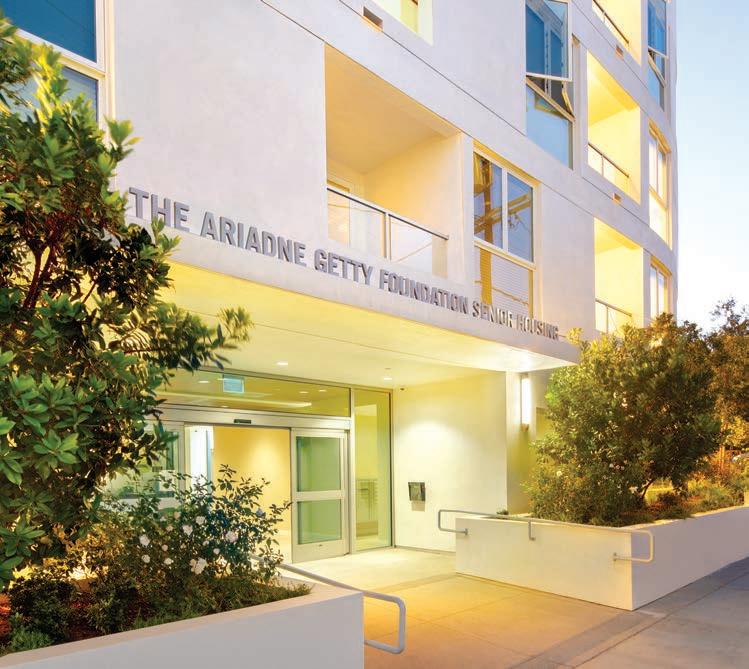





An estimated 65,000 LGBTQ seniors live in Los Angeles—68% of whom live alone. Many struggle to afford housing and other necessities. They are four times less likely than their heterosexual counterparts to have children and grandchildren to support them and twice as likely to live alone.
The Ariadne Getty Foundation Senior Housing, created in partnership with affordable housing developer Thomas Safran & Associates, received invaluable support from investors and government agencies, including: City of Los Angeles; Los Angeles County; City of West Hollywood; State of California; California Community Reinvestment Corporation; Federal Home Loan Bank of California; and Wells Fargo Bank.
We thank Ariadne Getty, her foundation, and Thomas Safran & Associates for stepping up to work with us so that LGBTQ seniors can thrive as healthy, equal, and complete members of society!
Lesbian romance, ‘Rent’ adaptation, and Lady Gaga make the season bright
By JOHN PAUL KING
It wasn’t all that long ago – barely one or two Decembers ago, really – that the holiday lineup of movies and TV shows offered very little in the way of LGBTQ inclusion. It may have been the time of year to don our gay apparel, but the closest thing to gay representation we were likely to get on our screens was an elven dentist and a few misfit toys.
This year, however, is a different story. The seasonal entertainment landscape of 2021 brings with it the usual crop of mainstream (read: straight) crowdpleasers with queer appeal (Lady Gaga as scheming real-life social-climber and Gucci murderer Patrizia Reggiani? Yes, please!), but it also comes bearing a much heftier-than-usual bag of gifts in the form of actual queer content, with actual queer characters and stories, and with some of our favorite stars. Not all of them are holiday stories, of course, but that doesn’t mean they don’t all make the season brighter – and the Blade is here to help you sort through the bounty with our annual Holiday Preview, a roundup of titles our readers will want to check out. The list is below:
(Netflix and in theaters 11/ 19):
Perfect for Broadway lovers, this is the hotly anticipated film adaptation of the posthumously produced autobiographical musical by Jonathan Larson, who revolutionized musical theater as the creator of “Rent” but died suddenly of an aortic dissection at 35 before he could see it grow to a global phenomenon. The film follows the young theater composer – played by Andrew Garfield – as he struggles to write what he hopes will be the next great American musical while waiting tables in a NYC diner, dealing with pressures in his personal life, and watching the artistic community around him be ravaged by the ongoing AIDS crisis. Fittingly enough, this hotly anticipated film about a Broadway giant is the feature directorial debut of another Broadway giant – none other than “Hamilton” and “In the Heights” creator Lin-Manuel Miranda, himself. Written by Tony-winner Steven Levenson (“Dear Evan Hansen”), it also stars Alexandra Shipp, Robin de Jesús, Joshua Henry, Mj Rodriguez, Bradley Whitford, Tariq Trotter (aka Black Thought of The Roots), Judith Light, and Vanessa Hudgens.
(In theaters 11/24):
As mentioned above, this tale of true crime and high fashion stars LGBTQ ally Lady Gaga, and it’s already been called “disappointing” by the real-life Gucci family – so you know it’s going to be juicy. Inspired by the shocking true story of Patrizia Reggiani (Gaga), whose marriage into the family behind the Italian fashion house takes center stage as the film chronicles three decades of love, betrayal, decadence, revenge, and ultimately murder. Directed by multiple Oscar-nominee Ridley Scott, this sure-fire award season contender also stars Adam Driver, Jeremy Irons, Salma Hayek, Al Pacino, Reeve Carney, and an unrecognizable Jared Leto as Paolo Gucci.
(Showtime and in theaters 11/24):
Another import from the Broadway stage, this seasonally appropriate adaptation of Stephen Karam’s Tony-winning drama centers on a dysfunctional NYC family as they help their youngest daughter Brigid (Beanie Feldstein) move into her new apartment with her boyfriend (Steven Yuen) on Thanksgiving Day.
This sets the scene for a relatable – if occasionally uncomfortable – holiday dinner in which personal issues become fodder for discussion and family conflicts start rearing their ugly heads. More than just another cutting domestic drama for the holidays, this one goes deep to offer a slice-of-life observational commentary on the state of family life in America today. Amy Schumer co-stars as Brigid’s older lesbian sister Aimee, and Jayne Houdyshell reprises her acclaimed Broadway performance as the girls’ mother, in an ensemble cast that also features Richard Jenkins and June Squibb. Playwright Karam not only wrote the adaptation himself, but also directed, making his debut behind the camera and ensuring that this one is sure to be a must-see for fans of theater and film alike.
(Peacock TV 11/24):
Peacock’s reboot of the classic ‘90s sitcom returns for a second round, and besides the obvious appeal in the camp and nostalgia departments, it also features a trans leading character portrayed by a trans actress. Populating the halls of Bayside High is a cast that includes Elizabeth Berkley Lauren, Mario Lopez, John Michael Higgins, Haskiri Velazquez, Mitchell Hoog, Josie Totah, Alycia Pascual-Peña, Belmont Cameli, Dexter Darden, Mark-Paul Gosselaar, Tiffani Thiessen, and Lark Voorhies (Lisa Turtle).
(Netflix 12/2):
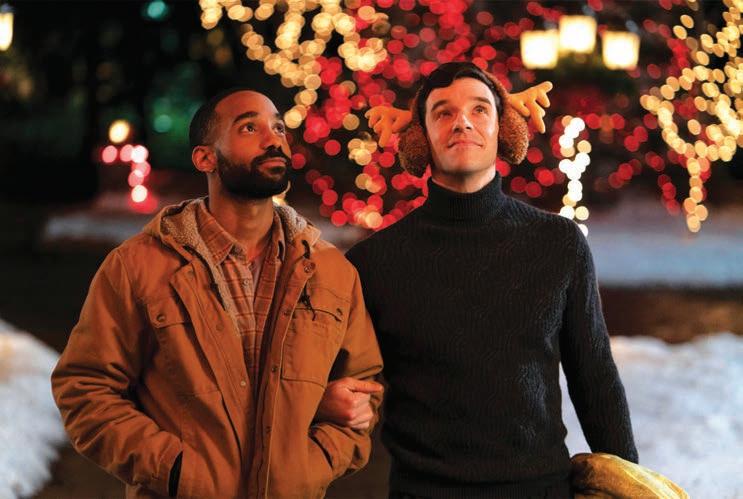
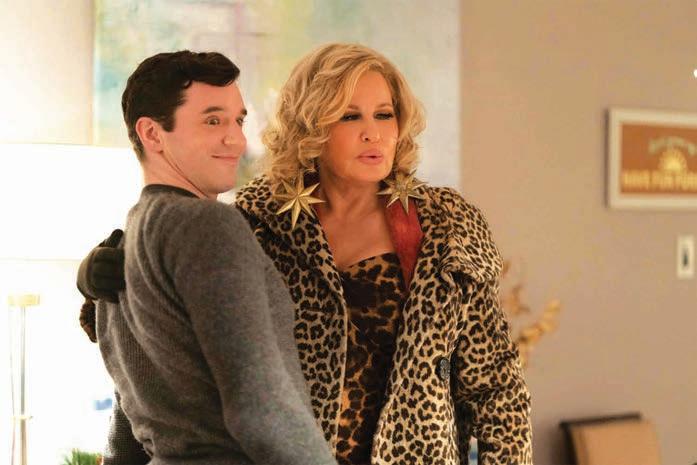
Yet another Tony-winner (Michael Mayer) directs this promising entry to the Holiday roster, Netflix’s first-ever gay-themed Yuletide romance starring Michael Urie (“Ugly Betty,” Broadway’s “Torch Song”) as a gay man who asks his best friend (Philemon Chambers) to pose as his boyfriend at his family’s Christmas dinner to avoid being questioned about his perpetually single status. Unbeknownst to him, his mom (Kathy Najimi) has already planned to set him up with her handsome personal trainer (Luke MacFarlane) – which obviously means that festive hijinks are sure to follow. This slice of seasonal sweetness also features Barry Bostwick (“The Rocky Horror Picture Show”) and Jennifer Robinson, and capping it off is the incomparable Jennifer Coolidge, rounding out her “White Lotus” year with what will undoubtedly be another mesmerizingly dotty performance in a supporting role.
CONTINUES ON PAGE 20

CONTINUED FROM PAGE 18
(VH1 12/2):
In the “why didn’t they do this sooner?” category is this holiday special from Emmywinning TV icon and “Drag Race” legend RuPaul, who takes the screen as “a workaholic big-city fashion journalist” who (according to the show’s official description) goes on assignment to “a Christmas-obsessed small town” and “finds herself in the middle of cutthroat housewives, a high-stakes ‘Winter Ball’ competition, and a sinister plot that could destroy Christmas fore-evah!” Joining Mama Ru onscreen will be 20 “Drag Race” winners and a host of other celebrities. We’re there.
(Amazon Prime 12/17):
From Gloria Calderón Kellett, the critically acclaimed showrunner of the queer-inclusive reboot of “One Day at a Time,” comes Amazon Prime Video’s first holiday miniseries, complete
with a heavily inclusive LGBTQ cast and queer storylines that feature a gay couple (played by Mark Indelicato and Vincent Rodriguez III) and one of the first transgender love stories ever to be found in a holiday rom-com. The series consists of five hour-long episodes tracking the Diaz family as they search for love and purpose across five different holidays during the year. Also starring are Emeraude Toubia, Desmond Chiam, Rome Flynn, Isis King, Todd Grinnell, Constance Marie, and Benito Martinez.
Under the
(Lifetime 12/19):
Lifetime’s first-ever lesbian romance begins when “Christmas tree whisperer” Charlie Freemont (Tattiawna Jones) finds the perfect tree for the governor’s holiday celebration – in the backyard of marketing whiz Alma Beltran (Elise Bauman). The two women spar, naturally, but it’s not long before – with a little help from the tree and “some Christmas fairy dust” from the town’s resident pastry chef (Ricki Lake) – the romantic sparks begin to fly.






By TERRI SCHLICHENMEYER
Share, and share alike.
That may, in retrospect, be the most ridiculous thing you’ve ever heard. You’re not asking for the stars and the moon; you just want what you want and why pass it around? As in the new book “Greedy” by Jen Winston, who’d ever think that getting what you deserved to have was wrong?
Back in the “aughts,” when Jen Winston was rocking her AIM handle and pretending to be boy-crazy, she had no word for liking boys and girls – though she knew she did. Had she questioned anyone, she would have been told that it was a phase, an experiment, or a matter of confusion but she never asked. She instinctively knew that doing the “gay stuff” was hard.
As she grew up and learned the word for what she felt, the idea of being with a woman became more appealing but not quite comfortable. Yes, Winston quietly told herself she was bisexual, but bisexuality “never felt queer enough.” Besides, dating straight men was like the equivalent of “comfort food,” though it never worked and was really not much fun.
Various roommates through the years indulged in her search for love, though, by crowdsourcing answers to questions posed by online dates. They also looked the other way as Winston learned that selfpleasure could be ugly, and she didn’t want to be “U-G-L-Y.” She tried threesomes but they were loaded with potential rejection; she tried chatrooms but they were scary. She learned that “we” is a painful word when you’re not part of it.
Bisexuality comes with a lot of frustrating myths and bisexual people, says Winston, are sometimes not included in the LGBTQ community. Bi people aren’t especially promiscuous – they’re not trying to steal your partner from you – and they’re not all just white or female. They are well aware that dating sucks, fairy tales are hard to believe in, and that there are lots of different ways to be gay. You want it all: You want hearts and romance but you also want down and dirty. You want to be heard, but you don’t want to talk about it. You want to be enough but not so much that it’s weird. And you want it with laughs, though that’s not the main thing about this book.
While its cover indicates lightheartedness and author Jen Winston seems perfectly happy to tell funny, tongue-in-cheek tales about herself, “Greedy” sports a serious vein that almost feels like a shout. Winston writes of universal experiences – rejection, falling in love, vulnerability, and wanting so much to be adored – and she makes light of them in a way that clearly isn’t meant to be all that humorous. We can chuckle, yes, but she also lets us pretend that we don’t care about those hurts – even though, like Winston, we all know that we do.
Be aware that there are chapters here that are very graphic and are not appropriate for just anyone. If Winston’s journey is your journey, too, though, “Greedy” is something to share.

‘Greedy: Notes from a Bisexual Who Wants Too Much’
By Jen Winston
c.2021, Atria | $18 | 336 pages
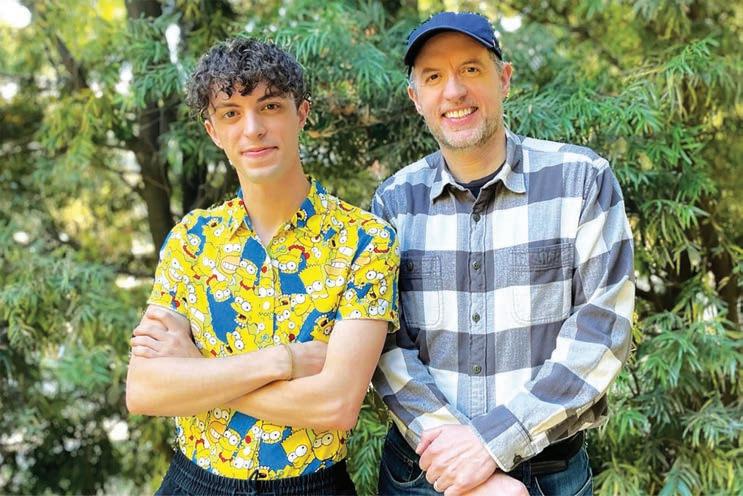
Rob LaZebnik, 59, one of the creative writers and co-executive producer of the longest running cartoon comedy in American television history, ‘The Simpsons,’ teamed up with his son Johnny, 27, also a television creative writer to produce an episode that gives the character of Waylon Smithers a boyfriend.
The episode set to air on Sunday, November 21 the start of the Thanksgiving holiday week is titled ‘Portrait Of A Lackey On Fire.’ The synopsis for the episode reads: “Smithers finds true love with a famous fashion designer, but will his new relationship destroy Springfield?”
The long-suffering assistant to the show’s Über wealthy and twisted maniacal character of Montgomery Burns, falls in love with fashion designer Michael De Graaf, voiced by four time Tony award and six time Emmy award nominated Out actor Victor Garber. Smithers is voiced by Emmy award winner Harry Shearer.
The 2016 season episode of ‘Tom Collins’, had Smithers come out as gay after years of speculation. For the elder LaZebnik, who wrote that episode, his inspiration was his son Johnny who is gay. For the writing duo, this up coming episode brings the storyline full circle as they explore a gay relationship.
In an interview with the New York Post published Thursday, the elder LaZebnik told the paper; “To be able to work with Johnny on this was, like, such a dream and to be able to see how truly funny and talented he is was just, you know, super fun and rewarding.”
His son noted, “I know my dad is a comedy writer. I grew up with him — obviously, I know he’s a funny guy,” Johnny, 27, told The Post. “But actually getting to sit down and write jokes with him was so much fun. And there were some moments where I was like, ‘Dad, that’s disgusting — we can’t put that on television,’ which I didn’t expect to be saying because I’m usually the disgusting one.”
“We now have this piece of content that we put into the world together that is a combined brainpower of the two of us.”
The younger LaZebnik also told the Post; “So often, gay romances are a subplot or alluded to or shown in some kind of montage or as a punchline.
“And what I think I was really excited about, with this episode, we get to see – without spoiling too much – the beginning, middle and who knows how it ends of a gay relationship, of really getting into the nitty-gritty of how gay people date, how they meet, what it’s like.”
He added: “That was really special to me to get to highlight characters who are not punchlines, who are fully formed.”
FROM STAFF REPORTS










For all those gear heads in your life, here are some fun holiday gifts to get their motors running. Many of these stocking stuffers are affordable. Others, well, not so much.
Leave it to Bentley to create a fancy fuchsia trike ($500). With six modes, from stroller to tricycle, parents can adjust this three-wheeler as a toddler gets older. Along with the “Big B logo,” the Bentley name is emblazoned on the down tube. Yes, there are more subdued colors, but why bother?
Cuddle up with a warm and fuzzy Sherpa blanket ($30), made of 100% polyester and the Ford logo embroidered in the corner.
By JOE PHILLIPS

For quick weekend getaways, MINI has a large soft-luggage travel bag ($190) with extendible handle, two wheels, large main compartment, outer pocket and removable zipped pockets.

The alarm tone on this tabletop clock ($250) sounds just like a throaty Porsche 911 engine. Includes Martini Racing design, as well as a countdown function and analog/digital display.
“Pursuit
Rolls-Royce, known for its relentless pursuit of perfection, now has a portable “Pursuit Seat” ($8,800) — perfect for any derriere. The adjustable seat is anything but old school, made of carbon fiber, polished aluminum and cushy leather (tastefully embossed with the Spirit of Ecstasy insignia, of course).


What better tree topper than a Mercedes three-pointed metal star ($52), which measures 8 inches across. Post on social, and dare anyone to top that!
Just in time for the holidays, there’s the Laureato Chronograph Aston Martin Edition ($18,000). Made by Girard-Perregaux), this ritzy wristwatch has a high-grade stainless-steel case, finely polished edges on the bezel, sapphire-crystal pane on the back, and racing-green paint applied to the dial 21 times.
Simple but elegant, Jaguar’s compact suitcase ($282) has a polycarbonate shell, aluminum frame and multidirectional wheels that look like real alloy car wheels. Two larger suitcases also available.







Just shy of being an entrant at some ugly-sweater contest, this festive Subaru holiday sweater ($70) is 100% acrylic and incredibly comfortable.
Only one 1962 Ferrari 268 SP race car was ever built, and now there’s a full-scale replica of the front end ($22,000). A pedestal is available, or enthusiasts can mount this work of art on the wall.


For more frugal fare (kinda sorta) Ferrari offers a vintage three-spoke steering wheel ($4,010). Such steering wheels were used in Ferraris between 1959 and 1965, and this full-scale repro—made of mahogany and polished aluminum—features the iconic prancing horse in the center.
Many automakers offer cuddly teddy bears, and Bentley is no exception. The limited-edition Heritage Bear ($57) is decked out in snazzy fleece jacket, suede-like helmet and racing goggles. There’s even a dust bag with drawstring for safekeeping.