





For California’s queer population, fear of long-term adverse effects,











A spokesperson for Los Angeles District Attorney George Gascón said Friday that his office would not pursue charges sought by the former fiancé of Republican recall candidate Larry Elder.
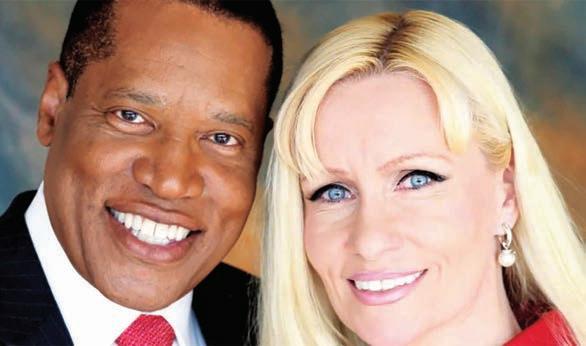
Alexandra Datig, the right-wing conservative talk show’s former fiancée and longtime radio producer for his show had met with investigators from the Los Angeles Police Department’s Robbery-Homicide Division this past Wednesday.
Datig alleged she broke off an 18-month engagement with Elder in 2015 after he waved a gun at her while high on marijuana. With a one-year statute of limitations for misdemeanor cases, a spokesman for the district attorney said Friday that prosecutors declined to pursue a criminal complaint against the radio-personality for allegations of brandishing a gun and domestic abuse.
KTLA reported that Datig said she had been told that the office of Los Angeles City Attorney Mike Feuer also would not continue an investigation because of the time that had elapsed. Neither office ruled on the substance of her allegations, but said their findings would be rendered moot because the alleged incidents occurred six years ago or more.
FROM STAFF REPORTS
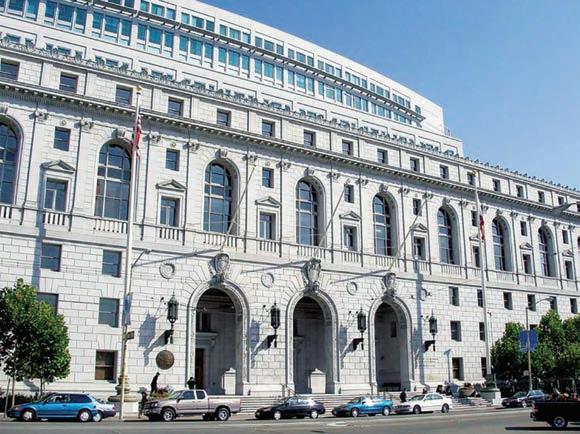
California Attorney General Rob Bonta Thursday filed a petition for review before the California Supreme Court in defense of anti-discrimination protections for LGBTQ residents of long-term care facilities in the state.
The protections were codified into law as part of the LGBTQ Senior Bill of Rights, which was enacted through Senate Bill 219 (SB 219) by the California Legislature in 2017. Specifically, the law prohibits long-term care facility staff from discriminating against transgender residents by intentionally “deadnaming” them — that is, calling a transgender person by the name they were assigned at birth — or willfully using the wrong pronouns in referring to them.
In the brief filed today, Attorney General Bonta urges the California Supreme Court to review the Court of Appeal’s erroneous decision, and restore SB 219’s protections for LGBTQ seniors and other long-term care facility residents.
“Discrimination isn’t about one person or one community. When people are unlawfully subjected to hateful, demeaning rhetoric, it hurts all of us,” said Bonta. “State law protects people from racist speech in the workplace — and, likewise, there’s no exception just because it’s transphobic instead. Let’s be clear: Repeatedly, willfully misgendering or deadnaming someone is harassment. Many of our seniors here in California led the charge for LGBTQ rights nationwide. Our seniors and other long-term care residents shouldn’t be forced to re-live those fights in the 21st century. That’s part of why we’re urging the California Supreme Court to review this case.”
and repeatedly misgender a transgender person. This isn’t a matter of political opinion; it’s straight-up harassment. We must ensure that all marginalized people — including trans seniors living in nursing homes — are treated with respect and dignity. This misguided decision is terrible, and we will fight it.”
Despite years of progress, harassment against transgender Americans remains pervasive — and deadnaming and misgendering, in particular, are two of the most common types of verbal harassment.
“I want to thank the Attorney General for his leadership and support for LGBTQ seniors,” said California State Senator Scott Wiener. “In response to the dangerous decision by the Court of Appeal to overturn key protections for trans seniors, Attorney General Bonta is stepping up to appeal this bad decision. It’s never ok to intentionally
Deliberately using the wrong pronoun to refer to a transgender person conveys that the person’s identity is not worthy of respect. At its core, such language stigmatizes transgender people and wrongfully suggests they are not welcome members of society.
Although California already provides some of the strongest civil rights protections in the nation, LGBTQ seniors are disproportionately vulnerable to discrimination, marginalization, or isolation, particularly in the long-term care context.
Unfortunately, many LGBTQ seniors and other individuals in long-term care, often after many years of living openly, have been forced to confront discrimination or hide who they are in these new settings. In addition to the component of the law at issue in Taking Offense v. California, SB 219 broadly supports LGBTQ seniors through a number of avenues, including specifically prohibiting discrimination in admissions, transfer, eviction, room assignment, and visitation.
“California seniors deserve to age with dignity and respect,” said Equality California Executive Director Rick Chavez Zbur. “It’s unconscionable that a court would allow blatant harassment of our LGBTQ+ elders. We are so grateful to Attorney General Bonta for appealing this outrageous decision and standing up for full, lived equality for all LGBTQ+ people.”
FROM STAFF REPORTS

A teacher in Southern California filmed a Tik Tok parody regarding students reciting the daily Pledge of Allegiance ritual for her classroom, substituting the American national ag with the LGBTQ+ Progress Pride ag and was promptly attacked by conservatives and elements of the extreme far right on social media.
Kristin Pitzen, who teaches English-as-a-Second-Language for the Newport-Mesa Unified School District, in her now deleted Tik Tok account, poked fun at the pledge in an apparently empty classroom in her post this past Friday.
In the video she says; “OK, so during third period, we have announcements and they do the Pledge of Allegiance.
“I always tell my class, stand if you feel like it, don’t stand if you feel like it, say the words if you want, you don’t have to say the words.
“So, my class decided to stand but not say the words. Totally fine.”
One of the students pointed out, however, that it was a bit “weird” to pledge allegiance to a ag, with no ag in the classroom.
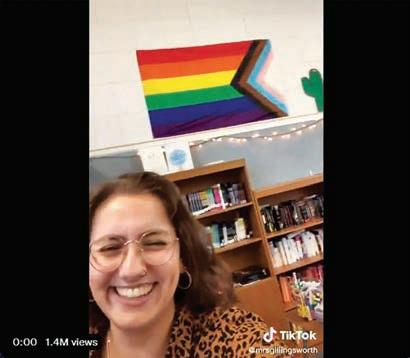
Pitzen explained to the camera in an aside that she had taken down her classroom’s American ag during the CO ID-19 pandemic, as it “made her uncomfortable,” but added that she had packed it away and could no longer find it.
She continued: “In the meantime, I tell this kid, We do have a ag in the class that you can pledge your allegiance to. And he like, looks around and goes, Oh, that one ’”
She panned the camera to her left and up and focuses on the LGBTQ Progress Pride ag hanging on the wall above her head. While some commentators were amused by the parody, the pushback from numerous accounts labeled as conservative, patriotic, Christian and other variants of the right including far right elements were definitely not amused.
Pitzen in a video released in une celebrated LGBTQ Pride month.
A social media Twitter account known as Libs of Tik Tok libsoftiktok” captured both videos along with screenshots of a sampling of the comments on the Pledge to the Pride Flag’ video, many of which supported Pitzen.
The ensuing vitriol included accusing her of being an “indoctrinator with an ungodly social agenda.” Numerous people tracked down and harassed Pitzen causing her to delete her Tik Tok account. Additionally hundreds left enraged messages on the Facebook page for the school District which responded Saturday afternoon to the school system’s page stating: “On Friday evening, one of our teachers created a personal social media post that caused alarm and concern related to saluting the American ag. Showing respect for our nation’s ag is an important value our District instills in our students and is an expectation of our employees. We take this matter seriously and are investigating and addressing it.” FROM STAFF REPORTS
A rally by the white nationalist Proud Boys extremist group and others for what they labeled the third annual Stanislaus County Straight Pride’ this past Saturday outside of the Modesto Planned Parenthood building, ended in violence with two people arrested.
The Central California LGBTQ Collaborative and other LGBTQ+ affirming groups had organized a No hate in the valley’ counter protest, which was held two hours earlier at the Roosevelt Park, about seven blocks from the Proud Boy event with about 100 people who showed up.

According to Sharon Bear, a spokesperson for the Modesto Police Department, at some point those in attendance of the Roosevelt Park event along with antifascist identified persons gathered across from the Modesto Planned Parenthood building on McHenry Avenue to protest the Proud Boy rally.
Approximately an hour after the Proud Boys rally commenced the two sides ended up clashing resulting in the discharge of Bear Spray and numerous fistfights. Modesto Police were dispatched to the scene to break up the ongoing melee and effected two misdemeanor arrests.
Witnesses told police officers responding that the Proud Boys continent had aggressively assaulted the counter-protestors which touched off the ensuing disturbances.
Approximately an hour after the Proud Boys rally commenced the two sides ended up clashing resulting in the discharge of Bear Spray and numerous fistfights. Modesto Police were dispatched to the scene to break up the ongoing melee and effected two misdemeanor arrests. Witnesses told police officers responding that the Proud Boys continent had aggressively assaulted the counter-protestors which touched off the ensuing disturbances.
The Modesto Bee reported that upiter Dalby, an organizer with the Central California LGBTQ Collaborative, said he feels many places — including Modesto and the Central alley as a whole — are still behind when it comes to LGBTQ+ equality. Straight pride is just a continuation of that mindset.
“I think it’s quite frankly disgusting,” Dalby said.
Although his family is now supportive, Dalby was originally kicked out when he came out to his parents as transgender. He said he was homeless for some time and feels being trans and queer can make life more difficult for himself and others.
Dalby said the community, city council and mayor need to help fight against hate in Modesto.
“They need to stand up for us,” he said. “They need to show up for us.”
The Modesto Police spokesperson told the Modesto Bee that police had arrested two people on misdemeanor charges. One person faces preliminary charges of failure to disperse and resisting arrest, and the other person faces a preliminary charge for fighting in public.
She added that officers had been monitoring the series of events prior to the violence breaking out. “We try to coordinate and prep for the worst and hope that everything remains peaceful,” Bear said. “If we have events like this and we are not prepared, then we didn’t plan ahead.”
BRODY LEVESQUE

• Confidence throughout your home search
• The ability to act quickly with a complimentary mortgage pre-approval letter
• A competitive advantage over homebuyers without a pre-approval commitment
Ari Tinoosh Lending Manager
818-723-0760
ari.tinoosh@citi.com citi.com/aritinoosh NMLS# 488143
Max Byfuglin Home Lending Offcer 310-266-6399
max.byfuglin@citi.com citi.com/maxbyfuglin NMLS# 304337
Andrew Ranacis Home Lending Offcer 310-795-2967
andrew.ranacis@citi.com citi.com/andrewranacis NMLS# 454325

During her podcast last week, conservative right-wing pundit Candace Owens attacked the 13-year-old trans daughter of former NBA superstar Dwayne Wade and his wife actress Gabrielle Union, misgendering their child and claimed “there was an absence of masculinity in that child’s life.”
During her transphobic commentary, Owens said “His son now says that he is a woman and Dwayne Wade is … ‘this is who he’s always been.’ No it’s not! You’re not going to tell me that your child is wearing long nine-inch nails and a belly shirt because that’s just how they came out.”
She then added, “Did he learn if from Instagram? Did he learn it in school? Did he learn it in a music video? Your child learned this behavior because there was an absence of masculinity in that child’s life and that makes sense for a basketball player.”
The Wades have been hailed for their proactive support of not only their daughter Zara, but with generous donations via their Wade Family Foundation, they have extended their support to the entire LGBTQ community.
Owens, who hosts a podcast on conservative commentator Ben Shapiro’s Daily Wire network, has long been critical of the LGBTQ community.
The GLAAD accountability project has published a list of some of her more egregious commentary:
• Targeted Rep. Marie Newman, the mother of a transgender child, with a false tweet insisting that science supports just two genders. The science shows there are far more than two genders and more than two sexes. Owens falsely claimed that supporting transgender people from discrimination is an attempt at “erasing” womanhood. Trans women are women. Owens’ Twitter feed is an ongoing stream of false claims and hostile rhetoric toward
trans people and supporters who believe trans people exist and need protecting. At least 44 trans people were murdered in 2020.
When disinvited from a podcast appearance for making ameela amil’s staff feel unsafe due to her transphobic comments, tweeted: “SAD TO ANNOUNCE that @jameelajamil has revoked my invitation to her podcast bc I tweeted “only women can give birth.” Apparently the statement made her trans co-workers feel “unsafe”. My refusal to untether myself from biological realities has cost me, yet again. SAD!” [sic]
• After Mario Lopez apologized for transphobic remarks he made on Owens’ show (he said it’s “dangerous as a parent to make [a] determination” about young transgender children), Owens said he was bullied into an apology by “sick” “leftists.” Owens initially promoted his comments by saying that parents affirming their child’s gender identity was a “scary trend coming out of Hollywood right now.” Research shows that affirming trans youth’s names and pronouns lowers suicidal ideation and behavior.
• When singer Harry Styles appeared on a Vogue cover in a dress, tweeted: “There is no society that can survive without strong men. The East knows this. In the west, the steady feminization of our men at the same time that Marxism is being taught to our children is not a coincidence. It is an outright attack. Bring back manly men.”
Said the movement for transgender equality is “Satanic.”
Claimed that the trans equality movement “is one of the most dangerous” and “evil” things.
• Said “I cannot think of anybody’s emotional capabilities that are more unstable than somebody that is transitioning from a male to a female.”
• Tweeted that trans women competing in sports and Miss Universe pageants is a “complete and utter mockery of modern feminism” while misgendering them as “men.”
• Mocked Transgender Day of Remembrance with a tweet asking if there is a “black on black crime Remembrance Day.”
BRODY LEVESQUE
Disney Parks announced this week that its Disneyland Resort Magic Key Program was activated last week replacing its popular annual passports, which were discontinued earlier this year.
Magic Key, which went on sale last Wednesday, gives Disneyland fans the chance to pay a set price for repeat admission, with a higher cost translating to more available dates and fewer blackout days.
According to Disney Parks, the biggest change from the old program is that this new system requires users to make a reservation before they visit Disneyland and Disney California Adventure, regardless of which one they choose. Those can be obtained up to 90 days in advance and are available upon Magic Key purchase.
(Note: making a reservation for both parks only counts as one reservation, but the holder “must enter the first park as designated in their park reservation” before going into the other; additionally, they won’t be able to enter the second park until after 1 p.m.)
The company added that some Magic Key benefits and features may not be available during periods of limited capacity and are subject to change or cancellation without notice. Certain attractions, restaurants, experiences, services and other offerings may be modified or unavailable, have limited capacity and may be subject to limited availability or even closure. Offerings are not guaranteed.
Here are the details of all four options, which include a breakdown of monthly payments that is only available to eligible California residents.
Level: Imagine Key pass (Southern California residents only)
Price: $399 (or $179 down payment + 18.34/month)
Blockout days: Select dates (see calendar)
Park reservations held at once: 2
Discounts: 10% merchandise, 10% dining
Parking: Not included
Level: Enchant Key pass
Price: $649 (or $179 down payment + $39.17/month)
Blockout days: Select dates (see calendar)
Park reservations held at once: 4
Discounts: 10% merchandise, 10% dining
Parking: Not included
Level: Believe Key pass
Price: $949 (or $179 down payment + $64.17/month)
Blockout days: Select dates (see calendar)
Park reservations held at once: 6
Discounts: 10% merchandise, 10% dining
Parking: 50% off on valid dates
Level: Dream Key pass
Price: $1399 (or $179 down payment + $101.67/month)
Blockout days: No
Park reservations held at once: 6
Discounts: 20% merchandise, 15% dining
Parking: Included

Magic Key allows holders to unlock other benefits, including access to Magic Key terrace, a reservation-based lounge for participants and their family and friends; special experiences and collectibles; first access opportunities to new offerings; discounts at select locations in the Downtown Disney District; and the opportunity to buy special merchandise and menu items.
FROM STAFF REPORTS






















In less than two weeks California voters will decide for the 5th time in the state’s history to recall a sitting governor, Democrat Gavin Newsom. The only successful campaign was in 2003 when voters recalled Gov. Gray Davis (D).
In that election, 135 candidates ran and the winner, actor and businessman Republican Arnold Schwarzenegger received 48.6% of the vote to replace Davis.
The recall effort according to Newsom is a “Republican recall — backed by the RNC, anti-mask and anti-vax extremists, and pro-Trump forces who want to overturn the last election and have opposed much of what we have done to fight the pandemic.”
California voters must answer two questions. The first asks whether Newsom should be recalled. The second asks who should succeed Newsom if he is recalled. A majority vote is required on the first question for the governor to be recalled. If that majority is reached, then the candidate with the most votes on the second question wins the election, no majority required. Voters may vote on both questions regardless of whether they vote in favor or against the recall.
The first question is in itself problematic according to politicos in progressive circles who echoed Newsom’s characterization of the real effort behind the recall election.
An updated chart by Nate Silver’s FiveThirtyEight website that specializes in political data analysis as of August 31 shows Newsom with an averaged 5 point lead.
By BRODY LEVESQUE
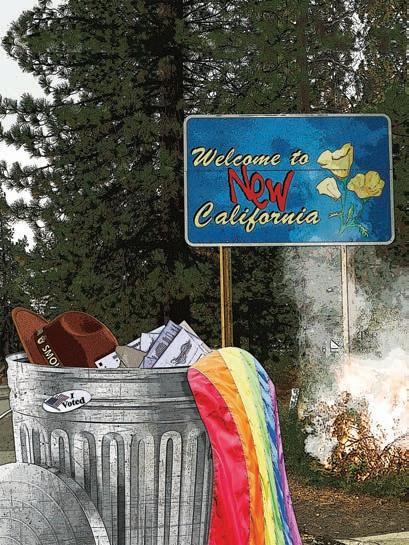
Forty-six candidates—including nine Democrats and 24 Republicans—appear on the ballot for the second question, including ouTuber Kevin Paffrath (D), 2018 gubernatorial candidate ohn Cox (R), radio host Larry Elder (R), former San Diego Mayor Kevin Faulconer (R), California State Board of Equalization member Ted Gaines (R), former Olympian and television personality Caitlyn enner (R), and Assemblyman Kevin Kiley (R).
The front runner out of those 46 candidates, Larry Elder, however, is a person who has a long and well established anti-LGBTQ+ animus and other conservative viewpoints that rankle progressive leadership in California’s Democratic Party.
Calling themselves “Elderados,” the radio show host’s base is a coalition of longtime fans, evangelicals and Trump backers, many who have expressed disdain for LGBTQ+ equality and civil rights.
Newsom in a tweet this last week acknowledged the damage the recall could do overall with a list detailing the top concerns including: a potential United States Senate seat, the Care economy, Child care, Preschool for all, and Free community college. Speaking with political pundit Brian Tyler Cohen on his No Lie with BTC podcast on Monday, the governor re ecting on his potential defeat in the election: “I think it’d have tectonic implications.”
The long-term impact of the loss the current seat occupied is by Diane Feinstein, 88, a seat she has held since 1992, to a Republican or as one progressive pundit privately expressed, an Elderado’ directly affects the current precarious balance for the Democrats in the Senate and would almost ensure that LGBTQ equality would become a moot issue should the Republicans regain a Senate majority.
In an email Wednesday, California’s junior U.S. Sen. Alex Padilla told the Blade; “Governor Newsom has been a national champion for LGBTQ rights. Since his early days as Mayor of San Francisco, Governor Newsom has taken bold, unprecedented actions to defend the rights of the LGBTQ community. We watched LGBTQ rights and protections come under attack during the Trump administration — and they will come under attack again if the Republican recall of Governor Newsom prevails. A vote NO is a vote for equality. Californians must stand up for our LGBTQ communities by voting NO before September 14.”
Beyond the federal implications, Rick Zbur, the outgoing executive director of Equality California told the Blade, “Recalling Gavin Newsom — the most pro-equality governor in California history — would be disastrous for the LGBTQ+ community. Everything we’ve fought for — LGBTQ+ equality, reproductive freedom, gun safety reform, environmental protections and racial justice — are all on the line. There’s too much at stake for our LGBTQ+ community and the diverse communities to which we belong to sit on the sidelines.
Zbur added, “Let’s just say that when Mike Huckabee is supporting a campaign, you can safely assume it’s not going to help the LGBTQ+ community. They want to roll back the progress California has made under Governor Newsom’s leadership — on LGBTQ+ civil rights, gun safety reforms, criminal justice reform, the environment and healthcare.
They want to take California backwards — while we and Governor Newsom are focused on moving forward — on beating this pandemic and building a brighter future for everyone. A future that is healthy, just and fully equal for all LGBTQ+ people — and for all Californians. A future with racial justice and equity and in which everyone has access to the quality healthcare and housing that they need.”
In a state of 22 million registered voters and 40 plus million residents with a long arc bending toward progressive politics, there are still those in the LGBTQ+ community who see that a change in allyship in the Governor’s chair would spell disaster for ensuring that legislative actions, even if passed by a Democratically controlled Assembly and Senate would continue to be signed into law- let alone get favorable attention.
State Sen. Scott Wiener, (D-11,SF) the former chair of the California Legislative LGBTQ Caucus speaking to the Blade warned, “The Republican recall is an existential threat to California. As a gay man, it is terrifying to imagine someone like Larry Elder becoming governor. He’s said many hateful things about LGTBQ people and will move us backwards on LGBTQ rights.”
Wiener added; “When it comes to important issues, Larry Elder or any number of the Republicans running to replace Newsom would be a disaster; we need real, progressive leadership to manage wildfires, build more housing near jobs and transit, invest in public transportation, reform our criminal justice system, address our addiction and mental health crises, and get us to a clean economy and 100 renewable energy. We can’t afford to lose a couple of years with a right-wing governor. Democrats, there’s no mincing words: we need you to get involved. Now is the time to turn in your ballot and vote no on the recall, and tell everyone in your community to do the same.”
In addition to his disdain for LGBTQ+ equality, on another contemporary pressing issue, the current coronavirus pandemic, which was the spark that lit the match leading to the recall, Elder in a Monday interview with CNN’s oe ohns in Los Angeles said he doesn’t think it’s necessary for young people to get vaccinated against COVID-19 or for children to wear masks at school, and he vowed to repeal any mask or vaccine mandates for California’s state workers if he is elected to replace the Democratic governor in the September 14 special election.
“I don’t believe the science suggests that young people should be vaccinated. I don’t believe the science suggests that young people should have to wear masks at school,” Elder said.
While the election will be held on Sept. 1 , the results will not be certified until Oct. 22.
A semifinal official canvass of the votes will begin at 8 p.m. on election day and election officials may begin counting absentee mail-in ballots on Sept. 7. This means initial returns may be released soon after polls close. The official canvass will begin on Sept. 1 and must be completed no later than Oct. 14.






















Tennessee Attorney General Herbert Slattery is leading a group of 20 states in suing the Biden administration over guidance in support of allowing transgender people to access school sports and bathrooms consistent with their gender identity.
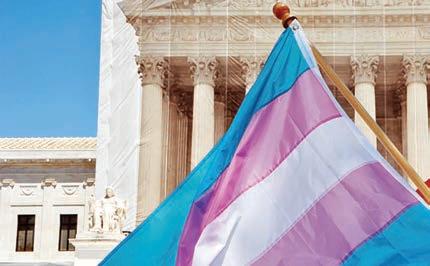
The lawsuit, filed Monday before the U.S. District Court for the Eastern District of Tennessee, challenges the Department of Education and the U.S. Equal Employment Opportunity Commission over guidance issued in the wake of President Biden’s executive order directing federal agencies to broadly implement the U.S. Supreme Court’s decision last year against anti-LGBTQ discrimination.
“This case is about two federal agencies changing law, which is Congress’ exclusive prerogative,” Slatery said in a statement. “The agencies simply do not have that authority. But that has not stopped them from trying.”
A
The 8-page complaint contends the Department of Education and EEOC and went too far with its guidance to schools and employers on the Supreme Court’s decision in Bostock v. Clayton County, which determined anti-LGBTQ discrimination is a form of sex discrimination, thus illegal under the Title II of the Civil Rights Act of 19 .
“This recent guidance from the Department and the EEOC concerns issues of enormous importance to the States, employers, educational institutions, employees, students, and other individual citizens,” the lawsuit says. “The guidance purports to resolve highly controversial and localized issues such as whether employers and schools may maintain
sex-separated showers and locker rooms, whether schools must allow biological males to compete on female athletic teams, and whether individuals may be compelled to use another person’s preferred pronouns. But the agencies have no authority to resolve those sensitive questions, let alone to do so by executive fiat without providing any opportunity for public participation.”
The Department of Education issued a “fact sheet” indicating schools are required to allow transgender kids to compete in sports consistent with their gender identity under Title IX of the Education Amendments of 1972, while the EEOC chair issued a “technical assistance document” instructing employers to allow transgender people to use restrooms and locker rooms consistent with their gender identity, as well as adhere to a dress code on that basis.
The lawsuit calls on the court to declare the guidance invalid and unlawful and to prohibit the U.S. government from enforcing it based on multiple counts, including violation of the Administrative Procedure Act.
States joining Tennessee in filing the lawsuit are Alabama, Alaska, Arizona, Arkansas, Georgia, Idaho, Indiana, Kansas, Kentucky, Louisiana, Mississippi, Missouri, Montana, Nebraska, Ohio, Oklahoma, South Carolina, South Dakota and West irginia.
The Washington Blade has placed a request in with the Department of Education and EEOC as well as the White House and U.S. ustice Department seeking comment on the lawsuit.
CHRIS JOHNSON
The London-based website known as OnlyFans, which has at least 1 0 million users and more than 2 million people who create and sell content on the site, including sexually explicit performances, announced last week that it has reversed a decision made less than two weeks earlier to ban sexually explicit content on its site beginning in October.
The reversal came after a groundswell of opposition to the proposed ban surfaced from its performers and customers, many of whom are members of the LGBTQ community who, like their straight counterparts, used the site to generate income over the past year and a half during the CO ID pandemic.
OnlyFans stated at the time it announced on Aug. 19 its earlier plan to ban sexually explicit content that it did so in response to concerns raised by banks and credit card companies that in recent years have threatened to stop processing payments to adult websites.
“Thank you to everyone for making your voices heard,” OnlyFans said in a statement released on Wednesday, Aug. 25.
“We have secured assurances necessary to support our diverse creator community and have suspended the planned October 1 policy change,” the statement says. “OnlyFans stands for inclusion, and we will continue to provide a home for all creators.”
When asked by CNN whether OnlyFans’ use of the word “suspension” to halt its planned ban on sexually explicit content means that it could reinstate the ban at a later date if credit card companies continue to raise objections, OnlyFans replied by stating, “The proposed October 1, 2021, changes are no longer required due to banking partners’ assurance that OnlyFans can support all genres of creators.”
An official with the Free Speech Coalition, which serves as an adult industry trade association, told the Washington Blade a policy by OnlyFans to ban sexually explicit content from its site would have an especially harsh impact on the most vulnerable groups, including LGBTQ people, that rely on the site and other similar sites to earn a living through sex work.
Mike Stabile, the Los Angeles-based Free Speech Coalition’s director of public affairs, said sites like OnlyFans have enabled sex workers to generate a substantial income by performing from their homes rather than working on the streets, in providing content to “fans” or customers who pay them directly to view their performances.
“These platforms have enabled them not just to survive but build equity and thrive,” Stabile said.
In an Aug. 19 statement, Free Speech Coalition said OnlyFans and other sites providing adult content have been targeted over the past two years by conservative religious groups and churches that the coalition says have falsely attempted to link adult websites to sex
trafficking of children.
Stabile told the Blade that adult sites have longstanding safeguards in place that prevent sex traffickers from placing content on their sites. He said during the past two years in which the controversial federal law passed by Congress to hold adult sites liable for sex trafficking, known as SESTA-FOSTA, has been in effect, the law has rarely been used to prosecute sex traffickers and has yet to be used to shut down any of the sites used by consenting adults.
He noted that prior to the time SESTA-FOSTA took effect, prosecutors used existing statutes to shut down Backpage, an adult site widely used by sex workers to interact with customers on grounds that the site allegedly allowed sex traffickers to use the site.
Around that same time, Craigslist on its own removed all “personal” classified ads from its site, saying it could not risk being held liable for allegations of sex traffickers using its personal ads under the SESTA-FOSTA law, even though Craigslist prohibited its site from being used for sex trafficking or any nonconsensual practices.
While no credible evidence has emerged that adult sites are in any way allowing sex traffickers to use those sites, Free Speech Coalition has said conservative religious groups that oppose all sex work and want to ban all pornography on the Internet have begun to put pressure on banks and credit card companies to stop servicing the adult sites.
Stabile points out that studies have shown that far more sex traffickers have succeeded in slipping through safeguards to prevent them from posting on sites with Facebook and Twitter than with the adult sites. No online platforms can be 100 percent effective in preventing a few traffickers from getting on their sites, Stabile said, but the anti-trafficking groups hold the adult sites to a greater degree of blame than mainline sites like Facebook.
The adult sites have stated repeatedly they will cooperate with law enforcement officials to identity and help prosecute sex traffickers who target underage people.
“Banks and credit card companies are risk-averse institutions, easily scared by potential bad publicity,” Free Speech Coalition says in its Aug. 19 statement. “Religious groups know this and have made no secret of targeting them in their quest to eliminate sex workers altogether,” the statement says.
“In doing so, companies like Mastercard have become enablers of these anti-porn, antiLGBTQ, misogynist groups,” the statement continues. “Companies like Mastercard are now accomplices in the disenfranchisement of millions of sex workers, complicit in pushing workers away from independence into potentially more dangerous and exploitative conditions.”
LOU CHIBBARO JR.
The last American troops have withdrawn from Afghanistan amid continued efforts to evacuate LGBTQ people from the country.
Marine Corps Gen. Kenneth McKenzie, the commander of U.S. Central Command told reporters on Monday the last American C-17 left Hamid Karzai International Airport in Kabul, the Afghan capital, at :29 p.m. ET (11:59 p.m. in Afghanistan.)
“Tonight’s withdrawal signifies both the end of the military component of the evacuation but also the end of the nearly 20-year mission that began in Afghanistan shortly after September 11, 2001,” said McKenzie.
The Trump administration in 2020 brokered a peace deal with the Taliban that set the stage for the withdrawal. President Biden last month announced American military operations in Afghanistan would end on Tuesday.
The Taliban entered Kabul on Aug. 15 and toppled thenPresident Ashraf Ghani’s government.
McKenzie and Secretary of State Antony Blinken on Monday noted the U.S. evacuated more than 12 ,000 people — including ,000 American citizens — from Afghanistan since the Taliban regained control of the country.
“This has been a massive military, diplomatic and humanitarian undertaking — one of the most difficult in our nation’s history — and an extraordinary feat of logistics and coordination under some of the most challenging
circumstances imaginable,” said Blinken in remarks he delivered from the State Department.
Blinken acknowledged “a small number of Americans — under 200 and likely closer to 100 — who remain in Afghanistan and want to leave.” Blinken in his remarks did not specifically mention LGBTQ Afghans who remain in the country, but he did refer to “at-risk Afghans” when he referenced the Taliban’s commitment “to let anyone with proper documents leave the country in a safe and orderly manner.”
“We are all committed to ensuring that our citizens, nationals and residents, employees, Afghans who have worked with us and those who are at risk can continue to travel freely to destinations outside Afghanistan,” reads a statement the U.S. and more than 100 other countries signed on Sunday. “We have received assurances from the Taliban that all foreign nationals and any Afghan citizen with travel authorization from our countries will be allowed to proceed in a safe and orderly manner to points of departure and travel outside the country.”
“We will continue issuing travel documentation to designated Afghans, and we have the clear expectation of and commitment from the Taliban that they can travel to our respective countries,” adds the statement. “We note the public statements of the Taliban confirming this understanding.”
Blinken in his remarks noted the U.N. Security Council
on Monday “passed a resolution that enshrines that responsibility — laying the groundwork to hold the Taliban accountable if they renege.”
“The international chorus on this is strong, and it will stay strong,” said Blinken. “We will hold the Taliban to their commitment on freedom of movement for foreign nationals, visa holders, at-risk Afghans.”

“We will work to secure their safe passage,” added Blinken.
Rainbow Railroad, a Toronto-based organization that assists LGBTQ refugees around the world, on Monday said it remains in contact with LGBTQ Afghans who hope to leave their country. Stonewall, a British LGBTQ rights group, tweeted it “won’t stop working to get LGBTQ+ Afghans to safety.”
MICHAEL K. LAVERS
den rged to ra se r g ts t ra ne res dent
Members of the Congressional LGBTQ+ Equality Caucus urged President Biden to raise LGBTQ rights with his Ukrainian counterpart when they met at the White House on Wednesday. (For updated news on the meeting, visit our website.)
“We write today to urge you to make it clear that LGBTQ+ equality in Ukraine and worldwide is a priority for your administration during your upcoming meeting with President ( olodymyr) Zelenskyy,” they wrote in a letter they sent to Biden on Aug. 25.
The letter notes the Congressional LGBTQ+ Equality Caucus “has followed discussions around LGBTQ+ rights in Ukraine with great interest.”

“Ukraine has made significant strides on human rights generally but has not been consistent on equality for LGBTQ+ people,” it reads. “In particular, we are alarmed at the introduction of several bills in Ukraine’s parliament that would harm Ukraine’s LGBTQ+ community. While these bills — which include criminalization of consensual same-sex sexual activity and punishment for homosexual or transgender ‘propaganda’ in the style of a harmful law in place in Russia — have failed to pass, we expect that they will continue to be introduced and to be a threat to Ukraine’s LGBTQ+ community.”
“Pride celebrations in Kyiv and elsewhere in Ukraine have been the targets of violence since Ukraine’s first public Pride parade in 201 ,” adds the letter. “We have advocated U.S. engagement in stemming violence targeted at pro-LGBTQ+ events and we are proud that our embassy in Kyiv has collaborated with Ukrainian officials to help address these concerns. For example, Ukrainian police have been ordered to protect LGBTQ+ groups from those who would seek to harm them.”
The letter also indicates “there is ample reason to hope for a bright future for LGBTQ+ people in Ukraine.”
The Congressional LGBTQ+ Equality Caucus notes Ukraine’s Cabinet of Ministers have introduced a bill “developed by” Zelenskyy’s government that would add sexual orientation
and gender identity to the country’s hate crimes law.
“We urge you emphasize the importance of this bill’s passage and of ensuring that LGBTQ+ people in Ukraine can live without fear of violence or discrimination,” reads the letter to Biden. “In addition, we urge you to encourage President Zelenskyy to take positive steps to permit civil partnerships for same-sex couples.”
The letter also notes Zelenskyy’s government “recently approved an action plan for the country’s updated National Human Rights Strategy, representing additional progress in the government’s plan to promote equality and human rights” that will promote gender equality and recognize anti-LGBTQ hate crimes.
“We believe that additional steps are needed to ensure that the LGBTQ+ community is fully included in the strategy,” it adds.
“We believe that Ukraine has made important strides in the protection and promotion of human rights, but it is imperative that we continue to work on behalf of all marginalized communities around the world, including the LGBTQ+ community,” reads the letter. “We urge you to emphasize the need to ensure equality of the LGBTQ+ people in Ukraine and to encourage that the hate crimes bill be given full consideration.”
Illinois Congressman Mike Quigley spearheaded the letter that U.S. Reps. Dwight Evans (D-Penn.), Dina Titus (D-Nev.), Mark Takano (D-Calif.), David Cicilline (D-R.I.), Ra l Grijalva (D-Ariz.), ake Auchincloss (D-Mass.), Chris Pappas (D-N.H.), Sharice Davids (D-Kan.), an Schakowsky (D-Ill.), Pramlila ayapal (D-Wash.), Ritchie Torres (D-N. .), Mark Pocan (D-Wis.), Danny Davis (D-Ill.), Mondaire ones (D-N. .), Eleanor Holmes-Norton (D-D.C.), Brendan Boyle (D-Penn.), Adam Schiff (D-Calif.), Angie Craig (D-Minn.), Dan Kildee (D-Mich.) and Carolyn Maloney (D-N. .) signed.
Biden in February signed a memorandum that committed the U.S. to promoting LGBTQ rights abroad.
MICHAEL K. LAVERS
ADDRESS
Those who oppose equality are highly motivated and will vote
I remember the night so well. It was Nov. 4, 2008, and the Center had planned a big election party for the LGBTQ community at the Music Box Theatre on Hollywood Boulevard. Hundreds of people had already gathered at the venue when the networks announced, at exactly 8 p.m., that Barack Obama would become the first Black president of the United States. The crowd saw the announcement on the huge TV screens around the venue and, communally sensing the historic nature of the evening, erupted into a volcanic roar of joy.
Our joy was short-lived. Before too long, there was a murmur going around the crowd: “It looks like we’re in trouble on Proposition 8.” “The exit polls aren’t good.” “How could this be happening?”
And sure enough, California voters narrowly passed Prop 8, which amended the state constitution to include a ban on same-sex marriage. Even recalling the period that followed the 2008 election brings on a kind of PTSD for people— especially Californians—in the LGBTQ community. The days that followed were full of anger and recrimination.
As it turned out, many of the initial analyses of what caused the failure to defeat Prop 8 were incorrect. But one thing is clear: Many had taken our rights for granted. We believed that our fellow Californians would not let us down. Many younger queer people whom I spoke to over the days and weeks following the election were in a state of shock. They had assumed that, in this most liberal of states, we were long past the era of legal discrimination and social ostracism and that LGBTQ people had emerged on the other side, completely equal and fully empowered.
In those dark days following the election, I also learned another very disturbing thing: Some of the very people who took to the streets in anger following the passage of Proposition 8 had not voted.
Fast forward to 2021. In recent weeks I have been reading about the extremely low level of turnout expected in the election to recall Gov. Gavin Newsom this month. And I have been experiencing an eerie feeling of “déjà vu all over again.” This probably shouldn’t have come as a shock to me. In our voter education and outreach work here at the Center, we use the term “low propensity voters.” These voters are people who often support us on issues that affect the LGBTQ community but are unlikely to vote for a variety of reasons. Given that

this is a special election in an off year, the number of low propensity voters is likely to be even greater.
In next month’s election, voters will be asked if the governor should be recalled. If a majority vote yes, he will be removed from office. oters will also be asked who should replace the governor if the recall succeeds. And here’s the thing: It only takes a plurality for the replacement candidate to win. There are 46 candidates running to replace Newsom should the recall succeed. You can see how this turns the notion of a democratic election on its head. Just imagine this scenario: 9 of the electorate votes to keep the governor in office, but nonetheless, the recall narrowly passes. Given the huge number of candidates, the vote to replace him would be split different ways and the new governor could win with 10 of the vote—or even less
I know this may sound like I am being an “election nerd,” but this is a very important distinction for the LGBTQ community. There are a number of candidates in the recall election who have made statements and taken public stances that are openly hostile to LGBTQ people and other marginalized communities. As I’ve just made clear, someone with antiLGBTQ views could win with a very small percentage of the votes.
This is why I am so unsettled by the newspaper articles saying that turnout will be so low. The people who oppose equal rights for our community are highly motivated by their homophobic and transphobic views, and they will vote.
It is fair to assume that one of the reasons many people don’t vote, especially in our progressive state, is their belief that we have moved past the old prejudices and orthodoxies that marginalized and demonized queer and trans people. But the lesson of 2008 is that we cannot solely rely on others to ensure that our rights are protected. Our community fought back after the passage of Proposition 8 and has seen tremendous progress in the last 13 years. But we can never take that progress for granted.
As a non-profit service organization, the Center does not endorse candidates. So, I will be clear in stating that I am not suggesting you should vote one way or another on the recall. But we must also be clear that elections matter and, given the high stakes involved, I urge you to vote on Sept. 1 . Our rights, our human dignity, and our very lives depend on it.
8237 Blackburn Avenue Ste. 201, Los Angeles, CA 90048
PHONE 310-230-5266
E-MAIL tmasters@losangelesblade.com
INTERNET losangelesblade.com
PUBLISHED BY Los Angeles Blade, LLC
PUBLISHER
TROY MASTERS tmasters@losangelesblade.com 310-230-5266 x8080 (o), 917-406-1619 (c)
SALES & MARKETING
SALES EXECUTIVE
ALEJANDRO CERVANTES alejandro@losangelesblade.com 310-230-5266 x9460
CHRIS WILMORE cmwilmore@losangelesblade.com 310-230-5266 x9461

NATIONAL ADVERTISING
RIVENDELL MEDIA sales@rivendellmedia.com, 212-242-6863
MARKETING DIRECTOR
STEPHEN RUTGERS srutgers@washblade.com, 202-747-2077 x8077
EDITORIAL
CONTRIBUTING WRITER
KAREN OCAMB karenocamb@losangelesblade.com
NATIONAL EDITOR
KEVIN NAFF kna @washblade.com, 202-747-2077 x8088
INTERNATIONAL EDITOR
MICHAEL K. LAVERS mlavers@washblade.com
EDITOR AT LARGE BRODY LEVESQUE
California
CONTRIBUTORS
TINASHE CHINGARANDE, ERNESTO VALLE, YARIEL VALDÉS GONZALEZ, PARKER PURIFOY, CHRISTOPHER KANE, AUSTIN MENDOZA, JOHN PAUL KING, JOEY DIGUGLIELMO, CHRIS JOHNSON, LOU CHIBBARO JR., MARIAH COOPER, REBEKAH SAGER, JON DAVIDSON, SUSAN HORNIK, CHANNING SARGENT, SAMSON AMORE, CHRISTOPHER CAPPIELLO, MICHAEL JORTNER, DAN ALLEN, SEAN SHEALY, SCOTT STIFFLER, RHEA LITRÉ CREATIVE DESIGN/PRODUCTION AZERCREATIVE.COM
DISTRIBUTION
CHRISTOPHER JACKSON, 562-826-6602
All material in the Los Angeles Blade is protected by federal copyright law and may not be reproduced without the written consent of the Los Angeles Blade. e sexual orientation of advertisers, photographers, writers and cartoonists published herein is neither inferred nor implied. e appearance of names or pictorial representation does not necessarily indicate the sexual orientation of that person or persons. Although the Los Angeles Blade is supported by many ne advertisers, we cannot accept responsibility for claims made by advertisers. Unsolicited editorial material is accepted by the Los Angeles Blade, but the paper cannot take responsibility for its return. e editors reserve the right to accept, reject or edit any submission. A single copy of the Los Angeles Blade is available from authorized distribution points, to any individual within a 50-mile radius of Los Angeles, CA. Multiple copies are available from the Los Angeles Blade o ce only. Call for rates. If you are unable to get to a convenient free distribution point, you may receive a 26-week mailed
































Ahmad Qais Munhazim is an assistant professor of global studies at the Thomas Jeferson University.
Payam, a 25-year-old queer Afghan who lives in Kabul, posted this dilemma on his Facebook page on Aug. 20: “If I escape, where to? If I stay, where can I go,” he wrote five days after the Taliban’s shocking capture of Kabul.
Dozens of LGBTQ Afghans commented under Payam’s post, expressing their fear and anxiety. Some wrote that there is no place for them anymore in the country while others wrote that neither escaping nor staying are easy options for them.
“Taliban will kill us one by one, so I have no choice but to escape,” one wrote.
The fear of death is imminent in the lives of LGBTQ Afghans since the Taliban seizure. The new generation of queer and trans Afghans, although young, still carry memories of the old days of the Taliban when they hung men in soccer fields for having samesex relationships and stoned some to death in order to set examples.
The new Taliban are not any different when it comes to their views on homosexuality.
One Taliban judge last month said, “For homosexuals, there can only be two punishments: Either stoning, or he must stand behind a wall that will fall down on him. The wall must be 2.5 to meters high.”
smoke and some with their own photos posing and irting with the camera with stickers on their faces to disguise their identities are now being replaced with texts that read, “my dearest to the heart queers, please be cautious in virtual spaces. Taliban have infiltrated Facebook now and they are going to lure us, hunt us down and kill us. If you can, stay away from Facebook.”
Azad, a 20-year-old transgender woman, tells me that she has changed her neighborhood and now lives with a relative after a neighbor told her that the Taliban will be coming for her soon. Azad is telling me this during a group talk on WhatsApp where a few of us are talking everyday planning escapes, gathering documents, distracting one another from the violence outside their homes and talking about our get-togethers in July where we would go on Kabul street walks, irting with men in fancy cars and the hot kabob seller in Shar-e-Naw.

This comes at a time when the international community is perceiving the new Taliban as changed and evolved.
“They will never change and neither their punishments for same-sex relationships … we have to go back to hiding,” says Yousuf, a 21-year-old bisexual man from Mazar-i-Sharif in a text message to me on WhatsApp.
“We need to go back to hiding” is a shared sentiment among many LGBTQ Afghans who are assessing the situation closely and sharing their frustrations on Facebook and WhatsApp groups. Some have deleted their Facebook profiles, while others are not even stepping outside their homes in fear of being recognized as a member of the LGBTQ community. The stories on Facebook profiles that used to carry images of shirtless men kissing, romantic Dari and Pashto poetry, friends sitting in a hookah café blowing chimineas of
Azad, Sham and Rafiq call me late at night when it is morning in Kabul. I fill out form after form for them and in every call, they ask me if they are going to make it out of Afghanistan. I say yes, but with every hour the reality on the ground changes and I feel less and less hopeful. I can hear the fear in their voices behind a shaky internet connection.
Not all LGBTQ Afghans are going to escape. Some will not be able to while most will remain in the country. With the images of crowds at Kabul International Airport, let’s remind ourselves that only a handful of people are getting out. A majority of Afghans are staying behind under the Taliban rule that is going to be accompanied by violence, harsh laws and secret lives for LGBTQ Afghans.
Payam, over a phone conversation, tells me that he is going to stay in Kabul to take care of his elderly mother and finish medical school.
“I have to stay but I also don’t know what is to come,” he says.
Payam remains silent for a few seconds and then continues “I am going to make a Talib fall in love with me so that I survive. I have a feeling their regime will collapse again and you all will return.”













By JOHN PAUL KING
Even though her film is about to get a premiere at Hollywood’s legendary Chinese Theatre, Gina Garcia is not your typical filmmaker and her movie is not your typical movie.
“Untold: This is My Story” has been a longtime dream project for the U.S. Navy veteran, who was already a successful entrepreneur before starting her film career. And even though she made it about herself, it’s far from a vanity project. Instead, it’s a bold testament aimed at helping countless others who, like her, carry the trauma of childhood sexual abuse.
As an 8-year-old growing up in Orlando, Fla., Garcia was at the mall with her mother and sister when she was abducted by a man who coerced her into his car before sexually assaulting her at knifepoint. Remarkably, she was able to escape by jumping out of the moving vehicle, half naked, and running away through the parking lot. The incident was never discussed by the family; and young Gina, who had only vague memories of what happened to her, went on to experience years of self-destructive behavior and strained relationships with her parents and siblings. Twenty-five years after the fact, she finally sought help at a eterans’ Administration hospital, where she was diagnosed with PTSD and began the difficult process of healing.
Fast forward to 2009, when Garcia enrolled at a film school in the Philippines. It was a bold step that started her on the path to tell her story for the many other anonymous survivors she knew were out there needing to know that they were not alone. She wrote a screenplay, and when she attended a screening that gave her an opportunity to meet filmmaker Patty enkins, she approached the “Monster” director with the thought that here was someone who could direct it. Instead, enkins told her, “No Gina, you have to tell your story.”
BLADE: Obviously you didn’t go with all those suggestions.
GARCIA: No, but still I had all these people telling me to put in a little of this, a little of that. I ended up with this love story in there, and all this other stuff. And I did a couple of screenings, and I got everybody else’s opinions on my movie and I hated it and I didn’t want to release it. So I put it on the shelf.
BLADE: What made you change your mind all these years later
GARCIA: Well, I know now that I had more healing to do. I was still broken, going through issues with trauma and triggers. But at Thanksgiving of this past year my brother watched the film, and he said ou have to get this out. It’s gonna help a lot of people.’ I struggled with that, because I felt like I made myself look like a victim, but he said, ou need to recut it, then. ou’re not a victim, you’ve gotten to the other side, you’re a different person now. ou have fresh eyes.’ So in the beginning of 2021 I recut the entire movie. I took out all the Hollywood uff, and I went back to the very basics of my original script.
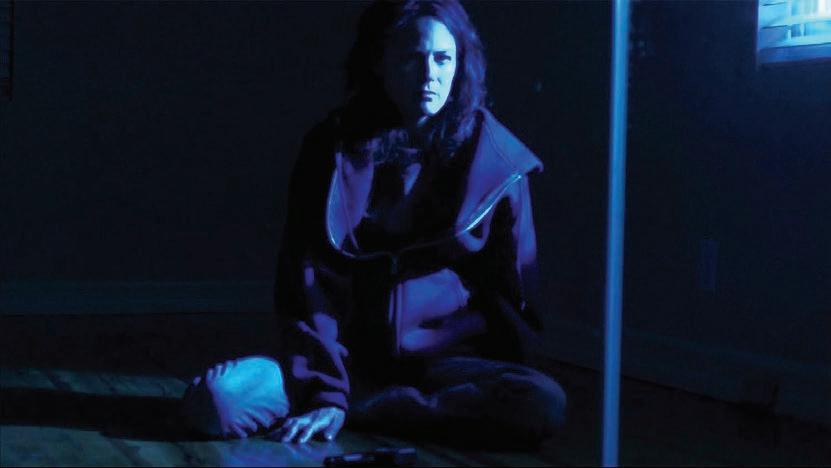
That meeting led to an ongoing mentorship, and three years later Garcia was filming her screenplay with a cast that featured former Calvin Klein model ennifer Rubin and esteemed womens’ rights attorney Gloria Allred.
The resulting movie is rough to watch, and that’s not because it has a DI feel although it does, which somehow gives it an even more searing authenticity. It is shot through with first-hand awareness of the way trauma affects not just the victim, but all those around them, and manifests itself in every aspect of their lives. It’s painful, horrifying, heartbreaking, and sometimes uncomfortable to watch, with a realistic depiction of mental health treatment that is a far cry from the kind of overwrought psychodrama treatment Hollywood usually gives to subject matter like this.
Why then, did it take nearly a decade for it to premiere Talking with the Blade, the first-time director explained what happened.
GINA GARCIA: I’m not a Hollywood person, I wasn’t going to be a director. My goal in making it was to peel off the Band-Aid, to show the rawness of trauma. I wanted to show the real but when you’re raising money, everybody wants you to do something that isn’t real. Initially, when I wrote the script and I was sending it out, I had feedback like, “Can you make it a boy Can you make it a white family Can they not be gay Do you really have to be a lesbian ” But then I would be telling somebody else’s story, and I wanted to tell my story.
BLADE: Not many directors get the chance to set a project aside and come back to it later.
GARCIA: Taking that time to be able to step away from it for a couple of years and work on myself as a human, and then get to come back and recut it I love my movie now
BLADE: What’s the next step after your Hollywood premiere
GARCIA: Hopefully a distributor will buy it and not want to recut it their way. But either way, my intention is to do a city-to-city tour of the film, kind of like the “No Hate” campaign. I have a non-profit that I’m starting with my tribe back home, it’s called the Untold Project,’ and with the tour we’re going to start doing videos of people telling their own untold stories, and hopefully helping other sexual abuse survivors to have their voices be heard.
Because for me it’s more than a movie. There are one in three women and one in six men who are survivors of sexual abuse. If you do the math that’s over a billion people on the planet. We can talk about heart disease and all these other diseases that people die from, but people are also dying from this kind of abuse through suicide, alcohol, and drug addiction. If you think about people who dealt with abuse in the 50s, 0s, 70s, even into the 80s I mean, there’s a reason why all the Catholic Church stuff happened, why the Boy Scouts stuff happened, the Sandusky trials, the gymnasts. It’s because nobody was talking about what was happening. Nobody wants to put a magnifying glass on the dirty little secret when it’s the uncle, the cousin, the coach, the babysitter.
If we can create the resources, maybe we can have the ability to have real conversations so that people can heal from this kind of trauma.
BLADE: And you want to show people that healing is possible.
GARCIA: Put it this way: I used to want to hide the fact that I was broken. Now here I am wanting to project it on a 5-foot screen.
If you live in LA, “Untold: This is My Story” screens at the Chinese Theatre in Hollywood on Monday, Sept. at 7 p.m. If not, Gina Garcia will soon bring it to a town near you.
‘All
I know nothing about tennis except that I love Hitchcock’s thriller “Strangers on a Train,” in which a charming, sociopathic murderer enlivens the game.
There are no murders in “All In,” Billie Jean King’s memoir, co-authored with journalists Johnette Howard and Maryanne Vollers. But King’s candid autobiography is as exciting, as suspenseful, as a Hitchcock ick.
“All In” is a fab read not only for tennis aficionados and readers interested in LGBTQ history and women’s history but for anyone who enjoys a fascinating story of a living, larger-thanlife, but very human, down-to-earth legend.
Some athletes, even the most acclaimed ones, are mainly known to sports fans.
Their achievements are important, sometimes record-setting, in their sports. But these sports figures aren’t cultural icons.
This isn’t the case with King. Like ackie Robinson and Muhammad Ali, King, who was born in 1943, is iconic.
You likely remember where you were in 1973 when, along with 90 million other riveted viewers, you watched King beat self-proclaimed male chauvinist Bobby Riggs in the “Battle of the Sexes.”
If you weren’t born then, you’ve surely heard how excited your mom or grandma were to see male chauvinism taken down. Then, when women often had difficulty obtaining a credit card, let alone fighting workplace discrimination, beating the pants off Riggs was no small matter.
King, a feminist and lesbian, is believed to be the first woman athlete activist.
In 2009, King received the Presidential Medal of Freedom for her work for LGBTQ and women’s rights and equality.
Then there is King’s stunning record in tennis. She was the top United States tennis player –winning 9 Grand Slams and 20 Wimbledon titles. Often, the memoirs of famous people are bland, unrevealing. They are as exciting as Velveeta.
“All In” is a feast of avors. Most memoirs, no matter how good, have some dull stretches.
This isn’t so with “All In.” From the get-go, it grabs you by the lapels.
By KATHI WOLFE

‘All In: An Autobiography’
By Billie Jean King with Johnette Howard and Maryanne Vollers
c.2020, Alfred A. Knopf | $30 | 482 pages
The memoir is so revealing that, as you read it, you feel as if you’re reliving King’s life. King tells us about the people she loves.
Her family, like most people at the time, were homophobic when she was growing up. Yet King loved and respected her parents. They taught her, among many things, to “respect and never underestimate” her opponents, she writes.
Her brother Randy Moffitt, who was a pitcher in Major League Baseball has given her, King writes, “a lifetime of support.”
King writes of her love for Ilana Kloss. The couple, who have been together for 40 years, were married in a private ceremony in 2018. David Dinkins, the former New York City Mayor officiated the wedding.
“To Ilana, my love, my partner, to the moon and back,” King writes in the memoir’s dedication. It took decades for King to become open and unashamed about her sexuality.
She grew up in a working class family in Long Beach, Calif. Her father was a firefighter. It was a time when women were expected to get married (to men) and have children.
Middle-class and upper-class women, even if they’d been to college, weren’t supposed to want to work.
The idea that you could be a gay tennis player wouldn’t have been on the horizon when King began playing the game as a kid.
King married Larry King (not the broadcaster) in 1965. Though they divorced, they are still close friends.
Some of the most gut-wrenching moments of “All In” are where King writes of being outed in the 1980s by a former female lover who filed a palimony suit. Though the former lover didn’t win in court, the outing nearly derailed King’s career.
King writes movingly about how, after much therapy and self-re ection, she became comfortable about her sexuality.
She tells us how she dealt with an eating disorder and other health problems. Above all, King challenges us to work for social change. She dedicates the memoir “to everyone who continues to fight for equality, inclusion, and freedom.”
Who wouldn’t be “All In” with that
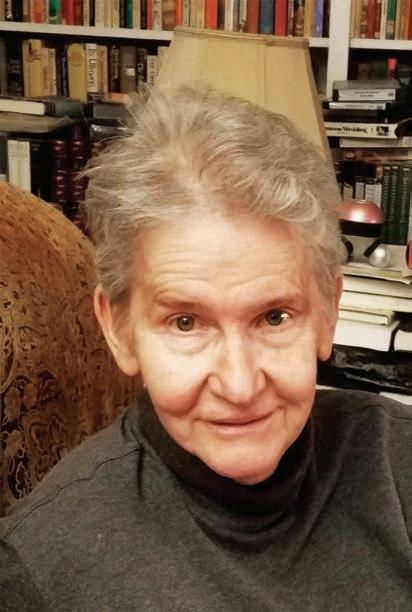
Even as a child Barbara Kannapell, who was deaf, experienced audism — overt and subtle discrimination against deaf people.
Born in 1937, she was nurtured by her parents and other members of her family who were deaf. They taught her American Sign Language, her native language.
Yet, “my experiences with audism started at age 4,” Kannapell wrote in a 2011 open letter to the Alexander Graham Bell Association for the Deaf and Hard of Hearing.
A principal at a school for deaf children tried “to make me say ‘United States,’” Kannapell said in the open letter.
“I struggled to say it right but I couldn’t,” Kannapell added, “She was so frustrated with me that she slapped my face.”
Kannapell, an internationally renowned linguist, educator and lifelong advocate for the rights of deaf people, died at 83 in a Washington hospital on Aug. 11.
Mary Eileen Paul, her spouse of 50 years, said the cause was complications from hip surgery.
Kannapell, known as “Kanny” to her many friends, championed American Sign Language (ASL), deaf culture and deaf identity.
Kannapell worked tirelessly to challenge the misperceptions of audism. The prejudices of audism include: the belief that ASL isn’t a language (just as English is a language); that deaf people should strive to “overcome” being deaf – and that deaf people achieve success “in spite of” their deafness.
Kannapell received a bachelor’s degree in deaf education from Gallaudet University in 1961, a master’s degree in educational technology from Catholic University in 1970 and a Ph.D. in sociolinguistics from Georgetown University in 1985.
She believed in social justice causes – from the Black civil rights movement to the LGBTQ rights movement.
Paul, who is hearing, met Kannapell at the Washington, D.C. gay bar Pier 9. She told the Blade this story in a telephone interview:
Kannapell and Paul, both white, with Ann Wilson, a Black mother of a deaf child, founded the Washington, D.C. group Deafpride. The now defunct group advocated for the rights of deaf people of all races.
“We brought hearing parents together with deaf adults,” Paul said, “so they could meet and learn from deaf people.”
At one meeting, Paul recalled, a deaf man spoke.
“His parents didn’t know ASL. They didn’t
By KATHI WOLFE

know what to do,” she said, “because they couldn’t communicate with him.”
“One day, as a child, he was outside. His dog was roaming freely,” Paul said, “but he was tied to a tree. Because his parents didn’t know what else to do with him.”
Kannapell worked with Gallaudet for four decades, beginning as a research assistant in 1962. From 1987 to 2003, she was an adjunct professor there. She taught at the Community College of Baltimore County as an adjunct professor, and later, as an associate professor, from 1987 until she retired in 2014.
Kannapell advocated for deaf people who struggled with addiction. A member of Alcoholics Anonymous, she had been sober for 50 years at the time of her death.
Often, the words “innovator” or “iconic” are overused, but Kannapell truly was a pioneer. She “was years, if not decades, ahead of her time in every way,” Gallaudet University President Roberta J. Cordano said in a statement.
“She was a fierce leader,” she added, “who saw and valued the essence of our community and who sought to ensure that it is inclusive of everyone.”
Cordano said Kannapell was “a strong advocate to the LGBTQIA+ Deaf community.”
“Kanny” was out at a time when it was unpopular to be so and lived her life authentically, Drago Renteria, executive director of the Deaf Queer Resource Center, emailed the Blade.
“She was one of our Deaf Lesbian pioneers and role models,” he said.
Kannapell and Paul were married in 2013 when same-sex marriage was legalized.
Jennifer Furlano, who is deaf and nonbinary, remembers the commitment ceremony Kannapell and Paul had in 1996.
“It was amazing,” Furlano said in a telephone interview with the Blade conducted with an interpreter, “My ex-partner officiated the ceremony. I was an usher. It was small –intimate.”
Furlano still recalls the moment in the ceremony when the couple kissed. Then, it was still often, difficult for LGBTQ people to be themselves, Furlano said.
“So they only kissed on the cheek,” Furlano added.
Kannapell loved dogs and football, Furlano said, adding, “you didn’t dare interrupt her during a game.”
R.I.P., Kanny! Thank you for your life and work!