









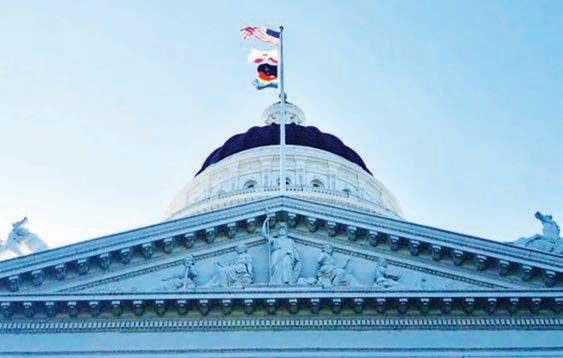

As the legislative session cranks up, Equality California outlined its 2021 Legislative Priorities. Speaking to the Blade earlier this week, Equality California spokesperson Samuel Garrett-Pate noted: “We’ll likely roll out a few more in the coming weeks, but here are the bills we’re sponsoring that have been introduced so far. Like last year, we’re going to prioritize our support for bills that advance racial justice, as well.”
AB 218 introduced by Assemblymember Chris Ward (D-San Diego), will codify and streamline the process for transgender Californians to update their marriage certificates and the birth certificates of their children to accurately reflect their legal name and gender, while protecting their privacy. Accurate and affirming identity documents are critical to preventing discrimination when, for example, enrolling a child in school, applying for a loan, or making medical decisions on behalf of an incapacitated spouse.
This is a reintroduction of State Senator Cathleen Galgiani’s SB 741, which Equality California and co-sponsors had asked Governor Gavin Newsom to veto last year because of a drafting error that could have caused privacy issues in implementation. Now that it’s been corrected proponents are moving forward with the legislation.
AB 245 introduced by Assemblymember David Sen-Fu Chiu, (D-San Francisco), the Affirming Transgender & Nonbinary Students’ Names in College Act, will ensure that California’s public colleges and universities allow transgender and nonbinary former students to have their name and gender accurately reflected on their academic records, such as transcripts and diplomas.
The bill also provides a standardized process for doing so. Students should not be ‘deadnamed’ – referred to by the name they were assigned at birth, rather than by their affirmed or chosen name – on their diplomas and other academic records that commemorate years of hard work and achievement.
AB 245 also builds upon AB 711 signed by Governor Newsom in 2019, which covered school districts, charter schools, and county offices of education.
AB 439 introduced by Assemblymember Rebecca Bauer Kahan (D-Orinda), adds “nonbinary” as an option for gender identity on death certificates. Codifying inclusive gender identity options on death certificates brings these documents in line with California’s existing nonbinary options on driver’s licenses and birth certificates.
AB 439 continues the critical work started by now pro Tem Toni Atkins years ago to authorize nonbinary identification on birth certificates, court documents, and driver’s licenses (SB 179 in 2017), and to ensure that California respects people’s gender identity even after death (AB 1577 in 2014)
AB 465 introduced by Assemblymember Adrin Nazarian (D- San Fernando), will ensure that professional fiduciaries are equipped to provide LGBTQ+ older adults and people with disabilities with supportive and respectful care by requiring LGBTQ+ cultural competency and sensitivity training during the education and licensing process. Private professional fiduciaries provide critical services to older adults and people with disabilities.
By NOAH CHRISTIANSEN
They manage daily care, housing, and medical needs, and they offer financial management services ranging from basic bill payments to estate and investment management. LGBTQ+ older adults are a particularly vulnerable community and typically have fewer options for informal care and support. AB 465 will help to protect LGBTQ+ people as they age.
SB 110 introduced by State Senator Scott Wiener, (D- San Francisco), will require Medi-Cal to cover contingency management (CM) programs, similar to how it covers other existing substance use disorder services. CM is a substance use disorder treatment that uses positive reinforcement to achieve behavioral change. CM has proven to be the most effective method of intervention for methamphetamine disorder.
Because there is currently no form of medication-assisted treatment for methamphetamine use disorder, CM is a critical tool in addressing meth and other stimulant use. Meth use is a longstanding crisis in the LGBTQ+ community due to historical and ongoing stigma, shame, and marginalization. SB 110 is an important pillar in California’s response to this public health crisis.
SB 225 also introduced by State Senator Wiener, the Bodily Autonomy, Dignity, and Choice Act, will delay specified medically unnecessary surgeries on children born with variations in their physical sex characteristics. This bill does not affect surgeries that are required to address an immediate risk of physical harm, and it does not remove parents or doctors from the medical decision-making process.
The bill builds upon SCR 110 (Wiener), which in 2018 called on health professionals to foster the well-being and individuality of children born with variations in their physical sex characteristics and to heed international human rights guidelines and health authorities in the United States that caution against medically unnecessary surgical procedures that carry both a meaningful risk of harm and can be safely deferred.
SB 258 introduced by State Senator John Laird (D-Santa Cruz), the HIV & Aging Act includes older people with HIV as part of the population of “greatest social need” to ensure they have access to the programs and services administered by the California Department of Aging. With recent advancements in HIV treatment, people with HIV who take antiretroviral therapy can keep the virus suppressed and live long and healthy lives.
For this reason, the number of older people living with HIV is increasing and over half of people living with HIV in California are now aged 50 years or older. Unfortunately, our current medical and social service systems are largely unprepared to address the unique needs of this population. Given the continued growth in the number of older people with HIV, it is imperative that California implement effective policies and programs to address their unique needs.
A spokesperson for Assemblymember Evan Low said that the Legislative LGBTQ Caucus was in the process of finalizing their agenda for this year’s session and would release their litany of 2021 legislative priorities shortly.
Only those Angelenos with proof of getting the first dose of the COVID-19 vaccine will be inoculated starting Tuesday.
Vaccinations will be held at the Pomona Fairplex, the Forum, Six Flags Magic Mountain, County Office of Education in Downey, Cal State University Northridge, Balboa Sports Complex and El Sereno, county health officials announced in a press briefing Monday.
“The biggest issue we continue to face in our ability to vaccinate is a scarcity of supply and variability in the amount of vaccine we receive from week to week. This has been an issue across the country and it makes planning very challenging,” said Dr. Paul Simon, L.A. County Department of Public Health chief science officer.
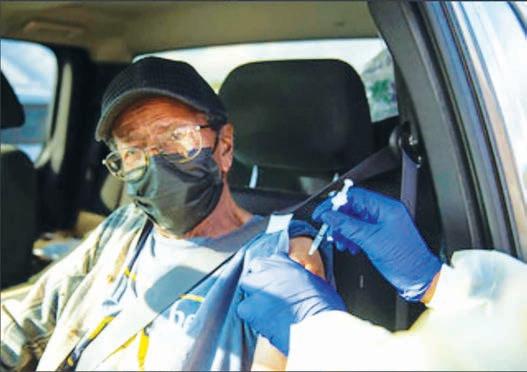
For those who received their first dose at one of these sites and are due for the second but didn’t get an email link to sign up, “you may show up at your location on the day of your second dose, as long as you provide proof of your first dose vaccination,” the L.A. County Department of Public Health said.
Additional staff have been assigned to the county’s call center to help those without computer access make appointments. For those without access to a computer or the Internet, or with disabilities, the call center is open to help schedule appointments daily from 8 a.m. to 8:30 p.m. at 833-540-0473. The call center uses the same system as the online system and is a low-tech way for those with accessibility needs and older people who may not have a computer or a smart phone, to make an appointment.
If you are currently eligible to receive a vaccine, Public Health encourages you to pull information together before going online or calling the call center. If you have insurance, have your insurance information at hand, along with the name and contact information for your primary care physician.
You do not need to have insurance to get vaccinated. If you can, visit www. VaccinateLACounty.com and to find the vaccination site closest to you, click on the MyTurn button where you can see how appointments are made. The MyTurn site also allows you to sign up to be notified when appointments open up, and when vaccinations begin with additional priority groups.
In total, there are 365 sites offering vaccinations this week. This includes 129 federally qualified health clinics, 208 pharmacies, 16 hospitals, and six community sites run by the City and County. Ten additional vaccination sites were added this week in East LA and South LA, bringing the total number to 49 vaccination sites in these two communities.
The Los Angeles County Department of Public Health confirmed 93 new deaths and 2,741 new cases of COVID-19 Monday. To date, Public Health identified 1,149,064 positive cases of COVID-19 across all areas of L.A. County and a total of 18,135 deaths.
The average number of daily cases and current hospitalizations is, however, decreasing. The seven-day average number of daily cases peaked on January 8 with more than 15,000 cases and has now dropped by 77% to less than 5,000 a day.
There are 4,186 people with COVID-19 currently hospitalized and 29% of these people are in the ICU. As of February 5, there were 4,608 average daily hospitalizations; a decrease of 45% from the peak of 8,065 average daily hospitalizations in early-January.
While the majority of vaccination sites across the county will be focusing on second doses, residents can still head to the county’s website here to look for available appointments, including at pharmacies like Ralphs and Rite Aid.
Only those 65 and older, health care workers and residents and staff at long-term care facilities are eligible for the COVID-19 vaccine in L.A. County.
Tuesday, Public Health confirmed five additional cases of COVID-19 variant B.1.1.7. (U.K. variant), totaling eight cases in Los Angeles County. The B.1.1.7 variant is more easily transmissible, and verification of the variant in L.A. County means residents and businesses must be extremely diligent adhering to all public health safety measures, including wearing face coverings, distancing from others, and handwashing; these measures protect against transmission of the virus and known variants, a spokesperson told reporters in a briefing.
With the upcoming Lunar New Year, Valentine’s Day, and Presidents Day, Public Health advises against non-essential travel and gatherings with people not from your household. COVID-19 surged after Thanksgiving and Christmas travel in November and December. The more people travel, the more interactions they have with individuals outside of their household, the greater the risk of getting and spreading COVID-19.
Shared transportation, including travel by air, bus, or rail, can not only put travelers at risk but also all members of the community if infected travelers spread COVID-19 to others after returning to Los Angeles County.
A travel advisory remains in effect for L.A. County. Anyone who is arriving to Los Angeles County must self-quarantine for 10 days; please remain at home or lodging for the 10 days and avoid contact with others. If one must travel, please plan ahead. Know how widespread COVID-19 is in the area you must travel to.
It is critical to not travel if you are sick. Residents should stay home if they are experiencing symptoms of illness, have not finished their isolation period after testing positive for COVID-19, or have not finished their quarantine period after being exposed or likely to have been exposed to someone who is positive for COVID-19.
More guidance and information regarding the travel advisory can be found at www.publichealth.lacounty.gov.
“We are only weeks away from reducing transmission in L.A. County to a level where elementary schools will be allowed by the state to offer in-class instruction, provided they adhere to all State and County directives,” said Dr. Barbara Ferrer, Director of Public Health. “Schools that decide to open will need to require masking, distancing and routine testing. Please do your part to continue to slow the spread so that our recovery journey does not suffer a setback.”
By BRODY LEVESQUE
LGBTQ Advocacy group Out Boulder County, Colorado has completed what may be the nation’s first survey of COVID-19 vaccine reluctance among LGBTQ people.
The survey offers a look into the attitudes of a community that has often gone unseen in public health efforts because information about sexual orientation and gender identity is rarely collected in federal, state, or local health data.
For example, there are no questions about sexual orientation or gender identity on the U.S. Census, and the Department of Health and Human Services rarely collects this information in its public health surveys or other data gathering.
This lack of data collection in California prompted California State Sen. Scott Wiener to sponsor SB 932, legislation, which was later signed into law by California Governor Newsom last Fall, to require the state to collect LGBTQ data during the COVID-19 crisis, including infection, hospitalization, ICU, recovery, and mortality rates.
“We know that COVID-19 is harming the LGBTQ community, but because no data is being collected, we’re hamstrung in making the case to devote attention and resources,” said Wiener. “The history of the LGBTQ community is a history of fighting against invisibility. Without data, we quickly become an invisible community and risk being erased. California must lead and collect this critical health data.”
“If LGBTQ people are not identified in data collection, we cannot be seen by public health agencies, hospital systems and other health care organizations,” said Mardi Moore, executive director of Out Boulder County, which provides advocacy, services, programs and support to Boulder County’s LGBTQ communities in a media release. “If they don’t see us, we don’t exist, and getting resources allocated to us is nearly impossible. Sexual orientation and gender identity have to be part of the data that health organizations collect,” she added.
racist Tuskegee Syphilis Study and the deceitful use of Henrietta Lacks’ cells. An American government that turned its back and averted its eyes as HIV/AIDS wiped out gay men en masse,” the mayor wrote.
“These memories are painful and searing –– each one grounds for mistrust and suspicion.”
But I want to assure anyone reading: every vaccine reaching our communities is safe. Every dose has been tested and authorized by the very best public health professionals in the world, with a technology that has been in development for two decades. Our doctors, nurses, and paramedics are already receiving it, and our medical experts would not allow it into our hospitals if they didn’t believe in it,” he said.
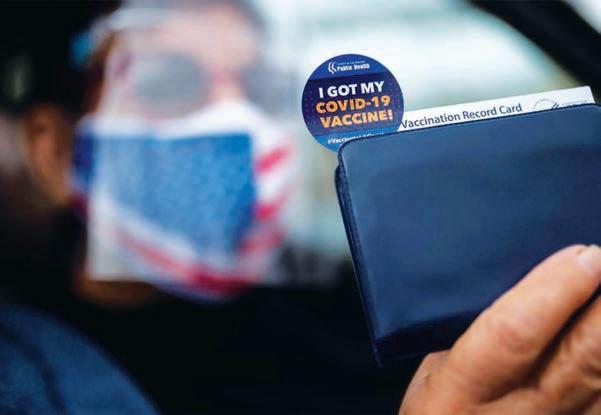
When it comes to COVID-19 vaccine reluctance, this information is crucial to an effective community vaccination program, which requires participation by people of every demographic. Like members of many marginalized groups, LGBTQ (lesbian, gay, bisexual, transgender and queer) people may have greater distrust of health care systems or the government – both of which can contribute to reluctance to get the COVID-19 vaccine.
Studies around the U.S. have examined this reluctance among Black, Hispanic and other people of color, as well as by political affiliation. The survey by Out Boulder County is the first to look at attitudes among LGBTQ people. It’s a reminder that LGBTQ identity has the potential to be nearly as important as race/ethnicity or political affiliation in determining whether a person is willing to get the COVID-19 vaccine.
As Los Angeles County officials ramp up efforts to vaccinate critical healthcare workers and the County’s at risk elderly population, on Monday the Los Angeles Times reported that Black, Latino and Native American seniors in Los Angeles County are receiving COVID-19 vaccinations at a lower rate than white, Asian American and Pacific Islander seniors, according to data released Monday.
“The findings raised new concerns about inequity in the troubled rollout of vaccines among those 65 and older and add pressure on county leaders to do a better job of getting communities of color immunized,” a public health official told the Times.
That inequity is raising concerns among healthcare providers regarding LGBTQ seniors a public health source told the Blade. Adding to those concerns are hesitancy among those seniors to be vaccinated.
Los Angeles Mayor Eric Garcetti addressed those concerns in a commentary piece written last month for the Blade: “I know there is some hesitation around this vaccine, particularly among Black and LGBTQ+ Angelenos. Generations of unequal access to quality care, rooted in systemic inequity, only deepened by COVID-19. The legacy of the
The Out Boulder County COVID-19 Vaccine Reluctance Survey found, if a vaccine were available today, 17% of respondents who identified as LGBTQ were hesitant or reluctant to take it compared to just 9% of non-LGBTQ respondents.
The respondents most reluctant to receive a vaccine were cisgender LGBTQ individuals assigned a female sex at birth: 26% answered “no” or “unsure” when asked if they would take the vaccine. 18% of transgender respondents assigned a female sex at birth gave those answers. And, only 6% of nonLGBTQ people assigned a female sex at birth gave those answers.
Overall, 18% of people assigned a female sex at birth expressed COVID-19 vaccine reluctance, versus 9% of those assigned a male sex at birth. Wider surveys have consistently shown that women are more reluctant than men about getting a COVID-19 vaccine.
There was little difference in reluctance between cisgender and transgender people assigned a male sex at birth. Other results included a correlation among people who regularly get a flu vaccine and those who are likely to get a COVID-19 vaccine: 91% of those who get a flu shot every year are likely to get the COVID-19 vaccine.
In contrast, only 34% of those who never get a flu shot are likely to get the COVID-19 vaccine. Overall, however, respondents seem more open to a COVID-19 vaccine than to an annual flu shot: While only 76% of respondents get the flu shot every year or most years, 84% intend to get a COVID-19 vaccine.
Among the barriers respondents listed most often were safety concerns, needing more information, concerns about effectiveness and distrust of the government.
While it’s not clear whether LGBTQ people are more likely to hesitate about getting a COVID-19 vaccine, it is clear that overall vaccine efforts will benefit from outreach, communication and distribution efforts targeting members of this community.
This includes public health messaging campaigns to LGBTQ people, personal physicians talking about vaccination with their patients and delivering the vaccine in areas with significant LGBTQ communities.
The Out Boulder County COVID-19 Vaccine Reluctance Survey also called attention to the unique challenges and concerns of the approximately 1.2 million HIV-positive people in the U.S.
Several survey respondents noted the dearth of information about how the vaccine might affect those with HIV. They pointed to a lack of disclosure from vaccine makers about whether their trials included HIV-positive individuals, let alone how those individuals may have responded to the vaccine. They also noted fear of interaction between the vaccine and HIV medications.
But, Moore notes, underlying all of this work is data. “Right now, because they don’t track sexual orientation or gender identity, public health agencies don’t even know who we are or where we live,” Moore said. “Without that information, it’s incredibly challenging to make sure that LGBTQ people are equitably included in COVID-19 vaccine distribution.

One-third know someone who has died from the disease
FROM STAFF REPORTS
Data collected in fall 2020 finds that LGBTQ people—in particular LGBTQ people of color— have disproportionately experienced the health and economic impacts of the coronavirus pandemic, according to a new report by the Williams Institute at UCLA School of Law.
Among those tested, an estimated 15% of LGBTQ people of color have tested positive for COVID-19, compared to 7% of their non-LGBT white peers. In addition, LGBTQ people of color are about twice as likely to have been laid off or furloughed from work and to struggle to pay for household goods compared to non-LGBTQ white adults.
Using data from a nationally representative sample of adults collected by Axios-Ipsos between August and December 2020, researchers found that compared to their non-LGBTQ peers, LGBTQ respondents were more likely to report wearing a mask, practicing social distancing, and being concerned about getting sick from COVID-19.
During the last few months of the Trump administration, fewer LGBTQ adults than nonLGBTQ adults expressed trust in the federal government to provide accurate information about COVID-19. In addition, only 28% of LGBTQ respondents felt that pharmaceutical companies had their best interest in mind, compared to 41% of non-LGBT respondents.
Among those who have tested for COVID-19, positivity rates were similar between LGBTQ people (10%) and non-LGBT people (9%). However, LGBTQ people of color (15%) were twice as likely to test positive compared to non-LGBTQ white adults (7%)
About one-third of LGBTQ people of color personally knew someone who died of COVID-19 compared to one-fifth of white LGBTQ and white non-LGBTQ people.
LGBTQ respondents were more likely than non-LGBTQ respondents to be laid off (12% vs 8%) or furloughed from their jobs (14% vs 10%), report problems affording basic household goods (24% vs 17%), and report having problems paying their rent or mortgage (20% vs 12%).
Both LGBTQ and non-LGBTQ people of color were twice as likely to have been laid off or temporality furloughed from work when compared to non-LGBT white adults.
LGBTQ people of color were over twice as likely to report having less ability to pay for household goods in the two weeks before the survey (29% vs 14%) and over three times as likely to report
being unable to pay their rent or mortgage (26% v. 9%) than non-LGBTQ white adults.
During the final months of the Trump administration, fewer LGBTQ respondents than nonLGBTQ respondents reported trusting the federal government to provide accurate information about COVID-19 (31% vs 38%).
In contrast, more LGBTQ respondents than non-LGBTQ respondents reported trusting the Centers for Disease Control and Prevention (76% vs 70%) and national public health officials (74% vs 68%) for COVID-19 information.
Approximately 41% of non-LGBTQ people felt that pharmaceutical companies had their best interest in mind, compared to only 28% of LGBTQ respondents.

gets 2 years in fraud case Scheme to steal more than $300,000 from donor’s estate FROM STAFF REPORTS
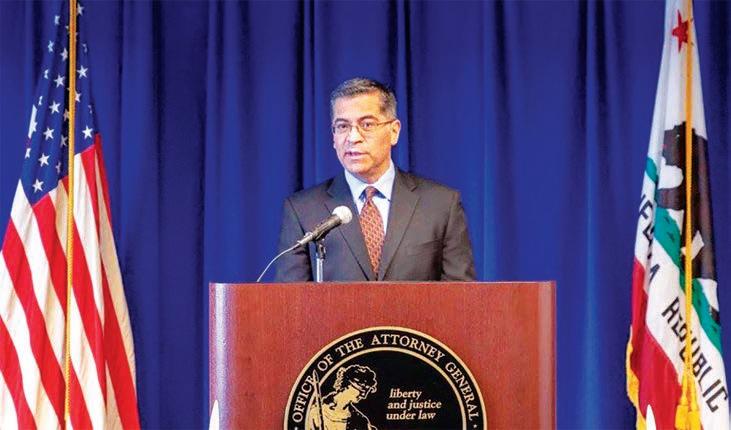
California Attorney General Xavier Becerra announced Monday the sentencing of Donnelly Montenegro, former acting Chief Operating Officer of the AIDS Research Alliance (ARA).
Montenegro pleaded guilty in December to grand theft by fraudulent pretenses after being charged in a 22-count complaint. Montenegro falsely portrayed himself as an acting ARA staff member in order to steal $316,000 from a donor’s estate. As part of his plea, Montenegro received a two-year sentence today in Los Angeles County Superior Court.
The Los Angeles County-based ARA was a nonprofit research organization dedicated to developing better treatments for those affected by HIV and creating an HIV cure strategy. The ARA dissolved in early 2015, but Montenegro retained access to the organization’s records, and as a part of his scheme, led people to believe the organization was still in operation, rather than defunct, in order to obtain and then launder hundreds of thousands of dollars in donations intended for AIDS research from 2015 to 2017.
Montenegro used the stolen donations for personal expenses including investments, credit card bills, and firearms. The 22-count felony complaint against Montenegro included six counts of grand theft, three counts of identity theft, and 13 counts of money laundering.
The investigation of Montenegro was conducted by the Division of Law Enforcement’s White Collar Investigations Team (WCIT), which tackles white collar crimes like those that can bankrupt companies, devastate families by depleting their life savings, or cost government agencies billions of dollars.
WCIT worked closely with the Fraud and Special Prosecutions (FSP) Section, which prosecutes complex criminal cases, primarily related to financial, securities, mortgage, and environmental fraud, public corruption, “underground economy” offenses, including tax and revenue fraud and counterfeiting; and human trafficking.




ignorance of
texts
by
communications ‘Instead of looking into allegations, they swept it under the rug’
The Lincoln Project’s leaders, amid the unfolding scandal of co-founder John Weaver soliciting sexual favors from young men, have asserted they were unaware of his indiscretions until last month, but electronic communications obtained by the Washington Blade call that claim into question and suggest some Lincoln Project executives knew about the texts as early as last summer, but took no substantive action in response.
The communications with Lincoln Project officials undermine the assertion that “there was no awareness or insinuations of any type of inappropriate behavior when we became aware of the chatter at the time,” as co-founder Steve Schmidt told The New York Times last month. These electronic messages, which date back to August 2020 and include Lincoln Project co-founder Mike Madrid, showed that leadership was made aware of allegations about Weaver from reporters who were investigating it, and had begun discussions of how to respond to any fallout.
The initial alerts came to the attention of the Lincoln Project in early August in the form of inquiries about Weaver from the New York Post. The inquiries, three sources familiar with the New York Post story say, were part of an investigation into Weaver’s inappropriate messages to male youths, and brought to the attention of Madrid.
On Aug. 6, the Lincoln Project announced Weaver would go on medical leave after a cardiac emergency, but no further action was announced.
“So instead of looking into the allegations, they swept it under the rug,” one source familiar with the situation told the Blade.
One source close to the Weaver family and not affiliated with the Lincoln Project said the announcement of medical leave wasn’t a ruse and Weaver had, in fact, suffered a heart attack at the time word of the planned story spread to the anti-Trump group. Weaver has a history of health issues and had missed appearances at Lincoln Project events due to stent procedures before COVID prevented further gatherings. The New York Post never published its article.
Weeks later in August, another reporter made inquiries regarding Weaver, which Madrid discussed in internal communications. Keith Edwards, who was working at the time with the Lincoln Project as communications director, was named in the discussion as playing a role in the strategy for the response to the potential story.
No further action was taken, one source familiar with the internal communications said. It’s not clear what the exact nature of the story was other than Weaver in the aftermath of him taking medical leave.
The Blade is not publishing the messages in order to protect the confidentiality of sources. The electronic messages the Blade reviewed were between Madrid and one of the young men Weaver was texting. That source said the exchanges with Weaver were consensual. The Blade has not seen any evidence that Madrid alerted any other Lincoln Project leaders other than thencommunications director Edwards to media inquiries into Weaver.
Madrid didn’t respond to a request for comment for this article submitted to his associate at Grassroots Labs LLC, the public relations firm where Madrid works. He also did not respond to a question about whether he signed an NDA with the Lincoln Project.
Edwards, who has since departed the Lincoln Project to become senior digital adviser for Sen. Jon Ossoff (D-Ga.), declined to comment on the internal correspondence.
“I cannot comment on an email you refuse to show me about a story that was not written by the New York Post,” Edwards said. “Period.”
In December, Ron Steslow a co-founder of the Lincoln Project, left the organization and launched the “Politicology” podcast. Steslow didn’t respond to the Blade’s request for comment for this article and whether he signed an NDA barring him from talking about the Lincoln Project’s internal matters.
The New York Post, which endorsed Trump for re-election in 2020, does not have a reputation for supporting the LGBTQ community.
Recent op-eds in the New York Post warn about President Biden’s commitment to transgender rights and transgender kids playing in school sports.
Nonetheless, the existence of those earlier alerts, regardless of the source, were about sexually aggressive messaging in which gay men were survivors and contradict the Lincoln Project’s assertion that its leaders were only made aware of Weaver’s indiscretions in the last month as the story gained traction. Other than Weaver taking medical leave as a result of a cardiac emergency as word of the New York Post article reached the Lincoln Project, no action was announced against him in the middle of a campaign season.
The New York Post didn’t respond Tuesday morning to the Blade’s request for comment on why it didn’t run its article on Weaver.
The Lincoln Project’s eventual denunciation of Weaver would have to wait until last week in the form of a statement calling him “a predator, a liar and an abuser” upon publication of a New
By CHRIS JOHNSON
York Times article citing 21 men who accused Weaver of sexual predation online. None of the men have accused Weaver of criminal conduct.
Steve Schmidt, in a phone interview last week with the Blade, denied the Lincoln Project had “any knowledge of any misconduct by John Weaver” until January.
Schmidt also said no media outlet had submitted to the Lincoln Project a formal request for an on-the-record comment on the Weaver texts.
| cjohnson@washblade.com
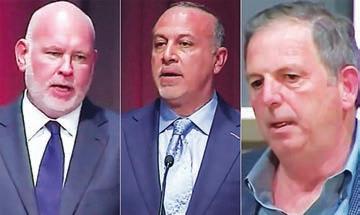
“This story never published,” Schmidt said, referring to the New York Post article. “And there was never an interrogatory put on the record, to my knowledge, to the organization by the New York Post.”
Schmidt downplayed Madrid’s role in the organization, saying he was “not part of the map” with Lincoln Project, even though Madrid identifies as a co-founder.
“Mike isn’t the spokesperson,” Schmidt said. “Mike isn’t the communications person, Mike isn’t the leader. Mike’s not making decisions.”
Asked about the electronic communications related to media inquiries about Weaver that included Madrid, Schmidt said Madrid never ran anything “up the chain of command.”
If Madrid wasn’t considered a leader at the Lincoln Project, he certainly was paid like he was. According to Federal Election Commission reports, Madrid made at least $1.5 million from the Lincoln Project in the form of payments to Grassroots Labs LLC.
The New York Times reported last month 21 men are accusing Weaver of sexual harassment in private messages to them. In the article, Lincoln Project leaders are quoted as saying they were only made aware of Weaver’s sexual solicitations in January as a result of news articles, which appeared in The American Conservative and Forensic News.
Republican insiders who spoke to the Blade bolstered the Times reporting with stories about Weaver’s reputation for inappropriate messages, and indicated Weaver’s behavior was well known in recent years. One Republican insider not affiliated with the Lincoln Project said he received a text in 2016 warning Weaver had a history of sending “creepy” texts to younger gay men.
One strategist who said he received sexual solicitations from Weaver said he knew him at first in a professional capacity. At that time, the strategist said Weaver did nothing to suggest he had an interest in men, let alone an interest in the strategist in particular. But several years after they met, the strategist said he received Twitter messages from Weaver and he made comments that were “unwanted, but strange.”
“He never offered me like a quid pro quo, or a job,” the strategist said. “That was never even part of a conversation. It was just very weird.”
The insider said the DMs consisted of messages similar to others that have been reported, including calling the strategist “my boy.”
“I know a lot of people have said [that] was demeaning,” the strategist said. “I felt it was more sort of fatherly like. I mean, there’s more than 25 years apart. But that’s also because I knew him, but I could understand how that would be very disconcerting.”
Asked if anything sexually explicit came up, the strategist said Weaver “had a lot of questions about my sex life.” The strategist said he “danced around the conversation, of course, because, well, for professional purposes.”
The story is consistent with The New York Times report on interviews with 21 young men accusing Weaver of impropriety over the last five years, characterizing Weaver’s behavior in many cases as aggressive and unwanted.
Schmidt, speaking with the Blade, said the Lincoln Project uncovered chatter over the summer in pro-Trump 4chan and 8chan message boards suggesting that Weaver is gay, despite having a wife and two children, although nothing suggested he was sending inappropriate texts. Schmidt said he had a phone call with Weaver in July to ask him about it.
“What I said specifically to him is there anything you need to tell us, right?” Schmidt recalled. “He said, ‘Absolutely not. It’s all bullshit. Full stop on that. Period.”
Last week, the Lincoln Project took a different tone, repudiating Weaver for sexual harassment of younger males and accusing him of having “led a secret life that was built on a foundation of deception at every level.”
“He is a predator, a liar, and an abuser,” the Lincoln Project statement says.
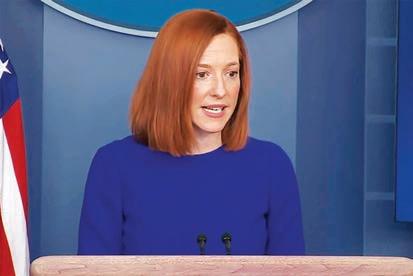
White House Press Secretary Jen Psaki held firm this week under questioning from Fox Radio on President Biden’s commitment to transgender rights, asserting under questioning about transgender kids in school sports: “Trans rights are human rights.”
The reporter with Fox Radio asked Psaki about the executive order Biden signed on his first day in office ordering federal agencies to implement the U.S. Supreme Court’s decision in Bostock v. Clayton County, which determined anti-LGBTQ discrimination is a form sex discrimination.
The executive order, the Fox Radio reporter said, could lead to situations where “trans girls and cis girls…may end up competing against each other” and “lawsuits and some concerns among parents.”
Psaki, responding to the reporter’s question on whether the administration had guidance to schools, affirmed she’s “familiar with the order.”
When the Fox Radio reporter clarified the inquiry was seeking “a message for local schools officials” on disputes that include situations where students are competing for college scholarships, Psaki held firm.
“I would just say that the president’s belief is that trans rights are human rights, and that’s why he signed that executive order,” Psaki said. “In terms of the determinations by universities and colleges, I would certainly defer to them.”
The executive order signed explicitly states kids in should be able to go to school without being “denied access to the restroom, the locker room, or school sports.” The Department of Education has yet to issue guidance on this order as it pertains to school sports.
White House Press Secretary Jen Psaki said last week, amid coronavirus and impeachment crises, that President Biden “stands by” his campaign pledge to sign the Equality Act to expand the ban on anti-LGBTQ discrimination under the law within 100 days — although she indicated Congress has to take initial steps with the legislation.
Psaki half-jokingly pointed out the Biden administration started days ago, 15 or so, which she implied leaves plenty of time for Biden to fulfill his campaign promise to the sign the Equality Act within 100 days.
“So we have 85 days to go,” Psaki said.
With Biden making four crises of the economy, coronavirus, climate and racial inequity his top priorities, as well as the forthcoming impeachment trial of former President Trump, fears had persisted in the LGBTQ community Biden wouldn’t be able to fulfill his campaign pledge on the Equality Act. Additionally, 10 Republican votes would be needed for the 60
votes to end a filibuster on the legislation in the Senate.
Psaki, however, said she had no information when asked when Biden would speak out in support of the legislation, which would be key in his role as chief legislator in advancing the Equality Act.
“I think the president has been out speaking out about a range of issues he’s committed to, including many on LGBTQ rights, over the course of the last two weeks of his presidency, and he will continue to be,” Psaki said. “But I don’t have any scheduling updates for you at this point in time.”
A senior Democratic aide told the Blade that Rep. David Cicilline (D-R.I.) and Sen. Jeff Merkley (D-Ore.) are looking at the week of Feb. 22 to introduce the Equality Act with a vote expected as early as March.
CHRIS JOHNSON
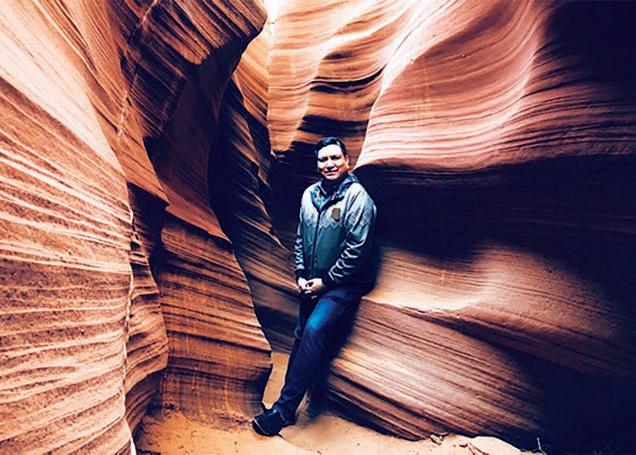
A gay Navajo man who was a member of the Arizona House of Representatives has joined the Biden administration.
Former state Rep. Arlando Teller will serve as the Transportation Department’s deputy assistant secretary for tribal affairs.
Teller was the deputy director of the Navajo Department of Transportation before his election to the Arizona House in 2018. He previously worked at two airports and the California Department of Transportation (Caltrans).
Teller on Monday officially resigned his seat.
“Elevating indigenous nations’ by the Biden administration only invigorates and encourages me to do more,” Teller told the Washington Blade last Wednesday in a text message. “Representation matters.”
Teller served in the Arizona Legislature with five other openly gay men. He spoke with the Blade on the same day Vice President Harris swore in Transportation Secretary Pete Buttigieg, who is the first out person the U.S. Senate has confirmed to a Cabinet-level position.
“Excited for the newest deputy assistant secretary at (U.S. Department of Transportation), the one and only Mr. Arlando Teller,” tweeted Arizona state Rep. Daniel Hernández, Jr., on Tuesday.
Teller last November tested positive for the coronavirus and spent several weeks in the hospital in Chinle, his hometown in northeastern Arizona that is in the Navajo Nation. Teller’s mother also contracted the disease and died in December at the same hospital to which he was admitted.
Teller for the time being will work remotely from Arizona as he recovers from the coronavirus.
MICHAEL K. LAVERS




















JAMES FINN
is a former Air Force intelligence analyst, long-time LGBTQ activist, an alumnus of Queer Nation and Act Up NY, an essayist, and novelist. Send questions, comments, and story ideas to jamesfinnwrites@gmail.com.
Violent crime shrugged off as ‘boys will be boys’
By JAMES FINN
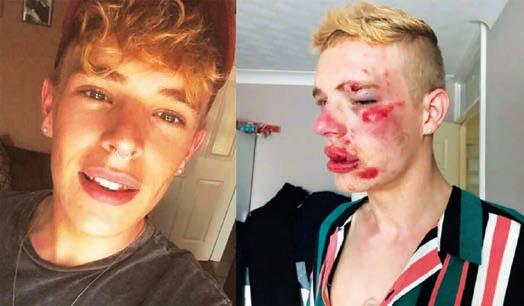
Going on two years ago, a gang of homophobes beat Ryan Turner to a bloody pulp. He and some friends had gone to a McDonald’s in the town of Preston near Manchester in the UK. A group of young men confronted them in the drive-through, shouting, “Gay is wrong. You all need to die.”
Brandon Forrester, who was celebrating his 18th birthday, attacked Turner (who now goes by Ryan Williams on social media) so savagely that he lost consciousness and was transported to hospital by ambulance, where he spent two days recovering from a bad concussion and severe facial injuries.
Turner, who had been a working model and a professional drag queen before the attack, stopped working, started drinking heavily, and says he even thought about trying not to be gay.
I wrote about the incident at the time, in an article highlighting a wave of anti-LGBTQ violence sweeping the US and the UK. A friend of mine in the liberal UK city of Bristol had been randomly harassed (verbally and physically) for being gay not long before, so the story felt personal to me.
I never expected to write a follow-up. I supposed Turner would struggle to recover physically and spiritually, succeed eventually, and that the gang of young men who brutalized him would be tried, found guilty of hate crimes, and sent to prison. After all, they had inflicted severe bodily harm, and I figured the criminal justice system would be highly motivated to send a stern message that beating people up for being gay is intolerable.That’s not what happened.
The judge in the case refused to classify the beating as a hate crime. The Crown prosecutor had to appeal to an independent magistrate, who ruled that (of course) beating somebody to a bloody pulp after shouting that gay people need to die counts as a hate crime. The magistrate’s ruling made no difference.
The judge in the case still refused to acknowledge the severity of the matter or to send any stern messages. In a “lads will be lads” sentencing last week, he let Forrester off with a suspended sentence, chastising him not for being a brutal homophobic thug, but for going out drinking on his birthday.
Forrester won’t spend a day behind bars.
And what has the local community learned? Hate crimes may carry theoretically harsh consequences at law, but judges are likely to wink and let you get away with a fair bit of the old fag bashing. So long as you were drunk.
Why can’t I stop thinking about Clockwork Orange?
I was gay bashed in Greenwich Village, punched quite thoroughly because my partner and I had the nerve to look obviously gay. We ran from that incident, and the police never got involved. I wasn’t hospitalized, though I did bleed for quite a while.
That a long time ago, and things are supposed to have changed.
But if you’re like me, you notice something very consistent.
The queer press is full of reports of queer bashing. You can barely go a day reading queer media without finding stories about somebody physically brutalized over their LGBTQ identity.
You’ll notice something else very consistent. Police almost always resist classifying such beatings as hate crimes, no matter how obvious the circumstances. It’s like it takes an act of God to get cops to admit that calling for gay people to die before you beat them really counts for anything.
Prosecutors do a little better, depending on geography. But in much of the US, as in the UK, beating up a person for being gay or trans may well have little legal consequence.
“Usually I would shrug things off,” Ryan says. “But the year this happened was the second time I had been physically attacked. Part of me feels like everything I have been through for the last 18 months is for nothing, but then if my story helps someone else then it was worth it.”
He’s ready to start his career again, and says supportive family and friends are giving him courage and strength, but the outcome of this legal case is setting him back.
He never expected the man who savagely beat him for being gay would walk out of the courtroom free. He doesn’t how know how to think or feel about that — how the lack of punishment reflects on his own worth.
I know how it reflects on mine. As a gay man who has been bashed and whose friends have been, I know what it feels like to have the system wink at homophobic brutality.
I know what it feels like to be so other that a violent crime committed against me can be shrugged off as “boys will be boys.” I can’t look at the photo at the top of this article without feeling anger and despair.
Ryan’s attacker deserves serious penal consequences. Ryan deserves justice. What happened in court last week was a mockery of the real thing.
ADDRESS
5455 Wilshire Blvd, 21st Floor, Los Angeles, CA 90036 PHONE 310-230-5266
E-MAIL tmasters@losangelesblade.com
INTERNET losangelesblade.com
PUBLISHED BY Los Angeles Blade, LLC
PUBLISHER
TROY MASTERS tmasters@losangelesblade.com 310-230-5266 x8080 (o), 917-406-1619 (c)
SALES & MARKETING
SALES EXECUTIVE
ROMAN NAVARRETTE roman@losangelesblade.com 310-435-3022
PALM SPRINGS ACCOUNT EXEC BRAD FUHR, 760-813-2020. brad@gaydesertguide.com
NATIONAL ADVERTISING
RIVENDELL MEDIA sales@rivendellmedia.com, 212-242-6863
MARKETING DIRECTOR
STEPHEN RUTGERS srutgers@washblade.com, 202-747-2077 x8077
EDITORIAL
CONTRIBUTING WRITER
KAREN OCAMB karenocamb@losangelesblade.com
NATIONAL EDITOR
KEVIN NAFF kna @washblade.com, 202-747-2077 x8088
INTERNATIONAL EDITOR
MICHAEL K. LAVERS mlavers@washblade.com
EDITOR AT LARGE BRODY LEVESQUE
California
CONTRIBUTORS
ERNESTO VALLE, YARIEL VALDÉS GONZALEZ, PARKER PURIFOY, CHRISTOPHER KANE, AUSTIN MENDOZA, JOHN PAUL KING, JOEY DIGUGLIELMO, CHRIS JOHNSON, LOU CHIBBARO JR., MARIAH COOPER, REBEKAH SAGER, JON DAVIDSON, SUSAN HORNIK, CHANNING SARGENT, SAMSON AMORE, CHRISTOPHER CAPPIELLO, MICHAEL JORTNER, DAN ALLEN, SEAN SHEALY, SCOTT STIFFLER
CREATIVE DESIGN/PRODUCTION AZERCREATIVE.COM
DISTRIBUTION
CHRISTOPHER JACKSON, 562-826-6602
All material in the Los Angeles Blade is protected by federal copyright law and may not be reproduced without the written consent of the Los Angeles Blade. e sexual orientation of advertisers, photographers, writers and cartoonists published herein is neither inferred nor implied. e appearance of names or pictorial representation does not necessarily indicate the sexual orientation of that person or persons. Although the Los Angeles Blade is supported by many ne advertisers, we cannot accept responsibility for claims made by advertisers. Unsolicited editorial material is accepted by the Los Angeles Blade, but the paper cannot take responsibility for its return. e editors reserve the right to accept, reject or edit any submission. A single copy of the Los Angeles Blade is available from authorized distribution points, to any individual within a 50-mile radius of Los Angeles, CA. Multiple copies are available from the Los Angeles Blade o ce only. Call for rates. If you are unable to get to a convenient free distribution point, you may receive a 26-week


This op-ed was written by a leading transgender activist who asked to remain anonymous.
By ANONMYOUS
The issue of transgender athletes has come to the forefront of the culture wars again, as it does whenever the right needs a wedge issue. In this case, it is because president Biden signed an executive order affirming that the Administration will comply with the rulings in Bostock, Zarda, and Harris, and treat discrimination against LGBT people as a form or sex discrimination.
Sex discrimination is illegal under the Civil Rights Act of 1964, and other federal laws such as Title IX, which prohibits sex-based discrimination in any school or academic institution that receives federal money.
Simultaneously, about a third of U.S. states have banned, or have bills in progress to ban, transgender athletes at all levels, including in colleges and universities. Conservative news outlets have made this their number-one culture war issue since January.
Fox News ran 19 segments in one week on transgender athletes, most of which falsely claim that the Biden Executive Order was entirely about transgender athletes. They claim that allowing trans athletes to compete will not only deprive “real” women of opportunities but destroy women’s sports in general. The irony here is that most conservative, Christian schools opt out of Title IX compliance and receive federal money anyway.
What is missing from all of this is any sort acknowledgement of how existing policies allowing transgender athletes to compete have fared. This includes the National Collegiate Athletics Association (NCAA), International Olympic Committee (IOC), and professional sporting bodies such as the IAAF. What each of these organizations has in place generally resembles the NCAA and IOC policies.
Roughly speaking, transgender women are required to undergo a minimum of one year of surgical or hormonal testosterone suppression, and transgender men must compete as men as soon as they start taking testosterone.
These policies have been in place for years, with some modifications. The IOC had its first policy in 2004 and removed surgical requirements in 2015. The IAAF followed suit in 2005. The NCAA has had a policy for the inclusion of transgender athletes since 2011, which never had a requirement for “bottom” surgery.
Currently, there is no push by these bodies to eliminate transgender athletes. Most of the internal debate revolves around whether the upper limit for testosterone should be 3 nmol/L (normal upper limit for cisgender women) or 5 (upper limit in the presence of medical issues such as PCOS). Transgender women who are taking drugs to suppress testosterone can generally get their levels below this threshold, though the lack of FDAapproved drug options for US athletes is an issue.
Since the inception of these policies, there have been very few transgender athletes of note at the NCAA or IOC level. Cece Telfer won a pair of Division II national track events in 2019 but did so with a time that would not have even qualified her for the Division I finals (she would have placed 17th in the preliminaries).
Telfer is the most successful trans athlete so far, out of the approximately 200,000 women who compete every year. There have been no transgender Olympians to date, out of roughly 5,000 every summer games and 1,200 at the winter events, though there may be one or two in 2021.
At the professional level, which is beyond the scope of Title IX, we observe similar results. There is no rule against transgender people in the WNBA, but there has never been a transgender woman in the NBA either. There has been a transgender woman on a FIFA team (American Samoa), a team that also happened to be remembered as one of the worst in the history of sport.
The best measure of whether or not transgender athletes are having a significant impact
on women’s sports is not whether any succeed, but whether we observe them succeeding at a rate disproportionate to their population. When standards like the NCAA’s and the IOC’s are applied, there have actually been fewer transgender athletes than a random draw of the population would predict, indicating that the standards have generally been sufficient.
The real issue is testosterone. There are few transgender people, and athletes, to begin with. For trans youth who have not gone through puberty, or have been on blockers, this isn’t an issue. It’s not a major issue at low levels of sport like Freshman, junior varsity, or intramurals where very little is on the line.
The trouble lies in varsity level in high school sports, where students are competing for scholarships with significant monetary value. The issue is not so much with students who meet NCAA or IOC guidelines, but for those who have not had a full year on blockers, cannot access them, or will not.
There is a scientific consensus among sporting bodies that much-higher testosterone levels confer an advantage. However, these organizations allow transgender women to compete because there is also agreement that blocking testosterone for a year or more removes most of this advantage and is sufficient to protect the sport. A decade of allowing transgender people to compete under these rules has not resulted in the end of NCAA women’s athletics, as trans opponents have long predicted, any more than letting lesbians and gays get married ended that institution.
Simply forcing transgender athletes to compete in divisions based on their assigned sex at birth, as is required by several conservative states, is unworkable. It results in absurd situations where trans men who are taking testosterone, like Mack Beggs in Texas, are only allowed to compete in the women’s division, and have a competitive advantage.
Conversely, forcing a transgender girl who has never gone through the wrong puberty to compete against the boys is physiologically no different than forcing a cisgender girl to do the same.
Requiring transgender people to “get their own league” isn’t feasible either: most schools don’t have any transgender athletes, much less enough to field a team. Forcing a student to run around an empty track by themselves singles them out as transgender, and subjects them to the abuse and ridicule that this entails.
This “solution” would also likely fall afoul of civil rights laws requiring the least intrusive means to achieve a goal when it affects a suspect class, especially when some transgender students more than meet NCAA protocols.
Transgender students often find meaning, purpose, camaraderie, and value in athletics. Very little in life favors them. Efforts to limit their participation would fall disproportionately on people of color, who already lack access to social goods and means to affordable higher education. At the same time, some high school varsity trans girl athletes may have an advantage that is considered unfair by most world sporting bodies and scientists who study the issue.
The total number of students who fall into this category is very small, but the issue is creating oversized problems for the administration.Right wing politicians and anti-LGBT groups have seized upon this one small piece of the Biden executive order to launch countless media and political attacks. Recent press briefings suggest they’re hitting home.
The Biden Department of Education should develop and issue policy guidance for high school varsity athletics that recommends standards similar to the NCAA’s where appropriate, while simultaneously ensuring and maximizing access, opportunity, and inclusion of athletes potentially affected by this policy.
Yes, you can date during a pandemic
The coronavirus pandemic has changed everything, from telework to dining out, but LA’s singles scene perseveres with outdoor dates, outdoor dining, and Zoom meetings. This is the first Los Angeles Blade Most Eligible LGBT Singles issue. It began with reader nominations; from that list, our staff chose the most eligible with an eye forlocals with interesting stories, those doing compelling work and yes, those who are easy on the eye.
This year’s crop of top singles agree that confidence is a turn on and bad breath is a deal breaker. Meet LA’s Most Eligible LGBTQ singles for 2021.
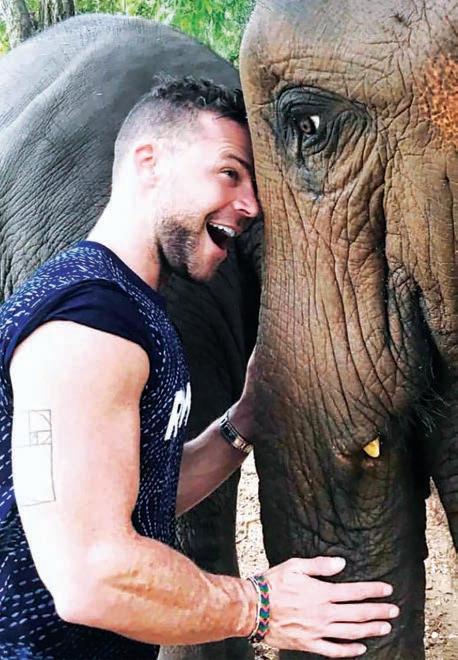
How do you identify? Gay
What are you looking for in a mate? Honesty, Generosity, Compassion and Laughter.
Biggest turn off: Intolerance.
Biggest turn on: Confidence.
Hobbies? Self dates to the movies, hiking, travel.
How has COVID impacted your dating life? I’m a huge fan of FaceTime dating; getting to know someone well before meeting in person, and finding myself in deeper conversations with men due to the emotional difficulties of the pandemic. Pets, kids, or neither? Pets and kids.
Would you date someone whose political views differ from your own? It’s not a deal breaker for me, but my mother will disown me if I brought home a Trump guy.
Celebrity crush: Erik von Detten from Brink (90’s Disney Channel).
Name one obscure fact about yourself: I tend to laugh in my sleep... which can be totally creepy.
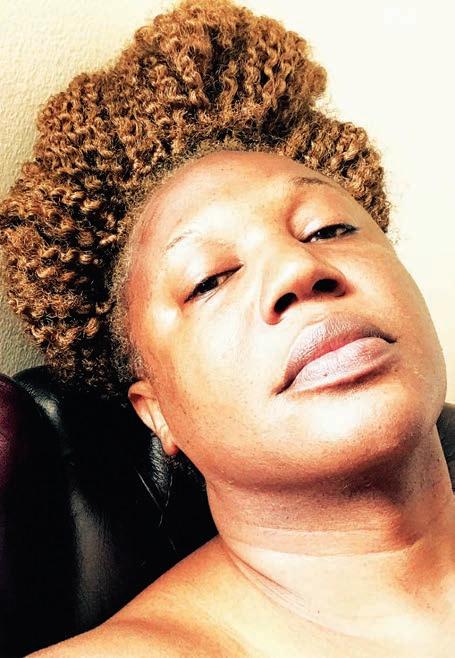
How do you identify? Gender Fierce!
What are you looking for in a mate? I’m looking for pure joy in a mate. I want to be with somebody who’s easy like Sunday morning. I would love to meet an individual who is independent, self-sufficient and fun. Playful curiosity and honesty is key.
Biggest turn off: Bad breath, negative attitude and unsavory hygiene.
Biggest turn on: Beautiful eyes, nice smile, creative mind, generous spirit and adventurous nature.
Hobbies? Dining, Dancing, Traveling, Movies and Rollerblading.
How has COVID impacted your dating life? Due to the nature of my job I am considered an essential worker. I’ve been affected by COVID, but no real interaction with possible suitors because most folks that I interface with have been respectful.
Pets or kids or neither? No pets or kids at this time.
Would you date someone whose political views differ from your own? I’m very opinionated about political issues at times so we would have to approach the situation very delicately.
Celebrity crush: Dewayne Johnson/Jason Momoa
Name one obscure fact about yourself: I performed for Grace Jones as Grace Jones.

DESIGNER / PRODUCER / INNOVATOR
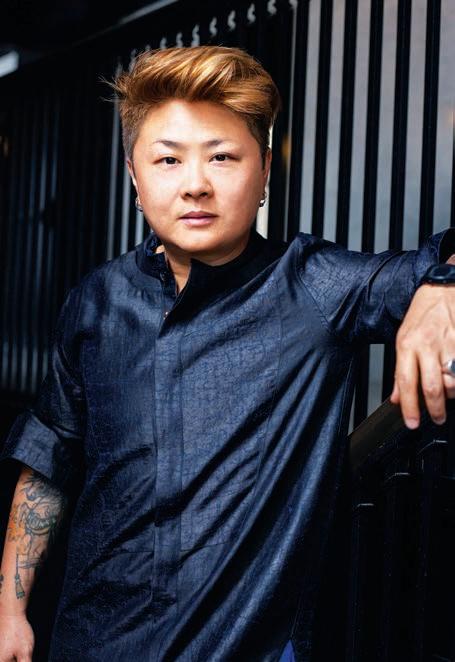
How do you identify? Gender X Queer
What are you looking for in a mate? My perfect femme mate would be someone who is honest and open in their philosophy on life as well as their communication skills. Someone who loves sushi as much as I do and finds joy in sharing the best experiences with others. They are passionate about their existence and find purpose in what they do without feeling obligated in their doing. Someone who not only understands the importance of equality and equity but who consciously takes action to support it. Someone who is as kind to strangers as they are to those closest to them. Someone who isn’t afraid of taking risks for things worthwhile but who isn’t frivolous in choices they make. Someone sexy and sensual but knows how to laugh out loud and be silly. Someone who knows humility and sacrifice but also can comfortably enjoy the finer things in life.
Biggest turn off: Disingenuous and fake people.
Biggest turn on: Independent, strong, sassy women ... and clavicles. Hobbies? I rescue and foster dogs when I am able. I also love to sing so karaoke is a hobby that liberates my soul and relieves much of my stress. I also enjoy movies (thrillers, mysteries, action, comedies) and listening to music of kinds. I love getting dressed up and attending the opera or symphony. I enjoy working with my hands so I can fix most things in my house or I paint, sculpt and do pottery if I have time and space. I volunteer when I can. My favorite food is sushi but overall I’m just a foodie so I love to eat. lol. I love traveling and experiencing different cultures but have mostly traveled alone so would love to start traveling with someone who will want to share that experience. I also love fashion but mostly from a perspective of how one utilizes it to creatively express themselves or how ingenuity can help make lives easier; not so much the shopping part, although I am a fantastic bag holder and second opinion on what looks great on you. Oh, and I’m also a gadget geek. Show me a robot and I’m pretty much entertained for hours.
How has COVID impacted your dating life? What dating life? (>.<)
Pets, kids, or neither? I love them both but sadly am allergic to most cats and obnoxiously spoiled children.
Would you date someone whose political views differ from your own? Of course, unless they are in support of a racist oligarch — that’s where I draw the line.
Celebrity crush: Gillian Anderson & Harry Styles
Name one obscure fact about yourself: I used to own a baby pink jumpsuit (when I was NOT a baby).
(IF YOU CAN’T FIGURE IT OUT, STOP HERE)
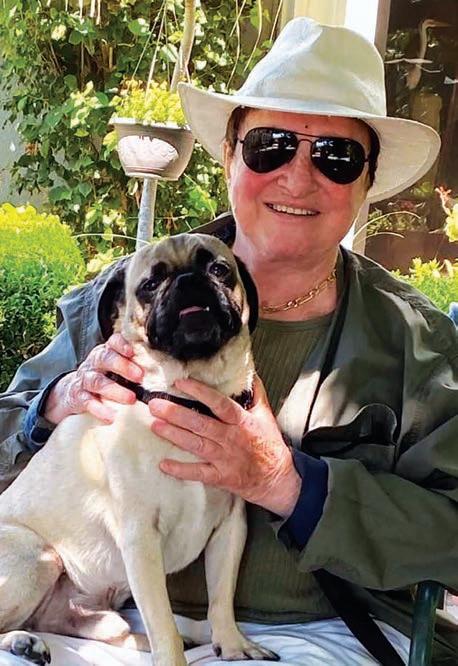
Occupation: Semi retired. Working on a documentary of my one-woman show “Always A Bridesmaid, Never A Groom.”
How do you identify? Lesbian Feminist (pro trans) What are you looking for in a mate? Financially independent. Very Intelligent. Good sense of humor.
Biggest turn off: Smoker.
Biggest turn on: Lives life to the fullest! Adventurous. Hobbies? Learning to cook healthier and scuba diving. How has COVID impacted your dating life? What dating life? Does anyone still go out? But I am getting my second vaccination shot! It should help!
Pets, kids, or neither? One rescue pug four years old named Oscar Wilde. (Nickname is ‘The Little Prince.’) One cat who lives in my office.
Would you date someone whose political views differ from your own? Absolutely not!
Celebrity crush: Rachel Maddow and Kamala Harris
Name one obscure fact about yourself: Being a comic, most people think I am an extravert, but I am an introvert.
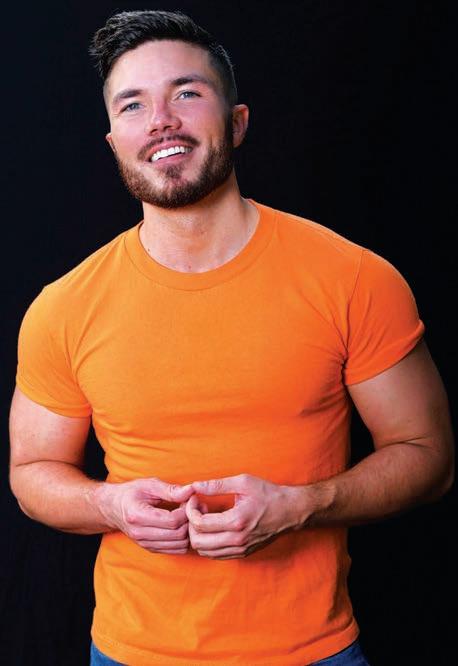
How do you identify? Gay
What are you looking for in a mate? Go back and watch the movie “The Thin Man.” First off, you need to be able to enjoy it and want to quote it afterwards. It’s from 1934. I watch old movies all the time. Get used to that. Secondly, you need to be able to go toe-to-toe in witty banter as evidenced by William Powell and Myrna Loy in this film. Oh, and, someone to challenge and engage me mentally, physically, spiritually, long walks on the beach, blah blah blah.
Biggest turn off: Not following CDC guidelines. Jetting off to Puerto Vallarta during a pandemic. Wearing a mask under your nose. You know, just in general not caring about other people.
Biggest turn on: Knowing who Bette Davis is and easily referencing five of her films in regular conversation. Also, kindness, intelligence, smart humor, deep cut references and intriguing eyes. Hobbies? Watching MSNBC like I’m a retiree. Going to revival movie houses. Exploring the bird streets in the Hollywood hills. Working out. Writing the first chapters of novels I’ll never finish. Listening and freaking myself out with true crime podcasts. Talking about my cats like they’re humans. Being sarcastic.
How has COVID impacted your dating life? I hate dating. I mean, I really hate dating. I don’t like wasting time, so if it is clear a relationship isn’t going anywhere, I don’t want to spend time on it. To be honest, I don’t go on a lot of dates even in normal times. So, basically, I’ve just used COVID as a new excuse not to date. I’m not opposed to lightning striking, however. I could see a meet-cute happening as I reached for the last bottle of Purell at CVS.
Pets, kids, or neither? I have two cats that started as tiny baby fosters at the start of the pandemic. Now they’re nearly a year old, and, yes, I’m now full on “cat daddy.” It’s a select, rare and divisive subcategory of gay men. But they’re pretty awesome. That said, I like dogs, too. I’m down for both. I’m down for the kiddos eventually, too. The more the merrier.
Would you date someone whose political views differ from your own? For dating purposes, I can handle anything between Kyrsten Sinema and AOC. I’d consider Joe Manchin, but we’d have to settle a lot of disagreements through budget reconciliation. Any farther right than that, well, it just ain’t gonna work out.
Celebrity crush: Gene Kelly circa 1952. Yes, I am aware he is no longer with us.
Name one obscure fact about yourself: My graduating high school class at a *public* school in rural Texas only had 20 students. I was one of the few kids who didn’t show an animal in the county fair.
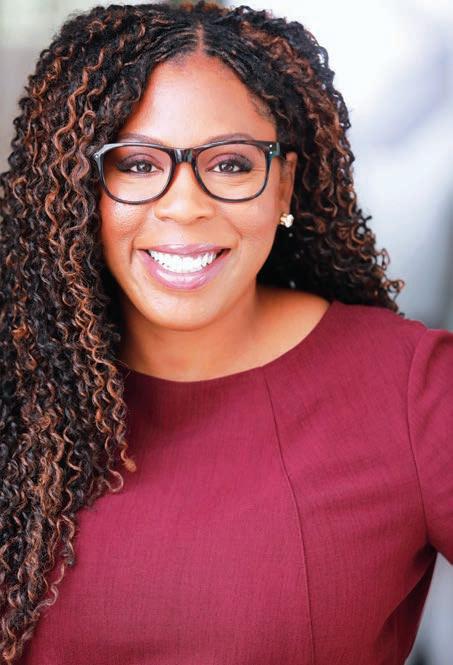
Occupation: Political Strategist
How do you identify? Lesbian
What are you looking for in a mate? A pulse.
Biggest turn off: Women who have dogs that they kiss in the mouth. You will not kiss me with that same mouth.
Biggest turn on: I get just as turned on by a woman with no felonies (for violent offenses), who works, can hold an intelligent conversation, use a predicate and a subject in a sentence, and who can use more than just three-letter words when texting, as I do by a woman who is physically sexy.
Hobbies? Tennis, hiking, going to the beach, writing, interior decorating How has COVID impacted your dating life? It hasn’t. I didn’t have one before COVID and I don’t have one now. It’s just that now I have a better excuse for why. Pets, kids, or neither? No and no.
Would you date someone whose political views differ from your own? Probably not. I am at the age where there’s only so much arguing I am willing to do. I try to reserve all of my arguing for when I’m on Fox News Channel.
Celebrity crush: Nope.
Name one obscure fact about yourself: I’m anal about the whiteness and health of my teeth.
CONTINUES ON PAGE 22

WRITER/PRODUCER
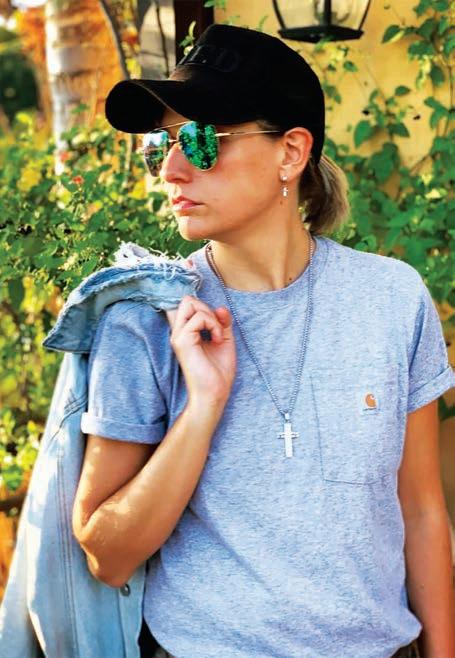
How do you identify? Lesbian
What are you looking for in a mate? My equal. Someone who puts a healthy amount of time and work into their family, career, friends, philanthropy, etc. and matches that energy and effort in our partnership.
Biggest turn off: Ulterior motives and deceit.
Biggest turn on: The intersection of strength and vulnerability, and the ability to tap into both.
Hobbies? Camping with friends, painting landscapes, playing Dungeons and Dragons, producing charity events for The Dru Project, restoring my Suzuki Intruder 1500.
How has COVID impacted your dating life? Ha! I don’t have one. I’ve designated this time for emotional healing and personal growth.
Pets, kids, or neither? Both eventually, but my current focus is on my career so I can’t afford them. Pets and kids are expensive!
Would you date someone whose political views differ from your own? Not if their political views harm others or invalidate the struggles and existence of marginalized people.
Celebrity crush: Aubrey Plaza
Name one obscure fact about yourself: I grew up in Tennessee, but was actually born in Mississippi.
MICHAEL FERRERA, 54, REAL ESTATE INVESTOR/NON-PROFIT EXECUTIVE
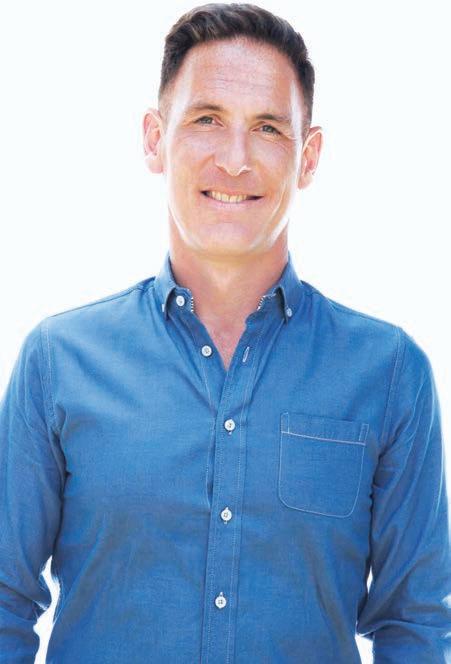
How do you identify? Cis Gay Man (Pronouns he, him, his)
What are you looking for in a mate? I am looking for a best friend that wants to journey together experiencing as much of life as we can. He must be honest with me, know who he is, have his own life to share and enjoy spending time with friends and family. I want someone who enjoys taking care of himself, is excited about life, optimistic and has a youthful outlook.
Biggest turn off: Lack of empathy and caring for others.
Biggest turn on: Loving without fear! And, shorter guys, I’m a big fan!
Hobbies? Planning/organizing for my group of friends, cooking, singing, theater, music, sports, activism
How has COVID impacted your dating life? Left it in waste! I had fallen in love with someone in 2019, but the long distance led to our breakup just before COVID hit. Ready to date again!
Pets, kids, or neither? I have two cats. I have never had my own kids but I have spent most of my career working with LGBTQ+ teens and young adults, a likely reason I connect so much better with younger guys. Still open!
Would you date someone whose political views differ from your own? Yes, but there are limits.
Celebrity crush: Jake Borelli/Matt Damon
Name one obscure fact about yourself: I have performed in 15 countries (Up With People for those who remember!) including one time with Whitney Houston at Notre Dame Stadium!
EDDIE MARTINEZ, 52, NON-PROFIT EXECUTIVE DIRECTOR
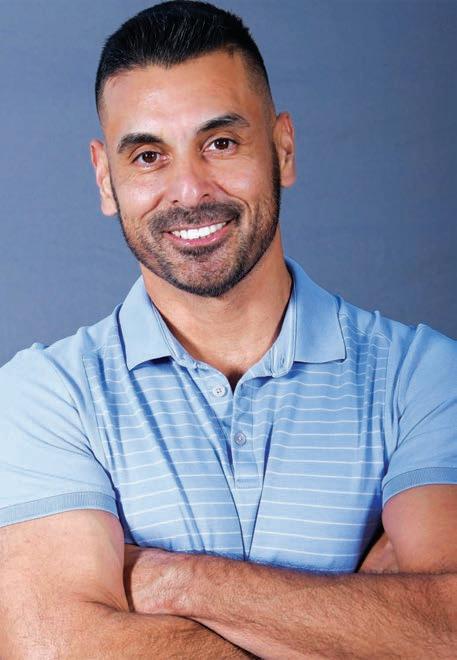
How do you identify? Gay
What are you looking for in a mate? A genuine individual who enjoys life and is ready to explore the world.
Biggest turn off: Individuals who lack compassion for those less fortunate.
Biggest turn on: Individuals who love sports, Hollywood Bowl, and have a good heart for the welfare of others.
Hobbies? Crossfit, gardening, sports games, and cultural activities.
How has COVID impacted your dating life? It’s been a challenge. The fear of catching the COVID has put dating on hold for now.
Pets, kids, or neither? I do not have kids and I am an uncle to three dogs at home.
Would you date someone whose political views differ from your own? Yes. I am a Democrat and politics is a non-issue. Just don’t go storm the Capitol and we will be good!
Celebrity crush: Ryan Gosling
Name one obscure fact about yourself: I was the last football homecoming king at Long Beach State. The football program was suspended after the 1991 season. I have the on-going title and the crown as well.
WRITER
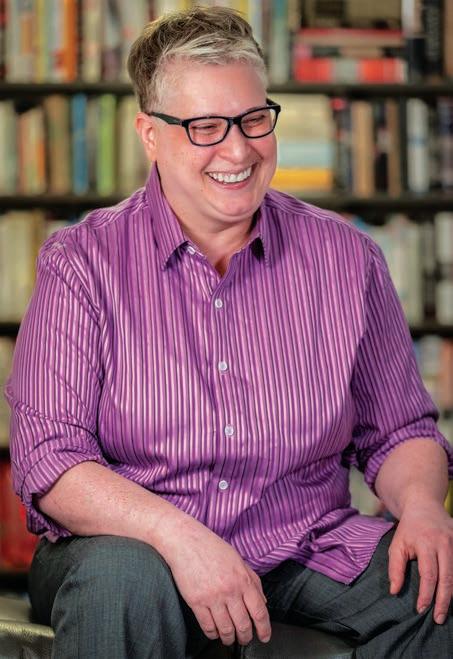
How do you identify? Butch Jewish Lesbian. What are you looking for in a mate? Smart, funny, kind - a mensch.
Biggest turn off: Closed mind, closed heart, no mask.
Biggest turn on: A big brain, a big heart and the ability to make me laugh my a** off. Having both COVID-19 vaccination shots is HOT. Hobbies? Cooking, going to theater, hiking and building furniture. Yes, I have tools and can fix that thingamajig for you.
What is your ideal first date? Karaoke! Any fascinating Atlas Obscura event. Walking through Descanso Gardens.
Pets, kids, or neither? I have the best dog in the world. I am a very proud aunt to amazing nieces and nephews, both biological and chosen. Child Rearing from birth is beyond me now, but pre-existing kids that come with an awesome parent are welcome.
Would you date someone whose political views differ from your own? I’m always game for a good political tête-à-tête; However, if we don’t share the same sense of morality and respect for objective truth, then we’d be wasting each other’s time.
Celebrity crush: Regina King. Geena Davis. Sara Ramirez.
Name one obscure fact about yourself: As a teenager, I worked with penguins at the Zoo. Contrary to popular imagination, they do not dance. They are great laughers, though.
One of the advantages of living in a culture that obsessively records itself is that looking back on ourselves often delivers a healthy dose of 20/20 hindsight, not just on whatever piece of history we are trying to study but on all the things that have changed since it happened – and sometimes, on all the things that haven’t.
Such an experience is provided by “The Lady and the Dale,” HBO Max’s Duplass Brothers-produced docuseries that opens a window on 1970s America by relating the details of an implausible but true automotive industry scandal that captured headlines before fading into obscure cultural memory. In the process, it turns a quirky true-life tale of corporate chicanery into an eye-opening examination of the way our beliefs about gender shape the public narrative. It also forces us to ponder questions about how much those beliefs have evolved – if, indeed, they have evolved at all – in the years since the story it tells took place.
By JOHN PAUL KING

Directed by Nick Cammilleri and Zackary Drucker, the four-episode chronicle spins the kind of yarn that might be considered too implausible to be believed if it hadn’t happened in real life. It’s more than revisiting a news story – it’s the saga of one Elizabeth Carmichael, who splashed into fame at the height of the 1970s oil crisis with her introduction of a fuel-efficient, radically redesigned automobile called the Dale. Armed with a prototype and a knack for promotion, she gathered an impressive stable of designers and engineers and started her own company, the Twentieth Century Motor Car Corporation, and began touting her innovative, three-wheeled vehicle to an American public in the grip of an OPEC-driven fuel shortage that had driven gas prices to record highs.
Taking advance orders to fund production, the upstart entrepreneur soon fell under suspicion for her seemingly outrageous promises of 70-mile-per gallon fuel economy and a quick rollout; when technical setbacks cast even more doubt on her claims, increased scrutiny from media and law enforcement uncovered a hidden past of shady scams, audacious escapes, and concealed identity, culminating in the revelation that she was both a longtime fugitive from justice and a transgender woman. Choosing to defend herself in court against charges of fraud and business code violations, she found herself also waging an uphill battle with misogyny and transphobia, and she ultimately opted instead to pull a decade-and-a-half-long disappearing act before authorities were finally able to catch up with her.
Assembled in the slick, now-familiar “docu-tainment” style that has become the fashion with high-profile shows of its ilk, “The Lady and the Dale” takes a deceptively bemused tone from the start. Though considerable footage exists of Elizabeth Carmichael from her days in the spotlight, much of her life can be glimpsed only through a few family photos and home movies, and the show makes up for this dearth of material by mining those images to create clever, quirky animations illustrating her story. These visual aids might seem too light-hearted to accompany a tale of deception, greed, crime, and systemic bigotry, but as more is revealed about the complex and conflicted underlying morality of the story, their whimsy seems more like irony – the kind that might arise from living through decades of oppression from a society oblivious to its own role as oppressor.
That is, of course, precisely the viewpoint Cammilleri and Drucker want you to take. As they piece together the details of Carmichael’s notorious misadventures – through interviews,
news and courtroom footage, and commentary by experts adding a contemporary perspective – they slyly, almost subversively peel back the convoluted layers of circumstance to reveal the unmistakable face of transphobia cowering at the core of her story. Using the tall-tale appeal of their subject, they draw their audience into an “if I only knew then what I know now” retrospect on an era when most Americans saw no difference between a transgender woman and a drag queen. The archival news coverage they show us is rife with misgendering and dead-naming, interviews with authorities and journalists assert the presumed untrustworthiness of a “man posing as a woman,” and the enthusiasm with which media and authorities cast Carmichael as a villain and raises a now-obvious red flag about the real reasons behind her merciless persecution. By the time the series reaches its halfway mark, it becomes clear that, while she may well have been culpable in the events that led to the charges against her, she was really being punished for the crime of being trans.
At the same time, the series provides an unexpectedly positive parallel real-life narrative, in which Carmichael managed to successfully transition while continuing in her role as head of a household, maintaining the love and support of a family who stayed with her even through years of living on the lam. Through interviews with children and other relatives, we learn about a warm and loving person who was fully accepted on her own terms by a wife and kids that stayed loyal despite an unstable and often dire lifestyle. Couple these with the descriptions coming from associates from the Dale days of a charismatic, dynamic leader who inspired their faith and commitment even as the project fell apart, and you have a very different person from the unscrupulous grifter in the portrait painted by the authorities, journalists, and other public voices who led the charge against her.
The reason behind this gap in perception between the people who knew Carmichael and those who knew only an image they themselves had helped to create seems obvious. It’s why visibility is such an important facet in the fight for acceptance – the more we become aware that the people we demonize are people we actually know, the more our attitudes change and our empathy grows. But while this might seem like a no-brainer in 2021, it was not quite so clear in 1974. That it is so readily apparent now is testament to the power of hard work and activism.
Of course, not everyone in our society will be surprised by the revelations of hindsight bestowed by “The Lady in the Dale.” For trans audiences, the ingrained transphobia it explores is an all-too-familiar part of everyday life, a point underscored in the series by the presence of several trans commentators, who provide a scholarly and informed cultural perspective throughout. And while the distance of time allows the luxury of acknowledging how far we’ve come, it’s worth noting that at least one journalist interviewed for the film doubles down on the same transphobic bile he spewed forth when he covered the Carmichael case nearly five decades ago.
That’s what makes “The Lady and the Dale” much more than just the latest must-watch distraction on streaming TV. It’s also an essential piece of trans activism, wrapped in an entertaining package that is now being played on screens all across America for people who would likely have never clicked “play” on such a thing – and that’s a con job that Elizabeth Carmichael herself would be proud of.

Few writers are as popular or more embedded in pop culture
By KATHI WOLFE
You don’t know this about me but I’m a murderer. At least that’s what the brilliant, talented, queer novelist Patricia Highsmith, who was born 100 years ago, may well have called me.
Why, would Highsmith renowned for her novel “Strangers on a Train” and other psychological thrillers, have said this of me? Because, I confess, I’ve eaten snails, smothered, so to speak, in garlic and butter. Highsmith, a misanthrope, gave us in her fiction Tom Ripley, the world’s most charming, but murderous sociopath. Yet, she (seriously) believed that you were a murderer if you ate snails.
Welcome to the world of Patricia Highsmith!
Few writers are as popular, well regarded or more embedded in pop culture than Highsmith, who lived from 1921 to 1995. She wrote many short stories and more than 20 novels. More than 25 movies and numerous TV adaptations have been made of her work. Highsmith’s diaries (comprising some 8,000 pages) will be published this year. A movie, with the same name, of her 1957 psychological erotic thriller “Deep Water,” starring Ben Affleck and Ana de Armas will be released in August.
Her first novel, “Strangers on a Train,” is a gripping psychological thriller. In it, two men, strangers, meet on a train. Guy has a troublesome wife who won’t divorce him, and Bruno, an engaging sociopath is enraged that his wealthy father won’t give him money. Bruno proposes that they go “criss-cross” – that they murder the person who’s so annoying to each other. Alfred Hitchcock’s 1951 movie of the novel will keep you glued to your seat.
derailed her career. “The Price of Salt” was a rare novel for that time: It featured a lesbian couple who didn’t die or go to jail. It gave hope to generations of queers.
A Fort Worth, Texas native, she moved at age 12 with her mother and
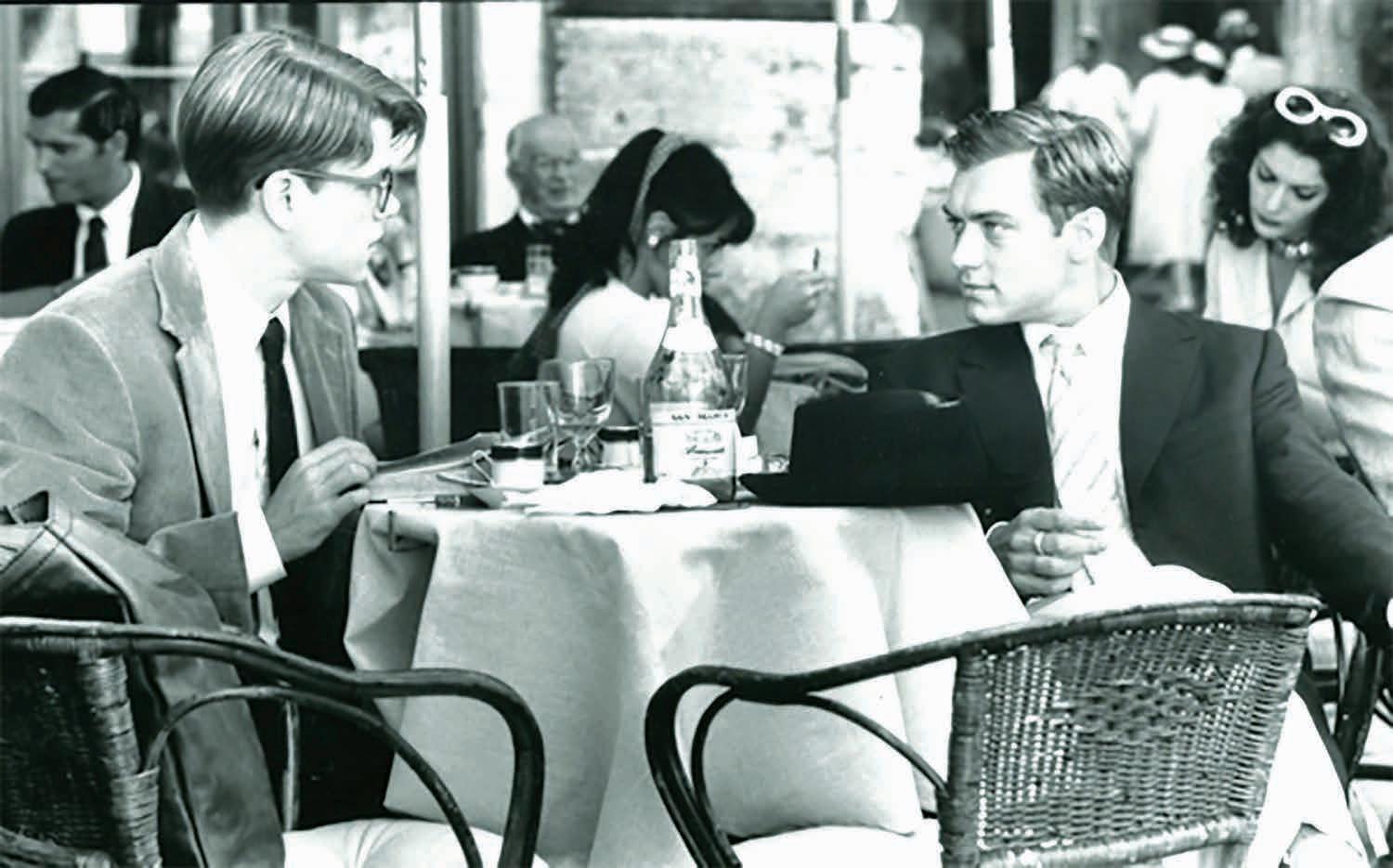
Highsmith is perhaps best known for her series of novels about Tom Ripley. (“The Talented Mr. Ripley,” the first of the Ripley novels, was published in 1955. The last Ripley thriller, “Ripley Under Water,” was released in 1991.) Ripley is a sociopath. Lies are to him what potato chips are to junk food addicts: he can never tell just one. Ripley steals other people’s identities, forges paintings and murders anyone who’s an obstacle on his path. Yet, I dare any reader, no matter how saintly, not to love him. He’s handsome, courteous, clever, witty, great at doing impressions of people and has fabulous taste in art, food, and wine. Highsmith’s work will give you an unforgettable mix of pleasure and suspense. As you read, you’ll wonder: Why am I enthralled by characters who deceive and steal identities as naturally as they might have a beer or coffee? Why am I rooting for a murderer? Graham Greene called Highsmith “the poet of apprehension.”
Perhaps Highsmith’s most important contribution to LGBTQ history was her groundbreaking 1952 novel “The Price of Salt” (later re-titled “Carol”). As I’ve written before in the Blade, Highsmith originally wrote the novel under the pseudonym Clare Morgan out of fear that using her real name would have
stepfather to New York City. Highsmith often said that her mother had told her that she’d tried to abort her by drinking turpentine.
Highsmith was brilliant, eccentric, but “bigoted, obsessed and intolerant,” Richard Bradford wrote in “The Daily Mail.”
She had numerous relationships with women as well as some male lovers. In one diary entry, Highsmith noted that she’d had 10 lovers in one day. She “made the likes of Casanova look demure,” wrote Bradford, author of the new biography “Devils, Lusts and Strange Desires: The Life of Patricia Highsmith.”
Highsmith didn’t like Black people or women (except for sex). She was so virulently anti-Semitic that she wished more Jewish people had been killed in the Holocaust.
Yet, Highsmith had a soft spot. She left her estate to Yaddo, the writer’s retreat where she worked on “Strangers on a Train” in 1948.
Knowing about Highsmith’s bigotry is stomach turning. Yet her writing is magnificent, thrilling, pleasurable, and psychologically profound. That’s something to celebrate on her centennial.