


By BRODY LEVESQUE
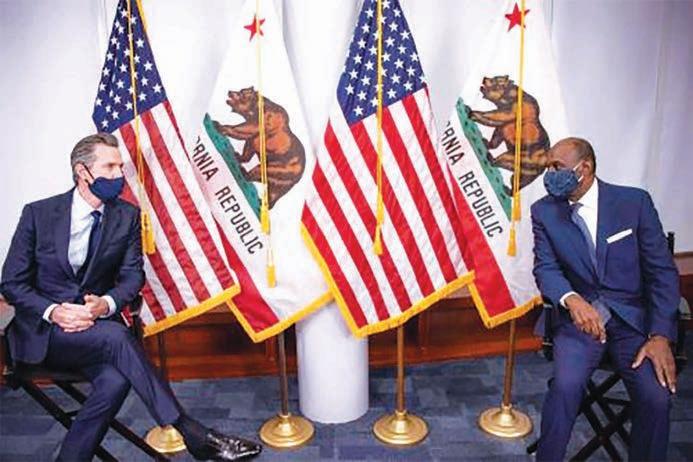
SACRAMENTO – California Governor Gavin Newsom announced in a press conference on Monday that he has nominated Martin Jenkins, 66, an openly out Black former prosecutor and judge to the open seat on the state’s highest court.
“I am truly humbled and honored to be asked by the Governor to continue serving the people of California on the Supreme Court,” Jenkins said. “If confirmed, I will serve with the highest ethical standards that have guided me throughout my career, informed by the law and what I understand to be fair and just.”
Jenkins currently serves as Newsom’s Judicial Appointments secretary. He would become the first openly gay man on the California Supreme Court, and only the third Black man ever to serve on the state’s highest court. It has been 29 years since an African American man has served on the California Supreme Court.
“Justice Jenkins is widely respected among lawyers and jurists, active in his Oakland community and his faith, and is a decent man to his core,” Newsom said. “As a critical member of my senior leadership team, I’ve seen firsthand that Justice Jenkins possesses brilliance and humility in equal measure. The people of California could not ask for a better jurist or kinder person to take on this important responsibility.”
In his role as Newsom’s Judicial Appointments Secretary, Jenkins spearheaded transparency efforts by making public the Regional Judicial Selection Advisory Committees, so that for the first time in California history, the individuals who provide feedback on judicial candidates for nomination and appointment will be known to the public.
of California Saundra Brown Armstrong.
“With each of his successes, he has worked to create in his wake an easier path forward for others. I view Justice Jenkins as a ‘thinking judge.’ He presides and decides in an openminded, even-tempered, courteous, patient and compassionate manner. Importantly, Justice Jenkins never loses sight of the fact that, behind every case file, stand people who will be impacted by his decision. He is a courageous jurist who is not haunted or immobilized by the fear of being wrong, nor is he struck with a sense of his own immutable correctness. What’s important to Justice Jenkins is achieving results that are just, and that, from my perspective, is the quality of an excellent judge,” Judge Brown added.
According to a media statement from the governor’s office, Jenkins has worked closely with these committees to appoint 45 jurists, ‘helping promote the diversity of the California judiciary for years to come.’
Prior to his role in the Newsom Administration, he served as an Associate Justice on the California Court of Appeal, First Appellate District from 2008 to 2019. He was appointed by President Bill Clinton to the U.S. District Court for the Northern District of California in 1997 and served on the bench until 2008.
In addition to his recent judicial service, Jenkins served as a judge on the Alameda County Superior Court from 1992 to 1997 and on the Oakland Municipal Court from 1989 to 1992. From 1986 to 1989, he was a trial attorney with the Pacific Bell Legal Department of San Francisco and from 1983 to 1986, he worked in the U.S. Department of Justice as a trial attorney litigating civil rights cases. From 1980 to 1983, he worked as a prosecutor for the Alameda County District Attorney’s Office. He earned a Juris Doctor degree from the University of San Francisco School of Law.
“Justice Jenkins subscribes to the reality that we are merely stewards of our positions of leadership and it is incumbent upon us to do what we can to prepare the next generation to succeed us,” said Senior U.S. District Judge of the U.S. District Court, Northern District
Senator Scott Wiener (D-San Francisco) and Assemblymember Todd Gloria (D-San Diego) — Chair and Vice Chair of the California Legislative LGBTQ Caucus applauded Governor Newsom’s appointment of the first LGTBQ justice to sit on the California Supreme Court.
In an emailed statement to the Blade the lawmakers wrote:
“We commend Governor Newsom for once again making history by appointing the first ever LGBTQ Justice to the California Supreme Court. The LGBTQ community is dramatically under-represented in the judiciary, and particularly so at the appellate level. This appointment is a major step toward a judiciary that represents the entire community. Justice Jenkins is superbly qualified to serve on the Court.
His distinguished legal career, particularly as a Justice on the California Court of Appeal and a United States District Judge, will serve him and all of us well. Moreover, as a Black gay man, Justice Jenkins brings an important perspective to the Court during a period of time when our society is moving through a long-overdue reckoning on race. We applaud Governor Newsom for this strong pick.”
“Governor Newsom’s appointment of California’s first openly gay supreme court justice is a monumental step forward for the LGBTQ+ community and for our entire state,” said Equality California Executive Director Rick Chavez Zbur.
“Not only is Justice Jenkins exceptionally qualified and an outstanding choice for California’s highest court, but he embodies the values of our great state. Governor Newsom is setting a national example as he works to ensure California’s government reflects the diversity of the people they serve.”
Jenkins, a registered Democrat, will fill the vacancy created by the retirement of Associate Justice Ming W. Chin. The Governor’s nomination must be submitted to the State Bar’s Commission on Judicial Nominees Evaluation and confirmed by the Commission on Judicial Appointments.
The Commission on Judicial Appointments consists of California Supreme Court Chief Justice Tani Cantil-Sakauye, the state’s Attorney General Xavier Becerra and senior Presiding Justice of the state Court of Appeal, the honorable J. Anthony Kline.
By BRODY LEVESQUE
A spokesperson for the Los Angeles Police Department told the Los Angeles Blade Tuesday that detectives are investigating the stabbing attack on a transwoman in the Westlake District of downtown LA at MacArthur Park Sunday as a hate crime.
The LAPD said that the victim, identified as Daniela Hernandez, was walking along Wilshire Blvd at MacArthur Park near South Park View at about 9p.m. Sunday evening when she was accosted by a group of approximately five individuals who shouted derogatory anti-LGBTQ slurs as they attacked and stabbed her. Hernandez was taken to a local hospital and is reported to be in stable condition Tuesday.
Hernandez is a volunteer with the TransLatin@ Coalition which issued a statement Monday afternoon denouncing the attack.
“We are filled with relief and happy that Daniela is still with us today, but outraged with the lack of respect for trans lives. Daniela was an integral and valued volunteer with TransLatin@ Coalition in ensuring that daily meals were provided to our community each and every day. She led with love and passion, to ensure that community was taken care of. Too often, the only safe spaces for transgender and gender non-conforming people are in trans-led community spaces, and the
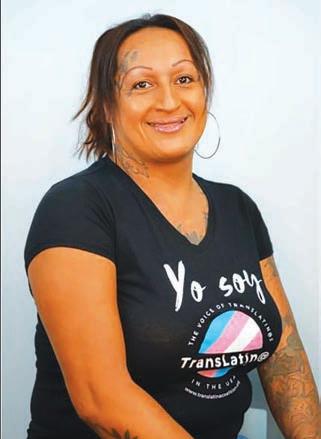
act of going outside or to the park can come with huge risks,” the statement read adding;
“This is why we fight for trans liberation, and liberation for transgender people can look as simple as walking outside without risk of harassment, discrimination or violence. It’s the everyday acts, that the ‘everyday’ person does not think twice about, that many of us wish to achieve. This is indicative of the positionality of the transgender community and is a signal of how much further we need to go in society.”
Bamby Salcedo, TransLatin@ Coalition president told the Blade in an emailed statement,
“It is unbelievable that there is no compassion for members of our community in the midst of this global pandemic. I do not get why people continue to have this kind of hate towards our community, being that our community is one of the hardest hit from this pandemic. Transphobia is (rampant) towards our sisters and we need to stop it now!”
The TransLatin@ Coalition held a rally and protest Monday evening near the site of Sunday’s assault.
The LA Kings, Los Angeles Lakers, LA Sparks, STAPLES Center, AEG and the Los Angeles County Registrar-Recorder/ County Clerk have announced that STAPLES Center will expand its commitment to serve as a Vote Center in the upcoming Presidential General Election to 11 days, the maximum number of days the County will facilitate in-person voting.
Voters can cast their ballots at STAPLES Center beginning Saturday, October 24 through Election Day, November 3. STAPLES Center also serves as a Vote by Mail Drop Box location for those who prefer to drop off their completed ballots in official, secure drop boxes provided by the L.A. County Registrar’s office.

“It is a great honor for the LA Kings to collaborate with our friends at the Lakers and Sparks,” Kelly Cheeseman, Chief Operating Officer, LA Kings and AEG Sports said in a statement released Monday. “We all can play a significant role in our community at our iconic home which will serve as an official Vote Center for the upcoming Presidential General Election. We feel strongly in the right to vote and we wanted to do our part to make the process as easy and smooth as possible. With STAPLES Center and AEG helping lead the effort, we will help shape the future and empower our fellow Angelenos to actively participate in the voting process.”
The STAPLES Center Vote Center is also supported by More Than A Vote, the National voting advocacy group founded by Black athletes and artists, including Lebron James, dedicated to combating systemic, racist voter suppression by educating, energizing, and protecting their community in 2020.
“More Than A Vote believes that every citizen should have access to a safe and convenient
voting option, so we’re incredibly proud to team up with the Sparks, Lakers, and Kings to provide voters in LA County with 11 days to cast their ballots at Staples Center,” said More Than A Vote Executive Director Addisu Demissie. “The level of collaboration between the teams and election administrators demonstrates what we can accomplish to provide a civic good in a moment of crisis.”
California Secretary of State Alex Padilla noted, “The LA Kings have been one of our most dependable partners in supporting our efforts to get Californians registered and ready to vote. This year the Kings and AEG are going above and beyond by providing 11 days of early voting at Staples Center. Early voting will be essential for a smooth election this year. I am asking any Californian who can vote early to do so this fall. With the COVID-19 pandemic, we want to avoid long lines and overcrowding at the polls. If more citizens vote early we can create a smoother voting experience through election day.”
The STAPLES Center Vote Center will be open to the public beginning Saturday, October 24. The location will be available to registered voters who live in the County of Los Angeles October 24 – November 2 from 10:00 am – 7:00 pm and, on Election Day, Tuesday, November 3, from 7:00 am – 8:00 pm.
Residents of the County of Los Angeles who are not registered to vote may visit the STAPLES Center Vote Center to conditionally register and cast a provisional ballot during hours of operation. Those who prefer to fill out the ballot they received in their home and deposit it in an official drop box supported by the Los Angeles County Registrar-Recorder/ County Clerk’s office can do so at STAPLES Center October 24 – November 3.
Who and what you are in the United States can determine your voting method. Is it a coincidence that one of those methods, voting by mail, is under attack by the privileged and the powerful?
A large political movement, driven by the president himself, appears hell bent on discouraging reasonable COVID-19 safe voting practices. Since the Trump-favoring demographic bloc is the bloc that ignores COVID-19 precautions and favors in-person poll voting, this rhetoric makes sense (except for pesky details such as that Trump himself will be voting by mail). They get to vote as they please, as fool hardy as it may be, and those who do not wish to vote that way, are either suppressed, dissuaded to not vote, or both.
A large segment of those who do not wish to vote in person are Black or brown. For racial minorities, the desire to vote by mail, rather than in person, is to have access, since many of their polling places are closed. Voting by mail is also to be more sheltered from the threat of COVID-19.
“Research increasingly shows that racial and ethnic minorities are disproportionately affected by coronavirus disease 2019 (COVID-19) in the United States. According to recent data from the Centers for Disease Control and Prevention (CDC), non-Hispanic American Indian or Alaska Native people had an age-adjusted COVID-19 hospitalization rate about 5.3 times that of non-Hispanic white people. COVID-19 hospitalization rates among nonHispanic Black people and Hispanic or Latino people were both about 4.7 times the rate of non-Hispanic white people,” states William F. Marshall, III M.D of the Mayo Clinic. “These factors — underlying health conditions, dense living conditions, employment in the service industry or as an essential worker, access to health care and racism — contribute to the impact of COVID-19 on people of color.”
Denying these Americans safe alternatives to voting in person is yet another exercise in systemic racism. As we near the election, it appears that for most, the ability to vote by mail will be not just a legitimate option, but potentially, their only option.
That is not to say that some of the concerns of the anti-mail voting campaign should be ignored. Hans von Sapolsky of the Heritage Foundation presented these observations on Fox News: “Mail-in ballots also have a higher rejection rate than votes cast in person. In the Paterson case, election officials apparently rejected 1 in 5 ballots for everything from signatures on the ballots not matching the signatures of voters on file, to ballots not complying with the technical rules that apply to absentee ballots…These kinds of technical problems— when a voter doesn’t provide all of the information required with an absentee ballot—occur because there is no election official in people’s homes to answer their questions. At polling places, by contrast, election officials can try to remedy any problems a voter encounter.”
Robert F. Kennedy Human Rights has moved to rectify that—they will be, in fact, putting a virtual “election official” in every mail-in voter’s home that wants it. They will do so via their newest, and brightest, PSA video on how the vote-by-mailer can make his or her ballot count. Per the organization’s own disclaimer, the video was “made for and by the young, queer, and bipoc communities, many of whom will be voting absentee for the first time in November,
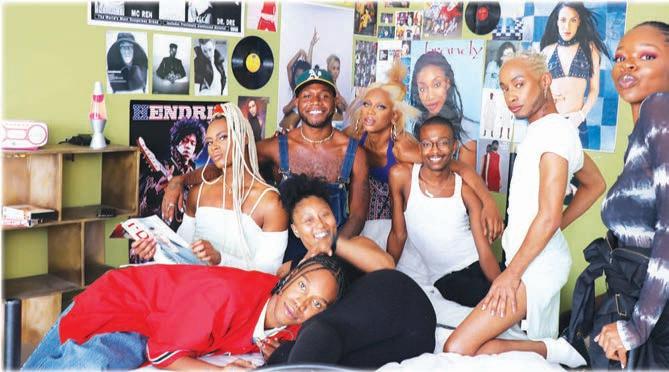

it explains how to avoid the common mistakes that could cause your mail-in ballot to be disqualified.”
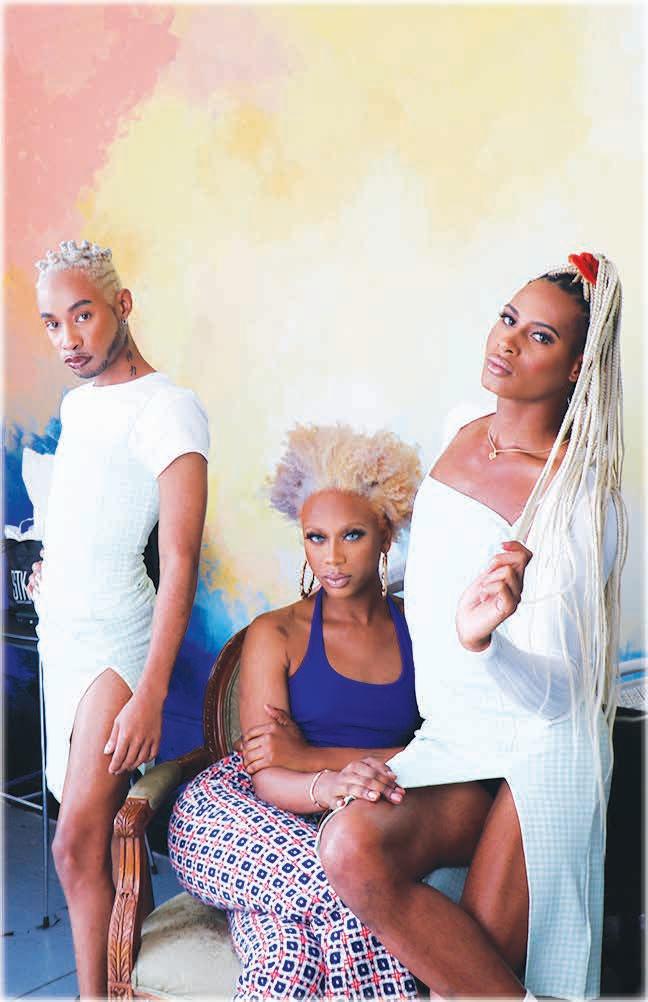
The video was created by a talented young filmmaker named Kadar Small, who stated, “When I was first contacted by RFK Human Rights to create a PSA about registering to vote and meeting election deadlines, I knew it was important for me to not only create something ‘aesthetically pleasing’ but to be able to identify myself and my community within the video. We purposely cast all Black and queer individuals knowing my community has been so deeply affected by the last presidential election and will be heavily impacted by this year’s as well. If we want to see change in November, it’s our job to hold one another accountable and actually take the proper steps towards progress by voting and making our voices heard.”
By ROB WATSON
The video covers key pointers such as signing the outside properly and with your full name, and to mark the ballot cleanly by coloring in the circles and not just putting in a mark or an “x”. For members of the BIPOC community who need to see themselves to relate—the video is presented by someone who looks exactly like them.
I had the opportunity to interview Small, and the on camera talent for the video, a transgender actress named Barbie, for the podcast RATED LGBT RADIO. I asked Small what was at stake for the BIPOC community this election. He told me, “In my opinion, so much is at stake given the violence against the Black queer community. Trump has done so little to protect the Black trans community, or Black men. This did not just happen, the quarantine just made it more visible. My parents told me of it happening when I was a kid. In the last election, I was just old enough to vote, but so many others did not take it seriously and did not vote, we did not see what was at stake. Now we do, with police brutality and white supremacy, all those issues—It is making us say—no, we need to make a proper change.”
“This experience opened my eyes as to how important voting should be to everyone,” stated video spokesperson Barbie. “It does make me feel a bit foolish that I did not know its impact before. What smacked me in the face was Trump’s being elected at all. It was outlandish, and taboo. I was stunned when it happened. I felt like we were doomed. When I see all that he is doing this election… it is literally a gag. Literally a gag. Trump does not care who I am, does not like me at all. I need to do what I can to shape America.”
Her message to anyone not inclined to vote this election: “That cannot be an option.”
Kadar Small concurred, “To not vote is ignorant. It means you are OK with everything that is transpiring, and you are OK with it continuing. We must take control, and the first step of taking back control is to vote. Trump policies with COVID-19 are putting Black communities more at risk than others.”
I asked what message Small wanted to send Donald Trump, who seeks to turn any protest on Black Lives Matter into an issue of “law and order.”
Small had no message for Trump at all. There is no hope of being heard. At this point, all that is necessary is— to have Trump leave office.
“He knows he is killing black people. He does not care.”

By BRODY LEVESQUE
Twenty-two years ago this Tuesday, a University of Wyoming freshman left the Fireside Lounge & Bar in downtown Laramie just after midnight and was found hours later tied to a fence outside of town badly beaten and left to die. The reason for the attack was simply because he was gay.
There are relatively few people over the age of 35 who haven’t heard of that young student as his murder shocked the nation. Matthew Shepard, 21, who died six days later on October 12, 1998, became the iconic symbol for those devoted to the cause to stop the hatred and anti-LGBTQ animus.
Led by his grieving parents, Dennis and Judy Shepard along with their surviving son Logan who as a family created a foundation in his name, a movement took off to raise awareness to prevent future hate crimes and culminated with The Matthew Shepard and James Byrd Jr. Hate Crimes Prevention Act passed by Congress on October 22, 2009, and signed into law by then President Barack Obama on October 28, 2009.
Yet, there are those younger than thirty-five, especially under the age of twenty-seven who may only be vaguely aware of Shepard’s story. Others will recognise his image but in an ‘iconic pic’ mode, and then many others not at all.
Shepard died in an era where the LGBTQ community had lost many to the scourge of the AIDS pandemic- in fact he himself was positive. Same-sex marriage had been banned by the federal defence of marriage act, and open LGBTQ military service was also banned by the ‘Don’t Ask-Don’t Tell’ policy.
It was an era that most states had laws prohibiting private homosexual activity, sodomy, and oral sex between consenting adults until the 2003 Supreme Court decision Lawrence v Texas which ruled those laws were unconstitutional.
A young LGBTQ person born that year, now two decades later enjoying a greater sense of freedom to be themselves, especially as evidenced by the plethora of LGBTQ people interacting on social media platforms such as Instagram, Tik-Tok, Snapchat, and Discourse-
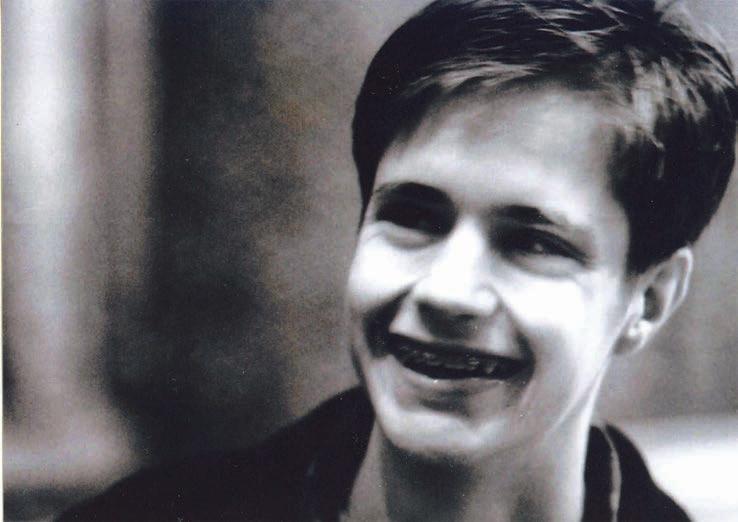
may not realise that in great part that freedom was in part due to Shepard’s death resulting from the activism of a distraught and angered LGBTQ community afterwards.
It is no small irony that his mother Judy noted in a conversation with Emmy Award winning filmmaker Michele Josue in her 2014 film, ‘Matt Shepard is a friend of mine’; “One of Matt’s greatest legacies is a generation of advocates.”
Yet there is the fact that LGBTQ people are still very much at risk of experiencing the hatred that Shepard faced. In fact in the case of Transgender people especially Black or LatinX, that hatred can have lethal consequences. Thus far in 2020, 27 trans people have died, most of whom were murdered.
Shepard is more than just an icon of LGBTQ history or symbolic of the gains made since his murder, he is also a consistent warning that hatred must be addressed in all forms and erased from the lexicon of the American nation in order to achieve full equality.
It is true that great gains have been made, but at great cost. For these reasons remembering Matthew Shepard is an imperative.
FROM STAFF REPORTS
A poll conducted this past July surveying young people and released last Friday by Morning Consult and The Trevor Project, found that a majority of those responding reported experiencing symptoms of anxiety or depression because of the coronavirus pandemic.
The survey was to determine the long-term effects of the pandemic on youth, which the results showed that three quarters of those surveyed also reported suffering from long term loneliness due to the forced isolation created by implementation of health order restrictions.
Researchers surveyed 1,200 young people between the ages of 13 and 24, 600 of whom identified as LGBTQ and 600 non-LGBTQ young people. Researchers discovered that stayat-home orders and virtual distance learning has led to 41% of LGBTQ youth stating that COVID-19 impacted their ability to express their LGBTQ identity, including more than half of transgender and nonbinary youth (56%).
The researchers also discovered that 1 in 3 LGBTQ youth were distrustful of their family in providing health information on COVID-19 compared to 1 in 5 non-LGBTQ youth.
Additionally nearly 1 in 4 LGBTQ youth who responded told researchers they were unable to access mental health care because of the pandemic. Many of those also reported being stuck in unsupportive households or living situations, and nearly one-third of transgender and nonbinary youth reported feeling unsafe in their living situation.
“This year has been difficult for everyone, but it has been especially challenging for LGBTQ youth, and particularly Black LGBTQ youth, who have found themselves at the crossroads of
multiple mounting tragedies,” Amit Paley, the executive director of The Trevor Project, said in an emailed statement.
“We’ve known that LGBTQ youth have faced unique challenges because of the countless heartbreaking stories we’ve heard on our 24/7 phone lifeline, text, and chat crisis services; but these findings illuminate the existence of alarming mental health disparities that must be addressed through public policy,” he stated.
The Los Angeles Blade had communicated with The Trevor Project last May and was told then the volume of youth reaching out to its crisis services nearly doubled from its prepandemic volume.
For young Black and LatinX LGBTQ youth compounding symptoms of anxiety or depression has been the onslaught of ongoing media reports of police violence against Black people and other minorities researchers discovered. The survey found that 78% of Black LGBTQ youth stated they had been negatively affected. Within that group, 44% of Black LGBTQ youth said their mental health and well being had been negatively affected “a lot.”
Only 8% of Black LGBTQ youth surveyed said police were there to protect them, and 71% of LGBTQ youth reported that they “deeply distrust the police.”
If you or someone you know is in crisis, call the National Suicide Prevention Lifeline at 800273-8255, If you are an LGBTQ young person in crisis, feeling suicidal or in need of a safe and judgment-free place to talk, call the TrevorLifeline now at 1-866-488-7386.
This is only a brief summary of important information about BIKTARVY and does not replace talking to your healthcare provider about your condition and your treatment.
BIKTARVY may cause serious side e ects, including:
Worsening of hepatitis B (HBV) infection. If you have both HIV-1 and HBV, your HBV may suddenly get worse if you stop taking BIKTARVY. Do not stop taking BIKTARVY without first talking to your healthcare provider, as they will need to check your health regularly for several months
ABOUT BIKTARVY
BIKTARVY is a complete, 1-pill, once-a-day prescription medicine used to treat HIV-1 in adults and children who weigh at least 55 pounds. It can either be used in people who have never taken HIV-1 medicines before, or people who are replacing their current HIV-1 medicines and whose healthcare provider determines they meet certain requirements.


BIKTARVY does not cure HIV-1 or AIDS. HIV-1 is the virus that causes AIDS.
Do NOT take BIKTARVY if you also take a medicine that contains:
dofetilide
rifampin
any other medicines to treat HIV-1
BEFORE TAKING BIKTARVY
Tell your healthcare provider if you:
Have or have had any kidney or liver problems, including hepatitis infection.

Have any other health problems.
Are pregnant or plan to become pregnant. It is not known if BIKTARVY can harm your unborn baby. Tell your healthcare provider if you become pregnant while taking BIKTARVY.
Are breastfeeding (nursing) or plan to breastfeed. Do not breastfeed. HIV-1 can be passed to the baby in breast milk.
Tell your healthcare provider about all the medicines you take:

Keep a list that includes all prescription and over-the-counter medicines, antacids, laxatives, vitamins, and herbal supplements, and show it to your healthcare provider and pharmacist.
BIKTARVY and other medicines may a ect each other. Ask your healthcare provider and pharmacist about medicines that interact with BIKTARVY, and ask if it is safe to take BIKTARVY with all your other medicines.
BIKTARVY may cause serious side e ects, including:
Those in the “Most Important Information About BIKTARVY” section.
Changes in your immune system. Your immune system may get stronger and begin to fight infections. Tell your healthcare provider if you have any new symptoms after you start taking BIKTARVY.
Kidney problems, including kidney failure. Your healthcare provider should do blood and urine tests to check your kidneys. If you develop new or worse kidney problems, they may tell you to stop taking BIKTARVY.
Too much lactic acid in your blood (lactic acidosis), which is a serious but rare medical emergency that can lead to death. Tell your healthcare provider right away if you get these symptoms: weakness or being more tired than usual, unusual muscle pain, being short of breath or fast breathing, stomach pain with nausea and vomiting, cold or blue hands and feet, feel dizzy or lightheaded, or a fast or abnormal heartbeat.
Severe liver problems, which in rare cases can lead to death. Tell your healthcare provider right away if you get these symptoms: skin or the white part of your eyes turns yellow, dark “tea-colored” urine, light-colored stools, loss of appetite for several days or longer, nausea, or stomach-area pain.
The most common side e ects of BIKTARVY in clinical studies were diarrhea (6%), nausea (6%), and headache (5%).
These are not all the possible side e ects of BIKTARVY. Tell your healthcare provider right away if you have any new symptoms while taking BIKTARVY.

You are encouraged to report negative side e ects of prescription drugs to the FDA. Visit www.FDA.gov/medwatch or call 1-800-FDA-1088.
Your healthcare provider will need to do tests to monitor your health before and during treatment with BIKTARVY.
This is only a brief summary of important information about BIKTARVY. Talk to your healthcare provider or pharmacist to learn more.
Go to BIKTARVY.com or call 1-800-GILEAD-5


If you need help paying for your medicine, visit BIKTARVY.com for program information.



























A fiery and unexpected statement from U.S. Associate Justices Clarence Thomas and Samuel Alito Monday signaling their intent to undermine the Obergefell decision is raising questions about whether marriage rights for same-sex couples are in danger, especially with the possible addition of Amy Coney Barrett to the U.S. Supreme Court.
The statement, which is irregular and completely voluntary, was made in response to the denial of a petition to review the case of Kim Davis, a former county clerk in Kentucky who gained notoriety in 2015 for refusing to issue marriage licenses — both to same-sex couples and opposite-sex couples — based on her religious objections to Obergefell v. Hodges.
By CHRIS JOHNSON | cjohnson@washblade.com
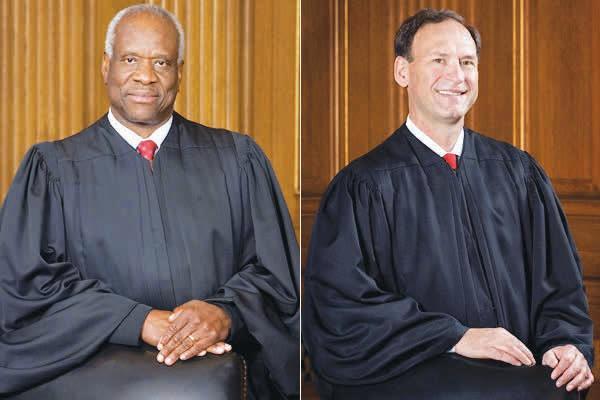
Thomas, in a statement co-signed by Alito, writes he concurs with the decision to deny review of the case, which has been percolating through the judiciary for some time, but says her request “provides a stark reminder of the consequences of Obergefell.”
“By choosing to privilege a novel constitutional right over the religious liberty interests explicitly protected in the First Amendment, and by doing so undemocratically, the Court has created a problem that only it can fix,” Thomas writes. “Until then, Obergefell will continue to have ‘ruinous consequences for religious liberty.’”
Thomas criticizes the Obergefell decision, accusing the majority of impairing religious liberty and belittling the views of objectors who oppose same-sex marriage on religious grounds.
“It would be one thing if recognition for same-sex marriage had been debated and adopted through the democratic process, with the people deciding not to provide statutory protections for religious liberty under state law,” Thomas said. “But it is quite another when the Court forces that choice upon society through its creation of atextual constitutional rights and its ungenerous interpretation of the Free Exercise Clause, leaving those with religious objections in the lurch.”
The willingness of two justices to signal they would to seek overturn precedent for marriage equality five years after it was established was a shock to observers who thought the issue had been resolved. Even President Trump has said he’s “fine” with the decision and thinks the matter “settled.”
Alphonso David, president of the Human Rights Campaign, said in a statement the message from Thomas and Alito “proves yet again that a segment of the Court views LGBTQ rights as ‘ruinous’ and remains dead set against protecting and preserving the rights of LGBTQ peoples.”
“From eliminating hospital visitation rights and medical decision-making in religiously affiliated medical centers to granting businesses a license to discriminate against LGBTQ couples, ‘skim-milk marriage’ would have a devastating effect on our community’s ability to live freely and openly,” David added, quoting a now famous quip from the late Ruth Bader Ginsburg in 2013 during oral arguments against the Defense of Marriage Act.
Although the statement was signed by only two justices and a majority of five
is needed to overturn marriage equality on the nine-member court, it raises questions about the confirmation of Barrett, whose nomination is still pending before the Senate Judiciary Committee after Trump picked her to replace progressive champion Ruth Bader Ginsburg.
If confirmed, Barrett — who’s known for having a conservative judicial philosophy —would take the place of a justice would was solidly in support of same-sex marriage, skewing the balance of the court further to the right.
David pointed out Barrett has said she openly holds the views of Antonin Scalia and Thomas and Alito “channel” the late justices with their statement.
“That fact, along with Barrett’s ties to anti-equality extremist groups who aim to criminalize LGBTQ relationships in the United States and abroad, shows that Barrett will only embolden these anti-equality extremist views on the Court,” David said, referring to Barrett admitting to having taken a fee to speak at a group associated with the antiLGBTQ legal firm Alliance Defending Freedom.
The Washington Blade has placed a request with the White House on whether Trump thinks marriage rights for same-sex couples would be safe in the aftermath of the confirmation of Barrett to the high court.
Conservatives have already had wins on the Supreme Court with the confirmations of U.S. Associate Justices Neil Gorsuch and Brett Kavanaugh in the Trump administration. Neither, however, signed the statement, nor did U.S. Chief Justice John Roberts, who dissented from the Obergefell decision but has been siding with liberal justices in recent decisions.
James Esseks, director of the American Civil Liberties Union LGBT & HIV Project, said the statement from Thomas and Alito was “appalling” in the aftermath of same-sex couples having secured the right to marry and same-sex couples enjoying the right for five years.
“When you do a job on behalf of the government — as an employee or a contractor — there is no license to discriminate or turn people away because they do not meet religious criteria,” Esseks said. “Our government could not function if everyone doing the government’s business got to pick their own rules.”
Esseks continued Thomas’ statement puts into stark relief the possible consequences of the pending case before the Supreme Court of Fulton v. City of Philadelphia, which will decide whether a Catholic foster agency has a First Amendment right to reject same-sex parents and still obtain taxpayer funds through a government contract.
In the aftermath of Ginsburg’s death, legal observers have said the legality of religious-based refusals to LGBTQ people is the most vulnerable aspect of LGBTQ rights on the high court.
“That’s exactly what’s at stake in a case that will be argued on Nov. 4 — Fulton v. City of Philadelphia,” Esseks said. “We will fight against any attempts to open the door to legalized discrimination against LGBTQ people.”
Despite a recent assertion from Eric Trump that the LGBTQ community has “come out in full force” for his dad, a new poll commissioned by the LGBTQ media watchdog GLAAD confirms the opposite is true and LGBTQ voters back Joe Biden over President Trump by a substantial margin.
The poll, conducted by Pathfinder Opinion Research between Sept. 21-25 among 800 LGBTQ adults, found LGBTQ likely voters support Biden over Trump, 76 percent to 17 percent. (Five percent of LGBTQ likely voters said they planned to vote for another candidate, while two percent were unsure.)
Additionally, 81 percent of LGBTQ respondents said they were more motivated to vote than in previous elections and 92 percent said they planned to cast a ballot.
Sarah Kate Ellis, CEO of GLAAD, said in a statement of the polling results, “LGBTQ voters are poised to make a deciding difference this election year.
“Today’s poll demonstrates a monumental lead for Vice President Biden in the race for president,” Ellis said. “The poll should put to rest the misinformation from unreliable sources about where critical LGBTQ voters stand in this election, misinformation that’s unfortunately been repeated in the media.”
According to a Pathfinder Opinion Research memo, interviews for the poll were conducted online utilizing a national research panel.
LGBTQ respondents, the memo says, were selected to represent the national LGBTQ population based on demographic estimates published by the Williams Institute at the University of California, Los Angeles, and weighted by gender, age, race, education and geographic region based on Williams Institute data.
Other key findings among LGBTQ respondents to GLAAD’s ‘State of LGBTQ Voters’ poll:
• 88 percent of respondents report being registered to vote;
• 16 percent of LGBTQ respondents had a favorable opinion of Trump, while 75 percent had an unfavorable opinion;
• 57 percent of LGBTQ respondents had a favorable opinion of Biden and 25 percent had an unfavorable opinion;
• 13 percent of LGBTQ respondents had a favorable opinion of Vice President Mike Pence, while 65 percent had an unfavorable opinion;
• 50 percent had somewhat or very favorable opinions of Sen. Kamala Harris, with 32 percent having very favorable views of her;
• and 53 percent of LGBTQ respondents reported experiencing anti-LGBTQ discrimination.
The poll is consistent with other polling data on the LGBTQ voters in the 2020 election, such as a Morning Consult poll in June finding Biden leads Trump among LGBTQ people, 64 percent to 19
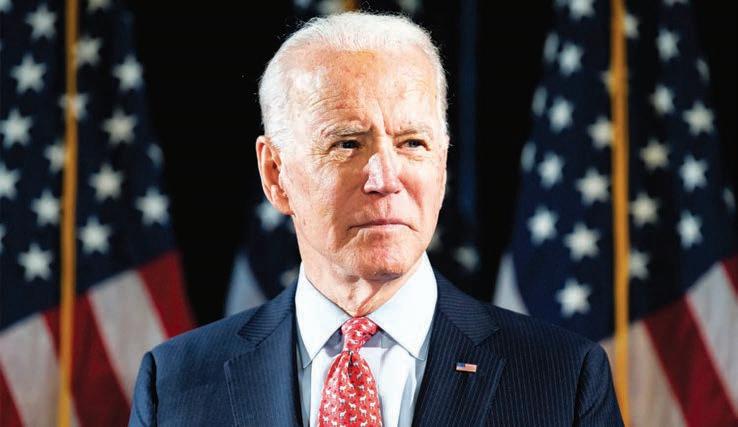
an

users of the gay dating app Hornet, which found 45 percent of LGBTQ men planned to vote for Trump.
Although that survey was highlighted by Tucker Carlson on Fox News and tweeted out by President Trump, polling experts rejected the data in interviews with the Washington Blade and one called media coverage of it “clickbaity, sloppy journalism.”
Barbara Simon, a GLAAD spokesperson, told the Washington Blade the LGBTQ media watchdog conducted the poll as part of “ongoing research” and its mission to find accurate data on LGBTQ people, but acknowledged the Hornet survey played a role.
“We kept seeing from the White House press secretary and Ric Grenell and others (including Trump himself) unsubstantiated claims of LGBTQ support…the Hornet poll was in the mix of that,” Simon said. “Your reporting on the Hornet poll showed why that poll wasn’t reflective, at all (thank you). We wanted to conduct a poll to set the record straight on the misinformation in the media about where our community stands and gauge registration and voter enthusiasm.”
CHRIS JOHNSON
A hashtag used by the far-right fascist group Proud Boys has been hijacked by gay men to the delight of thousands of people on social media.
The male-only organization, which is affiliated with white supremacists, gained notoriety last Tuesday after Donald Trump refused to condemn them in the first presidential debate.
Now gay men around the world have taken over the hashtag #ProudBoys to make it trend for different reasons.
STAFF REPORTS
In a tweet last Thursday evening, President Donald Trump announced that he and the first lady, Melania Trump, had tested positive for the coronavirus.
“Tonight @FLOTUS and I tested positive for COVID-19. We will begin our quarantine and recovery process immediately, We will get through this TOGETHER!” the president tweeted. This tweet followed an earlier tweet by Trump that disclosed that one of his closest presidential advisers had tested positive.
“Hope Hicks, who has been working so hard without even taking a small break, has just tested positive for Covid 19. Terrible! The First Lady and I are waiting for our test results. In the meantime, we will begin our quarantine process!”
But that was just the beginning, as scores of White House and Trump campaign officials
A scene from Schitt’s Creek. Similar images of men kissing made the rounds on Twitter last weekend in response to the attention the Proud Boys terrorist group received from President Trump during the first presidential debate.
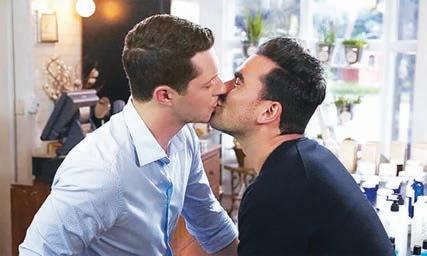
subsequently tested positive throughout the week, sowing chaos and creating confusion about the president’s condition.
Several COVID outbreaks seemed to center on a ceremony announcing Amy Coney Barrett as Trump’s Supreme Court nominee; numerous attendees later tested positive, including Sens. Mike Lee and Thom Tillis. Another outbreak seems to be linked to the White House press office, where Press Secretary Kayleigh McEnany and four of her deputies tested positive, along with several reporters. And a third vector appears to involve Trump’s debate prep team, where Kellyanne Conway and Chris Christie were infected. Later in the week, it emerged that speechwriter Stephen Miller also tested positive.
CHRIS JOHNSON
Many lives, including your own, may depend
By PETER ROSENSTEIN
It is up to us — Democrats, independents and other decent people — to give a huge victory to Joe Biden and Kamala Harris on Nov. 3. If we continue to work hard and the campaign focuses with laser-like effi ciency on the few swing states that will ensure Biden has the 270 Electoral College votes he needs I am sure we can and will do it.
Clearly we owe some small debt of gratitude to the lying, disgusting, racist moron in the White House. He continues to display all his worst traits and showed what a boor he is during the fi rst presidential debate. While I don’t wish him ill health, at least not anything fatal, after all I want to see him in jail after he loses the White House, his contacting coronavirus along with the slew of Republicans who have been around him in the past two weeks, just serves to highlight how poorly he has dealt with the pandemic. It reminds everyone he said it was all a hoax and even made fun of Biden during the debate for wearing a mask. While mocking Biden he may already have been sick since we can’t trust the White House is telling us the truth about when he knew he was ill.
While COVID is nothing to laugh at there were some funny lines making the rounds since Trump was sent to Walter Reed Naval Hospital where he continued to model poor behavior putting Secret Service agents in jeopardy for a political stunt. One comment going around was that Trump was annoyed with Kellyanne Conway for leaving the White House just before the campaign is over so when she stopped at the desk on the way out the door to return her badge and pick up her gift bag for being part of the administration, COVID was in it. A quote being repeated often and attributed to Mark Twain was “I have never wished a man dead but I have read many an obituary with great satisfaction.” While it’s agreed Mark Twain never said this, there was a similar quote by Clarence Darrow, the lawyer in the Scopes trial, verifi ed by Matt Blum, which is: “All men have an emotion to kill; when they strongly dislike someone they involuntarily wish he was dead. I have never killed anyone, but I have read some obituary notices with great satisfaction.”
The truth is all this is bad for the United States. We must now focus on what happens if Trump can’t fulfi ll his responsibilities and must transfer power to Mike
ROSENSTEIN is a longtime LGBTQ rights and Democratic Party activist. He writes regularly for the Blade.

Pence for even a short time. Why is Mike Pence still going to be out campaigning in person while we don’t know for certain whether Trump will be OK? Shouldn’t they be keeping him in Washington?
While all this is going on, Biden is being his usual decent self and has pulled all negative commercials, something we know Trump would never have done had the situation been reversed. Biden is being open and taking daily COVID tests, and announcing the results, since Trump put him in the position of having to do so by being near him when he may have already been sick.
New polling has come out since the fi rst presidential debate, all very positive with the Wall Street Journal/ NBC poll showing Biden up by 14 percent at over 50 percent with Trump below 40 percent. Biden is also tied or leading in every swing state. History teaches us it is not a time to let down our guard and think we have won. Just the last week has shown us what can happen in a few days’ time. First it was Trump’s taxes, then it was his disastrous debate performance, and then being diagnosed with COVID. Biden is not immune from last-minute surprises and surely the Trump campaign is looking for some to spring on him. So let’s buckle down, make those phone calls, send those postcards, call every family member and friend and remind them to vote. Literally many lives, including your own, may depend on the Biden/Harris ticket winning.
ADDRESS
5455 Wilshire Blvd, 21st Floor, Los Angeles, CA 90036
PHONE 310-230-5266
E-MAIL tmasters@losangelesblade.com
INTERNET losangelesblade.com
PUBLISHED BY Los Angeles Blade, LLC
PUBLISHER
TROY MASTERS tmasters@losangelesblade.com 310-230-5266 x8080 (o), 917-406-1619 (c)
SALES & MARKETING
SALES EXECUTIVE
ROMAN NAVARRETTE roman@losangelesblade.com 310-435-3022
PALM SPRINGS ACCOUNT EXEC
BRAD FUHR, 760-813-2020. brad@gaydesertguide.com
NATIONAL ADVERTISING
RIVENDELL MEDIA sales@rivendellmedia.com, 212-242-6863
MARKETING DIRECTOR
STEPHEN RUTGERS
srutgers@washblade.com, 202-747-2077 x8077
EDITORIAL
CONTRIBUTING WRITER
KAREN OCAMB karenocamb@losangelesblade.com
NATIONAL EDITOR
KEVIN NAFF kna @washblade.com, 202-747-2077 x8088
INTERNATIONAL EDITOR
MICHAEL K. LAVERS mlavers@washblade.com
EDITOR AT LARGE BRODY LEVESQUE
California CONTRIBUTORS
CHRISTOPHER KANE, AUSTIN MENDOZA, JOHN PAUL KING, JOEY DIGUGLIELMO, CHRIS JOHNSON, LOU CHIBBARO JR., MARIAH COOPER, REBEKAH SAGER, JON DAVIDSON, SUSAN HORNIK, CHANNING SARGENT, SAMSON AMORE, CHRISTOPHER CAPPIELLO, MICHAEL JORTNER, DAN ALLEN, SEAN SHEALY, SCOTT STIFFLER
CREATIVE DESIGN/PRODUCTION
AZERCREATIVE.COM
DISTRIBUTION
CHRISTOPHER JACKSON, 562-826-6602
All material in the Los Angeles Blade is protected by federal copyright law and may not be reproduced without the written consent of the Los Angeles Blade. e sexual orientation of advertisers, photographers, writers and cartoonists published herein is neither inferred nor implied. e appearance of names or pictorial representation does not necessarily indicate the sexual orientation of that person or persons. Although the Los Angeles Blade is supported by many ne advertisers, we cannot accept responsibility for claims made by advertisers. Unsolicited editorial material is accepted by the Los Angeles Blade, but the paper cannot take responsibility for its return. e editors reserve the right to accept, reject or edit any submission. A single copy of the Los Angeles Blade is available from authorized distribution points, to any individual within a 50-mile radius of Los Angeles, CA. Multiple copies are available from the Los Angeles Blade o ce only. Call for rates. If you are unable to get to a convenient free distribution






By TAUSIF SANZUM
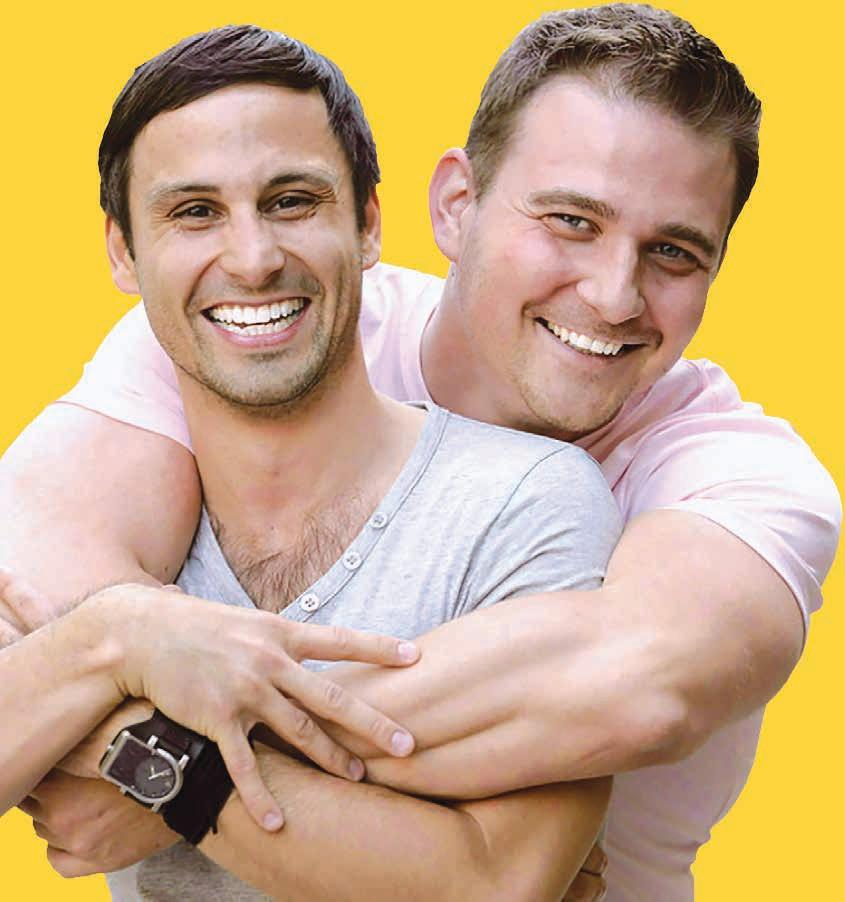
Ending any relationship can be hard but it becomes especially difficult if it is a beautiful and long-term relationship. I was 22 when I started dating my ex and by the time we broke up and moved out of our shared housing, I was 27. After the initial adjustment period, my friends encouraged me to jump onto the dating bandwagon and that is when all the drama in my life exploded. It had been five years since I last went on a date. Making a Tinder profile was definitely an interesting start. However, I soon realized that while I can meet wonderful people on dating apps or make great friends out of dates, not all dates led to potential long-term relationships. Also, it was important to keep in mind that it was not my responsibility to make a relationship out of every date.
Looking back at my dating profile in the last three years, here are few things that I learned, faced, struggled with and laughed at being a “feminine” brown gay immigrant navigating the dating scene in the USA.
‘IT IS ONLY MY PREFERENCE’ - or is it?
One thing I learned pretty early on dating apps is the clear discrimination that people can perpetuate. While they call it “preference,” people blindly or consciously remove a vast majority of people based on race, masculine/feminine behavior, physical attributes, career choices from the coveted list of “eligible singles.”
‘YOU DO NOT LIKE SEX ON FIRST DATES, IS IT A CULTURAL THING?’
No, it is a comfort thing.
There is definitely a pressure of whether to engage in sex on first dates or not. If you do have sex on first dates, you are too loose; if you do not have sex on first dates, you are too closeminded. As a survivor of multiple childhood molestation, my body takes time to adjust to a new person being intimate with me. A lot of the conversations on dating apps came down to whether my “culture” of being from a “close-minded” country like Bangladesh impacts my decision not to have sex more openly. What will it take for people to understand that being nude and having sex can make people feel vulnerable and giving people the time and safety to organically be engaged in it has less to do with the culture and country of upbringing?
‘YOU ARE BANGLADESHI, IS IT LIKE IN INDIA?’ UMM, NO!
It is not expected that one knows every country in the world but if you meet someone for a date, a simple Google search can tell you a lot about the country your date mentioned in your chat that he/she/ they are from. This small information not only makes you seem a little more informed but also understanding and respectful on your date.
‘YOU MUST LOVE SPICY FOOD, RIGHT?’
Just because I am brown and from Southeast Asia, does not mean that I love spicy food. Assumptions based on stereotypes are not sexy and have no place on a good date. Ask your date what they enjoy eating without imposing what you think that they might enjoy eating.
‘SO, WHAT IS YOUR IMMIGRATION STATUS?’
It’s just liked my financial status, non-existent. Not every person is after your American citizenship. Just imagine how making an assumption that an immigrant is on a date with an American citizen just to get a spousal immigration visa makes you look. Definitely rude, discriminatory and ignorant.
‘I REALLY LIKE YOU, BUT YOU ARE TOO VOCAL ABOUT POLITICAL ISSUES.’
Telling a person of color/immigrant/queer person that he/she/they is too politically vocal is the biggest sign of unchecked privilege. A lot of times people forget that a lot of things that they enjoy or take for granted are issues and privileges that minority groups have fought for and yet continuously get discriminated against today.
By TOM JOUDREY
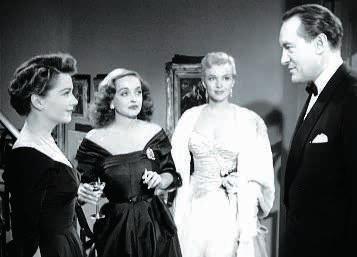
“All About Eve” was a triumph forged in a crucible of rancor and suspicion. Bette Davis bludgeoned the actress who played her onscreen confidant, Celeste Holm, as the “one bitch in the cast,” before adding cattily that George Sanders was also a “bitch” (she’d learned he was bisexual through Henry Fonda), then circling back for a swipe at Marilyn Monroe: “That blonde little slut couldn’t act her way out of a paper bag.” Monroe, who sobbed and vomited after shooting both her scenes with Davis, shot back: “That woman hates every female who can walk. She’s a mean old broad.”
The cast’s distrust mirrored the dynamics of the screenplay. “All About Eve” was built on a simple premise: There’s a viper in the nest. Bereaved widow Eve Harrington emerges from the shadowy alley in a rain-soaked trench coat, worms her way into stage actress Margo Channing’s inner-circle, then schemes and backstabs her way to the apex of the theater world.
But the story of the ambitious ingénue kneecapping the aging diva also captured the political zeitgeist during the Cold War. The Red Scare injected paranoia into American culture, inducing a paralyzing dread at the prospect of Communist infiltration. When Bill Sampson pleads with Margo to contain her “paranoic outbursts” and “paranoic tantrums,” he’s channeling the sense that the American psyche is at risk of being torn apart by anxiety over covert invasion. But the scale of the Cold War was unmanageable. The solution was to convert the domestic security of the nation into the domestic security of the nuclear family. The infiltrator went from Communist pinko to lavender menace.
The blackmailing, the rampant paranoia, the botched sexual seductions, the grasping after respectability—all these pieces fall into place only with a single realization: Eve is incidentally an aspiring actress but essentially a ruthless lesbian. The film falls squarely in that stretch of years when Hollywood had fallen under the heel of the Production Code, which, starting in 1934 forbade, among other obscenities, “any inference of sex perversion.” Perversely enough, the prohibition on explicit references to homosexuality made it the perfect menace. The unspeakability of the looming danger ratchets up the sense of dread.
The idyllic home under siege was an old Hollywood trope. In the white supremacist era of Jim Crow, “Gone with the Wind” managed fears over African-American reprisal by displacing white guilt onto a host of enemies—northern aggressors, carpetbaggers, General Sherman’s army of invaders—who reduce genteel plantations to rubble. Scarlett’s triumphant restoration of Tara metaphorically restores the integrity of the southern home.
I grew up in the late 1980s and 90s, when the trope of the diabolical home invader was in full force. The mother who hires a nanny, cautioned “The Hand That Rocks the Cradle,” is liable to have her infant purloined, her husband seduced, and her careerist
feminist friend fatally mangled by falling glass. “Fatal Attraction” warned of a high-heeled vamp breaching the home to boil the beloved pet rabbit.
But “All About Eve” undercuts its own pretensions to decency. Eve Harrington’s origins story is a humble tale of hardscrabble survival, anchored by vignettes of farm life in Wisconsin, a grueling stint as a secretary in a brewery, and an ill-starred marriage to a now-perished war-hero. But Birdie cuts in to quip, “What a story! Everything but the bloodhounds snappin’ at her rear end.” The vaudeville veteran sees right through this charade of benighted widowhood, peeling back the veneer to reveal the specimen of ruthless ambition beneath. On this level, Mankiewicz’s film is a masterwork of subversion, a precursor to films that savaged the American love affair with normalcy—“The Graduate,” “Blue Velvet,” “American Beauty,” and “Fight Club” among them.
That’s why “All About Eve” is essential viewing for our time. It reminds us that the call to “Make America Great Again,” buttressed by accusations of infiltration—trans people in bathrooms, nasty women in journalism, Jews replacing “us”—is built on an ugly illusion of purity in the heartland. Joseph L. Mankiewicz’s film guillotined the puerile myth of American innocence. It should stay dead.
Tom Joudrey writes about queer entertainment and politics. His work has appeared in Slate and The Guardian, among others.
Author
By TERRI SCHLICHENMEYER
In your mother’s book, you were known before you were born. She noted every kick, every head-bump, every stretch you made as she carried you. She felt your burps, and when you rolled over. And though she’d never met you, she recognized you the minute you arrived because your mother knew you before you were born. But as in the new book “Found in Transition” by Paria Hassouri, MD, a mother can’t know every thing. She always wanted to be a mom.
Born in the U.S., raised in Iran, Paria Hassouri was a teen when she returned to the U.S., where her mother insisted that Hassouri and her sisters get an education. But schooling was secondary in Hassouri’s eyes. She’d wanted children since she was a child herself, and was particularly eager to have daughters, though she was not terribly disappointed that her first two babies were sons.
For much of her life, the second born, Ava, had been a handful. There were many conversations with teachers through the years, Hassouri recalls: Teachers worried that Ava was depressed, had behavioral issues, or was suicidal. Ava was a smart kid with great creativity and she loved to try new things, but she didn’t tend to stick with them for more than a few months. Because of that, when, at the edge of adolescence, Ava finally told her parents that she was a girl, Hassouri thought it was another “phase.”
To her own later guilt, she refused to believe her child.
Though Hassouri was a pediatrician, her first identity was as the mother of three children, two boys and a girl, and now what? She was confused, wounded, and greatly saddened. She and her husband had carefully named their offspring according to family tradition, and now one of them wanted a new name and new pronouns that sounded wrong to Hassouri’s ears. She mourned that her second-born would never become the man she’d envisioned. She cried and grieved. And yet, she writes, there really were just two options.
“I choose figuring it out,” she said. “I choose my child.”
Reading “Found in Transition” is tough – not for what it is but for what author Paria Hassouri says. It’s almost like sandpaper on a sun burn.
Foremost, there are a lot of hard truths inside this memoir, for which Hassouri states: “I have to own them and be honest about them,” and that took courage – although confessions seem to be necessary here, for her and for readers. This book, in fact, would’ve been much different absent those harsh, sometimes incomprehensible feelings and thoughts; readers may have even sensed that it wasn’t quite complete.
No, it would have been the lesser without its brutal truths from this maternal point of view, because here’s the thing: though Ava is a constant presence in a memoir that truly wouldn’t exist without her, this is really not her story. It might make you angry, it might make you cry, but this tale belongs to her mother; indeed, “Found in Transition” is 100 percent a mother’s book.
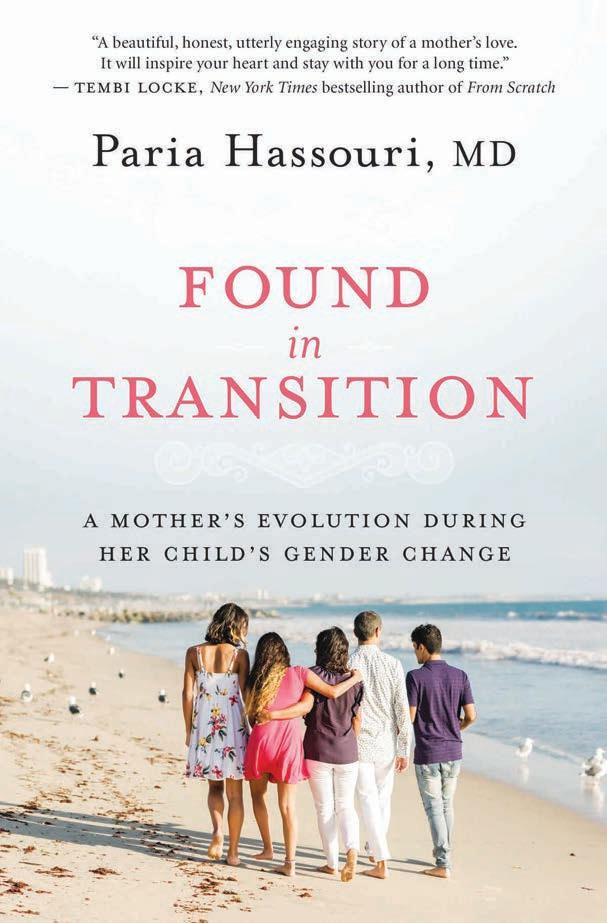
‘Found in Transition’
By Paria Hassouri, MD
c.2020, New World Library $25.95/215 pages


















By JOHN PAUL KING
October, as you might already know, is the month when at least two major LGBTQ+ film/media festivals – QueerX in Los Angeles and NewFest in New York – normally take place, and although COVID has presented challenges for these kinds of events, both are rising to the challenge, following the example set earlier this year by others and making most of their scheduled content available virtually.
It’s also LGBT History Month, and in light of this year’s unique position in the middle of a world-changing crisis, it seems appropriate to observe that within this practical adaptation lies the seed of a future in which queer content is more accessible than ever. For the first time, fans of LGBTQ film and television can participate in these kinds of festivals regardless of where they are, and in a post-COVID world it’s highly likely that’s an innovation that will stick, which could be good news for queer visibility, offering potentially millions of people access to content that was once denied them by geography and economics. Looking back at how far we’ve already come in that struggle, such a thing can only be viewed as remarkable.
Carver says he later approached this gay former co-worker at the valet station outside, asking him for clarification about what he meant; in response, he claims, the unnamed man slapped him across the face.
And yet, in looking back, we might also want to take note of what we’ve learned about the real enemy of visibility – the homophobia that has long existed in the entertainment industry itself, and the insidious way it works behind the scenes, thriving in the shadows even as the content we see becomes ever more inclusive.
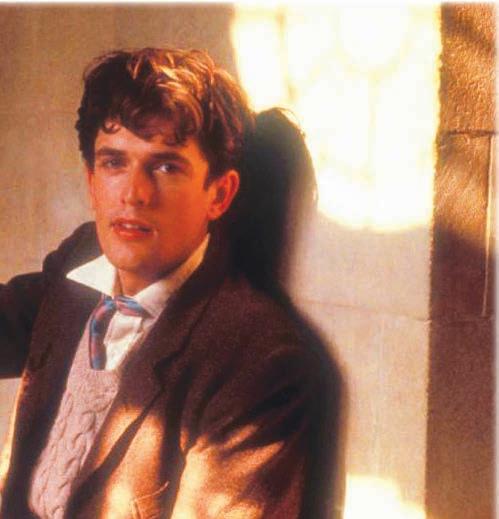
Conveniently enough, we can find a stark reminder in the story of out actor Rupert Everett – a poster boy for the way gay performers are sidelined by the mainstream industry – who is dropping a new memoir (his third) this month.
Like many British thespians, Everett had begun his career onstage, rising to prominence as a gay public school student in the Julian Mitchell play “Another Country.” When the play was adapted for the big screen, Everett reprised his role and became a rising star – but while playing a gay character might have been “brave” in Hollywood, actually being gay was quite another thing, and when the actor officially came out in 1989, the offers stopped coming.
It was a reversal of fortune that prompted him, 20 years later, to comment in an interview with The Guardian, “It’s not that advisable to be honest. It’s not very easy. And, honestly, I would not advise any actor necessarily, if he was really thinking of his career, to come out.”
Thanks in part to those remarks, the handsome actor can hardly be called a beloved figure within the LGBTQ+ community – but his experience has relevance here, nonetheless.
Despite his continuing presence on stage and screen in the UK, and a brief career resurgence that came in the ‘90s from a pair of GBF roles opposite Madonna (“The Next Best Thing”) and Julia Roberts (“My Best Friend’s Wedding’), the kind of superstardom for which he once seemed destined has been beyond his grasp ever since coming out; with that in mind, though it might not have been in step with the message we wanted to hear, his cynical advice for young gay actors to stay in the closet cannot be said to have been unwise.
At least, that was the case when he made those comments, a little over a decade ago –but is it still true now? Another recent celebrity disclosure seems to offer a disappointingly affirmative answer to that question.
In an interview last week, actor Charlie Carver disclosed a shocking story about a gay colleague who took extreme measures to warn him about revealing his sexuality publicly. Carver, who first garnered attention for his television roles in “Desperate Housewives” and “Teen Wolf,” has been open about his sexuality since 2016, but he told Variety that an unnamed industry associate – someone with whom he has worked before, but not onscreen –had made comments to him at the 2015 Emmy Awards about his “effeminate” acting, and that he “needed to ‘get it under control’ around people in the business.”
“It wasn’t playful but intentional, pointed and meant to be instructive. A slap,” says the now32-year-old actor. “I told him that if he ever touched me again, I would name him.”
The experience led to an epiphany for Carver (“That was the moment when I said to myself, ‘I can’t do this. I cannot police myself in that way,” he told Variety), and he came out publicly via his Instagram account a few weeks later. At the moment, it would seem he has no reason to regret that choice; he’s currently in the spotlight for roles in two high-profile Netflix offerings, “Ratched” and “The Boys in the Band,” and he’s slated to appear opposite Robert Pattinson in next year’s “The Batman.”
How he fares after that is something to keep an eye on. Up until now, his exposure has largely taken place in front of a queer or queer-friendly audience, but the newest film iteration of an iconic superhero will unquestionably draw a much wider crowd; if they don’t respond well, it’s not far-fetched to imagine that Hollywood might blame Carver’s out status, at least partly, for that failure.
Even if the movie is a hit, it’s no guarantee he can overcome what has historically been a persistent and deeply ingrained stigma to achieve future success in the mainstream industry. Everett can attest to that.
In a preview excerpt from his upcoming book, the British actor dishes sardonically about the frustrations of his years-long effort to get a screenplay he wrote (“The Happy Prince,” about queer literary icon Oscar Wilde) made in Hollywood. Among the insights he reveals is the fact that things went sour when he declined producer Scott Rudin’s suggestion that the straight Philip Seymour Hoffman should play Wilde instead of Everett himself.
“And here is where I made my greatest mistake,” Everett writes. “I should have said yes.” Rudin initially relented, but eventually pulled out of the project after a long list of directors also declined. Everett, once a Hollywood golden boy, was now officially persona non grata.
“The Happy Prince” was eventually produced, but not without Herculean effort from Everett and a lot of help from his friends. Well-received but sparsely released, it’s now available, like so many other LGBTQ stories, on streaming platforms across the globe. A happy ending, perhaps, but not quite the comeback success it was intended to be.
None of this takes away from the triumph of living in a world where an entire multi-million dollar industry exists around the production and distribution of queer content.
Yet as we celebrate that victory, we cannot ignore the warning embedded in the stories of these two out actors, a generation apart. The entertainment industry may be willing to present a friendly mask to LGBTQ+ audiences, as long as it brings a profit – but we must always be aware that, lurking behind it, is the familiar face of homophobia.

By JOHN PAUL KING
Even if LA Pride as we know it was cancelled this year, it has to be said that its organizers managed to offer a valiant array of virtual celebrations that kept its spirit alive.
As 2020 inches toward its close, they’re still at it, with an innovative event coming up this weekend that just might be the closest thing we can get to the real thing in the Year of COVID-19.
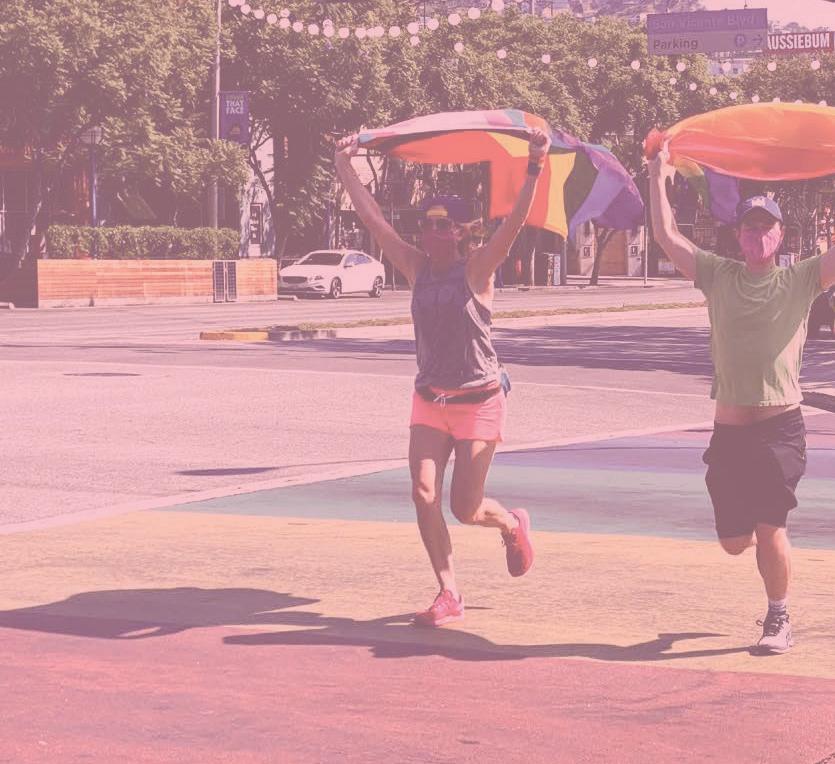
“Pride Stride,” is the first-ever nationwide LGBTQ+ 5k/10k, a hybrid event that combines the safe distancing of virtual connectivity with first-hand participation in a real-world event. A combined effort by more than 30 Pride organizations across the country, it’s timed to commemorate National Coming Out Day on October 11, and it will raise funds to help each of the participating cities – “from Maine to San Diego, and even Anchorage, Alaska,” according to the LA Pride website’s event page – to continue their support and sponsorship of local community programs.
That includes programs right here in Los Angeles – programs on which many LGBTQ+ Angelenos rely. As LA Pride’s website describes it:
“Pride Stride isn’t just another virtual event. It gets you off your webcam and off the couch, and outside. It’s also a fundraiser. By signing up, you’ll be helping us continue to sponsor our programs like Trans Galleria and PLATform. You’ll also be supporting our ongoing education and LGBTQ+ education and conference scholarships, and the smaller community nonprofits that LA Pride supports throughout the year.”
Of course, with a crucial election – one with particularly high stakes for LGBTQ+ Americans – coming up in less than a month, an event like this one cannot help but acknowledge the direct connection between participating in Pride and participating in Democracy, for the sake of preserving our hard-won rights from the aggressive attacks being launched against them.

This is why Pride Stride’s participating Pride organizations have partnered with the Capital Pride Alliance in Washington, DC to include the event as part of the #StillWeVote campaign, launched as a call to action for members of the LGBTQ+ and allied communities.
“These times require us to reflect and modify the actions that we take and the programming that we develop in our fight for full freedom and equality,” said Ryan Bos, Executive Director of CPA. “Our votes are our voices, and we have too much at stake to sit by idly. Let us acknowledge that #StillWe must run and walk to the ballot box or mailbox for this November’s General Election!”
The details are pretty simple. Each participating Pride organization is promoting Pride Stride in their own respective region, encouraging locals to take part. Since it’s not a race, anyone can join in, regardless of fitness level, and walk, shuffle, or dance the whole distance taking as much time as they want. There’s no official route, and no permits are needed; participants are free to choose whether they want to complete the event on a treadmill, on a trail, on a path, or just on a stroll through their neighborhood – safely masked and distanced, of course. And for anyone who needs an extra nudge, there’s also the knowledge that you’ll be part of a firstof-its kind, “massively fabulous” fundraising event that is happening all over the country, while still raising funds to help important LGBTQ+ organizations in your own local community. With organizers working with both local and national sponsors to promote the event nationwide –even in cities without participating Pride organizations – that could add up to a lot of support for a lot of people.
For those who need a little less altruistic motivation, there’s also swag involved. Anyone who participates will receive a goodie bag featuring a whole rainbow of Pride-branded accessories and a themed Pride Stride finishers medal, plus a fanny pack and more.
“Collectively, we’ve had to stay indoors during our Pride season thanks to the pandemic and follow safety guidelines, but we didn’t go away,” says newly-appointed LA Pride president Sharon-Franklin Brown. “It’s important that we show we haven’t stopped making each and every member of our respective communities visible and matter. We’re leading the effort to get people moving and help them get out, figuratively and literally, across the country to safely show their pride in solidarity with this event.”
Ready to put on your best running shoes (or your comfiest slippers) and get moving?
The first step is to register for the event at Pridestride.org – the fee is $40, with a portion of the proceeds going to support your local Pride organization (and yes, that means LA Pride); you can choose the 5k or 10k option. From there, you can actively promote your own sign-up, as well as encouraging your friends’ and family members’ involvements and rallying others in your social circle to participate, through your social media. Then, all you have to do is walk or run, solo and at your own leisure, without having to worry about giant gatherings of people or staying within a time limit.


It’s easy, it’s fun, it’s outside if you want it to be (or not, if you don’t), and – most important – it’s Pride. What are you waiting for?






U.S. President/Vice President
Joe Biden & Kamala Harris
U.S. Congress
CA 23 - Kim Mangone
CA 25 - Christy Smith


CA 26 - Julia Brownley*
CA 27 - Judy Chu*
CA 28 - Adam Schi *
CA 29 - Tony Cardenas*
CA 30 - Brad Sherman*
CA 32 - Grace Napolitano*
CA 33 - Ted Lieu*
CA 34 - Jimmy Gomez*
CA 35 - Norma Torres*
CA 37 - Karen Bass*
CA 38 - Linda Sanchez*
CA 39 - Gil Cisneros*
CA 40 - Lucille Roybal-Allard*
CA 43 - Maxine Waters*
CA 44 - Nanette Barragán*
CA 47 - Alan Lowenthal
California State Senate
Senate District 21 - Kipp Mueller
Senate District 27 - Henry Stern*
Senate District 33 - Lena Gonzalez*
Senate District 35 - Steven Bradford*
AD 39 - Luz Rivas*
AD 41 - Chris Holden*
AD 43 - Laura Friedman*
AD 44 - Jacqui Irwin*
AD 45 - Jesse Gabriel*
AD 46 - Adrin Nazarian*
AD 48 - Blanca Rubio*
AD 49 - Ed Chau*
AD 50 - Richard Bloom*
AD 51 - Wendy Carrillo*
AD 52 - Freddie Rodriguez*
AD 53 - Miguel Santiago*
AD 54 - Sydney Kamlager-Dove*
AD 55 - Andrew Rodriguez
AD 57 - Ian Calderon*
AD 62 - Autumn Burke*
AD 63 - Anthony Rendon*
AD 64 - Mike Gipson*
AD 66 - Al Muratsuchi*

Los Angeles County Supervisor
LACSup 2 - Holly Mitchell
LACSup 4 - Janice Hahn*
Los Angeles County O ces
District Attorney - George Gascón
Superior Court Judge 72 - Steve Morgan
Superior Court Judge 80 - David Berger
Superior Court Judge 162 - Scott Yang
Local Elections
Burbank City Council (2 seats)
Konstantine Anthony
Nick Schultz
Burbank Uni ed School District (3 seats)
Dr. Armond Aghakhanian*
Dr. Emily Weisberg
Burbank Treasurer
Lindsey Francois
Culver City City Council (3 seats )
Yasmine Imani McMorrin
Darrel Menthe
Freddy Puza
Culver City School Board
Anne Allaire
Long Beach City Counci l
Seat 8 Tunua Thrash-Ntuk
Los Angeles City Council
LACC 4 David Ryu*
LACC 10 Mark Ridley-Thomas
LA Uni ed School District Board
LAUSD 3 Scott Schmerelson*
LAUSD 7 Patricia Castellanos
Los Angeles Community College Board of Trustees
LACCD 1 Andra Ho man*
LACCD 3 David Vela
LACCD 5 Nichelle Henderson
LACCD 7 Mike Fong*
Pasadena Mayor
Victor Gordo
Celeste Rodriguez
Santa Monica City Council Special Election
Kristin McCowan*
AD 59 - Reggie Jones-Sawyer*
Santa Monica City Council (4 seats)
Gleam Davis*
Ana Maria Jara*
Terry O’Day*
Ted Winterer*
Santa Monica Rent Control Board
Caroline M. Torosis*








Anastasia Foster*
Santa Monica School Board
Jen Smith
Jason Feldman
West Hollywood City Council (2 seats)
John Erickson
Prop 14 SUPPORT Borrowing for STEM Cell Research
Prop 15 SUPPORT Schools and Communities First
Prop 16 SUPPORT Repeals Proposition 209, ending the ban on a rmative action
Prop 17 SUPPORT Free the Vote, grants the right to vote to people on parole
Prop 18 SUPPORT Allows 17-years olds to vote if they turn 18 by the general election
Prop 19 SUPPORT Property Tax Breaks and Wild re Fund
Prop 20 OPPOSE Tougher on parole, property crimes
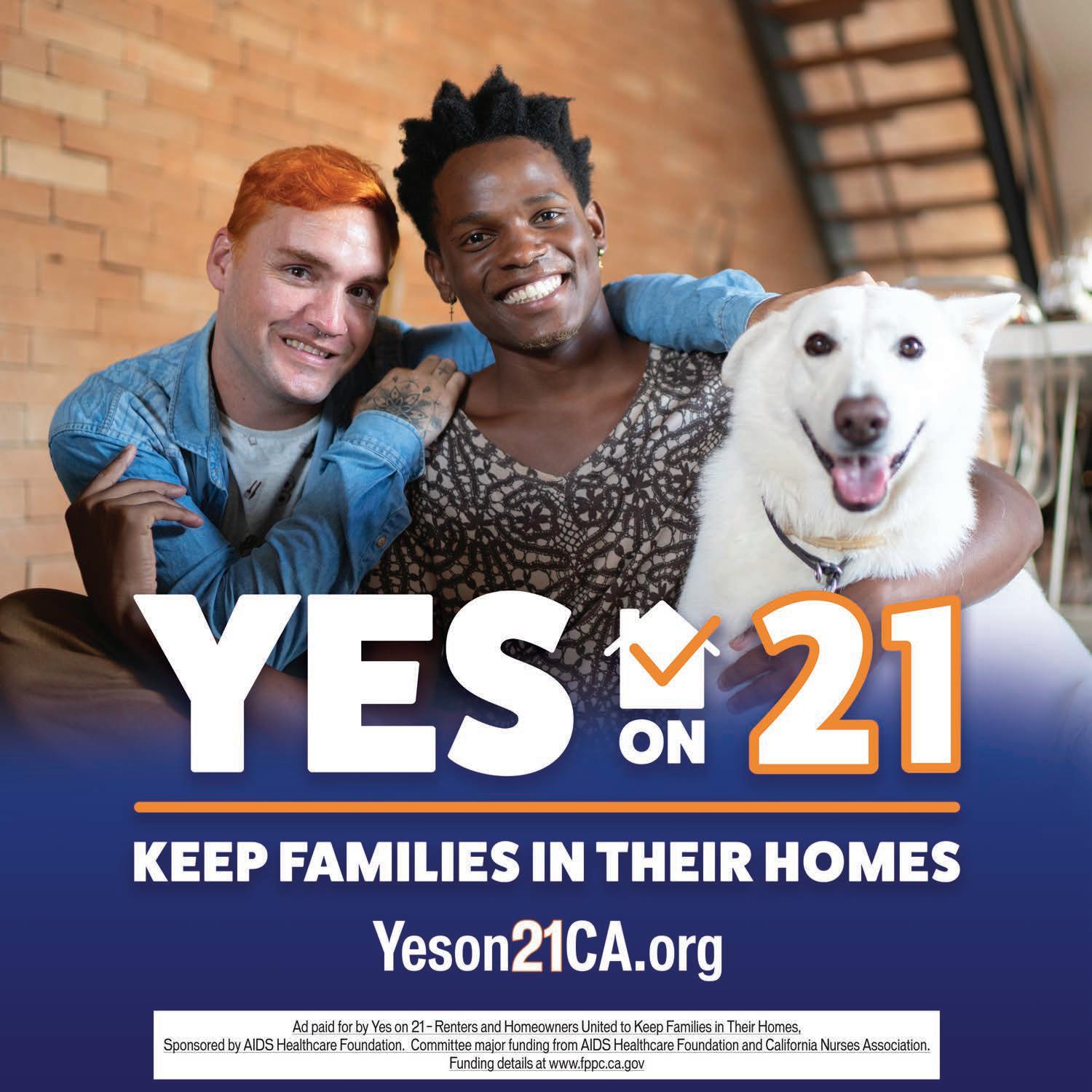
Prop 21 SUPPORT Rent Control
Prop 22 OPPOSE Repeals AB 5, classi es ride-hall, other app-drivers as self-employed
Prop 23 SUPPORT Regulates dialysis clinics
Prop 25 SUPPORT End Cash Bail
Measure RR LAUSD Bond SUPPORT
Measure J Reimagine LA County SUPPORT


Stonewall Democratic Club * Incumbent LGBTQ+ District Flip
Not paid for by any candidate or candidate's committee. Printed by Stonewall Democratic Club FEC C00323923. Share this ad with your friends in other parts of LA County. For full endorsement list visit www.StonewallDems.org