















By KAREN OCAMB
This federal announcement would be laughable if it wasn’t official. The U.S. Department of Health and Human Services “respects the dignity of every human being, and as we have shown in our response to the pandemic, we vigorously protect and enforce the civil rights of all to the fullest extent permitted by our laws as passed by Congress. We are unwavering in our commitment to enforcing civil rights in healthcare,” said Roger Severino, director of the Office for Civil Rights at HHS on June 12 as he declared that Section 1557 of the Affordable Care Act would no longer prohibit discrimination on the basis of sexual orientation or gender identity.
The new Trump rule is scheduled to go into effect on Aug. 18.
Lambda Legal and the Human Rights Campaign immediately filed lawsuits on behalf of clients specifically impacted by the Trump administration’s callous move. The new rule would strip away the Obama administration’s May 2016 rule implementing Section 1557 that extended the legal interpretation of sex discrimination to include bias based on sexual orientation or gender identity, as well as discrimination based on race, color, national origin, sex, age or disability.
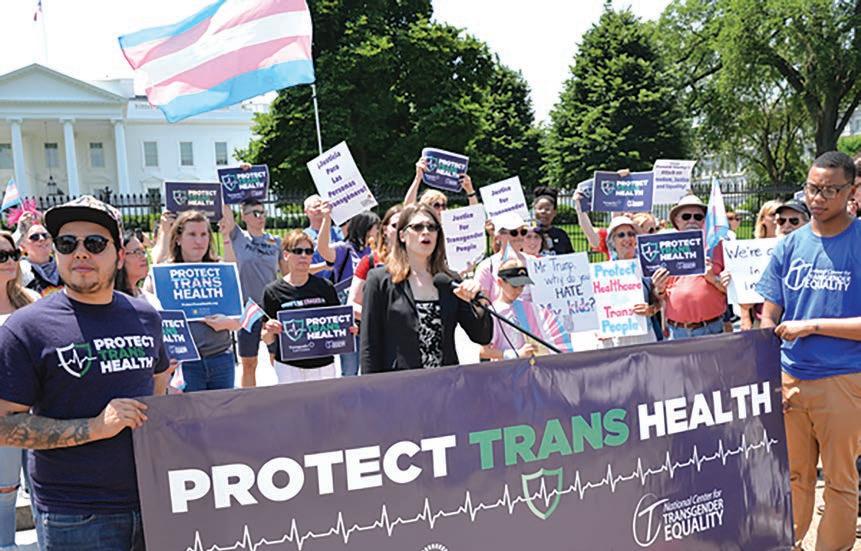
on removing legal protections afforded to transgender people,” said Alphonso David, president of the Human Rights Campaign, after filing the 70-page complaint on June 26. “It is time to end the constant fear and anxiety felt by many in the LGBTQ community that a person’s gender identity might determine the kind of medical care they receive.”
The Washington Blade reported that the HRC lawsuit on behalf of the two trans women of color, both of whom suffer from serious lung conditions, sought a preliminary injunction against the rule change “on the basis that it violated the law in the aftermath of the Bostock decision, exceeds statutory authority under the Affordable Care Act, is arbitrary and capricious and violates the right to equal protection under the Fifth Amendment.”
Lambda Legal and Steptoe & Johnson LLP also filed a lawsuit, Whitman-Walker Clinic v. HHS, challenging the HHS rule on behalf of four doctors and six organizations, including TransLatin@ Coalition and the Los Angeles LGBT Center.
HHS focuses narrowly on the definition of “sex” in the healthcare program and Severino apparently decided to issue the new rule before the Supreme Court’s recent decision in Bostock v. Clayton County, which explicitly links sex discrimination to discrimination based on sexual orientation or gender identity.
“An employer who fires an individual for being homosexual or transgender fires that person for traits or actions it would not have questioned in members of a different sex. Sex plays a necessary and undisguisable role in the decision, exactly what Title VII forbids,” the Supreme Court ruled.
In the name of “Protecting Civil Rights in Healthcare, Restoring the Rule of Law, and Relieving Americans of Billions in Excessive Costs,” as they announced in their June 16 press release, neither Severino nor HHS Sec. Alex Azar II has backed off implementing the new rule, despite Bostock and the global coronavirus pandemic.
“LGBTQ people, and particularly transgender people, have been under constant attack by this federal administration.”
“Our plaintiffs, Tanya Walker and Cecilia Gentili — like many others in this country — should not be treated as second-class citizens by a federal administration hell bent
“The health care discrimination rule will hurt marginalized communities who already experience barriers to care, but especially those of us who are transgender, non-English speakers, immigrants, people of color and people living with disabilities and will have an even more serious impact on those of us who hold intersectional identities,” said Bamby Salcedo, President and CEO of the TransLatin@ Coalition.
“The TransLatin@ Coalition and its affiliated organizations such as Arianna’s Center in Florida and Puerto Rico and the Fundación Latinoamericana de Acción Social (FLAS) in Texas exist because of the already present challenges in our communities and because everyone deserves easy access to care that is respectful of who we are, compassionate and competent. Our lives depend on it and we’re going to fight for it,” she said.
Equality California, which has filed or been part of numerous lawsuits against the Trump Administration, was also angry at HHS and furious about their timing – the anniversary of the mass shooting at Pulse, the gay nightclub in Orlando, Florida.
“We’re considering all possible avenues to block this heartless, discriminatory rule from ripping healthcare away from millions of Americans during a global pandemic,” Equality California Executive Director Rick Chavez said when HHS issued the final rule on June 12.
ON PAGE 04
“The Trump-Pence Administration’s response to COVID-19 has ranged from incompetent to illogical to reckless. But this is a new low. To roll back healthcare protections for LGBTQ+ patients in the middle of a global pandemic is heartless and cruel. But to do so on the fourth anniversary of the mass shooting at Pulse Nightclub in Orlando is especially despicable.”
Zbur added: “Transgender and gender-nonconforming people deserve healthcare. Gay, lesbian, bisexual and queer people deserve healthcare. People with disabilities and people for whom English is not their first language deserve health care. No one should be denied this basic human right because of who they are or who they love. Shame on Donald Trump and his administration for saying otherwise.”
As of July 7, no injunction against the Trump implementation has been ordered in either lawsuit.
That may have prompted the California Department of Managed Health Care (DMHC) to ‘affirm its commitment to protect consumers’ healthcare rights, including the right to be protected from discrimination based on categories like gender identity and sexual orientation that are enshrined in California law,” according to a DMHC email distributed to LA County healthcare providers and policy makers.
“The DMHC Nondiscrimination Statement was issued in response to the finalized rule issued by the U.S. Department of Health and Human Services that eliminated regulations that protected individuals from discrimination based on categories like gender identity and sexual orientation,” DMHC’s Marisa Ramos wrote in a “Dear Colleagues” letter. “The rule also eliminated a federal requirement that health plans include information about the availability of language assistance services for people with limited English proficiency (LEP).”
The DMHC statement reads, in part: “Notwithstanding the new federal rule, all California-licensed health plans must continue to comply with California law, which protects all Californians from discrimination based on, among other things, gender identity and sexual orientation. Likewise, California-licensed health plans must continue to comply with California’s requirements to provide enrollees with notice of the availability of free language assistance services in English and the top 15 languages spoken by LEP individuals in California.”
Out California Insurance Commissioner Ricardo Lara also re-issued the statement he sent June 15 to “All Health Insurance Companies, All Licensed Insurance Producers, and Other Licensees and Interested Parties” alerting them to comply with California’s Health Insurance Anti-Discrimination Protections – specifically noting that the HHS federal rule does not preempt state law.
Health insurance that is regulated by the California Department of Insurance (CDI) “remains subject to California’s antidiscrimination law. Consequently, health insurers must continue to comply with the existing antidiscrimination standards in California law, beyond the minimum requirements of federal law,” he said. Lara’s Notice to insurance carriers notes that state anti-discrimination requirements include the following:
· “Anti-discrimination and language and disability assistance services notification requirements, including a that “[a]n insurer does not discriminate on the basis of race, color, national origin, ancestry, religion, sex, marital status, gender, gender identity, sexual orientation, age, or disability.”
· A prohibition against discriminating based on an insured or prospective insured person’s actual or perceived gender identity, or on the basis that the insured
or prospective insured is a transgender person, including discrimination in the following: denying, cancelling, limiting or refusing to issue or renew an insurance policy; premium rating; designating gender identity or transgender identity as a pre-existing condition for the purpose of denying or limiting coverage; denying or limiting coverage or denying a claim for the following services due to gender identity or because the insured is a transgender person; health care services related to gender transition if coverage is available under the policy for such services when not related to gender transition; including but not limited to reconstructive surgery; health care services ordinarily or exclusively available to individuals of one sex when the denial or limitation is due only to the fact that the insured person is enrolled as belonging to the other sex or has undergone, or is in the process of undergoing, gender transition.” Lara says the CDI will continue to “vigorously enforce these and other existing provisions of California law to protect Californians against wrongful discrimination.” Anyone who thinks they have been subject to unlawful discrimination should contact the Department’s Consumer Complaint Center at 1-800-927-4357, or submit a complaint through the Department’s website at www.insurance.ca.gov.






WeHo one of nation’s first cities to impose fines over refusal
By BRODY LEVESQUE
This week has marked a shocking series of surges in cases of new infections, hospitalizations, and ICU cases of the coronavirus. On Wednesday the United States surpassed the total of 3 million cases of COVID-19 while in Los Angeles County, the Director of the County’s Public Health Department, Dr. Barbara Ferrer noted in a statement that the county had recorded 120,539 cases.
As the nation hit over 3 million confirmed cases in less than a month after crossing the 2 million mark, another milestone was reached in a record new single-day count of 60,000 new cases reported as the virus spread rapidly in California, Texas, Arizona, and Florida according to data from Johns Hopkins University.
LA County’s Public Health Department confirmed the highest number of new cases of COVID-19 reported in a day with 4,015 new cases, although officials noted that clearing a backlog of testing results was partly responsible for the dramatic uptick.
Public Health experts across the nation agreed that the driving force in the rapid uptick in cases are persons between the ages of 18 to 44. Dr. Ferrer echoed the concerns of the director of the National Institute of Allergy and Infectious Diseases, Dr, Anthony Fauci regarding the lack of social disarming and of immediate concern younger Americans not heeding the orders to wear facial masks while out in public with other people.
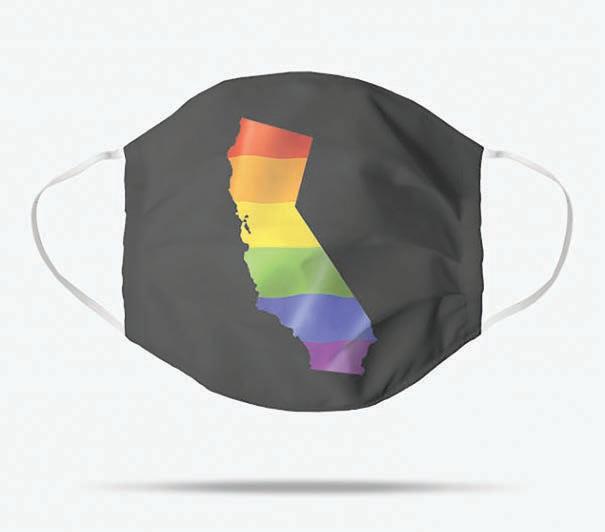
For repeated violators, not wearing a mask in West Hollywood could incur a $5,000 fine.
to adhere to the social distancing and infection control practices, it finds us in a place where we’re slowing down our recovery journey,” she said. “What we do now, will determine where we are in three to four weeks.”
ordered all bars shut down in the state’s seven hardest-hit counties, last week and with the cases numbers rising has expanded that list to include another 12 counties.
As case numbers rose, the mortality rate change has been slight and incremental in California and across the nation. Experts are cautioning that although the primary reason has been the shift to a younger demographic, it is only a matter of time before that rate will see a sharp increase.
“Every single person we have lost to COVID-19 was someone’s parent, sibling, friend and neighbor,” said Dr. Ferrer. “Our actions have consequences and they affect real people in our community. Choosing to not practice physical distancing or objecting to wearing cloth face coverings when around others can be a life-altering decision. Everyone shares the collective responsibility to slow the spread of COVID-19 to prevent an overwhelming surge of COVID-19 to save lives.”
While public health officials continue to implore people to wear masks, the issue over reopening of the schools has taken center stage as the traditional start of the school year in August approaches.
“Unfortunately, where we are today is different than where we were two, three or four weeks ago,” Ferrer told reporters in a press conference earlier in the week. “Cases are surging, hospitalizations are increasing, and mostly, this is all a reflection of a lot more community spread.”
“There’s been a significant increase in infections among those aged 18 to 40 years old. “Almost 50% of new cases occur among younger people, and then those younger people are spreading the infection to others,” she added.
While LA County and other jurisdictions did close their beaches over the weekend and fourth of July celebrations of fireworks displays and large gatherings were also prohibited, the health director also noted the large gatherings of young people, many shown on the various social media platforms with no masks and not observing social distancing. Ferrer observed that under those circumstances, it made significant outbreaks even more likely.
“If we do not find it in ourselves to actually continue
The debate over facial coverings has raged for the past two weeks since California Governor Gavin Newsom mandated their use statewide, which prompted officials in the jurisdictions of Santa Monica and West Hollywood to crack down on people ignoring the emergency orders requiring facial coverings in public both indoors and outside.
In West Hollywood, Los Angeles County Sheriff’s deputies will be citing people found in violation of the emergency order with a first time fine of $300. The City of Santa Monica amended its emergency declaration authorizing fines of $100, $250 or $500 for people who refuse to wear masks.
In Sacramento, California Department Health Department health officials say that most of the recent spike in cases and hospitalizations dating back to the Memorial Day weekend have been linked by contact tracing investigations linking outbreaks to private gatherings as well in addition to crowds in confined spaces that reopened such as bars. Gov. Newsom had
According to the Los Angeles Times, the planned reopening of the nation’s second largest schools system, the LA Unified School District is now at risk because of the ongoing spike of coronavirus cases, and all public and private schools must prepare for students to continue learning entirely from home was the message Dr. Ferrer told LAUSD officials Tuesday in a recording of a private conference call that had been reviewed by the Times. “Every single school district at this point needs to have plans in place to continue distance learning for 100% of the time,” Ferrer said.
Plans to suspend reopening of schools has attracted the attention of President Trump who tweeted out Monday that schools must reopen, a sentiment expressed by Education Secretary DeVos who told reporters, “It’s not a matter of if schools should reopen it’s a matter of how.”
The New York Times noted this week that “many experts agree that the psychological and educational costs of keeping children at home full time would be steep. But schools also have the potential to spark new virus outbreaks if they are not opened carefully. And the Trump administration has offered no concrete proposals to help schools pay for testing, social distancing, improved ventilation and other measures to prevent outbreaks.”
Gay billionaire Peter Thiel reportedly thinks President Trump can’t win reelection and is distancing himself from the campaign, multiple media outlets reported this weekend.
Thiel thinks Trump’s campaign is doomed because the economy will remain in a major recession this fall with doubledigit unemployment, according to the reports.
Thiel, the co-founder of PayPal, is reportedly shifting his political donations to House and Senate races and won’t donate to Trump’s re-election effort.
Thiel spoke at the 2016 Republican National Convention, memorably announcing “I am proud to be gay, I am proud to be a Republican.”
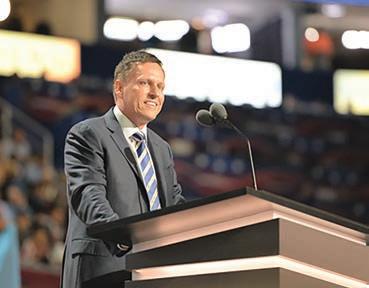
He hasn’t commented publicly on the reports and the Trump campaign issued a statement that Thiel remains a supporter of the president.
STAFF REPORTS
LGBTQ internet freedoms may be at risk on a global scale due to the new leadership at the U.S. Agency for Global Media, according to technology freedom experts.
The agency, which operates independently from the U.S. government, oversees five different entities that include Voice of America and Radio Martí, broadcasting platforms and the Open Technology Fund. This fund is an independent non-profit organization that focuses on advancing global Internet freedom by providing access, digital privacy tutorials, privacy enhancement and security tools like encryption.
The U.S. Senate on June 4 confirmed Michael Pack, a conservative documentary filmmaker, as the U.S. Agency for Global Media’s new CEO. Pack quickly fired then-Open Technology Fund CEO Libby Liu after she announced her resignation with hopes to carry out the rest of her term.
Pack also fired Laura Cunningham, the fund’s former president, along with the heads of Radio Free Europe, Radio Free Asia and the Office of Cuba Broadcasting two weeks after his appointment.
Internet freedom advocates days after the firings circulated an online petition to “Save OTF” and “Save Internet Freedom Tech” to “demand the U.S. Congress continue supporting the Open Technology Fund and global internet freedom.” This petition has received bipartisan support from the U.S. House of Representatives and the Senate and has been signed by 506 organizations and companies that include Human Rights Watch and Reddit.
The Open Technology Fund and board members from the U.S. Agency for Global Media also filed a lawsuit against Pack on June 23, claiming the firings were unlawful.
There has been a public outcry from internet security experts who fear these new leadership changes may mean a diversion of funds and a change from open source technology to closed source technology.
Open source technology is a source code format that is publicly available, meaning programmers can read or change the building blocks of an application. A closed source software hides the code from the public, preventing people from viewing or modifying the script.
According to Sandra Ordonez, the director of the Internet Freedom Festival, which the Open Technology Fund funds, open source technology is integral to security and privacy because it discourages the creation of “back doors” in apps or software that allow unauthorized users to bypass security measures and gain access to a user’s data without their permission or knowledge.
Ordonez in a follow-up email to the Blade said the change to closed source technology may also limit the development of technologies in countries where Microsoft and other tools are not commonly used because of the prohibitive costs of licenses. She added this lack of access forces internet users to become much more dependent on open source alternatives, which are free.
In the 71 countries where it is illegal to be LGBTQ, Internet privacy and security measures like the ones provided by the Open Technology Fund are critical safety tools, said Afsaneh Rigot, a program officer at Article 19, a human rights organization focused on defending the freedom of expression and information.
“When we’re talking about the privacy and security of groups that are severely marginalized and get impacted most by the structures that oppress them, internet privacy, access, and avenues for protection, are fundamental,” said Rigot.
Ordonez also said LGBTQ people are automatically at risk in countries where homosexuality is outlawed or taboo.
“When LGBT people put themselves online, they put themselves at risk,” she said.
KAELA ROEDER
A Norfolk wedding photographer has filed a federal lawsuit against Virginia’s new antiLGBTQ discrimination law.
The lawsuit, which the Alliance Defending Freedom, an anti-LGBTQ legal group, filed in the U.S. District Court for the Eastern District of Virginia in Norfolk on June 30 alleges the Virginia Values Act violates Chris Herring’s First Amendment rights because it “requires Chris to promote content he disagrees with — to create and convey photographs and blogs celebrating same-sex weddings because he does so for weddings between a man and a woman.”
“The law even makes it illegal for Chris to hold a policy of photographing and blogging about weddings only between a man and woman or to post internet statements explaining his religious reasons for only creating this wedding content,” reads the lawsuit.
The lawsuit states the Virginia Values Act “subjects him to investigations, onerous administrative processes, multiple lawsuits, fines up to $50,000 initially and then $100,000 per additional violation, plus unlimited damages and attorney-fee awards, and court orders forcing him to create photographs and blogs against his conscience.” The lawsuit also alleges the Virginia Values Act could “ruin Chris financially, and make operating his business impossible.”
“So, Chris faces an impossible choice: Violate the law and risk bankruptcy, promote views against his faith or close down,” it reads. “And this was exactly what Virginia officials wanted for those who hold Chris’ religious beliefs about marriage. Legislators who passed Virginia’s law called views like Chris’ ‘bigotry’ and sought to punish them with ‘unlimited punitive damages’ to remove them from the public square.”
The lawsuit names Virginia Attorney General Mark Herring and R. Thomas Payne II, director of the Virginia Division of Human Rights and Fair Housing, as defendants.
The Virginian-Pilot newspaper reported Chris Herring in an Alliance Defending Freedom Press release that announced his lawsuit said it is not “the state’s job to tell me what I must capture on film or publish on my website.”
“My religious beliefs influence every aspect of my life, including the stories I tell through my photography,” he said. “If you’re looking for someone to photograph a red-light district or promote drug tourism, I’m not your guy. … I happily work with and serve all customers, but I can’t and won’t let the state force me to express messages that contradict my beliefs.”
The Virginia Values Act took effect on July 1. Virginia is the first southern state to include sexual orientation and gender identity in its statewide nondiscrimination law.
MICHAEL K. LAVERS
By CHRIS JOHNSON cjohnson@washblade.com
In a decision that undermines LGBTQ teachers at religious schools, the U.S. Supreme Court has affirmed for Catholic schools an expansive ministerial exemption in hiring practices under civil rights law.
In the 7-2 decision issued on Wednesday, U.S. Associate Justice Samuel Alito writes religious institutions have authority under the First Amendment to make employment decisions for teachers who educate in faith matters consistent with their religious beliefs — even if that would be considered unlawful discrimination at secular places of employment, such as anti-LGBTQ discrimination.
“The religious education and formation of students is the very reason for the existence of most private religious schools, and therefore the selection and supervision of the teachers upon whom the schools rely to do this work lie at the core of their mission,” Alito writes. “Judicial review of the way in which religious schools discharge those responsibilities would undermine the independence of religious institutions in a way that the First Amendment does not tolerate.”
Joining Alito in the decision were conservative justices John Roberts, Brett Kavanaugh, Neil Gorsuch, Clarence Thomas as well as liberals Elena Kagan and Stephen Breyer. Dissenting from the opinion were Sonia Sotomayor and Ruth Bader Ginsburg.
The Supreme Court makes the decision in the consolidated cases of Our Lady of Guadalupe School v. Morrissey-Berru, Agnes and St. James School v. Darryl Biel, which were brought by Catholic schools seeking an expanded ministerial exemption in the face of lawsuits from teachers suing the schools for employment discrimination.
Alito bases much of his ruling on the Supreme Court’s previous decision in 2012 in the case of HosannaTabor Evangelical Lutheran Church & School v. Equal Employment Opportunity Commission, which determined religious schools have a ministerial exemption, but declined to identify its scope.
Although Alito concedes teachers at schools in the cases at hand weren’t given the title of minister, he concludes their cases “fall within the same rule that dictated our decision in Hosanna-Tabor.”
“We declined to adopt a ‘rigid formula’ in HosannaTabor, and the lower courts have been applying the exception for many years without such a formula,” Alito writes. “Here, as in Hosanna-Tabor, it is sufficient to decide the cases before us. When a school with a religious mission entrusts a teacher with the responsibility of
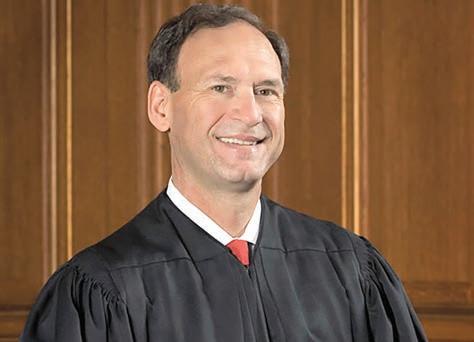
‘The religious education and formation of students is the very reason for the existence of most private religious schools,’ Justice SAMUEL ALITO wrote in the majority opinion.
educating and forming students in the faith, judicial intervention into disputes between the school and the teacher threatens the school’s independence in a way that the First Amendment does not allow.”
But in her dissent, Sotomayor writes the majority opinion “skews the facts, ignores the applicable standard of review, and collapses Hosanna-Tabor’s careful analysis into a single consideration: whether a church thinks its employees play an important religious role.”
“That is, the court’s apparent deference here threatens to make nearly anyone whom the schools might hire ‘ministers’ unprotected from discrimination in the hiring process,” Sotomayor continues. “That cannot be right.
Although certain religious functions may be important to a church, a person’s performance of some of those functions does not mechanically trigger a categorical exemption from generally applicable anti-discrimination laws.”
Despite ruling for an expansive ministerial exemption under the First Amendment, Alito appears to word his decision carefully so that the immediate application is the cases at hand: Teachers at religious schools who are expected to lead in prayer and teach the faith.
Thomas writes in a concurring opinion the decision didn’t go far enough, arguing the Supreme Court should have given religious schools even more good-faith leeway in the hiring of non-ministerial positions.
“Although the functions recognized as ministerial by the Lutheran school in Hosanna-Tabor are similar to those considered ministerial by the Catholic schools
here, such overlap will not necessarily exist with other religious organizations, particularly those ‘outside of the “mainstream,”‘” Thomas writes. “To avoid disadvantaging these minority faiths and interfering in “a religious group’s right to shape its own faith and mission,” courts should defer to a religious organization’s sincere determination that a position is ‘ministerial.’”
The Becket Fund for Religious Liberty filed a petition for review before the Supreme Court after federal appeals courts ruled in favor of the teachers and against the schools. The court accepted and heard arguments in May, when justices appeared to lean toward an expanded religious exemption.
Eric Rassbach, vice president and senior counsel at Becket, argued the case to the Supreme Court and said in a statement the decision is “a huge win for religious schools of all faith traditions.”
“The last thing government officials should do is decide who is authorized to teach Catholicism to Catholics or Judaism to Jews,” Rassbach said. “We are glad the court has resoundingly reaffirmed that churches and synagogues, not government, control who teaches kids about God.”
On its face, the decision has nothing to do with LGBTQ workers. The schools raised the ministerial exemption claims in response to litigation from teachers alleging wrongful termination for other reasons.
One teacher alleges she was terminated based on age discrimination, the other based on disability after having to request time off to treat cancer. The schools have maintained the termination was the result the teachers not fulfilling their ministerial roles at the schools.
But the decision has implications for workers at religious schools across the board, including LGBTQ teachers. After the Supreme Court just last month determined in the case of Bostock v. Clayton County anti-LGBTQ discrimination is prohibited in the workplace under Title VII of the Civil Rights of 1964, the latest ruling expands religious carveouts under that law to enable discrimination.
Gay teachers could potentially be barred from suing a Catholic school if they’re terminated for entering into a same-sex marriage, or transgender teachers if they’re fired for undergoing a gender transition. The only saving grace may be the analysis in the ruling, which heavily draws on the demonstrated expectation teachers would engage in faith-based leadership for their jobs to fall under the ministerial exemption.
She will continue to fight racism, sexism, and homophobia
There are many good choices Joe Biden has from which to pick his vice president. But there is one who stands out from the crowd: Sen. Kamala Harris (D-Calif.). She has the credentials that are crucial for the job and she is ready to serve on day one.
Harris has been vetted in a national campaign and represents the next generation of leaders. There are many factors that set her apart from some of the other choices, including that she is the child of immigrants. Her mother immigrated to the United States from India and her father from Jamaica. Her mother is a breast-cancer scientist who earned her doctorate from UC Berkeley and her father is an Emeritus Professor of Economics at Stanford.
Harris was born in Oakland. She did her undergraduate work at Howard University, an HBCU, in Washington, D.C. She has her law degree from the University of California, Hastings College of Law. She began a stellar career with the Alameda County, California District Attorney’s Office. From there she was recruited to the San Francisco District Attorney’s Office and then the City Attorney’s Office in San Francisco.
In 2004, she won election as District Attorney of San Francisco. She served with distinction and it was in that office she began her career-long support of the LGBTQ community by creating a special Hate Crimes Unit, focusing on hate crimes against LGBTQ children and teens in schools. In 2010, she ran and was elected Attorney General of the State of California. During that campaign she promised to refuse to defend Proposition 8, the ban on gay marriage in California — a promise she kept. She won a close election but was reelected in 2014 by a wide margin. As attorney general she managed an office employing more than 4,500 people. As AG she prioritized environmental concerns and won millions of dollars for the state in doing so. She started a new agency within her office called the Bureau of Children’s Justice to address issues such as foster care, the juvenile justice system, school truancy, and childhood trauma.
In 2016, she ran and won election as United States senator to the seat previously held by Barbara Boxer. When she was sworn in on Jan. 3, 2017, she became the first U.S. senator of both Indian and Jamaican descent. As a senator, she has spoken out against Trump’s racist, sexist and homophobic policies; voted against
Peter Rosenstein is a longtime LGBTQ rights and Democratic Party activist. He writes regularly for the Blade.
his unqualified nominees; and supported legislation to help improve the lives of the poor and disenfranchised. Harris is a member of the Budget Committee, Committee on Homeland Security and Governmental Affairs, Select Committee on Intelligence and the Committee on the Judiciary.
This background allows voters to feel totally comfortable were anything to happen to the president that Kamala Harris would be ready on day one to step in. With Vice President Biden being 78 years old that is an important factor in his choice.
Add to this Harris one-on-one is an amazing person to meet and chat with. I have been honored to have that chance a couple of times. She lights up a room with her intelligence and her ability to hone in on issues of importance to people.
Her empathy and sense of the need to include all make a great complement to those traits in Biden. When sharing her vision for the future, it’s clear she has a grasp of history and understands how our past will influence our future. How we will never have equality unless all people have equality. She clearly understands how systemic racism keeps many African Americans from succeeding and as a Black woman she understands how sexism is still rampant in our nation. As a person of color, with a knowledge of and experience in local, state and the federal government, she will be able to work closely with and help Biden fulfill the pledges he is making to the nation; to fight for real equality both judicial and economic for Black and Brown persons; and to fight for full equality for women and for the LGBTQ community.
ADDRESS
5455 Wilshire Blvd, 21st Floor, Los Angeles, CA 90036
PHONE 310-230-5266
E-MAIL tmasters@losangelesblade.com
INTERNET losangelesblade.com
PUBLISHED BY Los Angeles Blade, LLC
PUBLISHER
TROY MASTERS tmasters@losangelesblade.com
310-230-5266 x8080 (o), 917-406-1619 (c)
SALES & MARKETING
SALES EXECUTIVE
ROMAN NAVARRETTE roman@losangelesblade.com 310-435-3022
PALM SPRINGS ACCOUNT EXEC BRAD FUHR, 760-813-2020. brad@gaydesertguide.com
NATIONAL ADVERTISING
RIVENDELL MEDIA sales@rivendellmedia.com, 212-242-6863
MARKETING DIRECTOR
STEPHEN RUTGERS srutgers@washblade.com, 202-747-2077 x8077
EDITORIAL
CALIFORNIA EDITOR
KAREN OCAMB karenocamb@losangelesblade.com
NATIONAL EDITOR
KEVIN NAFF kna @washblade.com, 202-747-2077 x8088
INTERNATIONAL EDITOR
MICHAEL K. LAVERS mlavers@washblade.com
CONTRIBUTORS
CHRISTOPHER KANE, AUSTIN MENDOZA, JOHN PAUL KING, JOEY DIGUGLIELMO, CHRIS JOHNSON, LOU CHIBBARO JR., MARIAH COOPER, REBEKAH SAGER, JON DAVIDSON, SUSAN HORNIK, CHANNING SARGENT, SAMSON AMORE, CHRISTOPHER CAPPIELLO, MICHAEL JORTNER, DAN ALLEN, SEAN SHEALY, SCOTT STIFFLER CREATIVE DESIGN/PRODUCTION
AZERCREATIVE.COM
DISTRIBUTION
CHRISTOPHER JACKSON, 562-826-6602
All
50-mile radius of Los Angeles, CA. Multiple copies are available from the Los Angeles Blade o ce only. Call for rates. If you are unable to get to a convenient free distribution point, you may receive a 26-week mailed subscription for $195 per year or $5.00 per single issue.



‘Dick Van Dyke Show’ star was early feminist pioneer
In Southern, New Jersey in the early 1960s, as a pre-teen who wrote stories, liked girls and wanted to be a writer when I grew up, I rarely saw people like me. Even on TV. Most women in life or on screen were wives and mothers who didn’t have jobs. Those who did work were schoolteachers or secretaries. The few single women seemed always to be widows or witches.
Sure, I worshiped Jo March, the sisterly scribe of “Little Women.” But, she ended up married! Holden Caulfield was a boy, and even at 10, I knew Shakespeare was out of my league. Fortunately, Sally Rogers, my first queer crush was there for me. She wore a black bow in her hair, bought herself a fur coat (this was before PETA), belted out “Come Rain or Come Shine” at the drop of a hat and cracked one-liners at the speed of light.
Rogers was the sophisticated, talented, single, comedy-writer character on “The Dick Van Dyke Show.” The series, one of

the greatest TV sitcoms of all time ran from 1961 to 1966. (It’s streaming now on Hulu, Prime Video and Tubi, and you can buy it on Amazon or Apple.)
Recently, I’ve been thinking of Rogers. Because her creator, Carl Reiner, the writer, actor and director, died on June 29 at age 98 of natural causes at his home in Beverly Hills, Calif. Reiner, who was awarded the Mark Twain Prize for humor, based “The Dick Van Dyke Show” on his experience as a husband and father and as a writer and second banana on the 1950s TV variety show “Your Show of Shows.”
“The Dick Van Dyke Show” toggles between the home life of Rob (Dick Van Dyke) and Laura (Mary Tyler Moore) Petrie, and the work life of Rob as head writer of the fictional “Alan Brady Show.” Rogers (Rose Marie) and Buddy (Morey Amsterdam) are the other writers. Mel (played by gay actor Richard Deacon) is the frazzled producer. The characters work for Alan Brady, the program’s frenetic, egomaniac star (played hilariously by Reiner). Today, there’s still gender stereotyping. But at least we speak of it. We call out men who insist that wearing masks in the pandemic negates their manhood. But when I was a kid, there was no talk of gender stereotyping, gender nonconformity or gender-bending. Boys were boys, and girls were girls. Boys became men – who worked, came home to their obedient wives and kids and grilled steaks for outdoor summer cook-outs. Girls could be tomboys. But they grew up to be feminine women who kept house, cooked, gave dinner parties, packed school lunches for the children and dabbed perfume behind their ears.
Above all, girls weren’t supposed to be too strong (independent), funny or smart. “There’s something scary about women who are too cerebral – who wisecrack too much,” my Dad said one night at dinner.
In this pink is for girls, blue is for boys, world, Sally Rogers was a lifeline for me and countless other girls. Rogers is genderbending. She has a job that she excels at and loves. (She’s one of the best comedy writers in showbiz!) She makes Rob chicken soup when he’s sick, and plays poker. Rogers has her bad days. But mostly Sally, with her cat, lives a full, single life. She dates, has friends, visits her Aunt Agnes and keeps up with the latest in theater. As is the case with so many of us, her friends are her family. As Rose Marie told many interviewers, “Sally was the first women’s libber.”
Sure, Roger’s lonely at times. And today her (sometimes serious, other times, joking) search for a husband is so heteronormative. Yet, she didn’t depend on men financially or for validation. She liked herself.
Without you, Sally, I wouldn’t be writing this. Thank you for helping me and so many others to be ourselves!






















































By SCOTT STIFFLER
When Dorothy returned from Oz and declared, “There’s no place like home,” that tribute to domesticity made sense, coming from a Kansas farm girl recently abducted by flying monkeys and repeatedly threatened by a wicked witch.
But what if Auntie Em, instead of oozing empathy, informed her that she awoke to a changed world, told her to put on a mask, and delivered the devastating news that the big square dance was cancelled because of social distancing concerns? Fast forward three months, and the poor girl is staring out the window, hoping to hitch a ride on the next twister out of town.
Friends of Dorothy feel her pain, and they’re aware the prospect of summer travel requires a new type of yellow brick road—one that will take them over the rainbow and back, free to venture out into the world without putting their lives, or anyone else’s, at risk.
Mindful of this new mindset, a mid-May survey by veteran LGBTQ research firm Community Marketing & Insights (CMI) yielded the recently released report, “COVID-19 and LGBTQ Travel in 2020” (available free, at cmi.info).
Comprised of data from an online survey of 1,864 self-identified members of America’s LGBTQ community, ages 20-70, the report found 69% of participants “indicated extreme or moderate pent-up desire to travel again for vacation,” although, at the time, 72% of the travelers in the study “have already canceled a vacation in 2020 because of COVID-19,” with cancellations being strongest for the MarchJuly period. Of those who took a vacation in 2019, 68% plan to take at least one overnight vacation trip during the remainder of 2020, including 42% planning two or more vacations.
David Paisley , CMI Senior Research Director, noted they’ve been doing an annual fall travel survey for 20 years, but adapted its timing and content to acknowledge COVID-19’s radical effect on the travel (and pretty much every other) landscape.
“The LGBTQ community very much does want to travel this summer,” noted Paisley, “but they’re in a little bit of a waiting mode.”
What we do know, as the report noted, is “ the drop-off will be higher for more populated locations like big cities, with smaller reductions for outdoor and less-populated destinations.”
That translates into, said Paisley, “places where you can walk through neighborhoods and parks, and visit museums, which tend to be less crowded than a nightclub… People are also much more open
Marino says his group, which “normally crams into one car for the six-hour drive,” will be splitting up this year. “ A couple in our group already had the virus, and they’ll drive together,” he explained. “The other two each live alone and have taken safety precautions all along, so we don’t feel terribly unsafe traveling together.”
Upon arrival at the lake campground, “We canoe
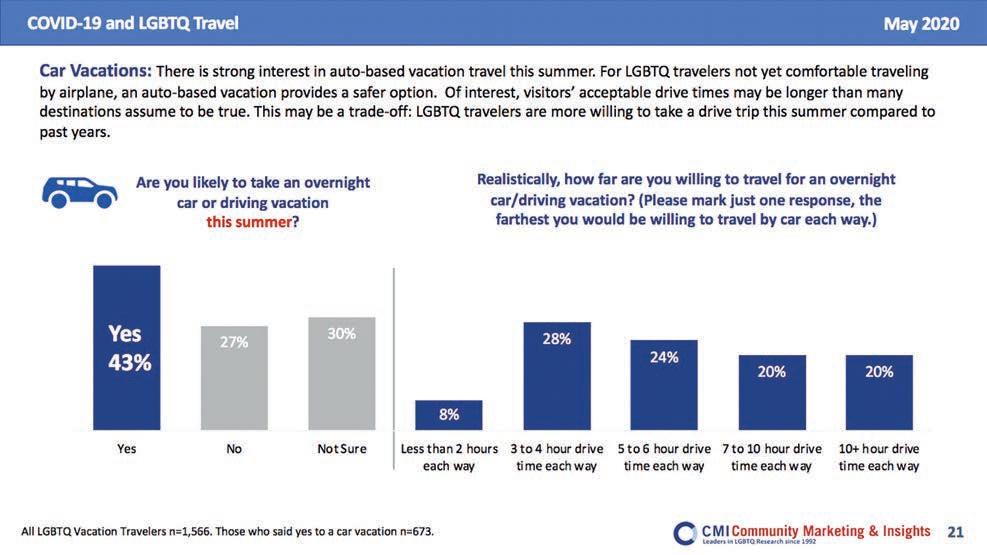
to short-term, car-based vacations, where they can make that decision a day in advance… It’s all about flexibility and keeping options open.”
Road trips are the getaways of choice for two NYC residents who are trading time quarantined on the island of Manhattan for time spent on… another island.
“ I’m supposed to go camping [with friends] in the Adirondack Mountains, as I do the last week of June,” said producer/performer Peter Michael Marino, who noted, “We won’t find out if the campsite is open until a week before. Sort of strange, since it’s outdoors in the middle of 9,000 square miles of forest.”
to a small, isolated island the size of a suburban backyard, with just an outhouse and fire pit. We have plenty of space there and each have our own tents. And while we won’t be wearing masks on the island or coughing on each other, I think we’ll take great care not to directly share food and drink.”
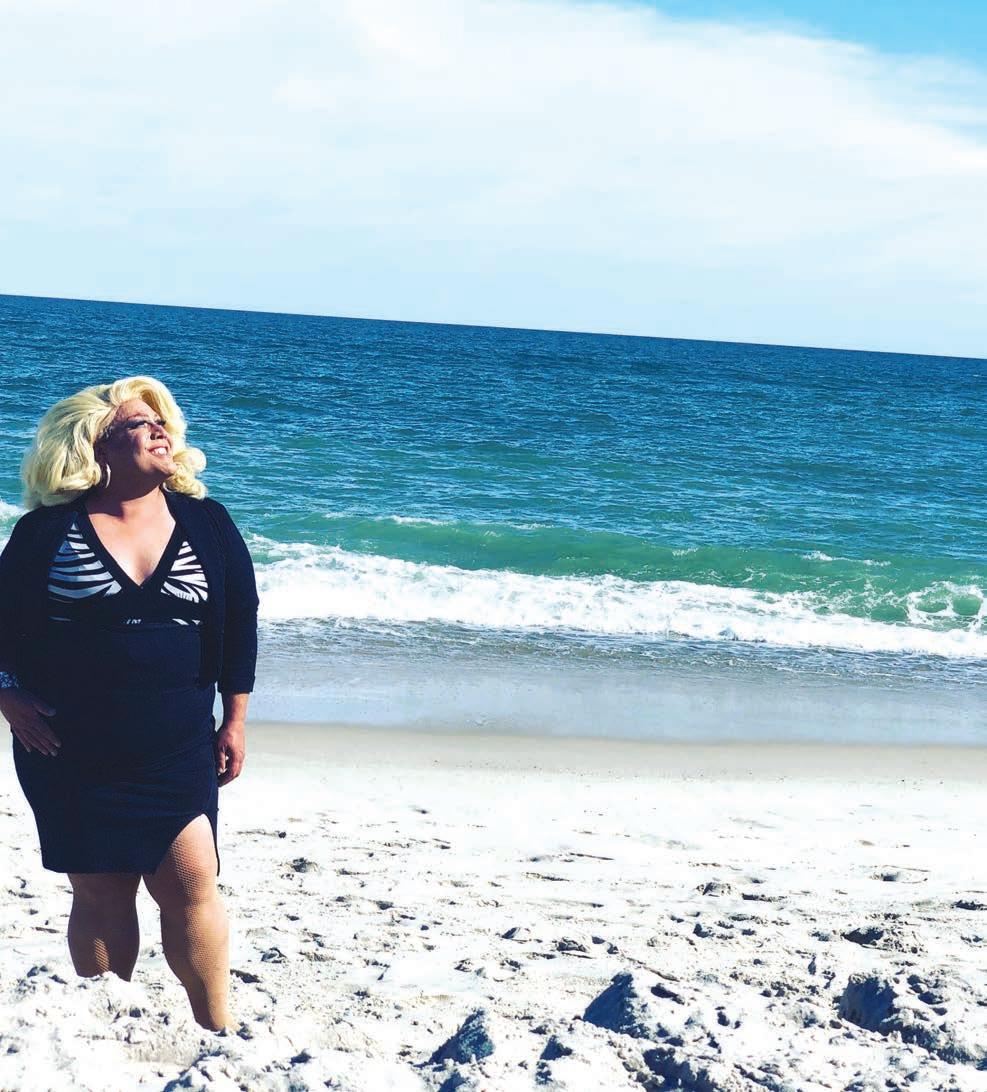
For drag performer Porsche, aka Brant Kaiwi, the ferry to Fire Island found folks “with masks on and, from what I saw, keeping with their groups and distant from others.” The trip, taken the second weekend of June, was this season’s first for her, serving as fact-finding mission to the Island’s Cherry Grove hamlet—where Porsche will soon be resuming
live performances, delving further into her second decade at the Grove Hotel’s Ice Palace nightclub.
“The Ice Palace is getting pretty creative with how to handle a fun crowd safely,” said Kaiwi/Porsche. “We are very lucky to have the outdoor and indoor space that we do, and it’s going to be fun! I don’t want to give it away just yet, but the way they are doing it, all guidelines are being followed, and followed creatively.”
Don’t be afraid of traveling to LGBTQ-friendly places, she urged, but do “travel smartly to those destinations. Those vibrant, wonderful communities have already been hit hard by the pandemic, so by all means safely support!”
That yearning to be surrounded by the similarly inclined is especially strong right now.
“One of the great losses for the LGBTQ community this summer,” noted Paisley, “is the cancellation of [public] Pride events across the United States, which carries bigger emotional weight than the cancelation of other types of events.”
A normal summer, observed Rivendell Media President and CEO Todd Evans, “would mean lots of companies and events advertising for Pride, wanting to promote their event and trying to show the LGBTQ consumer is important to them.” But this year, says Evans, who places advertisements for the National LGBT Media Association, the usually robust presence of stalwart supporters is, thus far, nowhere to be found
“Advertisers hate uncertainty,” noted Evans. “Nobody wants, ‘We might have a program, we might do that.’ The travel industry knows the LGBTQ market better than most. I’ve done a lot of inquiries, and my feeling is, they’re all getting ready, waiting until they have something solid to promote.”
Evans counts himself among those referenced in an early May 2020 Harris Poll travel survey that compared LGBTQ and non-LGBTQ travelers. The Harris research, CMI’s report noted, “seemed to support the resilience of the LGBTQ travel community.”
Said Evans, from anecdotal and personal perspectives, LGBTQ people “are more mobile, more ready, and willing to be the first, the same as it was after 9/11 and the [2008] recession.
“I’ve been home for three months,” he said, “and I have digital fatigue, as I am sure most people do. So I understand the itch to get out, to get away.”
By JOHN PAUL KING
At first glance, “El Principe” – the newto-America prison drama from Chilean filmmaker Sebastián Muñoz – might appear to be nothing more than just another entry in a long line of homoerotic fantasies paying homage to a certain fetishized image of hypersexualized, violent masculinity that originated generations ago in the underground history of queer culture.
That assessment would not be altogether wrong, but it takes on a new perspective – and acquires a mantle of higher respect – with the knowledge that it won the prestigious “Queer Lion” prize at the Venice Film Festival when it premiered there in 2019. Deepening its pedigree even more is the fact that it directly connects to an important, if obscure, slice of queer history in its own right.
Muñoz’ film, which dropped on VOD and DVD in the U.S. under its translated title, “The Prince,” on July 7, is based on a little-known novel of the same name by Mario Cruz. Written in the early ‘70s, its explicit depiction of homosexuality made it impossible to distribute through Chilean bookstores at the time, but it nevertheless gained an eager cult audience who could find it sold only in the newsstands of Santiago’s San Diego Street. Cruz never wrote another book, and his contribution to the Chilean queer underground’s cultural imagination had faded, along with his name, by the time the filmmaker picked up an old copy of “El Principe” at a used book store.
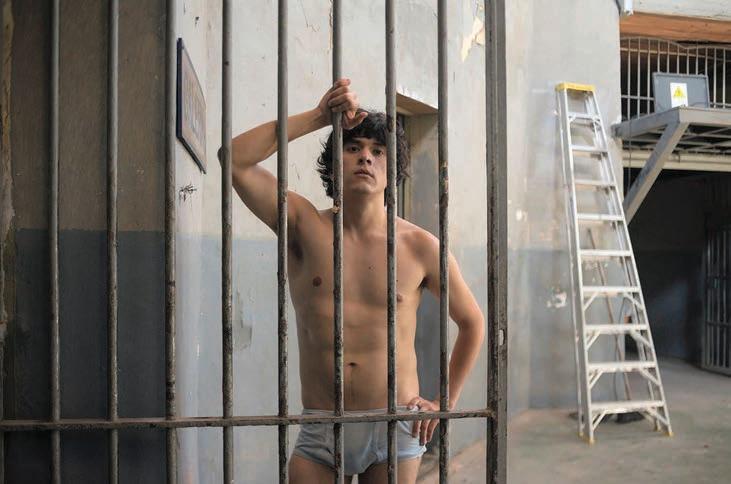
control over his fellow prisoners. What starts out as a quidpro-quo “prison marriage” develops into something deeper as Jaime finds unexpected connection and tenderness with his protector, and the pair form a bond that approaches something deeper. In the harsh and repressive prison environment of 1970s Chile, however, it doesn’t take long before cellblock politics intrude upon their brief idyll, and both younger and older man are dragged toward their respective fates by the rivalries and power struggles of the condemned.
Says Muñoz in a director’s statement, “I did not expect that behind what seemed a cheap erotic novel I would discover an amazing portrait of 1970s Chilean society… As a gay man in his 40s, and part of a generation that won the right of being homosexual without euphemisms, I could not even imagine how disruptive this book was for its time.”
Inspired to take the story to the big screen, the filmmaker penned (with Luis Barrales) an adaptation, which embraces both a stylized and naturalistic cinematic approach as it unfolds the allegorical tale of Jaime, a 20-year-old narcissist who is sent to prison after murdering his own best friend. Frightened and alone, he is taken under the wing of an older inmate known as “The Stallion,” a career gangster with influence and powerful connections who exerts a firm
It’s difficult, perhaps even impossible, not to look at this audacious film without reckoning with the influence, traced through both its source material and the cinematic heritage of which it is a part, of Jean Genet. For those unfamiliar, he was a French author, playwright, and philosopher who went from an early life of hustling, vagrancy and crime in the sexual underworld of mid-20th-century Europe to establishing himself through his work as a leading countercultural figure, before finally assuming a late-in-life role as a fierce political activist. An early champion of queer visibility, he was an icon in his own lifetime for his unapologetic homosexuality and a subversive literary output that directly challenged the era’s rigid standards of “decency” by pushing a perspective, informed by existentialism, that flew in the face of social
norms. The world we see in “The Prince,” with its aggressively macho posturing and deliberately provocative sadomasochistic overtones, may be familiar to a generation of gay men who grew up with imagery from artists like Tom of Finland and the significance of leather and fetish culture within their community’s collective imagination – but if so, it’s almost certainly because of Genet, who enshrined his own real-world experience and transformed it into the heightened and erotically charged fantasy he depicted in his novels, poems, and plays.
In bringing Cruz’ lurid-yet-profound novel to the screen, Muñoz doubles down on the influence that surely informed its original author as well, drawing heavily from the imagery of Genet’s only film (the 1950 short, “Un Chant d’Amour”) as well as from “Querelle,” the 1982 adaptation by German filmmaker Rainer Werner Fassbinder of one of the writer’s best-known novels.
It’s a perfect fit, unsurprisingly. The director gives us a film designed to simultaneously shock and arouse us – frequent full-frontal nudity, explicit and sometimes graphic depictions of gay sex, a relentless blurring of the lines between violent impulse and sexual attraction – and refrains from any temptation to sentimentalize or equivocate. These moments are consciously theatrical, heightened by overt subtext and accentuated by heavily symbolic visual composition; they are also powerfully erotic, capturing the transgressive, forbidden appeal of jailhouse sex without trying either to stigmatize it or to “pretty it up,” as many contemporary films do – if they even dare to address it at all.
Yet at the same time, Muñoz film provides an unavoidable contemporary perspective, simply by virtue of having not been made decades ago. The fetishization of violently toxic masculinity captured in “The Prince” may have been embraced by Genet and others of his generation as a subversive response to cultural repression, but many modern observers tend to read such homoerotic fantasy tropes of that era as expressions of internalized homophobia.
By BRIAN T. CARNEY
GALECA: The Society of LGBTQ Entertainment Critics has announced the nominees for its annual Dorian Awards for television. LGBT fan favorite “Schitt’s Creek” led the pack with seven nods; Ryan Murphy’s glittering escapist fantasy “Hollywood” landed six noms.
Ranked by network, Netflix shows dominated the competition with a total of 21 nominations. HBO landed 13 nods and Hulu and Pop each scored 8 mentions.
In addition to nominations for Best TV Comedy and Best LGBT Show, “Schitt’s Creek” scored acting nods for the four lead players: Dan Levy, Catherine O’Hara, Annie Murphy and Eugene Levy. Noah Reid, who plays Patrick, was also recognized for his performance of “Always Be My Baby” in one of GALECA’s signature categories: Best TV Musical Performance.
Other nominees in the hotly contested Musical Performance category include Jake Gyllenhaal for “Music, Music Everywhere!” with John Mulaney & the Sack Lunch Bunch; Jennifer Lopez and Shakira for the controversial Halftime Show at Super Bowl LIV; and two presentations at the 92nd Academy Awards: the opening number by Janelle Monáe and Billy Porter and “Stand Up” by Cynthia Errivo. “Hollywood’s” nominations include acting nods for LGBT icon and ally Patti LuPone, who played glamorous studio head Avis Amberg, and for three gay actors playing gay characters: Jeremy Pope (Archie Coleman), Joe Mantello (Dick Samuels) and Jim Parsons (Henry Willson). “Hollywood” also got a nod for Best LGBT Show and scored a nomination in the unique Dorian Award category of Most Visually Striking Show.
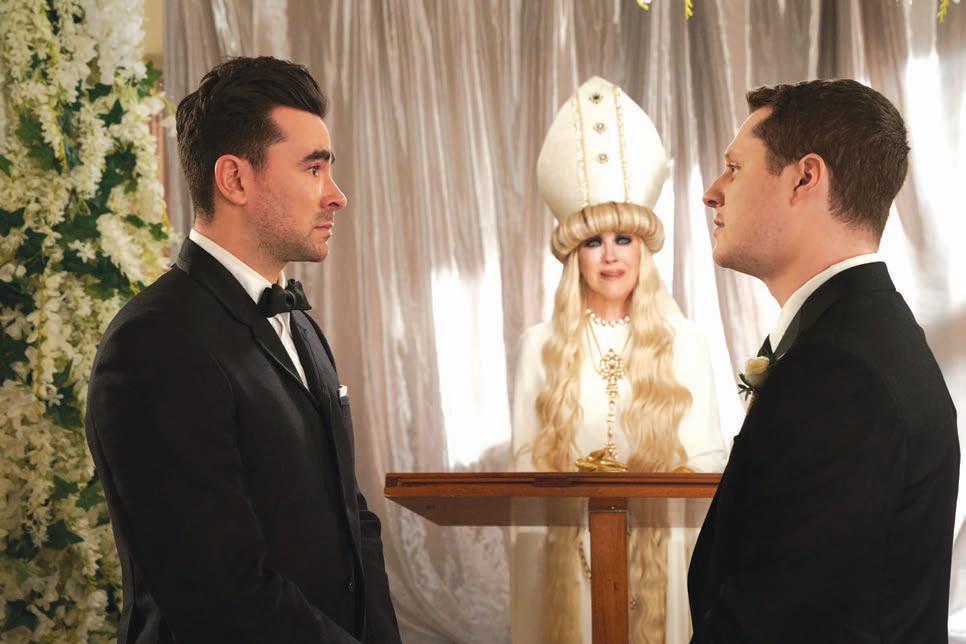
Other shows nominated in that category include “The Crown,” “The Mandalorian,” and two HBO dramas “Watchman” and “Westworld.”
The Dorian TV Awards are presented in a total of 15 categories. Other notable accolades from the queer critics include the Campiest TV Show and the Wilde Wit Award (named for gay icon Oscar Wilde whose novel “The Picture of Dorian Gray” inspired the name of the group’s awards).
Competitors for the Campiest TV Show include “Dolly Parton’s Heartstrings,” “The Great,” “Tiger King: Murder, Mayhem and Madness” and two shows featuring drag diva RuPaul Charles: “AJ and the Queen” and “RuPaul’s Drag Race.”
The Wilde Wit Award honors “a performer, writer or commentator whose observations both challenge and amuse.” Nominees include Dan Levy, Randy Rainbow, Hannah Gadsby, Cate Blanchett and Trevor Noah.
The Society will also present its first “You Deserve An Award!” Award to a “uniquely talented TV icon we adore.” Winners will be announced on Aug. 21.
GALECA presents Dorian Awards for outstanding work in both film and television. In previous award cycles, all of the awards were presented in January. This cycle, the television awards will be presented at a separate event. Eligible shows must have been aired between Nov. 2, 2019 and May 31, 2020. The Dorian Awards for film will be presented in 2021 as part of the movie award season.
The Dorian Awards were first presented in 2009. GALECA: The Society of LGBTQ Entertainment Critics currently has more than 260 active members who write for legitimate media outlets in the United States and around the globe. (The Blade is represented by film and TV critic Brian T. Carney.)
A complete list of nominees and more information on the organization can be found at @DorianAwards on Twitter and Facebook or at GALECA.org.